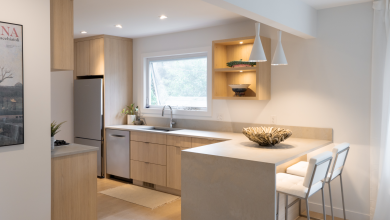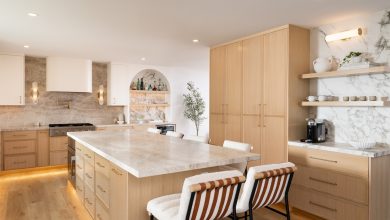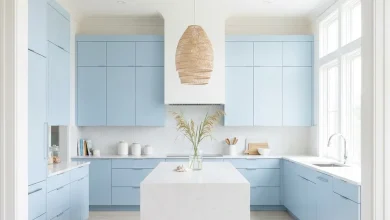

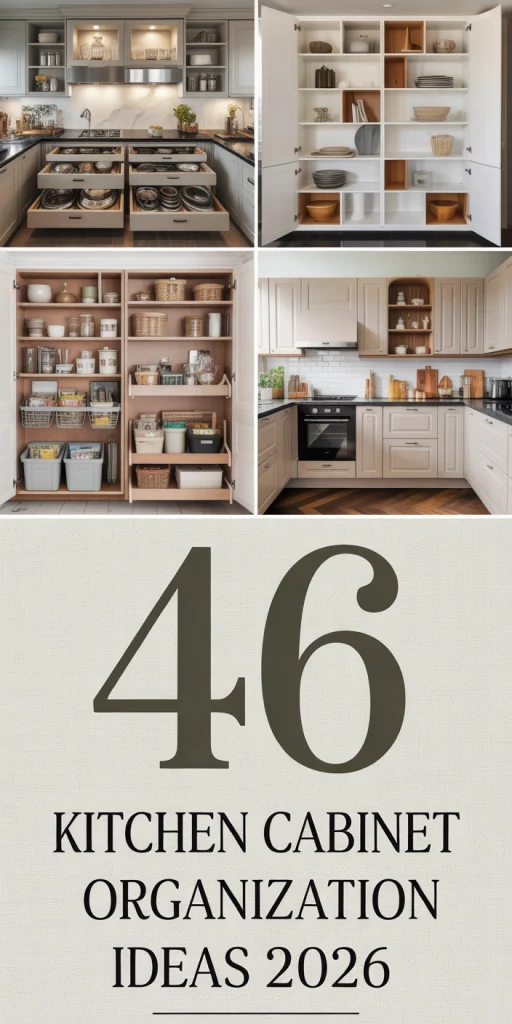
Kitchen cabinet organization has become one of the most searched home topics on Pinterest in 2026, and for good reason. American homeowners are finally realizing that a well-organized kitchen isn’t just about aesthetics—it’s about reclaiming time, reducing stress, and actually enjoying the space where we spend so much of our day. Whether you’re working with a sprawling suburban kitchen or a compact city apartment, the right organizational approach can transform how you cook, eat, and live. In this guide, we’re sharing fresh, practical ideas that real people are using right now to bring order and beauty to their kitchens.
1. The Lazy Susan Renaissance for Corner Cabinets
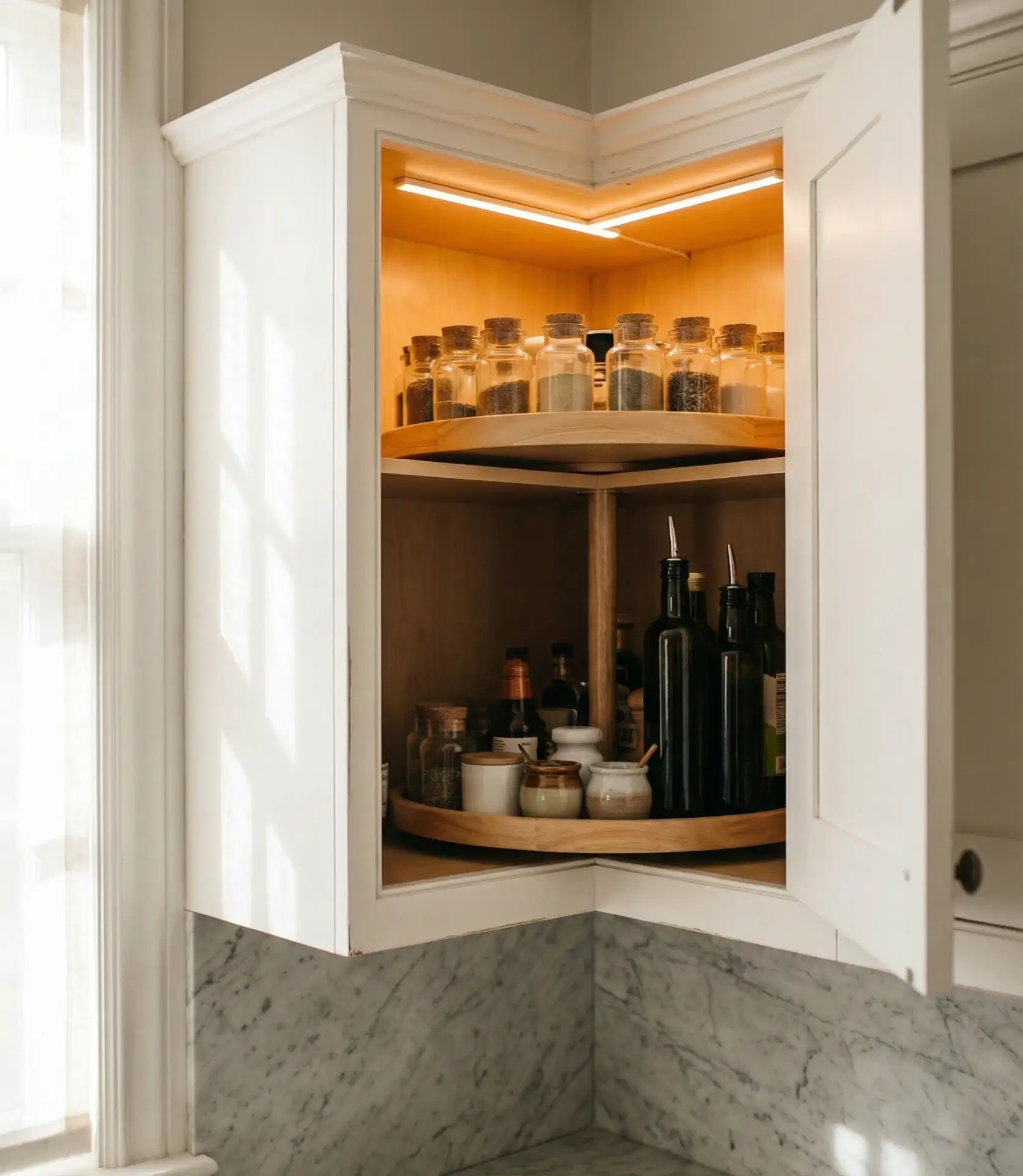
While corner cabinets have long been overlooked in kitchen organization, the humble Lazy Susan is making a significant comeback in 2026. This rotating solution works brilliantly for spices, oils, and condiments in upper cabinets, while larger versions handle pots and pans in lower sections. The key is choosing the right diameter—measure your cabinet depth and subtract two inches for smooth rotation. Multi-tiered versions maximize vertical space beautifully.
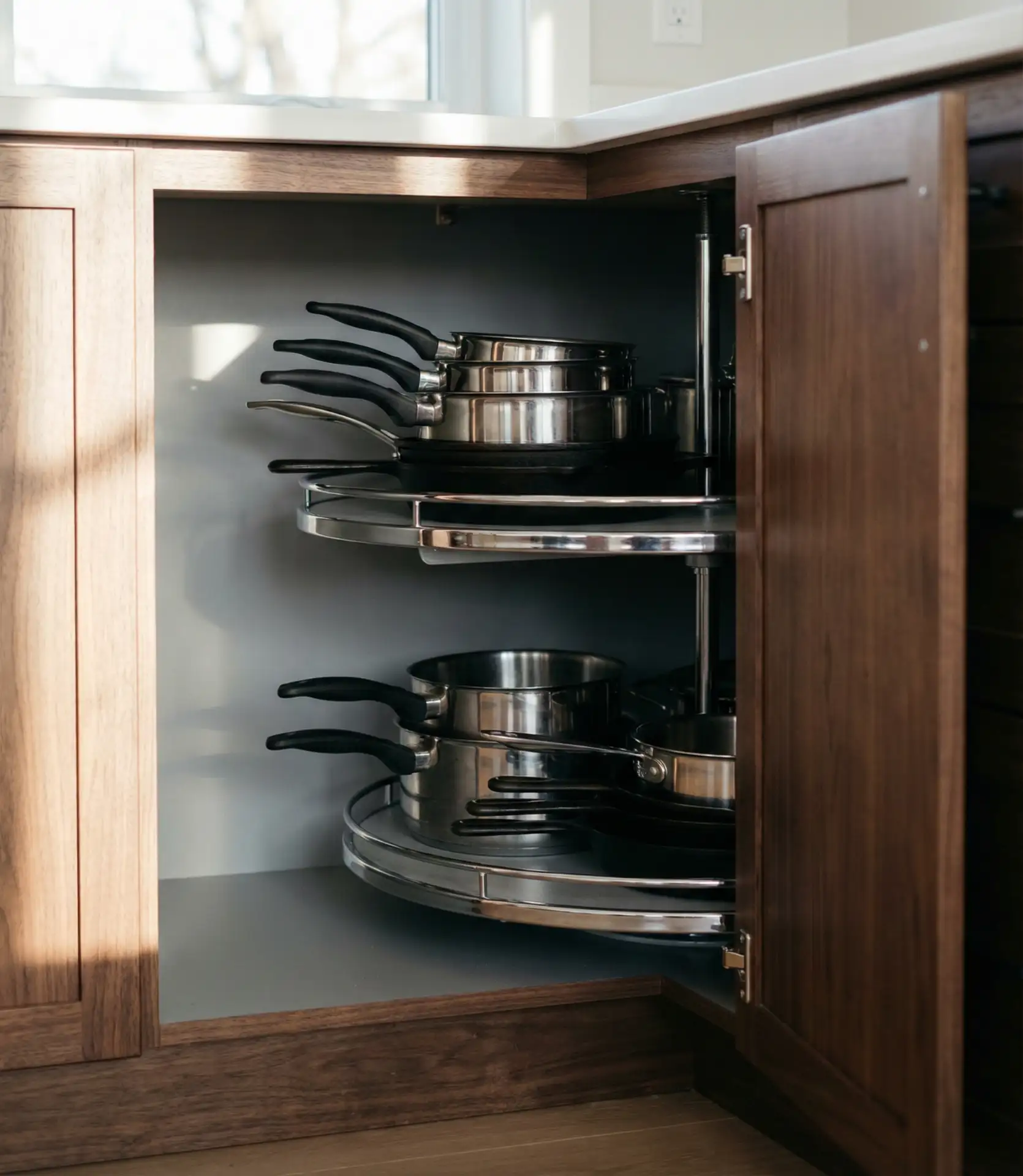
Where this system works best: suburban kitchens with deep corner cabinets where items routinely get lost. The blind corner cabinet—that awkward space where two cabinet runs meet—becomes instantly accessible. For renters who can’t install pull-out systems, Lazy Susans offer a damage-free solution that moves with you. They are especially useful in pantry corners, allowing you to finally see and reach cereal boxes and canned goods without the need for excavation.
2. Vertical Divider Systems for Baking Sheets
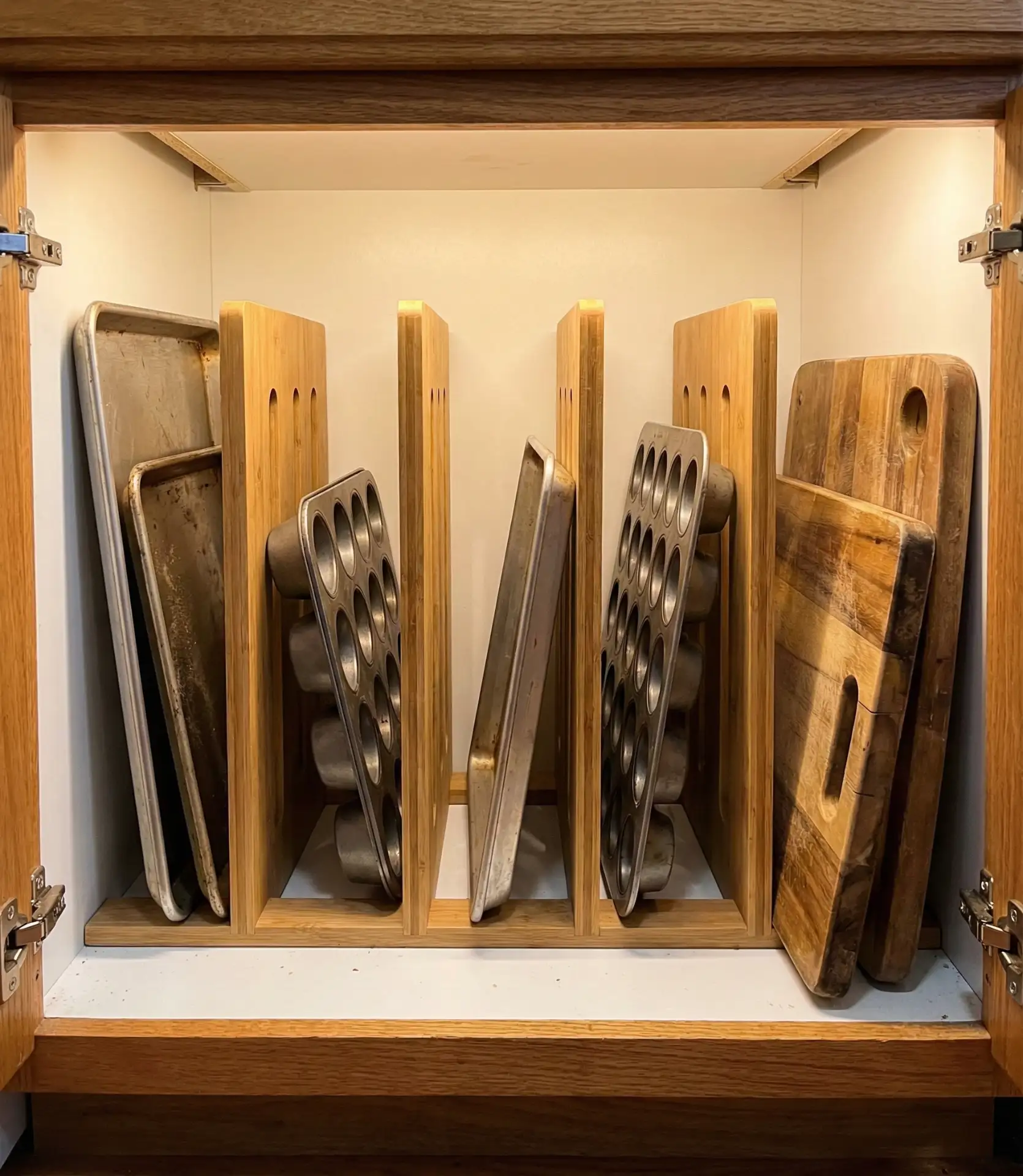
Stacking baking sheets horizontally creates an annoying domino effect every time you need the bottom pan. Vertical dividers—either built-in or adjustable tension rods—let you file pots, pans, and baking sheets like records in a crate. This approach works in lower cabinets next to the oven or in deep drawers modified with dividers. You can view everything simultaneously, select what you require, and effectively utilize that pizza stone you had forgotten you possessed.
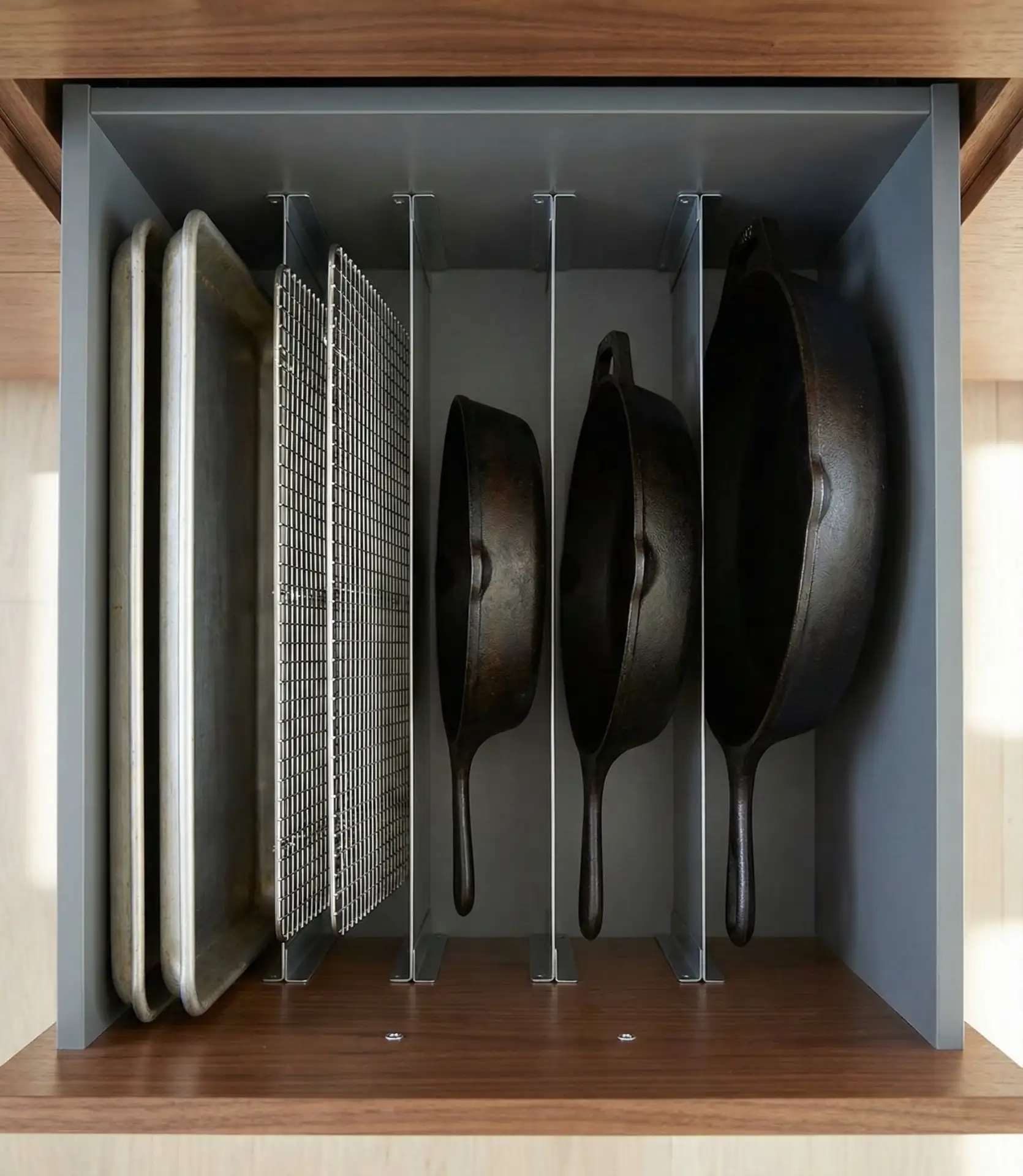
A practical insight worth noting: measure your tallest pan before installing dividers, because nothing’s more frustrating than a system that doesn’t accommodate your roasting pan. Spring-loaded tension rods work for renters and cost under fifteen dollars, while permanent wooden dividers offer a more polished look for homeowners. Either way, you’ll wonder why you tolerated the avalanche method for so long.
3. Clear Container Pantry Uniformity
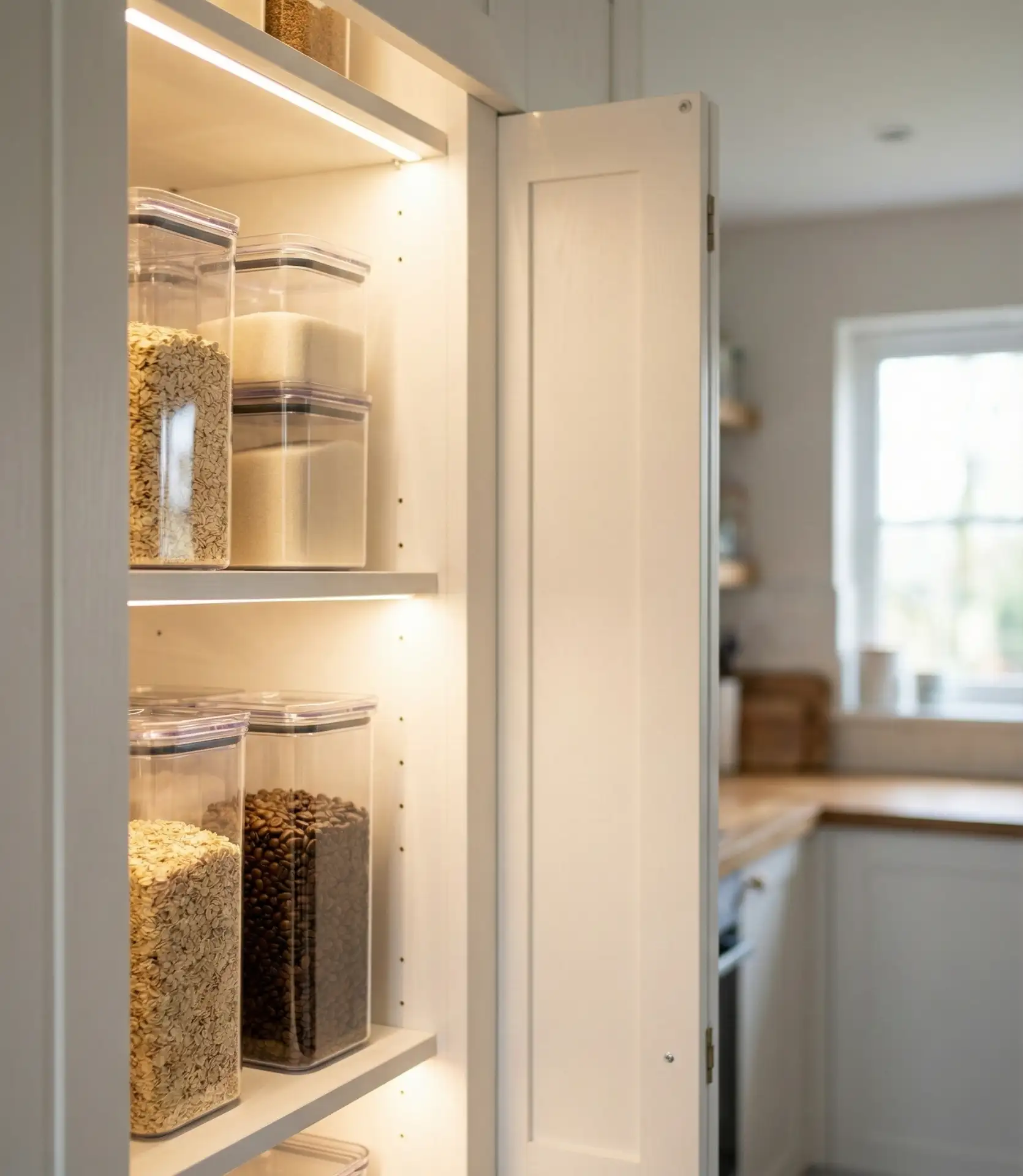
The Instagram-perfect pantry isn’t just photogenic—it’s genuinely functional when done right. Transferring dry goods into uniform clear containers solves multiple problems: you can see what’s running low, food stays fresher in airtight environments, and the visual calm is real. Focus on items you buy repeatedly—flour, sugar, pasta, rice, oats, coffee—and leave occasional purchases in original packaging. Square containers maximize shelf space better than round ones.
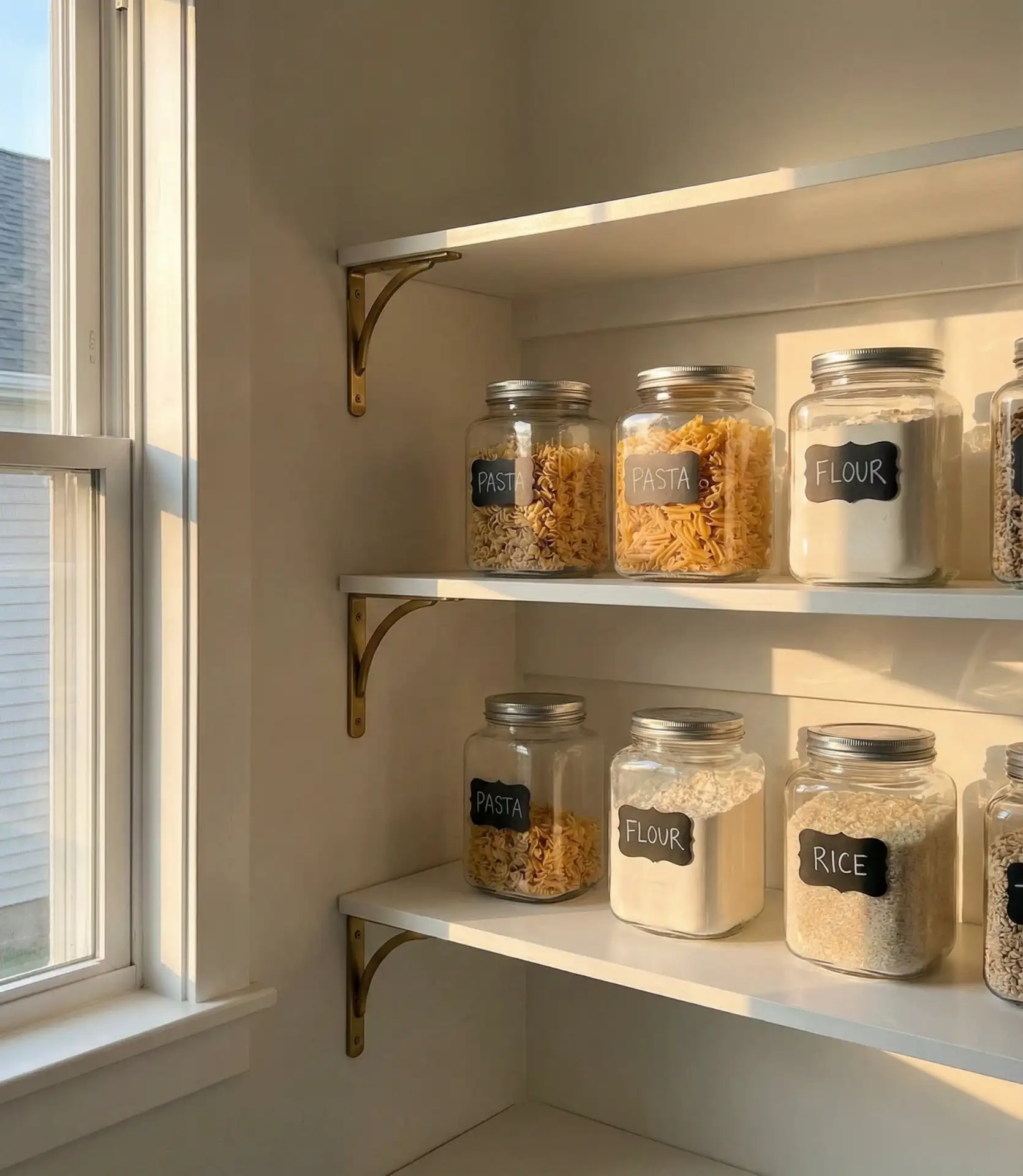
Real homeowner behavior reveals an important truth: most people start ambitious with fifty containers, then abandon the system when life gets busy. Start with your top ten staples instead. Get containers that are dishwasher-safe and have wide openings for easy refilling. Skip the expensive label makers—a white paint pen on dark lids works beautifully and costs three dollars.
4. Pull-Out Organizers for Deep Lower Cabinets
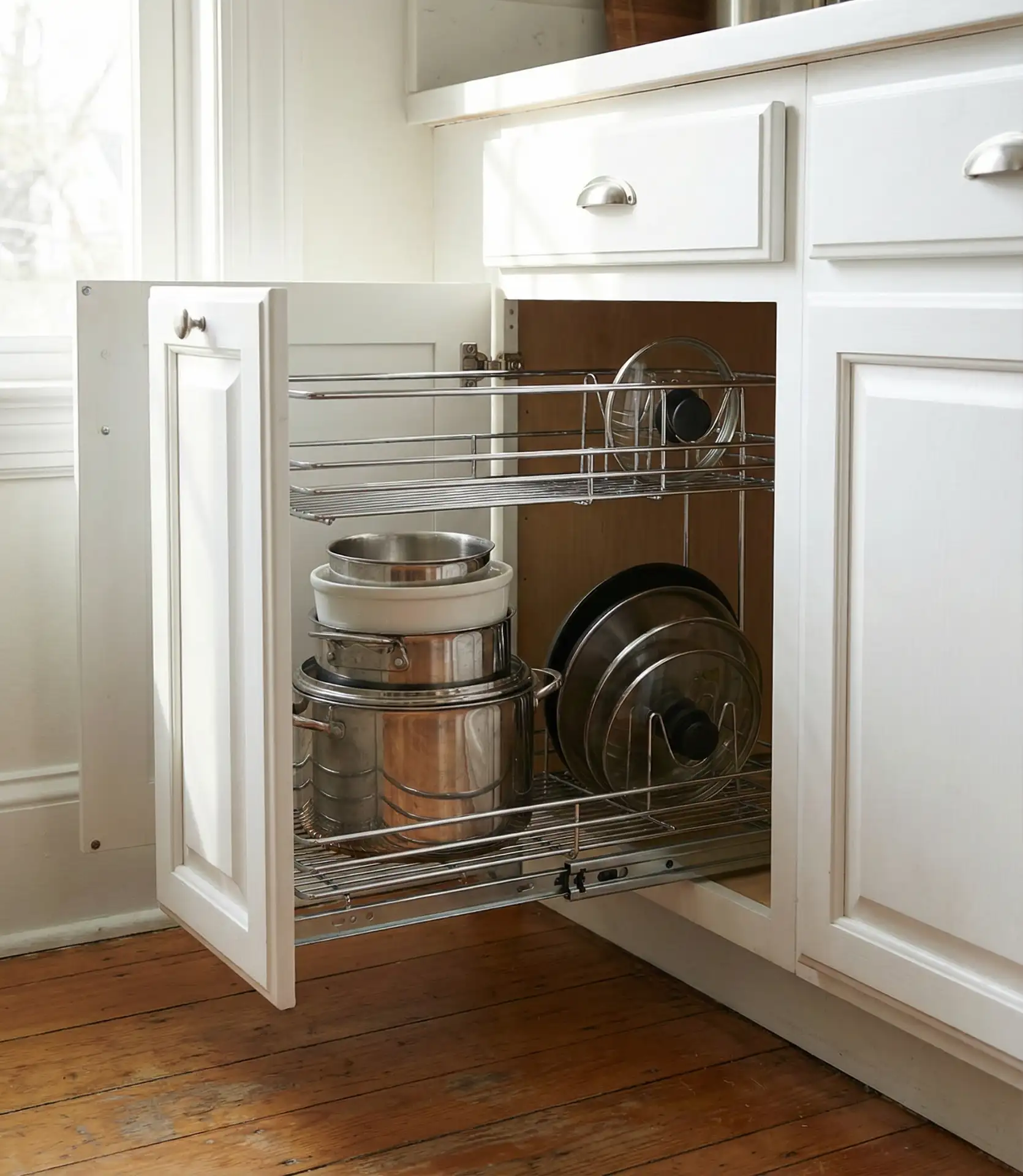
Deep lower cabinets become black holes without proper organization, forcing you to crouch and dig for items pushed to the back. Sliding shelves or drawer systems bring everything forward with a simple pull, transforming wasted space into accessible storage. These work brilliantly for pots and pans, small appliances, or even a hidden trash and recycling station. Installation varies from simple drop-in wire systems to full drawer conversions that require minimal carpentry skills.
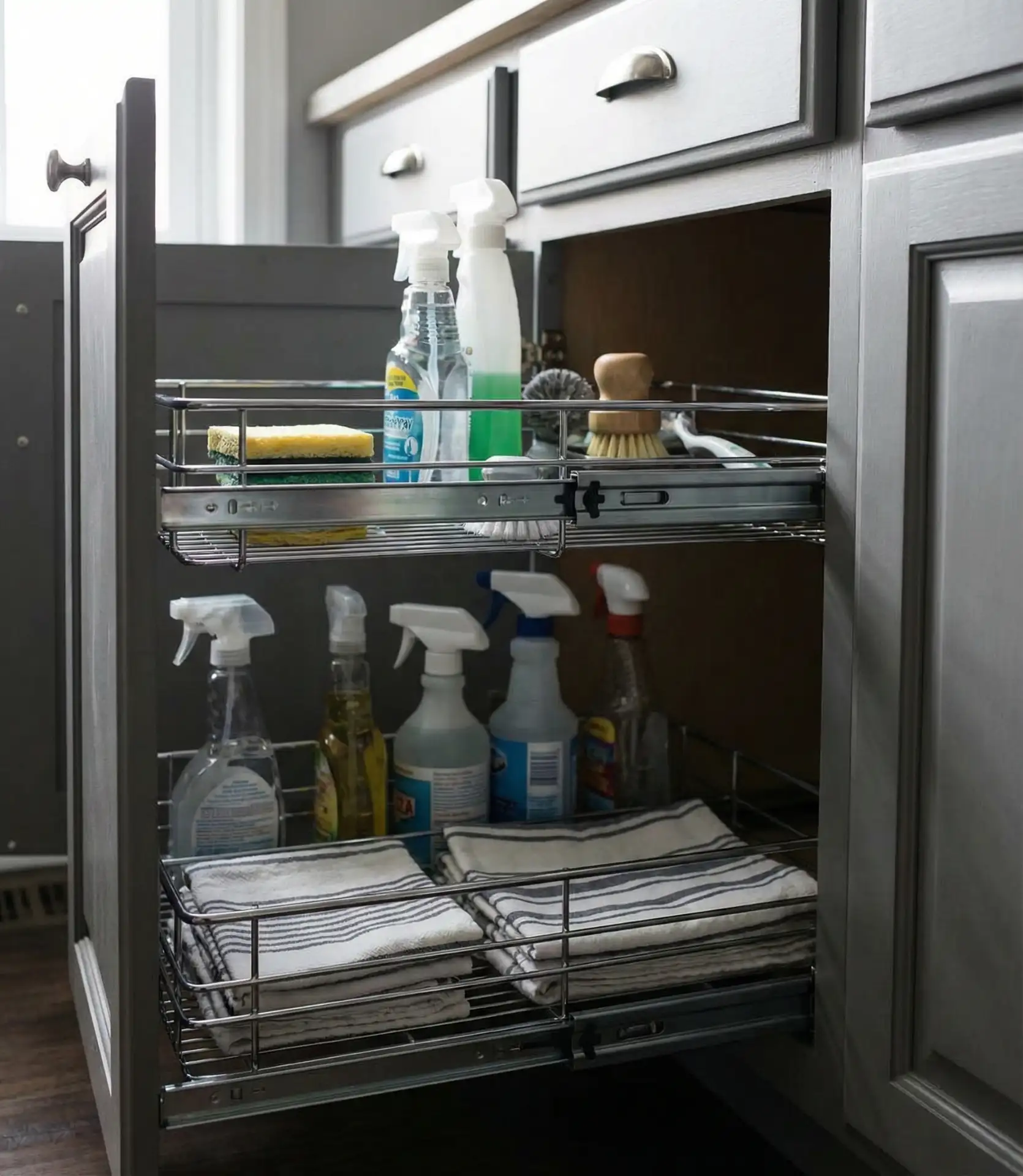
In the Midwest and South, where basements and garages offer alternative storage, homeowners tend to keep only daily-use items in kitchen cabinets. But in dense urban areas like New York, San Francisco, and Chicago, these pull-out systems become essential real estate, often housing everything from bulk paper towels to seldom-used serving platters. The investment pays off quickly in time saved and frustration avoided.
5. Drawer Peg Systems for Dishes and Plates
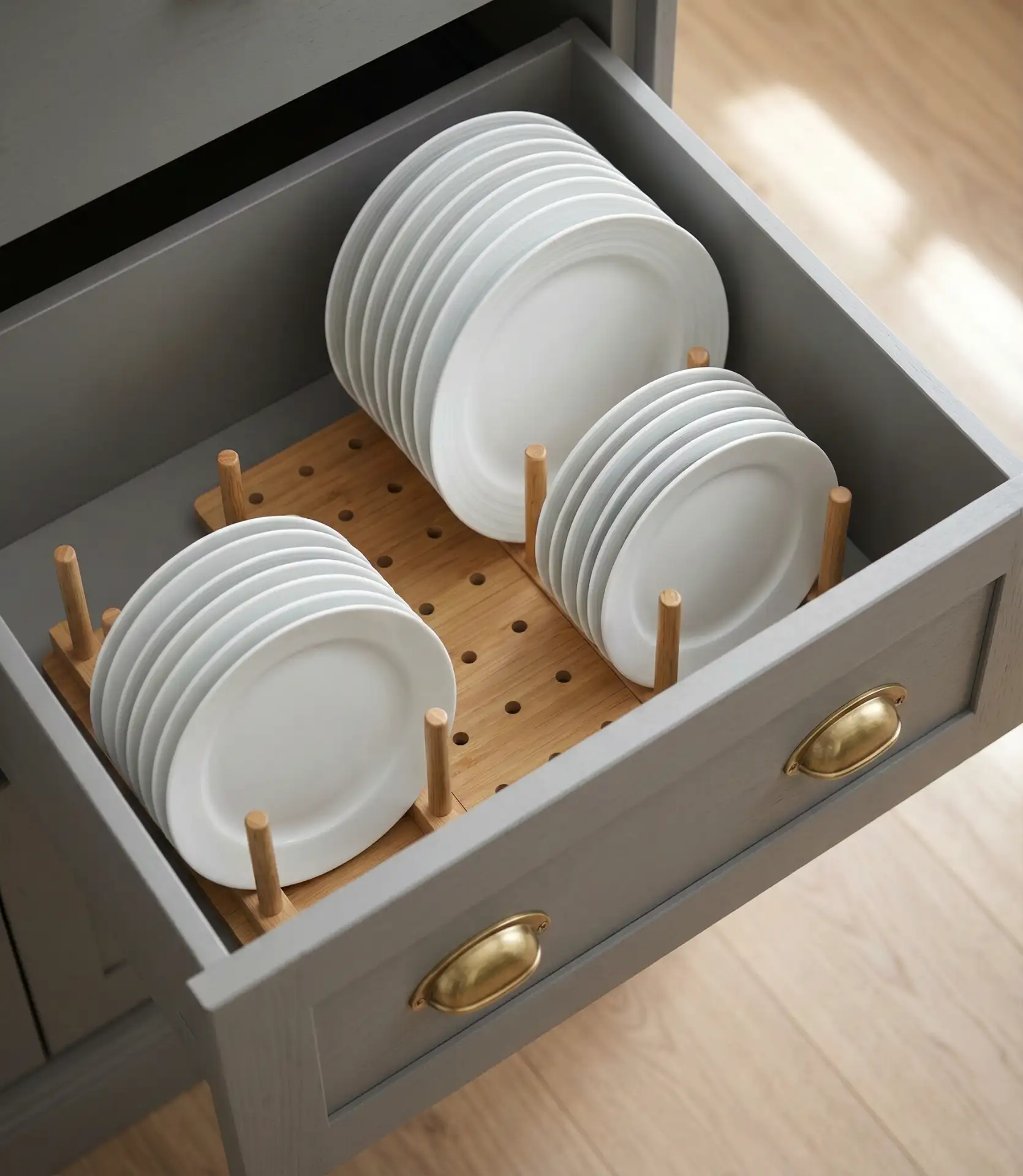
Storing dishes and plates in drawers instead of stacked in cabinets is gaining serious traction in American kitchens. Adjustable peg systems let you customize spacing for different plate sizes while keeping everything secure. This layout eliminates the need to lift the entire stack when you want the bottom plate, reduces chipping, and makes unloading the dishwasher remarkably faster. Deep drawers work best; typically, those are at least five inches deep.
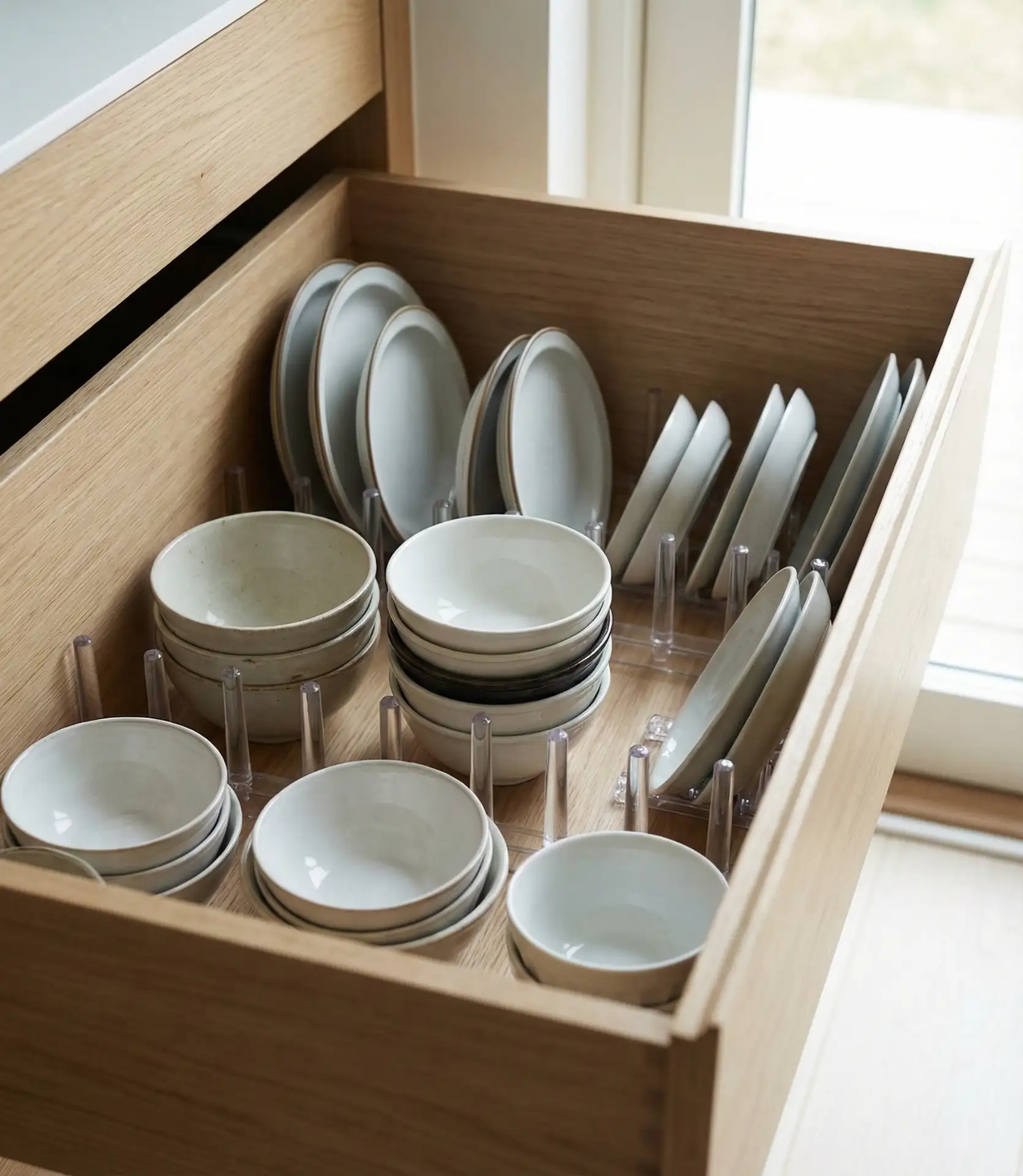
A micro-anecdote from a Phoenix homeowner: after installing peg dividers in her island drawers, her kids actually started setting the table without being asked because grabbing plates became that easy. The system works equally well for cups and plates when you size the pegs appropriately—shorter spacing for teacups, wider for cereal bowls.
6. Tension Rod Lid Storage Under Sinks
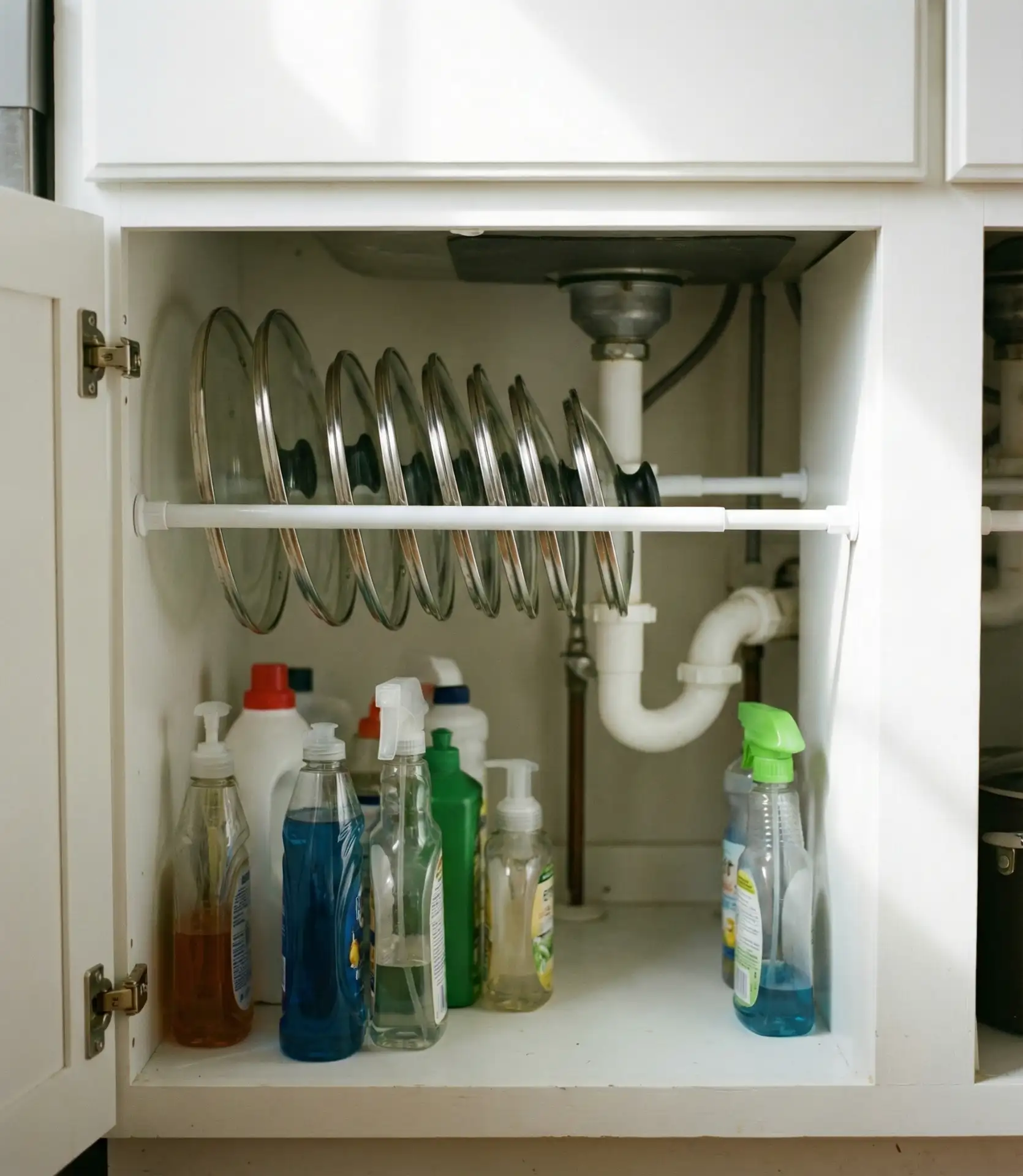
The cupboards under the sink typically house cleaning supplies and a chaotic collection of pot lids that never quite fit anywhere. Installing tension rods vertically creates instant slots for lids, keeping them organized and freeing up valuable space for other items. This ridiculously simple DIY solution costs about ten dollars and takes five minutes to implement. It works on cabinet doors too, using Command Hooks or small tension rods.
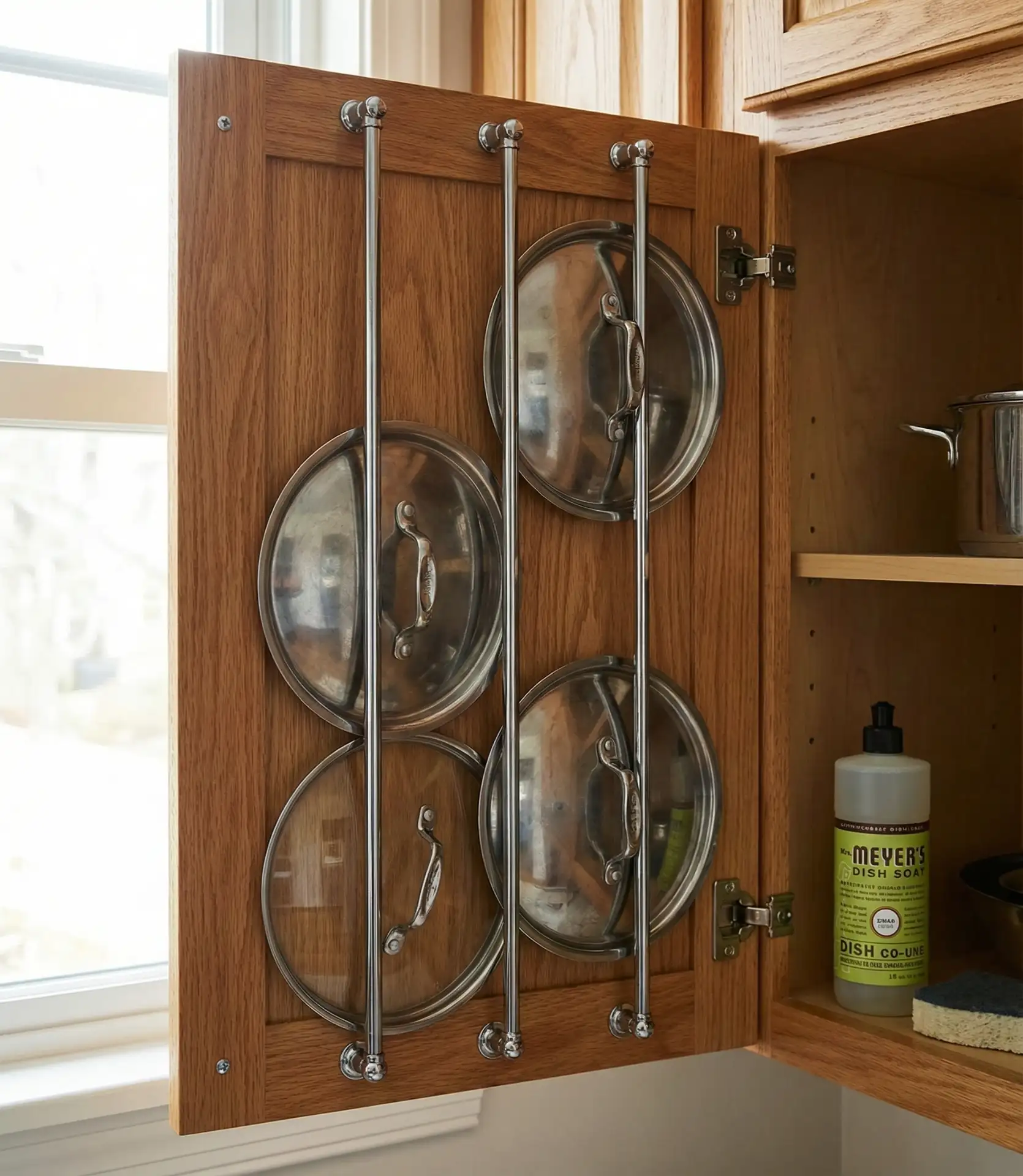
Common mistakes include using rods that are too thin—they bend under the weight of cast iron lids—or spacing them too far apart, which defeats the organizational purpose. Use heavy-duty tension rods meant for curtains, space them about two inches apart, and position them toward the front of the cabinet where you can easily see and access each lid without removing others.
7. Spice Drawer with Tiered Inserts
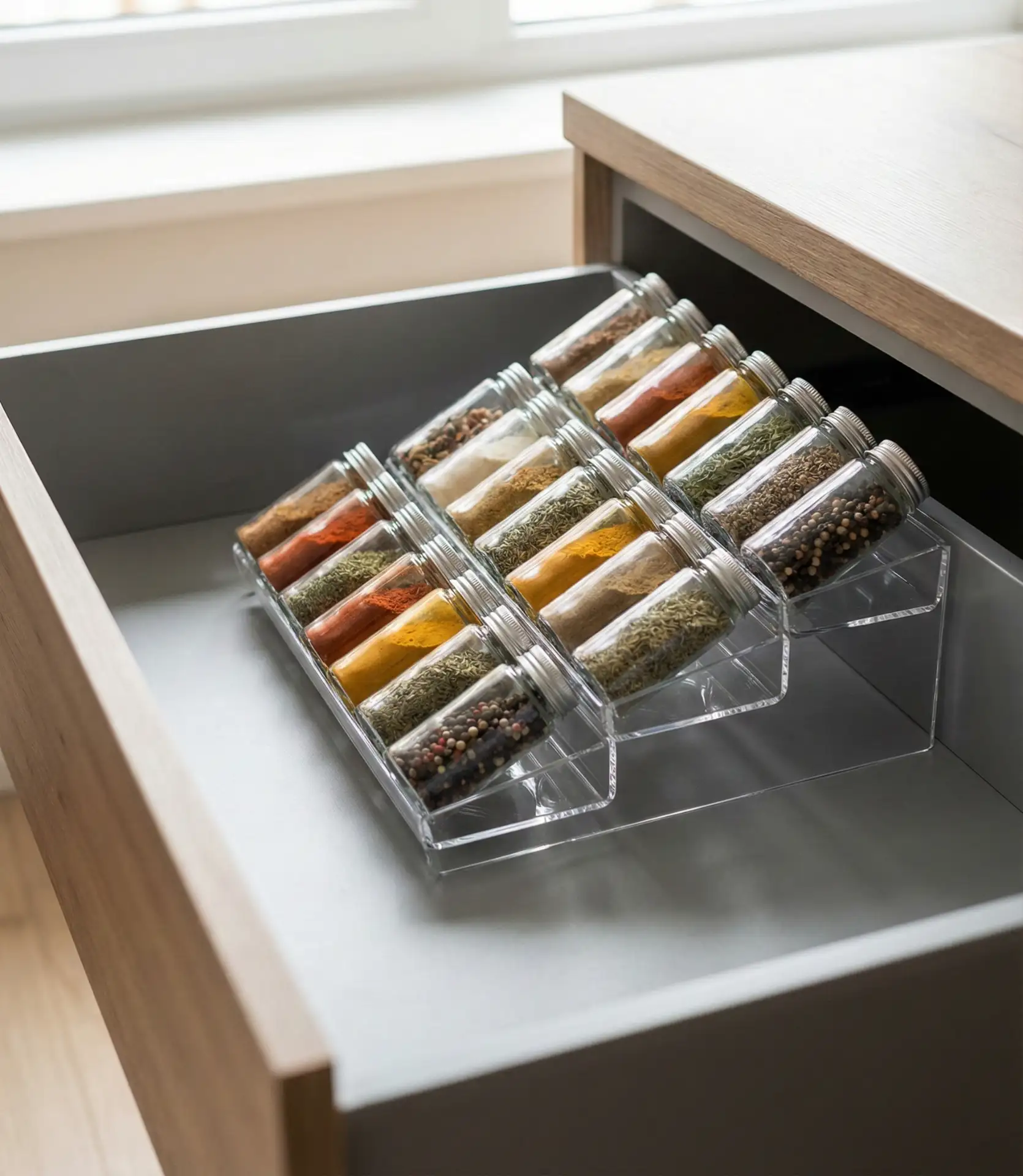
A dedicated spices drawer with tiered inserts transforms cooking by making every jar visible and accessible. No more digging through cluttered cupboards or forgetting what you have because bottles hide behind each other. Angled inserts create stadium seating for spice jars, so you can read every label at a glance. This storage method works best in drawers near the stove, keeping frequently used seasonings within arm’s reach while cooking.
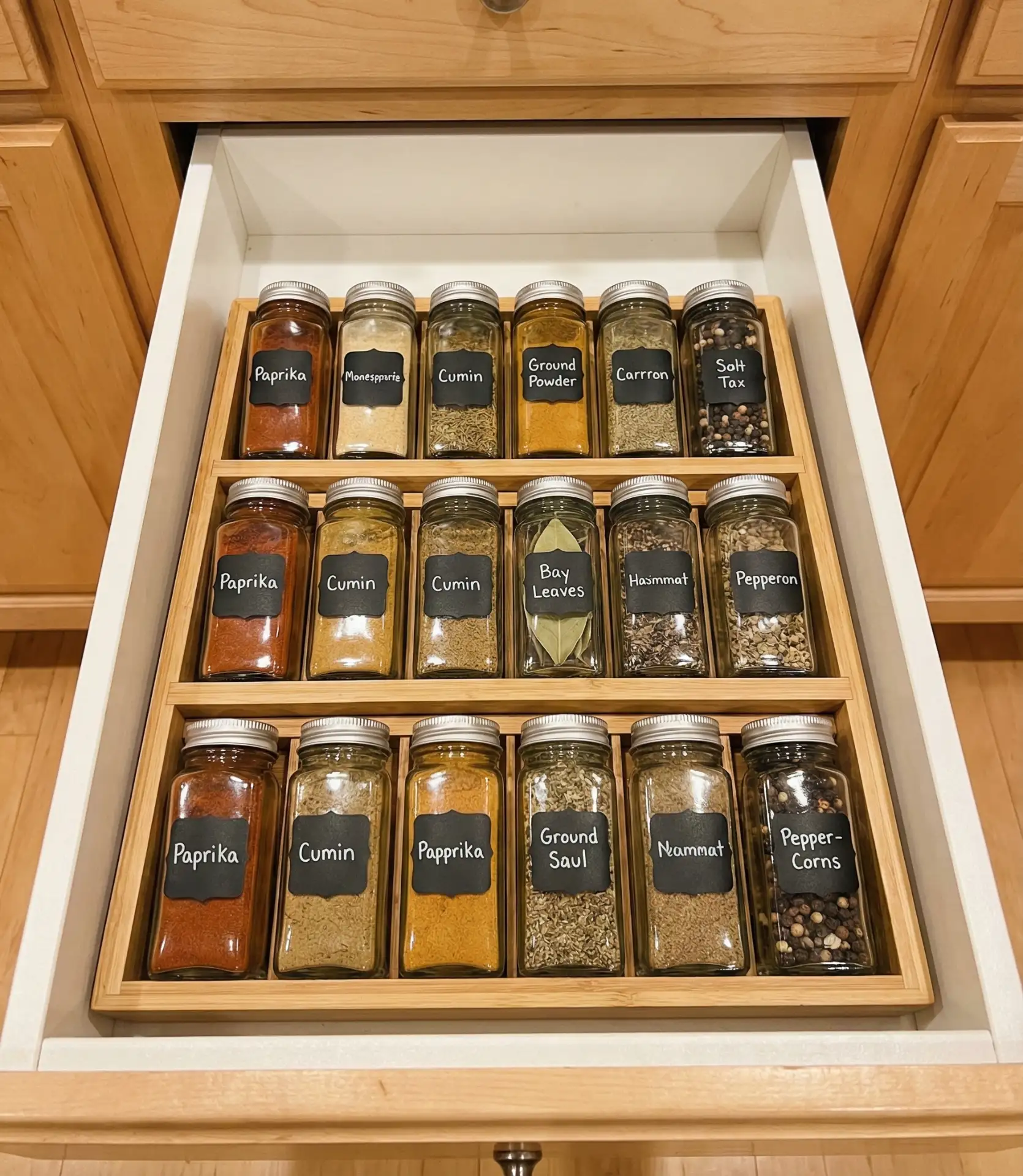
Expert-style commentary: professional chefs have been organizing spices this way for decades because visibility equals efficiency. Transfer spices to uniform jars only if you’re committed to the maintenance—otherwise, a tiered insert that accommodates various bottle sizes works perfectly fine and saves you the refilling hassle. Alphabetizing helps with large collections, but grouping by cuisine type (Italian, Indian, or Mexican) often makes more sense for home cooks.
8. IKEA VARIERA Shelf Inserts for Double-Stacking
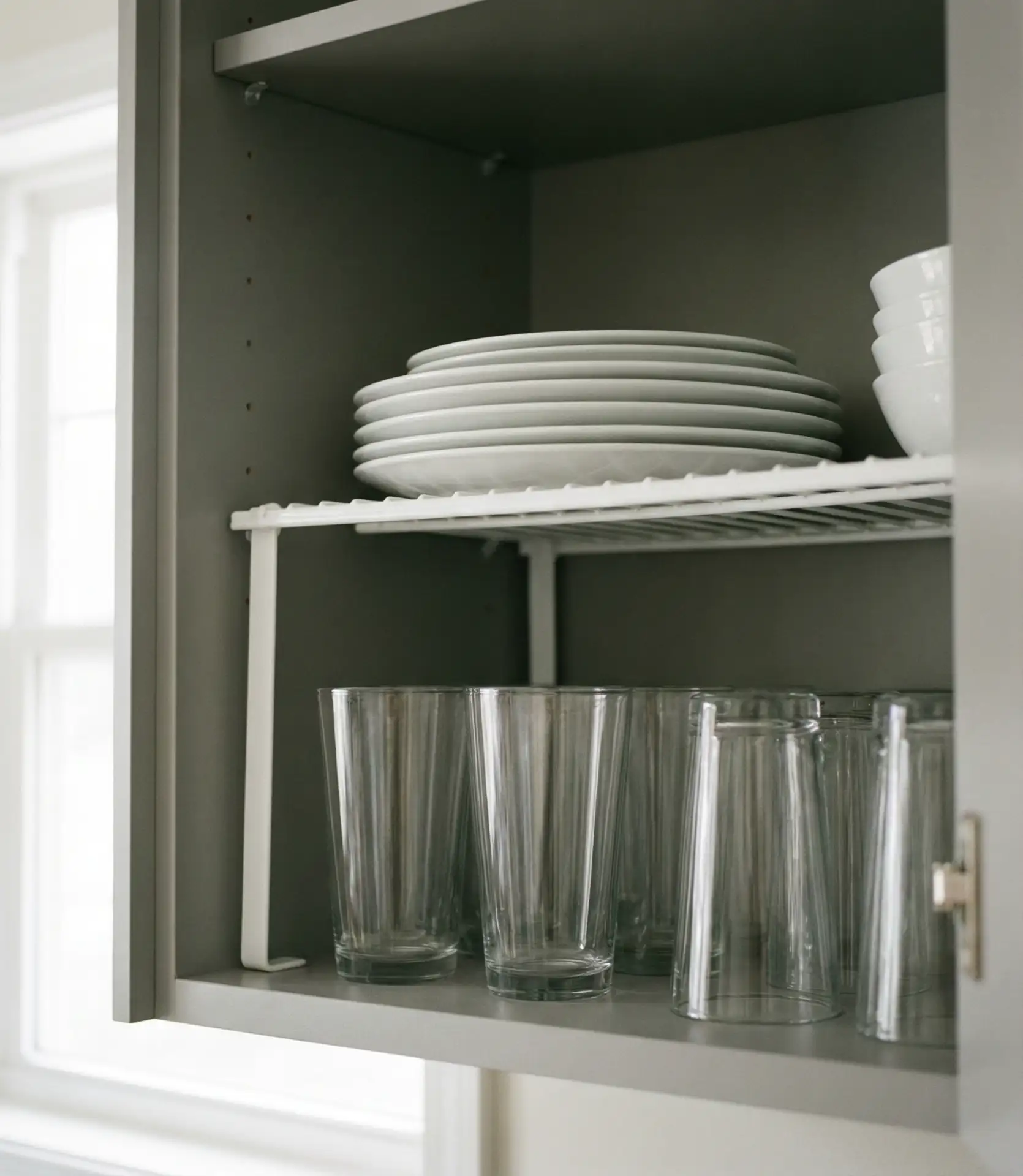
The wasted vertical space in standard cupboards drives organized people crazy, especially in small-space kitchens where every inch counts. IKEA’s VARIERA shelf inserts create a second level within existing shelves, instantly doubling capacity. These simple plastic risers work brilliantly for cups and plates, canned goods, or coffee mugs. They’re stackable, affordable at around seven dollars, and come in multiple widths to fit different cabinet dimensions.
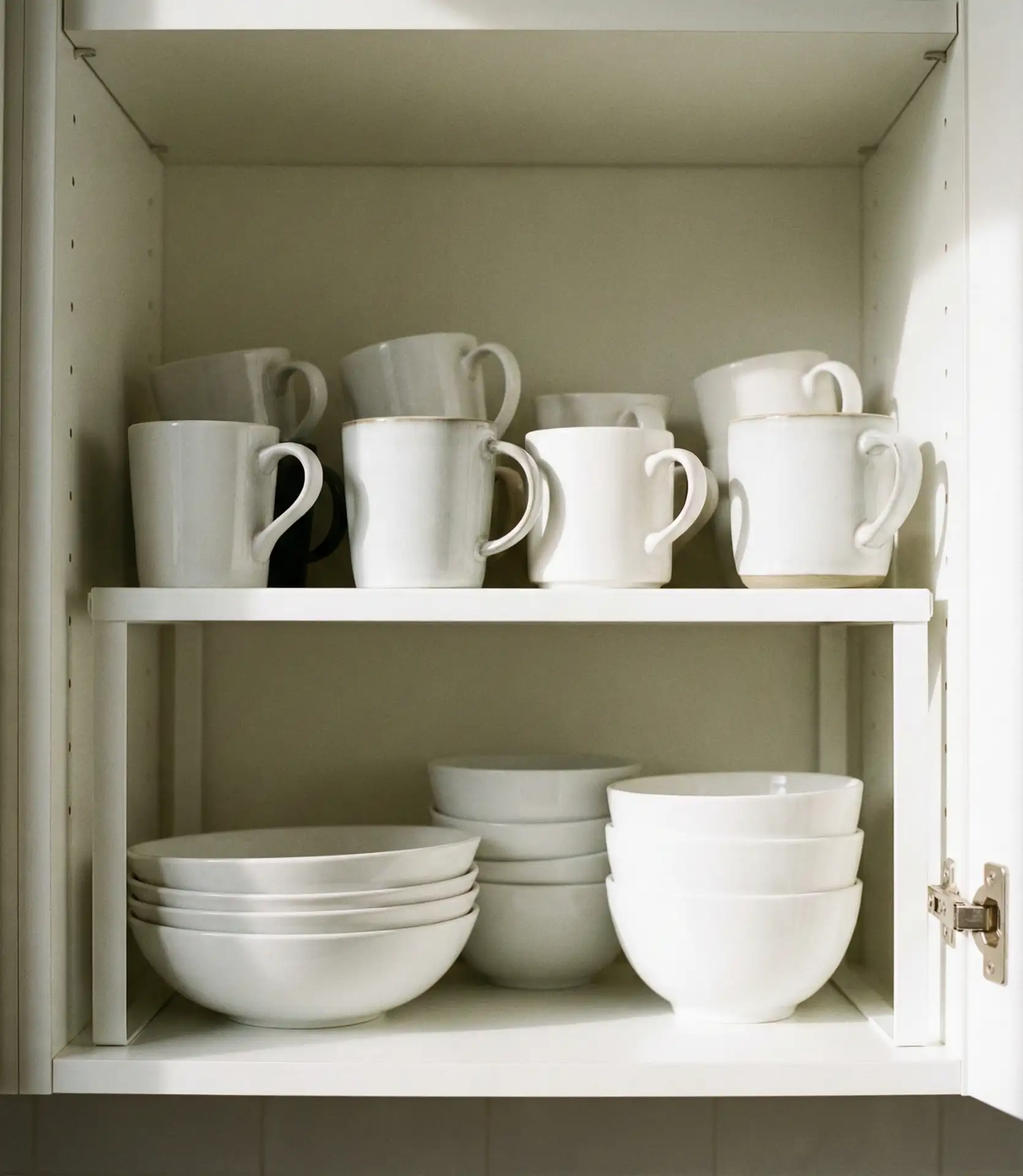
Budget angle: while custom pull-out shelving systems can run hundreds of dollars per cabinet, these inserts solve the vertical storage problem for under ten dollars. Buy several during your next IKEA run—or order online—and install them in minutes without tools. They’re particularly valuable in rental kitchens where permanent modifications aren’t allowed but storage optimization remains essential.
9. Inside Cabinet Door Command Centers
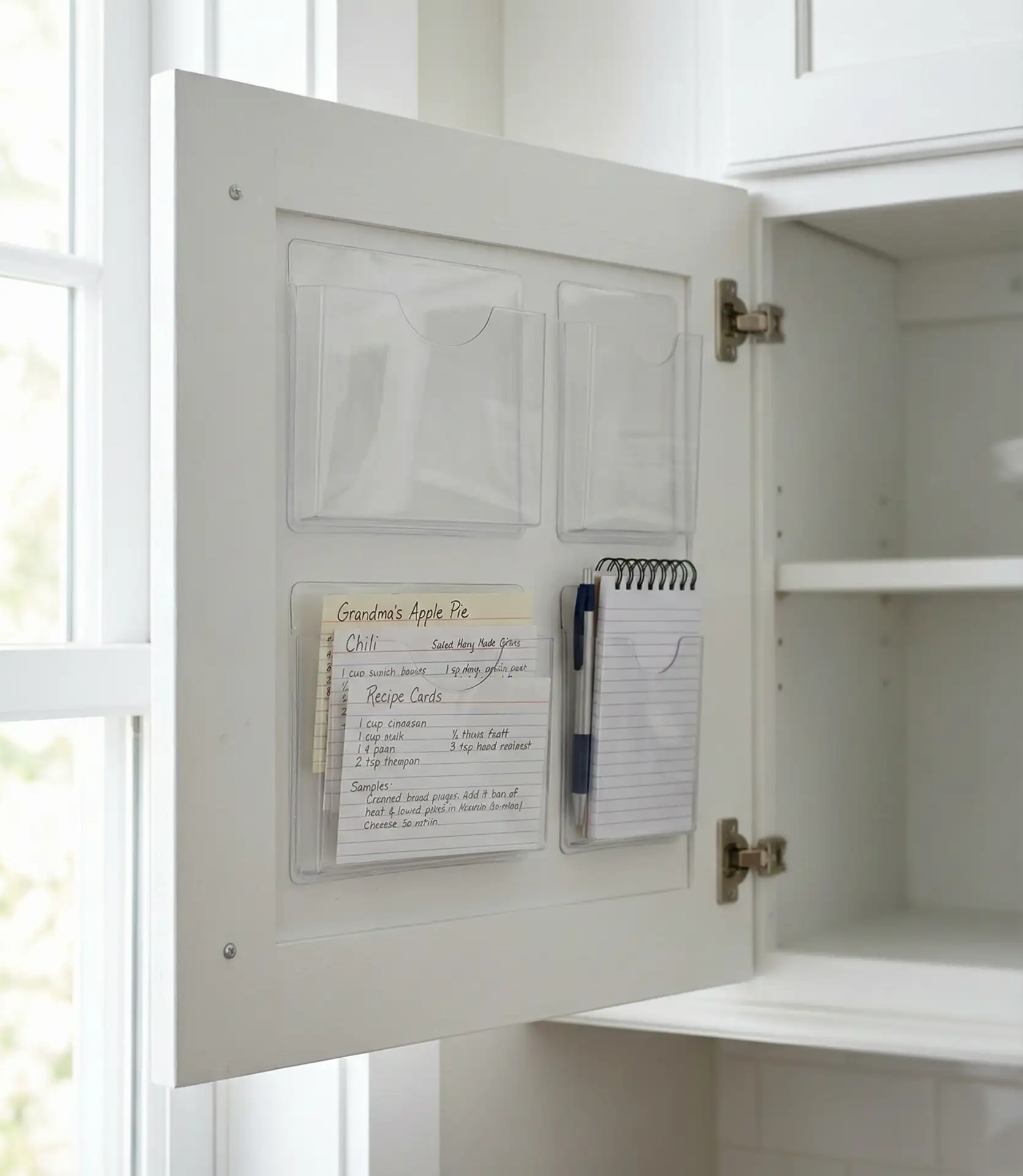
The inside of cabinet doors represents prime real estate that most people ignore. Mounted hooks, magnetic strips, or adhesive organizers transform these blank surfaces into functional space for measuring cups, pot holders, cutting board storage, or even a spice rack. This approach works especially well in narrow cabinets where door space is proportionally valuable. Command strips make installation renter-friendly and damage-free.
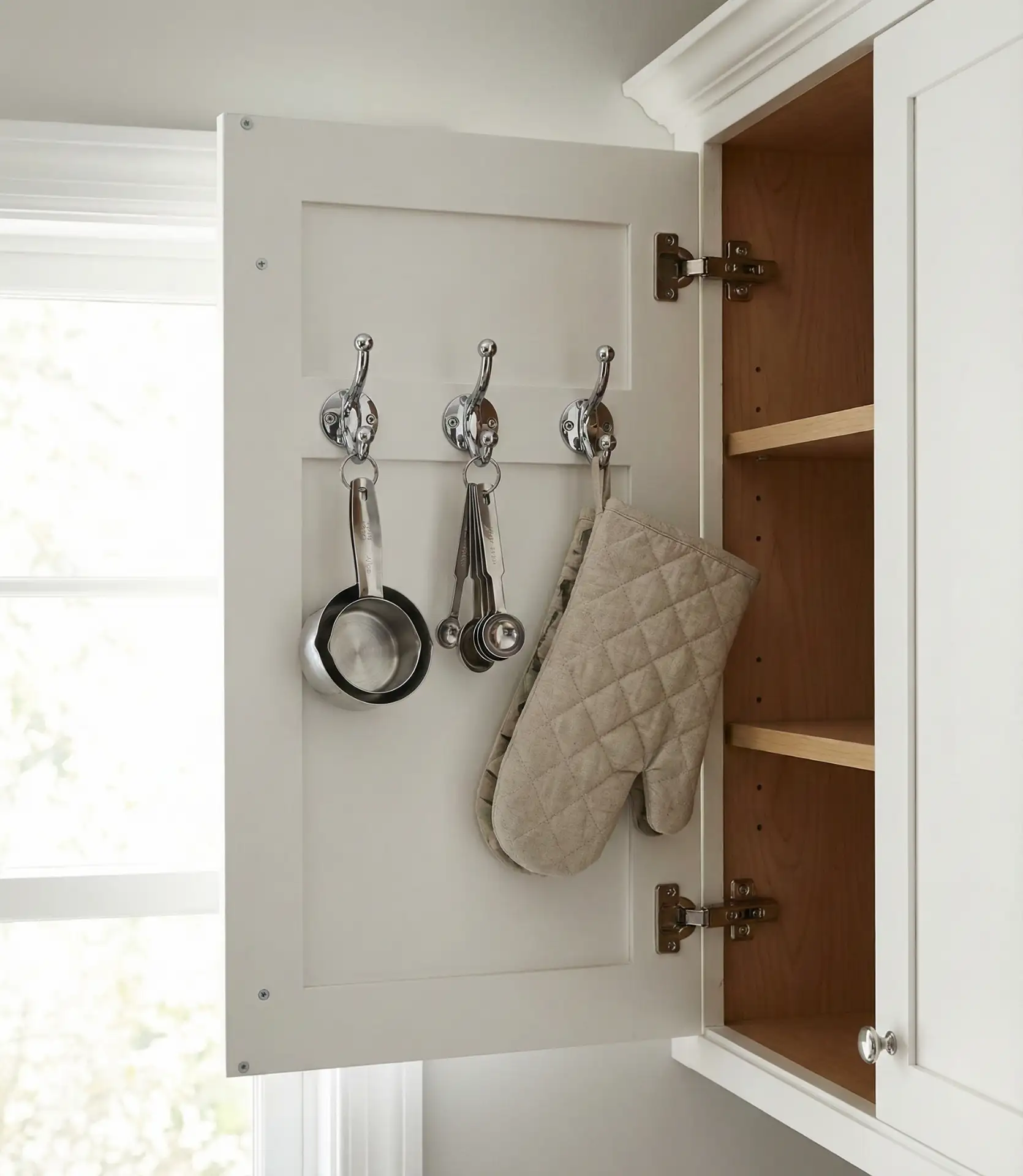
Where this works best: apartments and condos where counter space is limited and every organizational solution counts. The back of the cabinet under the sink can hold scrub brushes and gloves, while upper cabinet doors near the stove can accommodate frequently used utensils. Just ensure that mounted items don’t interfere with shelf contents when you close the door—measure twice, mount once.
10. Deep Drawer Dividers for Small Appliances
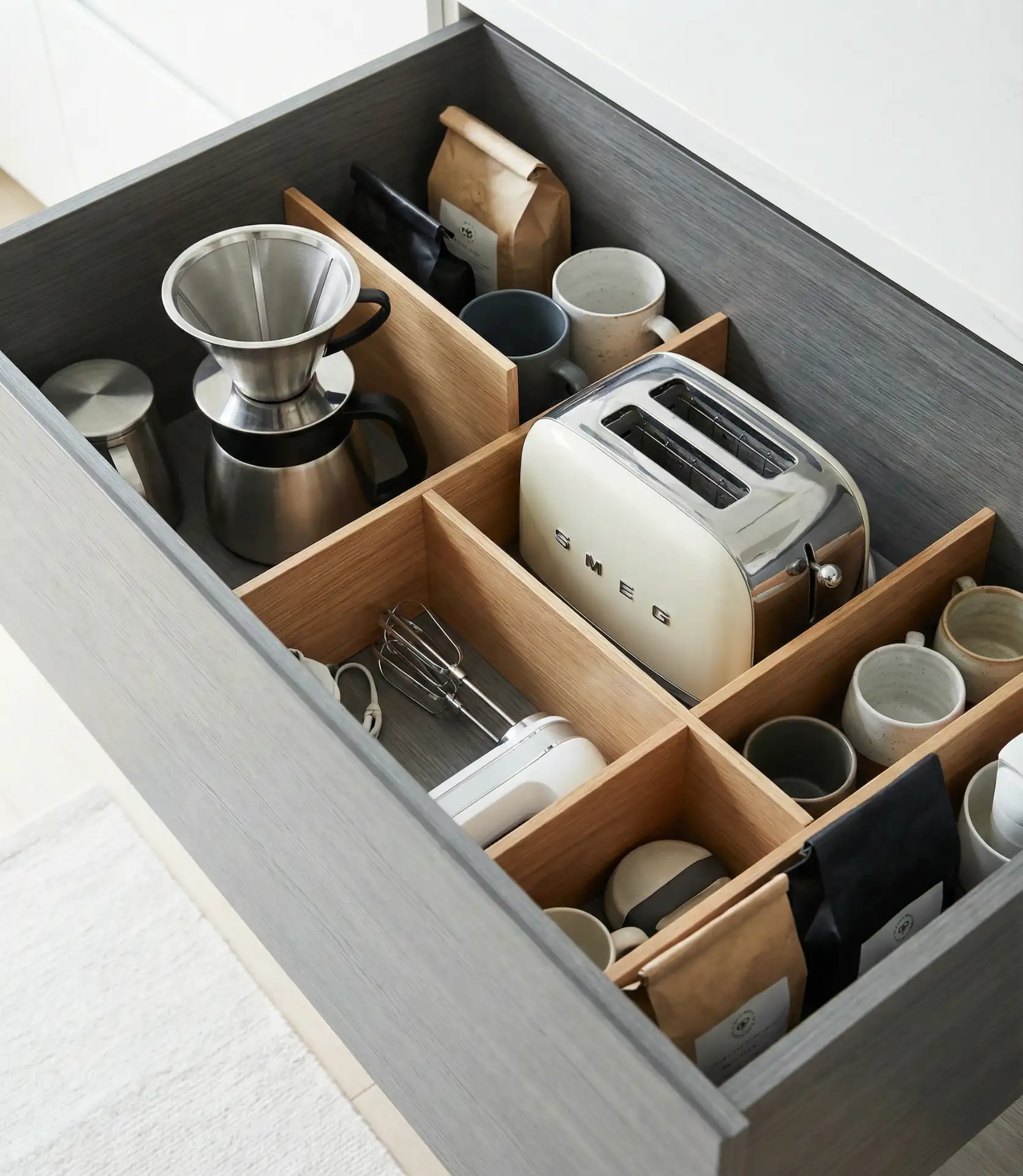
Small appliances clutter counters yet feel too heavy and awkward for standard upper cabinets. Deep drawers with custom dividers solve this perfectly, creating designated spots for mixers, blenders, food processors, and air fryers. The key is choosing base cabinets near outlets—some newer kitchens even include outlet strips inside drawers. This layout keeps appliances accessible but hidden, maintaining the clean countertop aesthetic that’s so popular right now.
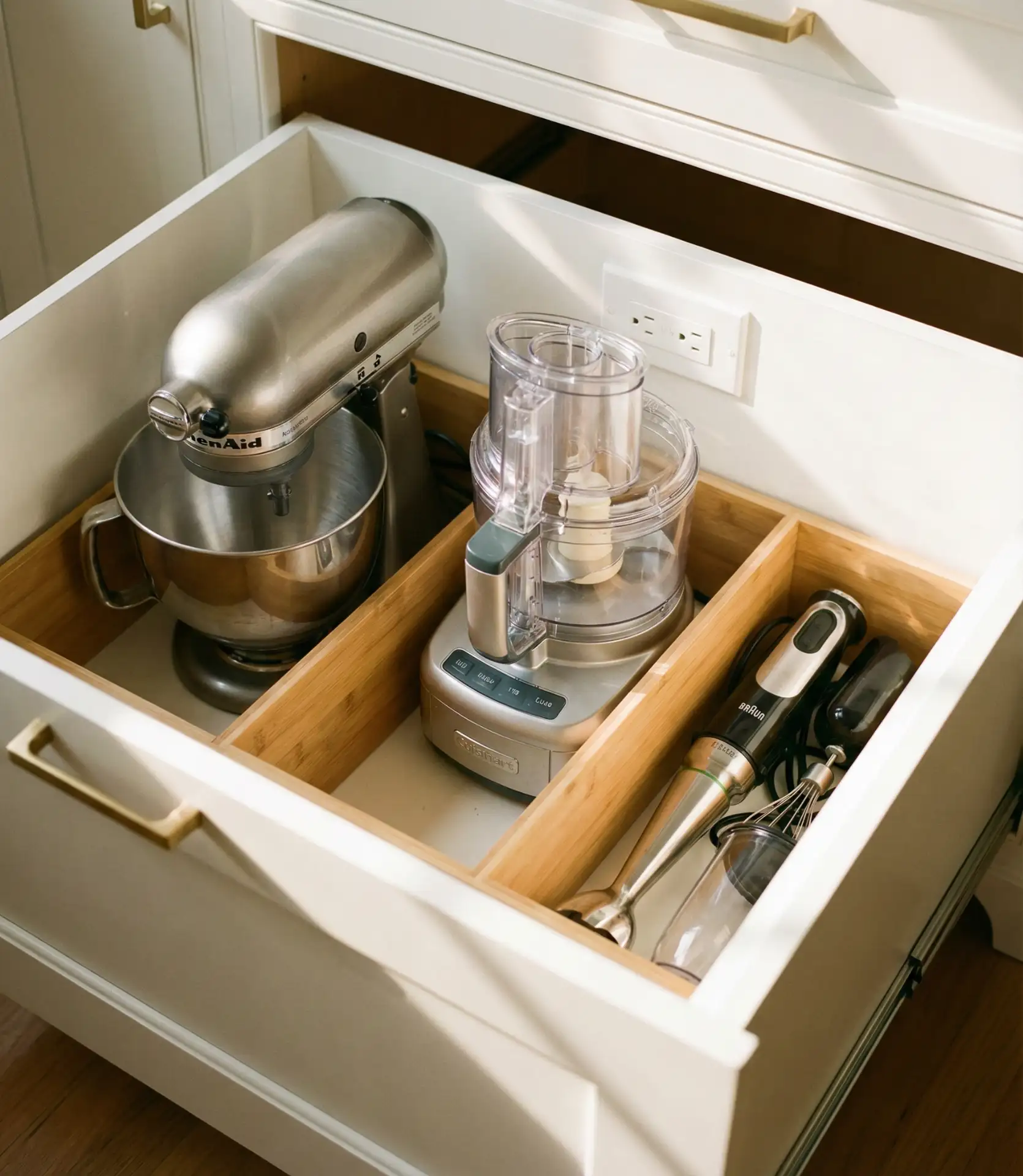
A practical insight: measure your tallest appliance before committing to this system, because standard drawers might not accommodate that vintage KitchenAid mixer. Drawer heights of at least twelve inches work for most appliances. Consider dedicating two adjacent drawers—one for large appliances and another for attachments and accessories—so everything stays organized and paired correctly.
11. Open Shelving with Strategic Styling
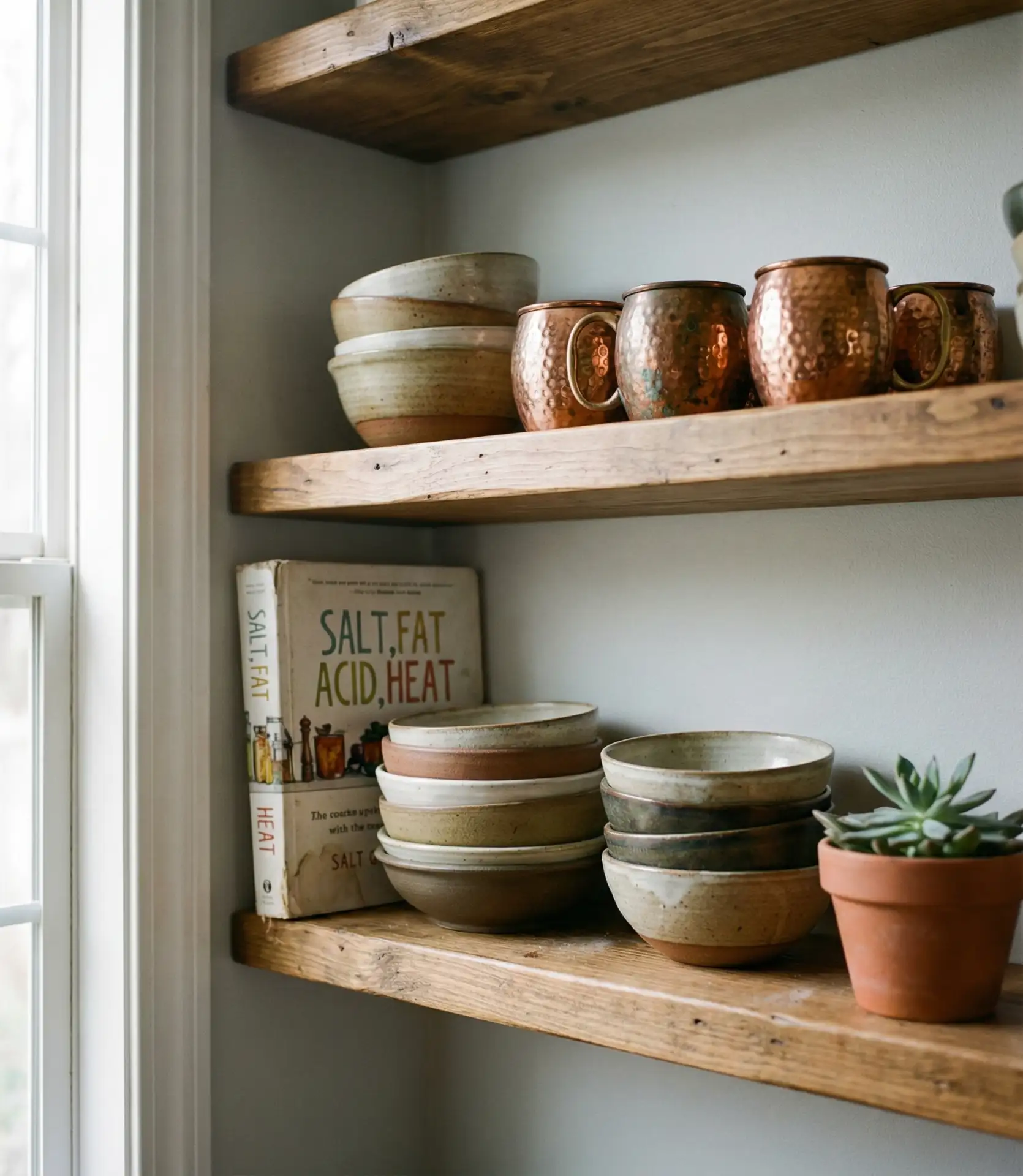
The layout trend of cupboards with open shelving continues strong in 2026, but the key is strategic implementation rather than replacing every cabinet. Remove doors from one or two upper cabinets near the dining area, then style them with your prettiest dishes, glassware, and a few decorative objects. This creates an aesthetic focal point while keeping everyday items accessible. Reserve closed cabinets for mismatched storage containers and less photogenic necessities.
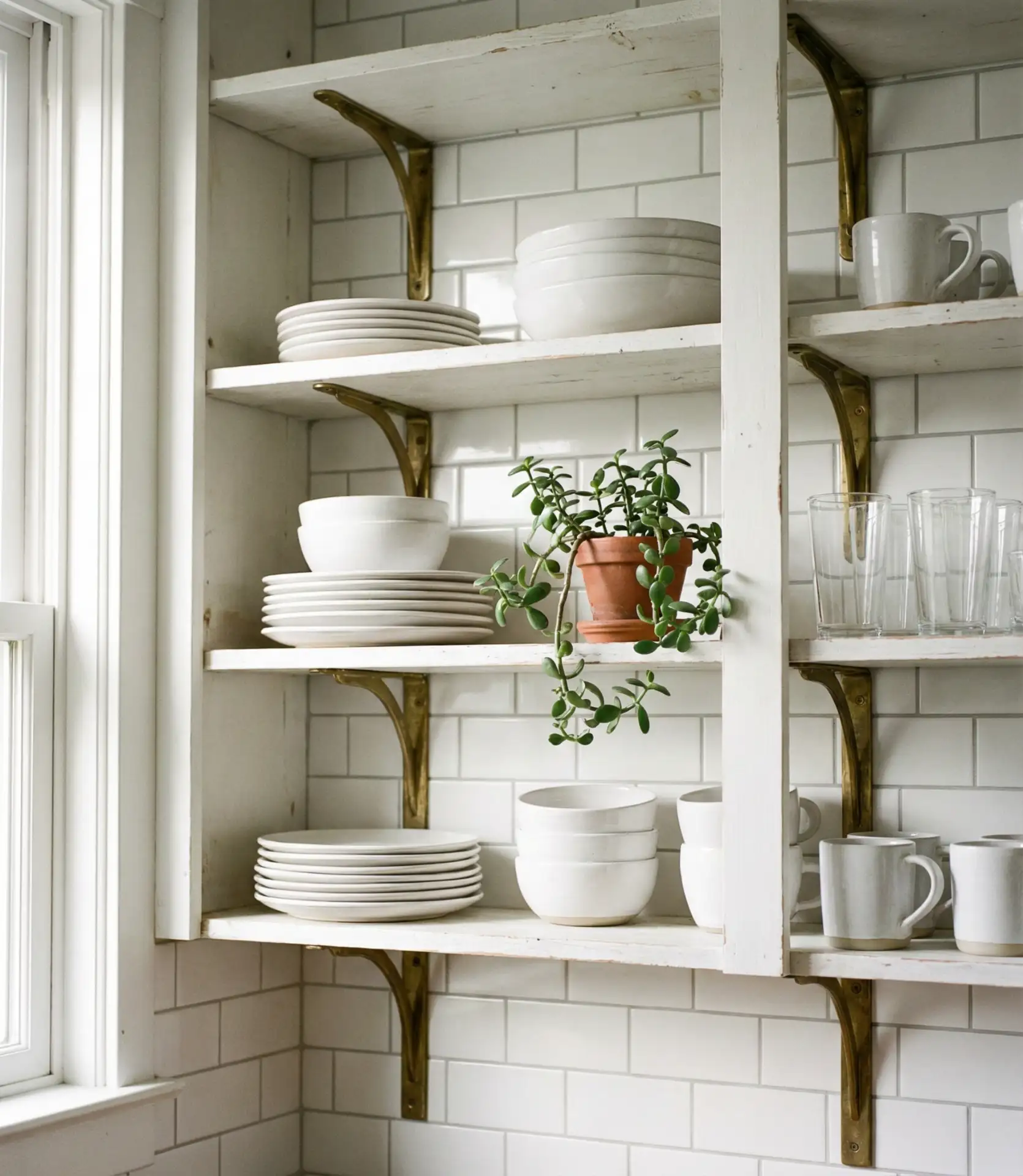
Real homeowner behavior shows that people who successfully maintain open shelving limit themselves to a maximum of 2–3 shelves and choose items they use frequently enough to prevent dust accumulation. The dishes are naturally rotated through washing, staying clean and functional. Those who try to convert entire kitchens to open shelving often regret it within six months when the reality of dusting and maintaining visual perfection sets in.
12. Pull-Down Shelving for High Cabinets
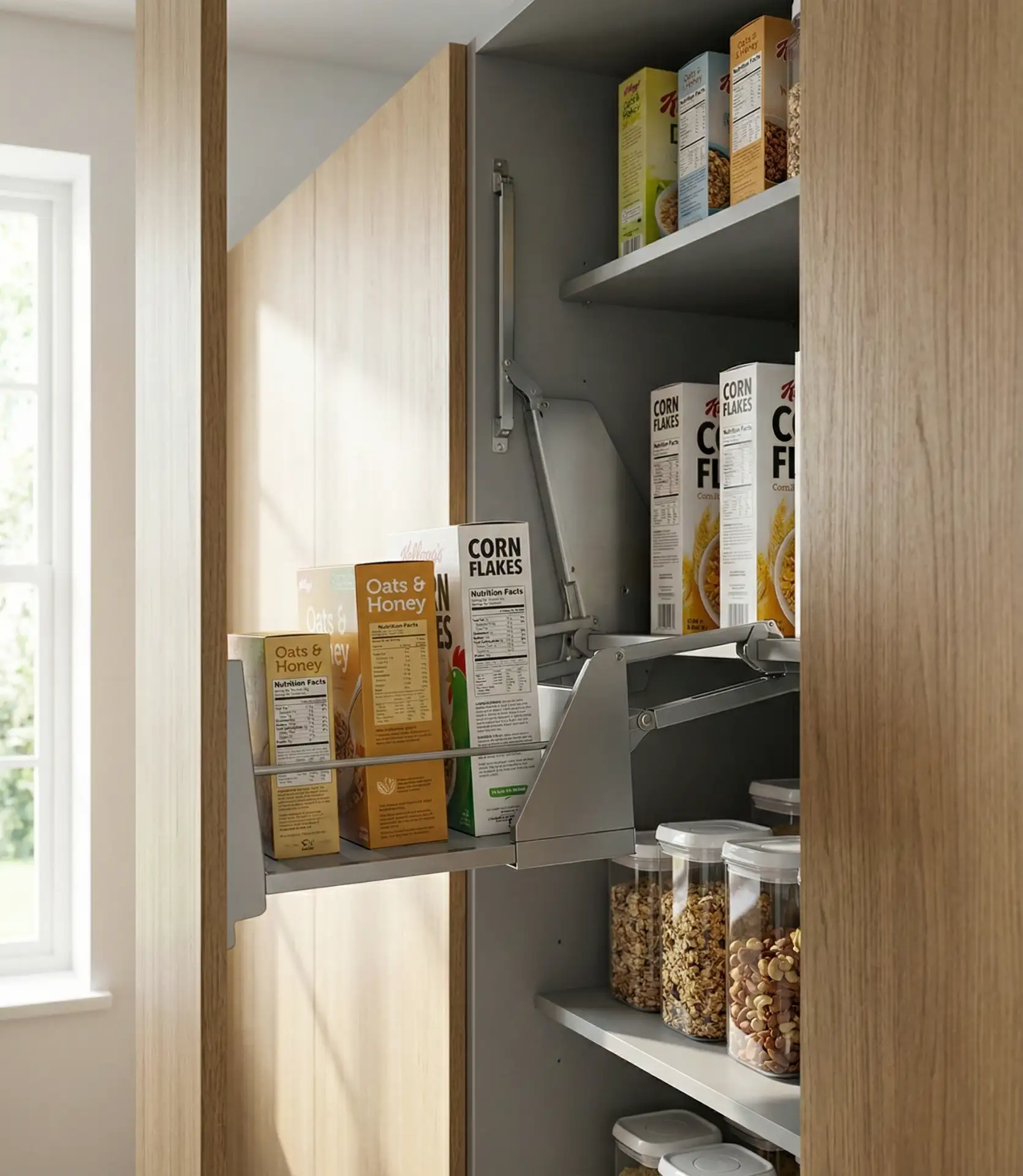
Those soaring upper cabinets in kitchens with nine-foot ceilings look impressive but become useless storage without a stepladder. Pull-down shelving systems use a simple spring-loaded or hydraulic mechanism to bring the top shelf down to eye level, then push it back up when you’re done. This German-engineered solution works brilliantly for seasonal items, special occasion dishes, or bulk pantry goods you want accessible but don’t need daily.
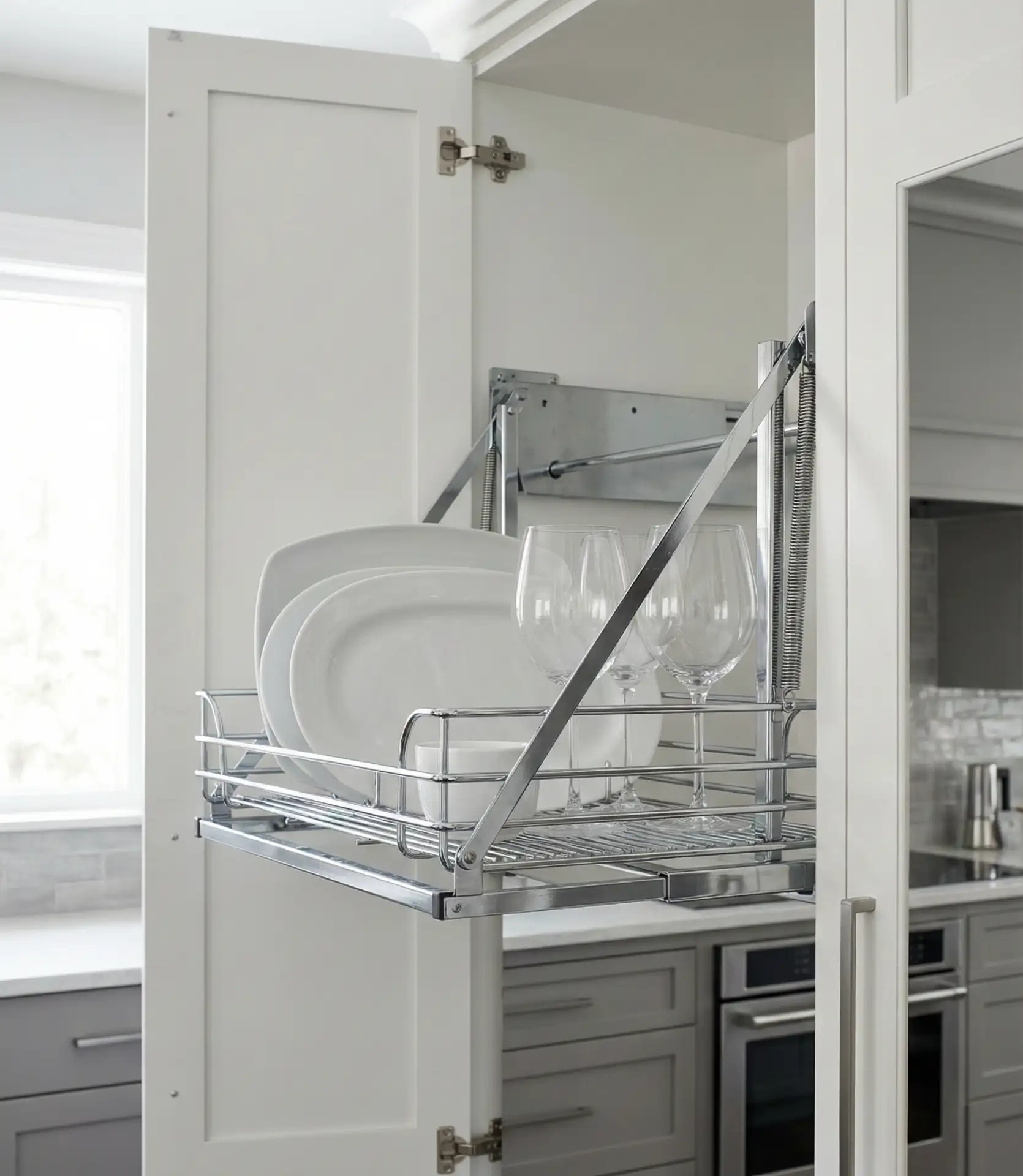
American lifestyle context: in suburban homes with spacious rooms and vaulted ceilings, designers often add these tall cabinets for visual scale, but homeowners rarely use them effectively. Pull-down systems cost between one hundred fifty and three hundred dollars installed, making that expensive storage actually functional. They’re particularly popular in the South and Southwest, where newer homes tend toward dramatic ceiling heights.
13. Toe-Kick Drawers for Hidden Storage
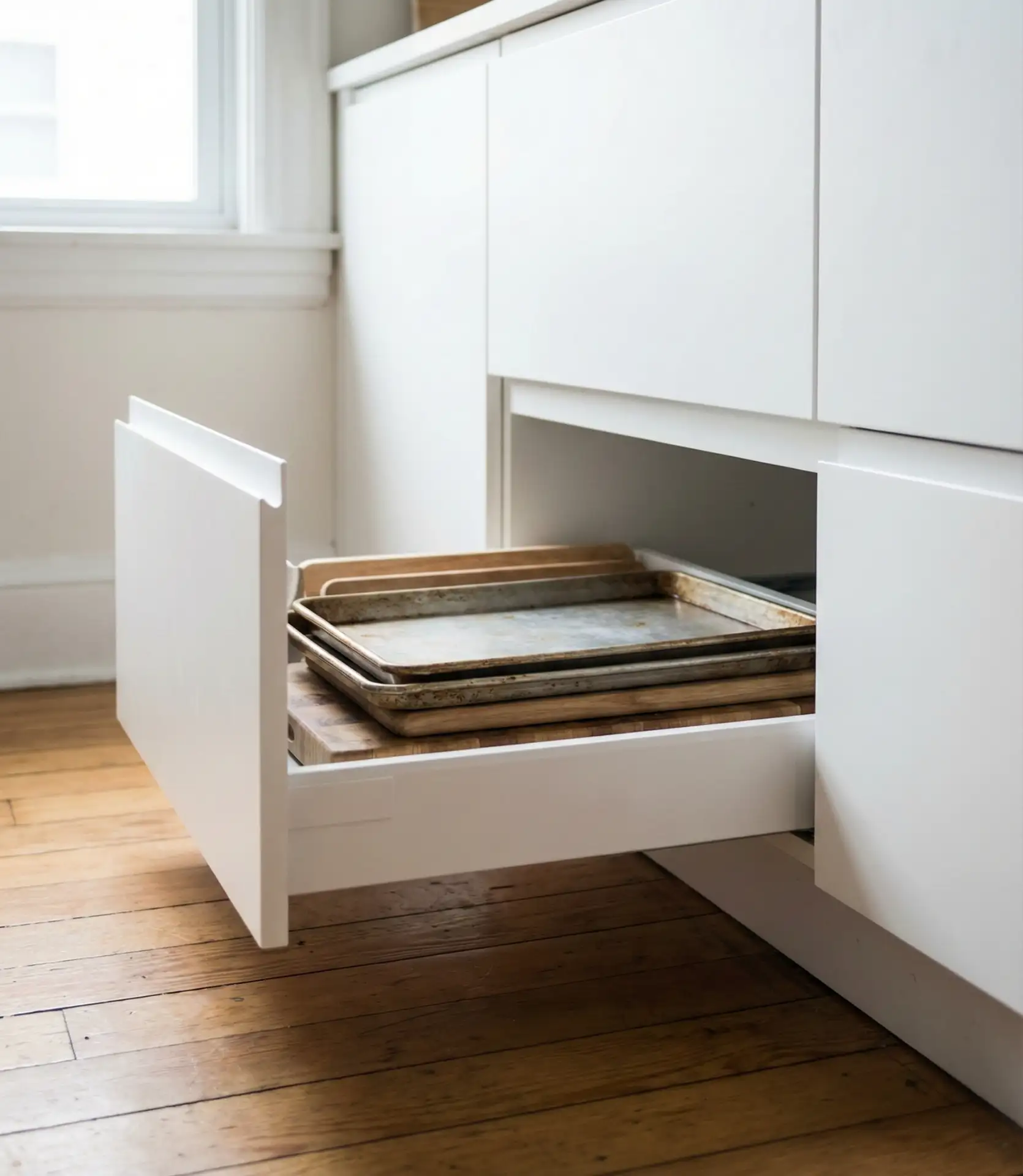
The four-inch space under base cabinets—the toe kick—represents untapped storage potential in virtually every kitchen. Shallow drawers installed in this space work perfectly for flat items like baking sheets, cutting boards, placemats, or even wine bottle storage. This clever DIY or professional modification adds significant capacity without changing the kitchen’s footprint or visual appearance. The drawers are nearly invisible until you need them.
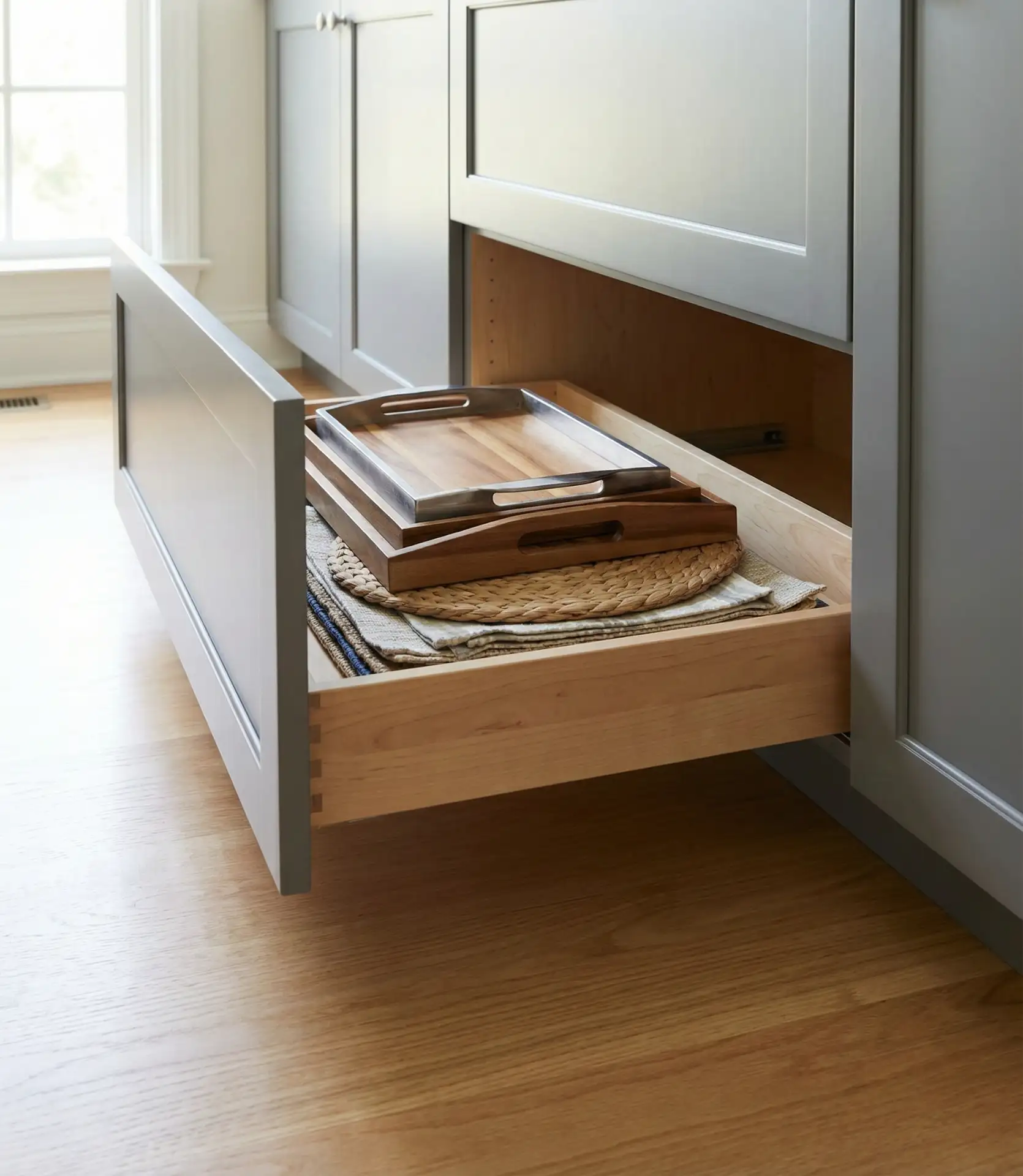
Where this works best: galley kitchens and small-space apartments where every square inch matters. The modification works best during renovations when cabinets are being installed anyway, but retrofit kits exist for existing kitchens. Just ensure your flooring can handle the cut—tile and hardwood work fine, but some floating floors might require professional adjustment.
14. Sliding Basket Systems for Produce Storage
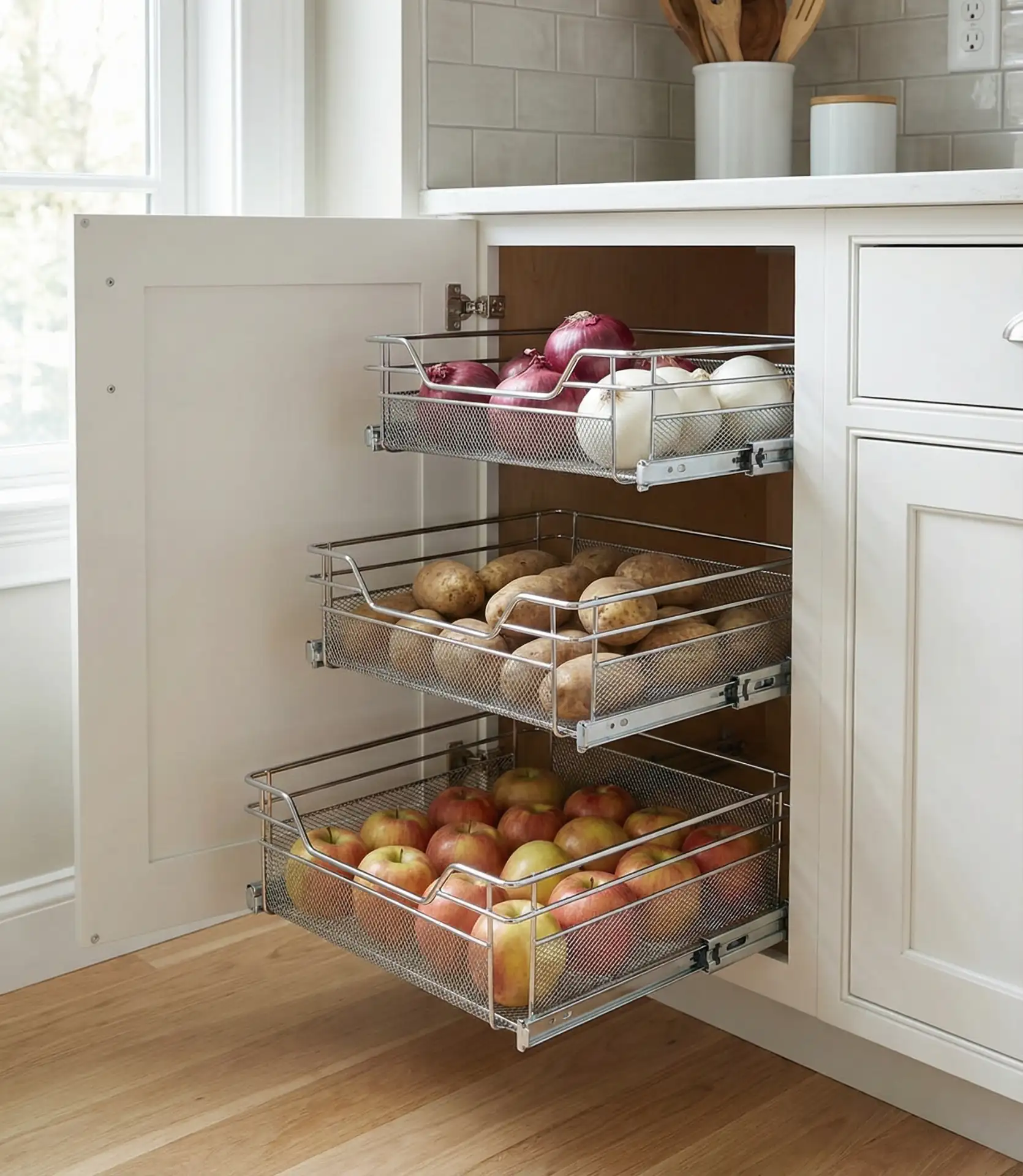
Countertop fruit bowls attract fruit flies and take up valuable prep space, while produce hidden in the fridge gets forgotten and spoils. Wire basket systems installed in lower cabinets solve both problems, providing ventilated storage that keeps food visible and fresh. Multiple sliding baskets let you separate root vegetables from fruits, preventing the ethylene gas issues that cause premature ripening. This layout works particularly well in base cabinets away from heat sources.
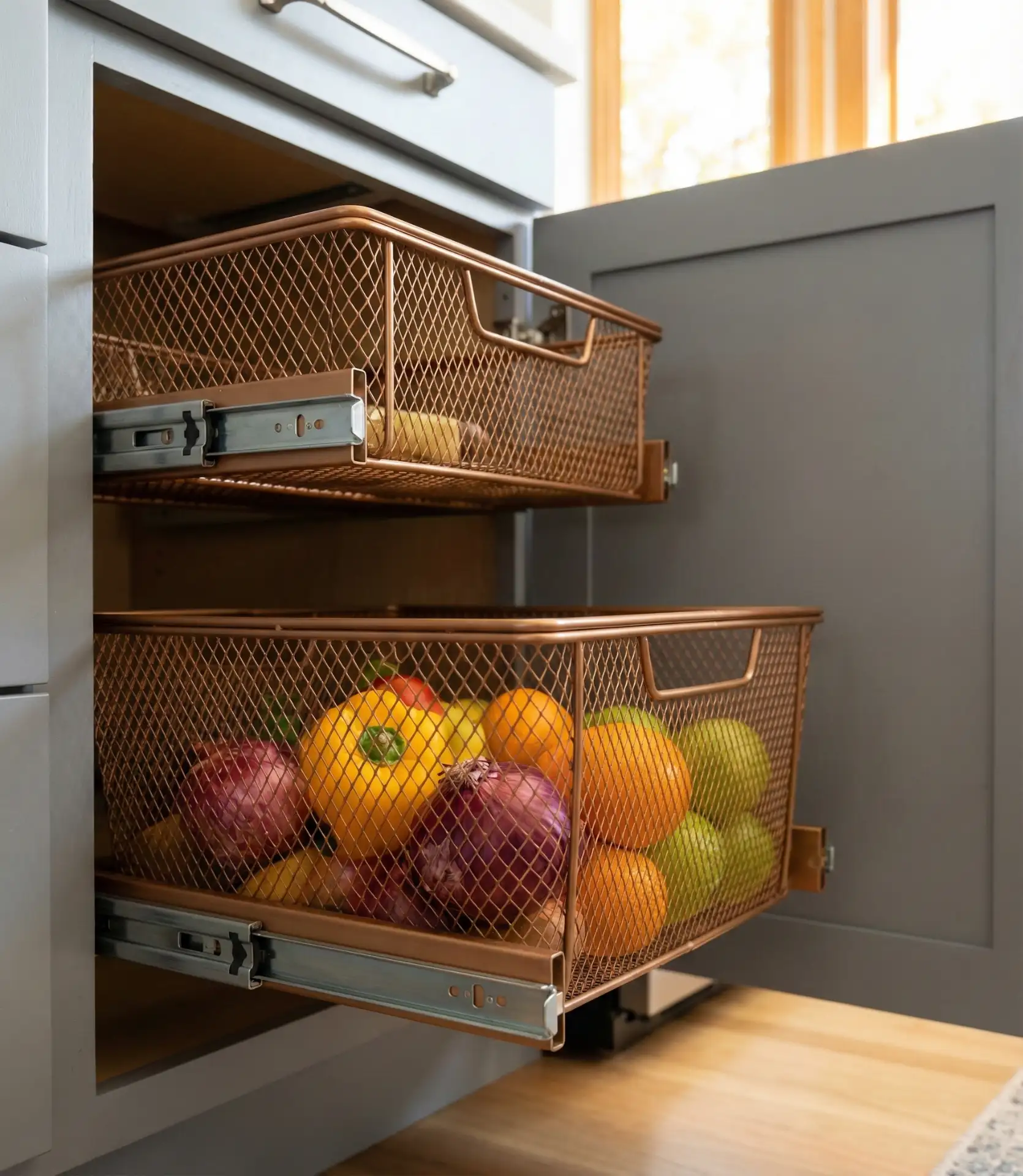
Common mistakes include storing potatoes above onions—they’ll sprout faster—or placing produce baskets near the stove, where heat accelerates spoilage. Install these systems in cooler base cabinets, ideally on an exterior wall or away from appliances. Line baskets with newspaper or brown paper to absorb moisture, and remember that not all produce belongs here—tomatoes and avocados prefer counter temperature for proper ripening.
15. Modular Drawer Organizer Systems
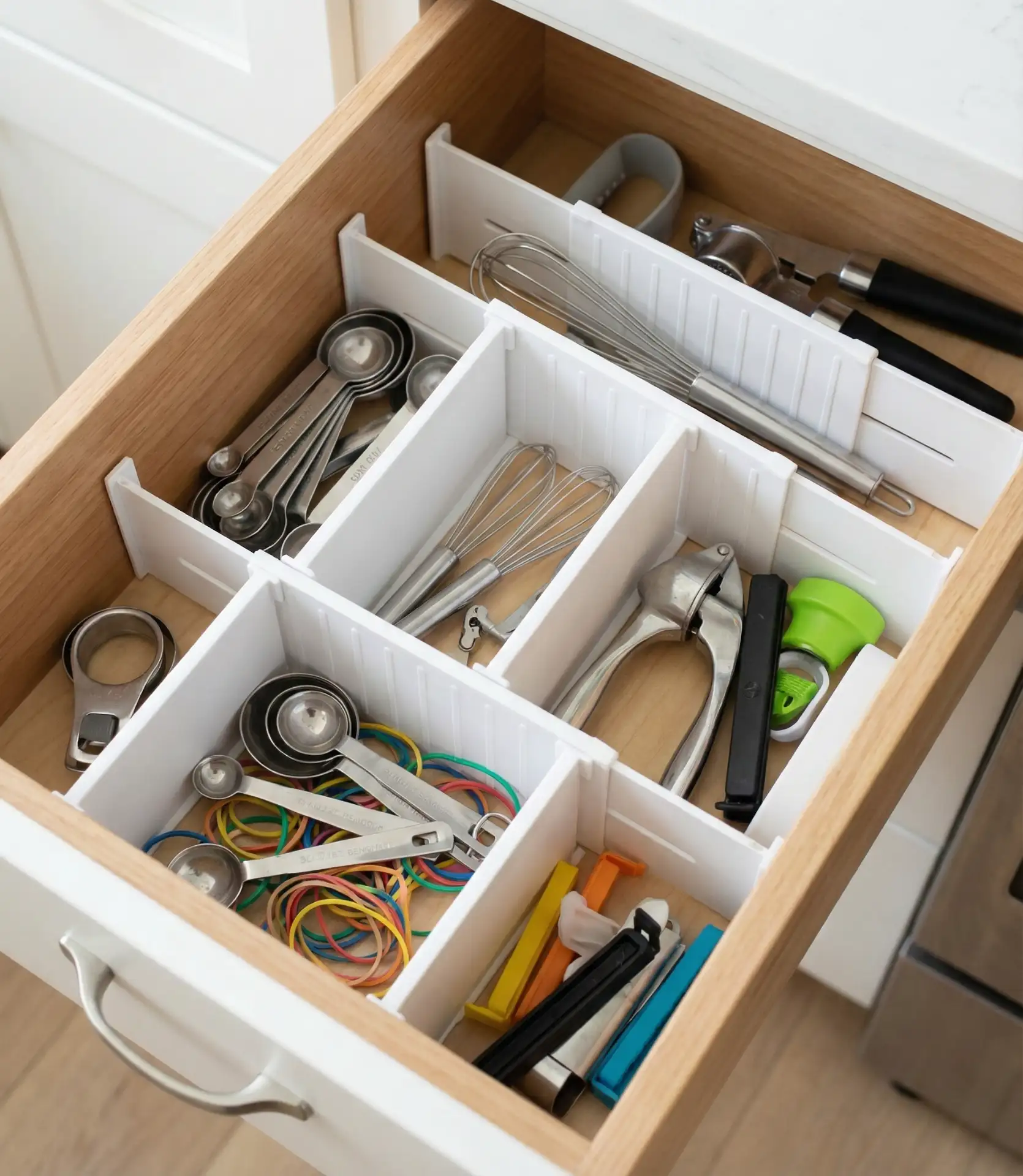
The junk drawer phenomenon exists because most drawers lack internal organization, becoming catchalls for random kitchen items. Modular systems with adjustable compartments transform these spaces into functional storage for utensils, gadgets, batteries, twist ties, and everything else that needs a home. Expandable bamboo or plastic organizers accommodate different drawer dimensions, while removable dividers let you reconfigure the layout as needs change. No more digging through chaos for the garlic press.
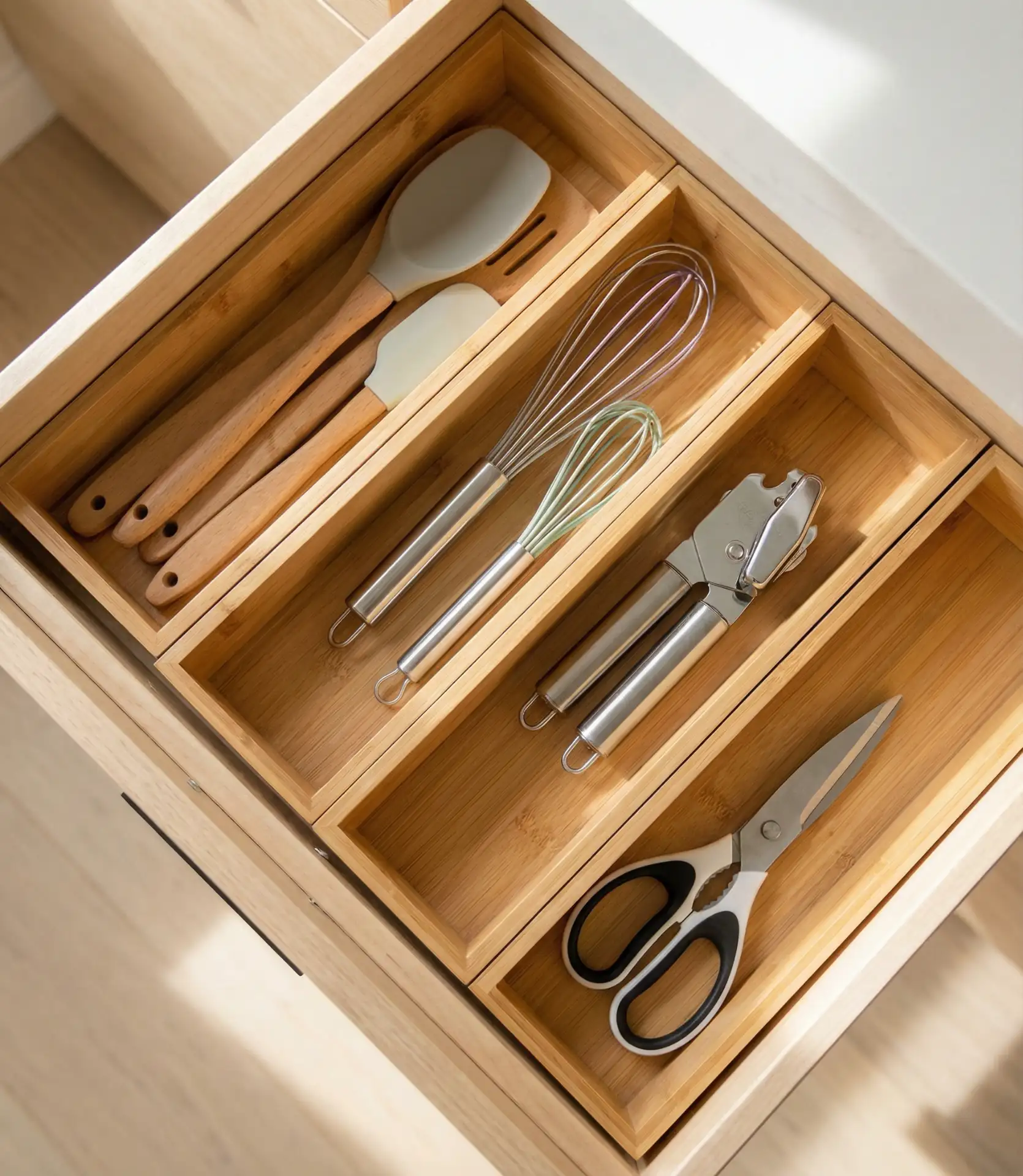
Expert-style commentary: professional organizers recommend starting with your most-used drawer—typically near the stove—and measuring it carefully before buying storage solutions. Spring-loaded dividers that adjust width work better than fixed-size systems because drawer dimensions vary wildly between manufacturers. Invest in quality organizers for high-traffic drawers and save the budget versions for less-used spaces. The time saved by not searching for tools quickly offsets the cost of the upgrade.
16. Magnetic Knife Strips for Vertical Storage
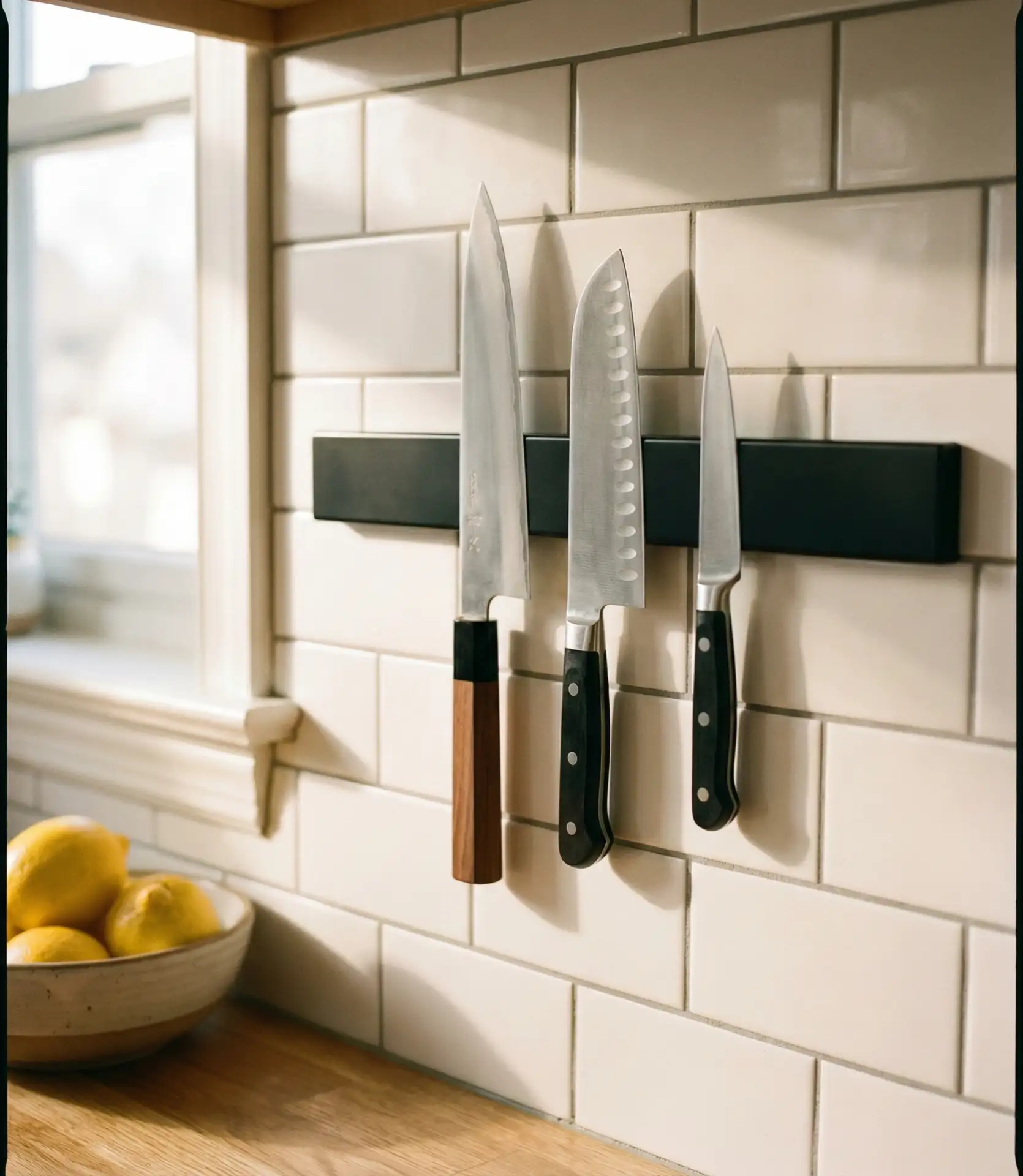
Knife blocks consume precious counter space and harbor bacteria in those narrow slots, while drawer storage dulls blades and creates safety hazards. Magnetic strips mounted on walls or inside upper cabinet doors keep knives sharp, visible, and accessible while adding a professional kitchen aesthetic. Install them at a comfortable height where you can safely grab and replace knives without awkward reaching. This solution works for any kitchen size but shines in small space layouts.
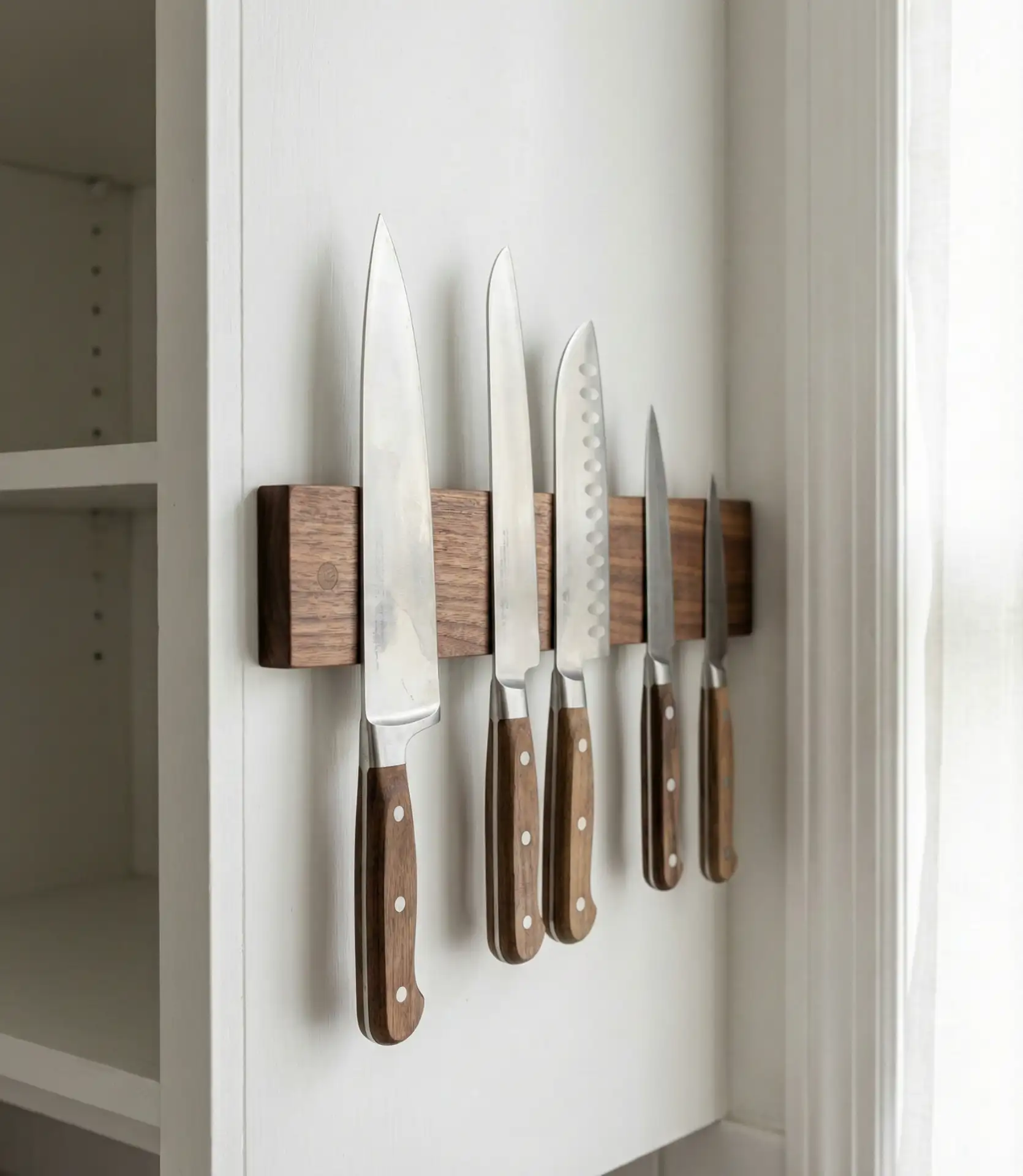
A micro-anecdote: a Seattle couple with a tiny galley kitchen freed up eighteen inches of counter space by switching from a knife block to a magnetic strip, finally giving them room to prep meals side by side. The strips also work brilliantly for magnetic spice tins, creating additional vertical storage without drilling new holes. Just make sure the magnet strength matches your knife weight—cheap strips won’t hold heavy cleavers securely.
17. Indian Spice Storage with Masala Dabba

For Indian cooking enthusiasts, the traditional masala dabba—a round stainless steel container with seven internal compartments—represents brilliant spice organization. This compact system keeps whole spices like cumin, mustard seeds, turmeric, and coriander in one portable container that fits easily in cupboards or drawers. The airtight design preserves freshness, while the small spoon attached to the lid makes measuring effortless. It’s a practical design that’s been perfected over centuries.
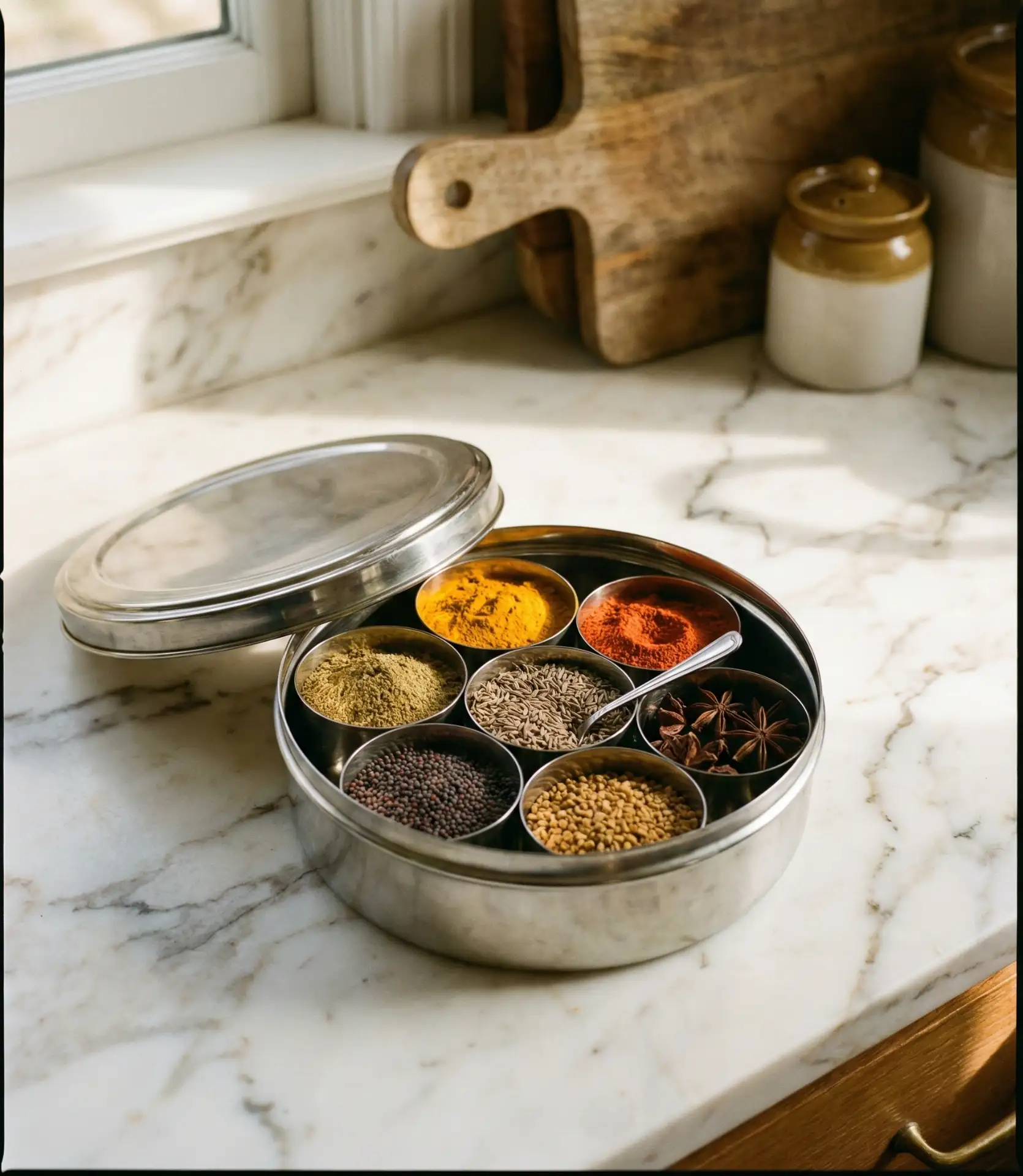
Regional context: in areas with large South Asian populations like New Jersey, Texas, and California, these spice boxes are kitchen staples found in most Indian grocery stores for under twenty dollars. But their utility extends beyond Indian cooking—any cuisine that uses whole spices benefits from this organization method. The key is keeping your masala dabba near the stove for quick access during tadka (tempering), the technique that forms the flavor base of countless dishes.
18. Child-Safe Lower Cabinet Organization
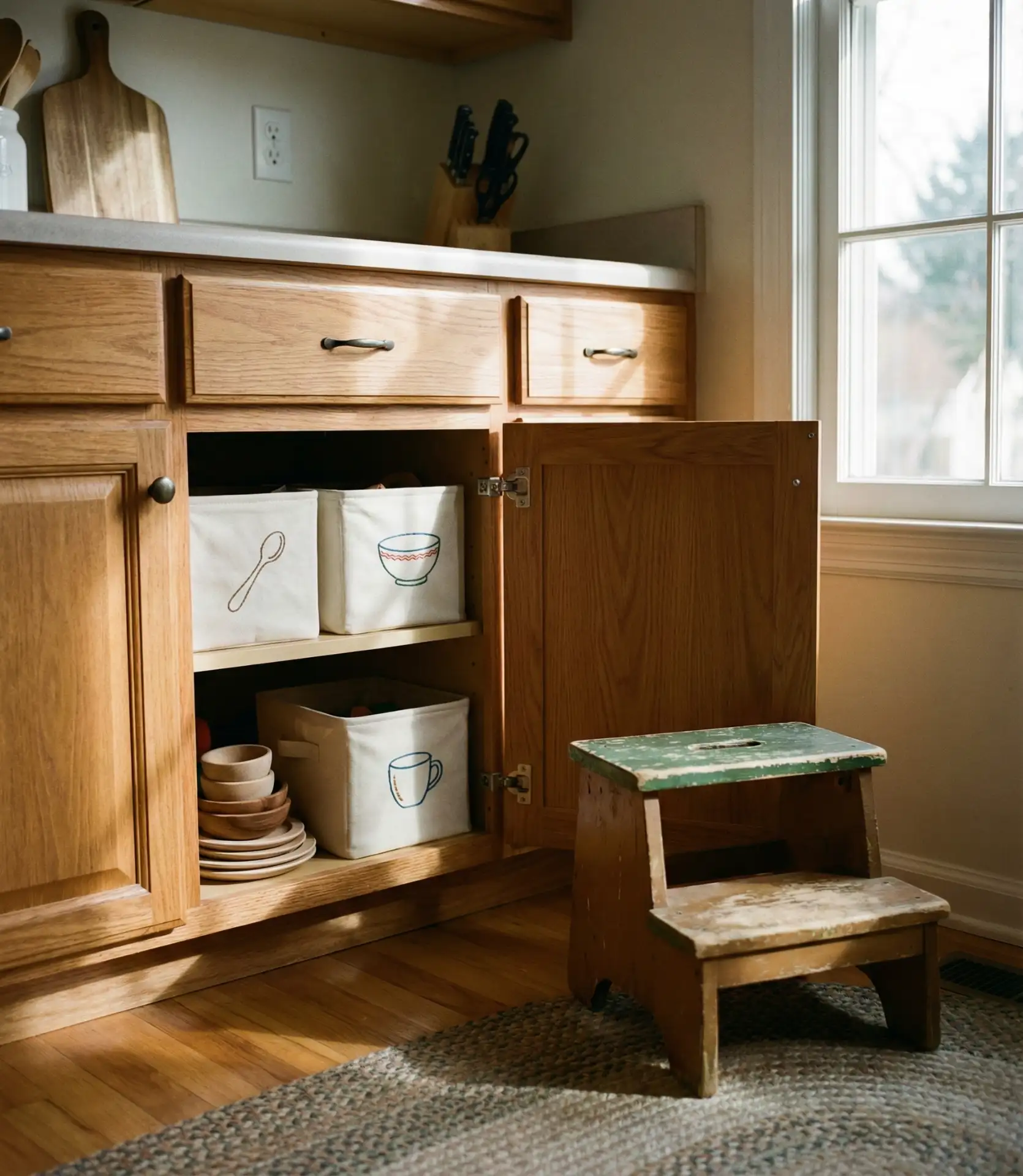
Families with young children need kitchen organization that’s both functional and safe. Dedicate lower cabinets to plastic containers, lightweight pots with handles removed, wooden spoons, and unbreakable dishes—items kids can explore without danger. Install magnetic locks on cabinets with cleaning supplies or sharp objects, creating clear boundaries. This layout encourages independence while keeping dangerous items out of reach, and it’s genius for kids learning to help in the kitchen.
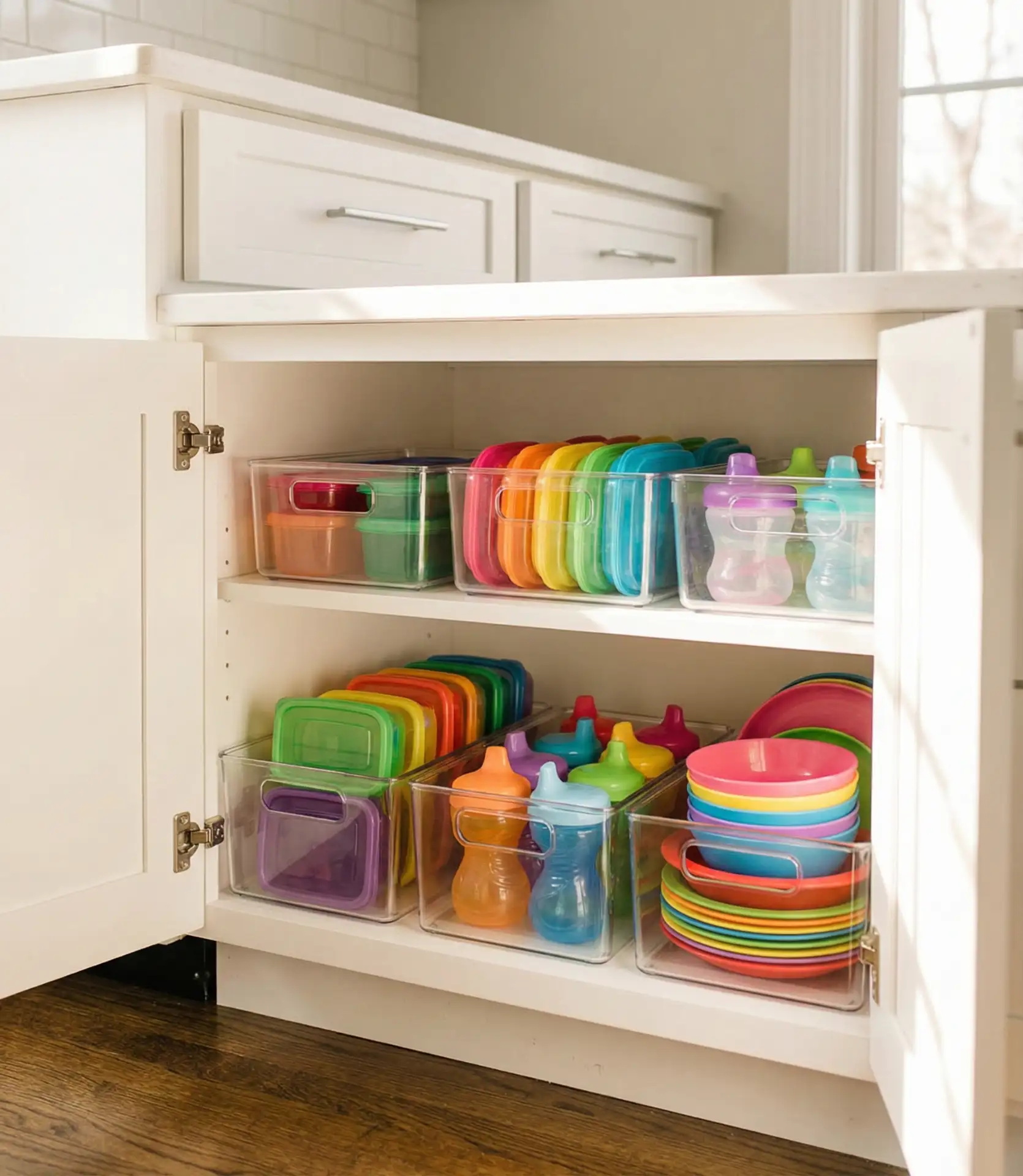
Practical insight: toddlers love “helping” in the kitchen, which usually means pulling everything out of cabinets. Organizing one or two lower cabinets specifically for kids helps you control chaos by keeping items that don’t matter from being scattered on the floor. As children grow, evolve these spaces into actual functional storage they can access for setting the table or getting snacks. Establishing the habit of understanding the proper placement of items at an early age yields significant benefits over time.
19. Corner drawer systems replace blind cabinets.
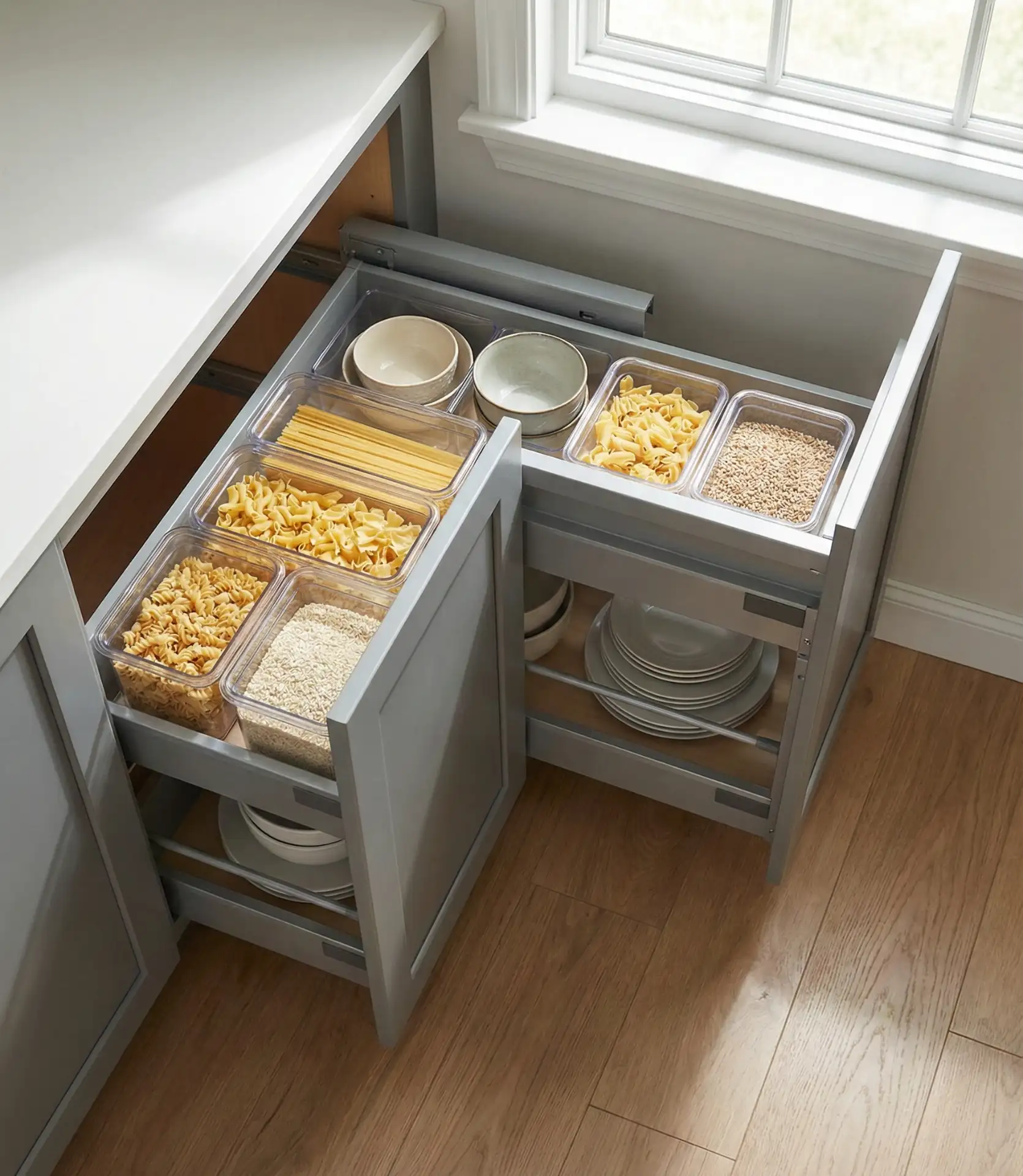
Blind corner cabinets are kitchen design disasters, wasting twenty to thirty percent of their capacity to inaccessibility. Modern corner drawer systems use a diagonal drawer front that pulls out and then slides to the side, revealing the entire corner space. This innovative storage solution eliminates the black hole effect and works beautifully for pots and pans, small appliances, or pantry goods. It’s a premium upgrade but transforms unusable space into some of your hardest-working storage.
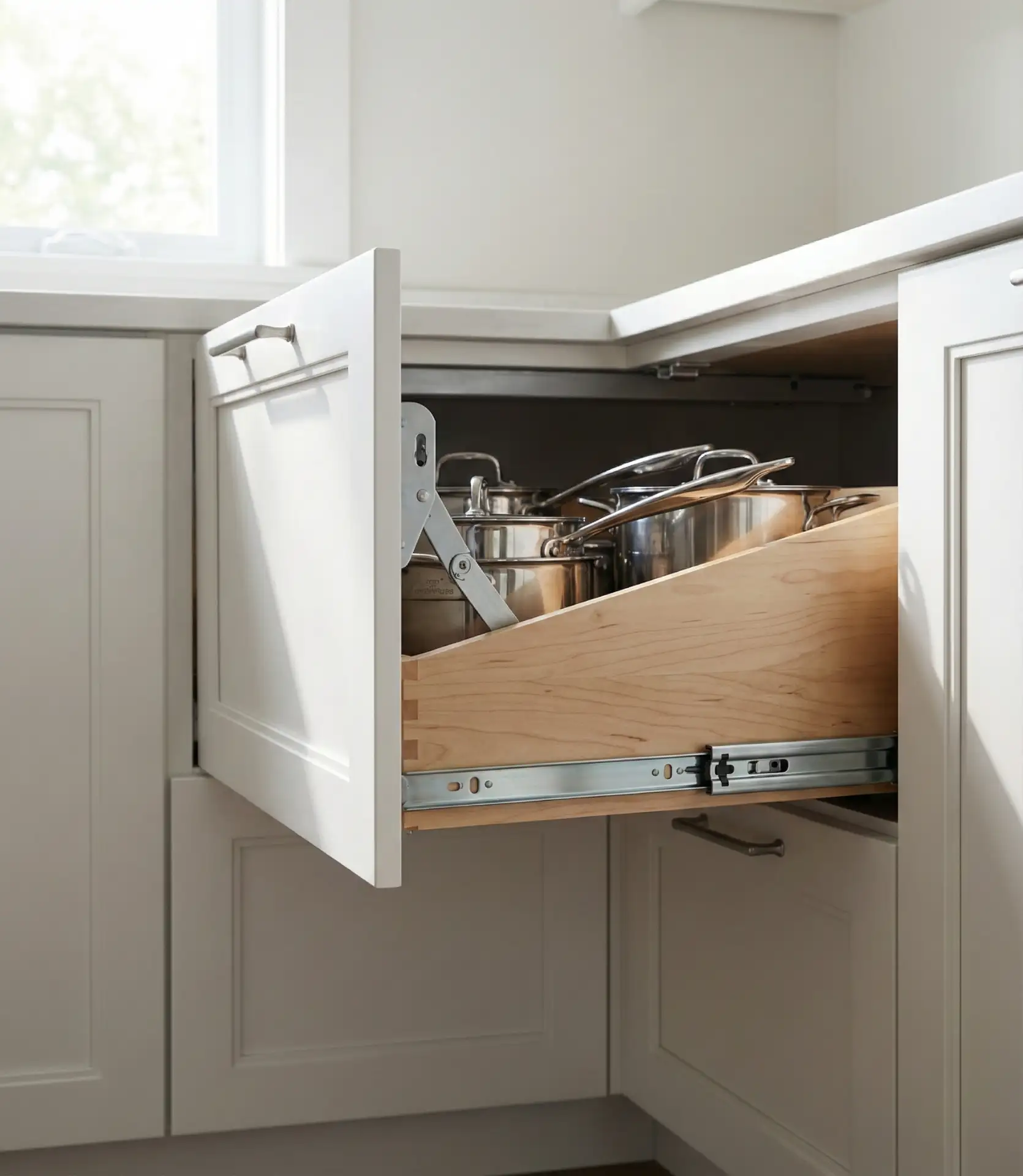
Budget angle: these systems cost significantly more than standard cabinets—expect to add five hundred to a thousand dollars per corner during a kitchen remodel. However, they recover so much usable space that homeowners consistently rank them as one of their favorite upgrades. For existing kitchens, retrofitting is challenging and expensive, but professional cabinet companies offer solutions that work with most standard layout cupboard configurations if you’re planning a renovation anyway.
20. Appliance Garage for Countertop Clutter
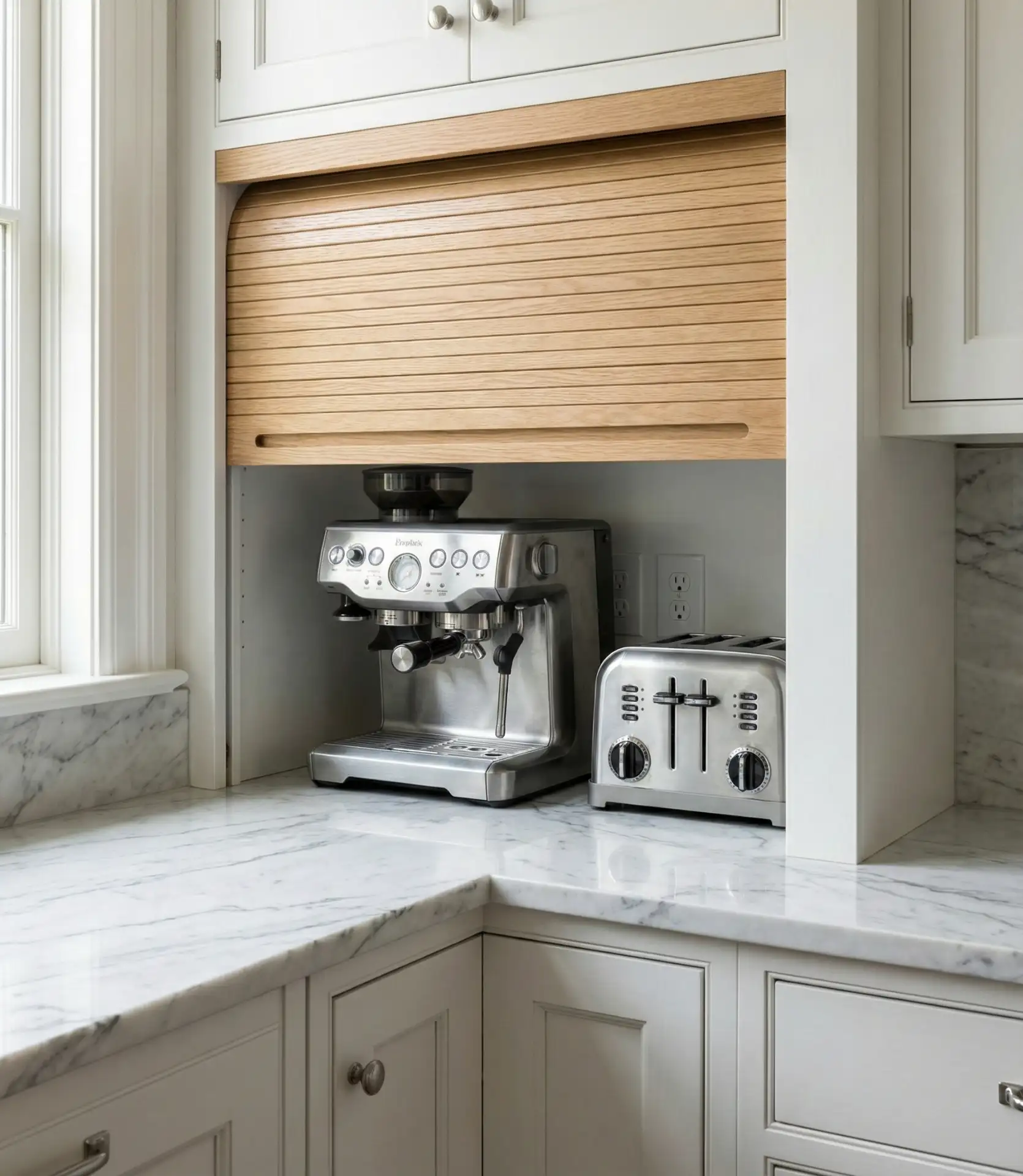
Countertop appliances create visual clutter even in large kitchens, but you use them too frequently to store them away completely. An appliance garage—a dedicated cabinet section with a tambour door or lift-up panel—keeps coffeemakers, toasters, and blenders accessible but hidden. Built into corner upper cabinets or as a counter-height section, this storage solution maintains the clean aesthetic everyone wants while keeping appliances plugged in and ready to use. It’s practical luxury.
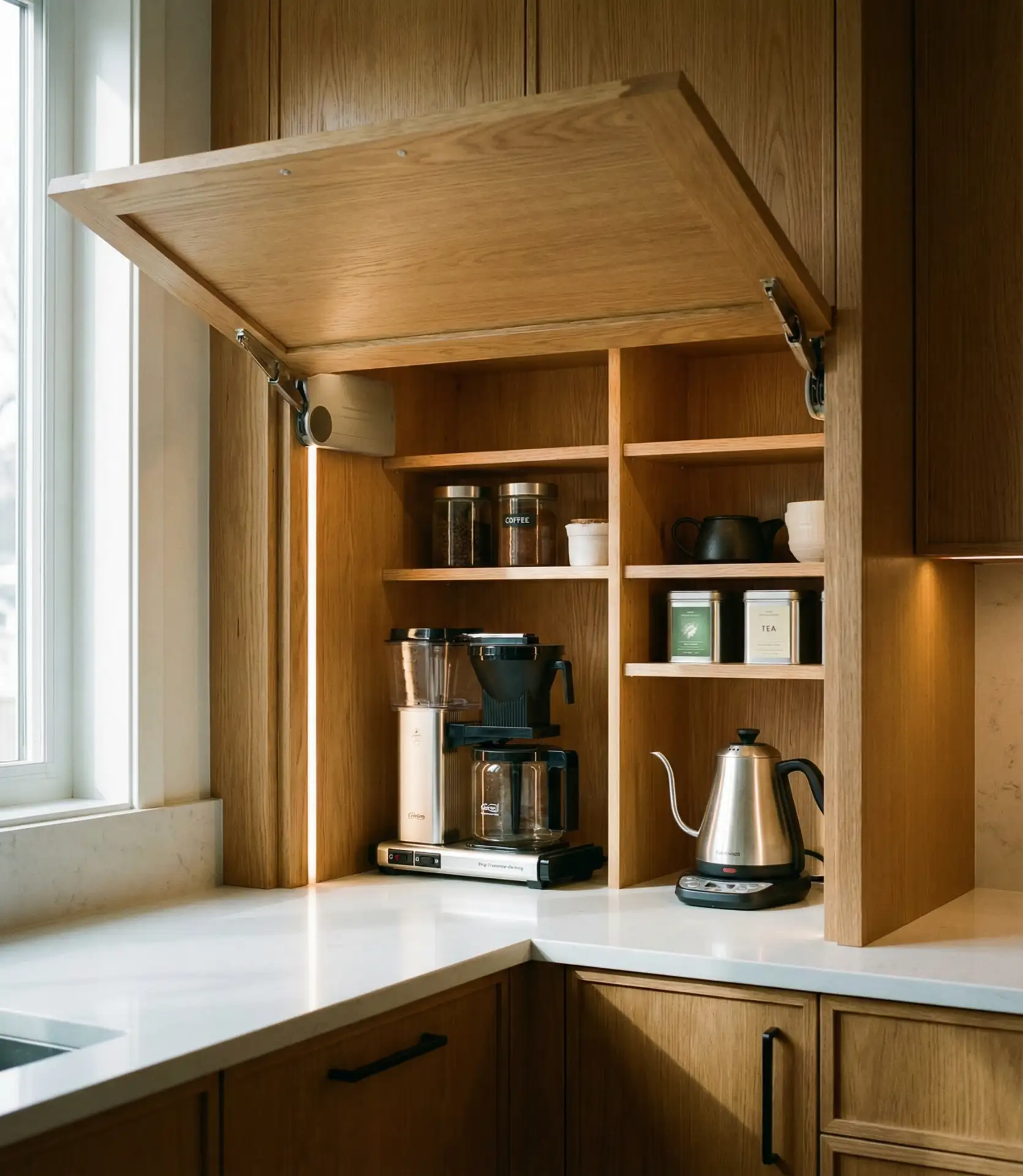
This solution is most effective in homes where daily routines involve using appliances, but entertaining requires clear countertops. The morning coffee station stays accessible but disappears behind closed doors when guests arrive. Make sure the garage has dedicated electrical outlets and adequate depth—standard counters are twenty-four inches deep, and most appliances need eighteen to twenty inches. Ventilation matters too, especially for appliances that produce heat or steam.
21. Drawer Organizers for Baking Supplies
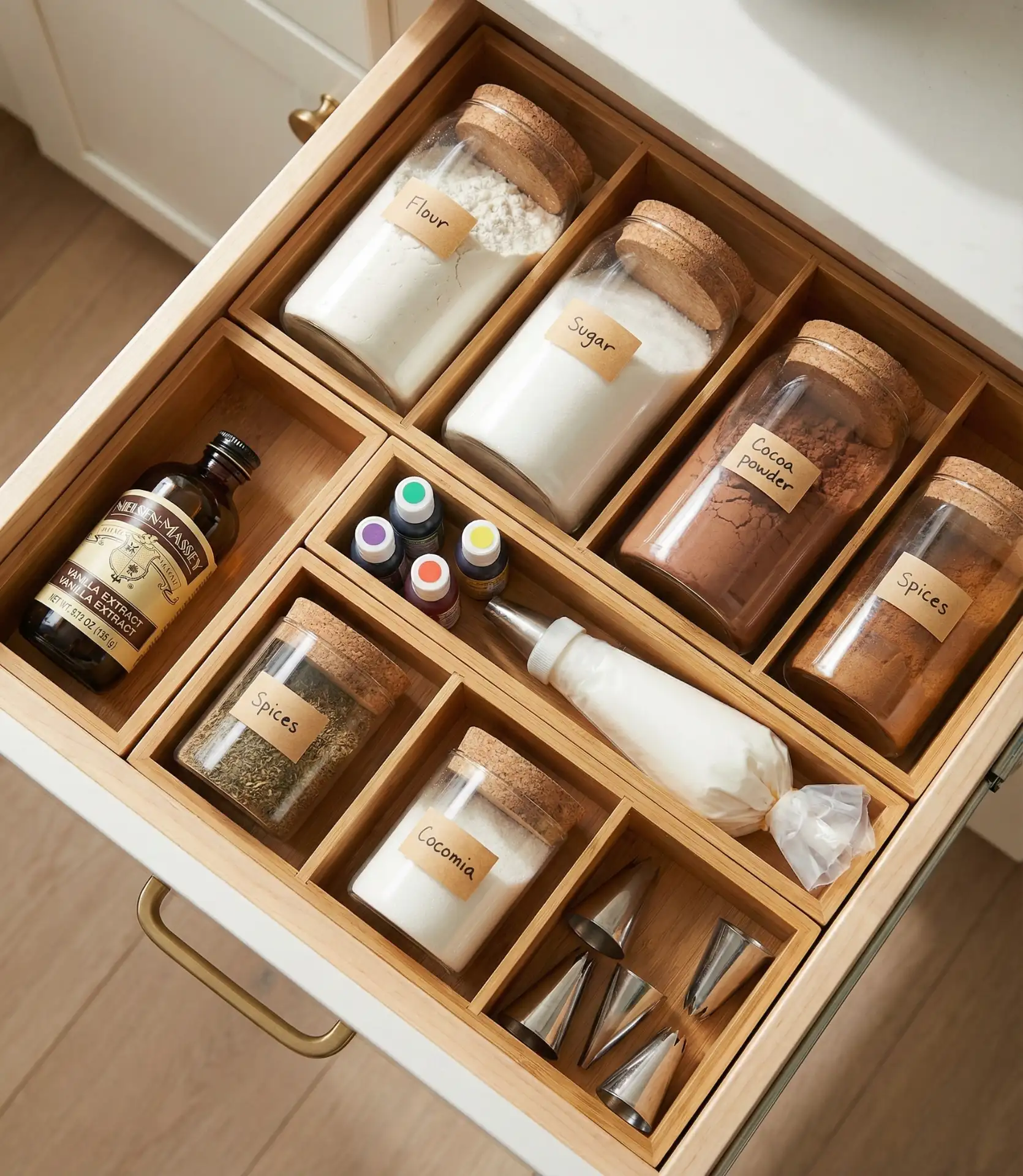
Baking supplies scattered across multiple cupboards make the process frustrating before you even preheat the oven. A dedicated deep drawer with compartmented organizers keeps flour, sugar, baking powder, chocolate chips, sprinkles, and cookie cutters in one location. This storage approach works best near your mixing area, ideally in a drawer below the counter where you typically prep. Transfer staples to clear containers for easy visibility and fresher ingredients.
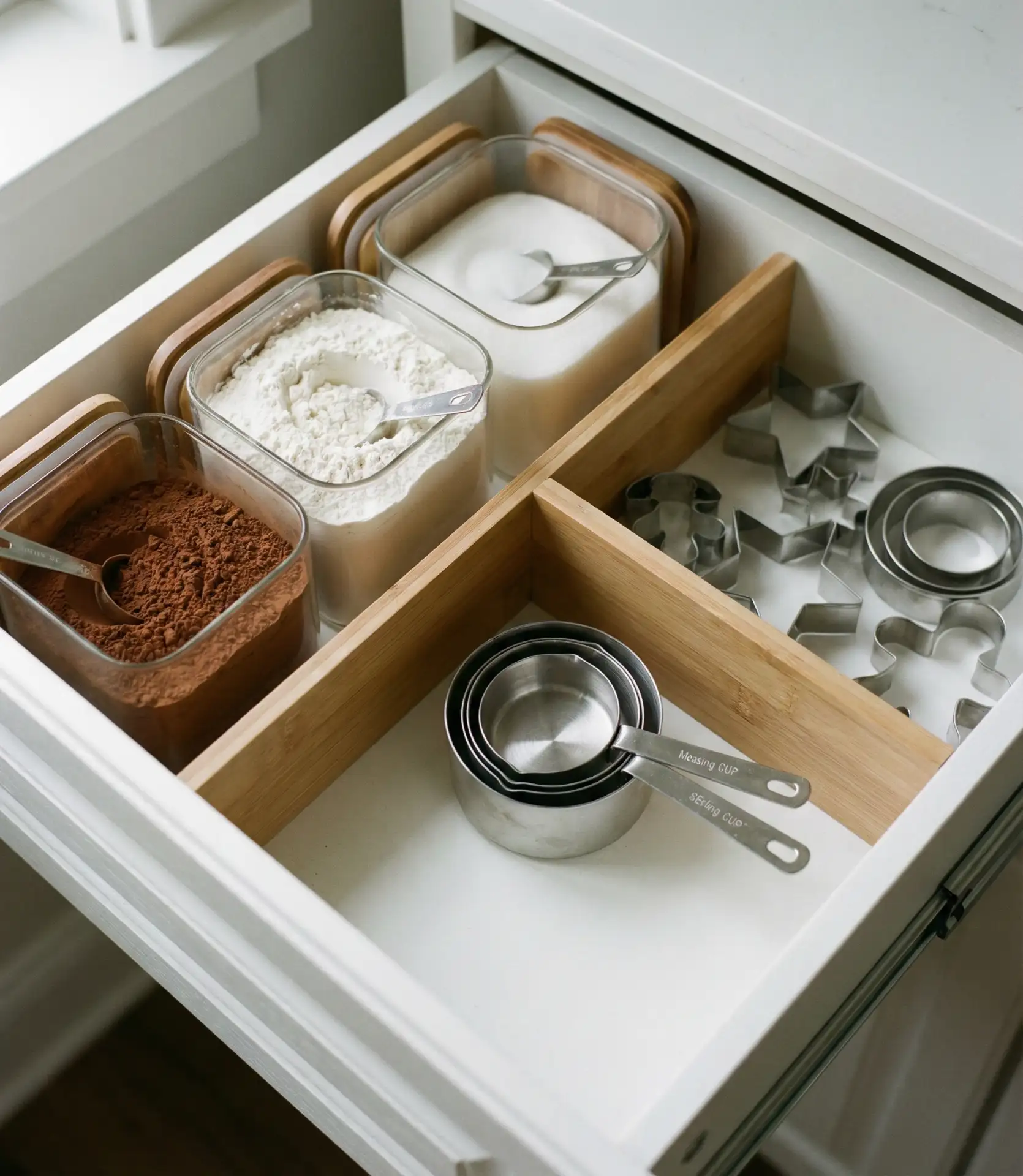
Real homeowner behavior: Regular bakers report that this single organizational change significantly reduces prep time because everything they need is easily accessible. Occasional bakers find that this organization method encourages them to bake more frequently because they can easily access their supplies without searching for them. Store infrequently used items like cake decorating supplies separately—this drawer is for the food and tools you reach for weekly, not the specialty items gathering dust.
22. Pull-Out Cutting Board and Prep Surface Storage
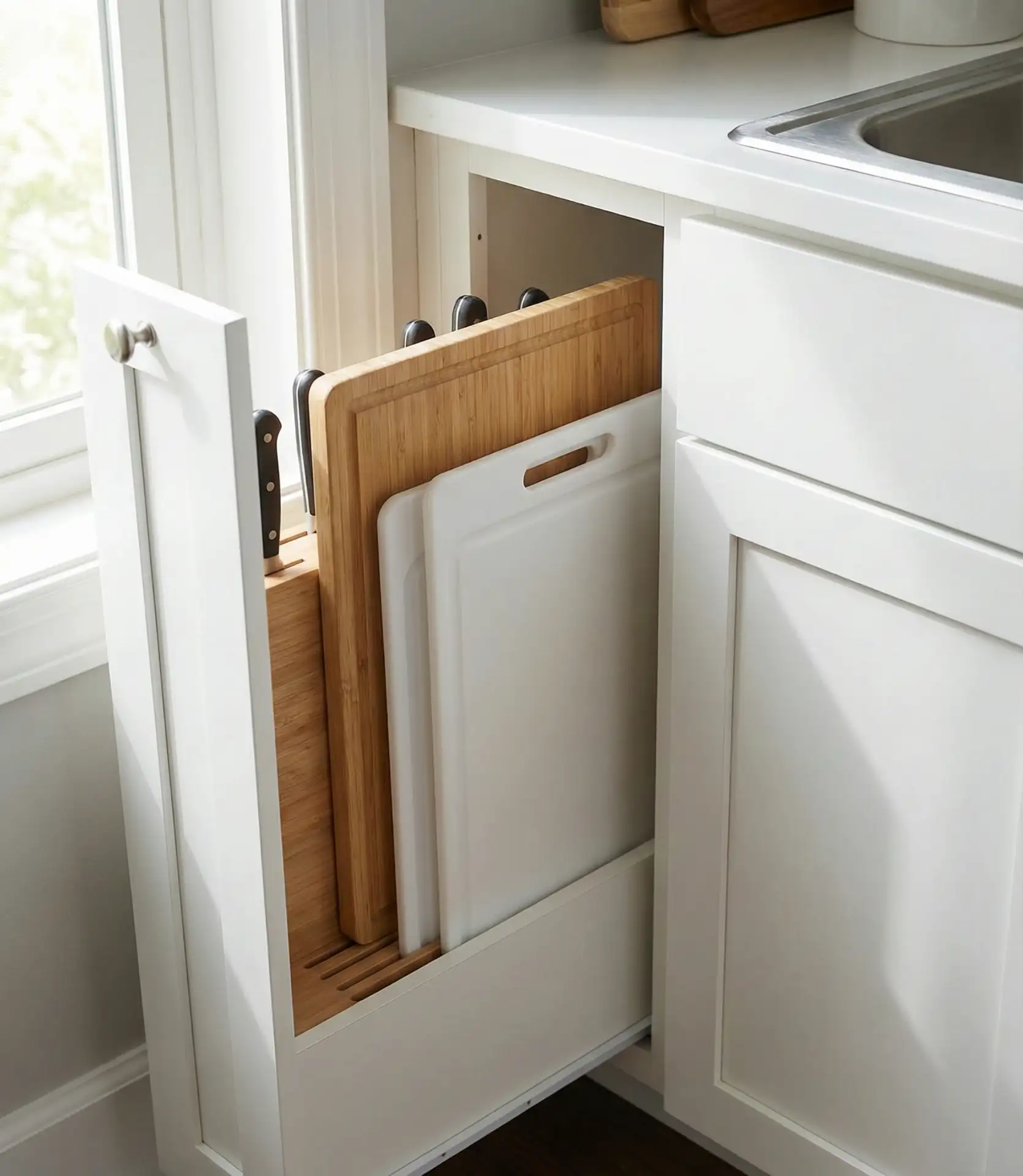
Cutting boards stored flat in lower cabinets or leaning in narrow slots are inconvenient and take up disproportionate space. Pull-out cutting board storage—either as a slim drawer or as vertical dividers near the sink—makes boards instantly accessible. Some systems even include integrated cutting board surfaces that pull out over open drawers, creating temporary prep space. This clever storage solution works particularly well in small-space kitchens where counter area is limited.
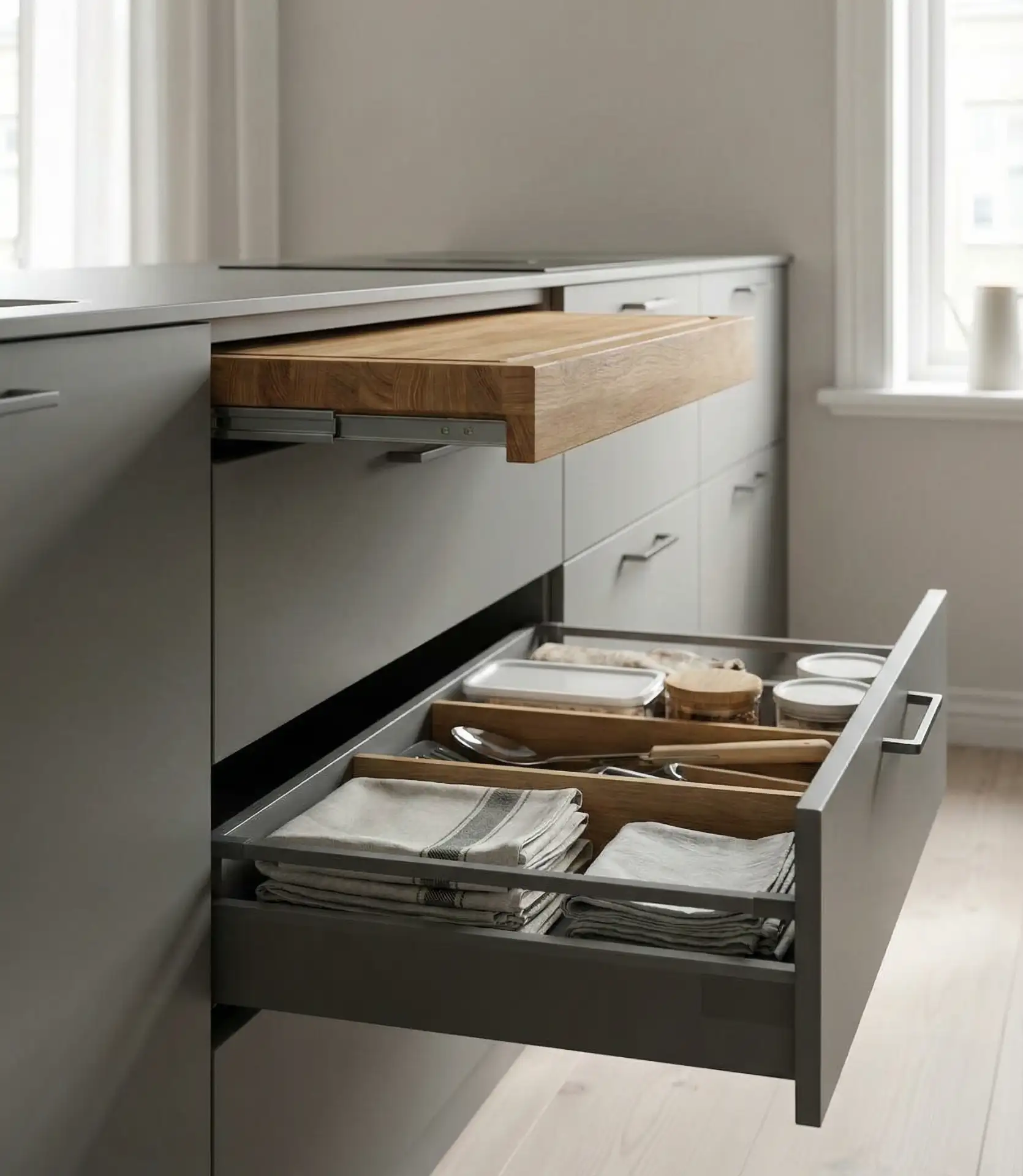
Common mistakes include installing cutting board slots without considering board thickness—those beautiful thick butcher blocks won’t fit in standard slots. Measure your collection before creating storage. Furthermore, ensure boards can dry completely between uses; some pull-out systems trap moisture, encouraging bacteria growth. Vertical storage with air circulation works best, and positioning near the sink makes sense for workflow since that’s where most people rinse produce before chopping.
23. Aesthetic Glass-Front Upper Cabinets with Interior Lighting
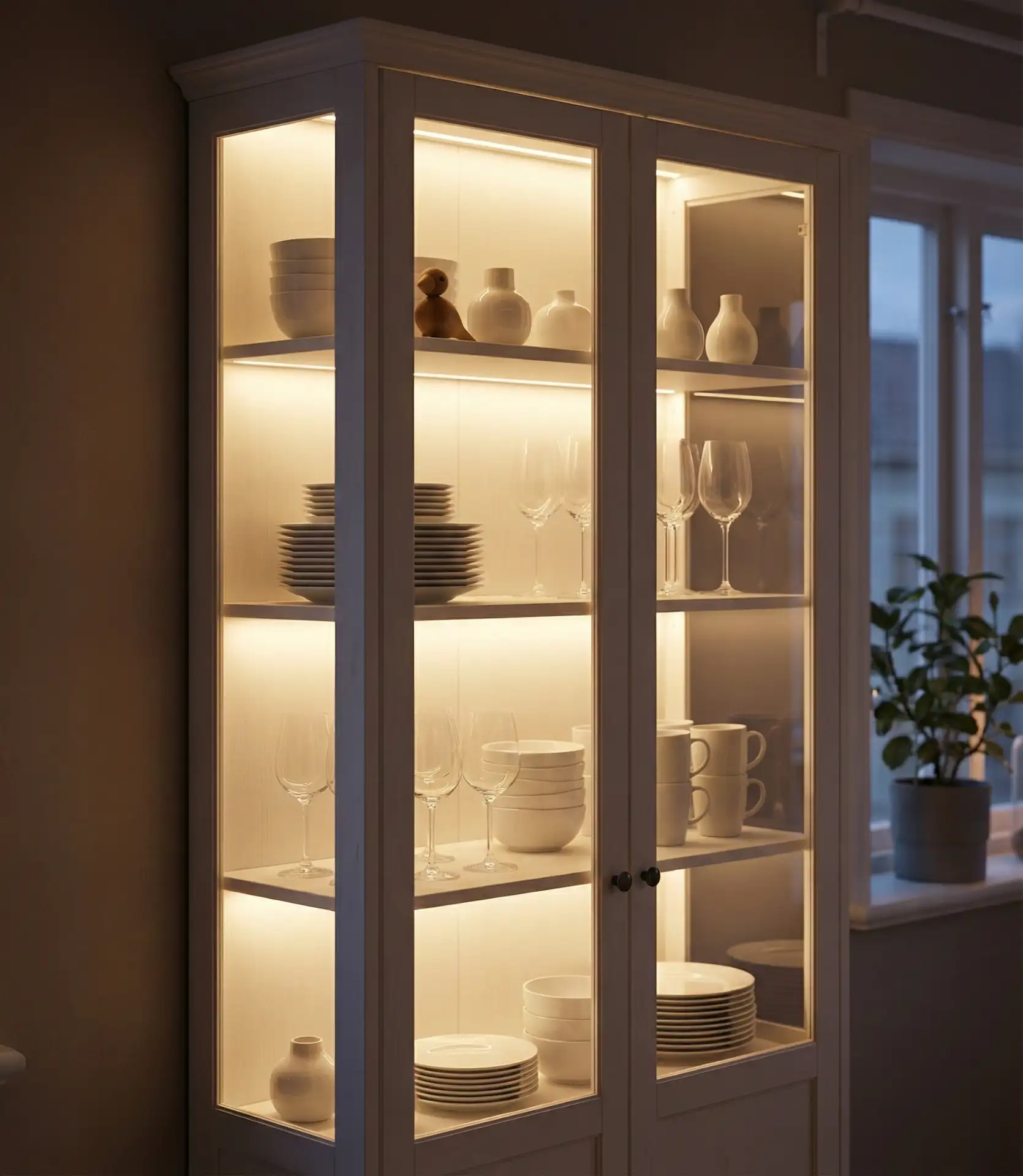
Glass-front upper cabinets create an aesthetic focal point while displaying your nicest dishes, glassware, or collections. When paired with interior LED lighting, they transform functional storage into beautiful architectural features that work as well at night as during the day. This approach requires thoughtful organization—everything visible must look intentional—but the visual impact elevates the entire kitchen. Reserve one or two strategic cabinets for this treatment rather than going overboard.
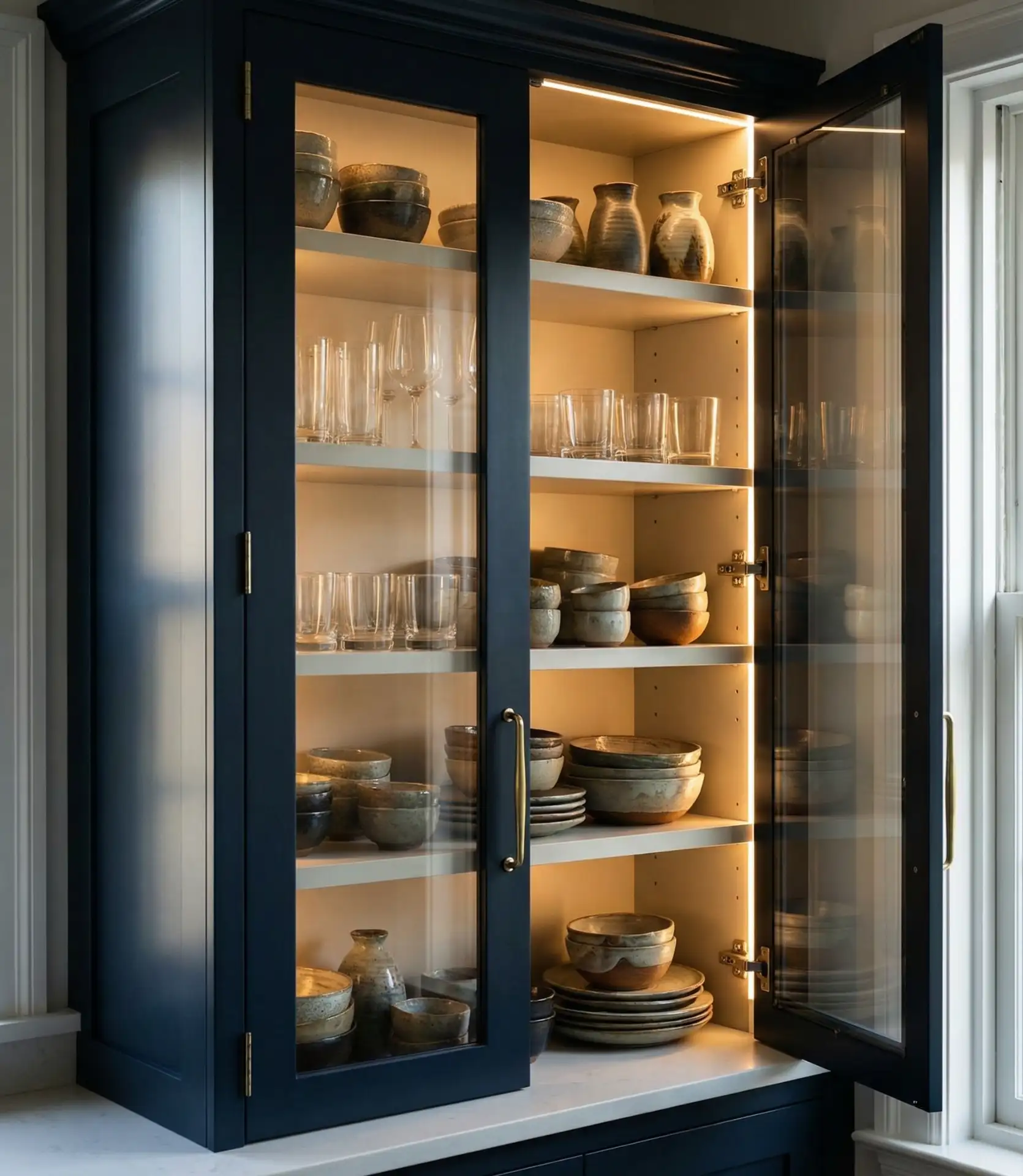
Expert-style commentary: Interior designers recommend limiting glass-front cabinets to areas where you genuinely have beautiful items to display—vintage glassware, heirloom china, or a curated collection. The lighting makes everything look gallery-worthy, but that means plastic containers and mismatched mugs need different homes. Battery-operated LED strips make retrofitting easy without electrical work, though hardwired solutions offer better longevity. The key is creating moments of beauty in your kitchen without the maintenance burden of full open shelving.
These kitchen cabinet organization ideas offer practical solutions for every type of home and cooking style. Whether you tackle one project this weekend or gradually transform your entire kitchen over the coming months, each improvement brings you closer to a space that works with you instead of against you. We’d love to hear which ideas you’re planning to try first—share your thoughts and your own clever organizational hacks in the comments below. What’s your biggest kitchen storage challenge right now?