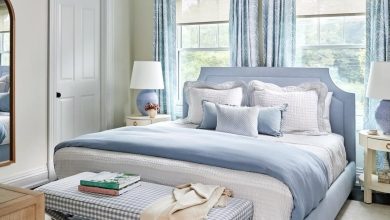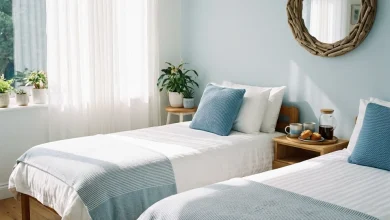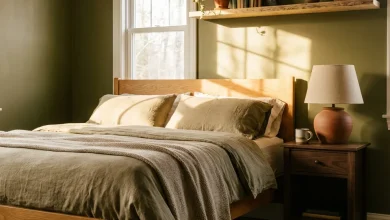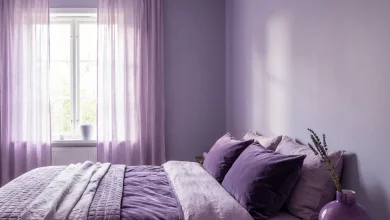

In 2026, small bedrooms are experiencing a significant renaissance, as evidenced by your Pinterest feed, prompting Americans worldwide to reconsider the potential of compact spaces. Whether you’re decorating your first apartment, giving a guest room new life, or finally tackling that cozy-but-cluttered primary bedroom, the ideas circulating right now are smarter, warmer, and more personal than ever. From budget-friendly transformations to elevated modern luxury, this year’s trends prove that square footage has almost nothing to do with style. Read on for some of the best small bedroom decor ideas that are inspiring real people—and real rooms—right now.
1. Moody Dark Walls That Feel Like a Hug
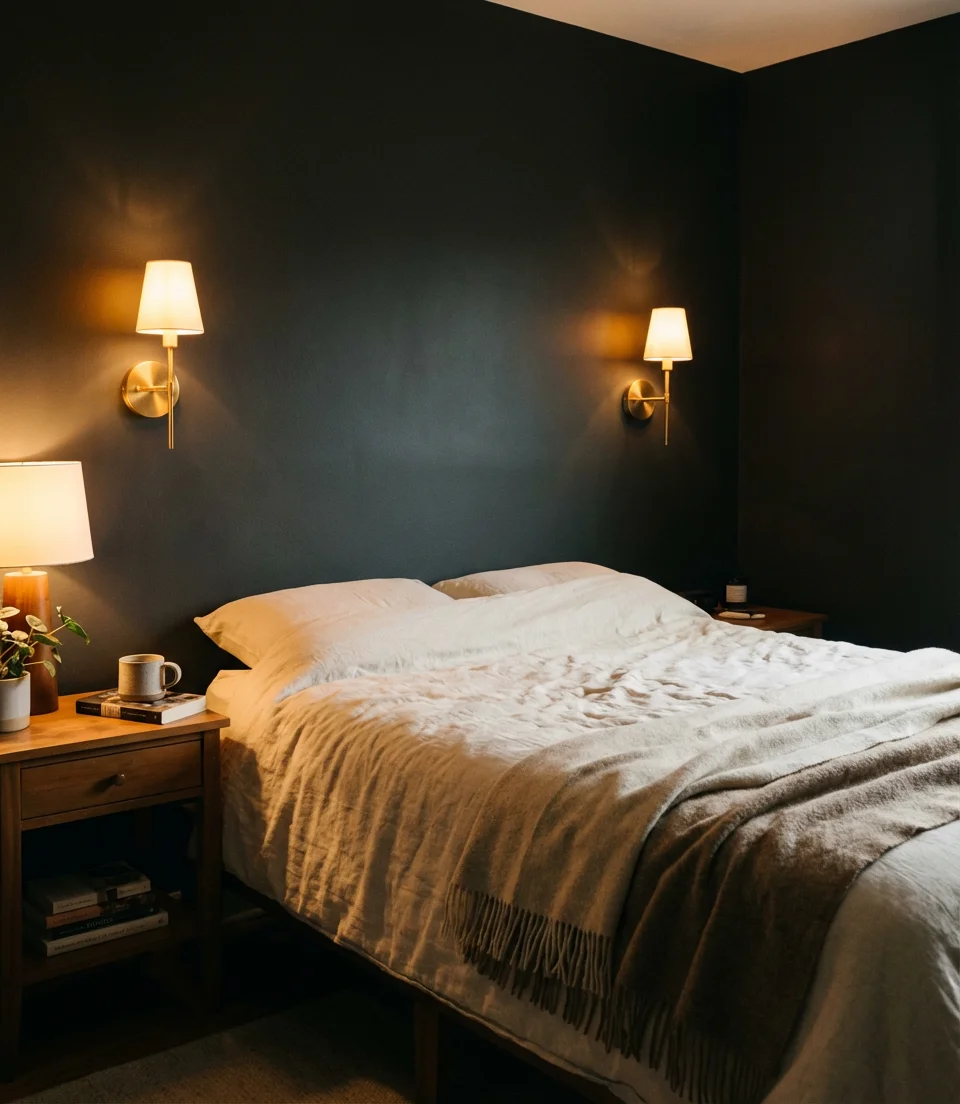
There’s something undeniably magnetic about a bedroom painted in deep charcoal, navy, or forest green—and in 2026, aesthetic dark walls are one of the most searched small bedroom looks on Pinterest. Far from making a room feel smaller, a rich, moody tone wraps the space in atmosphere and makes every element feel intentional. This approach works beautifully for anyone chasing that cozy, enveloping vibe that makes bedtime feel like an event. Pair deep walls with warm brass hardware and layered textiles for a result that’s both dramatic and deeply livable.
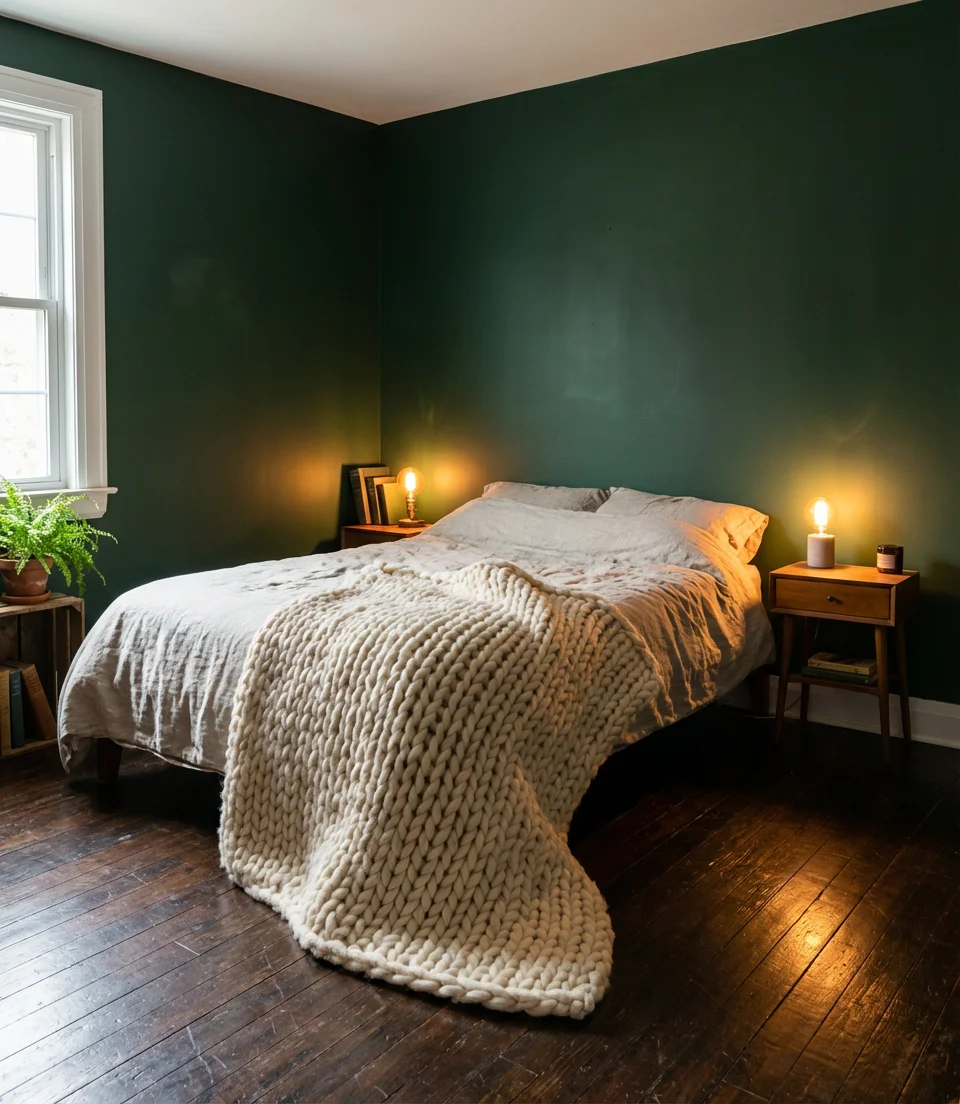
The biggest mistake people make with dark walls is stopping there. A single deep-toned wall does little without complementary warm lighting—think Edison bulbs, candlelight-style sconces, or a soft amber lamp on each nightstand. Balance the darkness with creamy linens or a chunky knit throw to keep things from feeling cave-like. When done right, this look turns even the tiniest room into a retreat you’ll genuinely look forward to coming home to every single night.
2. Bohemian Layering for a Free-Spirited Retreat
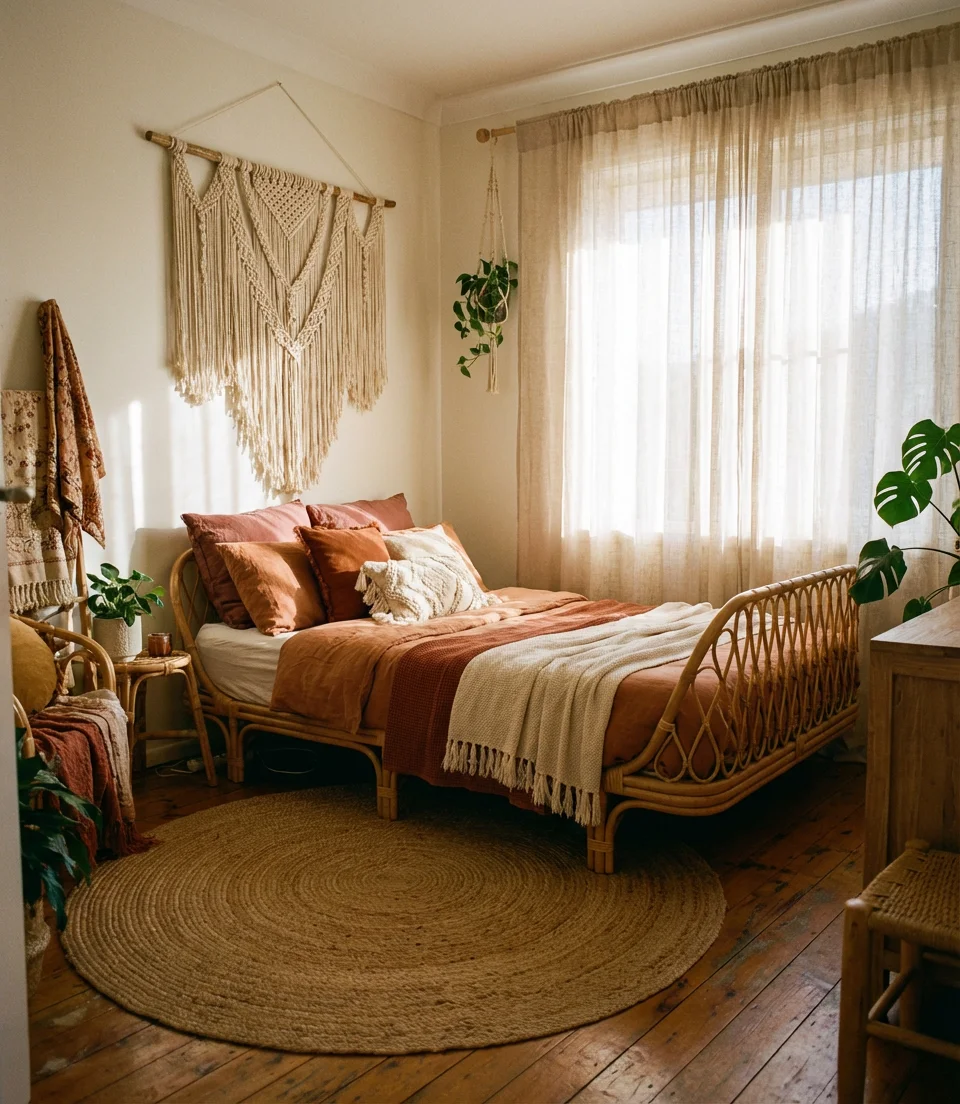
If there’s one style that thrives in small bedrooms, it’s bohemian—because boho is all about layering, texture, and personality rather than square footage. Think woven wall hangings, a macramé canopy above the bed, mismatched throw pillows in earthy terracotta and rust, and a low-profile rattan bed frame that keeps the room feeling airy. The inspiration for this look comes from globally sourced textiles, vintage finds, and handmade touches that feel like they were collected over time rather than assembled in an afternoon. It’s intimate, colorful, and endlessly customizable no matter how small the space.
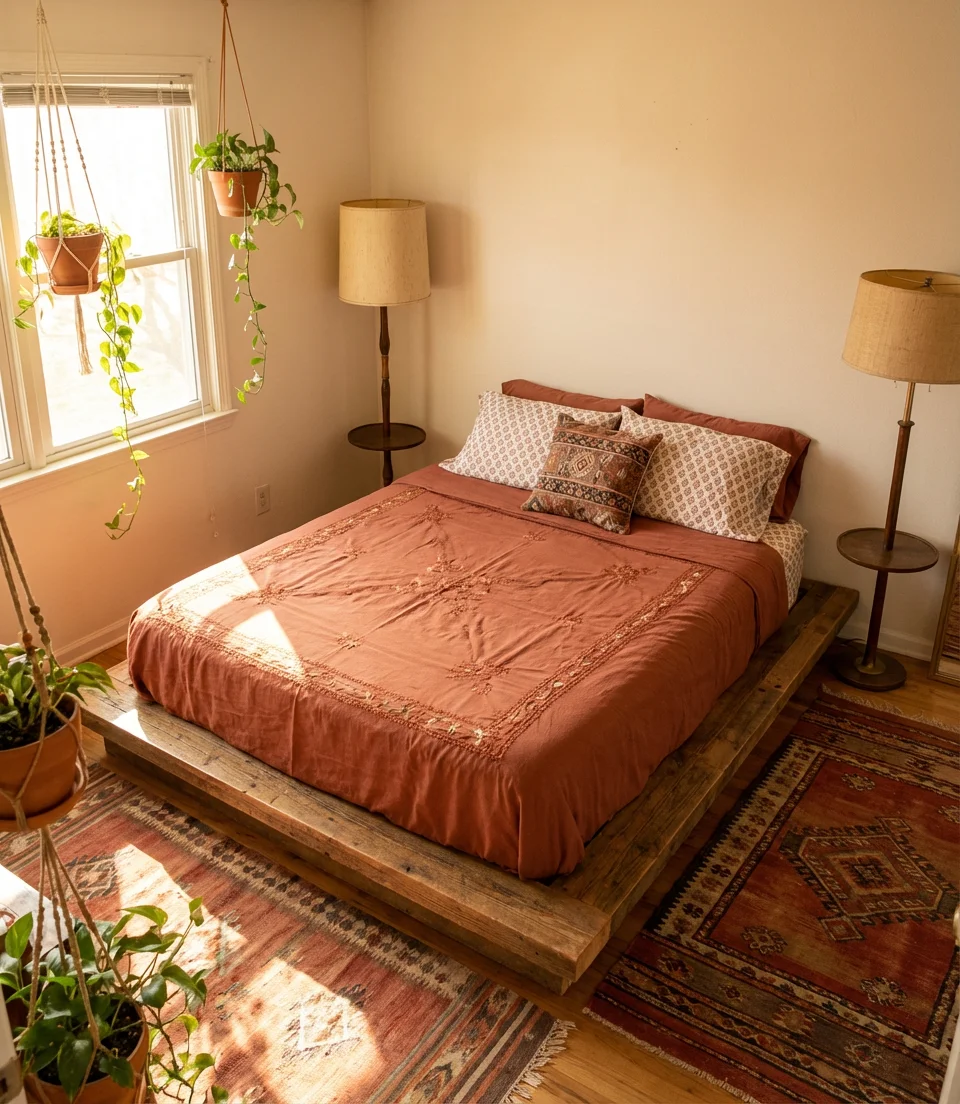
Boho bedrooms work especially well in rentals where painting or permanent changes aren’t an option—because the style is almost entirely textile-based. A large jute or Moroccan-style rug anchors the room and adds warmth underfoot without any installation. Layer two or three blankets at the foot of the bed, mix print scales confidently, and don’t stress about things matching perfectly. That relaxed imperfection is exactly what makes this style feel so human and welcoming, especially in a small space that needs maximum personality and zero pretension.
3. Neutral Calm—The Case for Doing Less
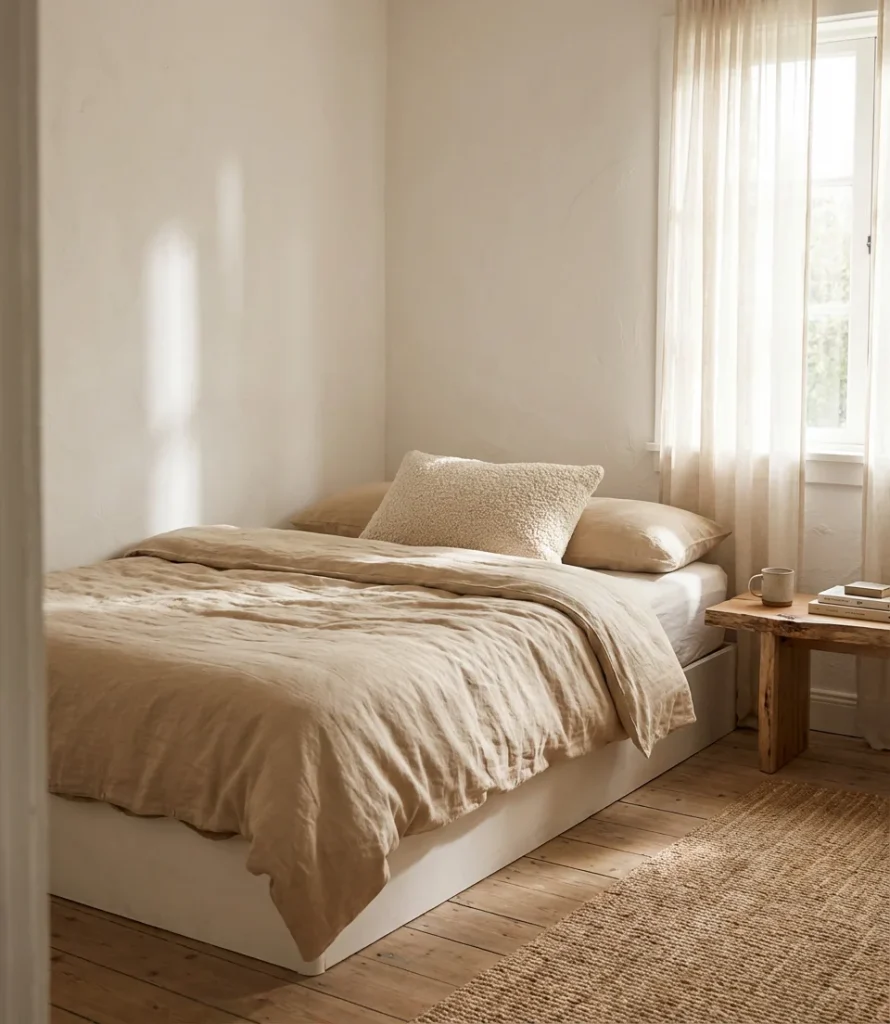
Not every small bedroom needs to shout. In 2026, one of the most pinned looks is the quietly beautiful neutral bedroom—all warm whites, soft taupes, sandy linens, and natural wood tones working in perfect harmony. This aesthetic feels like exhaling: clean, serene, and intentional without being cold or sterile. The key is texture rather than color contrast—a boucle pillow here, a linen duvet there, and a raw-edge wooden nightstand that brings just enough organic warmth. For anyone who finds visual noise genuinely stressful, this is the small bedroom style that actually helps you sleep better.
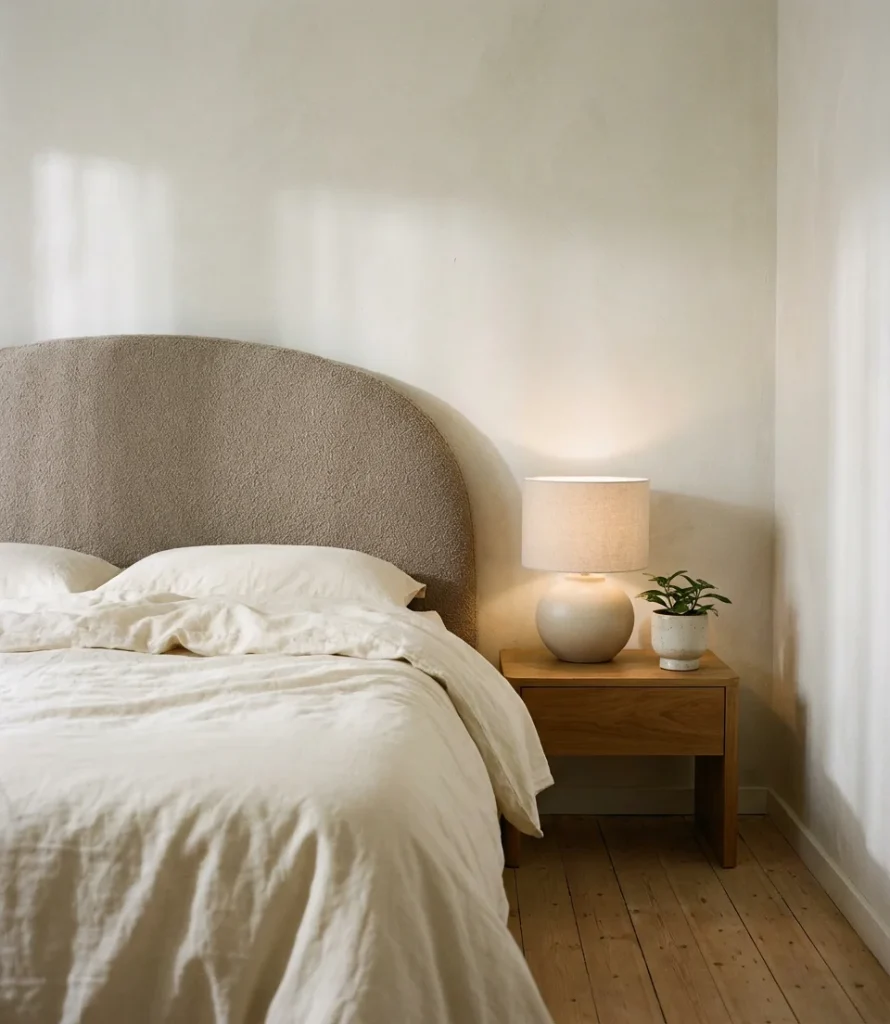
Interior designers often recommend starting with a single warm neutral and building every other element around it. This removes the decision fatigue of matching colors and creates a cohesive, gallery-like backdrop that makes even budget furniture look elevated. The neutral palette also photographs beautifully, which matters if you’re listing your home or sharing your space online. It’s a timeless investment that never looks dated and works across virtually every furniture style and price point—making it one of the safest, smartest small bedroom decisions you can make.
4. Couples’ Bedroom That Works for Two
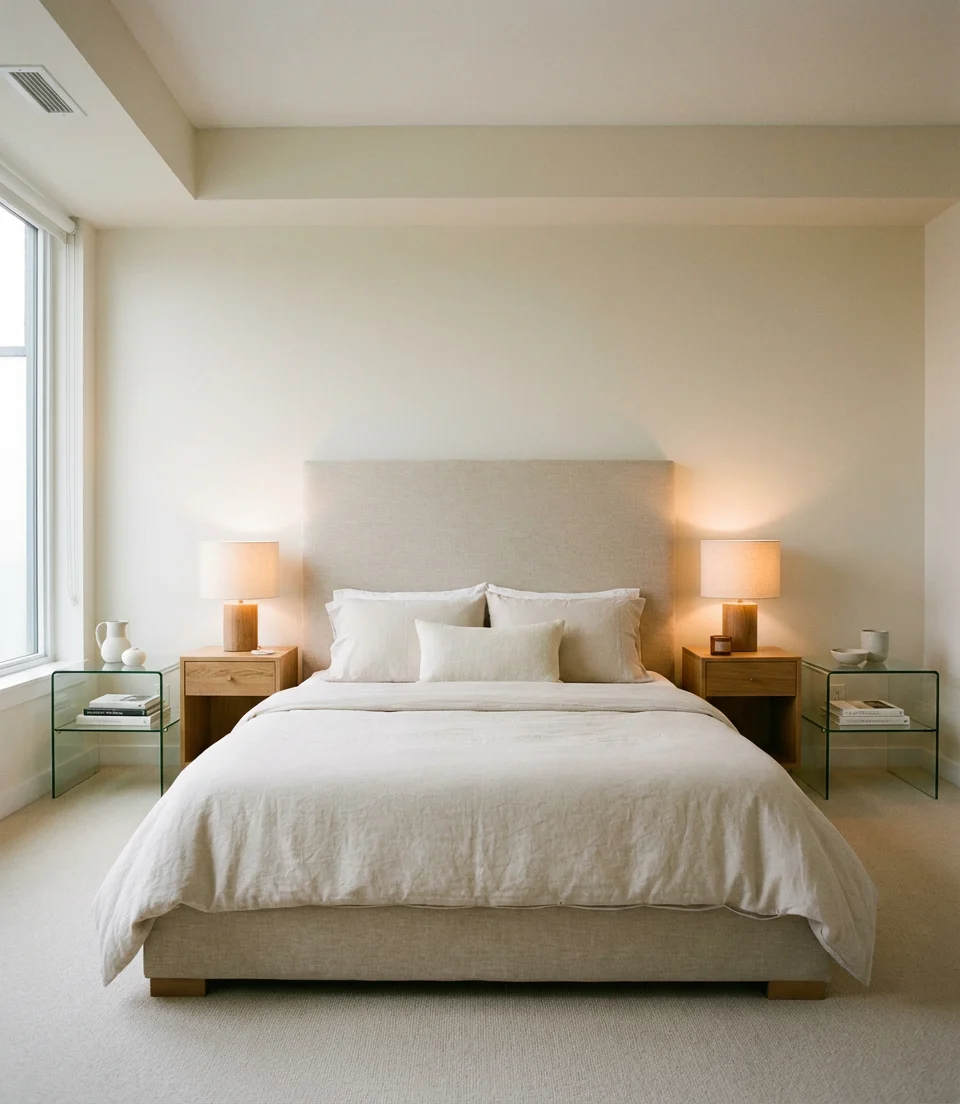
Designing a small bedroom for couples means solving a genuinely tricky puzzle: two people, two sets of preferences, and one compact room. The most successful ideas for couples in 2026 lean into symmetry—matching nightstands, dual reading lights, and a bed positioned to give each person equal access and visual ownership. Mirrored or glass nightstands visually expand the room while providing individual storage. A shared, oversized headboard in neutral linen or velvet grounds the entire composition and signals that the environment is a shared sanctuary, not one person’s room the other is merely tolerating.
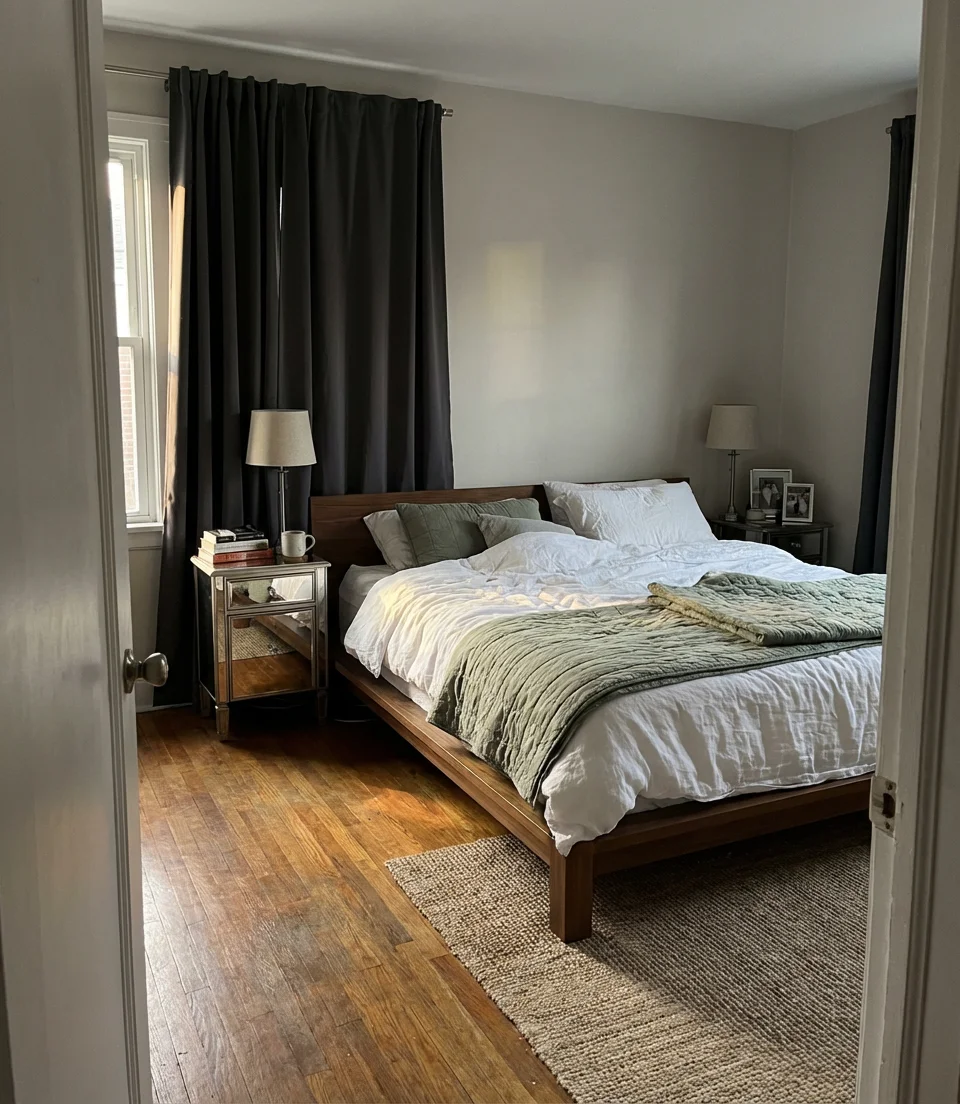
One real behavior pattern designers notice: couples often compromise so much that the room ends up reflecting no one’s personality. A smarter approach is to let each person “own” one element—one partner chooses the wall color, and the other picks the bedding. This creates organic variety rather than a sterile compromise. In small bedrooms, under-bed storage with matching bins on both sides keeps clutter from becoming a source of tension. When storage is equitable and the visual language is shared, even 150 square feet can feel like more than enough for two.
5. Budget Glow-Up—Big Style for Under $300
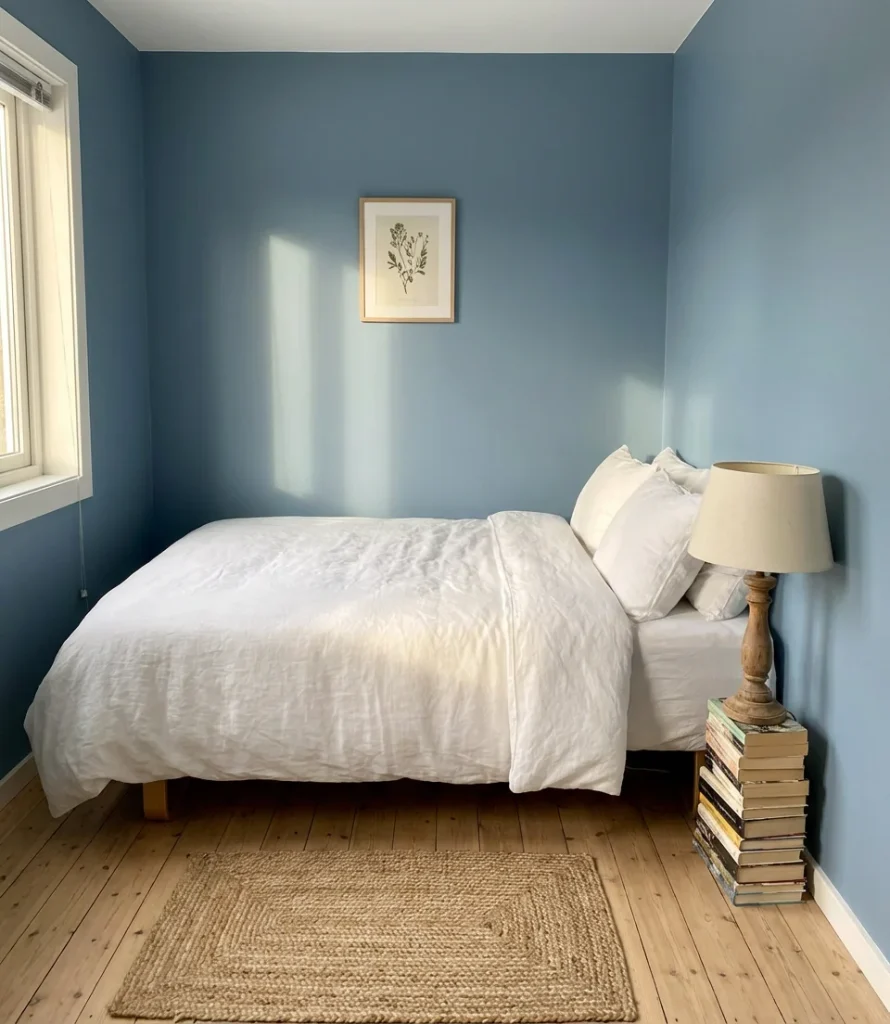
The budget room makeovers easy corner of Pinterest is one of the most active communities in home decor right now—and for good reason. Americans are spending more time at home, rents are high, and people want their bedrooms to feel intentional without breaking the bank. The good news is that a small bedroom is the easiest room in the house to transform on a tight budget, because you’re working with limited square footage. Paint, new bedding, and a couple of thrifted pieces can genuinely change everything. This is where simple ideas on a budget shine most brightly: small swaps, massive impact.
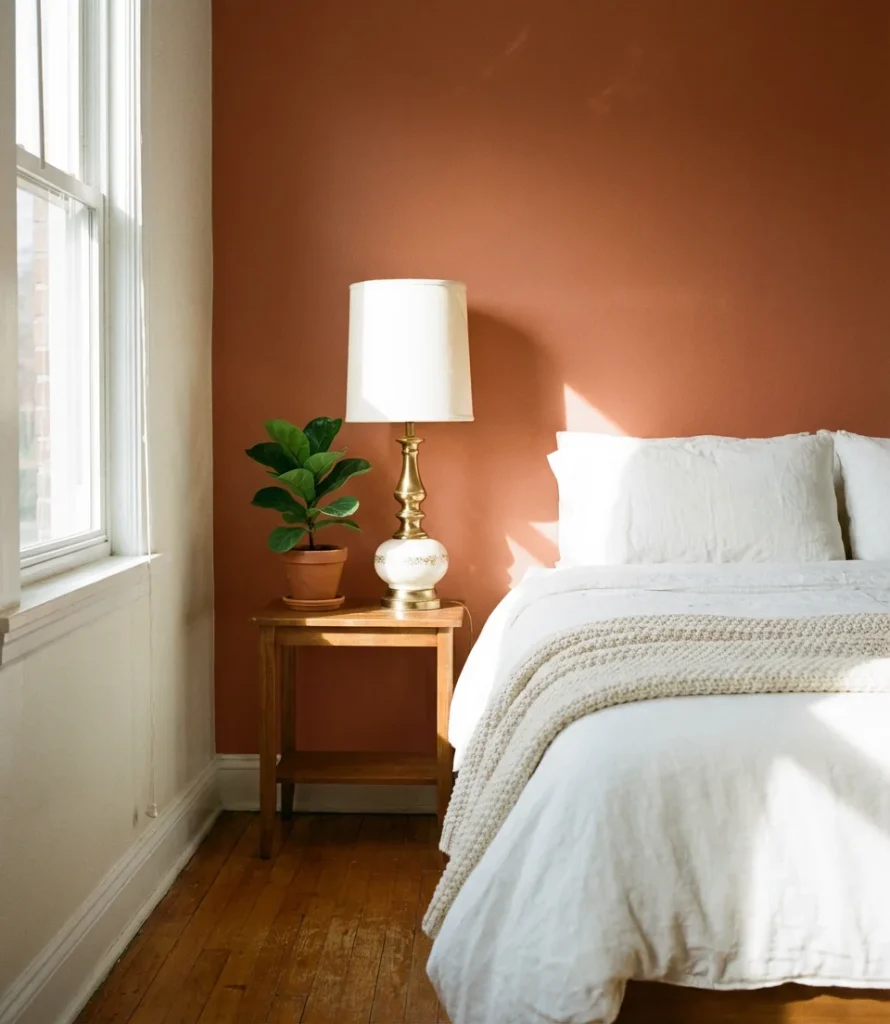
A realistic $300 bedroom refresh might look like this: $40 on a gallon of paint, $60 on new white bedding from IKEA or Target, $30 on a secondhand lamp from Facebook Marketplace, $50 on a rug from HomeGoods, and the remaining $120 on wall art printed locally or framed pages from a vintage calendar. The transformation is genuinely not subtle. The key is choosing one strong anchor—usually the bedding or wall color—and letting everything else support it. Restraint is a budget decorator’s most powerful tool, and it costs absolutely nothing.
6. Pink Rooms That Aren’t Childish
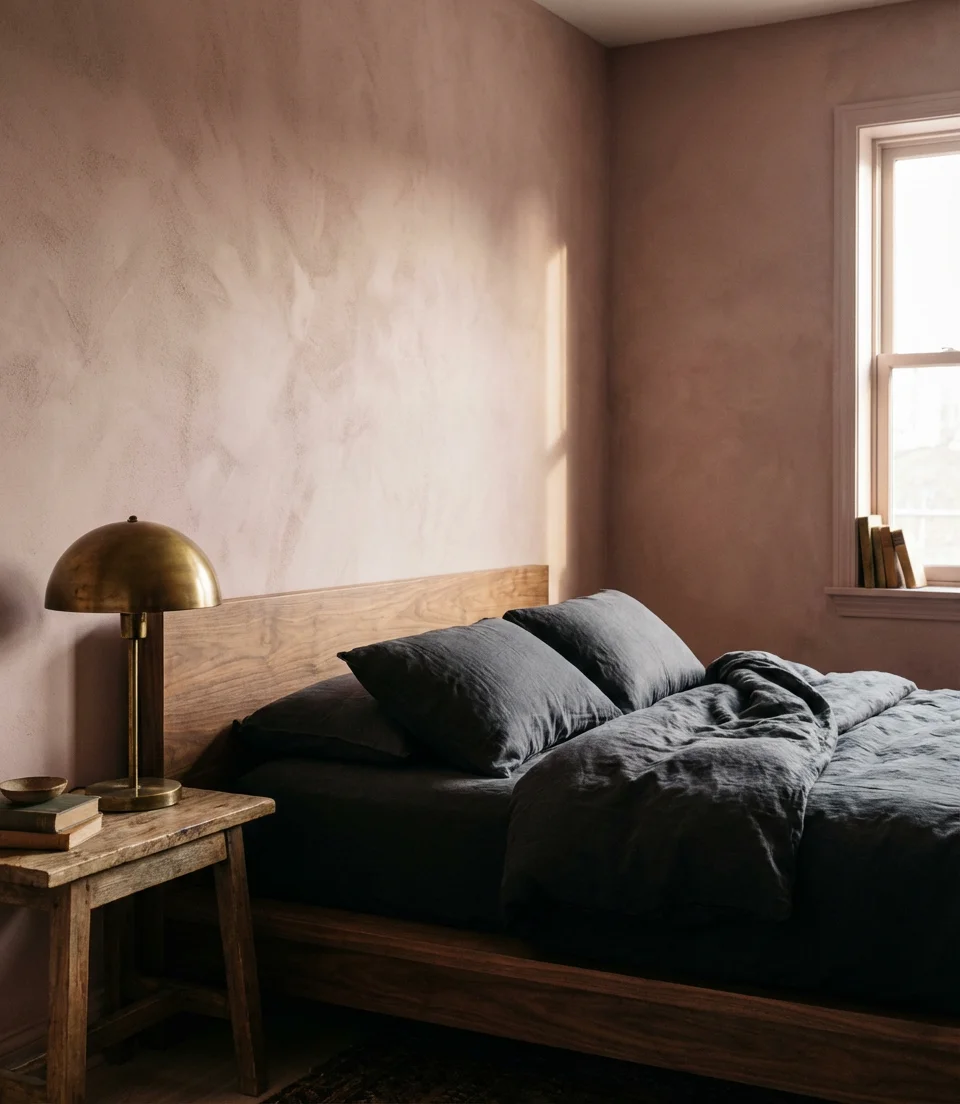
The evolution of pink in interior design has been remarkable—in 2026, dusty rose, terracotta-adjacent blush, and muted mauve are among the most sophisticated colors you can put in a small bedroom. These tones work especially well for women designing a space that feels personal and enveloping without skewing feminine in a clichéd way. A dusty pink wall behind a walnut bed frame and charcoal bedding reads as editorial and intentional. The warm undertone in modern pinks plays beautifully with natural wood, aged brass, and cream textiles—a combination that feels genuinely luxurious rather than girlish.
Where this look works best is in bedrooms that get warm afternoon or evening light—the pinkish glow amplifies the wall tone in the most flattering way. If your room faces north or gets mostly cool light, lean toward a warmer, more terracotta-adjacent pink to counteract the bluish cast. Farrow & Ball’s “Sulking Room Pink” and Clare Paint’s “In the Buff” are two shades that consistently photograph beautifully and earn rave reviews from real homeowners. Both shades work exceptionally well with a simple, uncomplicated room layout, allowing the color to be the undisputed focal point.
7. Indian-Inspired Maximalism in a Small Space
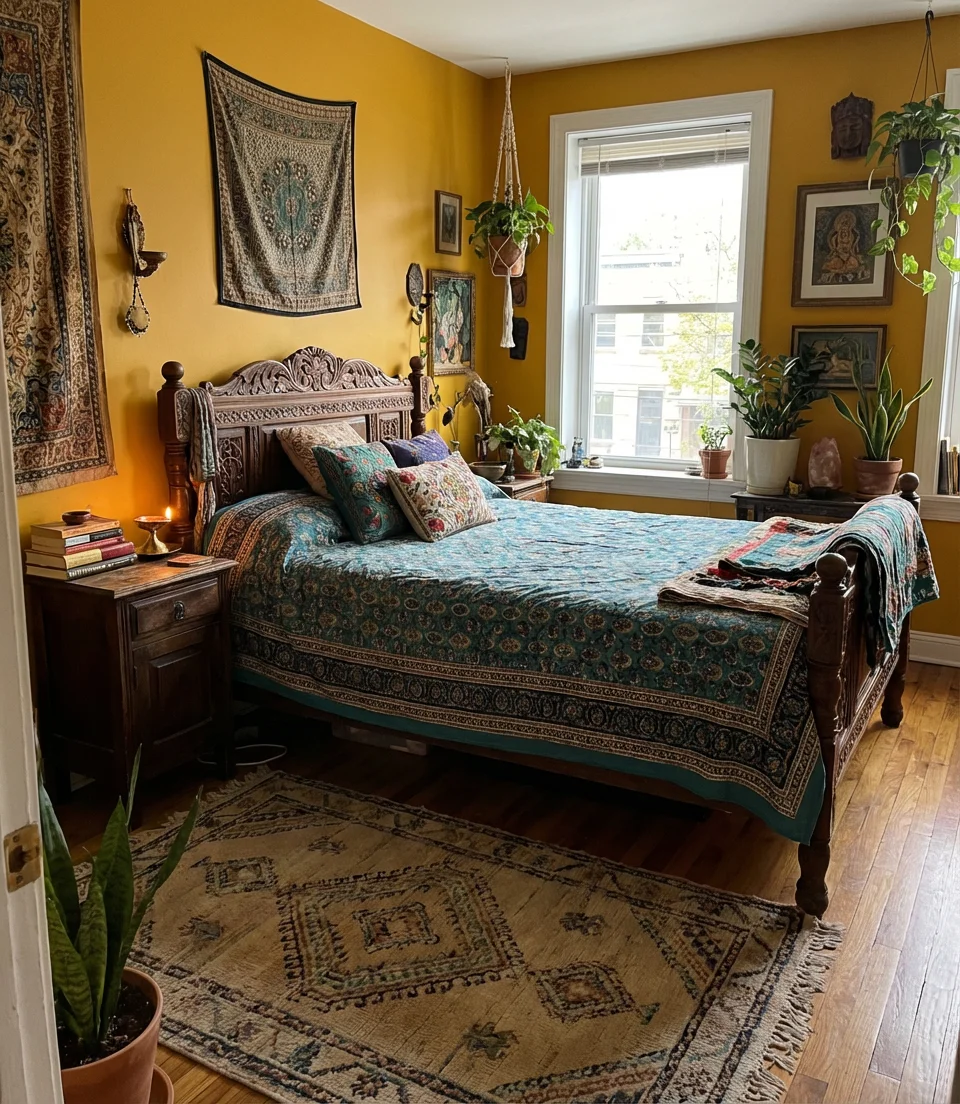
The Indian-inspired bedroom aesthetic is having a genuine cultural moment on Pinterest—and it translates surprisingly well to small spaces. Think jewel-toned walls in saffron, teal, or deep magenta, layered with block-print cotton bedspreads, embroidered cushion covers, and carved wooden furniture with intricate detailing. Ideas Indian searchers are often looking for warmth, richness, and pattern play that feels celebratory rather than cautious. Brass diyas, hand-knotted rugs, and a draped canopy in silk or cotton can transform even a 10×10 room into something that feels genuinely transportive and deeply alive.
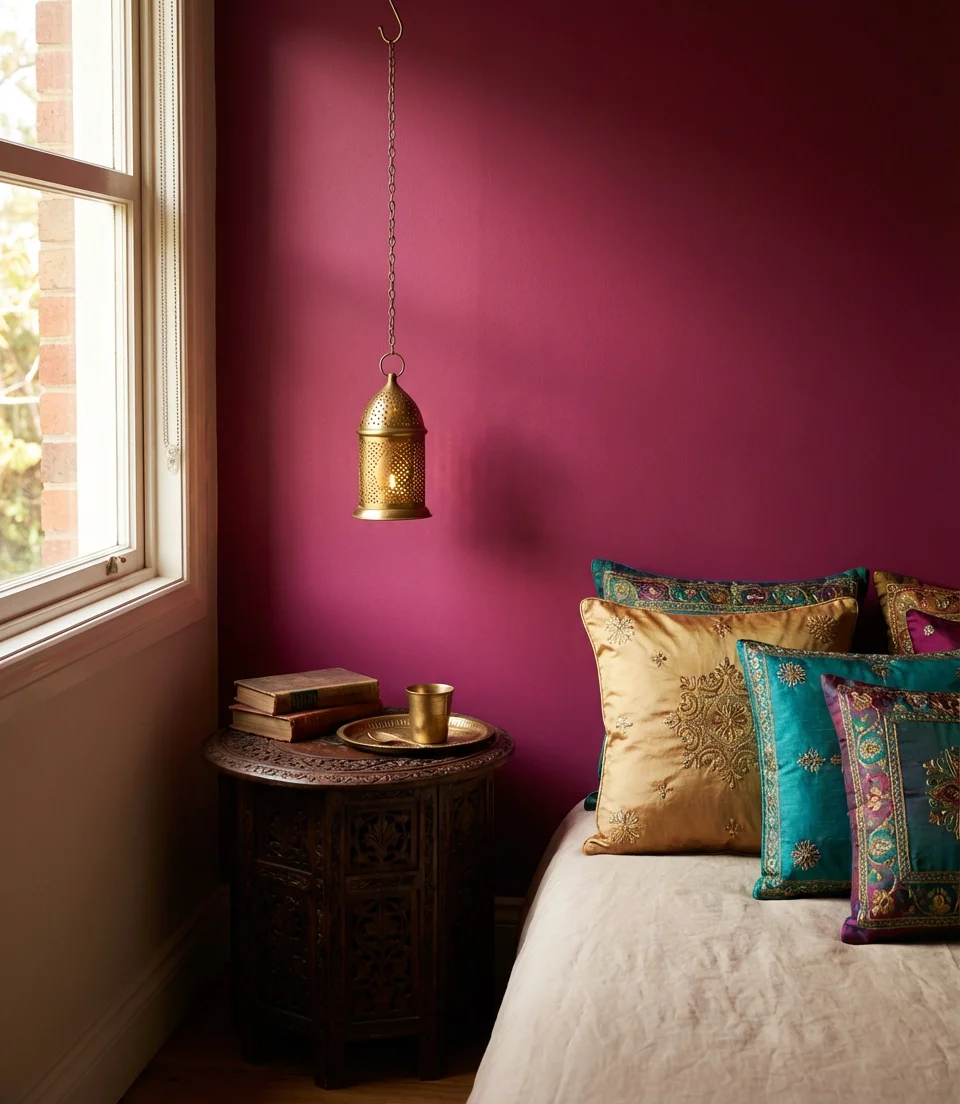
The trick to keeping Indian-inspired maximalism from overwhelming a small room is to work within a tightly edited color palette—choose two or three complementary jewel tones and repeat them throughout rather than introducing every color at once. A deep teal wall, saffron bedding, and brass accents throughout are a cohesive trio that read as intentional maximalism rather than visual chaos. Sourcing authentic Indian textiles from brands like FabIndia, Jaipur Living, or Etsy sellers specializing in South Asian home goods keeps the look genuine and supports artisan craft traditions that genuinely deserve recognition.
8. The Sister Bedroom—Shared Space, Separate Identities
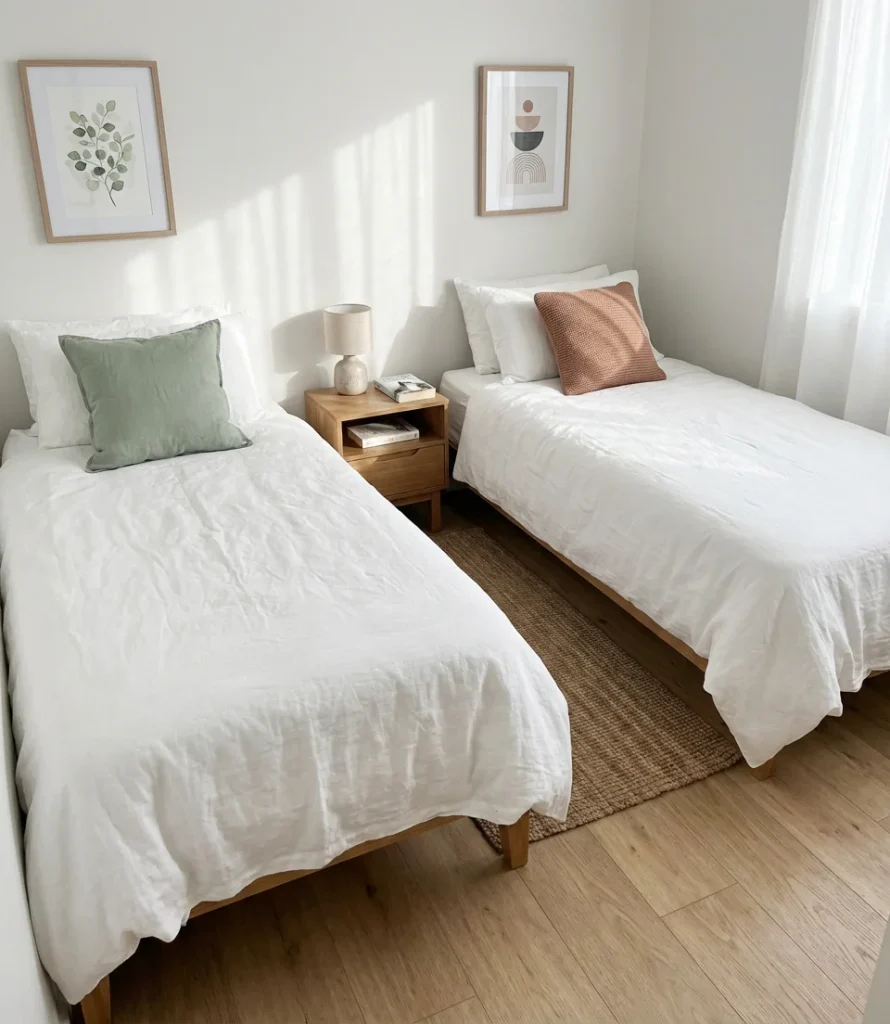
Designing a shared bedroom for 2 sisters—whether they’re children, teens, or adult roommates—is one of the most creatively challenging small bedroom projects out there. The goal is a room that feels fair, functional, and personal for both occupants without looking like it was split down the middle with a ruler. One approach gaining real traction in 2026 is the “same base, different accents” method: identical bed frames and bedding in white or natural linen, but each side gets a different accent color, wall art, and lighting style. It’s cohesive from a distance but personal up close, where it matters most.
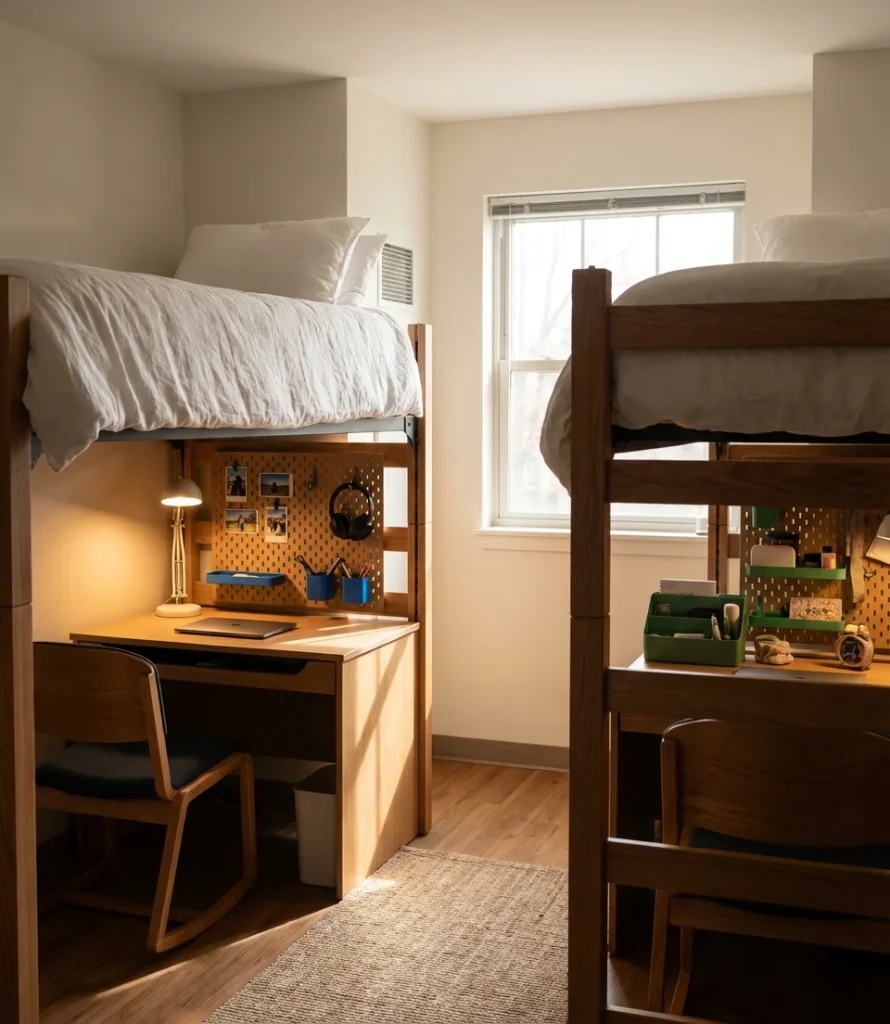
One common mistake in shared small bedrooms is treating floor space as the primary real estate. Vertical space is actually the key—wall-mounted shelving, lofted beds with desks underneath, and pegboard-style organizers above each person’s area can effectively double functional square footage. In a 12×12 room, a lofted twin bed with a small desk and dresser beneath it gives each person a complete, self-contained zone. It’s the kind of clever, space-maximizing setup that works just as well in a college dorm as it does in a family home with permanent residents of all ages.
9. Modern Luxury on a Real-Person Budget
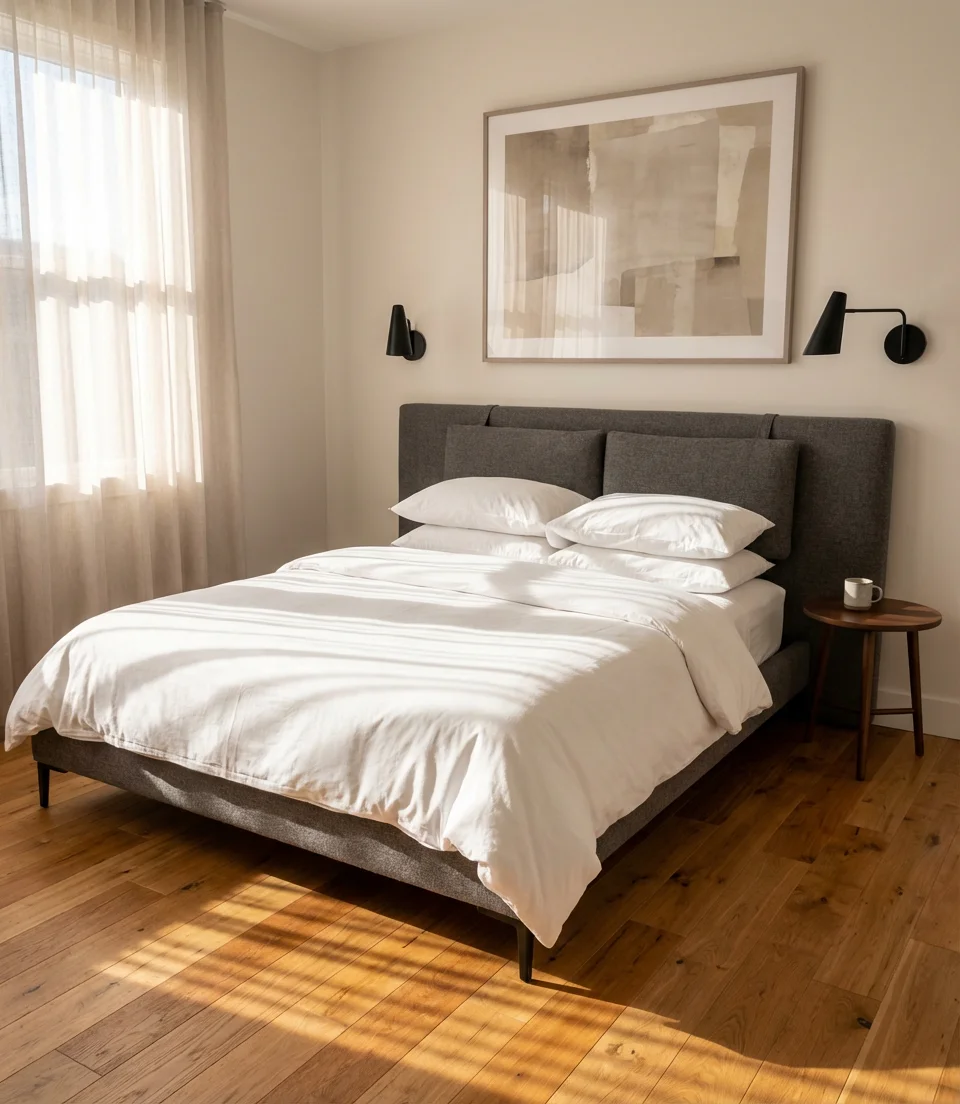
The phrase “modern luxury” gets thrown around constantly in bedroom design, but in 2026 it’s become genuinely democratized—meaning you don’t need a $10,000 budget to achieve it. The look hinges on a few key principles: clean lines, high-quality textiles, and intentional restraint. A platform bed with a low-profile upholstered headboard, hotel-quality white bedding with a subtle texture, and one or two pieces of brass or matte black hardware can create a room that reads expensive even if the total spend was modest. The design is entirely about proportion and editing ruthlessly until what remains is just right.
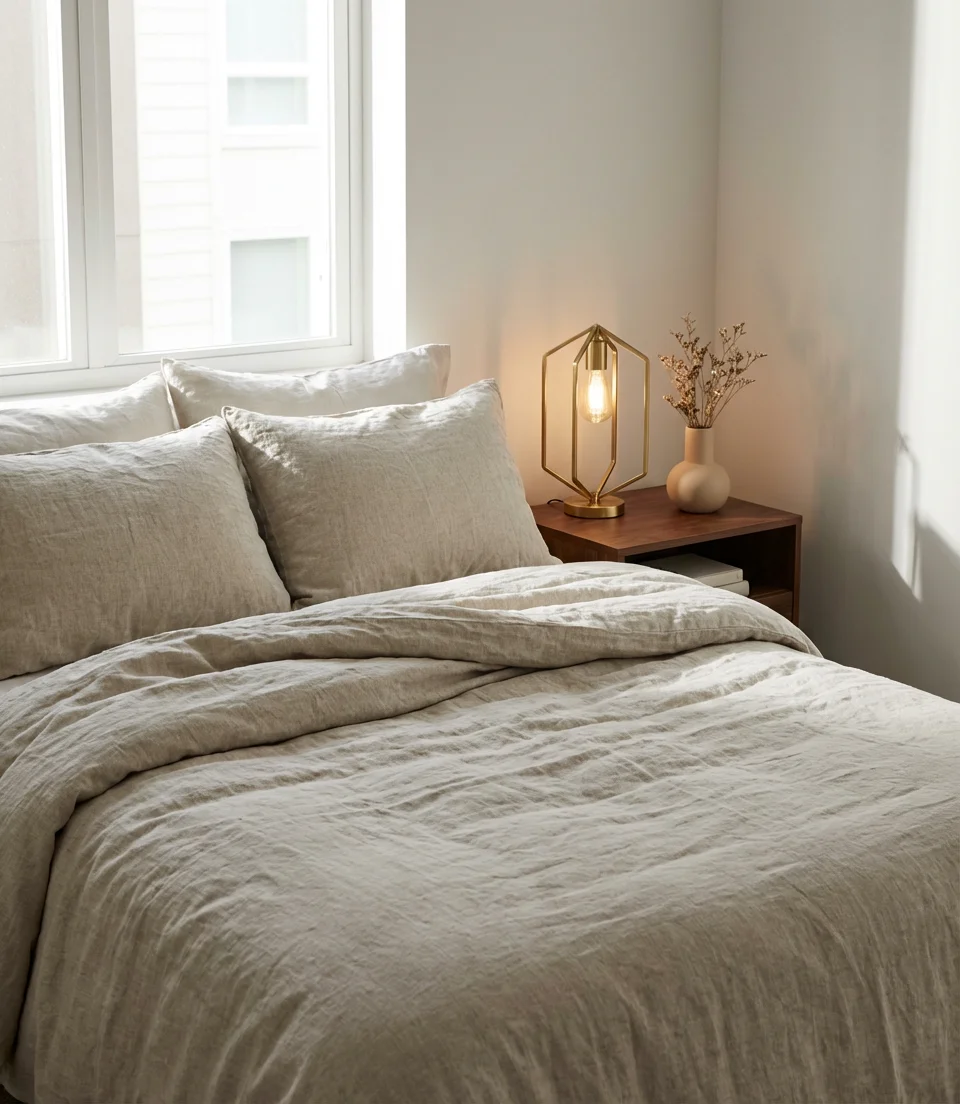
Spend money where it shows and save where it doesn’t—that’s the designer shortcut most people overlook. A quality linen duvet cover looks dramatically better than a $30 polyester set, and you’ll feel the difference every single night. But your bed frame? That can absolutely be IKEA with new hardware. Your nightstands? A pair of thrifted side tables with matching lamps and a fresh coat of paint can look as intentional as anything from a high-end boutique. Modern luxury is a curatorial skill more than a spending habit, and small bedrooms are the perfect canvas to practice and perfect it.
10. Christmas Bedroom Magic—Seasonal Coziness
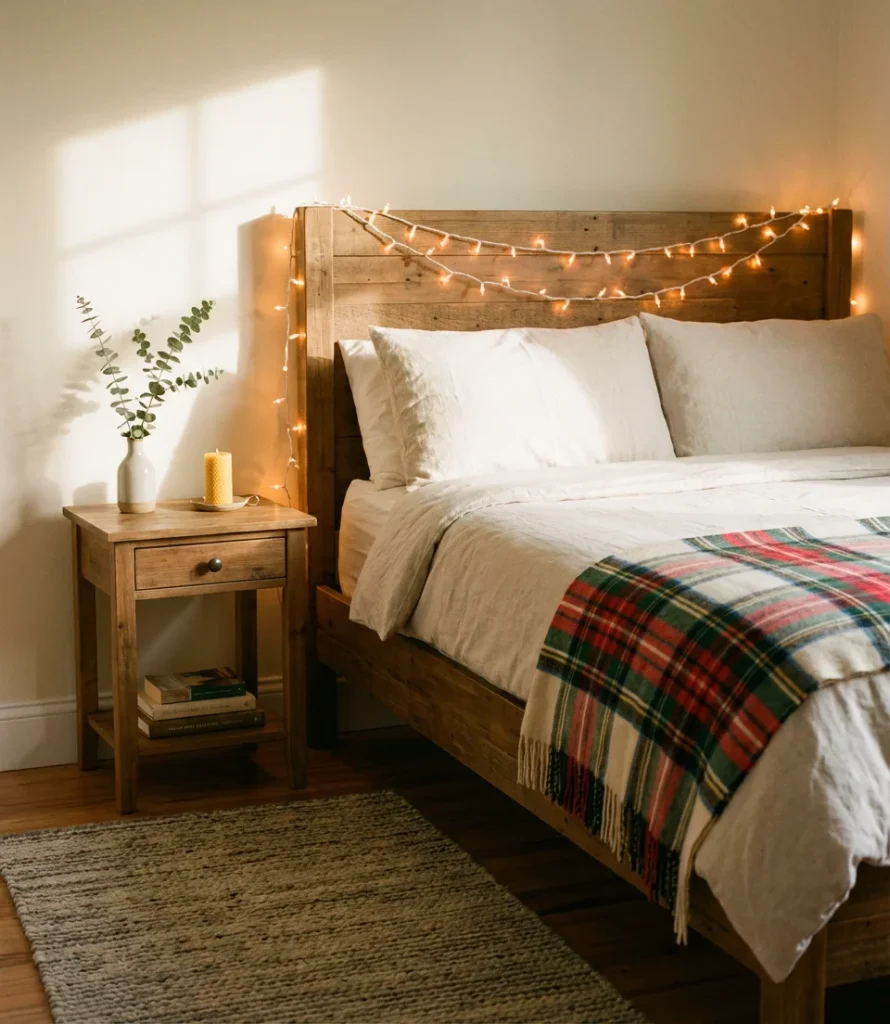
The Christmas bedroom has become one of the most searched small bedroom subtopics on Pinterest every November, and the approach has evolved well beyond a wreath on the door. In a small bedroom, seasonal decor works best when it layers over the existing aesthetic rather than replacing it entirely. String lights threaded through a headboard, a plaid or buffalo-check throw at the foot of the bed, and a small sprig of eucalyptus or cedar in a bud vase on the nightstand can transform a room into something genuinely cozy and celebratory—without requiring a full redecoration and without filling your closet with extra storage bins.
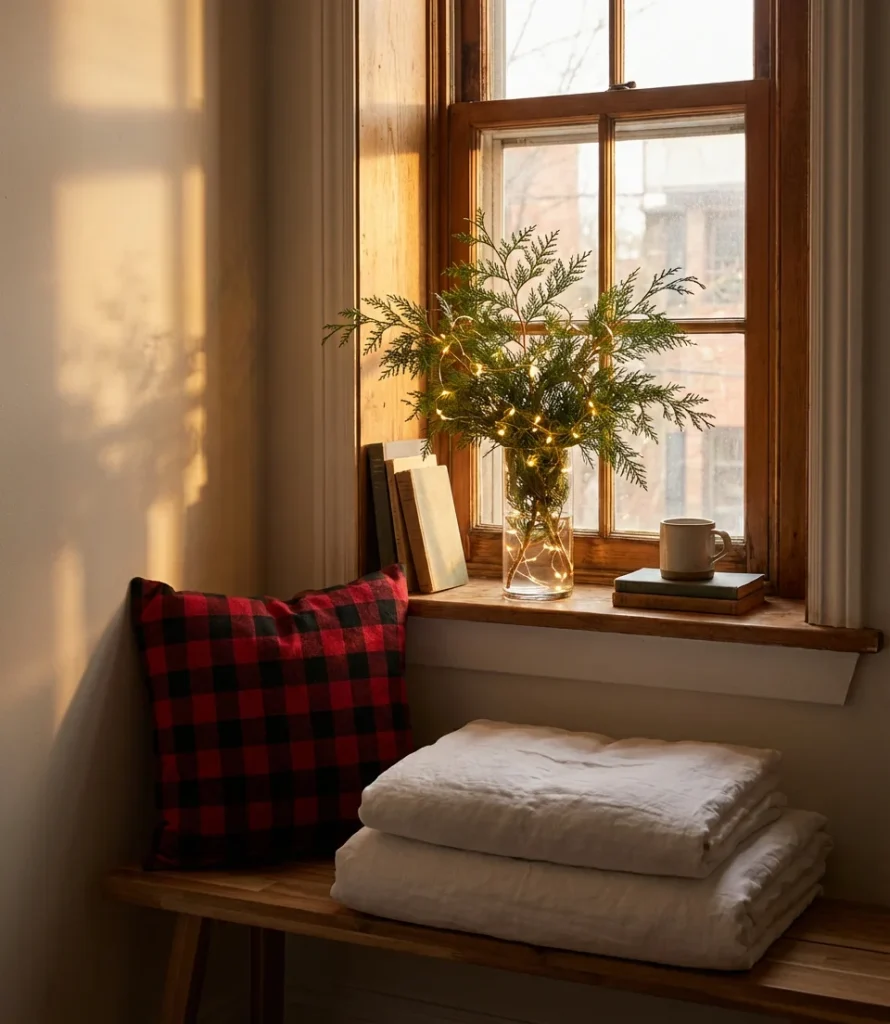
The best seasonal bedroom setups are the ones that take under an hour to put together and come down just as easily. In small bedrooms especially, restraint makes the magic more powerful: one or two intentional holiday touches land harder than a room overwhelmed with ornaments and tinsel. Warm white string lights draped above the headboard or along a windowsill cast a golden glow that makes any room feel like a scene from a holiday film. Store your seasonal accessories in a single labeled bin so next year’s setup takes minutes, not an entire exhausting afternoon of excavating the closet.
11. DIY Projects That Genuinely Elevate a Room
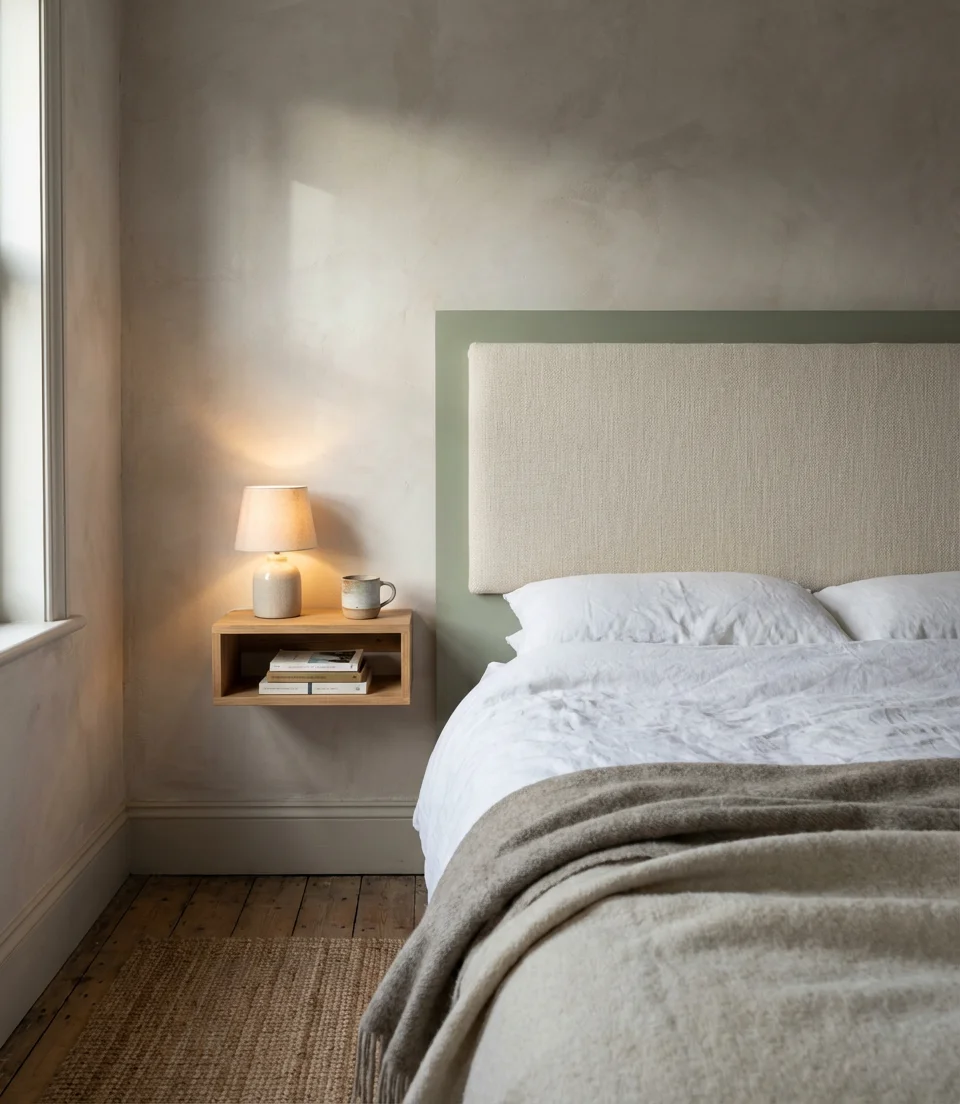
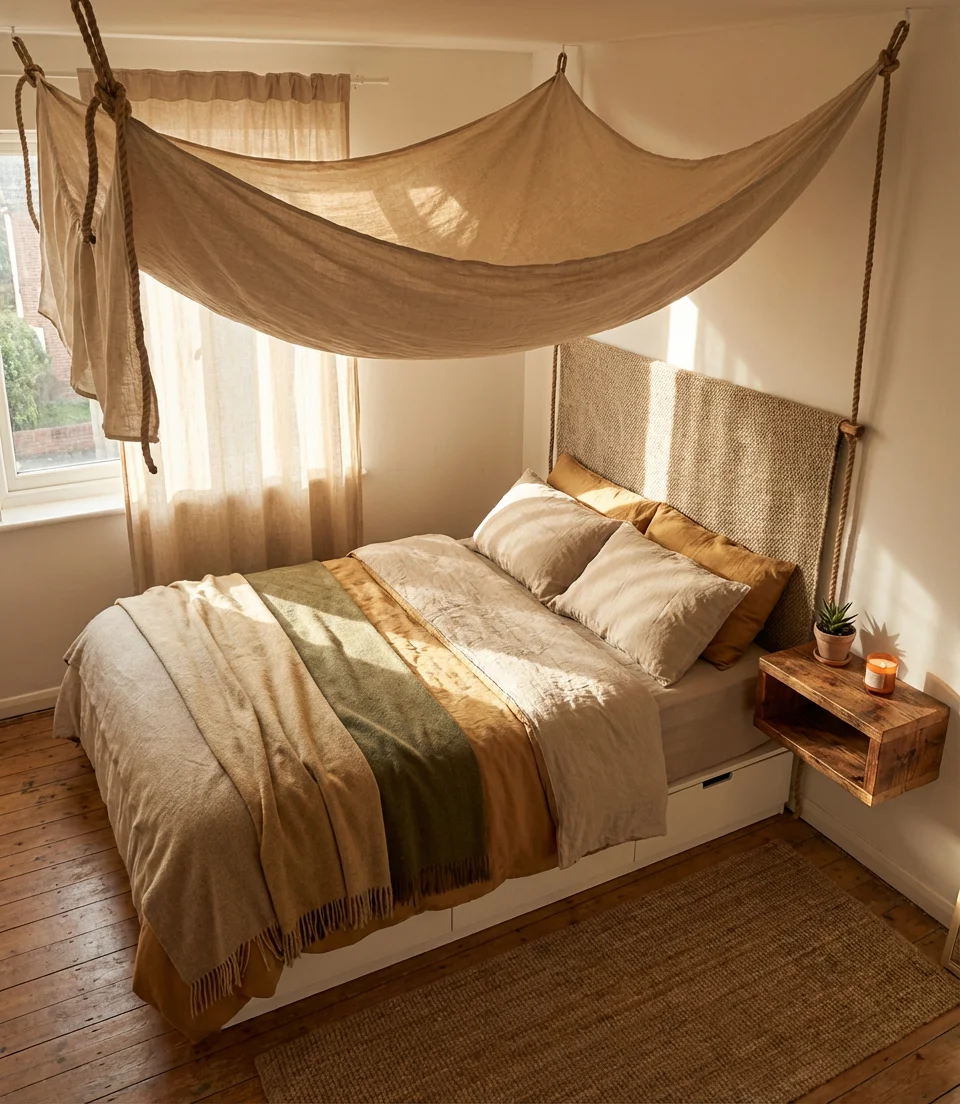
The ideas for couples diy projects in the category on Pinterest are endlessly inventive—and it turns out that building or making something together for your shared bedroom creates both a better room and a better memory. Some of the most impactful small bedroom DIYs in 2026 include a custom built-in headboard from plywood and batting, a wall-mounted floating shelf nightstand, a painted accent wall in a bold geometric pattern, or a rope-hung ceiling canopy that turns a basic bed into something architecturally intentional. None of these require professional skills—just patience, YouTube, and a free weekend with someone you like spending time with.
One Brooklyn couple documented their $80 plywood headboard build on social media—it now has hundreds of thousands of saves on Pinterest and regularly appears in small bedroom inspiration roundups. The headboard is painted in a soft sage green, wrapped in a thin layer of foam and cream linen, and mounted directly to the wall. It looks like it cost $600 from a boutique furniture store. That’s the magic of a well-executed DIY: the constraints of budget become a creative catalyst rather than a limitation, and the finished result carries a story no store-bought piece ever could.
12. Cozy Reading Nook Built Into the Bedroom
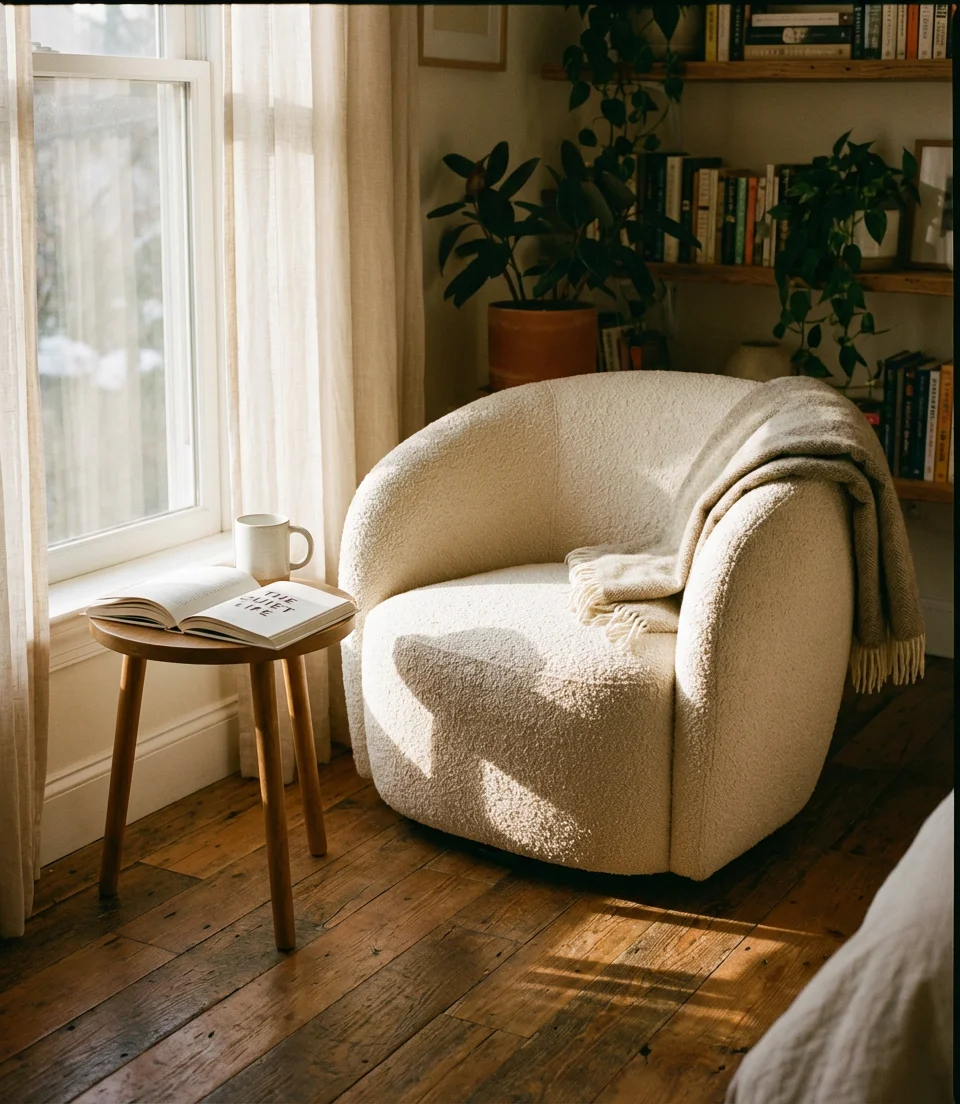
In a small bedroom, carving out a dedicated cozy reading corner might sound counterintuitive—but it’s one of the most transformative things you can do for how the room feels and functions. Even in a 10×12 room, a single armchair beside the window, a small side table, and a dedicated reading lamp create a psychological separation between the sleeping zone and the living zone that makes the entire space feel more generous. This inspiration comes from European apartment living, where multi-use spaces are designed with the same intentionality as much larger homes with dedicated rooms for every activity.
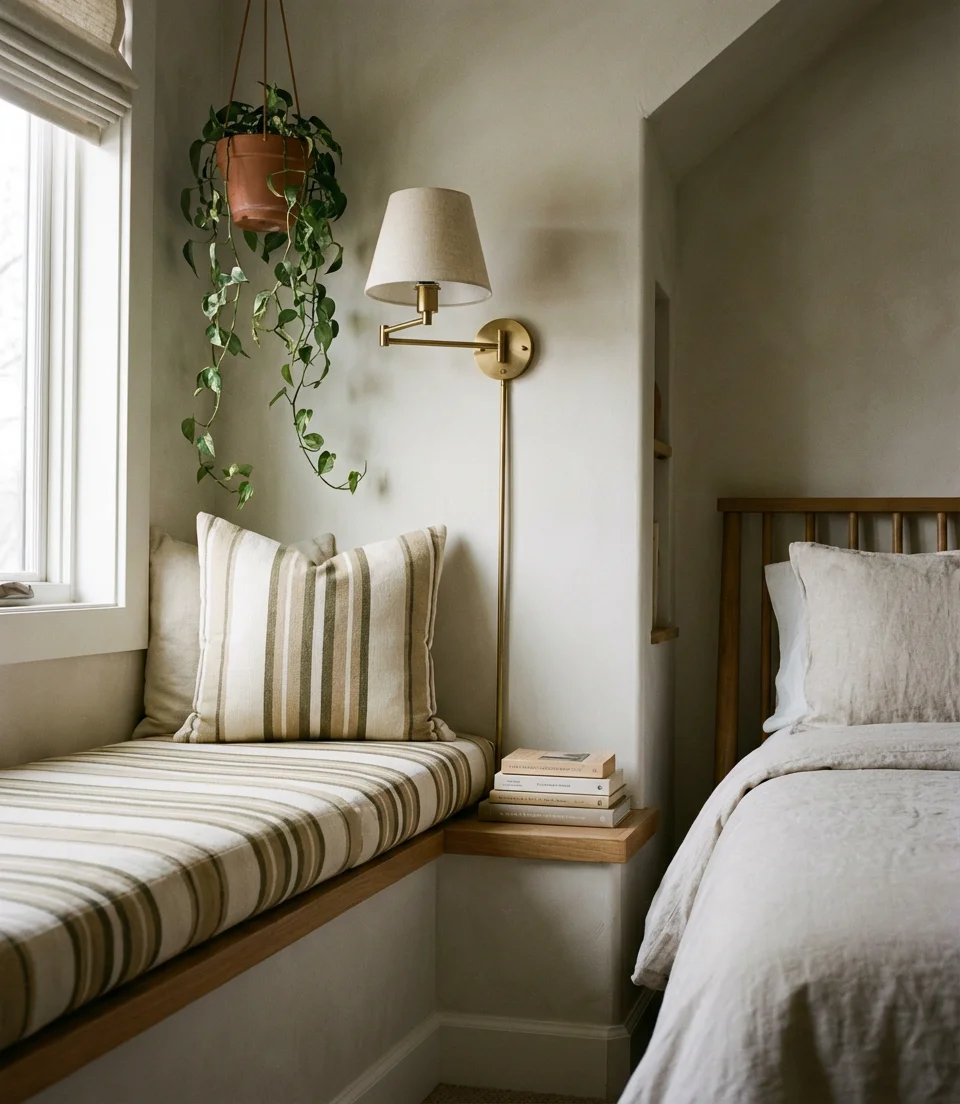
Where this layout works best is in bedrooms with an alcove, a dormer window, or even just a dead corner currently occupied by a sad laundry chair. A slipper chair, a wall-mounted swing-arm reading light, and a small floating shelf for your current read and a candle are genuinely all you need. In cities like New York, Chicago, and San Francisco—where bedroom square footage is especially precious—this kind of thoughtful zoning is what separates a bedroom you love from a storage room you also happen to sleep in. The investment is minimal; the daily quality-of-life improvement is significant and immediate.
13. Aesthetic Bedrooms That Photograph Beautifully
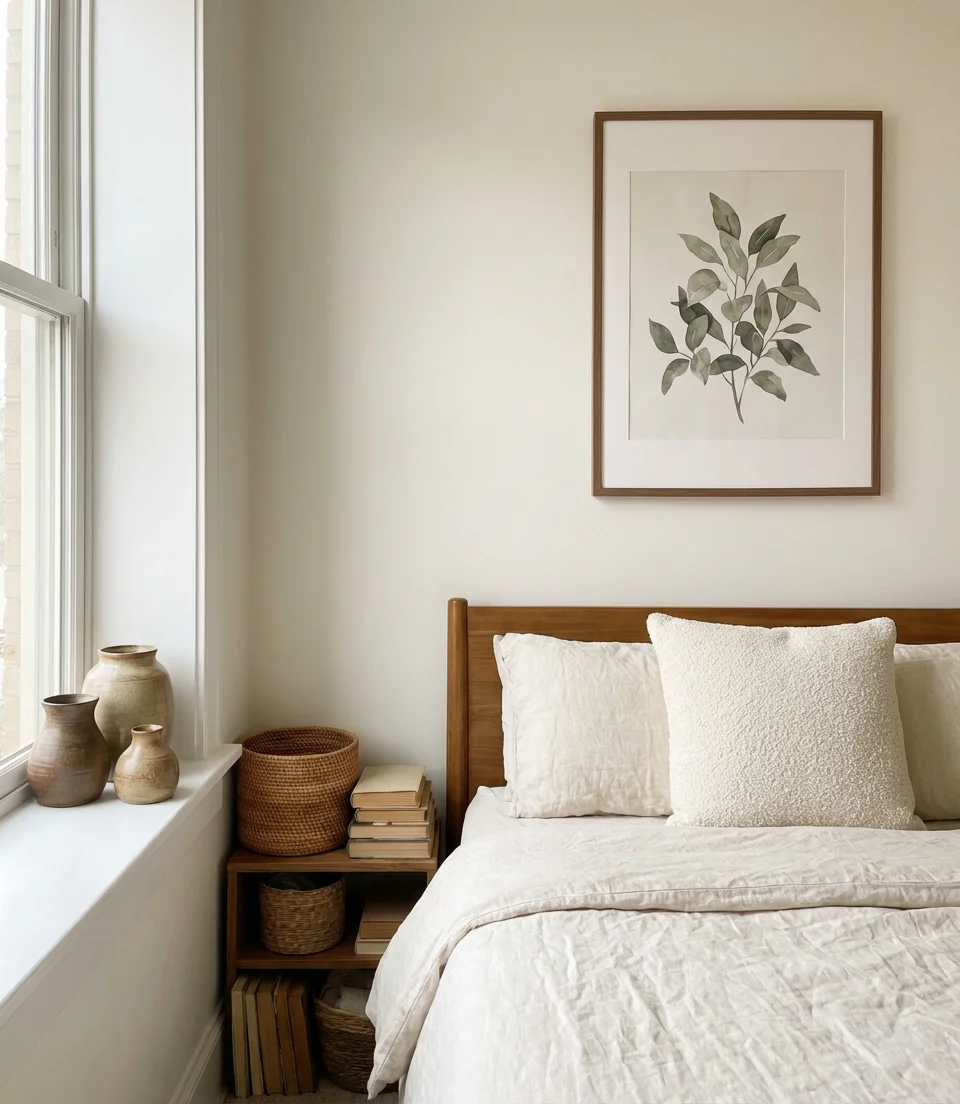
The rise of Pinterest has created a genuine design subculture around ideas for aesthetic bedrooms—spaces that are visually arresting, highly curated, and almost always built around a single strong mood. In 2026, the most popular aesthetic small bedrooms share a few common traits: a cohesive color story, intentional negative space, textured surfaces, and thoughtfully placed objects that reward close looking. Whether it’s a gallery wall arranged by color, a single dramatic botanical print above the bed, or a collection of ceramic vessels on the windowsill, every detail in a true aesthetic bedroom is genuinely deliberate and considered.
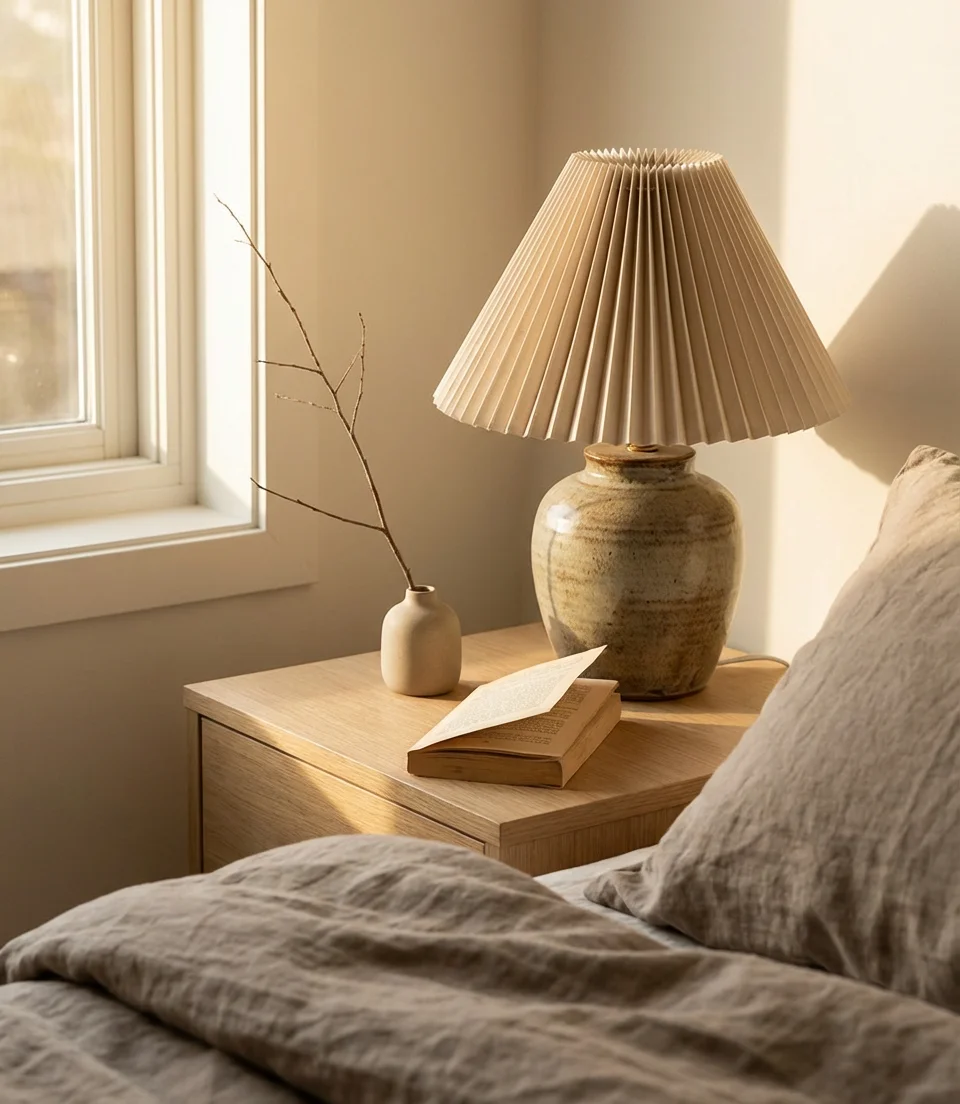
The practical insight here is that “aesthetic” doesn’t mean decorative overload—it means discipline. The most-pinned bedroom photos almost always contain negative space: a bare stretch of wall, a floor area without furniture, or an uncluttered surface. Our brains interpret this emptiness as a space for breathing, which enhances the sense of curated and intentional objects. Before adding anything new to a small bedroom, the better question is usually what to remove first. A room edited down to its best 80% almost always looks more compelling than the same room packed with every single thing you own.
14. Simple Ideas That Are Secretly Brilliant
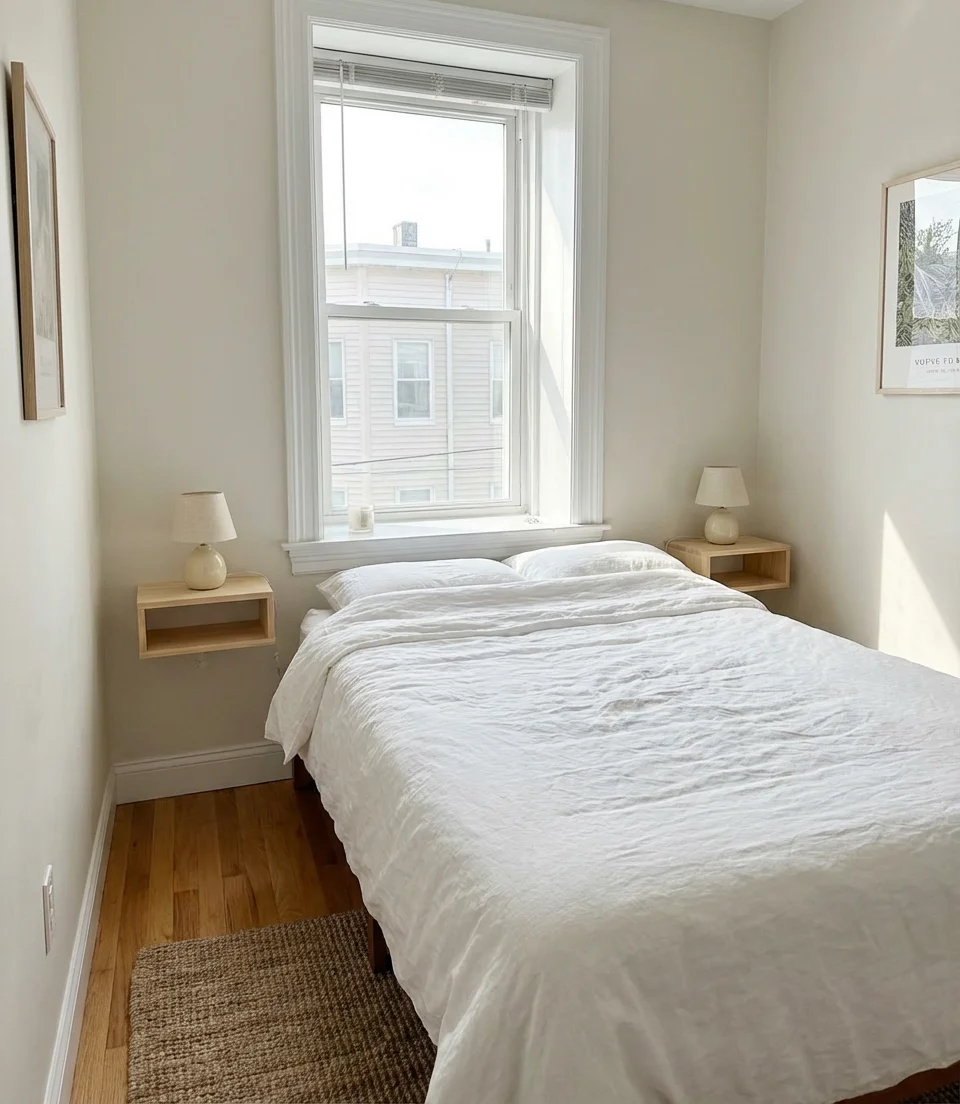
Sometimes the best small bedroom ideas on a budget are almost embarrassingly straightforward—the kind of things that seem obvious in retrospect but make an immediate and dramatic difference. Swapping overhead lighting for lamps at bed height is one of the single most impactful changes you can make to any bedroom, and it costs nothing if you already own lamps. Removing doors from a small closet and adding a curtain gains you real clearance in a tight room. Placing your nightstand on the wall, as opposed to the floor, creates more visual space and is a popular choice in small bedrooms under 100 square feet, where every square inch counts.
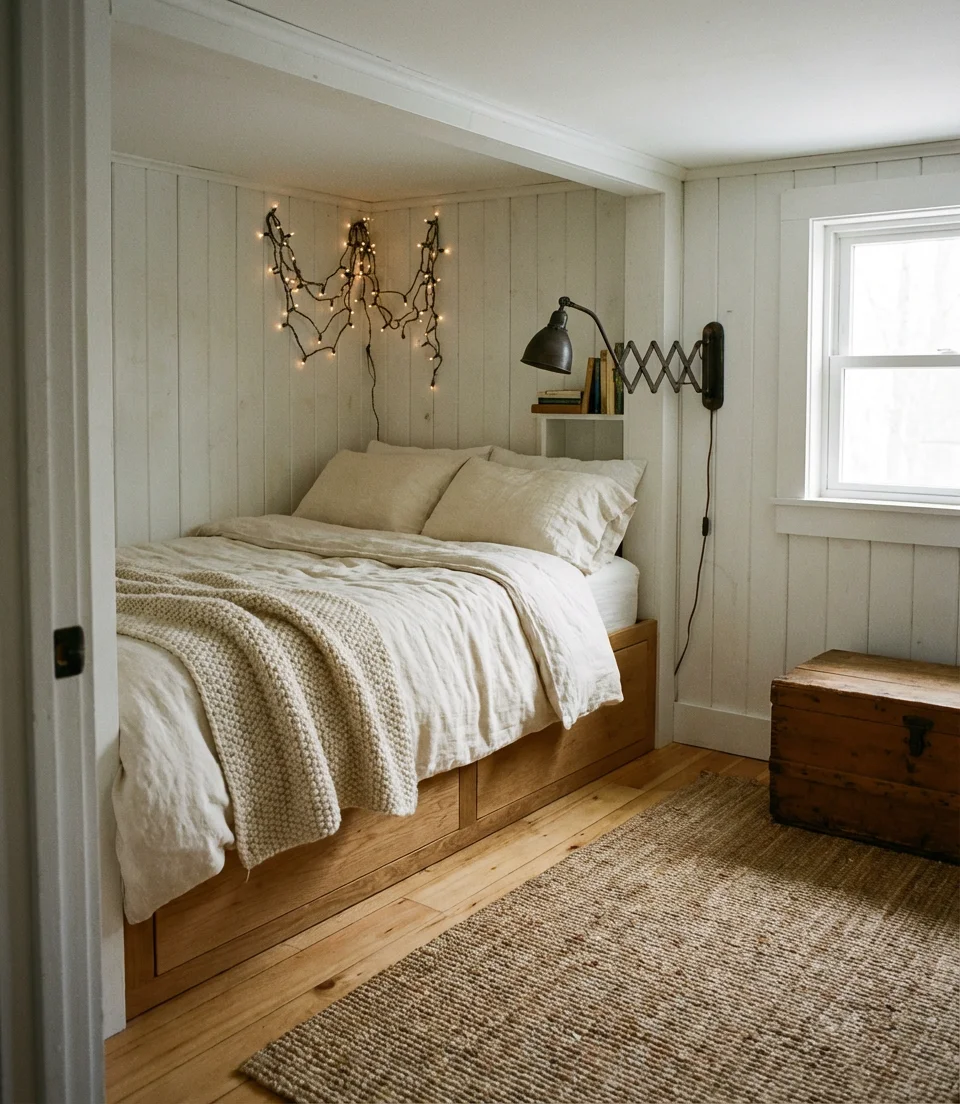
Another underrated trick: push your bed into the corner if the room layout allows it. This frees up walking space, creates a built-in “wall” effect that feels architectural, and in a couples’ room can actually feel more intimate rather than less. Add a string of lights or a wall-mounted lamp above the bed corner for reading, and the result is a cozy, captain’s-bunk feeling that turns a constraint into a real design feature. Small bedroom design is largely the art of reframing limitations as intentional choices, and these simple adjustments are some of the most powerful tools available for doing that.
15. Colorful Bedrooms That Energize Without Overwhelming
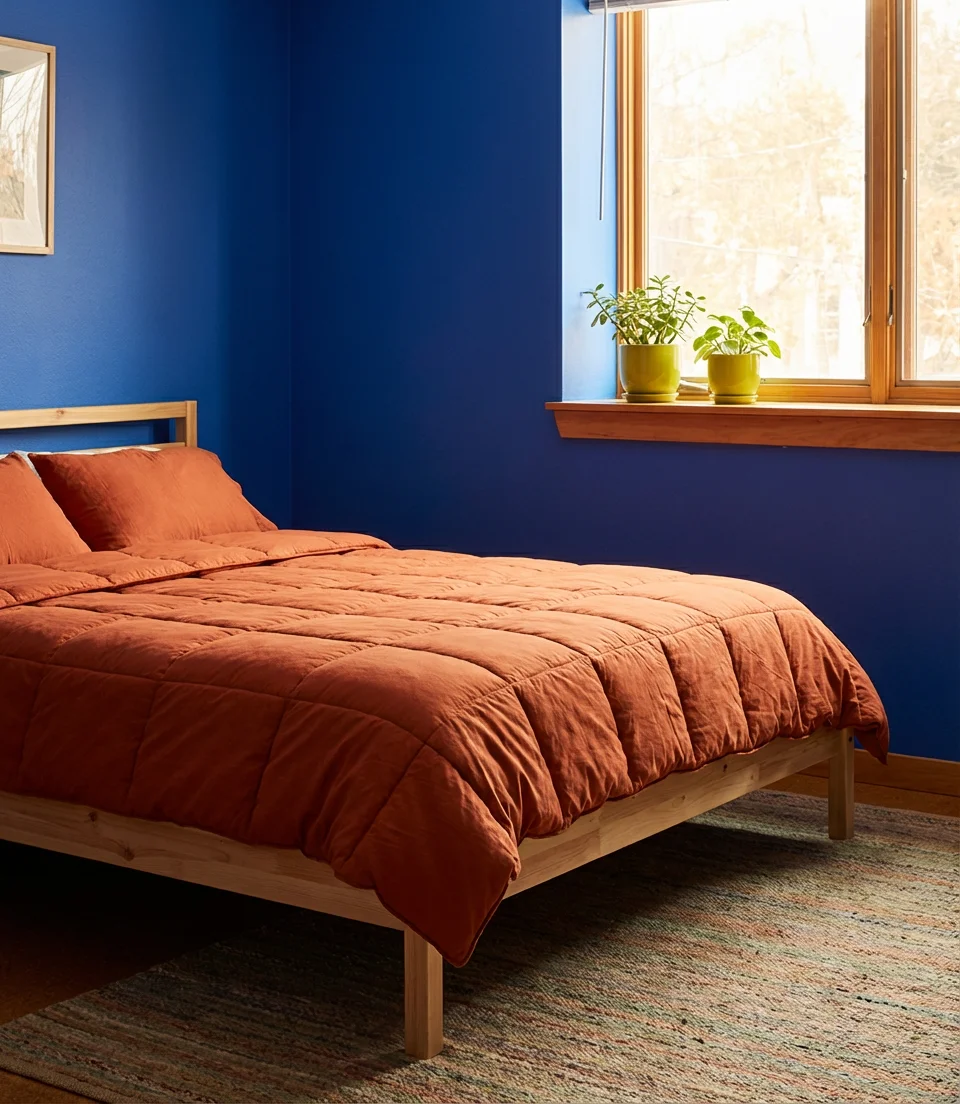
There’s a confident, joyful corner of bedroom design in 2026 that rejects neutrals entirely and goes full colorful—and it looks spectacular done right. The key to a vibrant small bedroom that energizes rather than overwhelms is the 60-30-10 rule: 60% dominant color, 30% secondary color, and 10% accent. This structure gives the eye somewhere to rest and creates a rhythm that feels curated. Think cobalt walls with terracotta bedding and chartreuse plant pots—unexpected but undeniably cohesive. Strong color in a small room creates intimacy rather than chaos when the proportions are right and the palette is edited with genuine discipline and intention.
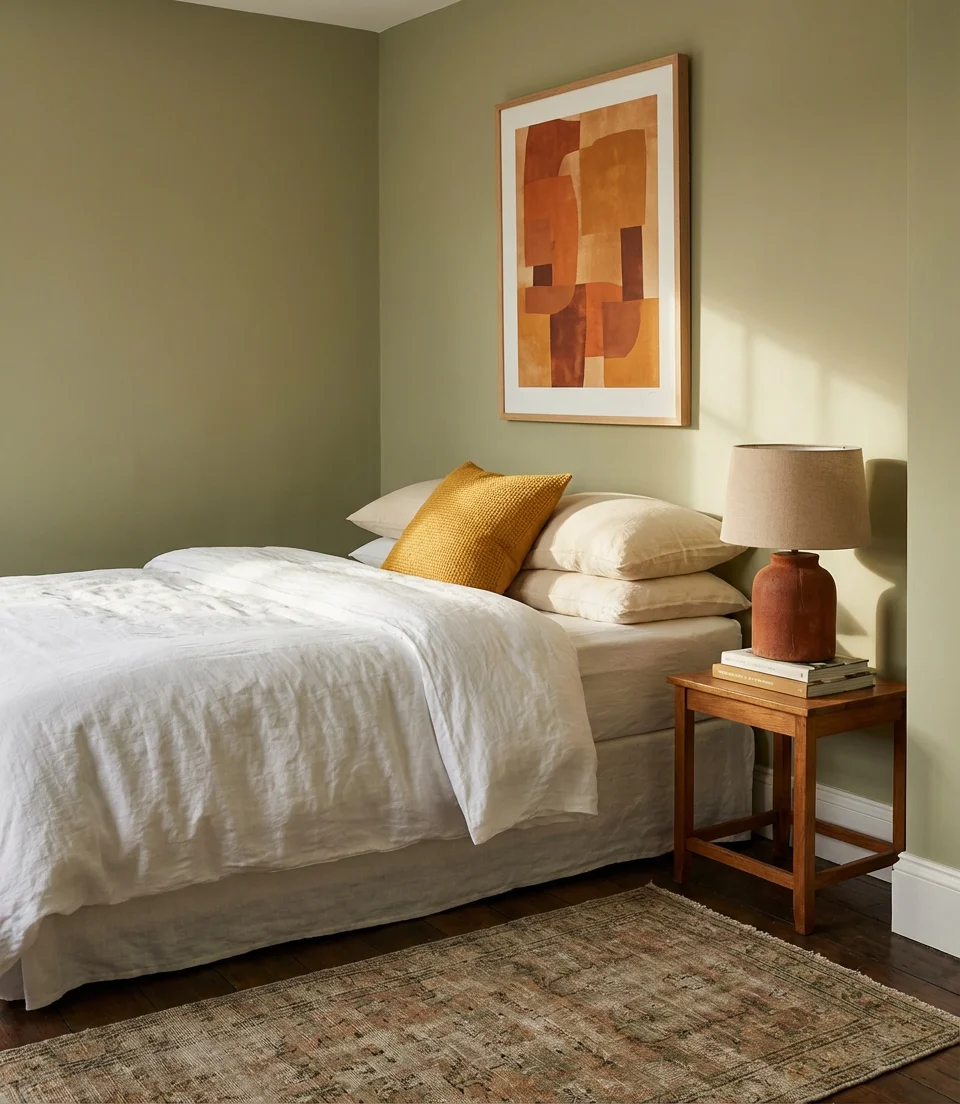
Real homeowners who’ve committed to colorful small bedrooms consistently report the same thing: it took courage to do it, and they’ve never been happier with a design decision. Color has a proven psychological effect on mood—certain greens promote calm, oranges and yellows promote energy, and deep teals create a focused, spa-like headspace. In a bedroom, which is arguably the most mood-dependent room in the house, choosing color intentionally rather than defaulting to white is a genuine act of self-care. Paint is also among the cheapest interventions available, making a colorful bedroom one of the highest-return design investments you can possibly make.
16. Couples’ Simple Bedroom—Restful by Design
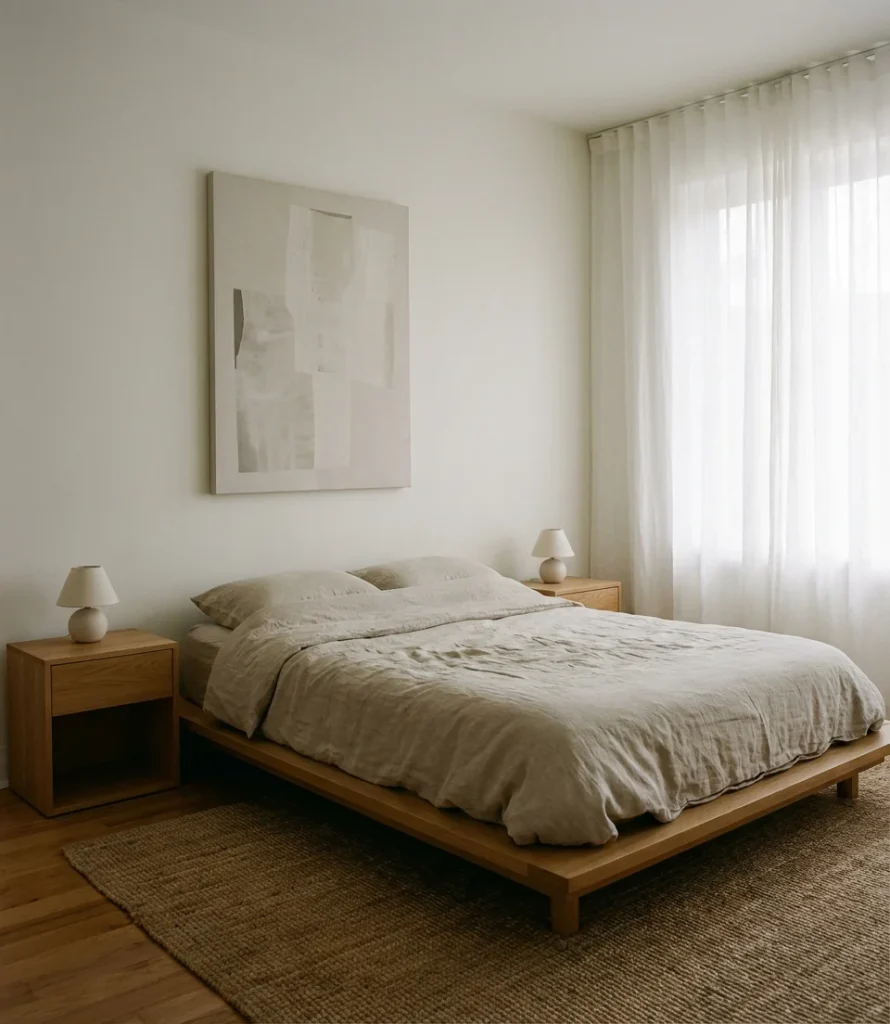
Not every idea for a simple bedroom for couples needs an elaborate design concept—sometimes the most romantic rooms are also the most pared back. A simple, restful couples’ bedroom in 2026 might feature just a quality bed, two matching lamps, soft curtains that block morning light, and a single large piece of art that both partners genuinely love. The absence of visual clutter is itself a powerful design statement, and in a small bedroom for couples, it also means less friction in daily life—no hunting for misplaced things, no navigating around furniture, and no visual stress in the moments just before sleep when you most need peace.
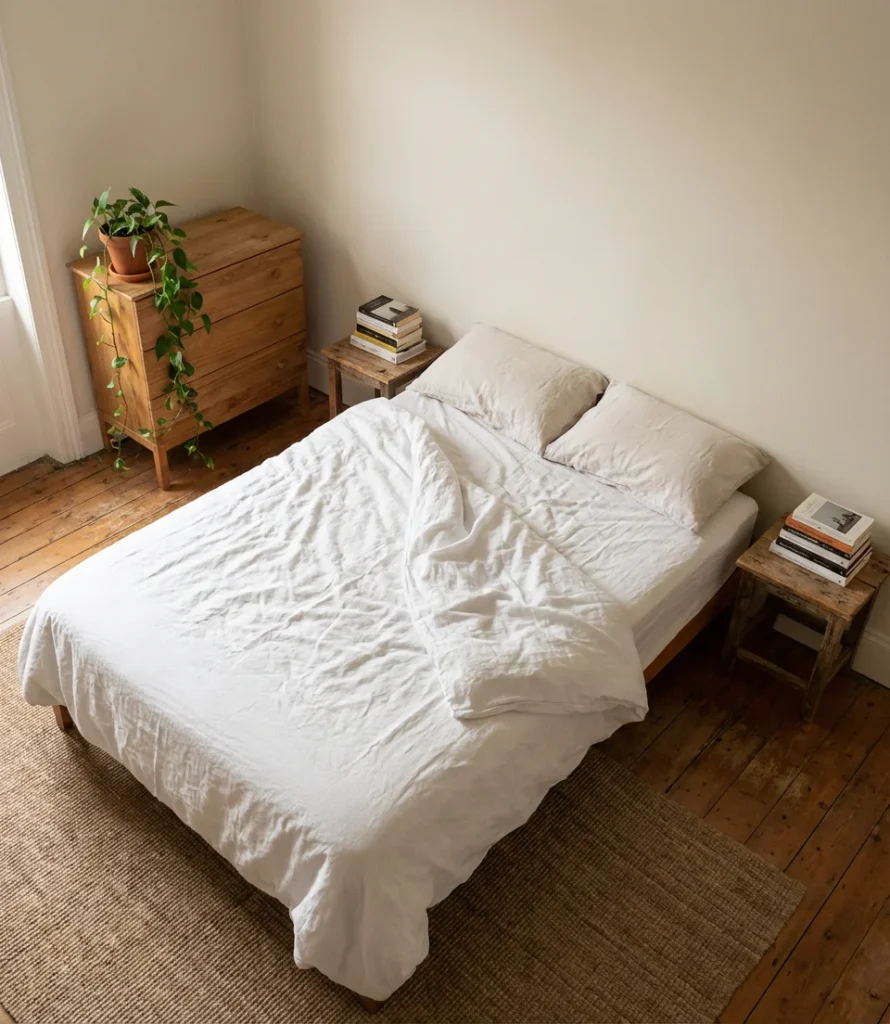
Sleep researchers consistently note that a visually simple, low-stimulus bedroom environment supports better sleep quality—and for couples, better sleep directly means a better relationship. The practical design moves that support this are straightforward: keep electronics out of sight, use drawer organizers so surfaces stay clear, and choose furniture with clean lines that don’t accumulate visual weight. In a small bedroom, these habits matter even more than in larger ones. A tidy, simple room that both people maintain easily is ultimately more romantic than the most elaborate decor that neither person can consistently keep up with.
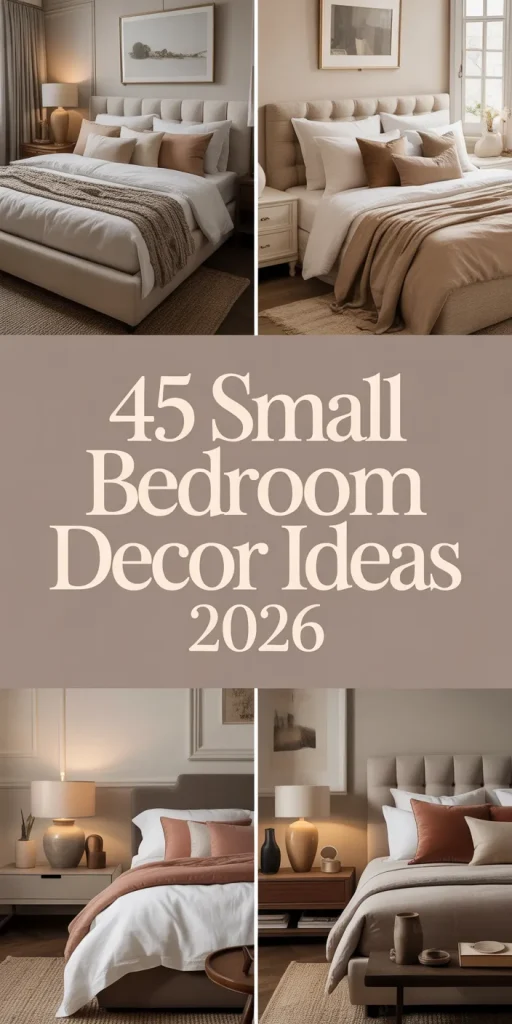
17. Maximizing Vertical Space With Shelving
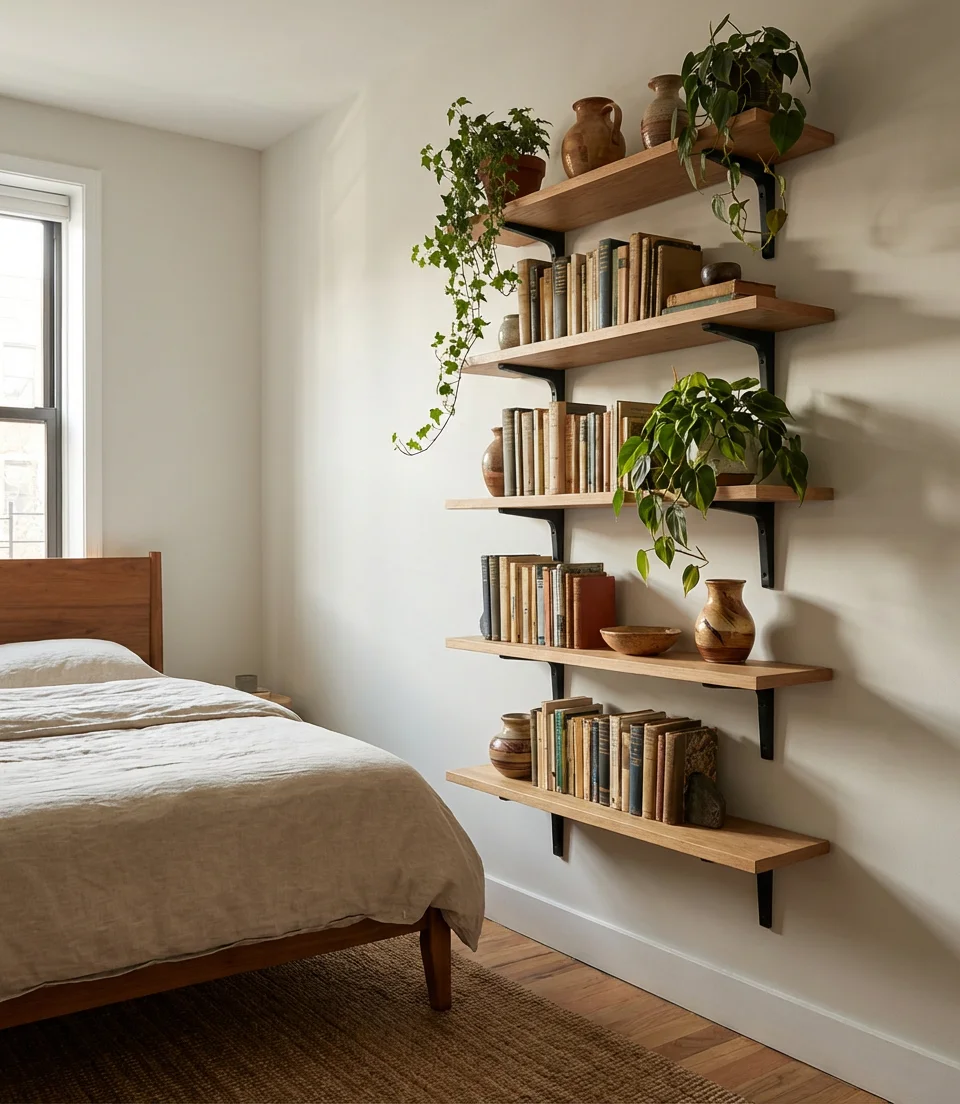
When floor space runs out, the walls become your best asset—and in 2026, design-forward wall shelving in small bedrooms has evolved far beyond a basic ledge above the desk. Floating shelves that run floor-to-ceiling beside the bed replace the need for a bulky wardrobe while displaying books, plants, and objects in a way that doubles as a living gallery wall. For a modern luxury take, choose shelves in warm wood tones or matte black metal with clean bracket hardware. The effect is architectural and intentional without requiring any structural changes to the room or any intervention from a contractor or landlord.
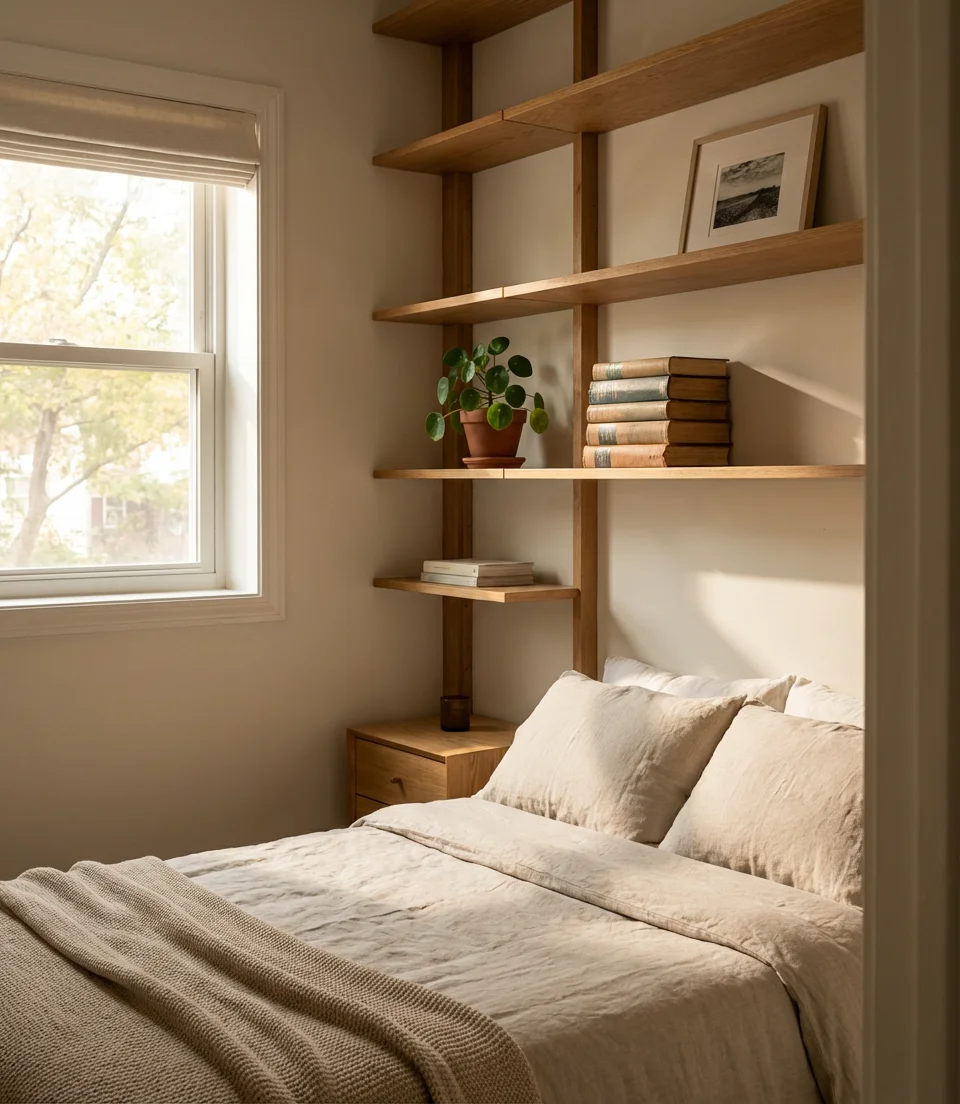
The most common mistake with bedroom shelving is mounting it too close to the ceiling and making access impractical or mounting it too low and losing the visual impact of height. The sweet spot is shelves beginning at about nightstand height and running to within a foot of the ceiling, giving you a usable zone for everyday items and a display zone for taller plants and art pieces at the top. In older American homes—especially those with 8-foot ceilings and limited closet space—this approach can genuinely transform the storage situation of a small bedroom without meaningfully touching the floor plan or the overall budget.
18. Canopy Beds—Drama Without the Square Footage
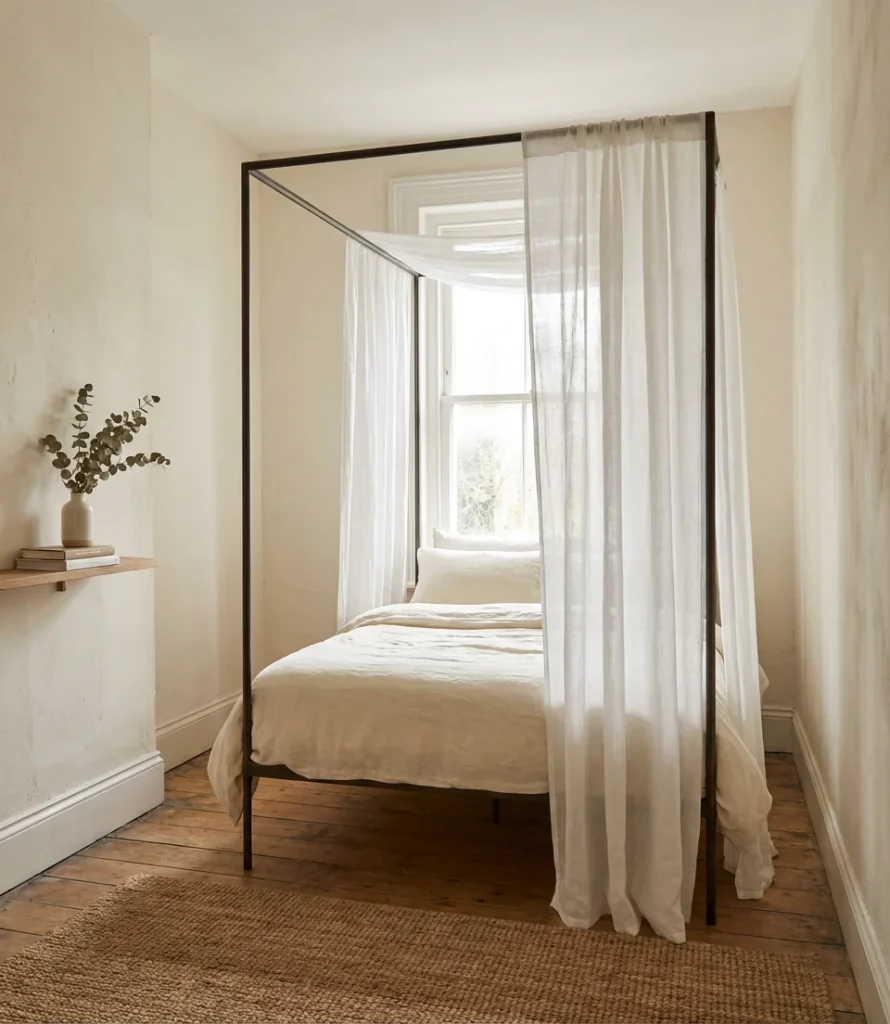
The canopy bed has made a remarkable comeback—not the heavy, carved four-poster of a Victorian manor, but a light, airy, almost architectural version that works beautifully in small bedrooms. A simple metal frame canopy draped with sheer linen or cotton panels creates a sense of enclosure around the sleeping zone without closing the room in. It’s one of the most beloved looks in inspiration-heavy bedroom boards, and it delivers the feeling of a cozy, private sanctuary even in an open-plan studio apartment. The visual drama comes entirely from height and drape, not from any bulk or added visual mass that might crowd the space.
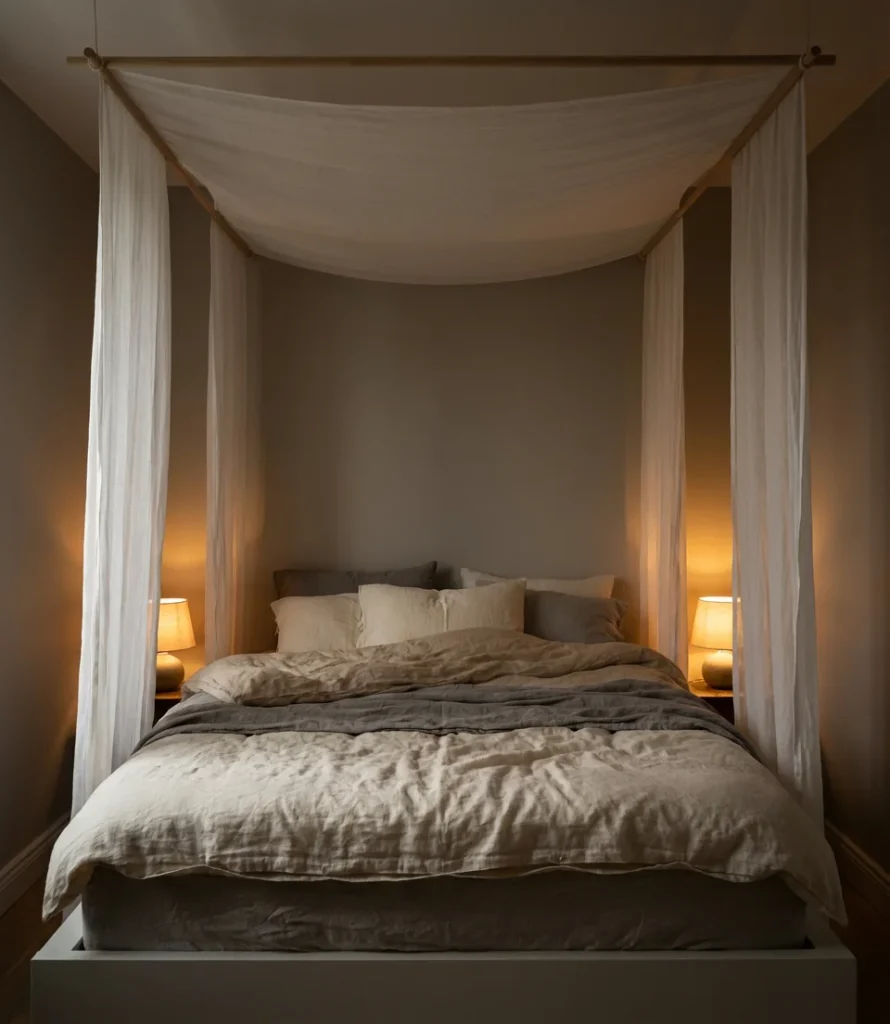
Canopy frames work especially well in bedrooms with higher ceilings—9 feet or above—where the vertical emphasis feels natural rather than forced. In rooms with standard 8-foot ceilings, a ceiling-mounted canopy using a simple curtain rod or wooden dowel creates the same effect with even more flexibility. Sheer white panels let light through beautifully during the day and glow warmly under ambient lighting at night. The entire setup—frame or ceiling hardware, four panels of sheer fabric—can be assembled for under $100, making this one of the most dramatically beautiful budget transformations available for any small bedroom in any rental or owned home.
19. Dark Aesthetic Bedrooms With Moody Lighting
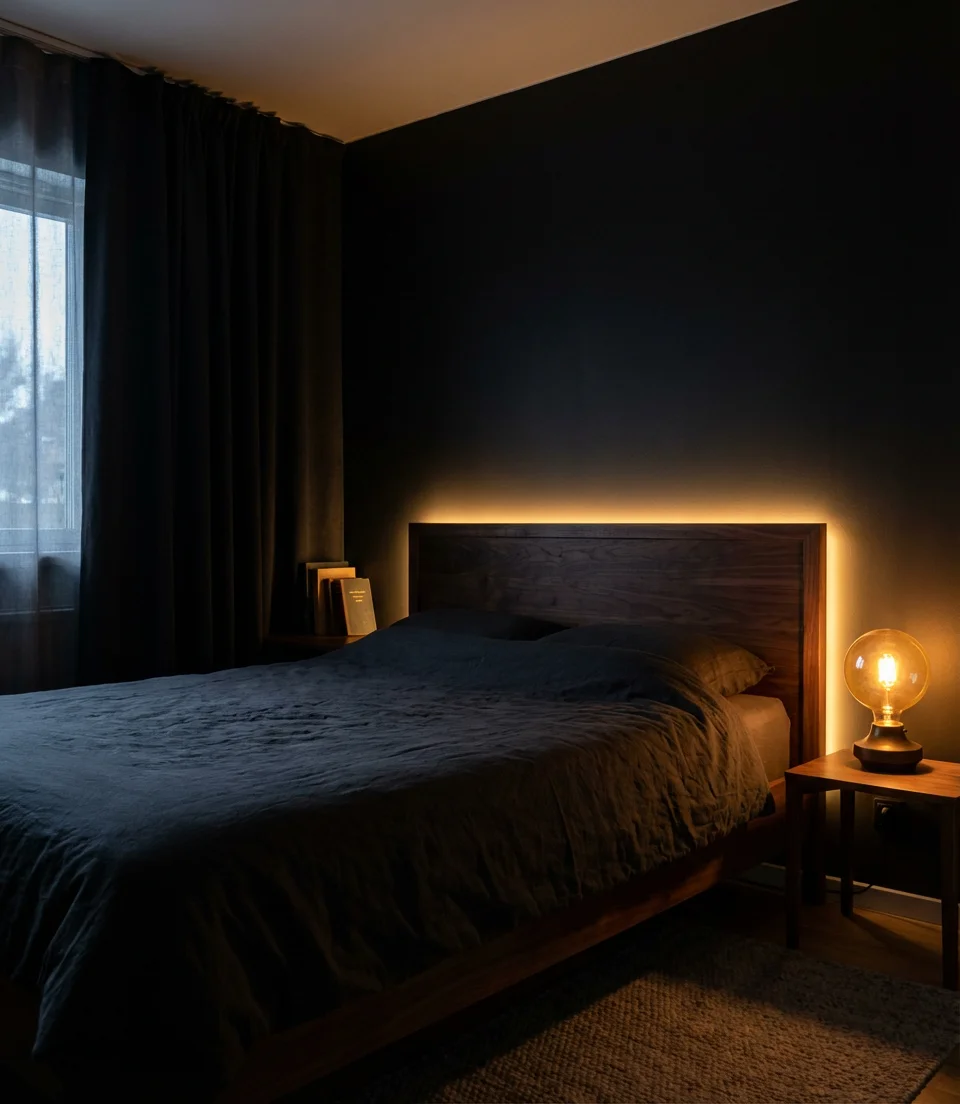
The aesthetic dark bedroom will be a whole subculture in 2026—distinct from the moody dark wall trend in that it commits fully to a dim, atmospheric, almost cinematic environment. Think deep charcoal or black walls, blackout curtains, dark wood furniture, and lighting that comes entirely from warm, low sources: table lamps with amber bulbs, plug-in sconces with Edison filaments, and thin strips of warm LED behind the headboard. Ideas of aesthetic dark enthusiasts are after something that feels like a luxury hotel crossed with a director’s study—sophisticated, intentional, and completely removed from the visual noise of ordinary daily life.
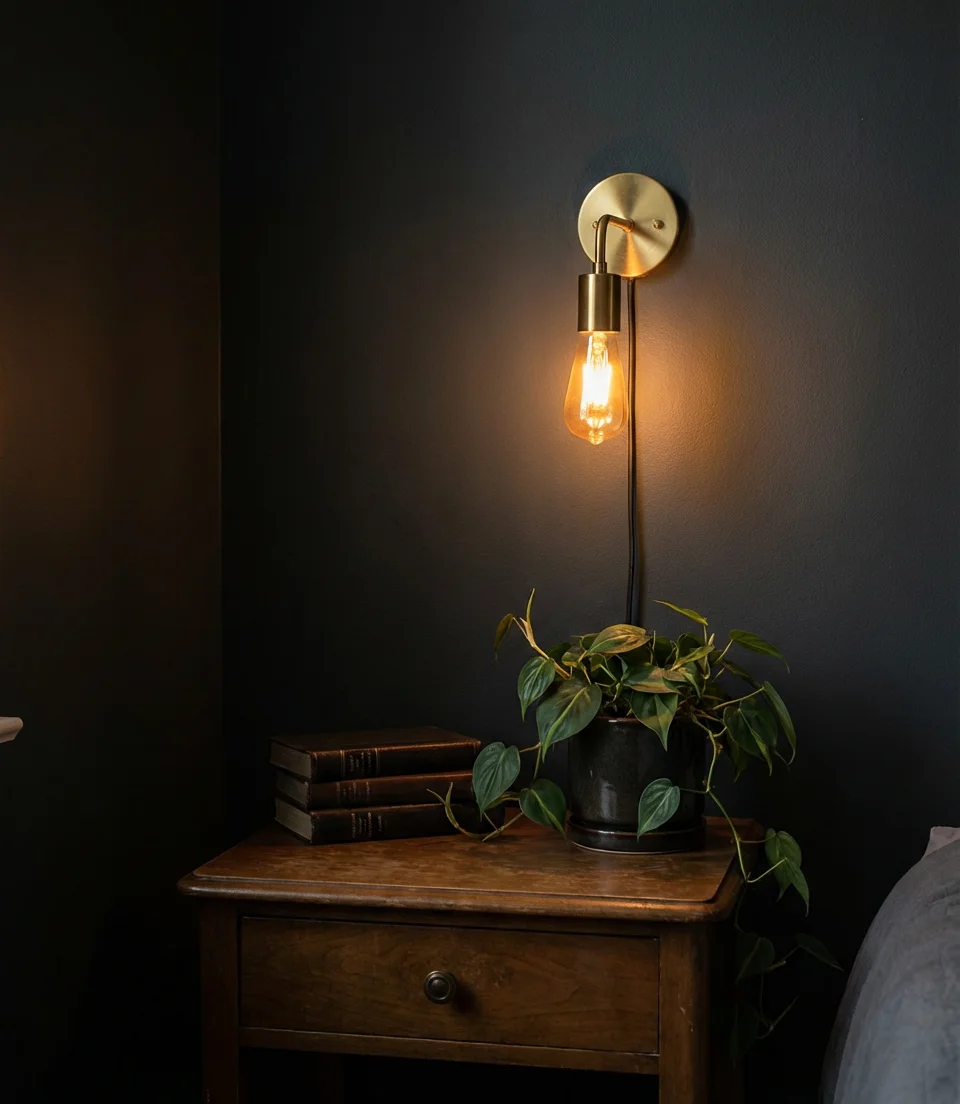
An important expert-level note on making dark bedrooms work practically: ventilation and natural light during the day matter even more when walls are very dark. Install full blackout curtains that also open completely during daylight hours—the contrast between a flooded, bright daytime room and a perfectly dim nighttime retreat is part of what makes this look so satisfying. Matte finishes on dark walls absorb rather than reflect light, deepening the effect significantly. Glossy finishes on dark walls can feel cold and clinical. The textural difference between a matte and semi-gloss on the same dark color is more dramatic than most people realize until they’re standing inside the finished room.
20. Small Bedroom for Women—Personal and Powerful
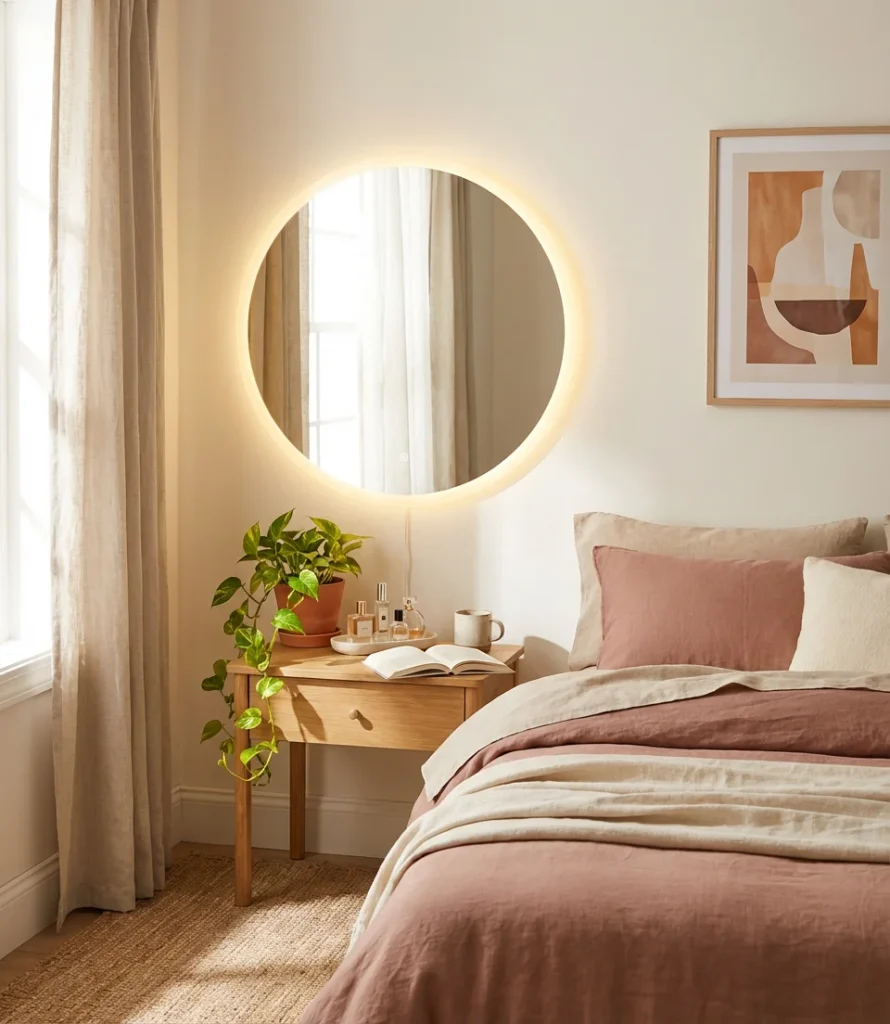
A bedroom designed specifically for women in 2026 has little to do with stereotyped femininity—and everything to do with personal sovereignty and intentional comfort. This is the room that is entirely yours: a vanity corner with good lighting, shelves organized the way you actually think, a scent that fills the space as you walk in, and a color palette that reflects your specific aesthetic rather than a generic template. Whether that means neutral linen and ceramic, deep jewel tones and velvet, or a playful mix of vintage finds, the through-line is that every single choice in the room is made by and for you alone, with no compromises required.
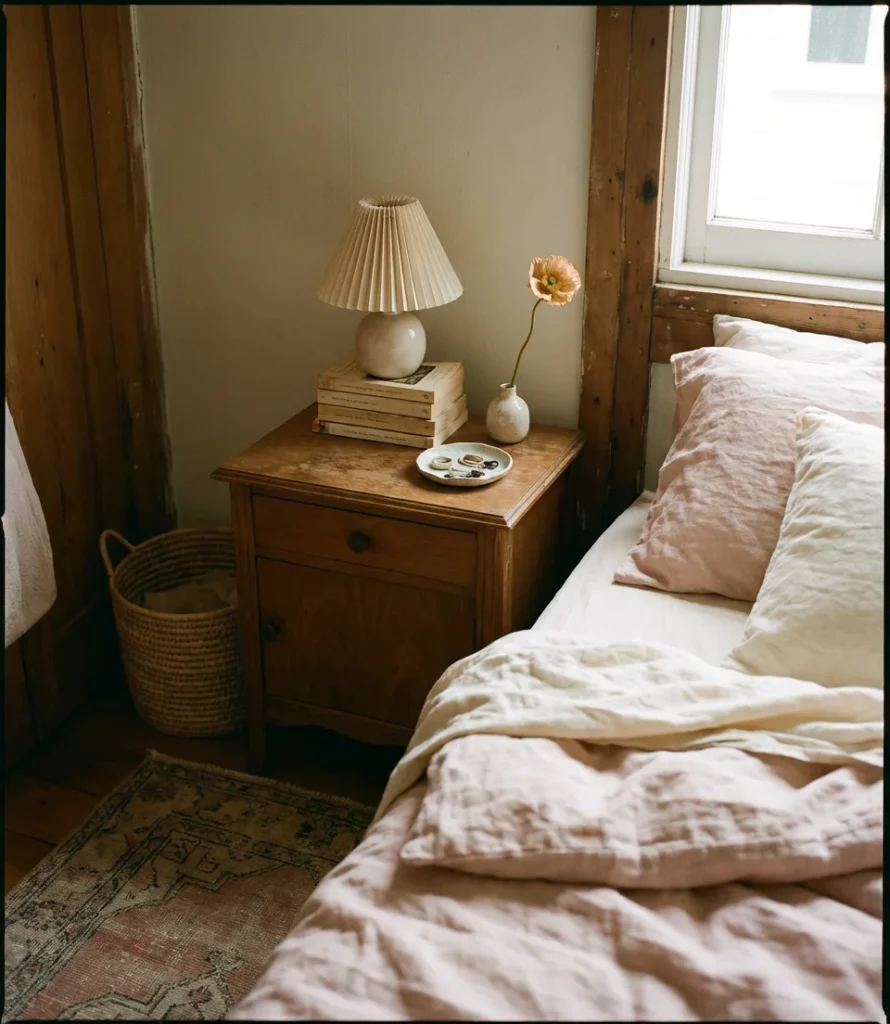
In a small bedroom, this sense of personal curation actually becomes easier rather than harder—fewer square feet means fewer decisions, and every inch can be maximally intentional. A wall-mounted vanity mirror with built-in lighting doubles as both a functional makeup space and a glamorous visual anchor. A small perfume tray on the nightstand, a meaningful piece of art above the bed, and a single trailing plant in a beautiful pot can make a 9×10 bedroom feel like a private hotel suite you’re privileged to come home to. The investment in a room that genuinely reflects who you are pays back in daily mood, focus, and well-being every morning you wake up in it.
21. Minimalist Small Bedroom—Nothing Wasted
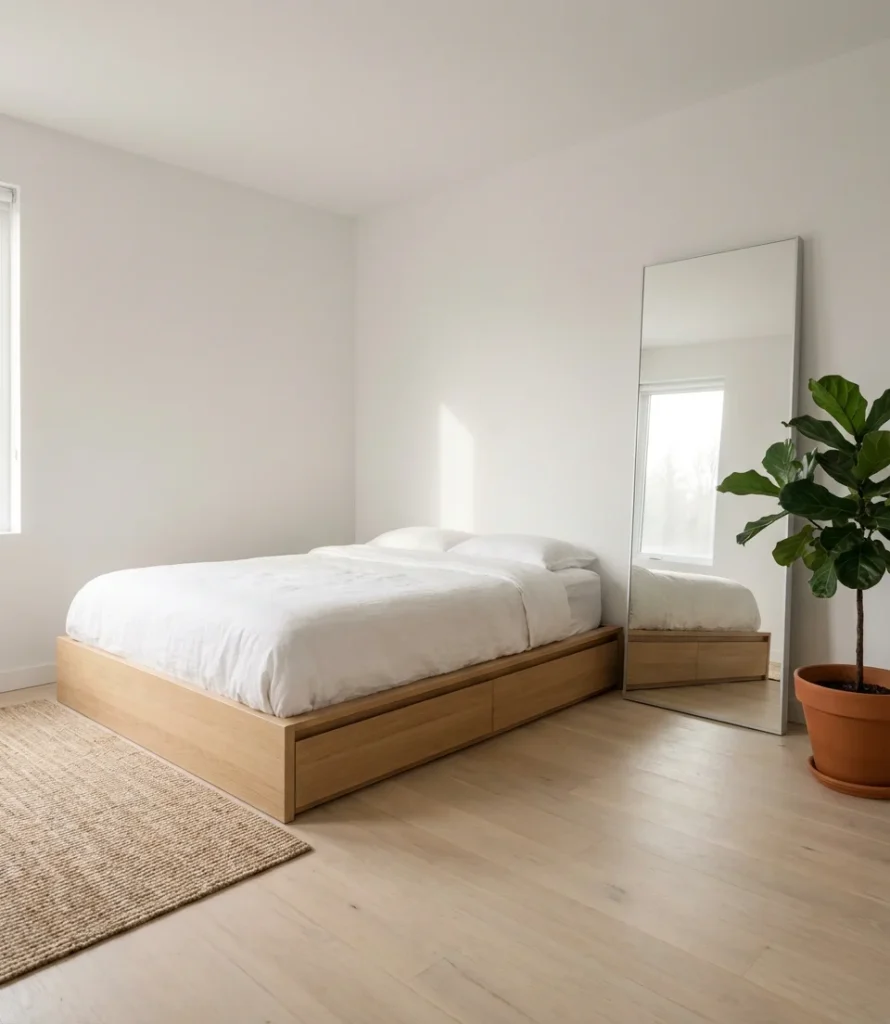
Minimalism in a small bedroom in 2026 isn’t about deprivation—it’s about the specific pleasure of a room where everything has genuinely earned its place. A platform bed with built-in drawer storage eliminates the need for a separate dresser. One large mirror amplifies light and creates the illusion of a second window. A single, beautifully made plant or a carefully chosen piece of art is more impactful than a gallery wall in a tight space. The aesthetic here is deeply considered, and the design discipline it requires is real—but the payoff is a room that feels perpetually calm and never cluttered, regardless of how many square feet it actually contains.
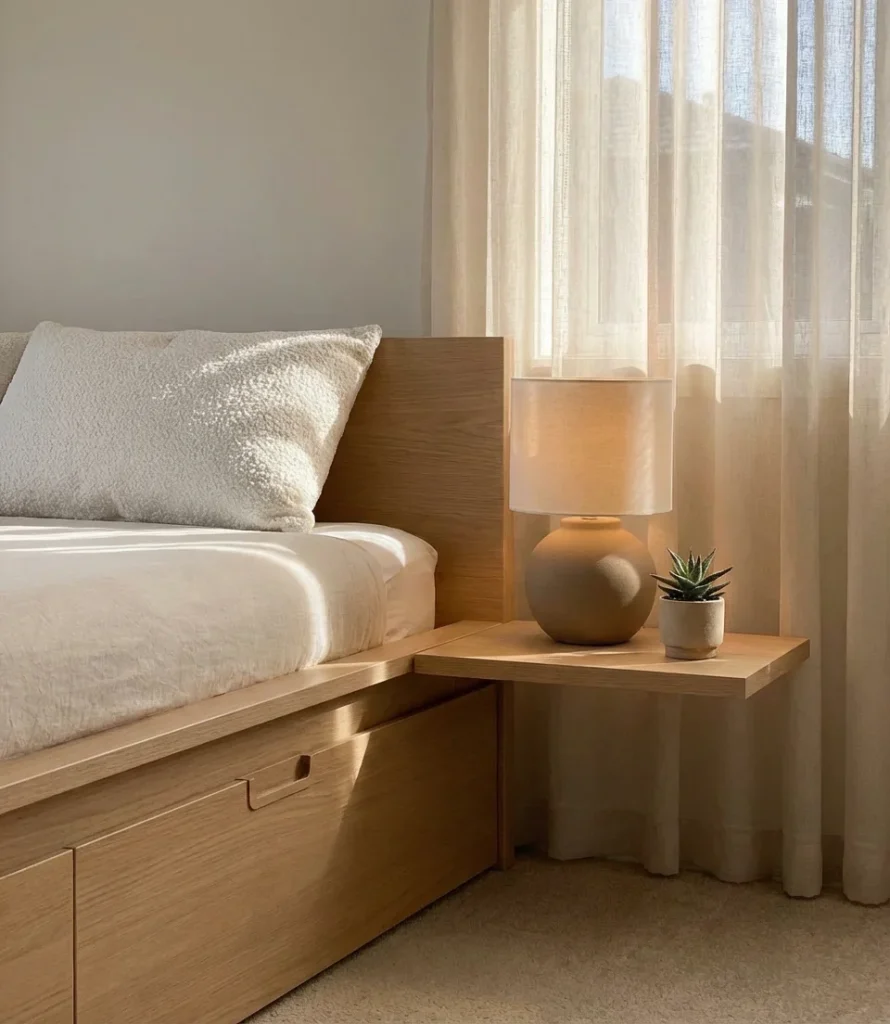
The American lifestyle context is important here: we tend to accumulate items, and small bedrooms accumulate the most because they are private spaces where things are stashed rather than properly dealt with. A minimalist bedroom requires a different relationship with belongings—regular editing sessions, a rule about nothing living on the floor, and a genuine commitment to buying less but buying better. The surprising benefit is financial: when you apply minimalist discipline to a bedroom, you naturally spend less on impulse decor purchases and more on the few items you do choose. Over time, that creates a room that feels both calmer and more genuinely expensive than any amount of thrift-store styling could ever achieve on its own.
22. Lighting That Does All the Work
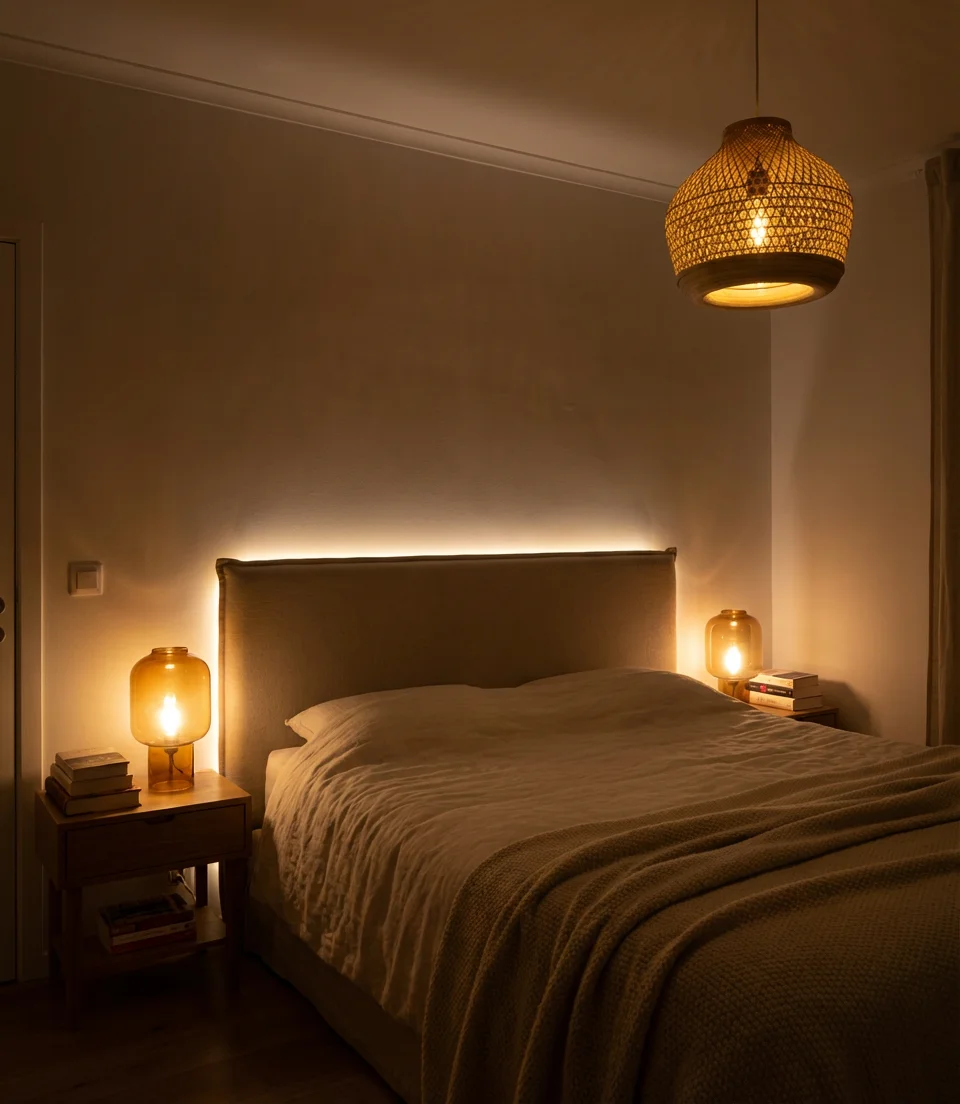
In 2026, upgrading the lighting in a small bedroom is a must-have. Nothing transforms a room faster, and nothing is more consistently underinvested in by American homeowners working on a tight budget. The formula is simple: eliminate overhead lighting as the primary source and replace it with layered warm lighting at multiple heights and zones. A cozy small bedroom has a lamp on each side of the bed for reading, a dimmable overhead fixture for occasional full-room light, and at least one accent source—whether that’s a backlit shelf, a warm LED strip behind the headboard, or a thoughtfully arranged grouping of candles on the dresser that you actually light each evening.
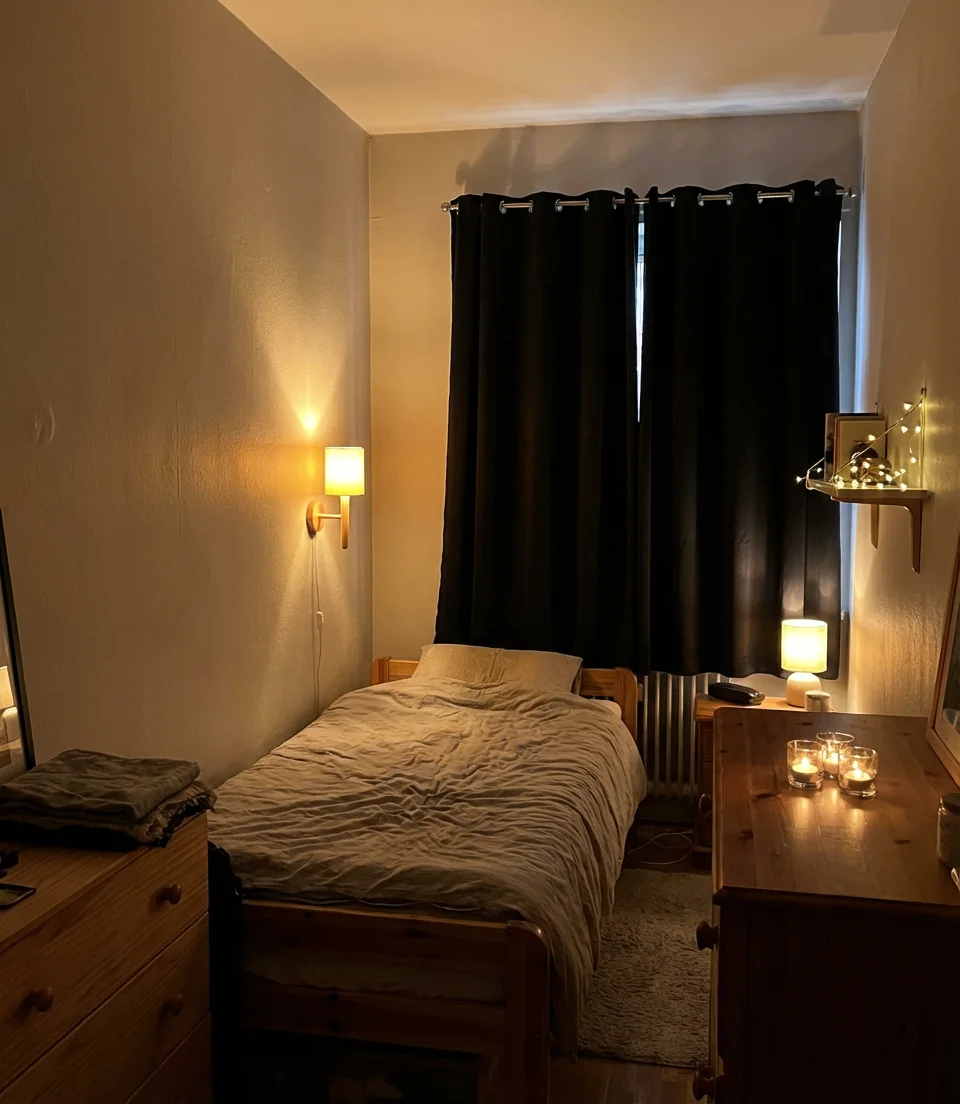
The technical details genuinely matter: choose bulbs in the 2700K–3000K range, labeled “warm white” or “soft white,” for any bedroom light source. Anything above 3500K will feel harsh and clinical, especially in the evening hours when you’re winding down for sleep. Smart bulbs let you adjust color temperature and brightness by time of day, which research supports as beneficial to healthy sleep onset. For a small bedroom especially, where the bed is physically close to every light source, dialing down to 10–20% brightness in the hour before sleep can meaningfully improve your sleep quality—and that particular upgrade costs nothing extra once the bulbs are already in place.
23. Small Bedroom Refresh With Textiles Alone
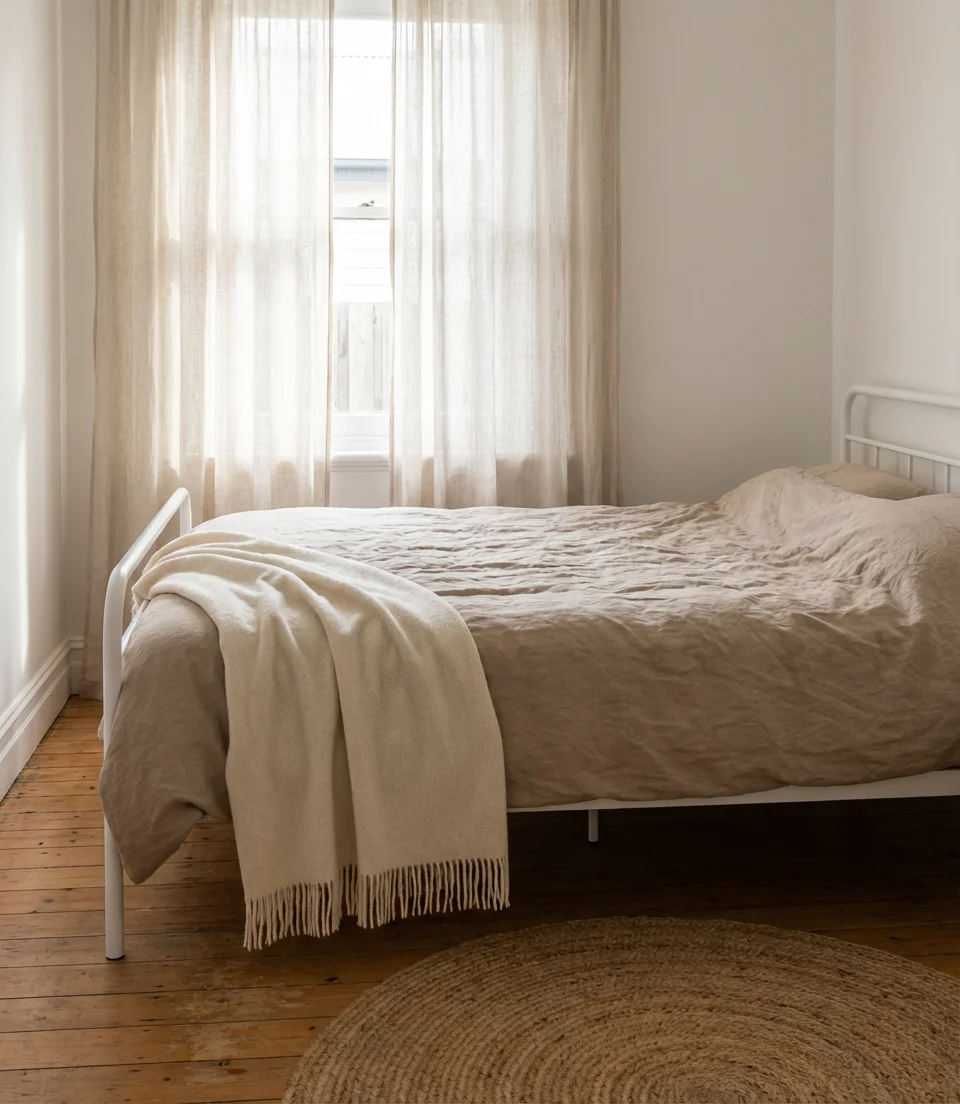
The fastest, most reversible, and often most dramatic small bedroom upgrade available requires no tools, no painting, and no furniture shopping: a complete textile refresh. New bedding in a different color or texture, a rug swap, new curtains, and a couple of fresh throw pillows can make a room feel entirely new in a single afternoon. For renters, the textile choice is the primary design lever, and it works every time. On a budget, the hierarchy is bedding first, rug second, curtains third, and accent pillows last. Within that order, even modest spending consistently yields dramatic results that surprise people with how much they underestimated the impact of textiles on a room’s entire emotional register.
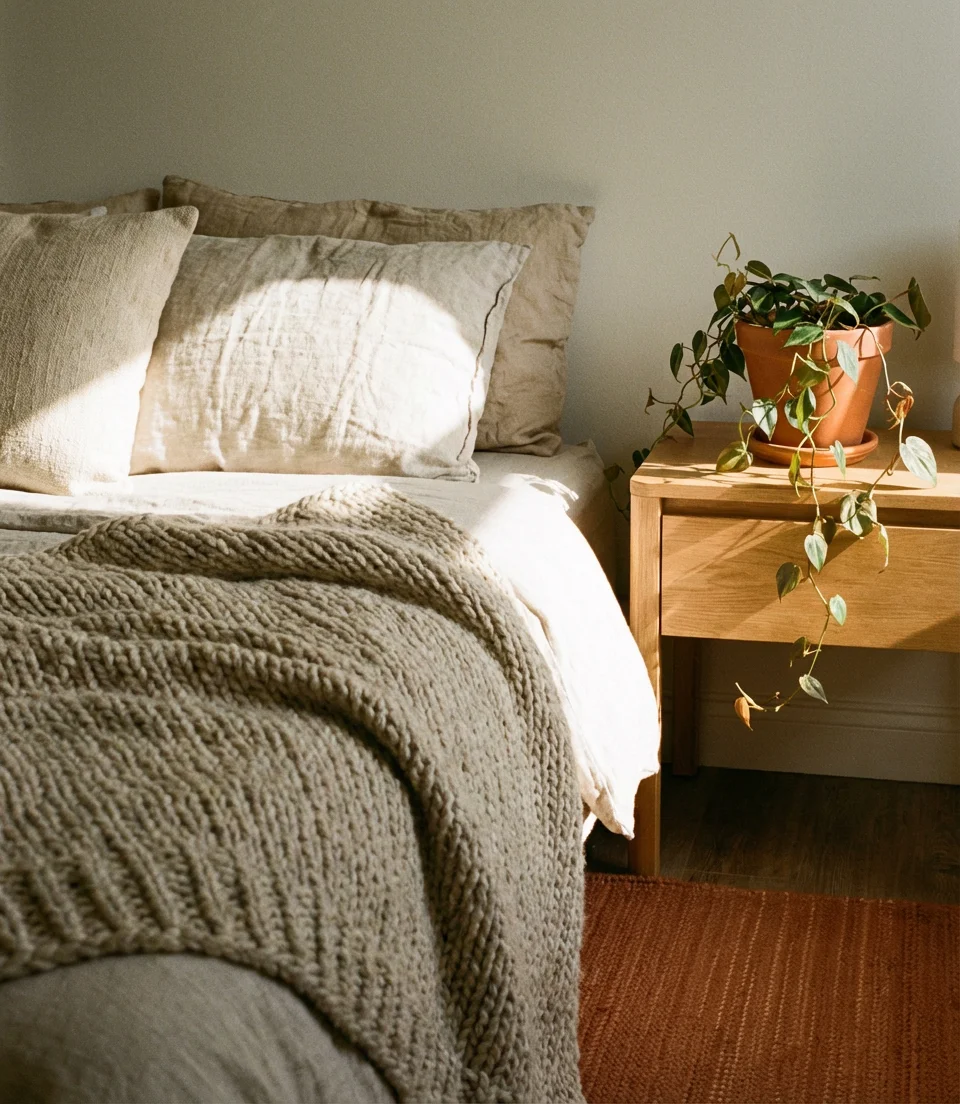
Textiles do something paint and furniture simply cannot: they invite touch, and a bedroom that feels good to touch is a bedroom that feels genuinely good to be in. Linen bedding softens with every wash. A wool rug develops a patina of use that synthetic rugs never achieve. A chunky knit throw invites you to actually use it rather than just display it from a careful distance. These sensory qualities are accessible at virtually every price point, from Target’s affordable threshold linen to premium brands you save up for. A thoughtfully chosen set of textiles can do more for a small bedroom than almost any other single design investment, which is why its selection remains some of the most reliable advice in all of home decor.
Your bedroom—no matter how small, how dated, or how challenging—is one well-chosen idea away from becoming a space you genuinely love coming home to. Whether you start with a single bold paint color, a textile refresh on a Sunday afternoon, or a full room rethink over a long weekend, the ideas here are meant to feel achievable rather than aspirational. Which of these ideas resonated most with your own space? Drop a comment below and let us know what you’re planning to try—we’d love to see what you create.