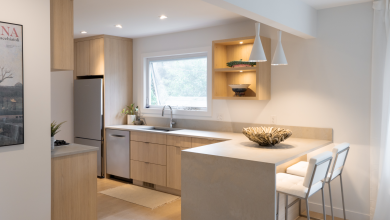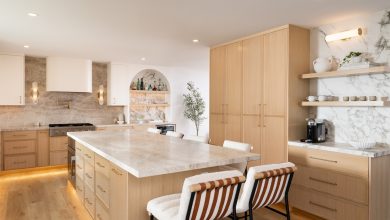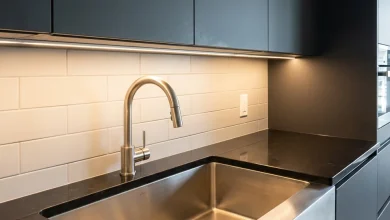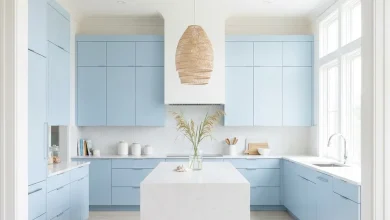

In 2026, open kitchen designs have become the focal point of American homes, seamlessly combining functionality and visual flow in a way that is both timeless and utterly contemporary. Whether you’re scrolling Pinterest for modern inspiration or planning a full remodel in your small space, the goal remains the same: create a zone that invites conversation, simplifies daily routines, and looks magazine-worthy without sacrificing warmth. From luxury updates to budget-friendly tweaks, this year’s open kitchen ideas reflect how we actually live—cooking, working, gathering, and occasionally hosting impromptu dinners. Below, you’ll find fresh concepts that celebrate openness, light, and smart design, each tailored to fit real homes across the country.
1. Compact Open Kitchen for Small Space Living
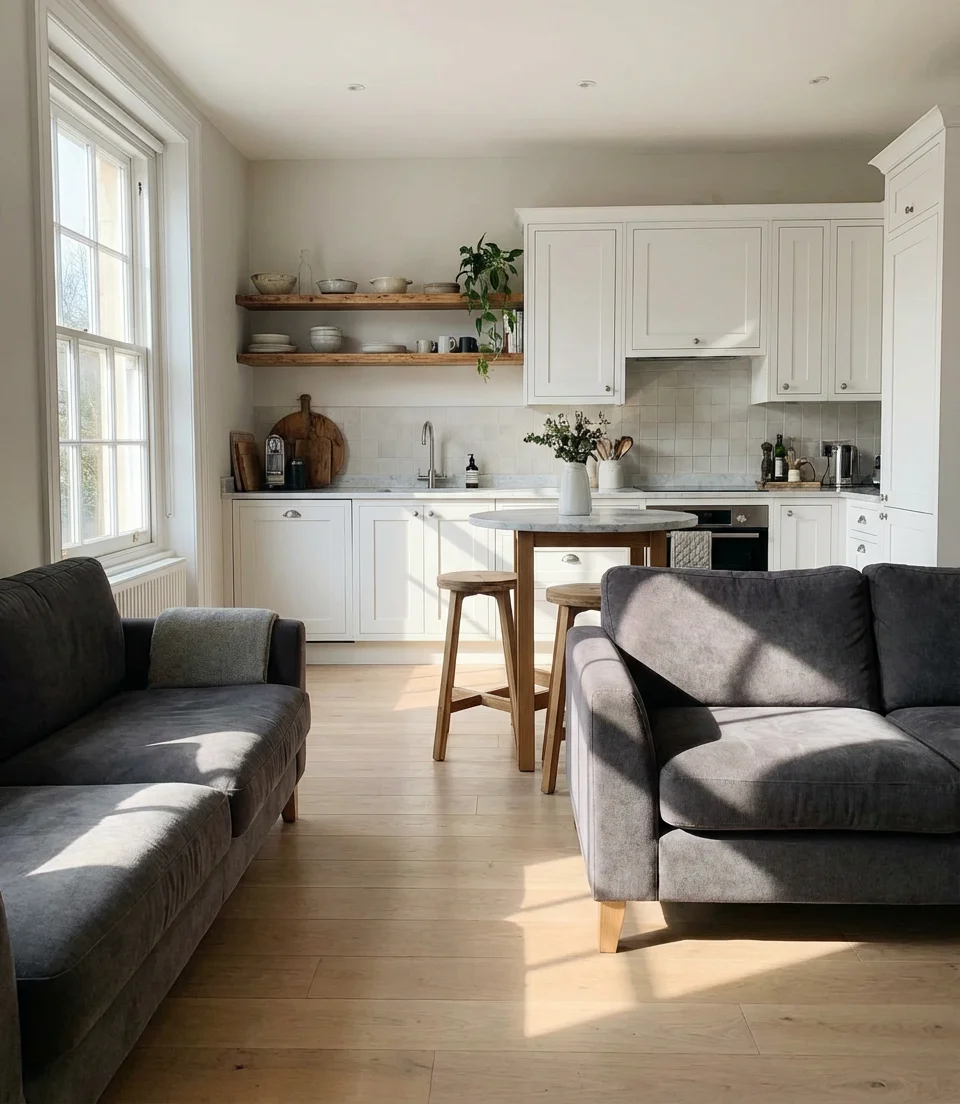
If you have limited square footage, an open kitchen can effectively double the size of a small space. By removing upper cabinets on one wall and opting for open shelving or a single floating shelf, you invite sightlines to travel freely from the stove to the sofa. When you combine light-toned cabinetry with a slim island or peninsula, it creates a seamless flow between your living room and kitchen. This approach is particularly effective in urban apartments, lofts, and even basement suites, where every square inch is crucial.
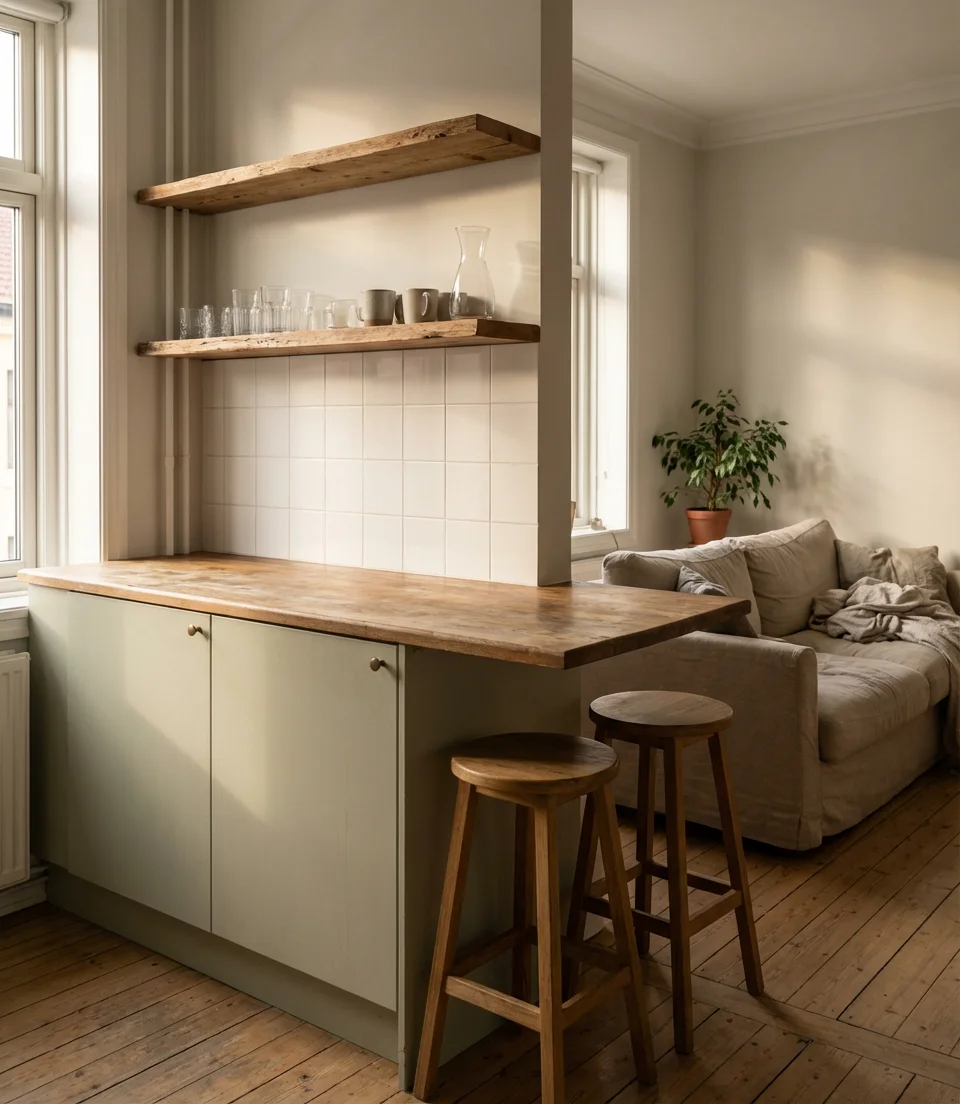
One common mistake is cramming too many features into a narrow footprint, which can make the space feel cluttered rather than open. Instead, choose multitasking elements—a rolling cart instead of a fixed island, or a fold-down breakfast bar that tucks away when not in use. Keep your color palette light and your countertops clear, and resist the urge to add decorative knickknacks that block the view. This restraint pays off, especially when you’re hosting friends and need the kitchen to flow seamlessly into your main living area.
2. Modern Indian-Style Open Kitchen with Living Room
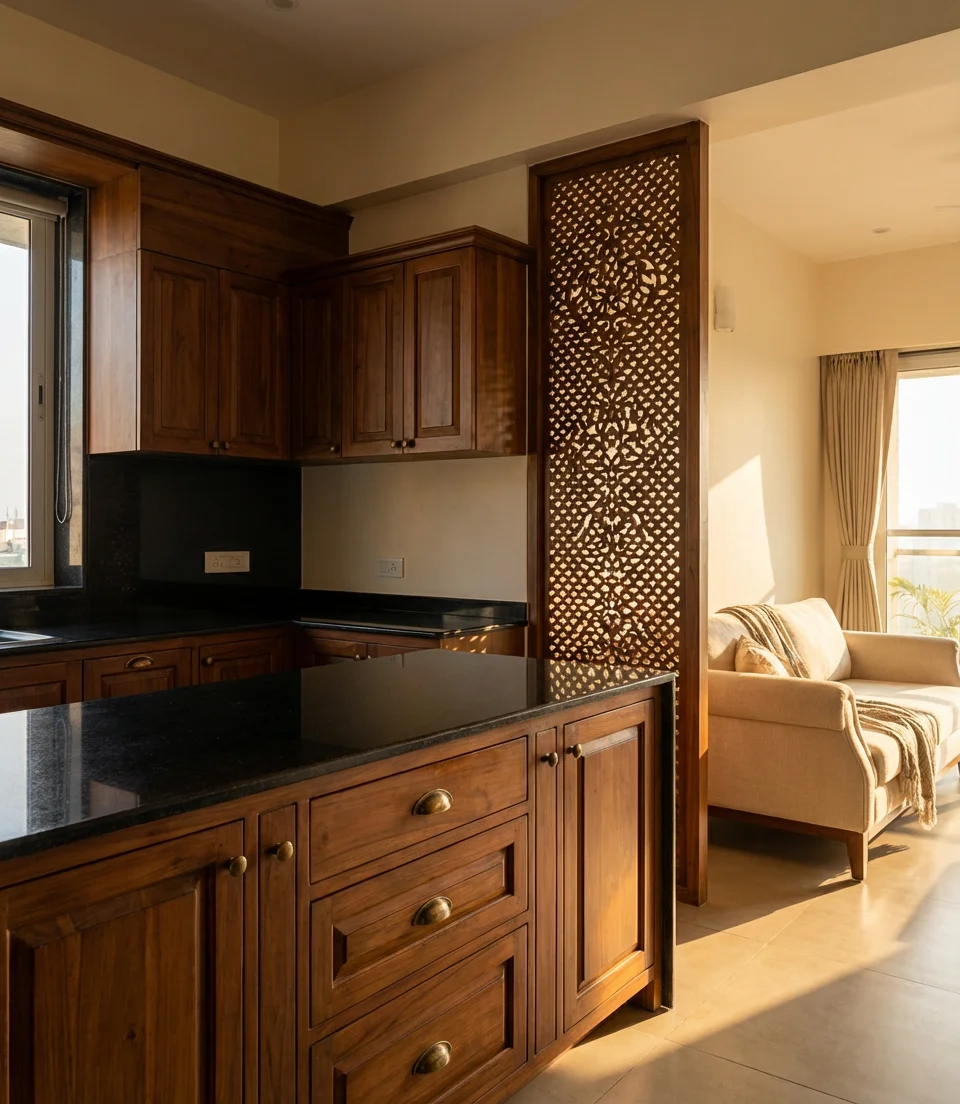
Blending Indian-style warmth with modern open-plan efficiency creates a space that honors tradition while embracing contemporary life. Picture rich teakwood cabinetry paired with polished granite counters, a dedicated spice drawer system, and a ventilation hood strong enough to handle tadka without filling the living room with smoke. Many families add a low partition or jali screen to define zones without closing them off, allowing aromas and conversation to drift freely. This hybrid approach is especially popular in urban India and among American homeowners of South Asian heritage who want their kitchens to reflect both heritage and current design trends.
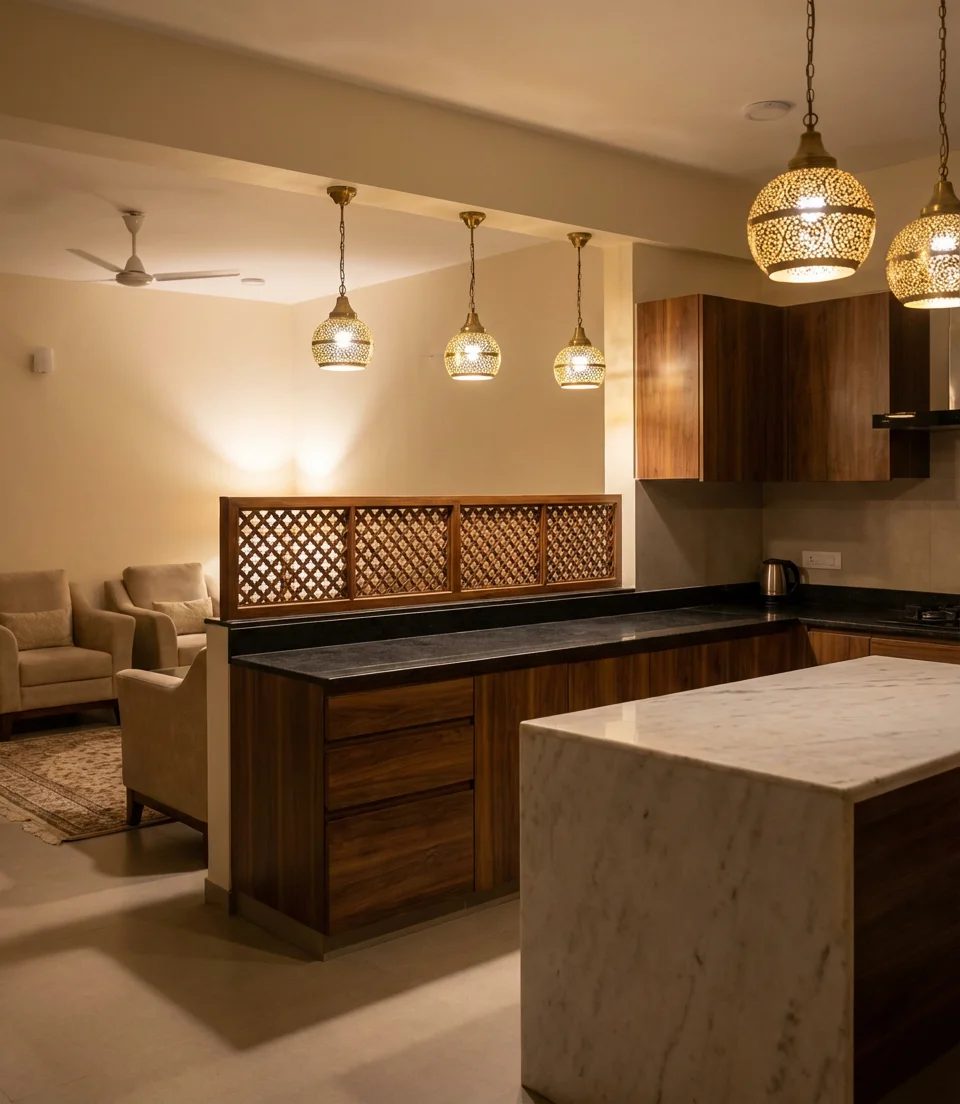
Where this approach works best is in homes with generous ceiling heights and good cross-ventilation, since Indian cooking often involves high heat and aromatic spices. Installing a chimney-style range hood with at least 1,000 CFM capacity keeps odors from settling into upholstery. If you’re working within a smaller footprint, prioritize a neutral backsplash and lighter wood tones to maintain an airy feel, then layer in pops of color through textiles and cookware on open shelves.
3. Luxury Open Kitchen with Island Centerpiece
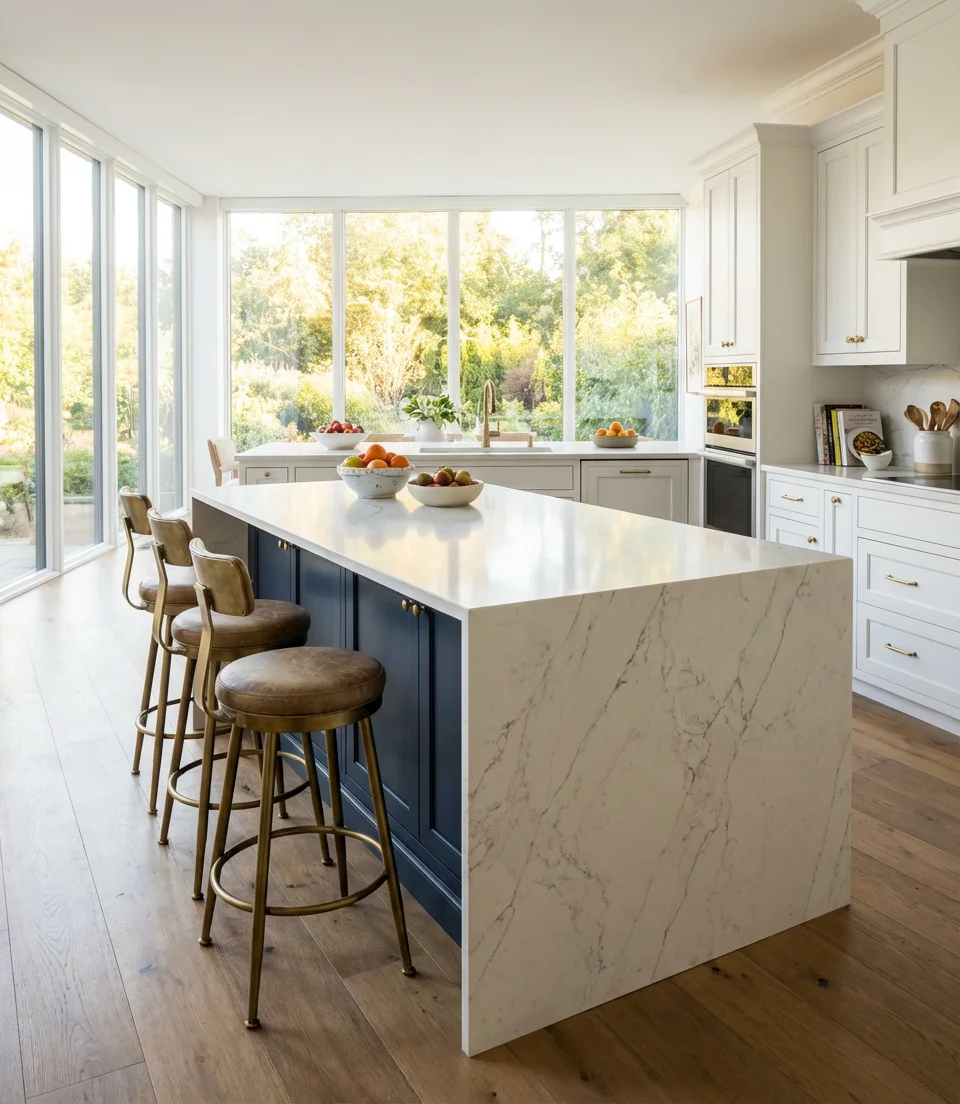
A statement island transforms any open kitchen into a luxury showcase, anchoring the space with both function and visual weight. Think waterfall-edge quartzite, built-in wine fridge, and seating for four—this is where breakfast happens, homework gets done, and guests gather with cocktails while dinner simmers. In 2026, island layouts lean toward organic shapes and mixed materials: a marble prep zone on one end, butcher block on the other, and perhaps a contrasting base in deep navy or charcoal. The island serves as the focal point of the room, particularly in open-concept homes where the kitchen seamlessly integrates with the dining and living areas, leaving no wall to obstruct the view.
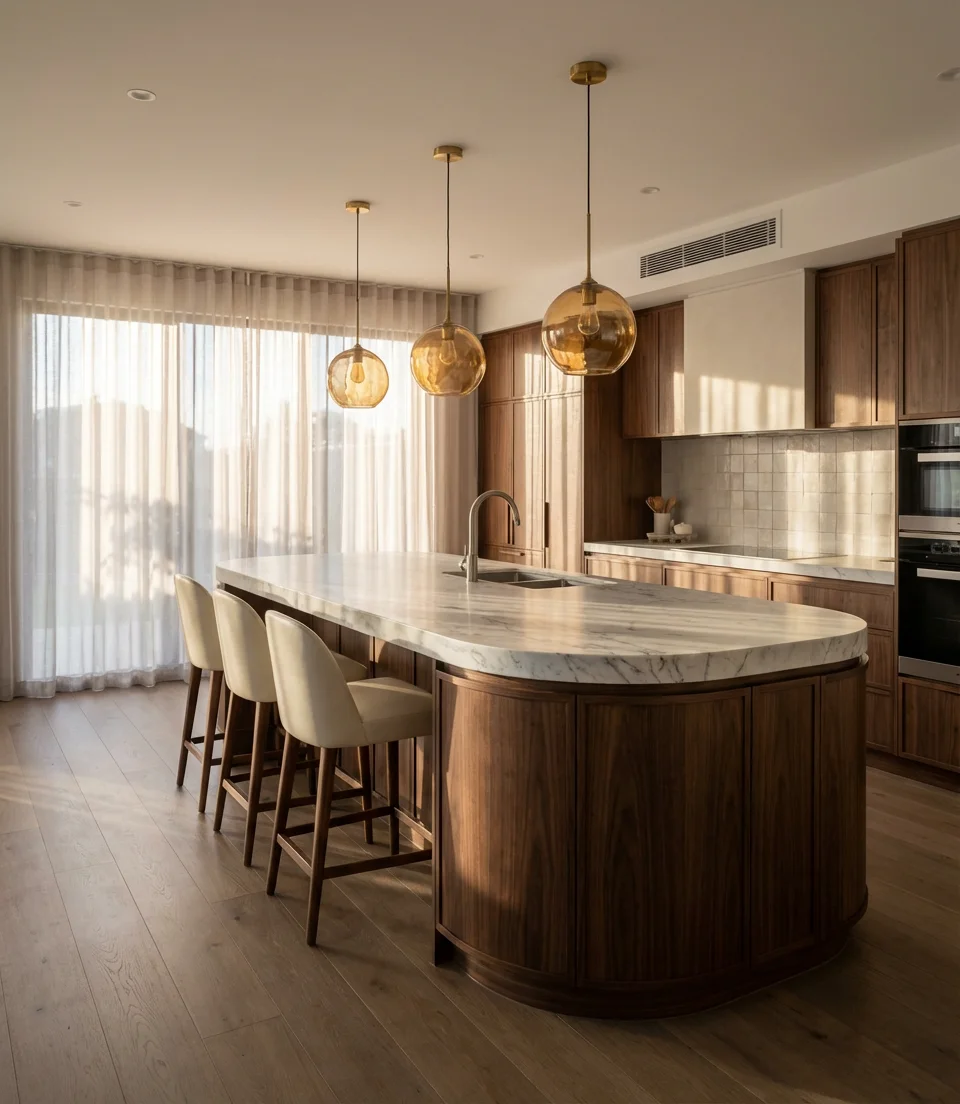
Budget-wise, expect to invest anywhere from twelve to thirty thousand dollars for a custom island alone, depending on materials and built-ins. Splurging on the countertop pays off in longevity and resale value, while choosing stock cabinetry with custom doors can shave costs without sacrificing the finished look. If you’re hiring a designer, ask them to spec hidden outlets along the island’s base—this small detail keeps cords out of sight and makes everyday phone charging or blender use infinitely smoother.
4. Parallel Open Kitchen Layout for Narrow Homes
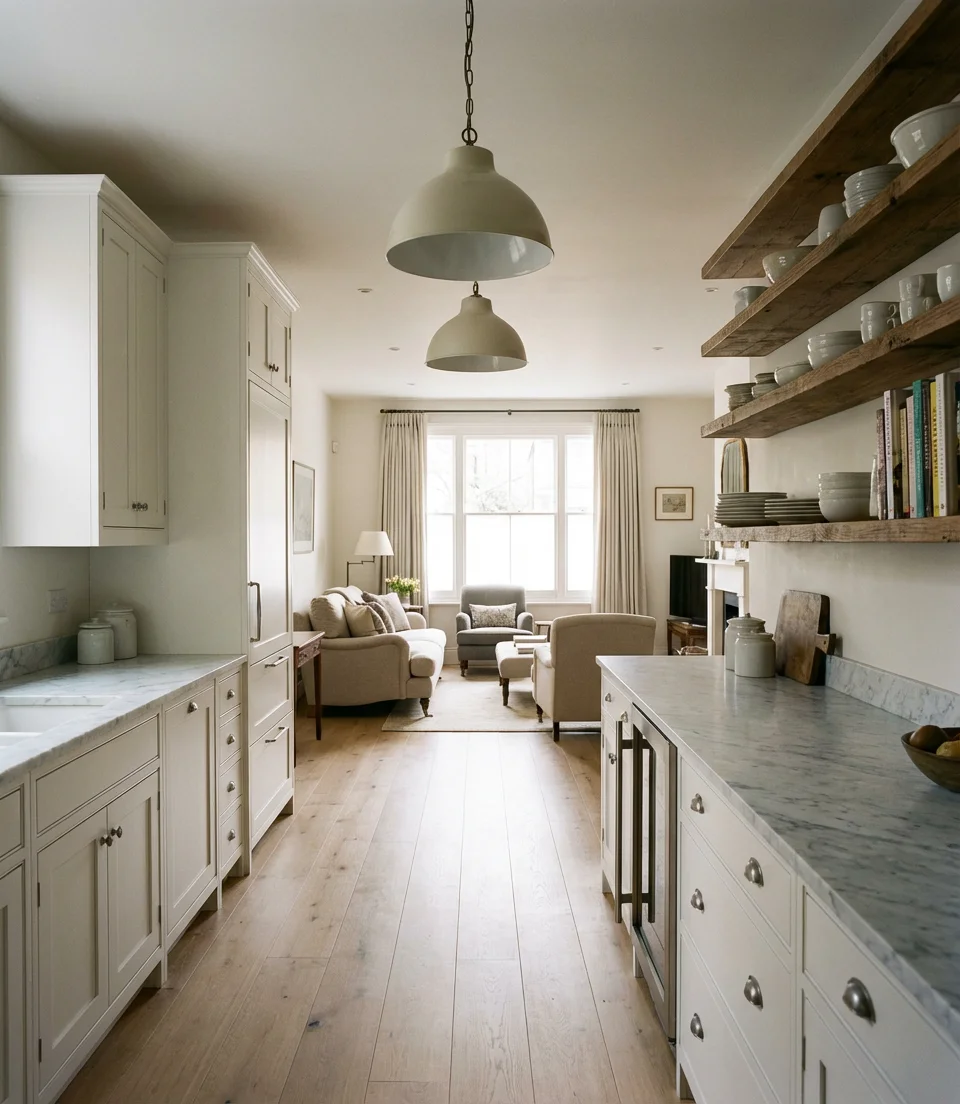
The parallel or galley-style open kitchen thrives in narrow footprints, offering two facing runs of cabinetry with a clear aisle in between. This layout became popular in townhouses and older American row homes, where width is limited but you still crave an open connection to the dining or living zone. By capping one end with a pass-through counter or leaving it entirely open, you maintain sightlines and encourage flow. In 2026, designers are softening the galley’s utilitarian reputation with warm wood tones, open upper shelving on one side, and pendant lights that draw the eye upward.
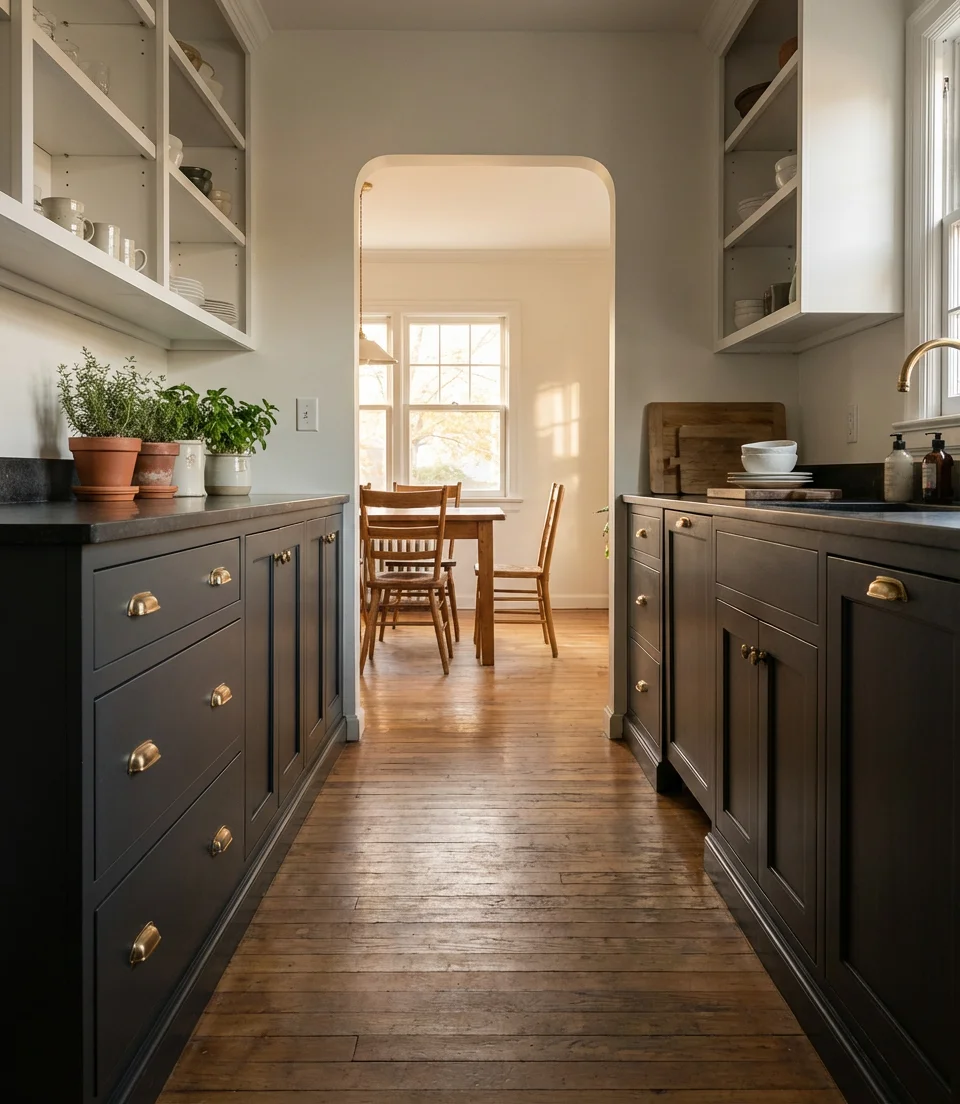
Real homeowners often discover that a parallel layout actually speeds up cooking, since everything sits within a few steps and you’re not circling a large island. The key is maintaining at least forty-eight inches of clearance between the two runs, which allows for comfortable movement even when cabinet doors swing open. If your space feels tight, skip upper cabinets on one side entirely and use that wall for a window or a single floating shelf—this trick visually doubles the width and floods the room with natural light.
5. Modular Open Kitchen for Flexibility
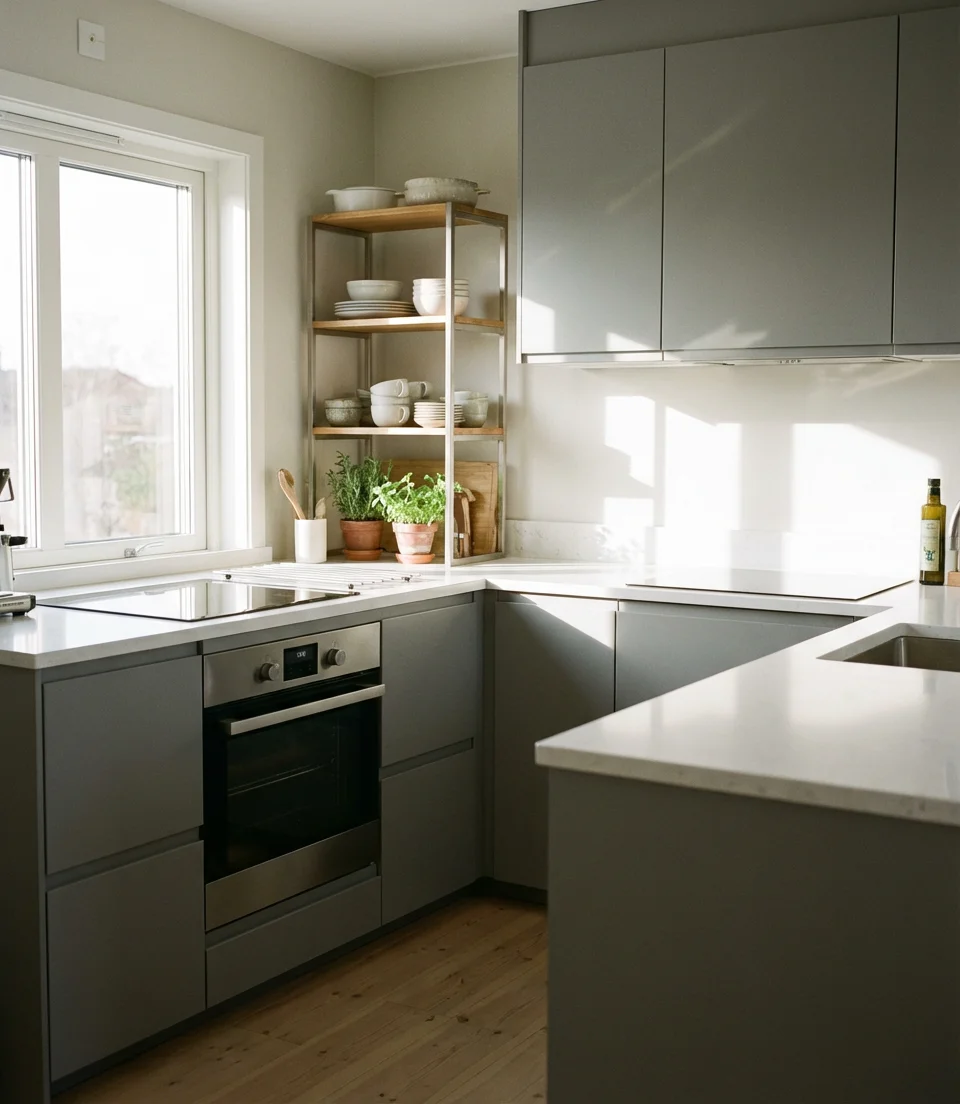
A modular open kitchen consists of prefabricated cabinet units that slot together like building blocks, offering speed, affordability, and surprising style. This approach has gained traction in rental homes, starter houses, and even luxury remodels where homeowners want to future-proof their investment. Modules come in standard sizes—sink base, corner unit, tall pantry—and can be reconfigured if you move or decide to expand. In 2026, modular systems have evolved beyond being generic; manufacturers now provide matte finishes, integrated handles, and soft-close hardware that rival custom millwork, all at a significantly lower cost.
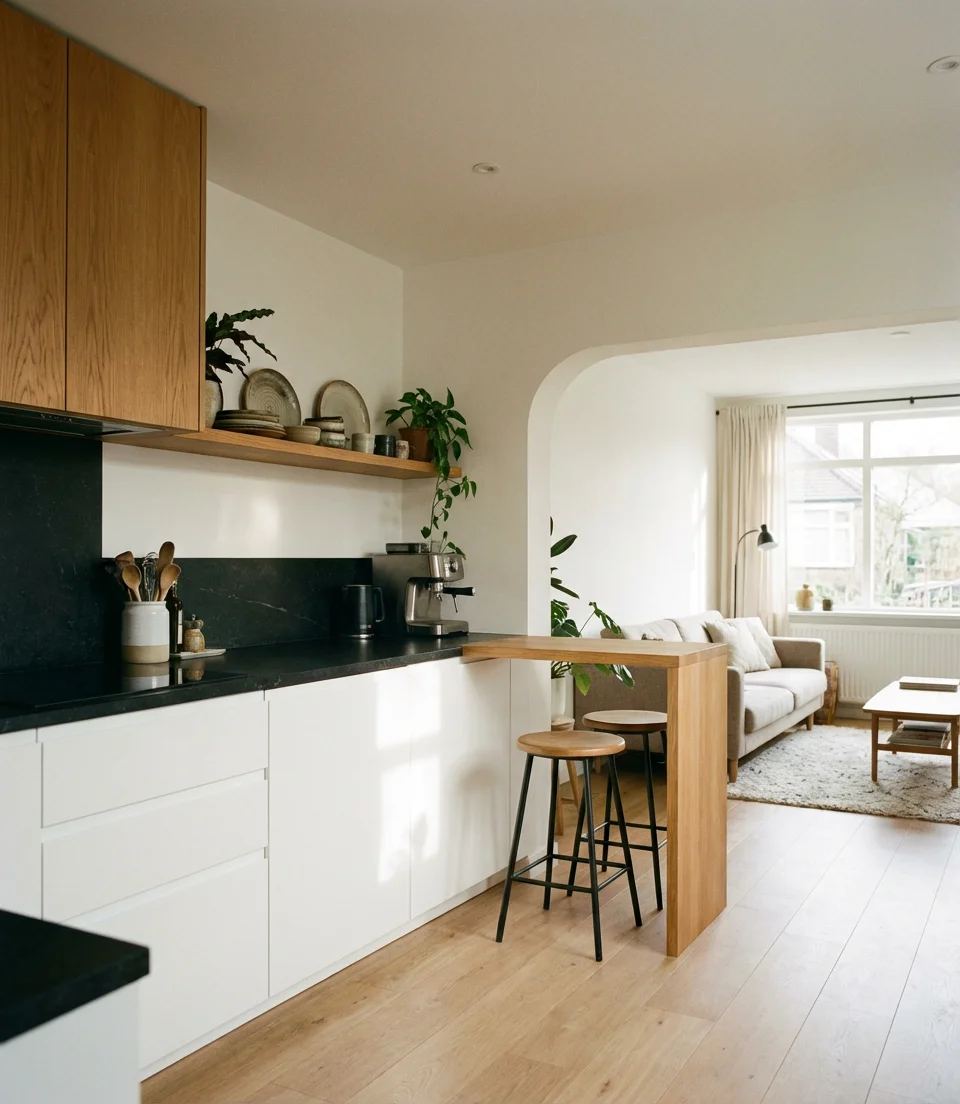
One friend installed a modular kitchen in her Chicago condo and later swapped two base units for a dishwasher and wine fridge without touching the rest of the layout. That kind of adaptability makes modular systems ideal for young professionals who expect their needs to shift over the next five to ten years. Just be sure to measure carefully—most modules are designed on a metric grid, and even a half-inch error can throw off the entire assembly.
6. Half-Wall Open Kitchen for Subtle Division
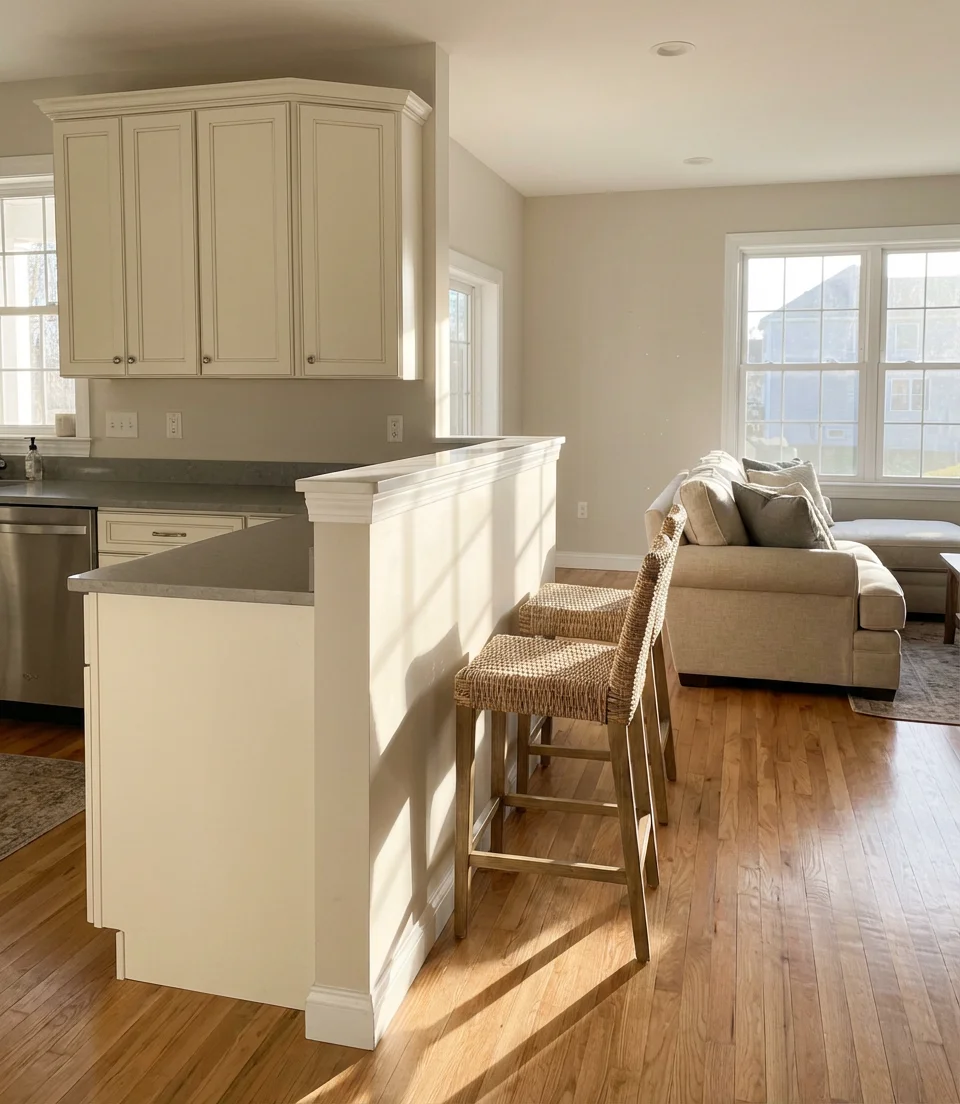
A half-height wall, or pony wall, offers the best of both worlds: open sightlines above and a practical ledge below for stools, display, or even a pop-up outlet strip. This design is especially popular in mid-century ranch homes and newer open-plan builds where families want to corral kitchen clutter without closing off the room. The half-wall can house shallow cabinets on the kitchen side, turning it into extra storage, or remain a simple drywall partition painted to match the living area. Either way, it marks the boundary between cooking and lounging without requiring a full permit or structural change.
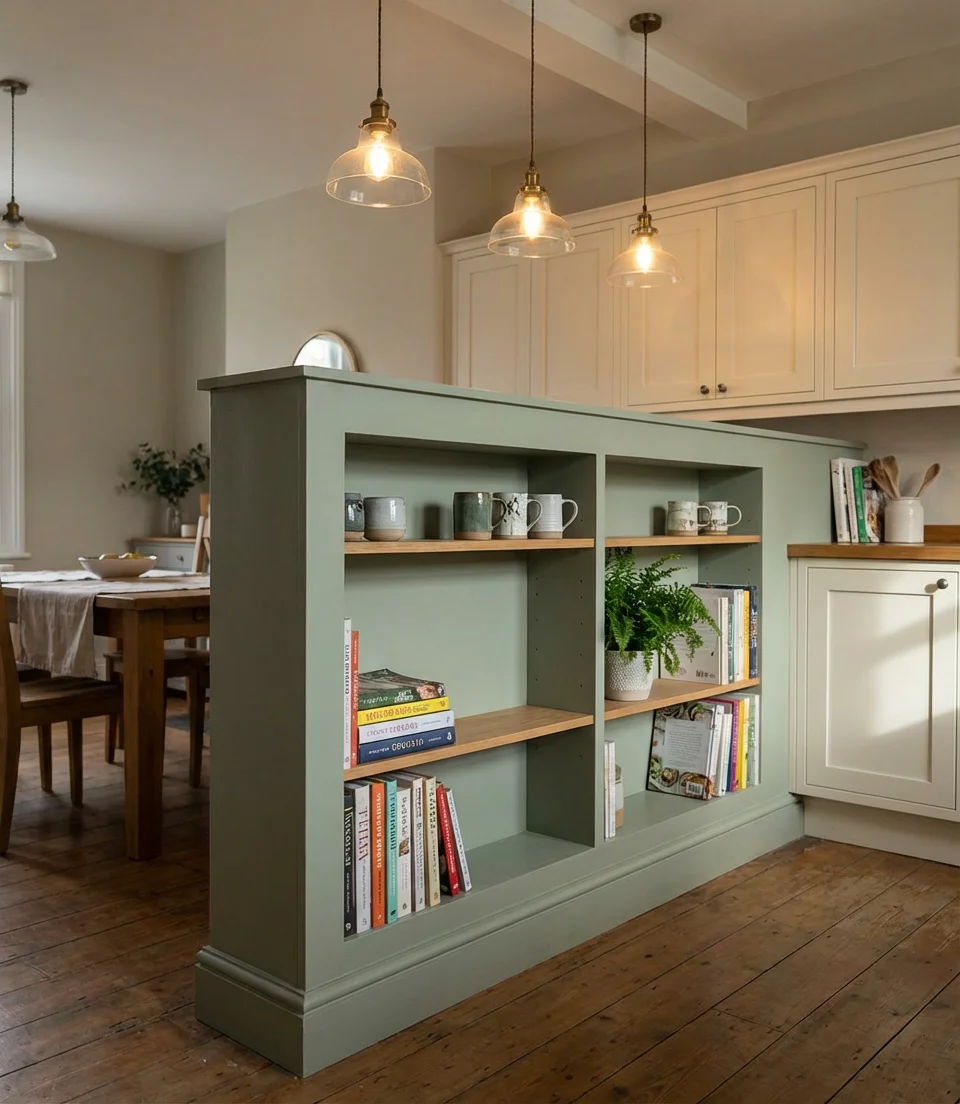
Where this technique works best is in homes with young children or pets, since the half-wall can keep toys, backpacks, and dog bowls out of the immediate cooking zone without isolating the cook. Add a power strip along the top edge, and you’ve got charging stations for phones and tablets—a small upgrade that solves a common household headache. Just avoid making the wall too tall; anything above forty-two inches starts to feel like a full partition and defeats the open-plan purpose.
7. Contemporary Open Kitchen with Dining Integration
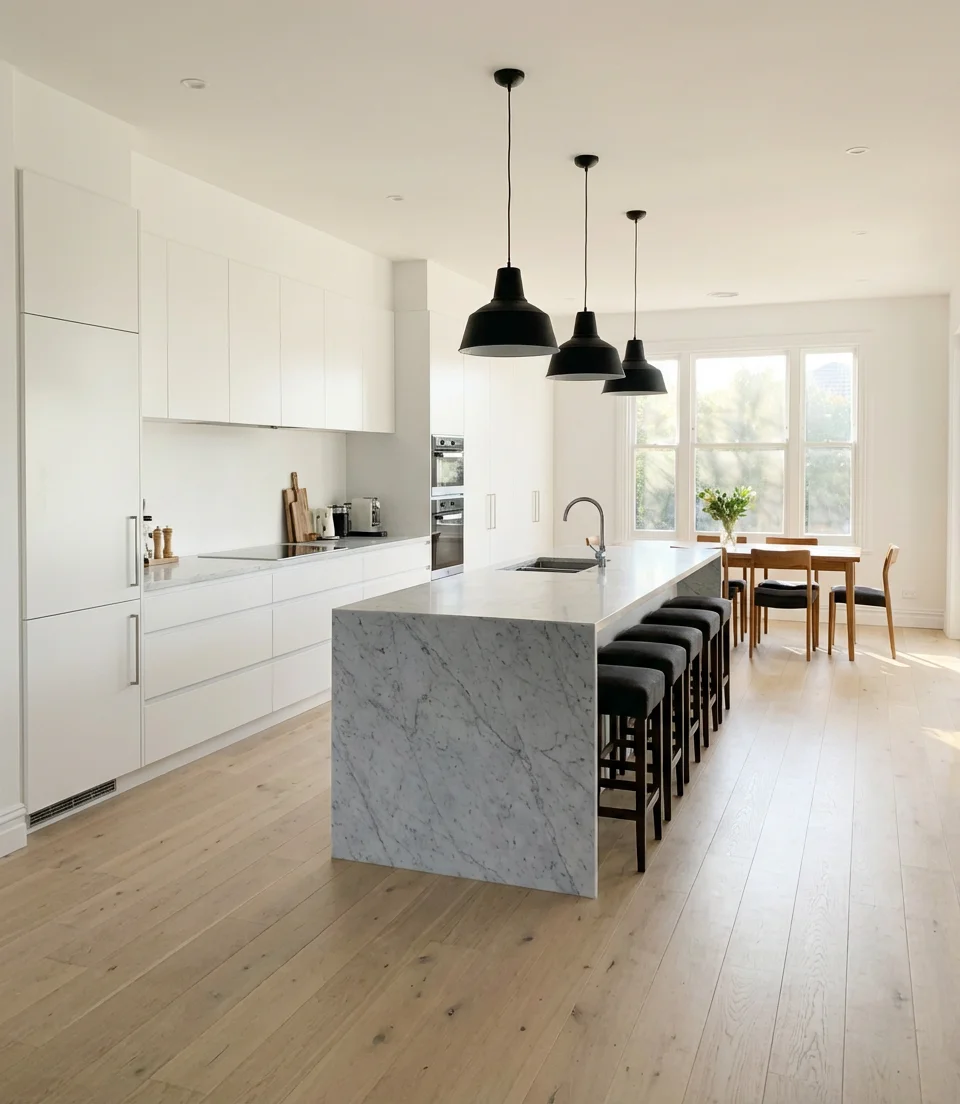
Merging kitchen and dining into one seamless zone defines contemporary American living, where breakfast, homework, and dinner parties all unfold in a single, light-filled room. In 2026, the trend leans toward elongated islands that double as dining tables, eliminating the need for a separate piece of furniture. Clean lines, handleless cabinetry, and a restrained palette—think white, gray, and natural wood—let the architecture breathe. Pendant lights suspended at varying heights add drama without crowding the space, and large-format tiles or wide-plank floors unify the two zones visually.
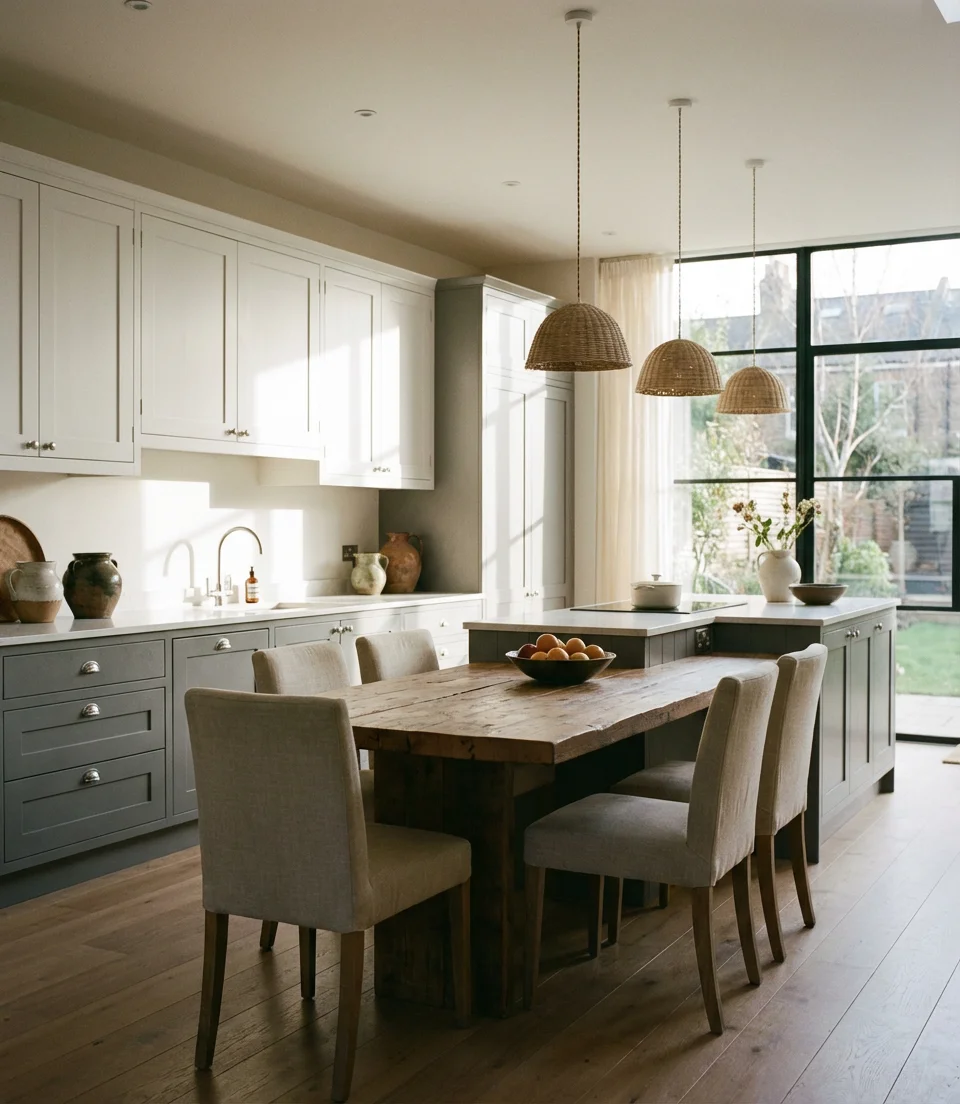
From a practical standpoint, installing dimmable lighting over the dining end of your island lets you shift the mood from bright task lighting during meal prep to softer ambiance when guests arrive. Many homeowners also choose a single pendant style that they cluster in groups of two or three, creating a cohesive look without the expense of custom fixtures. This setup works brilliantly in open lofts, newer suburban builds, and renovated brownstones where square footage is generous but you still want distinct activity zones.
8. Simple Open Kitchen for Minimalist Tastes
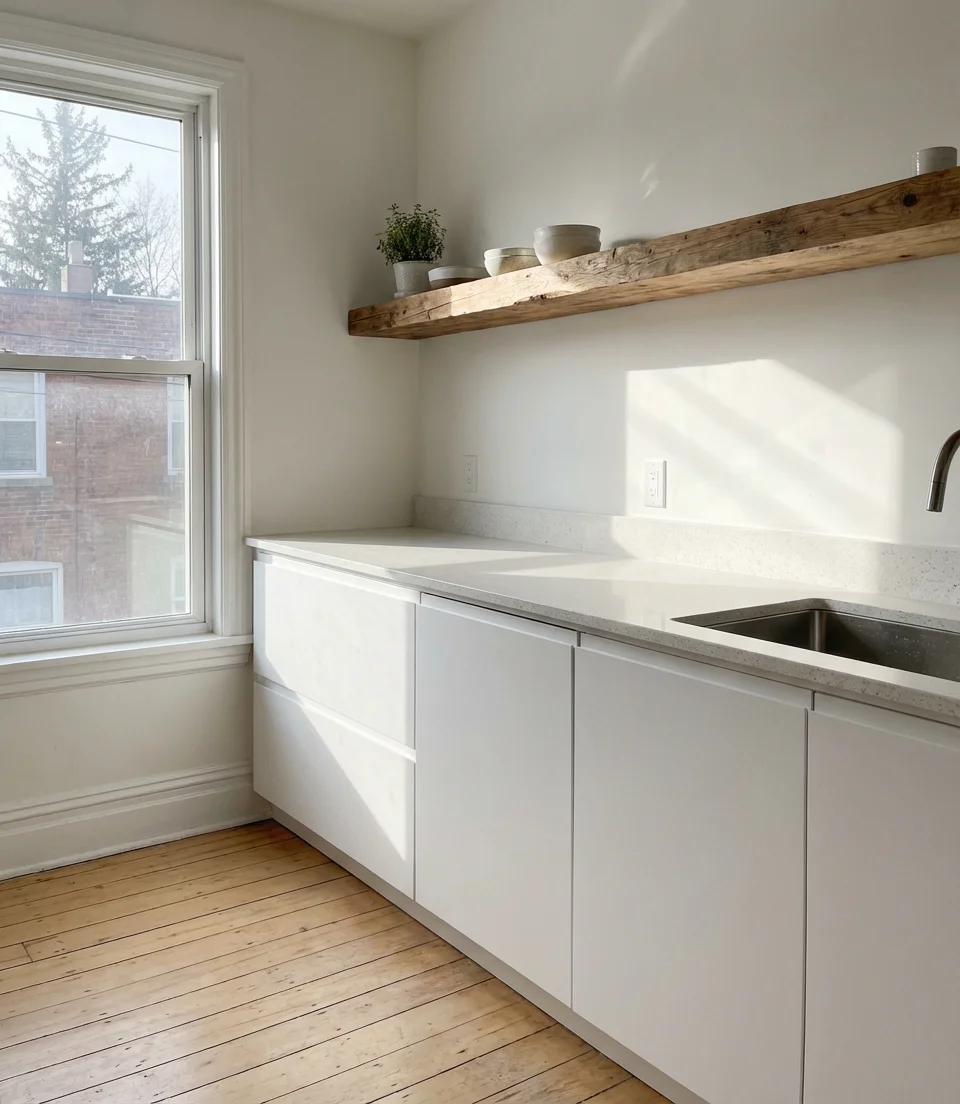
A simple open kitchen strips away ornamentation and focuses on what matters: clean surfaces, efficient storage, and uncluttered counters. This aesthetic appeals to minimalists, remote workers who need distraction-free spaces, and anyone tired of visual noise. Flat-panel cabinets in matte white or soft gray, integrated appliances, and a single open shelf for everyday dishes create a serene backdrop that never feels cold. In 2026, simplicity doesn’t mean sterile; adding warmth through wooden cutting boards, a single potted herb, or a linen tea towel keeps the space feeling lived-in and welcoming.
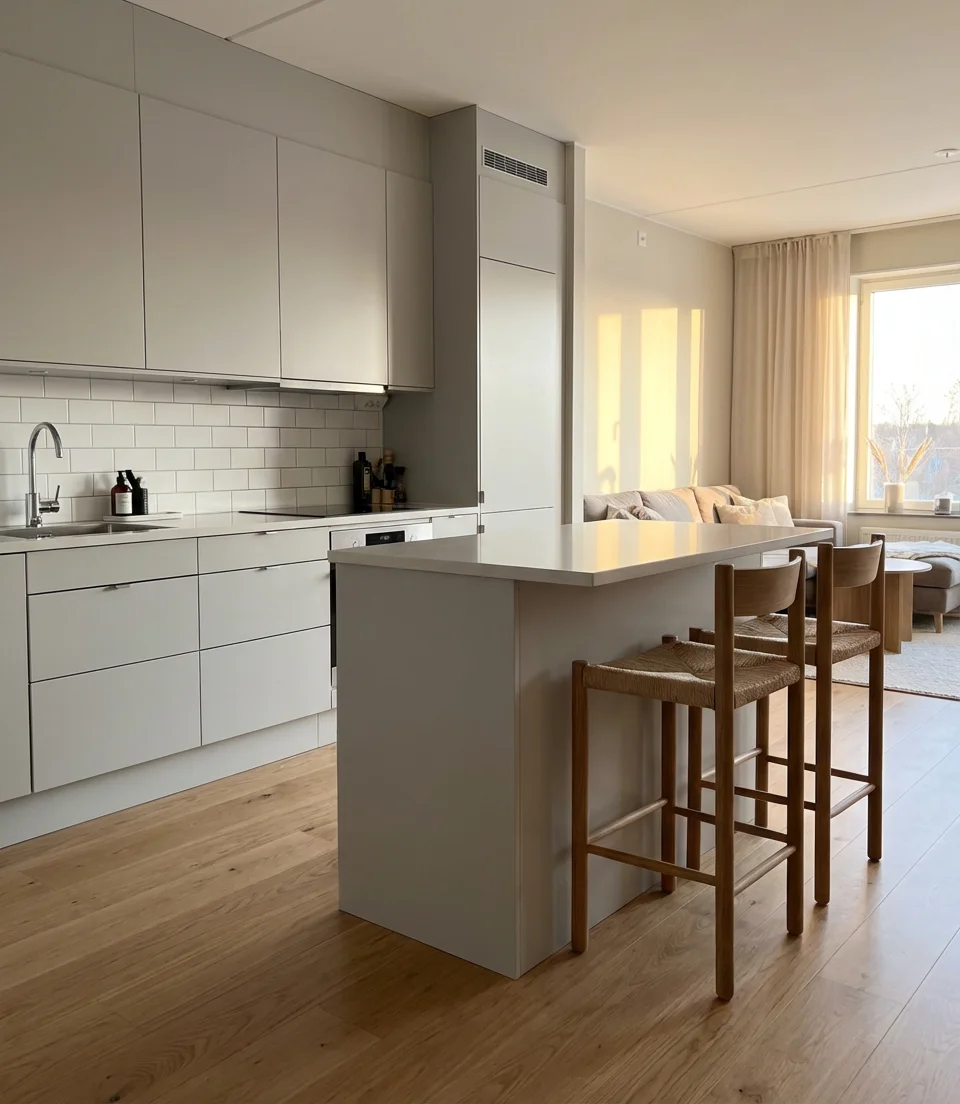
One practical insight: concealing small appliances in a dedicated garage or deep drawer keeps your counters camera-ready at all times. Toasters, blenders, and coffee makers clutter fast, so carving out a pull-out shelf or cabinet cubby for them transforms your daily routine. Many American families are embracing this approach after years of open shelving and visible storage, finding that less on display actually makes the kitchen easier to maintain and more pleasant to cook in.
9. U-Shape Open Kitchen with Peninsula
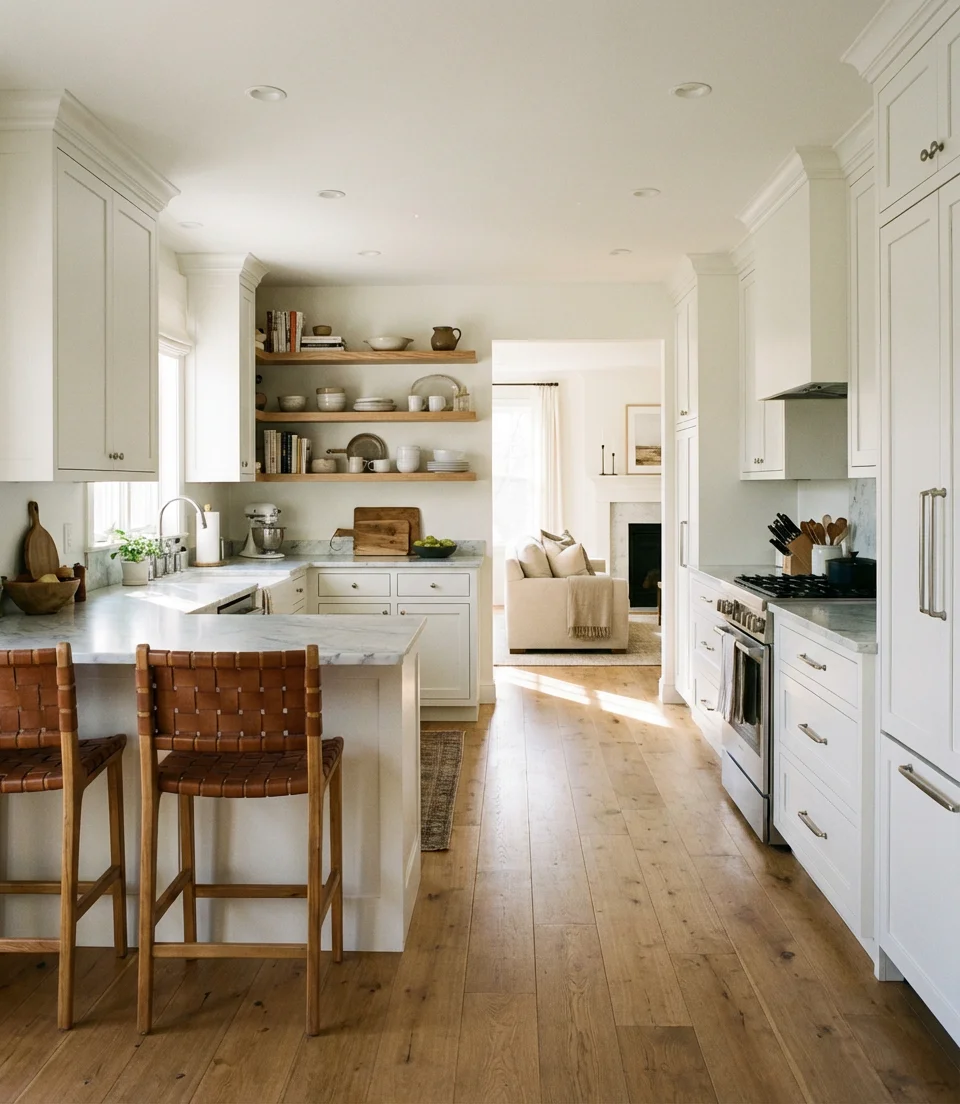
The classic U-shape gains openness when one leg becomes a peninsula instead of a full wall, creating a natural transition into the living or dining area. This layout maximizes counter space and storage on three sides while keeping the cook engaged with whoever’s in the next room. In 2026, designers are softening the U-shape’s enclosed feel by using lighter colors, open upper shelving on one arm, and glass-front cabinets to break up solid runs of cabinetry. The peninsula often hosts seating for two or three, making it the household’s favorite perch for morning coffee or casual meals.
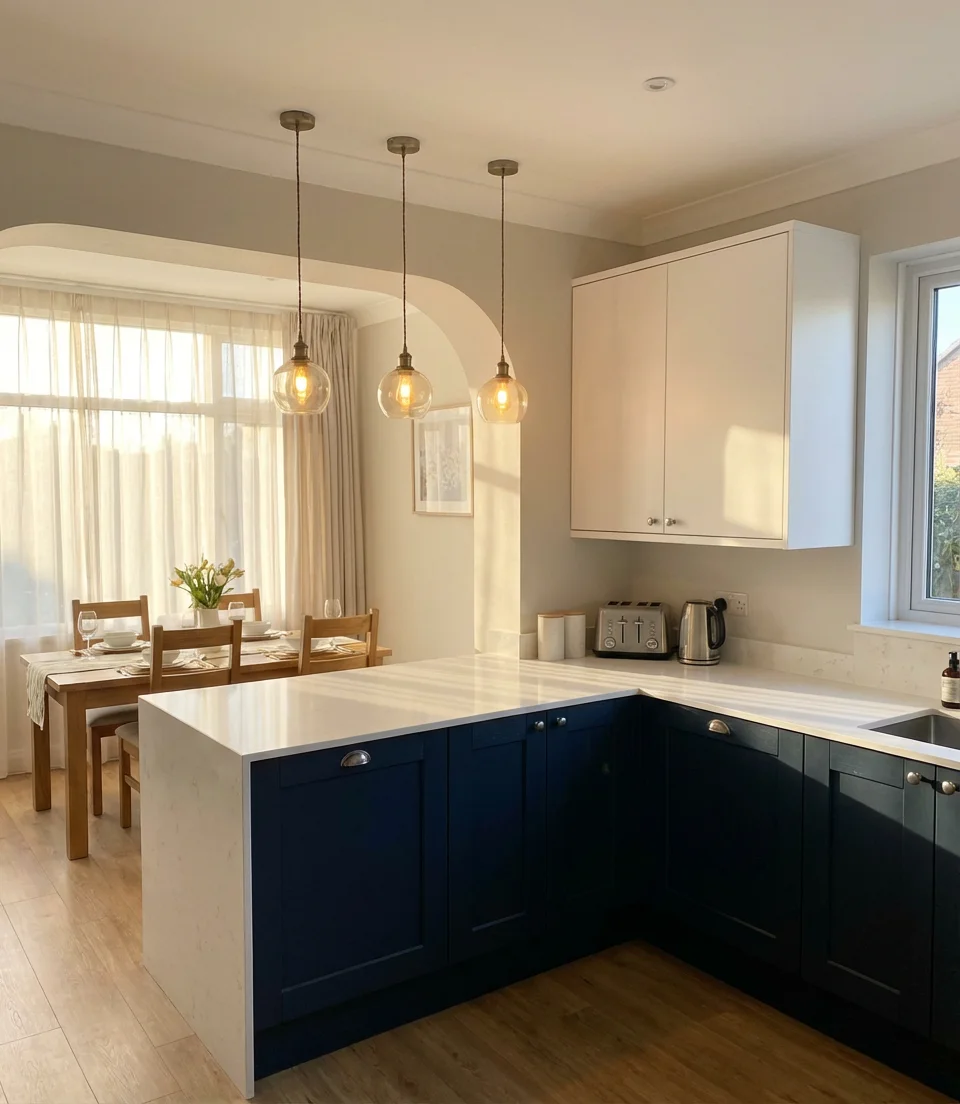
A neighbor of mine renovated her 1980s colonial into a U-shape with a peninsula and says the layout transformed how her family uses the space. She can chop vegetables while her kids do homework at the peninsula, and guests naturally gather there during parties. The only downside is that U-shapes require a minimum ten-by-ten-foot footprint to avoid feeling cramped, so measure carefully before committing to this configuration.
10. Outdoor Open Kitchen for Entertaining
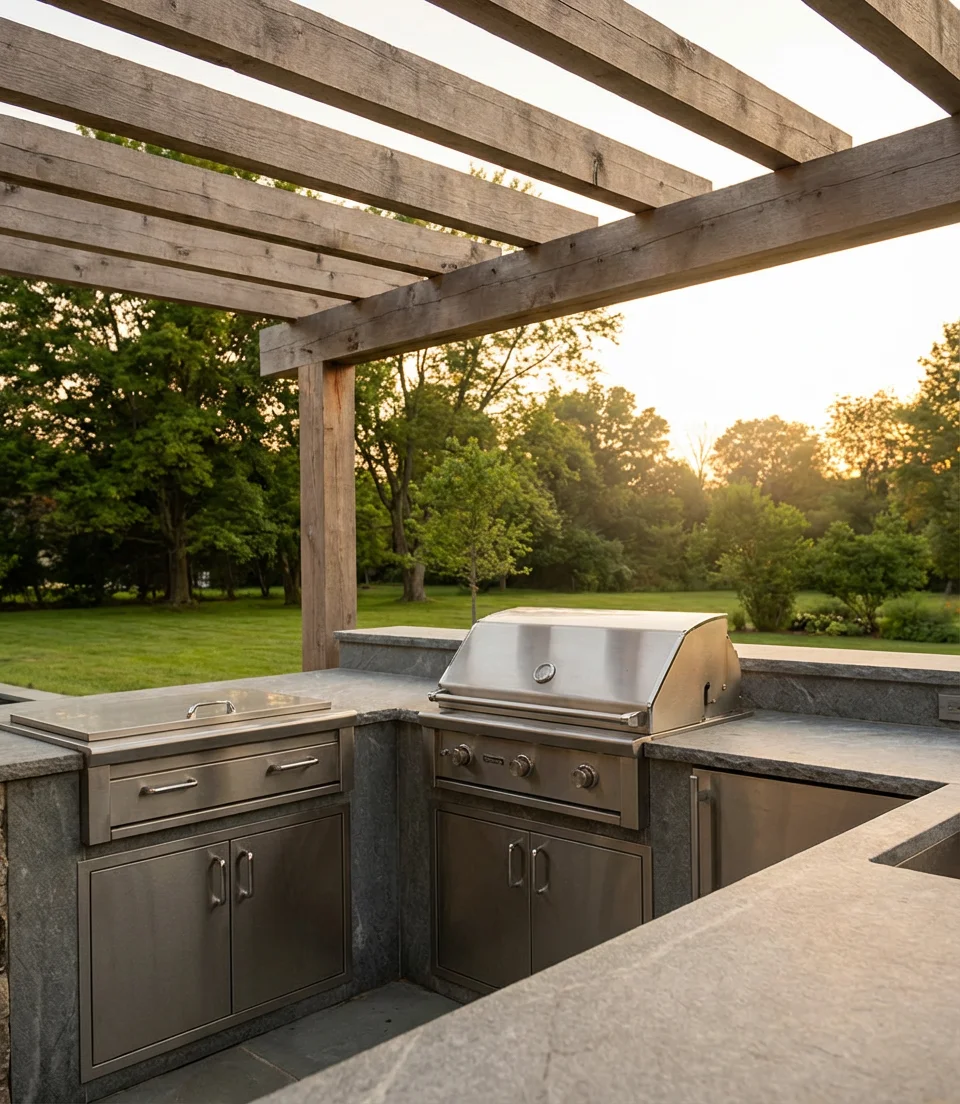
An outdoor open kitchen extends your living space into the backyard, blending fresh air with the conveniences of an indoor setup. Popular in sunbelt states and increasingly in the Midwest thanks to improved weather-resistant materials, these kitchens feature built-in grills, refrigerators, sinks, and sometimes even pizza ovens. Stainless steel cabinetry withstands the elements, while stone countertops and tile backsplashes add texture and durability. In 2026, homeowners are adding shade structures—pergolas, retractable awnings, or even full pavilions—to make the space usable year-round and protect appliances from rain and UV damage.
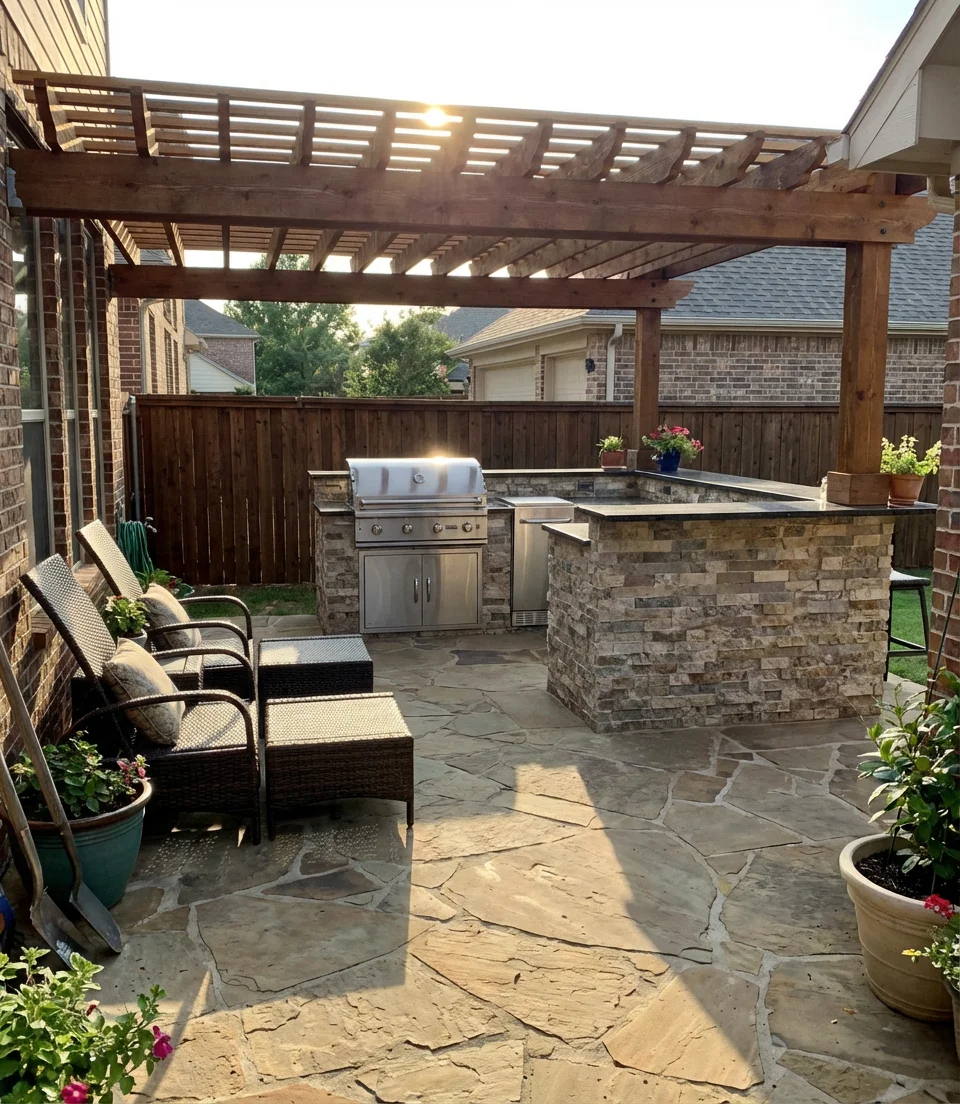
Budget-wise, expect to spend anywhere from eight to twenty-five thousand dollars for a basic to mid-range outdoor kitchen, depending on appliances and finishes. The investment pays off if you entertain regularly or live in a climate where you can grill ten months a year. Just remember to winterize plumbing in colder regions and choose materials rated for outdoor use—standard indoor cabinetry will warp and delaminate within a single season of exposure to moisture and temperature swings.
11. Classic Open Kitchen with Timeless Appeal
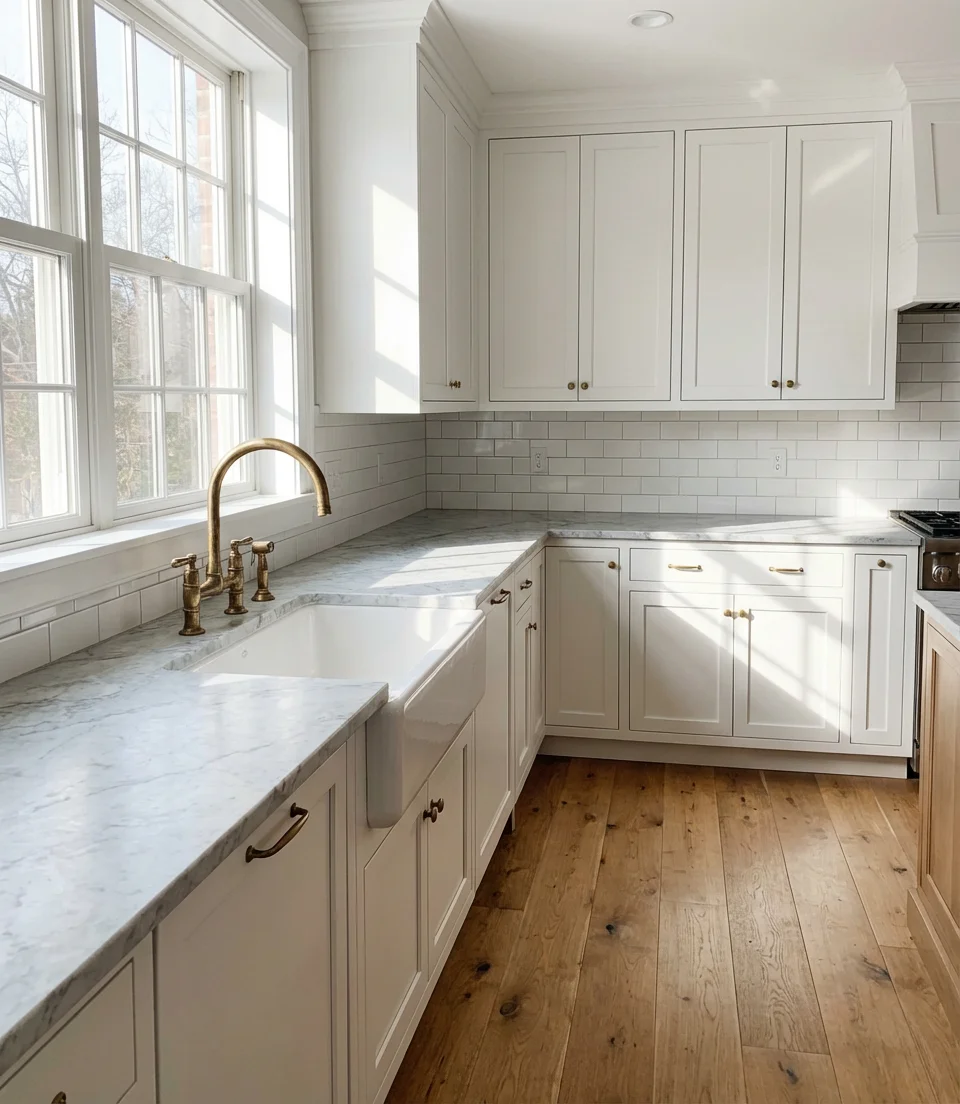
A classic open kitchen draws on traditional elements—Shaker cabinets, subway tile, farmhouse sinks—while maintaining the airy, connected feel of modern floor plans. This style is timeless, making it a wise choice for homeowners who intend to remain in their homes for many years or seek to optimize their resale value. In 2026, classic kitchens are getting subtle updates: warmer whites instead of stark, mixed metals like brass and nickel, and marble or soapstone counters that age gracefully. The look is polished but never precious, inviting daily use without worrying about every fingerprint or watermark.
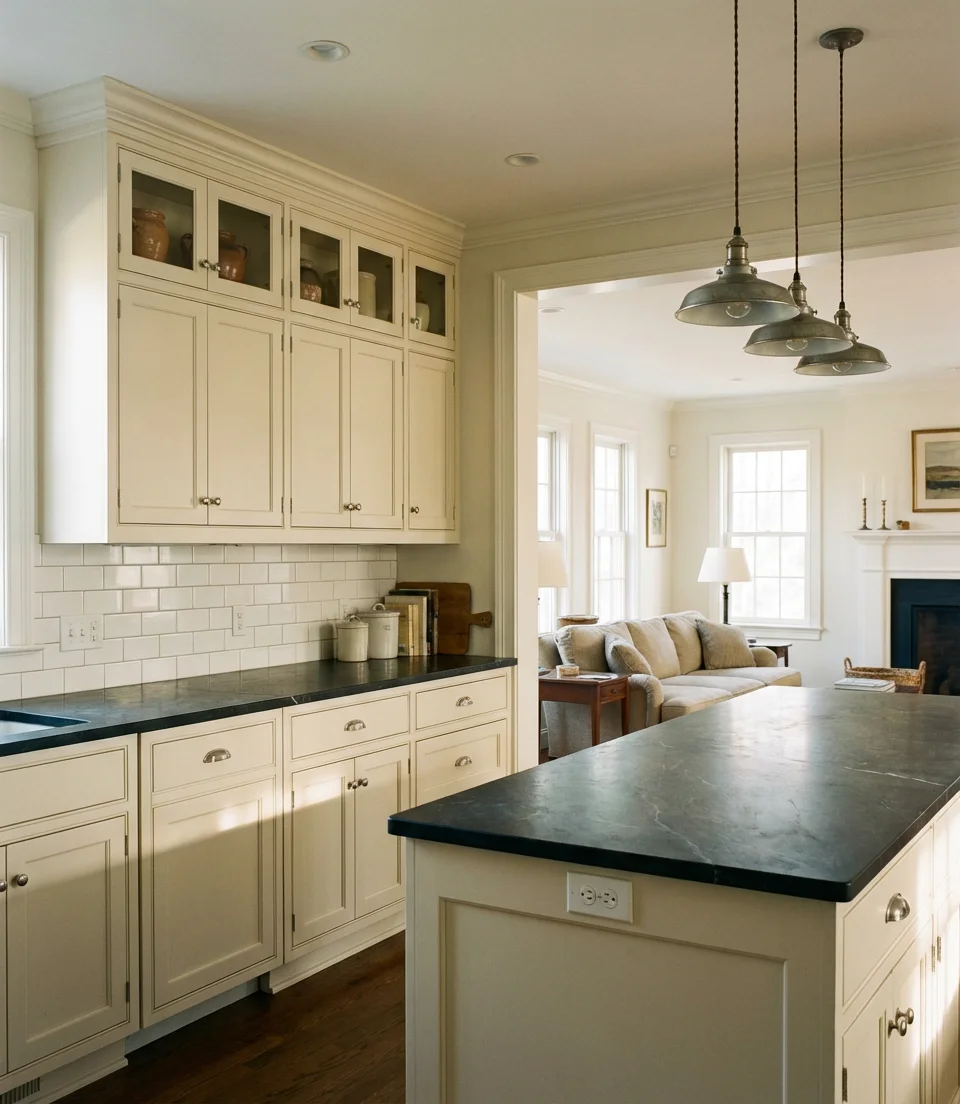
Where this trend works best is in colonial, craftsman, and farmhouse-style homes where architectural details—crown molding, wainscoting, original hardwood—deserve a kitchen that complements rather than competes. Avoid the temptation to mix too many eras; a classic kitchen should feel cohesive and considered, not like a design sampler platter. Stick to one or two statement elements—a vintage-style range, a butcher-block island—and keep everything else understated.
12. Two-Side Open Kitchen for Efficient Workflow
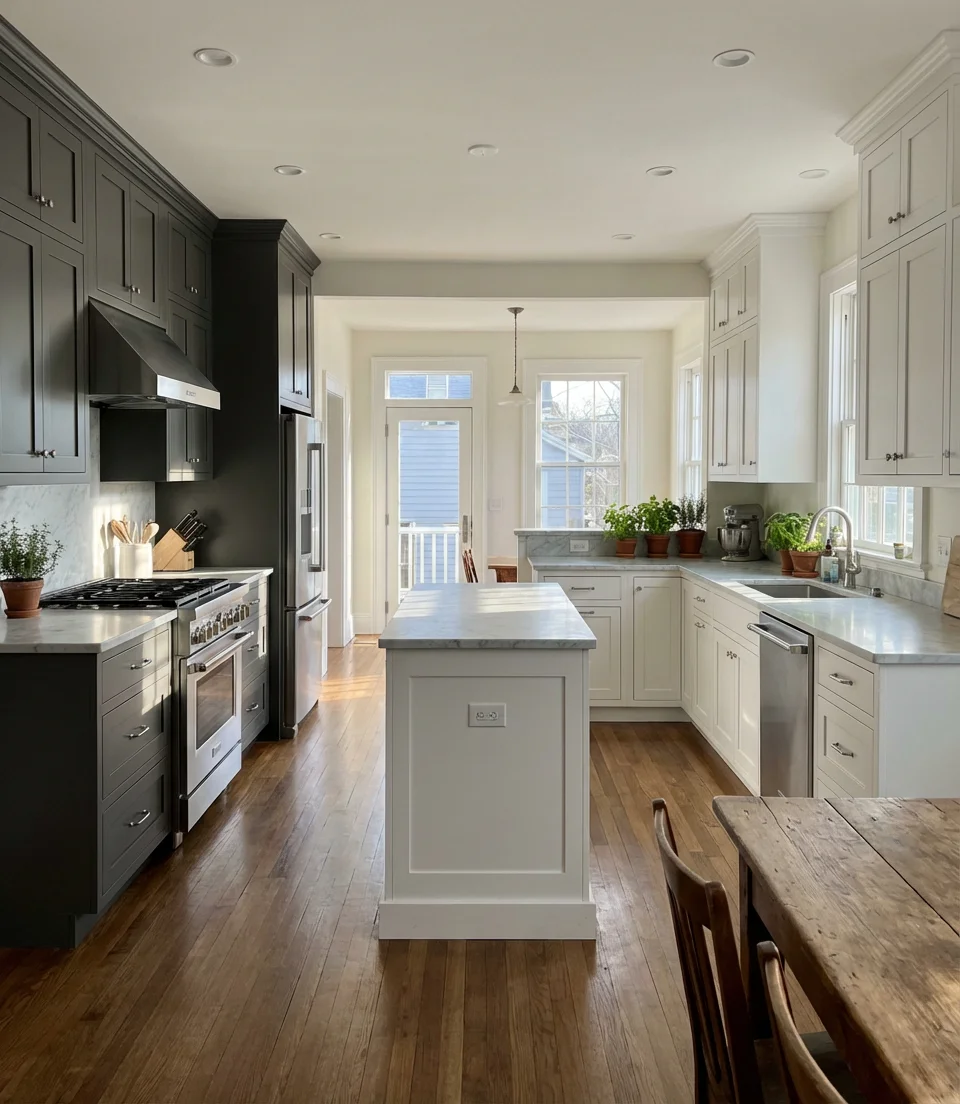
A 2-sided or double-run kitchen places cabinetry and appliances along two parallel walls, creating an efficient work triangle that minimizes steps between sink, stove, and fridge. This layout thrives in narrow or galley-style spaces but gains an open feel when one end remains unobstructed, allowing views and foot traffic to flow through. In 2026, homeowners are choosing contrasting finishes for the two sides—dark lowers on one wall, light uppers on the other—to add visual interest without sacrificing the clean, streamlined look. The result is a kitchen that works hard but never feels cramped or closed off.
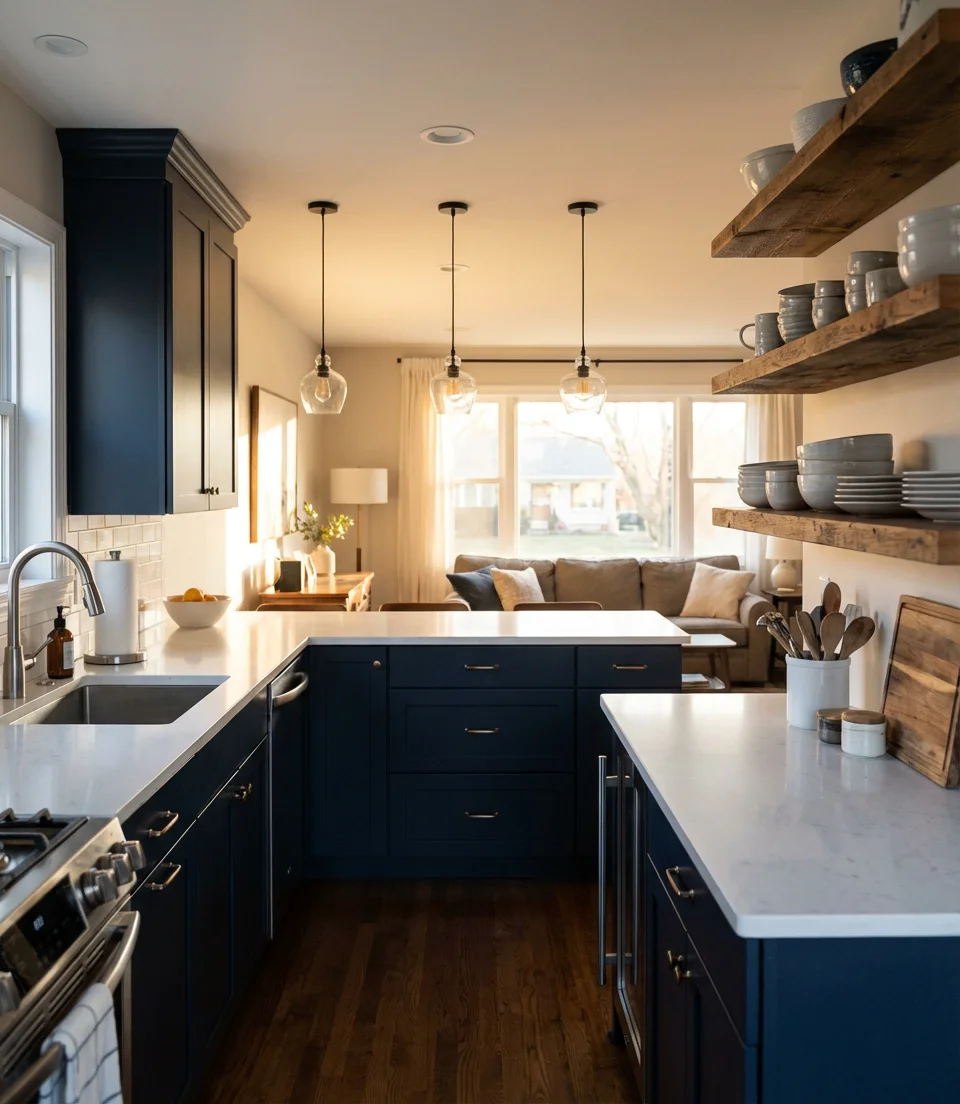
Expert designers often recommend this layout for serious home cooks who value speed and ergonomics over entertaining space. Everything is easily accessible, allowing you to prepare on one side while cooking on the other. The key is maintaining at least four feet of clearance between the two runs, which allows cabinet doors to open comfortably and prevents bottlenecks when two people are working simultaneously. If your space is tighter, consider sliding or pocket doors on lower cabinets to save a few precious inches.
13. Hall with Open Kitchen for Flow
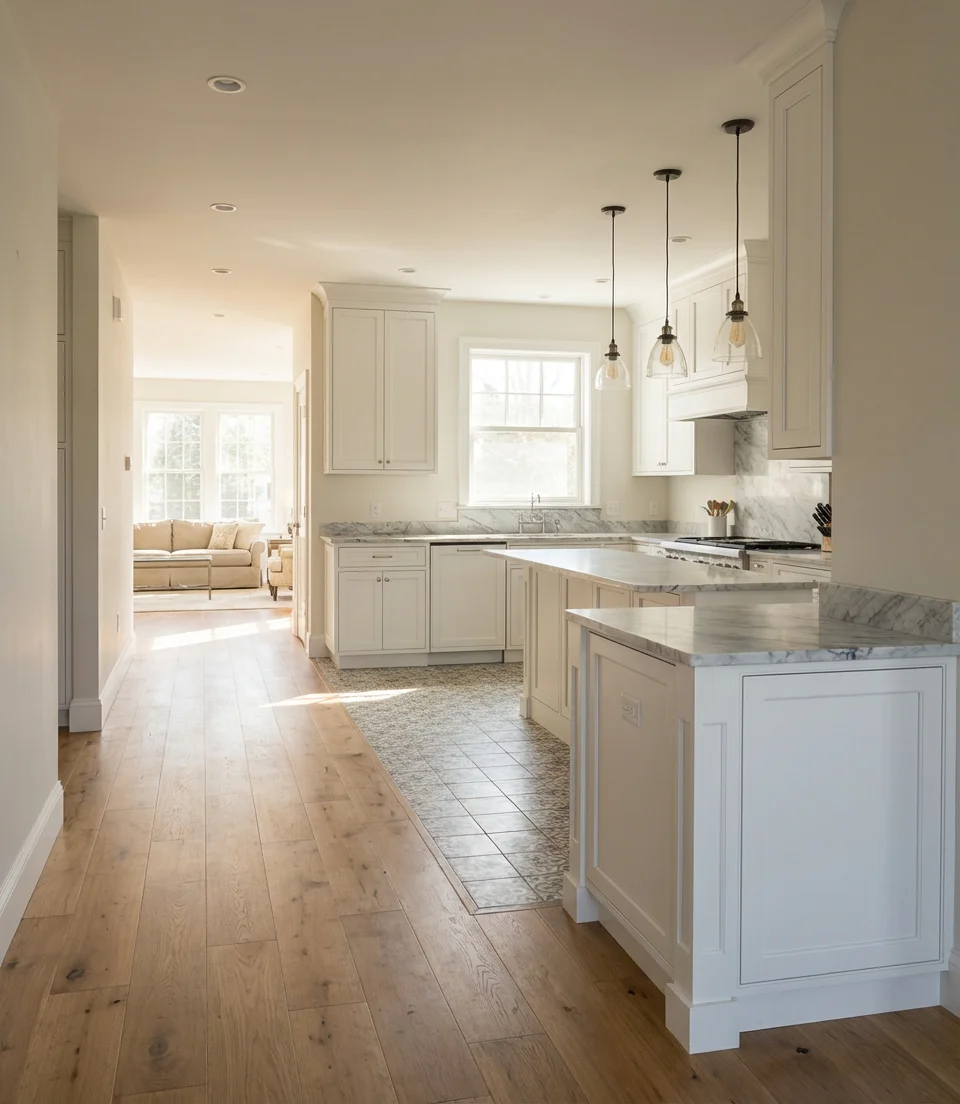
Integrating your kitchen into a central hall or circulation spine creates a welcoming hub where movement and cooking intersect naturally. This layout is common in renovated Victorian homes, where the original chopped-up floor plan has been opened to create a spacious room anchored by the kitchen. By positioning the kitchen along one side of a wide hallway or central passage, you maintain flow while keeping the cooking zone distinct. In 2026, designers are using changes in flooring—tile in the kitchen, hardwood in the hall—and subtle ceiling details like recessed lighting or beams to mark the transition without walls.
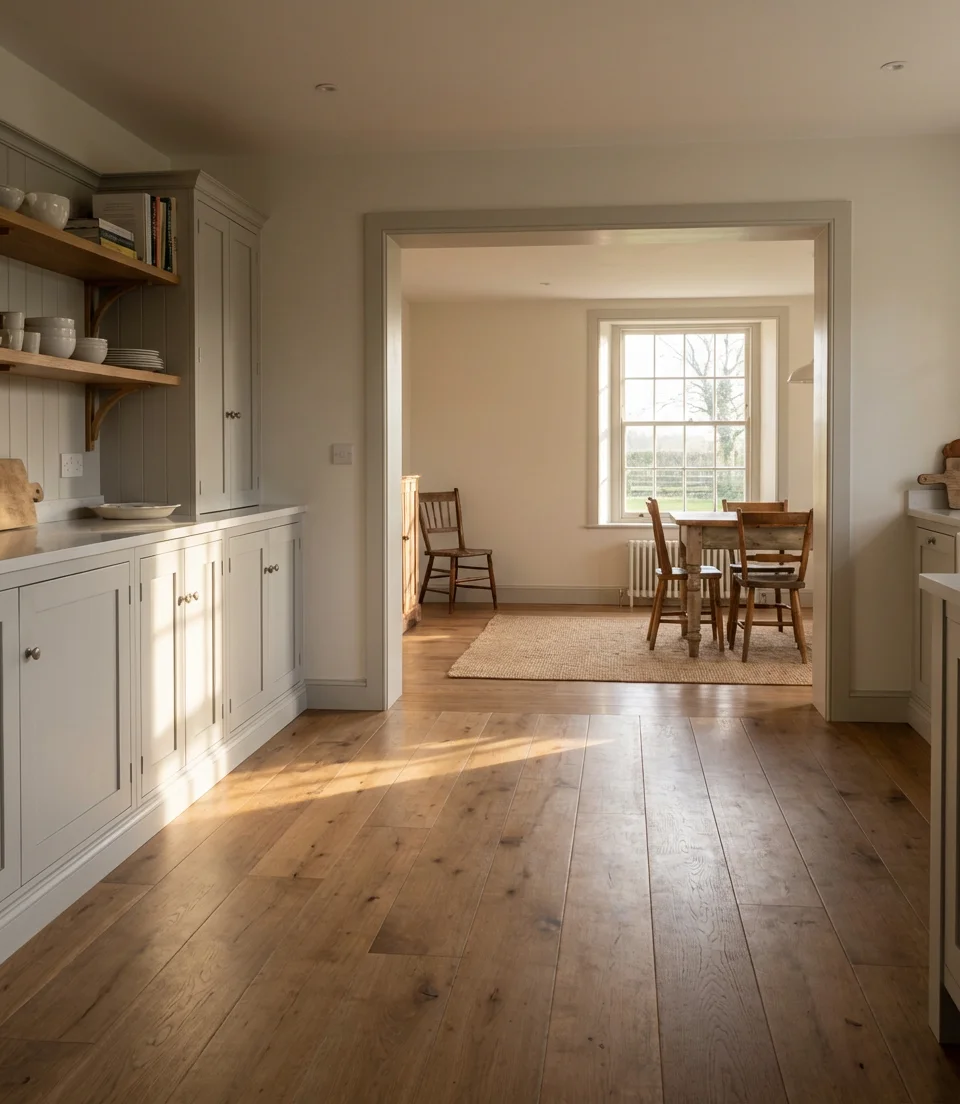
This setup works beautifully in homes where multiple rooms radiate from a central axis, turning the kitchen into a natural gathering point as people move from the living room to the bedrooms to the backyard. The challenge is managing traffic during cooking—install your cooktop or range on the wall side, away from the main pathway, so you’re not dodging passersby while handling hot pans. And consider adding a narrow console or bench along the opposite wall to absorb keys, mail, and bags, keeping the kitchen counters clear for actual cooking.
14. East-Facing Open Kitchen for Morning Light
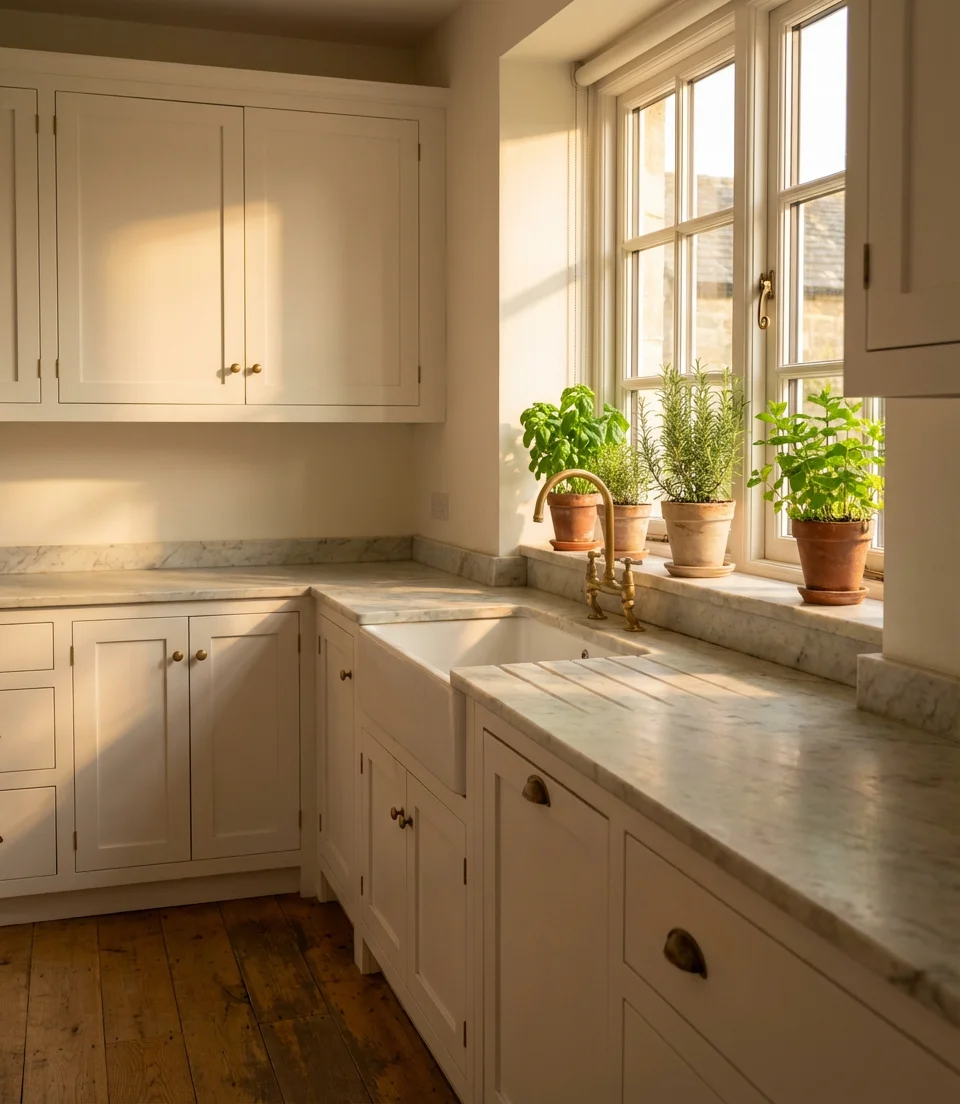
An east-facing kitchen floods with morning sun, making breakfast prep a genuinely pleasant ritual instead of a groggy chore. If your home’s orientation allows, positioning the sink or coffee station in front of an east-facing window rewards you with golden light and a view to start the day. This layout is especially popular in suburban homes and rural properties where the eastern view might include trees, gardens, or open sky. In 2026, homeowners are pairing this natural advantage with sheer curtains or woven shades that diffuse the light without blocking it, preventing harsh glare while preserving the connection to the outdoors.
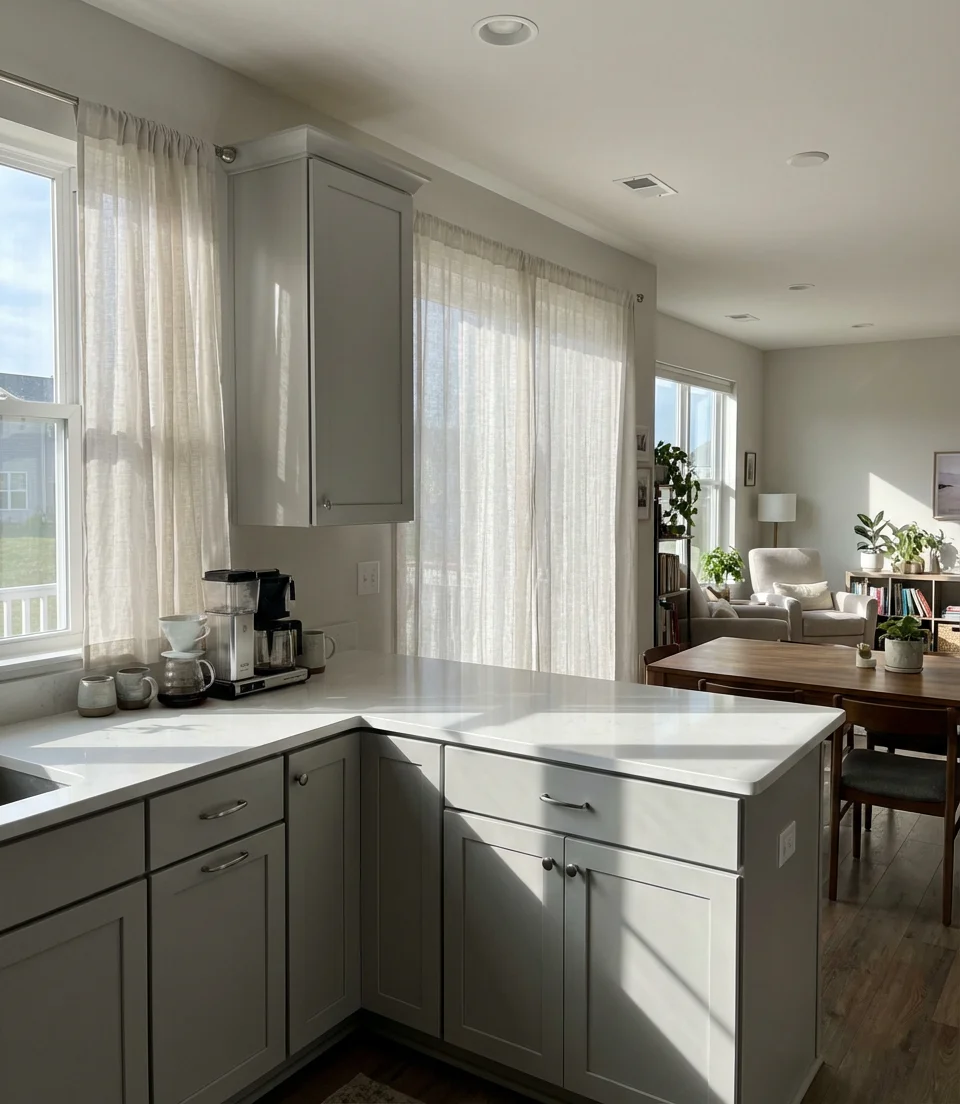
Real homeowners often mention that an east-facing kitchen changes their morning routine entirely—suddenly making breakfast feels less like a task and more like a moment to savor. If you’re planning a remodel or choosing a home, consider the sun’s path carefully. East light is gentle and energizing, while west light can be harsh and hot in the afternoon, requiring more investment in window treatments and potentially making your kitchen uncomfortably warm by dinnertime.
15. Best Open Kitchen Layout for Your Lifestyle
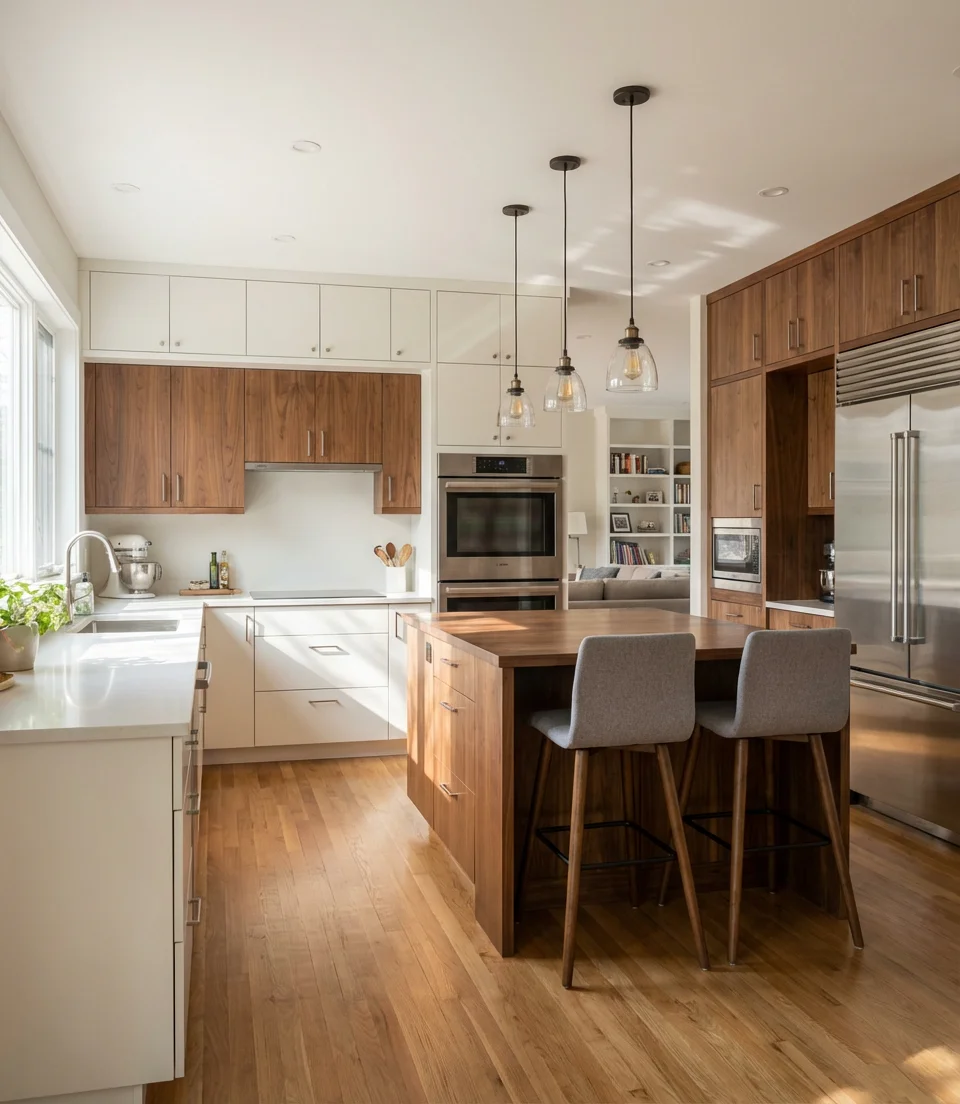
The best open kitchen layout isn’t determined by trends or Pinterest boards—it’s the one that matches how you actually live. If you cook elaborate meals solo, a U-shape or galley might serve you better than a sprawling island. If you host often, prioritize seating and sightlines over extra storage. Smart homeowners in 2026 are evaluating their lifestyles honestly before deciding on a design: How many people cook at once? Do you prefer prep surfaces or display space? Are you comfortable with an open dishwasher visible from the sofa? These questions reveal the best path forward, ensuring your kitchen enhances daily life instead of fighting it.
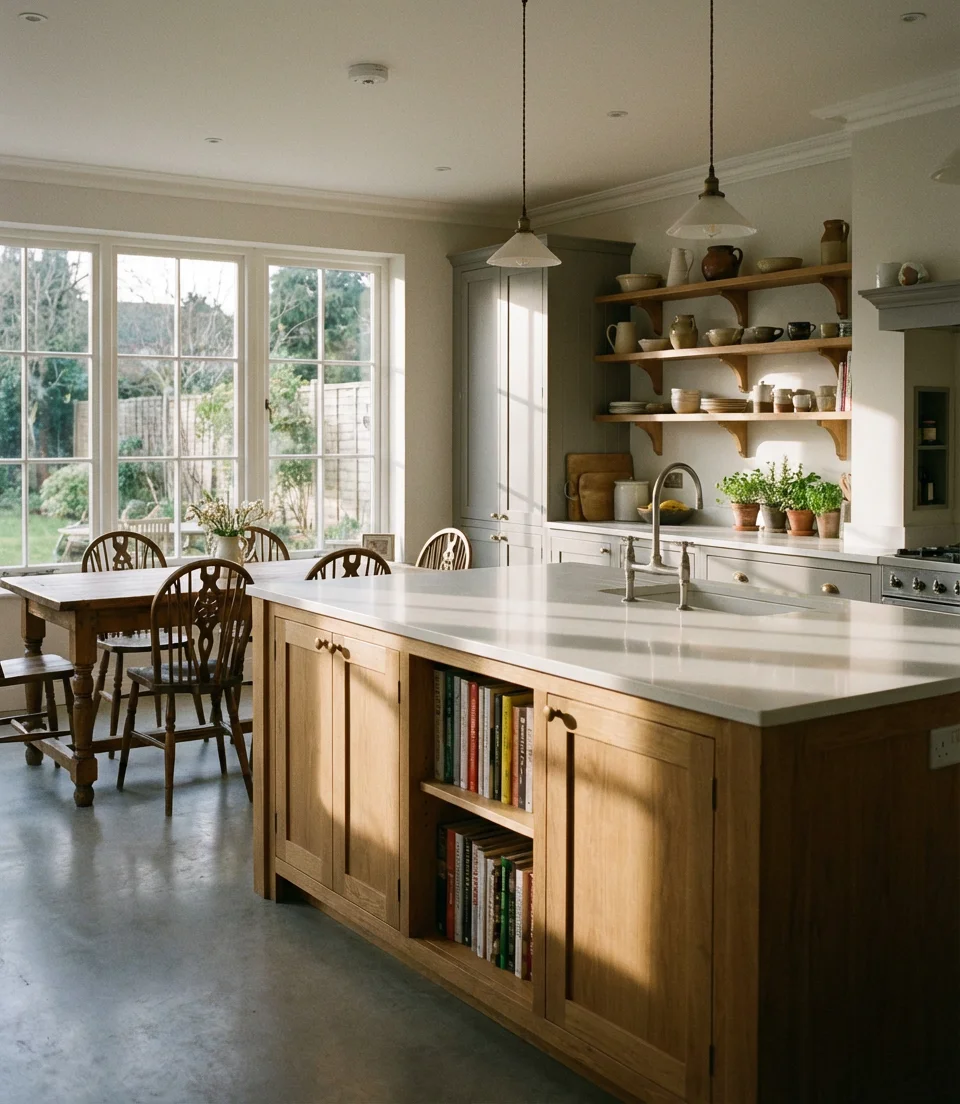
One common mistake is copying a layout from a magazine without considering your home’s architecture or your family’s habits. A beautiful kitchen that requires constant tidying to look presentable will wear you down, while a slightly less photogenic setup that hides clutter and simplifies cleanup will bring years of satisfaction. Test the flow by placing painter’s tape on the floor to mark cabinets and islands, then walk through your typical routines—morning coffee, dinner prep, unloading groceries—to see what feels natural before you commit to a final plan.
16. Open Kitchen Plans for New Builds
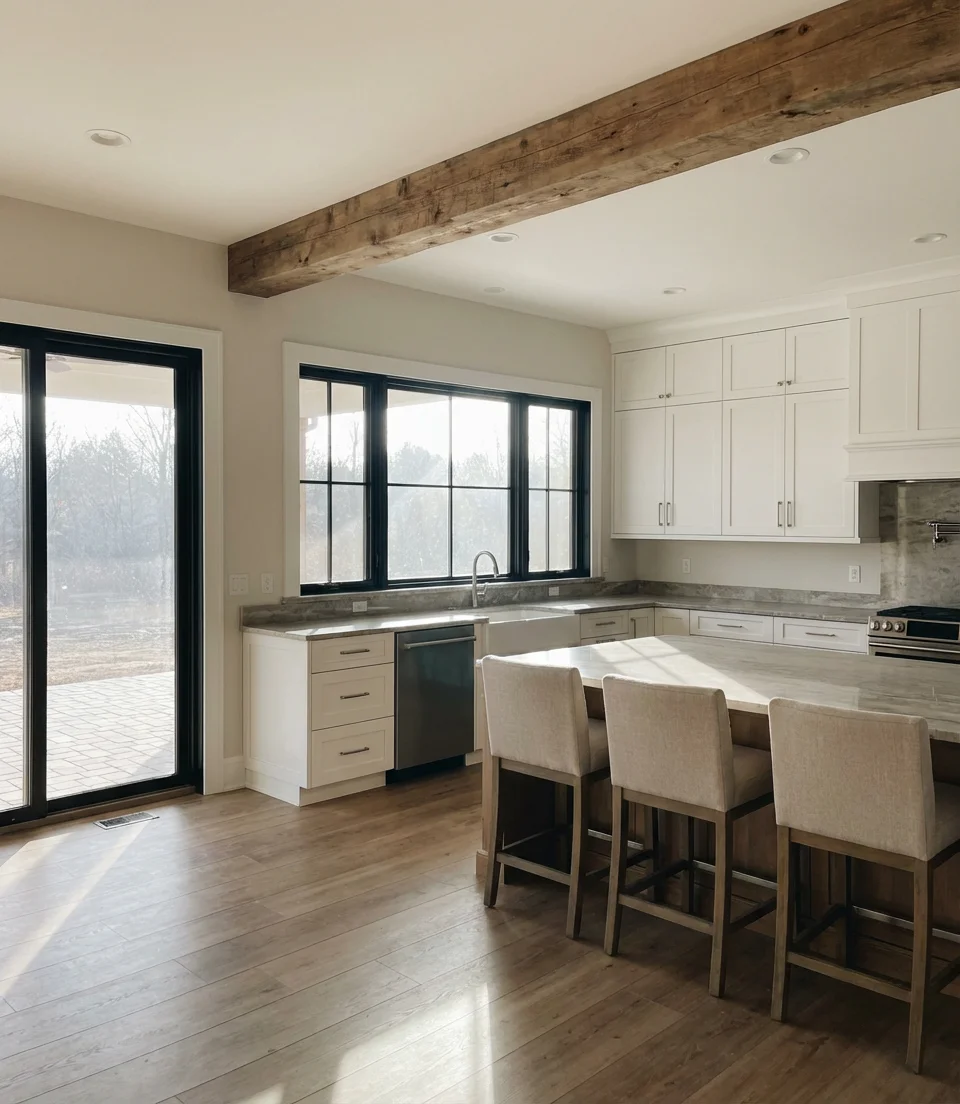
Starting from scratch with plans for an open kitchen gives you the luxury of designing walls, windows, and utilities around your ideal layout. New construction and major additions let you position the kitchen to capture the best light, orient it toward outdoor views, and integrate structural beams or soffits that define zones without blocking sightlines. In 2026, architects are embedding charging stations, data ports, and even USB outlets directly into islands and counters, future-proofing the space for evolving technology. They’re also specifying larger windows and sliding glass doors that blur the line between kitchen and patio, making the cooking zone feel like part of the landscape.
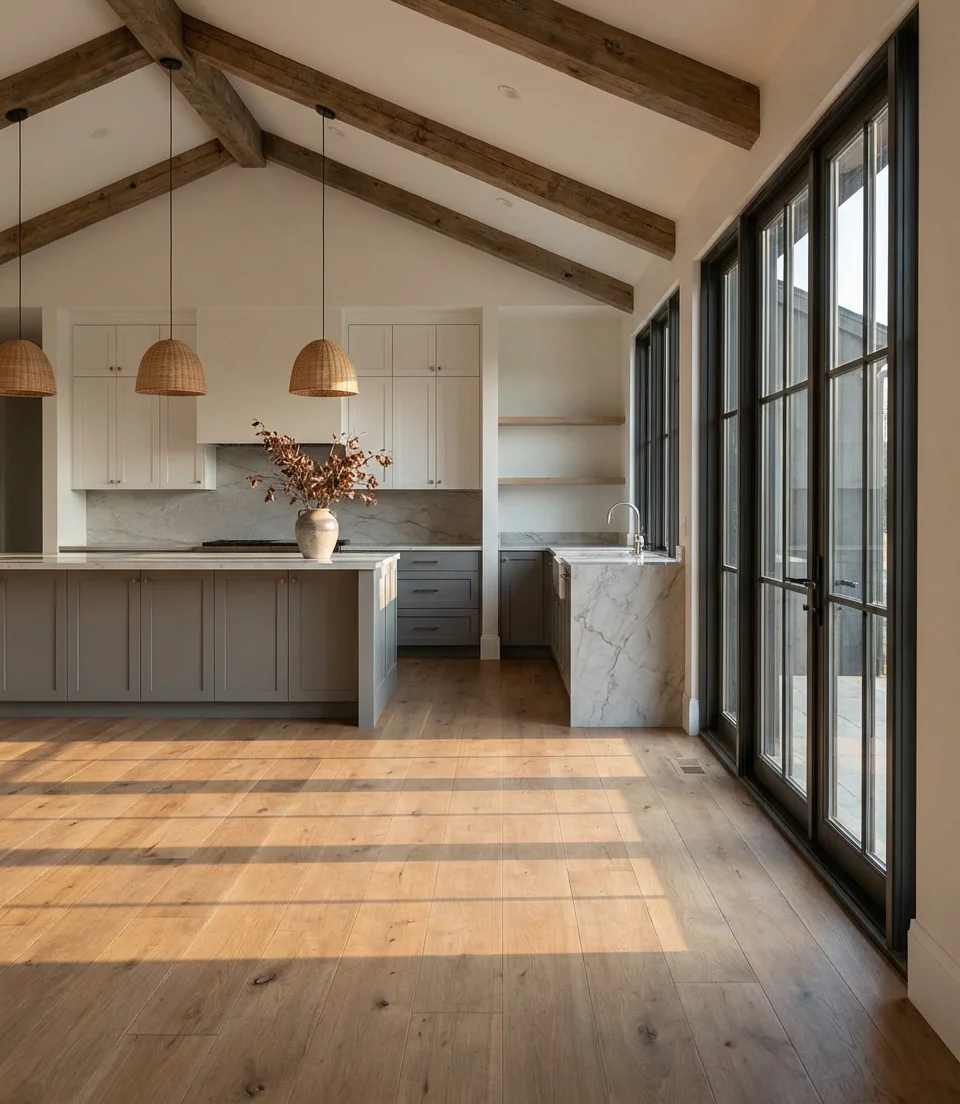
From a budget perspective, allocating fifteen to twenty percent of your total build cost to the kitchen is standard, though that number climbs if you’re installing high-end appliances or custom cabinetry. Work closely with your architect to ensure plumbing, electrical, and HVAC are roughed in exactly where you need them—moving a gas line or drain after framing is expensive and disruptive. And don’t overlook ventilation; a powerful range hood with external venting is non-negotiable in an open-plan home where cooking odors can drift into bedrooms and living areas.
17. Indian-Style Home Open Kitchen with Traditional Touches
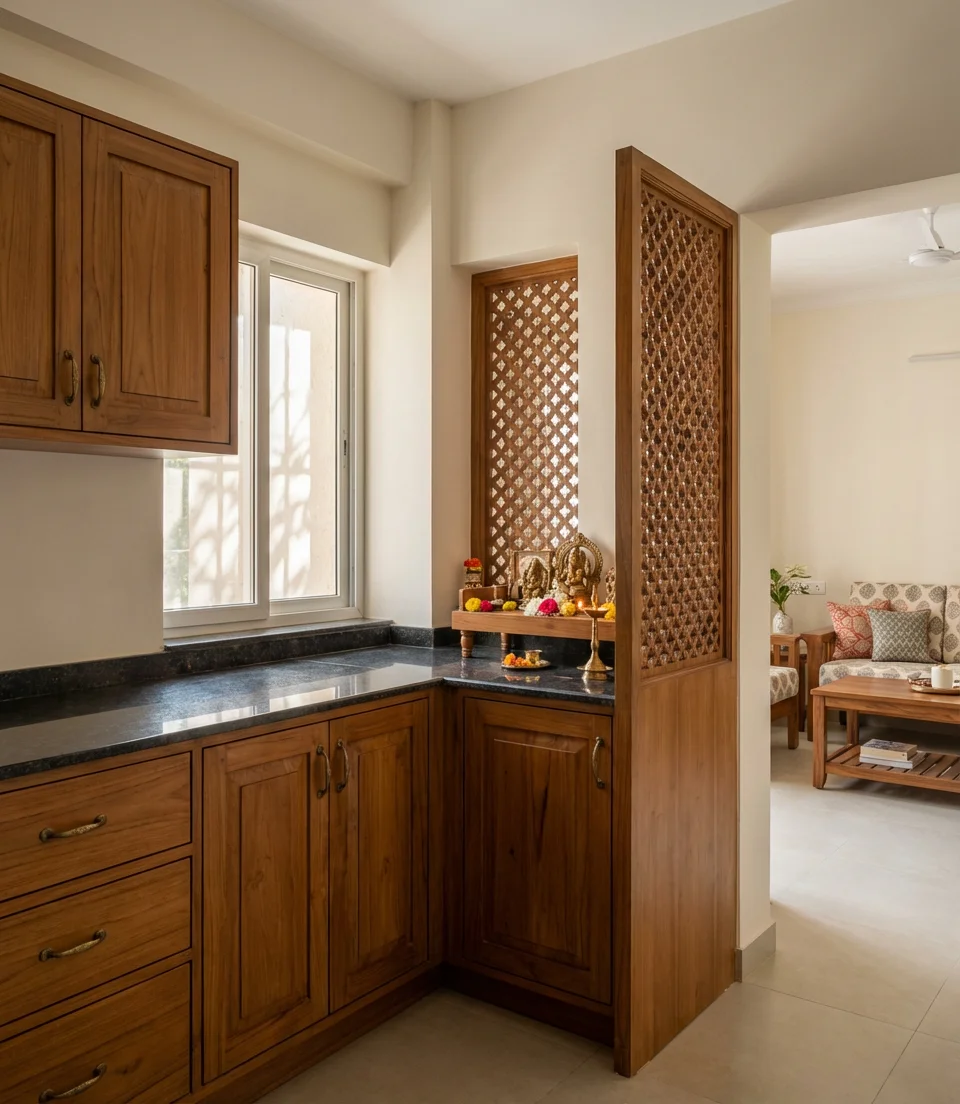
Designing an open kitchen for an indian style home means balancing the need for powerful ventilation, ample spice storage, and surfaces that can handle high-heat cooking with the warmth and ornamentation that defines traditional Indian interiors. Rich wood tones, carved details, and brass or copper accents coexist beautifully with modern stainless-steel appliances and granite counters. Many families add a small puja corner within or adjacent to the kitchen, honoring spiritual practices while embracing contemporary open layouts. In 2026, designers are incorporating traditional jaali screens, colorful backsplash tiles inspired by heritage patterns, and even copper hoods that reference antique cookware.
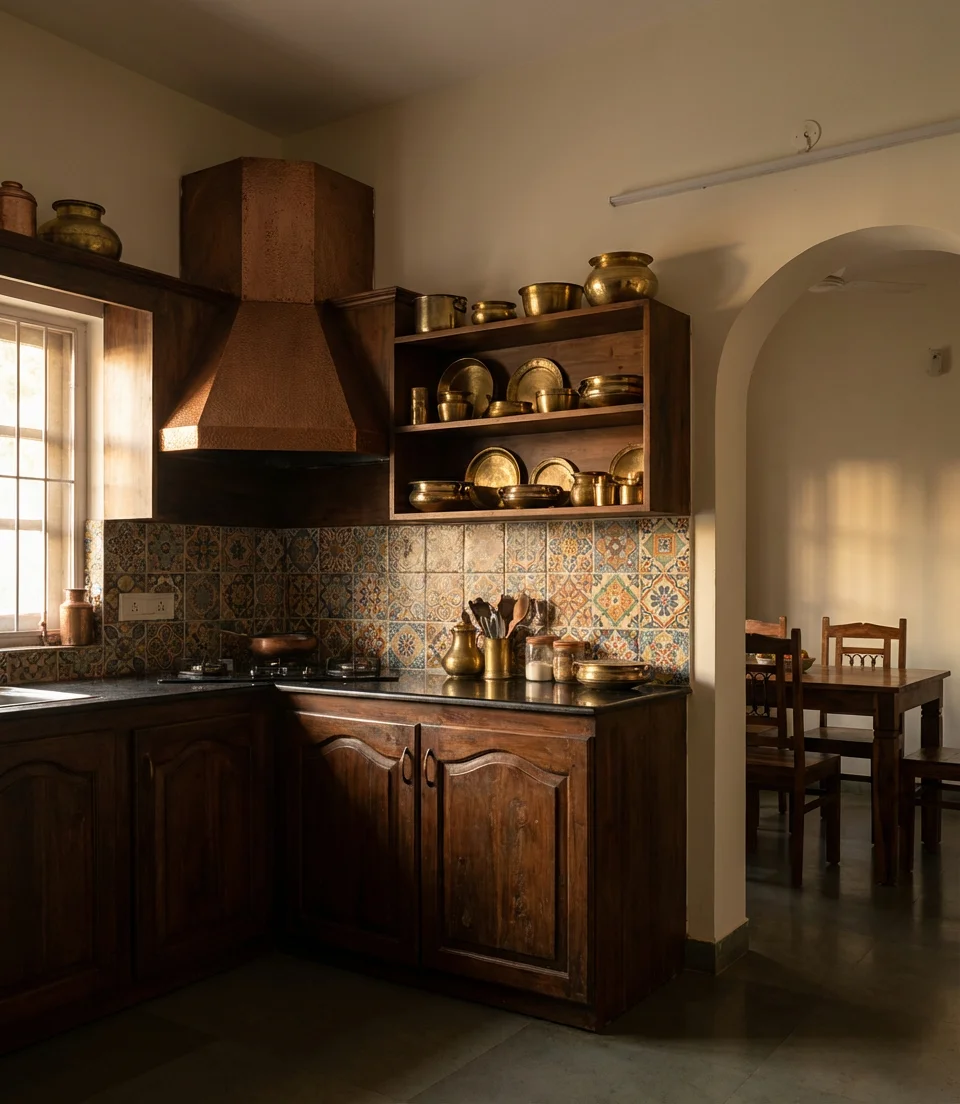
One practical tip from an Indian-American designer I spoke with: install a chimney-style hood with at least 1,200 CFM capacity, and make sure it vents to the outside, not just recirculates. Indian cooking generates significant heat and aromatic oils, and without proper ventilation, your open-plan home will smell like last night’s biryani well into the next day. Additionally, it’s a good idea to incorporate a dedicated masala drawer with small compartments or spice jars, which will keep your spices organized and easily accessible, thereby speeding up preparation and minimizing counter clutter.
18. Latest Open Kitchen Trends in 2026
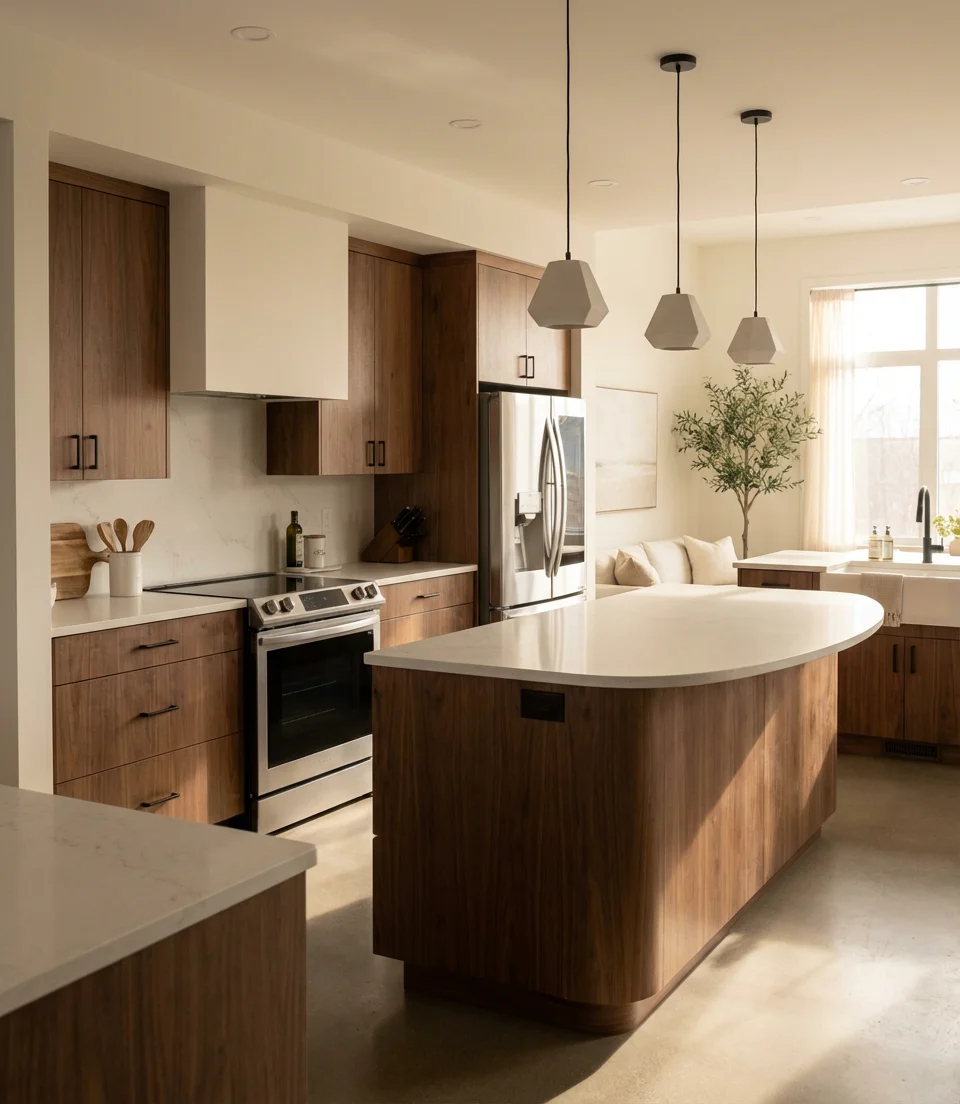
The latest open kitchen trends in 2026 lean toward warmer materials, integrated technology, and layouts that adapt to multiple uses. Think walnut or oak cabinetry instead of all-white, matte black or aged brass hardware instead of polished chrome, and countertops in organic shapes rather than strict rectangles. Smart appliances are becoming standard—refrigerators with interior cameras, induction cooktops that recognize pan sizes, faucets with voice activation—but they’re designed to blend into the background rather than shout their presence. Homeowners are also carving out dedicated zones for coffee, baking, or charging devices, turning the kitchen into a true command center for modern life.
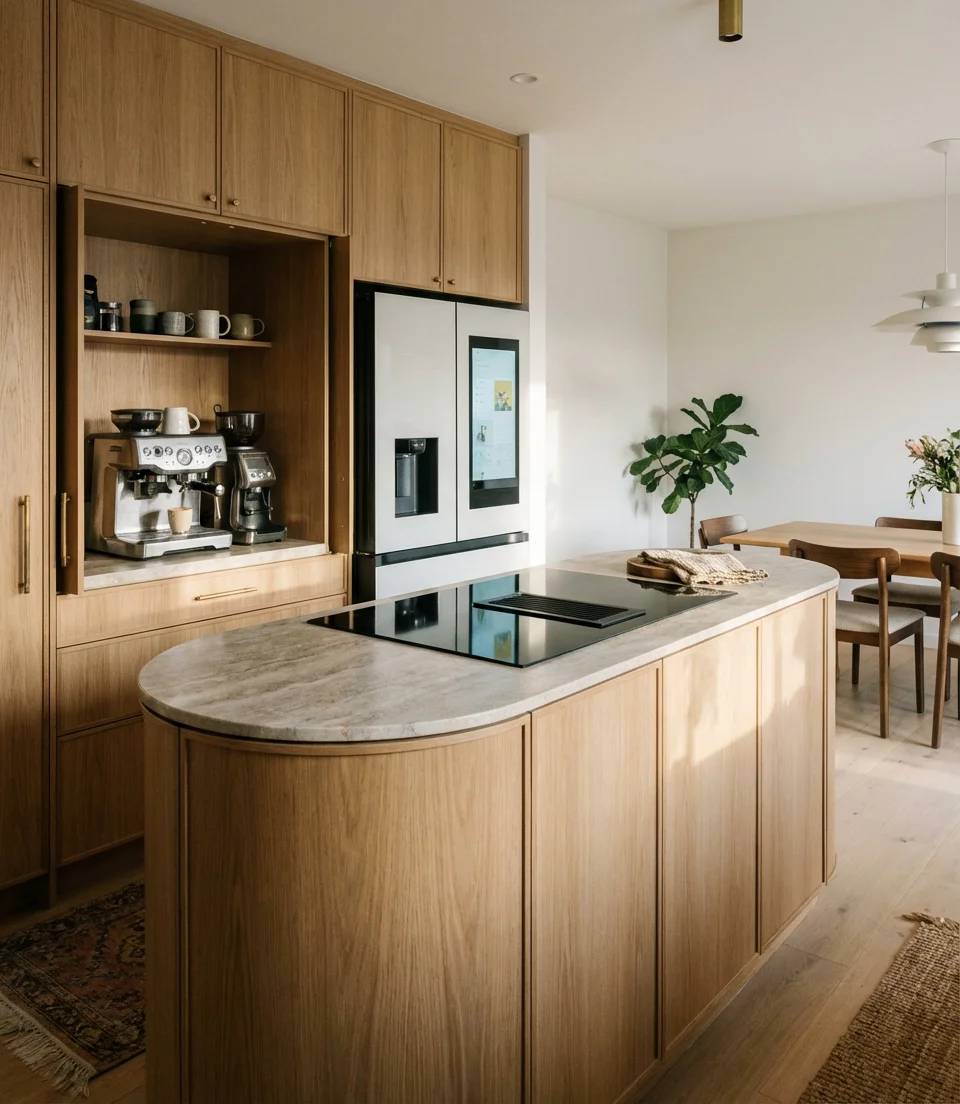
American homeowners are also embracing sustainable materials and energy-efficient appliances as part of the latest wave of kitchen design. Reclaimed wood counters, recycled glass backsplashes, and LED under-cabinet lighting are no longer niche choices but mainstream options that appeal to eco-conscious buyers. The shift reflects a broader cultural moment where people want their homes to align with their values, and the kitchen—often the most resource-intensive room—is a natural place to start.
19. Open Cafe Kitchen for Commercial Vibes
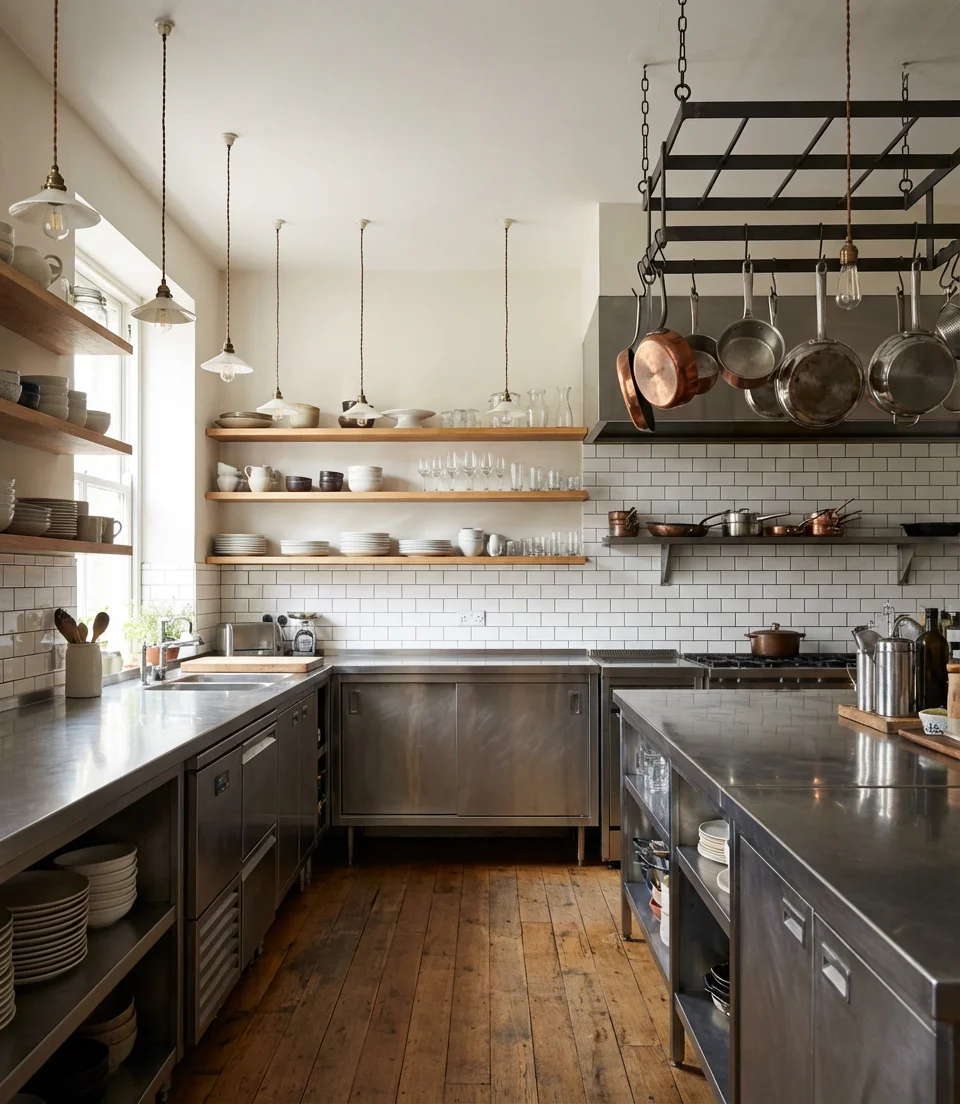
Borrowing from cafe aesthetics, this style brings professional-grade equipment, open shelving, and industrial finishes into residential spaces. Stainless-steel counters, subway tile, and hanging pot racks create a bustling, functional vibe that appeals to serious home cooks and anyone who loves the energy of a restaurant kitchen. In 2026, the cafe-inspired open kitchen is softening slightly—adding wooden accents, linen curtains, and vintage signage to prevent the space from feeling too cold or institutional. The result is a kitchen that looks ready to serve a crowd but still feels welcoming and personal.
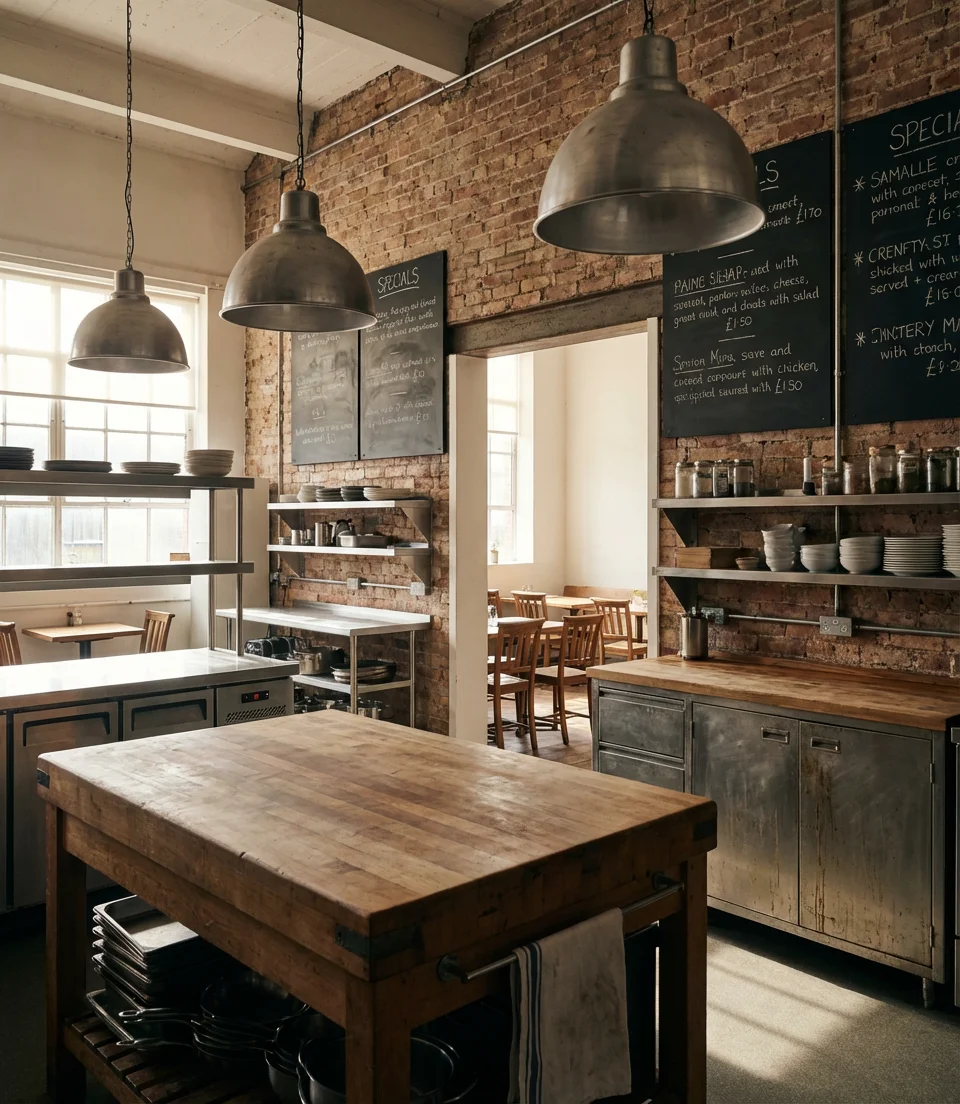
Where this theme works best is in lofts, converted warehouses, and homes with high ceilings and exposed ductwork, where the industrial elements feel cohesive rather than forced. Just be mindful of noise—stainless surfaces and hard tile amplify sound, so if you’re designing an open-plan space, consider adding a rug, upholstered seating, or acoustic panels in adjacent areas to absorb the clatter of pots and pans. And if you’re installing commercial-grade appliances, check local codes; some ranges require special ventilation or gas line upgrades that add to your budget.
20. Restaurant-Inspired Open Kitchen Design
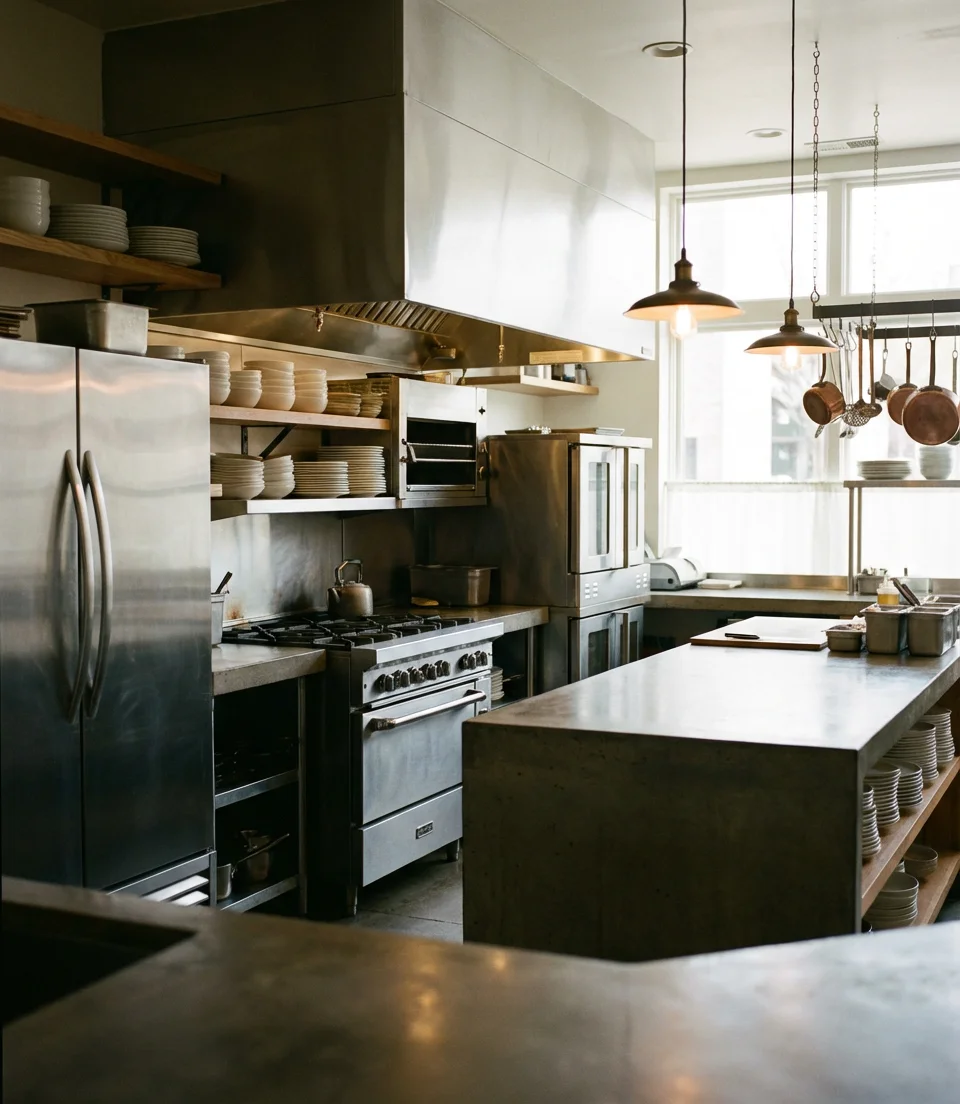
Taking cues from restaurant kitchens, this design prioritizes efficiency, durability, and a hint of theater. Open shelving displays plates and glassware like props on a stage, while a prominent range becomes the focal point, inviting guests to watch the cooking process unfold. In 2026, homeowners are installing professional-grade ranges with six burners, double ovens, and griddles, pairing them with powerful ventilation and easy-to-clean surfaces like stainless steel or polished concrete. The look is bold and unapologetic, perfect for those who see cooking as a performance and want their kitchen to reflect that passion.
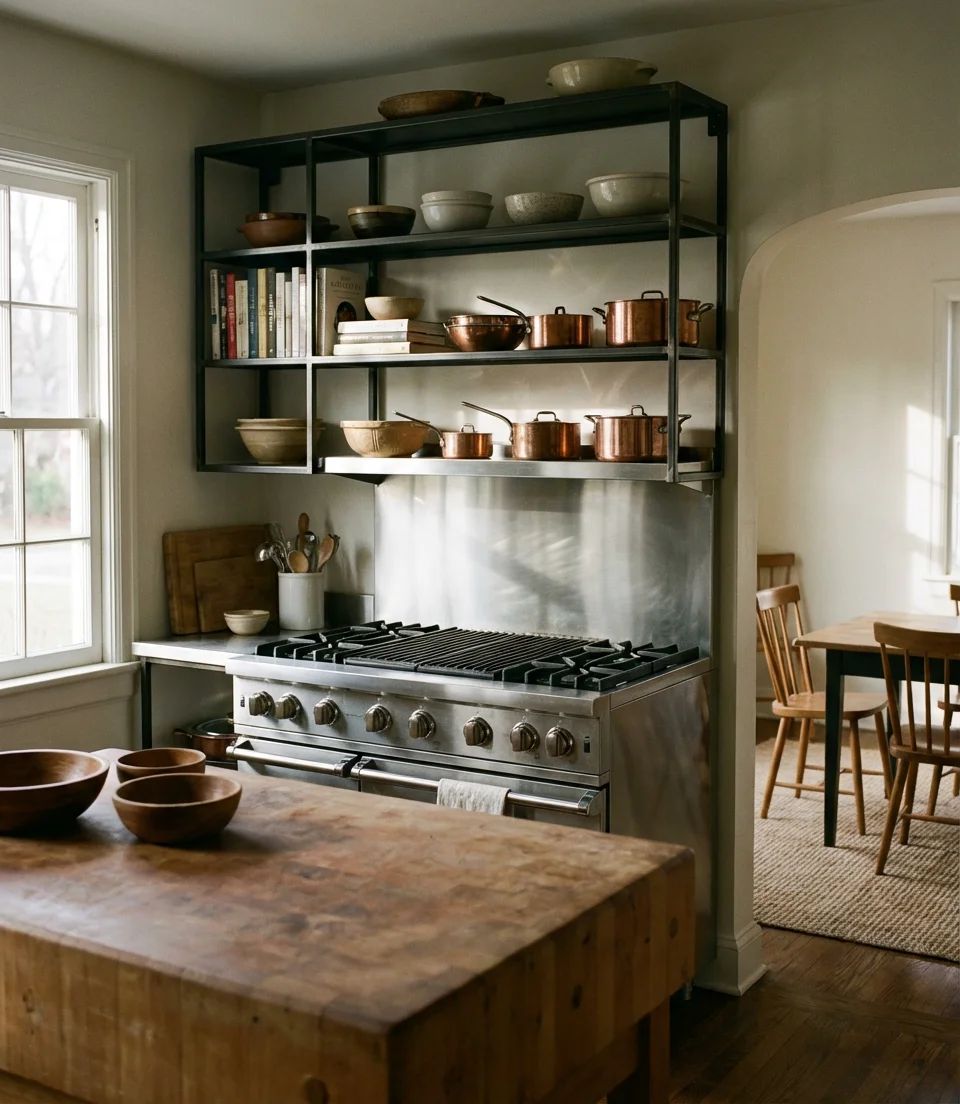
A friend who runs a catering business out of her home swears by this setup, saying the commercial-grade equipment and open layout let her prep for thirty-person events without feeling cramped. She did invest in soundproofing the adjacent rooms and upgrading her electrical panel to handle the load, both of which were necessary but added several thousand to her renovation budget. If you’re serious about restaurant-quality cooking at home, these upgrades are worth every penny—they future-proof the space and prevent frustrating bottlenecks during peak cooking hours.
21. Open Kitchen in Kenya with Local Flair
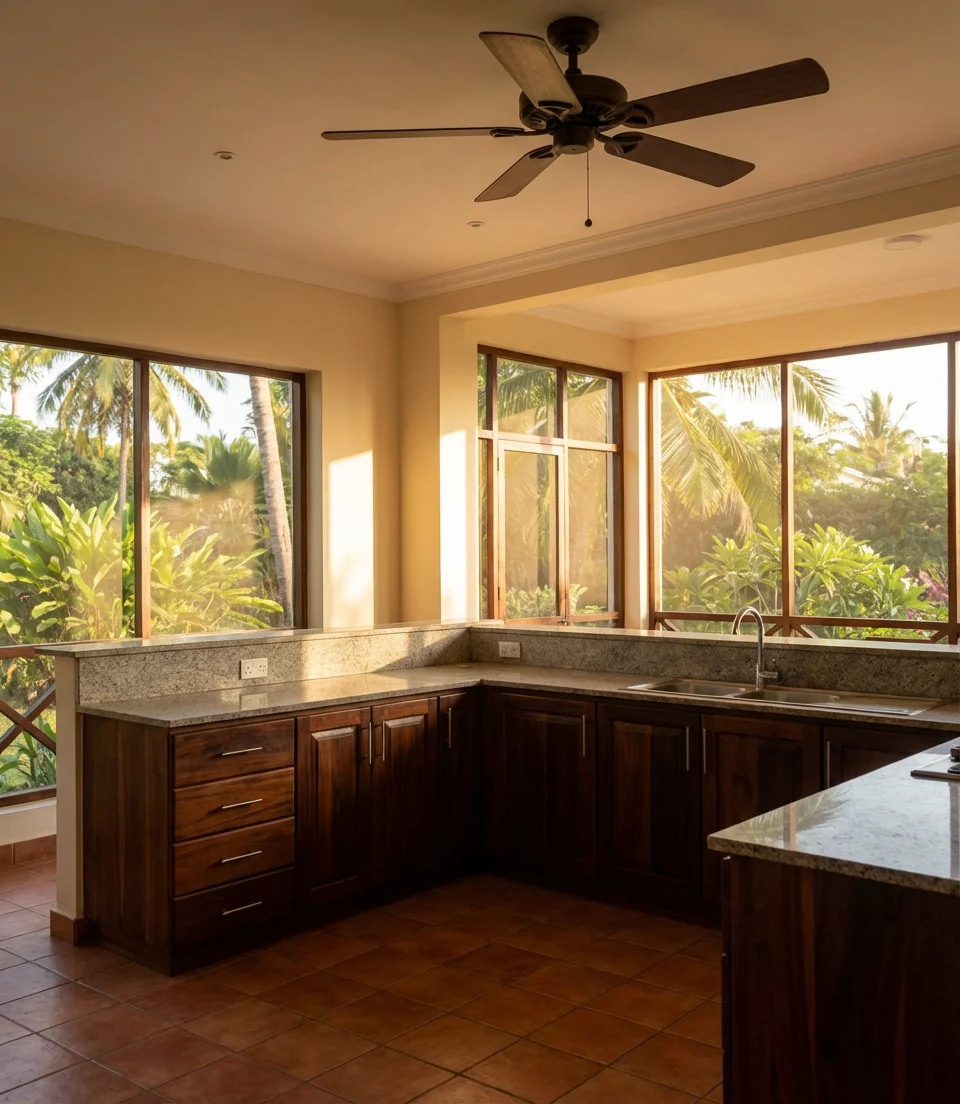
Designing an open kitchen in kenya means adapting to tropical heat, outdoor living culture, and a preference for natural materials that age gracefully. Many Kenyan homes feature kitchens that flow directly into covered verandas or courtyards, blurring the line between indoor and outdoor cooking. Local hardwoods, stone counters, and tile floors resist humidity and are easy to maintain in a dusty climate. In 2026, architects in Nairobi and coastal cities are embracing open kitchens with large screened openings, ceiling fans, and plenty of storage for cookware and pantry staples that need protection from insects and heat.
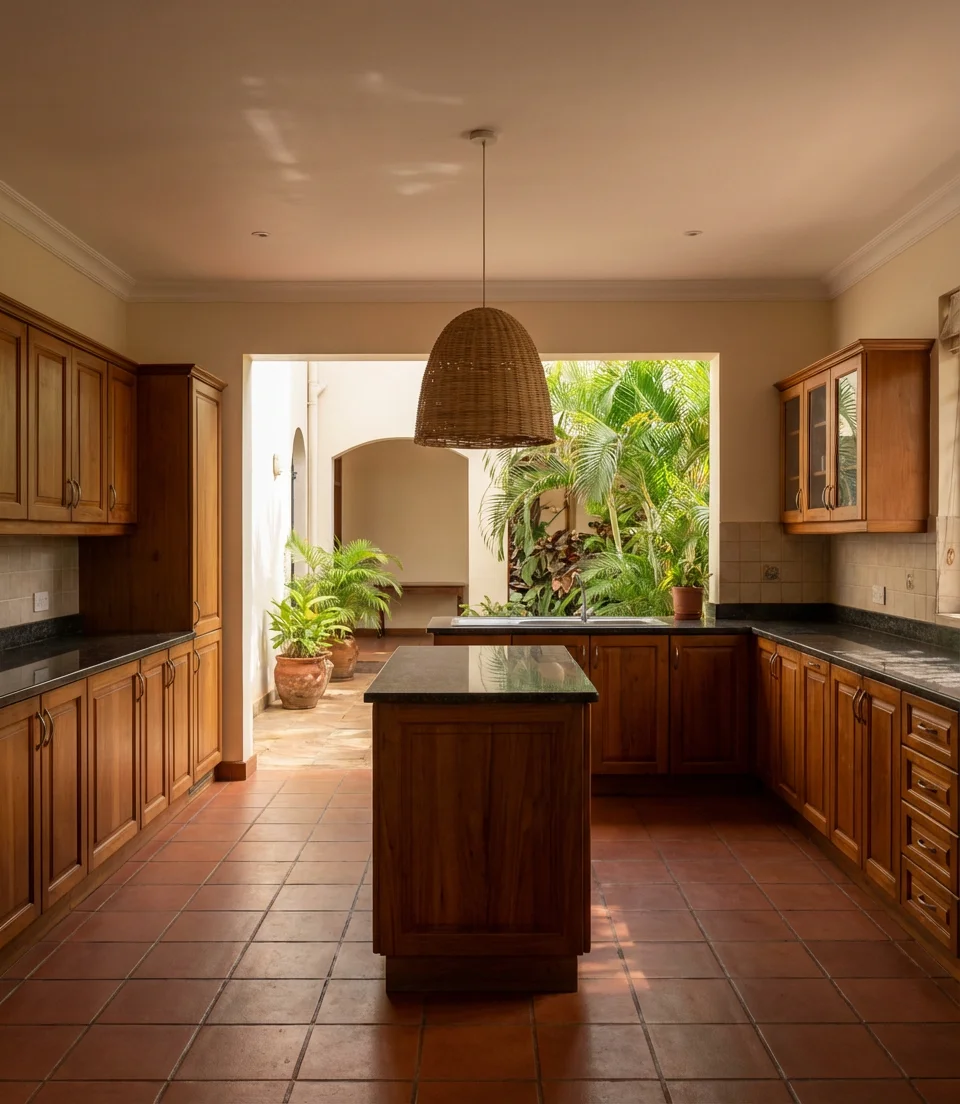
Ventilation is critical in this climate, so positioning the cooking zone near large windows or openings ensures smoke and heat dissipate quickly. Many families also install outdoor sinks or prep areas on the veranda, making it easy to clean fish, vegetables, or cookware without tracking dirt indoors. If you’re building or renovating in Kenya, work with a local contractor who understands the importance of materials that resist termites, moisture, and UV damage—investing in quality upfront saves expensive repairs down the line.
22. Kerala-Style Open Kitchen with Natural Materials
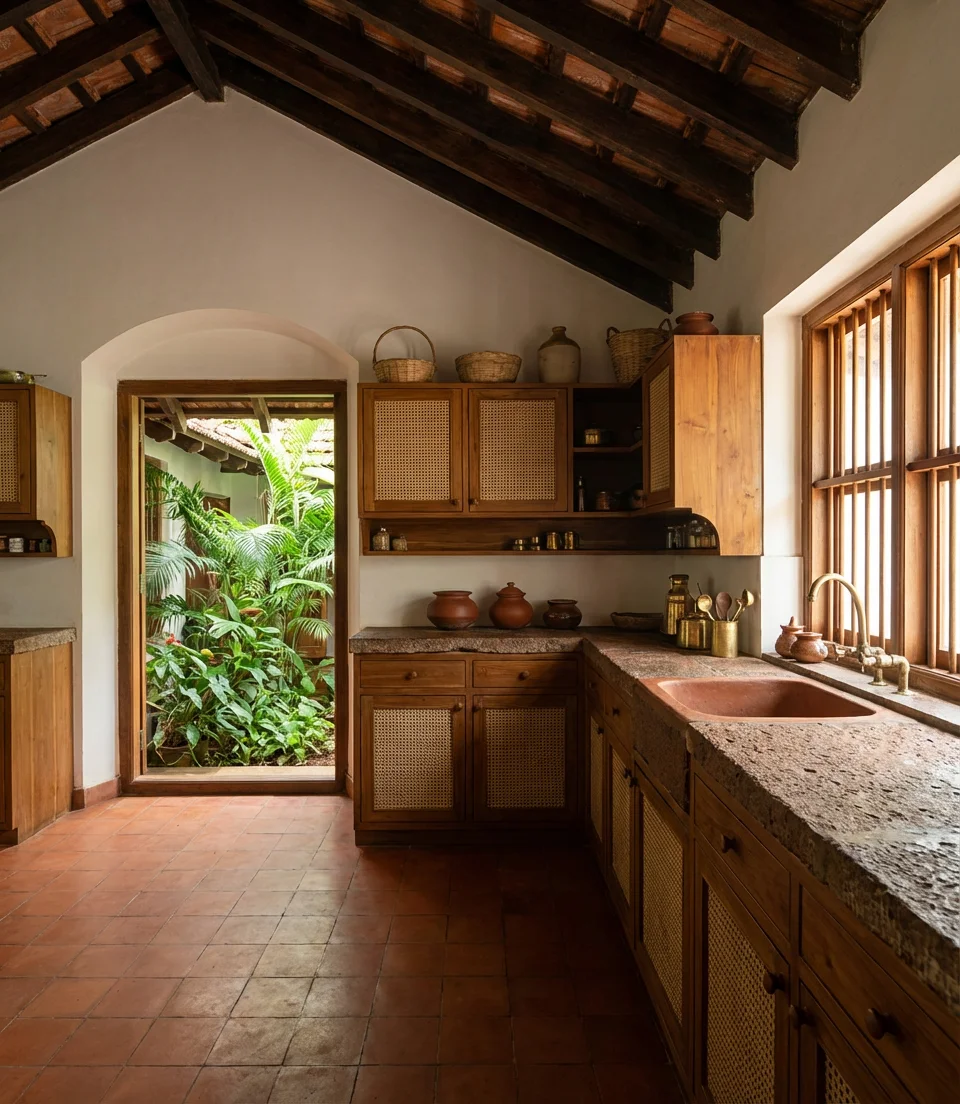
A Kerala-style open kitchen celebrates the region’s architectural heritage with natural materials, pitched roofs, and a seamless connection to outdoor spaces. Teakwood cabinets, laterite stone counters, and clay tile floors create a grounded, earthy palette that stays cool even in humid climates. Many Kerala homes feature kitchens that open onto internal courtyards, allowing light and air to circulate while maintaining privacy. In 2026, designers are updating this traditional layout with modern conveniences—built-in grinders for spices, dedicated areas for fermenting batters, and ample counter space for rolling dosas and parathas.
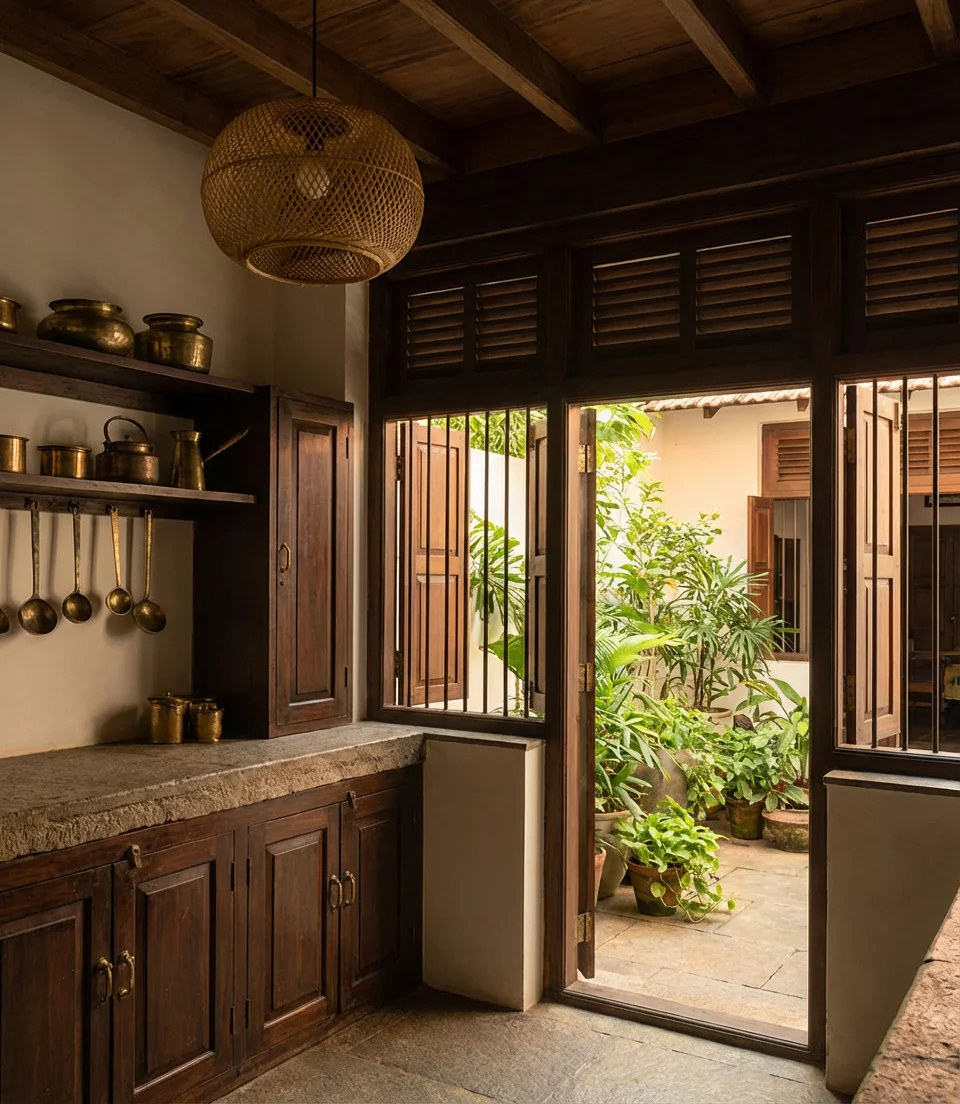
This style is particularly popular among families who value traditional cooking methods and want a kitchen that supports them. The open layout encourages multi-generational cooking, where grandmothers, mothers, and children can all work together without feeling crowded. Just be sure to install a robust chimney or exhaust system, since Kerala cuisine often involves frying, tempering spices, and boiling large pots of rice—all of which generate steam and smoke that need to vent efficiently.
23. Open Kitchen with Cement Finishes for Industrial Edge
Using it with cement finishes in an open kitchen brings raw, industrial texture that contrasts beautifully with wood, glass, and greenery. Polished concrete countertops, cement-tile backsplashes, and even poured-in-place concrete islands are gaining traction among homeowners who crave a modern, low-maintenance aesthetic. Cement is durable, heat-resistant, and develops a subtle patina over time, making it ideal for busy kitchens. In 2026, designers are pairing cement with warmer elements—oak shelving, leather bar stools, and brass fixtures—to prevent the space from feeling cold or unwelcoming.
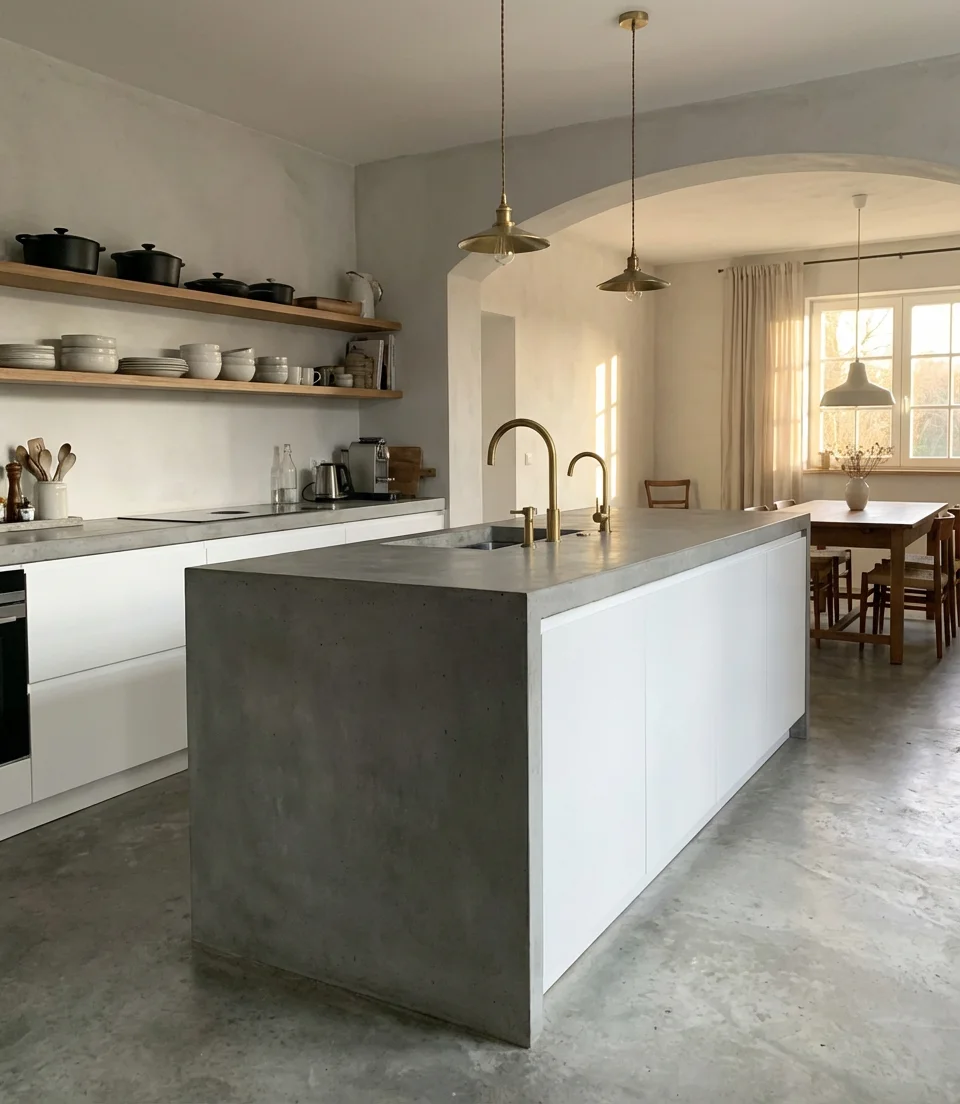
One note of caution: cement countertops require sealing every year or two to prevent staining, and they can develop hairline cracks over time—some homeowners love this weathered look, while others find it stressful. If you’re concerned about every mark and blemish, opt for quartz or granite countertops. However, if you value materials that convey a narrative and change over time, cement presents a visually striking and cost-effective option that harmonizes well with the transparent, honest style of modern industrial design.
Open kitchen designs in 2026 offer something for everyone, whether you’re drawn to the warmth of traditional materials, the sleekness of contemporary minimalism, or the functionality of restaurant-inspired layouts. The twenty-three ideas above reflect real homes, real budgets, and real ways of living, proving that openness doesn’t mean sacrificing comfort, storage, or style. Your kitchen should serve your needs, not vice versa. Take what resonates, adapt it to your space, and mix ideas. Drop a comment below with your favorite concept or share a photo of your open kitchen project; we’d love to see how you’re making the space your own.