
There’s something quietly exciting happening in American offices right now. Whether you’re refreshing a corporate cubicle, building out a home workspace, or reimagining a shared studio, the way we design where we work has never felt more personal—or more intentional. People are flooding Pinterest with searches for office décor inspiration because they know the space around them directly affects how they feel and how well they work. This article brings together the freshest, most livable ideas for workplace design in 2026, from budget-friendly DIY upgrades to polished, Pinterest-perfect setups that feel genuinely human.
1. The Warm Neutral Desk Setup
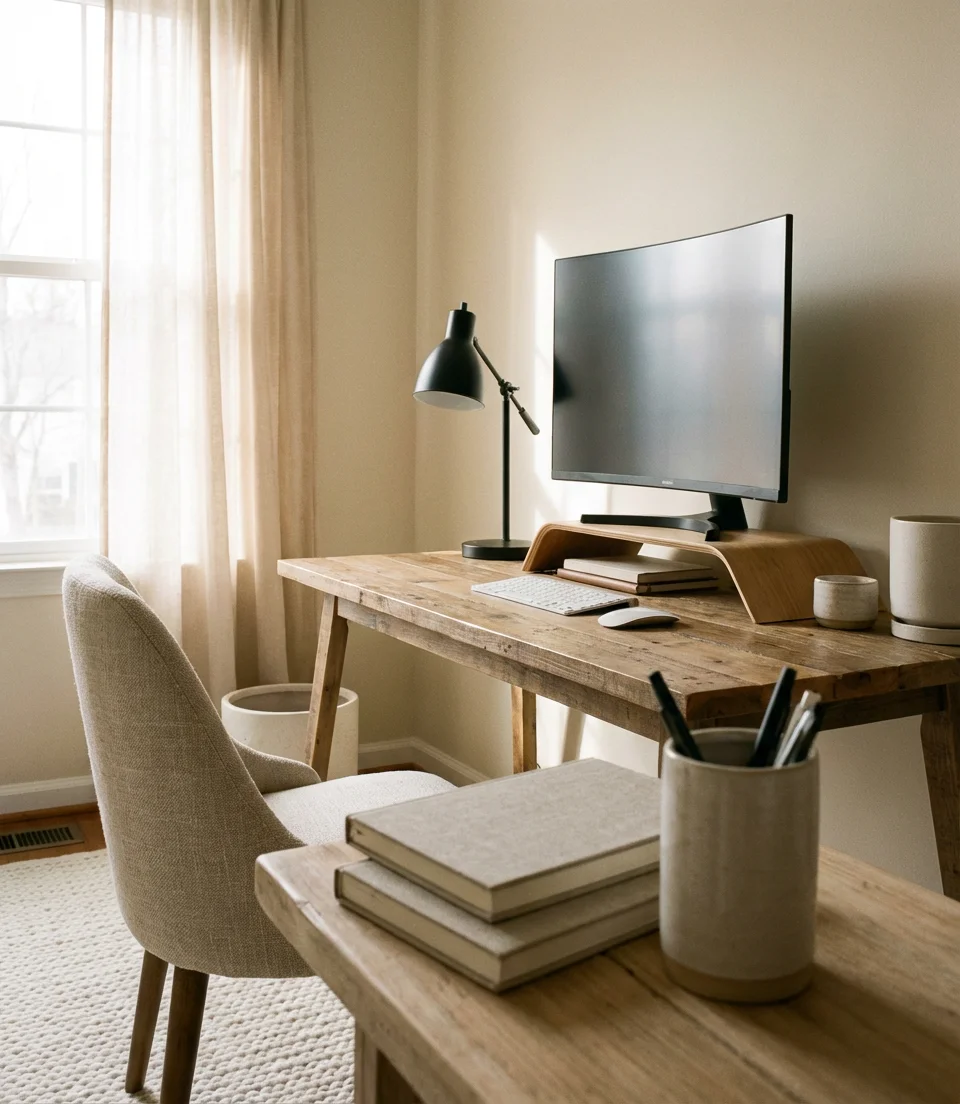
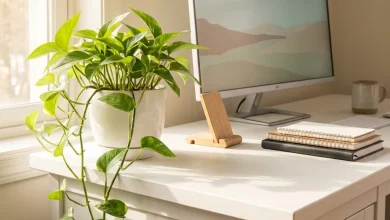
If there’s one defining shift in professional office design right now, it’s the move away from cold, sterile white toward creamy, grounded neutrals. Warm beige, soft oat, and toasted linen tones are taking over desk setups across the country—and for good reason. These shades feel calm without being clinical, sophisticated without being stiff. They also photograph beautifully, which is why this aesthetic dominates Pinterest boards from Seattle to Charlotte. Pair warm neutrals with natural wood accessories and matte black hardware for a setup that feels both modern and deeply livable.
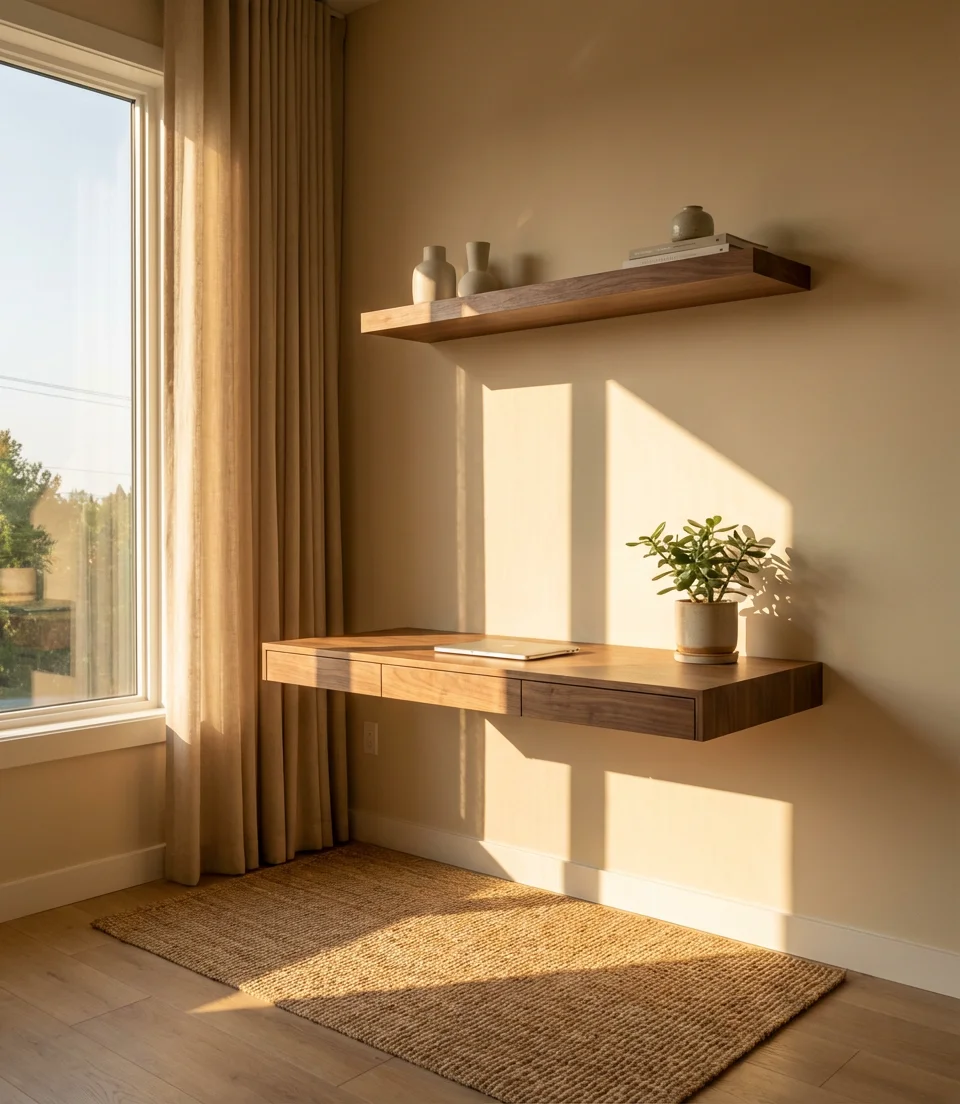
The beauty of a warm neutral palette is how forgiving it is. You can layer textures—a linen monitor riser, a ceramic pen holder, a jute desk mat—and nothing clashes. Interior stylists consistently recommend this approach for anyone who feels overwhelmed by bolder color choices. If you’re starting from scratch, anchoring your workspace in warm neutrals gives you the flexibility to introduce personality through plants, artwork, or a single accent color without the whole setup feeling chaotic.
2. Cubicle Refresh With Personality
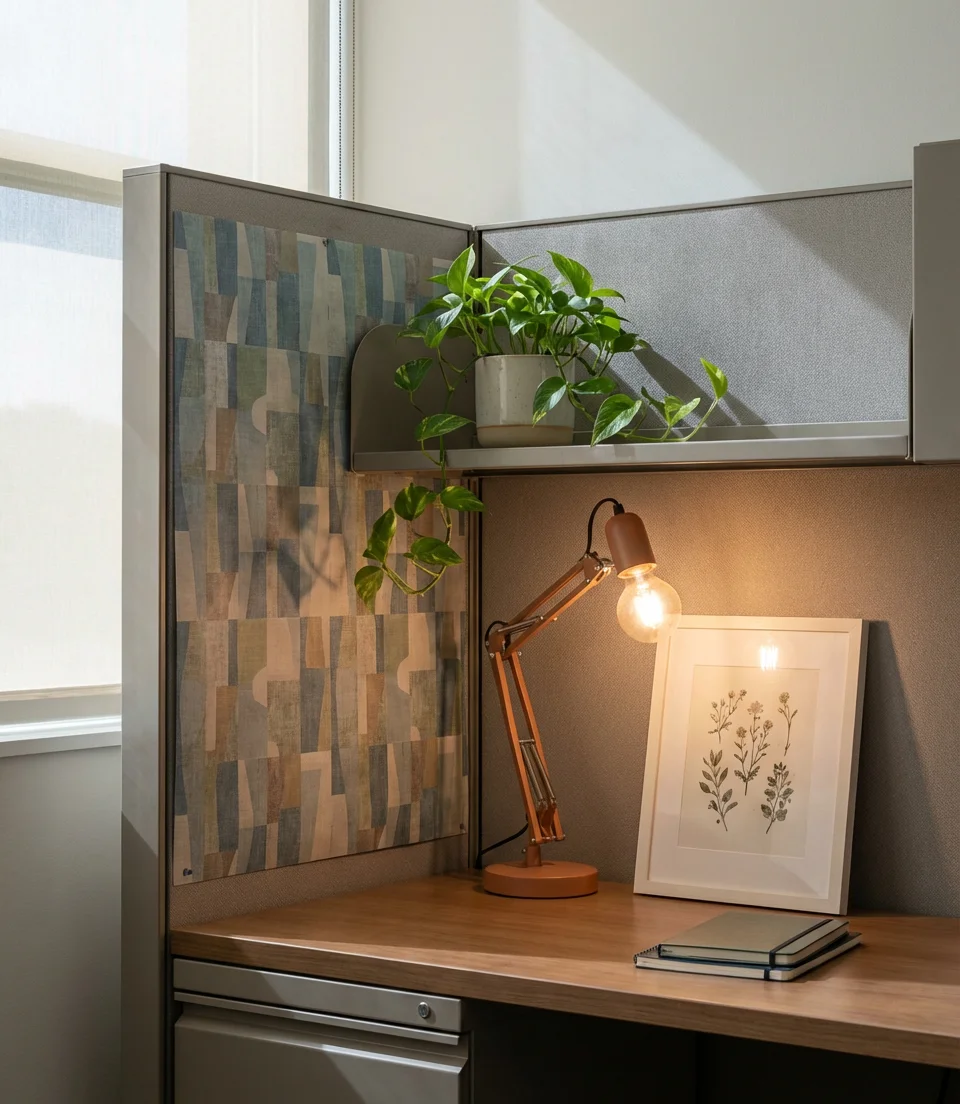
The cubicle has gotten an unfair reputation. Yes, it can feel boxed-in and beige—but it doesn’t have to. Some of the most inspiring cubicle ideas on Pinterest right now involve small, thoughtful interventions that transform a corporate shell into something that actually feels like yours. Think removable wallpaper panels on the back wall, a slim floating shelf for a small plant or two, and a desk lamp with warm-toned bulbs instead of relying on overhead fluorescents. These changes cost very little but make a significant psychological difference in how you feel arriving at your desk each morning.
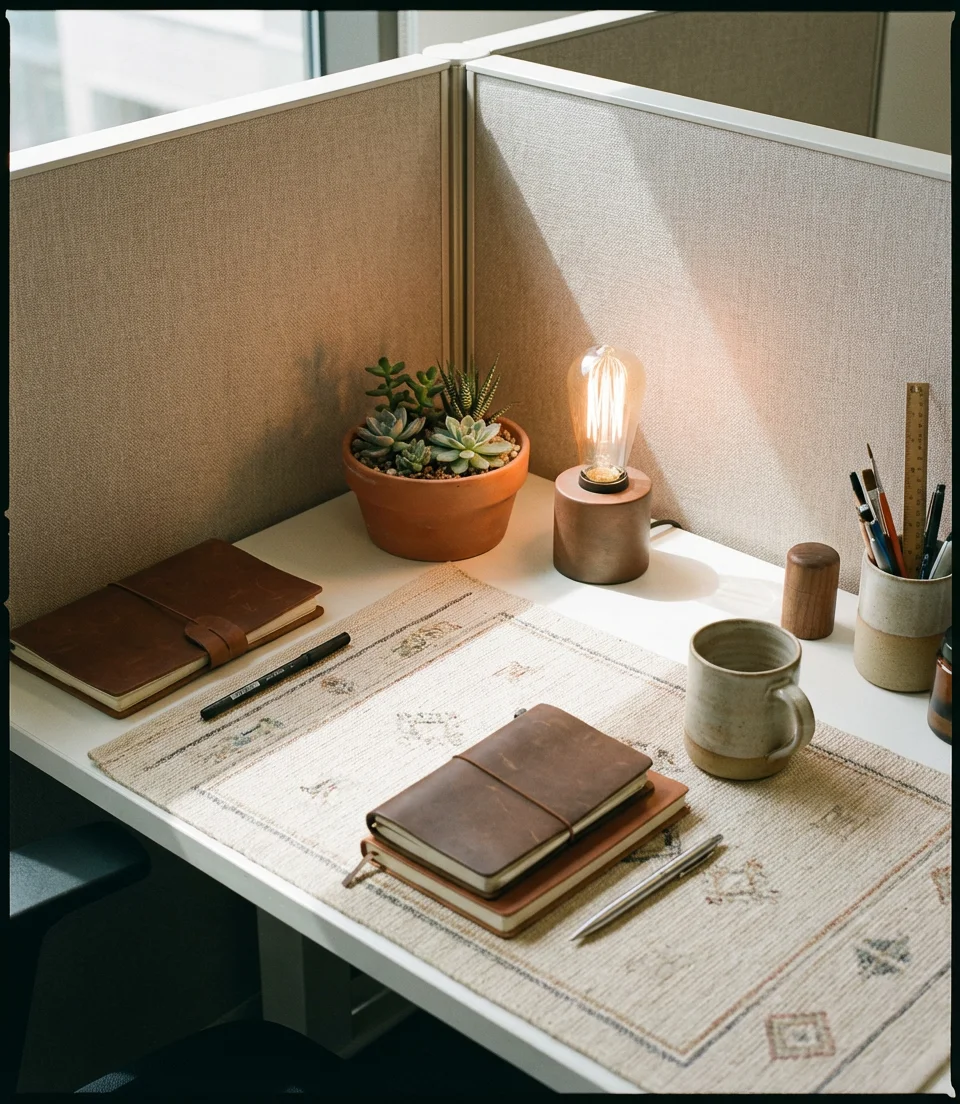
One common mistake people make when decorating a cubicle is going too big too fast—suddenly the space feels cluttered and chaotic. A better approach: choose one focal point (the back panel), one functional upgrade (better lighting), and one personal touch (a photo or small print). Keep the desk’s surface relatively clear. This “edit first, add second” approach is what separates a Pinterest-worthy cubicle from a crowded one.
3. Biophilic Green Wall Accent
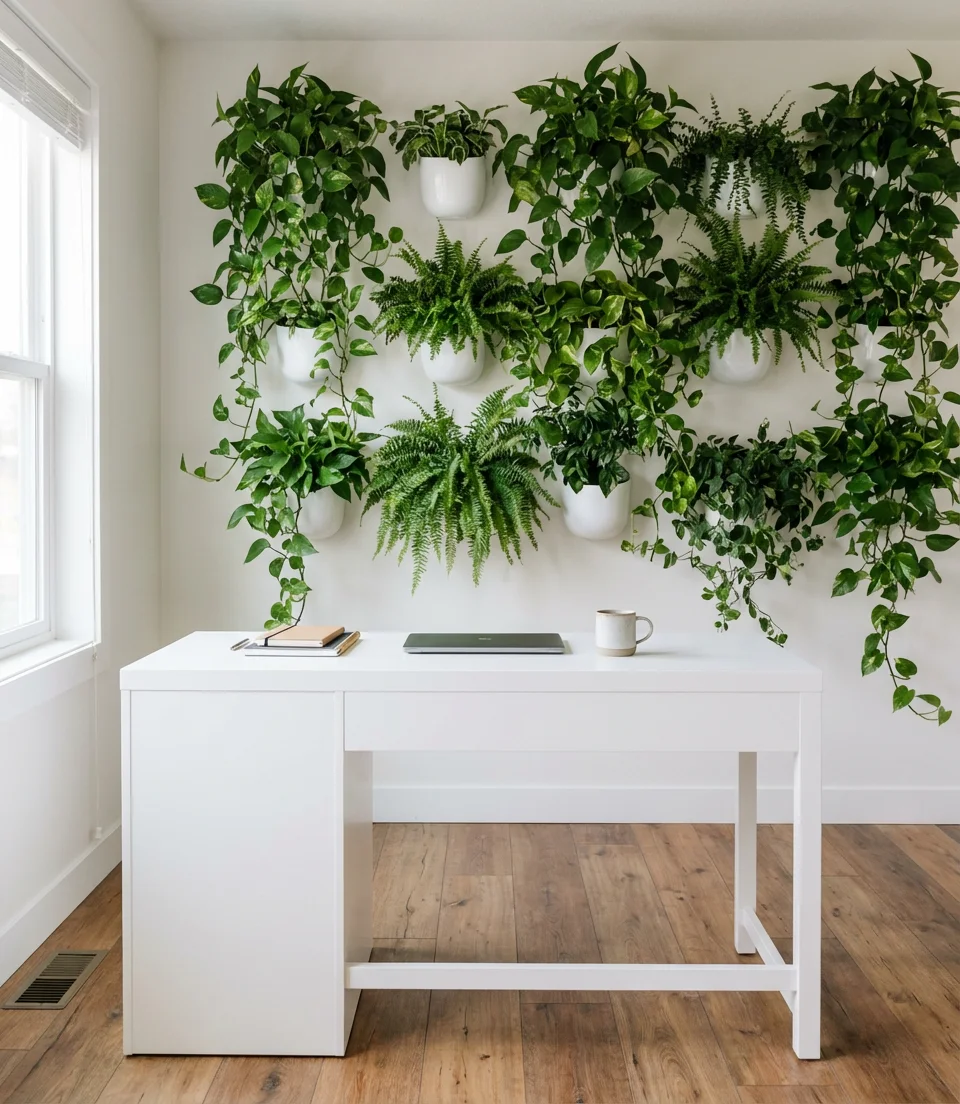
Bringing nature indoors has moved well beyond a potted succulent on the windowsill. In 2026, wall-mounted plant installations—from framed moss panels to cascading pothos grids—are becoming a go-to element in both home offices and corporate spaces. The research behind the idea is solid: exposure to greenery lowers cortisol, improves focus, and makes people feel genuinely better throughout the workday. For professional women designing their own spaces, a green wall accent also doubles as a stunning video call backdrop that reads as polished and intentional without trying too hard.
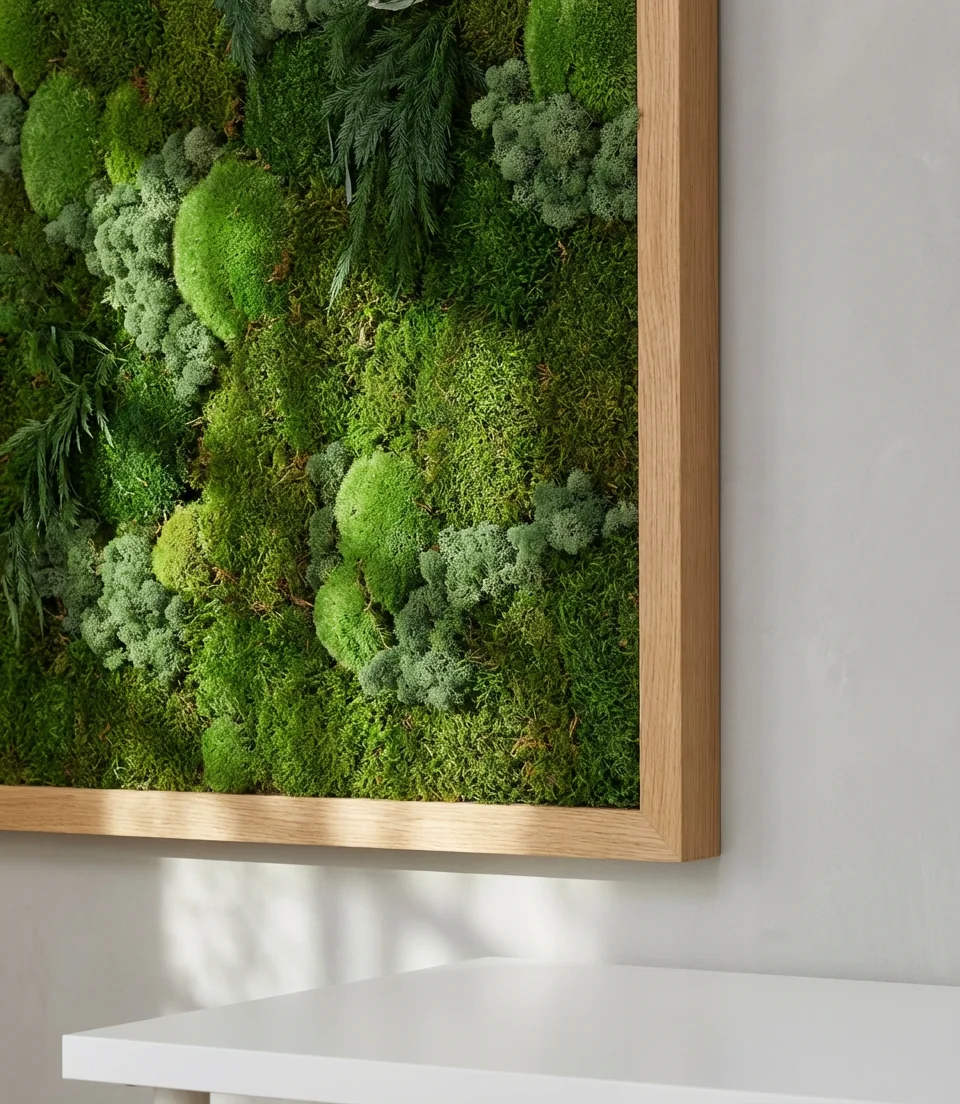
Preserved moss panels are the easiest entry point—they require zero maintenance, look lush year-round, and can be found at major home retailers for under $80. For something living, a simple grid of small planter shelves holding trailing vines creates the same effect at a similar price point. Either way, the goal is to bring a layer of organic texture to what might otherwise be a flat, forgettable wall. This technique works especially well in home offices where you control the wall space entirely.
4. Pink Office Aesthetics Done Right
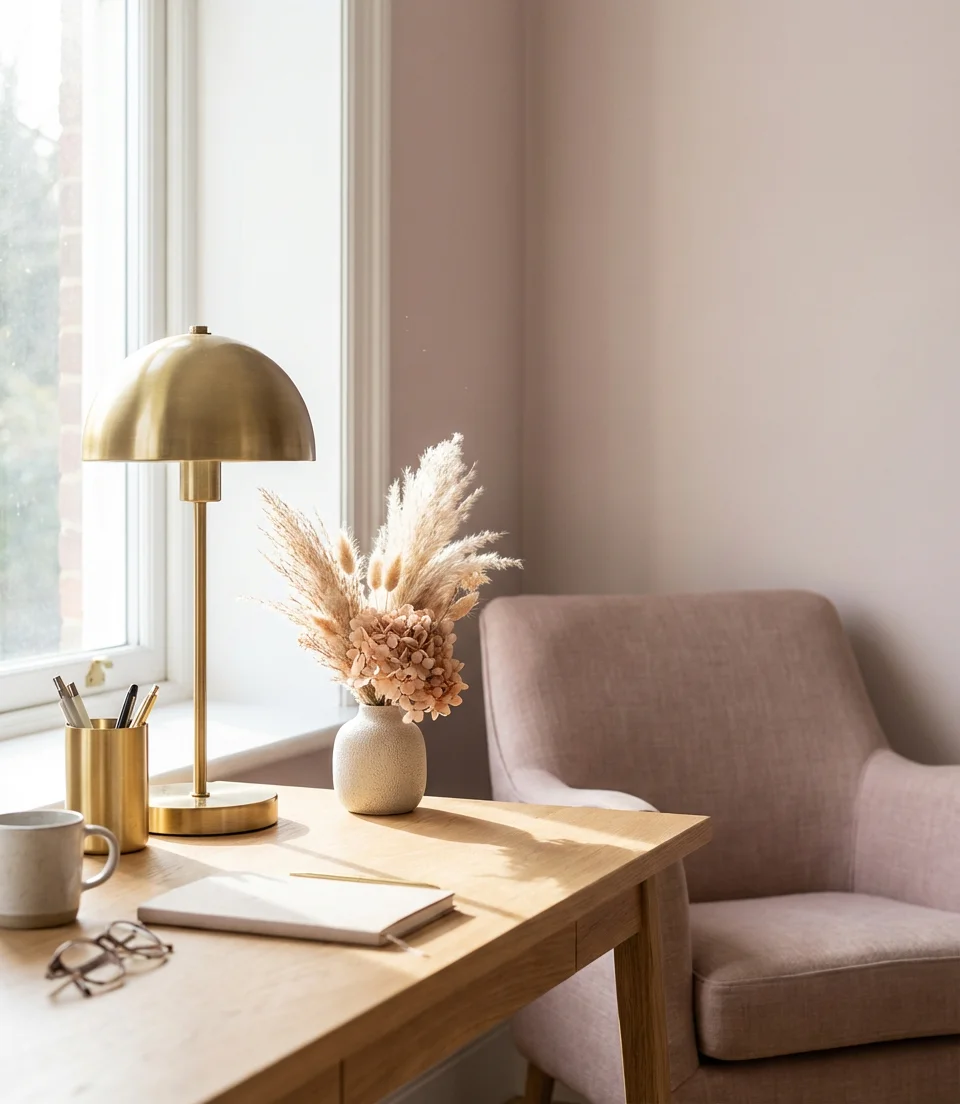
The pink office aesthetic isn’t just for maximalists or design students—it’s become a legitimate, sophisticated approach to workspace design, especially for women who want a space that feels joyful without sacrificing professionalism. In 2026, the most compelling versions of this trend lean into dusty rose, terracotta-pink, and warm blush rather than candy or bubblegum tones. These grown-up pinks pair beautifully with warm whites, natural wood, and brass or gold accents. The result is a workspace that feels feminine, confident, and completely camera-ready.
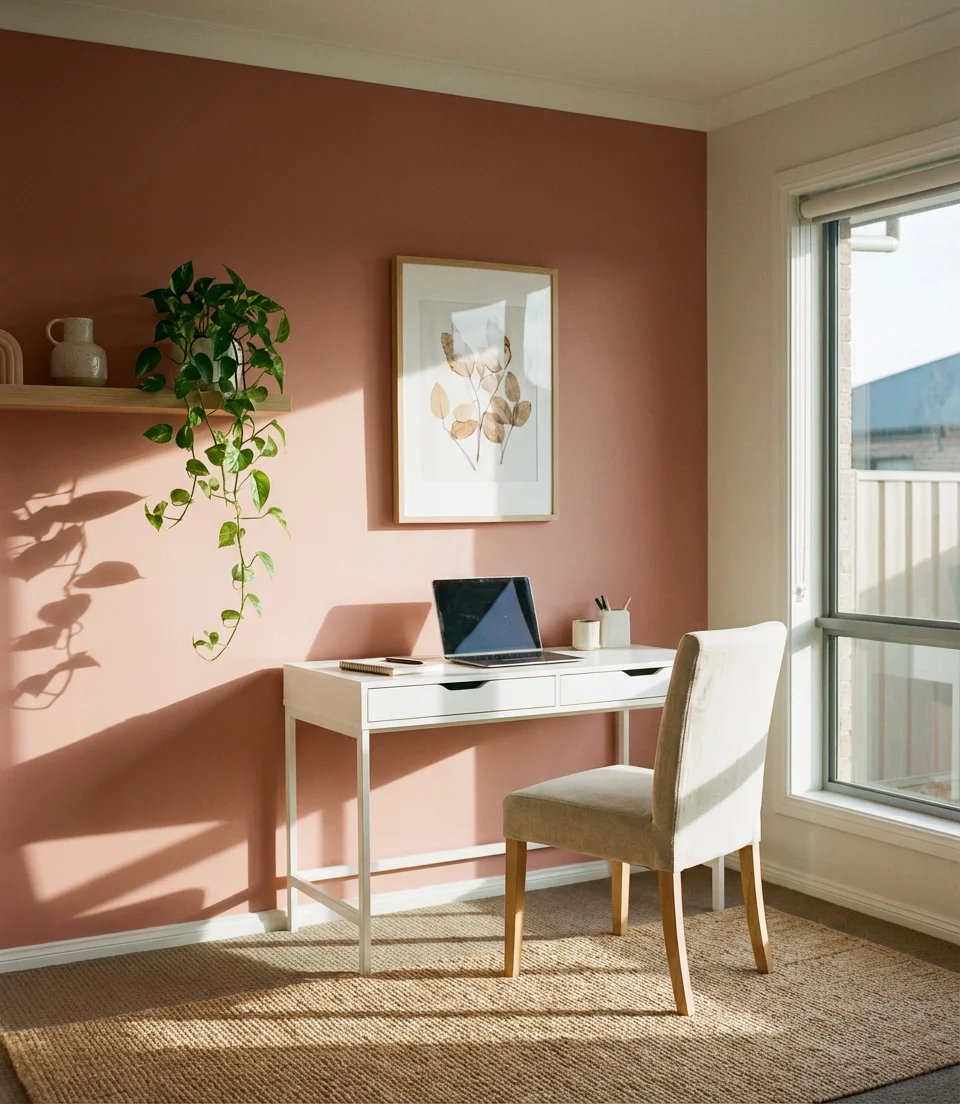
A reader from Austin shared that repainting one accent wall in a muted terracotta-pink completely changed how she felt about working from home. “It went from feeling like a guest room I was borrowing to actually feeling like my studio,” she said. That kind of emotional shift is real—color psychology is well-documented, and warm pinks in particular have been shown to feel both energizing and calming at the same time. Starting with a single pink element (a chair, a lamp, a wall) lets you test the vibe before going all-in.
5. Minimalist Modern Professional Setup
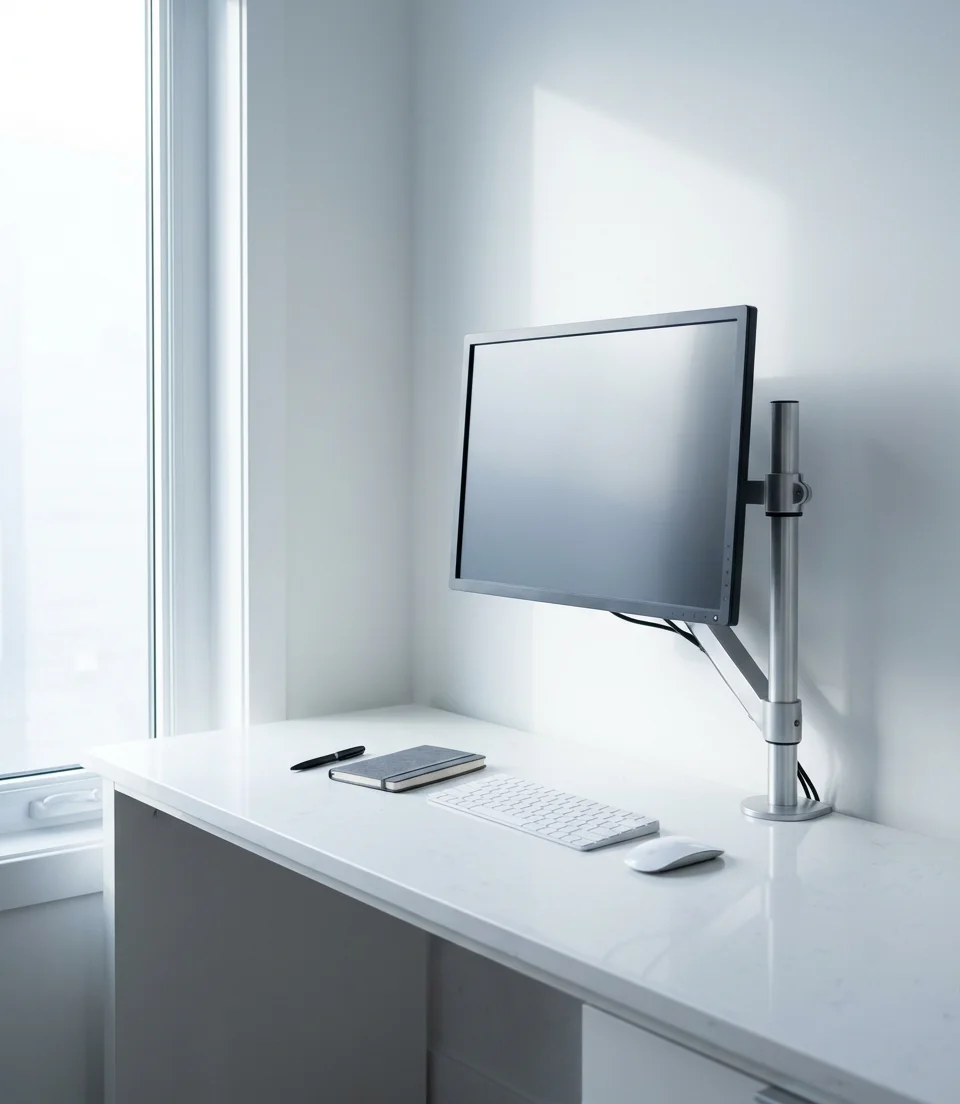
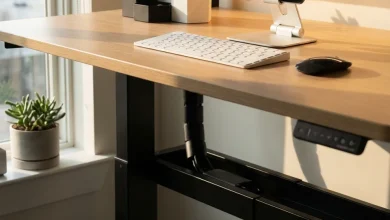
For those who believe a clear desk reflects a clear mind, the professional modern minimalist aesthetic is having a major moment in 2026. This approach is built on restraint: a single monitor on a slim arm, one notebook, one pen, and a workspace that has been deliberately stripped of visual noise. The professional quality comes not from adding more but from the careful curation of what stays. Every object on the desk earns its place. Cable management is non-negotiable. Surfaces are kept in the same tonal family to create visual calm without being cold or impersonal.
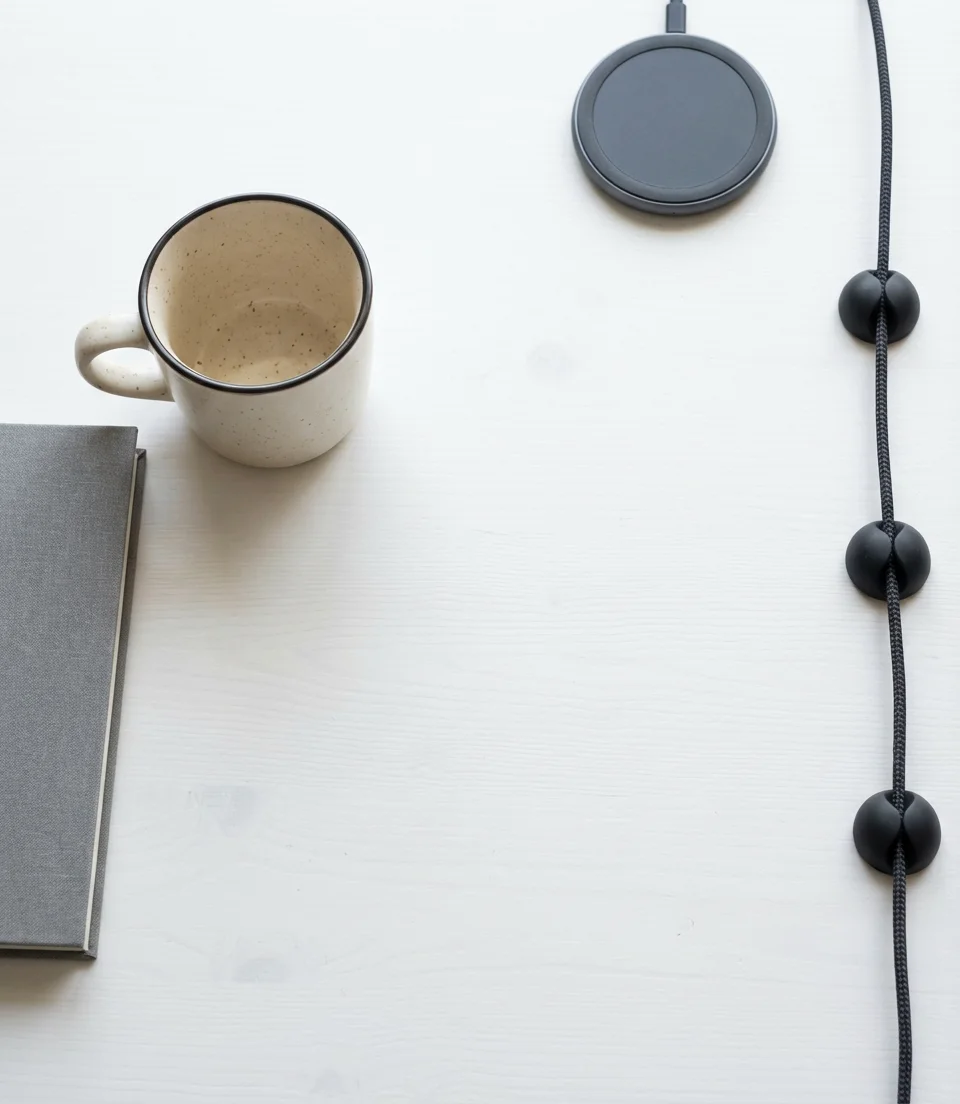
This setup works best in dedicated home offices or private corporate spaces where you can control the environment. Open-plan offices present more of a challenge since neighboring desks bring visual clutter into your sightline—in those cases, a small partition or a focused desk lamp that draws the eye inward can help create a sense of boundary. The investment in a clean, minimal setup pays dividends in focus: studies consistently show that cluttered environments increase cognitive load and reduce task performance.
6. DIY Floating Shelf Gallery Wall
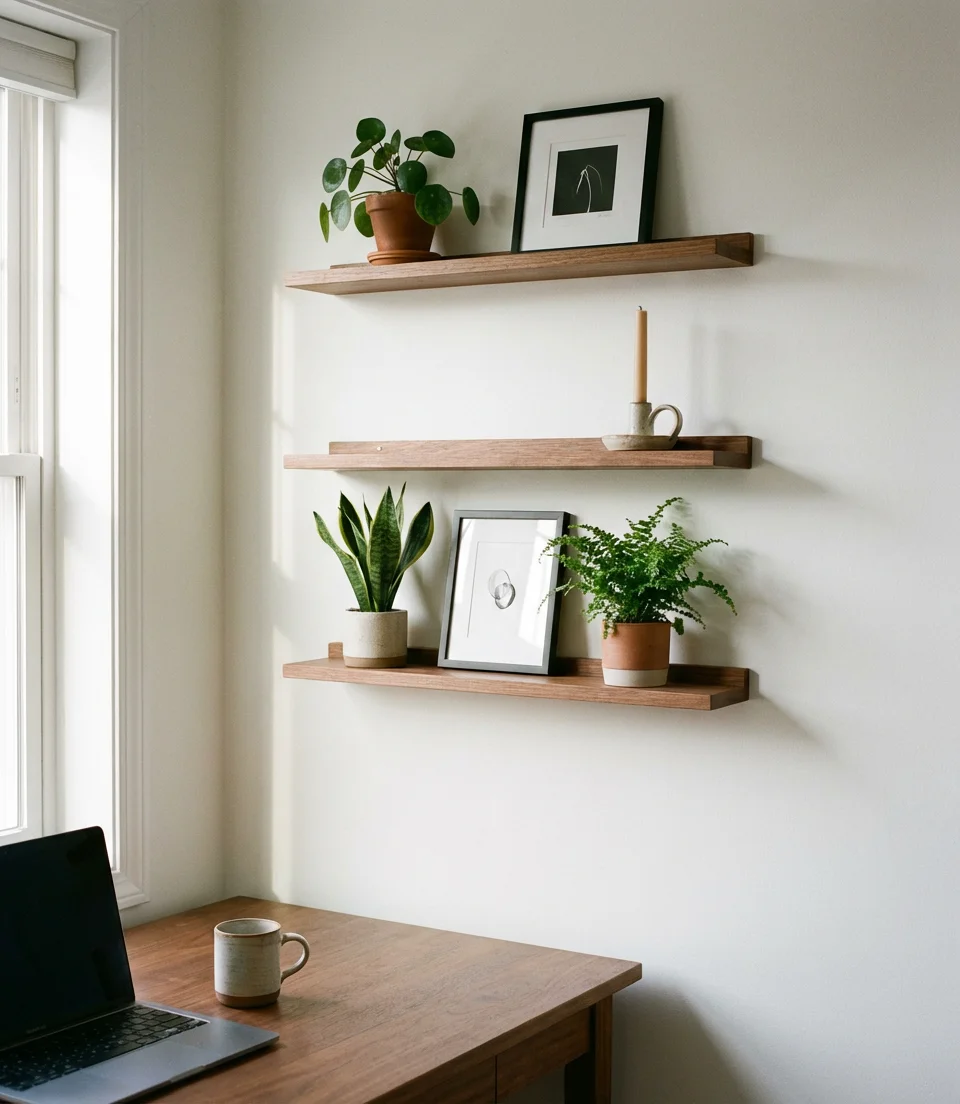
One of the most popular DIY projects circulating on Pinterest for home offices right now is the floating shelf gallery wall—a mix of slim wooden shelves, framed prints, and small decorative objects arranged on the wall above the desk. It solves a common problem beautifully: you want visual interest and storage, but you don’t want to sacrifice desk surface space. The wall becomes your canvas. You can layer books, small plants, a candle, and framed artwork in a way that feels curated and personal rather than random or corporate.
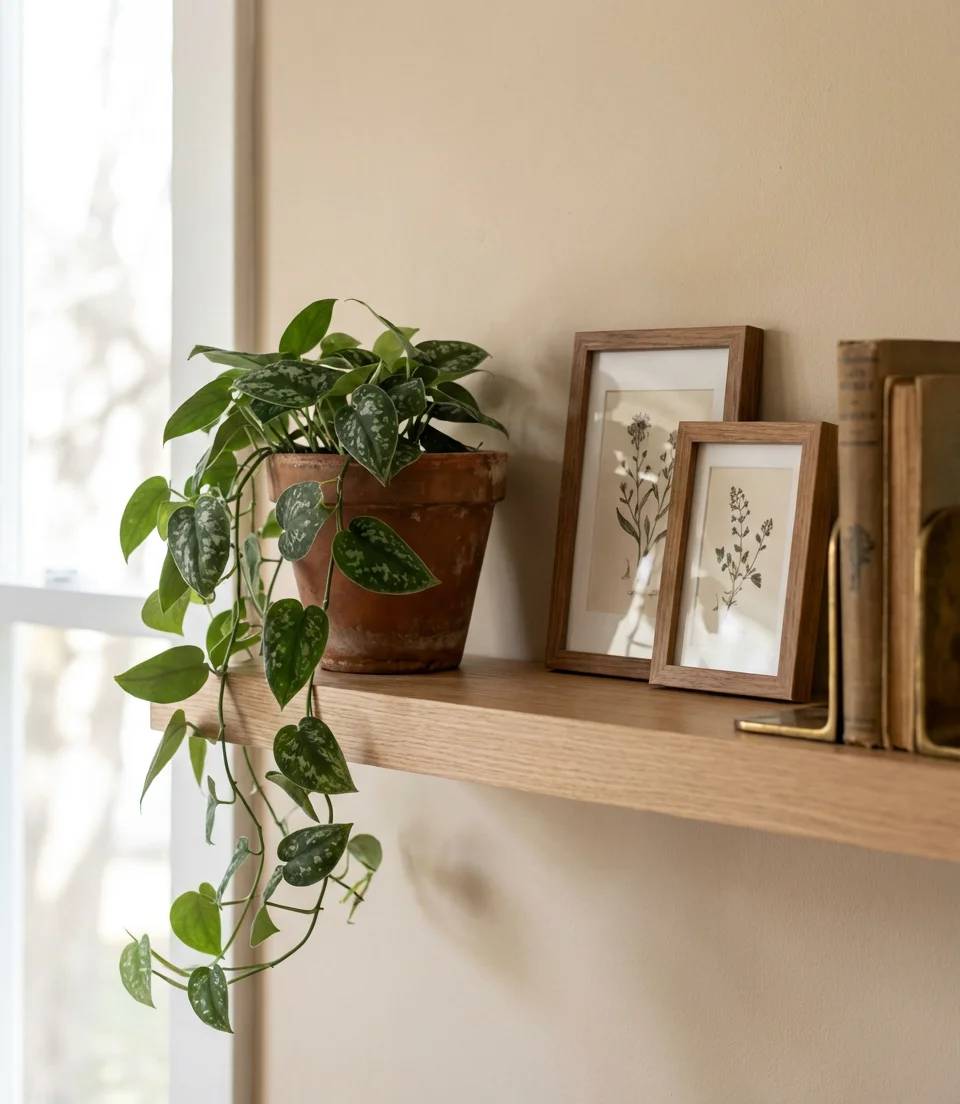
Budget-wise, this layout is one of the most accessible office upgrades you can make. IKEA’s LACK shelves run about $10–$15 each, and a few frames from a thrift store or Target can round out the look for under $50 total. The key is planning your arrangement on the floor before you hang anything—lay it all out, step back, and adjust until the visual balance feels right. Most people regret drilling holes without doing this first. Use painter’s tape on the wall to mock up shelf positions before committing.
7. Mental Health-Inspired Workspace
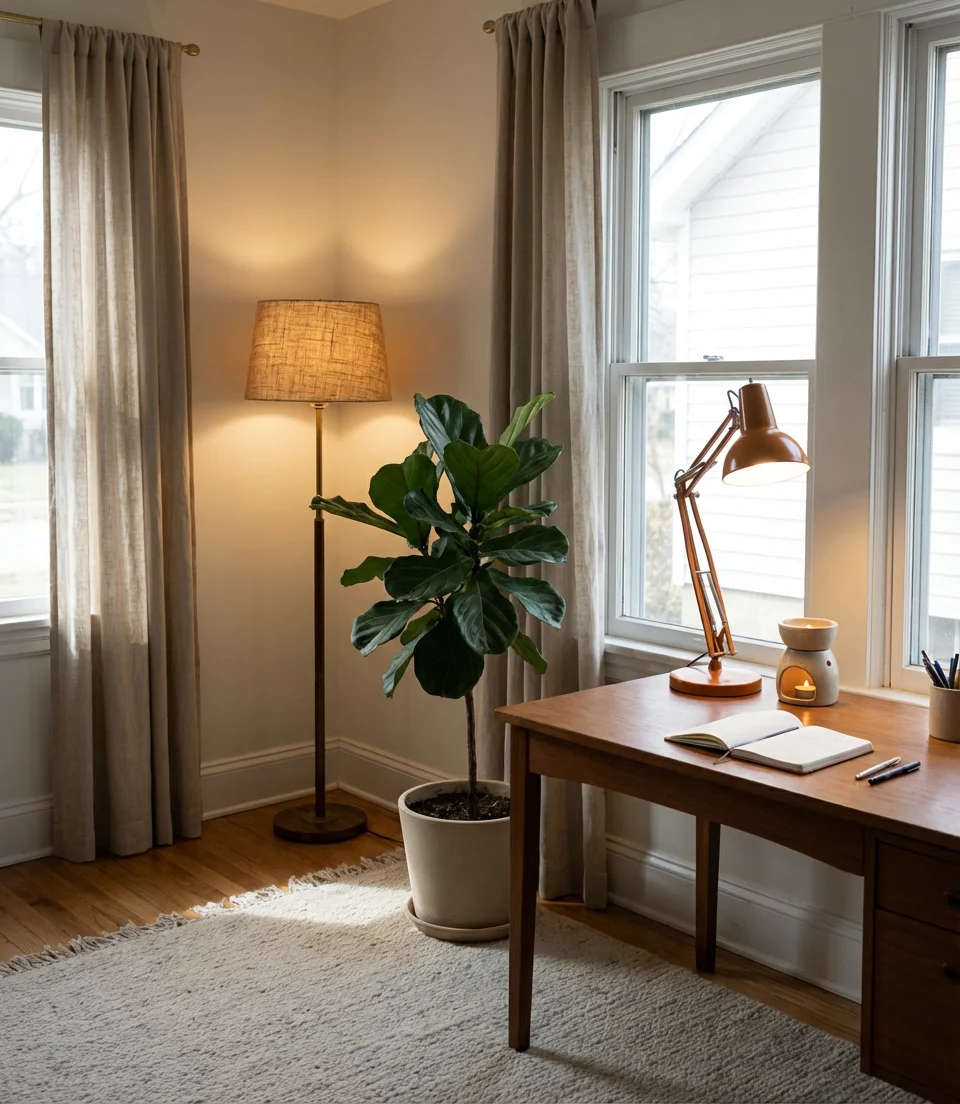
The conversation around mental health in the workplace has shifted meaningfully in the past few years, and now it’s influencing how people design their physical environments too. A workspace designed with mental well-being in mind prioritizes soft lighting over harsh fluorescents, incorporates tactile materials that feel pleasant to touch, and includes intentional “pause zones”—a small chair, a candle, even a tiny sand tray—where you can decompress between tasks. These aren’t luxuries. For people managing anxiety, burnout, or sensory sensitivities, environmental design is a genuine therapeutic tool.
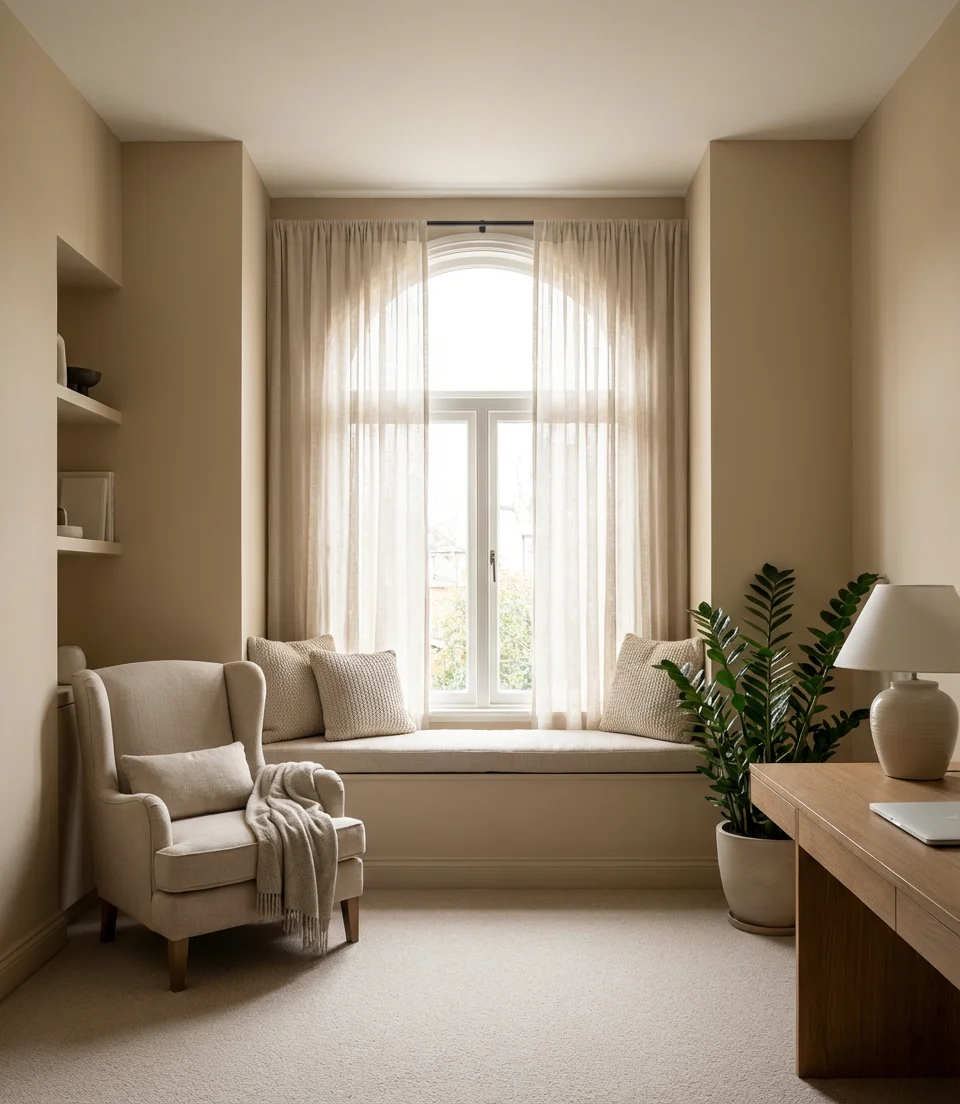
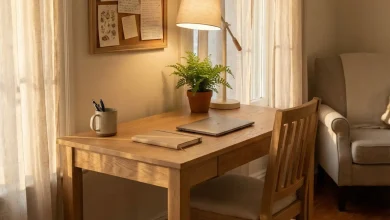
Occupational therapists and workspace designers increasingly recommend layered lighting as the single most impactful change you can make for daily well-being at work. Replace or supplement overhead lights with a warm desk lamp and a floor lamp in the corner, and, if possible, position your desk near a window for natural light exposure. Sound matters too—a small white noise machine or a Bluetooth speaker for ambient background music can dramatically reduce stress levels throughout the day, particularly in open-plan environments.
8. Professional Men’s Office Design
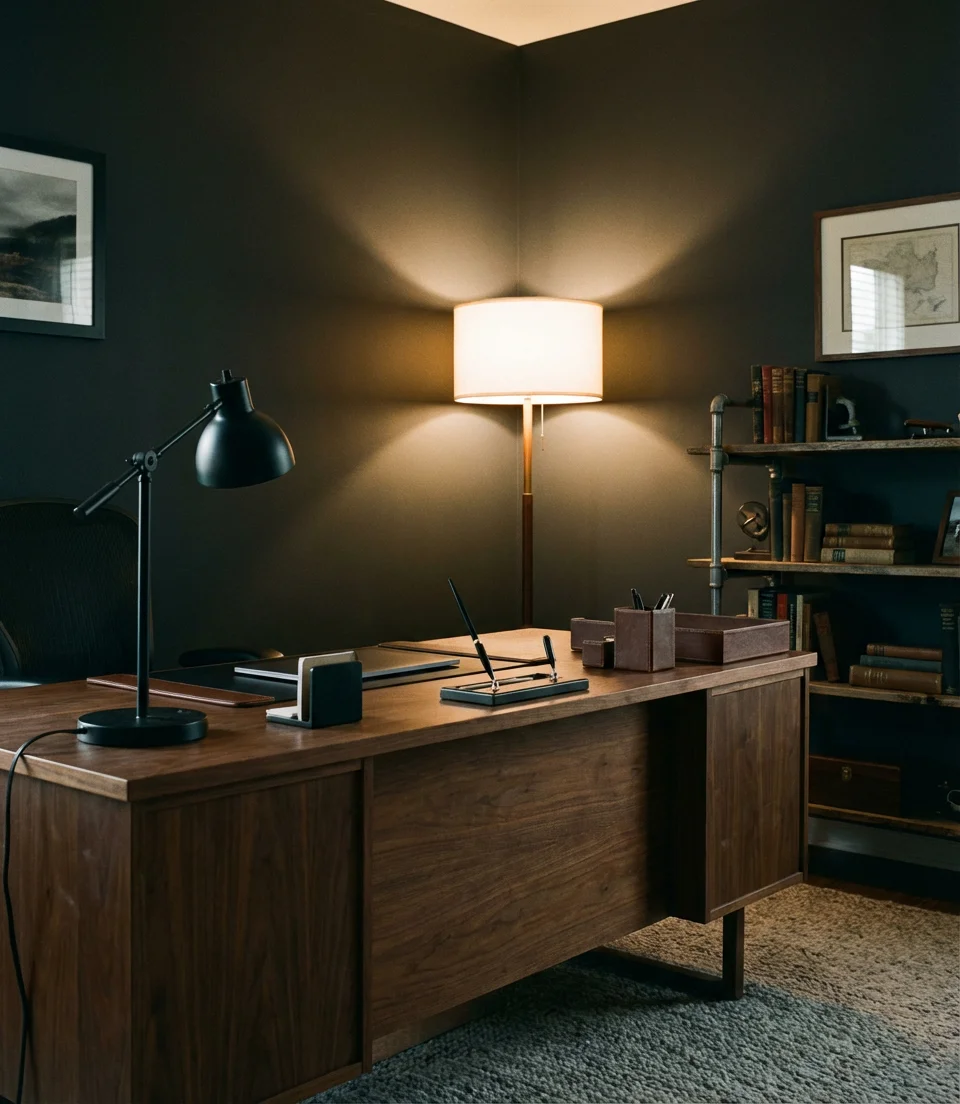
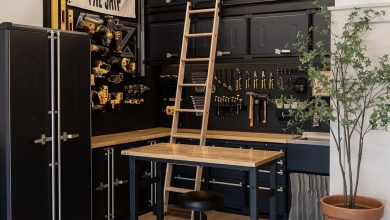
Office design for professional men in 2026 has evolved well beyond the dark wood and leather formula. Today’s most compelling masculine workspaces lean into contrast and materiality: matte black hardware against raw concrete, deep charcoal walls paired with warm walnut wood, or a clean white desk accented by industrial-style shelving. The aesthetic is grounded and purposeful, with every element feeling intentional. Technology is integrated cleanly, cords are managed obsessively, and the overall effect is a space that communicates focus and credibility without feeling stiff or overdone.
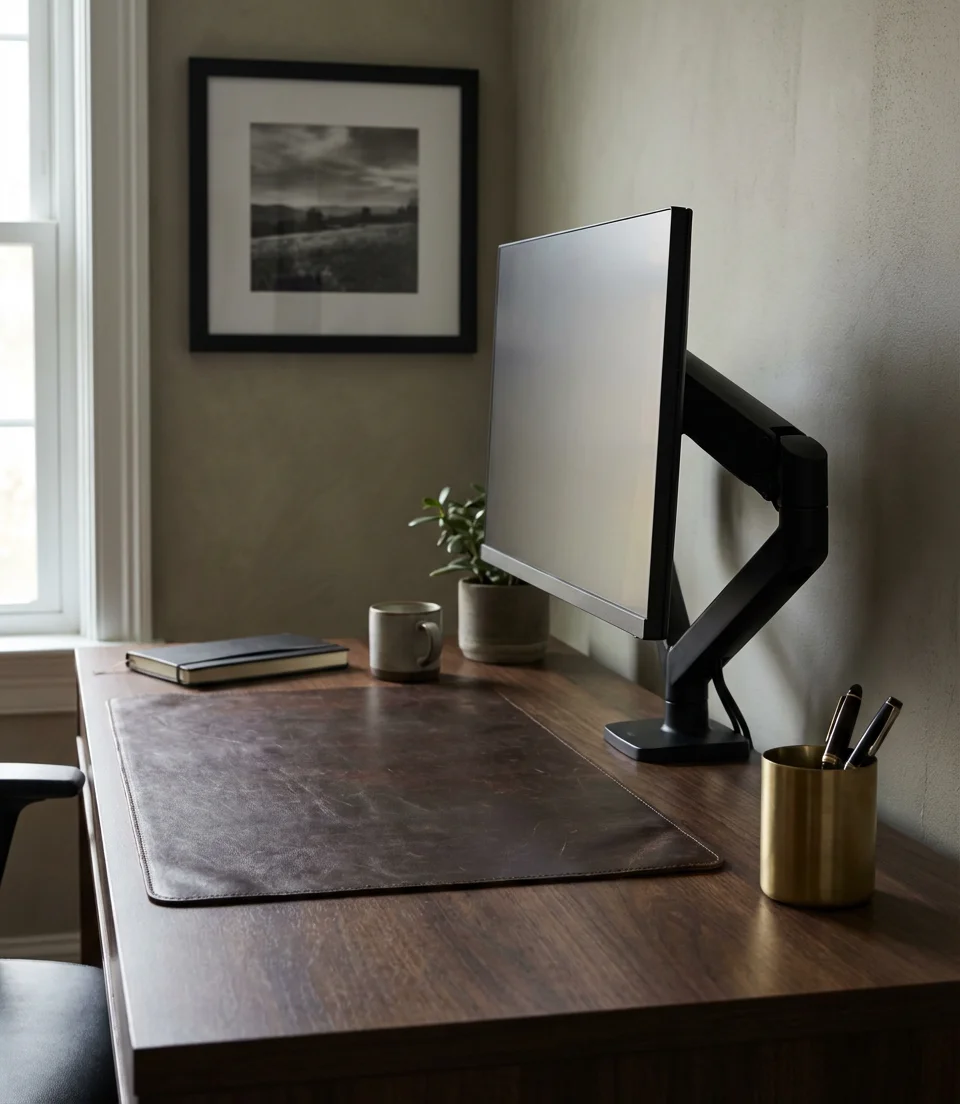
Where it works best: dedicated home offices or private corporate suites where you have full control over paint color, lighting, and furniture. For those in shared or open-plan environments, the same principles translate to a curated desk setup—a matte black desk lamp, a leather-look desk pad, a single quality pen holder, and one piece of artwork or photography that means something to you. Restraint is the defining characteristic of this aesthetic: it’s not about having more; it’s about having the right things.
9. Women’s Business Office With Intention
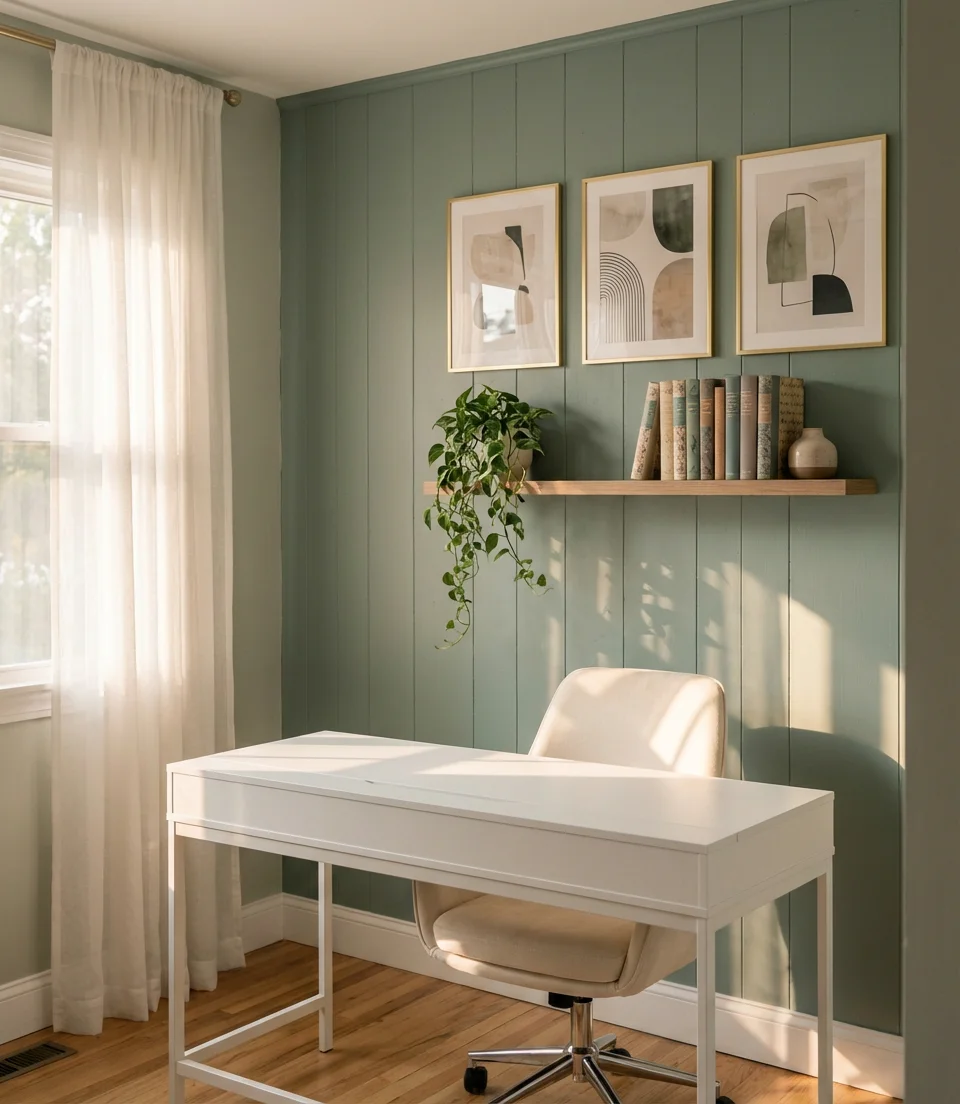
The rise of the woman business owner has brought with it an entirely new genre of office design—spaces that are unapologetically beautiful and fiercely functional at the same time. This isn’t about making a workspace “pretty.” It’s about designing an environment that reflects your values, communicates your brand to clients, and genuinely supports the way you work. Think intentional color palettes, branded stationery, quality furniture, and artwork that means something. Business spaces that look this considered don’t happen by accident—they’re the result of deliberate choices made by people who understand that environment shapes performance.
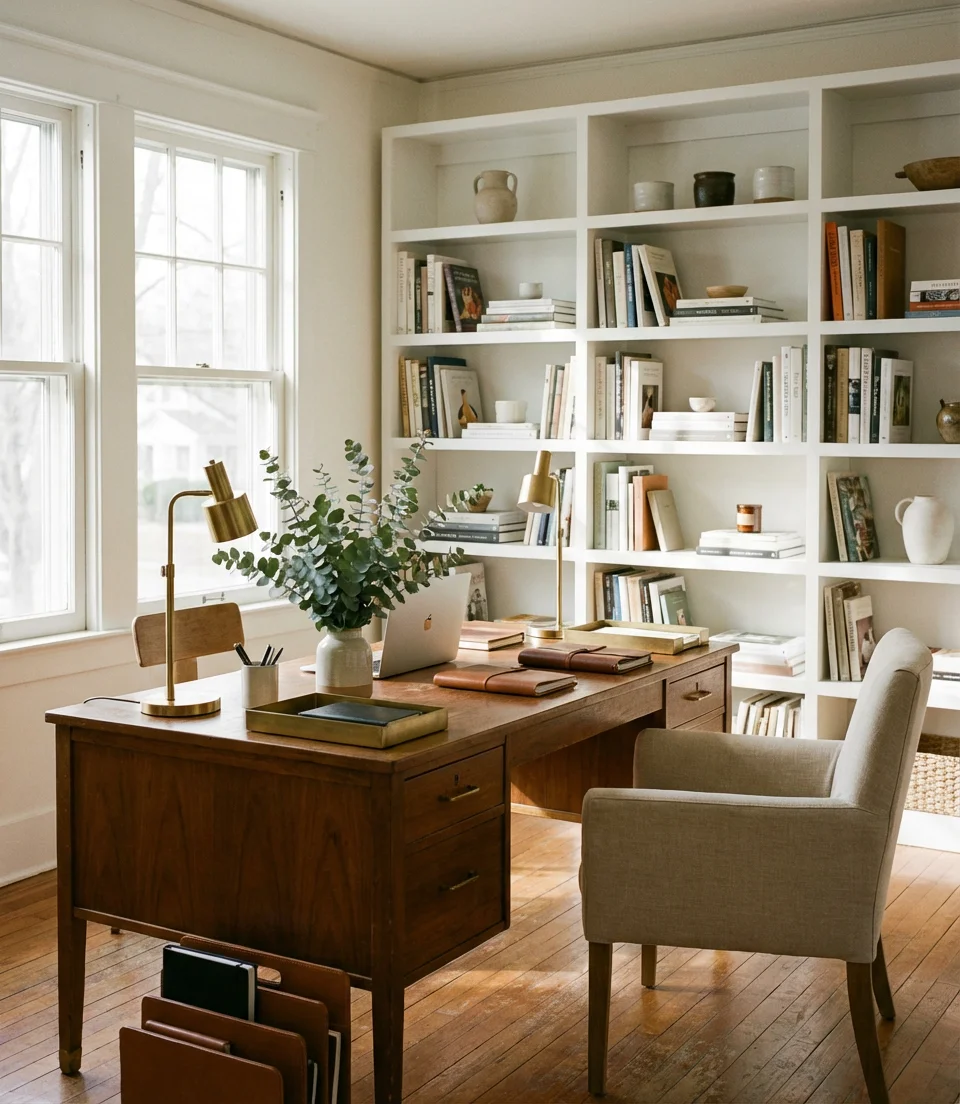
If you run a client-facing business from a home office or studio, consider how your space reads on video calls and in photos you share on social media. A backdrop that feels intentional—a styled bookshelf, a clean accent wall, a single outstanding piece of art—builds trust and communicates professionalism before you’ve said a word. This is exactly the kind of detail that separates a forgettable virtual meeting from one where a potential client thinks: this person has it together.”
10. Plants as Office Decor Strategy
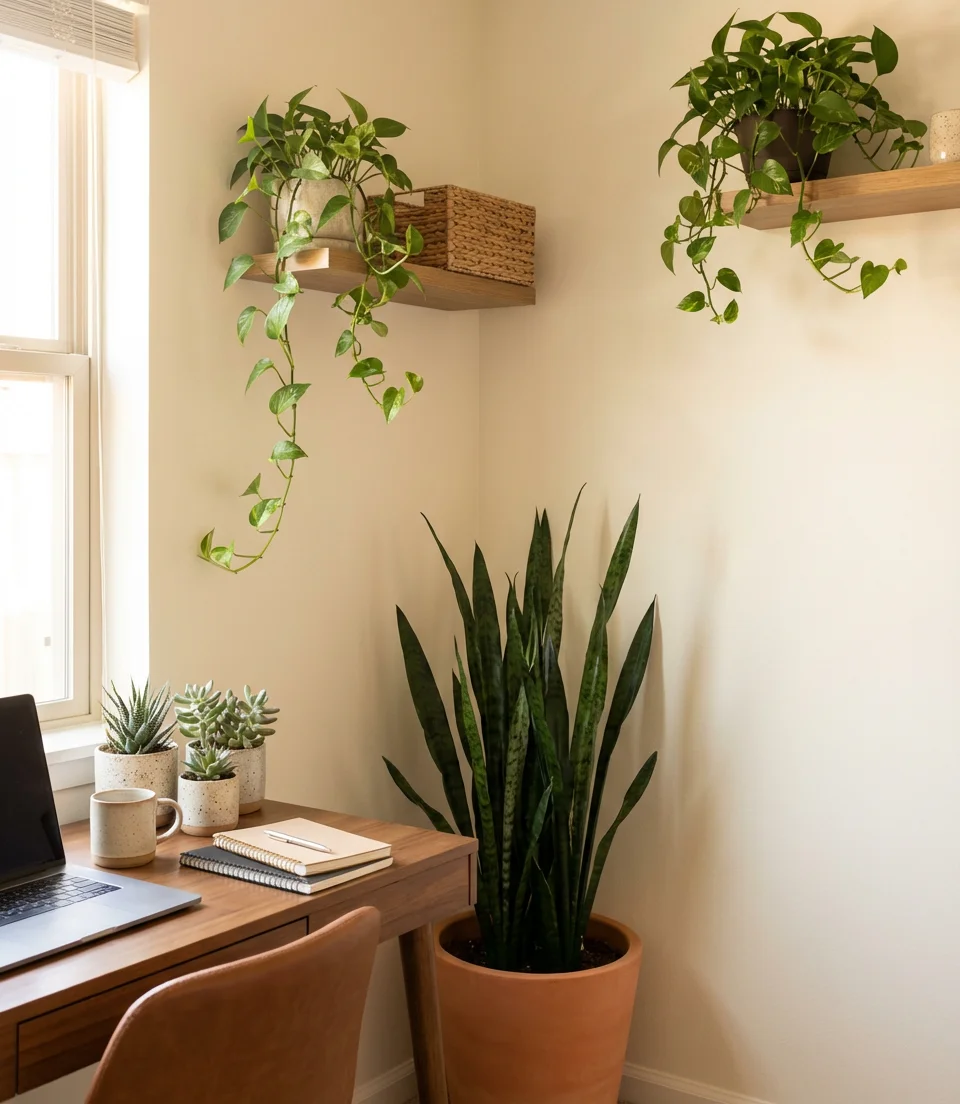
Using plants as a deliberate décor strategy—not just an afterthought—is one of the defining characteristics of well-designed workspaces in 2026. The most effective approaches treat greenery the way a stylist treats accessories: with intention and placement in mind. Consider placing a tall snake plant in the corner to add height and drama. A trailing pothos on a high shelf effectively softens harsh lines. A small succulent arrangement serves as a textural focal point on the desk. Each plant plays a visual role in the composition of the room, contributing to an aesthetic that feels alive and dynamic without feeling overgrown or distracting.
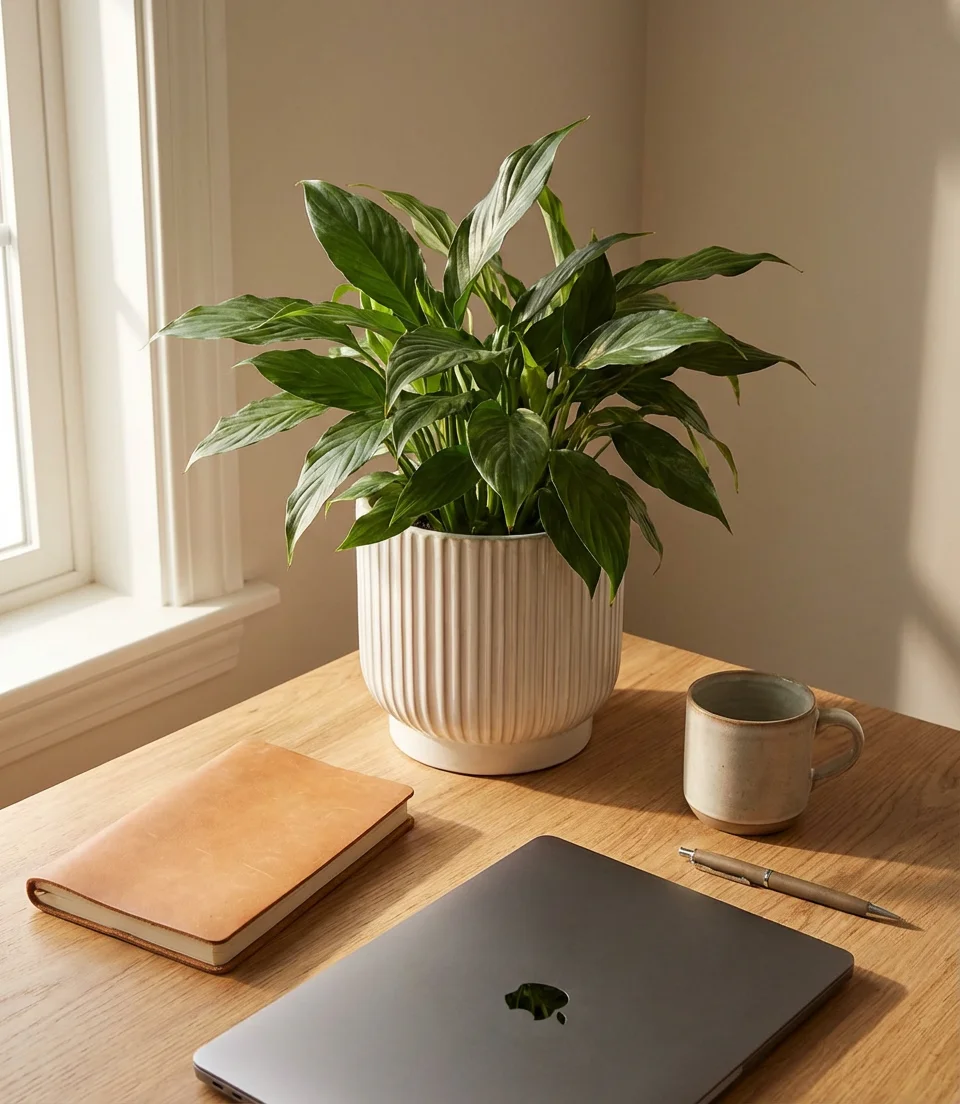
For the busy professional who loves plants but worries about keeping them alive, there’s a practical shortcut: choose low-maintenance species that genuinely thrive in office conditions. ZZ plants, pothos, snake plants, and peace lilies all tolerate low light and irregular watering without complaint. A single ZZ plant in a beautiful pot can anchor a desk corner and elevate the entire setup for less than $30. The pot matters as much as the plant—invest in one quality ceramic planter, and your office plant instantly looks intentional rather than incidental.
11. Inspiration Wall Above the Desk
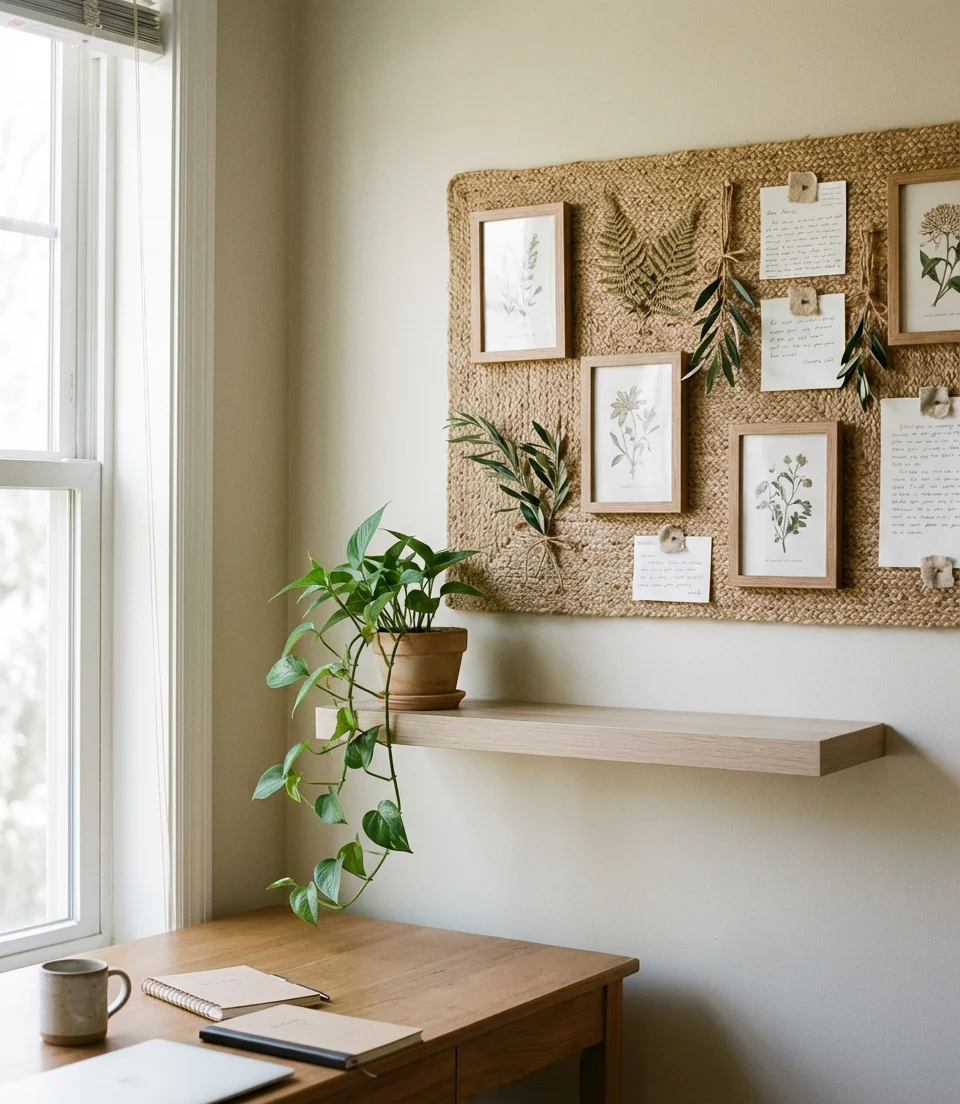
An inspiration wall—a curated vertical surface above your desk filled with images, quotes, color swatches, goals, and objects that genuinely motivate you—is one of the most personal and energizing things you can do to your workspace. In 2026, these walls are becoming more artful and less “vision board,” with people treating the space above their desk the way a gallery treats a feature wall. The wall is thoughtfully composed, not just crammed with content. There’s breathing room between elements. The color palette is cohesive. And it’s updated seasonally rather than left to grow stale.
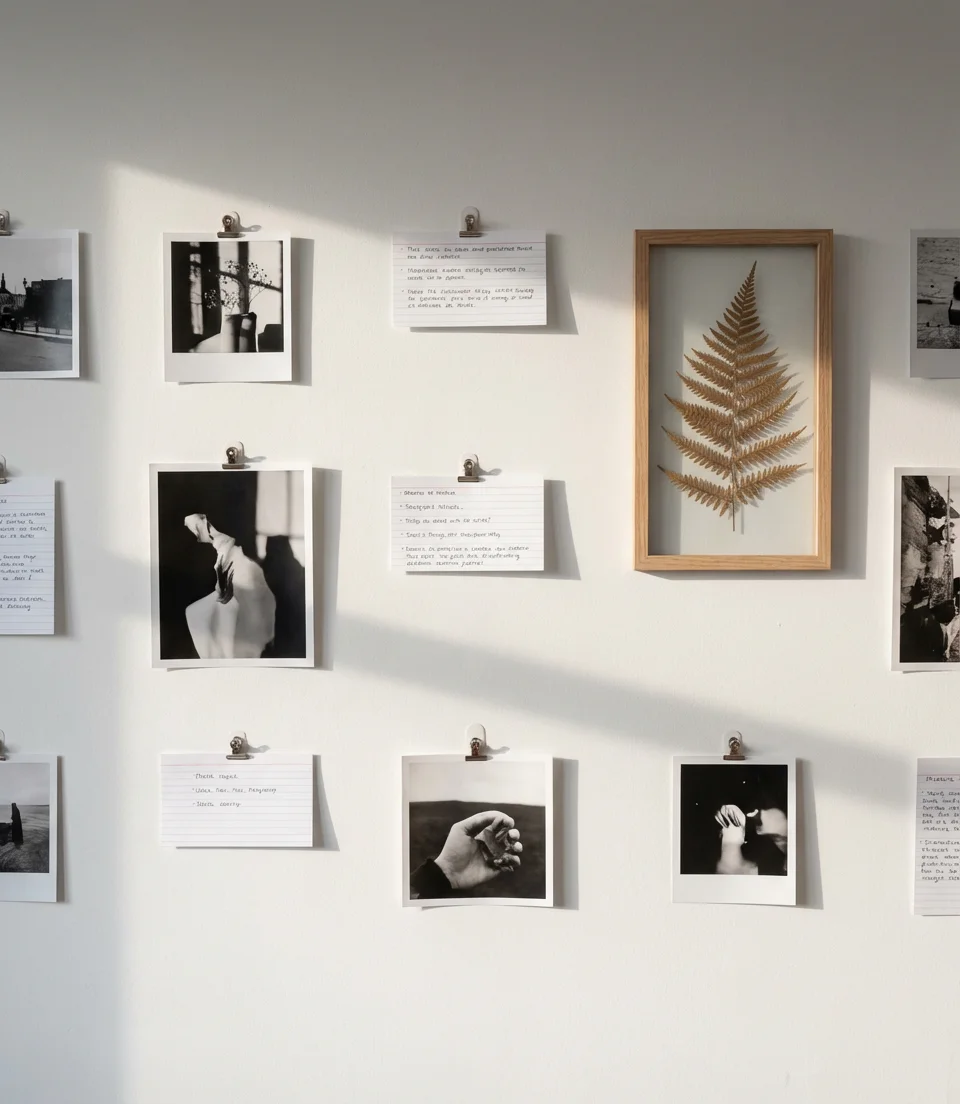
A practical approach that many homeworkers swear by: use a large corkboard or a section of peel-and-stick magnetic paint as your base so you can rearrange and refresh the content easily. Print images at home, tear pages from magazines, and write out a handful of goals on index cards. The act of curating this wall is itself a clarifying exercise—it forces you to articulate what you’re working toward, which has measurable effects on motivation and consistency. Refresh it every quarter to keep it feeling relevant and alive.
12. Anniversary and Milestone Displays
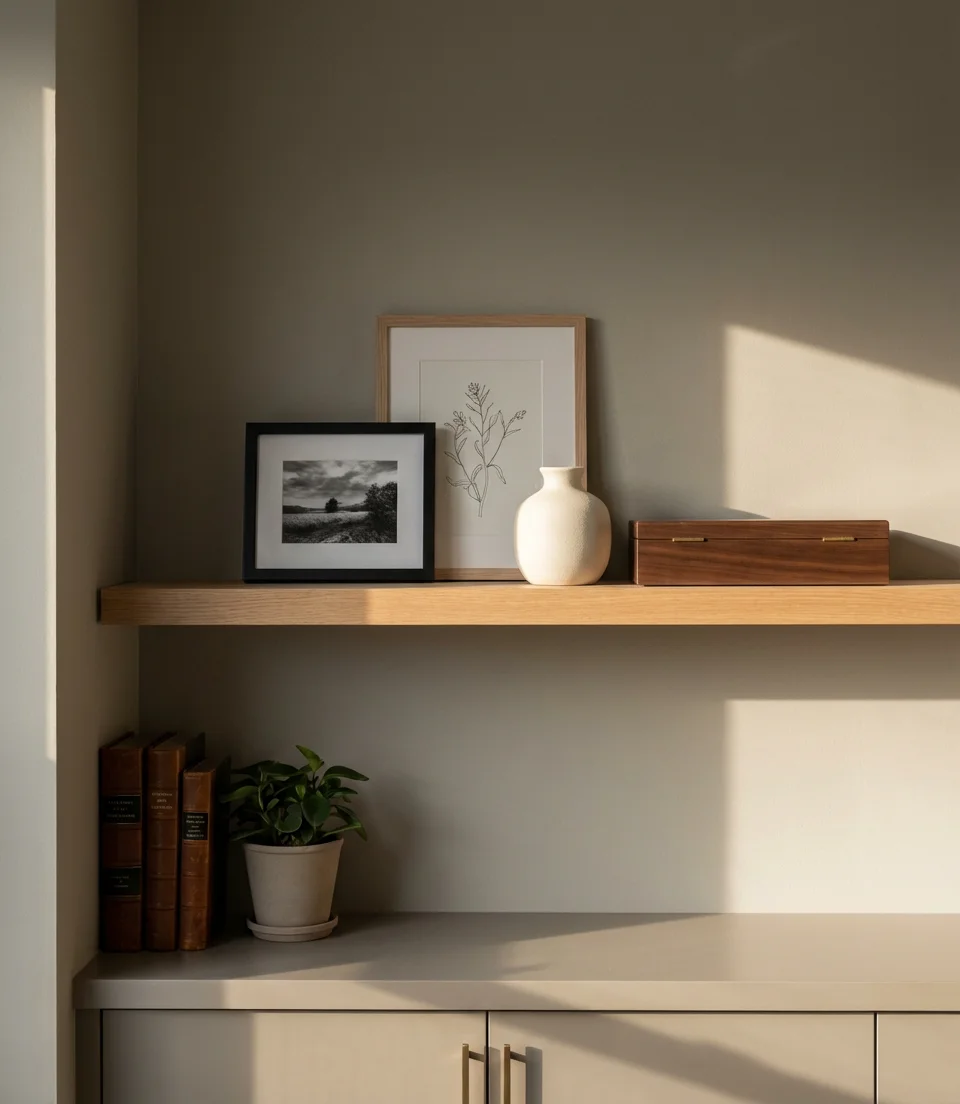
Incorporating personal anniversary milestones and career achievements into office décor is a trend that’s gaining traction, particularly in home offices and private professional spaces. This goes beyond a dusty diploma on the wall—it’s about creating a thoughtful display of the moments and accomplishments that remind you why you do the work you do. A framed photo from a landmark project, a printed timeline of your business’s growth, and a small shelf dedicated to meaningful mementos. These elements tell a story, both to you and to anyone who visits your space, and they create an emotional anchor that purely decorative objects simply can’t.
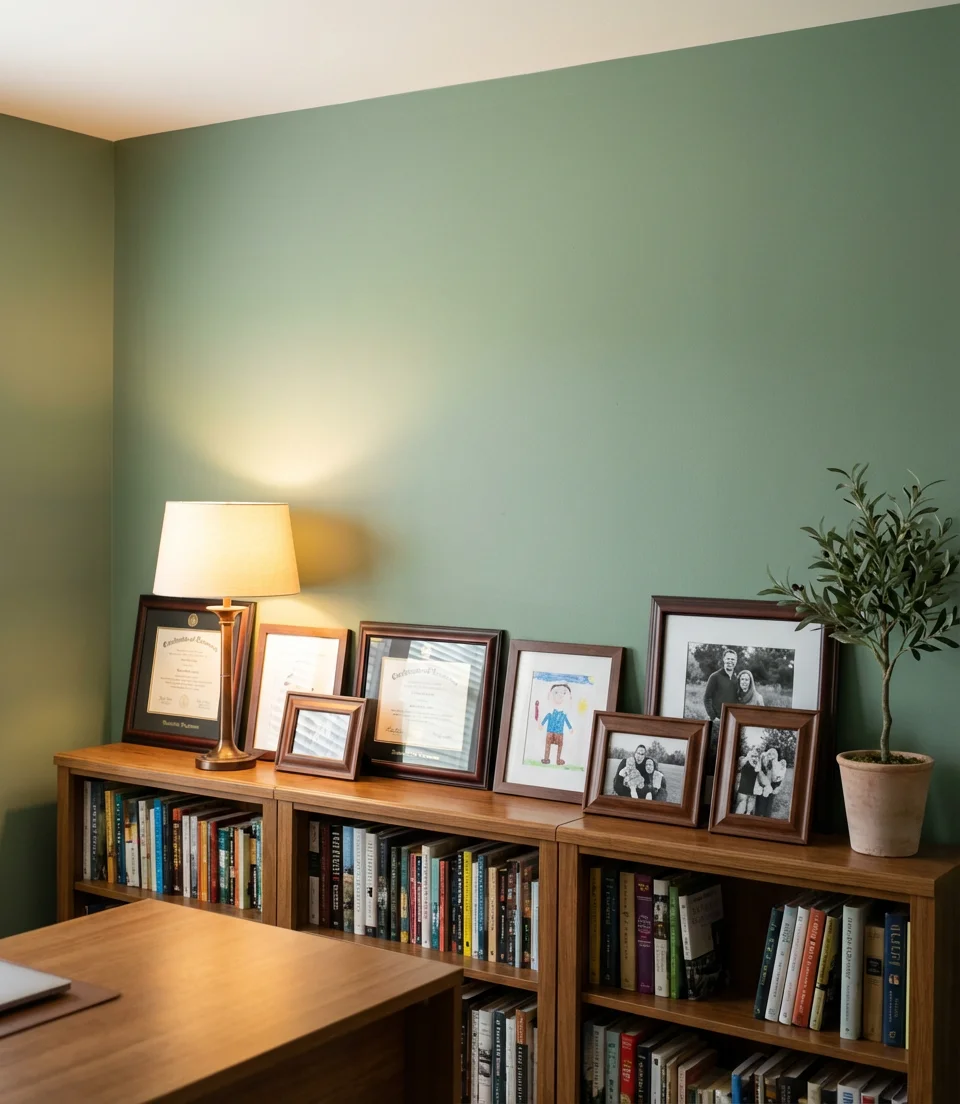
The key to making milestone displays feel elevated rather than boastful is curation and framing—literally. Choose three to five meaningful items and display them with the same care you’d give to artwork. Consistent frames, pleasing lighting, and intentional placement (on a dedicated shelf or wall section, rather than scattered randomly) communicate that these things matter without the space feeling like a trophy room. Less is always more here. One perfectly framed career photo means more than fifteen certificates tacked carelessly to a corkboard.
13. Christmas and Holiday Office Décor
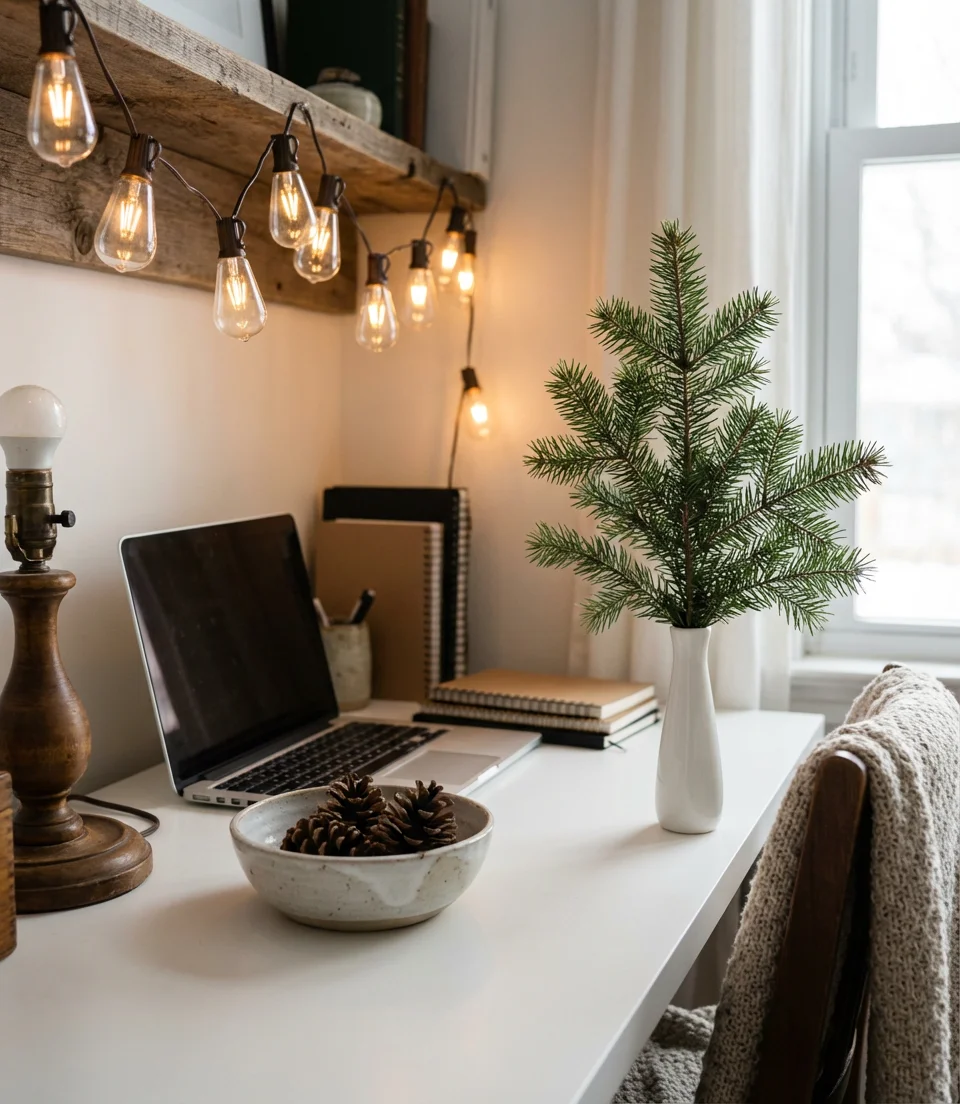
Decorating a workspace for Christmas and the holiday season doesn’t have to mean fighting your way through tangled lights and plastic tinsel. The most beautiful holiday office setups in 2026 take a more restrained, nature-forward approach: a small evergreen sprig in a bud vase, a handful of pinecones in a ceramic bowl, and a string of warm Edison lights along the shelf. The effect is festive without being frenetic. This approach is ideal for those who wish to incorporate the season into their professional space without compromising the serene, well-curated atmosphere they’ve meticulously cultivated.
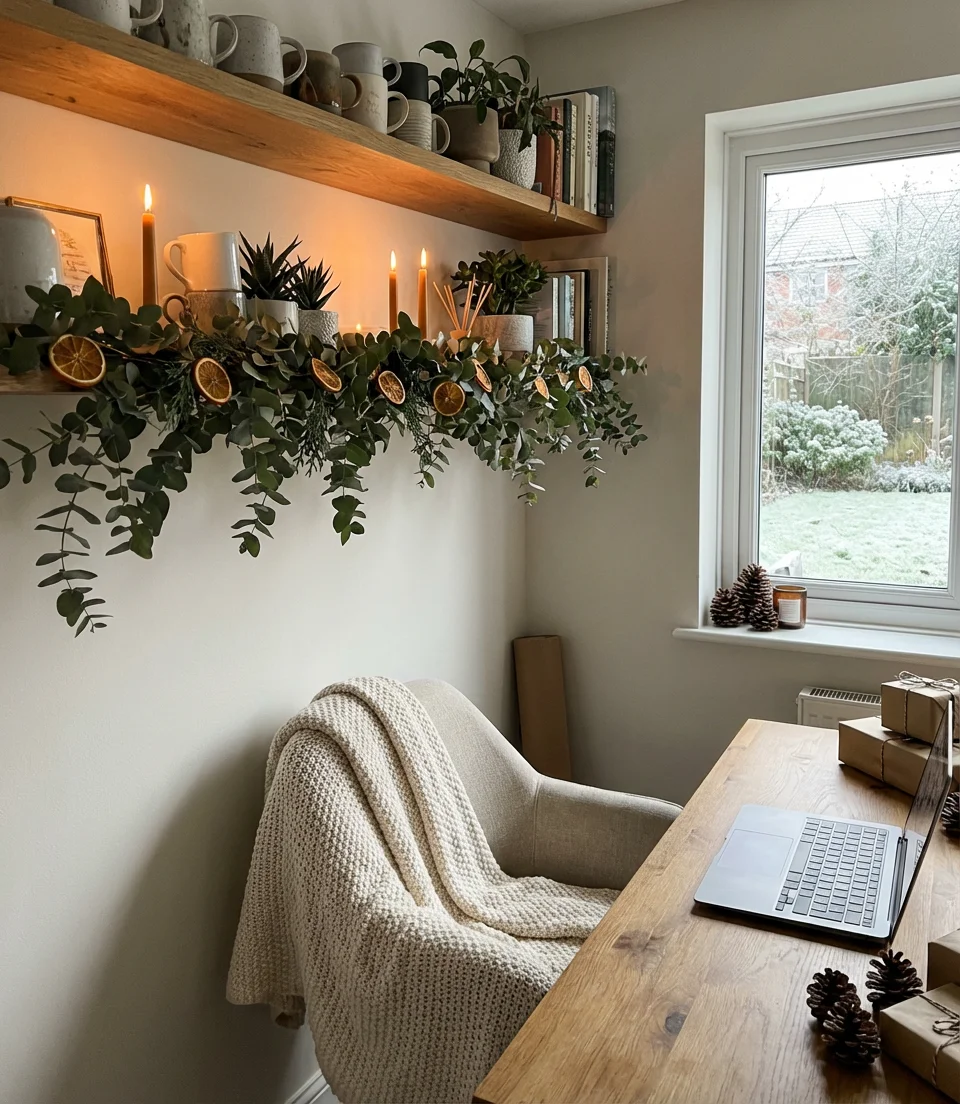
This approach works brilliantly in both corporate cubicle settings and home offices. In a shared office environment, understated natural elements are almost universally appreciated by colleagues and won’t trigger the “over-decorated” eye-roll. At home, the organic touches blend seamlessly with the existing décor rather than overwhelming it. Spend $15–$20 on a bundle of fresh eucalyptus, a bag of small pinecones, and a simple string of lights, and your workspace will feel genuinely festive and beautifully considered throughout the season.
14. The Organized Professional Desk System
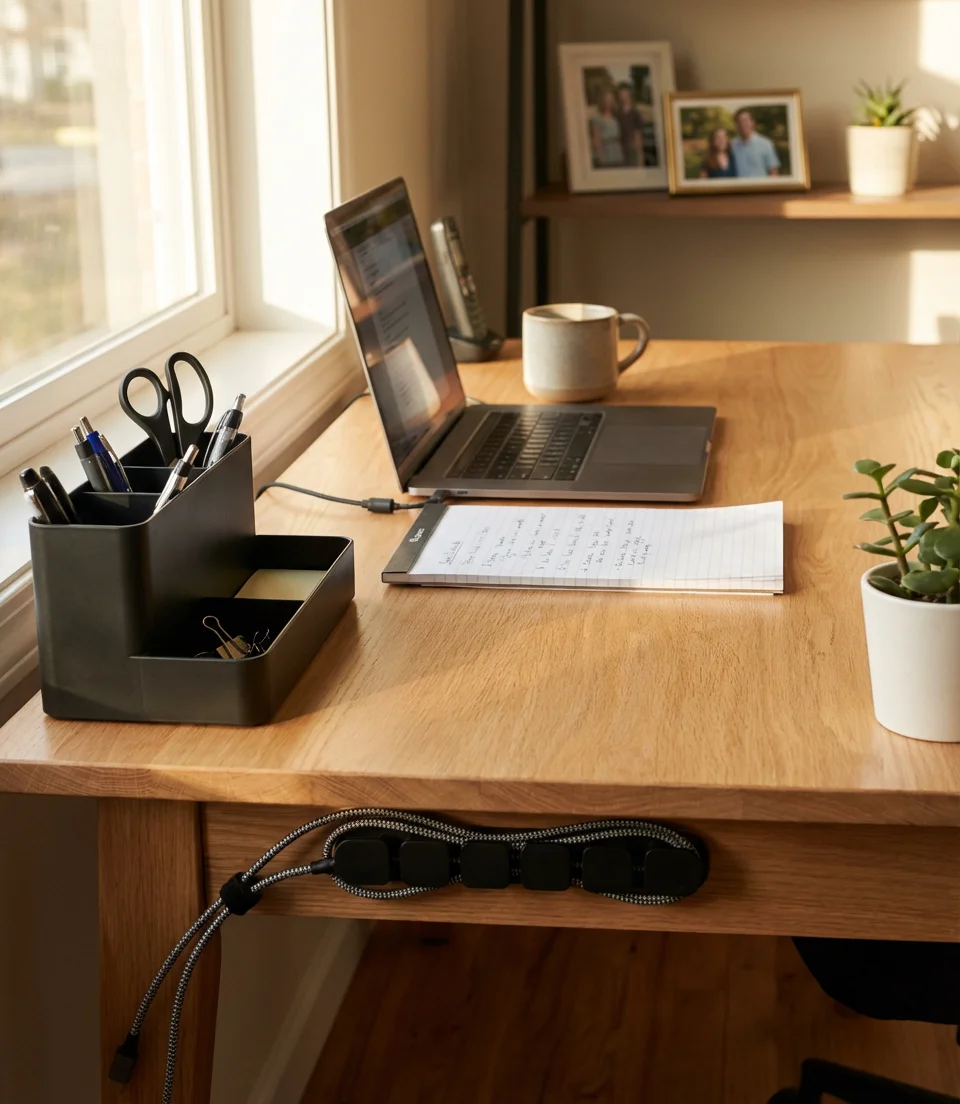
An organized desk isn’t just aesthetically pleasing—it’s a genuine performance tool. The most effective professional ideas for desk organization in 2026 center on zones: a dedicated zone for your active work, a zone for tools and stationery, and a clear zone you never fill. The blank space is as important as the organized sections because it provides visual rest and room for temporary items without the whole desk descending into chaos. Cable management deserves its own category—a cable box or clip system under the desk makes an immediate and dramatic difference in how clean the surface reads.
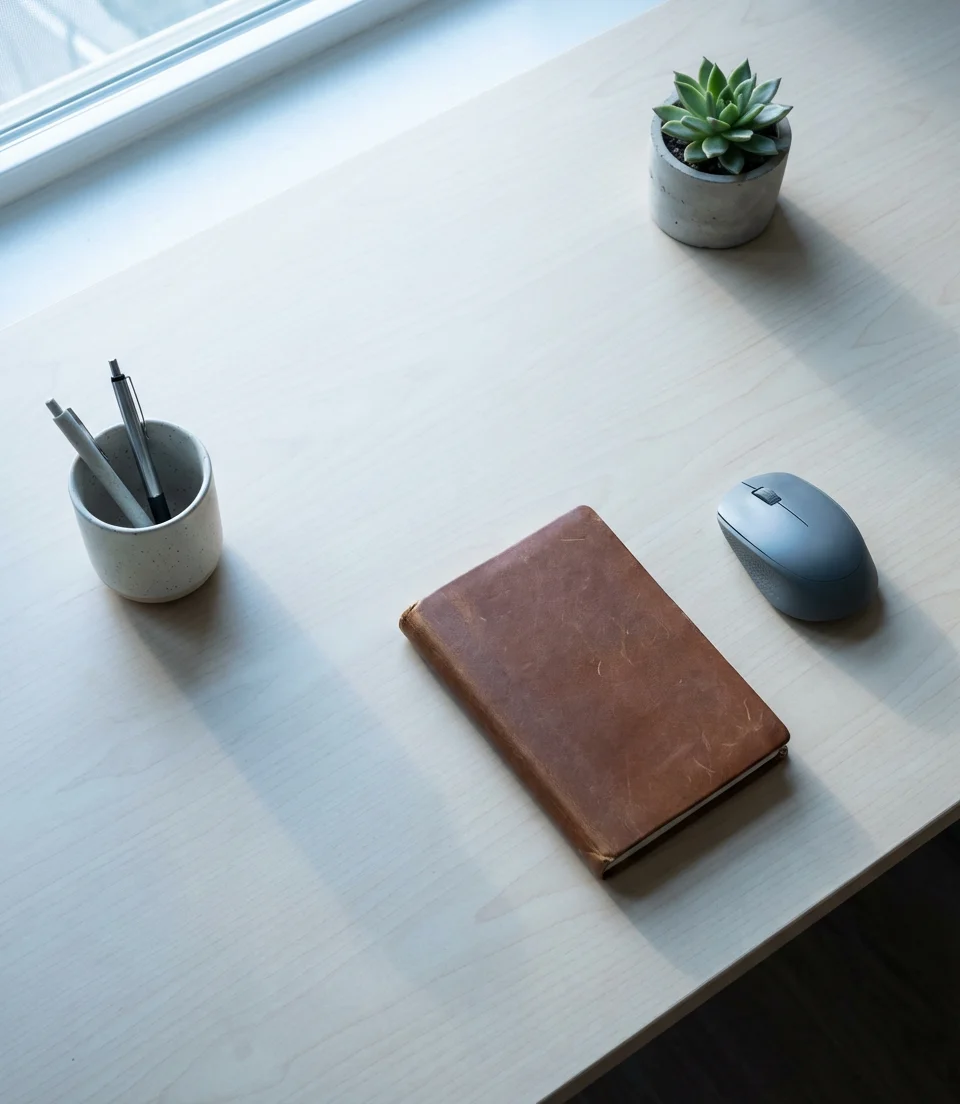
One of the most consistent mistakes people make when organizing a desk is buying storage solutions before they’ve edited their belongings. The result is organized clutter—neatly boxed-up things you don’t actually need. The better sequence: pull everything off the desk, categorize it ruthlessly, put back only what you use daily, and then—and only then—find containers for what remains. This approach consistently results in needing fewer organizational products than people expect, which also means spending less money and ending up with a calmer, more functional setup.
15. Home Office With Architectural Interest
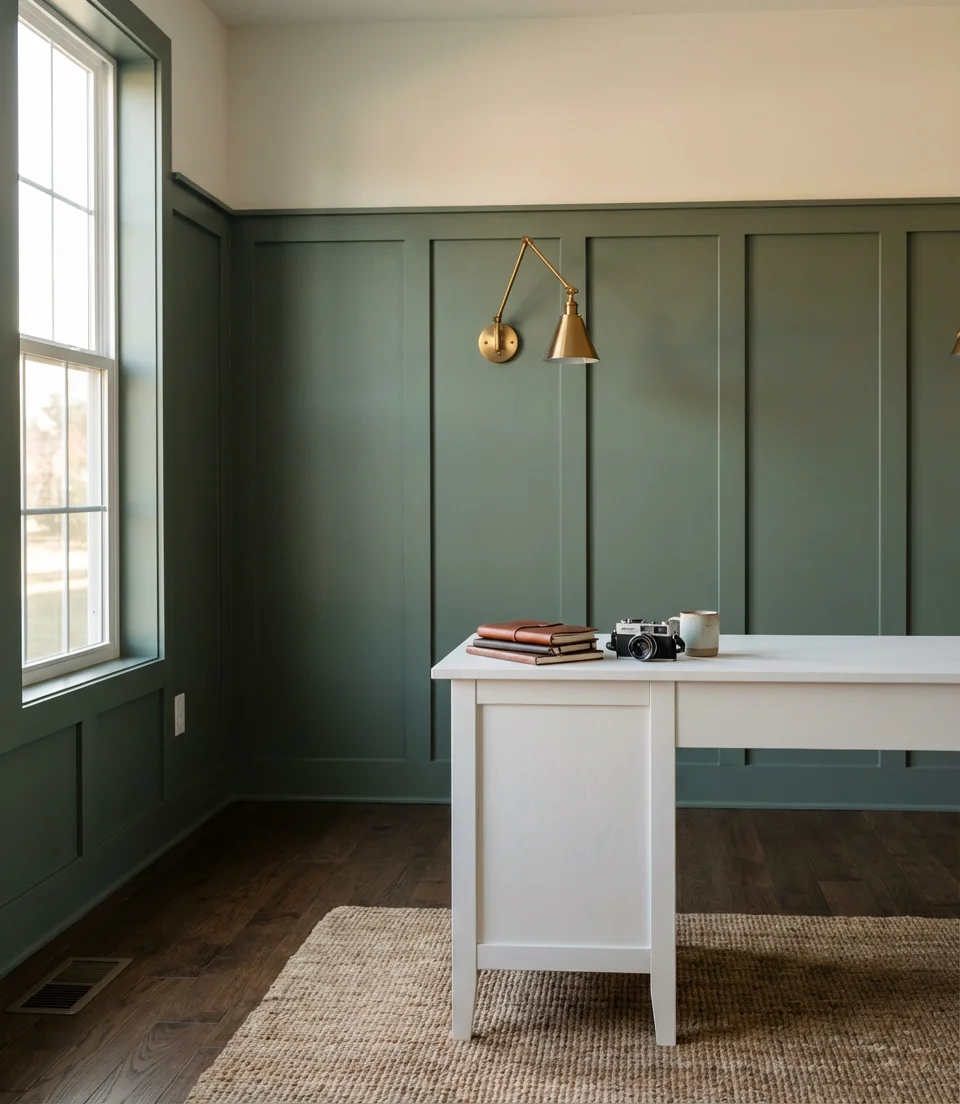
Not every home office has a window seat or exposed brick to work with, but creating architectural interest in a workspace is more achievable than most people think. Board and batten paneling, a wallpapered accent wall, a painted ceiling in a contrasting color, or even a simple arched doorway treatment can transform a flat, forgettable room into a space with genuine character. These architectural gestures give a professional home office the kind of depth and permanence that no amount of desk accessories can replicate—they make the space feel designed, not just decorated.
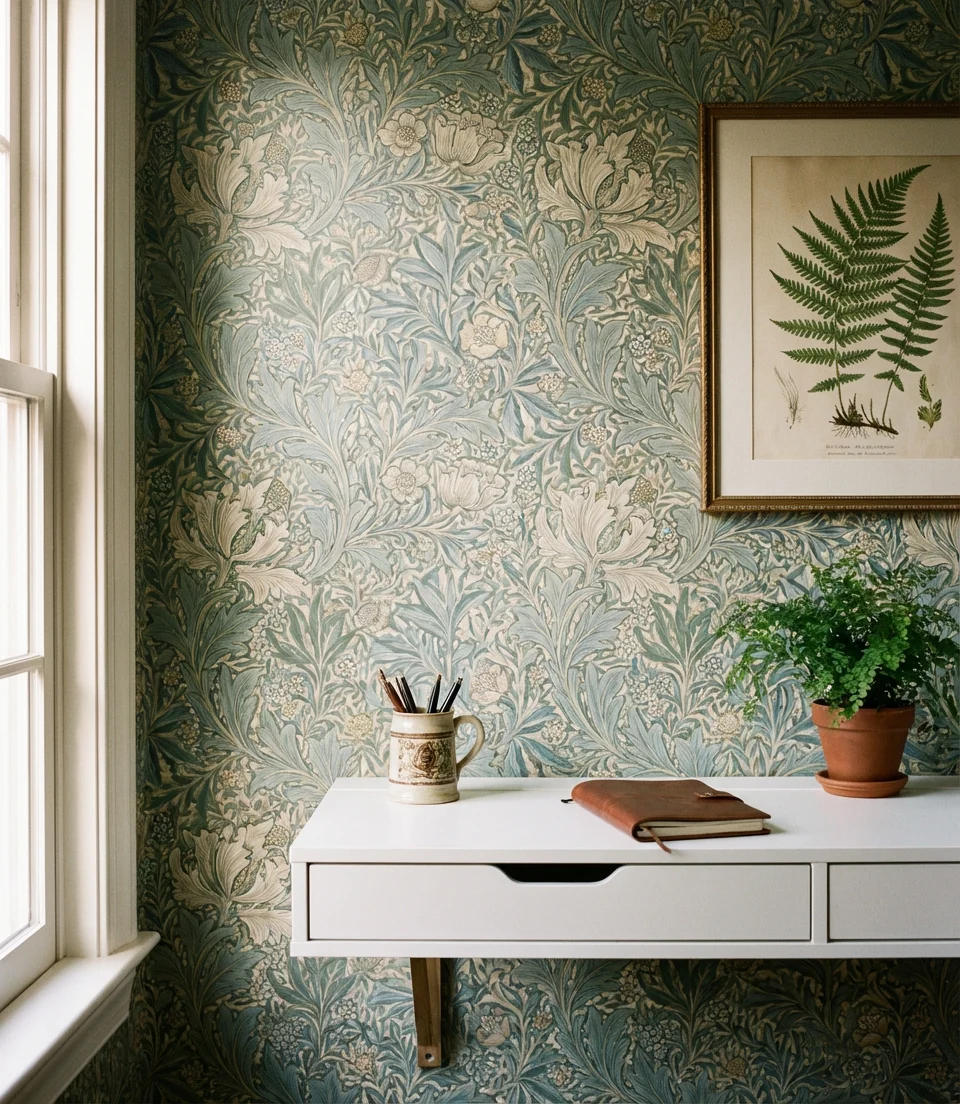
In the American housing market, where many home offices occupy former bedrooms or converted dining rooms, adding architectural detail is a way of signaling that the space has been truly claimed and committed to. A painted shiplap wall can be completed over a weekend for under $200 in materials. Wallpaper on a single accent wall behind the desk costs about the same and has an enormous visual impact. These are the kinds of permanent-feeling investments that real estate agents note add perceived value to a home—your office becomes a selling point rather than just a functional necessity.
16. Aesthetic Bookshelf Styling for the Office
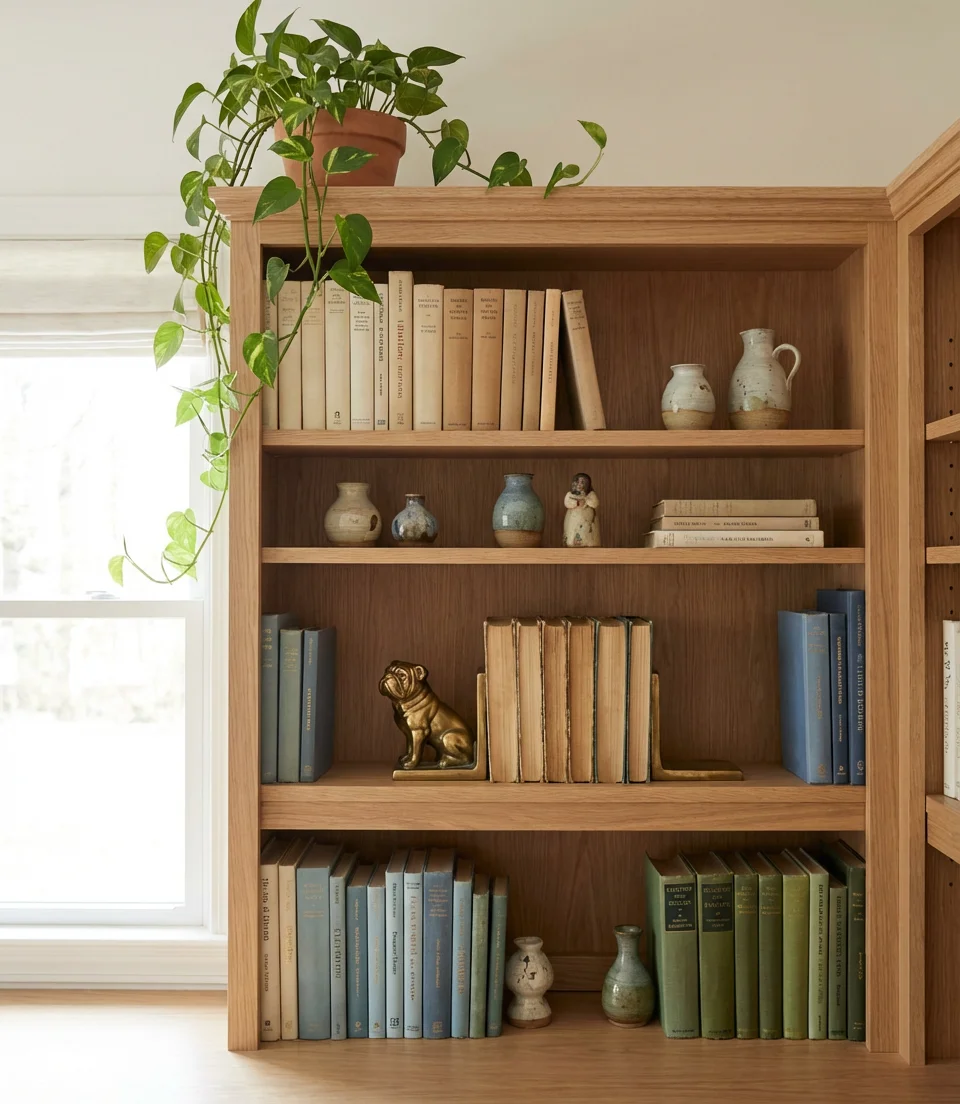
A beautifully styled bookshelf has become the defining backdrop of the professional era of remote work—it appears behind speakers, consultants, therapists, executives, and creators in every video call format imaginable. Getting it right is part organizational skill, part art direction. In 2026, the best look is one that is balanced but not symmetrical. For example, books can be grouped by color or size and broken up by small objects, plants, and empty space. It reads as intelligent and lived-in without looking cluttered. For professional women and men alike, a well-styled shelf communicates depth and thoughtfulness instantly.
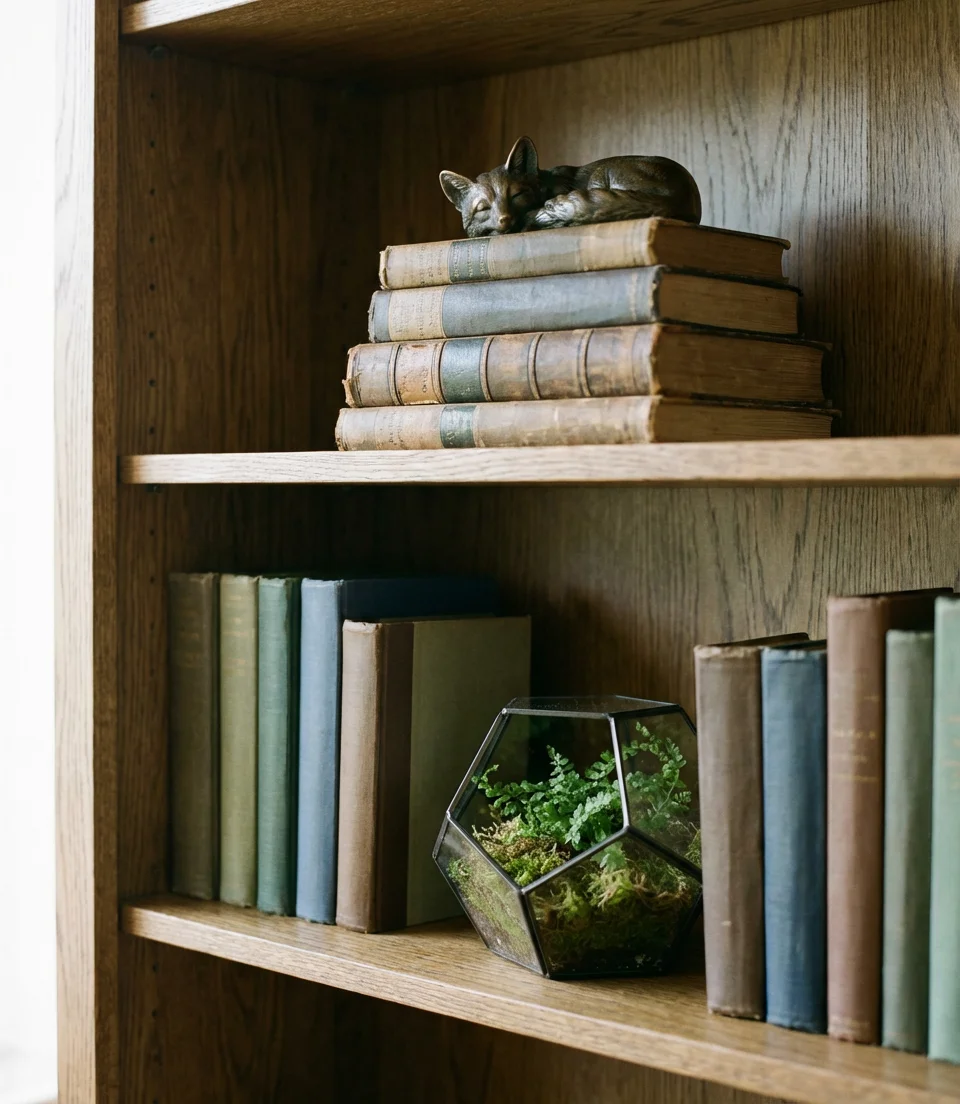
The practical formula that interior stylists use: for every shelf, aim for roughly 60% books, 20% objects, and 20% open space. The objects should vary in height and material—a small ceramic, a brass bookend, and a trailing plant in a simple pot. Remove dust jackets from books to get cleaner, more cohesive spines. Stack a few books horizontally to break the visual rhythm of all-vertical rows. Done thoughtfully, this exercise takes about two hours and costs nothing if you work with what you already own.
17. DIY Desk Makeover on a Budget
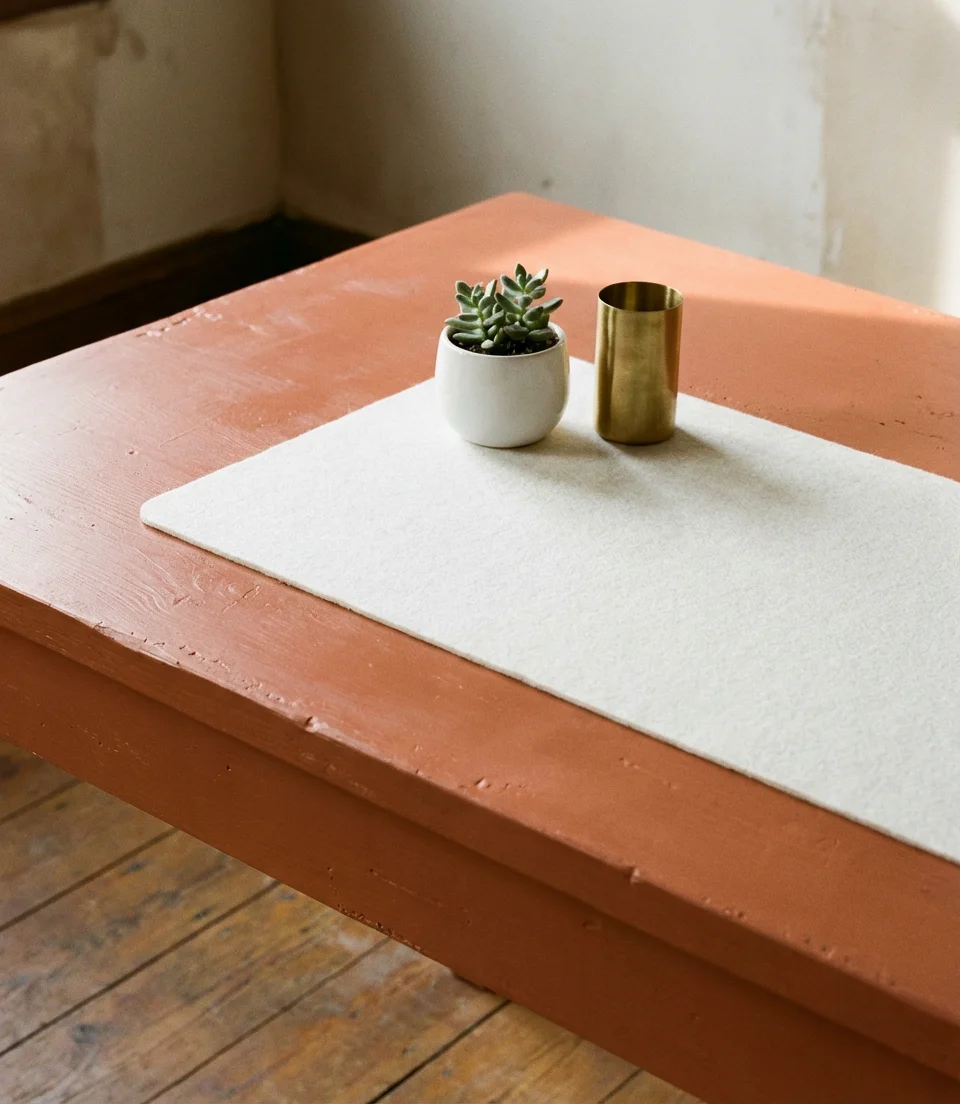 Some of the most pinned office transformations on Pinterest cost less than $100—and the secret is almost always a thoughtful DIY approach that targets high-impact changes first. Painting a particle board desk in a rich, matte color (forest green, deep navy, or warm terracotta) is the single most transformative change you can make for about $15 in chalk paint. Replacing builder-grade hardware with brushed brass or matte black pulls from a hardware store adds another level of polish for $20–$30. These small, strategic upgrades give a dated or generic desk a personality and custom feel that furniture bought at retail simply can’t match.
The budget angle here is genuinely compelling: a $30 IKEA desk painted in quality chalk paint and fitted with new hardware competes visually with desks that cost ten times as much. The key is execution—prep the surface properly, use two thin coats rather than one thick one, and seal the finish with a wax or matte topcoat for durability. Pair your refreshed desk with a quality desk mat ($20–$40) to protect the surface and add another layer of textural interest. The total investment stays well under $100 while the result looks like something from a design magazine spread.
18. Professional Women’s Power Corner
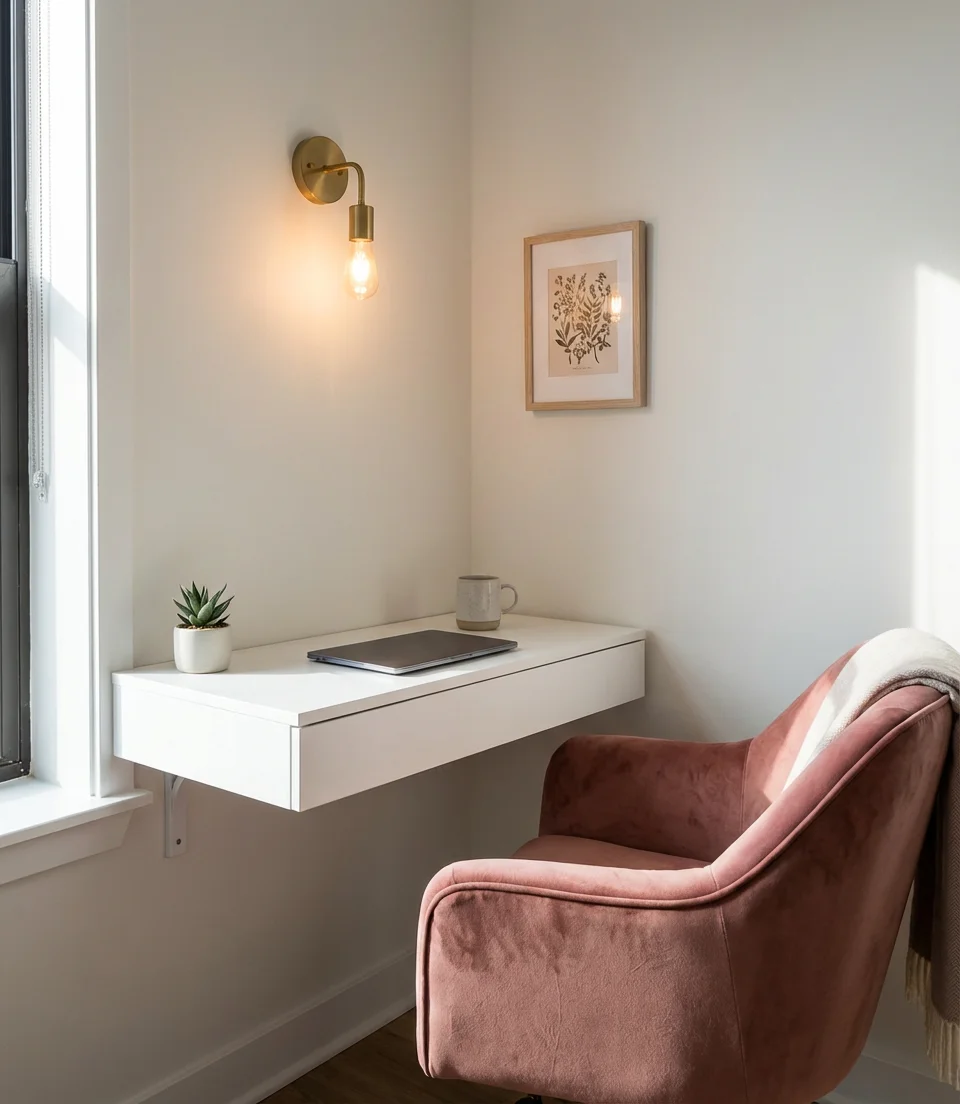
The “power corner” concept—a compact but intensely curated workspace designed specifically for professional women who work from a bedroom, living room, or small apartment—is one of the most practical and widely shared ideas in the office décor space right now. The goal is maximum impact in minimum footprint: a wall-mounted or slim freestanding desk, a comfortable but polished chair, one great light source, and a wall treatment or art piece that anchors the zone visually. The corner becomes a destination—a place you genuinely want to be—despite its small scale. Women navigating limited space are leading this design conversation.
What makes a power corner work is the psychological boundary it creates. Even in a studio apartment, a well-designed corner that is visually distinct from the rest of the living space helps your brain switch into “work mode” more effectively. Use a small area rug to define the zone and a pendant or sconce to create dedicated lighting, and keep the personal and the professional separated (no laundry visible, no phone charging cables draped over the desk). The investment in this kind of intentional zone pays returns in both productivity and how you feel showing up to work each day.
19. Monochromatic Office Palette
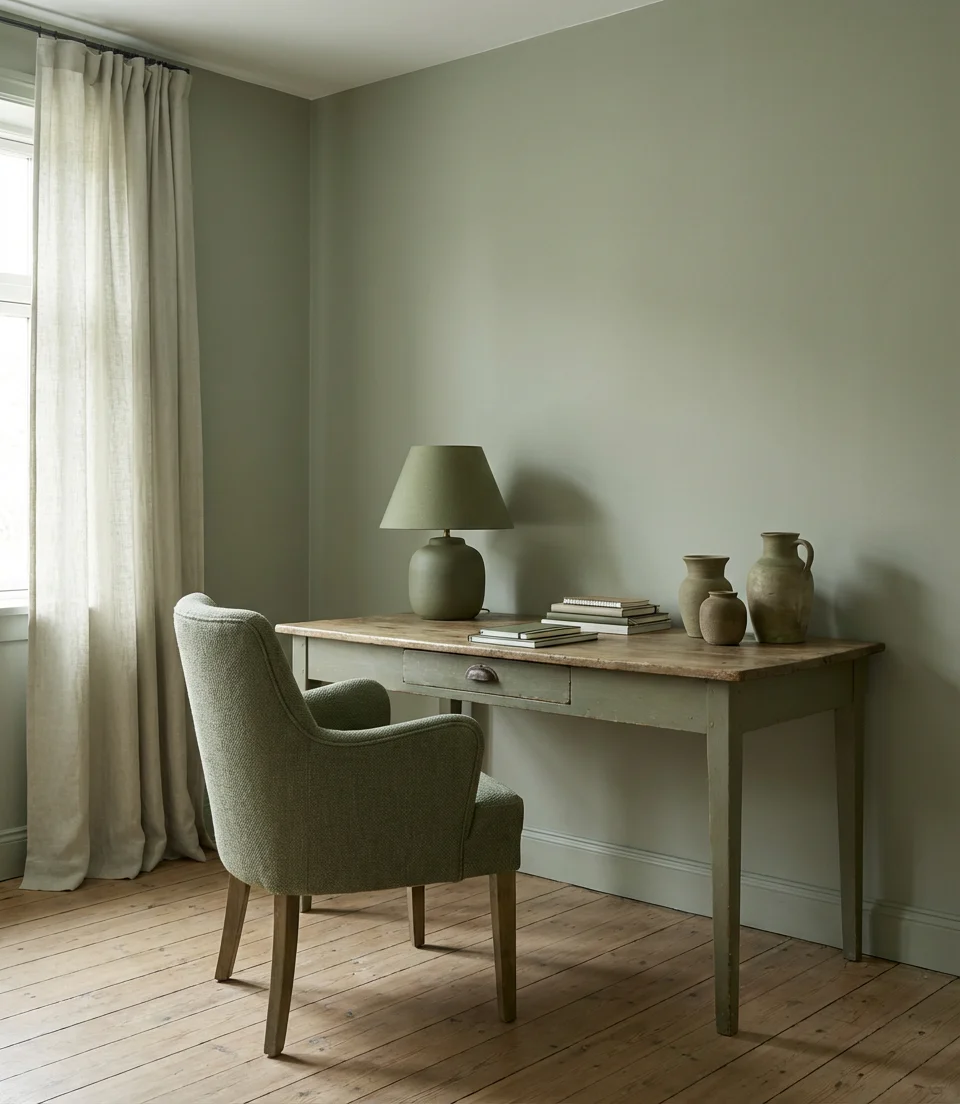
A monochromatic color scheme—where everything in the space lives within the same color family—is having a significant moment in professional workspace design. The appeal is the way it creates instant visual harmony and a sense of considered intention. An all-sage green office, a tonal cream-and-ivory setup, or a deep navy workspace where walls, desk, and accessories echo each other in varying shades creates a look that feels genuinely designed rather than assembled. This aesthetic photographs strikingly well, which partly explains its dominance on Pinterest and Instagram home office boards in 2026.
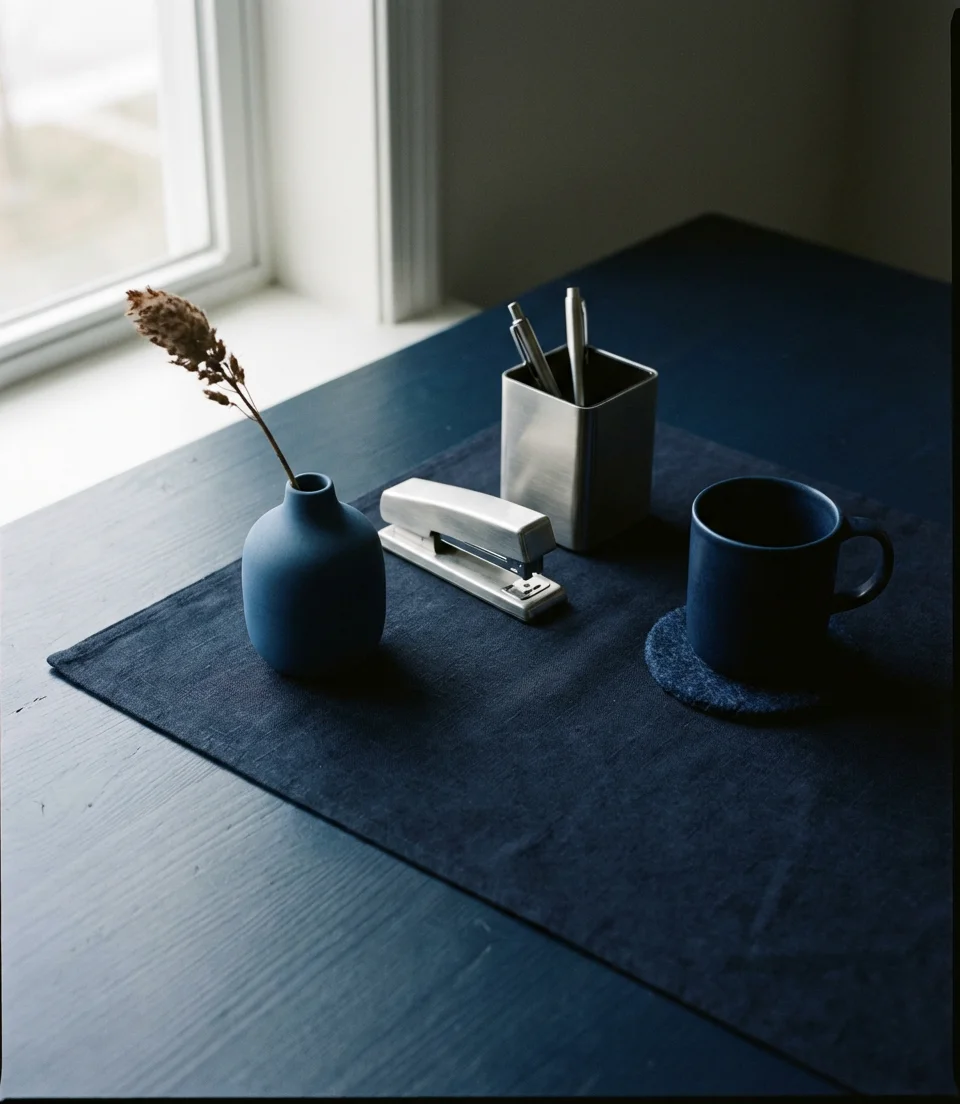
The practical challenge with monochromatic rooms is avoiding flatness—when everything is the same color, the space can start to feel dull or one-dimensional. The solution is texture: layer matte with gloss, smooth with rough, and soft with hard. In a cream office, for example, a linen curtain, a glossy ceramic lamp, a wooden desk surface, and a velvet accent chair all live in the same tonal family but read as visually rich because their textures are so different. This texture-first thinking is what separates a successful monochromatic room from a forgettable one.
20. The Plant-Forward Work-From-Home Setup
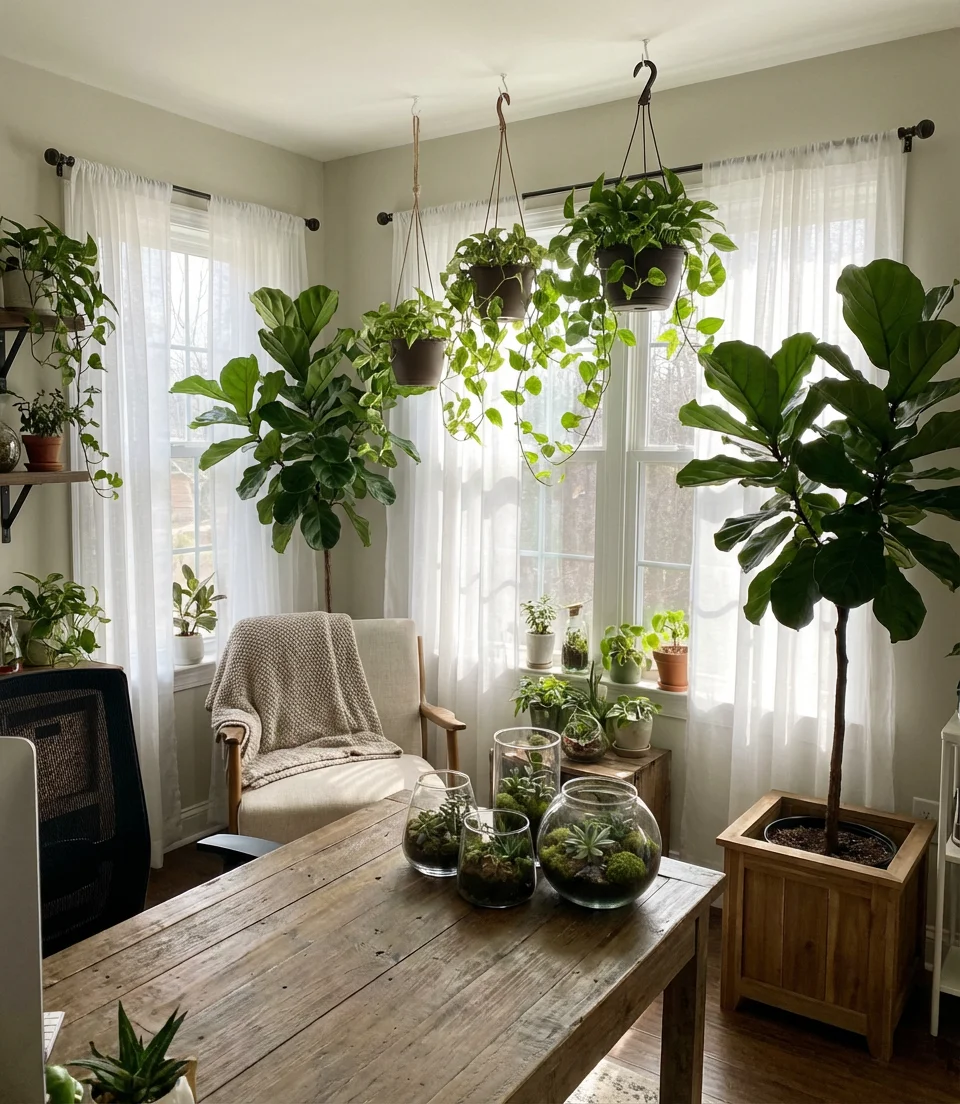
Going all-in on plants as the defining design element of a home office is one of the most rewarding approaches available—and one of the most forgiving, because greenery almost always looks good in almost any quantity. The plant-forward home office arranges the workspace within a living, breathing environment rather than adding plants as an afterthought to an otherwise finished room. Big fiddle-leaf figs in the corners, hanging planters cascading from ceiling hooks, and small terrariums on every available surface. It’s maximalist in volume but cohesive in effect because the unifying element—nature—is inherently harmonious. This idea resonates particularly with the inspiration crowd on Pinterest.
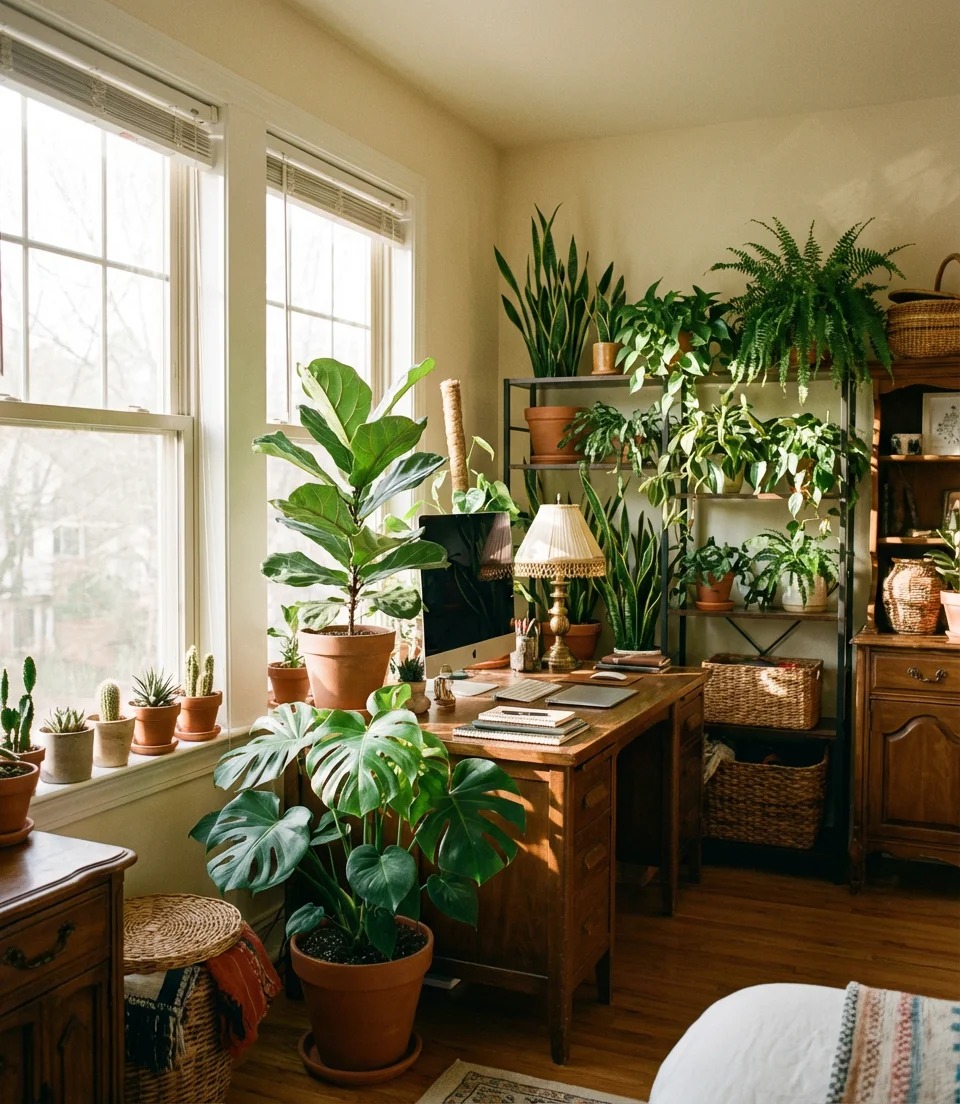
An expert-backed observation: the most successful plant-forward offices treat plant care as part of the morning work ritual. Watering, pruning, and checking on plants at the start of the day function as grounding, mindful activities that ease the mental transition into focused work. Many plant-forward homeworkers report that caring for their plants has become a genuine stress management practice—one that happens to also make their workspace look extraordinary. Pair high-care plants with a few near-indestructible species so the overall collection doesn’t become a source of anxiety when travel or a busy week interrupts the routine.
21. Business Professional Desk for Video Calls
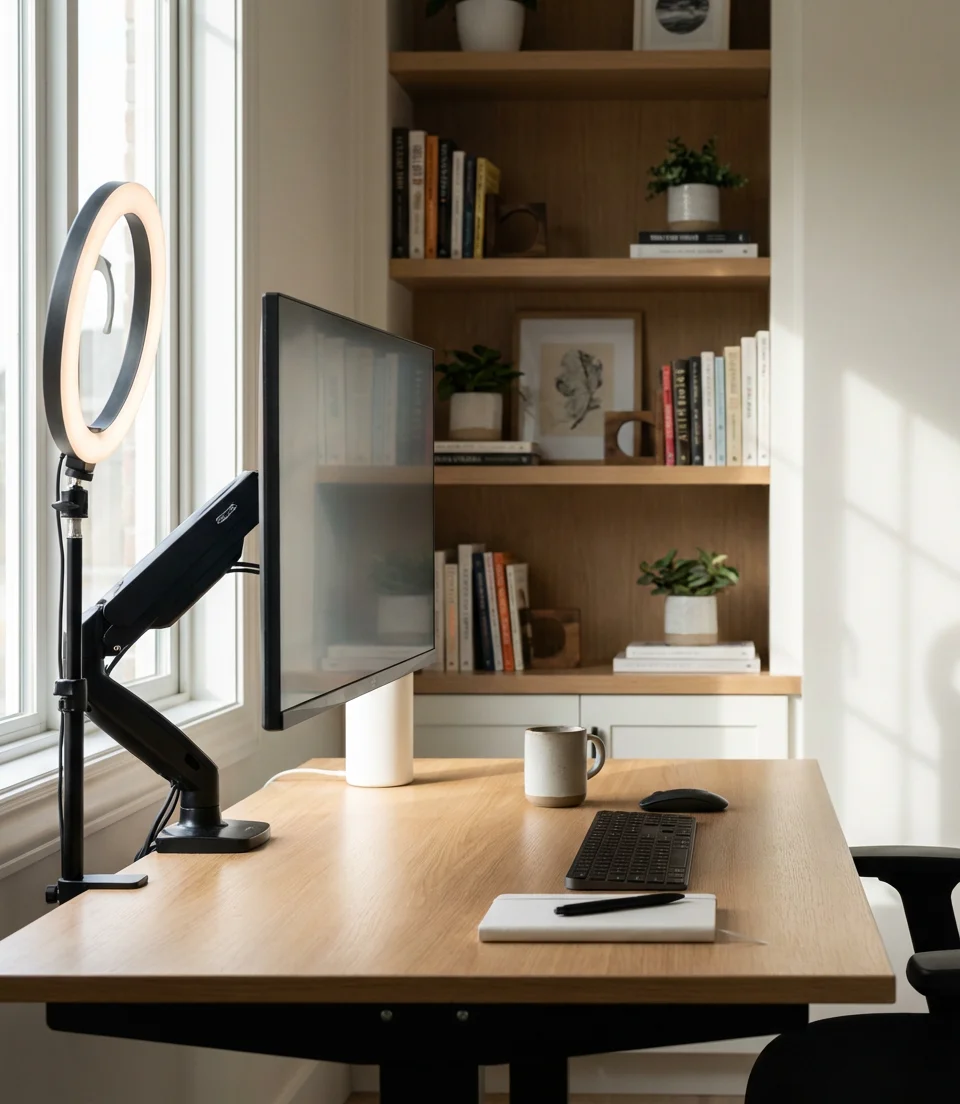
With video calls becoming a permanent fixture of American business life, designing your desk setup specifically for how it looks on screen has become a legitimate design consideration. The principles are straightforward: good lighting (a ring light or, better, a window to your side or in front of you), a clean and intentional background, and a camera positioned at eye level rather than angled up from a laptop below your face. The professional business video setup communicates competence and care before the conversation even begins—it tells the person on the other end that you take this seriously and you’ve thought about their experience too.
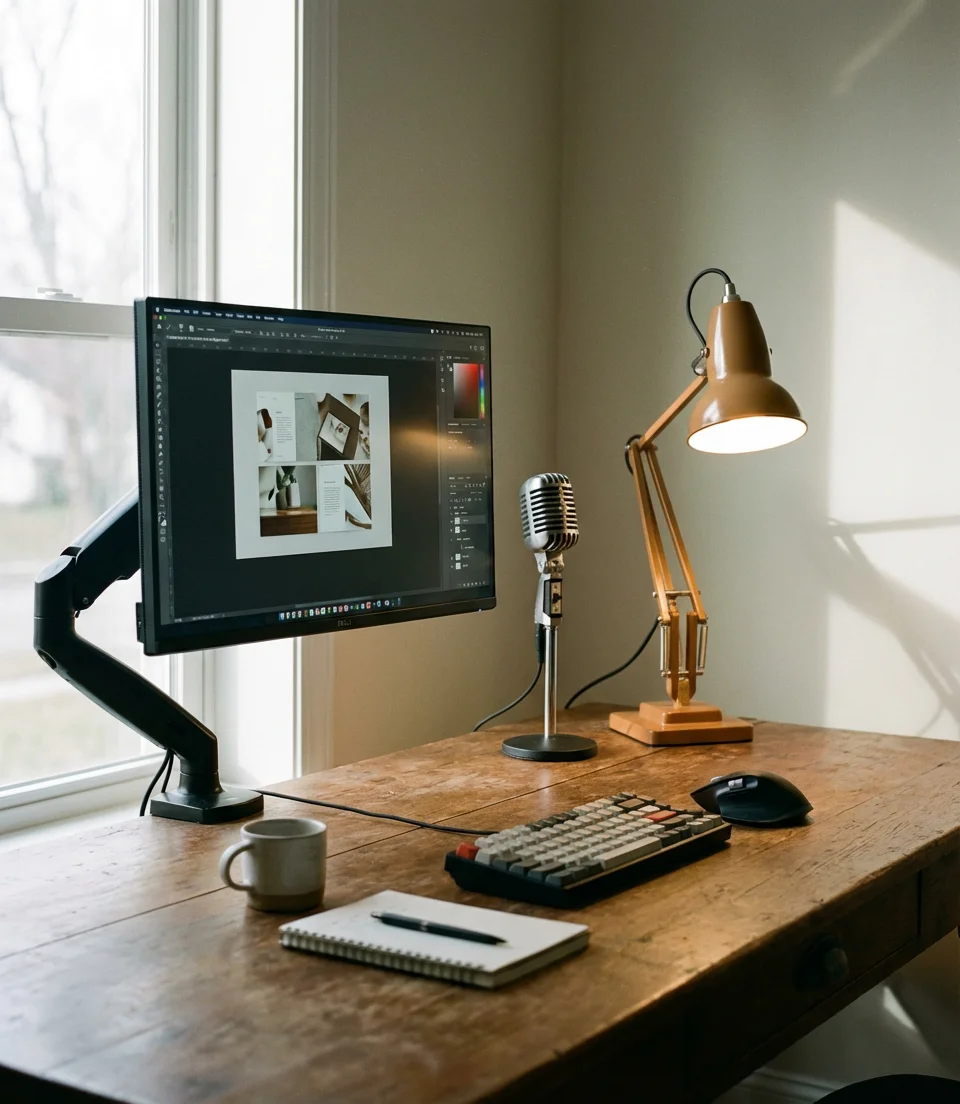
A monitor arm is one of the most underrated investments in a video-call-optimized setup—it lets you position your screen (and the webcam sitting on top of it) at precisely eye level, which creates a far more natural and engaging on-screen presence than any laptop propped on a stack of books. Pair this with a quality external microphone and a warm desk lamp positioned to your front side, and your home office video presence will rival—or exceed—what most people experience in dedicated corporate conference rooms. These upgrades collectively cost $150–$300 and pay for themselves in the professionalism they project.
22. Seasonal Office Refresh for New Year Energy
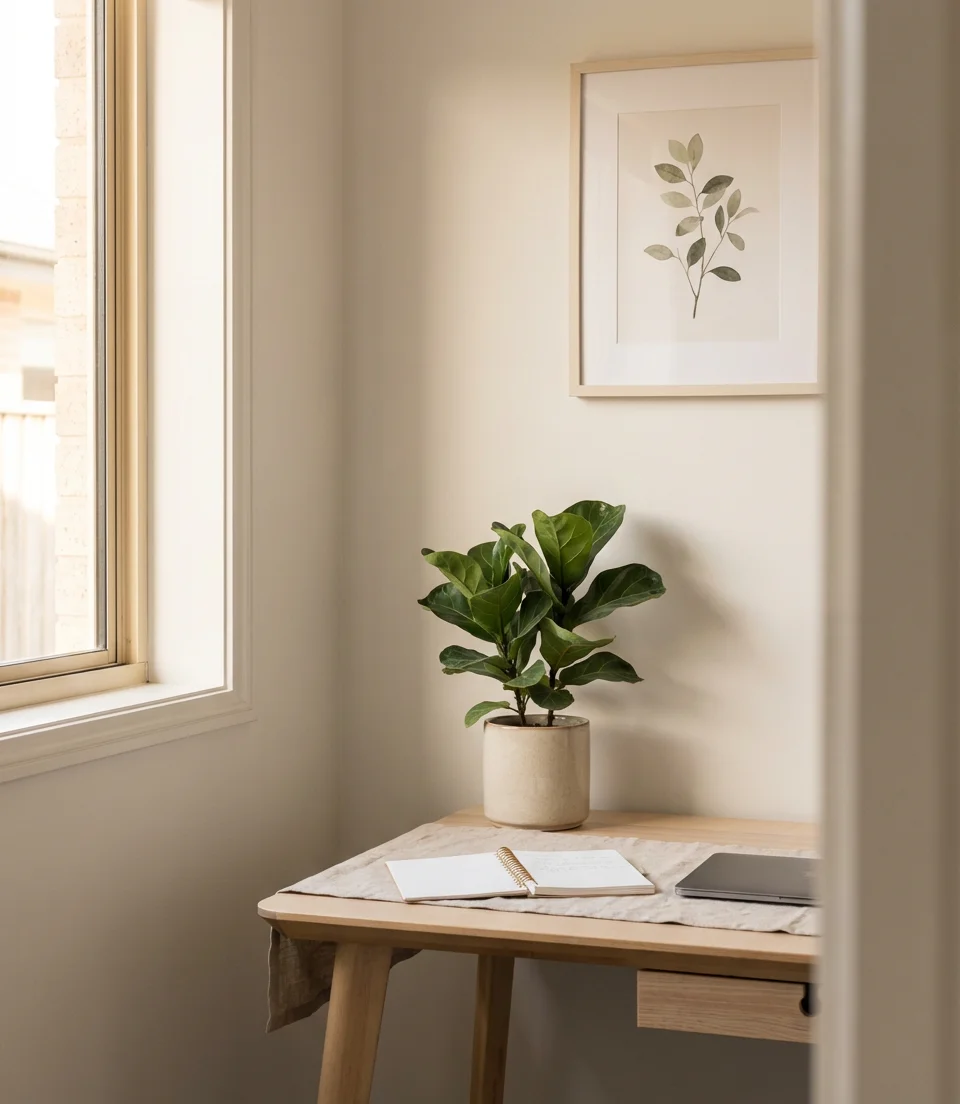
There’s something deeply motivating about refreshing your workspace at the start of a new year—clearing out what no longer serves you, introducing new color or texture, and setting up the environment to support the version of yourself you’re working to become. This idea overlaps beautifully with the broader ideas driving office décor in 2026: intentionality, personalization, and the understanding that where you work shapes how you work. A seasonal refresh doesn’t require a renovation or a big budget. Sometimes it’s as simple as a new desk plant, a different arrangement of existing furniture, or a single new piece of artwork on the wall.
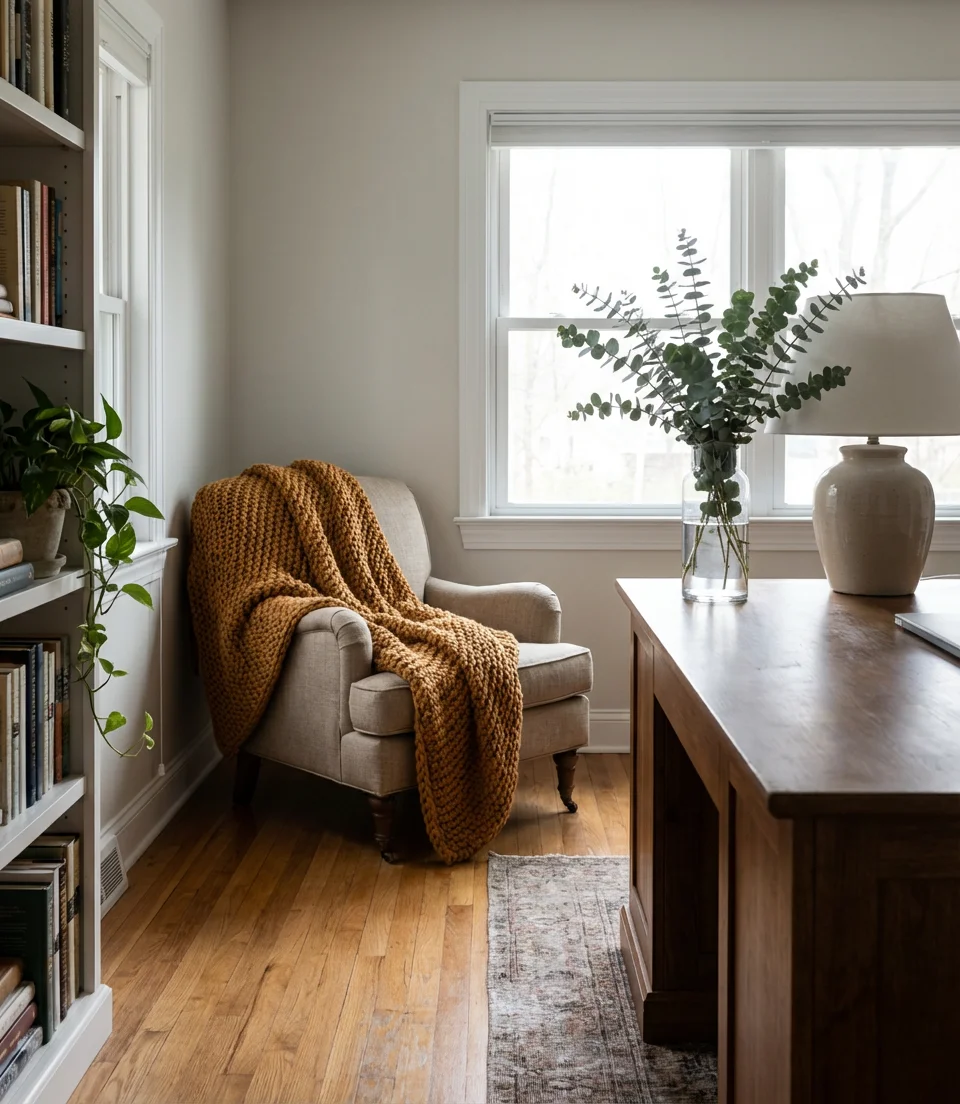
Real homeowners who practice this kind of quarterly or seasonal refresh consistently report that it sustains their motivation through the periods when work itself might feel routine or uninspiring. The physical act of rearranging or upgrading the space creates a sense of a fresh start that’s not just psychological—it changes the sensory experience of the environment in ways that genuinely influence mood and energy levels. Build a small “refresh fund” into your annual budget—even $50–$75 a quarter gives you the resources to make meaningful small changes that keep the space feeling current and alive.
23. Cubicle Ideas for Long-Term Comfort
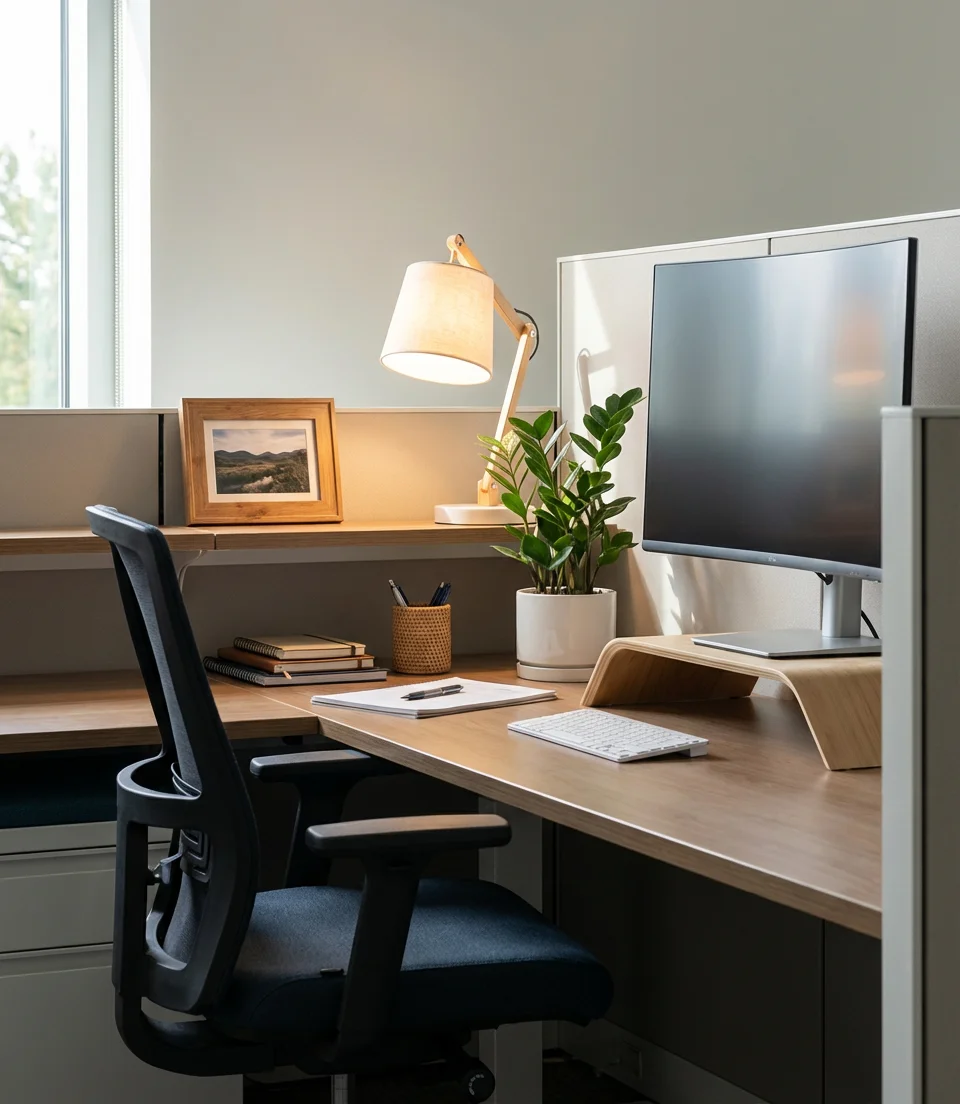
If you spend eight-plus hours a day in a cubicle, comfort is not a luxury—it’s a health issue. The best cubicle ideas for long-term workers in 2026 address both the ergonomic and the environmental dimensions of the space simultaneously. An ergonomic chair or seat cushion, a monitor riser to bring the screen to eye level, a small footrest, and a wrist support for keyboard use are the functional foundation. Layer on top of that: a small humidifier, a warm desk lamp, a plant that can survive under fluorescent lights, and one piece of personal décor that genuinely makes you smile when you arrive. A cubicle becomes truly livable over time when it combines comfort and personality.
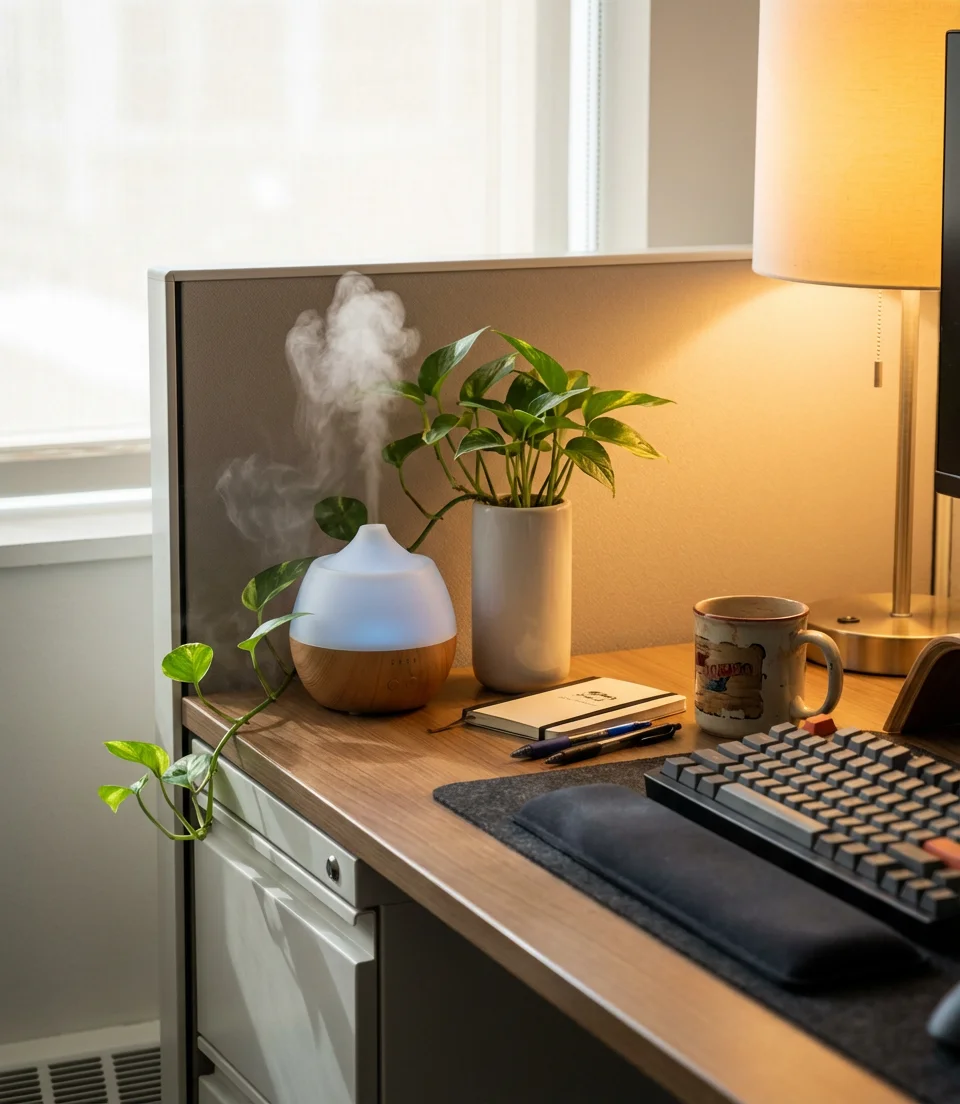
Long-term cubicle workers often underinvest in their space because it doesn’t feel “theirs” the way a home office does—but the reality is that you probably spend more waking hours in that cubicle than in your living room. Treating it with the same care and intention you’d give a personal space makes a profound difference in day-to-day experience. Check with your company’s facilities team about what modifications are permitted—most organizations are far more flexible than employees assume, particularly for low-impact changes like additional lighting, plants, and personal décor within the cube boundaries.
Your workspace is one of the most powerful tools you have for shaping how you feel and how well you perform—and as these ideas show, transforming it doesn’t always require a big budget or a full renovation. Whether you’re refreshing a cubicle, building out a dream home office, or just adding a plant and better lighting, the changes you make to your environment are changes you make to your everyday experience. We’d love to hear which of these ideas spoke to you most—drop a comment below and tell us what you’re planning to try in your own space this year.