44 TV Wall Design Ideas for 2026: Luxury, Minimalist & Modern Inspirations

Television walls have evolved from simple mounting solutions into architectural statements that define living spaces. As we move through 2026, American homeowners are searching Pinterest for fresh ways to integrate their TVs into walls that balance function with visual impact. Whether you’re working with a compact apartment or a spacious family room, these ideas will help you create a TV wall that feels intentional, stylish, and completely yours.
1. A floating walnut console with hidden wiring
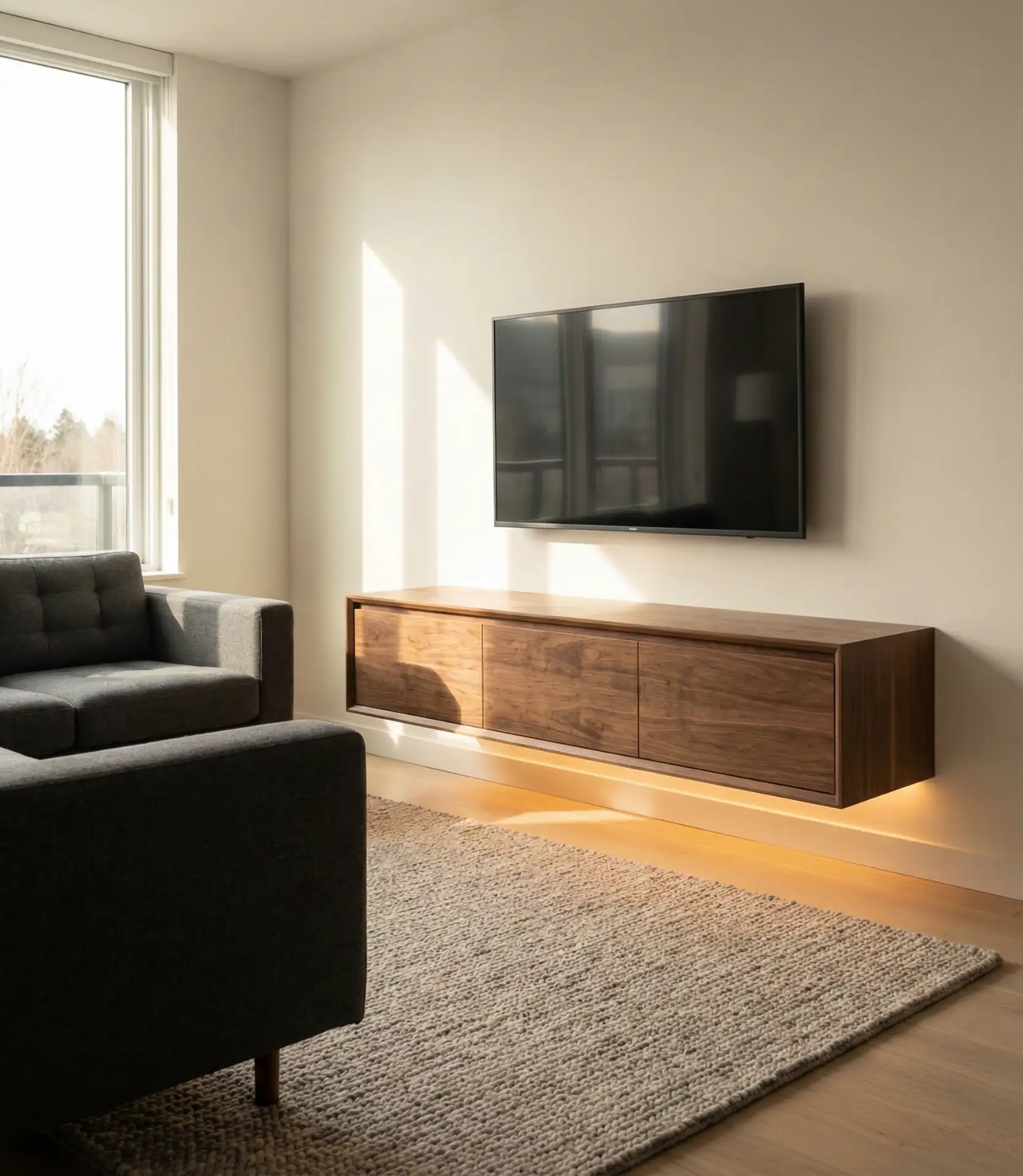
A suspended wood cabinet in rich walnut creates the illusion of weightlessness while concealing every cable and component. This approach works beautifully in modern luxury settings where clean lines matter, and the natural grain adds warmth without competing with the screen. The floating effect makes even small living rooms feel more open, as floor space remains uninterrupted beneath the console.
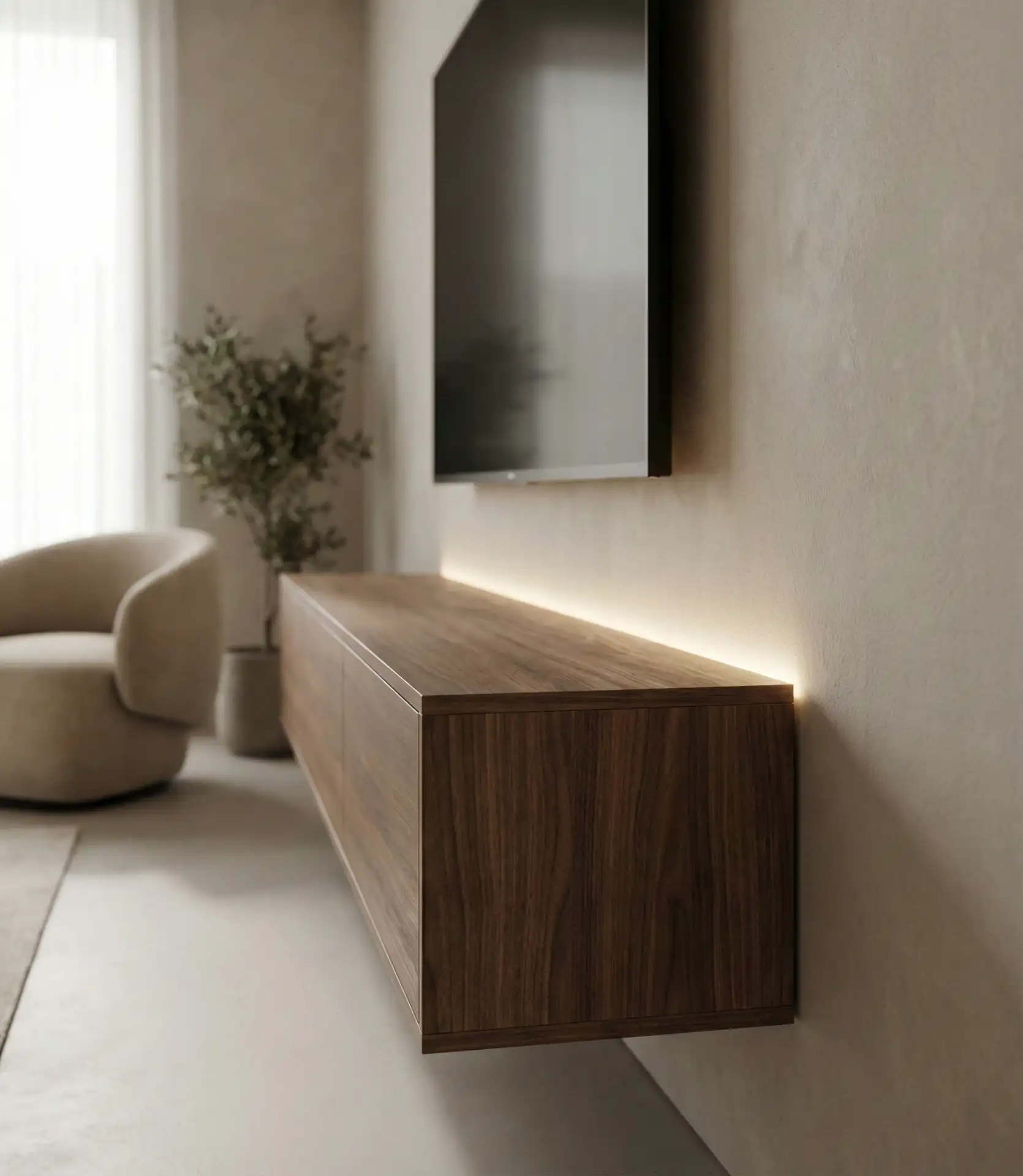
In California and Texas, where open-plan homes dominate new construction, this design keeps sightlines clear from kitchen to living area. The cabinet depth typically runs 16 to 18 inches—just enough for soundbars and streaming devices—while the wall-mounting hardware supports screens up to 75 inches without visible brackets.
2. Floor-to-Ceiling Black Accent Panel
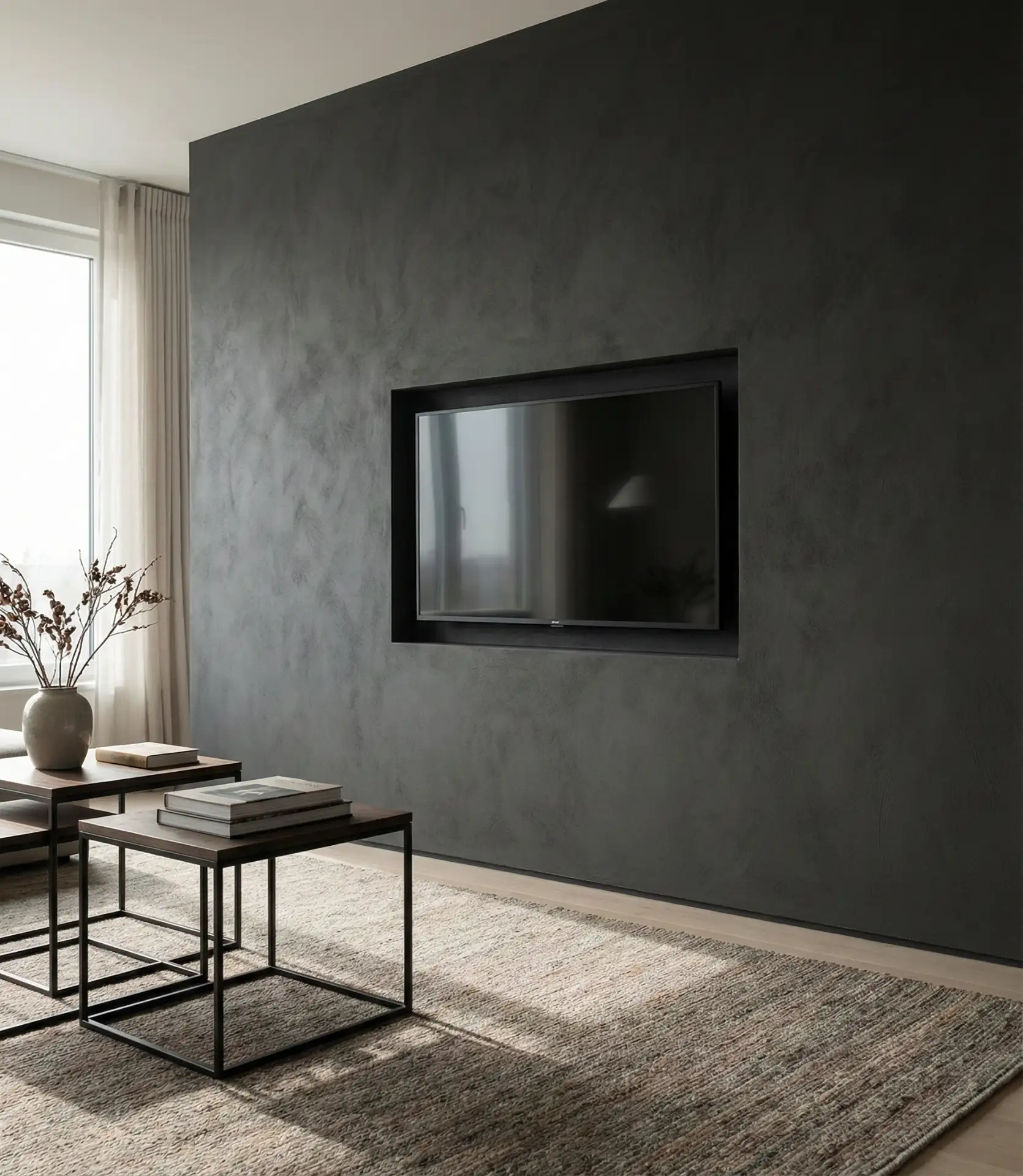
A full-height black panel transforms the TV into part of a larger architectural feature rather than a floating rectangle. This 2026 modern approach anchors the screen within a dramatic vertical plane, making it feel integrated rather than added on. The dark surface also minimizes glare during daytime viewing, a practical benefit that homeowners discover only after living with it.
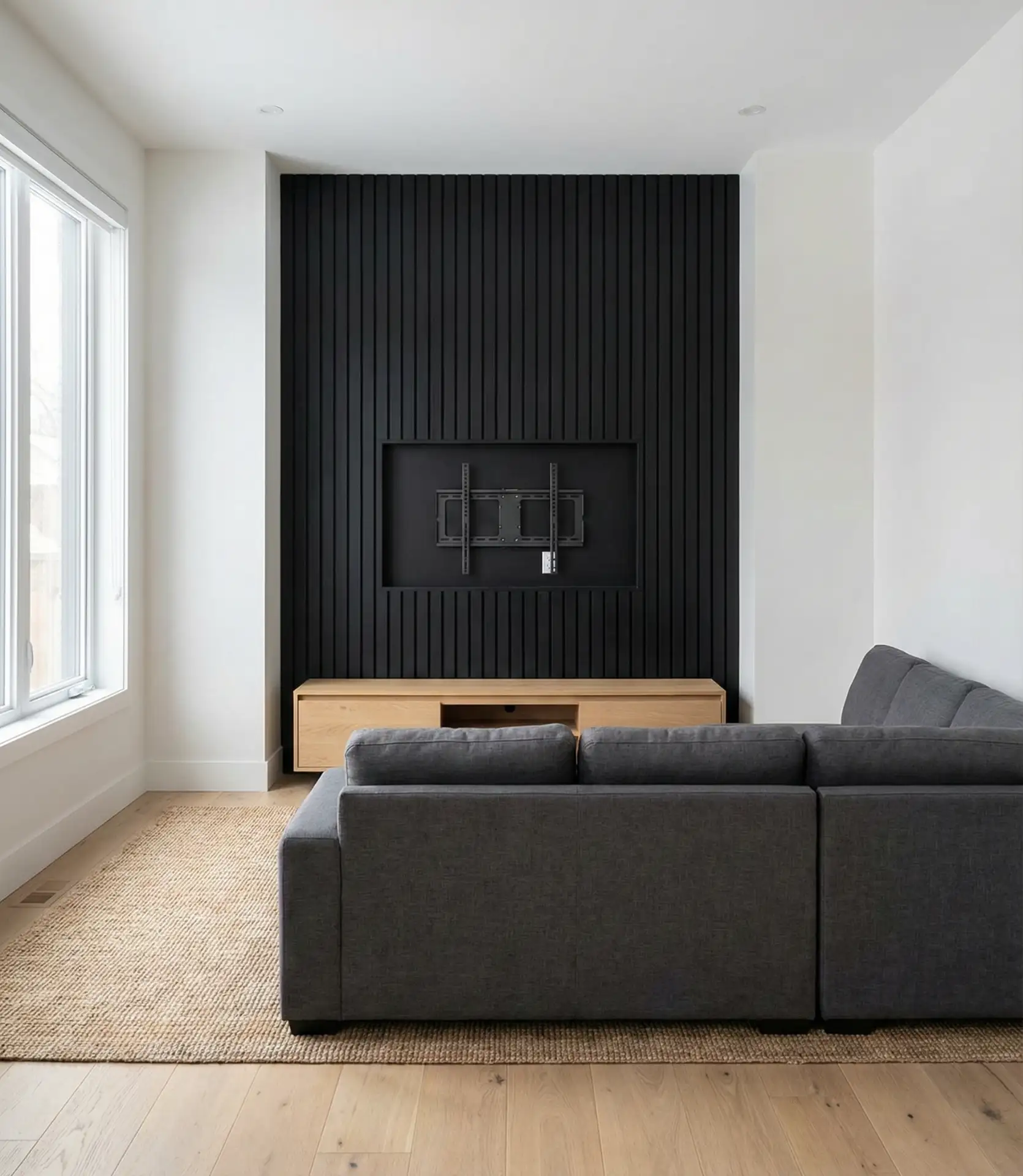
Where this approach works best is in rooms with high ceilings—10 feet or more—where the vertical emphasis draws the eye upward and makes the space feel even taller. Pair it with recessed lighting at the top edge to create separation between the panel and ceiling, preventing the dark surface from feeling heavy or oppressive in the evening.
3. Marble Slab Surround with Brass Details
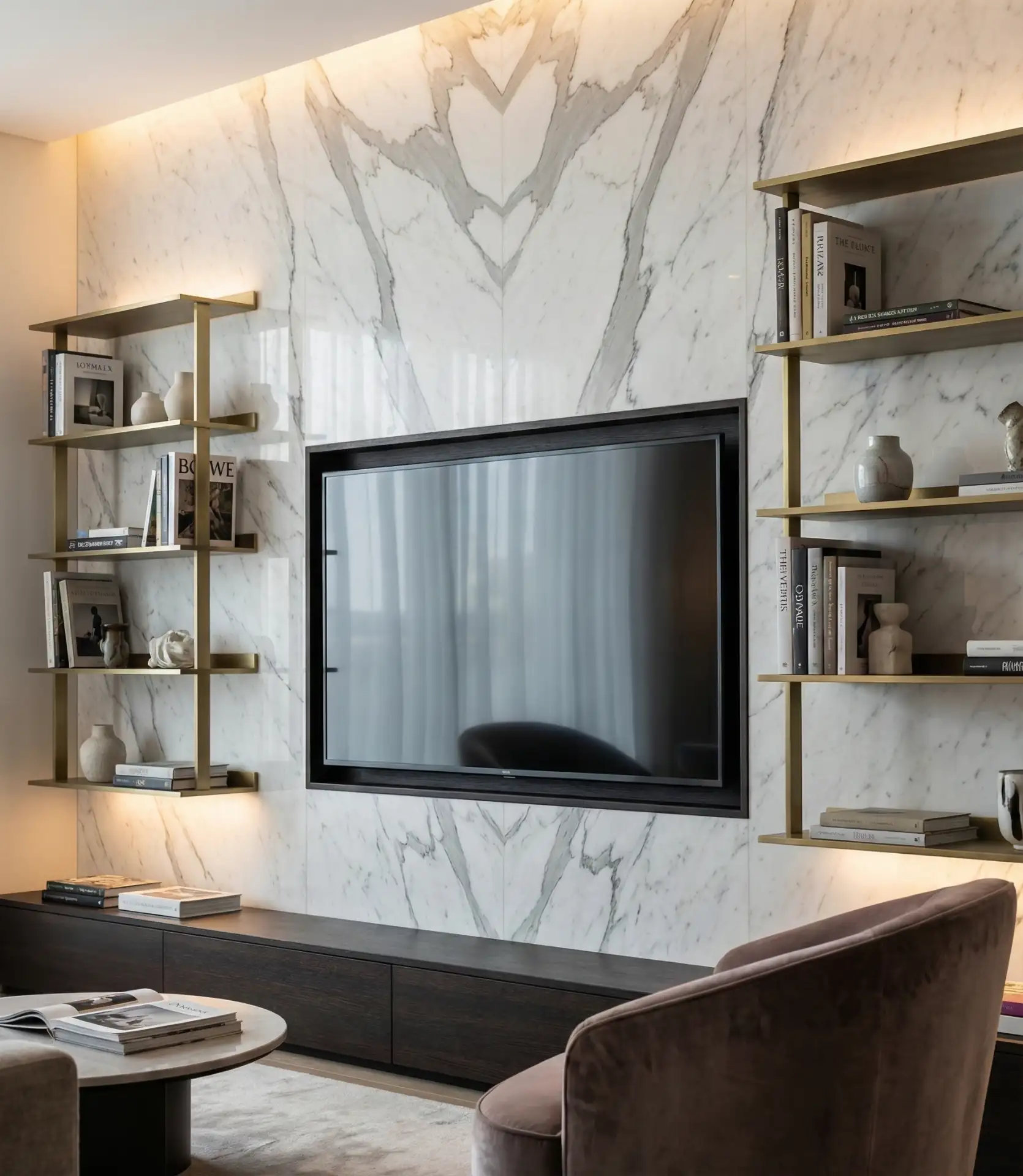
Book-matched luxury marble slabs flanking the television bring the material language of high-end hotel lobbies into residential spaces. The veining creates natural movement across the wall, and when you add slim brass trim or shelving, the result feels both elegant and grounded. This treatment elevates the TV from electronics to a curated design element.
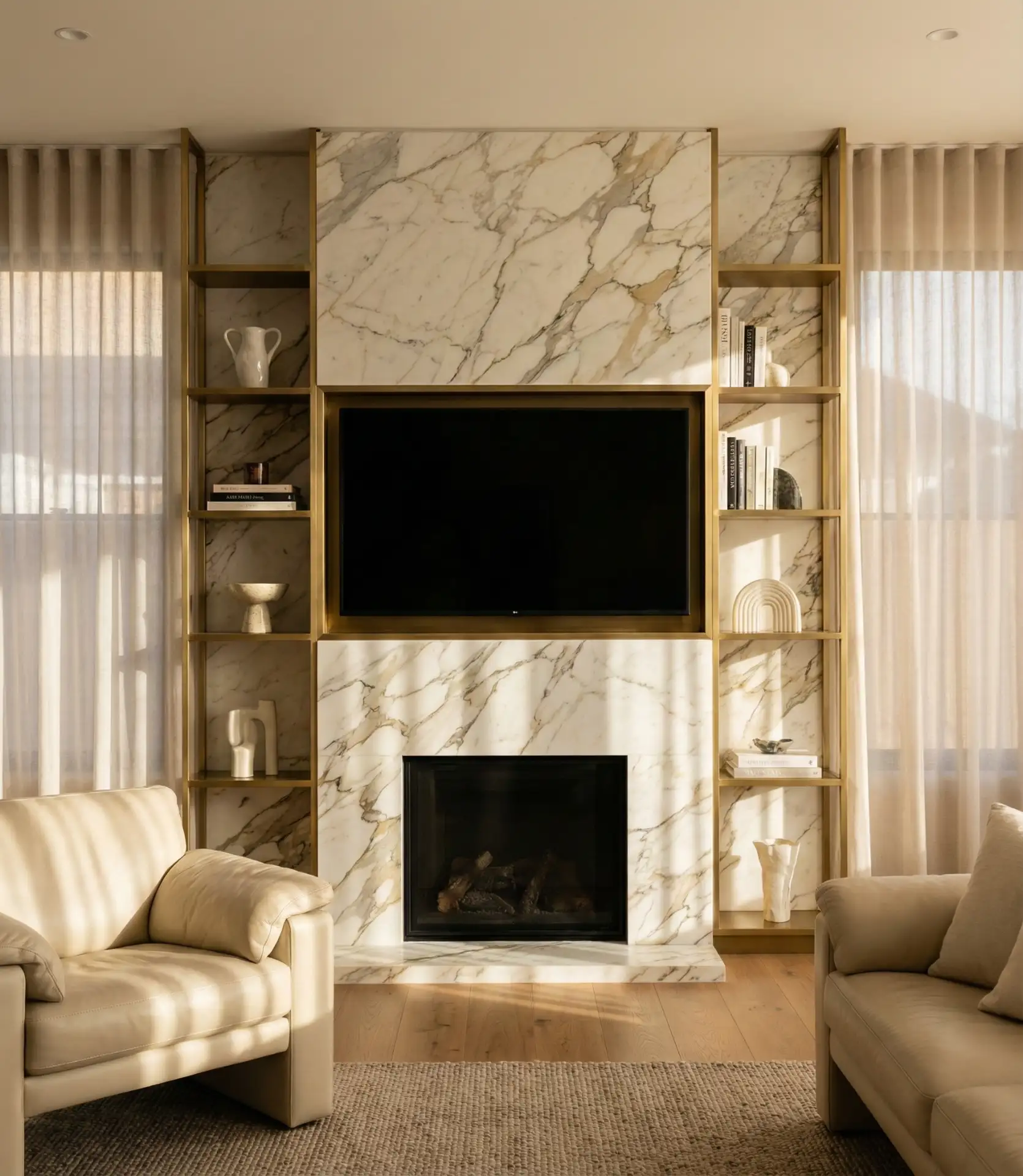
Expect to budget $3,000 to $8,000 for quality marble installation on a standard TV wall, depending on slab selection and your region. The investment makes sense in formal living rooms or primary bedroom suites where you want a permanent, luxurious backdrop that won’t look dated in five years.
4. Built-In Shelving Grid with TV Niche
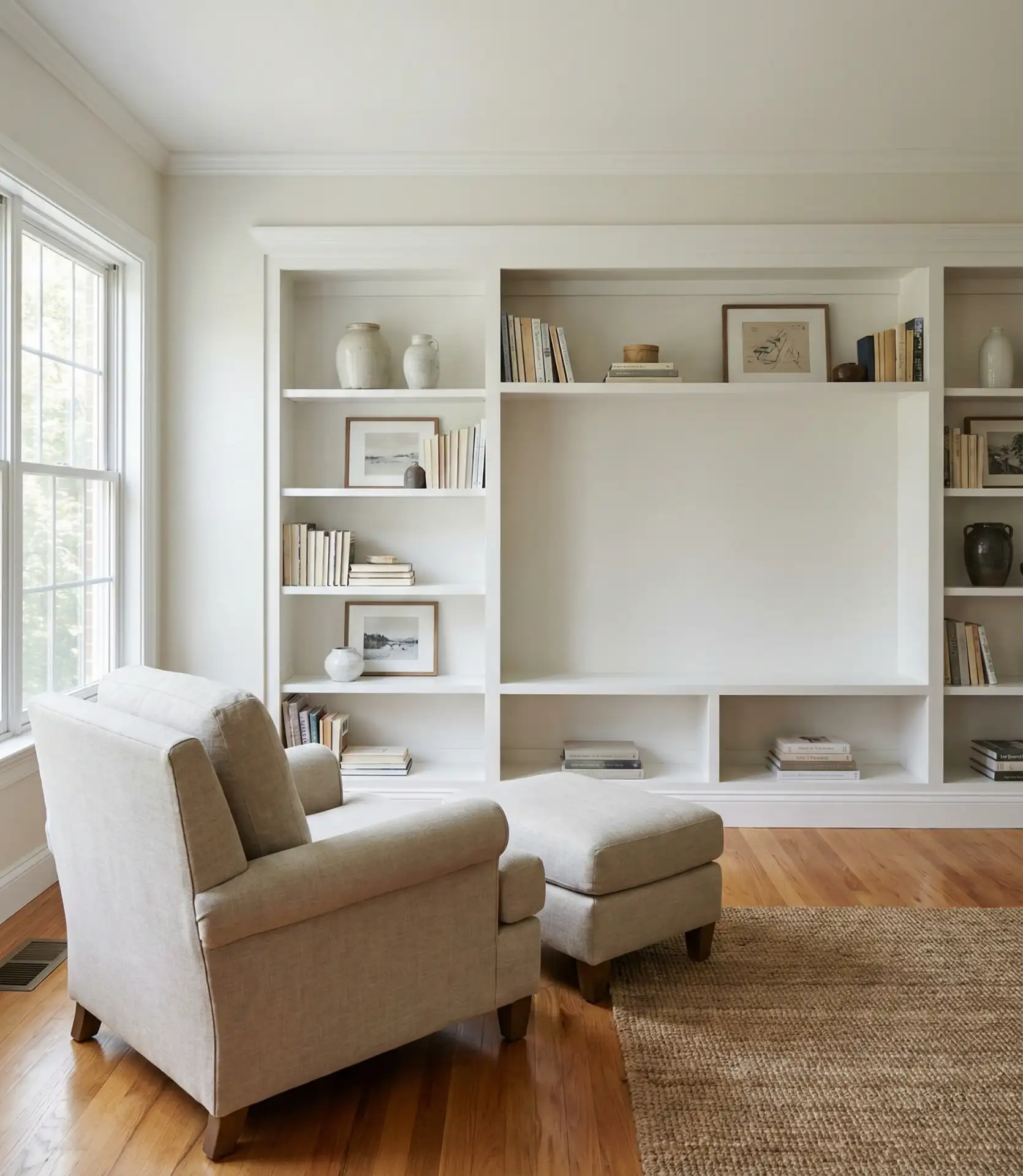
A custom storage grid with a dedicated TV cutout solves the perpetual question of where to put books, speakers, and decorative objects. The screen sits flush within the joinery, surrounded by open and closed compartments that balance visual weight. This classic approach works especially well in family rooms where you need both display and concealment.
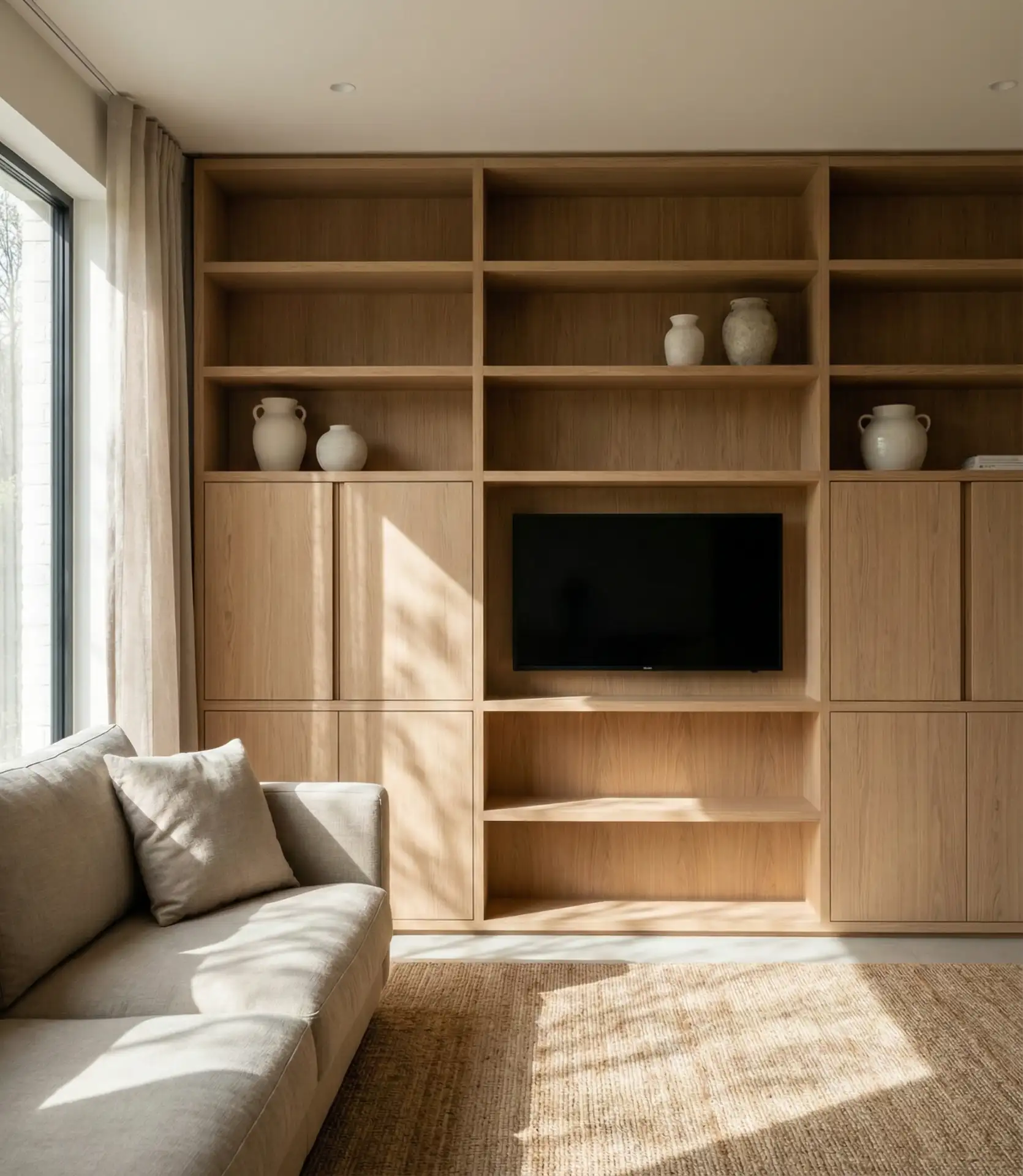
My neighbor renovated her 1980s ranch last year and chose this layout for her den. She mentioned that having the shelves forces her to curate what stays visible—it’s harder to let clutter accumulate when everything has a designated spot within the grid. The TV becomes just one element in a larger composition rather than the room’s sole focus.
5. A textured gypsum panel with indirect lighting
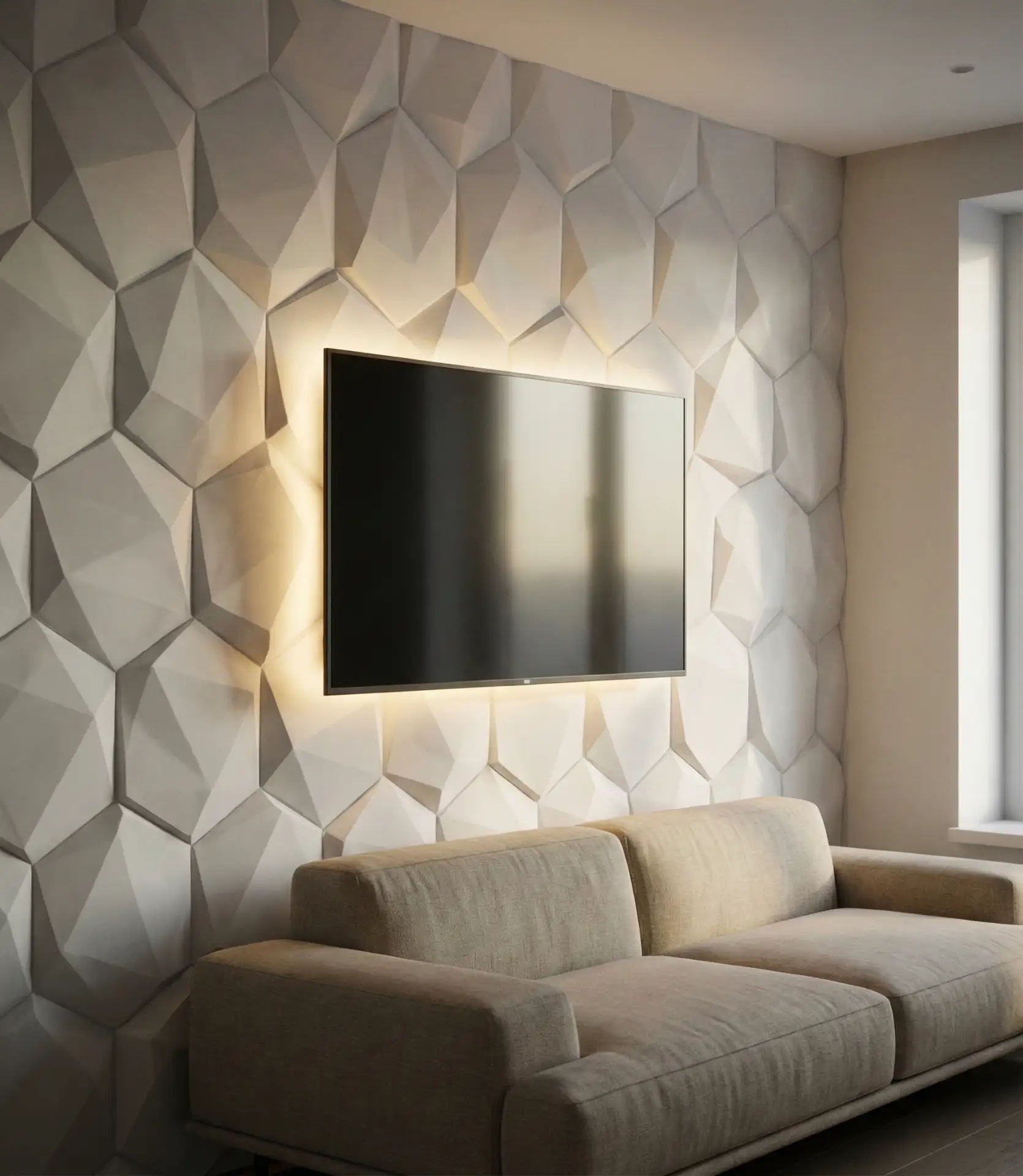
Three-dimensional gypsum wall panels add tactile depth behind the TV while keeping the color palette neutral. The relief pattern catches light differently throughout the day, creating subtle movement without pattern or color. Pairing this with LED strips along the panel edges produces a soft halo effect that reduces eye strain during evening viewing and adds architectural definition to the wall plane.
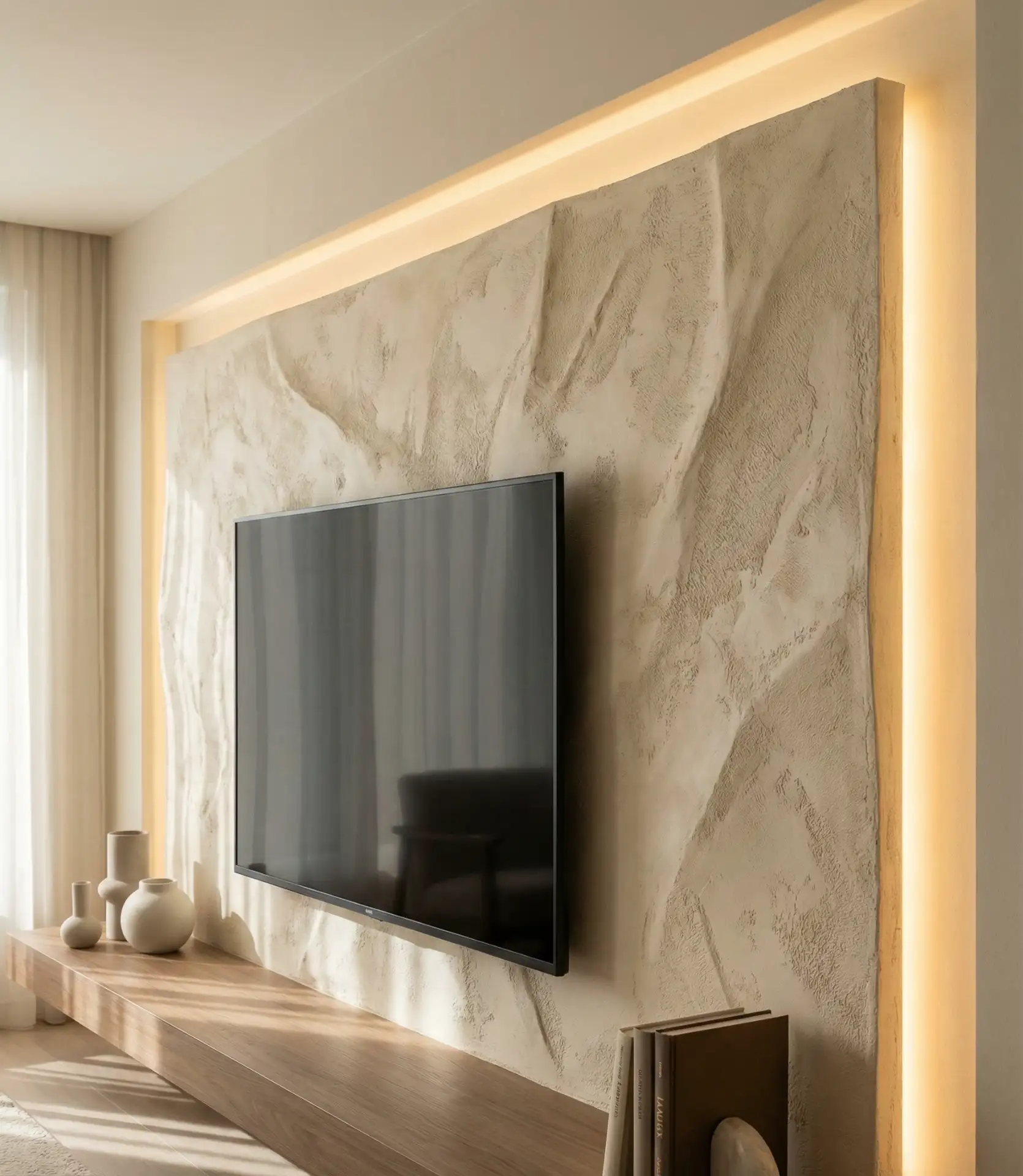
This treatment is particularly popular in the Southeast, where builders are incorporating textured accent walls into spec homes as a standard feature. The gypsum panels arrive pre-finished and install faster than traditional plaster, making them a practical choice for new construction timelines while still delivering custom-looking results.
6. Japandi-Inspired Oak Slat Wall
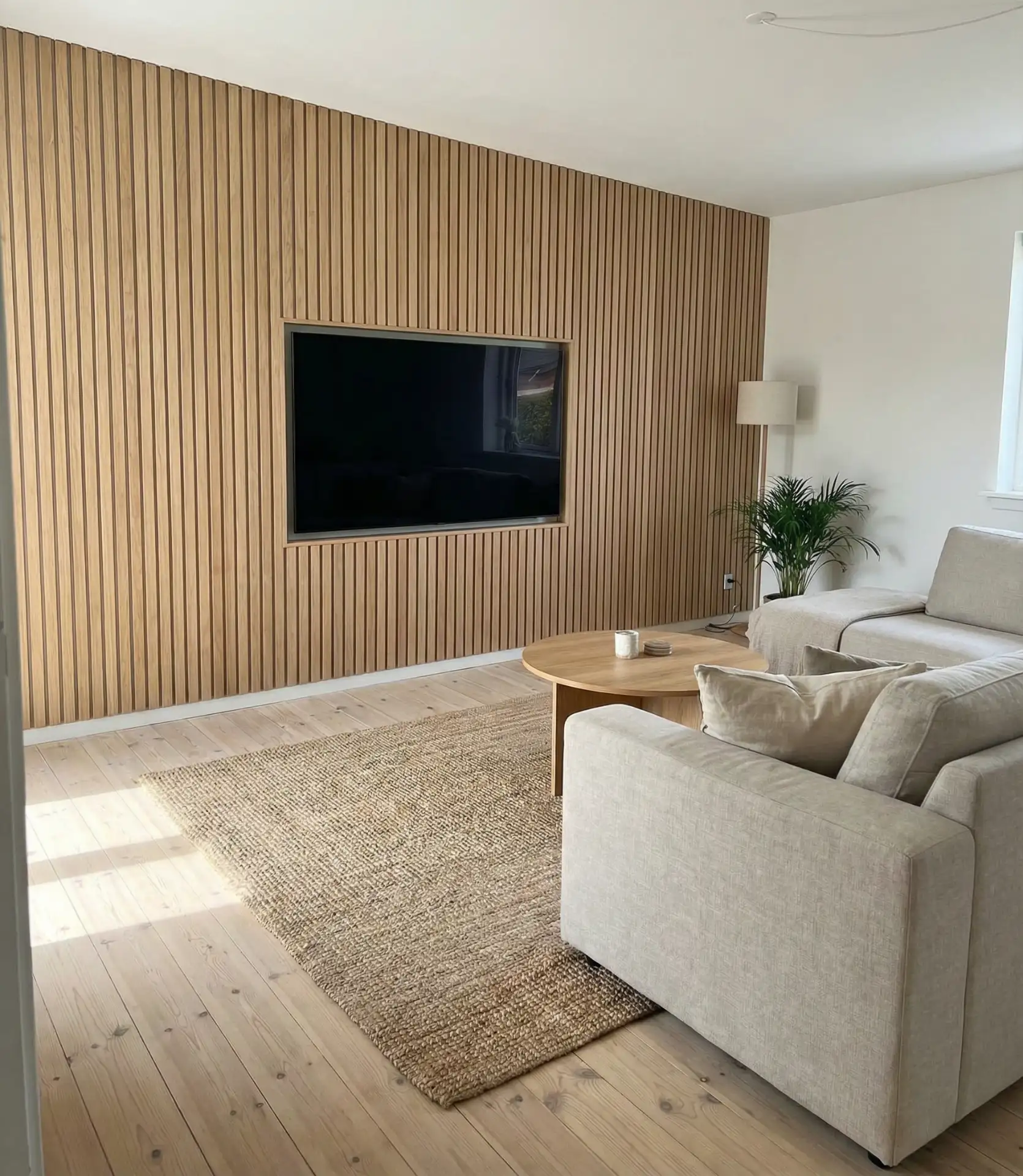
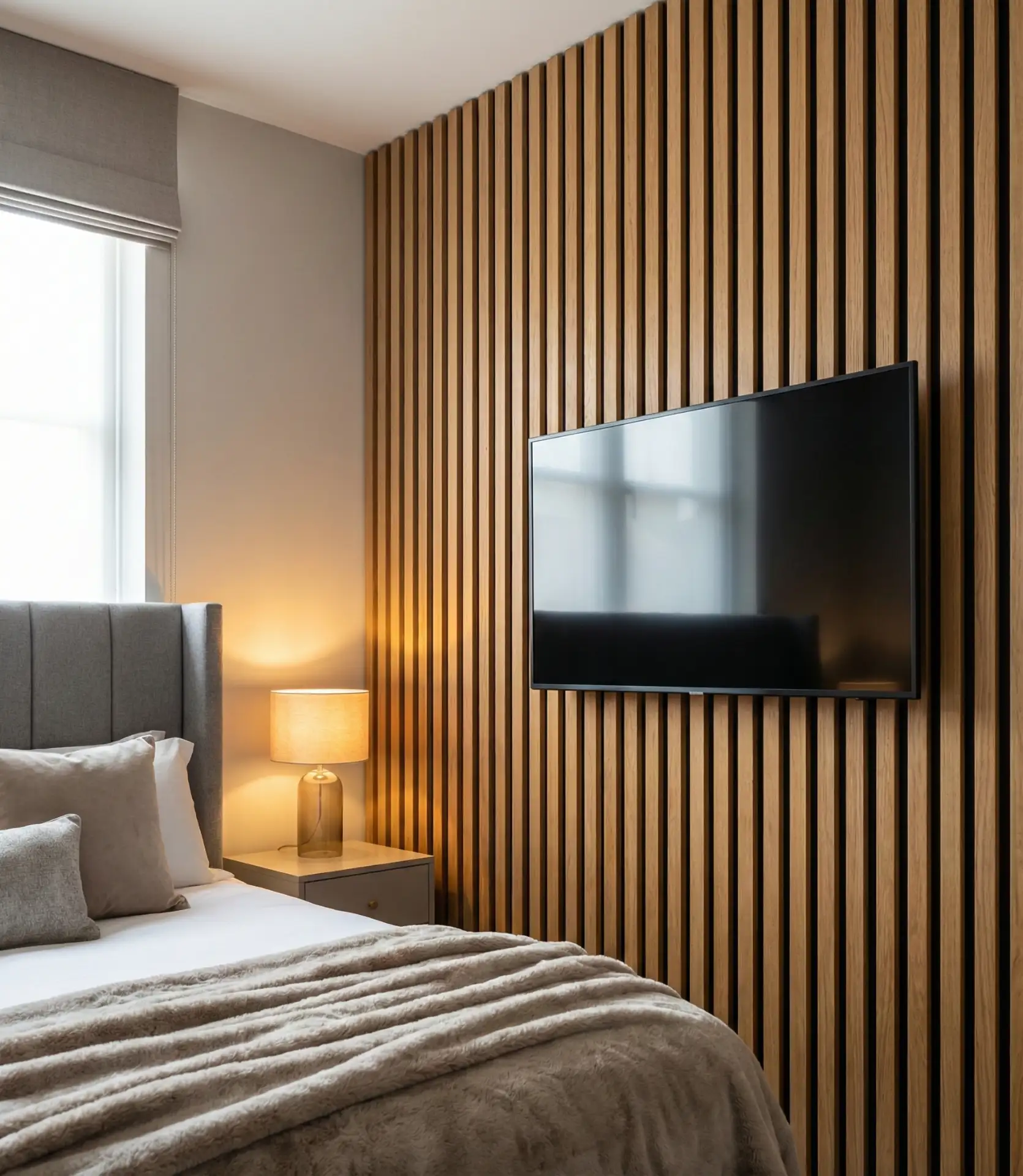
Vertical wood slats in light oak create rhythm and texture while maintaining the minimal aesthetic central to Japandi design. The slats run floor to ceiling with the TV recessed between them or mounted flush to the surface, and the repetitive vertical lines make standard eight-foot ceilings feel taller. This approach brings warmth without heaviness, a balance that defines the Japandi philosophy.
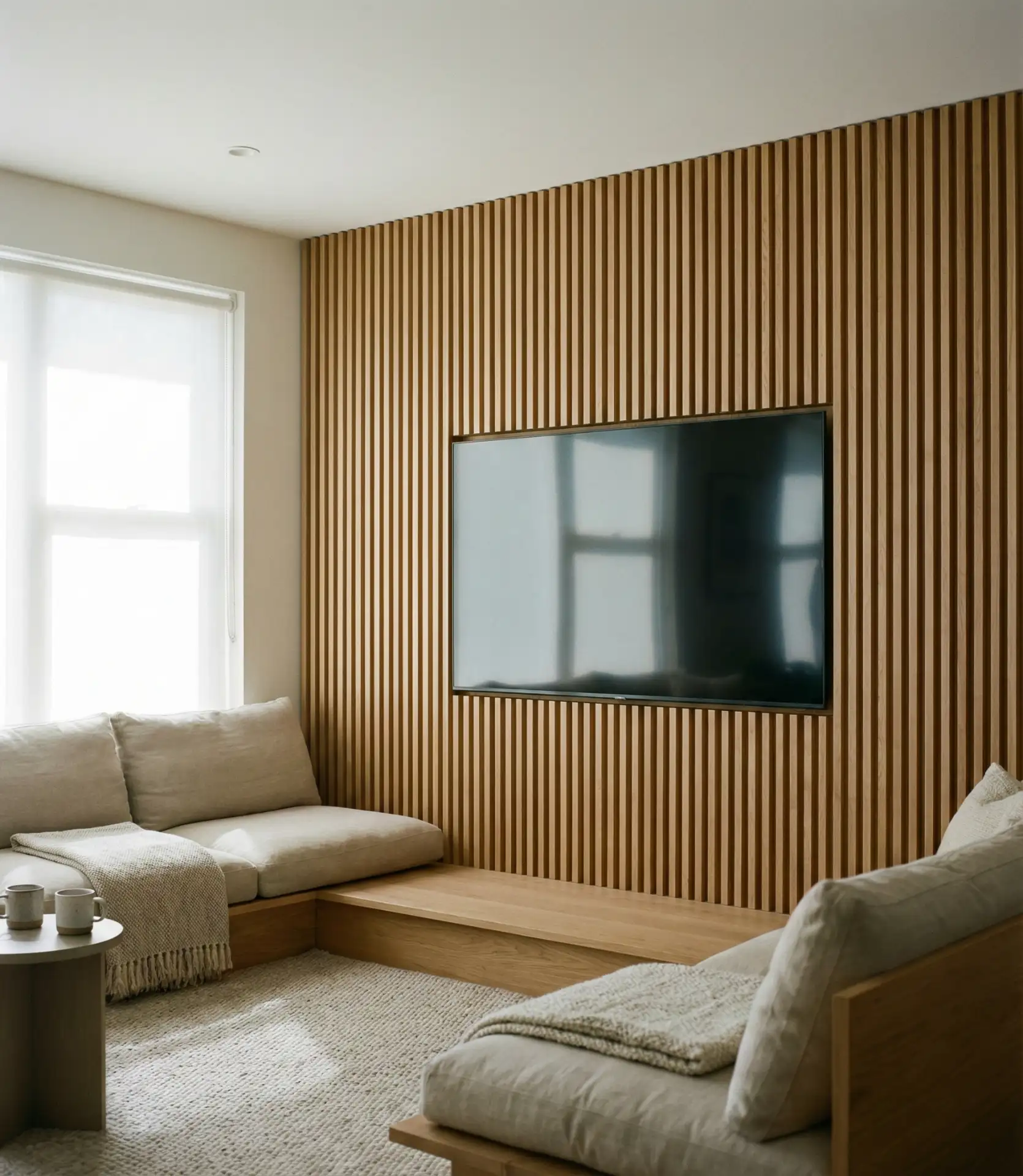
A common mistake is spacing the slats too tightly, which can make the wall feel busy rather than serene. Aim for slats that are 2 to 3 inches wide with gaps of 1 to 2 inches between them—this ratio creates visual interest while maintaining the clean, uncluttered feeling that makes Japandi interiors so calming.
7. Double-Height Living Room Statement Wall
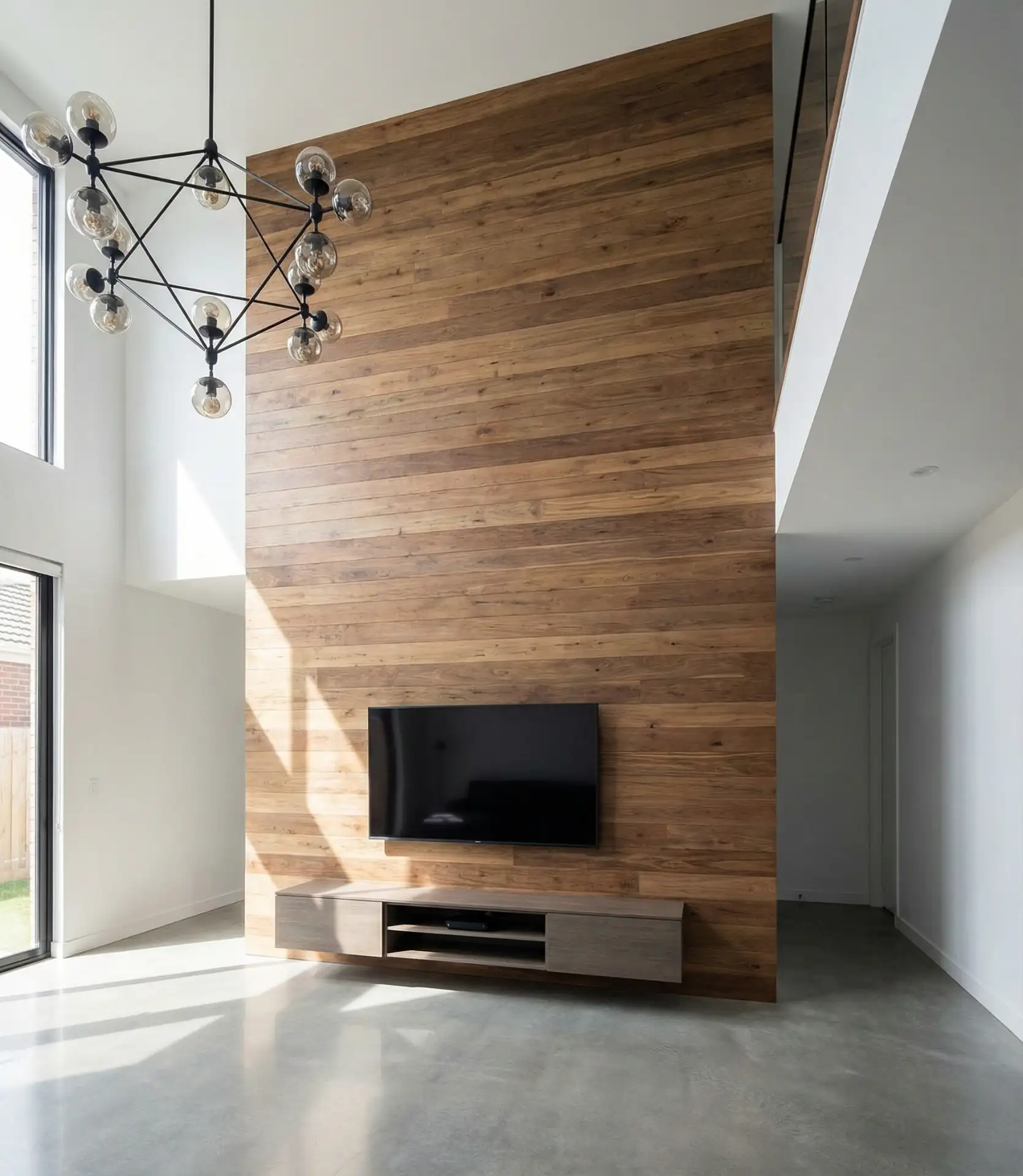
When you have a double-height ceiling, treating the TV wall as a full vertical canvas prevents the screen from looking insignificant. Options include extending stone, wood, or panel systems to the upper level, creating a unified surface that grounds the room. The TV typically sits at standard eye level—about 42 inches to center—while the wall treatment continues upward, connecting the two-story volume visually.
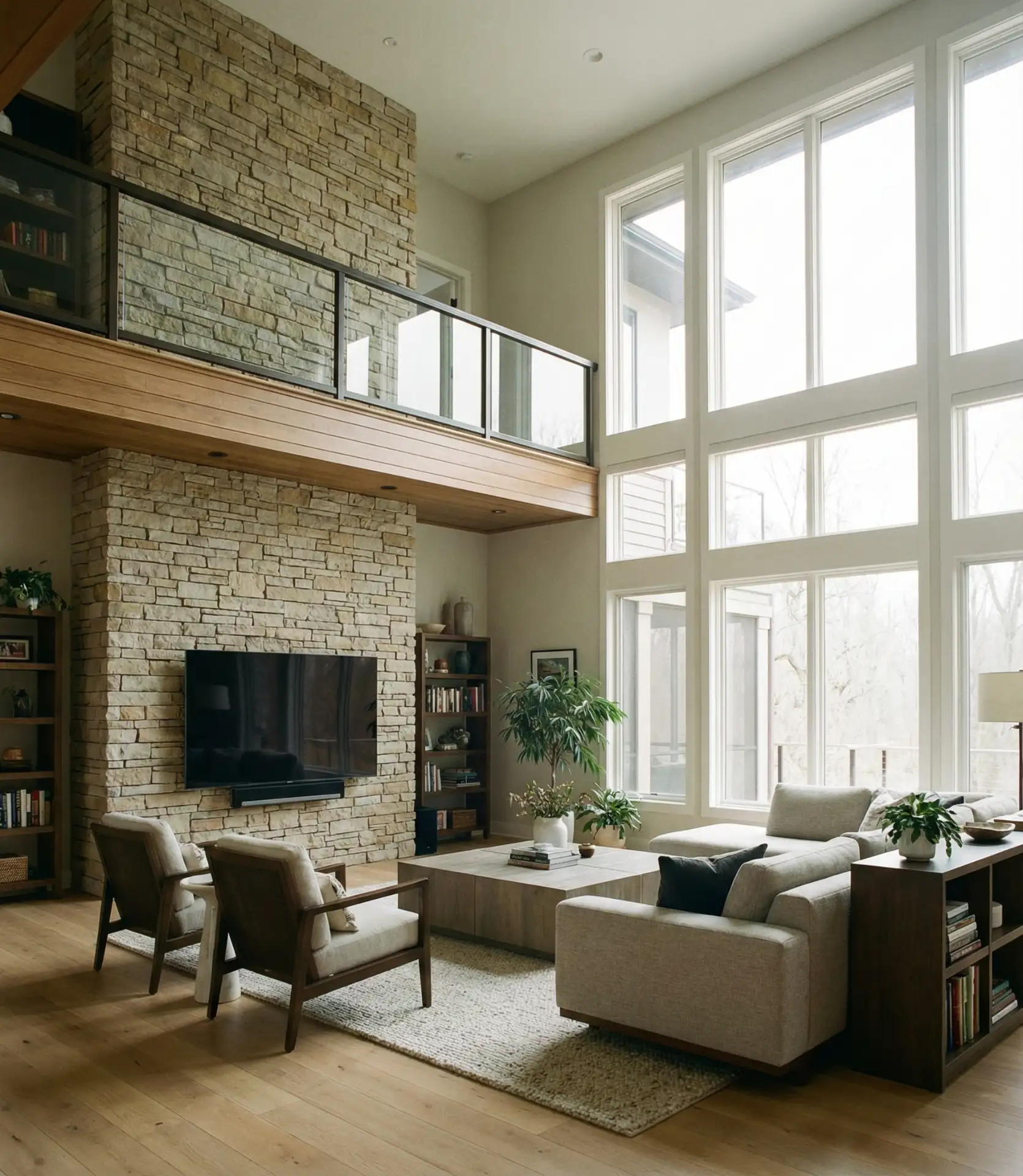
This setup works best in newer suburban homes in states like Arizona, Colorado, and Washington, where open spacious rooms with vaulted ceilings are common. The challenge is ensuring the TV doesn’t feel lost in the expanse—surrounding it with substantial millwork or continuing the same material to the ceiling helps anchor it within the larger architectural gesture.
8. Neo-Classical Molding Frame
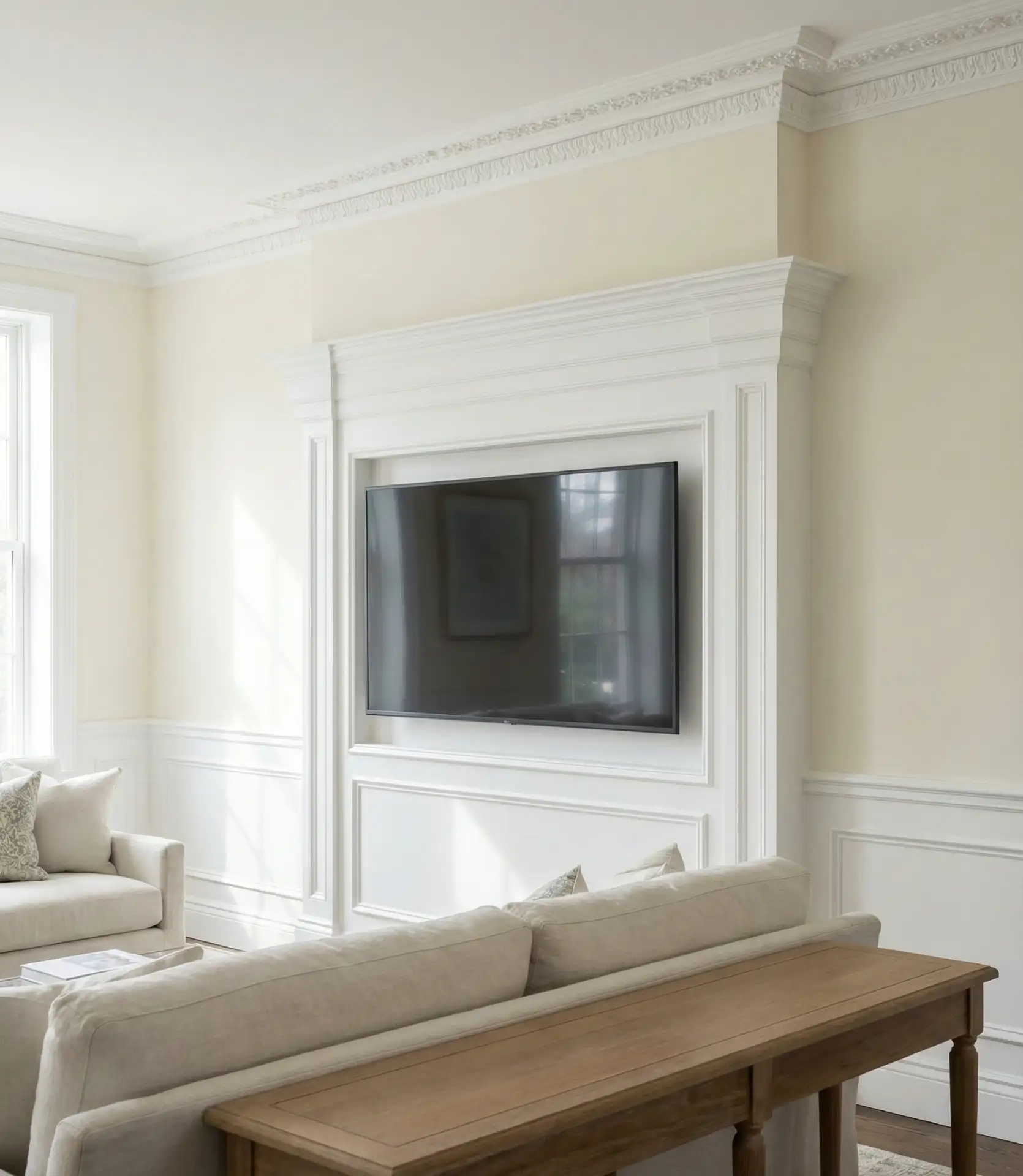
Crisp white molding creates a picture-frame effect around the TV, borrowing from neoclassical design traditions while acknowledging contemporary needs. The frame can be simple or ornate depending on your home’s existing trim, but the key is proportion—the molding should be substantial enough to read as intentional rather than an afterthought. This treatment works particularly well in older homes where you’re adding modern technology to period architecture.
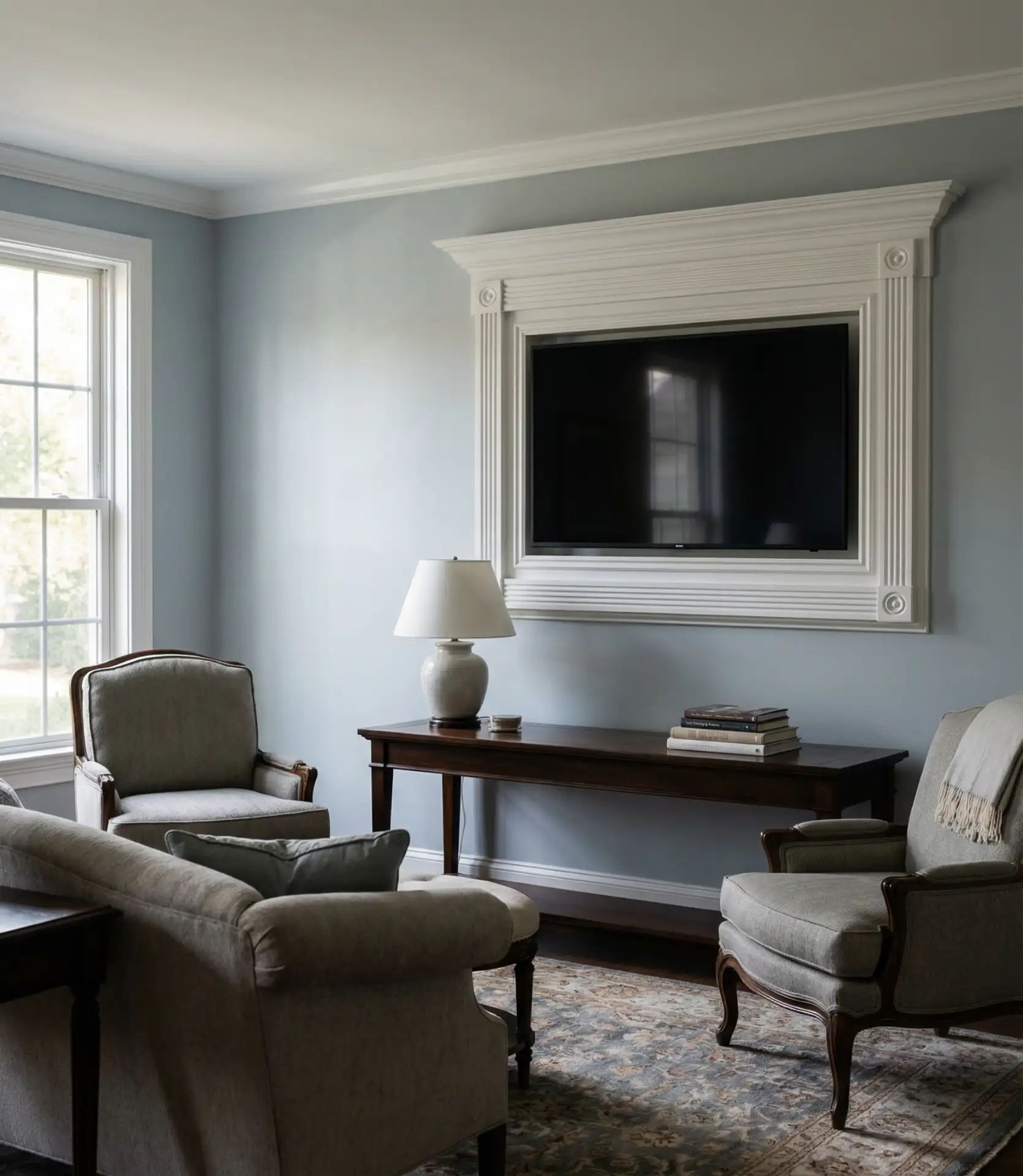
Think of the molding as the design equivalent of matting and framing art—it gives the TV boundaries and makes it feel like a deliberate part of the room’s composition. In historic neighborhoods across the Northeast and South, this approach helps modern electronics coexist with original plasterwork and trim without creating jarring visual conflict.
9. Integrated Fireplace and TV Column
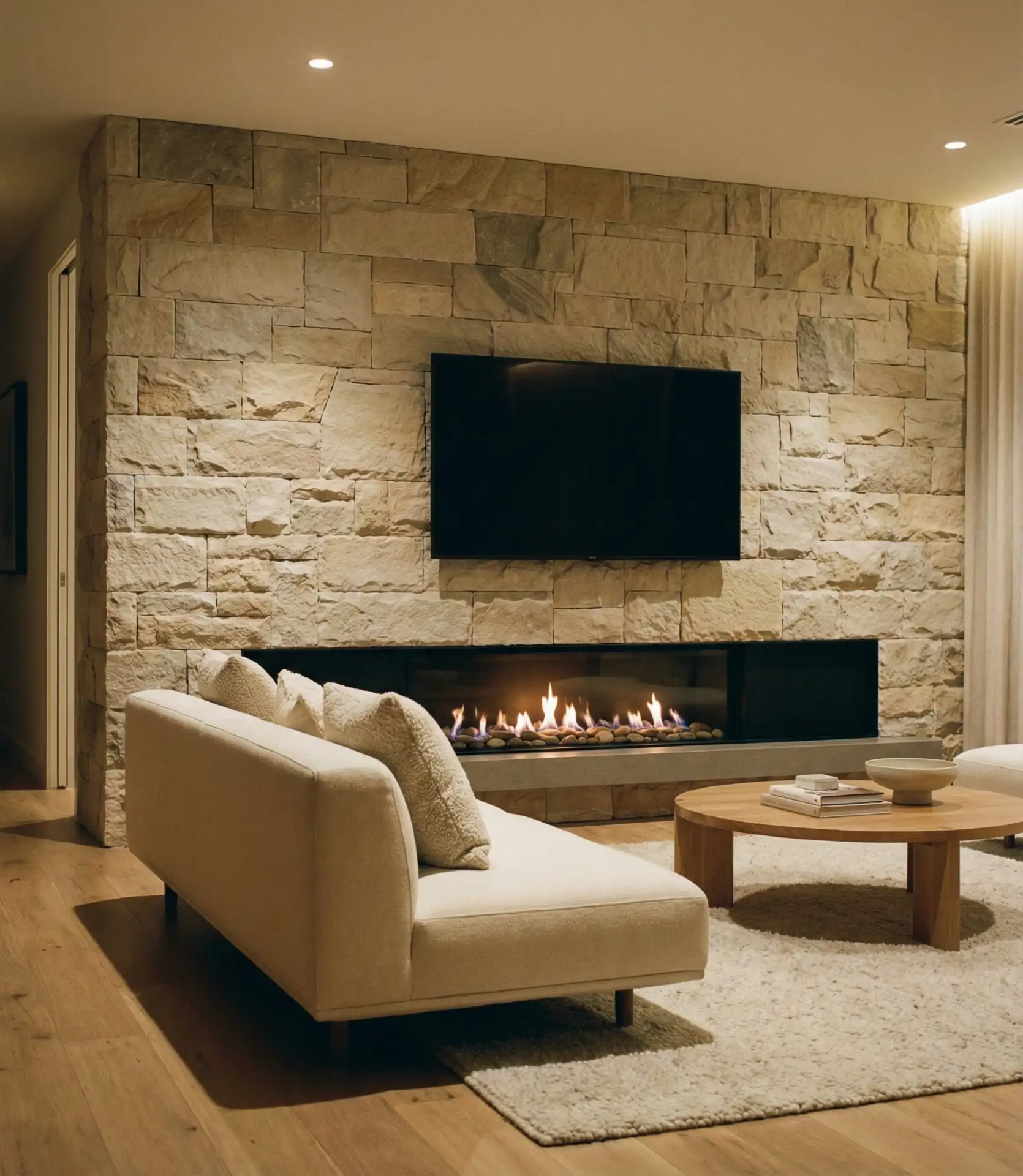
Stacking the TV above a linear fireplace creates a vertical focal point that handles two functions within one architectural element. Modern electric or gas fireplaces run low and wide, minimizing the height at which the TV must hang. The key is keeping the fireplace surround minimal so both elements read as part of a unified composition rather than competing features.
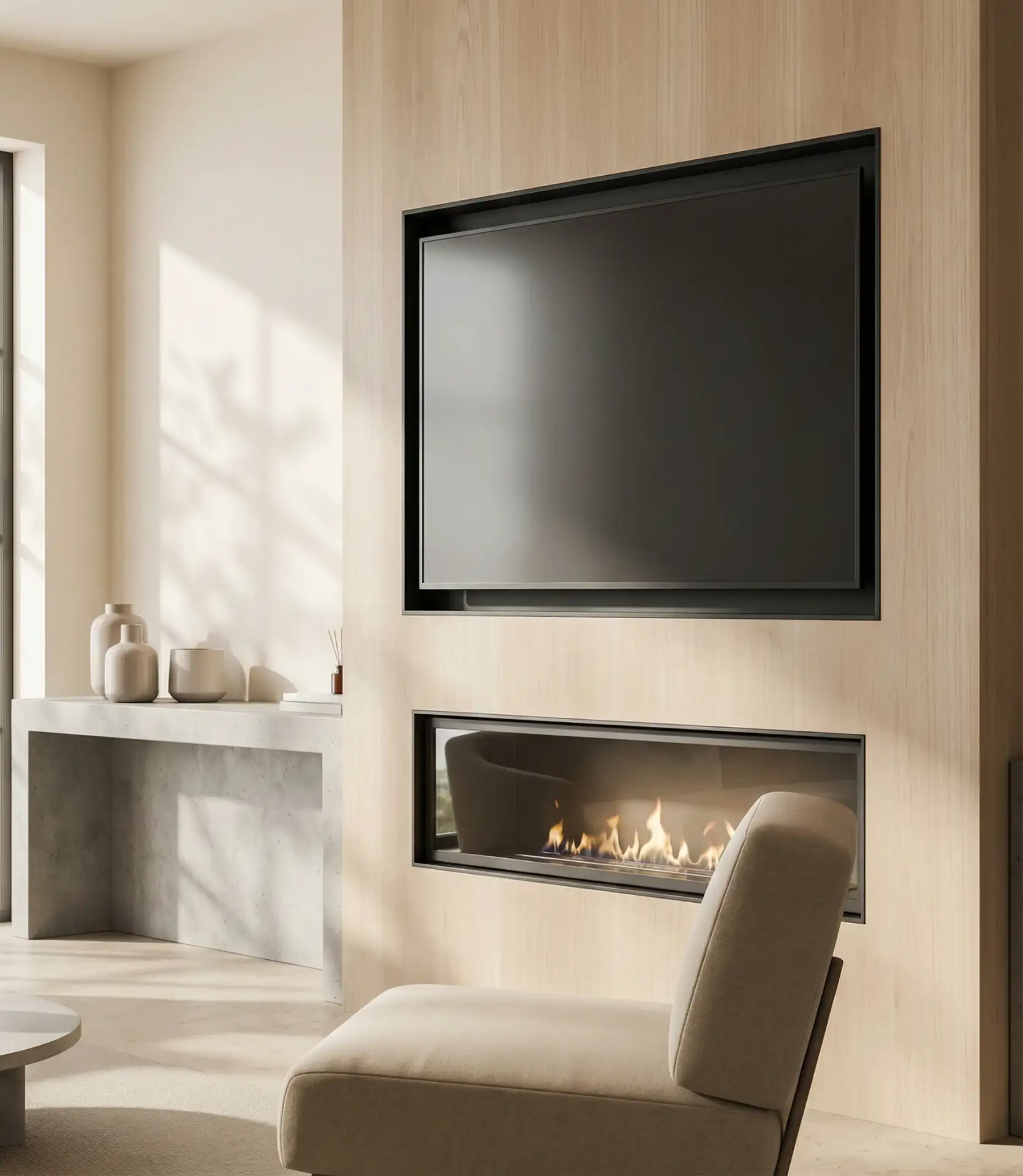
Many homeowners worry about heat damage, but modern fireplaces emit minimal upward heat when properly installed with code-compliant clearances. In colder climates—think Michigan, Minnesota, Wisconsin—this pairing makes practical sense, offering both ambient warmth and entertainment in one well-organized zone. Just ensure the TV sits at least 12 inches above the fireplace opening to maintain comfortable viewing angles.
10. Bedroom TV in Upholstered Wall Panel
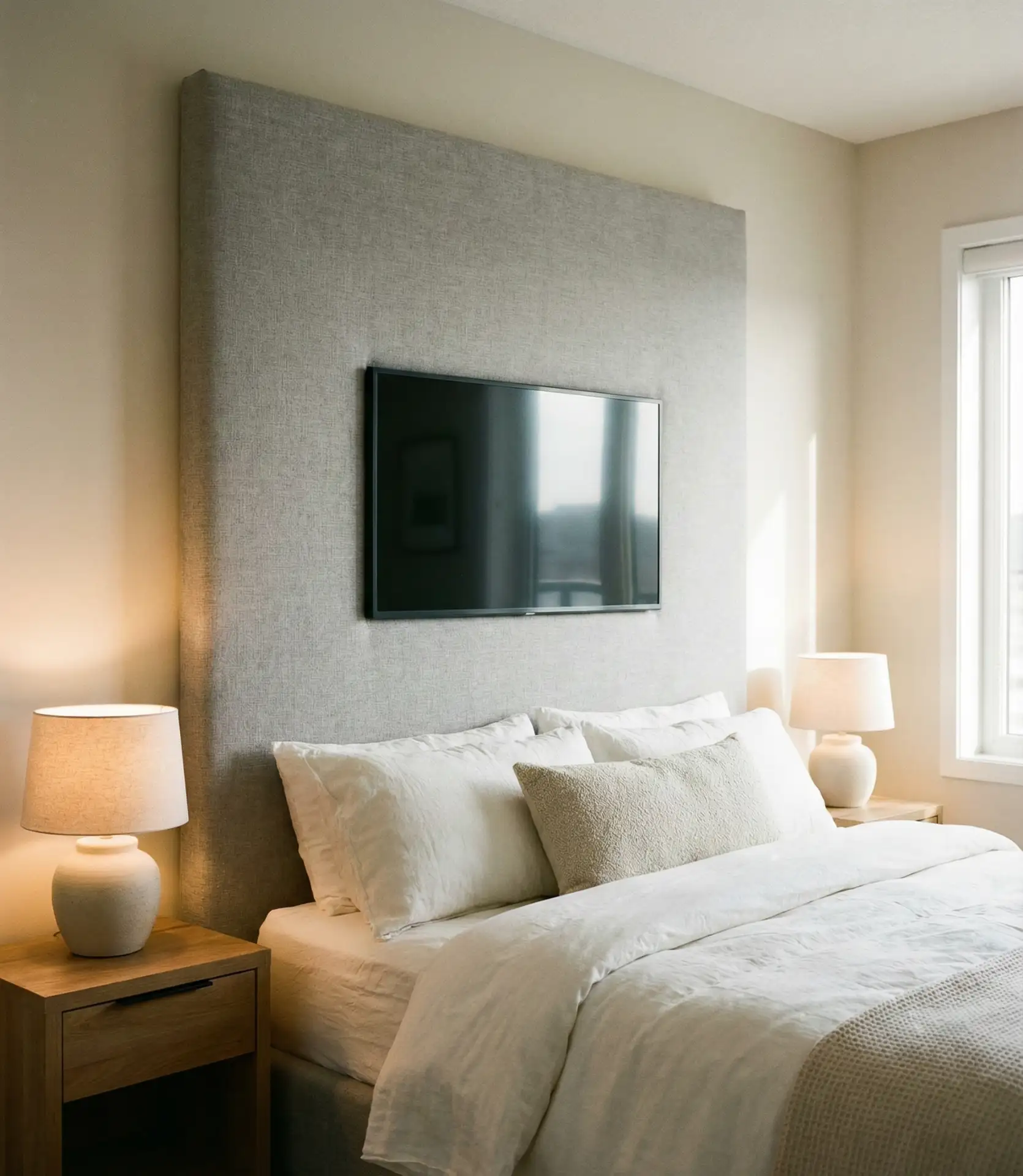
A padded, fabric-wrapped panel behind the bedroom TV introduces softness and sound absorption in one move. The upholstery can match the headboard or bed linens, creating visual continuity across the space. This approach feels particularly appropriate in primary suites where you want the TV present but not dominant, and the textile surface helps the screen blend into the room’s quieter, more restful character.
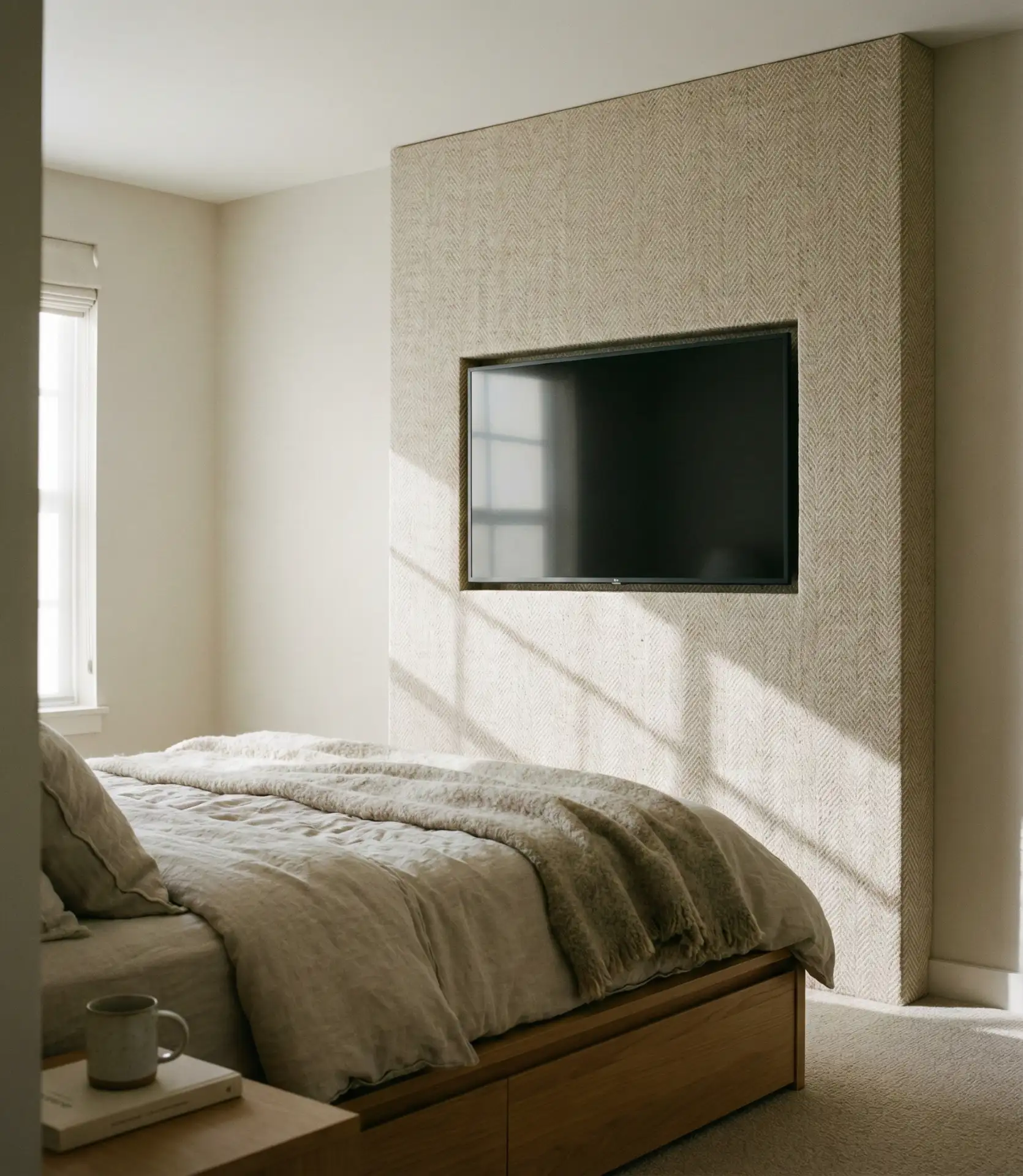
This treatment costs less than stone or extensive millwork—typically $800 to $2,000 for materials and installation on a standard accent wall—making it an accessible way to add texture and interest. The fabric also dampens sound reflections, which improves both TV audio quality and overall bedroom acoustics.
11. Cantilevered Study Table with Wall-Mounted Screen
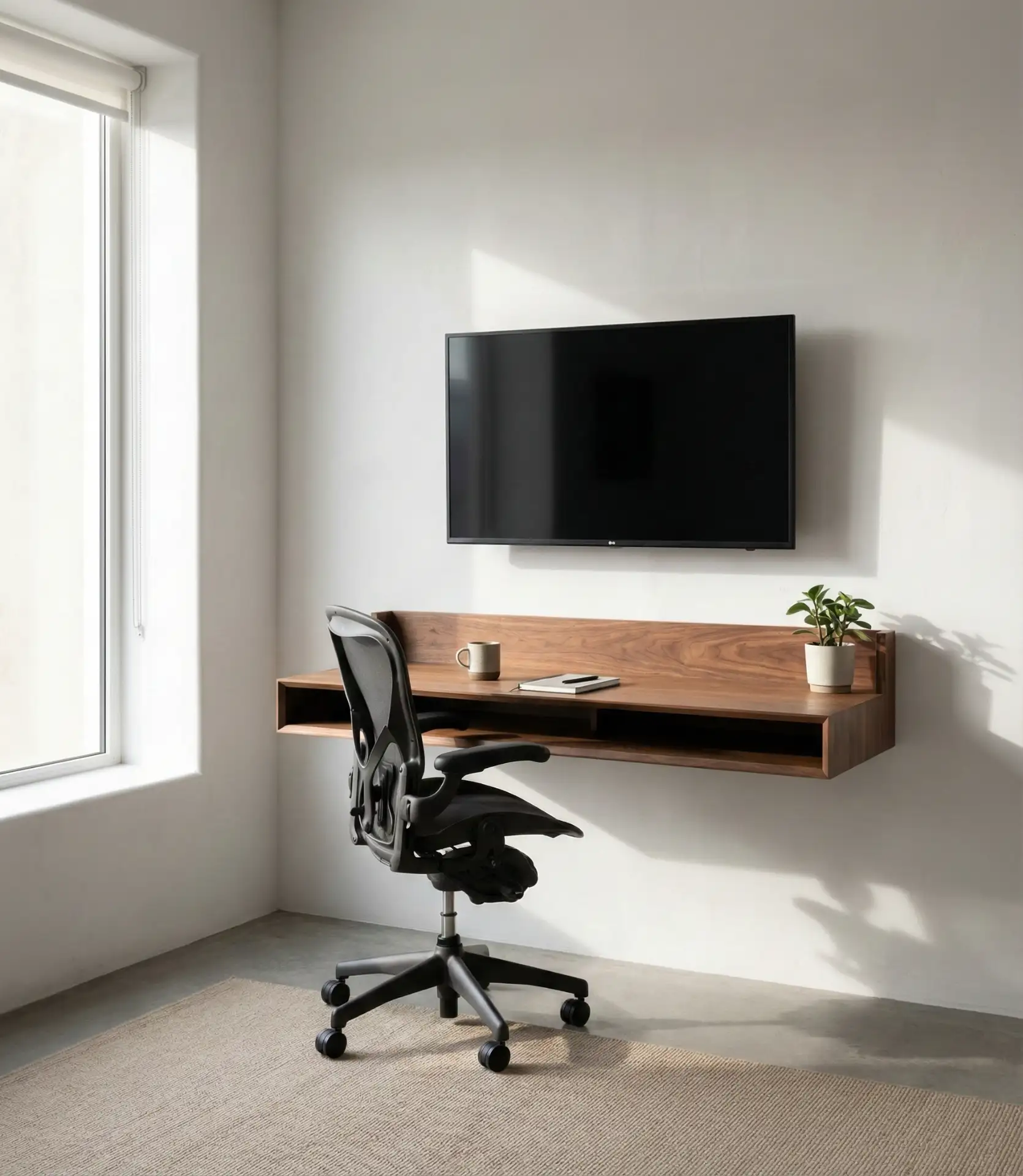
Mounting a screen above a wall-hung study table creates a flexible space that handles work during the day and entertainment at night. The desk surface extends from the same wall plane as the TV, creating a continuous relationship between the two functions. This setup is ideal for small-space apartments or guest bedrooms that need to serve multiple purposes without dedicated furniture for each activity.
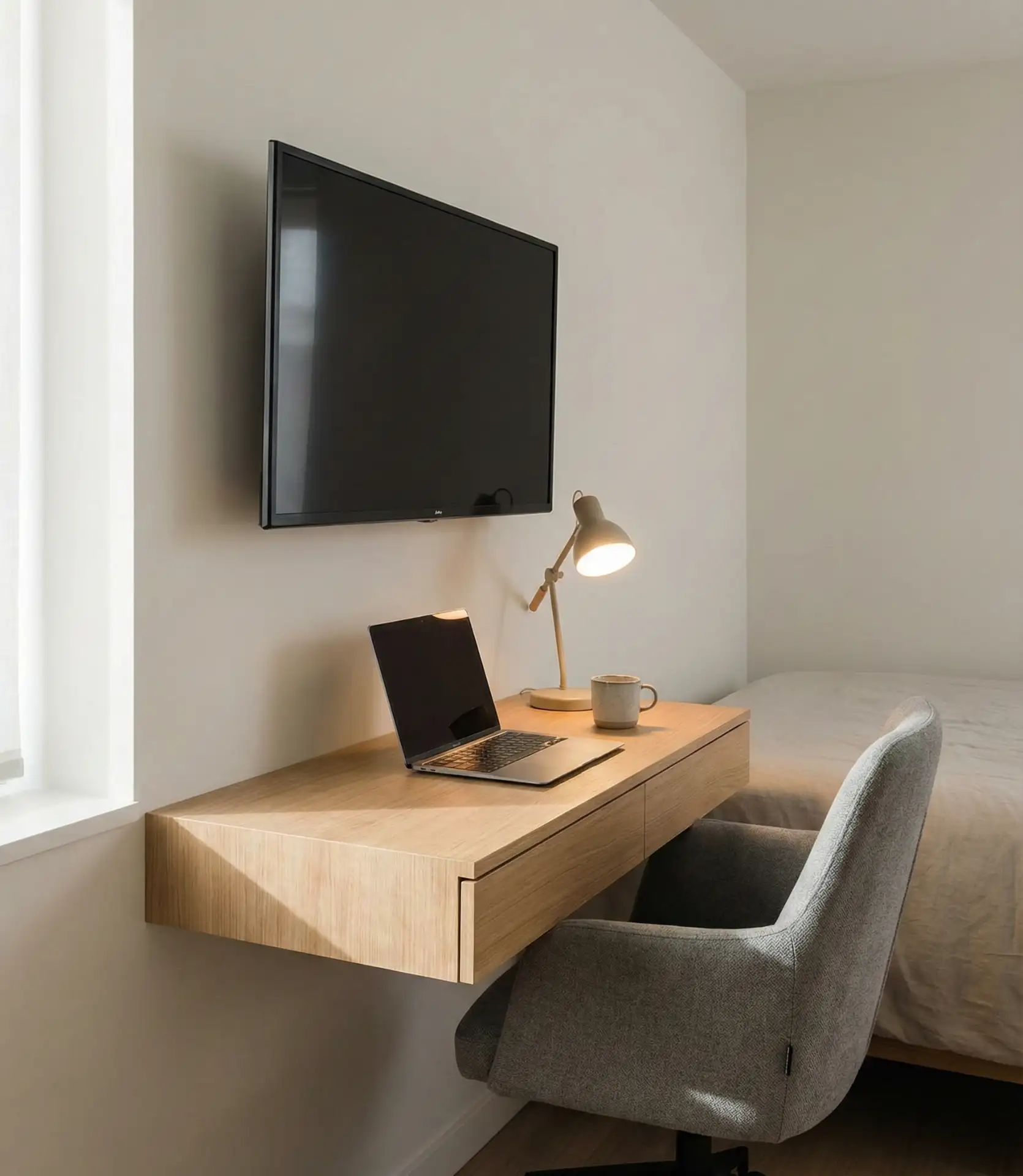
Urban apartments in cities like New York, San Francisco, and Seattle, where space is limited and every room requires multitasking, are the ideal locations for this setup. Position the TV high enough that you’re not staring directly into the screen while working at the desk—about 50 to 55 inches to center keeps it in peripheral vision during Zoom calls without creating neck strain during movie nights.
12. Hidden TV Behind Sliding Art Panels
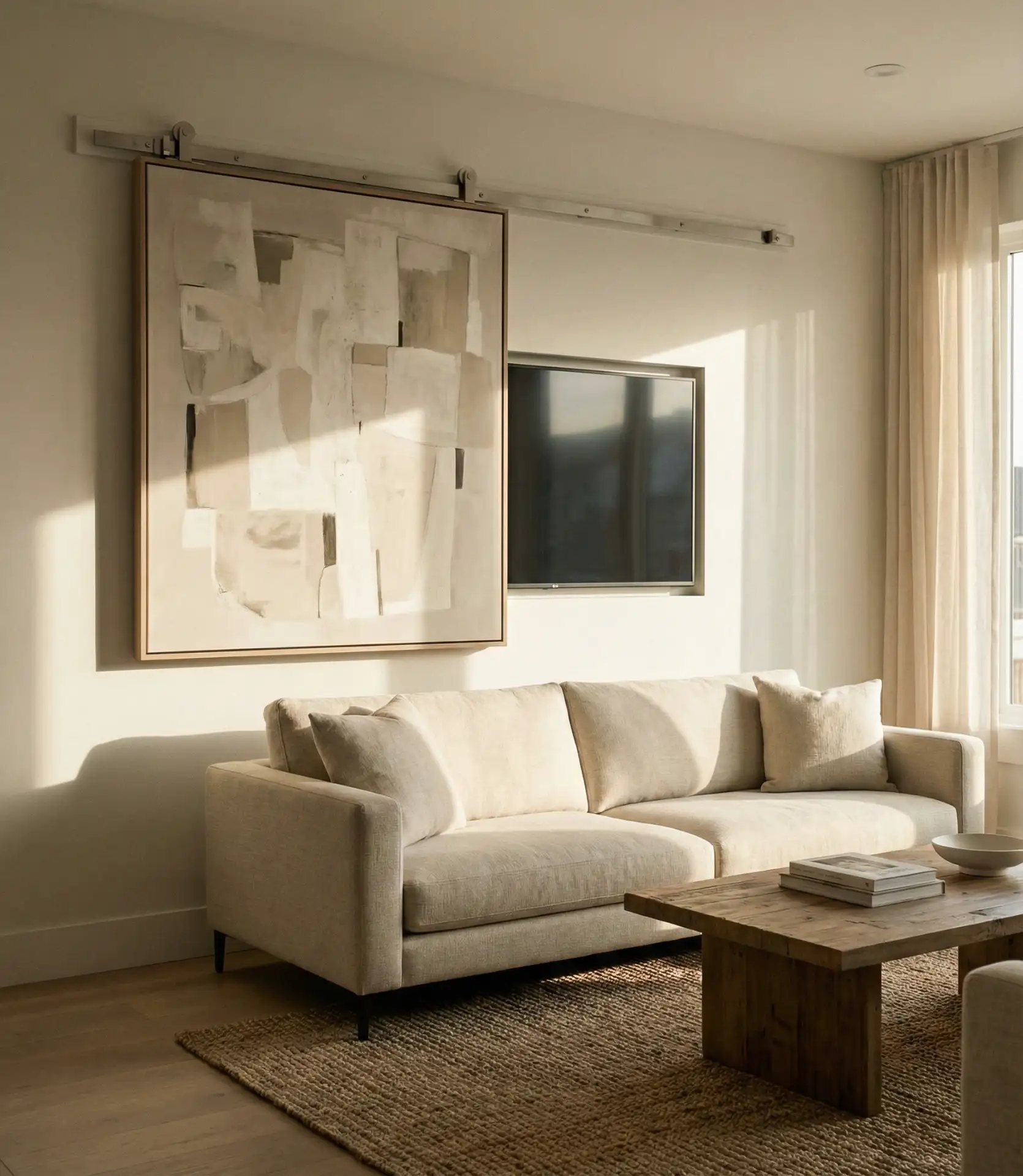
Concealing the screen behind artwork or decorative panels that slide on a track system lets you control when the TV becomes visible. When closed, the wall displays art or mirrors; when open, the panels tuck neatly to the sides. This unique solution appeals to those who love design but resist having a black rectangle dominate their carefully curated rooms.
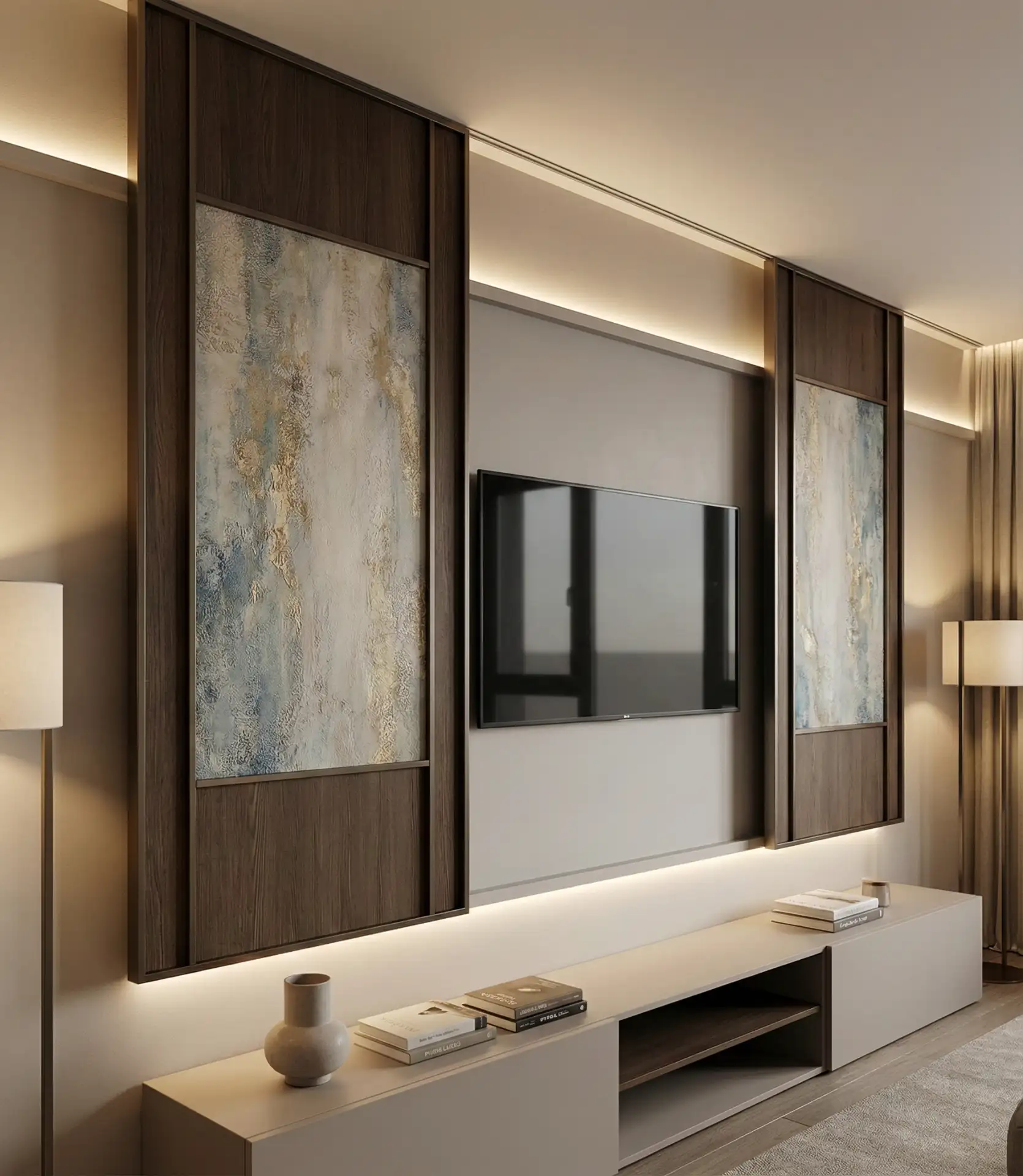
One couple I know installed this system in their formal living room and mentioned they actually use the room more now. With the TV hidden, the space feels appropriate for conversation and entertaining; when they want to watch something, the panels slide open in seconds. It’s a small psychological shift, but it changes how the room functions day to day.
13. Luxury Living Room with Full-Wall Stone Cladding
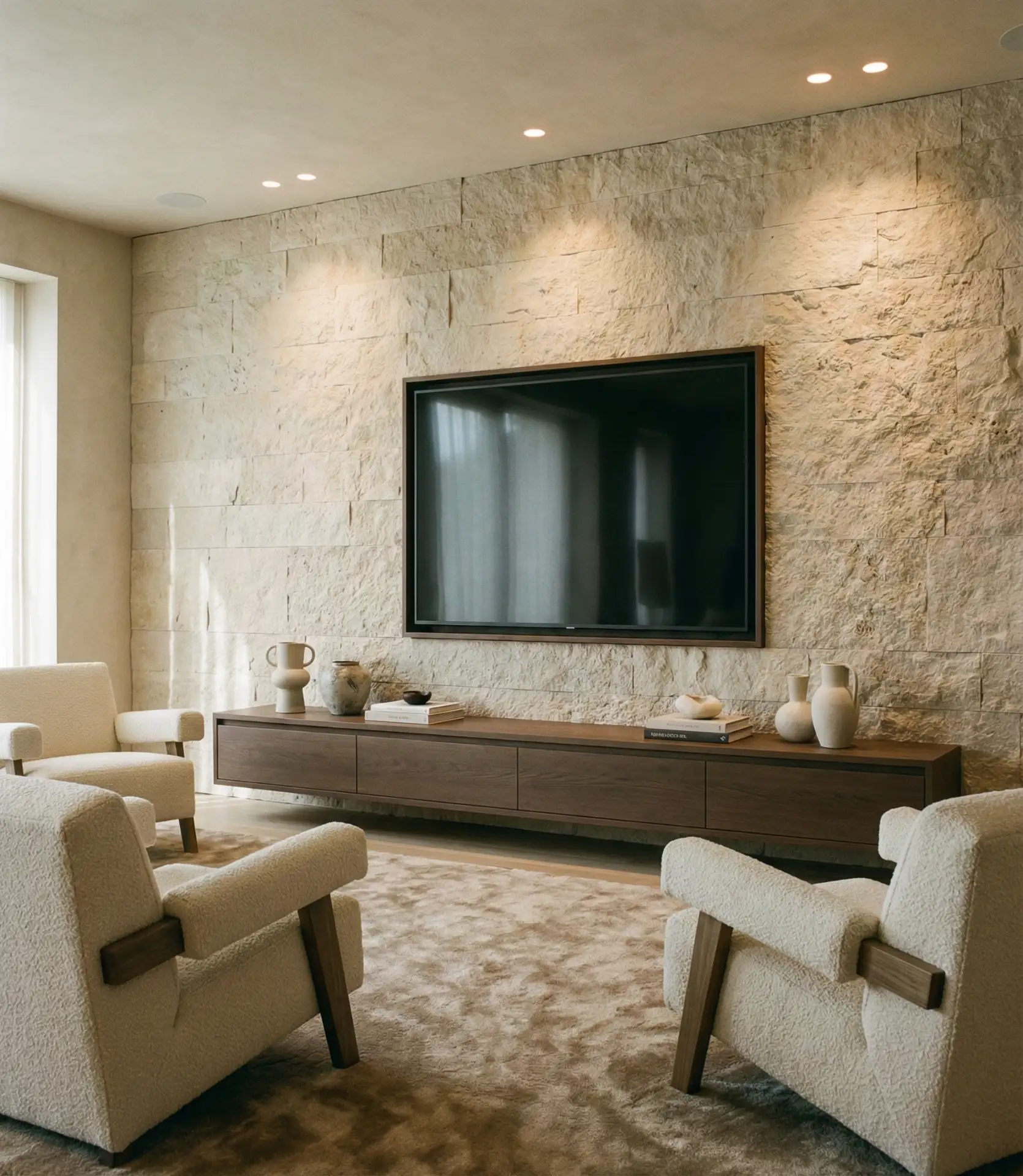
Covering the entire TV wall in natural stone creates an unmistakable statement of luxury for the living room. The material reads as permanent and substantial, whether you choose stacked ledgestone, honed limestone, or book-matched slabs. The TV mounts directly to the stone, becoming part of the textured surface rather than sitting against it. This treatment anchors the room and provides a compelling focal point that works year-round, not just when the TV is on.
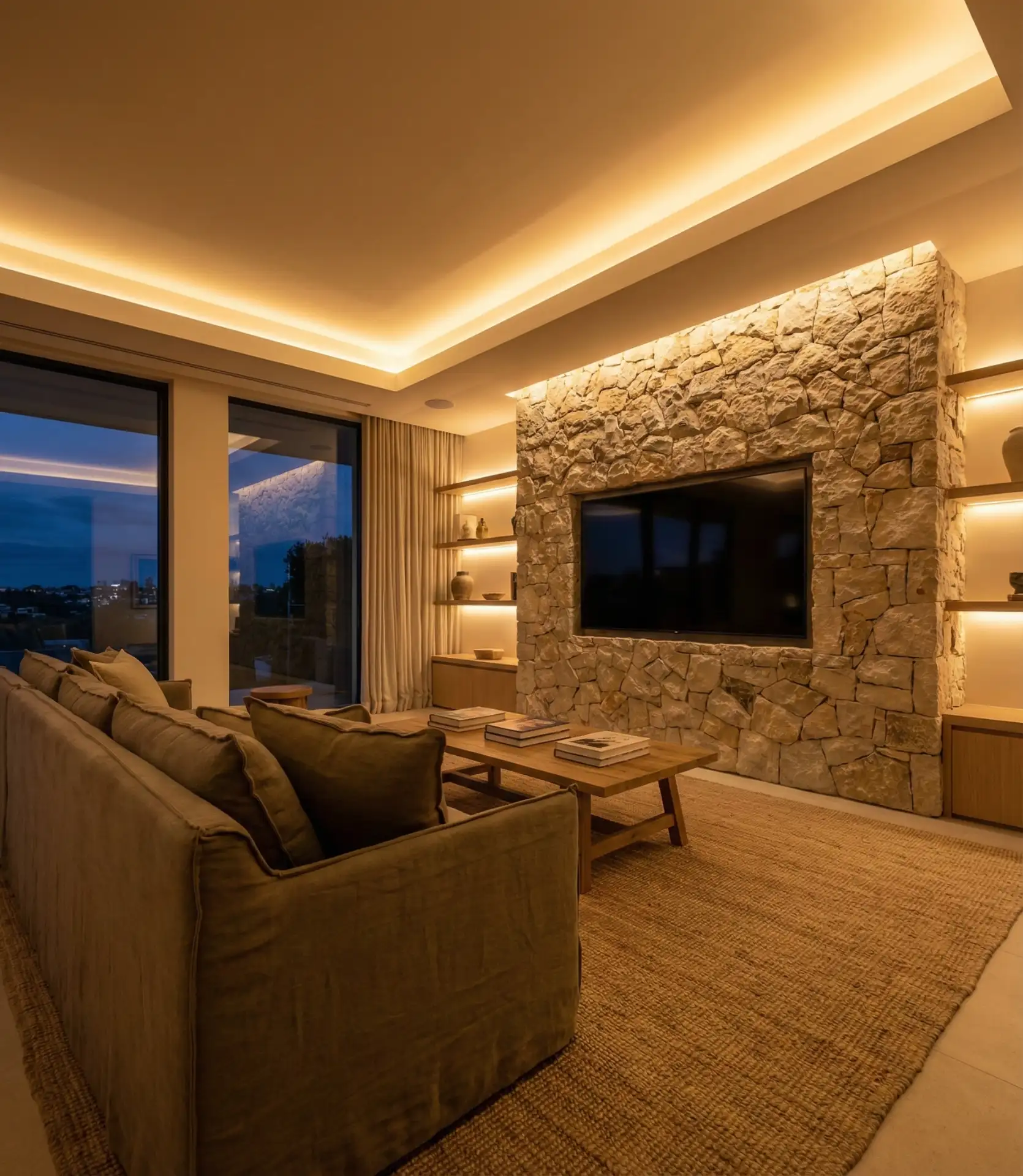
Across the Sun Belt—Arizona, Nevada, Southern California—this design resonates with homeowners who appreciate materials that feel connected to the landscape. Stone stays cool to the touch in hot climates and doesn’t show fingerprints or smudges the way glossy surfaces do, making it practical as well as beautiful in high-use family spaces.
14. Minimalist White-on-White Composition
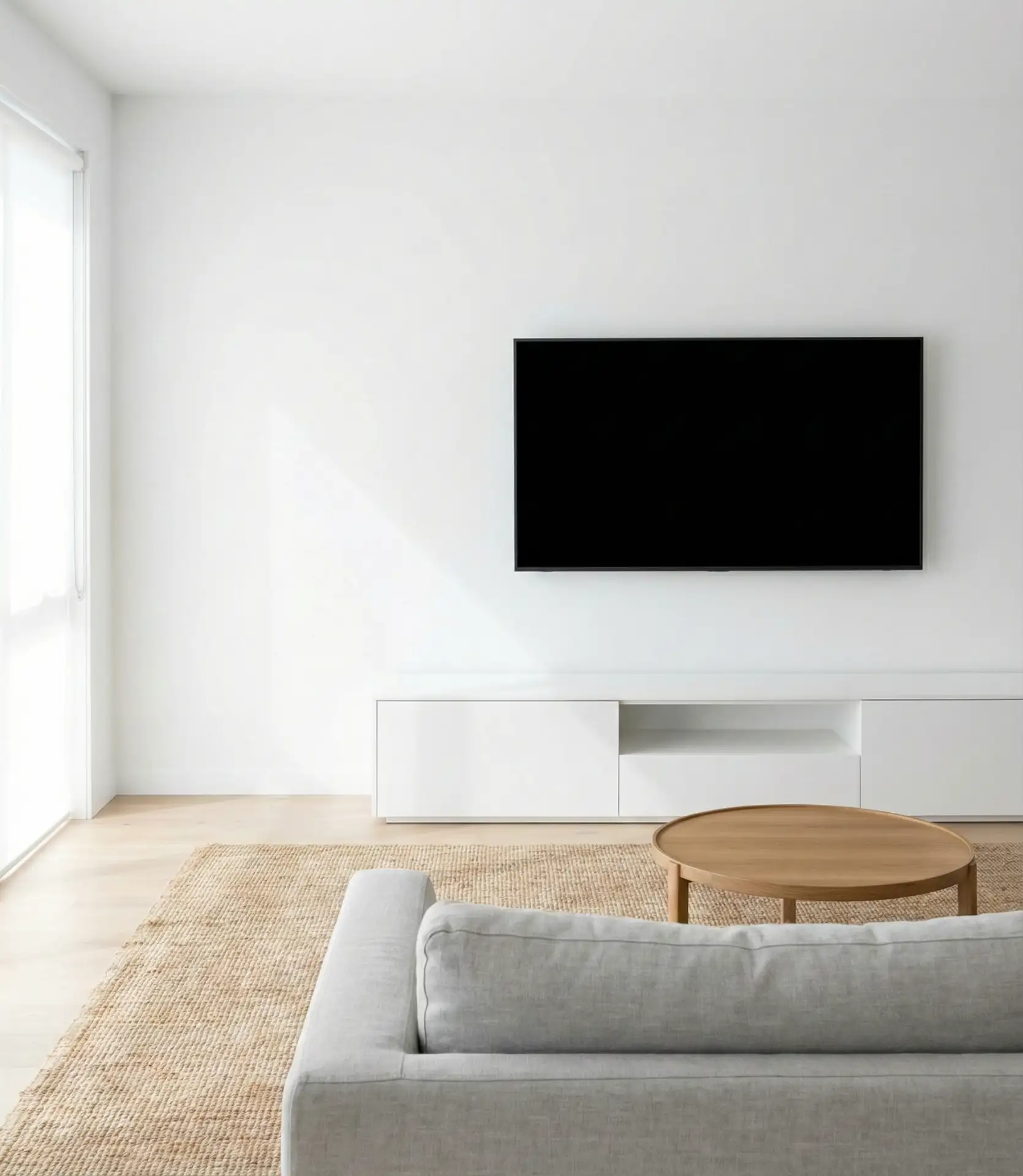
A minimal all-white treatment makes the TV nearly disappear when off, with the screen reading as a dark rectangle within a light field. The surrounding wall remains completely plain or features subtle texture through plaster finish or paint sheen variation. This small-space living room minimalist approach relies on restraint—no shelves, no decorative objects, no competing elements—letting the architecture and furniture define the room.
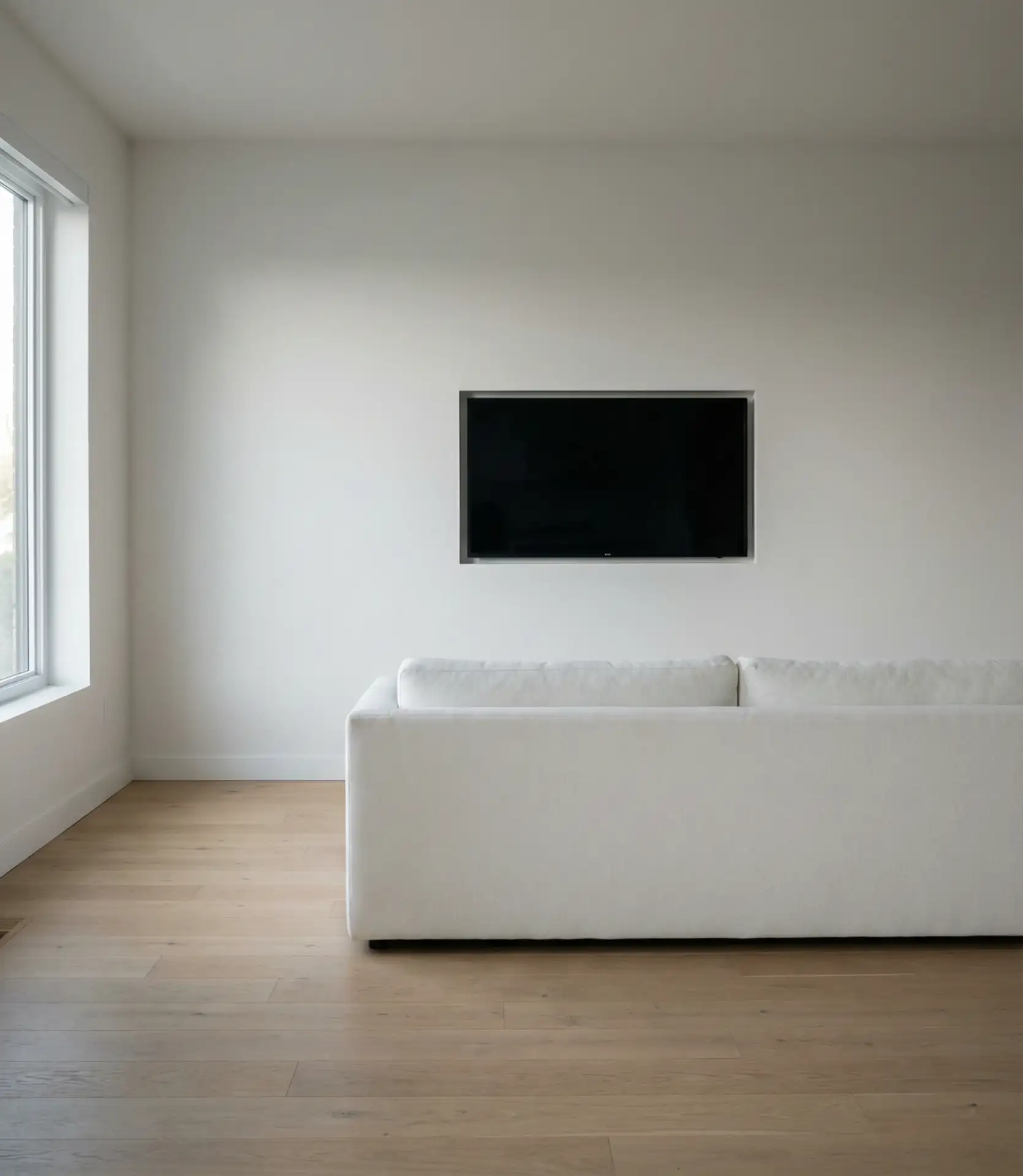
This pared-down aesthetic can feel stark if not balanced with warmth elsewhere in the room. Add texture through natural fiber rugs, linen upholstery, or wood furniture to prevent the space from feeling institutional. The goal is calm simplicity, not coldness—the TV wall stays quiet so the rest of the room can breathe.
15. Luxury Classic Paneled Wainscoting
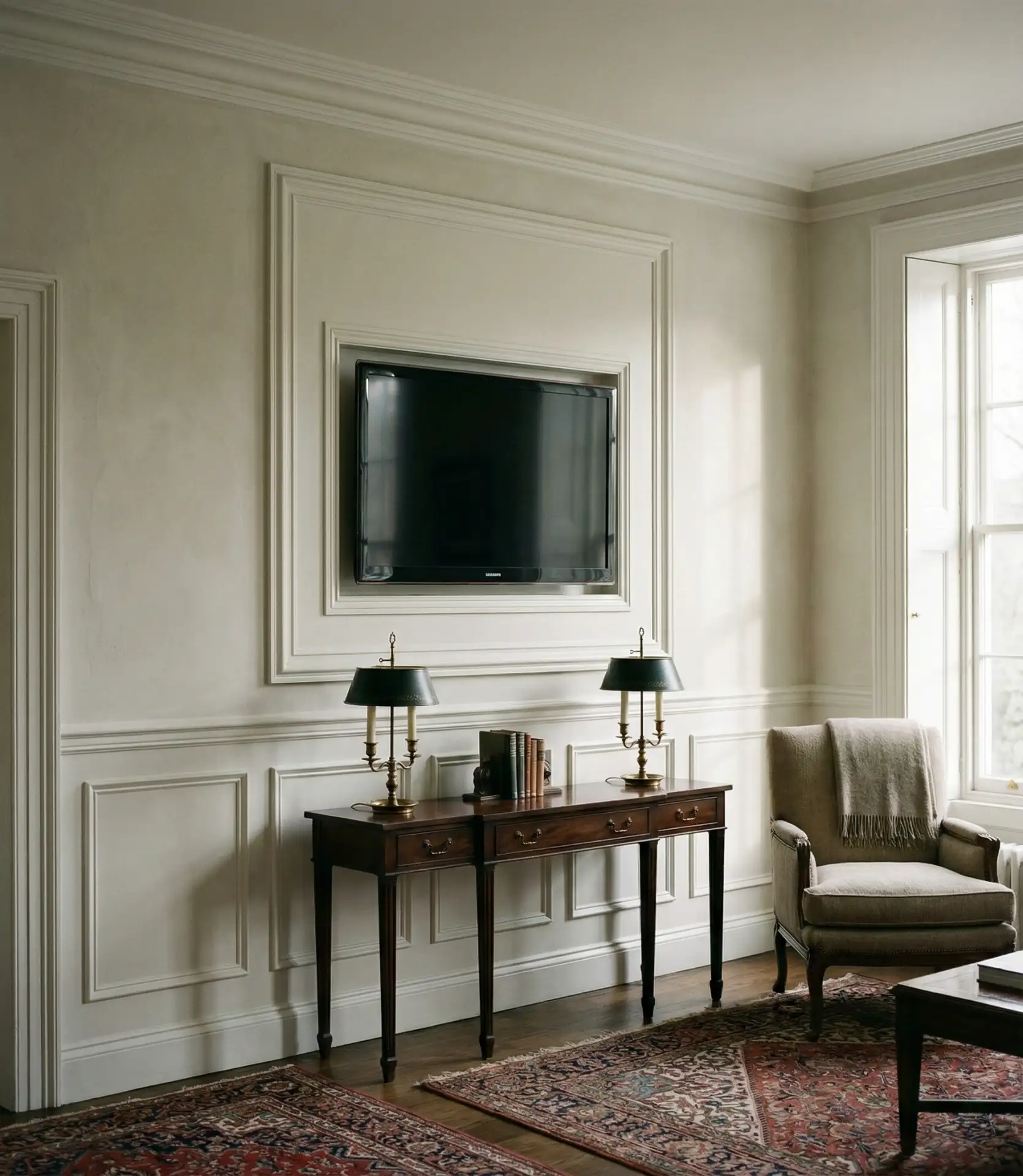
Full-height raised panel wainscoting in painted wood brings luxury classic detailing to the TV wall, creating depth through shadow lines and traditional proportions. The TV sits within one of the panels or is mounted to the flat wall between panel sections, depending on your room’s geometry. This treatment feels at home in Colonial, Georgian, or French-inspired interiors where architectural detail matters as much as the furniture.
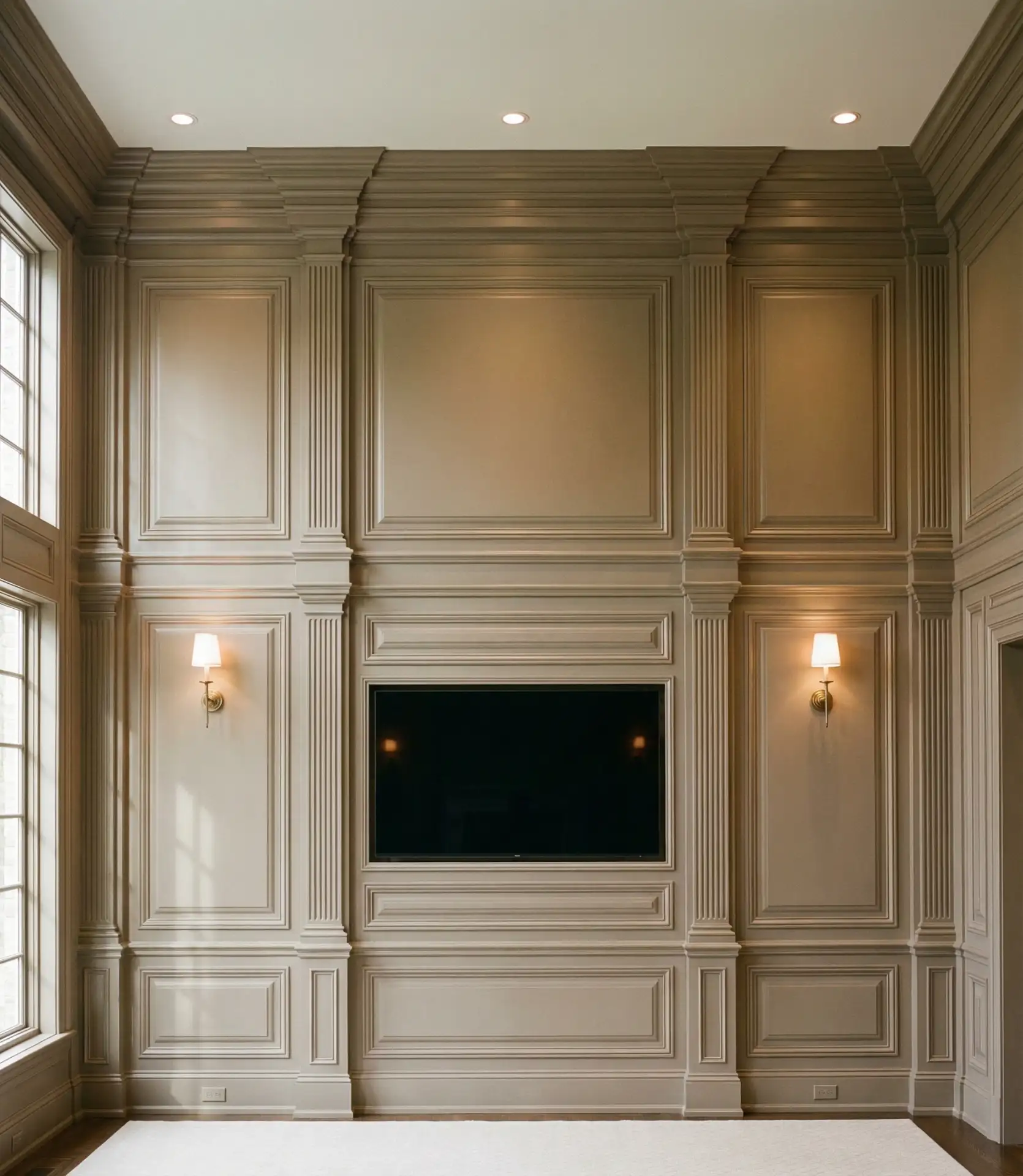
A mistake here is choosing panels that are too small or too ornate, which can make the TV look oversized and awkward. Work with larger panels—at least 24 inches wide—to create proportions that accommodate contemporary screen sizes without the millwork appearing dainty or overwhelmed.
16. Staircase Underside Media Wall
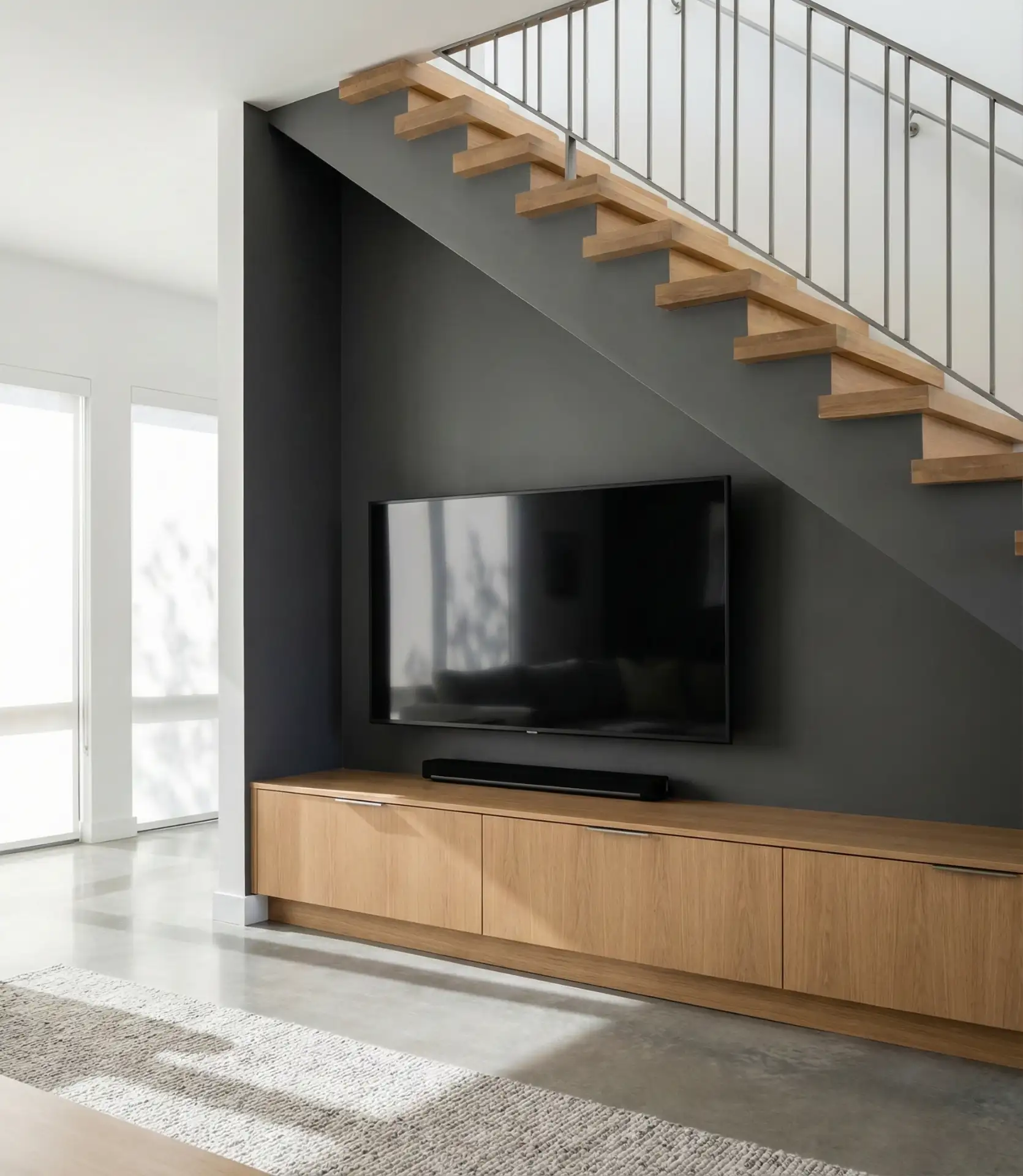
Using the wall beneath a staircase for the TV takes advantage of often-wasted space in open-plan homes. The angled ceiling created by the stair run above adds architectural interest, and built-in storage along the lower portion handles components and media. This layout works particularly well in split-level or two-story homes where the staircase occupies a prominent position in the main living area.
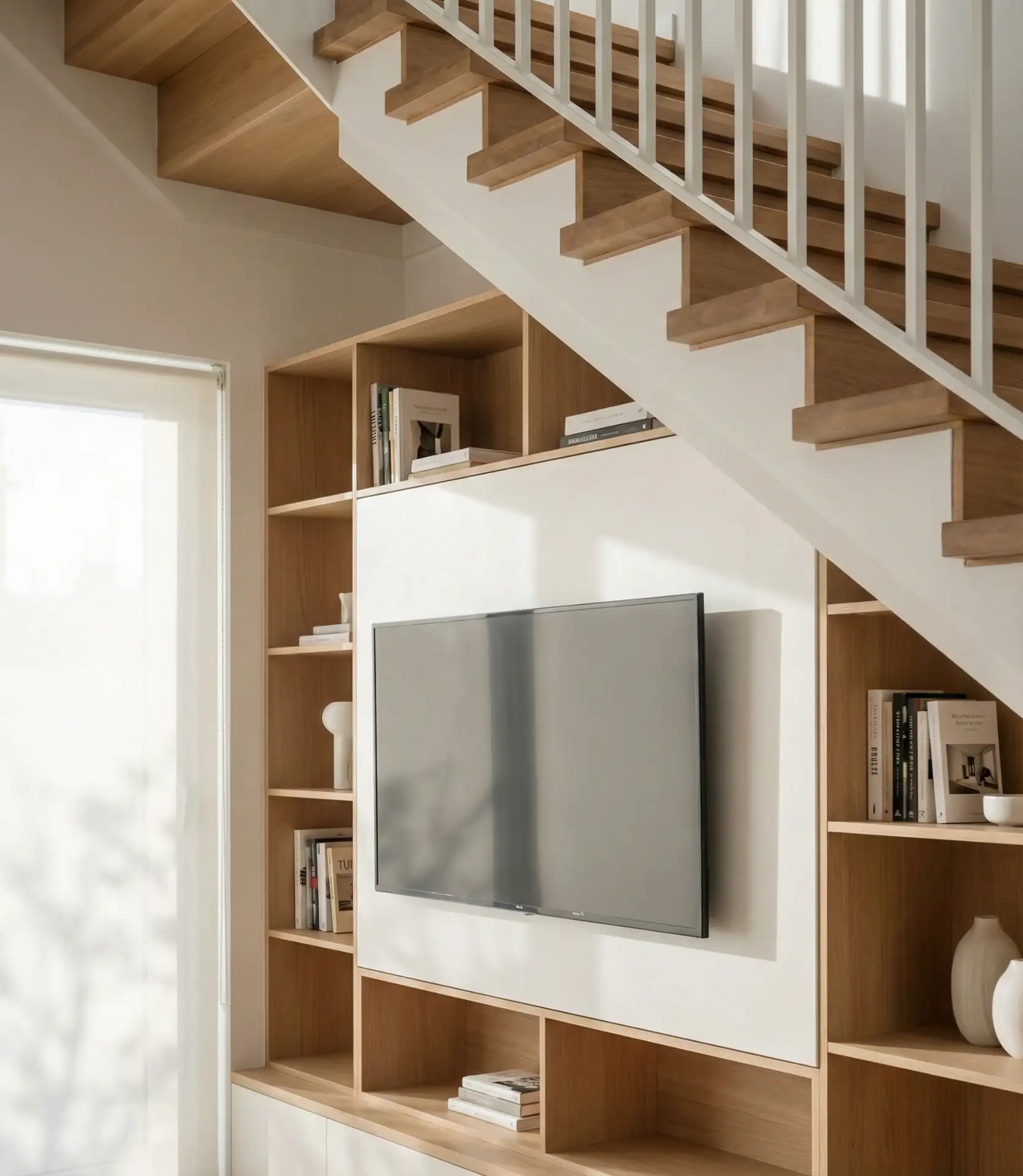
The design works best in homes built after 2010, when open layouts became the norm and staircases moved from closed hallways to living spaces. The setup creates a natural gathering zone without dedicating an entire wall to entertainment—the stairs provide structure, and the TV fits into the geometry that’s already there.
17. Hotel Room-Inspired Headboard Wall
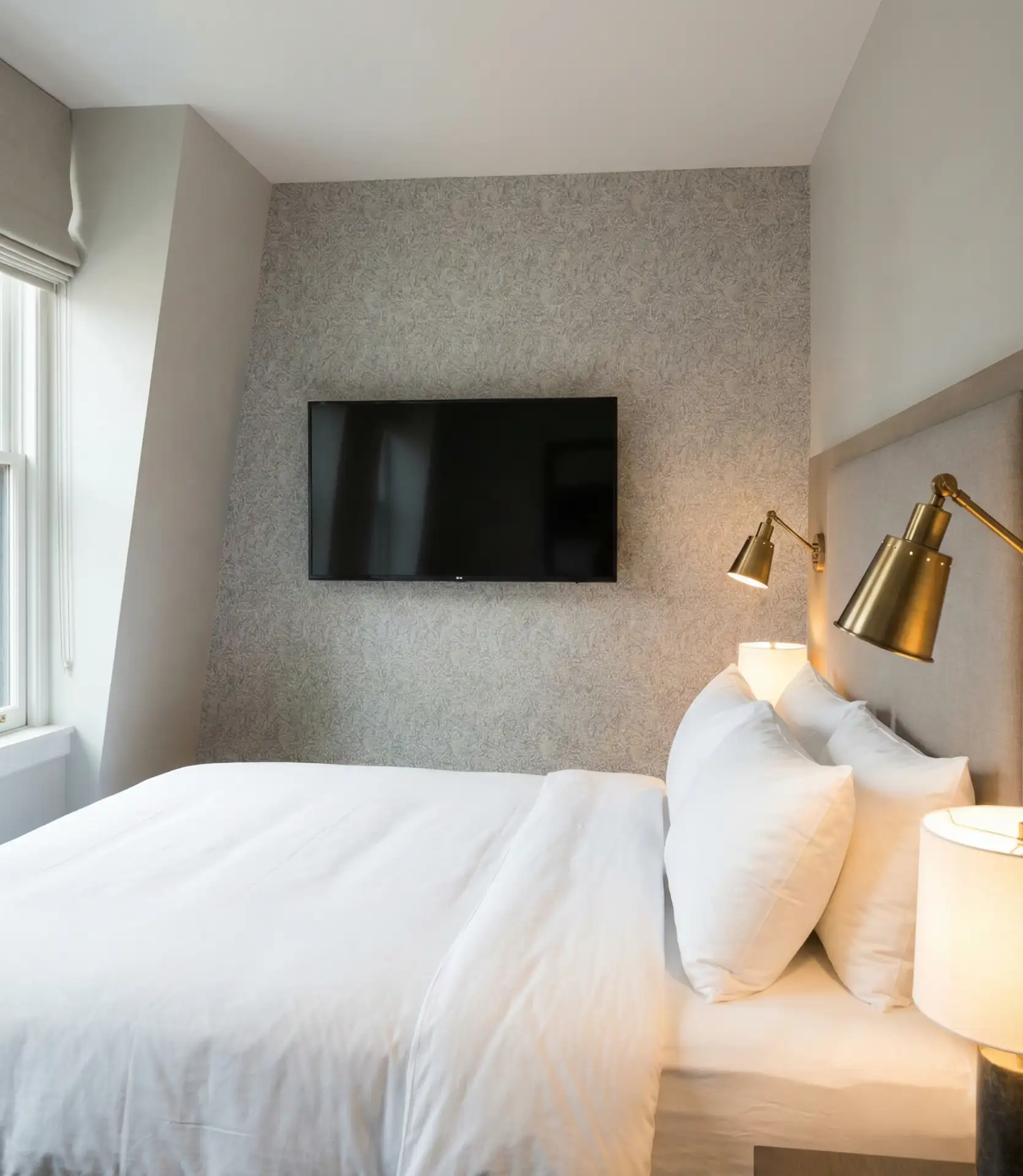
Borrowing from boutique hotel design, the TV mounts on the wall opposite the bed within a larger decorative treatment that might include wallpaper, wood paneling, or padded fabric. The goal is making the TV feel like part of the room’s intentional design rather than an afterthought. Flanking sconces or reading lights continue the hospitality aesthetic and add functional task lighting.
Homeowners often discover that what makes hotel rooms feel polished is the coordination between elements—the TV doesn’t just hang randomly but sits within a composed arrangement of lighting, art, and materials. Replicating this at home means thinking about the entire wall, not just where to put the mount.
18. Asymmetric Shelving with TVs Off-Center
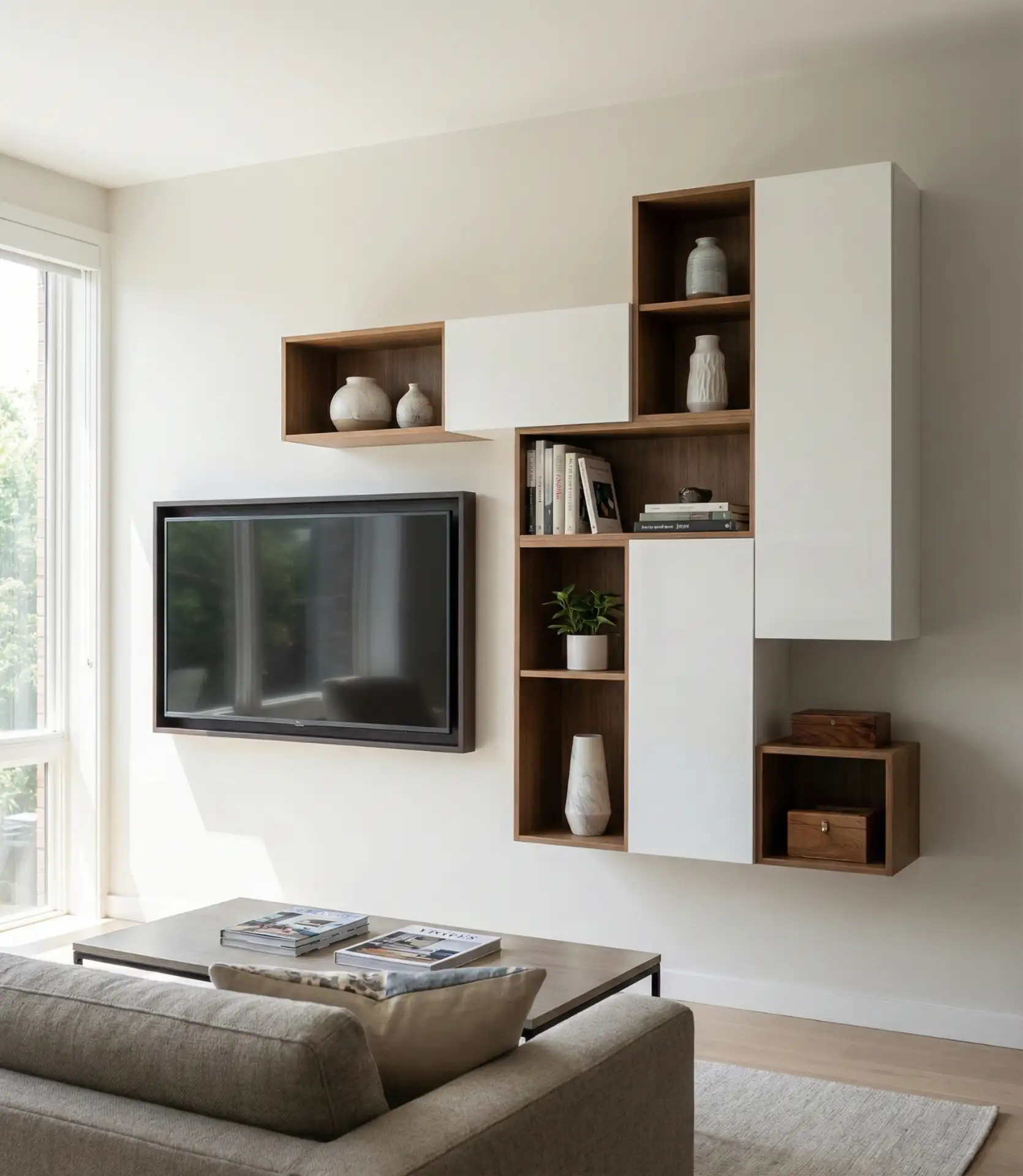
Breaking from centered symmetry, an off-center TV paired with asymmetric storage shelving creates a more dynamic, collected-over-time feeling. The TV sits to one side while open shelves, cabinets, or a combination of both fill the remaining wall space. This 2026 approach feels less formal and more adaptable to how people actually use their living spaces—you can rearrange objects, add plants, or change books without disturbing the TV placement.
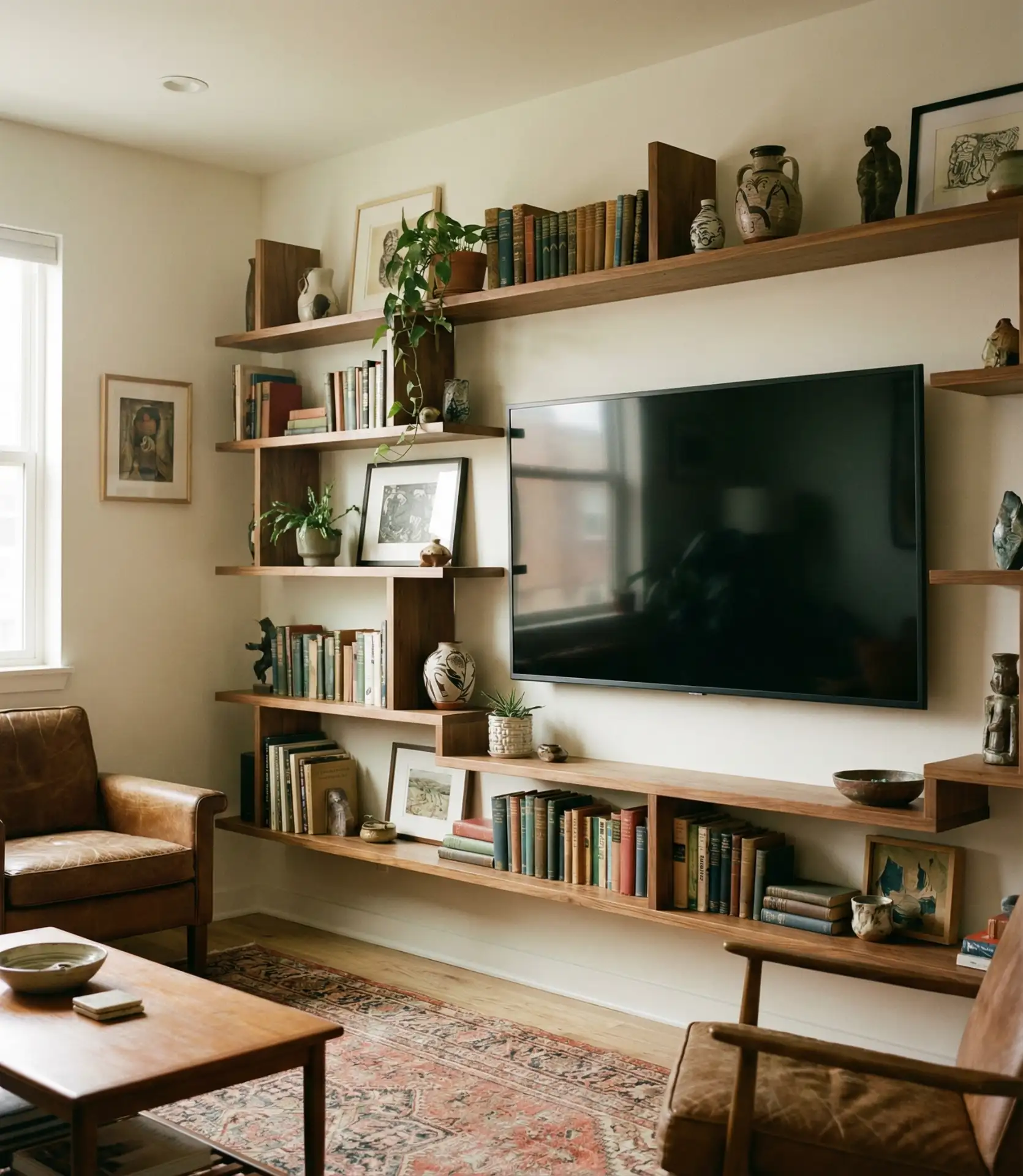
This layout requires careful planning so the off-center placement doesn’t feel accidental. The key is balancing visual weight—if the TV sits left, add substantial shelving or a large piece of art to the right. The asymmetry should feel purposeful, not like you couldn’t figure out where to put things.
19. Backlit Glass or Acrylic panels.
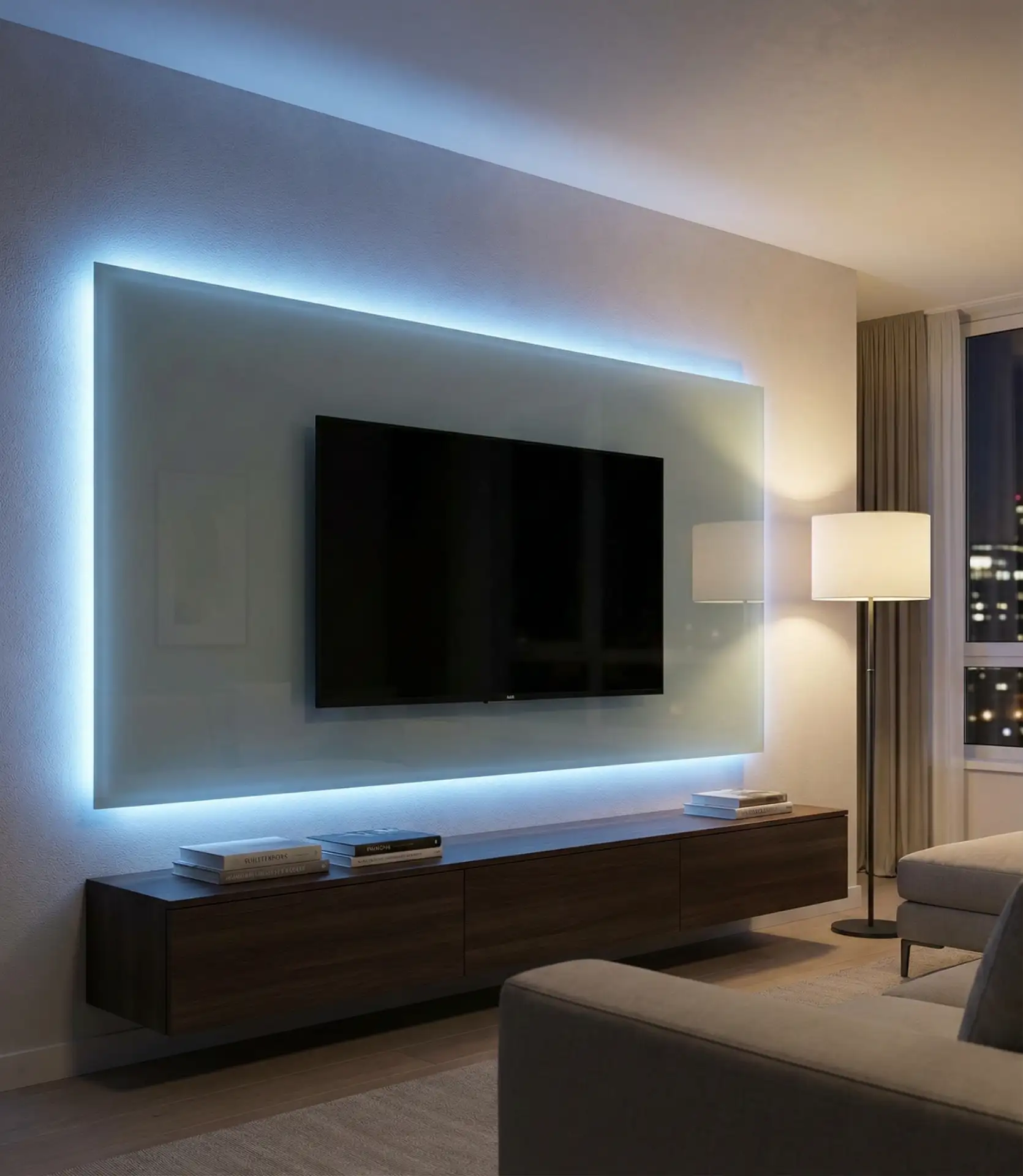
A translucent panel with LED backlighting creates an ethereal glow around the TV, adding drama without permanent structural changes. The panel can be clear, frosted, or tinted, and the lighting color adjusts to match mood or time of day. This luxury TV treatment works in modern luxury interiors where technology and atmosphere intersect, and the soft illumination reduces harsh contrast between the bright screen and dark room during movie watching.
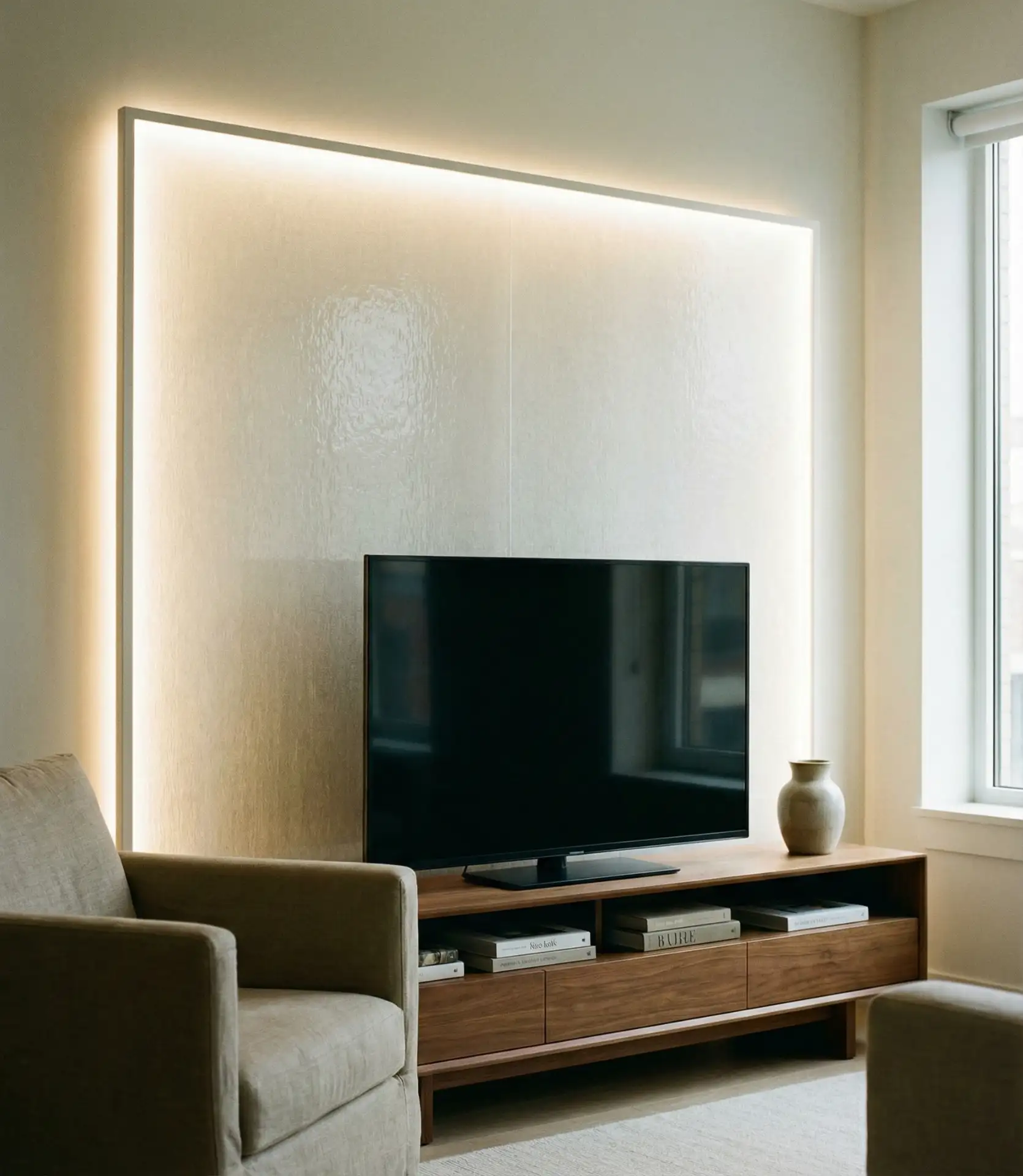
Real homeowners report that adjustable color temperature matters more than they expected. Warm lighting (2700K-3000K) feels inviting in the evening, while cooler tones (4000K-5000K) work better during daytime viewing. Smart LED systems let you program these changes automatically, so the wall adapts throughout the day without manual adjustment.
20. Rustic Reclaimed Wood Plank Wall
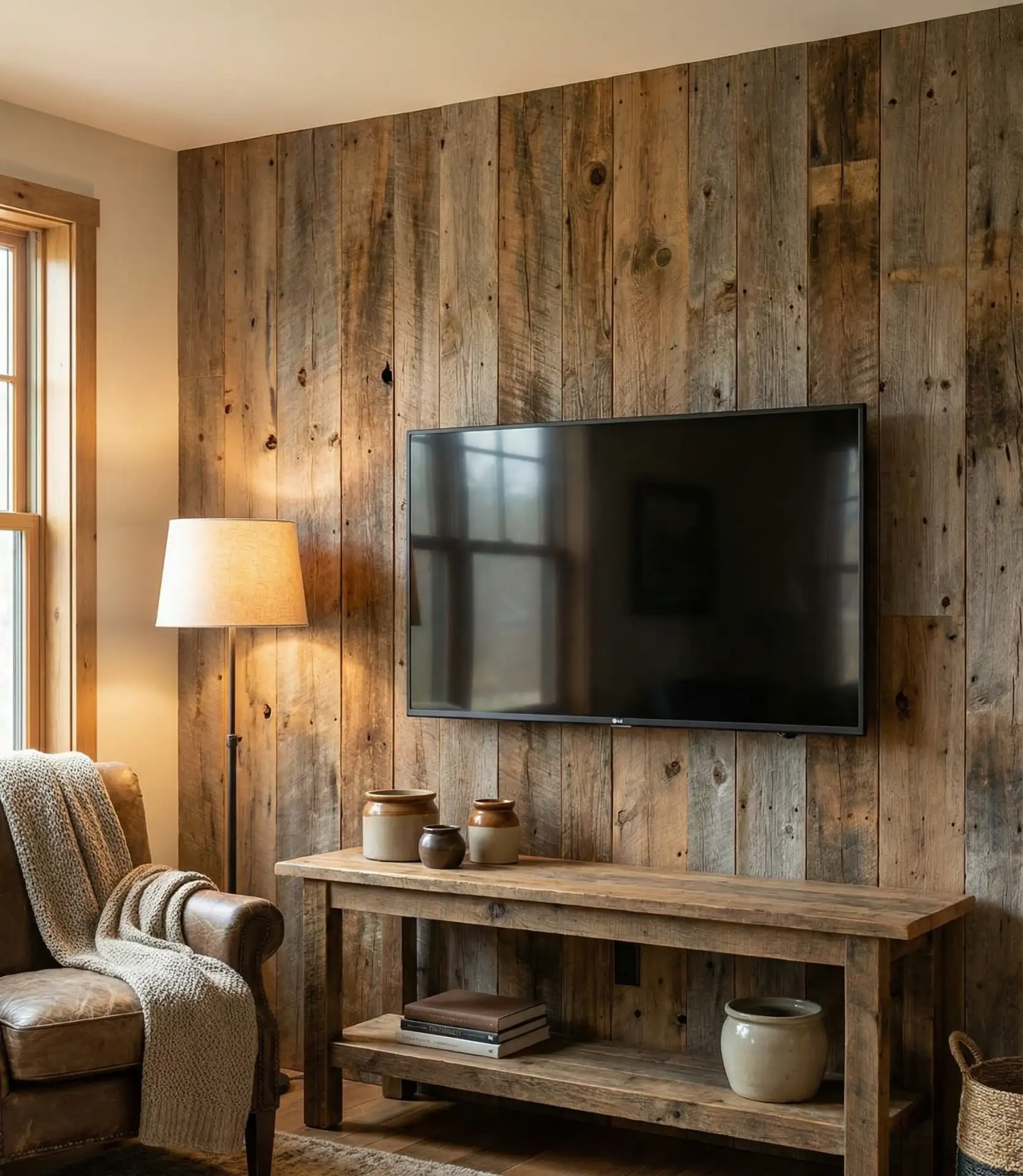
Horizontal reclaimed wood planks in varying widths and tones create texture and warmth behind the TV. The aged patina and natural imperfections add character that contrasts nicely with the TV’s sleek modernity. This treatment brings an organic, slightly rustic quality to the space without feeling overly themed—the wood simply becomes a textured backdrop that happens to hold a television.
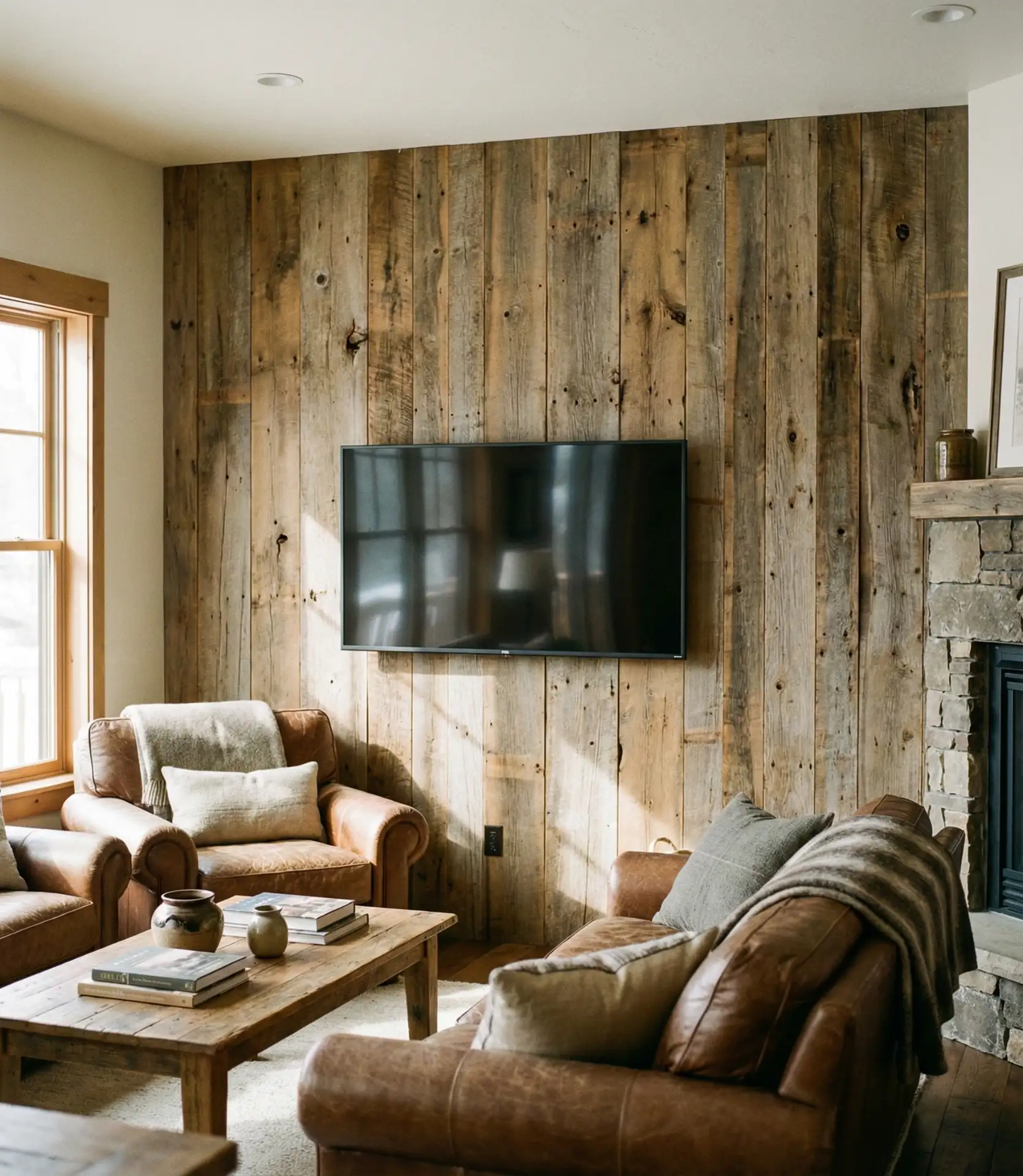
This style resonates particularly in mountain states—Montana, Wyoming, and Colorado—and rural areas where connection to natural materials feels authentic rather than decorative. The wood doesn’t need to be genuinely reclaimed; new wood with distressed finishing achieves similar visual results at a lower cost, typically $6 to $12 per square foot installed versus $15 to $25 for authentic salvaged material.
21. Mirrored or Metallic Tile Surround
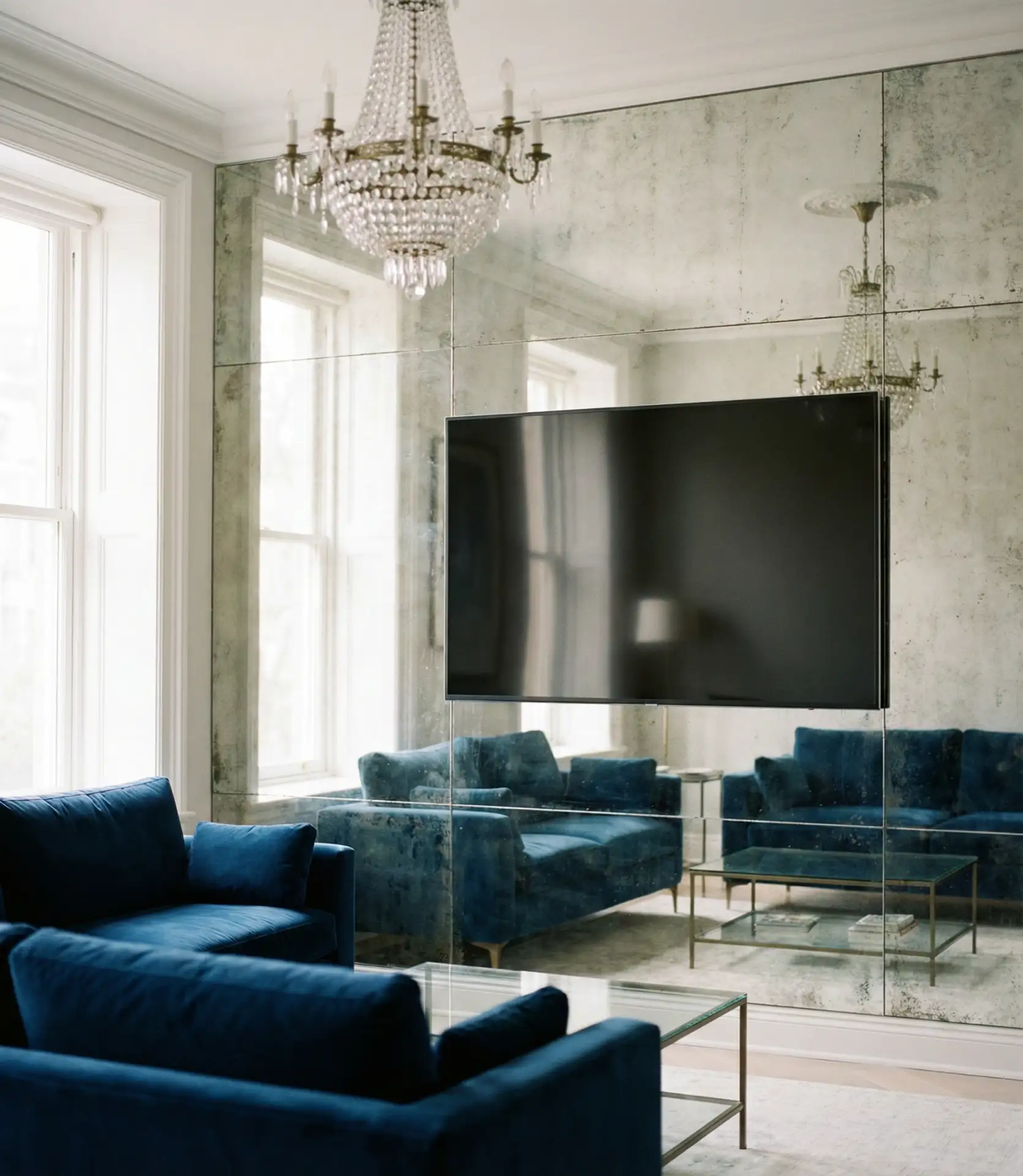
Reflective tile in antiqued mirror, brushed metal, or metallic glaze creates a glamorous luxury backdrop that catches and disperses light throughout the room. The TV sits within this shimmering field, and the reflective surface helps the screen visually recede when off. This bold approach works in spaces that already lean contemporary or glam, where a bit of sparkle enhances rather than conflicts with the existing aesthetic.
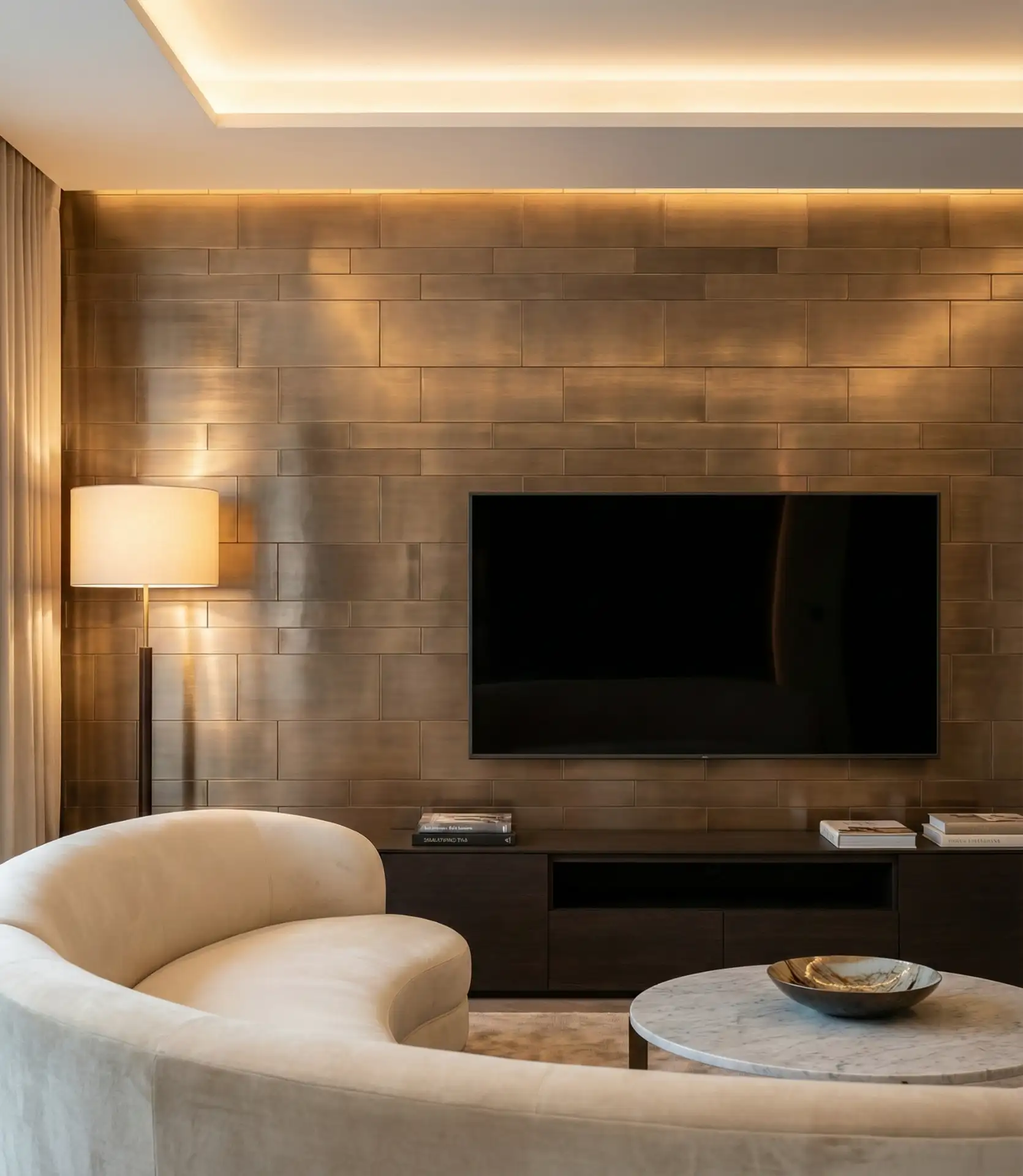
A couple renovating their 1960s ranch in Palm Springs went this route and mentioned that the tiles reflect their backyard palms and mountain views, making the TV wall feel connected to the landscape rather than just an interior surface. The reflections change with the light, so the wall never looks static or one-dimensional.
22. Concrete or Industrial Finish with Edison Bulbs
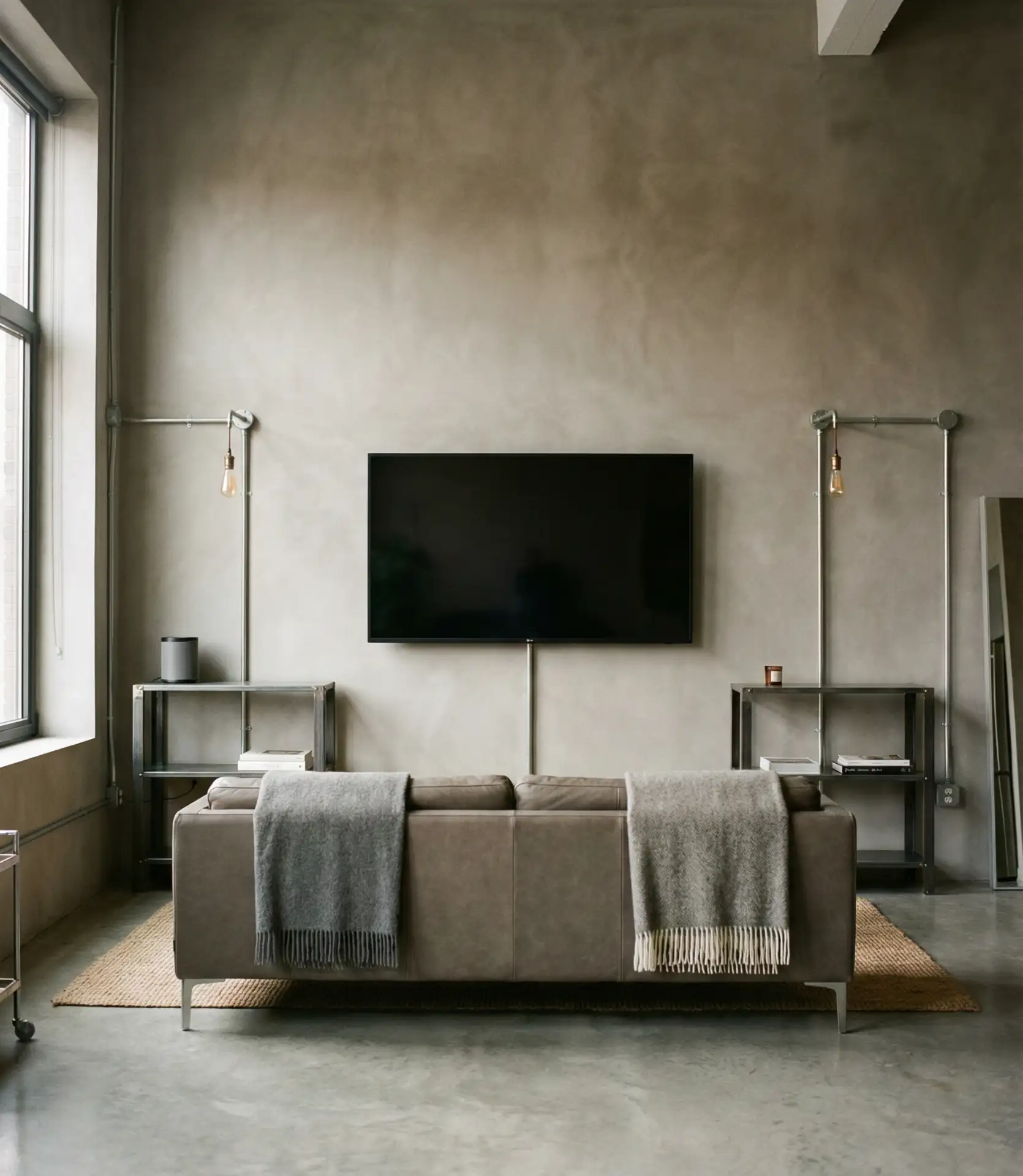
Polished concrete, Venetian plaster, or microcement gives the TV wall an elegant industrial edge. The smooth, monolithic surface reads as urban and modern, and when paired with exposed Edison-style bulbs or simple metal fixtures, the aesthetic leans into loft-inspired design. This treatment keeps costs reasonable—polished concrete alternatives like microcement can be applied over existing drywall—while delivering a high-impact look.
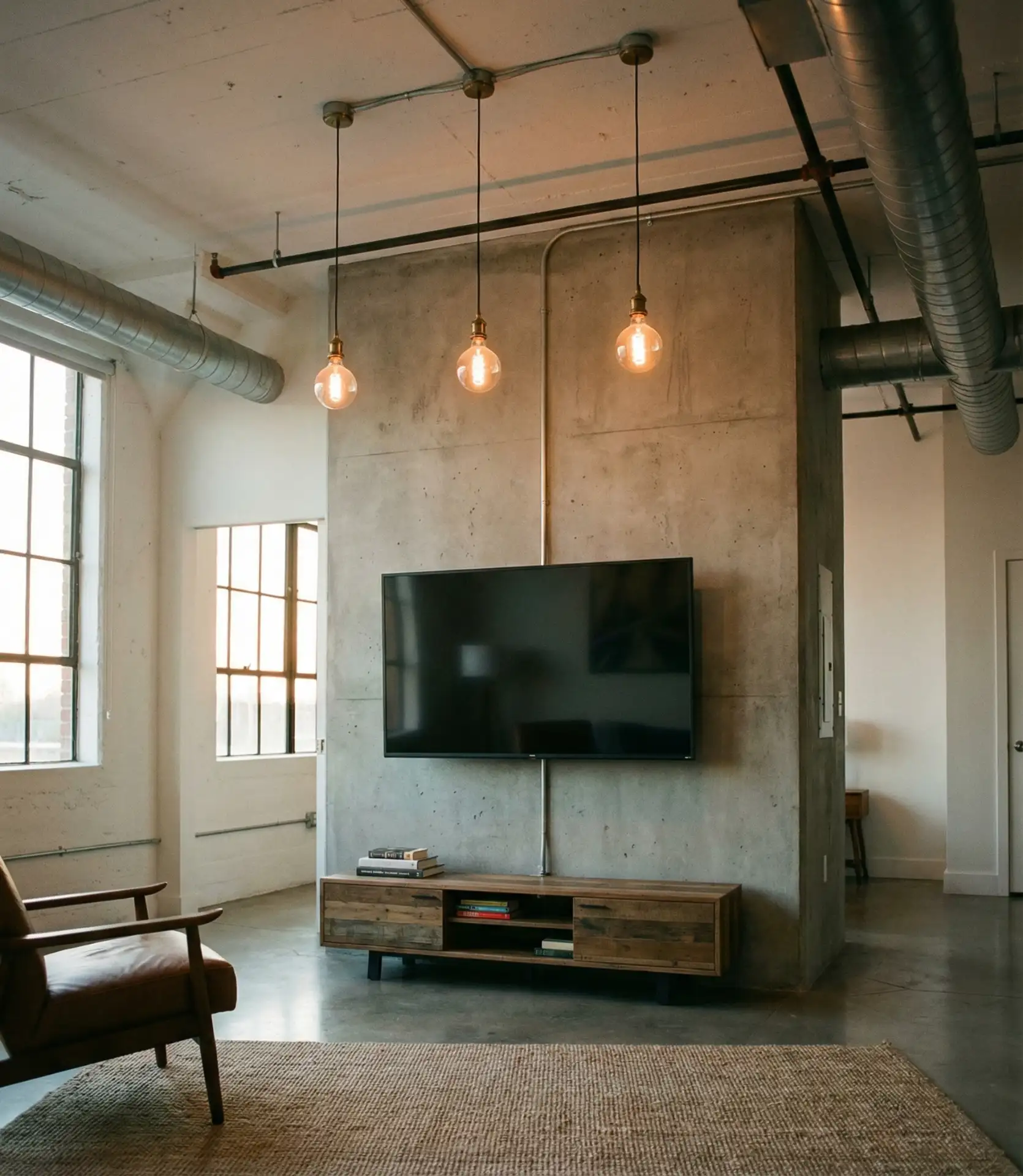
This look finds its audience in converted urban lofts and newer construction that borrows industrial vocabulary—exposed brick, metal windows, and concrete floors. The TV wall becomes part of that material language rather than fighting against it, and the neutral gray tones work with almost any furniture palette you introduce.
Finding the right TV wall treatment comes down to understanding your space, your style, and how you actually live with technology at home. These approaches offer starting points rather than rigid formulas—mix materials, adjust proportions, and adapt ideas to suit your room’s specific architecture and your personal taste. Which direction resonates most with your vision? Share your thoughts and your TV wall projects in the comments below.