44 Rustic Bedroom Ideas for 2026: Transform Your Space with Cozy, Modern Style

Rustic bedroom design is having a major moment in 2026, blending the warmth of natural materials with fresh, updated aesthetics that feel both timeless and contemporary. American homeowners are turning to Pinterest in droves, searching for ways to create cozy, grounded spaces that offer an escape from the digital chaos of daily life. Whether you’re drawn to the clean lines of modern rustic style, the moody depth of dark wood accents, or the airy charm of whitewashed farmhouse touches, there’s a rustic bedroom idea that fits your vision. This collection showcases distinctive approaches to rustic bedroom design, each offering practical inspiration you can adapt to your space. From vintage finds to luxury materials, these ideas prove that rustic doesn’t mean old-fashioned—it means authentically beautiful.
1. Modern Rustic Minimalism
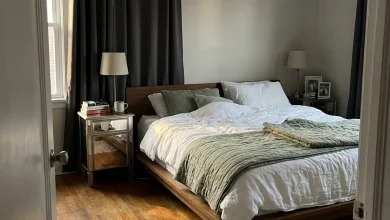
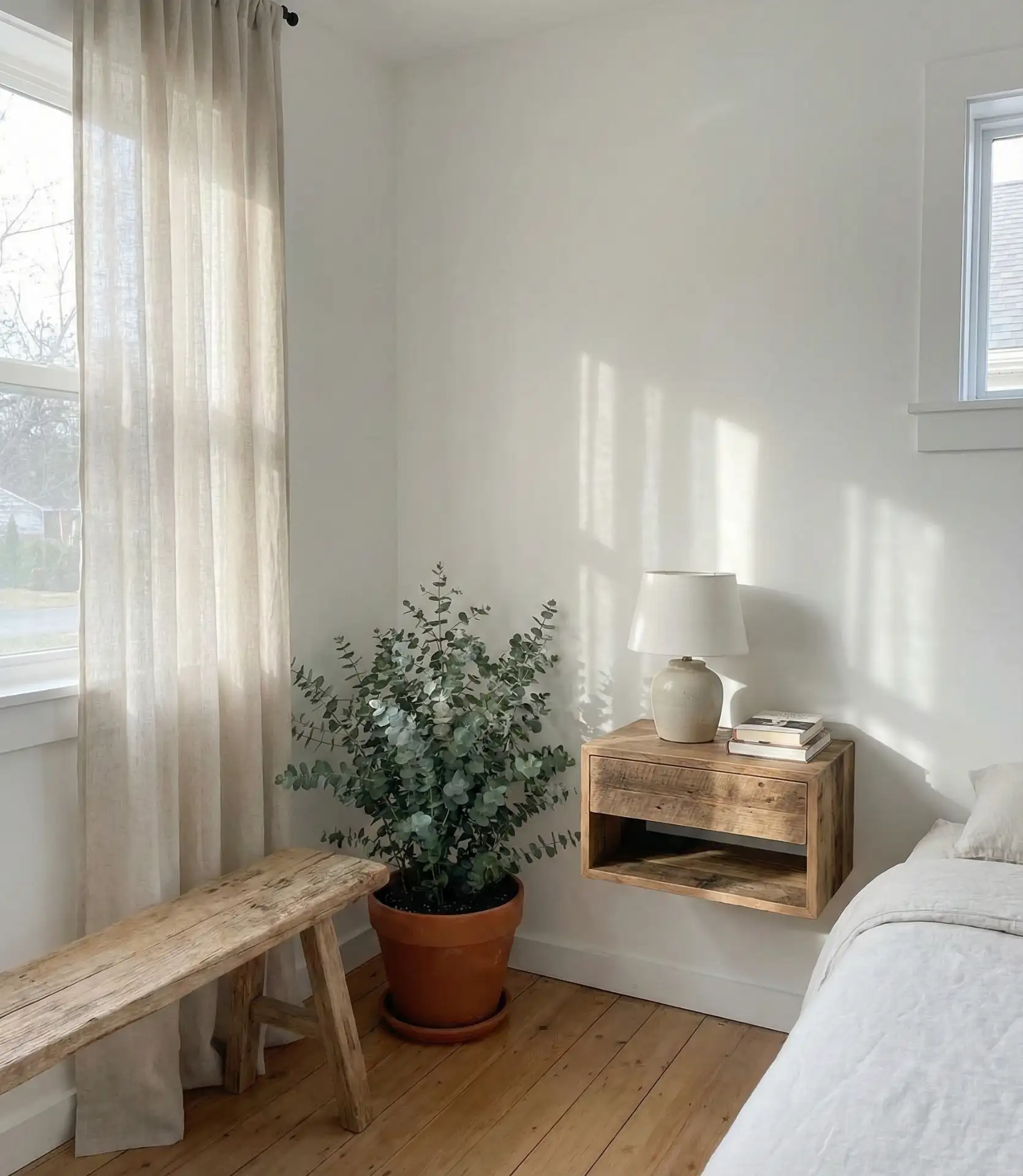 The modern rustic bedroom strips away excess while keeping warmth intact, pairing clean-lined furniture with natural wood textures and neutral palettes. This aesthetic works beautifully in urban lofts and suburban homes alike, where homeowners want the tranquility of a rustic style without visual clutter. Consider incorporating light oak platform beds, oatmeal-toned linen bedding, and a standout piece such as a reclaimed wood headboard. The key is restraint—each element earns its place, creating a space that feels both grounded and breathable.
This approach works best in smaller bedrooms where too many rustic elements can feel overwhelming. A common mistake is adding too much distressed wood or overdoing the “cabin” vibe, which can make a modern rustic space feel dated rather than fresh. Instead, limit heavy wood to one or two pieces and let neutral textiles and clean lines do the rest. The result is a bedroom that feels like a quiet retreat, not a cluttered lodge.
2. Cozy Layered Textures
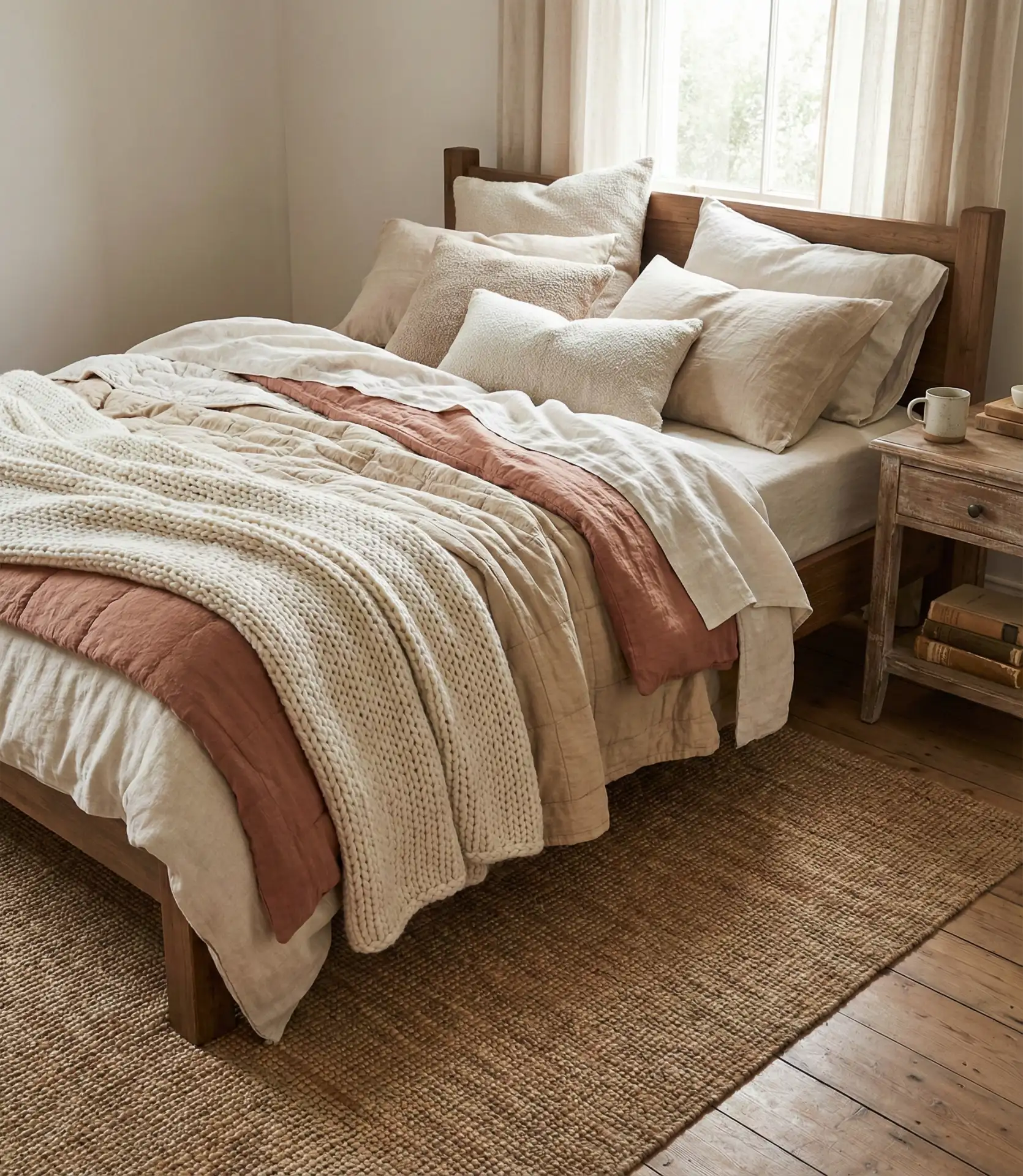
A cozy rustic bedroom thrives on layered textures—chunky knit throws, woven wool rugs, linen sheets, and velvet pillows all working together to create depth and warmth. This is where rustic style becomes tactile and inviting, perfect for bedrooms in colder climates or homes where the bedroom doubles as a reading nook. The layering isn’t random; it’s intentional, mixing smooth and rough, soft and sturdy, to build visual and physical comfort. Neutral tones with warm undertones—cream, taupe, and soft gray—keep the palette cohesive, while the textures add richness.
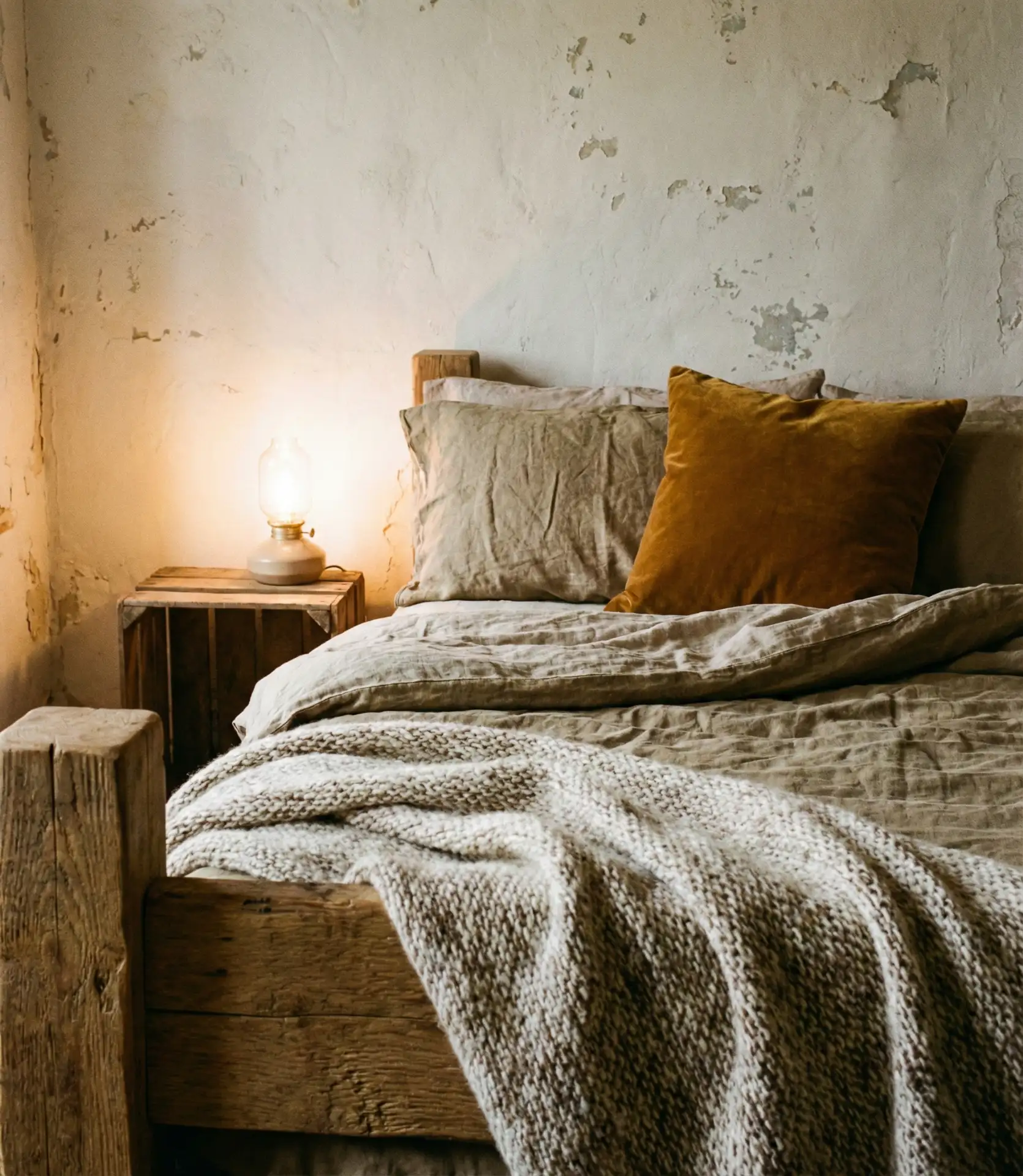
In the Midwest and Northeast, this layered approach is especially popular during fall and winter months when bedrooms need to feel like warm cocoons. Homeowners often swap out lighter summer linens for heavier textures as the seasons change, making this style adaptable year-round. The beauty is in the mix—no single texture dominates, and the overall effect is a bedroom that invites you to sink in and stay awhile.
3. Dark Moody Accents
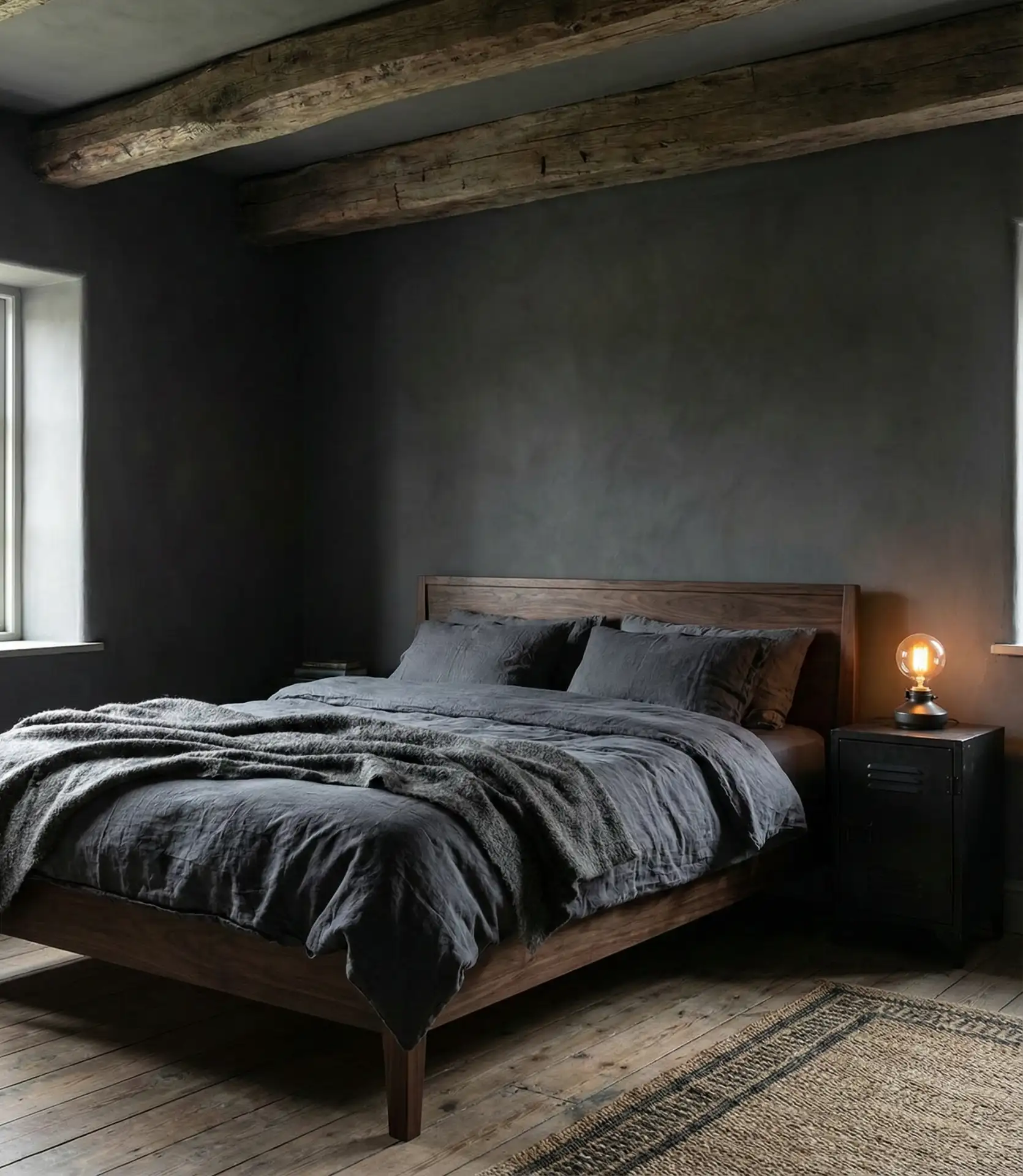
The dark rustic bedroom flips expectations, using charcoal walls, deep walnut furniture, and moody lighting to create a sophisticated, enveloping space. This isn’t about making a room feel small—it’s about making it feel intentional and dramatic, with natural wood grains standing out against darker backgrounds. Pair dark-stained barn wood with matte black fixtures, charcoal linens, and warm Edison bulbs to balance the depth with warmth. This style appeals to homeowners who want their bedroom to feel like a private sanctuary, distinct from the rest of the home.
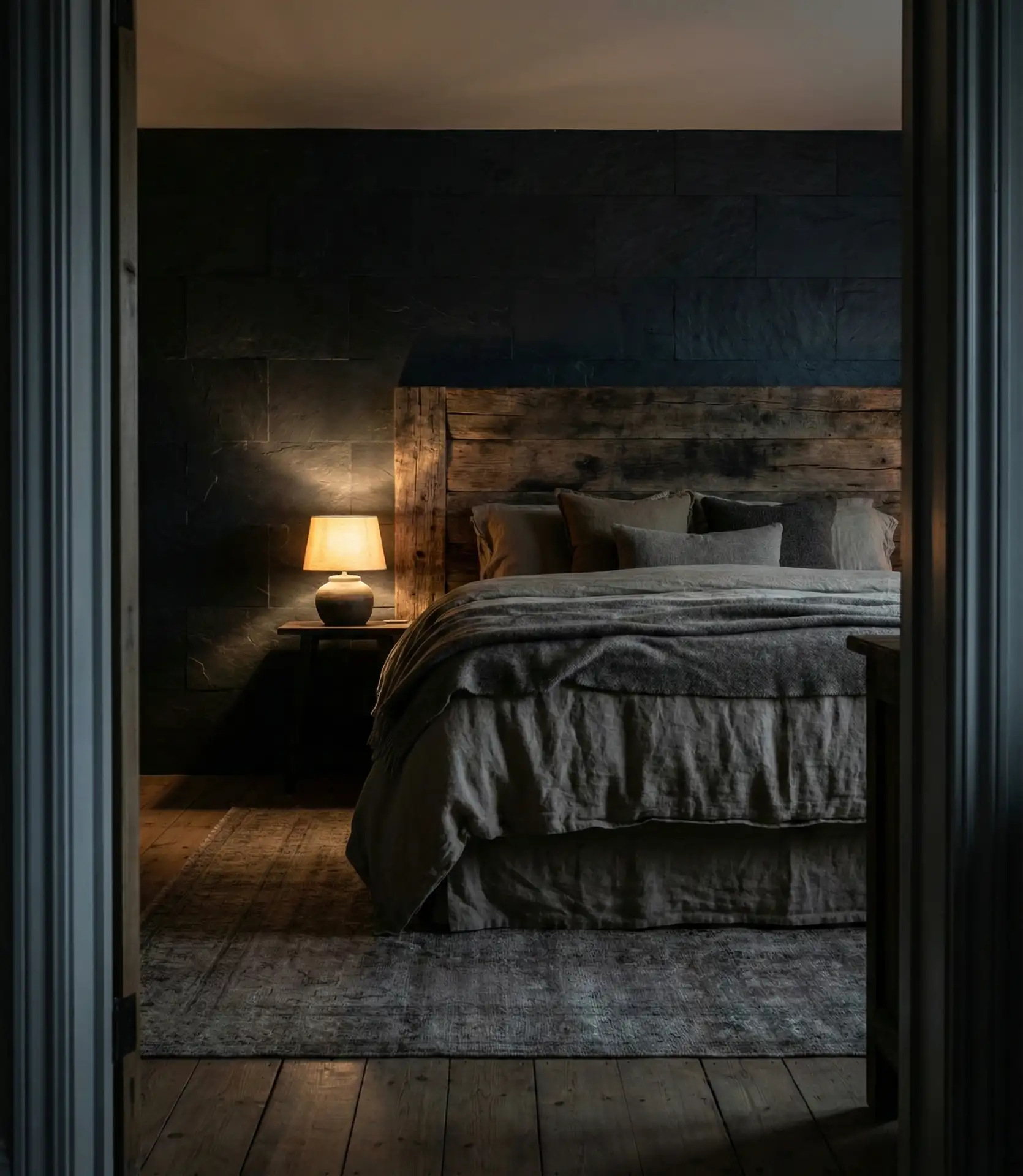
Dark rustic works exceptionally well in master bedrooms with ample natural light during the day, allowing the space to shift from bright and airy to intimate and cozy as evening falls. One design misstep is using too much black without enough wood tone—this can make the room feel cold rather than warm. Instead, let natural wood provide contrast and warmth against darker paint or textiles, and you’ll achieve that coveted moody-but-welcoming balance.
4. White Farmhouse Simplicity
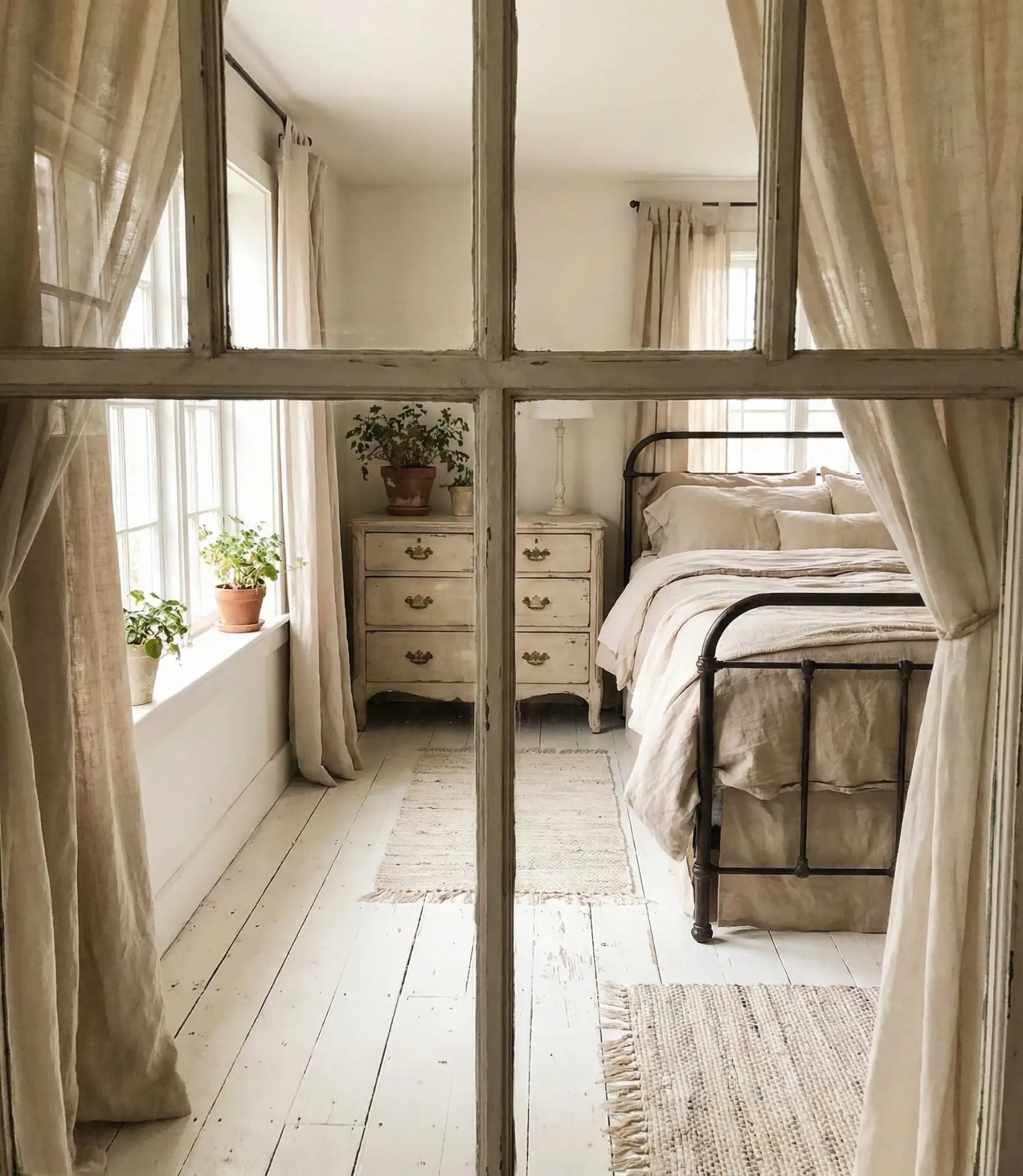
The white farmhouse rustic bedroom is all about airy simplicity—whitewashed shiplap walls, weathered wood furniture, and crisp white linens that feel fresh and unpretentious. This look has deep roots in American country style but has been updated for 2026 with cleaner lines and less clutter. It’s a go-to for homeowners who love the rustic warmth of farmhouse style but want to keep things light and bright. Soft grays, natural jute, and touches of greenery keep the palette from feeling too stark, while distressed wood adds character without heaviness.
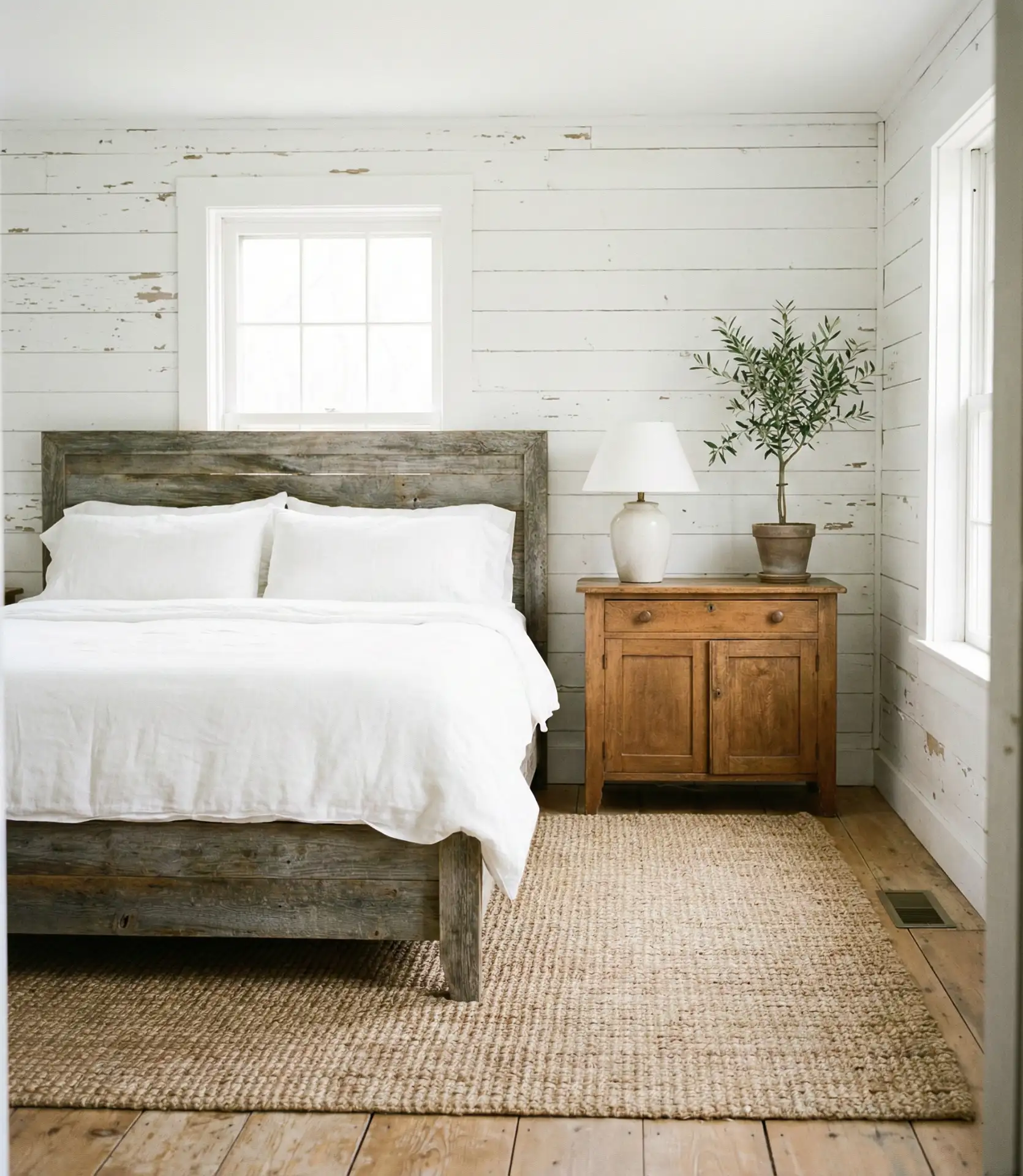
Budget-conscious homeowners often gravitate toward this style because many elements can be DIY’d or sourced secondhand—whitewash treatments, painted furniture, and simple linen bedding are all relatively affordable. The white farmhouse bedroom also ages well; it doesn’t rely on trends, so it remains timeless as tastes shift. Just avoid over-accessorizing with too many “Live Laugh Love” signs or overly themed decor, which can make the space feel more kitschy than authentically rustic.
5. Black Metal and Wood Contrast
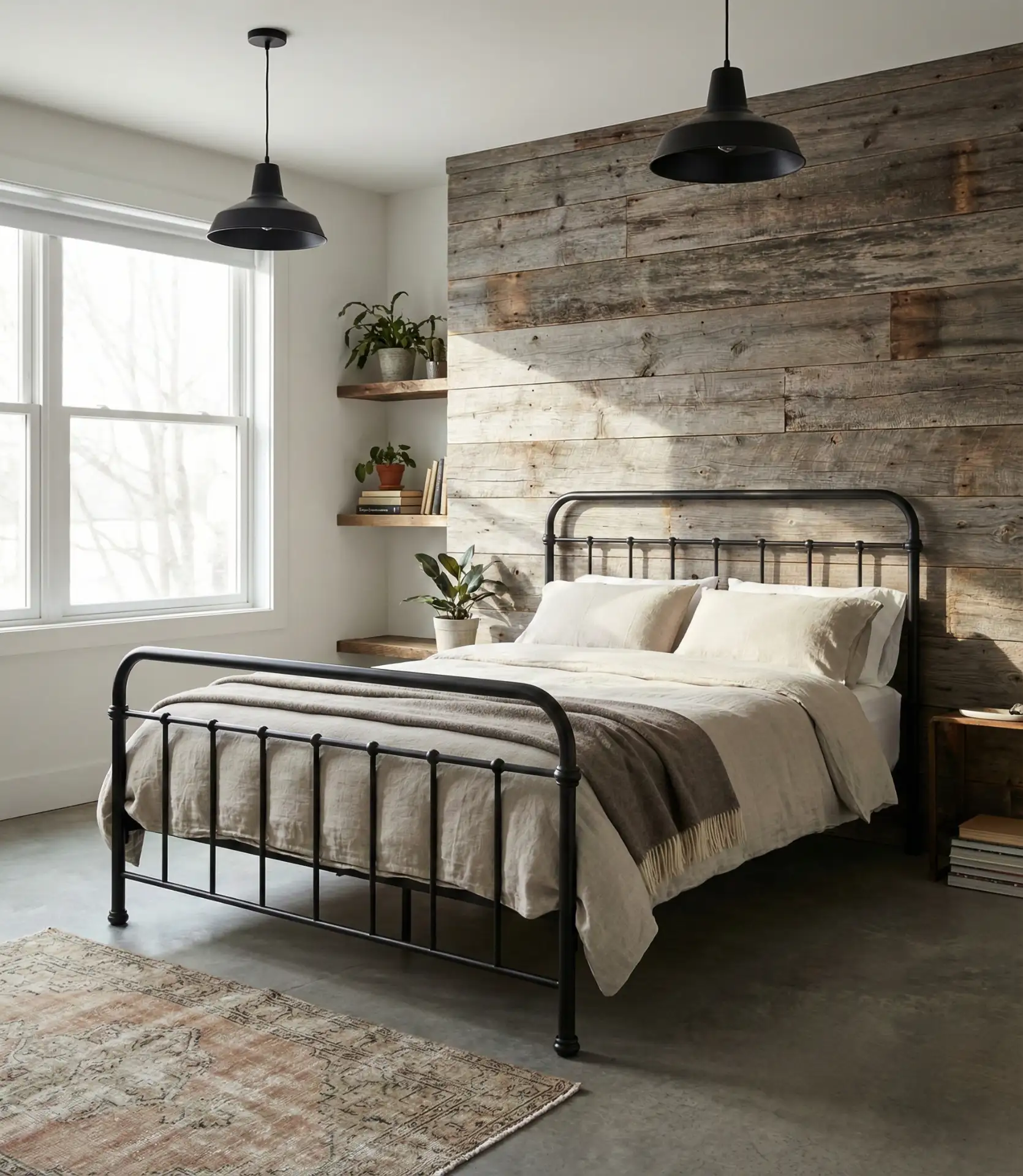
The black industrial rustic bedroom pairs raw wood with matte black metal fixtures, creating a bold, masculine-leaning space with serious visual impact. Think iron bed frames, black steel lighting, and reclaimed wood accent walls that bring warmth against the harder materials. This style has surged in popularity among younger homeowners and urban dwellers who want rustic warmth without the country cottage associations. The contrast between dark metal and natural wood grain is what makes this style look so compelling—it’s rugged but refined.
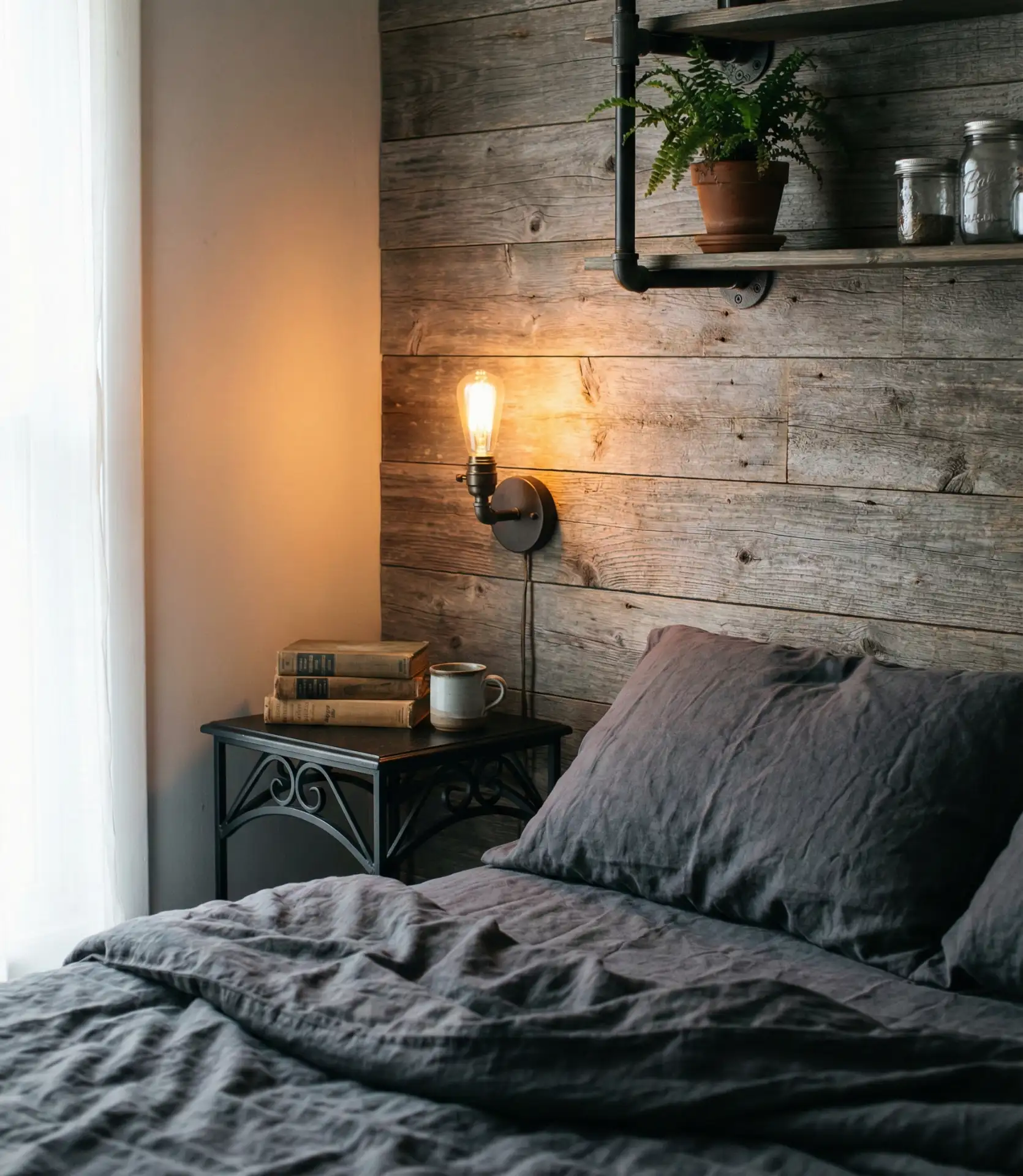
A friend recently renovated a guest bedroom using this exact approach, pairing a vintage iron bed from an estate sale with a DIY pallet wood wall, and the transformation cost less than $800. The industrial-rustic blend is surprisingly forgiving—you can mix high and low, vintage and new, without the room feeling disjointed. It’s a style that actually benefits from imperfection, where scratches and patina add to the overall character.
6. Boho Rustic Layers
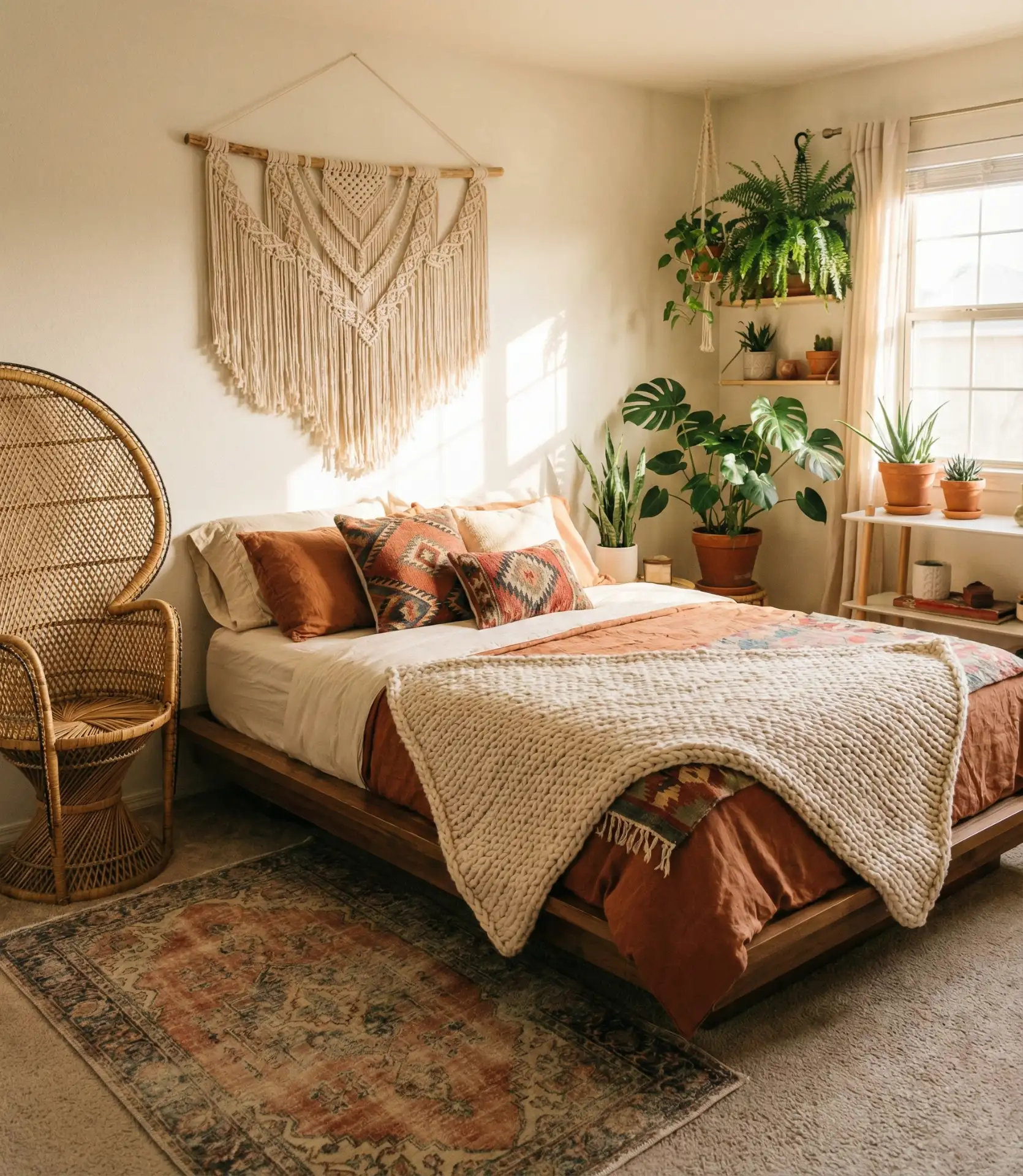
Boho rustic bedrooms blend natural wood and woven textures with eclectic, globally inspired details—macramé wall hangings, Moroccan rugs, and rattan furniture all feel at home here. This is rustic with a free-spirited twist, where design ideas come from mixing rather than matching, and the overall vibe is relaxed and personal. Warm earth tones dominate, but pops of terracotta, mustard, or rust add energy without disrupting the organic feel. This style resonates with homeowners who want their bedroom to feel collected and lived-in, not overly coordinated.
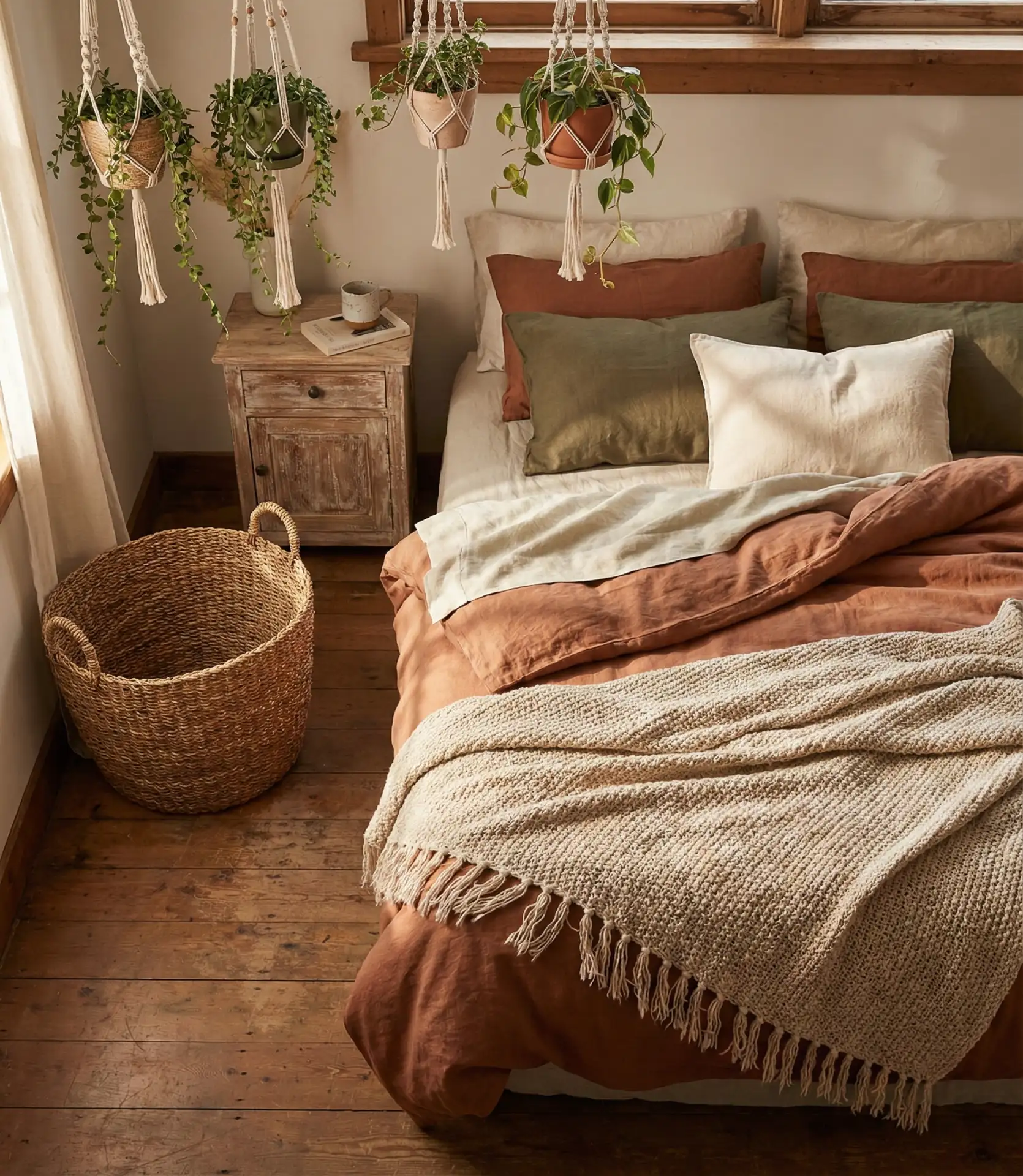
This look works best in bedrooms where you have the freedom to layer and personalize without worrying about strict symmetry or color rules. In the Southwest and California, boho rustic is especially popular, fitting naturally with the region’s earthy architecture and outdoor-indoor lifestyle. The key is balance—too many patterns can overwhelm, so anchor the space with solid neutral linens and let one or two statement pieces (a bold rug, a woven headboard) do the talking.
7. Green Accent Walls
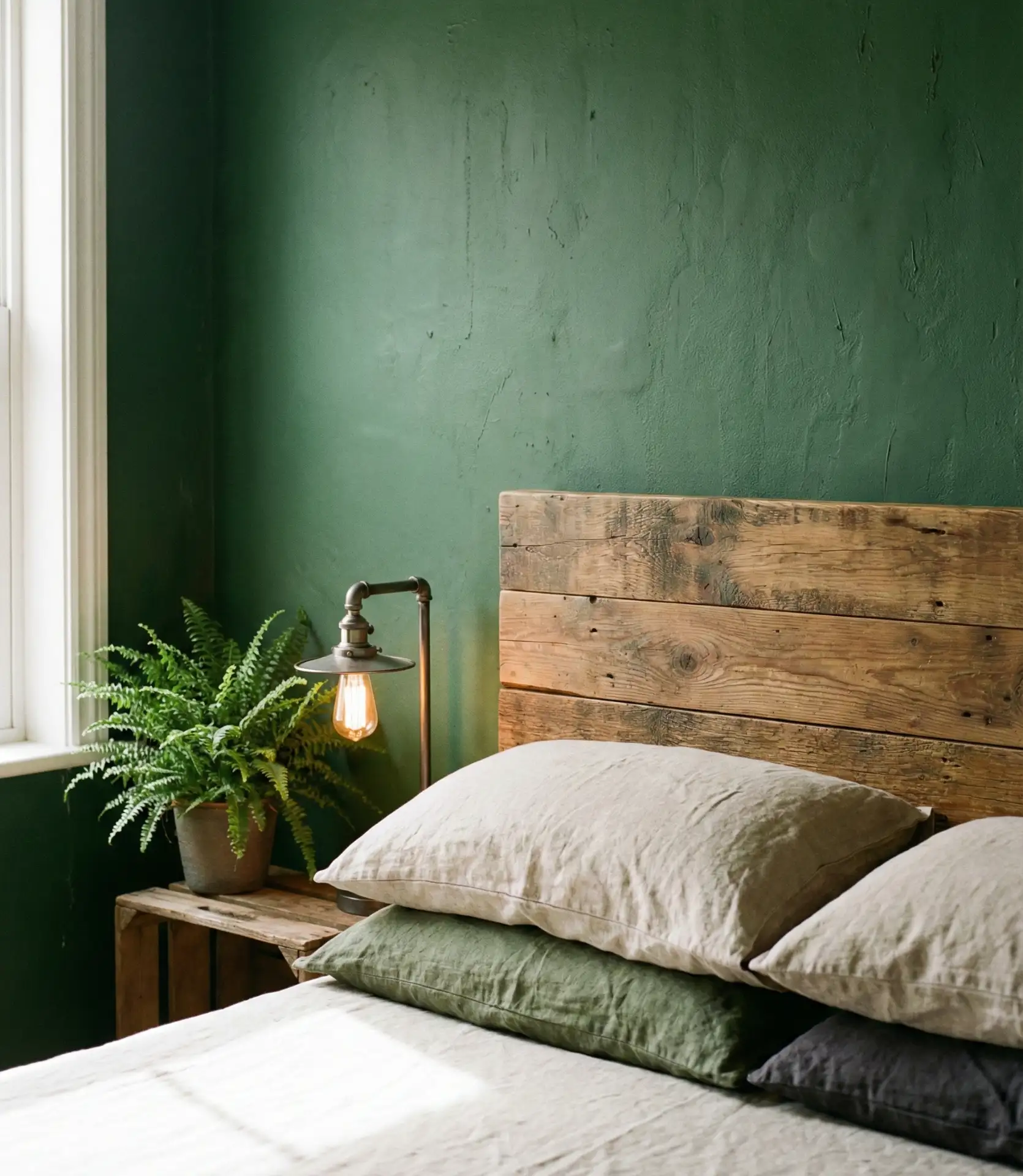
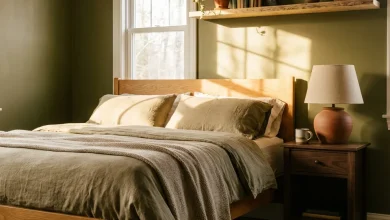
Green is emerging as a standout color in rustic bedrooms, offering a fresh alternative to the usual neutrals while still feeling grounded and natural. Deep sage, forest green, or muted olive on an accent wall pairs beautifully with natural wood furniture and warm metals, bringing the outdoors in without literal leaf prints or nature-themed decor. This shade is particularly appealing to homeowners who want rustic warmth but are tired of beige and gray. The colors feel sophisticated, calming, and surprisingly versatile, working with everything from vintage brass fixtures to modern black iron.
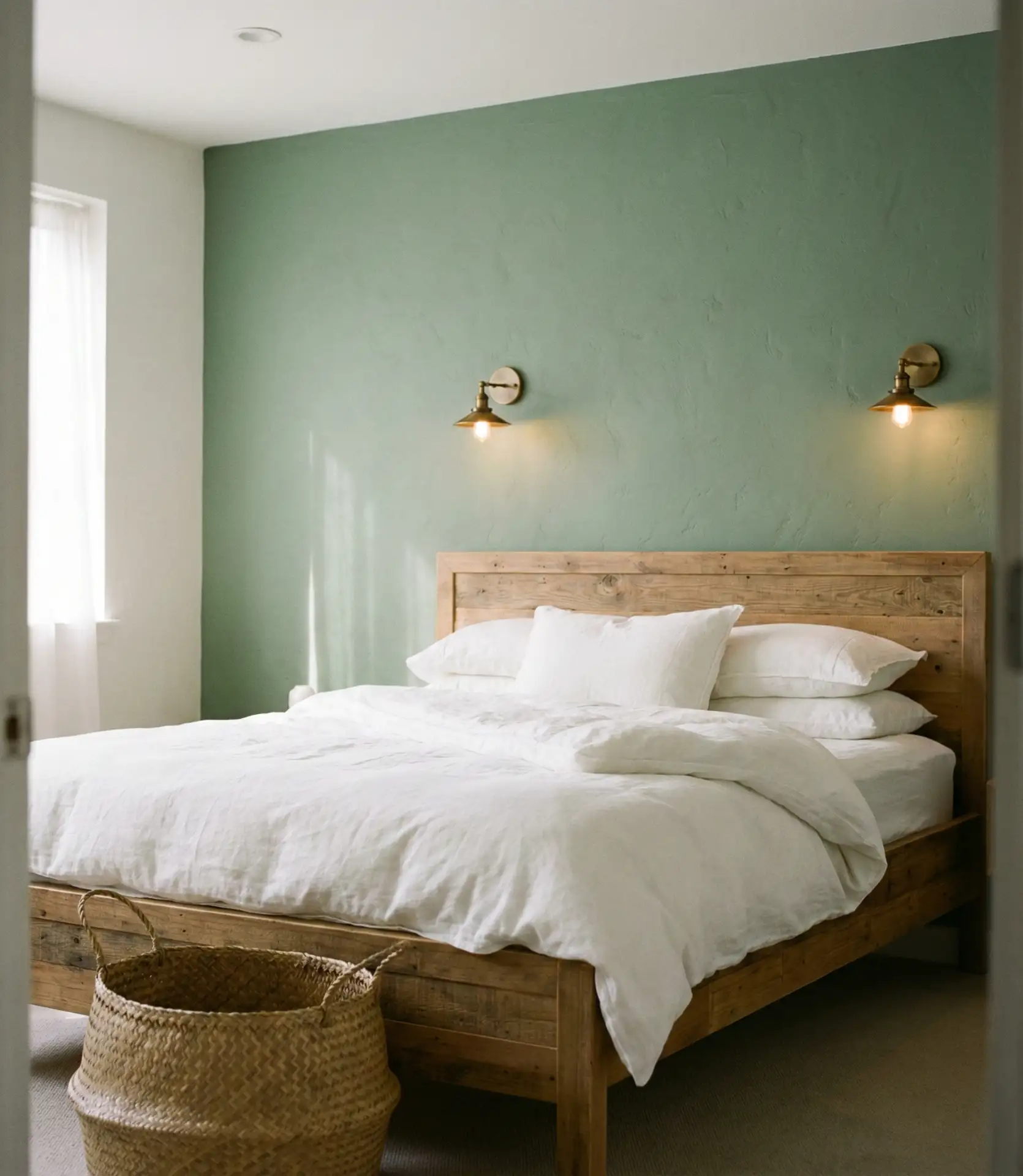
Green works exceptionally well in bedrooms that get ample natural light, as it can read darker in low-light spaces. If you’re hesitant about committing to a full green wall, try green through textiles first—a throw, pillows, or a quilt—to see how it feels in your space. Expert designers recommend pairing green with warm wood tones rather than cool grays to keep the room feeling cozy rather than cold. The result is a bedroom that feels both current and timeless, rooted in nature without being overly literal.
8. Blue Linen and Natural Wood
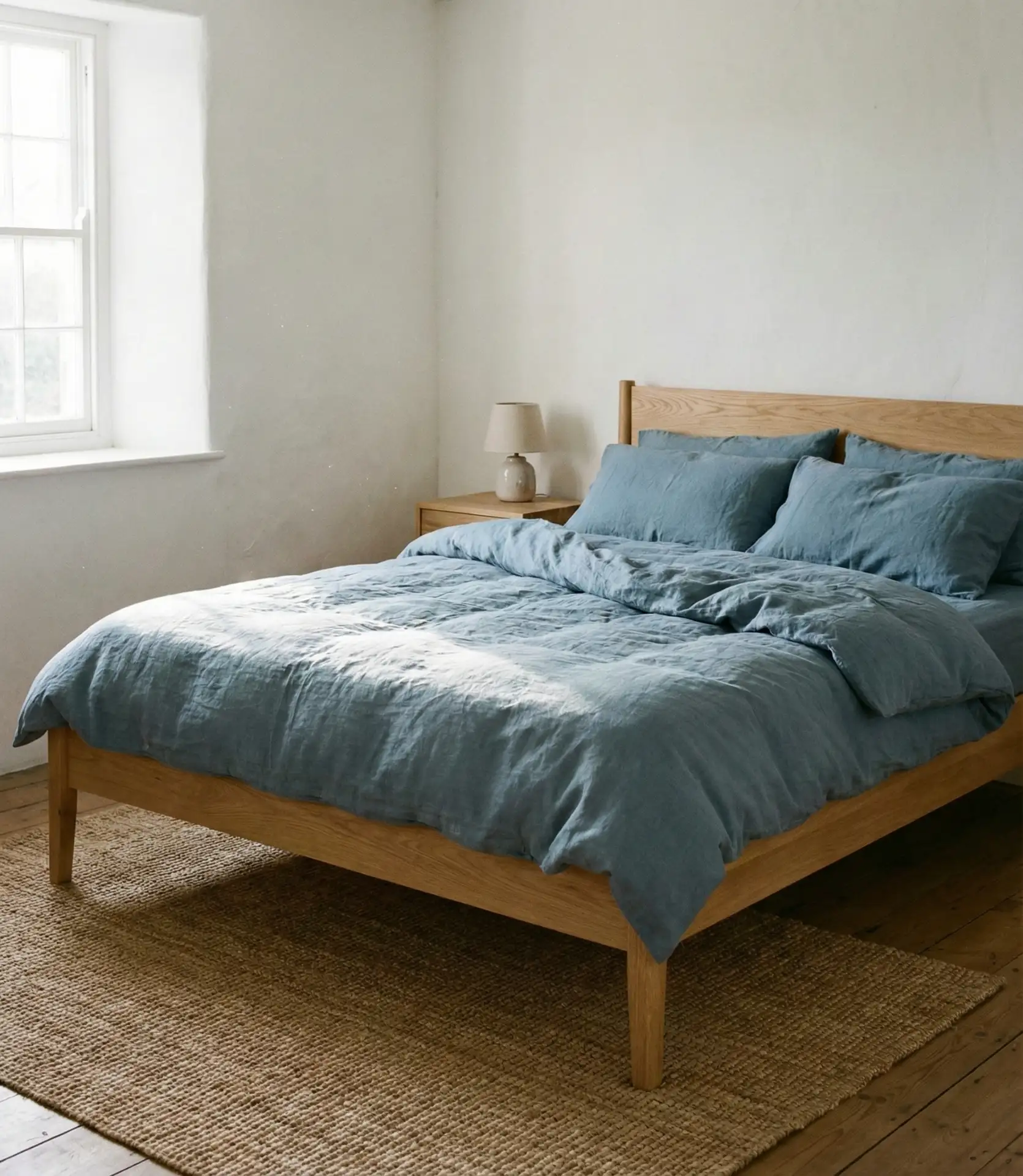
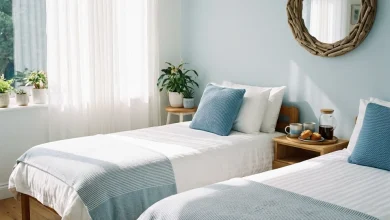
Soft blue linens paired with warm natural wood create a rustic bedroom that feels coastal yet grounded, perfect for homes that want to evoke a calm, serene atmosphere. Muted denim blues, dusty sky tones, and faded indigo all work beautifully with oak, pine, or walnut furniture, offering a quiet alternative to all-white or all-neutral palettes. This combination is especially popular in bedrooms with ample natural light, where the blue shifts subtly throughout the day. It’s a look that feels effortlessly put together, appealing to those who want rustic warmth without heaviness.
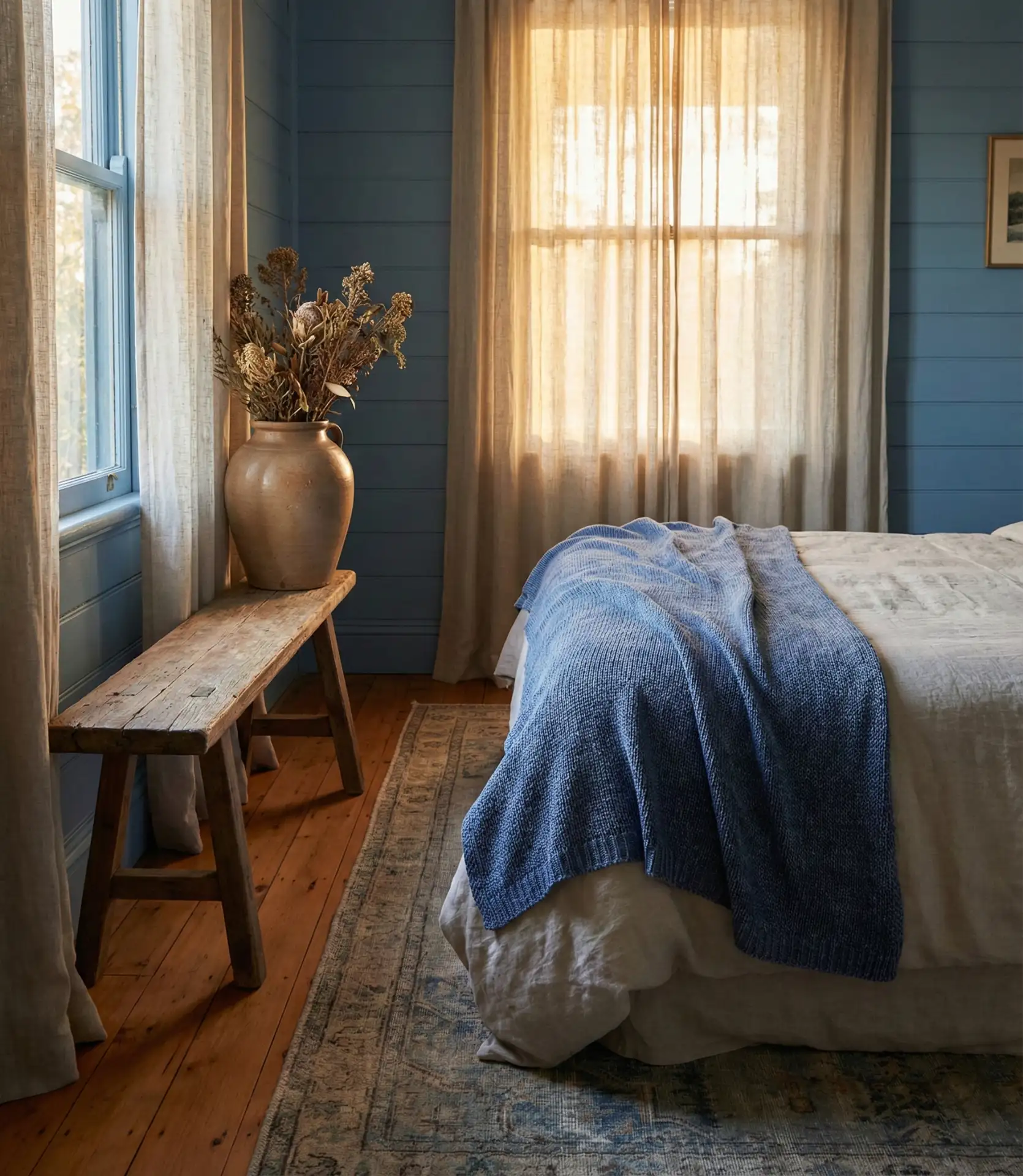
Many homeowners choose this palette for guest bedrooms or spaces where they want a universally appealing, calming environment. The mistake to avoid is choosing blues that are too bright or saturated—stick with muted, washed-out tones that feel organic rather than primary. When done right, blue and wood create a rustic bedroom that feels like a quiet retreat, equally suited to modern farmhouses and traditional cottages.
9. Luxury Rustic Details
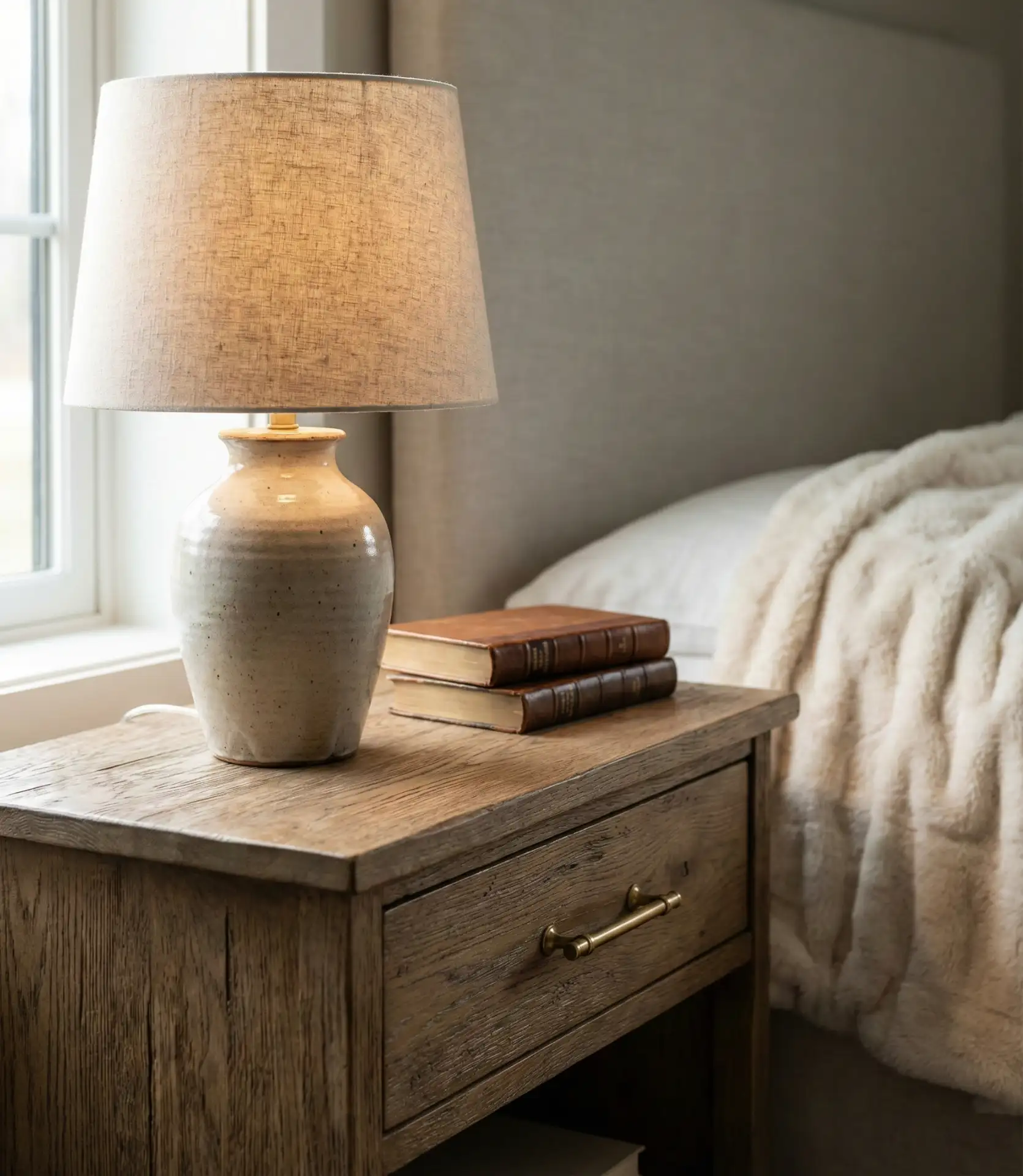
Luxury rustic doesn’t mean abandoning the warmth of rustic design—it means elevating it with high-quality materials, refined finishes, and thoughtful details. Think live-edge walnut headboards, hand-stitched leather accents, plush cashmere throws, and custom millwork that showcases craftsmanship. This approach appeals to homeowners who want rustic character without sacrificing sophistication, blending organic textures with polished execution. The palette stays neutral and earthy, but the quality of materials—Belgian linen, heirloom wood, artisan ceramics—makes the difference.
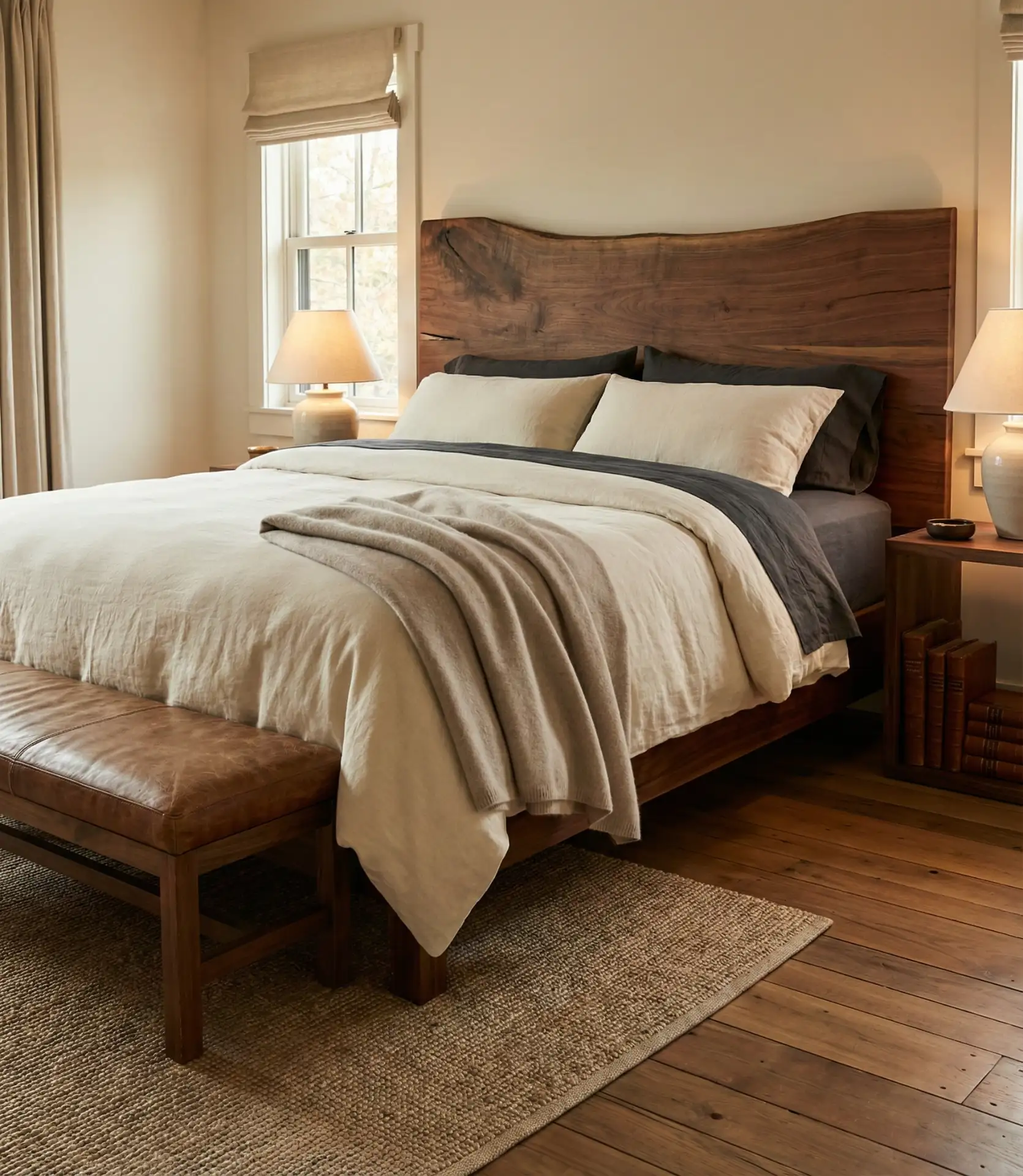
In upscale homes and mountain retreats, luxury rustic is the dominant style, where budgets allow for custom cabinetry, designer lighting, and artisan furnishings that elevate the rustic aesthetic. The key is restraint—fewer pieces, better quality, more intention. A single handcrafted piece often makes a stronger statement than a room full of mass-produced rustic decor. The outcome is rustic design for those who appreciate the raw beauty of natural materials but want them presented with refinement and care.
10. Vintage Finds and Character
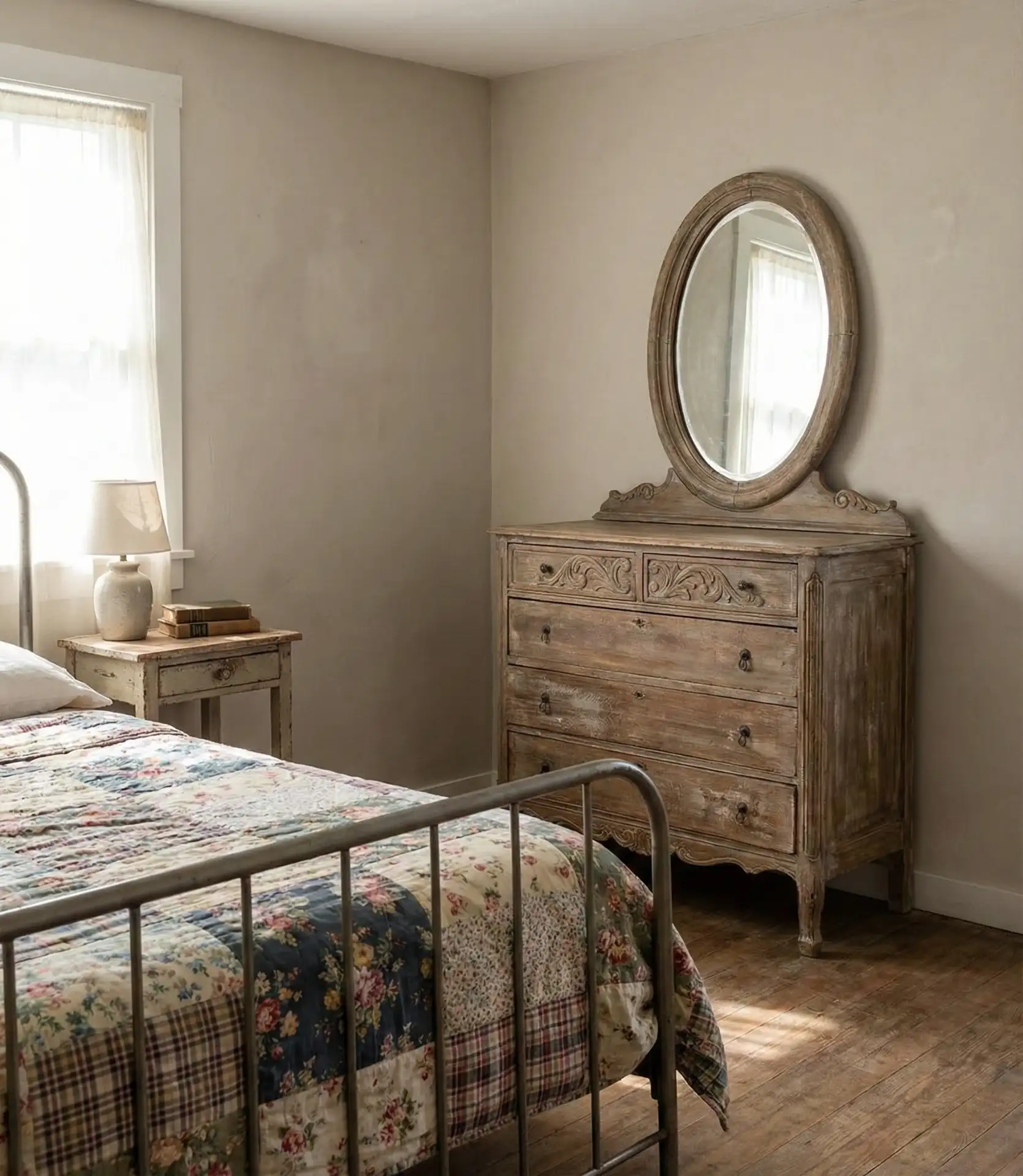
A vintage rustic bedroom thrives on the character of reclaimed and secondhand pieces—antique dressers, weathered mirrors, old quilts, and flea market finds that each tell a story. This is the opposite of buying a complete matching bedroom set; instead, it’s about curating over time, mixing eras and styles, and creating a space that feels genuinely personal. The inspiration often comes from European farmhouses or American country estates, where layers of history give rooms depth and warmth. Neutral backdrops allow vintage pieces to shine without competing for attention.
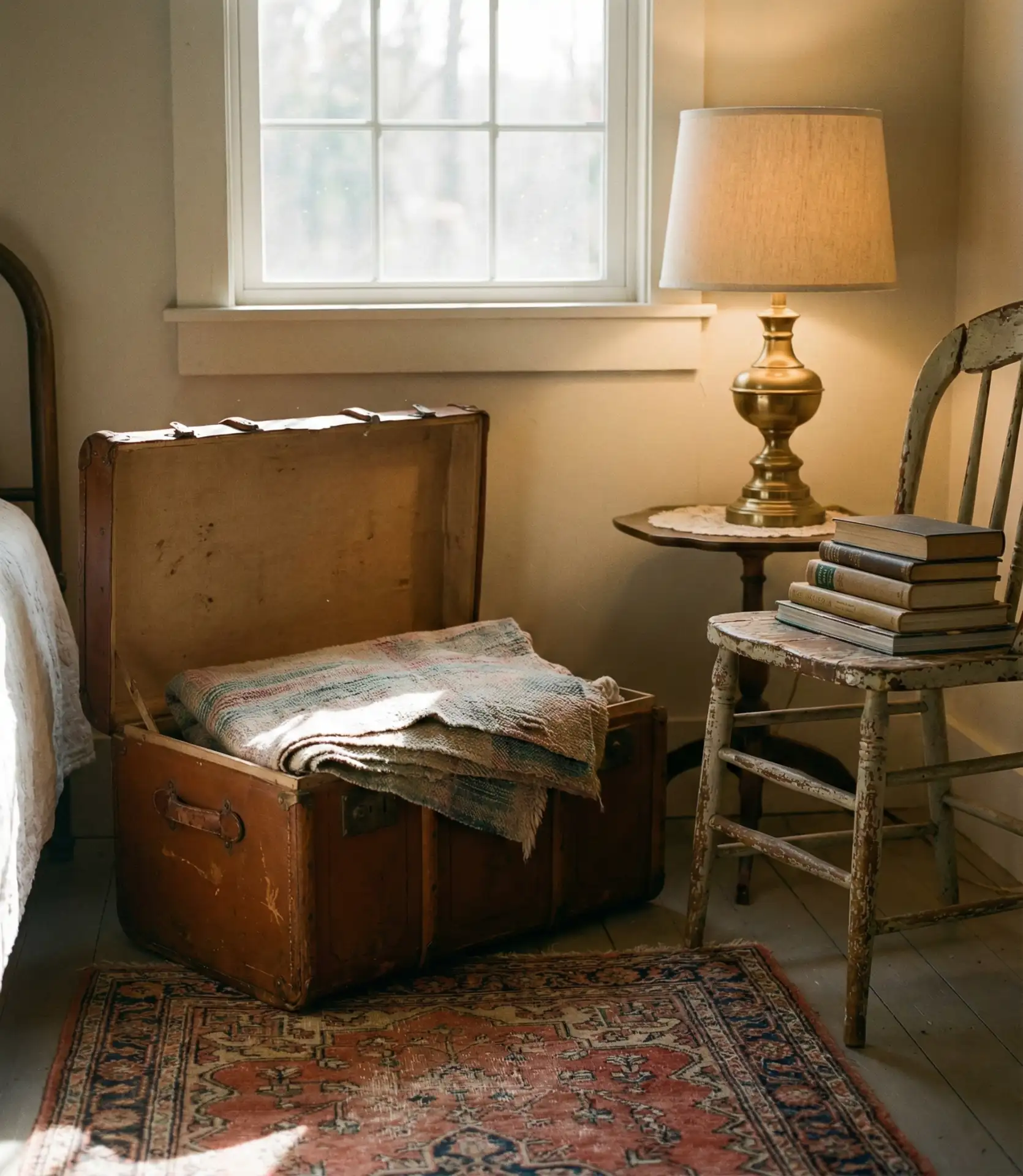
Real homeowners often build this style slowly, picking up pieces at estate sales, antique shops, and online marketplaces, which makes it both budget-friendly and deeply personal. The beauty is in the imperfection—scratches, faded paint, and worn edges add authenticity that new furniture simply can’t replicate. One tip: anchor the room with one substantial vintage piece (a bed frame, armoire, or dresser) and build around it, rather than trying to make every element vintage, which can feel cluttered.
11. Western-Inspired Textiles
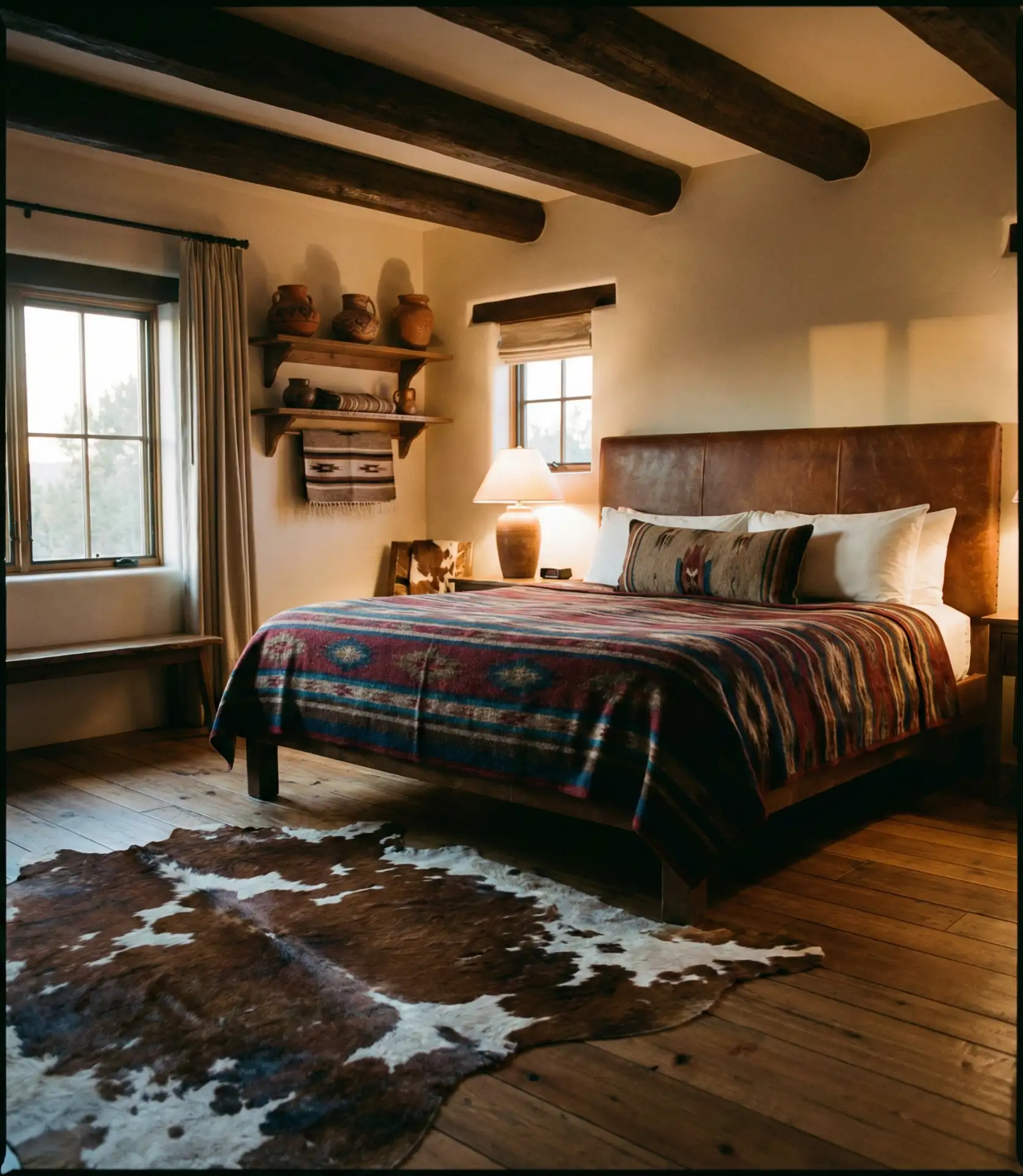
Western rustic bedrooms embrace Southwestern patterns, leather accents, and warm desert tones that feel distinctly American and rooted in heritage. Navajo-inspired textiles, cowhide rugs, and natural rawhide details bring texture and cultural richness without leaning into theme-park territory. This style works particularly well in states like Texas, Arizona, and New Mexico, where the aesthetic feels connected to the landscape and local history. Warm terracotta, burnt sienna, and sandy beige create a palette that’s earthy and inviting, balanced by natural wood and wrought iron.
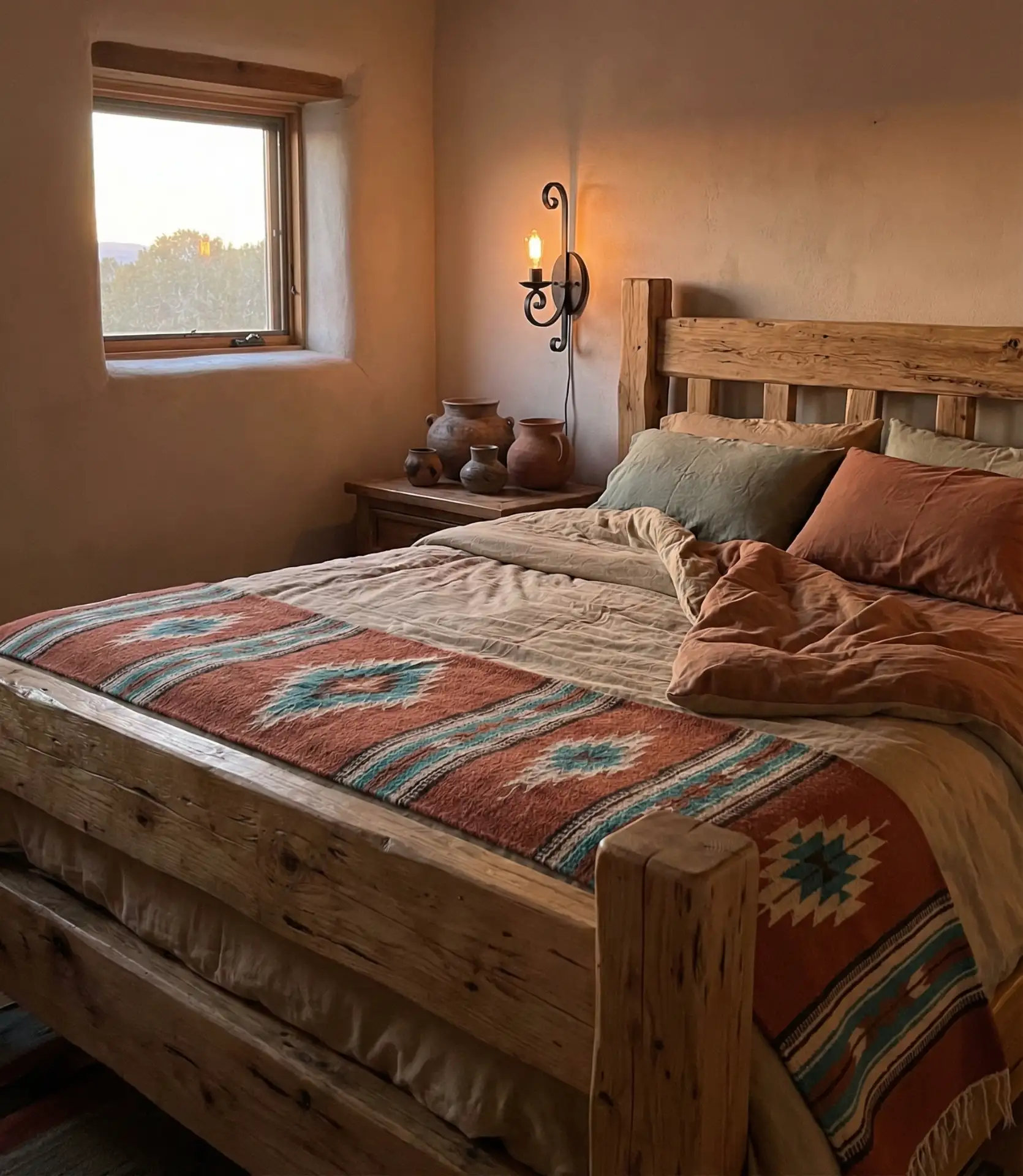
Western rustic works best when it’s authentic rather than costume-like—choose one or two statement textiles or accessories rather than overdoing the theme. A genuine vintage Pendleton blanket or a handwoven rug can anchor the room, while simpler neutral pieces fill out the rest. This approach respects the cultural origins of the style without appropriating or caricaturing, creating a bedroom that feels rooted in place and tradition.
12. Pink Accents and Warmth
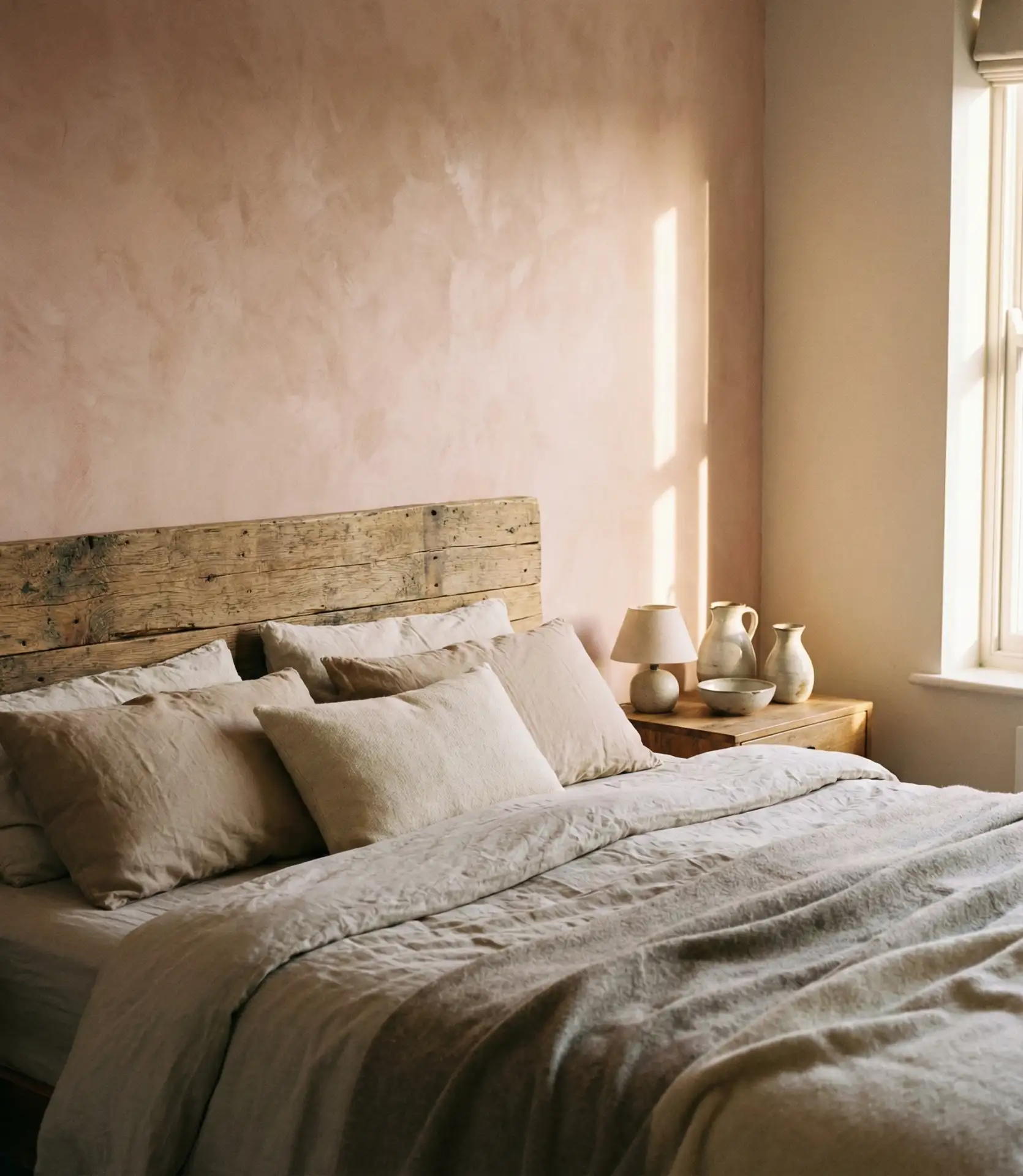
Muted pink tones—dusty rose, terracotta pink, or soft blush—are finding their way into rustic bedrooms, adding unexpected warmth and softness without feeling overly feminine or sweet. Paired with natural wood, cream linens, and warm metals, these pinks feel grounded and sophisticated, offering a fresh alternative to the usual rustic palette. This trend appeals to homeowners looking to personalize rustic style with color while maintaining the cozy, organic feel. A pink throw, blush pillows, or a terracotta accent wall can transform a neutral rustic bedroom into something more distinct and personal.
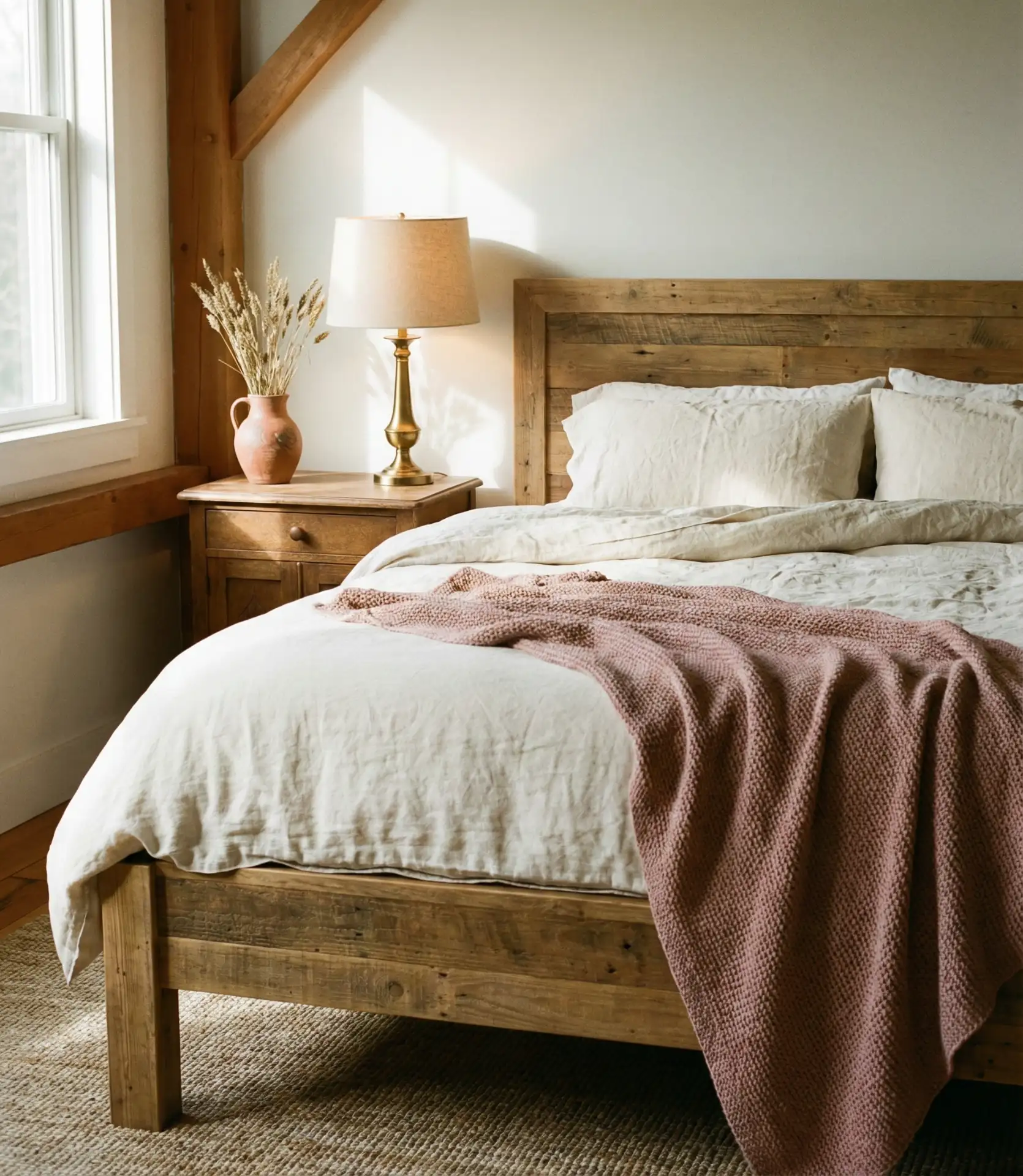
A common misconception is that pink won’t work in rustic spaces, but the right shade—earthy and muted rather than bright and saturated—actually complements wood tones beautifully. Designers often recommend introducing pink through textiles first, allowing you to test the color before committing to paint. The result is a rustic bedroom that feels warm, welcoming, and just a little unexpected, proving that rustic design can be both traditional and personal.
13. Farmhouse Vintage Mix
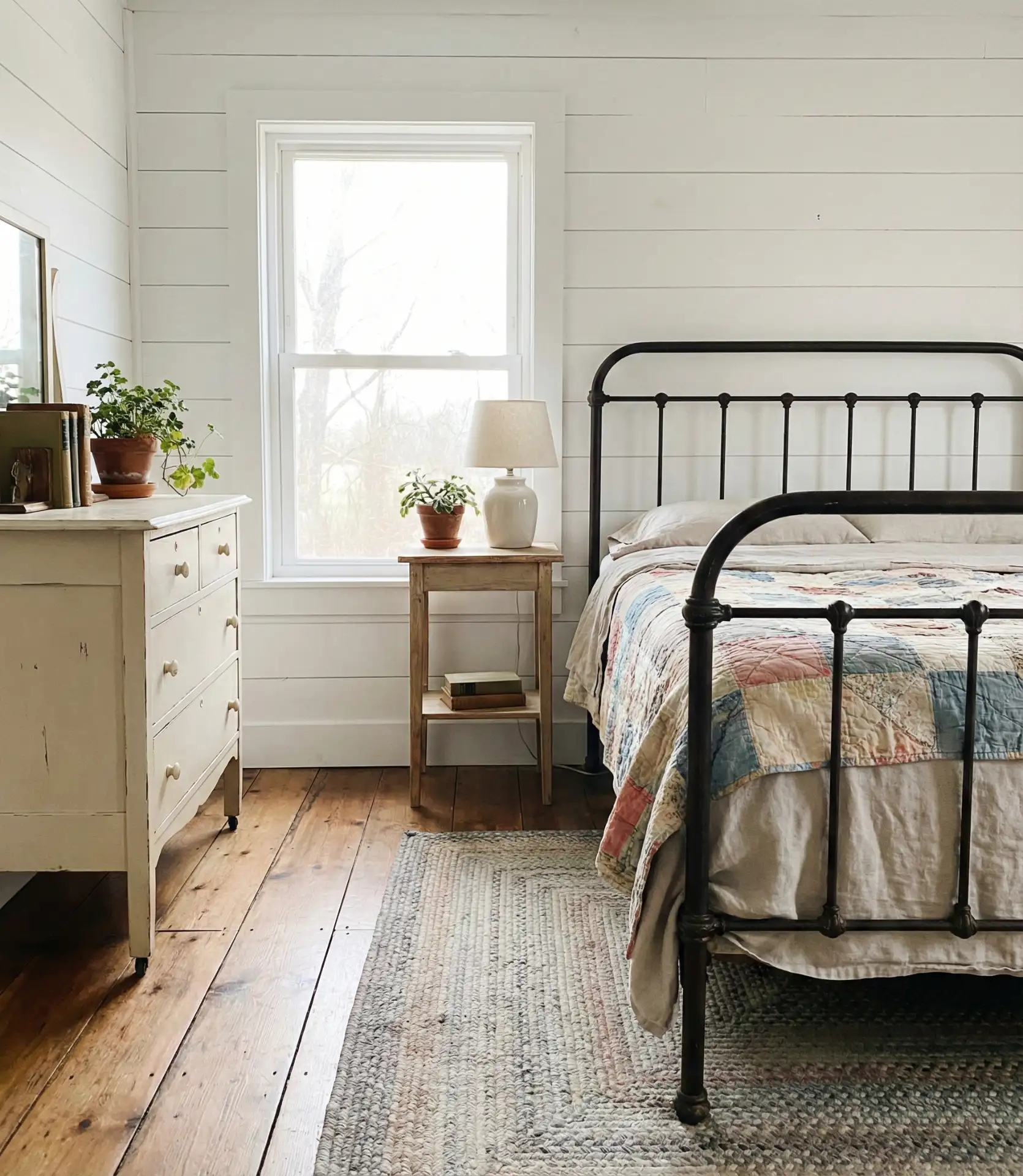
The farmhouse vintage blend brings together classic American farmhouse elements—shiplap, painted wood, simple lines—with genuine vintage pieces that add depth and authenticity. Unlike newer farmhouse looks that can feel mass-produced, this version feels collected and lived-in, mixing eras and finishes for a more layered result. An antique metal bed frame might pair with a freshly painted dresser, while a vintage quilt adds color against whitewashed walls. This aesthetic resonates with homeowners who love farmhouse simplicity but want their space to feel unique and personal rather than catalog-ordered.
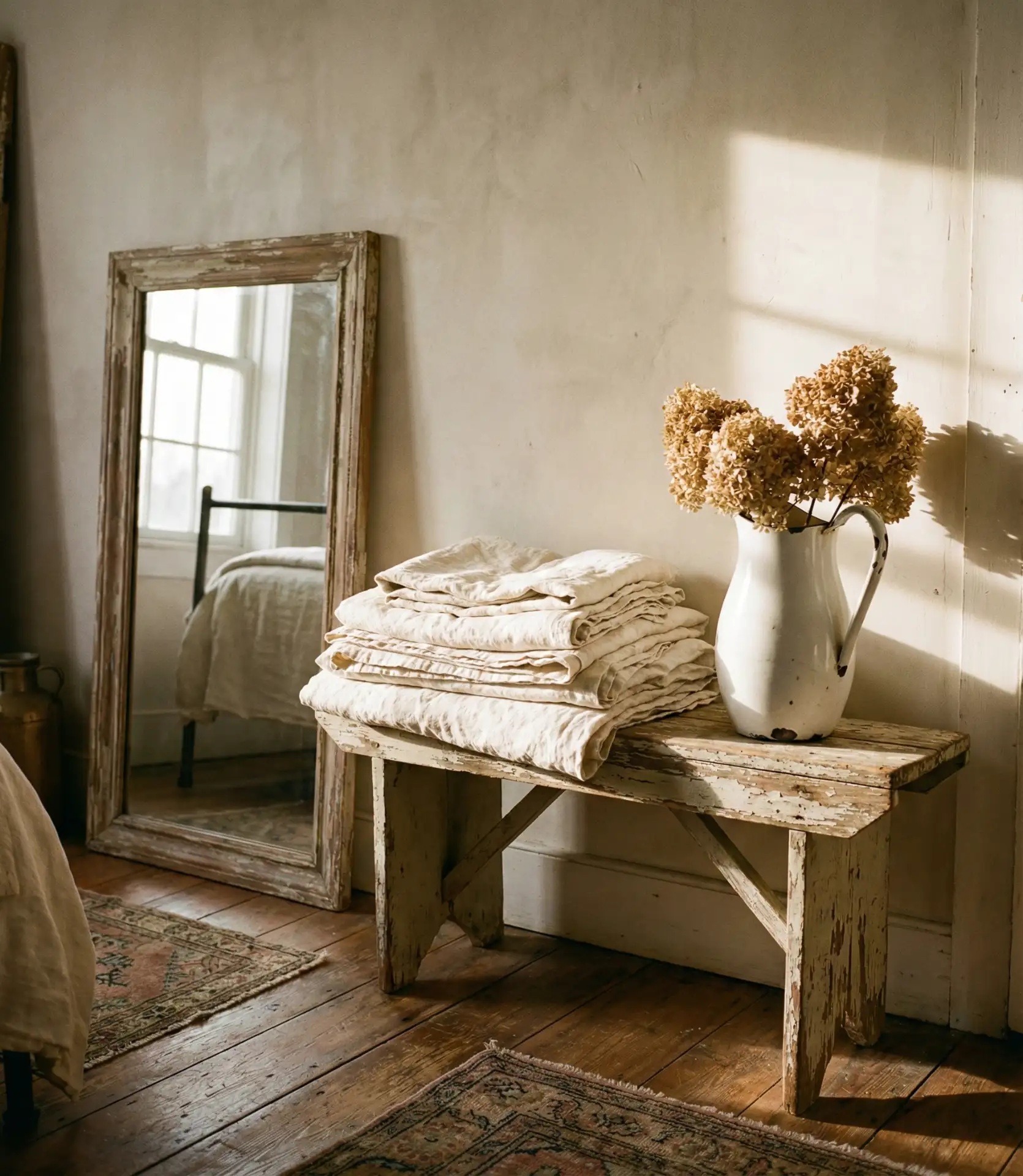
In the South and rural Midwest, where farmhouse architecture is prevalent and families often pass down vintage pieces, this style is particularly popular. The mix of old and new keeps the space from feeling too polished or sterile, while the farmhouse bones provide structure. One key tip: don’t over-distress new pieces to look vintage—it usually reads as artificial. Instead, invest in a few genuine antiques and let newer pieces remain clean and simple.
14. Wall Decor with Natural Elements
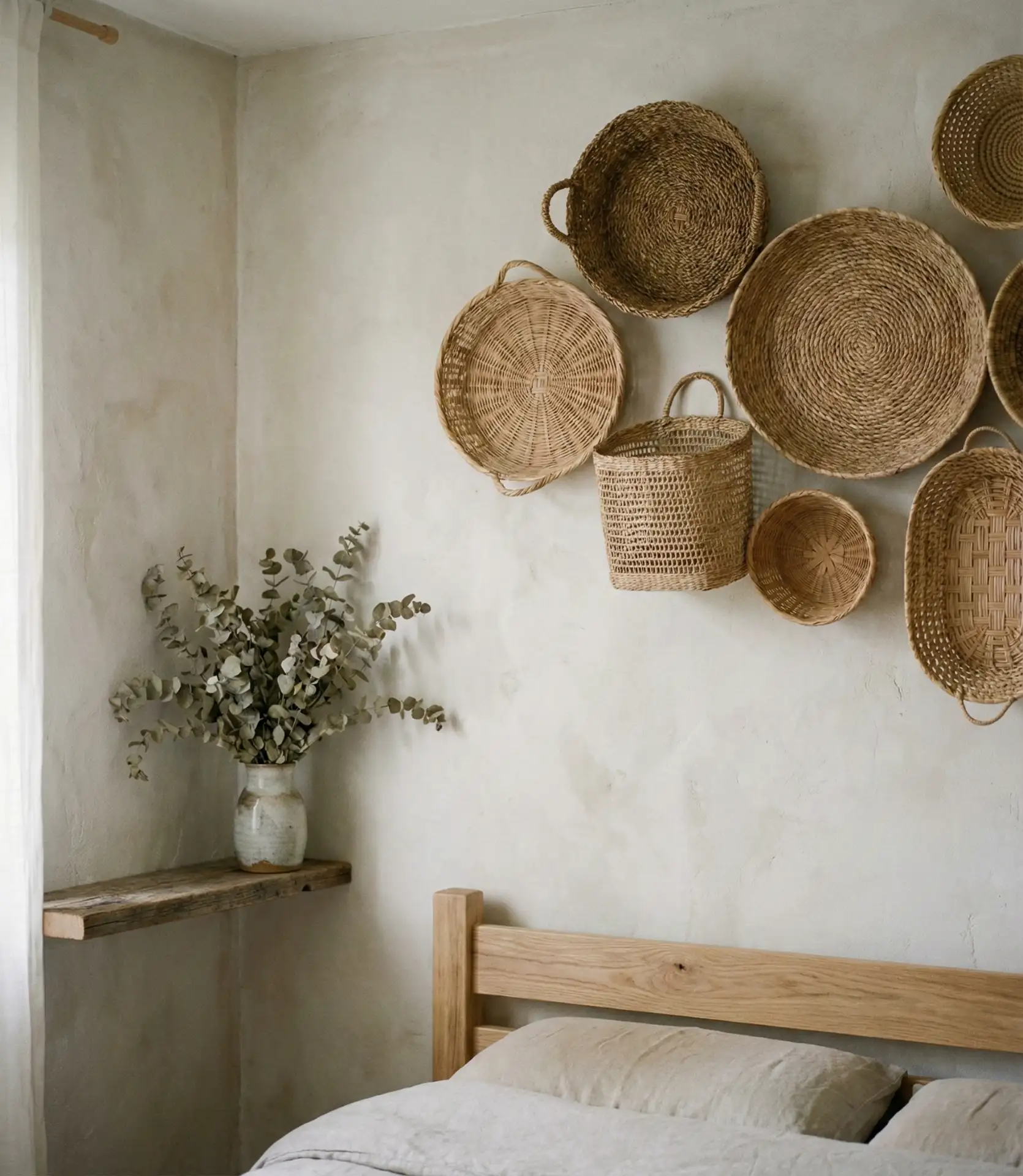
Rustic wall decor goes beyond framed art, incorporating natural elements like driftwood, woven baskets, dried botanicals, and reclaimed wood shelves that add texture and dimension. This approach keeps walls from feeling flat or sterile, bringing organic shapes and materials into the vertical space. A single large woven wall hanging, a collection of vintage baskets, or floating wood shelves displaying ceramics and greenery can become focal points that feel intentional yet relaxed. The key is to choose pieces that feel handmade or natural rather than mass-produced, reinforcing the rustic aesthetic.
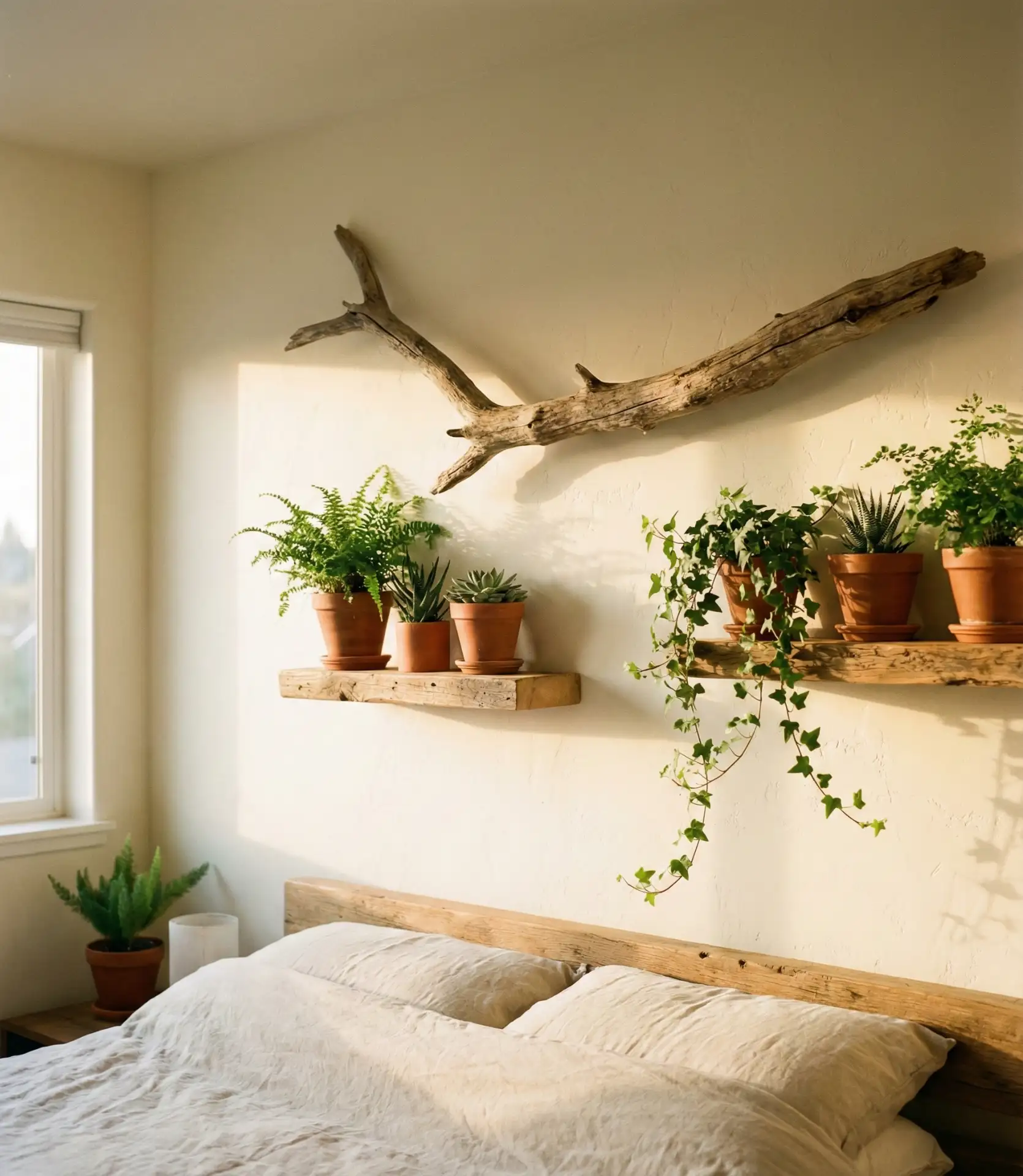
Homeowners often make the mistake of hanging too many small items, which can make walls feel cluttered rather than curated. Instead, go for fewer, larger statement pieces or create a single well-composed grouping. In Pacific Northwest homes, incorporating local elements like driftwood or river rocks adds regional character, while in desert areas, dried grasses or woven textiles might feel more authentic. The goal is to bring nature inside in a way that feels thoughtful, not random.
15. Country Simplicity
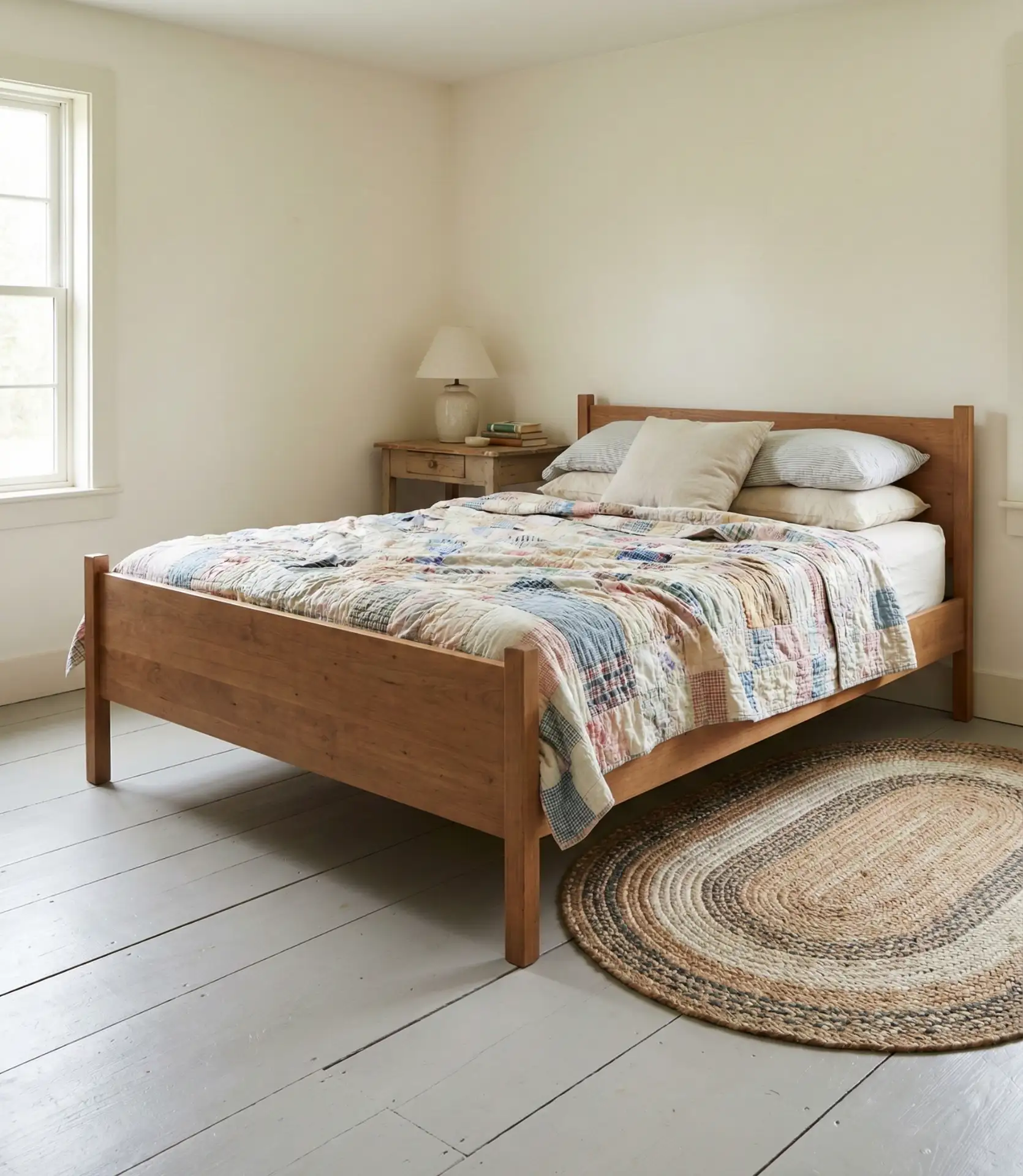
Simple wood furniture, practical storage, comfort-focused quilts and linens, and an overall feeling of unpretentious warmth characterize country rustic bedrooms. This is rustic at its most functional and traditional, rooted in American rural life, where bedrooms were places to rest, not showcase. There’s no fuss, no unnecessary decor, just well-made pieces and a focus on comfort. Painted wood floors, braided rugs, and simple cotton bedding create a bedroom that feels timeless and honest.
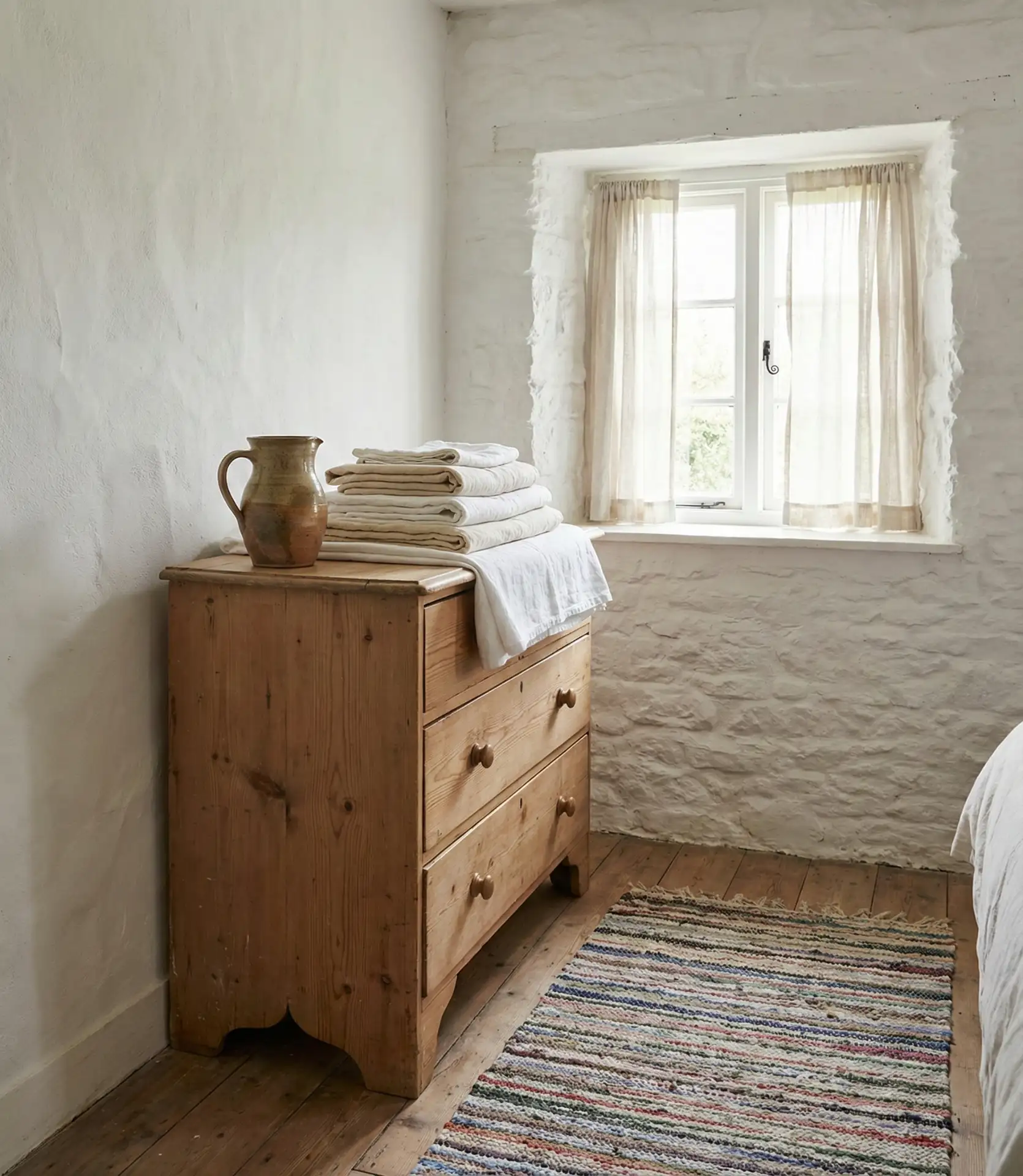
This style thrives in actual rural settings, but it also appeals to urban and suburban homeowners looking to create a retreat from visual overload. Country simplicity is often the most budget-friendly rustic approach, relying on functional pieces rather than designer items. The beauty is in the restraint—there’s no need for elaborate styling when each piece serves a clear purpose and the overall effect is calm and restful.
16. Industrial Rustic Fusion
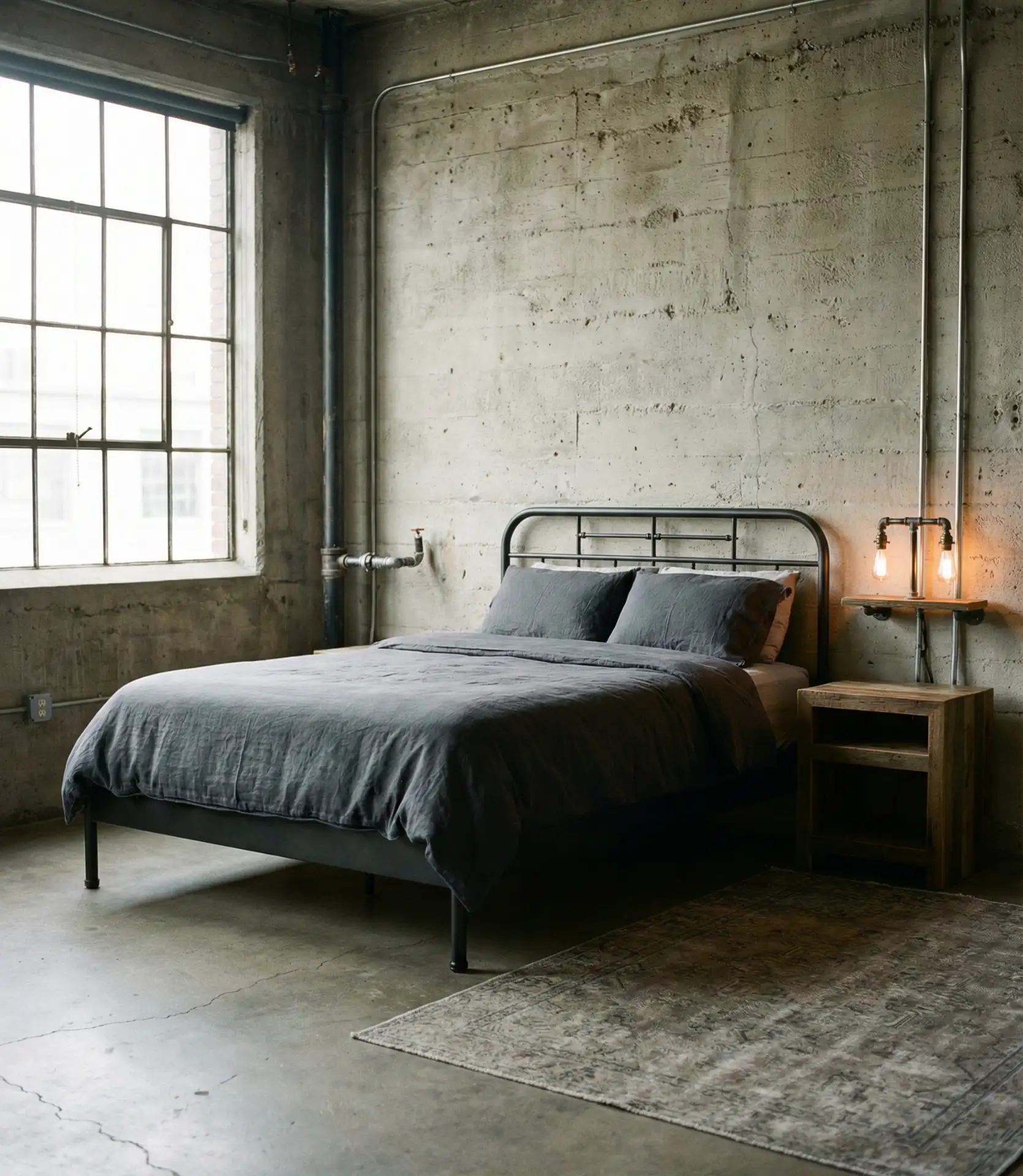
The industrial rustic bedroom merges raw wood with exposed metal, concrete, and utilitarian design, creating a space that feels urban and edgy while maintaining rustic warmth. Steel-framed beds, pipe shelving, Edison bulb fixtures, and rough-sawn wood create a look that’s popular in loft conversions and modern homes with an urban-meets-countryside vibe. This style appeals to homeowners who want the authenticity of rustic materials but in a more contemporary, less traditional context. The palette tends toward grays, blacks, and natural wood, with minimal color to keep the focus on texture and form.
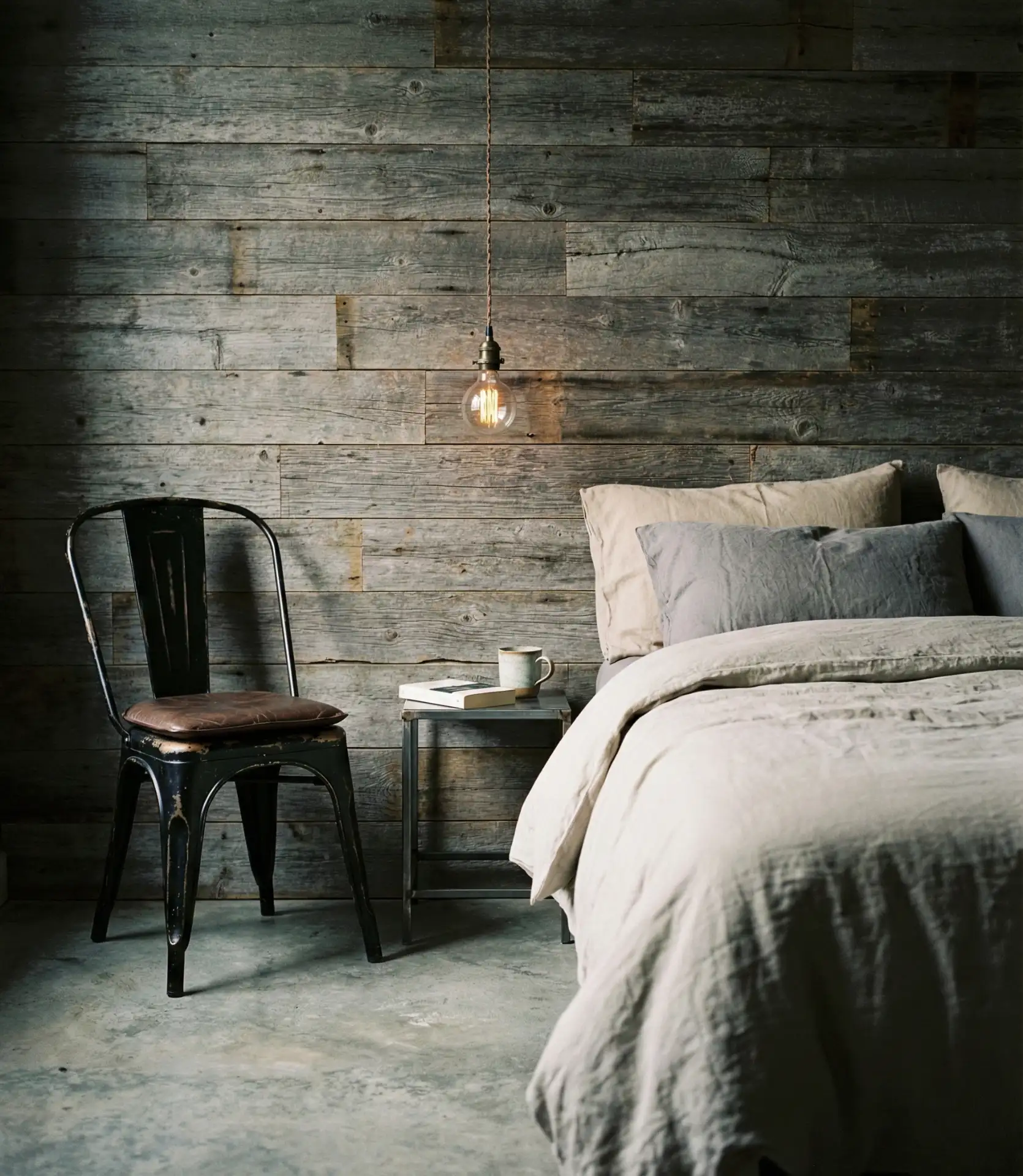
Where this style works best is in spaces with high ceilings, large windows, and good bones—think warehouse conversions or homes with exposed beams. The common mistake is going too cold with all metal and concrete; the wood element is what makes it rustic rather than purely industrial. Balance is essential: for every rigid surface, add a soft textile or natural element to keep the space from feeling sterile.
17. Decor Ideas with Personal Touches
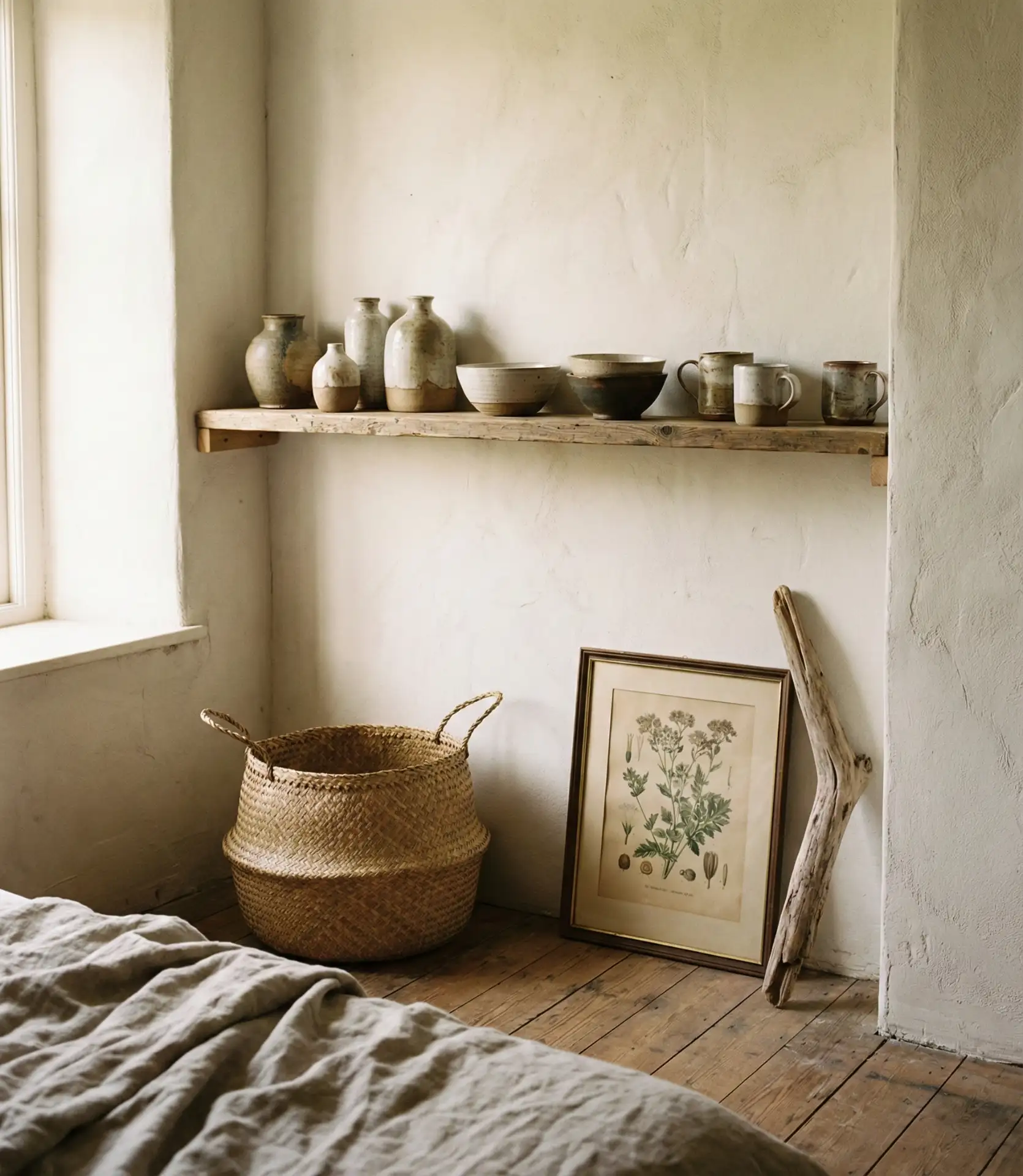
The best rustic decor ideas come from personal touches—family heirlooms, travel finds, handmade ceramics, or DIY projects that make a bedroom feel uniquely yours. This isn’t about following a formula; it’s about layering in items that have meaning, whether that’s a quilt stitched by a grandmother, a piece of driftwood from a memorable beach trip, or pottery made in a local studio. These personal elements are what transform a generically rustic bedroom into a space with real character and story. Neutral backdrops and simple furniture allow these meaningful pieces to stand out.
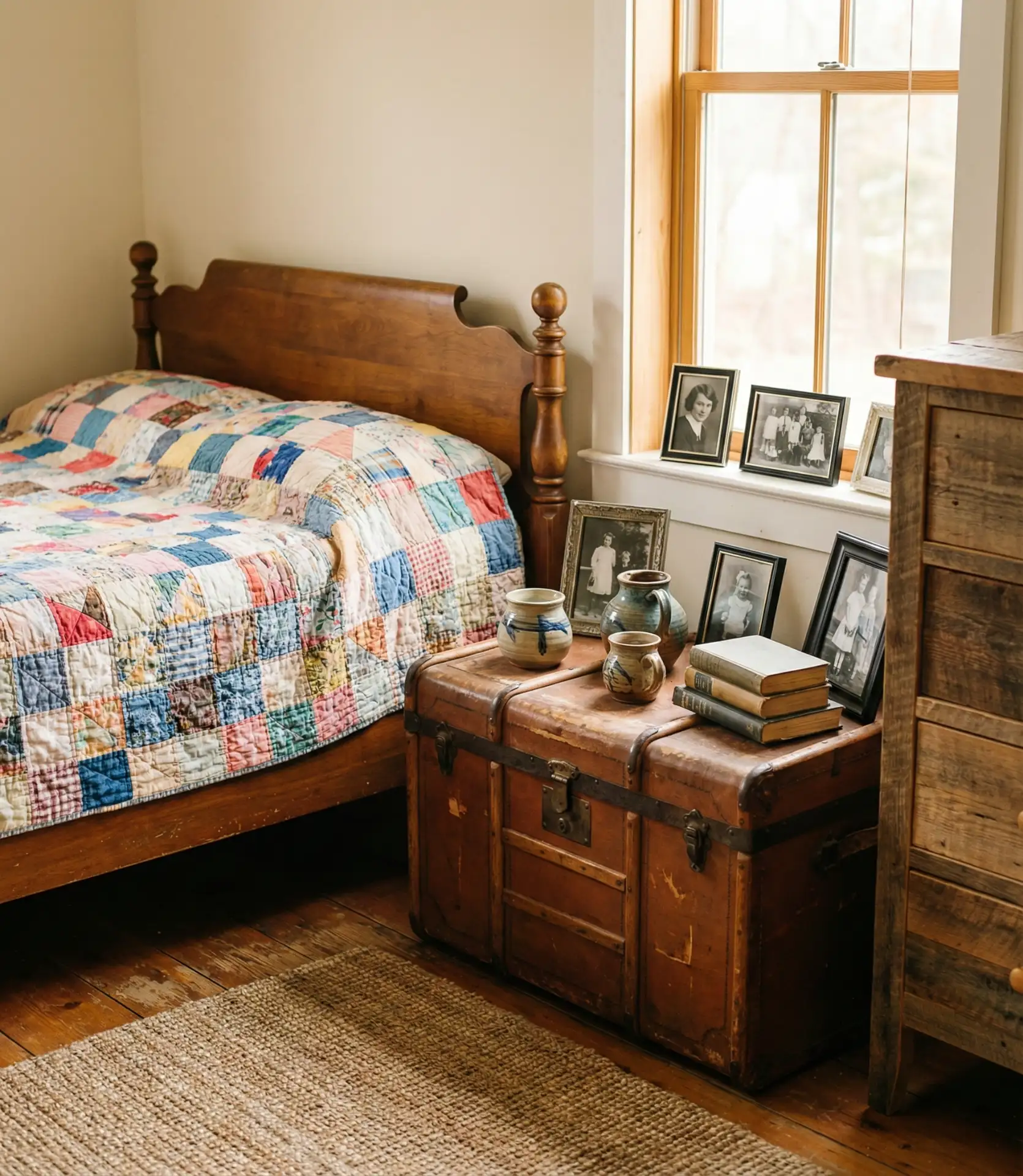
Expert designers often advise clients to start with the pieces they already love and build the room around them, rather than buying everything new to match a specific aesthetic. This approach saves money and creates more authentic, livable spaces. The bedroom becomes a reflection of the person who sleeps there, not just a styled set from a catalog—and that’s where rustic design truly shines.

18. Textured Neutral Palette
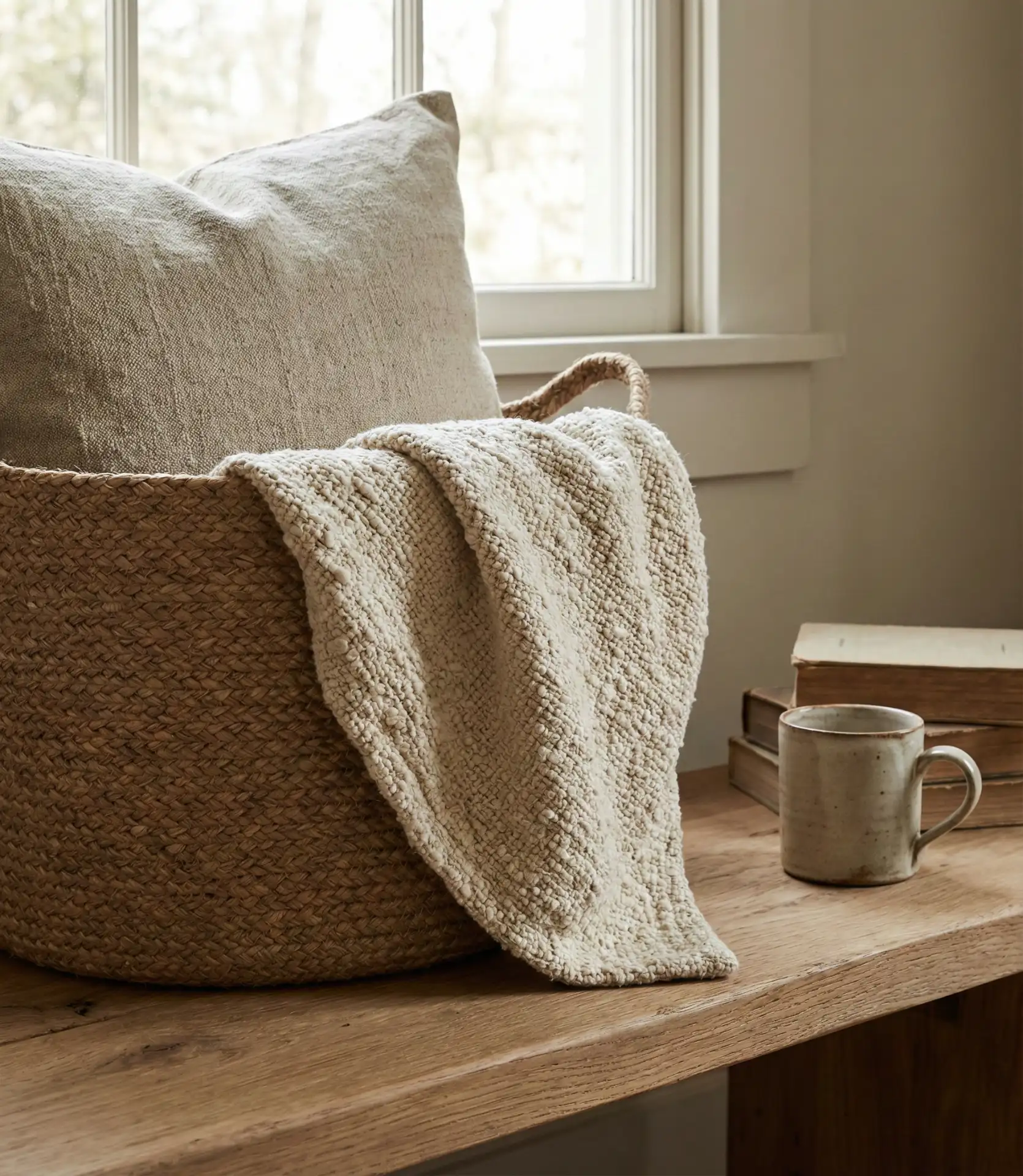
A textured neutral palette in rustic bedrooms relies on variation in materials rather than color to create visual interest—think rough linen, smooth wood, nubby wool, soft cotton, and woven jute all working together in shades of cream, beige, taupe, and warm gray. This monochromatic approach feels calm and cohesive, perfect for homeowners who want a restful bedroom free from visual distraction. The furniture stays simple and natural, allowing the play of textures to do the work. This look is rustic design at its most subtle and sophisticated.
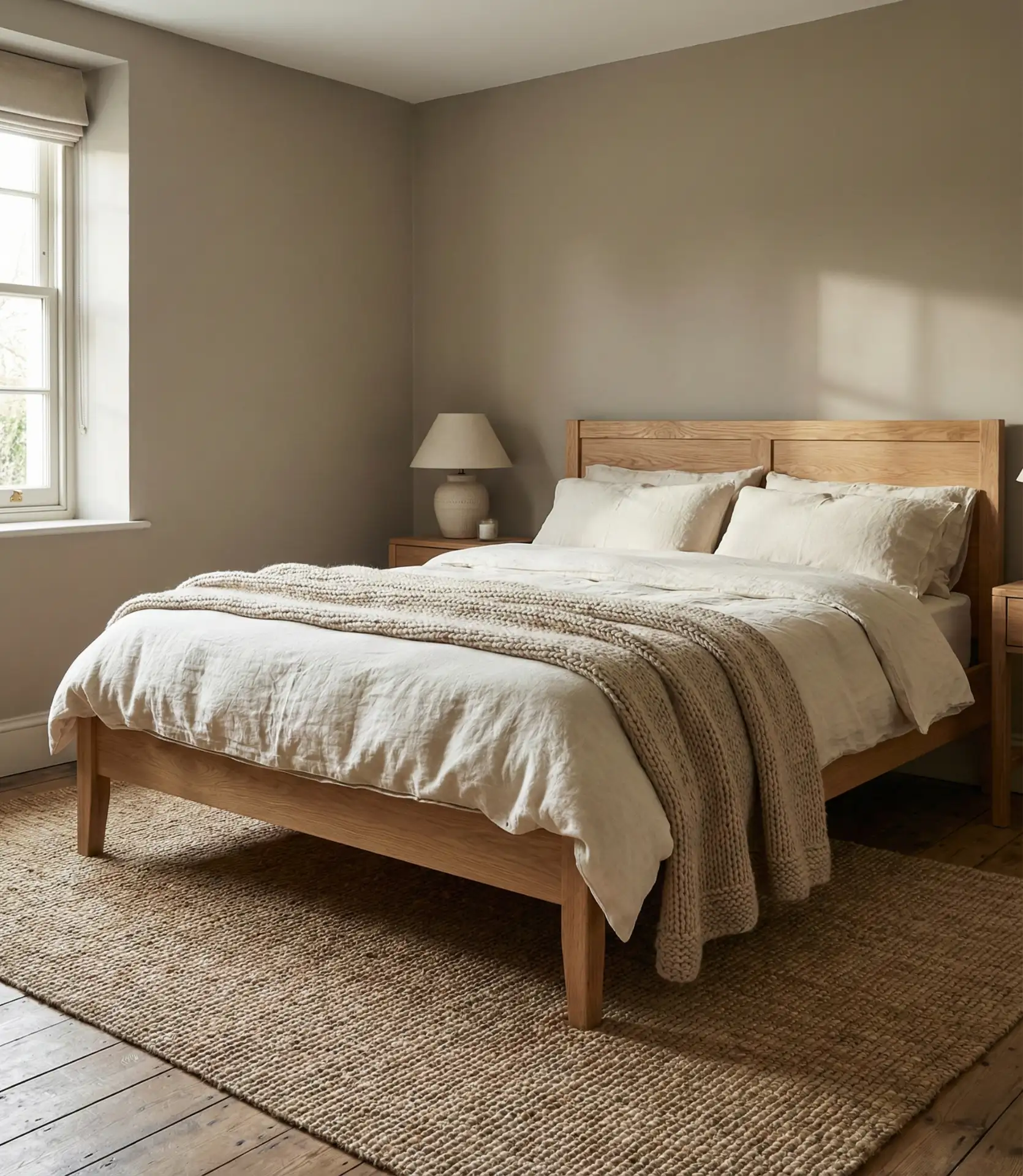
This palette is forgiving and easy to live with, making it ideal for anyone new to decorating or those who prefer a quieter aesthetic. In practical terms, “neutral” doesn’t mean boring—the variety in textures keeps the eye engaged, and the warmth in the tones prevents the space from feeling cold or institutional. One tip: incorporate at least five different textures in varying scales to create a rich, layered look that still feels cohesive.
19. Reclaimed Wood Statement Wall
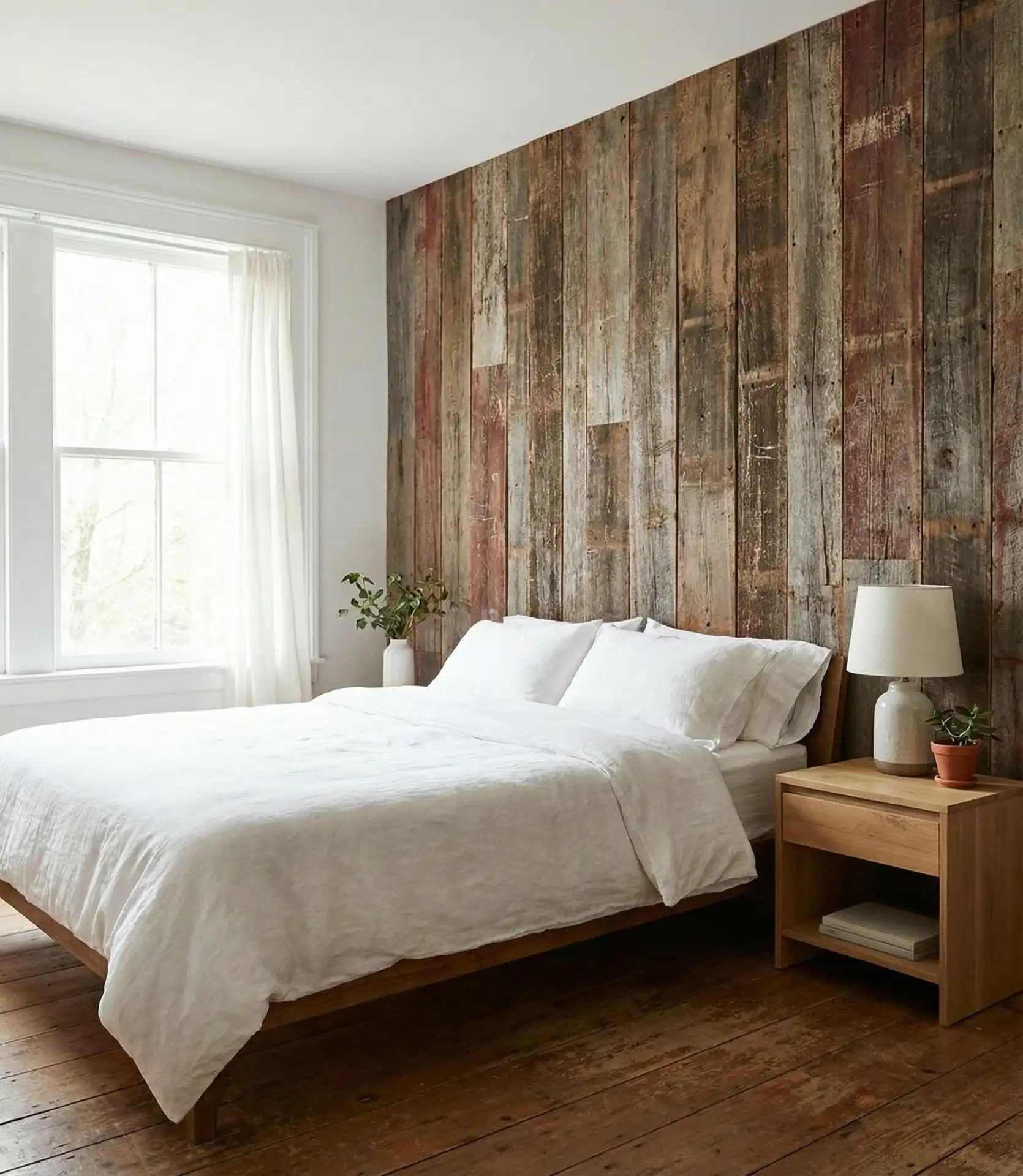
A reclaimed wood accent wall serves as the ultimate rustic focal point, bringing instant warmth, texture, and architectural interest to a bedroom. Whether it’s weathered barn wood, salvaged planks with original paint, or mixed-width boards with varied patina, this feature wall becomes the room’s defining element. The rest of the space can stay minimal—simple bedding, understated furniture—because the wood does all the talking. This design idea works in both traditional and modern settings, proving that reclaimed materials can adapt to different aesthetics.
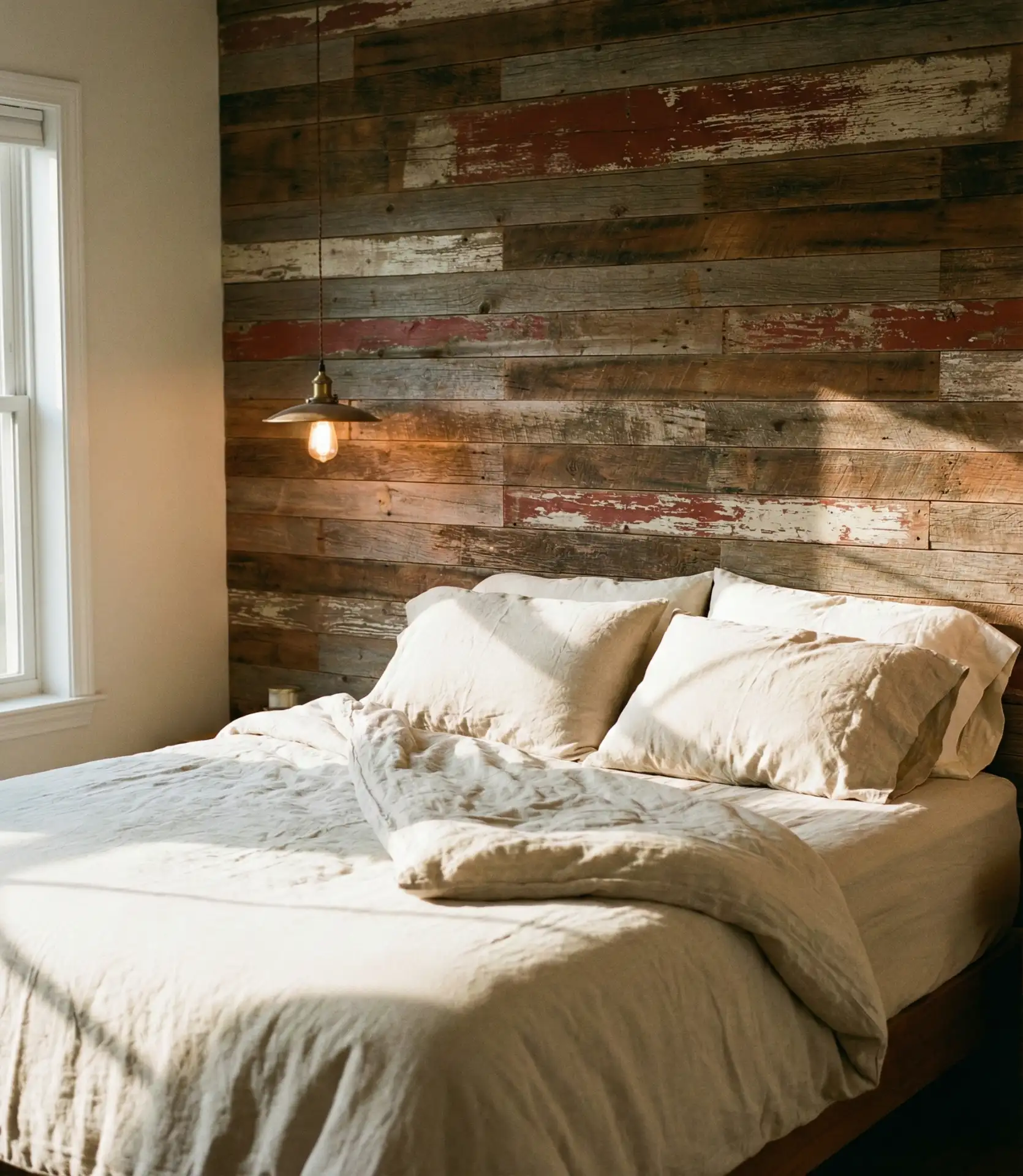
Many homeowners tackle the job as a DIY project, sourcing wood from salvage yards, old barns, or online marketplaces, which can make it surprisingly affordable. The installation takes time but doesn’t require advanced carpentry skills—just patience and a willingness to embrace imperfection. The finished wall adds not just visual interest but also a sense of history and authenticity that new materials simply can’t match.
20. Soft Lighting and Ambiance
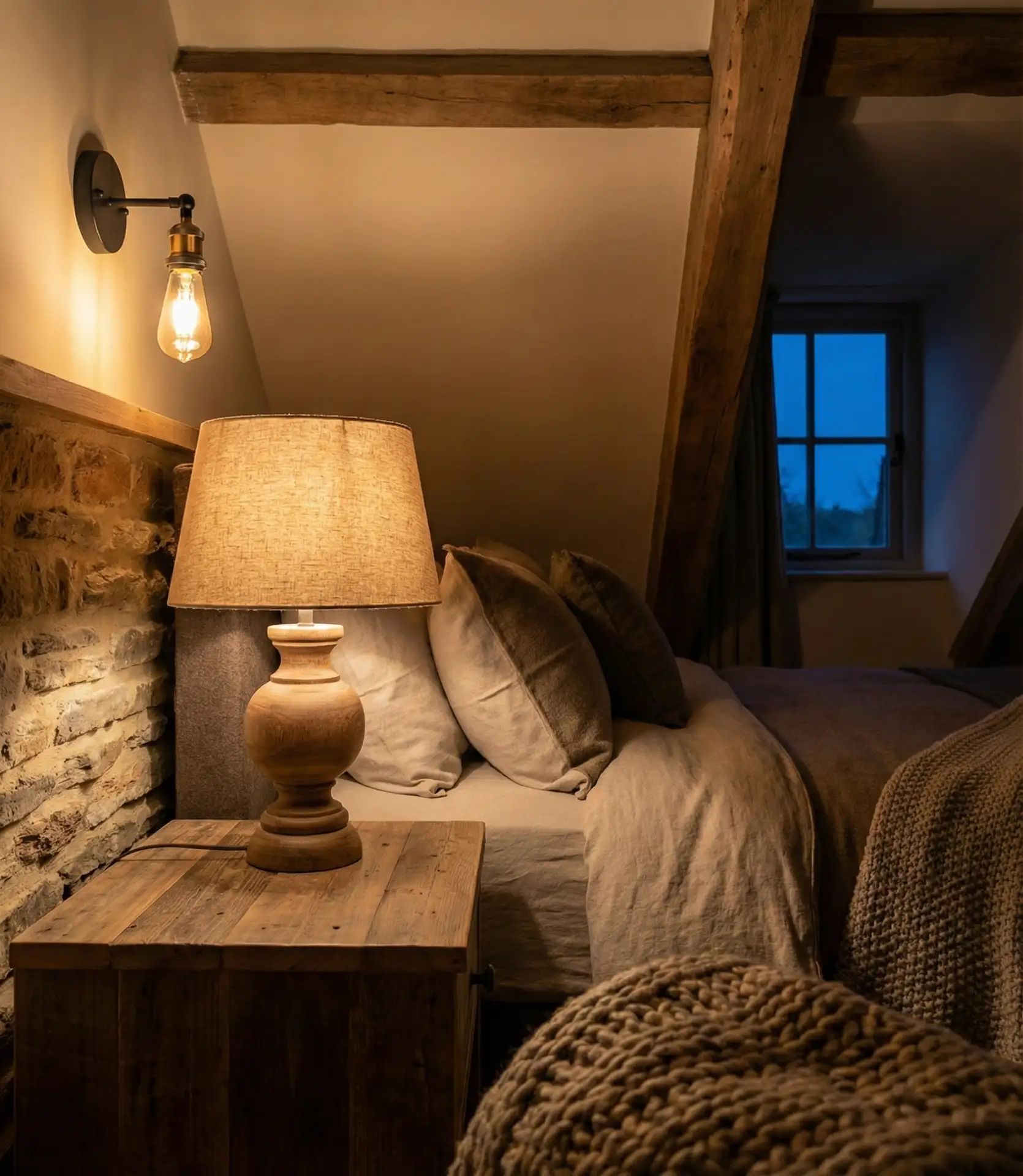
Lighting transforms a rustic bedroom from simply decorated to truly atmospheric, and the best approach layers multiple sources—bedside lamps, wall sconces, pendant lights, and candles—at different heights and intensities. Warm-toned bulbs (2700K or lower) enhance wood tones and create a cozy glow, while dimmers allow you to adjust the mood throughout the day. Natural materials in lighting fixtures—wood bases, linen shades, and wrought iron—keep everything feeling cohesive. The goal is to avoid harsh overhead lighting in favor of softer, more diffused sources that invite relaxation.
Across the U.S., bedrooms increasingly function as multi-use spaces—reading nooks, home offices, meditation areas—which makes flexible lighting even more important. Homeowners who invest in quality dimmers and multiple light sources report higher satisfaction with their bedroom environment. The beauty of layered lighting in rustic spaces is that it doesn’t require expensive fixtures; simple lamps with warm bulbs and natural materials create the same inviting effect as designer pieces.
21. Natural Fiber Rugs
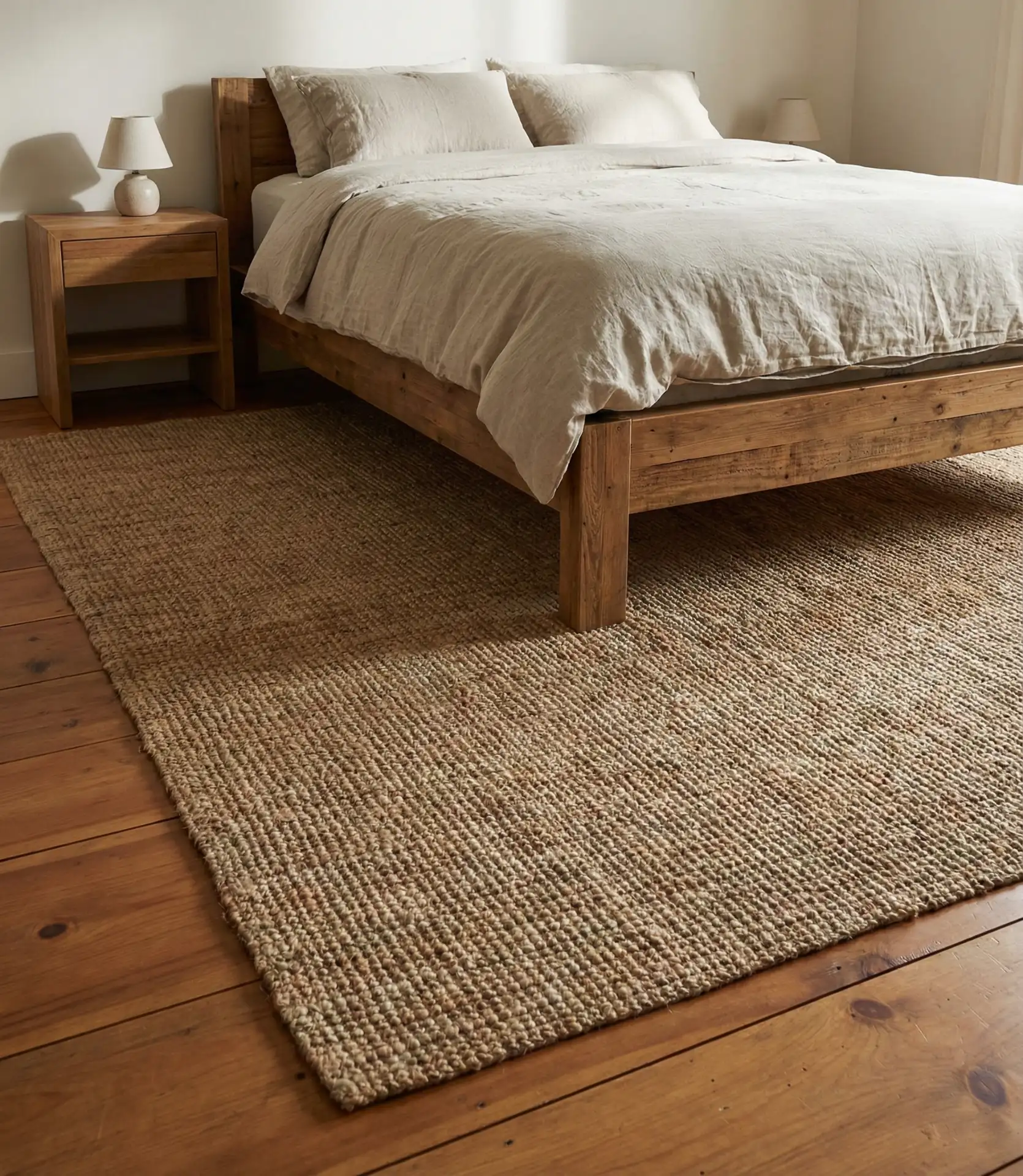
Natural fiber rugs—jute, sisal, seagrass, or wool—anchor rustic bedrooms with organic texture and earthy tones that complement wood furniture and neutral palettes. These rugs add warmth underfoot without the visual weight of patterned options, making them ideal for layering or using alone in minimalist spaces. Jute and sisal work particularly well in bedrooms because they’re durable, sustainable, and affordable, while wool offers softness and insulation in colder climates. The texture itself becomes a design element, adding depth and interest to what might otherwise be a flat floor.
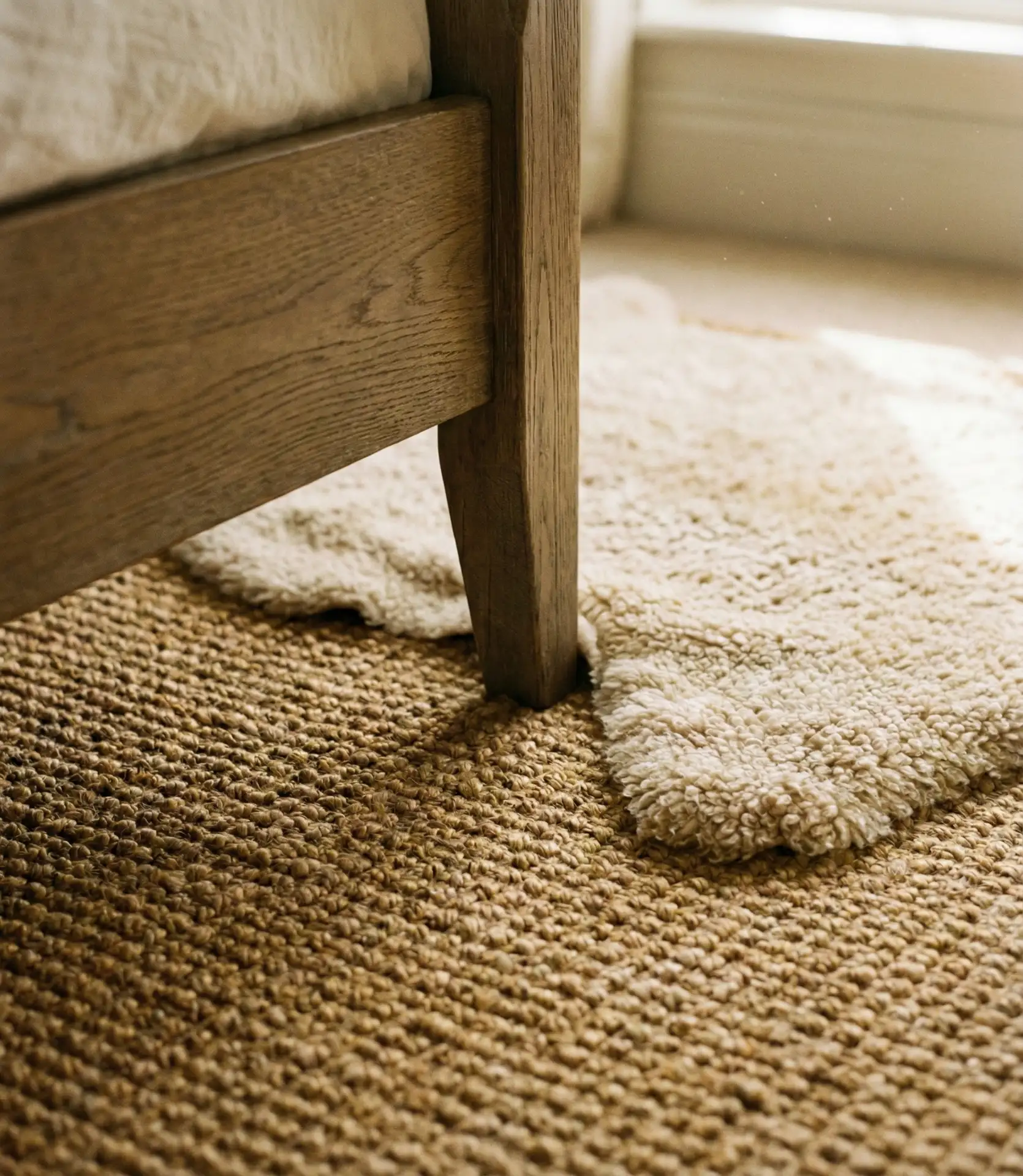
Many homeowners layer a soft sheepskin or small woven rug over a larger jute base, combining practicality with visual interest. This approach solves the common complaint that natural fiber rugs can feel rough—the layered softness adds comfort while maintaining the organic aesthetic. Natural fiber rugs also age beautifully, developing character and patina over time rather than looking worn out.
22. Four-Poster Bed with Simple Lines
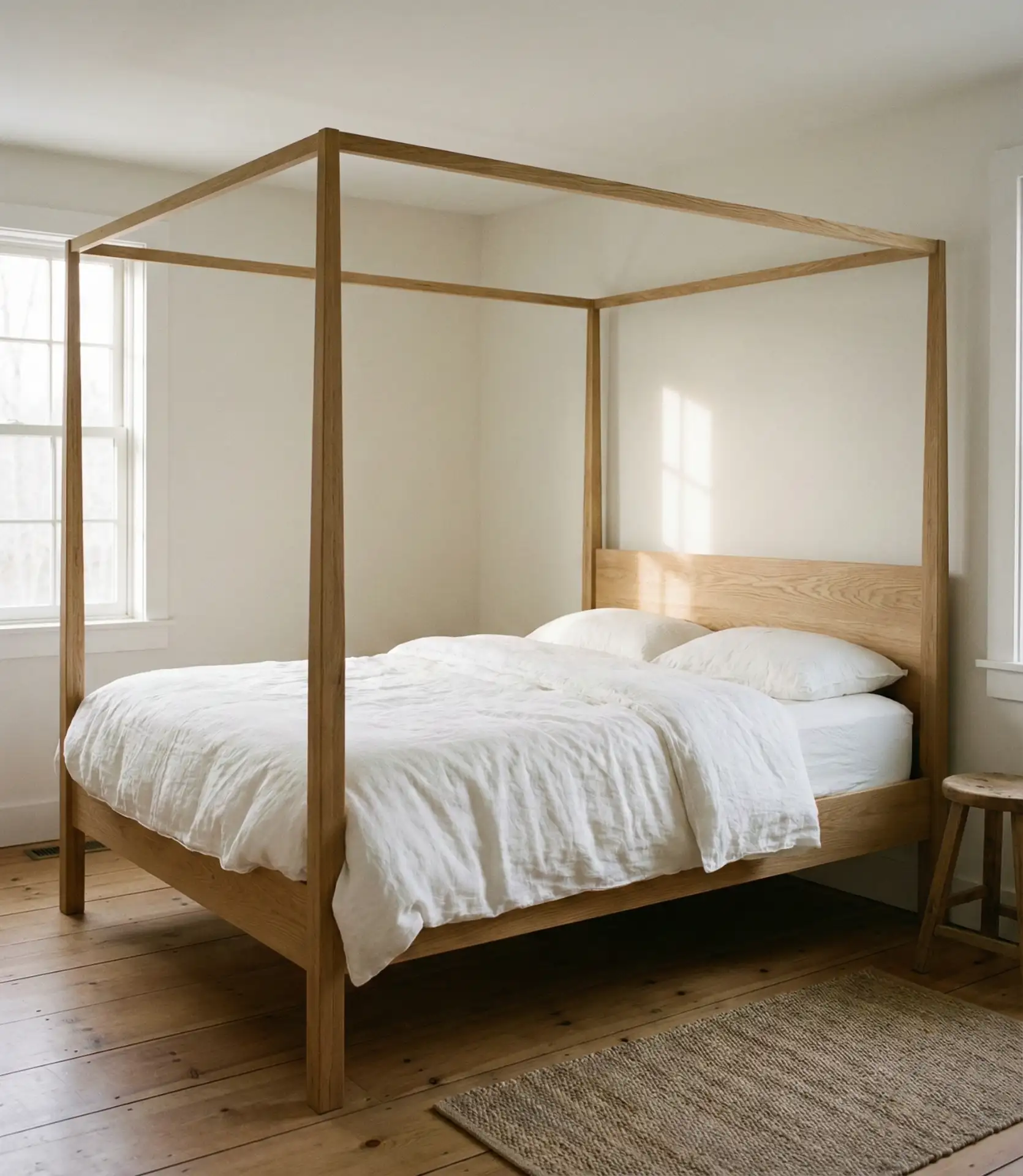
A four-poster bed with clean, simple lines brings rustic elegance without the fussiness of traditional canopy beds, creating an architectural focal point that feels both timeless and current. Modern interpretations use natural wood or matte black metal in streamlined designs that work in everything from farmhouse to contemporary settings. The vertical posts draw the eye upward, making the bedroom feel taller and more spacious, while the frame itself provides structure and presence. This bed is a furniture choice that makes a statement while remaining versatile and long-lasting.
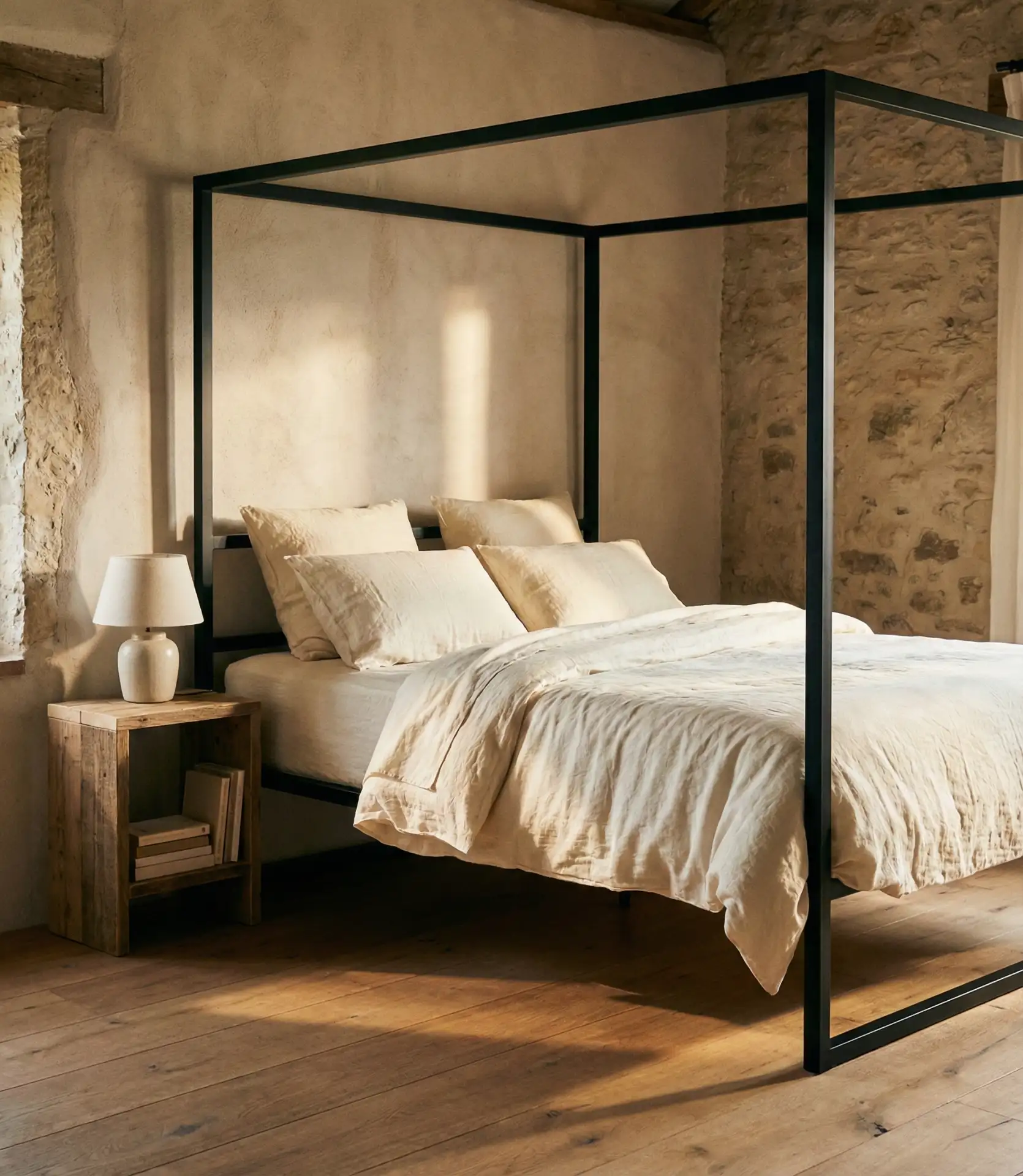
Four-poster beds work best in bedrooms with higher ceilings (9 feet or more), where the proportions feel balanced rather than cramped. In areas characterized by traditional architecture, such as the South and New England, these beds resonate particularly well, establishing a connection to historical design while simultaneously meeting modern requirements. The key is keeping the design simple—ornate carvings or heavy drapery can overwhelm, while clean posts and minimal detailing let the bed enhance rather than dominate the space.
23. Seasonal Bedding Rotation
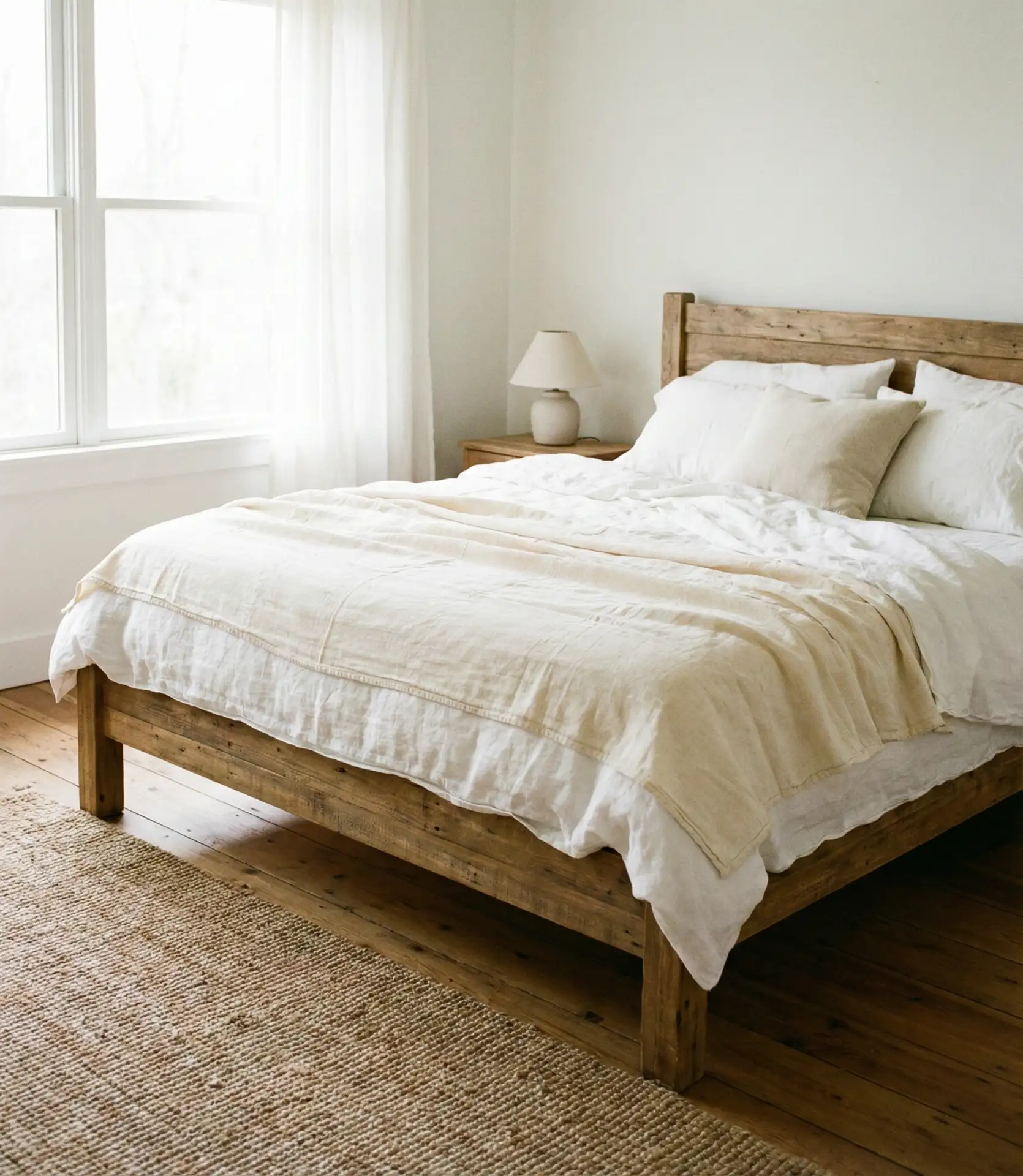
Rotating bedding seasonally keeps a rustic bedroom feeling fresh and responsive to the climate, with lighter linens and cotton for warm months and heavier quilts, wool, and flannel for colder seasons. This practical approach improves comfort and allows you to shift the room’s visual weight and mood throughout the year. Summer might bring crisp white sheets and a lightweight blanket, while winter invites layered textures, darker tones, and plush throws. The cozy factor increases when the bedding matches the season, making the bedroom feel attuned to its environment.
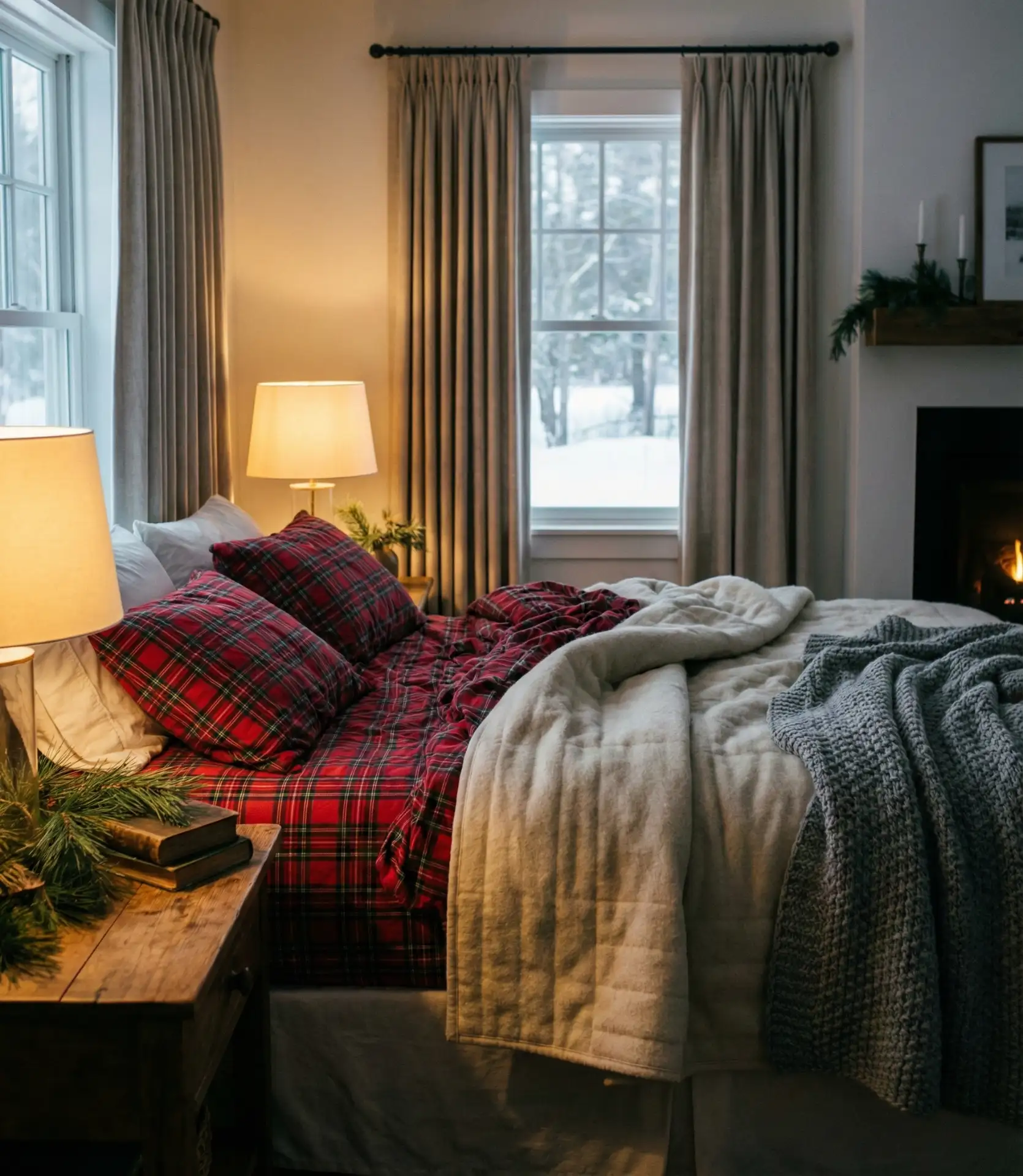
Homeowners in four-season climates—the Midwest, Northeast, and mountain regions—especially benefit from this approach, as the bedroom’s functionality and comfort improve dramatically. Storage solutions like under-bed bins or linen closets make swapping bedding manageable, and many people find the ritual of changing bedding to mark the seasons satisfying. It’s a small effort that yields big returns in both comfort and visual freshness, keeping the rustic bedroom from ever feeling stale or static.

These rustic bedroom ideas offer a starting point for creating a space that feels grounded, warm, and entirely your own. Whether you’re drawn to the simplicity of farmhouse style, the drama of moody dark tones, or the layered richness of boho textures, there’s room within rustic design to express your personal taste. Share your favorite idea or your rustic bedroom project in the comments—we’d love to see how you’re bringing these concepts to life in your home.