44 Outdoor Dining Area Ideas for 2026: Transform Your Backyard Into a Stunning Restaurant-Style Retreat

Outdoor dining has become more than just a seasonal luxury—it’s a lifestyle shift that defines how American homes connect indoor comfort with open-air living. As we move into 2026, Pinterest searches for outdoor dining inspiration continue to climb, with homeowners seeking spaces that blur the boundaries between garden retreats and fully functional dining rooms. Whether you’re working with a sprawling backyard or a compact urban balcony, the right design can transform any outdoor area into a gathering spot that rivals your favorite restaurant. This guide walks you through fresh ideas that balance beauty, practicality, and that essential sense of home.
1. A covered terrace with string lighting
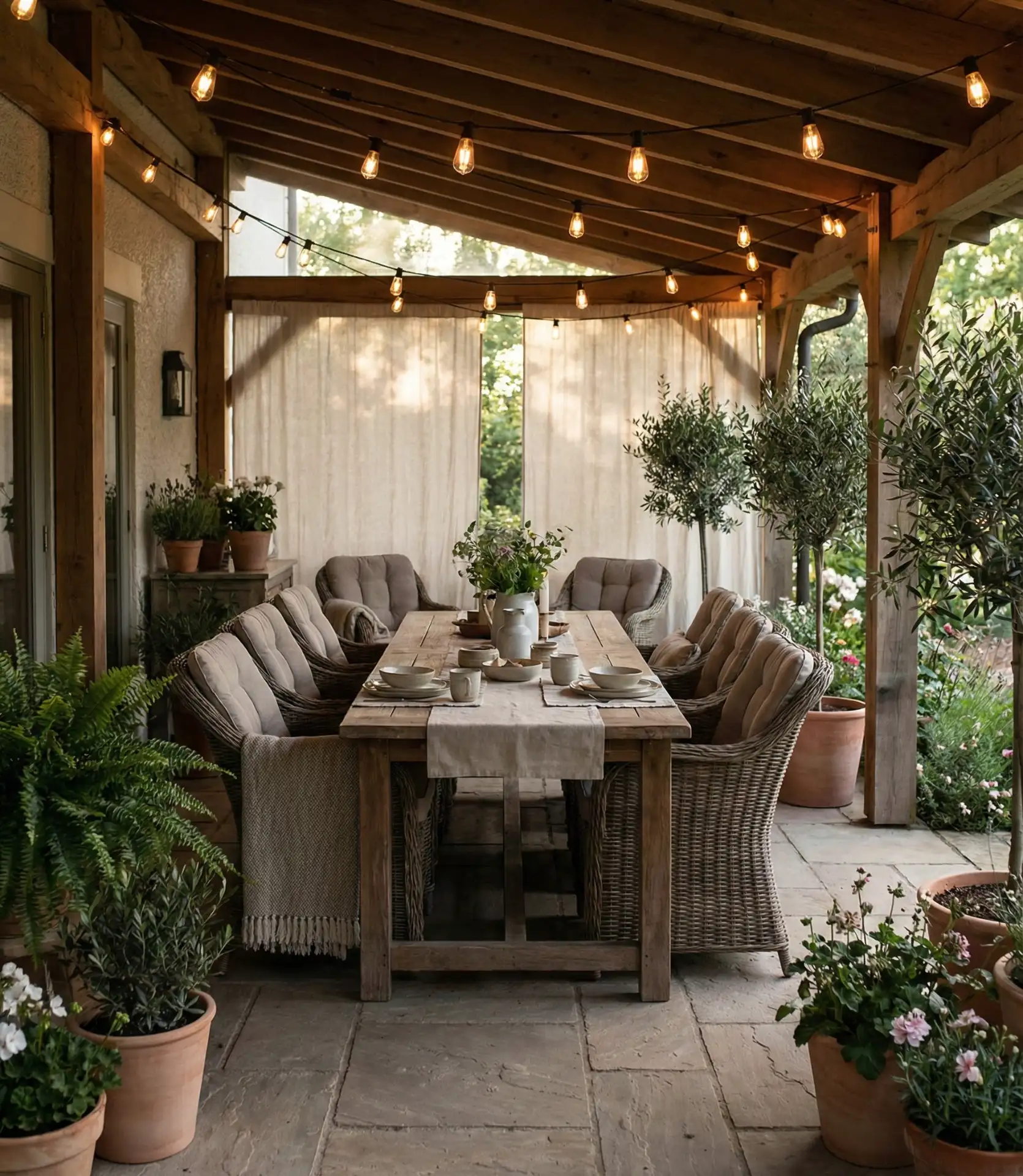
A covered terrace creates an all-weather dining sanctuary that protects you from unexpected rain and harsh sun while maintaining that breezy outdoor feel. The addition of Edison-style string lights overhead adds warmth and intimacy, turning evening meals into memorable occasions. This setup works beautifully for families who want year-round usability without investing in a full pergola structure, and it’s particularly popular in regions with unpredictable weather patterns. 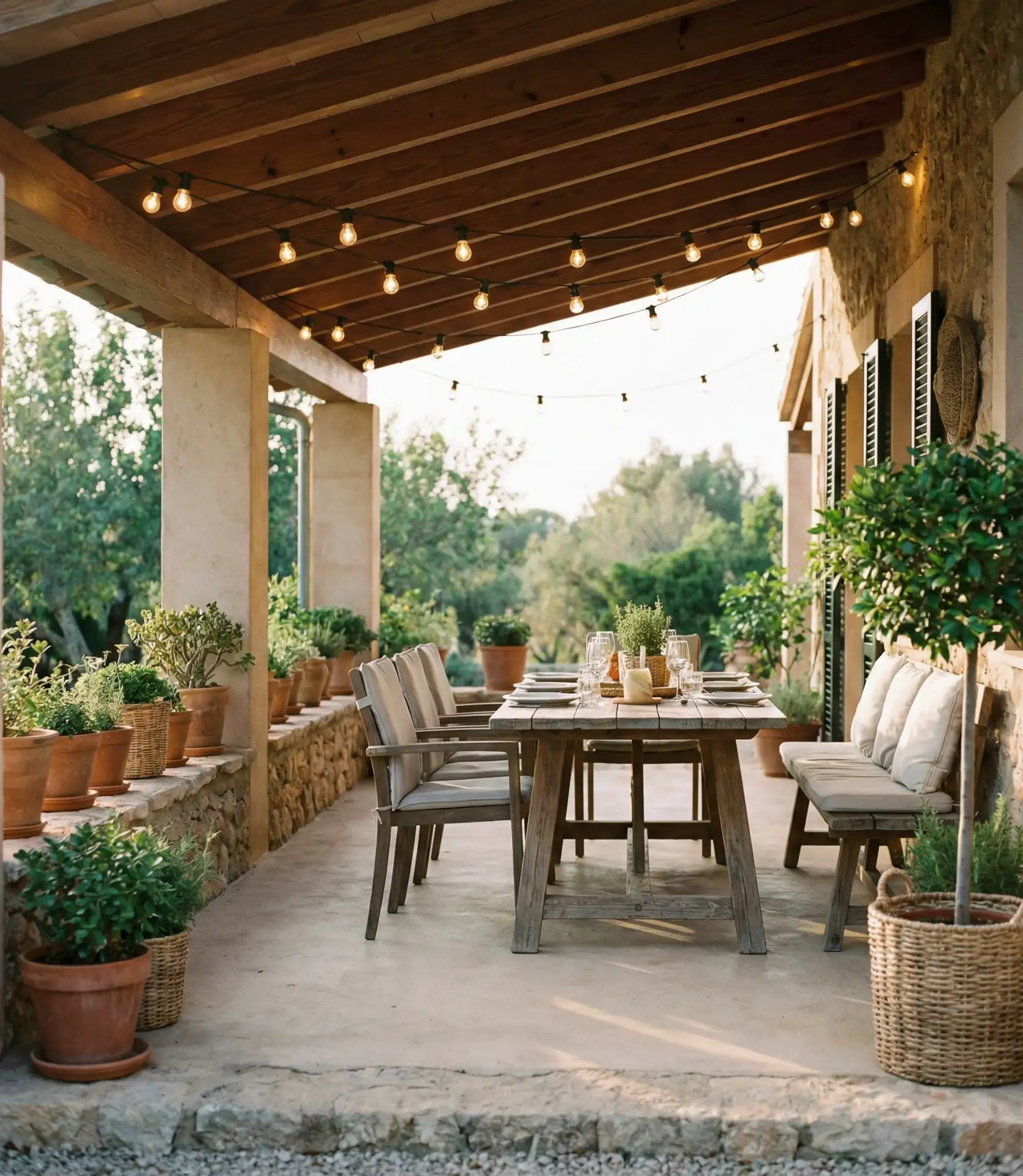
In the Pacific Northwest and Northeast, where spring and autumn can be unpredictable, this design prolongs your outdoor season by several weeks. Covered structures provide shade during peak summer hours, so summer midday gatherings are more comfortable. For ease, consider installing a retractable shade system so you can minimally cover the area and have protection as needed. You will appreciate the option to open up fully on perfect weather days.
2. Rustic Farmhouse Table Setting
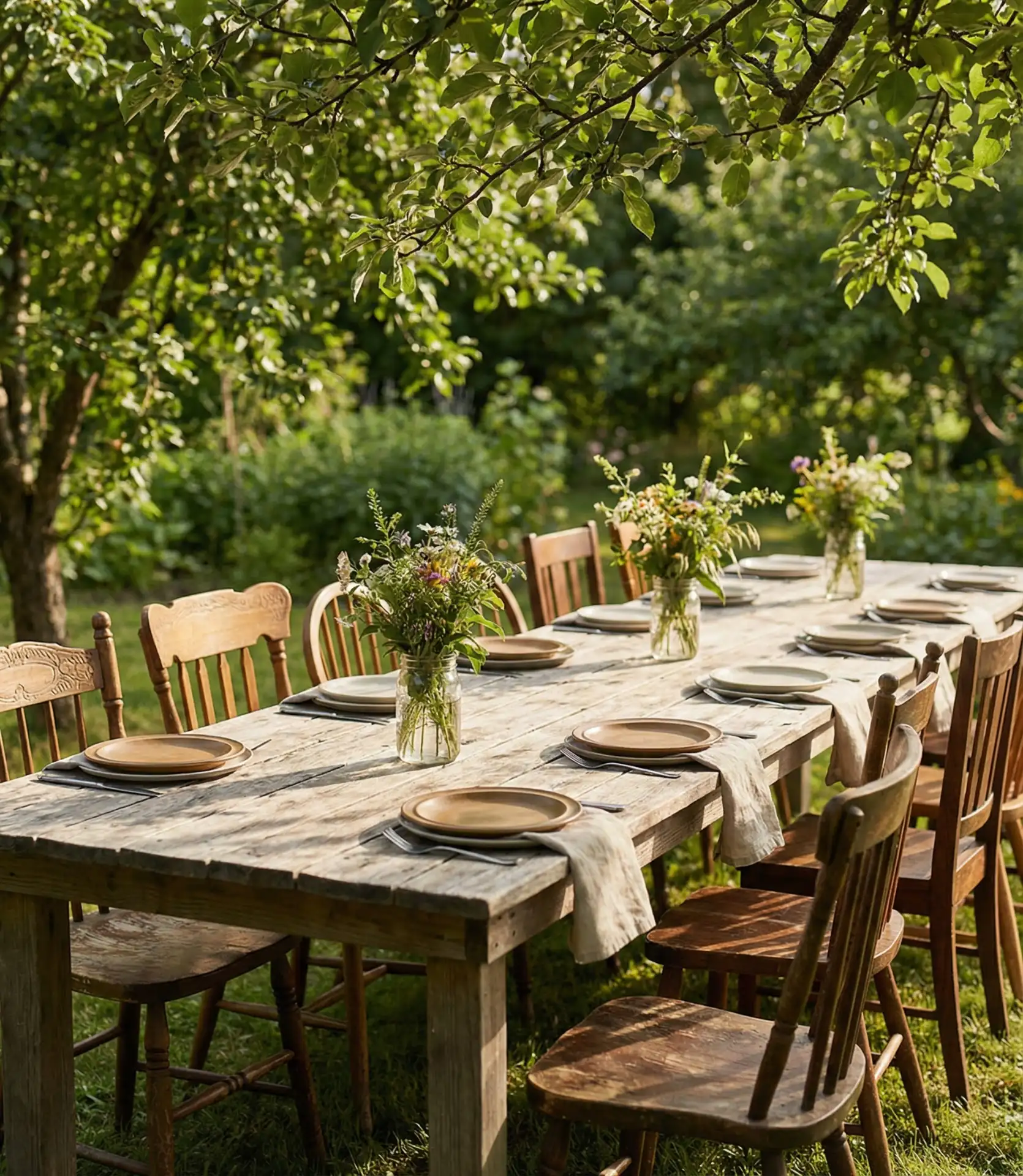
Weathered farmhouse tables cozily surrounded by rustic, mismatched chairs, and sets of vintage-inspired tableware rather than pristine formal place settings provide a relaxed atmosphere for guests. This style of table setting provides American charm in country properties and suburban backyards. Vintage, weathered, and rustic are inexpensive styles that provide authentic character to a location. 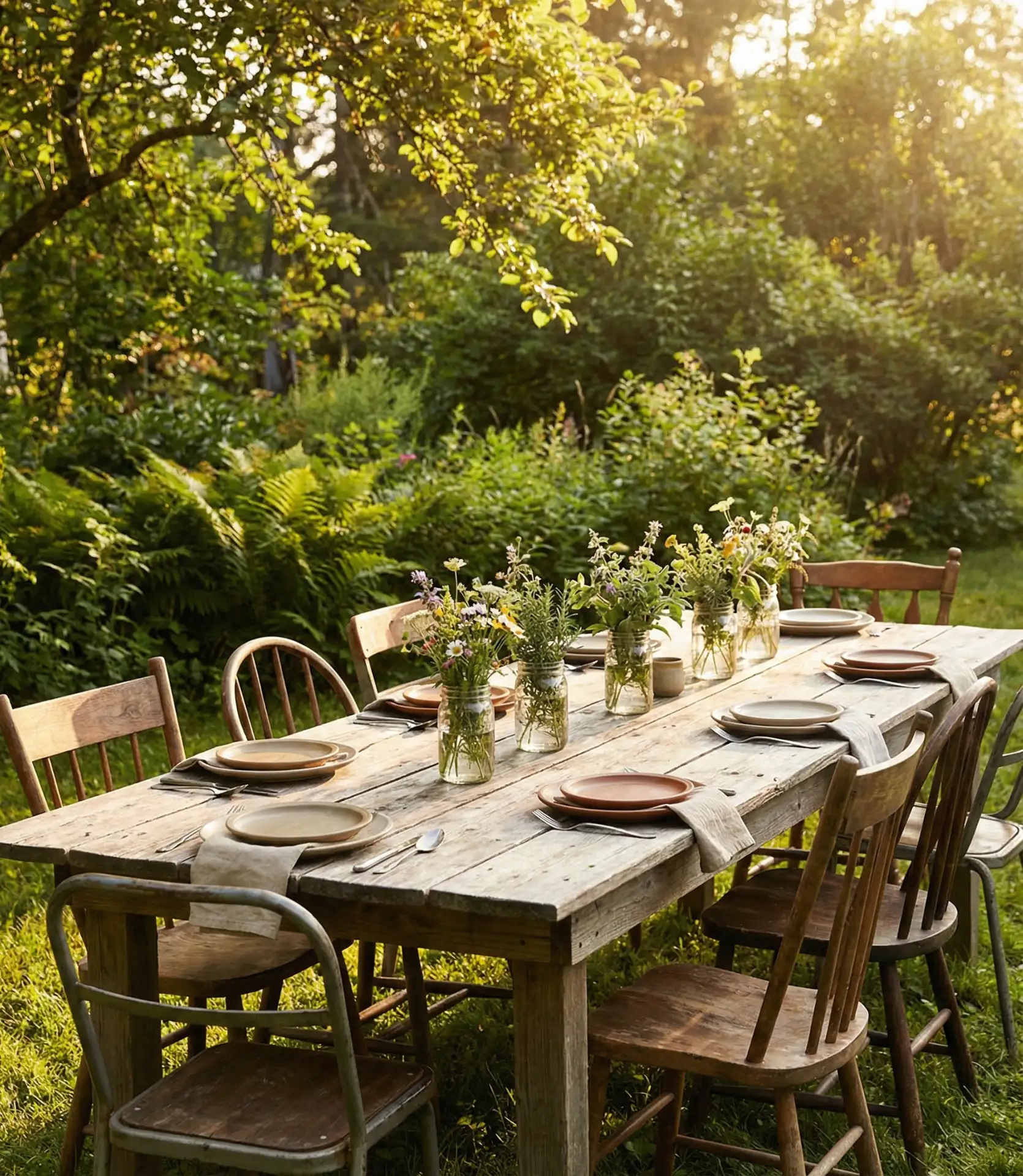
A neighbor of mine renovated their backyard for less than half the budget they had set aside for new furniture. A rustic barn door table and its imperfections of weathered and warped wood became more than a blemish; they became conversation starters.
Seal the wood with an outdoor-grade finish, and these pieces acquire even more character over time while standing up to the elements beautifully.
3. Gravel Patio Dining Zone
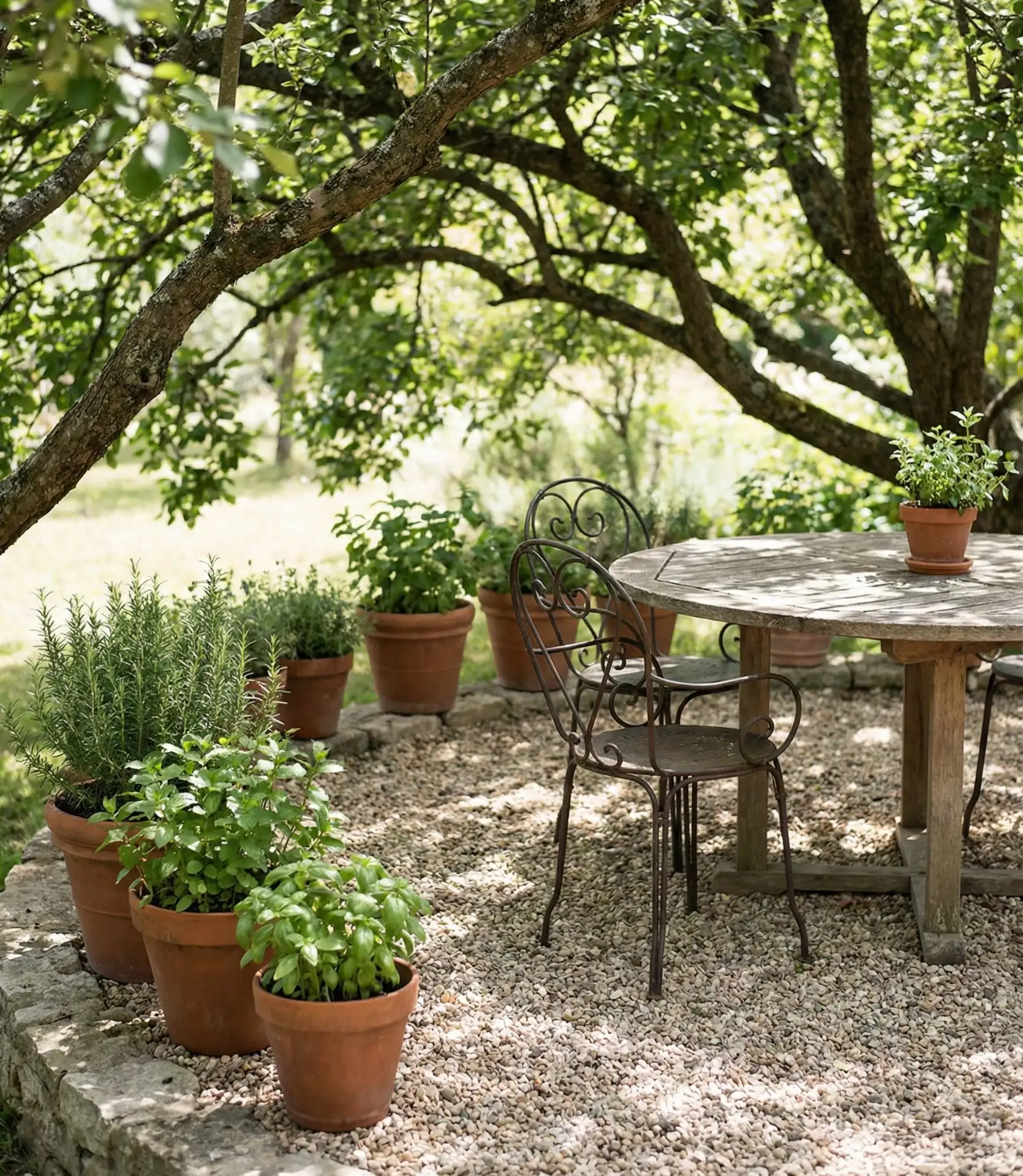
Gravel surfaces provide an inexpensive, customizable, permeable foundation that drains well and captures the relaxed feel of European bistros. Unlike concrete and pavers, pea gravel surfaces allow you to rearrange your dining layout as needs and seasons change. The crunchy sound of gravel, along with the neutral coloration, adds aesthetic appeal and texture. It goes well with any dining furniture, whether modern metal or traditional wood. 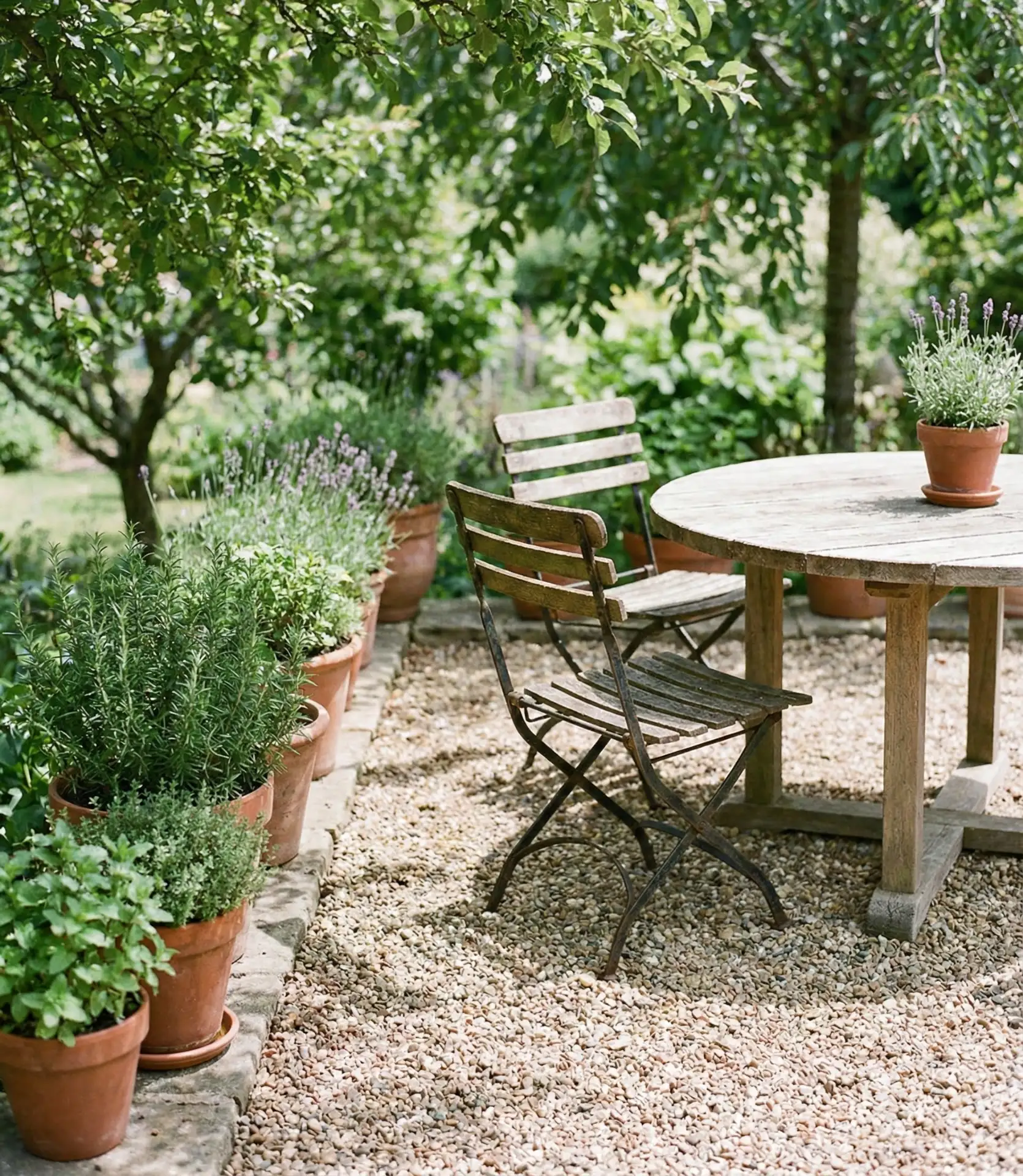
A gravel patio, fully installed with quality stone, edging, and landscaping fabric, typically costs about $3 to $5 per square foot. This makes gravel one of the most affordable ways to define sections of outdoor dining space. Many homeowners love that gravel doesn’t create heat islands like pavement, so your dining area stays cooler during summer gatherings.
4. Restaurant-Inspired Booth Seating

Bringing restaurant-style booth seating outdoors makes for an unexpectedly sophisticated dining experience that maximizes seating in compact areas.
Weather-resistant cushions on built-in benches along two sides of a fixed table replicate the ambiance of your favorite local eatery while offering the fresh air of home. This arrangement is perfect for narrow environments when typical chair placements would be tight or uncomfortable. 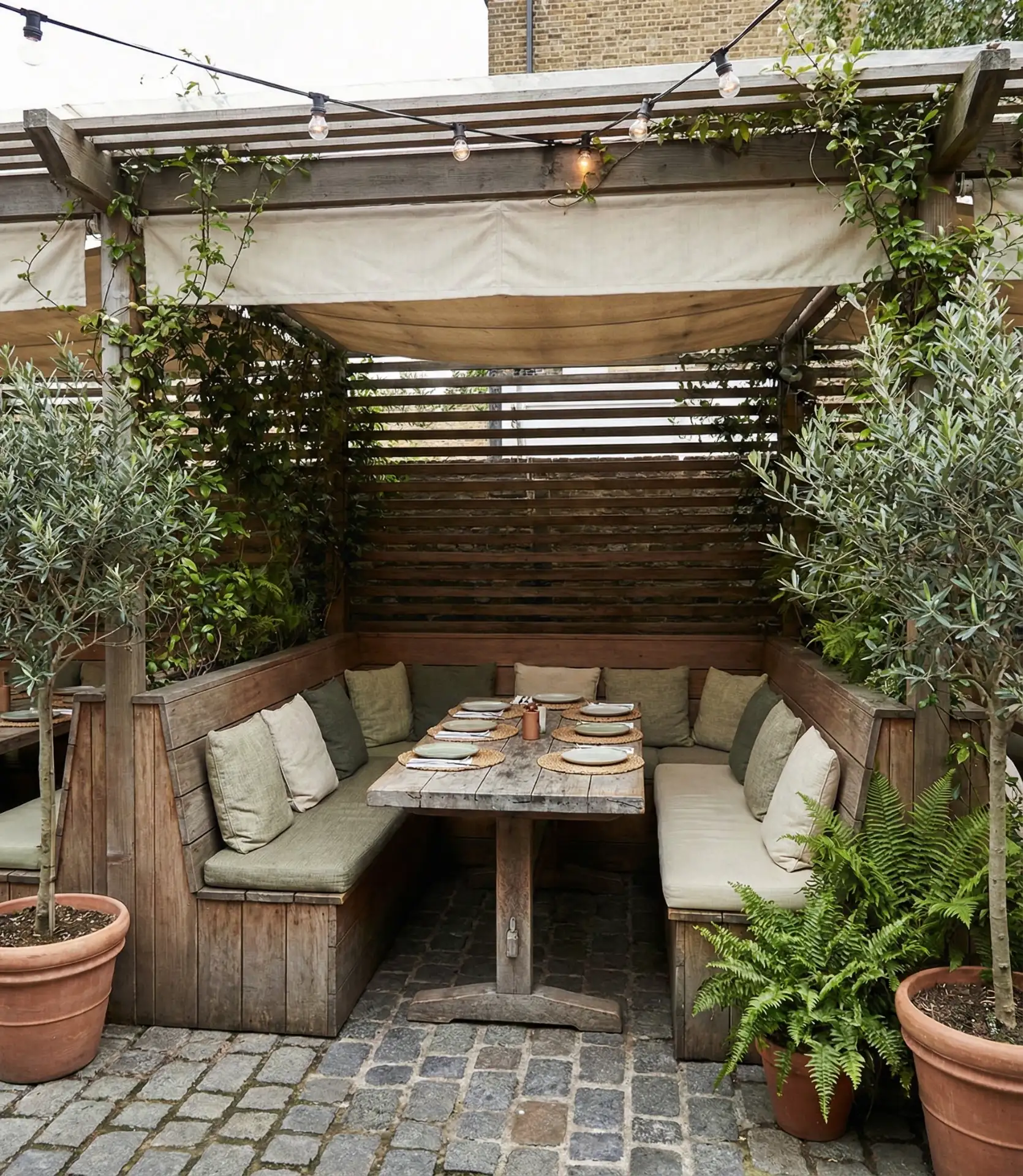
This arrangement is optimal for side yards, narrow fences, or at the end of long, narrow decking spaces. Some customers may find the fixed seating limiting, but the majority of families appreciate the permanence. It becomes a focal point rather than simply furniture that needs to be rearranged. Make sure your cushions are moisture resistant with removable covers that are machine washable to keep them protected from the morning dew and rain.
5. Back Porch Swing Dining
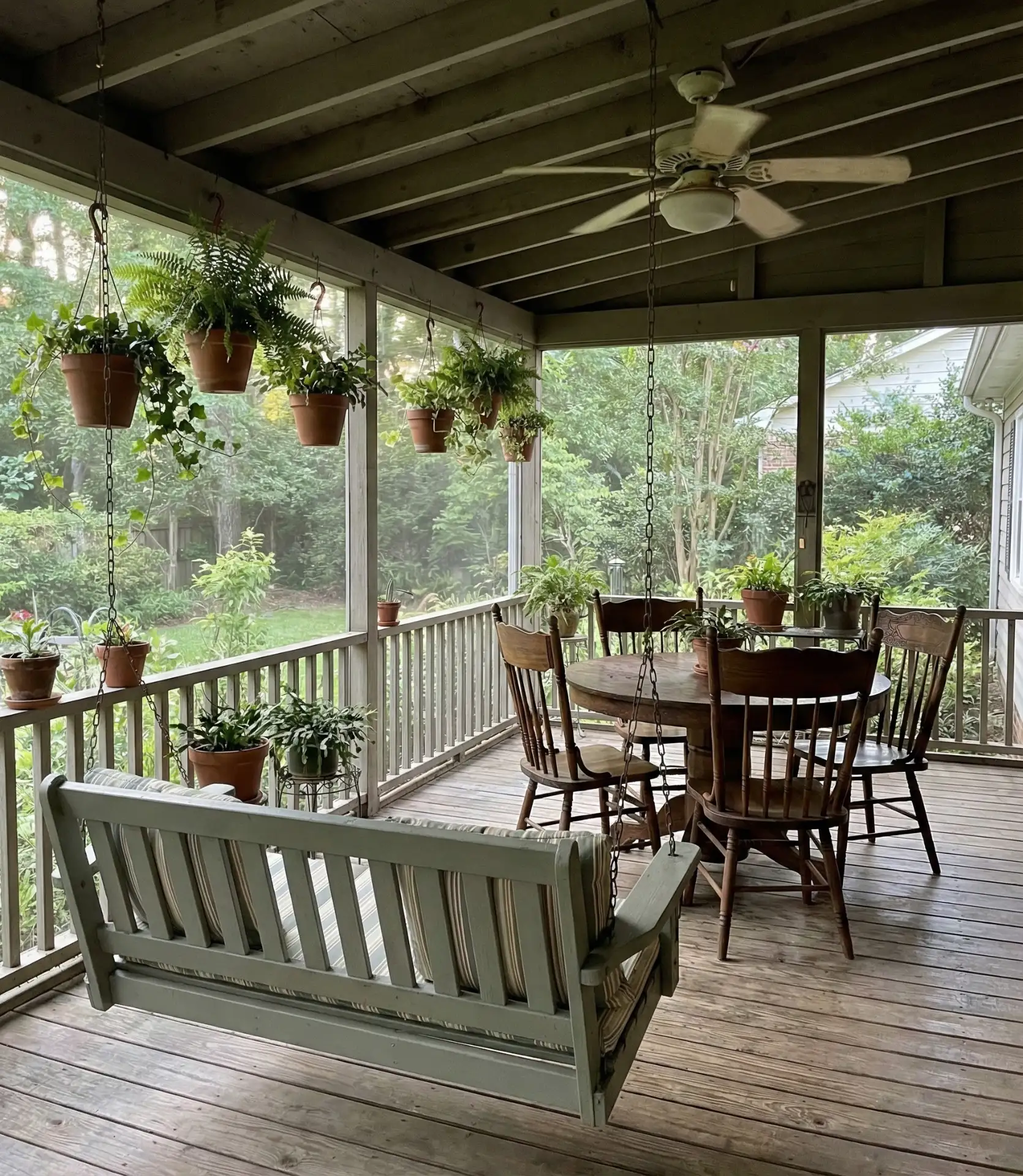
A back porch with a swing table and seating on one side transforms into a special dining destination. A swing table draws upon nostalgic charm while providing full functionality for meals. Swinging benches are enchanting to children and adults, so family dinner will transform into a more special occasion without added effort or formalities. 
In the Midwestern and Southern regions, the configuration hugs the porch culture, which allows for extended periods of mealtime and conversation pacing. The gentle sway of the porch swing adds to the rhythm of the meal and encourages lingering. Some decorative swings are not designed for active dining use, so make sure your swing can support the full weight of multiple adults and the added movement from swinging.
6. Modern Patio with Fire Feature
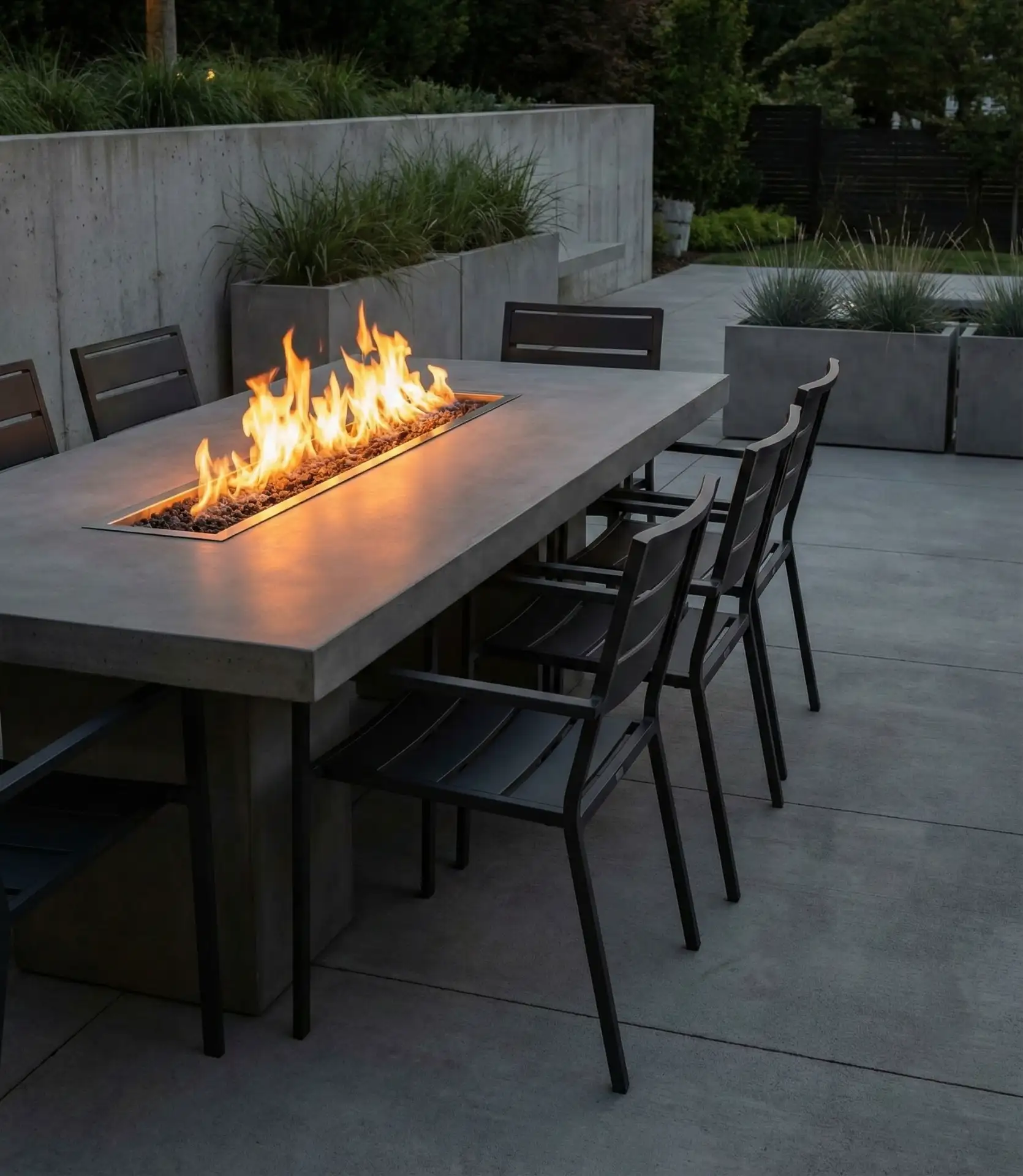
Your dining season expands to the cool weeks of autumn and early spring with a modern fire table or linear fire pit on the patio. The fire and the warm light extend the dining experience with a focal point of warmth and light. The clean, modern patio allows the fire feature to be the main point and the minimalist, uncluttered surfaces. This design can be used even in the elaborate patterns. 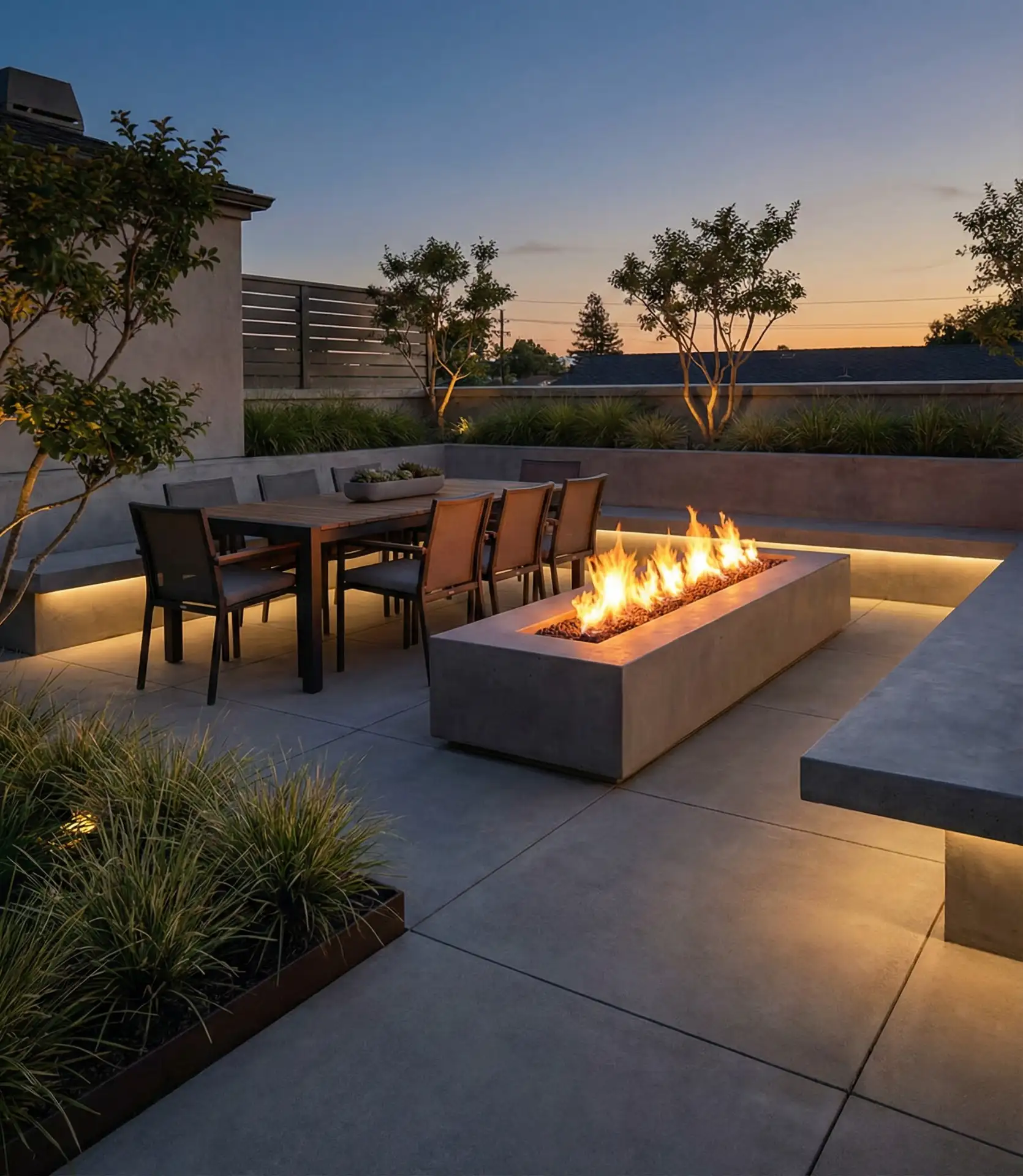
Fire features range from $500 portable propane units to $5,000+ built-in natural gas installations, so there’s an entry point for most budgets. Propane versions offer flexibility if you’re renting or like to rearrange frequently, while permanent installations add significant appeal for future buyers. Either way, the fire element consistently ranks as one of the most-used features in outdoor spaces, justifying the investment through sheer frequency of enjoyment.
7. Small Space Bistro Corner
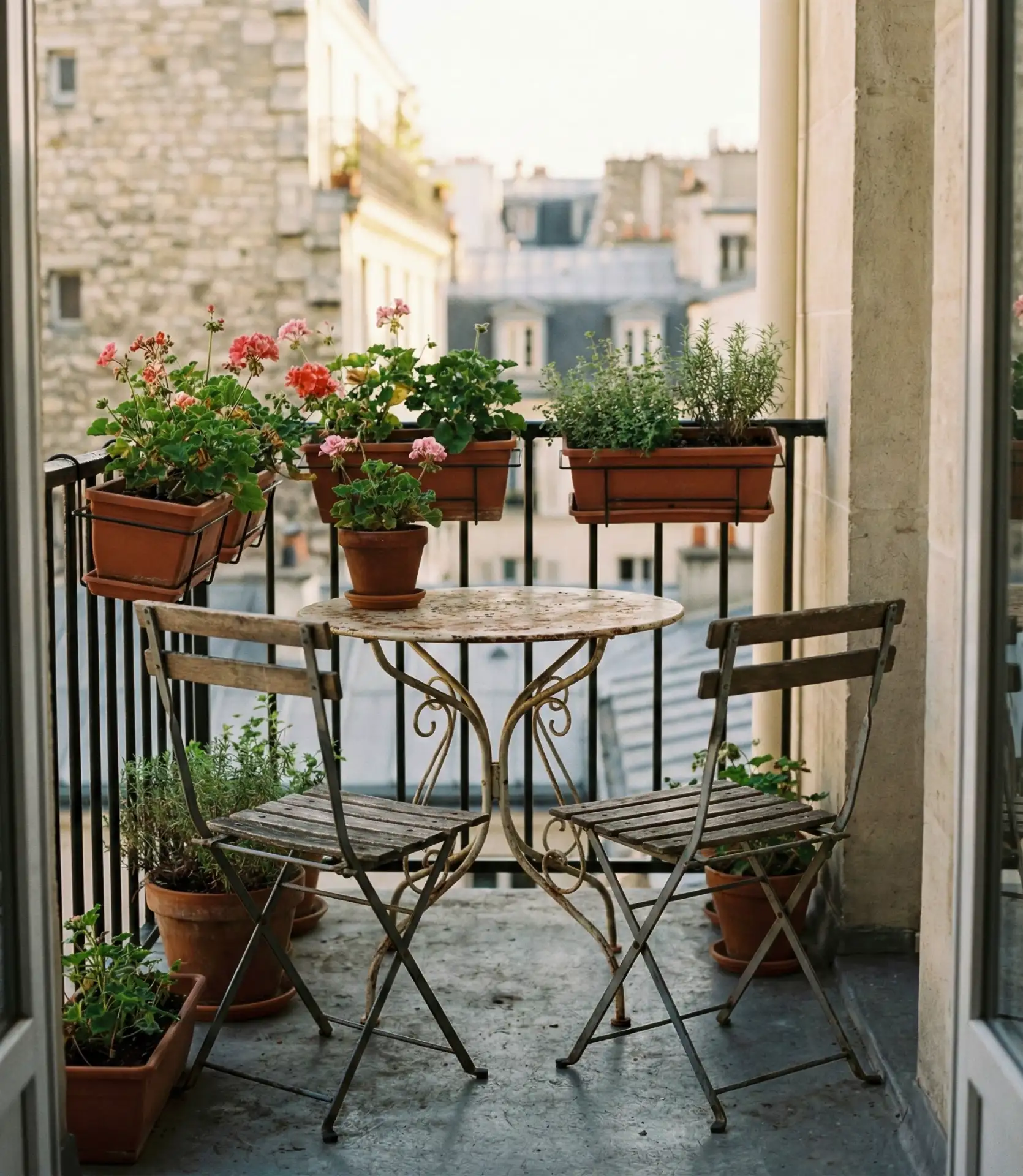
With the right small-space solutions, you can transform even the smallest courtyard or balcony into an appealing dining area. A small round bistro table and a set of two folding chairs is a perfect fit for a cozy breakfast nook or evening wine spot without overwhelming limited space. It is important to select designs that offer additional functionality or that can be folded and stored away when not in use. It is all about the versatility and flexibility that compact outdoor areas require. 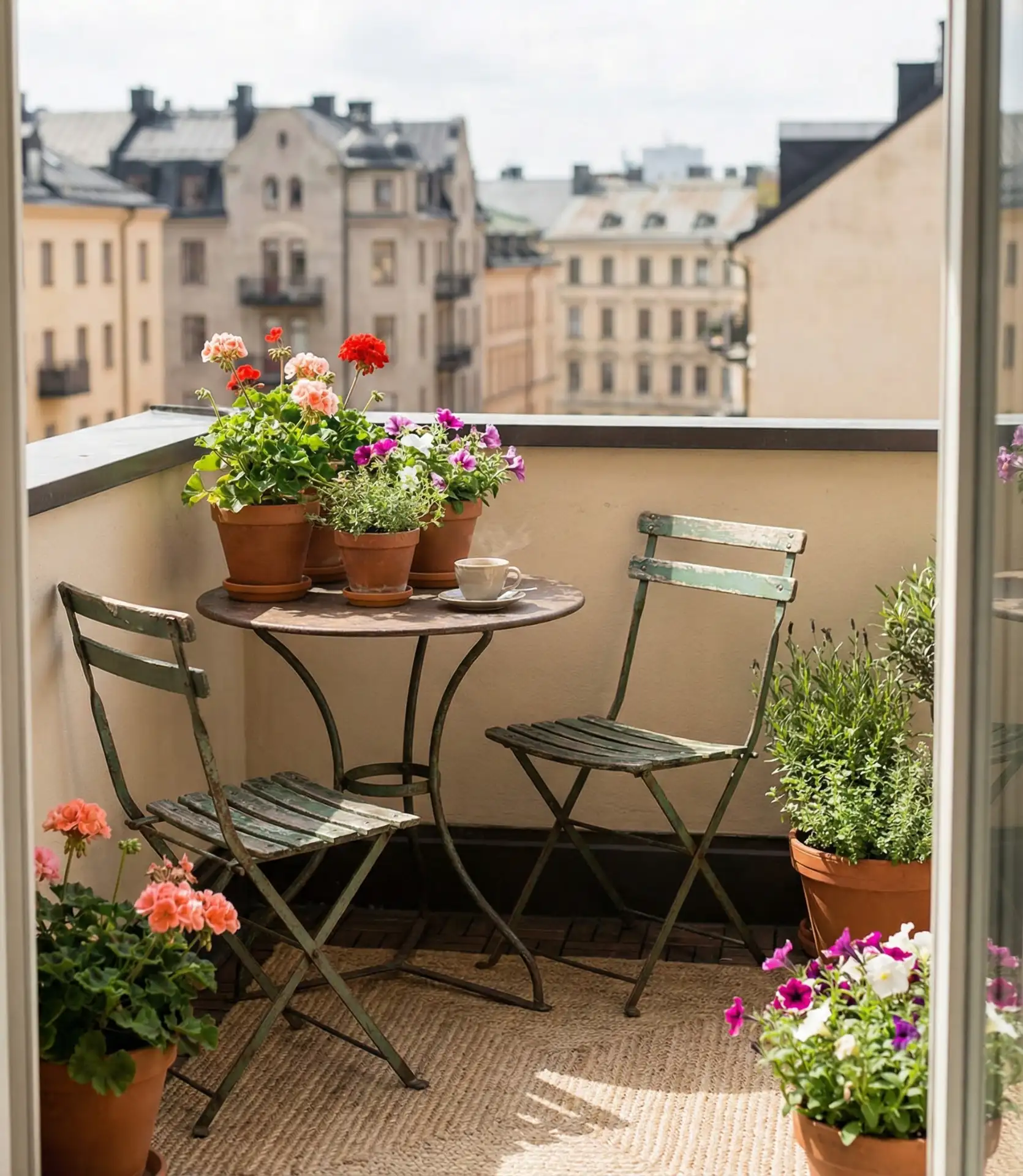
Urban apartment dwellers from Brooklyn to Seattle have shown that value is not in the amount of square footage but in the experience and plenty of micro outdoor dining options. An additional excellent option for micro dining is the wall-mounted drop-leaf table. When not in use, the tops can be folded down, and they provide additional free floor space for other activities. The most common mistake is to try and use all of the space that is available. It is better to focus on smaller-scale furniture in a small area to improve the overall feeling of the space.
8. Mediterranean Courtyard Style
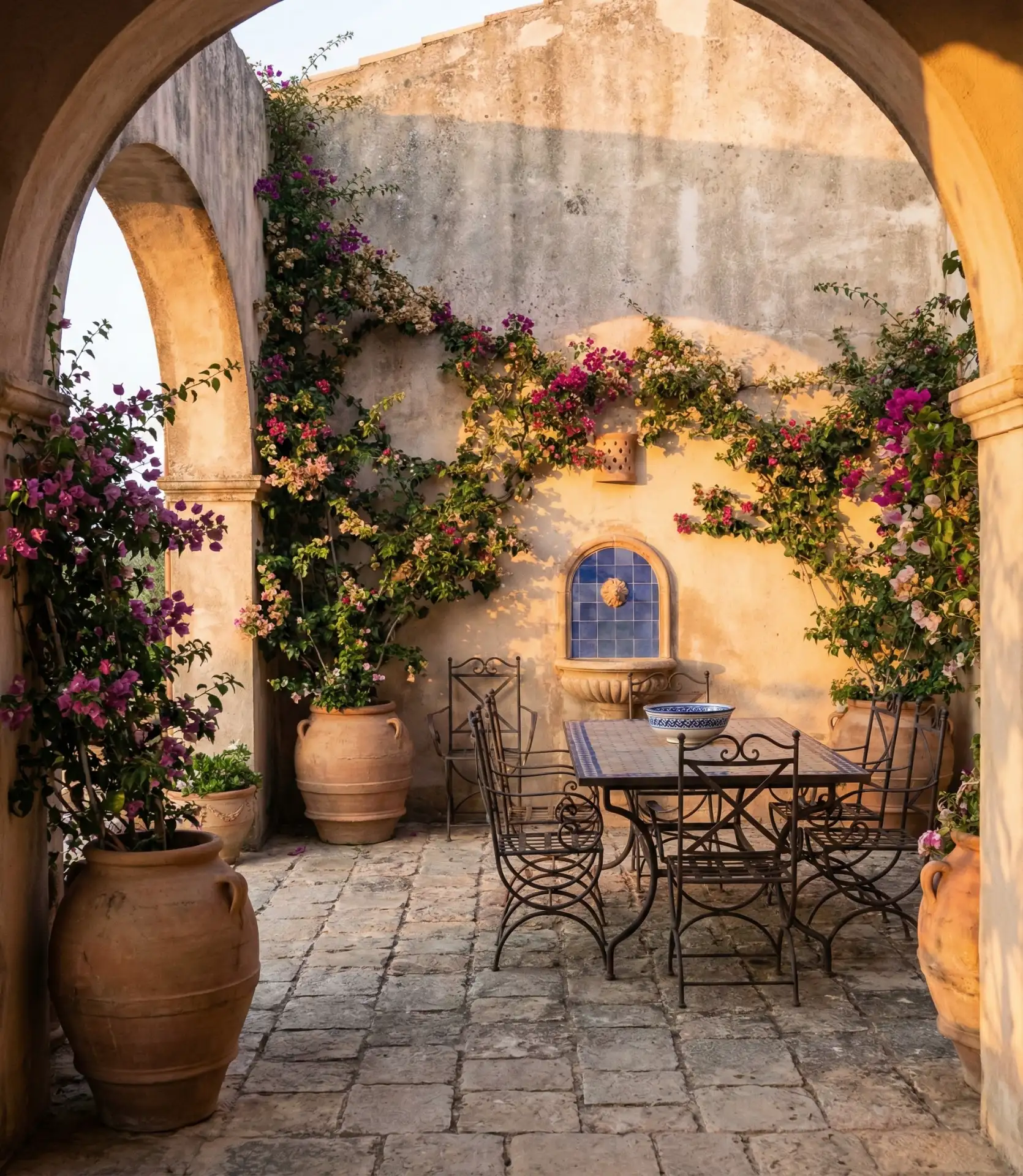
Even closer to home, channel European sun-washed terraces with a layered Mediterranean style of terracotta, wrought iron, and greenery in a dining courtyard. Vines on pergola beams, weathered stone, and potted citrus evoke a timeless and elegant aesthetic. This style is very reminiscent of Mediterranean plantings in California, Arizona, and Texas. 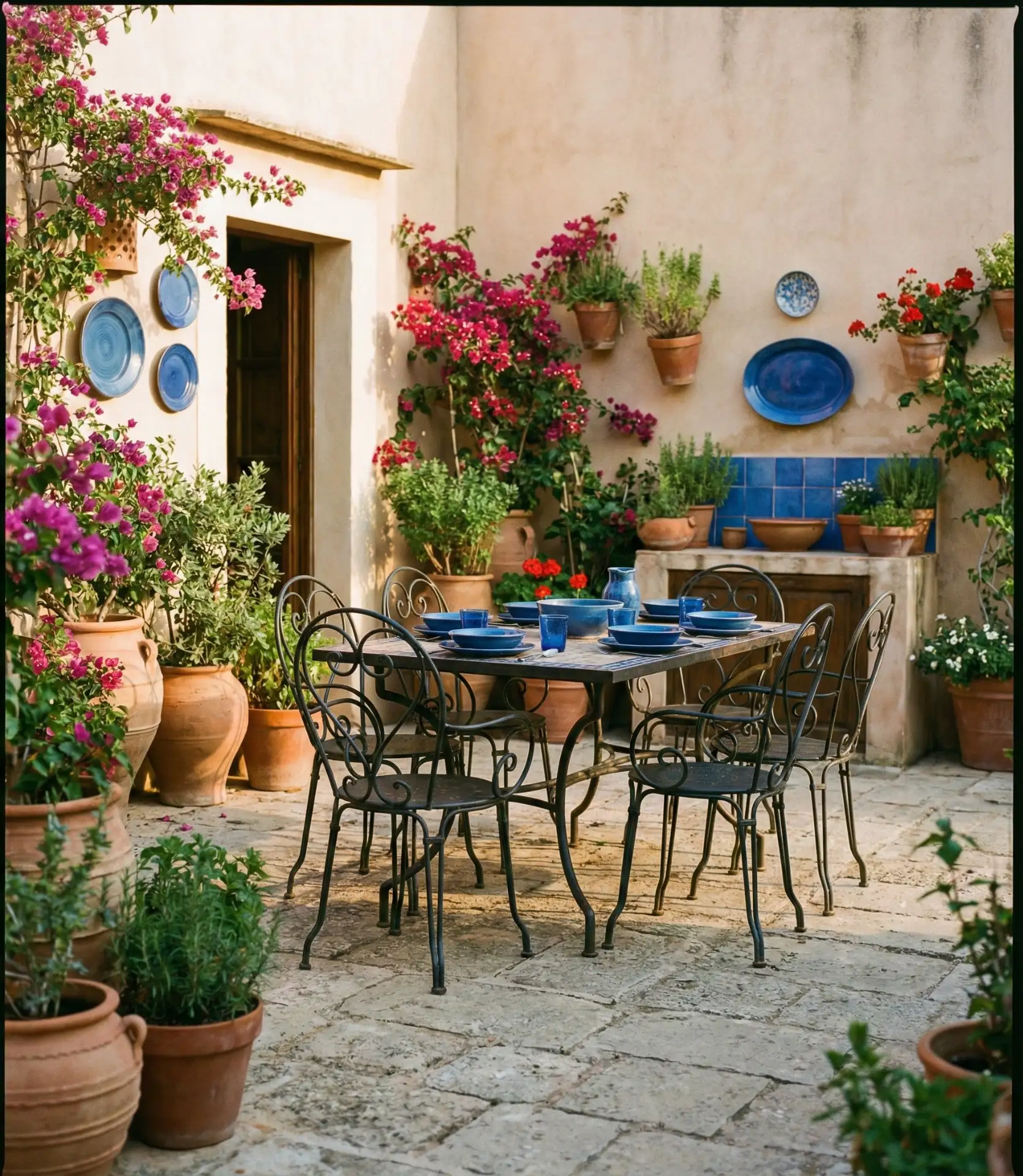
High walls create shade, while water features cool the air, and pergolas filter the harsh sun while letting breezes flow. These are all functional and imperative to the design in hot, dry climates. Most Americans focus on the decoration while overlooking the function of the design. Incorporate these features, and the beauty will follow.
9. Sunken Conversation Pit Dining
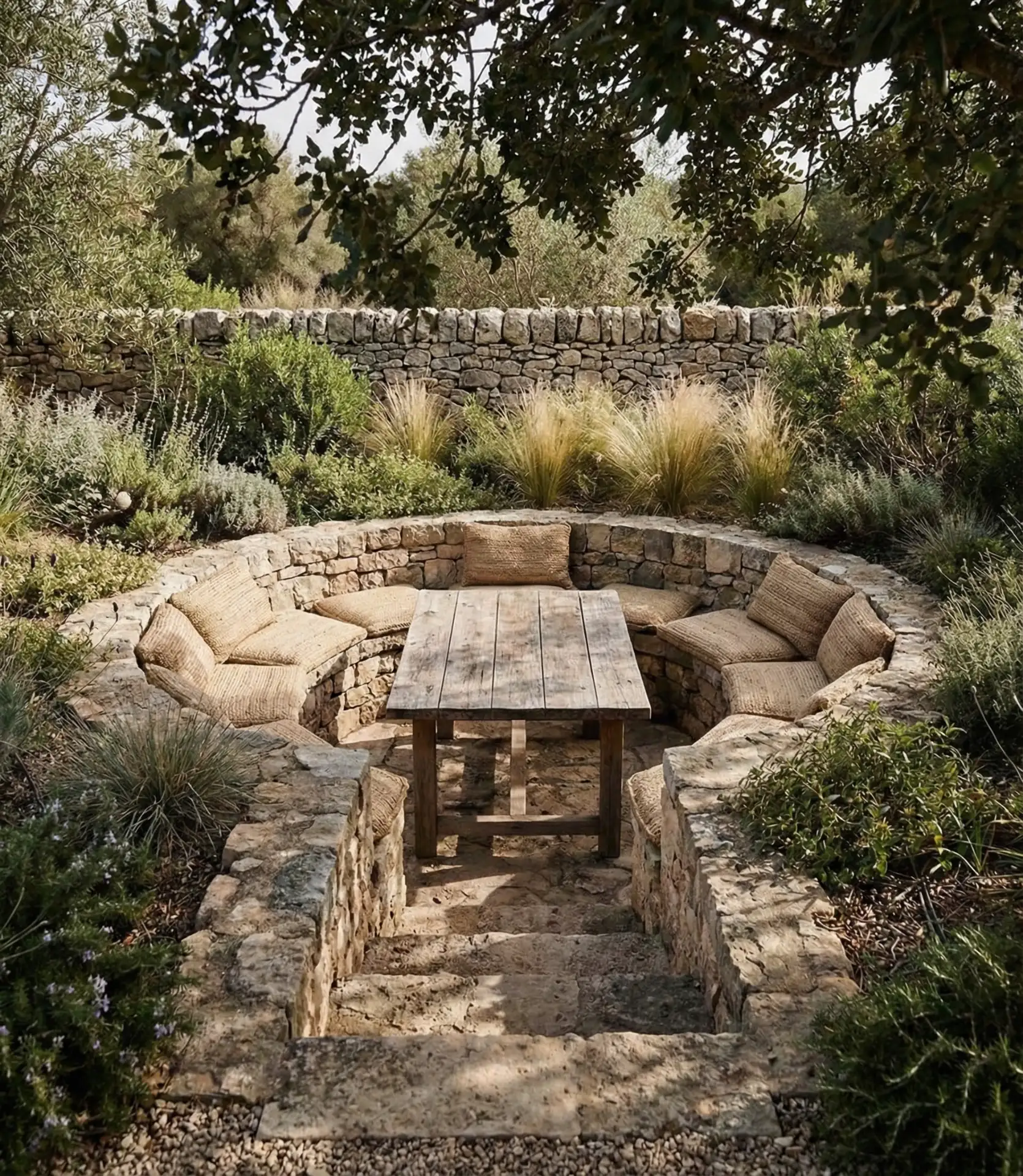
A recessed dining area carved into your landscape design is dramatic, architecturally intriguing, and wind-protective. This design intimately conceals the dining area from the view of surrounding diners by featuring a stepped-down tier that leads to a sunken platform, which is surrounded on all sides by built-in benches with seats. The benches surround a central table, and its lowered position naturally blocks breezes and sightlines from nosy neighbors.
This bold design works well on properties with a slope or with homeowners willing to invest in excavation and proper drainage. 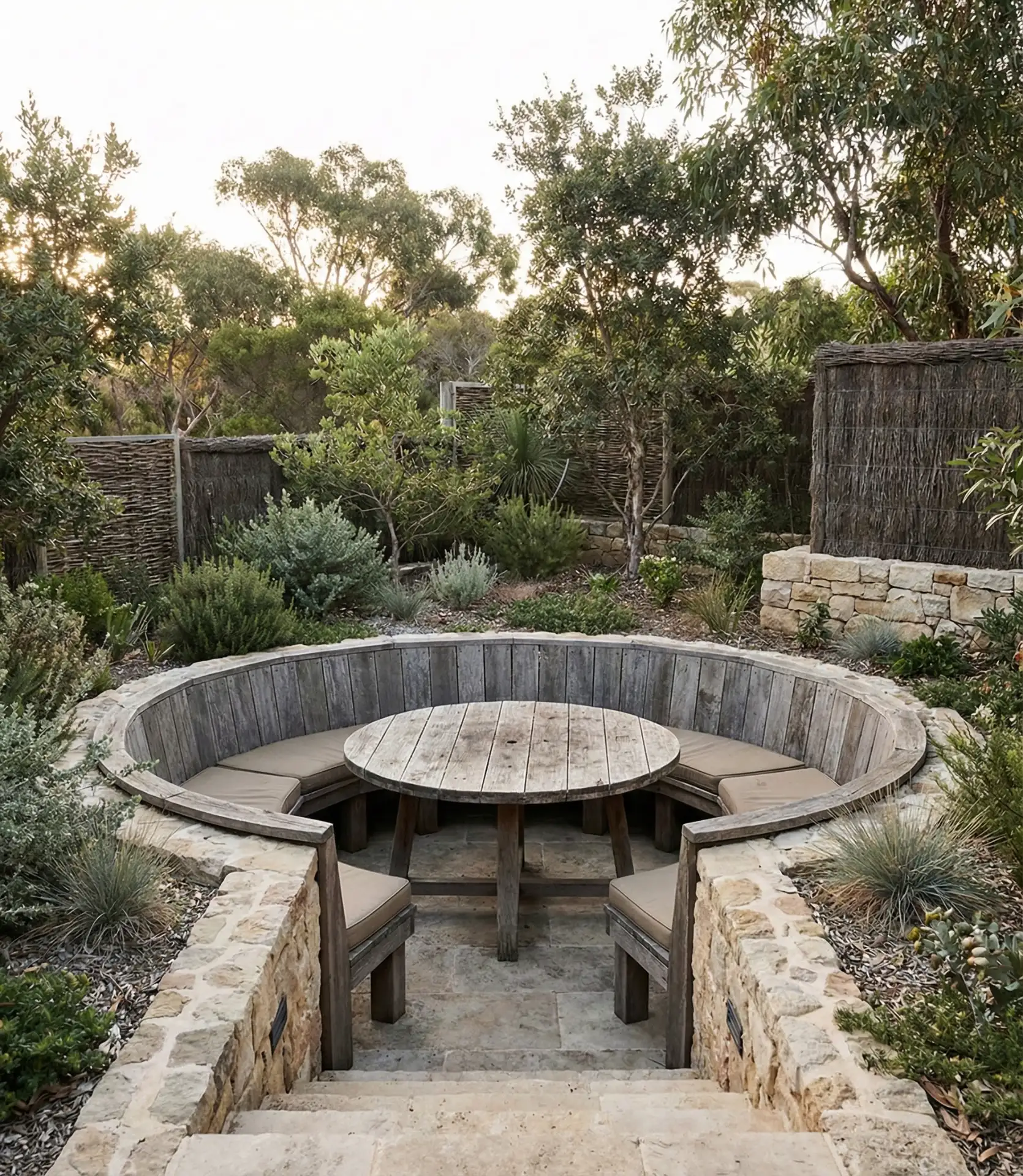
She installed a sunken dining area in her backyard. It has become the most used area on their property. The installation of the dining area necessitated careful drainage planning. It is protected from the wind and is comfortable even when the rest of the yard is cold. Adjacent to the dining area is a yard with a slope, and it has become the signature feature of the home. It is a secure, transformed slope with a nonnegotiable drainage and waterproofing feature. French drains the area.

10. Pergola-Covered Dining Pavilion
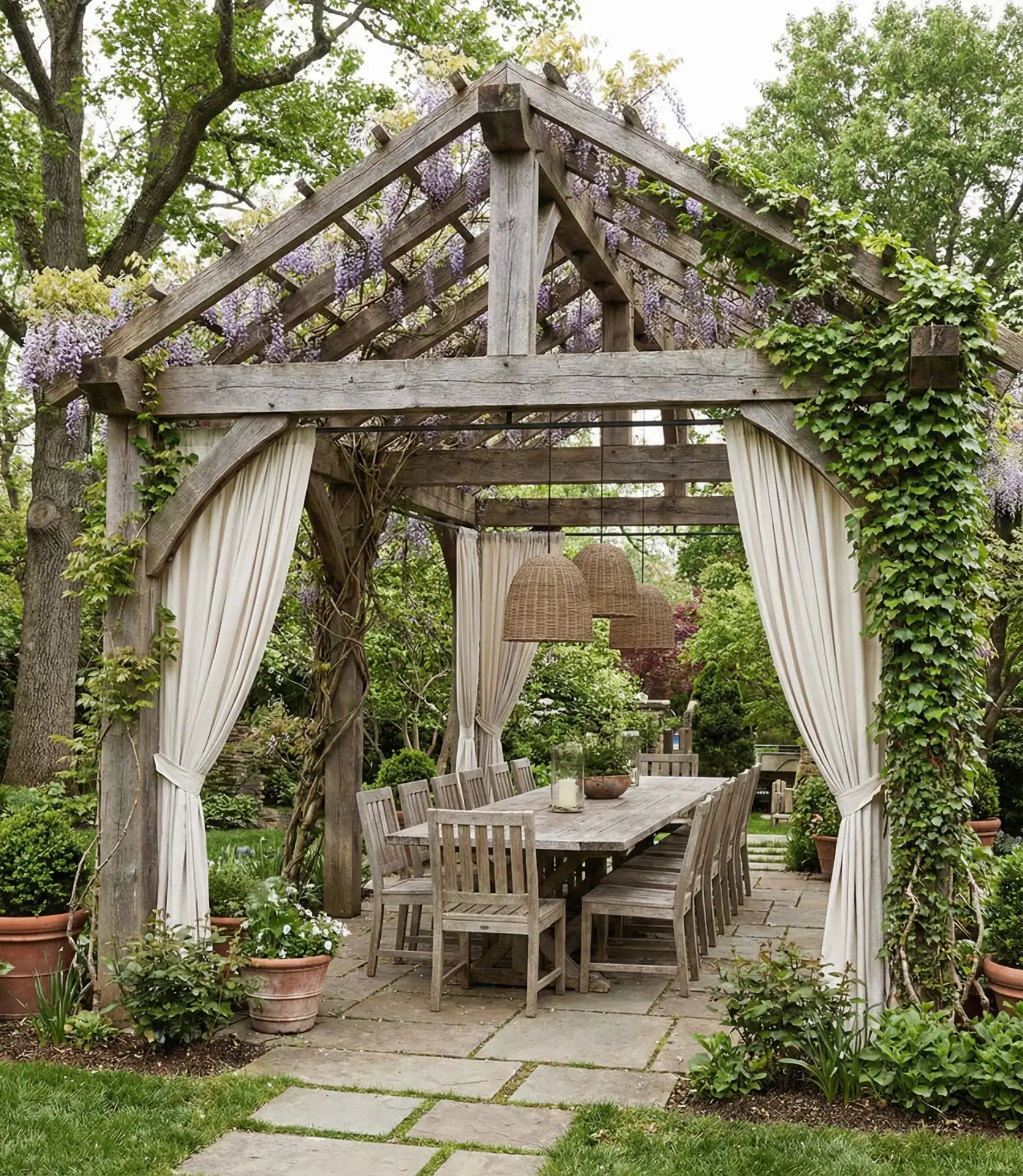
A large pergola structure defines your dining area and offers shade while serving as the architectural framework that makes the area an outdoor room. It makes a space feel like a true outdoor room, providing architectural definition and shade. Pergola patio ideas have dominated Pinterest for a reason. They offer the perfect balance between open air and defined shelter. Consider using flowering vines, outdoor curtains, or a canopy for weather protection to add privacy and keep the area airy. 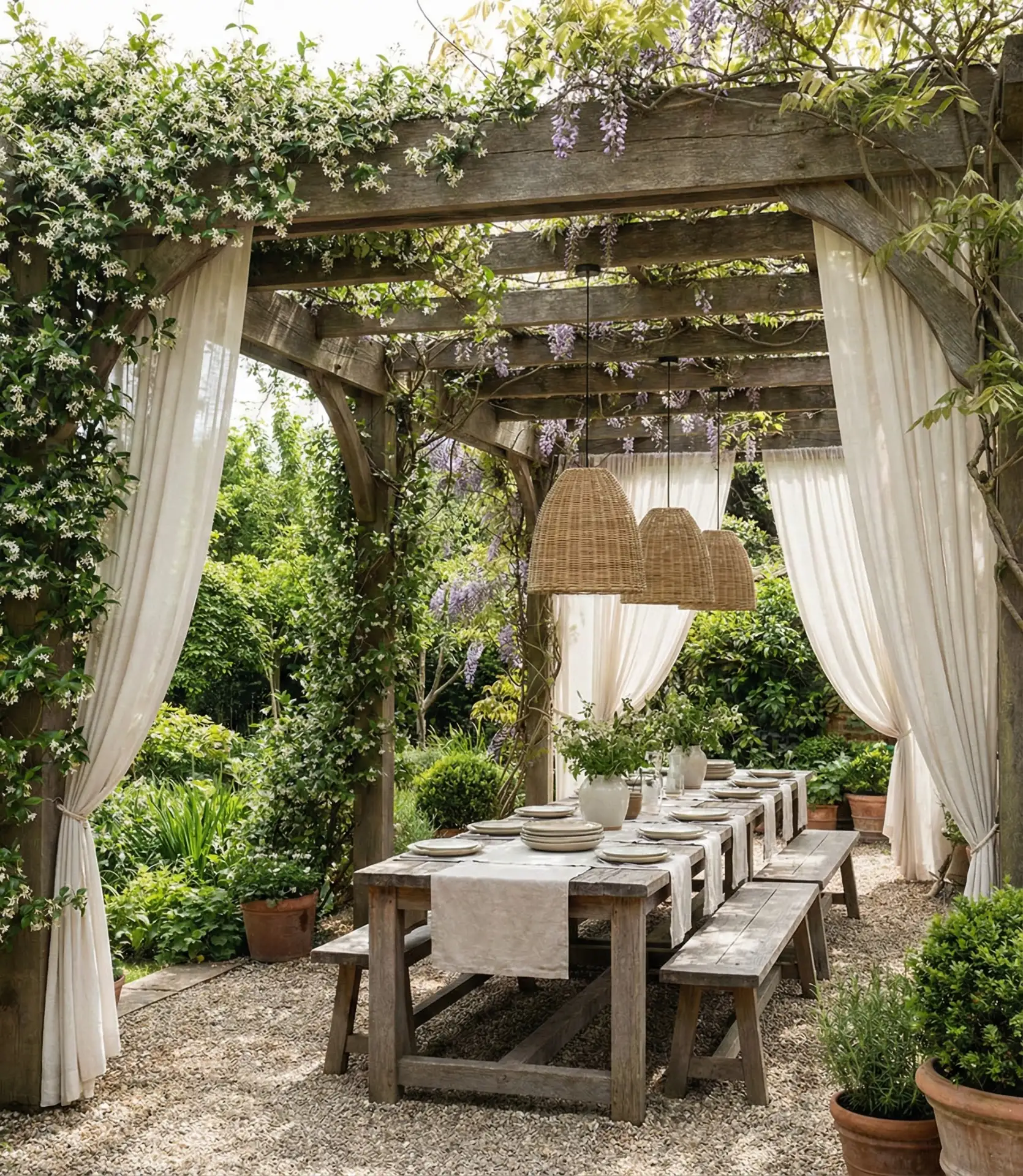
This design works exceptionally well in suburban backyards where you want to create distinct zones within a larger open space.
The pergola captures attention and makes the dining area feel more purposeful and permanent rather than just furniture dropped on grass. Southwest homeowners often orient pergolas to block the setting sun and keep morning light from the east. That single design move makes summer dining a lot more comfortable.
11. Garden-Integrated Dining Nook

Position your dining table in the middle of garden beds and edible herbs, flowering perennials, and fragrant plant tissues. This immersive approach makes dinner a multi-sensory experience where you can reach and snip a sprig of fresh basil or rosemary for your plate. The vegetation provides a softening counter to hard landscape surfaces, privacy, and an attractive habitat for pollinators that enliven your dining area. 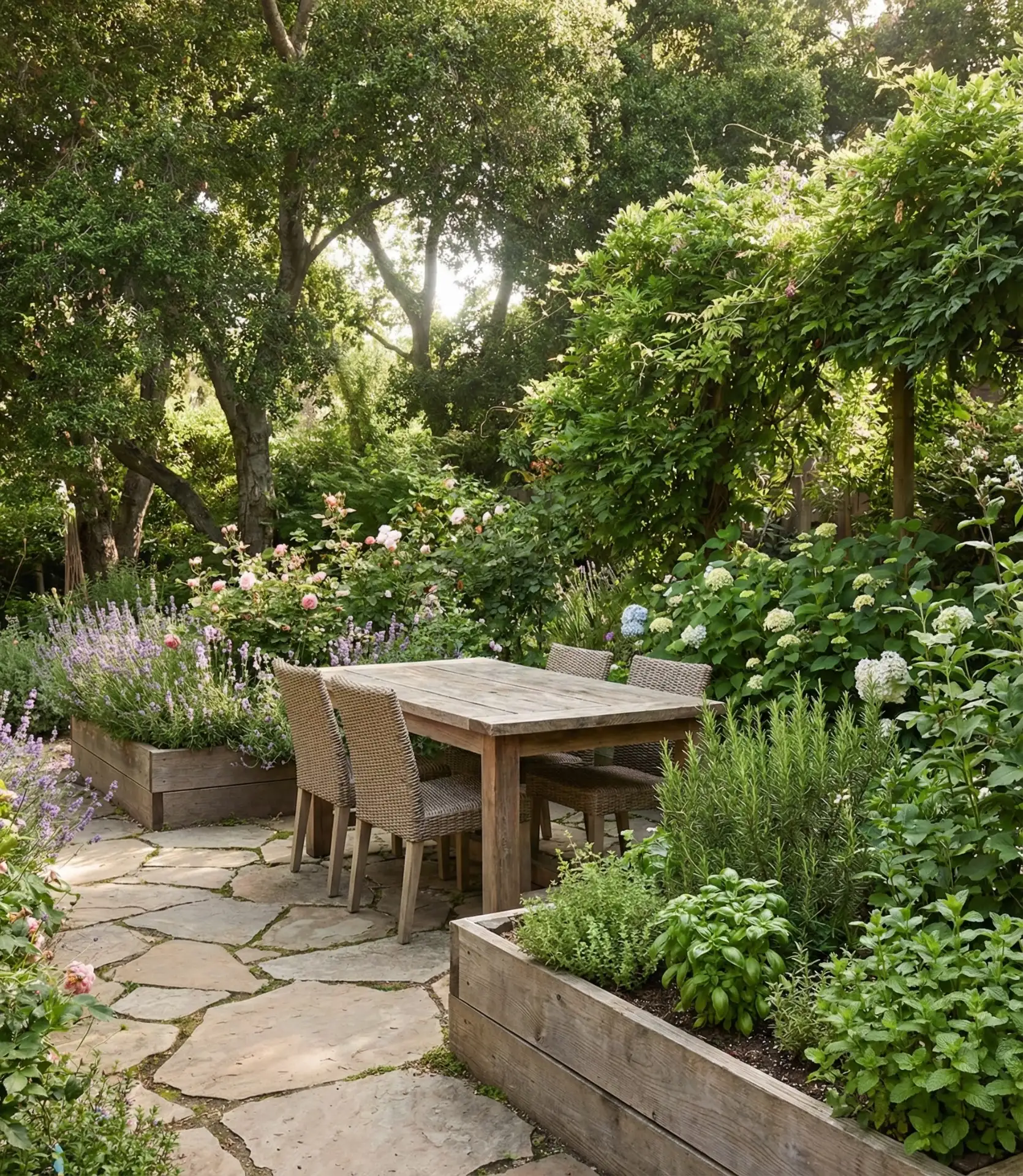
The most common mistake here is getting the spacing wrong, which can result in too many plants crowding your dining area in a single growing season. Maintain an 18-24 inch gap around the edges of your seating zones and choose your plants carefully, so you don’t end up with thorny roses close to the chairs or bee-attracting plants directly overhead. Lavender and sage are both good choices; sage is slightly fragrant and active but does not attract bugs to your food.
12. Luxury Lounge-Dining Hybrid
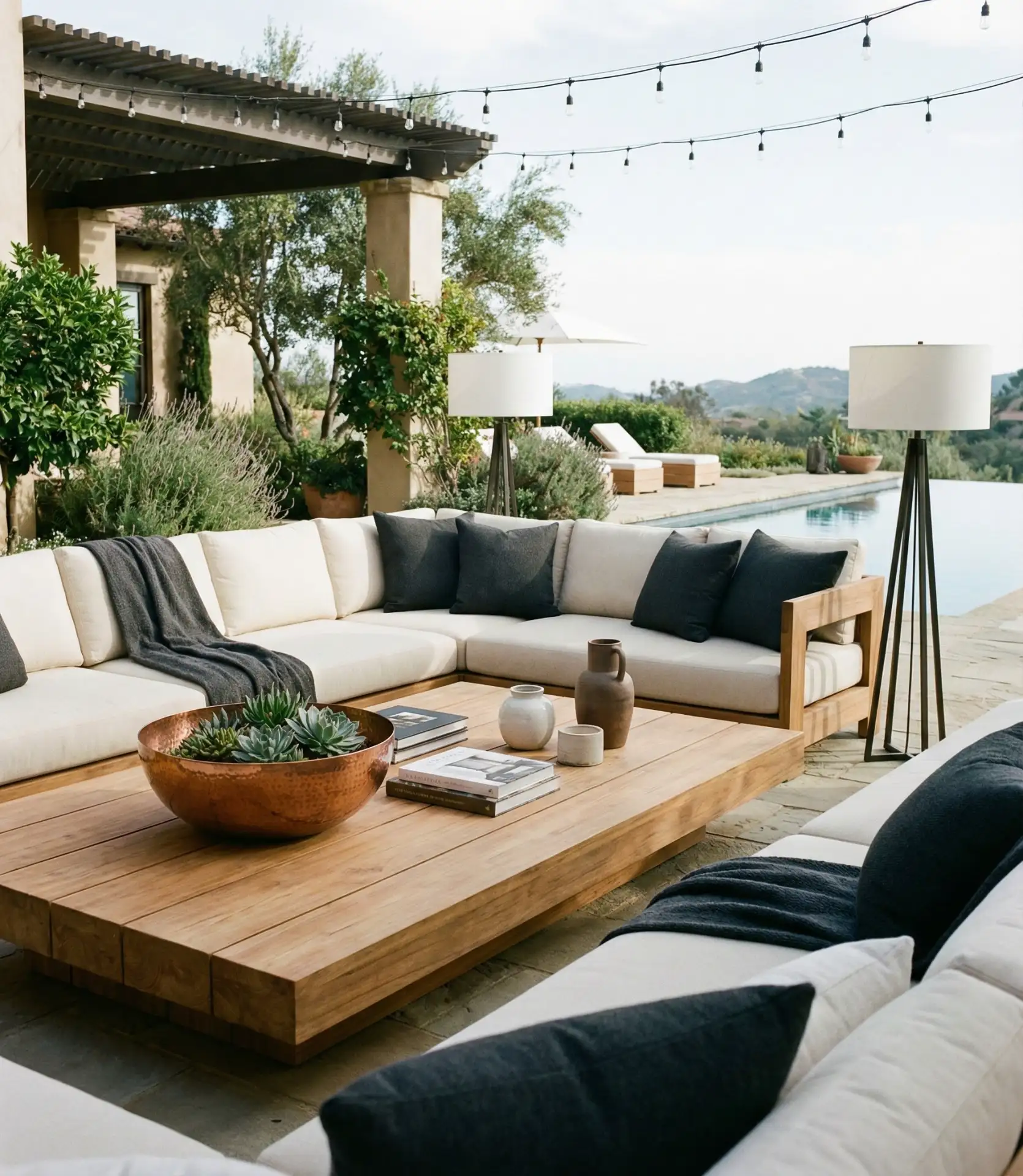
Enhance your outdoor entertaining with an outdoor setup that combines the formality of dining with the informality of lounging through the use of plush outdoor sofas with oversized coffee tables made of premium materials that mimic indoor furniture. It recognizes the truth that Americans utilize outdoor spaces in a multitude of ways, not simply for organized meals, but for lounging, chatty moments, light meals, and a coffee that migrates to evening cocktails. Quick-dry cushions and high-end, weather-resistant fabrics make sustainable comfort not a maintenance nightmare. 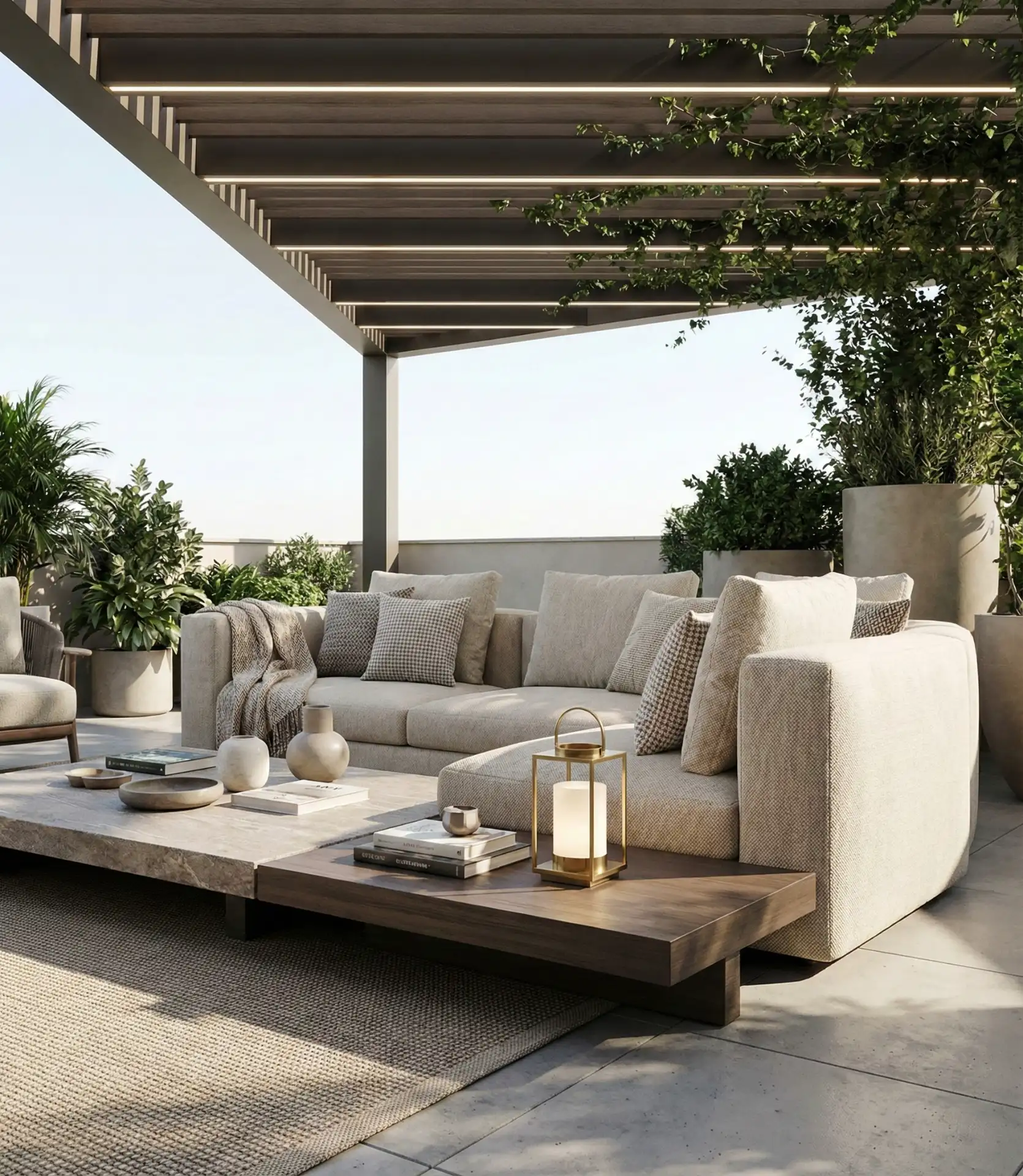
There is high-quality outdoor furniture that is impressive and has made significant progress over the years, with pieces that come fully equipped with indoor comfort and the aesthetics to match. Expect to spend between $3,000 and $10,000 for a complete luxury lounge-dining setup and pieces that will in turn last you anywhere between 10 and 15 years with just basic maintenance. The daily use of the outdoor setup is a fantastic investment, as it will make closing the indoor spaces feel less stressful. Many families feel they spend far more time in the outdoor spaces that are well designed than in the indoor spaces once the weather makes it appropriate to do so.
13. Grill Station Dining Zone
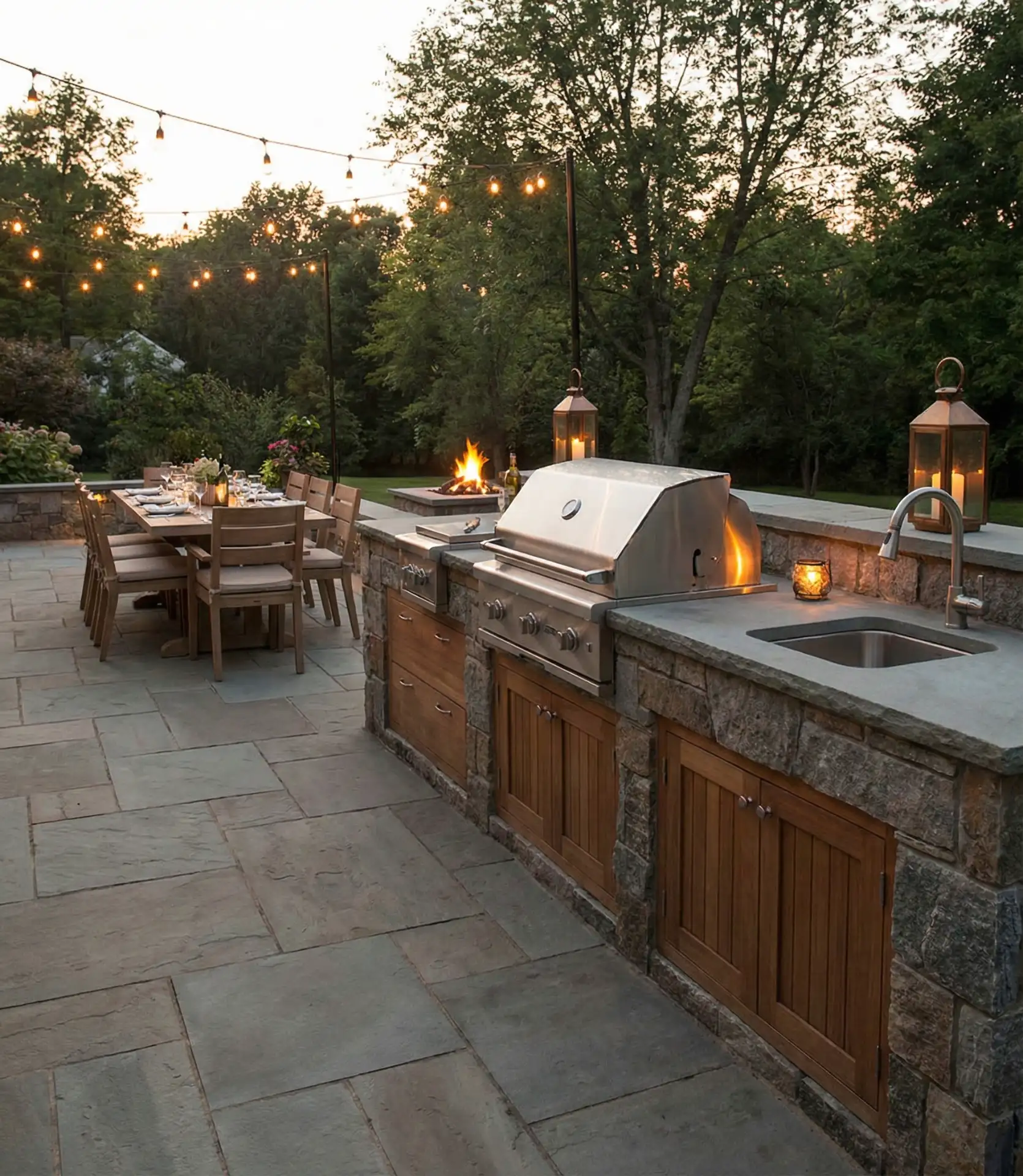
Take social outdoor dining to another level with a dining table that is positioned close to the grill station so that the cook can engage with everyone. Extra-wide built-in counters next to the grill can facilitate the cooking process with more room for prep, serving, and storage for cooking tools and condiments. This is why so many new outdoor dining room designs feature this similar layout; it captures the essence of outdoor cooking and socializing at the same time. 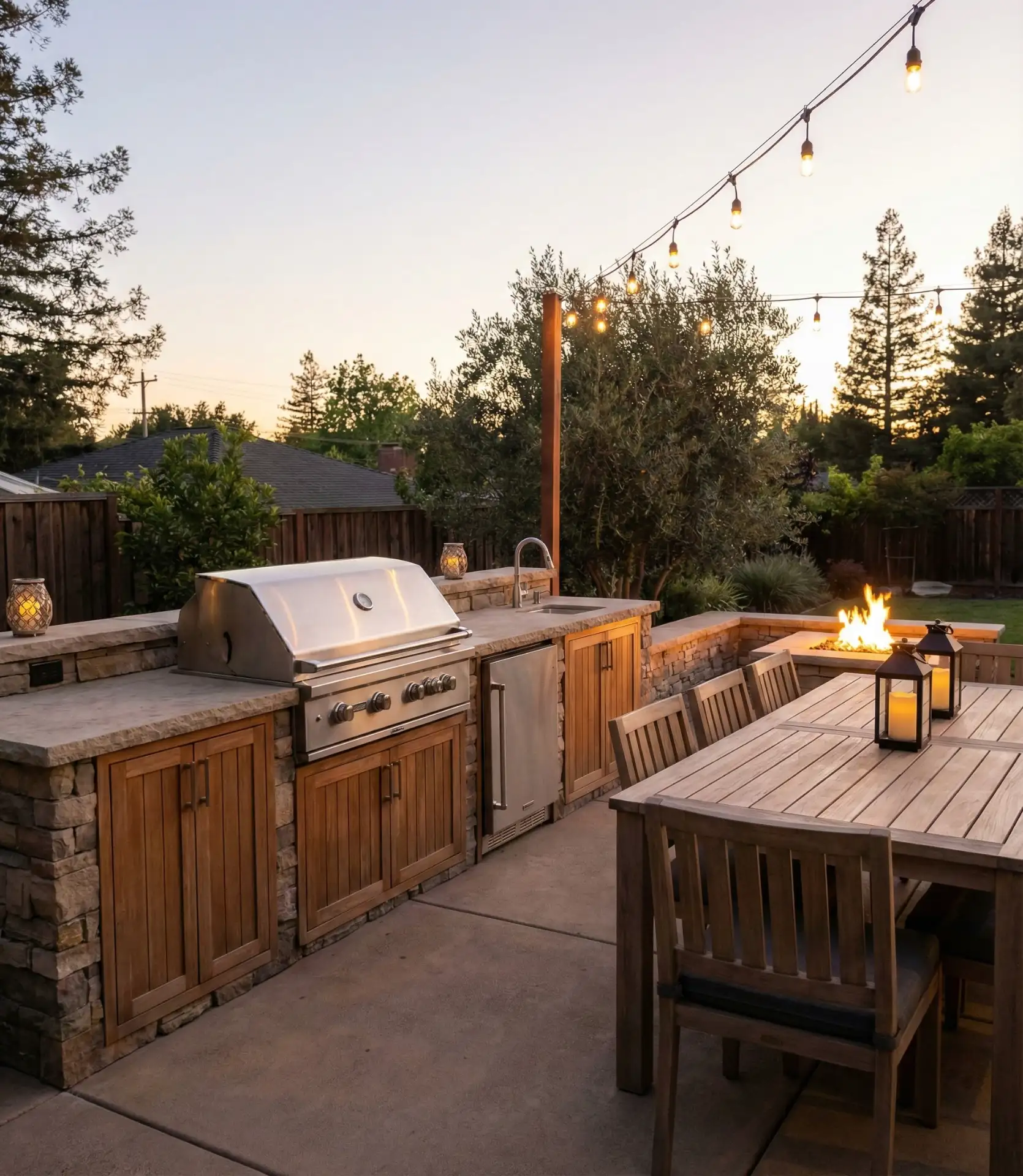
In many southern and western states, the outdoor season is lengthy, which allows for outdoor cooking and entertaining more routinely. For many Americans, outdoor grilling has become a primary cooking method. For a more seamless social cooking experience, a small refrigerator drawer and a sink at your grill station will eliminate many round trips to the kitchen. Furthermore, to avoid smoke blowing in the faces of diners, set the grill counter to the prevailing winds.
14. Semi-enclosed Garden Room
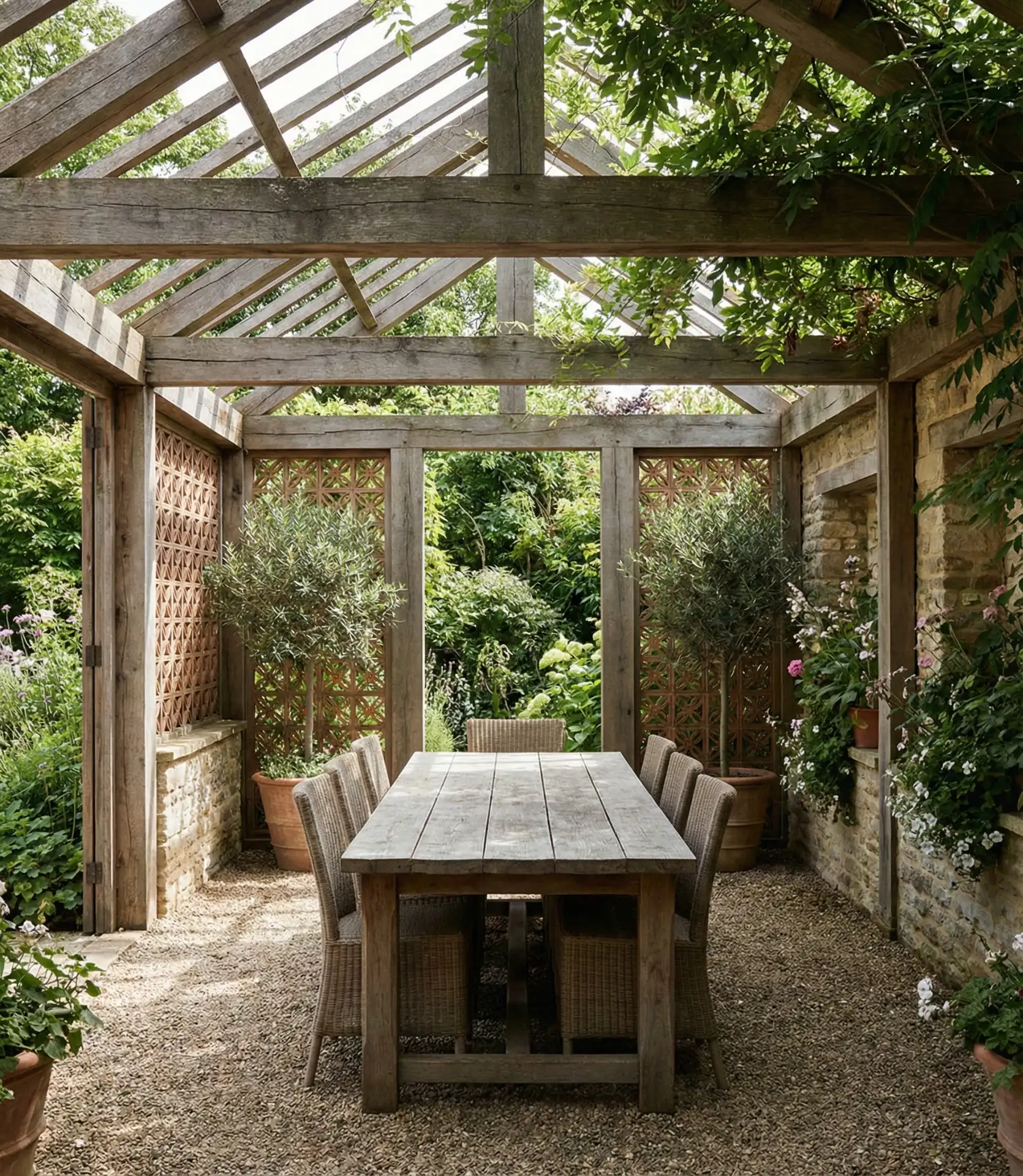
Create a semi-enclosed outdoor dining room using partial walls, tall hedges, or decorative screens that provide privacy and wind protection while maintaining an open sky overhead. This middle-ground approach offers more shelter than a completely exposed patio but preserves the outdoor essence better than a fully enclosed sunroom. The psychological effect is notable—partial enclosure creates intimacy and comfort without triggering claustrophobia or cutting off garden views. 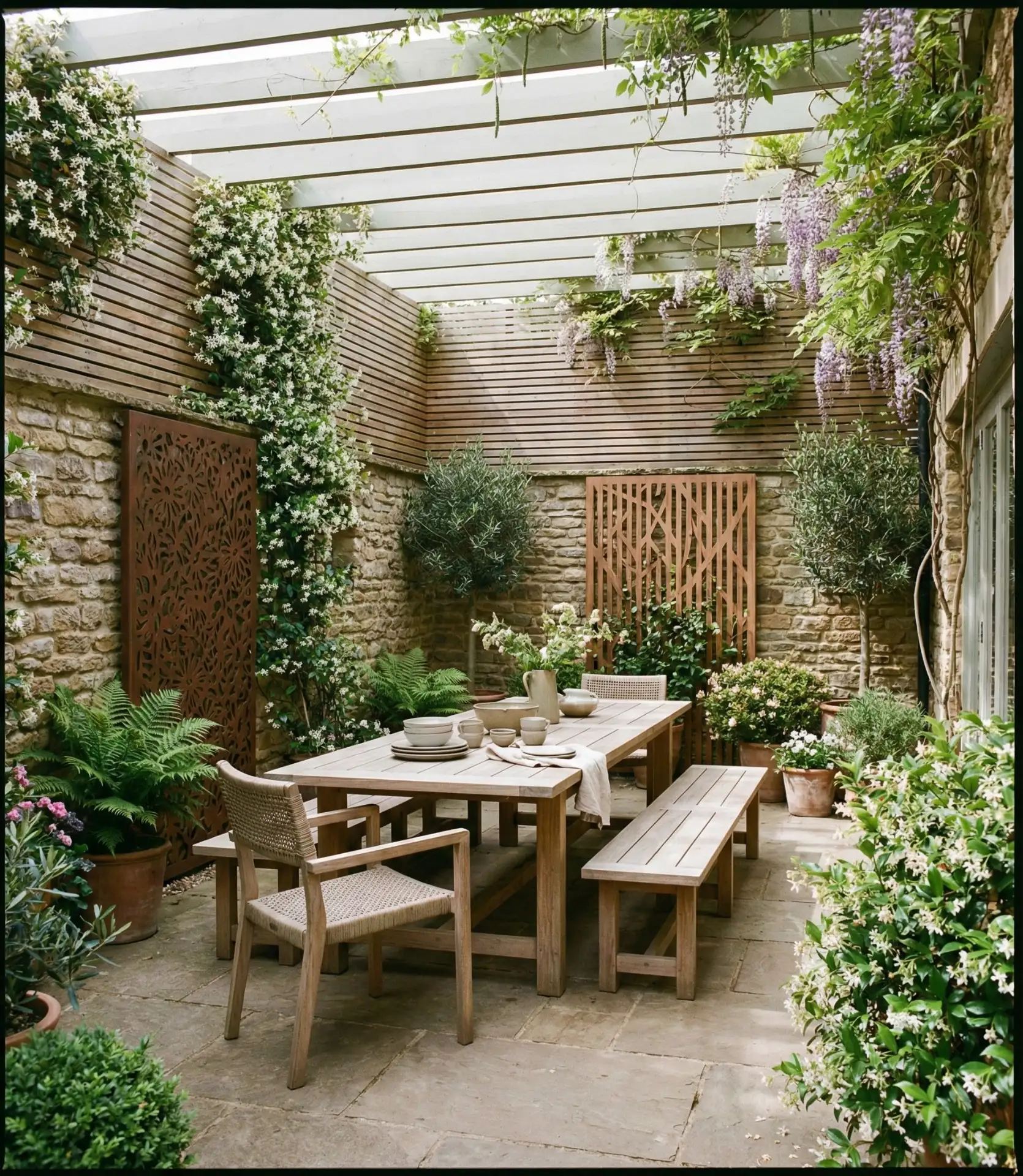
In windy regions like coastal areas and prairie states, this configuration makes outdoor dining actually pleasant rather than a constant battle with napkins and tablecloths taking flight. The partial walls also help define property lines and create privacy from neighbors without the unfriendly fortress vibe of solid fencing. Living walls of evergreen hedges work beautifully here, providing year-round greenery and gradually increasing in density and privacy as they mature.
15. Indoor-Outdoor Transitional Space
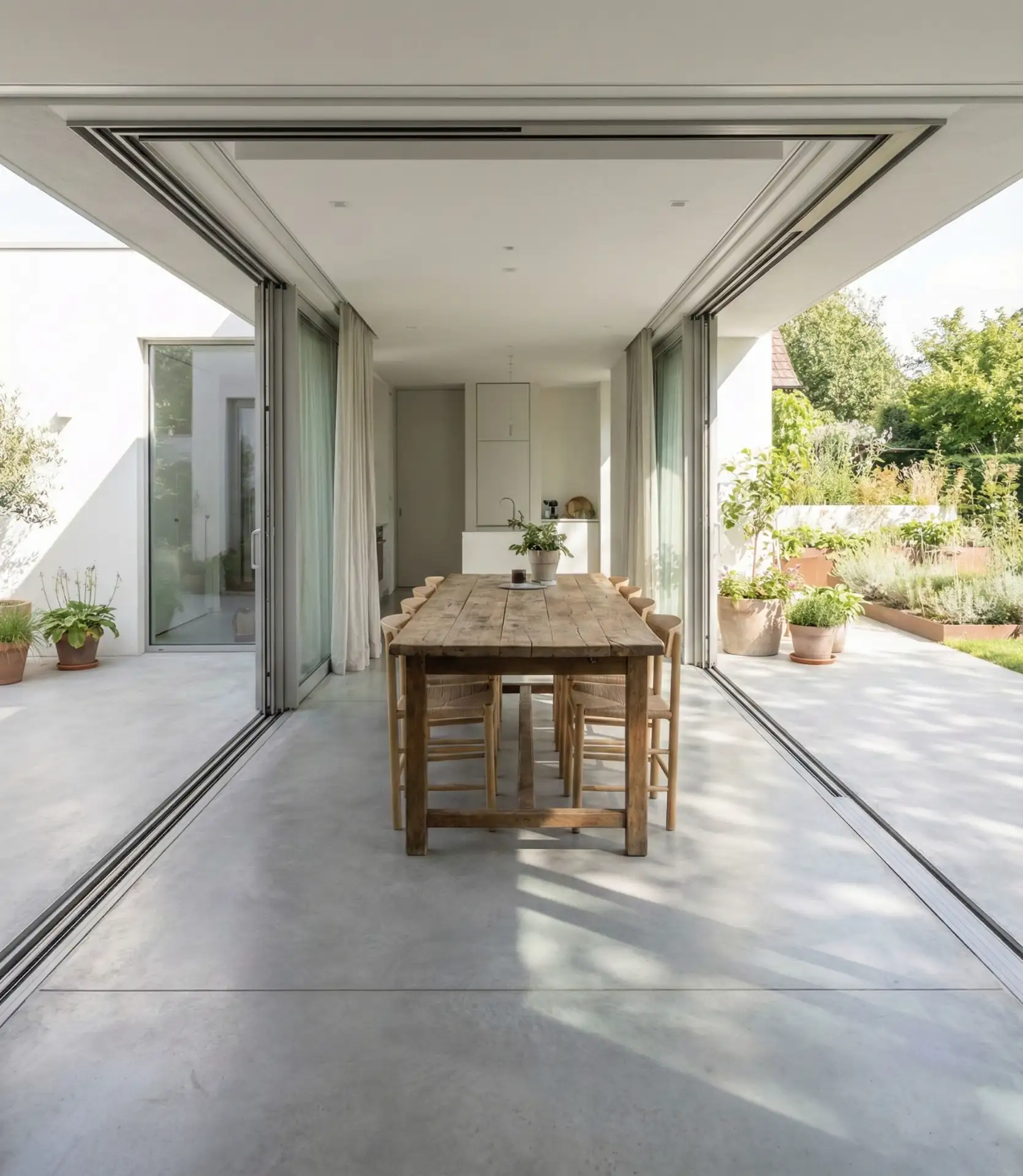
Design an indoor-outdoor dining area where large sliding or folding glass doors erase the boundary between interior and exterior spaces, creating one continuous entertaining zone. Matching flooring materials that flow seamlessly from inside to outside reinforce the connection, while coordinated furniture and decor make the transition feel intentional rather than awkward. This popular configuration works brilliantly for climates with mild seasons where you want maximum flexibility in how you use space. 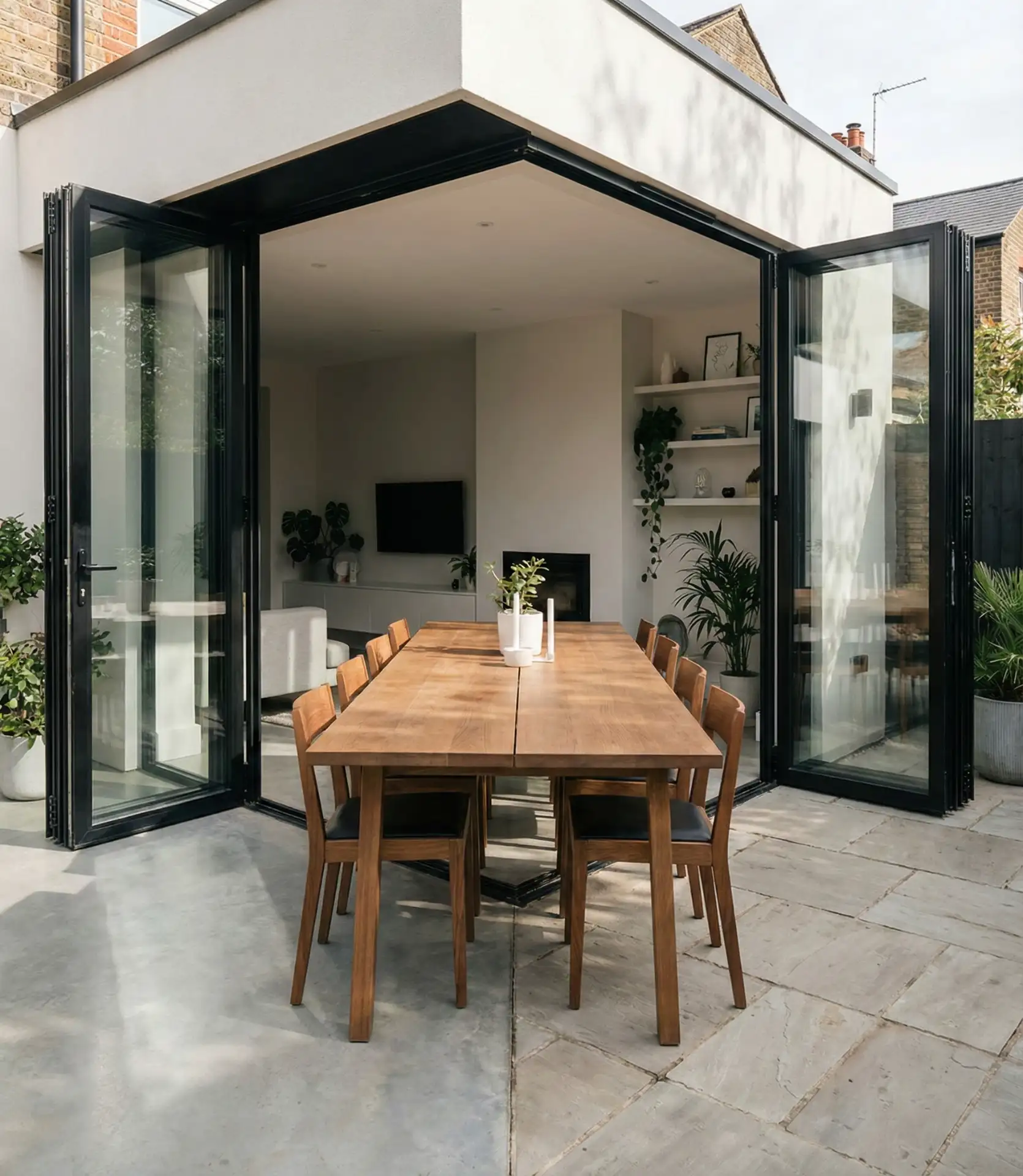
California and Florida homeowners have perfected this approach, treating outdoor dining areas as seasonal extensions of their formal dining rooms. When doors stand fully open, the combined space feels dramatically larger and more impressive for entertaining. The practical benefit emerges during parties—guests flow naturally between zones, and you can set up buffets or bars in either location without creating awkward traffic patterns or accessibility issues.
16. Large-Scale Entertaining Pavilion
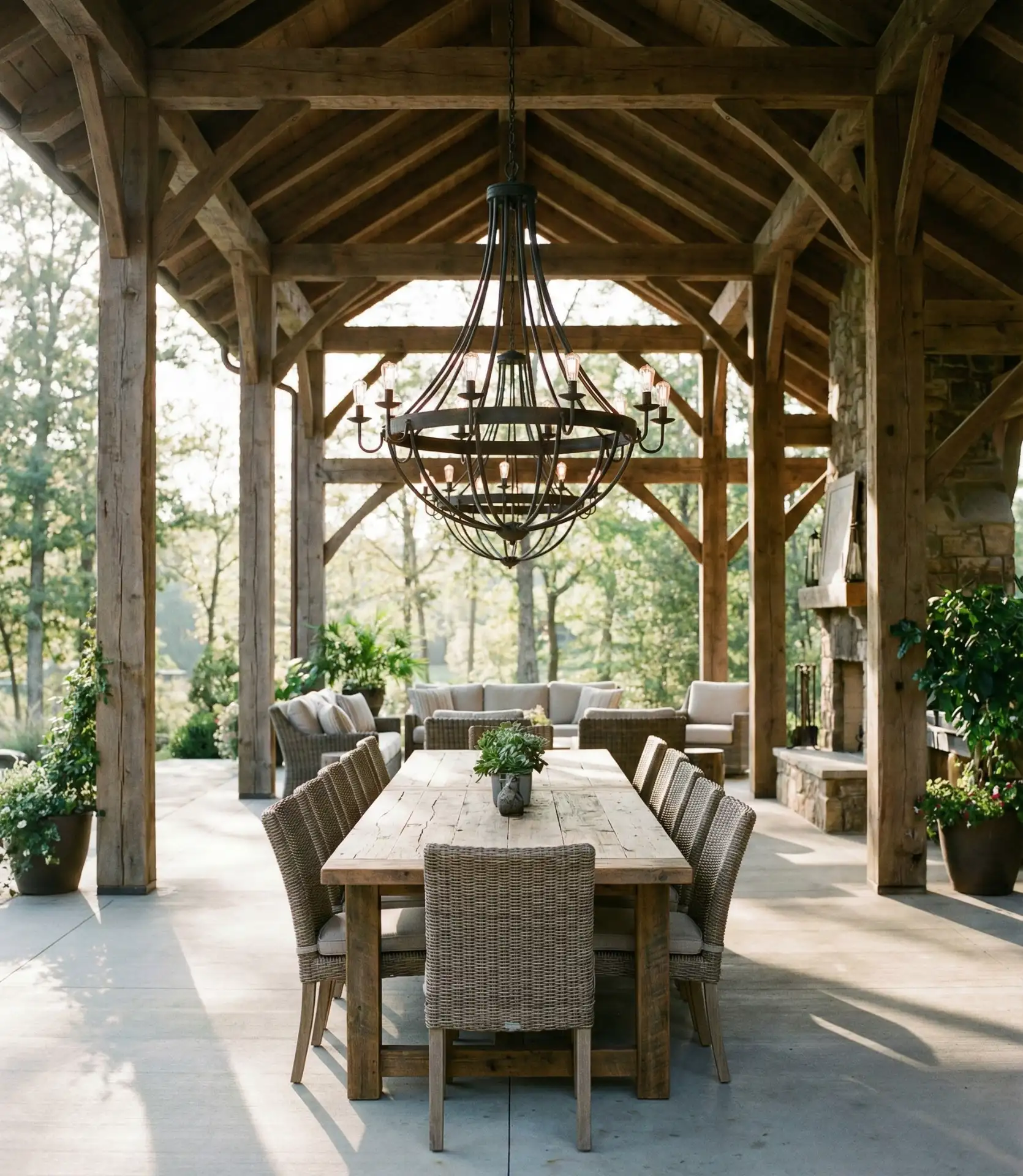
For properties with generous square footage, a large dining pavilion with a substantial table seating 10-12 people becomes the centerpiece for legendary gatherings and holiday celebrations. This space signals serious entertaining, not occasional use, with its heavy timber construction, impressive lighting fixtures, and commercial-grade furniture. The scale makes a statement about hospitality and creates a magnetic gathering spot that neighbors and extended family genuinely look forward to experiencing. 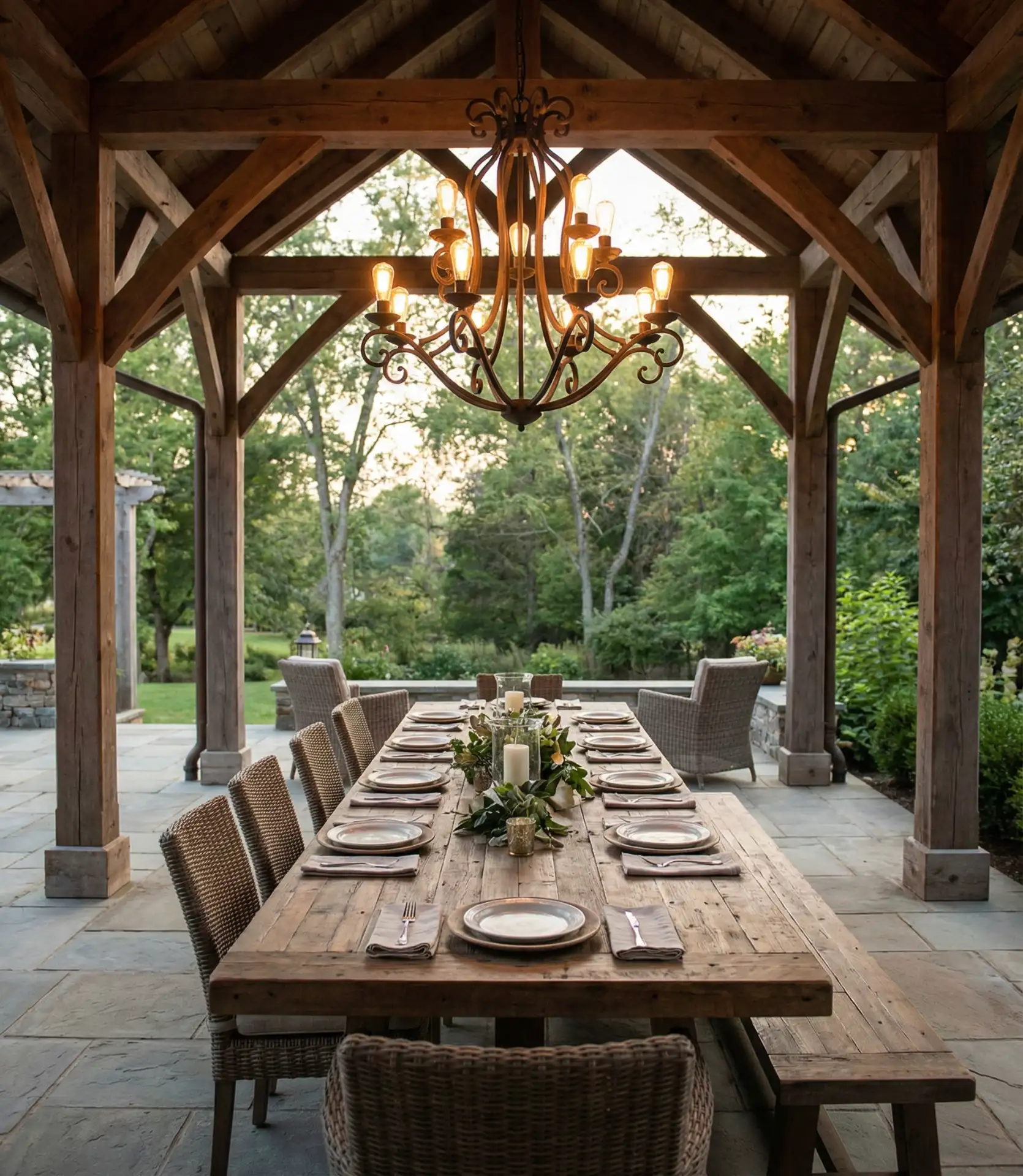
One couple in Tennessee built a 20×24-foot pavilion that’s hosted everything from rehearsal dinners to neighborhood block parties, and they say it’s increased their property value beyond the construction cost. Large pavilions work best when they’re positioned with thoughtful orientation—consider views, prevailing breezes, shade patterns throughout the day, and proximity to both the house and any scenic landscape features that make your property special.

17. Minimalist Concrete Platform
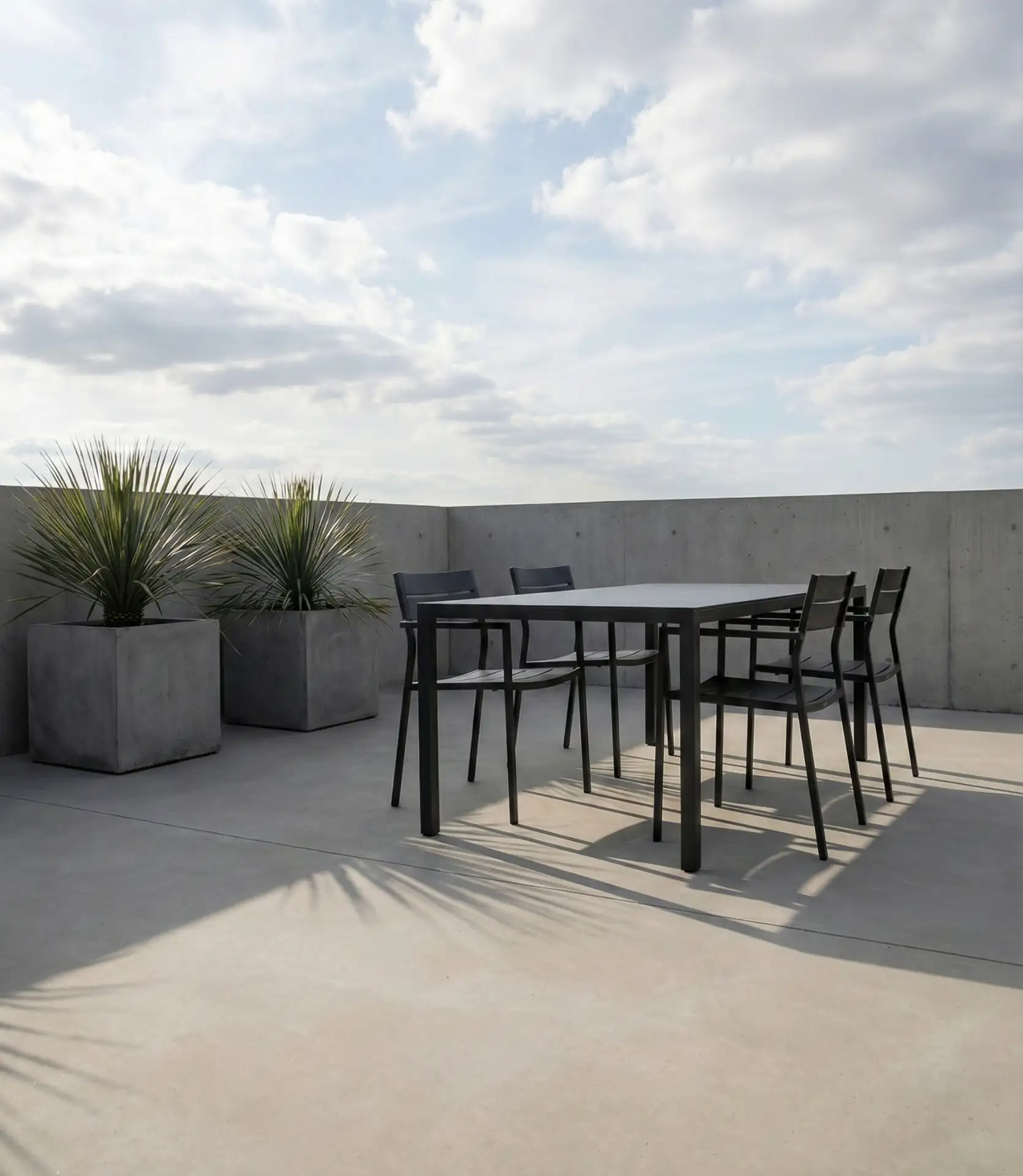
A poured concrete patio with a smooth trowel finish provides an industrial-modern canvas that lets your furniture and plantings take center stage. The monolithic surface creates visual calm and makes small spaces feel larger by eliminating busy patterns or multiple materials. Modern concrete staining and sealing techniques mean you’re no longer stuck with boring gray—sophisticated charcoal, warm taupe, or even subtle earth tones can complement your overall design vision. 
Concrete patios cost approximately $8-18 per square foot depending on finish details and regional labor rates, positioning them in the mid-range of outdoor surface options. The durability justifies the investment—properly installed concrete lasts decades with minimal maintenance beyond occasional resealing. For desert climates, consider lighter concrete colors that reflect rather than absorb heat, or plan for shade structures to keep surface temperatures manageable during peak summer months.
18. Vintage Eclectic Mix
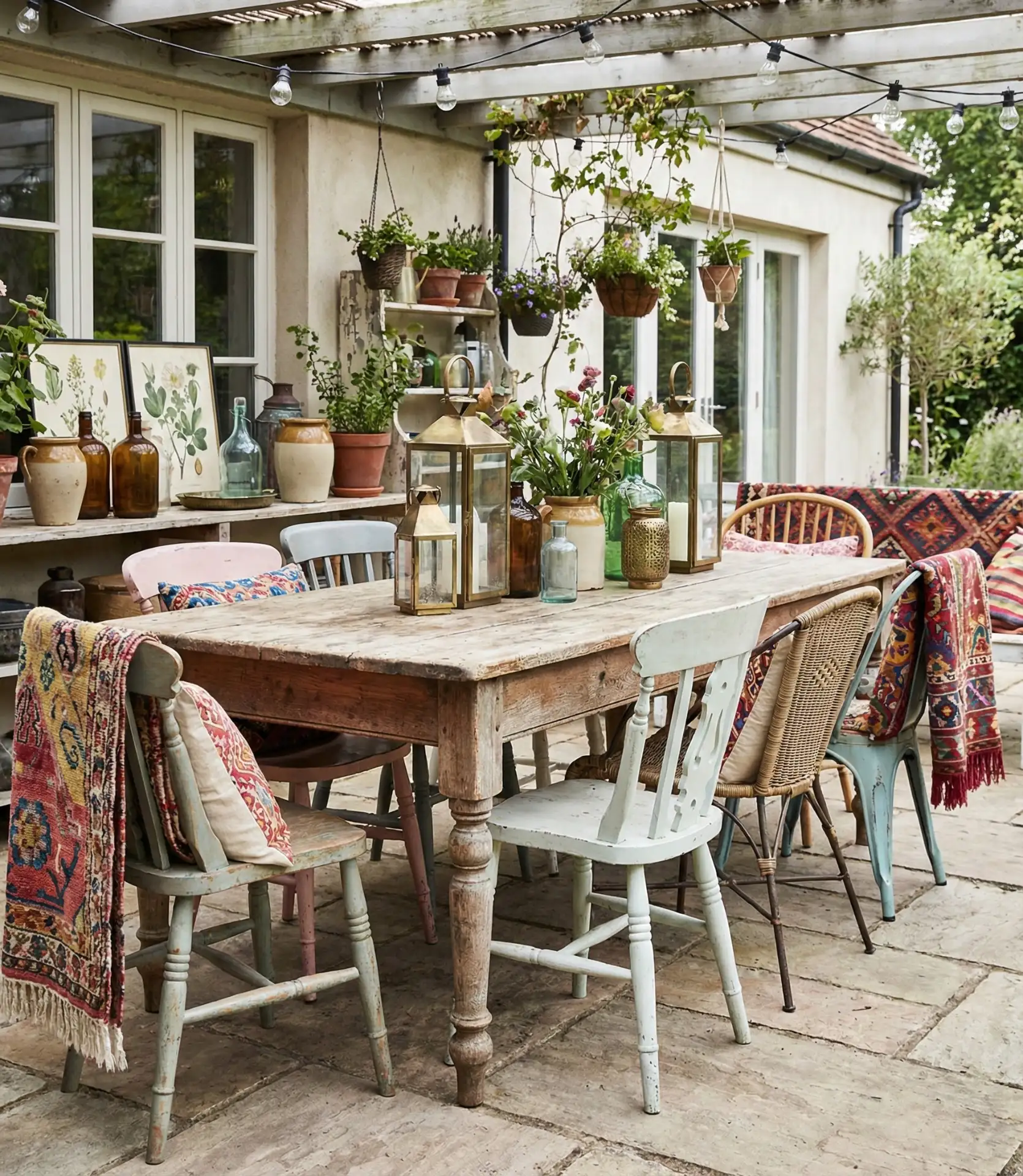
Embrace personality-packed decor by mixing vintage finds, flea market treasures, and inherited pieces into a dining space that tells your unique story. Mismatched chairs painted in coordinating colors, antique lanterns as lighting, and weathered architectural salvage as decorative elements create visual interest that mass-produced furniture can never achieve. This approach particularly appeals to creative homeowners who enjoy the hunt for special pieces and appreciate the sustainability of repurposing existing items. 
Real homeowners love to show their outdoor pieces that they did not purchase new, such as items they found in estate sales, curbside treasures, or used gliders with new cushions that they restored instead of paying a lot of money for replicas. This approach increases the value of a $40 vintage metal glider chair significantly. The secret to making eclectic work is establishing some single common thread—whether it’s a color palette, an era, or a material.
19. Narrow Side Yard Solution
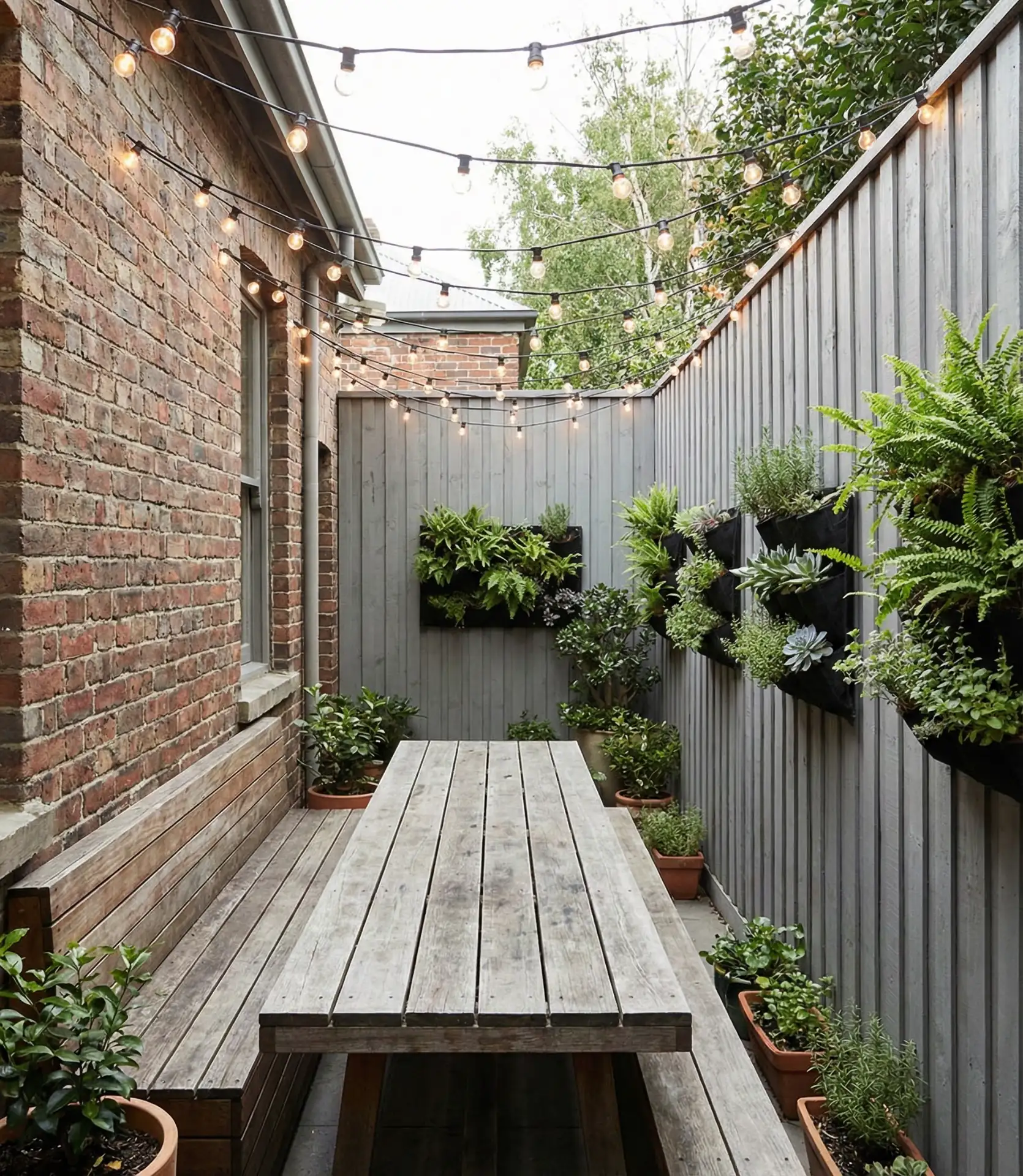
Transform that awkward narrow side yard into an unexpected dining retreat by running a long, slim table parallel to the house with bench seating on one side and chairs backed against the fence. This configuration maximizes every inch of challenging space that’s too small for typical patio furniture arrangements. Strategic vertical gardening on walls and fences adds greenery without consuming precious floor space, and overhead string lights visually expand the corridor while adding essential ambiance. 
Many homeowners completely overlook side yards, relegating them to storage or utility access, but these neglected strips often receive excellent natural light and privacy from neighbors. The narrow footprint actually becomes an advantage—it creates a distinctive linear dining experience that feels intentional and designed rather than making do with leftover space. Just ensure adequate width for comfortable passage; you need a minimum of 6-7 feet to accommodate a table and seating without feeling cramped.
20. Coastal Aesthetic Outdoor Room
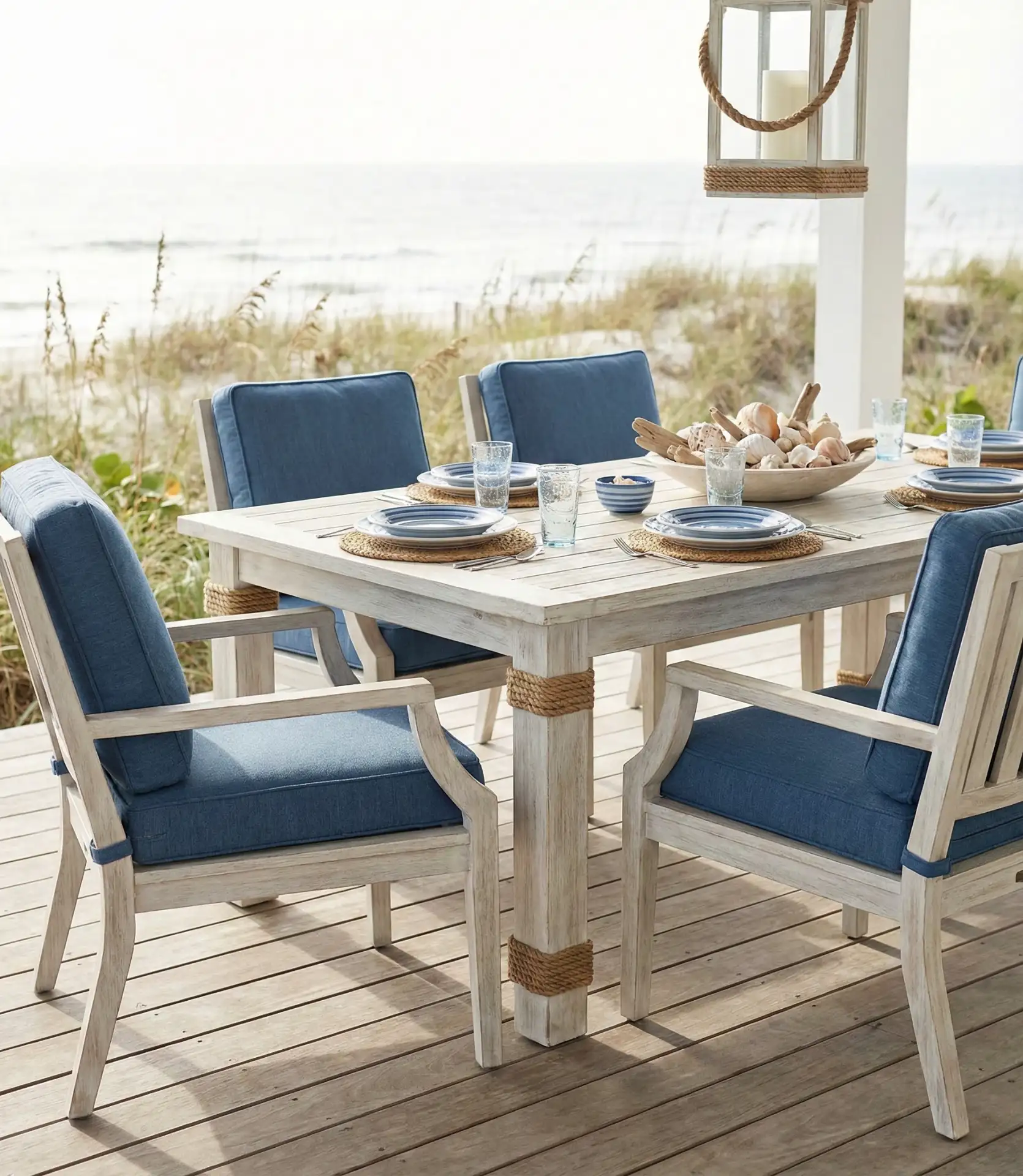
Capture relaxed beachside living with a dining space that employs the aesthetic hallmarks of coastal design—weathered wood tones, blue and white color schemes, natural fiber rugs, and casual nautical touches. Rope-wrapped chandeliers, driftwood centerpieces, and whitewashed furniture create vacation vibes in your backyard regardless of your proximity to an actual coastline. This accessible style works beautifully anywhere Americans dream of beach houses, from landlocked Midwest suburbs to mountain properties hundreds of miles from saltwater. 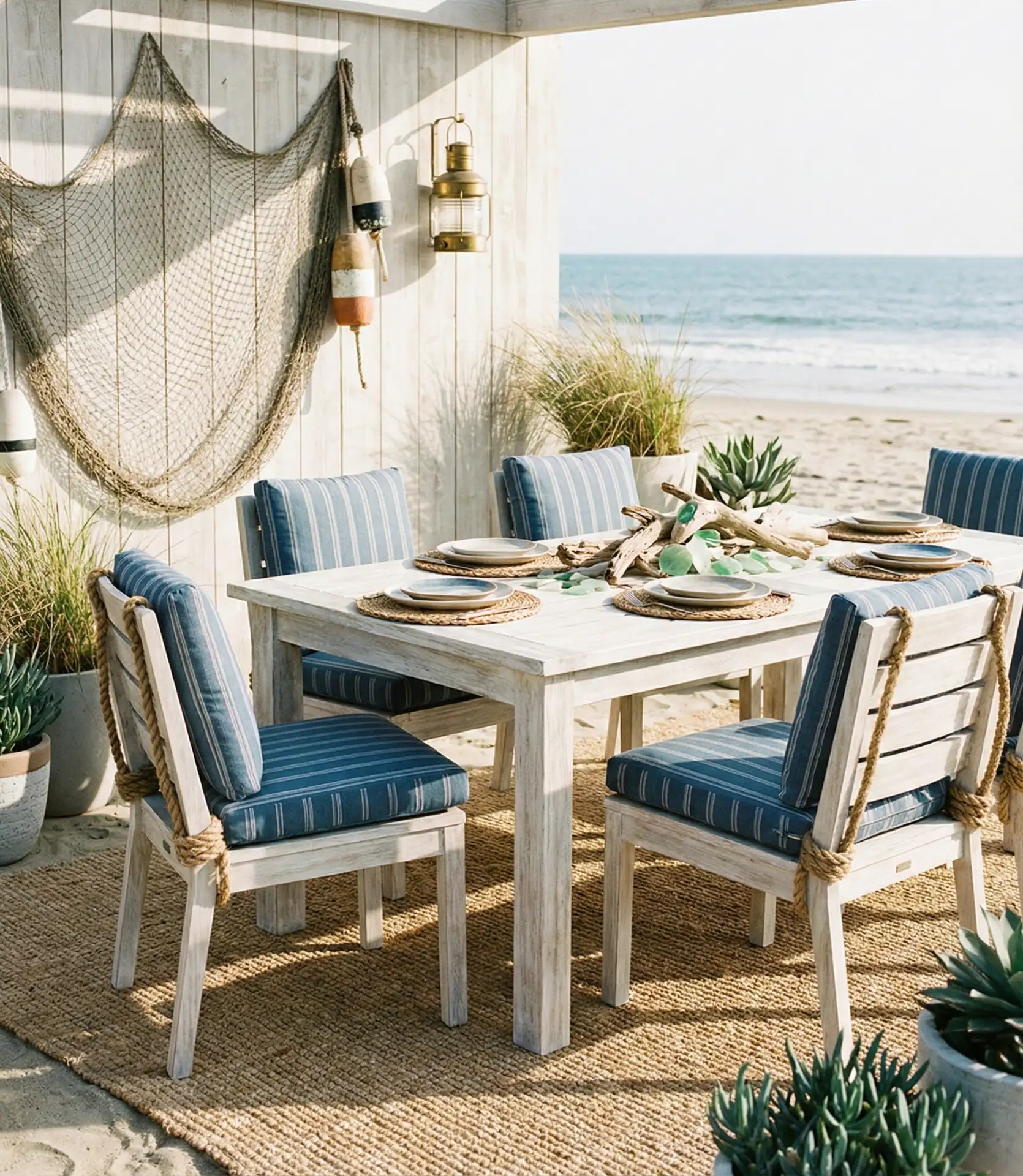
The beauty of coastal style lies in its inherent casualness—no one expects perfection at the beach, so sand-friendly, water-resistant, and slightly worn finishes feel completely appropriate rather than shabby. This forgiving nature makes coastal aesthetics particularly practical for families with young children or active pets. Choose outdoor fabrics in slightly darker blues or grays rather than crisp white to hide the inevitable dirt and stains while maintaining the seaside color story.
21. Modern Farmhouse Covered Patio
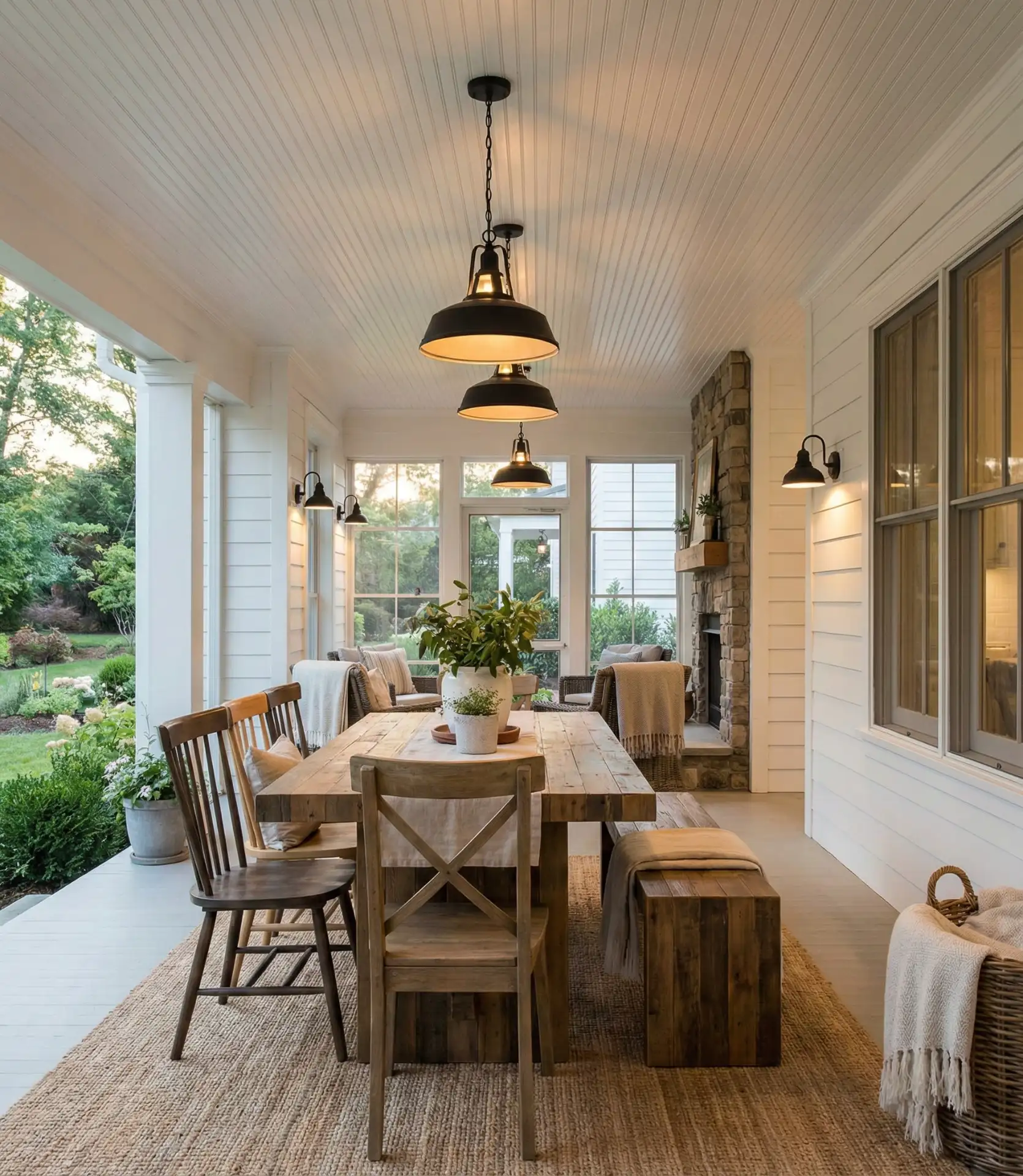
Blend contemporary clean lines with rustic farmhouse charm in a covered patio that features painted beadboard ceilings, black metal light fixtures, and a mix of painted and natural wood furniture. This wildly popular style bridges traditional and modern sensibilities, making it adaptable to virtually any architectural home style, from actual century-old farmhouses to brand-new suburban construction. Shiplap accent walls, galvanized metal containers for plants, and simple white tableware keep the look fresh rather than kitschy. 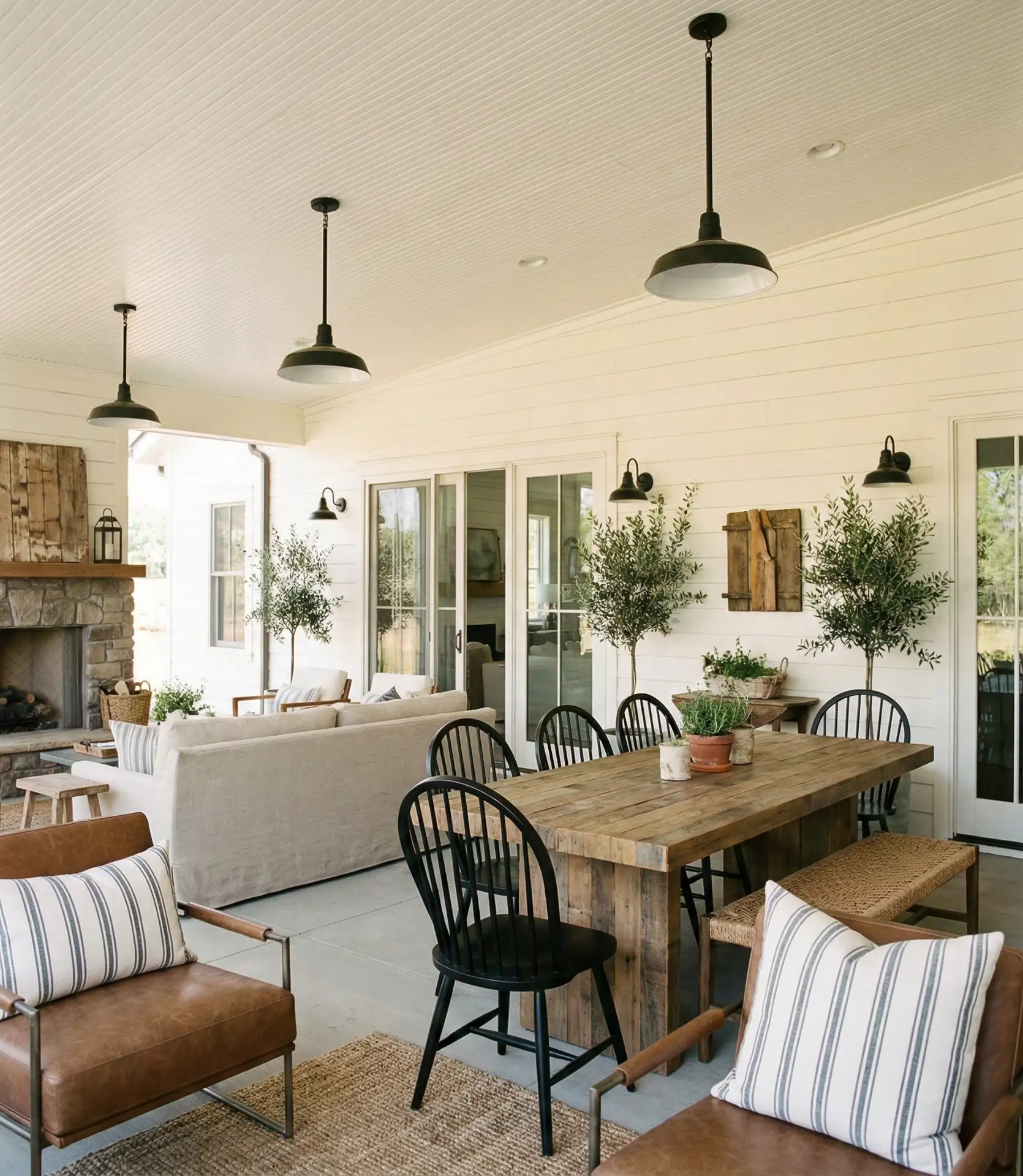
Expert designers note that successful modern farmhouse design relies on restraint—too many distressed finishes, galvanized accessories, or “blessed” signs tip into parody territory. Instead, choose two or three signature farmhouse elements and keep everything else clean and simple. The covered structure provides crucial protection from the elements, extending usability across seasons and creating that indoor-outdoor room feeling that Americans consistently rank as highly desirable in home surveys.
22. Urban Rooftop Dining Terrace
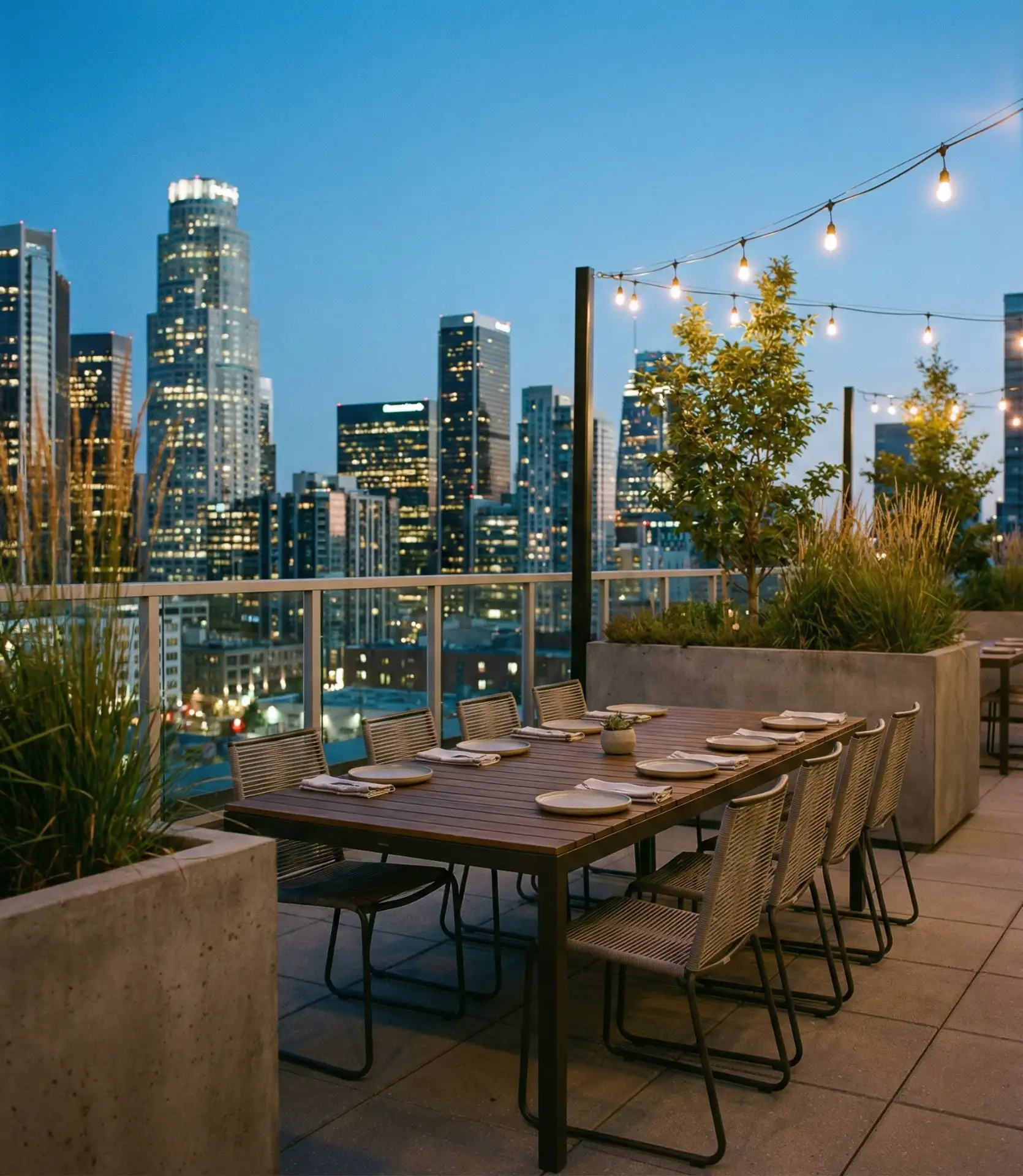
Elevate a rooftop to be a sophisticated dining space that makes the most of the skyline and treasured outdoor dining in a city. The main challenge is wind, so consider investing in sturdy furniture, built-in planters that serve as windbreaks, and tempered glass railings that protect the edge while preserving the view. The height offers natural protection from passing neighbors and a unique space for entertaining, making the area feel distanced from the street-level urban space. 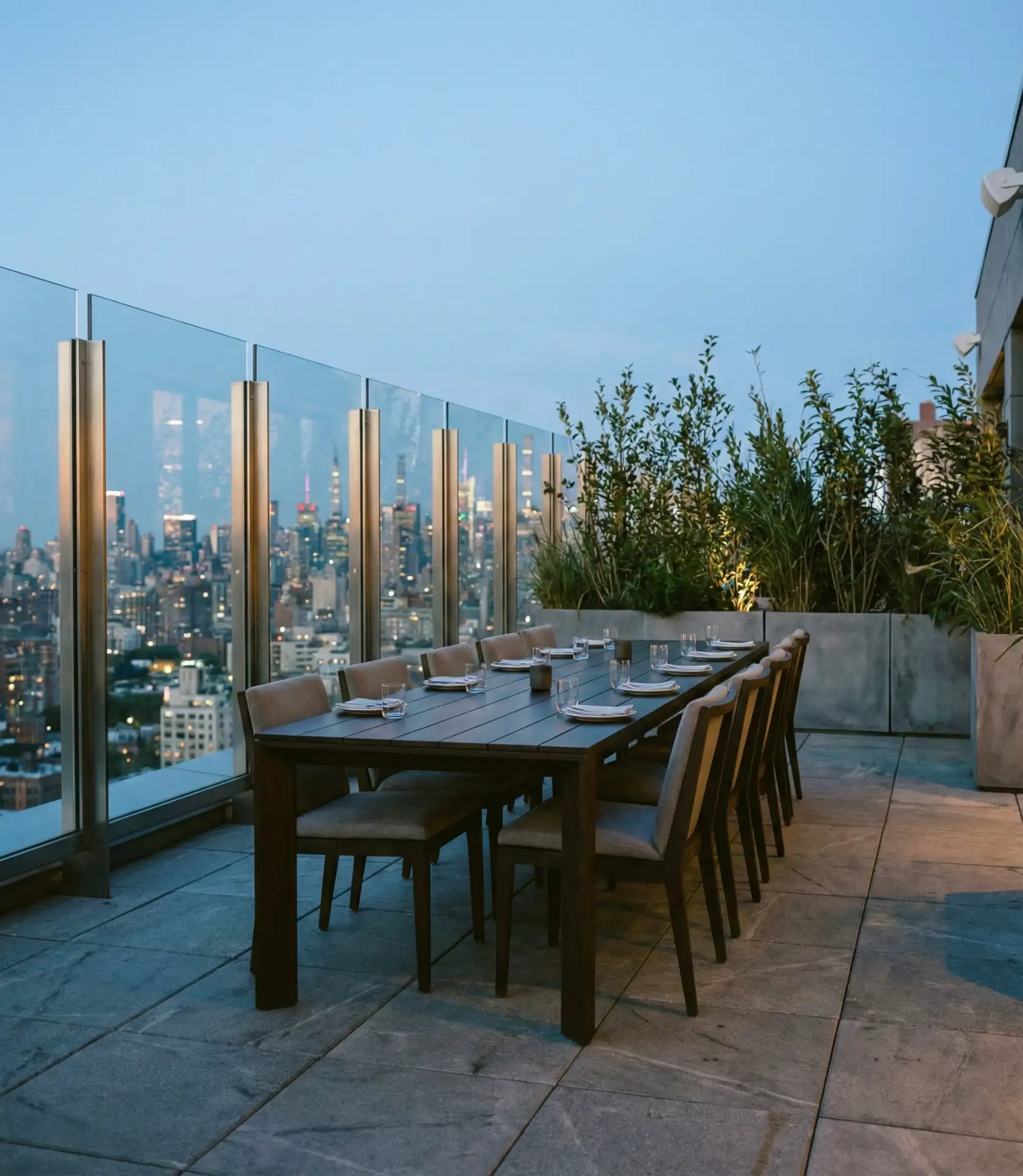
Verify building rules and weight restrictions before planning for rooftop dining. Every building has a unique load limit per square foot that will affect furniture choices and whether you can add things like pergolas or water features. For rooftops, container gardens are preferable to raised beds because they are portable for easier maintenance access and require less structural management.
From Chicago to Miami, expertly crafted rooftop terraces offer excellent value to real estate and become the most recognizable selling feature of the home.

These outdoor dining ideas show that remarkable meals don’t have to be enjoyed indoors but can be shared under the open sky with your home’s landscape and gardens surrounding. The ideal outdoor dining setup, whether rustic farmhouse charm, modern luxury, or an eclectic mix, elevates meals into an occasion worthy of enjoyment. Start with the idea that resonates most strongly with your space and lifestyle, then share your favorite approach or your own creative solution in the comments below.