44 Modern Farmhouse Bathroom Ideas for 2026 That Will Make You Want to Remodel Today

The modern farmhouse bathroom has quietly become one of the most searched interior styles in America—and in 2026, it’s evolving in ways that feel genuinely exciting. People aren’t just pinning shiplap walls and clawfoot tubs anymore. They’re mixing organic textures, moody palettes, and smarter layouts to create spaces that feel both timeless and completely current. Whether you’re planning a full remodel or just looking for a few fresh ideas to refresh your master bath, this guide covers some of the most inspiring directions the style is heading this year. Expect warm tones, honest materials, and designs that actually work for real American homes.
1. Warm White Shiplap Shower Walls
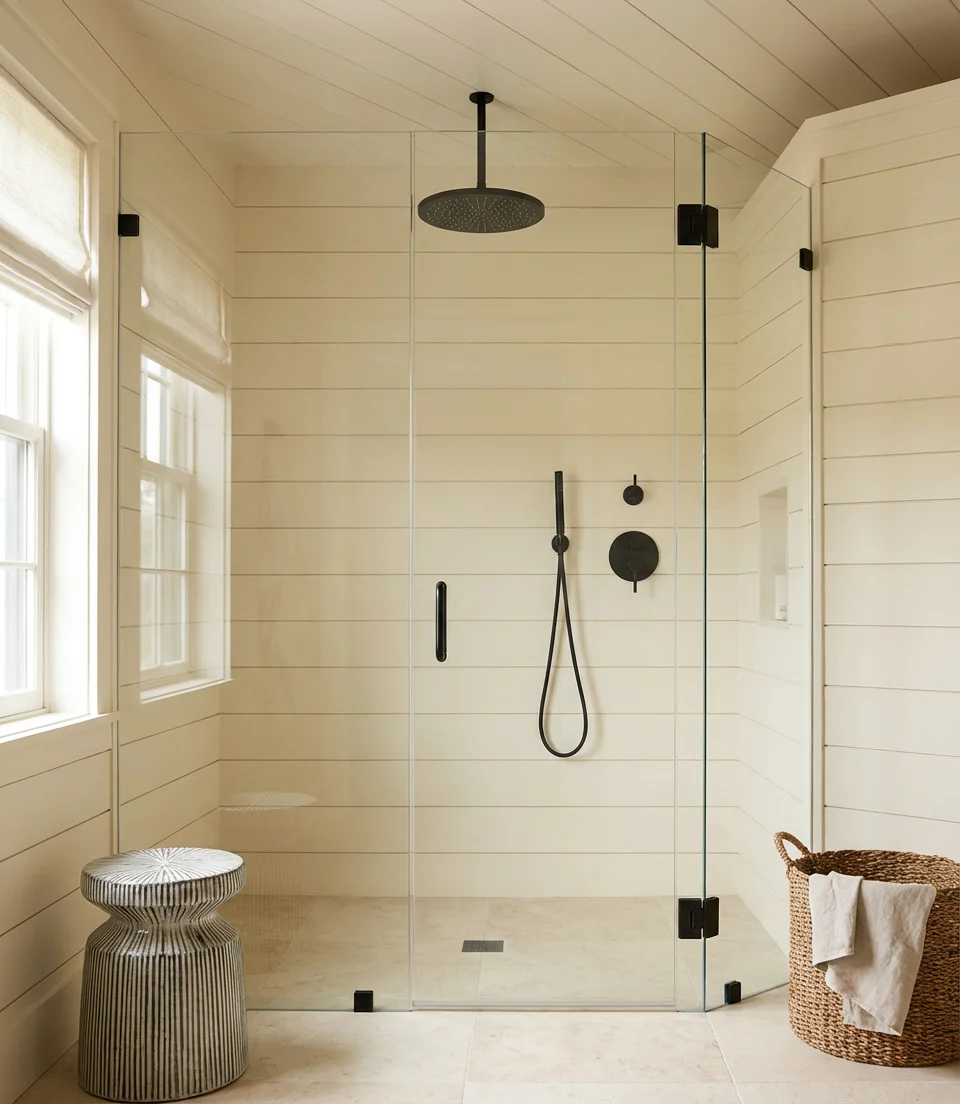
White shiplap showers are timeless because they evoke a simple, airy farmhouse feel without necessitating a complete renovation. In 2026, the trend leans warmer: think creamy whites and soft off-whites rather than stark, cold tones. Pairing horizontal shiplap with a simple rainfall showerhead and matte black fixtures creates a look that feels curated yet approachable. It’s the kind of design that photographs beautifully for Pinterest and lives even better in daily life.
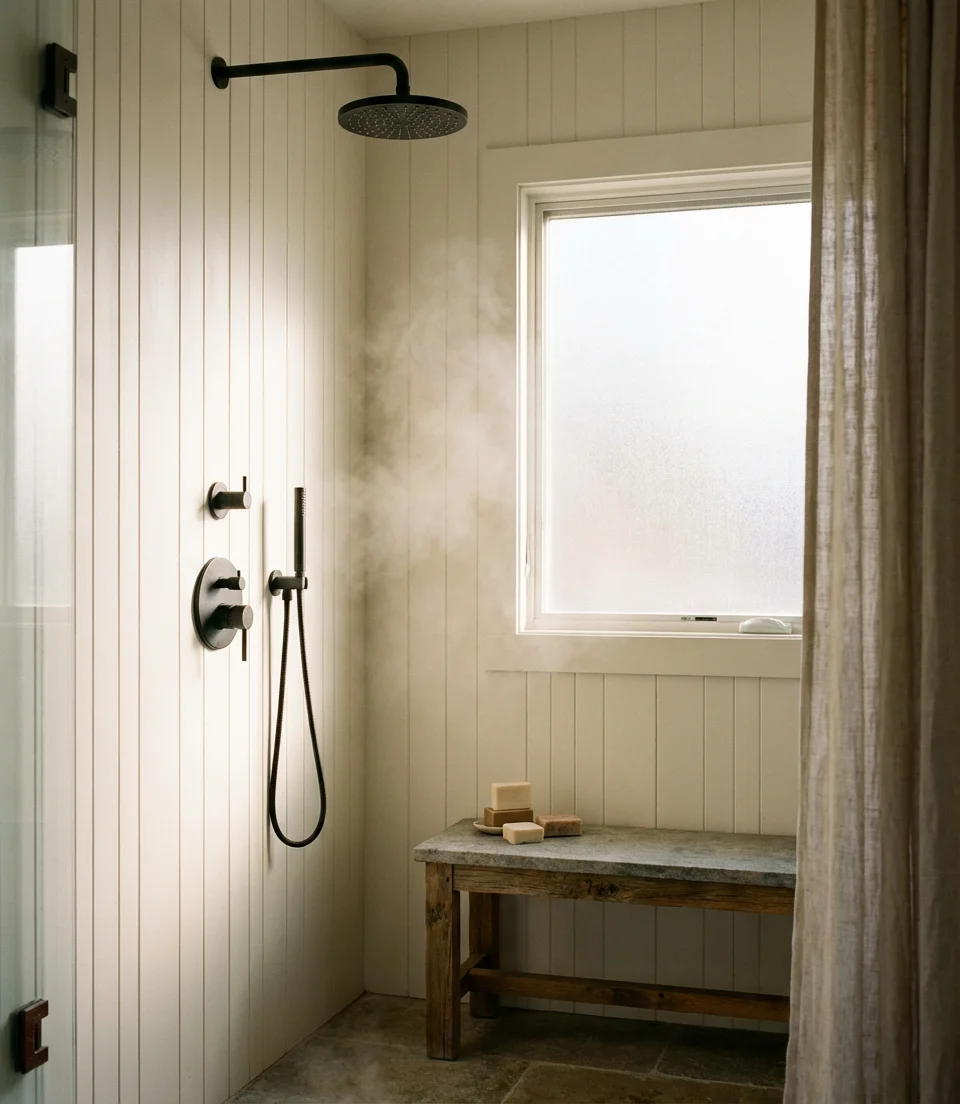
This look works especially well in mid-size bathrooms where you want to add character without closing in the space. A frameless glass door keeps sightlines open while letting the shiplap texture take center stage. If your home is already leaning toward a cottage or craftsman aesthetic, this shower treatment ties every room on the floor together in the most natural way. Keep grout lines tight and sealed to avoid the maintenance headaches that come with wood-adjacent materials in wet zones.
2. Moody Green Vanity with Brass Hardware
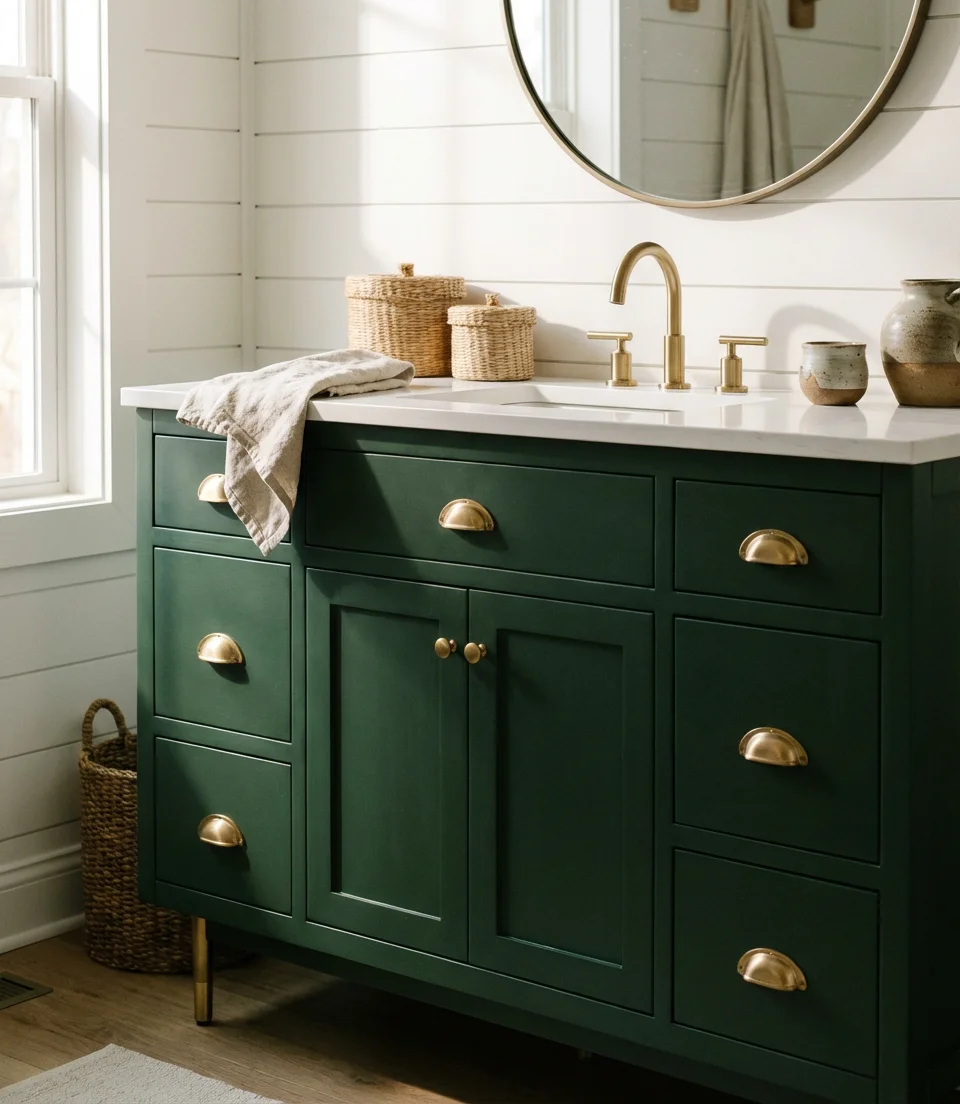
Deep, saturated green has become the go-to color for homeowners who want their bathroom vanity to feel like a piece of furniture rather than a fixture. In 2026, shades like forest green, hunter, and sage-leaning olive are all having a serious moment—especially when paired with unlacquered brass pulls and legs. The combination reads as moody and intentional, the kind of thing you’d find in a renovated Victorian farmhouse in Vermont or a stylish Austin bungalow. It’s a small commitment with an outsized visual impact.
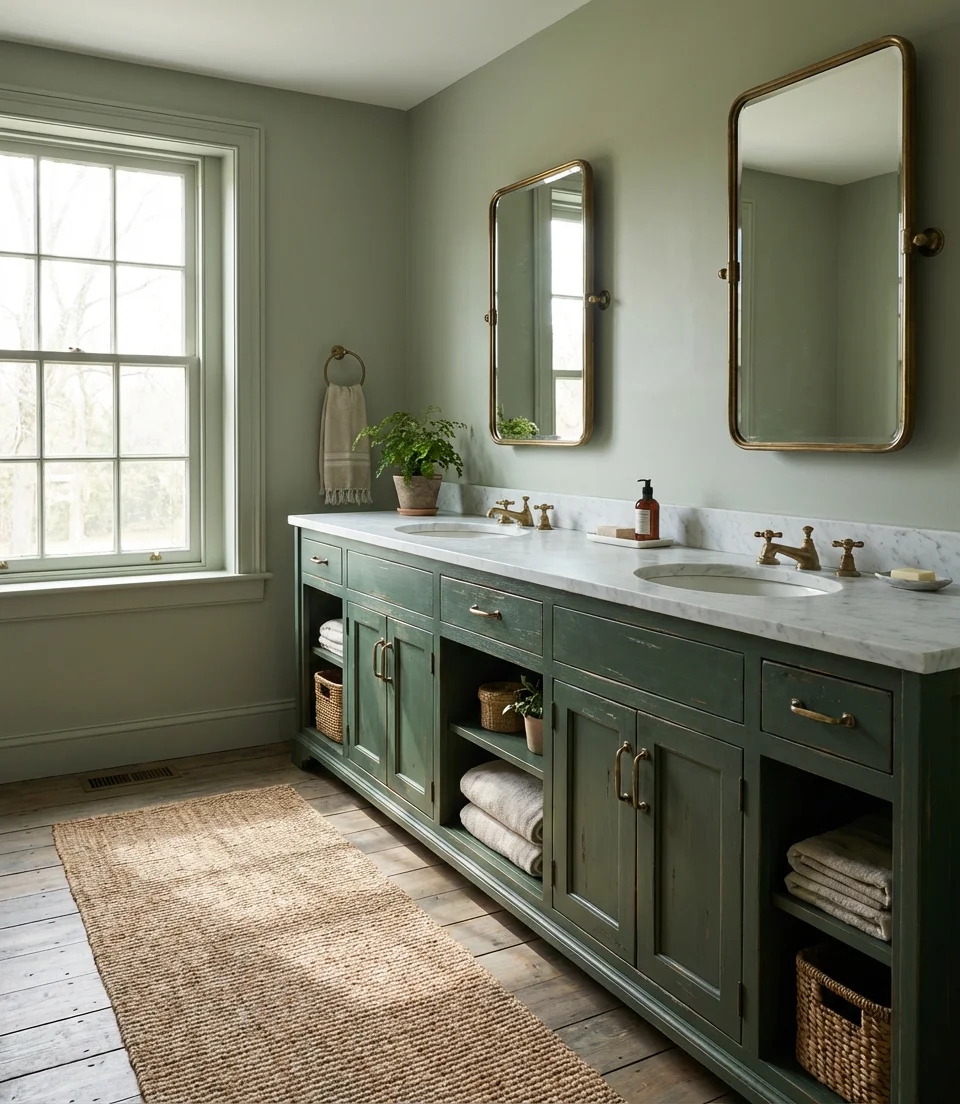
Budget-wise, this transformation is more accessible than most people realize. A quality furniture-style vanity in a painted finish starts around $600–$900, and swapping standard hardware for brass pulls adds another $40–$80. For homeowners who already own a basic white vanity, a coat of cabinet paint in a deep green can achieve nearly the same effect for under $100. The key is choosing a finish that’s durable enough for a humid environment—satin or semi-gloss holds up far better than flat in a bathroom setting.
3. Black Iron Sconces Flanking the Mirror
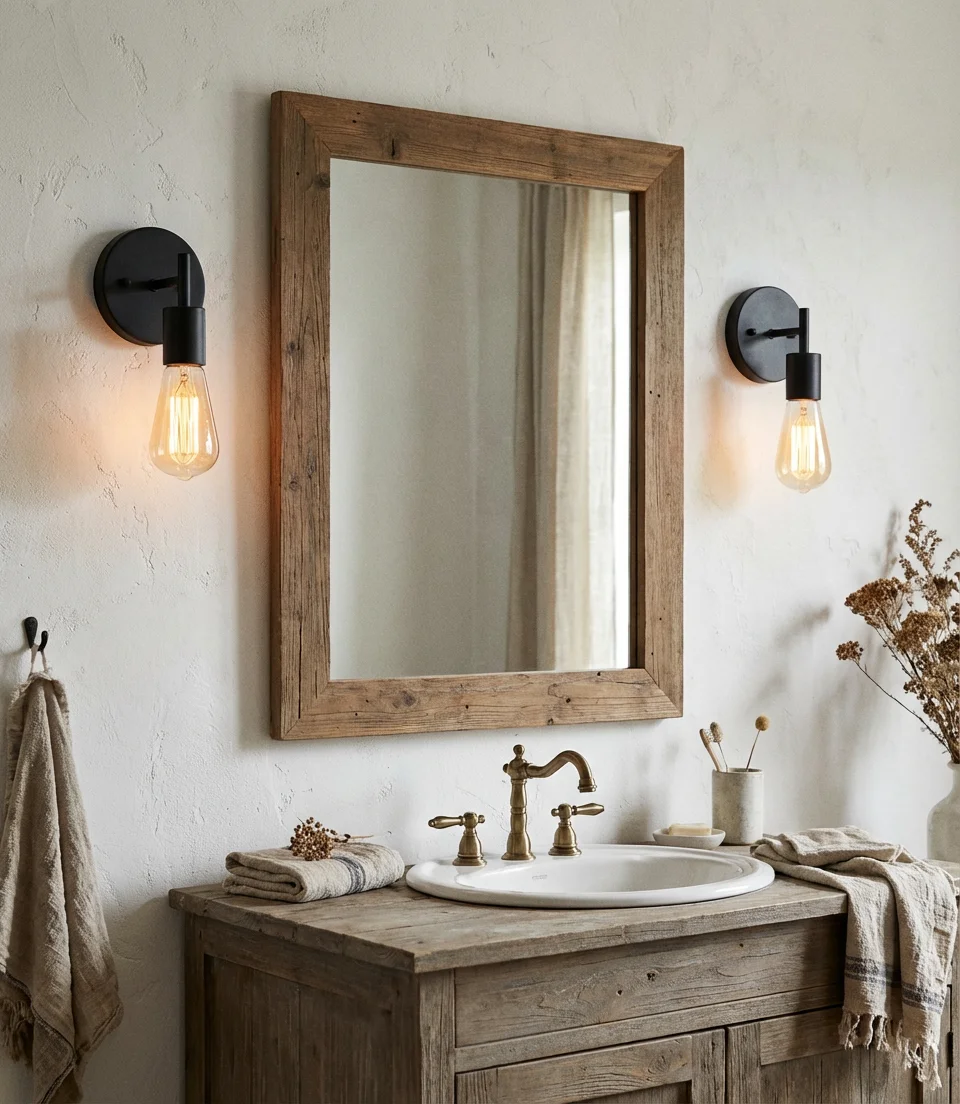
Lighting is where so many farmhouse bathrooms either come together or fall apart, and in 2026, sconces flanking a simple mirror are the move. Matte black iron wall sconces with Edison-style bulbs add warmth and dimension that overhead vanity strips simply can’t replicate. The visual effect is theatrical in the best way—symmetrical, intentional, and deeply flattering for the person standing in front of them. This approach to light fixtures also frees up your mirror choice, since you’re no longer limited to fixtures with built-in lighting.
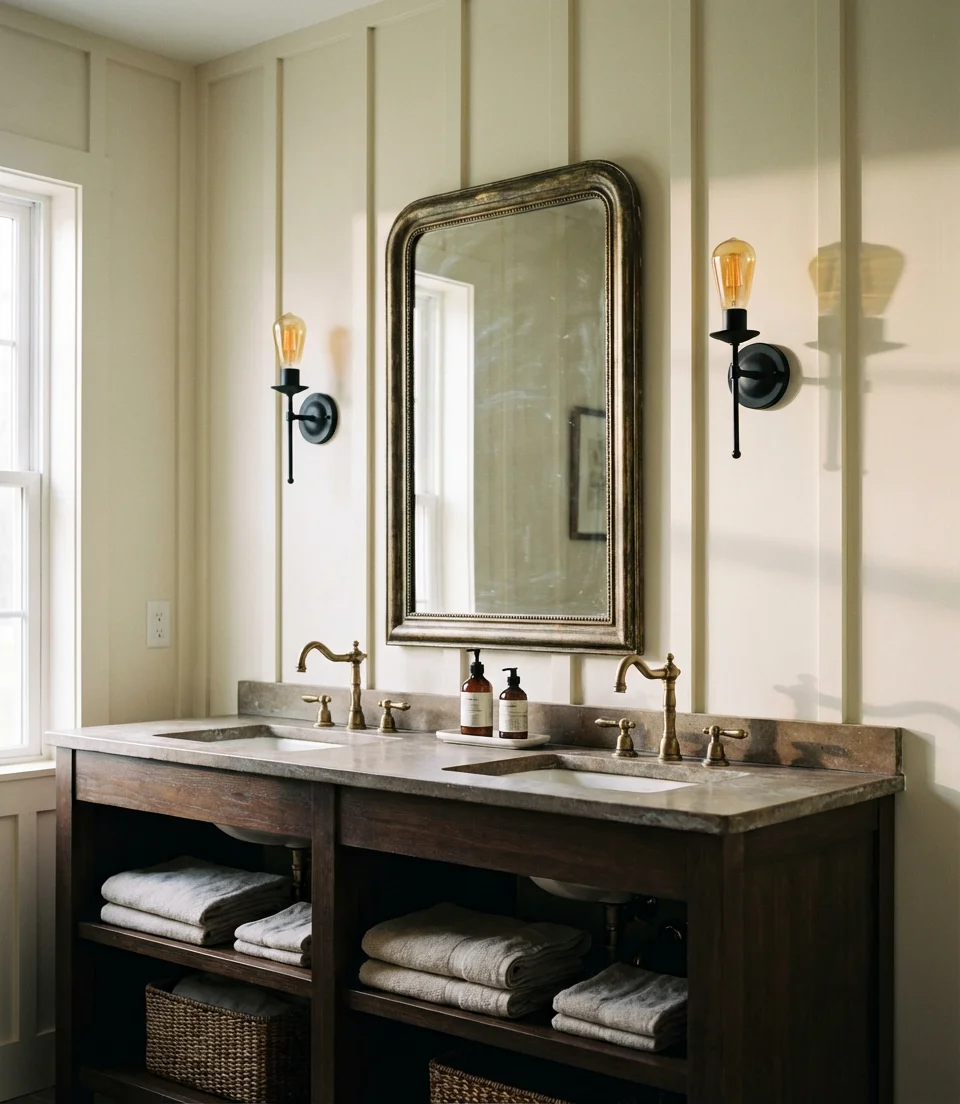
One common mistake people make is mounting sconces too high, which casts unflattering shadows downward. The ideal height for sconces is eye level, which is approximately 60 to 65 inches from the floor to the center of the bulb. At that height, the light falls naturally across your face rather than creating dramatic shadows. For a master bath, choose sconces with a warm color temperature (2700K–3000K) rather than anything cool or daylight-balanced, which can feel clinical and harsh in a space meant for winding down.
4. Subway Tile Shower with Dark Grout

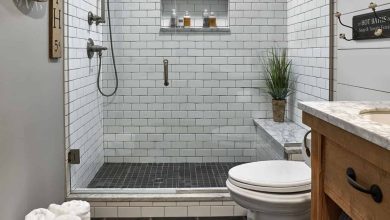
Classic subway tile gets a modern farmhouse upgrade the moment you swap standard white grout for charcoal or dark gray. The contrast is striking—it makes the individual tile shapes pop and gives the whole shower an architectural quality that feels both vintage and fresh. In 2026, this pairing is trending in larger tile formats too, with 3×6 giving way to 4×8 and even 4×12 for a slightly more contemporary proportion. The result is a shower that feels timeless without looking like it was installed in 2009.
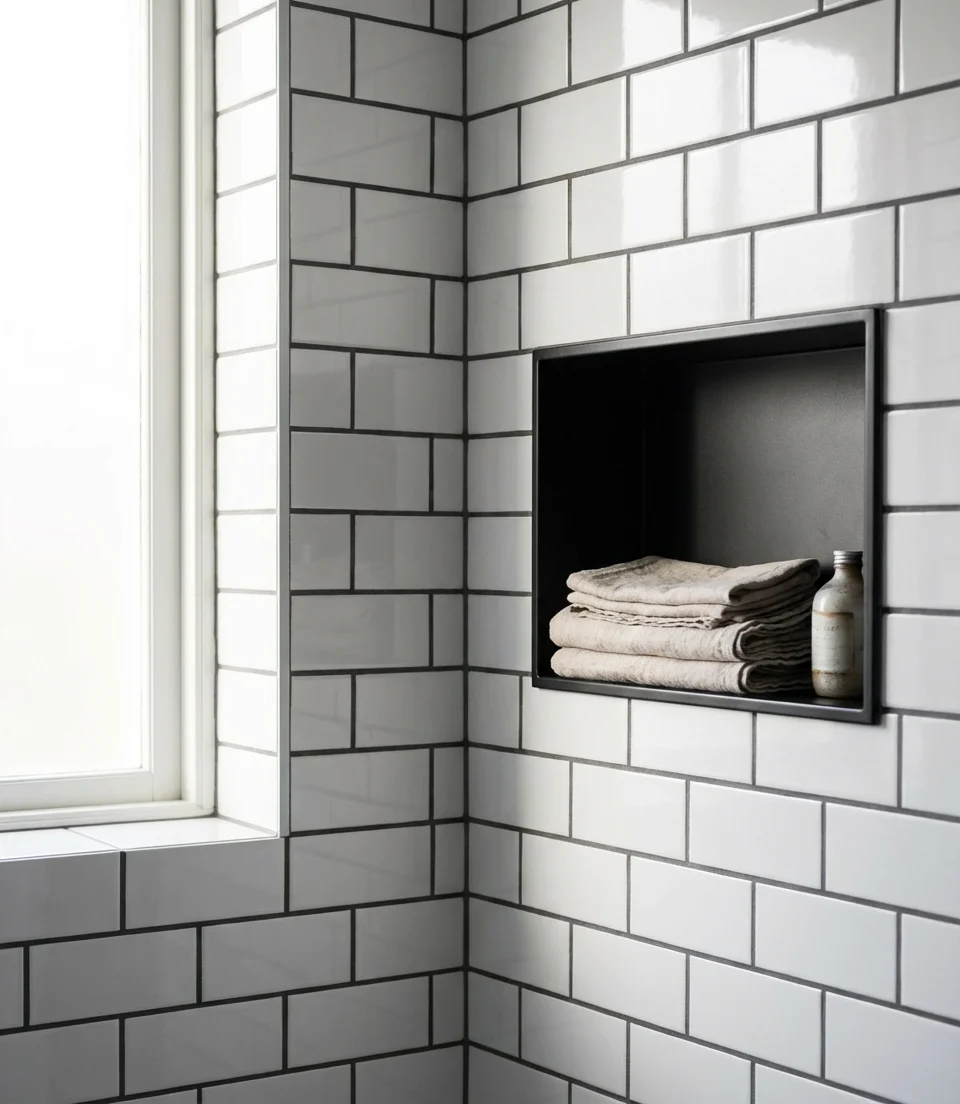
A designer who works primarily on farmhouse renovations in the Midwest once noted that dark grout is the single most underrated choice in bathroom remodeling. “It hides everyday buildup so much better than white, and it makes the whole space look intentional from day one,” she said. That practical advantage is just as meaningful as the aesthetic one. For a remodel, budgeting between $12 and $18 per square foot installed for subway tile (materials and labor) is a realistic range in most American markets right now.
5. Freestanding Soaking Tub as a Focal Point
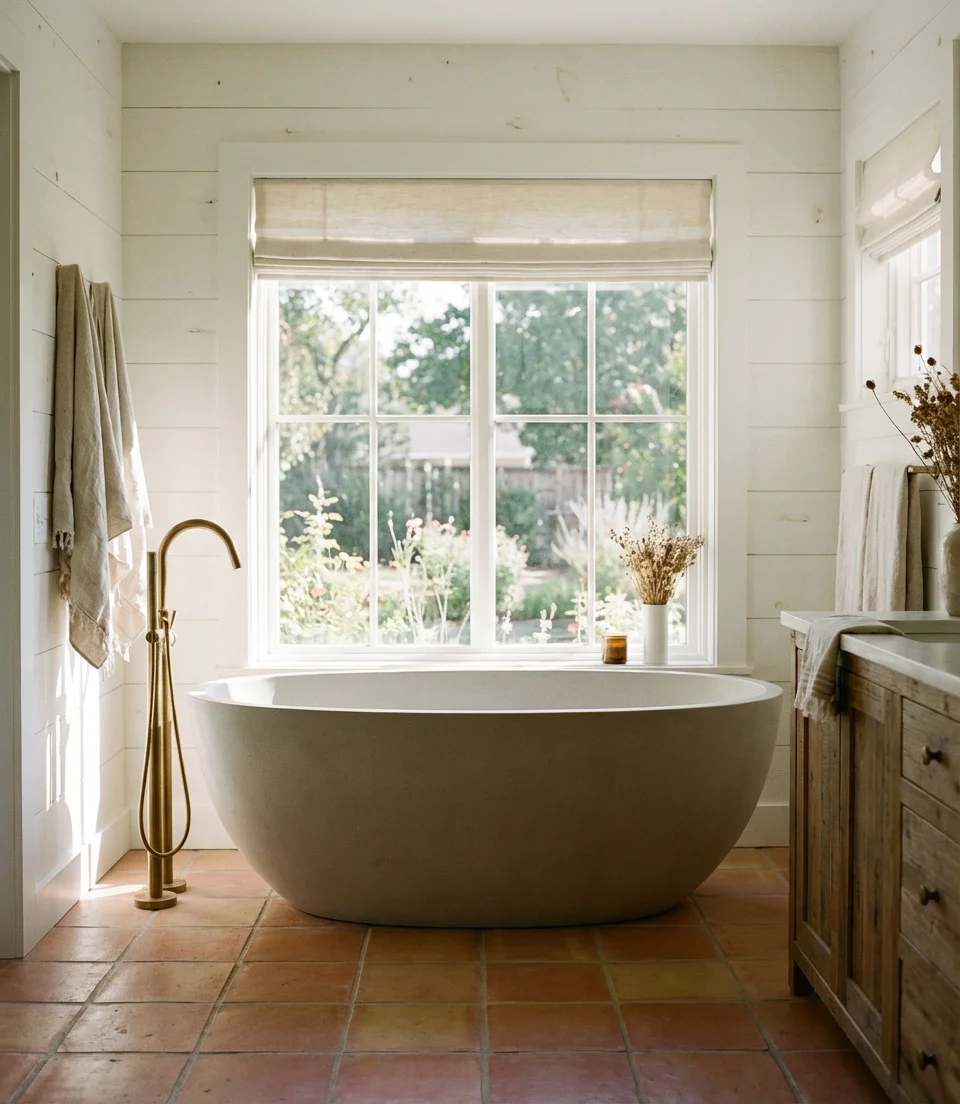
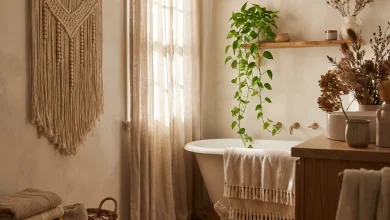
Nothing anchors a master bath quite like a freestanding soaking tub positioned in front of a window or against a statement wall. In 2026, the farmhouse version of this look favors organic shapes—slightly oval, with a matte stone resin or cast iron finish—rather than the ultra-modern rectangular slipper tub. Placed on warm-toned floor tile and paired with a simple floor-mount faucet in aged brass, this setup creates an atmosphere that’s more retreat than bathroom. It’s cozy, considered, and genuinely restorative.
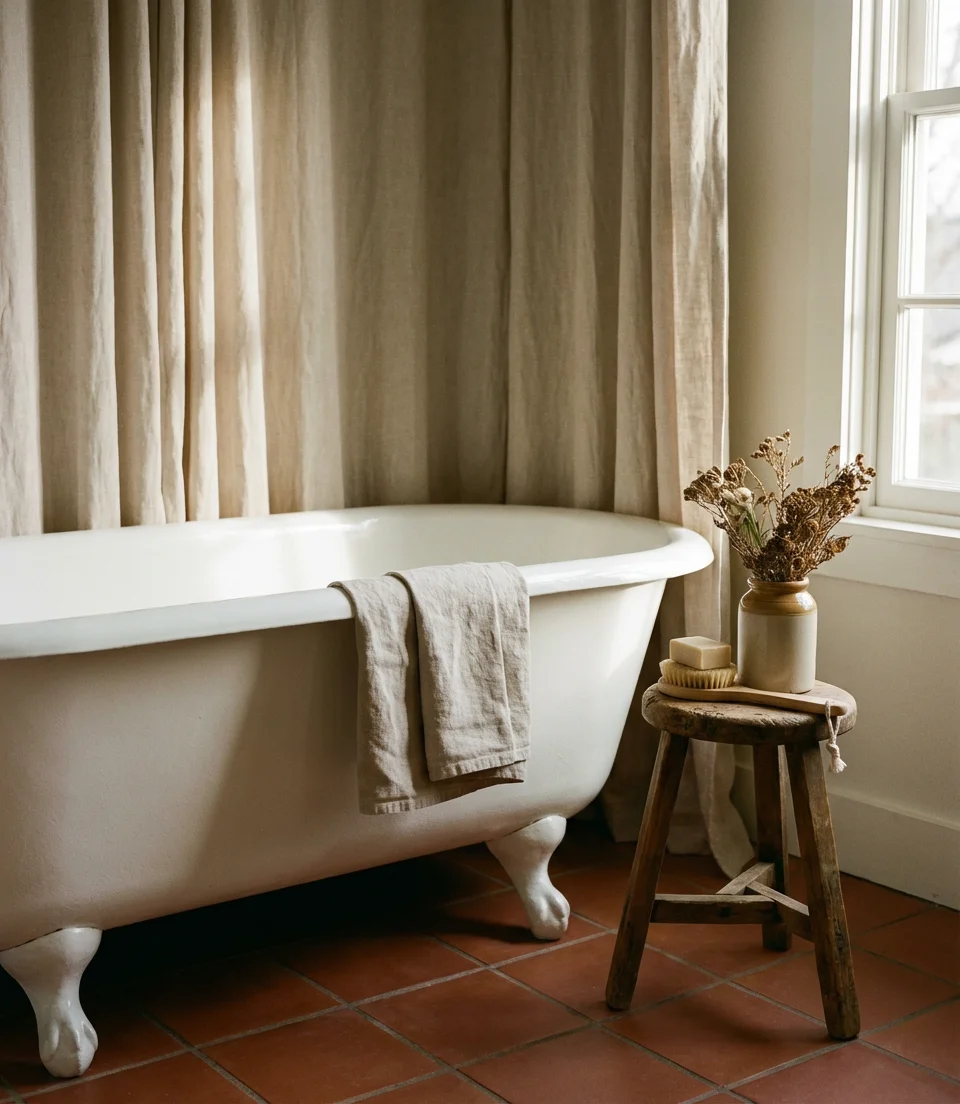
Where the design works best: master bathrooms of at least 80 square feet with ceilings over 8 feet. In smaller spaces, a freestanding tub can overwhelm the room and make circulation feel tight. If your bathroom is on the smaller side but you love the look, consider a smaller-footprint Japanese-style soaking tub—they’re typically 4 feet long, deeper than standard, and designed specifically to maximize the bathing experience in compact spaces. Several American manufacturers have started offering them in finishes that read distinctly farmhouse.
6. Hexagon Floor Tile with Earthy Tones

Hexagon floor tile ideas in warm terracotta, clay, and sand tones are defining the farmhouse bathroom floor story of 2026. Unlike the stark black-and-white hex patterns of years past, these earthy palettes feel grounded and warm underfoot—they pull the whole room toward something that feels lived-in and intentional. Smaller hex formats (1-inch or 2-inch) offer more visual texture, while larger 6-inch or 8-inch hexagons read as more contemporary. Either way, the organic quality of uneven natural tones gives the floor real character.

Real homeowners who’ve gone this route often mention how much the floor “does the work” of decorating—meaning you don’t need to layer as many accessories or textiles because the floor itself provides all the warmth and visual interest the space needs. It pairs particularly well with a simple white or cream wall treatment, letting the floor remain the star. For grout color, choose something in the same warm family as the tiles—a sandy beige or light taupe—to keep the overall effect soft rather than graphic. Grout is the material used to fill the spaces between tiles.
7. Linen Shower Curtain with Natural Texture
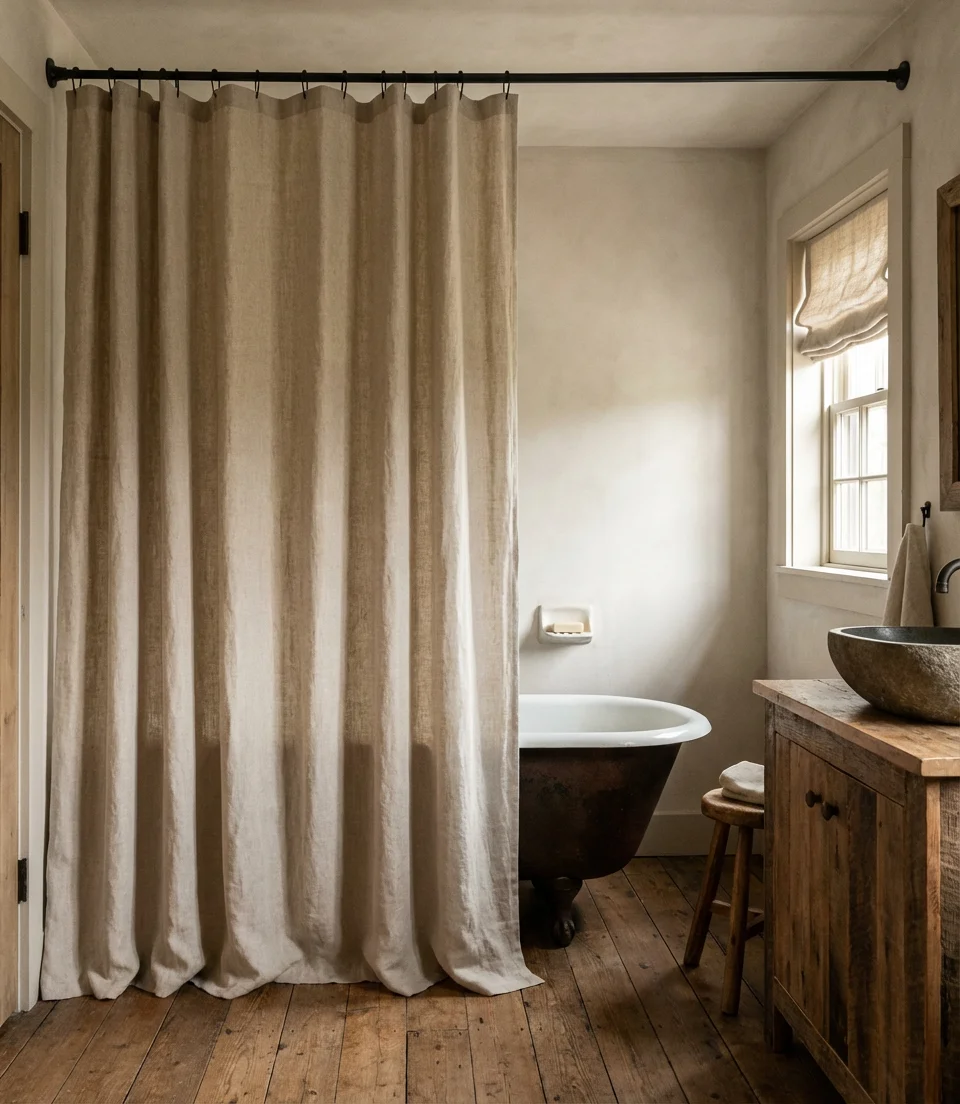
The right shower curtain can shift a bathroom’s entire personality, and in 2026, natural linen is the fabric of choice for modern farmhouse spaces. A floor-length linen curtain in an undyed or oatmeal tone adds softness and movement without competing with the rest of the room’s materials. Shower curtain ideas this year also lean into subtle texture—waffle weave (a fabric with a raised, grid-like pattern), slubby linen blends (which have uneven thickness for a more casual look), and even French terry (a soft fabric with loops on one side) all bring that rustic quality that reads as effortlessly curated rather than overly styled. It’s the textile version of a perfectly worn-in leather chair.
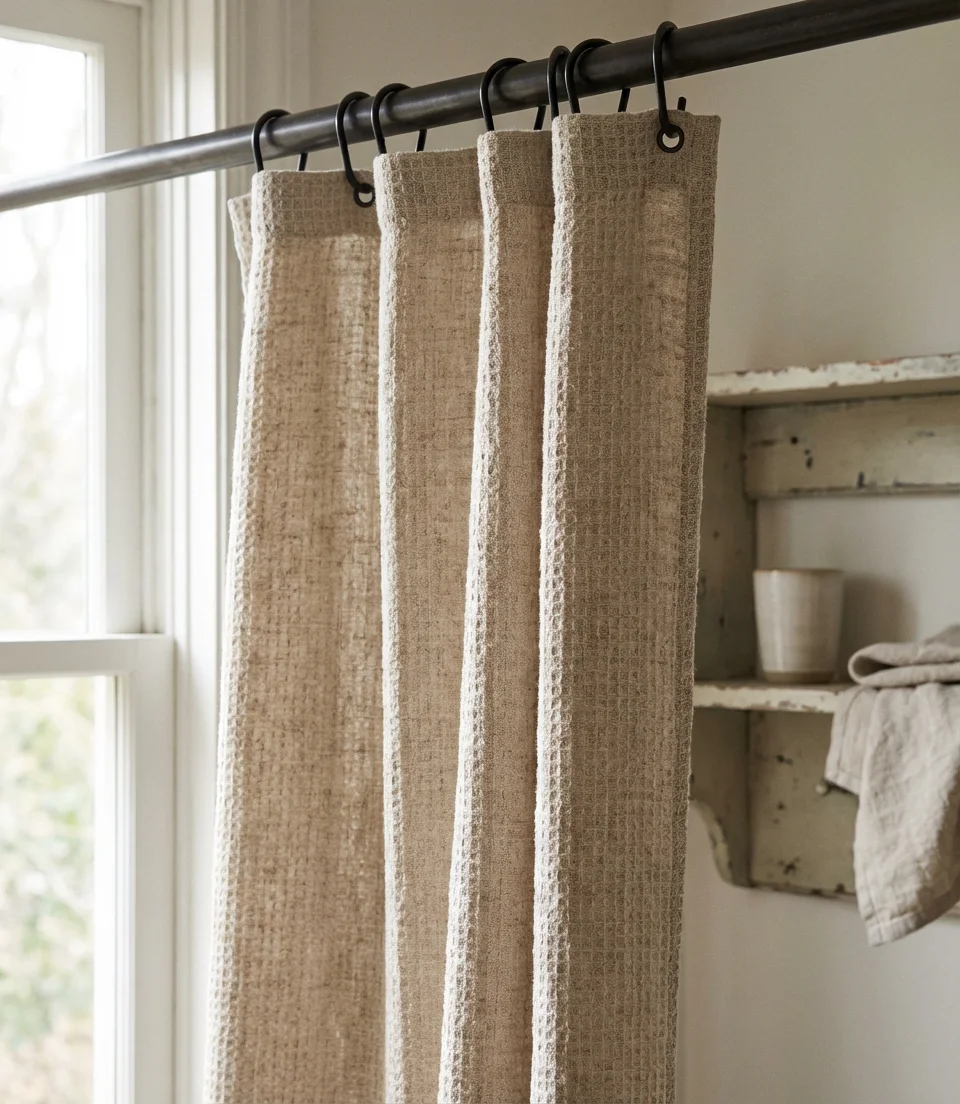
Remember, not all linen curtains offer the same level of moisture resistance. Look for options with a sewn-in liner or purchase a quality PEVA liner to pair with the decorative curtain. Hanging the curtain rod at ceiling height—or as close to it as possible—makes even a modest bathroom feel dramatically taller and more spacious. A curtain rod is one of those low-cost, high-impact changes that designers consistently recommend as the first upgrade in any bathroom refresh.
8. Warm Wood Open Shelving Above the Toilet
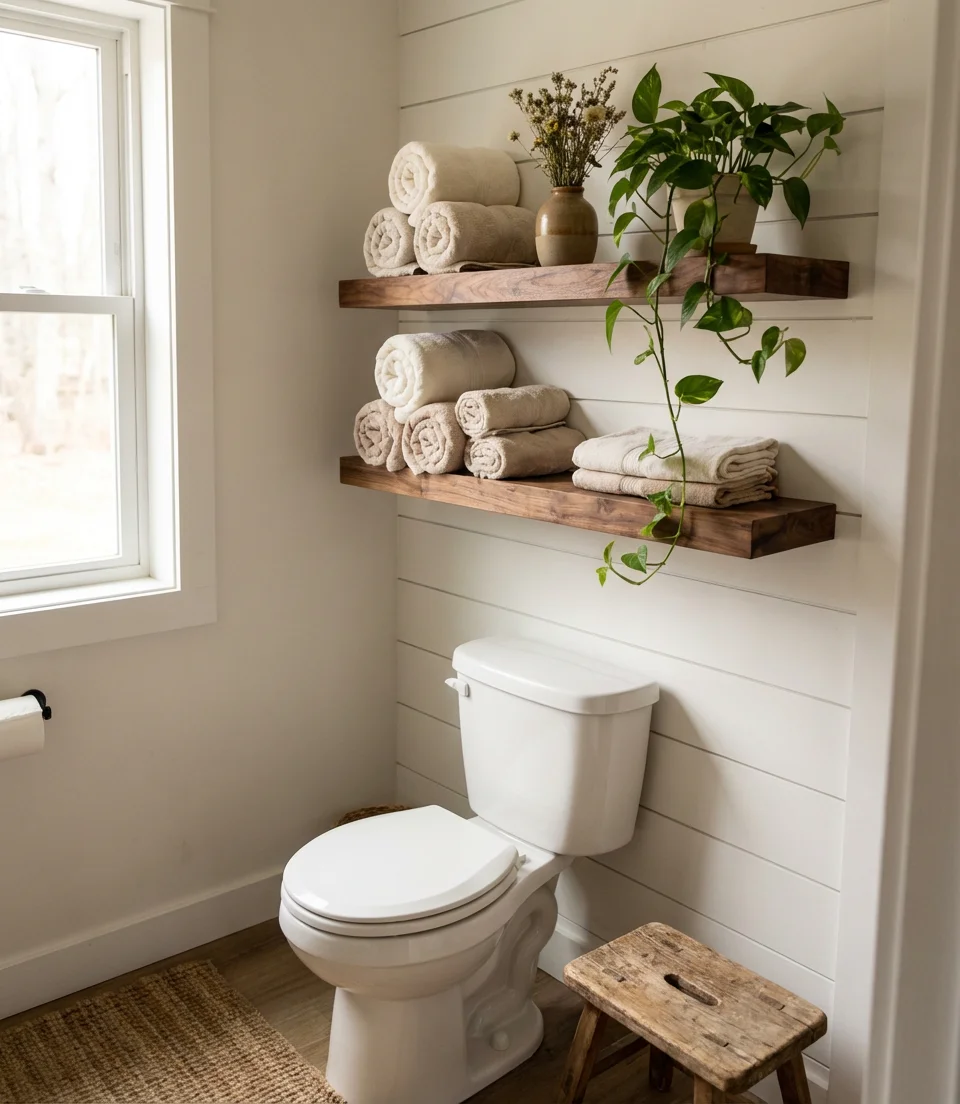
Open wood shelving above the toilet is one of the most beloved decor ideas in the modern farmhouse playbook—and it keeps showing up in 2026 refreshes for good reason. A set of floating walnut or white oak shelves stacked vertically gives you storage, display space, and genuine warmth all at once. The key is keeping what you display intentional: rolled linen towels, a few ceramic vessels, a trailing plant, and perhaps one small framed print. Decor that tells a story rather than just filling space is what separates a Pinterest-worthy bathroom from a cluttered one.
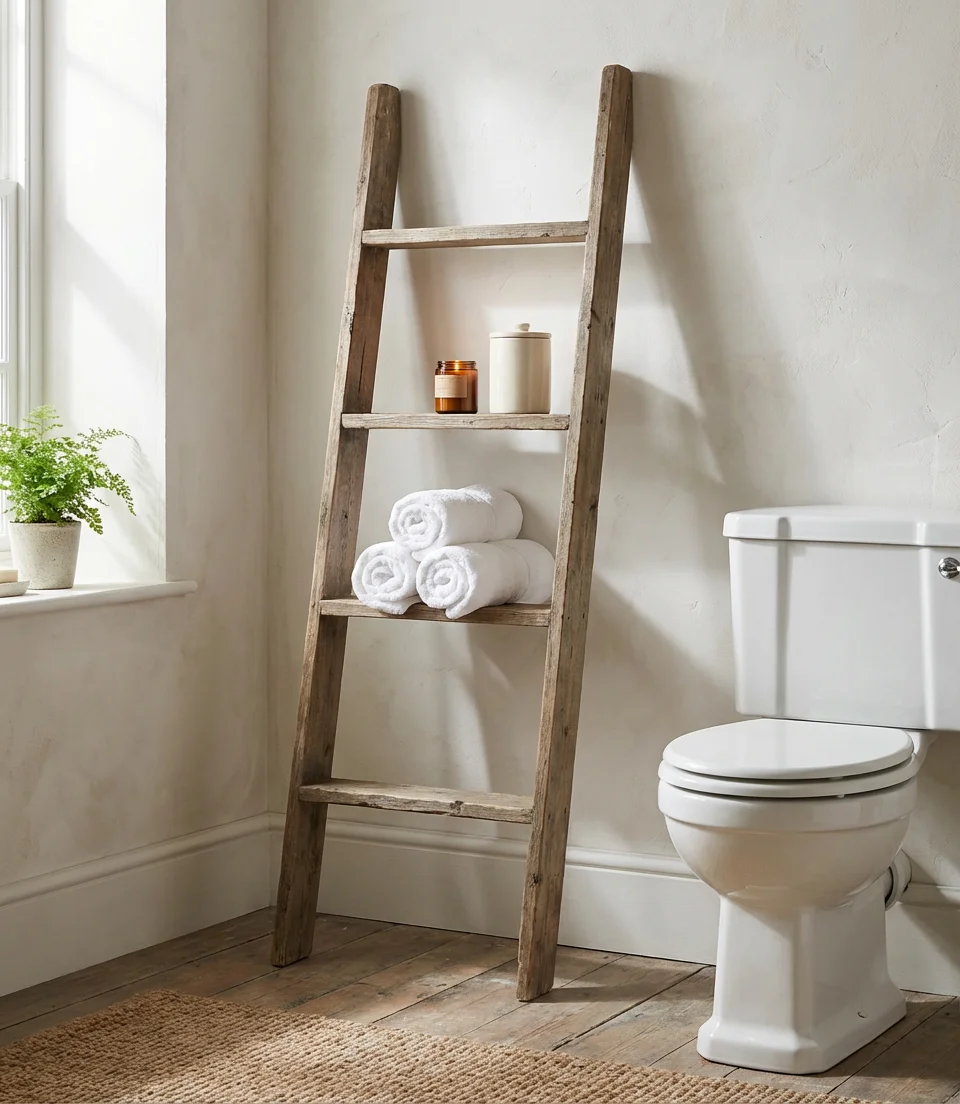
The shelving is a genuinely budget-friendly project for most homeowners. Two floating shelves in a natural wood finish, installed with basic hardware, typically cost between $80 and $200 depending on material and size. If you’re renting and can’t mount shelves, a freestanding ladder shelf offers the same visual effect without any wall commitment. A reader who lives in a 1940s farmhouse in rural Ohio mentioned she swapped her over-toilet etagere for two simple walnut floaters and said it “completely changed how the room ‘felt’—more intentional, less furniture-store generic.”
9. Arched Mirror with Antique Finish

The arched mirror has become a signature of the evolved farmhouse bathroom, and in 2026 it’s not going anywhere. What’s changed is the finish: antique brass, oxidized bronze, and weathered iron frames are replacing the bright polished gold that dominated earlier in the decade. A tall arched mirror with a subtle patina reads as genuinely old rather than decoratively new, which is exactly the quality that makes farmhouse design ideas feel authentic rather than theme-y. Propped against the wall or mounted above a painted vanity, it’s an instant room-changer.
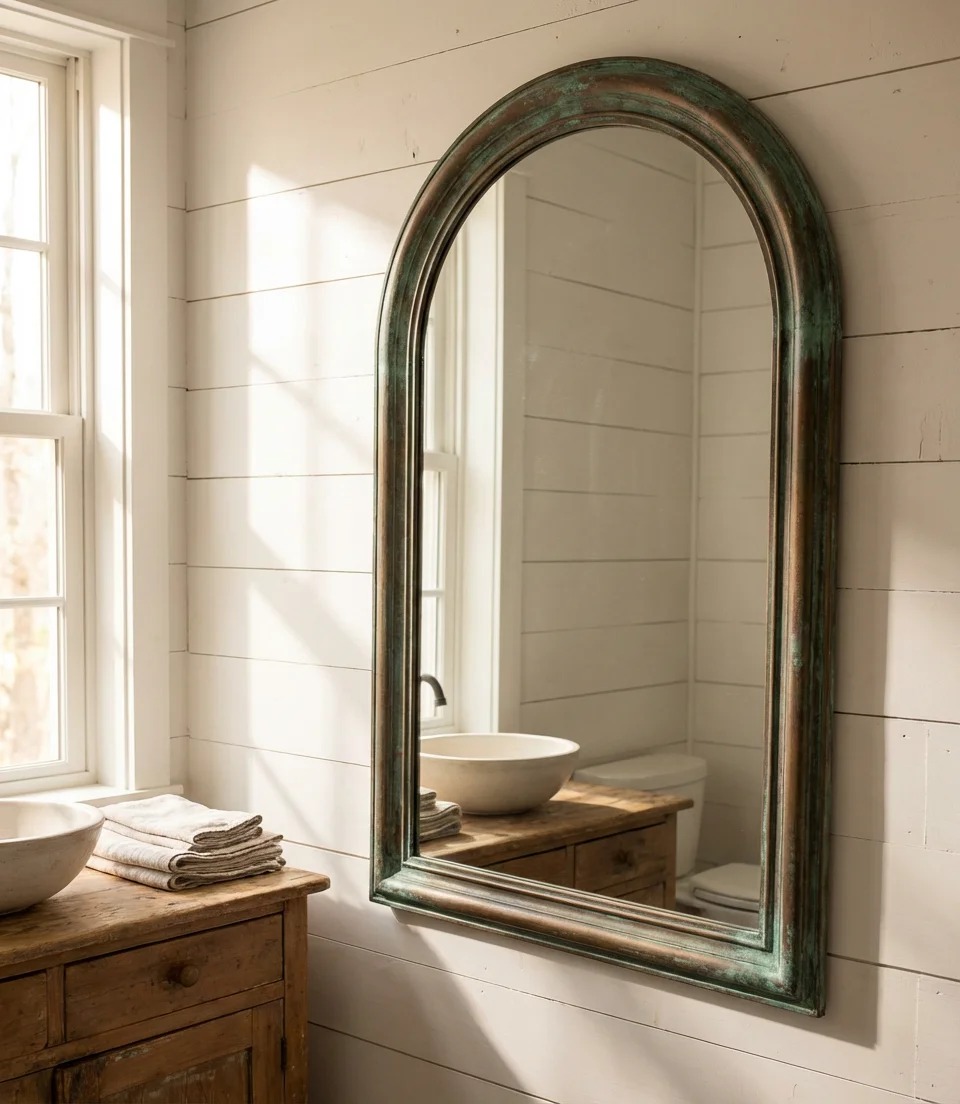
In terms of placement, an arched mirror works hardest when it’s scaled generously—don’t be afraid to go large. A mirror that’s 30–36 inches wide and 48–60 inches tall will feel proportional in most single-vanity bathrooms and will reflect enough light to meaningfully brighten the space. Sourcing through vintage markets, Facebook Marketplace, or Chairish often yields better quality and more intriguing patinas than new reproductions, usually at a comparable or lower price point. Authenticity in the details is what elevates a room from “farmhouse inspired” to genuinely personal.
10. Dark Accent Wall Behind the Vanity
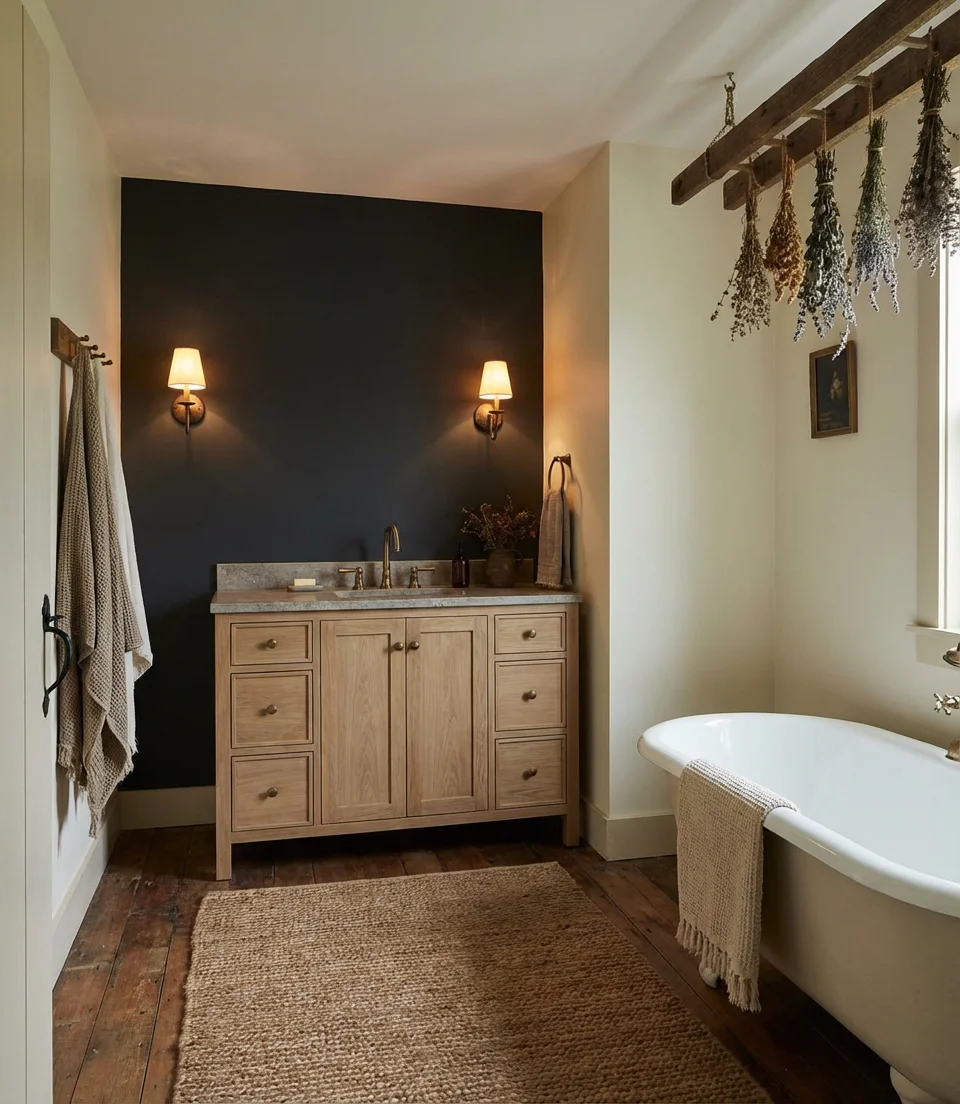
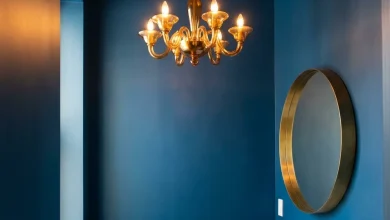
Dark accent walls in bathrooms are one of the more confident design moves of 2026—and behind the vanity is exactly where the contrast lands with the most impact. Deep charcoal, navy, rich espresso, and even near-black forest green are all working beautifully in this position, especially when the rest of the room stays light and airy. Paint colors in muted, complex tones, such as Benjamin Moore’s Wrought Iron or Sherwin-Williams Iron Ore, feel moody without becoming oppressive. It’s a low-commitment way to introduce drama into a space that often defaults to safe.
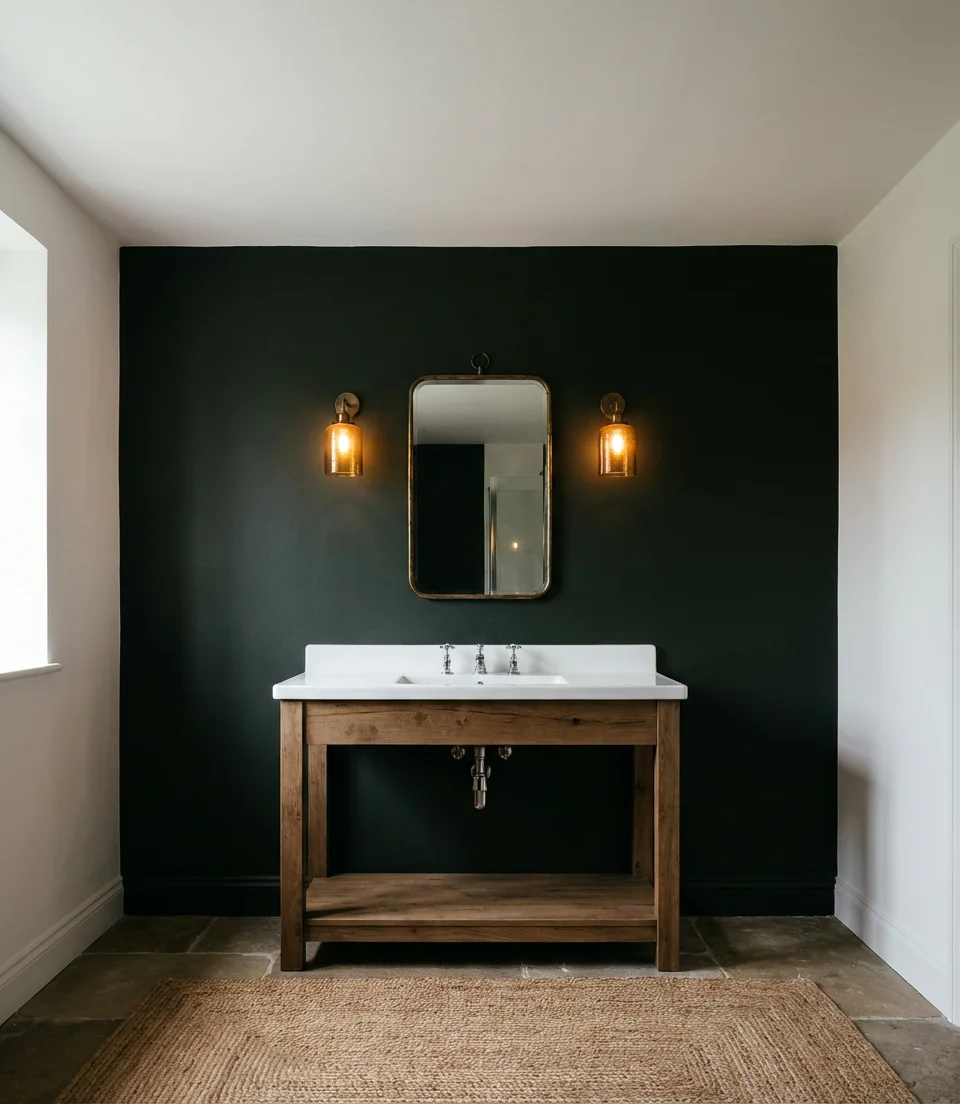
Expert-level tip: the wall color reads very differently depending on the undertone of your lighting. Warm incandescent light will pull out the brown or amber in a dark hue, making it feel cozy and rich. Cool LED light will bring out the blue or gray, making the same color feel sharper and more contemporary. Test your paint sample under the actual lighting conditions in your bathroom at different times of day before committing—what looks perfect at noon in natural light can feel entirely different at 7pm under vanity bulbs.
11. Terracotta and Cream Tile Combo
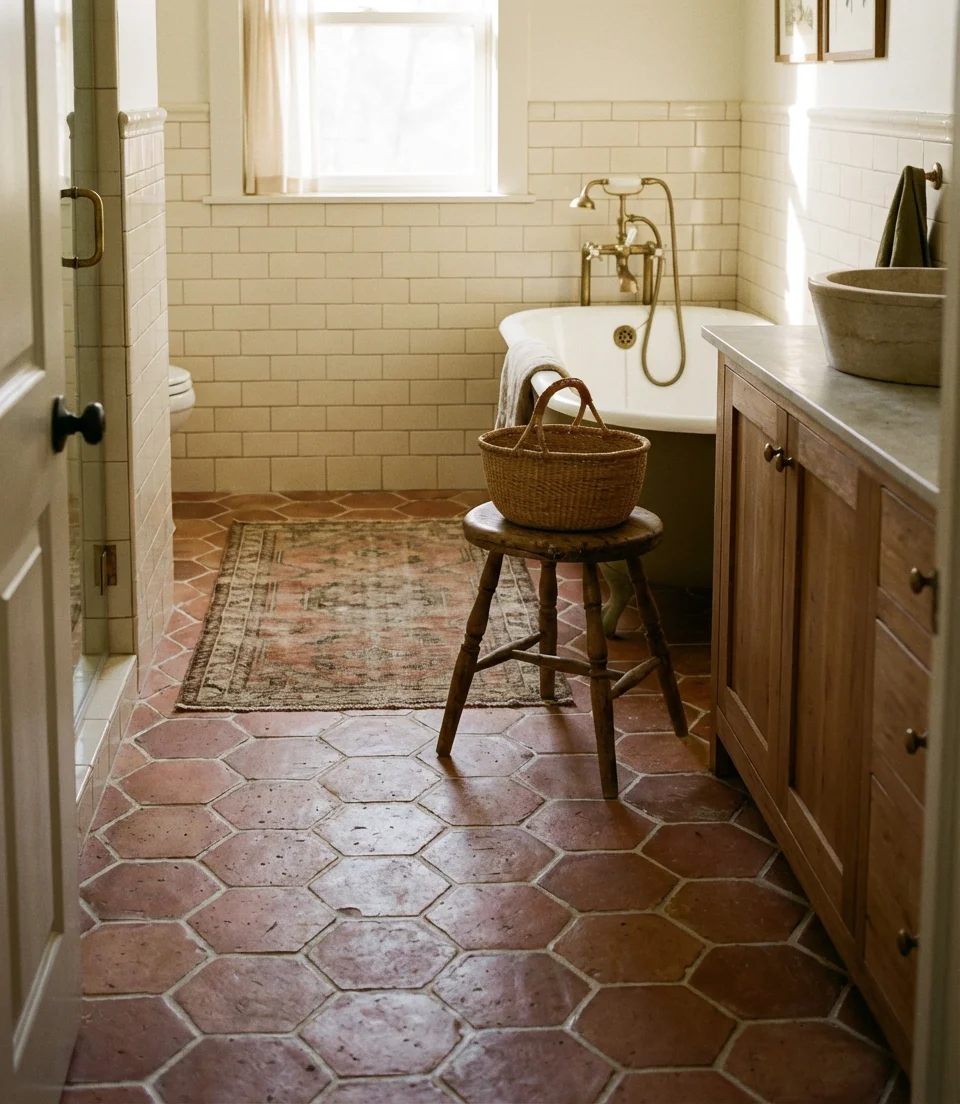
The terracotta tile revival is real, and in 2026 it’s most compelling when mixed with creamy, warm-white companions in a tile ideas scheme that feels genuinely Mediterranean-farmhouse. Whether you’re using terracotta on the floor and cream on the walls or mixing the two in a half-and-half wainscot treatment, this palette is inherently warm and grounding. Colors in the clay and rust family photograph beautifully in natural light and age gracefully—they only look better as the finish softens slightly over time. It’s a look that feels both fresh for 2026 and completely timeless.
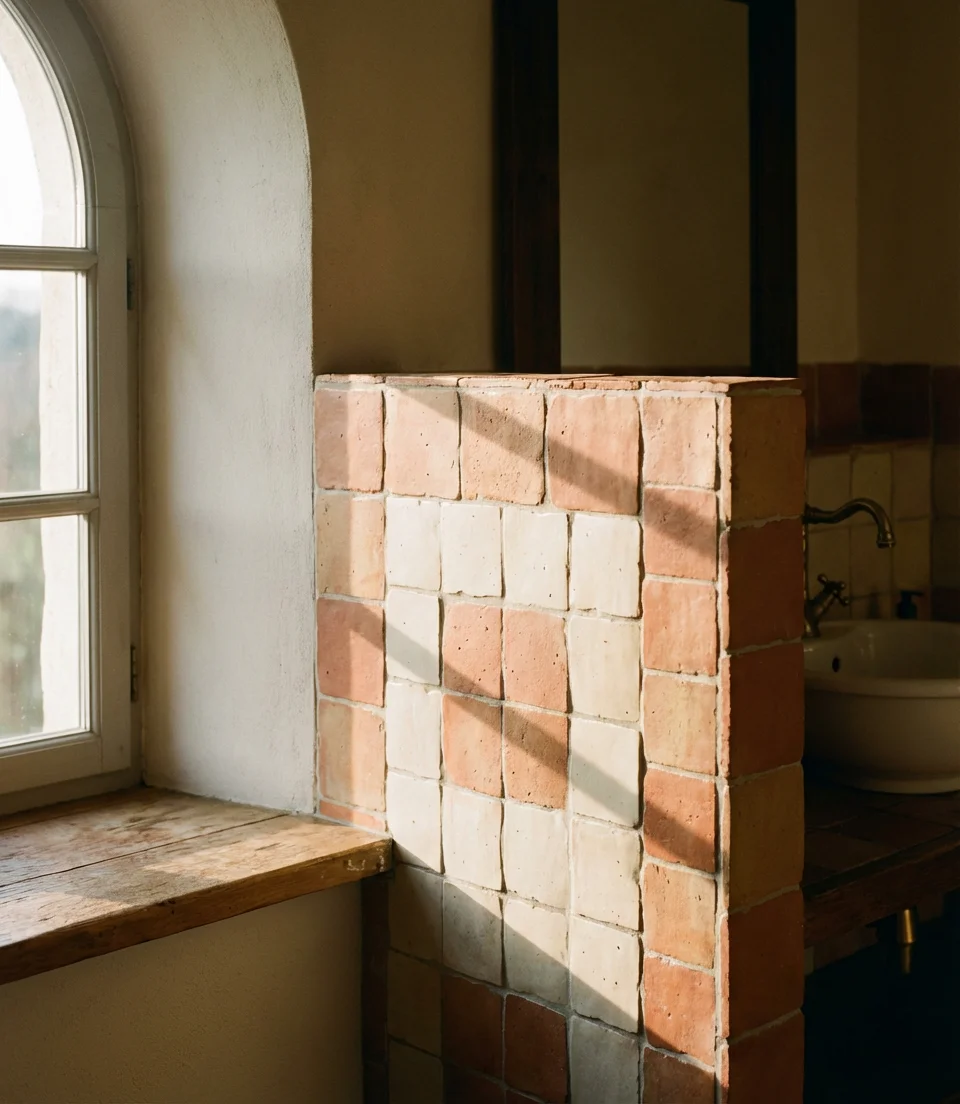
This combination works best in bathrooms that receive good natural light—south- or west-facing windows will amplify the warmth of the terracotta beautifully. In north-facing or basement bathrooms without windows, the same palette can skew dark and muddy, so consider using terracotta as an accent rather than the dominant surface. Unsealed terracotta is particularly porous and requires annual sealing to prevent staining in wet areas—a step that many first-time buyers of terracotta tile overlook until the first oil or product spill leaves a mark.
12. Vintage-Style Faucets in Aged Brass
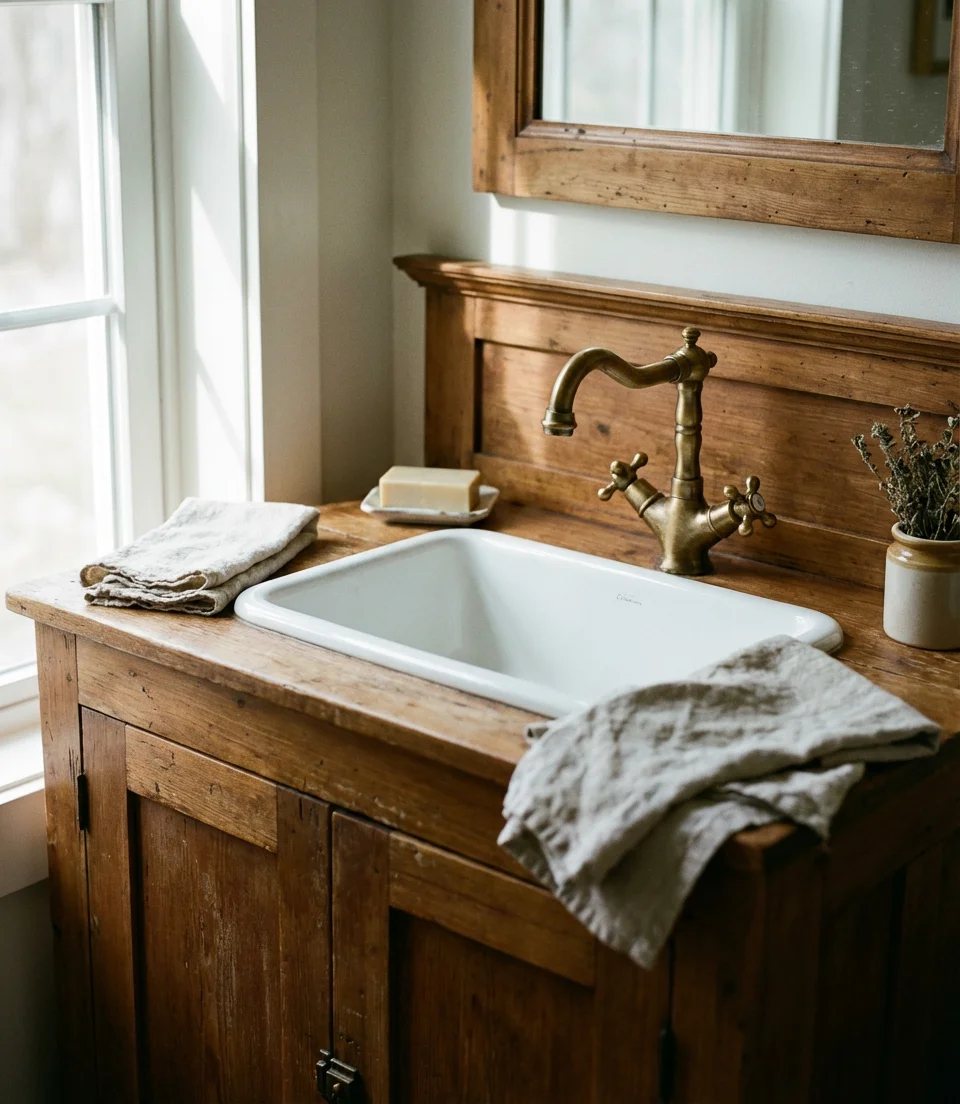
Hardware choices are the punctuation of a bathroom remodel—they set the tone without saying a word. In 2026, aged brass and unlacquered brass faucets are carrying the farmhouse aesthetic forward with a warmth that polished chrome simply can’t replicate. Vintage cross-handle or lever designs in this finish look equally at home on a porcelain vessel sink and a sleek undermount, which is exactly the kind of versatility that makes them so popular with designers working on real homes rather than showrooms. The warm metal ties directly to lighting choices too—they echo beautifully next to amber-toned bulbs.
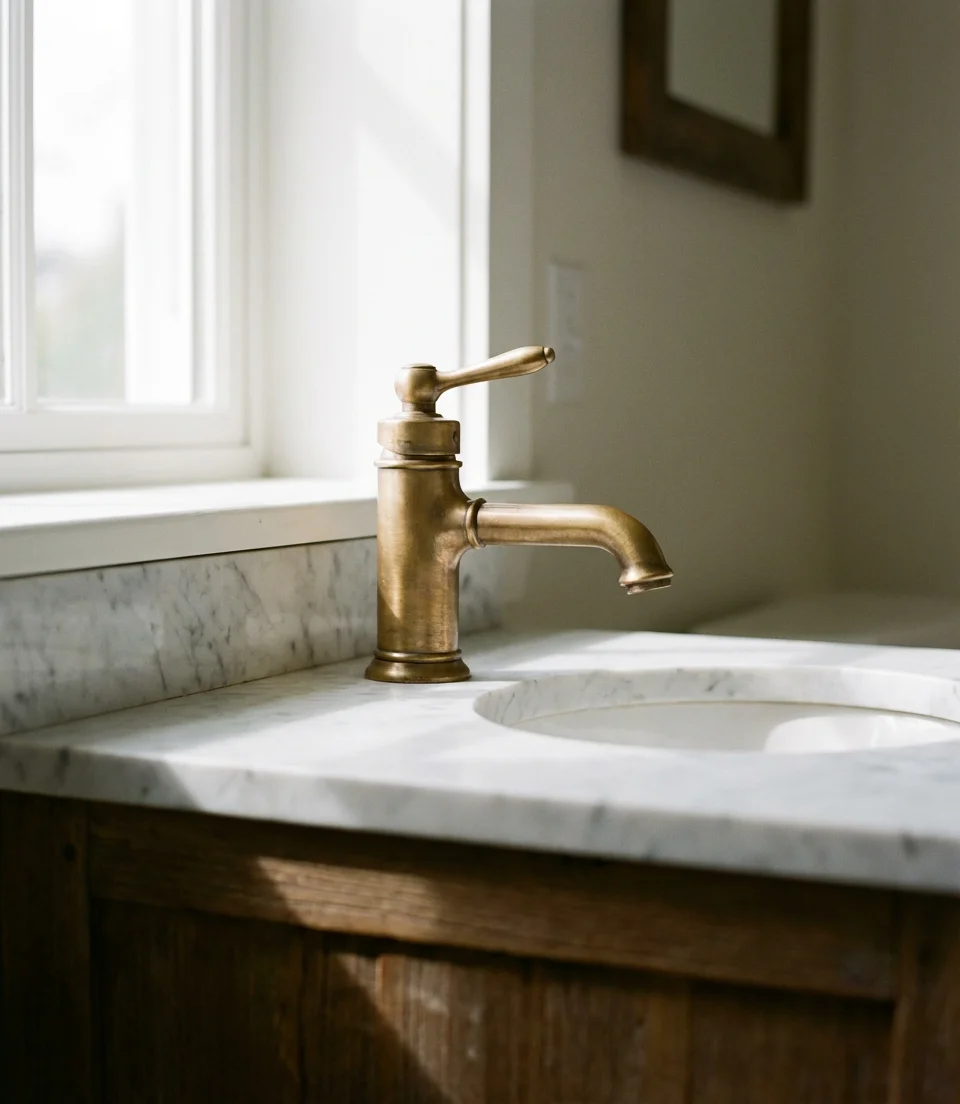
One important distinction: unlacquered brass develops a natural patina over time, deepening in color and developing slight variations. Many homeowners love this quality—it’s the definition of “living finish”—but it requires occasional polishing if you prefer a more consistent look. Lacquered brass stays brighter longer but can chip or peel in high-use areas. For a guest bath or powder room that doesn’t see daily heavy use, unlacquered is a beautiful choice. For a primary bath, either option works; just be aware of the type of maintenance you will need to commit to.
13. Wainscoting in Soft Sage Green
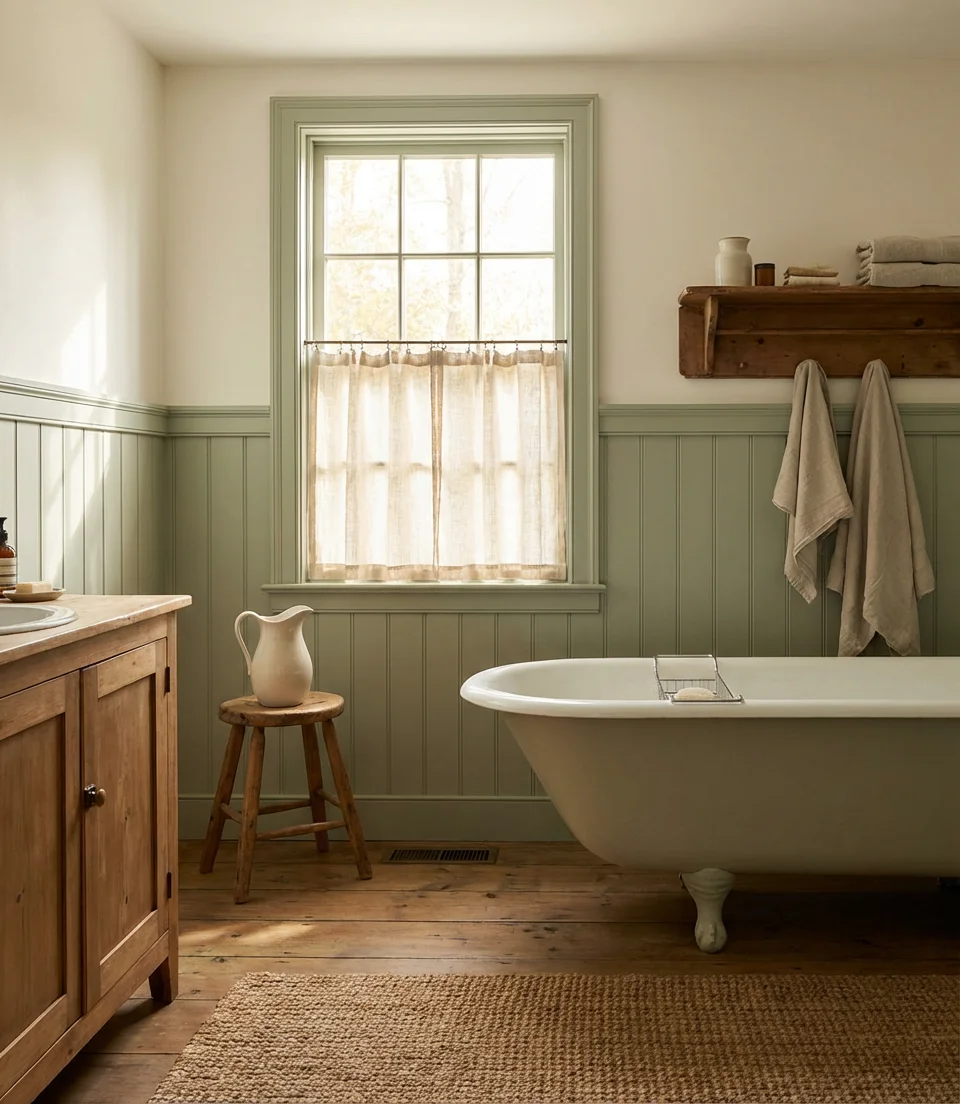
Sage green wainscoting is one of the gentlest, most livable updates you can make to a farmhouse bathroom in 2026. At roughly chair-rail height (32–36 inches), painted board-and-batten or traditional raised-panel wainscoting in a soft, gray-leaning sage creates a foundation that’s simultaneously earthy and refined. It works with warm whites above, with natural wood accents, and with almost every metal finish currently trending. This is the kind of color that Apartment Therapy readers save to boards labeled “forever home”—and for good reason. You can’t go wrong with it.

This approach is particularly well-suited to older American homes—craftsman bungalows, colonial revivals, and farmhouses built before 1960 — where wainscoting feels architecturally appropriate rather than retrofitted. In newer construction, board-and-batten is an easy way to add the same quality of detail without the complexity of traditional raised-panel millwork. A coat of Benjamin Moore’s Saybrook Sage or Farrow & Ball’s Mizzle is a trusted starting point if you’re unsure where to land in the green-sage spectrum. Both have the right balance of gray and green to read sophisticated rather than minty.
14. Stone-Look Porcelain Shower Tile
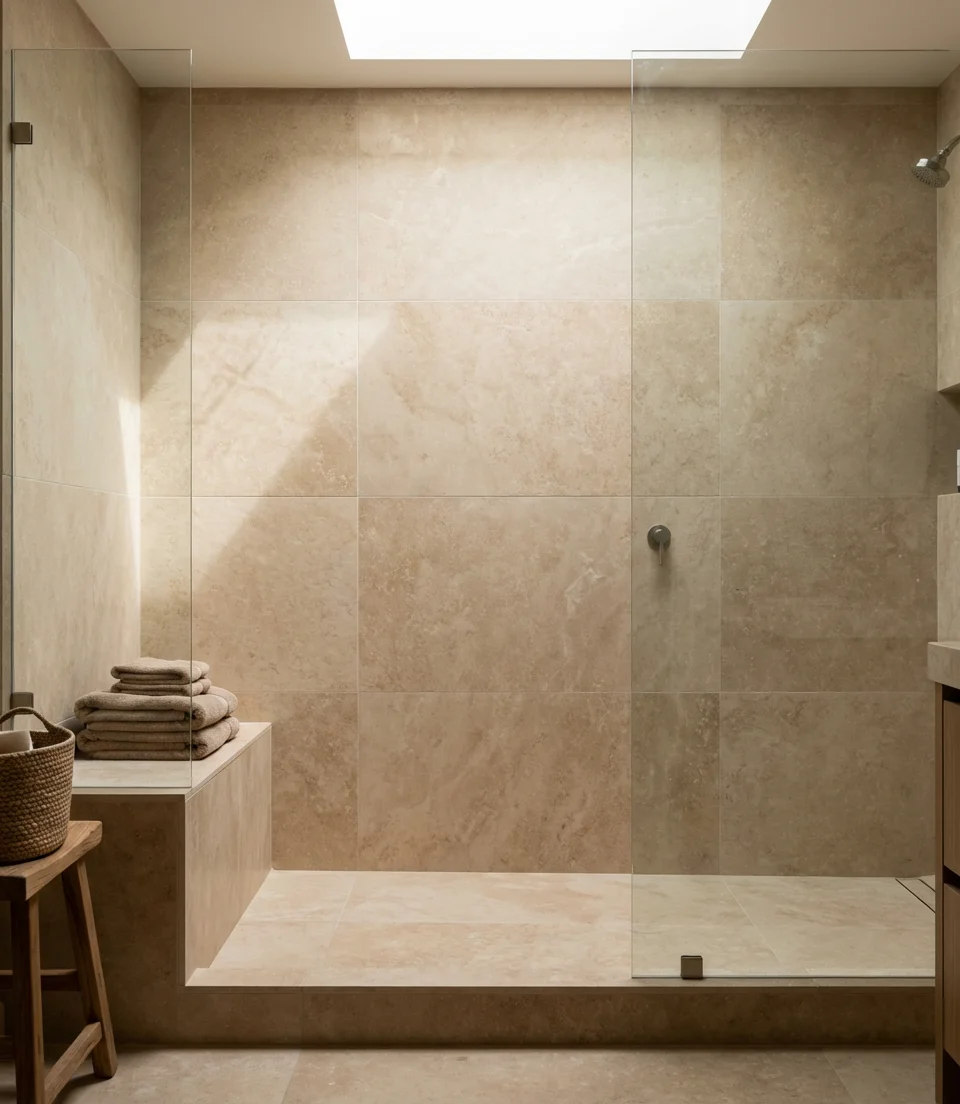
In 2026, shower tile that emulates natural stone has achieved a level of realism that even designers find striking. Large-format porcelain panels in marble, travertine, and limestone bring all the drama of natural stone with none of the sealing, maintenance, or cost. In a modern farmhouse bathroom, a travertine-look porcelain paired with warm plaster-toned walls creates a space that feels genuinely ancient—like it’s been there for a hundred years rather than two. The idea’s design principle here is simple: lean into materials that tell a story of age and place.
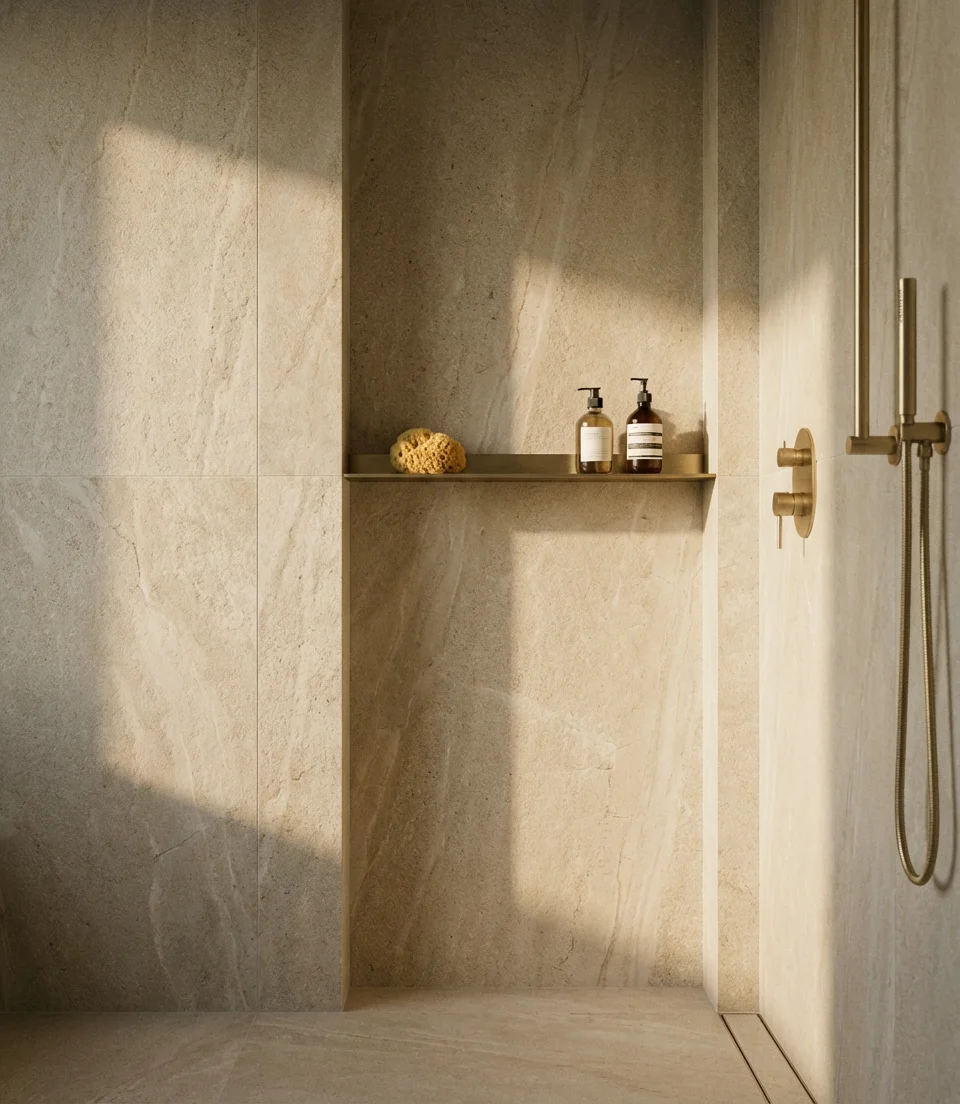
From a practical standpoint, porcelain is one of the most durable and low-maintenance surfaces you can put in a shower. It doesn’t absorb water, resists staining, and holds up to daily cleaning far better than natural stone. For large-format slabs (24×48 or larger), hiring an experienced tile setter is essential—the substrate prep and leveling required for those sizes is significantly more demanding than standard tile installation. Budget roughly $15–$25 per square foot installed for quality large-format porcelain in most U.S. markets.
15. Plaster-Effect Paint for Organic Walls

Few finishes bring the kind of warmth and depth that organic plaster-effect paint delivers, and in 2026 it’s moving from boutique hotel bathrooms into American homes at a meaningful pace. Applied with a trowel or textured roller in warm off-whites, dusty taupes, or soft terracotta, it creates walls that look genuinely hand-finished—full of subtle variation and dimension that flat paint simply can’t approximate. Inspiration for this technique comes directly from Italian and Spanish farmhouses, where plastered walls are a centuries-old standard rather than a decorating trend.
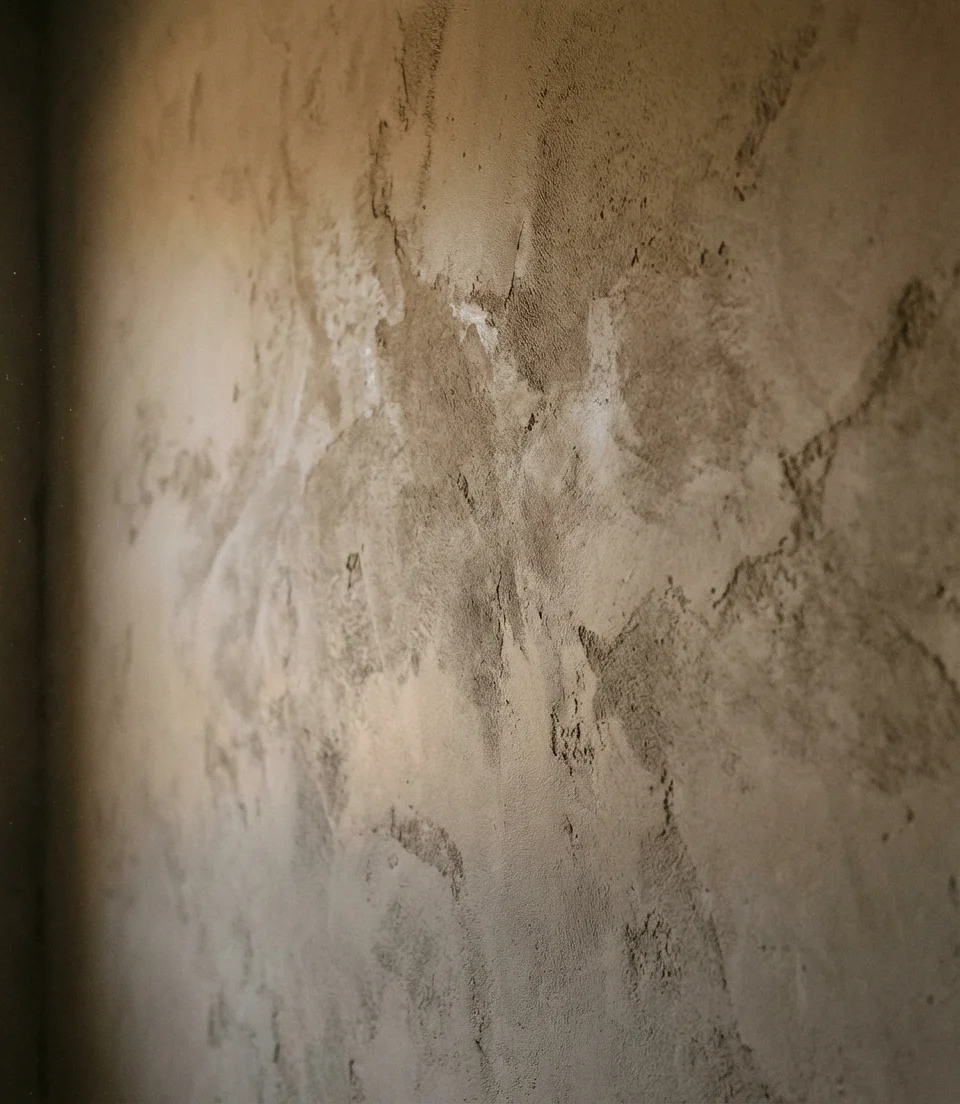
This is a DIY-friendly technique with a learning curve—practice on a board or in a closet before committing to a full bathroom wall. Brands like Portola Paints (Roman Clay) and BEHR (Venetian Plaster) offer accessible entry points, with full-wall kits running between $80 and $150 for an average bathroom. The finish is naturally moisture-tolerant but should be sealed with a matte or satin topcoat in a bathroom environment. One coat of Safecoat AquaZar or a similar water-based sealer is usually sufficient to protect it without diminishing that raw, organic quality that makes it so special.
16. Matte Black Shower System with Rain Head
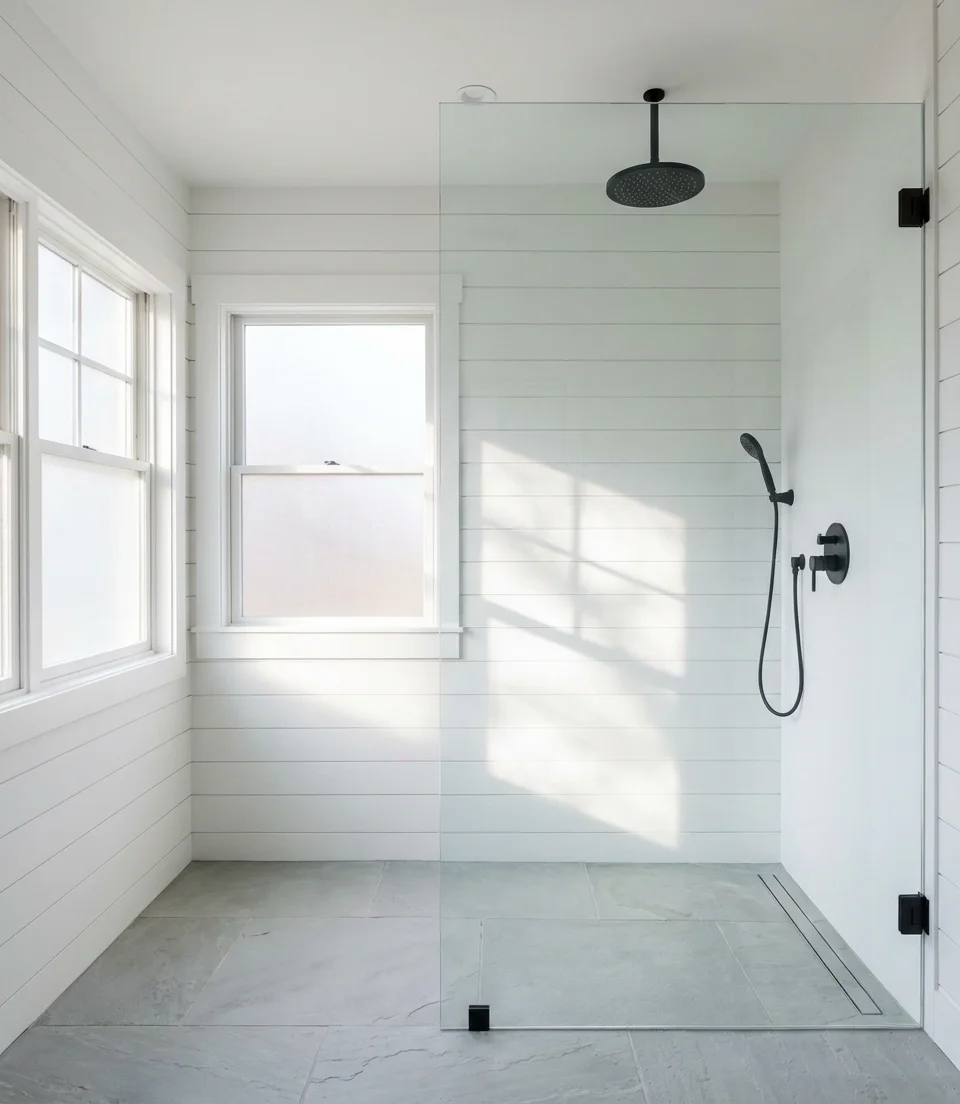
A matte black shower system—rain head, handheld, and wall-mount thermostatic valve—is one of the clearest signals in 2026 that a bathroom is designed, not just decorated. The finish, bold yet not aggressive, anchors the shower in a way that immediately attracts the eye. In a modern farmhouse context, matte black works best against lighter backgrounds: white shiplap, pale limestone tile, or soft plaster walls. The contrast is architectural. Pairing this design with cozy textiles and warm wood tones in the rest of the bathroom keeps the overall feeling from tipping too industrial.
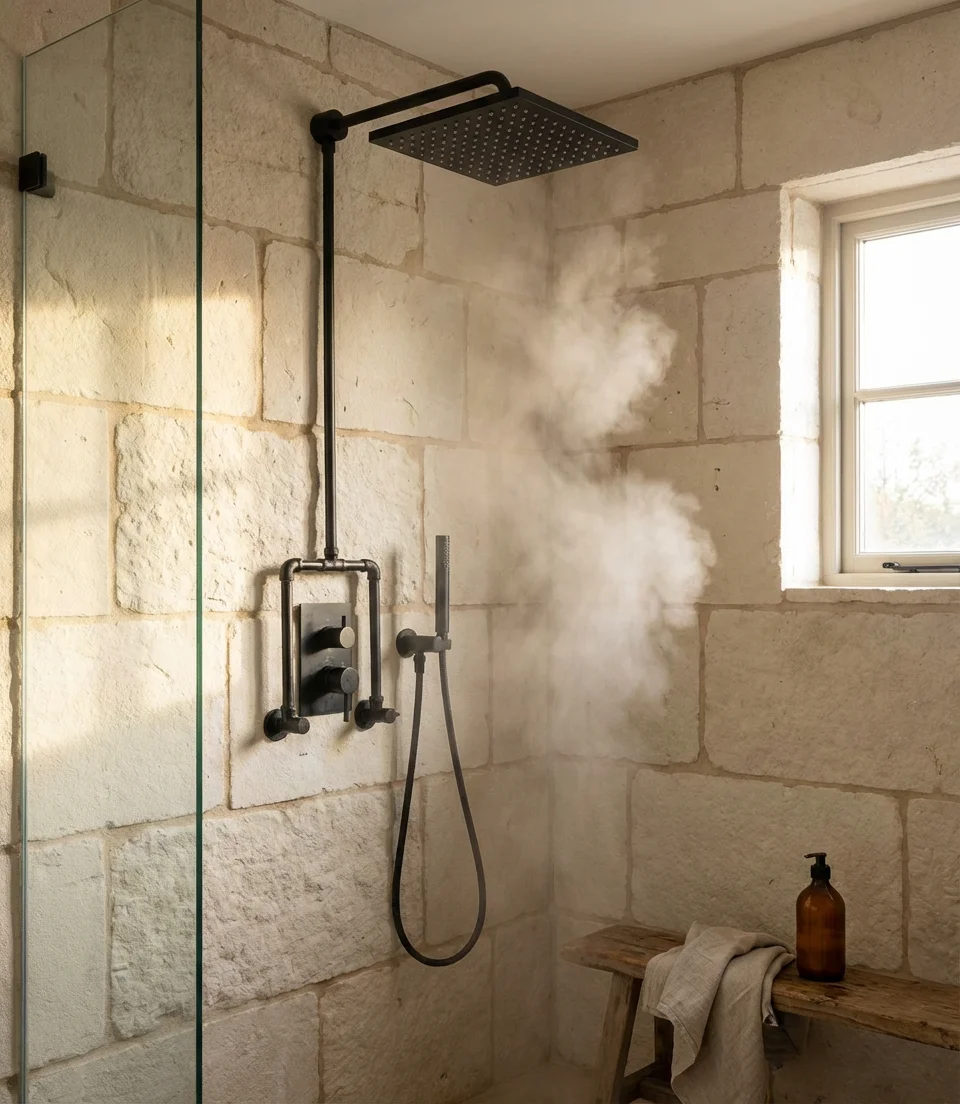
American homeowners searching for this setup on Pinterest often underestimate the plumbing commitment involved. A full thermostatic shower system requires a specific valve type that your existing plumbing may or may not support—and in older homes, the pipe size may need upgrading to maintain adequate pressure for a rain head. Getting a plumber involved early in the planning process, before any tile is set, is strongly recommended. Systems from Kohler, Hansgrohe, and DXV all offer matte black finishes at different price points; expect to spend $800–$2,500 for the fixture package alone, not including installation.
17. Vertical Shiplap for Visual Height
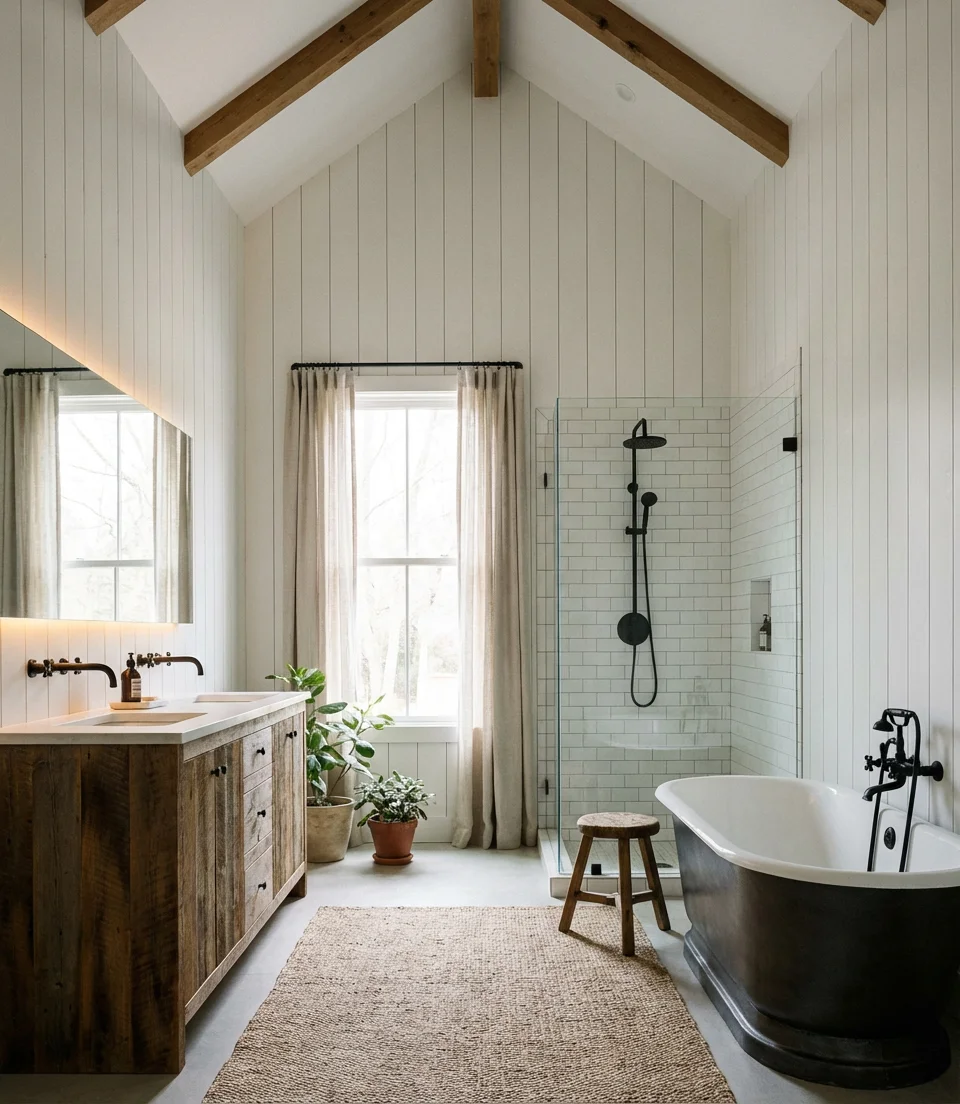
While horizontal shiplap is a classic farmhouse style, vertical installation is gaining popularity in 2026, particularly due to its ability to address a common issue in American bathrooms: low ceilings. Running boards from floor to ceiling in a vertical orientation immediately draws the eye upward and creates an impression of height that no amount of light paint can fully replicate. In a chic modern farmhouse bathroom, vertical shiplap in a warm white or putty tone turns a functional necessity into a genuine design statement. It’s an ideas pivot that pays off proportionally in smaller spaces.
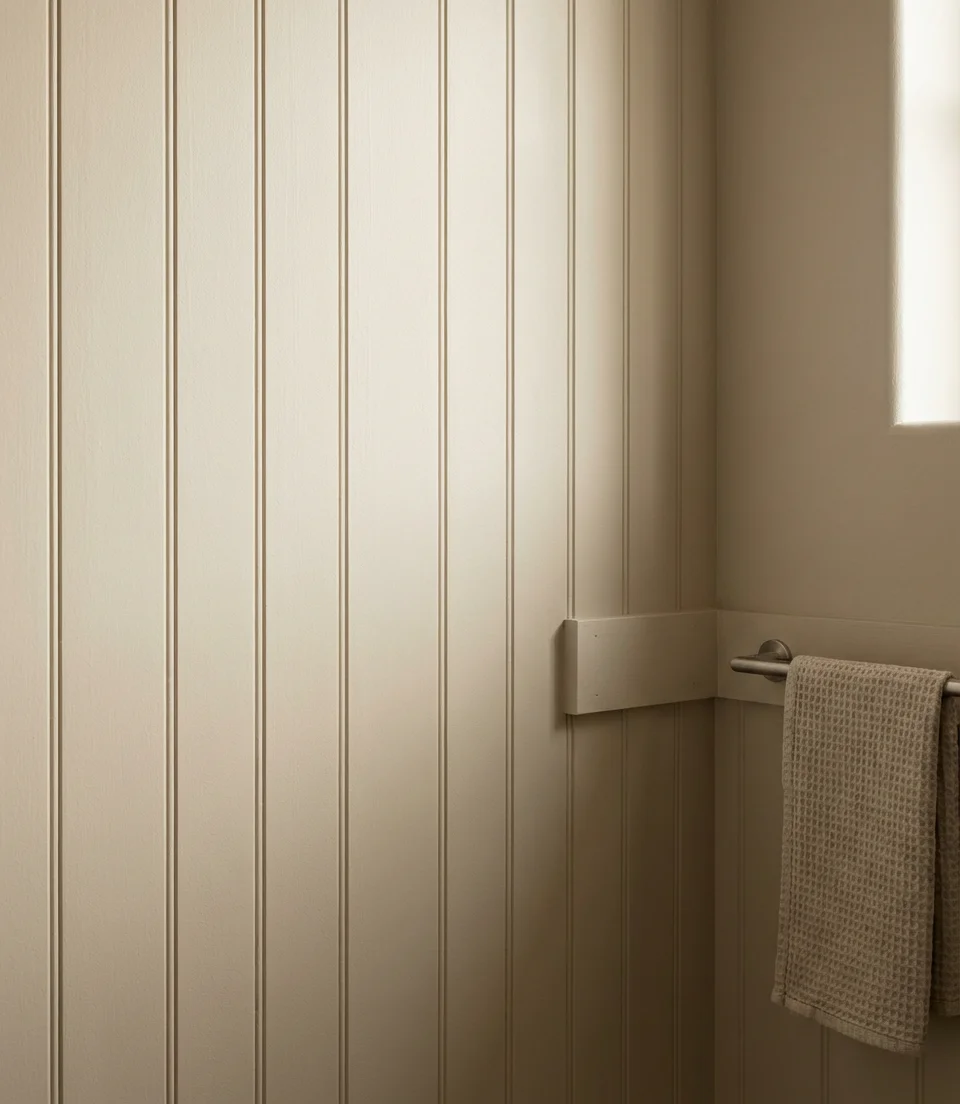
Vertical shiplap is also easier to install cleanly in bathrooms than many people expect, since the boards don’t need to accommodate windows and outlets in the same visual way that horizontal runs do. The most important step is using moisture-resistant MDF or PVC shiplap rather than real wood in a full bathroom—real wood is beautiful, but it will warp and swell in high-humidity environments unless you’re incredibly diligent about ventilation and sealing. PVC boards are virtually indistinguishable from painted wood once they’re on the wall and finished, and they’ll last significantly longer in a wet zone.
18. Double Vanity in Natural White Oak
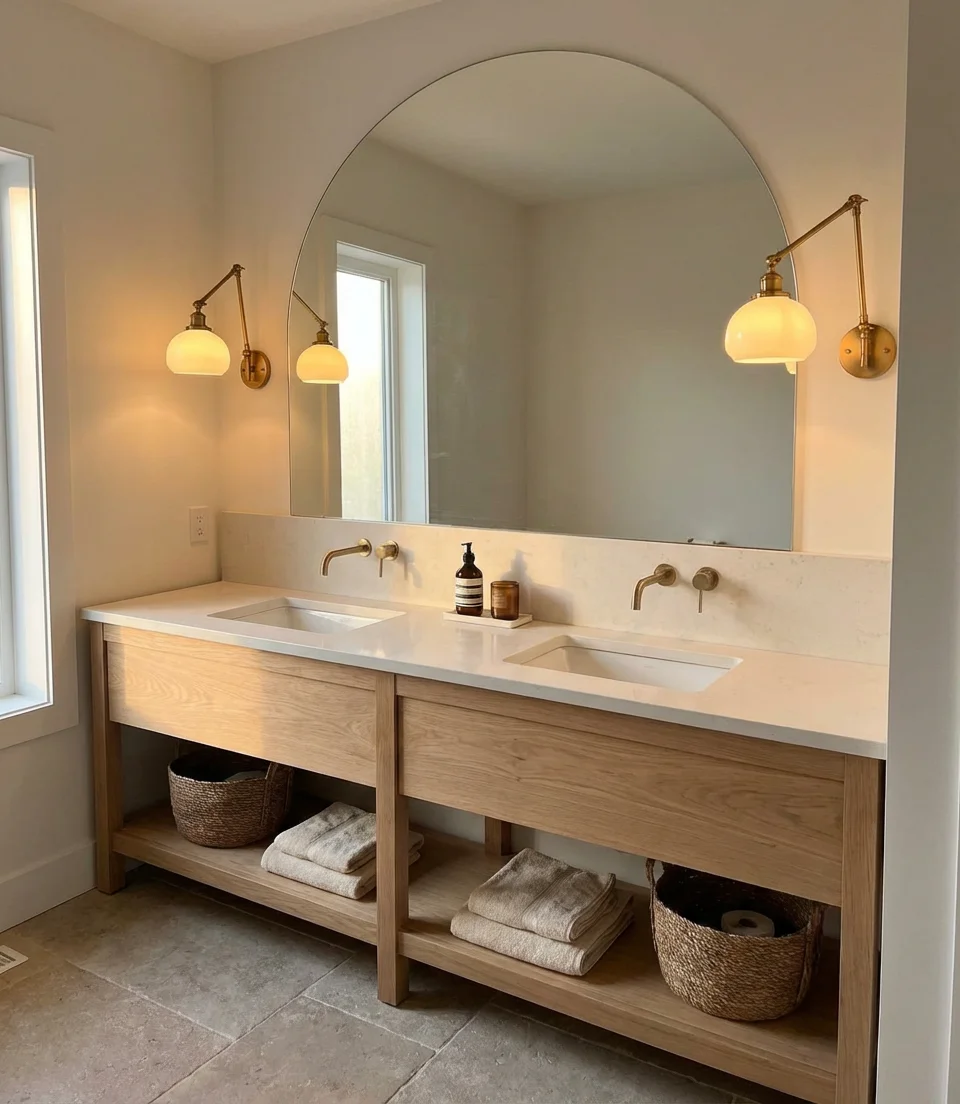
Natural white oak cabinetry in a master bath double vanity is among the most sophisticated moves you can make in a modern farmhouse remodel this year. The wood’s open grain, blonde tone, and subtle variation give it an organic quality that painted cabinetry simply can’t replicate—it looks like furniture, not millwork. Paired with a honed marble or quartz countertop and simple rectangular undermount sinks, a white oak double vanity anchors the space with warmth and intentionality. The finish is the kind of design choice that reads as both trend-forward and deeply classic at the same time.
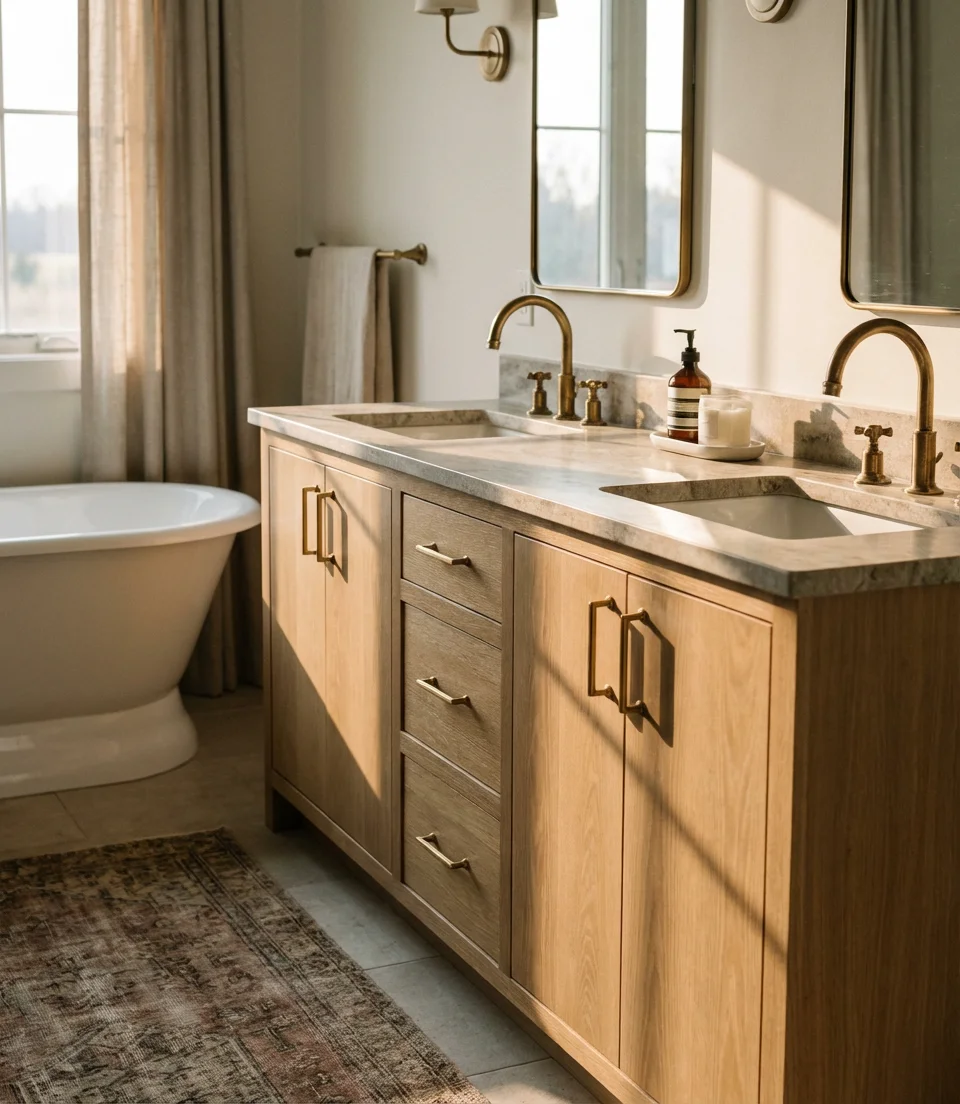
White oak is one of the more durable domestic hardwoods and handles bathroom humidity reasonably well when properly finished with a hard wax oil or water-based polyurethane. Semi-custom and custom white oak vanities are increasingly available through American makers on Etsy and smaller regional cabinet shops, often at prices competitive with big-box options once you account for quality. For a standard 60-inch double vanity in natural white oak from a small-batch maker, expect to pay between $1,800 and $3,500—a meaningful investment that will outlast most other elements of the remodel.
19. Textured Cement Floor Tile
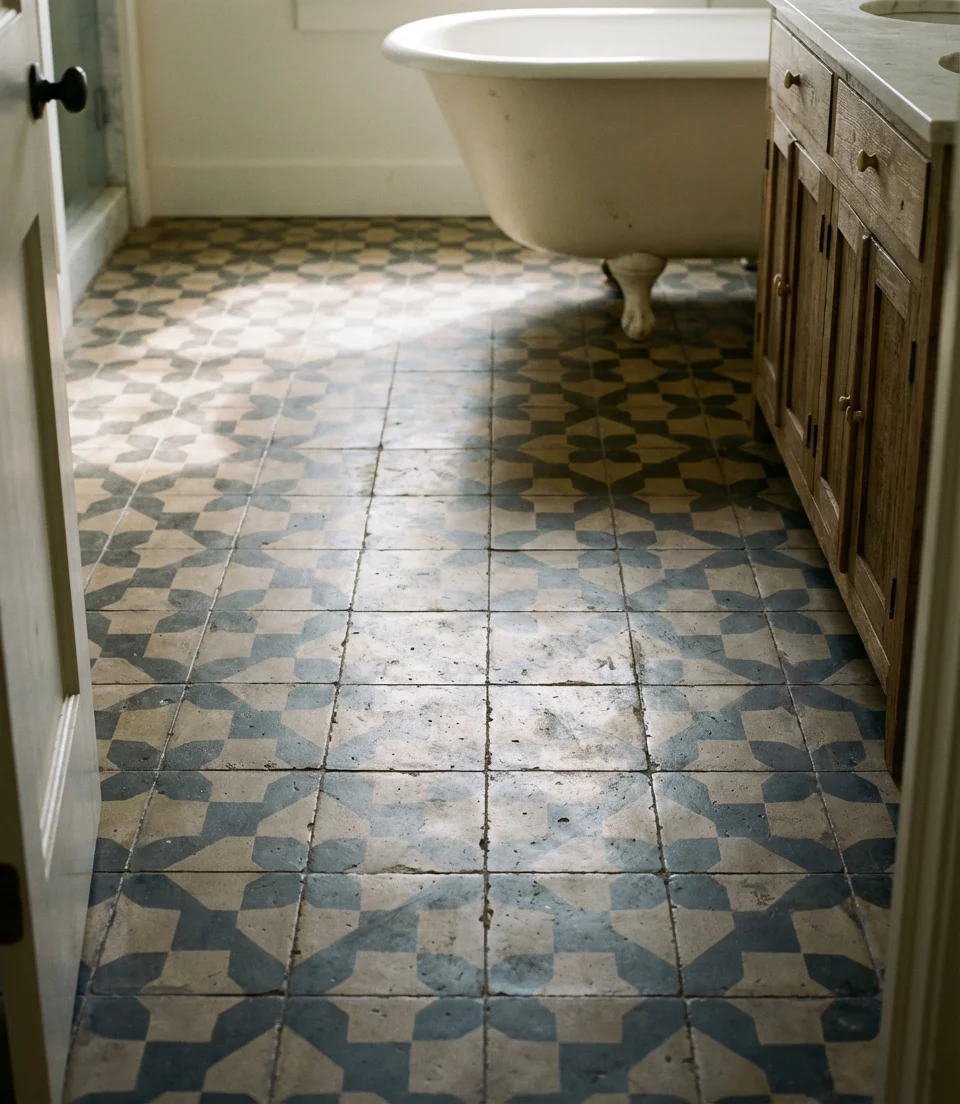
Encaustic cement tile—the kind with handmade, patterned surfaces in muted, complex tones—brings a layer of rustic authenticity to modern farmhouse bathrooms that’s hard to achieve any other way. In 2026, the most compelling patterns are simple geometric repeats in warm charcoal, sand, and dusty blue rather than the busy multicolor versions that dominated earlier. On the floor, a field of textured cement tile creates immediate visual interest and grounds the room in a way that plain porcelain or stone simply doesn’t. The slight imperfections in each tile are a feature, not a flaw—they’re what make the floor feel real.
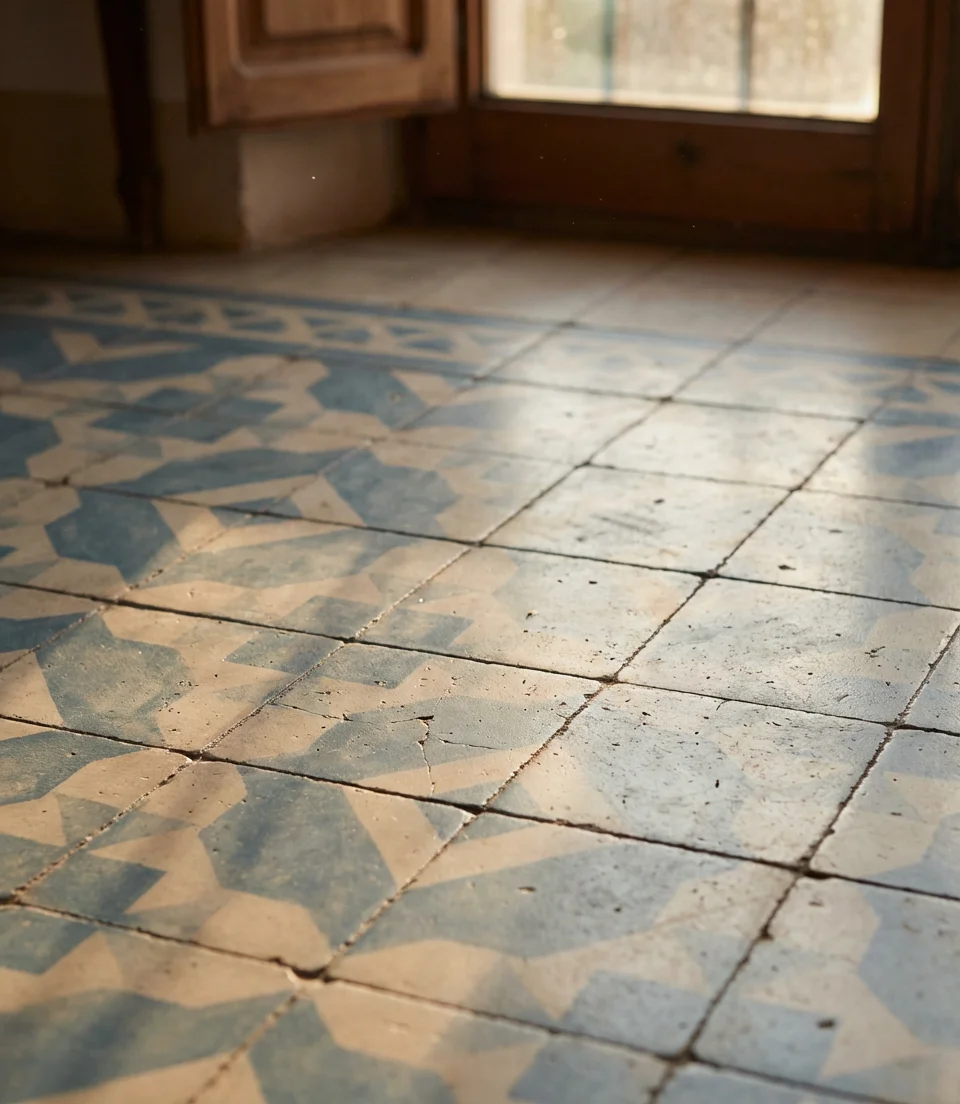
Cement tile requires more care than porcelain—it must be sealed before installation and resealed annually in a bathroom environment. It’s also softer than ceramic or porcelain, which means it can scratch if heavy objects are dropped on it repeatedly. That said, for a bathroom you’re renovating with longevity and character in mind, it’s one of the most rewarding material choices available. Clé, Zia Tile, and Granada Tile are among the most respected American sources; expect to pay between $20 and $45 per square foot for quality cement tile, with professional installation adding another $10 to $15.
20. Indoor Plants and Greenery Styling
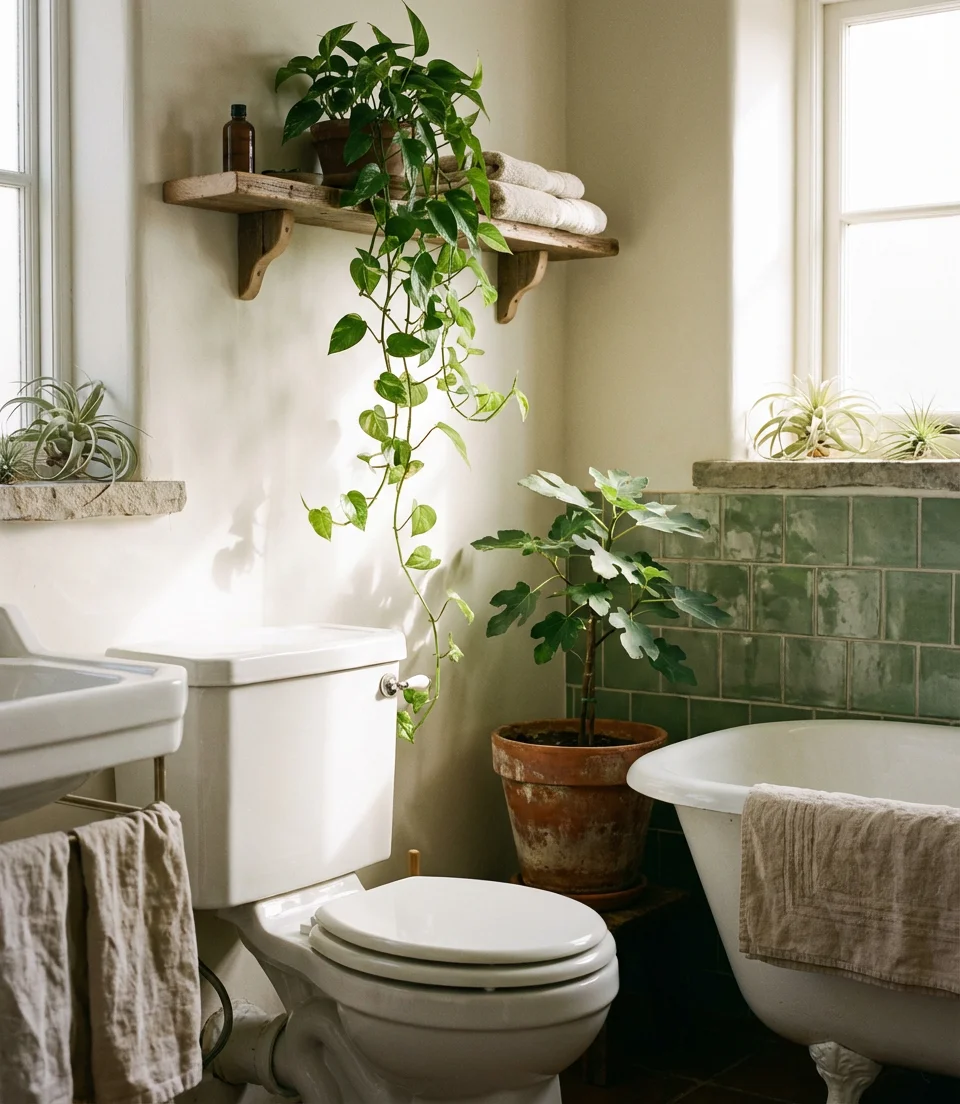
Living plants may be the single most effective and affordable element you can add to a modern farmhouse bathroom—and in 2026, the approach has become much more considered than just dropping a pothos on a shelf. The trend is toward intentional placement: a trailing plant above the toilet, a small fig or eucalyptus on the floor beside the tub, a cluster of air plants arranged on the windowsill. Green in the form of actual plants brings a liveliness that no decor item can replicate, and it ties the interior back to the landscape outside in a way that feels genuinely connected rather than decorative.

For bathrooms with limited natural light, cast iron plants, ZZ plants (Zamioculcas zamiifolia), and peace lilies are proven performers that genuinely thrive in low-light, high-humidity conditions. Bathrooms with good window access can support more dramatic specimens—a fiddle-leaf fig in a terracotta pot beside a freestanding tub is a deeply satisfying combination that shows up in high-end farmhouse bathroom photography constantly. Keep plant pots in materials that reinforce the farmhouse aesthetic: unglazed terracotta, aged concrete, or woven seagrass baskets work far better than plastic nursery pots or overly decorative ceramic vessels.
21. Exposed Pipe Fixtures for Industrial Farmhouse Style
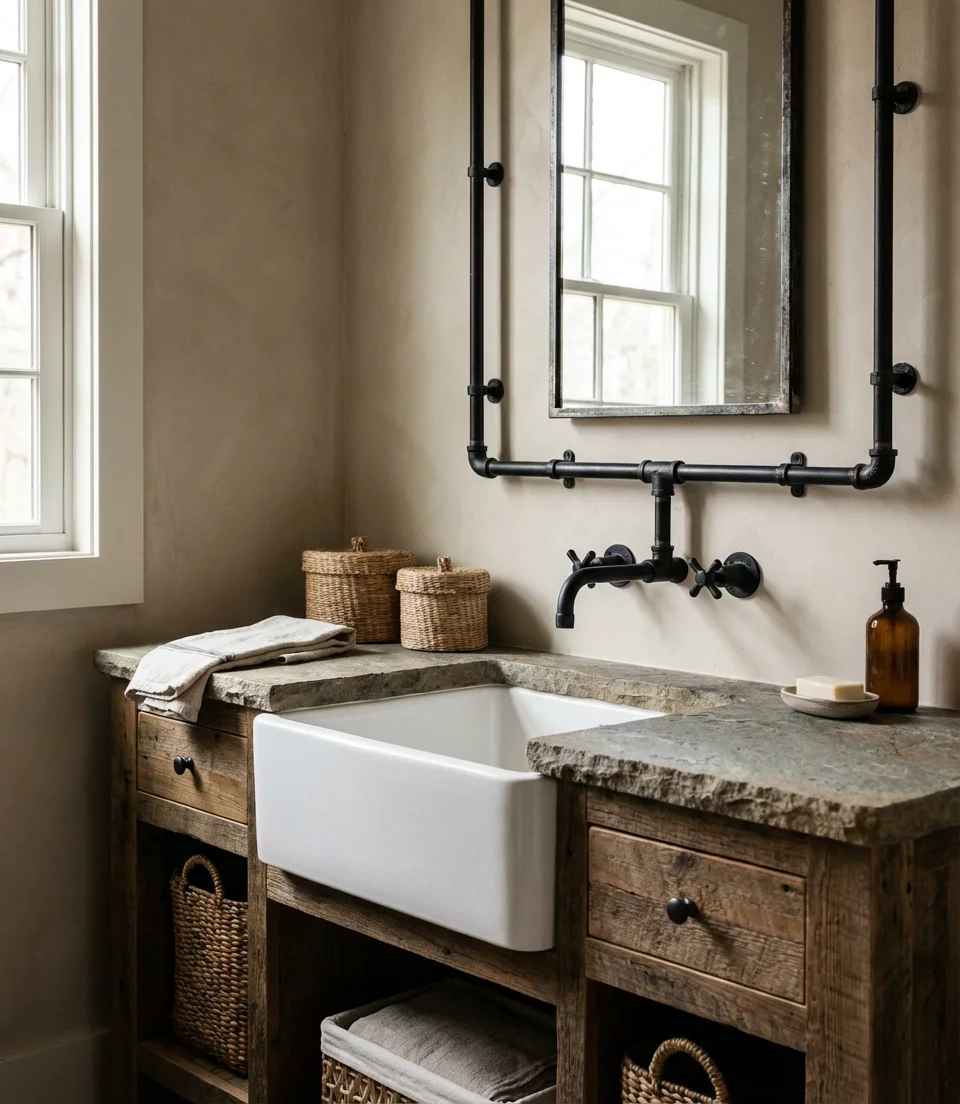
The industrial-farmhouse crossover isn’t new, but in 2026 the execution has gotten smarter and more restrained. Exposed pipe fixtures—think wall-mount faucets with visible supply lines in black iron or aged brass—bring an authenticity that feels more workshop than showroom. Used selectively on a vanity with a natural stone or concrete countertop, they signal confidence in the design without overwhelming it. The key is restraint: two or three exposed pipe elements are all you need to establish the aesthetic. Beyond that, it starts to feel like a costume rather than a home.

This look is particularly well-suited to converted spaces—barns turned into homes, urban loft apartments with farmhouse sensibilities, or older homes where existing plumbing has been rerouted and exposed as part of a renovation rather than hidden. In those contexts, visible pipes feel honest and appropriate. In a newly built suburban home, the same treatment can feel slightly forced unless it’s balanced carefully with genuinely warm and natural materials elsewhere in the room. The goal is always authenticity: design that looks like it evolved organically rather than arrived from a mood board.
22. Layered Textiles for a Cozy Farmhouse Feel
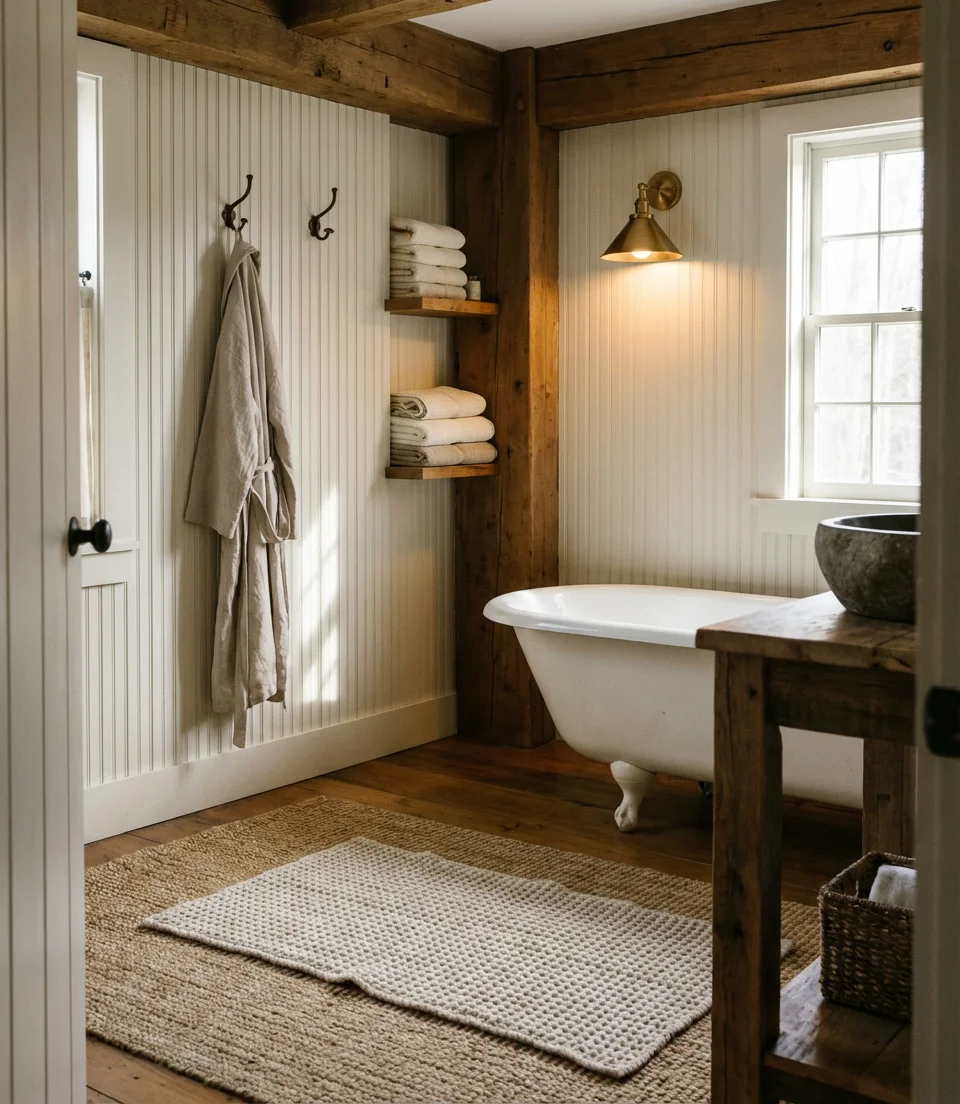
The finishing layer of any truly successful farmhouse bathroom is textiles—and in 2026, more is more when it comes to layering them thoughtfully. A chunky waffle-knit bath mat layered over a natural jute rug, thick Turkish towels folded on an open shelf, a linen robe hanging from a vintage hook—these are the details that make a bathroom feel like a destination rather than a utility room. Inspiration from the best European farmhouse interiors shows that cozy isn’t about clutter; it’s about choosing materials with warmth and texture that accumulate into something genuinely enveloping and personal.
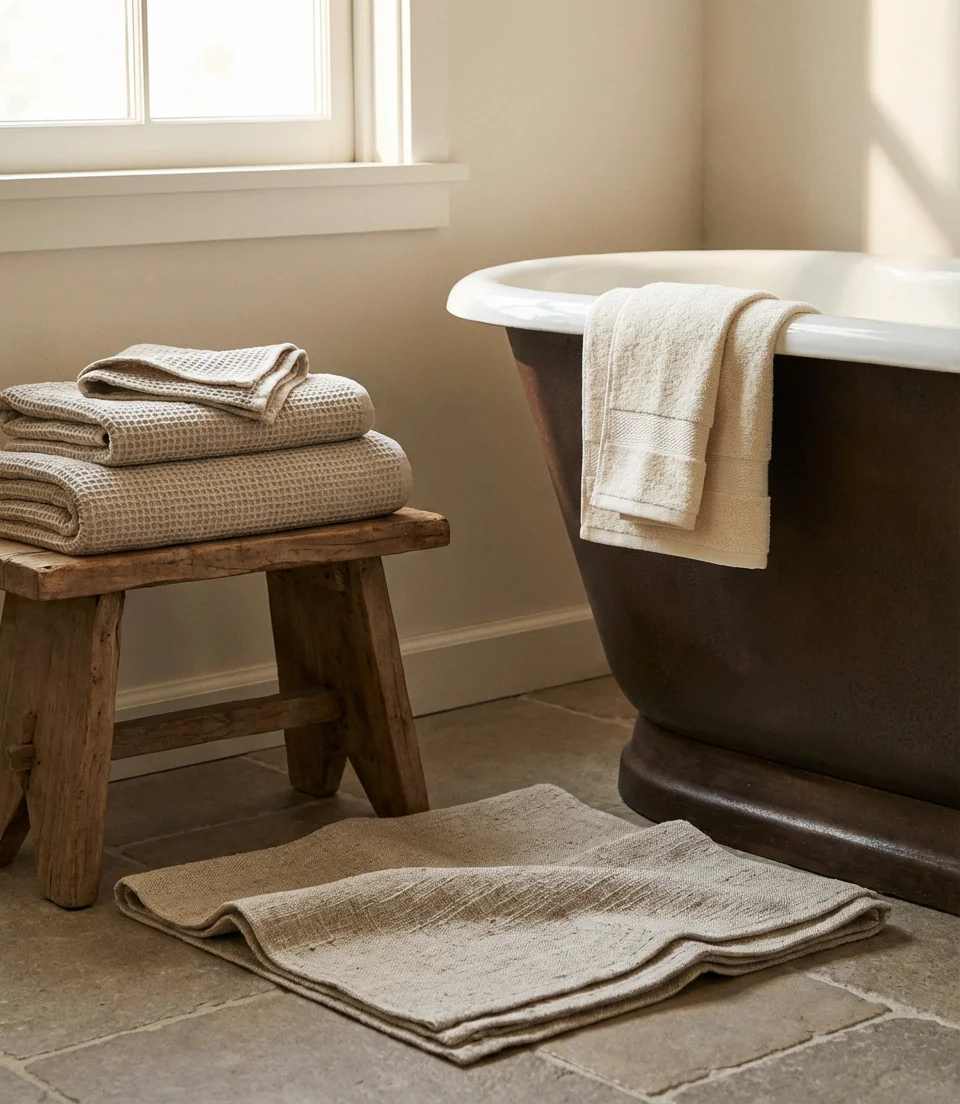
When building out a textile scheme, stick to a tight palette—two or three tones drawn from the room’s existing colors—and vary the texture rather than the color. A room where everything is oatmeal, warm white, and soft taupe but rendered in waffle weave, slubbed linen, and organic cotton has enormous richness without any visual noise. Brands like Coyuchi, Parachute, and Jenni Kayne have made this approach accessible at various price points and are consistently referenced by American homeowners who’ve nailed this layered, collected farmhouse feeling in their own spaces.
The modern farmhouse bathroom in 2026 is less about following a formula and more about making considered choices that reflect your own sense of warmth, comfort, and style. Whether you’re drawn to the dramatic contrast of a dark, moody vanity or the quiet simplicity of linen and white oak, there’s a version of this aesthetic that can genuinely feel like home. We’d love to hear which of these ideas speaks to you most—drop a comment below and tell us what you’re planning for your own space, or share a photo of a recent bathroom update you’re proud of.