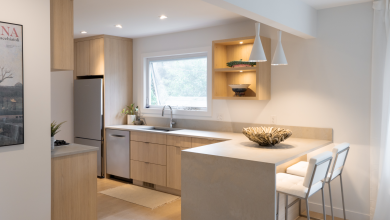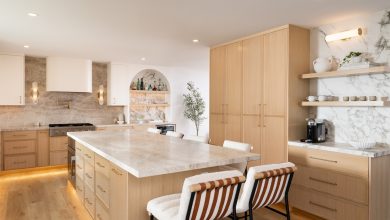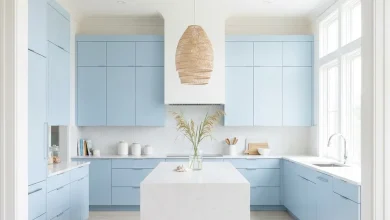

Kitchen windows, often overlooked in home design, significantly influence the flow of light, air, and style in one of your home’s busiest rooms. In 2026, homeowners across the U.S. are rethinking everything from curtains and blinds to sink decor and plant arrangements that bring warmth and personality to their cooking spaces. Whether you’re working with a large picture window, a corner nook, or a tiny opening above the stove, the right treatment can transform your kitchen from purely functional to genuinely inviting. Pinterest users are spearheading this trend, seeking innovative and realistic ideas that seamlessly combine functionality and aesthetic appeal. Here are inspiring kitchen window ideas to help you reimagine this often-neglected focal point.
1. Layered Linen Curtains Over the Sink
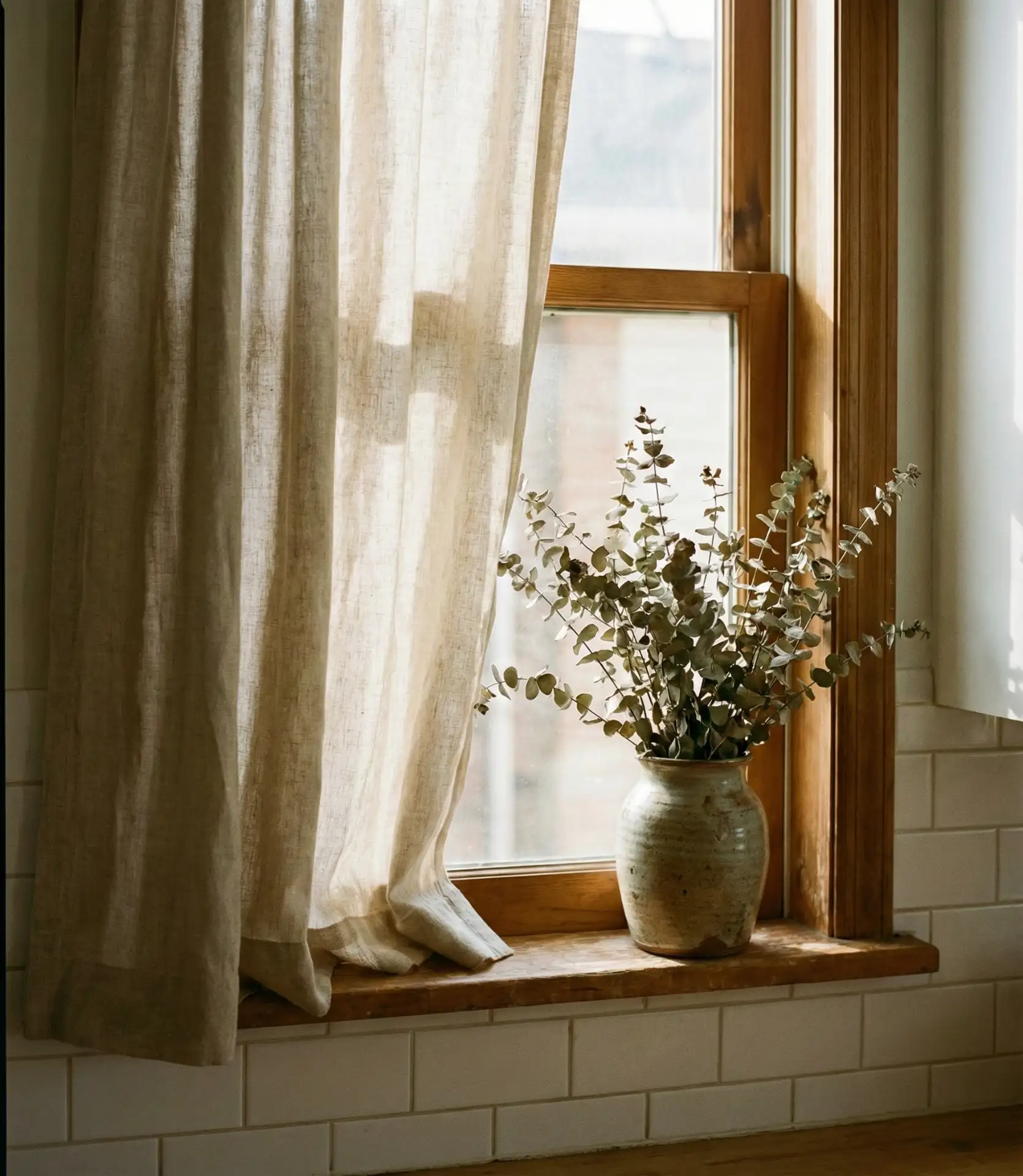
A sink curtain in soft linen adds texture without blocking light, especially when layered over a sheer panel. This approach works beautifully in cottage and French country kitchens, where natural fabrics soften hard surfaces like tile and stone. The key is choosing a neutral tone that complements your backsplash while still feeling warm and lived-in. Many homeowners pair this look with brushed brass hardware to echo the finish on their faucets.
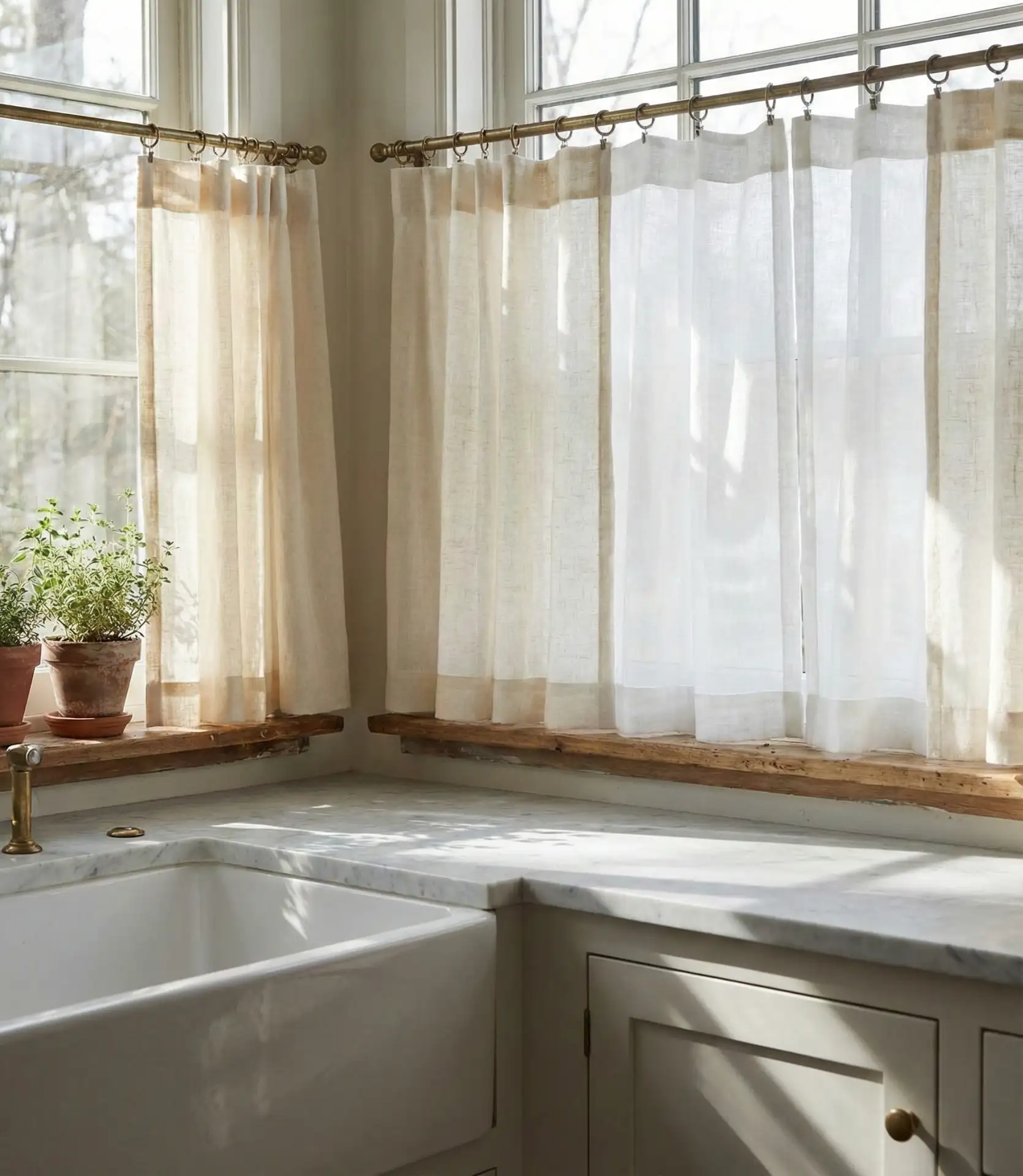
One common mistake is choosing curtains that are too long, which can trap moisture and develop mildew near the sink. Keep your panels just below the sill, or use tiebacks to keep fabric clear of splashes. If you’re renting or working with a tight budget, tension rods make it easy to install and remove curtains without damaging the wall. This setup typically costs under $50 if you shop at stores like Target or IKEA, making it one of the most accessible updates you can make.
2. Bamboo Blinds for a Rustic Vibe
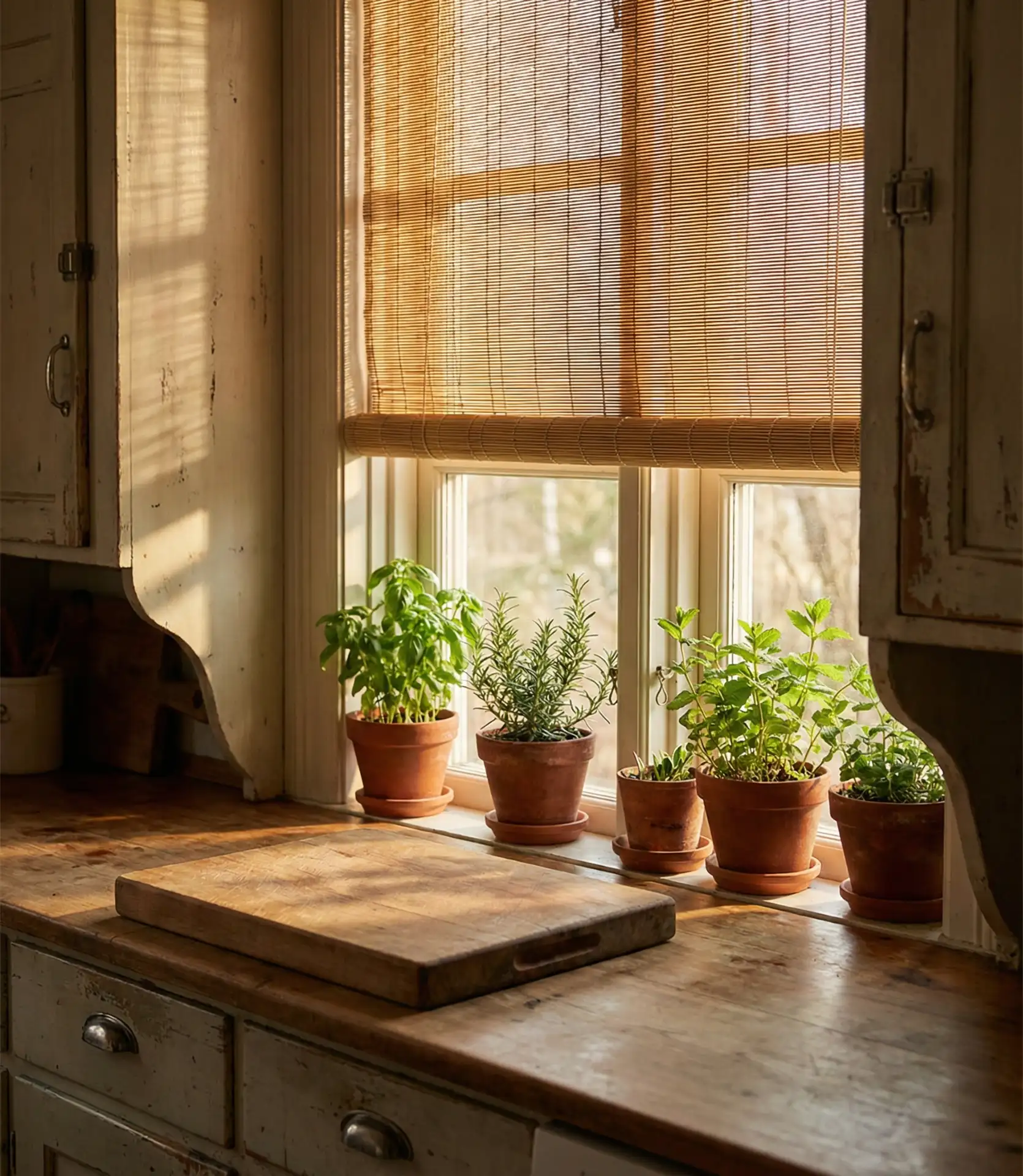
Woven bamboo blinds bring an organic, rustic aesthetic that pairs well with wood countertops, open shelving, and earthy color palettes. These blinds for kitchen windows beautifully filter light while maintaining privacy, which is essential for homes facing busy streets or neighboring properties. The texture adds visual interest without overwhelming smaller spaces, and they’re surprisingly durable in high-humidity environments when treated properly.
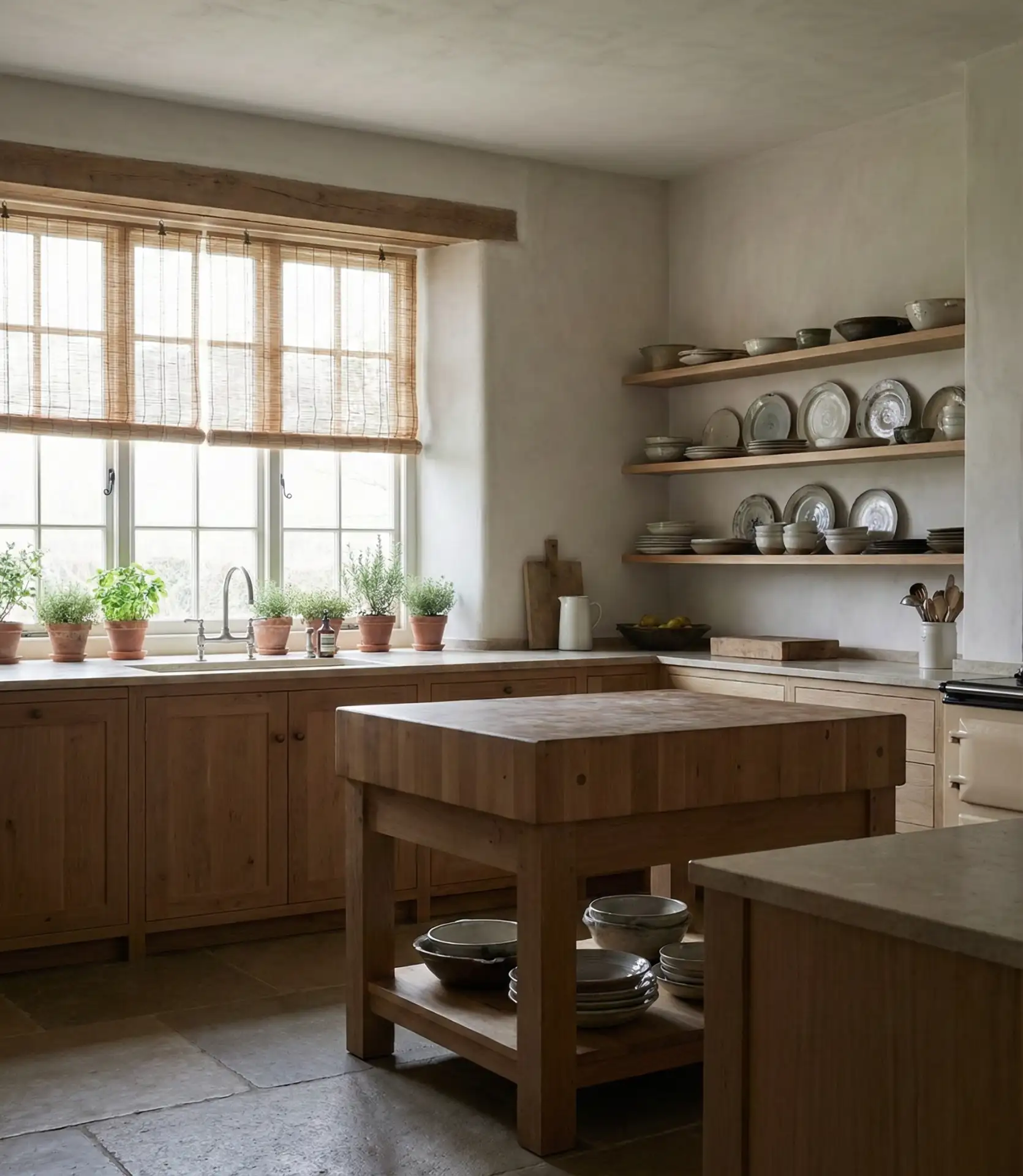
In the Pacific Northwest, where natural materials are a design staple, bamboo blinds have become a go-to for homeowners looking to balance privacy with that signature light-filled aesthetic. They work especially well in kitchens with a lot of stainless steel or modern finishes, offering a softening counterpoint. Just be sure to measure carefully—custom sizes can add $100 or more to the cost, but they’re worth it for a polished, seamless look.
3. Floating Shelves with Trailing Greenery
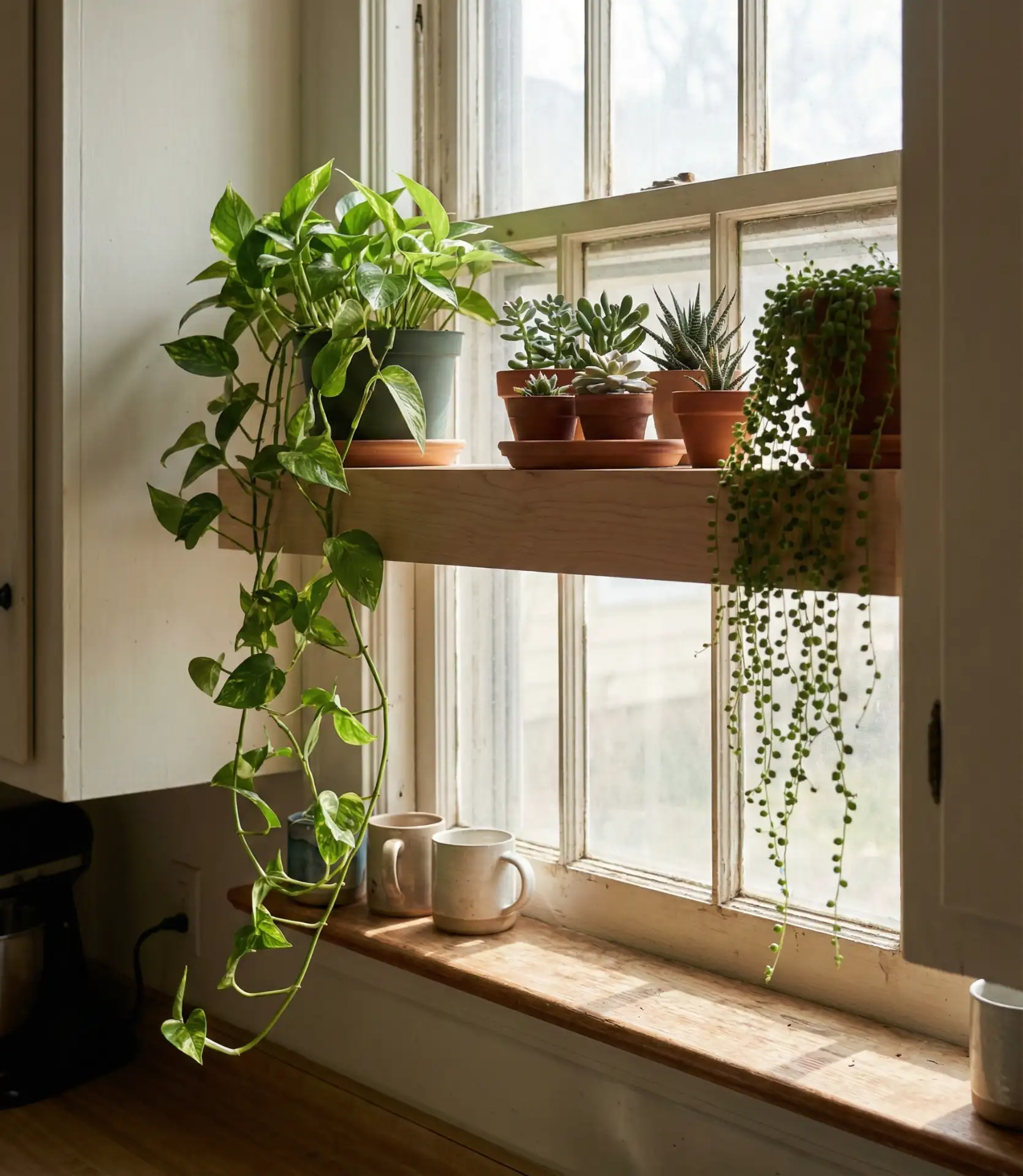
Installing a narrow floating shelf just above or beside your window creates space for plants in the kitchen, turning a functional window into a living focal point. Pothos, string of pearls, and philodendrons thrive in the indirect light most kitchen windows provide, and their cascading vines add softness to hard architectural lines. This setup is especially popular in modern and minimalist kitchens, where every element needs to earn its place.
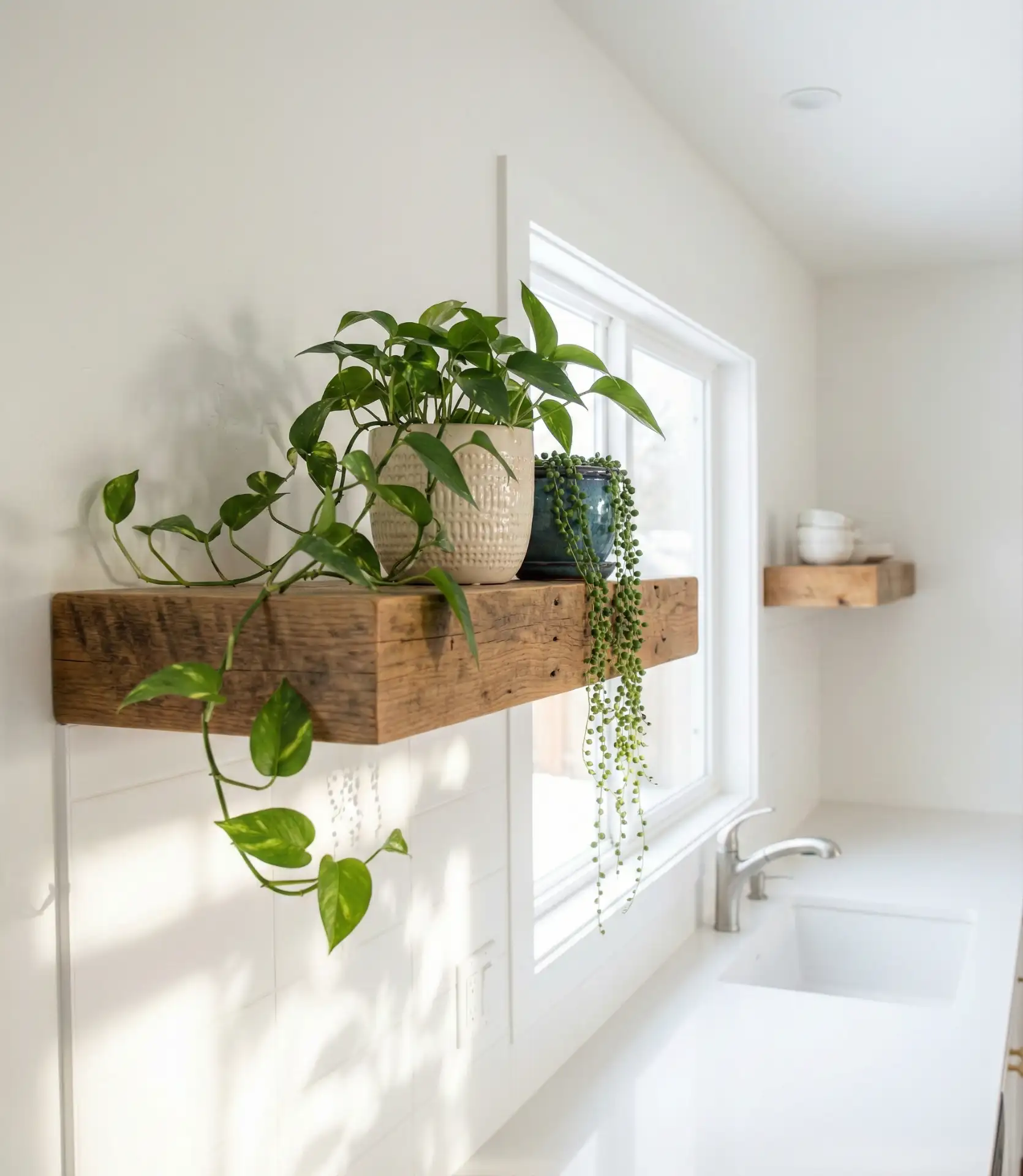
A friend of mine installed a shelf like this in her Brooklyn apartment, and it completely changed how she felt about cooking. The greenery softened the clinical feel of her galley kitchen, and she found herself spending more time there just because the space felt more inviting. It’s a small change, but it has an outsized impact on mood and atmosphere.
4. Sheer White Panels for Maximum Light
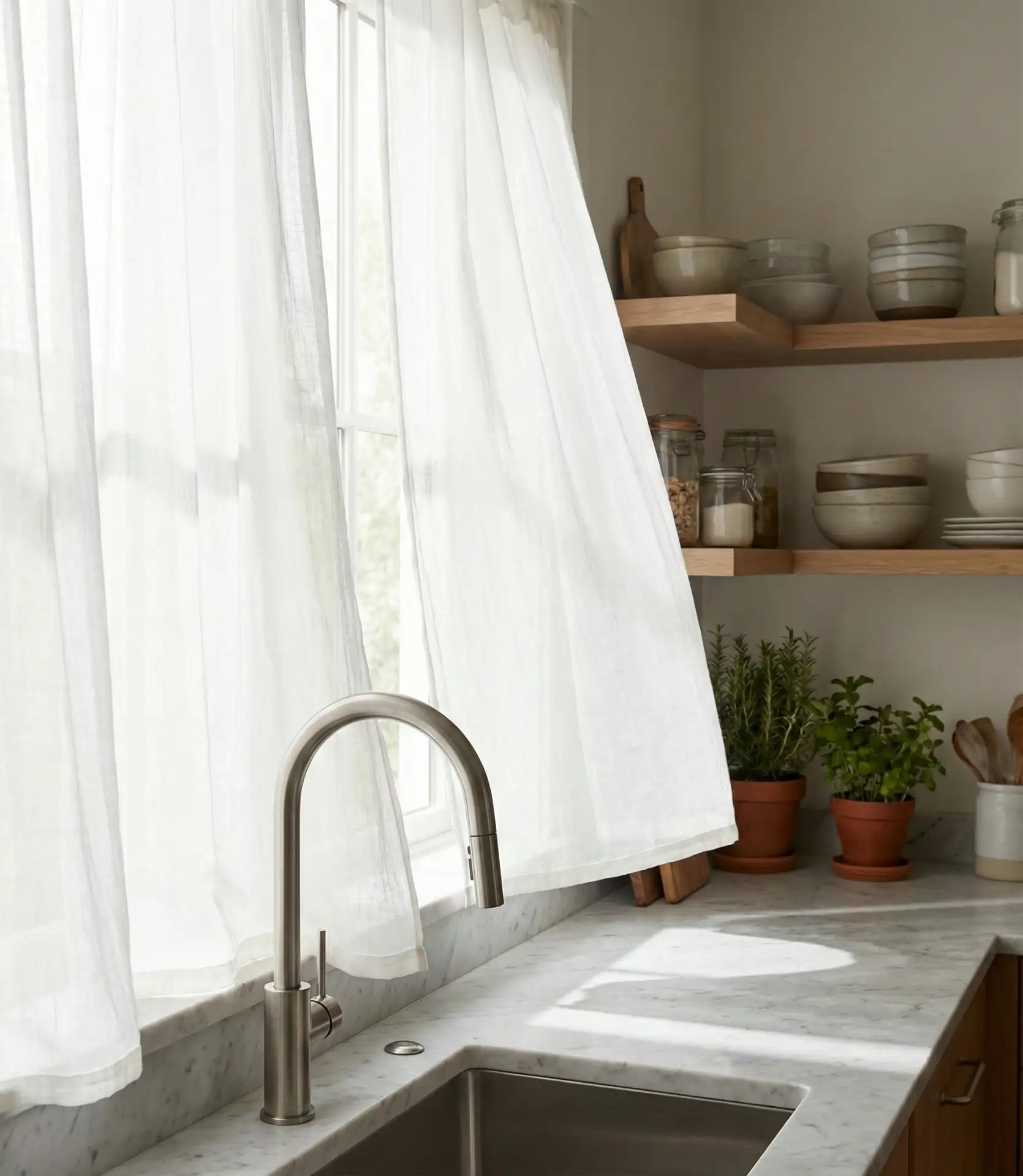
Sheer white curtains for kitchen windows are ideal when you want privacy without sacrificing daylight. They work particularly well in open floor plans where the kitchen flows into the dining or living area, maintaining a cohesive, airy feel throughout. The fabric diffuses harsh sunlight, reducing glare on countertops and screens while still keeping the space bright and welcoming.
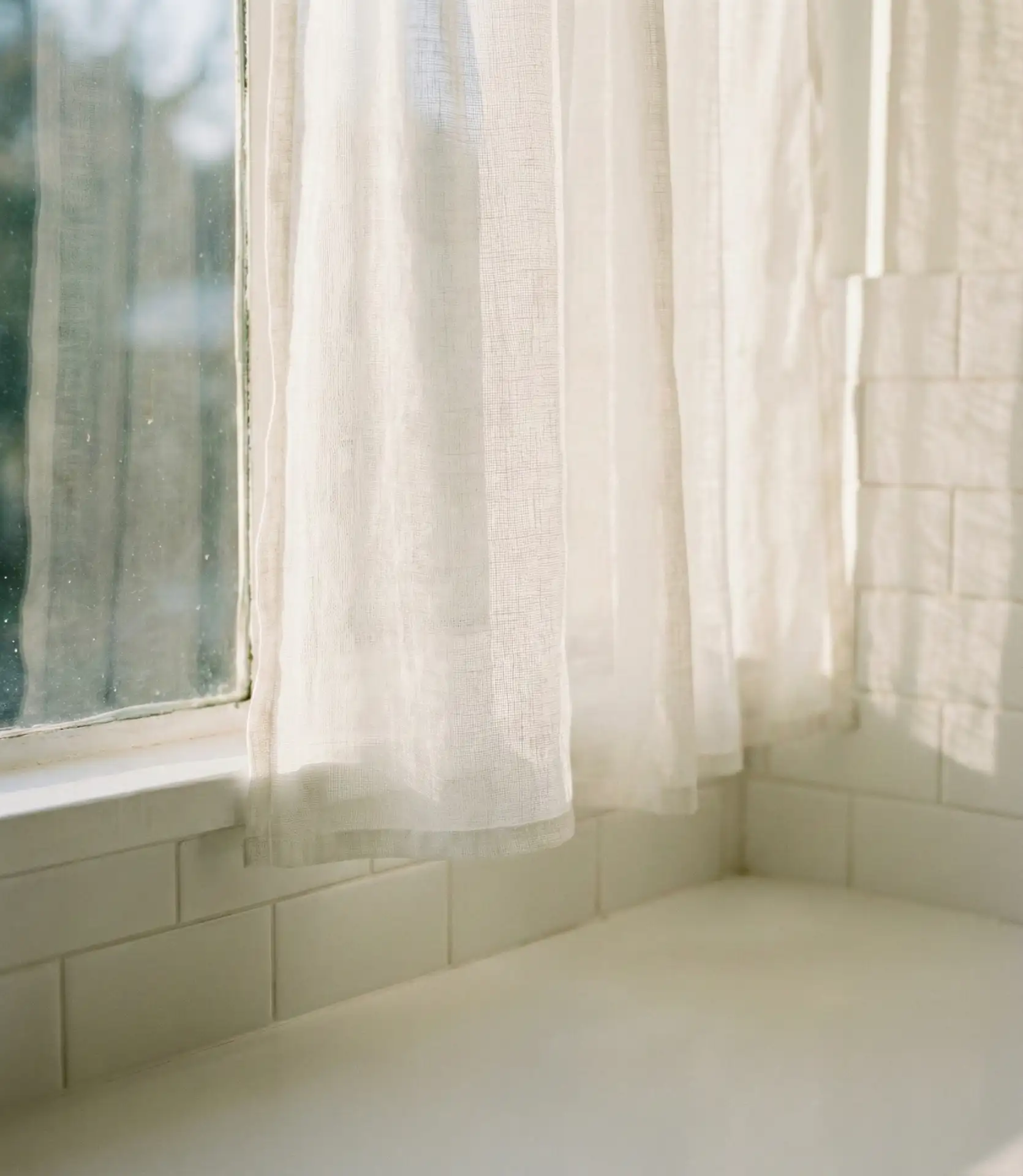
This treatment works best in south- or west-facing kitchens where direct sun can be intense. In the Southwest, where sunlight is strong year-round, homeowners often double up with a sheer layer and a blackout roller shade for evenings. The dual setup gives you control without compromising the clean, minimal look that makes sheer panels so appealing in the first place.
5. Herb Garden on a Sunny Sill
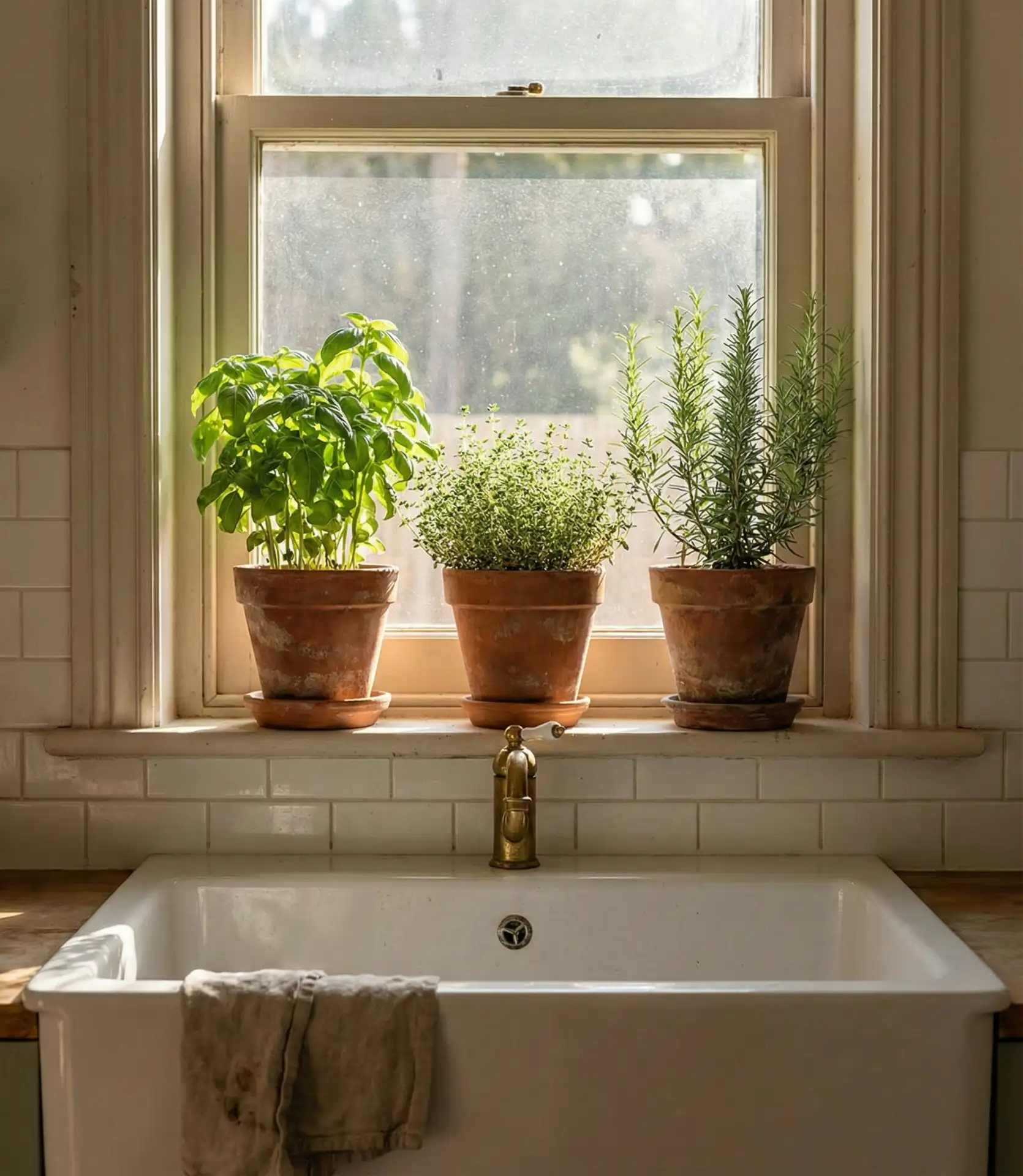
A row of sink plants like basil, thyme, and rosemary transforms your over-sink window into a functional garden. Kitchens with limited counter space find this setup especially practical, as the sill serves as both storage and decor. While you’re preparing meals, the herbs remain easily accessible, and the greenery infuses color and vitality into what could otherwise be a utilitarian area.
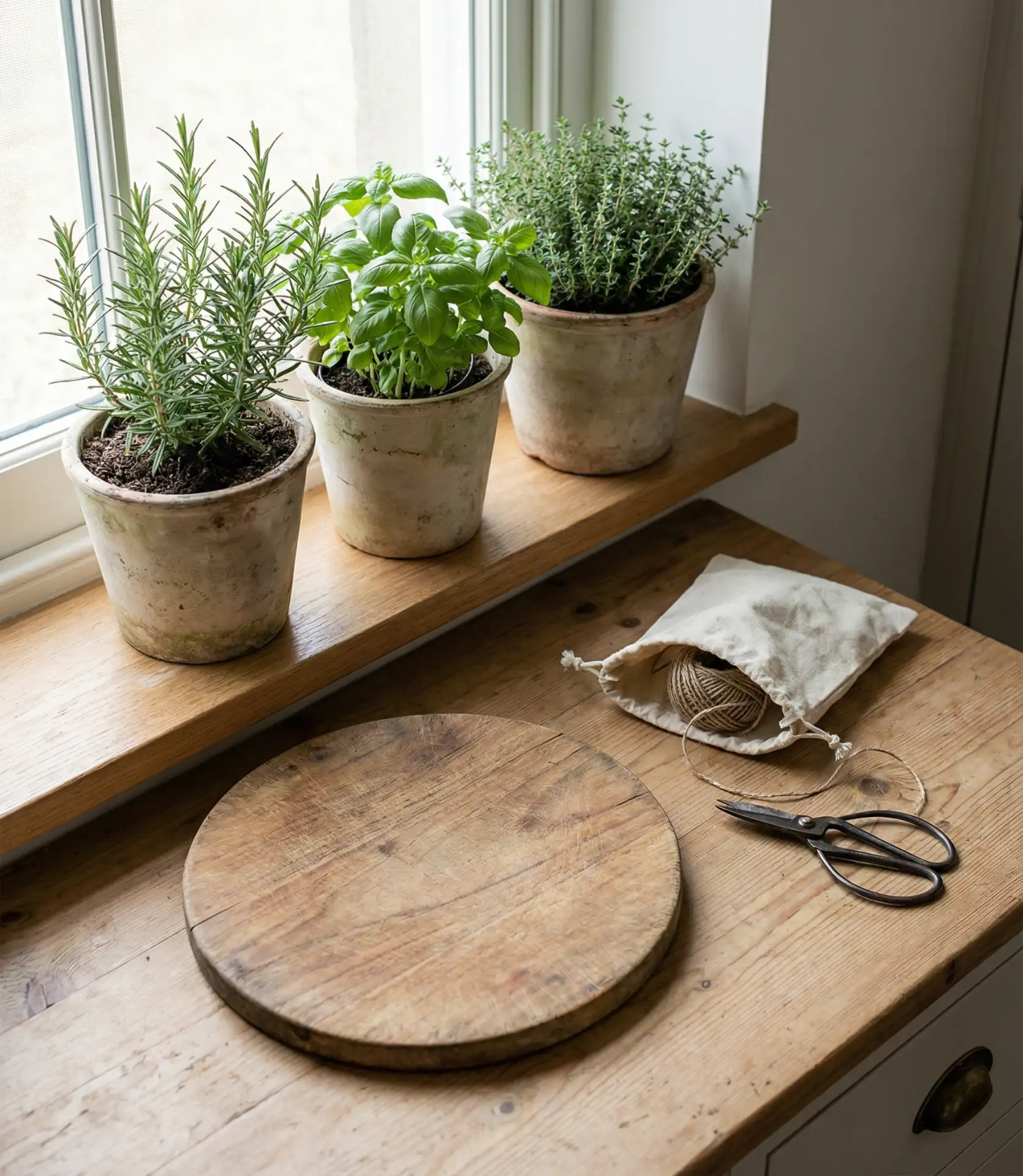
Many homeowners assume they need a south-facing window for herbs, but east-facing windows work just as well, especially for varieties like parsley and mint that prefer gentler morning light. Overwatering is the biggest pitfall—most herbs prefer soil that dries out slightly between waterings. If you’re new to this, start with basil and chives, which are forgiving and grow quickly enough to keep you motivated.
6. Matchstick Shades for Texture and Privacy
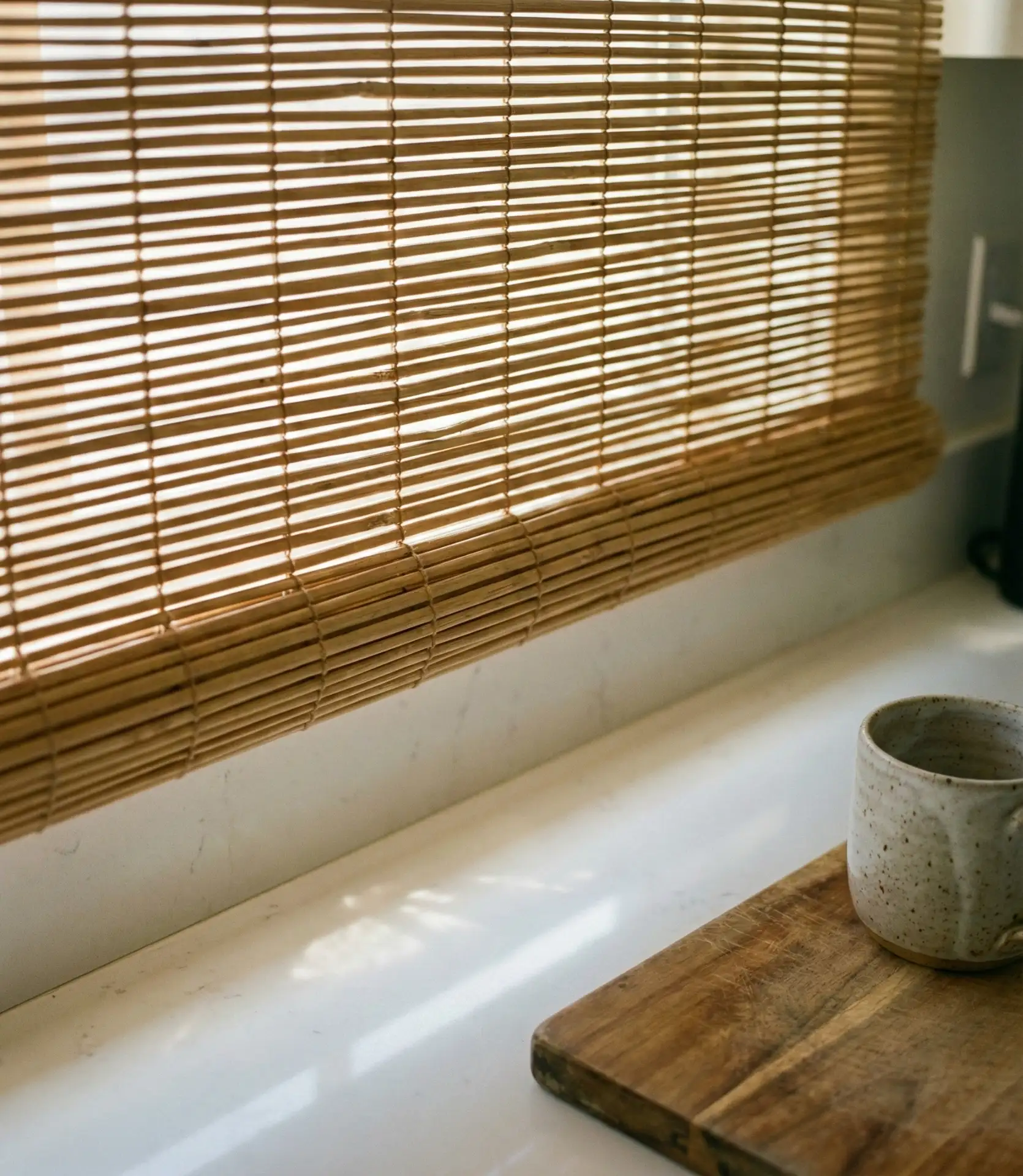
Matchstick roller shades offer a textured, natural look that complements country and transitional kitchens beautifully. They’re more refined than bamboo but still casual enough to avoid feeling overly formal. The tight weave provides privacy while allowing filtered light to pass through, making them a smart choice for low windows that face driveways or patios.
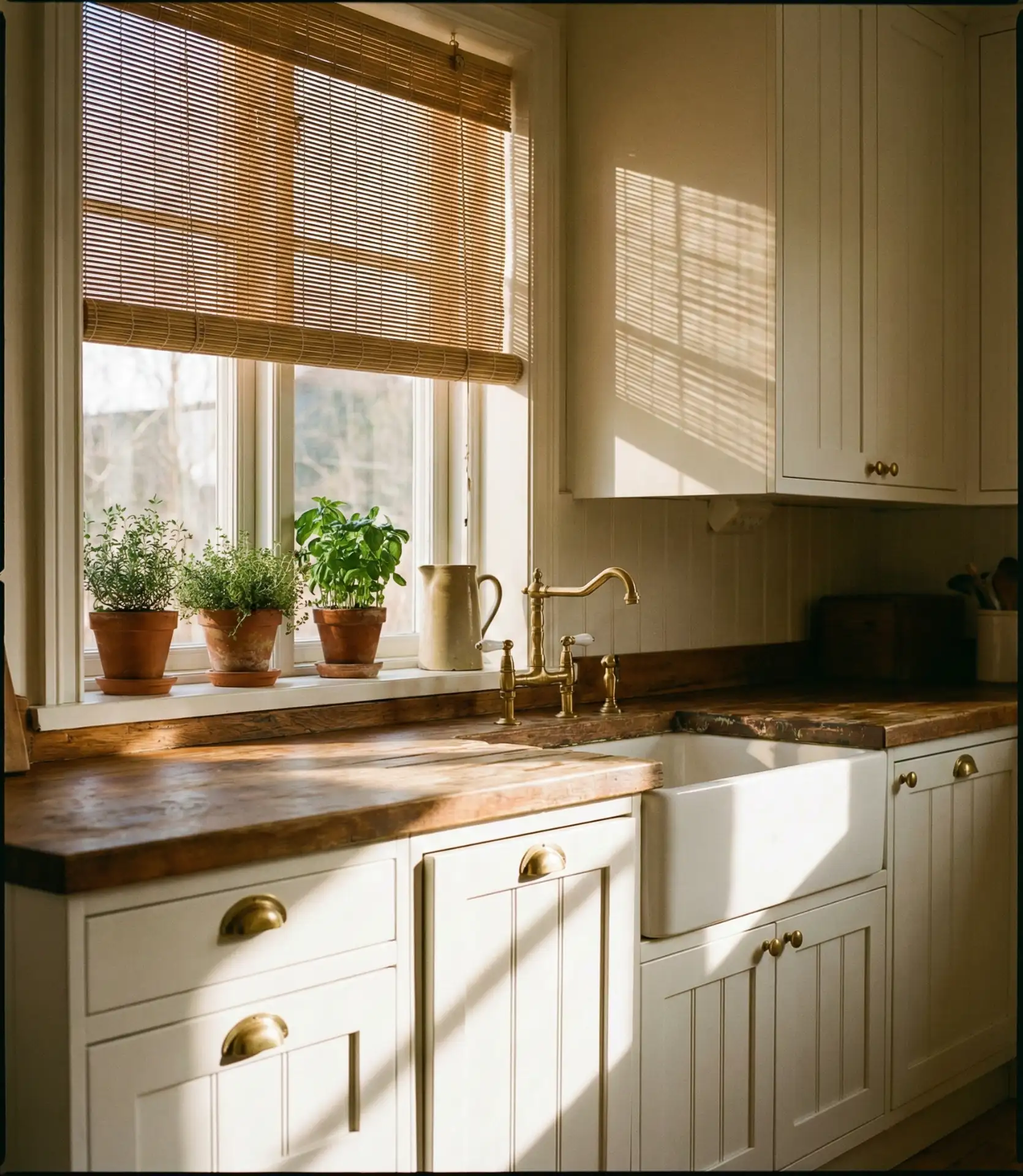
Experts often recommend matchstick shades for homes with a lot of white or neutral finishes, as they add warmth without introducing bold color. They’re also a budget-friendly option, typically running between $30 and $80 depending on size. In Midwestern homes, where farmhouse style remains popular, these shades bridge the gap between rustic charm and contemporary simplicity.
7. Stained Glass Accent Panels
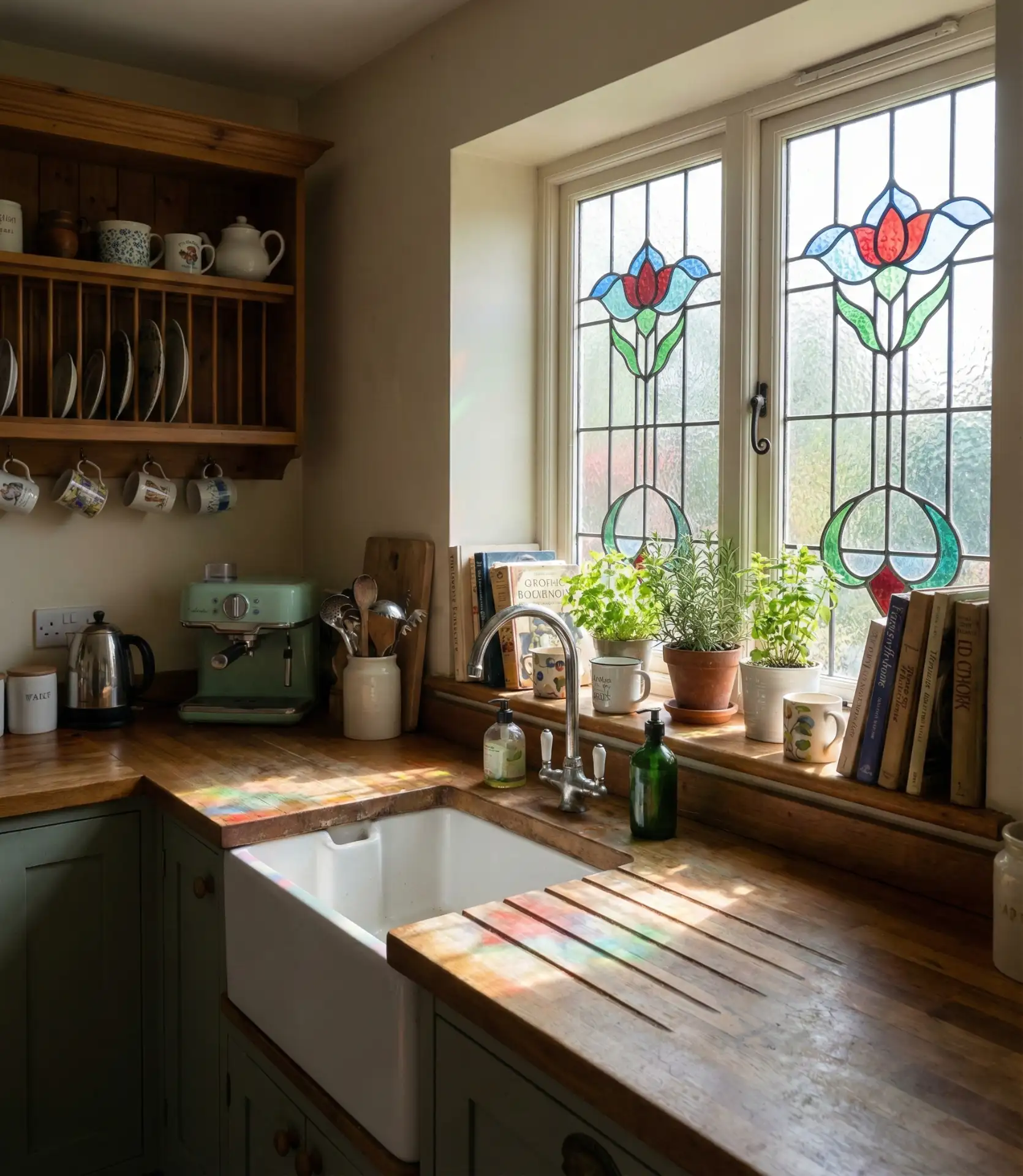
A custom or vintage stained glass panel adds a unique artistic element to your kitchen window, especially in older homes with historic character. These panels work best in corner windows or smaller openings where the colored glass becomes a true focal point. The way light filters through the glass shifts throughout the day, creating dynamic color play on countertops and walls.
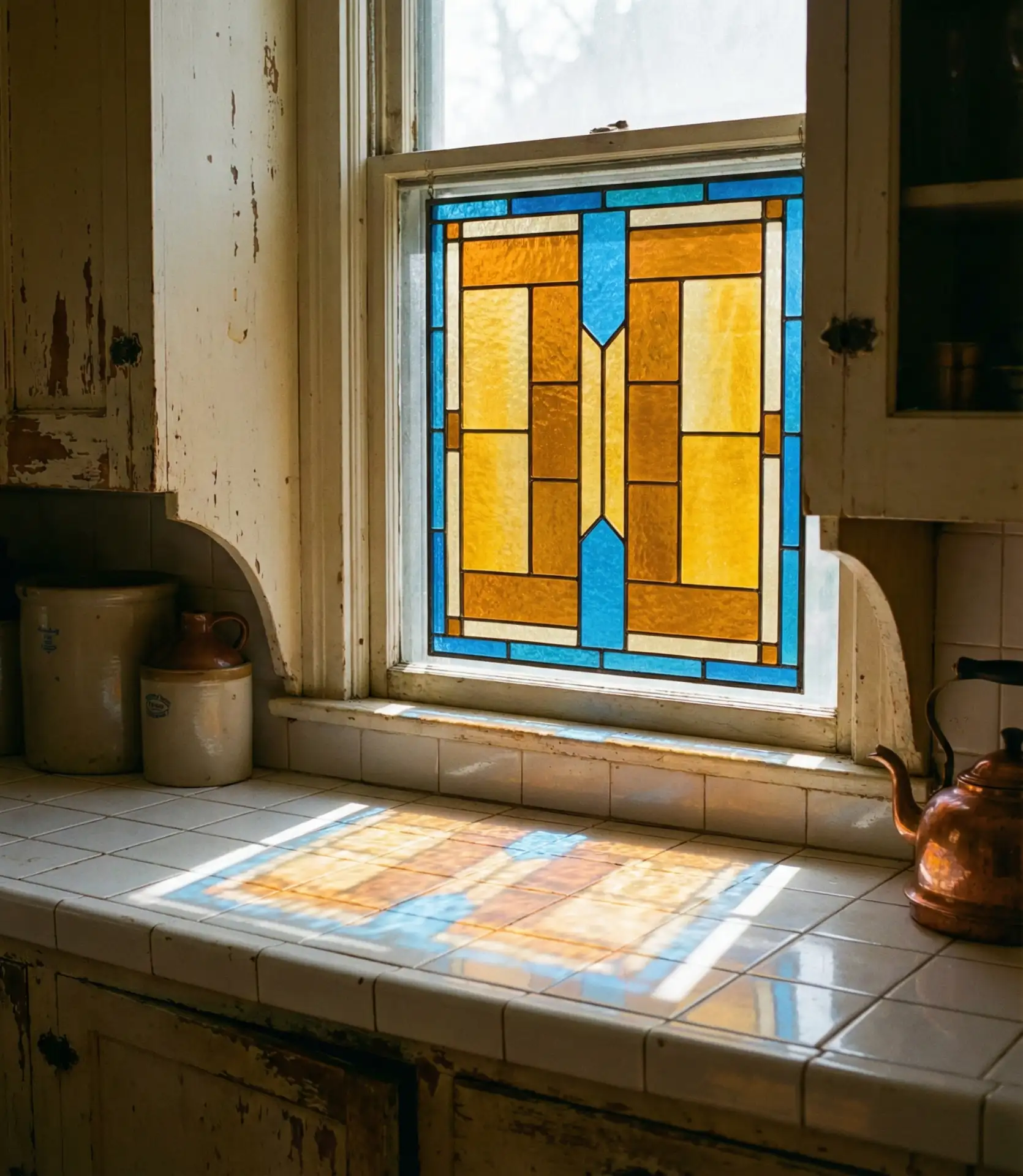
This approach is popular in cities like New Orleans and Charleston, where historic preservation is a point of pride. If you’re working with a newer build, faux stained glass film can replicate the look at a significantly lower cost, typically under $40 for a window-sized panel. Just know that while film is removable and renter-friendly, it doesn’t quite capture the depth and luminosity of real leaded glass.
8. Recessed Shelving for Display and Storage
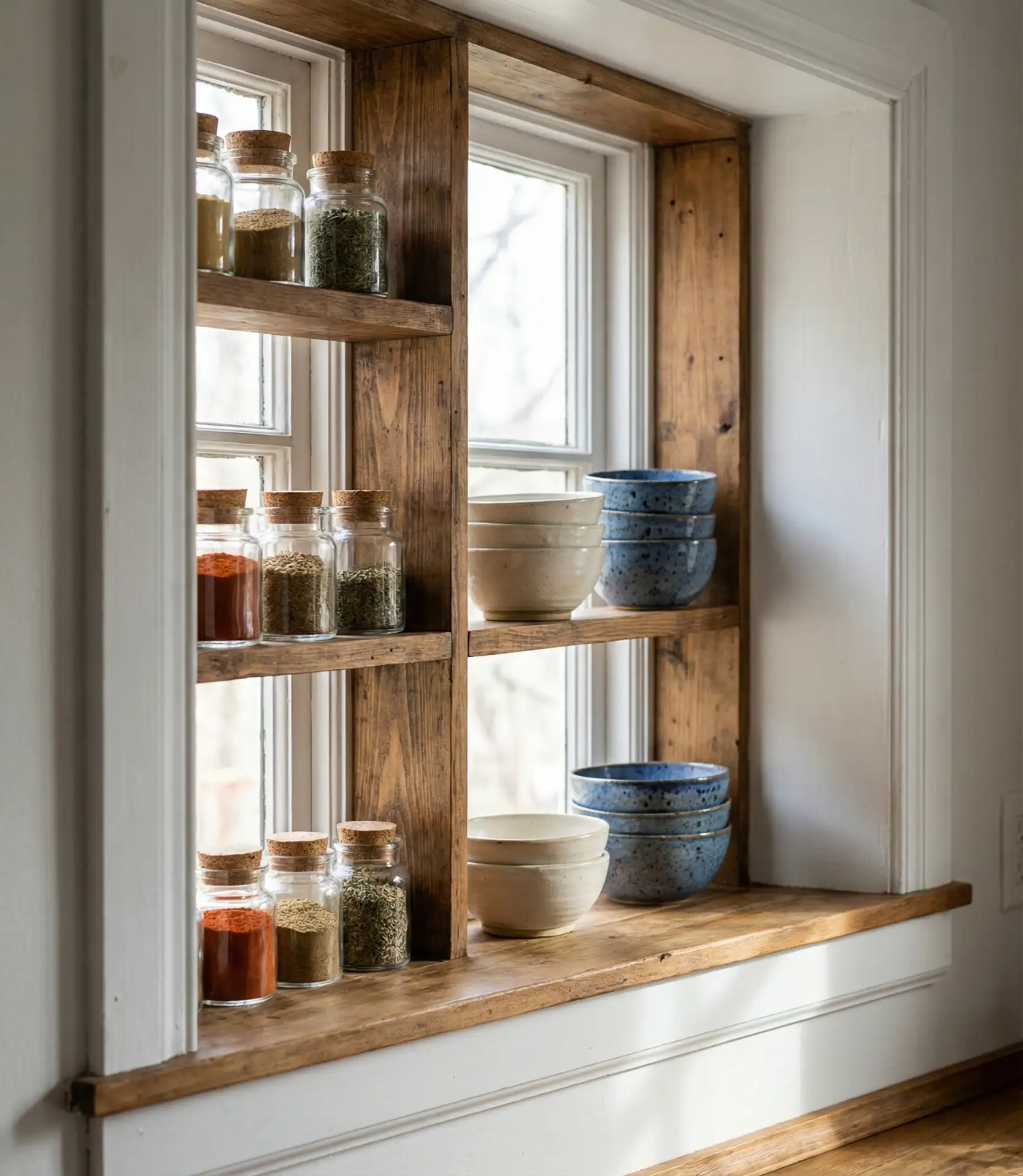
If you have a thick wall around your window, consider recessing shallow shelves into the frame for a built-in look. This is especially effective in cottage and rustic kitchens, where the shelves can hold small jars of spices, ceramic dishware, or potted succulents. The recessed design keeps items from jutting into the workspace while adding architectural interest to an otherwise plain window.
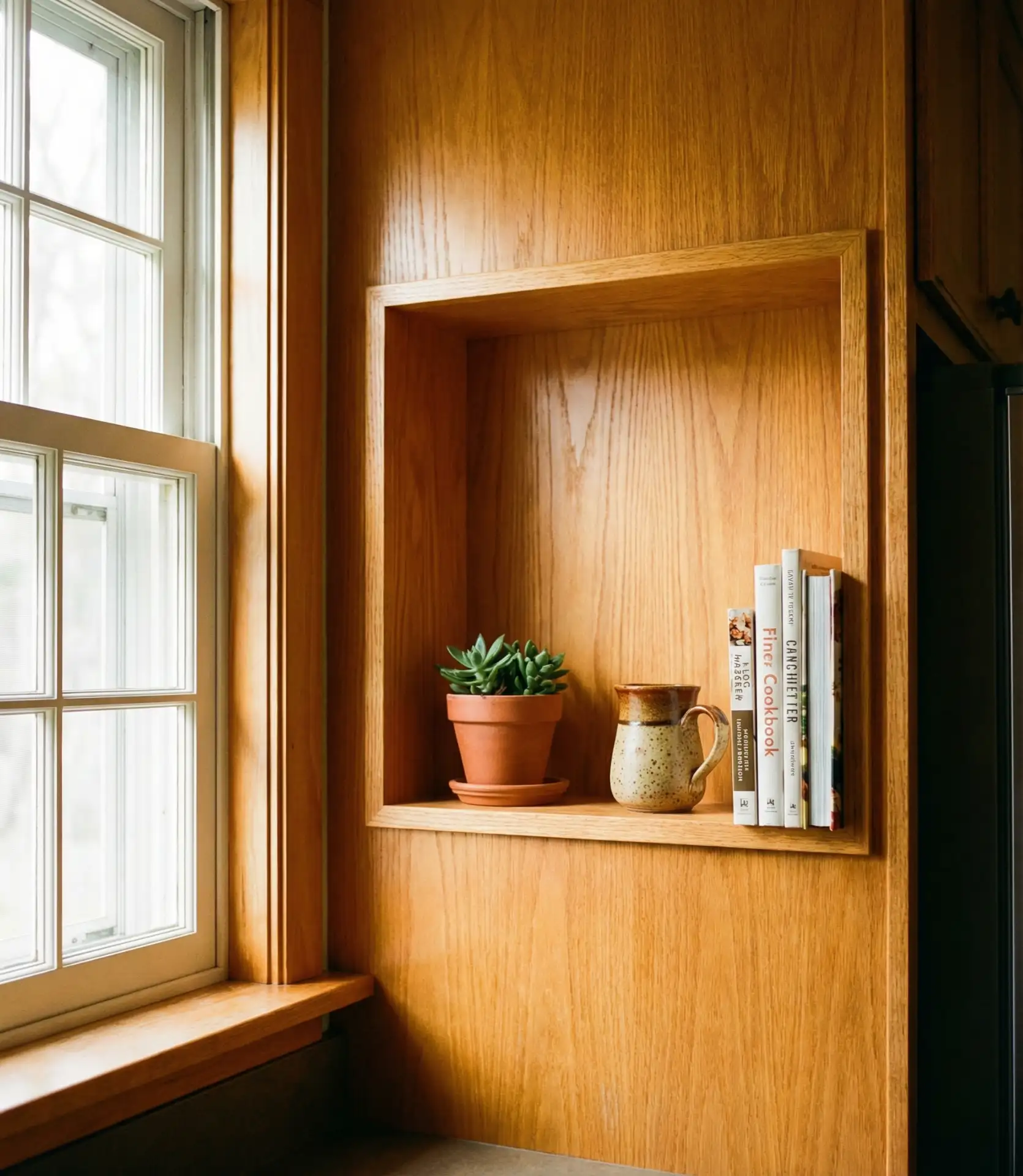
Where it works best: older homes with plaster walls at least six inches thick. In newer construction with standard drywall, you may need to frame out a false wall to achieve the look, which adds to the labor cost. That said, the payoff is significant—recessed shelving feels intentional and high-end, and it solves the perennial problem of where to put things in a kitchen that’s short on surface area.
9. Café Curtains for a Vintage Touch
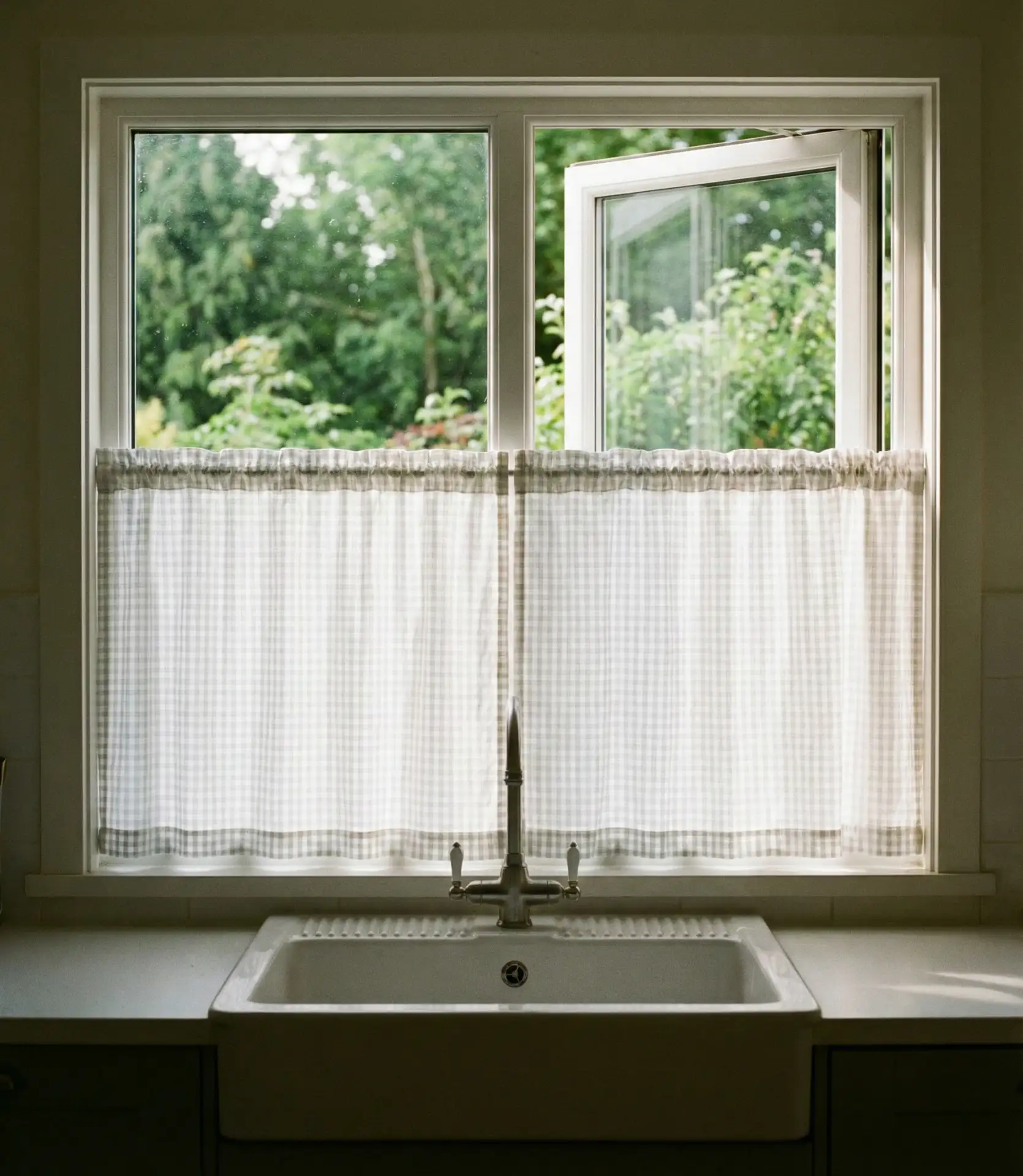
Half-height café curtains cover the lower portion of your window, preserving natural light while adding privacy at eye level. This style is a hallmark of French country and vintage-inspired kitchens, often featuring gingham, ticking stripes, or embroidered linen. They’re particularly charming on double windows, where symmetry amplifies the nostalgic appeal.
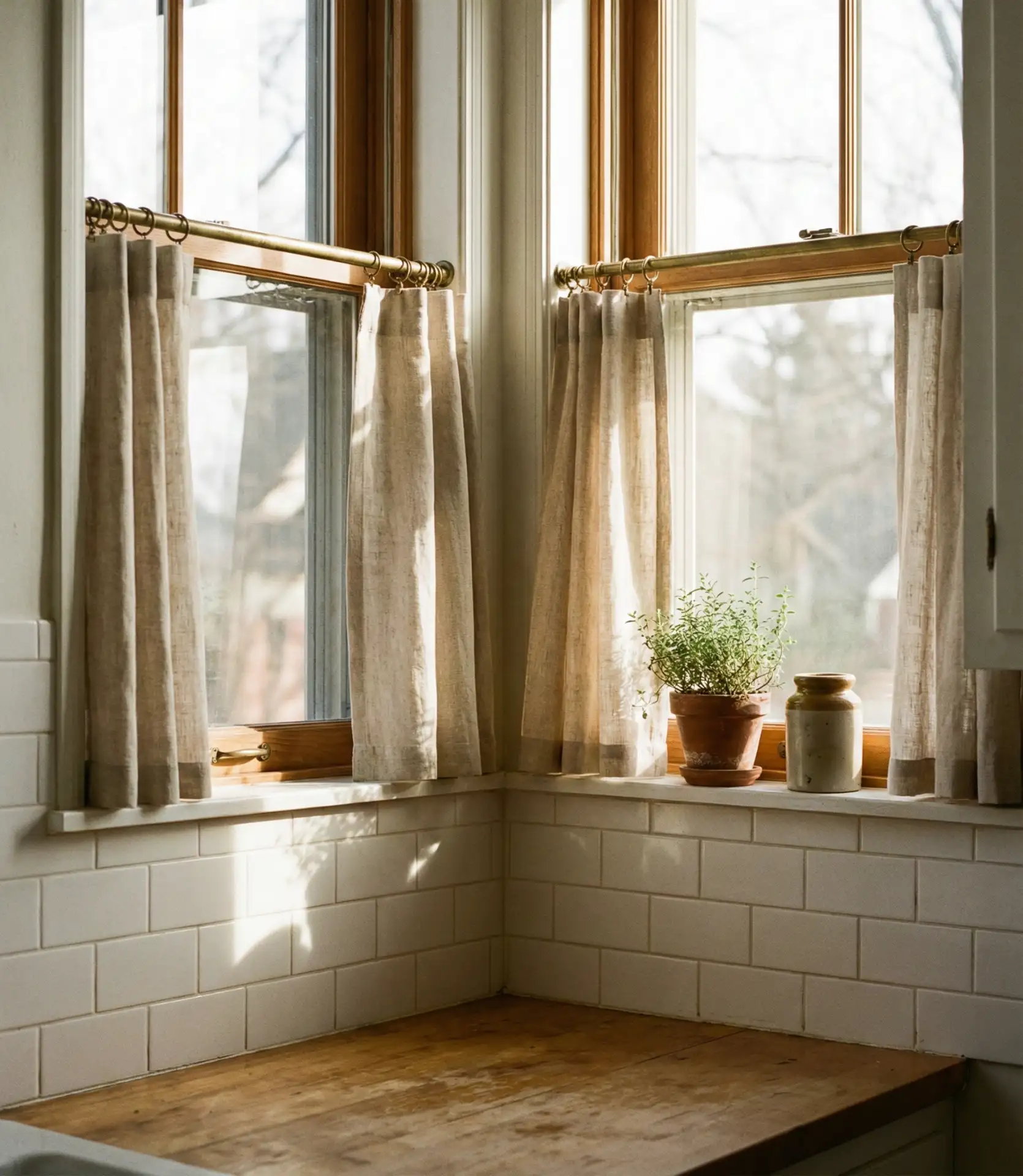
A neighbor recently installed café curtains in her mid-century ranch, and it instantly made the kitchen feel cozier and more intentional. She found vintage panels at an estate sale for $15, which she hemmed to fit. The key is choosing a fabric that can handle steam and splashes—cotton blends hold up better than delicate linens if your window is close to the stove.
10. Marble Sill with Minimalist Decor
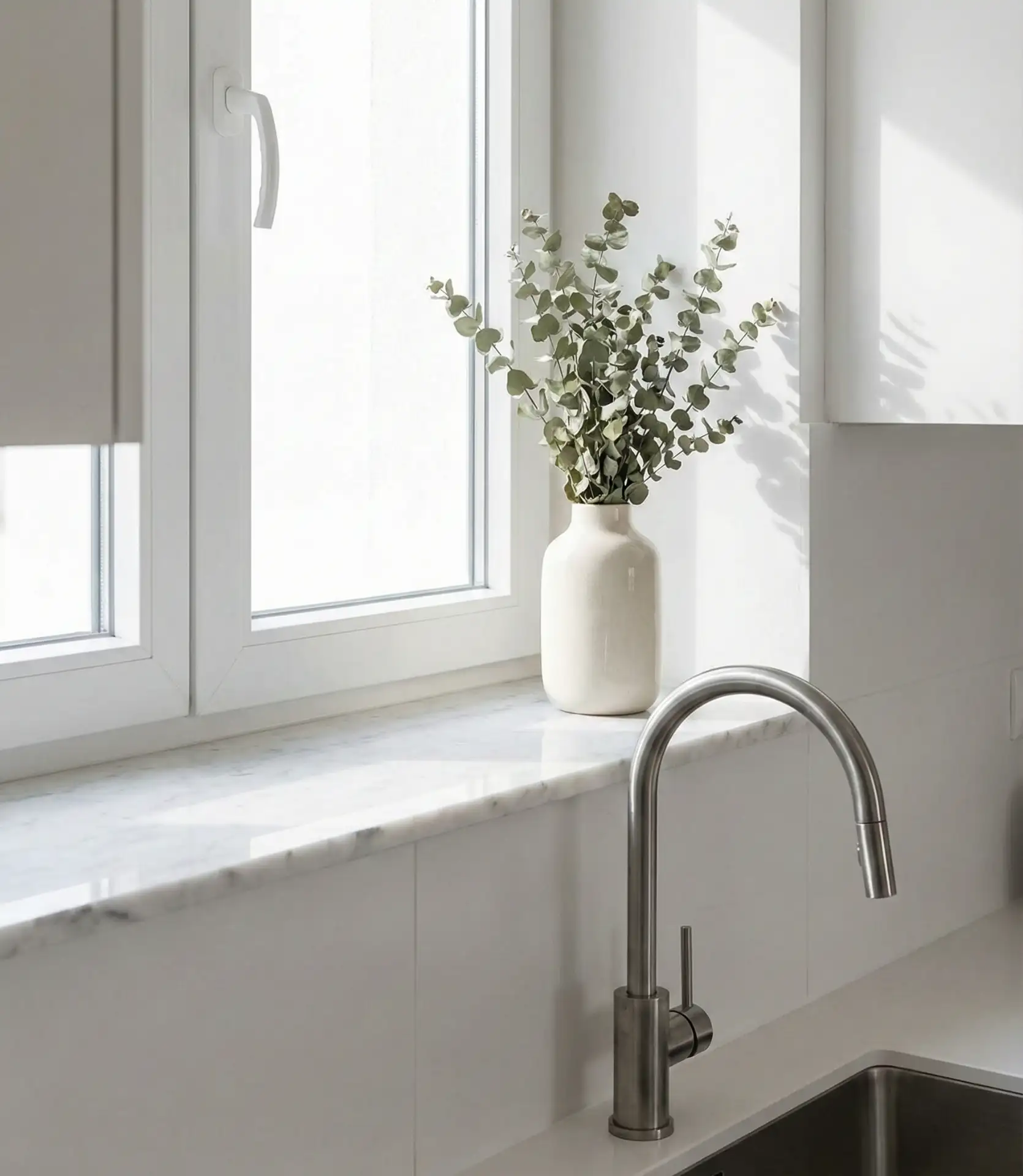
Upgrading your window sill to marble or quartz creates a polished surface that elevates the entire over-sink decor scheme. Paired with a single sculptural vase or a small tray of curated objects, the look is clean and considered. This approach suits modern kitchens where restraint is the goal, and every material choice is deliberate.
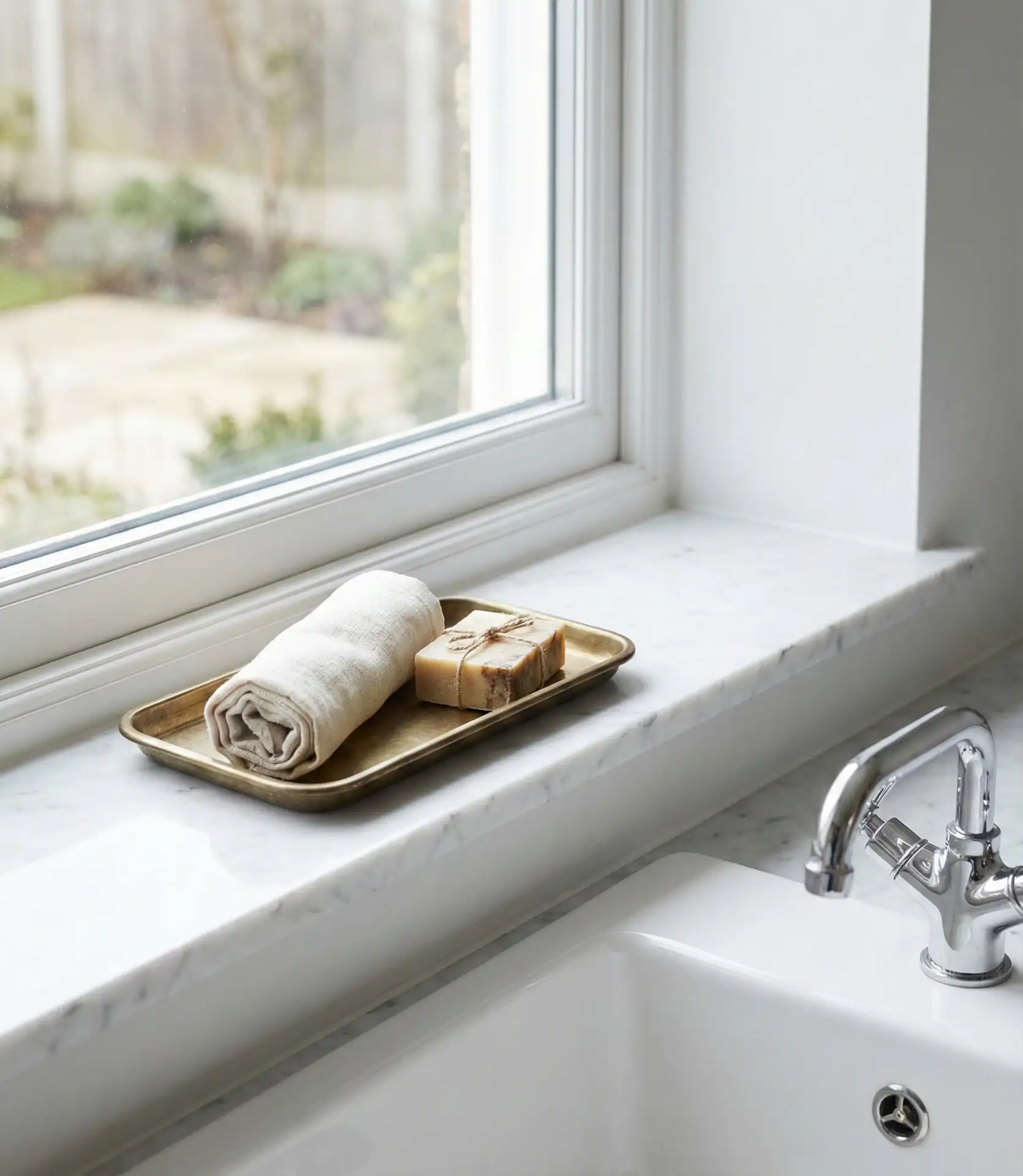
Expect to spend $200 to $400 for a custom marble sill, depending on the size and stone quality. While that’s a higher upfront cost than a standard wood or tile sill, marble is incredibly durable and ages beautifully. In high-end markets like San Francisco and New York, this detail signals a level of finish that buyers notice, making it a worthwhile investment if you’re planning to sell.
11. Vintage Roller Shades with Pull Cords
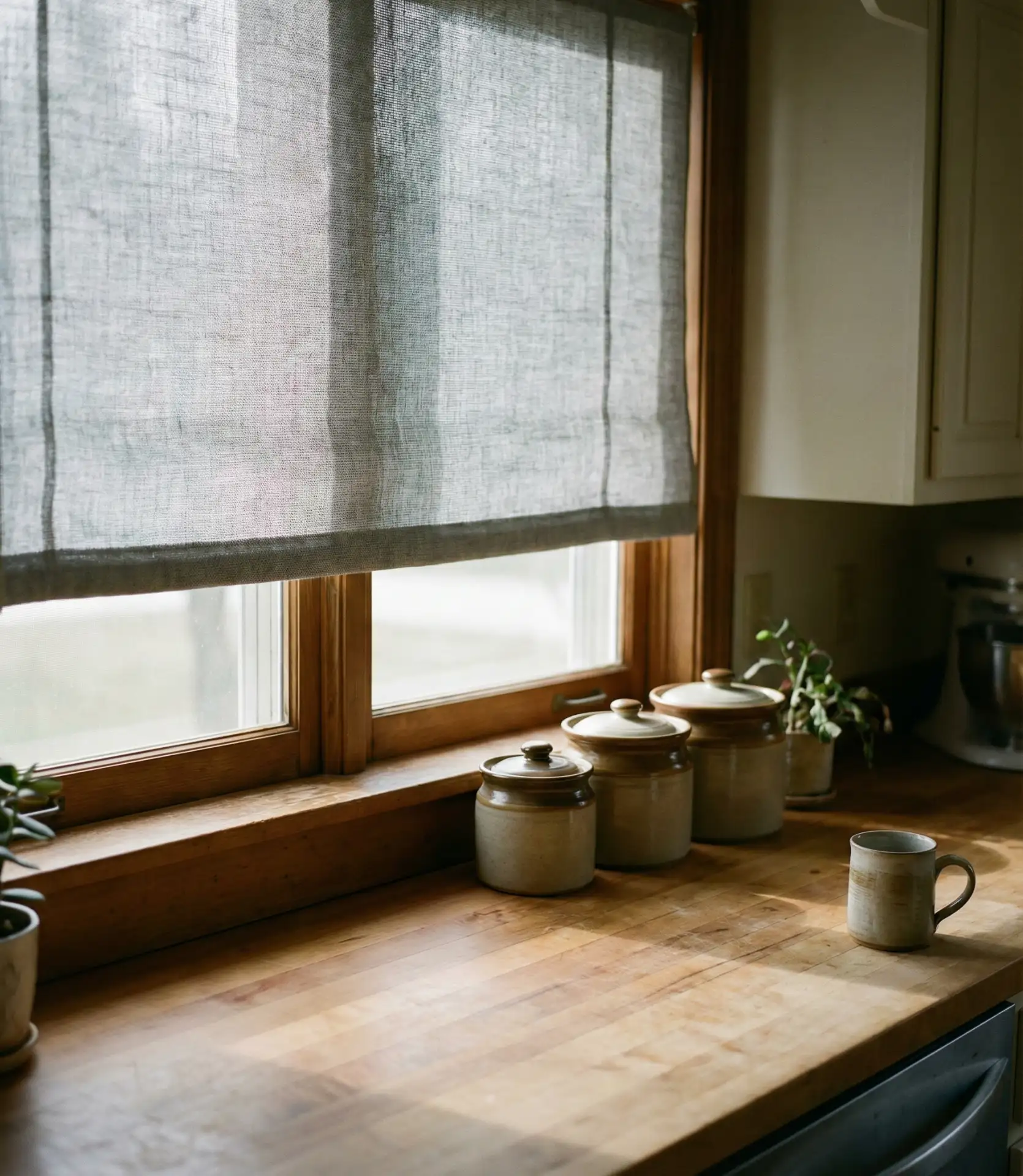
Old-fashioned roller shades with decorative pull cords bring a sense of nostalgia to cottage and country kitchens. They’re simple, functional, and surprisingly effective at blocking light when fully extended. The mechanism is straightforward, which means less to break over time, and the retro aesthetic pairs well with Shaker cabinetry and vintage appliances.
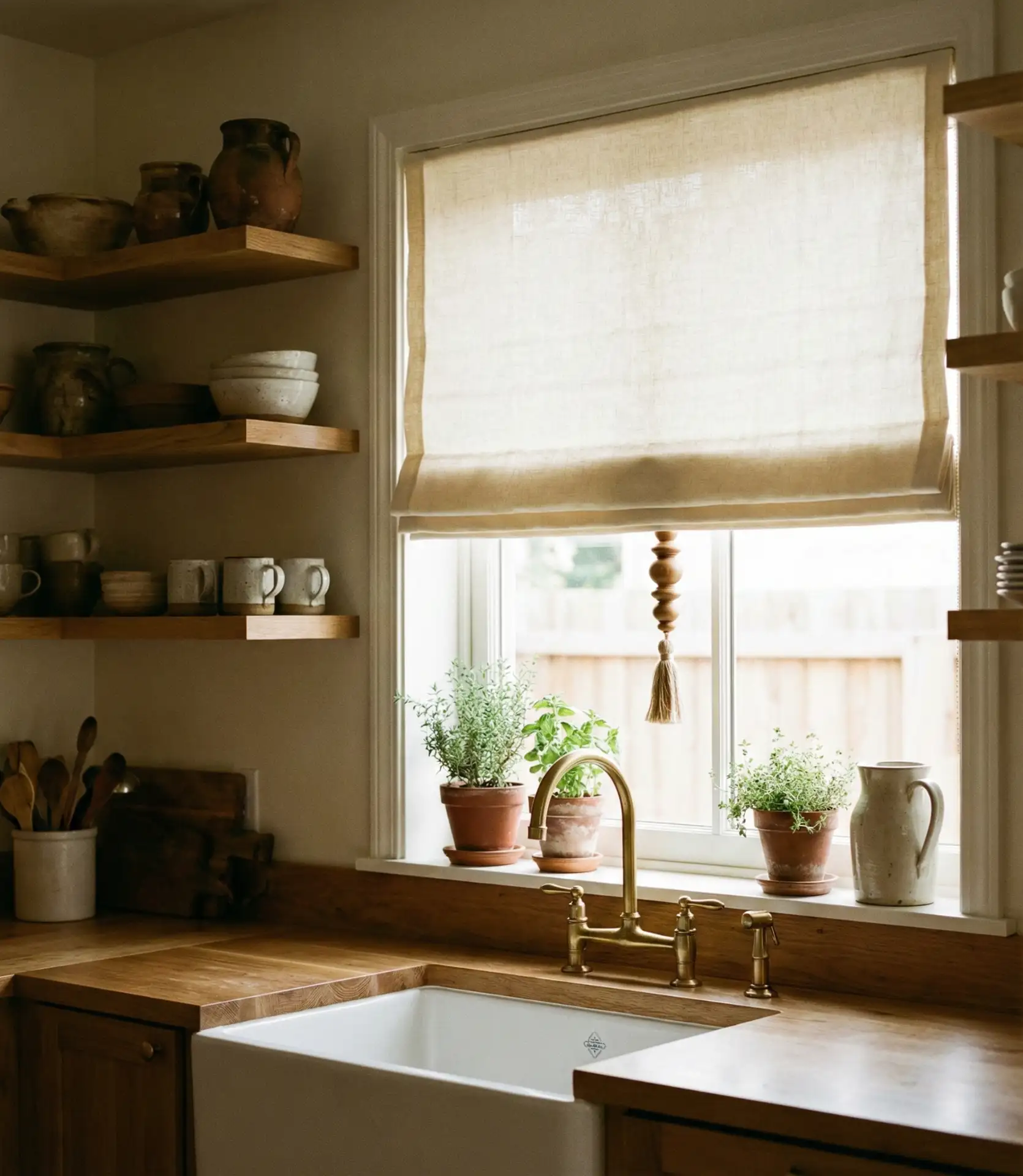
This style works best in kitchens where the overall aesthetic leans traditional or eclectic. Vintage shades blend in perfectly with the deeply rooted farmhouse and cottage styles of the South. They’re also easy to clean—just a damp cloth and occasional dusting keep them looking fresh. If you’re sourcing vintage originals, check the spring mechanism before buying; replacements are available but can be tricky to install.
12. Potted Succulents on a Corner Ledge
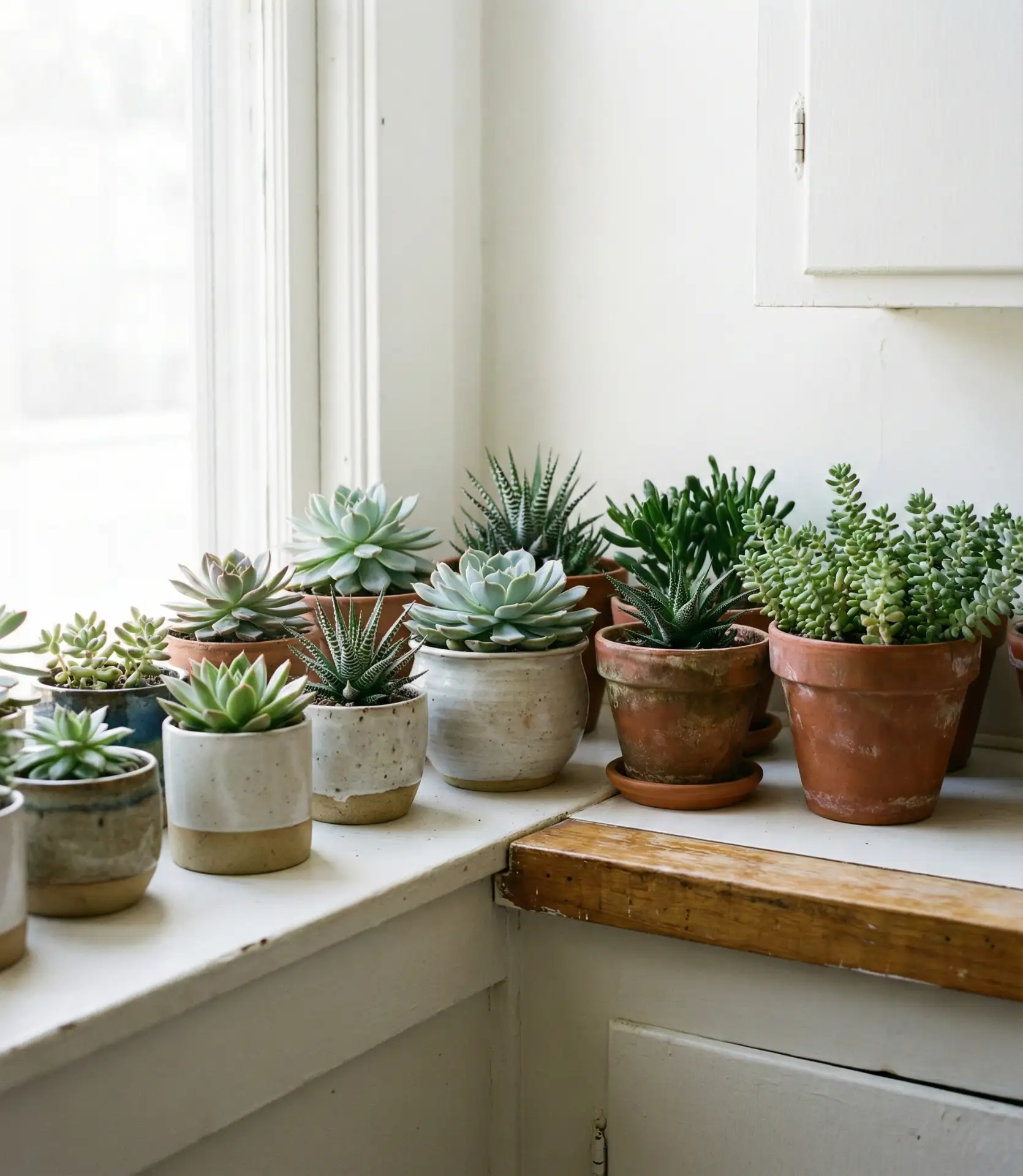
A corner window with a deep ledge is perfect for a collection of succulents and cacti, which thrive in bright, indirect light. This setup is low-maintenance and visually interesting, especially when you vary pot sizes and plant shapes. It’s a popular choice in modern and Southwestern kitchens, where the geometric forms of succulents echo clean lines and minimalist sensibilities.
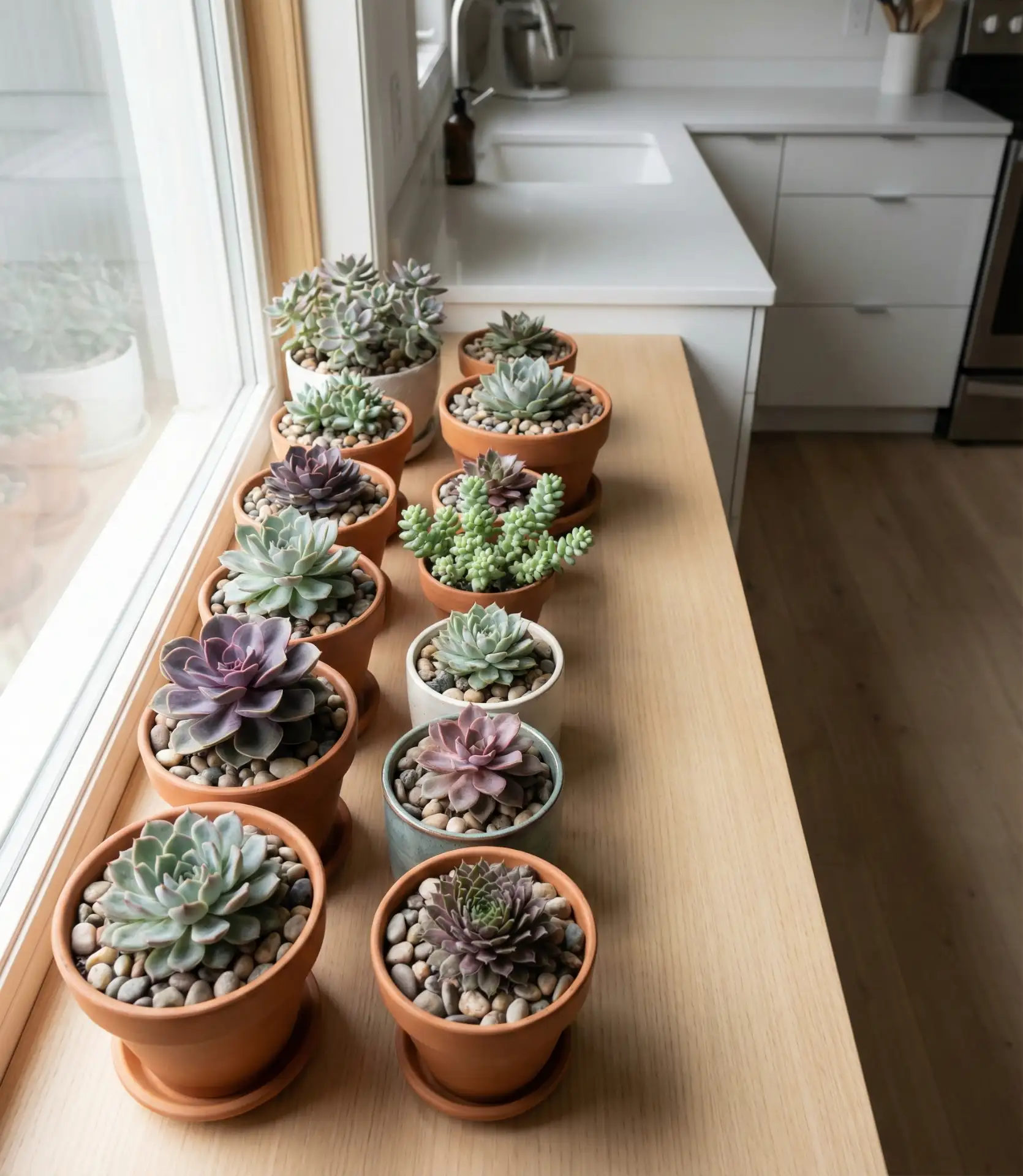
Real homeowner behavior: people often overwater succulents because they treat them like traditional houseplants. The reality is that succulents prefer to dry out completely between waterings, especially in the cooler months. If you notice shriveled leaves on your succulents, it usually indicates underwatering; however, if the leaves are mushy or translucent, it means you have overwatered them. Once you master this technique, they become nearly indestructible.
13. Black-Framed Windows with No Treatment
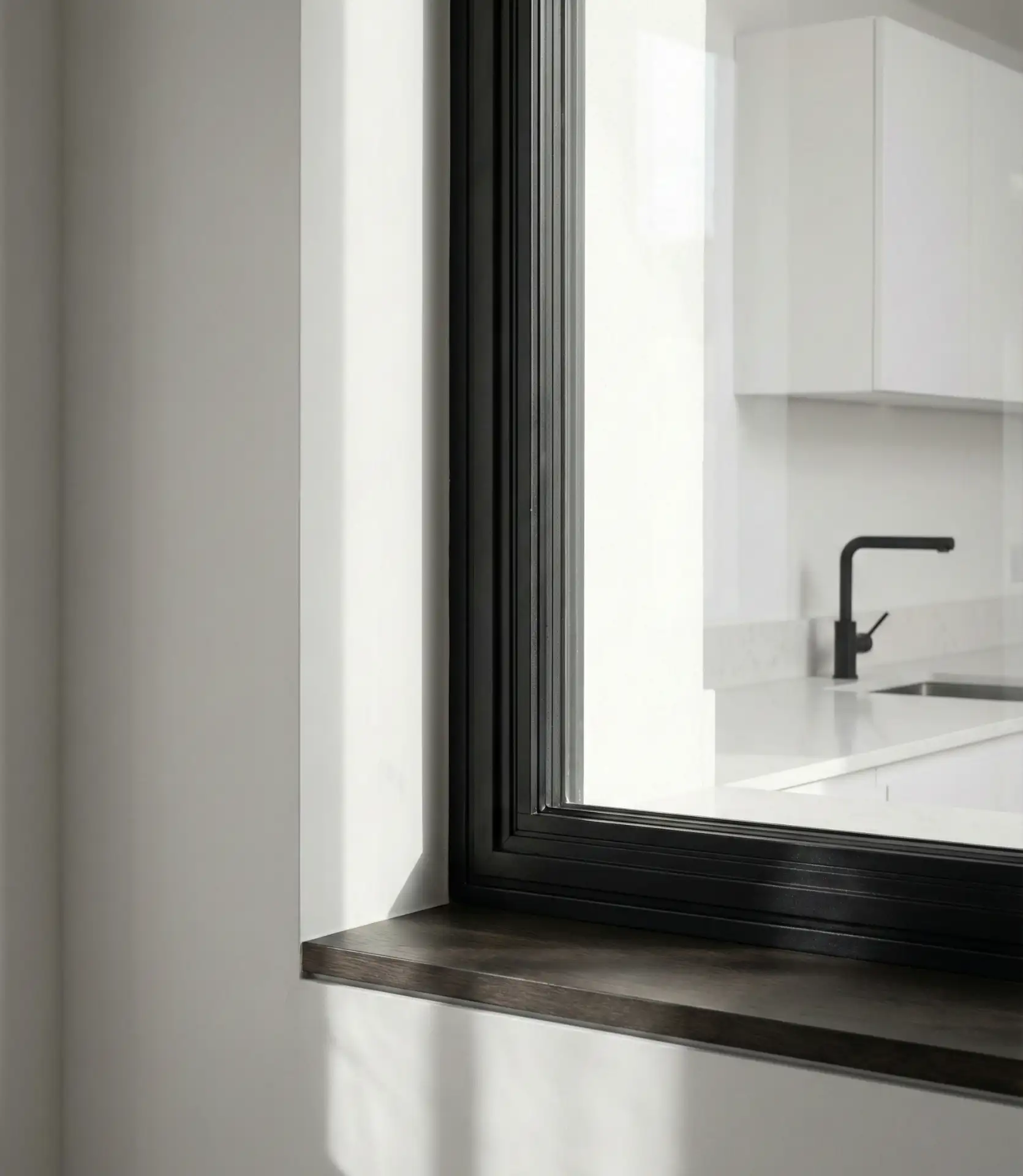
Leaving a black-framed window bare is a bold move that works when the view itself is the focal point. This approach is especially effective in modern kitchens with clean lines and neutral palettes, where the window frame becomes a graphic architectural element. It’s also practical in homes where privacy isn’t a concern, such as rural properties or upper-story units.
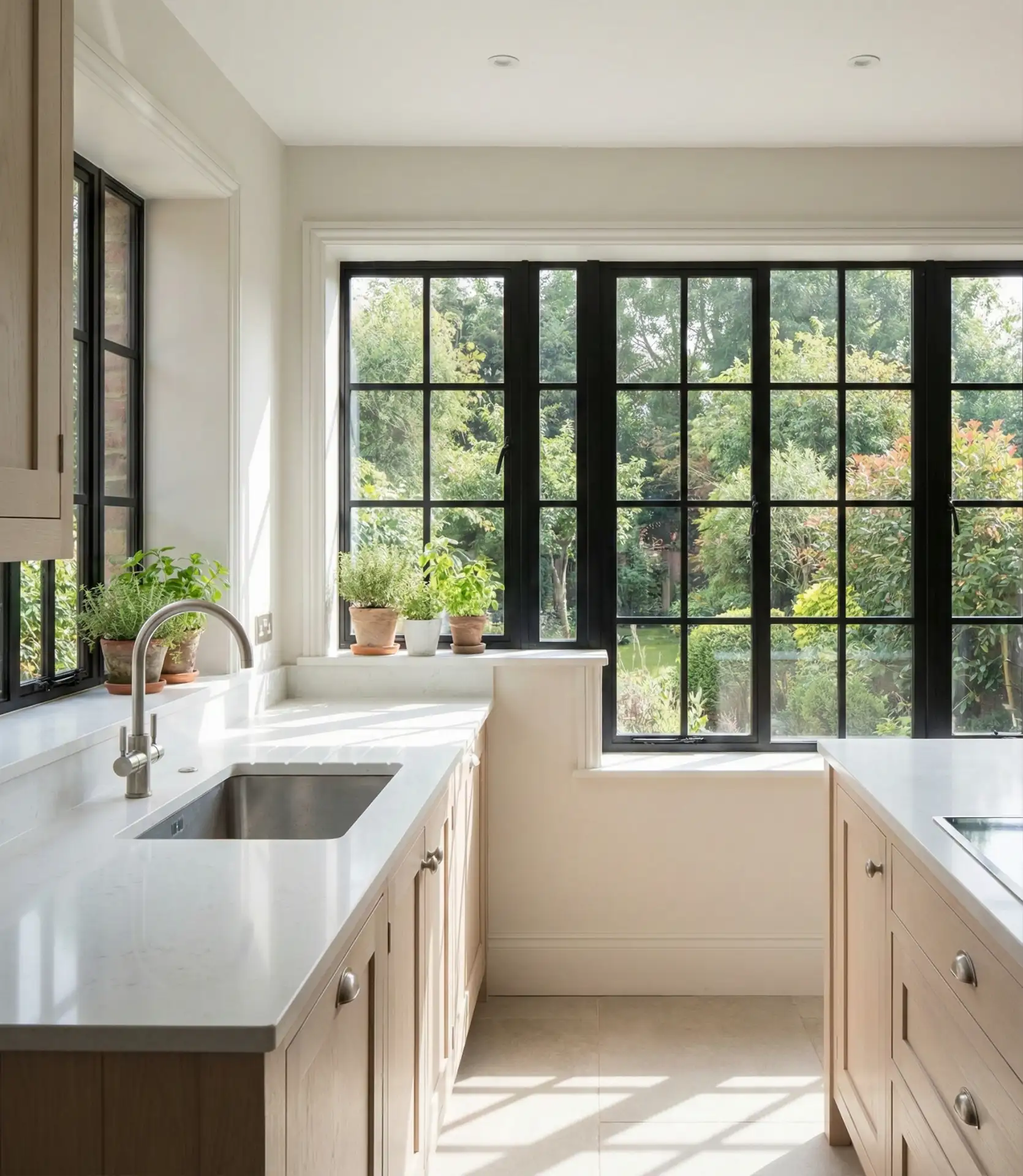
In cities like Portland and Seattle, where mid-century and Scandinavian design influences run deep, bare windows are increasingly common. The key is ensuring the window itself is architecturally interesting—muntins, steel frames, or oversized panes all add visual weight. If your window is standard builder-grade, consider retrofitting it with a black-painted frame before committing to this look.
14. Macramé Plant Hangers in the Window Frame
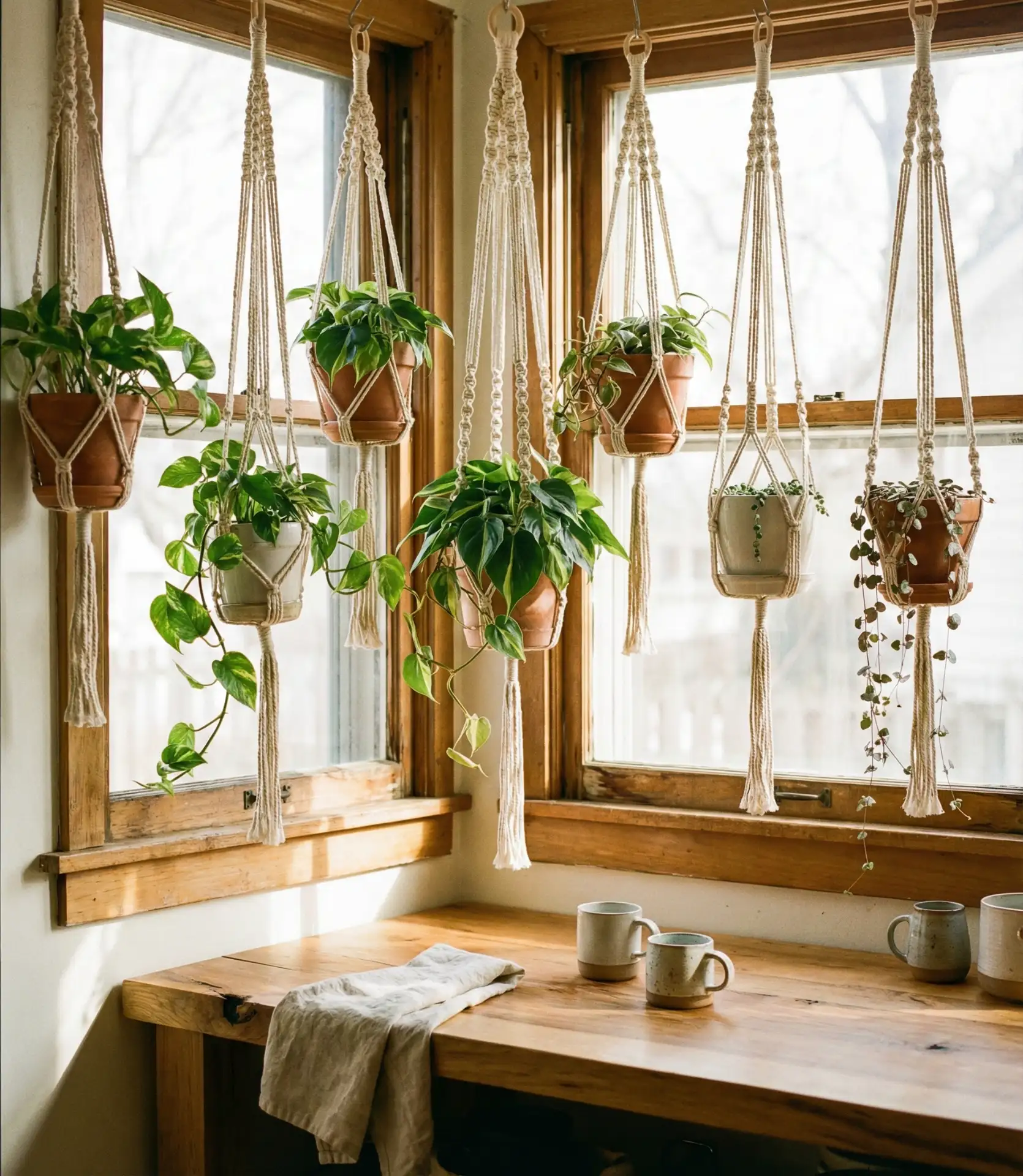
Suspending plants from macramé hangers within the window frame adds a bohemian, layered look that’s especially popular in open kitchens with high ceilings. The plants catch the light without taking up counter space, and the macramé adds texture that softens rough surfaces. This setup works well with plants like spider plants, trailing ivy, or small ferns that don’t mind indirect light.
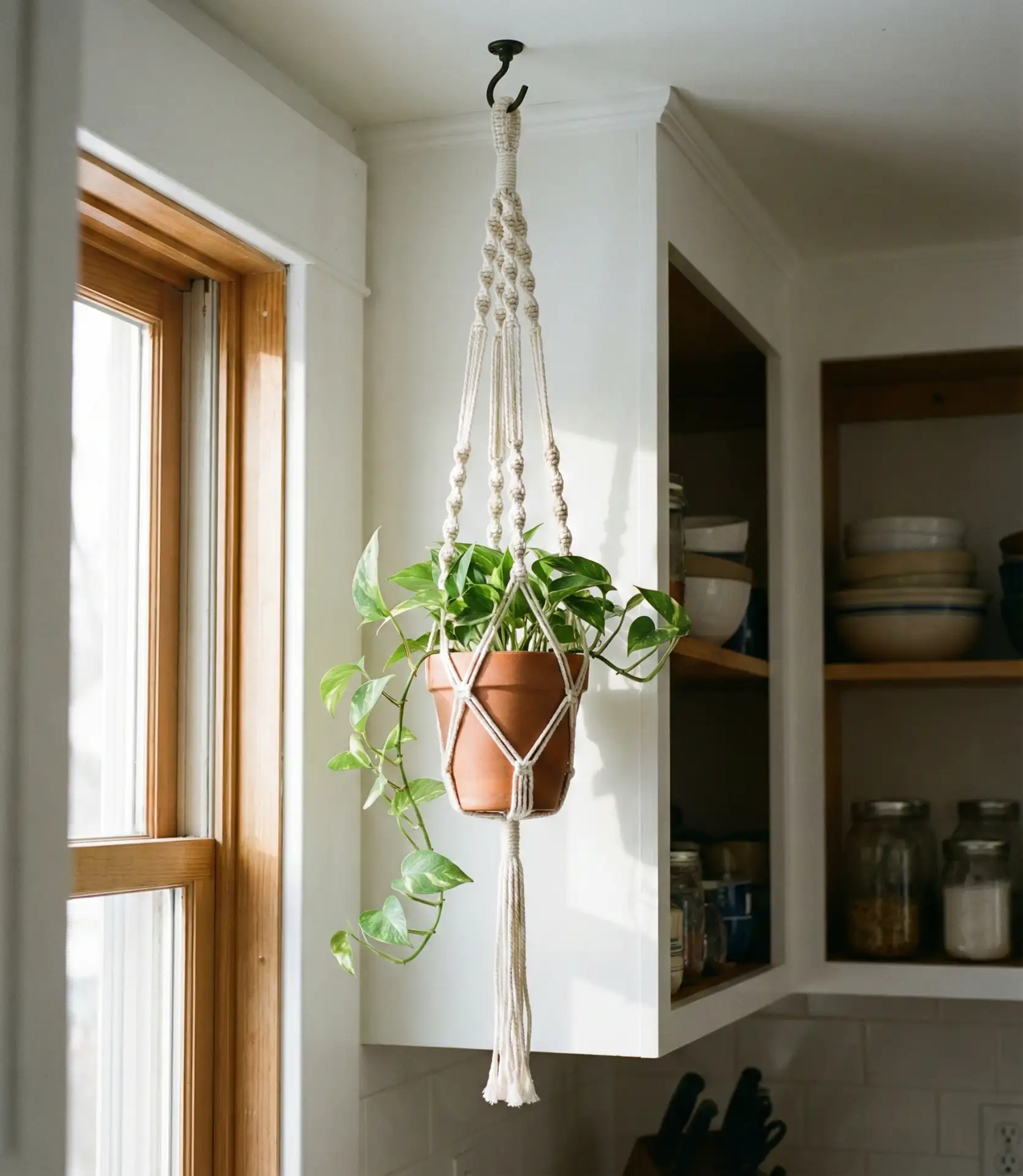
Where it works best: kitchens with west- or south-facing windows where plants get several hours of bright, indirect light. Avoid hanging plants directly in a window that gets scorching afternoon sun, as the glass can amplify heat and scorch delicate leaves. If you’re handy, macramé kits are available online for around $20 and take just an hour or two to complete, making the installation a satisfying DIY project.
15. Roman Shades in a Bold Print
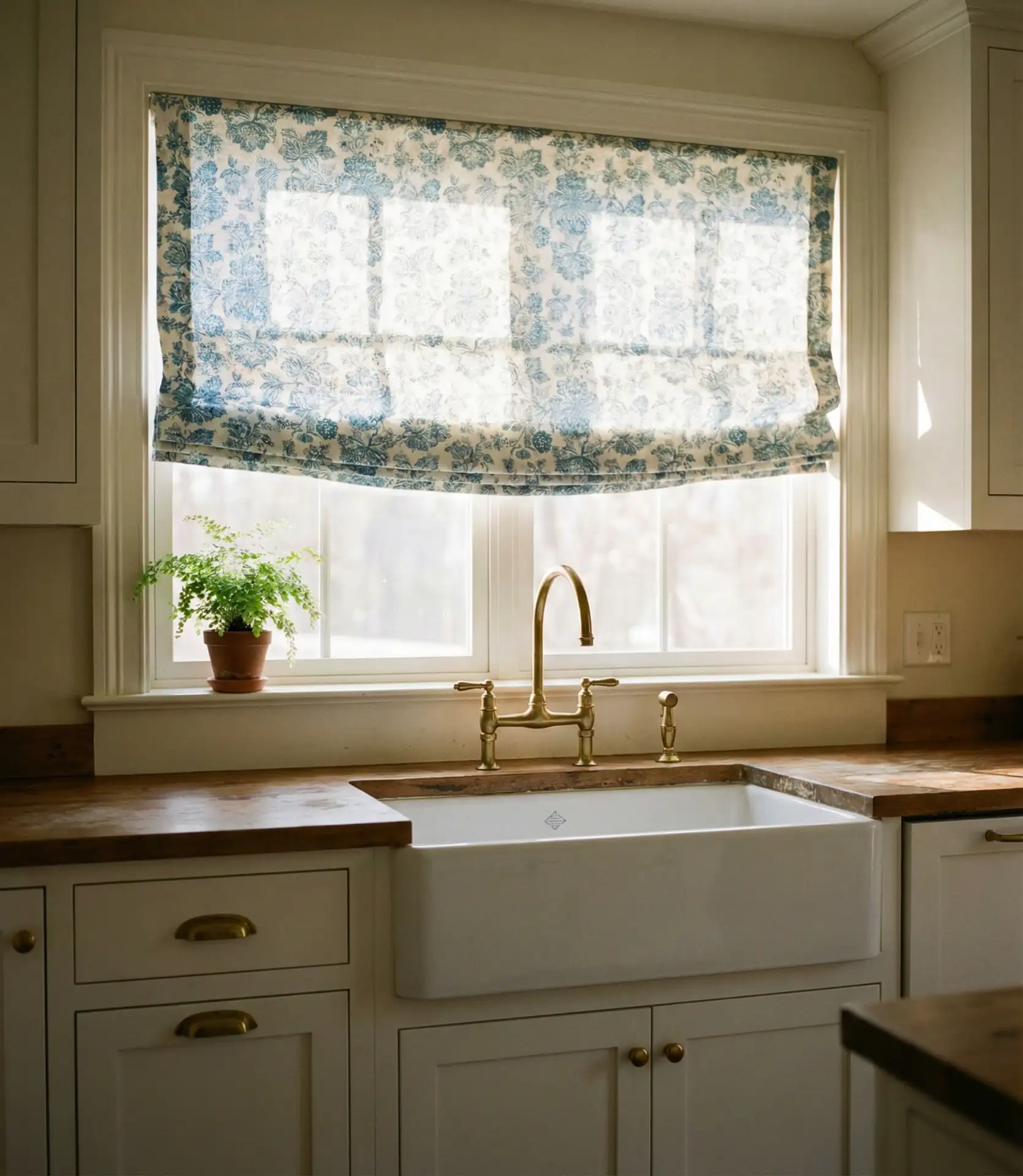
A Roman shade in a patterned fabric, such as florals, geometric prints, or hand-blocked designs, transforms your window into a striking piece. This approach works beautifully in eclectic or cottage kitchens where a bit of pattern adds personality without overwhelming the space. The tailored folds of a Roman shade keep the look polished, even when the print is lively.
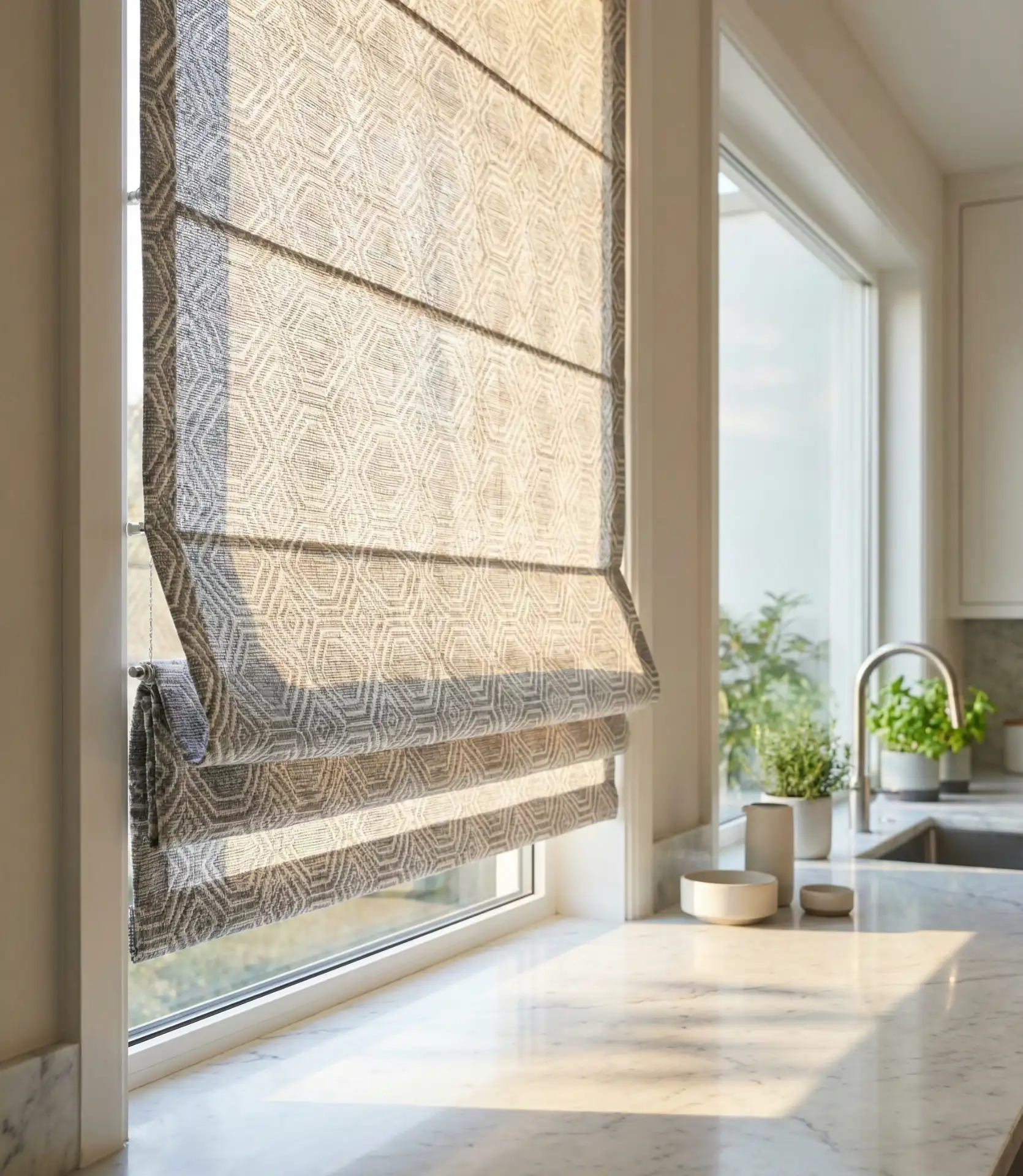
Experts often recommend pulling a pattern from an existing element in the room—a backsplash tile, a rug, or even dishware—to ensure the shade feels cohesive rather than random. Custom Roman shades can run $200 to $600 depending on fabric and hardware, but they’re a worthwhile investment if you want a high-impact look that doesn’t require painting or major renovation.
16. Farmhouse Sink with Open Views
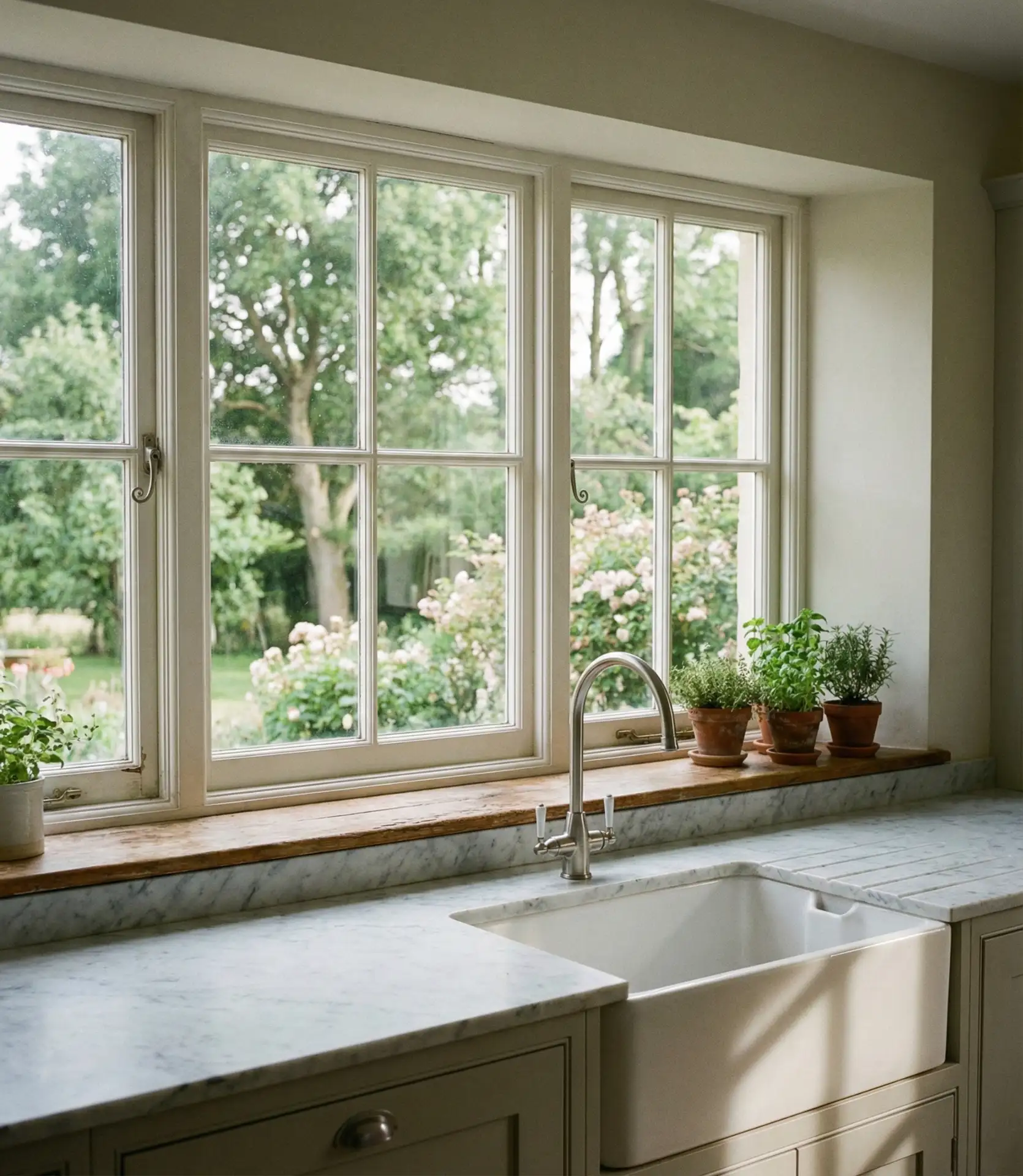
Positioning a deep apron-front sink directly under a large window creates a classic, functional setup that feels rooted in tradition. The over-sink view becomes something to enjoy while washing dishes, and the natural light eliminates the need for task lighting during the day. This configuration is a cornerstone of country and rustic kitchen design across the U.S.
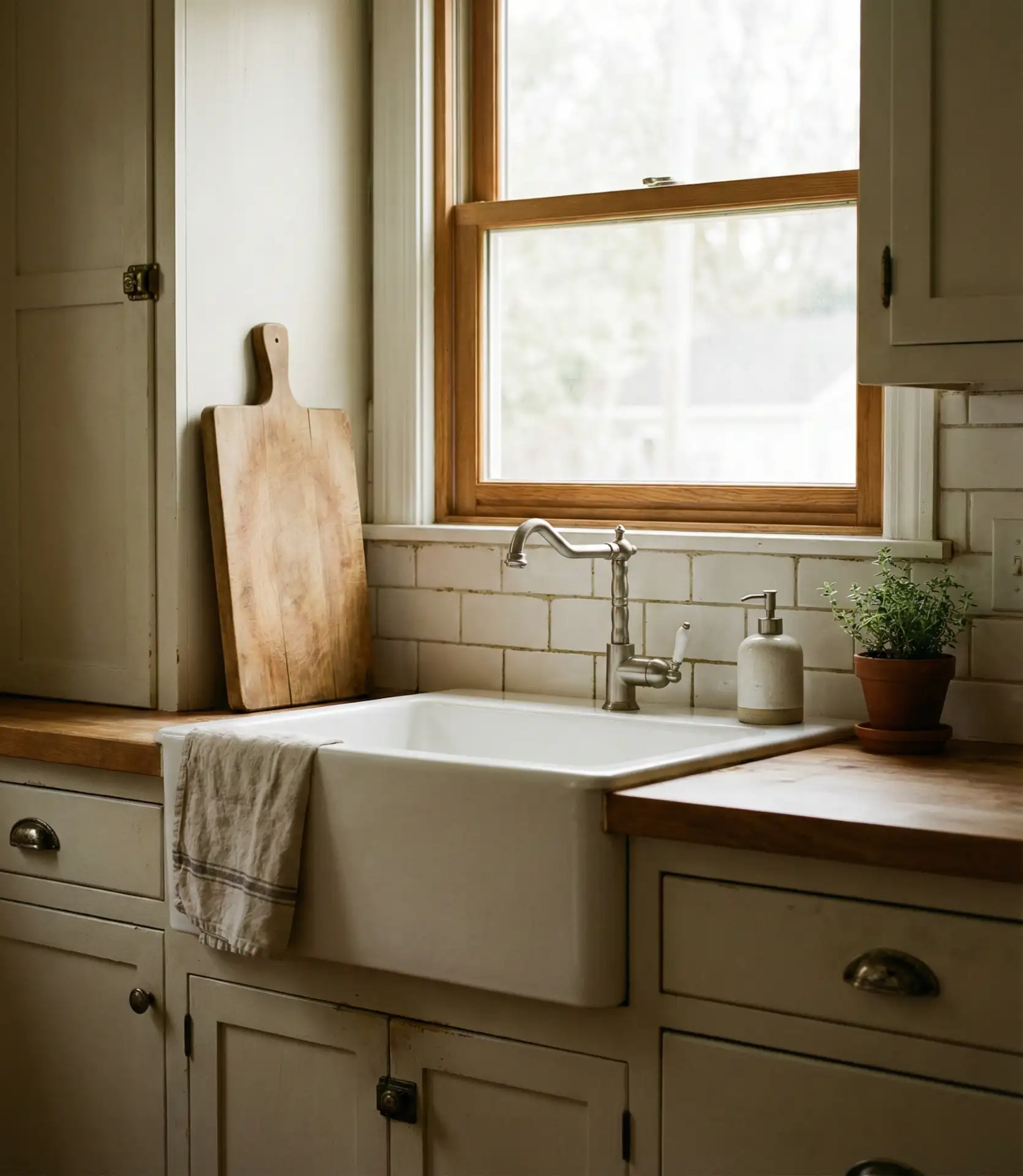
This layout is most common in homes with acreage or rural settings, where the view is genuinely pleasant. In suburban or urban kitchens, consider adding a window box or planter outside to give yourself something attractive to look at. Don’t underestimate the psychological benefit of a pleasant view during routine tasks—it makes chores feel less tedious.
17. Wooden Shutters for Adjustable Privacy
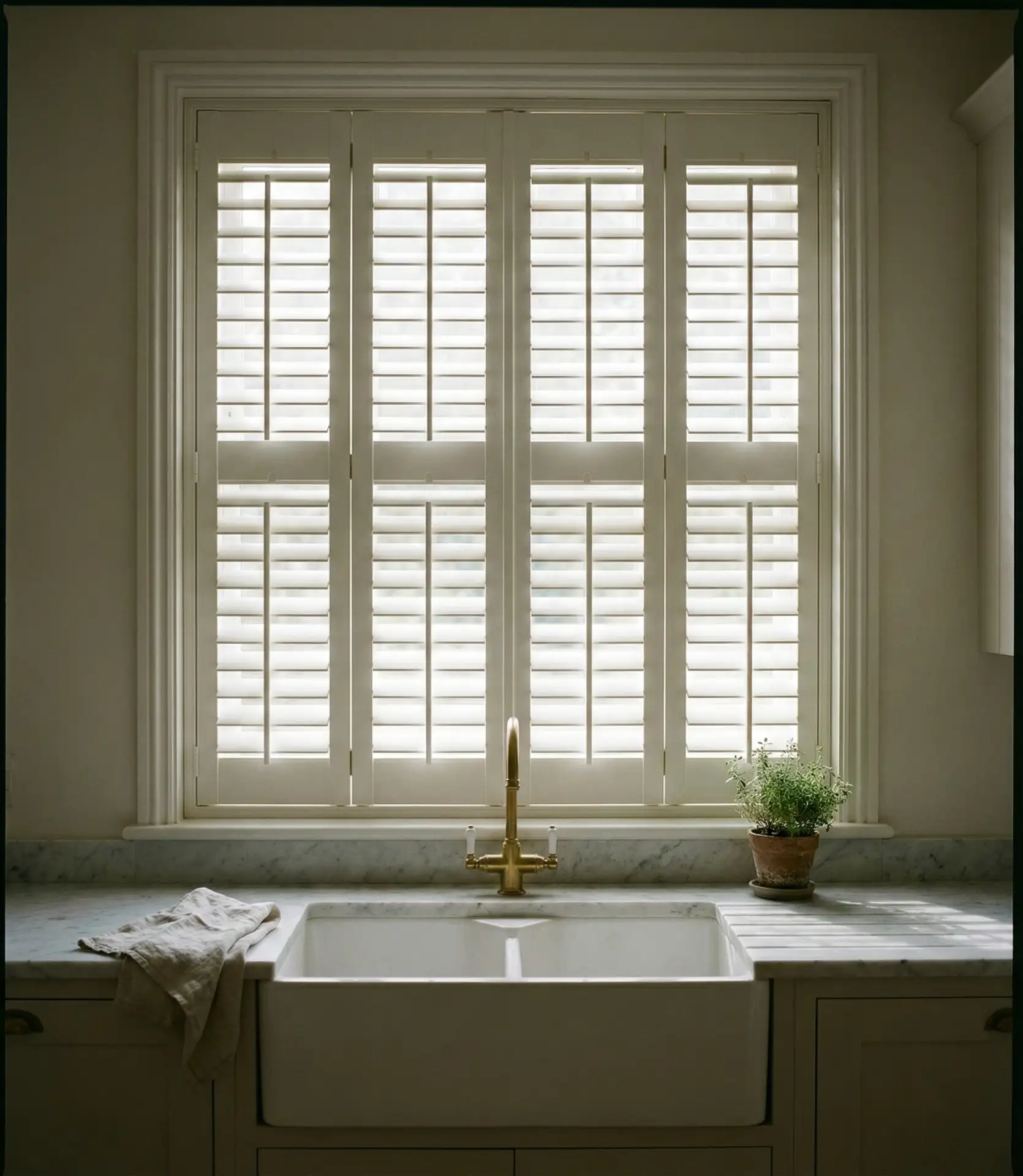
Interior plantation shutters in painted or stained wood offer precise control over light and privacy, making them a smart choice for bay or long windows. The louvered slats tilt to let in varying amounts of light, and the clean lines suit both traditional and transitional kitchens. They’re especially popular in coastal areas where humidity and salt air can damage fabric treatments.
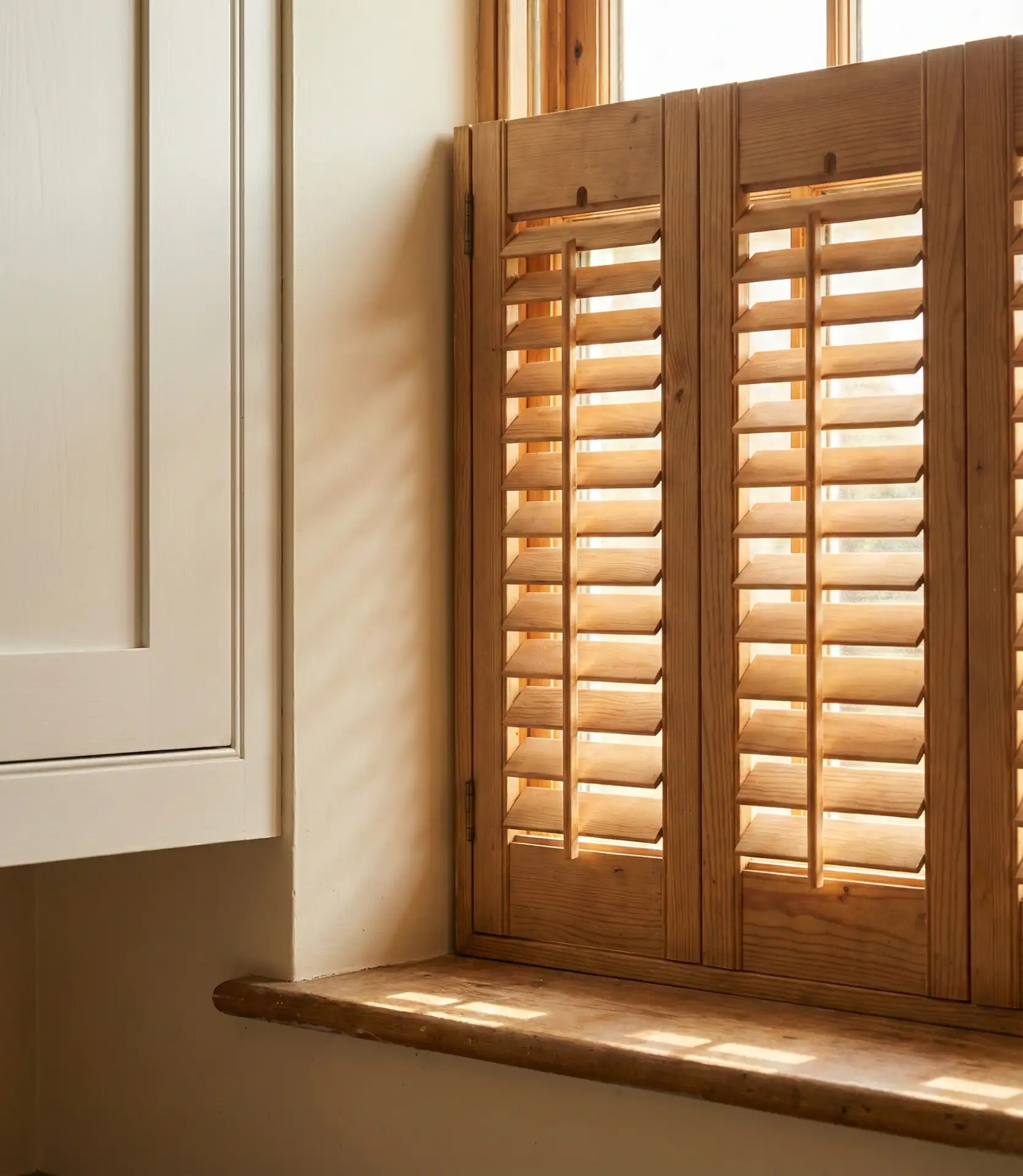
Common mistake: choosing shutters that are too heavy for the window frame, which causes sagging over time. Work with a reputable installer who can assess the weight load and reinforce the frame if necessary. Custom shutters are an investment—expect to pay $300 to $800 per window—but they’re durable and timeless, often outlasting the homeowner’s tenure in the house.
18. Use a Colorful Tile Backsplash as the Focal Point
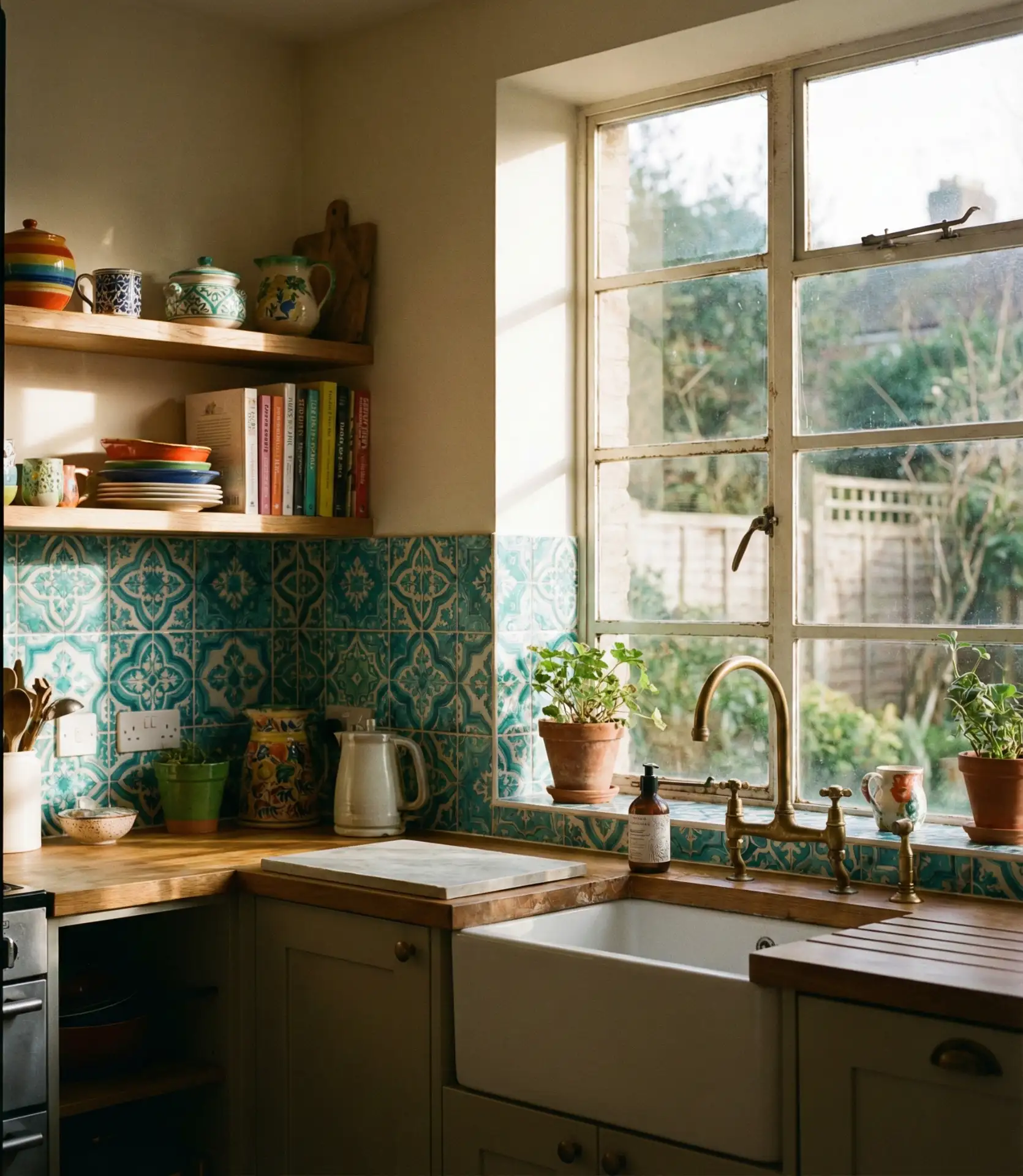
When your sink backsplash features vibrant tile, the window treatment should stay simple to avoid visual competition. A bare window or sheer panel lets the tile be the star, especially if it’s patterned cement tile or hand-painted ceramics. This strategy works well in India-inspired or Mediterranean kitchens where color and pattern are integral to the design.
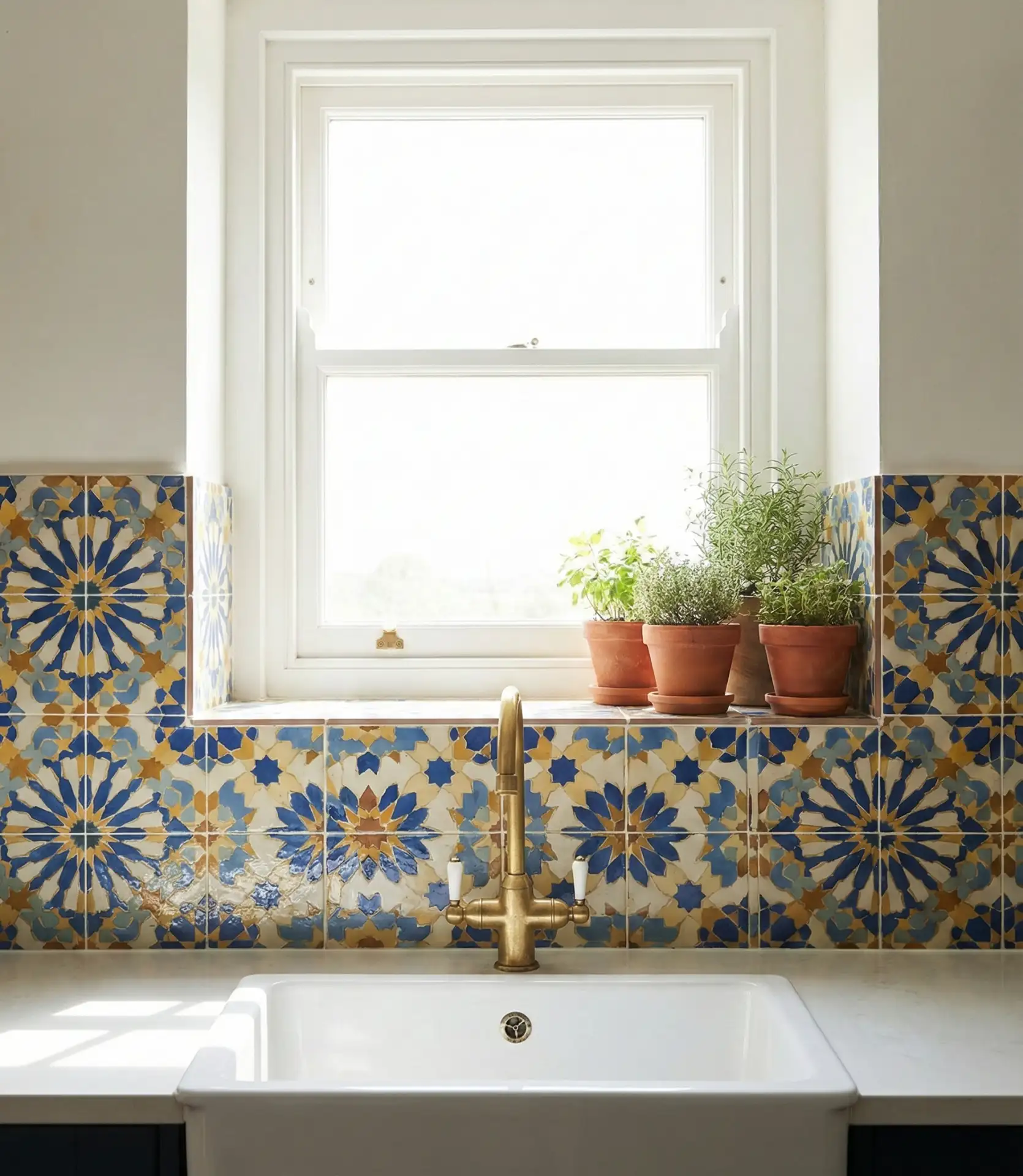
In cities with large South Asian communities—like Edison, New Jersey, or Fremont, California—homeowners often incorporate traditional tile patterns that nod to their heritage. The key is balancing boldness with restraint elsewhere in the room. Keep countertops neutral, and let the backsplash and window work together as a unified visual moment rather than competing elements.
19. Frosted Glass Film for Subtle Diffusion
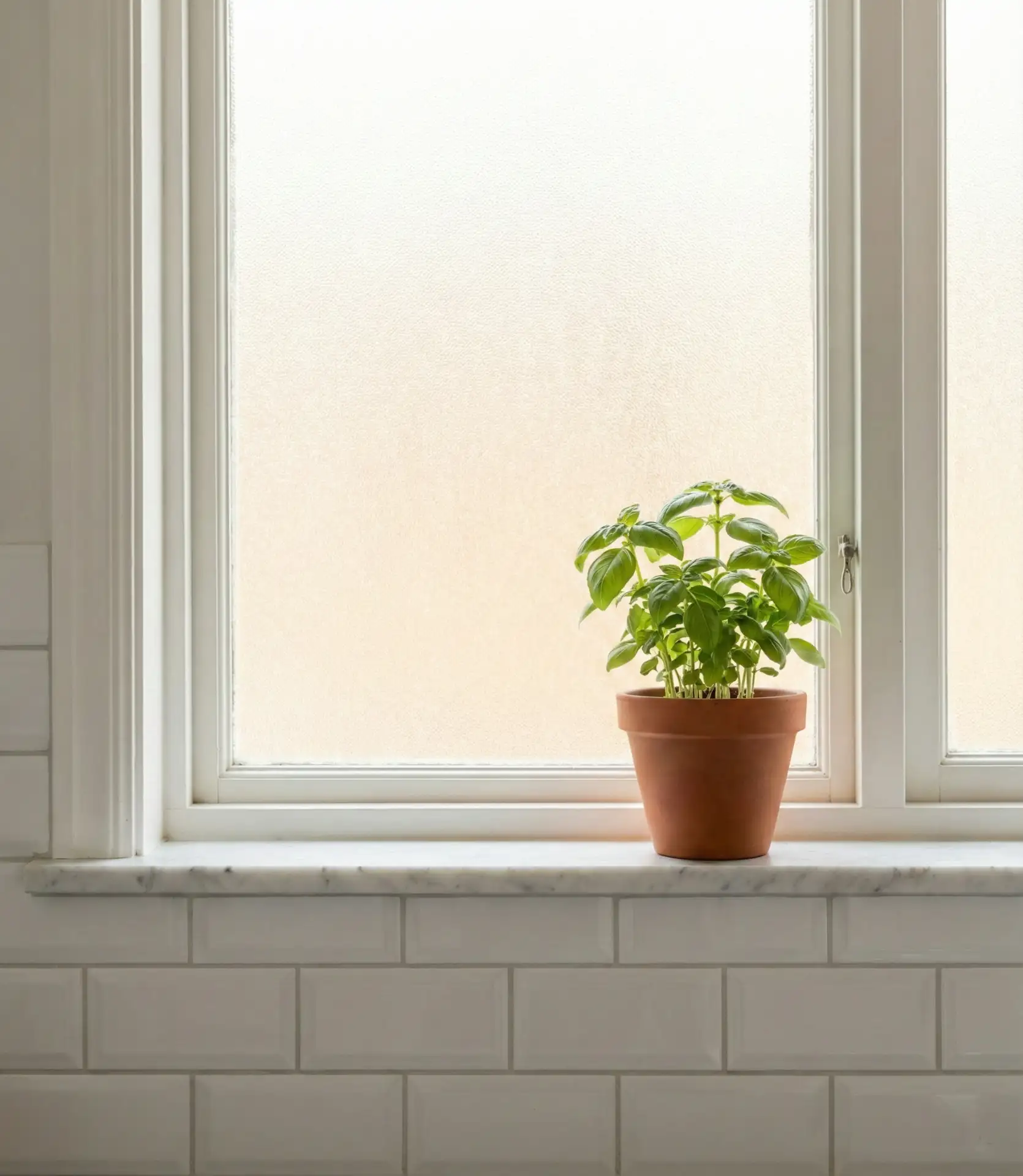
Frosted window film offers privacy without blocking light, making it ideal for tiny kitchens where every inch of brightness matters. The film is removable and renter-friendly, and it comes in various patterns—from simple frosted to decorative etched designs. This solution works particularly well on low windows that face sidewalks or neighboring homes.
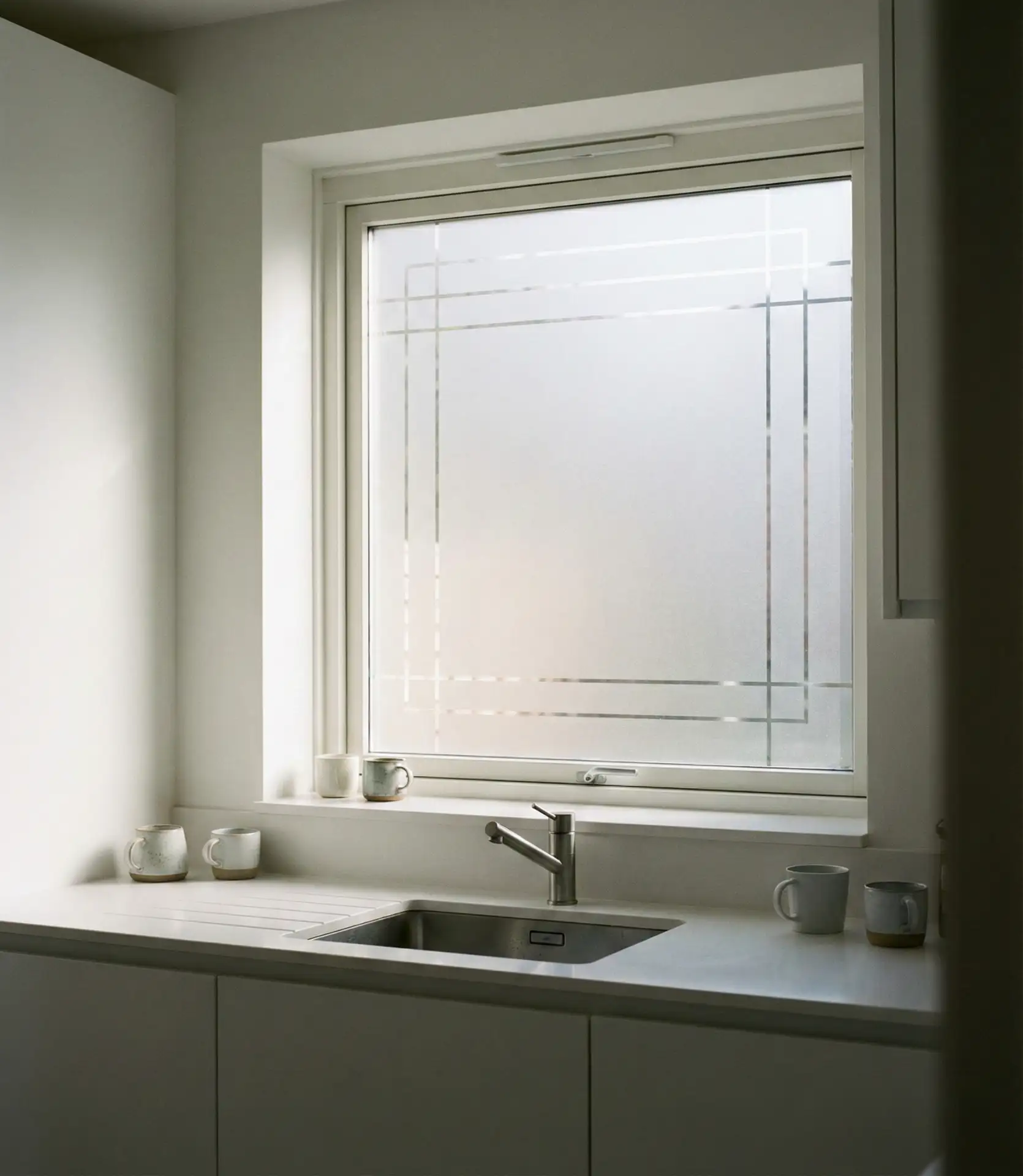
A friend in a Brooklyn walk-up used frosted film on her ground-floor kitchen window, and it transformed the space from feeling exposed to feeling private and serene. Installation takes about 20 minutes and requires only a spray bottle and a squeegee. The film costs around $15 to $30 for a standard window, making it one of the most affordable privacy solutions available.
20. Arched Window with Trailing Ivy
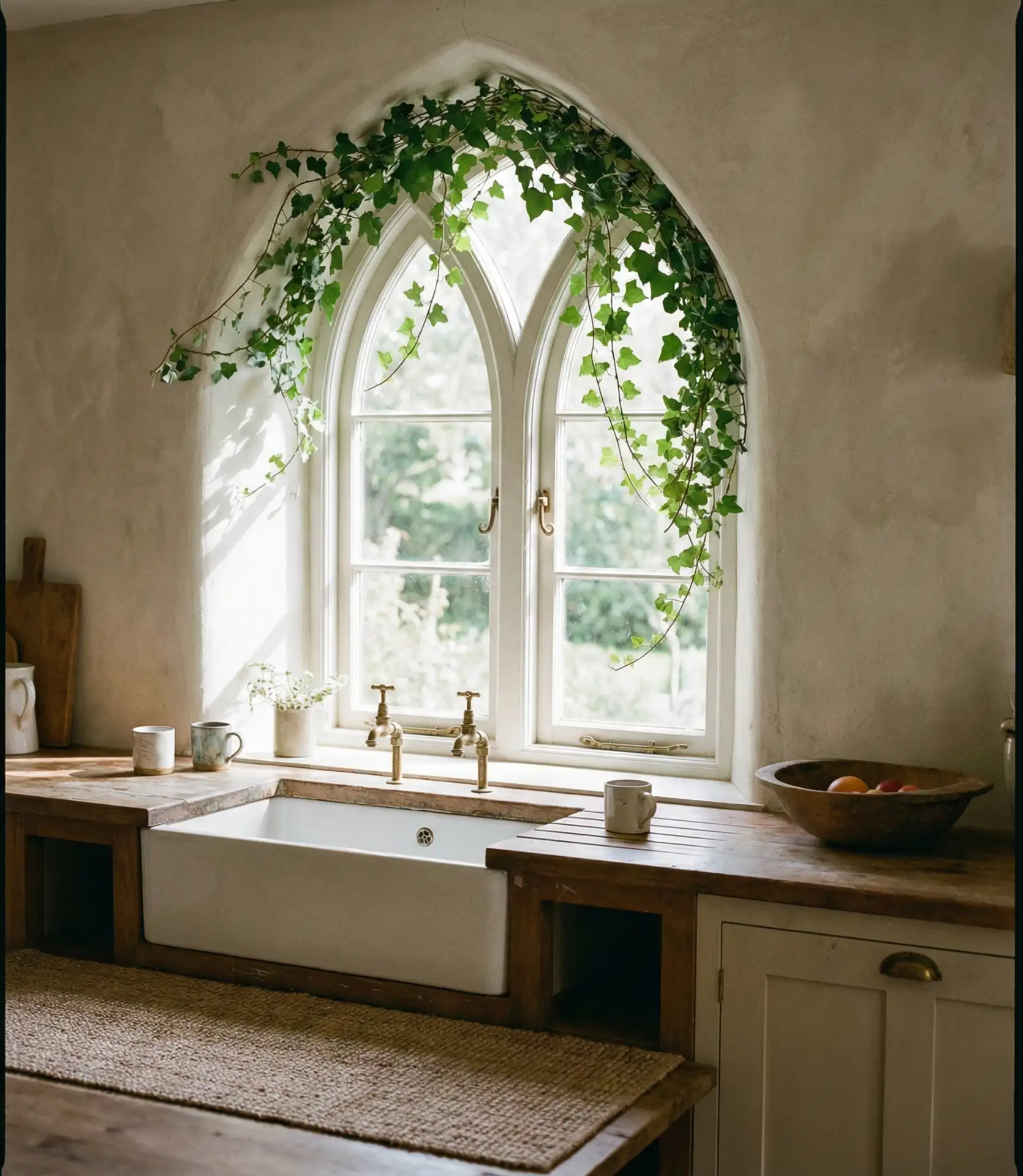
An arched window is inherently architectural, and draping it with trailing ivy or jasmine amplifies its romantic appeal. This look is common in cottage and French country kitchens, where the goal is to blur the line between indoors and outdoors. The greenery softens the rigid arch while emphasizing its shape, creating a focal point that feels both intentional and organic.
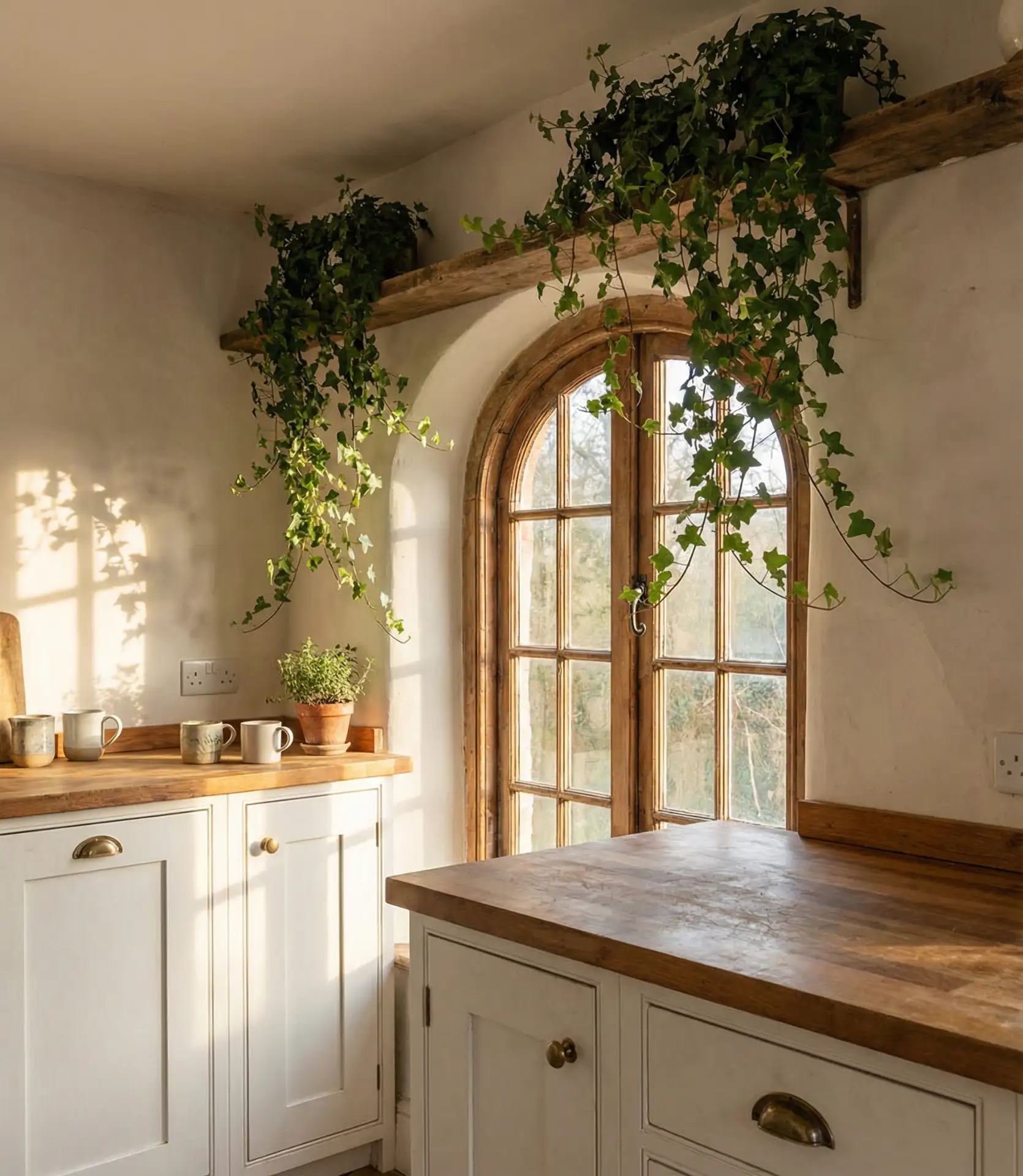
Where it works best: homes with excellent air circulation and moderate humidity. Ivy thrives in these conditions but can suffer in overly dry or stagnant environments. If you’re in a region with harsh winters, consider faux greenery garlands—the quality has improved dramatically recently, and a good faux ivy is nearly indistinguishable from the real thing at a glance.
21. Industrial Steel-Framed Windows
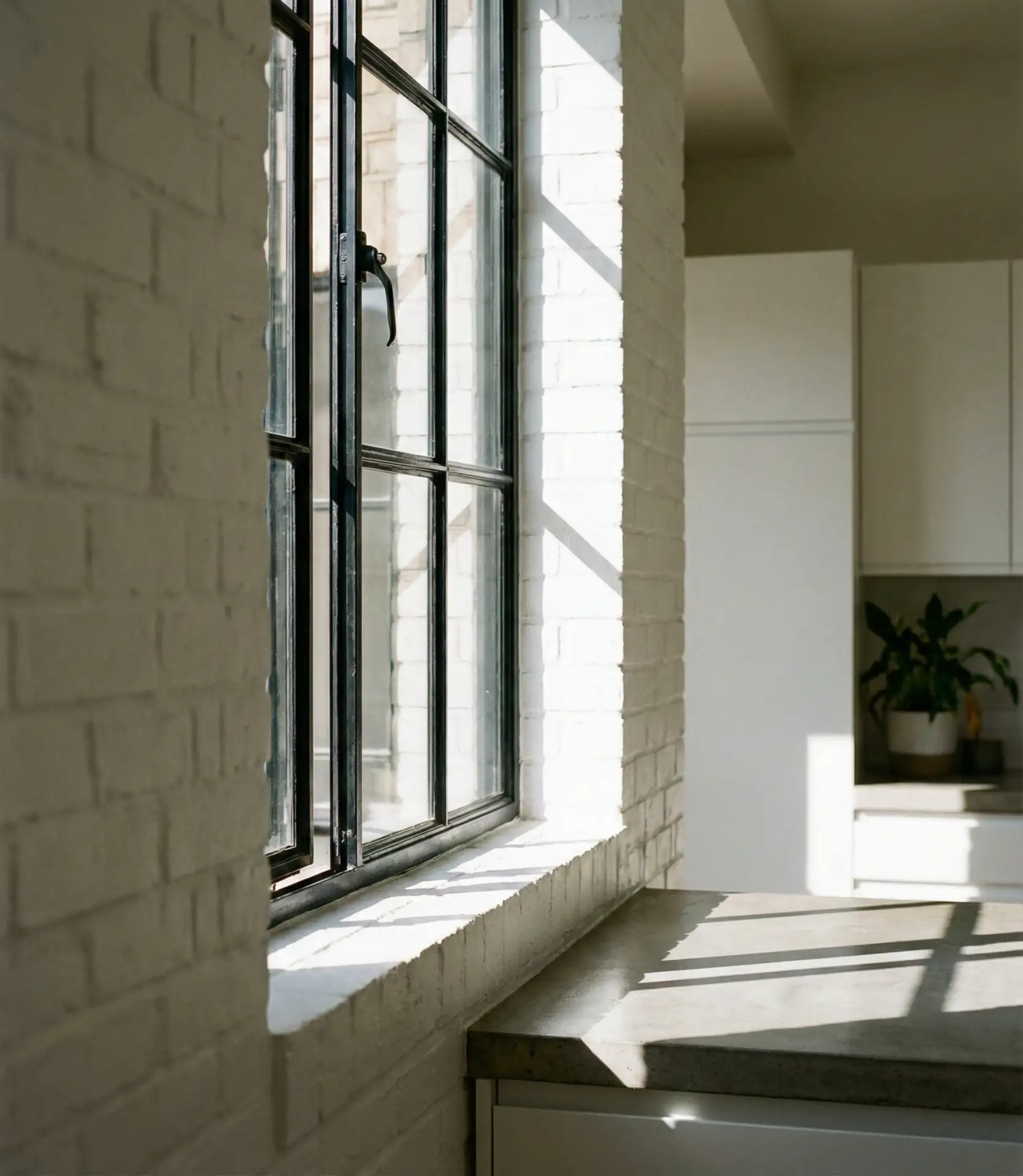
Steel-framed windows with mullions bring an industrial edge that’s especially effective in loft-style or modern kitchens. The thin frames maximize the glass area, flooding the space with light, while the black or bronze finish adds visual weight. This style pairs well with concrete countertops, exposed brick, and open shelving, creating a cohesive urban aesthetic.
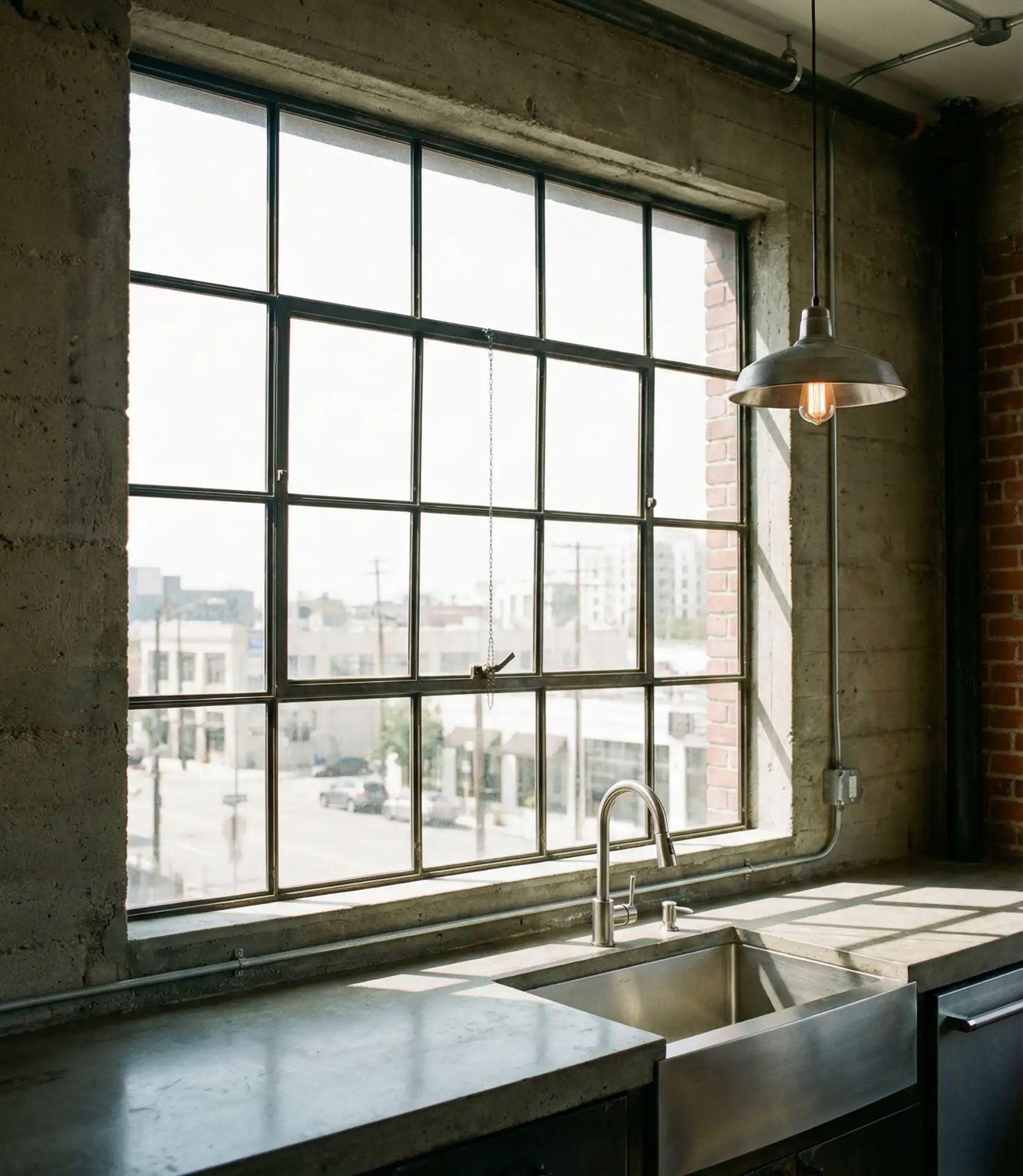
Real homeowner behavior: many people assume steel windows are maintenance-free, but they require periodic checks to ensure seals remain watertight, especially in climates with freeze-thaw cycles. Rust can develop if water gets trapped, so routine inspections and touch-ups are key. Budget-wise, steel windows are a premium option—expect to pay $800 to $1,500 per window installed, but the longevity and aesthetic payoff make them a smart long-term investment.
22. Skylight Over the Sink
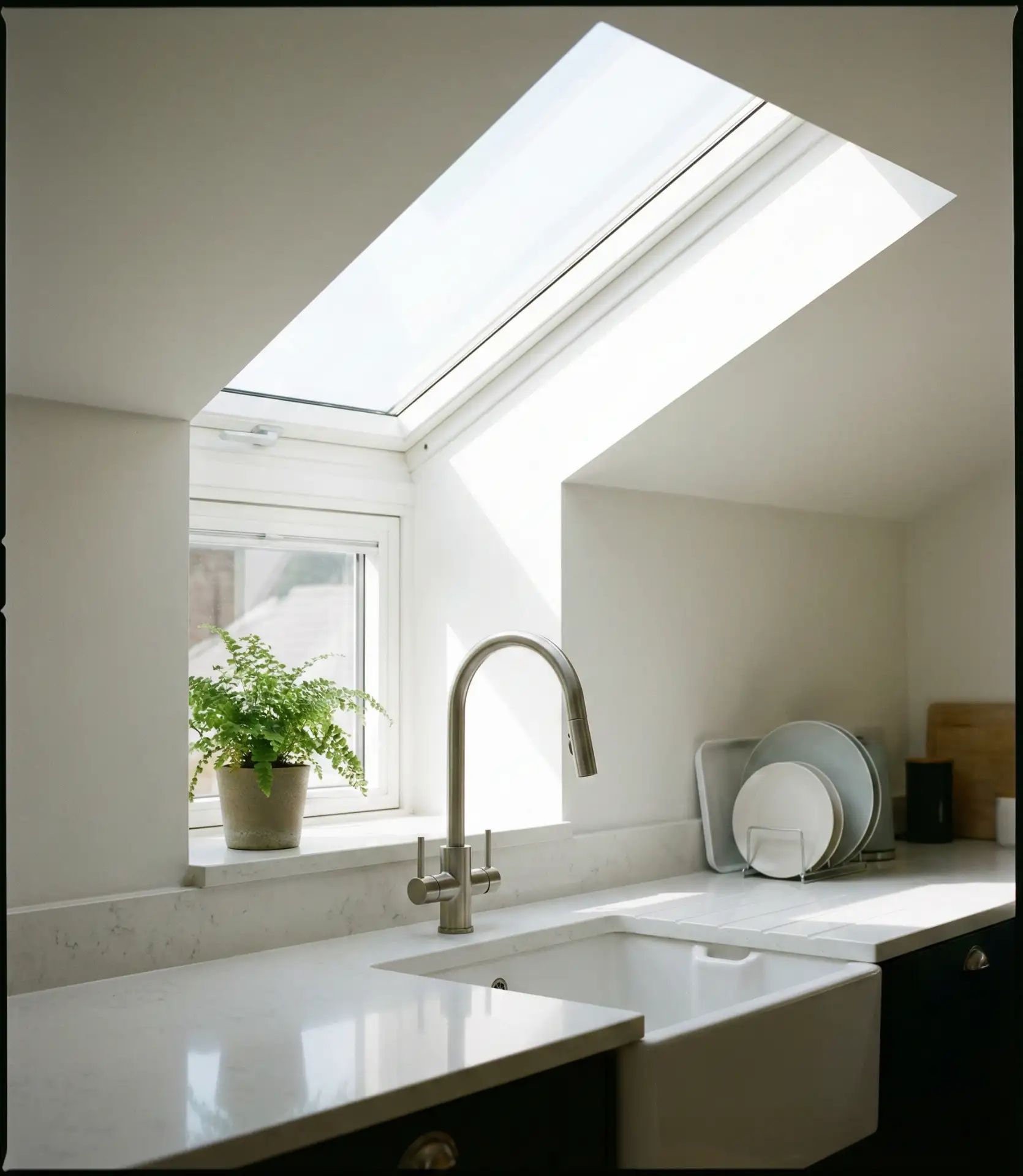
Installing a skylight directly above your sink floods the workspace with overhead light, reducing the need for artificial lighting during the day. Galley kitchens and homes, where wall space is limited and traditional windows aren’t feasible, find this especially practical. The skylight also adds a sense of openness, making even a small kitchen feel more expansive.
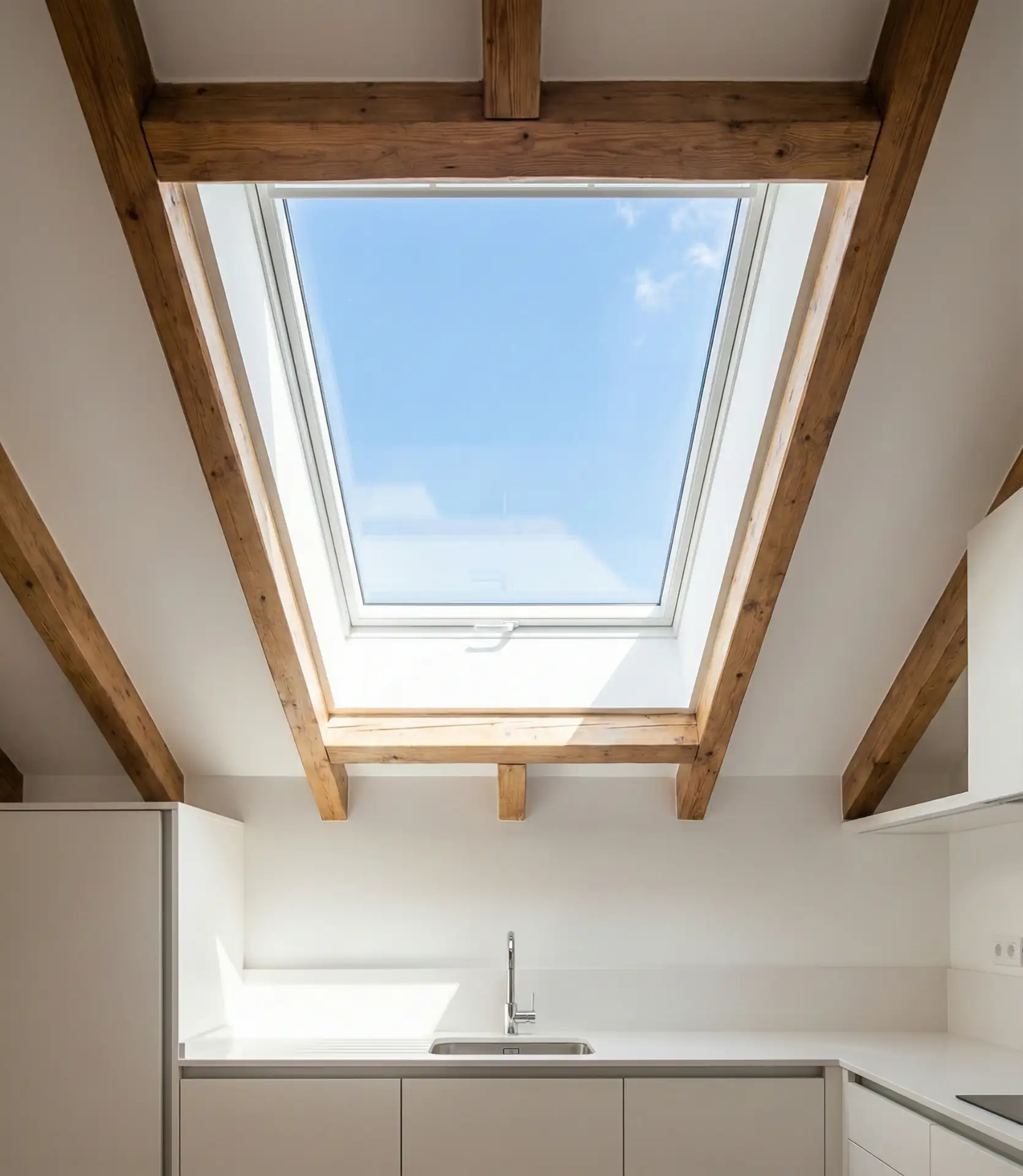
Practical insight: skylights can add significant heat during summer months, so consider models with built-in shading or reflective coatings if you’re in a warm climate like Arizona or Texas. Installation costs range from $1,500 to $3,000, including labor, but the energy savings from reduced lighting needs can offset the investment over time. It’s a particularly appealing option for kitchens in single-story homes or top-floor apartments.
Your kitchen window is a chance to define one of your home’s most important rooms. Whether you’re drawn to the simplicity of sheer curtains, the practicality of a window herb garden, or the drama of a stained glass accent, the right choice can make your time in the kitchen more enjoyable and your space more beautiful. Please share your thoughts and ideas about your kitchen windows in the comments section below.