
Green tile bathrooms are having a major moment in 2026, and it’s easy to see why. From calming sage to bold emerald, green brings a sense of nature indoors while offering endless design versatility. Americans searching Pinterest for bathroom inspiration are gravitating toward green because it pairs beautifully with both modern and vintage styles, works in small powder rooms and spacious primary baths alike, and creates a spa-like atmosphere that feels both fresh and timeless. Whether you’re planning a full renovation or just looking to refresh your space, these ideas will show you how to make green tile work in your home.
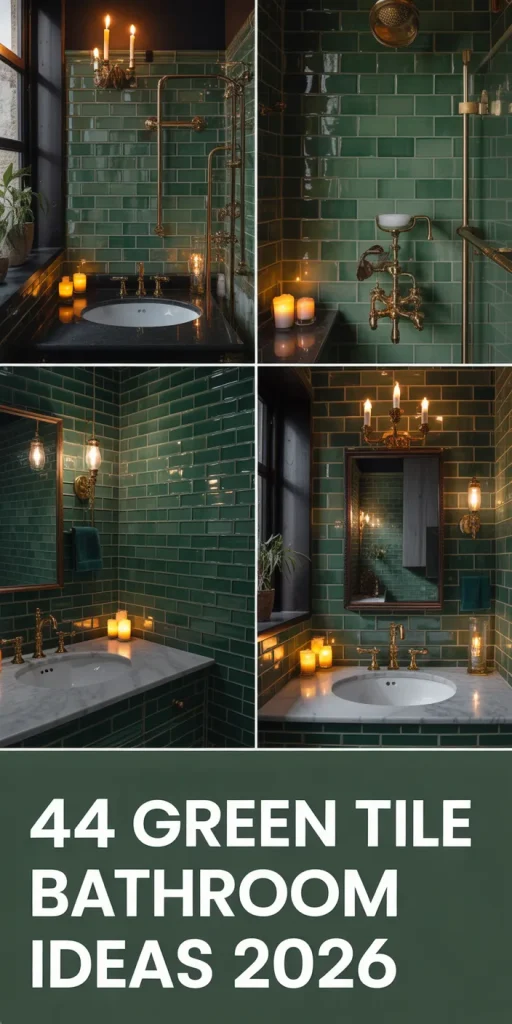
1. Dark Emerald Subway Tile Shower
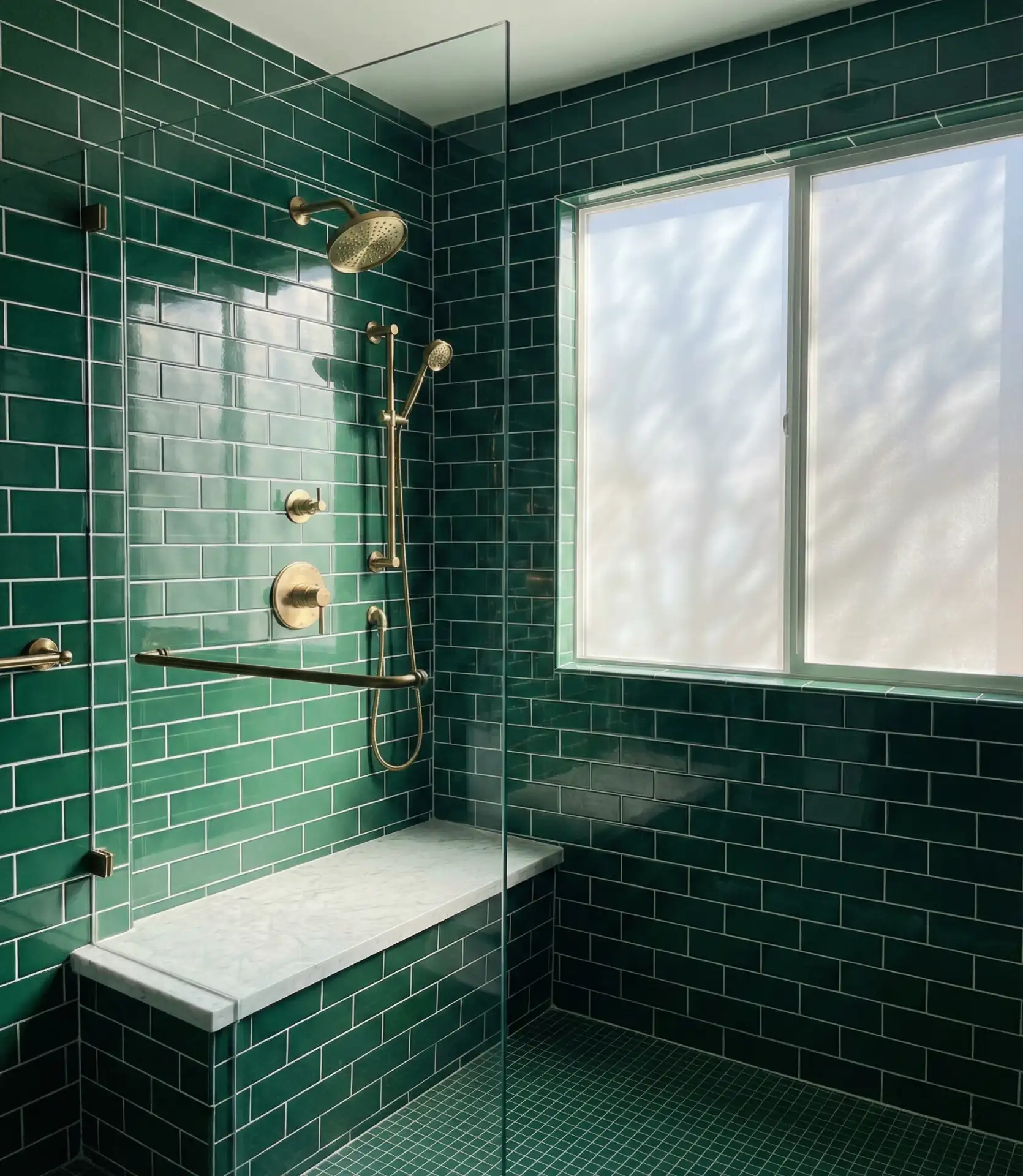
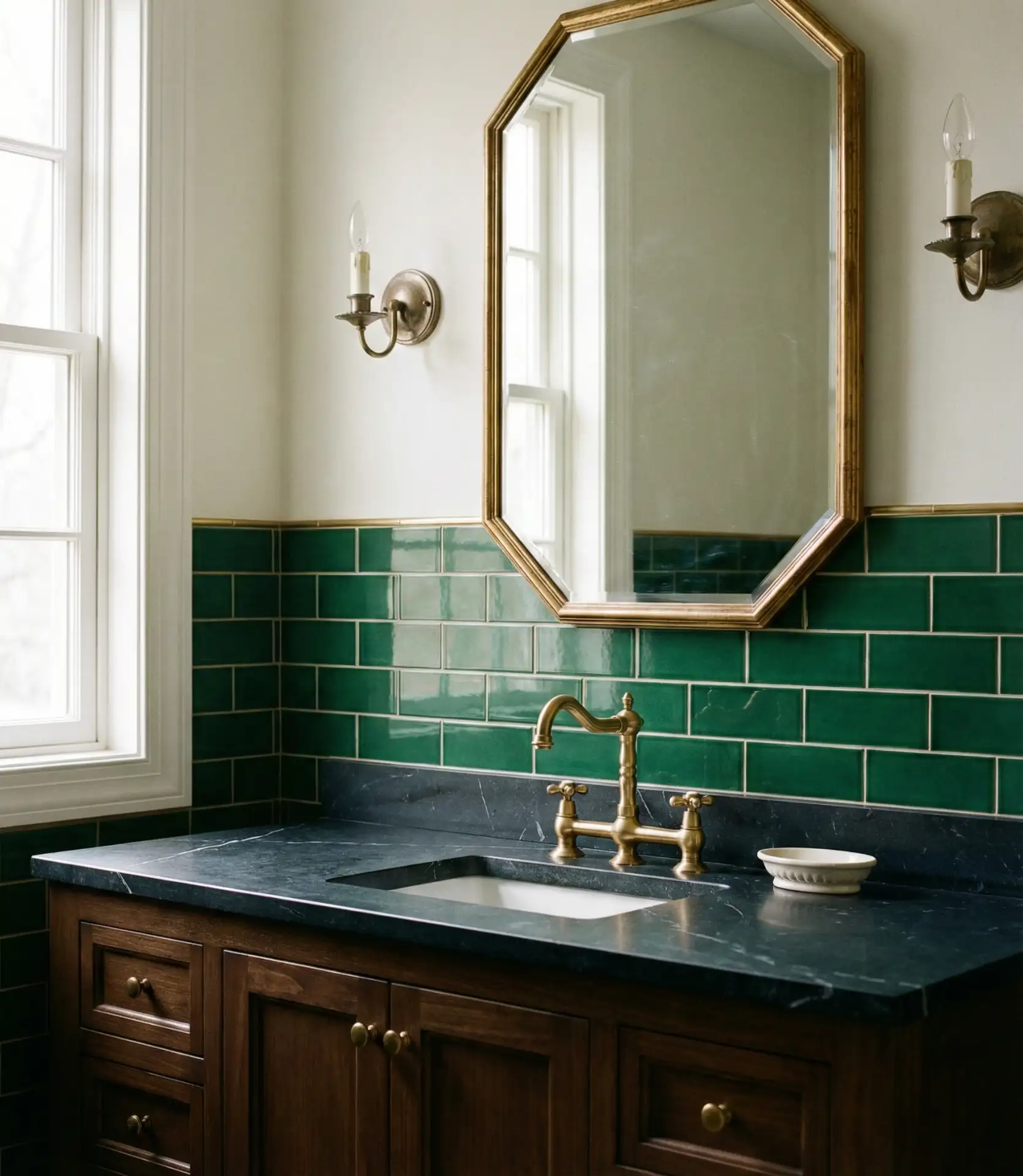
A dark emerald subway tile shower creates instant drama without feeling overwhelming. The classic subway layout keeps the look grounded, while the rich green adds depth and sophistication. This approach works especially well in bathrooms with ample natural light, where the tiles can shift from deep forest tones in shadow to jewel-like brightness near windows.
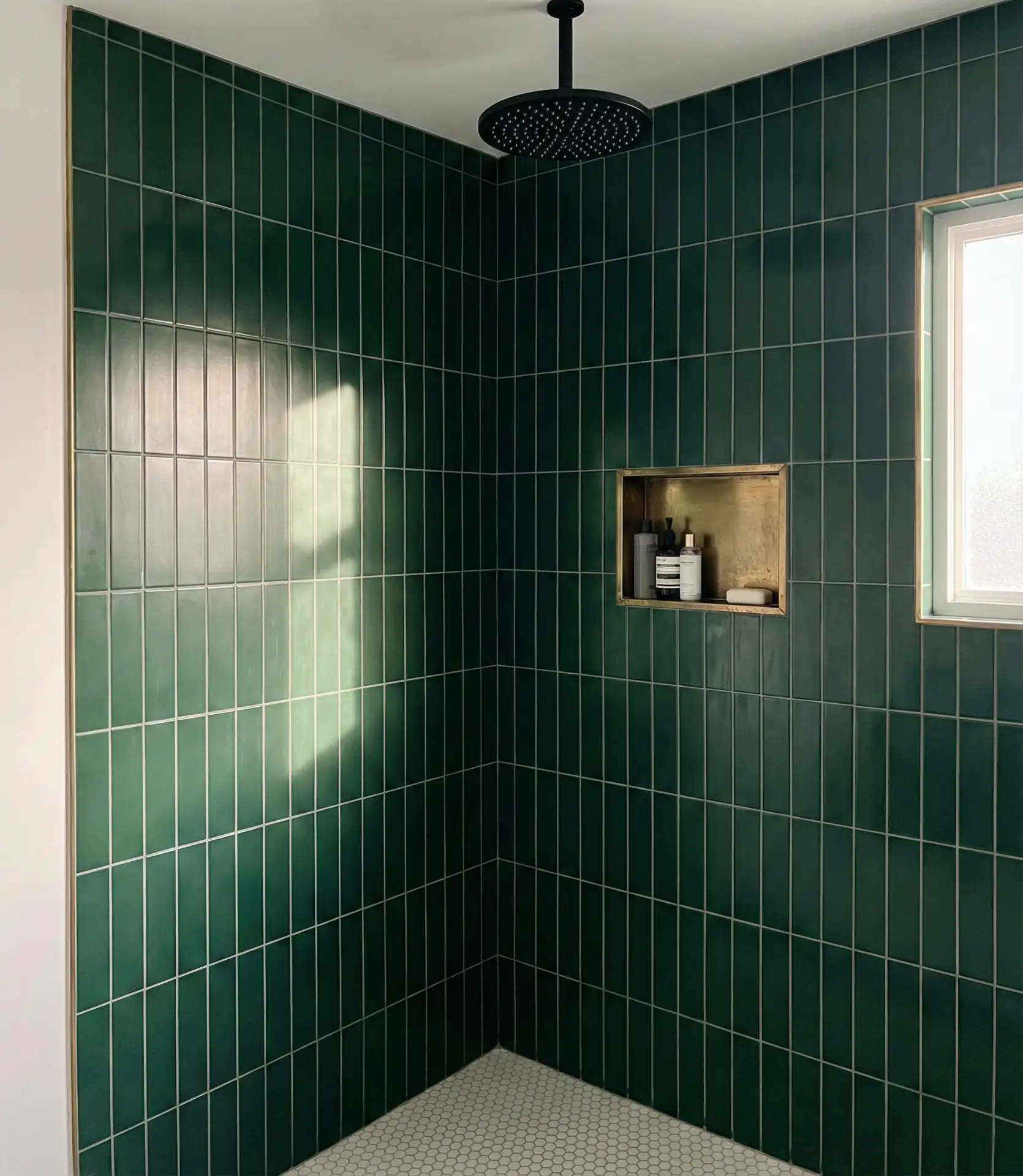
Pair emerald tile with brass or gold hardware to amplify the luxe feel. Many homeowners make the mistake of using chrome fixtures, which can read too cold against deep green. Warm metals create a cohesive, intentional look that elevates the entire space. Consider extending the tile halfway up the wall and finishing with a crisp white or cream paint to balance the richness.
2. Light Sage Zellige Wall Tile
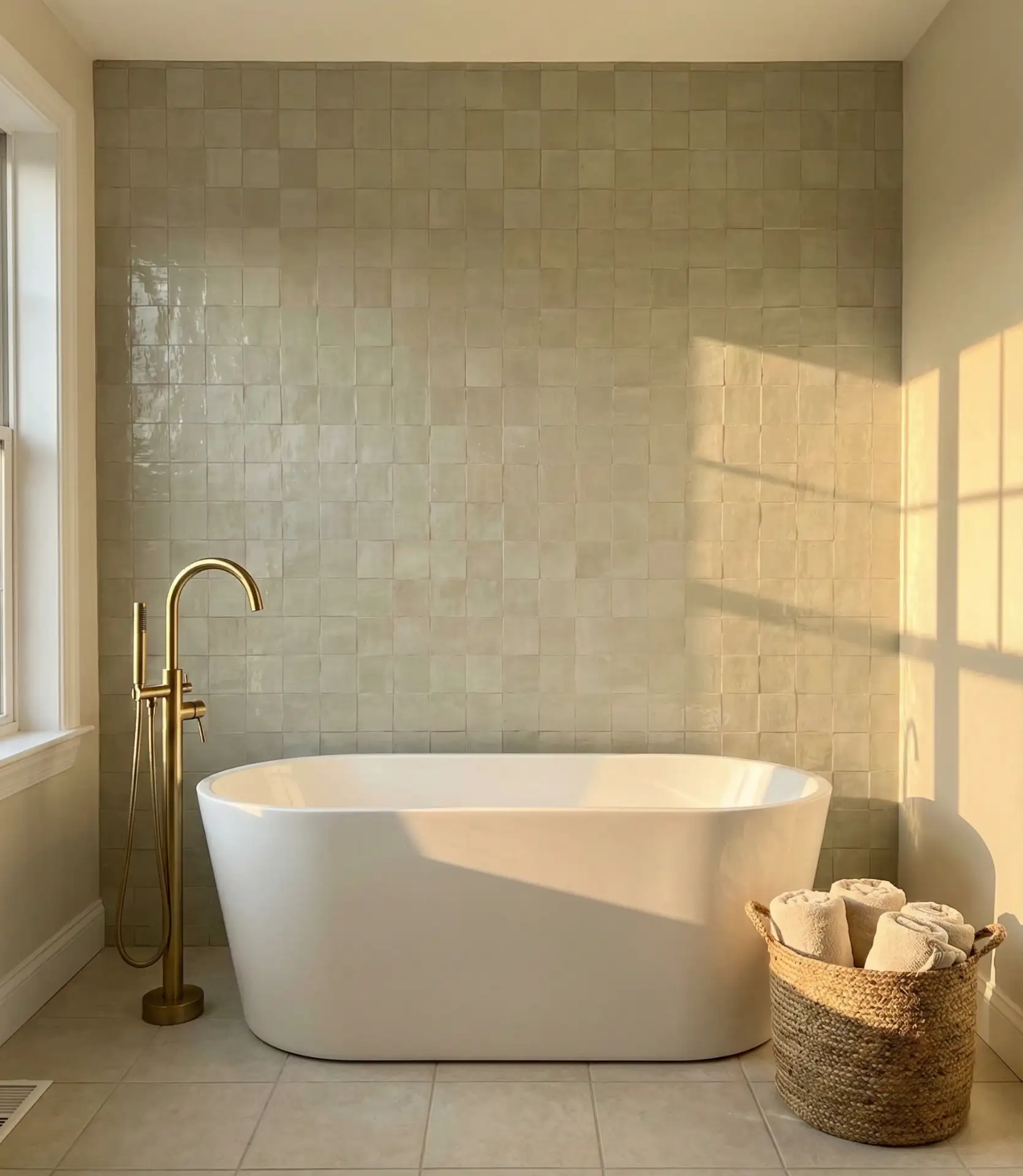
Handmade sage zellige tiles bring texture and artisan character to bathroom walls. The light green hue feels calming and organic, while the irregular surface catches light in different ways throughout the day. This style has gained traction in American homes because it bridges the gap between minimalist and maximalist design, offering visual interest without pattern overload.
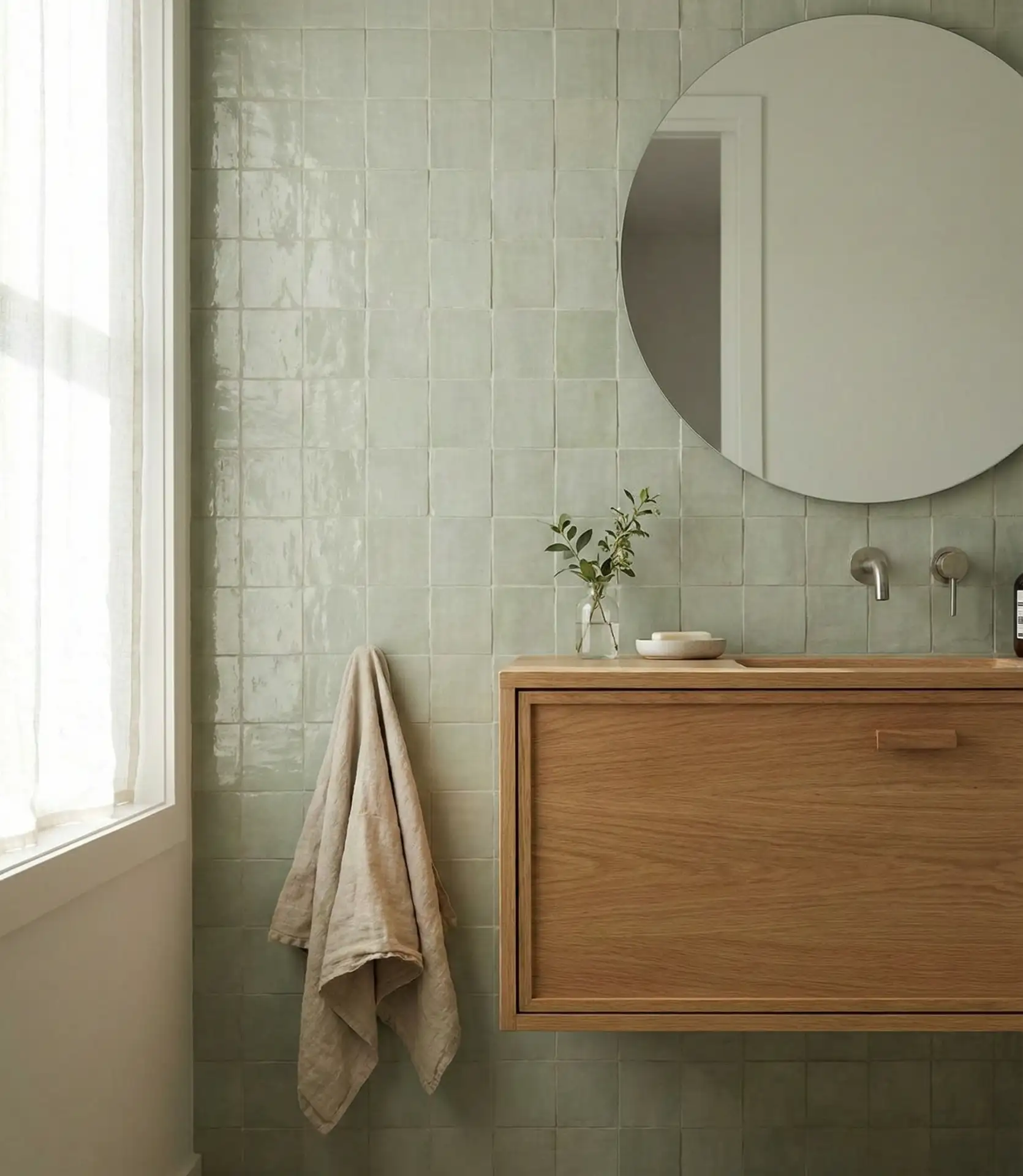
This wallpaper works best in bathrooms where you want a spa-like feel without committing to bold color. Sage zellige pairs beautifully with natural materials like wood, rattan, and limestone. It’s particularly popular in coastal regions and in homes with California casual or modern farmhouse aesthetics, where the connection to nature is central to the design language.
3. Mint Green Hexagon Floor Tile
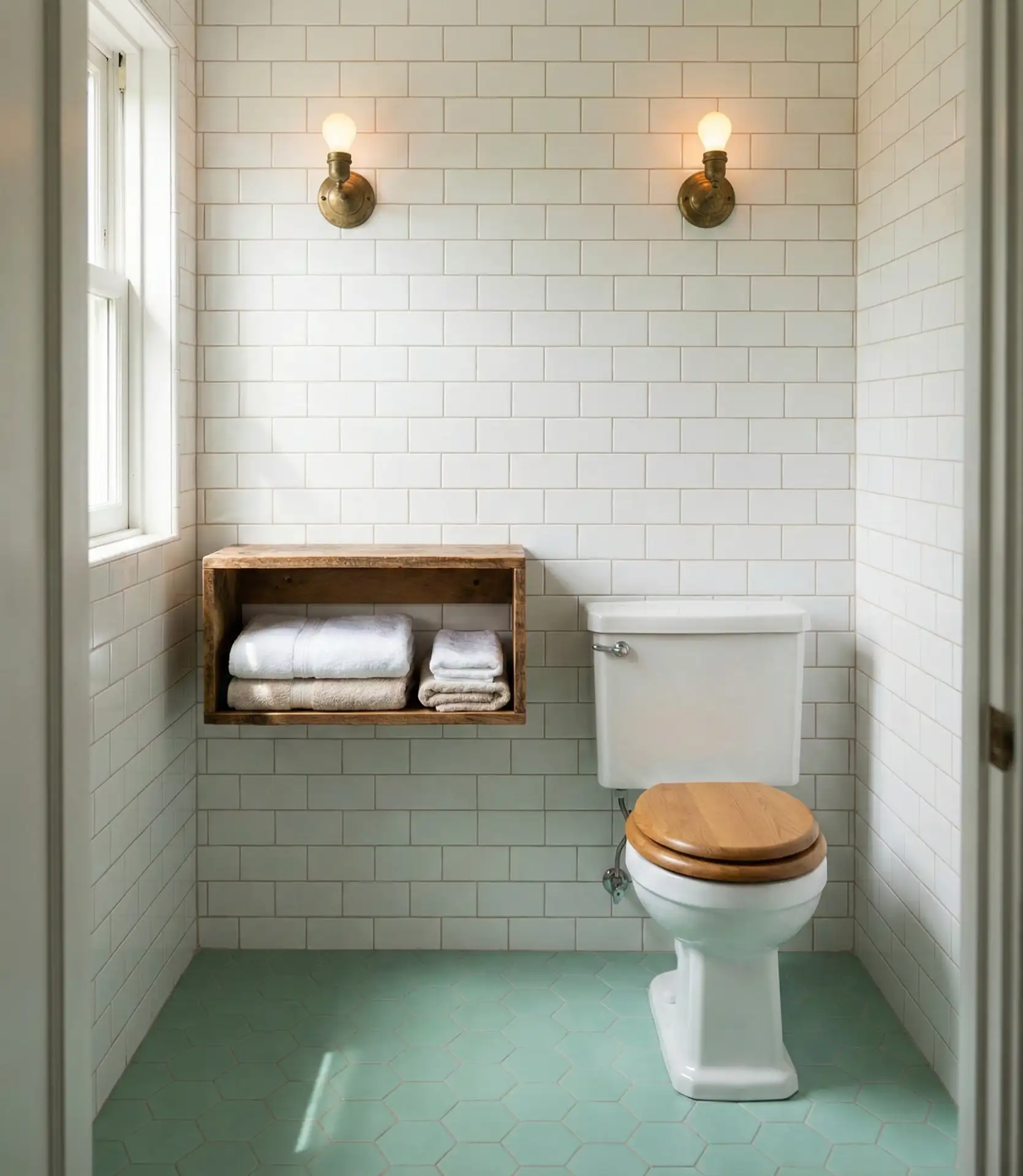
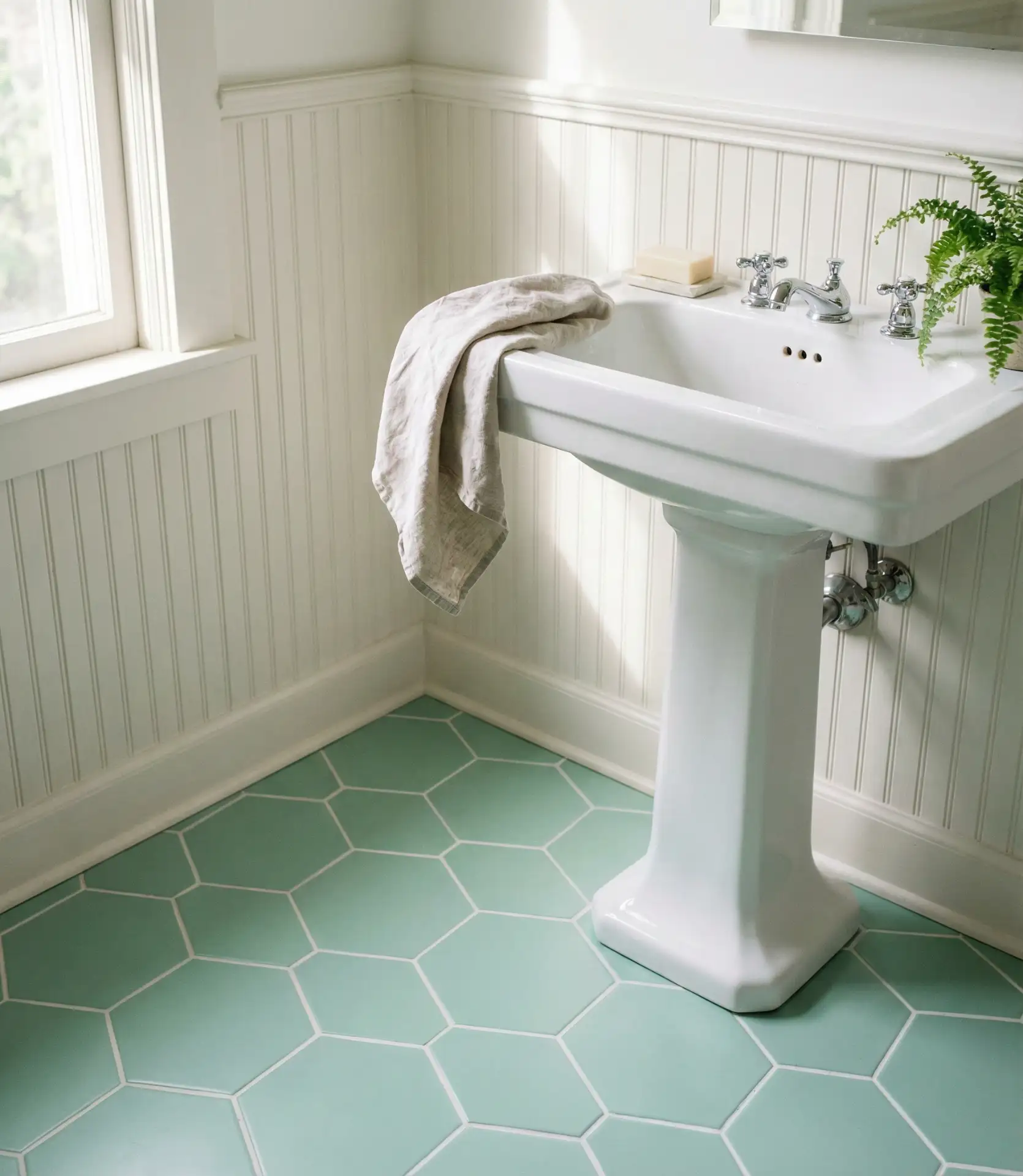
Mint green hexagon tiles provide a playful yet sophisticated foundation for any bathroom. The geometric shape adds interior design interest, while the soft green keeps the space feeling airy and fresh. Americans love this look for powder rooms and kids’ bathrooms, where a bit of personality is welcome without sacrificing style.
A friend renovated her 1920s bungalow bathroom last year and chose mint hex tiles for the floor. She paired them with white subway walls and brass fixtures, and the result feels both historically appropriate and totally current. The key was keeping the walls neutral so the floor could be a star without overwhelming the small footprint.
4. Forest Green Accent Wall Behind Tub
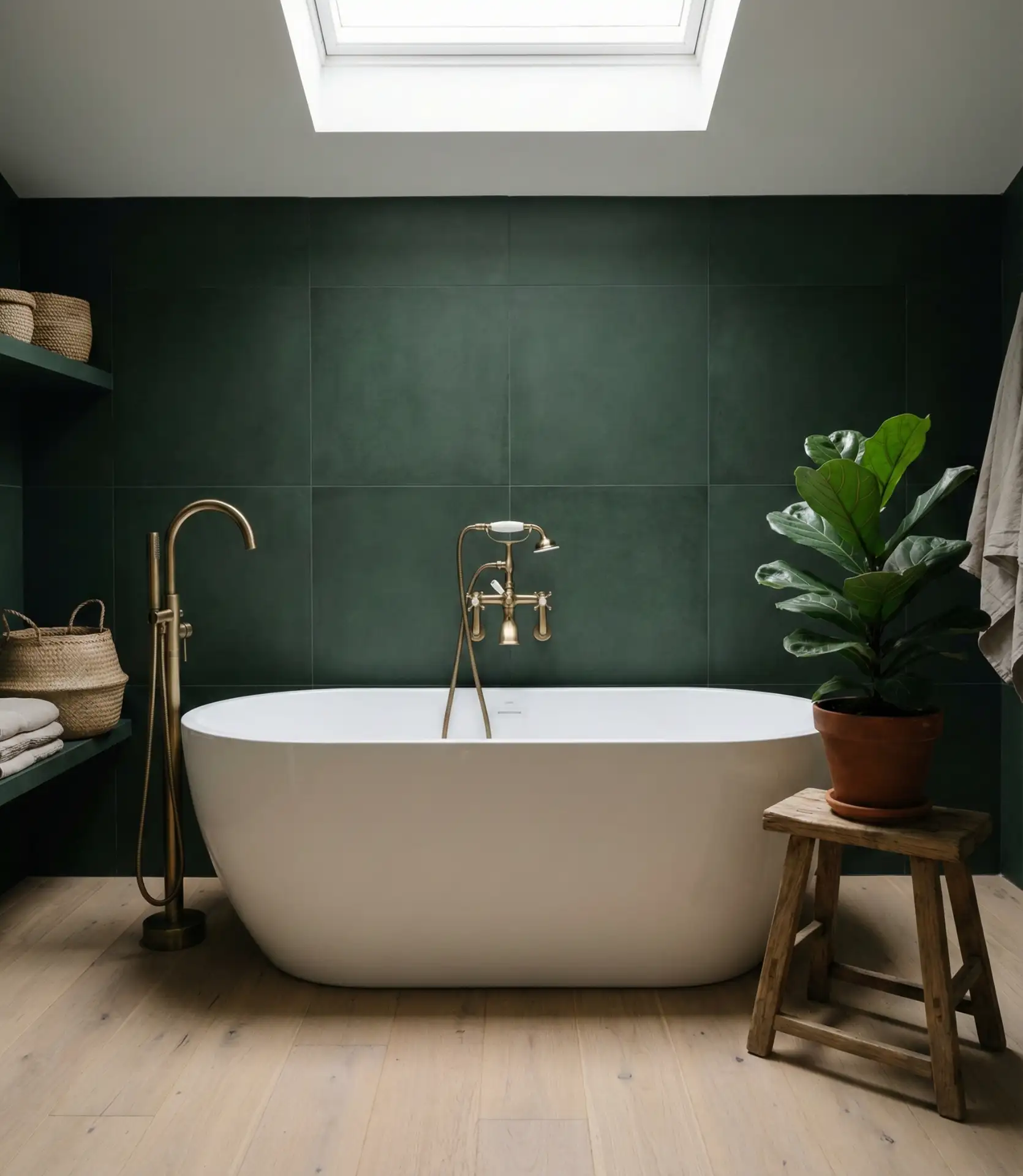
A forest green tile accent wall behind a freestanding tub creates an instant focal point. This approach allows you to use a bold, saturated green without tiling the entire room, making it budget-friendly and visually balanced. The deep tone provides a dramatic backdrop that makes white tubs and fixtures pop.
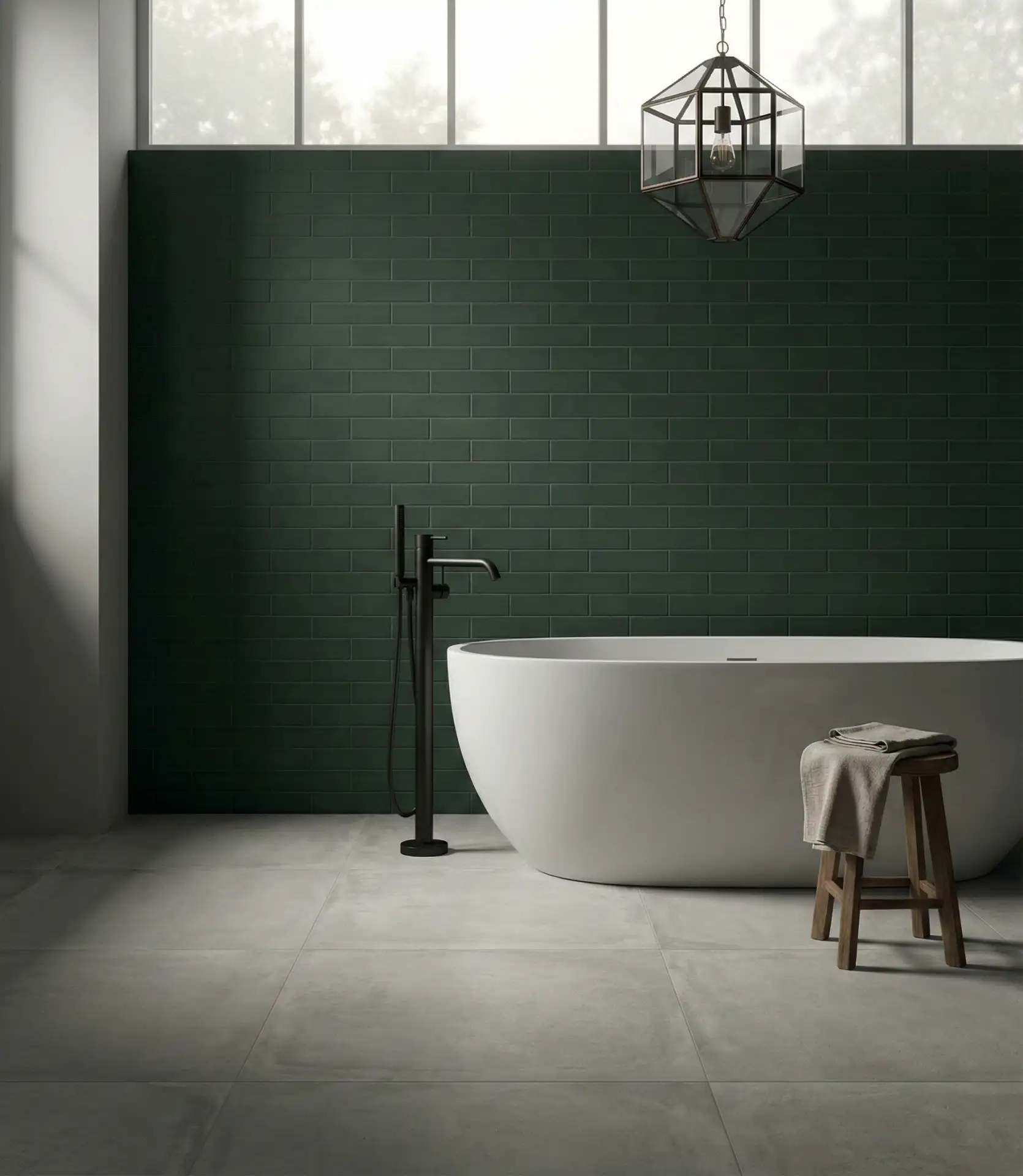
From a practical standpoint, accent walls are easier to maintain than full-room installations, and if you tire of the color down the road, you’re only replacing one wall. This design move works beautifully in primary bathrooms where the tub area feels separate from the vanity and shower zones, creating distinct moments within the space.
5. Olive Green Penny Tile Shower Floor
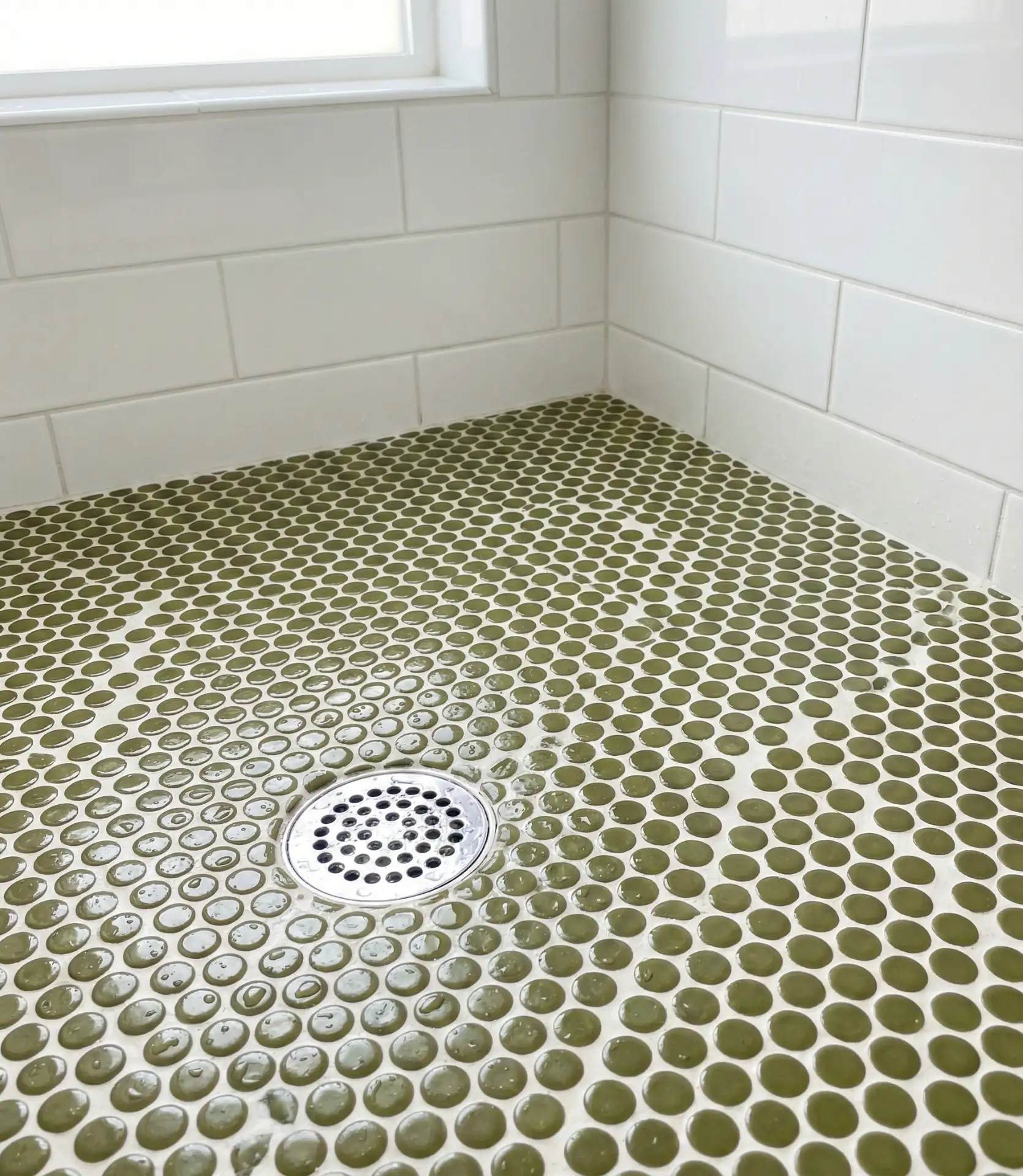
Olive penny tiles on a shower floor provide excellent grip and a vintage feel that’s trending hard in 2026. The small round tiles offer both function and charm, and the muted olive tone feels earthy and grounding. This look pairs especially well with white or cream subway walls for a classic high-low mix.
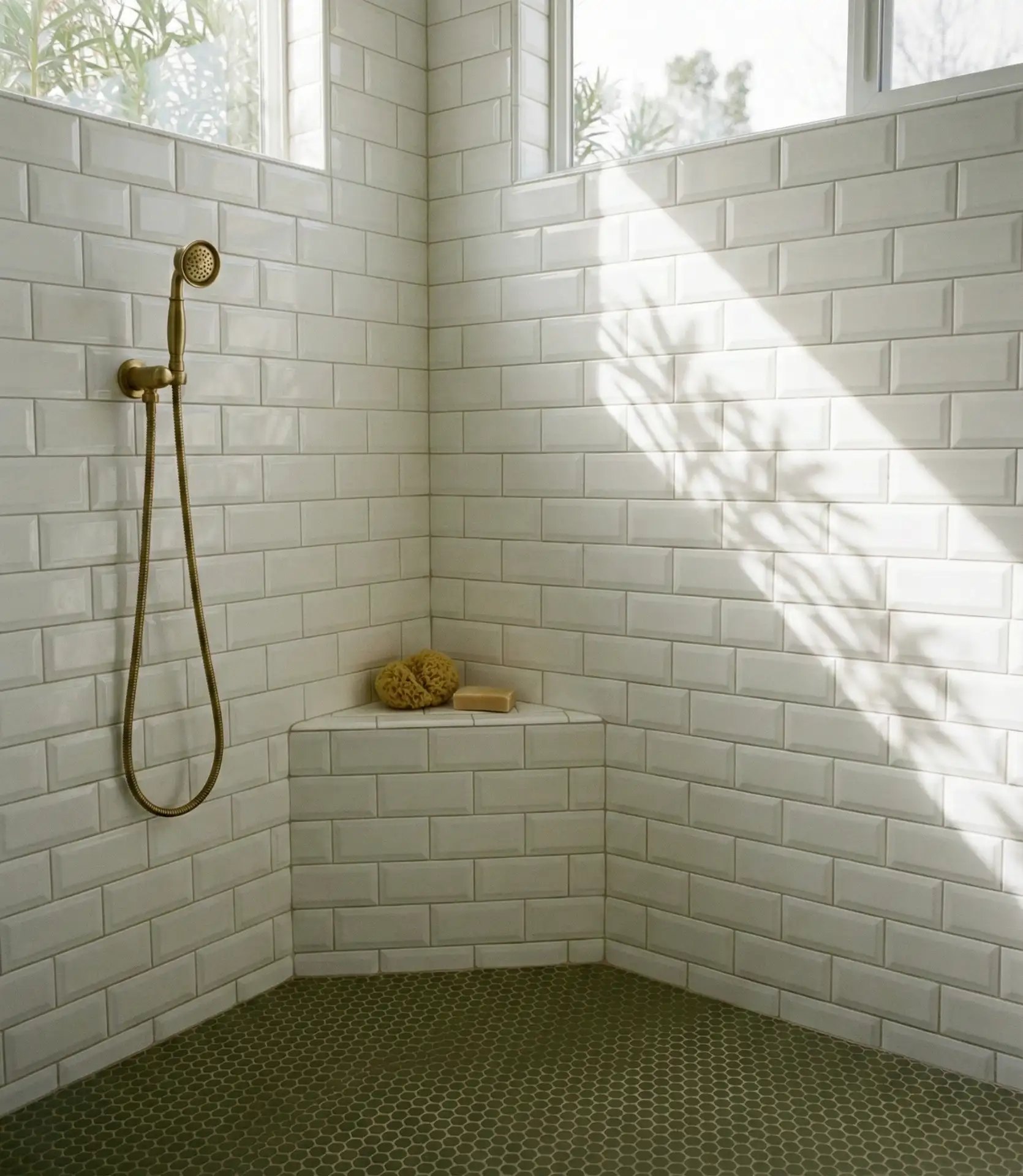
Penny tiles typically cost between $8 and $15 per square foot for materials alone, making them an accessible upgrade. Installation can add another $10 to $20 per square foot depending on your region, but many homeowners find the durability and timeless look worth the investment. The small scale also means less visible water spotting between cleanings.
6. Pale Mint and White Checkerboard Floor
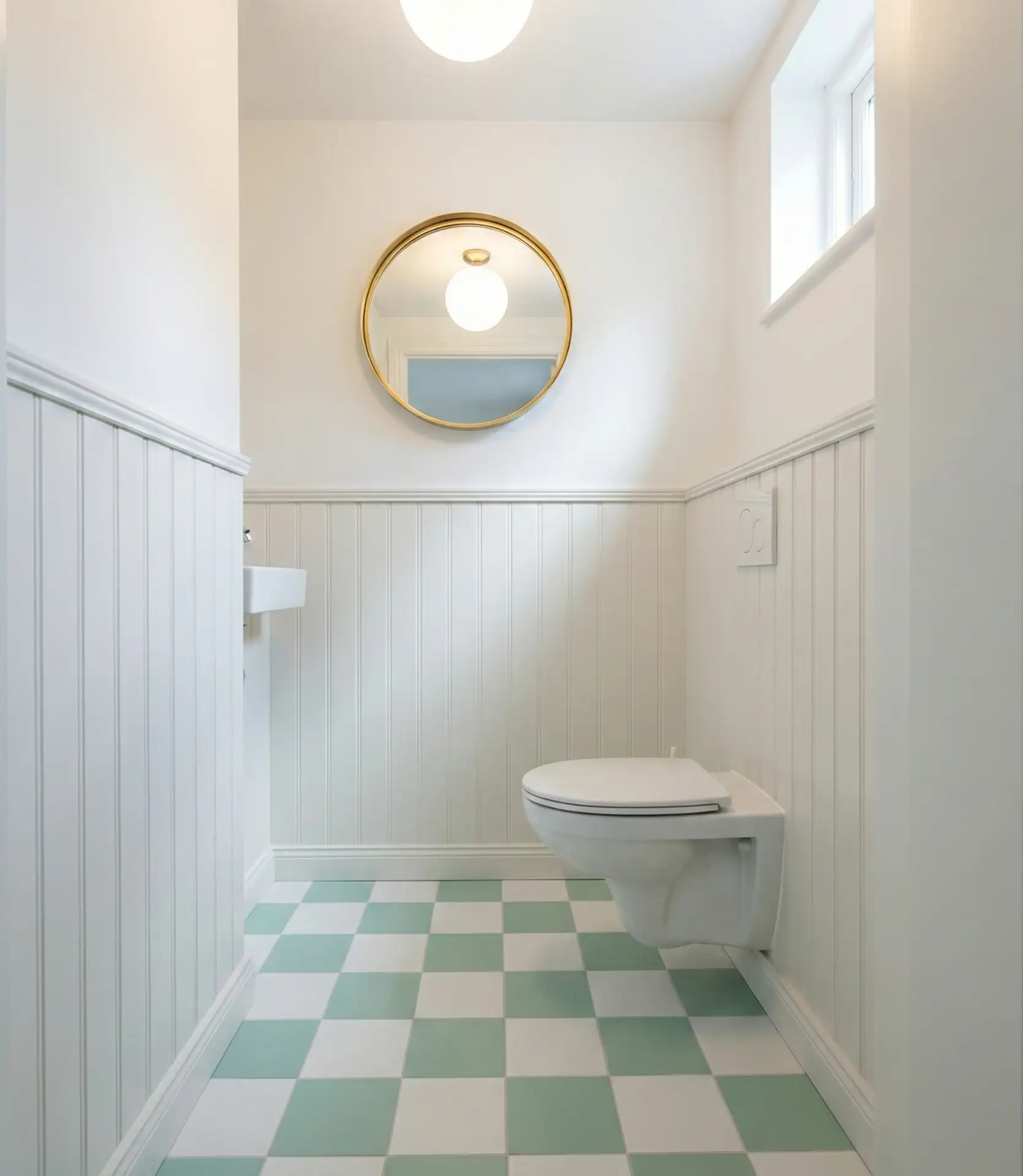
A pale mint and white checkerboard floor brings retro charm without feeling costume-y. This pattern works in both small powder rooms and larger family bathrooms, adding energy and personality to the space. The key is keeping the green soft rather than saturated, so it reads fresh rather than heavy.
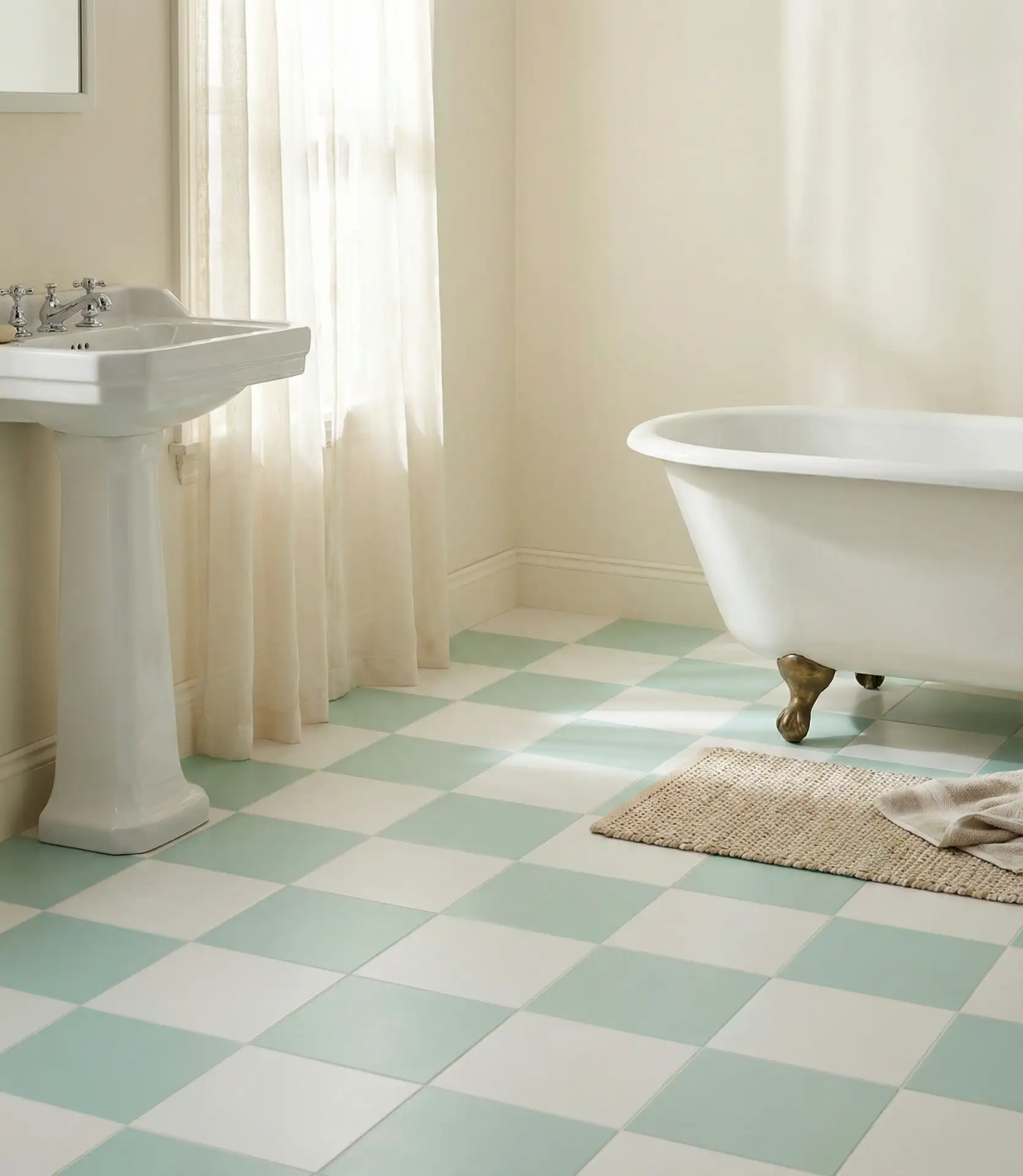
This floor pattern is particularly popular in the South and Midwest, where vintage-inspired design has strong regional appeal. Homeowners often pair it with modern fixtures to keep the look from feeling too nostalgic. The contrast between old and new creates a collected, lived-in aesthetic that feels authentic rather than staged.
7. Jade Green Subway Tile Backsplash
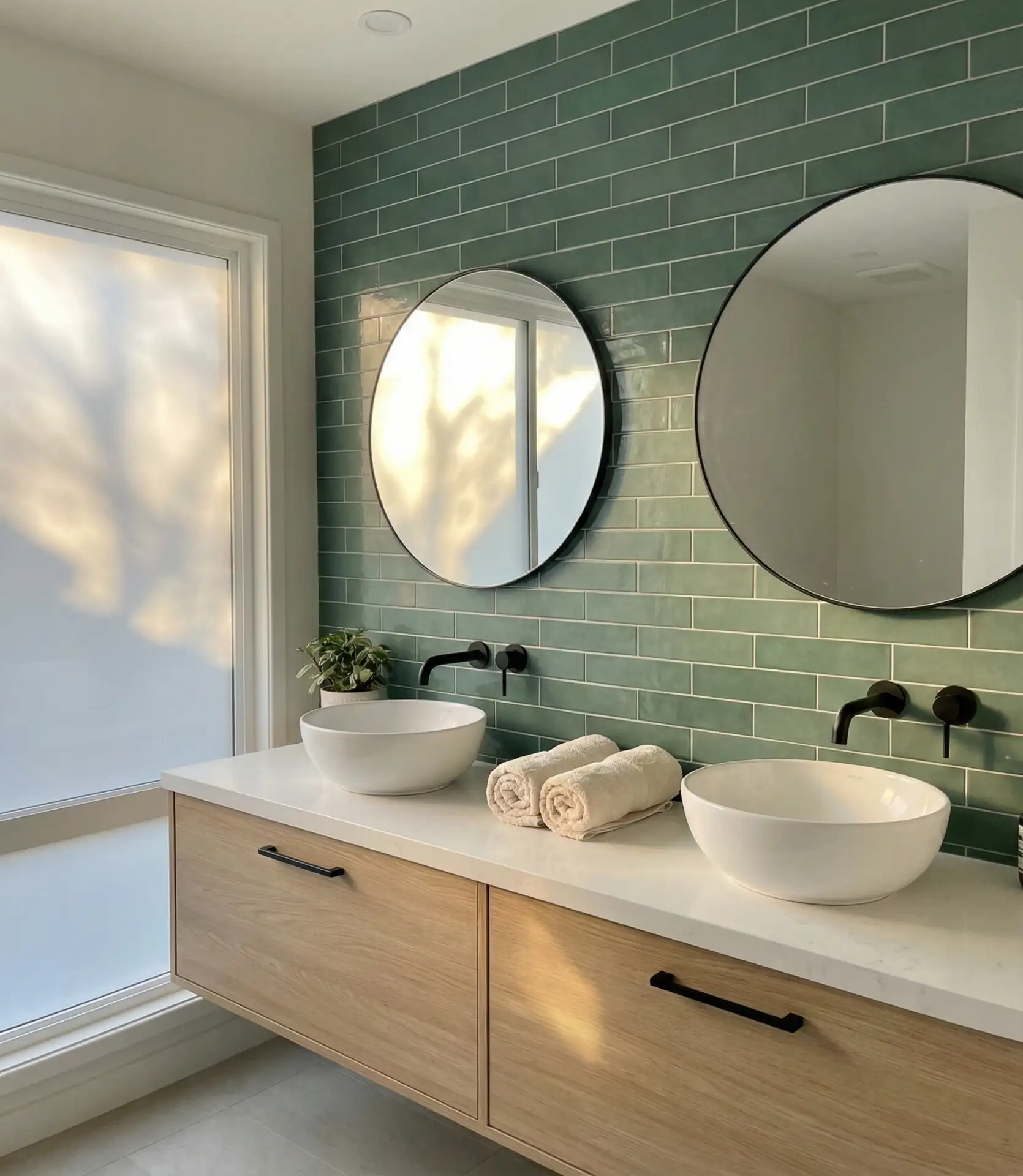
A jade green subway tile backsplash behind the vanity adds color at eye level without dominating the room. This mid-tone green feels sophisticated and works beautifully with marble countertops, white sinks, and brass hardware. It’s a smart way to introduce green if you’re hesitant about larger commitments.
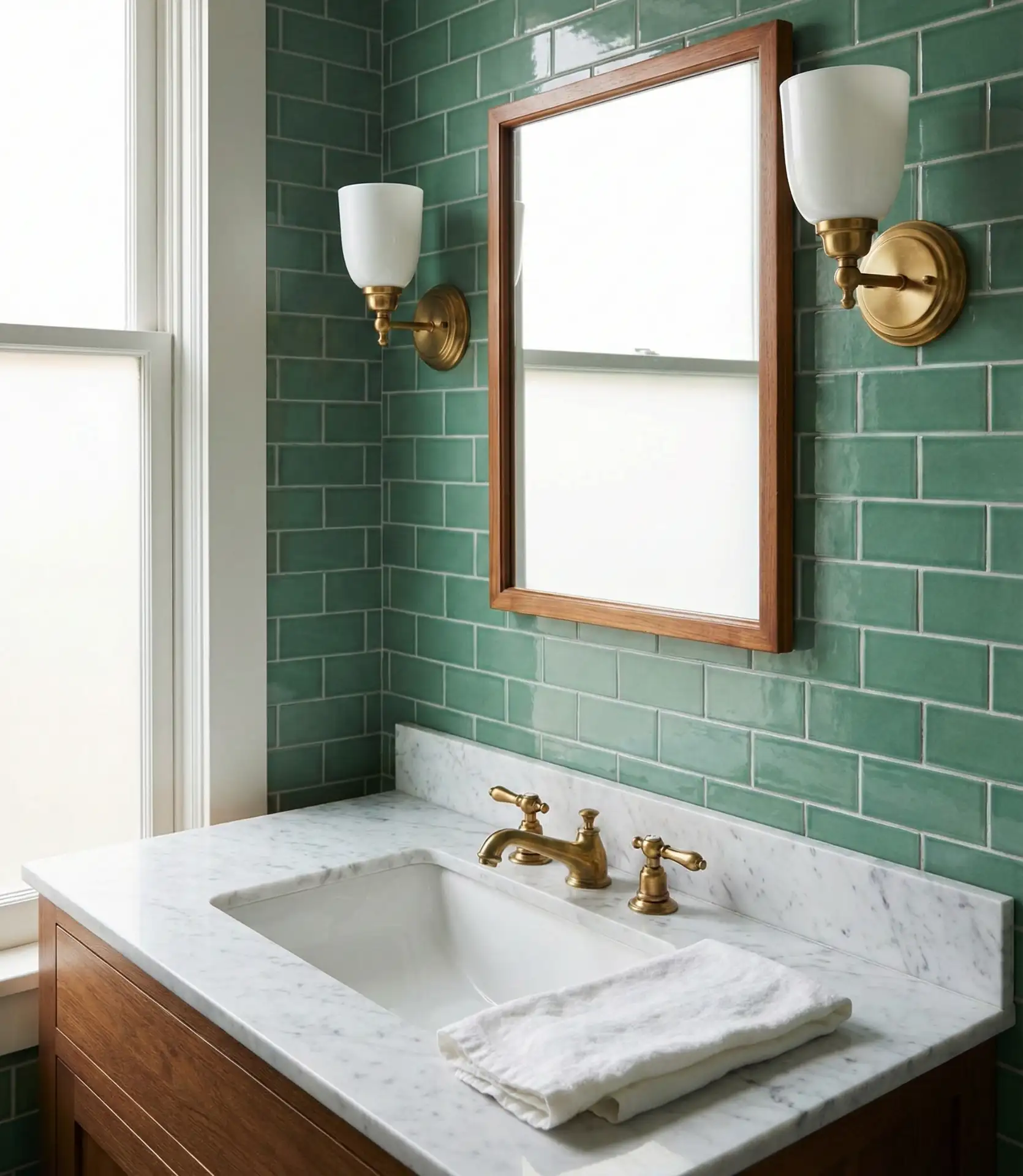
One common mistake is stopping the backsplash too low. Extending the tile at least to mirror height creates a more polished, finished look and protects the wall from water splashes. If your ceiling height allows, consider running the tile all the way up for maximum impact and easier cleaning around the vanity area.
8. Emerald and Pink Tile Combination
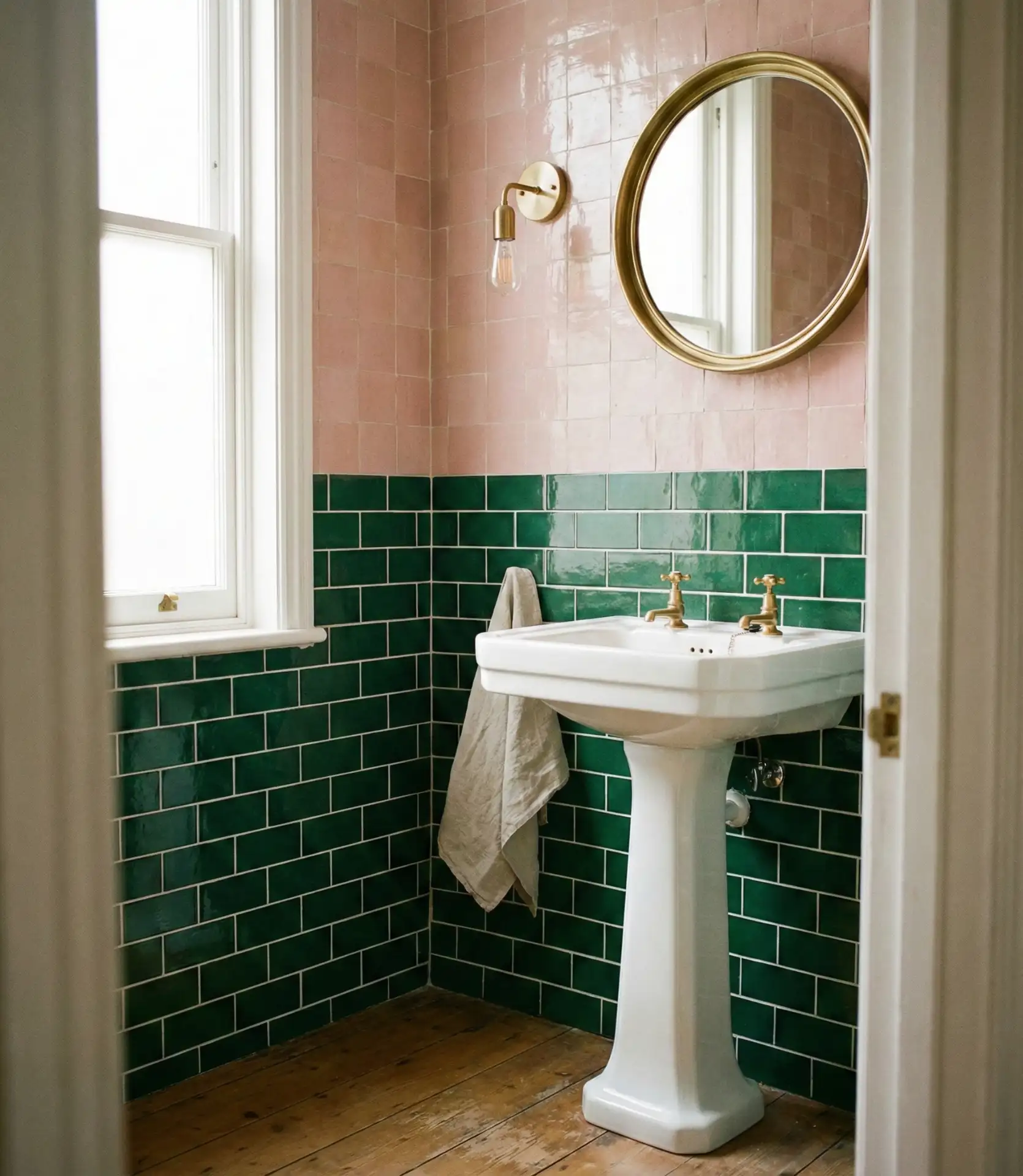
Pairing emerald green with pink tiles creates an unexpectedly chic color combination that feels both modern and nostalgic. This duo works especially well in powder rooms where you can be more daring with palette choices. The contrast between cool green and warm pink adds dimension and personality.
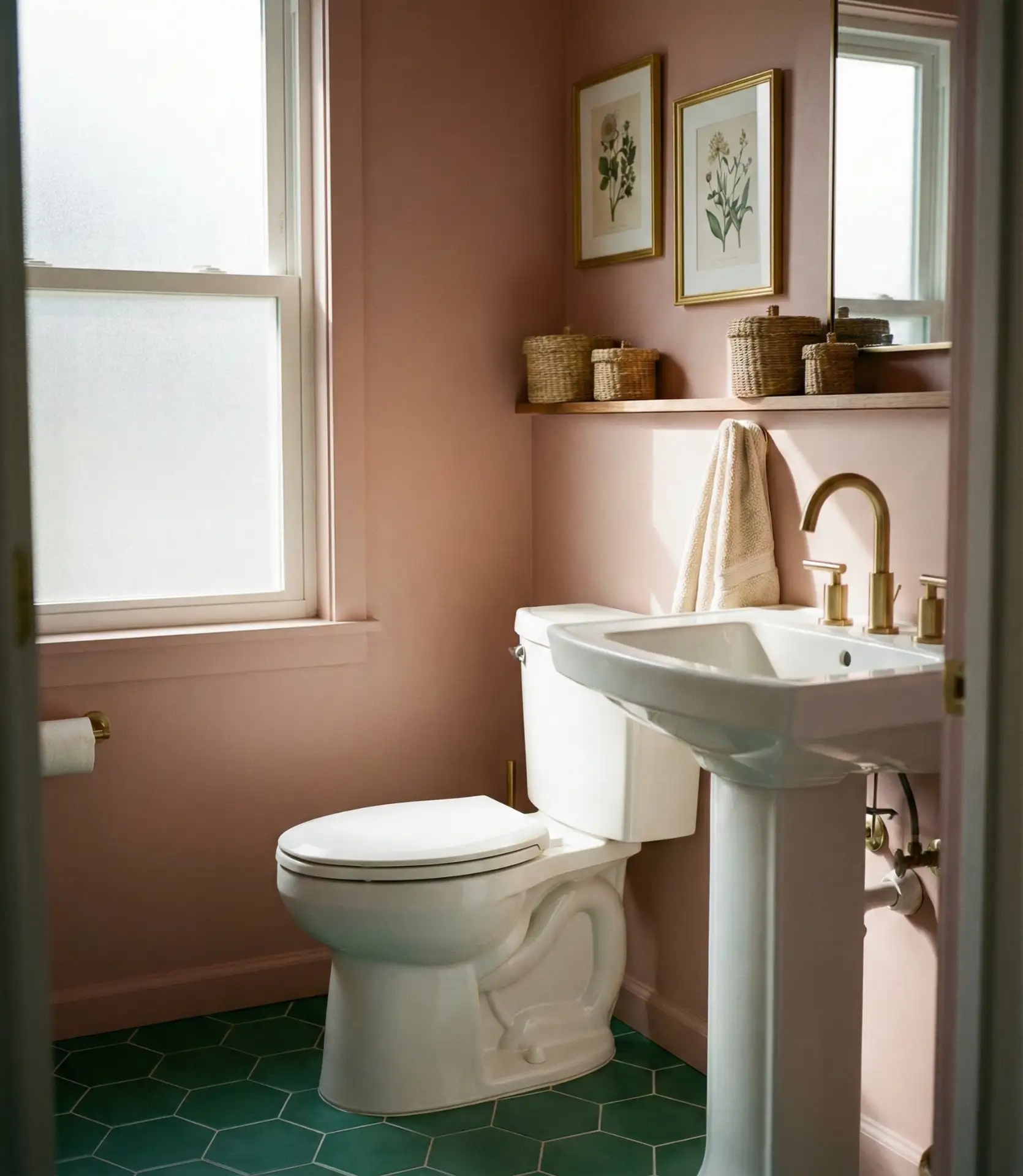
This combination resonates particularly well with younger homeowners who grew up with Pinterest mood boards and aren’t afraid of color. In areas like Portland, Austin, and Brooklyn, this look has become a signature of renovated vintage homes where owners want to honor original character while adding contemporary flair. Balance is key—let one color dominate while the other accents.
9. Sage Green Large Format Wall Tile
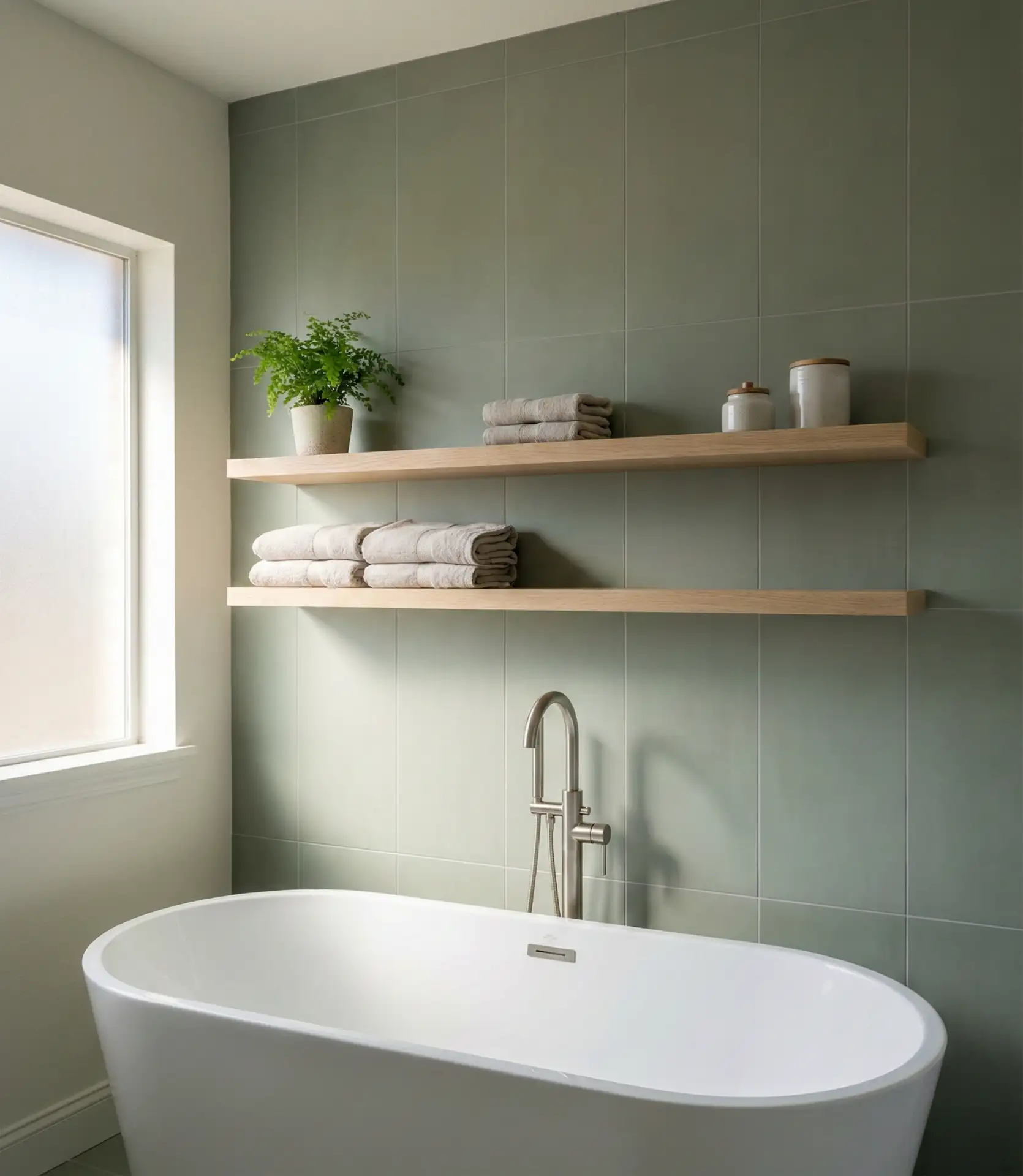
Large-format sage tiles create a serene, spa-like atmosphere with minimal grout lines. These oversized tiles (typically 12×24 inches or larger) make small bathrooms feel more expansive and reduce cleaning time. The soft green hue promotes relaxation, making the tile an ideal choice for primary bathrooms where you want to unwind.
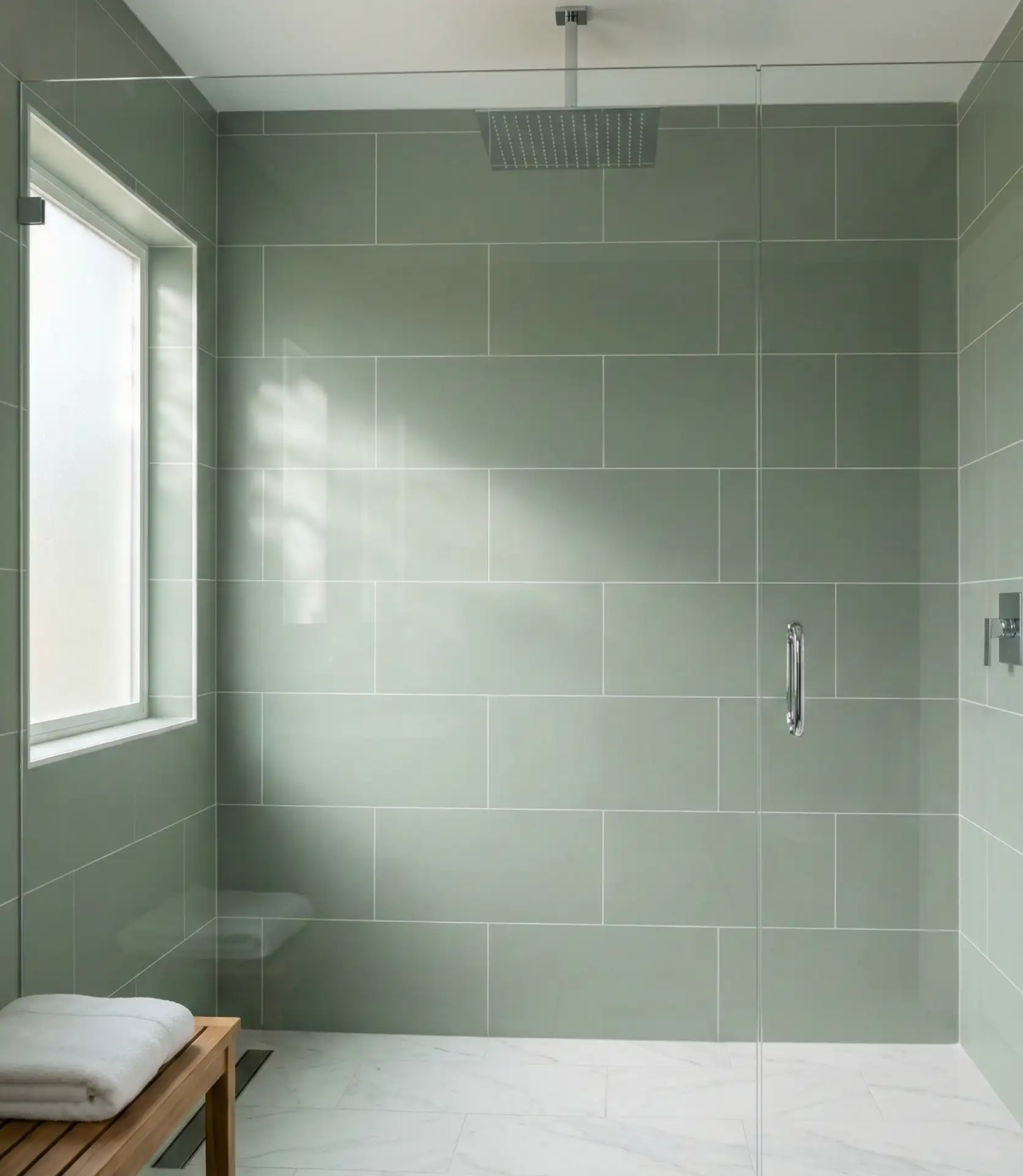
A designer I know always recommends large-format tiles for her clients’ bathrooms because they photograph beautifully and feel more luxurious. She points out that fewer grout lines mean less maintenance over time, which busy families appreciate. The smooth, uninterrupted surface also reflects light more evenly, enhancing the calming effect of the sage tone.
10. Retro Mint Green Bathroom Suite
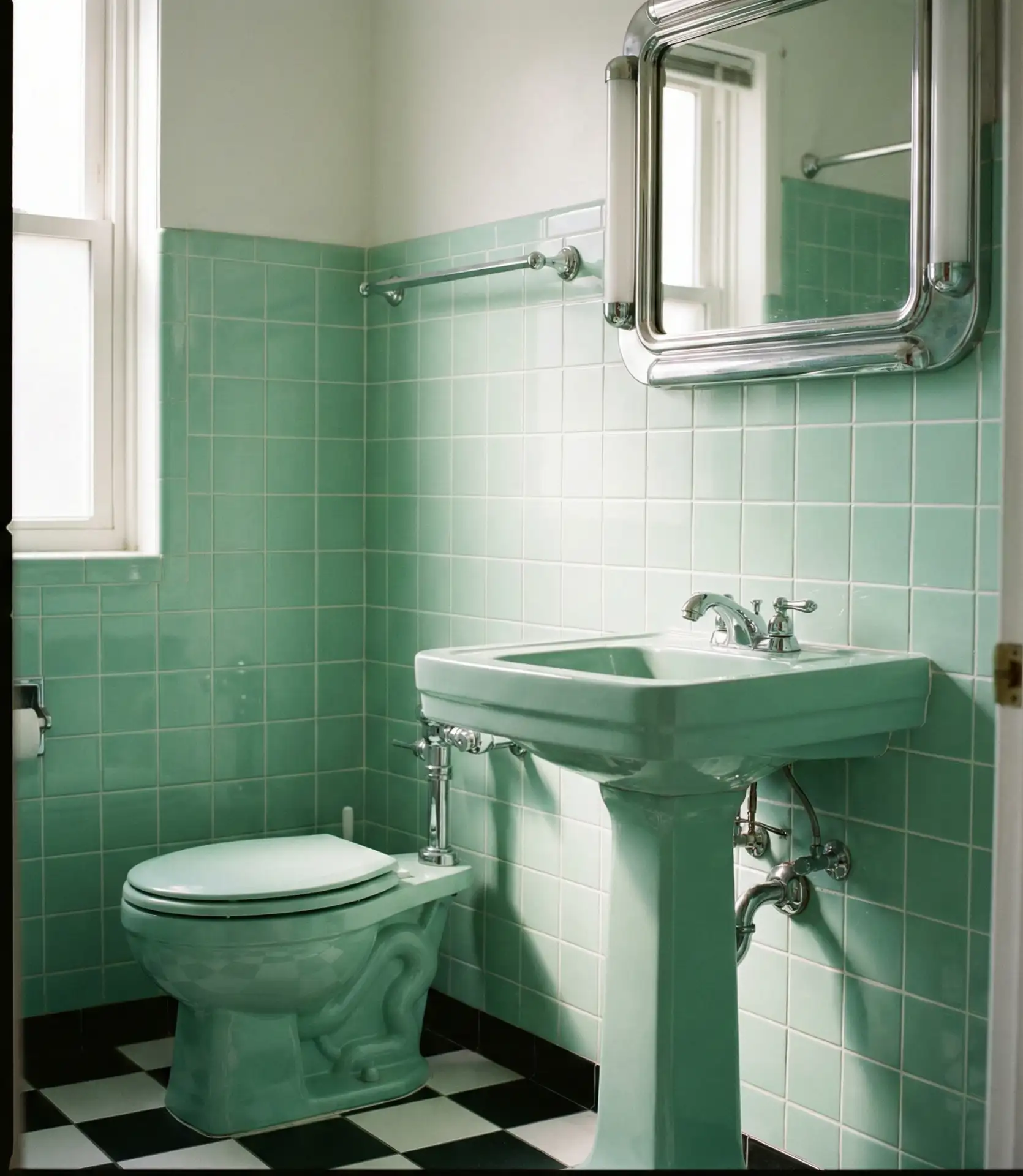
Embracing retro mint tile means celebrating original bathrooms from the 1950s and 60s or recreating that aesthetic. These spaces feature mint wall and floor tiles paired with period-appropriate fixtures. The look is having a revival as homeowners recognize the charm and quality of mid-century design.
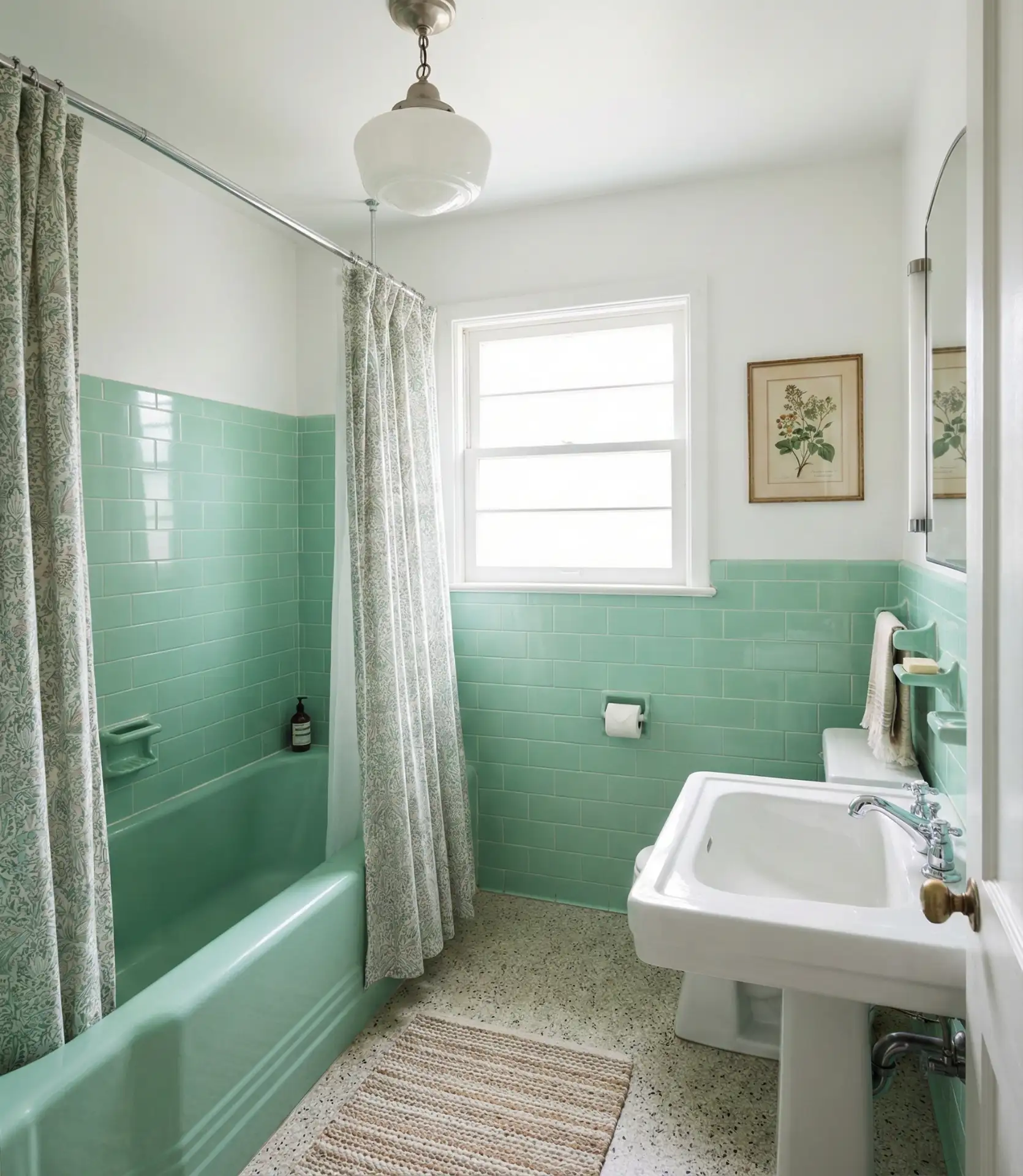
Many Americans are choosing to preserve rather than gut their mid-century bathrooms, recognizing that new materials rarely match the quality of the originals. If your tiles are in excellent condition, professional refinishing costs around $500 to $1,000 and can make them look brand new. This approach is both economical and environmentally responsible.
11. Dark Green and Black Floor Contrast
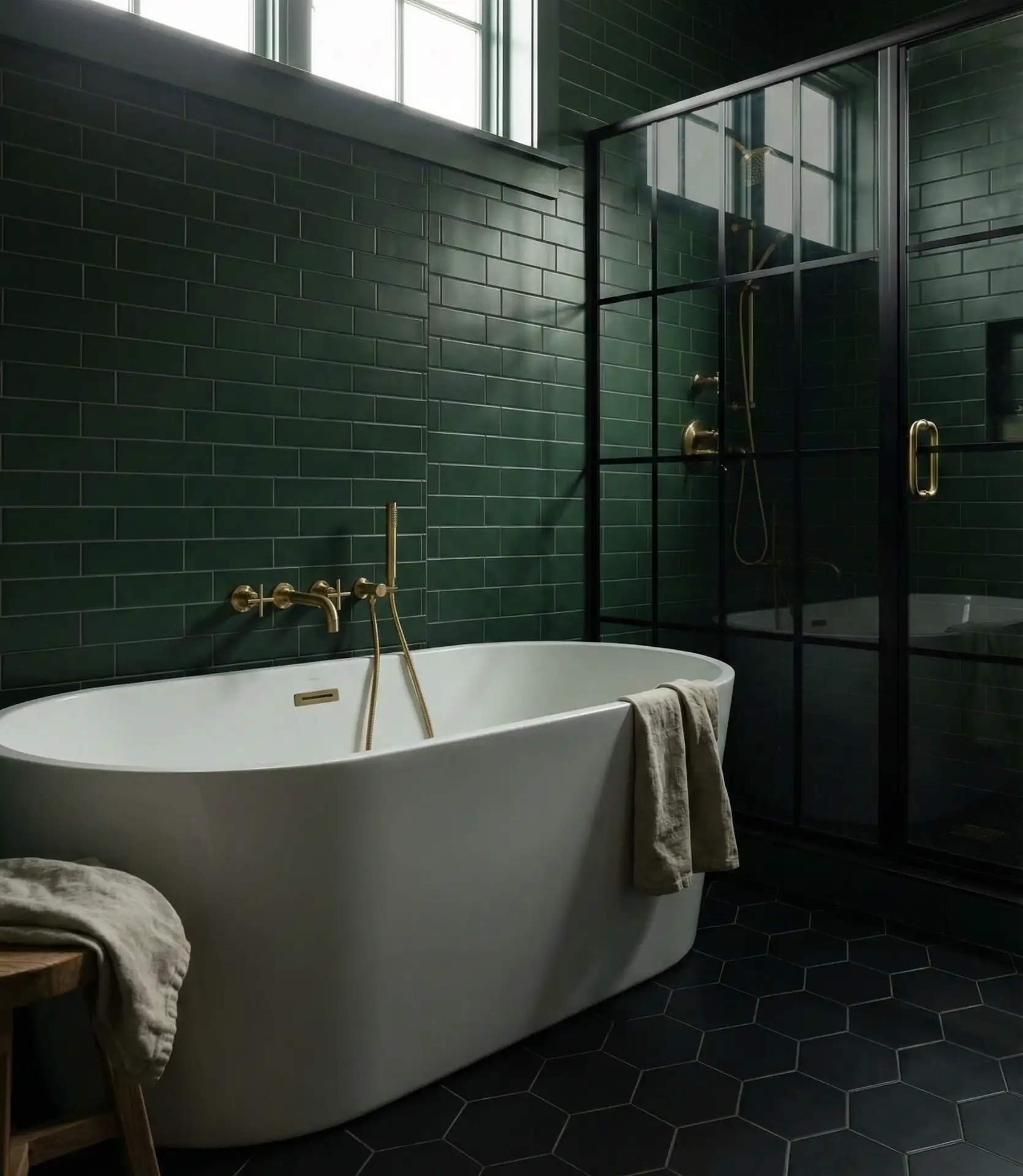
Combining dark green walls with a black floor creates a moody, sophisticated bathroom that feels like a private retreat. This high-contrast pairing works best in larger bathrooms with good lighting, where the darker tones won’t make the space feel cramped. The drama is undeniable and surprisingly versatile.
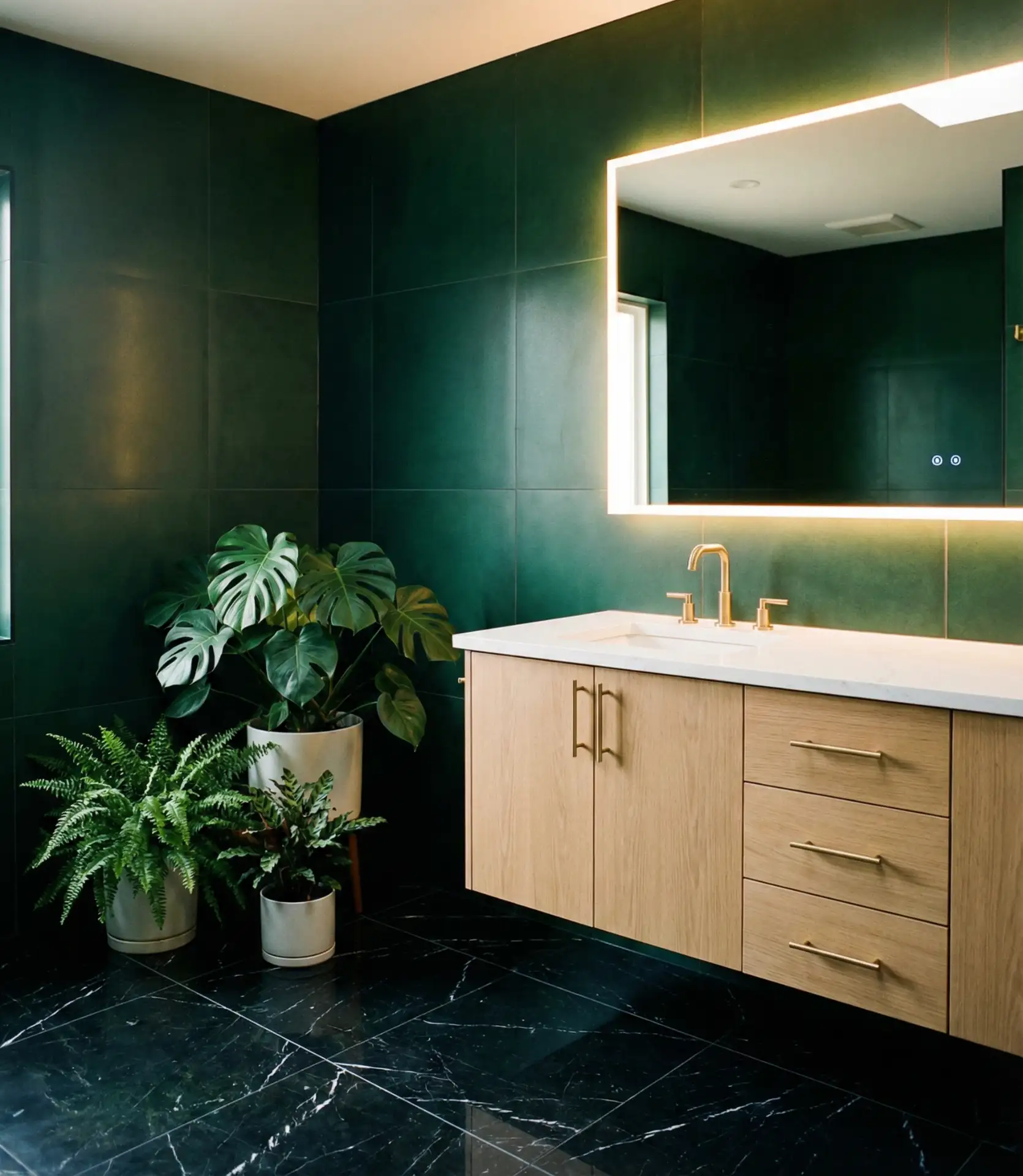
This combination works best in homes with a modern or contemporary design language, particularly in urban settings where bold choices feel right at home. The dark floor hides dirt and water spots better than light-colored tile, making it practical for high-traffic family bathrooms despite its luxe appearance.
12. Aloe Green Textured Wall Tile
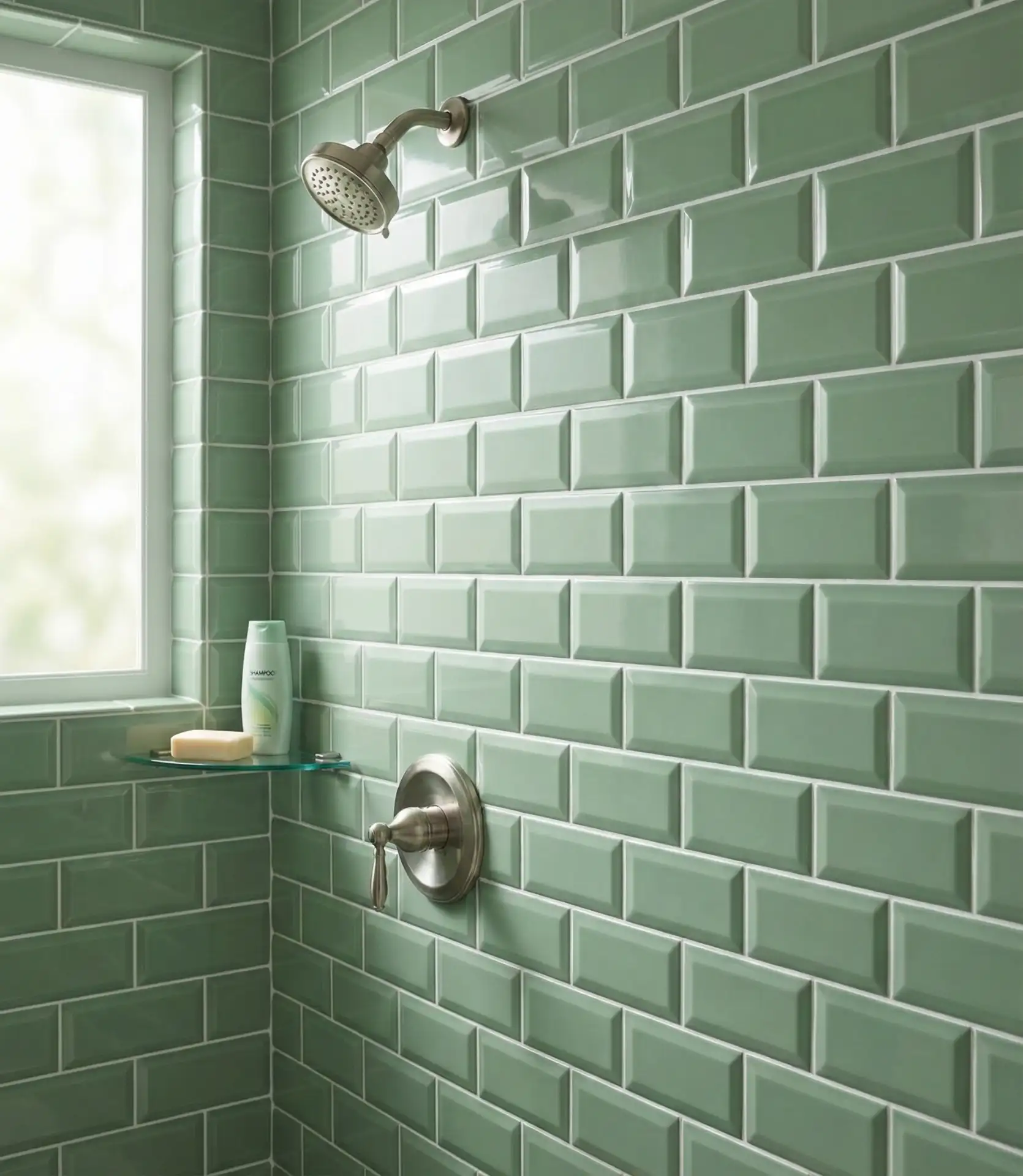
Aloe green tiles with texture add tactile interest to bathroom walls while maintaining a soothing color palette. The subtle green has health associations that make it feel particularly appropriate for bathrooms. Textured tiles catch light beautifully and add dimension without busy patterns.
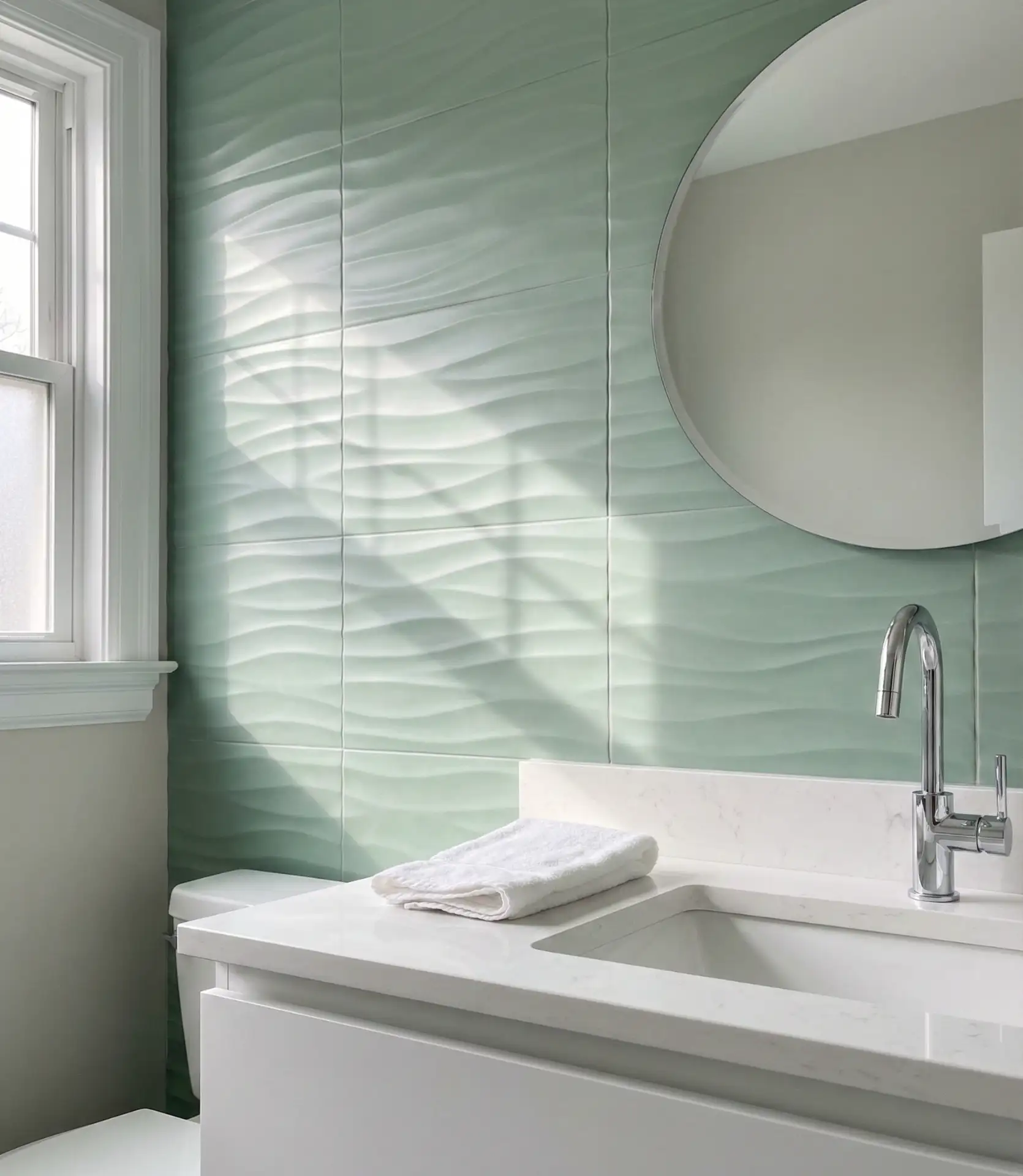
Textured tiles can be harder to clean than flat surfaces, so consider where you place them carefully. They’re beautiful on feature walls or in shower areas where you’ll wipe them down regularly, but less ideal behind toilets or in tight corners where dust and grime can accumulate in the crevices. Think about maintenance before committing.
13. Green and Blue Gradient Tile Design
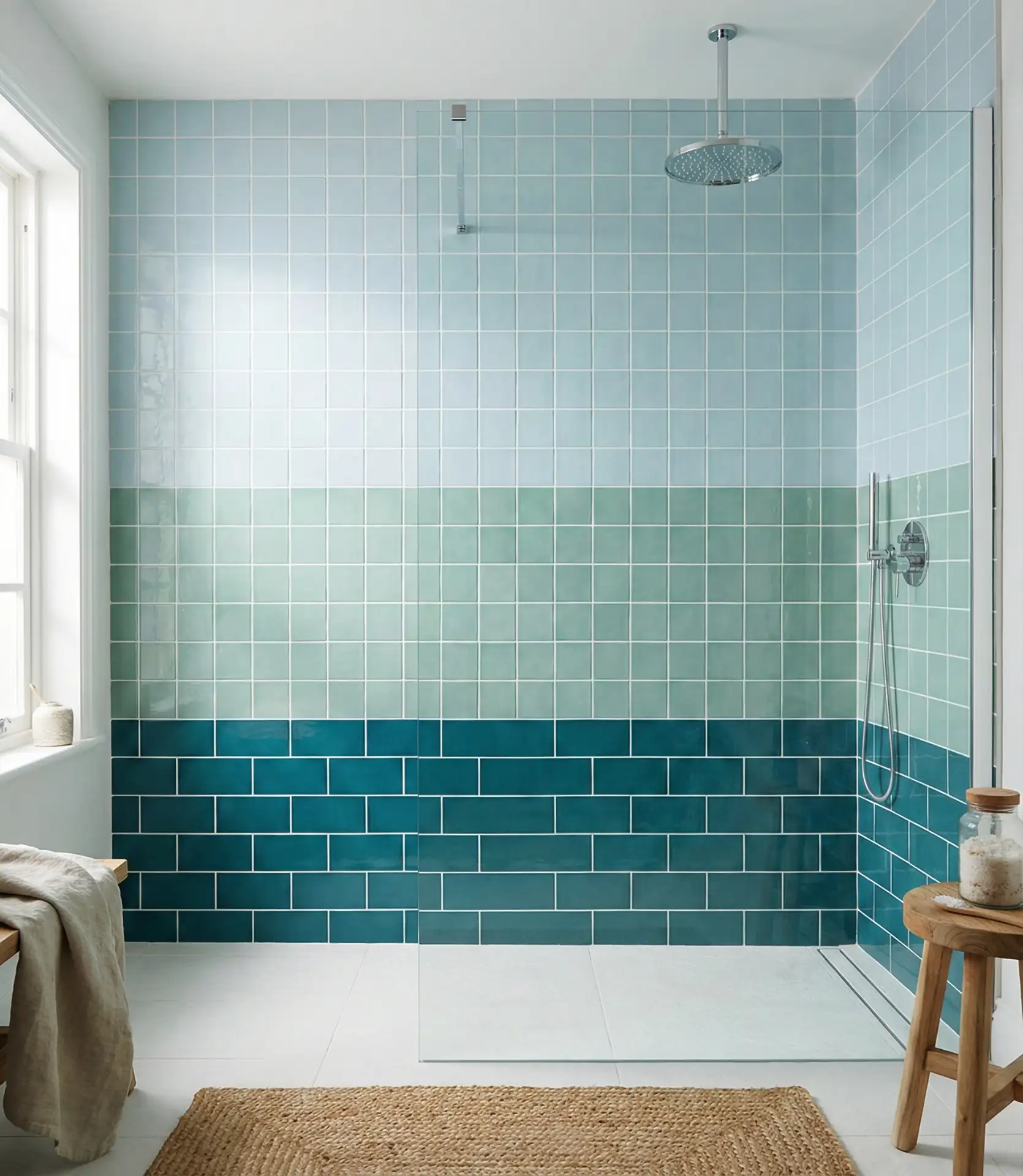
Creating a gradient from green to blue tiles brings an oceanic feel to your bathroom. This design approach uses tiles in graduating shades to create a seamless visual transition. It’s particularly striking in shower enclosures, where the eye naturally travels upward.
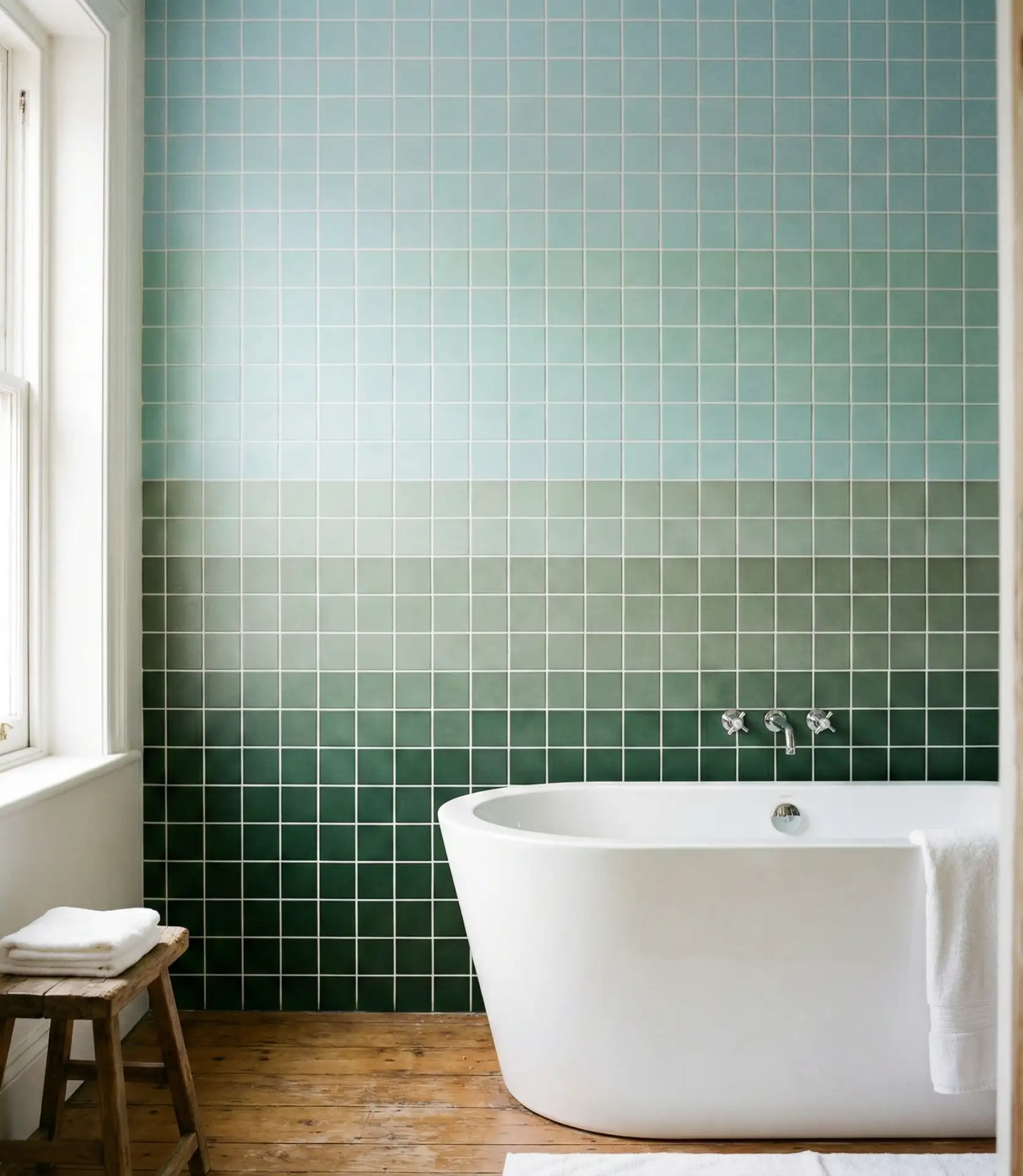
Gradient installations require careful planning and often benefit from professional tile setters who can ensure smooth transitions. Expect to pay a premium for the labor—usually 20 to 30 percent more than standard installations—but the visual impact justifies the investment. This technique has become popular in coastal areas where the ocean connection feels natural.
14. Sage Green with Brass Accents
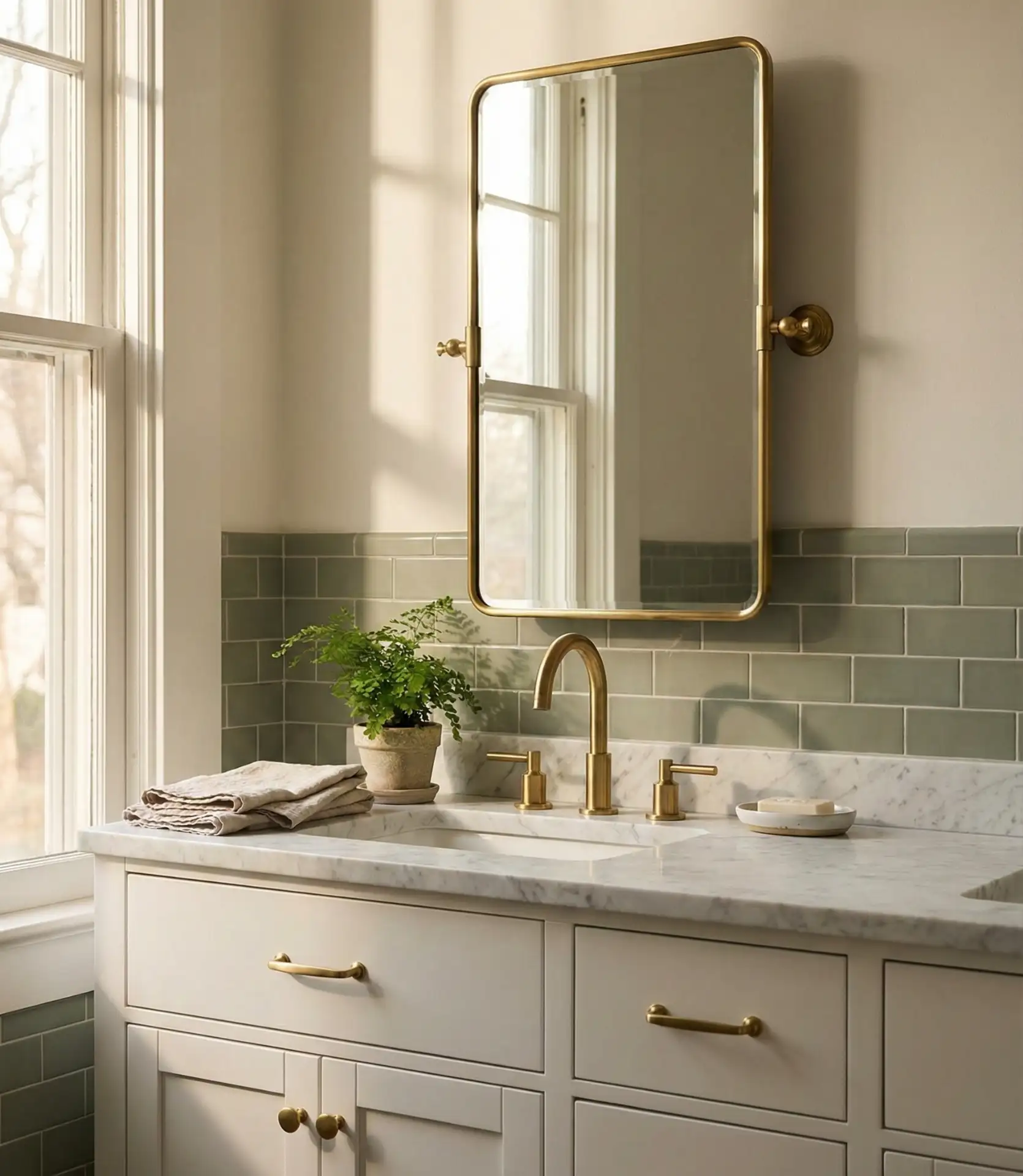
Pairing sage green tile with brass fixtures creates warmth and elegance in any bathroom. The combination feels both classic and current, bridging traditional and contemporary interior design styles. Brass adds a golden glow that complements the green’s natural undertones beautifully.
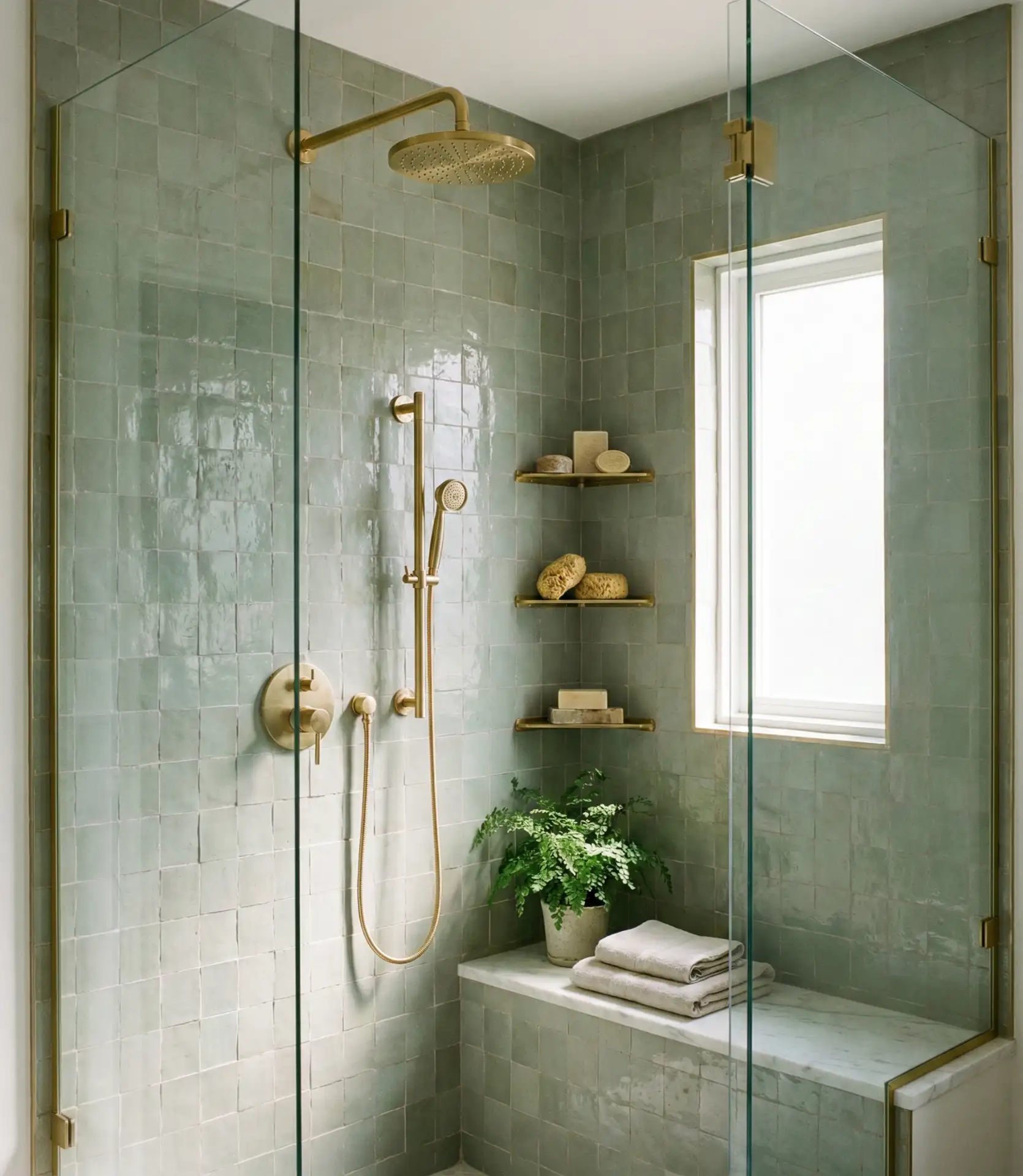
Brass fixtures have become the go-to choice for designers in 2026, replacing the chrome and brushed nickel dominance of previous years. The warm metal adds richness without feeling too yellow or antique. Unlacquered brass develops a patina over time, which many homeowners love for its authentic, lived-in character that tells a story.
15. Mint and Wallpaper Upper Wall Combo
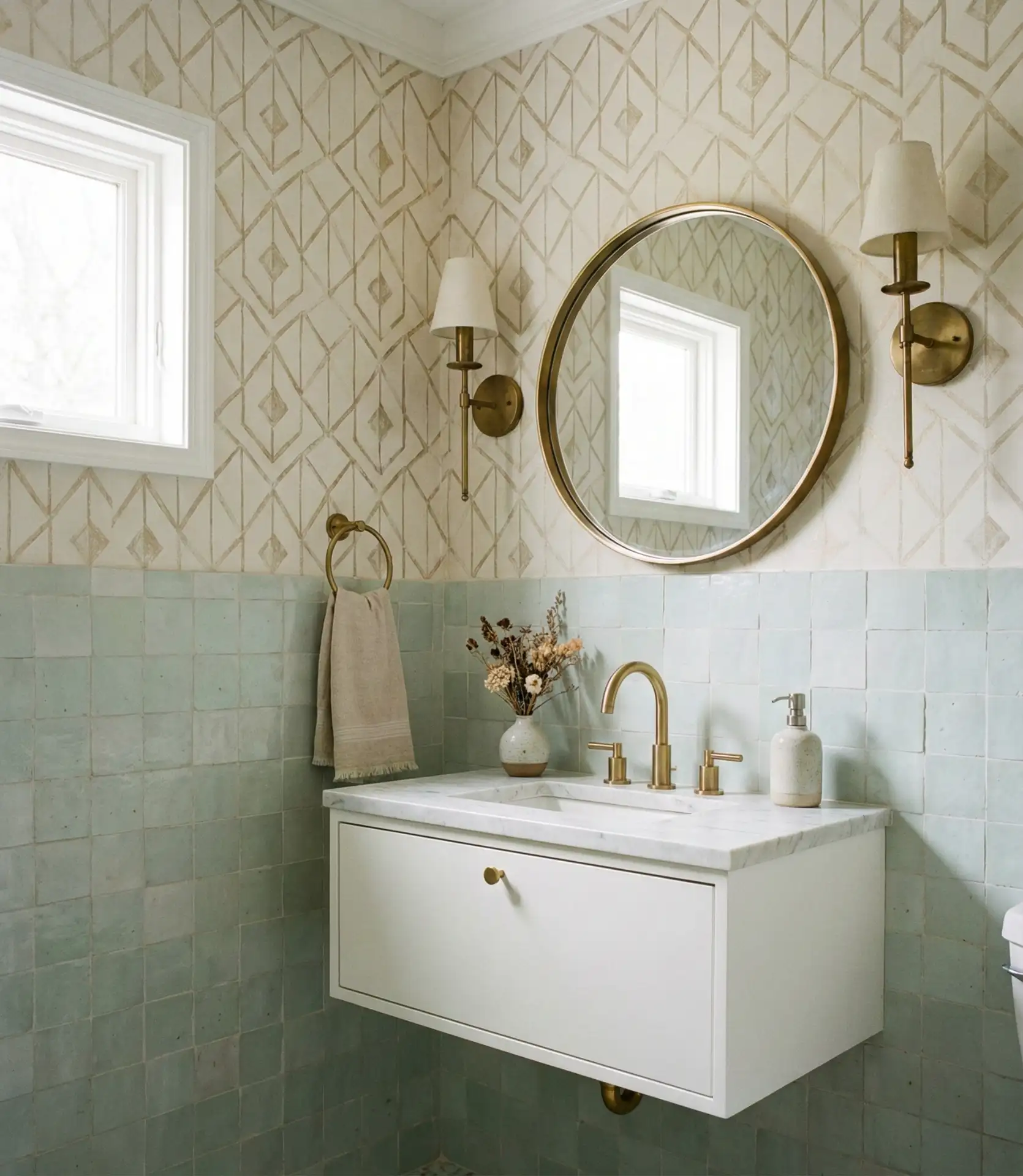
Installing mint tile on lower walls with wallpaper above creates visual interest and protects high-splash zones while adding a pattern up top. This traditional approach is experiencing a revival as homeowners seek layered, collected looks. The tile handles moisture, while the wallpaper adds personality.
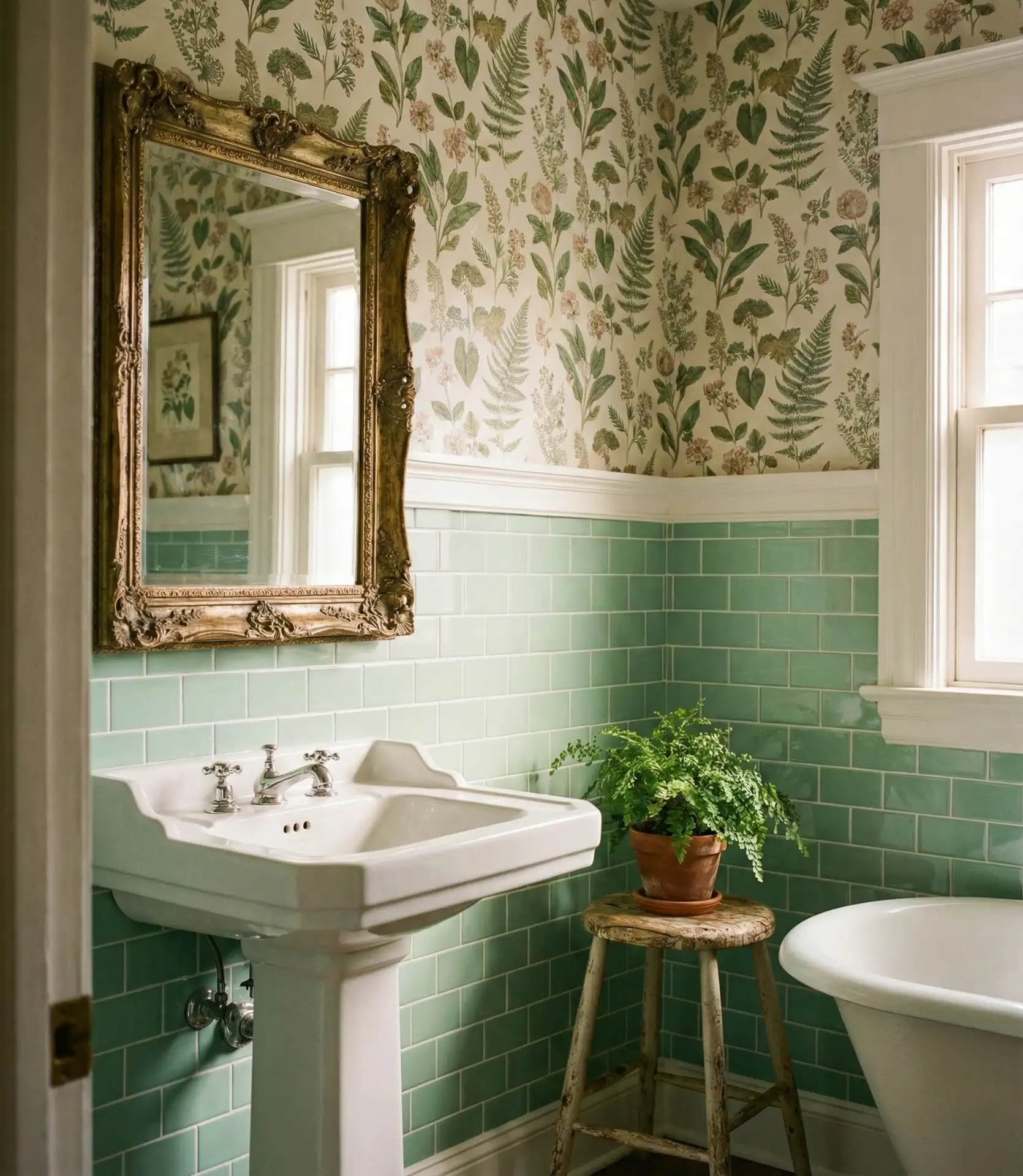
When combining tile and wallpaper, use a chair rail or trim piece at the transition point for a polished finish. This detail prevents moisture from seeping behind the wallpaper and gives you a clean line to work with. Choose wallpaper specifically rated for bathrooms, which can handle humidity without peeling or warping.
16. Emerald Herringbone Shower Wall
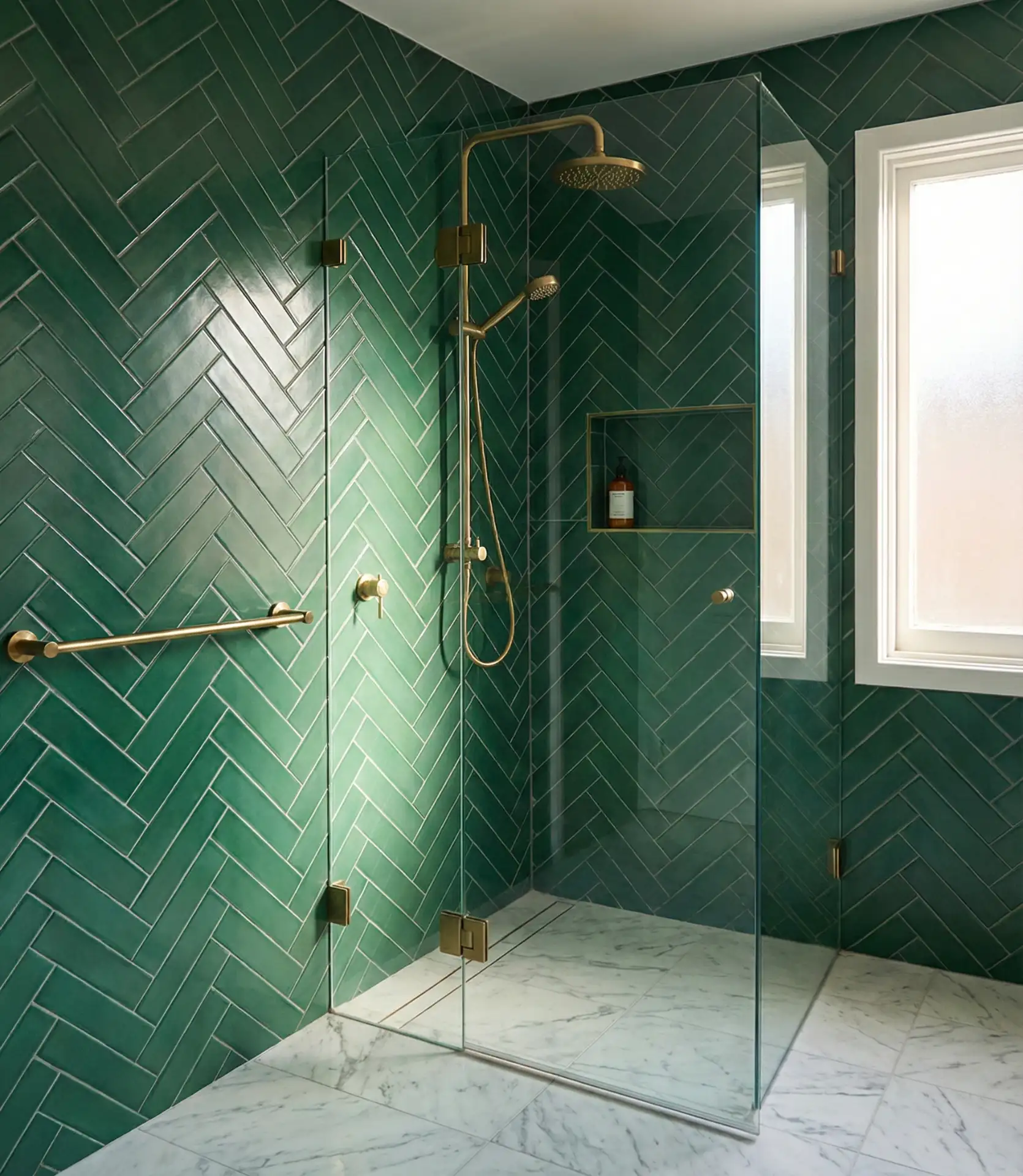
An emerald herringbone tile pattern in the shower adds movement and sophistication. The zigzag layout elevates standard subway tiles into something special, and the rich green makes the pattern even more dynamic. This combination of color and geometry creates a focal point that anchors the entire bathroom.
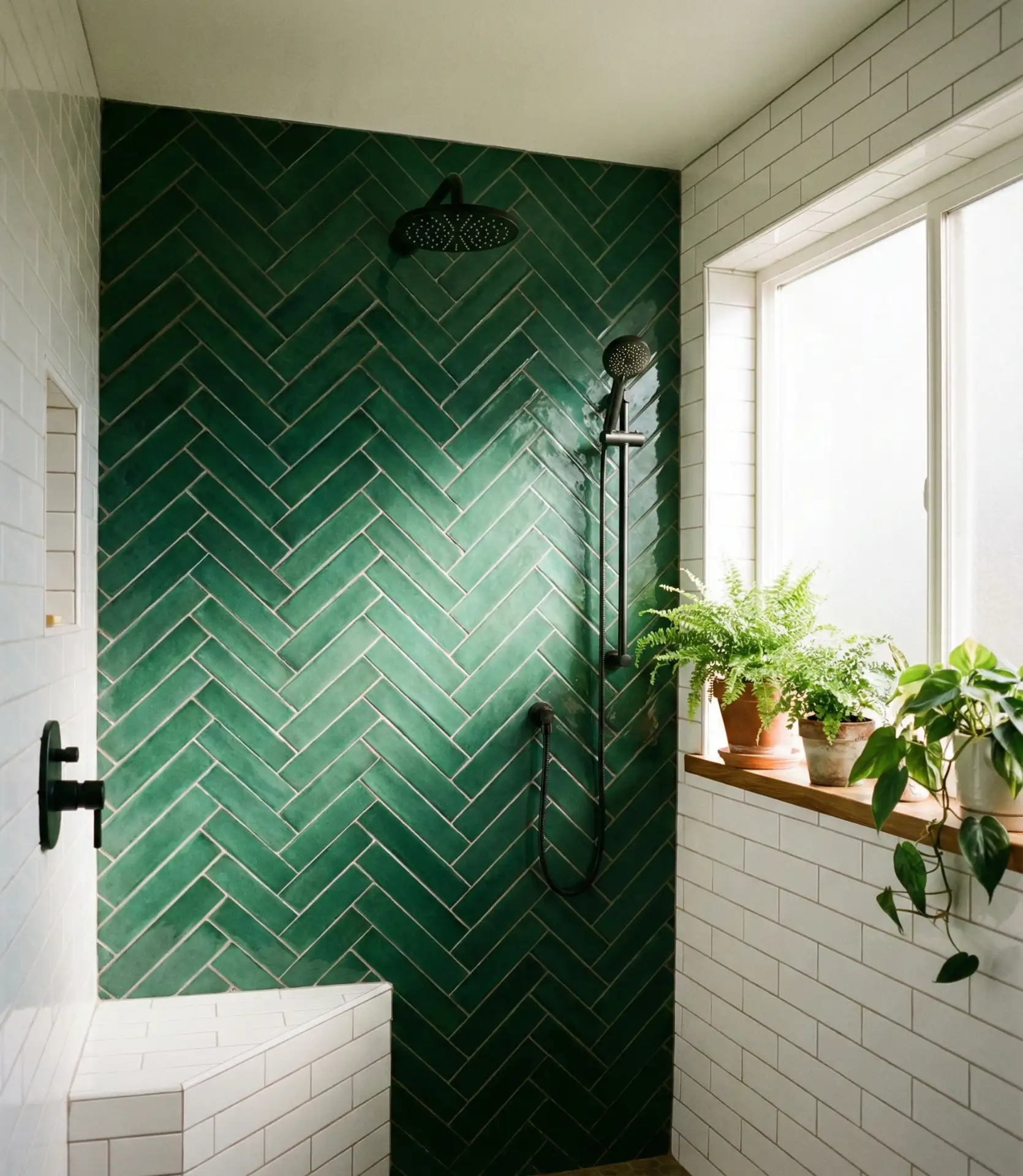
Real homeowners often report that herringbone installations increased their tile labor costs by about 25 to 40 percent compared to standard layouts, but they felt the result was worth every penny. The pattern is timeless enough that it won’t date quickly, making it a smart long-term investment for your home’s value and your daily enjoyment.
17. Pale Green and White Striped Pattern
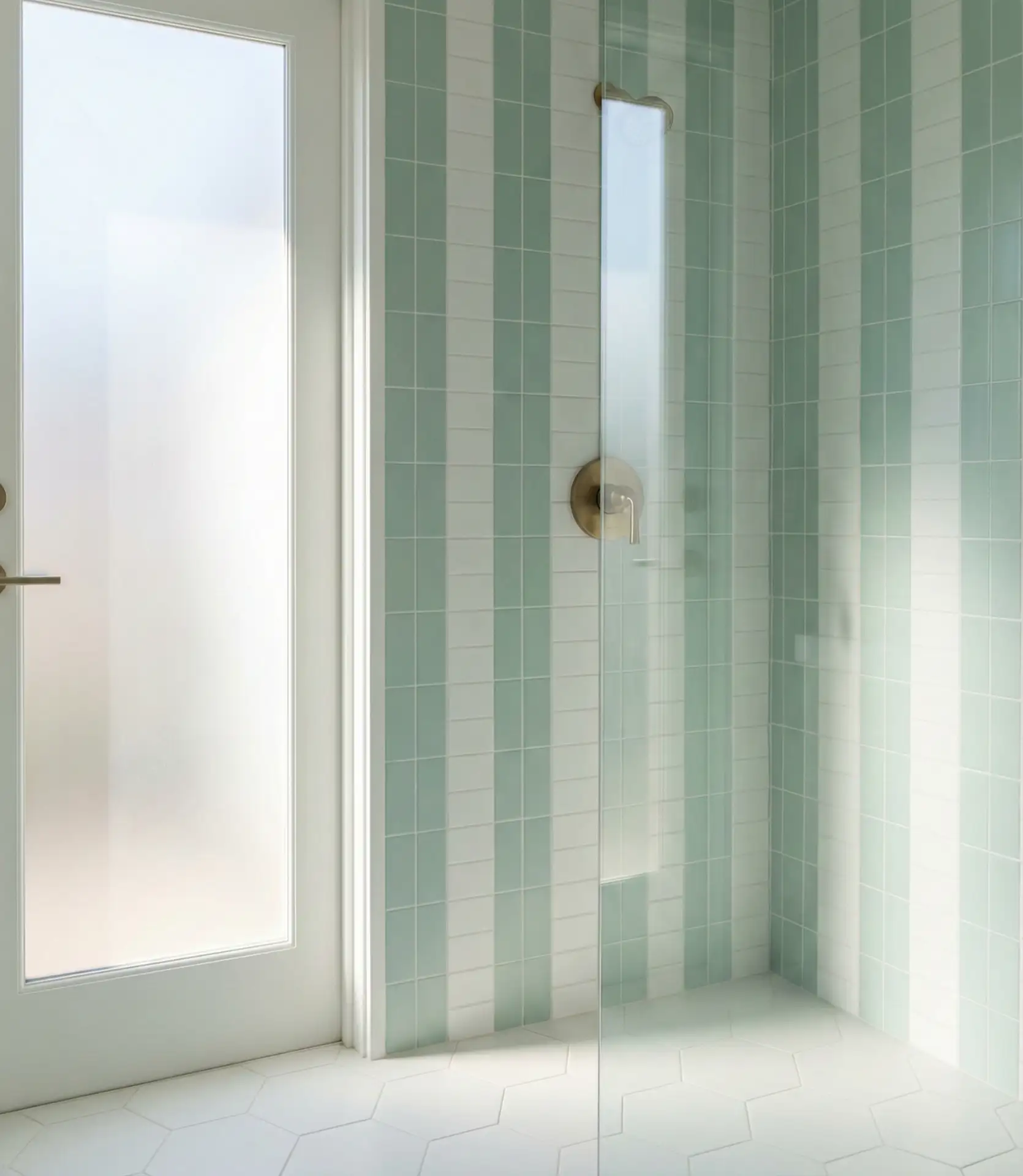
Creating horizontal or vertical stripes with pale green and white tiles adds graphic interest without overwhelming the space. This approach works particularly well in small bathrooms where a subtle pattern creates movement. The light tones keep things airy, while the stripes add definition.
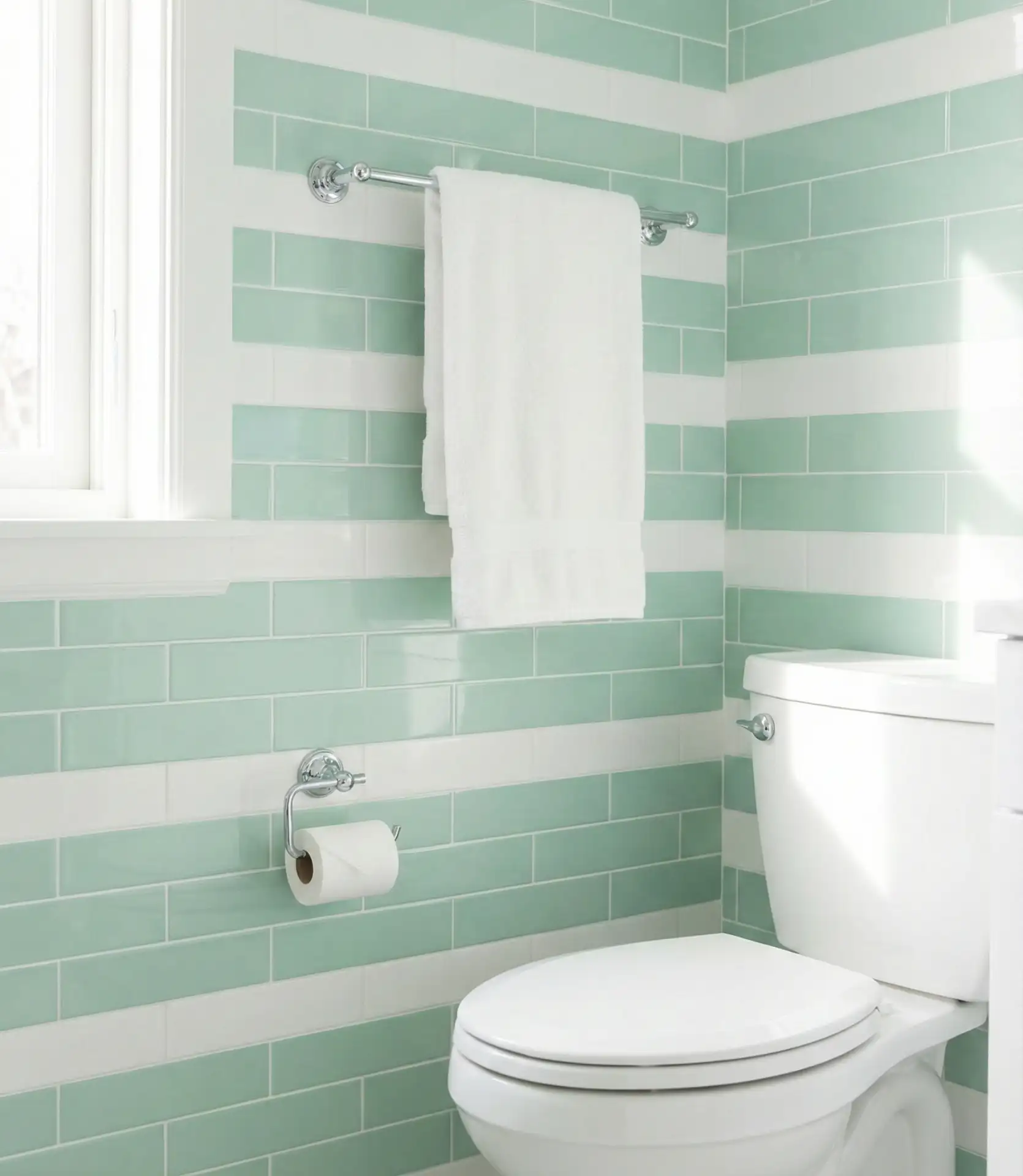
Vertical stripes make ceilings feel higher—a helpful trick in bathrooms with standard eight-foot ceilings. Horizontal stripes, on the other hand, can make narrow bathrooms feel wider. Consider your room’s proportions when deciding which direction to run your striped pattern. This simple design trick has maximum impact with minimal additional cost.
18. Forest Green Vintage Clawfoot Tub Surround
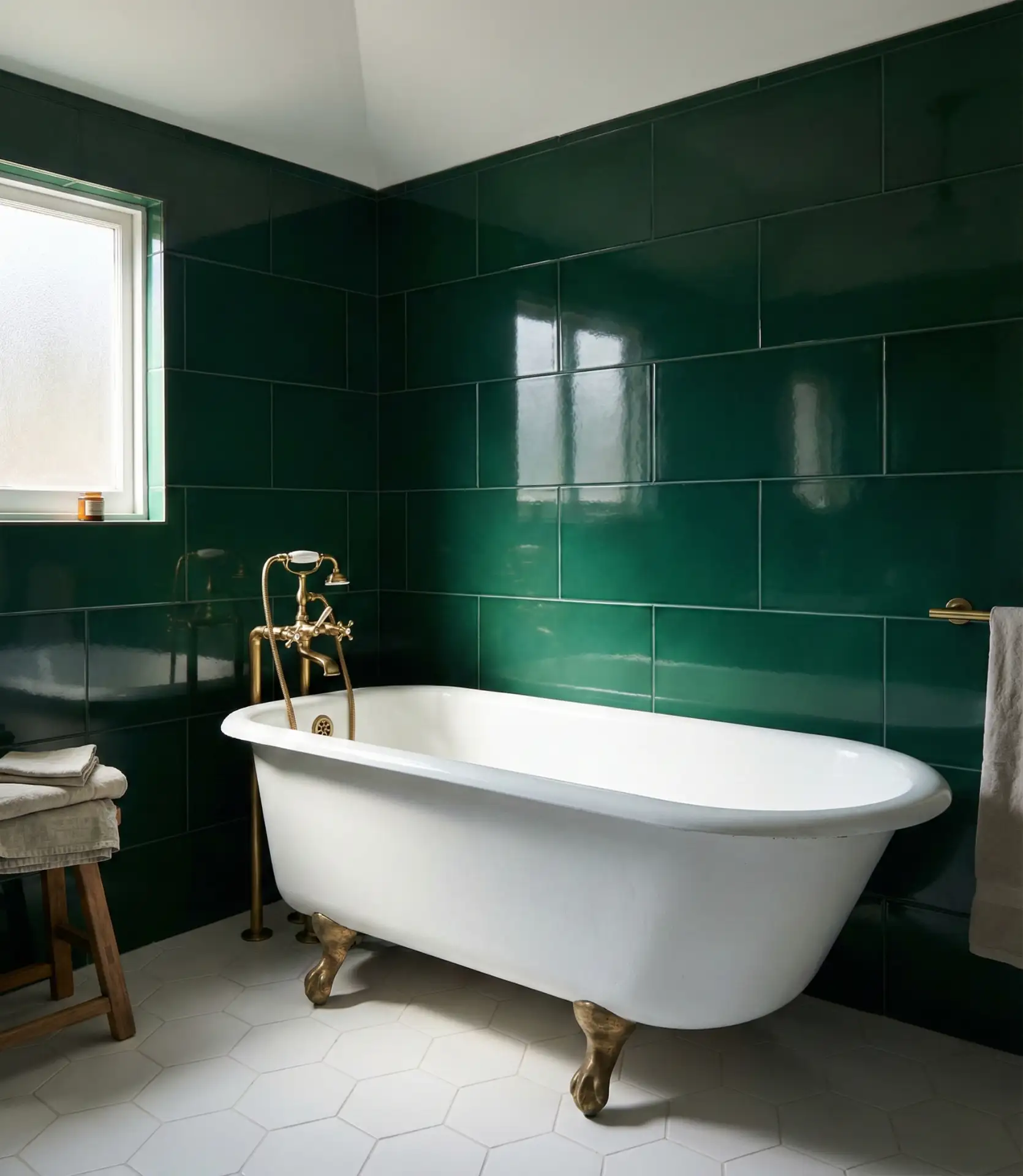
Surrounding a vintage clawfoot tub with forest green tile creates a luxurious bathing alcove. This design honors the historical character of the tub while adding modern color and protection. The deep green provides a rich backdrop that makes white porcelain fixtures look even more striking.
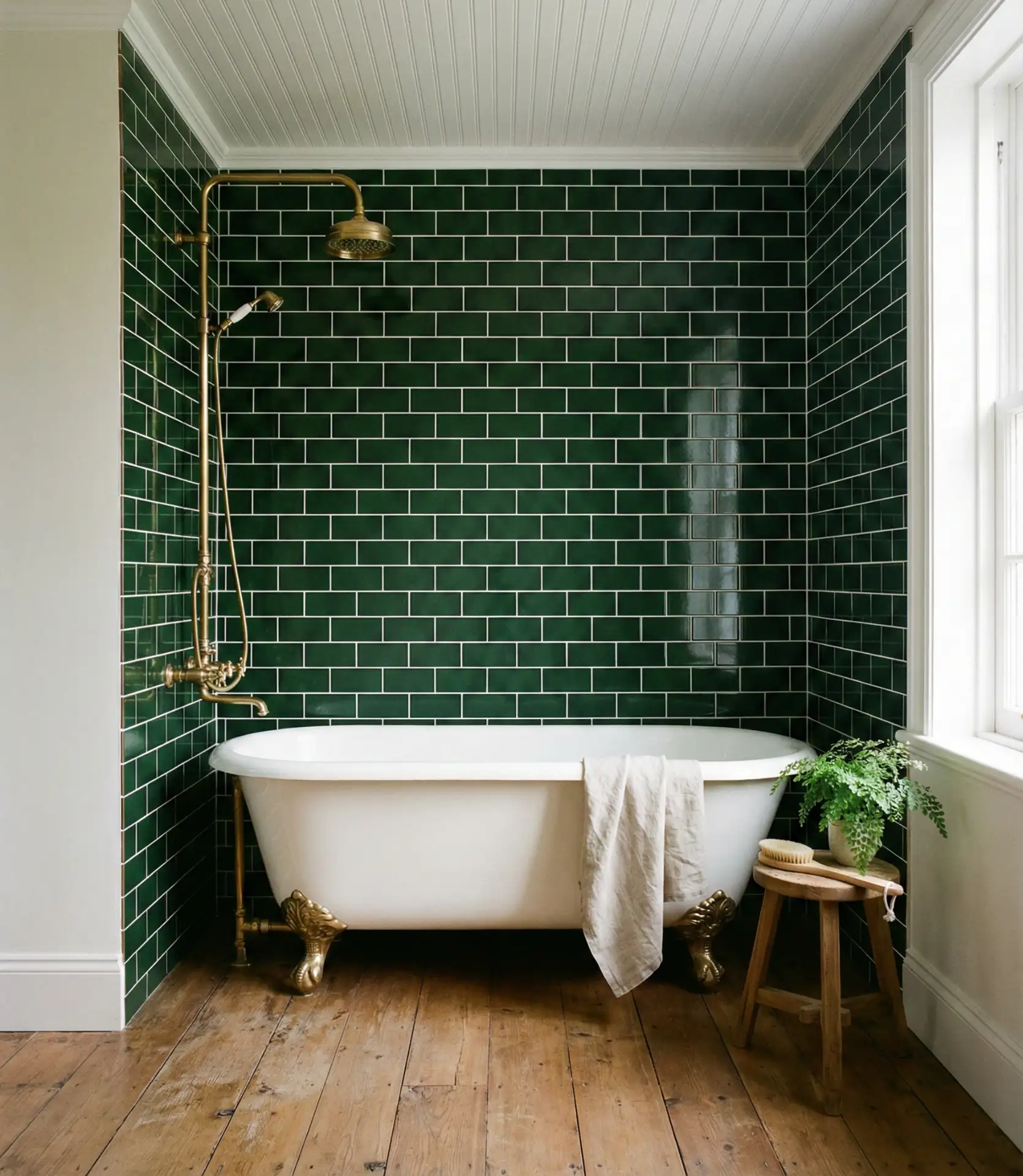
This design works best in older homes where architectural details like clawfoot tubs are original or have been thoughtfully restored. This approach respects the history of Victorian and Craftsman homes in the Northeast and parts of the Midwest while updating them for contemporary life. The green adds drama without betraying the period aesthetic.
19. Sage Green Flooring with White Vanity
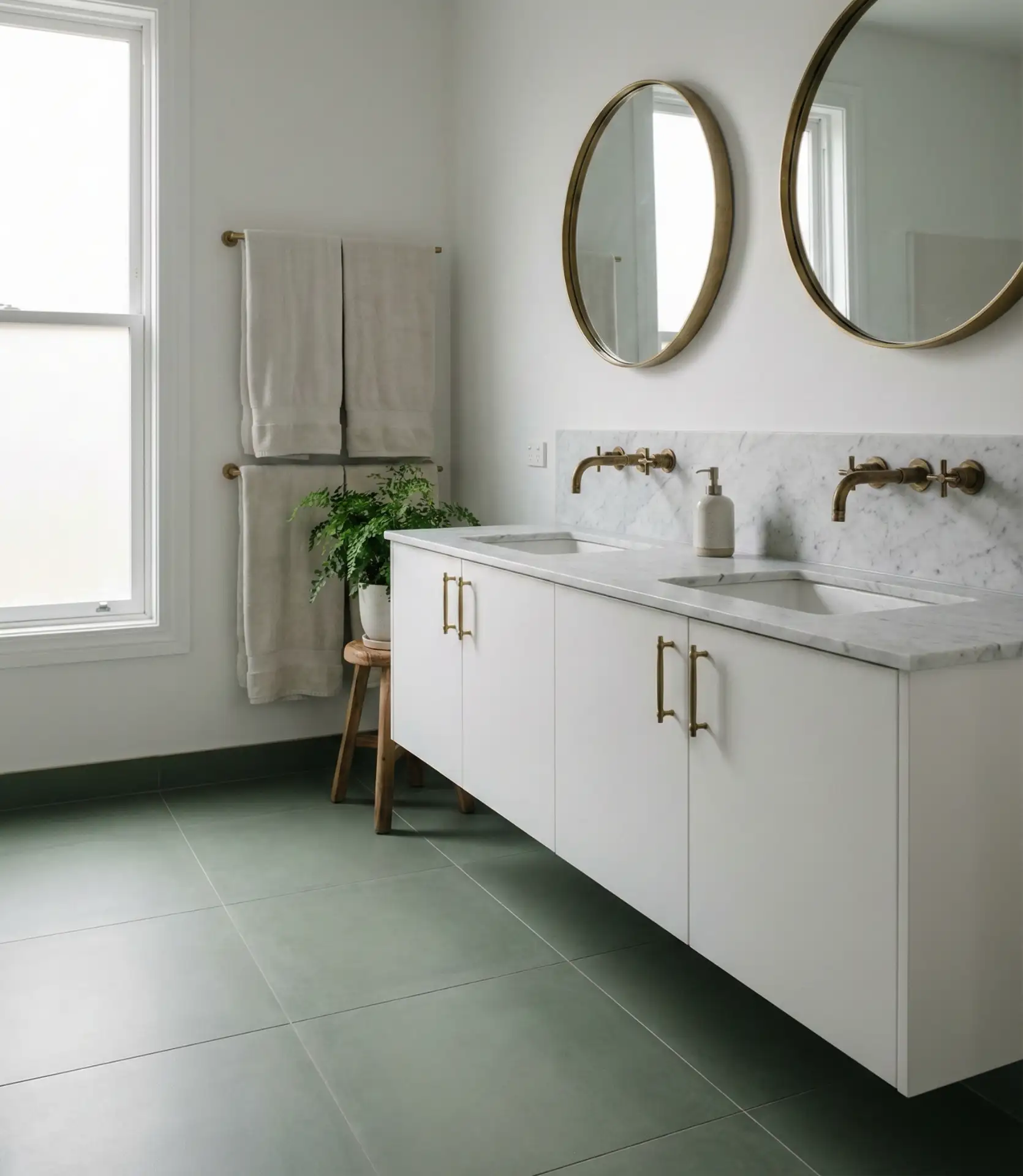
Sage green flooring ideas paired with a white vanity create a fresh, balanced look that’s both calming and practical. The green floor adds color without competing with the clean lines of white cabinetry. This combination works in bathrooms of any size and style.
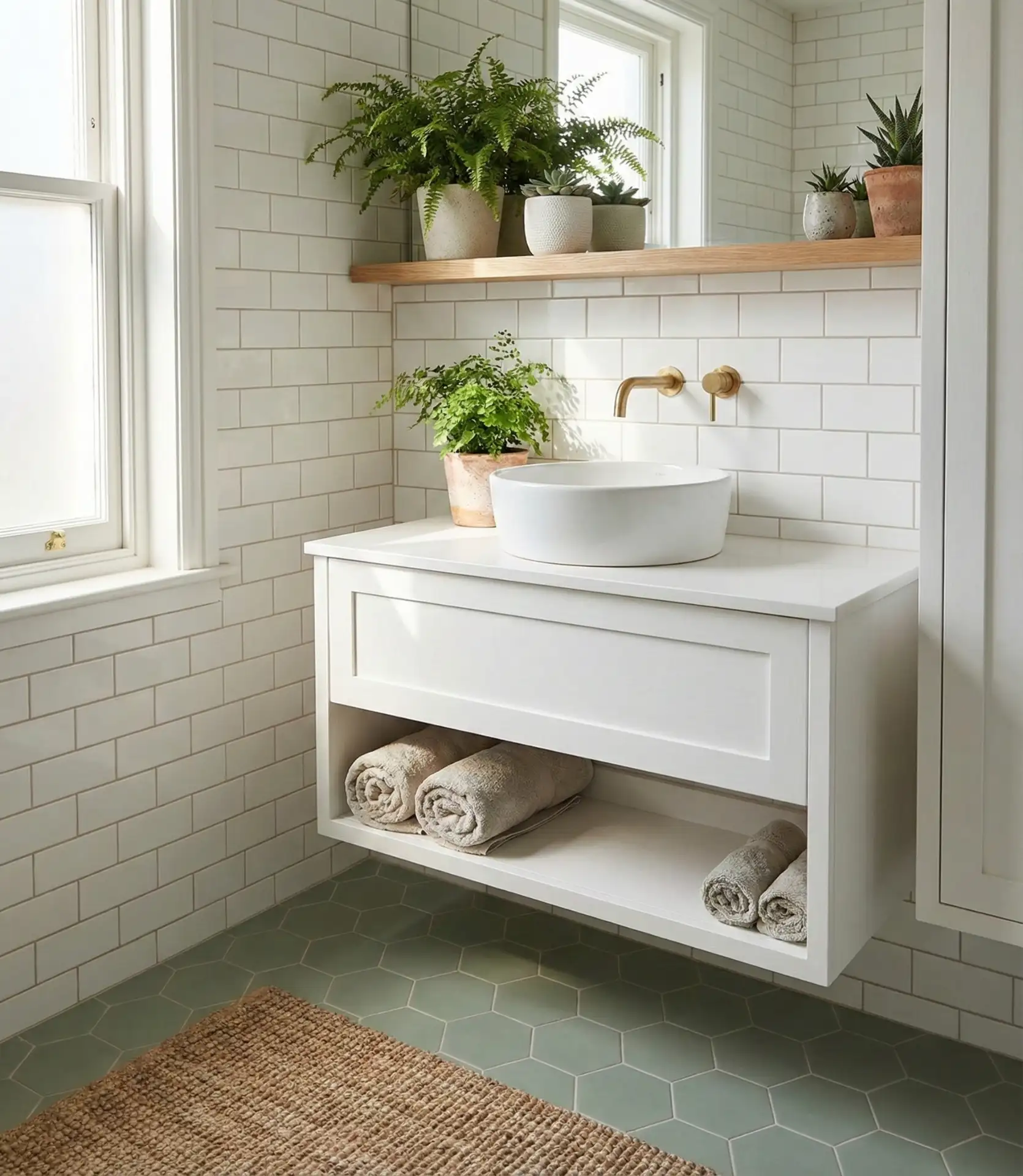
Experts believe that colored floors are gaining popularity due to their ability to conceal imperfections and everyday wear more effectively than white or beige. Sage green, in particular, doesn’t show water spots or soap scum as readily as darker tones, making it both stylish and forgiving for busy households. It’s a practical choice disguised as a design statement.
20. Emerald and Gold Art Deco Pattern
Emerald tiles with gold accent pieces create a glamorous Art Deco-inspired bathroom. This color combination exudes opulence and drama, making it ideal for powder rooms that aim to create a striking impression. The geometric patterns typical of the Art Deco era pair beautifully with these luxe materials.
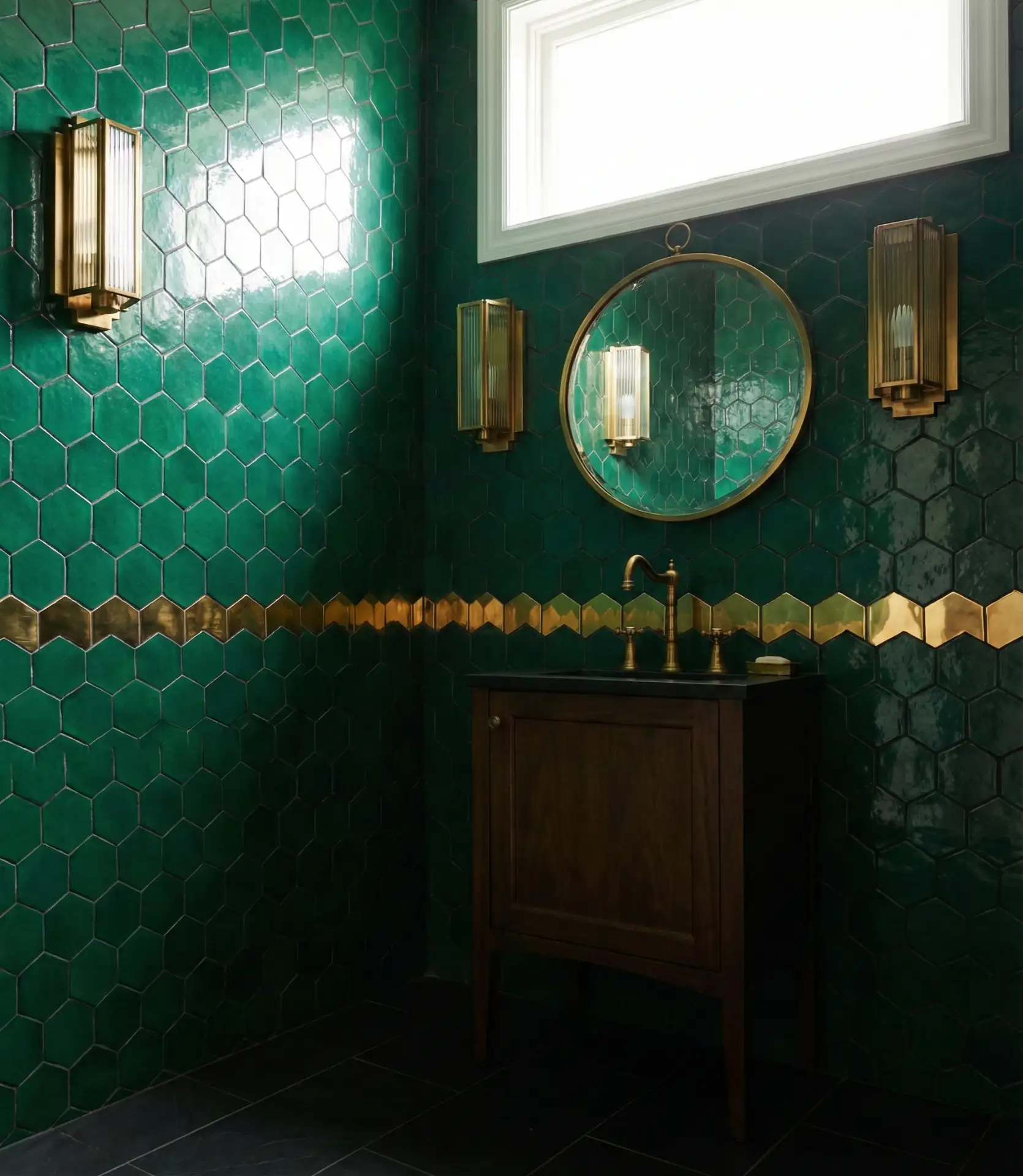
Last year, my neighbor renovated her 1930s bathroom and chose emerald and gold tiles that referenced the home’s original era. She found that researching historical tile patterns helped her make authentic choices that honored the architecture. The result feels like an original design from the period rather than a modern interpretation.
21. Mint Green Beadboard and Tile Hybrid
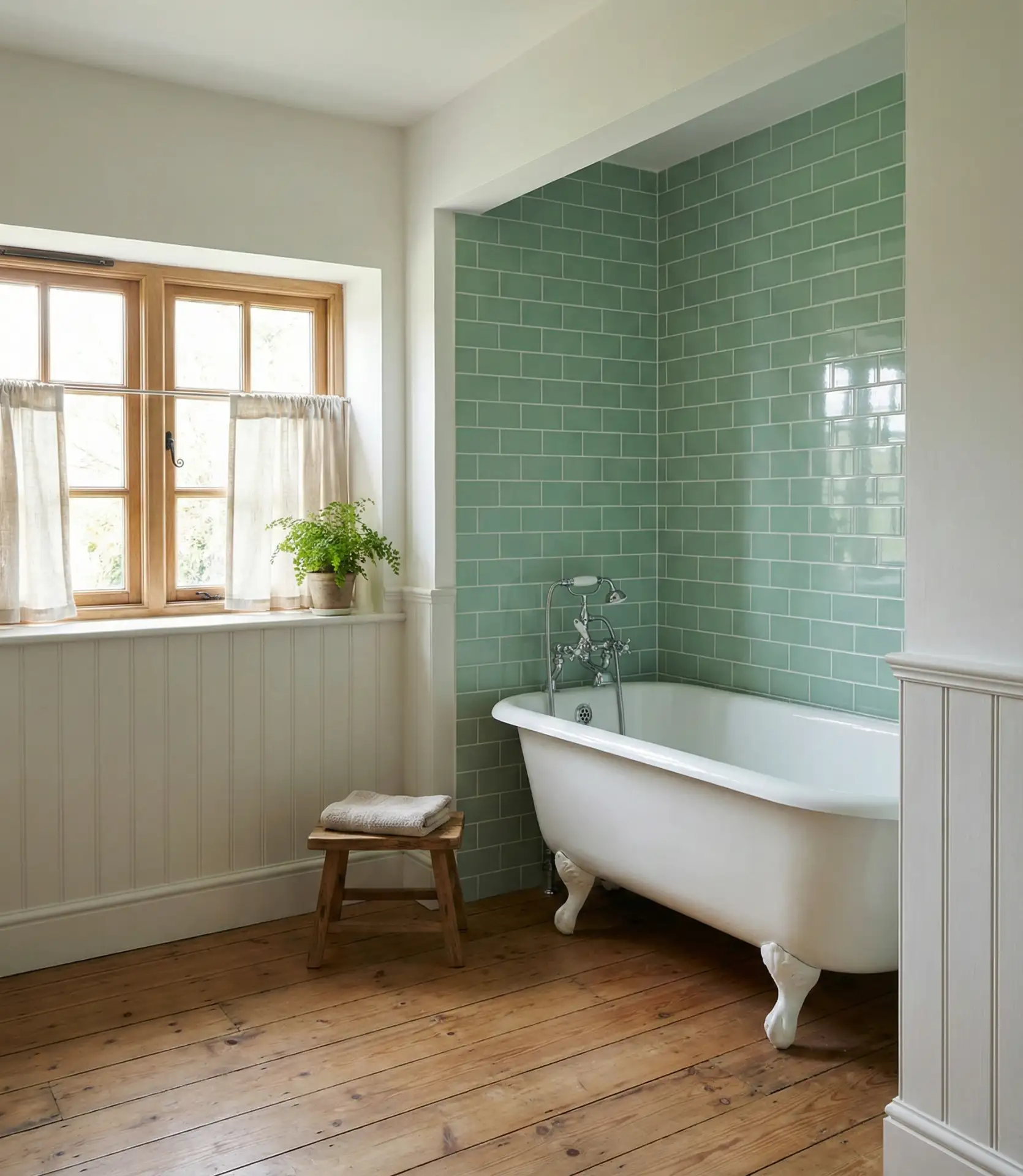
Combining mint tile in wet areas with painted beadboard elsewhere balances durability with traditional charm. This hybrid approach is common in vintage or farmhouse-style bathrooms where full tile coverage would feel too modern. The beadboard adds texture and warmth that plain painted walls cannot.
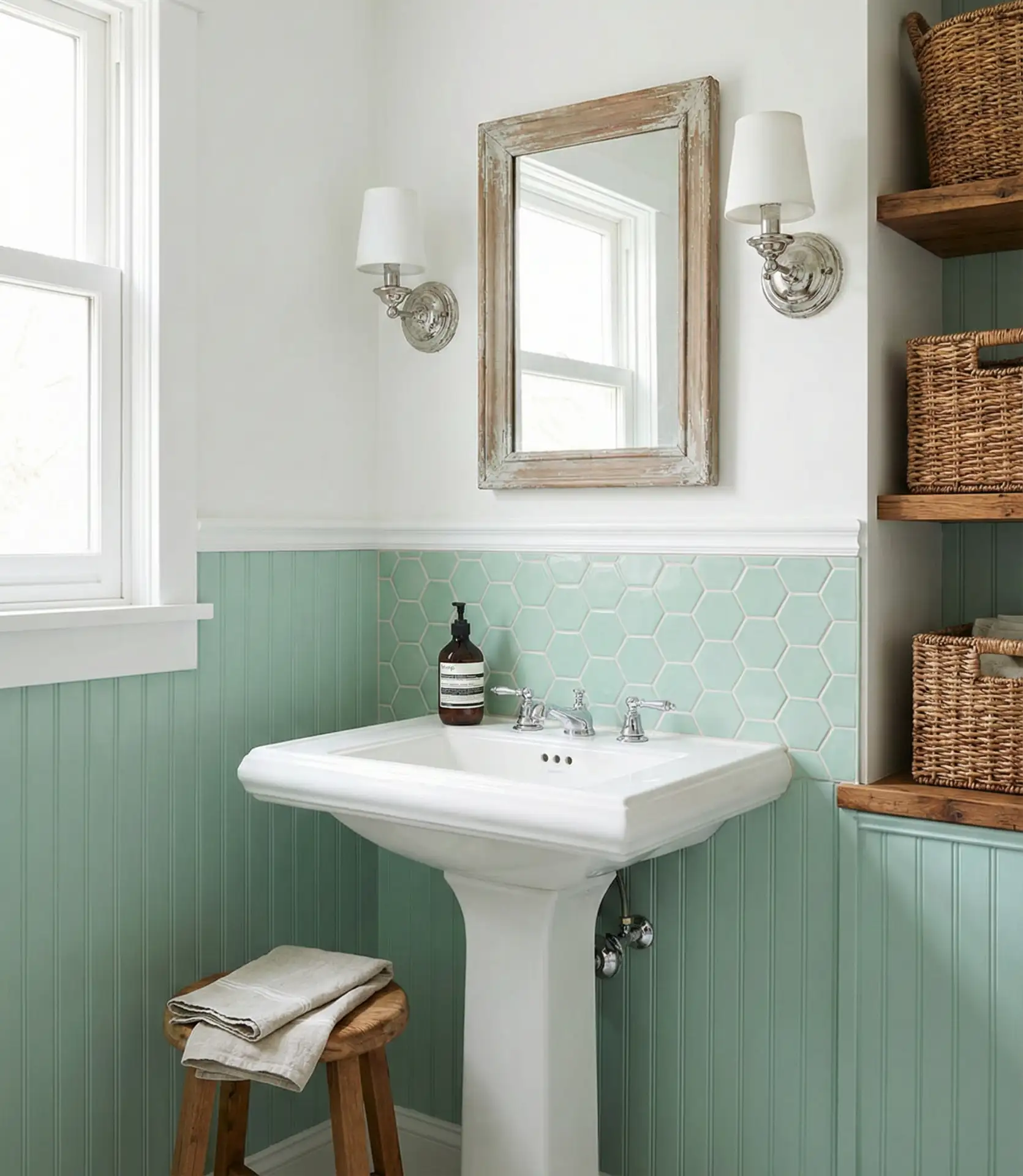
This approach works best in regions where farmhouse and cottage aesthetics are popular, such as the Pacific Northwest, New England, and rural areas throughout the country. The combination of materials adds interest while keeping costs manageable—beadboard is significantly less expensive than tile but still offers a finished, intentional look that feels cohesive with the overall design.
22. Dark Green and Black Moody Powder Room
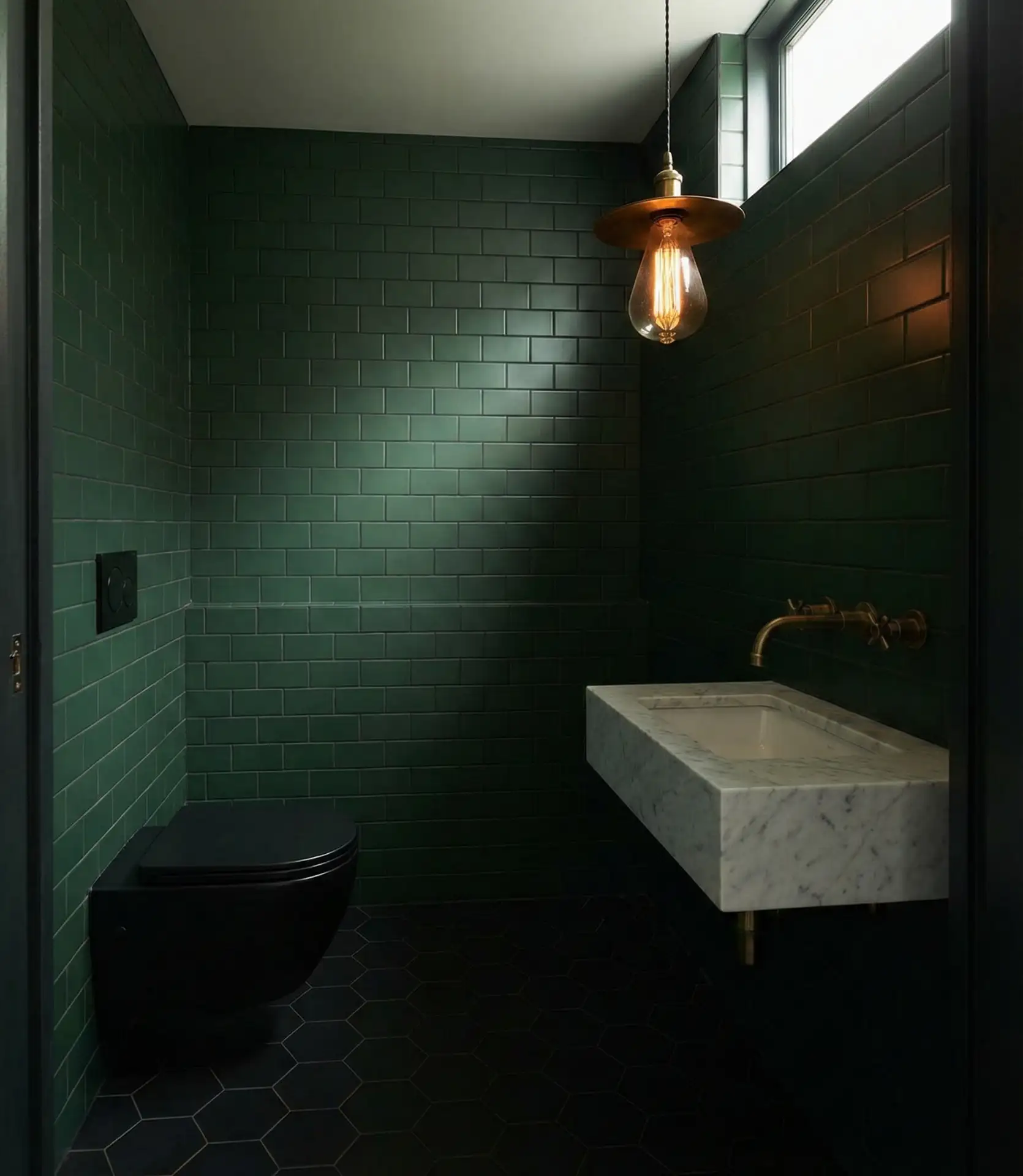
Creating a dark green and black powder room embraces drama and sophistication in a small space. This bold color combination works because powder rooms don’t require natural light for daily grooming routines. The moodiness feels intentional and luxurious rather than oppressive.
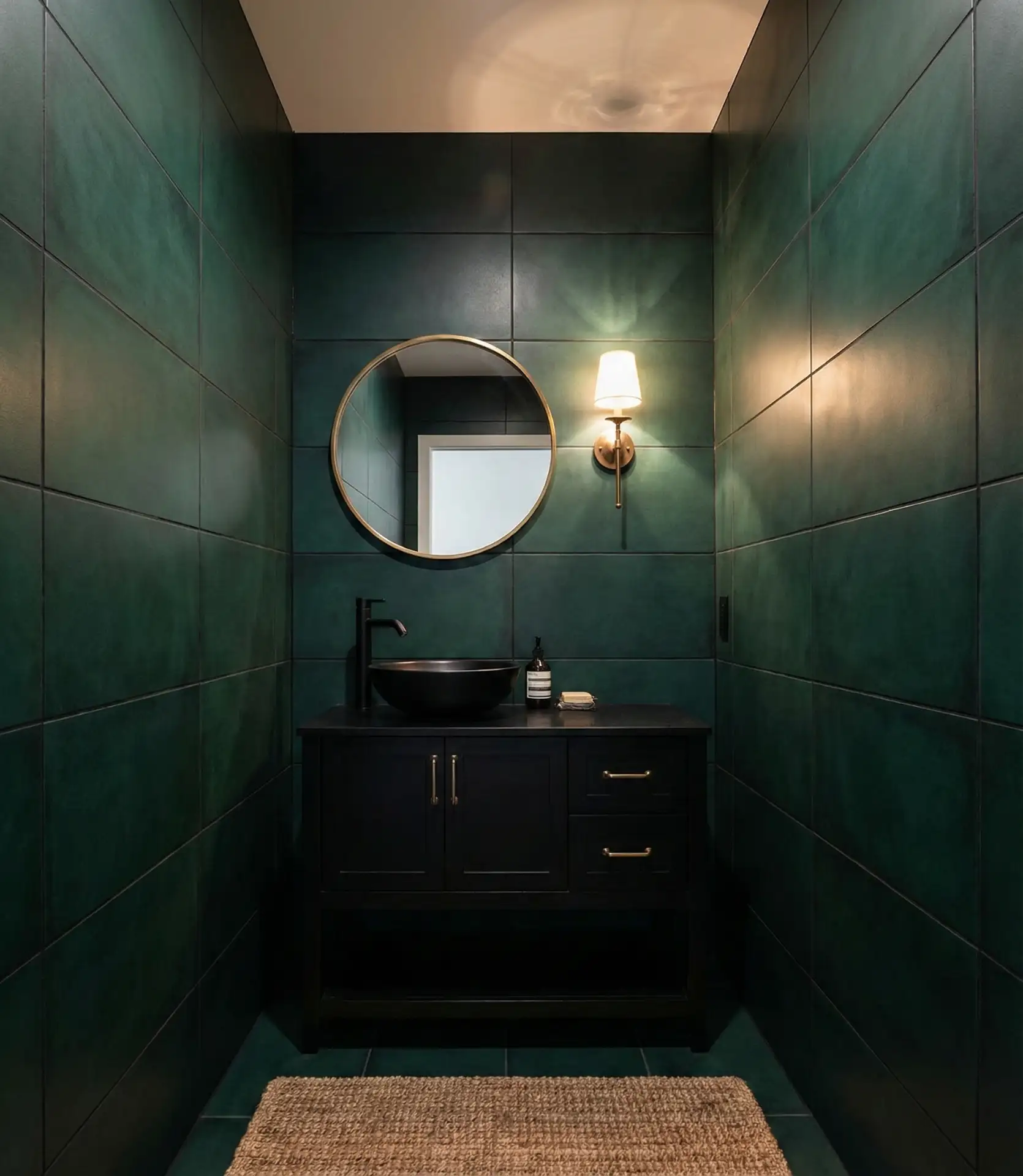
Powder rooms are ideal spaces for design risks because they’re small and don’t require the same functionality as full bathrooms. If you’re nervous about committing to dark colors elsewhere, a powder room lets you experiment with bold choices. Many homeowners report that their dark powder rooms become conversation pieces and favorite spaces in their homes despite—or because of—the unconventional palette.
Green tile bathrooms offer endless possibilities for creating spaces that feel personal, peaceful, and current. Whether you lean toward soft sage for serenity, bold emerald for drama, or vintage mint for charm, there’s a shade and style that will work beautifully in your home. The key is choosing colors and layouts that align with your lifestyle, maintenance preferences, and the overall aesthetic of your space. Share your favorite idea in the comments below, or let us know which green tile bathroom you’re planning to create in 2026!