44 Galley Kitchen Ideas 2026: Transform Your Narrow Space Into a Stunning Cooking Haven

Galley kitchens are experiencing a major comeback in 2026, particularly among American homeowners who are reimagining narrow spaces as efficient, stylish cooking zones. Whether you’re working with a compact apartment layout or planning a full remodel, the galley format offers surprising versatility—from sleek modern designs to charming cottage-inspired setups. Pinterest searches for galley kitchen inspiration have surged as more people discover how thoughtful design can transform even the tightest corridors into functional culinary hubs. In this article, you’ll find fresh ideas that showcase everything from bold color choices to smart layout tweaks, helping you maximize every inch while creating a kitchen that feels both personal and polished.
1. Classic White Galley Kitchen with Timeless Appeal
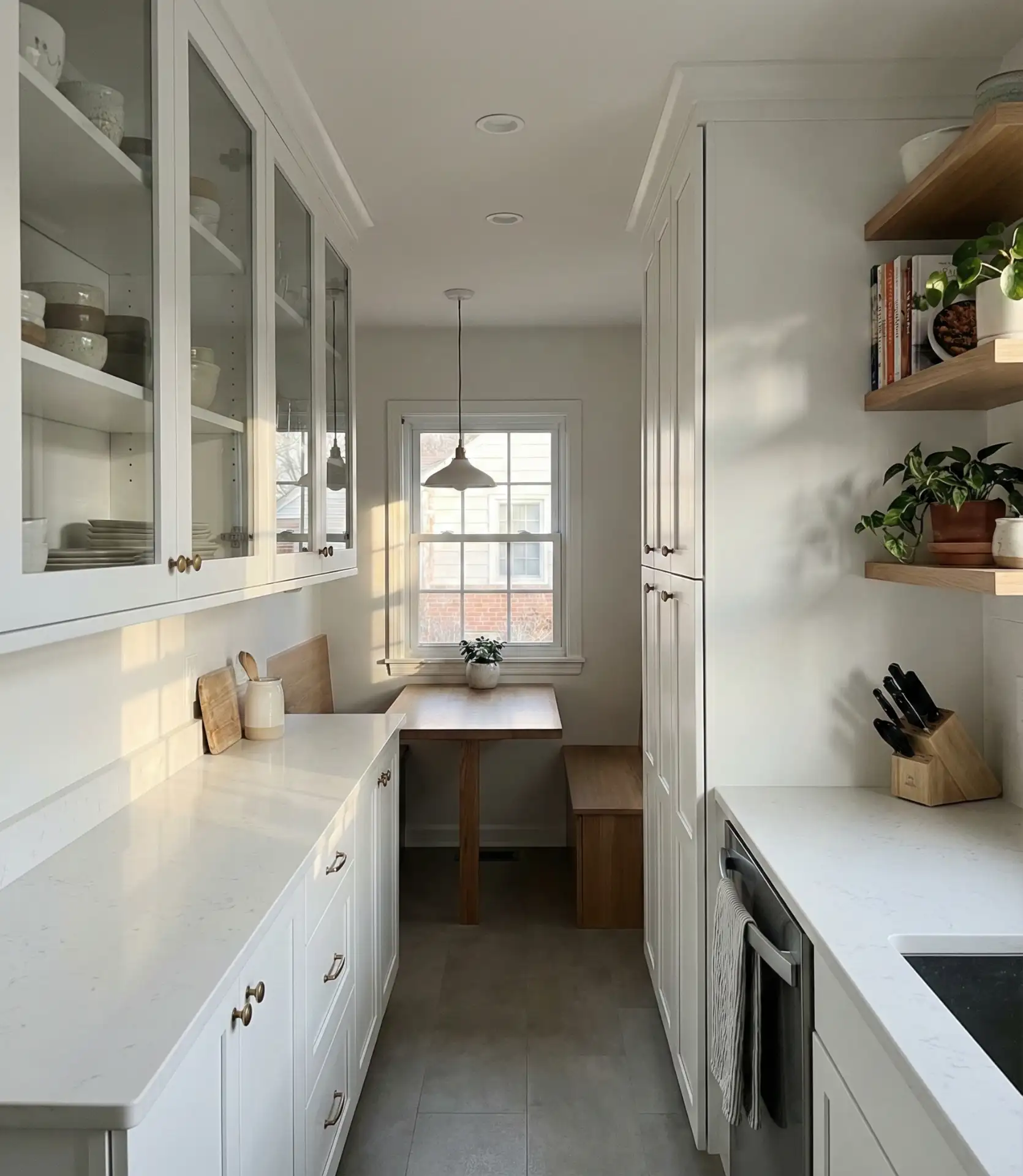
A white galley kitchen remains one of the most popular choices for American homes, especially in urban apartments and older bungalows where space runs narrow. Clean cabinetry paired with subway tile backsplashes creates an airy feel, while under-cabinet lighting compensates for limited natural light. This layout works beautifully in both rentals and owned properties, offering a neutral canvas that adapts to changing décor trends without requiring a full overhaul.
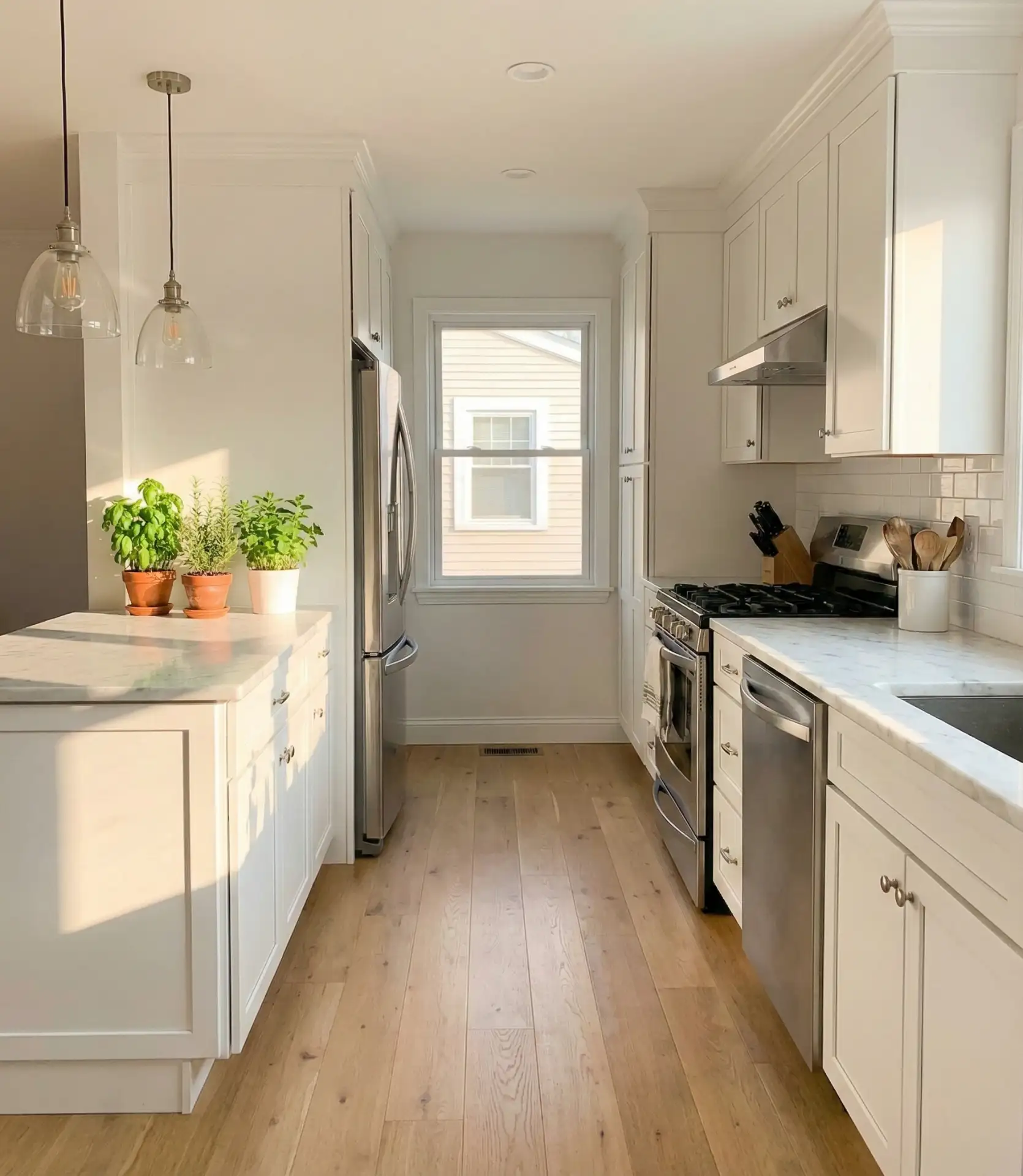
One common mistake in white galley kitchens is choosing purely decorative hardware that’s difficult to grip in a tight space. Opt for simple bar pulls or knobs with a substantial profile—they make opening drawers easier when you’re carrying groceries or cooking supplies. Also, avoid glossy white paint on walls; a matte or eggshell finish hides scuffs better in high-traffic corridors where bags and elbows frequently brush against surfaces.
2. Long Galley Kitchen with Extended Counter Runs
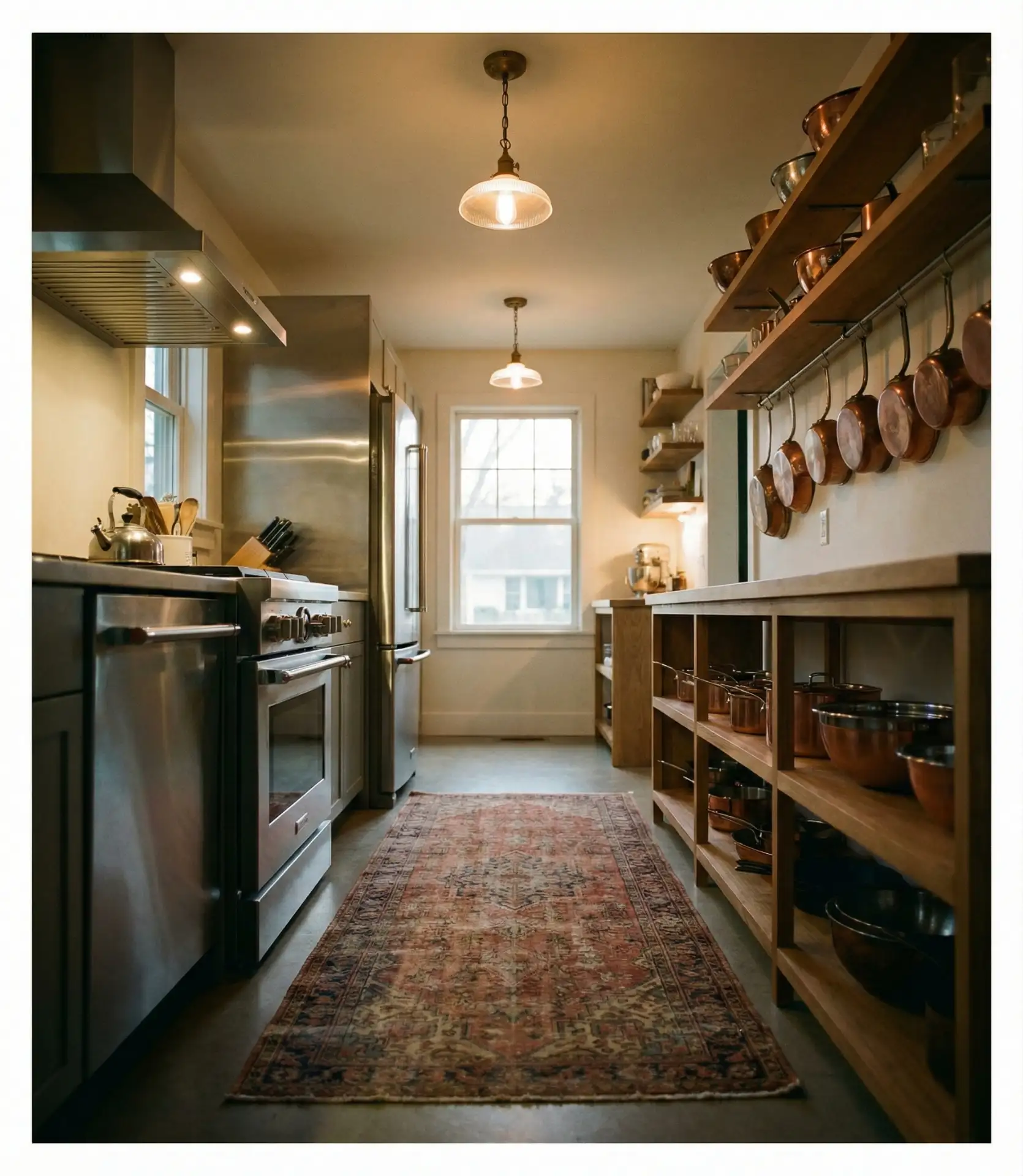
A long galley kitchen configuration provides generous counter space on both sides, making it ideal for serious home cooks who need multiple prep zones. This layout often appears in ranch-style homes and converted lofts, where the kitchen runs parallel to a hallway or living area. Extended counters allow for dedicated stations—one side for food prep, the other for cooking and cleanup—streamlining workflow during busy weeknight dinners or weekend meal prep sessions.
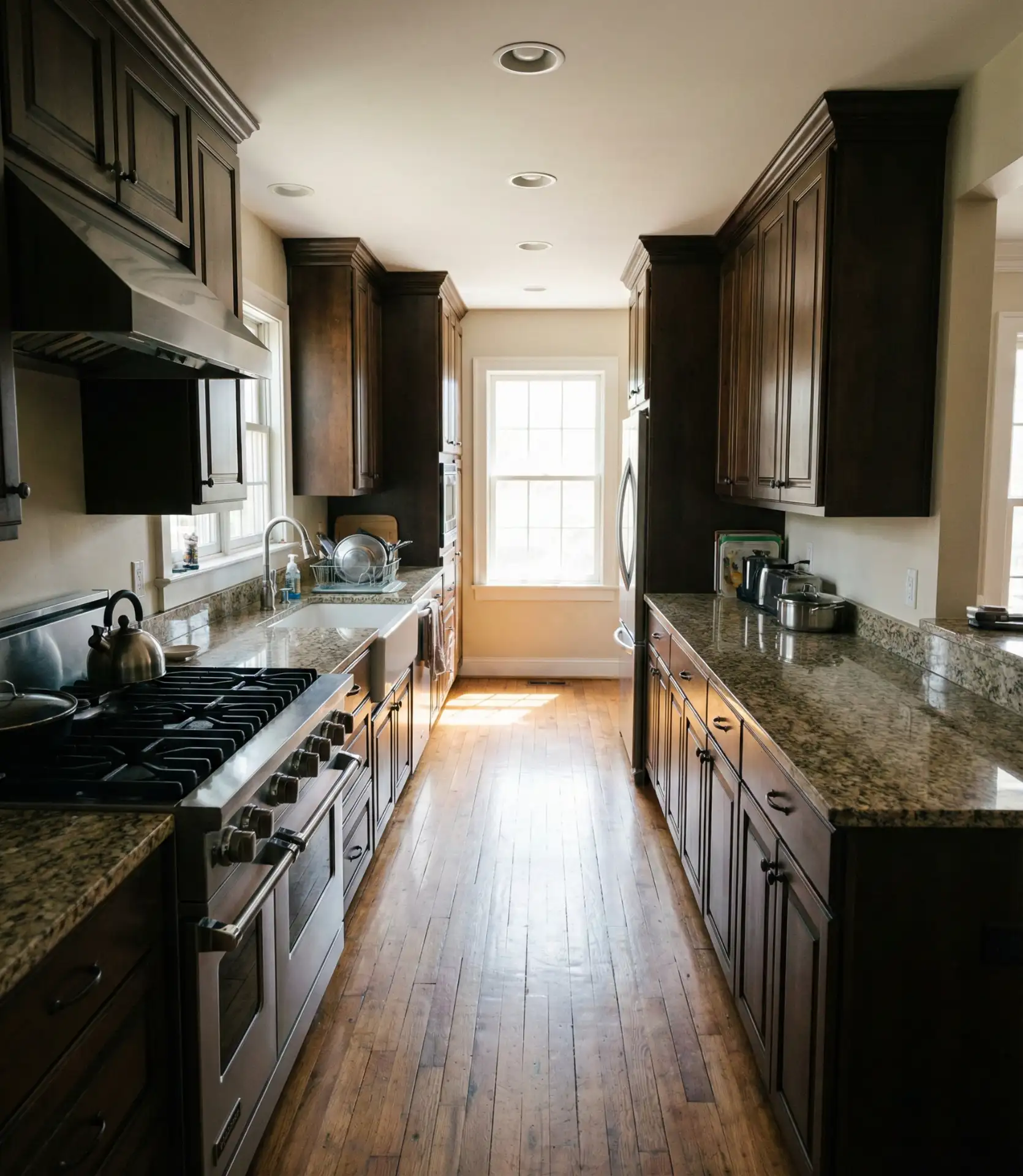
Where this arrangement works best is in households with two or more cooks—the elongated layout prevents bottlenecks, since people can work side by side without constantly crossing paths. Many American families also use the far end of a long galley as a coffee or baking station, keeping those activities separate from the main cooking zone and reducing clutter around the stove and sink.
3. Narrow Galley Kitchen Maximizing Vertical Storage
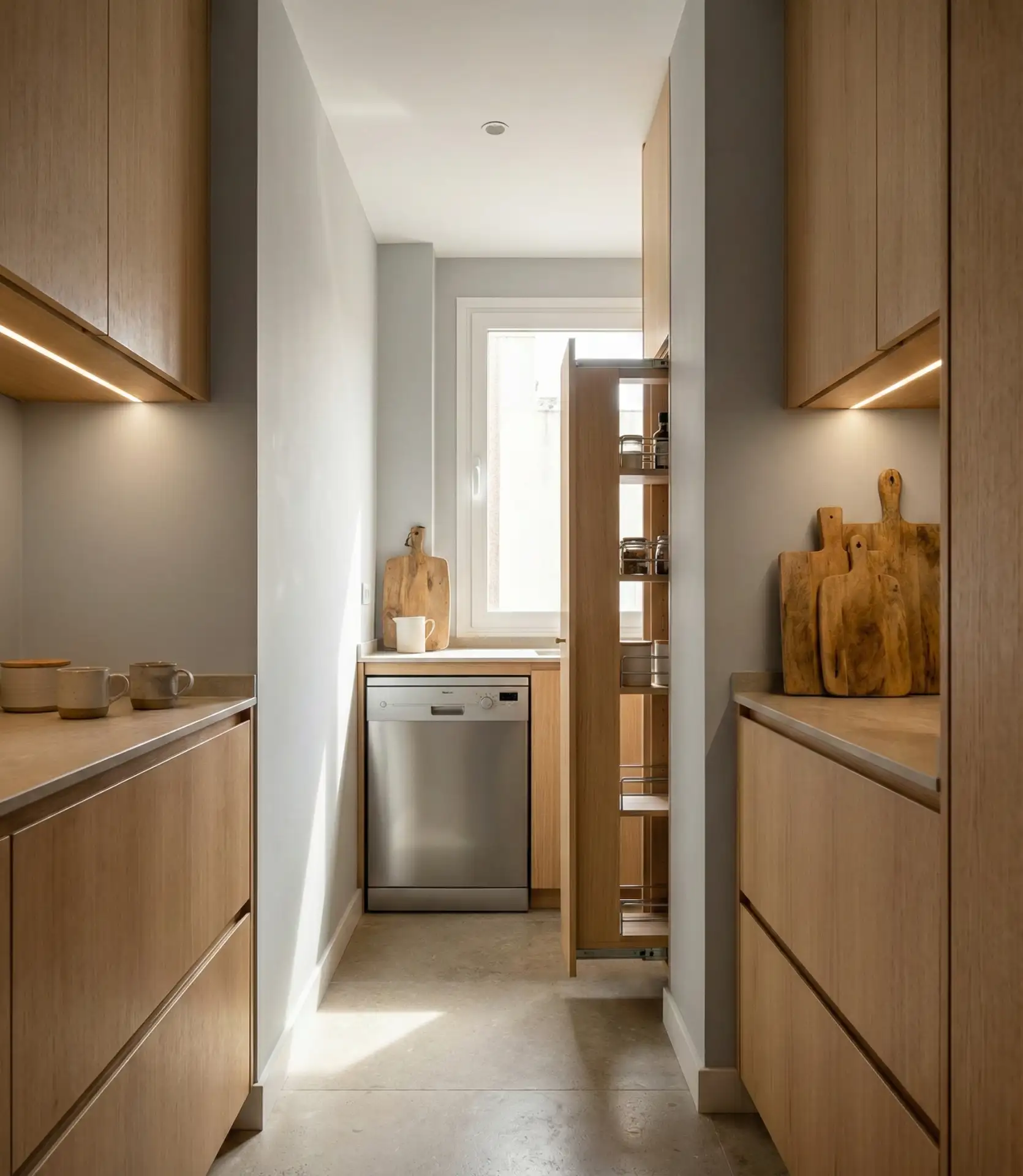
A narrow galley kitchen design heavily relies on vertical storage to keep essentials within reach, especially when floor space is limited. Floor-to-ceiling cabinetry, open shelving, and magnetic knife strips transform walls into functional zones, reducing countertop clutter. This approach is especially common in New York City apartments and older rowhouses, where every square foot counts and traditional pantry closets simply don’t exist.
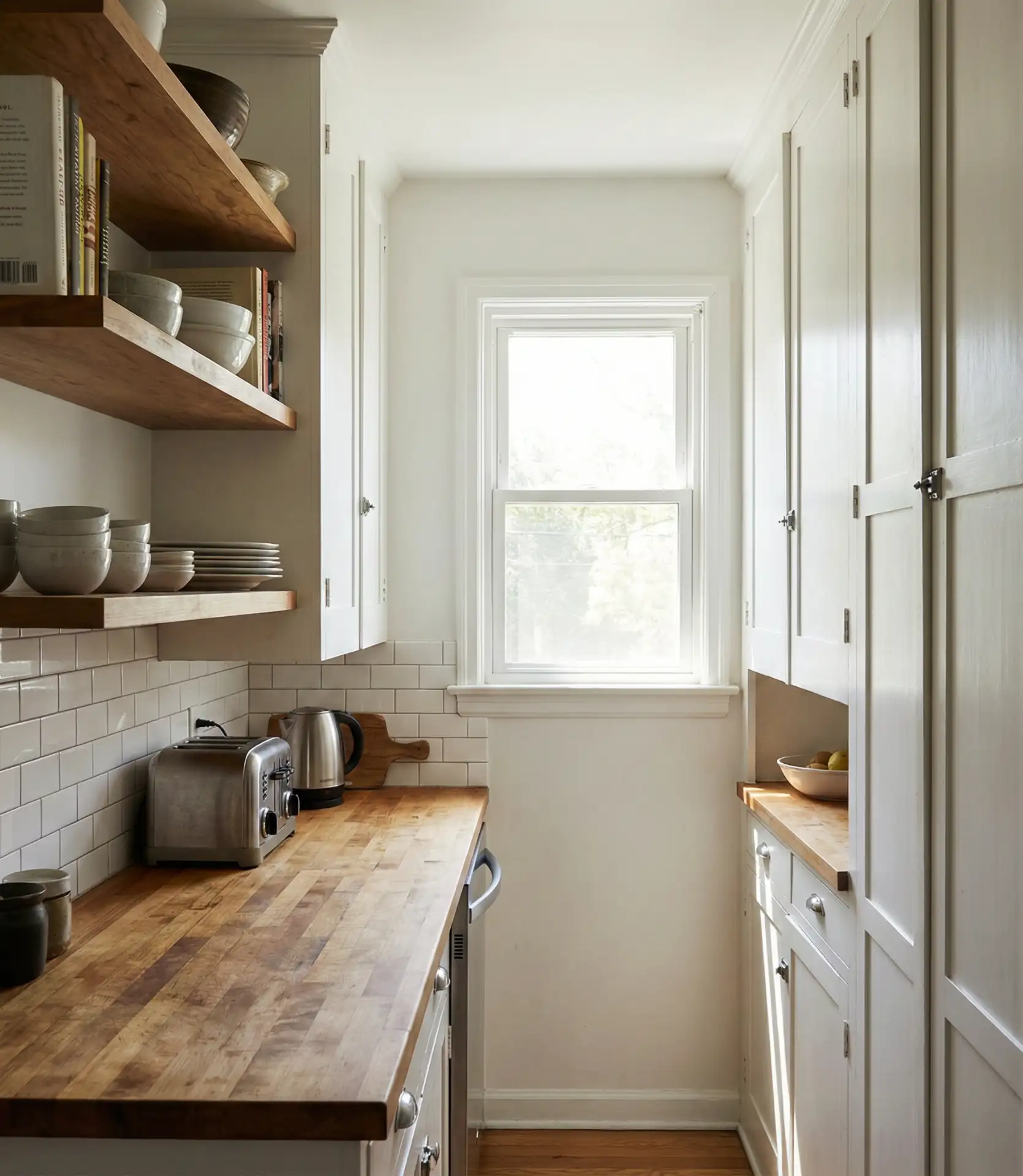
A neighbor of mine in Boston remodeled her 1920s galley into a narrow but highly efficient workspace by installing custom cabinets that reach the ceiling. She stores rarely used appliances on the top shelves and keeps everyday dishes at eye level, eliminating the need for a separate pantry. The transformation proved you don’t need width to achieve serious functionality—just smart vertical planning.
4. Tiny Galley Kitchen with Space-Saving Appliances
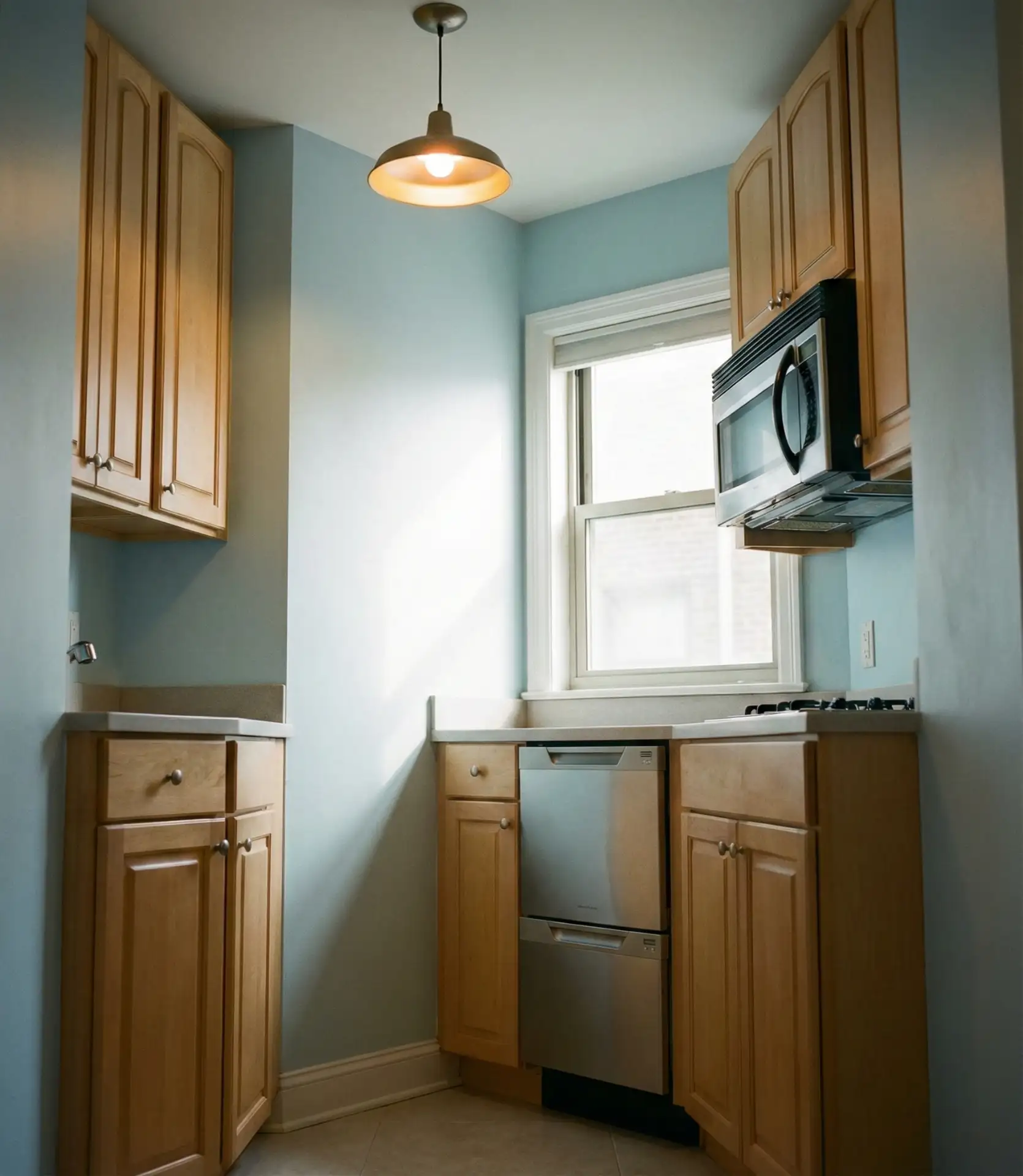
A tiny galley kitchen demands creative solutions, starting with compact or combination appliances that deliver full functionality in smaller footprints. Slimline dishwashers, under-counter refrigerators, and two-burner cooktops free up precious counter space without sacrificing essential features. This layout is particularly popular in studio apartments, tiny homes, and mother-in-law suites across the U.S., where every inch must serve multiple purposes.
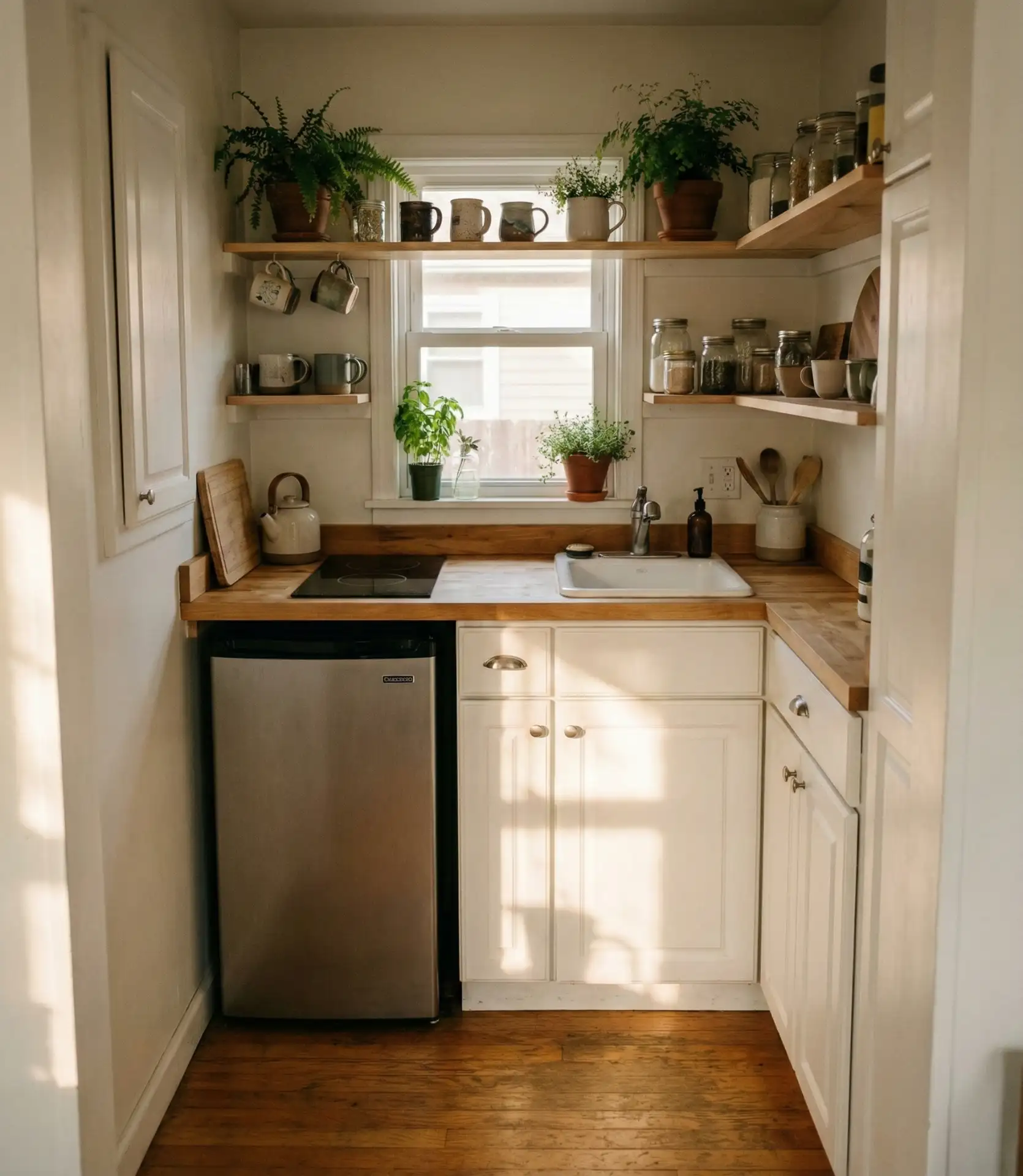
Expert designers often recommend choosing appliances in stainless or panel-ready finishes that blend seamlessly with cabinetry, creating a unified look that makes the space feel larger. Also, consider investing in a high-quality range hood—even in tiny kitchens, proper ventilation prevents cooking odors from permeating your entire living area, which is especially important in open-plan studios.
5. Double Galley Kitchen for Multi-Cook Households
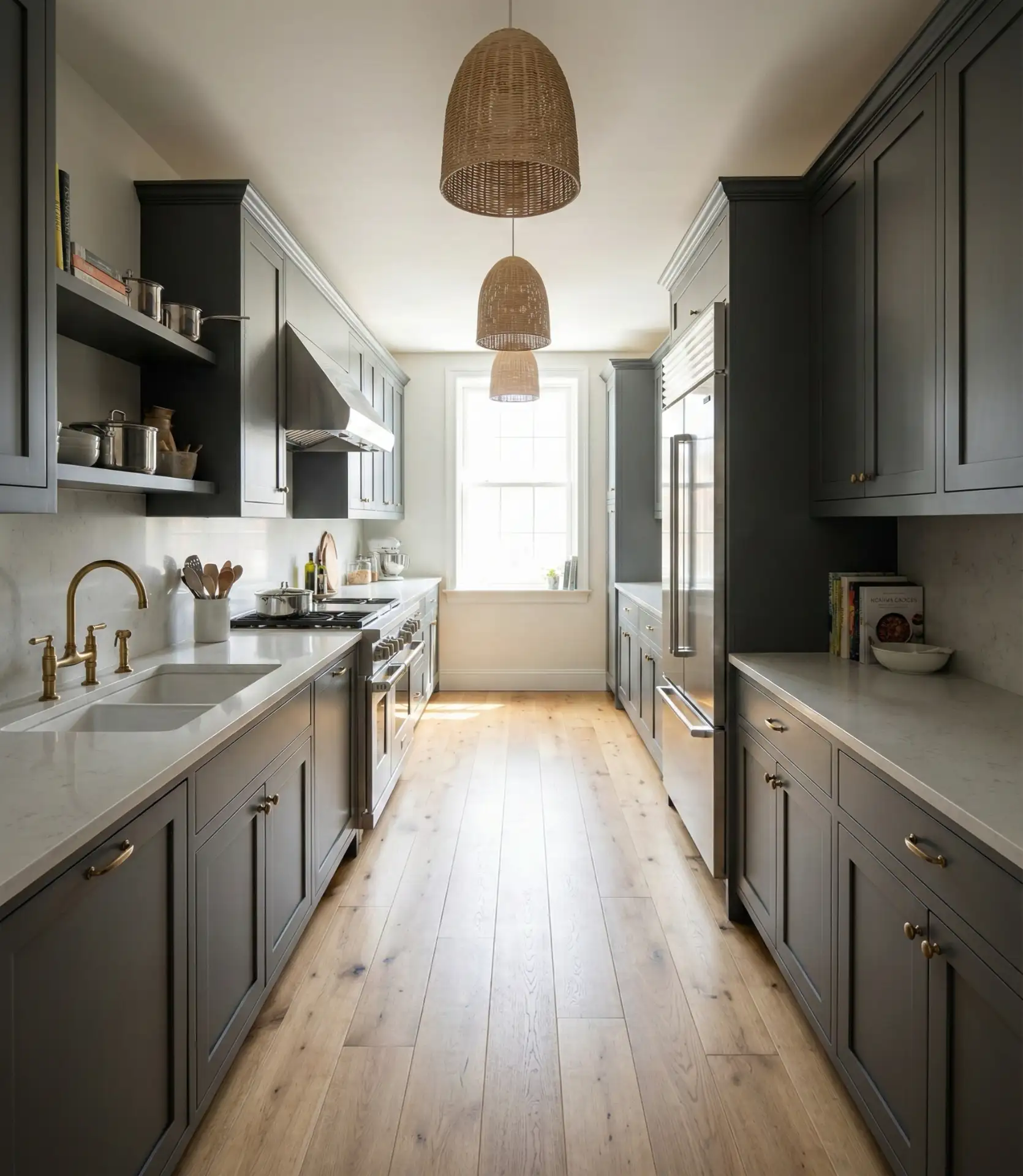
A double galley setup features matching counter runs on both sides, often with symmetrical appliance placement that allows two people to cook simultaneously without interference. This design is common in suburban homes and larger condos, where the kitchen opens to a dining or family room. Dual prep sinks, twin cooktops, or opposing work zones make it easy to share cooking responsibilities, whether you’re prepping Thanksgiving dinner or simply making breakfast together on a weekday morning.
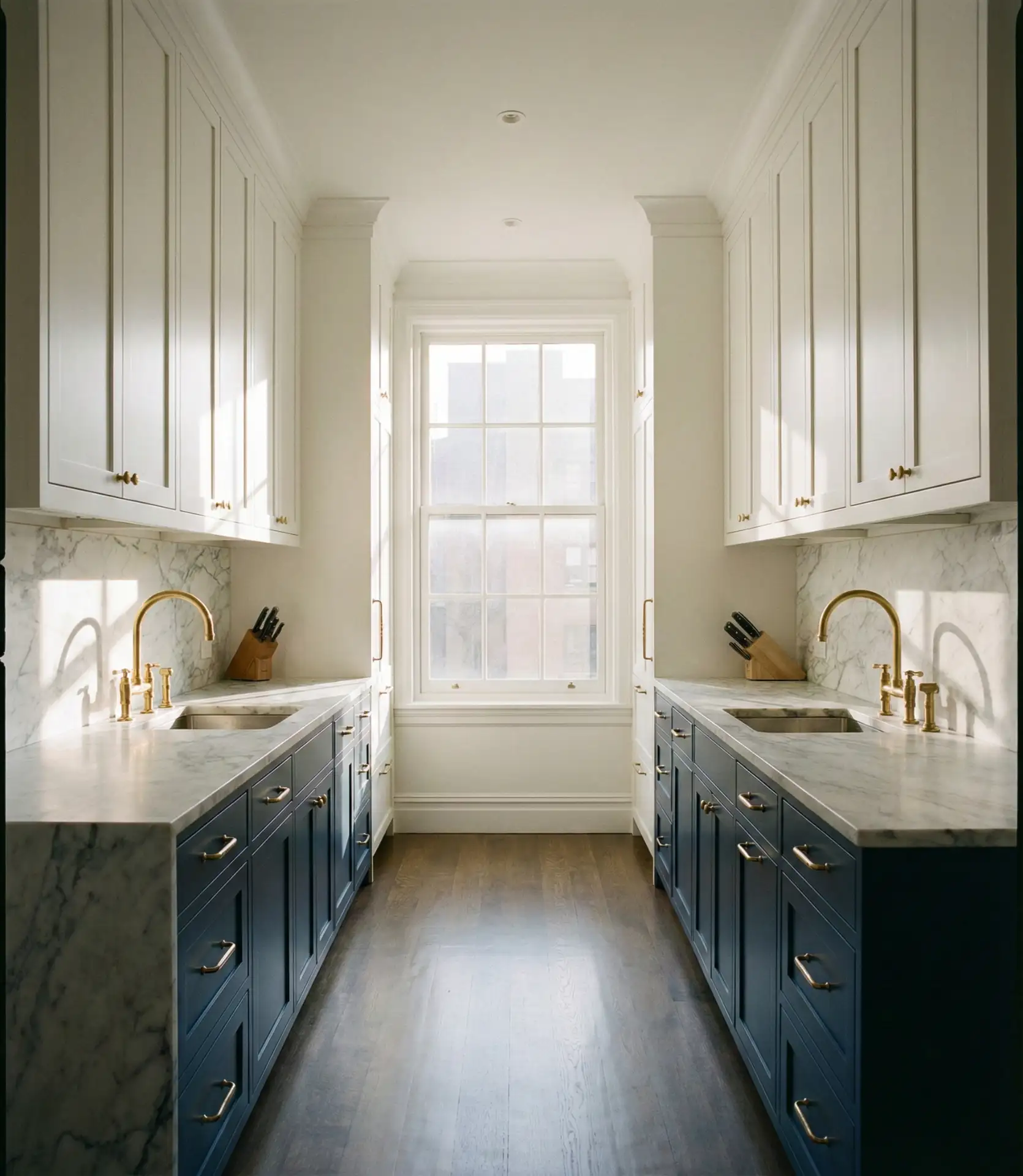
This layout works best in homes where cooking is a shared activity rather than a solo task. Families who meal-prep together on Sundays or couples who enjoy collaborative cooking projects appreciate the ability to work independently without bumping into each other. It’s also a favorite among hosts who entertain frequently, since guests can help with food prep while still being part of the conversation.
6. Large Galley Kitchen with Generous Walkway
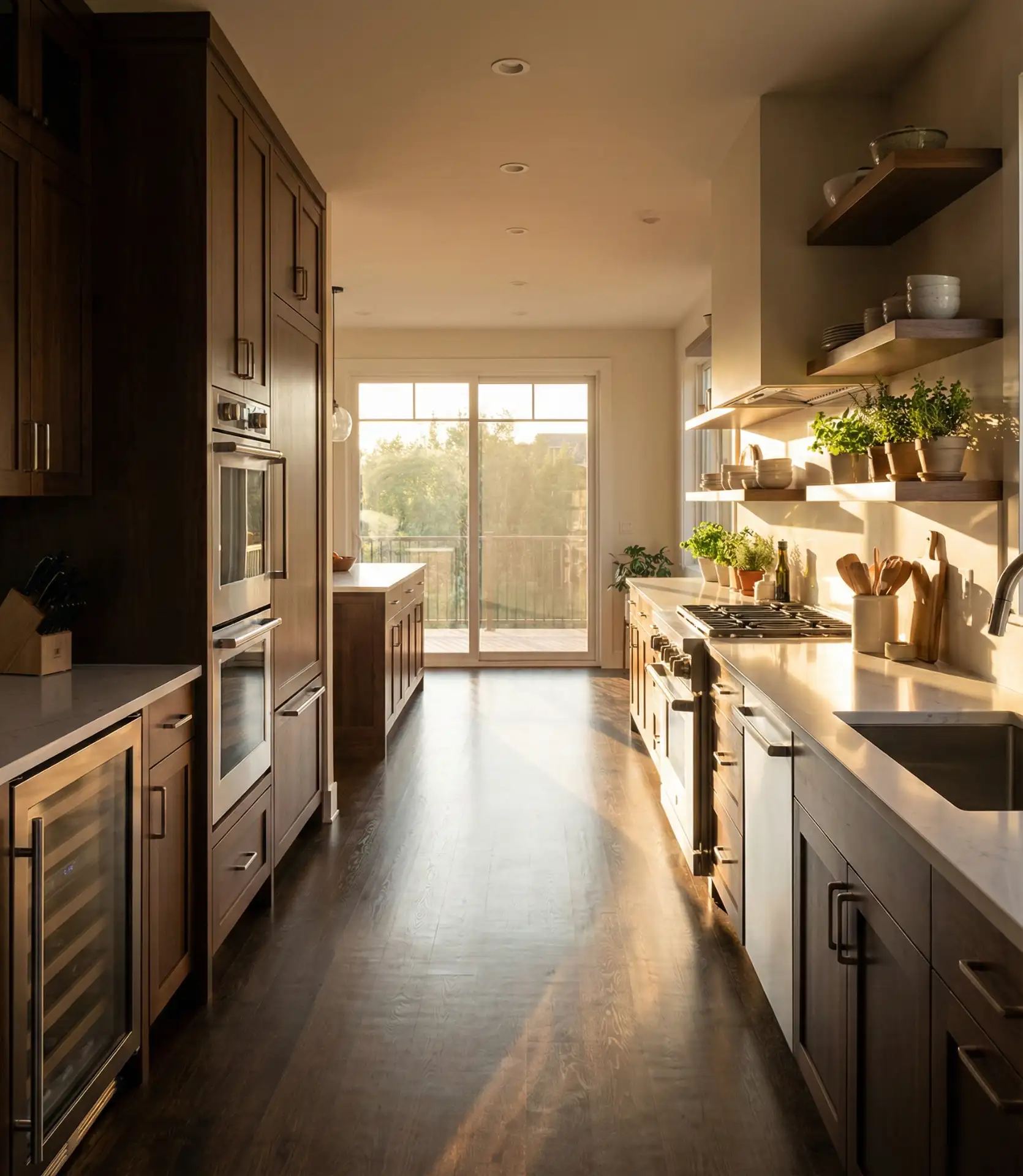
A large galley kitchen provides ample room between opposing counters, creating a comfortable walkway that accommodates multiple users and reduces the cramped feeling often associated with corridor-style layouts. This design appears in newer construction and recently renovated homes, where builders allocate extra square footage to the kitchen. The wider aisle also allows for opening appliances like dishwashers and ovens without blocking the entire pathway, making cleanup and cooking far more convenient.
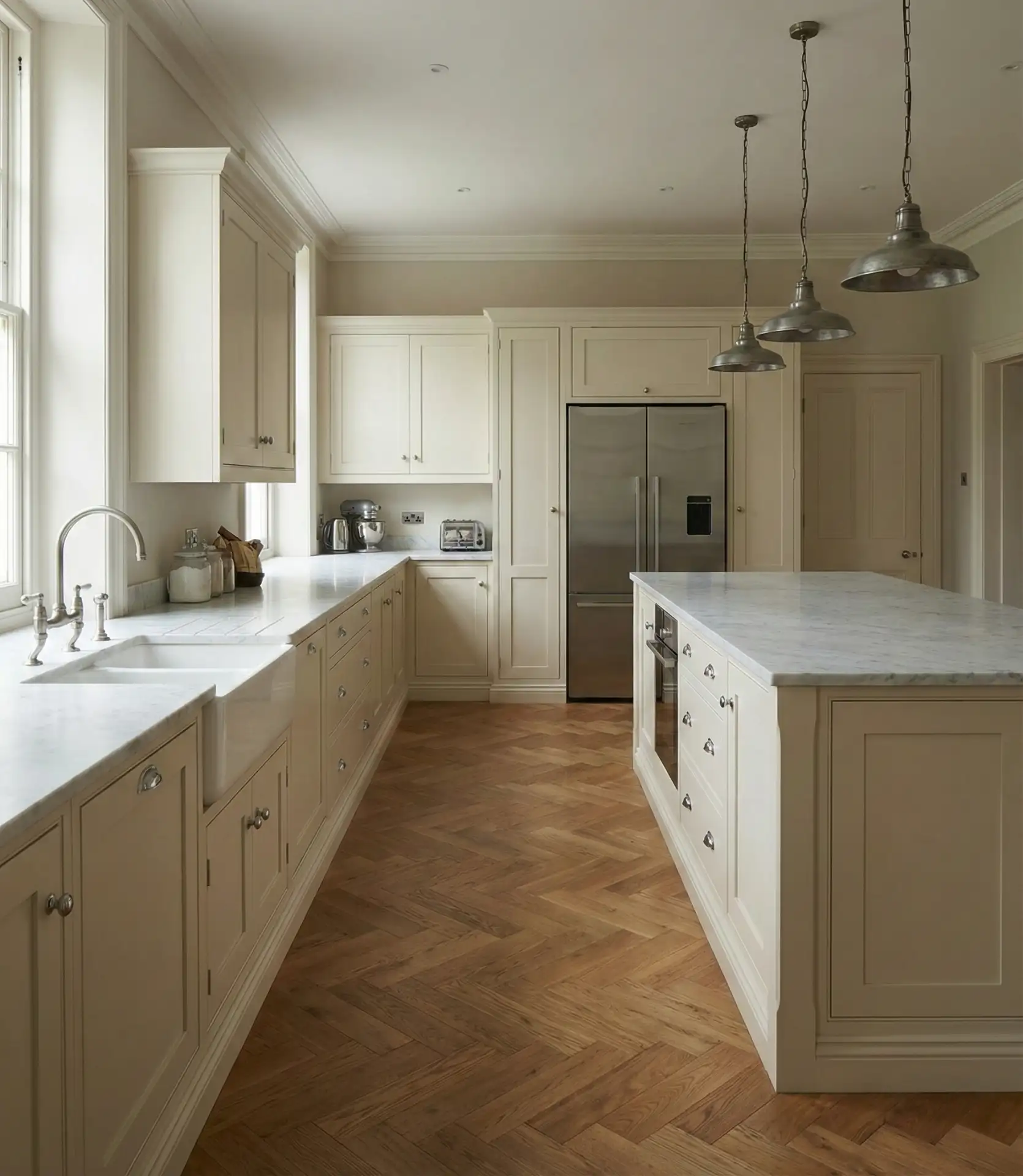
Budget-wise, a large galley can be more cost-effective than an L-shaped or U-shaped kitchen because it requires less cabinetry overall—you’re essentially building two straight runs rather than navigating corners with specialty cabinets. That savings can be redirected toward higher-end finishes like stone counters or custom drawer organizers, giving you a luxury feel without the luxury price tag.
7. Galley Kitchen with Breakfast Nook Integration
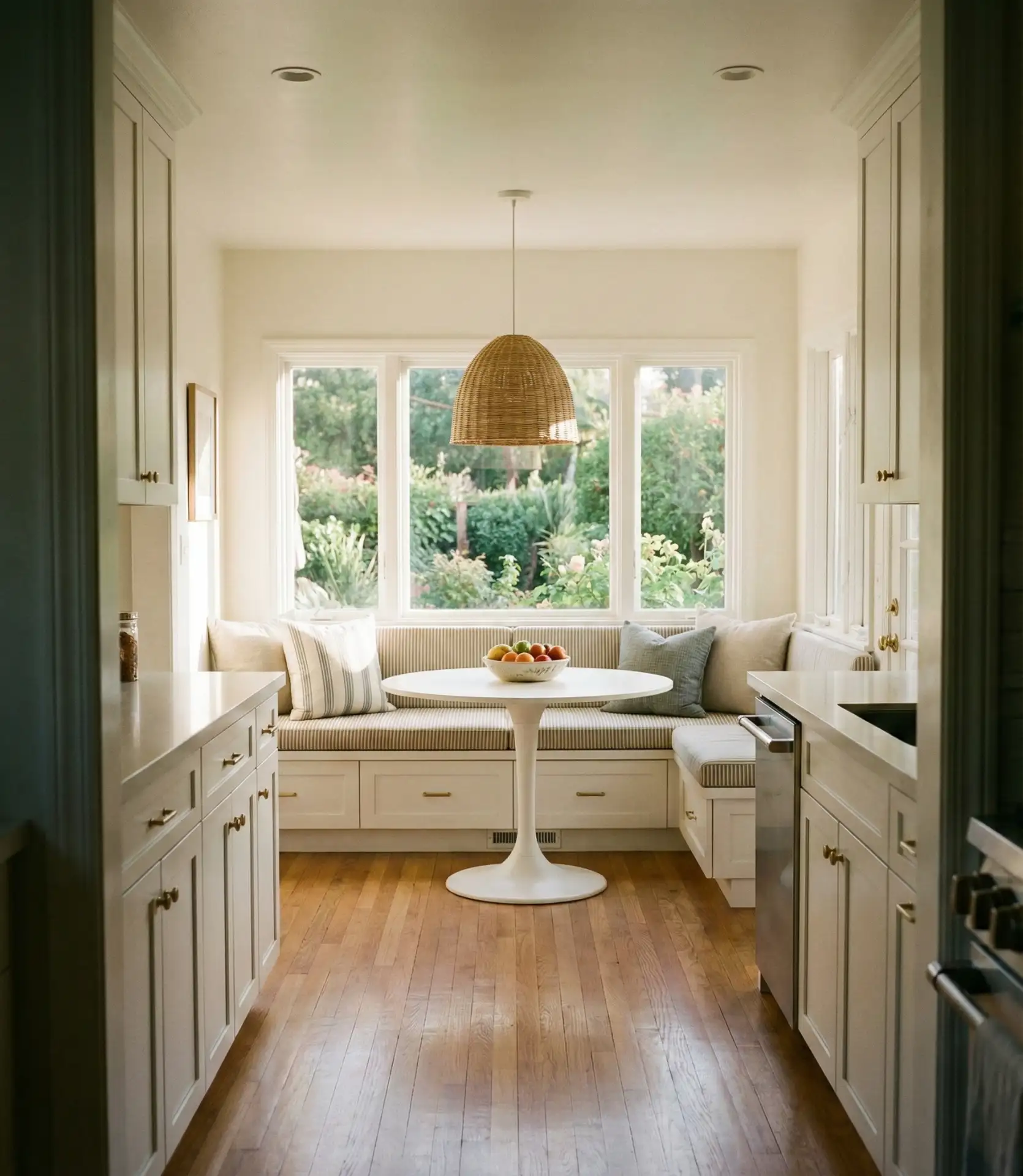
Integrating a breakfast nook at one end of a galley kitchen transforms the space into a multifunctional zone where cooking and casual dining happen side by side. This layout is especially popular in American homes built between the 1940s and 1970s, where a windowed alcove or bay area provides natural light and a cozy spot for morning coffee. Adding built-in bench seating with hidden storage beneath maximizes functionality while maintaining the streamlined aesthetic that galley kitchens are known for.
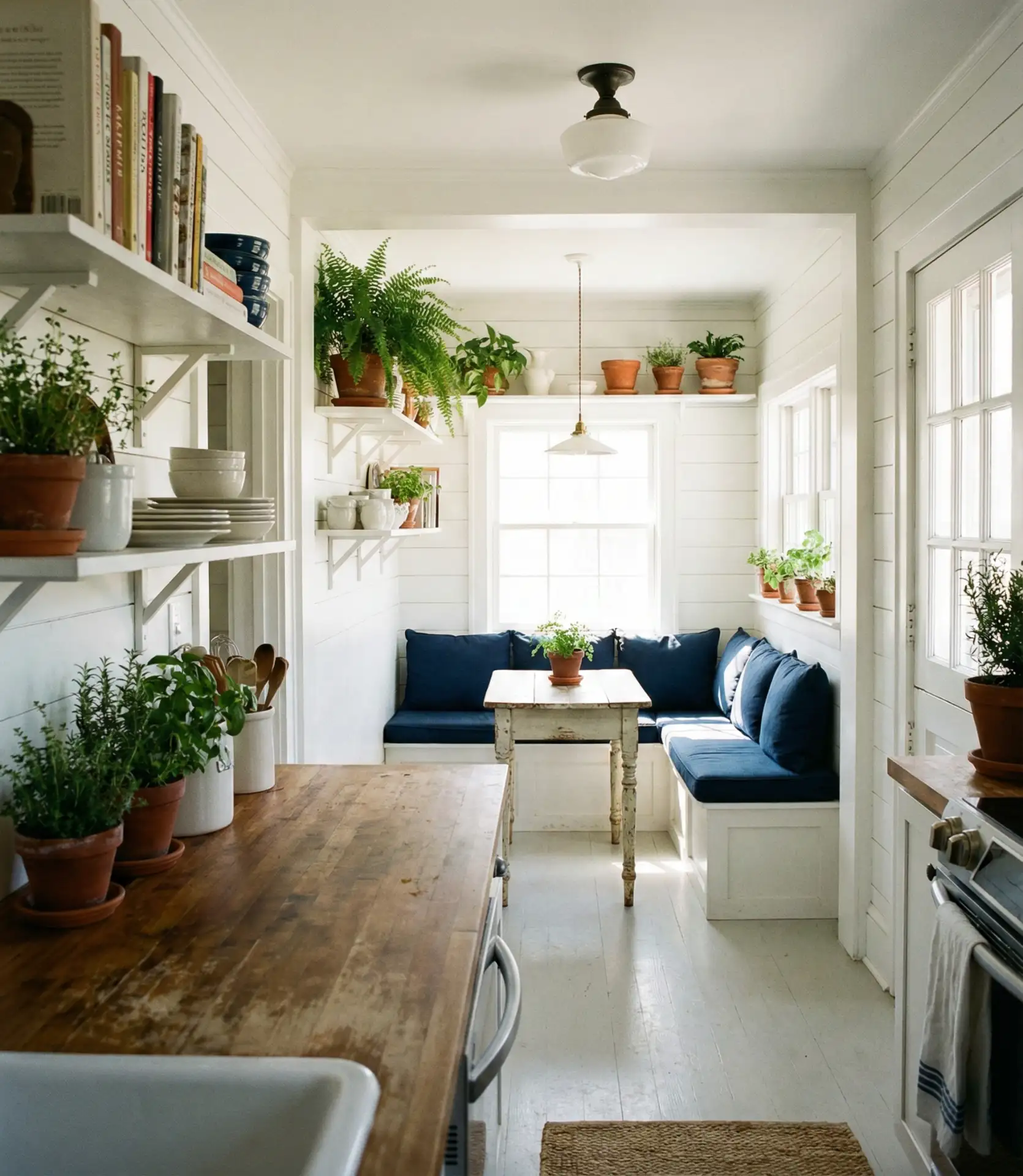
Real homeowners often use the breakfast nook as a homework station for kids or a laptop workspace for adults, especially in homes without a dedicated office. The proximity to the kitchen means parents can supervise activities while preparing meals, and the nook serves double duty during parties as a drink station or dessert bar, keeping traffic flowing smoothly through the galley without congestion.
8. Cottage-Style Galley Kitchen with Vintage Charm
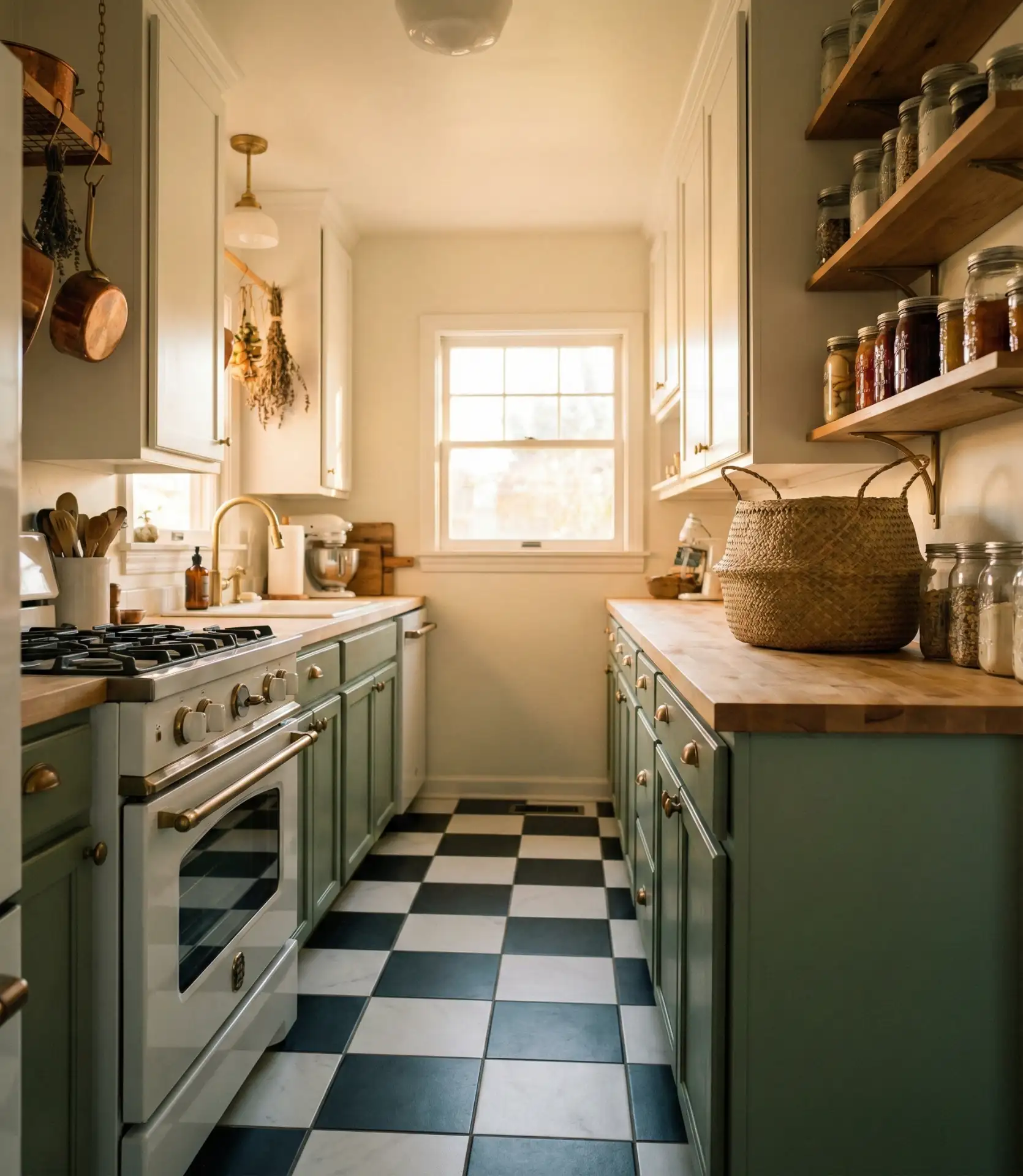
A cottage galley kitchen embraces soft colors, vintage-inspired hardware, and open shelving to create a warm, lived-in aesthetic that feels welcoming rather than sterile. This design style is common in beach houses, mountain cabins, and farmhouse renovations across the country, where homeowners prioritize character over sleek minimalism. Beadboard backsplashes, apron-front sinks, and butcher-block counters add tactile interest, while pastel hues or creamy whites keep the space feeling light despite the narrow footprint.
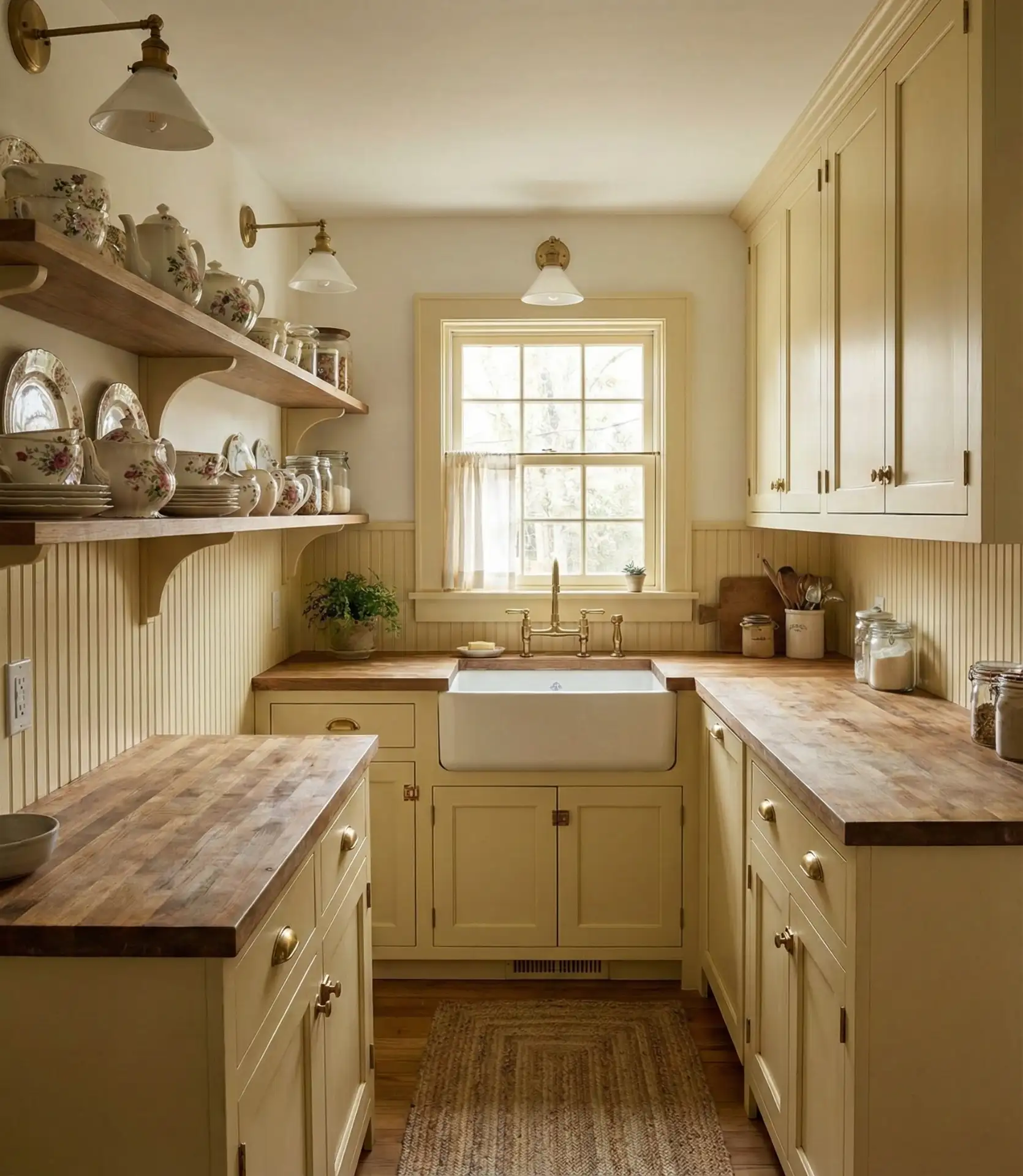
One practical insight: cottage kitchens benefit from mixing old and new elements rather than committing to full vintage authenticity. A modern dishwasher or induction cooktop hidden behind vintage-style cabinet panels maintains the charm while delivering the convenience today’s homeowners expect. This approach also makes the kitchen more appealing to future buyers who appreciate character but don’t want to sacrifice functionality.
9. Green Galley Kitchen with Nature-Inspired Palette
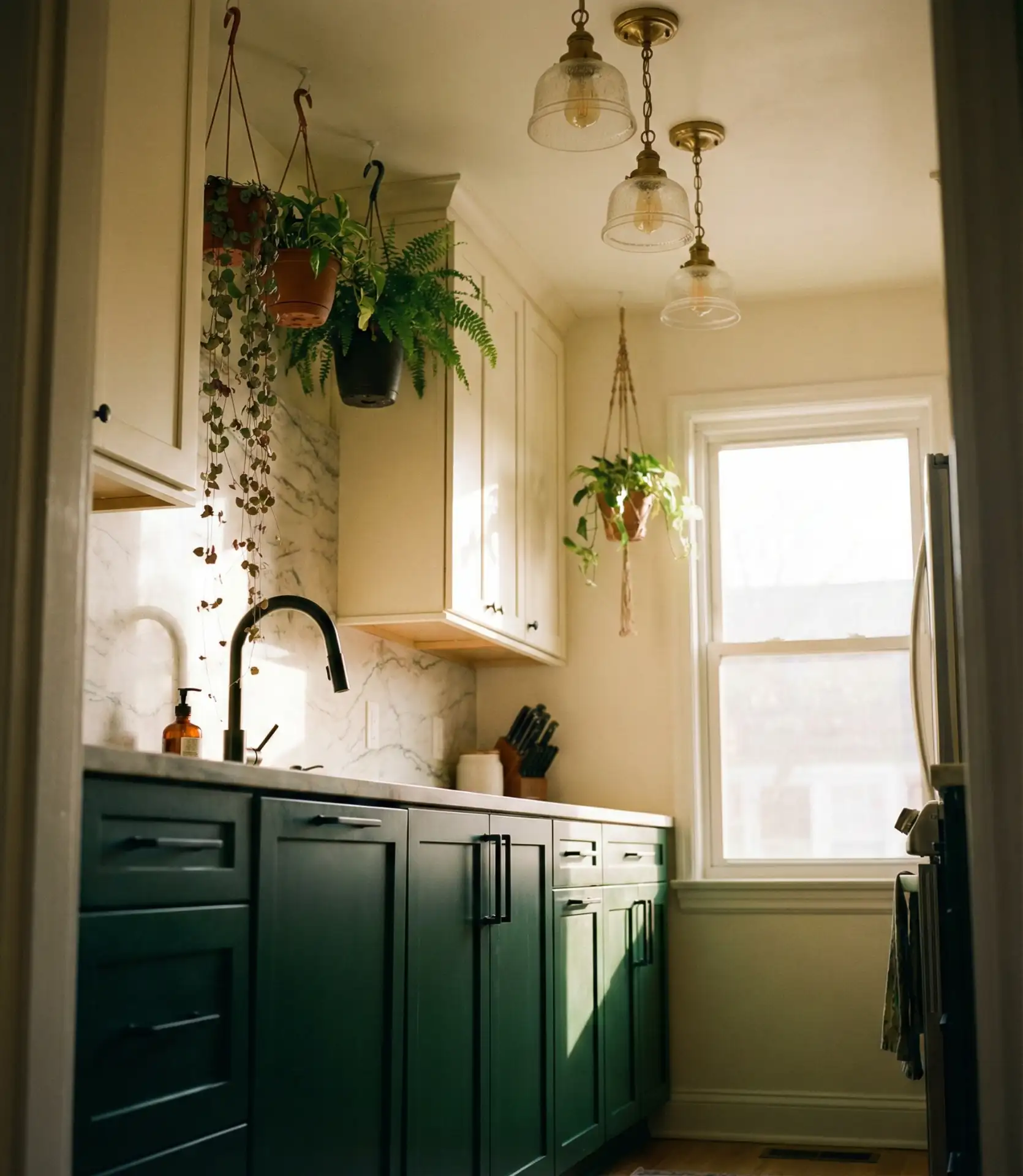
A green galley kitchen uses earthy tones—from soft sage to deep forest hues—to bring a calming, organic feel into the cooking space. This color choice has surged in popularity across American homes in 2026, especially among younger homeowners seeking alternatives to the stark white kitchens that dominated the previous decade. Paired with natural wood accents, brass or matte black hardware, and plenty of greenery, a green galley feels both modern and timeless.
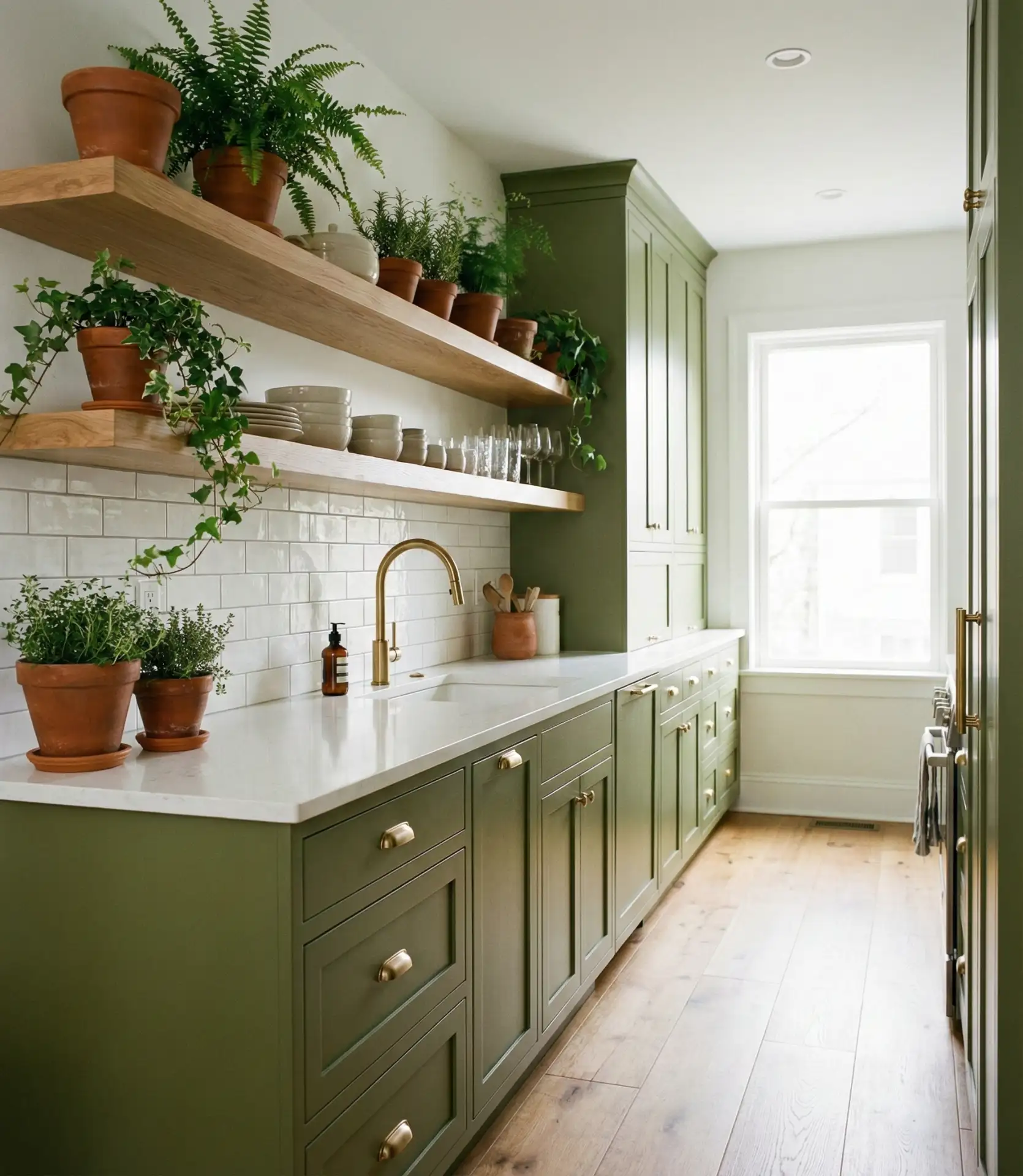
In the Pacific Northwest and New England, where lush outdoor landscapes are part of daily life, green kitchens create visual continuity between indoor and outdoor spaces. Homeowners in these regions often position their galley kitchens to overlook gardens or wooded areas, making the color choice feel like a natural extension of the surrounding environment rather than a bold design statement.
10. Galley Kitchen Remodel with Smart Layout Changes
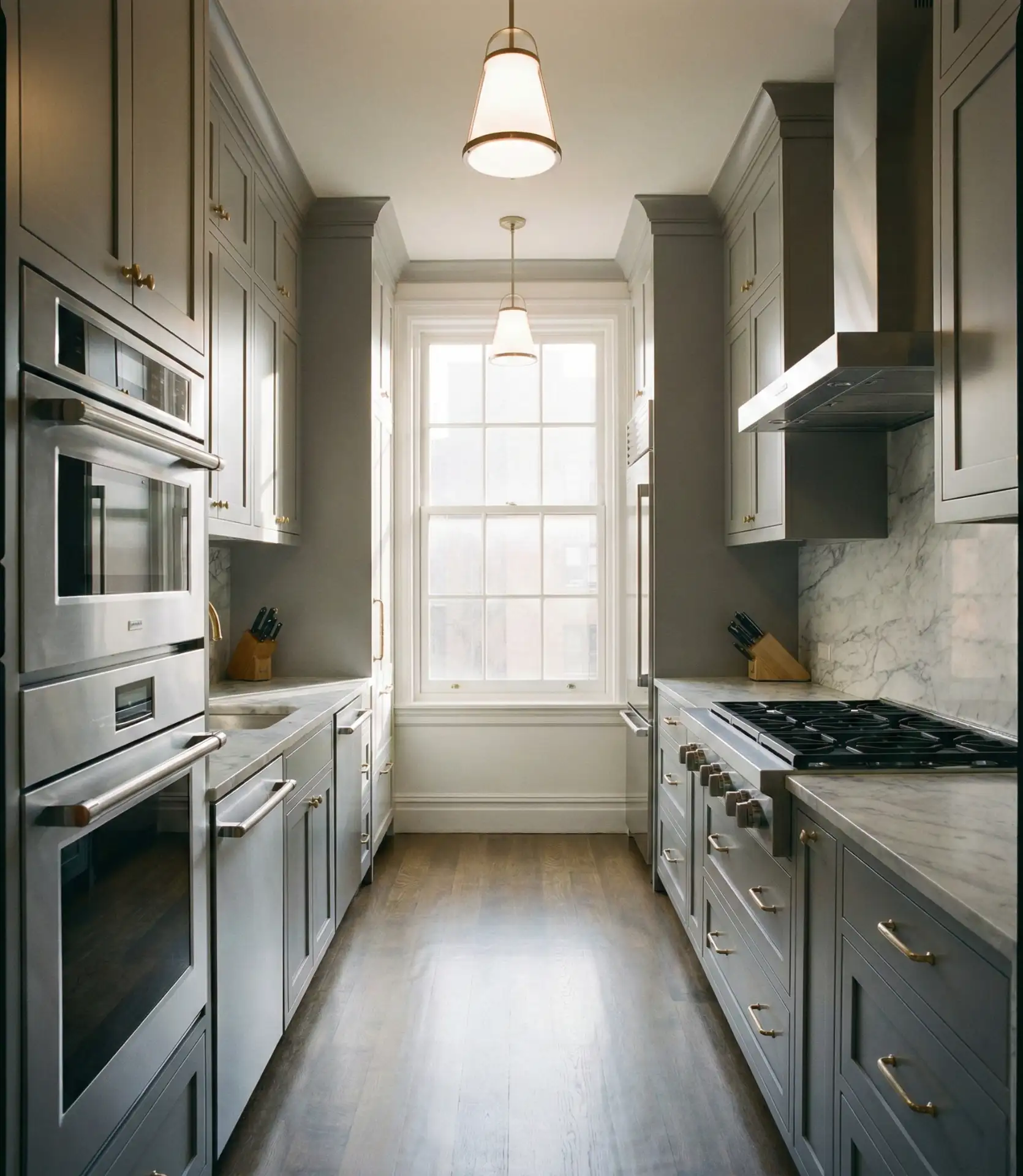
A successful galley kitchen remodel often involves rethinking appliance placement and workflow rather than expanding the physical footprint. Moving the refrigerator to the end of the corridor, relocating the sink under a window, or swapping a traditional range for a cooktop with wall ovens can dramatically improve efficiency. These remodel ideas are especially relevant for older homes where the original layout prioritized form over function, leaving homeowners with awkward traffic patterns and wasted counter space.
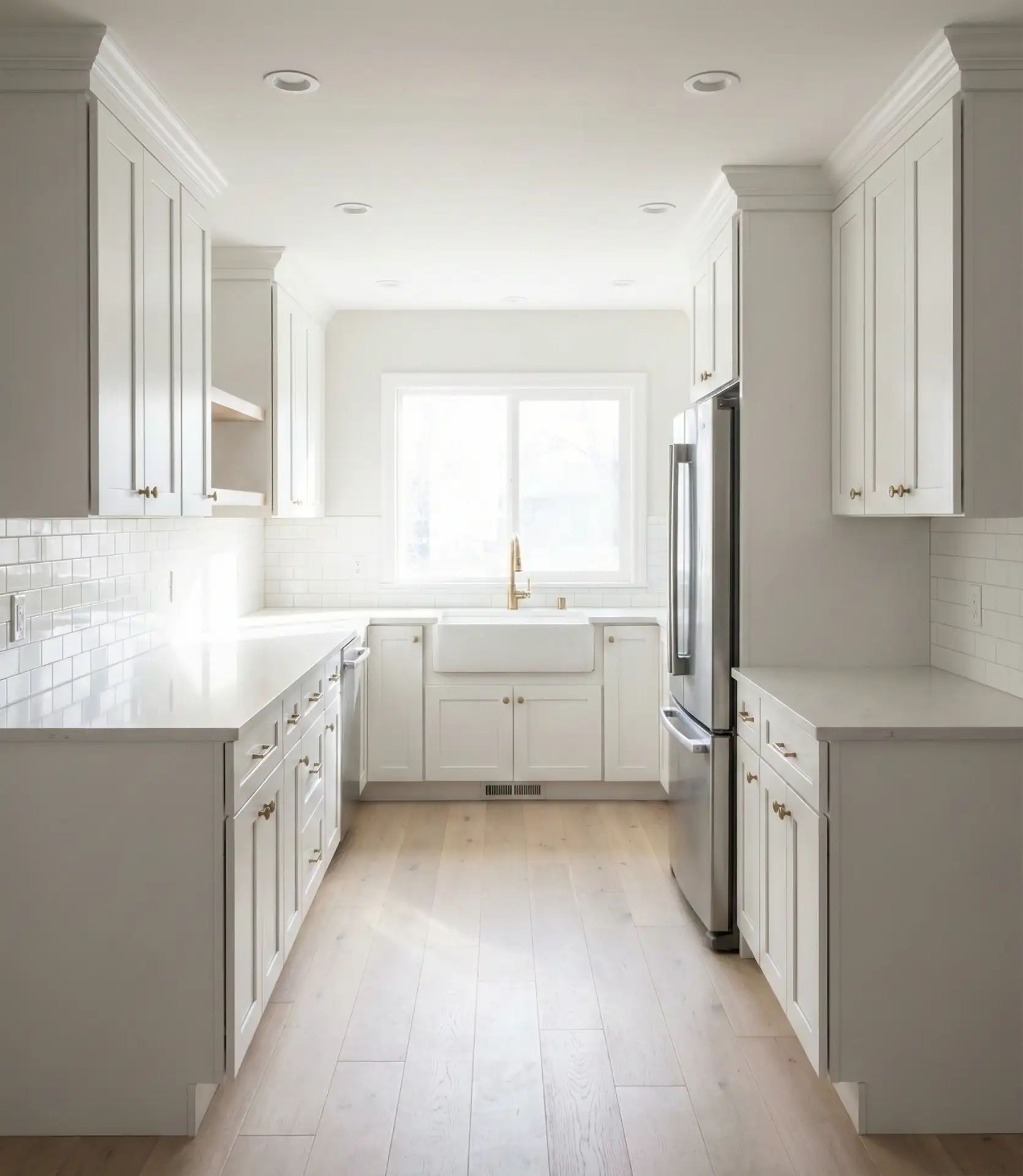
A common mistake during remodels is failing to account for door swings and drawer clearances in a narrow space. Before finalizing your design, use painter’s tape on the floor to mark where appliances and cabinets will sit, then physically test whether doors can open fully without hitting each other. This simple step prevents costly adjustments after installation and ensures your new layout actually improves daily function.
11. Galley Kitchen with Breakfast Bar Extension
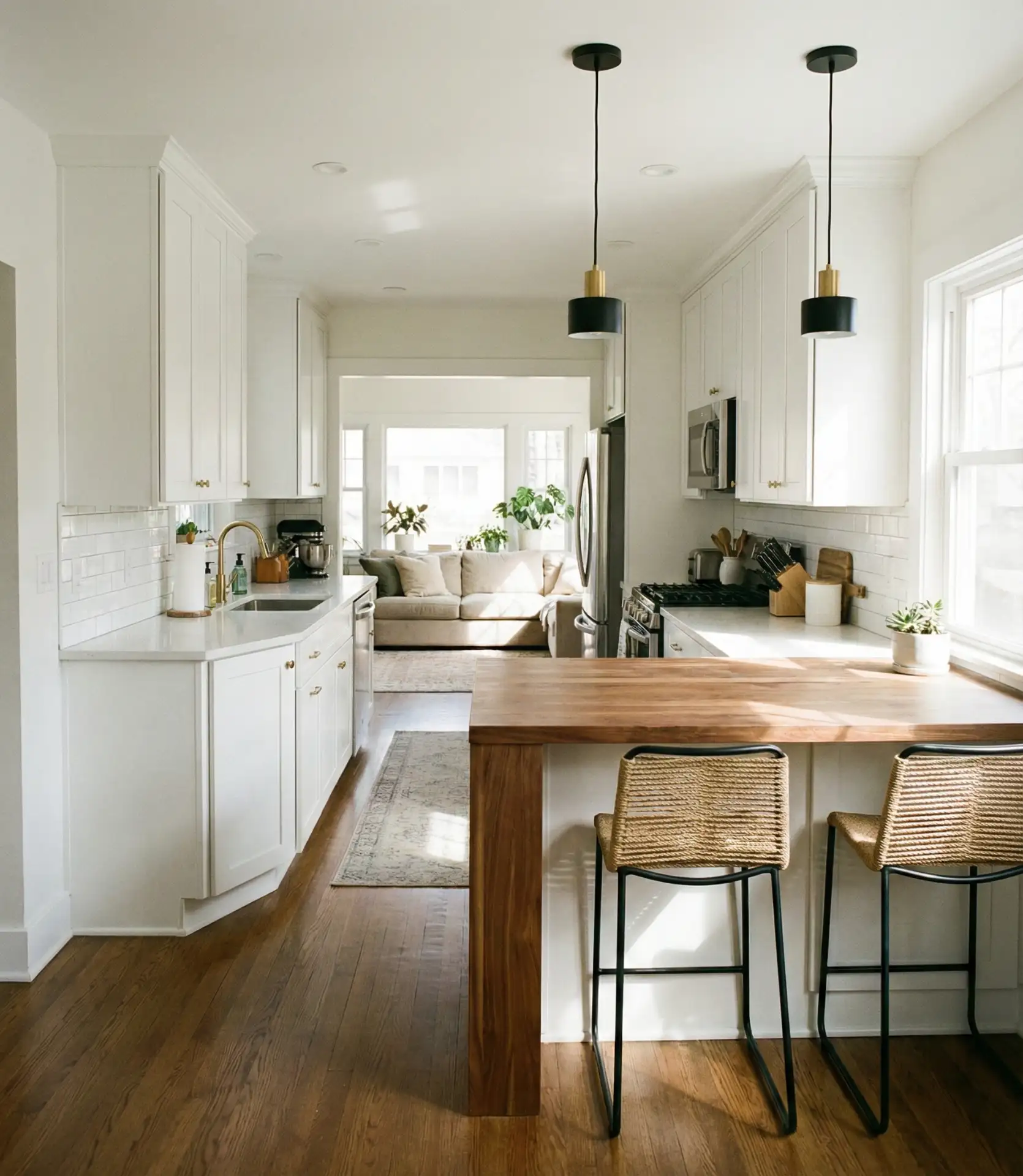
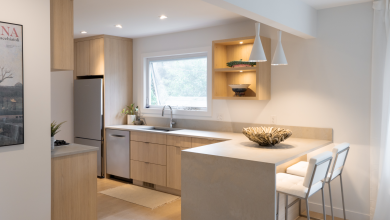
Adding a breakfast bar to one end of a galley kitchen creates a casual dining spot without requiring a separate table, making it ideal for apartments and smaller homes. The bar can extend from the counter at standing or seated height, with stools tucked underneath when not in use. This layout modification is particularly popular in open-concept condos, where the breakfast bar also serves as a visual boundary between the kitchen and living area.
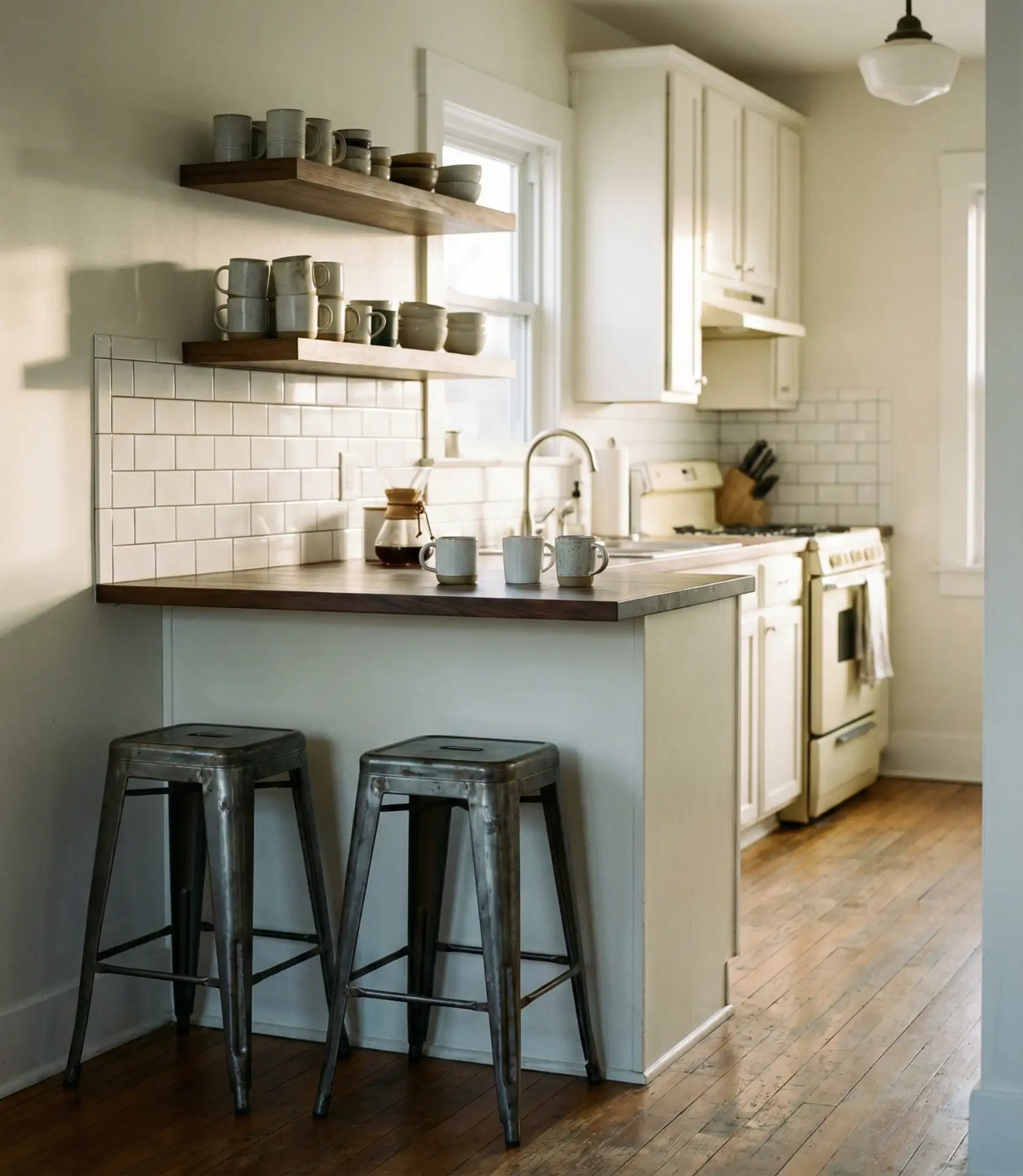
Budget-wise, a breakfast bar addition typically costs less than building a separate dining nook because it uses existing cabinetry as a base and requires minimal structural work. Many homeowners DIY this upgrade by extending their countertop with a simple overhang supported by corbels or brackets, then finishing with matching or contrasting bar stools that suit their style and space.
12. Black Galley Kitchen with Dramatic Contrast
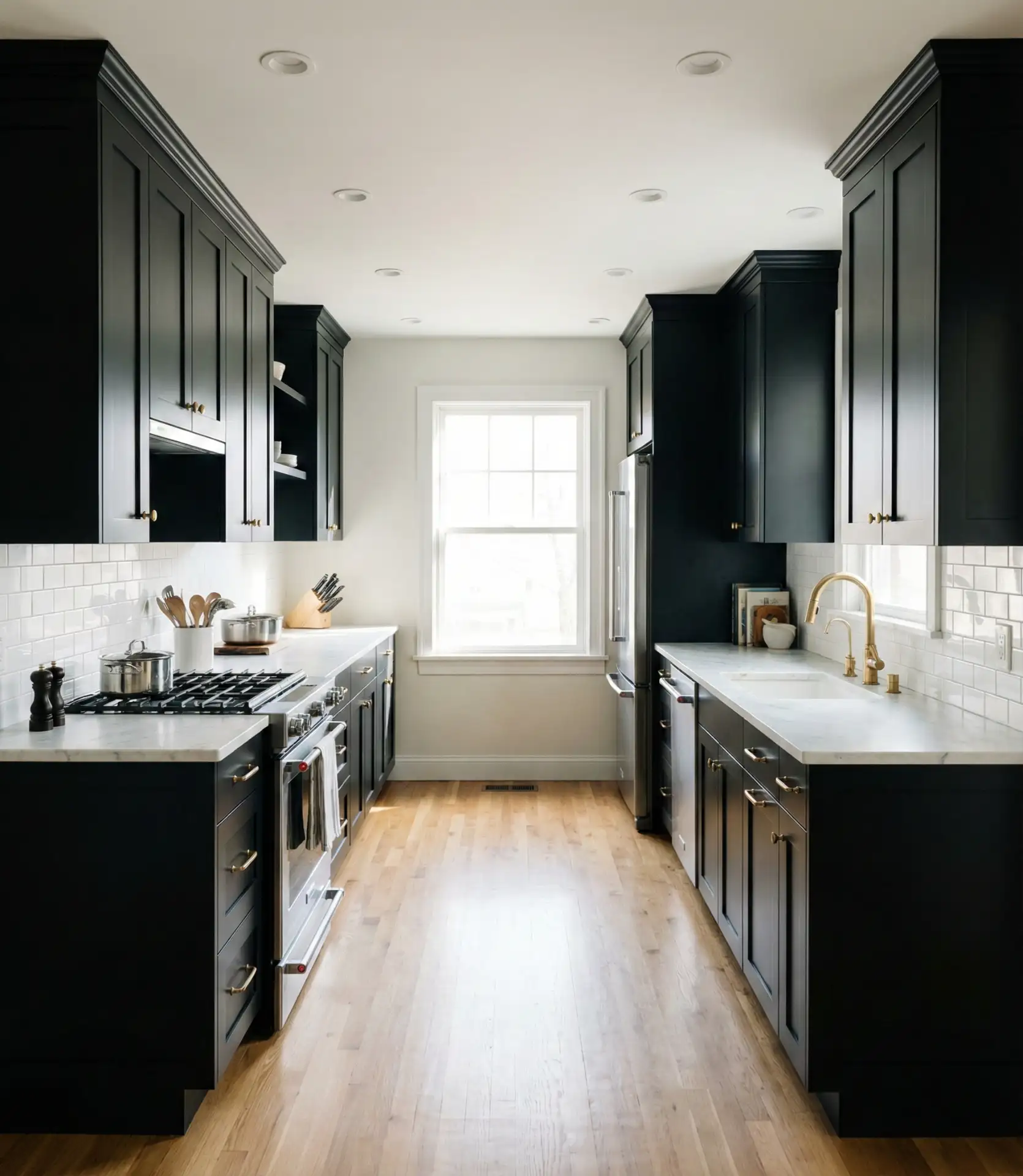
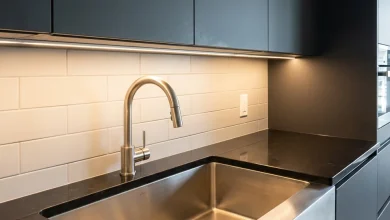
Using dark cabinetry and fixtures, a black galley kitchen boldly creates sophisticated, moody interiors that feel modern and intentional. This design choice works particularly well in loft apartments and contemporary homes where high ceilings and abundant natural light prevent the space from feeling too enclosed. Black cabinets paired with white or light-colored counters, backsplashes, and floors maintain balance, while metallic accents in brass or chrome add visual interest.
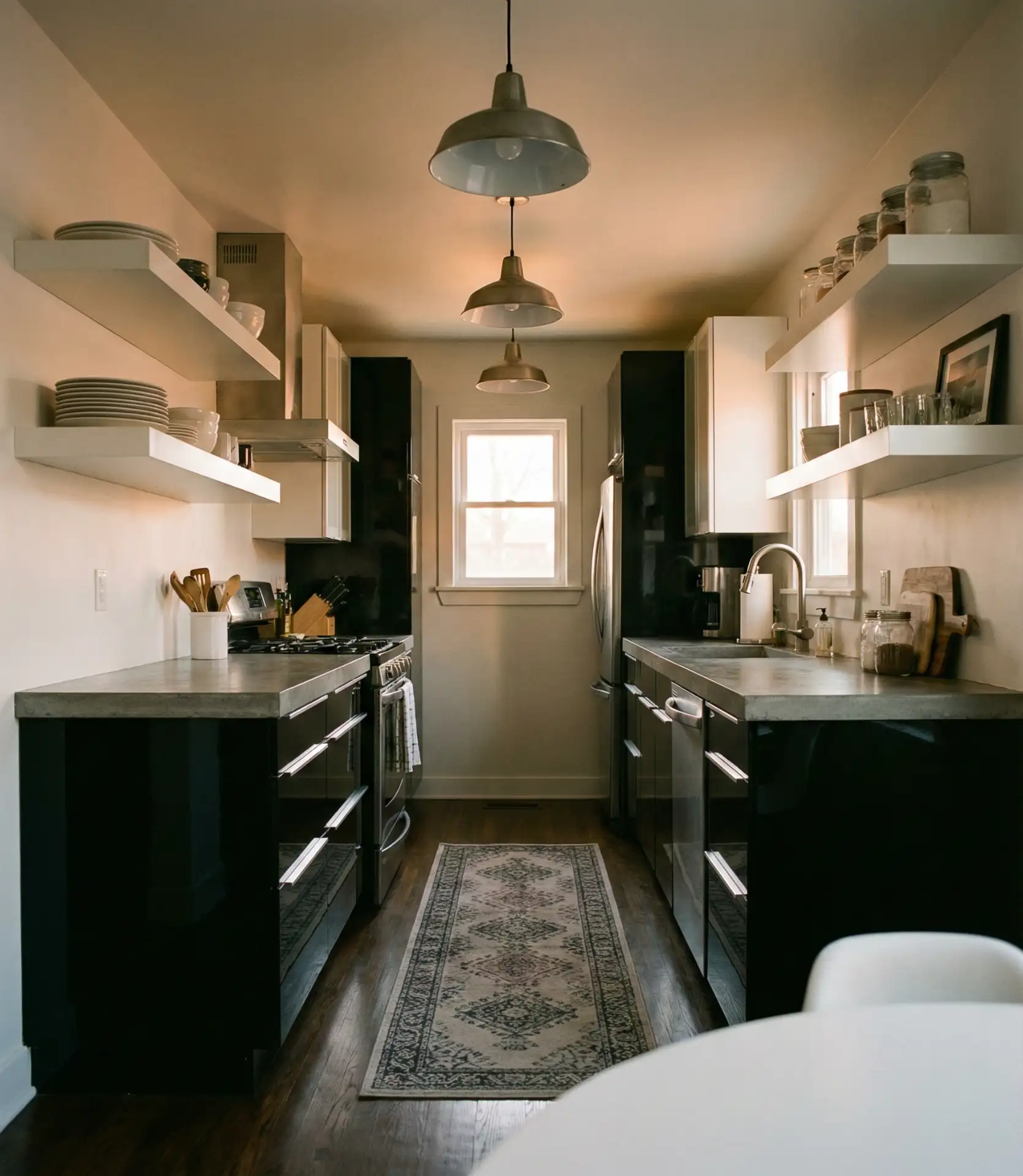
In the Southwest and California, where intense sunlight streams through windows, black kitchens stay cooler visually and create a striking contrast with bright outdoor views. Homeowners in these regions often pair black cabinetry with light-colored walls and ceilings to reflect natural light deeper into the galley, preventing the space from feeling cave-like despite the dark palette.
13. Galley Kitchen with Island Layout Hybrid
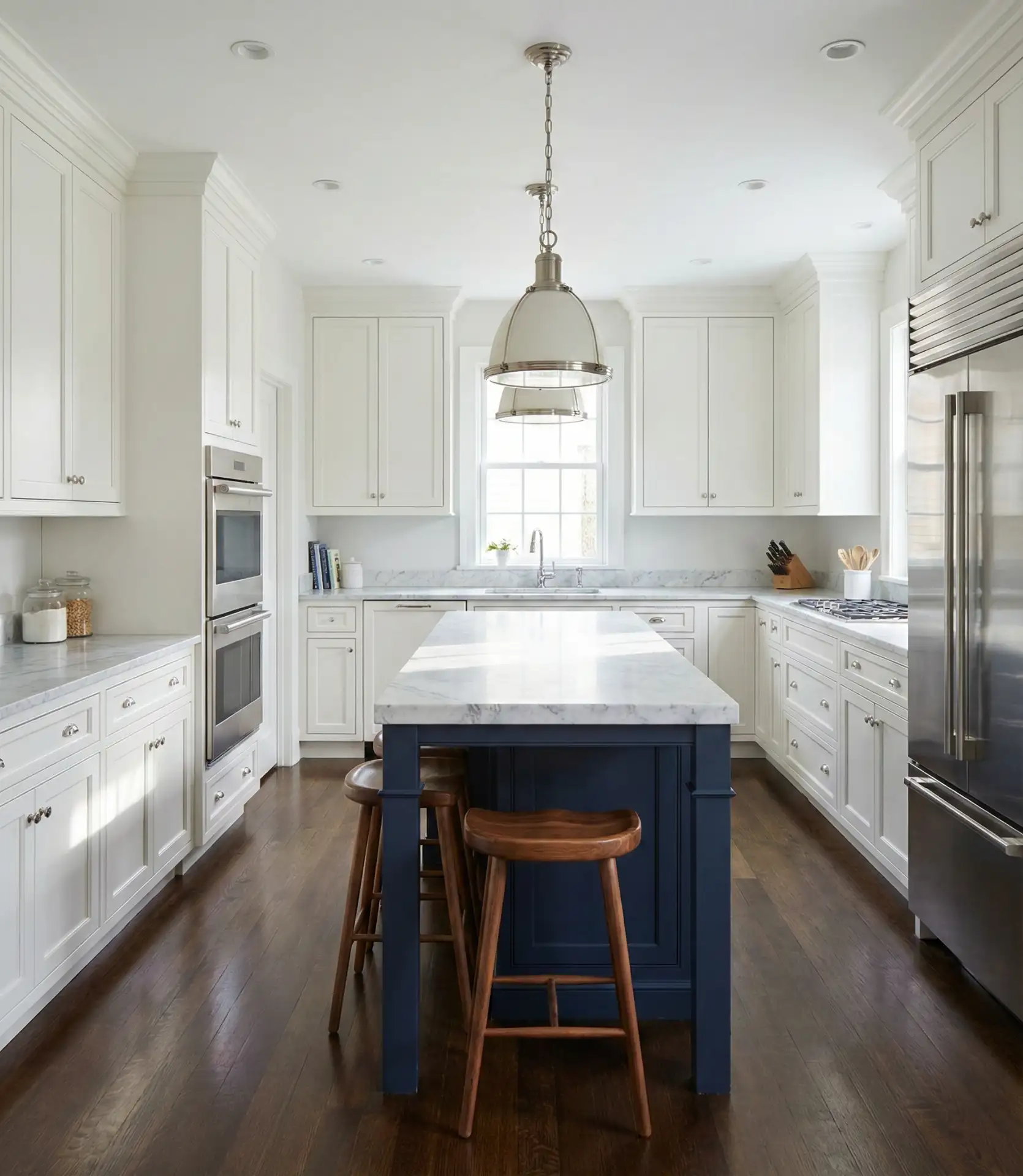
An island layout hybrid combines the efficiency of a galley kitchen with the versatility of a freestanding island, creating a three-sided work triangle that improves workflow. This configuration appears in larger kitchens where there’s enough space between the island and the galley walls to maintain comfortable traffic flow. The island often houses a cooktop, sink, or additional storage, while the galley walls accommodate tall appliances and pantry cabinets.
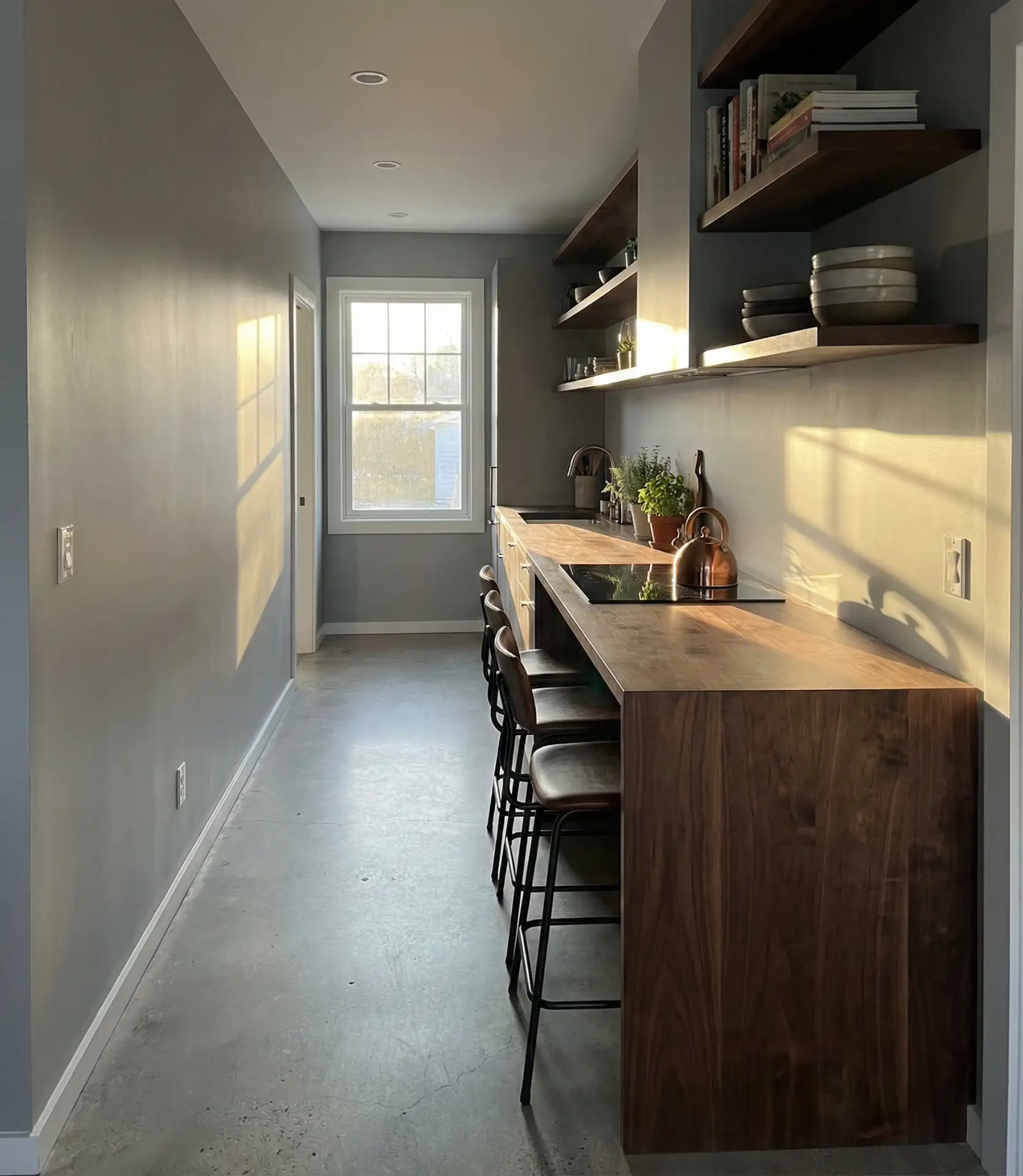
Expert designers recommend leaving at least 42 inches between the island and the galley counters to allow for comfortable movement, especially when appliances like dishwashers or ovens are in use. If your space is tighter, consider a narrow island on wheels that can be moved aside during large gatherings or cooking projects, giving you the best of both worlds without permanent compromise.
14. Mid-Century Galley Kitchen with Retro Flair
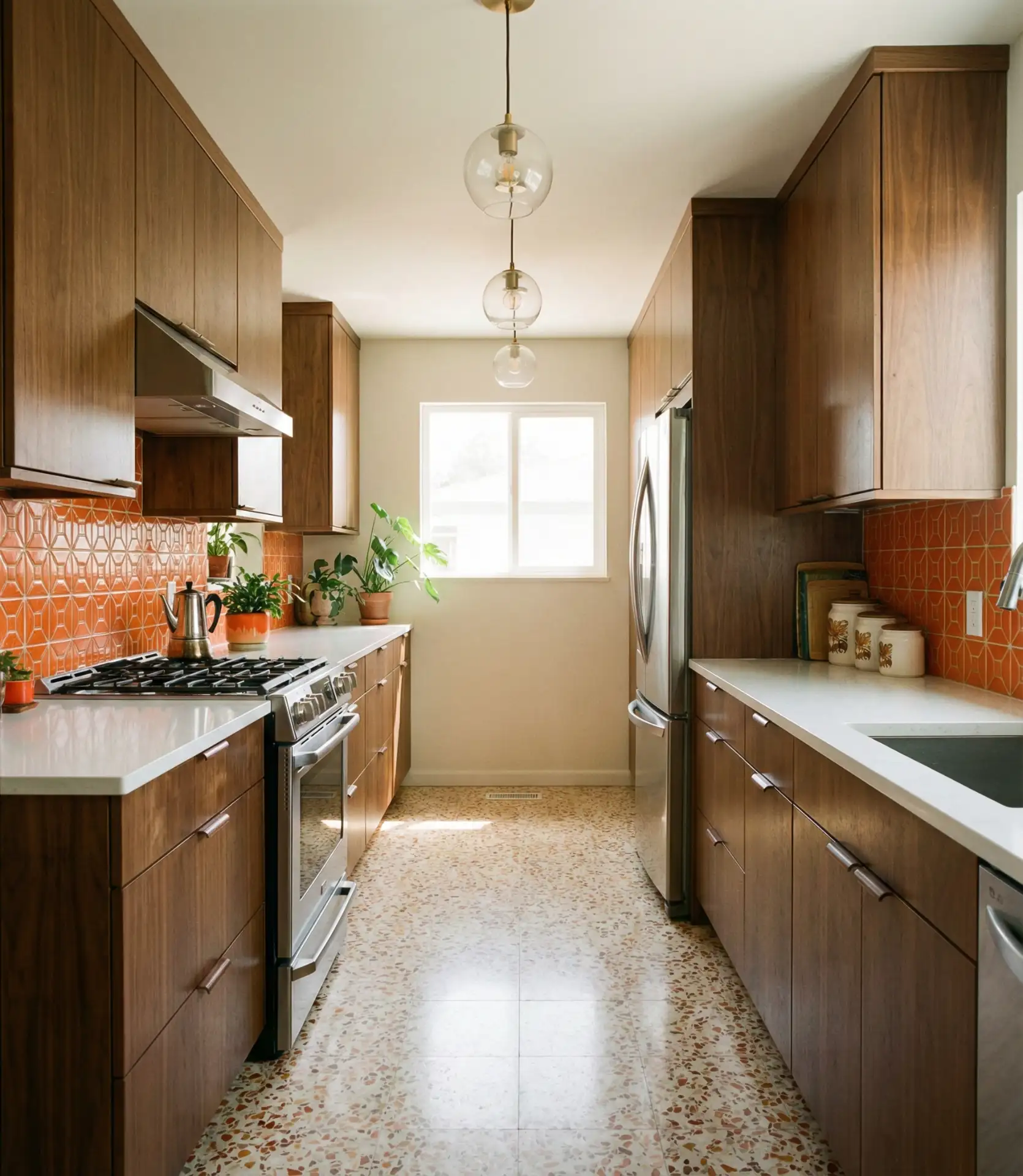
A mid-century galley kitchen celebrates the design aesthetics of the 1950s and 1960s, featuring clean lines, warm wood tones, and geometric patterns that feel both nostalgic and current. This style has seen a resurgence in American homes, particularly in neighborhoods with original mid-century architecture where homeowners are restoring or reinterpreting period details. Flat-front cabinets in walnut or teak, Formica or laminate counters, and colorful backsplash tiles capture the era’s optimistic, functional approach to kitchen design.
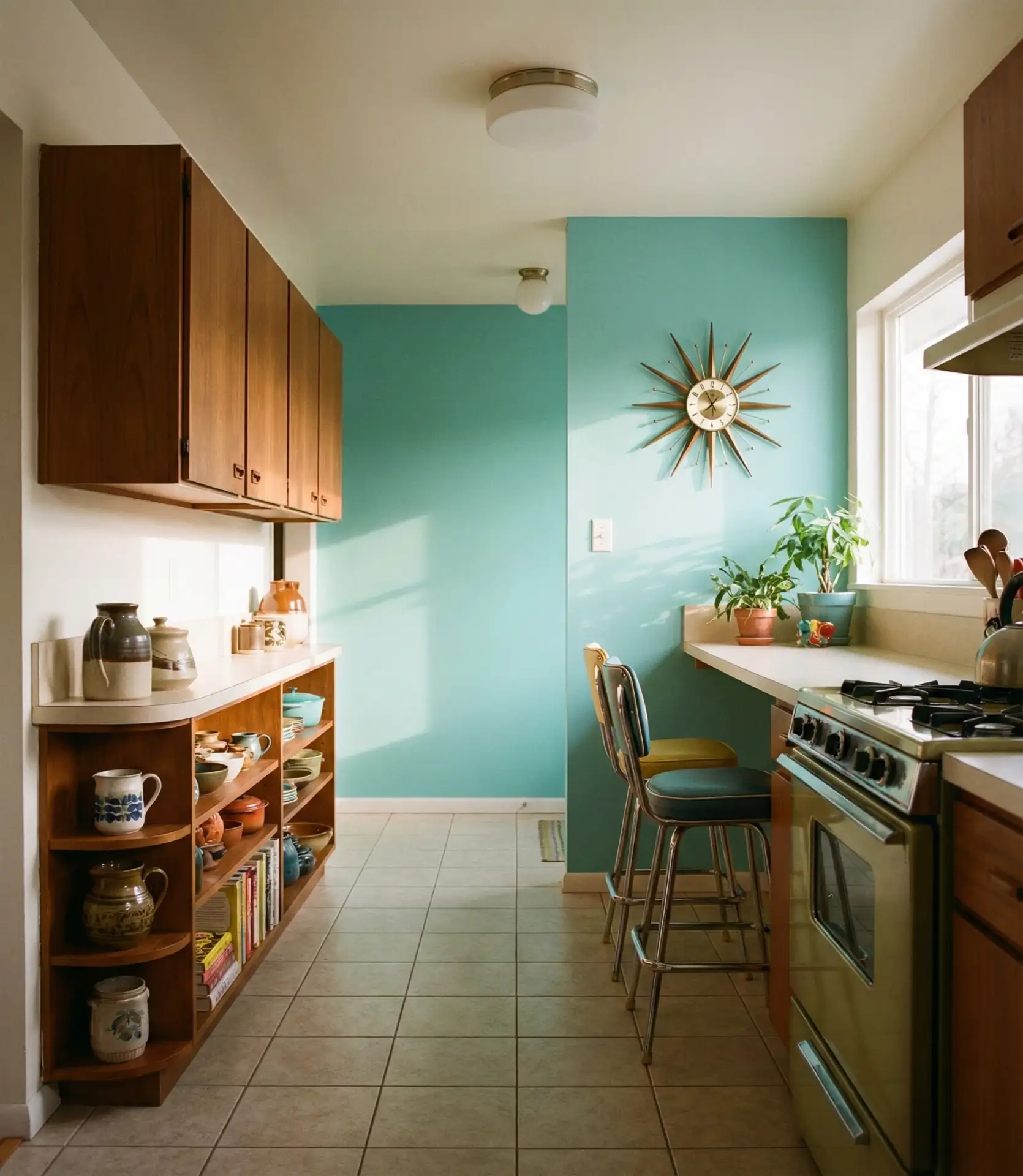
A couple in Palm Springs recently renovated their 1962 ranch home, keeping the original galley footprint but updating appliances and finishes to meet modern standards. They sourced vintage cabinet hardware from salvage shops and paired it with new flat-panel doors stained to match the home’s original woodwork. The result was a kitchen that honors its roots while functioning seamlessly for contemporary life—proof that you can embrace history without sacrificing convenience.
15. Galley Kitchen Renovation with Open Shelving
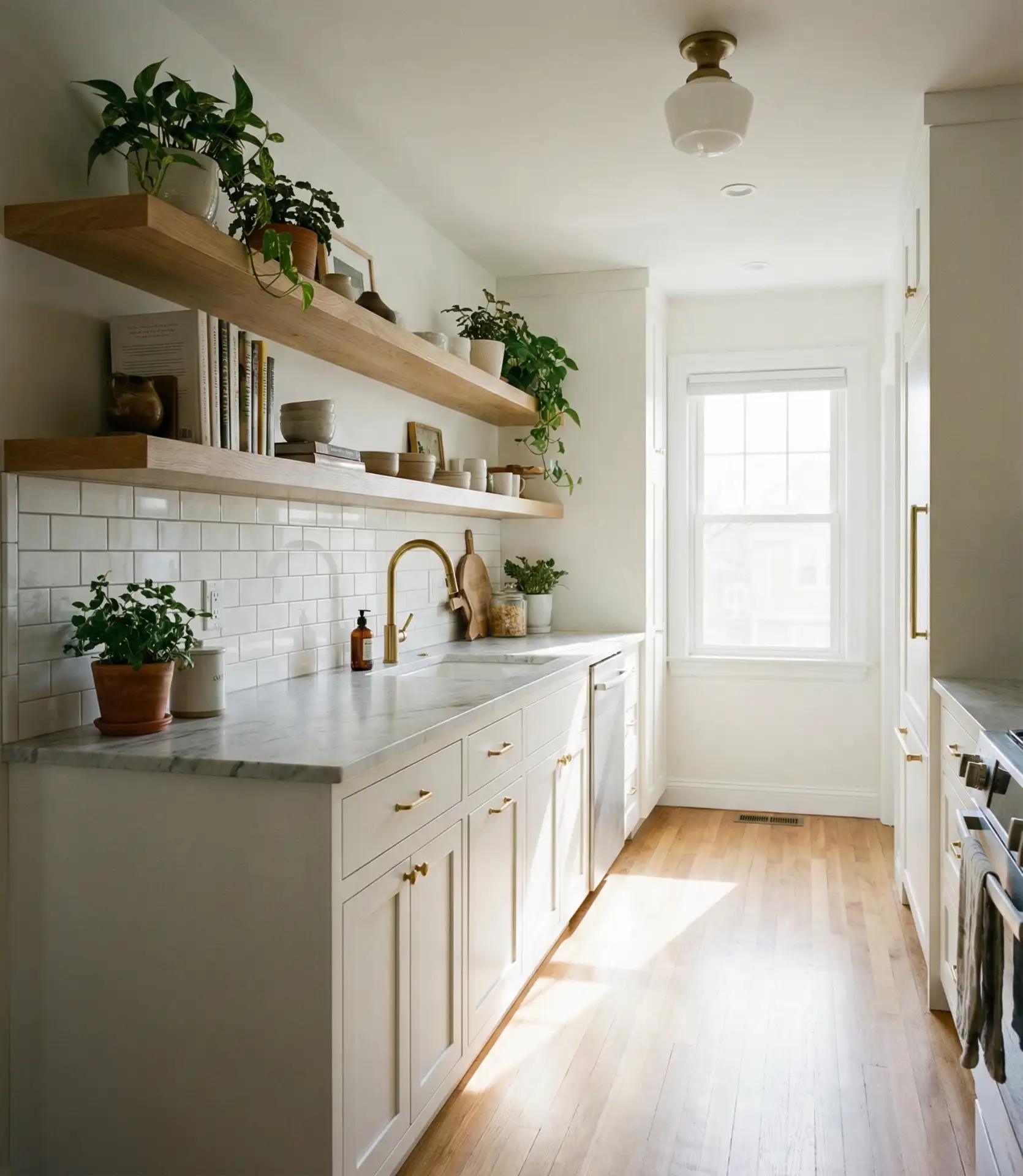
A galley kitchen renovation that incorporates open shelving can make a narrow space feel more expansive and less enclosed. Removing upper cabinets on one or both sides creates visual breathing room, while floating shelves keep essentials accessible and add an opportunity for personal styling. This approach is especially popular among millennials and Gen Z homeowners who prioritize a curated, lived-in aesthetic over hidden storage.
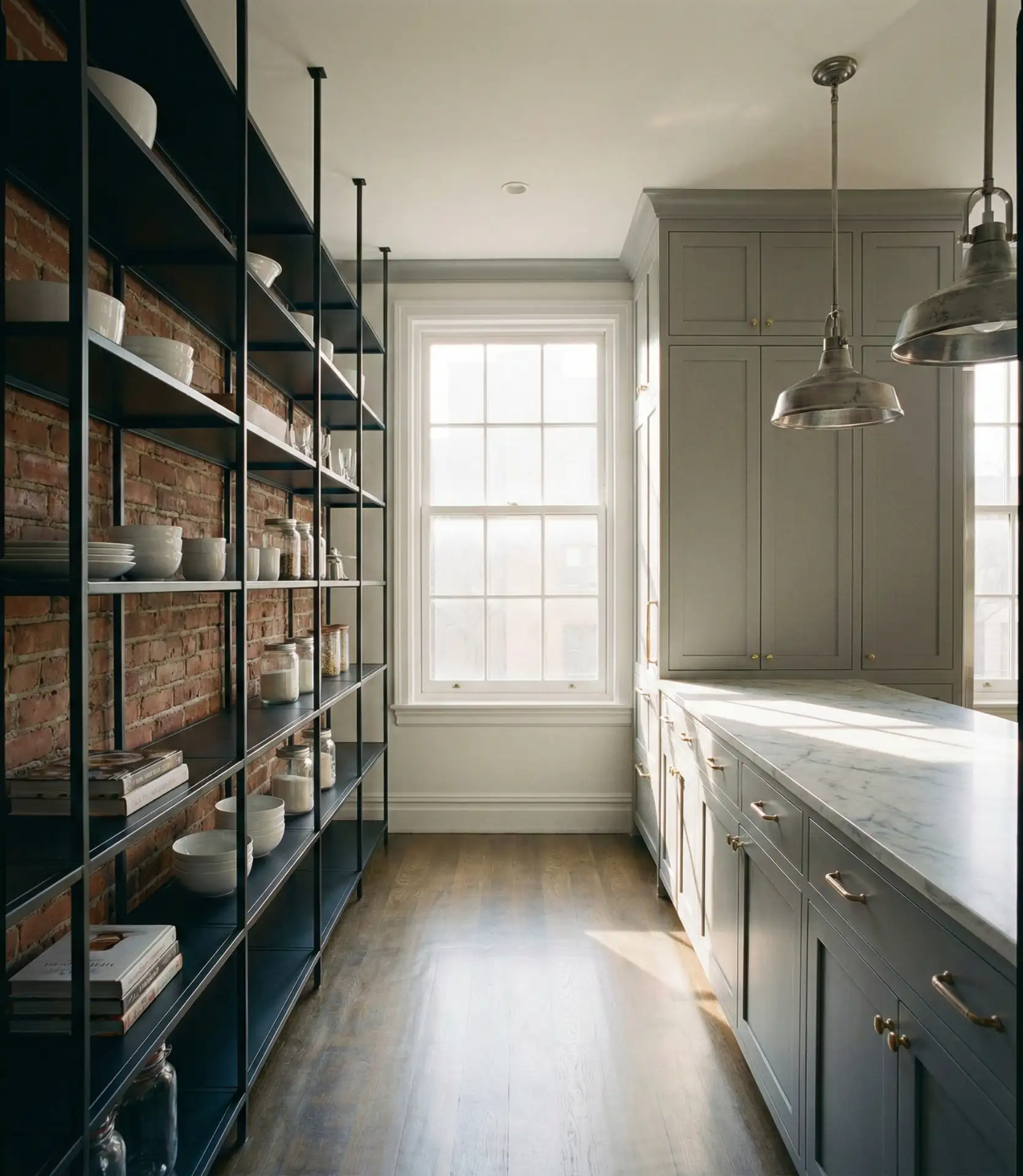
One common mistake with open shelving is overcrowding the shelves with too many items, which creates visual clutter and negates the airy feel you’re trying to achieve. Stick to a curated selection of everyday dishes, glassware, and a few decorative objects, and store less attractive items like plastic containers in closed lower cabinets. This balance keeps the space functional while maintaining the clean, open look that makes narrow galleys feel larger.
16. Blue Galley Kitchen with Coastal Vibes
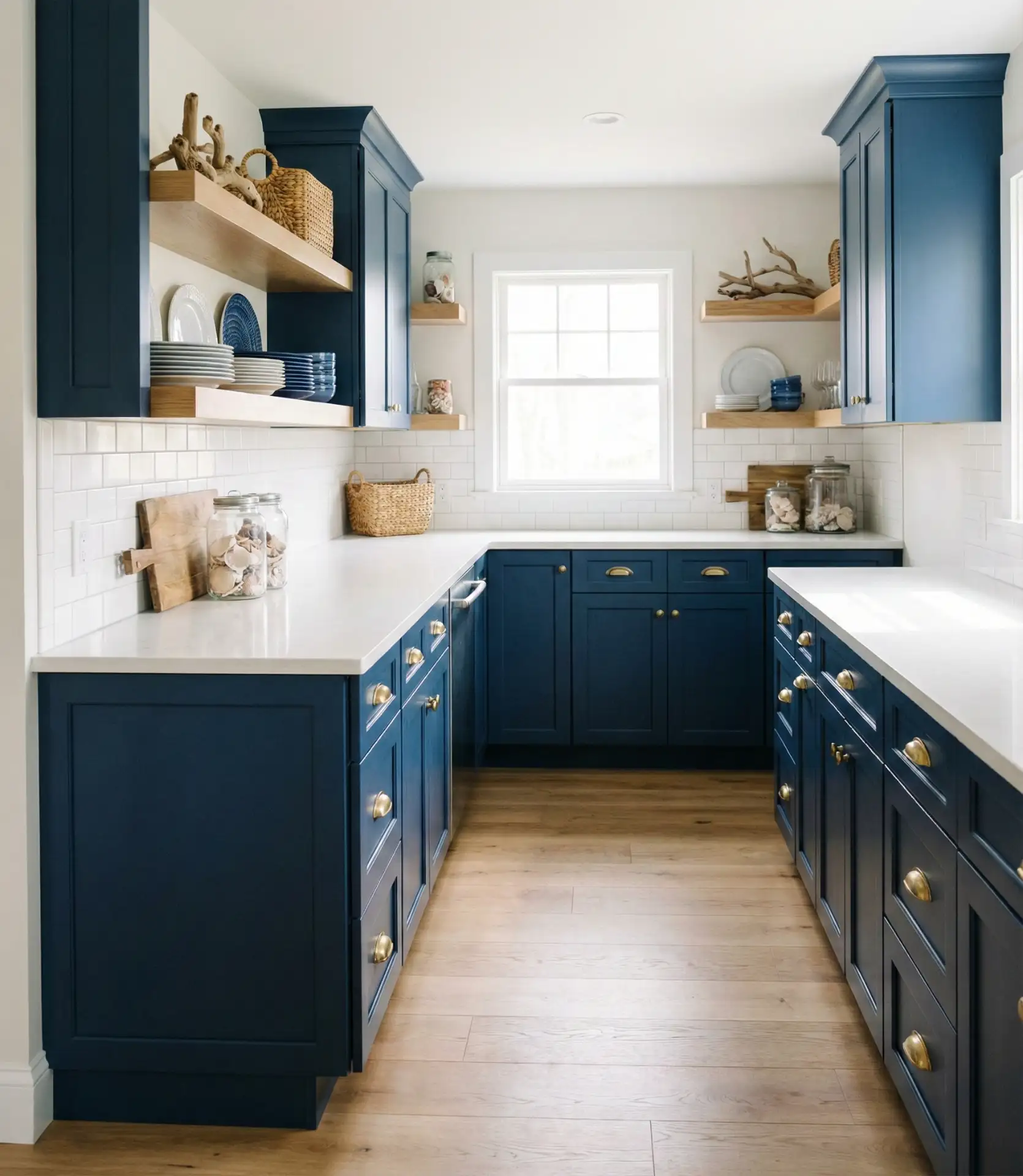
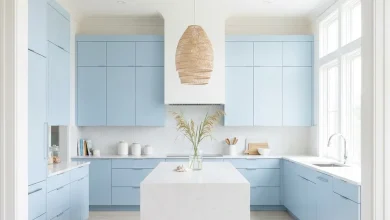
A blue galley kitchen brings a fresh, coastal feel to the home, using shades from soft powder blue to deep navy to create a serene cooking environment. This color choice is particularly popular in beach communities along the Atlantic, Gulf, and Pacific coasts, where homeowners draw inspiration from ocean and sky. Paired with white counters, brass or chrome hardware, and light wood or whitewashed floors, blue cabinetry evokes a relaxed, vacation-home atmosphere that feels welcoming year-round.
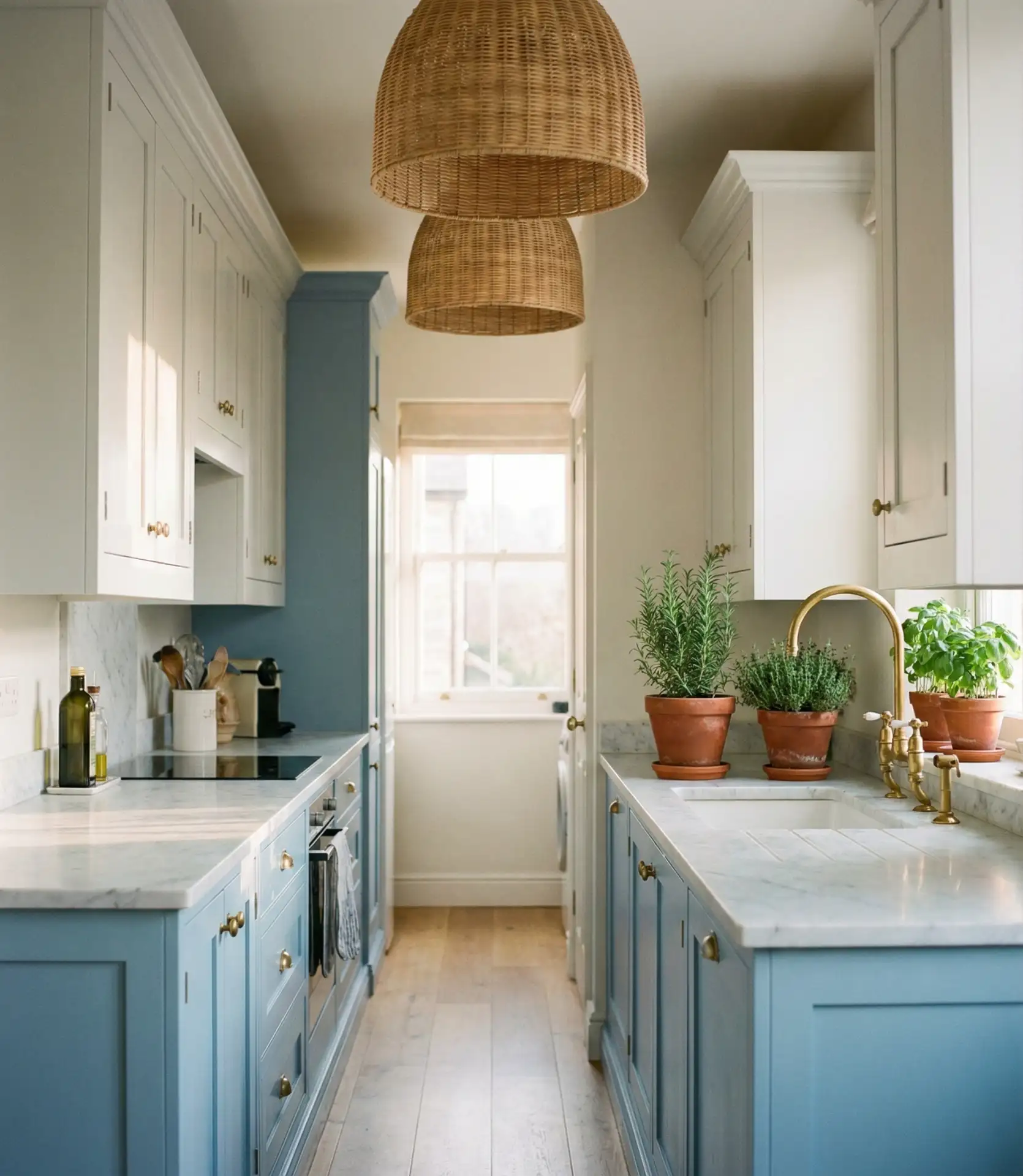
Where the color works best is in homes with abundant natural light—darker blues can feel heavy in poorly lit galleys, so homeowners often balance deep cabinetry with lighter walls, ceilings, and backsplashes. In landlocked regions, blue kitchens serve as a design escape, bringing a sense of calm and connection to water even when the nearest coast is hundreds of miles away.
17. Mid-Century Modern Galley with Minimalist Approach
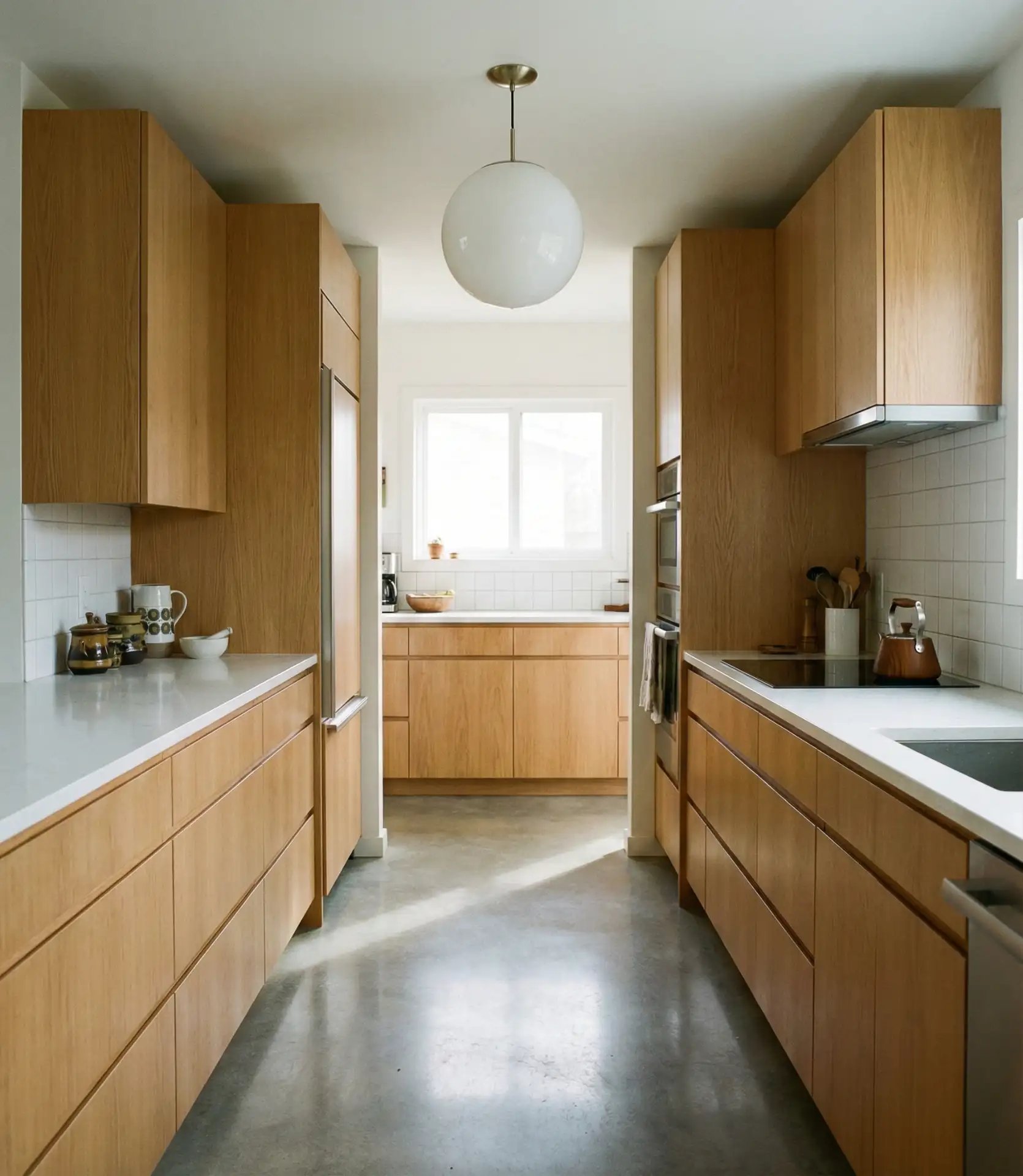
A kitchen designed in the mid-century modern style eliminates extraneous embellishments, emphasizing clean lines, functional design, and superior materials that speak for themselves. This interpretation of mid-century style emphasizes simplicity rather than retro kitsch, using natural wood, muted colors, and integrated appliances to create a timeless, uncluttered space. The layout typically features handleless cabinets, concealed storage, and a monochromatic or neutral palette accented with just one or two carefully chosen colors.
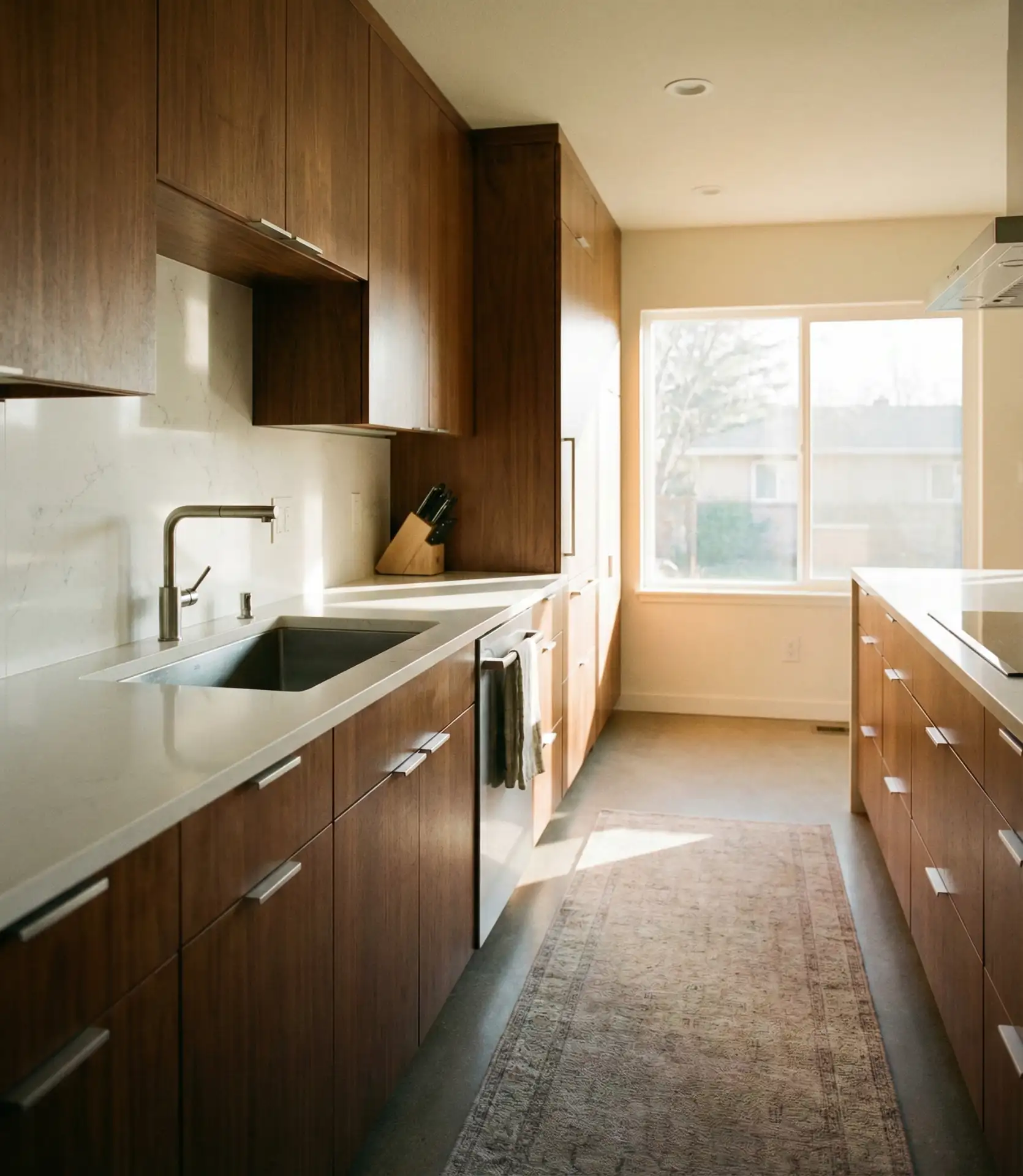
Real homeowners who embrace this style often report that the minimalist approach reduces decision fatigue in the kitchen—when everything has a designated place and visual distractions are minimal, meal prep feels calmer and more efficient. This is especially true in busy households where the kitchen doubles as a command center for family life, and reducing clutter helps maintain a sense of order.
18. Galley Kitchen Ideas with Clever Corner Solutions
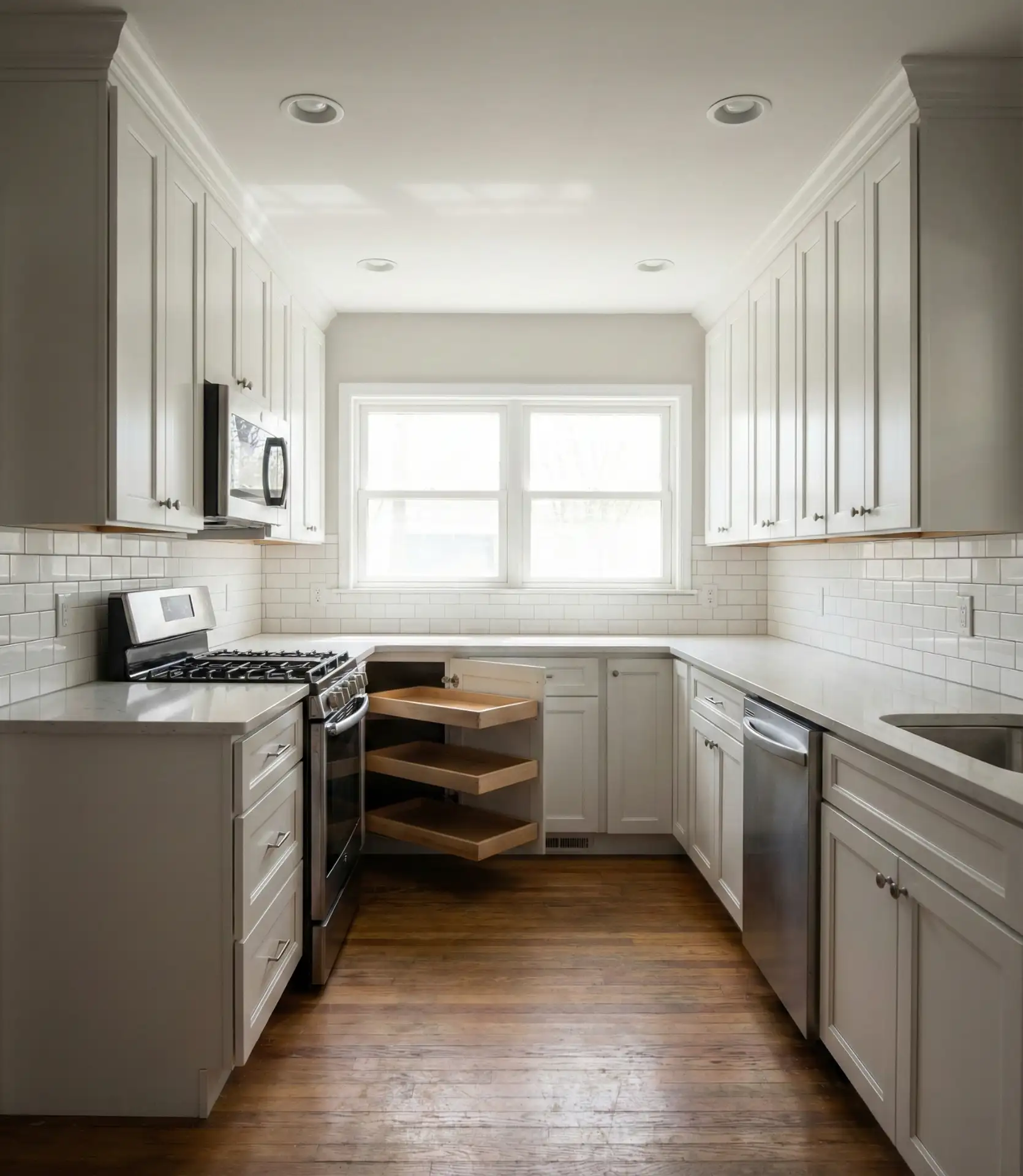
While traditional galleys typically follow a linear layout, some galley kitchen ideas incorporate subtle angles or end-of-corridor corners, necessitating innovative storage solutions. Lazy Susans, pull-out shelves, and diagonal cabinets maximize these awkward spaces, turning potential dead zones into functional storage. This aspect is particularly relevant in older homes where floor plans don’t follow perfect rectangles, and homeowners must work with existing architectural quirks.
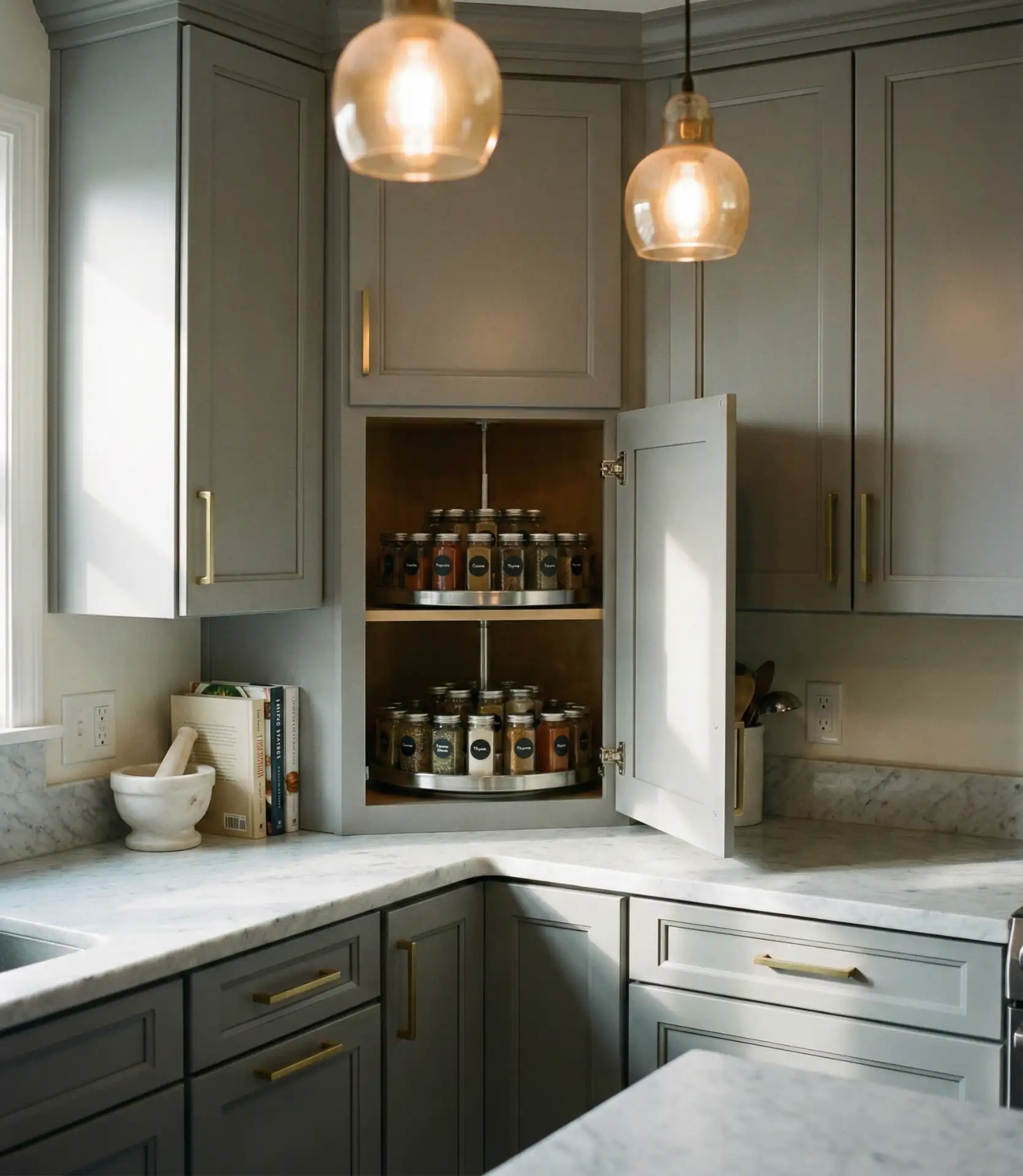
Expert designers recommend investing in quality hardware for corner cabinets—cheap mechanisms jam or break quickly, and replacing them requires disassembling cabinetry. Spend a bit more upfront on smooth-gliding systems from reputable manufacturers, and you’ll avoid frustration and repair costs down the line. Your daily access to pots, pans, and pantry staples will justify the investment many times over.
19. Peninsula Galley Kitchen for Open-Plan Homes
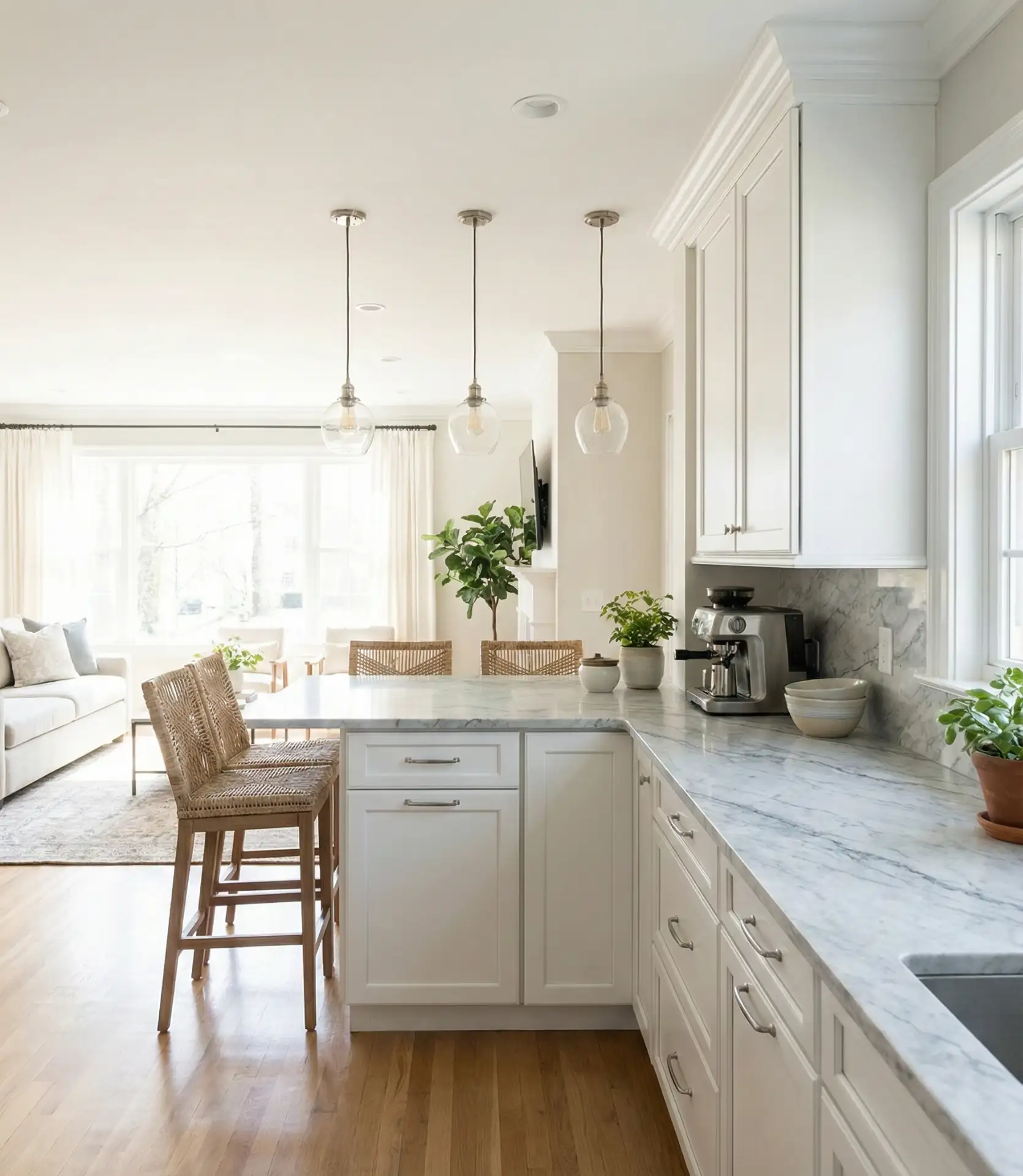
A peninsula galley kitchen extends one counter run into the adjacent living or dining area, creating a partial barrier that defines the kitchen zone without fully enclosing it. This layout is common in modern open-concept homes, where the peninsula provides extra seating, storage, or a serving surface while maintaining sightlines across the larger space. The peninsula can also house a cooktop or sink, making it a functional work zone rather than just a visual divider.
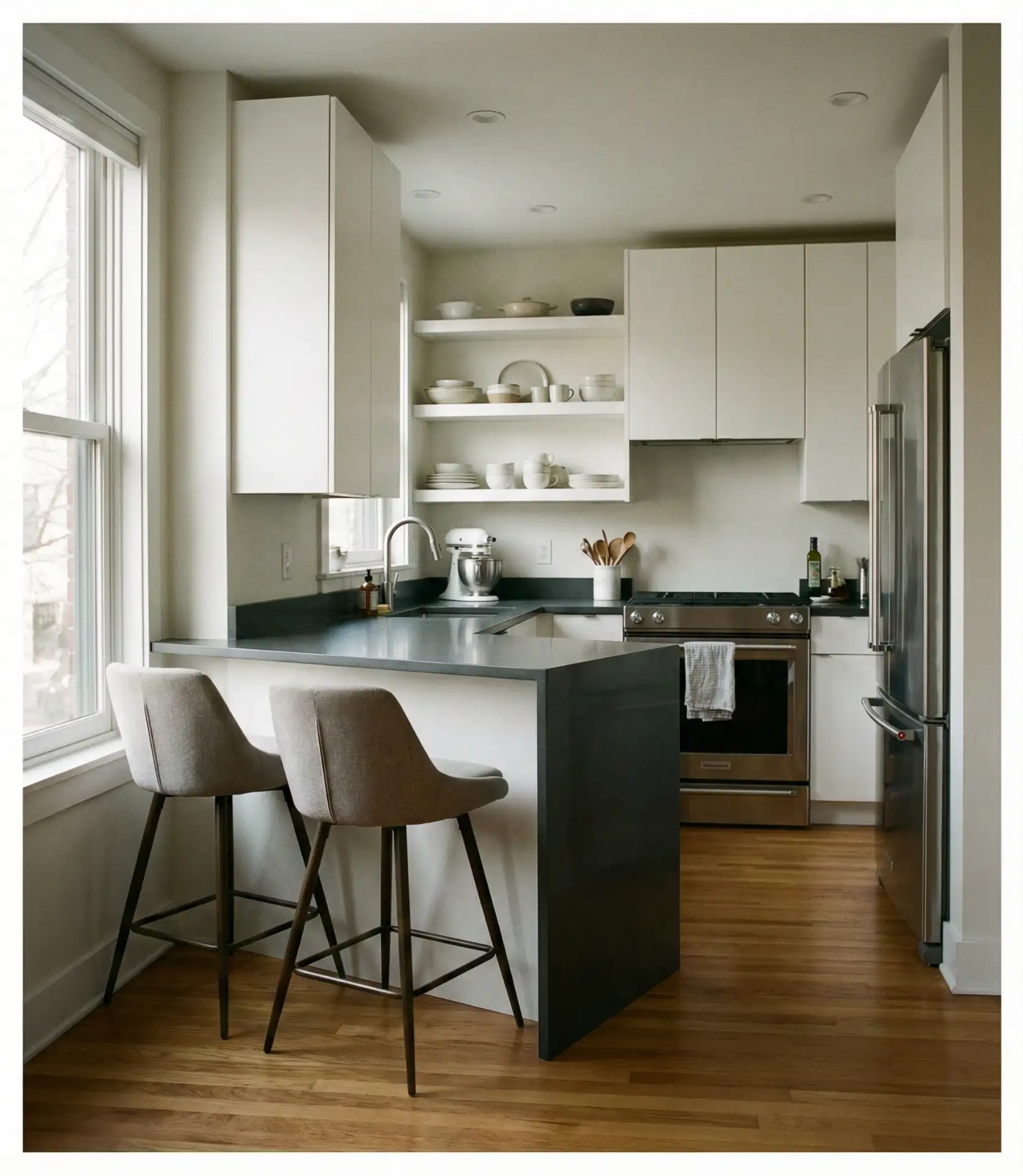
This configuration works best in homes where the kitchen opens to a family room or casual dining area, as the peninsula allows conversation and supervision without isolating the cook. Parents with young children particularly appreciate being able to prep dinner while staying engaged with homework or playtime happening just a few feet away in the adjacent space.
20. Galley Kitchen Floor Plans with Traffic Flow Optimization
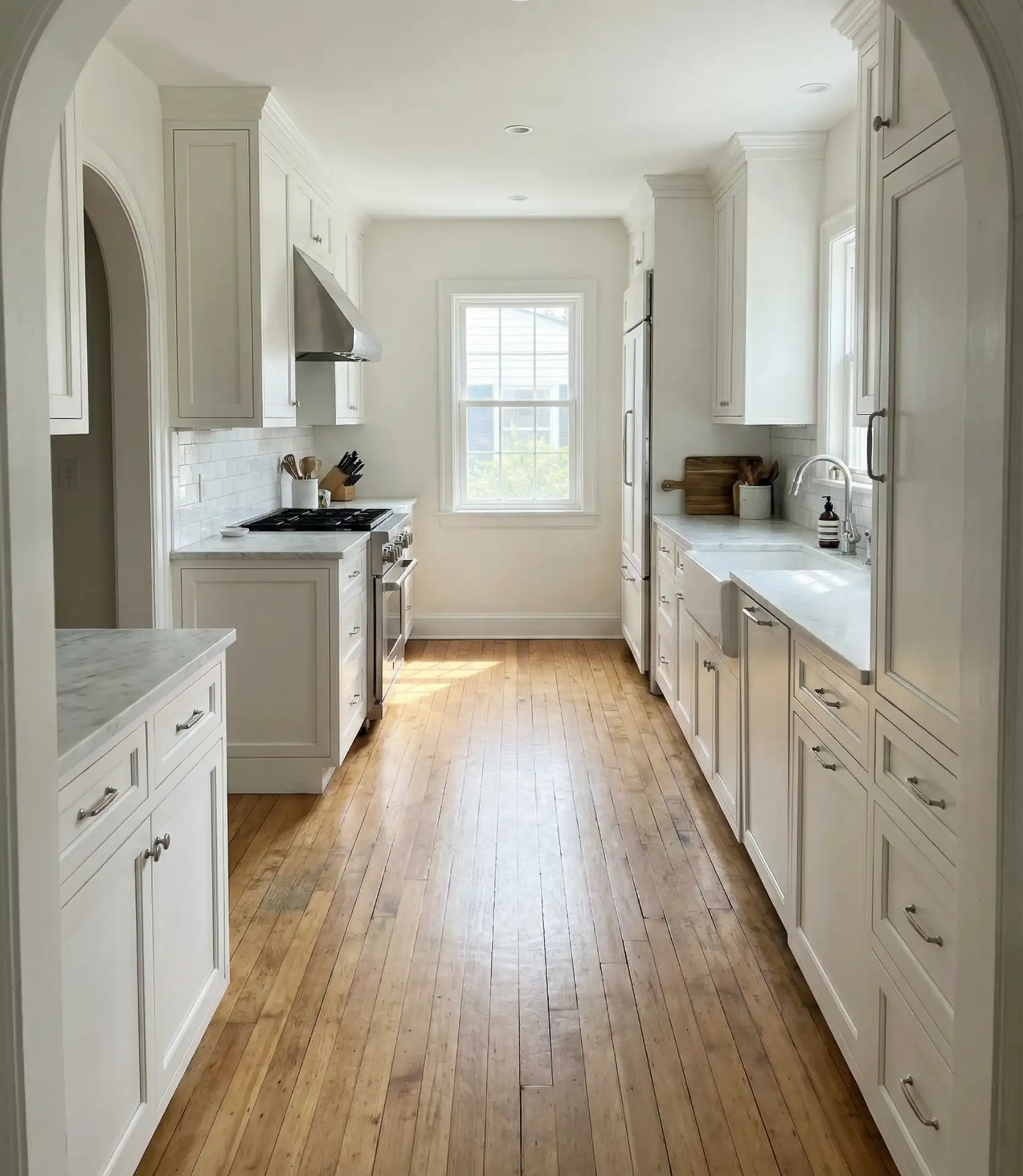
Galley kitchen floor plans that prioritize traffic flow are effective, ensuring the space doesn’t become a bottleneck when multiple people need access to other rooms. Positioning the galley off the main circulation path—rather than as a pass-through corridor—dramatically improves functionality. Some floor plans incorporate a second doorway at the opposite end, creating a loop that allows family members to bypass the kitchen entirely when the cook needs uninterrupted workspace.
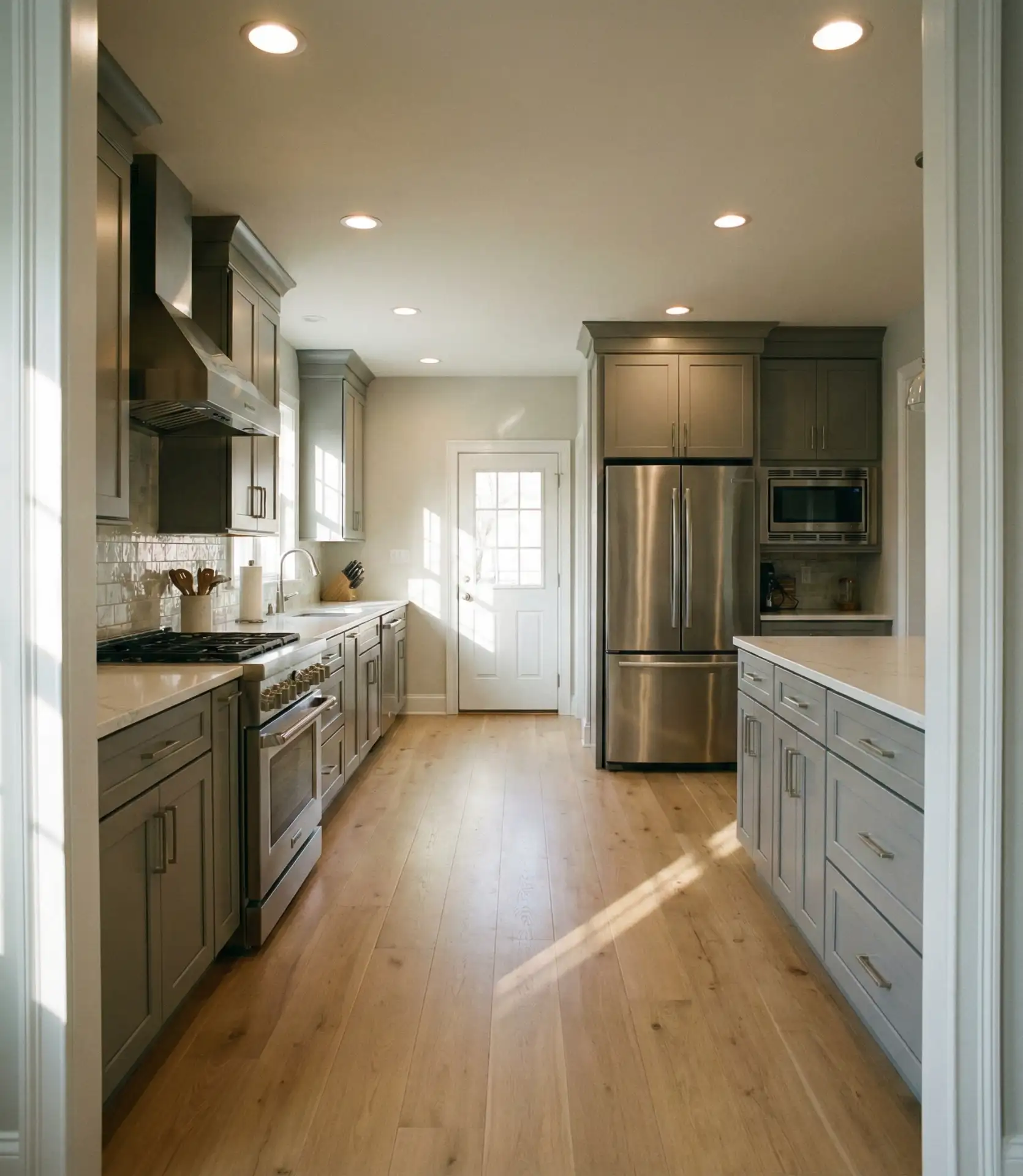
A family in Chicago redesigned their galley to include a pocket door at one end, allowing them to close off the kitchen during large parties when catering staff or messy prep work is underway. The rest of the time, the door stays tucked into the wall, maintaining the open feel they love while giving them the option for privacy when needed—a simple addition that made their layout far more versatile.
21. Wide Galley Kitchen with Dual Workstation s
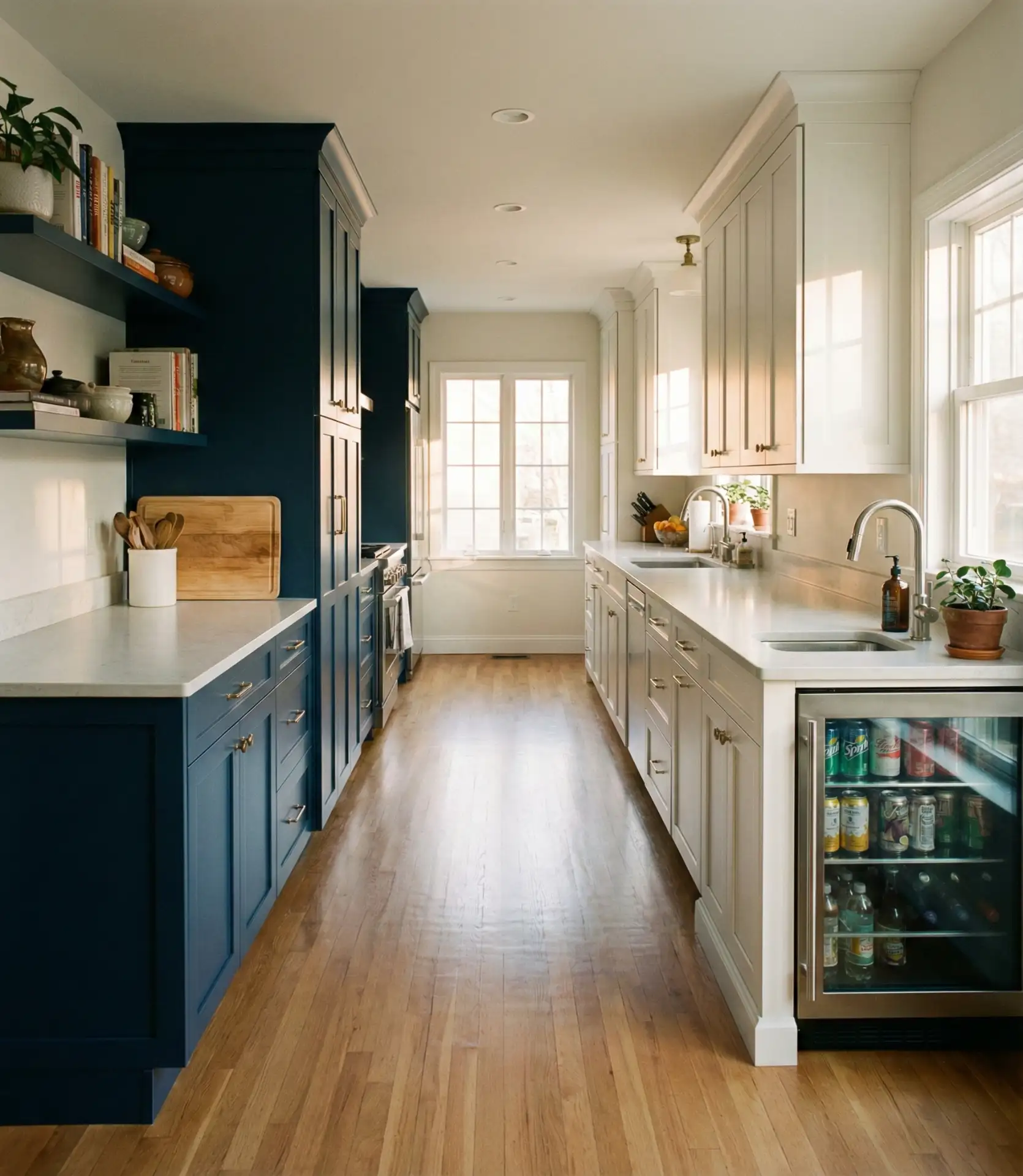
A wide galley kitchen provides enough space between counters to accommodate two distinct workstations, often with separate sinks, prep areas, or even dual dishwashers for large households. This layout is ideal for serious cooks or families who frequently host gatherings, as it allows multiple tasks to happen simultaneously without spatial interference. The extra width also makes it easier to include full-depth appliances and generous counter overhangs for seating.
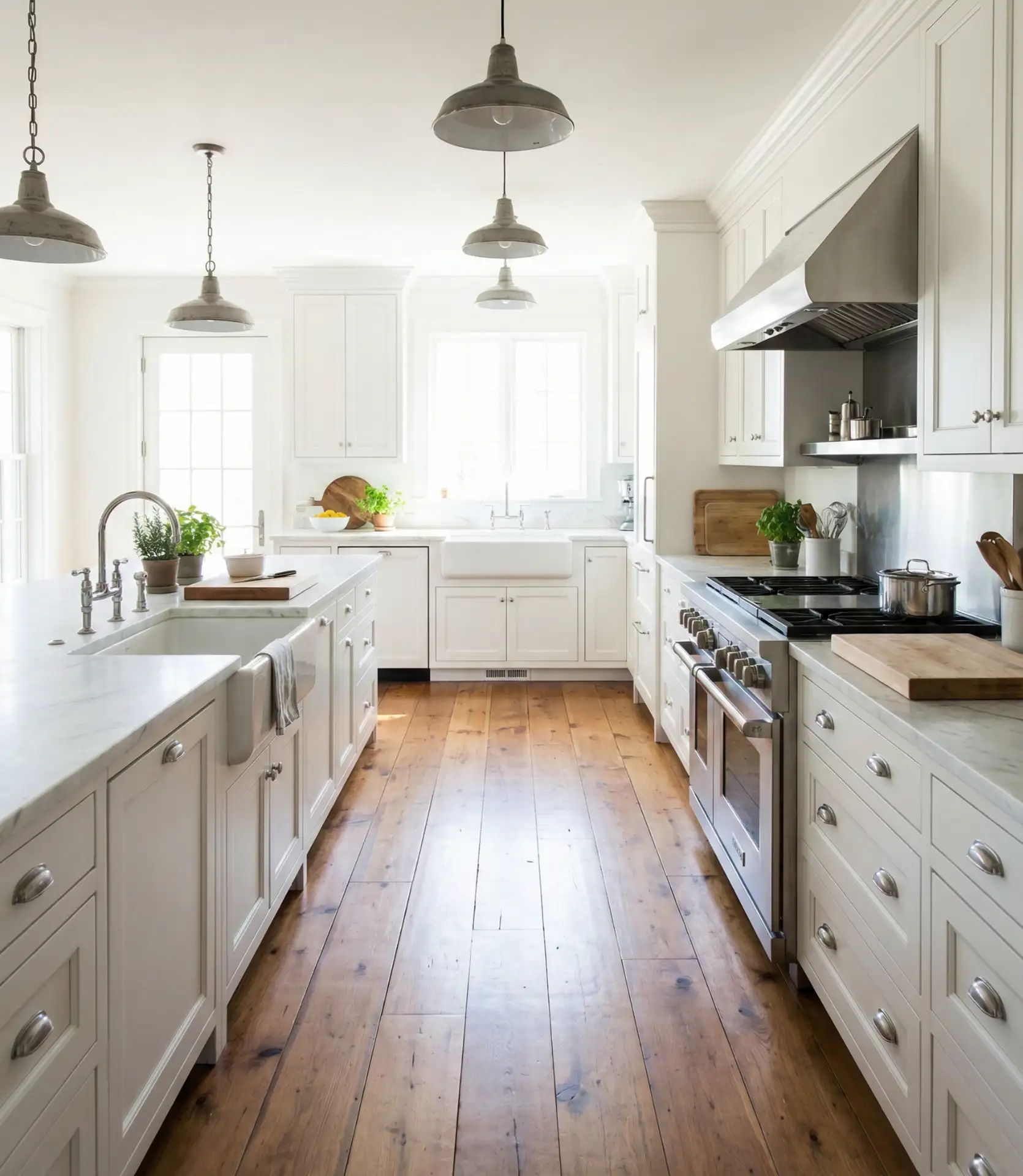
From a budget perspective, planning dual workstations during initial construction costs significantly less than retrofitting them later. If you’re building or undertaking a major remodel, discuss with your contractor how to rough in plumbing and electrical for a second sink or dishwasher even if you’re not installing them immediately—it leaves you with flexibility as your household needs evolve.
22. Galley Kitchen with Island for Expanded Storage
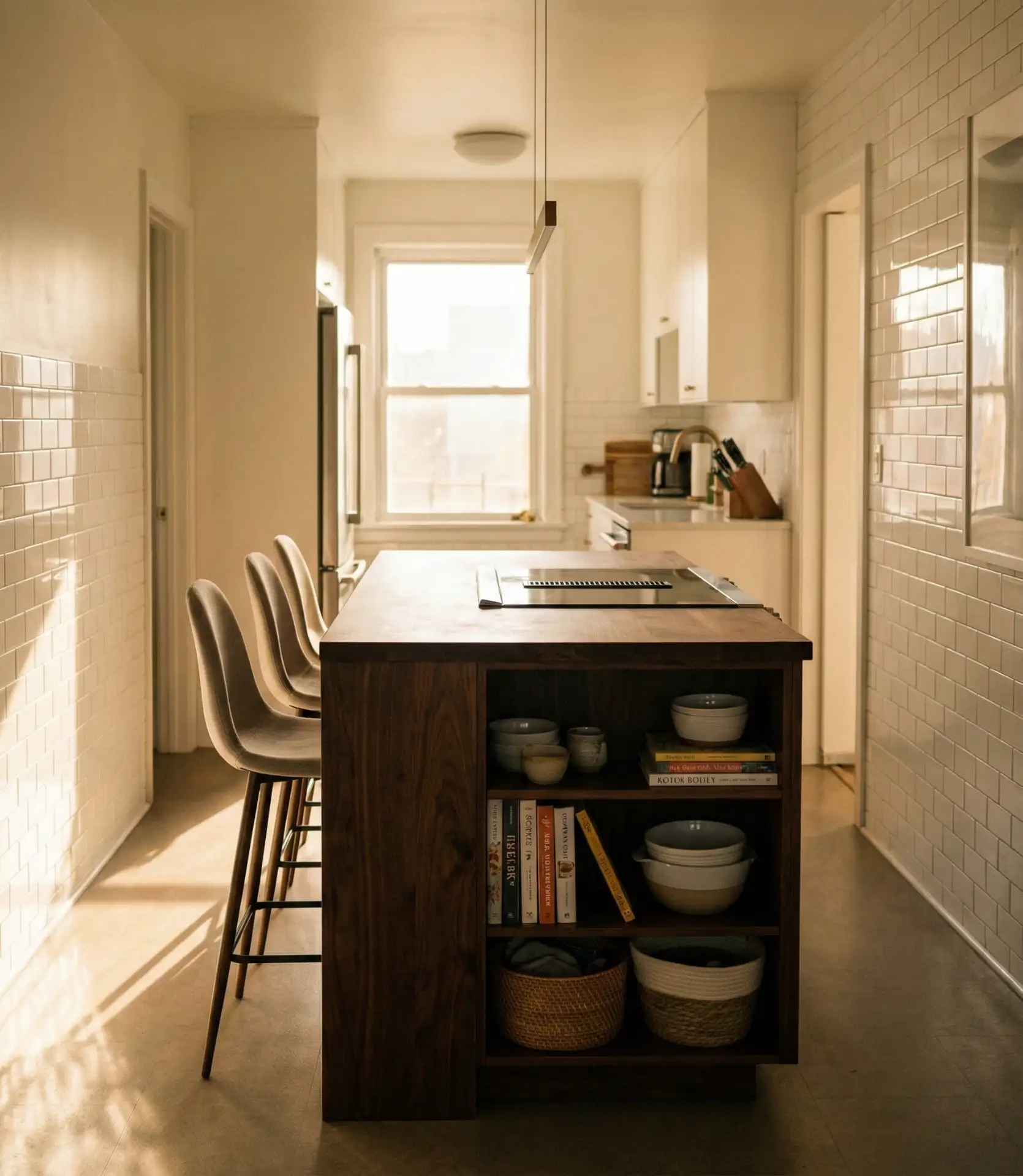
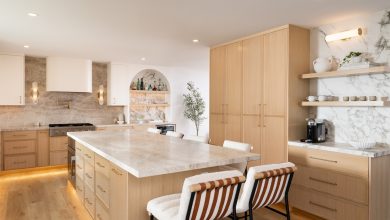
Adding an island to a galley kitchen—when space allows—creates a central hub for storage, prep work, and casual dining. This configuration is most successful in kitchens with island clearances that meet the 42-48 inch rule on all sides, ensuring comfortable movement even when appliances are in use. The island can incorporate deep drawers for cookware, open shelving for cookbooks, or even a small wine fridge, addressing storage challenges common in traditional galley layouts.
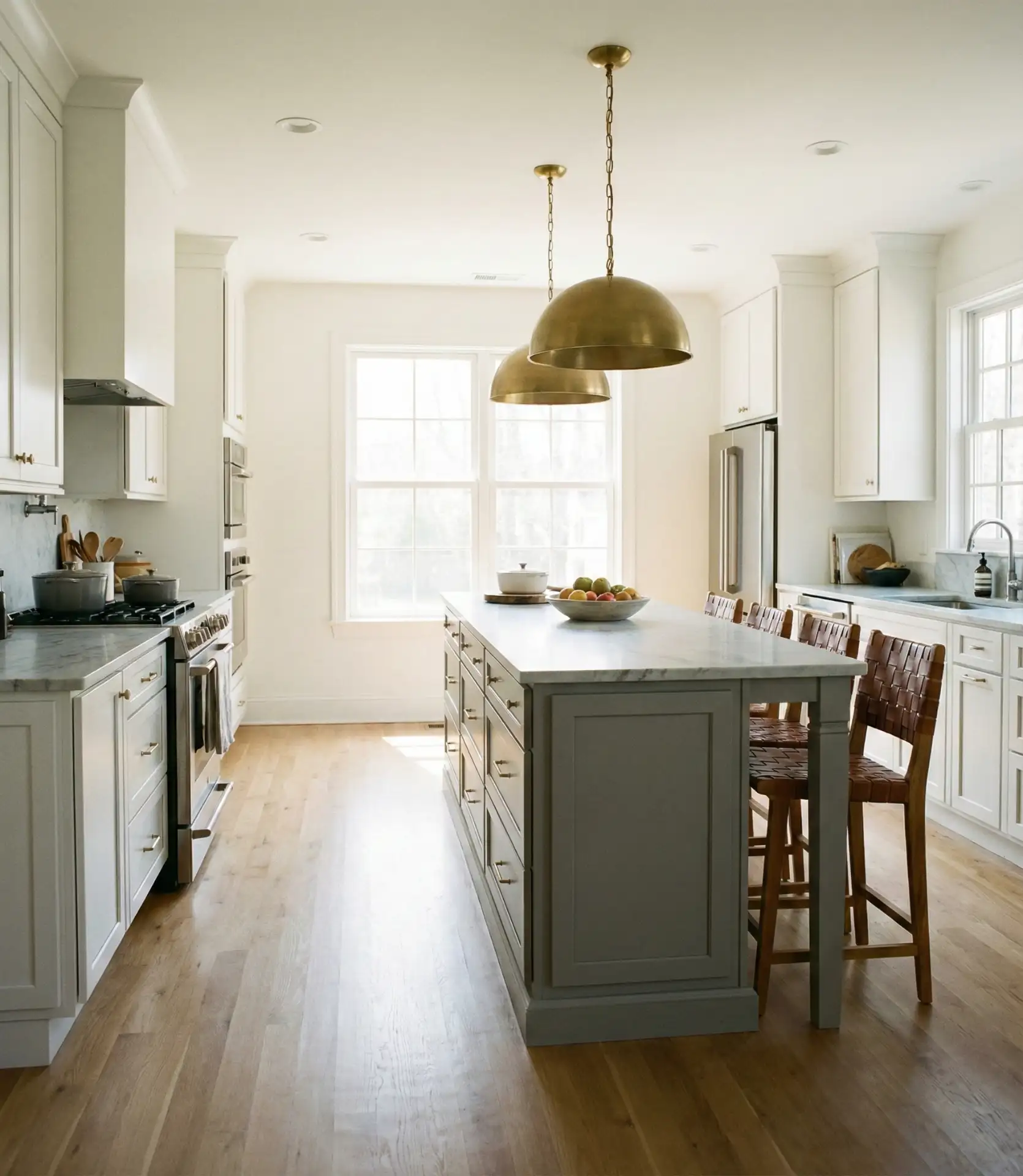
One practical insight many homeowners overlook is the importance of grounding electrical outlets directly in the island rather than running visible cords across the floor or countertop. If you’re adding an island during a remodel, work with your electrician to install outlets on the sides or ends—preferably in locations that won’t interfere with seating but remain accessible for small appliances, phone chargers, or kitchen gadgets.
These galley kitchen ideas demonstrate that even the most compact layouts can deliver serious style and functionality when designed with intention. Whether you’re drawn to timeless white cabinets, bold color choices, or the efficiency of a well-planned remodel, there’s a galley configuration that fits your space, budget, and lifestyle. Drop a comment below and share which idea resonates most with your vision—or tell us about your galley kitchen transformation.