44 Front Porch Decorating Ideas 2026: Seasonal, Cozy & Stunning Looks for Every Home

American home design is witnessing a significant resurgence of front porches, with 2026 positioned to be their peak year as outdoor living spaces. Whether you’re scrolling through Pinterest for inspiration or planning a weekend refresh, the front porch has evolved from a simple entryway into a curated extension of your home’s personality. From cozy fall arrangements to minimalist summer setups, today’s porches reflect seasonal shifts, regional styles, and personal creativity. This guide brings you fresh ideas that blend timeless appeal with on-trend touches, helping you transform your porch into a welcoming retreat that works beautifully year-round.
1. Layered Textiles for a Cozy Fall Welcome
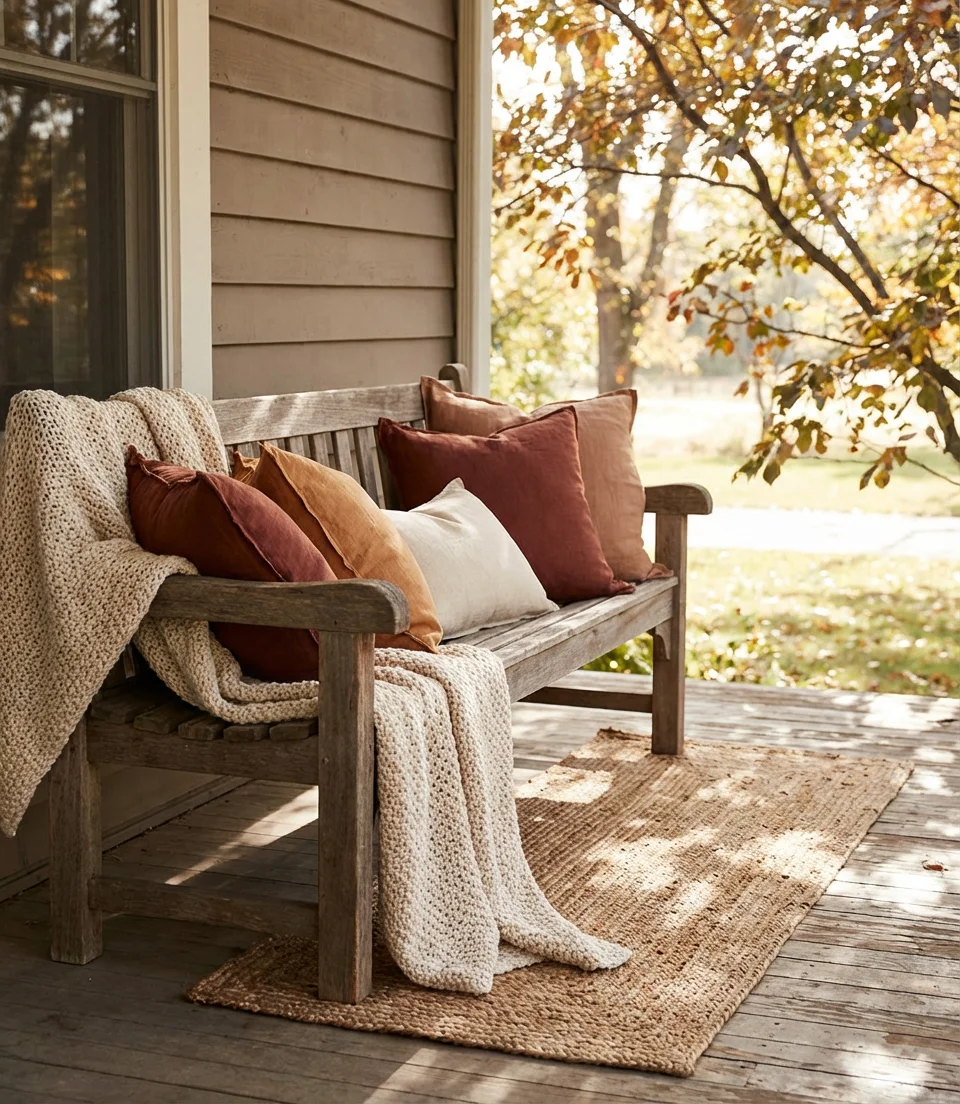
Start your fall porch transformation by layering textiles that invite guests to linger. Think oversized outdoor pillows in rust, mustard, and cream tones paired with a chunky knit throw draped over a wooden bench. This approach is particularly effective for small fall porches, where each element must provide both comfort and visual warmth. Add a jute or sisal rug underfoot to anchor the space and create that lived-in, welcoming vibe that feels authentically autumnal without overdoing the pumpkin spice aesthetic.
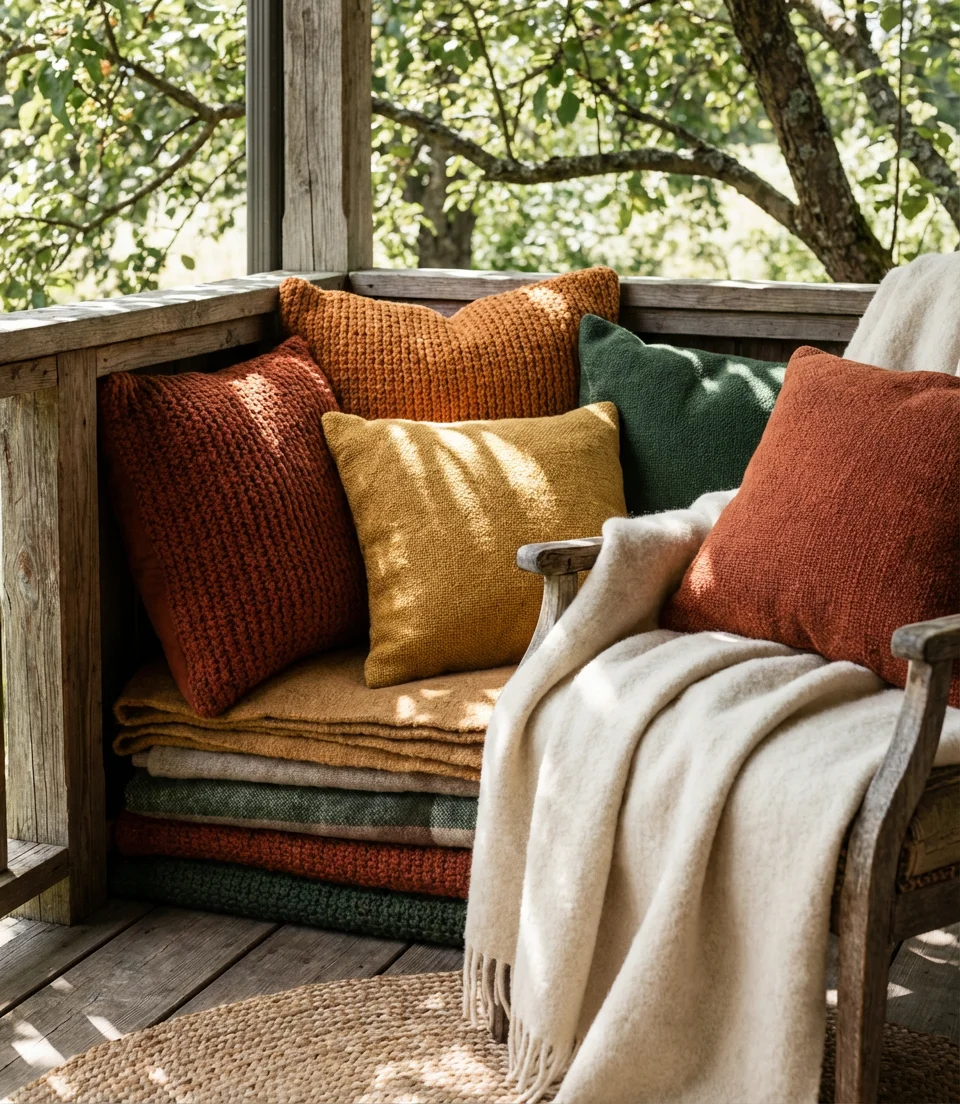
One common mistake is choosing outdoor fabrics that look too stiff or synthetic. Instead, seek weather-resistant materials with a soft hand feel—many brands now offer fade-resistant fabrics that mimic the texture of indoor textiles. This keeps your porch looking inviting rather than staged, especially during those unpredictable fall weather swings when a sudden rain shower can test your décor choices.
2. Vintage Fall Finds Mixed with Modern Planters
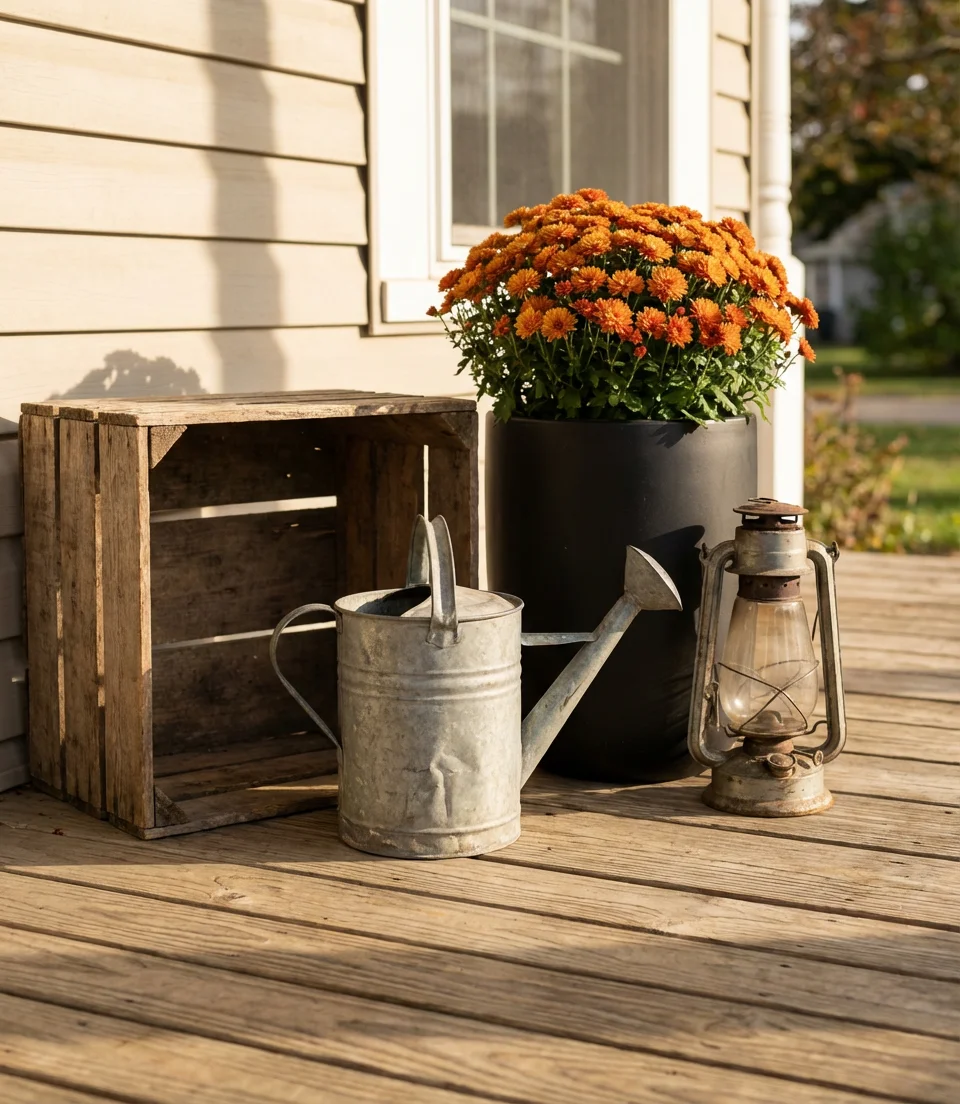
Combine the charm of vintage fall décor with sleek, contemporary planters for a look that feels collected over time. Hunt for weathered wooden crates, old metal watering cans, or antique lanterns at flea markets, then pair them with matte black or terracotta planters filled with seasonal mums, ornamental kale, or dried grasses. This mix-and-match approach gives your porch character and prevents it from looking like a catalog spread. The visual interest created by the contrast between old and new draws the eye across the entire space.
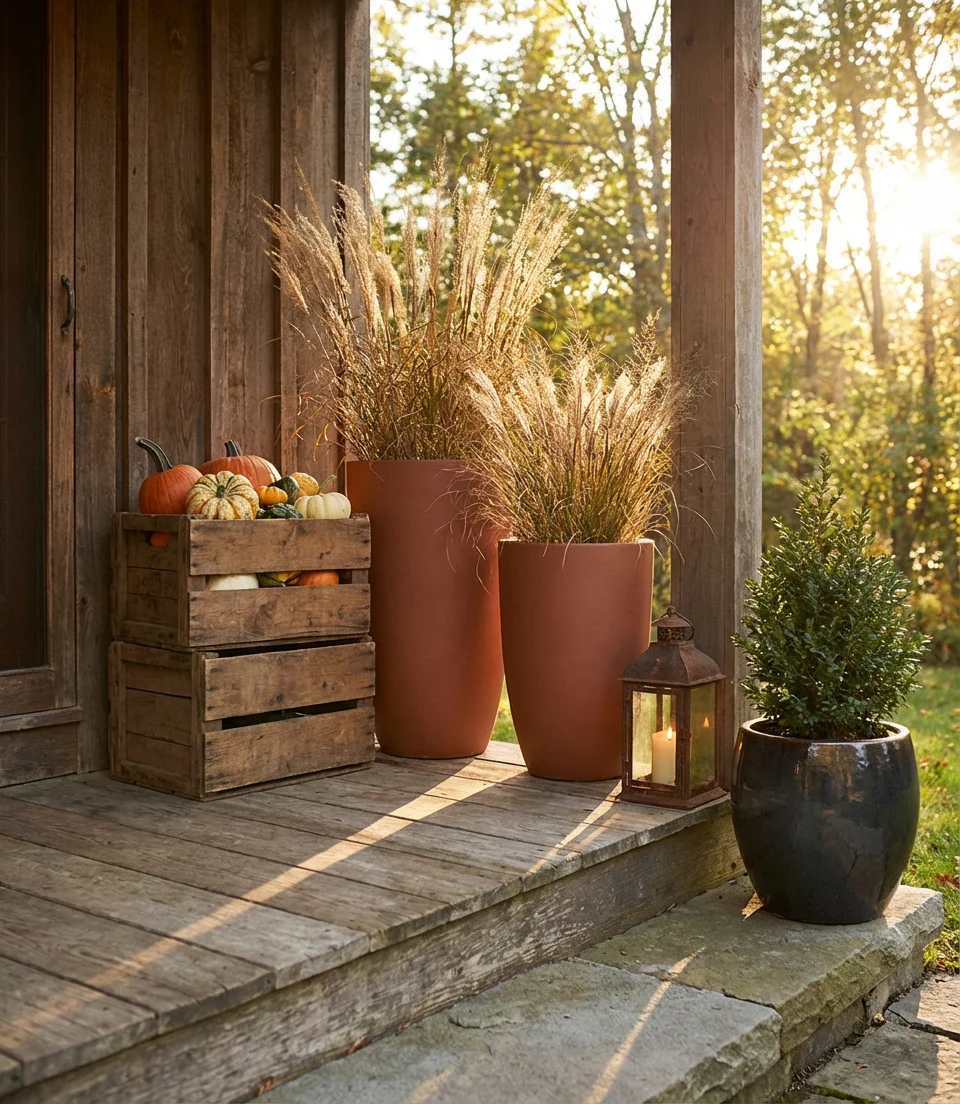
In the Mid-Atlantic and Midwest, this layered vintage-modern aesthetic resonates particularly well with homeowners who appreciate both nostalgia and clean lines. The key is balancing proportions—if your vintage pieces are chunky and ornate, keep planters simple. If you’re working with delicate antique finds, bolder modern containers will provide the necessary grounding.
3. Egg Chair Nook for Unexpected Luxury
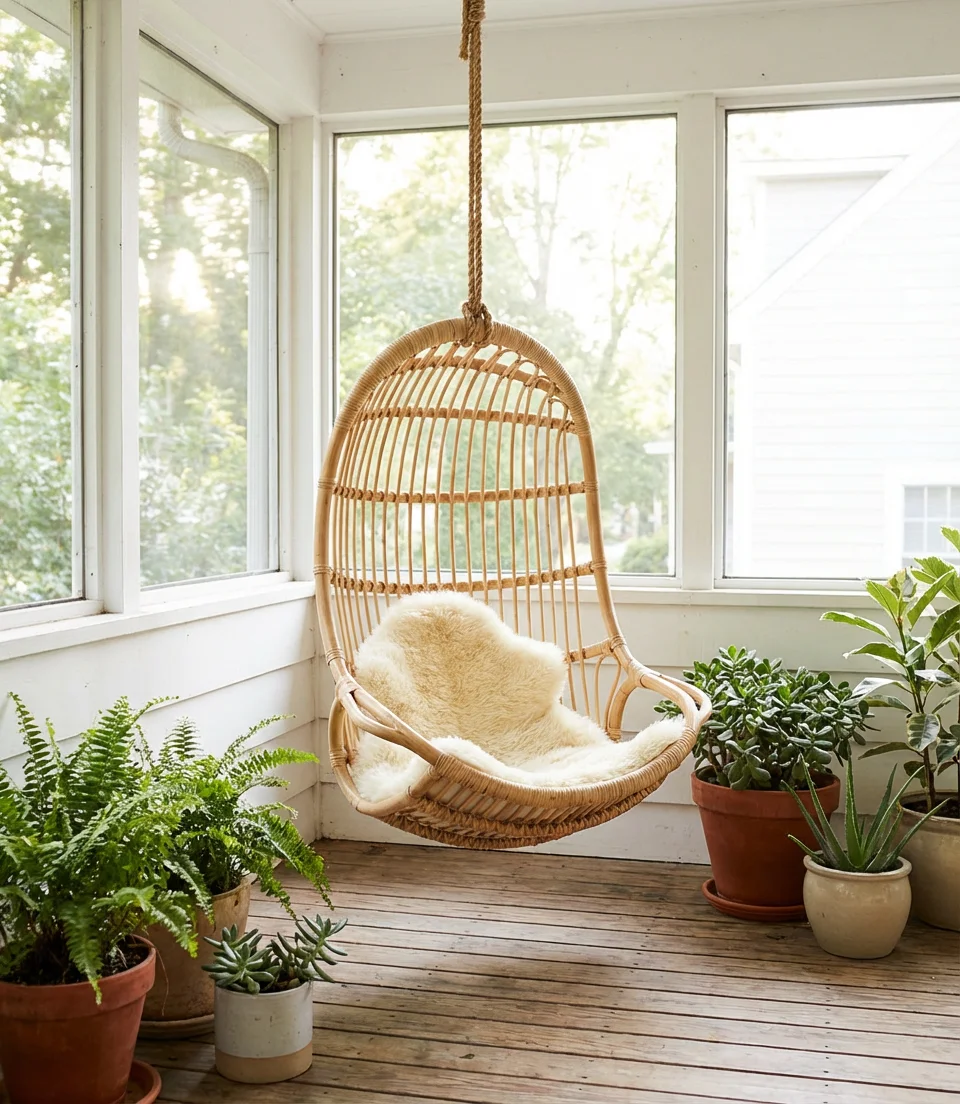
A hanging egg chair instantly elevates a front porch from basic to boutique. Position it in a corner where it can catch morning light, add a sheepskin or faux fur cushion for texture, and suddenly you have a statement piece that invites both relaxation and Instagram-worthy moments. This works beautifully on covered porches where the chair is protected from the elements, and it’s especially effective on long, narrow porches where vertical space often goes unused. The suspended design keeps floor space open while creating a cozy focal point.
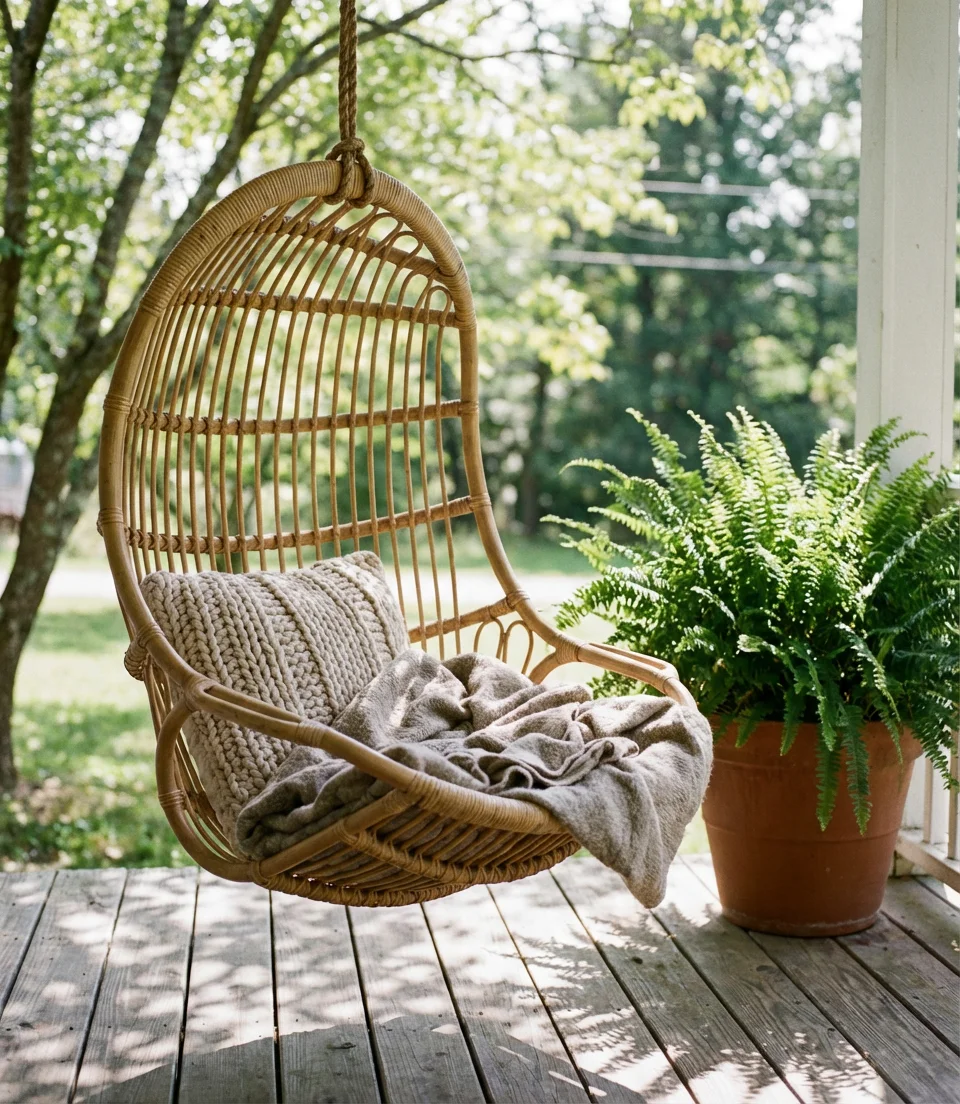
Expect to invest between $200 and $600 for a quality outdoor egg chair with a stand. While that might seem steep, consider it a long-term investment in your porch’s appeal—it’s the kind of piece that can anchor your design for years while adapting to seasonal styling changes with just a cushion swap or throw blanket update.
4. Rustic Ladder Display for Vertical Interest
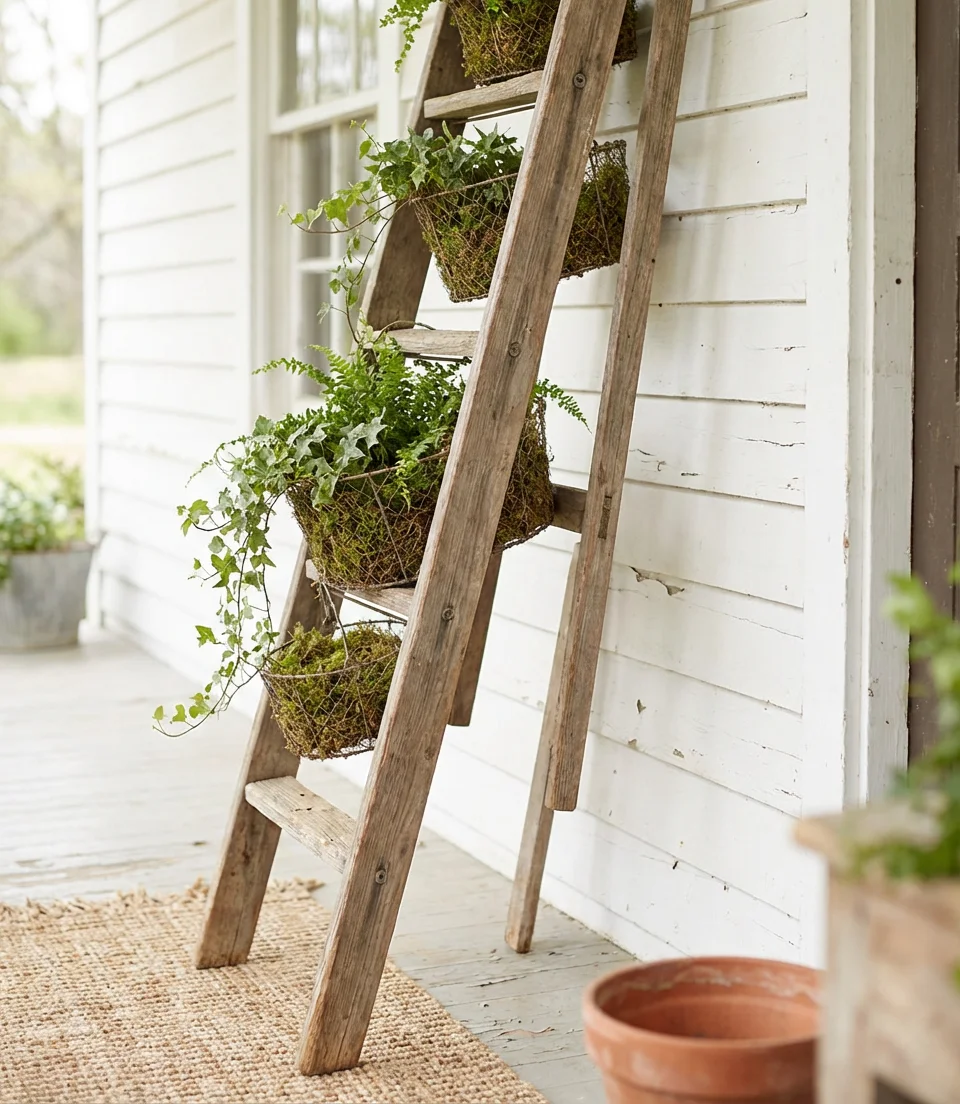
A rustic wooden ladder leaning against the porch wall becomes an instant vertical display for everything from hanging baskets to seasonal garlands. This is particularly smart for tiny porches where floor space is precious but wall and vertical areas remain underutilized. Drape the rungs with eucalyptus branches in the summer, switch to fall foliage in September, or string lights for the holidays. The ladder adds architectural interest while remaining completely flexible as your décor needs shift throughout the year.
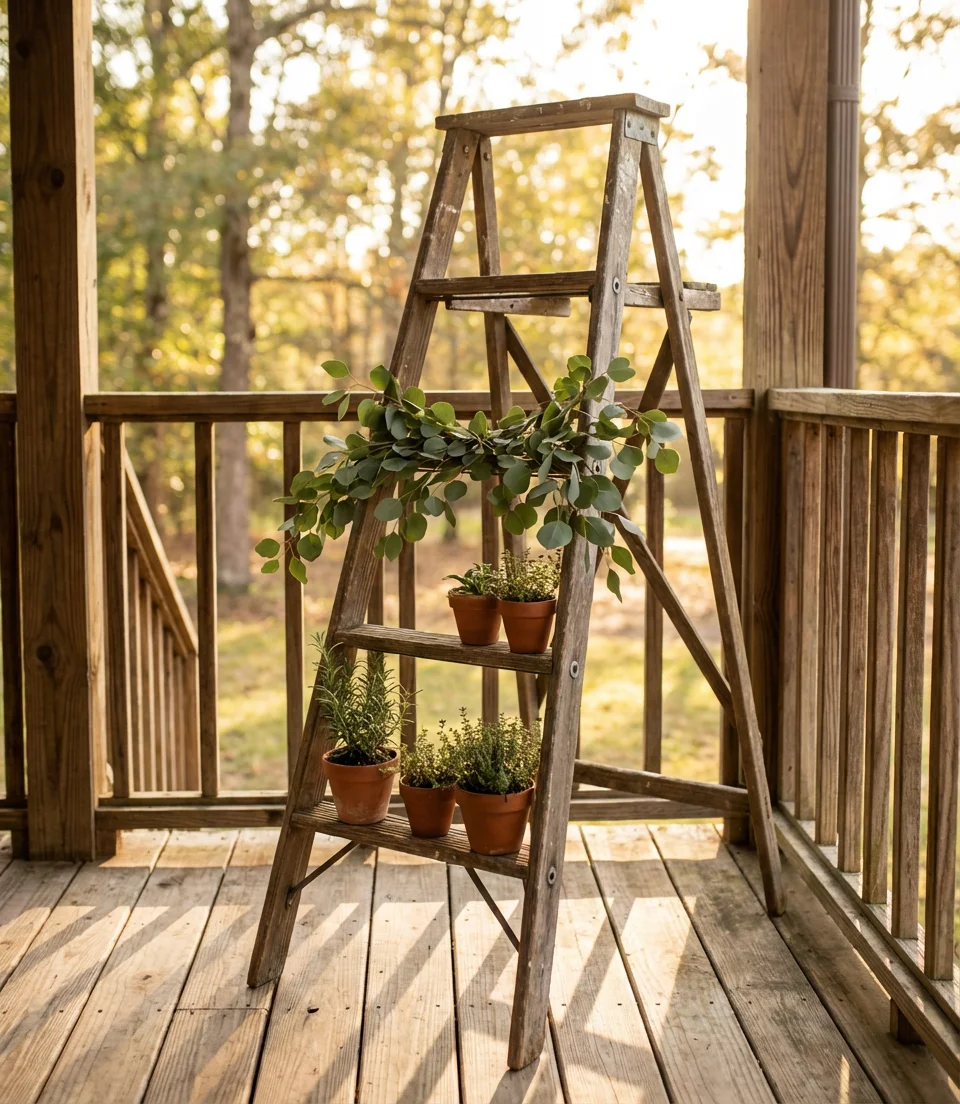
Many homeowners make the mistake of overcrowding the ladder with too many items, which dilutes its impact. Instead, practice restraint—three to five thoughtfully placed elements create a curated look that feels intentional rather than cluttered. Leave some rungs empty to let the wood’s natural texture shine through.
5. Screened-In Porch with Dining Setup
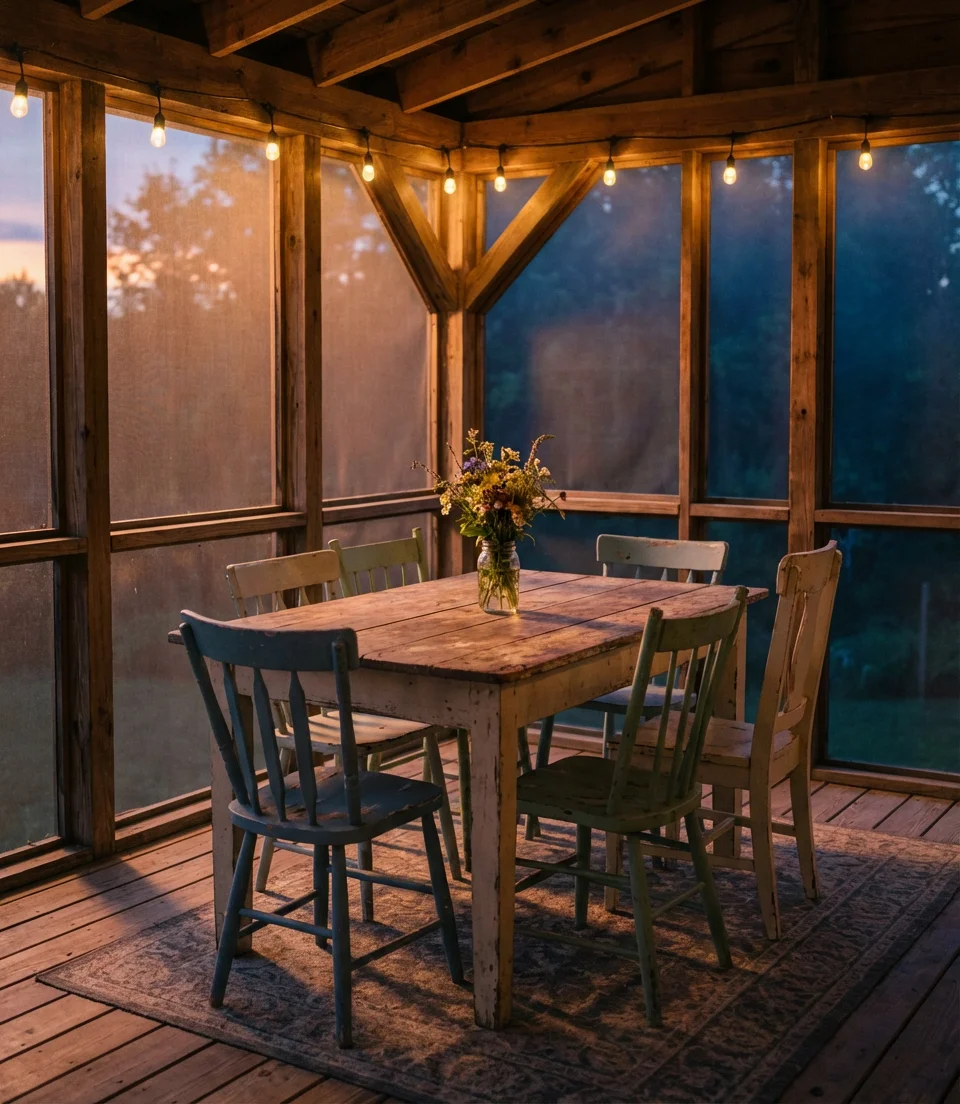
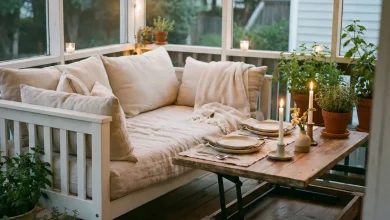
Transform your screened-in porch into an alfresco dining room where meals feel special without battling mosquitoes. A simple farmhouse table with mismatched chairs, a centerpiece of fresh-cut flowers or seasonal produce, and string lights overhead turn this protected space into the home’s most-used room from spring through fall. The screening facilitates cross-ventilation and deters insects, rendering it perfect for extended gatherings that extend from afternoon into evening.
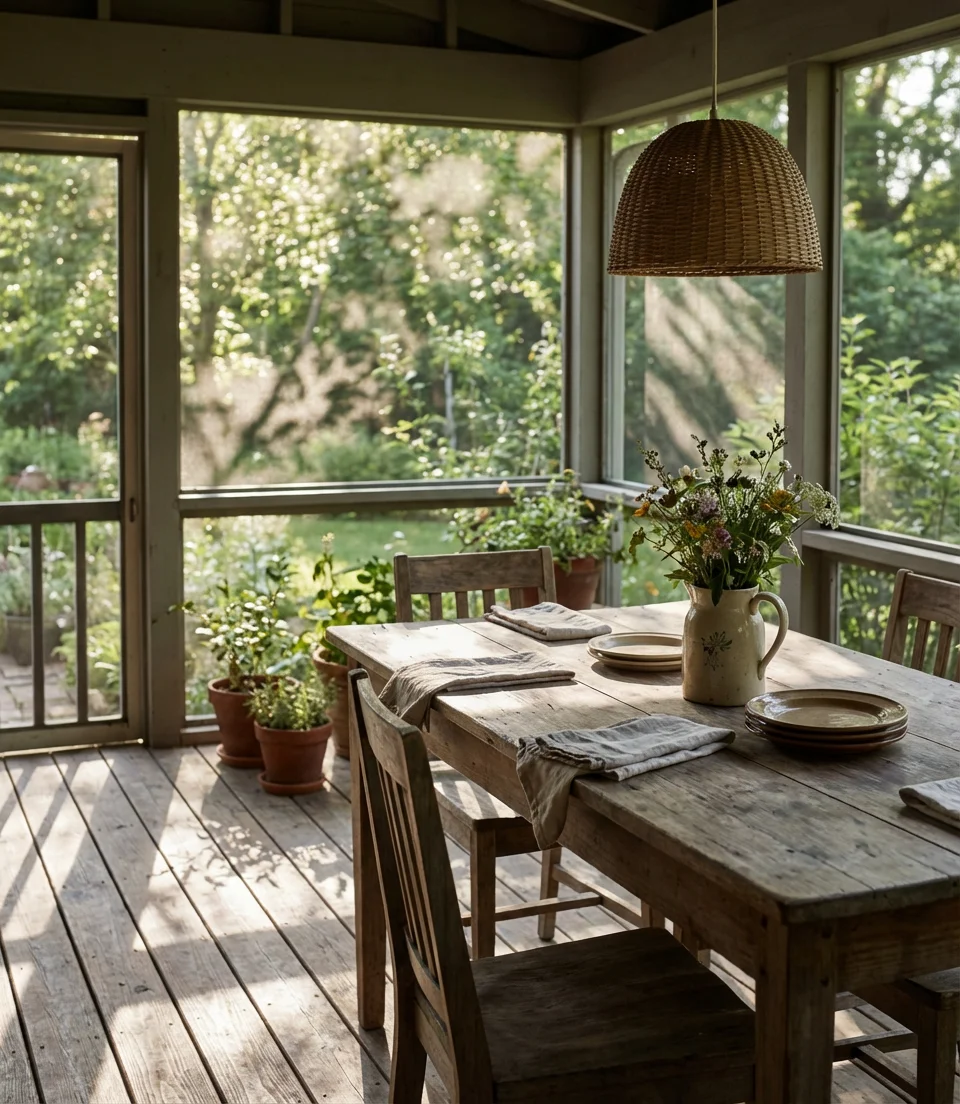
In the Southeast and humid climates, screened porches function almost like additional square footage for half the year. Families report using these spaces for everything from weeknight dinners to homework sessions, making them one of the highest-ROI improvements you can make to a porch area.
6. Minimalist Fall Arrangement with Single Statement Piece
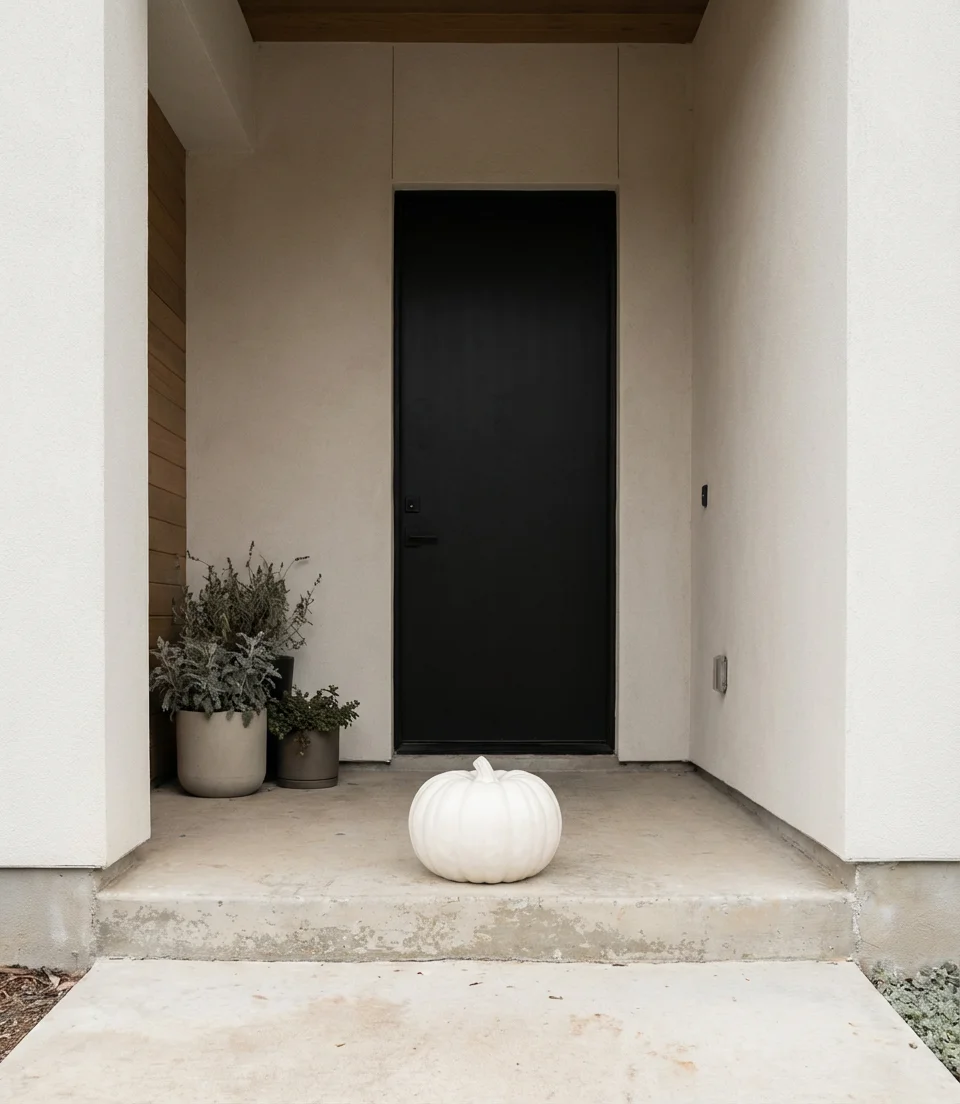
Embrace the minimalist fall trend by choosing one dramatic element rather than scattering small seasonal touches everywhere. A single oversized ceramic pumpkin, an architectural dried arrangement in a substantial vase, or a dramatic wreath with unusual materials becomes the hero while keeping the overall aesthetic clean and modern. This approach works especially well on contemporary homes where less truly is more, and it prevents the porch from feeling like a seasonal pop-up shop.
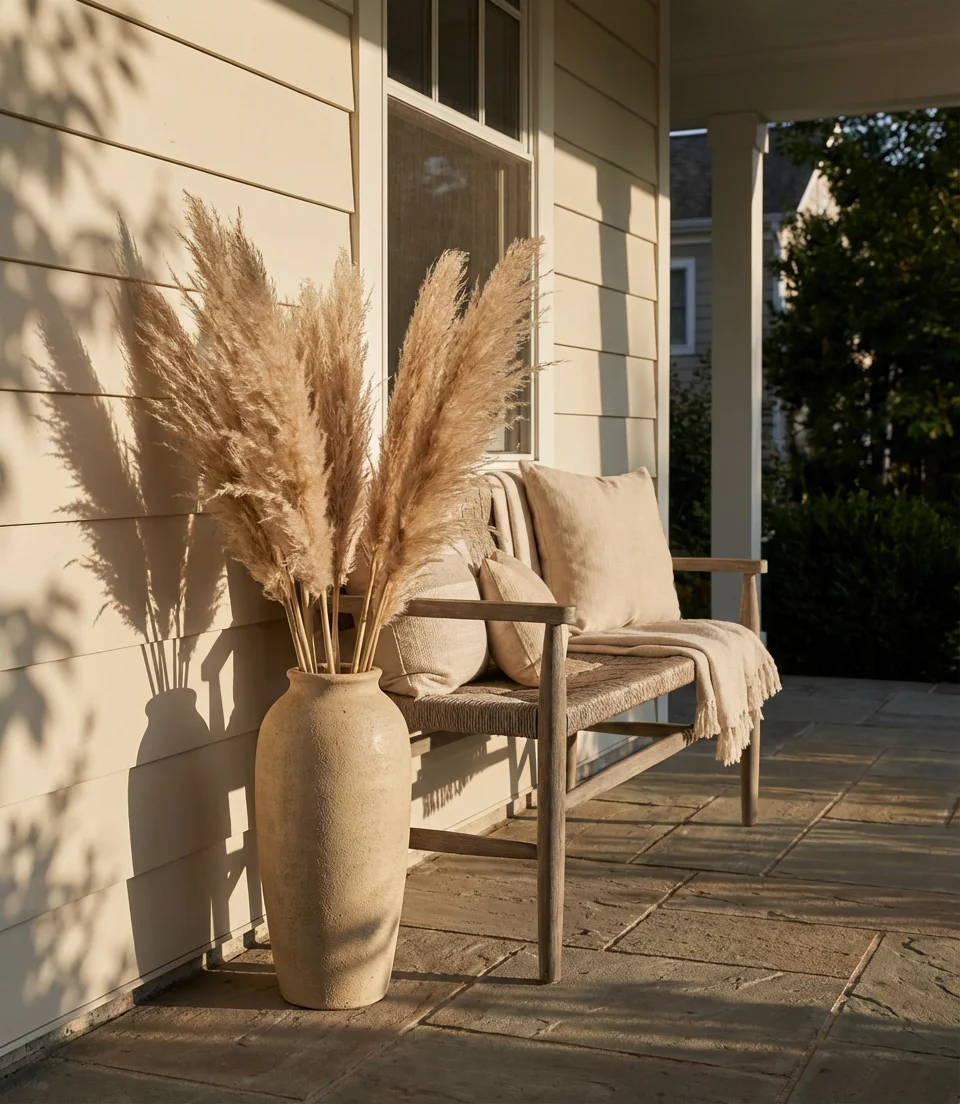
The beauty of this approach lies in its flexibility and ease of maintenance. When you’re ready to transition from fall to winter holidays or into spring, you’re only swapping out one or two key pieces rather than dismantling an entire display. It’s also kinder to your budget and storage situation.
7. Natural Fall Elements Foraged from Your Yard
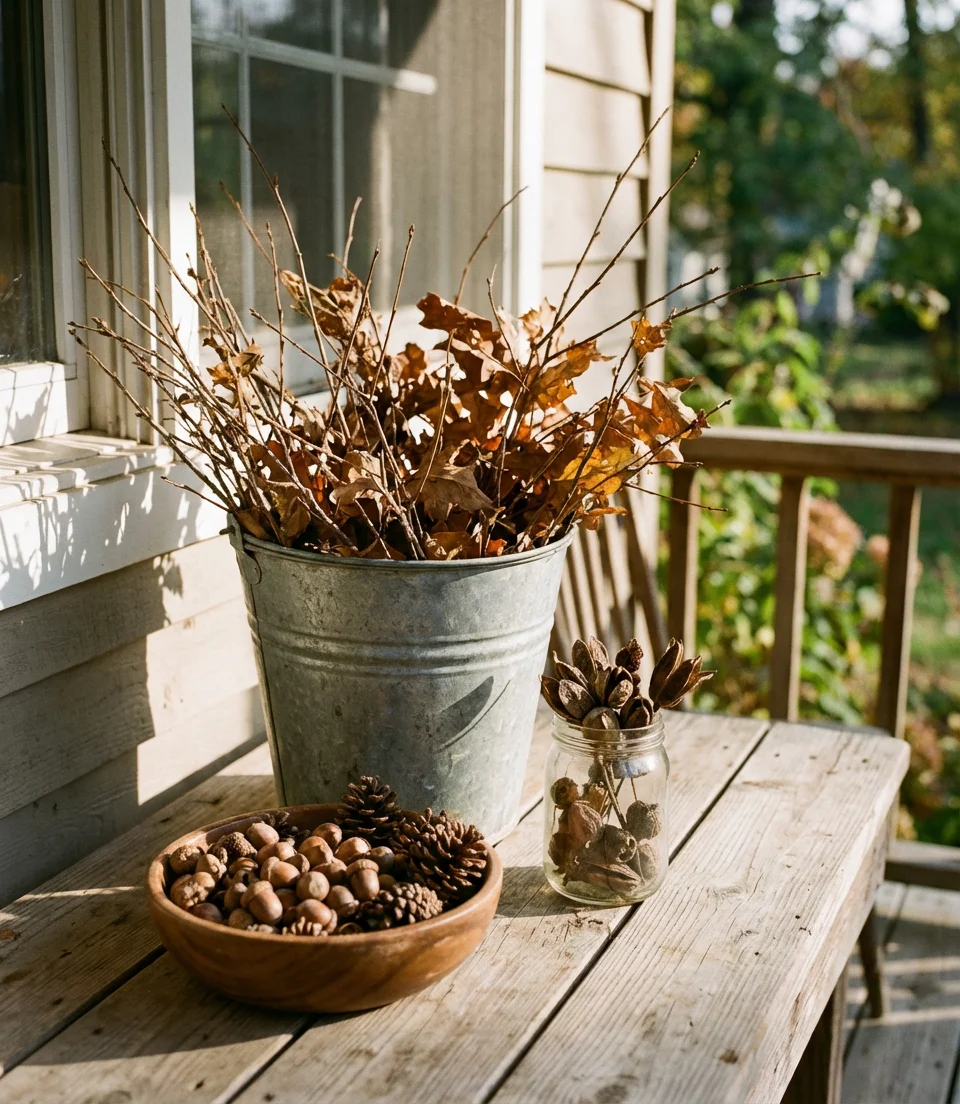
Create an authentically natural fall display using branches, pinecones, acorns, and seed pods collected from your property or local parks. Arrange them in galvanized buckets, wooden bowls, or simple glass vessels for a look that costs almost nothing but feels rich with texture and seasonal connection. This hyperlocal approach means your porch will reflect the specific ecosystem around your home, making it genuinely unique rather than generic. It’s also a wonderful weekend activity that gets you outdoors during the most beautiful time of year.
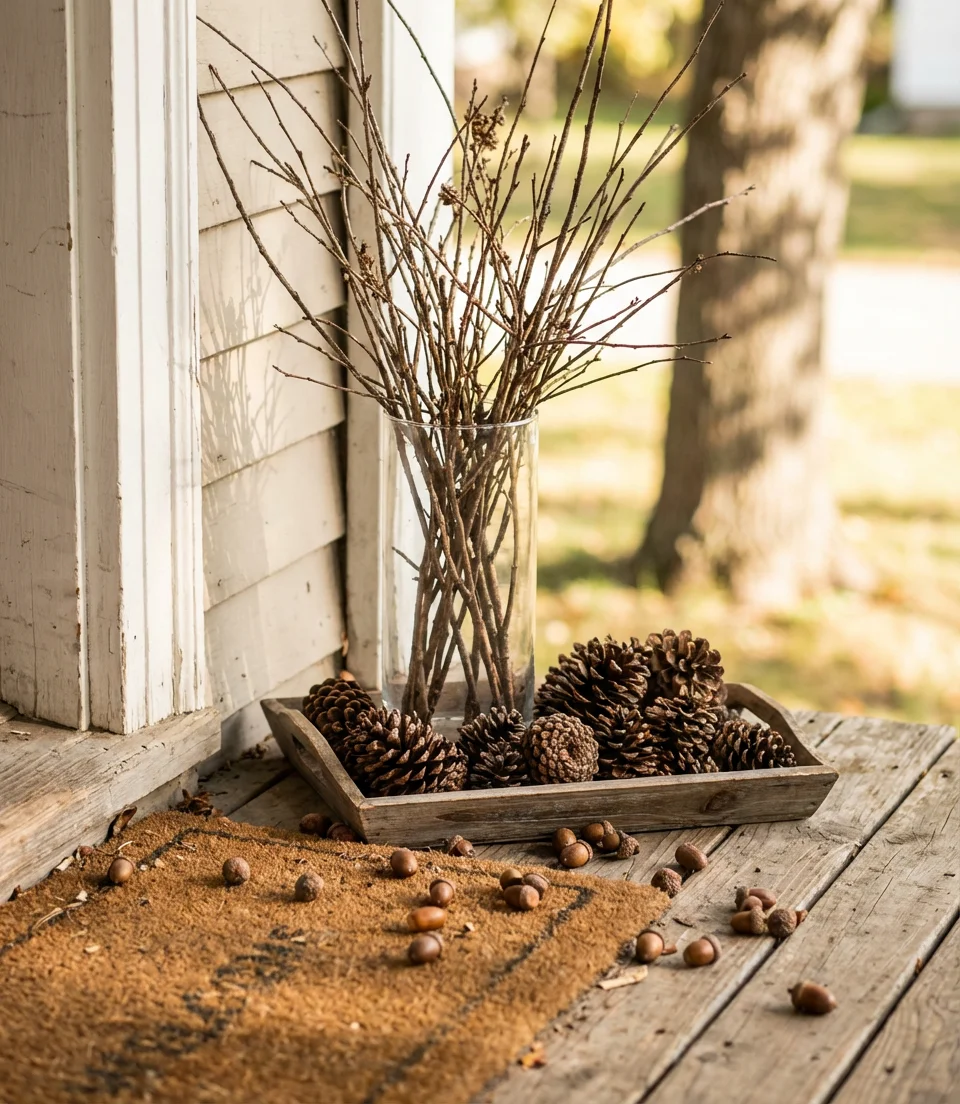
Using natural materials is perhaps the most budget-friendly approach to seasonal decorating, costing literally nothing if you’re willing to take a walk with a basket. Plus, natural materials break down gracefully—no guilt about tossing artificial decorations when the season ends; just compost them and start fresh next year.
8. Christmas Preview with Evergreen Anchors
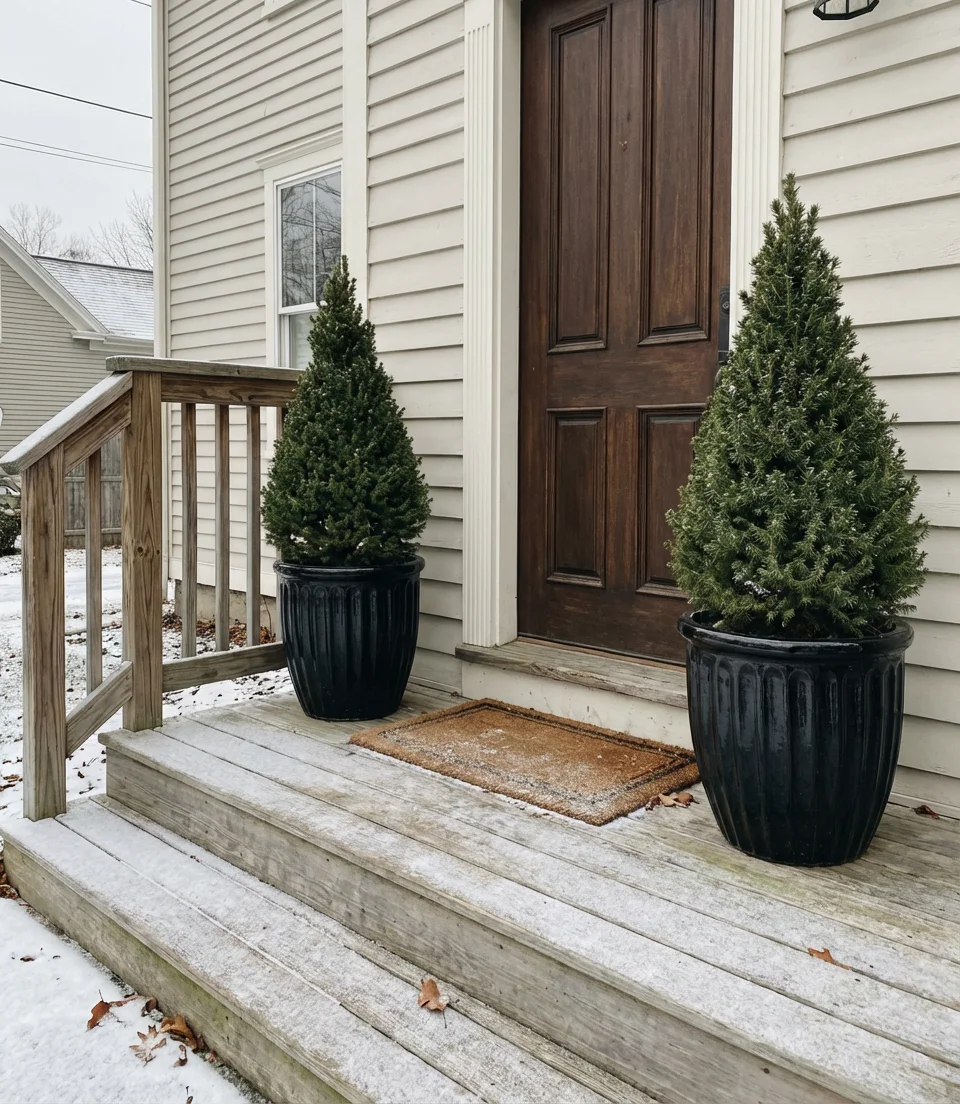
As you plan for the year ahead, consider anchoring your porch with evergreen elements that transition smoothly from fall through Christmas. Potted dwarf conifers, boxwood topiaries, or cypress trees in substantial planters provide year-round structure that you can dress up seasonally. Come November, tuck in some pinecones and branches; by December, add white lights and simple ribbon. This strategy gives you a foundation that doesn’t require complete teardown and rebuild every few weeks.
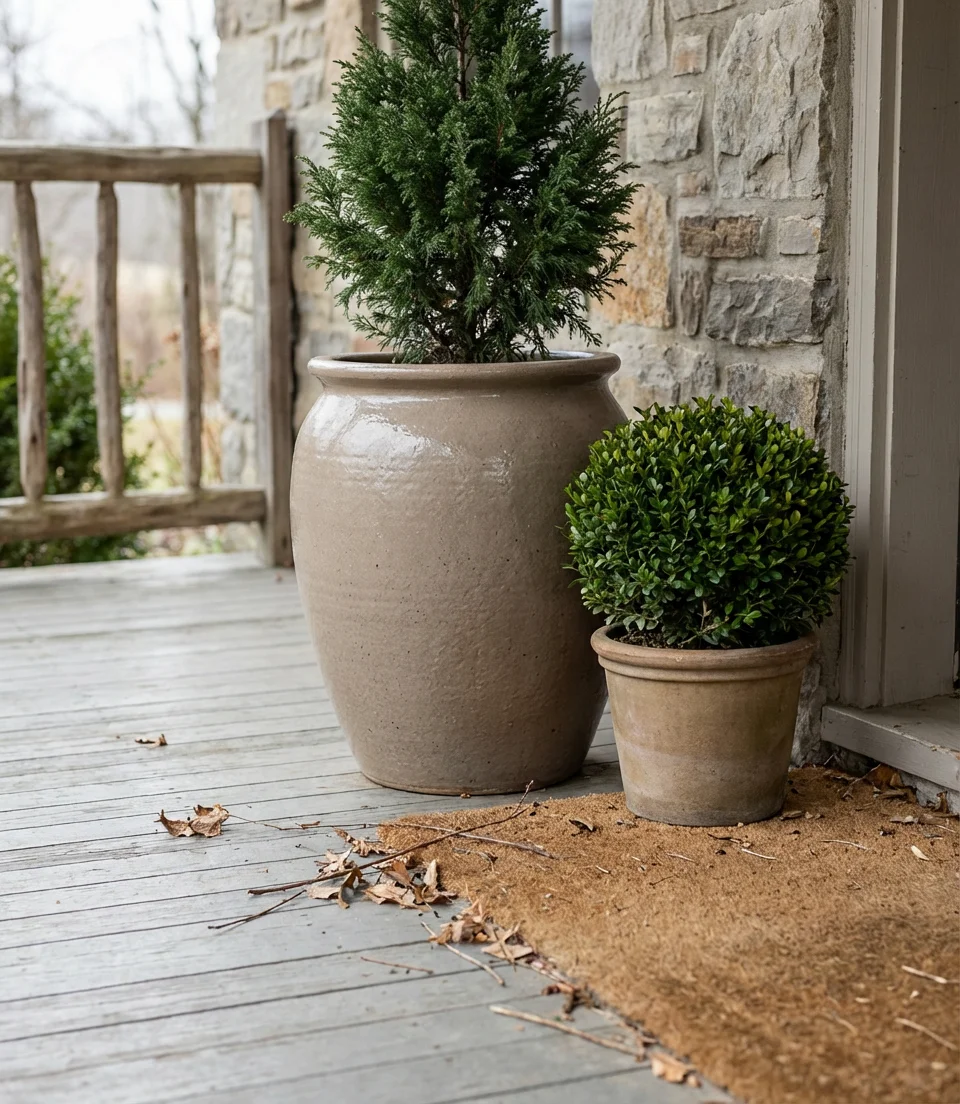
In northern climates where porches face harsh winter conditions, evergreens also provide visual interest when most other plants have gone dormant. They signal that the home is cared for even during months when outdoor decorating feels like a chore rather than a pleasure.
9. Large Porch Zones for Multiple Functions
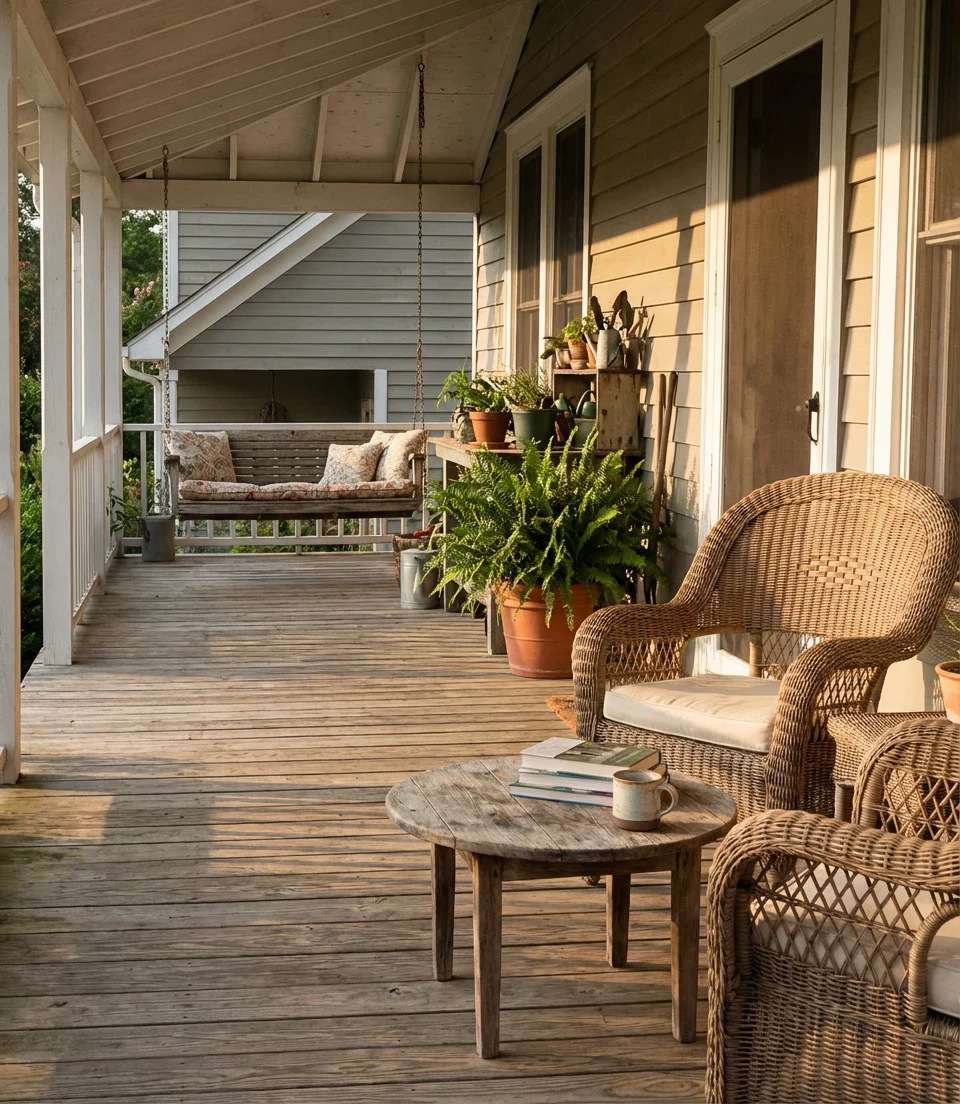
If you’re blessed with a large porch, resist the urge to push all furniture to the perimeter. Instead, create distinct zones—a seating area with chairs and a side table, a separate reading nook with a swing or daybed, and perhaps a small potting station or bar cart. This approach makes a sprawling porch feel intentional and well-designed rather than empty or awkwardly furnished. It also allows different family members to use the space simultaneously without feeling like they’re on top of each other.
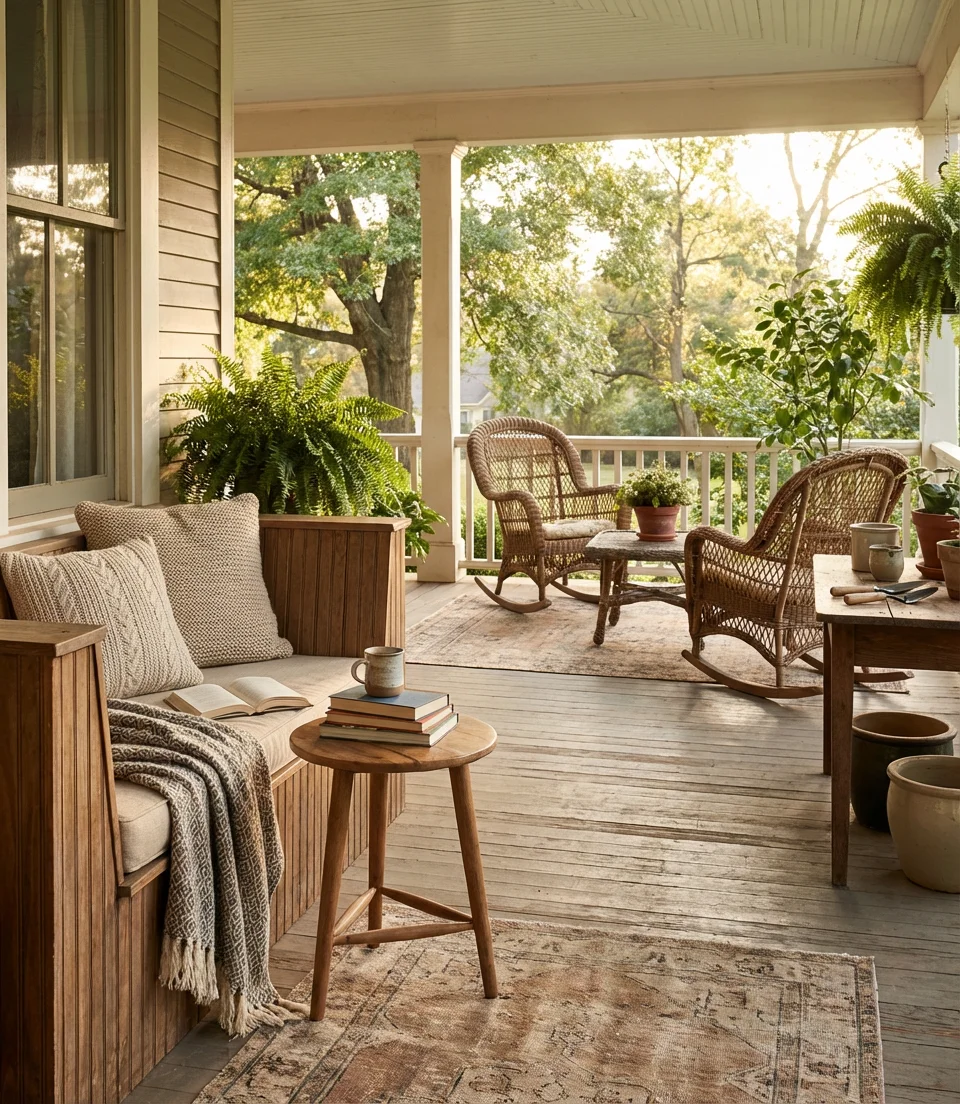
Real homeowners with generous porch space often report that dividing it into zones actually makes them use the area more frequently. When there’s a designated spot for morning coffee and another for evening cocktails, the porch becomes a true extension of the home’s living space rather than just a pass-through.
10. Halloween Transition That’s Sophisticated, Not Spooky
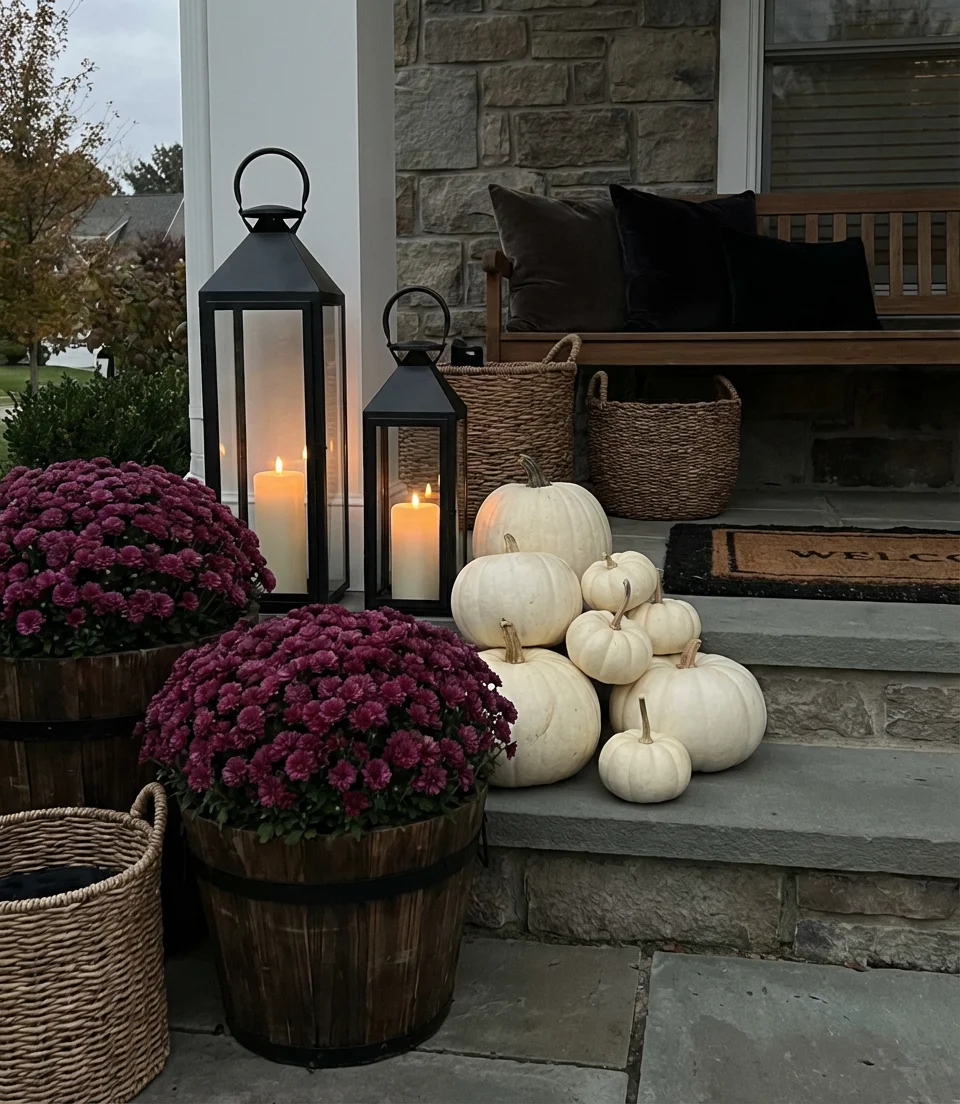
Approach Halloween decorating with a sophisticated palette of black, white, and deep purple rather than neon orange and plastic skeletons. Stack white heirloom pumpkins of varying sizes, add black lanterns with pillar candles, incorporate deep burgundy mums, and maybe add a single elegant wreath made from black feathers or dark berries. This creates a moody, autumnal atmosphere that adults appreciate while still signaling the season. It’s especially effective on homes with traditional or modern architecture where campy decorations would clash.
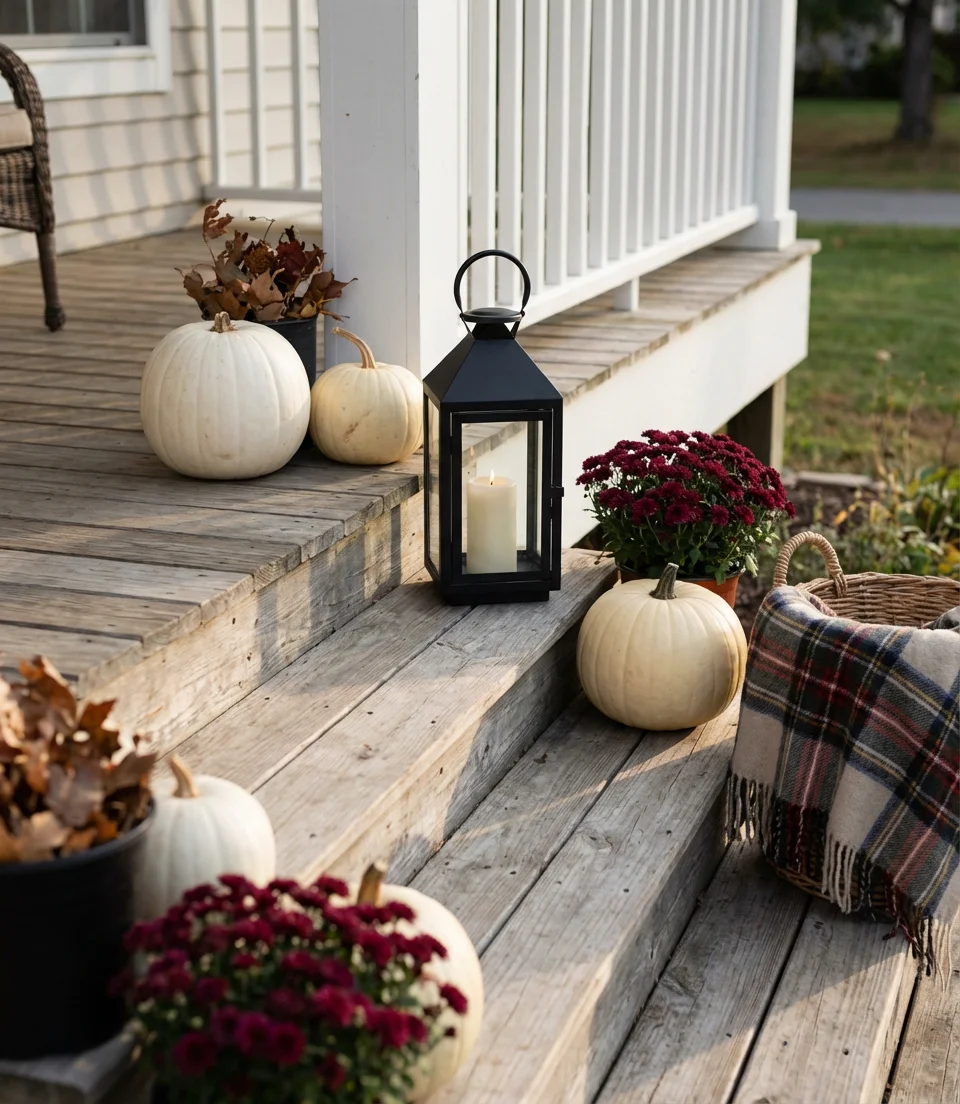
One insider tip: this elevated approach to Halloween décor transitions seamlessly into Thanksgiving and early winter decorating. You’re essentially just swapping out the pumpkins for pinecones and evergreen branches while keeping the same vessels and color story intact.
11. DIY Planters Made from Unexpected Materials
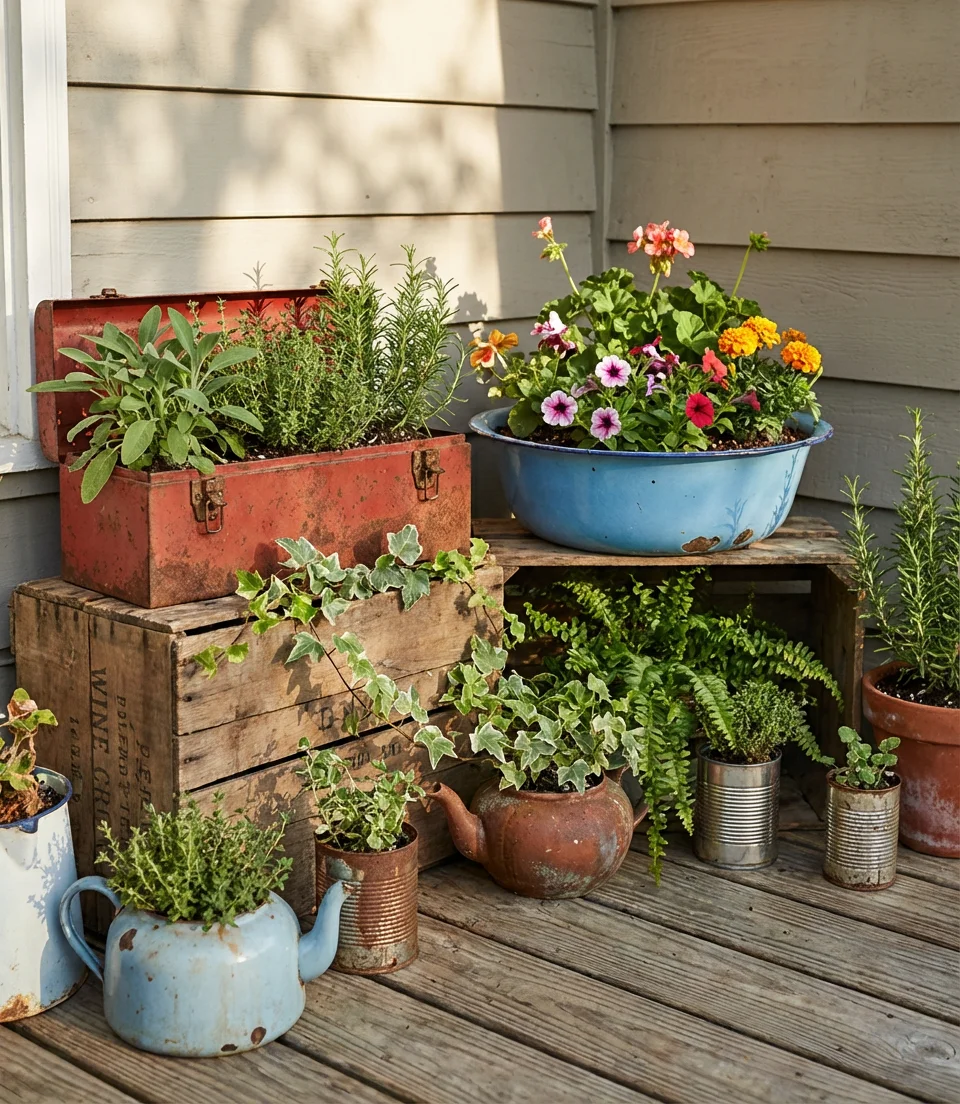
Get creative with DIY planters fashioned from vintage toolboxes, enamelware basins, wooden wine crates, or even old boots and watering cans. This approach is perfect for those working on a budget who want personality without the price tag of designer containers. Drill drainage holes where needed, add a layer of gravel, and plant with seasonal blooms or herbs. The mismatched, collected-over-time aesthetic feels authentically personal and gives your porch a story that uniform store-bought planters simply can’t match.
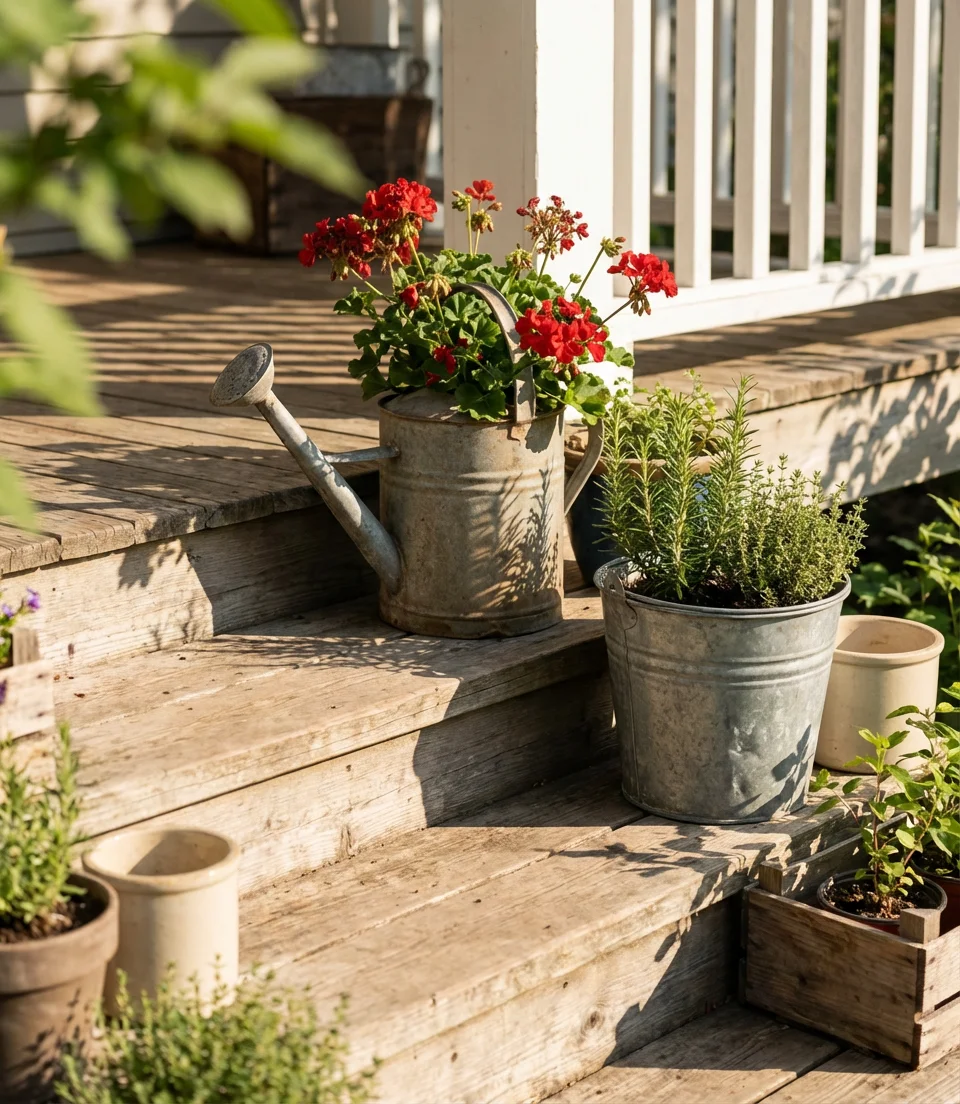
A micro moment worth sharing: a friend converted her grandmother’s old bread tin into a succulent planter that now sits on her porch rail. Every time she waters it, she thinks of Sunday dinners—that’s the kind of emotional resonance you can’t buy at a garden center, and it’s what makes DIY approaches so rewarding beyond the cost savings.
12. Thanksgiving Harvest Display with Real Produce
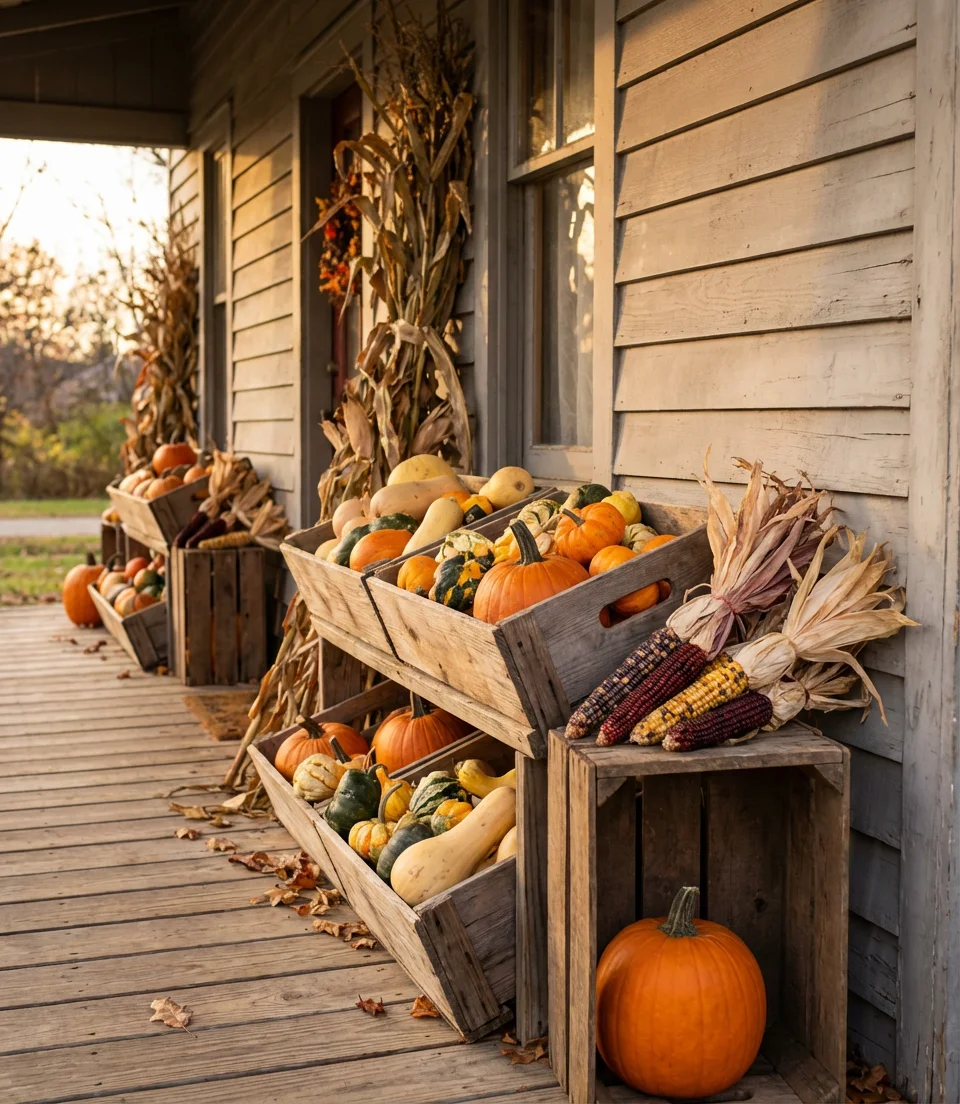
Build a Thanksgiving porch display using actual vegetables and fruits from your farmers market run—gourds, winter squash, Indian corn, Brussels sprouts still on the stalk, and bundles of wheat or dried corn stalks. The authenticity of real produce creates visual richness that fake alternatives can never achieve, and the whole arrangement can be composted or donated to a farm after the holiday. Pile everything in wooden crates or directly on the porch steps for a bountiful, just-harvested feeling that celebrates the agricultural roots of the holiday.
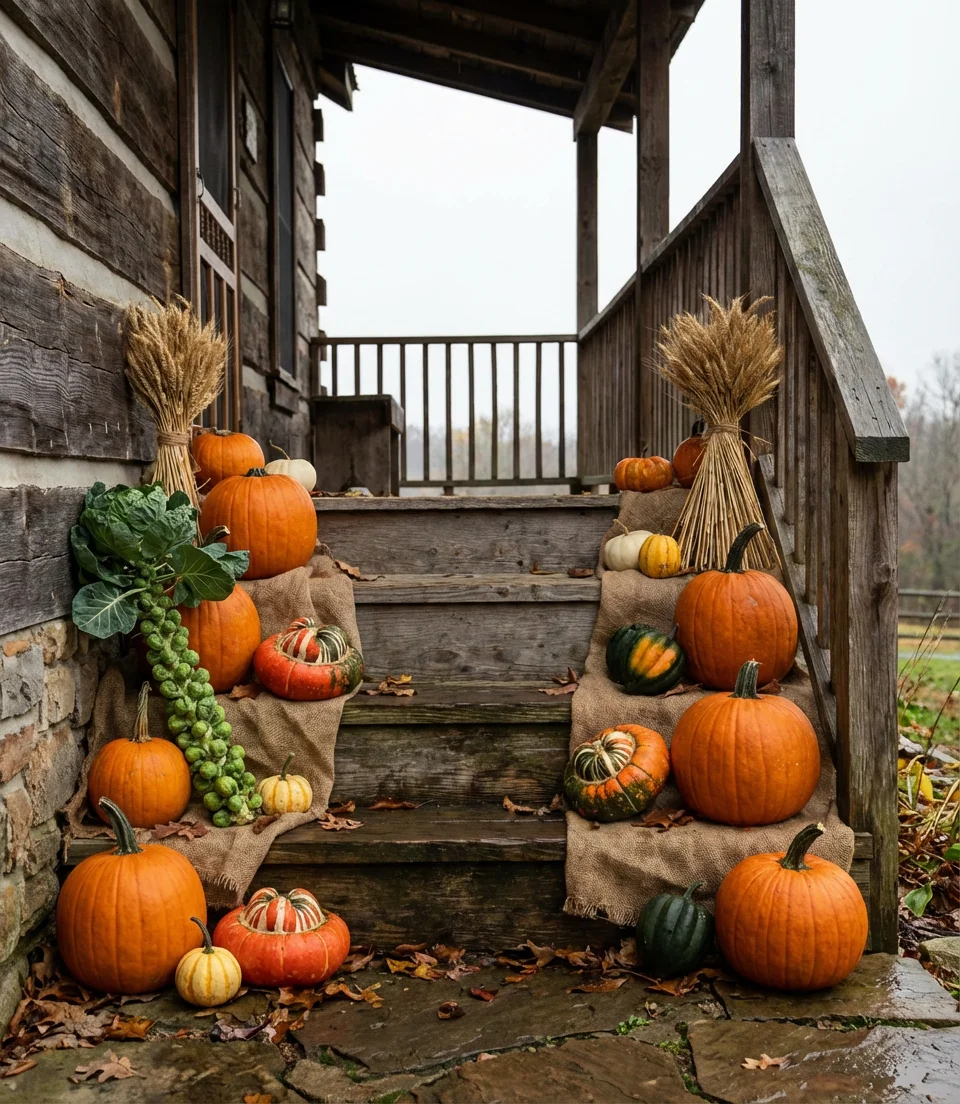
This display works best in regions with cool November temperatures where produce won’t rot quickly. In warmer climates, consider bringing the most perishable items inside at night or choosing harder squash varieties that tolerate heat better. The display typically looks fresh for the two weeks leading up to Thanksgiving if you start with quality produce.
13. Coastal Fall Palette with Blues and Neutrals
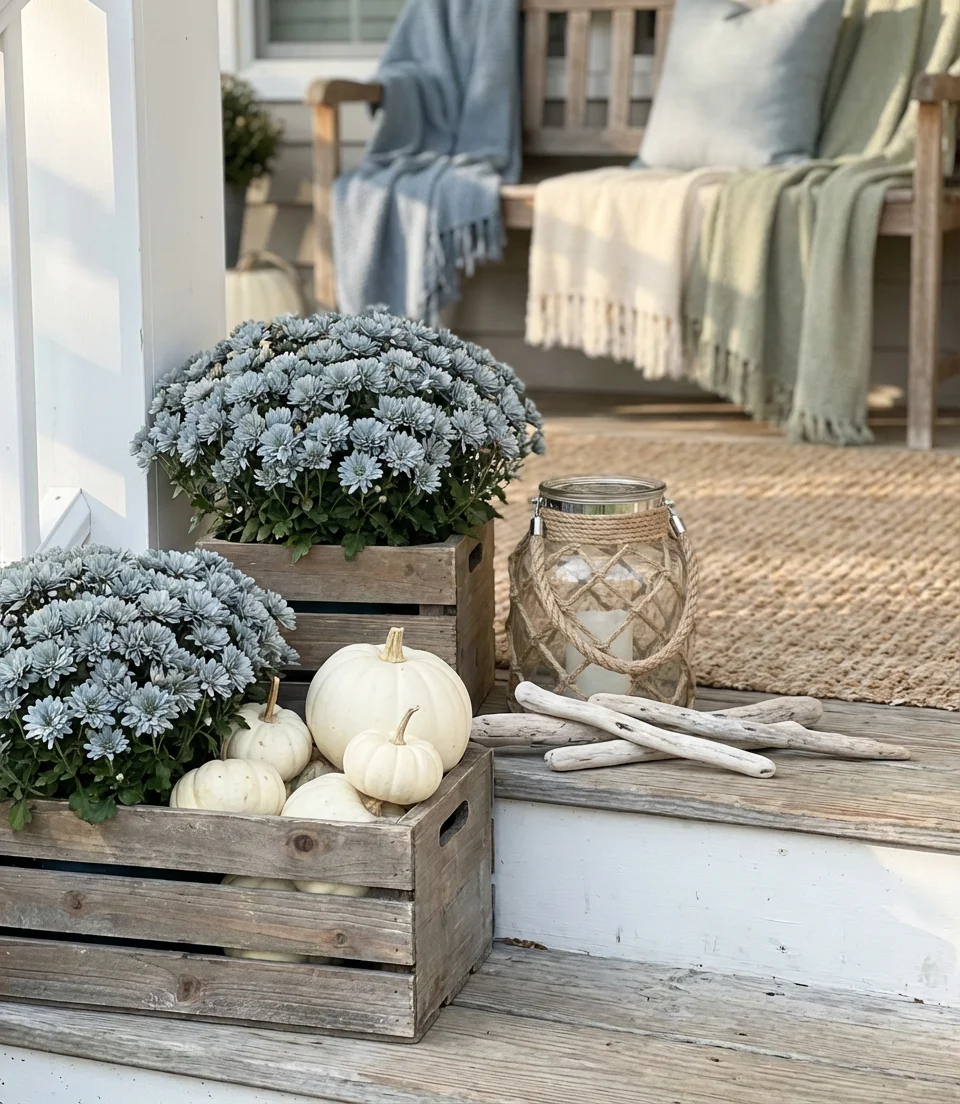
Who says fall has to be orange? Embrace a coastal fall aesthetic by working with soft blues, sandy neutrals, bleached wood tones, and touches of sage green. Think white pumpkins, blue-gray mums, driftwood arrangements, and rope-wrapped lanterns. This approach is perfect for beach homes or anyone who prefers a cooler, more serene color palette. It proves that you can honor the season without abandoning your home’s established style, creating a fall look that feels cohesive rather than costume-like.
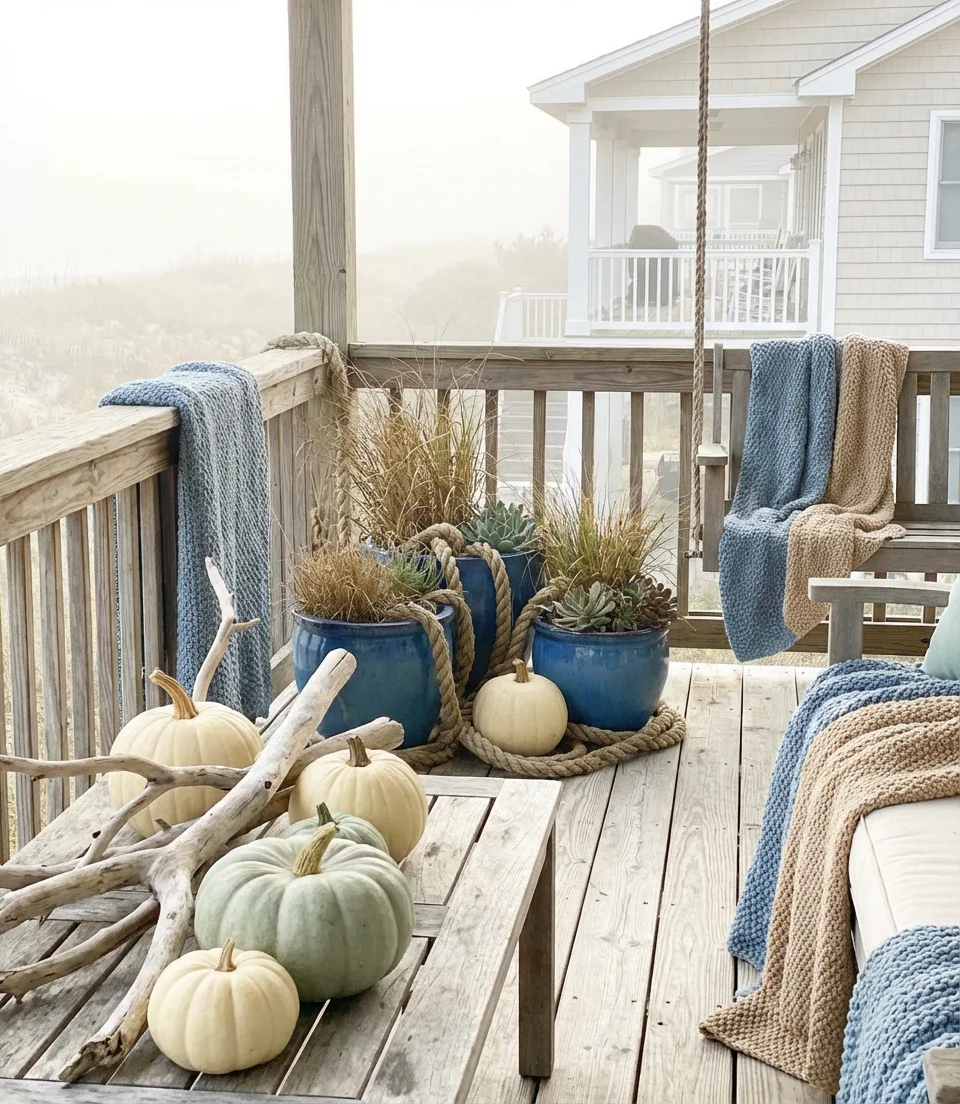
This refined palette particularly resonates in coastal communities from New England down through the Carolinas, where homeowners want to acknowledge fall without disrupting the breezy, light-filled aesthetic that defines their year-round style. It’s sophisticated, unexpected, and surprisingly easy to source once you start looking beyond the traditional autumn color wheel.
14. Elegant Fall Symmetry for Classic Homes
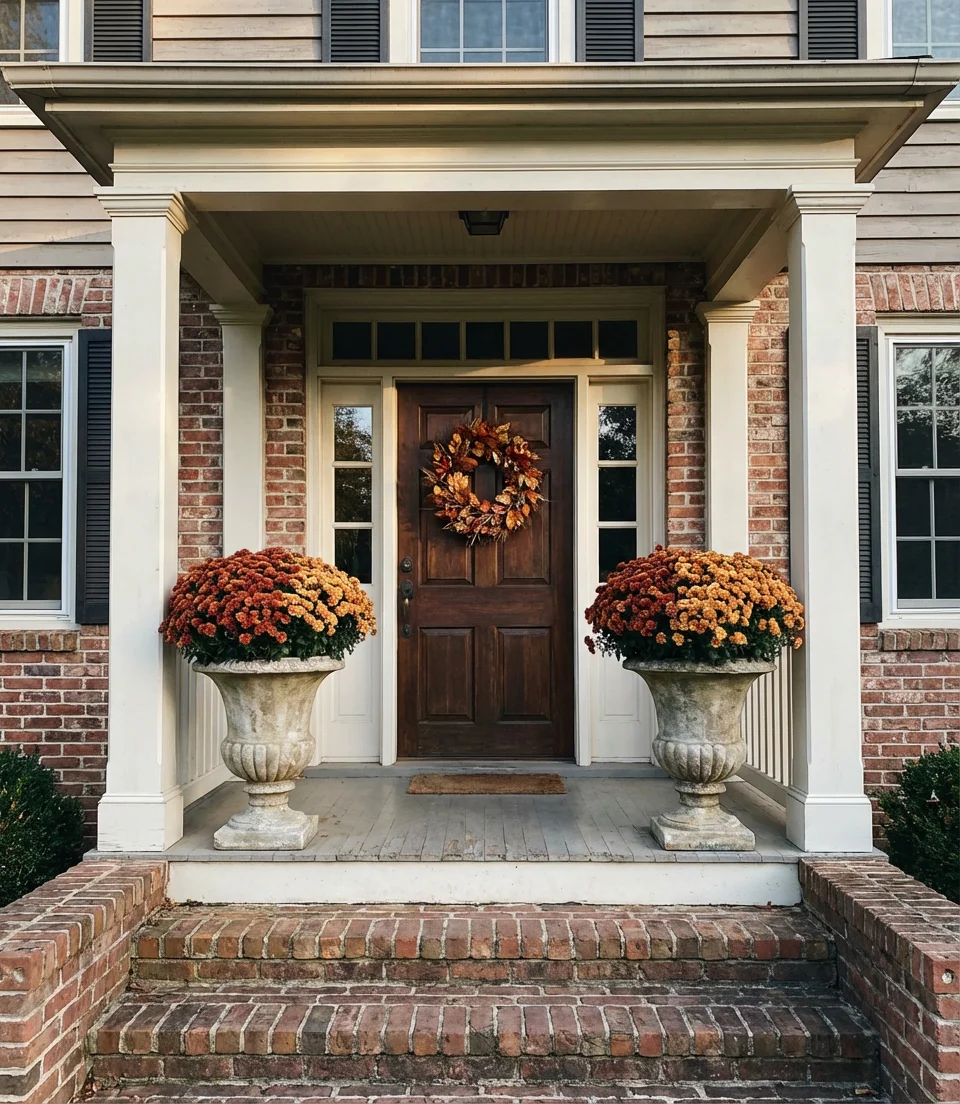
Honor the architecture of a traditional home with an elegant fall arrangement built on perfect symmetry. Flank the door with matching urns filled with seasonal grasses or mums, hang a centered wreath, and perhaps add identical lanterns on either side of the steps. This formal approach suits Colonial, Federal, and Georgian-style homes where balance and proportion are key architectural principles. Symmetrical design, with its restraint and order, embodies a timeless elegance that is always in style.
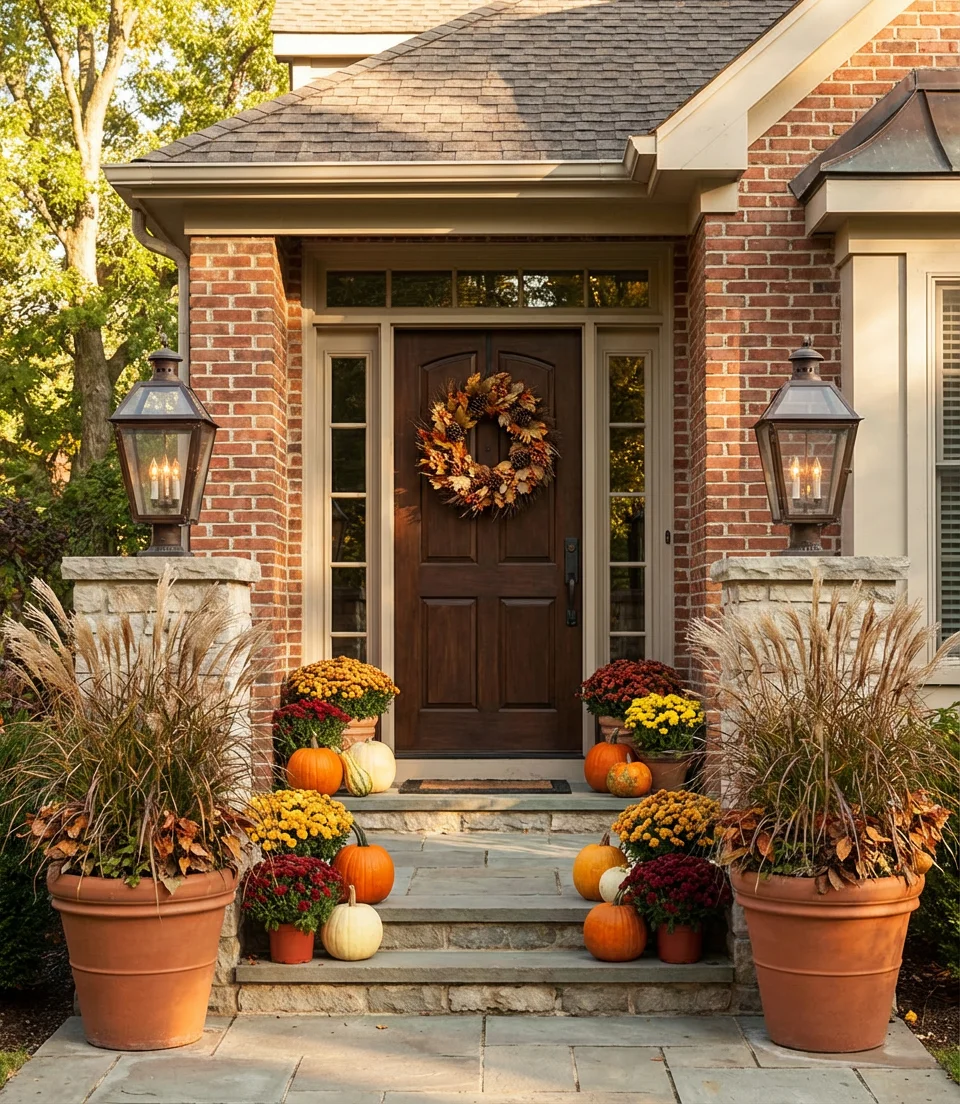
Interior designers often remind clients that formal symmetry only works when you commit fully—one slightly different planter or mismatched urn immediately draws the eye and disrupts the whole effect. If you’re going this route, invest in true pairs and measure placements carefully for that polished, professional look.
15. Summer Rustic Transition Pieces
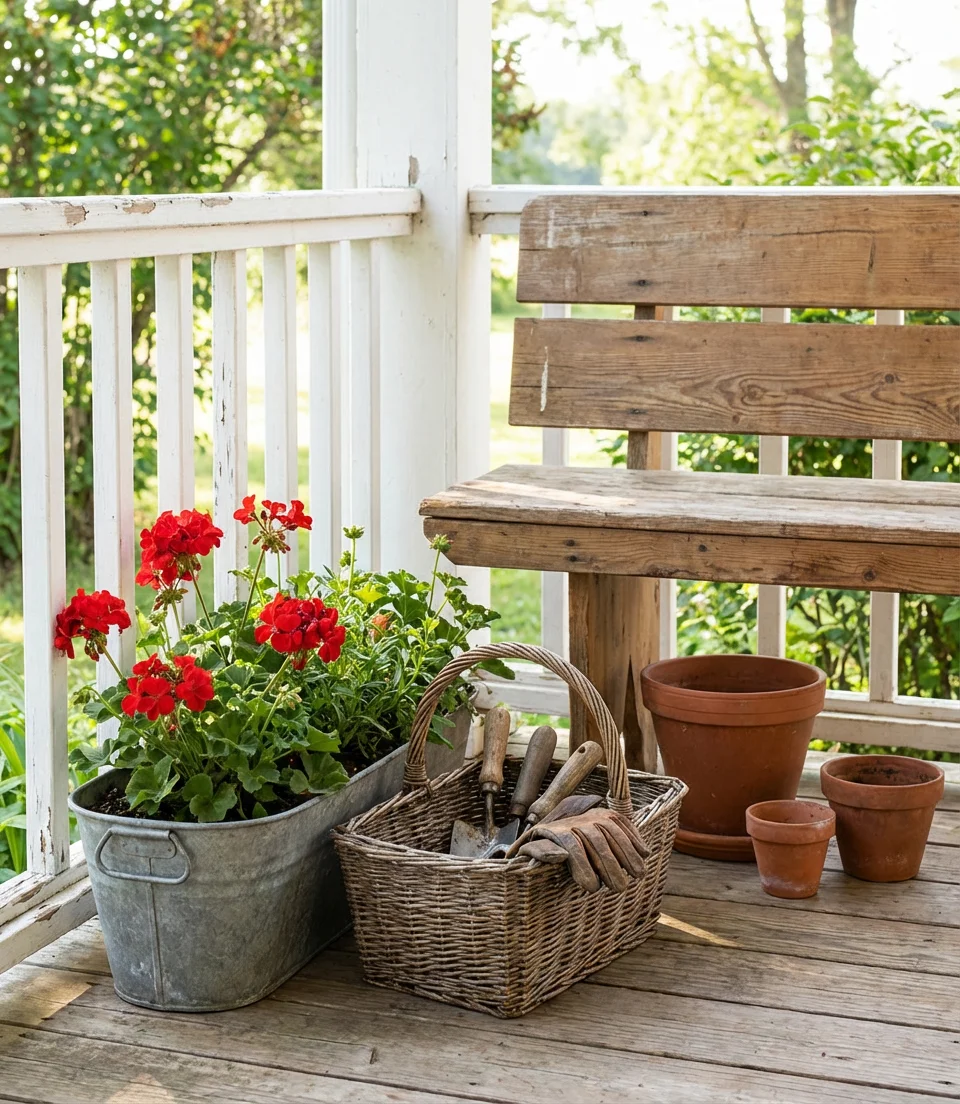
Create a summer rustic foundation that easily transitions into fall by choosing natural materials that work across seasons. You can complement summer geraniums or autumn mums with a wooden bench, galvanized metal planters, woven baskets, and simple clay pots. This strategic approach means you’re not storing and swapping entire furniture sets with every seasonal shift—you’re simply changing out the plants and small accent pieces while the bones of your design remain constant.
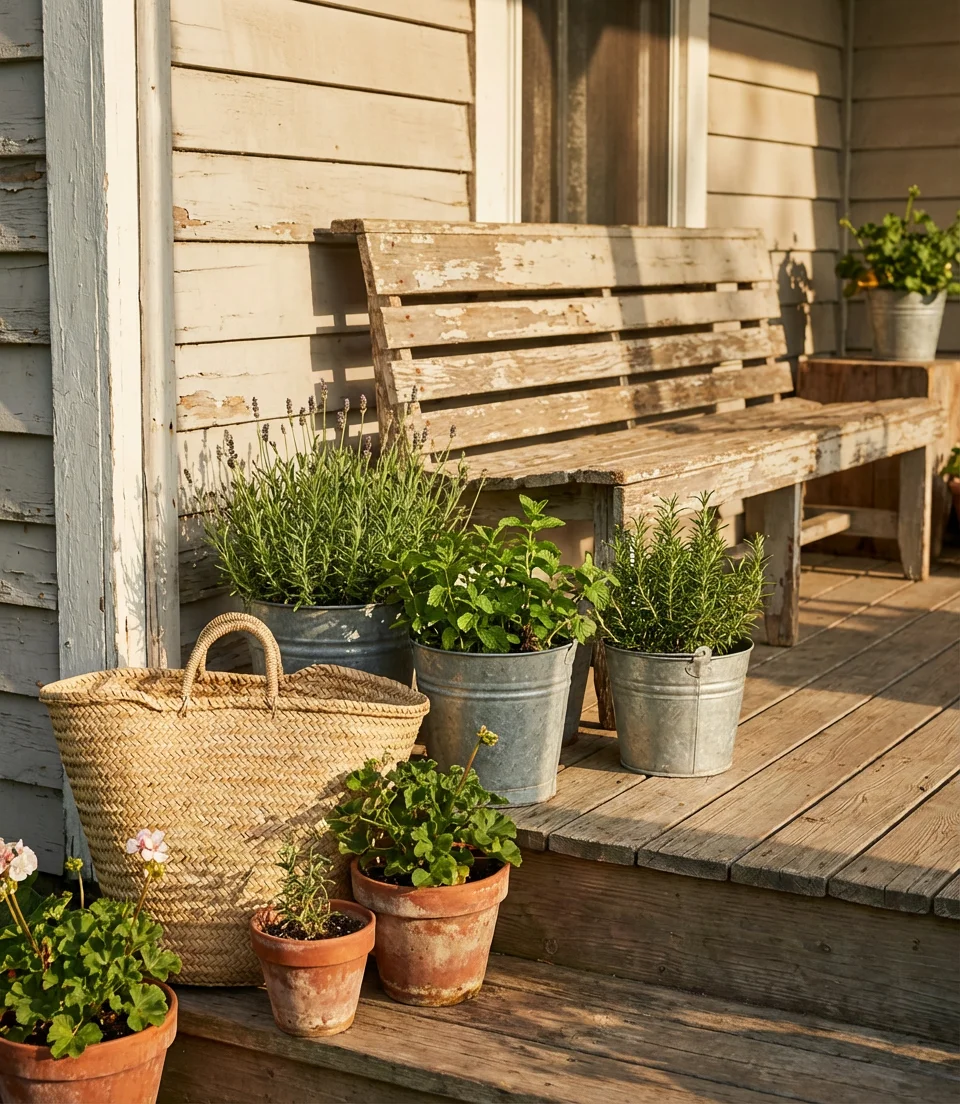
This works best for porches where you want a consistent aesthetic year-round rather than dramatic seasonal transformations. It’s also friendlier to your budget and schedule—you can swap out plants in fifteen minutes rather than spending hours moving furniture and accessories in and out of storage.
16. Long Narrow Porch with Linear Planting Beds
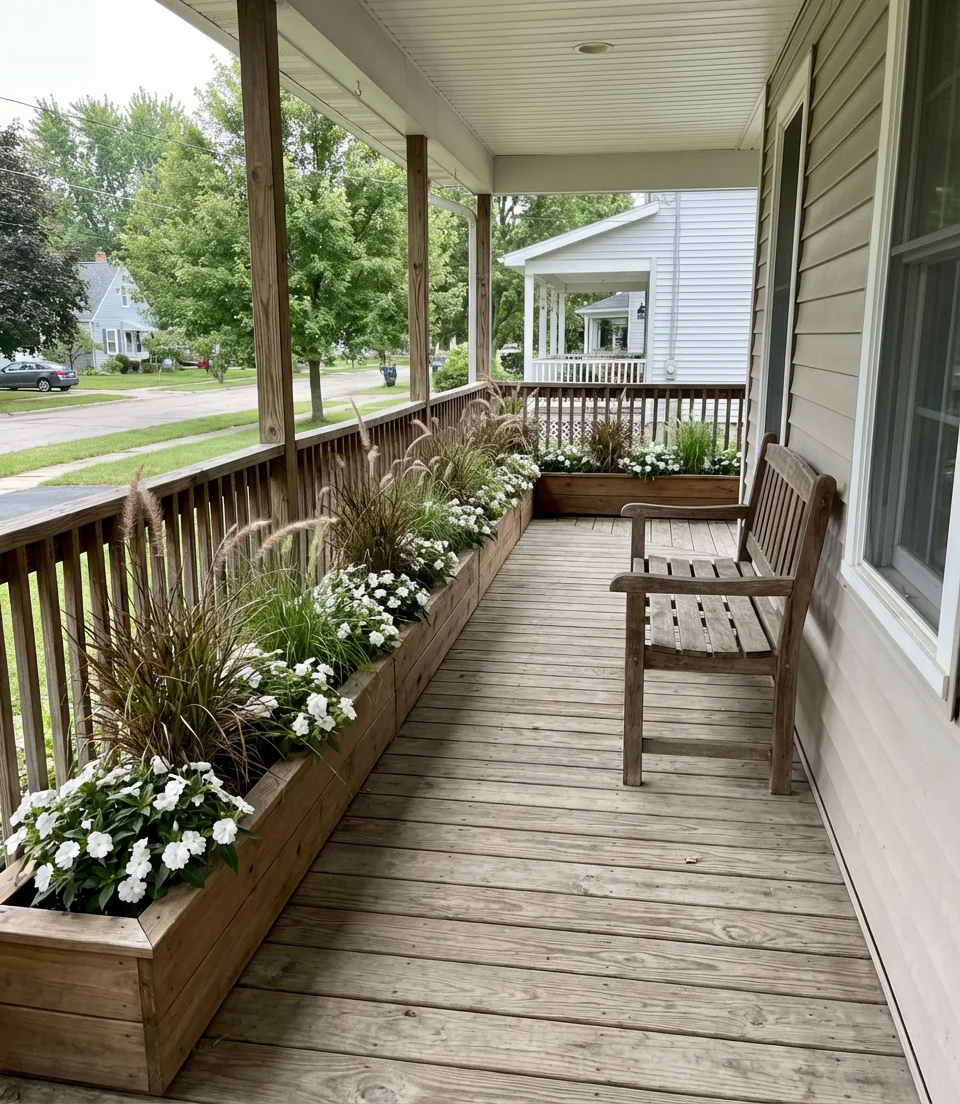
For a long, narrow porch, work with the proportions rather than fighting them by installing long, low planting beds or window boxes along the length of the space. Fill them with a repeating pattern of plants—perhaps alternating ornamental grasses with flowering perennials—to create rhythm and visual flow that emphasizes the porch’s length as an asset. This approach, when combined with minimal furniture that doesn’t obstruct the sightline, effectively draws the eye along the entire space instead of making it feel like a cramped hallway.
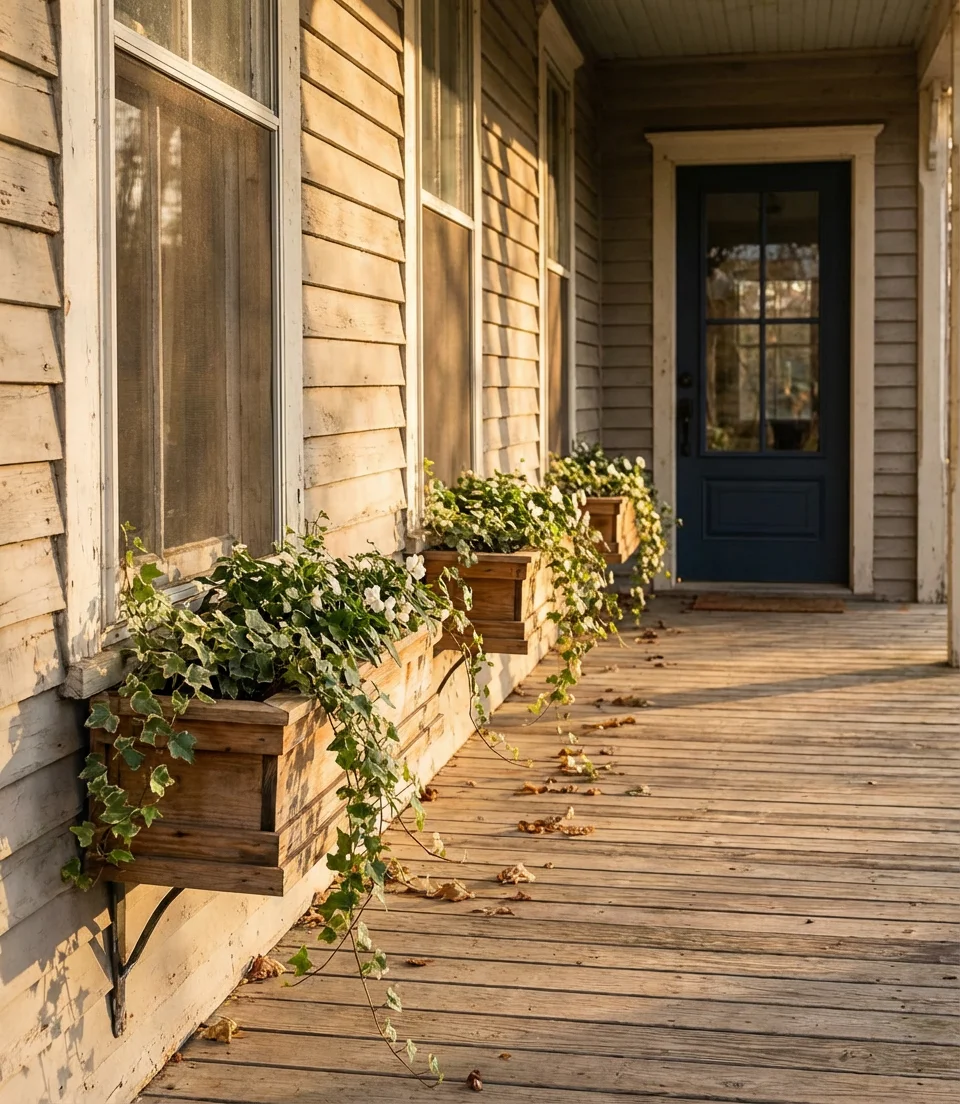
Many narrow porch owners initially try to cram in too much furniture, which only emphasizes the tight quarters. Instead, accept the shape and design for movement—maybe just a pair of chairs at one end—and let the planted areas provide the visual interest along the journey to the door.
17. 4th of July Patriotic Touches That Stay Tasteful
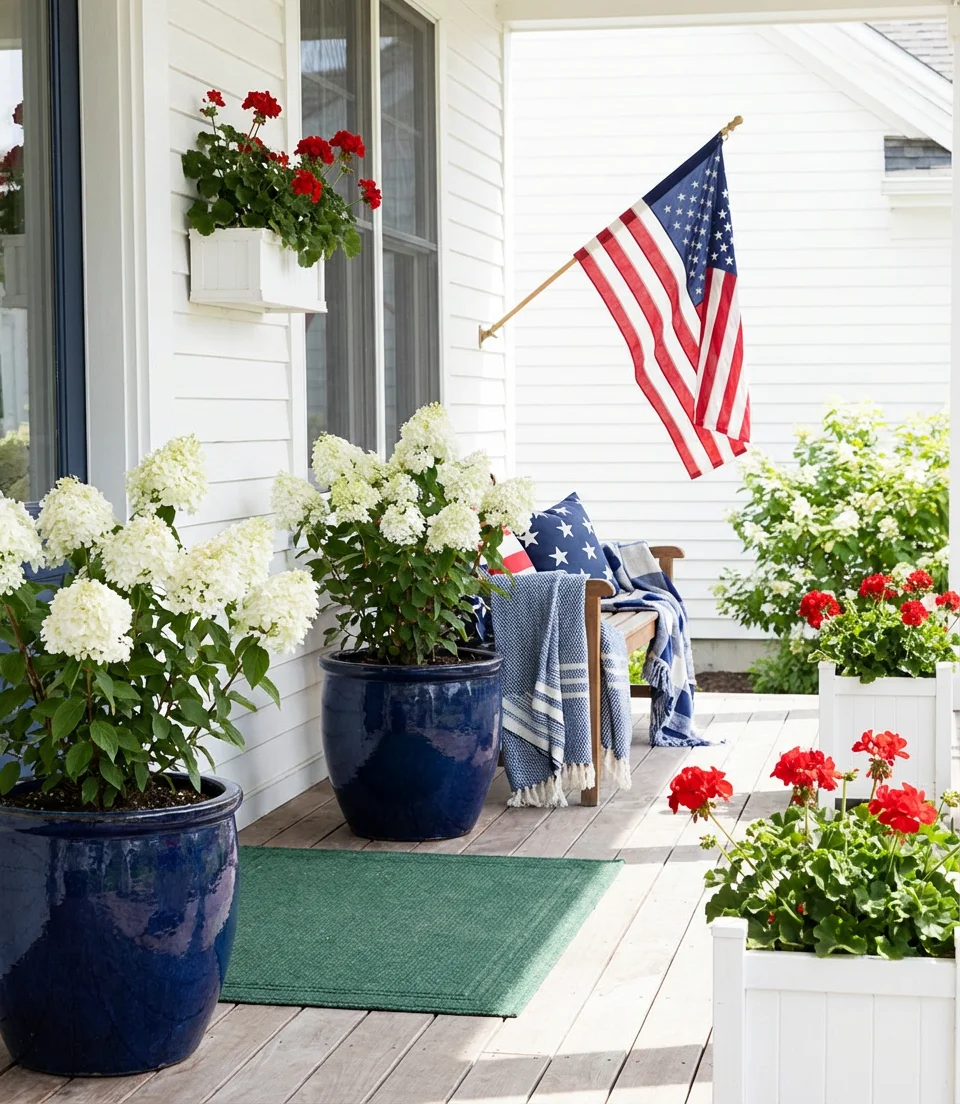
Celebrate the 4th of July with subtle patriotic nods rather than over-the-top flag explosions. A simple wreath with navy ribbon, white hydrangeas in blue pots, red geraniums paired with white petunias, or a single tasteful flag in a proper holder conveys the spirit without looking like a party supply store. This restrained approach respects both the holiday and your home’s aesthetic, and it’s simple to dismantle when July 5th rolls around without feeling like you’re tearing down a major installation.
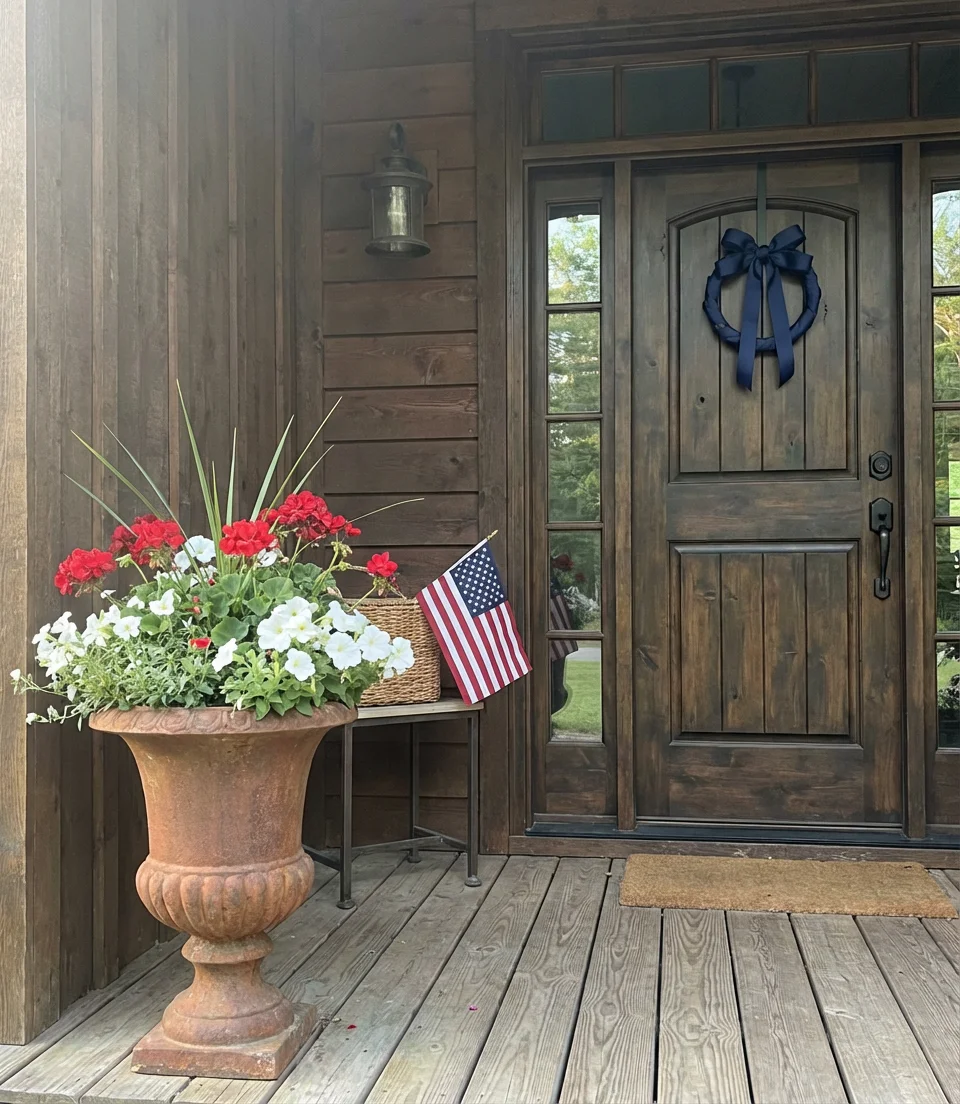
The key is using the colors of the flag through natural elements—flowers, ribbons, painted pots—rather than literal flag imagery everywhere. This creates a cohesive, sophisticated look that neighbors will admire rather than a temporary eyesore you’ll be embarrassed about in photos later.
18. Farmhouse Winter Layers for Warmth
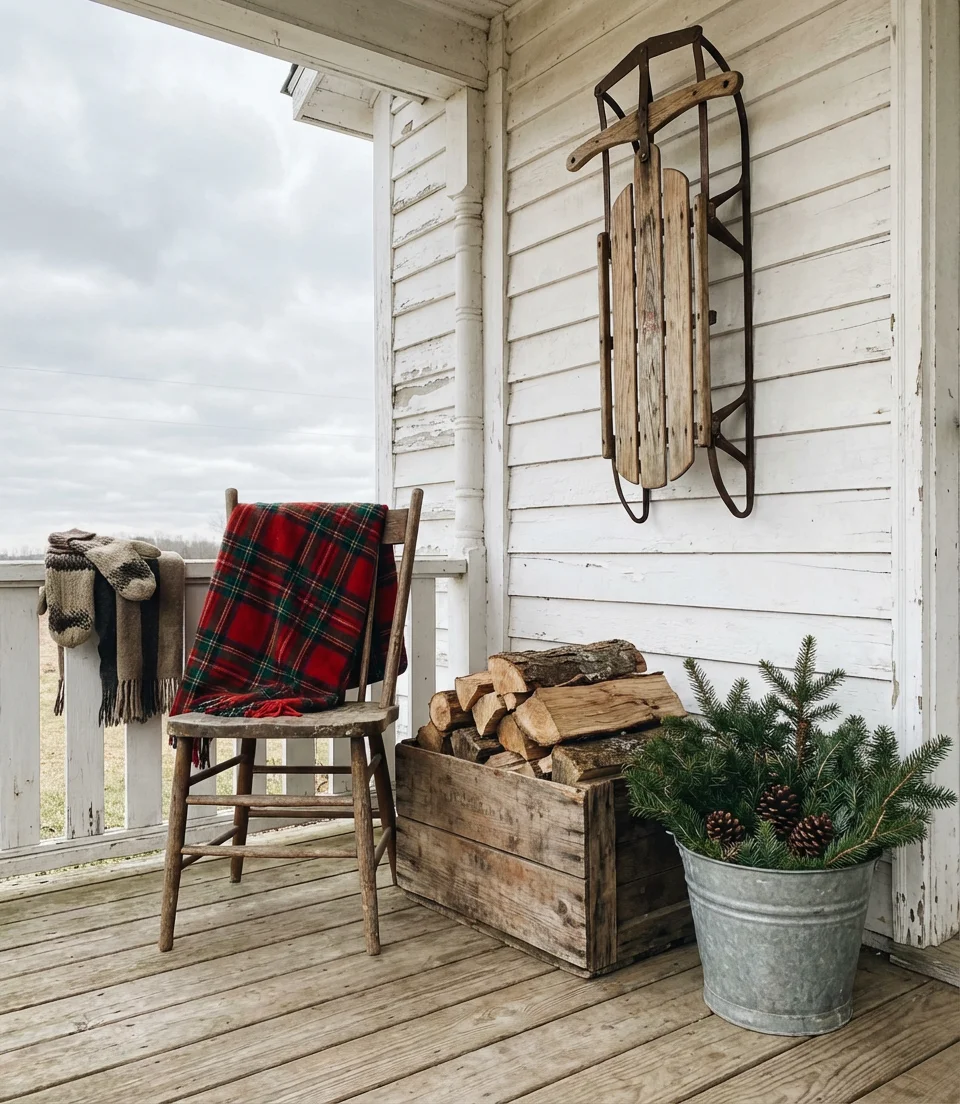
Prepare for farmhouse winter styling by layering textures that convey warmth even in cold weather. Stack firewood neatly in a vintage crate, drape plaid blankets over porch chairs, add a galvanized bucket with evergreen clippings, and position a vintage sled as wall art. These elements work together to create a cozy, lived-in feeling that says “welcoming country home” rather than “abandoned for the season.” The layered approach also provides visual interest when the garden has gone dormant and you’re working with a limited natural palette.
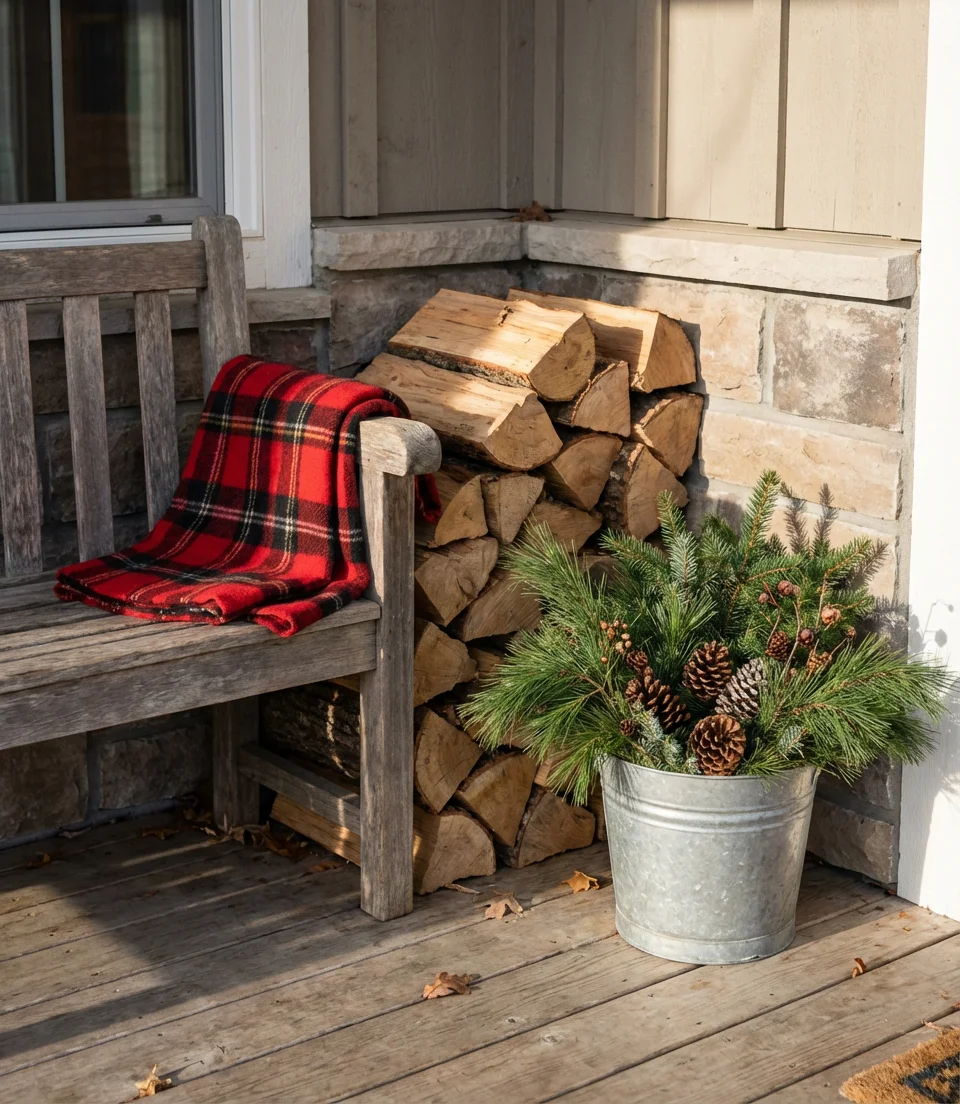
In colder climates from Montana to Maine, these winter porch layers serve a practical purpose beyond aesthetics—the firewood is actually being used, the blanket gets grabbed on chilly evenings, and the evergreens provide a bit of privacy screening. The decoration becomes functional, which is the hallmark of excellent farmhouse design.
19. Implement a Plant Strategy for Year-Round Structure
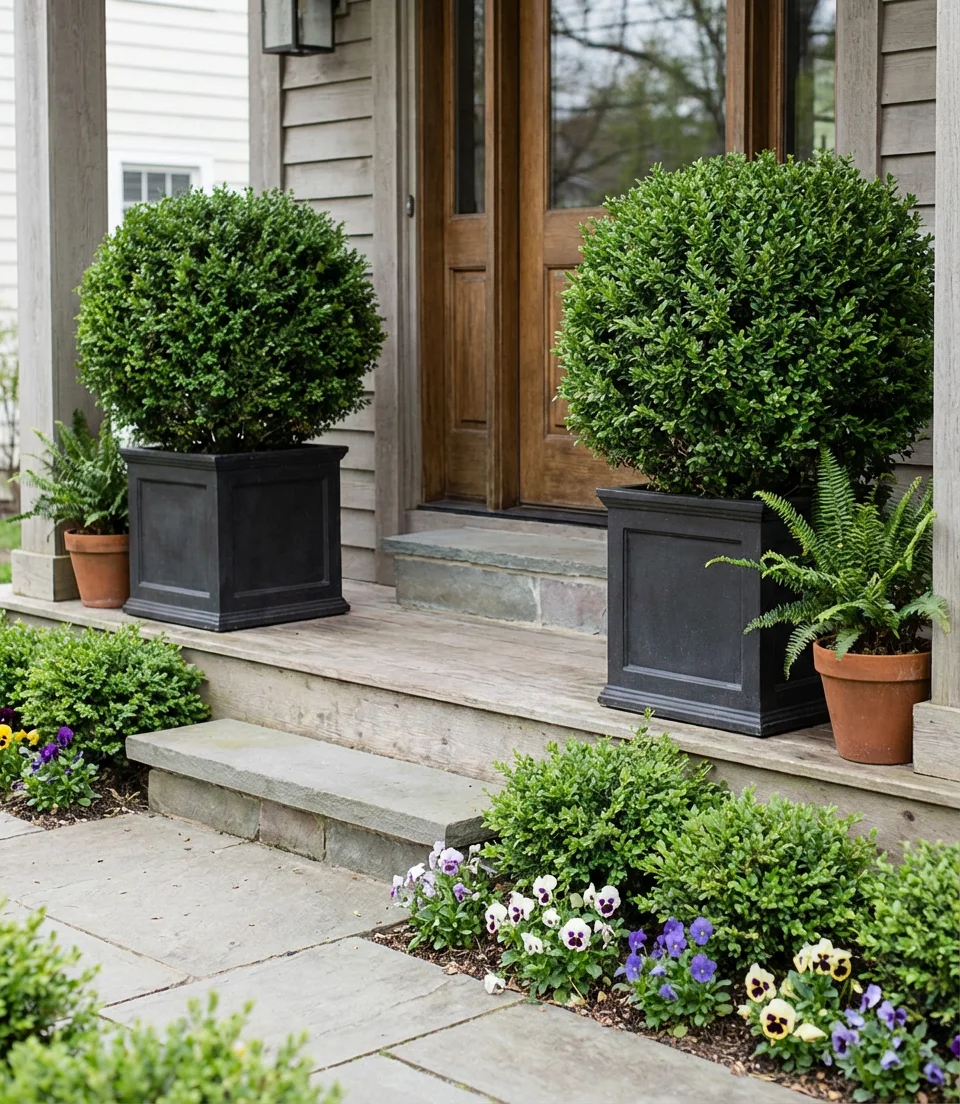
Build your porch design around living plants that provide structure through all four seasons. Boxwoods, dwarf Alberta spruce, hollies, and evergreen ferns give you a green foundation that looks good even in January while providing the backdrop for seasonal blooms you rotate in and out. This living architecture approach means your porch never looks bare or neglected, and it creates depth and dimension that artificial decorations can’t match. The investment in quality evergreen plants pays dividends for years as they mature and fill out.
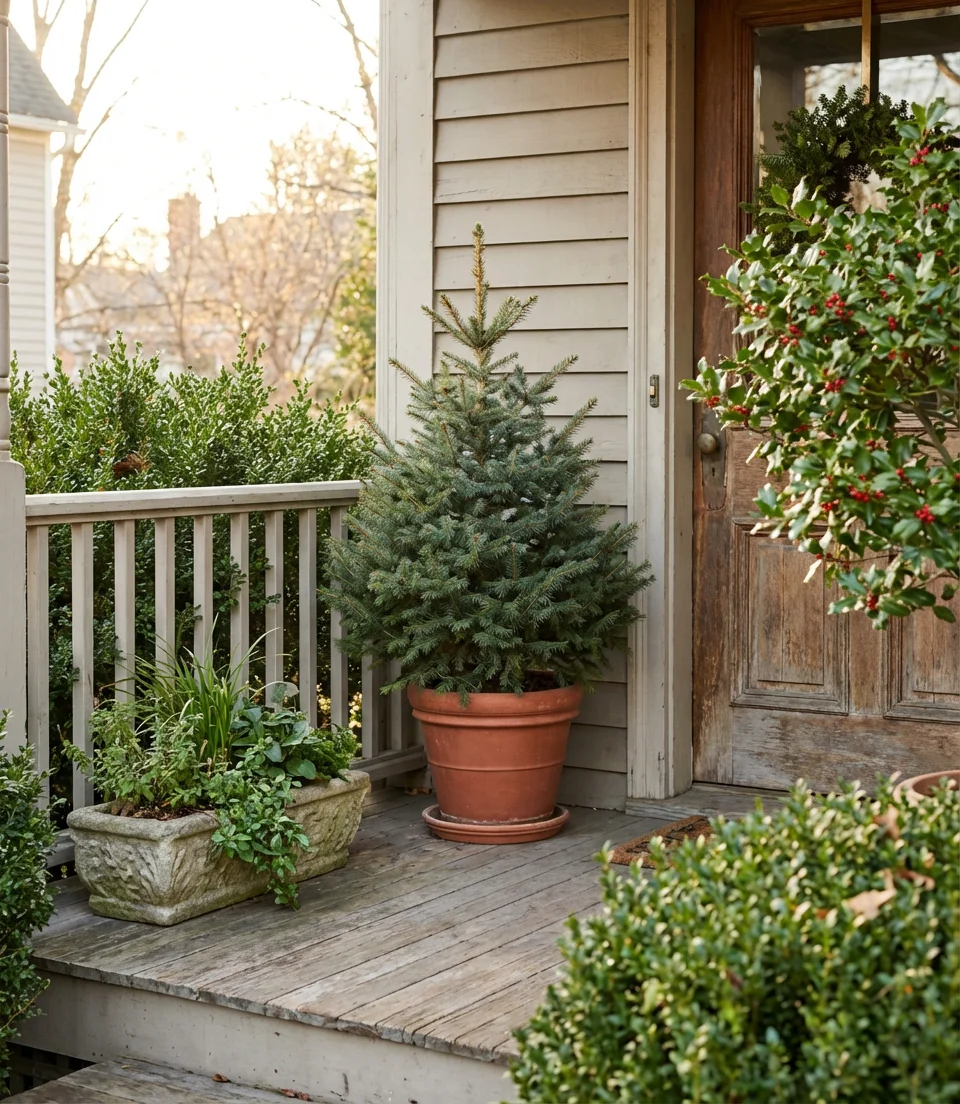
A common beginner mistake is filling every pot with annuals that die with the first frost, leaving the porch looking abandoned for half the year. Experienced gardeners know to invest in the bones first—the evergreen structure—then accent with seasonal color. This creates a porch that earns compliments in February as much as in June.
20. No Roof Solutions for Weather Protection
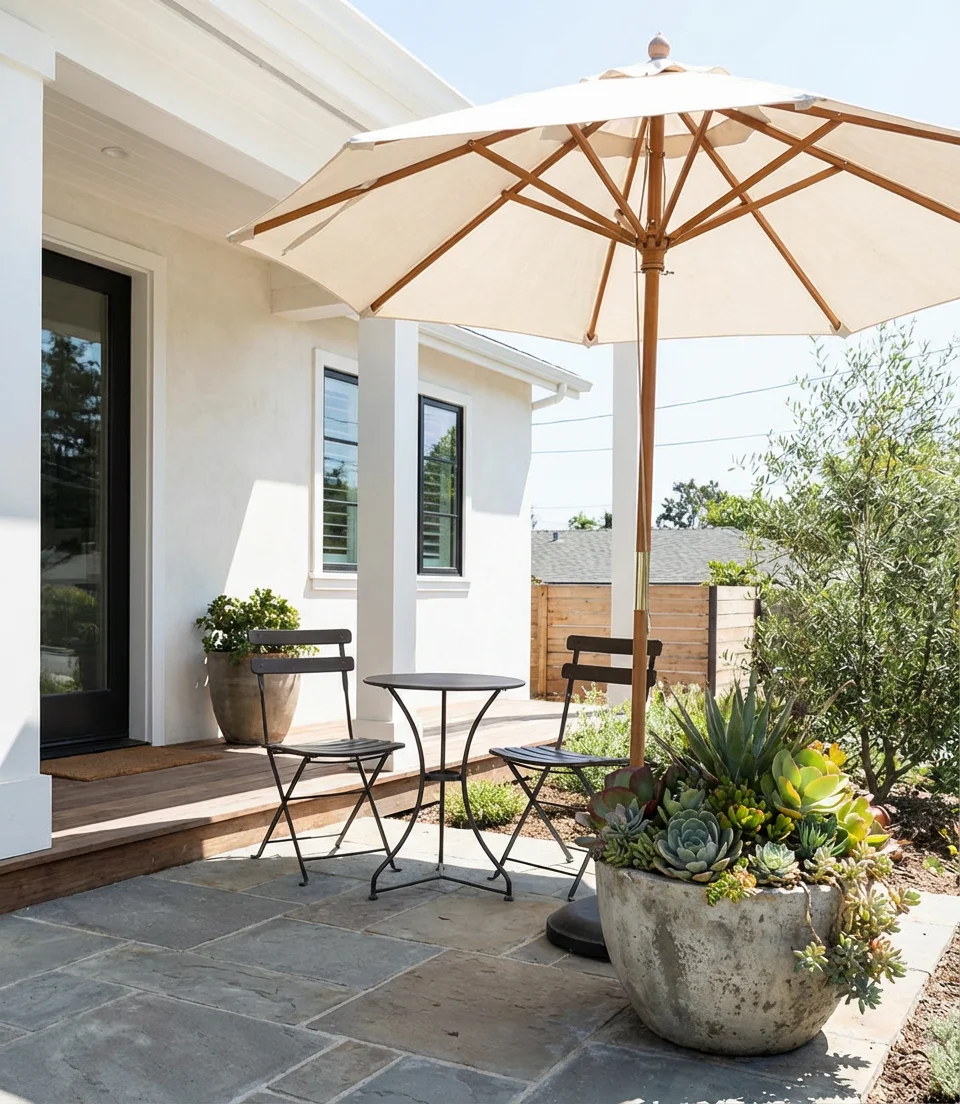
Decorate a porch with no roof by choosing weather-resistant materials exclusively and planning for rain. Metal furniture, resin wicker, teak or cedar, and concrete planters can all handle exposure. Keep textiles to a minimum—just weatherproof cushions that can be quickly stored. Consider a large outdoor umbrella that can be opened and closed as needed, or install a retractable awning for partial shade and rain protection. The trade-off is you’ll have less textile softness, but you gain the freedom of not rushing outside to save throw pillows every time dark clouds appear.
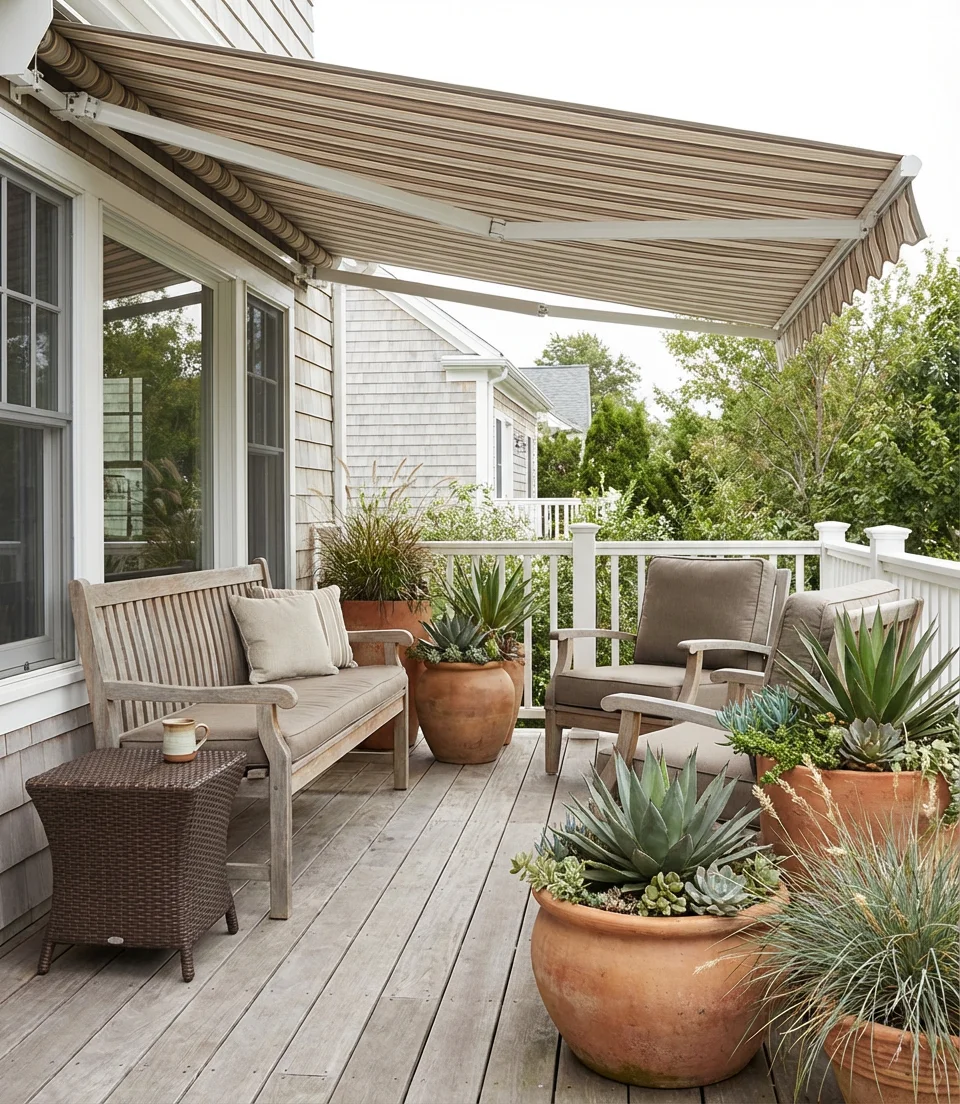
Unprotected porches often force homeowners to simplify, prioritize quality over quantity, and reevaluate their priorities. You end up with a cleaner, more intentional space rather than a cluttered collection that requires constant maintenance.
21. Easter Spring Pastels and Fresh Growth
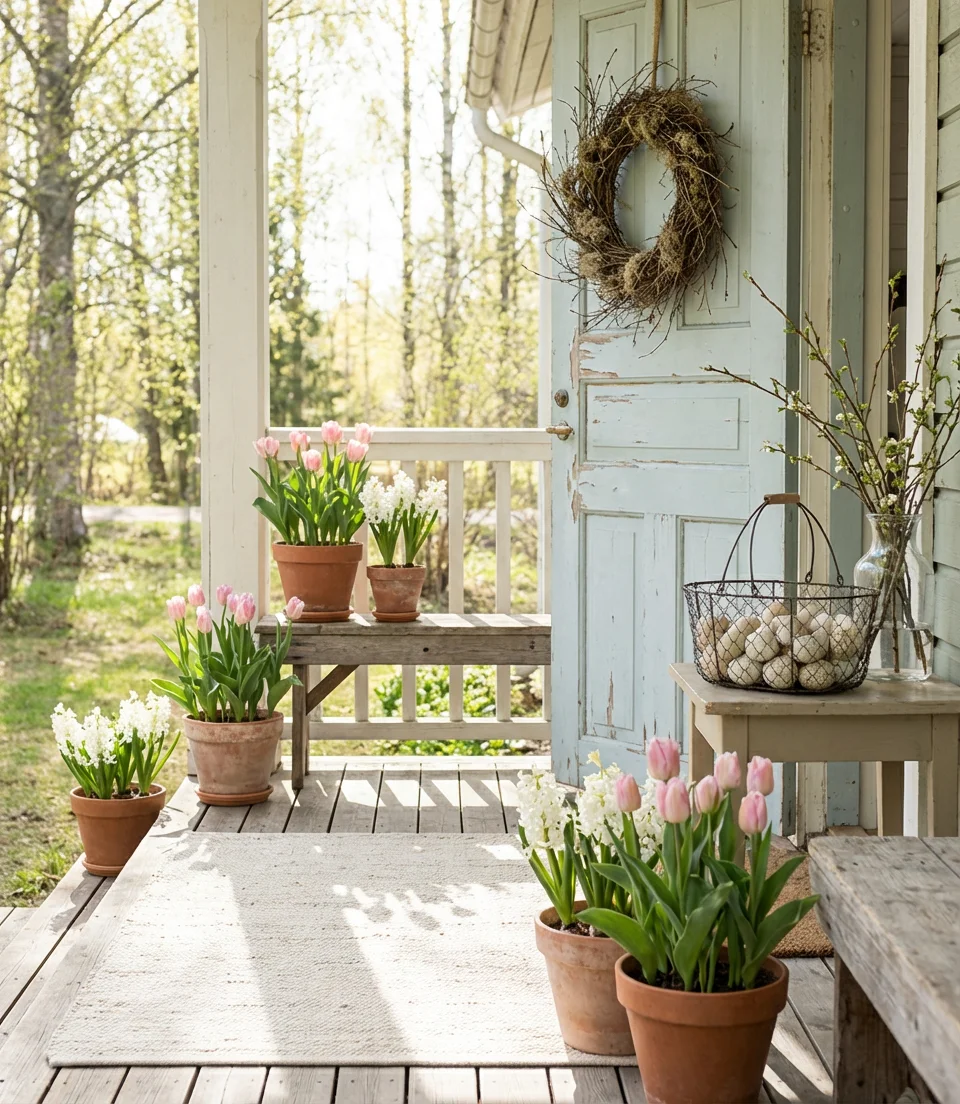
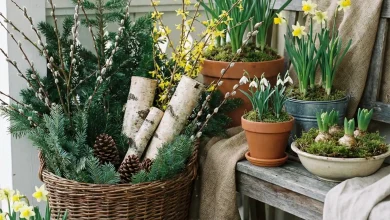
Welcome Easter and early spring with a porch full of soft pastels and the optimism of new growth. Fill pots with tulips, hyacinths, and daffodils in shades of butter yellow, blush pink, lavender, and white. Add a simple nest wreath to the door, place real eggs or speckled decorative ones in a wire basket, and incorporate fresh greenery like pussy willow branches. This gentle palette celebrates renewal after winter without veering into over-the-top Easter bunny territory, making it appropriate for the entire spring.
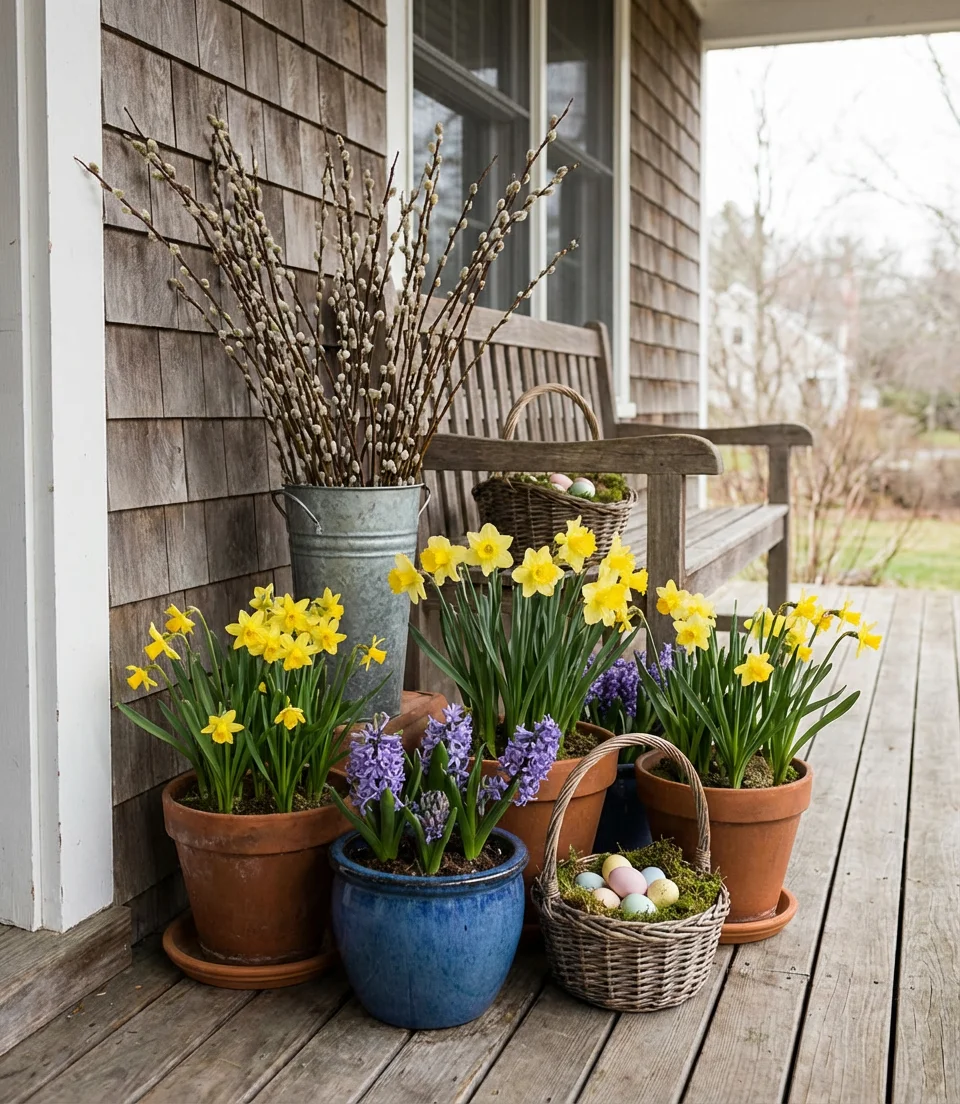
The beauty of this approach is that you’re working with actual spring bulbs and branches, which means the display naturally evolves and fades as the season progresses. By late April, you can transition to summer annuals using the same pots and vessels, creating a seamless flow from one season to the next.
22. Seasonal Rotation System for Effortless Updates
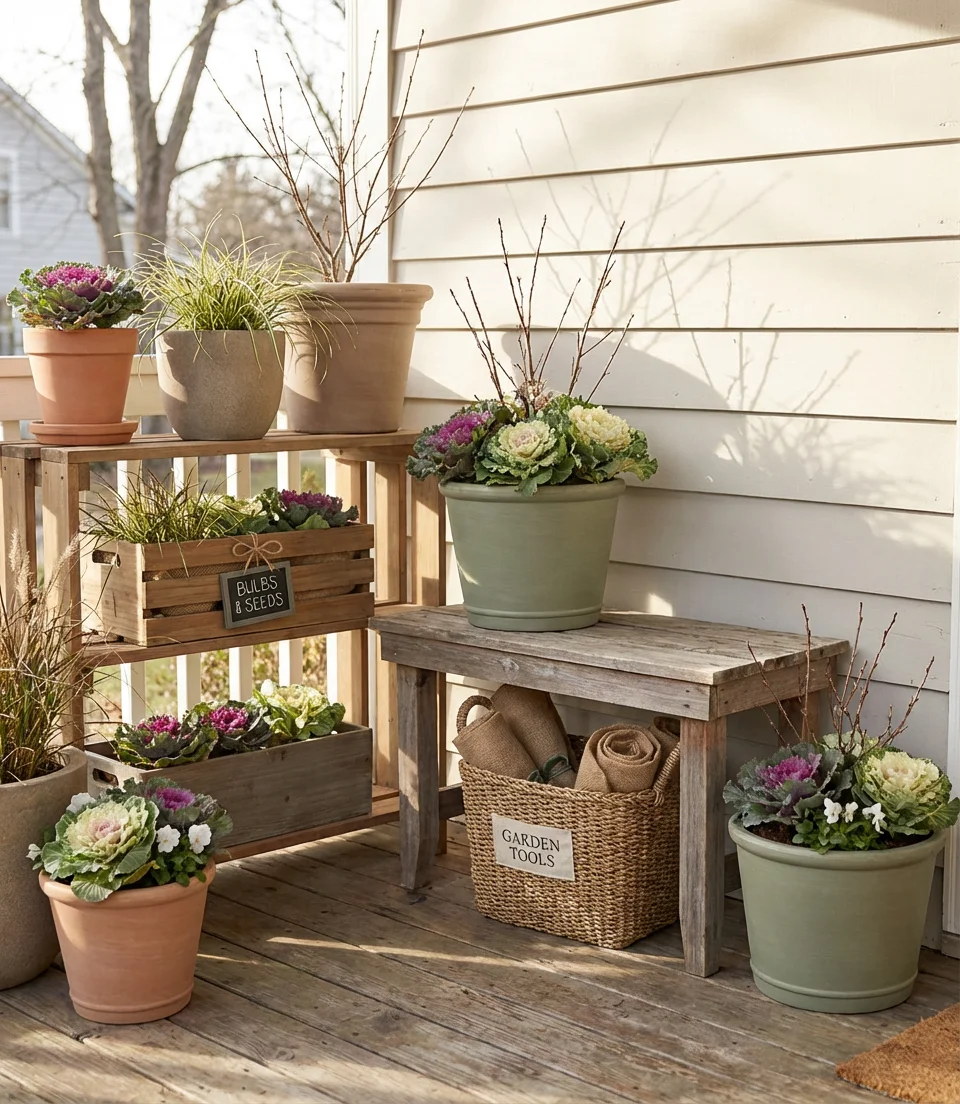
Establish a seasonal rotation system where you keep a core set of neutral vessels and furniture, then swap only the plants and small accent pieces four times a year. Label storage bins clearly (Spring Porch, Summer Porch, Fall Porch, Winter Porch) so transitions take minutes rather than hours. This systematic approach to farmhouse porch decorating means you’re never starting from scratch, never buying duplicate items, and never wondering where that wreath from last year went. It transforms seasonal decorating from a dreaded chore into a simple, satisfying ritual that marks time and connects you to the rhythm of the year.
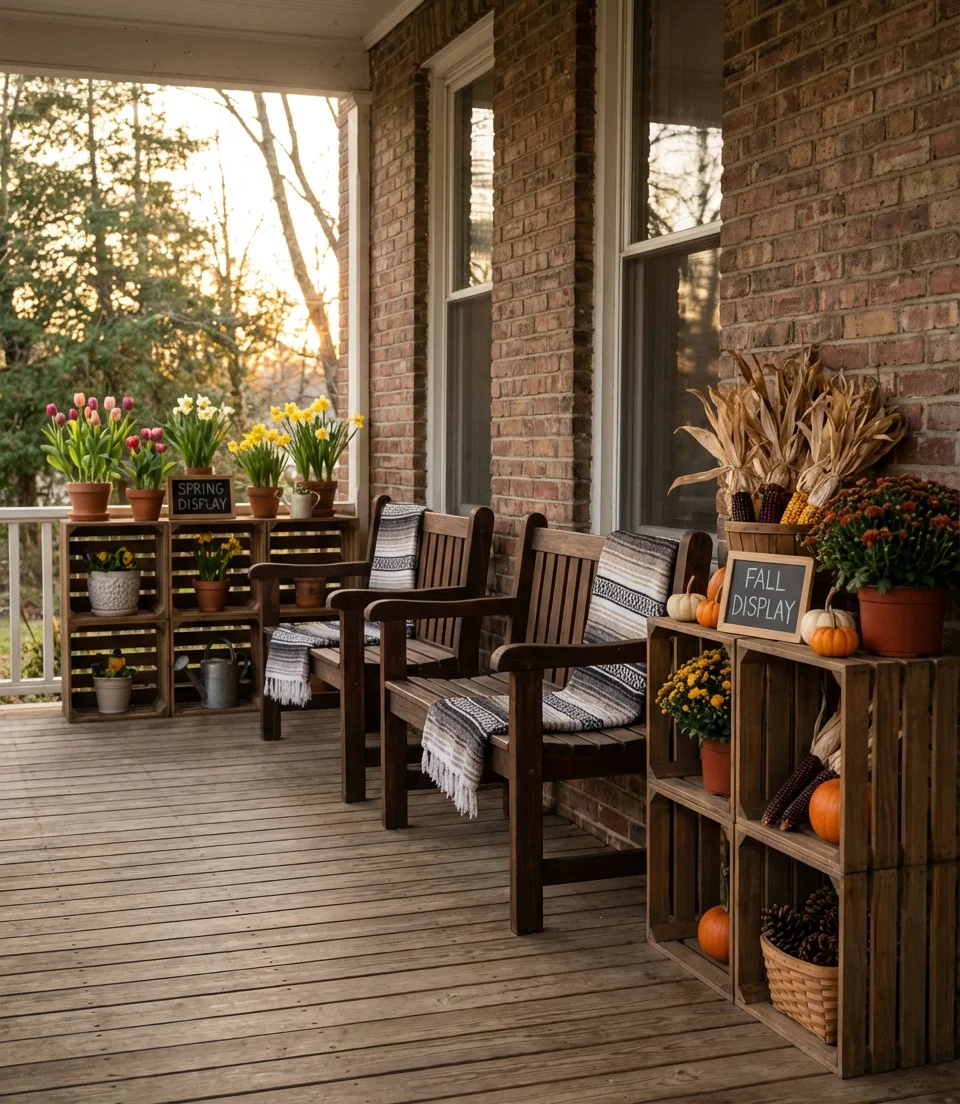
This is perhaps the single most practical piece of advice for maintaining a beautiful porch year-round without burning out. It removes decision fatigue, prevents impulse purchases of items that don’t fit your storage or style, and ensures your porch always looks intentional and cared for, no matter how busy life gets.
Your front porch is more than just an entrance—it’s the first impression of your home and a space that can bring genuine daily joy when thoughtfully designed. Whether you’re drawn to the simplicity of minimalist styling, the warmth of rustic farmhouse layers, or the ever-changing beauty of seasonal displays, these ideas offer a starting point for creating a porch that feels authentically yours. We’d love to hear which approach resonates with you most, or if you have your porch decorating secrets to share. Drop a comment below, and let’s keep the conversation going about making these transitional spaces truly special.