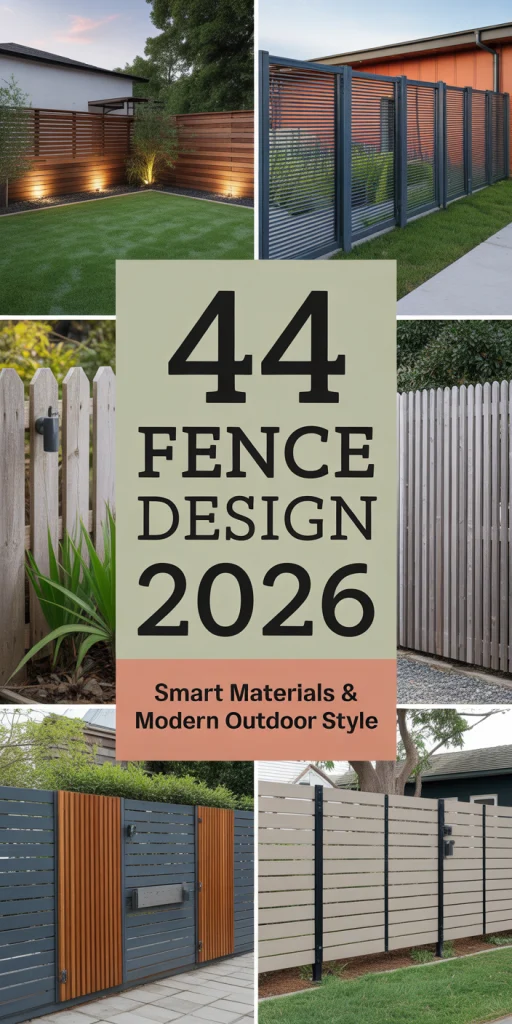
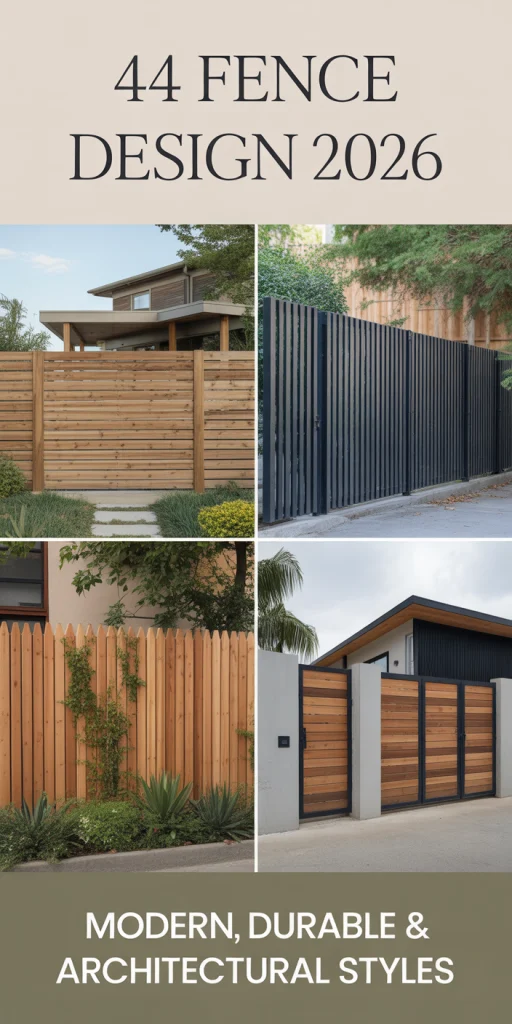
44 Fence Design 2026: Modern Ideas From Horizontal Wood to Steel and Living Walls

Designing outdoor wooden fences is an art form that has rapidly evolved. 2026 looks to be the poster year when outdoor borders will truly be variations of architectural masterpieces. Americans are currently looking up fences on Pinterest that combine privacy with sleek or modular modern looks in the case of steel panel constructions. Then you have the warm coziness of wooden slats, which are more inviting looking in steel panel constructions. Fences are as diverse as the homeowners themselves. This article looks at fences that combine contemporary with functionality as well as the active lifestyle of the homeowners, from minimalist modern gated to lush garden barricades.
1. Sleek Horizontal Wood Slat Perimeter
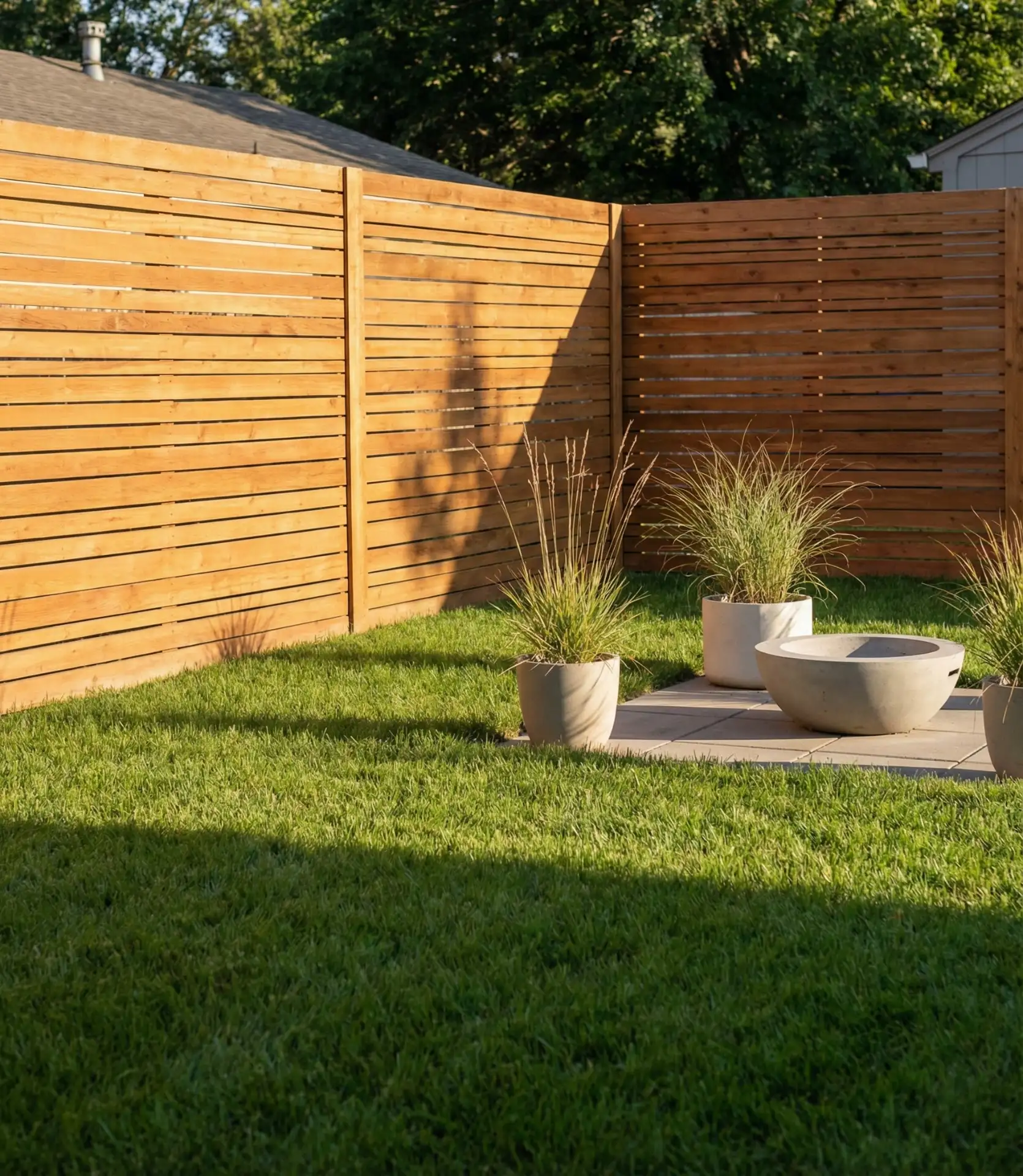
A horizontal wood fence brings clean lines and a contemporary feel to any property edge. The parallel boards create a sense of flow rather than rigid division, making even small yards feel more expansive. This style works beautifully for modern house exteriors where simplicity and warmth need to coexist. The natural grain of wood softens the geometric precision, and you can stain or seal the slats to match your home’s palette. 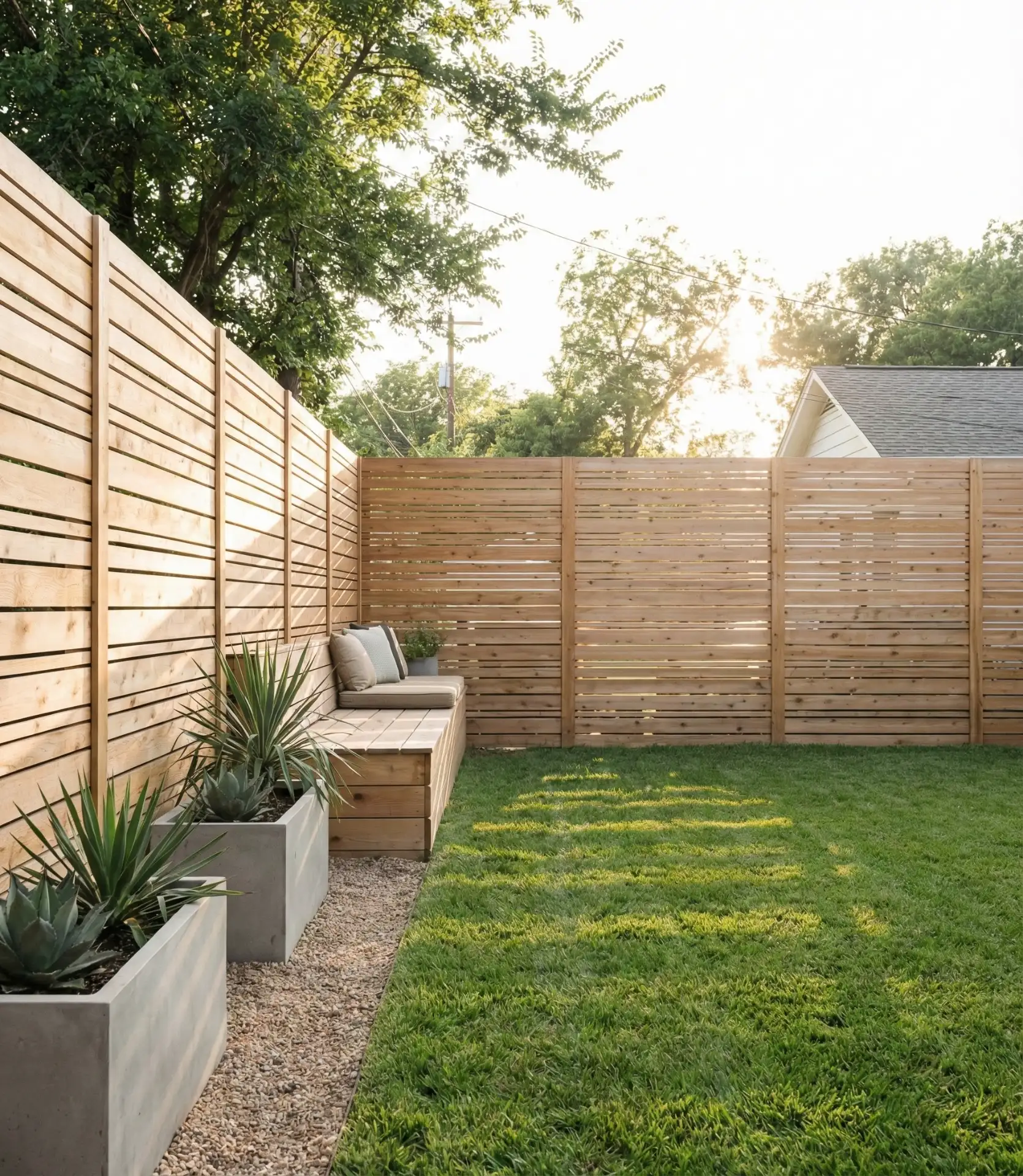
This design works best in suburban neighborhoods where HOA rules allow natural materials but still demand a polished look. Many homeowners pair horizontal slats with low-voltage LED strips tucked behind the boards for subtle evening ambiance. The spacing between slats can be adjusted for more or less privacy—tighter gaps block sightlines completely, while wider spacing keeps airflow and a semi-open feel. One common mistake is using untreated wood in humid climates; always opt for rot-resistant species or high-quality sealant.
2. Steel Frame with Frosted Panel Inserts
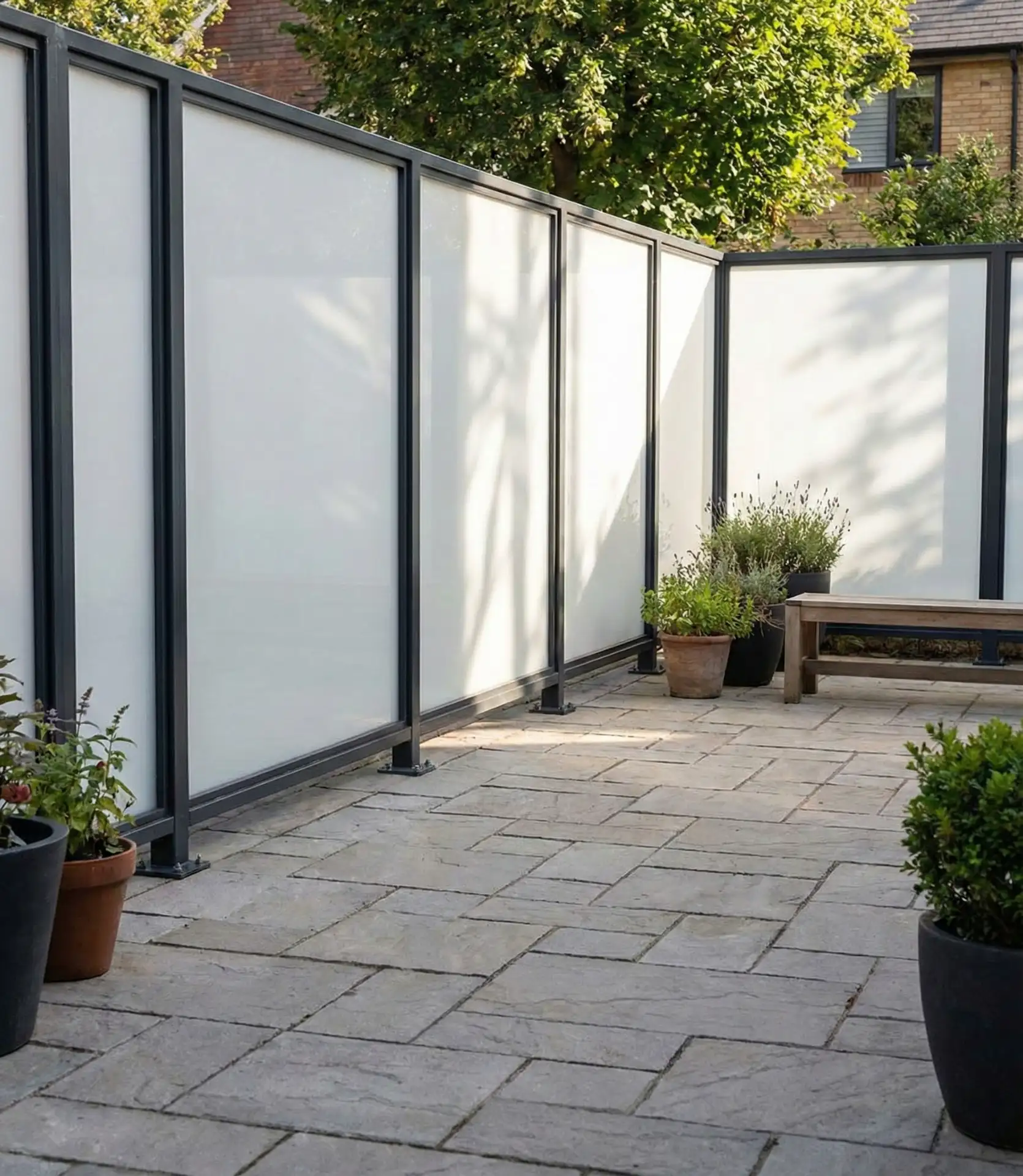
Modern steel frames paired with translucent panels offer privacy without sacrificing light. The metal structure provides industrial elegance, while frosted acrylic or polycarbonate inserts diffuse views and harsh sun. This approach suits contemporary homes where outdoor space doubles as an extension of interior living areas. The matte finish on steel prevents glare, and the panels can be tinted in subtle grays or whites to complement your facade.
In coastal California and the Pacific Northwest, this style has become a go-to for townhome courtyards where neighbors are close but privacy is non-negotiable. The frosted panels block direct sightlines while still allowing ambient light to wash through, so your patio doesn’t feel like a cave. Budget-wise, expect to spend more upfront than on wood, but the low maintenance and decades-long lifespan make it a smart investment. Just make sure the steel is powder-coated to resist rust in humid or salty air.
3. Living Bamboo Privacy Screen
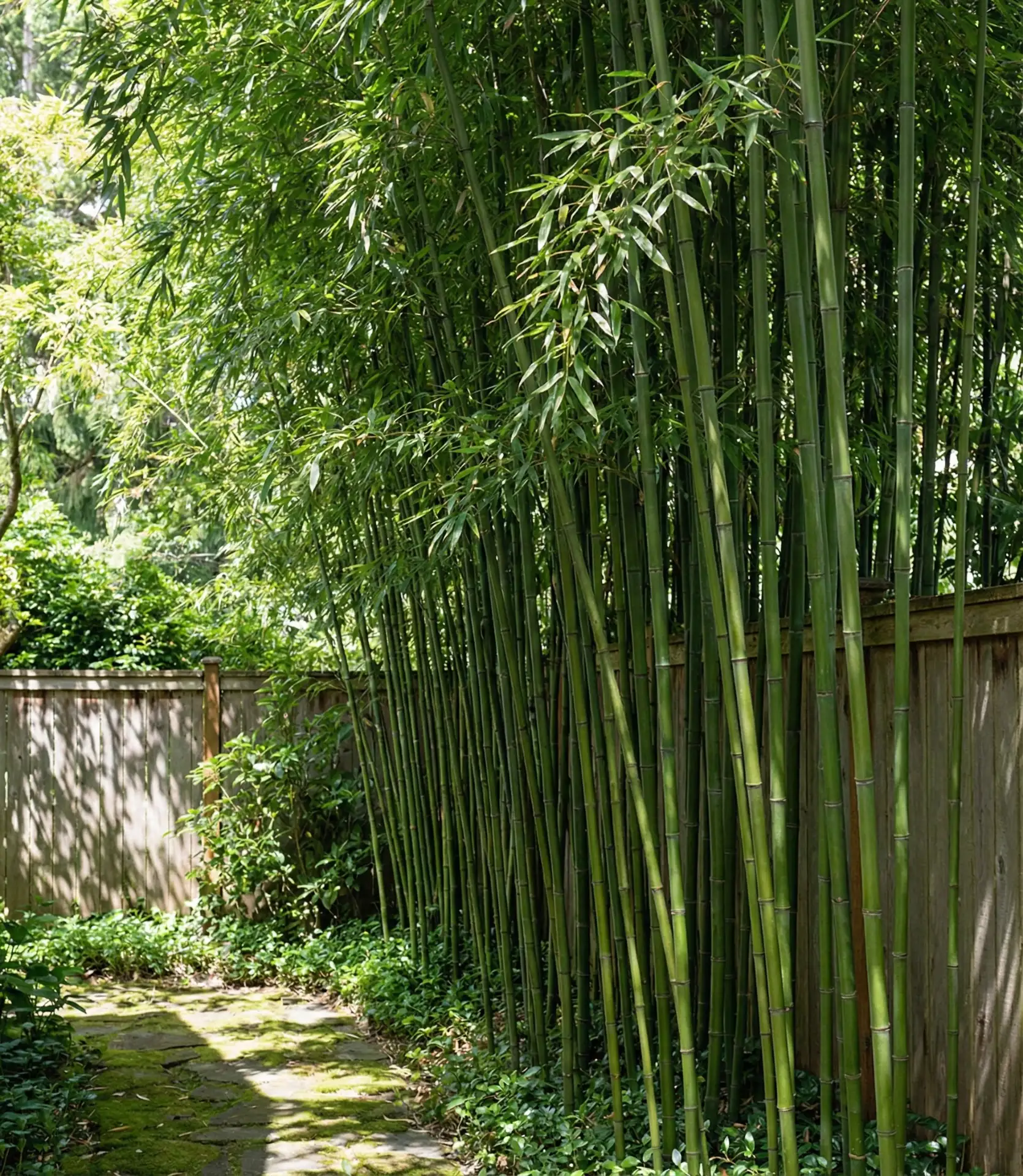
Planting bamboo along your property line creates a lush, living barrier that grows thick and fast. Clumping bamboo stays contained and won’t invade neighboring yards, which makes it ideal for boundaries. The tall, swaying canes add movement and a rustling sound that feels worlds away from the city. Bamboo grows in most American climates from the Southeast to California, and once established, it requires little care.
A landscape designer in Austin once shared that bamboo fences are her most-requested solution for clients who want privacy but hate the look of traditional panels. The green wall softens hard edges and attracts songbirds, turning your yard into a mini sanctuary. One pitfall to avoid: never plant running bamboo without a deep root barrier—those rhizomes can travel under driveways and pop up in your neighbor’s flower beds. Stick with clumping types like Bambusa multiplex, and you’ll get all the beauty with none of the drama.
4. Vertical Wood Slat Garden Accent
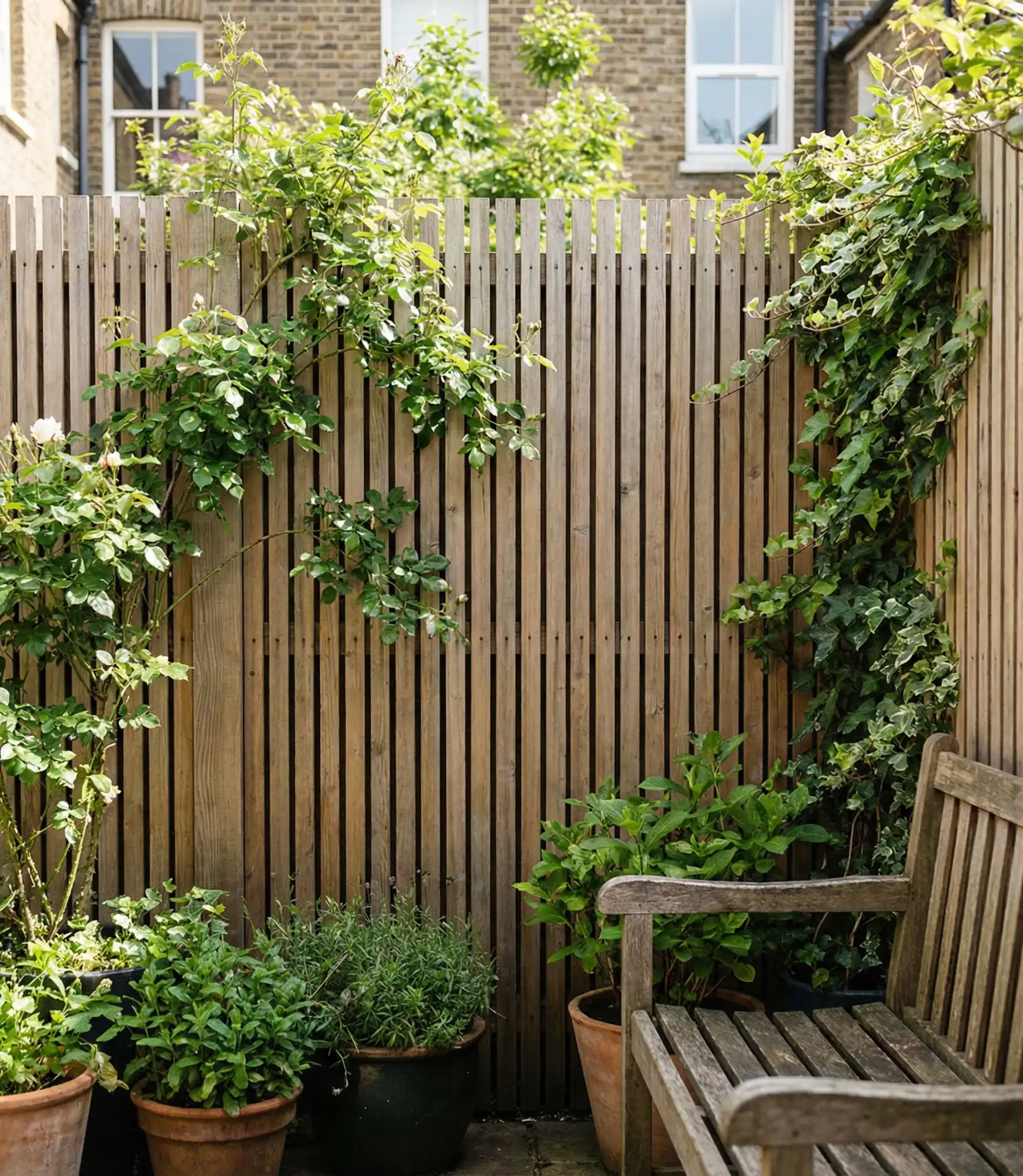
Vertical wood fencing emphasizes height and creates a sense of upward momentum in a garden setting. The narrow, closely spaced boards form a rhythmic pattern that draws the eye skyward, making even modest yards feel taller and more enclosed. This style pairs beautifully with climbing vines or espaliered fruit trees, where greenery weaves through the slats over time. Natural wooden tones work in both rustic and modern landscape designs. 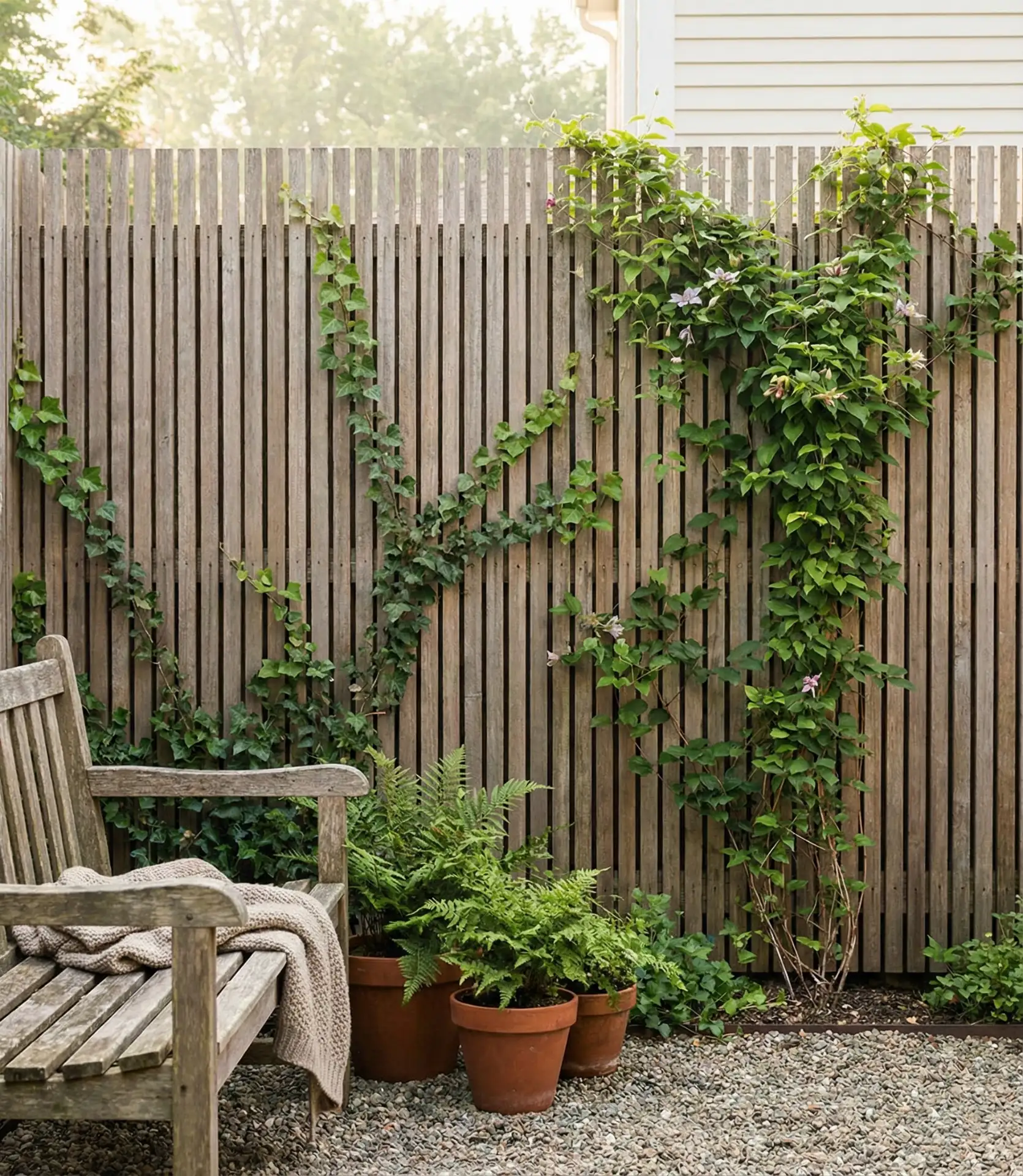
Vertical slats are especially popular in the Midwest and Northeast, where homeowners want a fence that echoes traditional carpentry but feels fresh and current. The vertical lines make narrow side yards appear less cramped, a clever optical trick for urban lots. Practical insight: install the slats with small gaps between boards to allow air circulation and prevent moisture buildup, which extends the wood’s life and reduces warping. You can also stain alternate slats in contrasting shades for a subtle striped effect.
5. Japanese-Inspired Lattice Panel
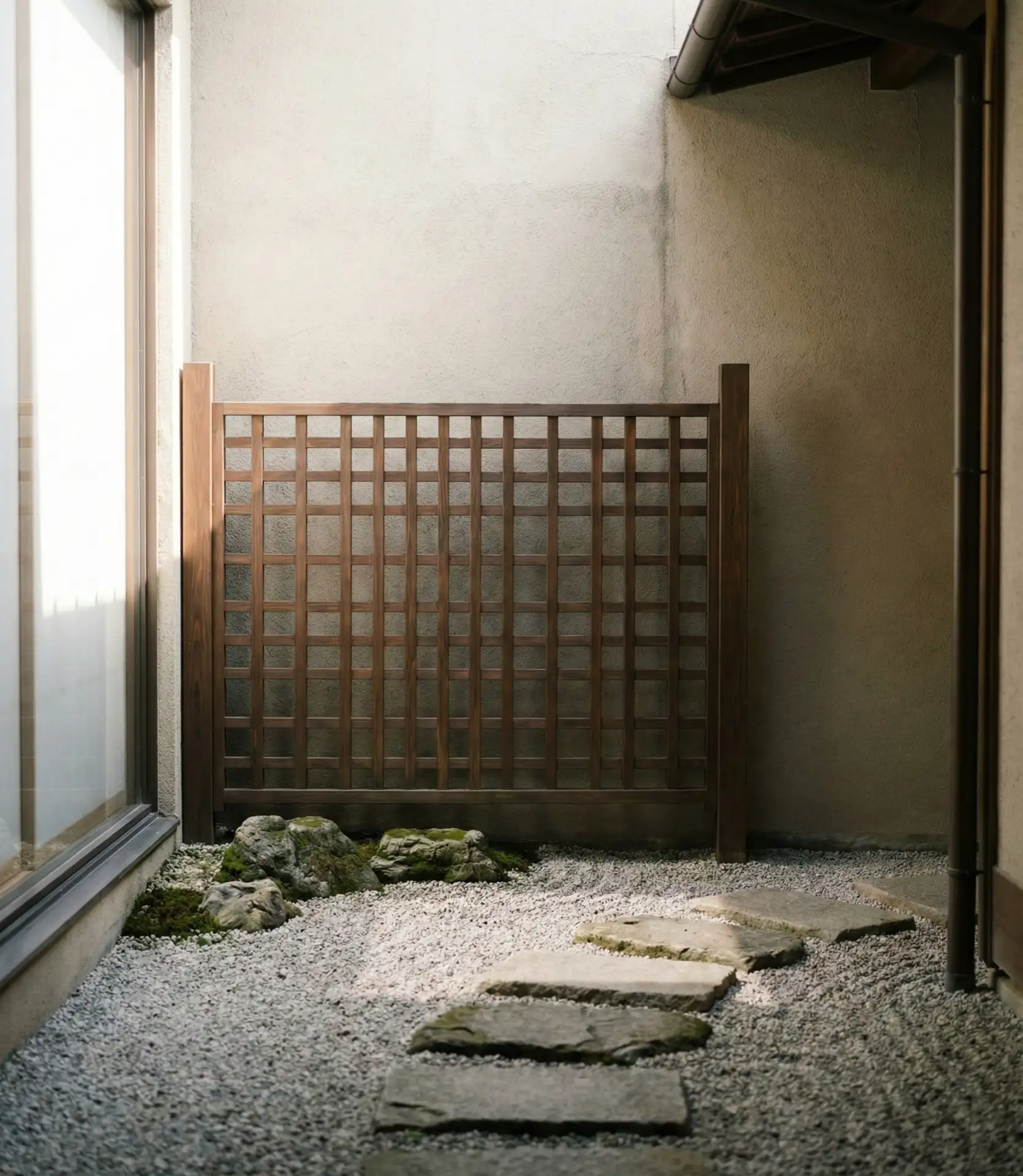
A Japanese lattice fence, with its delicate crosshatch pattern, brings a sense of calm and order to any garden. The open framework filters views rather than blocking them entirely, creating a semi-private enclosure that feels airy and refined. This style works well around meditation spaces, koi ponds, or tea gardens where tranquility is the goal. The geometric precision of the lattice echoes traditional shoji screens, and you can use cedar or redwood for authentic warmth. 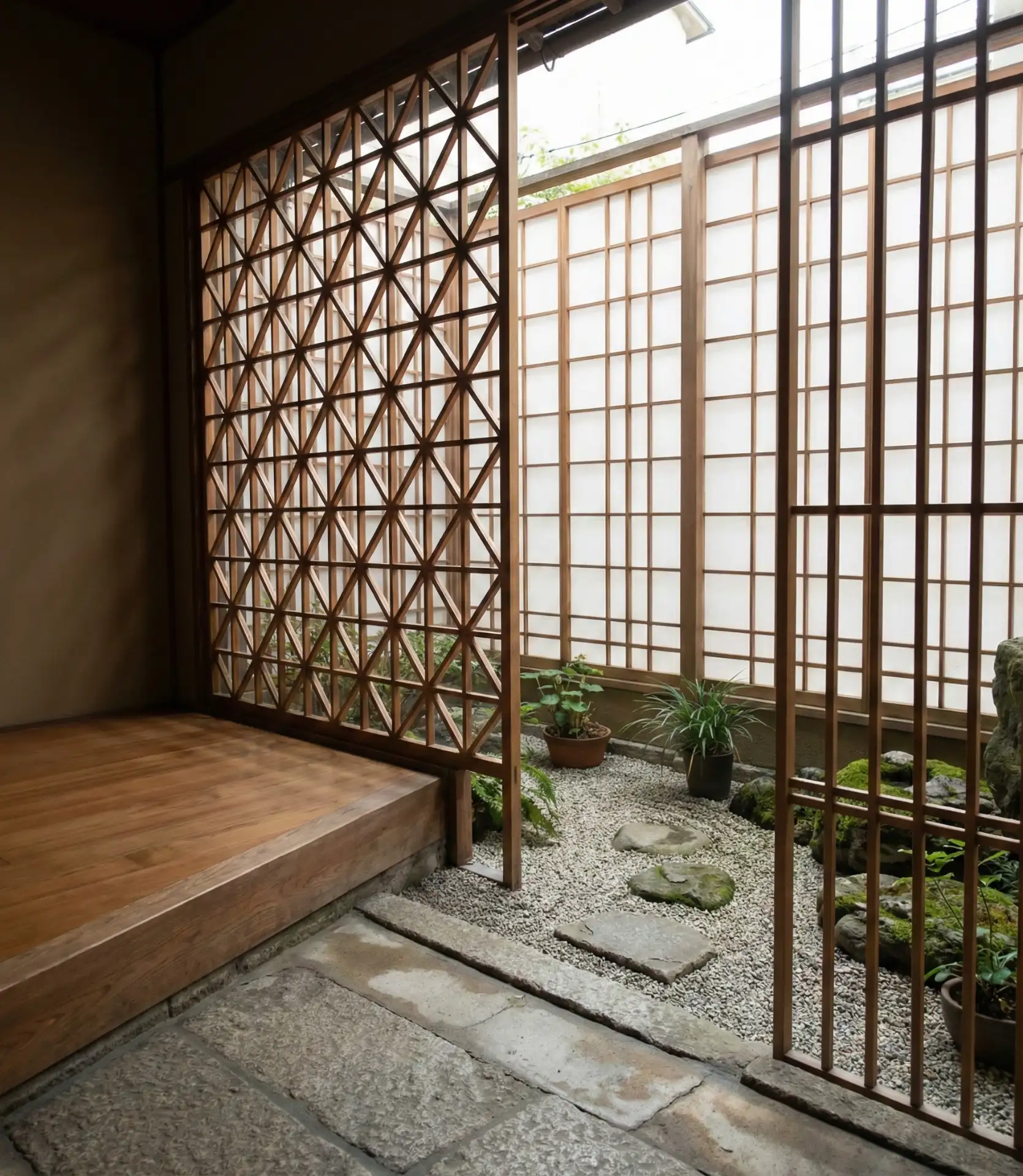
In Portland and Seattle, where Japanese garden aesthetics have a devoted following, these lattice panels are often paired with moss, ferns, and stone lanterns. The semi-transparent design lets sunlight dapple through, casting beautiful shadow patterns on gravel or decking. A common mistake is building the lattice too flimsy—use thicker lumber and reinforce corners with hidden metal brackets so the structure can withstand wind and the weight of climbing plants. Budget around $40–$60 per linear foot for quality materials and installation.
6. Concrete Panel Boundary Wall
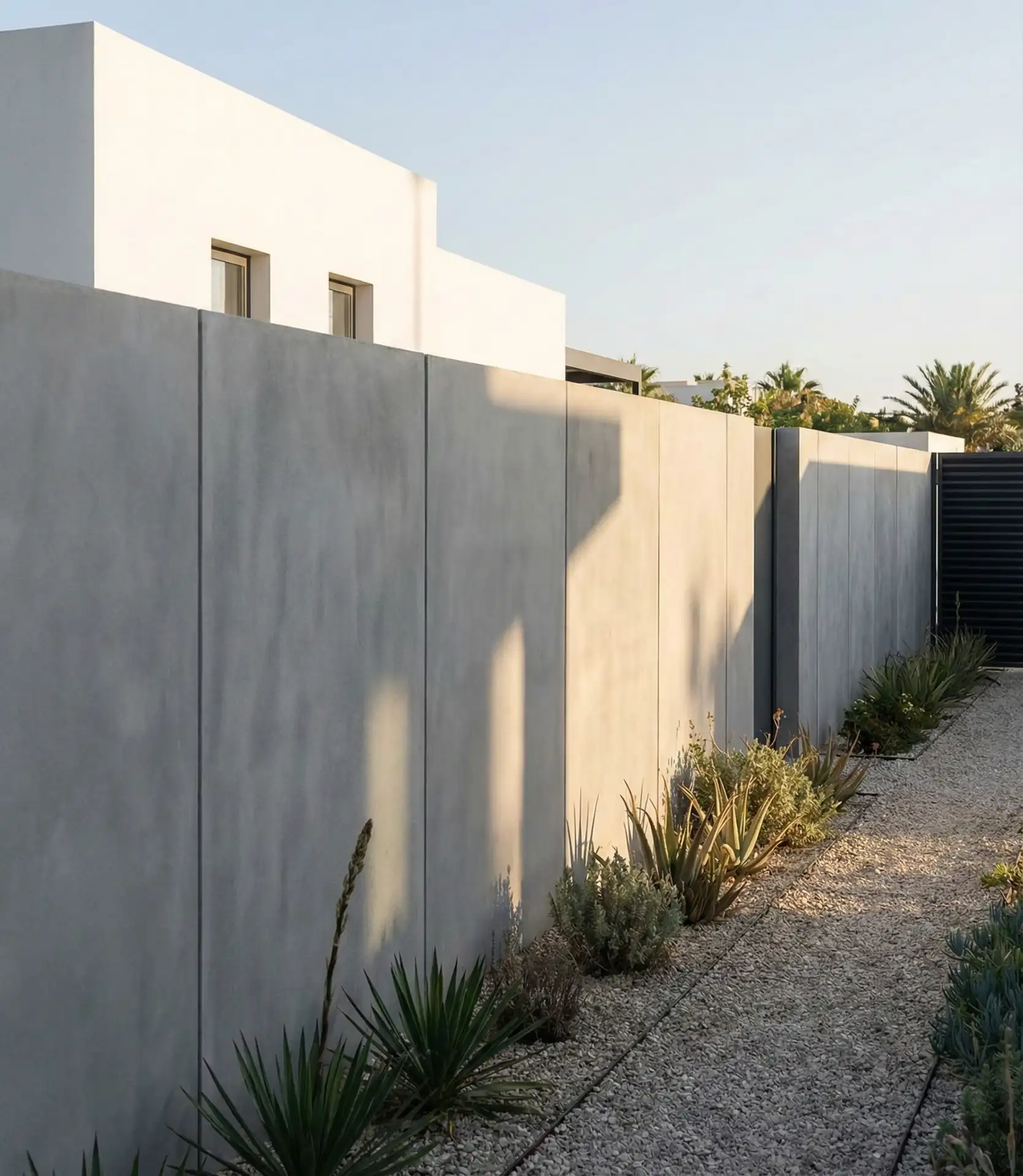
Concrete panels deliver unmatched durability and a bold, sculptural presence along property lines. Precast sections can be textured to mimic wood grain or stone or left smooth for a pure modernist look. This material is fireproof, soundproof, and nearly maintenance-free, making it ideal for villa settings or homes near busy streets. The hefty mass also provides excellent privacy, and you can integrate planters or water features directly into the panels. 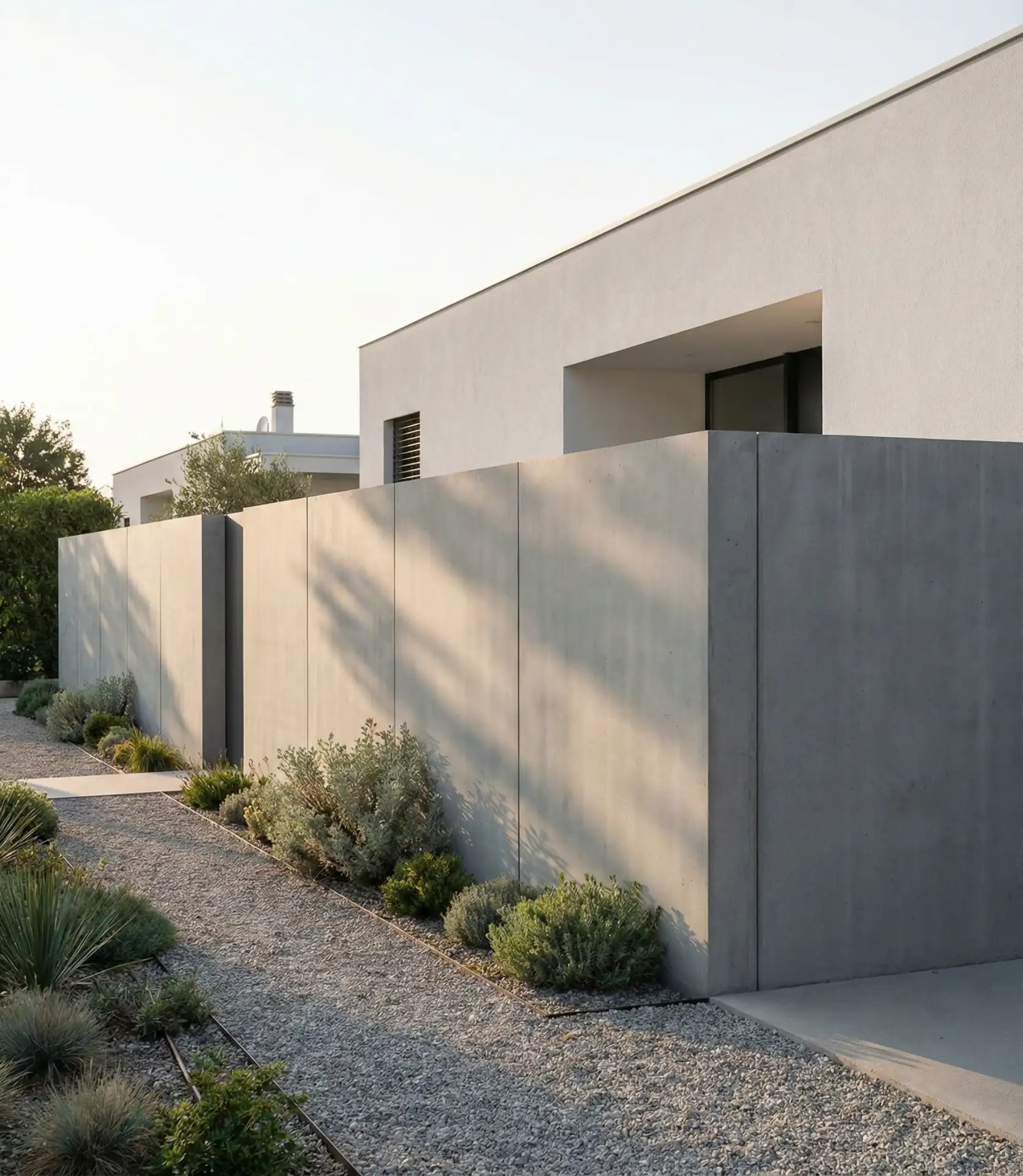
Southern California and Arizona see a lot of concrete fencing, especially in desert communities where wood rots quickly and fire risk is high. Homeowners often soften the industrial vibe by training bougainvillea or jasmine up the panels, adding color and texture. Expert commentary: work with a contractor who understands proper footings and rebar placement—concrete is heavy, and inadequate foundations can lead to cracking or tilting over time. Expect to pay $80–$120 per linear foot installed, but you’ll never paint, stain, or replace it.
7. Iron Gate with Decorative Scrollwork
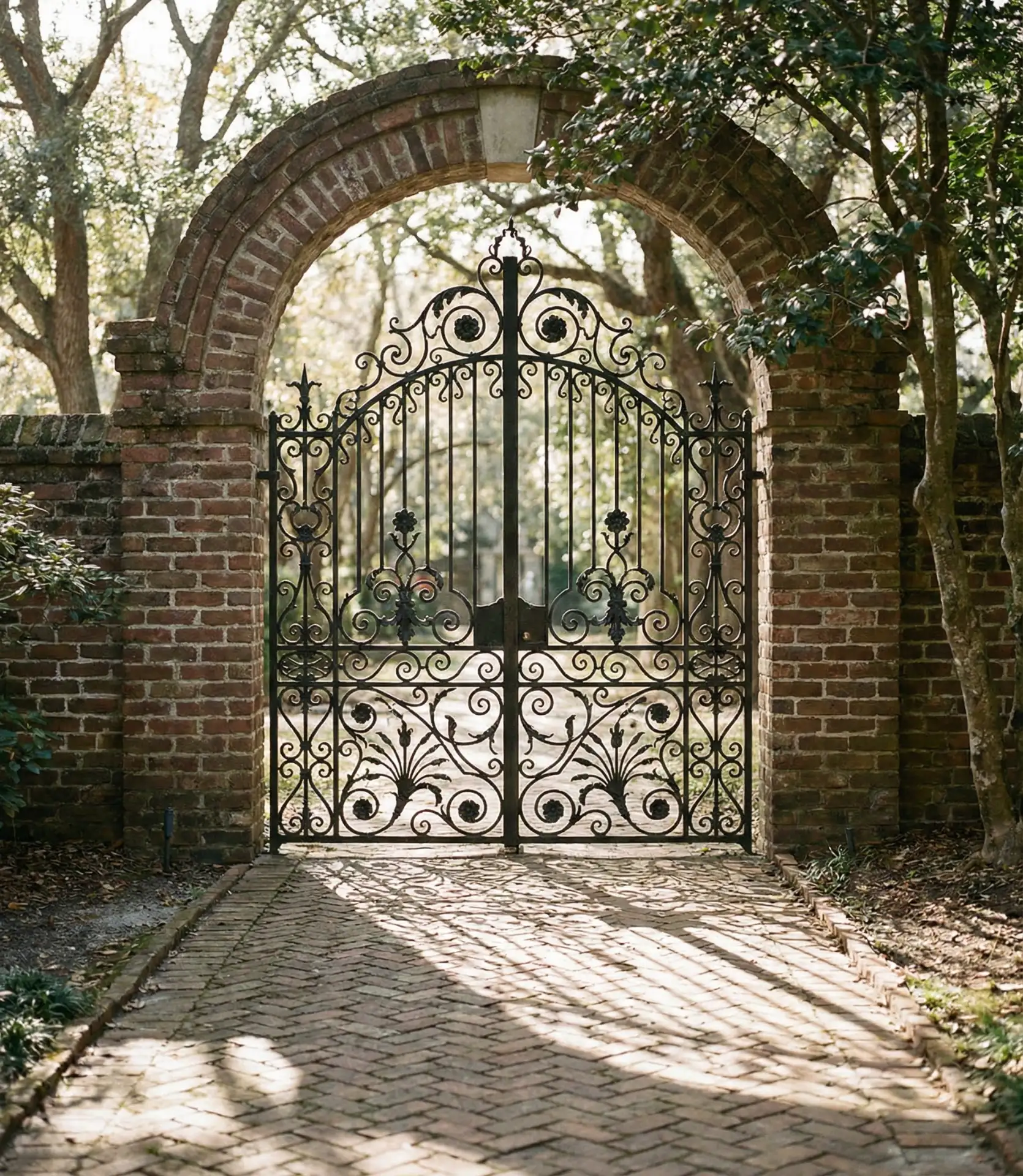
An iron gate and fence with hand-forged scrolls or geometric motifs adds Old World elegance to front yard entries. The open metalwork maintains visibility and curb appeal while still marking boundaries. Wrought iron is a traditional choice for historic homes, but modern powder-coated steel offers similar aesthetics with better rust resistance. Pair the gate with matching fence sections or use it as a standalone focal point within a hedge or low wall. 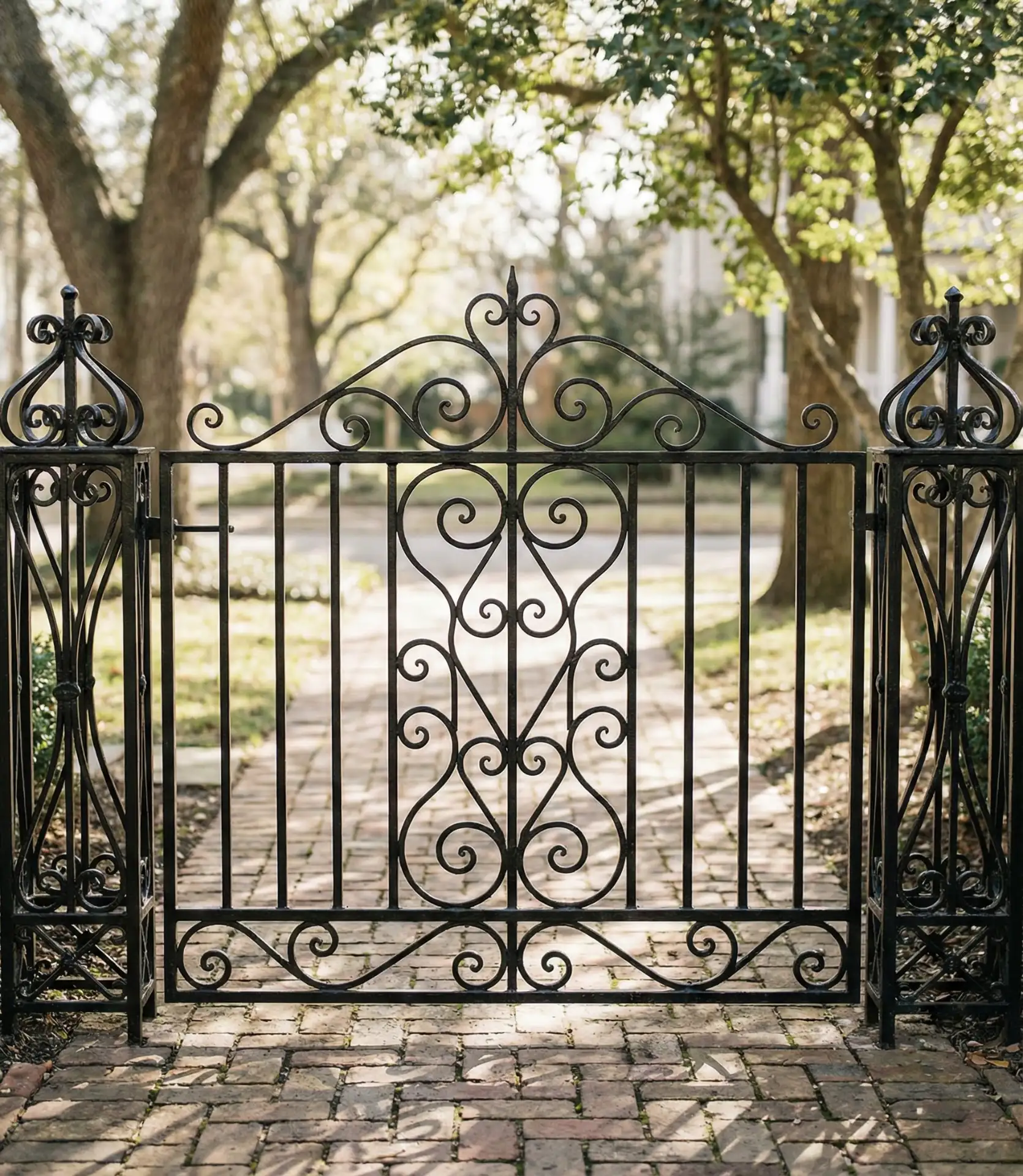
In the South and parts of New England, ornate iron gates are practically a regional signature, especially in neighborhoods with Colonial or Victorian architecture. Many homeowners automate the gate with a keypad or remote, blending historic charm with modern convenience. Real homeowner behavior: most people leave the side fence sections simpler—just vertical bars—and save the decorative details for the gate itself, which keeps costs manageable while still making a statement. Just remember to apply a fresh coat of rust-inhibiting paint every few years if you live in a humid climate.
8. Mixed Material Modern Fence
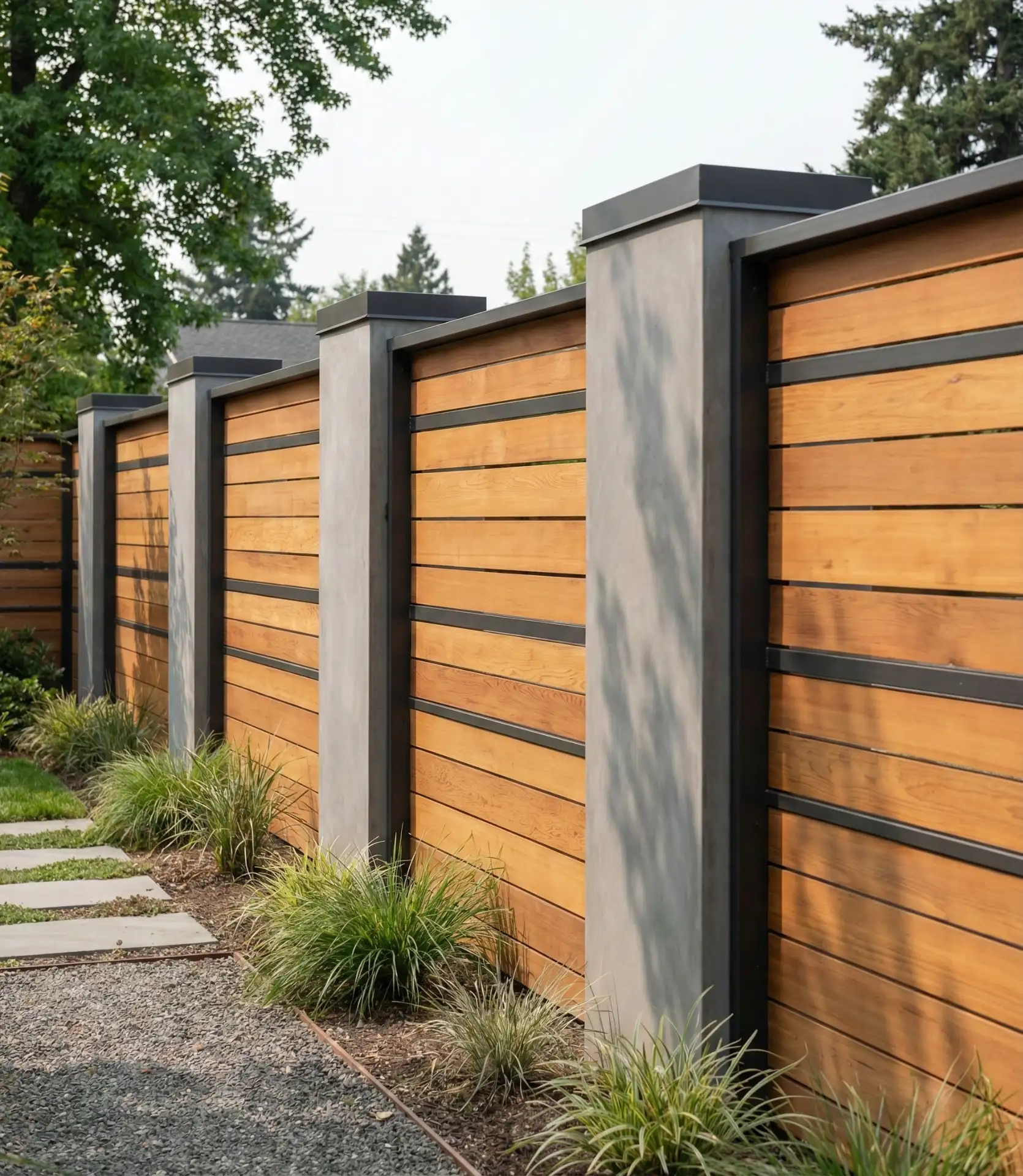
Combining wood, metal, and concrete in one fence design creates visual interest and breaks up long, monotonous runs. You might use concrete posts with horizontal wood infill or steel frames with vertical cedar slats. This layered approach lets you play with textures and colors while keeping the overall look cohesive. It’s a popular choice for modern house styles where mixed materials are already present in the architecture. 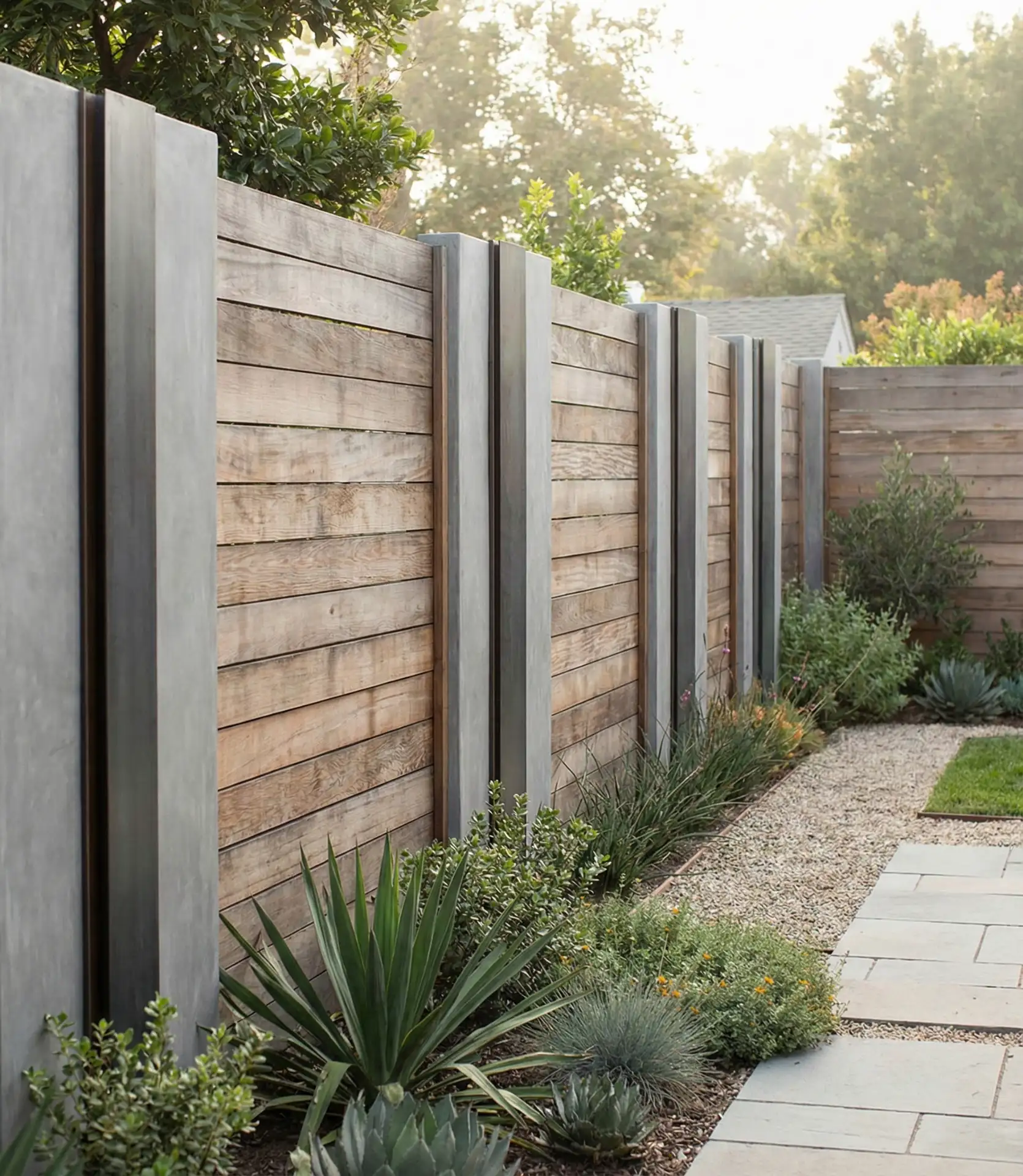
This style works best in upscale suburban developments and custom home communities, where neighbors appreciate bold design choices. The mixed materials also let you allocate budget strategically—splurge on steel and concrete for high-visibility sections near the street, then use more wood in the backyard where cost-per-foot matters. One pitfall: make sure all materials share a compatible finish or color family, or the fence can look haphazard rather than intentional. Stick with a limited palette—say, black steel, natural cedar, and charcoal concrete.
9. Pixelated Block Wall (Minecraft-Inspired)
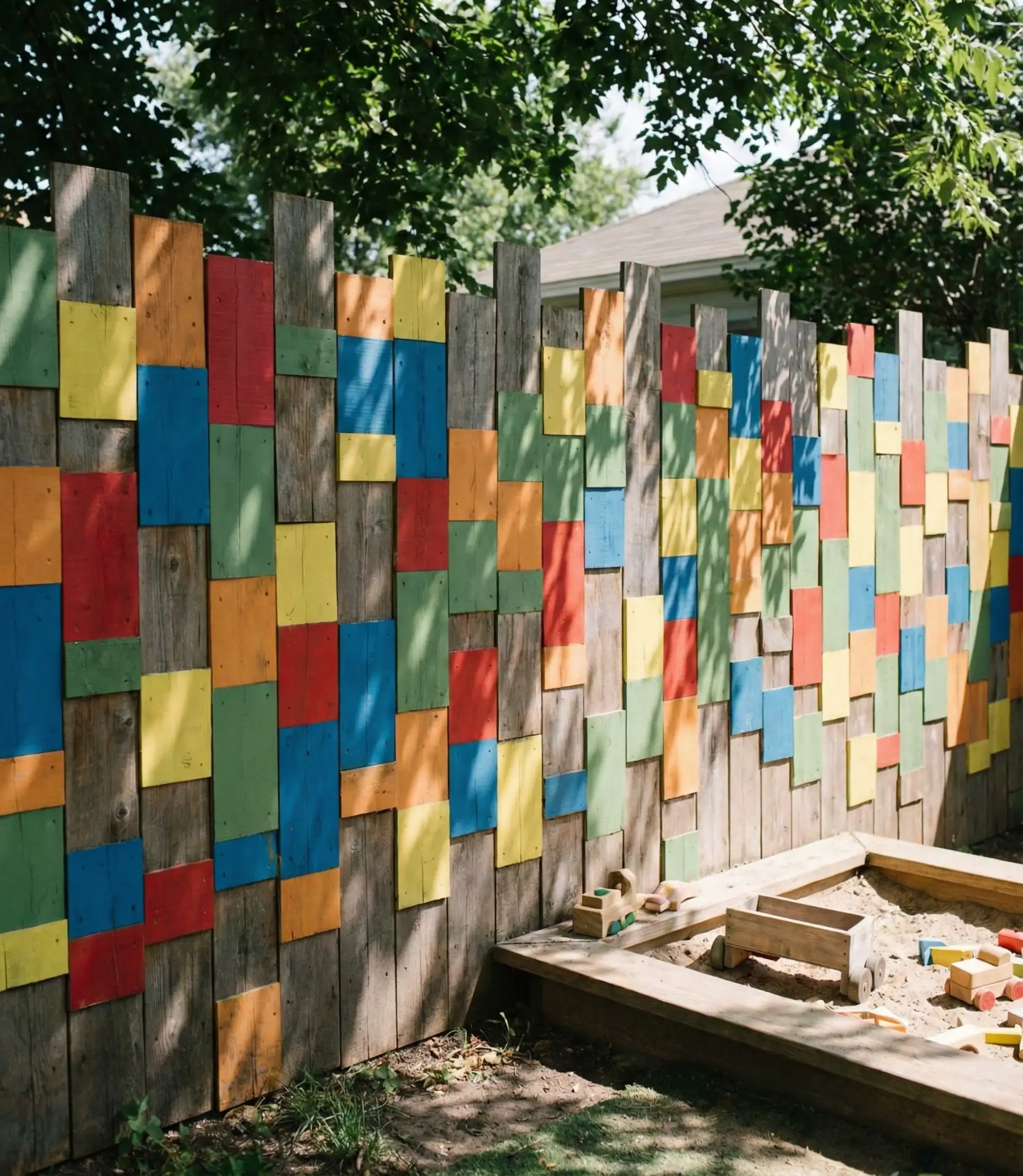
For families that have kids who love Minecraft, you can bring the blocky digital aesthetic of the game into the real world by incorporating a pixelated block wall. Use concrete blocks, painted wood cubes, or even stacked lumber to form a geometric pattern where the blocks are arranged in a staggered pattern. This design can work to outline a play area or garden and is modular enough to allow you to easily change the design or add to it as your yard and its purposes change. It is also surprisingly durable given the playful design when the right materials are used. 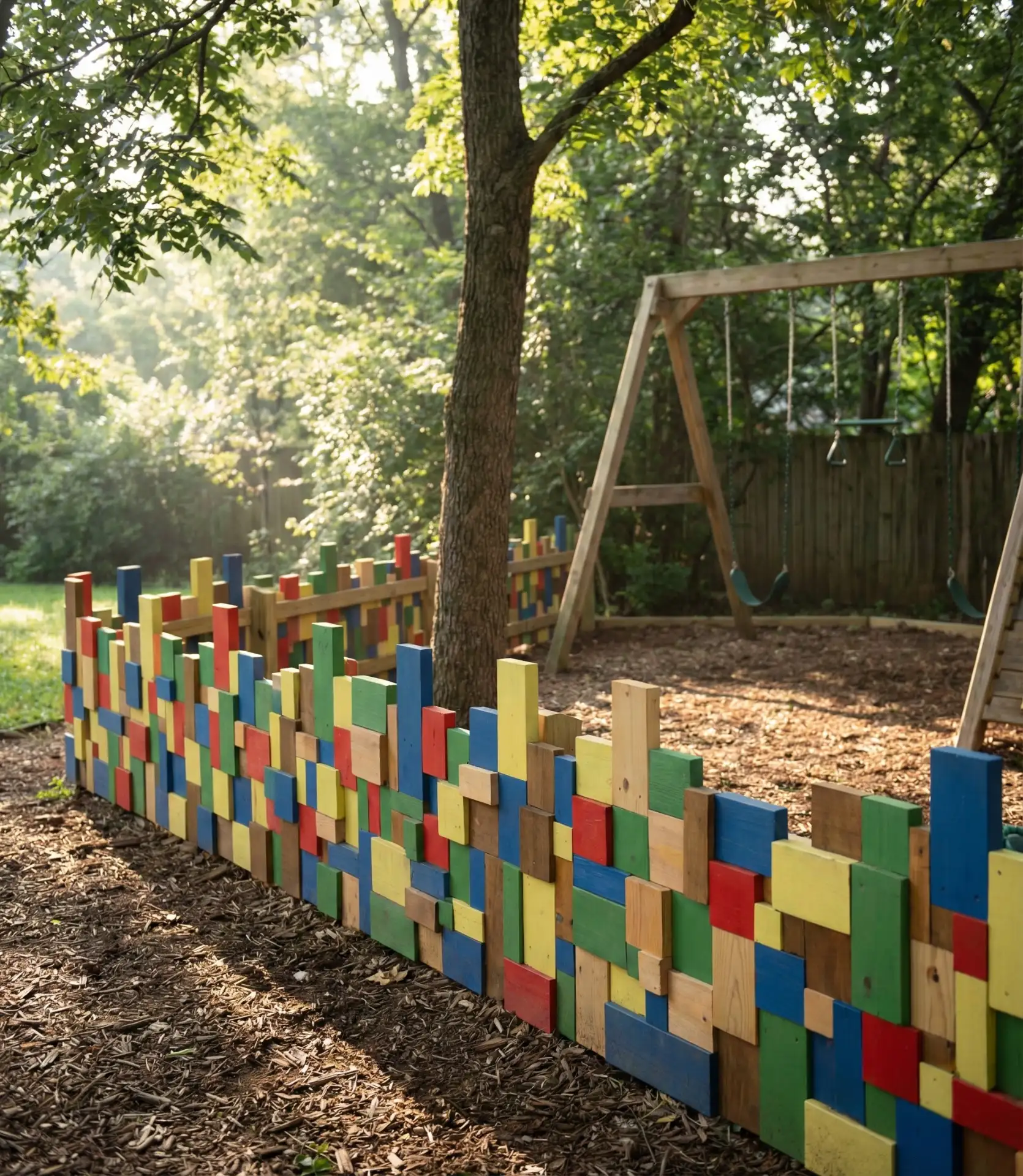
One of these was built by a homeowner in Denver who wanted to make something for his kids using lumber that was pressure treated and cut into cubes that were arranged in a staggered pattern at different depths. It became a popular, playful spot in the neighborhood for kids.
The design also serves as a mini herb or floral garden, as the recess will allow for plants to be tucked into the wall. A common mistake made for these recesses in garden walls is making the blocks cubes too small or light. It is best to use cubes at least 6 inches by 6 inches. That helps give the structure visual weight as well as helps with structural integrity. You can paint the blocks in earth tones for a more grown-up design theme or use primary colors for a more fun look.
10. Steel and Glass Front Entry Statement
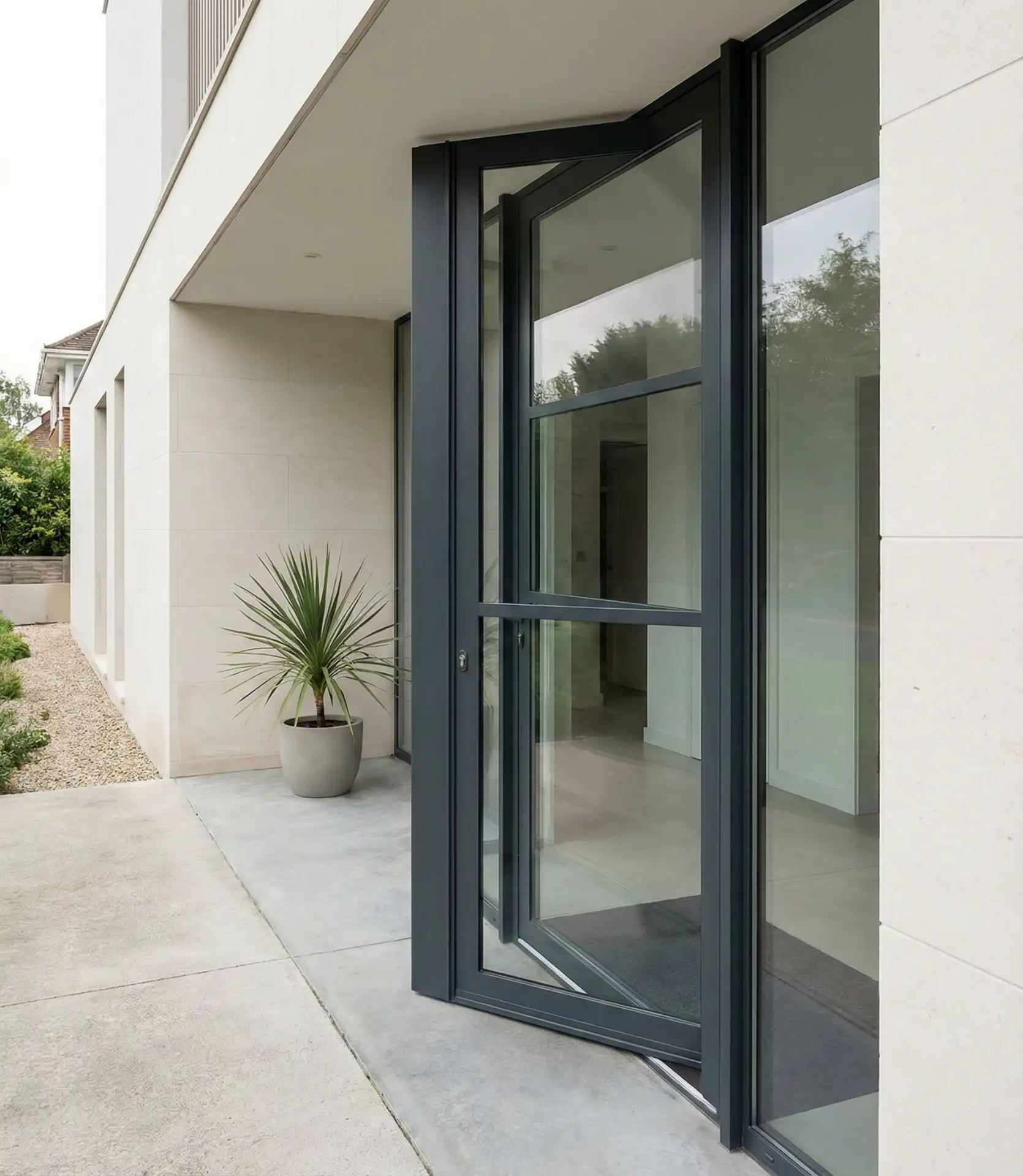
A steel frame with tempered glass panels offers a striking front entry that beautifully integrates the fence with the architecture of the home. It creates a transparent boundary that defines property lines while also inviting views in and out. It modernizes homes with a front yard that is designed with landscaping elements instead of screening plants for total privacy. Depending on your ease with glass visibility, the glass can be clear, frosted, or tinted. Likewise, the steel can be finished with matte black, bronze, or charcoal powder coating. 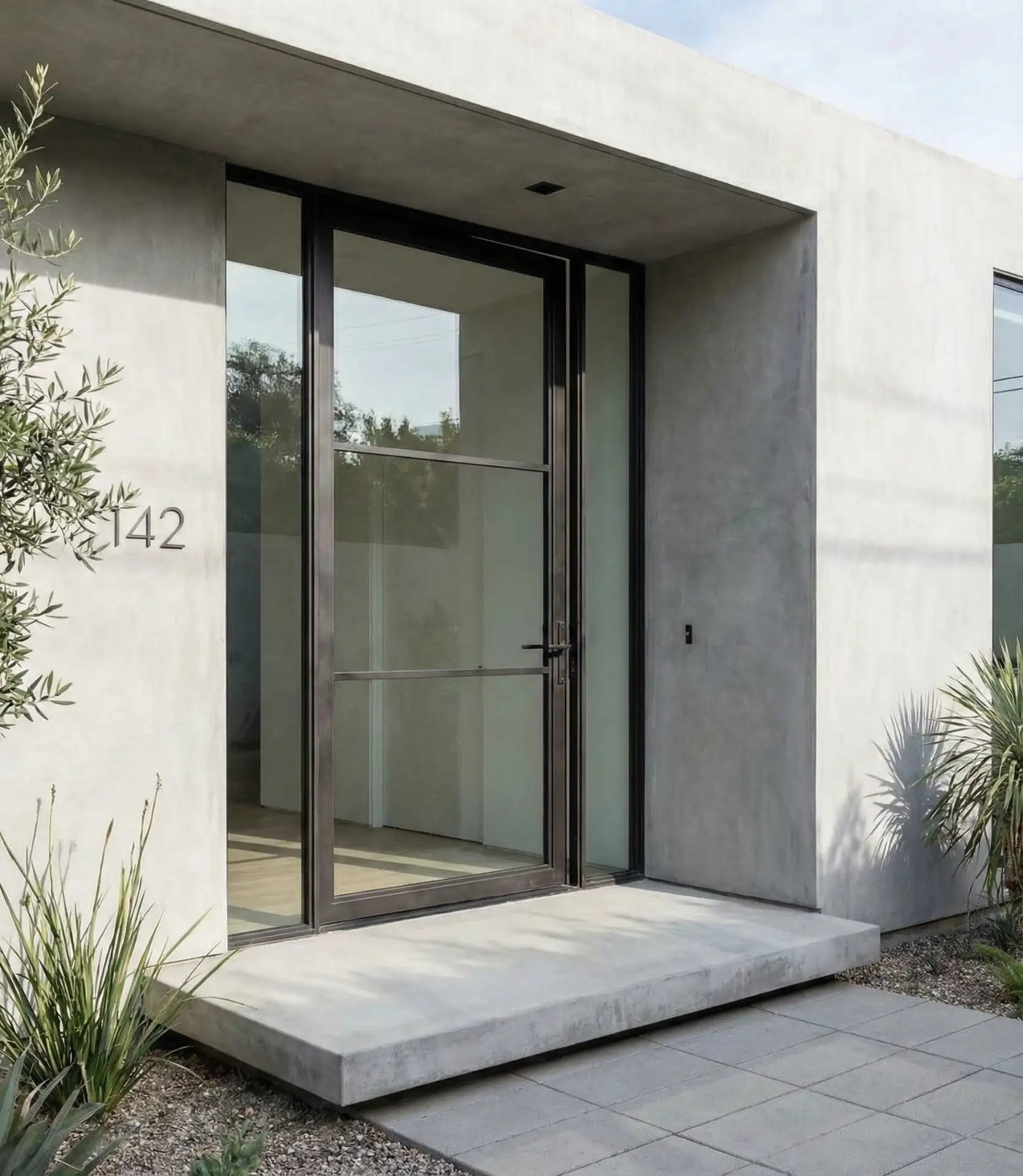
This is a common approach to homes in coastal Southern California and South Florida, where street appeal and effective indoor/outdoor living are of utmost importance. For tempered glass, which is usually more expensive, the panels will be laminated for safety so they do not shatter into jagged, dangerous pieces.
This works best where there’s no noise; glass reacts differently when you use it instead of solid materials. With the need to maintain the wow factor, when it comes to budget, use about $150 to $250 per linear foot. Also, it is in low-crime neighborhoods and has beautiful yards.
11. Charred Wood Shou Sugi Ban Fence
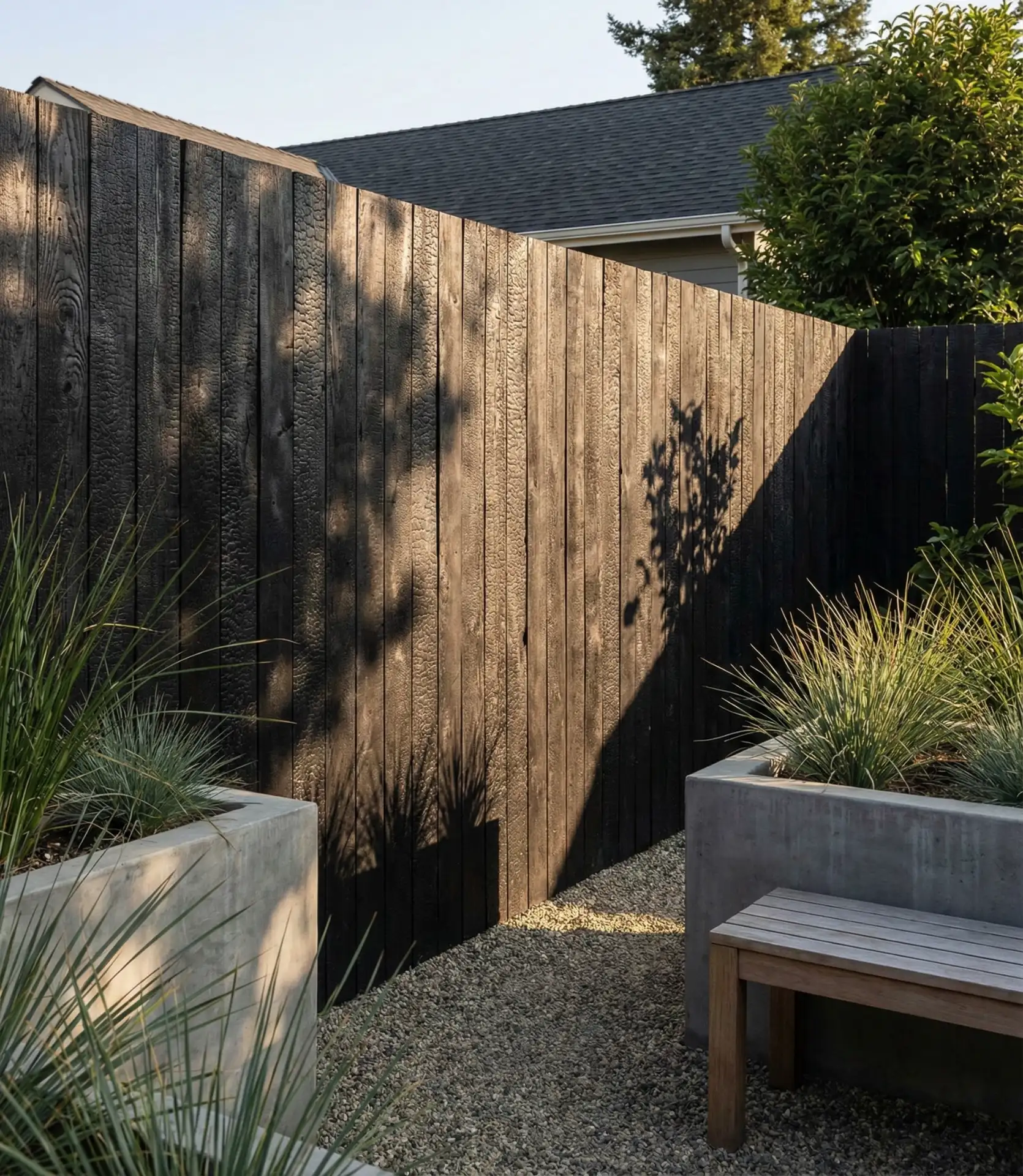
This technique was first used in ancient Japan; it was used to create harmony in nature and the built world. The texture was deep black and distinguished and became weather resistant. The technique involves taking wooden planks and burning them extensively until carbonization occurs; afterwards, they are sealed so the charcoal stays in. This mesmeric copy of Shou Sugi Ban works well in a modern setting. This technique is also good to preserve the wood against rot, insect damage, and of course, the sun. Best used in backyards where the installation longevity is an important factor. 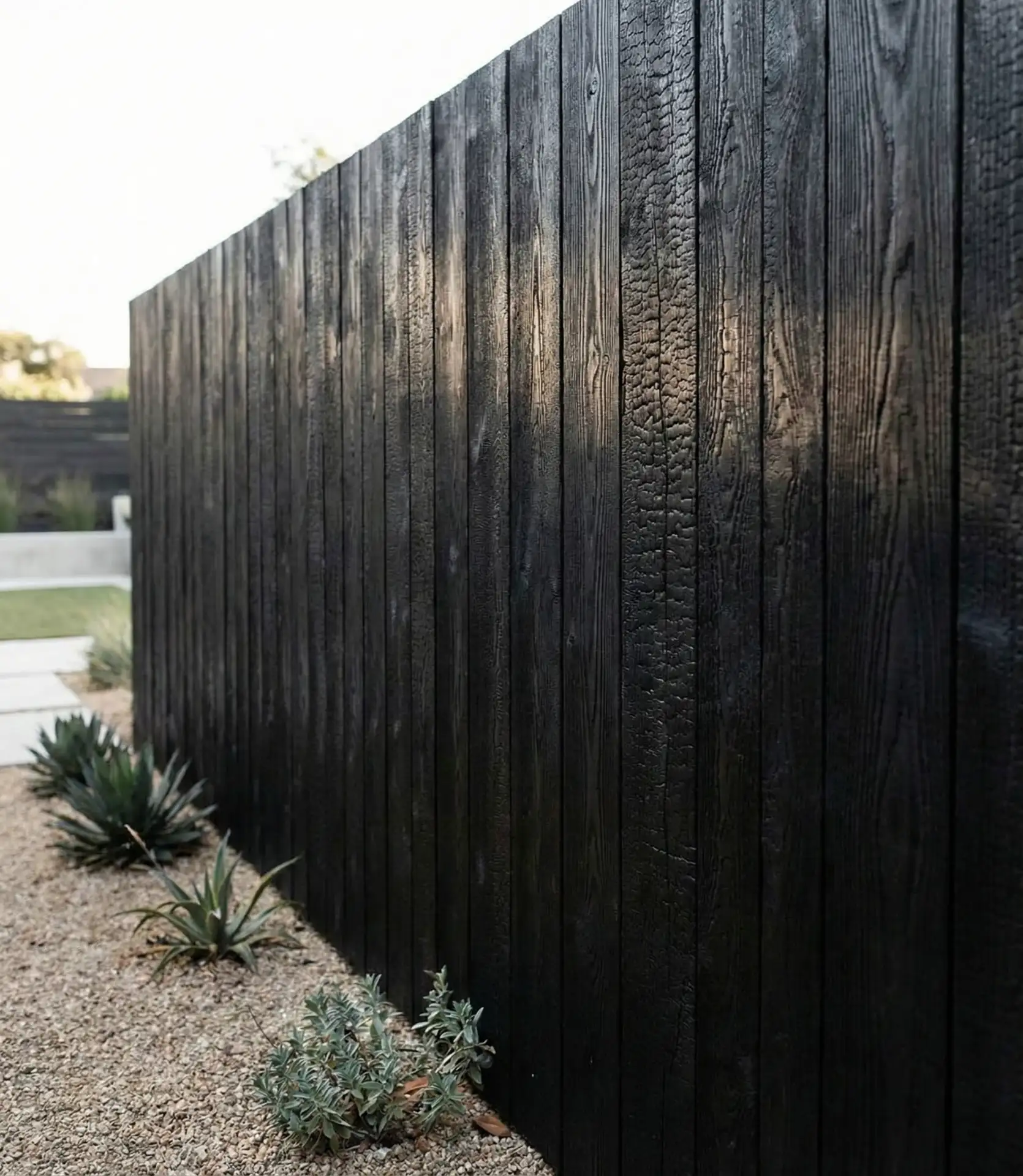
Budget-wise, shou sugi ban costs about 20-30% more than standard cedar fencing upfront, but you’ll save on staining and sealing over the years since the charred surface is naturally protected. Many contractors now offer this service, or adventurous DIYers can torch and seal boards themselves with proper safety equipment. The charred finish pairs beautifully with light-colored stucco or white siding, creating high contrast that photographs incredibly well—no wonder it’s all over Pinterest feeds from Brooklyn to Portland.
12. Gabion Stone Wall Enclosure
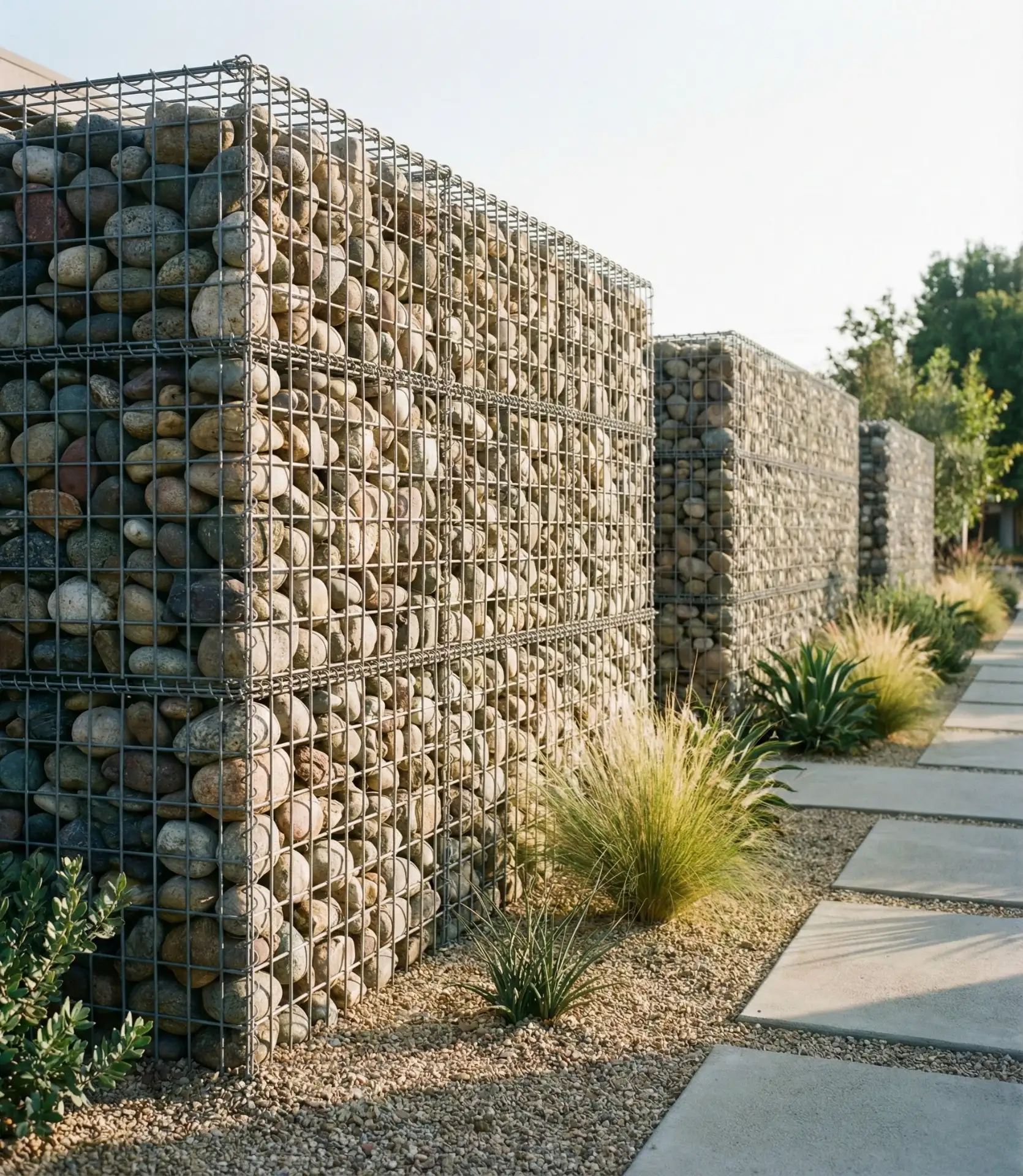
Gabion walls use metal wire cages filled with river rock, fieldstone, or crushed granite to create a robust, textured boundary. The steel mesh holds the stones in place while allowing water drainage and air flow. This industrial-meets-natural look suits modern homes, especially those with xeriscaping or rock garden themes. The irregular stone texture softens the geometric cage structure, and you can vary stone colors to match your landscape palette. 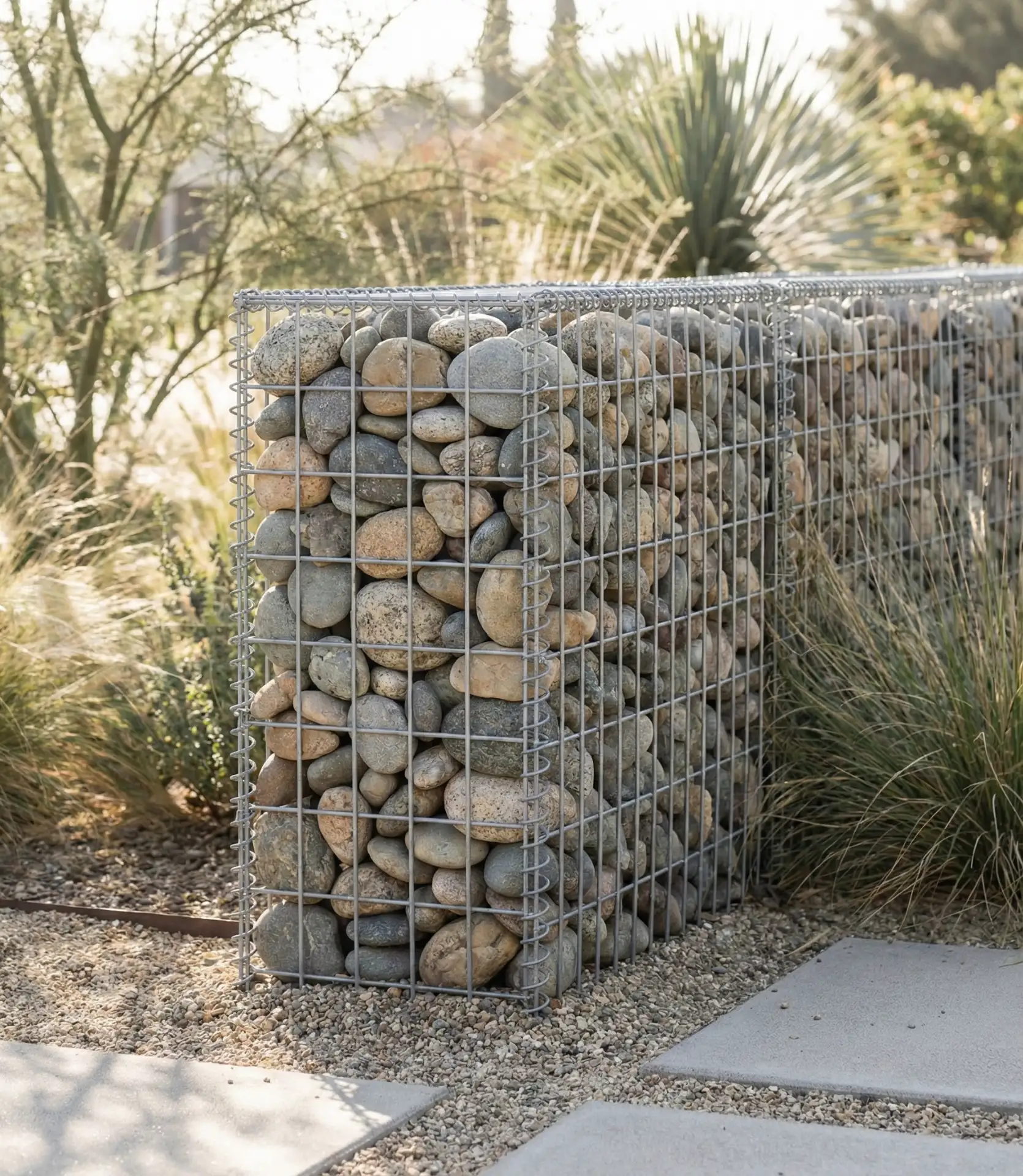
Where it works best: sloped properties where retaining wall function meets fence aesthetics, or in regions with abundant local stone that keeps material costs down. The Southwest, Rocky Mountain states, and parts of Texas see a lot of gabion fencing because the materials blend seamlessly with desert and mountain landscapes. One expert tip: choose stones sized appropriately for your mesh openings—too small and they’ll spill out, too large and the wall looks sparse. Aim for rocks that are 1.5 to 2 times larger than the mesh holes.
13. Laser-Cut Metal Decorative Panels
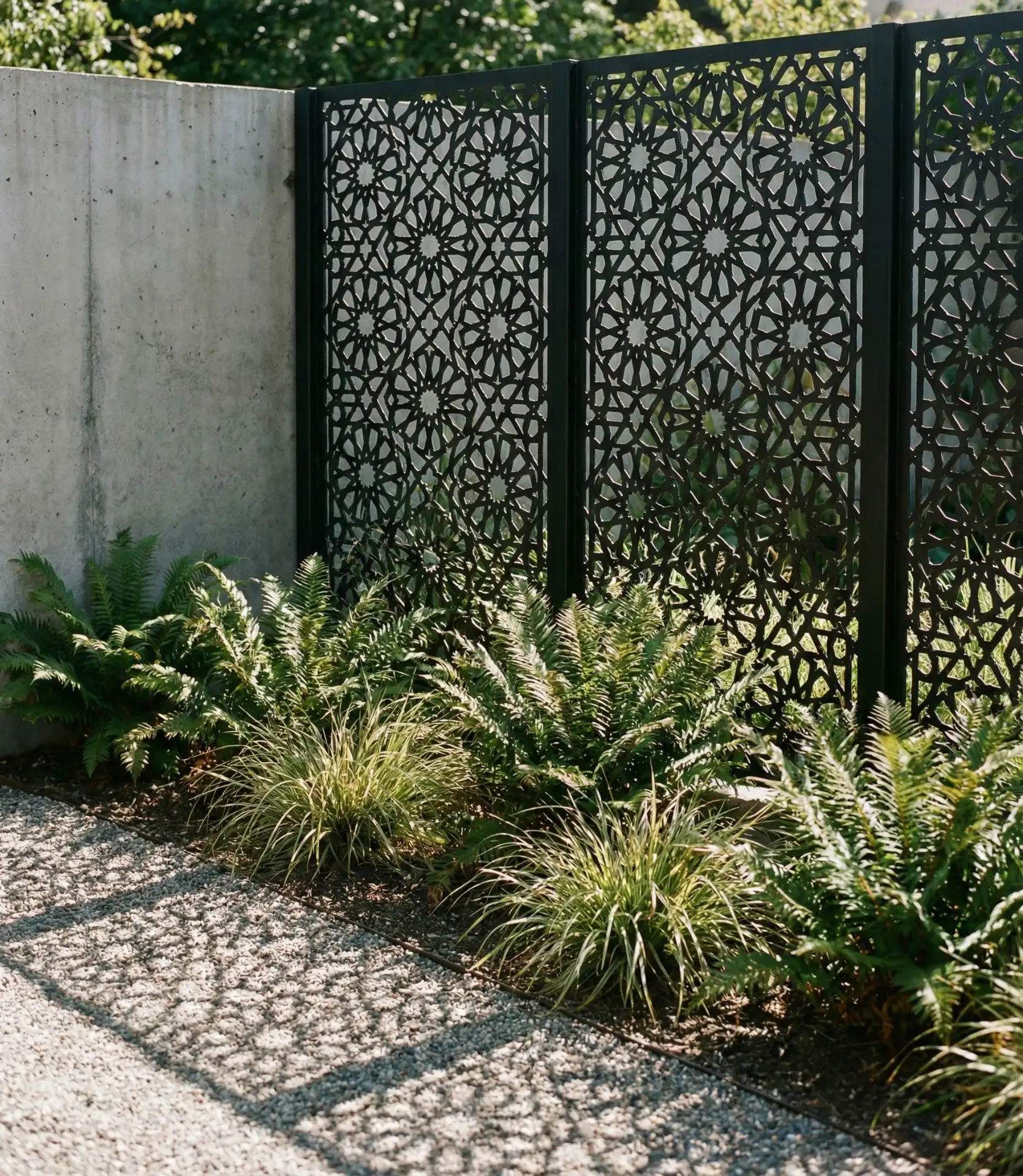
Turning functional fencing into outdoor sculptures are laser-cut metal panels. They can be laser-cut with geometric and botanical designs. These perforated panels provide nighttime privacy and beautiful shadow patterns during the day. With the laser technology, custom-cut designs to your architectural details are easy to make. Steel and aluminum are the most used materials and come powder-coated in colors like matte black and weathered bronze. 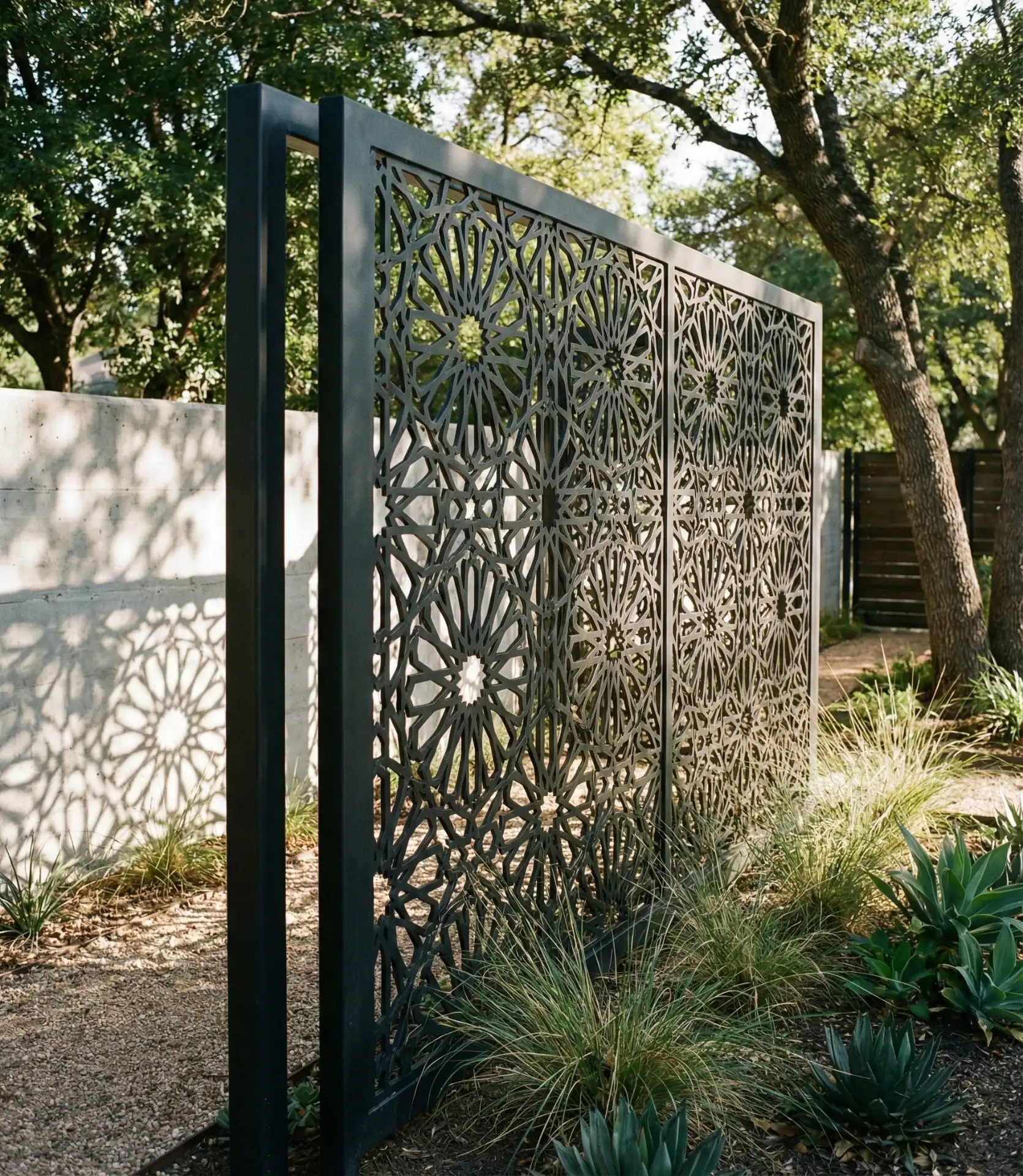
A Phoenix landscape architect stated that panels are the most requested client patio feature for providing shade and privacy while letting breezes flow through, important for hot climates. 30 to 50 percent of perforated panels are open to allow a balance of privacy and airflow. A common mistake is ordering the panels without considering the shade they will create during the day. To know what effect you will get, request from your fabricator sample renderings with sun angles for your fence’s specific orientation and location.
14. Reclaimed Barn Wood Rustic Boundary
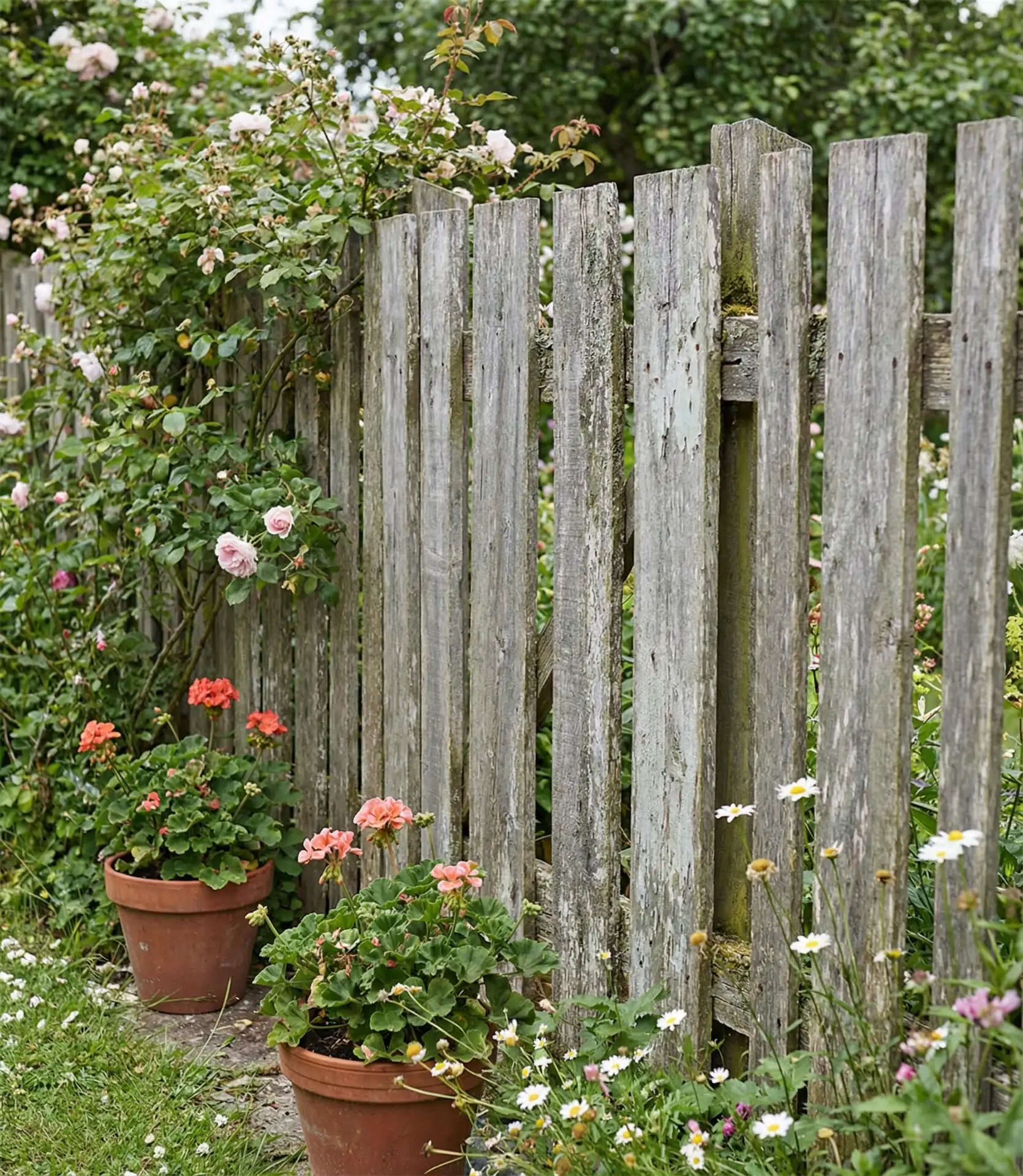
Installing a fence with reclaimed barn wood instantly adds character and a historical touch to your property. 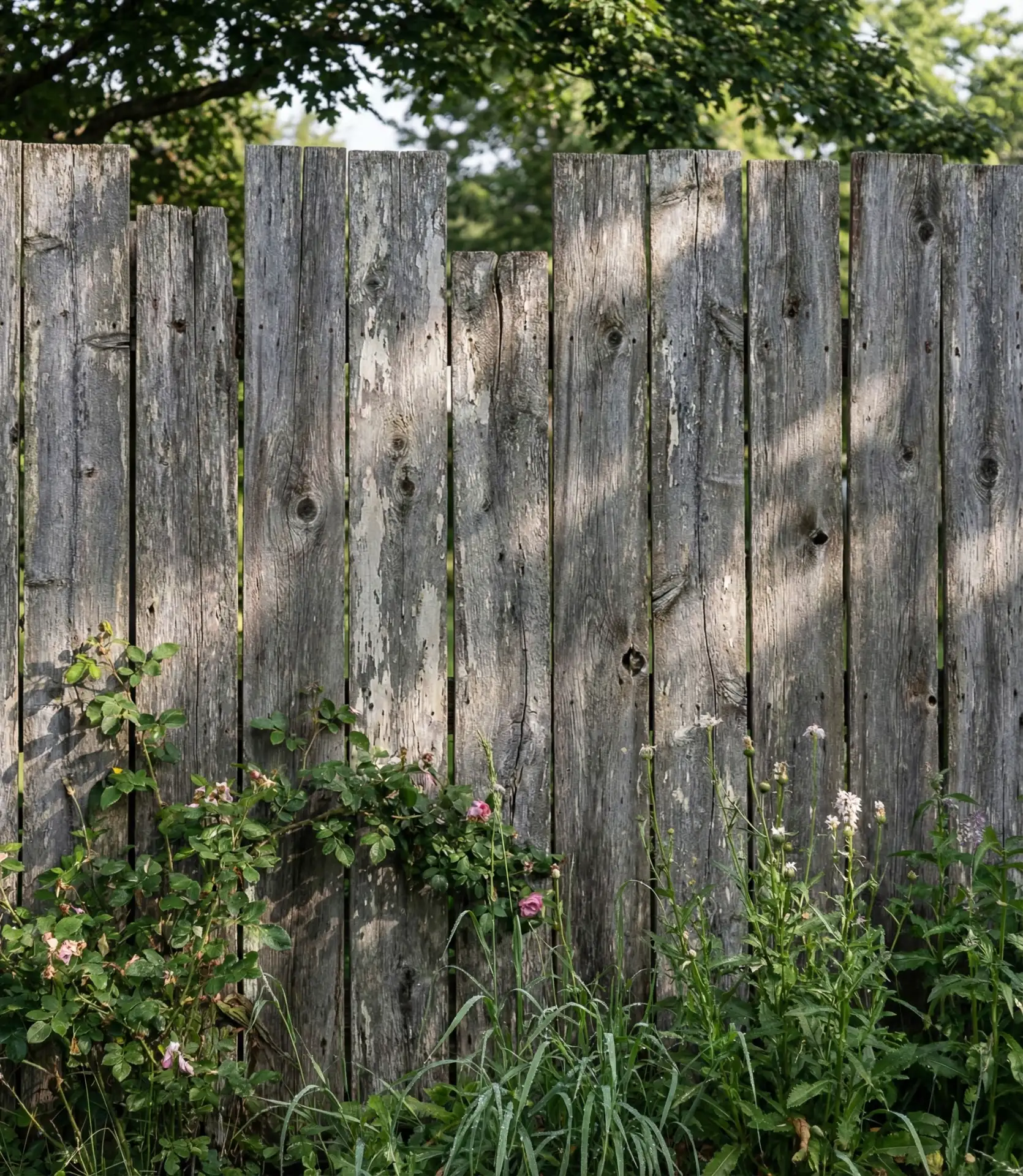
Real homeowner behavior: many people source reclaimed wood from local demolition companies, architectural salvage yards, or even Craigslist, which keeps costs reasonable and adds a treasure-hunt element to the project. The wood is already aged and dimensionally stable, so it won’t warp or twist like fresh lumber might. Just make sure to remove any old nails, check for rot in the ends, and treat with a clear sealer to prevent further weathering if you like the current color. Expect to pay $30-$50 per linear foot for materials and installation.
15. Living Wall Vertical Garden Fence
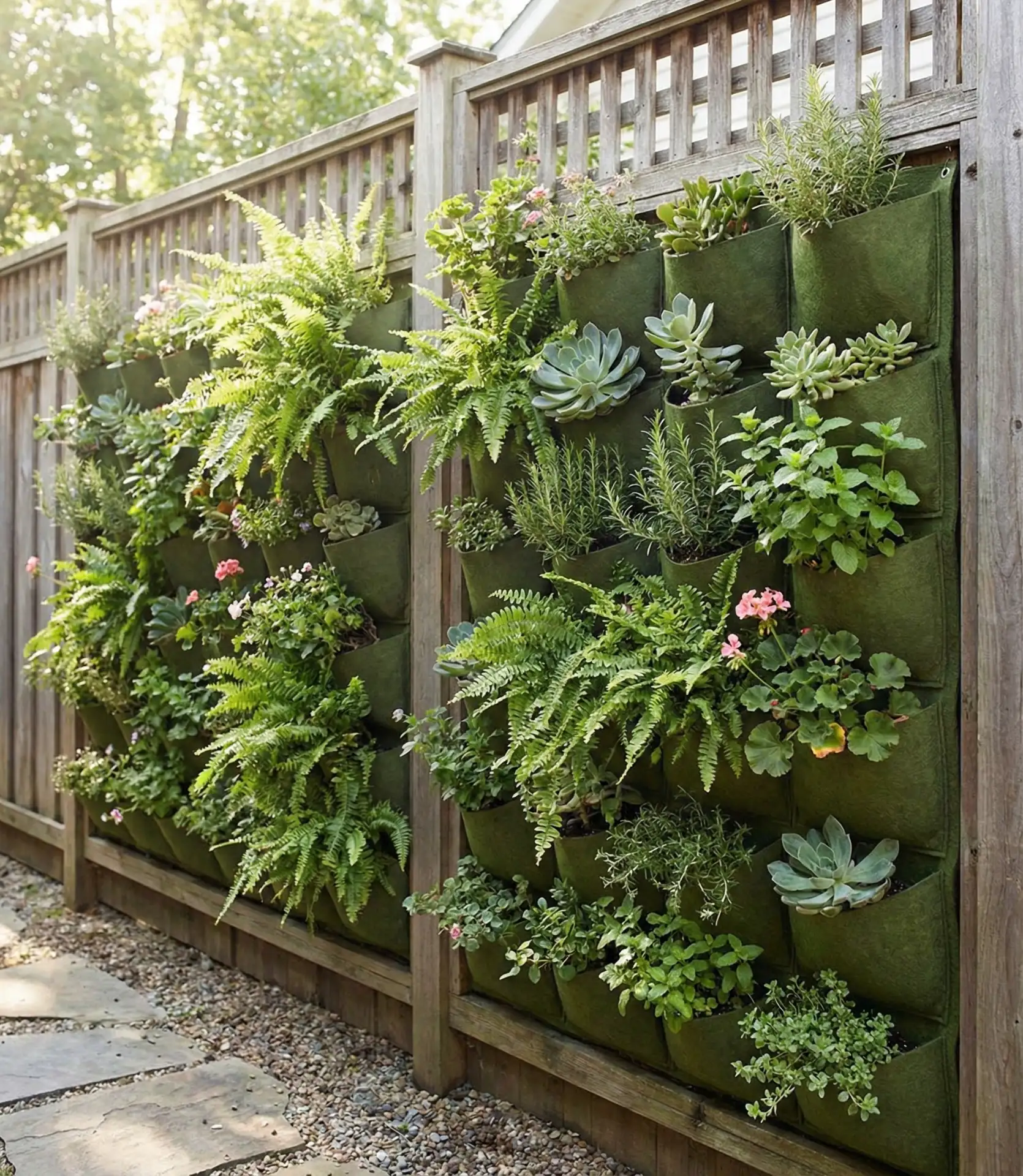
A vertical garden fence uses modular planters or felt pockets mounted to a frame, creating a lush green wall of herbs, succulents, or flowering plants. This living boundary improves air quality, reduces noise, and provides habitat for beneficial insects. The system requires drip irrigation or regular hand-watering, but the visual payoff is stunning. Choose drought-tolerant plants for easier maintenance, or go with edibles like lettuce, strawberries, and trailing tomatoes for a functional garden feature.
In metropolitan areas such as San Francisco, Chicago, and Brooklyn, vertical gardens are able to transform and maximize tight side yards and little patios into flourishing green spaces, which traditional gardens are unable to utilize. The plants serve as natural climate control, keeping adjoining walls cooler during hot summer months. Practical insight: install a timer-controlled drip system from day one—hand watering gets old fast, especially during summer vacations. Choose plants with similar water needs for each section, and rotate seasonal varieties to keep the wall looking fresh and full each season. Budget around $75-$150 for installed walls with irrigation.
16. Corrugated Metal Industrial Fence
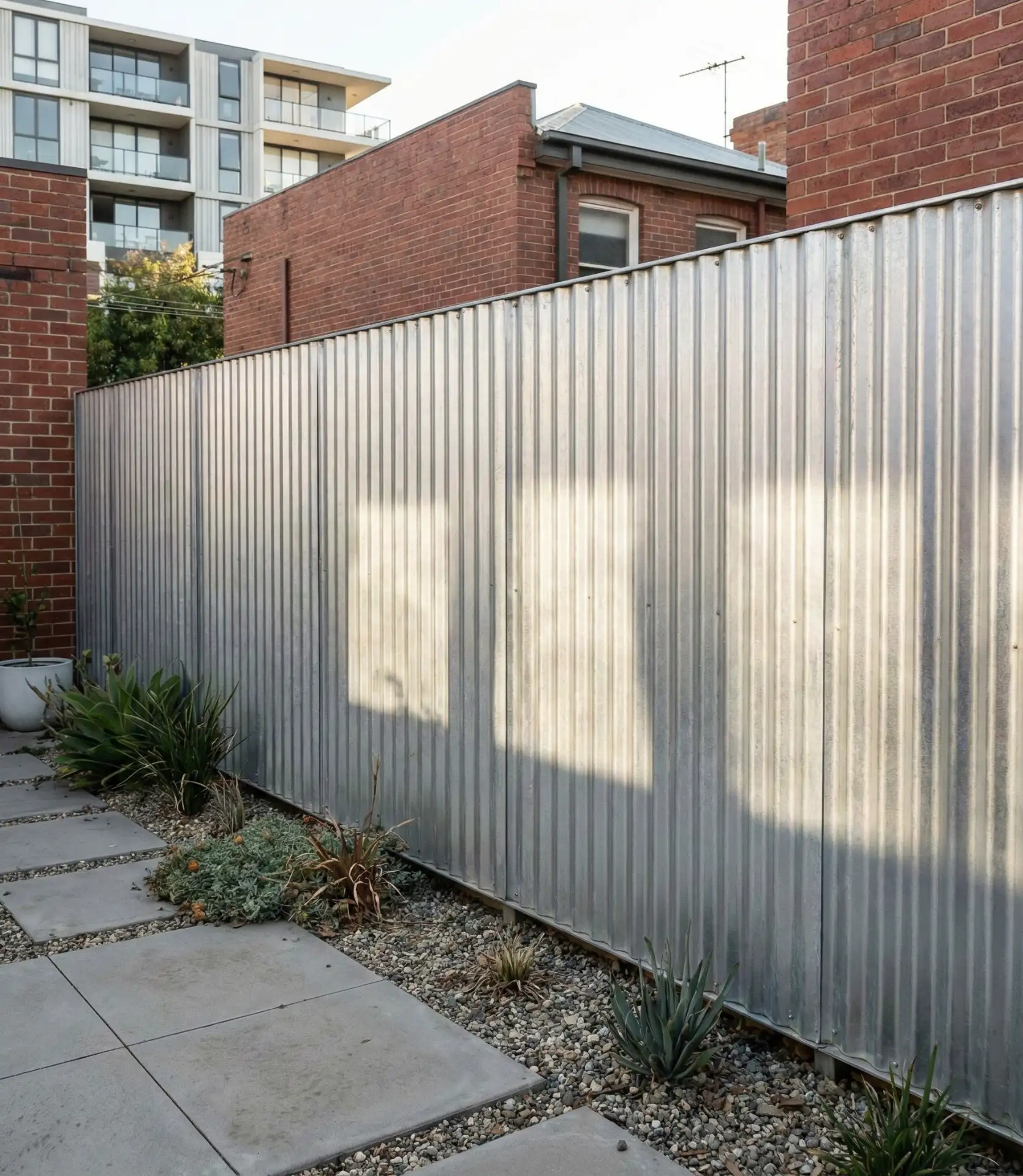
The fence provides a unique mix of modern, industrial design with a high level of durability. The ribbed, corrugated design adds structural interest and strength, and the galvanized and Corten steel options come in bright silver and a russet finish. These fences are ideal for urban backyards, loft-style homes, and any property for which low maintenance and high security are essential. The panels are easy to install, are lightweight, and, unlike darker materials, reflect heat and do not absorb it. 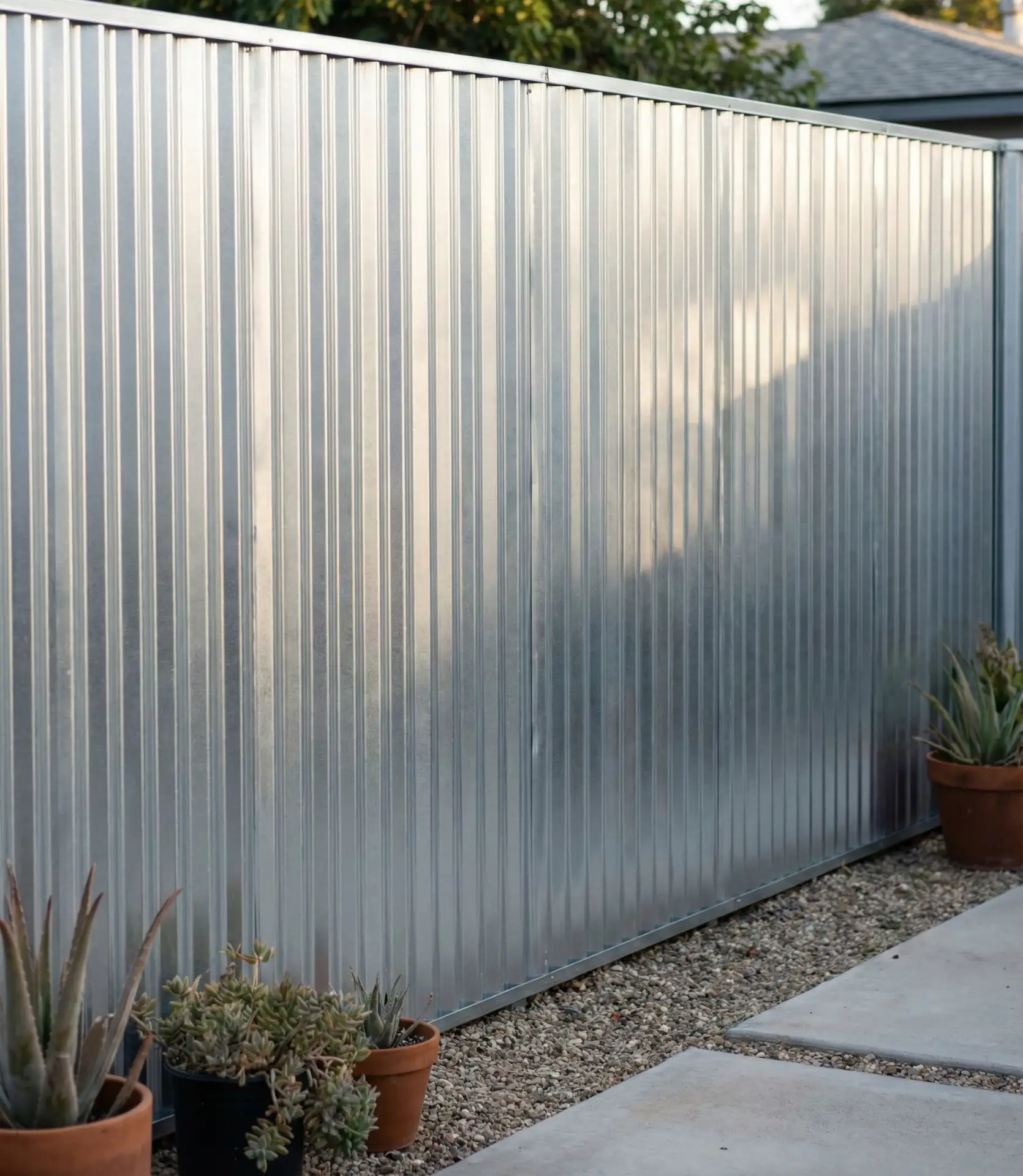
A contractor in Austin mentioned that corrugated metal fencing has exploded in popularity for ADU (accessory dwelling unit) projects where building codes require fire-resistant materials between structures. The metal won’t rot, warp, or attract termites, and hose-spray cleaning is all it needs. One common mistake is installing without noise considerations—metal can amplify sound from rain or hail. Adding a layer of outdoor-grade acoustic insulation behind the panels or planting dense shrubs in front dramatically reduces noise transmission. Expect costs around $25-$40 per linear foot.
17. Cedar Shadowbox Privacy Fence
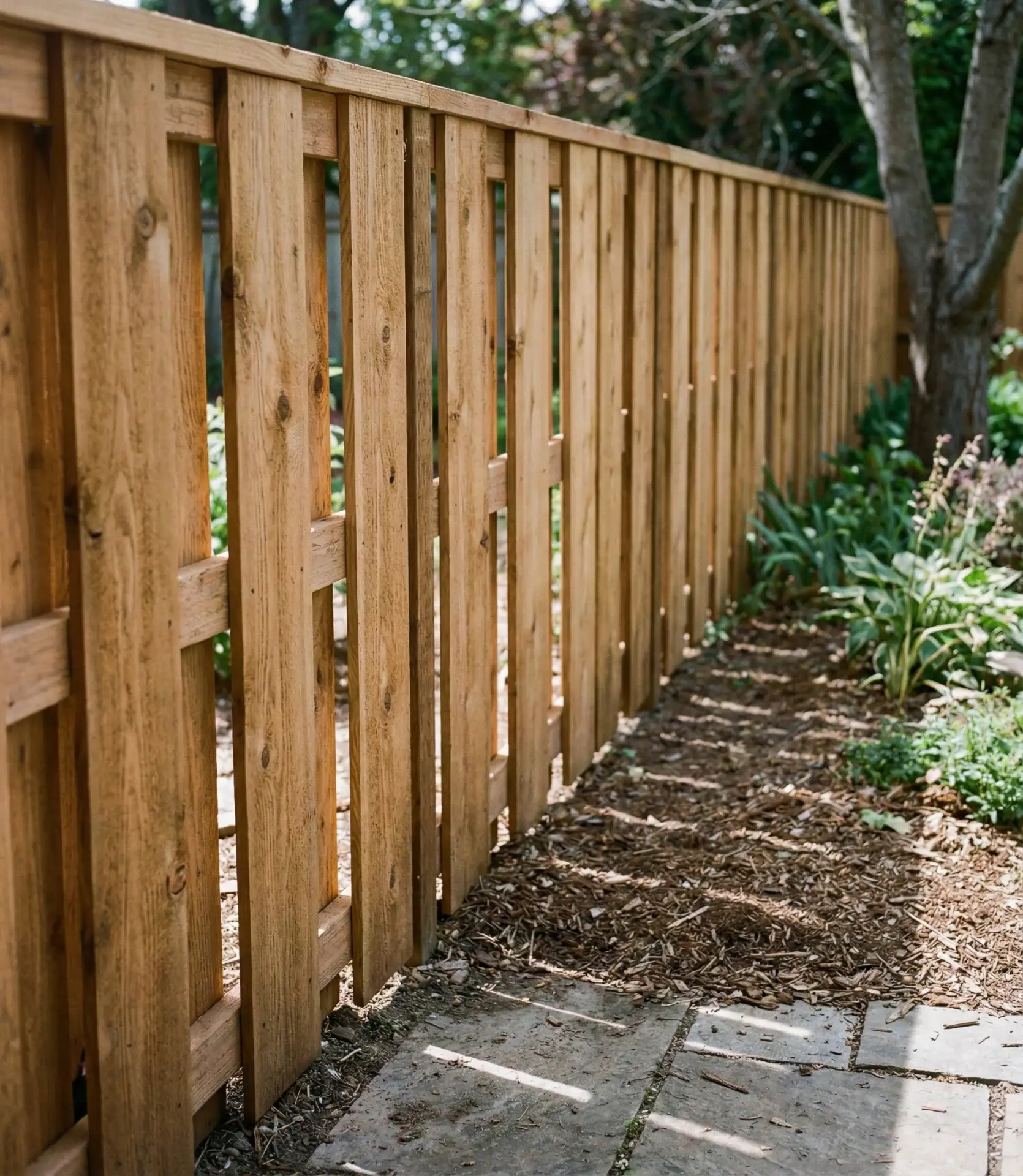
A shadowbox fence has a construction that consists of alternating a set of wooden boards on both sides of the horizontal rails, which then creates a dimensional pattern without a “bad side” to it. The construction has a good degree of privacy if someone is looking at it from a direct view, while still letting air flow through the gaps. The boards on top of one another also play a role in the structure’s visual aesthetic, for they create shadow lines that change throughout the day. The wood that is used is a natural rot-resistant and insect-resistant cedar, and the warm honey-colored wood can weather to a silver-gray color if untreated or can also be stained to keep the original color. 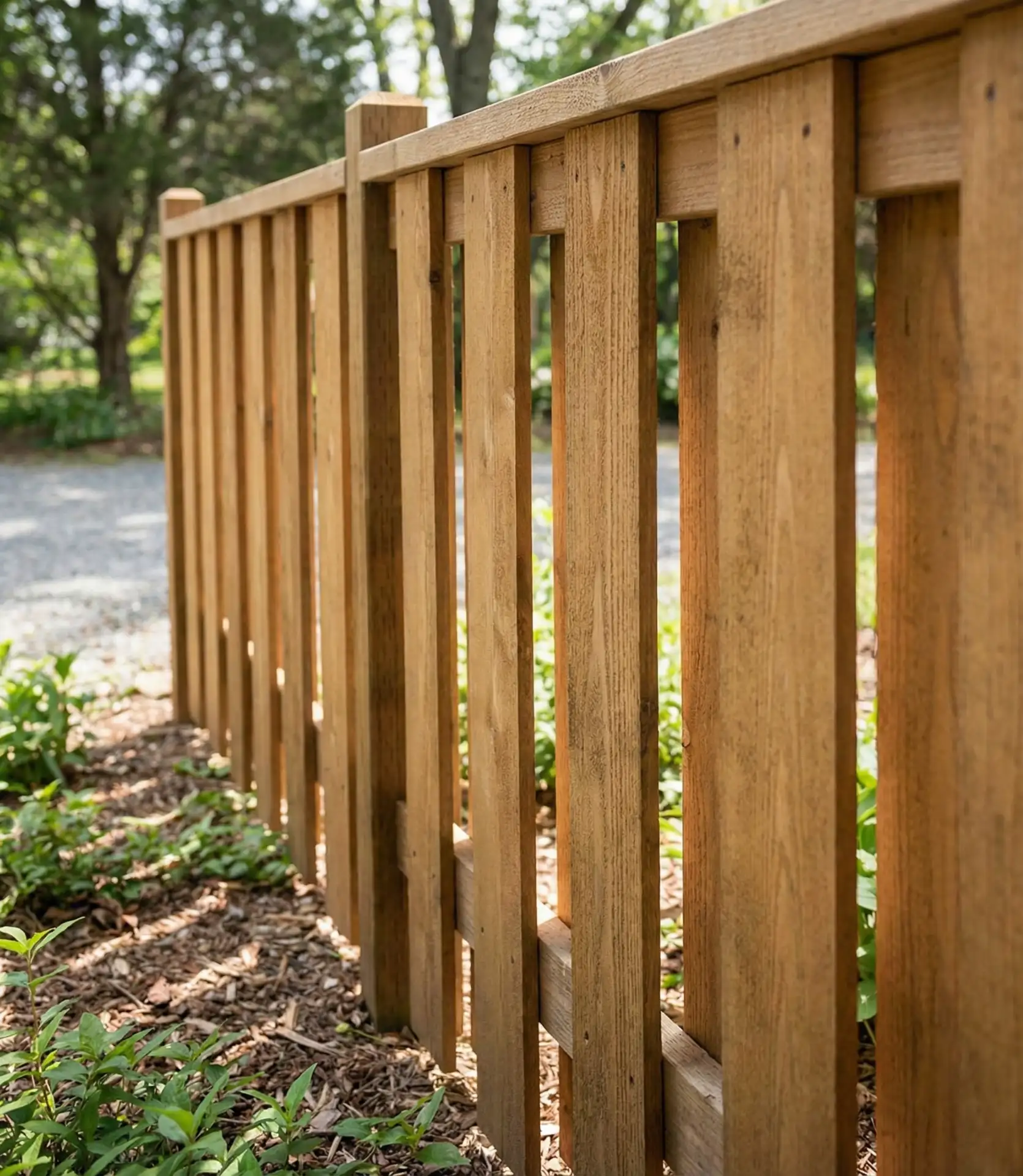
The structure’s construction is best in traditional suburban neighborhoods where good neighbor aesthetics matter, since both sides of the fence get to look equally finished, and there is no argument about which side of the property gets the “nice” side of the fence. During the installation, the spacing of the boards can also be adjusted for the desired aesthetics, as a closer spacing will improve privacy, whereas a wider spacing improves airflow and the presence of dappled light within the area.
Shadowbox fencing is a favorite choice of many homeowners in the Midwest and Northeastern areas because of strong winter winds passing through, which results in reducing winds against a solid surface, reducing stress on the posts, and extending the fence’s life. To maintain the fence’s appearance, seal or stain it every 3 to 4 years.
18. Glass Block Wall Retro Modern
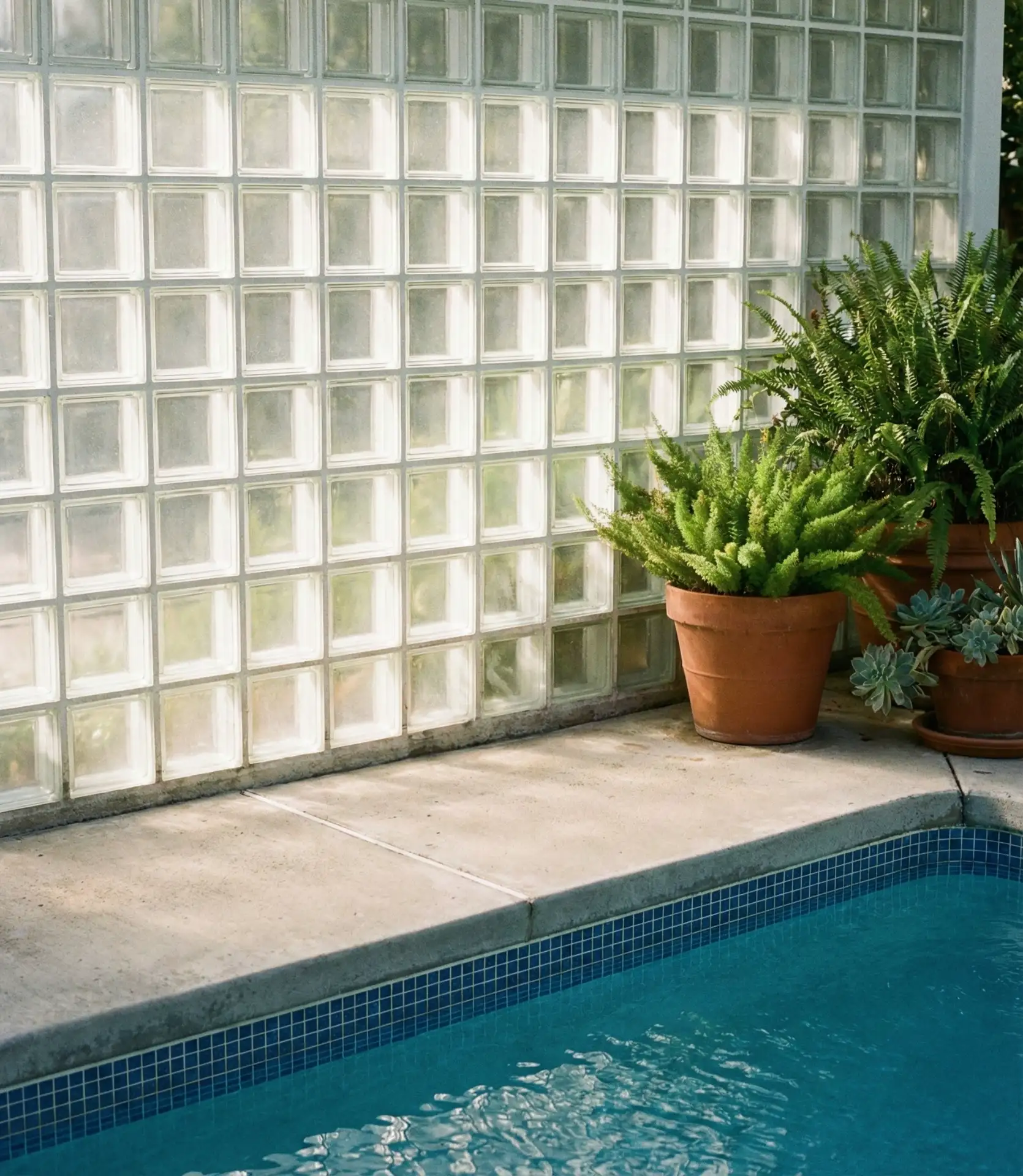
Glass blocks have a modern take and provide semi-translucent privacy, giving an unusual mid-century modern appearance. The thick, industrial-design glass units transmit light while also preventing clear sight. The blocks also fit well along pools, separating properties, or just as unique pieces in larger enduring fencing. The glass blocks are in varied colors and textures. 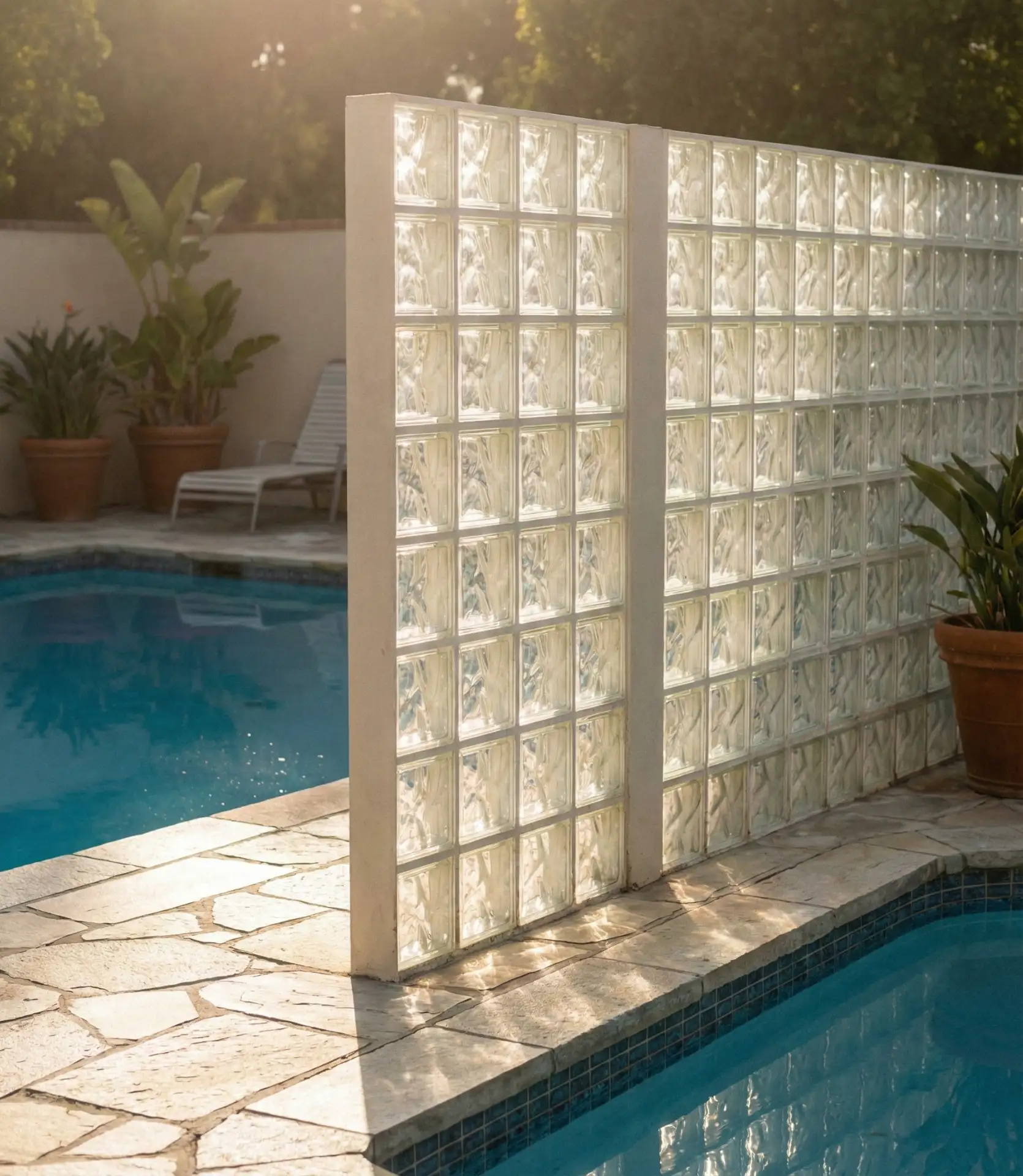
In South Florida and Southern California, glass block walls are especially popular around pools and spas where building codes require non-climbable barriers but homeowners don’t want to sacrifice natural light. The blocks are mortared like traditional masonry, so installation requires skilled labor. Expert commentary: glass blocks are nearly maintenance-free and won’t fade, rot, or corrode, but they’re heavy—your foundation needs to be robust. Plan on $60-$90 per square foot installed. The retro-modern look pairs perfectly with Palm Springs-inspired design or eclectic contemporary homes.
19. Rope and Post Nautical Boundary
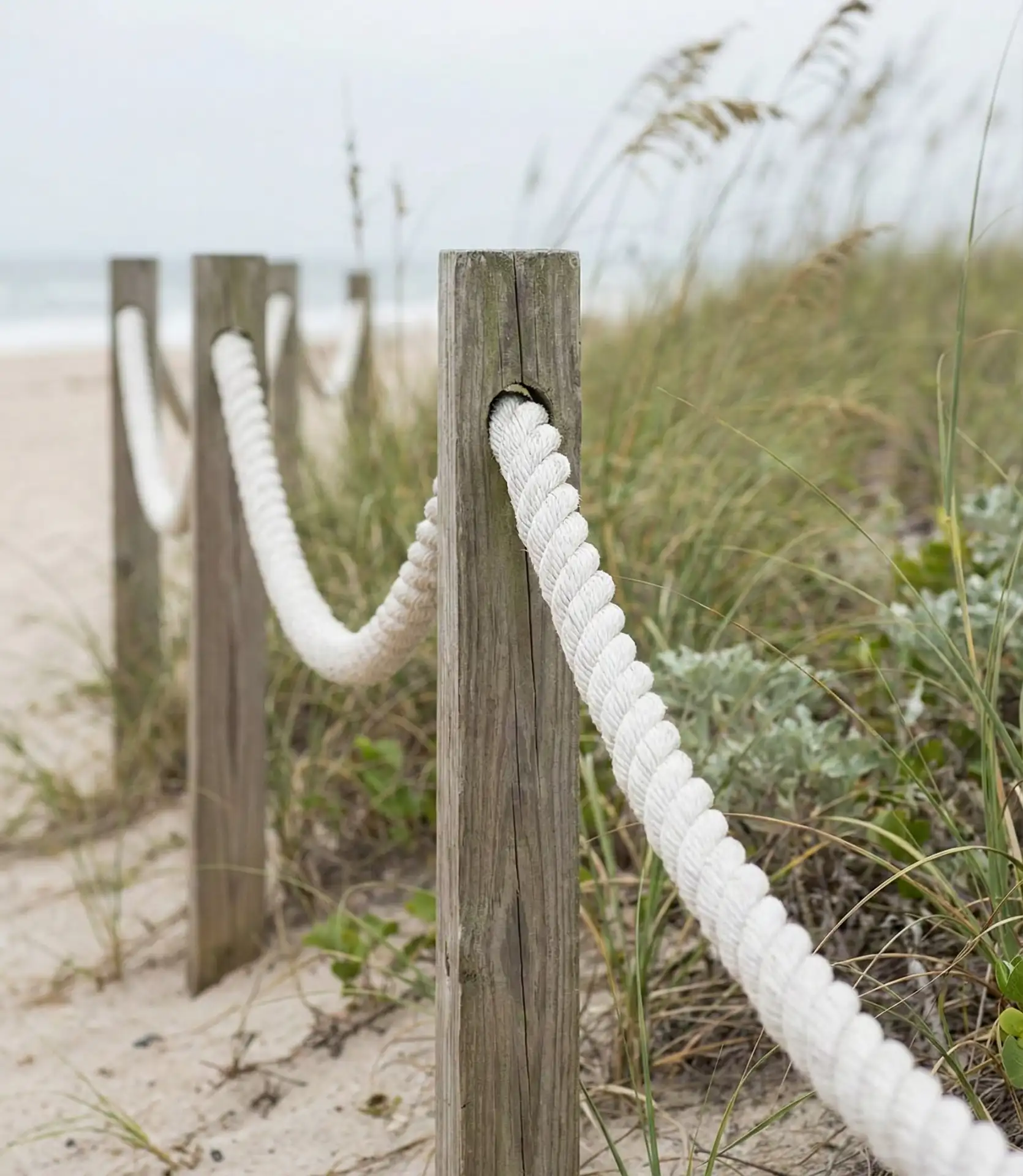
For coastal properties or front yard perimeters that need definition without solid barriers, nautical rope strung between wooden or metal posts creates a breezy, welcoming boundary. Thick marine-grade rope in natural hemp or synthetic white resists weathering and adds tactile interest. This style is purely decorative rather than functional for privacy or security, but it beautifully frames landscaping and guides foot traffic. Posts can be driftwood, turned cedar columns, or steel pipes depending on your aesthetic. 
A homeowner on Cape Cod installed rope fencing along her beachfront property line, threading the rope through eye bolts mounted on weathered posts. It’s purely symbolic—it won’t keep anyone out—but it signals property boundaries without blocking ocean views or disrupting the natural landscape flow. This approach is perfect for lakefront or oceanfront homes where harsh fencing feels out of place. Where it works best: low-traffic areas with established landscaping that provides real privacy, where the rope serves as a gentle marker. Costs are minimal, usually under $10 per linear foot.
20. Vinyl Lattice Garden Trellis Fence
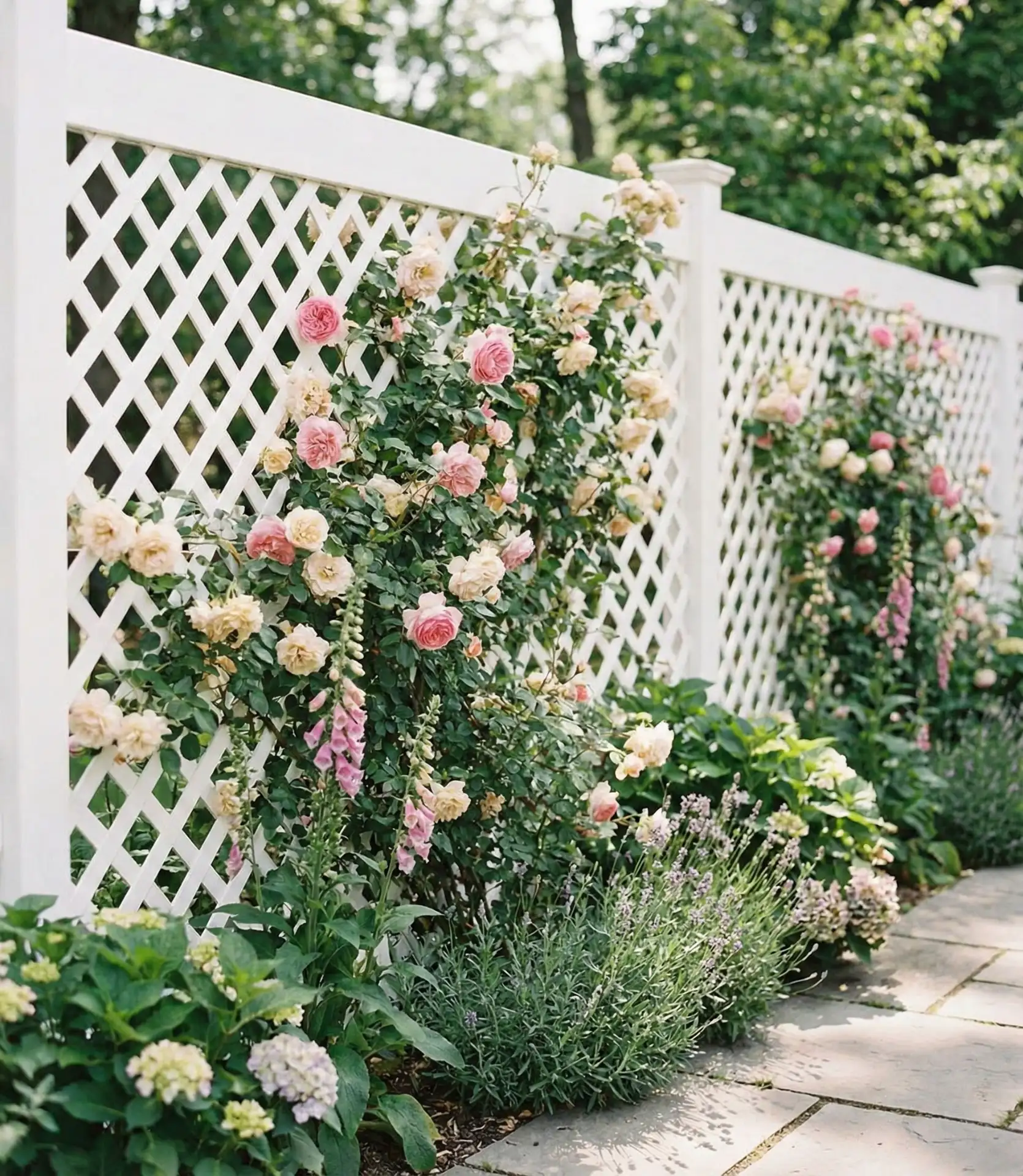
Vinyl lattice panels offer a maintenance-free alternative to traditional wood trellis fencing, perfect for supporting climbing roses, clematis, or ivy. The crisscross pattern provides structure for plants while creating a semi-private screen that feels open and cottage-like. Modern vinyl products resist fading, cracking, and insect damage without any painting or sealing. Available in white, tan, and gray, vinyl lattice suits garden-focused properties where the fence is meant to fade into the greenery over time.
Real homeowner behavior: many people use vinyl lattice as a cap on solid privacy fencing, where the lower 5-6 feet are solid boards and the top 2 feet are lattice. This adds visual lightness and allows air circulation while maintaining ground-level privacy. The vinyl won’t splinter like wood, making it safer around kids and pets. One pitfall to avoid: cheaper vinyl can look plasticky and fade after a few years—invest in high-quality, UV-stabilized products with good warranties. Expect to pay $20-$35 per linear foot installed, significantly less than composite or metal alternatives.
21. Corten Steel Weathering Panel Fence
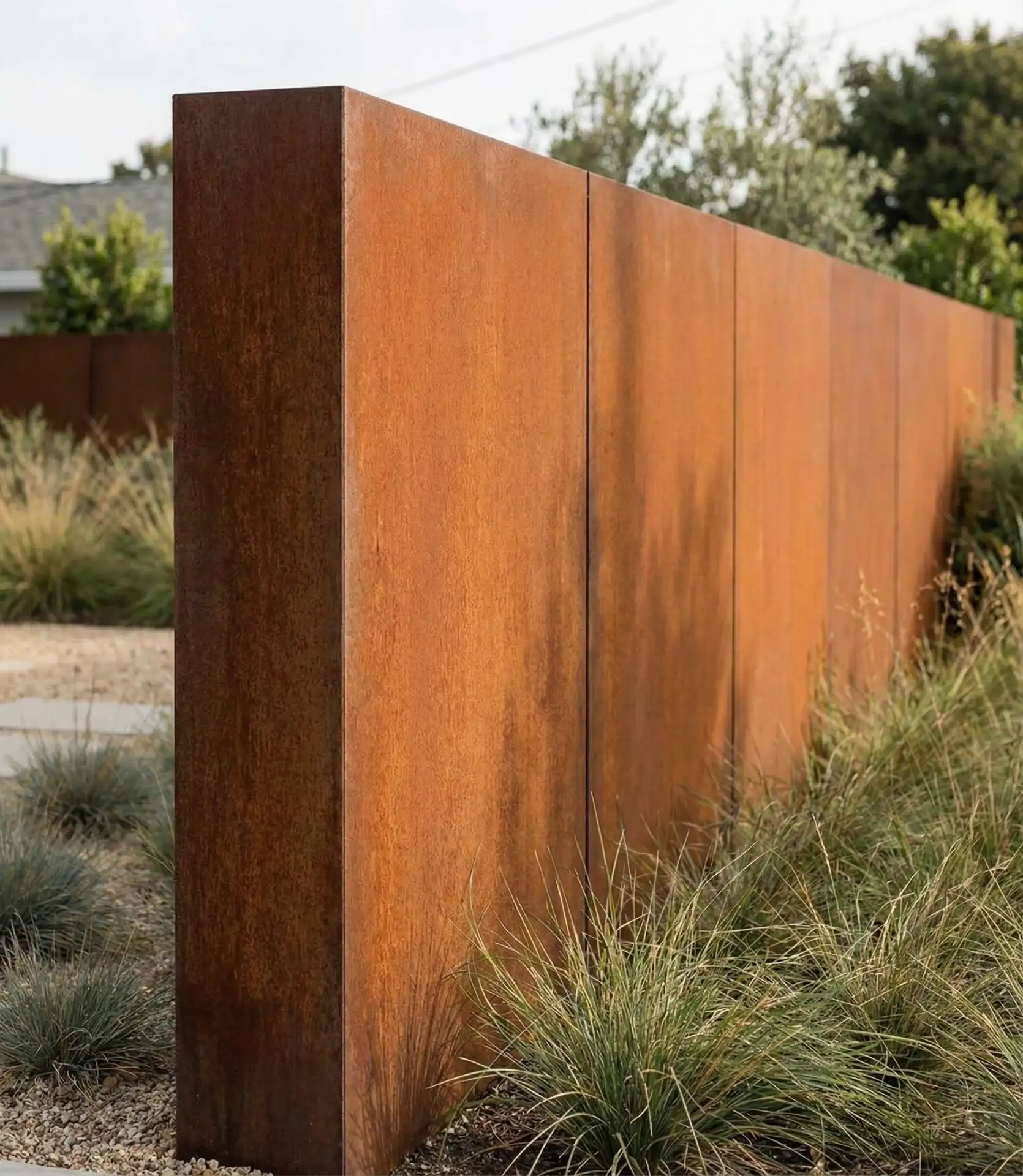
Corten steel will finish with an eye-catching rust-orange patina that will protect the metal and provide an interesting, ever-evolving finish. Its earthy color complements green landscaping and is a great contrast with modern hardscaping. This weathering steel stands as the most modern and functional architectural material. The surface is zero-maintenance and will not require painting, sealing, or any other treatment after the patina forms. 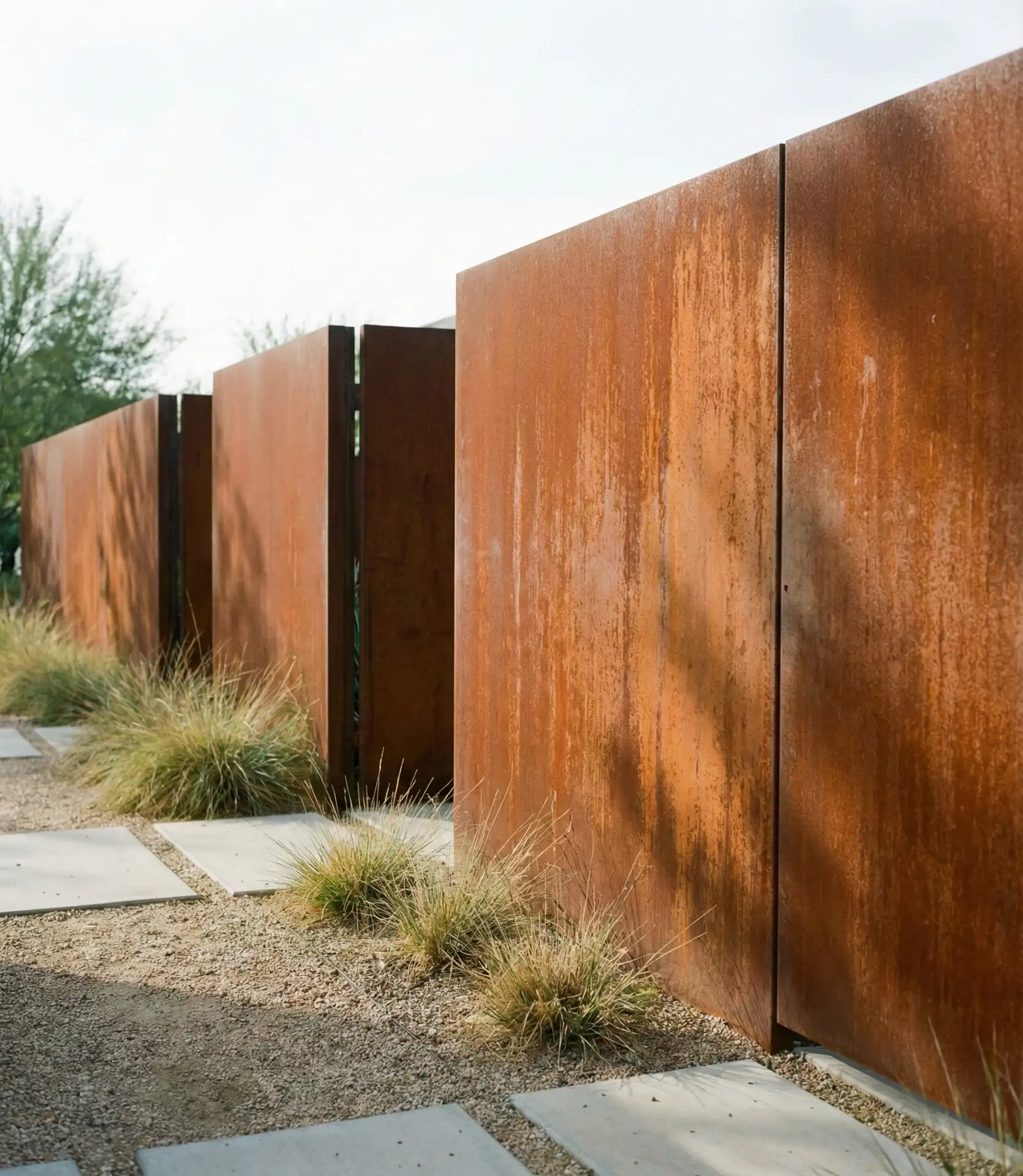
Corten fencing has become the definition of modern, high-end design in many American cities, such as Seattle, Denver, and Austin. The rust color complements the earthy and desert tones that the Southwest highlights. The aged patina finish is a favorite of homeowners seeking to bring the indoors outside and seamlessly merge with the ever-changing outdoors. Take into account that the rust will stain any light-colored surface/stone below it and that during the first few months of installation, rain will wash rust particles off and can discolor any light-colored surface below it. The budget is between $90 and $140 per linear foot.
22. Horizontal Slat Fence with Integrated Lighting
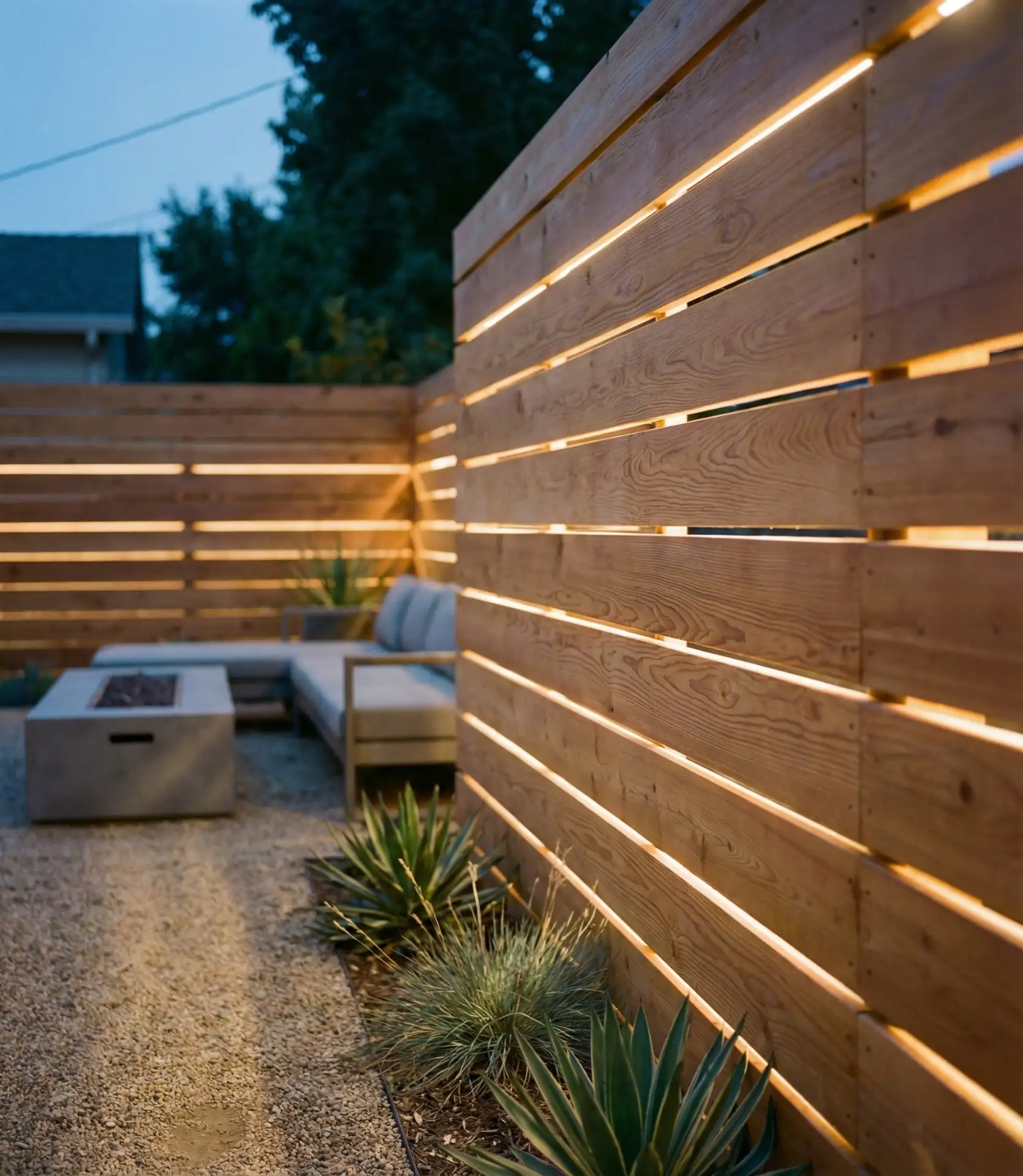
Embedding LED strip lighting between horizontal wood slats transforms a standard fence into an architectural feature that glows at night. The light washes across the wood grain, highlighting texture while providing ambient illumination for backyard entertaining. Low-voltage LED systems are energy-efficient and can be controlled via smartphone apps for color changes and dimming. This design works exceptionally well for modern house exteriors where outdoor living extends into evening hours. 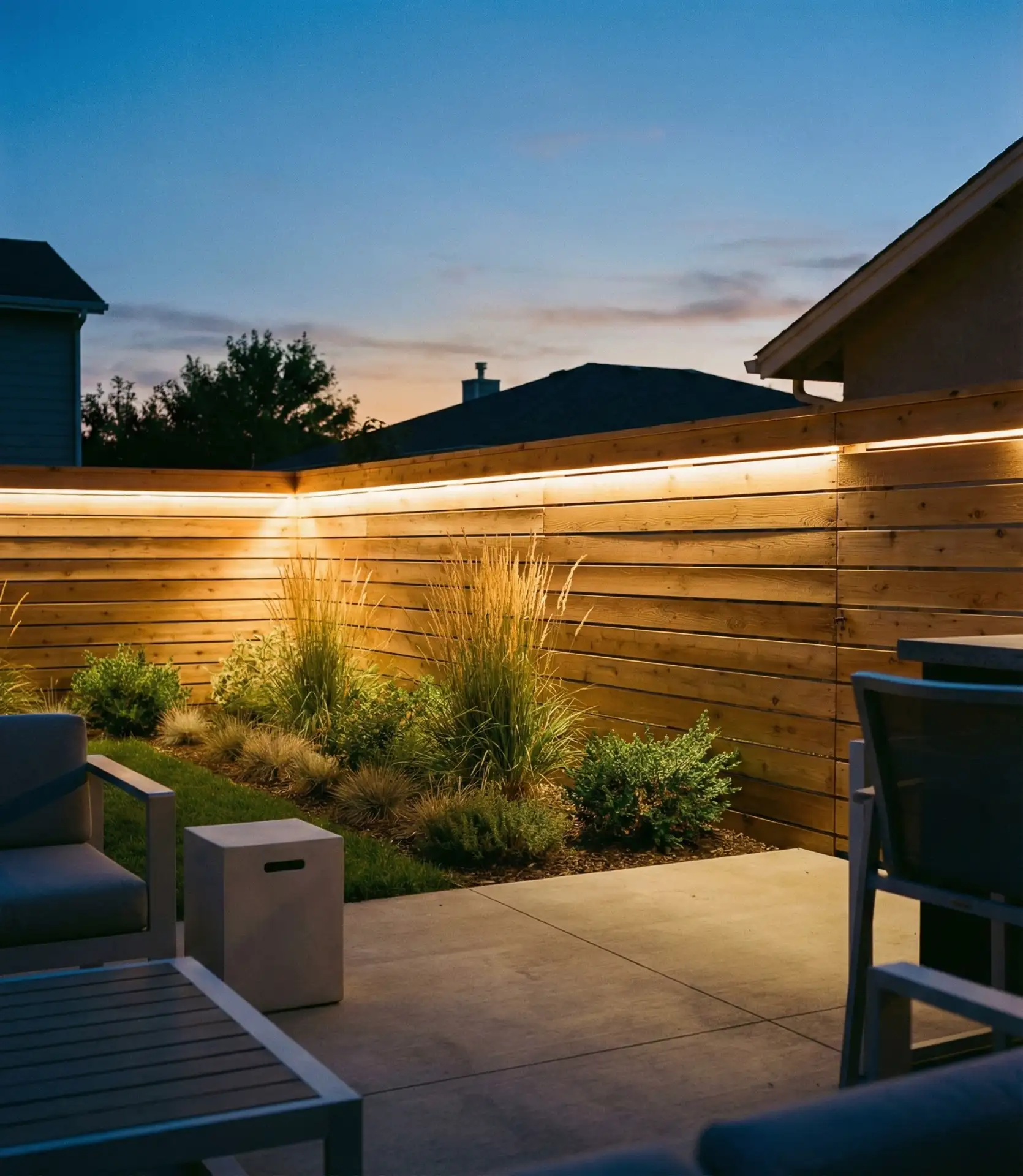
Where it works best: urban and suburban backyards where outdoor kitchens, fire pits, or dining areas need both boundary definition and functional lighting. Many homeowners run the wiring during initial fence construction, hiding transformers and controls in weatherproof boxes mounted to posts. A landscape designer in Los Angeles shared that her clients increasingly request programmable lighting that shifts from bright white during dinner parties to soft amber for late-night relaxation. Common mistake: using non-outdoor-rated LED strips that fail within a season—always specify IP65 or higher waterproof ratings and UV-resistant coatings.
23. Mixed Height Privacy Fence with Window Cutouts
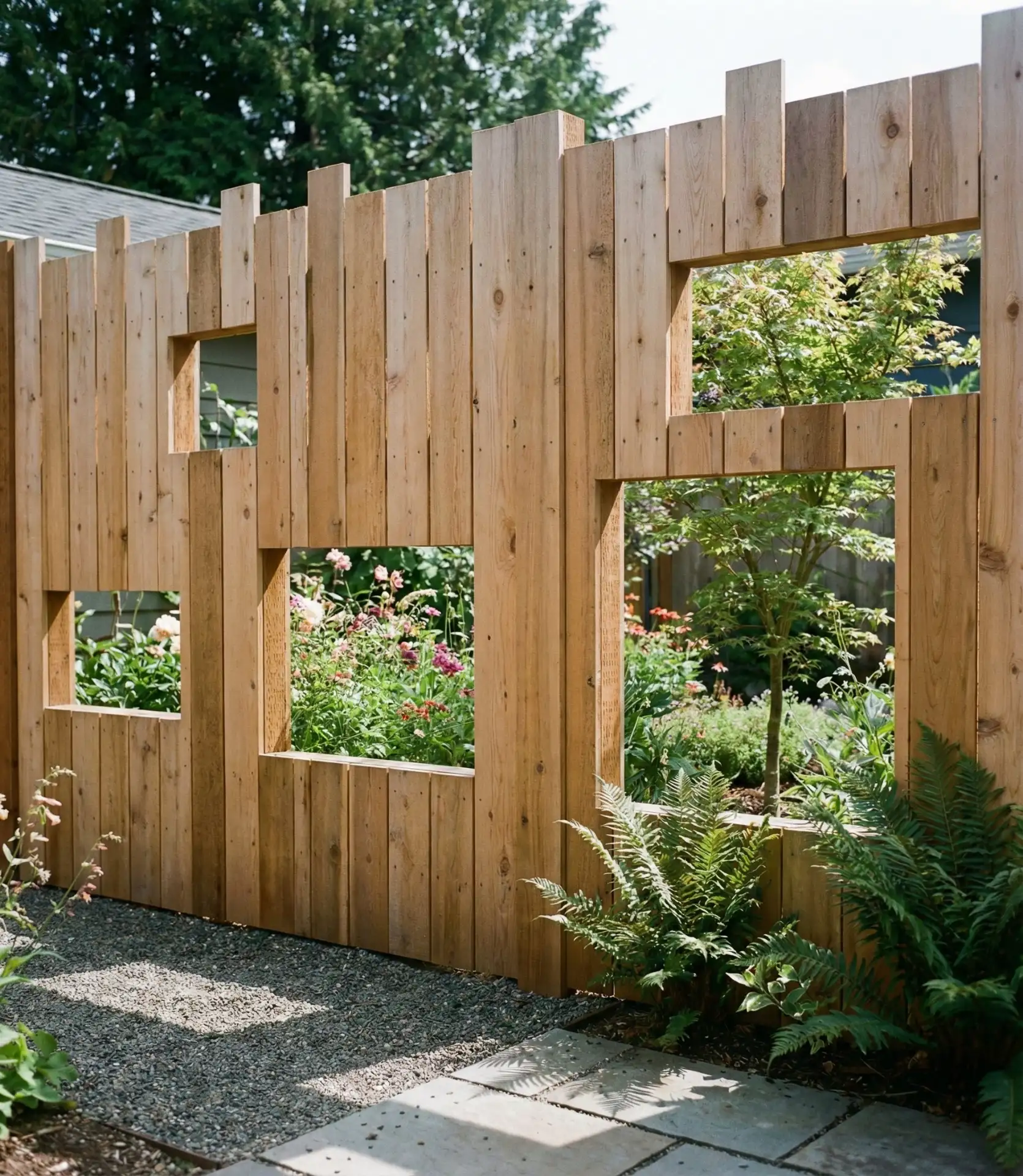
A privacy fence doesn’t have to be monotonous—incorporating deliberate height variations and framed window openings creates visual rhythm and strategic views. The lower sections might be 6 feet for full enclosure, while occasional 4-foot sections with open frames let you glimpse garden features or maintain sight lines to watch children play. Frame the windows with contrasting trim or metal edging to emphasize the architectural intent. This approach balances security with connection to surroundings. 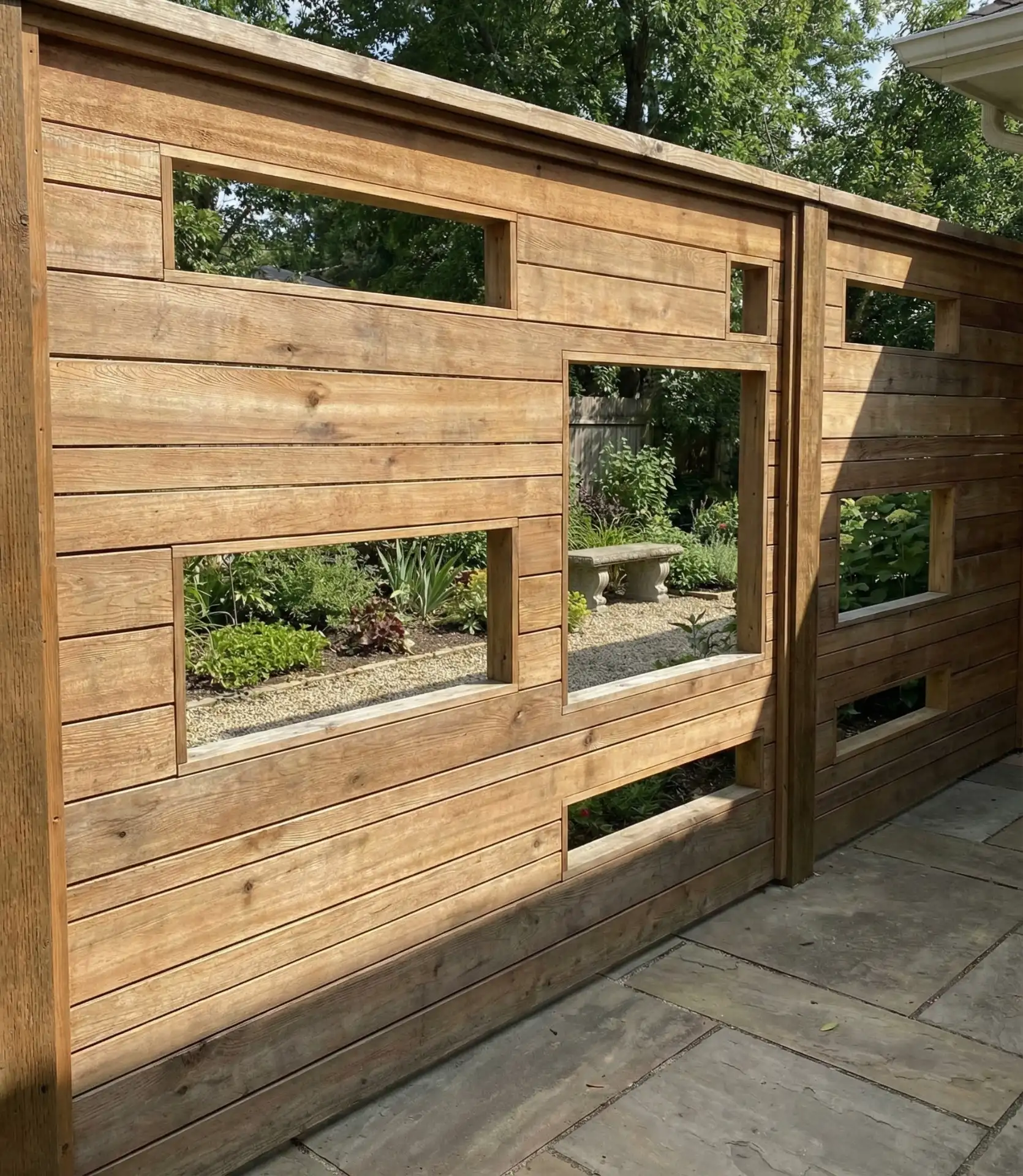
A homeowner in Charlotte installed this style to preserve her view of a mature magnolia tree in the neighbor’s yard while maintaining privacy around her patio. She positioned a 2×3-foot window opening at sitting height, perfectly framing the tree when viewed from her outdoor sofa. Expert-style commentary: consider sun angles when placing windows—east-facing openings bring morning light, while west-facing ones can create uncomfortable glare during afternoon entertaining. Add removable acrylic panels or outdoor curtains if you want flexibility to close off the views seasonally. Costs run about 15-20% higher than standard privacy fencing due to additional framing and labor.
24. Living Willow Woven Fence
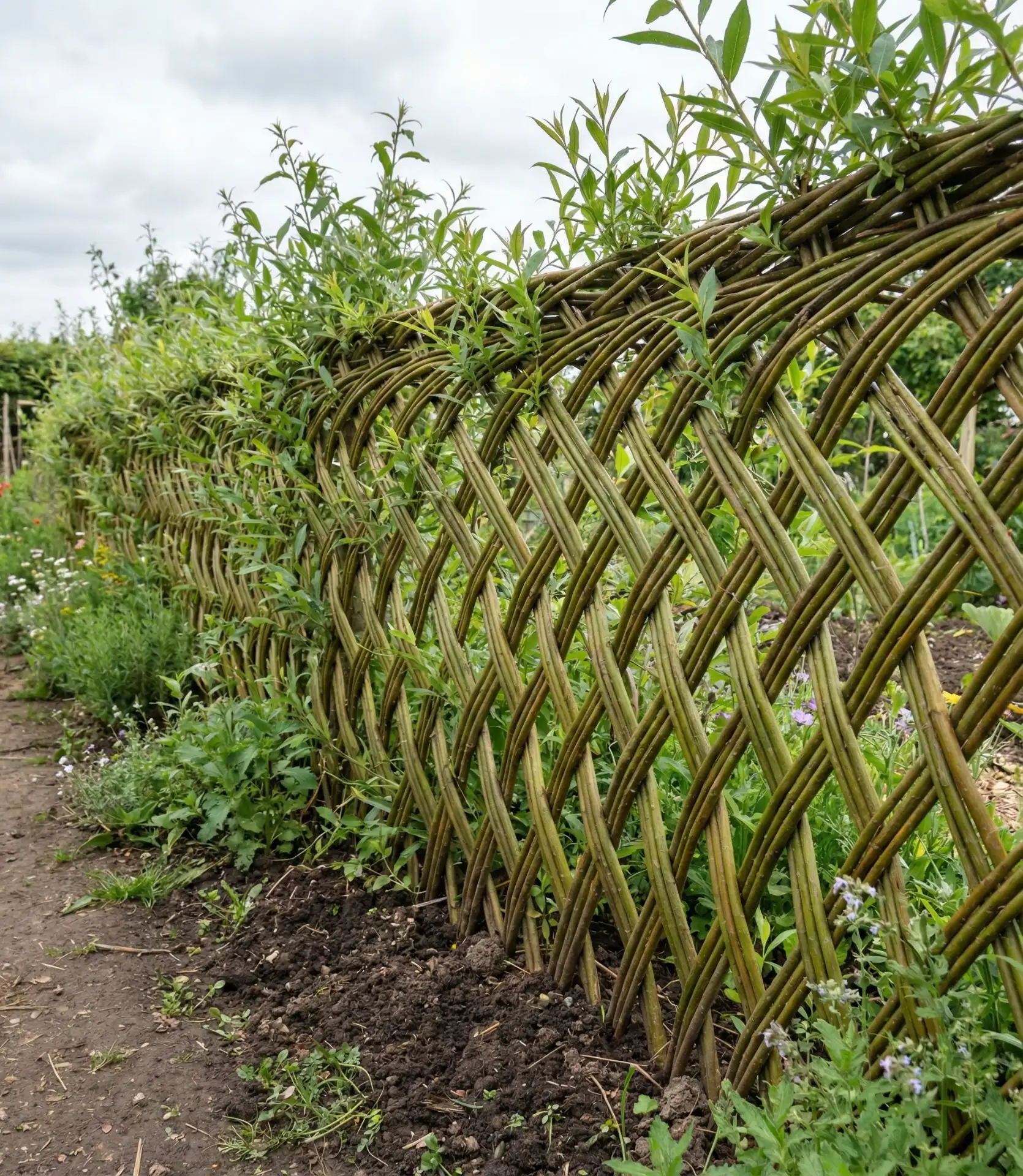
Living willow fences use fresh willow whips woven between upright posts that eventually take root and grow, creating a self-sustaining wall of greenery. This ancient technique produces a beautiful organic boundary that thickens over time as the willow shoots leaf out each spring. The woven pattern creates texture and partial privacy, and the living structure requires only occasional pruning to maintain shape. It’s ideal for garden settings where naturalistic, low-impact design is the goal. 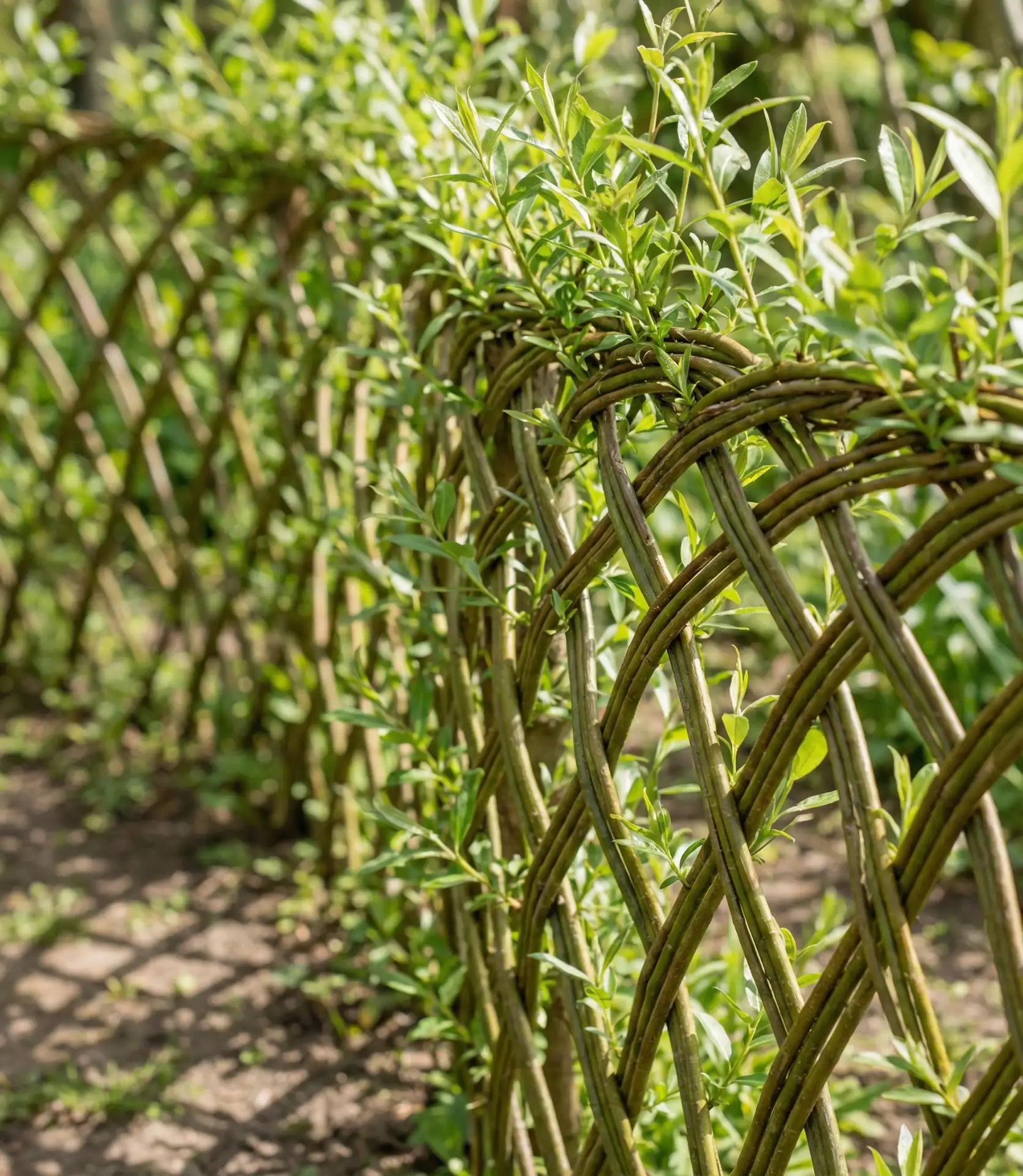
This is an age-old technique that has piqued interest from modern-day European settlers, especially from the Pacific Northwest and permaculture homesteads throughout the United States. This system revolves around sustainability and living systems. The fence functions as a hedge that you can train into a weaving structure. For example, a homesteader from Vermont used her living willow as a fence around her chicken run. After three years, she had a thick and dense barrier that kept predators out and cost essentially all of her labor in cuttings. The willow has to be watered frequently during the first growing season, as well as needing moist soil. After spring planting, it is self-sufficient and lasts for decades with annual pruning.
There are fences made of everything from living willow walls to sleek horizontal slats. These designs show that boundaries are functional as well as beautiful. Corten steel has its industrial edge, natural wood has its warmth, and contemporary designs are functional and also innovative. These styles match fences to the needs of the home and the lifestyle too. The right fence enhances curb appeal, outdoor rooms, and your design style rather than just marking property lines. Which one do you prefer? Tell us your own installation plans, comment on your favorite fence idea, or share inspiring fences you’ve seen on your travels. We’d love to know what trends are popular and what is working in your area.