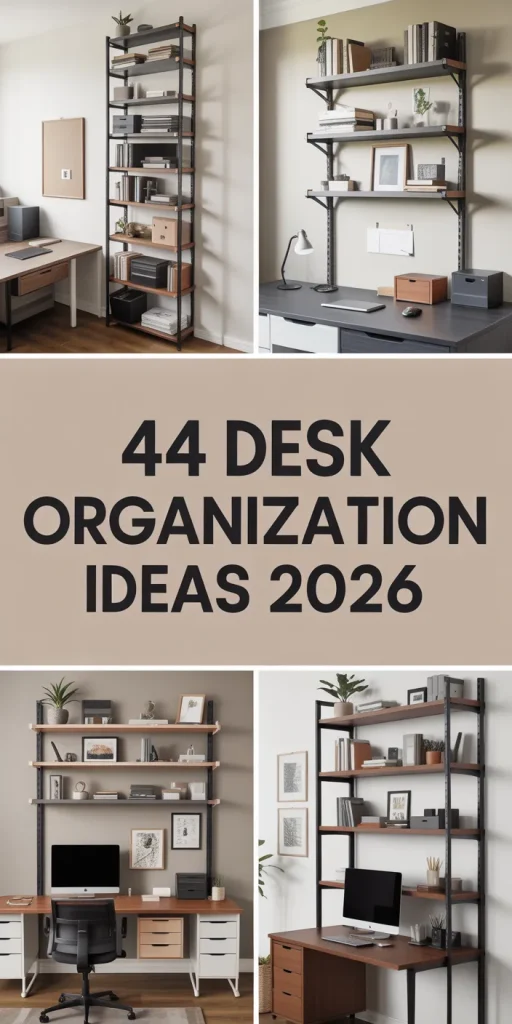
44 Desk Organization Ideas for 2026: Transform Your Workspace from Chaos to Calm

In 2026, desk organization has evolved from simple tidying into a creative art form—one that blends function, aesthetics, and personal style. Whether you’re working from home, studying in a dorm, or setting up a classroom, a well-organized desk isn’t just about storage bins and pen holders anymore. It’s about creating a space that inspires focus, reflects your personality, and adapts to the way you actually work. From aesthetic DIY solutions to clever small-space strategies, Americans are turning to Pinterest for fresh ideas that make their desks both beautiful and brilliantly functional. Here are desk organization ideas that capture the most inspiring trends of 2026.
1. Aesthetic Floating Shelf System
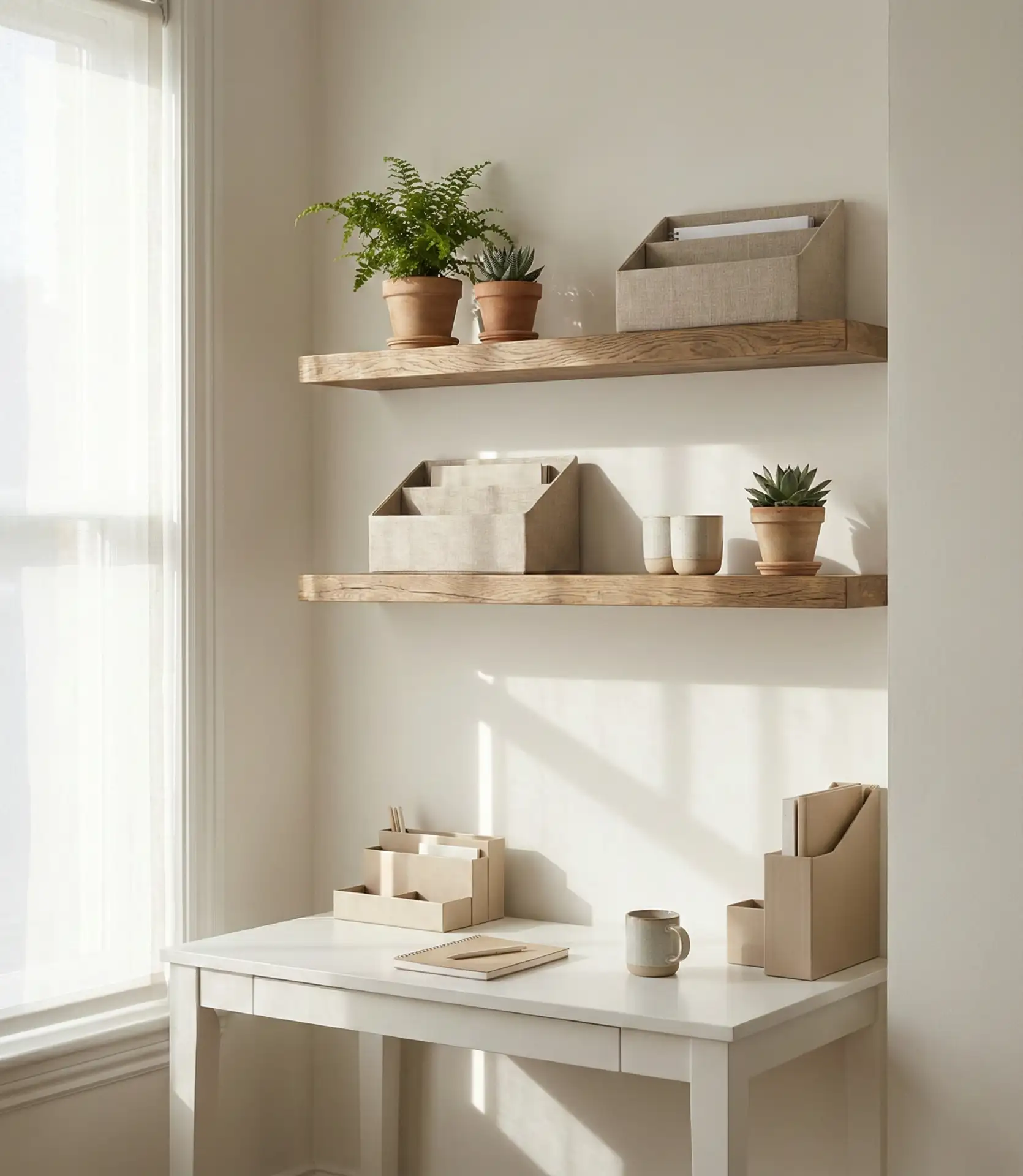
A floating shelf system transforms any aesthetic office into a streamlined workspace where style meets function. This approach works particularly well in small spaces where floor area is precious—by mounting slim wooden or acrylic shelves above your desk, you create vertical storage that feels airy and modern. The key is choosing shelves in warm wood tones or soft neutrals that complement your existing décor, then styling them with a curated mix of books, plants, and decorative organizers.
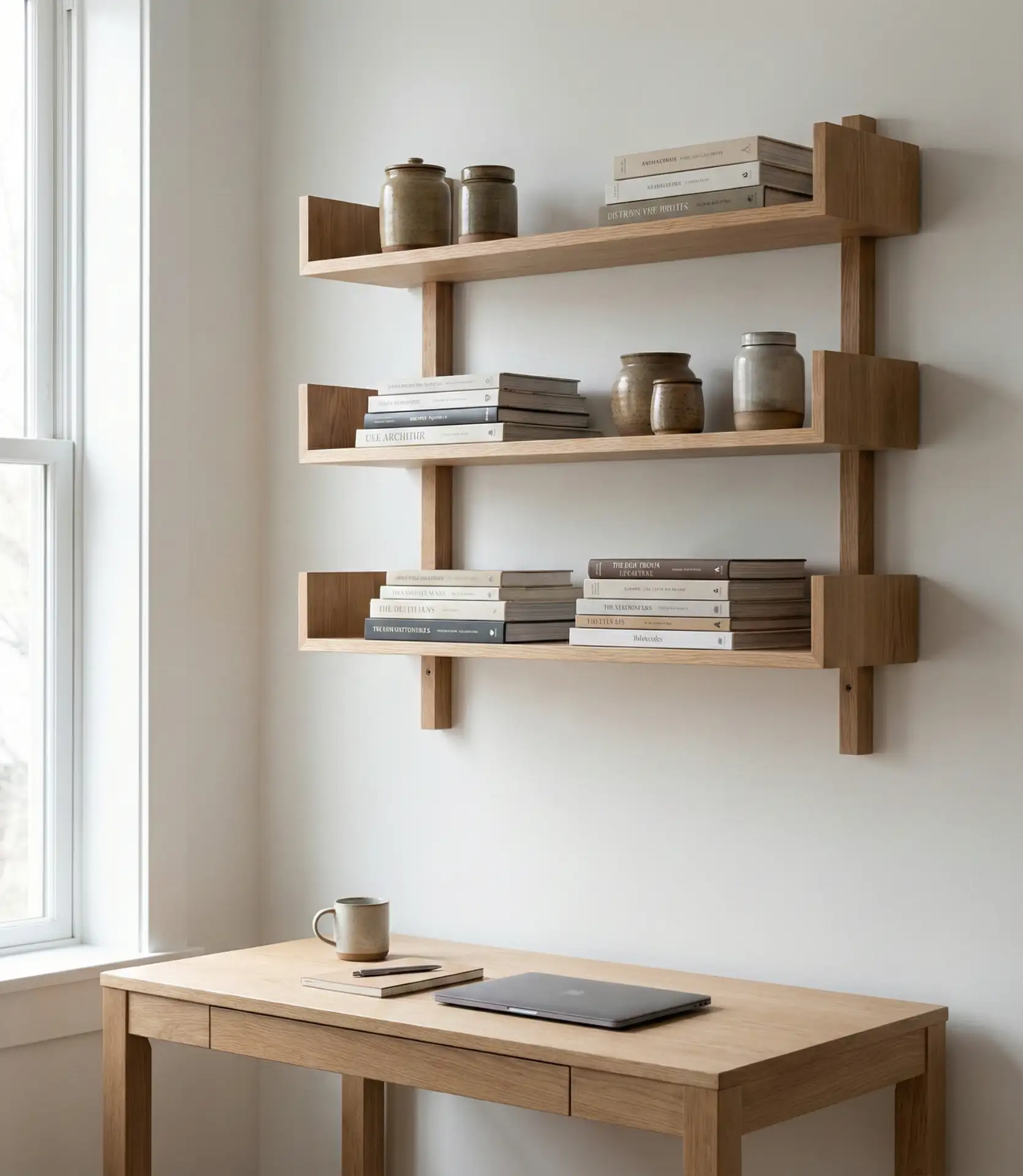
This setup works best in home offices or student bedrooms where wall space is available but square footage is limited. The beauty of floating shelves is their adaptability—you can start with one or two and add more as your organizational needs grow. Many Americans working from apartments find that this vertical approach keeps their desk surface clear while giving them quick access to frequently used supplies, making it both practical and visually calming.
2. Dollar Tree Desk Drawer Dividers
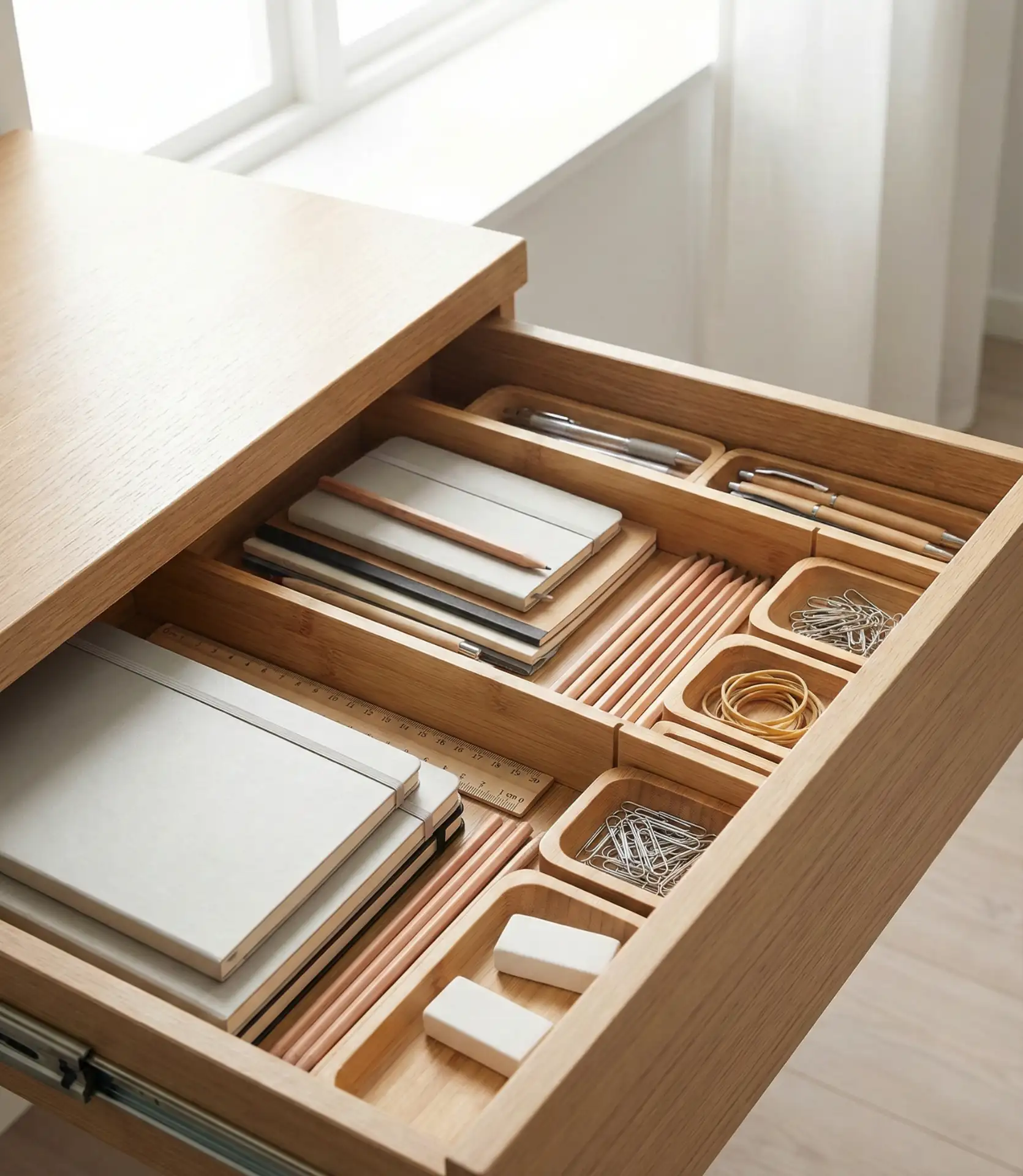
Transforming a chaotic desk drawer doesn’t require expensive organizers when you shop smart at Dollar Tree. Small plastic bins, bamboo-look trays, and mesh containers can be mixed and matched to create custom compartments for pens, paper clips, sticky notes, and charging cables. This budget-friendly approach has become wildly popular on Pinterest, where creative organizers show how a few dollars can completely revolutionize a messy work drawer.
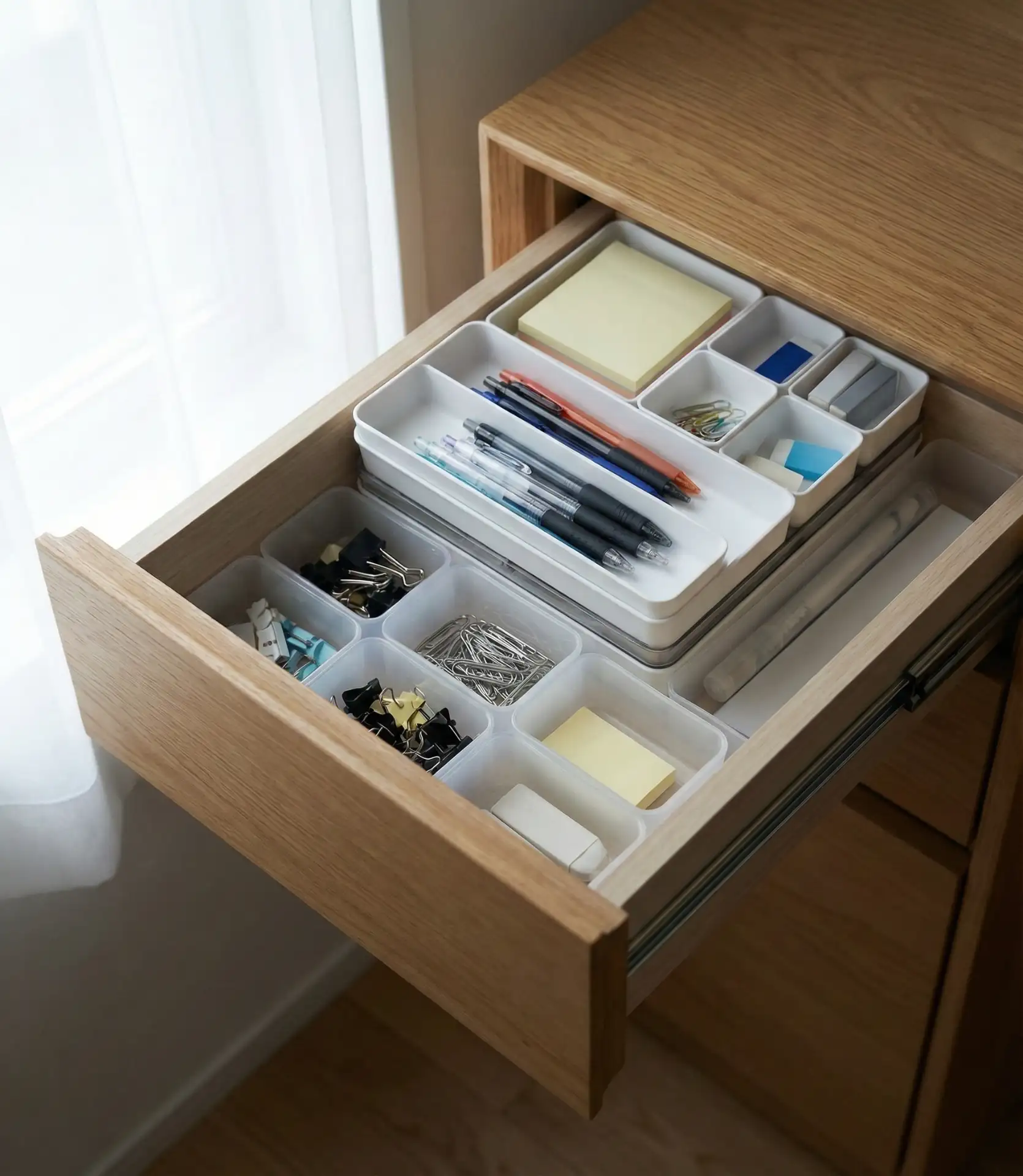
A common mistake is buying organizers before measuring your drawer dimensions—always measure first, then shop with those numbers in mind. Dollar Tree containers come in standard sizes, so bringing a tape measure on your shopping trip ensures everything fits perfectly. The satisfaction of opening a drawer and seeing every pen in its place is worth the fifteen minutes of initial setup, and the total cost rarely exceeds ten dollars.
3. Cute Pegboard Command Center
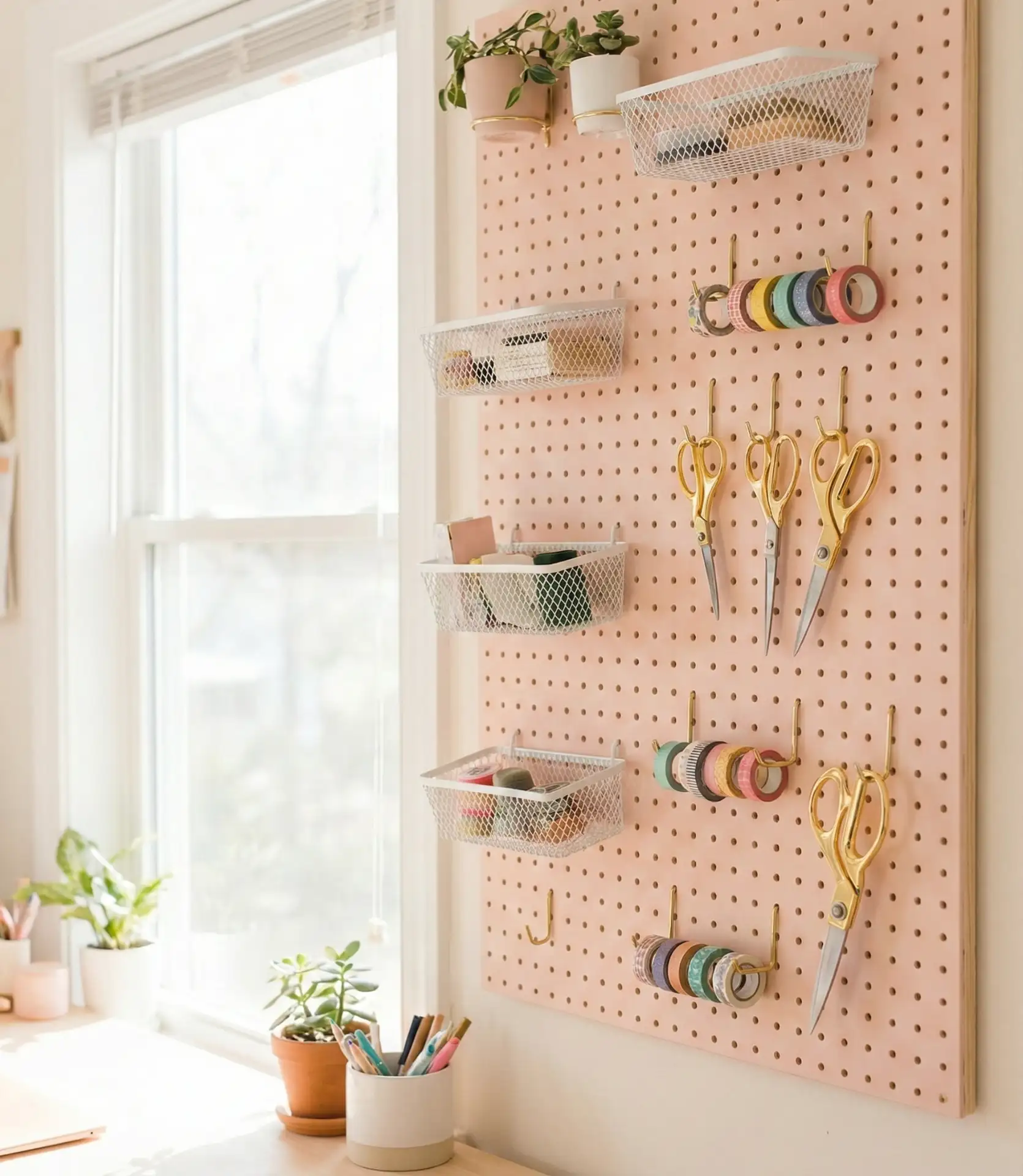
A charming pegboard command center brings personality and function together in one colorful statement piece. Painted in soft pastels or kept natural, pegboards let you hang baskets, hooks, and small shelves exactly where you need them. This modular system is perfect for student desks or craft spaces where supplies change frequently—you can rearrange hooks and accessories without drilling new holes or committing to a permanent layout.
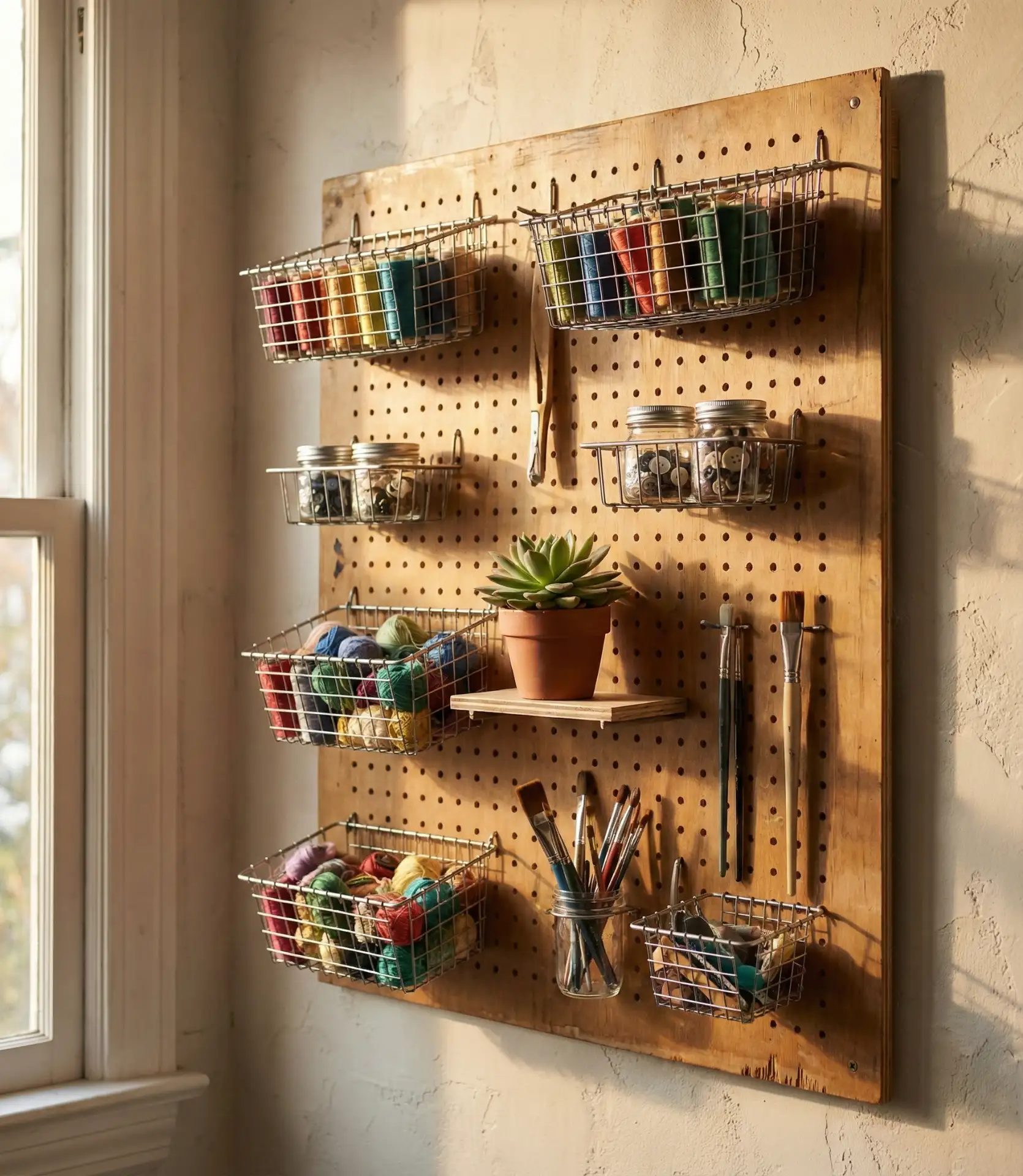
Pegboards work best in spaces with adequate wall clearance—ideally above or beside your desk rather than directly in front of your face, where they might feel visually overwhelming. Renters like pegboards because they can be mounted with little damage and taken when they move. The key is not overloading it; keeping about 60% of the board visible maintains that balanced, intentional aesthetic that makes your workspace feel curated rather than cluttered.
4. Aesthetic DIY Painted Organizers
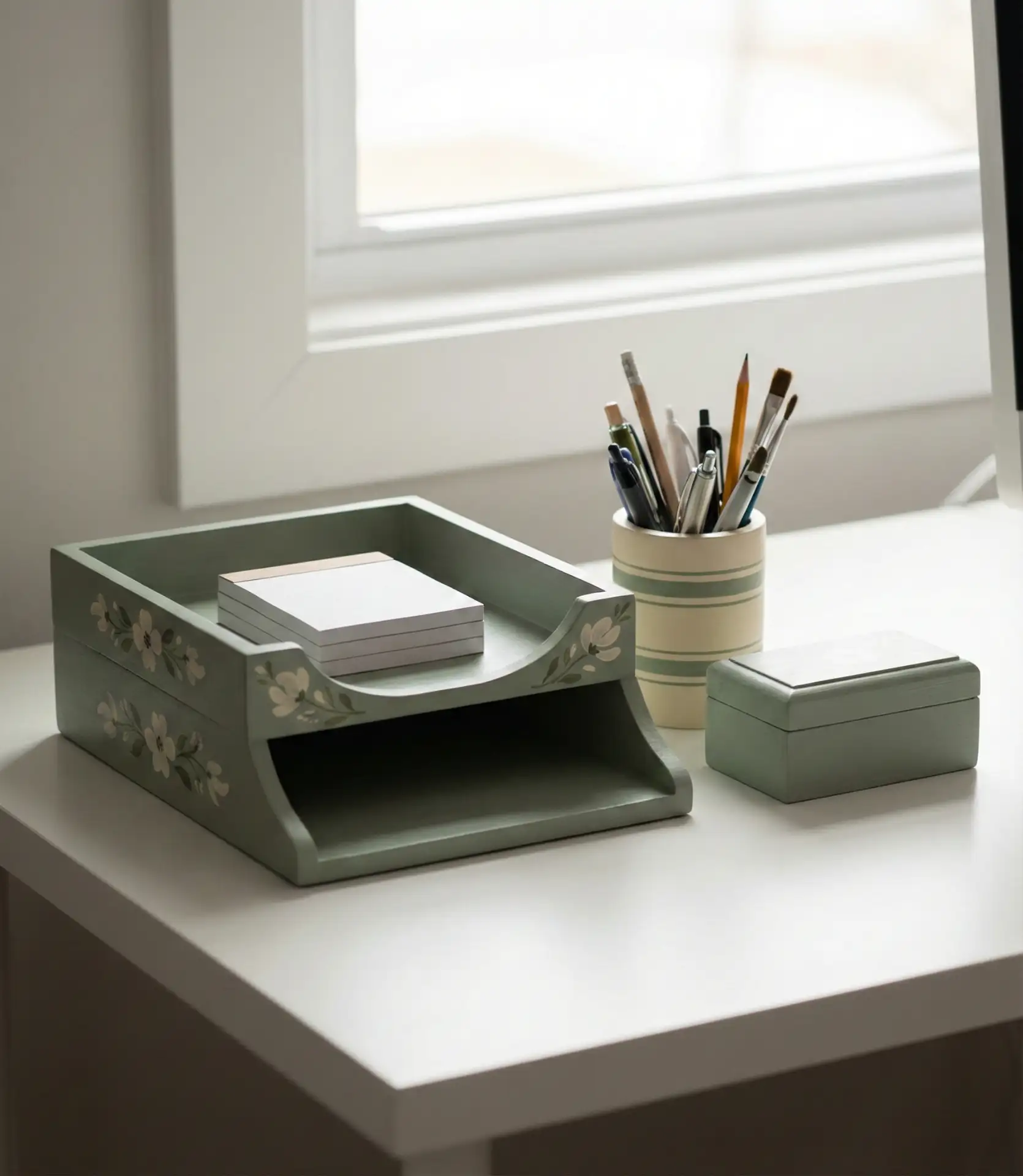
Taking plain wood or cardboard organizers and transforming them with aesthetic DIY paint projects has become a go-to solution for budget-conscious decorators. A few coats of matte acrylic paint in trendy shades—sage green, terracotta, or soft gray—can turn generic pencil holders and letter trays into cohesive desk accessories that look custom-made. This approach is especially popular in dorm settings where students want personalized spaces without breaking the bank.
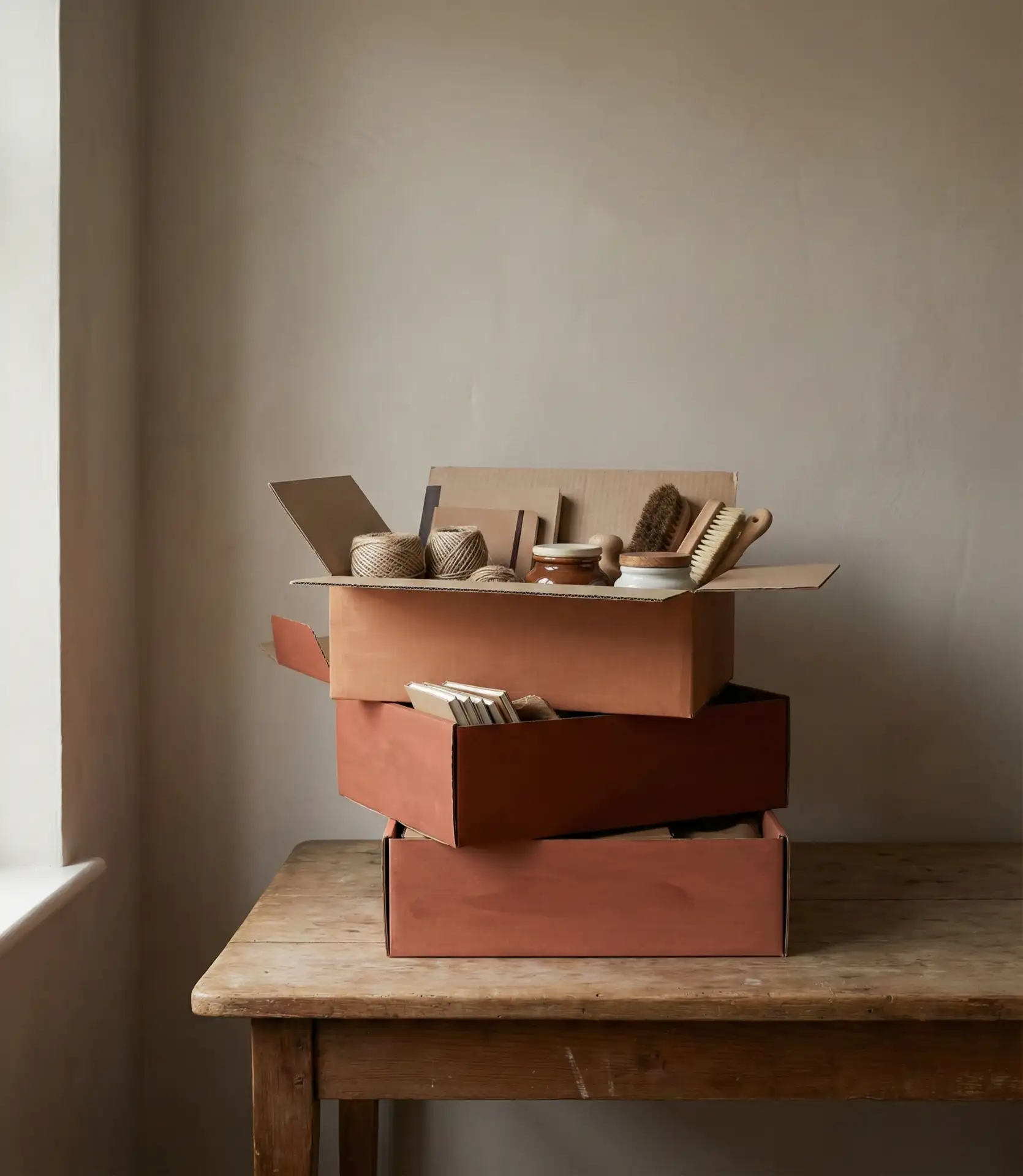
In Southern California and the Southwest, where earthy tones dominate interior design, DIY painted organizers in warm terracotta or dusty rose fit seamlessly into existing décor. The paint dries quickly, usually within an hour, and a single bottle of acrylic craft paint costs about three dollars—enough to cover multiple organizers. One weekend afternoon is all it takes to create a coordinated desk setup that feels intentional and reflects your personal style without the premium price tag of store-bought matching sets.
5. Classroom Teacher Supply Station
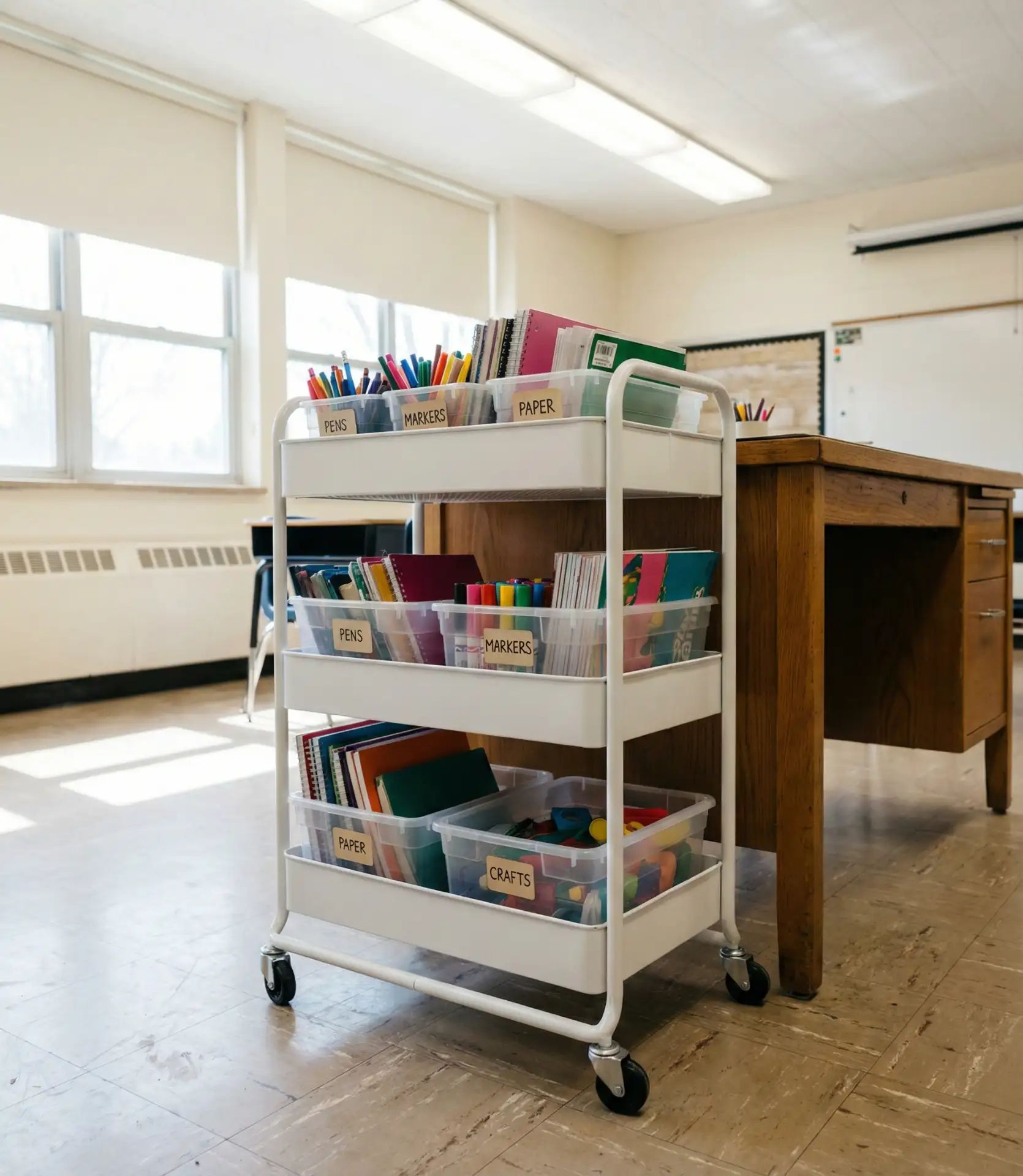
A dedicated teacher supply station ensures that frequently used materials are easily accessible and maintains order in a busy classroom. Rolling carts with labeled bins, desktop caddies for markers and scissors, and tiered trays for grading work create a system where everything has a designated spot. This organizational approach reduces the time spent searching for supplies mid-lesson and models excellent organizational habits for students.
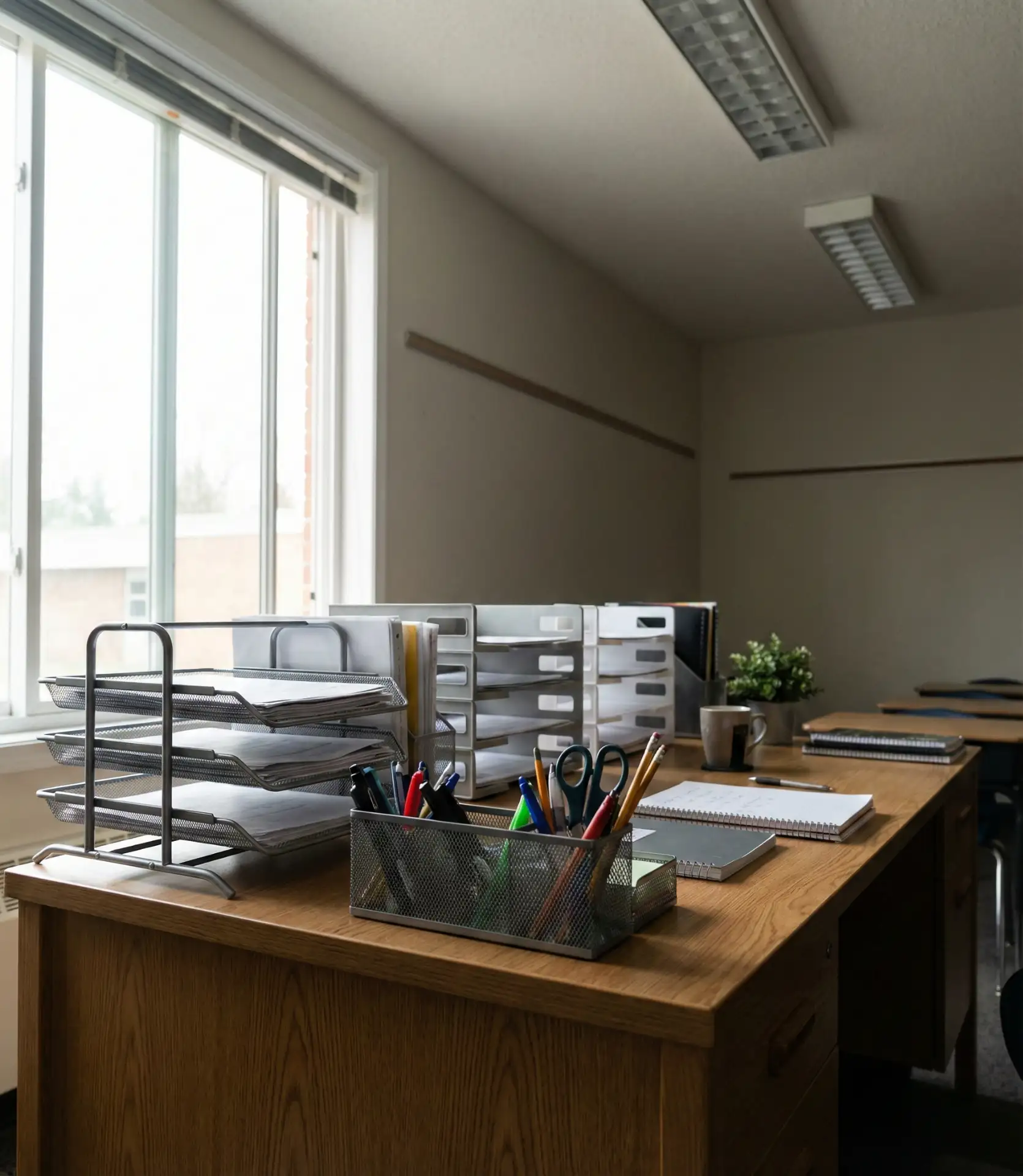
Teachers across the Midwest have found that keeping a small supply station visible on their desk encourages students to ask permission before borrowing items, which naturally reduces lost materials. The rolling cart is particularly valuable because it can be wheeled to different areas of the classroom during group work, then returned to the desk when needed. Investing in durable, wipeable containers saves money over time since they withstand daily use throughout the school year.
6. Makeup Organizer Desk Hybrid
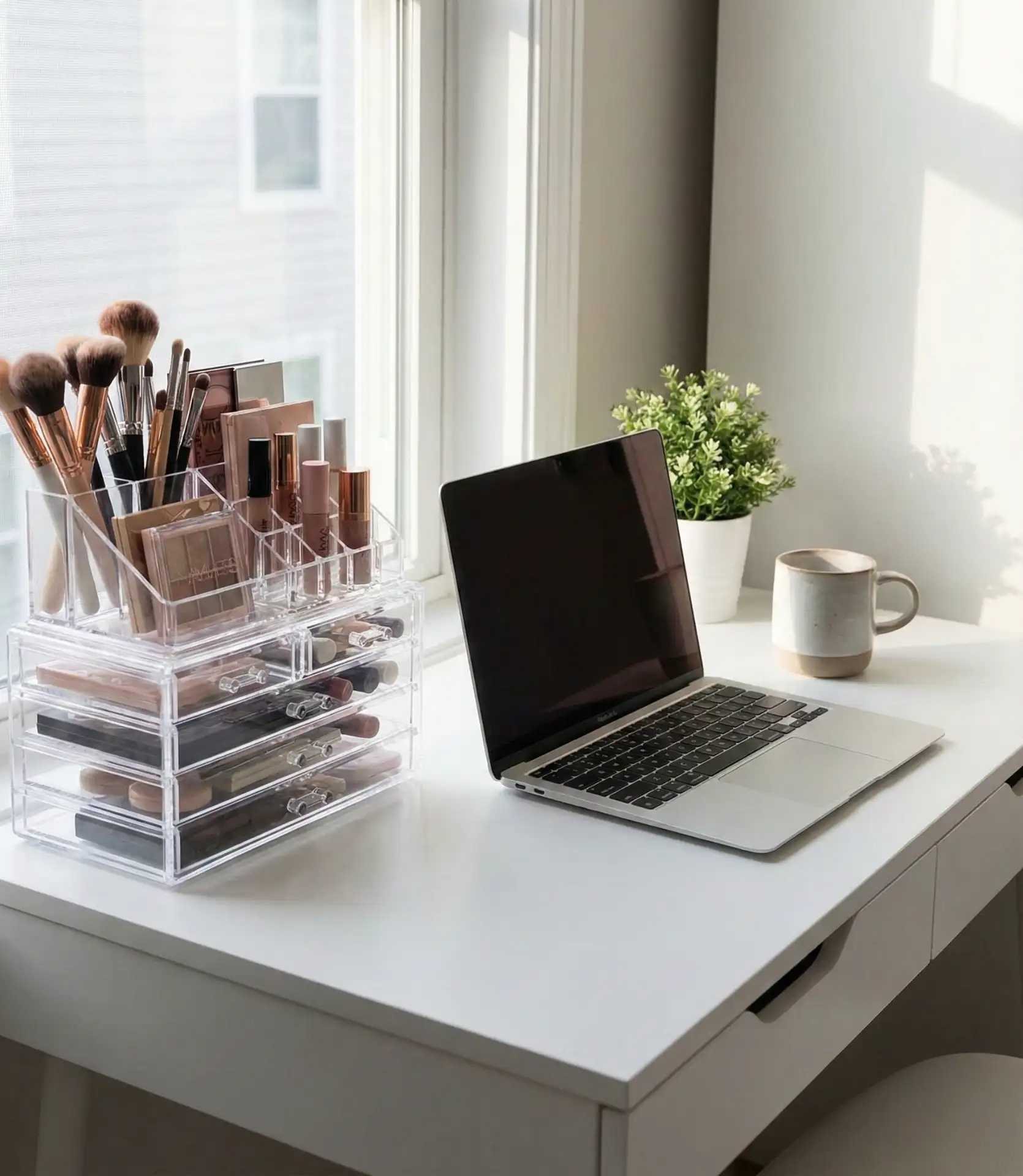
When your desk doubles as a makeup station, clear acrylic organizers with multiple compartments become essential for separating beauty products from work supplies. Stackable drawers on one corner of the desk hold cosmetics, while the main surface remains clear for your laptop and notebooks. This dual-purpose setup is common in studio apartments and smaller bedrooms where dedicated vanity space simply isn’t available.
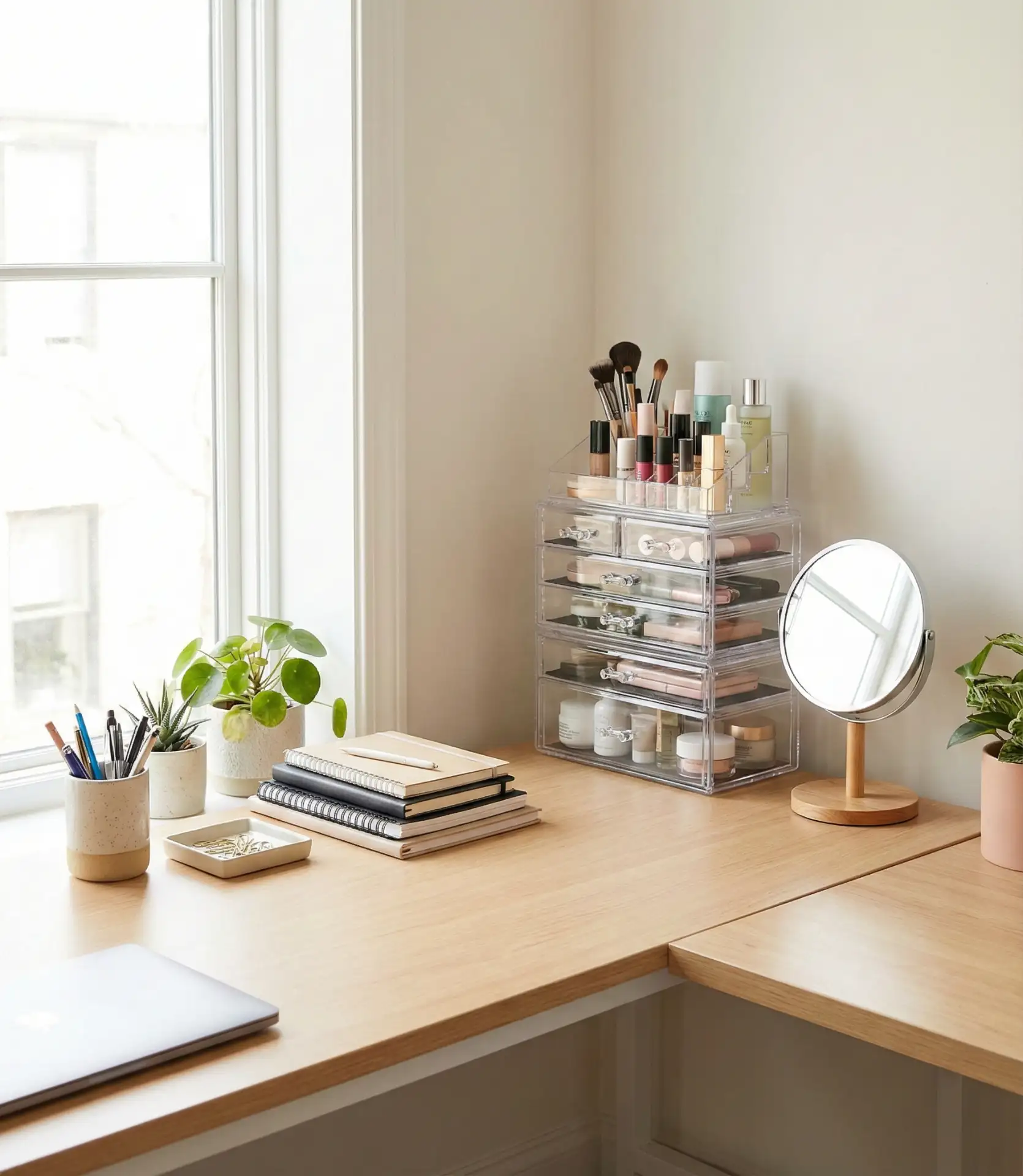
This arrangement works best when you designate specific zones—makeup on the left and work materials on the right, for example. A small tray can hold your most-used items and be easily moved to a bathroom counter when you need the full desk surface for projects. Many young professionals in cities like New York and San Francisco have perfected this system out of necessity, and they report that clear organizers make it easy to see when products are running low without digging through drawers.
7. Aesthetic Study Desk with Motivation Board
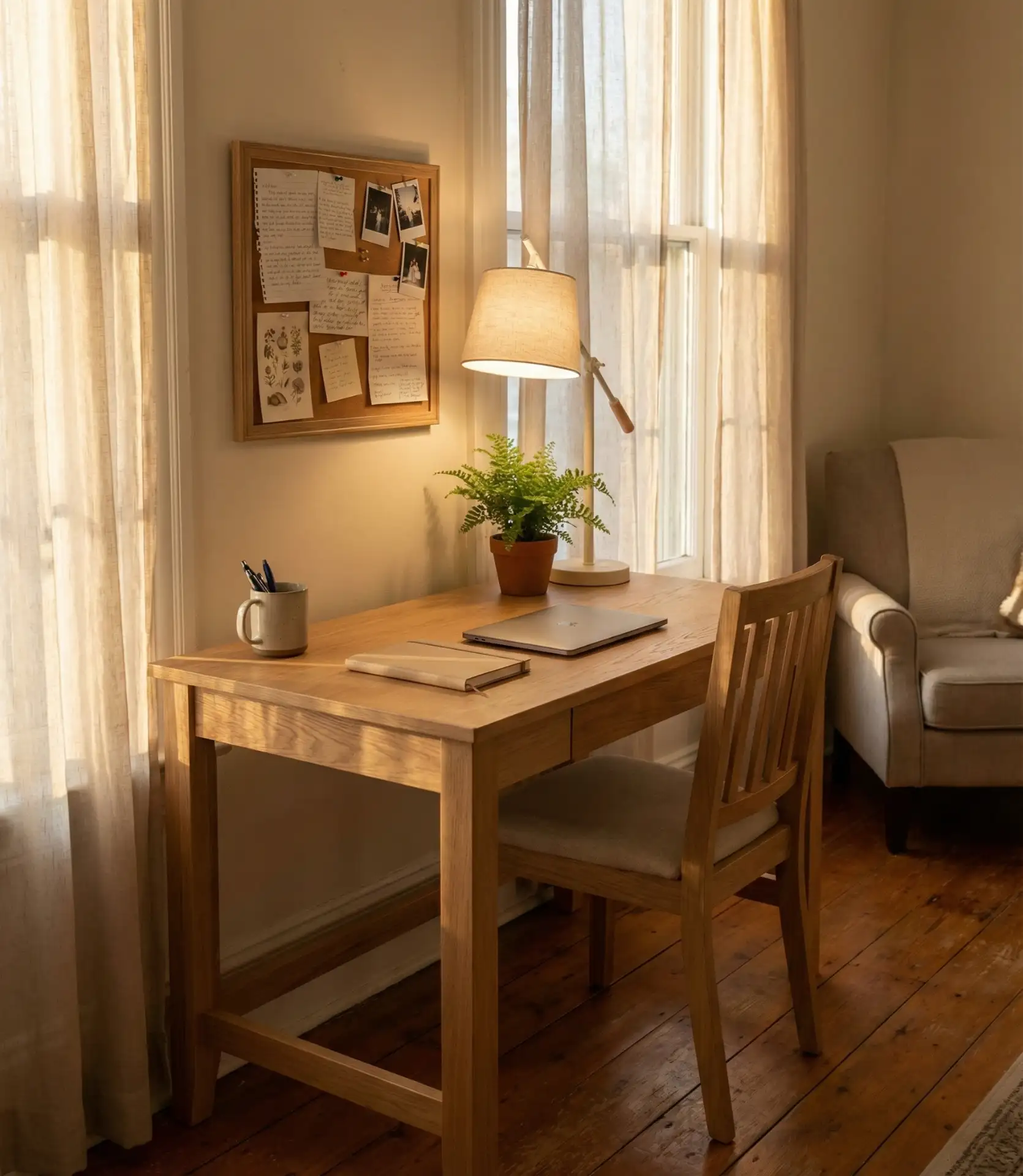
An aesthetic study desk paired with a small motivation board creates an inspiring environment for focused work sessions. A corkboard or magnetic board mounted above the desk holds assignment deadlines, inspirational quotes, and photos, while the desk itself maintains a minimalist setup with just the essentials—a lamp, a few pens, and perhaps a small plant. This balance between visual interest and functional simplicity helps student spaces feel both personal and productive.
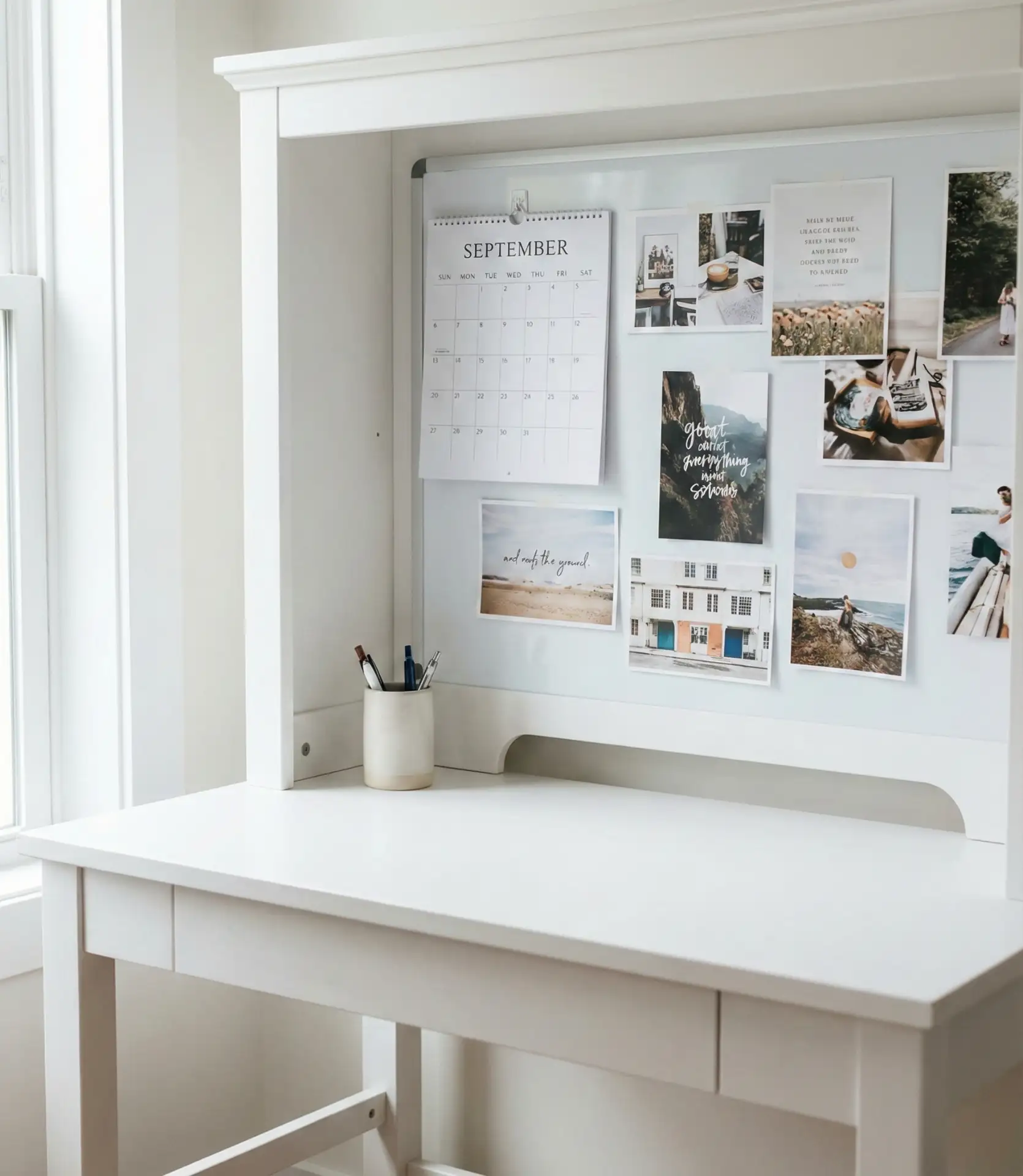
College students across the country report that having a designated space for visual motivation actually improves their study habits—seeing deadlines and goals at eye level creates gentle accountability. The key is refreshing the board monthly so it doesn’t become background noise. Also, positioning your desk near a window, when possible, brings in natural light that reduces eye strain during long study sessions and makes the space feel more inviting.
8. IKEA Modular Desk Accessories
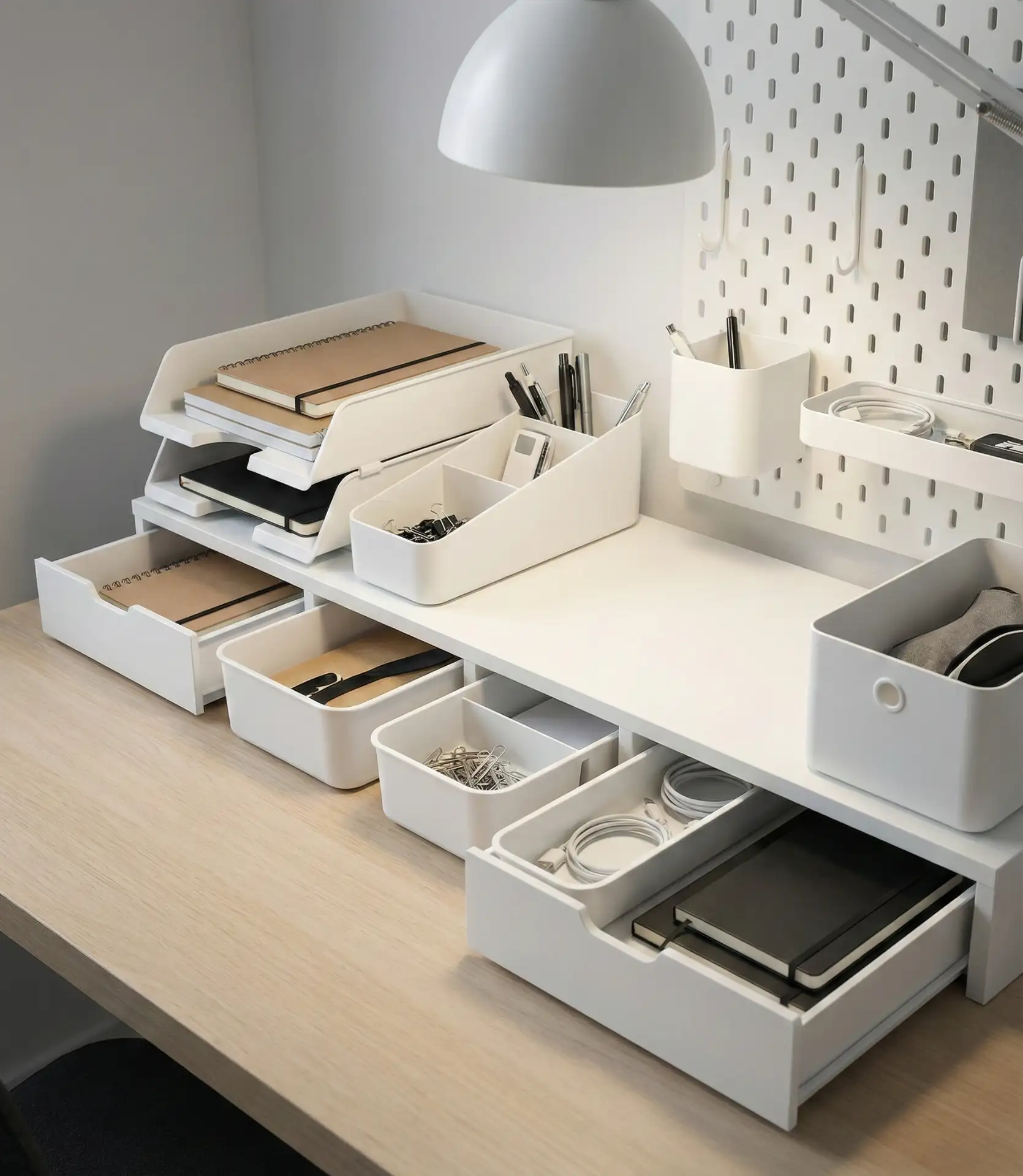
IKEA modular desk accessories offer an affordable, cohesive solution for organizing everything from paper clips to charging cables. The Kuggis, Skådis, and Alex drawer series have become staples in American home offices because they’re designed to work together—white containers fit perfectly on pegboards, drawer inserts match desktop organizers, and the clean Scandinavian aesthetic suits nearly any décor style. You can easily construct your ideal system piece by piece with this plug-and-play approach.
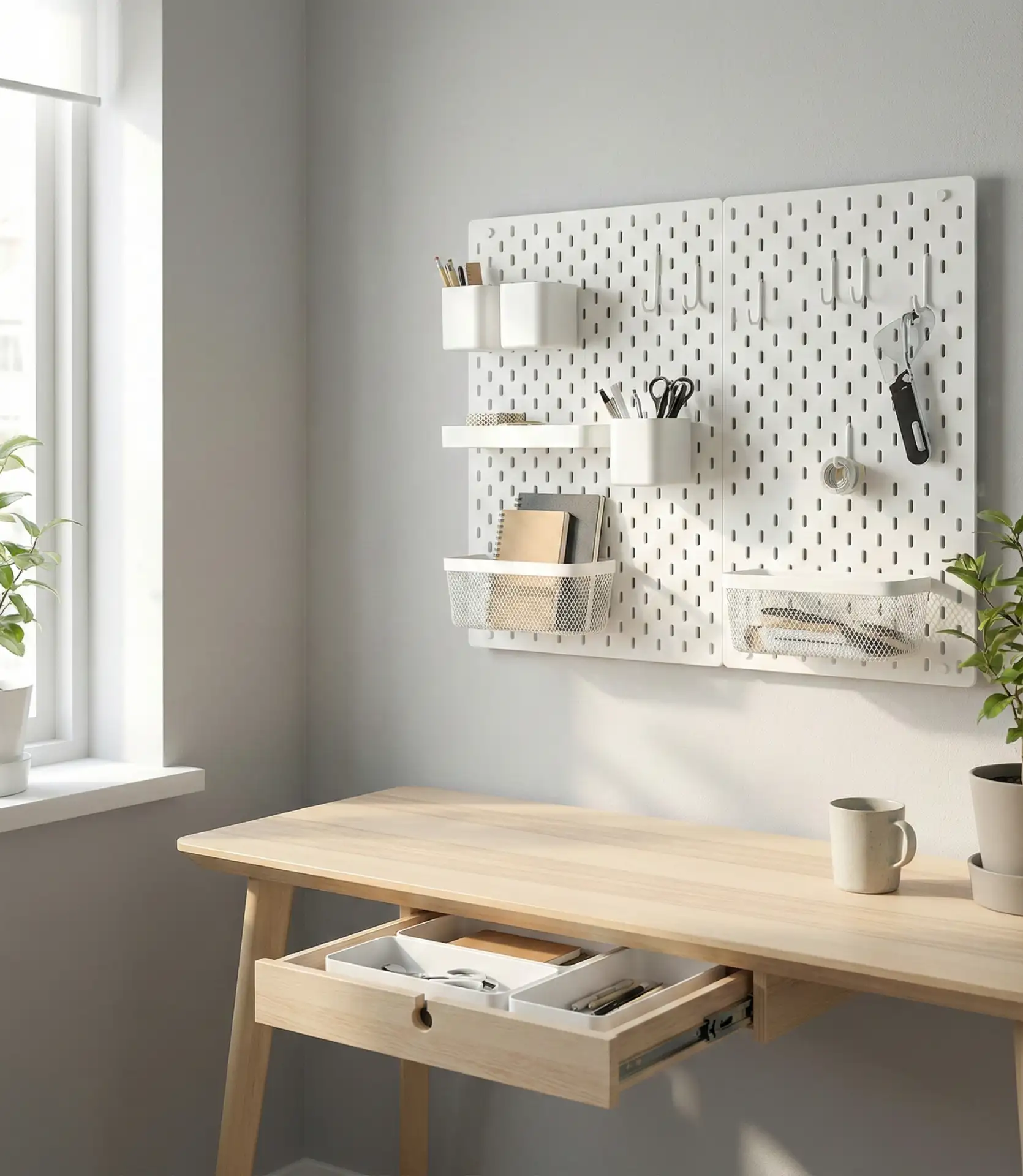
Budget-conscious shoppers appreciate that IKEA accessories typically cost 30–50% less than comparable items from specialty container stores, and the quality holds up well for home office use. A starter set of drawer dividers and desktop containers can be assembled for under thirty dollars, with the option to add more pieces as your needs evolve. The modular nature means you’re never locked into a fixed configuration—as your work changes, your organizational system can adapt without requiring a complete overhaul.
9. Standing Desk Cable Management
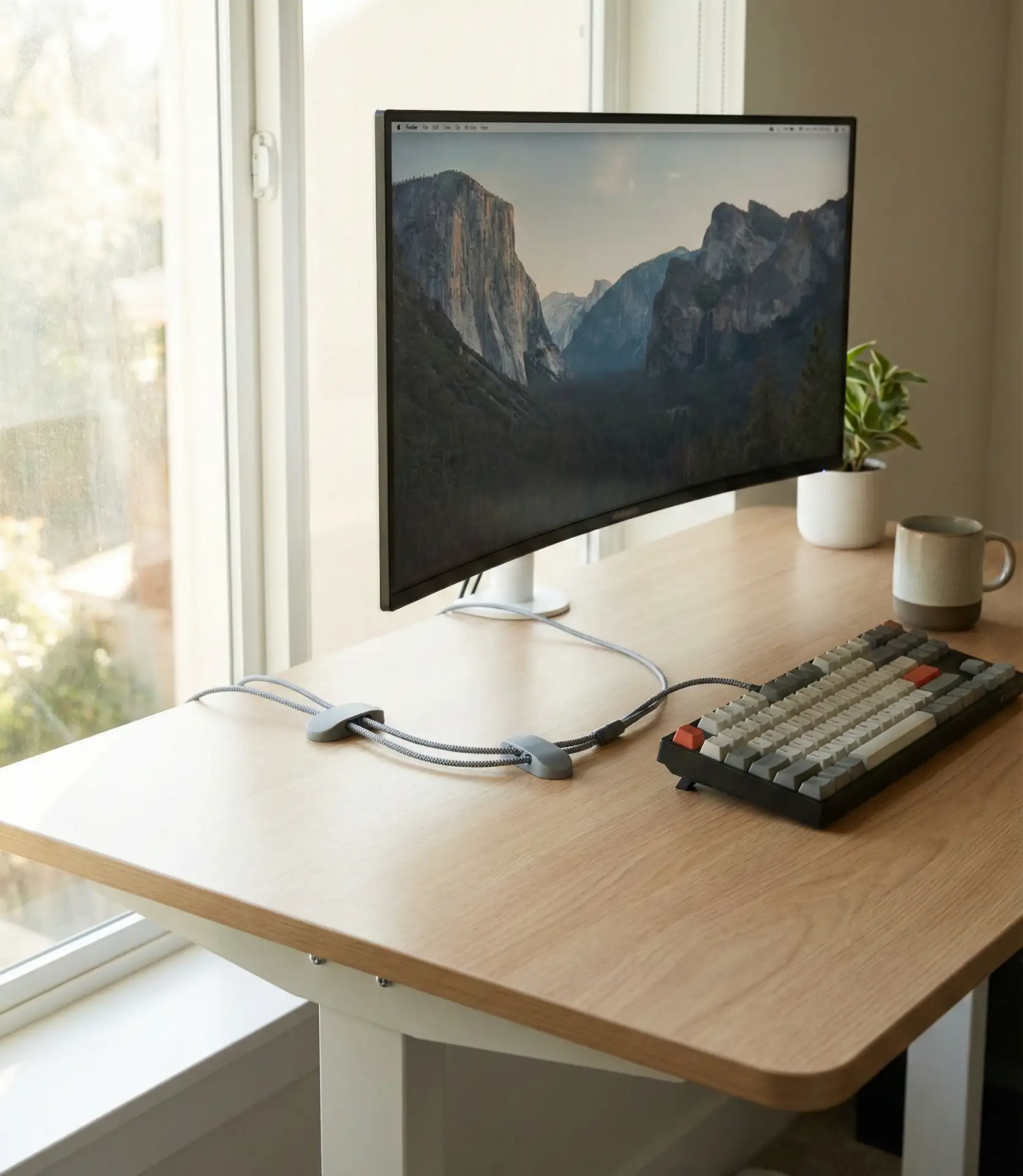
Managing cables on a standing desk requires a different approach than traditional desks because cords need enough slack to move with the desk as it adjusts height. Under-desk cable trays, velcro cable ties, and adhesive clips create a system where power cables and monitor cords stay organized without restricting movement. This setup is essential for work-from-home professionals who adjust their desk height throughout the day and want a clean, tangle-free workspace.
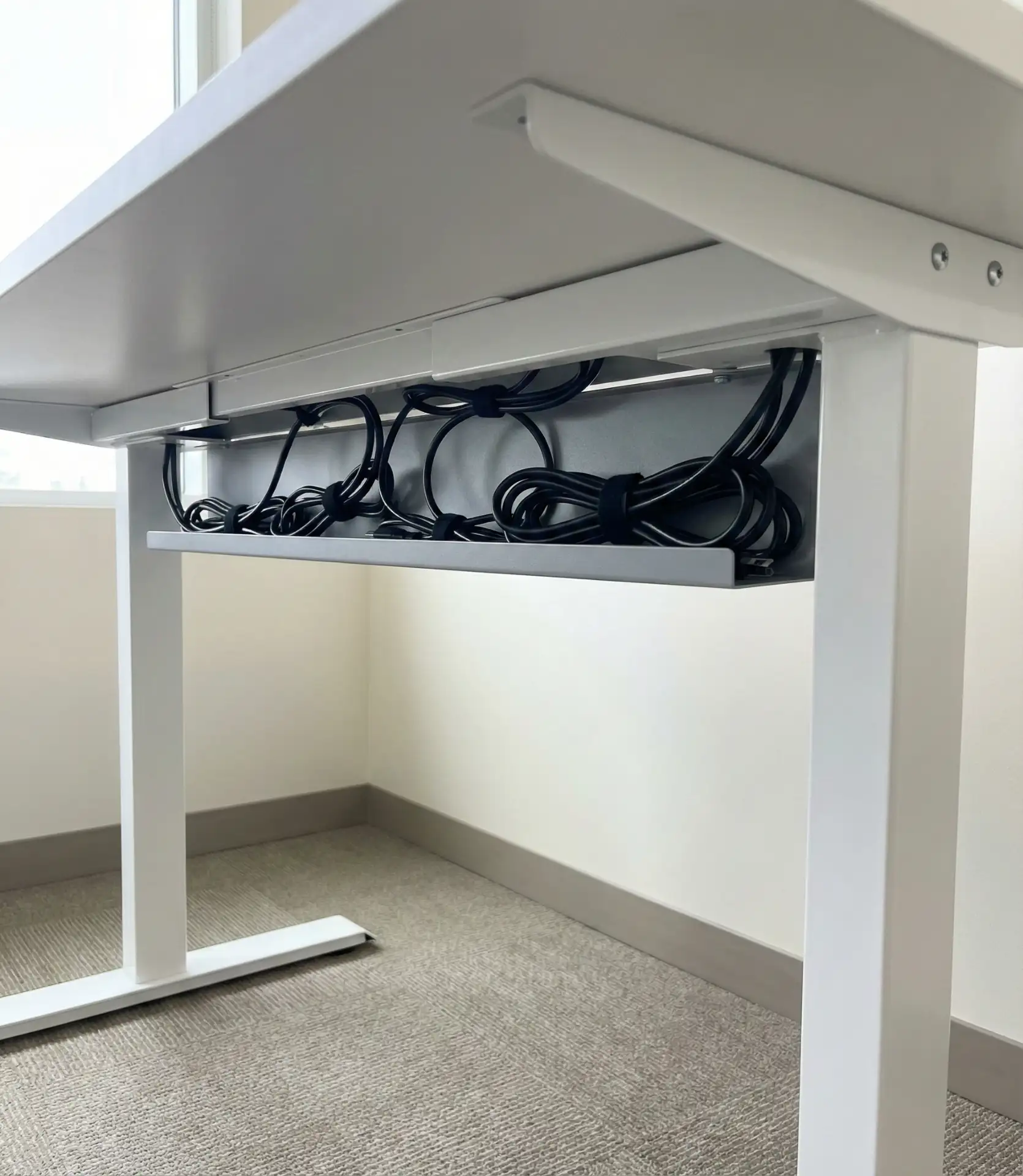
Last year, a designer in Seattle mentioned that proper cable management was the single detail that elevated her home office from functional to professional-looking. The visual clutter of tangled cords genuinely affects concentration, even if we don’t consciously notice it. Every time you sit (or stand) down to work, taking an hour to properly route cables pays dividends, and it simplifies cleaning the area as you’re not surrounded by a mess of wires.
10. Craft Desk with Labeled Containers
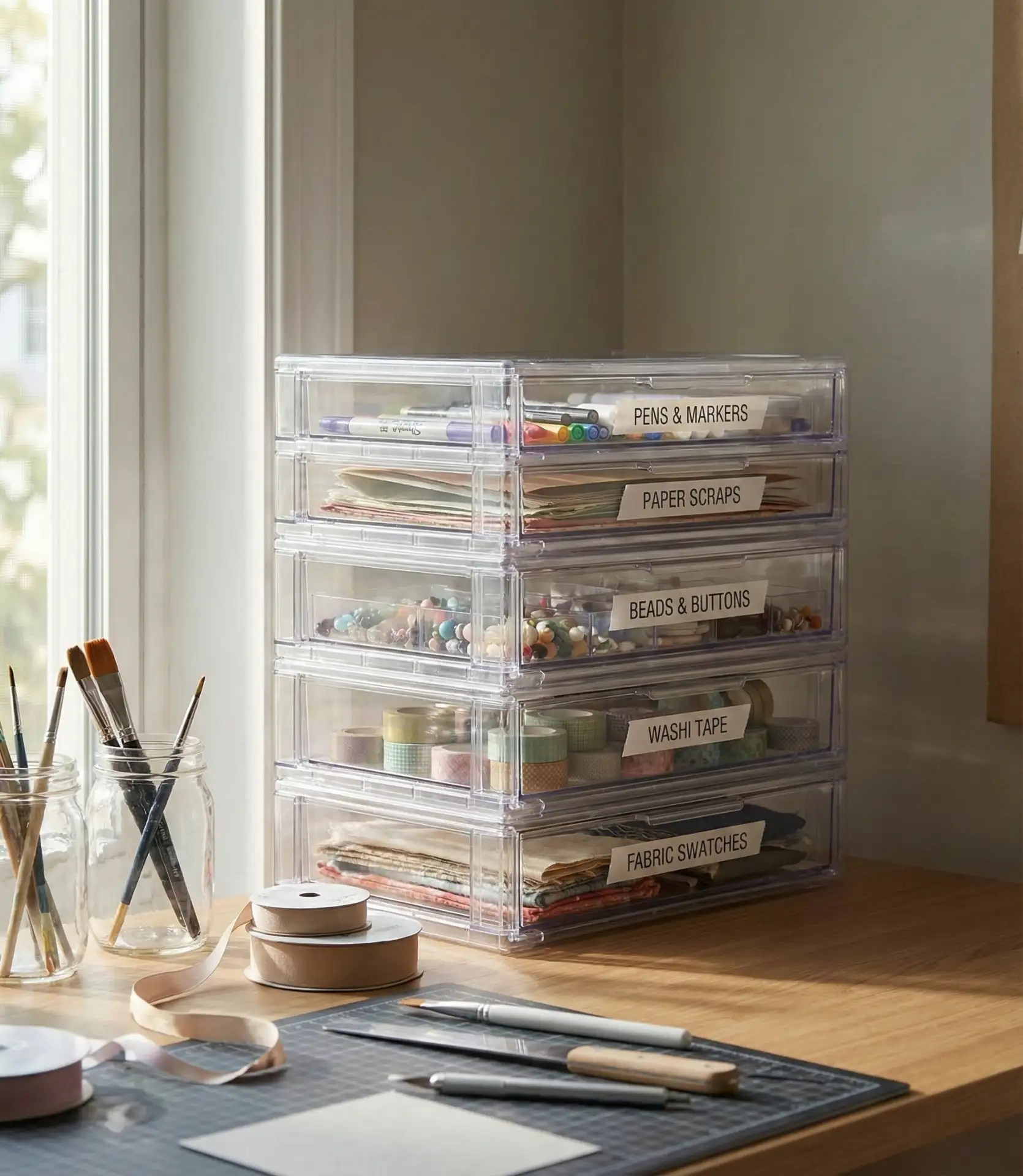
A craft desk demands serious organization when you’re juggling scissors, glue, ribbons, paints, and countless other supplies. Clear stackable containers with printed labels transform chaos into order—you can see exactly what’s inside each bin at a glance, and the labels prevent that frustrating moment when you forget where you stored the embroidery thread. This system works beautifully for art projects where quick access to specific materials keeps creative momentum flowing.
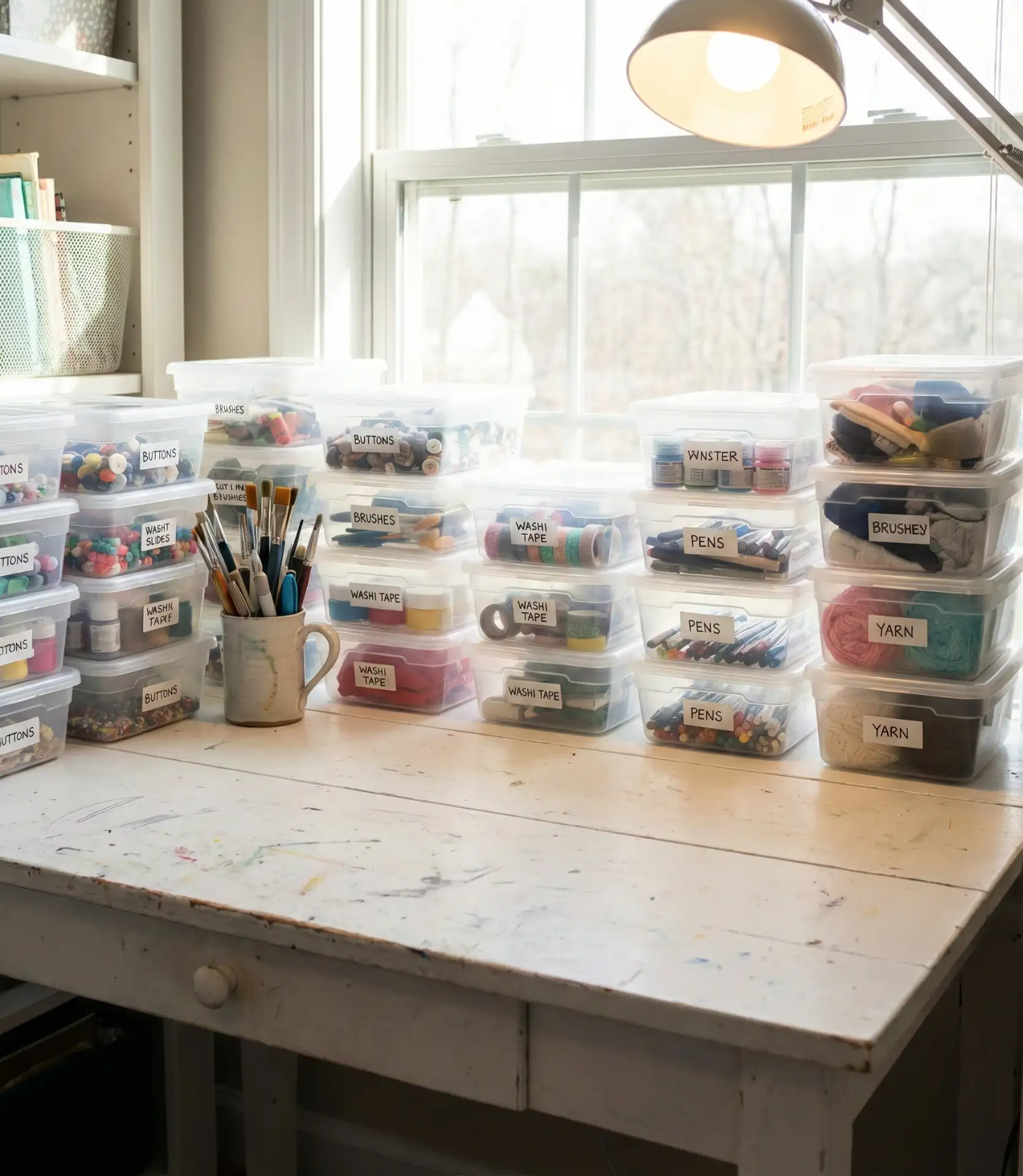
Crafters in suburban areas with dedicated hobby rooms find that investing in quality containers upfront saves money long-term because supplies stay in better condition when properly stored. A common mistake is buying too many small containers instead of a few larger bins for bulkier items like fabric or yarn. Mixing container sizes—large for fabric, medium for paints, and small for buttons and beads—creates a more efficient system that actually reflects how you work rather than forcing your supplies into identical boxes.
11. L-Shaped Desk Corner Organization
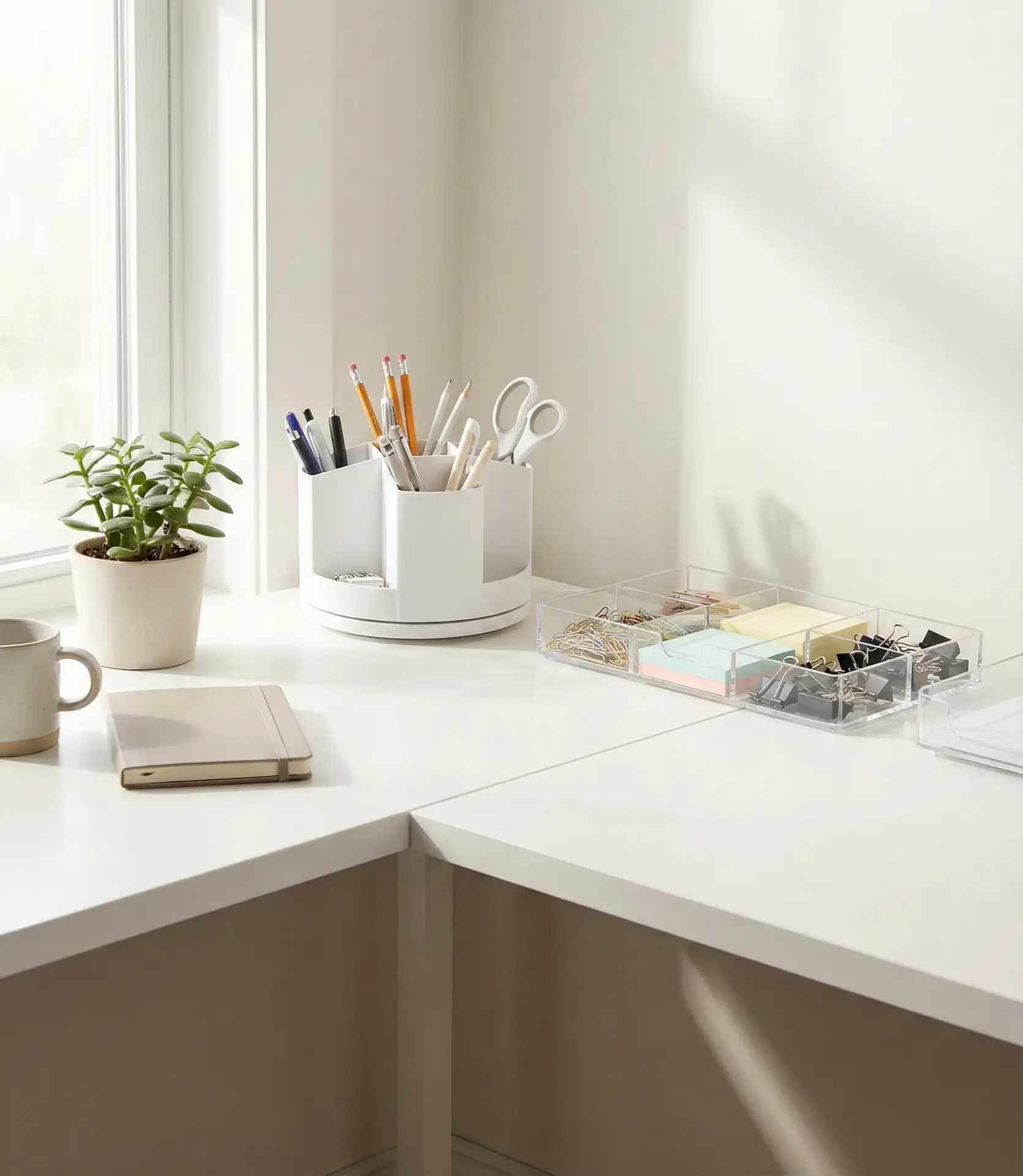
The corner of an L-shaped desk is prime real estate that often becomes a dumping ground for papers and forgotten items. A rotating lazy Susan organizer or a tiered corner shelf reclaims this space, turning it into accessible storage for frequently used items like staplers, tape dispensers, and phone chargers. This approach keeps the main desk surface clear for computer work while ensuring essential tools remain within easy reach.
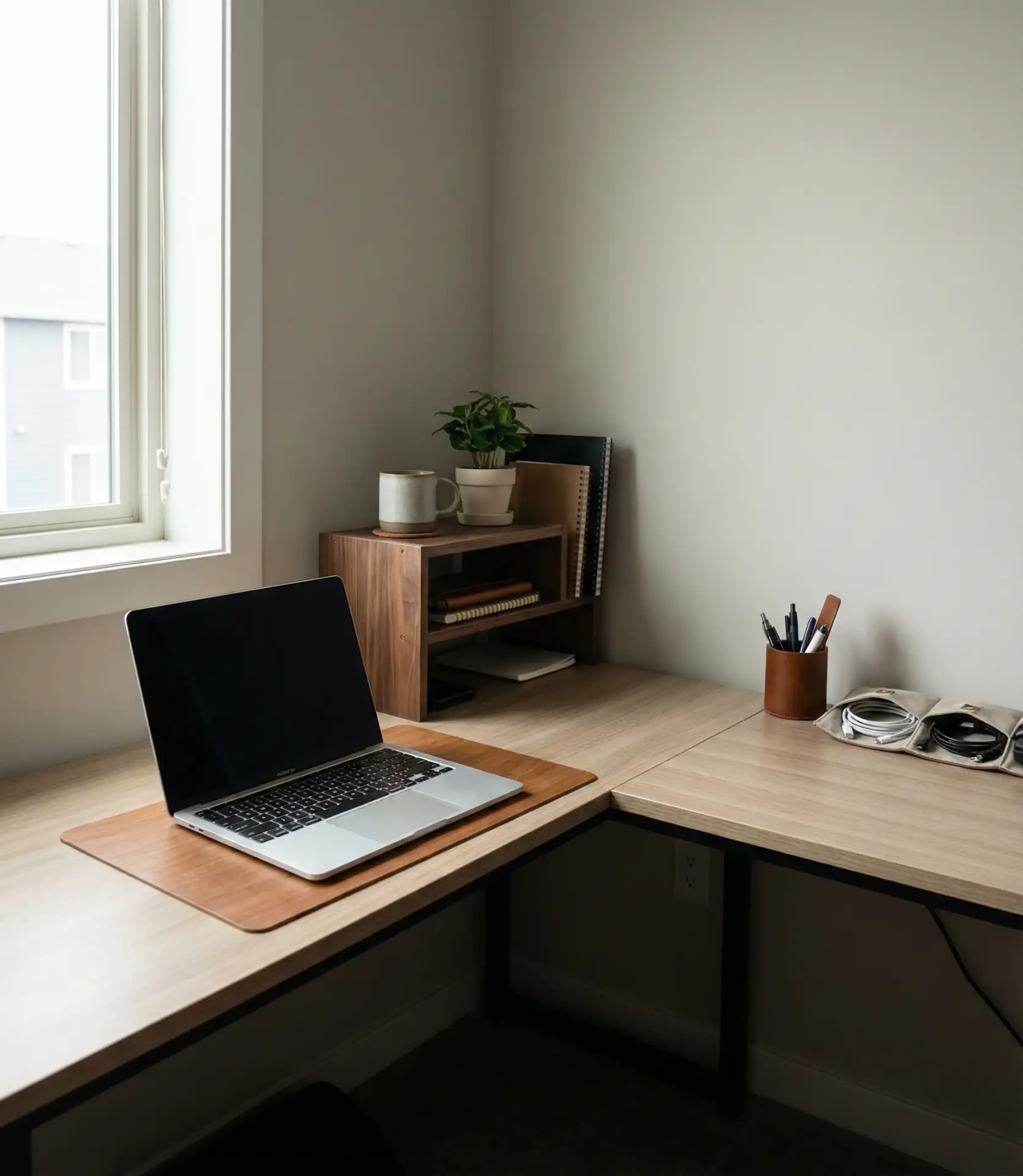
Real homeowner behavior shows that corners become clutter magnets when they’re empty—the brain registers them as “extra” space rather than functional workspace. By intentionally organizing the corner with a specific storage solution, you create a psychological boundary that keeps the area purposeful. This works especially well in spare bedroom offices or multi-use rooms where maximizing every square inch of desk space matters for maintaining both productivity and visual calm.
12. Computer Desk with Vertical File Sorter
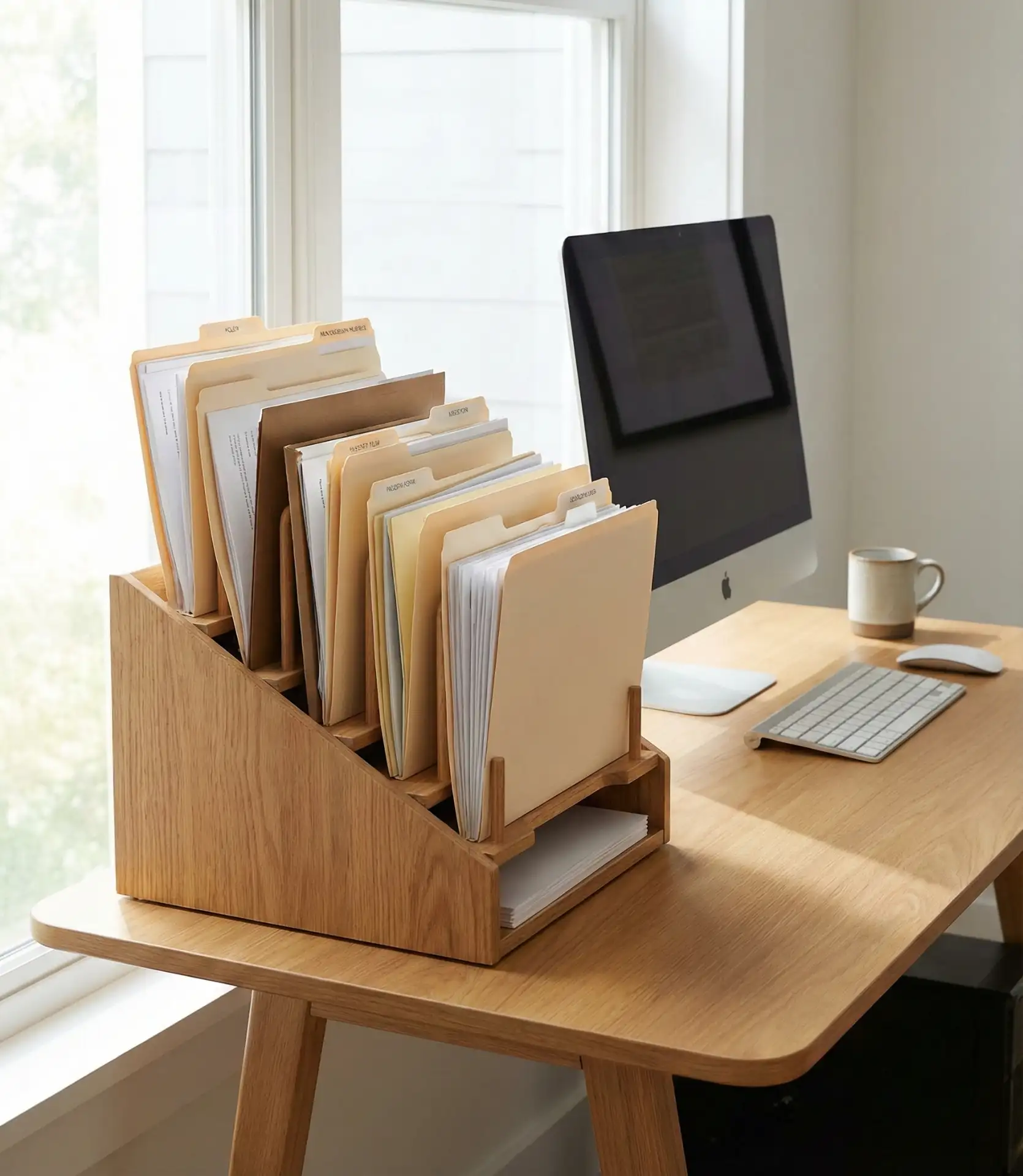
A vertical file sorter transforms how you manage paperwork at a computer desk by keeping documents upright and immediately visible. Instead of stacking papers horizontally where the bottom items disappear, vertical slots let you quickly grab what you need—whether it’s bills to pay, projects in progress, or reference materials. This system works particularly well in small spaces where horizontal filing isn’t practical.
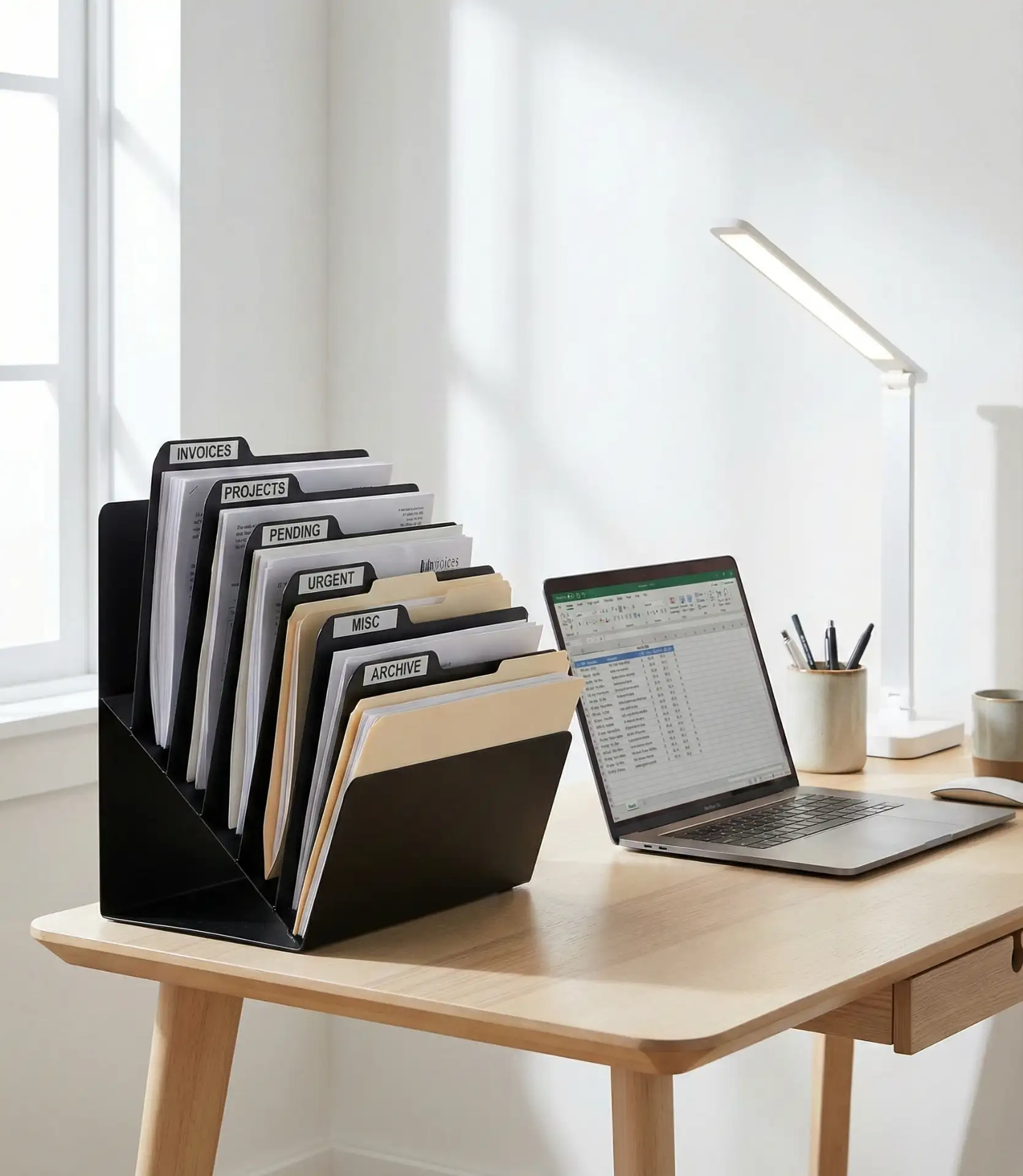
This organization method gained traction during remote work transitions when Americans needed to manage household and professional paperwork from a single desk. A three-section sorter typically suffices for most people—one slot for active projects, one for pending tasks, and one for items to file. The visual clarity of seeing labeled sections reduces that nagging feeling of “I know I have that document somewhere,” and processing papers becomes faster when each category has a dedicated home.
13. Hostel Desk Minimalist Setup
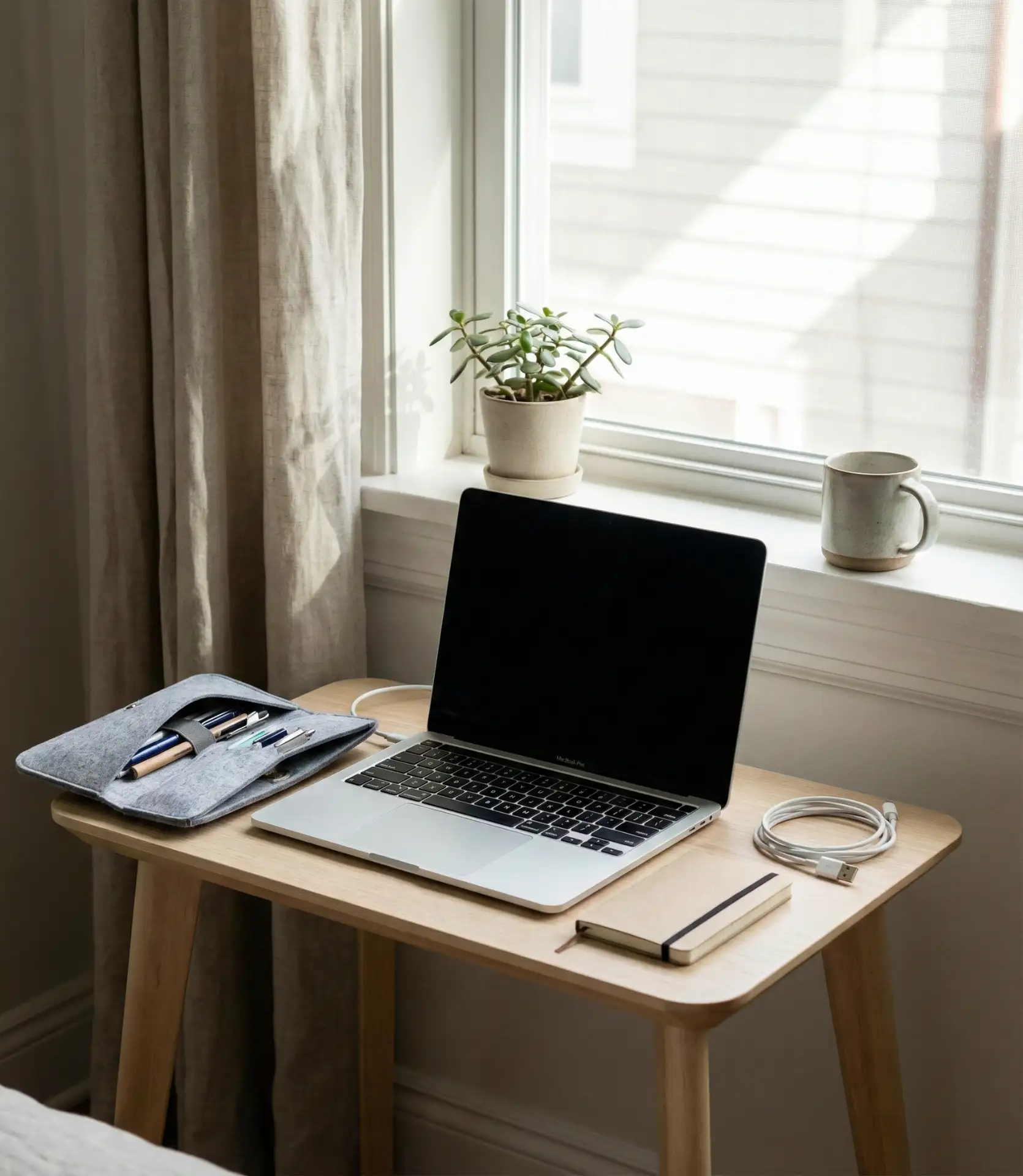
When you’re working from a hostel desk or other temporary workspace, a minimalist organization approach makes sense—bring only what you absolutely need and keep it contained in a single small bag or pouch. A laptop, charging cable, notebook, and pen might be your entire mobile office, and organizing these few items well means you can set up and pack up efficiently. This stripped-down method appeals to digital nomads and student travelers who value mobility over material possessions.

Experienced travelers emphasize the importance of a small cable organizer pouch—even with just three or four cables, they inevitably tangle in a backpack without proper containment. A simple zip pouch keeps charging cables, adapters, and earbuds separated and easy to find. This same principle applies to non-travelers who want to keep their desk ultra-minimal; limiting items to absolute essentials eliminates decision fatigue and makes every work session feel refreshingly straightforward.
14. Vanity Desk with Drawer Dividers
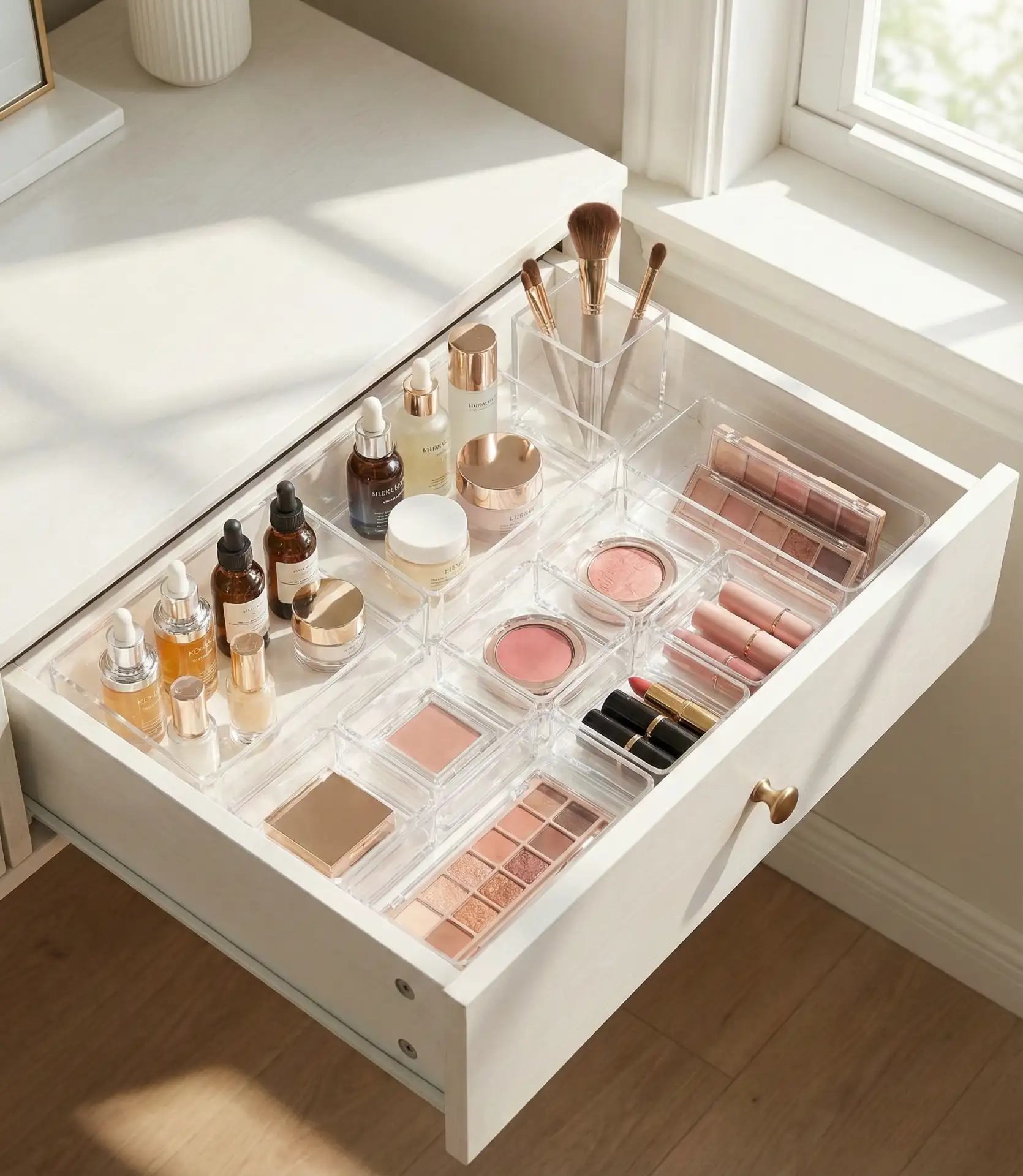
A vanity desk benefits tremendously from drawer dividers that separate skincare, makeup, and hair accessories into distinct zones. Velvet-lined trays or acrylic compartments protect delicate items while making it easy to see everything at once when the drawer opens. This organized approach prevents the common problem of products getting lost in the back of deep drawers, and it maintains that luxurious, spa-like feeling that makes your morning routine something to look forward to.
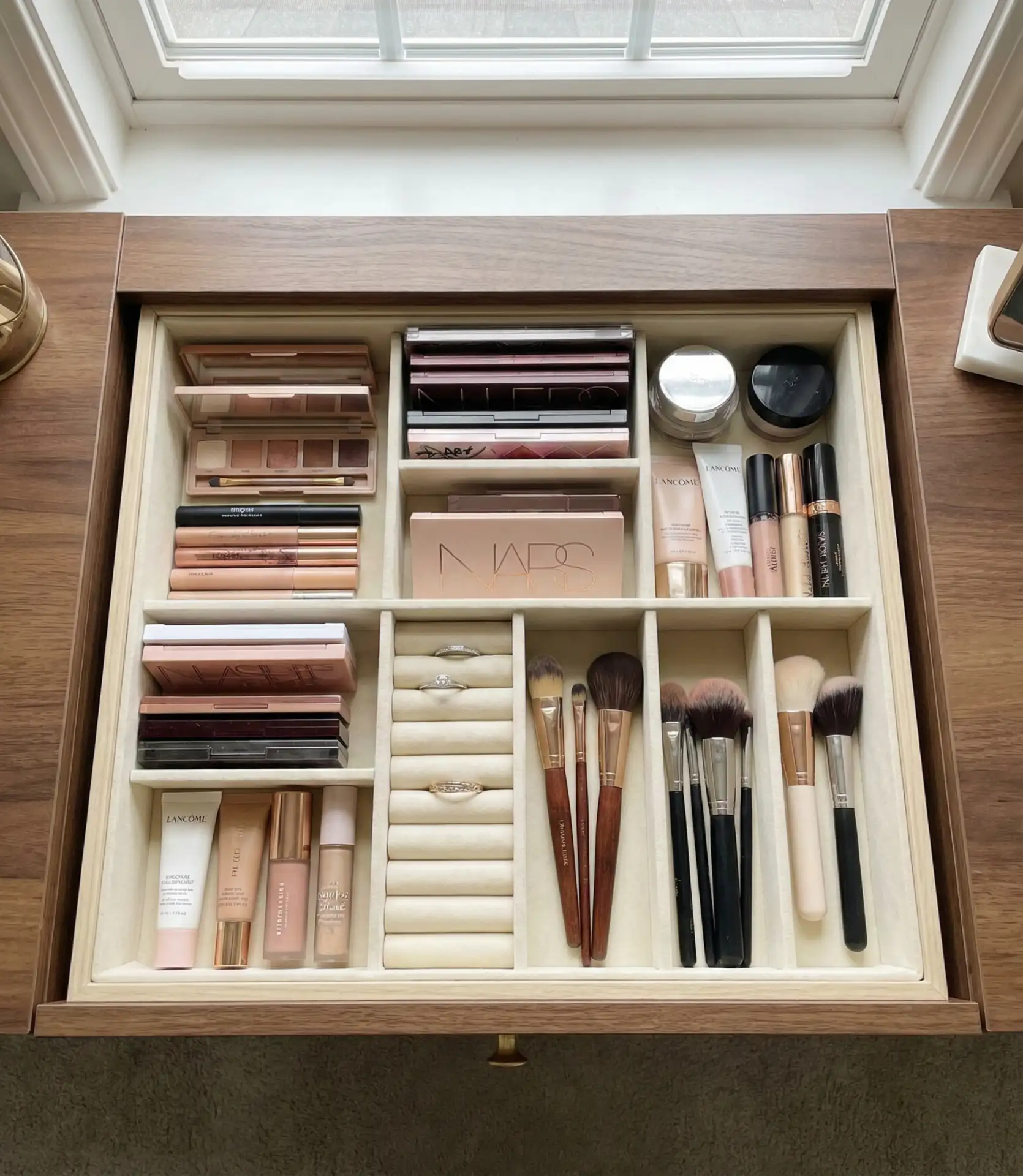
Where this technique works best is in primary bedrooms or dedicated dressing areas where the vanity serves as a daily ritual space rather than just functional storage. Americans on the East Coast, where many homes have traditional vanity tables in the bedroom, often find that investing in quality drawer organization elevates their entire morning experience. The key is grouping items by use frequency—daily essentials in the top drawer with easy-access dividers and special occasion products in lower drawers.
15. Preppy Desk with Coordinated Supplies
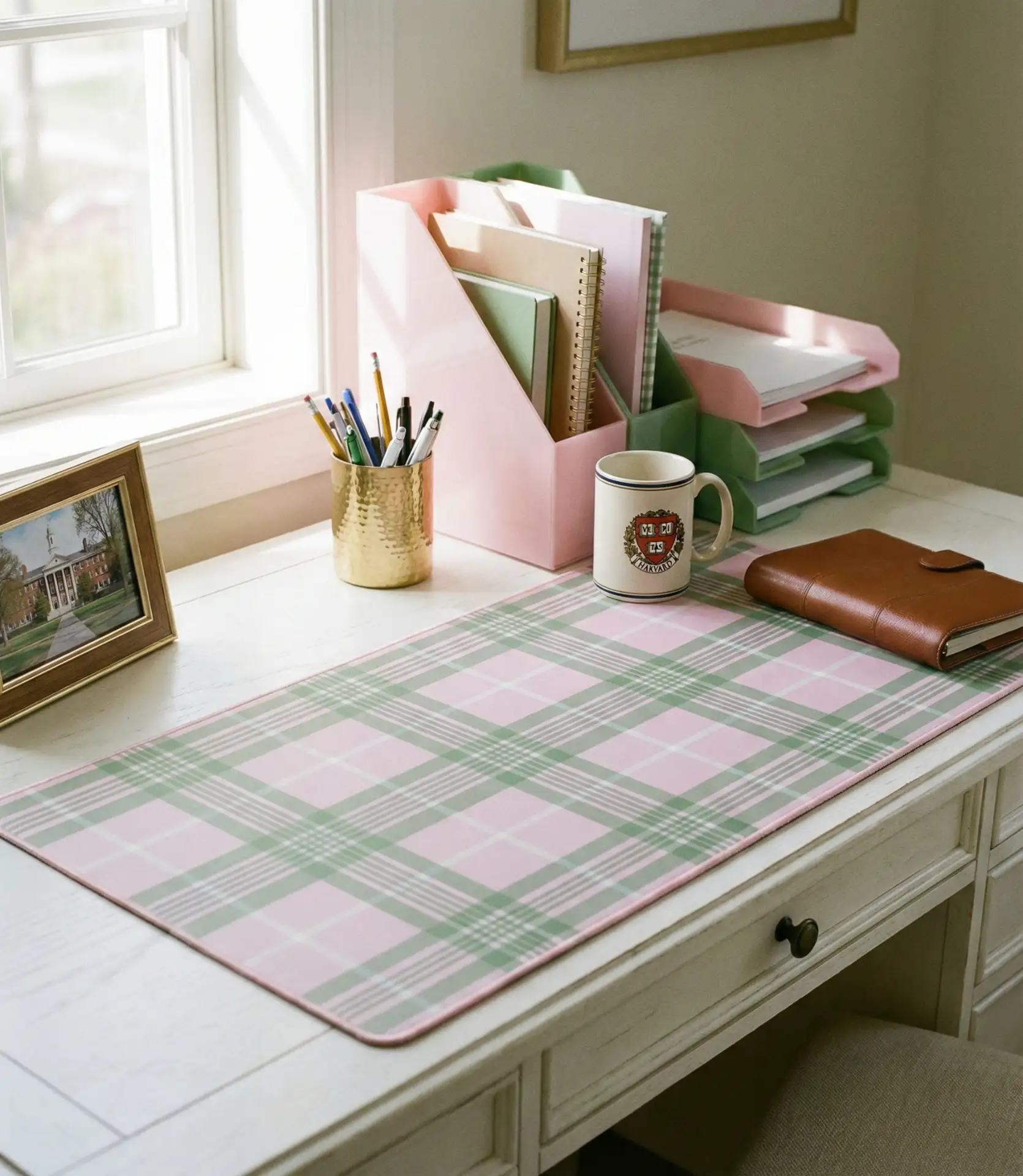
A preppy desk aesthetic embraces coordinated supplies in classic colors—navy, white, gold, and perhaps a touch of pink or green. Matching pen holders, desk pads, staplers, and notebook covers create a cohesive look that feels polished and intentional. This style has seen a resurgence on Pinterest among young professionals and student groups who want their workspace to reflect a put-together, East Coast collegiate vibe without feeling overly formal.
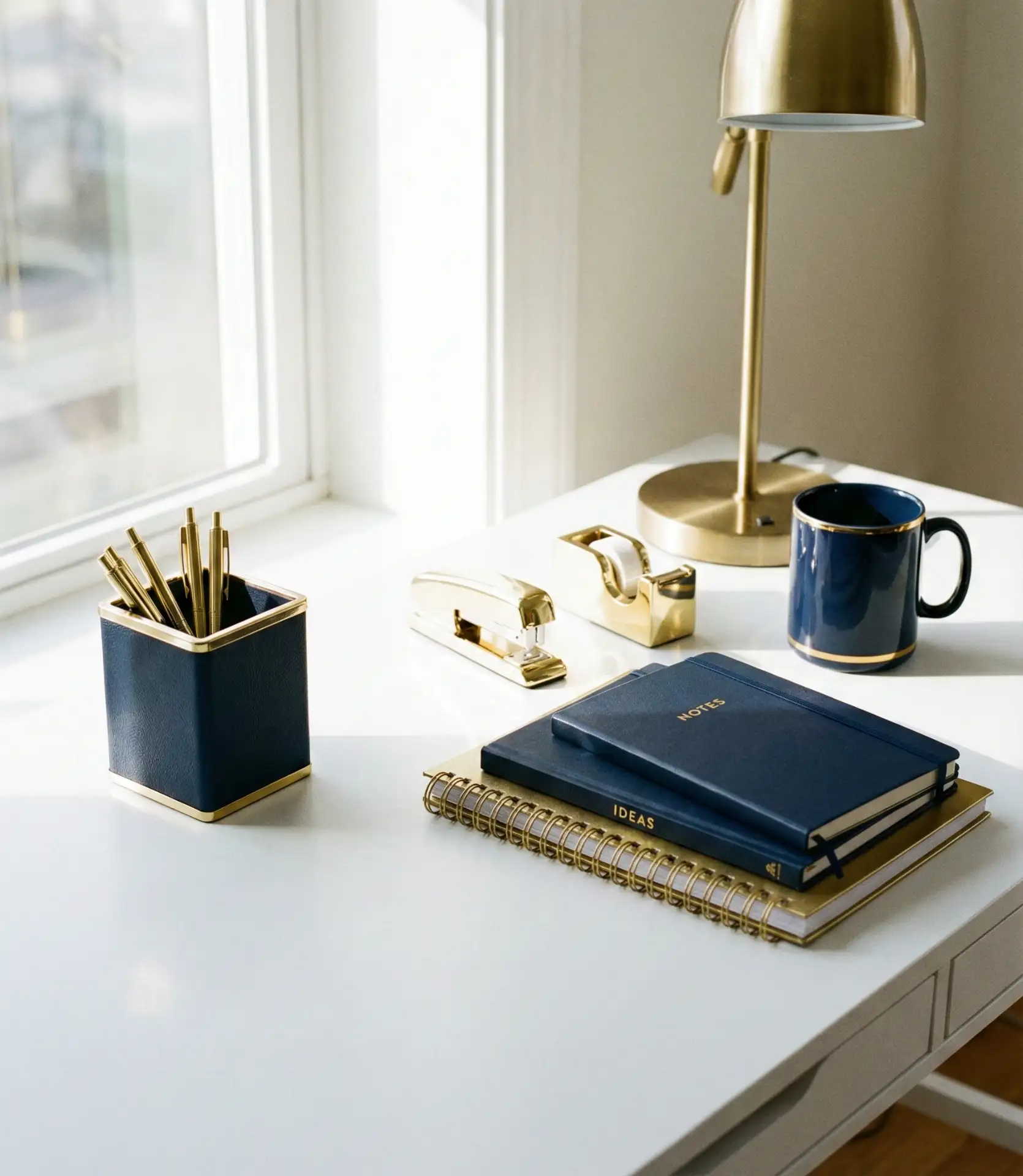
This look gained momentum in college towns across New England and the Mid-Atlantic, where students wanted their dorm desks to feel sophisticated. The organizational benefit is subtle but real—when your supplies match and look intentional, you’re more likely to put them back in their designated spots rather than leaving them scattered. A coordinated desk also photographs beautifully for video calls, creating a professional backdrop that suggests attention to detail without requiring constant tidying.
16. Art Desk with Paint Brush Organizer

An art desk needs specialized organization for paintbrushes, which should be stored upright to maintain their shape and kept separate by size and type. Mason jars, ceramic holders, or divided desktop caddies work beautifully for this purpose, and arranging them by brush size creates both function and visual appeal. This system prevents the frustration of hunting through a drawer for the right brush mid-project, keeping your creative flow uninterrupted.
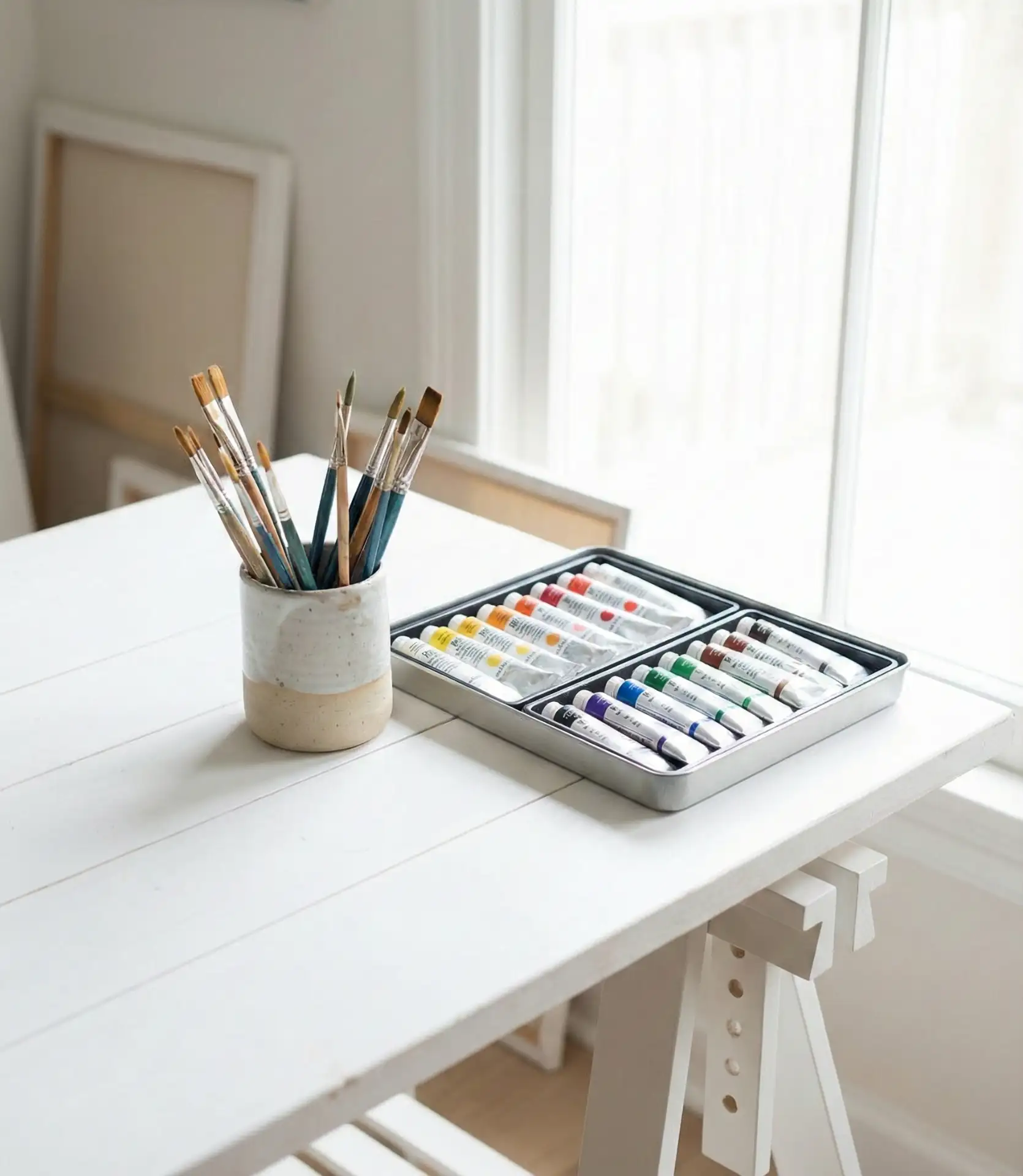
Artists working from home studios, particularly in creative hubs like Portland and Austin, often mention that proper brush storage extends the life of their tools significantly. Storing brushes upright with bristles facing up prevents water from seeping into the ferrule (the metal part), which can loosen bristles and ruin expensive brushes. This small organizational choice has a real financial impact over time, making it both a practical and economical approach to managing art supplies.
17. Nail Tech Desk with Polish Organizer
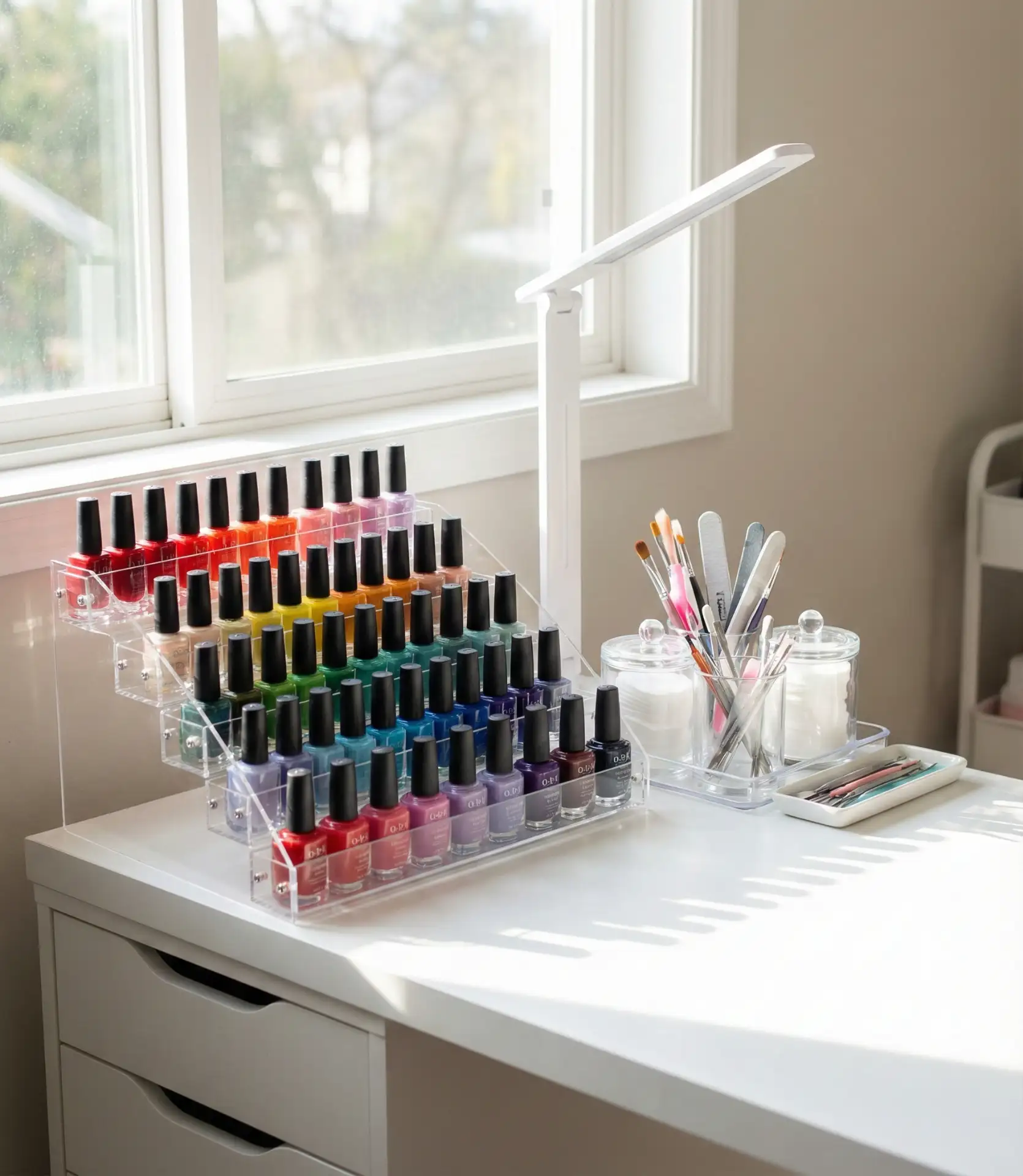
A nail technician’s desk requires specialized organization for dozens of polish bottles, tools, and accessories that need to stay clean and accessible. Tiered acrylic displays show polish colors at a glance, while small drawers hold files, buffers, and cuticle tools. For aesthetic appeal, many nail artists arrange polishes by color family, creating a rainbow effect that doubles as décor and makes selecting shades during appointments quick and efficient.
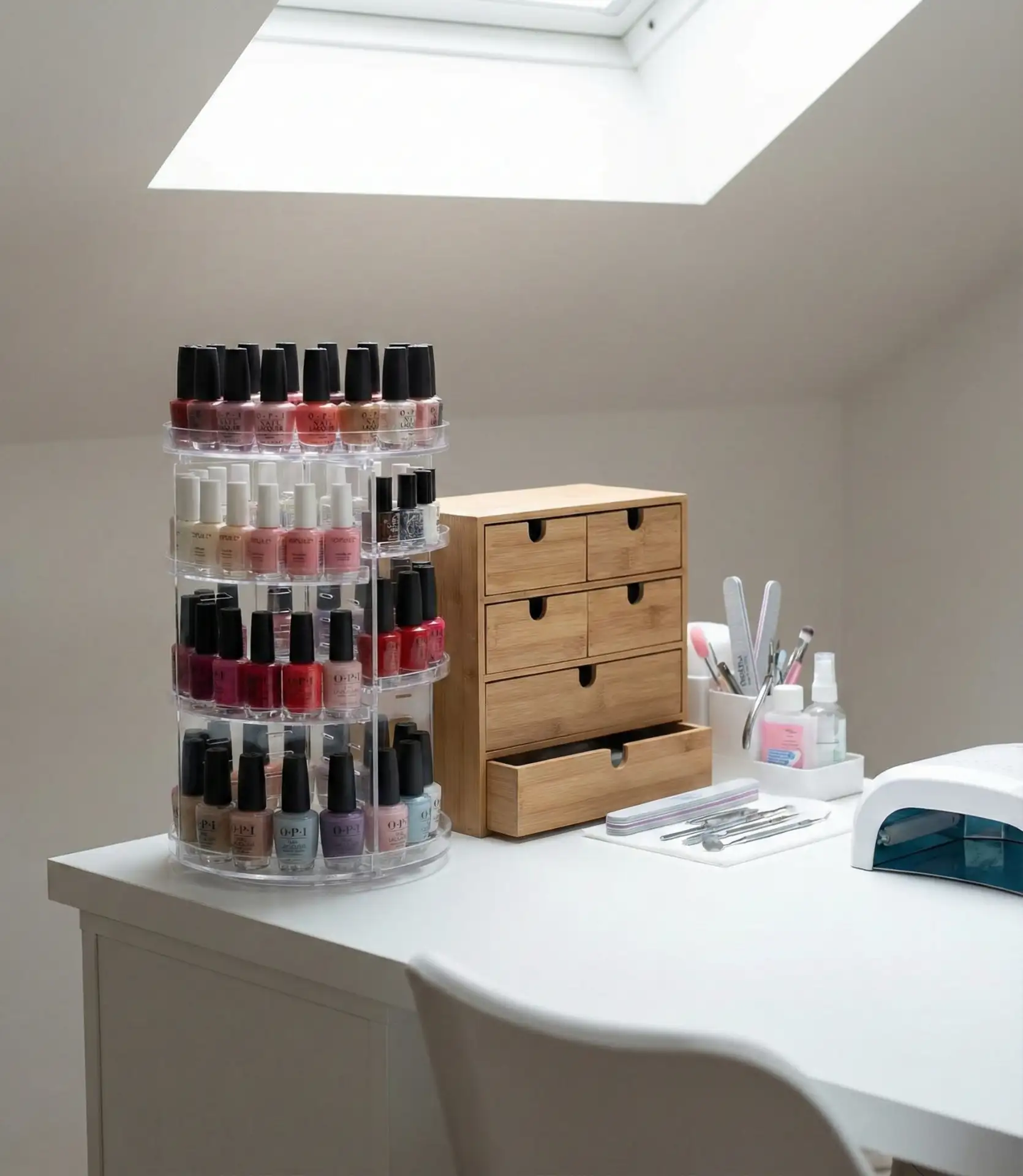
Home-based nail technicians across suburban America report that visible polish organization impresses clients and speeds up service—when customers can see all available colors, decision-making happens faster. The investment in proper tiered organizers typically pays for itself within a month through time saved per appointment. Additionally, upright storage prevents polish from settling incorrectly, which extends product life and maintains consistent application quality.
18. Aesthetic Makeup Desk with Mirror Lighting
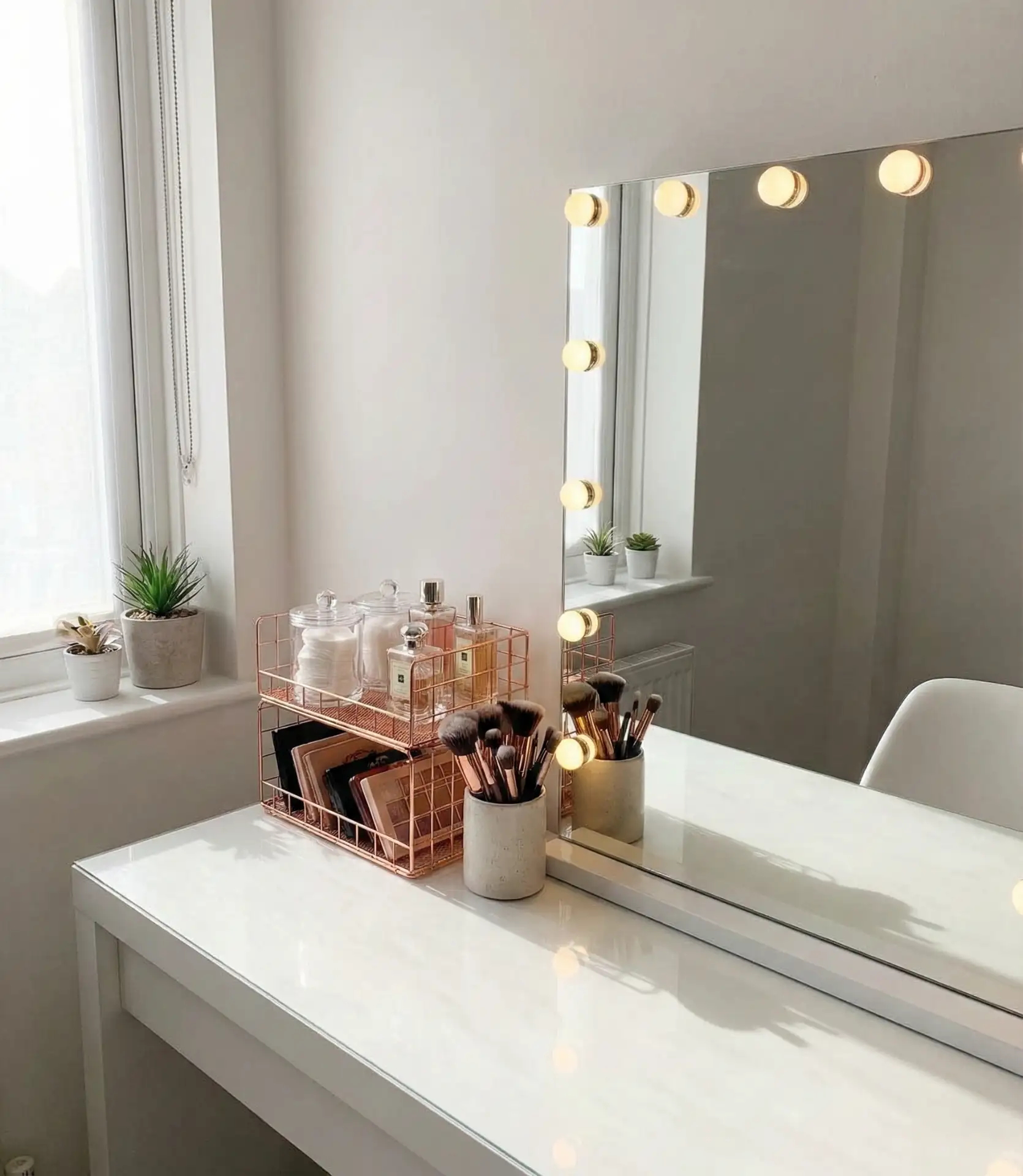
An aesthetic makeup desk centers around a well-lit mirror surrounded by organized cosmetics in matching or complementary containers. LED strip lights or a ring light provide even, flattering illumination that makes makeup application accurate and enjoyable. Clear acrylic drawers or rose gold wire baskets hold products while maintaining visual lightness, and keeping only daily-use items on display prevents the space from feeling cluttered.
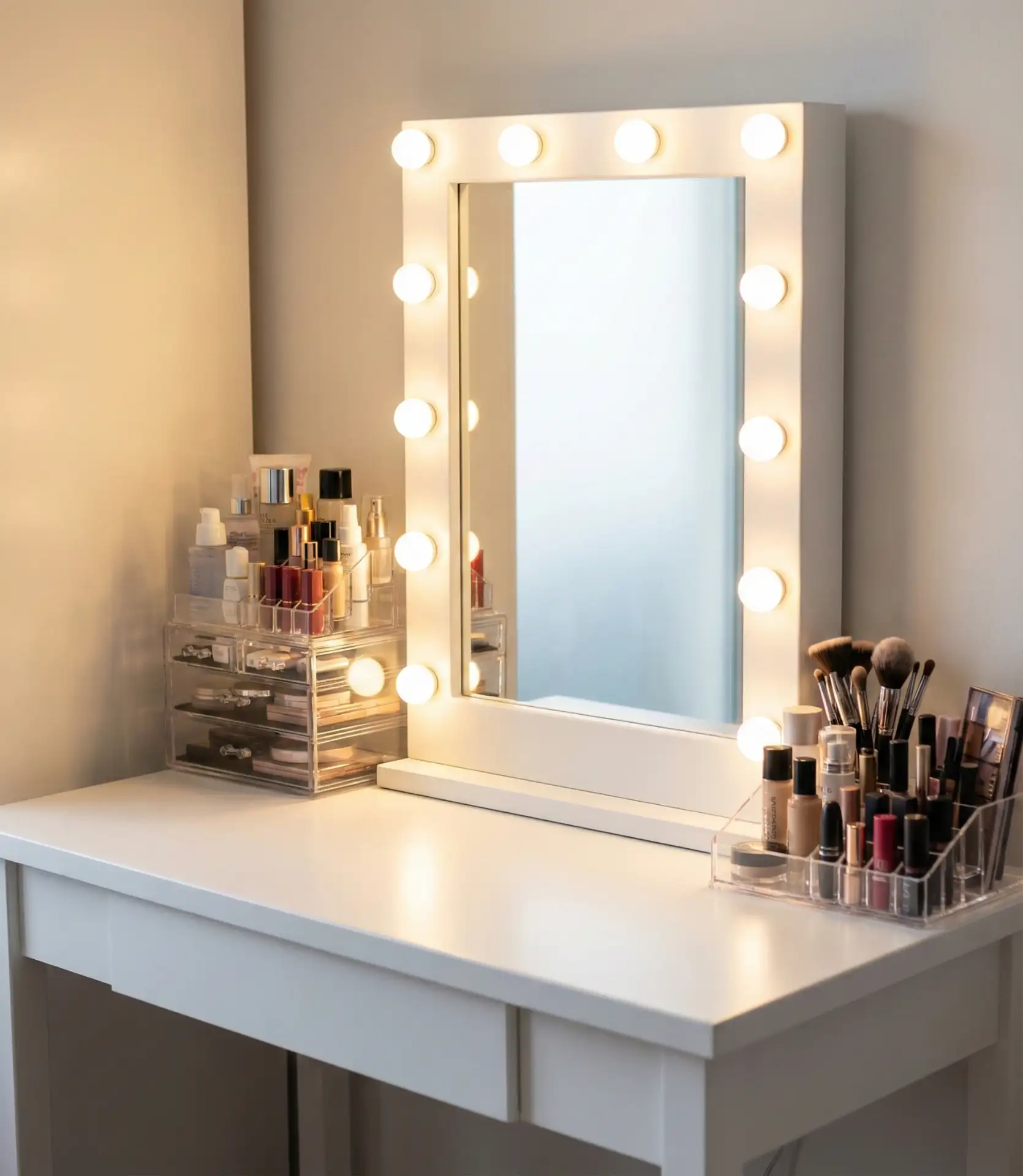
One beauty enthusiast in Los Angeles shared that switching to a dedicated, well-lit makeup desk improved her application skills noticeably because she could finally see true colors under proper lighting. The psychological benefit shouldn’t be underestimated either—a beautiful, organized space turns a daily routine into a moment of self-care rather than a rushed chore. Keeping the desk consistently organized takes just two minutes at the end of each day, a habit that maintains both the aesthetic appeal and the functionality.
19. Dorm Desk with Over-Door Storage
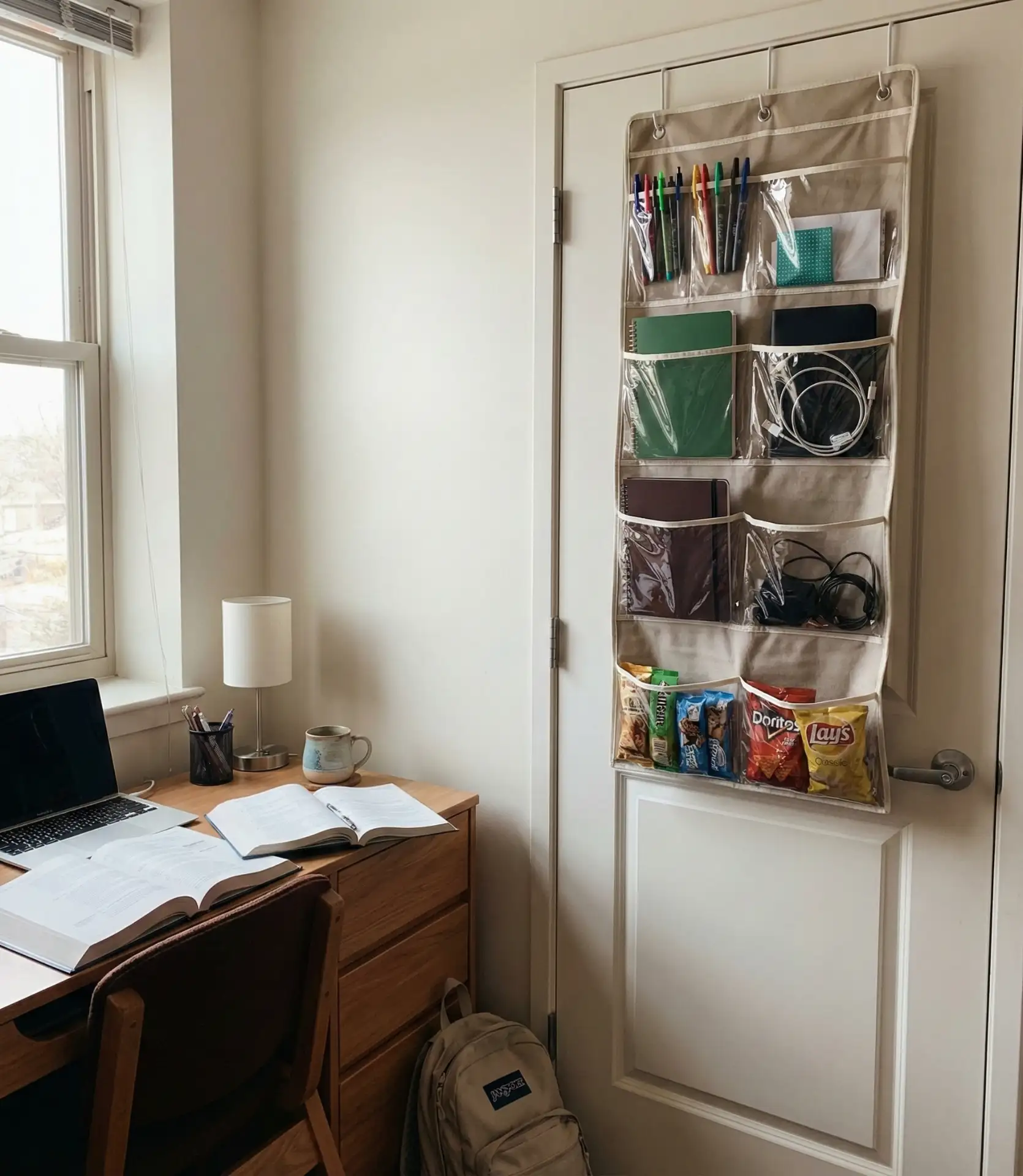
In a dorm room with limited floor space, you can maximize vertical storage by pairing your desk with over-door organizers, which don’t require any installation. Hanging fabric pockets or wire baskets on the back of your door hold textbooks, study supplies, and personal items that would otherwise crowd your desk surface. This approach is especially popular among college students who can’t make permanent modifications to their rooms but still need comprehensive organization.
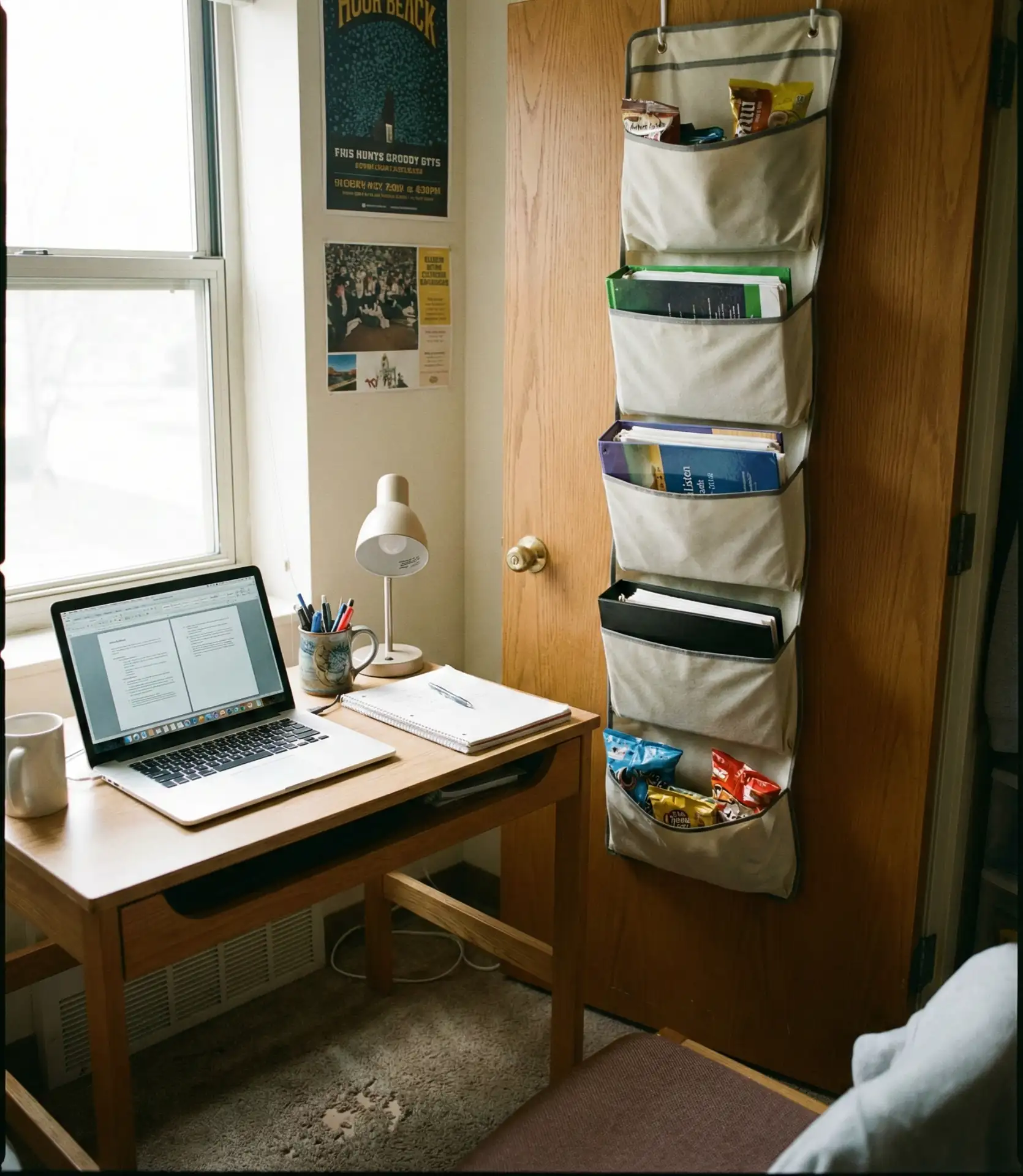
A common mistake students make is overloading over-door organizers to the point where they stress the door hinges or make it difficult to open and close smoothly. The best practice is keeping heavier items like textbooks in lower pockets and lighter supplies like notebooks and pens up top. This organizational strategy has become standard advice on college move-in checklists, and resident advisors often recommend specific products that work with standard dorm doors.
20. Study Desk with Minimalist Desktop Organizer
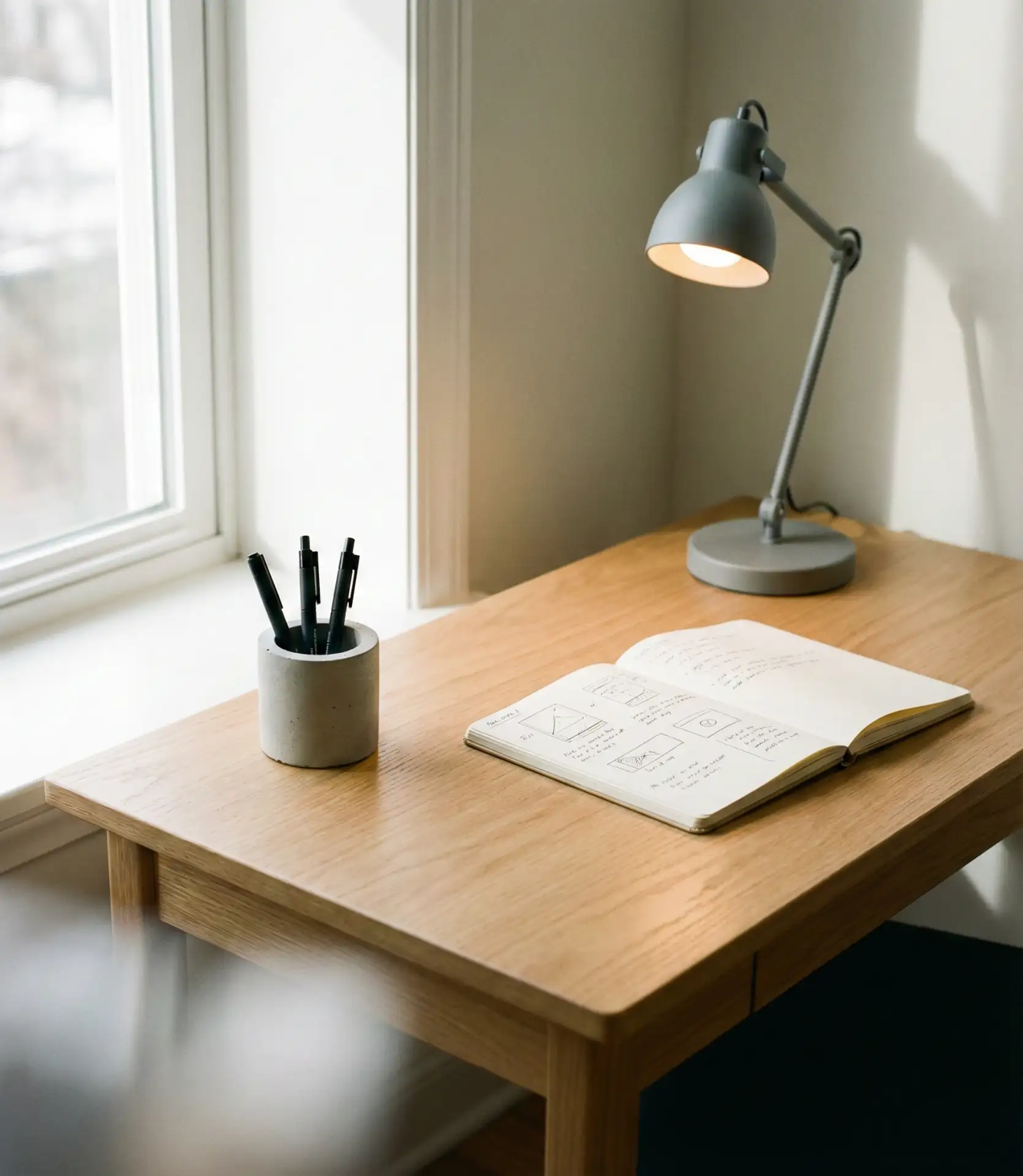
A minimalist desktop organizer keeps study essentials at hand without visual clutter—think a single sleek caddy holding three pens, a highlighter, and a small pair of scissors. This restrained approach is rooted in the philosophy that excess choice and visual noise drain mental energy, and for student-focused work, less truly is more. The desk surface remains largely empty, creating psychological space that helps concentration and reduces the urge to fidget with objects during study sessions.
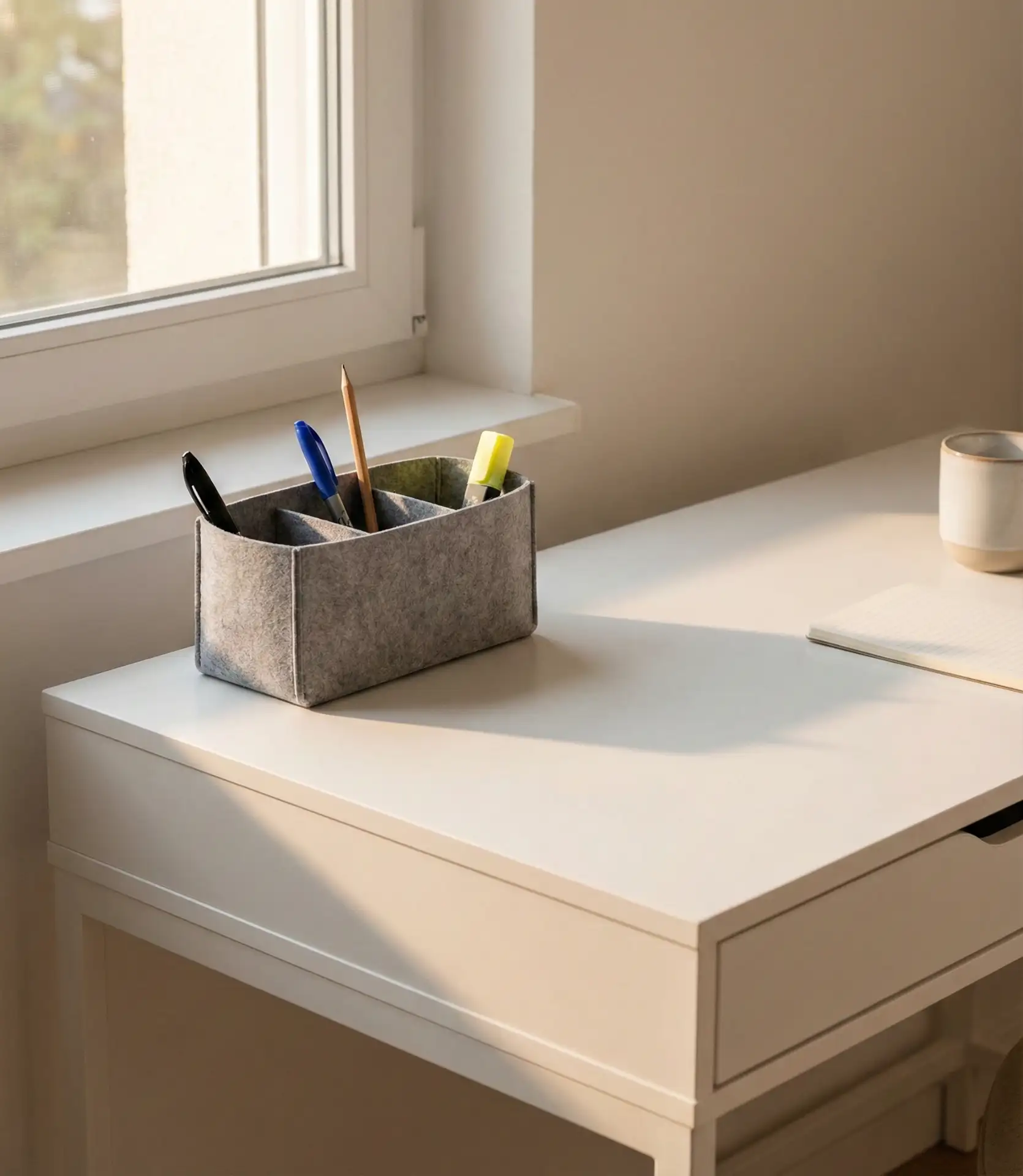
Research on study environments consistently shows that visual distractions negatively impact concentration, particularly for tasks requiring deep focus like reading dense textbooks or writing research papers. Students who embrace minimalist desk organization often report feeling less overwhelmed and more able to start work sessions without procrastination. Being ruthless about what deserves a spot on your desk is crucial—if you don’t use it regularly, it should be placed in a drawer or on a shelf to avoid competing for your attention.
21. IKEA Desktop Drawer Unit for Small Spaces
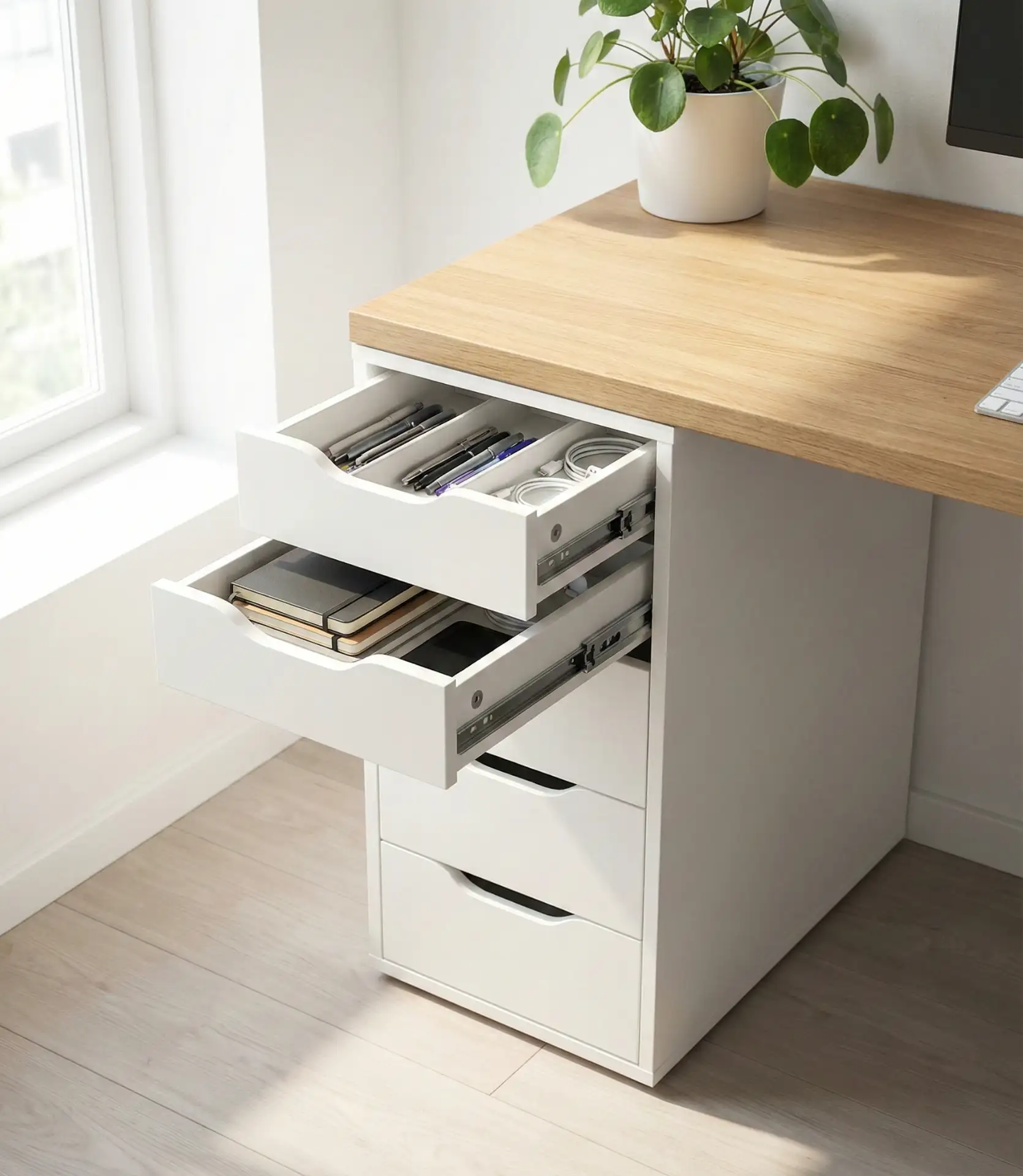
The IKEA Alex drawer unit has become an icon of small space organization, fitting neatly under or beside most desks while providing substantial storage in a compact footprint. Its shallow drawers are perfect for organizing office supplies, cosmetics, or craft materials by category, and the unit can double as a side table or pedestal for larger desks. This versatile piece appears constantly on Pinterest for good reason—it solves multiple organizational challenges in one affordable, well-designed package.
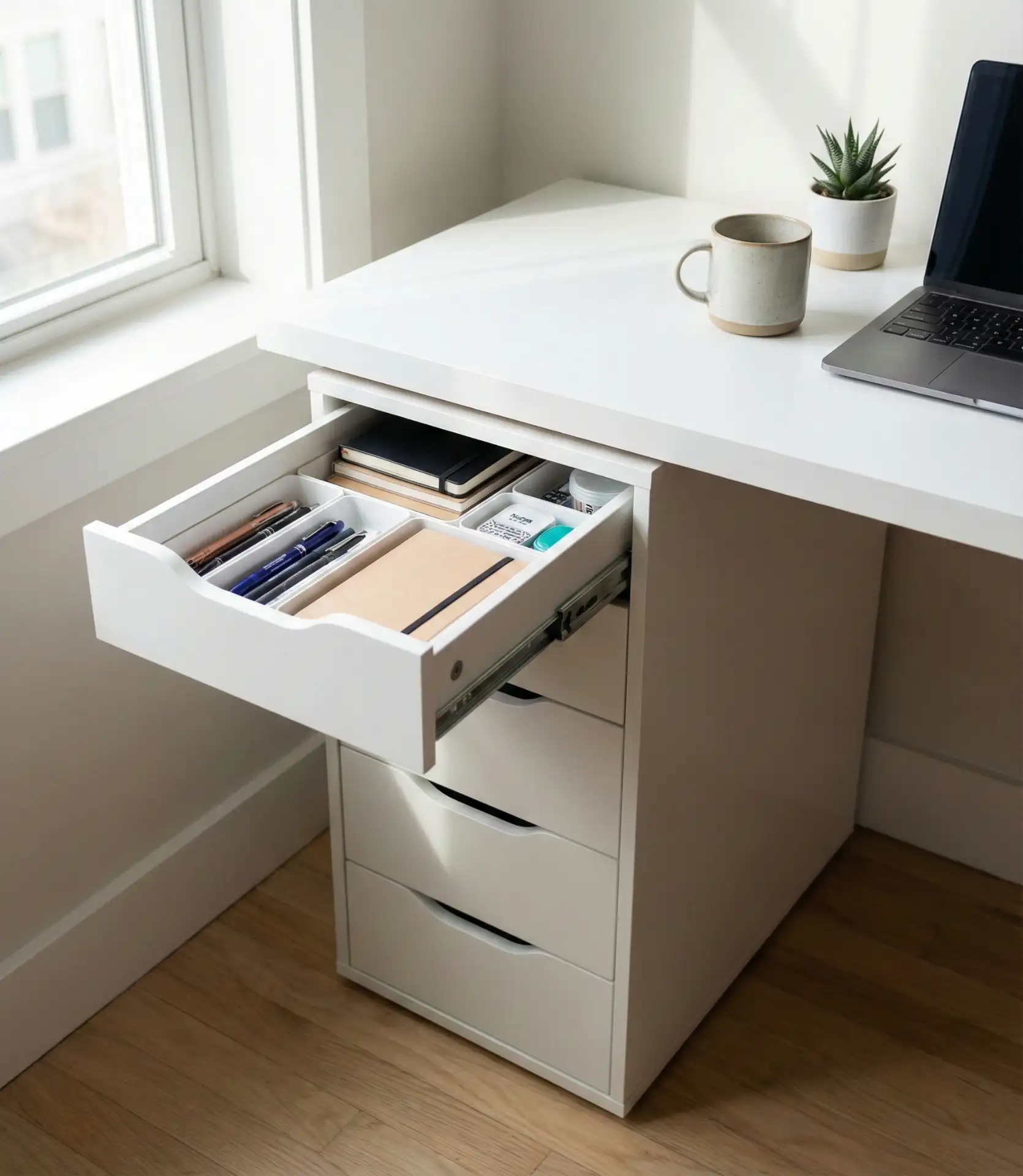
Budget-wise, the Alex unit represents excellent value at around one hundred dollars—comparable drawer units from other retailers often cost twice as much for similar functionality. The drawers glide smoothly even when full, and the unit supports enough weight to act as a desktop support if you’re building a custom desk setup. Organizing supplies by drawer is straightforward: the top drawer is for daily essentials, the middle drawers are for categorized supplies, and the bottom drawer is for backup stock or less-frequently used items.
22. Standing Desk with Laptop Riser
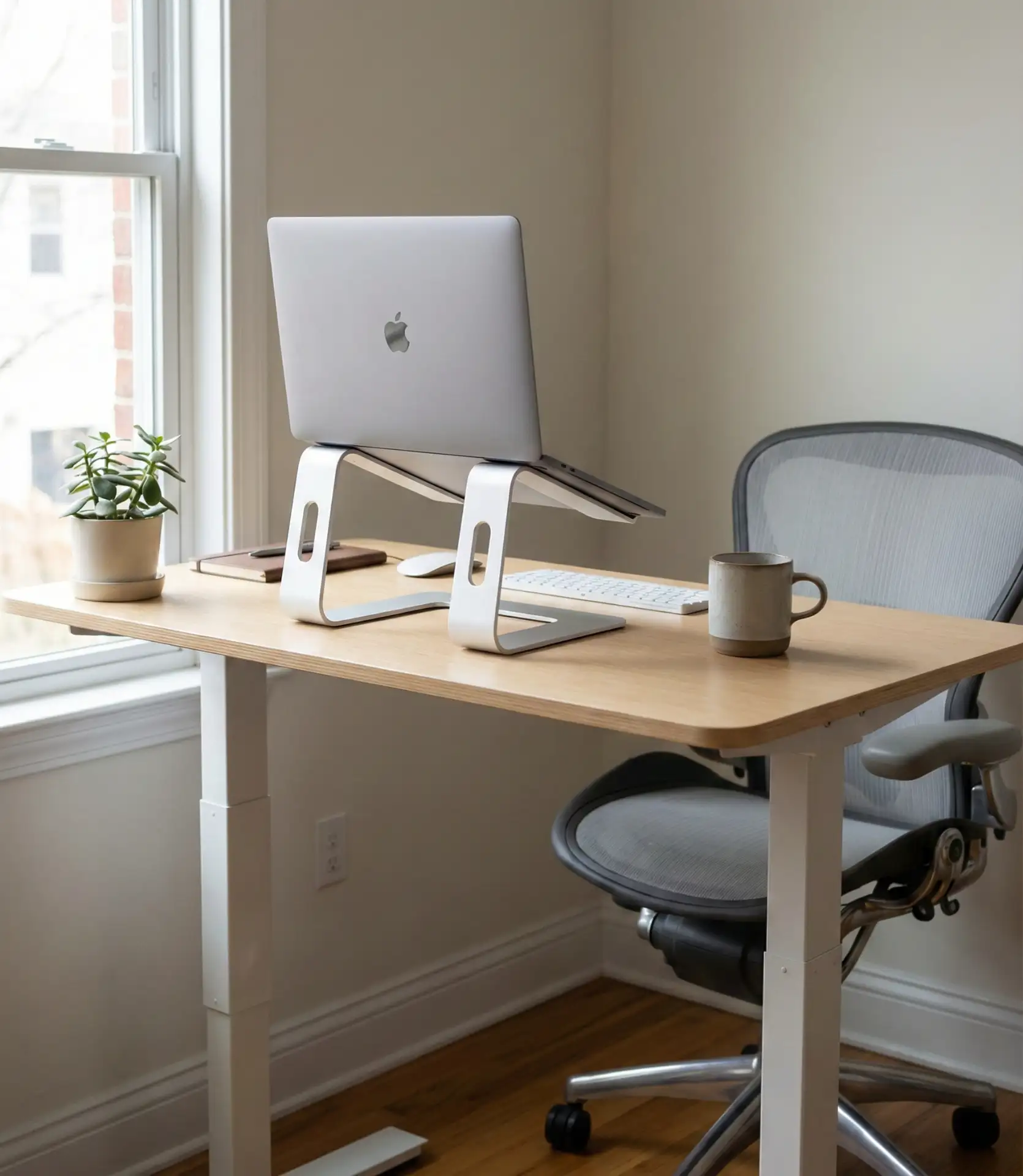
Pairing a standing desk with a laptop riser elevates your screen to proper eye level, preventing neck strain whether you’re sitting or standing. A simple bamboo or aluminum riser creates a two-tier system—laptop elevated in back, keyboard and mouse at desk level—that promotes better posture and leaves room underneath for notebooks or a small organizer. This setup has become standard in work-from-home offices as ergonomic awareness grows among Americans spending long hours at their desks.
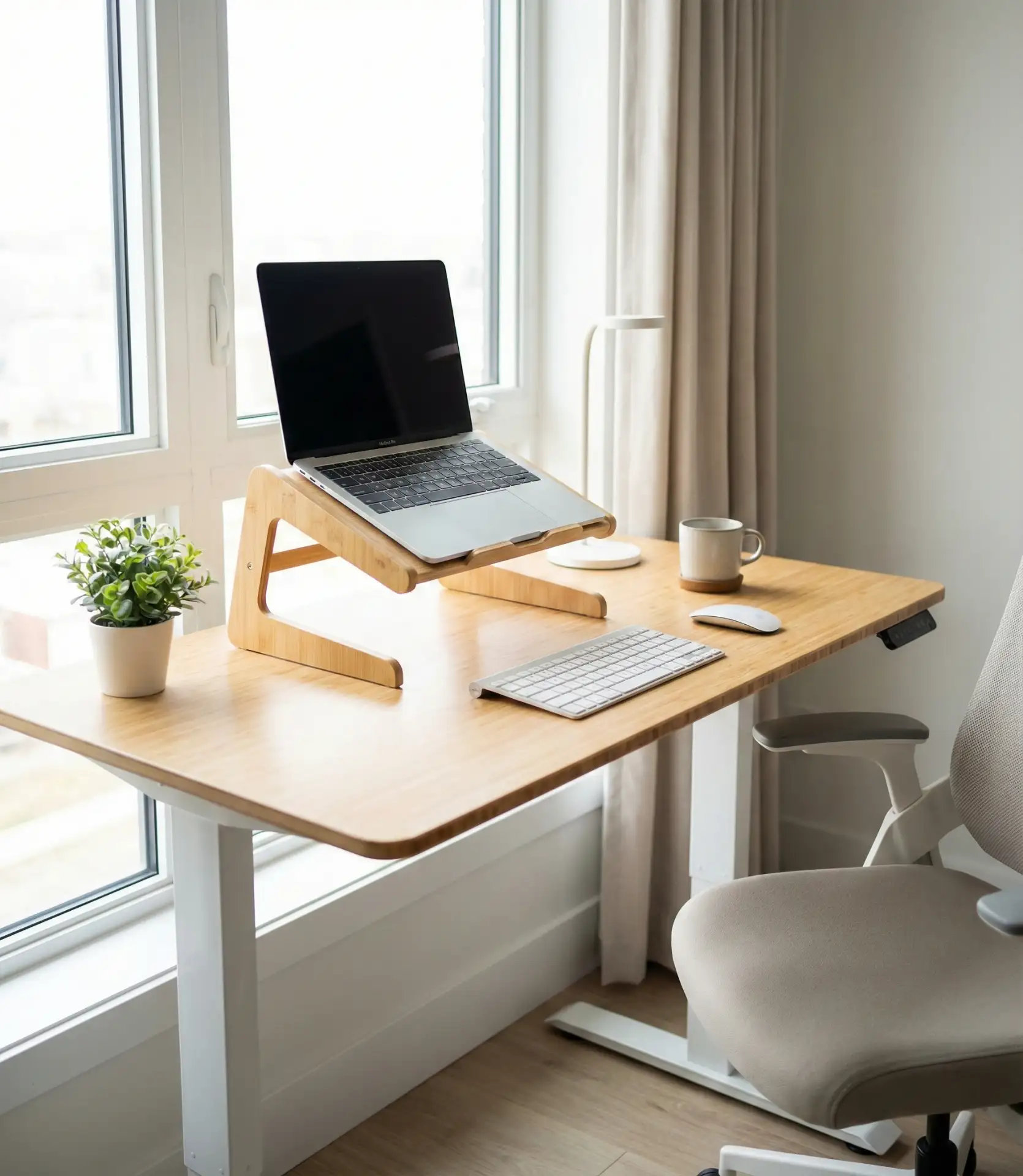
Experts in workplace ergonomics emphasize that screen height matters as much as desk height—your eyes should align with the top third of your screen when sitting or standing in neutral posture. A laptop on a flat surface forces your neck into flexion, which accumulates strain over weeks and months. Investing in a twenty-dollar laptop riser prevents this injury entirely and creates valuable desk space underneath for your phone, a small notepad, or a coffee cup, making your desk more functional without adding clutter.
Which of these desk organization ideas speaks to your space and style? Whether you’re transforming a small dorm desk, setting up a professional home office, or carving out a creative corner in a shared room, the right organizational approach can significantly impact how you work and feel. We’d love to hear which ideas you’re planning to try—drop a comment below and share your desk transformation journey with us.