
Brown is having a serious moment in American bedrooms right now, and Pinterest searches for warm, earthy interiors have been climbing steadily heading into 2026. There’s something deeply human about the color—it grounds a space, wraps you in warmth, and somehow manages to feel both timeless and completely fresh when styled right. Whether you’re drawn to deep espresso tones, soft caramel walls, or the quiet sophistication of a chocolate-and-cream palette, this color family offers more range than most people realize. In this article, we’re walking through some of the most inspiring brown bedroom ideas for 2026, from cozy cocoon-style retreats to airy, light-filled rooms that prove brown isn’t heavy at all—it’s home.
1. Chocolate Brown Walls with Warm White Trim
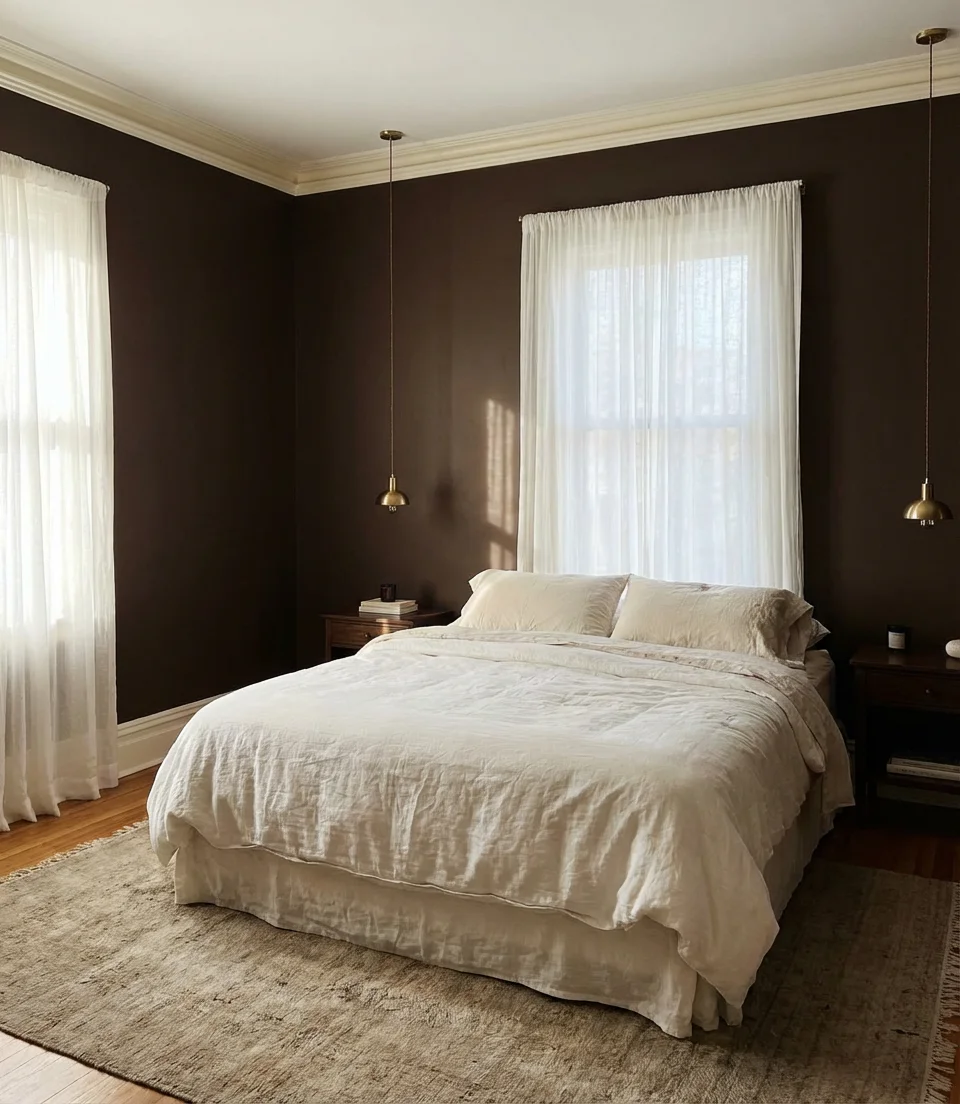
Few combinations feel as immediately inviting as chocolate brown walls paired with cream and white trim. The contrast is sharp enough to feel intentional but warm enough to never read as cold. This approach works beautifully in rooms with at least one good-sized window—the white trim bounces light around the space and keeps the deep brown from feeling cave-like. Think of it as the bedroom equivalent of a really well-tailored dark blazer: it commands attention while remaining effortlessly sophisticated.
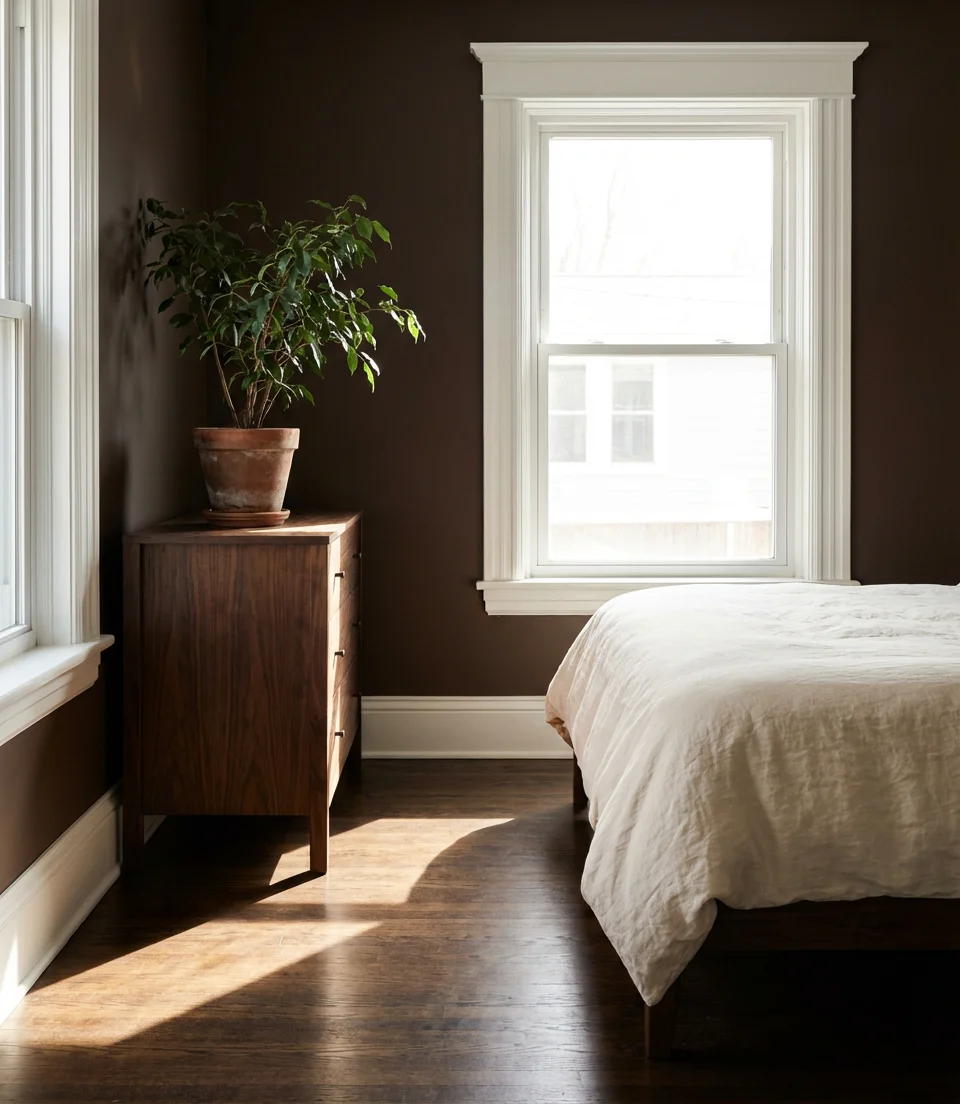
The practical beauty of this combination is in its staying power. Unlike trendy two-tone paint approaches that can feel dated within a few years, chocolate walls with white trim have a classical underpinning—you can see it in historic New England homes as much as in newly renovated Brooklyn apartments. Swap out textiles seasonally (lighter linens in summer, heavier wool throws in winter), and the room transforms without you touching a paintbrush. It’s the kind of investment that pays back every single morning you wake up in it.
2. Cozy Brown and Beige Layered Bedroom
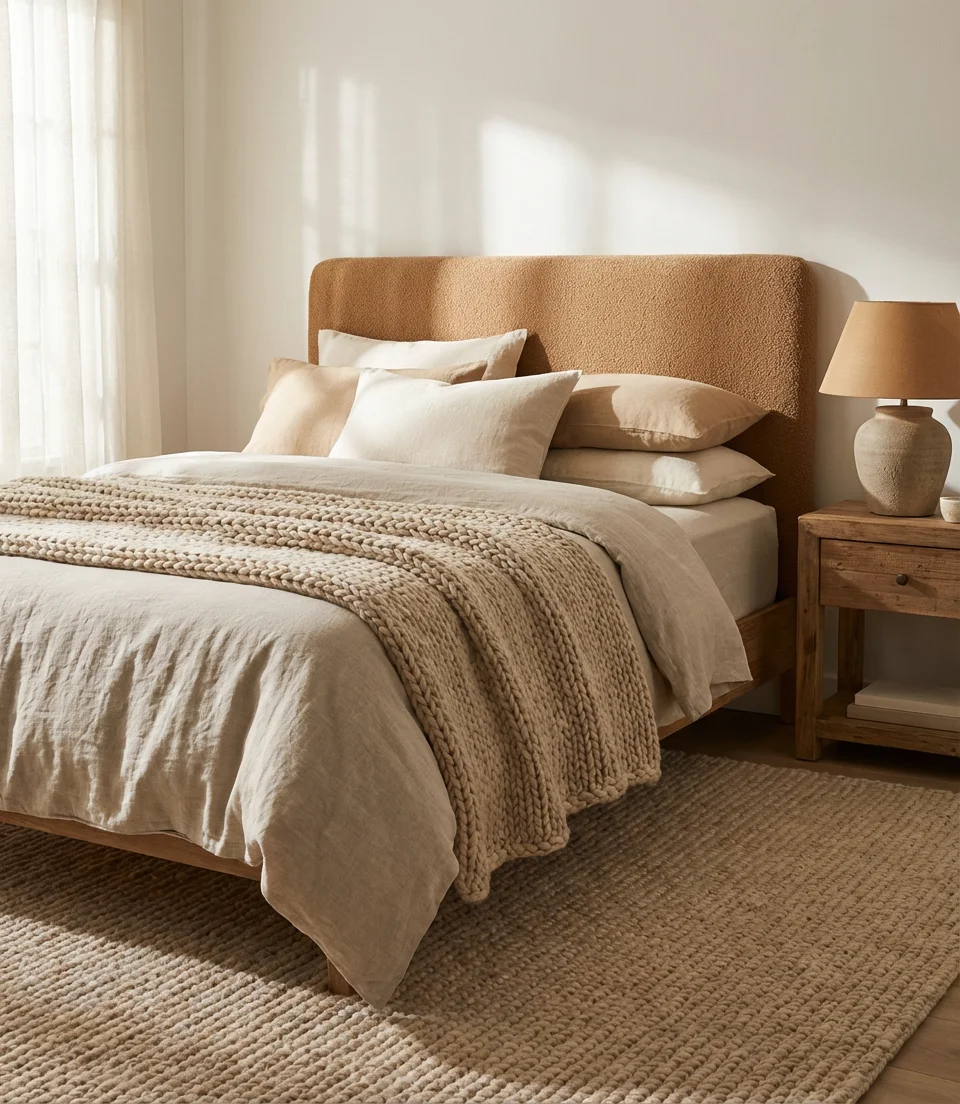
There’s a reason beige and brown layering has dominated bedroom mood boards heading into 2026 — the combination taps directly into our collective desire for spaces that feel genuinely cozy. We’re talking stacked pillows in varied textures, a chunky knit throw draped just so over the footboard, linen shams in warm sand tones, and a headboard upholstered in caramel bouclé. Each layer adds depth without adding visual noise. It reads as restful, not busy, and that distinction matters enormously in a room designed for sleep and recovery.
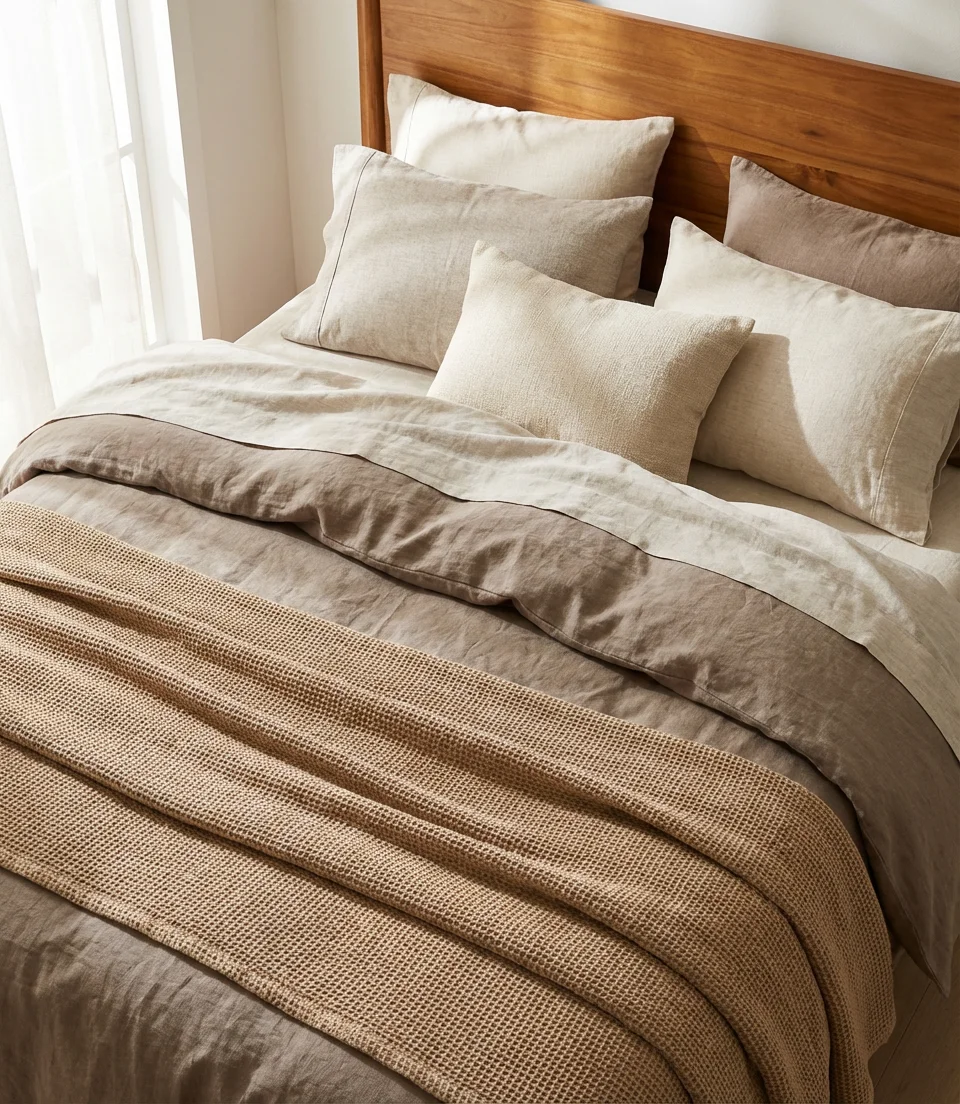
This design works especially well in Midwest and Southern American homes, where the bedroom is often expected to do double duty as a sanctuary. A designer friend once pointed out that the secret to a truly restful layered neutral bedroom is varying the texture more than the color—keep your palette tight (three tones maximum), but bring in linen, cotton, velvet, and wool. The contrast of smooth against nubby is what gives these rooms their visual richness, not the color range itself. That’s the insight most DIYers miss.
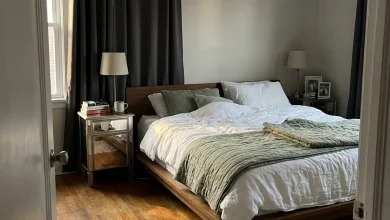
3. Dark Brown Moody Bedroom with Warm Lighting
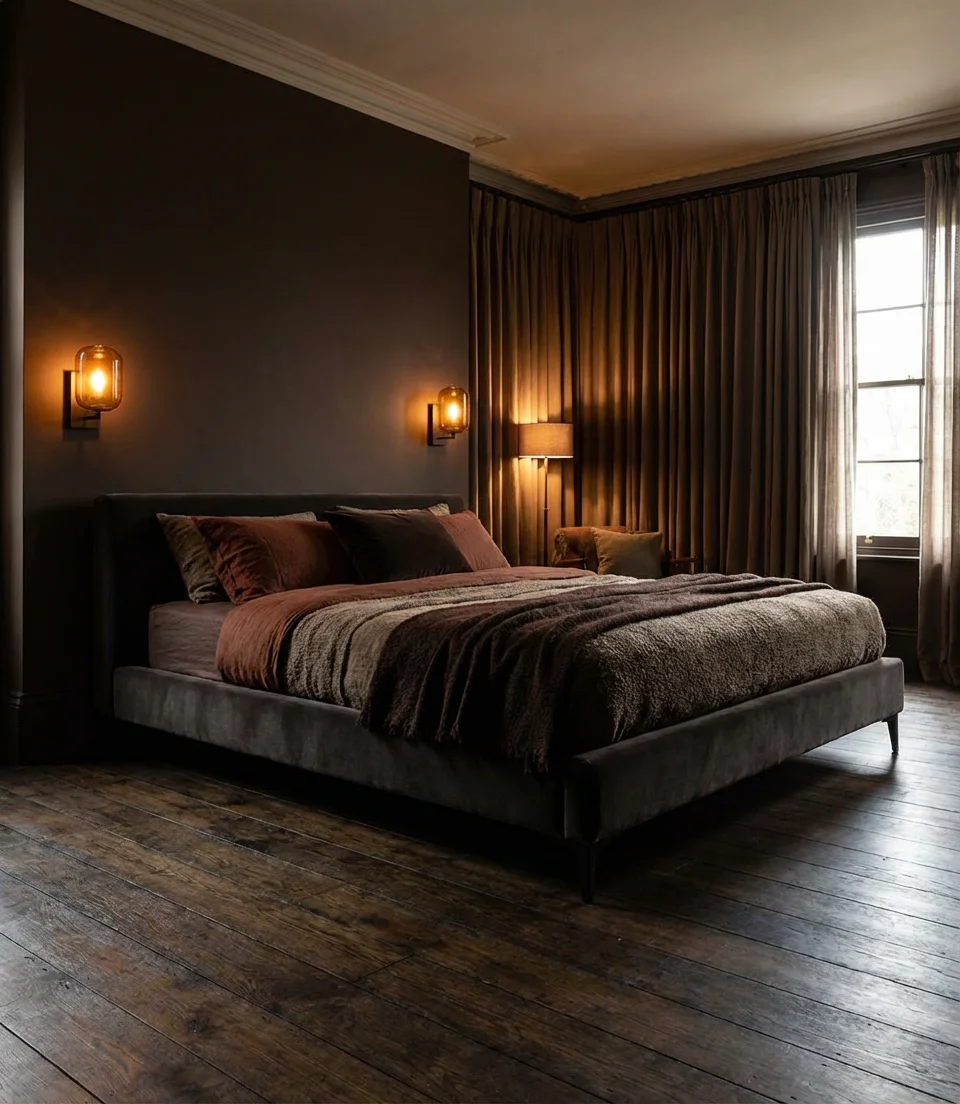
The dark bedroom trend is not going anywhere, and in 2026 it’s getting more refined—less gothic drama, more quiet luxury. A cozy color palette built on espresso walls, dark-stained wood floors, and amber-toned lighting creates the kind of room that feels like a high-end boutique hotel but actually is yours. The key is keeping the lighting layered: a warm bedside sconce, a recessed dimmer overhead, and maybe a low-wattage floor lamp tucked in a corner. Multiple light sources at different heights transform a dark room from oppressive to enveloping.
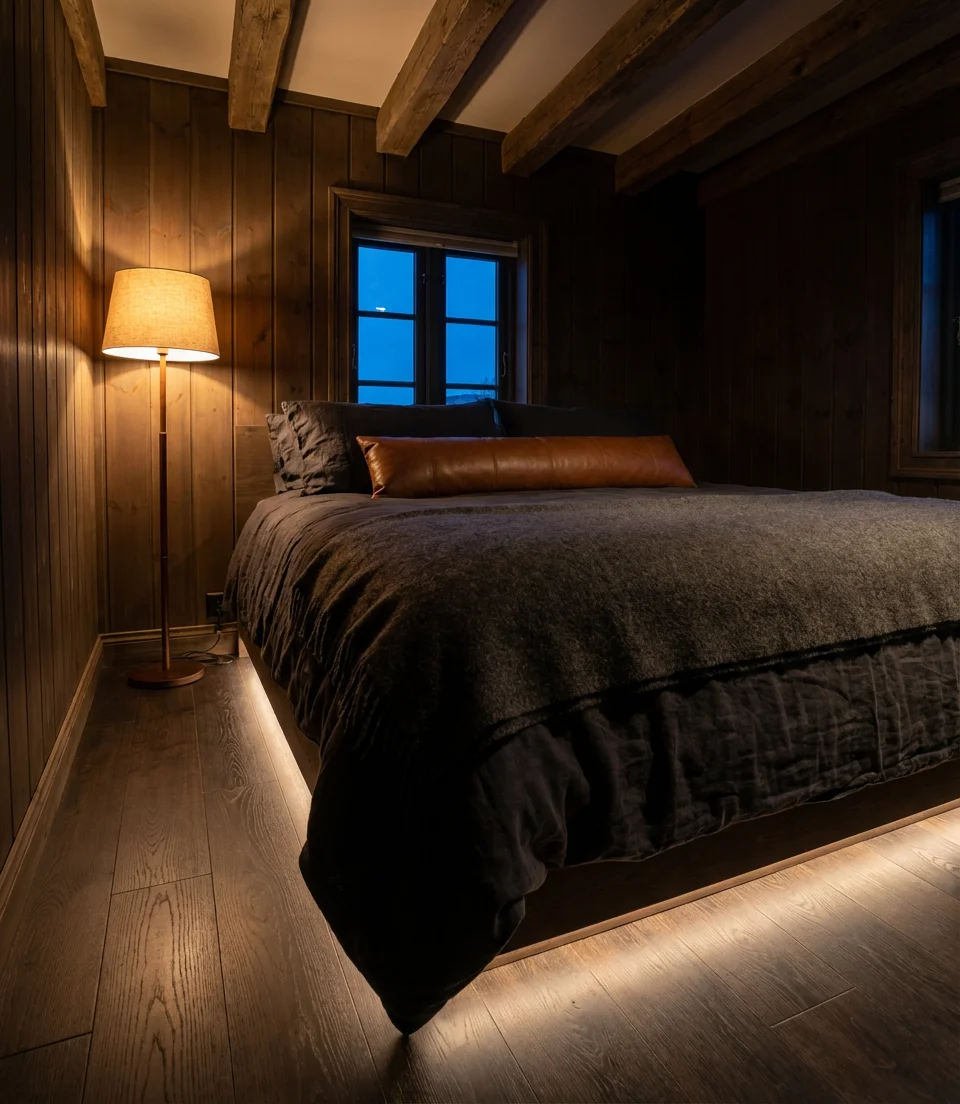
Common mistake people make with dark bedrooms is that they stop at the walls and forget the ceiling. Painting the ceiling the same deep tone—or even a shade darker—is what takes a moody bedroom from a “bold paint choice” to a fully immersive experience. Yes, it feels counterintuitive. Yes, it will make the room feel smaller on paper. But in practice, a wrapped dark ceiling creates a sense of shelter and intimacy that no amount of fancy furniture can replicate. If you’re going dark, commit completely.
4. Black and Brown Bedroom with Leather Accents
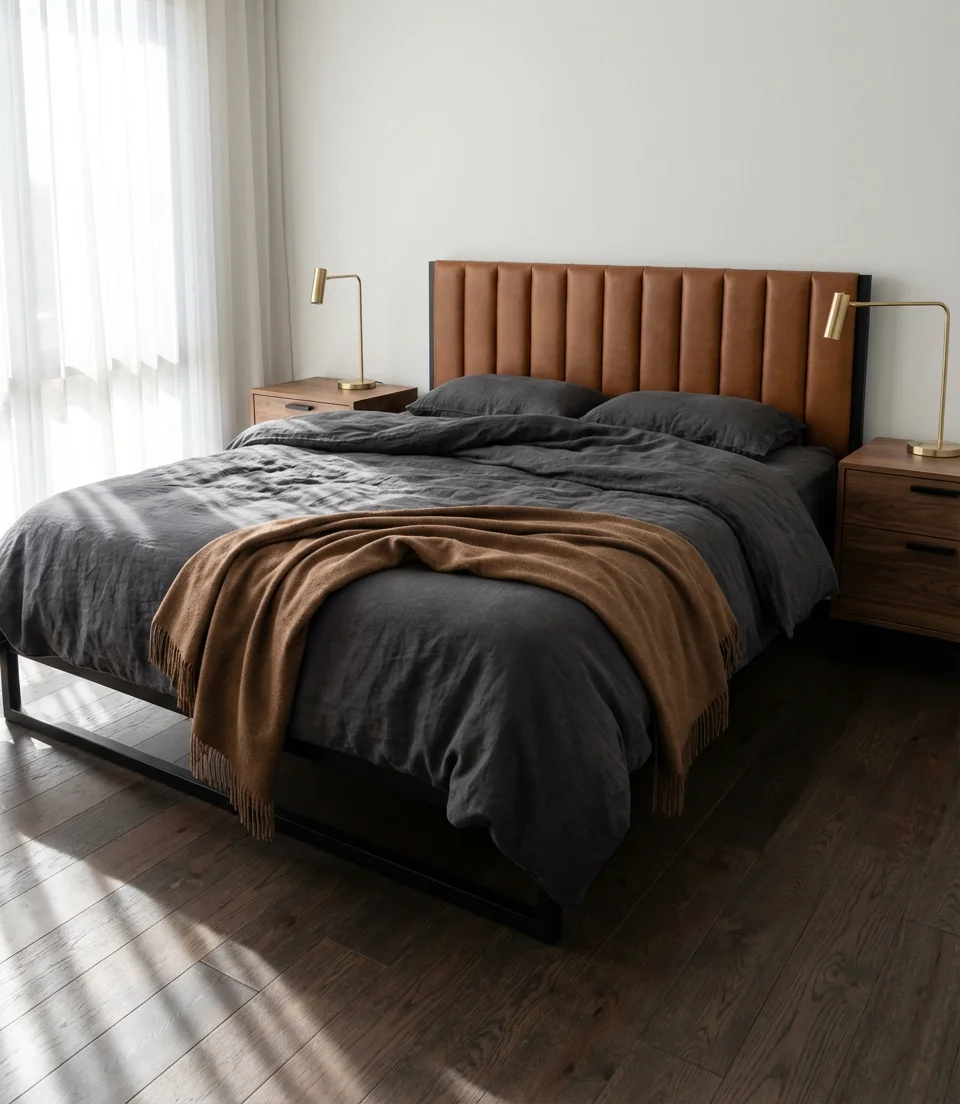
The black and brown pairing is one of the most underused combinations in bedroom design—people assume it will feel heavy or masculine, but when executed with care, it reads as sophisticated and grounded. Think matte black hardware on walnut furniture, a leather headboard in cognac, and black linen bedding with a saddle-brown throw. The aesthetic lands somewhere between a Parisian apartment and a well-worn study, with a depth of character that lighter palettes simply can’t achieve.
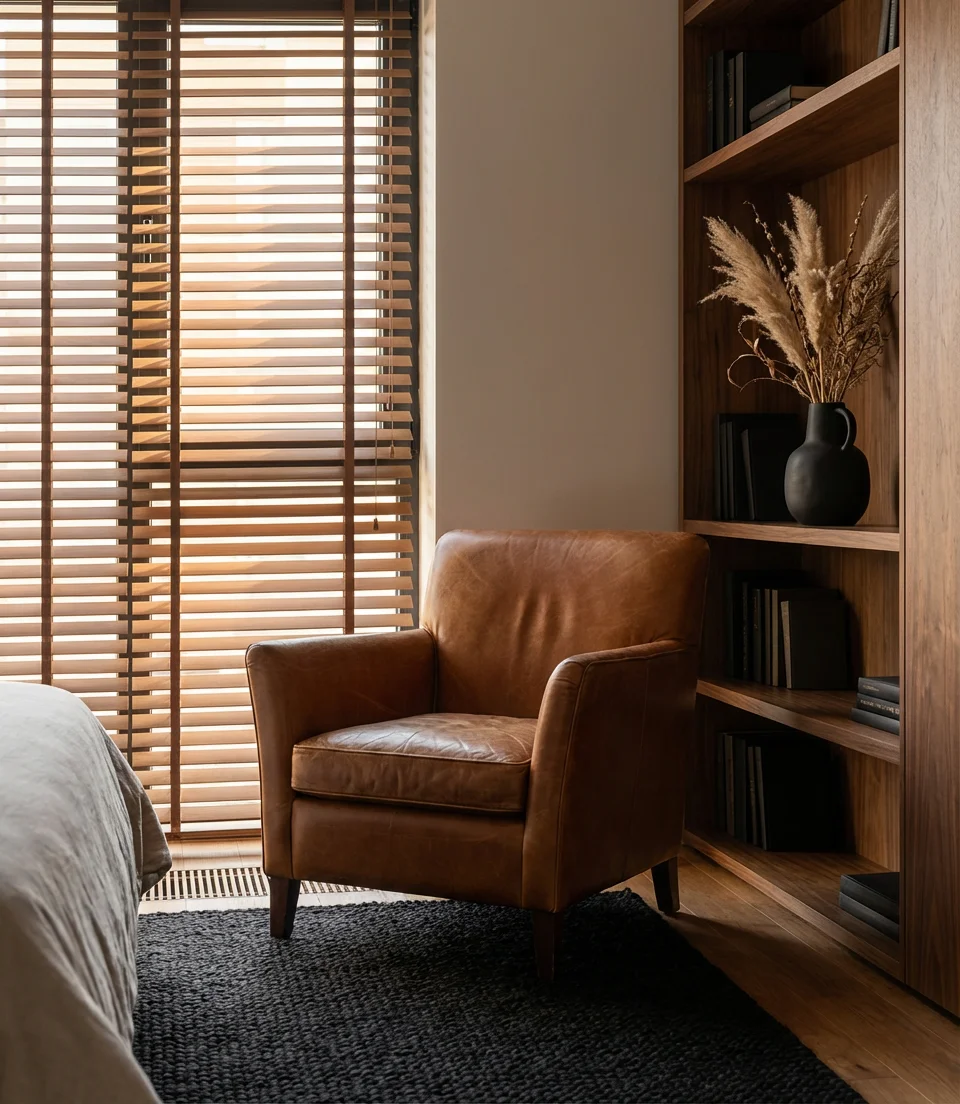
Budget-wise, this look is more accessible than it appears. Leather-look headboards (not real leather—the quality vinyl options available now are genuinely impressive) start around $200 and make the biggest visual impact. Matte black hardware on existing furniture is often a simple swap. The throw and accent pillow in cognac or saddle brown are the finishing touches that pull the palette together. You’re looking at a dramatic transformation for well under $500 if you shop thoughtfully and prioritize those high-visibility elements.
5. Gray and Brown Bedroom with Minimalist Lines
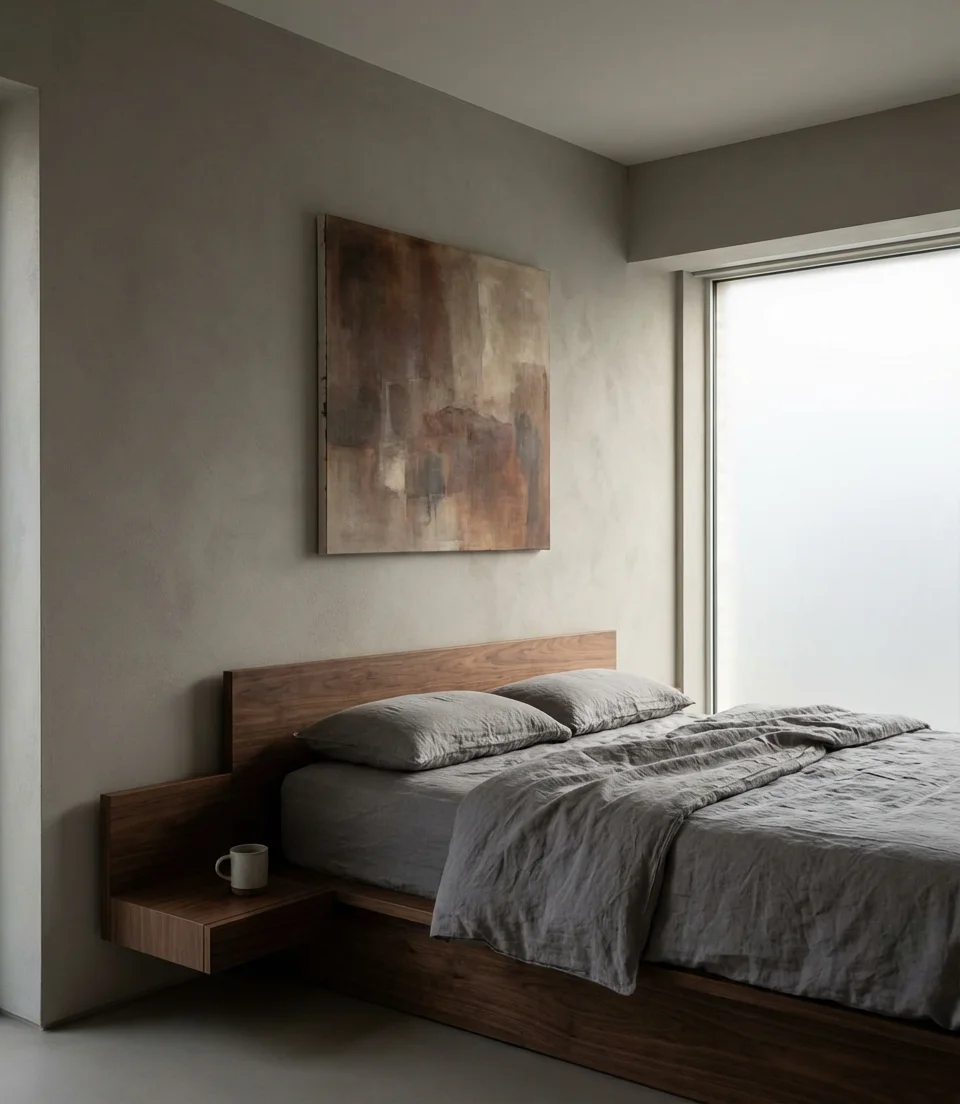
The gray and brown pairing has matured considerably from its early-2010s all-gray phase. In 2026, the warm undertones of brown are being used specifically to rescue gray rooms from feeling sterile—a problem well-documented among homeowners who followed the gray-everything trend and found themselves living in a space that felt more clinical than calming. Shades of taupe, greige, and warm mushroom effectively balance the starkness of gray with the organic warmth of brown.
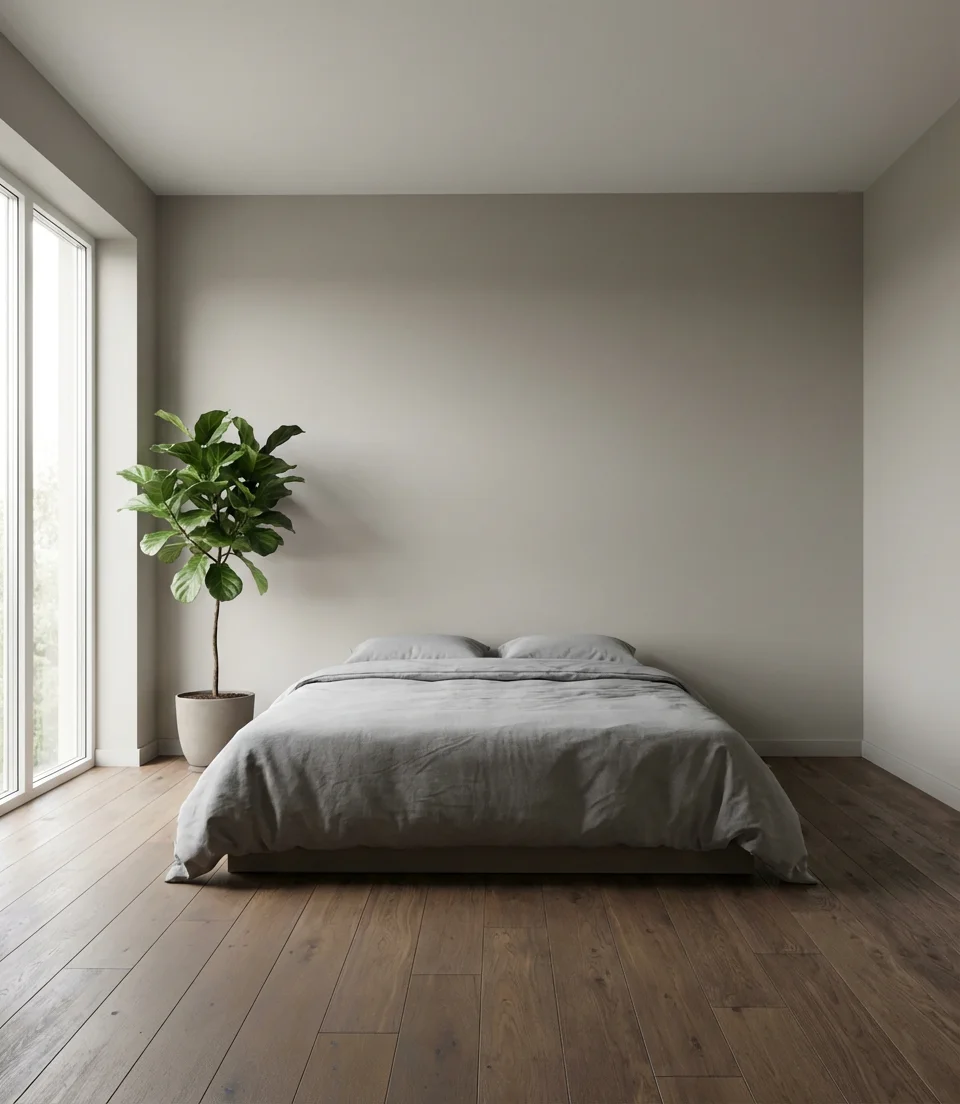
This combination works best in urban apartments and newer builds where the architecture already leans modern—the clean lines of a platform bed, the flat fronts of Scandinavian-style dressers, and the absence of fussy ornamentation. Homeowners who’ve tried it consistently report that the room photographs beautifully, which matters in the era of listing your home on Airbnb or showing it to buyers. The warm gray-brown palette reads as “updated” rather than “trendy,” which means it won’t require repainting in two years.
6. Pink and Brown Romantic Bedroom
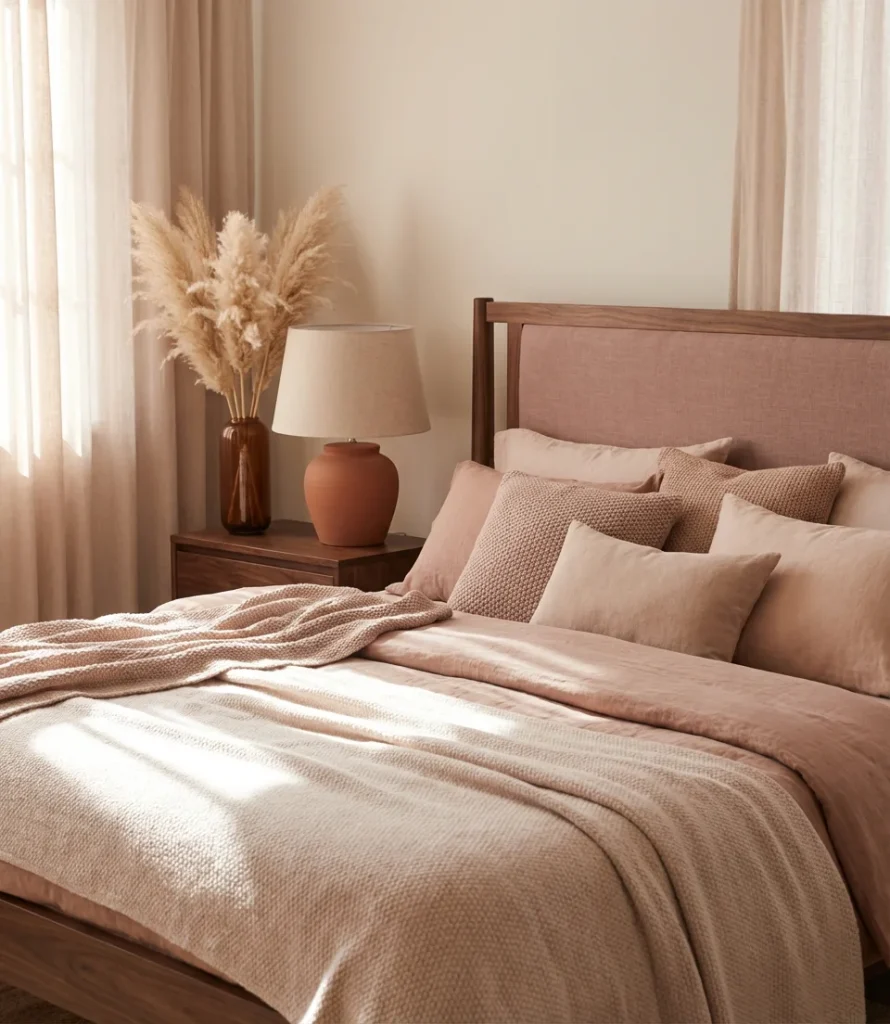
If you’ve been browsing Pinterest recently, you’ve likely noticed the gradual emergence of pink and brown combinations, which initially seem surprising until you juxtapose dusty rose with warm terracotta or blush linen against a walnut headboard. The result is romantic without being saccharine, feminine without being girlish, and warm in a way that straight pink rooms rarely achieve. It’s a palette that feels genuinely vintage in the best sense: like a room pulled from the pages of a 1970s Italian design magazine, recently rediscovered.
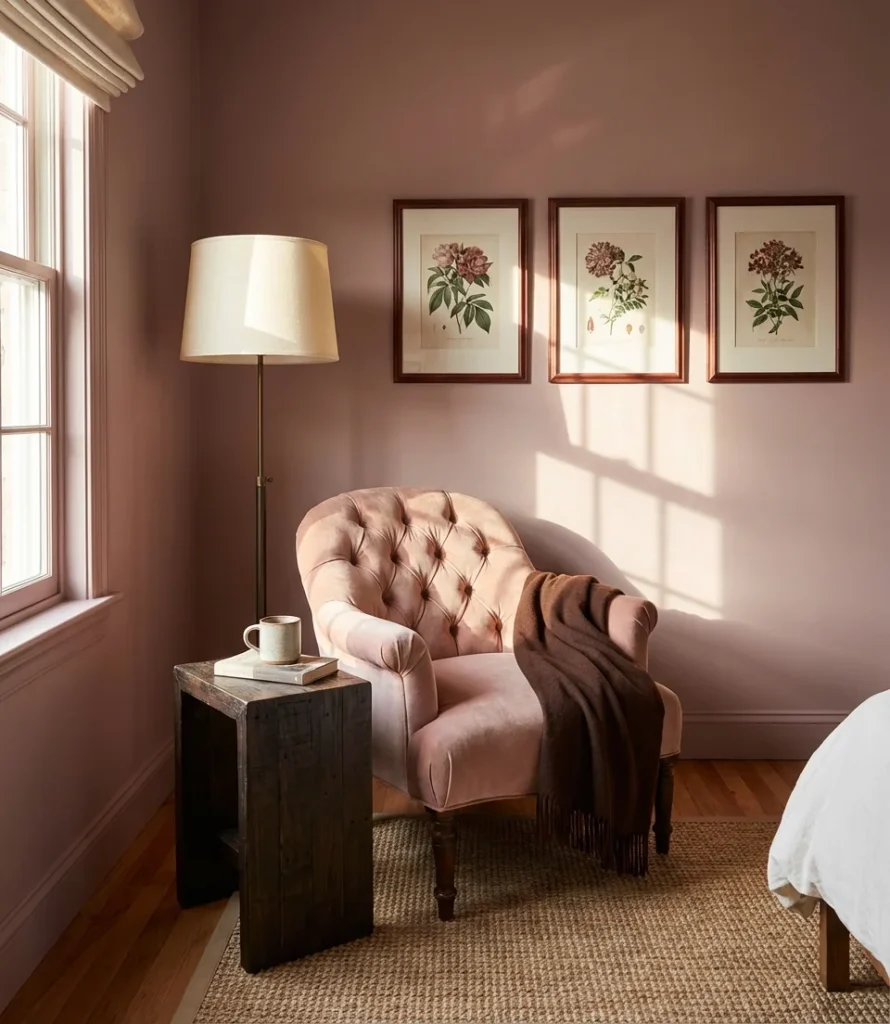
Where this design works best: primary bedrooms in homes where the overall vibe leans eclectic or vintage-influenced. Using this palette in very modern, angular spaces can be challenging, as it demands curves, soft textures, and a hint of romantic disorder. Practically speaking, you don’t need to repaint. Start with blush pillow covers and a terracotta throw on an existing brown or walnut bed frame, and you’ll have your answer within a weekend about whether this direction feels right for your space before committing to anything permanent.
7. Sage Green and Brown Nature-Inspired Bedroom
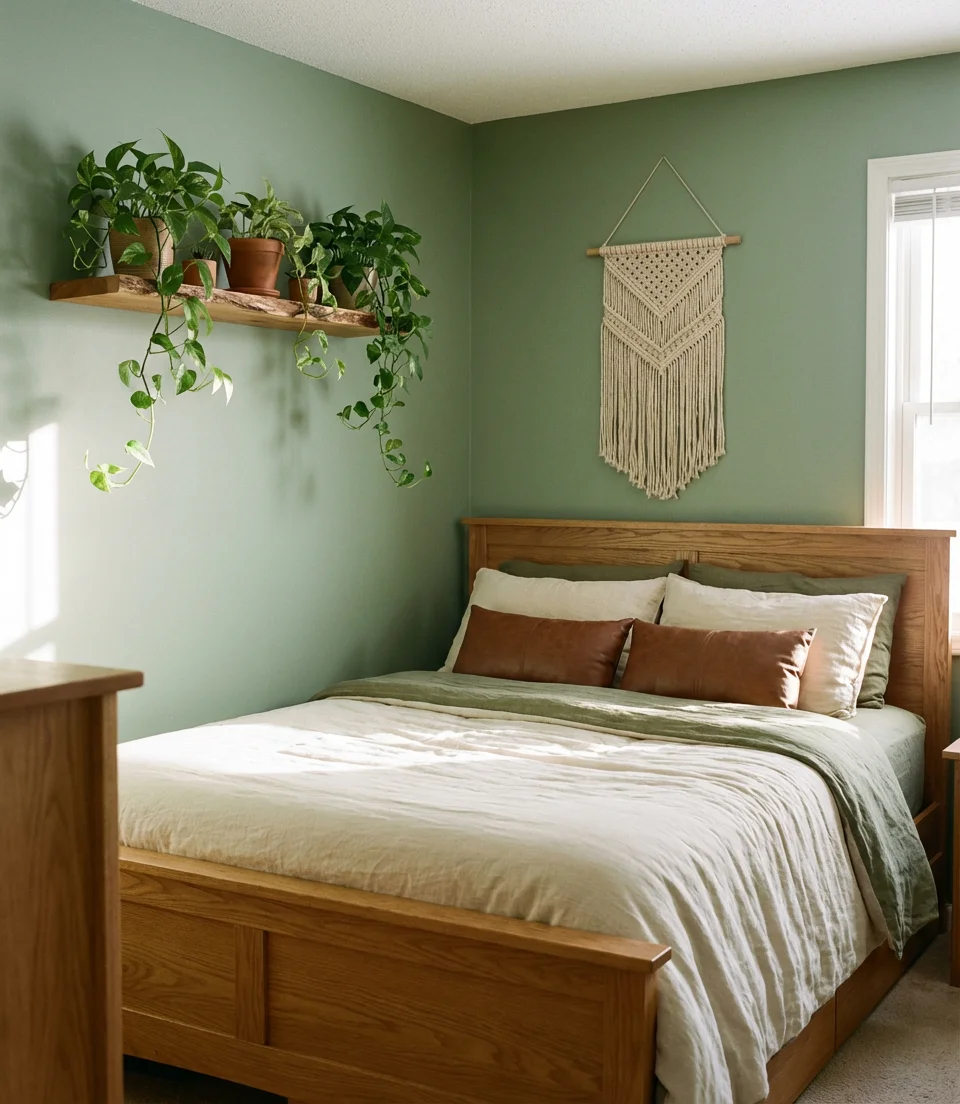
Sage green and brown together create one of the most grounding, nature-forward palettes available to bedroom designers in 2026. The combination echoes the color relationship you’d find in a Pacific Northwest forest—the green of lichen and new growth against the rich brown of tree bark and fallen leaves. When translated to a bedroom, this hue means sage green walls (or a painted accent alcove) against warm oak furniture, brown leather or suede accents, and textiles in olive, moss, and warm cream.
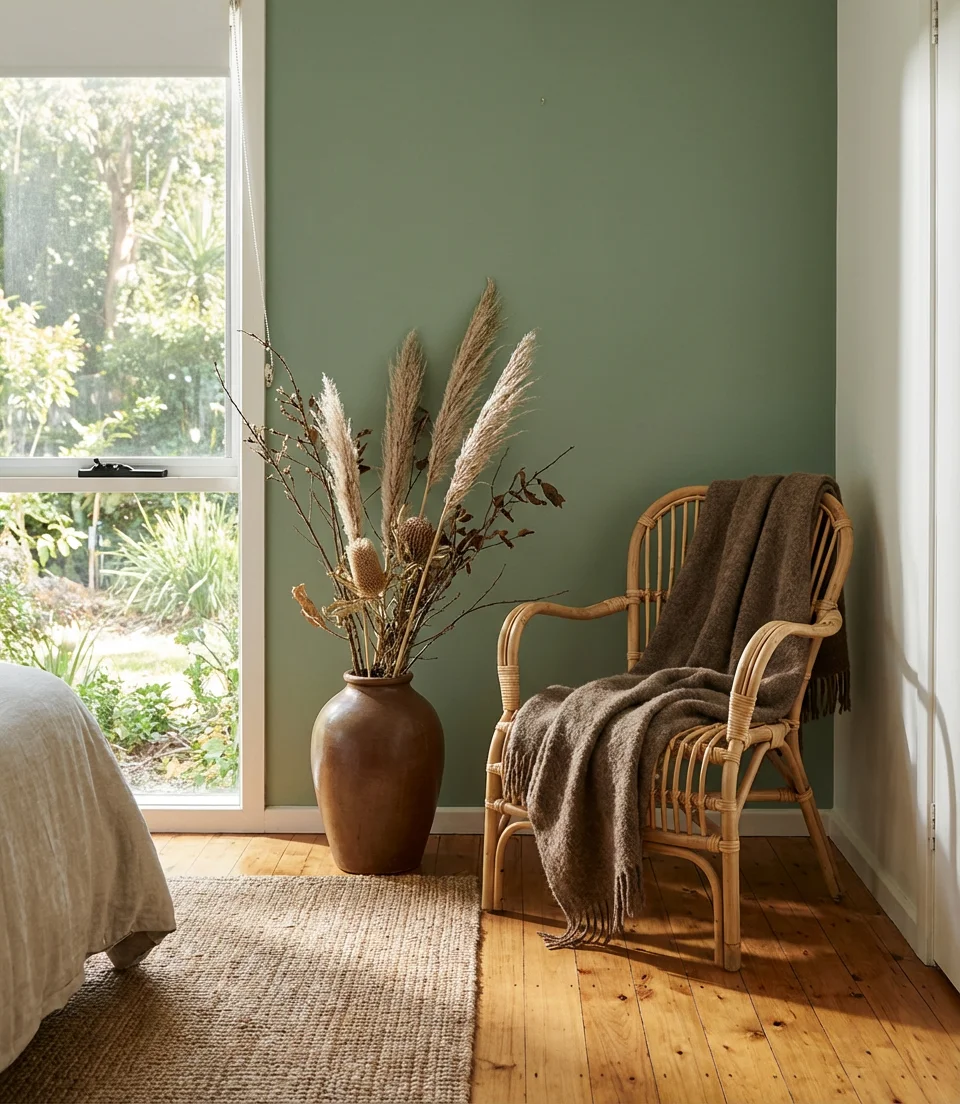
A real homeowner in Portland, Oregon, described painting her bedroom in Benjamin Moore’s Vintage Vogue (a warm sage) over a weekend, pairing it with her existing walnut furniture, and being genuinely stunned by how the room transformed. She hadn’t bought a single new piece—just added a couple of plants and swapped her white duvet cover for one in warm oatmeal linen. That story is not unusual. The right wall color against the right wood tone can do more work than thousands of dollars of new furniture.
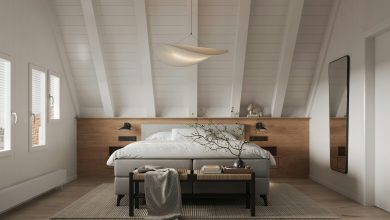
8. Rustic Brown Bedroom with Exposed Wood Beams
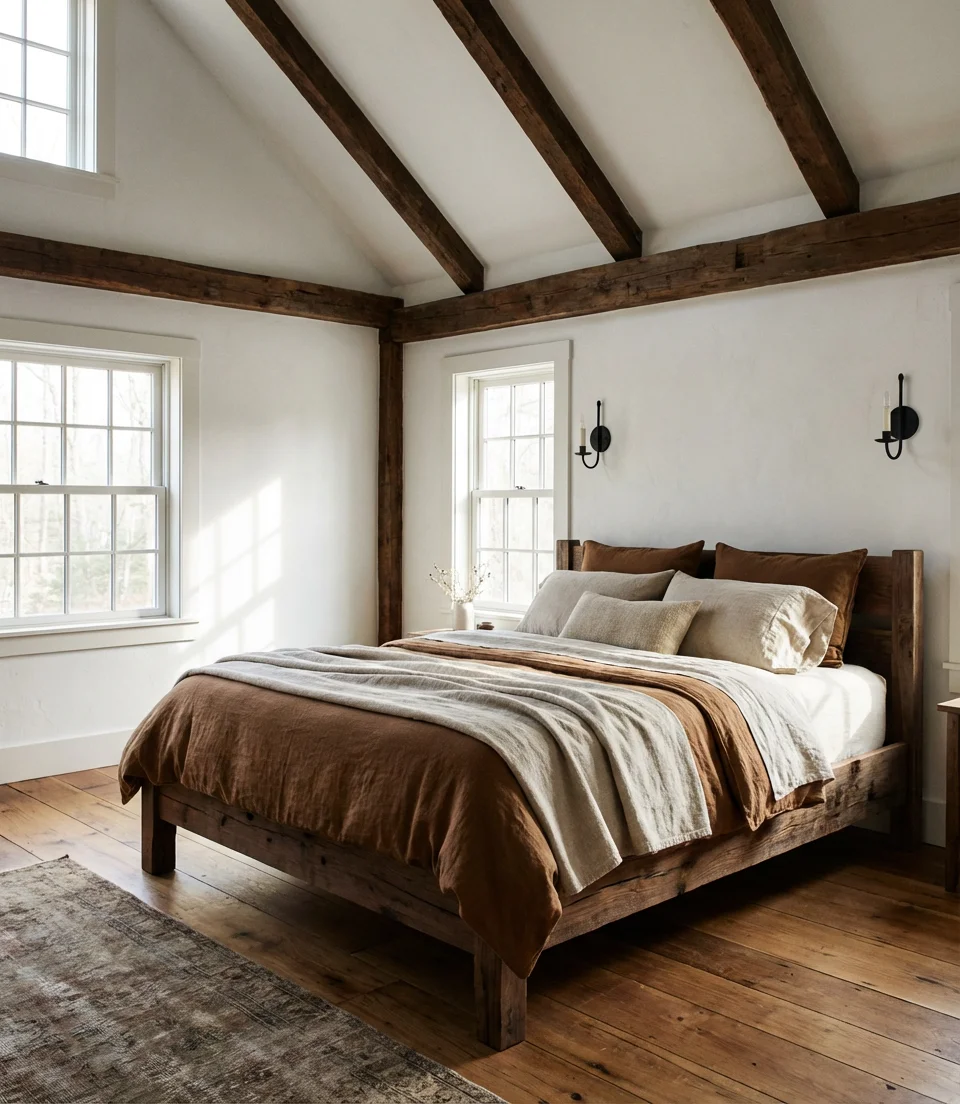
America has consistently embraced the rustic bedroom aesthetic, albeit through various phases. In 2026, it’s less about the kitschy barn-board accent wall and more about architectural authenticity: exposed ceiling beams in raw or lightly whitewashed wood, rough-hewn furniture with visible joinery, and shades of brown from honey to deep walnut used across every surface. The room tells a story of craftsmanship and time, which is exactly why it resonates so deeply on platforms like Pinterest, where people are looking for meaning in their spaces, not just aesthetics.
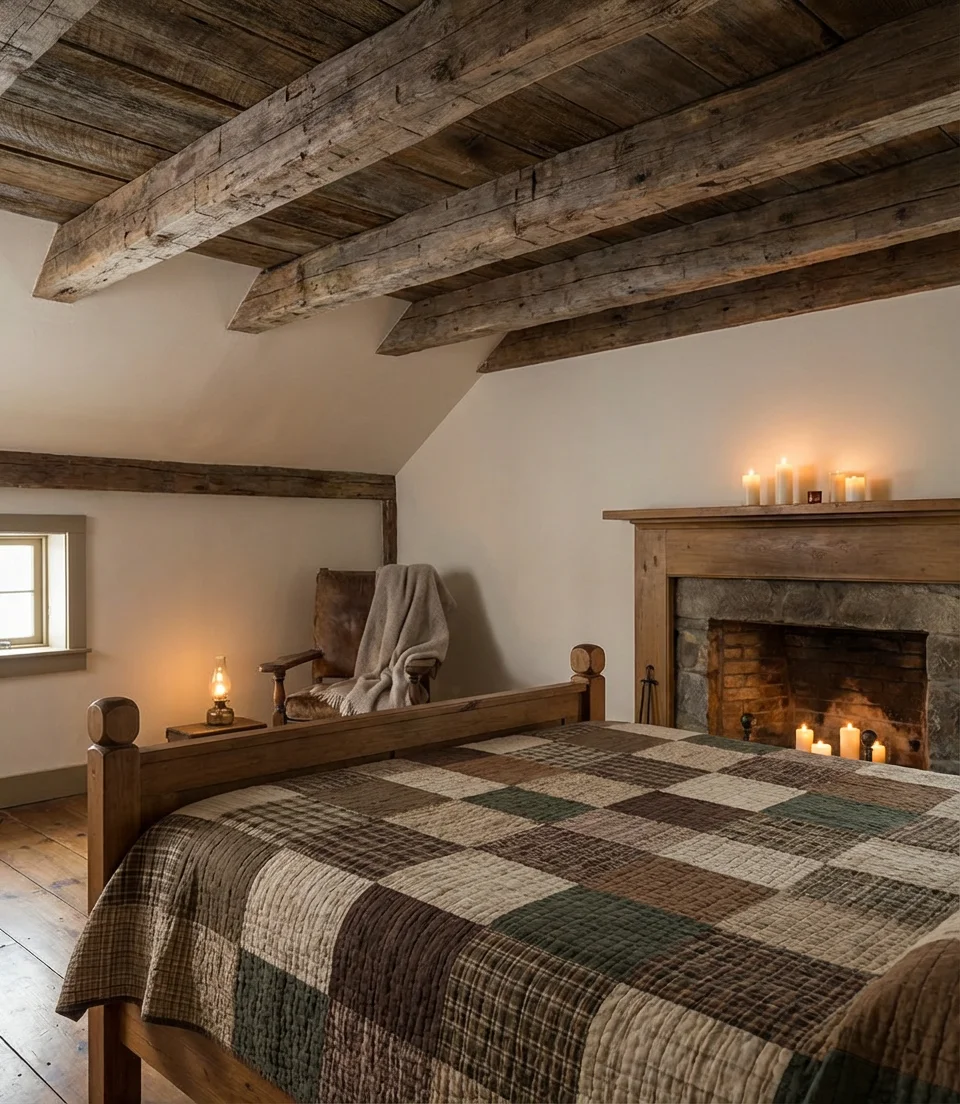
This style is particularly well-suited to rural and mountain properties—think Colorado ski chalets, Vermont farmhouses, and Tennessee cabin rentals. But it also works surprisingly well in urban lofts where the architectural bones (industrial exposed structure, concrete, aged brick) provide the right raw backdrop. The key is not to overstyle it. Rustic bedrooms suffer most when they’re overloaded with accessories. Choose three or four meaningful objects—a handmade ceramic lamp, a woven basket, a single oil painting—and let the architecture do the talking.
9. Light Brown and White Airy Bedroom
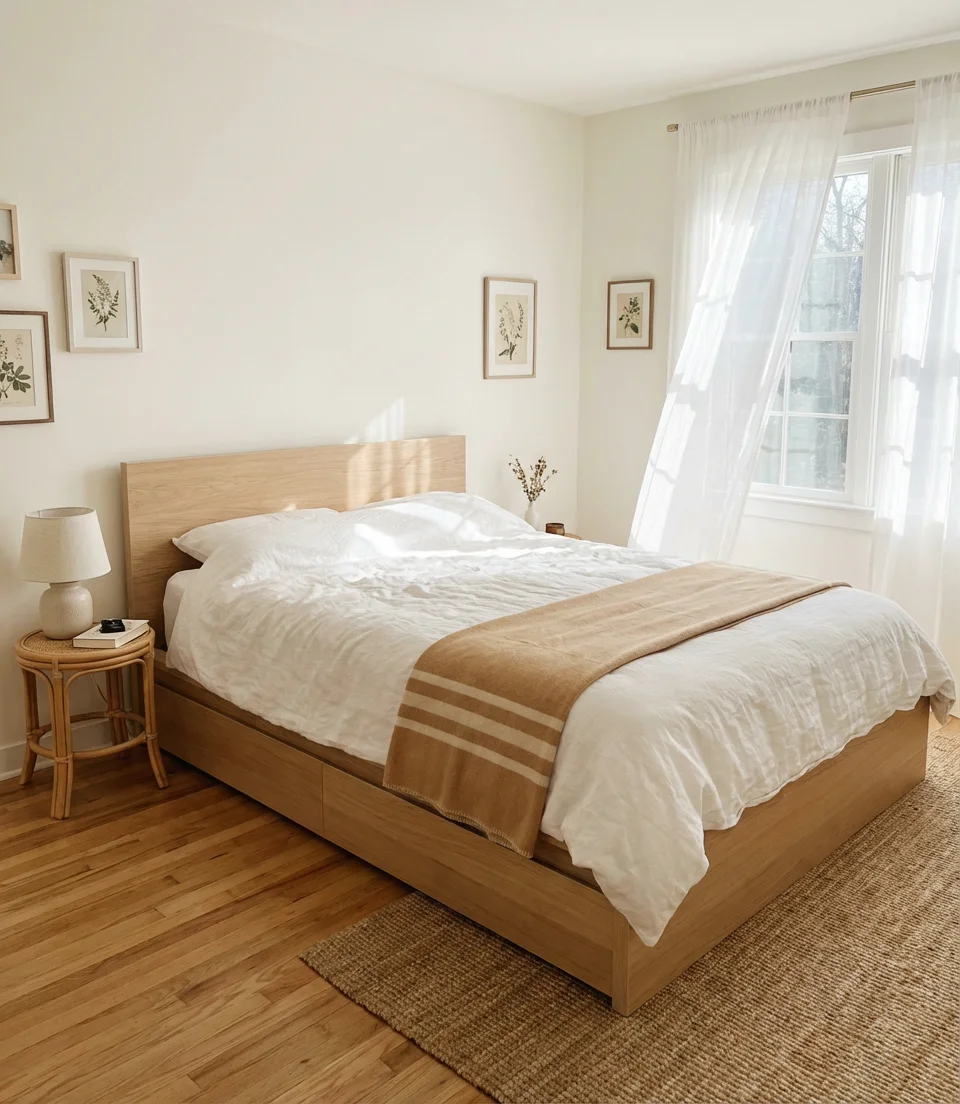
For those who love the warmth of brown but worry about feeling heavy in a room, the lighter brown, white, and ivory approach is the answer. We’re talking walls in warm off-white or the palest caramel, floors in blonde or whitewashed wood, furniture in natural oak or rattan, and bedding layered in cream, white, and the softest warm tan. The palette reads as sun-drenched and effortless—more California beach house than formal living room. It photographs exceptionally well in natural light, which is likely why it performs so strongly on Pinterest.
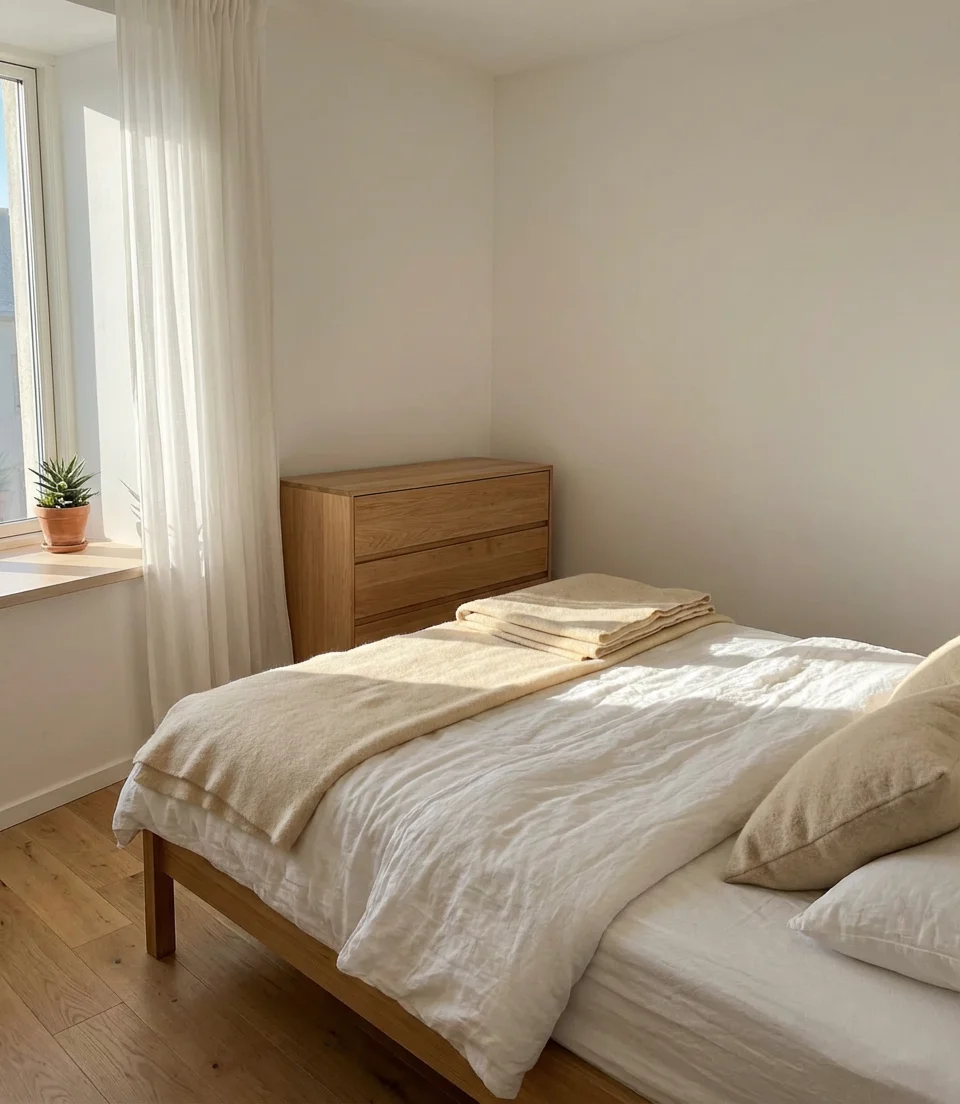
Expert-level tip here: the reason this palette feels so alive versus simply “beige” is the material selection. When every element is warm-toned but varied in texture—smooth linen, rough rattan, matte painted wood, glossy ceramic—the eye constantly finds new things to rest on without the room ever feeling cluttered. Interior designers call this “quiet richness.” It’s the distinction between a room that photographs beautifully and looks flat in person versus one that actually gets more beautiful the longer you spend time in it.
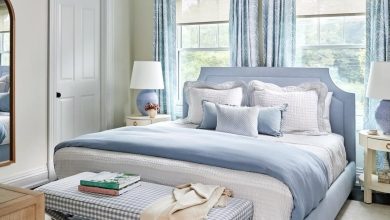
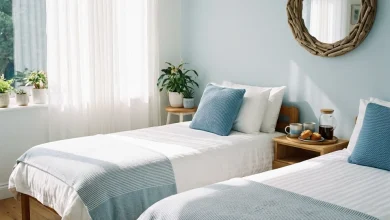
10. Blue and Brown Bedroom with Coastal Calm
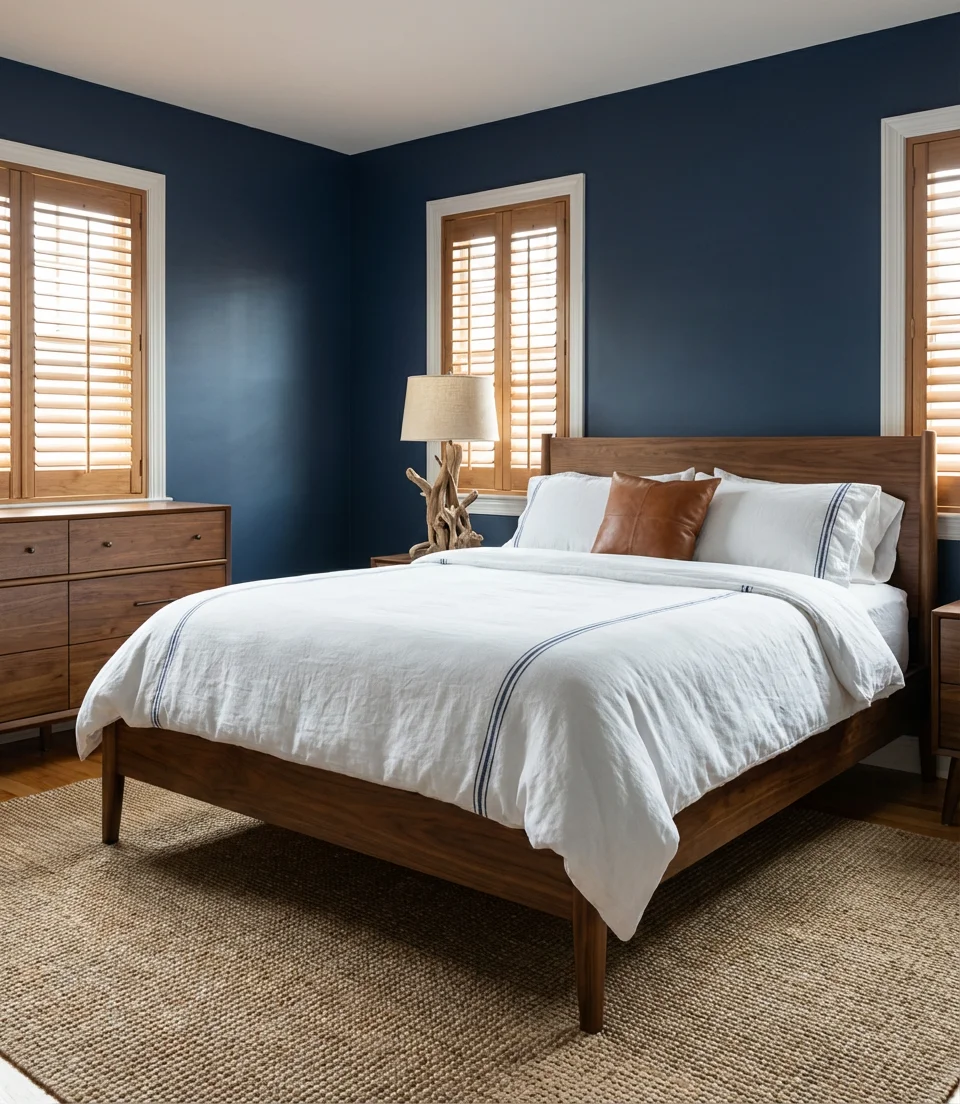
The blue and brown pairing draws from one of nature’s most reliable color relationships—ocean meeting earth and sky meeting the desert. In bedroom form, this translates to navy or blue steel walls against warm walnut furniture, indigo linen bedding with a cognac leather accent, or a rich teal headboard centered against a warm taupe wall. The look has a composed, aesthetic maturity that appeals across demographics, which explains why it shows up in everything from coastal New England bedrooms to Denver mountain retreats.
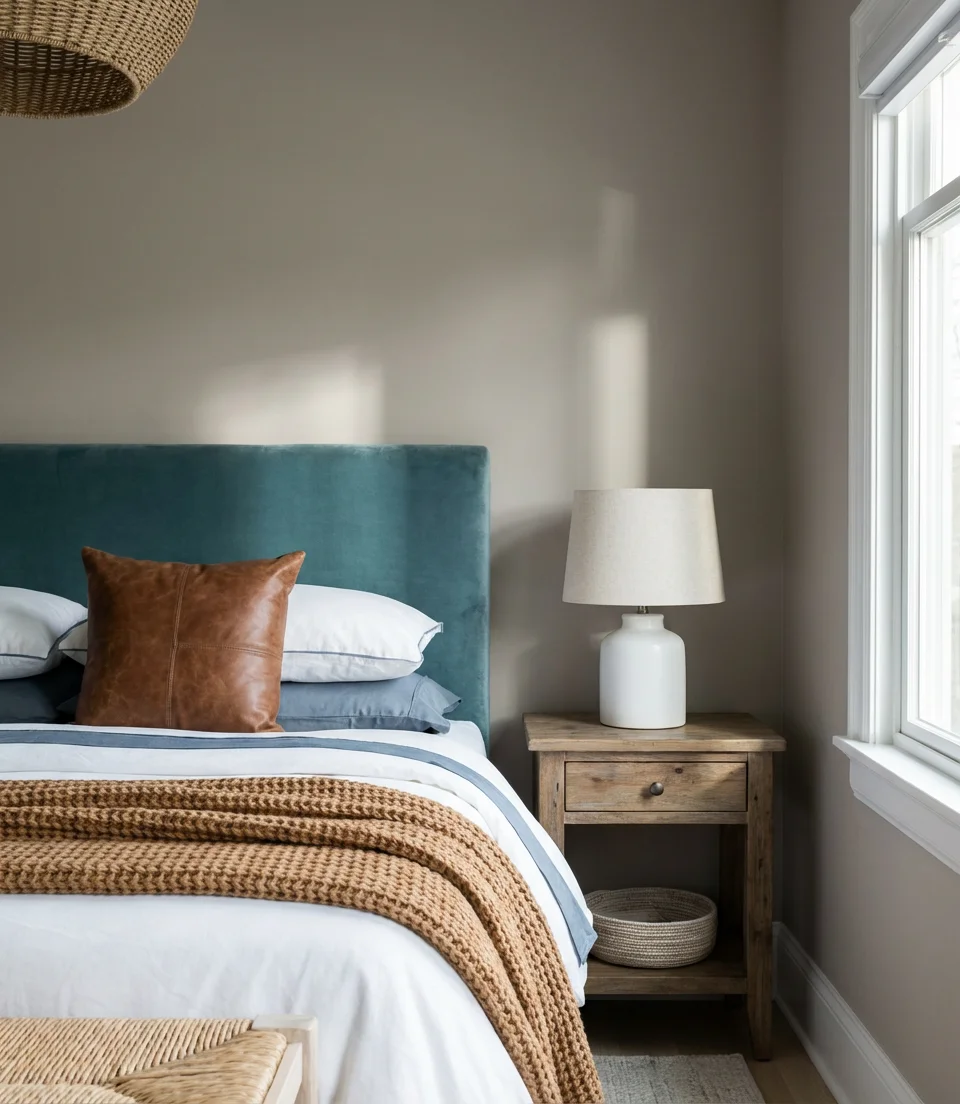
This look translates particularly well across different American regions, which is part of its broad Pinterest appeal. On the East Coast, it feels nautical and storied. In the Southwest, it reads, “Desert meets sky.” On the West Coast, it echoes tide pools and sea glass. The brown anchor keeps it from drifting too decorative or theme-y—it’s what separates “coastal bedroom” from “actual coastal home.” For anyone renting or in a transient situation, this palette is achievable almost entirely through textiles: no paint is required.
11. Green and Brown Earthy Bedroom
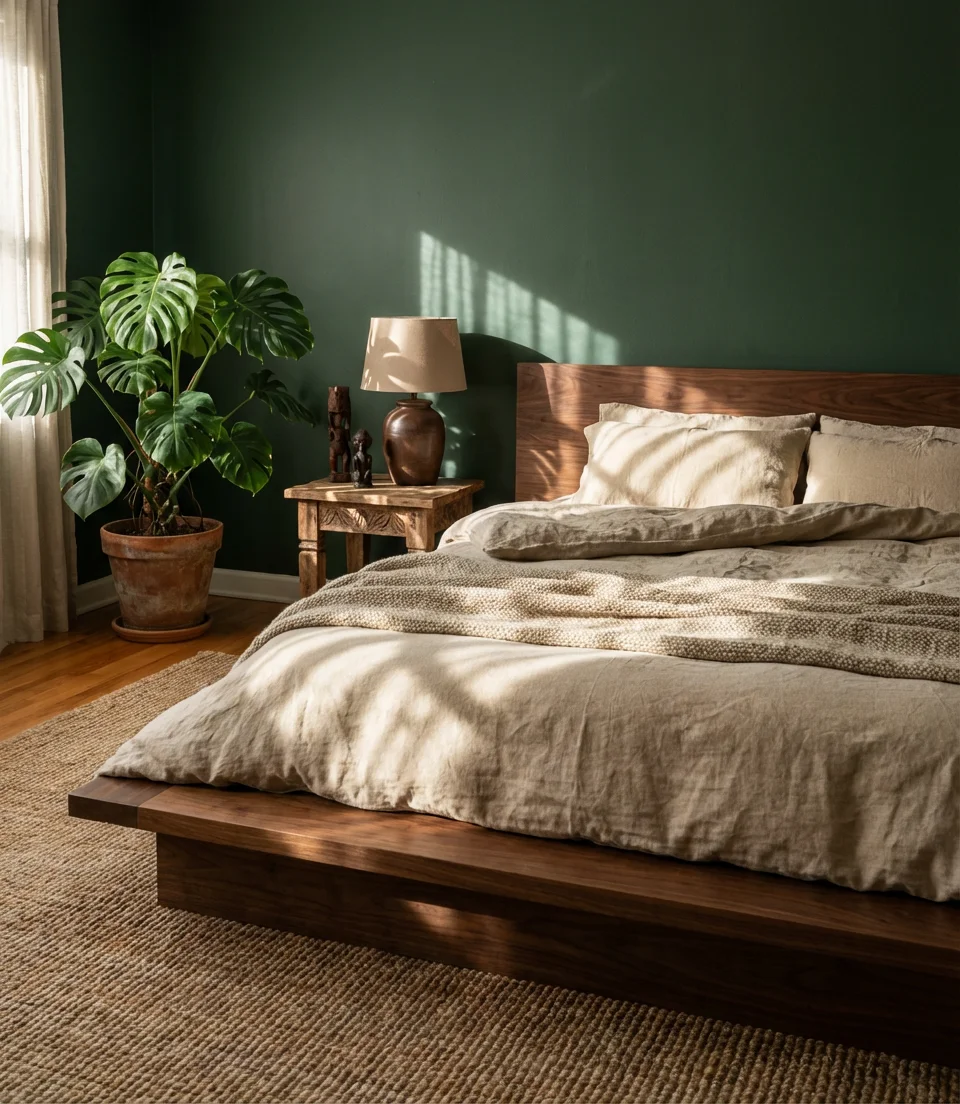
There’s been a noticeable shift toward biophilic design in American bedrooms, and no palette expresses it more directly than green and brown in combination. Dark green walls—forest green, hunter green, and olive—against dark-stained or natural brown wood furniture create a room that feels genuinely connected to the organic world. Add a few live plants, a jute rug, and ceramic accessories in earth tones, and the effect is complete: The result is a bedroom that serves as a refreshing respite after a day filled with screens.
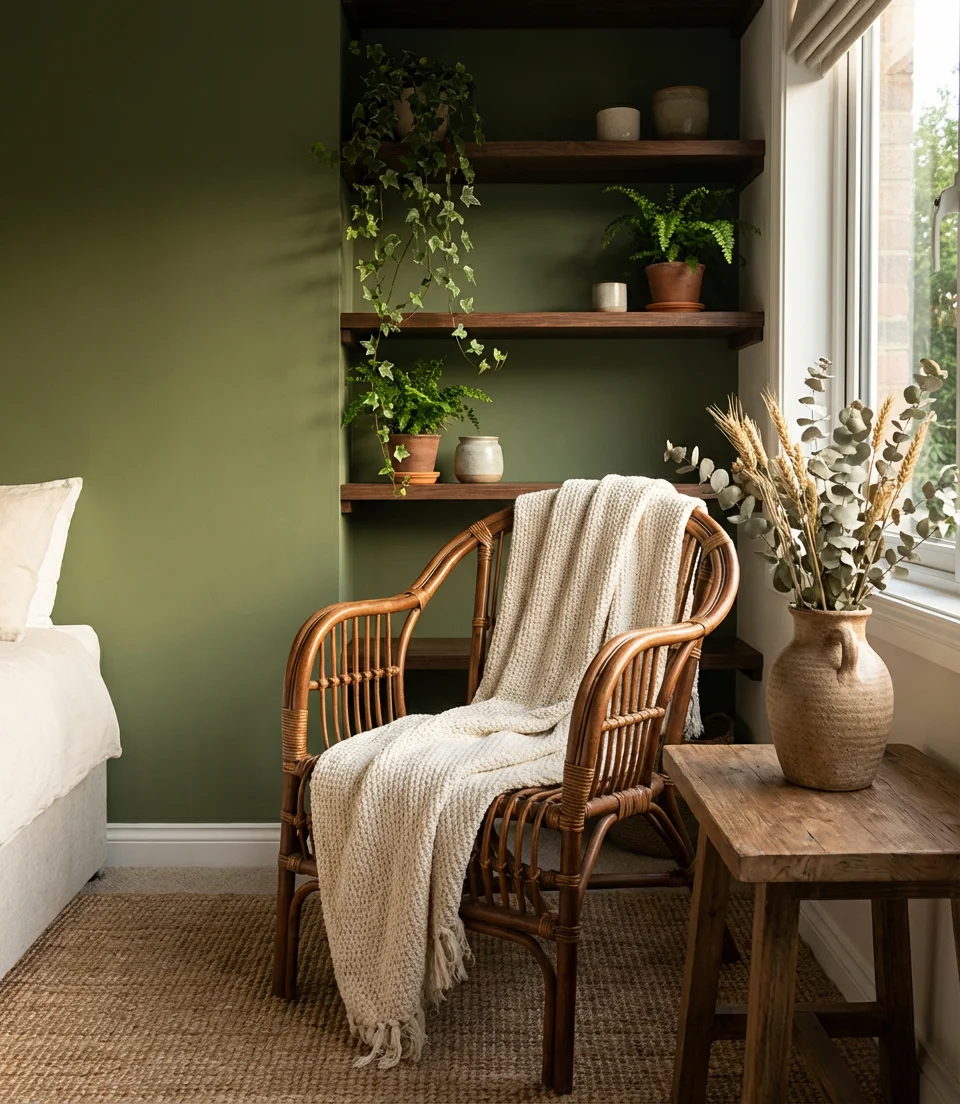
From a real homeowner behavior standpoint, green-and-brown bedrooms are among the most frequently cited “I should have done this sooner” redesigns. The combination has a measurable effect on reported sleep quality and morning mood, likely because it mimics the visual environment of natural spaces. If you’re hesitant about committing to dark green walls, try it as an accent behind the headboard only—even a single painted wall delivers a significant portion of the effect at a fraction of the commitment.
12. Grey and Brown Sophisticated Bedroom
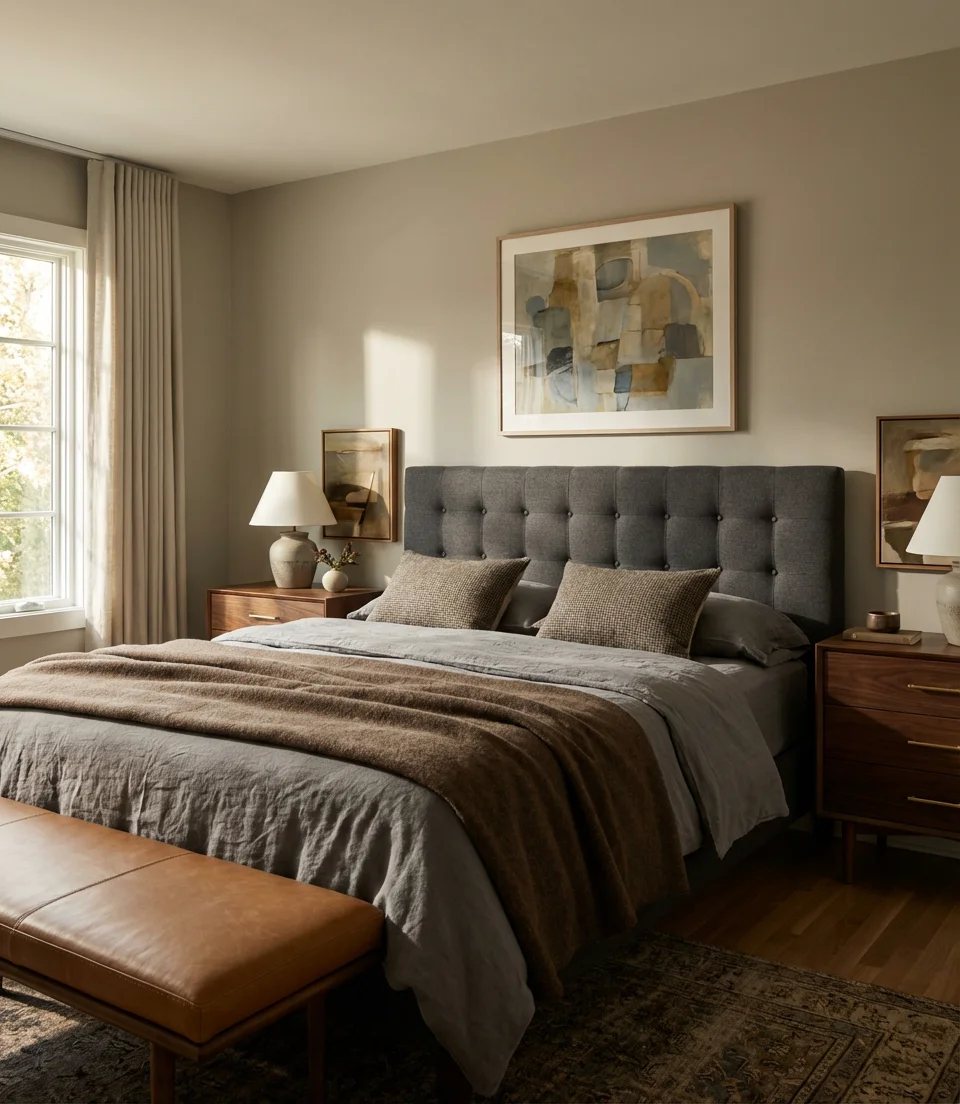
The distinction between grey and gray and brown is subtle but real: true grey (with blue or purple undertones) benefits enormously from being grounded with warm brown companions. A mid-century modern bedroom might feature a charcoal gray upholstered headboard against walls painted in warm putty, dark walnut side tables, and a mix of gray and caramel textiles. The palette doesn’t fight itself—the brown warms what the grey cools, and the result is sophisticated without being sterile.
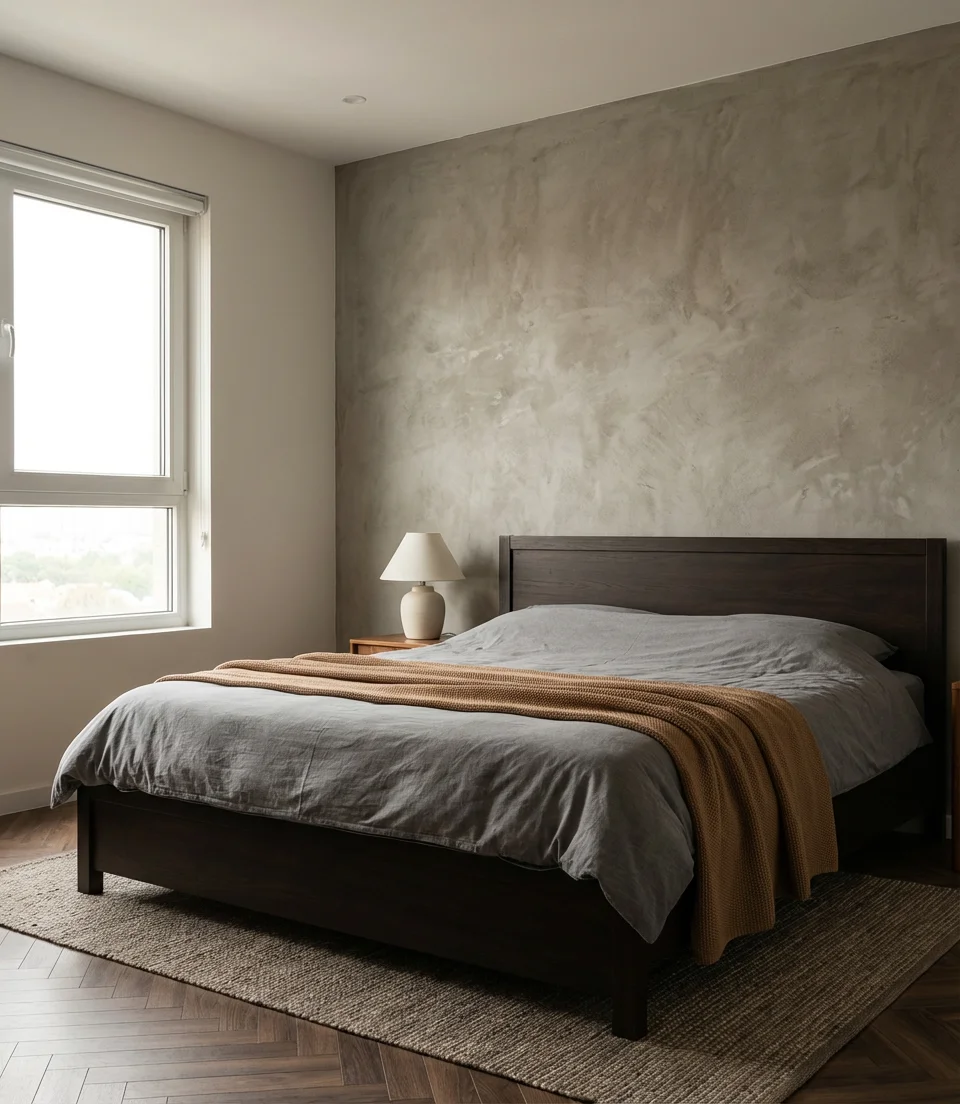
The result is a combination that stages extremely well for real estate purposes—it appeals to both men and women, reads as neither too masculine nor too feminine, and photographs cleanly in both natural and artificial light. Real estate staging professionals frequently cite warm gray-brown palettes as among the most effective for broad buyer appeal. If you’re considering a sale in the next few years, or if you’re styling a short-term rental, this palette is essentially the safe professional choice—with more actual warmth than anything entirely gray ever achieves.
13. Orange and Brown Warm Bohemian Bedroom
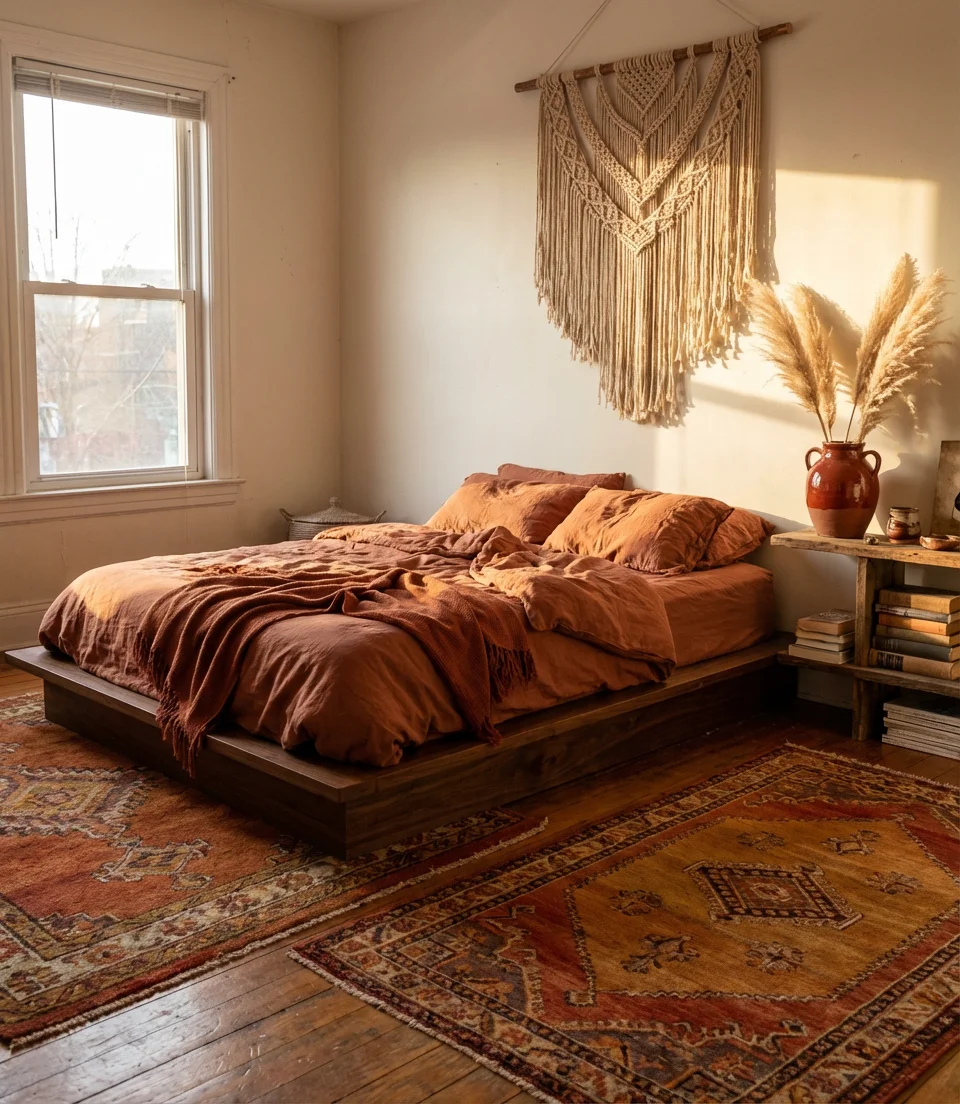
Orange and brown together reach back to one of the most beloved American interior decades—the 1970s—and in 2026, they’re being reclaimed with a much more sophisticated hand. Burnt orange, terracotta, rust, and paprika alongside deep walnut brown create an intensely warm, sun-soaked atmosphere. This palette’s vintage quality, which sets it apart from the avocado-and-harvest-gold era, reads as an intentional revival rather than a dated holdover.
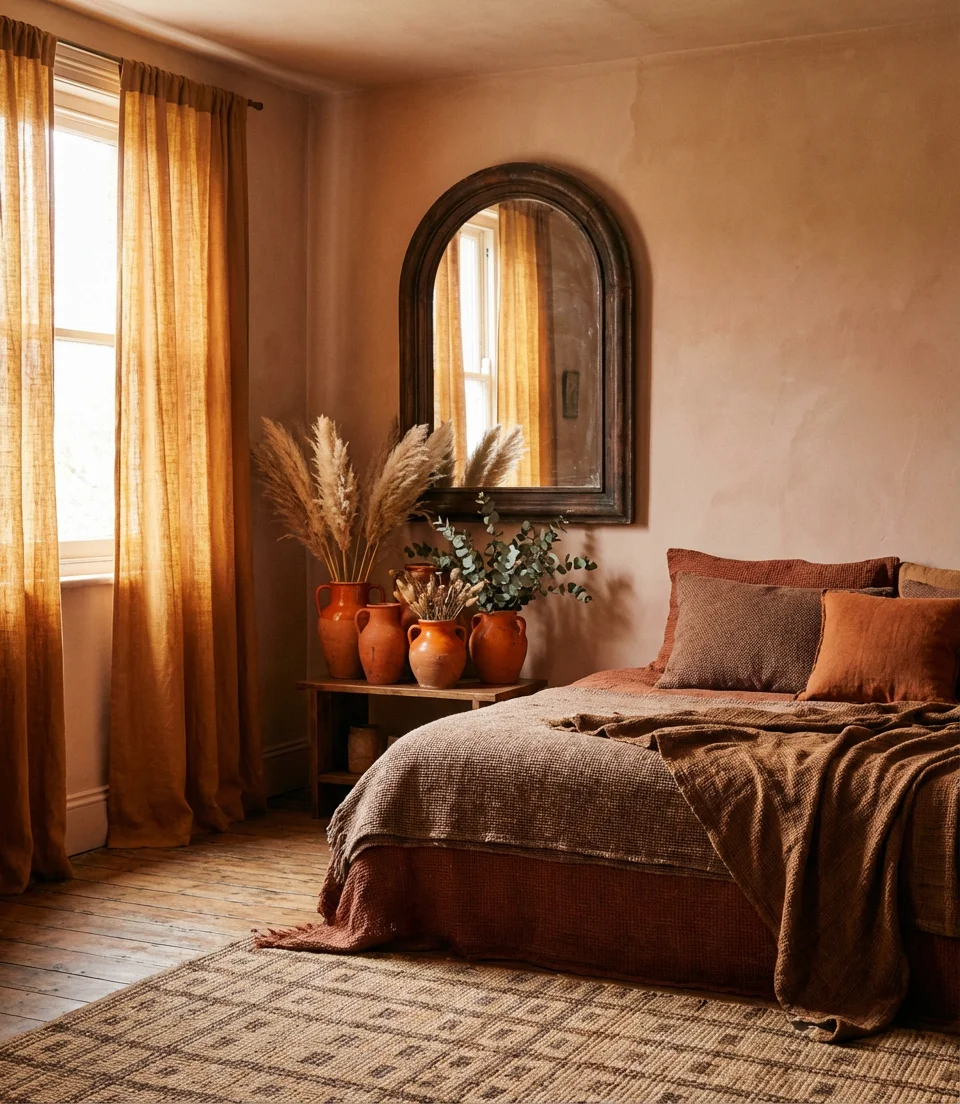
The American lifestyle angle here is worth noting: this palette resonates particularly strongly in the Southwest—New Mexico, Arizona, and Colorado—where the landscape itself is already a lesson in orange, rust, and deep brown. But it’s being adopted nationally by anyone who wants a bedroom that feels genuinely warm and alive rather than pale and cautious. The trick is to balance the orange carefully: use it in textiles, ceramics, and accessories rather than painting walls full orange, and let the brown do the heavy anchoring work.
14. Red and Brown Rich Jewel-Tone Bedroom
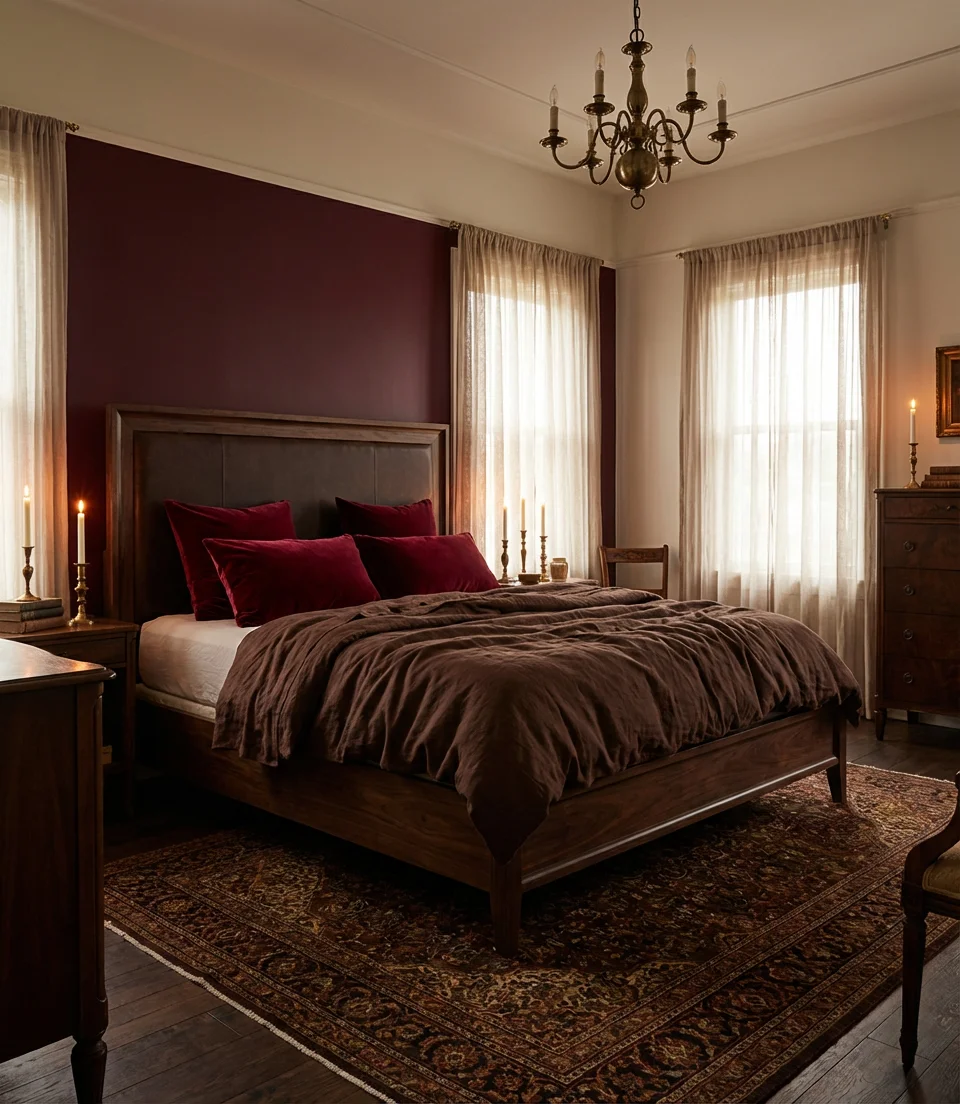
Deep red and brown is a bold, rewarding choice when done with confidence. Think burgundy or claret rather than fire-engine red: a rich bordeaux accent wall behind a dark walnut headboard, crimson velvet cushions against chocolate linen bedding, and a Persian-style rug with both tones running through it. The combination feels dark and enveloping in the best way, the kind of bedroom that invites candlelight and long, leisurely mornings.
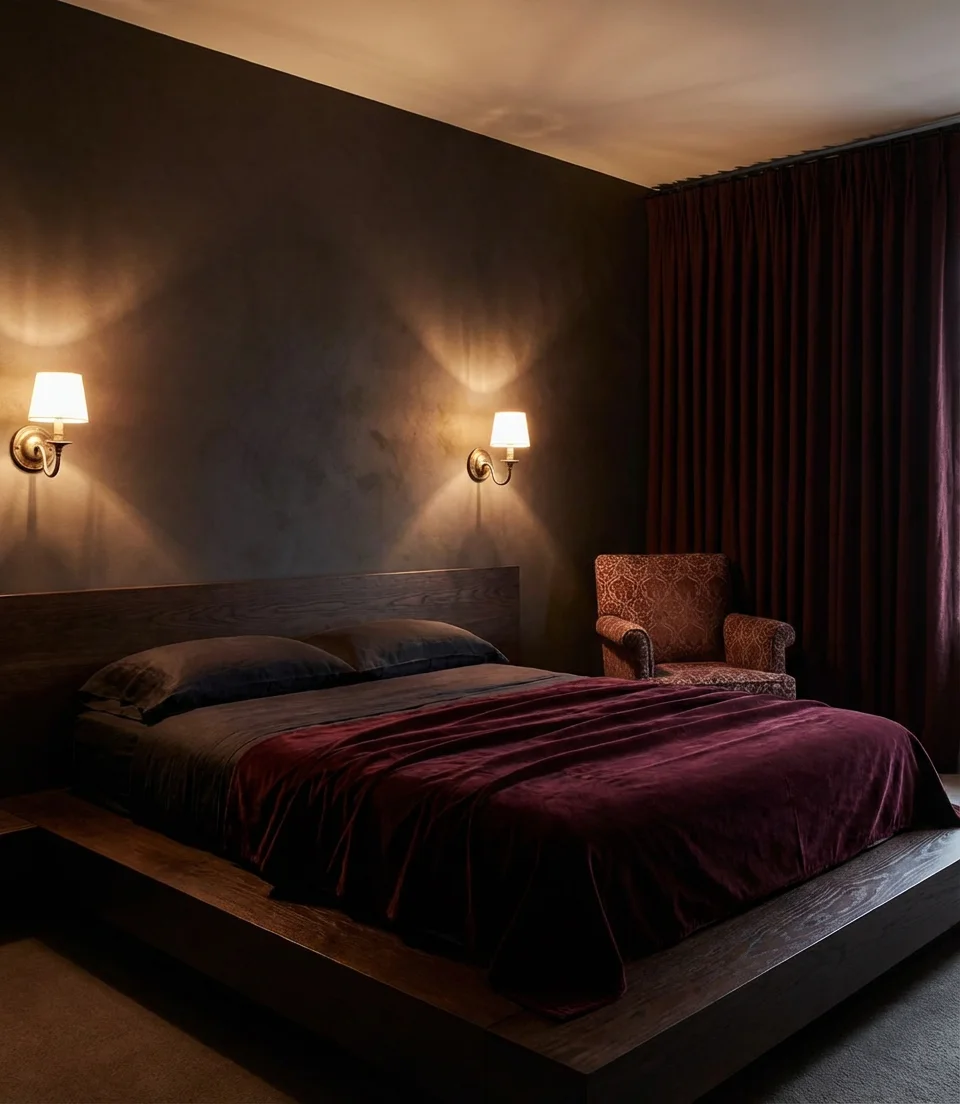
This palette has a distinctly global cultural richness—elements of Moroccan riads, Indian textiles, and Victorian interiors all show up in this combination. For an American bedroom, the key is not to let it veer into literal theme territory. Keep the furniture lines clean and modern, limit the pattern to one or two textiles, and balance the richness with at least one matte neutral (a flat warm cream wall, perhaps, or a raw linen element). The contrast between the jewel tones and the quiet neutrals is where sophistication lives.
15. Cream and Brown Classic Bedroom
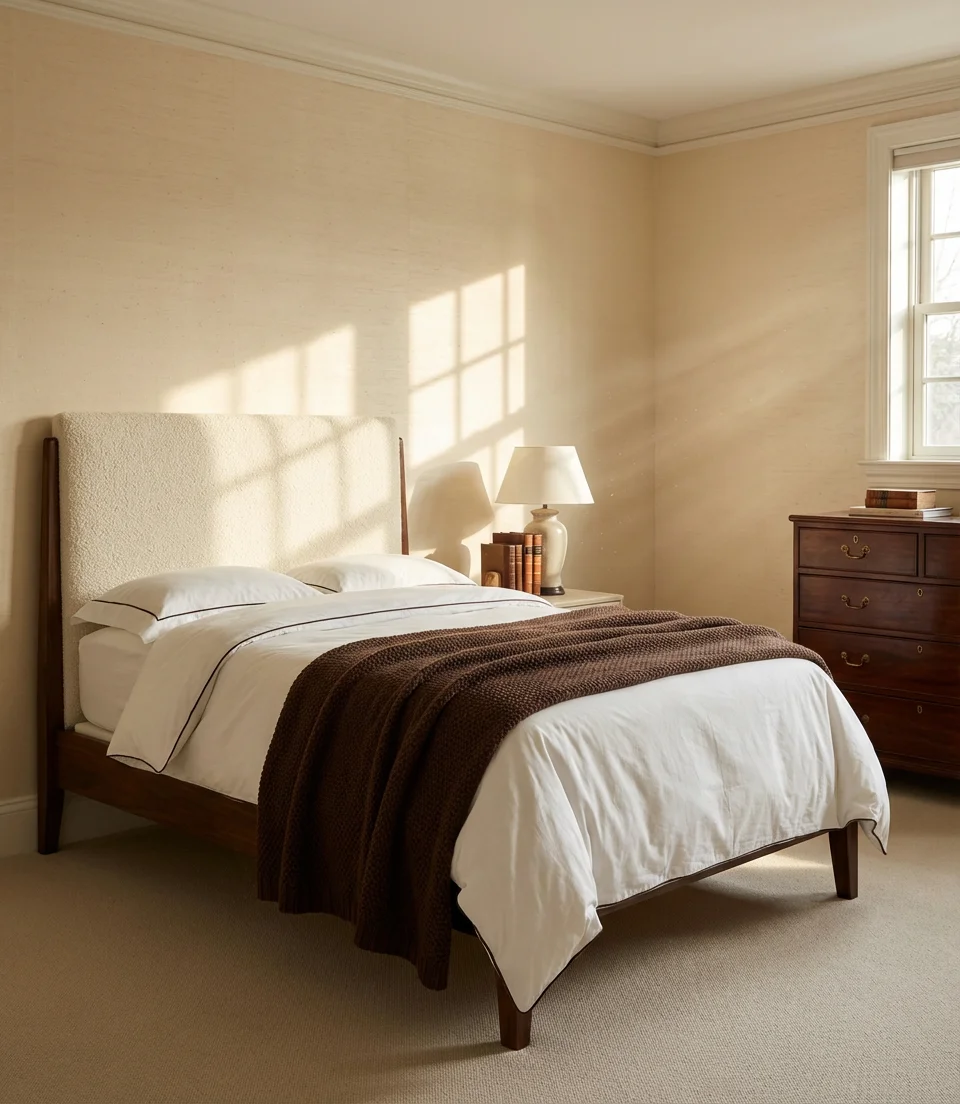
Some combinations endure because they’re genuinely perfect, and cream and brown is one of them. This is the palette of linen suits and espresso, of old leather and ivory cotton, of antique furniture against freshly plastered walls. In 2026 it’s being expressed with a particular refinement—beige and chocolate tones in textiles, cream grasscloth wallpaper against dark walnut furniture, and ivory boucle headboards with dark wood legs. This type of bedroom would blend seamlessly into both a Newport, Rhode Island, summer cottage and a Manhattan prewar apartment.
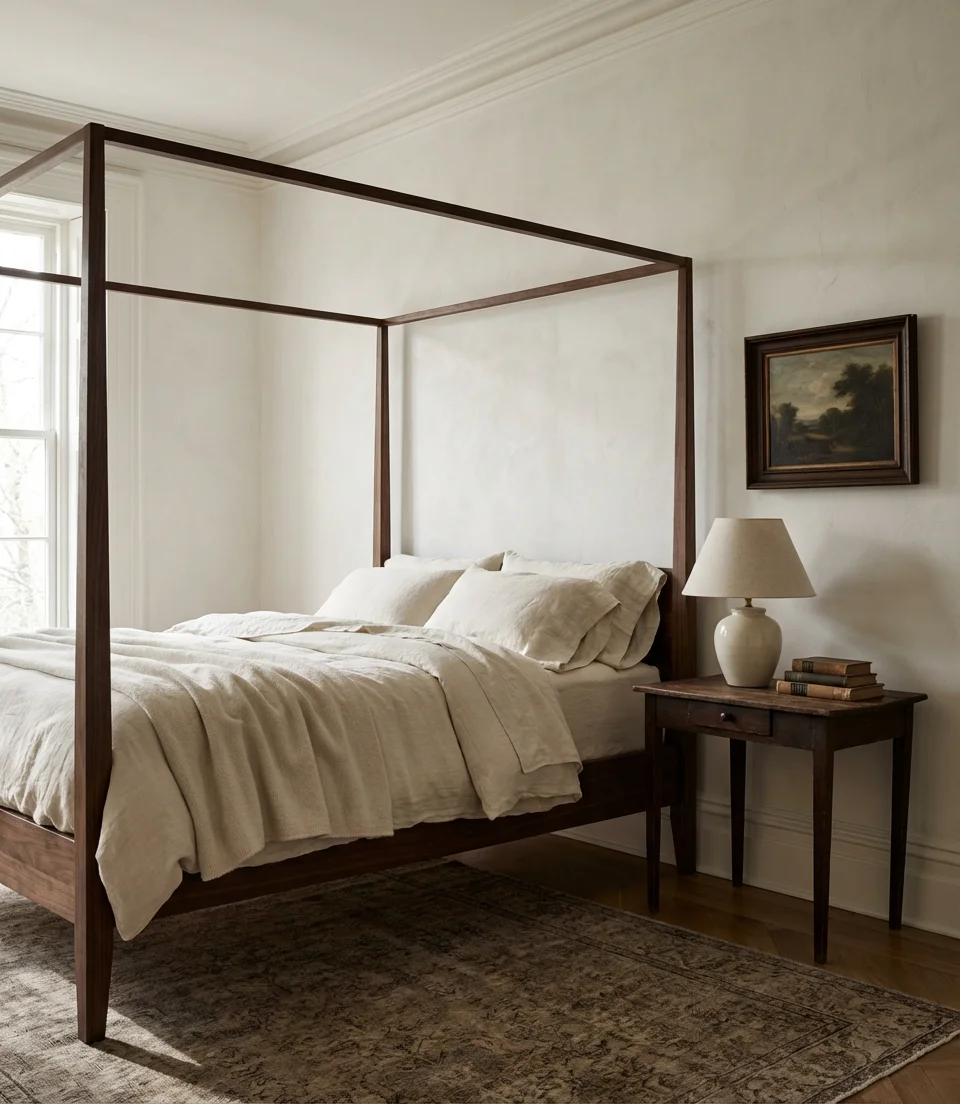
Where this design really earns its place is in homes where the existing architecture has classical details: crown molding, hardwood floors with inlay borders, and paneled doors. The cream-and-brown palette honors those details without competing with them. It’s also, notably, one of the easiest palettes to shift seasonally: lighter creams and thinner linens in summer, deeper chocolate throws, and heavier textiles in winter. The bones of the room stay consistent while the atmosphere shifts with the calendar—an underrated practical virtue in bedroom design.
16. Beige and Light Brown Scandinavian Bedroom
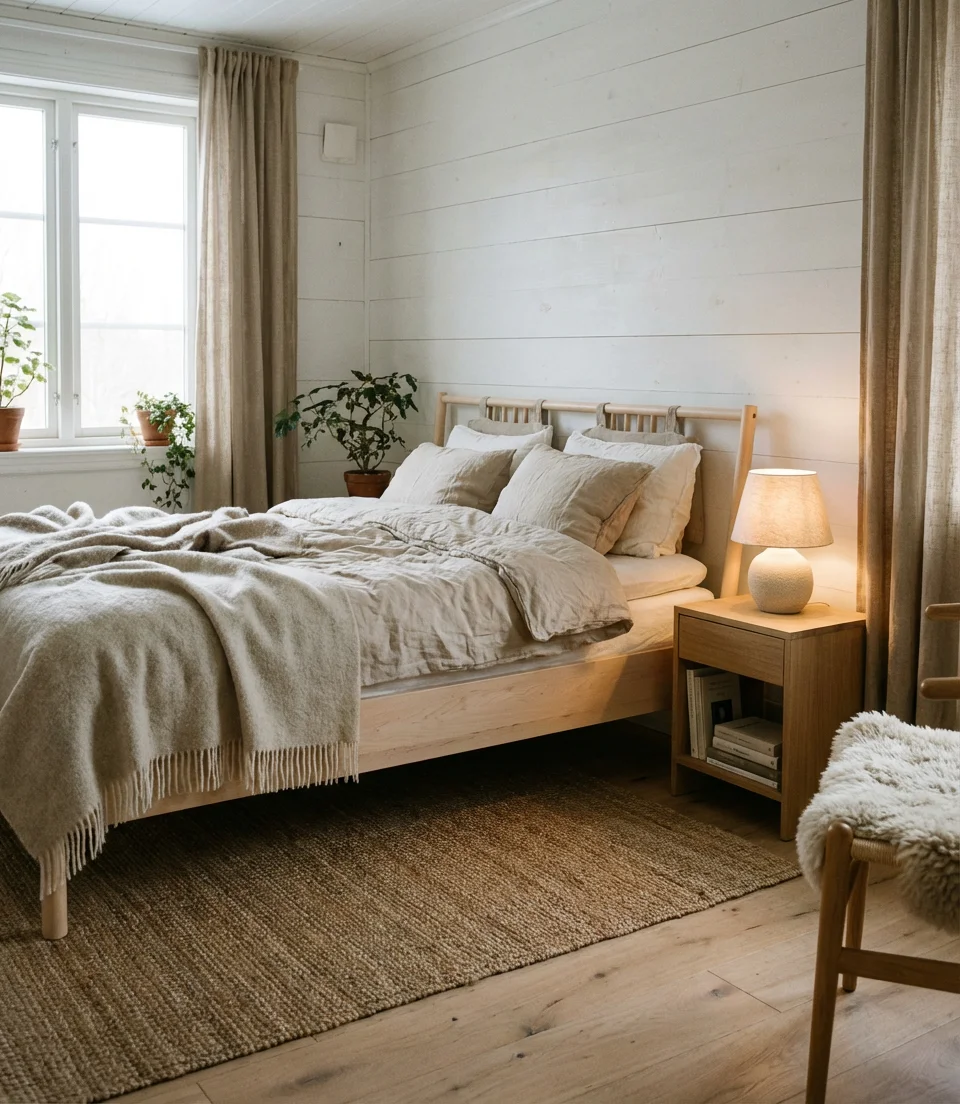
The Scandinavian approach to beige and light brown is less about a specific color formula and more about a philosophy: nothing unnecessary, everything beautiful. Cozy color palettes in Nordic design tend to use warm sand and pale honey rather than rich caramels, paired with white birch or blonde ash furniture, natural fiber textiles, and generous amounts of breathing room around each piece. The result is a bedroom that feels calm, almost algorithmically—there’s a science to the visual quiet these rooms achieve, and it starts with the restrained warmth of this palette.
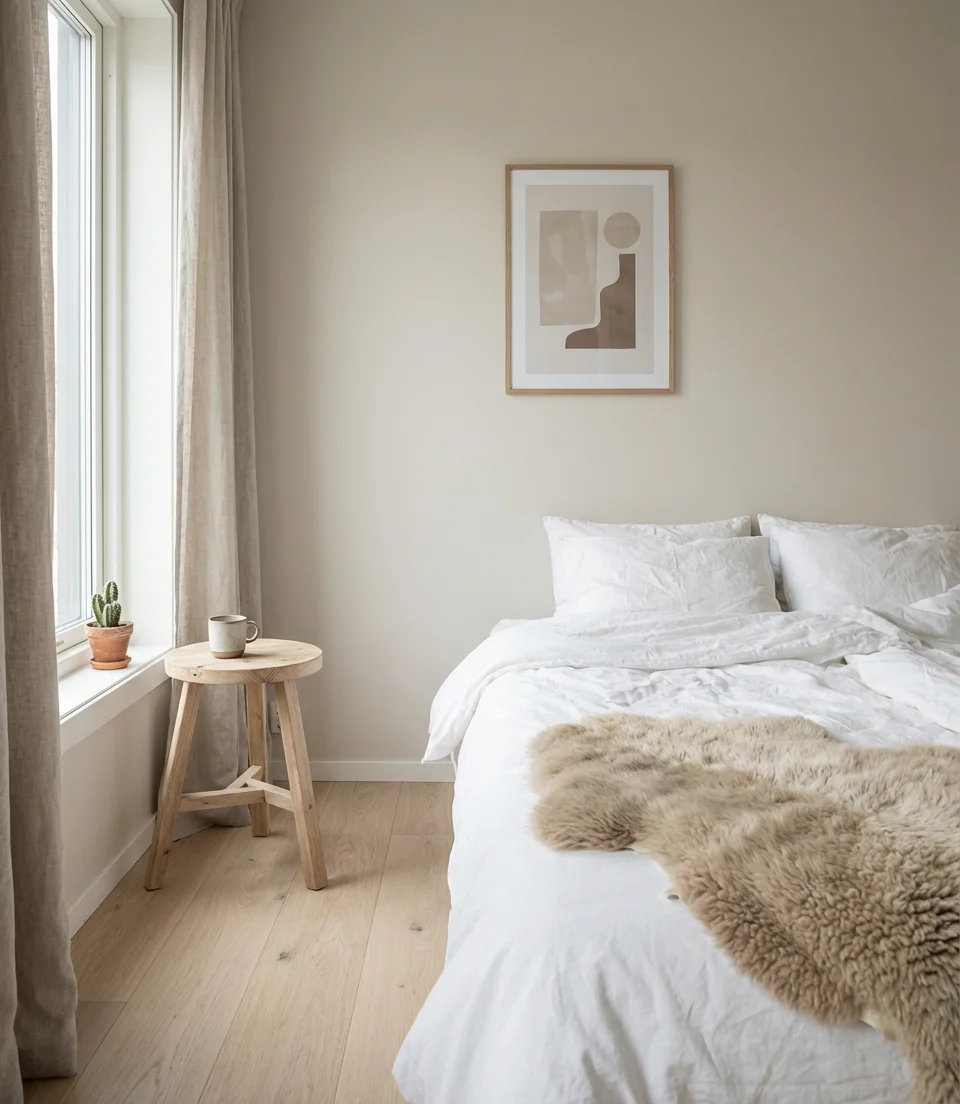
The common mistake people make when attempting Scandinavian style is confusing it with cold minimalism—they strip the room down but forget to add warmth back in through texture and natural material. The Scandi approach isn’t about absence; it’s about intention. Every object should be beautiful and purposeful. A hand-thrown ceramic vase, a sheepskin throw, and a carefully selected lamp with a warm-toned bulb—these are the details that elevate a bare room into a Scandinavian one. Miss these, and you just have a room with too little furniture.
17. Black, White and Brown Graphic Bedroom
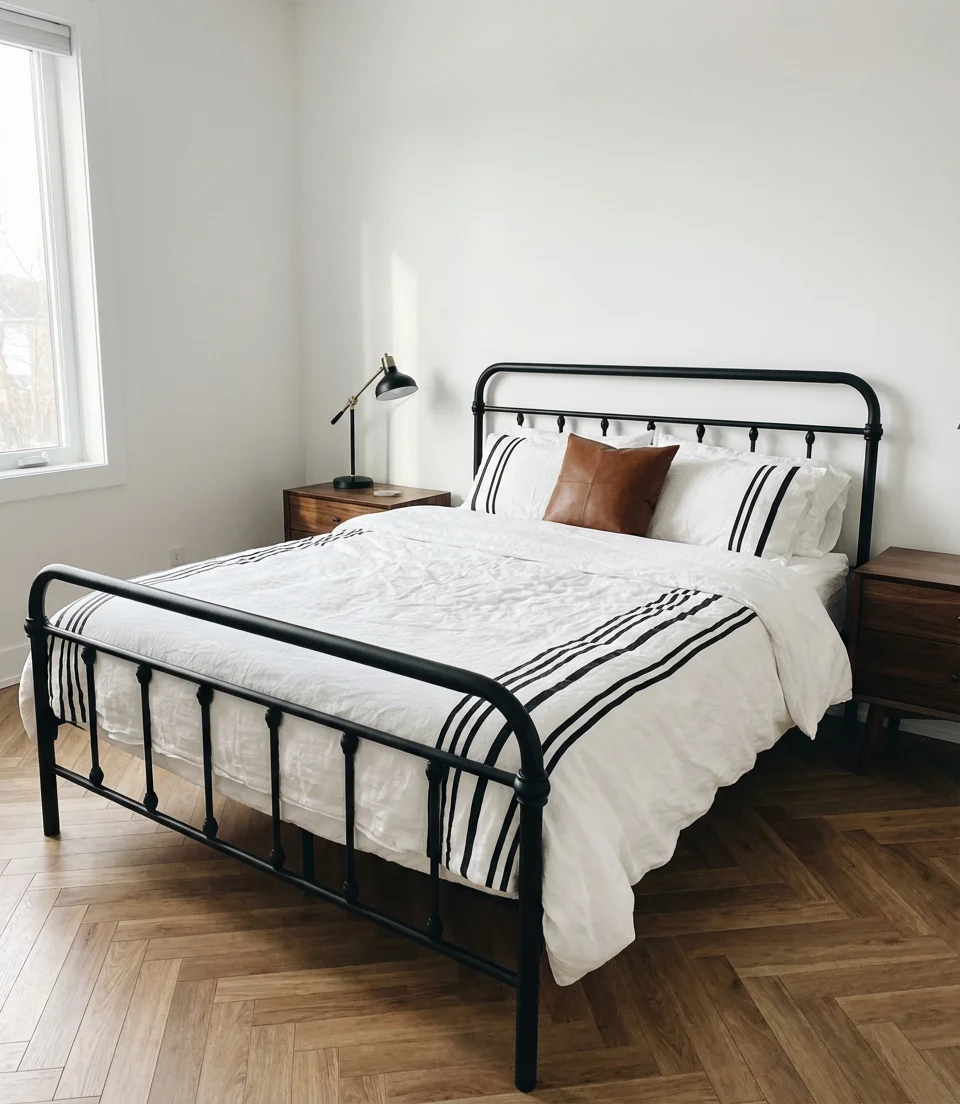
The black, white, and brown three-way combination brings graphic clarity to what might otherwise be an all-brown room. Black provides crisp definition—in lamp bases, in picture frames, in metal hardware. White opens the space up and prevents the brown from getting heavy. And brown, positioned as the warm middle, keeps the whole thing from reading as a black-and-white room with a brown accident in it. The three tones work in concert, and when balanced correctly, the result is sharp, modern, and genuinely striking.
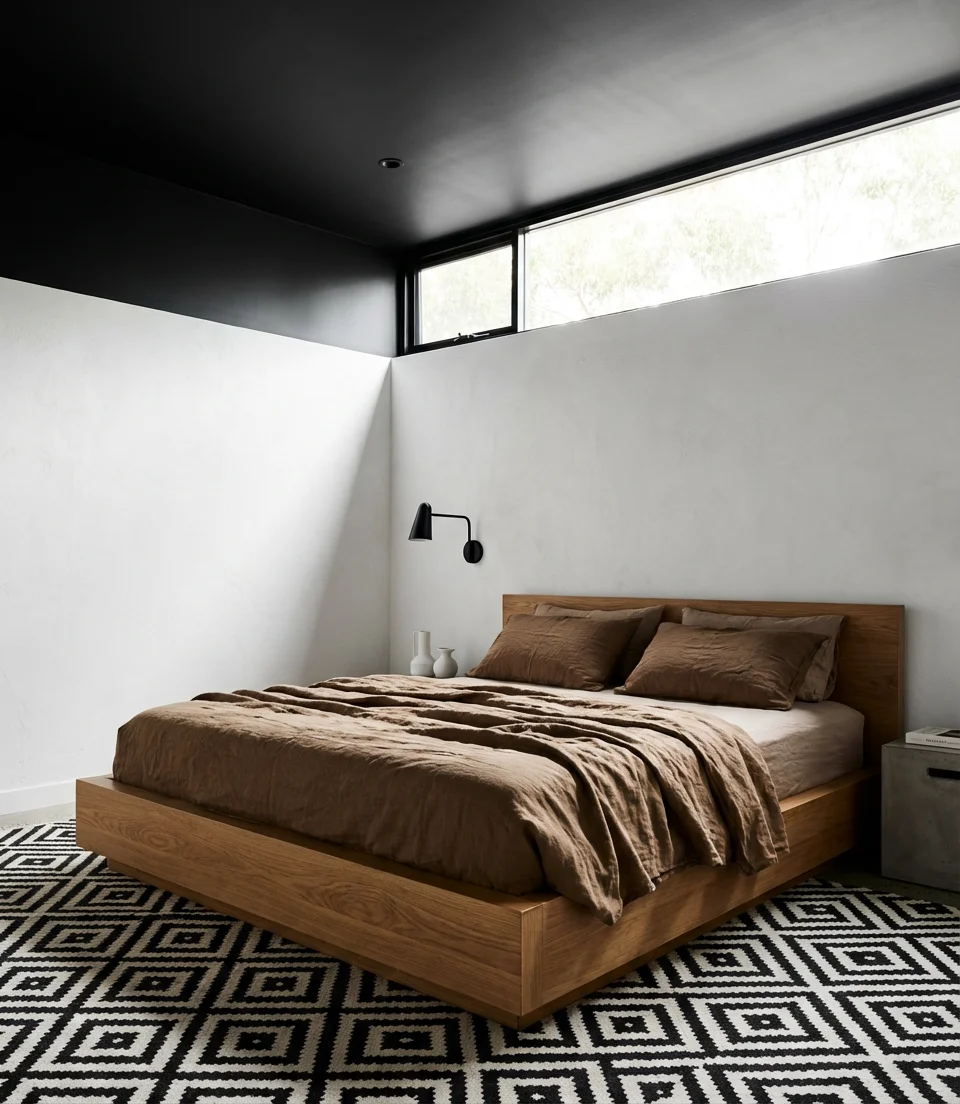
This color scheme is a strong choice for young professionals—particularly in urban apartments in cities like Chicago, Austin, or Los Angeles—who want a bedroom that feels designed and intentional without committing to a softly neutral “adult home” aesthetic. The graphic quality of the palette communicates confidence. It also works exceptionally well when art is involved: a large-format black-and-white photograph or an abstract print in earth tones reads beautifully against this backdrop, functioning as the room’s emotional centerpiece.
18. Shades of Brown Tonal Bedroom
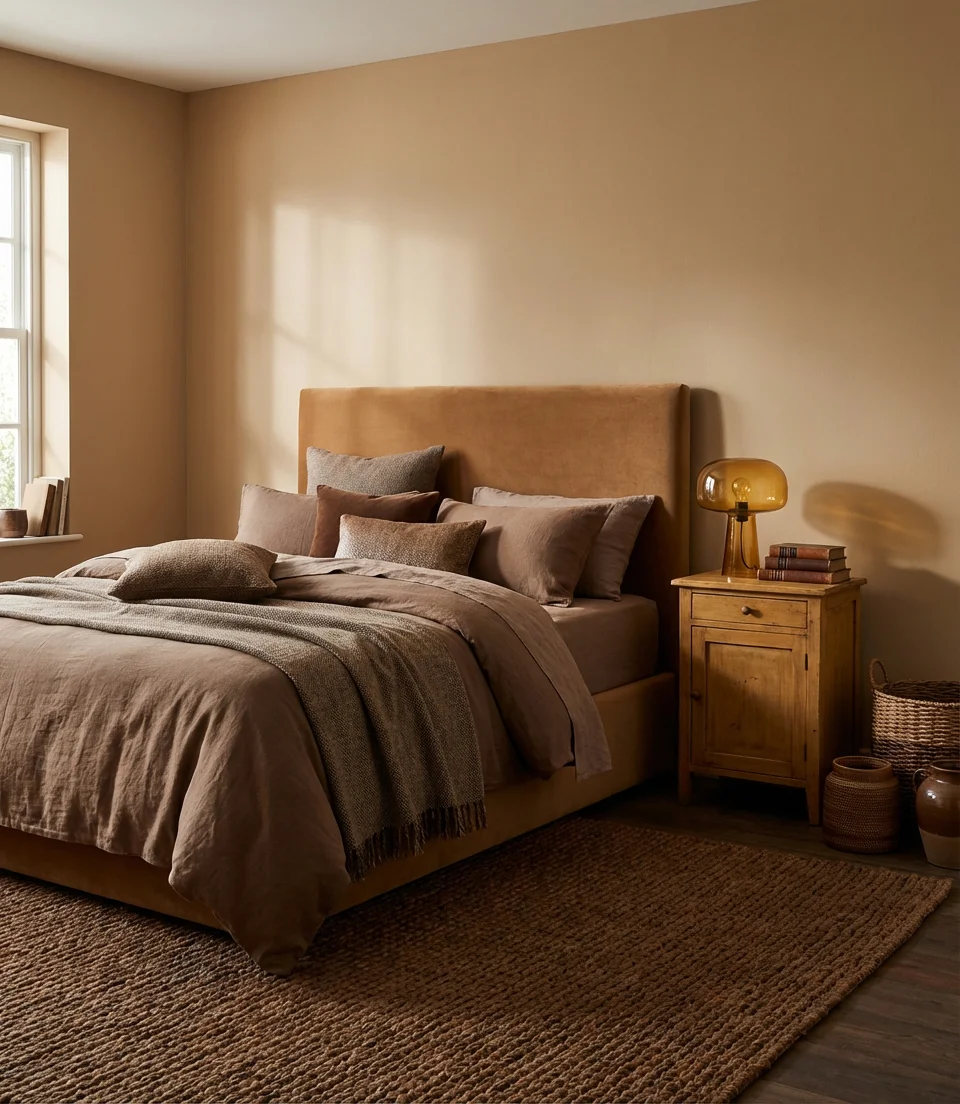
A fully tonal room—where every element exists within the same color family—is one of the more advanced design moves available to a bedroom decorator, and shades of brown executed tonally in 2026 are deeply impressive. We’re talking walls in warm clay, a headboard upholstered in a darker caramel, bedding in mocha and café au lait tones, a rug in deep tobacco, and accessories in honey and amber. Every element is brown, but the range from near-white to near-black within the family creates a room with tremendous depth and sophistication.
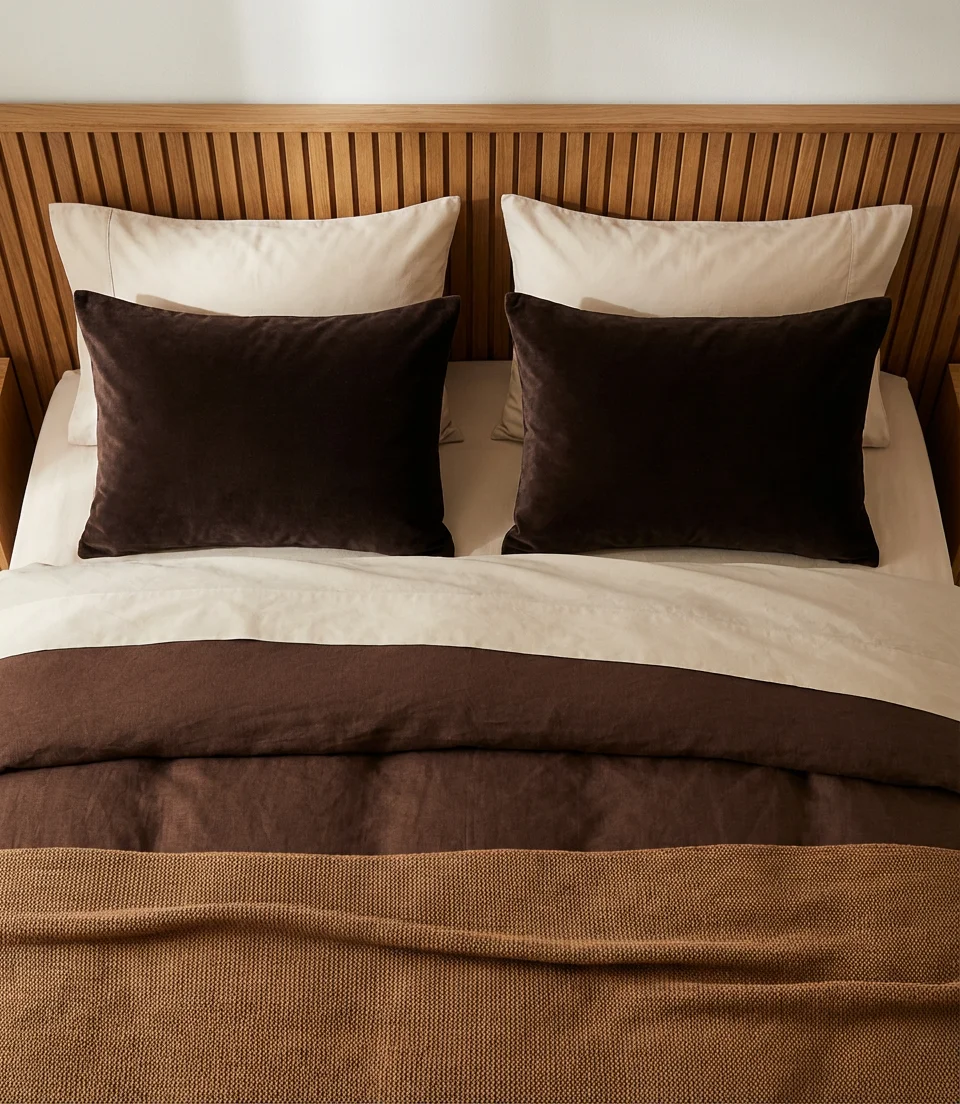
The practical challenge with a fully tonal brown room is avoiding sameness—the risk isn’t that it will look bad, but that it might look flat. The solution is texture contrast: pair matte plaster walls with a high-sheen leather headboard, woven linen bedding with a smooth velvet cushion, and a rough jute rug with a polished wooden floor. When the surface quality varies enough, your eye reads movement and richness even though the color barely changes. The result is sophisticated restraint at its highest level and one of the most searched bedroom aesthetics heading into the new year.
19. Cozy Brown Bedroom for Small Spaces
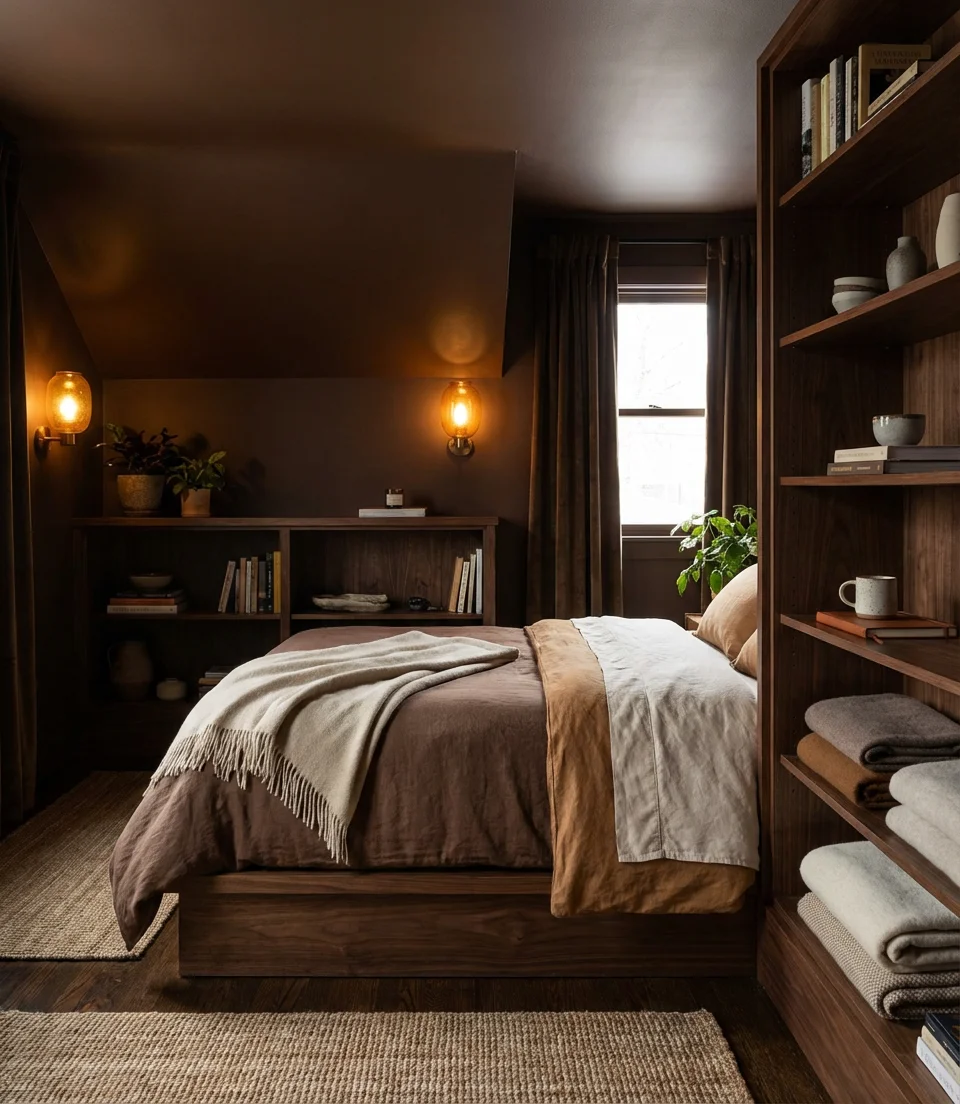
Small bedroom design has a persistent myth attached to it: that you must use light colors to make a room feel larger. This is only partially true—what matters more is coherence and intentionality. A small bedroom decorated in rich, cozy brown tones with warm lighting can feel like a deliberate retreat rather than a limitation. Beige and chocolate layering in a compact room, with a low-profile bed, built-in storage, and ambient lighting, creates what designers call a “jewel box” effect: small, yes—but precious and purposeful.
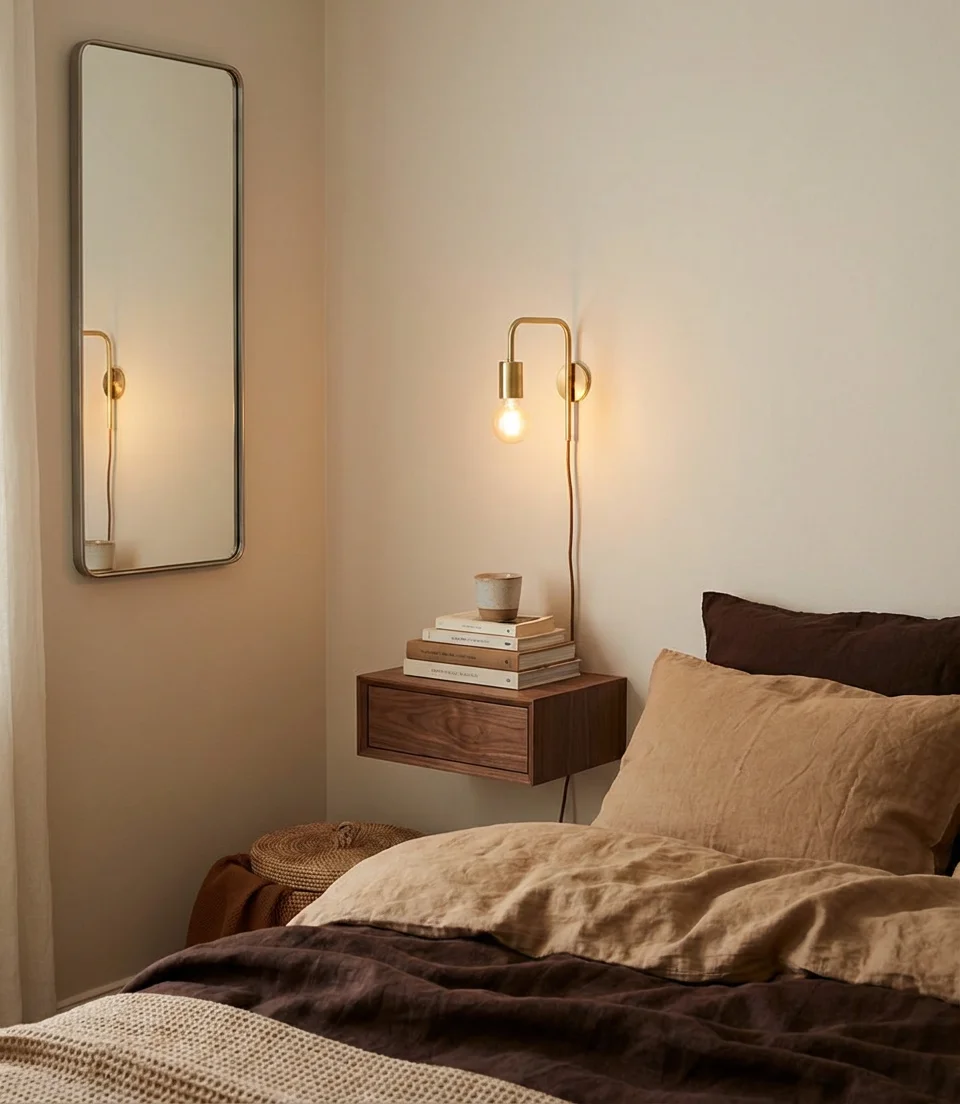
A micro-anecdote worth sharing: a New York City apartment owner with a 9×11 bedroom painted the entire room—walls, ceiling, and the inside of the closet doors—in a single warm chocolate brown, added two wall-mounted brass reading lights, and swapped her IKEA white frame for a low walnut platform. The result, according to her, was that the room finally felt like somewhere she actually wanted to be rather than a storage space with a mattress in it. Small brown bedrooms aren’t a compromise—they’re a genre.
20. Vintage Brown Bedroom with Antique Furniture
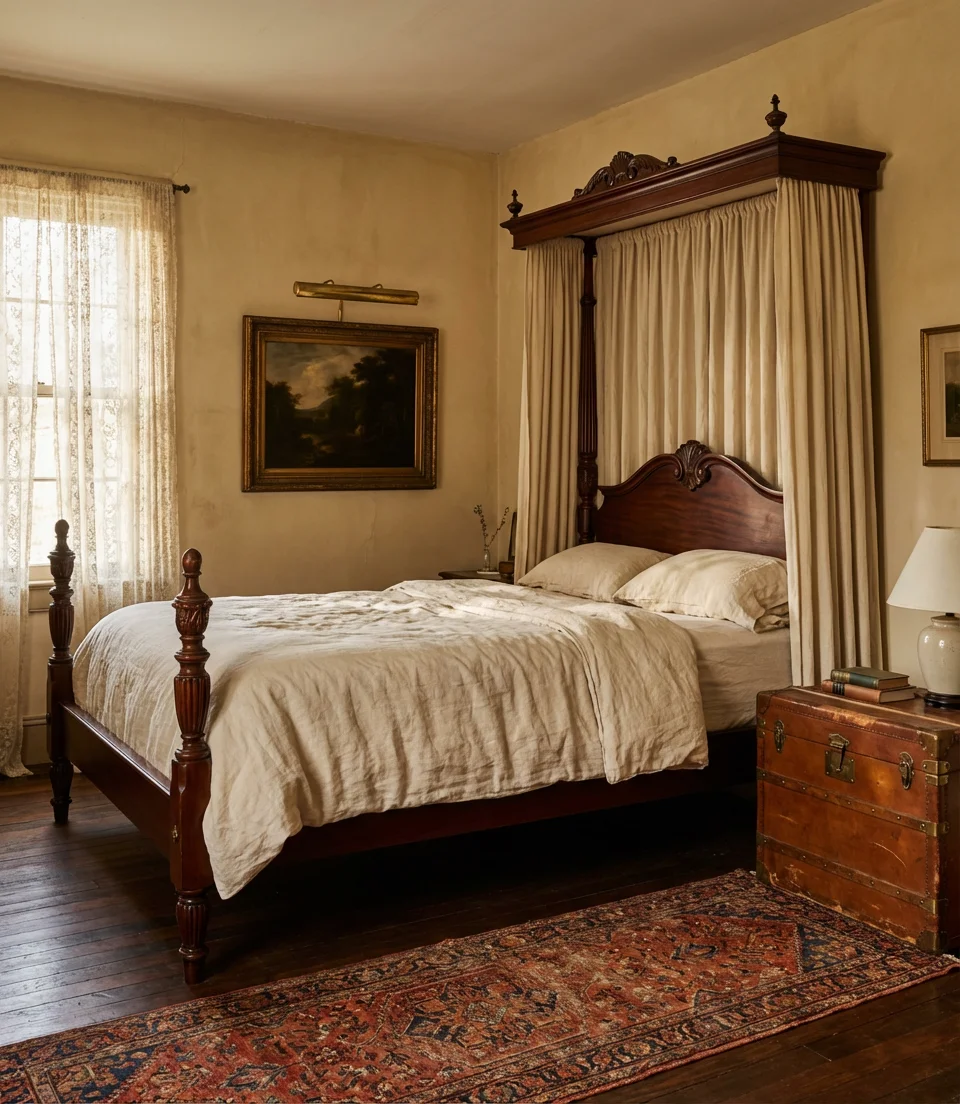
The vintage brown bedroom represents one of the most authentic approaches to the color—after all, antique furniture is predominantly warm wood tones, aged leather, and patinated brass. Rather than fighting the inherent brownness of an antique-filled room, lean into it. A Victorian mahogany bed, a campaign chest in tobacco leather, and an Edwardian vanity in dark walnut—layered against walls in warm parchment or soft taupe and finished with cream and linen textiles, these pieces create a room that feels accumulated and loved rather than designed and installed.
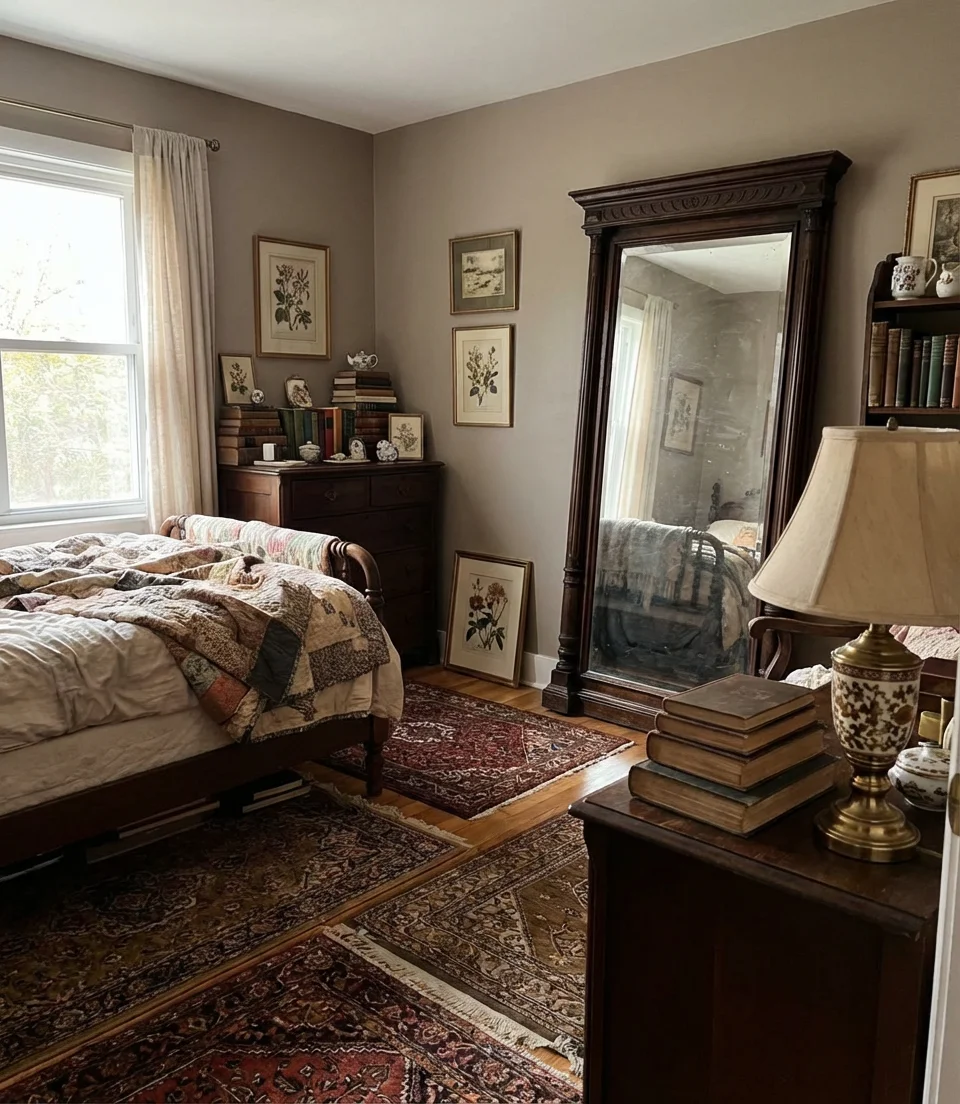
The Americana angle here is strong: there is an enormous amount of genuinely beautiful antique brown furniture available in the United States through estate sales, thrift stores, and online marketplaces at prices well below what comparable new furniture costs. A mahogany dresser from a Goodwill in Virginia or an oak headboard found at an estate sale in Ohio can anchor a bedroom more meaningfully than anything bought new from a big-box retailer. The patina of age is not a flaw—in the right context, it’s the whole point.
21. Brown and Terracotta Earthy Modern Bedroom
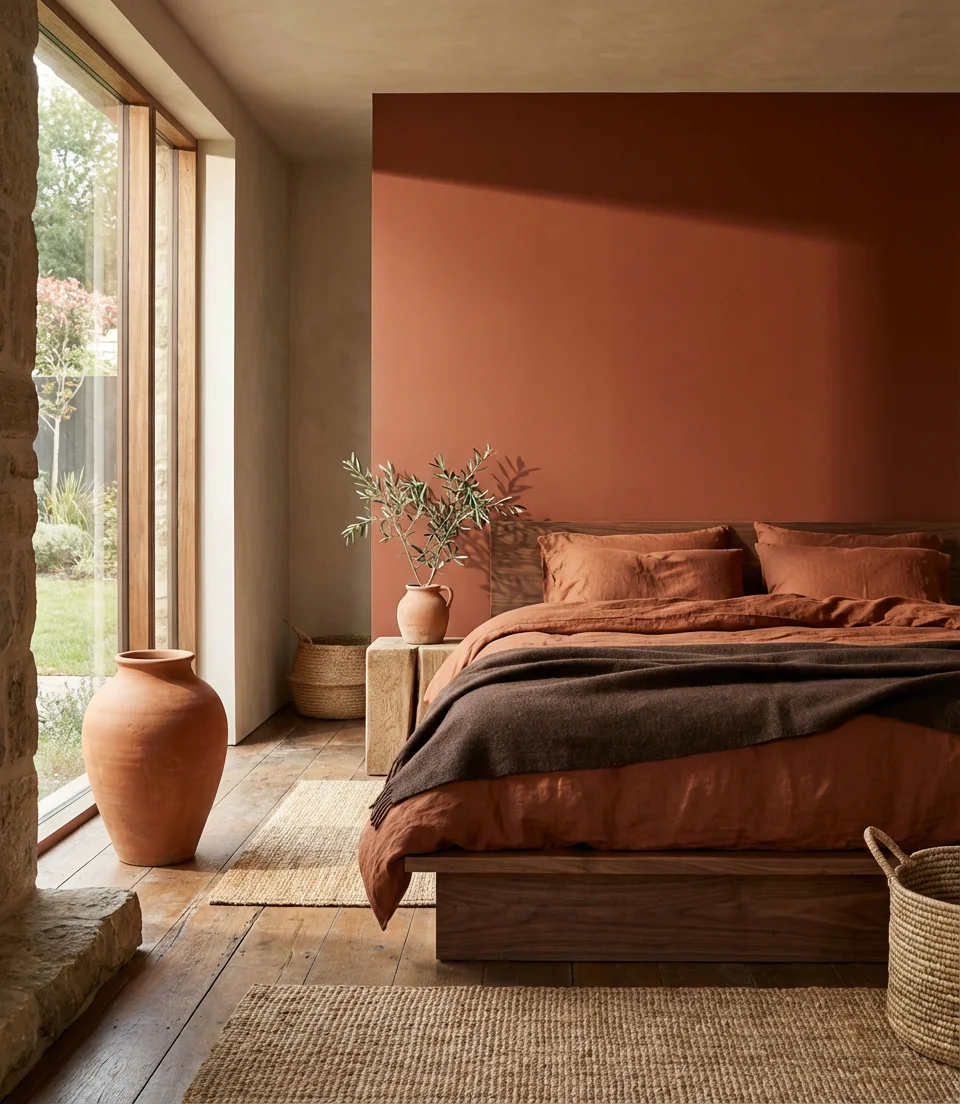
Terracotta has been a design darling for several years now, and its partnership with brown is one of the most grounded, aesthetically confident combinations available in 2026. The two colors share clay as a common ancestor—brown is simply terracotta taken to its deepest expression—which means they never fight each other. A terracotta feature wall against walnut furniture, rust-toned linen bedding with a dark brown throw, and an orange clay pot beside a chocolate leather headboard: the room hums with warmth without ever tipping into chaos.
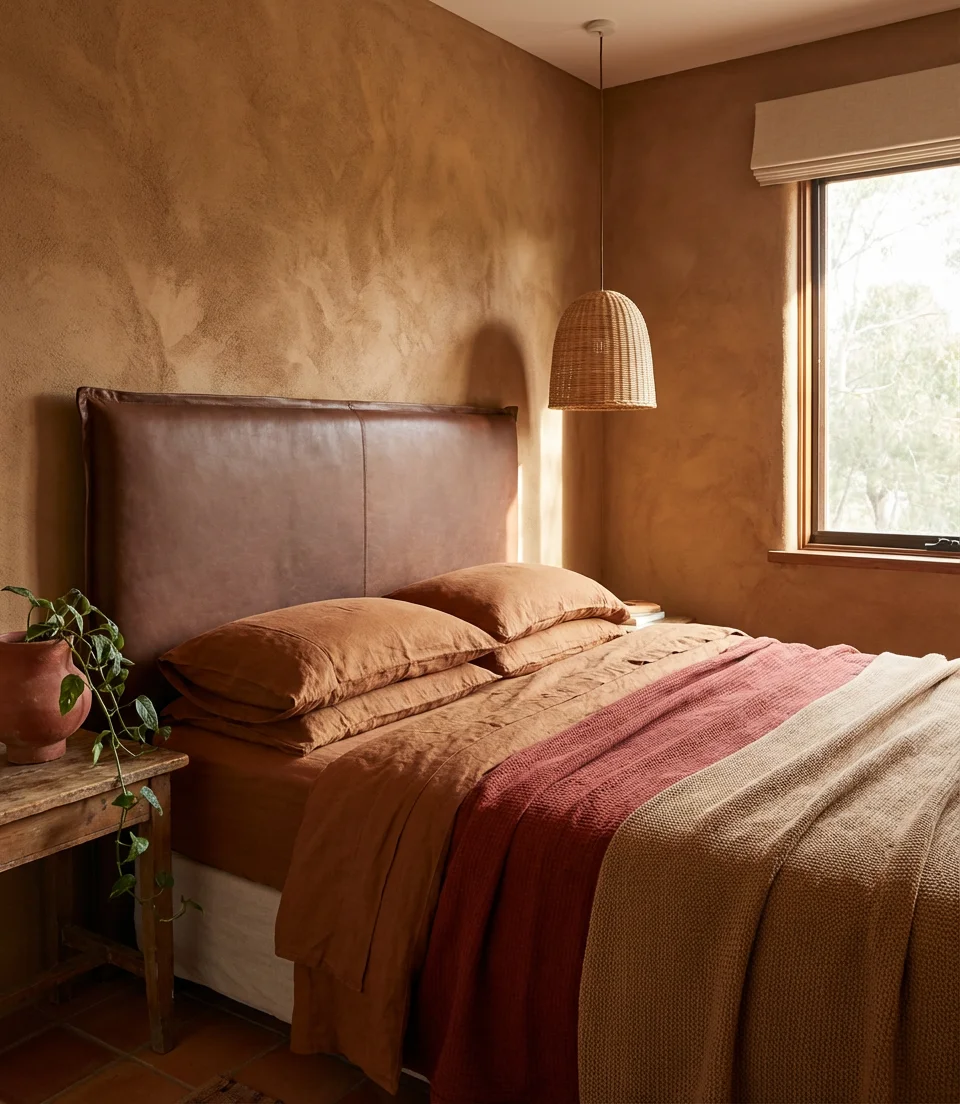
The terracotta-and-brown combination has a distinct American Southwest resonance—it’s the palette of Adobe architecture, of desert landscape, of handmade pottery from New Mexico and Arizona. But it also translates beautifully to the growing number of American homeowners pursuing Mediterranean or Spanish Revival aesthetics, particularly in California and Florida. The warmth is universal; the cultural references are rich and varied. You can gradually incorporate pieces into this palette, and each addition will instantly feel like it belongs.
22. Dark Green and Brown Dramatic Luxury Bedroom
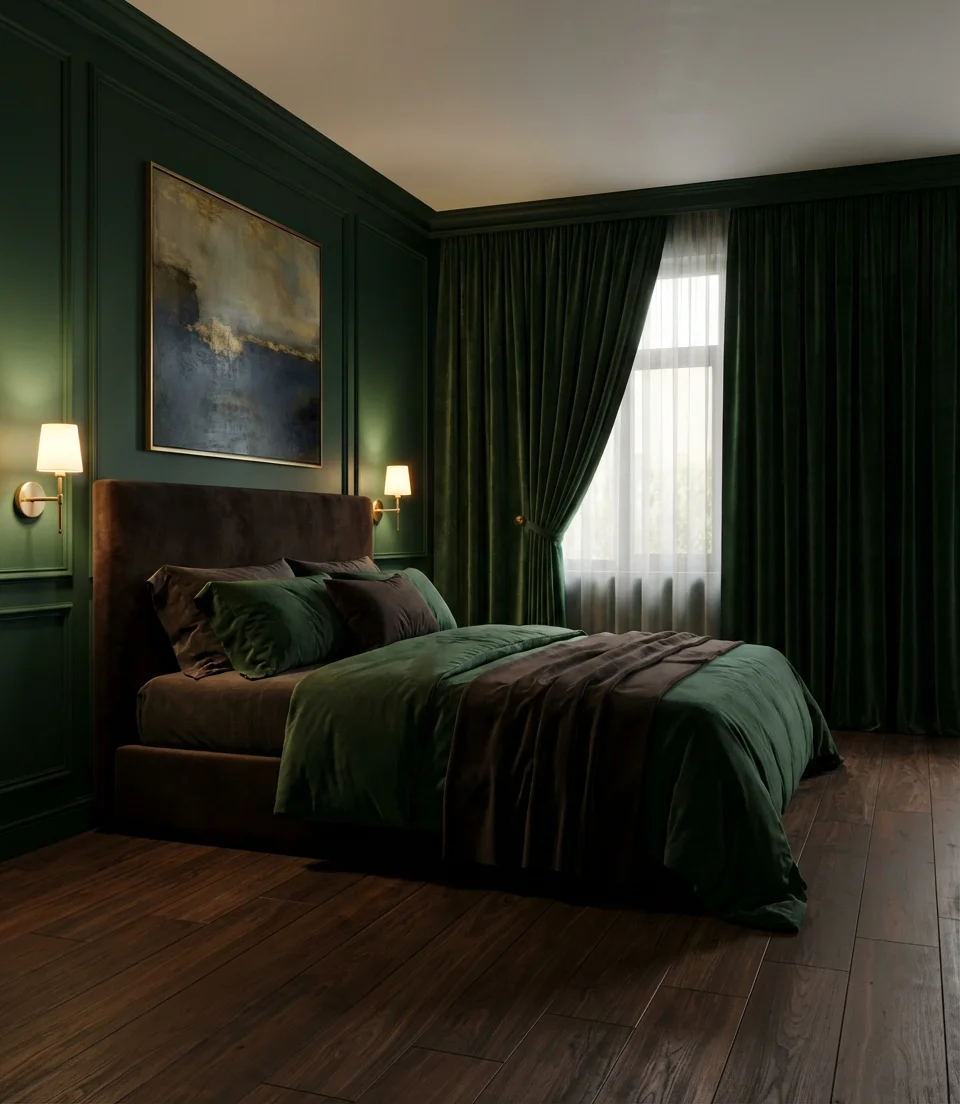
To conclude this collection, we present one of the most striking bedroom combinations of 2026: a luxurious blend of dark green and dark brown. Picture a bedroom with deep emerald or bottle green walls, a chocolate brown mohair or velvet headboard, dark-stained wide-plank floors, brass and gold hardware, and bedding layered in deep forest tones and rich chocolate. It’s the kind of room that makes you feel slightly famous just for sleeping in it—the visual equivalent of a tailored suit in the finest available fabric.
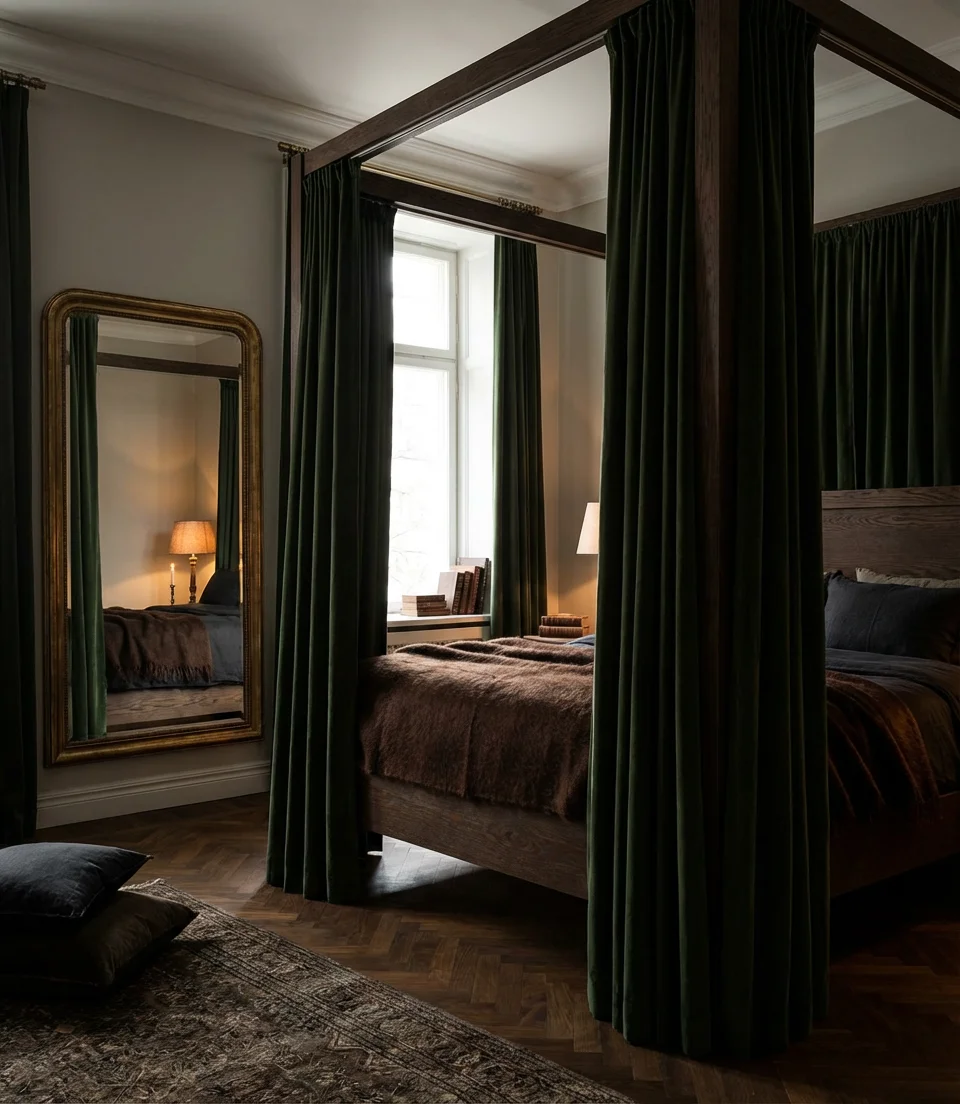
The expert consensus on this combination is clear: it’s the brown bedroom elevated to its fullest potential. Interior designers who specialize in high-end residential projects consistently cite dark green and dark brown as one of the pairings that photographs most luxuriously, reads most impressively in person, and maintains its relevance over the longest arc of time. It’s not a trendy choice—it’s a classic one, wearing its best clothes. If you’re going to commit to a brown bedroom renovation in 2026, this is the version to aspire toward.
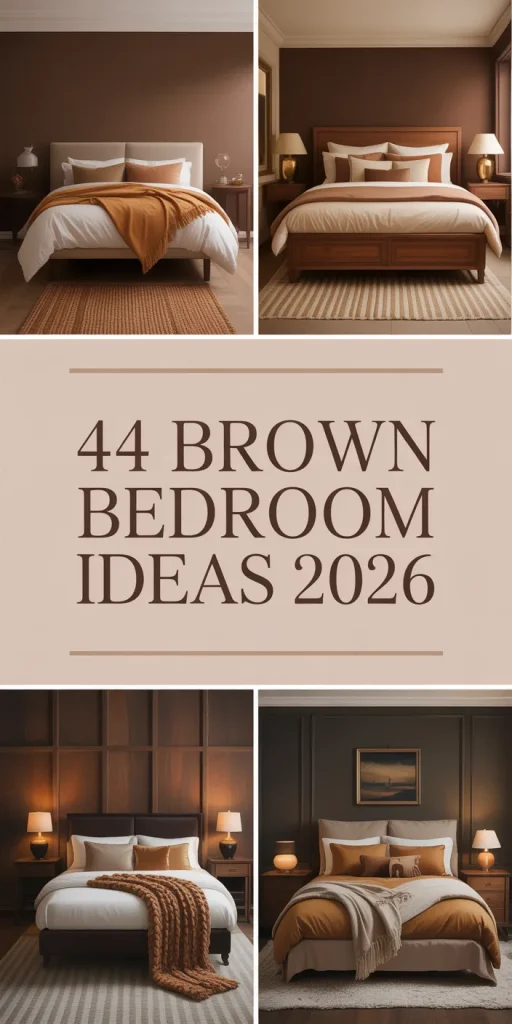
Brown bedrooms in 2026 are diverse, ranging from soft and sunlit to dramatically moody, and from minimalist Scandinavian simplicity to full-on vintage maximalism. Whether you’re just swapping a throw pillow or embarking on a full repaint, there’s a version of the brown bedroom waiting to become yours. We’d love to hear which direction resonates most with you: are you on team light and airy, or do you prefer a full dark cozy cocoon? Drop your thoughts in the comments, share which idea you’re planning to try, and let us know how your bedroom transformation goes—we read every single one.