
Blue bathrooms have become one of the most searched design topics heading into 2026, and it’s easy to see why. From calming coastal hues to dramatic midnight tones, blue offers versatility that few other colors can match. American homeowners are turning to Pinterest in droves for inspiration, whether they’re renovating a dated powder room or designing a spa-like primary bath from scratch. This collection brings together distinct approaches to blue bathroom design—each with its personality, practical considerations, and styling potential. You’ll find ideas that work for renters and homeowners alike, from budget-friendly updates to full-scale transformations.
1. Soft Powder Blue Vanity with Brass Hardware
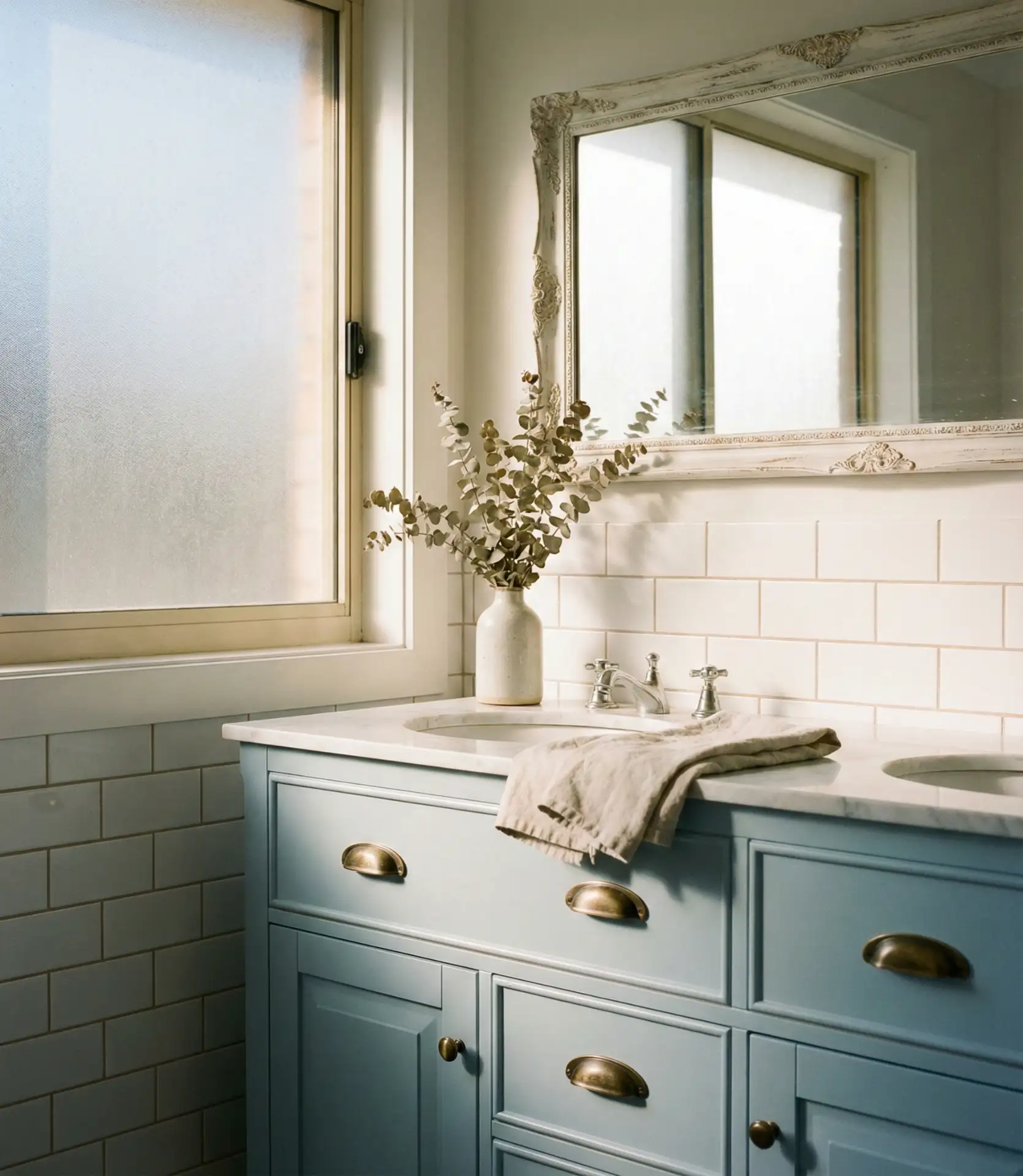
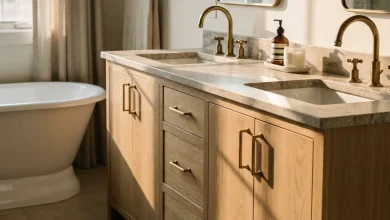
A powder blue vanity brings instant charm without overwhelming a small space. This shade works beautifully in powder rooms where you want color but need to maintain an airy feel. Paired with warm brass fixtures and white subway tile, the look feels both current and timeless. The key is choosing a blue with enough gray undertones to avoid looking too juvenile or overly sweet.
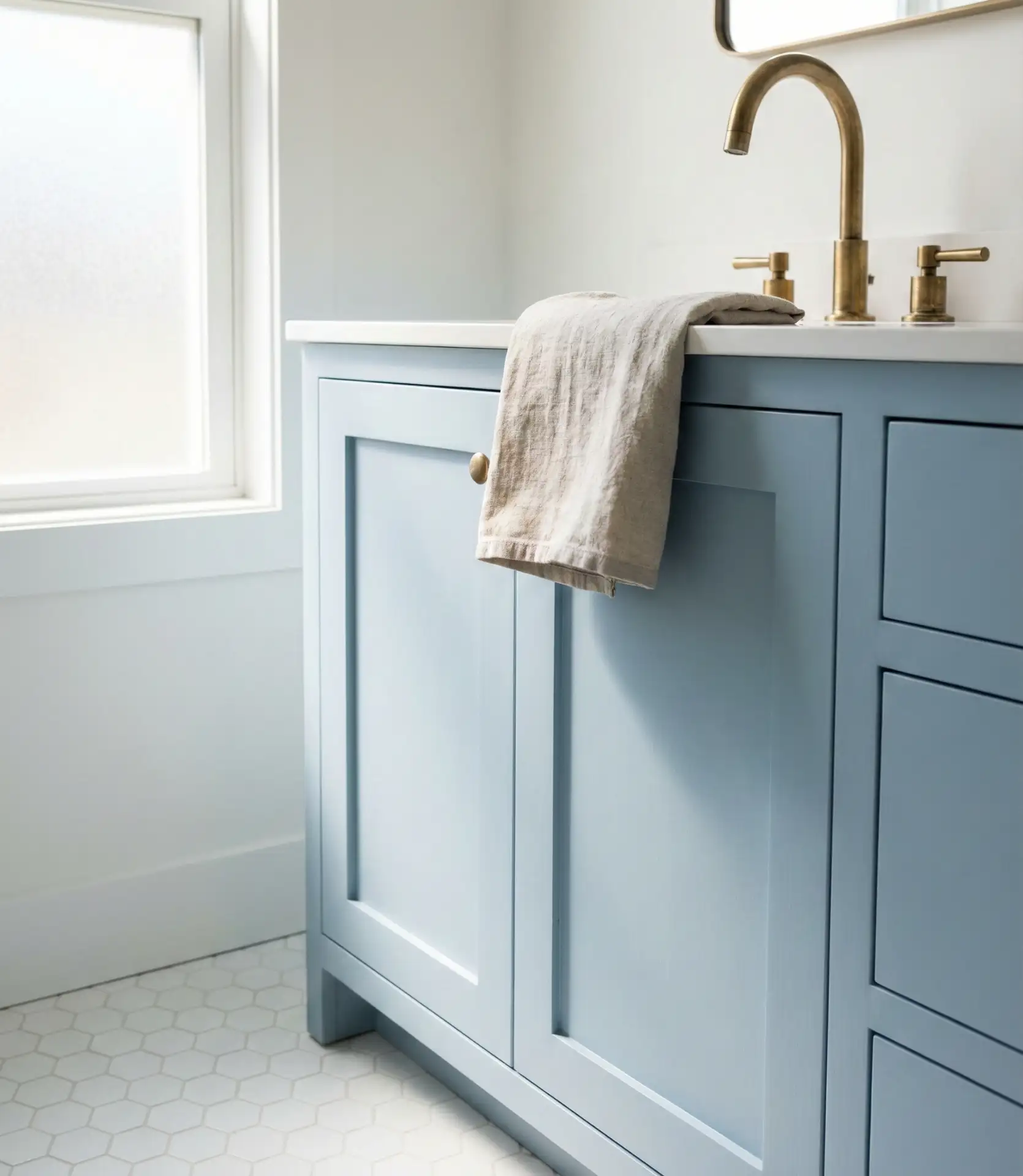
This approach works especially well in homes with existing warm-toned fixtures. Many homeowners report that painting an existing vanity is one of the most affordable bathroom updates, typically costing under $150 when done as a DIY project. The brass hardware adds just enough warmth to prevent the space from feeling cold, and it complements the blue in a way that chrome or nickel simply doesn’t.
2. Navy Shiplap Feature Wall
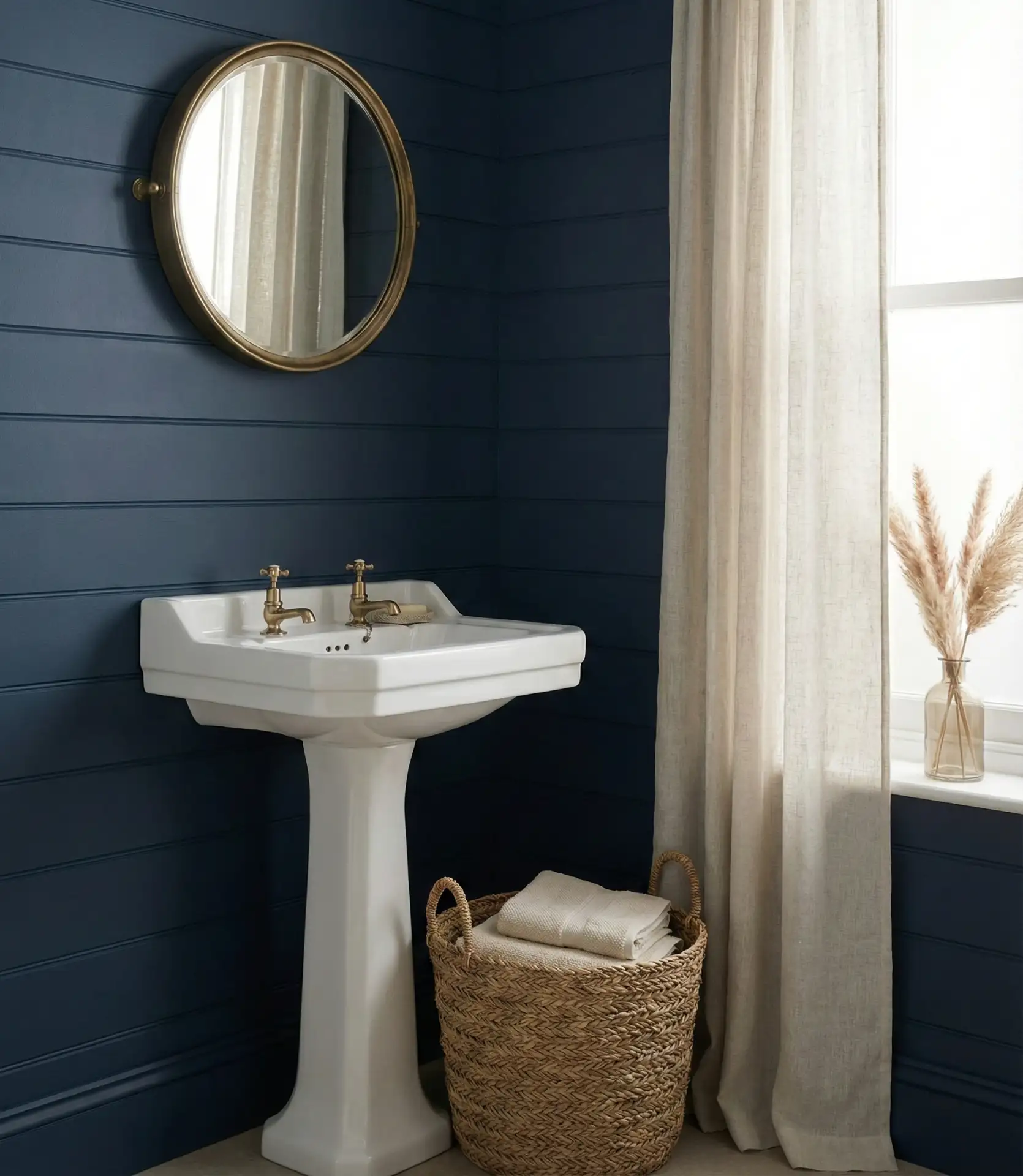
A navy shiplap accent wall creates instant architectural interest in an otherwise plain bathroom. This design choice adds texture and depth while maintaining a classic American farmhouse vibe. The horizontal lines make ceilings feel higher, and the dark color provides a striking backdrop for white fixtures and natural wood accents. It’s particularly effective in bathrooms with ample natural light.
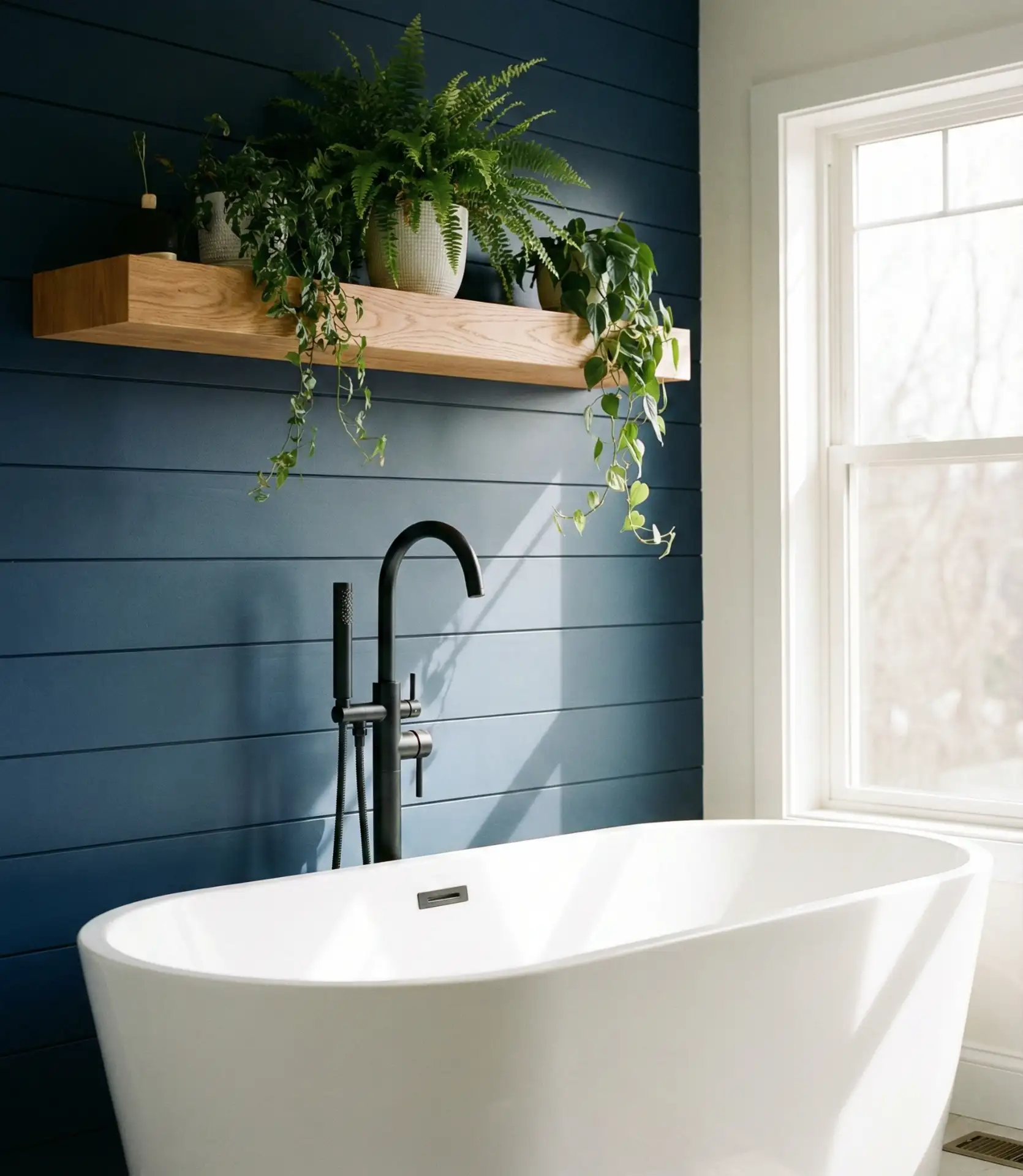
One common mistake is choosing a navy that’s too purple-toned. Test your paint color in the actual bathroom lighting before committing—navy can shift dramatically between natural and artificial light. Many designers recommend Benjamin Moore Hale Navy or Sherwin-Williams Naval for their true blue undertones that photograph beautifully and hold up well in various lighting conditions throughout the day.
3. French Blue Tile Backsplash
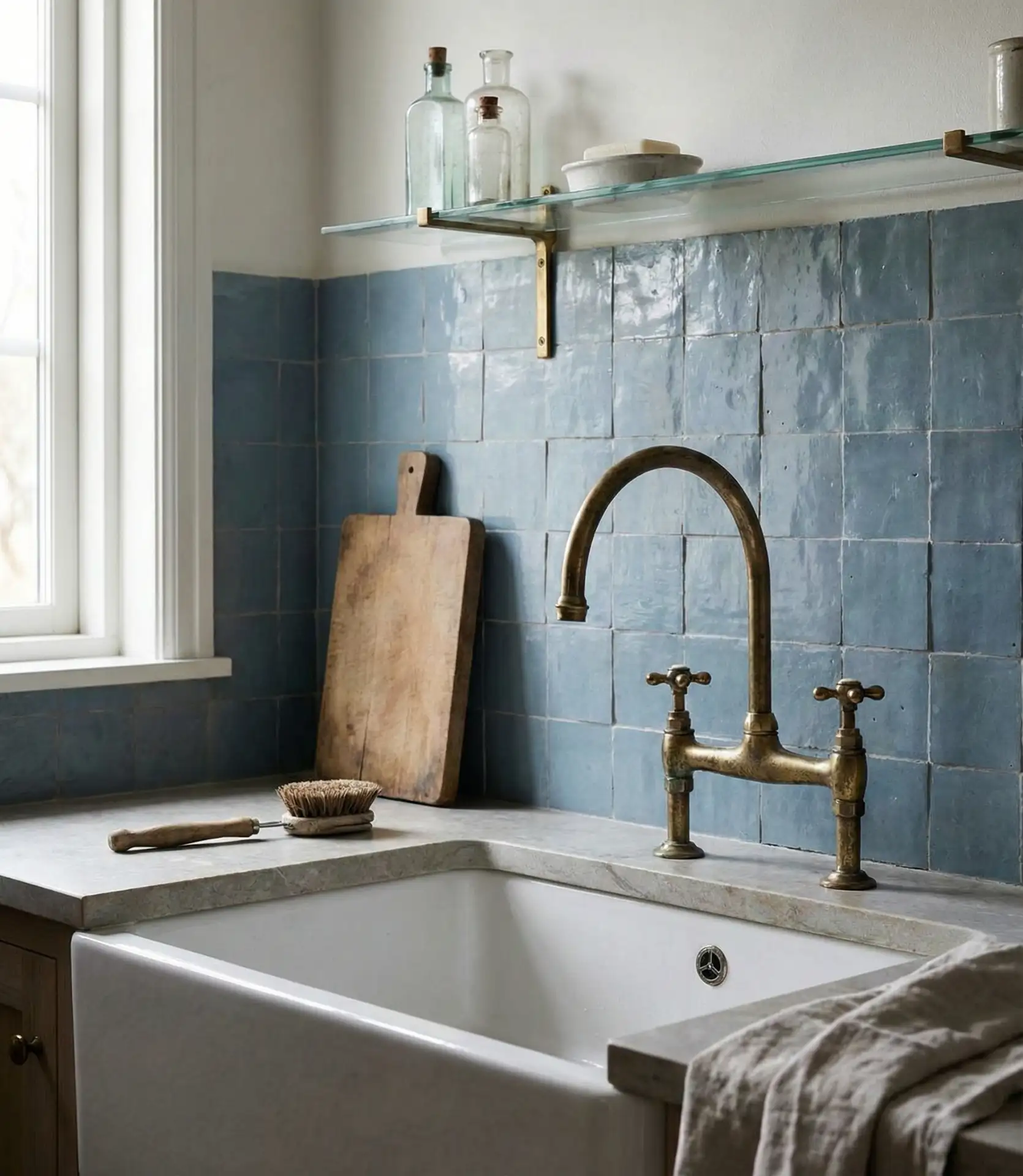
A French blue zellige, or subway tile, brings Old World elegance to American bathrooms. The slightly uneven, handmade quality of these tiles adds character that machine-made versions can’t replicate. This shade of blue—soft, slightly dusty, with hints of gray—pairs beautifully with aged brass, natural stone, and weathered wood. It’s the kind of aesthetic that feels collected over time rather than purchased all at once.
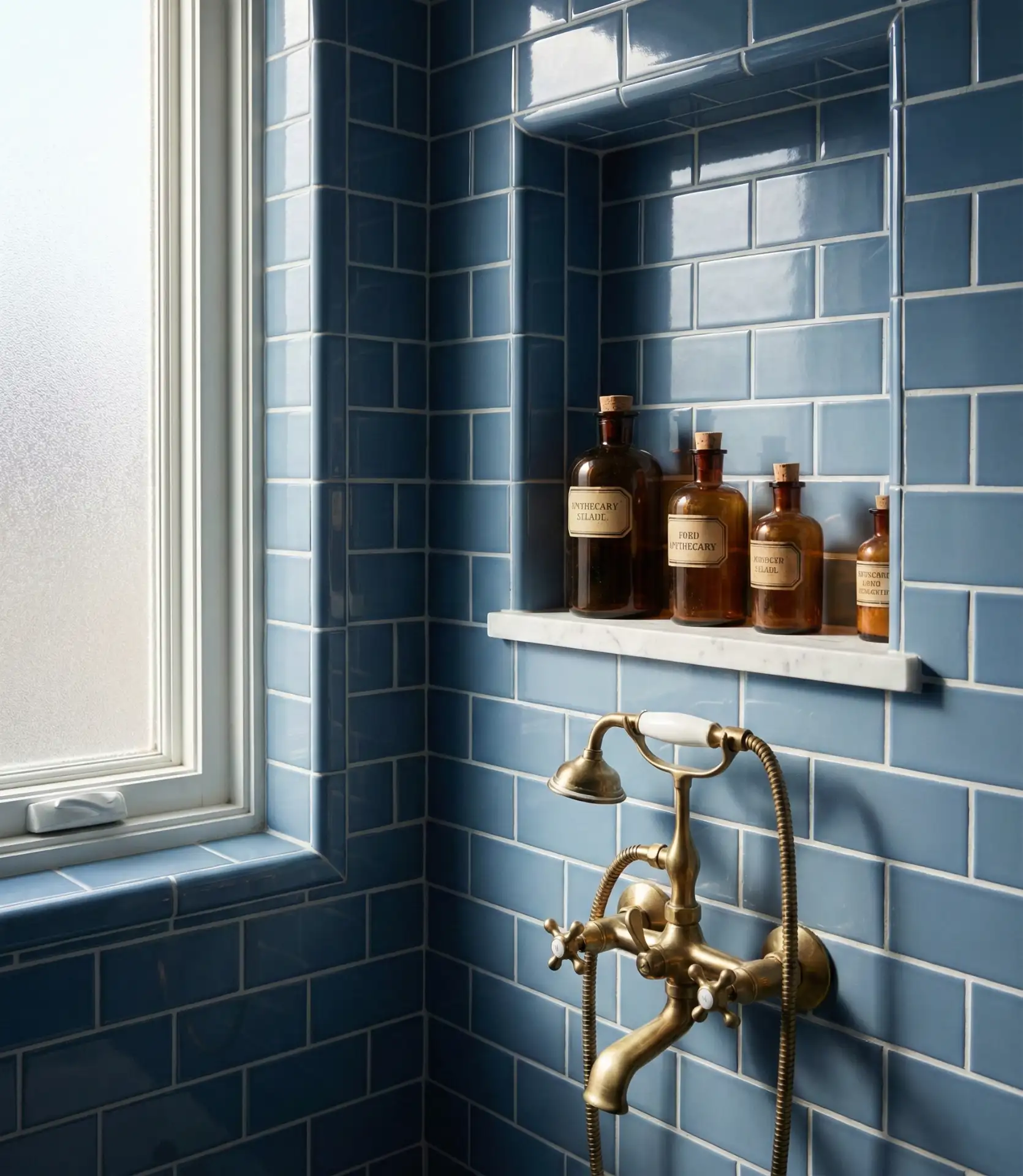
Where it works best: In bathrooms where you want to introduce color without painting walls, especially in rental properties or homes that you’re planning to sell within a few years. The backsplash area is small enough to be a manageable DIY project for confident beginners, and the visual impact is significant. Regional tile suppliers often carry these at better prices than big-box stores.
4. Moody Midnight Blue Walls
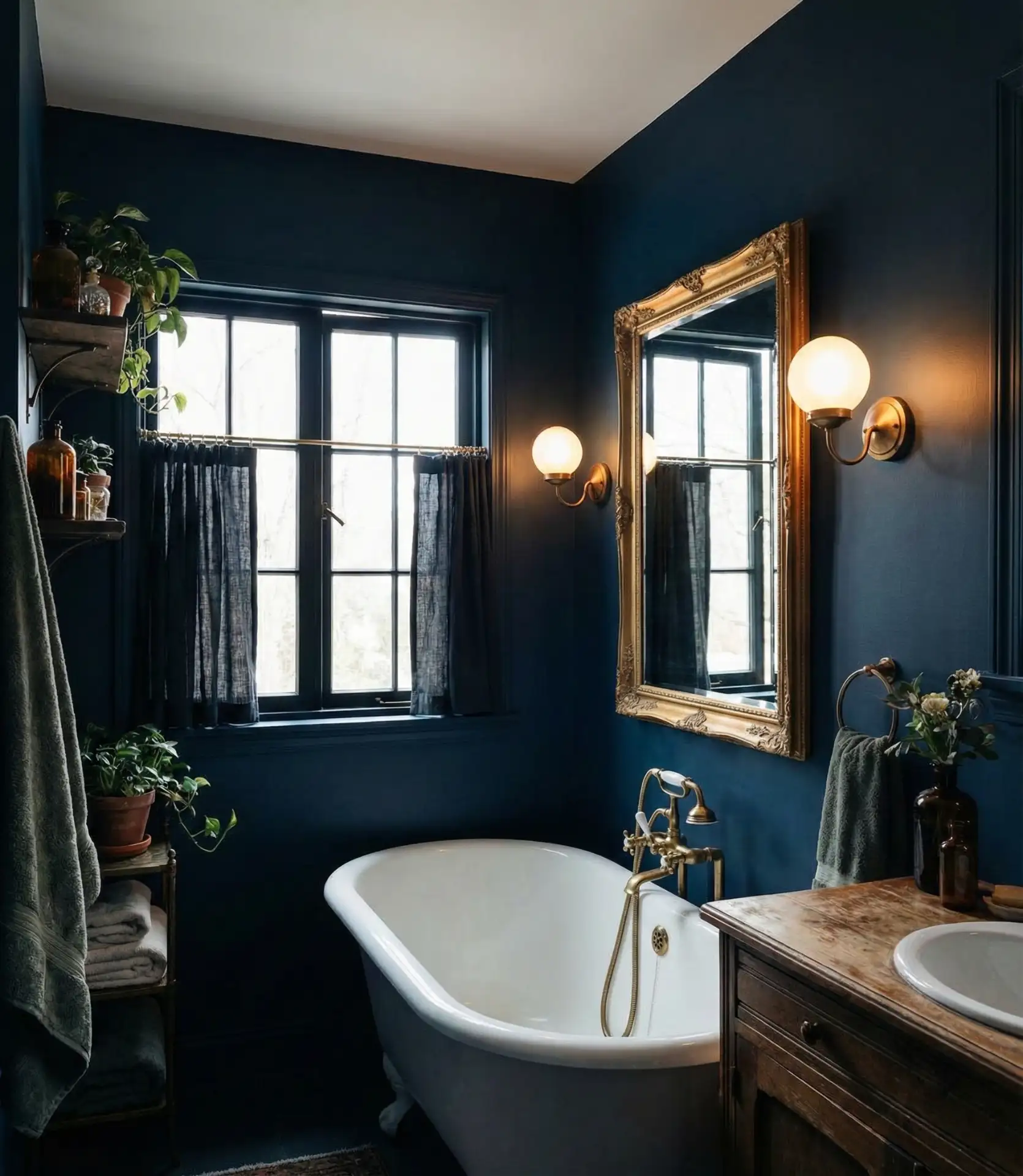
For those drawn to dramatic spaces, midnight blue walls create an enveloping, cocoon-like atmosphere. This moody approach works surprisingly well in bathrooms without windows when paired with the right lighting strategy. The deep color makes fixtures pop, creates a sense of intimacy, and provides a sophisticated backdrop for metallic accents and white marble. It’s become particularly popular in urban lofts and modern farmhouse renovations.
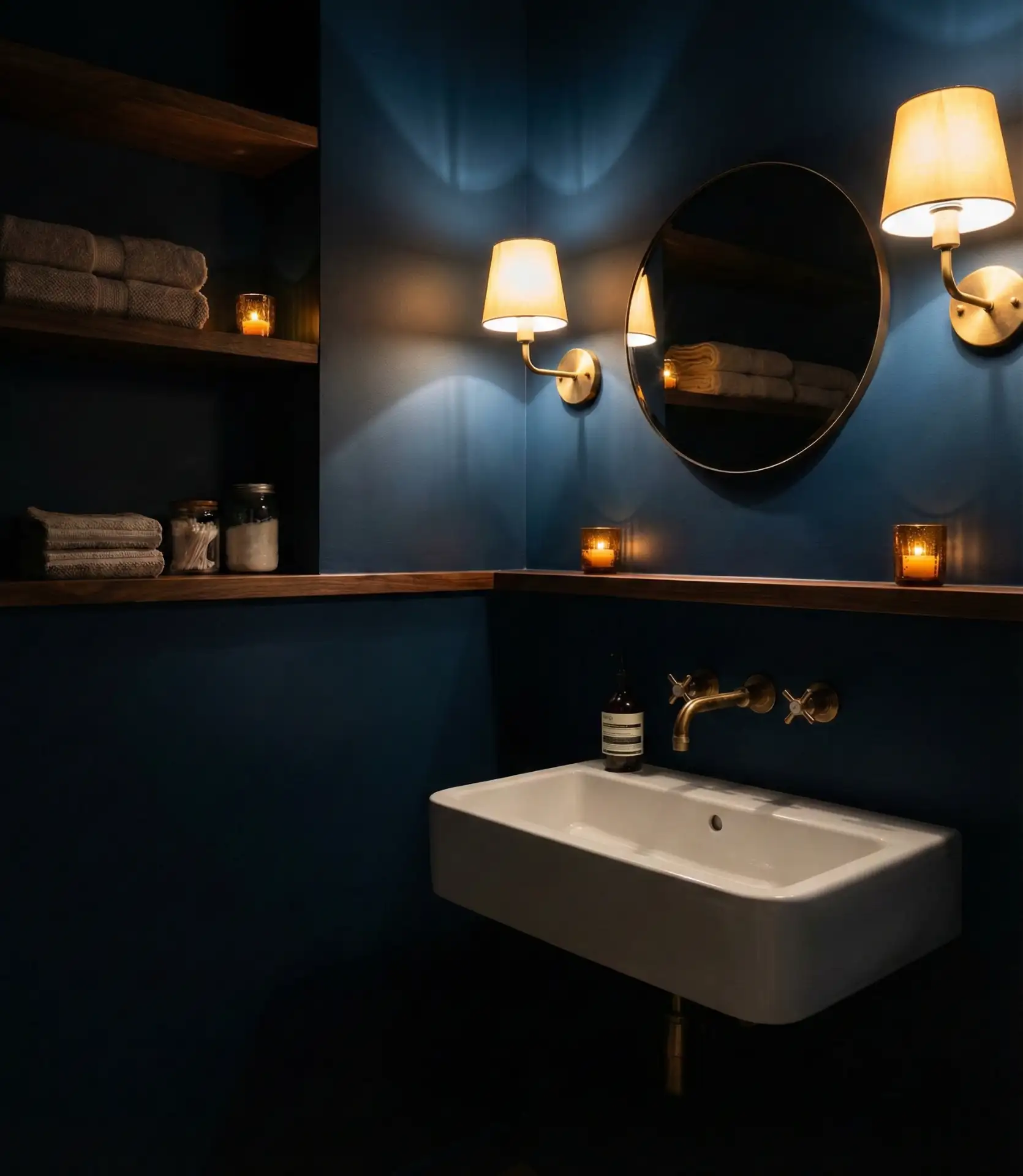
I once spoke with a designer who transformed a windowless basement bathroom this way, and her clients were initially skeptical. The dark walls actually made the space feel more intentional and luxurious rather than claustrophobic. The trick was adding three light sources at different heights and choosing a semi-gloss finish that reflects light rather than absorbing it.
5. Coastal Blue and White Stripe Pattern
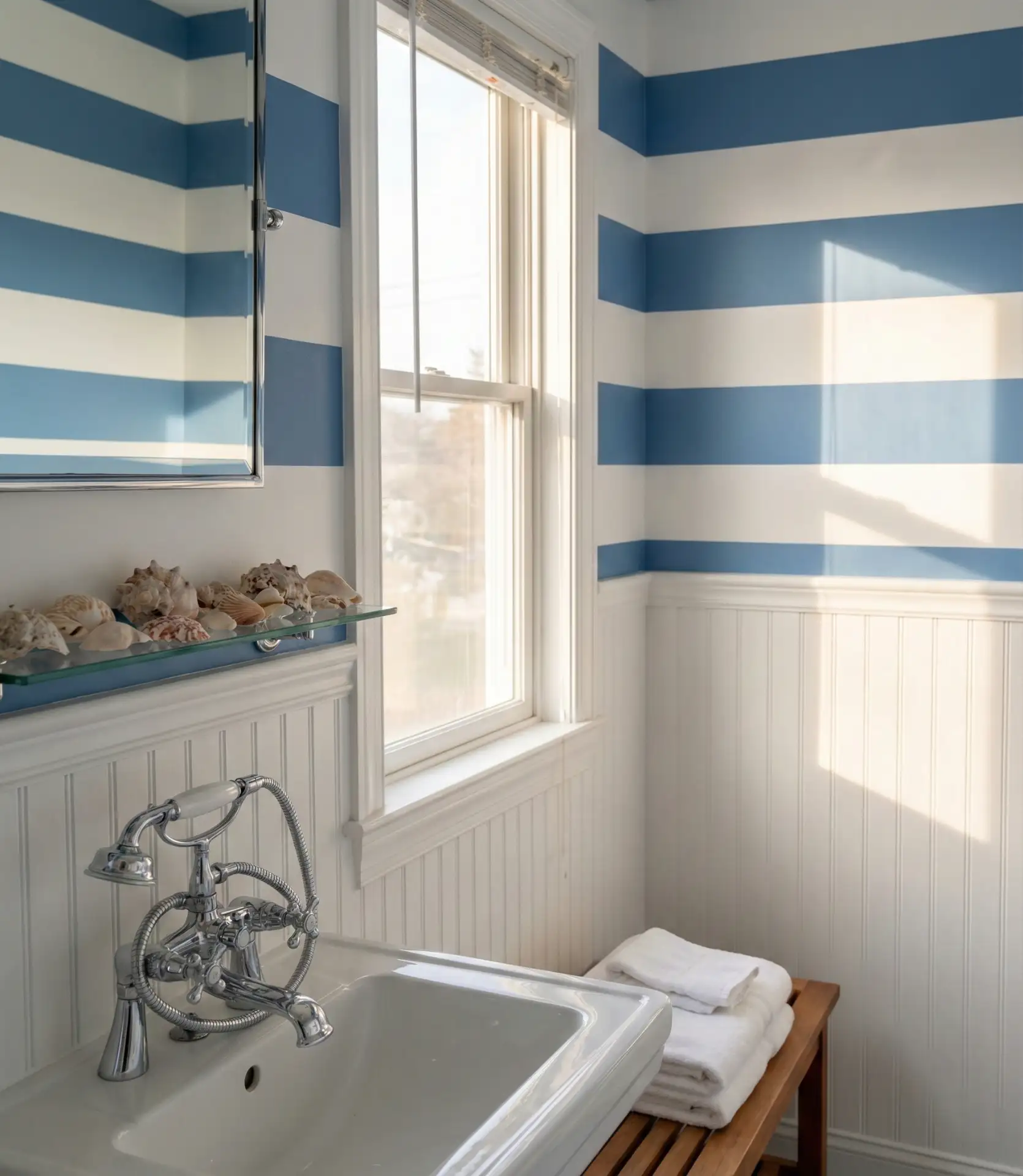
Stripes bring coastal charm without resorting to obvious nautical themes. A painted or wallpapered stripe in light blue and white adds visual height and a refreshing summer-house quality. This pattern works particularly well in beach communities along both coasts, but it translates beautifully to landlocked homes seeking a breezy, relaxed vibe. The key is keeping the blue soft and the lines crisp.
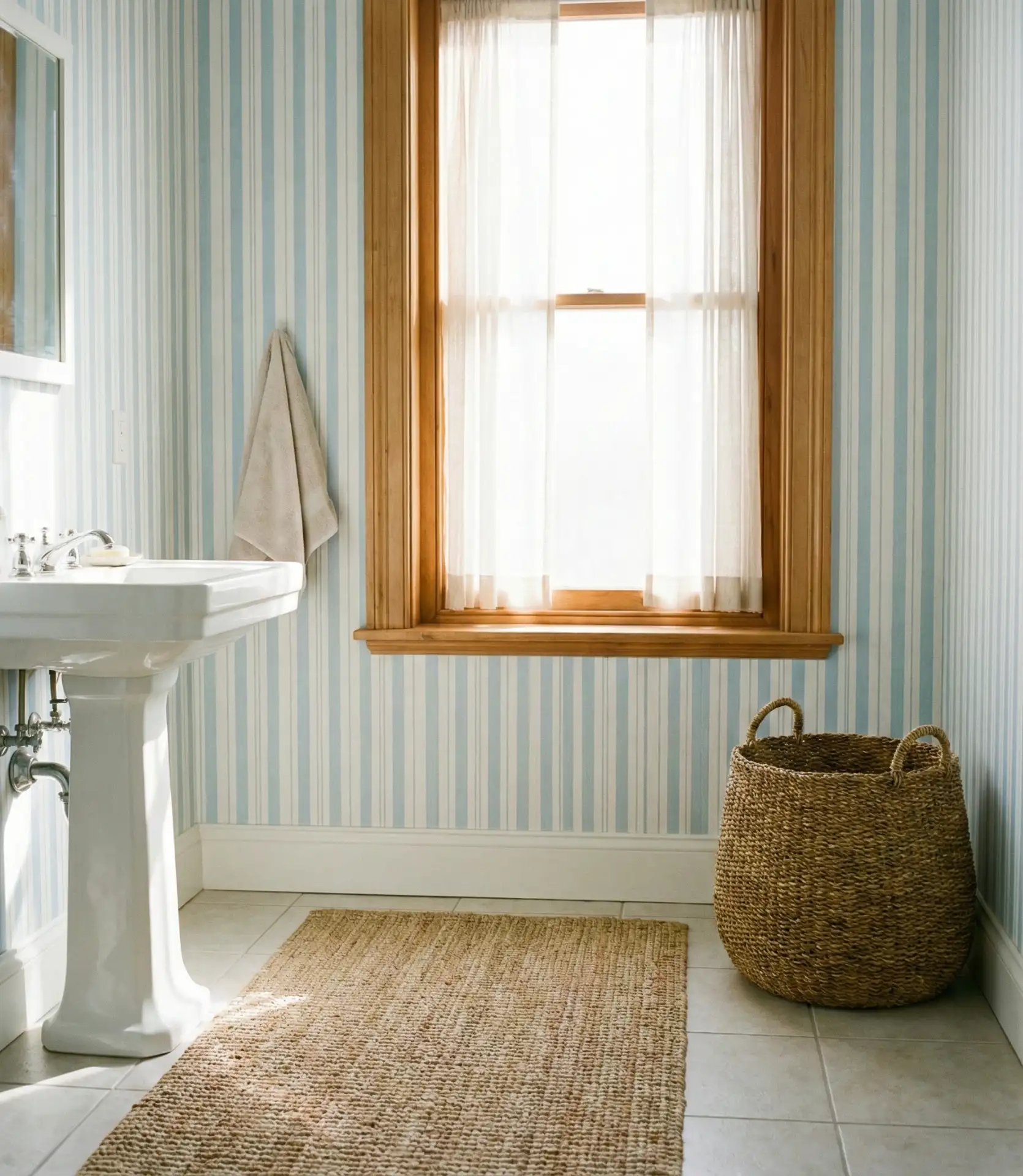
This style resonates deeply with homeowners in New England, the Mid-Atlantic, and coastal California, where the aesthetic feels native to the architecture. But it’s also gained traction in the Midwest and South as a way to bring vacation-home energy into everyday spaces. Washable wallpaper has made this style much more practical than it was even five years ago, with several American brands now offering stripe patterns specifically designed for high-humidity rooms.
6. Retro Aqua Blue Fixtures
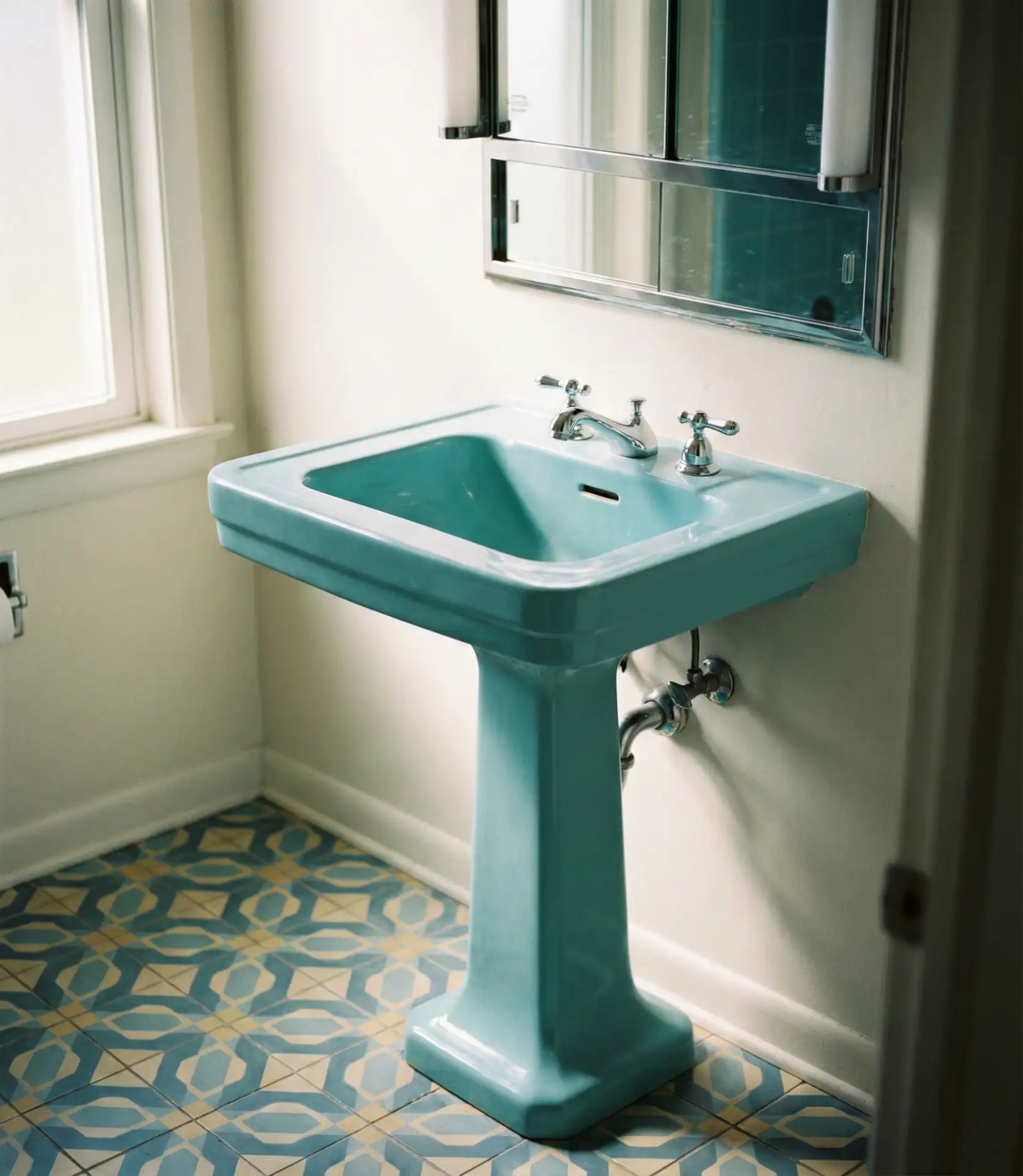
Original retro blue fixtures from the 1950s and ’60s are making a comeback, and savvy homeowners are choosing to restore rather than replace them. That aqua blue toilet, tub, and sink trio might seem dated at first glance, but when styled with contemporary decor and the right paint color, these pieces become the room’s personality. It’s an approach that honors architectural history while reducing renovation waste.
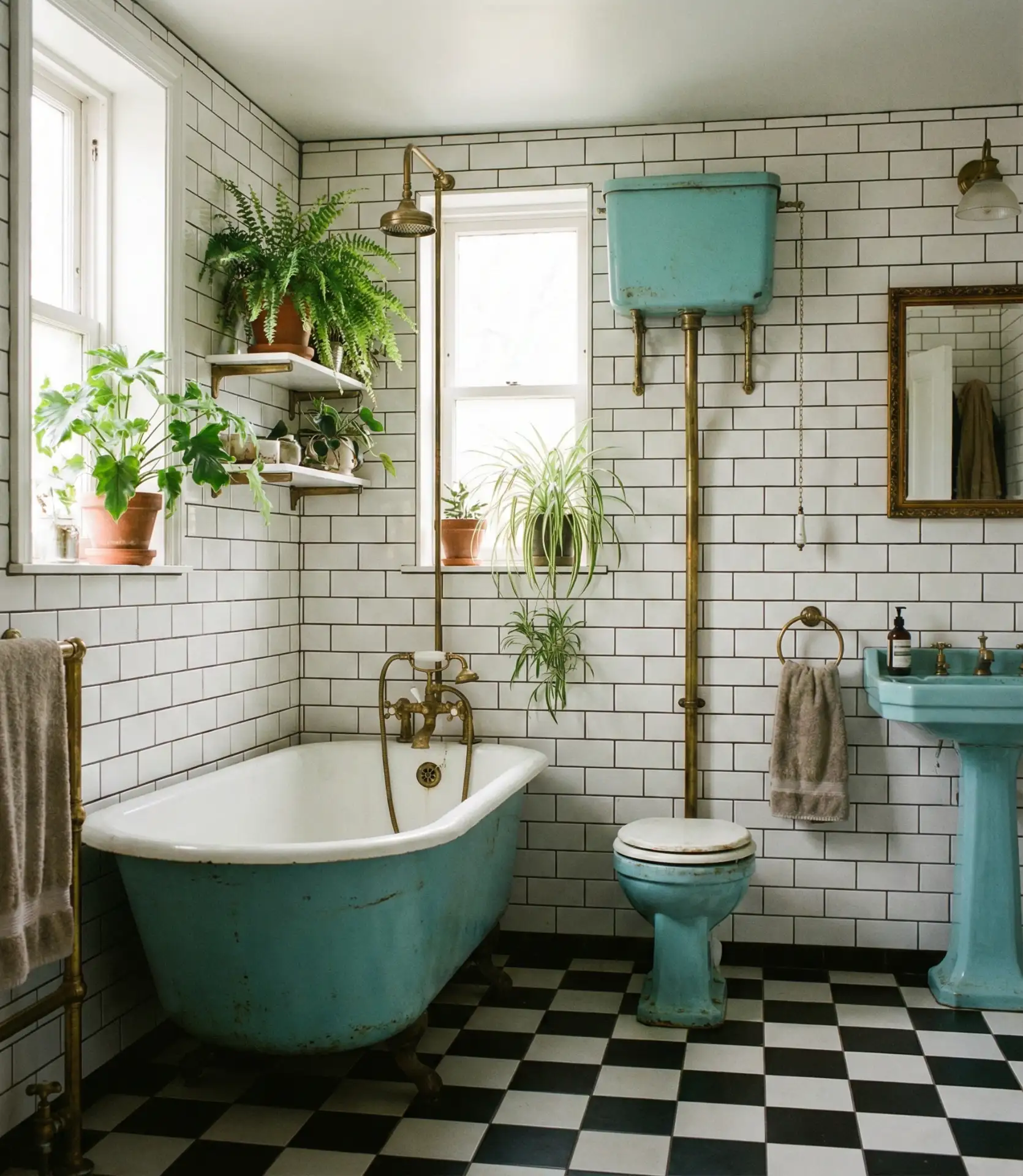
Real homeowner behavior shows that many people who initially plan to gut these vintage bathrooms end up falling in love with them once they start the design process. Architectural salvage yards across the country report increased demand for colored fixtures. The budget angle here is significant—keeping original fixtures and updating everything around them can save $3,000 to $8,000 compared to a full replacement, money that can go toward higher-quality tile or lighting.
7. Dusty Blue Cabinets with Marble
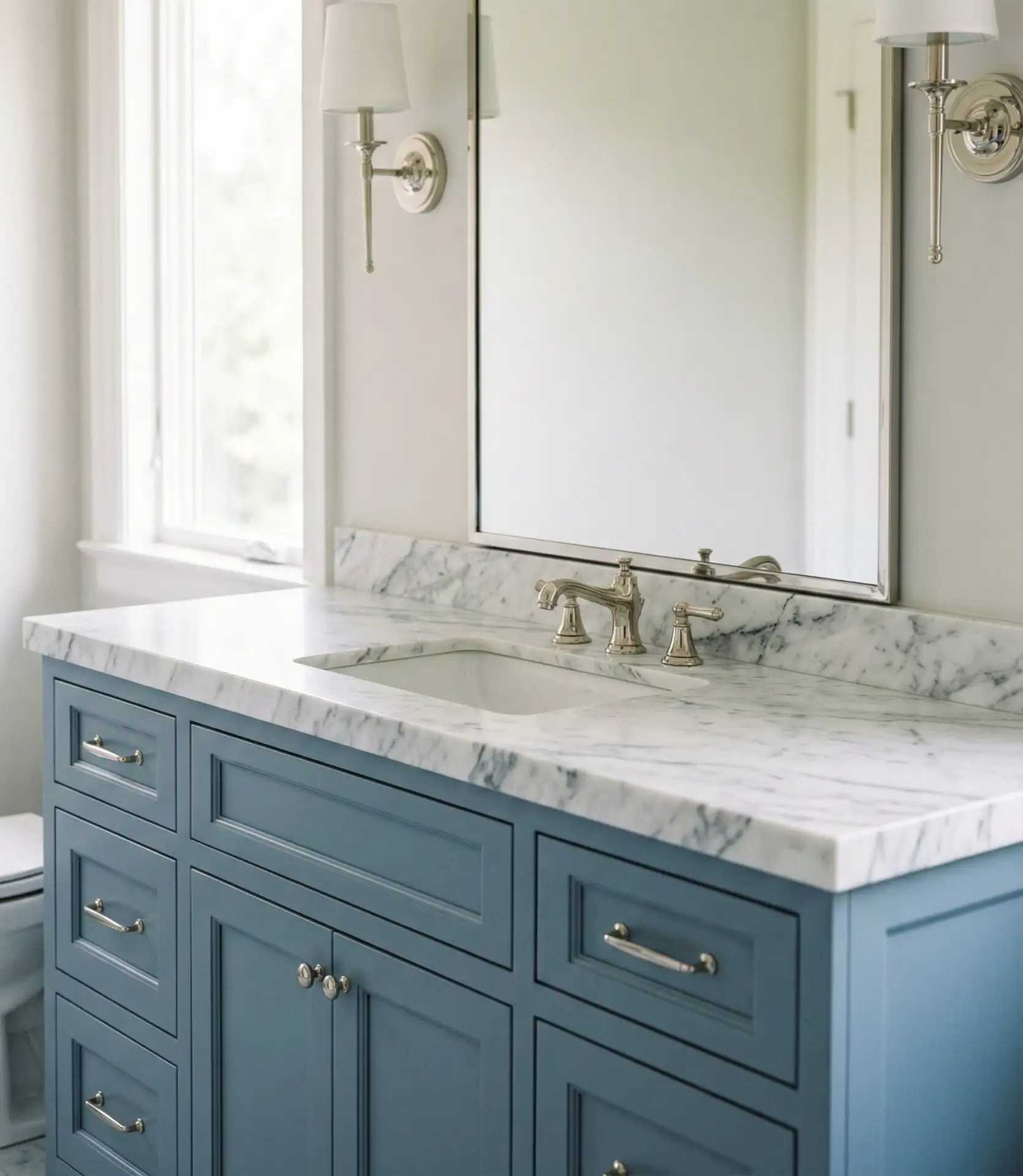
The soft sophistication of dusty blue cabinets paired with white or gray marble creates a bathroom that feels both modern and timeless. This muted blue has enough gray to feel grown-up and elegant without skewing cold. It’s particularly effective in primary bathrooms where you want a calming environment but still need personality. The combination works across traditional, transitional, and contemporary styles.
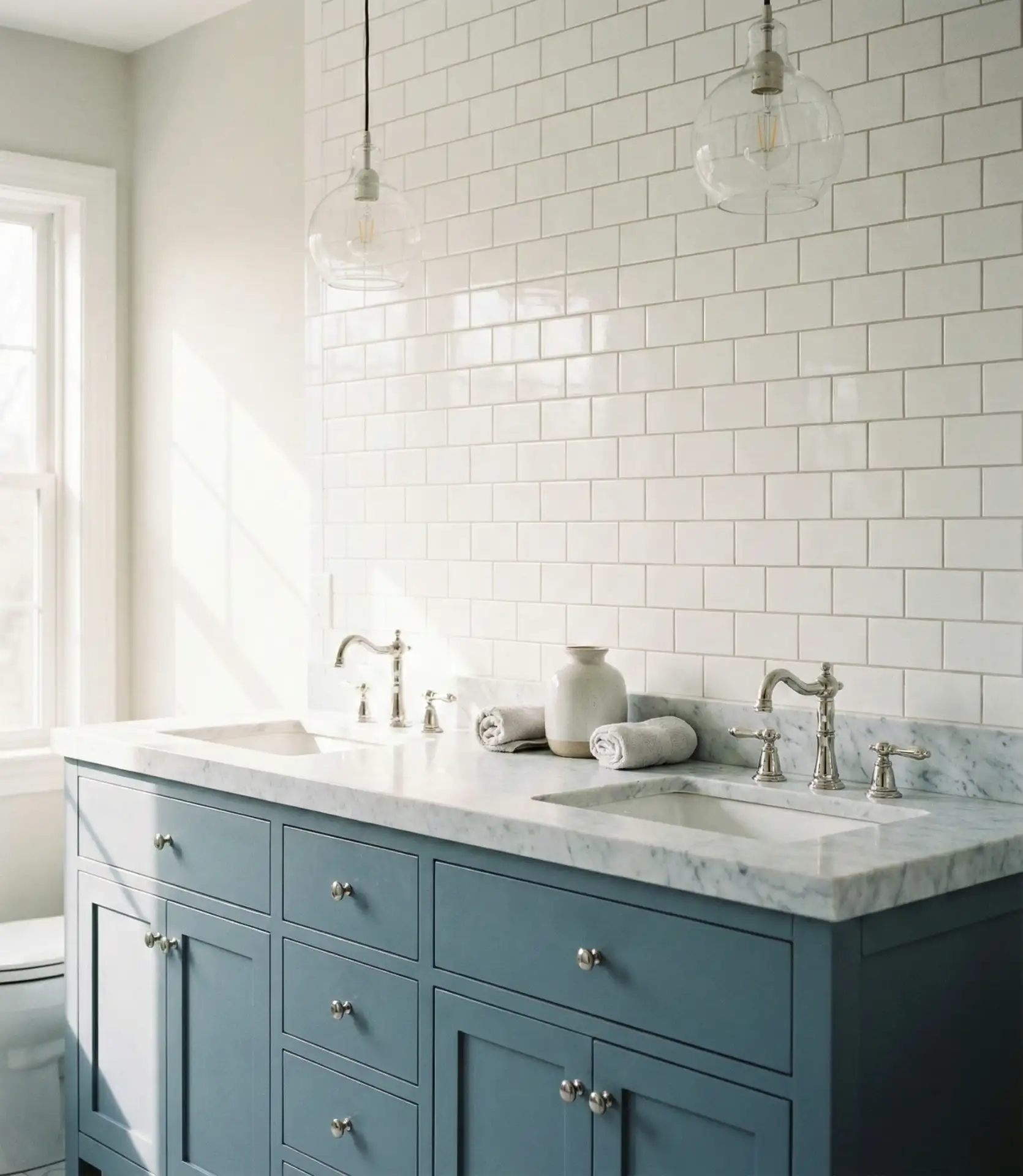
Expert designers consistently point out that dusty blue is one of the most forgiving colors in photographs, which matters enormously if you’re planning to sell your home. It appeals to a broad demographic and doesn’t alienate potential buyers the way brighter or more saturated colors might. This makes it a smart choice for renovations where resale value is a consideration, though it’s beautiful enough that you’ll enjoy living with it for years.
8. Pale Blue Beadboard Wainscoting
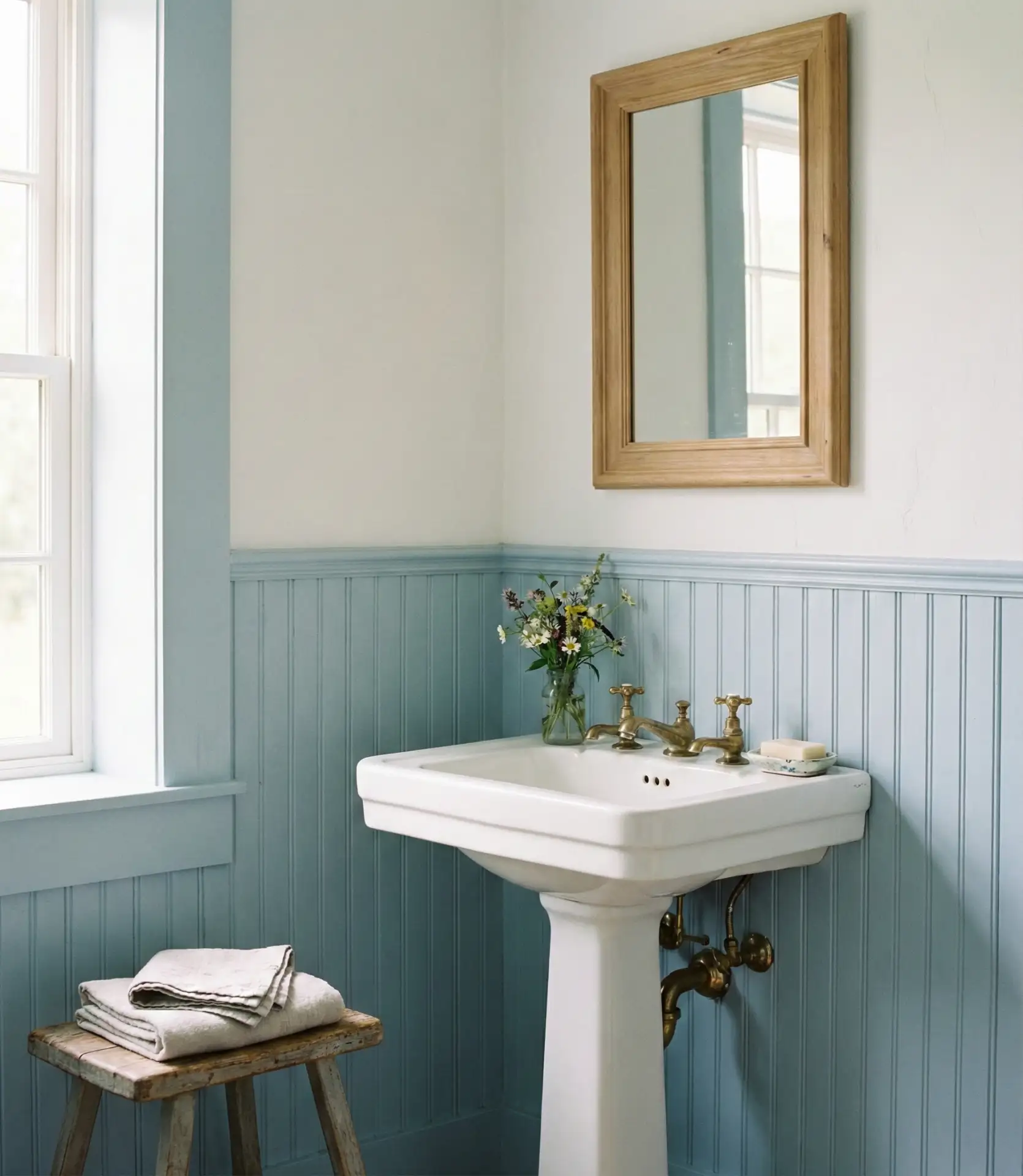
Beadboard wainscoting in pale blue adds cottage charm and practical protection to bathroom walls. This classic American detail works beautifully in half baths, kids’ bathrooms, and vintage-style spaces. The vertical lines create visual height, and the painted wood surface is more durable than drywall in high-moisture areas. It’s a detail that reads as intentional and custom rather than builder-grade.
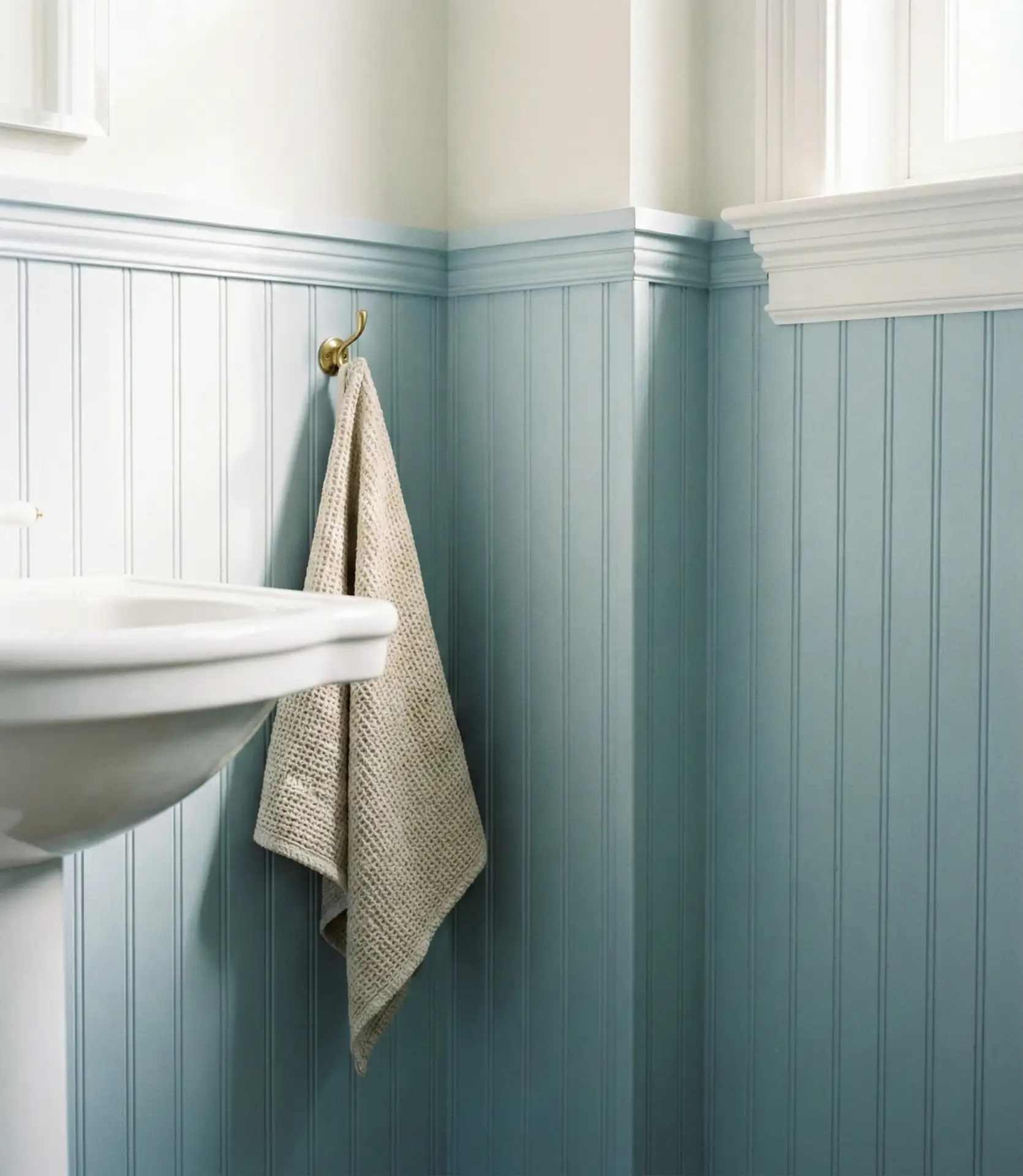
This treatment is especially popular in the Northeast and Pacific Northwest, where cottage and craftsman architecture dominate. The typical installation height is 32 to 42 inches, which provides splash protection behind sinks and toilets while keeping the upper walls bright. Many homeowners install the treatment themselves using prefabricated beadboard panels from home improvement stores, making it an accessible weekend project that significantly impacts the room’s character.
9. Slate Blue Accent Tile in Shower
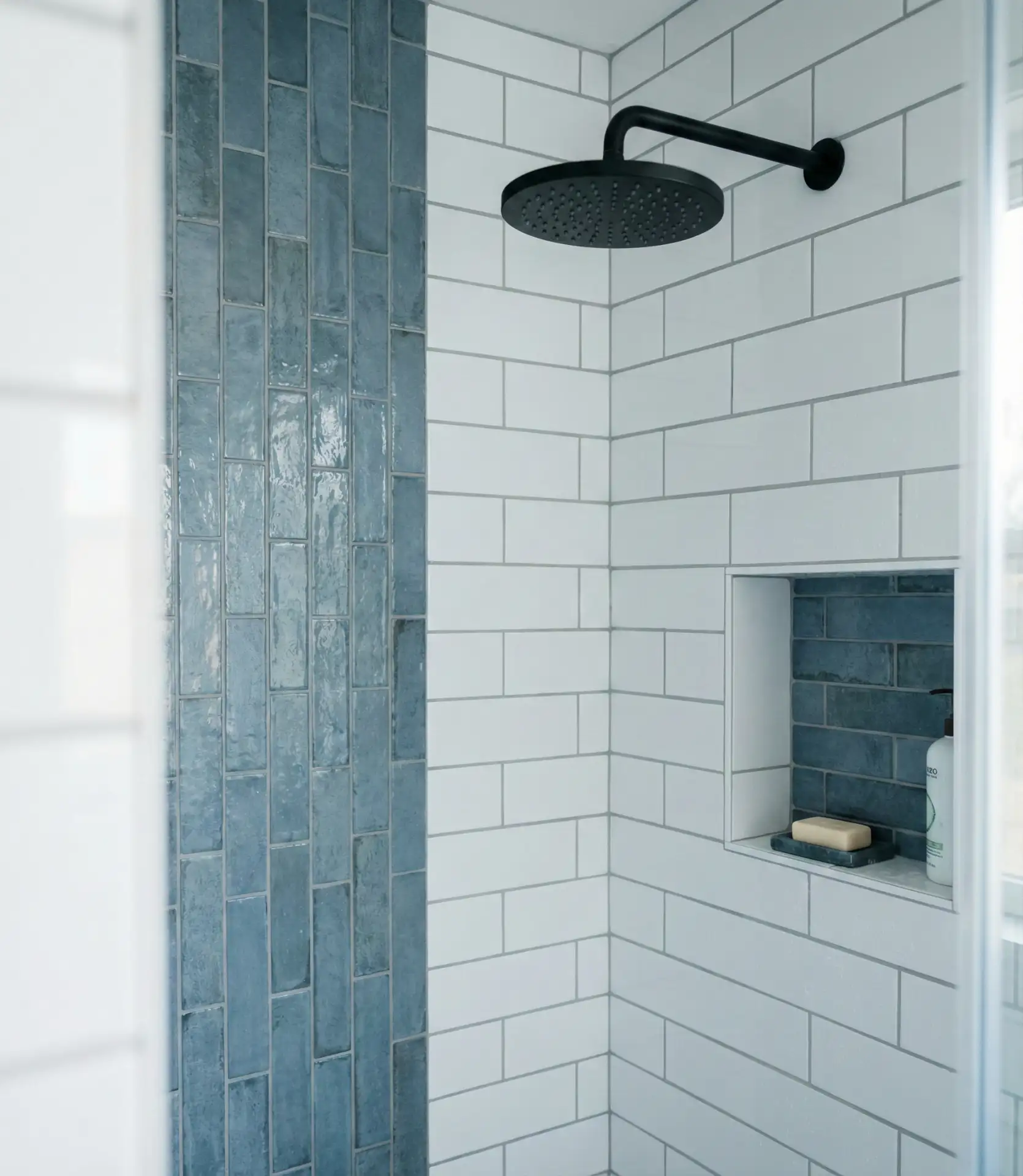
A slate blue accent tile brings sophisticated color to the shower without overwhelming the space. This approach typically involves using the colored tile as a vertical stripe, niche backing, or floor accent while keeping the majority of surfaces white or neutral. The blue-gray tone has an organic, stone-like quality that pairs beautifully with natural materials and matte black hardware. It’s grounding without being heavy.
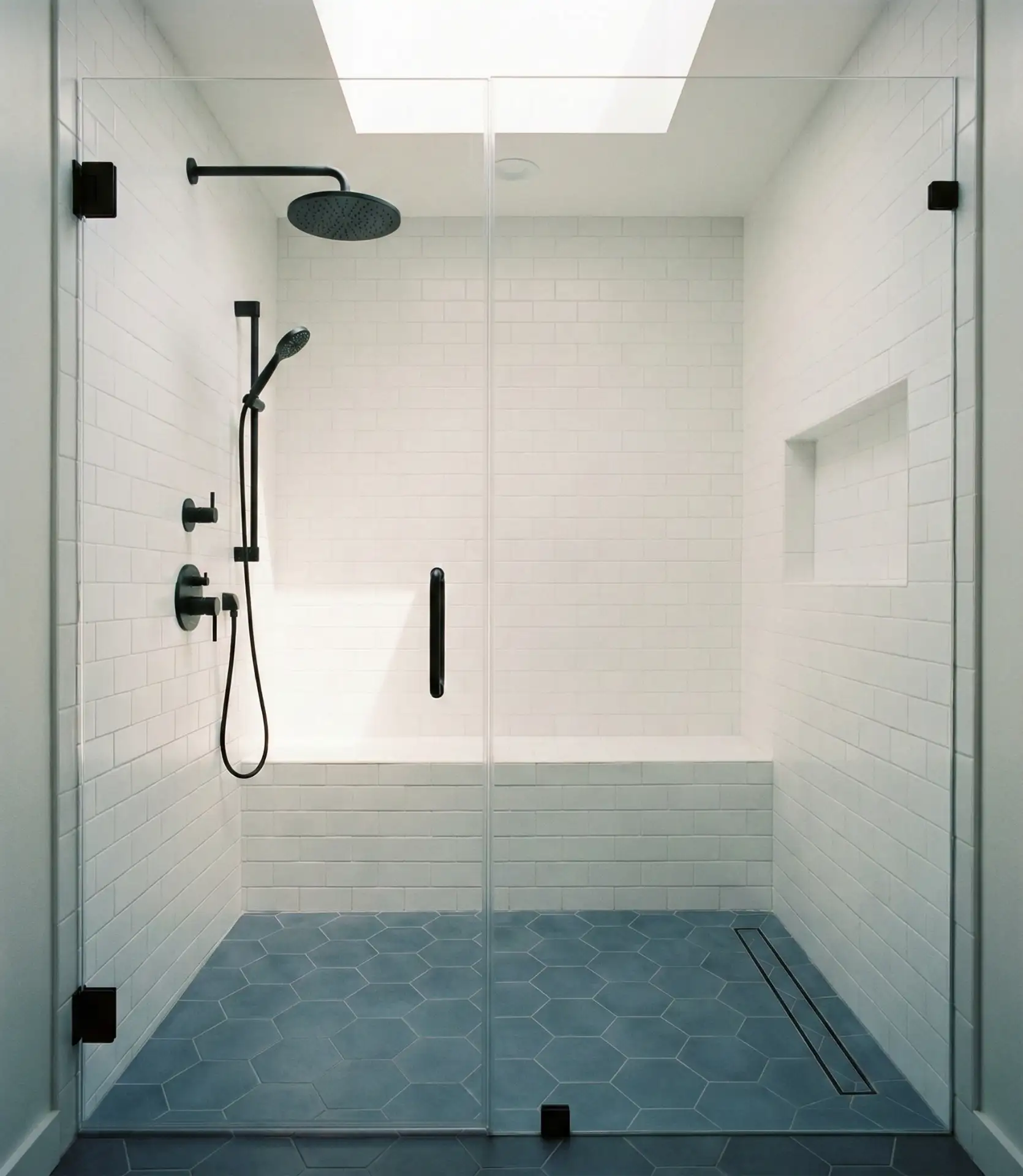
Where it works best: In bathrooms, aiming for a spa-like, gender-neutral feel. The slate blue reads as sophisticated and mature, appealing to empty-nesters and young professionals alike. It’s particularly effective in homes with contemporary or transitional design, and it provides just enough color interest to prevent an all-white shower from feeling sterile. The color hides water spots and soap residue better than pure white, a practical consideration that real homeowners appreciate.
10. Blue and Pink Combination
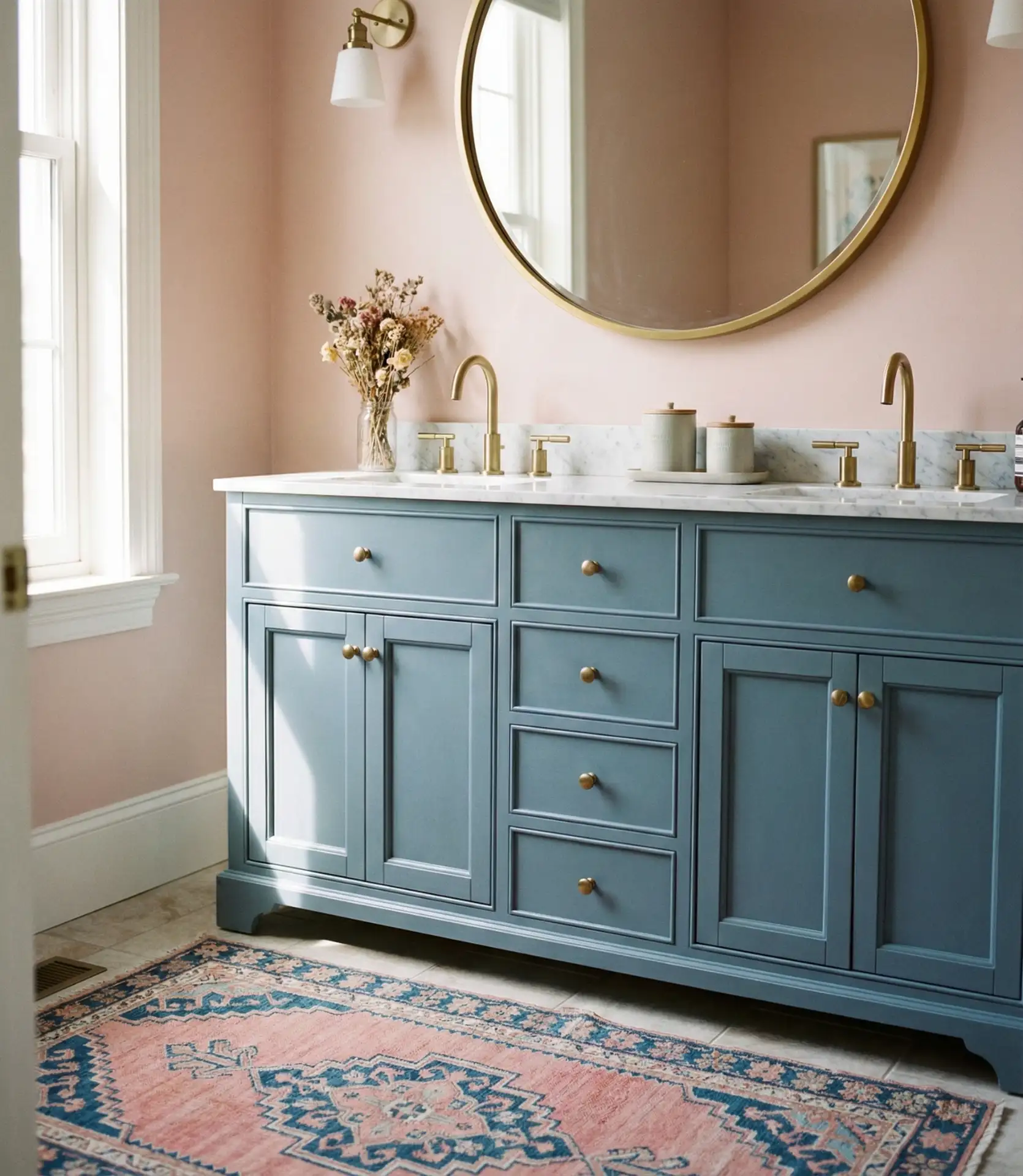
The unexpected pairing of blue and pink creates a bathroom that feels fresh and modern. This combination works when you choose muted, sophisticated versions of both colors—think dusty rose with slate blue, or blush with navy. The contrast is feminine without being juvenile, and it offers opportunities for layering patterns and textures. It’s become particularly popular in powder rooms and guest baths, where you can take more design risks.
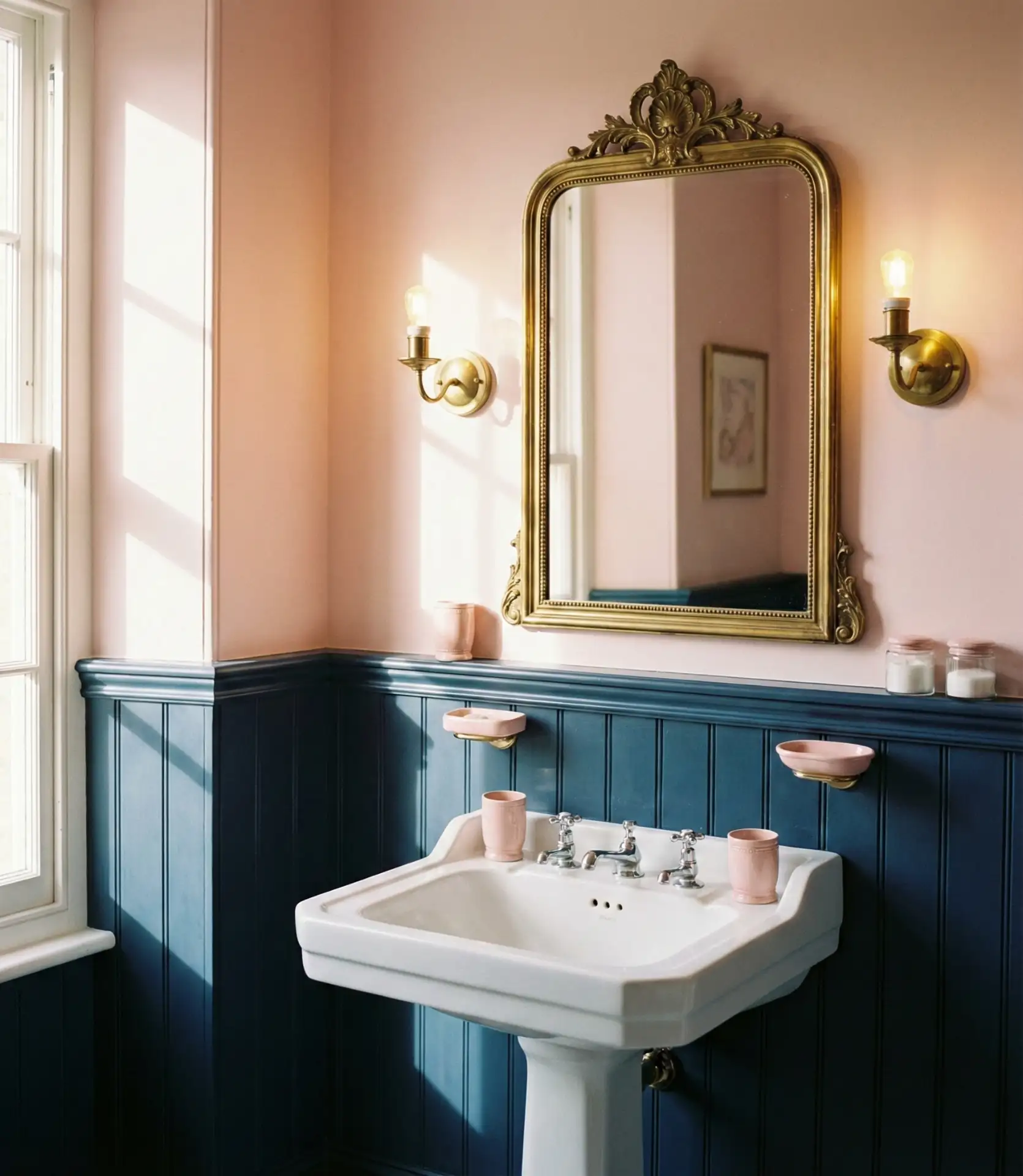
A designer friend recently completed a renovation using this palette, and the homeowner initially worried it would feel too bold. Three months later, she reports it’s the room guests always comment on. The key is balancing the proportions—if your blue is deep and saturated, keep the pink soft and peachy. If your pink leans coral, opt for a cooler, grayer blue. Test samples in your actual lighting before committing to full walls.
11. Grey-Blue Concrete-Look Tile
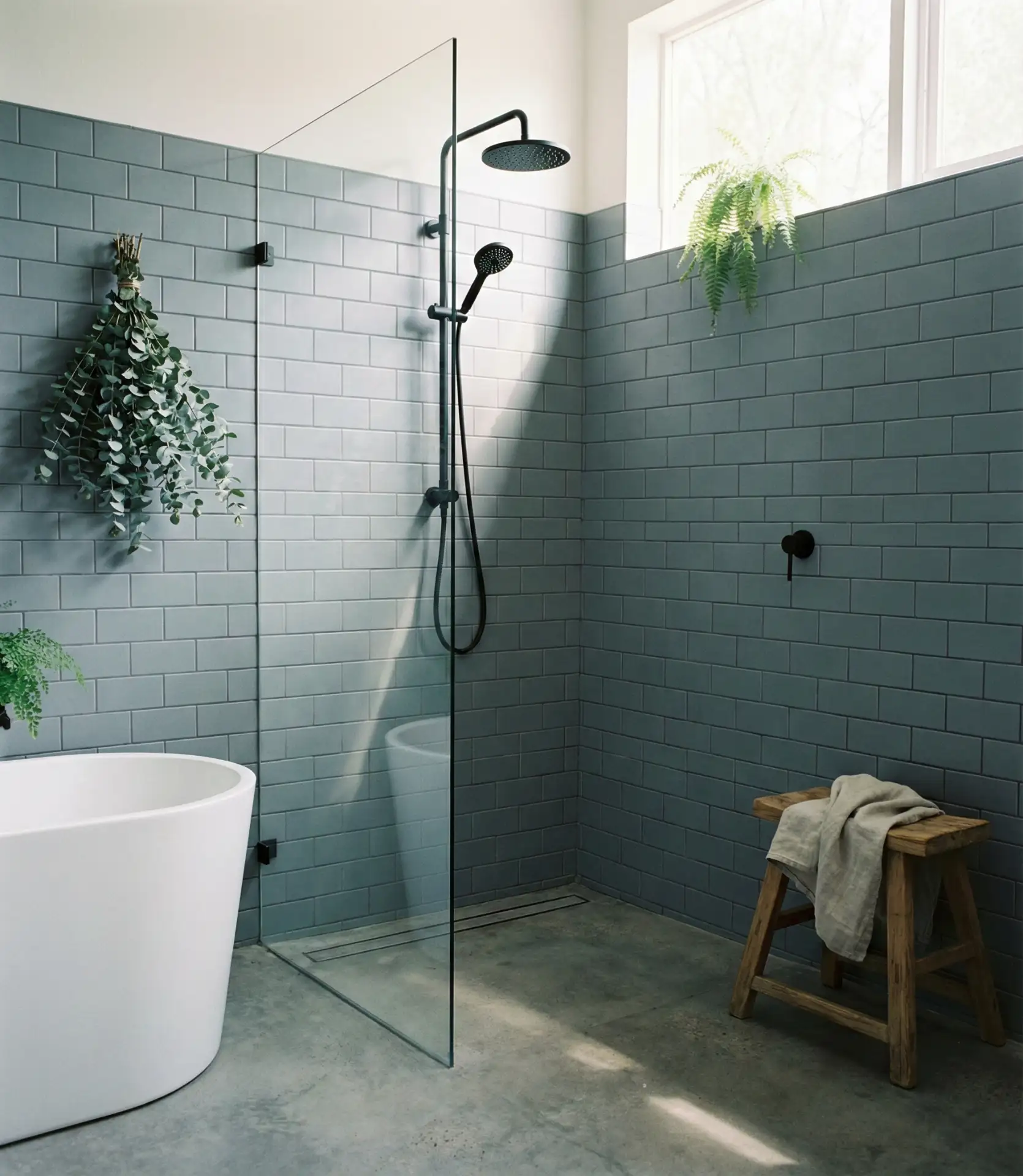
Large-format grey-blue tiles that mimic concrete bring industrial elegance to modern bathrooms. These tiles offer the aesthetic of poured concrete without the maintenance headaches, and the subtle blue undertone keeps the space from feeling cold or institutional. The minimal grout lines create a seamless look that makes small bathrooms feel larger. It’s a choice that appeals to design-forward homeowners seeking something beyond standard subway tile.
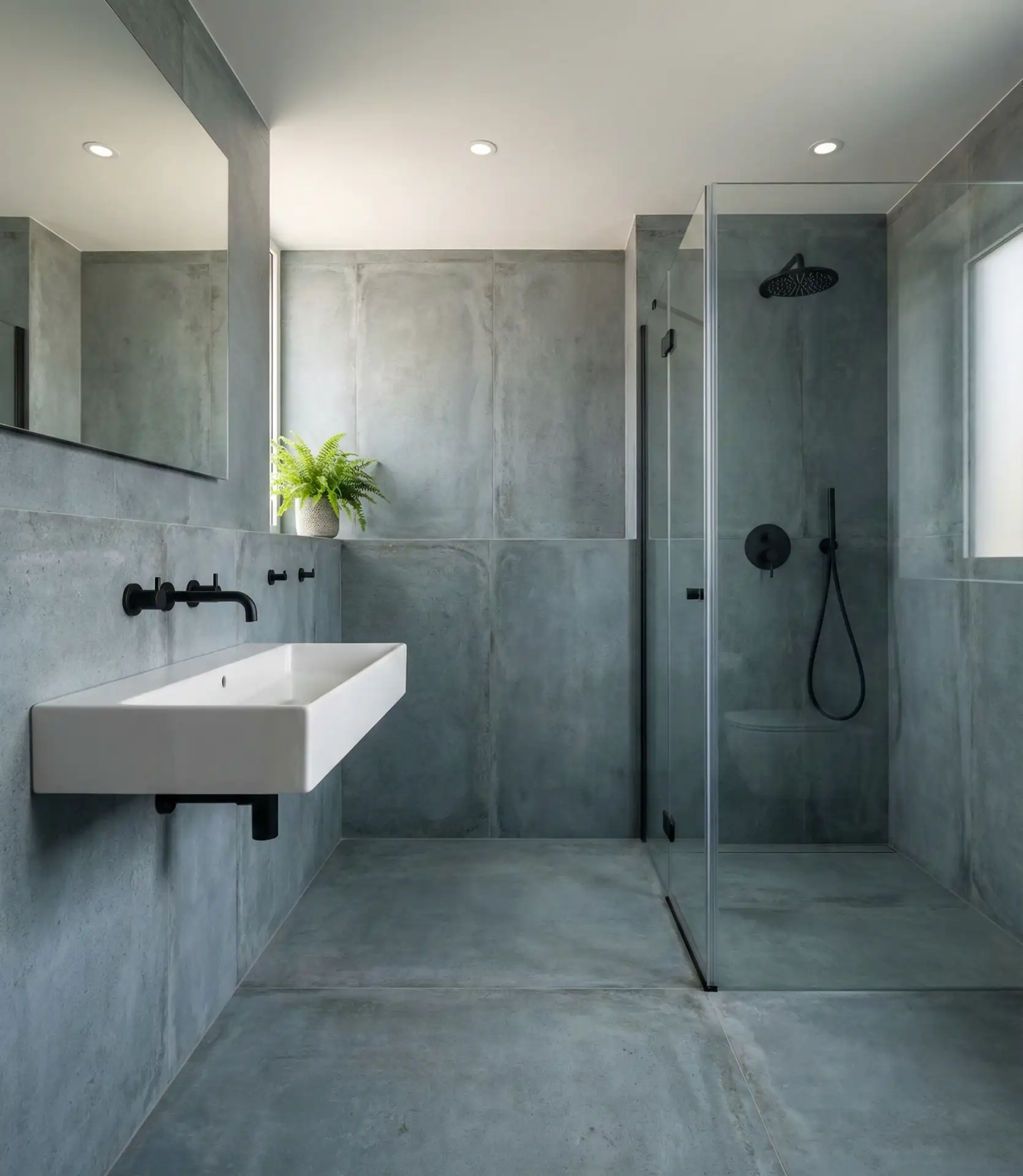
This style has gained significant traction in urban areas and newer construction across the West Coast and Southwest. The tiles typically come in 24×48-inch or larger formats, which means fewer grout lines and faster installation. Many manufacturers now offer these with slight texture variation between pieces, creating a more authentic concrete appearance. Expect to budget $8 to $15 per square foot for good-quality porcelain versions that will last decades.
12. White Bathroom with Blue Accessories
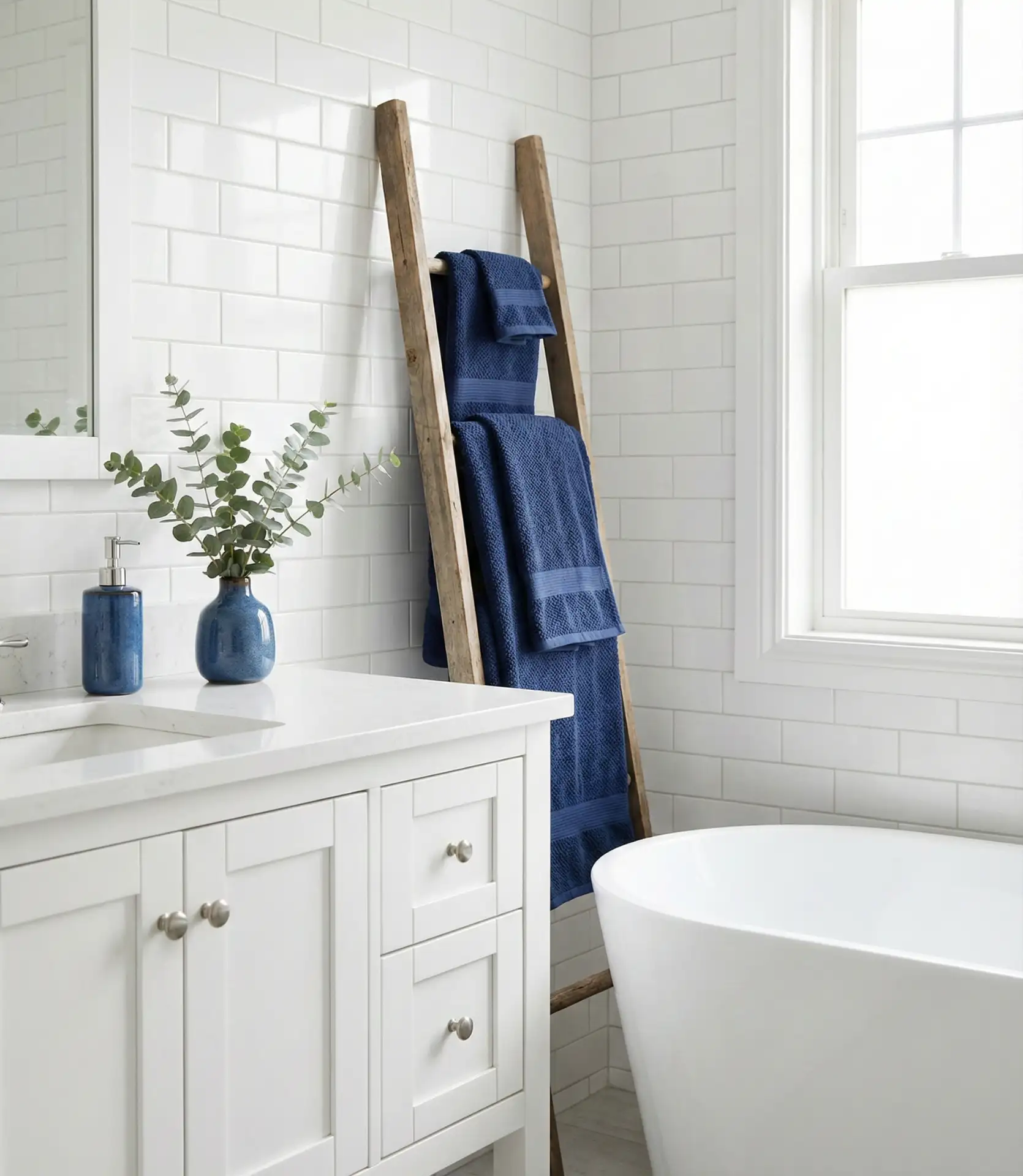
An all-white bathroom with carefully chosen blue accents offers maximum flexibility and timeless appeal. This approach lets you change the room’s mood seasonally by swapping towels, rugs, and decor items without major renovation. The blue might appear in bath mats, hand towels, soap dispensers, or artwork. It’s the safest choice for those who love blue but worry about commitment, and it maintains broad appeal for future buyers.
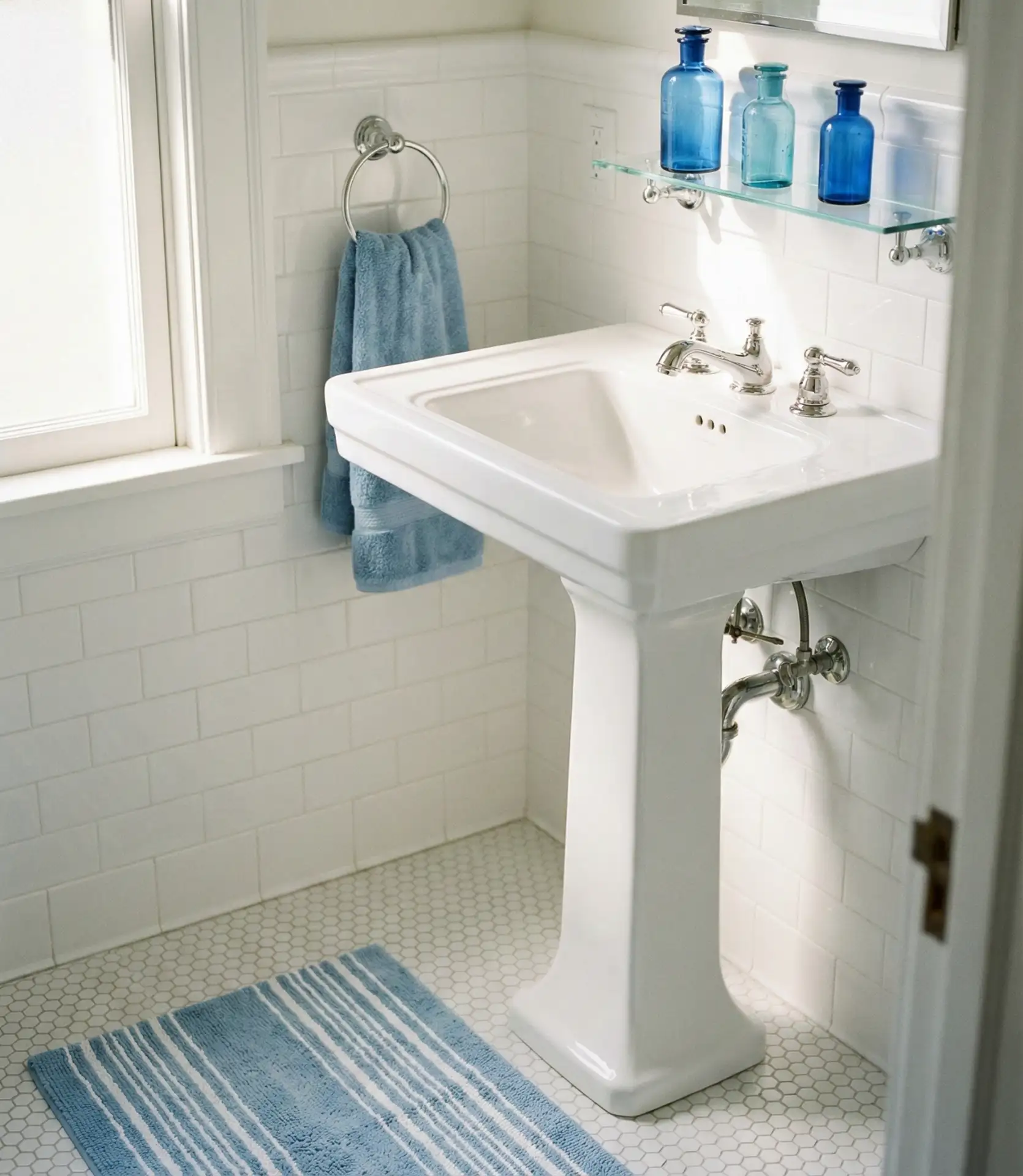
Common mistakes include using too many different shades of blue at once, which creates visual chaos rather than cohesion. Stick to one or two specific blues and repeat them throughout the space. Also, avoid matching everything perfectly—the towels don’t need to match the soap dispenser exactly. A slight variation in tone creates a collected, layered look that feels more sophisticated than overly coordinated sets.
13. Navy and Brass Powder Room
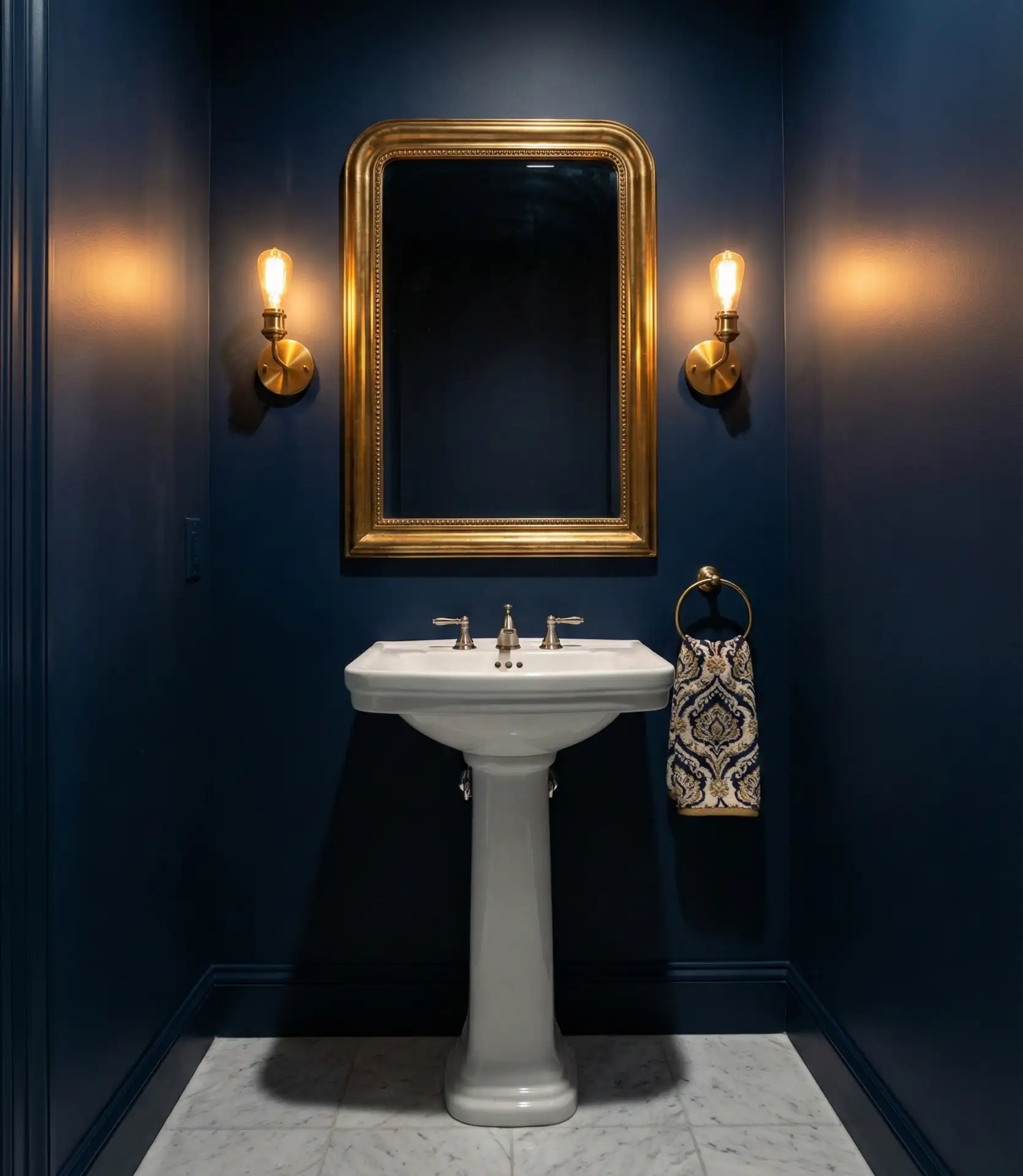
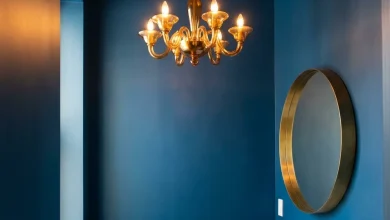
A powder room dressed in navy with brass accents delivers maximum drama in a small footprint. Since powder rooms don’t require the same calming atmosphere as primary bathrooms, they’re perfect candidates for bold color. The brass fixtures and mirror frame warm up the deep blue, creating a jewel-box effect that guests remember. This combination photographs beautifully and has become a favorite for design-savvy homeowners.
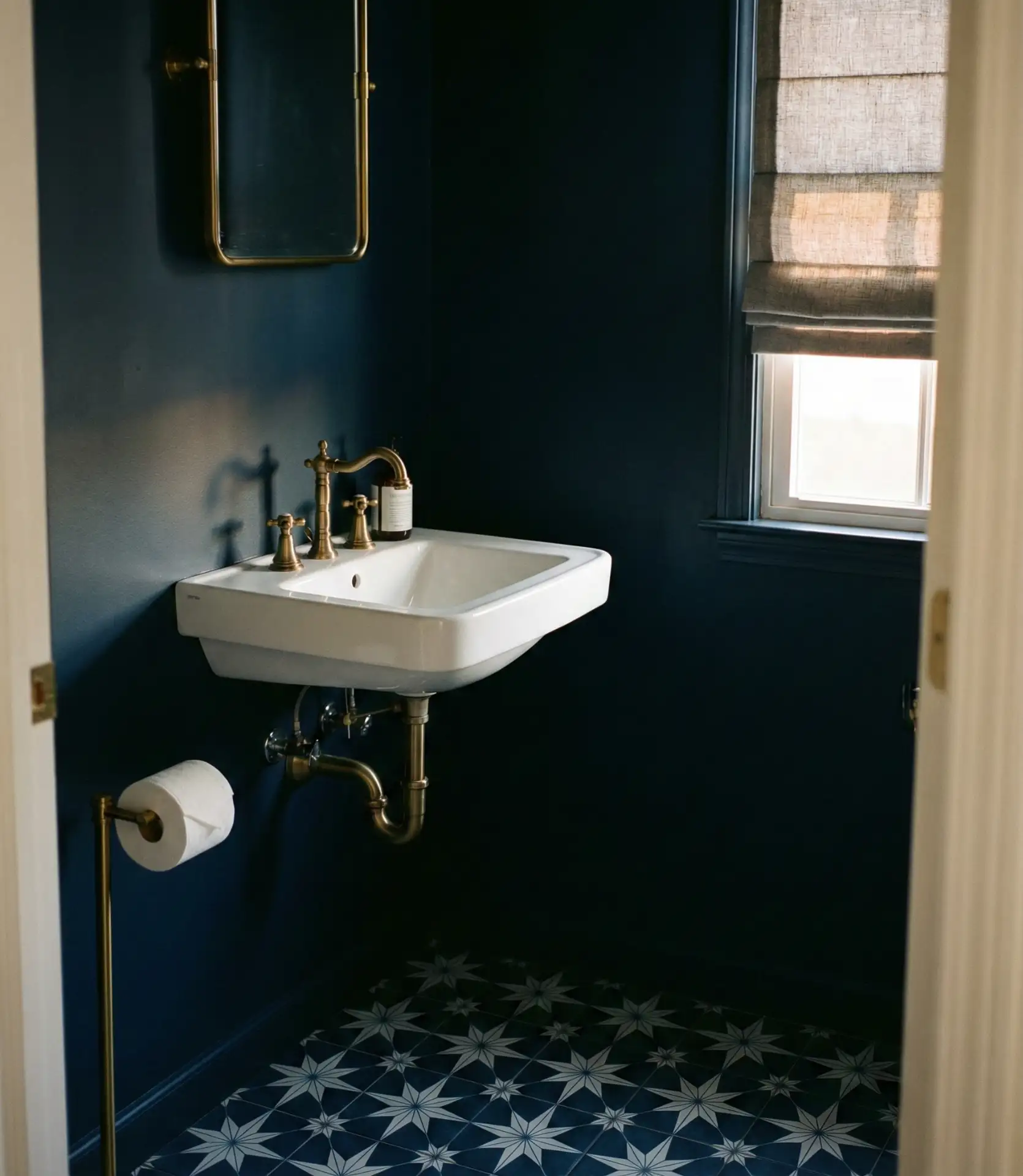
Real homeowner behavior reveals that powder rooms are where people feel most comfortable taking design risks. There’s less time spent in these spaces daily, so even bold choices remain fresh. The navy-and-brass combination has proved particularly popular in Southern and Mid-Atlantic states, where traditional architecture calls for rooms with presence. One local designer noted that this combination adds perceived value disproportionate to its actual cost—buyers interpret it as high-end even when executed on a moderate budget.
14. Light Blue Ceiling Treatment
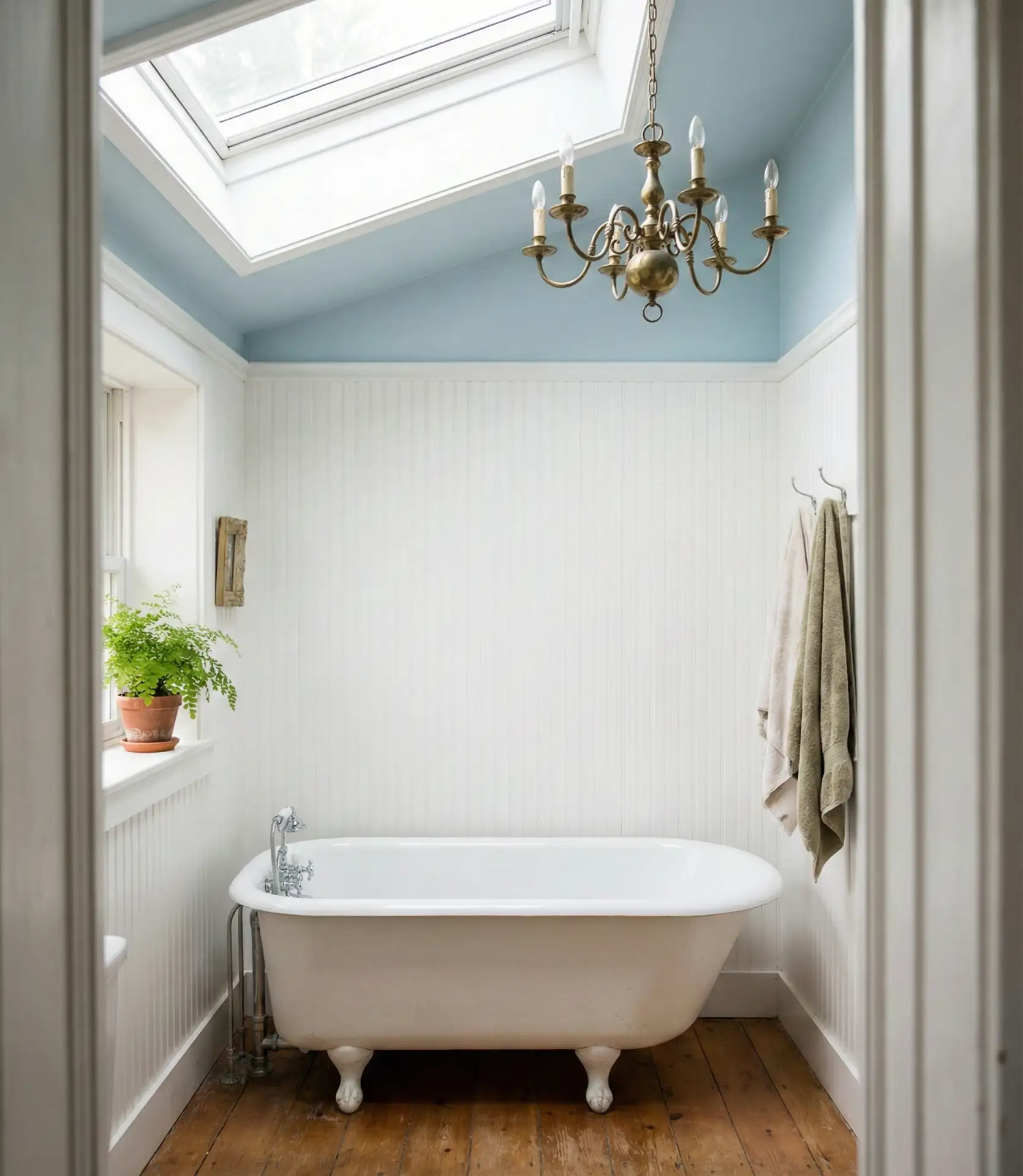
Painting the ceiling light blue creates an unexpected sky-like effect that opens up the room. This technique works particularly well in bathrooms with white or neutral walls, where the colored ceiling becomes a soft, enveloping canopy. The pale blue reflects light beautifully and adds dimension to rooms that might otherwise feel boxy. It’s a subtle way to incorporate color that feels organic rather than forced.
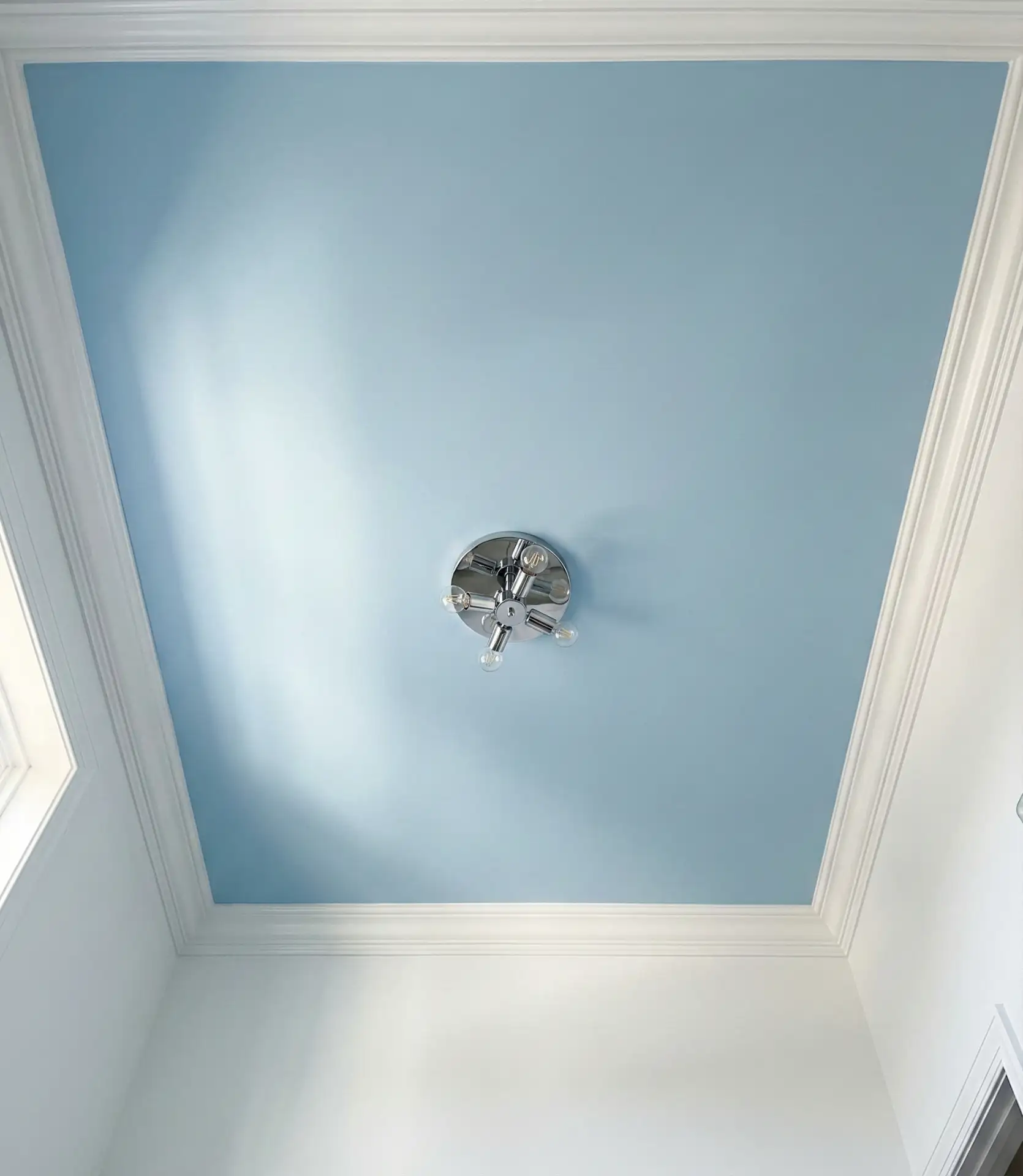
Southern homes traditionally used haint blue ceilings, a design choice deeply rooted in American porch architecture. Bringing that concept indoors creates a connection between interior and exterior spaces. It works beautifully in bathrooms with skylights or large windows, where the blue ceiling seems to extend the sky. Many homeowners report that this simple change made their bathroom feel more spacious and serene without any structural modifications.
15. Teal and Brown Organic Mix
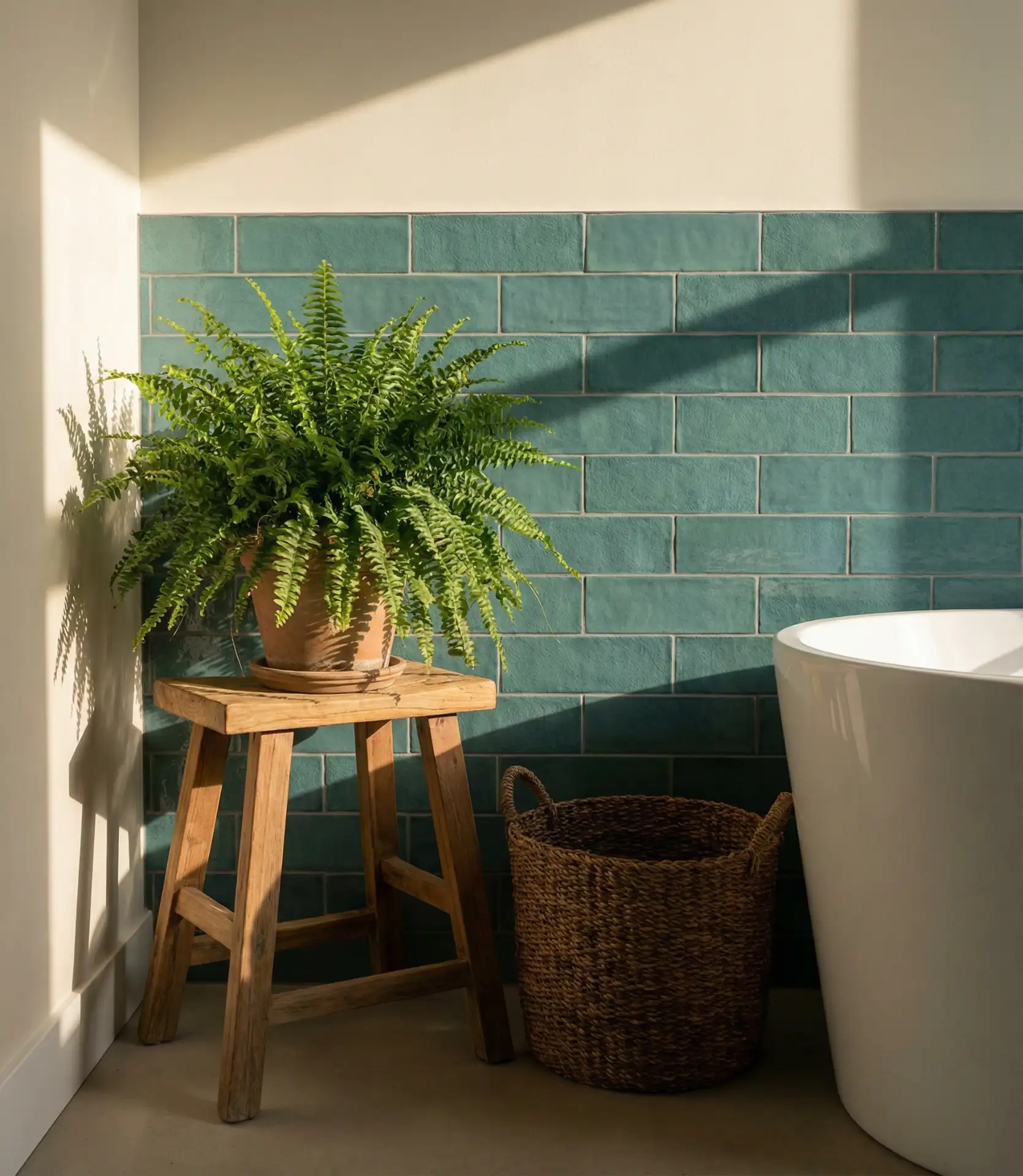
Combining teal blue with warm brown wood tones creates an earthy, spa-like atmosphere that feels both grounded and refreshing. This palette draws from nature—think ocean meeting driftwood—and brings that organic sensibility indoors. The green-leaning blue works beautifully with natural materials like teak, walnut, or oak, whether in vanities, shelving, or mirror frames. It’s a combination that appeals to those seeking wellness-focused design.
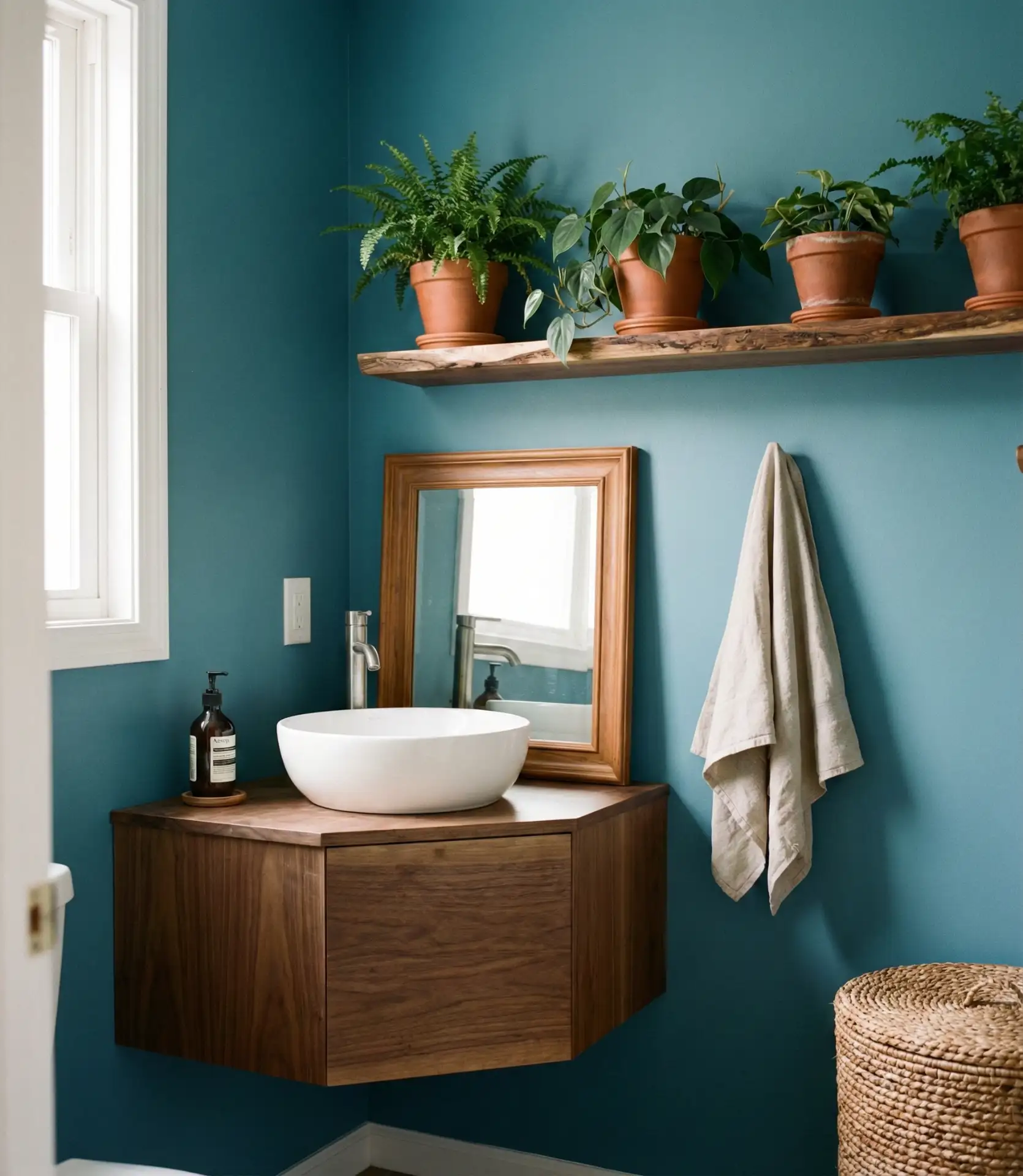
A practical insight: this color combination is particularly forgiving when it comes to water spots and daily wear. The teal hides mineral deposits better than pure white or light pastels, while the wood tones naturally camouflage the normal patina that develops in high-use bathrooms. This makes it an excellent choice for busy family bathrooms where maintenance time is limited, but you still want a space that feels considered and beautiful.
16. Blue and Green Botanical Theme
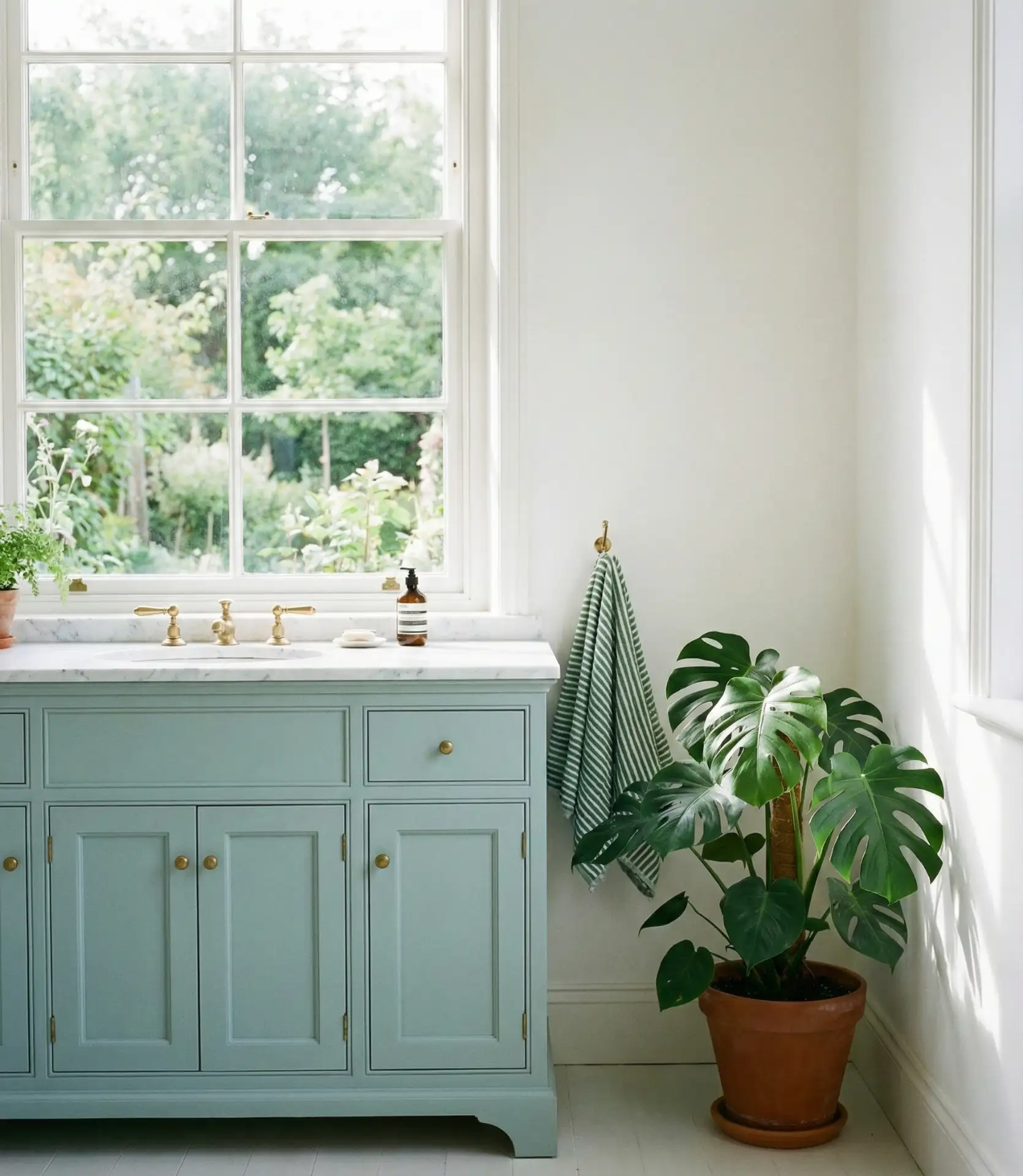
Pairing blue with green creates a nature-inspired bathroom that feels fresh and alive. This combination works best when the blue leans slightly green (like aqua or turquoise) and you layer in actual plants, botanical prints, or leaf-patterned textiles. The effect is tropical without being themed, bringing vacation-home energy into everyday spaces. It’s particularly effective in bathrooms with ample natural light where plants can actually thrive.
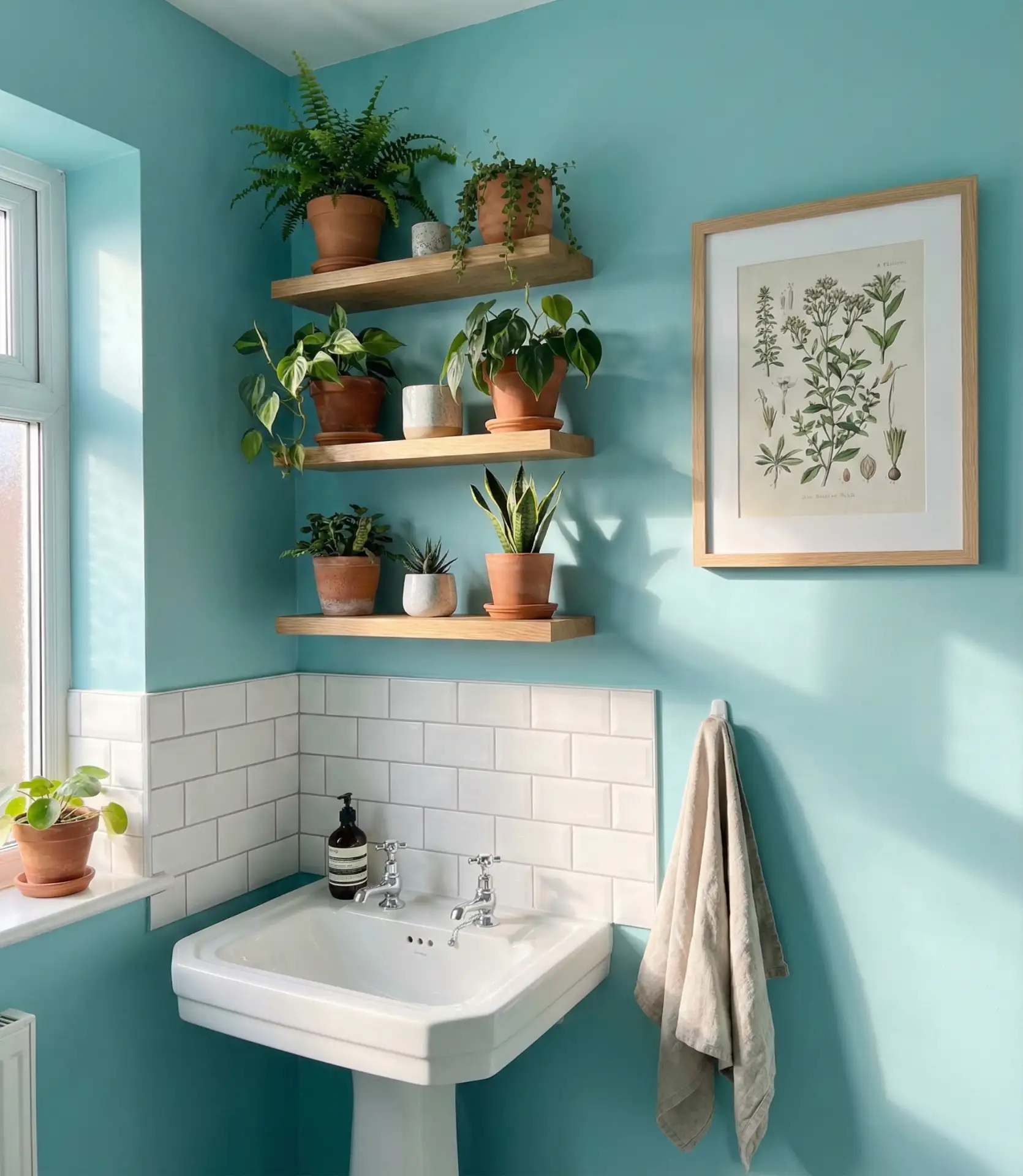
Where it works best: In bathrooms with windows or skylights, particularly in warmer climates where the indoor-outdoor connection feels natural. Florida, California, and Hawaii homeowners have embraced this aesthetic for years, but it’s increasingly popular in northern states as people seek to bring more biophilic design into their homes. Studies have shown that the combination of blue and green can reduce stress and promote relaxation, making it an ideal choice for self-care spaces.
17. Cobalt Blue Statement Bathtub
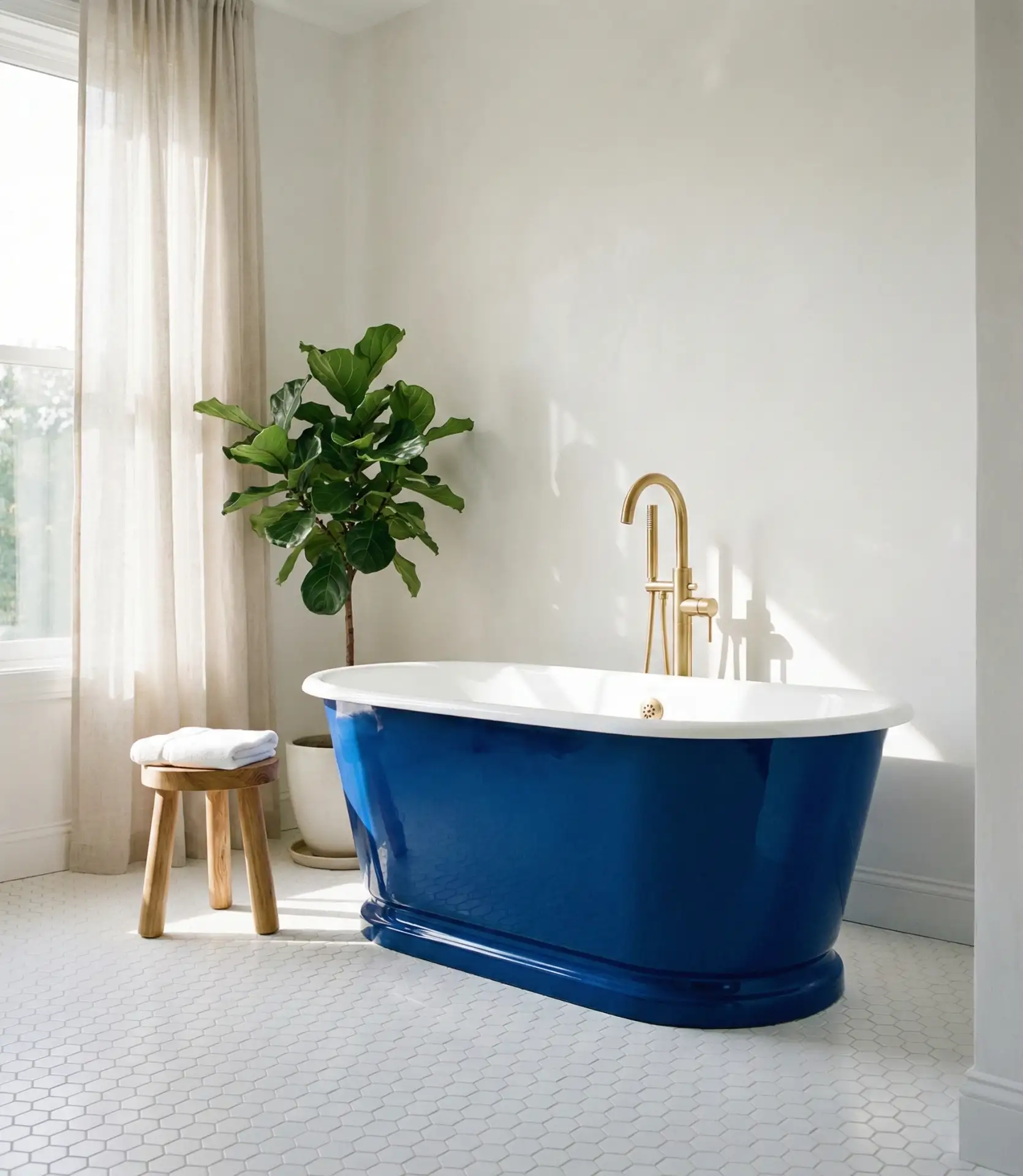
A freestanding bathtub in rich cobalt blue becomes the focal point of any bathroom. While most of the room remains neutral, this single bold element transforms the space from ordinary to extraordinary. Rooms with high ceilings and abundant natural light best showcase the saturated color, allowing the tub to stand out as a sculptural object. It’s a choice that signals confidence and design commitment.
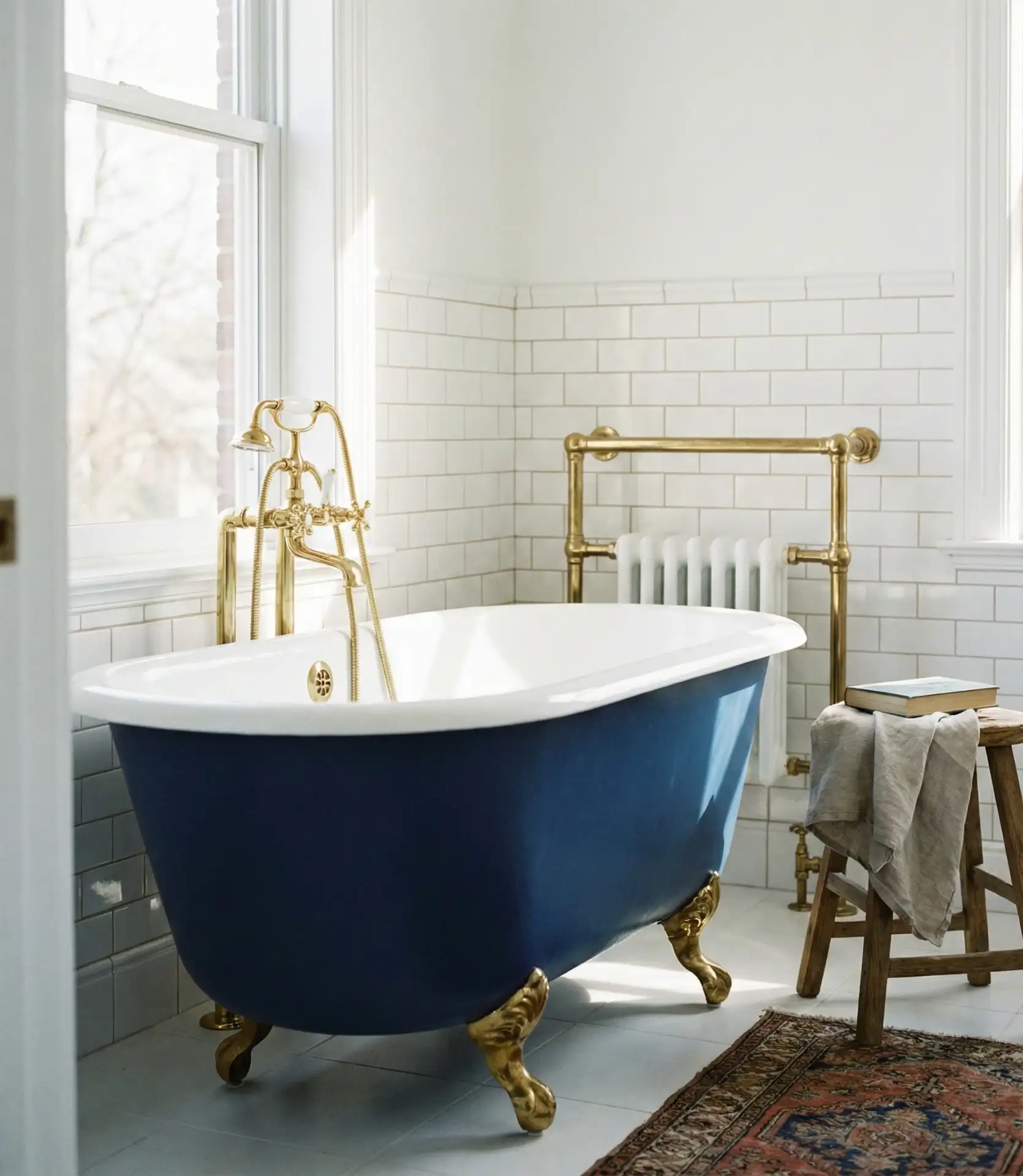
The budget reality: custom-colored bathtubs from European manufacturers can run $3,000 to $8,000 or more. However, several American companies now offer colored tubs at more accessible price points, and there’s a growing market for refinishing existing tubs in custom colors. The investment makes sense for homeowners planning to stay long-term who want a truly unique bathroom, but it’s worth considering resale implications in more conservative markets.
18. Blue Penny Tile Floor
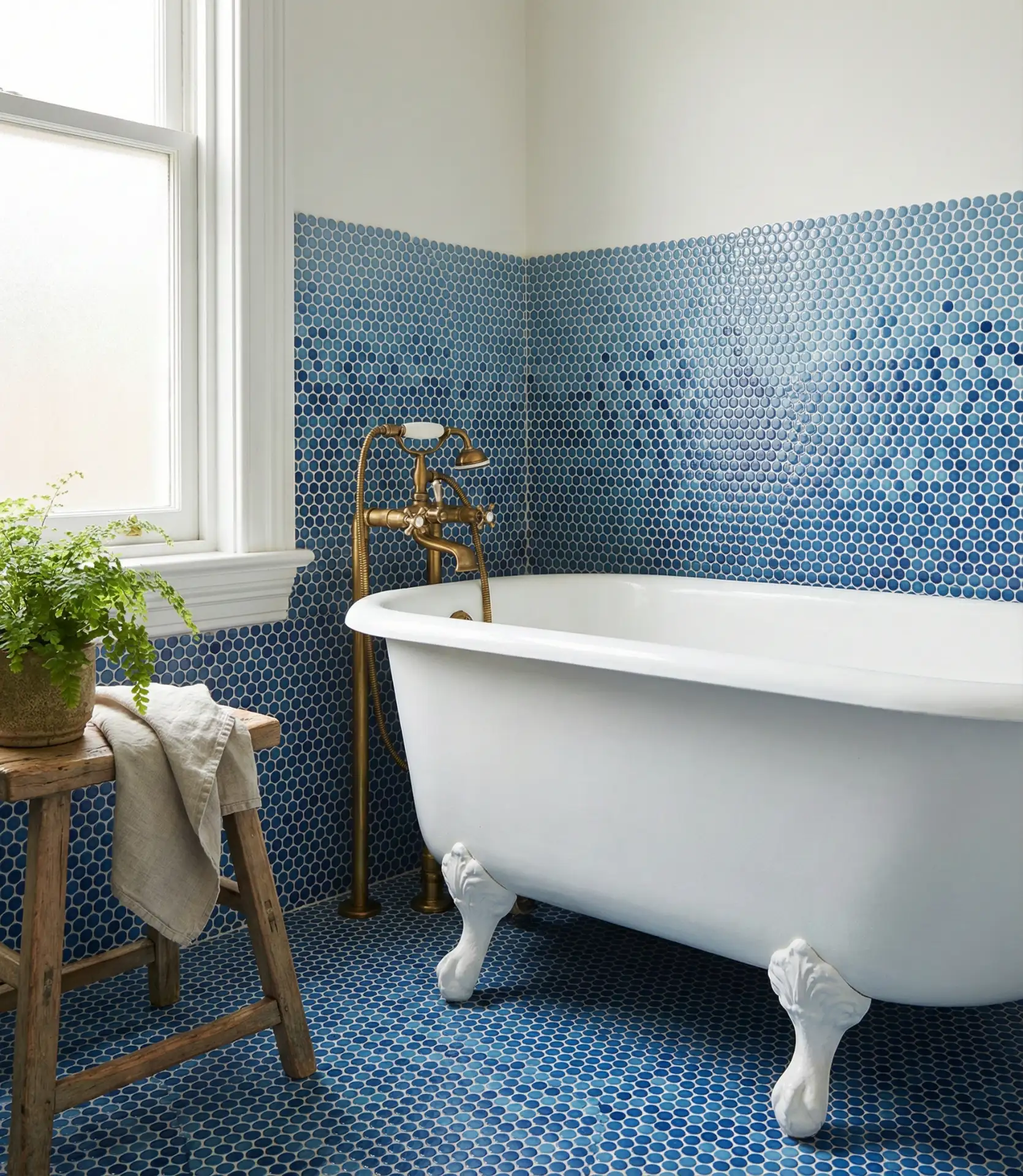
Penny tile in shades of blue creates vintage charm with excellent slip resistance. These small circular tiles, typically an inch in diameter, deliver visual interest underfoot while maintaining a classic American bathroom aesthetic. The light- to medium-blue versions evoke 1920s bathrooms without feeling dated, especially when paired with contemporary fixtures and minimal walls. The texture and pattern add dimension that large-format tiles can’t achieve.
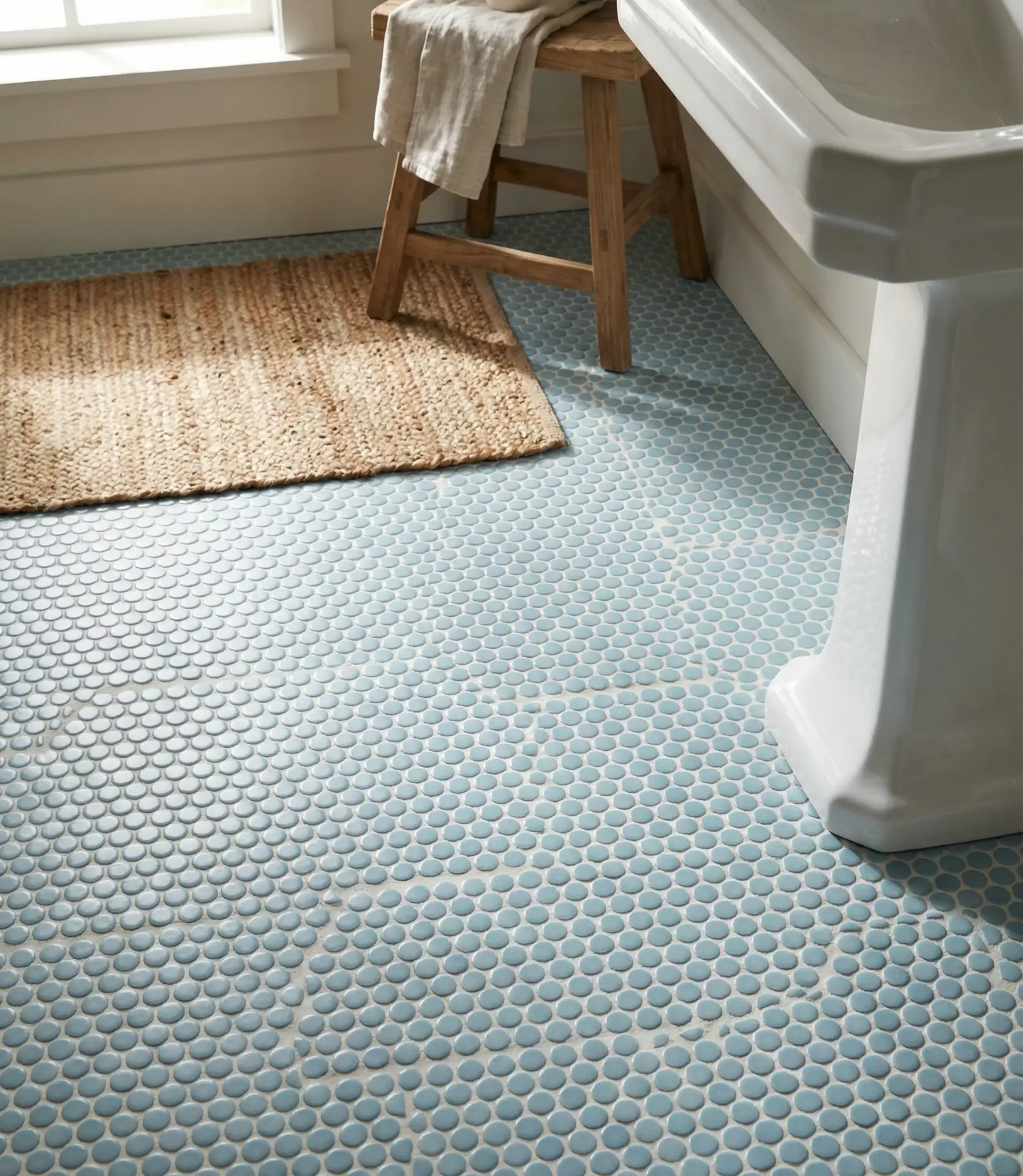
Expert insight reveals that penny tile installation is more labor-intensive than larger formats, which affects the overall project cost. However, the result has remarkable staying power—bathrooms with penny tile floors often remain stylish for decades. Many tile manufacturers now offer penny tile in sheet form, which dramatically speeds installation while maintaining the authentic look. White or light gray grout creates definition between tiles; darker grout can make the pattern too busy.
19. Denim Blue Textured Walls
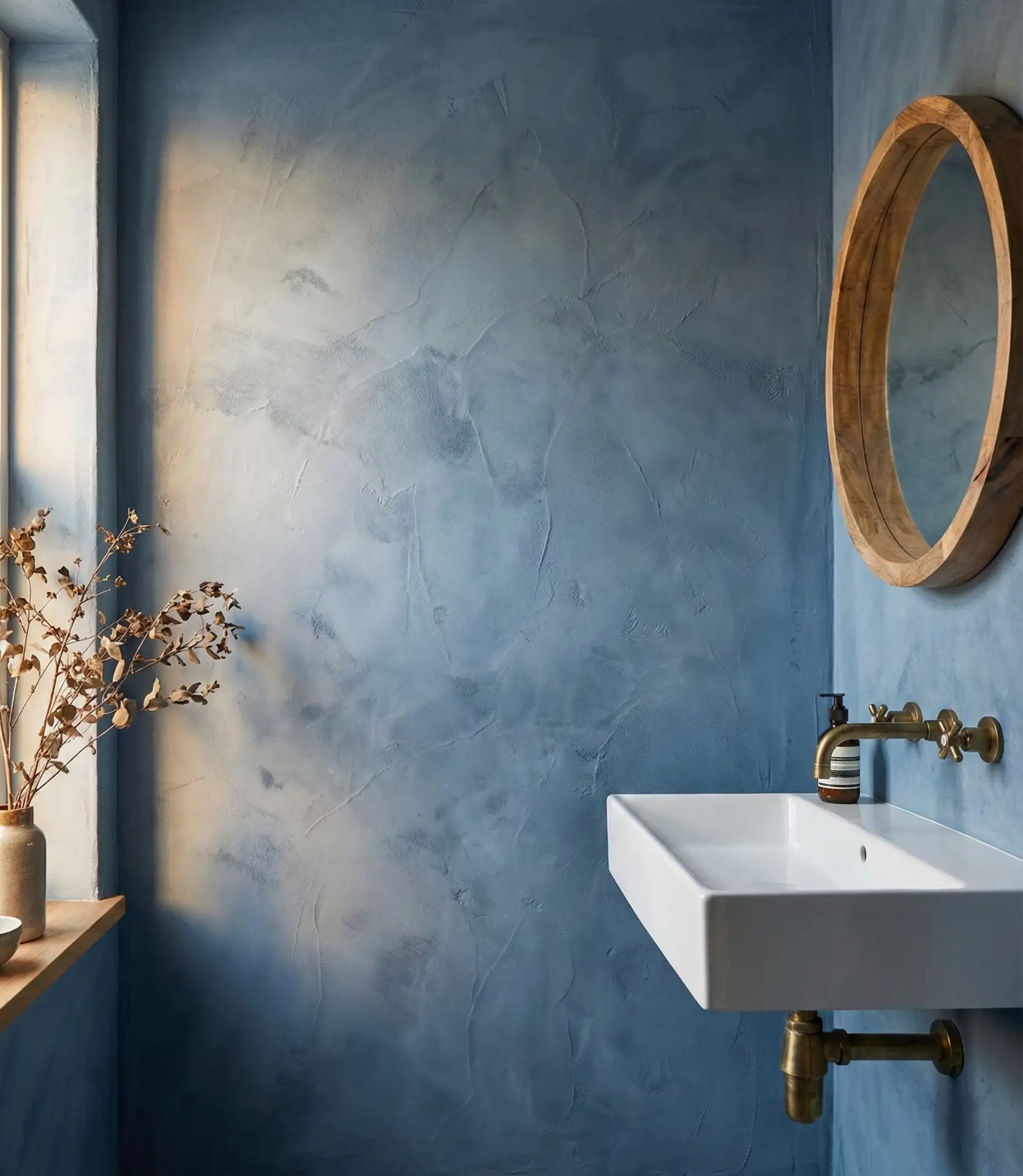
Textured walls in a soft denim blue add depth and interest without pattern. This might be achieved through Venetian plaster, textured paint techniques, or grasscloth wallpaper in blue tones. The matte, slightly irregular surface catches light beautifully and creates a sophisticated backdrop that feels both casual and refined. It’s an approach that works across farmhouse, coastal, and contemporary styles, adapting to the room’s other elements.
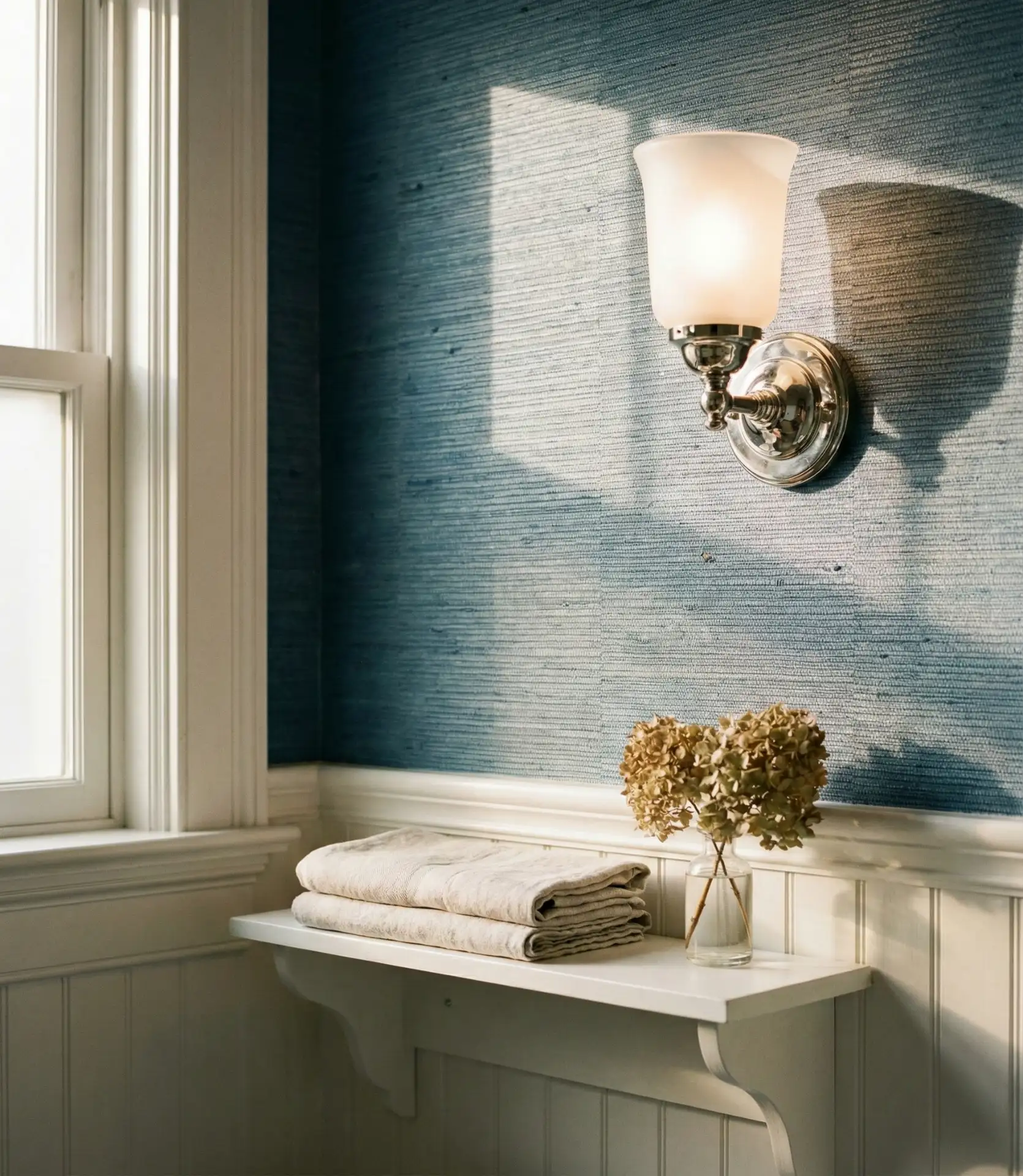
This approach has become increasingly popular in the Southwest and West Coast, where textured walls connect with adobe and stucco architectural traditions. The denim blue shade is particularly forgiving—it’s neutral enough to work with most fixture finishes and strong enough to create atmosphere. One interior designer noted that textured blue walls photograph exceptionally well, making them ideal for homeowners who share their spaces on social media or plan to market their home with professional photography.
20. Blue Moroccan Zellige Tile
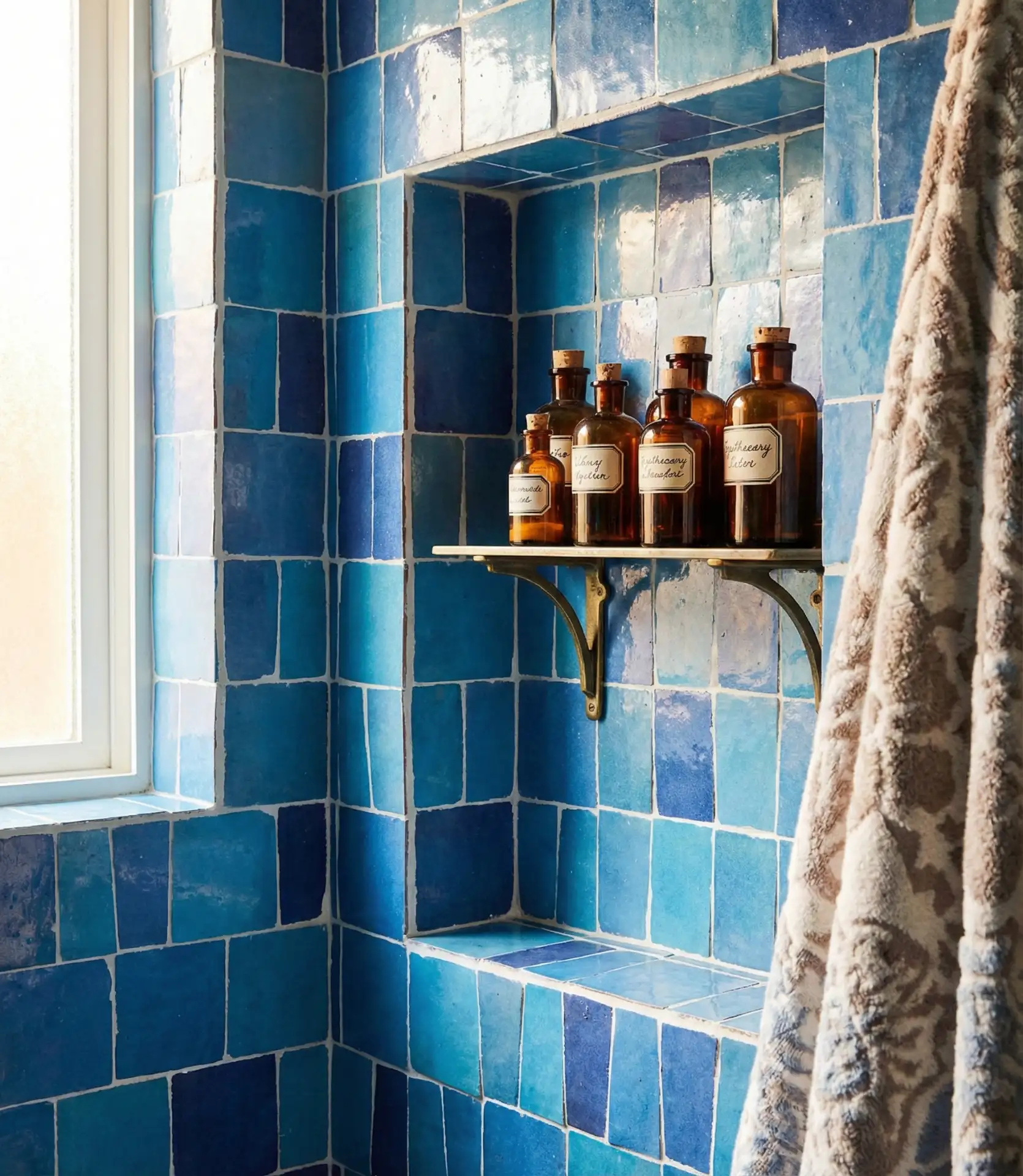
Moroccan zellige tile in various blue tones brings artisanal craftsmanship and global influence to American bathrooms. These handmade tiles feature subtle color variations and irregular edges that create a living, organic surface. The glossy finish reflects light beautifully, and the imperfections are part of the appeal—no two installations look exactly alike. It’s a choice that adds instant character and suggests a well-traveled, collected aesthetic.
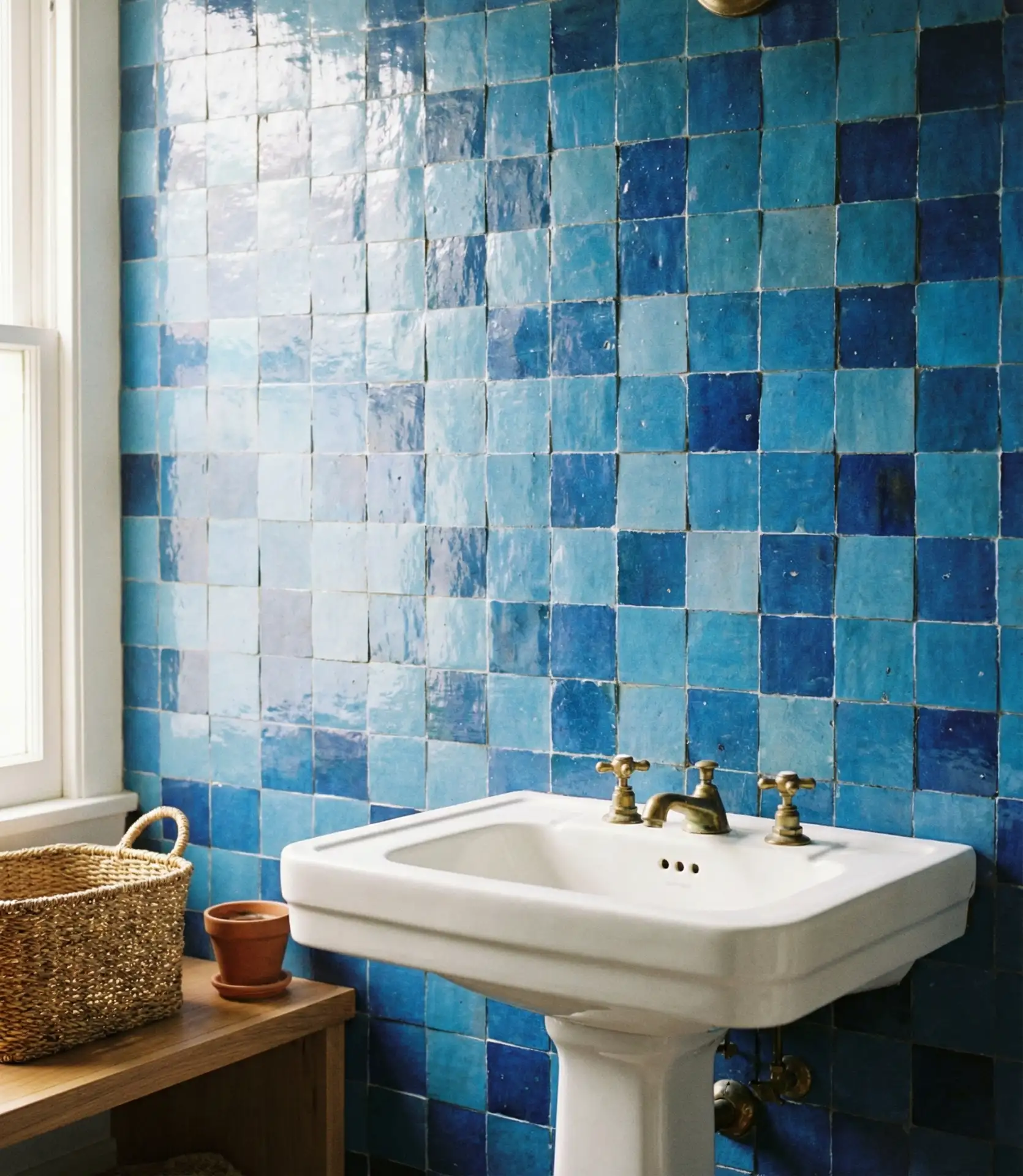
A homeowner in Portland recently installed these in her bathroom renovation and initially worried about the price—authentic zellige costs significantly more than standard subway tile. However, she found that using the zellige selectively as an accent rather than covering every surface made it financially feasible while still achieving the desired impact. The tiles are now available from several American importers, making them more accessible than they were just a few years ago.
21. Periwinkle Blue Vanity with Black Hardware
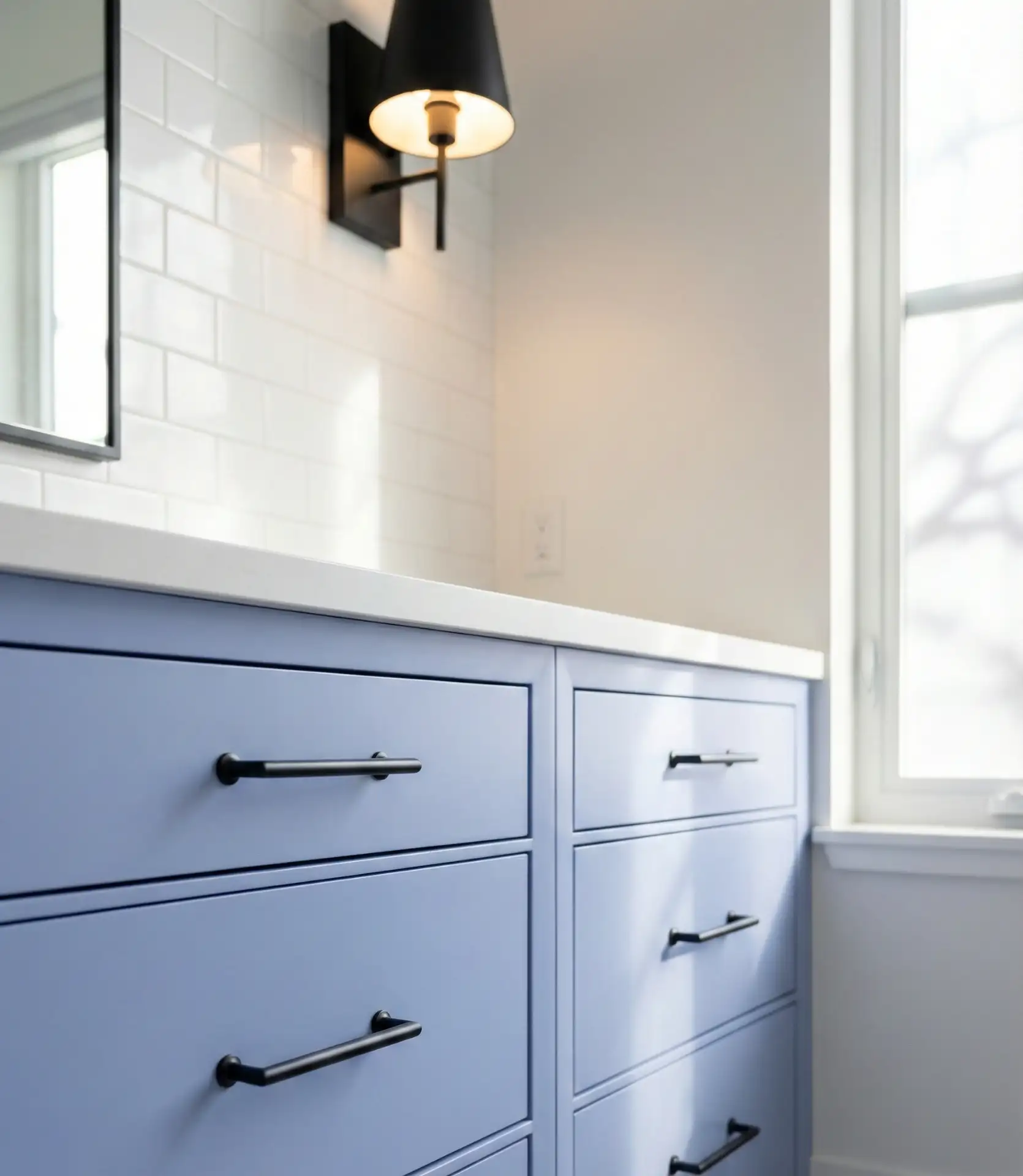
Periwinkle blue—a soft purple-leaning blue—creates a feminine, sophisticated look when paired with matte black hardware. This combination feels contemporary and fresh, moving away from the brass-heavy trend while maintaining warmth. The cabinets in this shade work beautifully with white countertops and either white or gray walls. It’s a color choice that appeals to younger homeowners seeking something beyond navy or pale blue.
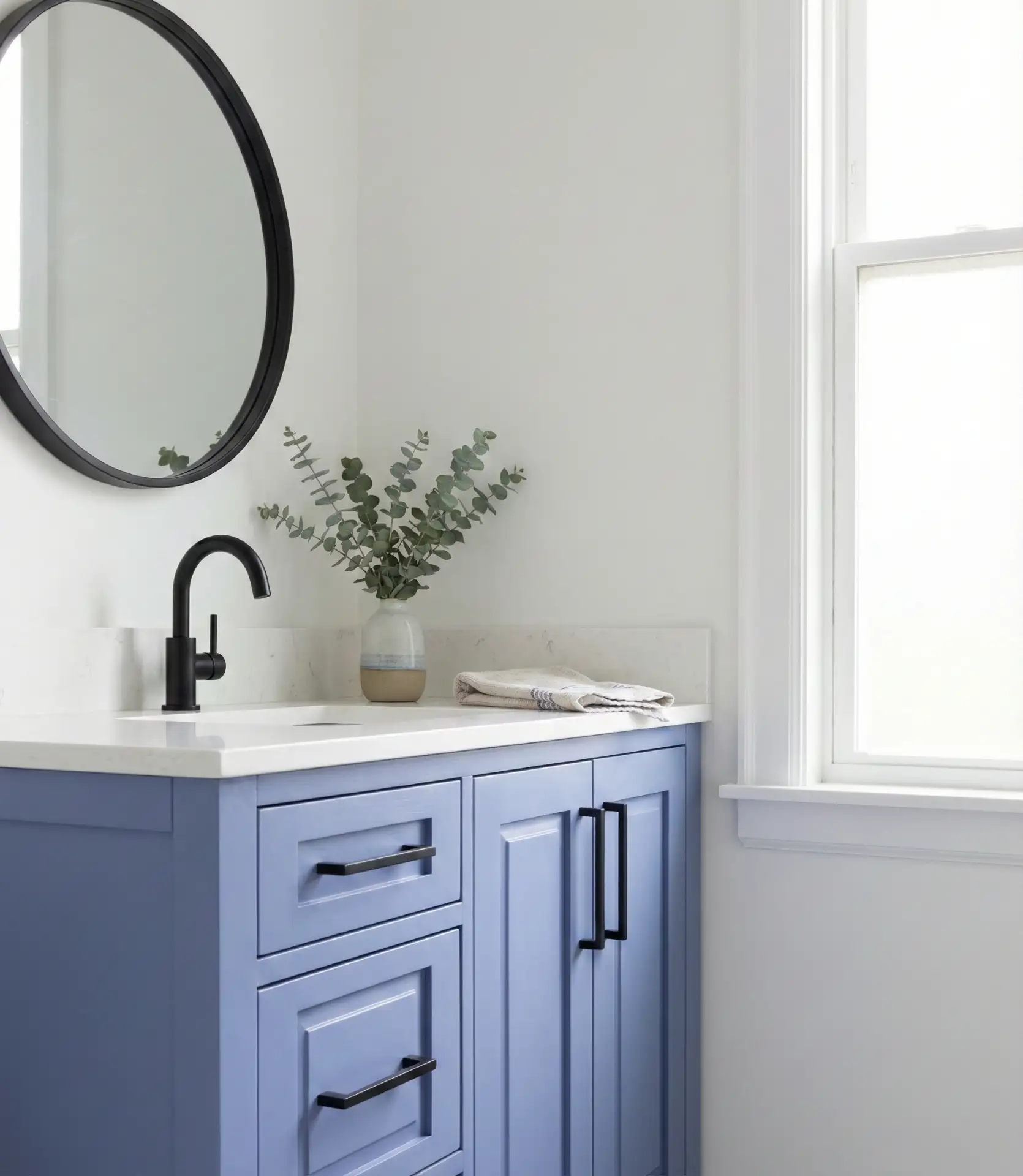
Common mistakes with this color include choosing a periwinkle that’s too purple, which can look juvenile or clash with cooler-toned blues elsewhere in the home. Test your sample in both morning and evening light—periwinkle shifts dramatically depending on natural light exposure. The black hardware grounds the sweeter blue and gives it an edge, preventing the space from feeling too precious or overly feminine. This combination has gained traction on Pinterest and Instagram, driving real-world adoption across the country.
22. Blue and White Patterned Floor Tile
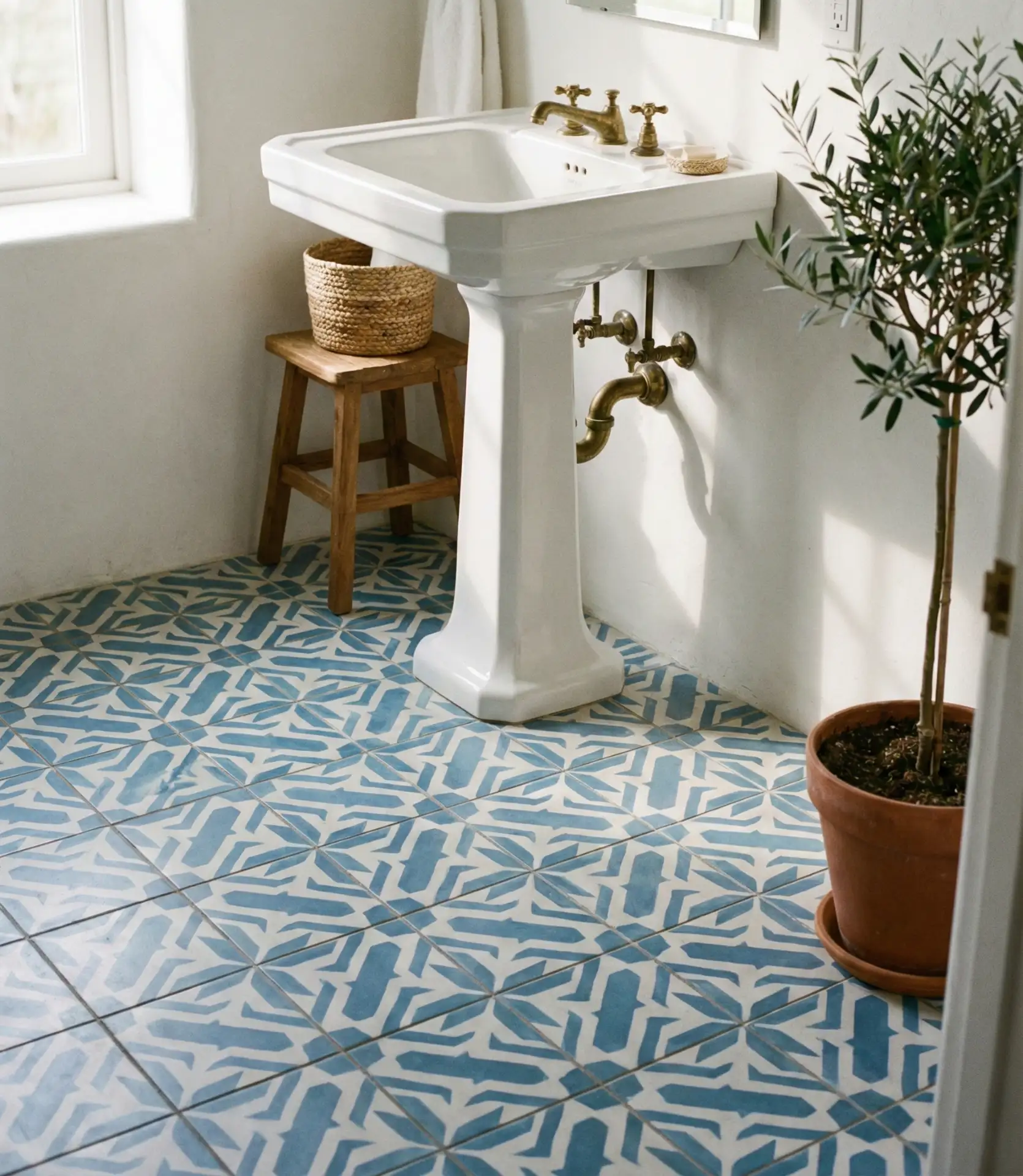
Geometric or floral patterned tile in blue and white transforms the bathroom floor into art. These cement or porcelain tiles—often inspired by Spanish, Portuguese, or Mediterranean design—add instant personality and vintage charm. The pattern does the decorating work, allowing walls and fixtures to remain simple. It’s an approach that maximizes visual impact in the most budget-friendly square footage of the room.
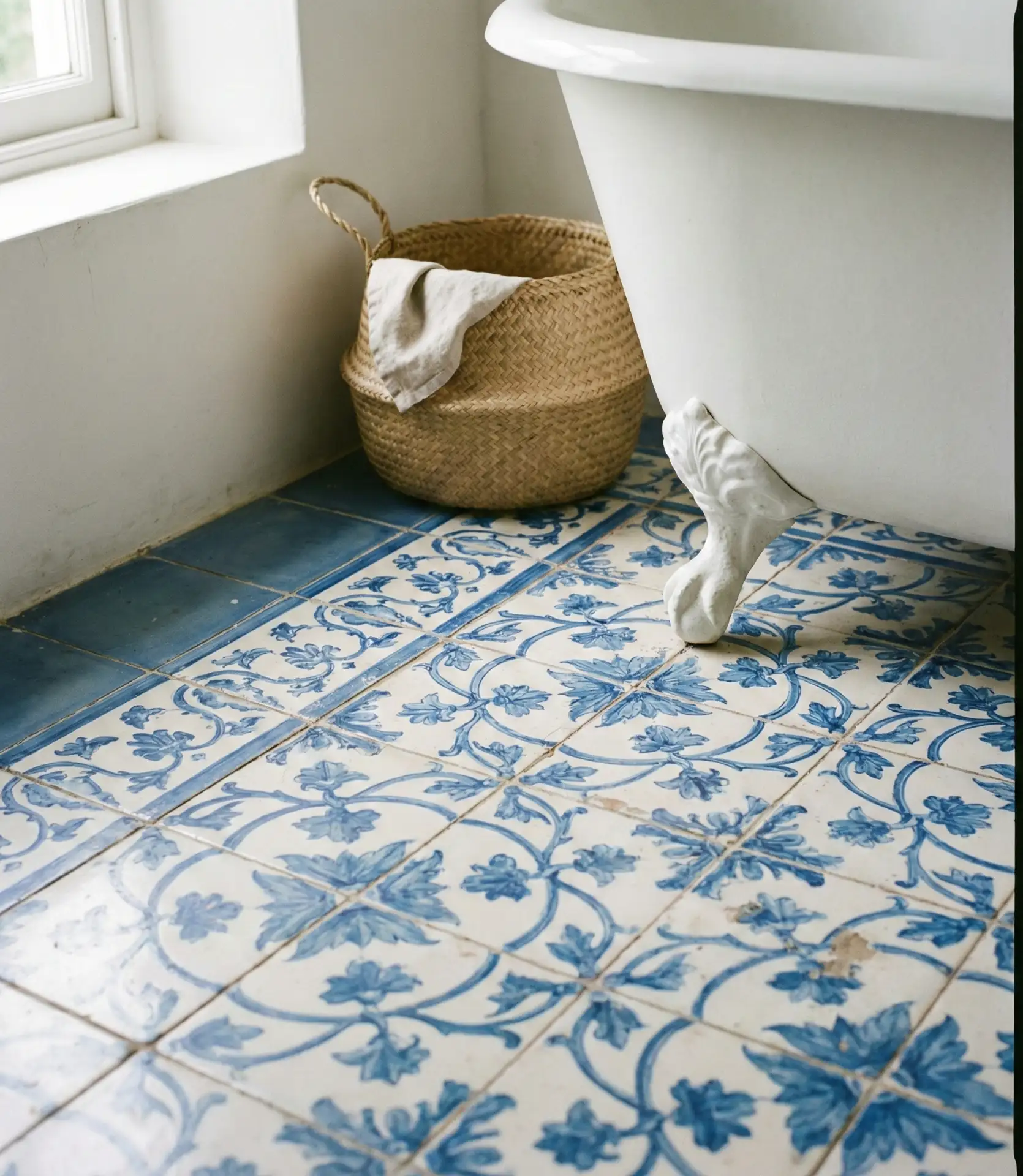
Real homeowner reports consistently highlight how these floors become conversation starters and the most photographed element in the bathroom. The pattern naturally camouflages daily dirt and water splashes, making the floor appear cleaner between deep cleanings. While installation costs run higher than standard tile due to the need for precise pattern alignment, the visual payoff lasts for decades. Regional availability has improved dramatically, with American manufacturers now producing quality versions alongside traditional importers.
Blue bathrooms in 2026 offer an incredible range of possibilities, from whisper-soft powder blues to dramatic midnight walls. Whether your preference is for coastal calm, moody sophistication, or vintage charm, there’s a blue bathroom approach that aligns with your style and space. The key is choosing the right shade for your lighting conditions, pairing it thoughtfully with other materials, and committing to the vision. What’s your favorite blue bathroom idea from this collection? Share your thoughts in the comments below—we’d love to hear which direction you’re leaning and what’s inspiring your renovation plans.