
Black and white bathrooms have never gone out of style, but in 2026 they’re taking on fresh personality with bold pattern mixing, warmer textures, and unexpected pops of color. American homeowners are searching Pinterest for ways to modernize this classic palette—whether that means layering in natural materials, experimenting with vintage fixtures, or embracing minimalist Scandinavian details. This timeless combination works beautifully in everything from compact apartment bathrooms to spacious master suites, and it adapts effortlessly to farmhouse, coastal, or contemporary aesthetics. Below, you’ll find inspiring ideas that prove black and white bathrooms can feel anything but ordinary, along with practical tips to help you bring each look into your own home.
1. Modern Minimalist Vanity with Floating Shelves
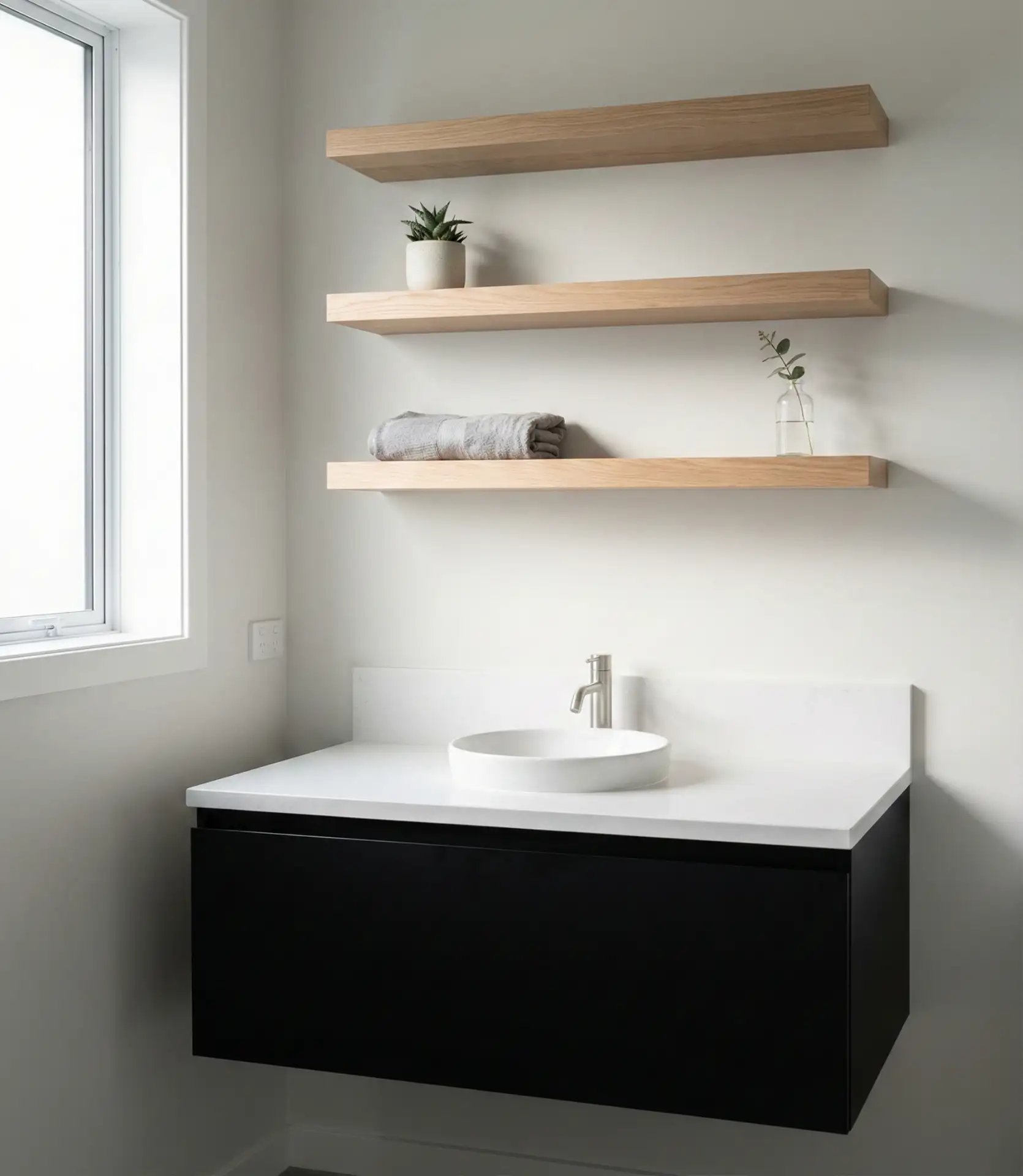
A wall-mounted black vanity paired with open white shelving creates an airy, modern minimalist feel that’s perfect for smaller spaces. The floating design keeps sightlines clear and makes daily cleaning easier, while the decor on open shelves—think rolled towels, a small plant, or a sculptural soap dispenser—adds warmth without clutter. This setup works especially well in urban apartments where every square foot counts.
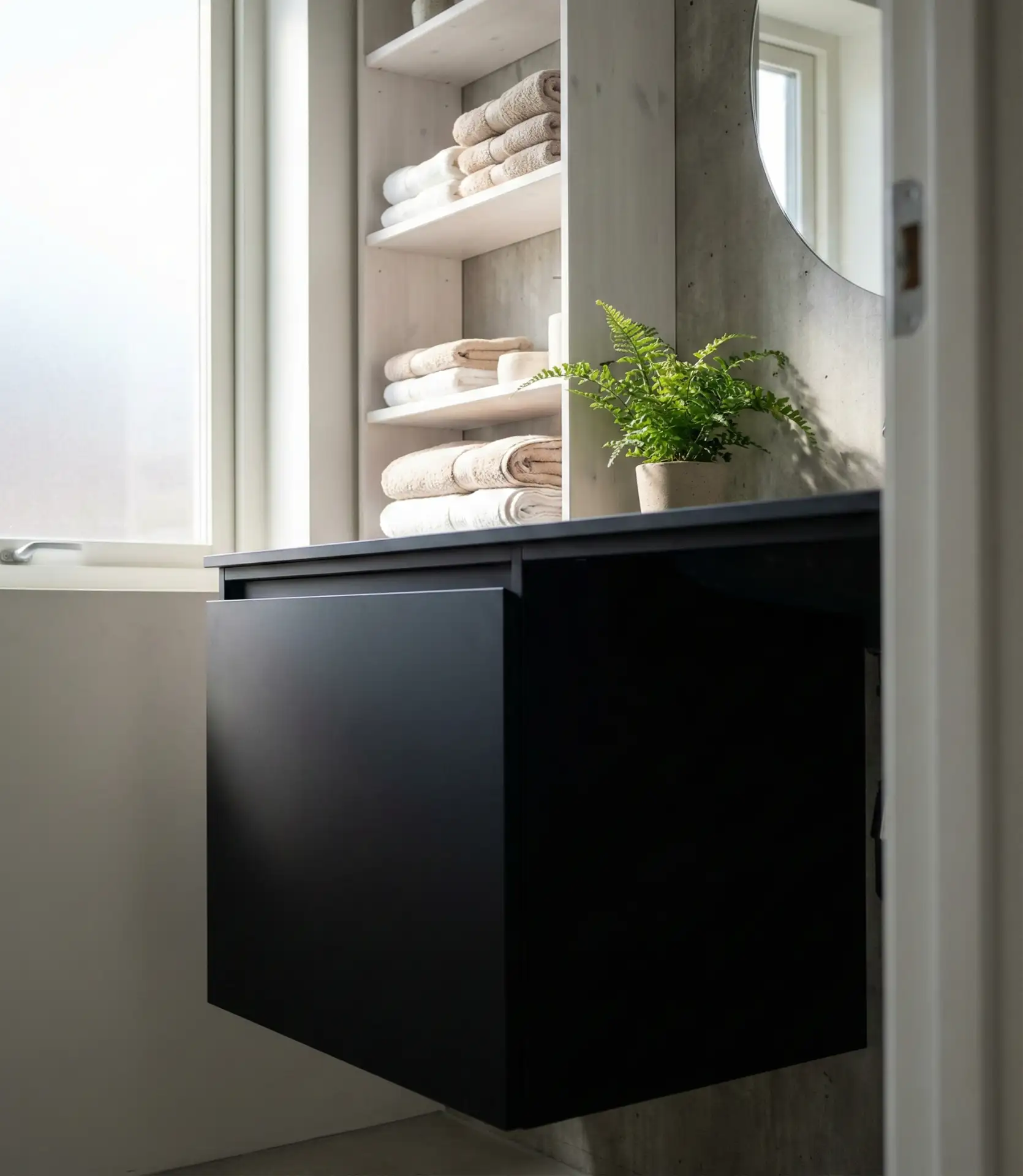
This look thrives in loft-style condos and renovated bungalows across cities like Austin and Portland, where homeowners favor clean aesthetics over ornate details. Keep the palette strictly black, white, and one natural wood tone to maintain visual calm. A common mistake is overloading the shelves—stick to three to five curated items per shelf so the space still feels breathable and intentional.
2. Classic Subway Tile with Black Grout
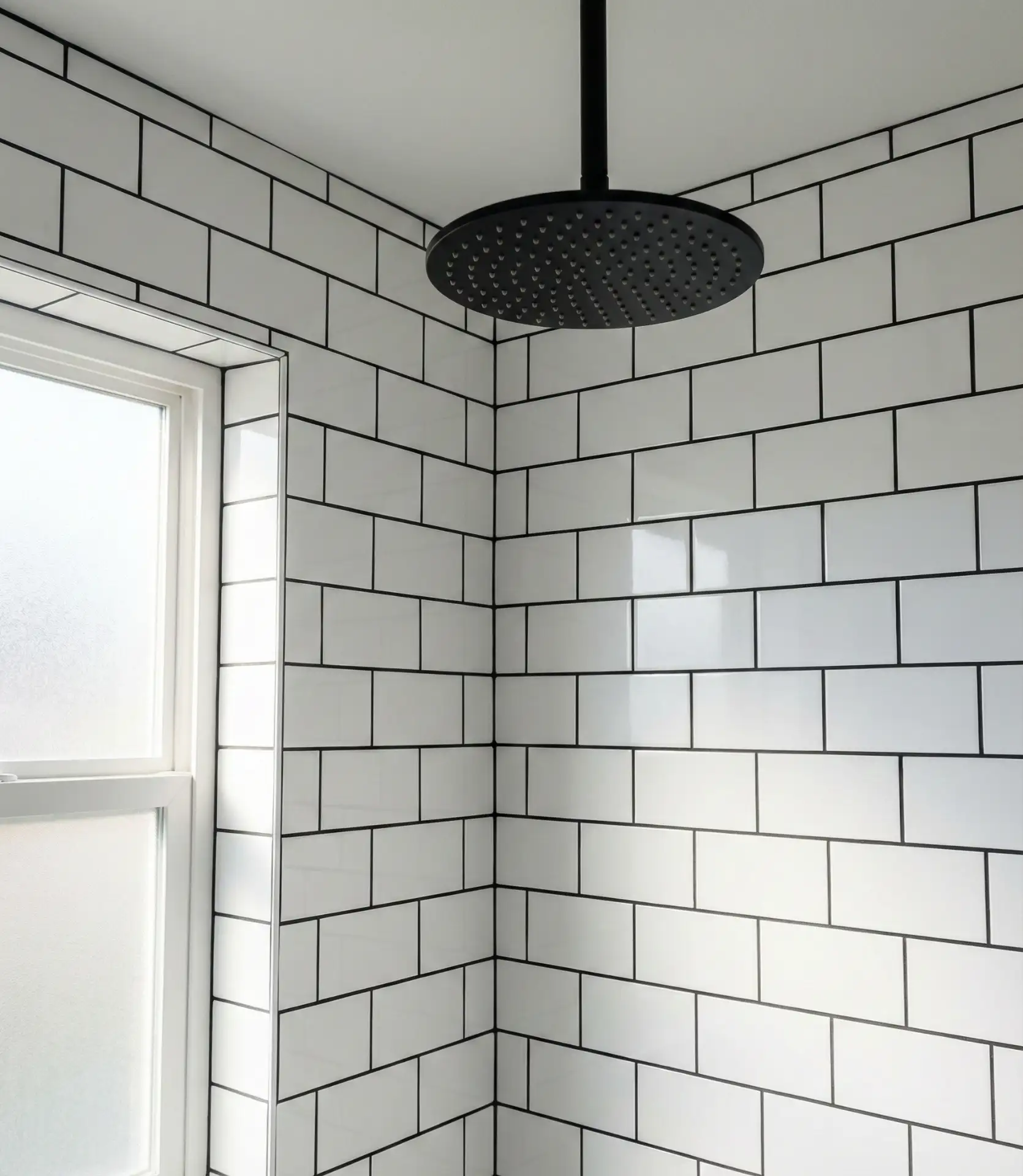
White subway tile is a classic choice that never feels dated, but swapping traditional white grout for black grout instantly updates the look with graphic punch. The dark lines highlight the tile’s grid pattern and add a modern edge that pairs beautifully with brass or matte black fixtures. This detail works in both farmhouse and contemporary bathrooms, bridging traditional materials with fresh styling.
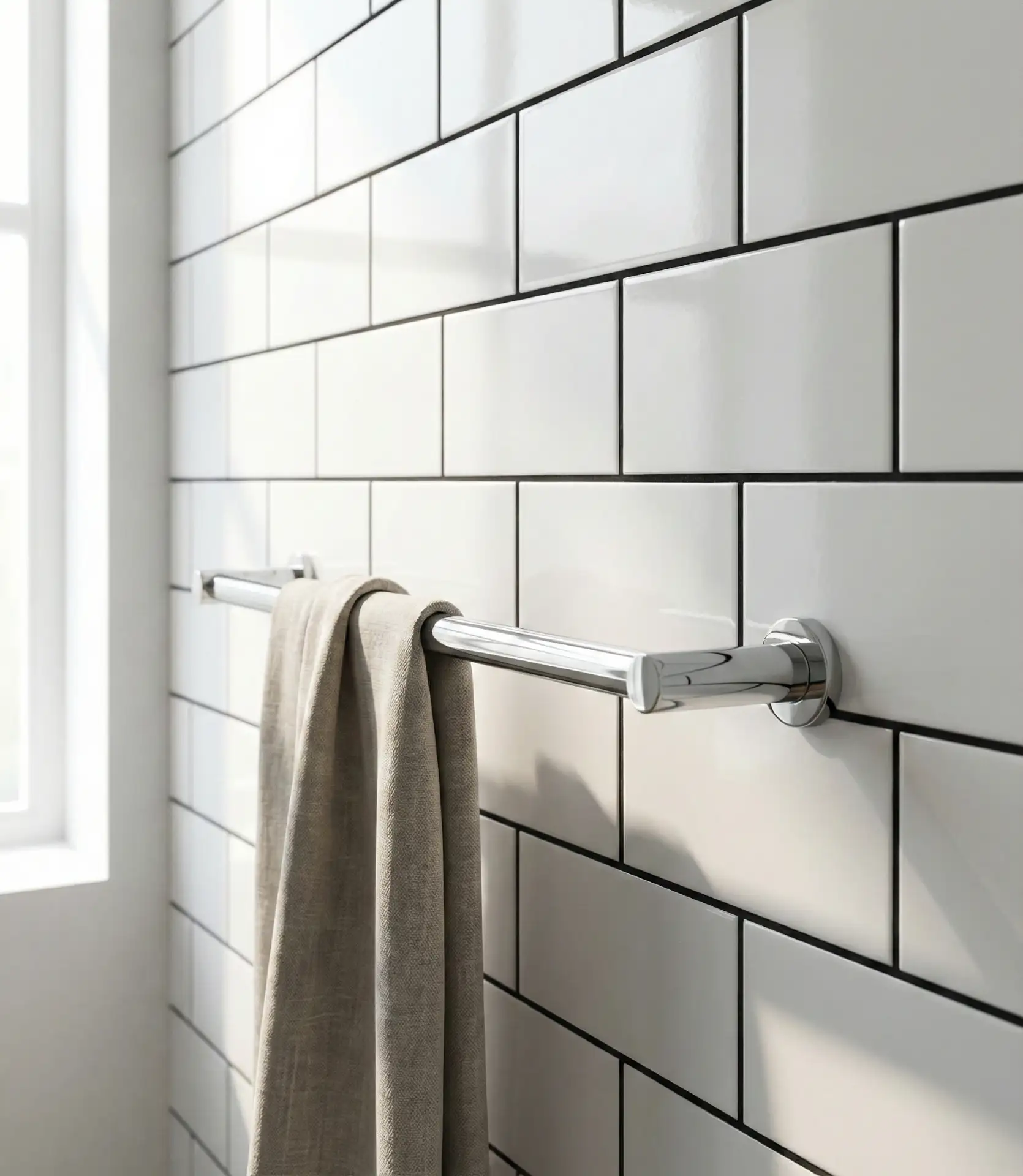
Budget-conscious renovators love this approach because subway tile remains one of the most affordable wall coverings, typically ranging from two to five dollars per square foot. The black grout costs no more than white but delivers a designer-level impact. Just be prepared for slightly more visible soap scum—a weekly wipe-down with a vinegar solution keeps the grout looking sharp without extra effort.
3. Freestanding Black Tub as a Centerpiece
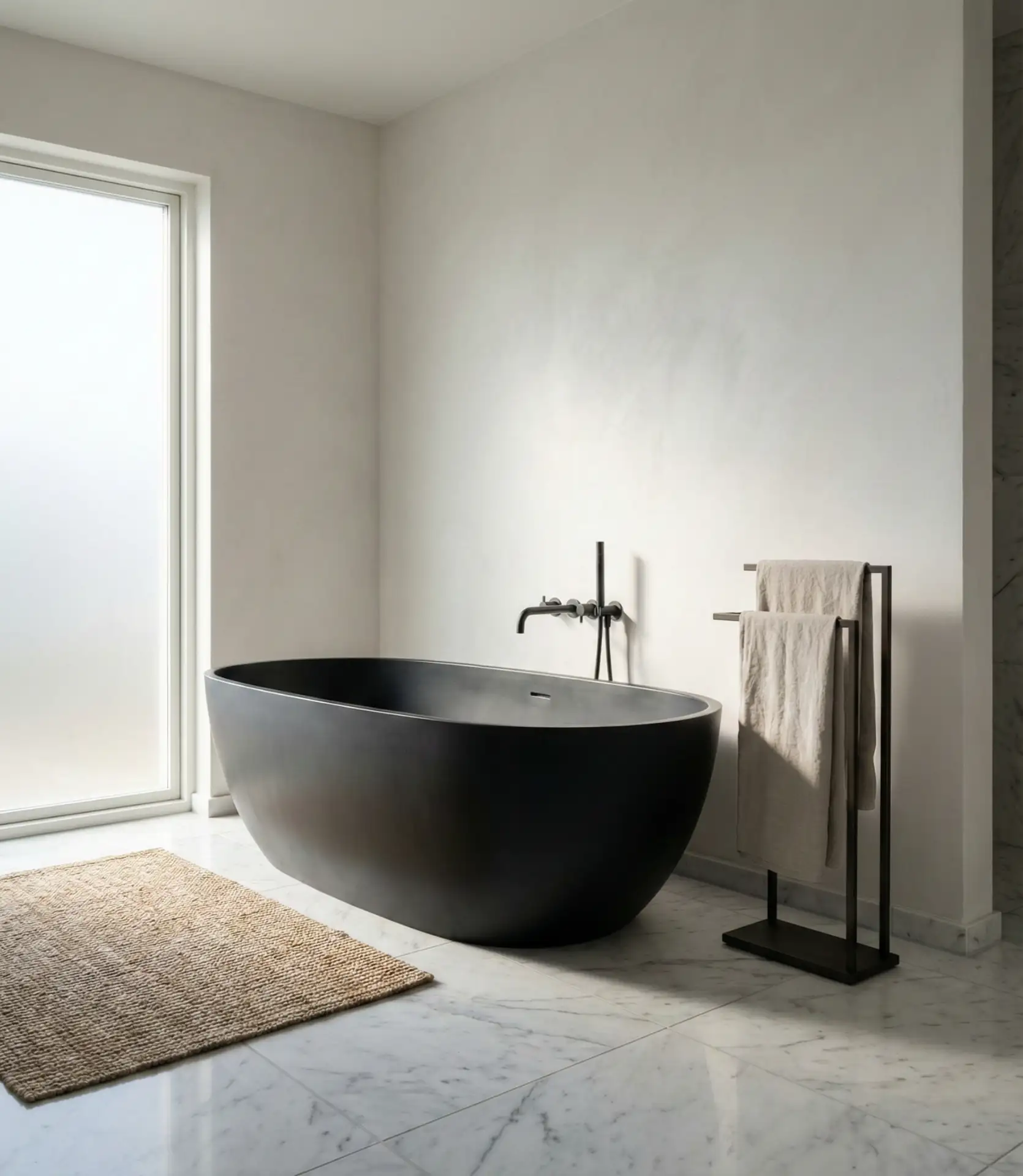
A matte black freestanding tub anchors the room with sculptural presence, turning the bathroom into a spa-like retreat. Set against white walls or grey tile, the dark fixture becomes instant drama, and its smooth curves soften the hard edges typical of bathroom materials. This statement piece works best in master baths with generous square footage, where the tub can breathe without crowding other fixtures.

In the Midwest and Pacific Northwest, homeowners often position these tubs near windows overlooking wooded backyards, creating a tranquil bathing experience framed by natural views. Pair the tub with a floor-mounted matte black filler for a cohesive look, and consider radiant floor heating underneath—it’s a small upgrade that makes a huge difference on cold mornings when you step out of a warm soak.
4. Graphic Patterned Floor Tile
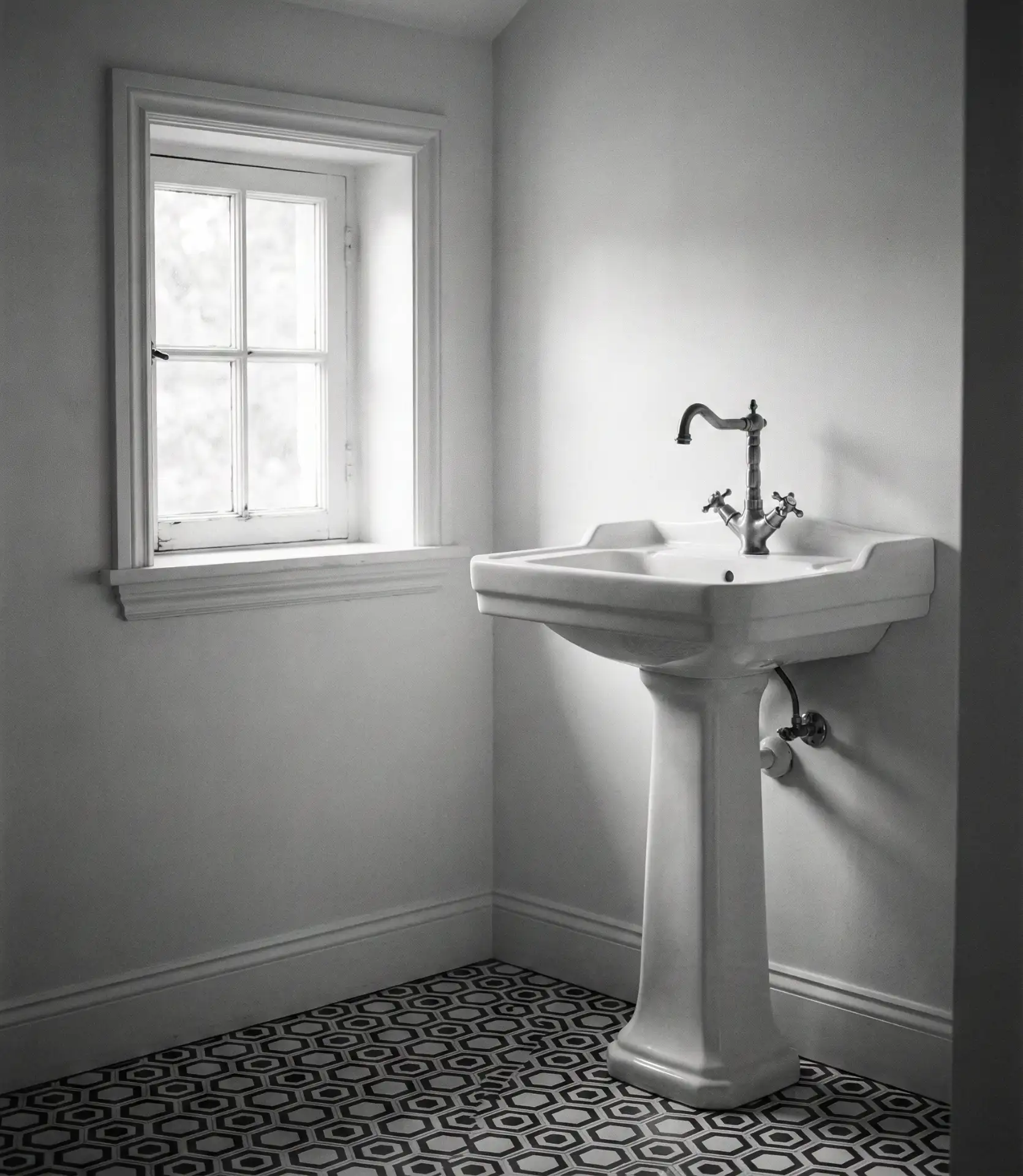
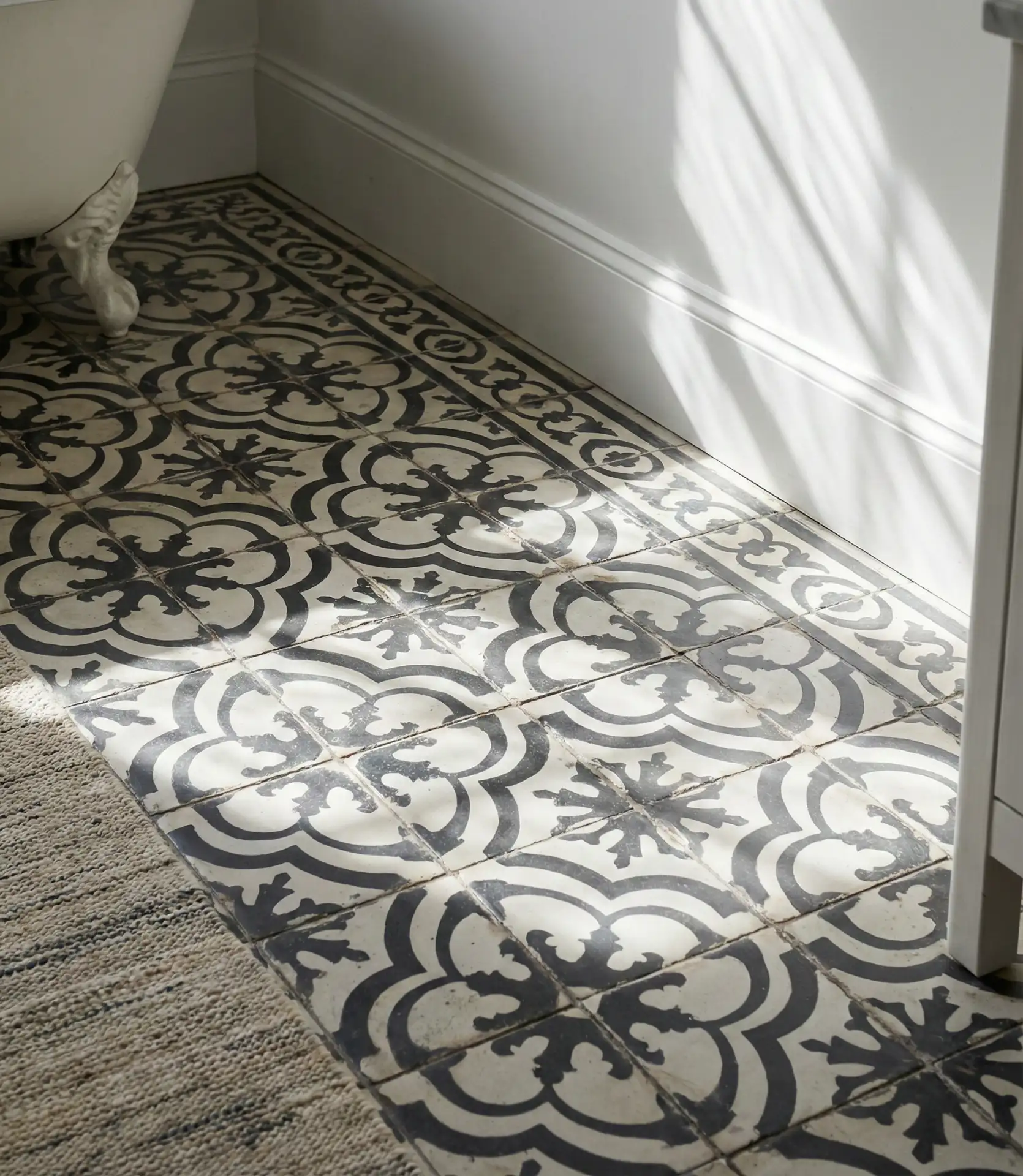
Bold black and white patterned floor tile—whether geometric hexagons, Moroccan stars, or encaustic florals—injects personality underfoot while keeping walls neutral and calm. This approach is especially popular in vintage and bohemian bathrooms, where the floor becomes a statement layer that ties together mismatched fixtures or colorful decor. The high contrast also helps define zones in open-plan wet rooms or powder baths.

I once visited a Nashville Airbnb where the bathroom floor featured a black and white checkerboard pattern, and guests consistently mentioned it in their reviews—it was the one design choice that made the space feel memorable. If you’re installing patterned tile yourself, start in the center of the room and work outward to keep the pattern symmetrical. Many DIYers make the mistake of beginning at a wall, which often results in awkward cuts and an off-center design.
5. Scandinavian Simplicity with Natural Wood Accents
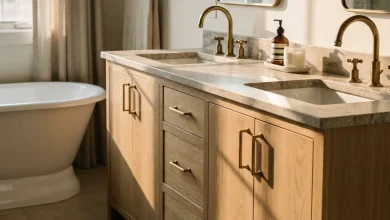
A Scandinavian black and white bathroom balances crisp monochrome with warm blonde wood, creating a space that feels both clean and inviting. Think white walls, matte black fixtures, and a light oak vanity or floating shelf that softens the palette without introducing color. This style resonates with homeowners seeking modern functionality wrapped in cozy, livable design—a hallmark of Nordic interiors.
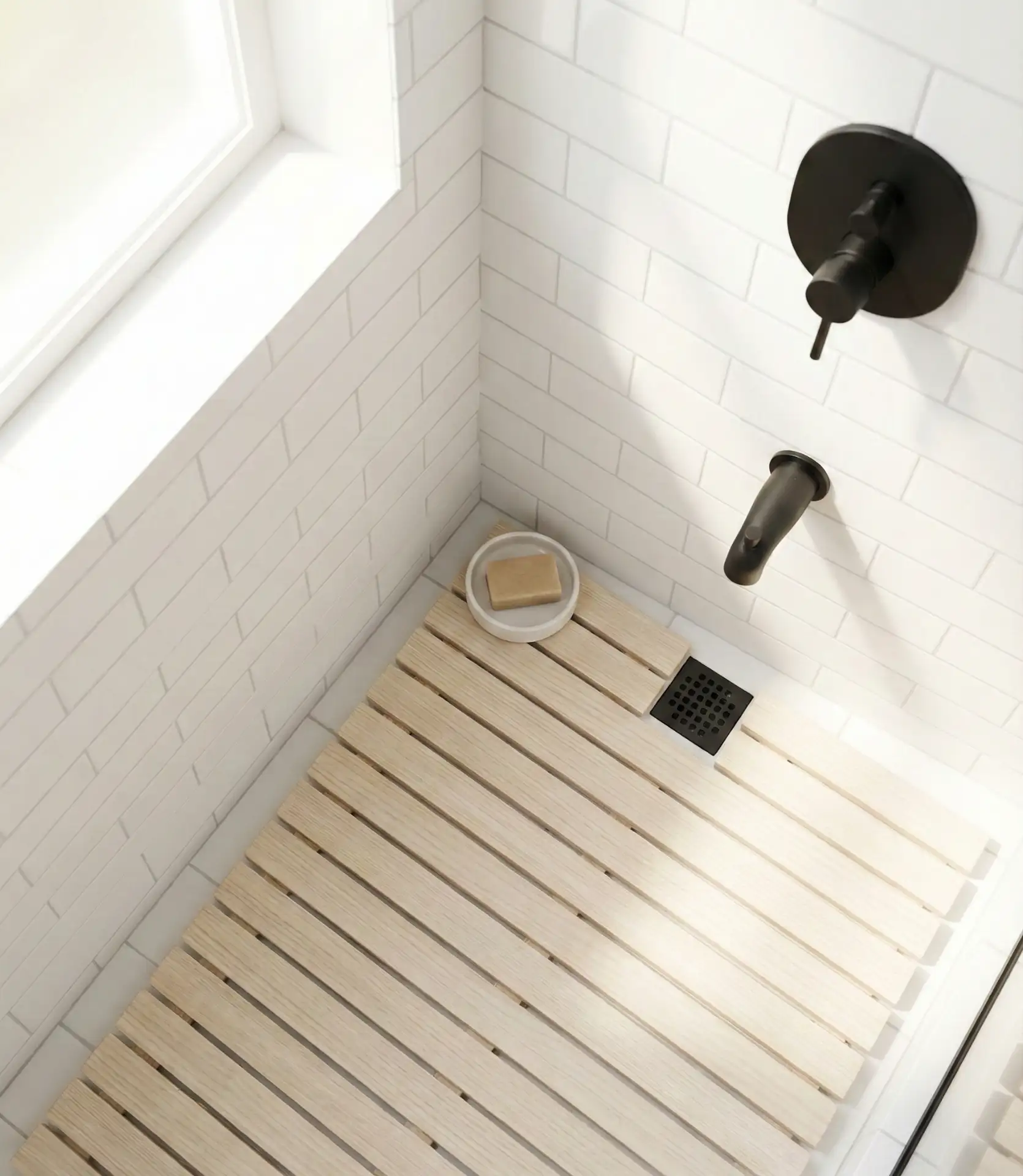
In colder climates like Minnesota and Vermont, this aesthetic feels especially at home, offering a bright, airy counterpoint to long winters. The wood brings tactile warmth that prevents the space from feeling sterile, and it’s forgiving with water splashes—just seal it properly. Most homeowners find that a simple Danish oil treatment every year keeps the wood looking fresh and protected from humidity.
6. Bold Black Accent Wall Behind the Vanity
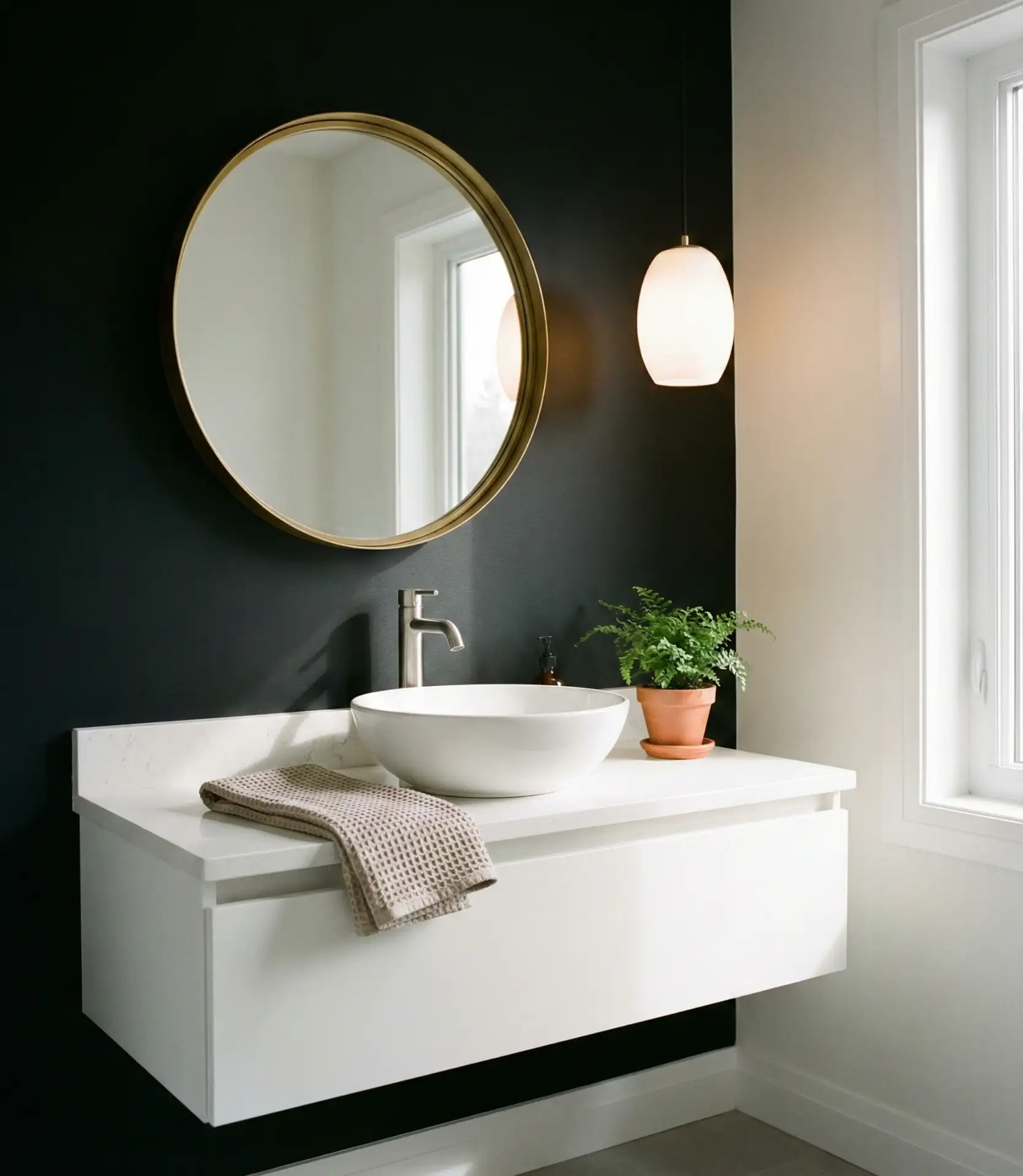
Painting or tiling a single wall in deep black creates instant drama and helps the vanity area feel like a designed focal point. This technique works beautifully in decor accent wall schemes, especially when the remaining walls stay white to maintain brightness. Pair it with a statement mirror and warm brass or gold hardware to prevent the black from feeling too stark or cold.

This strategy costs significantly less than a full bathroom remodel—one gallon of quality matte black paint runs about forty to sixty dollars and covers roughly four hundred square feet. If you’re working with a small powder room, a black accent wall can make the space feel more intimate and intentional rather than cramped. Just ensure you have adequate lighting; a backlit mirror or sconces flanking the mirror will prevent the dark wall from swallowing the room’s brightness.
7. Vintage Clawfoot Tub with Black Exterior
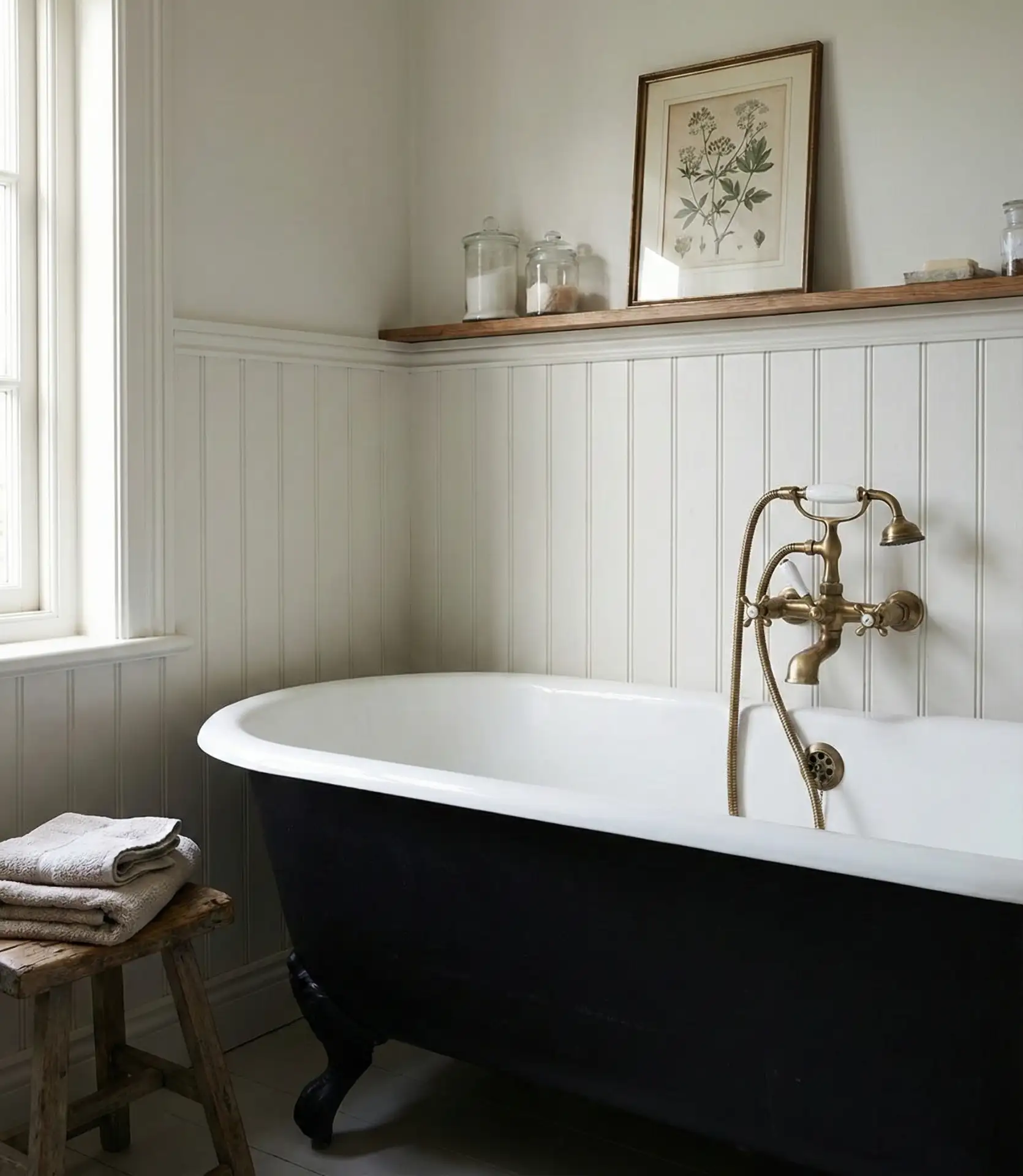
A refurbished clawfoot tub painted black on the outside preserves vintage charm while adding contemporary contrast. The white porcelain interior stays classic, and the black exterior grounds the fixture with modern weight. This approach is ideal for farmhouse or rustic bathrooms where you want historical character without feeling overly precious or dated.
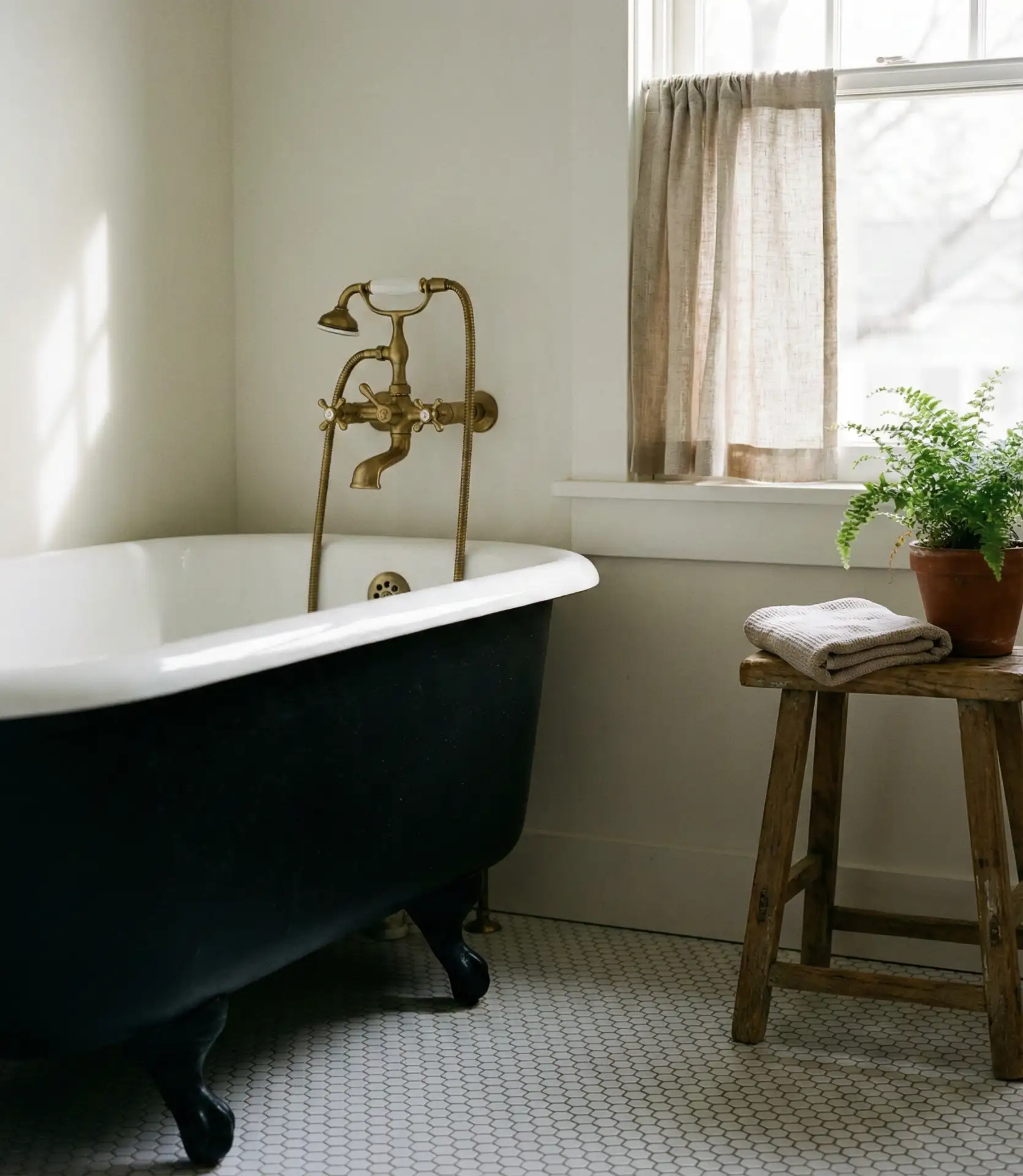
Across the Southeast and New England, salvage yards and antique shops frequently stock old clawfoot tubs for three hundred to eight hundred dollars—far less than new reproductions. Refinishing the exterior yourself with rust-resistant enamel paint is a manageable weekend project, and the result feels custom and high-end. Real homeowners often underestimate how heavy these tubs are; factor in professional movers or at least three strong friends before delivery day arrives.
8. Monochrome Gallery Wall with Black Frames
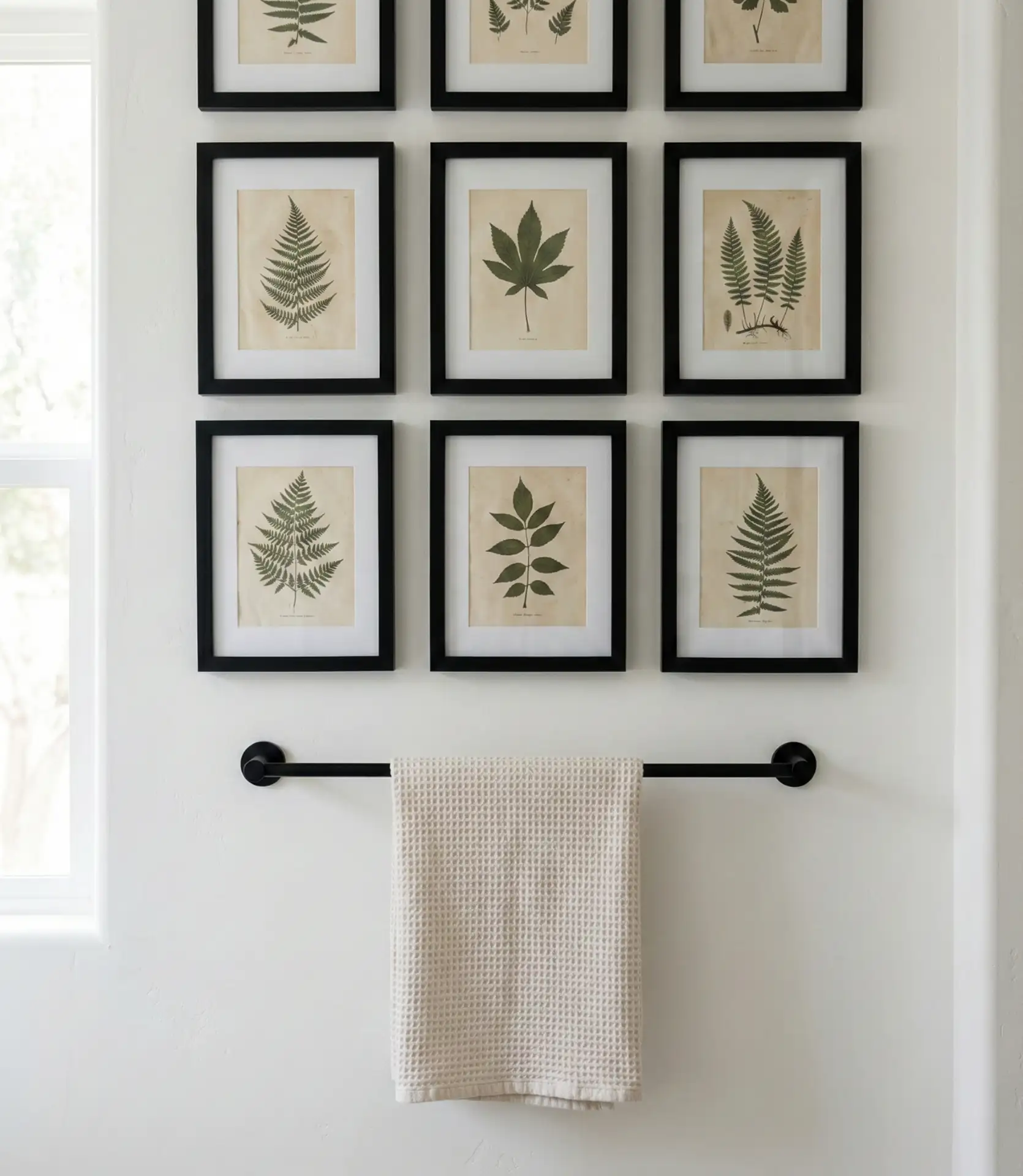
A curated collection of black-framed prints or photographs adds personality and visual interest without introducing new colors. This is a smart way to bring DIY wall art decor into a black and white bathroom, especially in apartment settings where you might want to rotate art seasonally or take pieces with you when you move. Choose images with strong contrast—botanical line drawings, abstract geometrics, or black and white photography all work beautifully.
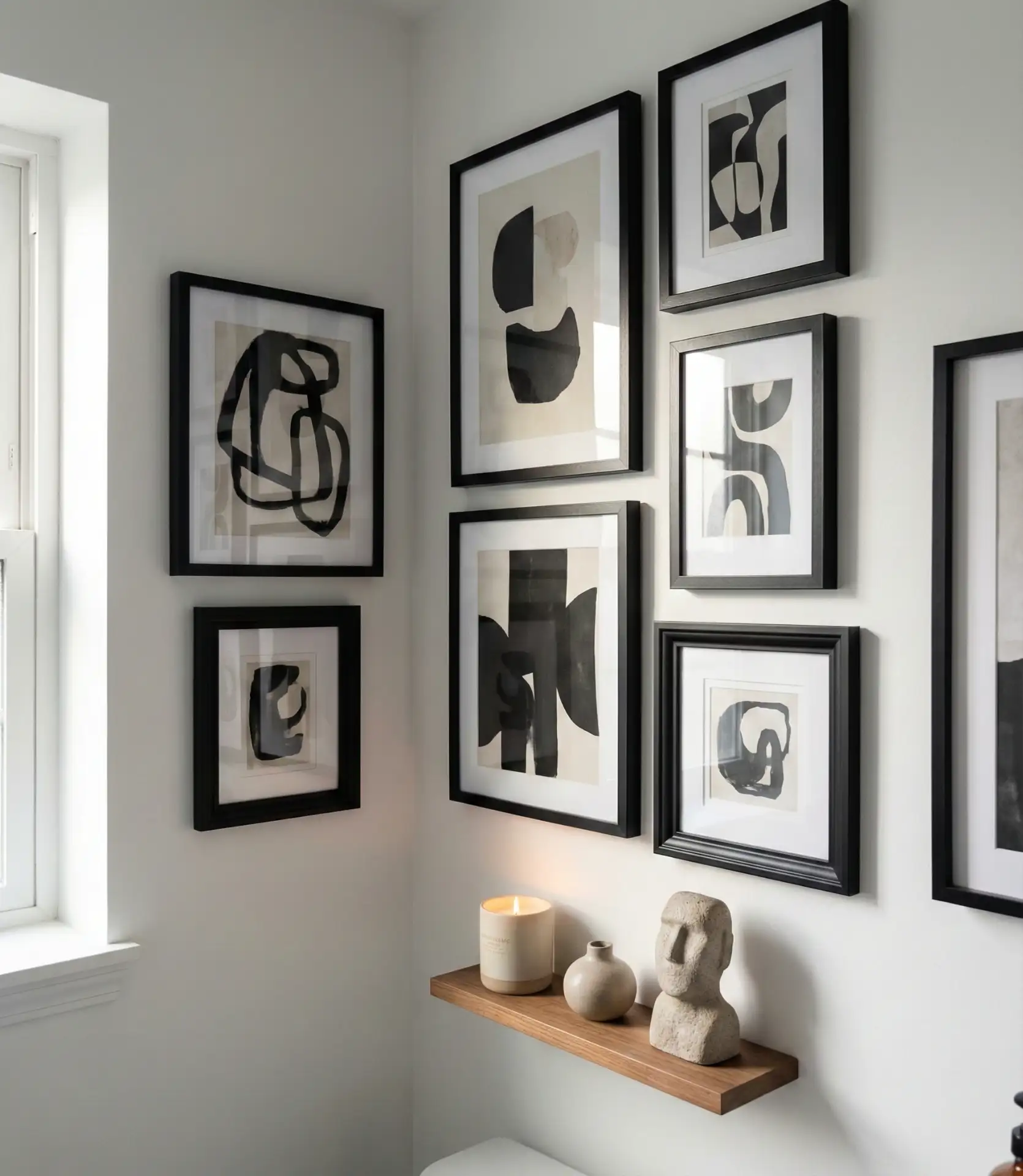
Where it works best is in powder rooms or above the toilet in a full bath—spaces where you have a solid wall that isn’t interrupted by fixtures or windows. Use a paper template to plan your layout on the floor first, then transfer it to the wall with painter’s tape before hammering a single nail. This prevents the all-too-common mistake of uneven spacing or a lopsided arrangement that’s difficult to correct once holes are in the drywall.
9. Sleek Glass Shower Enclosure with Black Frame
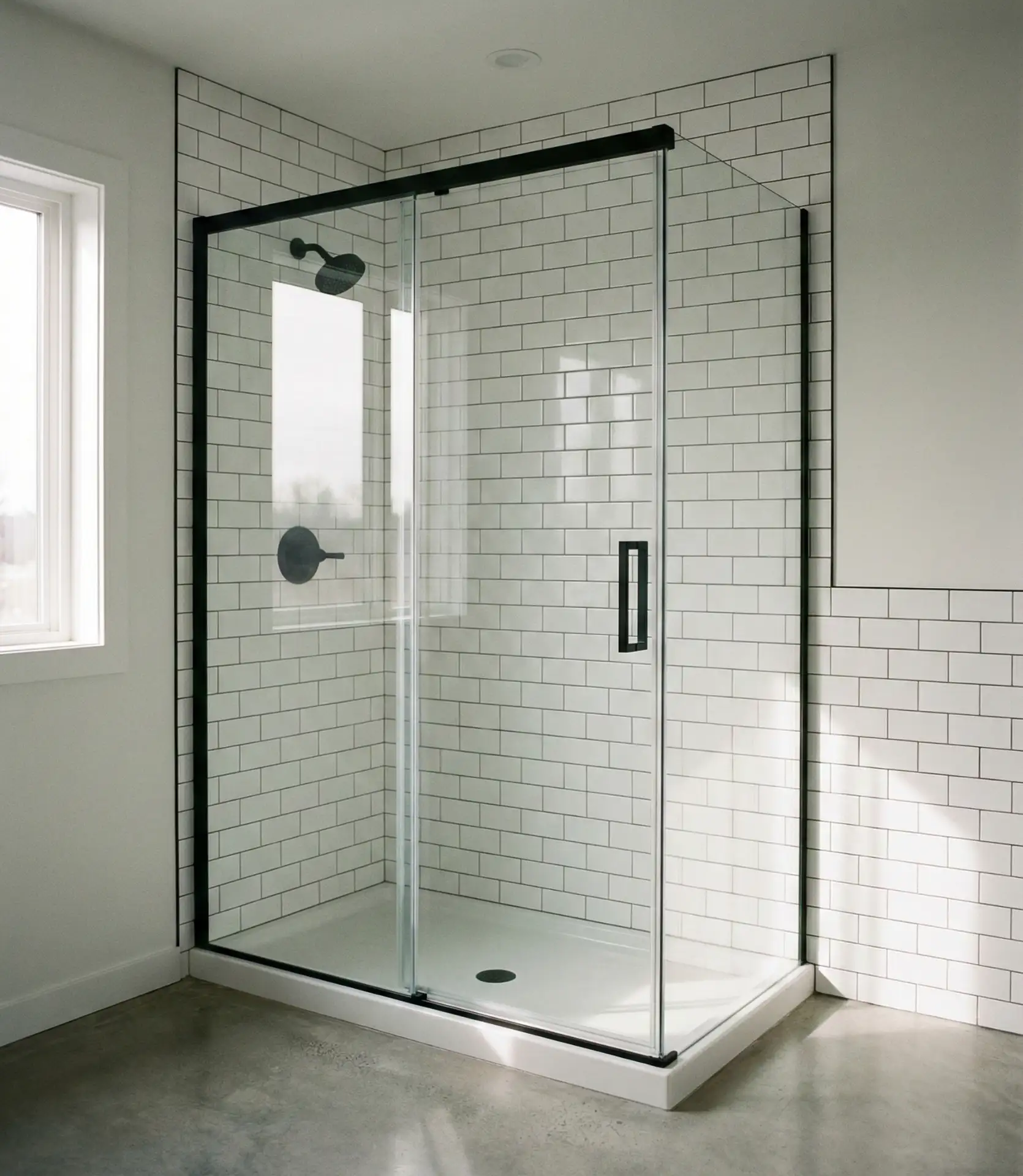
A frameless or minimally framed glass shower door with matte black hardware creates a modern luxury feel while maintaining an open, spacious flow. The black trim adds definition without visual clutter, and the clear glass keeps the room feeling larger—especially important in compact apartment bathrooms. This upgrade works seamlessly in both minimalist and coastal aesthetics.
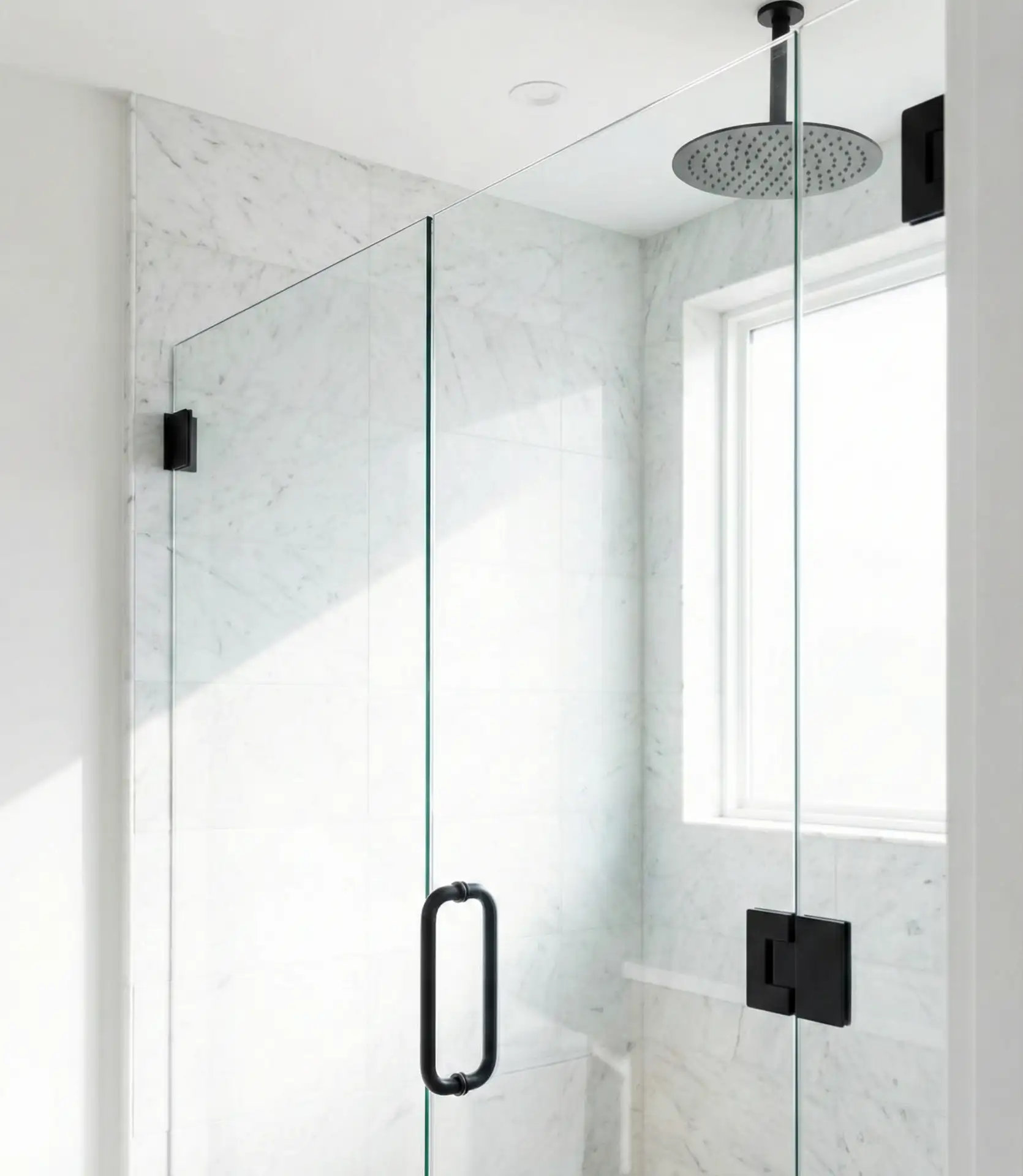
Expert designers recommend spending a bit more on quality glass and hardware here—cheap frames can warp or corrode quickly in humid environments. Look for finishes labeled “PVD” (physical vapor deposition), which resist water spots and maintain their matte appearance far longer than standard coatings. Expect to invest between eight hundred and fifteen hundred dollars for a custom enclosure, but the polished result elevates the entire bathroom and often recoups its cost in resale value.
10. White Shiplap Walls with Black Fixtures
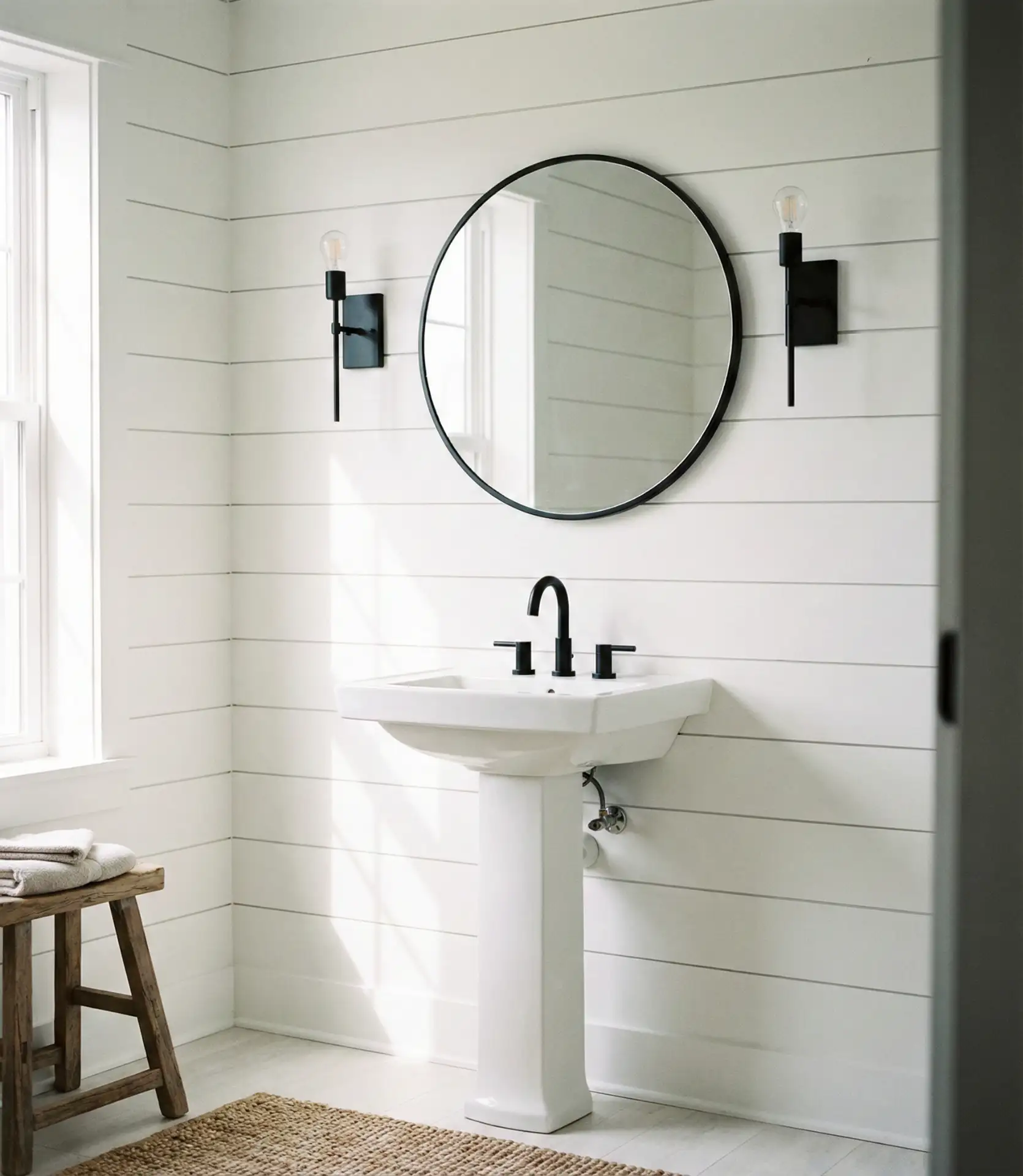
White shiplap brings farmhouse texture and warmth to a black and white palette, and the horizontal lines make small bathrooms feel wider. When you add matte black faucets, towel bars, and light fixtures, the contrast becomes crisp and intentional rather than rustic-heavy. This combination works beautifully in coastal homes and rural properties where a relaxed, approachable vibe is key.
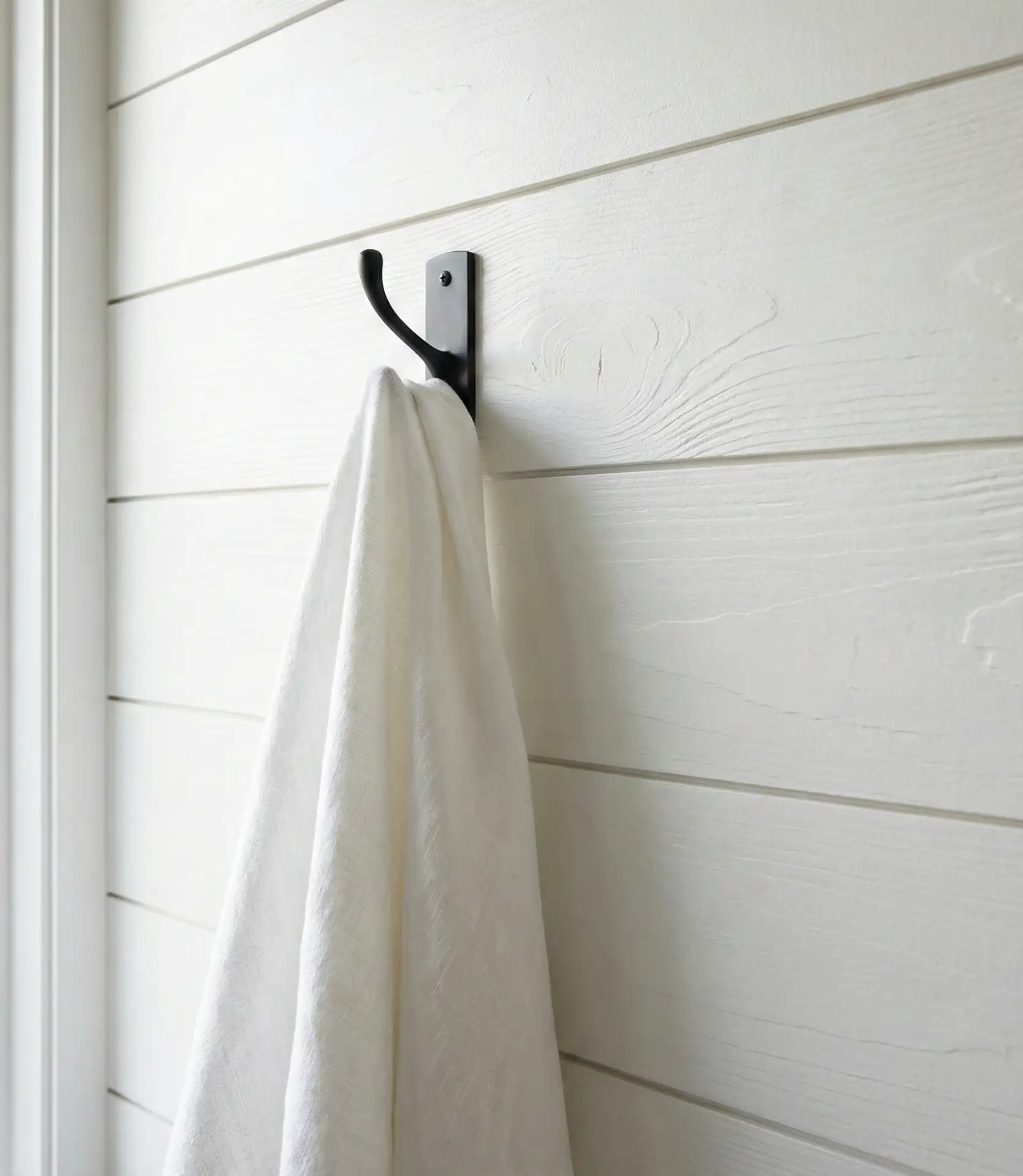
Shiplap installation is straightforward for confident DIYers—budget around three to five dollars per square foot for primed MDF or pine boards. In humid climates like the Gulf Coast, opt for moisture-resistant MDF or ensure proper ventilation to prevent warping. A practical insight: use a nickel as a spacer between boards for consistent reveals, and always paint or prime the boards before installation to ensure even coverage in those narrow grooves.
11. Dramatic Black Ceiling with White Walls
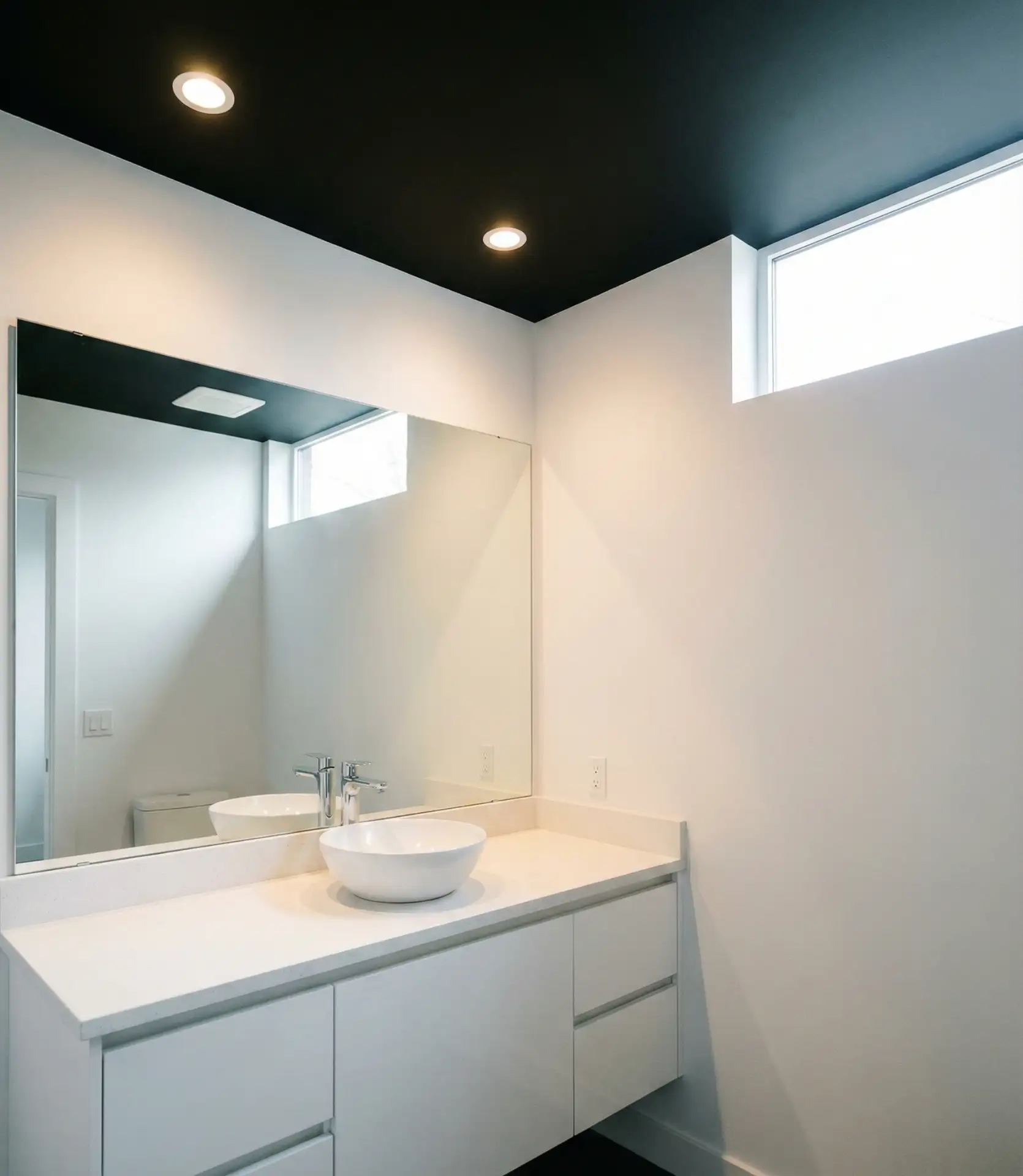
Painting the ceiling black while keeping the walls white adds unexpected sophistication and draws the eye upward, making standard eight-foot ceilings feel more intimate and designed. This technique is especially striking in powder rooms or modern master baths where you want a touch of drama without overwhelming the space. The dark ceiling also helps recessed lighting or pendant fixtures pop visually.
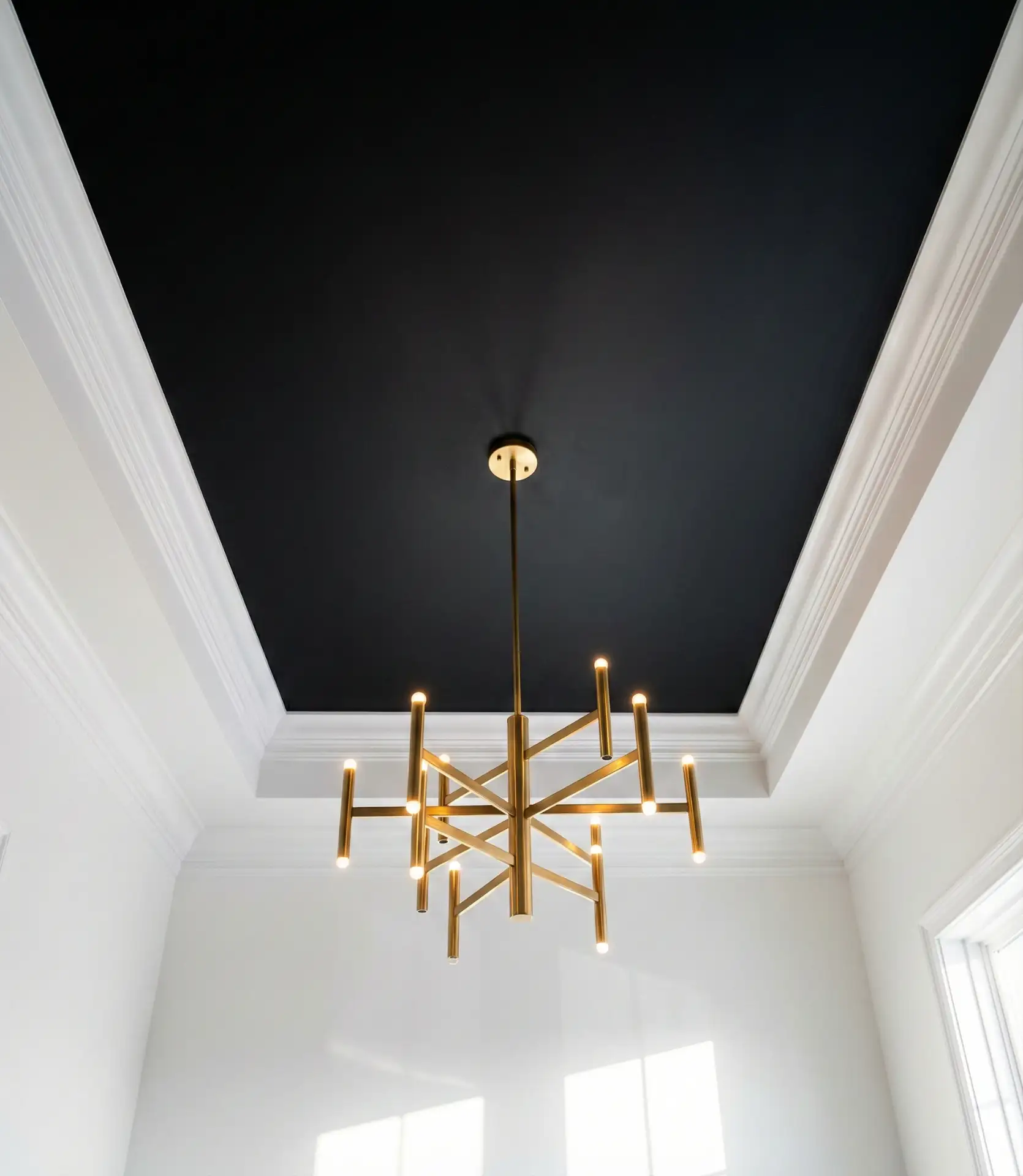
This approach works best in bathrooms with good natural light or layered artificial lighting—without sufficient brightness, a dark ceiling can make the room feel cave-like. In the Northeast, where many older homes have tall ceilings and generous windows, this trick creates a jewel-box effect that feels both historic and contemporary. A common mistake is using flat black paint, which can look chalky; opt for eggshell or satin for a subtle sheen that reflects light more gracefully.
12. Mixed Metallics with Black and White Base
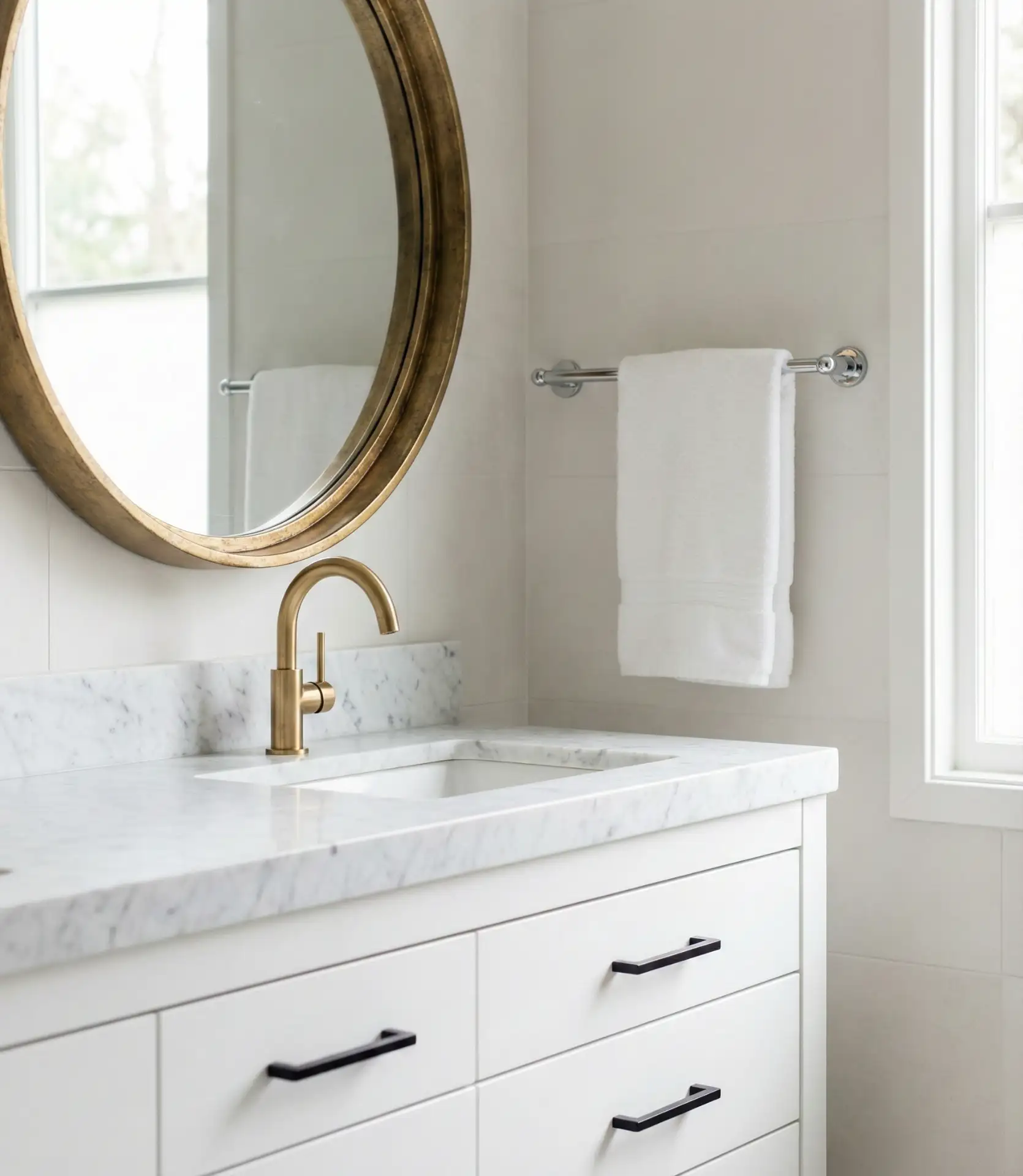
Layering brass, chrome, and matte black hardware over a black and white backdrop adds warmth and prevents the palette from feeling too stark or cold. This modern luxury strategy works especially well in master bath vanity spaces, where you can mix a brass faucet with matte black cabinet pulls and a chrome-framed mirror. The varied finishes create visual interest without introducing color.
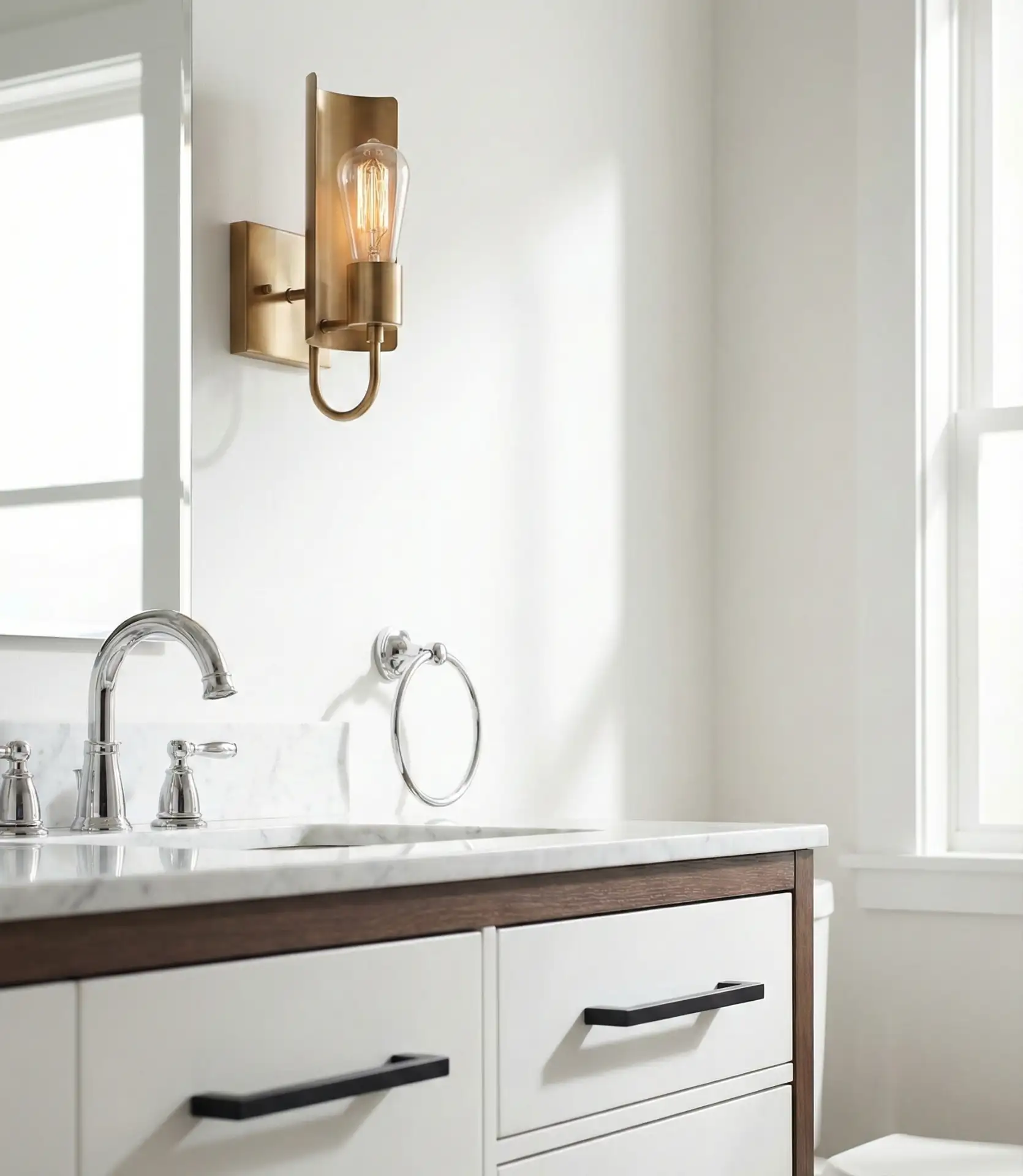
Interior designers used to warn against mixing metals, but today’s homeowners embrace the layered, collected look that feels more personal and less matchy-matchy. The key is maintaining a dominant finish—if most of your hardware is matte black, accent with one or two brass or chrome pieces rather than an equal split. This prevents the space from feeling chaotic and keeps the overall aesthetic cohesive and intentional.
13. Minimalist Floating Toilet and Wall-Hung Sink
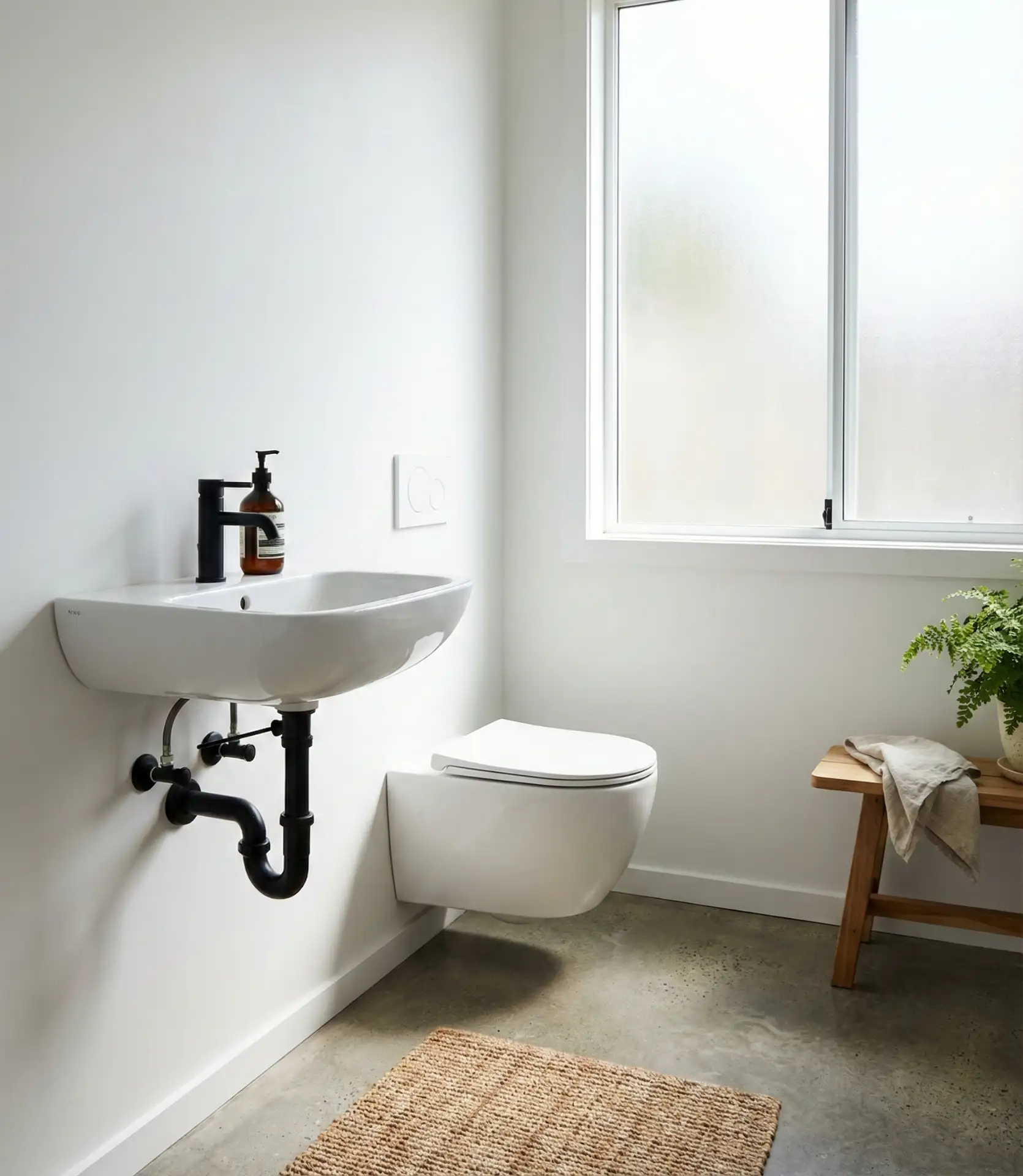
Wall-mounted fixtures create clean lines and make the floor fully visible, which visually expands the space and simplifies cleaning routines. This ultra-minimalist approach pairs beautifully with modern black and white palettes, where every element feels purposeful and streamlined. It’s especially popular in urban apartment bathrooms where maximizing square footage and ease of maintenance are top priorities.
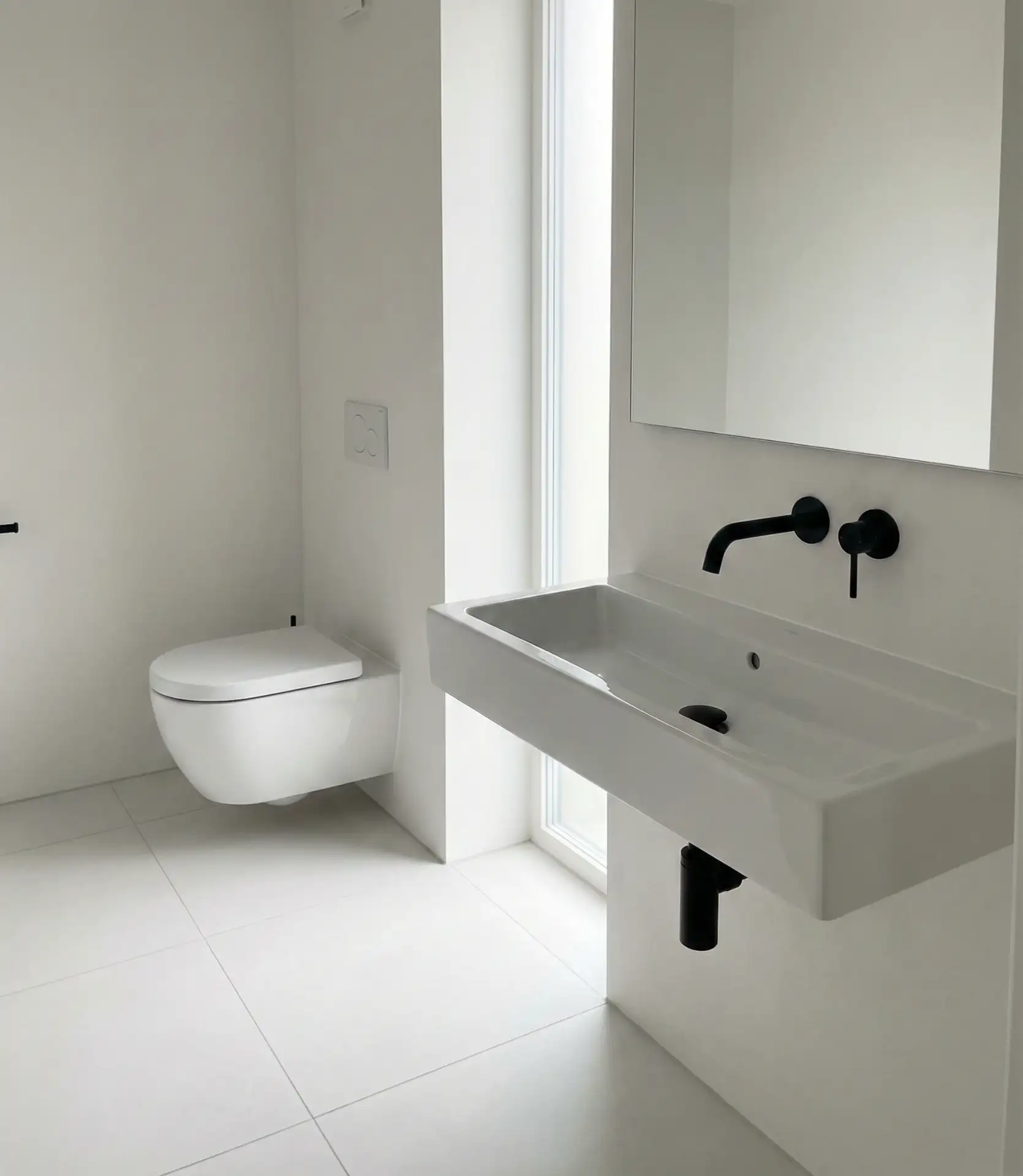
Wall-hung toilets do require in-wall carrier systems, which add roughly five hundred to a thousand dollars to installation costs compared to standard floor-mounted models. However, the investment pays off in easier floor cleaning and a sleek, European-inspired aesthetic that appeals to design-conscious buyers. Make sure your walls can support the weight—older lath-and-plaster walls may need reinforcement, so consult a plumber or contractor before committing to this style.
14. Bold Geometric Wallpaper Accent
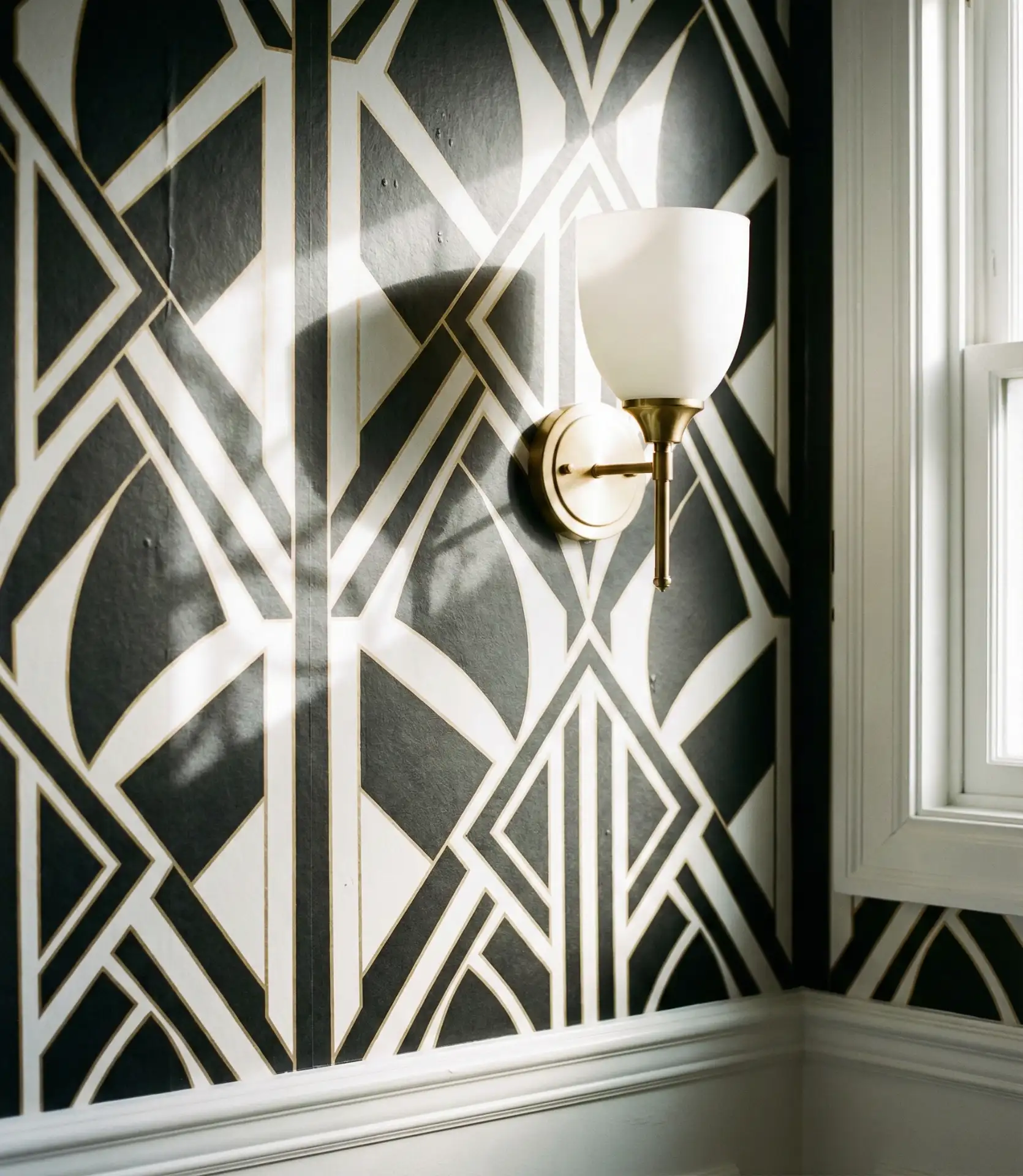
A single wall covered in black and white geometric wallpaper transforms the bathroom into a statement space with minimal effort. Whether you choose oversized hexagons, Art Deco arches, or modern stripes, the pattern adds movement and personality while maintaining the monochrome discipline. This works especially well in powder rooms or behind the vanity in larger baths, where the wallpaper can shine without competing with fixtures.

Peel-and-stick wallpaper has revolutionized renter-friendly bathroom updates, with quality options starting around thirty to fifty dollars per roll and requiring no special adhesive or professional installation. In humid climates, look for vinyl-coated or moisture-resistant varieties to prevent peeling or mildew. A real homeowner tip: order an extra roll beyond your calculated need—dye lots can vary, and it’s easier to return an unopened roll than to hunt for a match six months later when you want to patch a damaged section.
15. Textured Black Stone or Slate Feature Wall
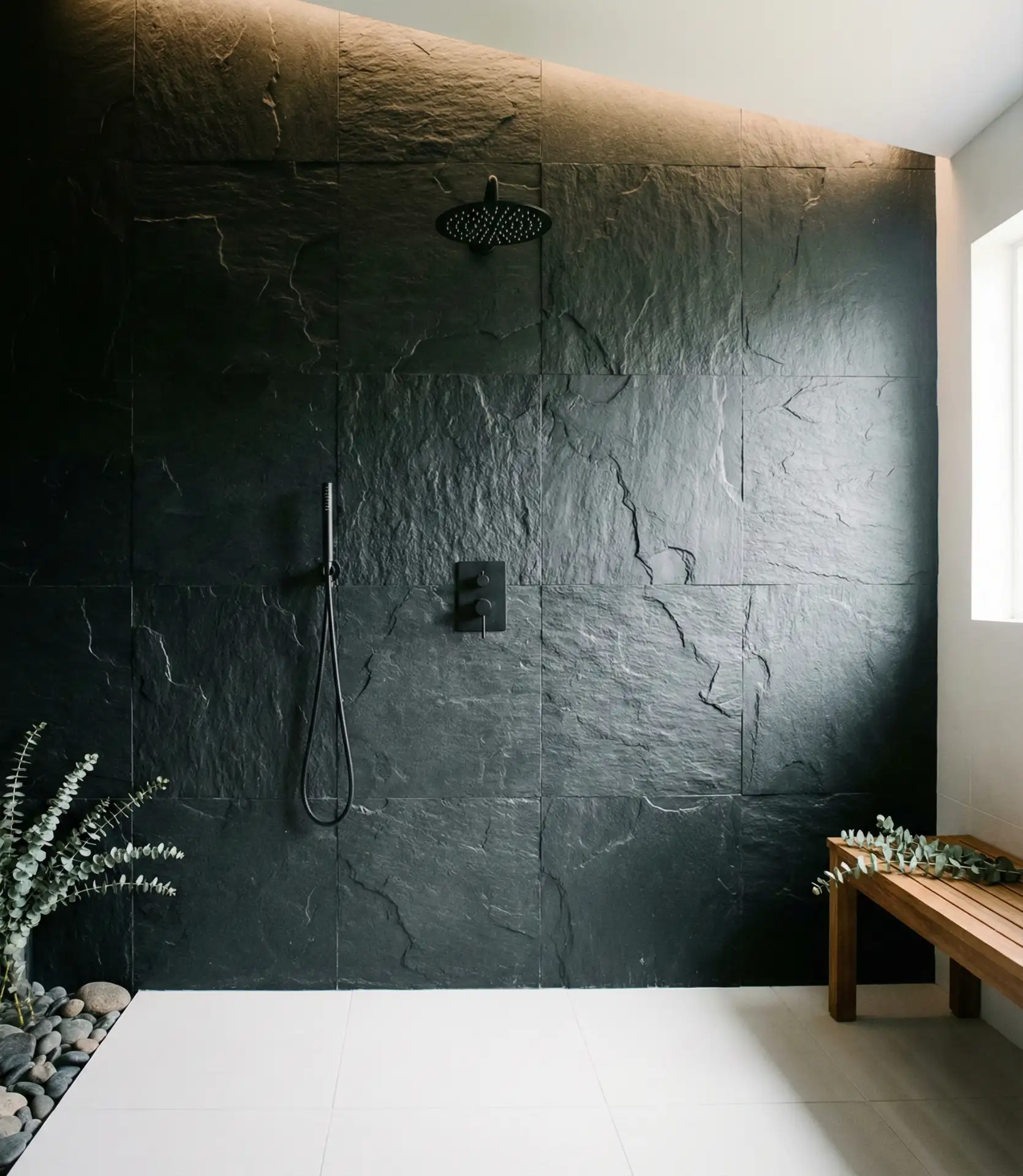
Natural black slate or stone adds organic texture and rustic depth to an otherwise smooth, monochrome bathroom. The varied surface catches light beautifully and introduces a tactile element that makes the space feel grounded and spa-like. This works especially well in modern luxury or bohemian bathrooms, where you want natural materials to soften the starkness of black and white.
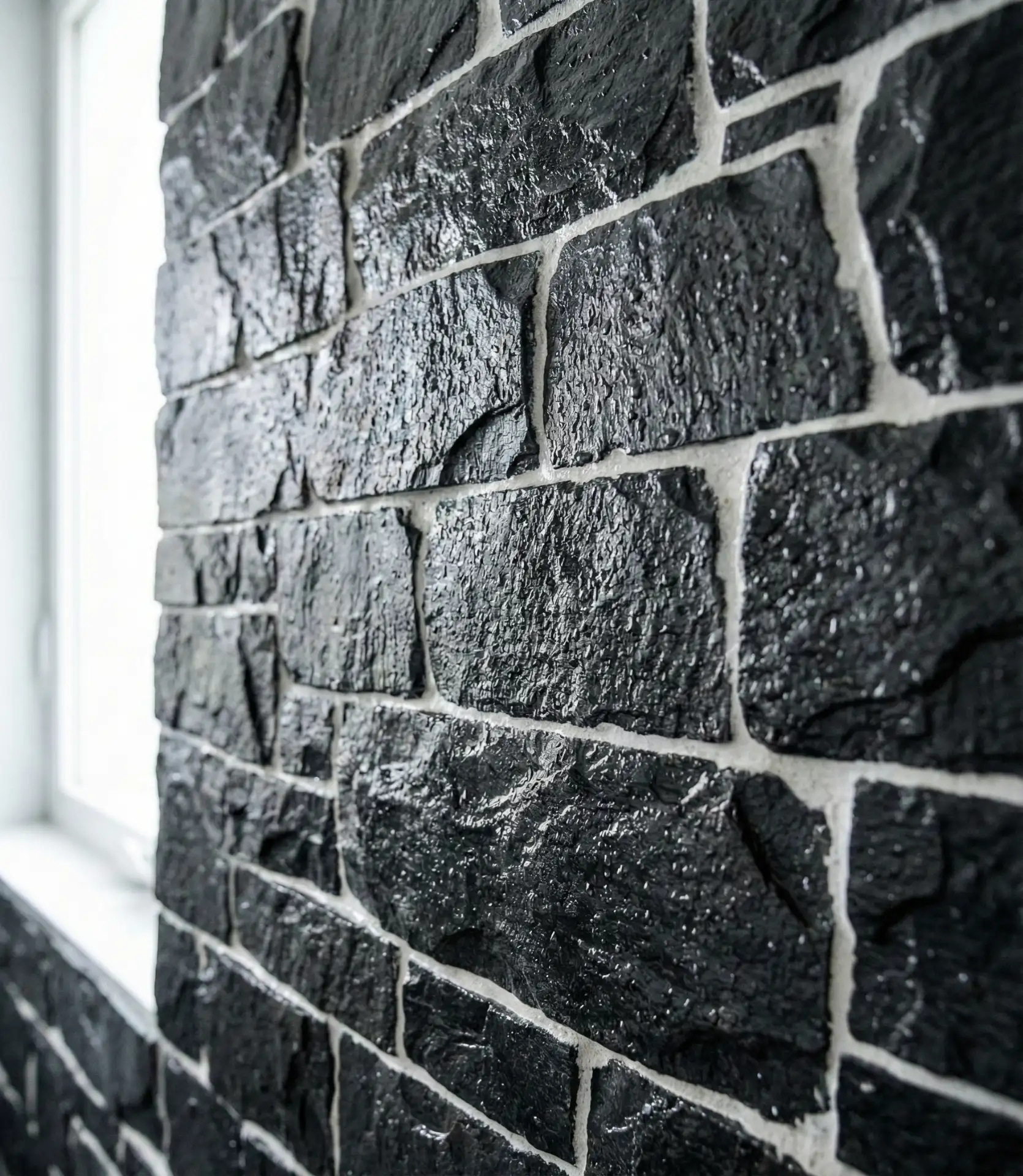
Stone tiles range widely in price—expect to pay anywhere from eight to twenty dollars per square foot depending on the quarry and finish. Slate is a particularly smart choice for wet areas because its natural cleft surface is inherently slip-resistant. One practical insight: seal the stone properly before grouting to prevent grout haze from staining the porous surface, and reseal annually to maintain water resistance and that rich, deep color.
16. Playful Pop of Color with Accessories
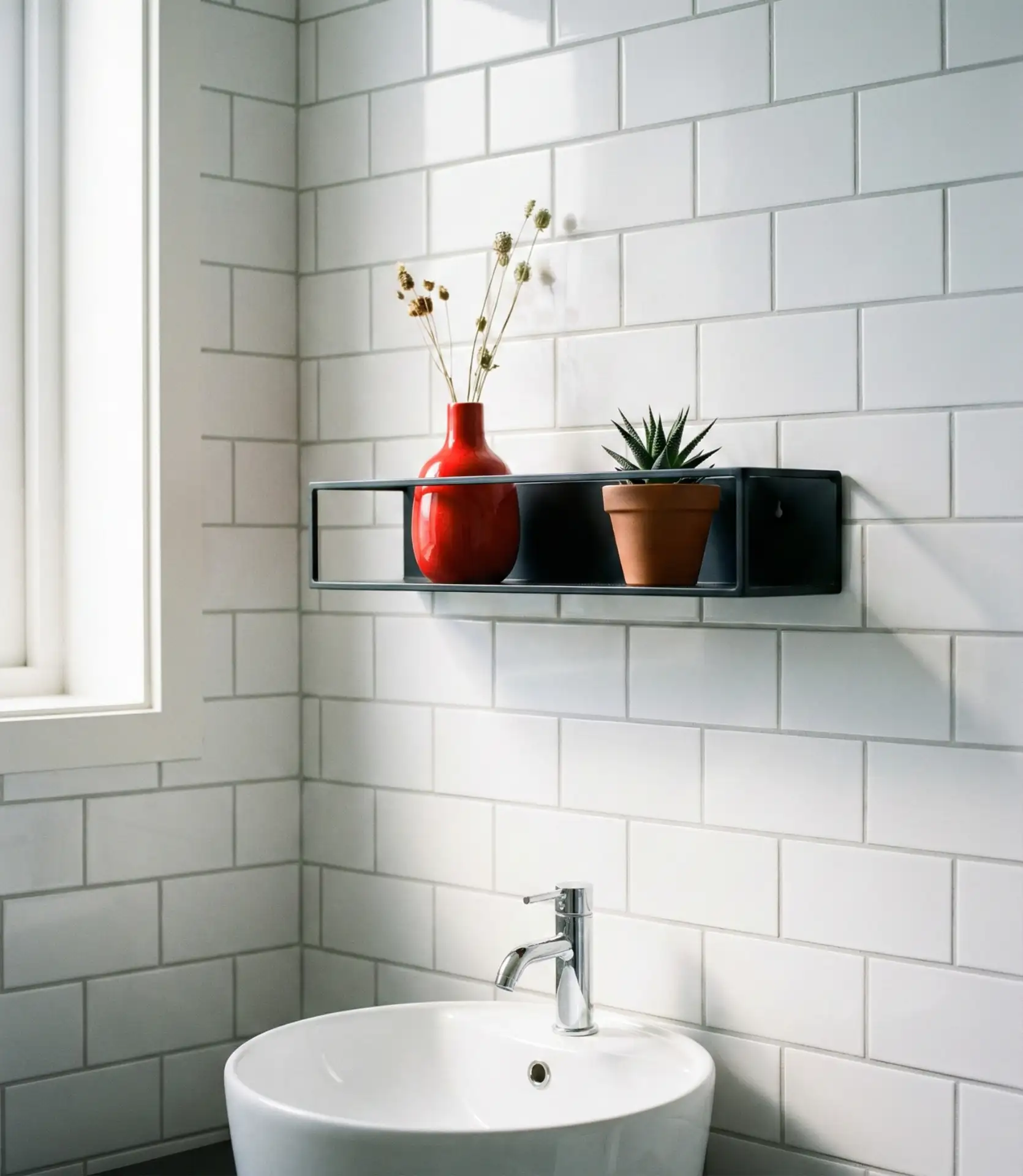
A black and white bathroom provides the perfect neutral canvas for a pop of color through towels, plants, or small decor items. A set of pink hand towels, a green potted fern, or even a red soap dispenser can energize the space without requiring a permanent commitment. This strategy is ideal for renters or anyone who likes to refresh their bathroom’s mood seasonally.
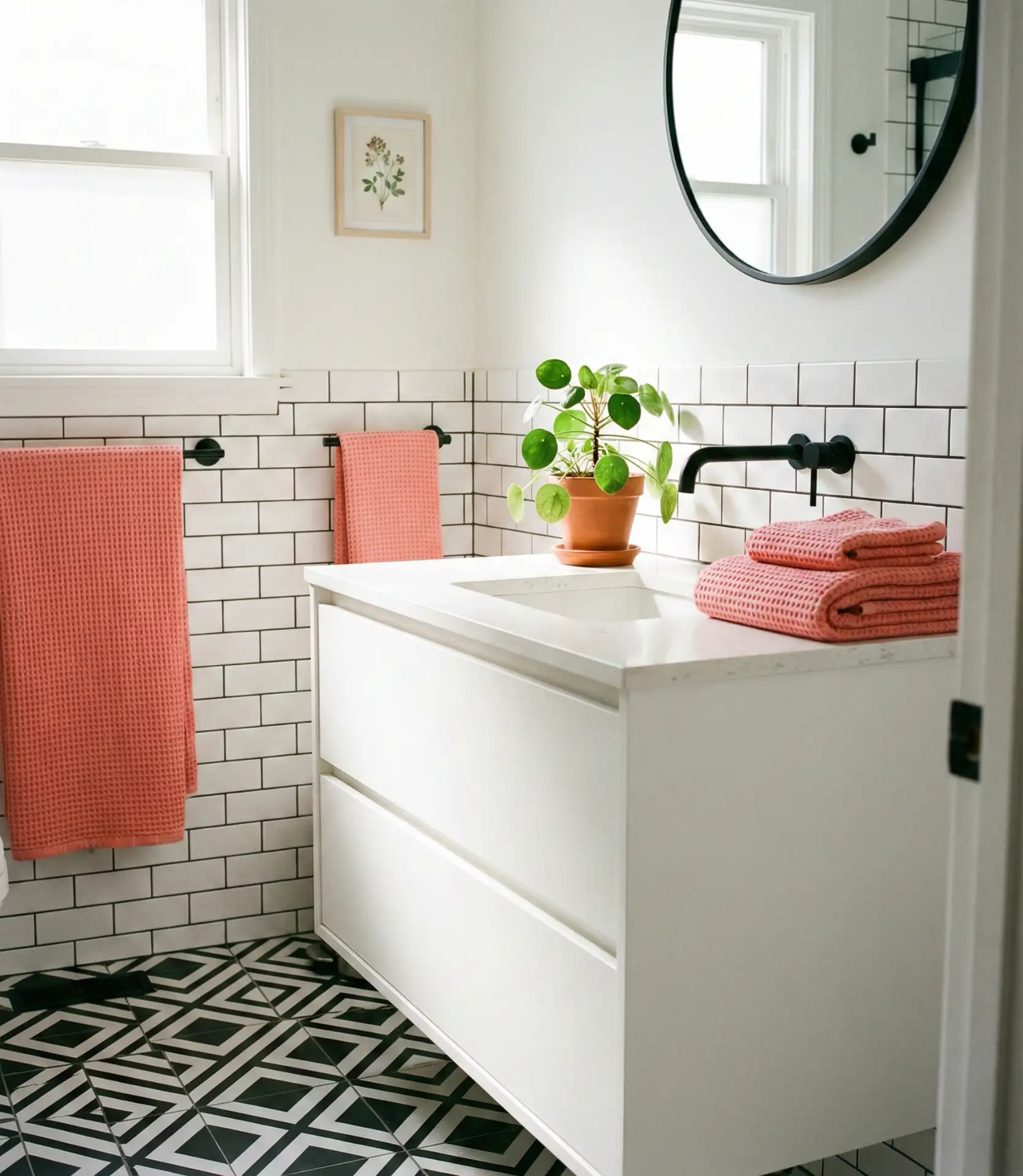
This is the most budget-friendly way to personalize a bathroom—a set of quality towels costs thirty to sixty dollars, and a live plant runs five to fifteen dollars at most nurseries. Where it works best is in spaces where you want flexibility: maybe you love yellow in summer and shift to deep burgundy in fall. Just keep the accent color limited to two or three items so the black and white palette remains the dominant story.
17. Oversized Black-Framed Mirror
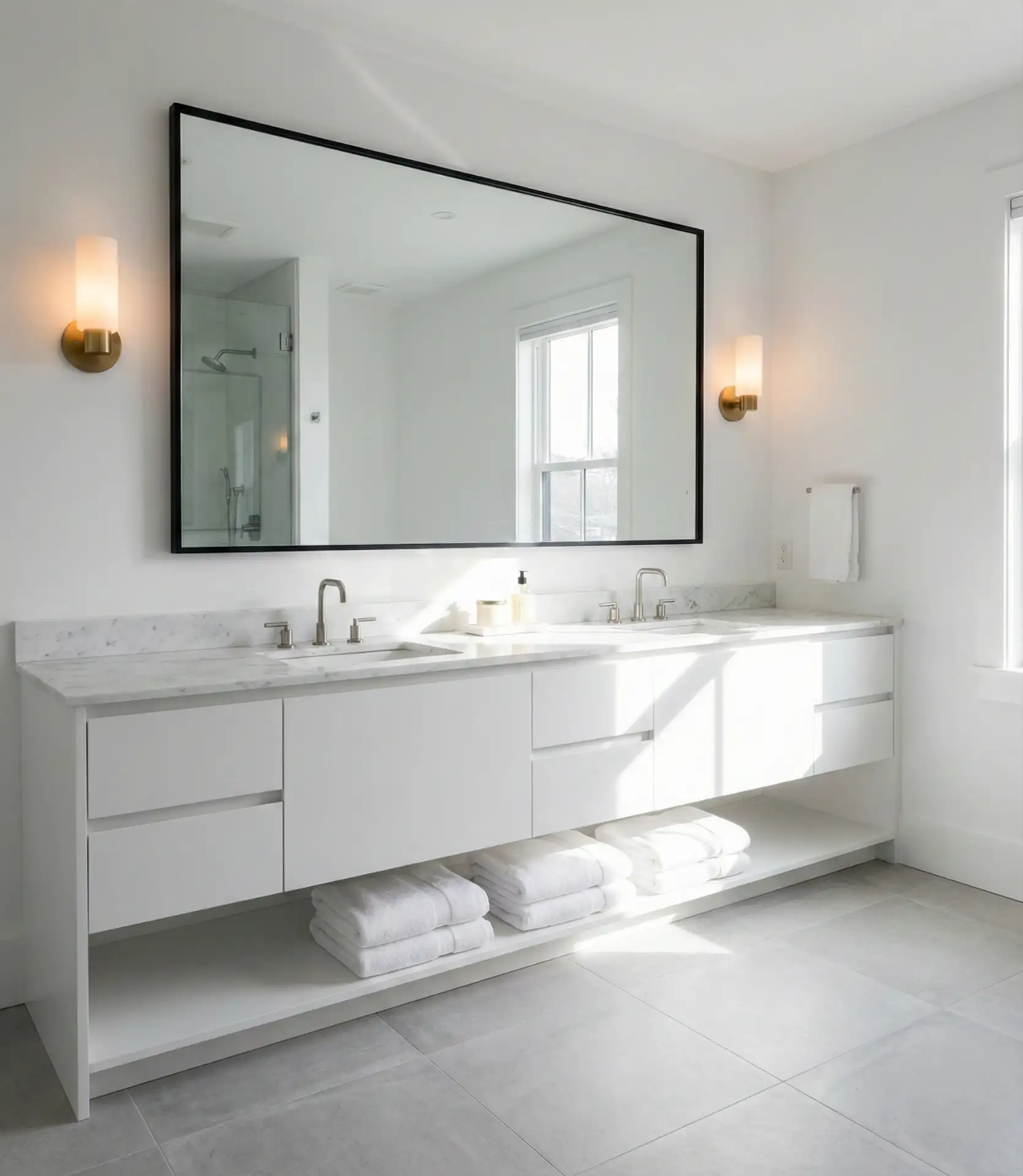
An oversized mirror with a chunky black frame acts as both a functional necessity and an architectural statement, visually doubling the room’s size while anchoring the vanity wall. This approach works across nearly every style—modern, farmhouse, vintage, and minimalist—because the bold frame creates structure and the reflective surface adds light. It’s especially effective in bathrooms with limited natural light or narrow layouts.
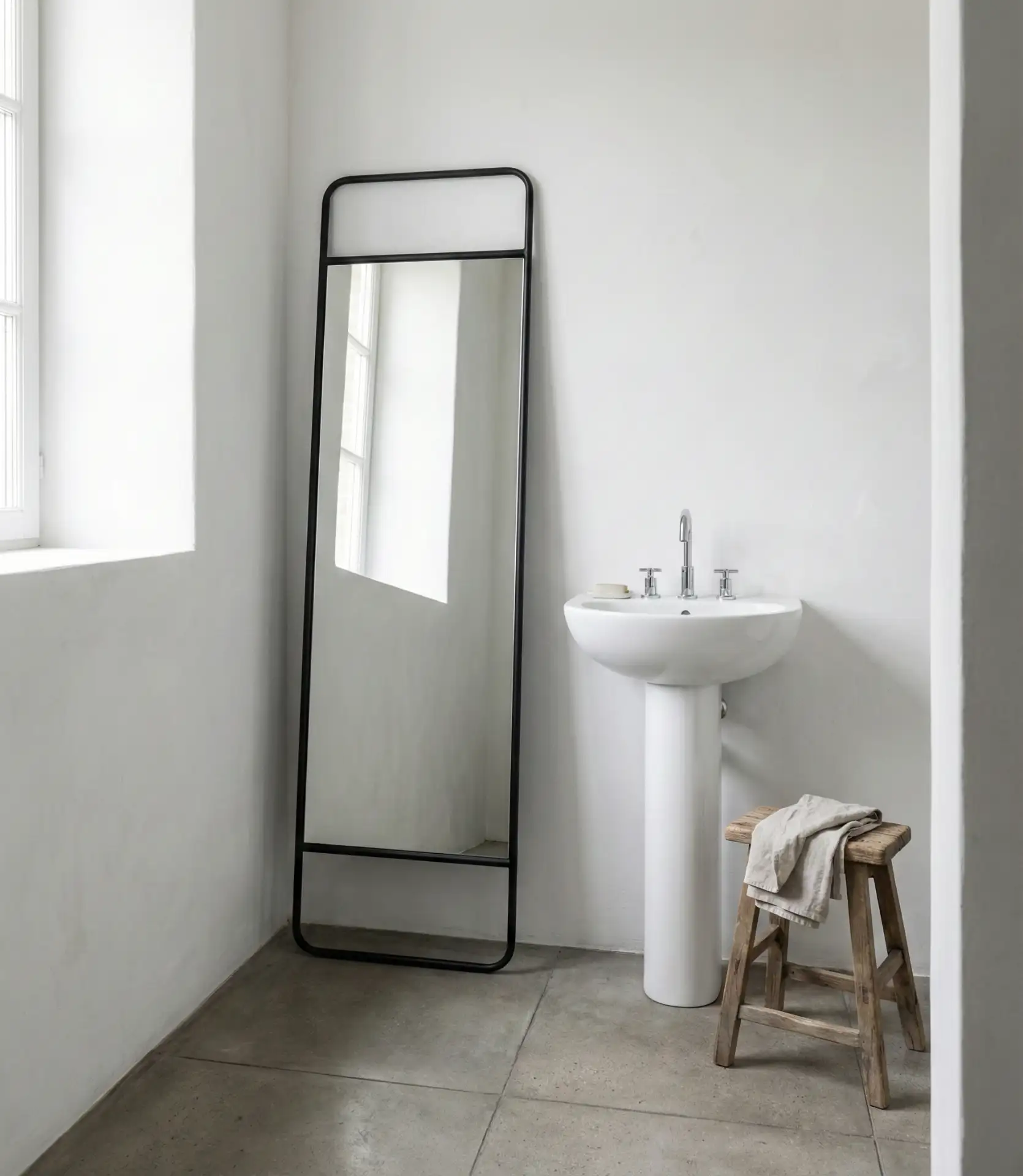
Custom mirrors can be pricey, but many homeowners find affordable options at big-box retailers or online for two hundred to five hundred dollars depending on size. The key is proportion—the mirror should be roughly seventy to eighty percent the width of your vanity to feel balanced. A common mistake is hanging the mirror too high; the center should sit at average eye level, typically around five feet from the floor, to be functional for everyone in the household.
18. Industrial Exposed Plumbing with Black Pipes
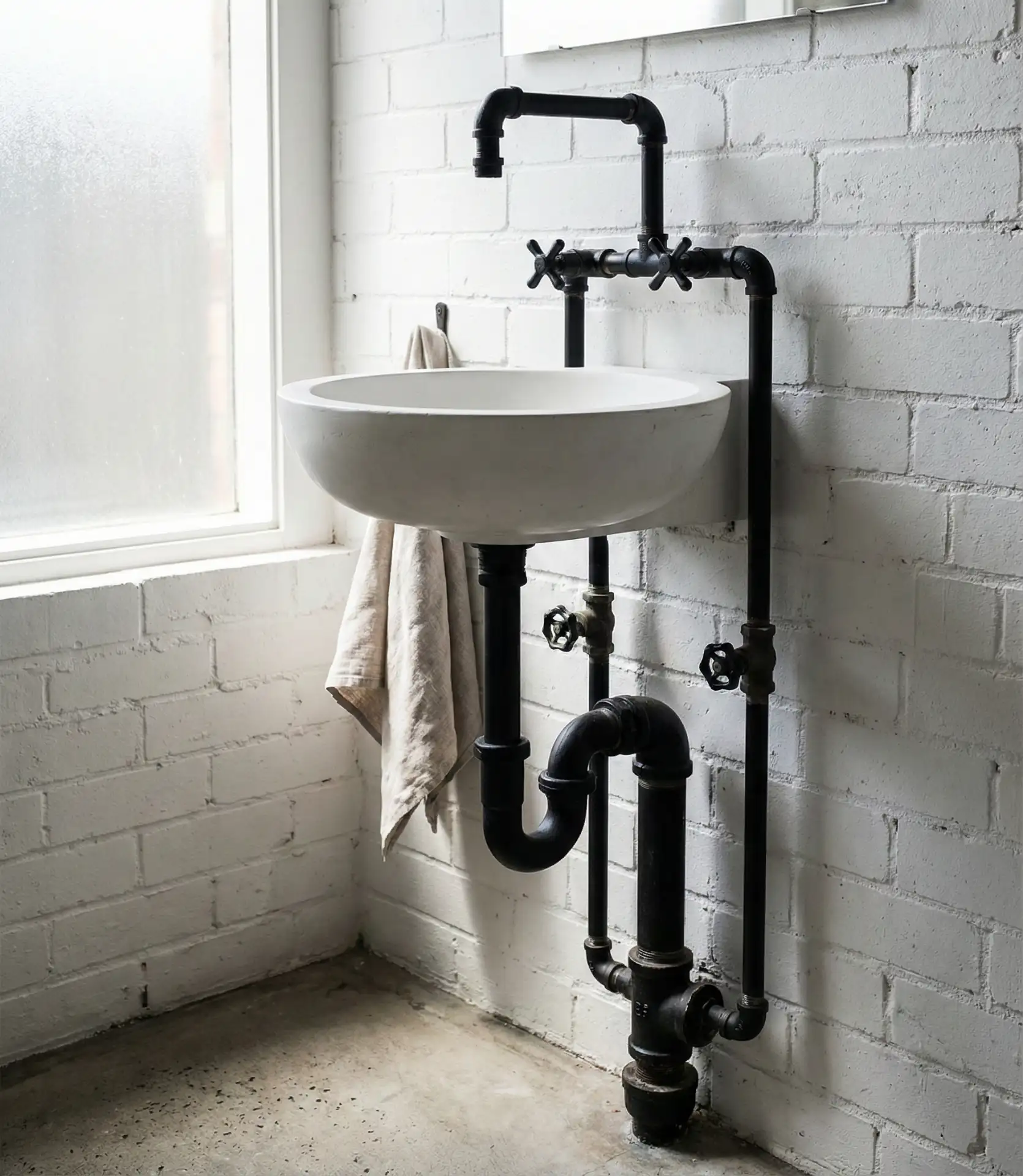
Exposed black pipe fixtures bring an edgy, industrial vibe that pairs surprisingly well with clean white surfaces. This modern approach is popular in loft conversions and rustic homes where raw materials and honest construction are celebrated rather than hidden. The plumbing becomes a design feature, adding linear interest and a handcrafted quality to the space.
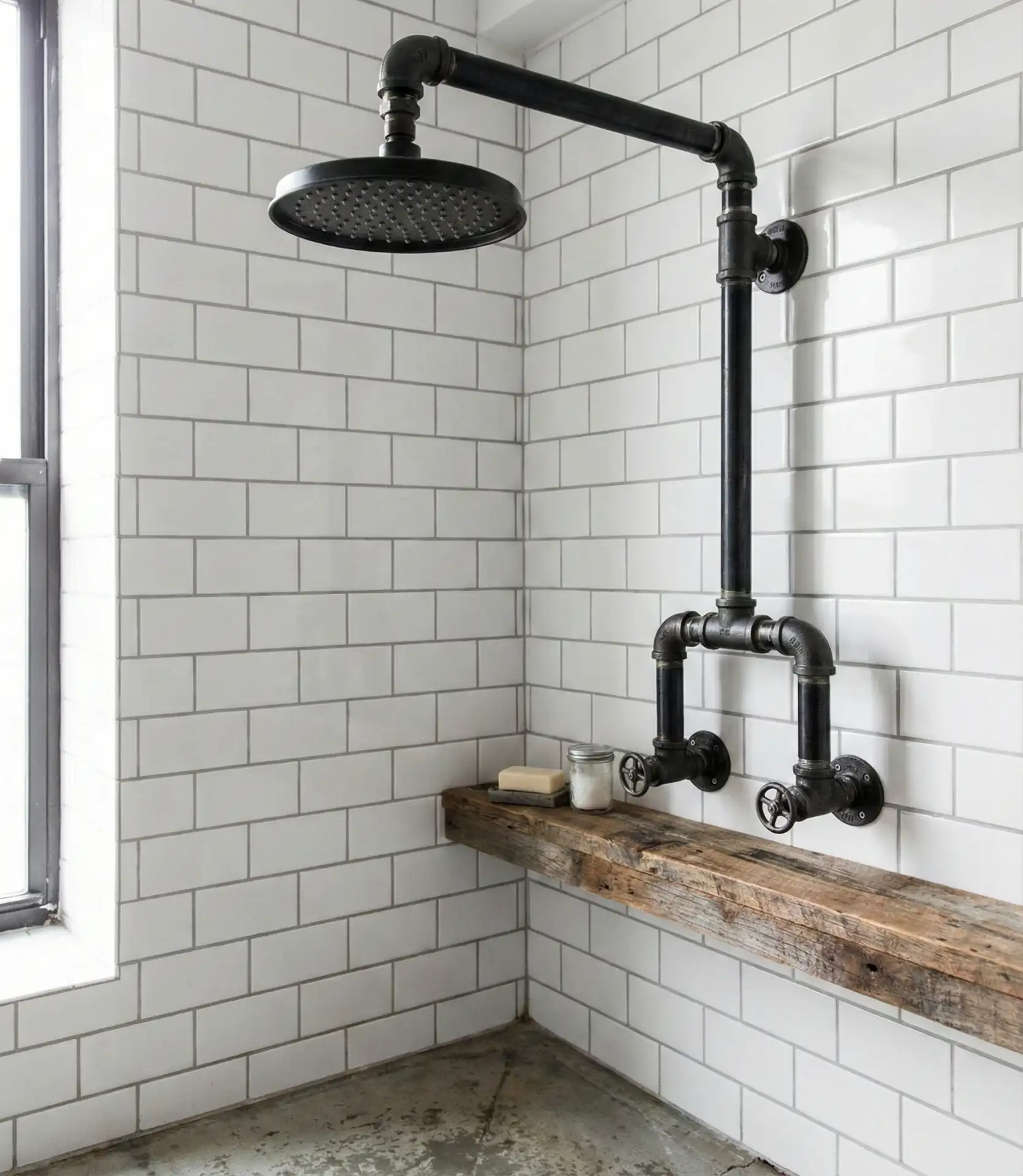
Expert plumbers note that black iron pipe must be properly sealed and coated to prevent rust in humid environments—ask specifically for pipe that’s been powder-coated or treated for wet spaces. Installation typically costs more than standard concealed plumbing because each connection must be both functional and visually finished. The result, however, feels high-design and intentional, especially in bathrooms where you want a bit of personality and edge.
19. Soft Linen Textures and Woven Baskets
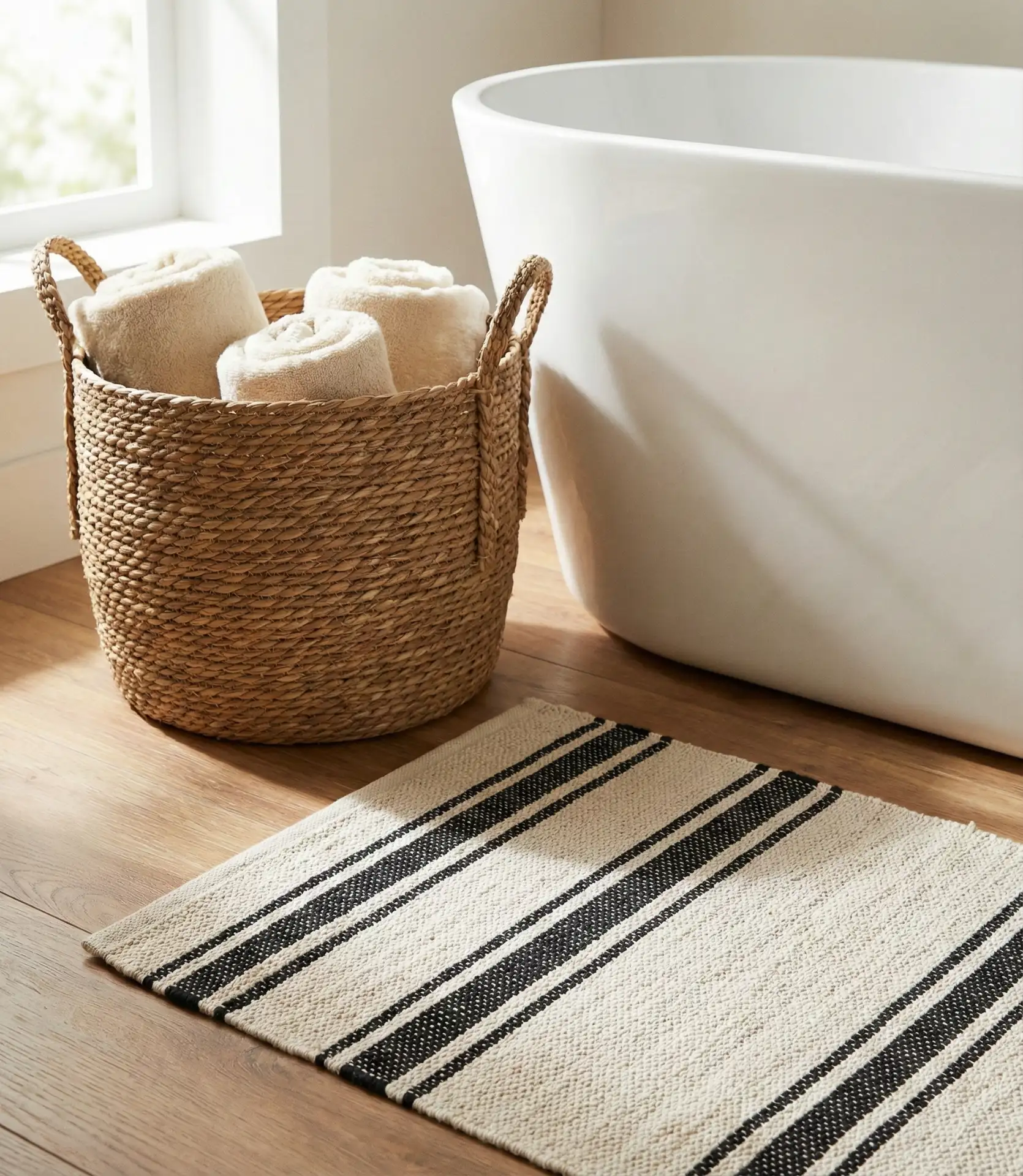
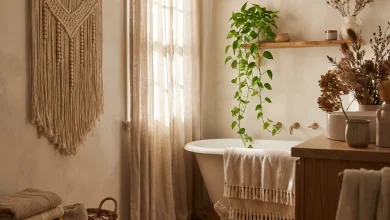
Natural linen shower curtains, woven storage baskets, and textured bath mats bring warmth and softness to a black and white palette, preventing the space from feeling too cold or clinical. This bohemian or coastal layering works beautifully when you want the bathroom to feel inviting and lived-in rather than gallery-perfect. The neutral textures complement the monochrome without competing visually.
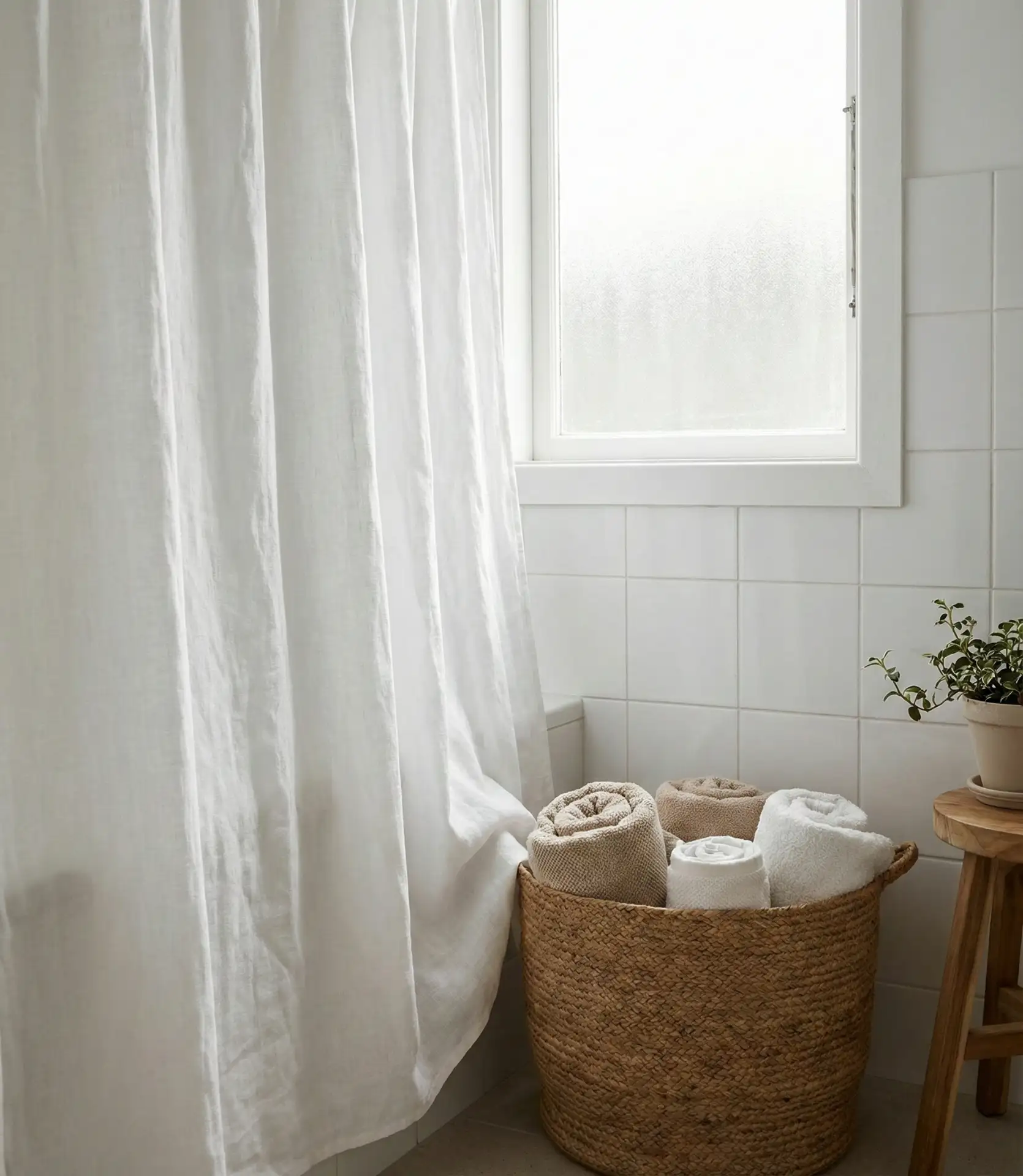
Real homeowners often overlook the power of texture in monochrome spaces, assuming color is the only way to add interest. Linen, jute, and cotton introduce visual variety through weave and drape, and they’re forgiving of the humid bathroom environment if you choose washable options. Budget around fifty to one hundred dollars to outfit a bathroom with quality linen curtains and a few storage baskets—a small investment that makes the space feel curated and comfortable.
20. Checkerboard Floor Pattern

The classic black and white checkerboard floor never goes out of style, offering a retro nod that works in vintage, farmhouse, and even modern bathrooms depending on how you style the rest of the space. The strong graphic pattern anchors the room and provides a visual foundation that lets you keep walls and fixtures simple. It’s especially popular in small powder rooms where the bold floor becomes the star.

Vinyl tile is the most affordable option for this look, running about two to four dollars per square foot and offering easy DIY installation. Ceramic or porcelain checkerboard tiles cost more—four to eight dollars per square foot—but hold up better over time and feel more substantial underfoot. A practical insight: start your layout in the center of the room and work outward to ensure the pattern is symmetrical, and always order ten percent extra tile to account for cuts and future repairs.
21. Contemporary Black Hardware Suite
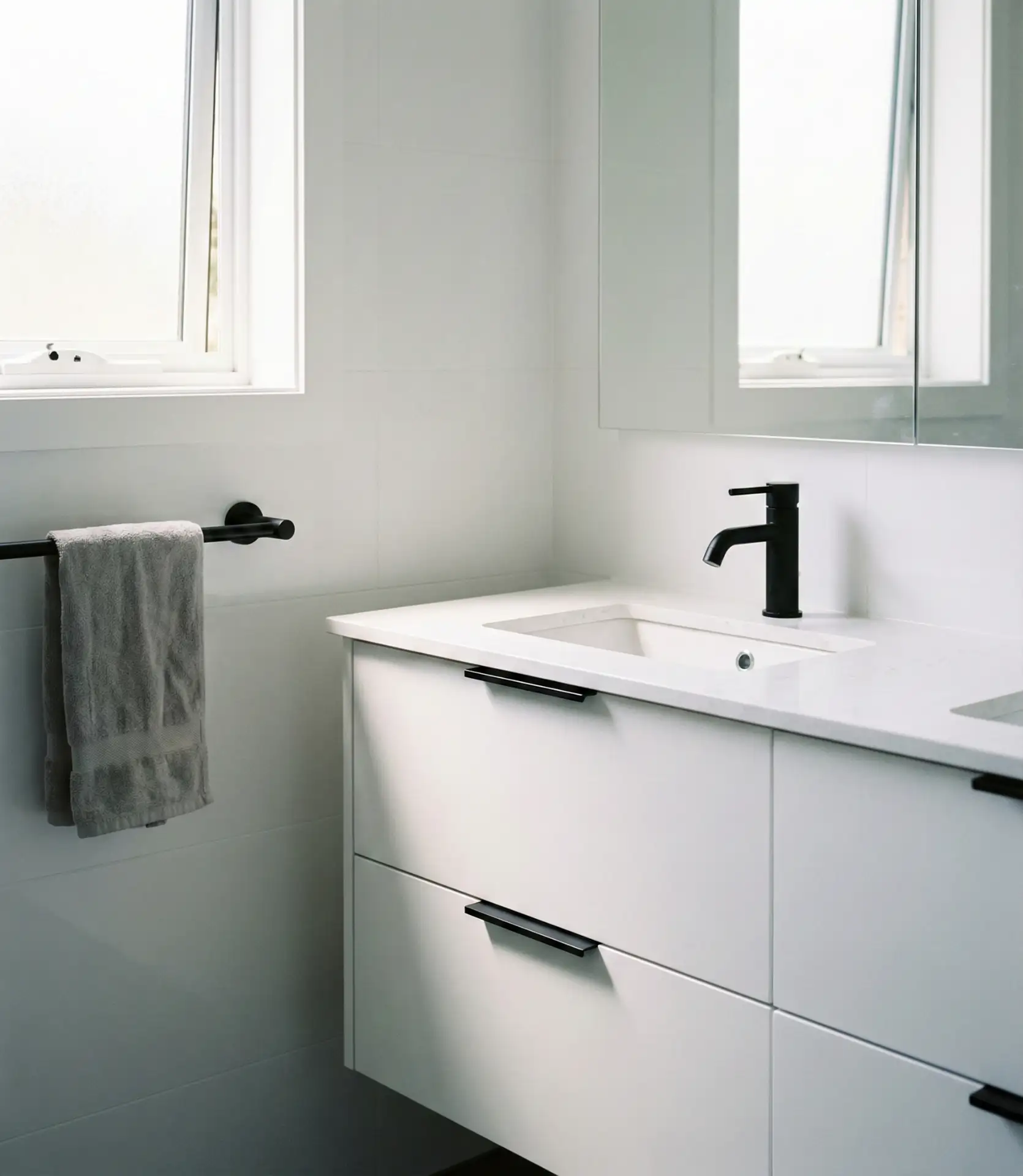
Replacing all bathroom hardware—faucets, cabinet pulls, towel bars, and toilet paper holders—with a coordinated matte black suite creates instant cohesion and a modern designer feel. This simple upgrade makes even a builder-grade bathroom feel custom and considered, and the dark hardware stands out beautifully against white cabinetry and walls. It’s one of the most cost-effective ways to refresh a dated space without a full renovation.

Hardware sets typically range from one hundred fifty to four hundred dollars depending on brand and finish quality, and most homeowners can tackle the installation themselves with basic tools. The finish is key—look for “matte black” or “flat black” rather than glossy, which can show fingerprints and water spots more readily. This upgrade is particularly popular in the Sun Belt and Pacific Northwest, where modern aesthetics dominate new construction and renovation trends.
22. Monochrome Terrazzo or Speckled Surfaces
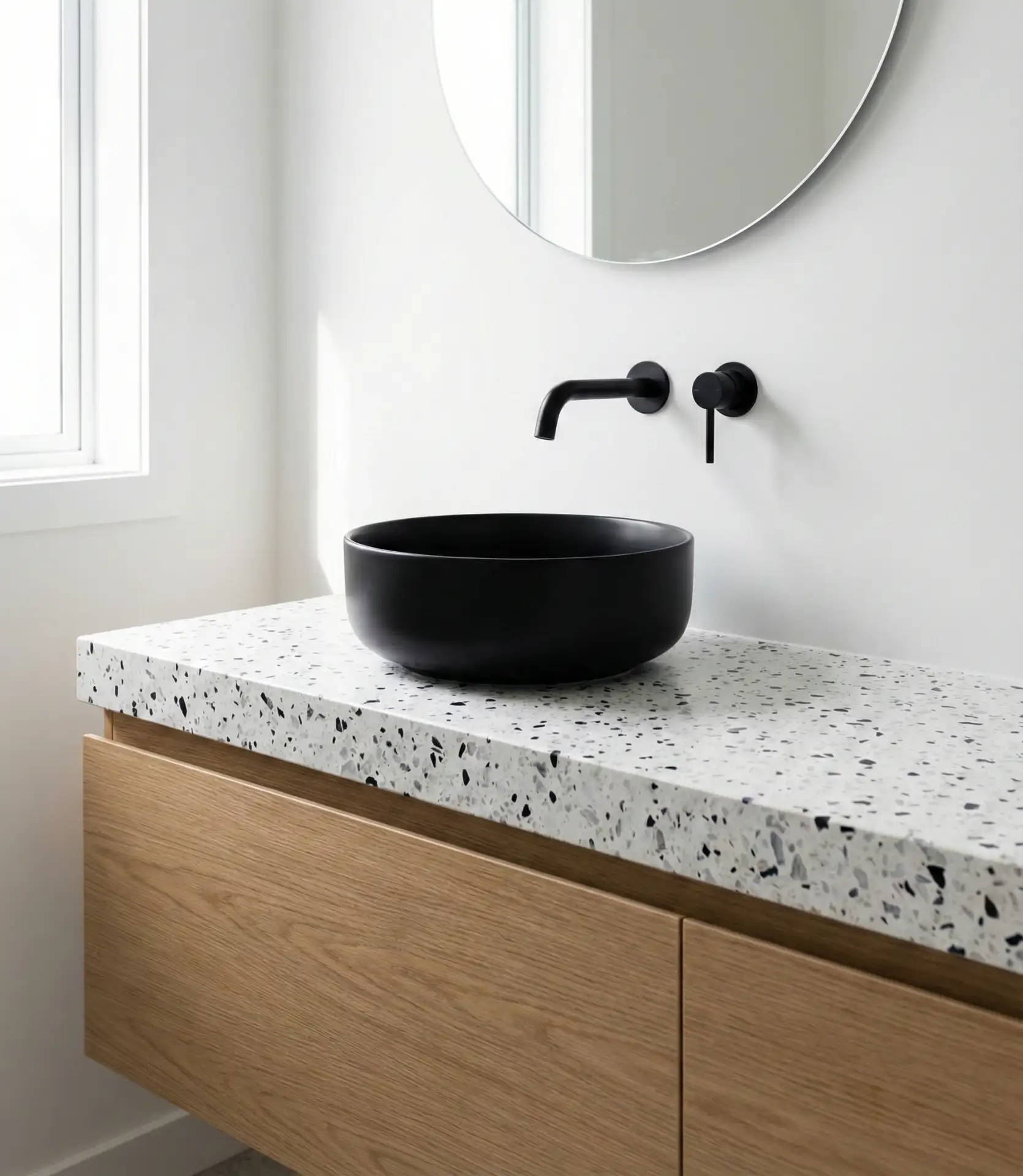
Black and white terrazzo or speckled countertops and floors add visual interest through subtle patterns while staying firmly within the monochrome palette. The organic, irregular flecks create movement without overwhelming the eye, and the material’s durability makes it ideal for high-traffic or adorable family bathrooms. This modern choice works beautifully in both minimalist and bohemian settings, bridging retro and contemporary aesthetics.

Terrazzo experienced a major resurgence in 2024 and remains popular heading into 2026, with both authentic poured terrazzo and more affordable terrazzo-look tiles available. True terrazzo countertops run seventy-five to one hundred dollars per square foot installed, while terrazzo-look porcelain tiles cost eight to fifteen dollars per square foot—still delivering the aesthetic at a fraction of the price. The speckled pattern is forgiving of minor stains and wear, making it a smart choice for busy households.
Black and white bathrooms continue to prove their staying power because they balance timeless elegance with endless flexibility. Whether you lean into bold patterns, warm textures, vintage charm, or sleek minimalism, this classic palette adapts to your personal style while maintaining a cohesive, sophisticated look. We’d love to hear which of these ideas resonates with you or see photos of your own black and white bathroom—share your thoughts and inspiration in the comments below!