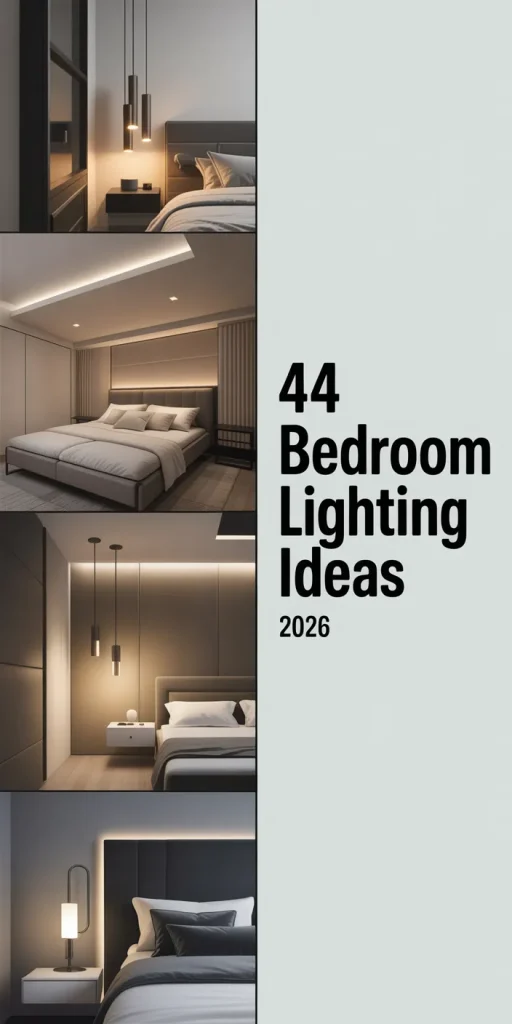
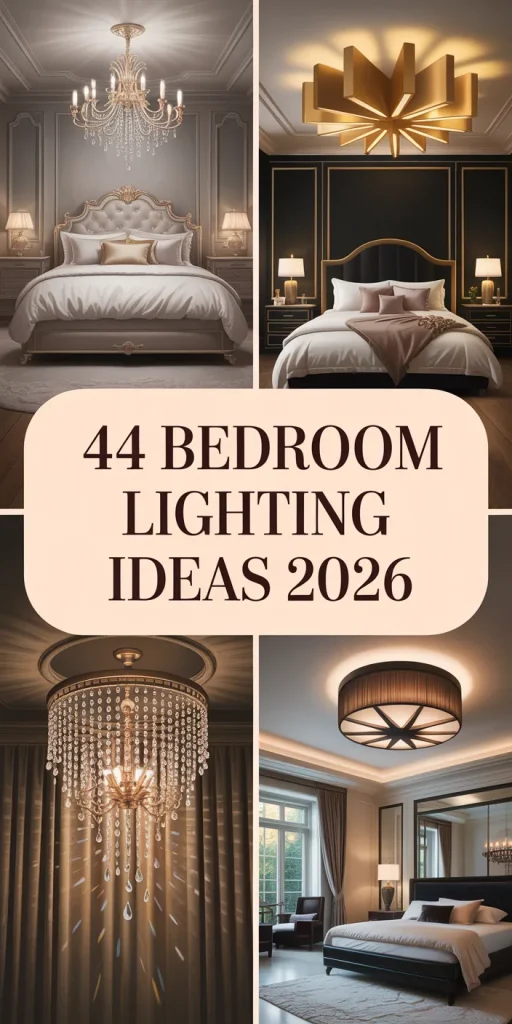
44 Bedroom Lighting Ideas 2026 That Transform Your Space – Cozy, Modern and Stylish Lighting Inspiration

Bedroom lighting is having a serious moment. After years of defaulting to a single overhead fixture and calling it done, more Americans are rethinking how light shapes the way a room feels—especially at night, when the bedroom should feel like a genuine retreat. Pinterest searches for bedroom lighting ideas have surged heading into 2026, reflecting a growing desire to layer warmth, texture, and personality into the most personal room in the house. Whether you’re working with a rental, an attic nook, or a spacious primary suite, this guide covers some of the most inspiring, livable lighting ideas you’ll want to save—and actually try.
1. Warm Sconce Pairs for a Cozy Bedroom Retreat
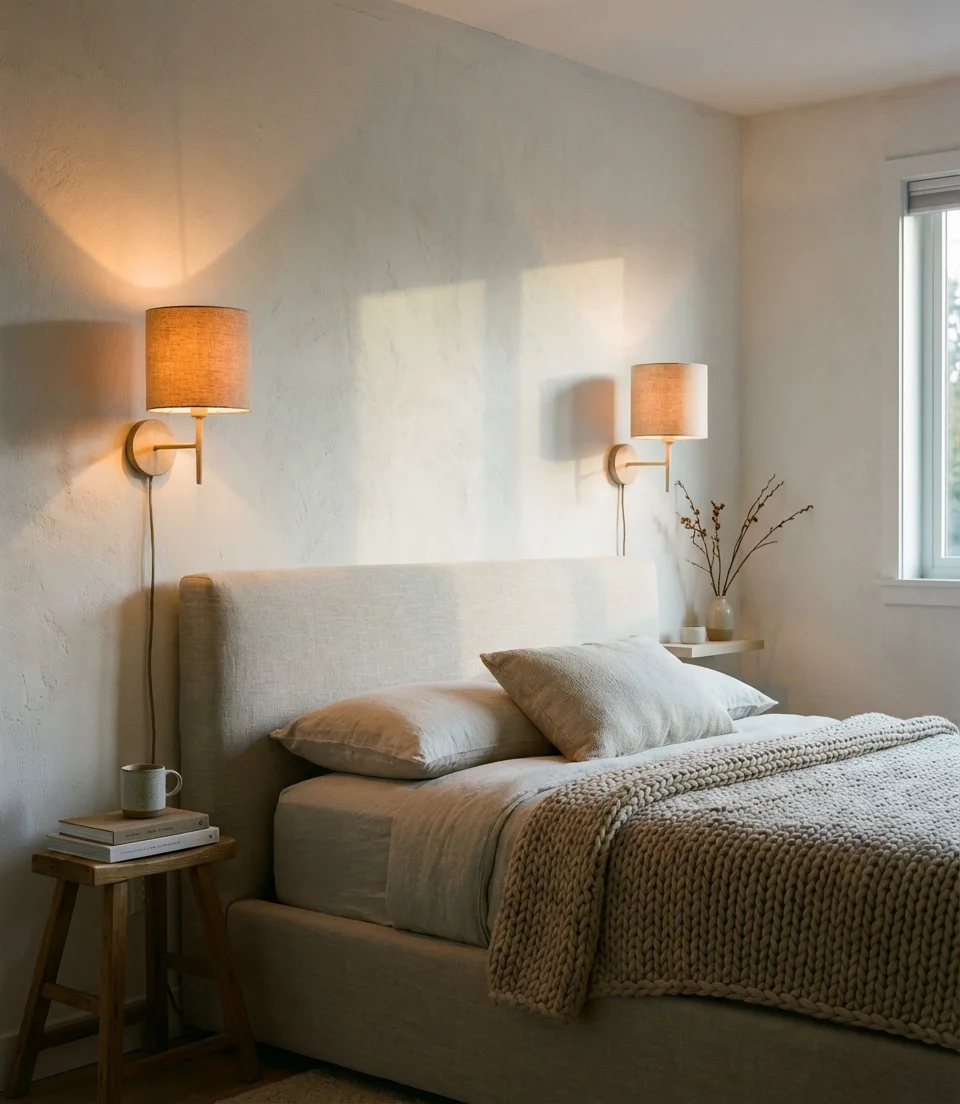
There’s something almost effortlessly right about a pair of wall sconces flanking a bed. They deliver that cozy glow that a single overhead light can never quite replicate—soft, directional, and layered against the wall like candlelight you never have to relight. This setup works especially well in rooms where nightstands feel too crowded, freeing up surface space while still giving each sleeper their reading light. It’s one of the most classic wall lighting moves for a reason: it just works.
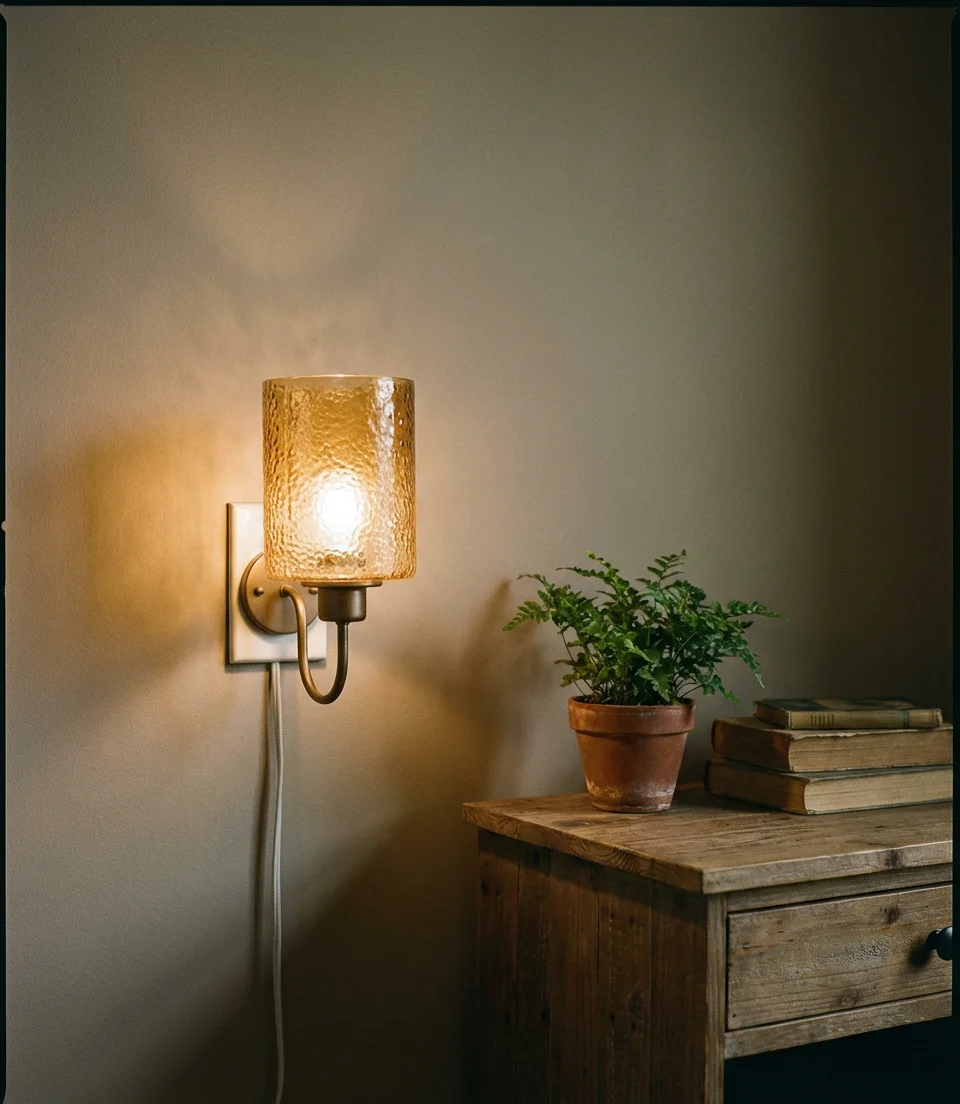
Sconces are also one of the smarter budget plays in bedroom lighting. A pair of plug-in sconces—no electrician required—runs anywhere from $60 to $200 total and can completely transform the visual weight of a headboard wall. Look for shades in linen, amber glass, or matte black to keep the mood warm without leaning too trendy. Dimmer cords are widely available and make the whole setup feel intentional rather than improvised.
2. Modern Hanging Ceiling Light Over the Bed
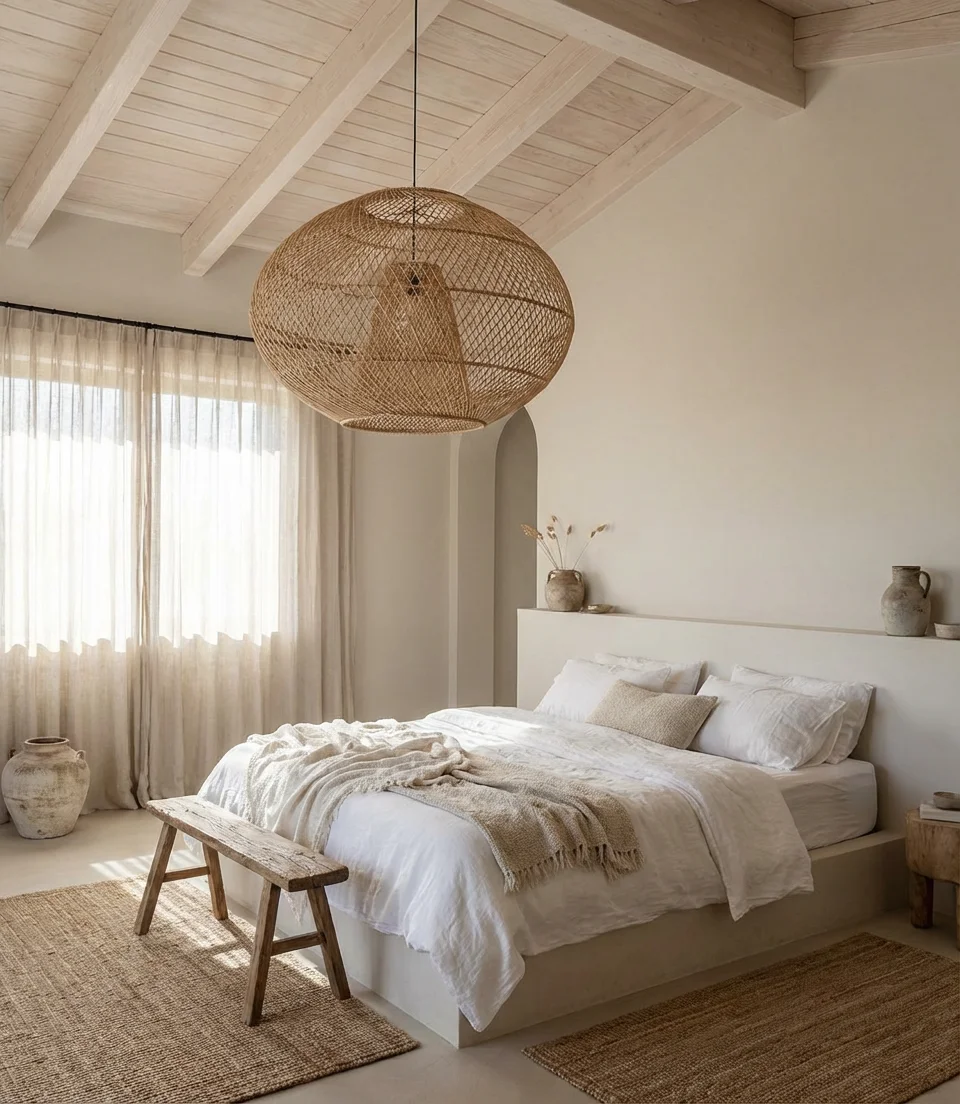
A modern hanging ceiling fixture positioned directly above the bed does something dramatic without trying too hard. It draws the eye upward, gives the room a clear focal point, and eliminates the flat, shadowless quality that a flush mount tends to leave behind. In 2026, the most intriguing versions of this look lean sculptural—think rattan orbs, hand-blown glass, or blackened steel pendants with exposed Edison-style bulbs. The hanging ceiling approach works in rooms of almost any size, as long as ceiling height allows for at least 7 feet of clearance from floor to fixture.
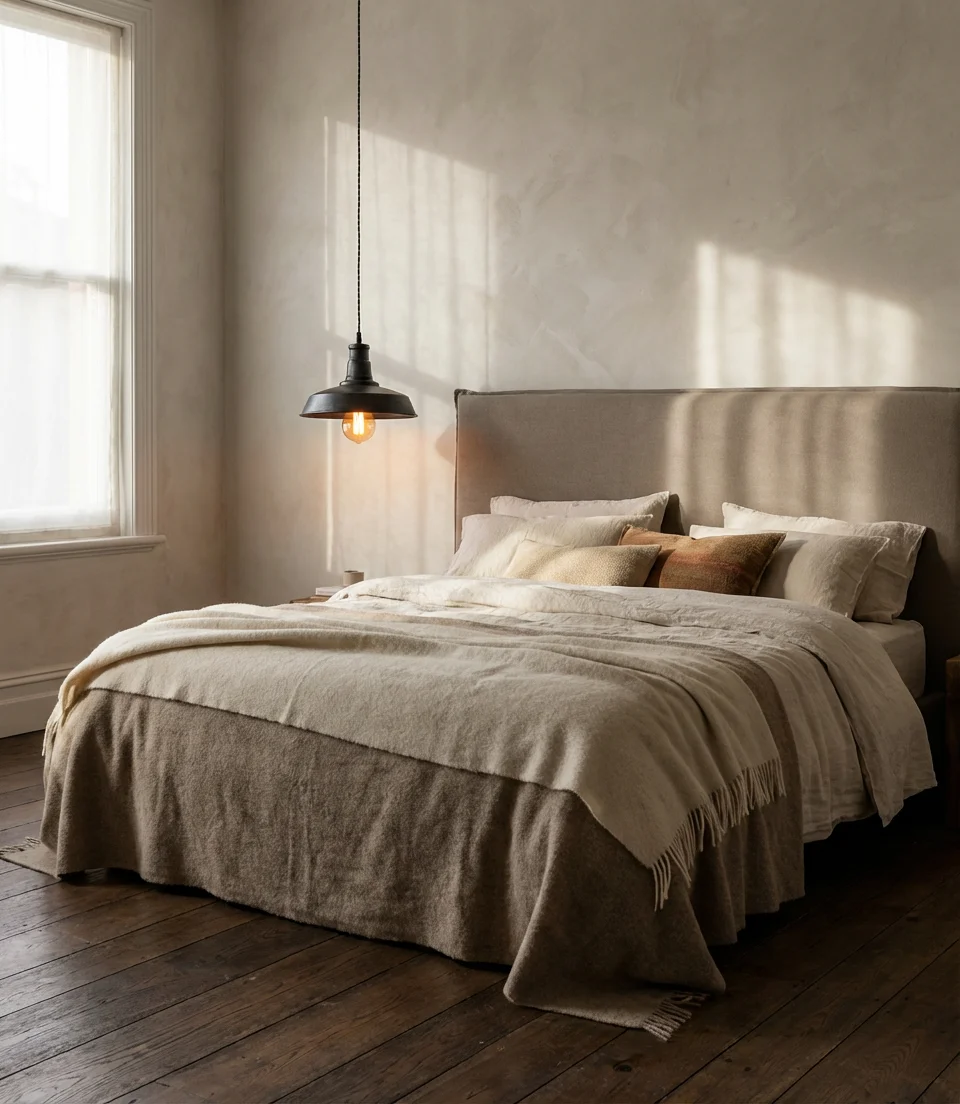
One thing seasoned interior designers consistently flag: the height of your pendant matters more than the style. Hang it too low, and the light source enters your sightline every time you sit up in bed—not ideal for a space meant for rest. Aim to position the bottom of the shade roughly 6.5 to 7 feet from the floor, and always choose a bulb with a warm color temperature of 2700K or lower to keep things bedroom-appropriate.
3. LED Strip Lighting for a Modern Bedroom Aesthetic
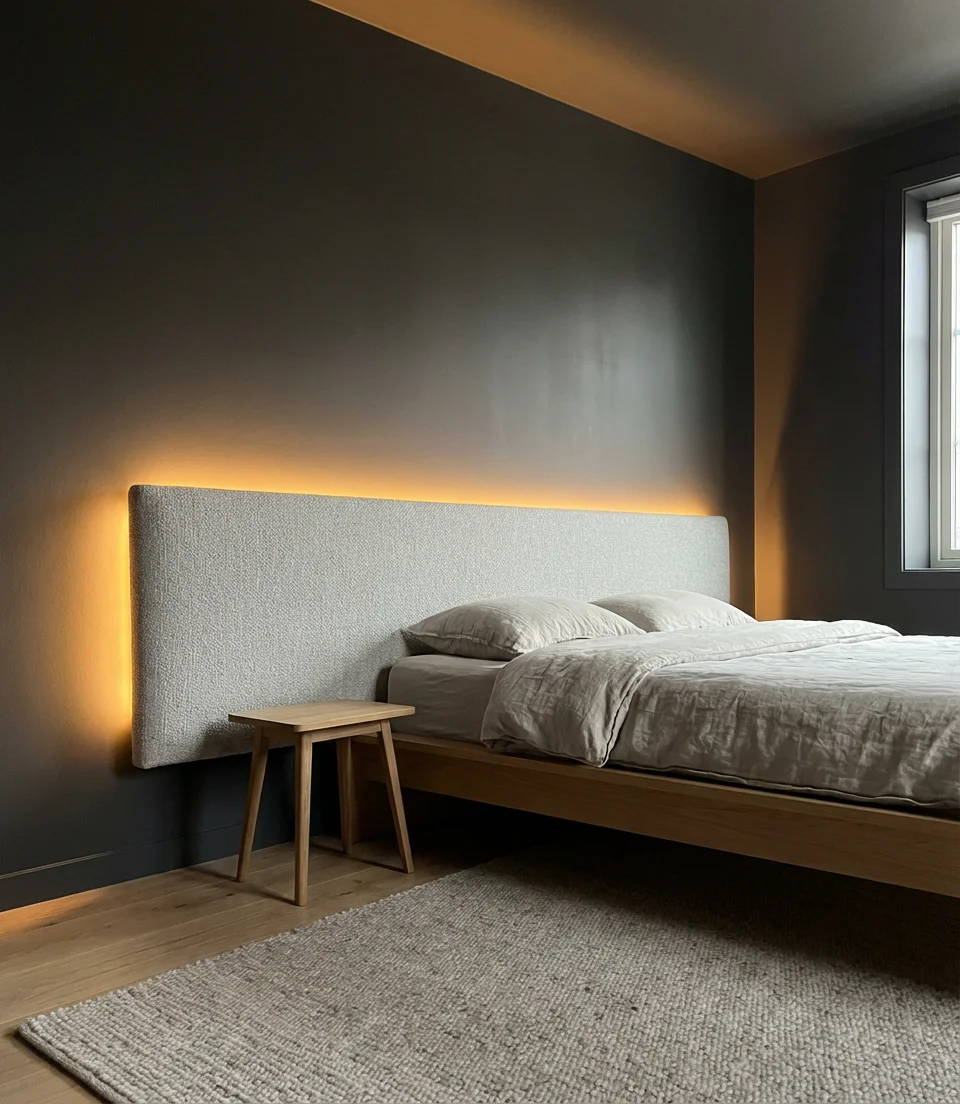
LED strip lighting has matured far beyond its early association with college dorm rooms. When applied thoughtfully—tucked behind a floating headboard, traced along the underside of a platform bed frame, or fitted into a recessed ceiling cove—it creates an aesthetic glow that reads as genuinely designed rather than DIY-afterthought. The indirect light bounces off surfaces instead of shining directly at you, which means it adds warmth and visual depth without causing glare. Color-tunable strips let you shift from a cool, energizing white during morning routines to a deep amber wind-down mode at night.
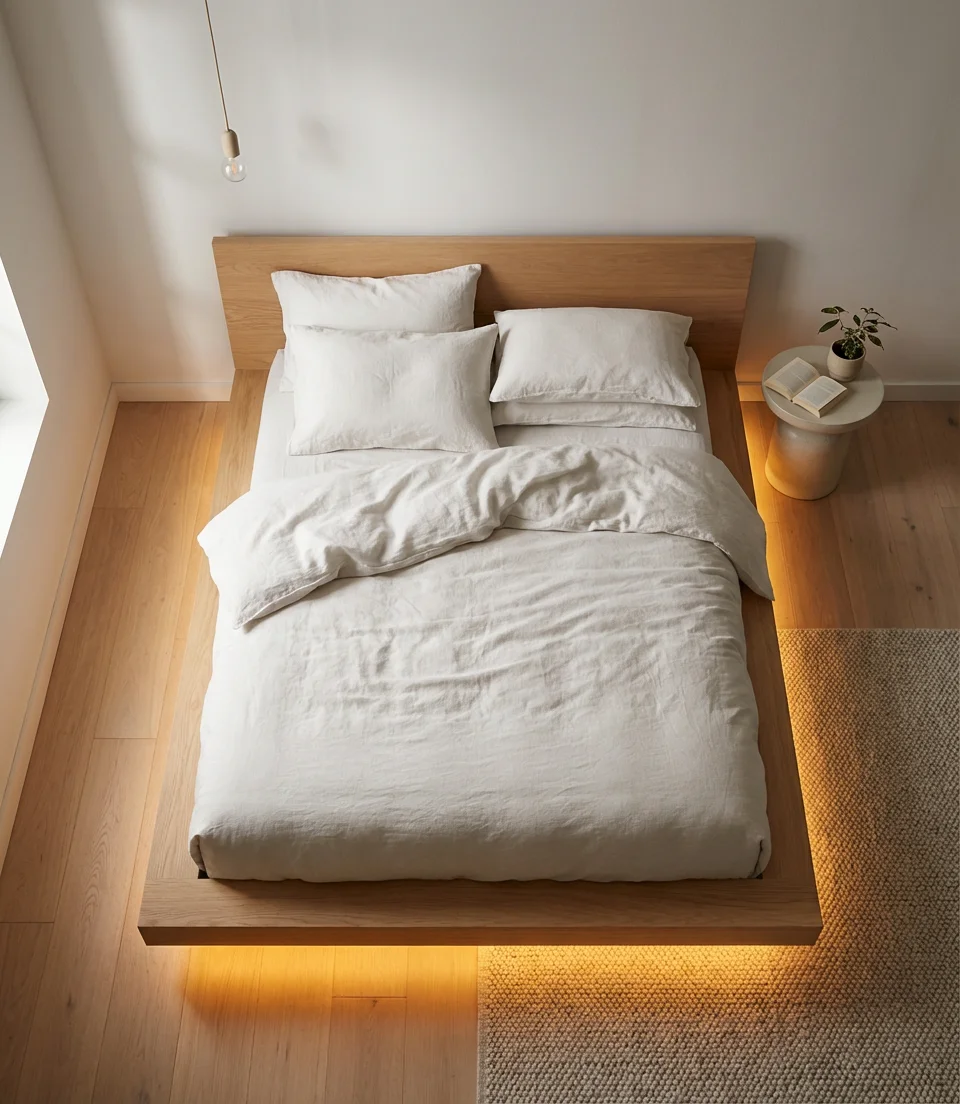
Real homeowners who’ve tried LED strips behind the headboard often admit they underestimated how much they’d use them. Many say they’ve replaced the overhead light almost entirely in the evening hours, relying instead on that soft backlit glow for everything from reading to winding down with a show. The key is buying a high-CRI (Color Rendering Index of 90 or above) strip rather than a bargain-bin option—the color accuracy makes a visible difference in how the room feels.
4. Romantic Lighting With Canopy and Fairy Lights
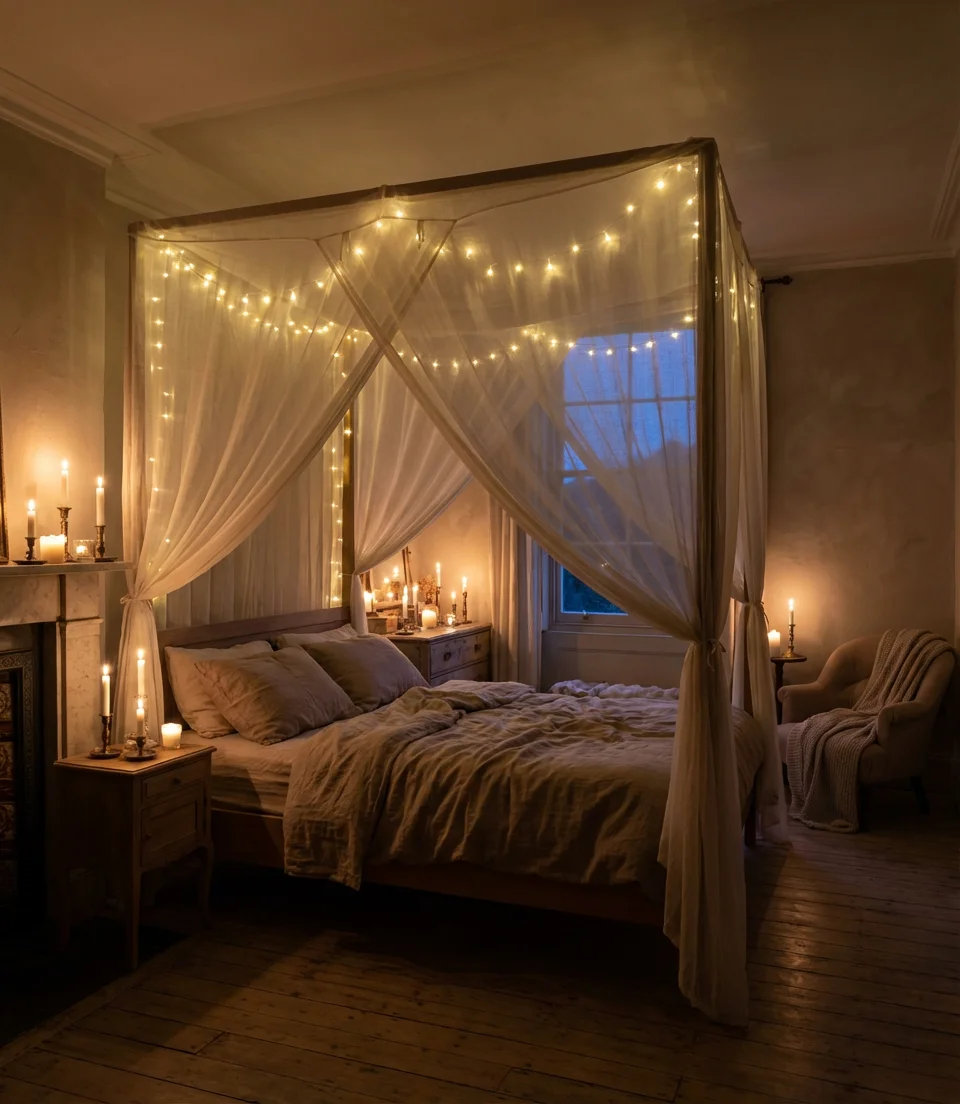
Few bedroom lighting setups feel as immediately romantic as a sheer canopy layered with warm fairy lights draped overhead. It transforms a plain bed into something that feels a little like a Mediterranean villa or a high-end boutique hotel—that mix of gauze, soft warmth, and sparkle that photographs beautifully but also just feels wonderful to sleep under. This look maintains its popularity on Pinterest due to its adaptability to various aesthetic styles, including maximalist, bohemian, soft minimal, and even neutral modern bedrooms, all of which gracefully incorporate it when the palette is appropriately chosen.
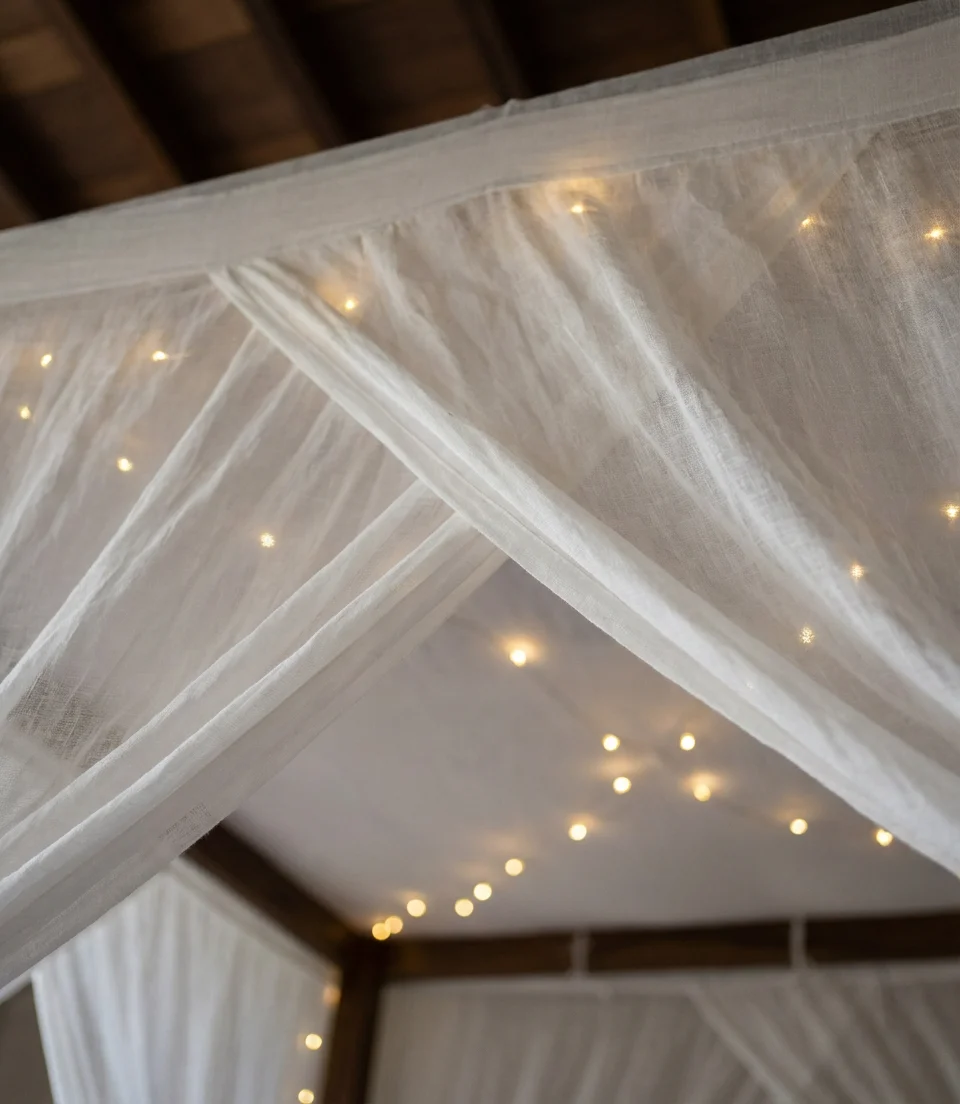
For renters or anyone hesitant to commit to major changes, this look is one of the most accessible transformations available. A canopy rod can mount with tension rather than screws, and battery-operated or USB fairy lights eliminate any wiring concerns entirely. Stick to warm white (not multicolor) for an atmosphere that feels considered rather than seasonal—and tuck the lights inside the canopy rather than draping them on the outside for a more diffused, even glow.
5. Earthy Vibes Bedroom With Clay and Rattan Fixtures
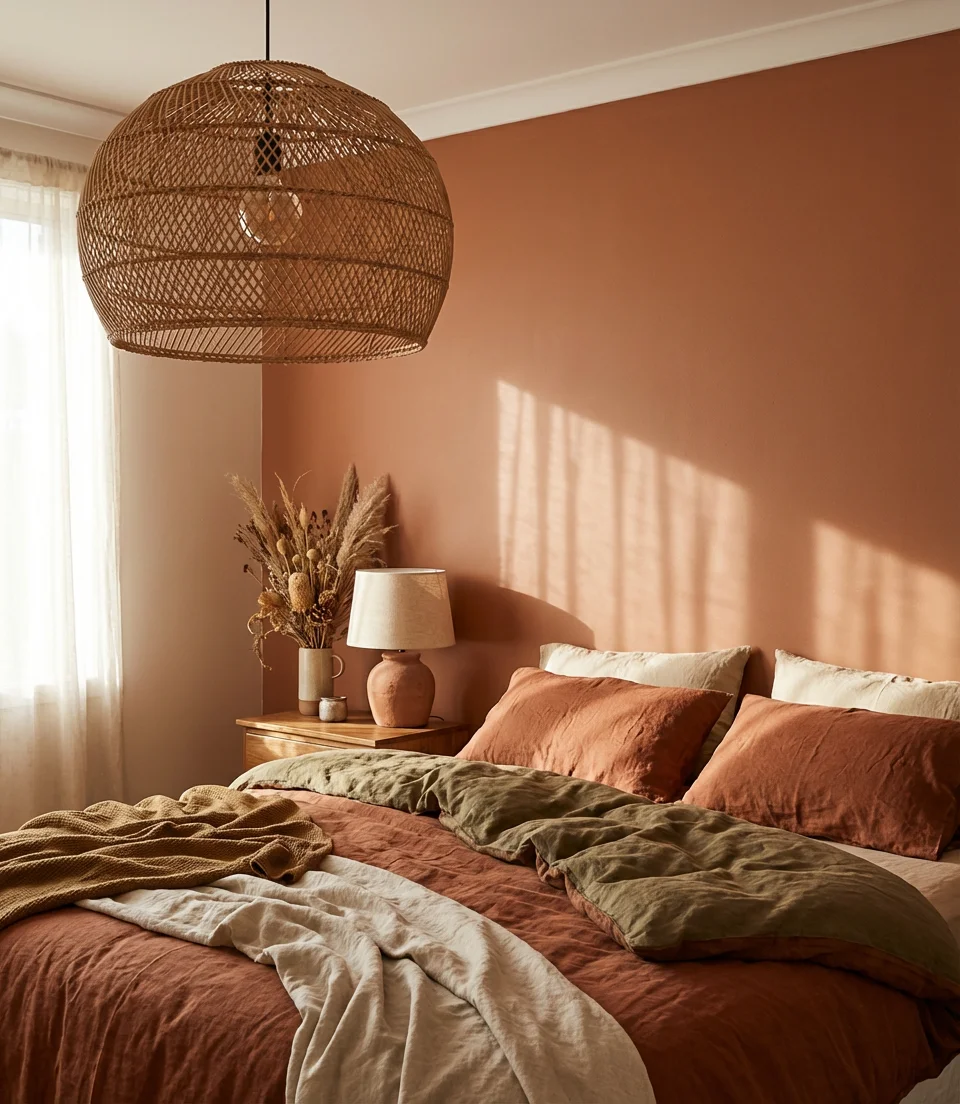
The earthy vibes trend in bedroom design has moved well past accent pillows and into every surface—including the light fixtures. In 2026, clay pendants, jute-wrapped table lamps, and woven rattan ceiling shades are gaining popularity due to their ability to cast a texture-rich, amber-toned light that is both organic and deeply calming. These materials absorb and diffuse light rather than reflecting it sharply, which gives the whole room a soft, slightly hazy warmth that no LED panel can replicate. Pair them with terracotta walls or linen bedding, and the effect is genuinely transportive.
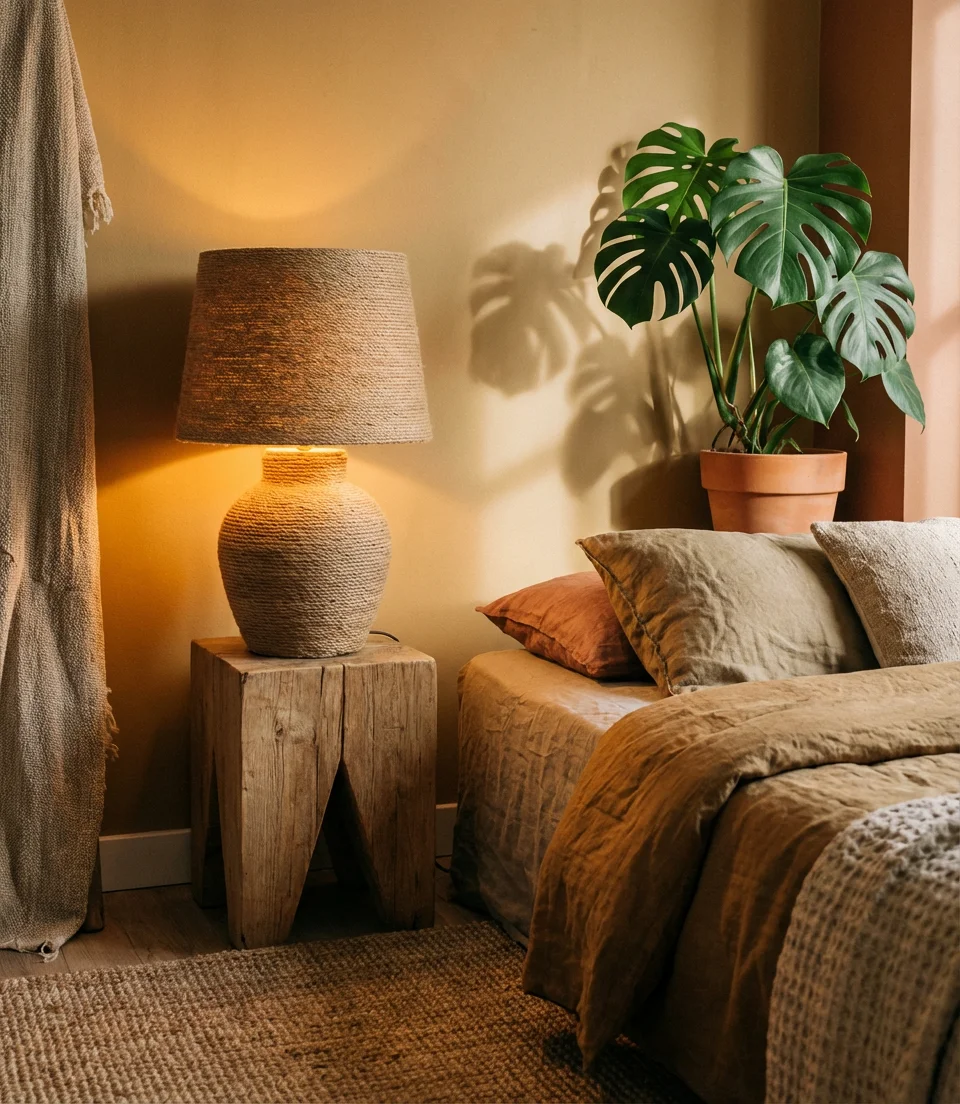
Where this look works best is in rooms that already have natural textures in play—wood floors, woven area rugs, and linen or cotton bedding. The lighting becomes part of a material conversation rather than a standalone accent. Rooms that feel overly sleek or polished can struggle to absorb earthy fixtures without the contrast feeling forced. If your bedroom leans modern and you love this direction, start with a single rattan bedside lamp rather than committing to a full fixture overhaul.
6. Dark and Dramatic Bedroom Lighting
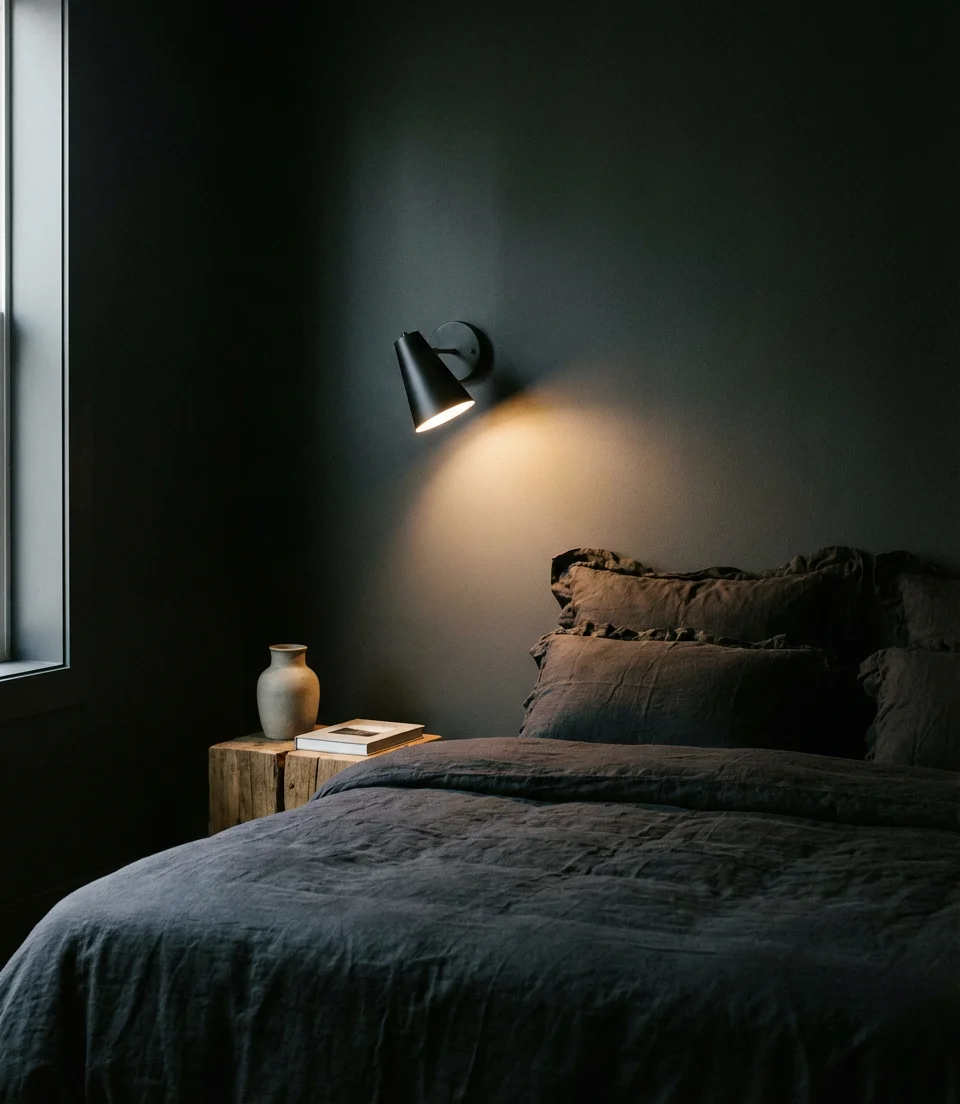
The dark bedroom aesthetic—deep charcoal walls, moody fixtures, low ambient light—is one of the most searched directions in bedroom design right now, and the lighting choices are what make or break it. Rather than fighting the darkness with bright overhead lights, this approach leans in: wall-mounted fixtures with directional shades, table lamps with opaque bases, and candles or flame-effect bulbs that cast dancing warmth across deep-toned surfaces. The result is a room that feels genuinely unique, almost cave-like in the best possible way—a true sanctuary from the overstimulated outside world.
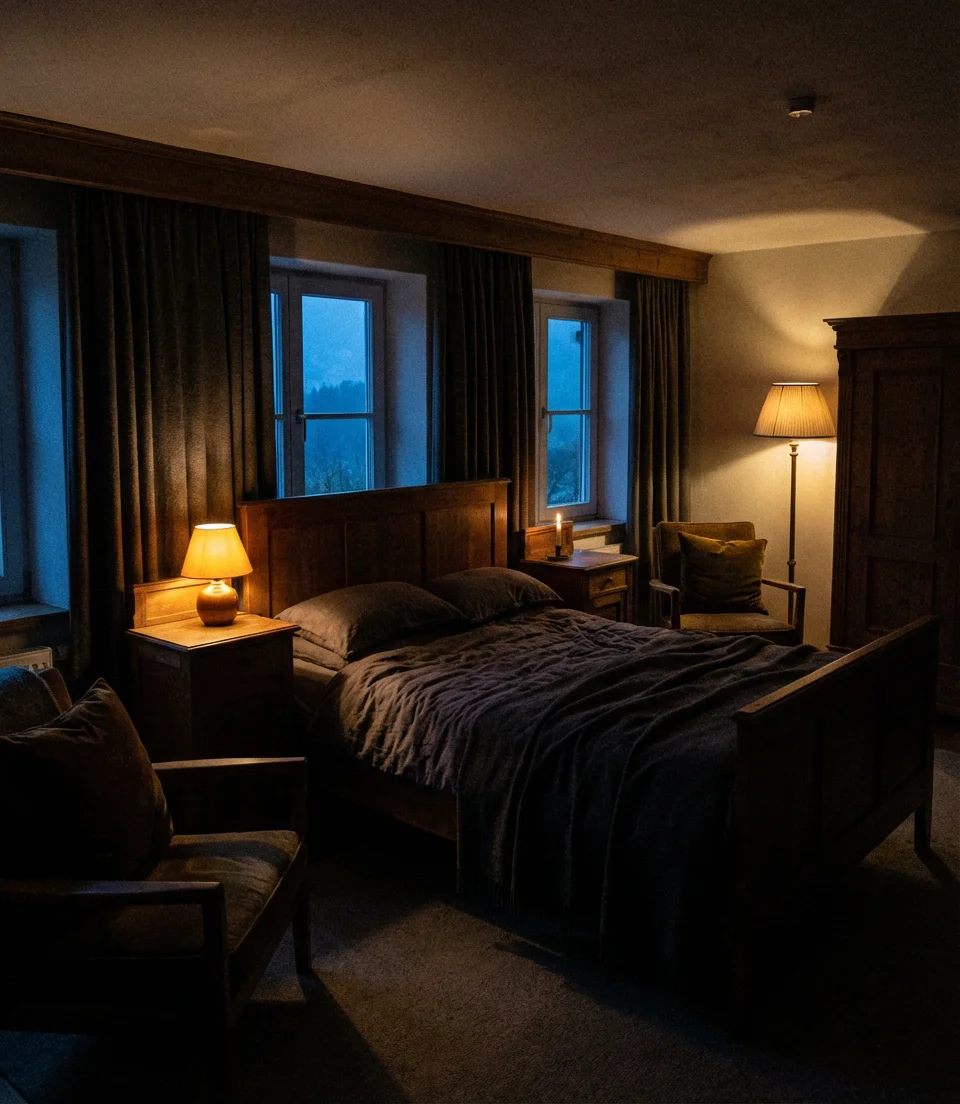
The most common mistake people make with dark bedrooms is over-lighting them out of anxiety that the space will feel oppressive. A dark bedroom doesn’t need to be a bright bedroom—it needs to be a well-layered one. Use multiple low-wattage sources at different heights instead of one powerful overhead, and make sure at least one fixture provides task light near the bed. Trust the darkness to do its job, and resist the urge to compensate with a recessed grid that wipes out all the atmosphere you worked to create.
7. Green Bedroom With Botanical Lighting Accents
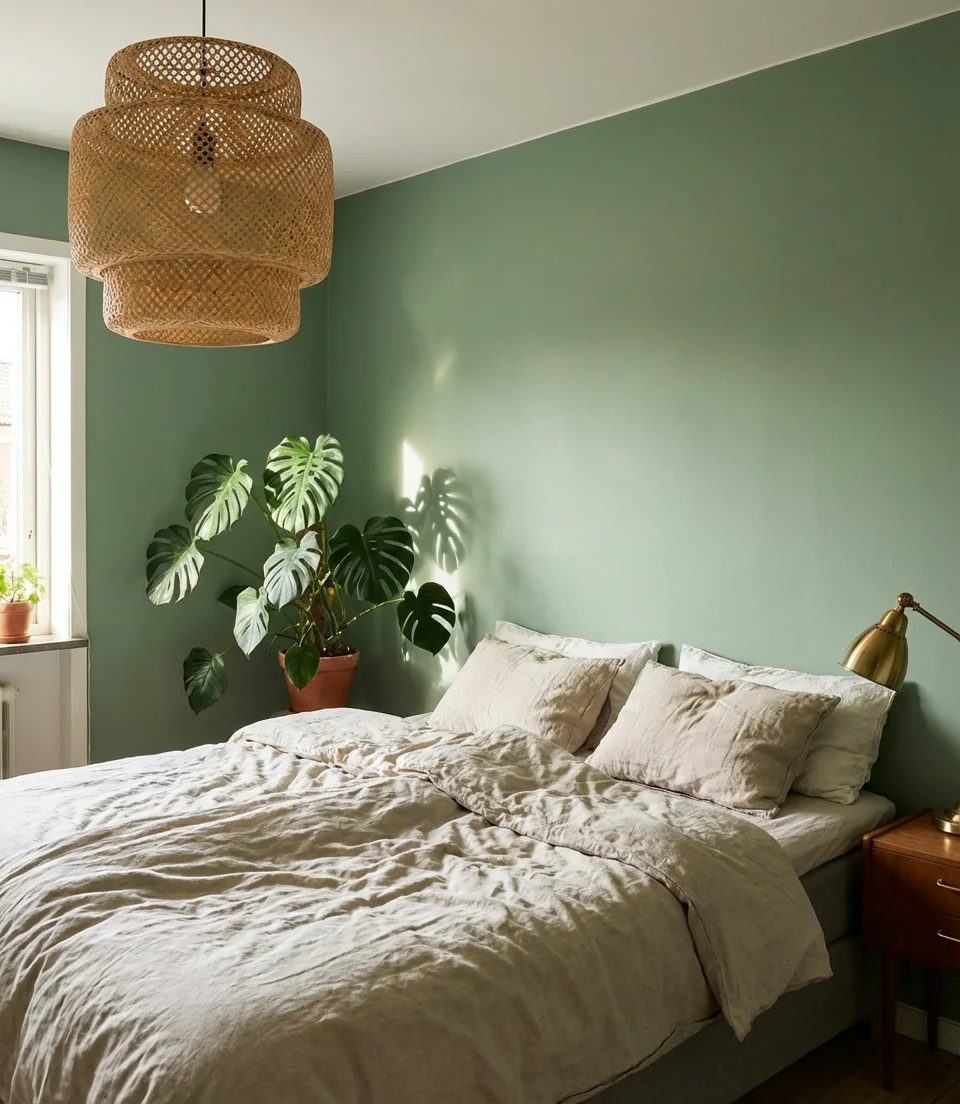
A green bedroom—whether that means sage walls, forest-toned textiles, or actual plants—takes on a whole new dimension when the lighting is chosen to complement that palette. Warm-toned bulbs (think 2200K to 2700K) bring out the yellow undertones in olive and sage greens, creating a sunlit-forest quality that feels genuinely restorative. Fixtures made from natural materials like bamboo, seagrass, or hammered brass reinforce the botanical direction without making the room feel themed. Position a lamp near your largest plant to cast shadow-play across the wall at night—one of the most effortless creative lighting tricks available.
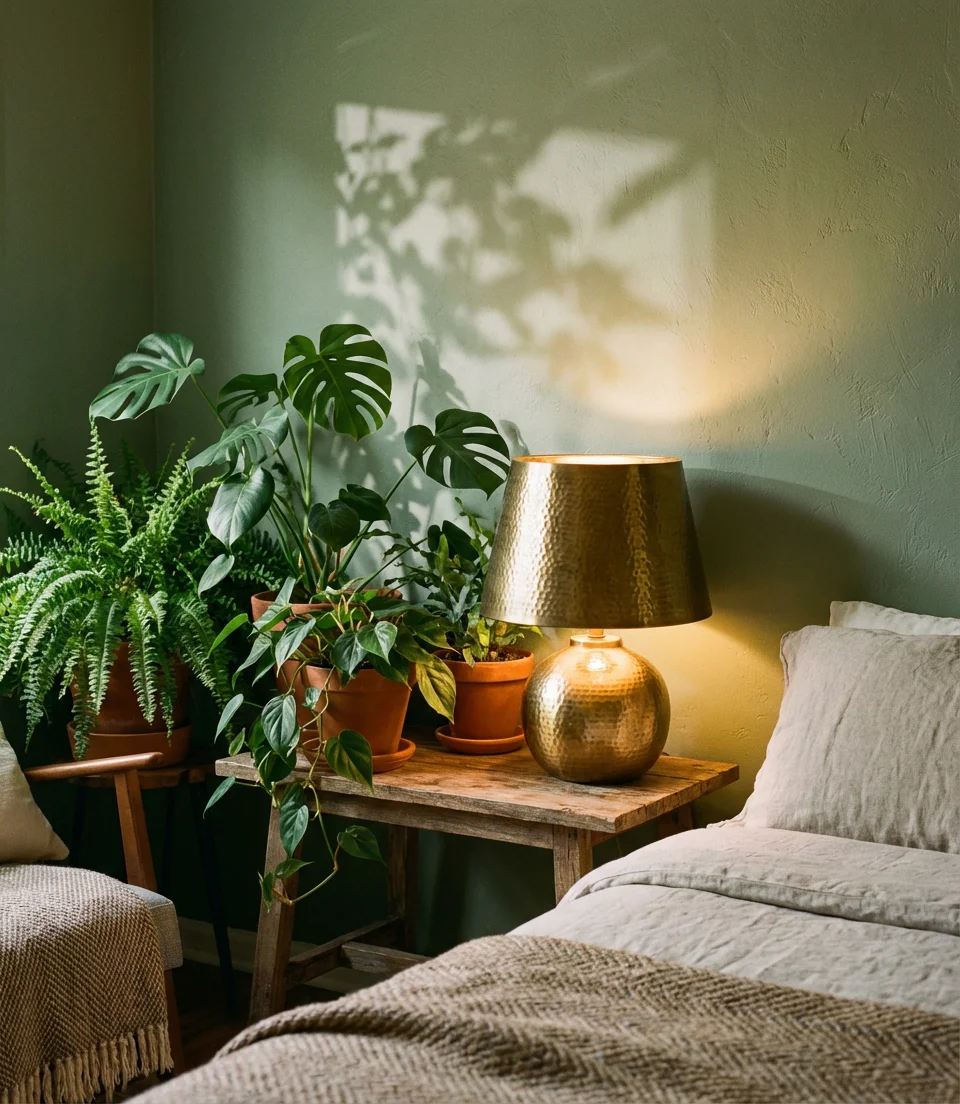
This setup works especially well in apartments and smaller homes in the Pacific Northwest, New England, or anywhere with limited natural light during winter months. The warm-toned artificial light compensates for grey skies and keeps the green palette vibrant rather than flat. If you’re growing real plants in the bedroom, consider a dedicated grow-light strip tucked behind a shelf—modern ones are designed to look intentional and provide the full-spectrum light plants need without disrupting the room’s overall mood.
8. Renter-Friendly Bedroom Lighting Without Ceiling Fixtures
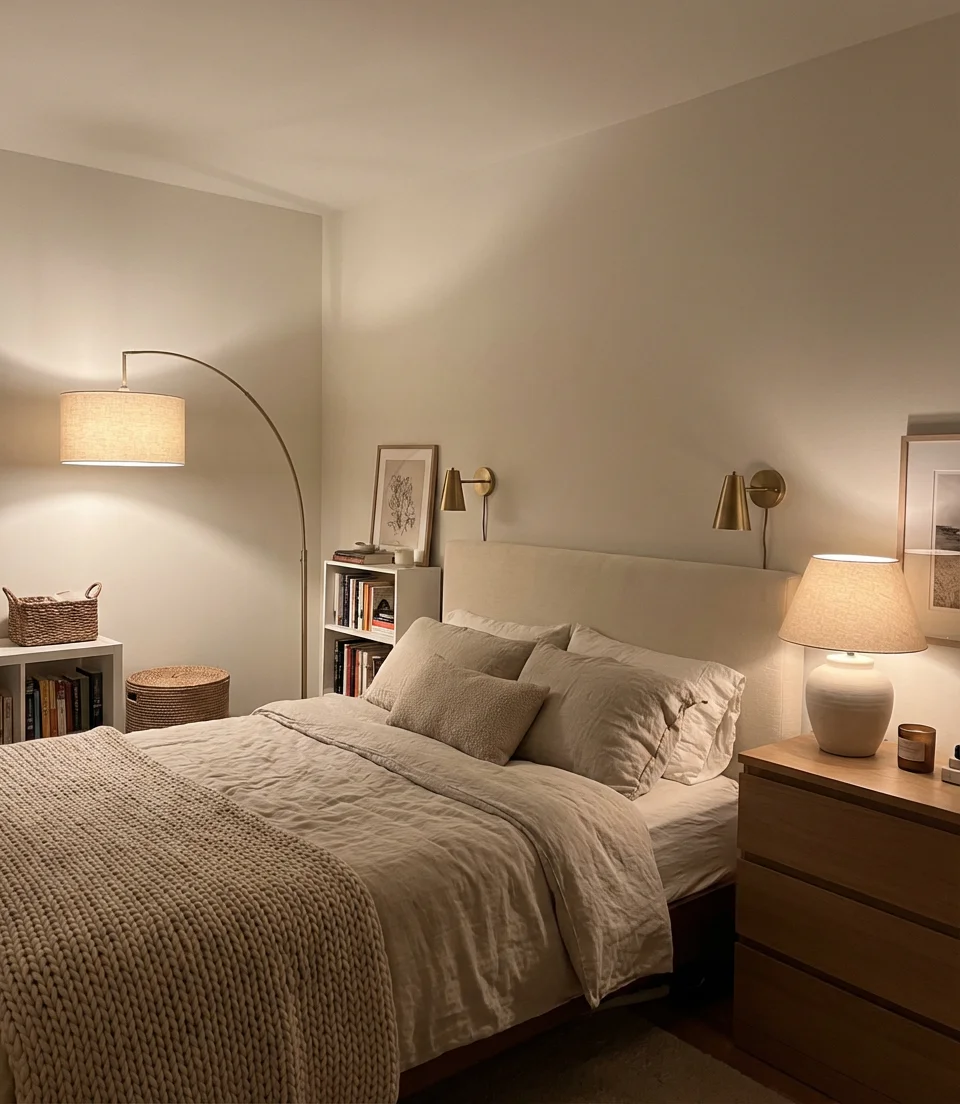
Designing a well-lit bedroom when you’re renting—especially in an older apartment with no ceiling light—is one of the most searched challenges on Pinterest. The good news: some of the most beautiful bedroom lighting setups don’t touch the ceiling at all. Floor lamps with arching necks, plug-in pendants hung from wall hooks, battery-operated sconces, and tabletop lamps at varying heights can all come together to create a layered, intentional look that’s entirely renter friendly. The key is thinking in zones—ambient (general lighting), task (focused lighting for specific activities), and accent (decorative lighting)—and making sure you have at least one source at each level.
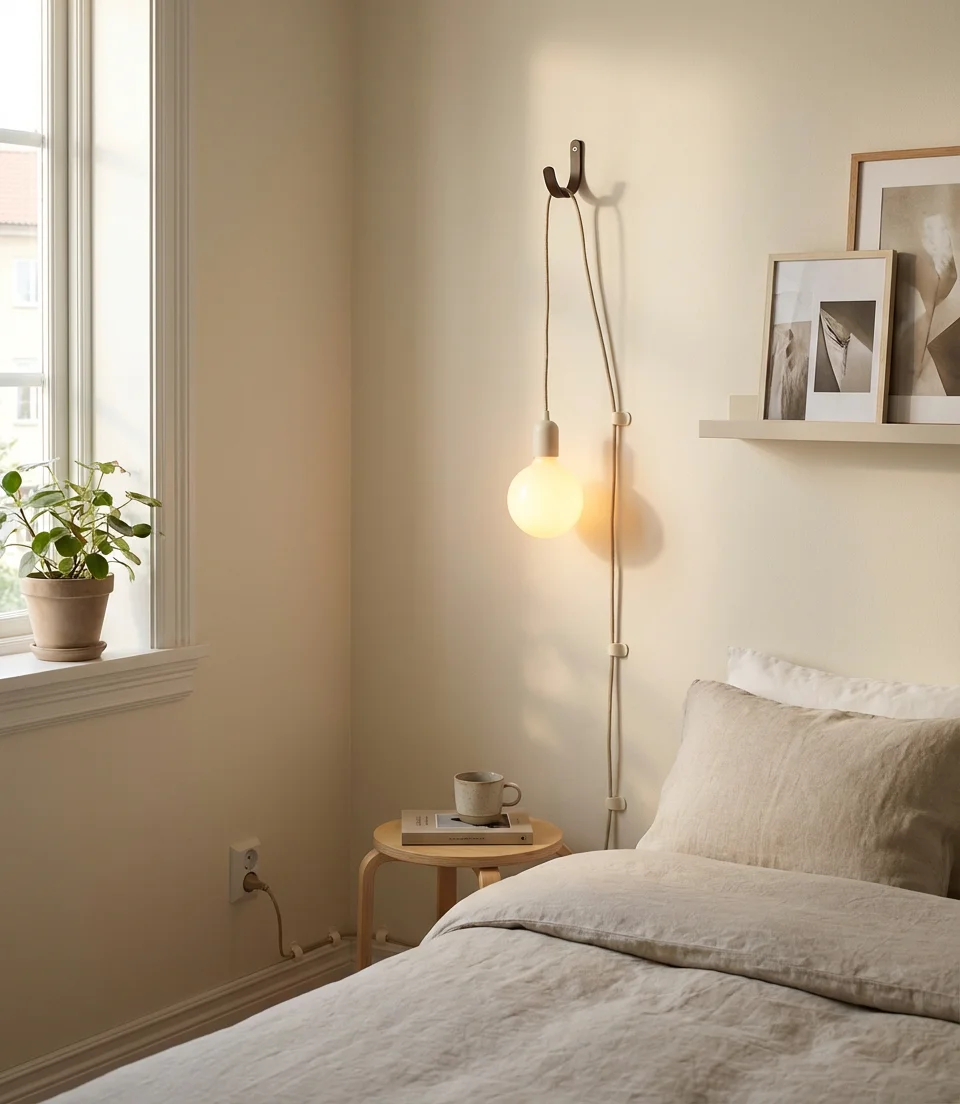
One practical insight worth knowing: cord management is everything in a no-ceiling-fixture setup. Loose cords running across baseboards or draping awkwardly undercut the whole effect. Invest in adhesive cable clips, cord covers that can be painted to match your walls, or furniture placement that naturally hides the runs. Investing in some early cord planning can prevent the visual clutter that can make even a beautifully lit room appear unfinished. Renters can hang plug-in pendants near the headboard using removable adhesive hooks rated for 3–5 lbs.
9. False Ceiling With Recessed Lighting
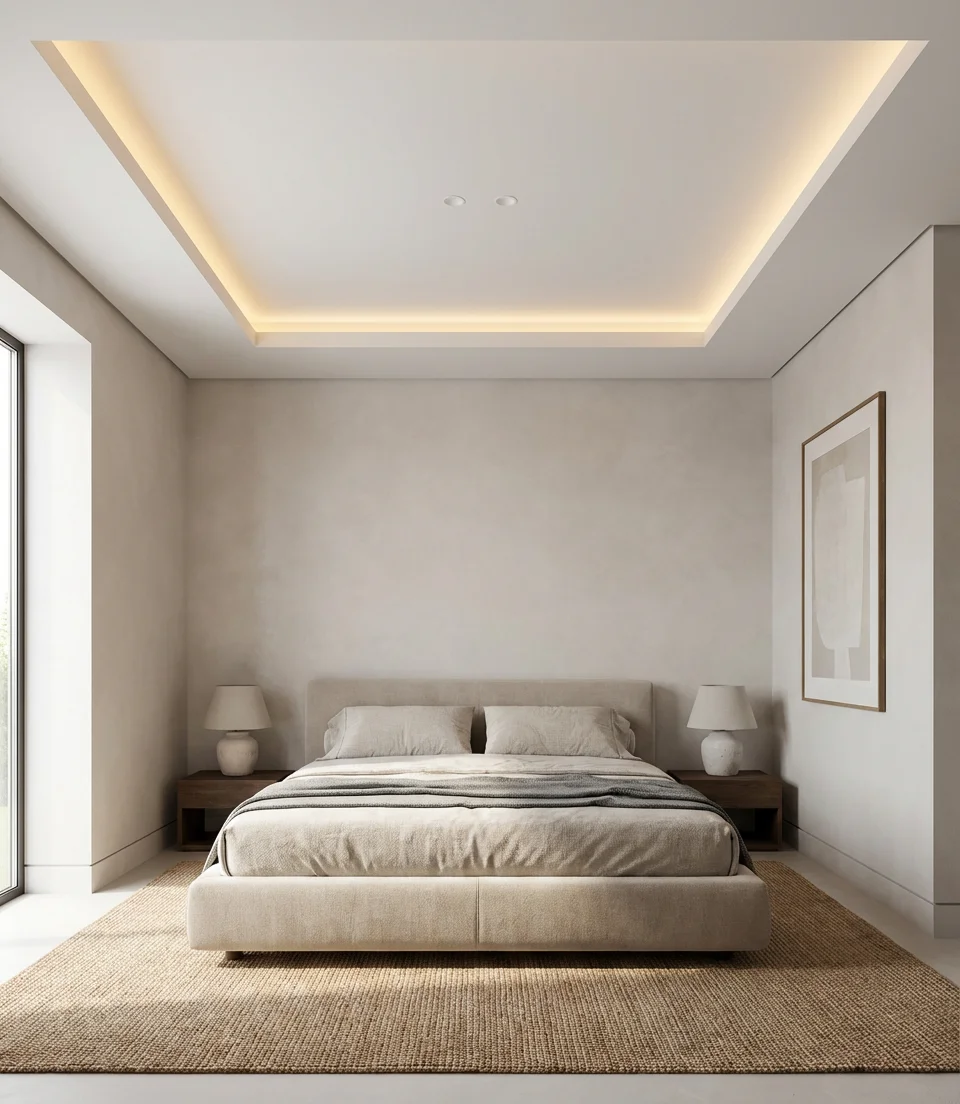
A false ceiling—also called a dropped or coffered ceiling—with embedded recessed lighting is one of the most architecturally polished moves you can make in a bedroom. It adds structure and visual interest to what is often the most ignored plane in the room, while the recessed fixtures provide clean, unobtrusive ambient light that disappears into the design. In 2026, the most compelling versions of this look incorporate an LED cove light along the perimeter of the false ceiling, casting an upward glow that makes the room feel taller and more dramatic even in spaces with standard 8-foot ceilings.
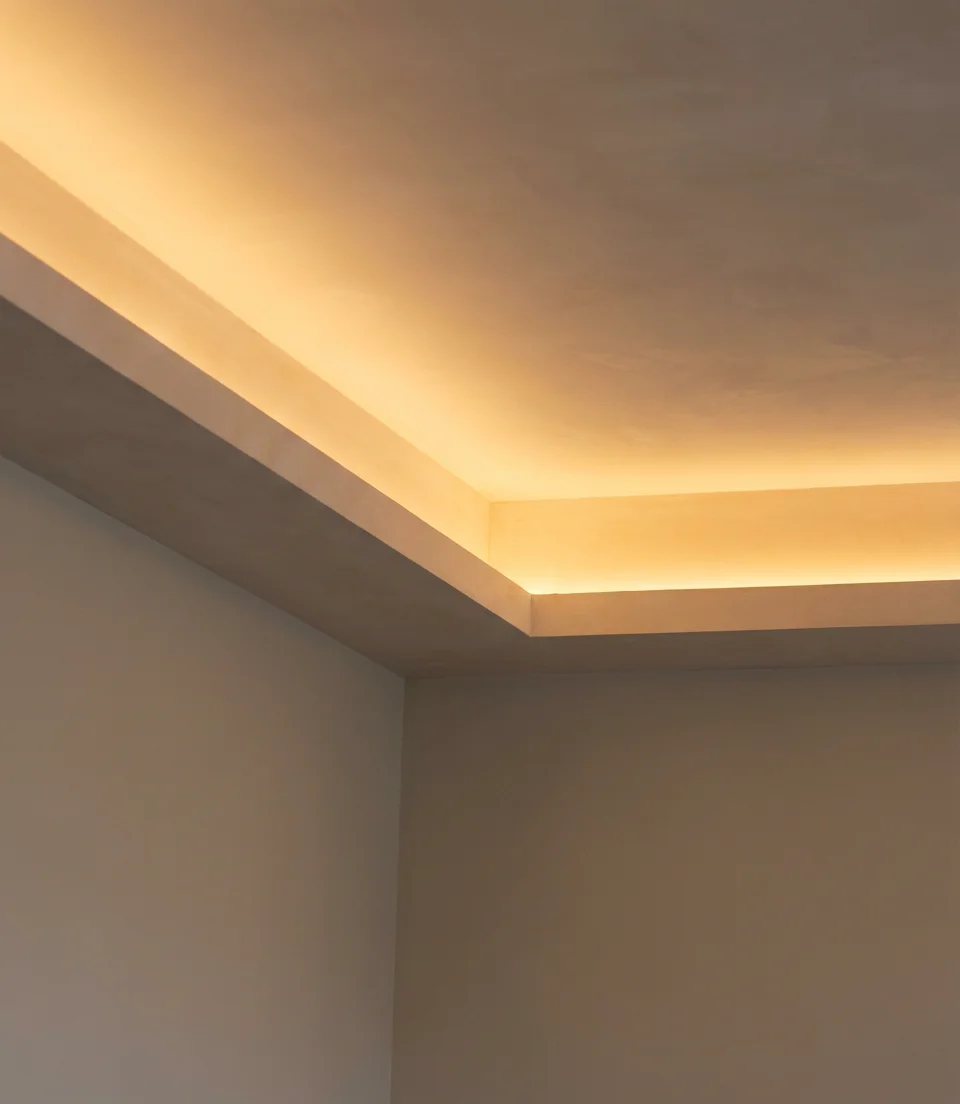
An American lifestyle note worth keeping in mind: in regions like the South and Southwest, where new construction often includes builder-grade tray ceiling details already, adding a false ceiling layer with integrated lighting is a relatively accessible upgrade for homeowners. Contractors familiar with the region’s building conventions can often complete a basic false ceiling installation in a single weekend. Pair the recessed lights with a dedicated dimmer circuit, and you gain the flexibility to shift the room from bright and functional to intimate and restful without swapping a single bulb.
10. DIY Bedroom Lighting Projects That Look Professional
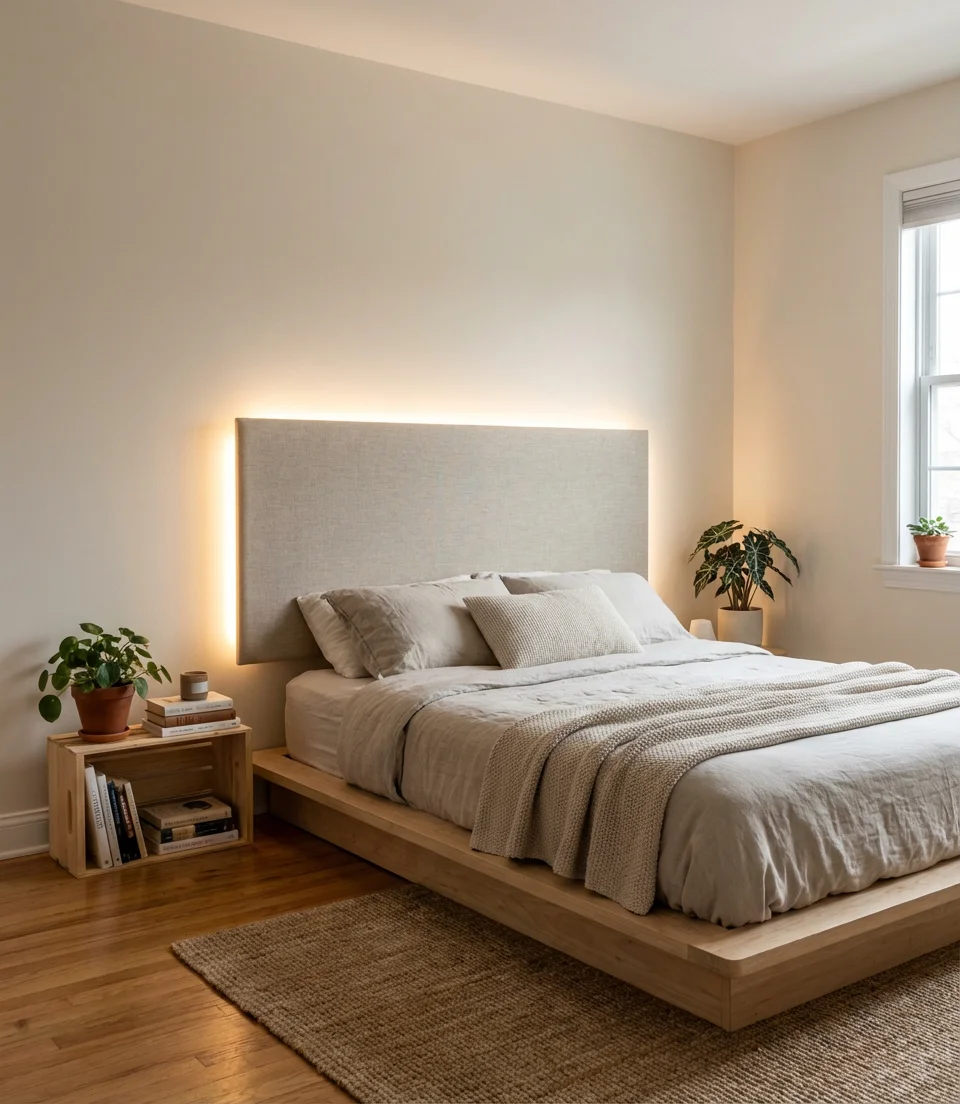
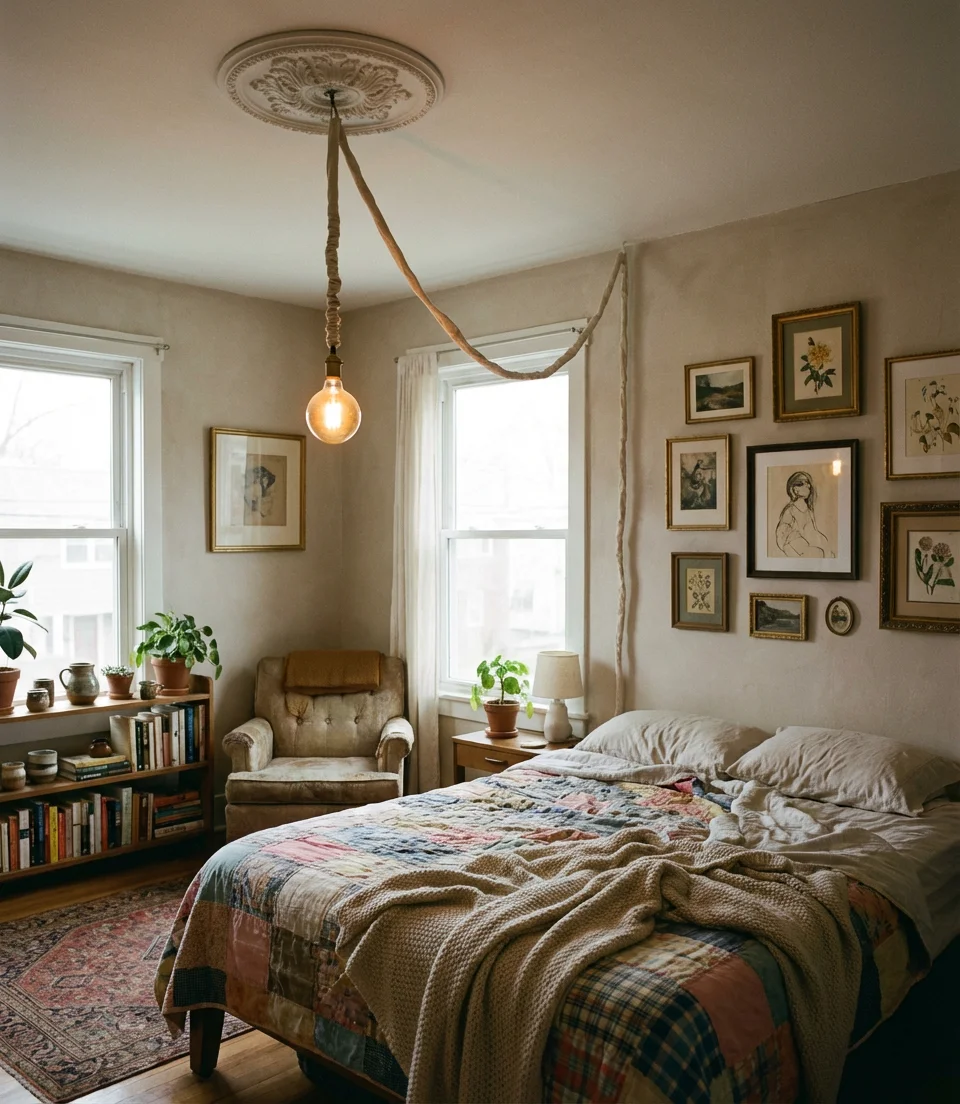
The DIY bedroom lighting category on Pinterest is one of its most reliably popular, and for good reason—a surprising number of high-impact lighting changes require nothing more than basic tools, a weekend afternoon, and a willingness to experiment. One of the most popular projects is building a backlit headboard panel using a sheet of plywood and an LED strip kit, and the results consistently resemble those of a boutique hotel. Ceiling medallions combined with a swag-kit pendant are another low-cost, high-reward option for adding architectural character without touching any wiring.
A micro anecdote from the design community: one Brooklyn apartment dweller built a full floating headboard with integrated LED backlighting for under $120 in materials, using a tutorial she found on YouTube. An apartment tour featured her finished bedroom and garnered over 400,000 saves on Pinterest. The fixture cost less than a single designer sconce, but the overall effect—warm, glowing, and deeply personal—was impossible to distinguish from a professionally designed space. That gap between cost and result is exactly why DIY lighting continues to thrive.
11. Attic Bedroom Lighting That Works With Low Ceilings
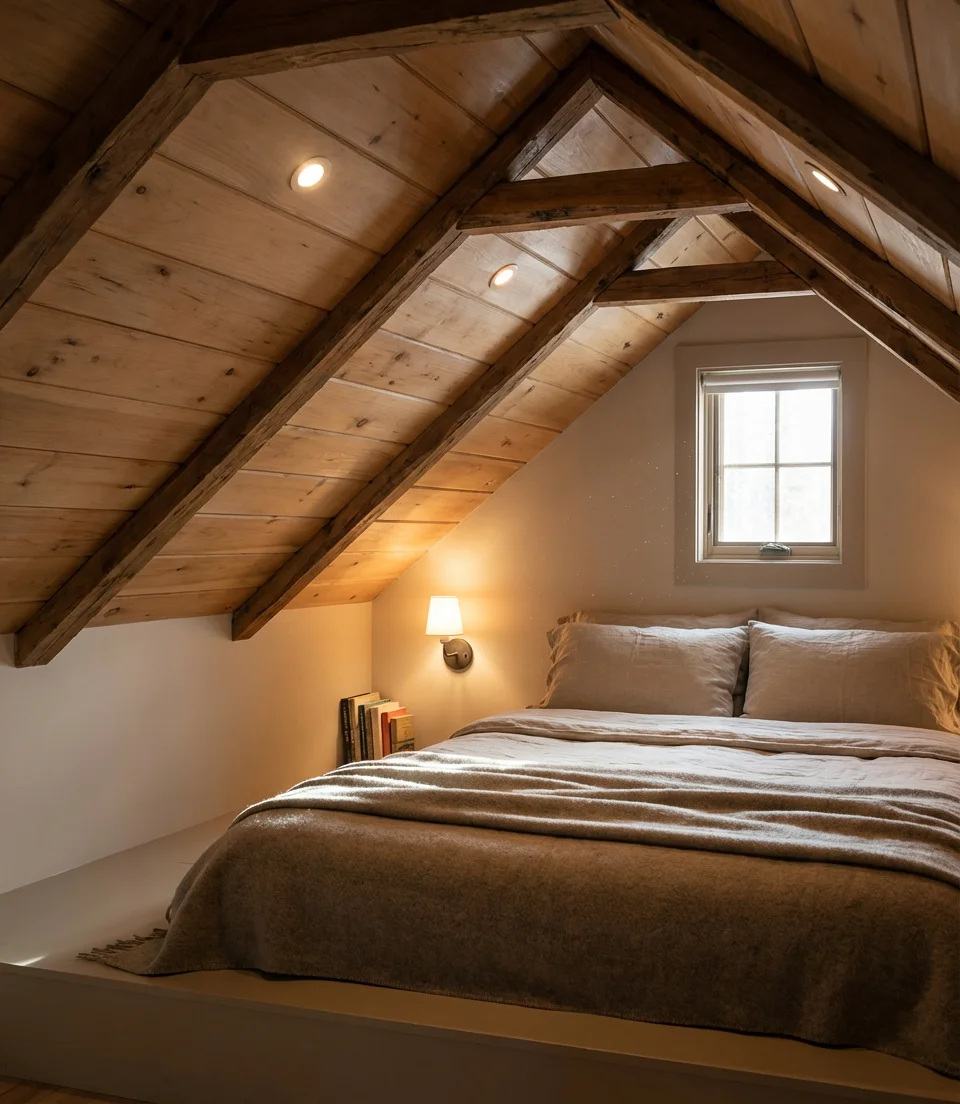
Lighting an attic bedroom requires a fundamentally different strategy than a standard room. The attic bedroom’s sloped walls, low knee walls, and awkward ceiling geometry limit the options for pendant and chandelier lighting, but they also present opportunities for truly innovative solutions. Recessed fixtures installed along the slope of the ceiling wash the angled planes with light and prevent the room from feeling like a cave. Flush-mount fixtures with a very low profile work well at the peak of the ceiling where height is greatest. Wall-mounted sconces along the lower knee walls bring warmth to areas that overhead lighting can’t comfortably reach.
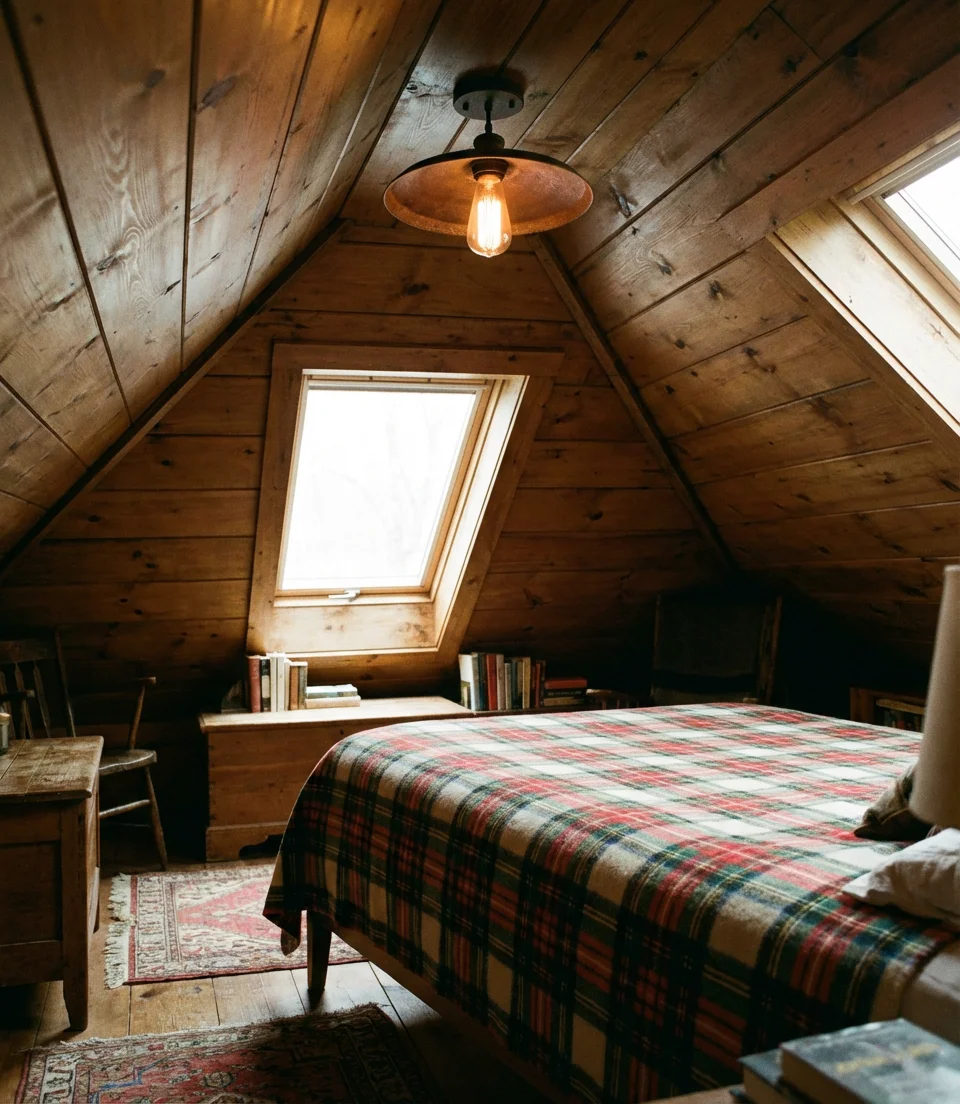
Where this look works best is in older New England homes, Craftsman bungalows, and any house with a converted upper floor that preserves the roofline. Exposed rafters and sloped ceilings, with their architectural character, naturally complement Edison-style bulbs, iron fixtures, and wood-toned details—materials that seamlessly blend into a space with visible structure. Avoid recessed lighting grids with too many cans, as they can make a small attic space feel like a retail dressing room rather than a cozy retreat.
12. Modern Luxury Bedroom Lighting With Statement Chandeliers
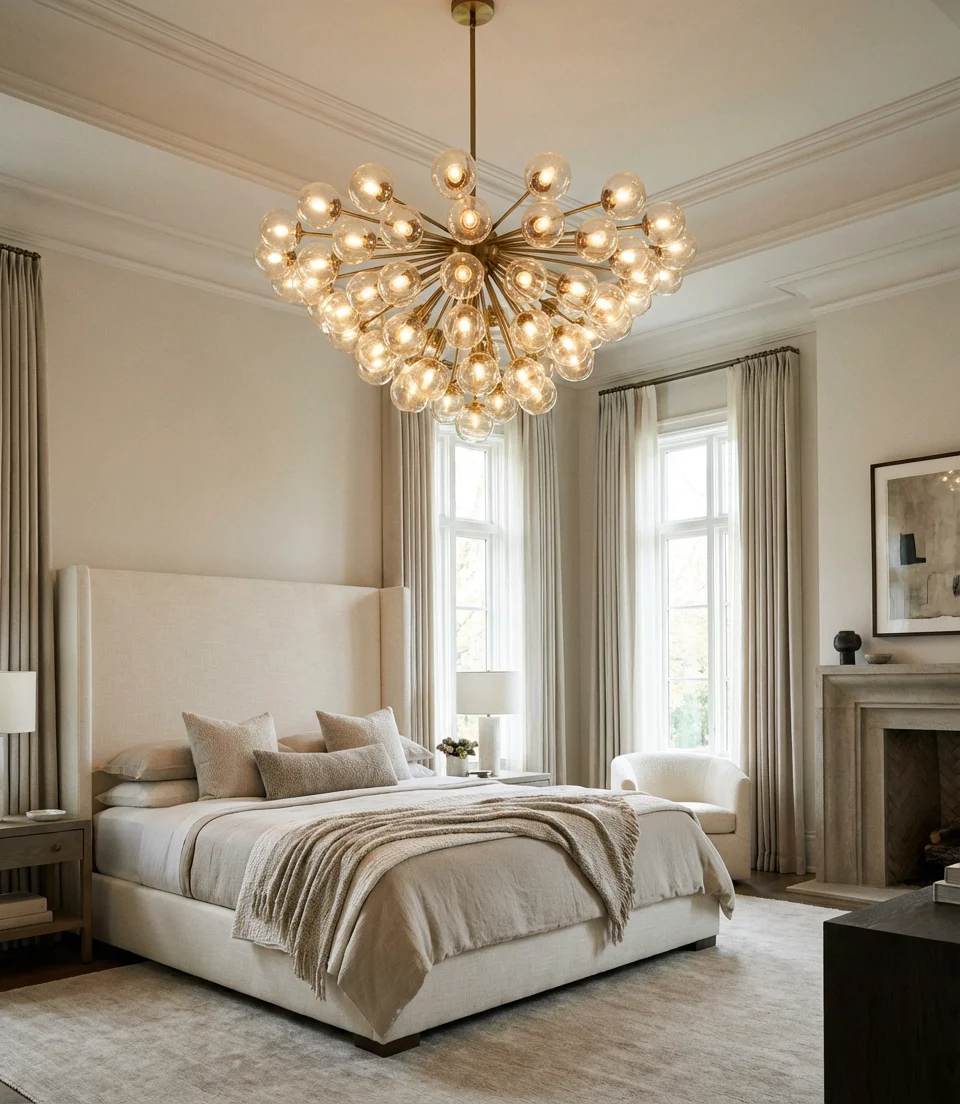
A statement chandelier in the bedroom is one of those moves that reads as unambiguously modern luxury—the kind of choice that signals the room was designed rather than simply furnished. In 2026, the most compelling bedroom chandeliers lean away from traditional crystal toward sculptural forms: clustered glass globes, articulated brass arms, or organic shapes that look almost like they grew rather than were manufactured. The fixture becomes the room’s focal point before you even get to the bed, setting a tone of considered elegance that filters into every other choice in the space.
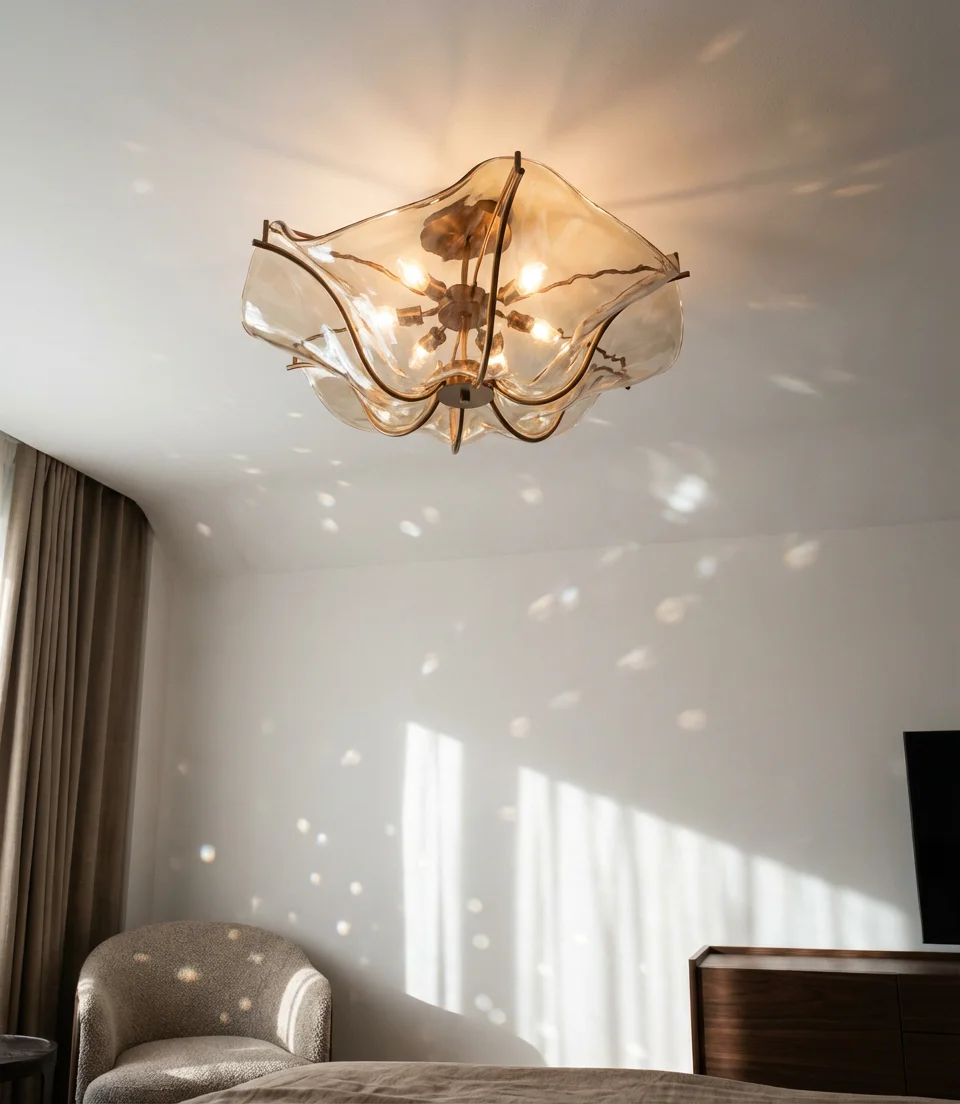
Expert-style commentary worth noting: lighting designers often recommend sizing up when choosing a bedroom chandelier. Most homeowners default to fixtures that are too small for the space, resulting in a pendant that looks timid rather than intentional. A general rule: take your room’s length and width in feet, add them together, and use that number in inches as a minimum diameter for the chandelier. A 12×14 bedroom, for example, calls for a fixture at least 26 inches wide—significantly larger than most people would instinctively choose.
13. Neutral Bedroom Lighting for a Calm, Collected Space
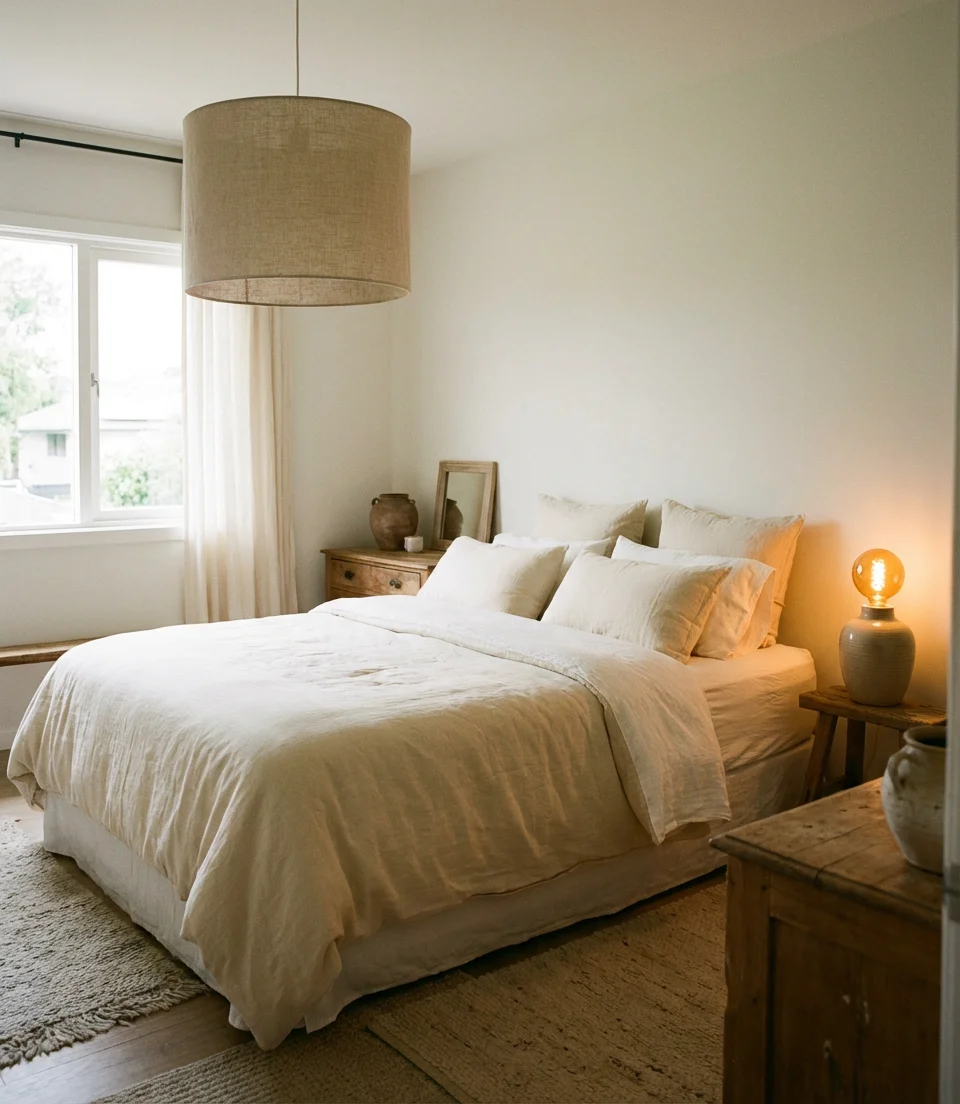
A neutral bedroom—whites, creams, taupes, warm grays—lives or dies by its lighting. The palette is deliberately understated, which means the quality and warmth of the light become the primary tools for creating atmosphere. In these rooms, fixtures should disappear into the design: linen drum shades, bleached wood bases, and ceramic in matte white or stone tones. The light source itself matters just as much as the fixture—opt for filament-style or globe bulbs in 2200K (a color temperature that produces a warm, yellowish light) to deliver that honeyed warmth that makes a neutral bedroom feel effortlessly inviting rather than clinical. The soft quality of light here does more design work than any accent piece could.
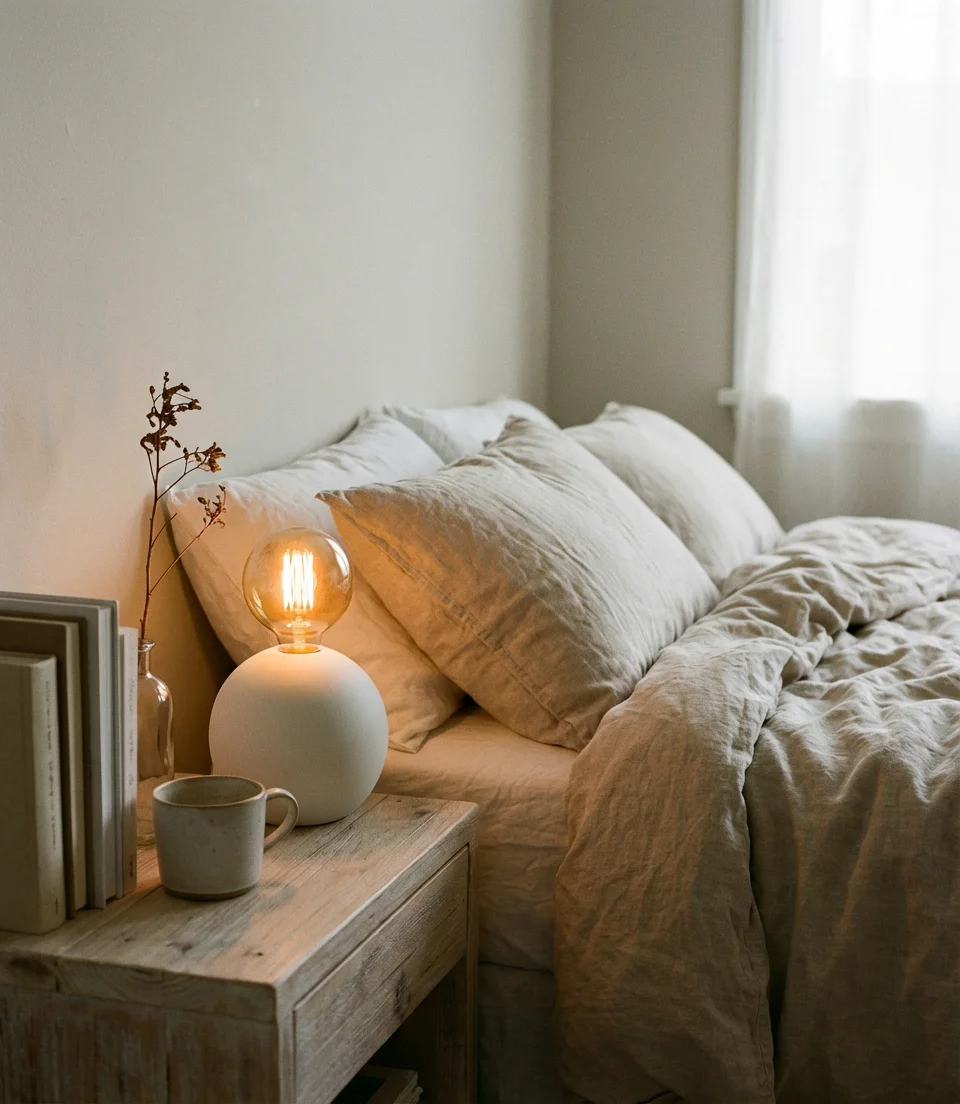
Real homeowner behavior in neutral-toned bedrooms tends to trend toward accumulating too many small accent lights—LED candles, string lights tucked in corners, nightlight plugs—in an attempt to compensate for a lack of layering. The result often reads as cluttered rather than cozy. A better approach: three intentional sources (one overhead or ceiling-adjacent, two at bedside level) using identical or closely matched bulbs, all on separate dimmers. Consistency in color temperature across all sources is what gives a neutral bedroom that serene, magazine-quality look.
14. Men’s Bedroom Lighting With Industrial Edge
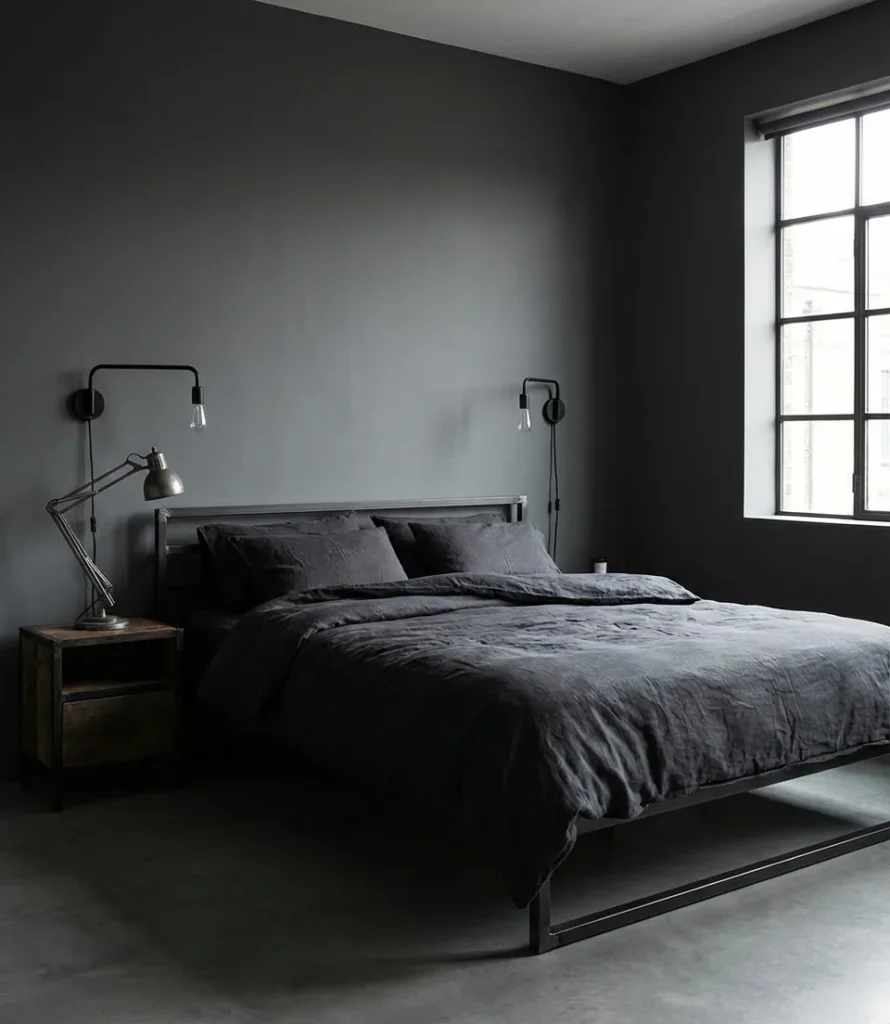
The men’s bedroom lighting category on Pinterest gravitates hard toward industrial and utilitarian aesthetics—exposed bulb pendants, matte black wall sconces, adjustable task lamps with steel arms, and recessed lights paired with dark paint. This direction isn’t about gender so much as design sensibility: confident, unornamented, and deliberately structured. The fixtures tend to have visible hardware, minimal shading, and a straightforward relationship between the light source and the room. It pairs naturally with concrete-look surfaces, leather, dark wood, and the kind of bedding that comes in charcoal, navy, or forest green.
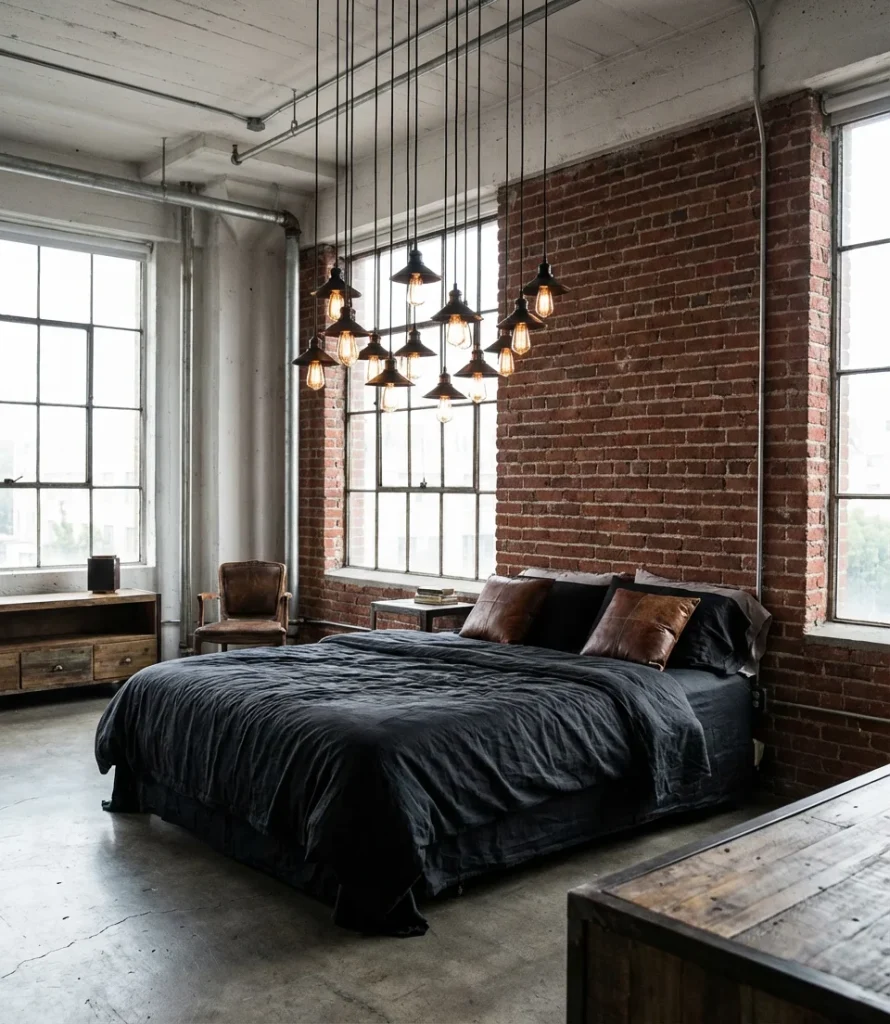
Where this look works best is in loft-style spaces, converted warehouse apartments, and newer construction in cities like Chicago, Detroit, or Denver, where industrial-influenced design has a strong regional foothold. The key to keeping it from feeling cold: layer in at least one warm light source near the bed, even if everything else in the room leans cool and structured. A single amber-glass bedside lamp or a warm-toned LED strip behind the bed does the work of softening the overall palette without compromising the intentional edge of the design.
15. Black Fixture Bedroom Lighting for Contrast and Drama
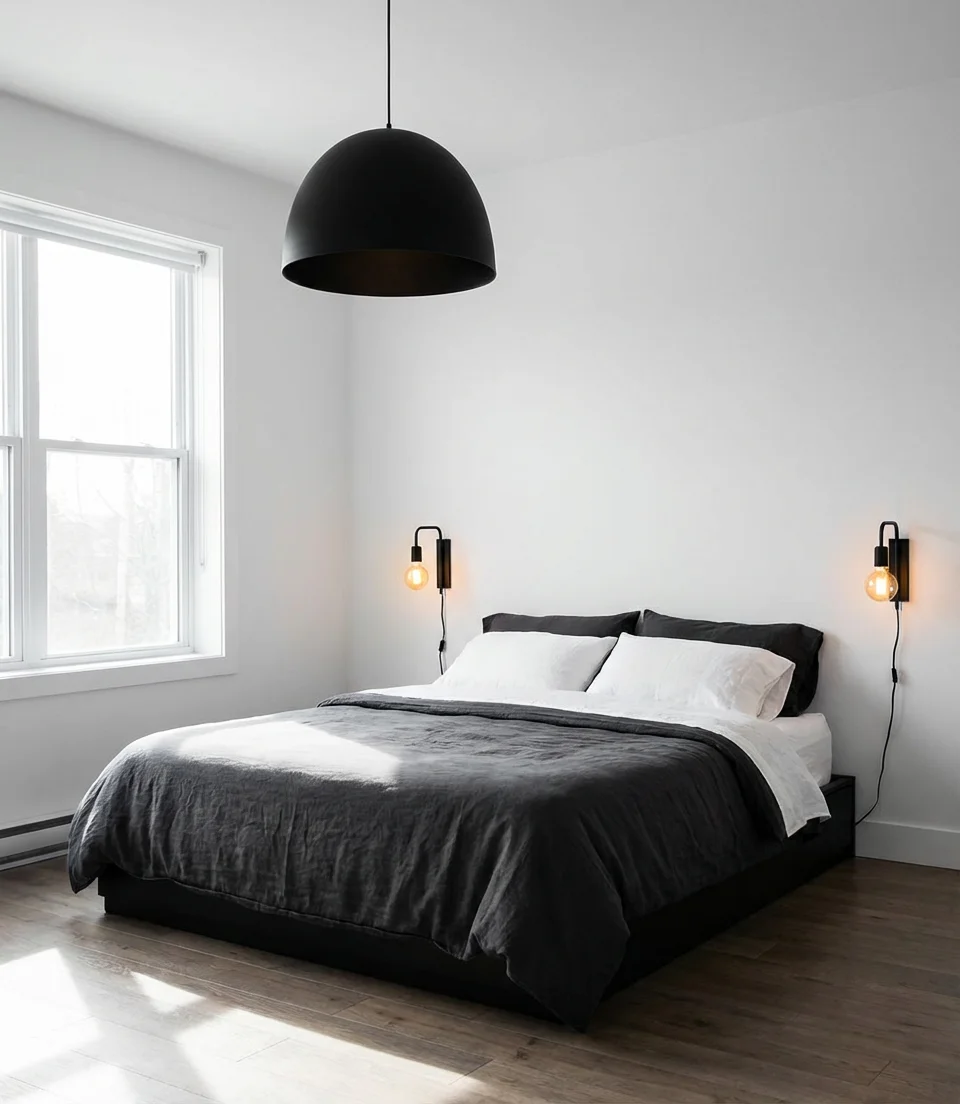
Black fixtures—matte, satin, or powder-coated—have become one of the most durable trends in bedroom lighting precisely because they work in nearly every design context. Against white walls, they provide graphic contrast. When paired with dark walls, they subdue and allow the light to shine through. They act as a subdued anchor that grounds the space without taking over, especially when contrasted with natural wood and neutral linens. In 2026, the most compelling black fixture looks combine multiple piece types: a black ceiling medallion, black sconce arms, and black nightstand lamps—a cohesive language that ties the room together without requiring matching furniture.
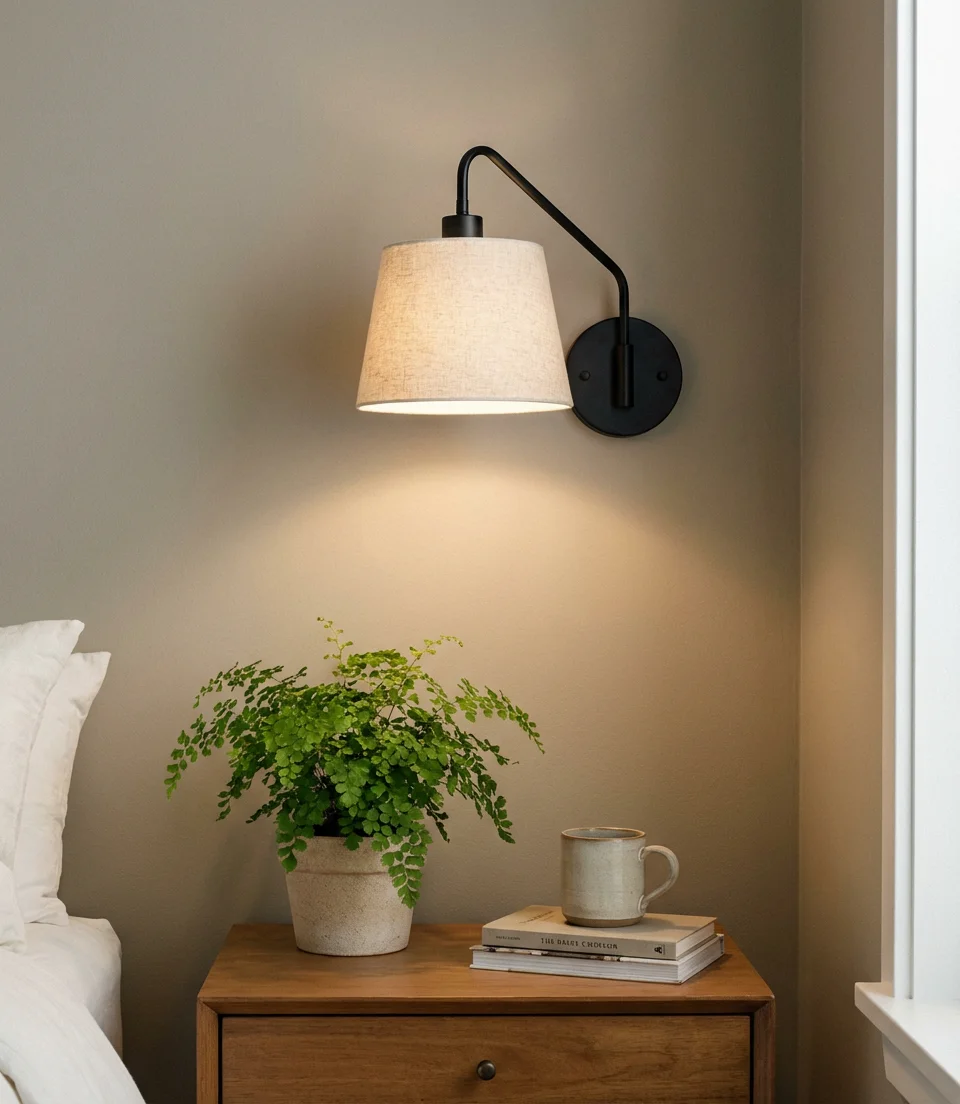
One budget angle worth considering: black fixtures are among the most widely available and competitively priced in the market right now. The widespread adoption of this finish across every price tier—from IKEA to Restoration Hardware—means you can build a cohesive black-fixture bedroom without spending disproportionately. The most affordable swaps are often the most visible: replacing a brass or chrome ceiling fixture with a matte black alternative costs $40 to $80 at most home improvement stores and immediately updates the room’s aesthetic by several years.
16. Primary Bedroom Lighting Layered for Every Mood
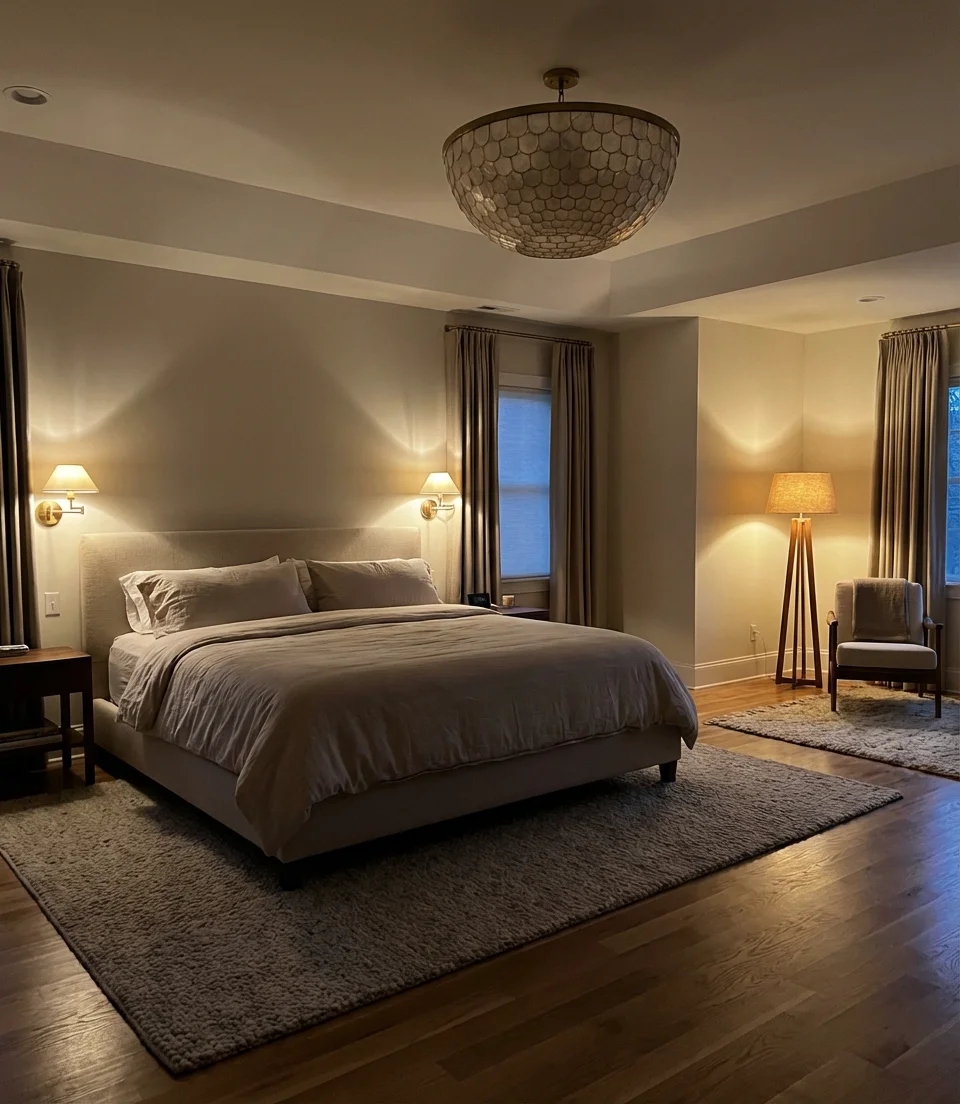
The primary bedroom deserves the best lighting treatment in the house since it’s where you wake up, wind down, and spend the most time. A truly well-lit primary suite operates on at least three layers: ambient (overall illumination from a ceiling source), task (focused light near the bed or vanity), and accent (mood-setting glow from indirect or decorative sources). In 2026, smart lighting systems make this layering effortless—a single app or voice command can shift the room from bright morning mode to a dim, warm evening atmosphere without adjusting a single physical switch.
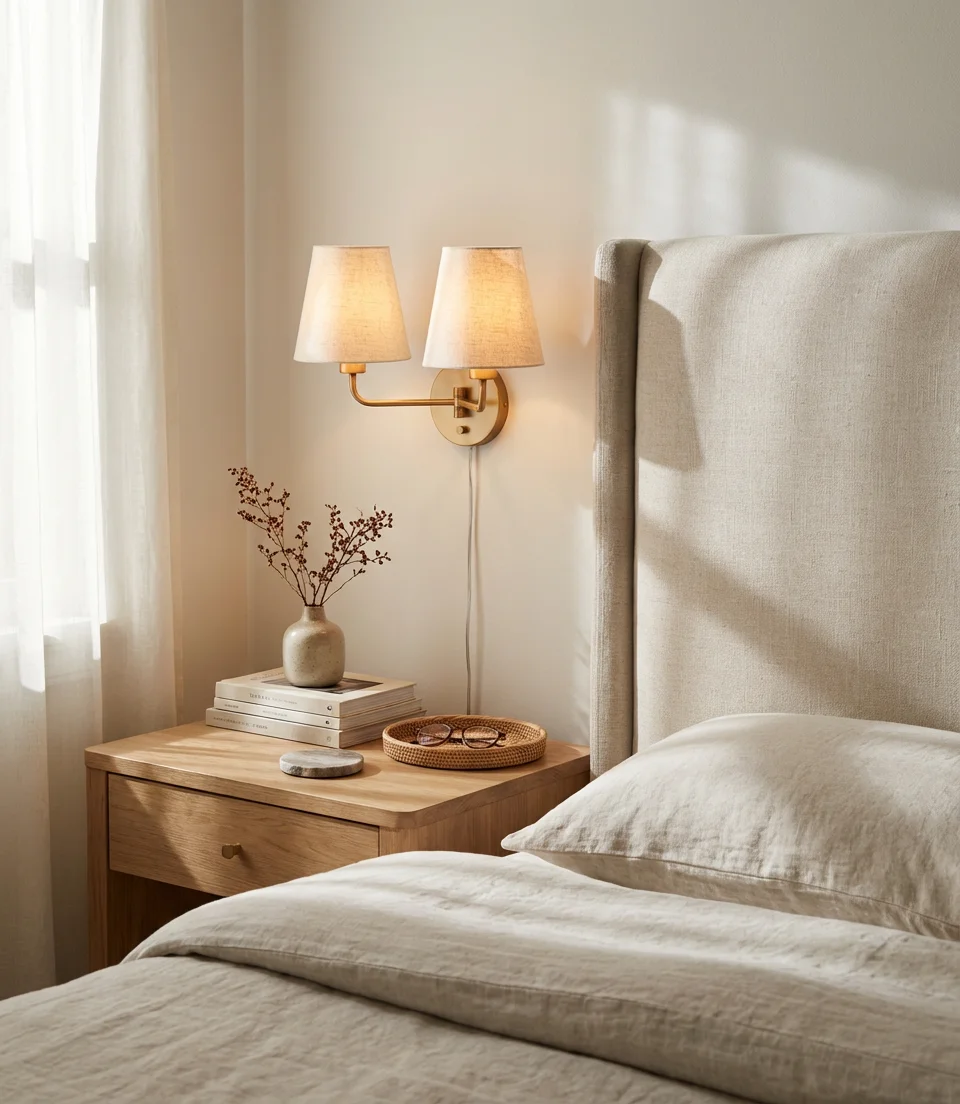
The most common mistake homeowners make in primary bedrooms is treating lighting as an afterthought—buying furniture first, then realizing too late that the existing ceiling box is in the wrong position or that there aren’t enough outlets for bedside lamps. Planning the lighting layout before finalizing furniture placement makes a meaningful difference. Work backward from where the bed will sit and ensure sconces or table lamps can flank it symmetrically, with access to outlets that won’t require cords crossing open floor space.
17. Ceiling Lighting for Small Bedrooms That Feels Spacious
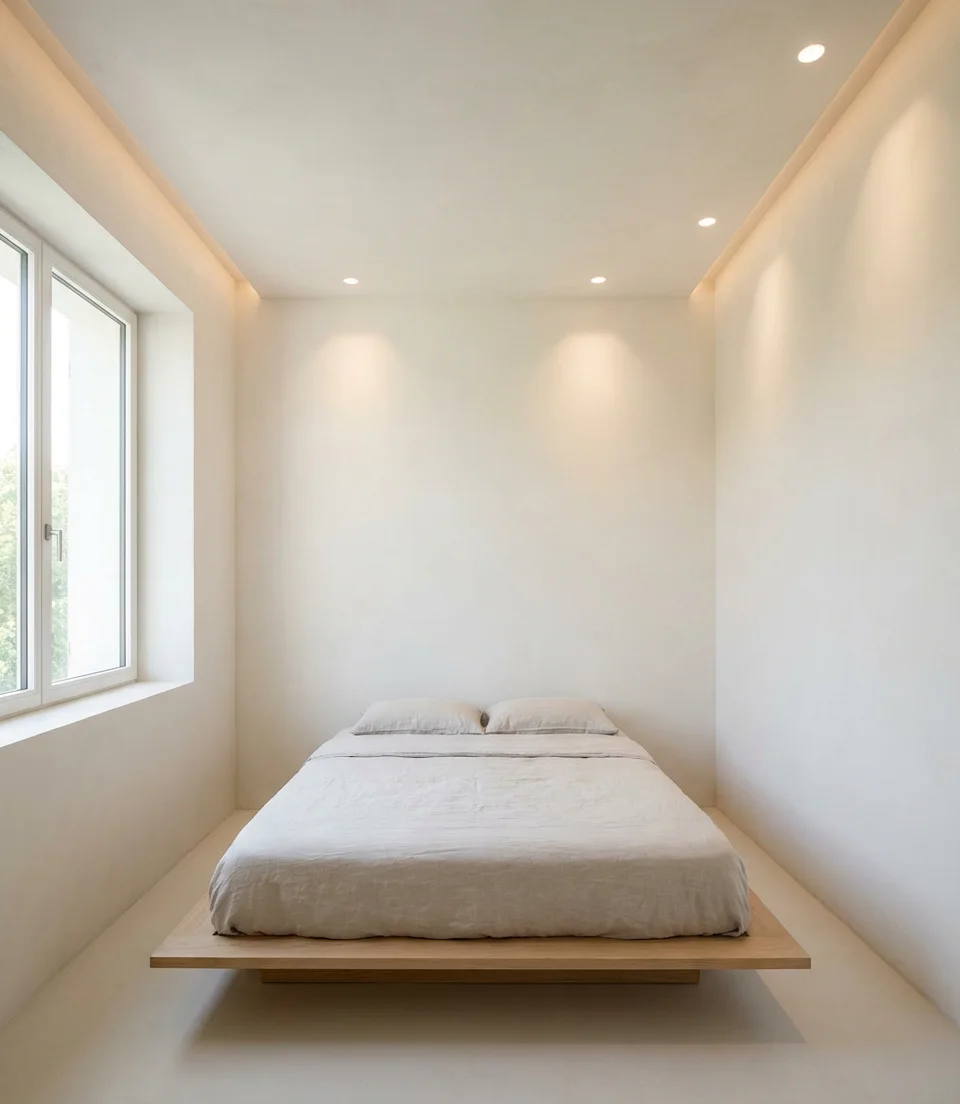
Small bedroom lighting is its design challenge, and the ceiling is the most important variable to get right. A single bright overhead fixture in a small room scenario tends to flatten the space—it illuminates everything evenly, which paradoxically makes the room feel smaller by eliminating the shadow and depth that create a sense of spatial interest. The better approach: modern recessed ceiling fixtures positioned near the perimeter rather than the center, washing the walls with light and making them appear to push outward. A coved or indirect ceiling treatment bounces light upward and creates the illusion of greater height.
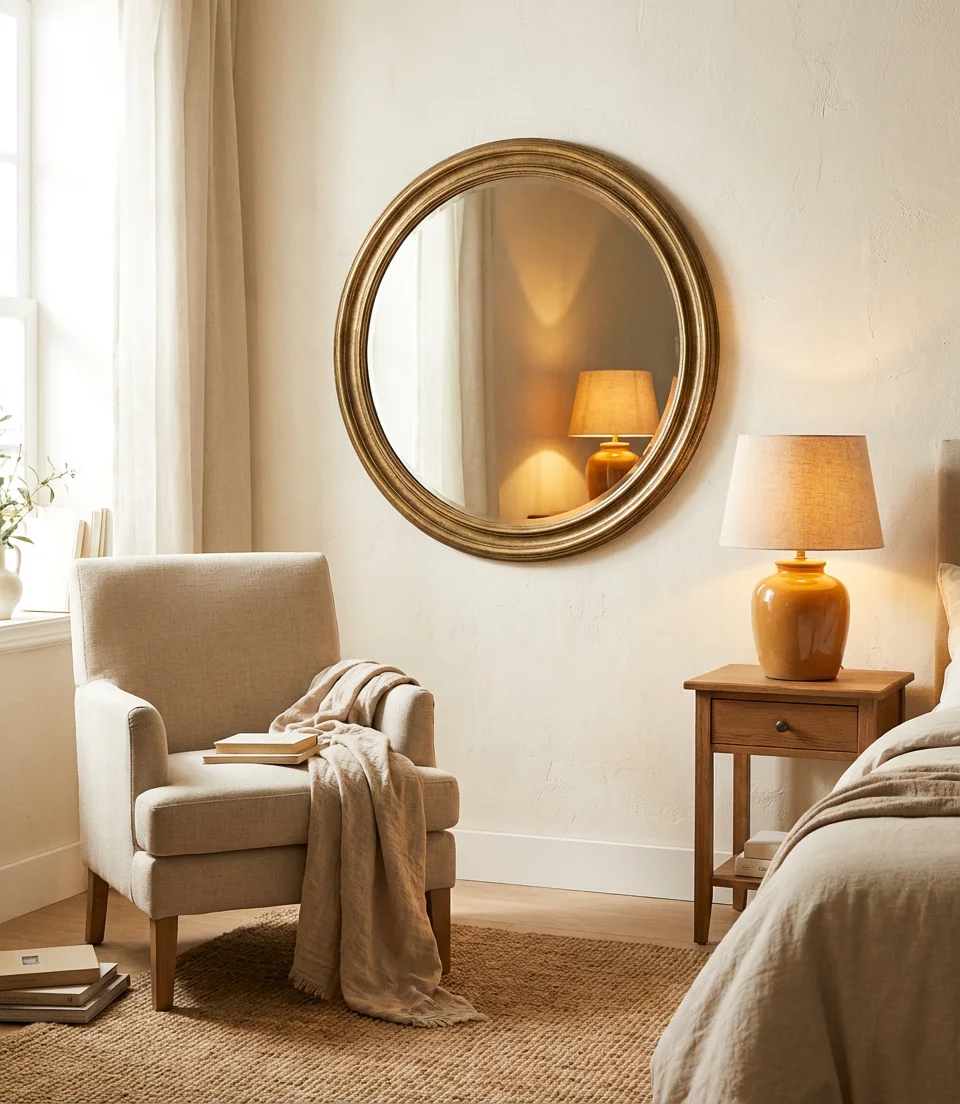
Mirrors positioned opposite a light source are one of the oldest small-room lighting tricks, but they’re old because they work. A large mirror on the wall directly across from your primary light source reflects the glow back into the room, effectively doubling the perceived brightness without adding a single watt. Pair this solution with light-colored walls and a simple, uncluttered ceiling fixture, and a small bedroom can read as genuinely airy rather than cramped. Skip the ceiling fan with a light kit—it takes up visual real estate and rarely contributes to the atmosphere you’re after.
18. Unique Bedroom Lighting Ideas That Stand Out
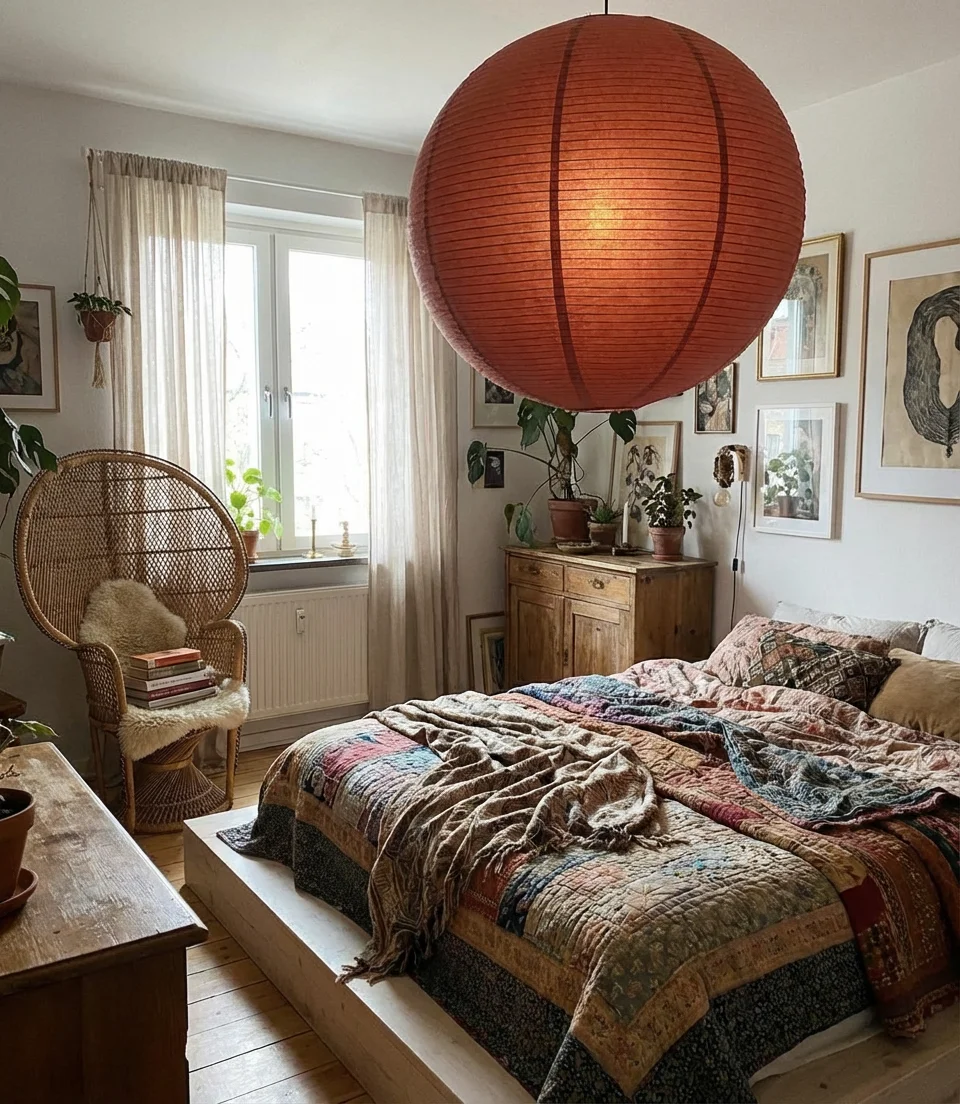
The most memorable bedrooms on Pinterest in 2026 aren’t following a template—they’re doing something genuinely unique with light that stops the scroll. Think of an oversized paper lantern in a lacquered primary color. A cluster of mismatched vintage pendants hung at varying heights above the bed. A custom neon sign, displaying a meaningful phrase, casts a warm pink or amber wash across the headboard wall. Even a single unexpected fixture—a sculptural floor lamp in an unusual material or a thrifted industrial piece rewired and reimagined—can give a bedroom a personality that no amount of careful neutral layering achieves. Light is one of the fastest ways to inject character.
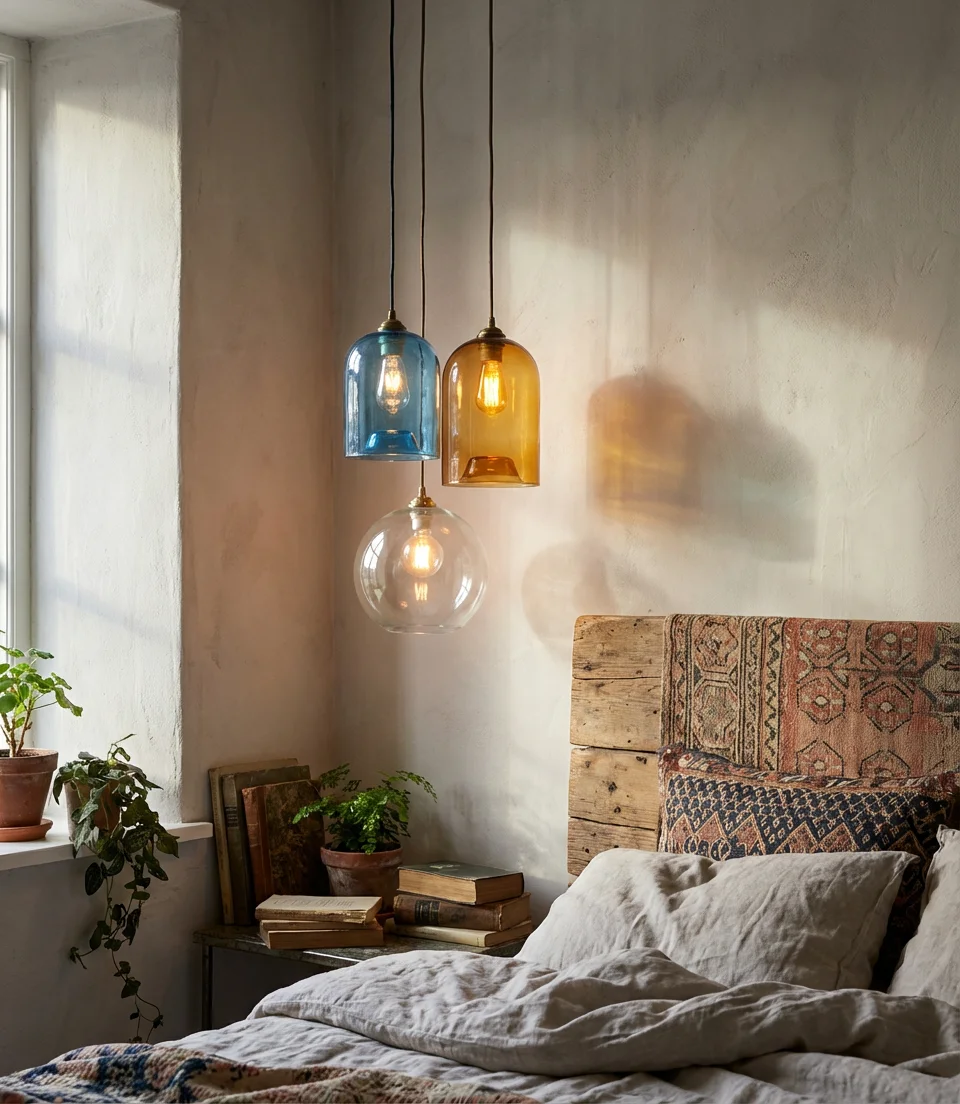
The real secret to pulling off a bold, unconventional lighting choice without the room feeling chaotic is contrast. One truly unusual fixture reads as a confident design statement. Three unusual fixtures in the same small room suggest indecision. Choose your one expressive moment and let everything else in the room support it quietly. If the pendant above the bed is the star, keep the bedside lamps simple and the ceiling treatment understated—give the focal point the visual space it needs to land.
19. Guest Bedroom Lighting That Feels Welcoming
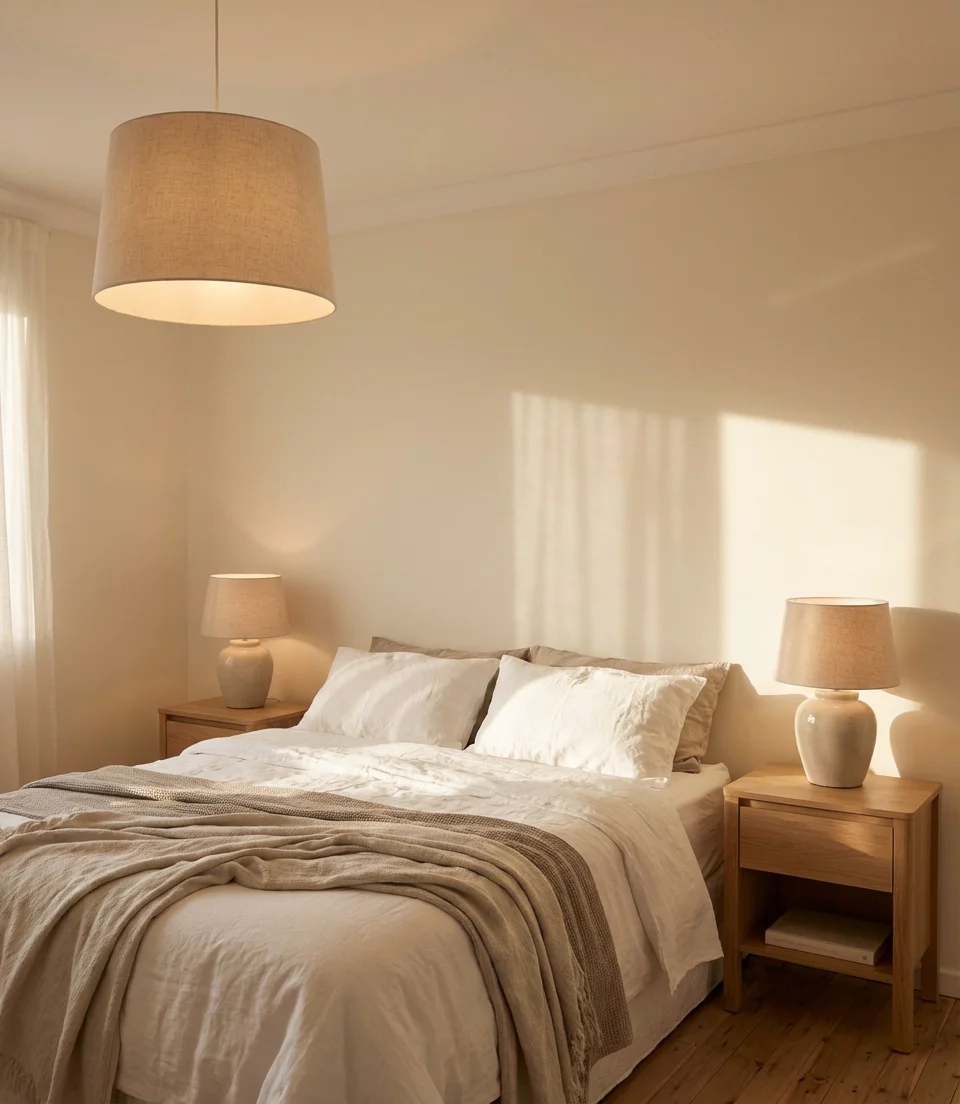
A well-lit guest bedroom communicates care before a visitor has even unpacked. The goal here is versatility: bright enough for a guest to unpack and get ready comfortably, warm enough to feel like a retreat at the end of the day. A ceiling fixture on a dimmer, paired with at least one bedside lamp per sleeping side, covers most scenarios. If the room doubles as a home office or hobby space, a floor lamp near a chair or desk adds a third layer that serves both functions. The aesthetic can be quieter and more universal than your room—neutrals and warm woods land well for most guests regardless of their personal style.
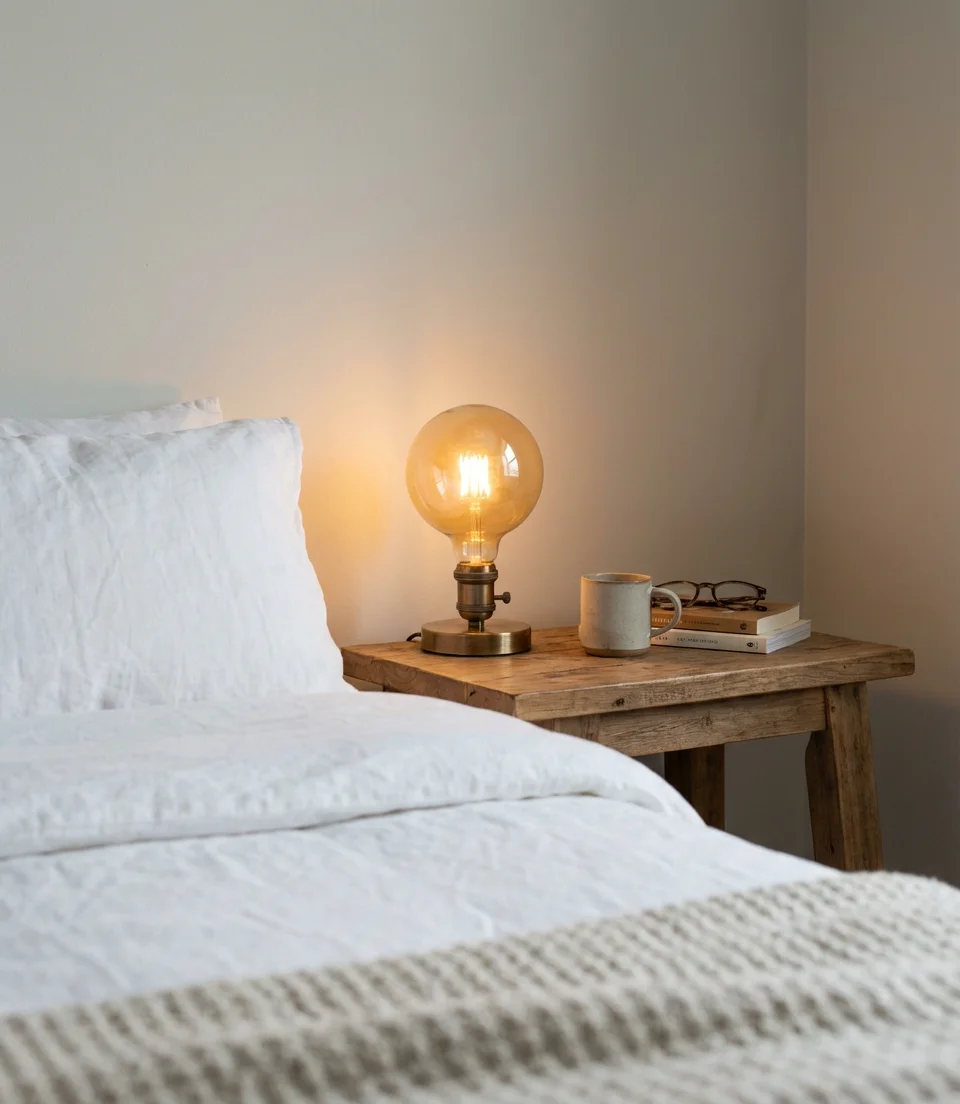
An often overlooked practical detail: make sure the bedside lamp switches are intuitive and within easy reach from a lying position. Guests in an unfamiliar room will fumble for a light switch at midnight, and if it requires getting up or reaching past the lamp’s shade to find a tiny knob at the base, the experience is immediately frustrating. Touch-activated bases, pull chains positioned at the front of the shade, or smart bulbs with a simple bedside remote are all thoughtful upgrades that guests will notice and appreciate even if they never mention it.
20. Modern Bedroom Ceiling With Layered Ambient Lighting
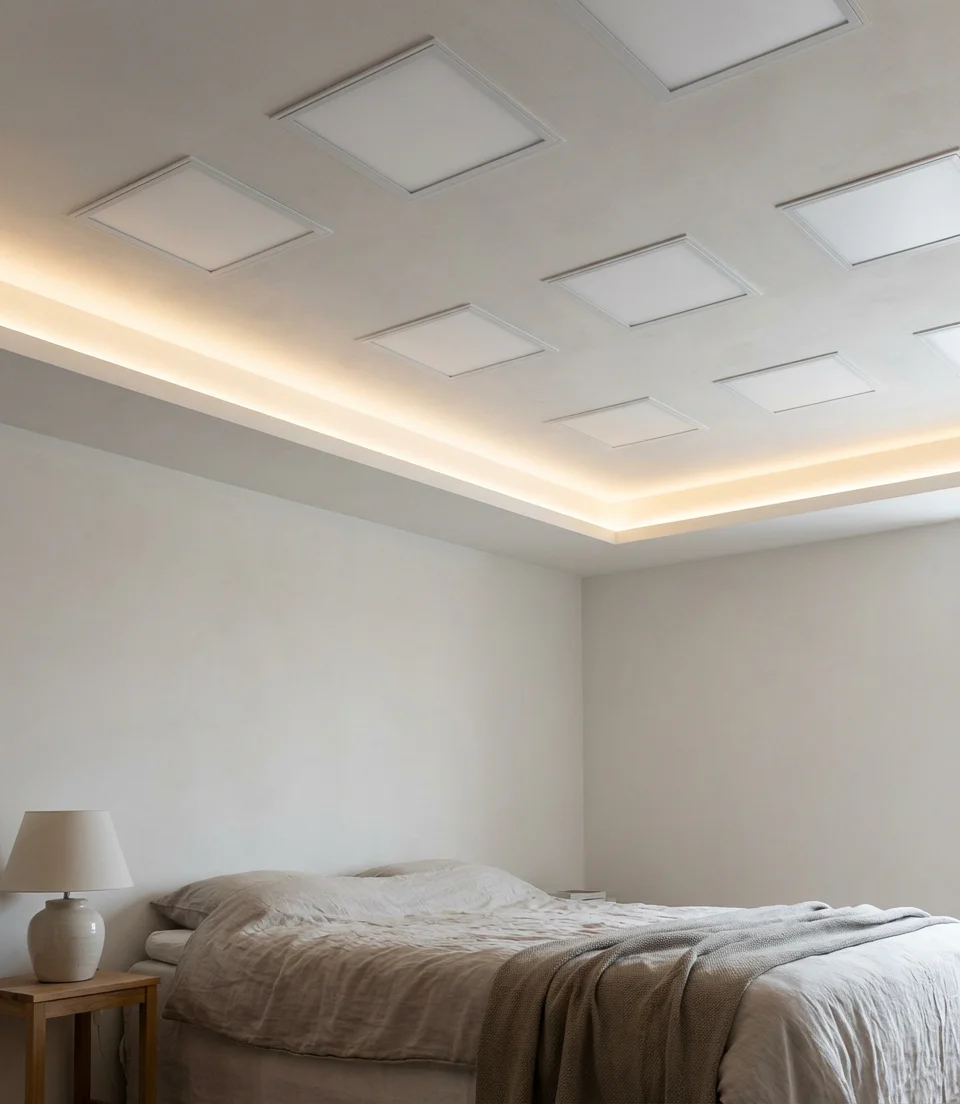
A modern bedroom ceiling treatment in 2026 isn’t about a single fixture—it’s about the interplay between multiple light sources at the ceiling plane working together to create even, flattering ambient light. The most sophisticated versions combine shallow recessed cans with a perimeter LED cove, allowing the overhead light to fill the room while the cove adds a soft upward wash that eliminates shadows in the corners and creates a sense of architectural volume. The result is the modern approach to the ceiling at its most refined: invisible infrastructure delivering effortless, adjustable warmth without a single decorative fixture in sight.
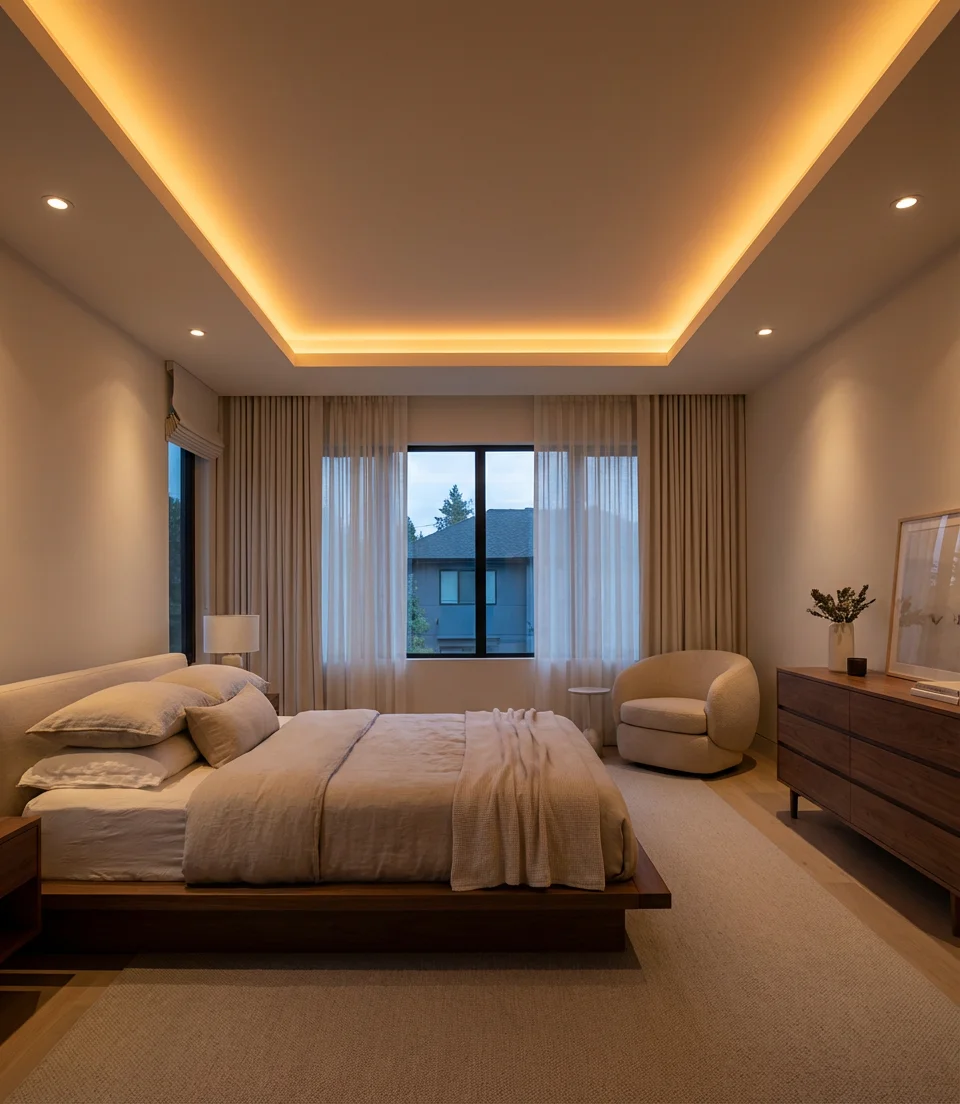
This approach requires planning before drywall goes up—retrofitting a cove light into an existing ceiling is possible but significantly more involved than installing it during construction or renovation. If you’re building new or doing a full bedroom refresh, it’s worth having the conversation with your contractor or electrician early. Once installed, the maintenance is minimal and the lighting flexibility is extraordinary: the same room can function as a bright morning space, a focused work environment, and a dim, warm sanctuary without ever changing a bulb or moving a lamp.
21. Soft Lighting Bedroom for Better Sleep
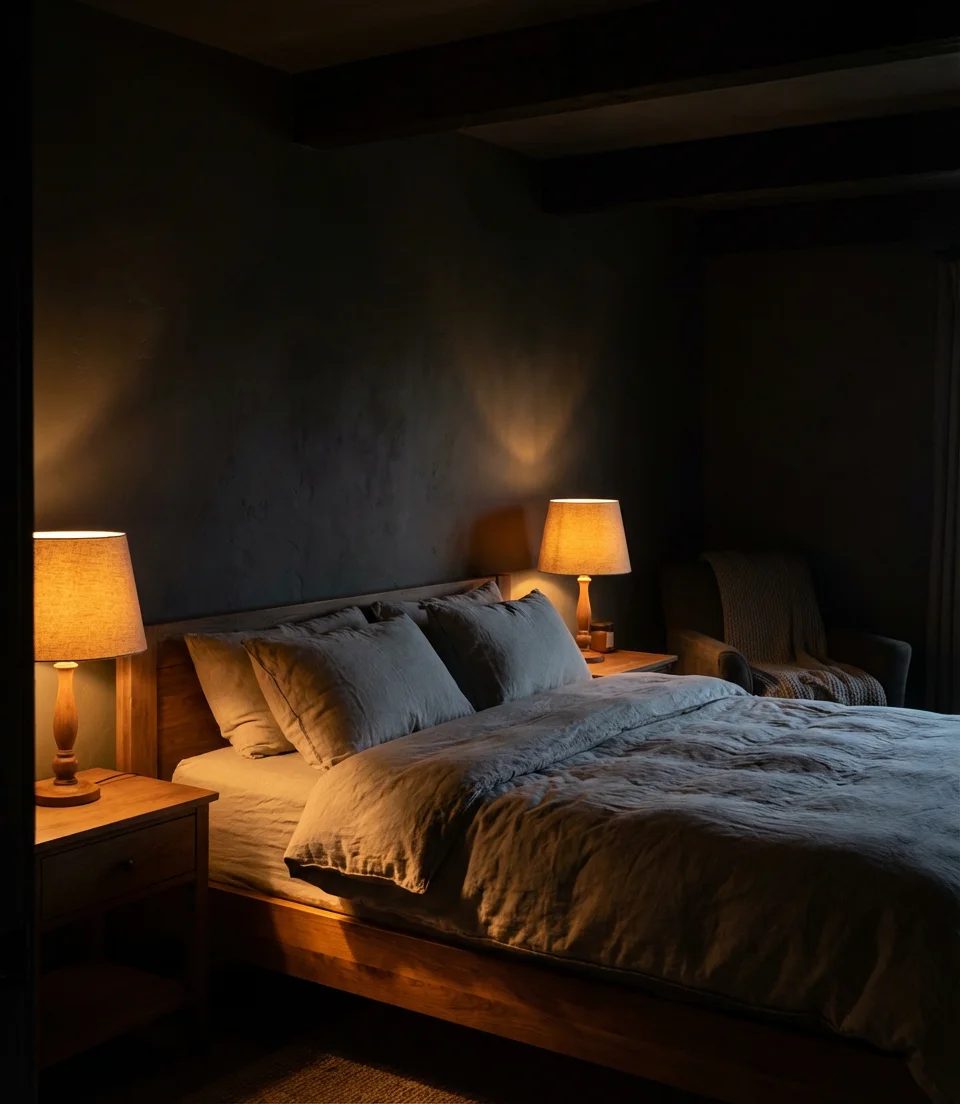
There’s growing awareness in American households about the relationship between light and sleep quality—and it’s reshaping how people approach bedroom lighting in meaningful ways. The science is fairly clear: exposure to cool, bright light (above 3000K) in the hour before bed suppresses melatonin and delays sleep onset. Switching to soft, warm sources (2200K to 2700K) in the evening is one of the simplest, lowest-cost interventions available. Cozy amber-toned lamps, salt lamps, candlelight, and flame-effect bulbs all fall into the sleep-supportive category without requiring any lifestyle sacrifice beyond a bulb swap.
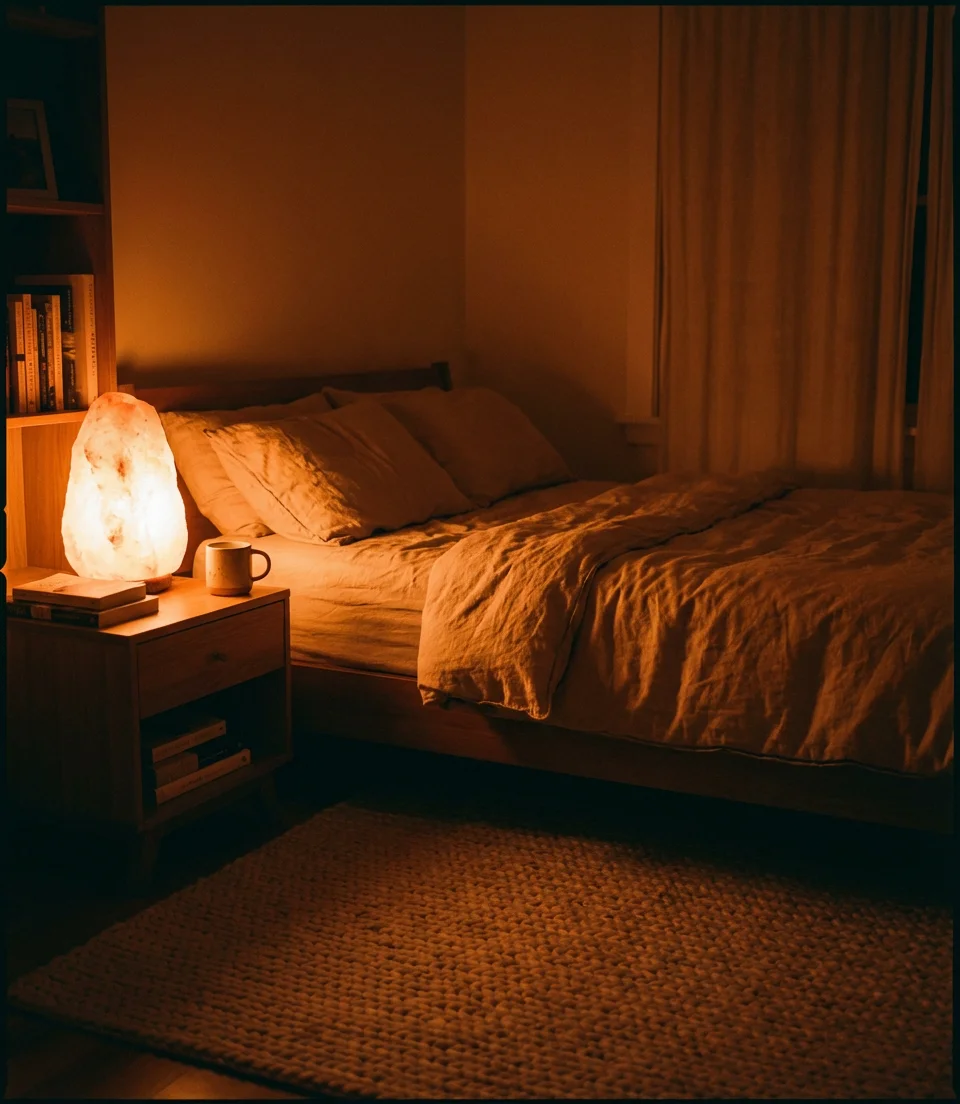
Sleep scientists and lighting designers increasingly agree that the bedroom should have no bright overhead light active in the 90 minutes before sleep. That means the ceiling fixture—if it exists—should be on a dimmer and used at its lowest setting or turned off entirely in favor of low-positioned, warm-toned table and floor lamps. This is one of the rare cases where the healthiest option and the most beautiful option are exactly the same: a bedroom lit from the sides and below, in warm amber, with shadows gathering naturally at the ceiling, is both sleep-supportive and genuinely lovely to inhabit.
22. Creative Bedroom Lighting With Unexpected Materials
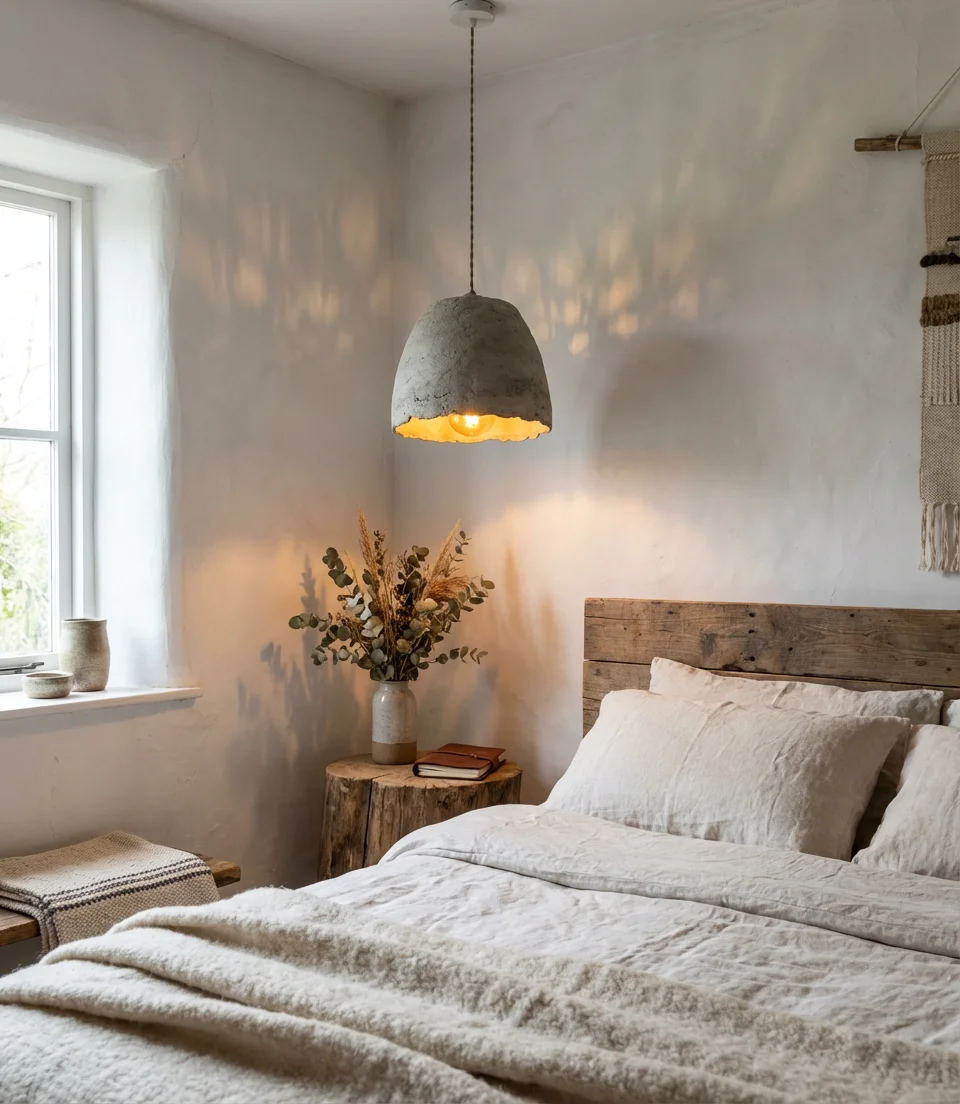
Some of the most intriguing bedroom lighting ideas in 2026 aren’t coming from fixture catalogs—they’re coming from makers and designers using unexpected materials to build something entirely their own. Concrete pendant shades. Lampshades constructed from dried botanicals or handmade paper. The bases are made of driftwood and feature exposed cords. Ceramic forms that were designed as vessels but function brilliantly as light diffusers. This creative territory is where bedroom lighting stops being about illumination and starts being about expression—the light becomes an object you’d want even if it weren’t functional, a piece of craft that happens to also light your room beautifully in an earthy-vibes direction.
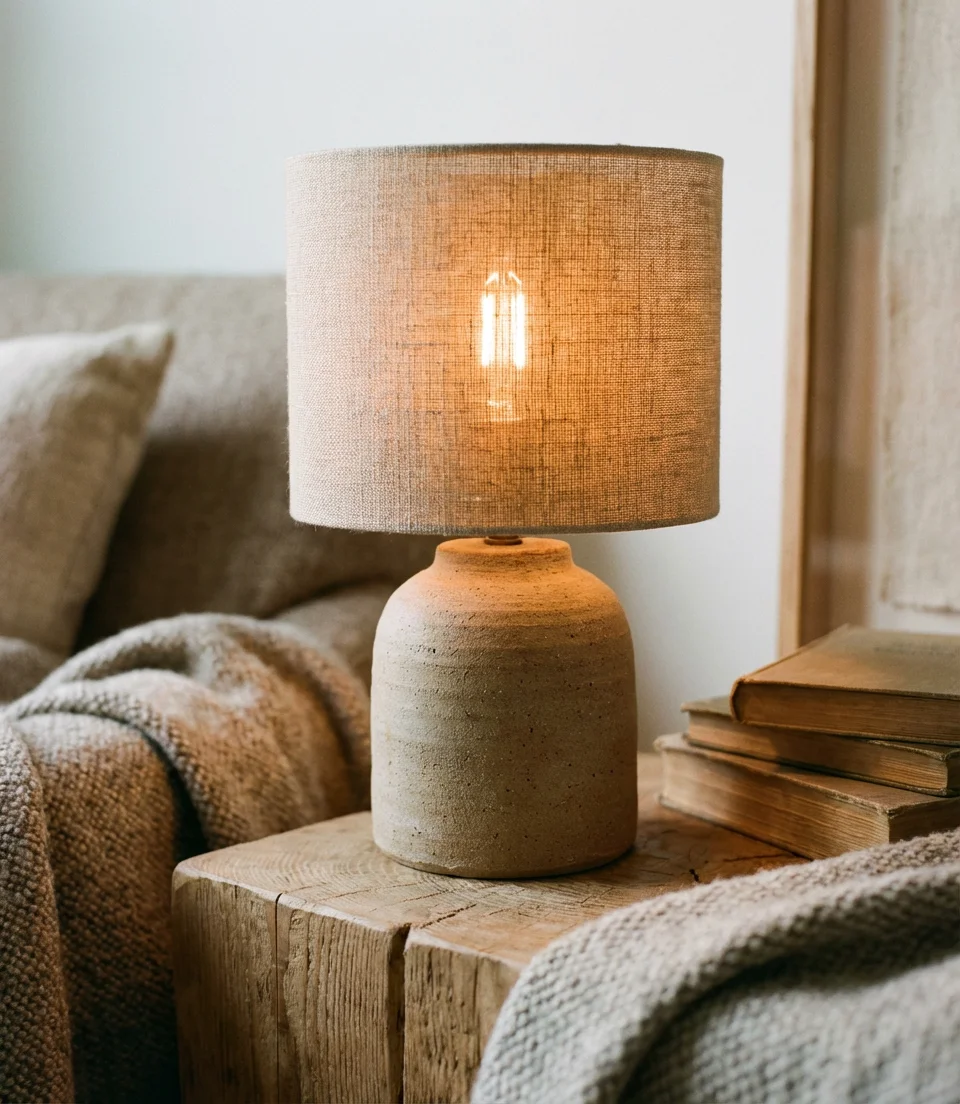
The best place to find these kinds of pieces is often not a lighting store at all—it’s Etsy, local craft markets, small-batch ceramics studios, and vintage shops where unusual forms get rewired and reimagined. The price range is broad: a handmade ceramic base lamp from a regional artist might run $150 to $400, while a thrifted piece rewired yourself could come in under $40. Either way, the result is a fixture that tells a story and that no one else’s bedroom will replicate—which is, ultimately, what the most enduring bedroom lighting is all about.
Bedroom lighting is one of the most personal and impactful design decisions you can make—it shapes mood, supports sleep, and gives a room its signature feeling more than almost any other single element. Whether you’re drawn to the moody drama of dark walls and directional sconces or the breezy warmth of rattan pendants and earthy tones, there are ideas in this list worth experimenting with at every budget. Which of these looks resonates most with your bedroom? Drop your thoughts in the comments—we’d love to hear what you’re planning or what’s already transformed your space.