44 Beach House Exterior Ideas for 2026 That Will Make You Fall in Love With Coastal Living

People stop scrolling when they encounter a beach house. Whether it’s a crisp white facade draped in bougainvillea or a moody coastal blue with natural wood accents, exterior curb appeal at the shore has become one of Pinterest’s most-searched design categories heading into 2026. Americans up and down both coasts—from the Florida Gulf to the California Pacific—are reimagining what it means to live beautifully by the water. In this article, you’ll find fresh, inspiring beach house exterior ideas that cover every style, budget, and climate, so whether you’re renovating a vacation rental or finally finishing your dream home, there’s something here for you.
1. Crisp White Coastal Classic
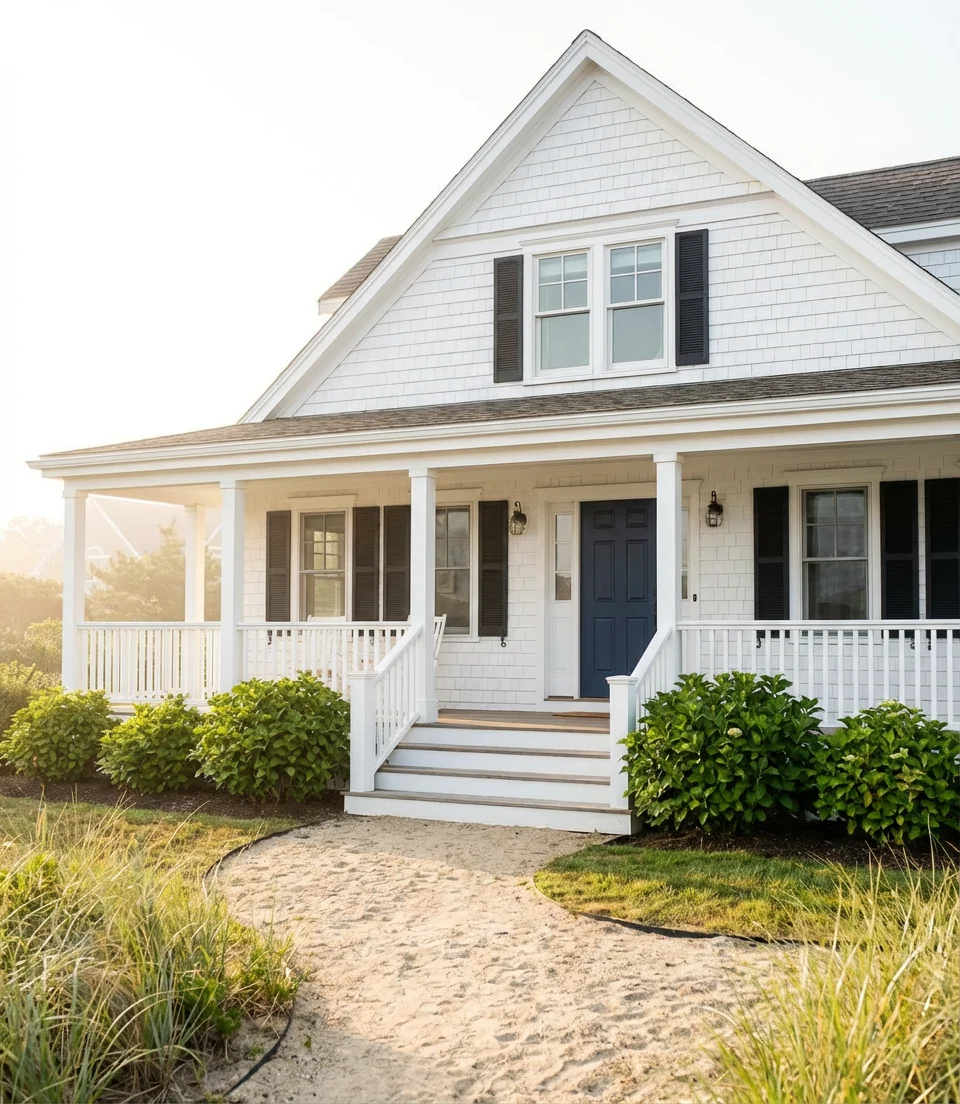
A white exterior, practically glowing in the morning sun, perfectly defines a beach house. This coastal staple has endured for generations because it reflects heat, pairs with every accent color, and photographs beautifully—a huge bonus for anyone sharing their home on social media. A white-painted shingle or board-and-batten facade gives the home a timeless, airy quality that whispers “salt air” without saying a word. It works equally well on compact cottages and sprawling estates alike.
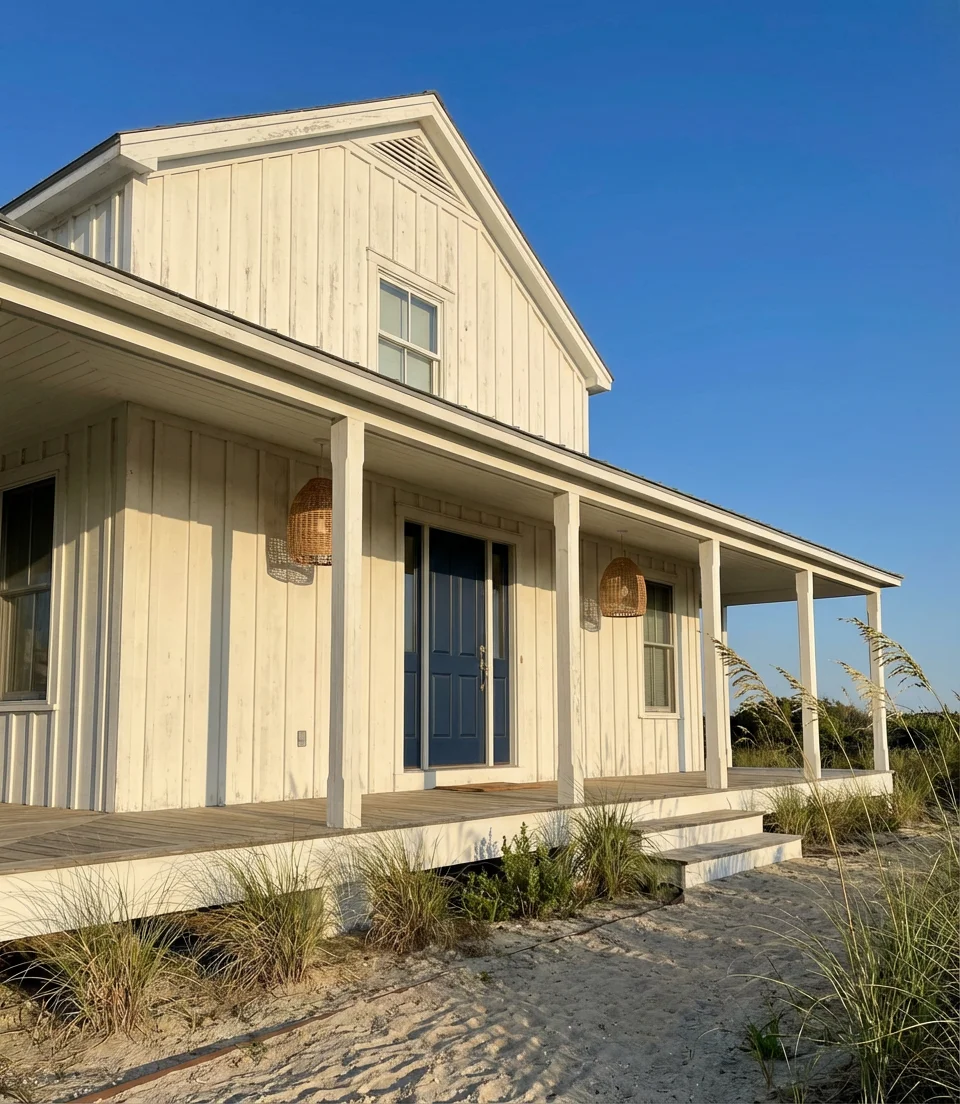
Designers consistently recommend warm white tones—think Benjamin Moore’s “White Dove” or Sherwin-Williams’ “Alabaster”—over stark bright whites, especially in direct sunlight climates. The warmth keeps the exterior from looking clinical and blends naturally with sandy surroundings. To ground the palette and give the facade the kind of contrast that makes it stand out both in real life and on a Pinterest board, incorporate black shutters or a navy front door.
2. Soft Blue Paint Colors for a Breezy Vibe
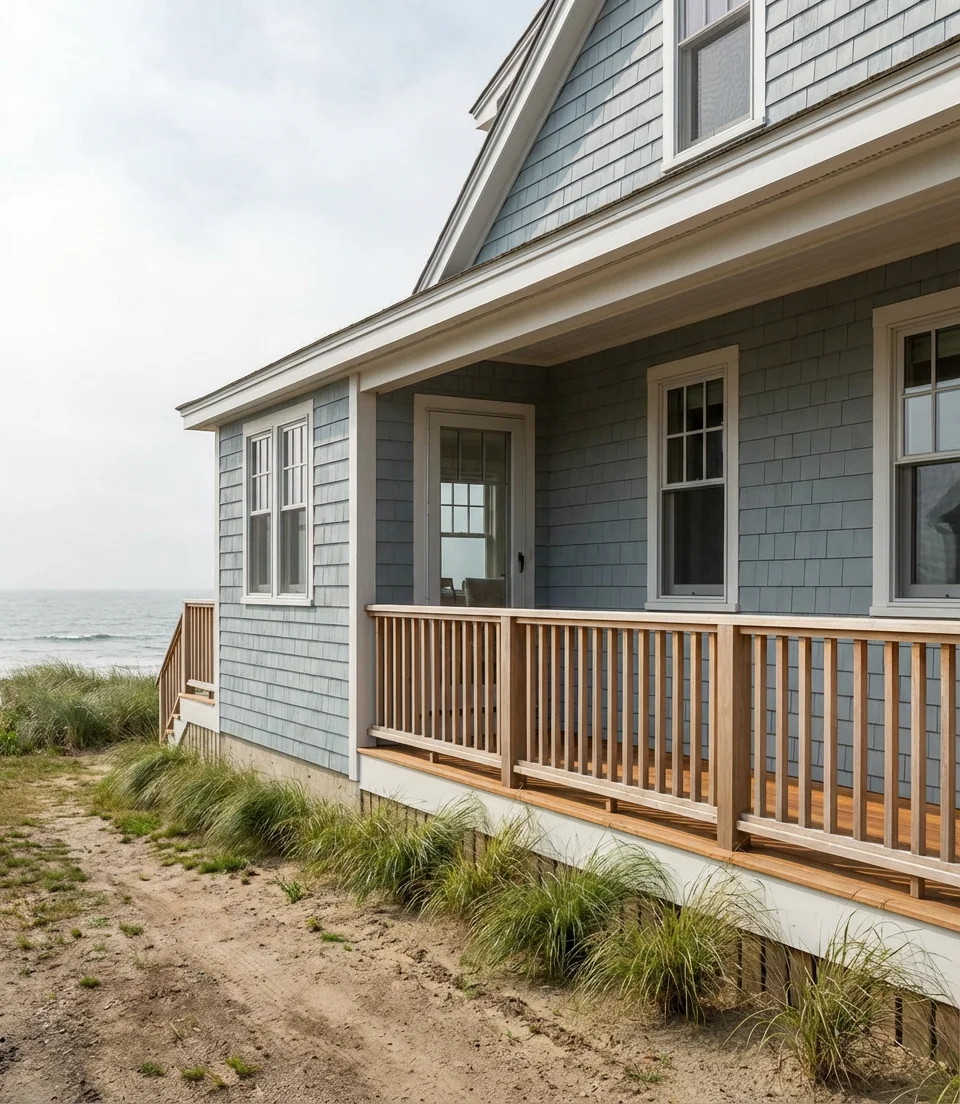
If white is the anchor of coastal design, blue is its soul. Soft, dusty blue-gray paint colors are having a serious moment in 2026, especially for beach homes that want to feel connected to the ocean without going full nautical. Shades like “Sea Salt,” “Niebla Azul,” and “Comfort Gray” wrap a beach house in a quiet calm that feels intentional rather than themed. The key is choosing a blue with enough gray undertone to keep it sophisticated rather than cartoonish.
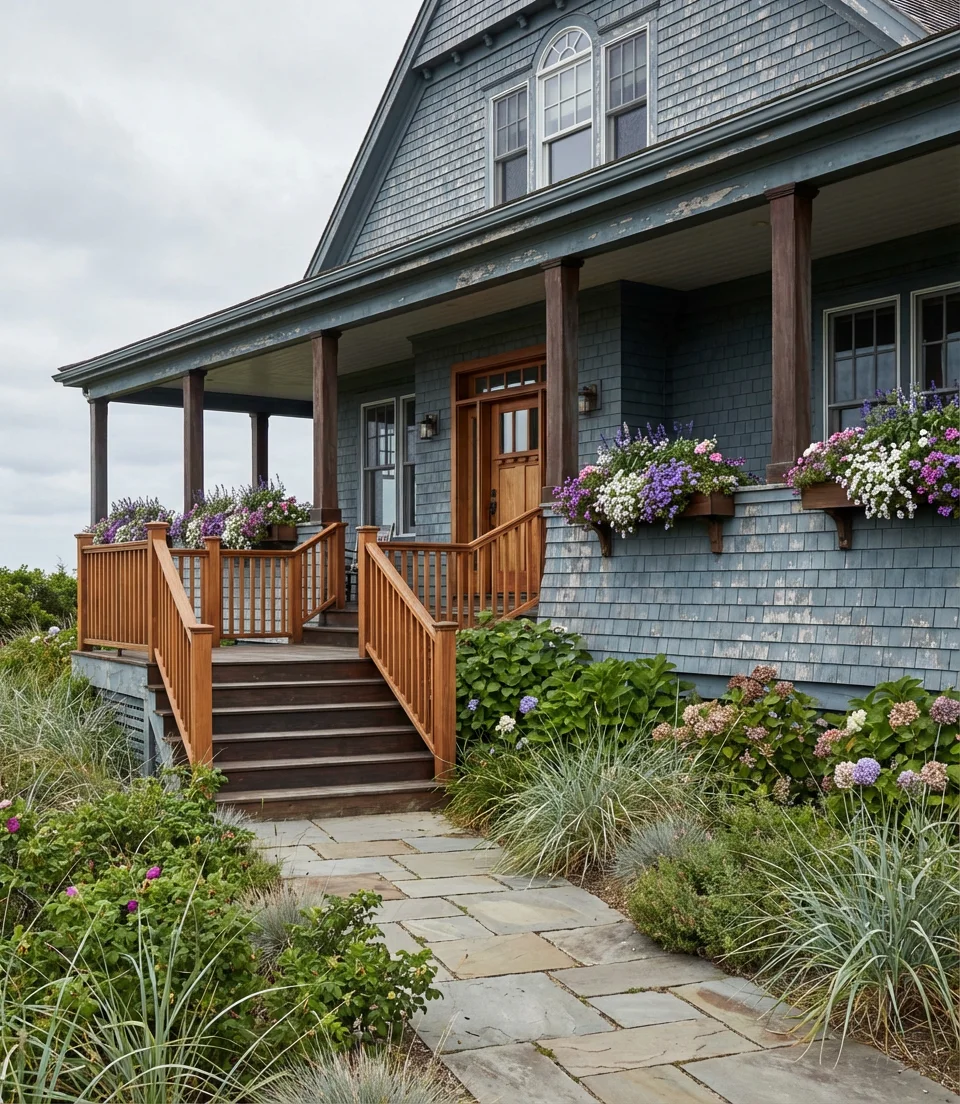
This palette works best on homes with plenty of natural wood detail—porch railings, window trim, or cedar shake accents—because the warm wood tones prevent the blue from reading cold. One common mistake homeowners make is sampling a paint chip only indoors; coastal light is intense and shifts throughout the day, so always test paint swatches directly on your exterior wall and observe them from morning through evening before committing.
3. Contemporary Beach House with Clean Lines
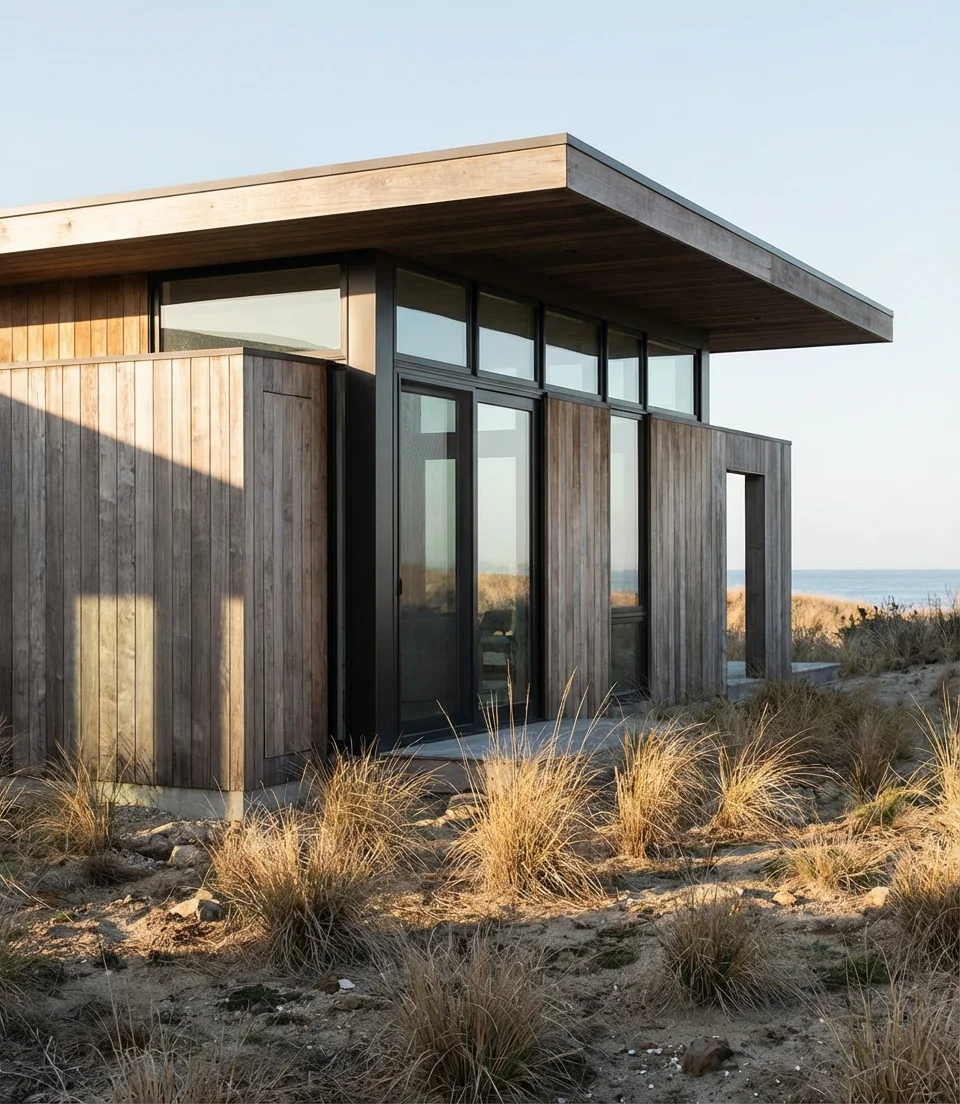
The contemporary beach house has evolved far beyond the boxy beach bungalow. Today’s version features clean horizontal lines, oversized windows, and a restrained material palette—typically concrete, steel, and natural wood—that lets the landscape do the talking. This design philosophy prioritizes indoor-outdoor flow, so the exterior often includes deep overhangs, cantilevered decks, and flush-mounted cladding that creates a seamless visual connection between the home and the sky behind it.
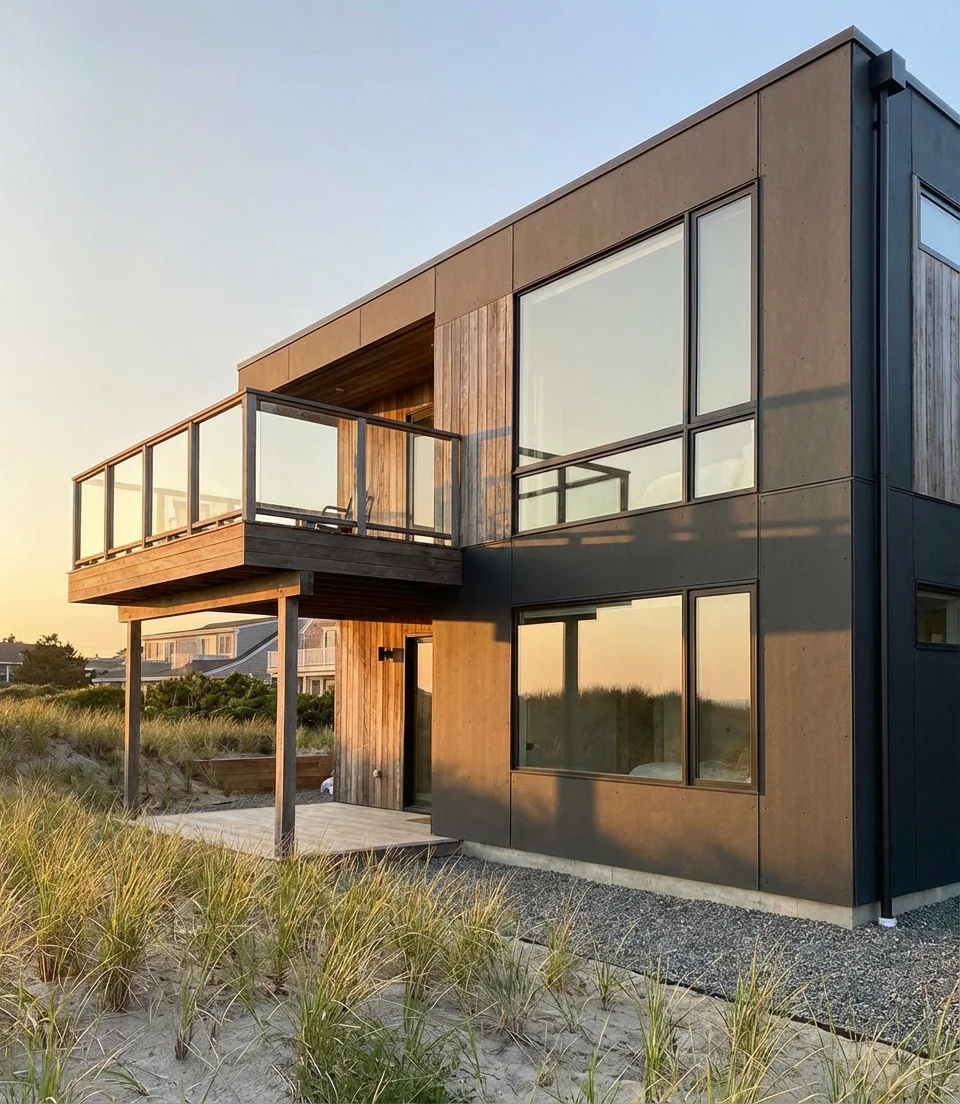
For American homeowners, especially on the West Coast, this style has become the dominant aesthetic in new construction. A full contemporary exterior renovation—new cladding, windows, and roofline adjustments—typically runs between $80,000 and $200,000 depending on square footage and materials, but even partial updates like replacing wood siding with fiber cement panels and adding a flat-roof pergola can dramatically modernize an older beach cottage on a more manageable budget.
4. Tropical Beach House with Palm Accents
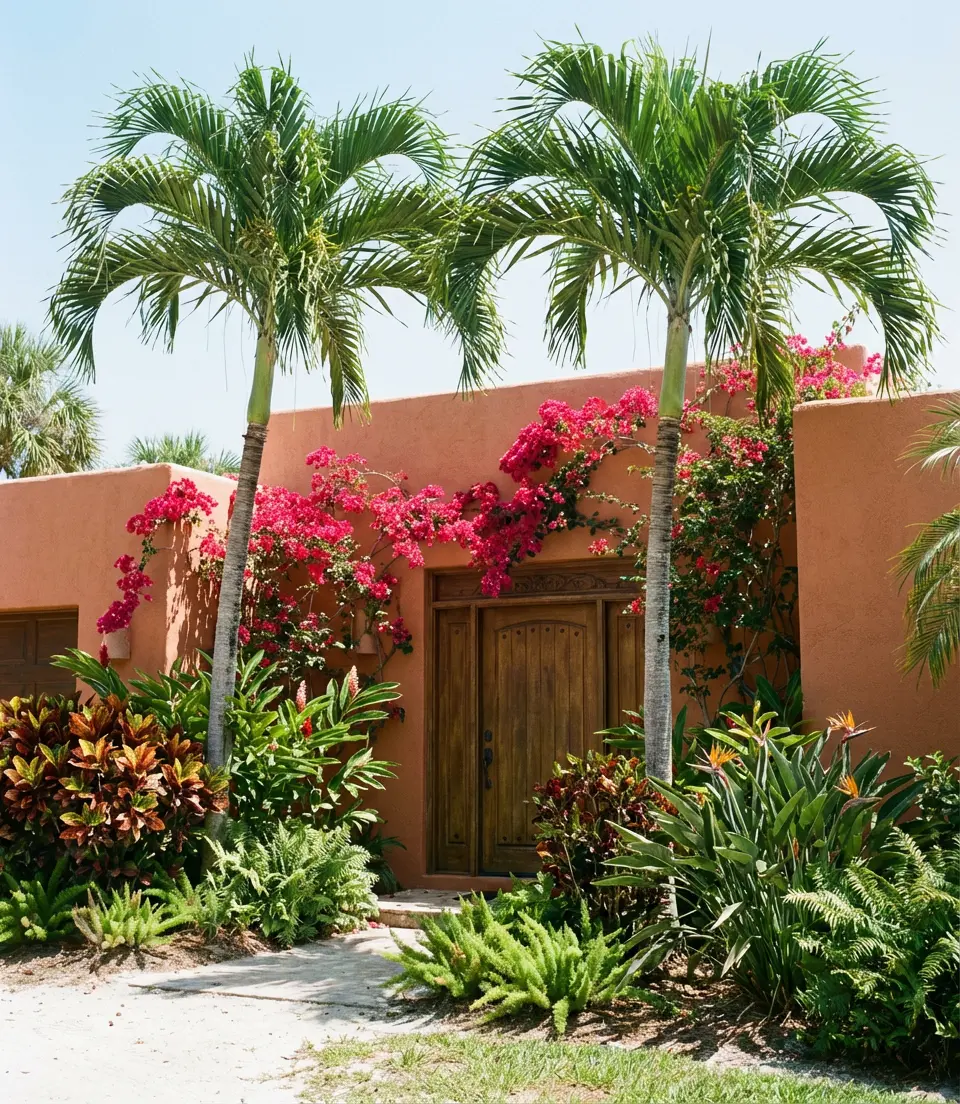
A tropical beach house exterior leans fully into its lush surroundings, layering bold landscaping with warm-toned architecture to create something that feels genuinely transported. Palm trees framing a vibrant front facade—whether painted in terracotta, coral, or a deep mossy green—transform a standard beach home into a private retreat. This aesthetic is enormously popular in Florida, Hawaii, and coastal Southern California, where the climate actually supports the lush plant life that makes the appearance authentic.
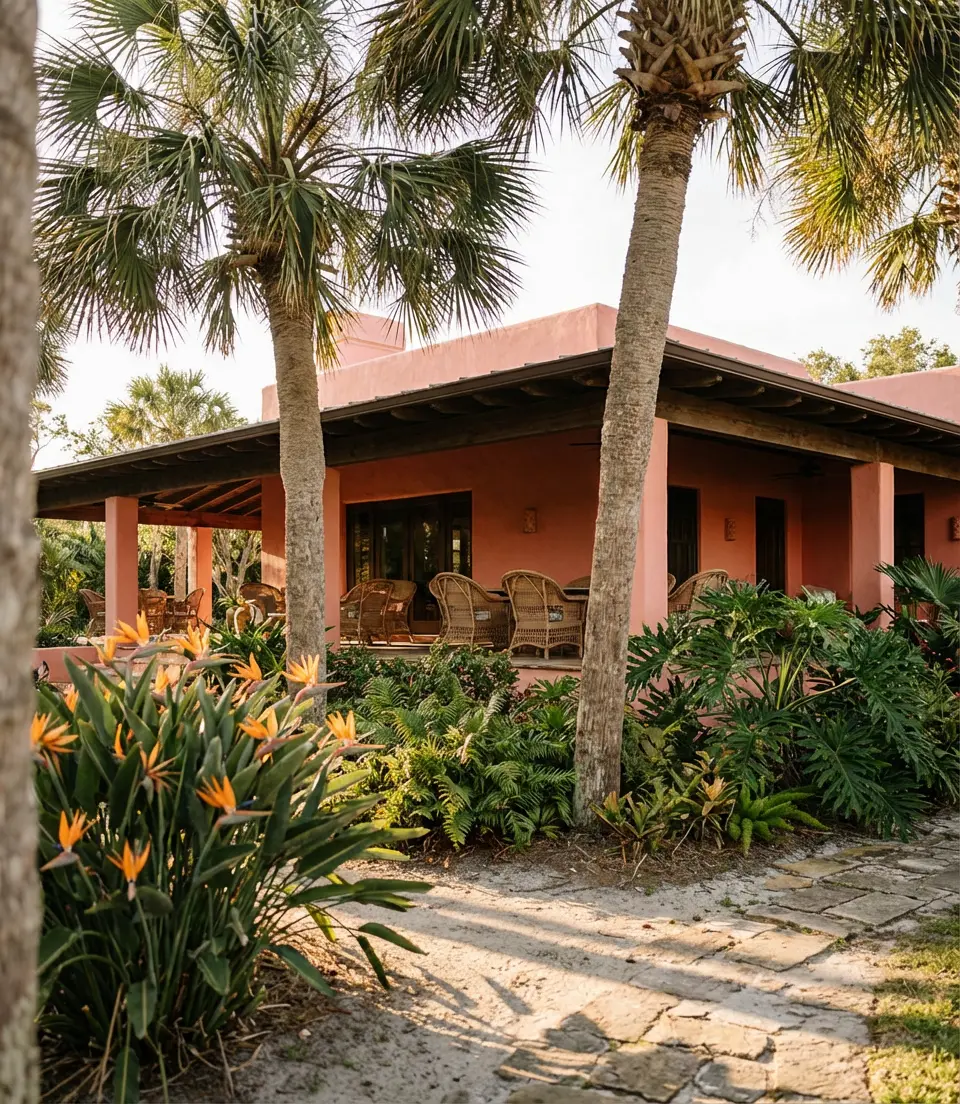
A landscape architect who works primarily in the Florida Keys once noted that the secret to a great tropical exterior isn’t the house color—it’s layering three to five varieties of plants at different heights so there’s always something blooming or shifting with the breeze. The garden is the focal point, while the architecture serves a supporting role. Start with a strong canopy tree or two queen palms, then fill in with bird of paradise, croton, and trailing bougainvillea at the foundation for a genuinely lush, editorial-worthy result.
5. California Dreaming Aesthetic Exterior
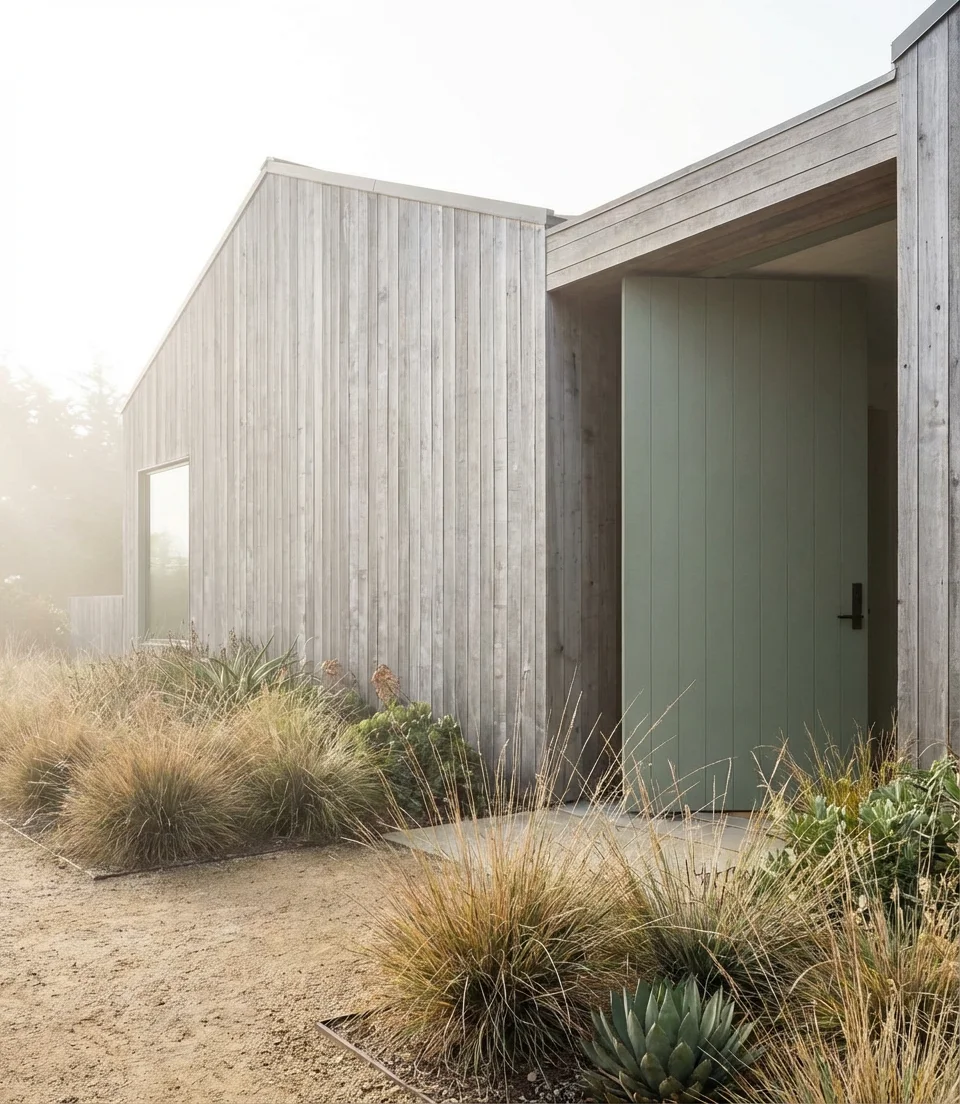
The California beach house has its own specific aesthetic—warm, effortless, and just a little bit undone in the best possible way. Think natural cedar siding weathered to a silvery finish, drought-tolerant grasses swaying in the ocean breeze, and oversized pivot doors painted in a muted sage or warm terracotta. It’s a look that feels simultaneously expensive and earthy, referencing surf culture and mid-century architecture in equal measure. The palette usually stays close to nature—sand, driftwood, warm clay, and sun-bleached stone.
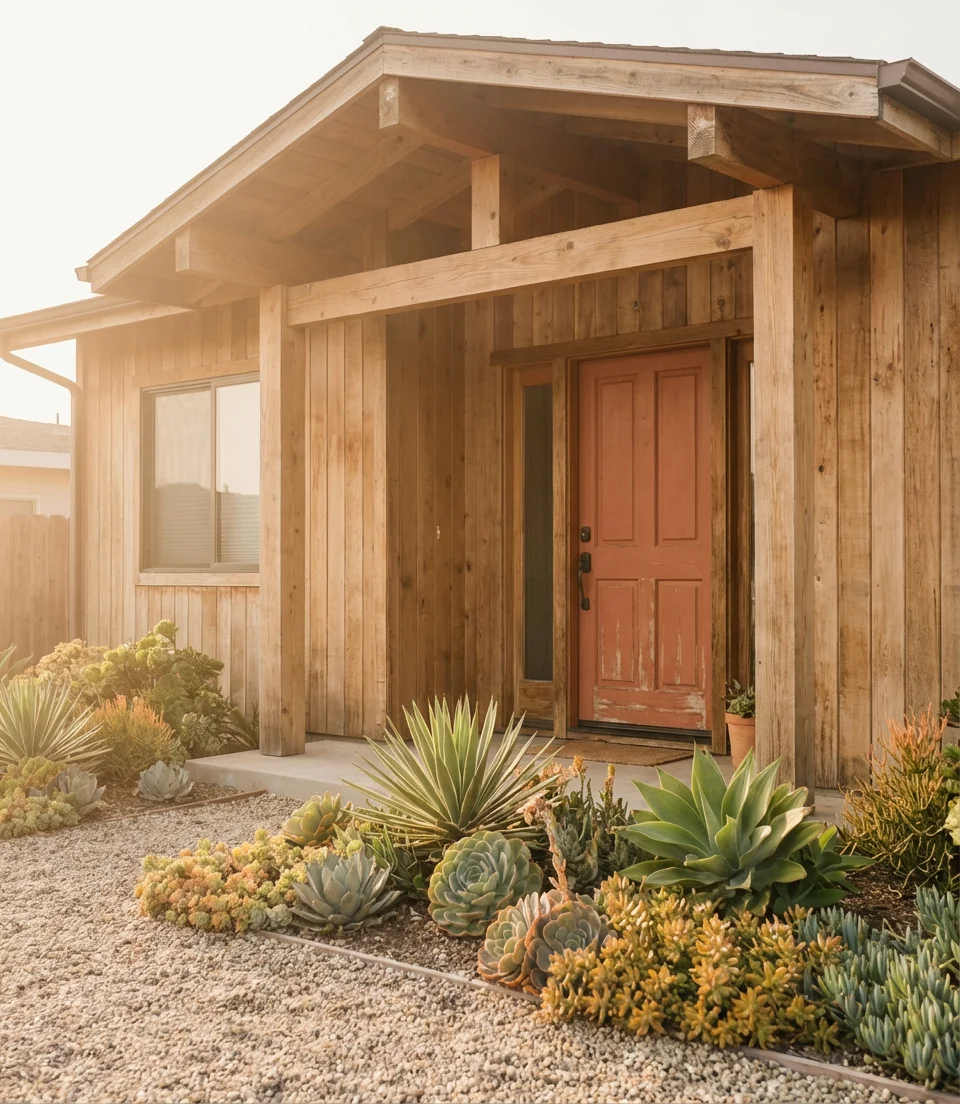
This style is especially well-suited to narrow beach lots where you can’t go wide but you can go bold with materials and landscaping. Many California homeowners are replacing traditional lawns with decomposed granite and native plantings, which cuts water use dramatically and gives the front yard that coveted “organic” texture. The result is a home that looks like it grew out of the landscape naturally—which is exactly the point in a place where the outdoors is the whole reason you moved there.
6. Florida Coastal Home with Pastel Palette
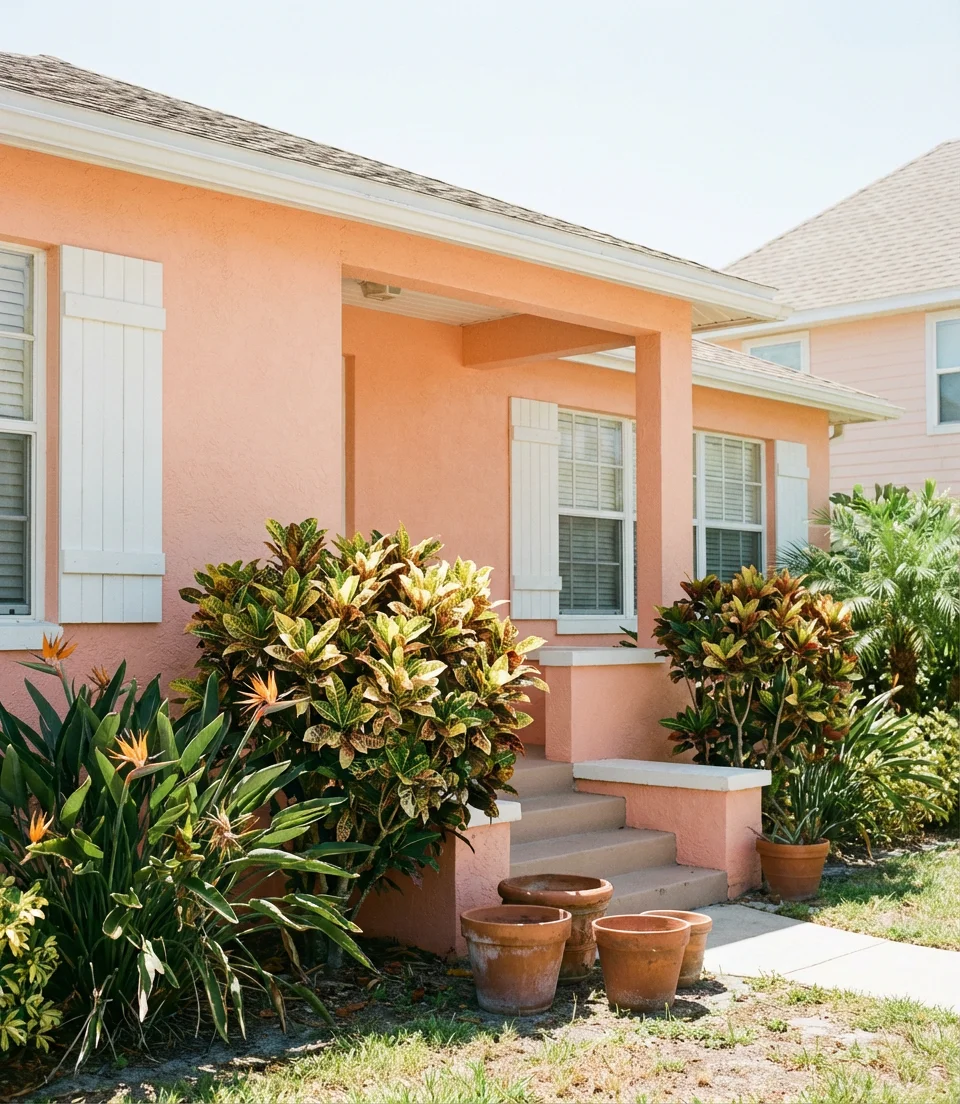
Florida beach houses have always had a playful relationship with color, and that tradition is alive and thriving in 2026. Pastel exteriors—soft coral, creamy butter yellow, and washed-out mint—are perfectly tuned to the Sunshine State’s intense natural light, which bleaches and softens every hue into something that feels perpetually vacation-ready. These colors read as cheerful and welcoming from the street while still maintaining a certain architectural dignity, especially when paired with clean white trim and dark bronze or rattan light fixtures.
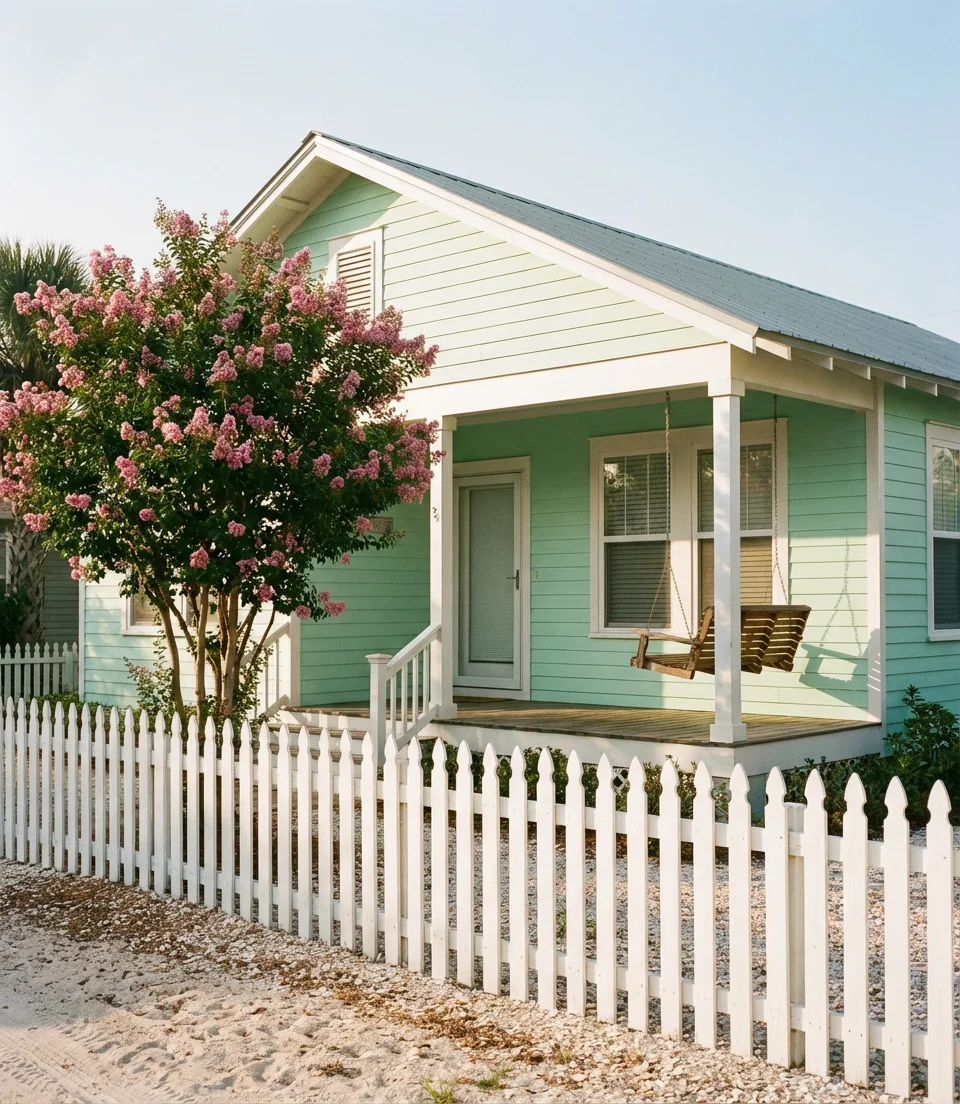
This is where Florida beach house design genuinely diverges from the rest of the country—the humidity and intense UV exposure mean you need exterior paints with high fade-resistance ratings, and mold-inhibiting formulas are a must. Homeowners who skip the premium exterior paint often end up repainting every three to four years instead of every seven to ten. Invest in a quality 100% acrylic exterior formula with an elastomeric finish for the best longevity and color retention in tropical climates.
7. Mediterranean Beach House Exterior Ideas
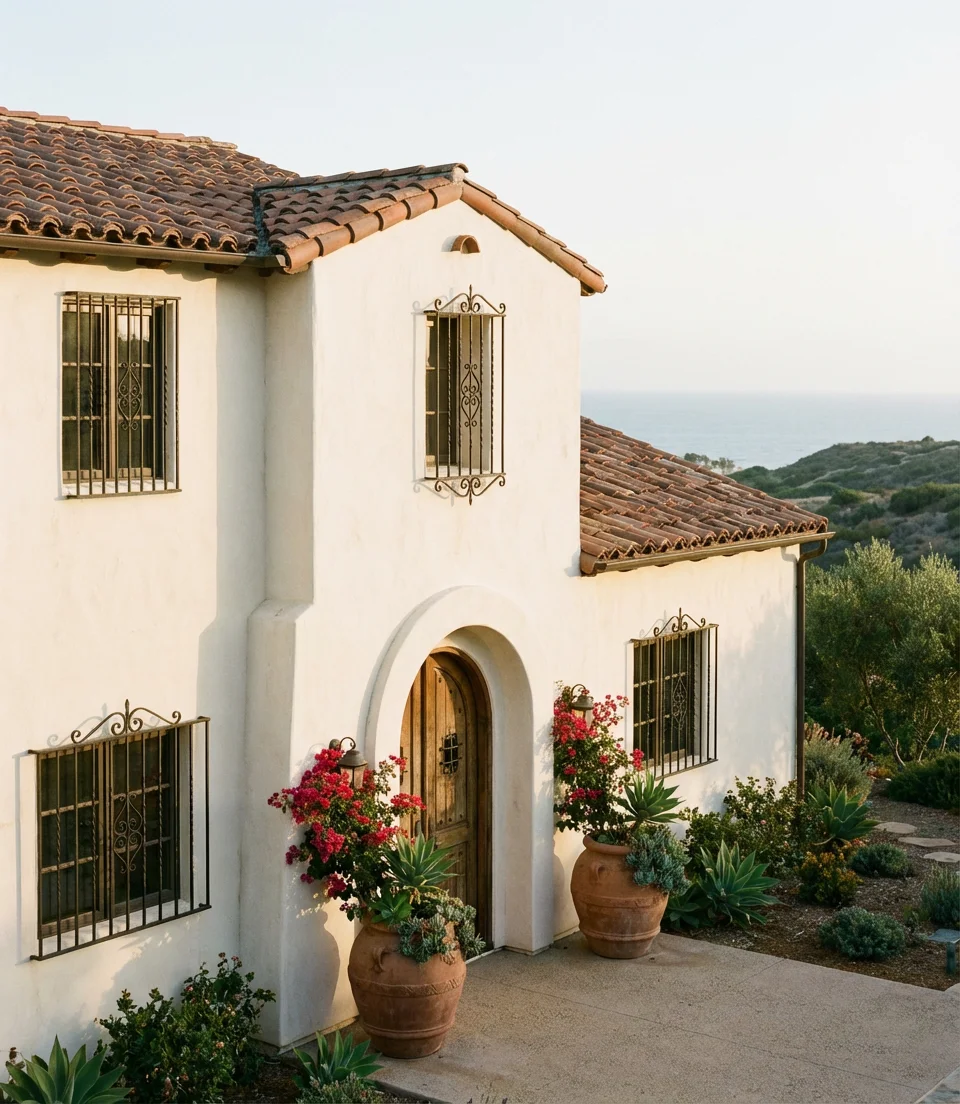
The Mediterranean style brings old-world warmth to the American coast in a way that feels genuinely timeless. Stucco walls in warm white or terracotta, curved archways, wrought-iron details, and terracotta roof tiles create a richly textured exterior that references the sun-drenched villages of Spain and Italy. This design language thrives in warmer climates—particularly coastal Southern California and Florida—where the architecture feels climatically honest rather than imported and forced.
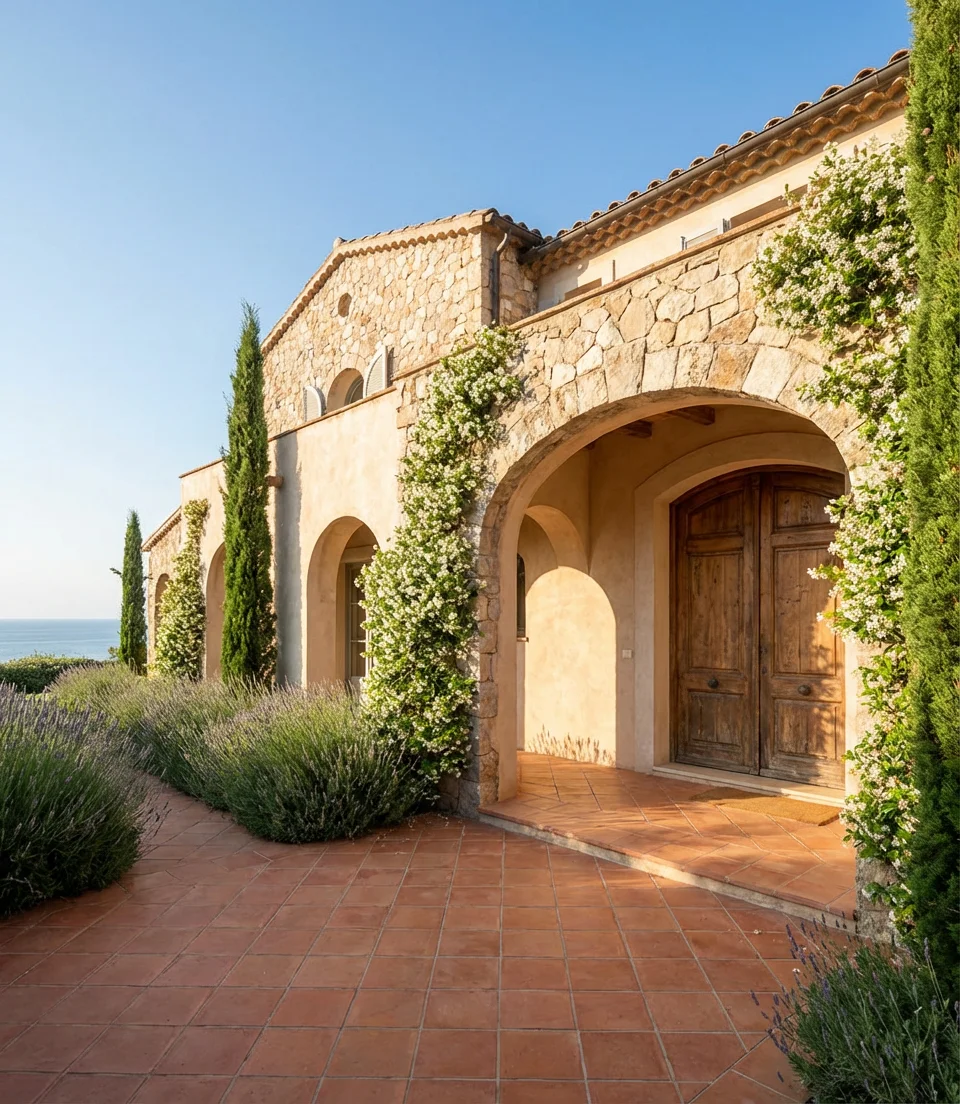
What makes a Mediterranean exterior feel authentic rather than costume-like is the attention to material weight. Real stucco, not EIFS foam, makes a difference you can see and feel. Terracotta tiles have natural variation in color that machine-made replicas never fully replicate. Homeowners who invest in genuine materials—even for a small courtyard wall or an entry arch—report that the tactile quality of the exterior elevates the entire street presence of the home in a way no paint color alone can achieve.
8. Italian-Inspired Coastal Villa Look
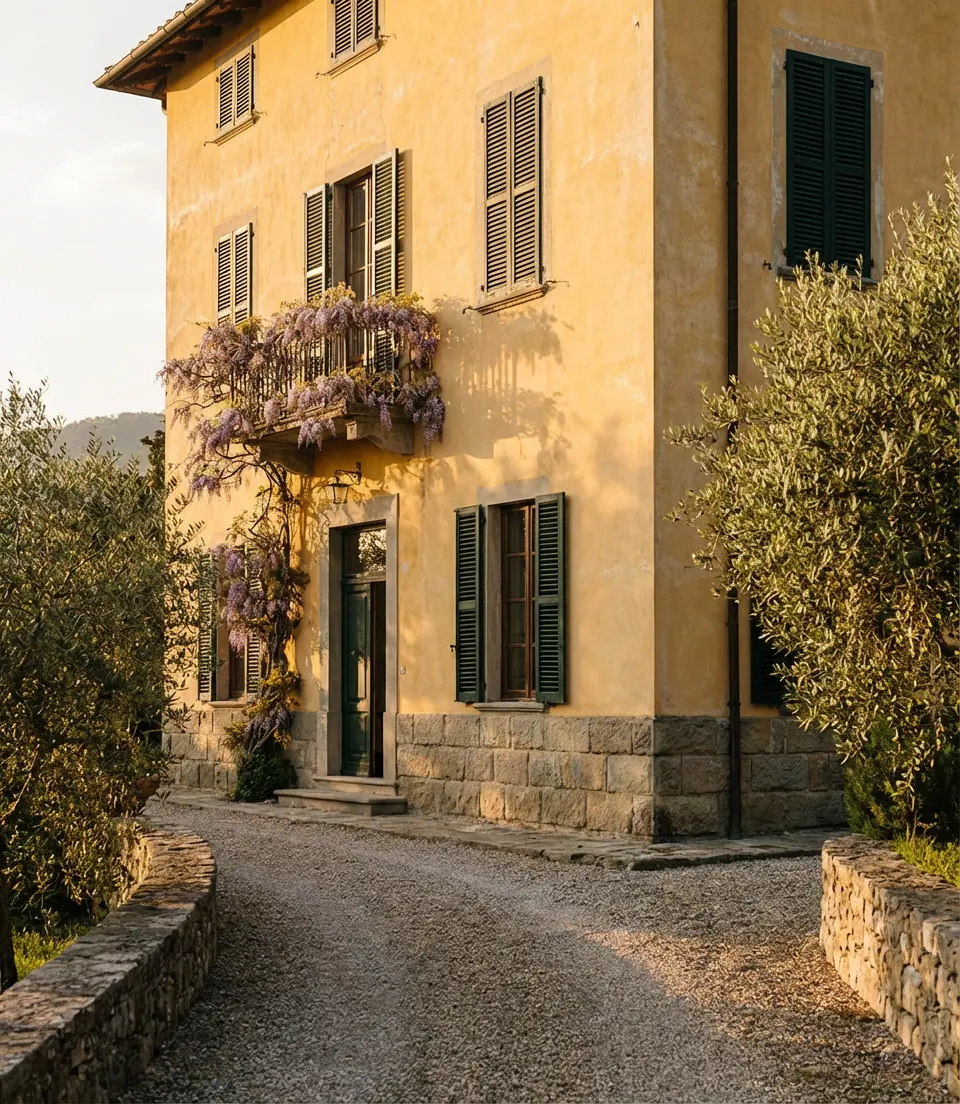
Drawing from the Italian coastal villages of the Amalfi and Cinque Terre, this exterior style emphasizes vertical proportion, richly colored stucco, and flowering vines that blur the line between architecture and garden. Deep ochre yellows, burnt sienna, and faded rose stucco walls contrast with dark green shutters and heavy stone details at the base—it’s a layered, romantic look that photographs with extraordinary depth and warmth. The luxury here isn’t about grandeur; it’s about the kind of patina that only comes with time and intentional material choice.
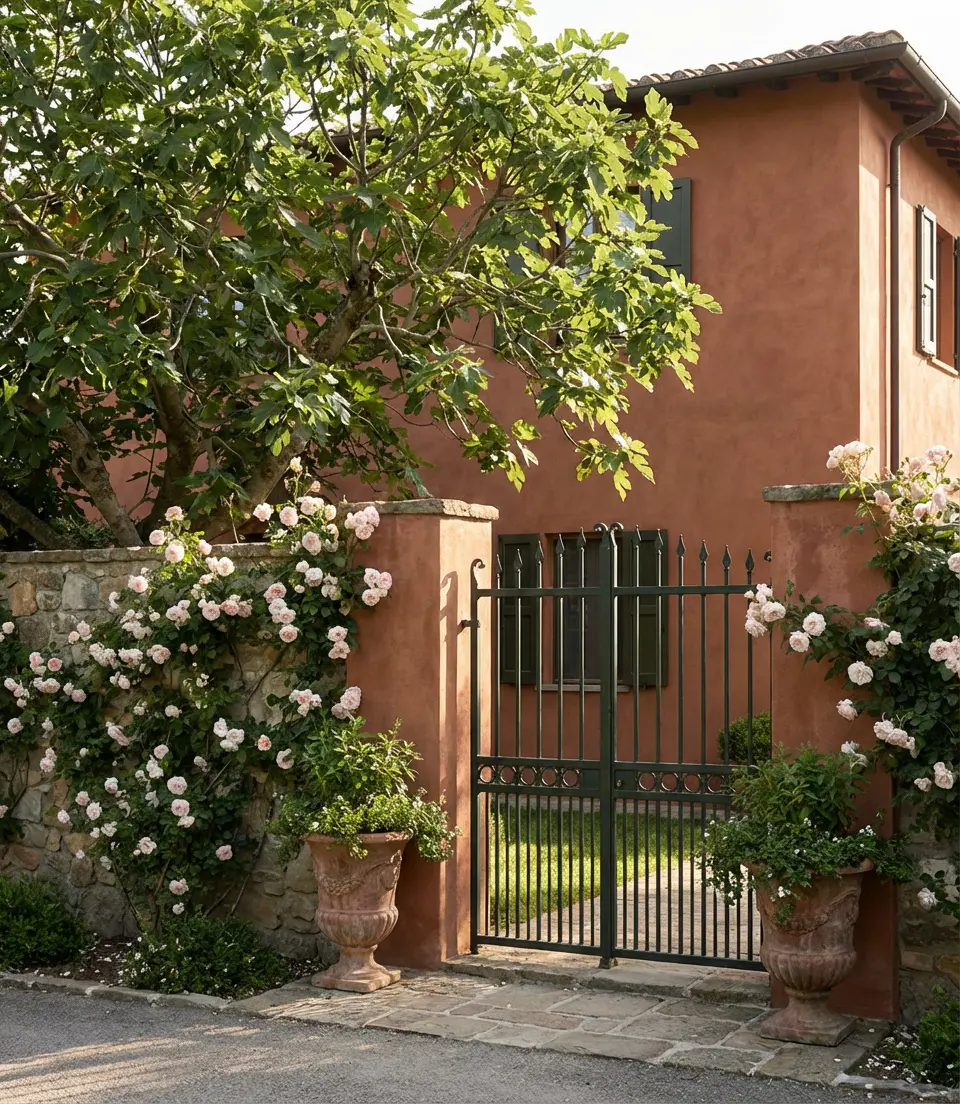
One couple in Malibu spent two years sourcing reclaimed stone from a demolished Tuscan farmhouse to build a low perimeter wall for their beach property. The result looked like it had always been there—which was entirely the point. You don’t need imported stone to achieve this effect; domestic limestone and locally sourced clay pavers can create a similar sense of permanence and place when paired with the right color palette and old-growth landscaping.
9. Cozy Cottage Beach House Exterior
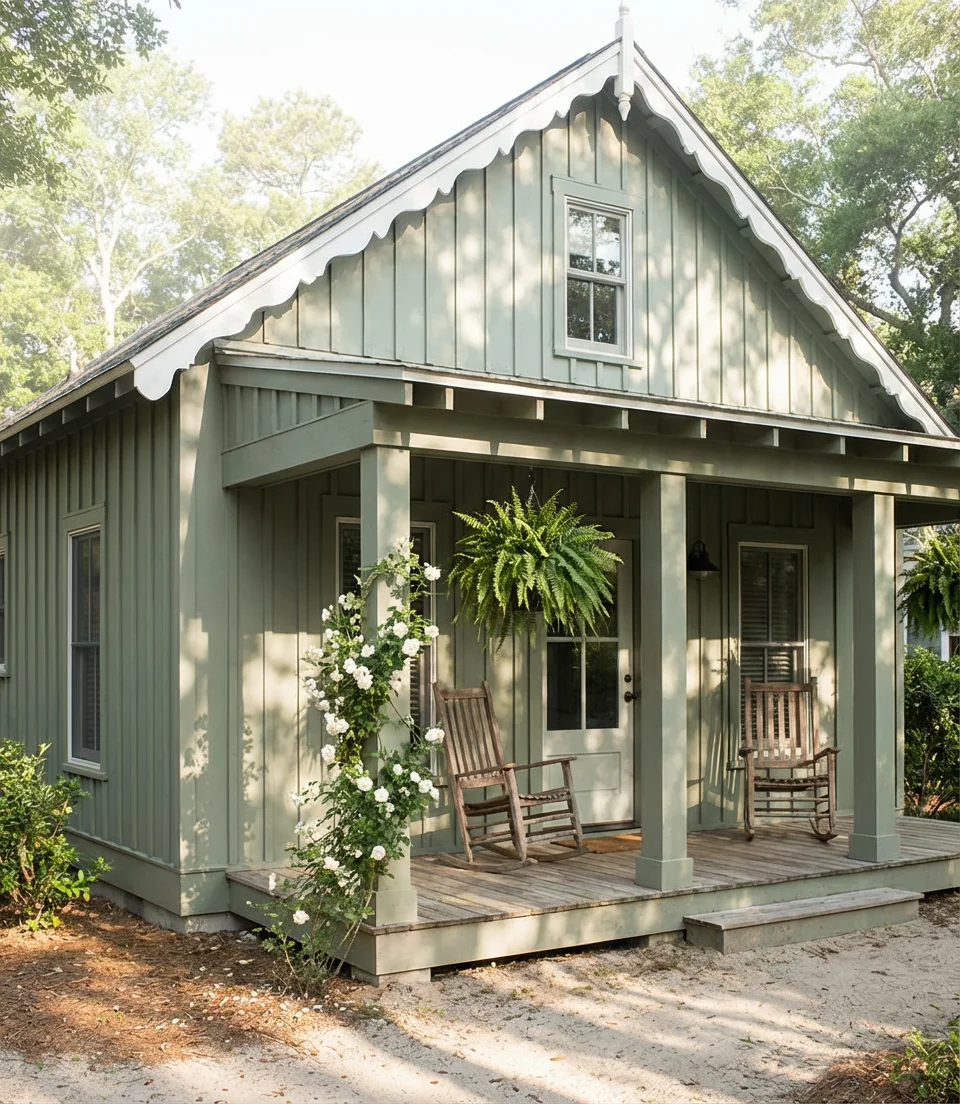
A beach house doesn’t necessarily need to create a dramatic impact. The cozy cottage exterior is having a genuine revival in 2026, driven by a generation of homeowners who want warmth and intimacy over scale and showiness. Shaker-style board and batten siding in soft sage green, a steeply pitched roof with decorative vergeboard trim, a porch just wide enough for two rockers and a hanging fern—this is the beach house that wraps its arms around you the minute you pull into the driveway.
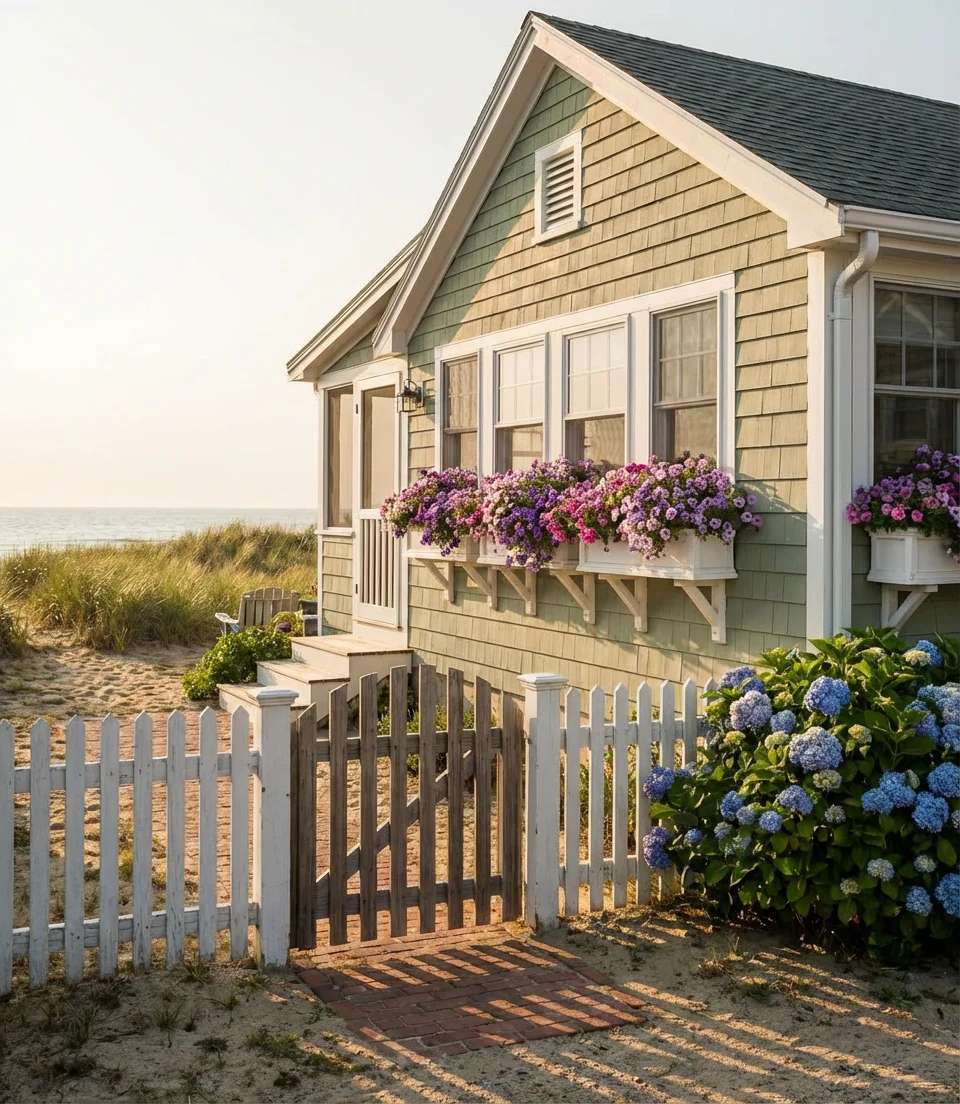
This style works best on smaller lots and in tight coastal communities where homes sit close together and the street scene has a village-like quality. It’s also one of the most budget-friendly approaches to a beach house renovation—painting existing siding, adding window boxes, upgrading the porch railing, and planting a few climbing roses can transform a plain exterior for under $5,000 if you’re willing to do some of the work yourself. Small changes compound dramatically at the cottage scale.
10. Luxury Modern Beach House Design
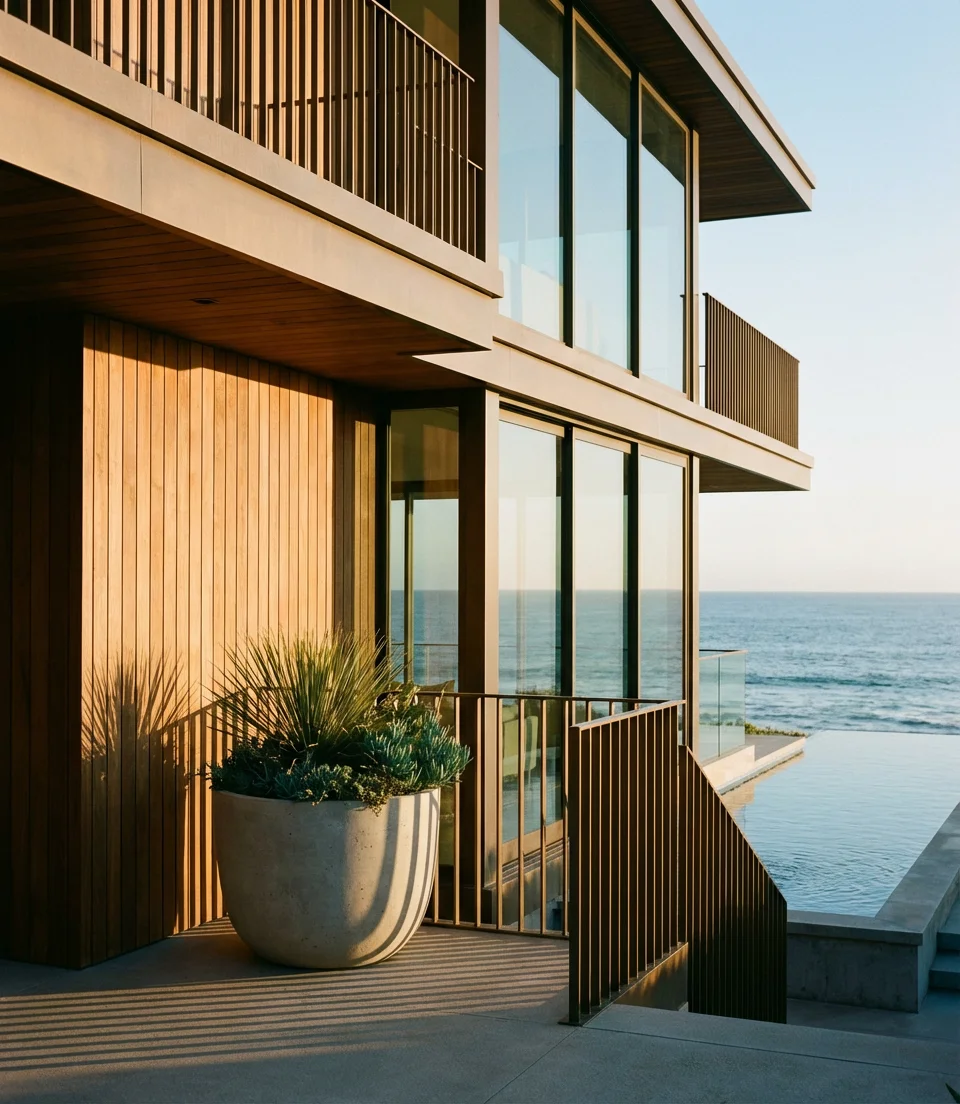
At the upper end of the market, material restraint and spatial generosity define the exteriors of luxury modern beach houses in 2026. Ipe wood cladding, large-format stone panels, floor-to-ceiling glass walls, and infinity-edge pools that appear to spill directly into the ocean—these are the design moves that define coastal architecture at its most ambitious. The palette is deliberately neutral: warm charcoal, natural concrete, bleached wood, and bronze metalwork that patinas beautifully in salty air.
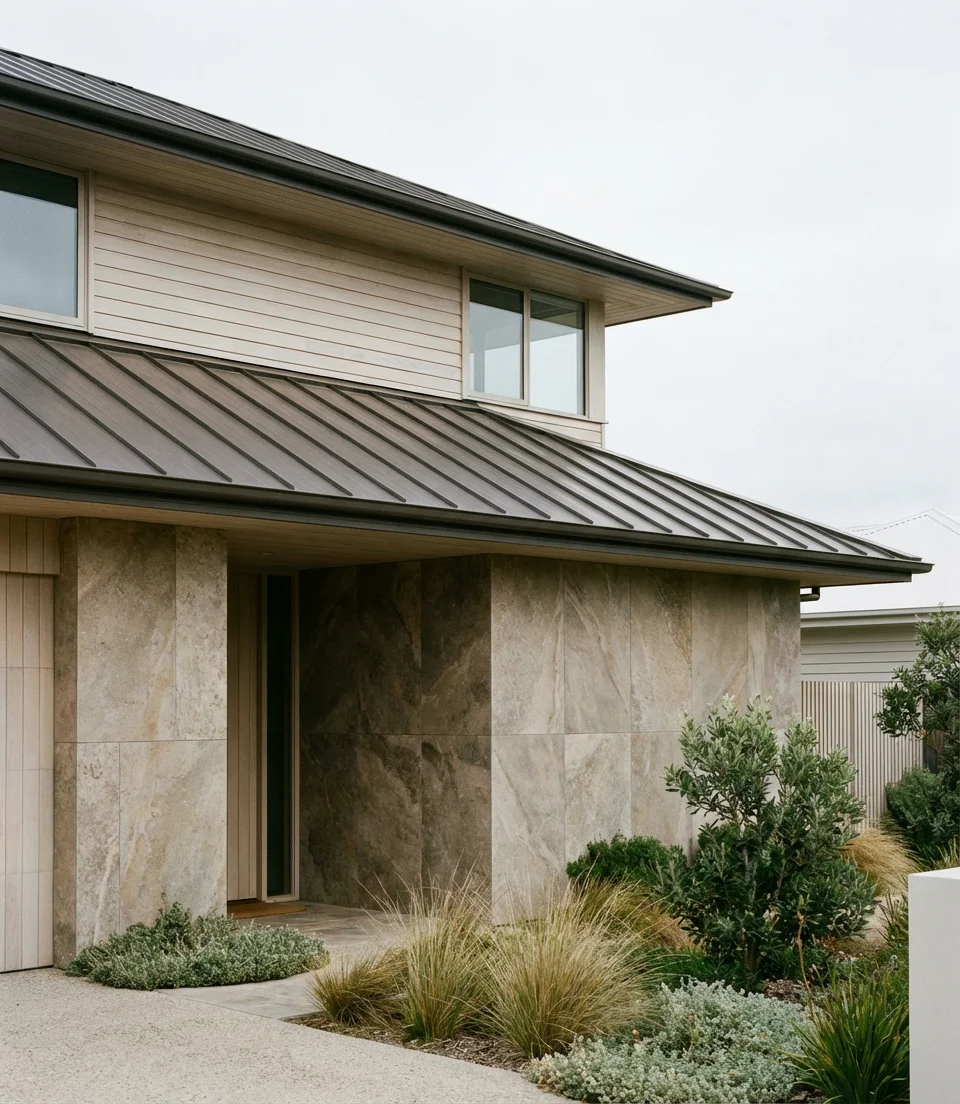
What separates truly great luxury beach house exteriors from merely expensive ones is the precision of detailing. Flush-mounted windows, concealed gutters, seamless transitions between interior and exterior flooring planes—these are the invisible decisions that make a home feel like a single unified object rather than a collection of elements assembled together. An experienced coastal architect will push for these refinements even when they add cost, because they are exactly what makes a beach house age gracefully rather than looking dated within a decade.
11. Australian Beach House Exterior Style
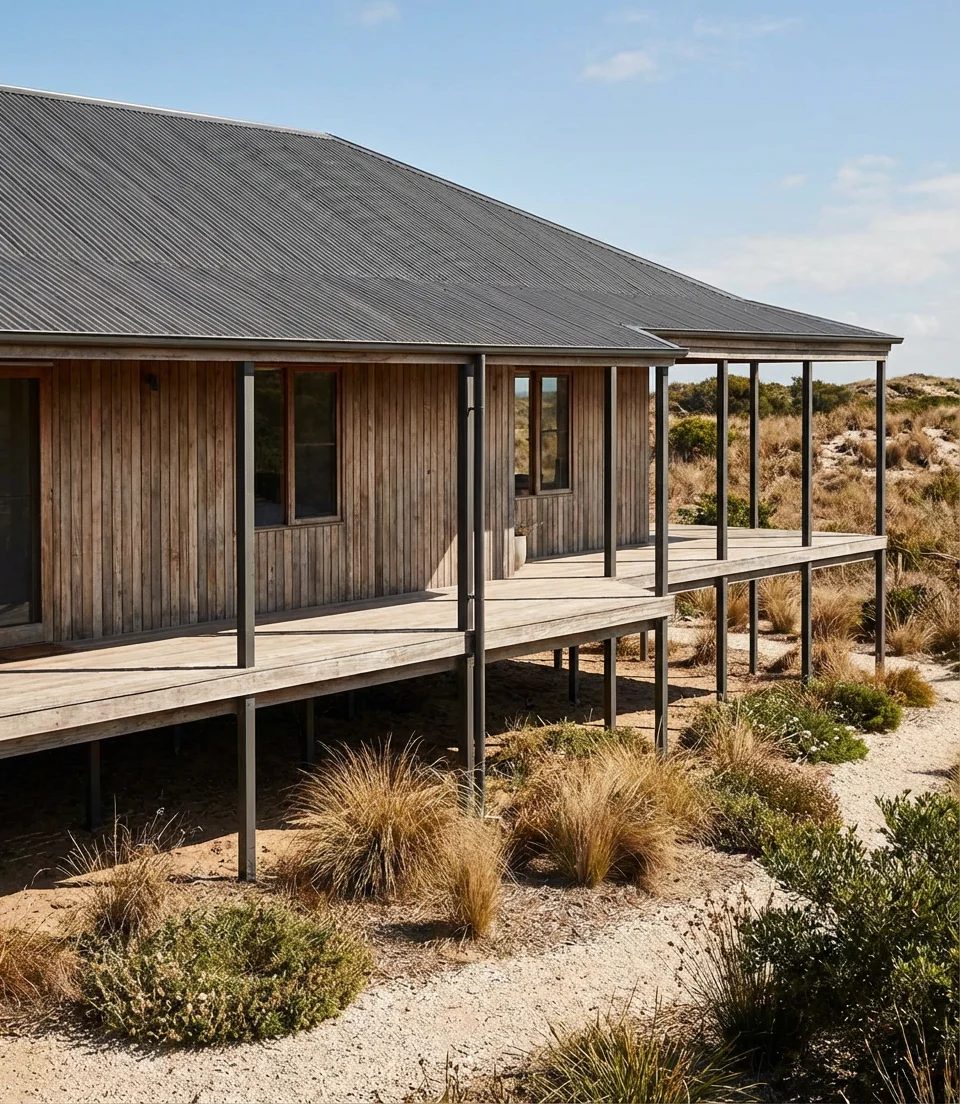
For several years, the Australian beach house aesthetic has been quietly influencing American coastal design, and in 2026, it has fully emerged on Pinterest boards nationwide. Characterized by elevated structures on slender steel posts, natural timber cladding, corrugated metal roofing in muted tones, and wide wraparound decks, this style is supremely practical in a coastal environment—it handles strong winds, flooding risk, and intense sun with equal grace. The aesthetic is casual and unfussy in a way that feels genuinely lived-in.
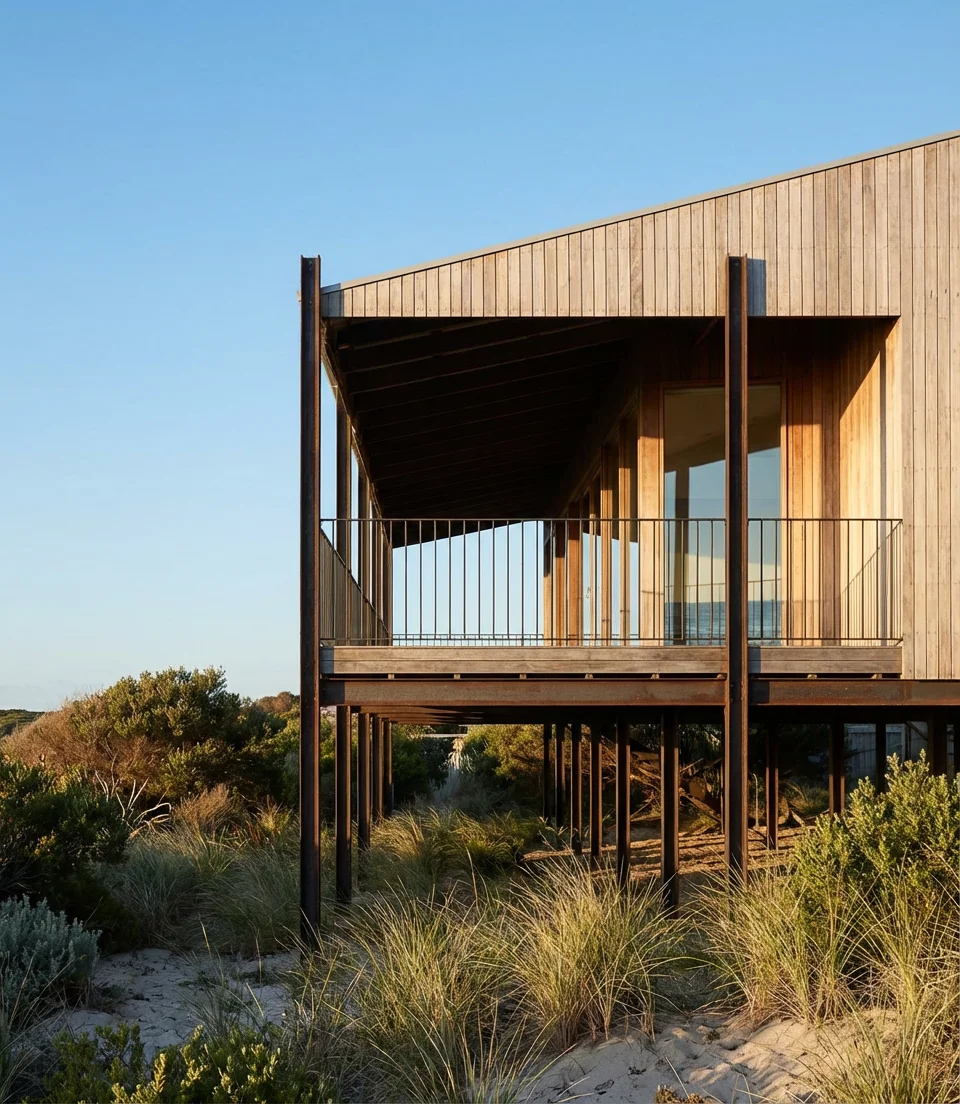
This design philosophy is a natural fit for the American Gulf Coast, where elevated construction is often code-required in flood zones anyway. Embracing the structure—rather than hiding it behind skirting—turns a regulatory necessity into an architectural statement. Expose those steel posts, paint them a warm charcoal, and landscape the space underneath with ornamental grasses and crushed shell ground cover for a result that’s both practical and genuinely beautiful from the street.
12. Mid-Century Modern Coastal Exterior
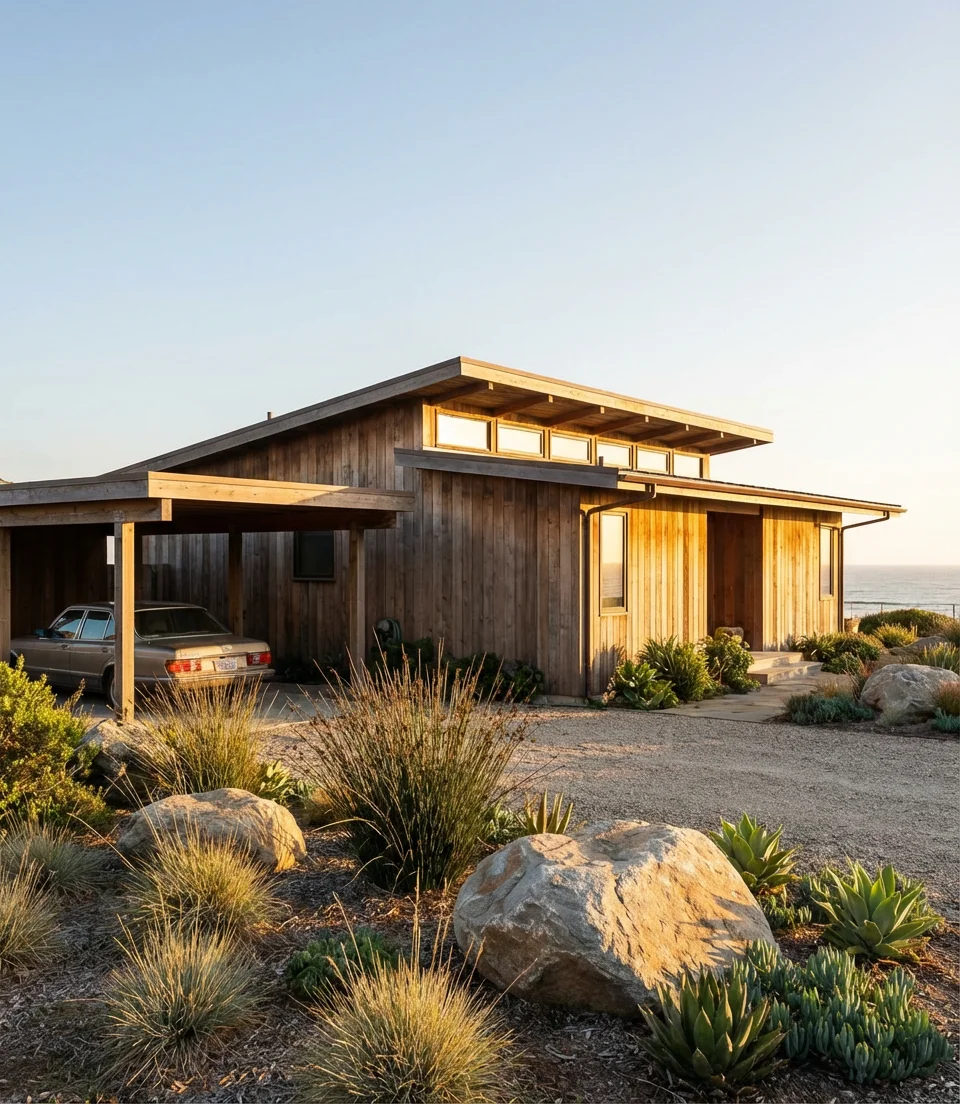
Mid-century modern architecture and the beach are a natural pairing that never goes out of style. The low-pitched rooflines, post-and-beam framing, clerestory windows, and strong horizontal emphasis of MCM design create an exterior that frames the coastal view rather than competing with it. When clad in warm cedar or redwood or painted in earthy tones—deep olive, rust, or warm sand—a mid-century beach house has a quiet confidence that looks as fresh today as it did in its 1960s heyday.
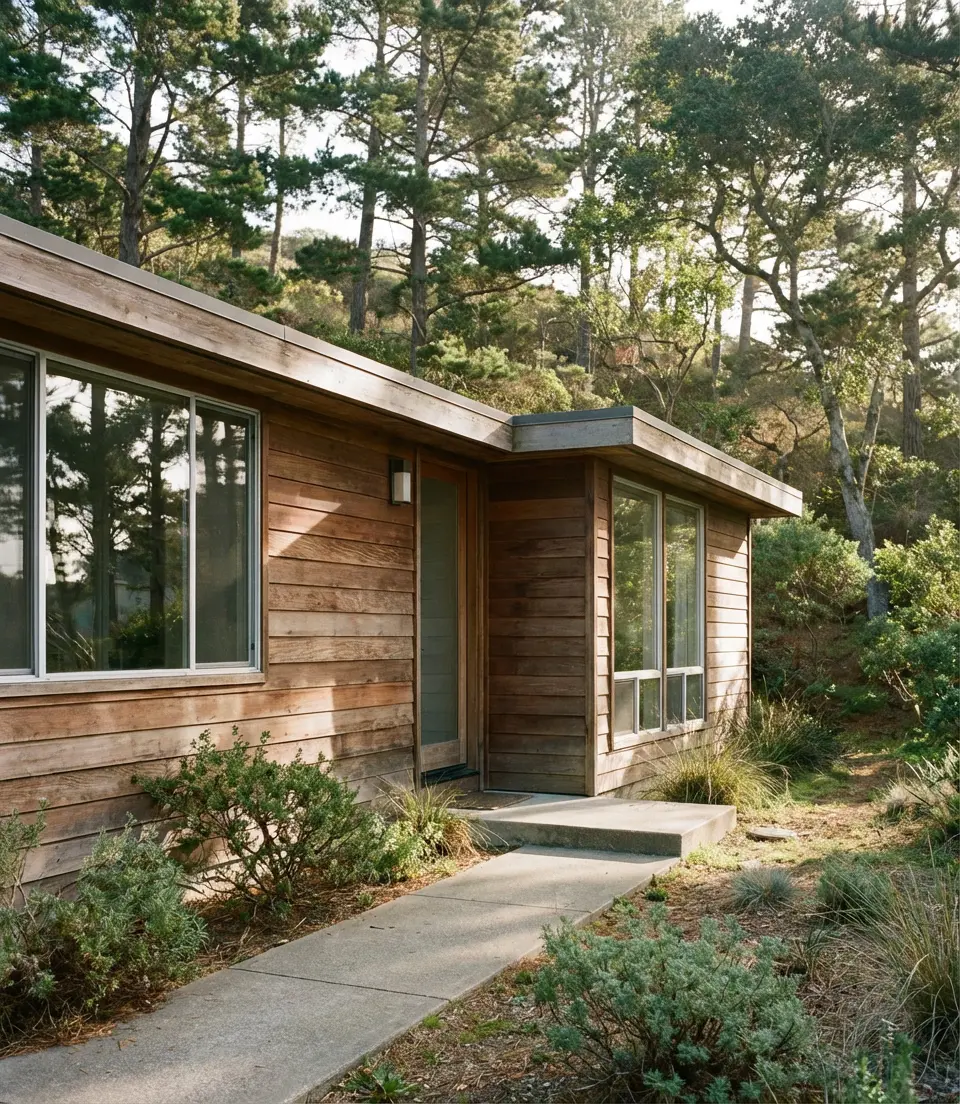
The Pacific Northwest and Northern California coast are natural habitats for this style, where the wooded, cliff-side terrain suits the low-profile architecture perfectly. For homeowners restoring an original MCM beach house, the most common mistake is replacing single-pane aluminum windows with standard double-hung vinyl units—it immediately kills the authenticity. Period-appropriate aluminum window profiles are still manufactured, and the investment in matching the original fenestration pays enormous dividends in overall visual coherence.
13. Cute Pink Beach House Exterior
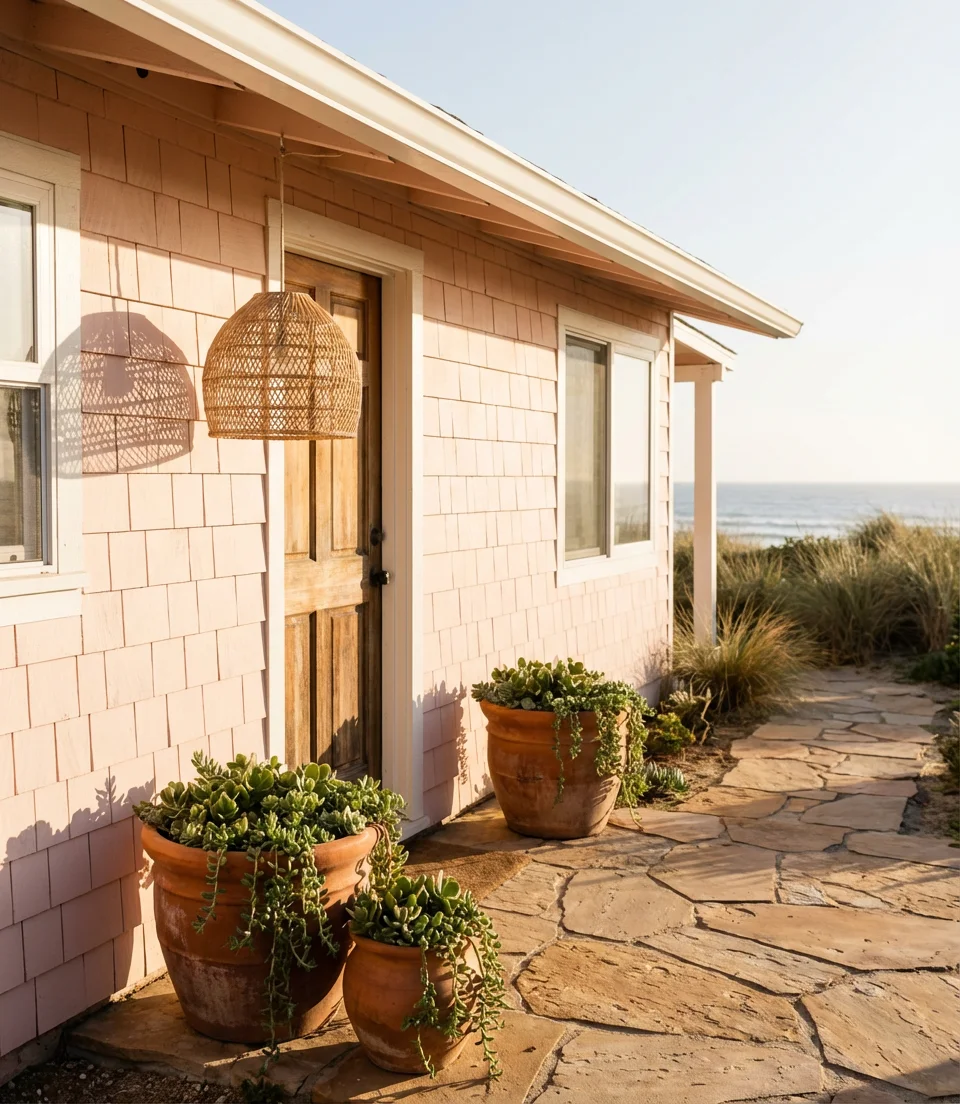
It might be the most-pinned beach house color of 2026: a warm, dusty pink that sits somewhere between blush and terracotta, pulling the warmth of sunrise into the facade of a charming coastal cottage. This isn’t bubblegum pink—it’s nuanced, almost neutral in certain lights, and it pairs beautifully with natural rattan light fixtures, terracotta pots overflowing with trailing succulents, and warm-toned stone pathways. The overall effect is whimsical without being childish and photogenic without being try-hard.
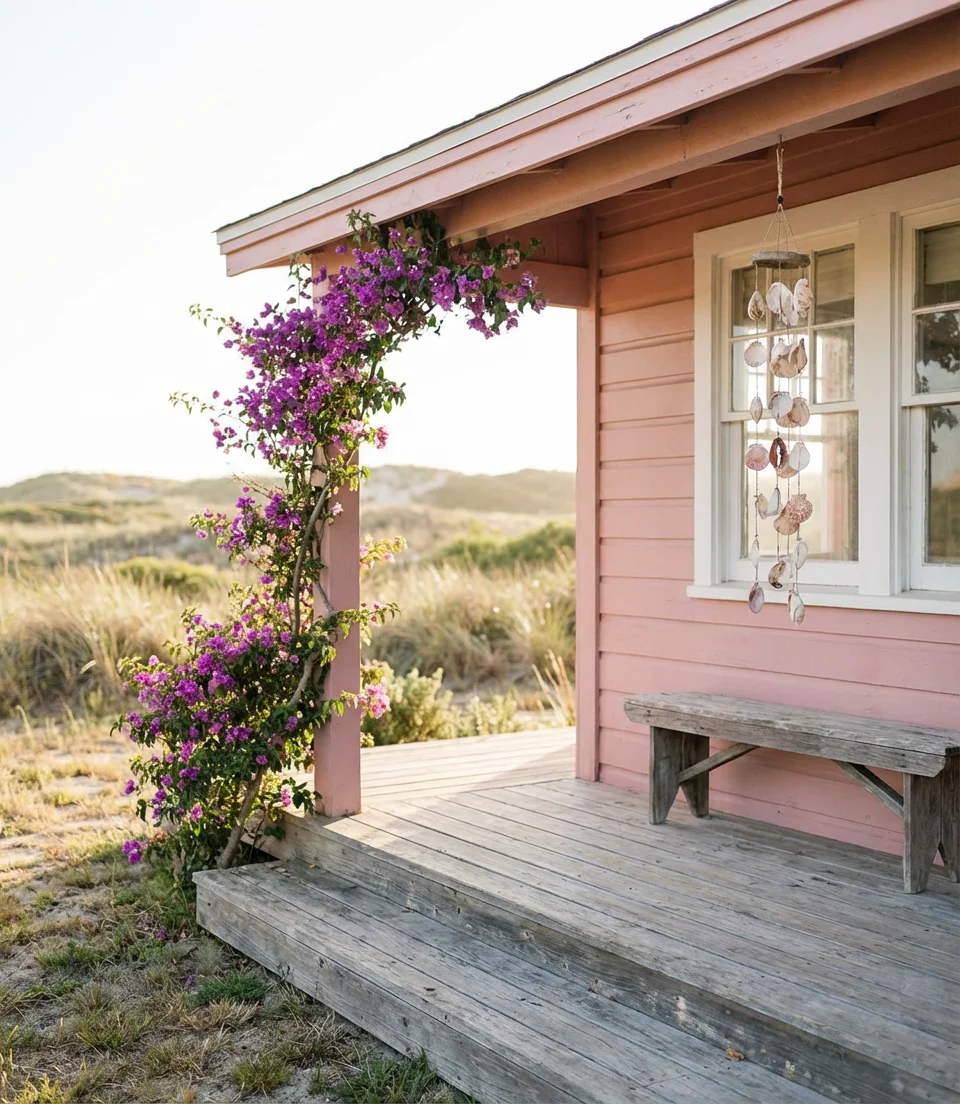
This color trend is being driven largely by younger homeowners and vacation rental operators who understand that a distinctive exterior color is free marketing—a home that photographs well on Instagram and Airbnb generates its own organic visibility. Several short-term rental hosts in the Outer Banks and the Florida Panhandle have reported measurable increases in booking inquiries after repainting their exteriors in blush and dusty rose tones, simply because guests want to stay somewhere that looks beautiful in their photos.
14. Green Beach House with Natural Landscaping
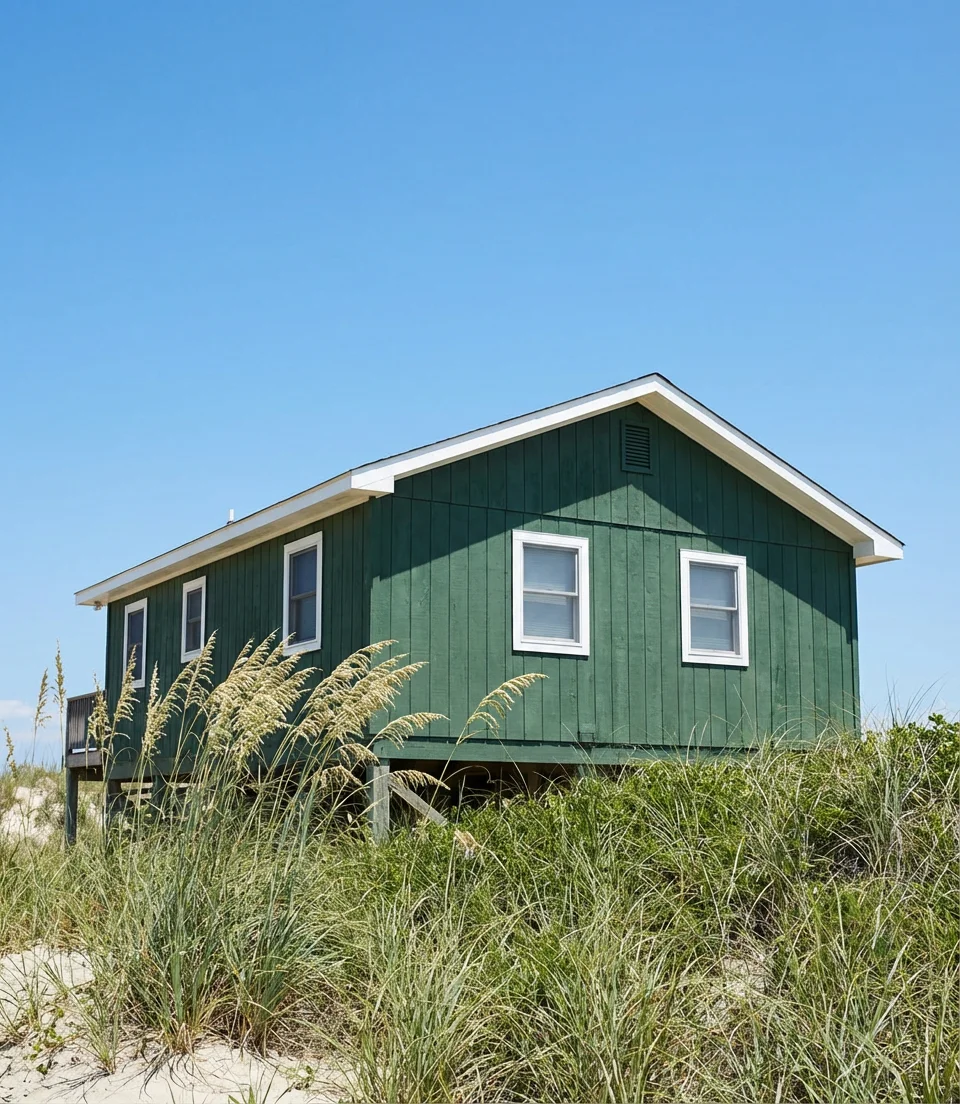
Deep, saturated green exteriors have emerged as one of the most striking trends in coastal home design for 2026. Bottle green, forest green, and deep hunter-toned cladding photographed against white sand dunes and a bright blue sky create one of the most dramatic and editorial color contrasts in residential architecture. Paired with natural landscaping—sea oats, dune grasses, and native wildflowers—a green beach house feels simultaneously bold and perfectly at home in its natural setting.
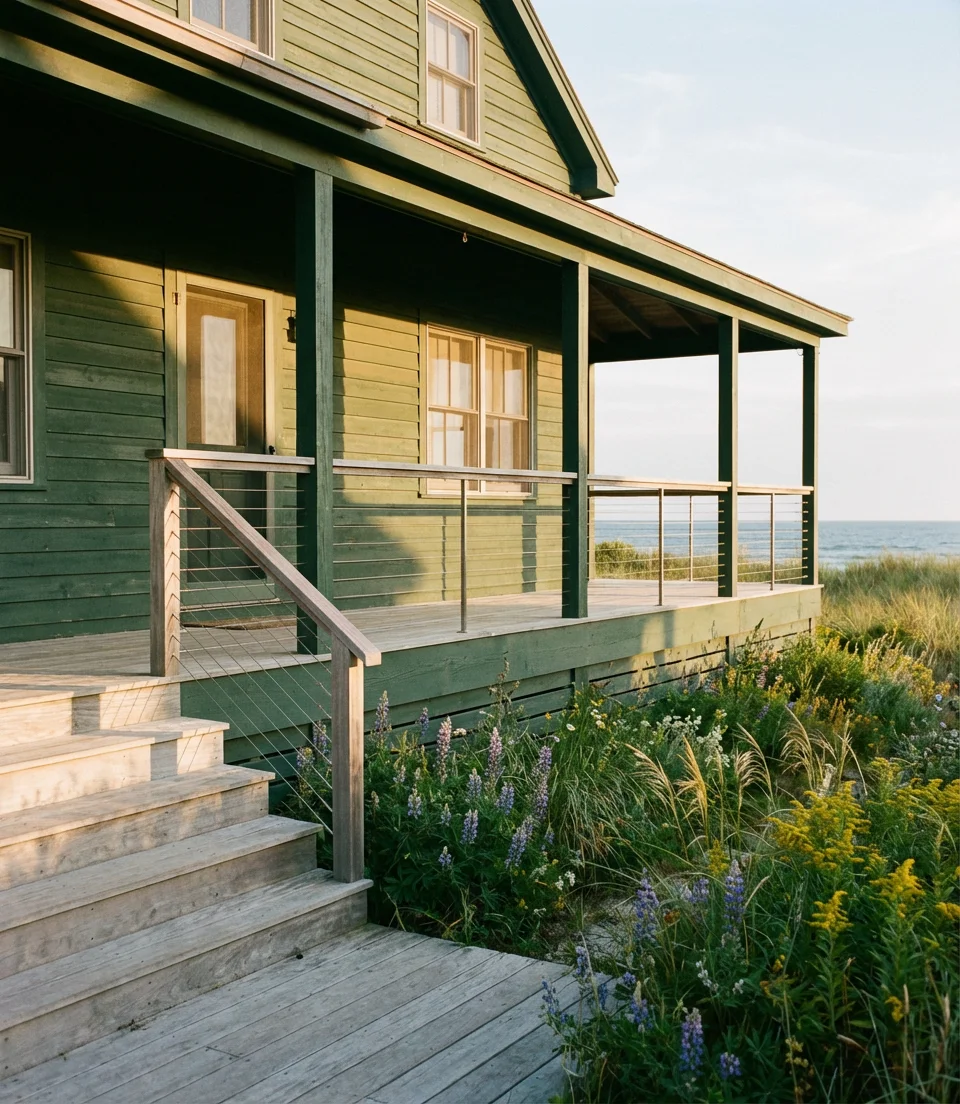
Where it works best is on homes with elevated positioning—on dunes, hillsides, or pilings—where the dark exterior reads against the sky rather than against surrounding structures. A green beach house on a flat lot surrounded by lighter-colored neighbors can feel imposing; elevated, it looks commanding. Landscape architect and coastal garden designer Marta Vincens has noted that native plant schemes in sandy soils actually complement a deep green exterior far better than manicured traditional lawns, because the textures and movement of natural grasses echo the energy of the sea.
15. Yellow Sunshine Beach House
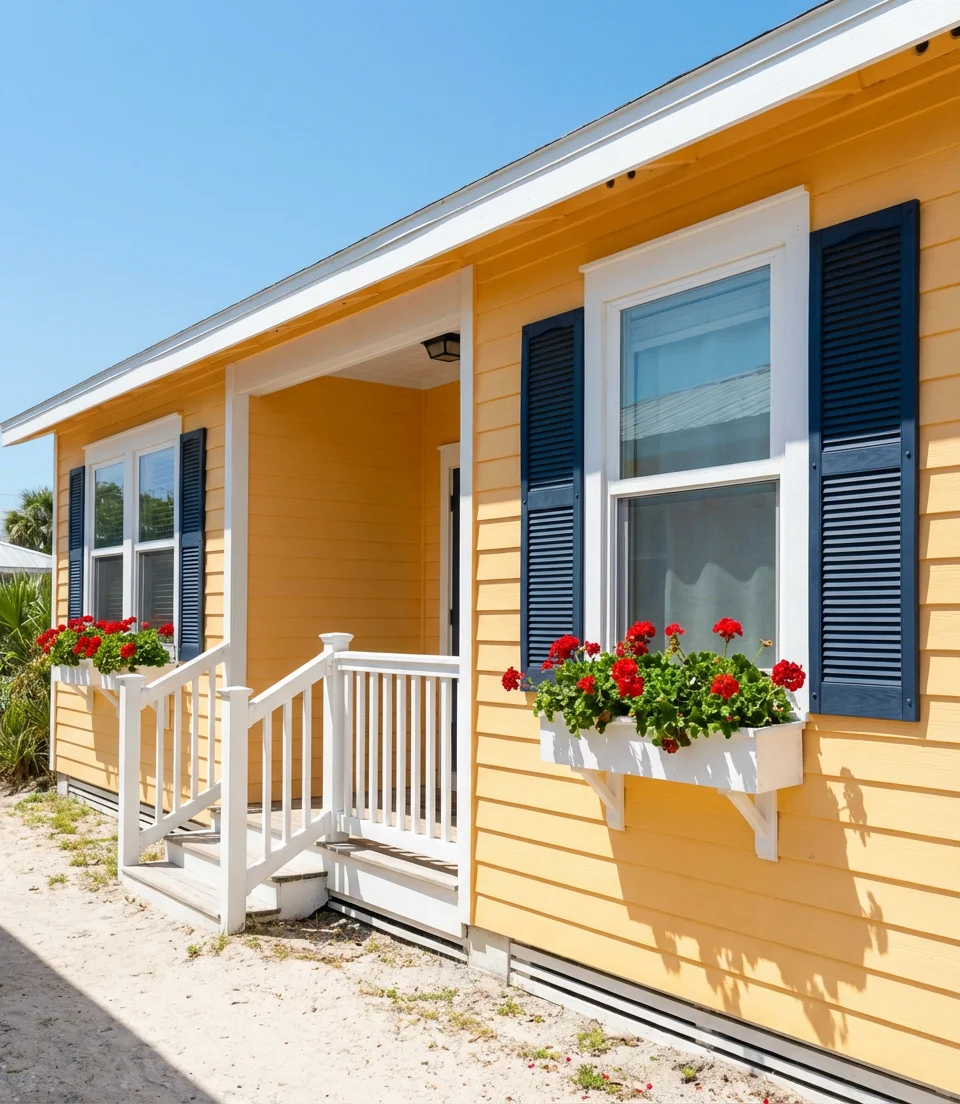
A cheerful yellow beach house is one of those exteriors that makes everyone who drives past smile involuntarily—and in 2026, the best versions of this look have moved away from primary yellow into something more sophisticated: warm marigold, aged mustard, and sun-bleached goldenrod. These tones have the same sunlit energy as traditional yellow but with enough complexity to read as intentionally designed rather than accidental. When paired with crisp white trim and dark navy or black shutters, the contrast is clean and undeniably charming.
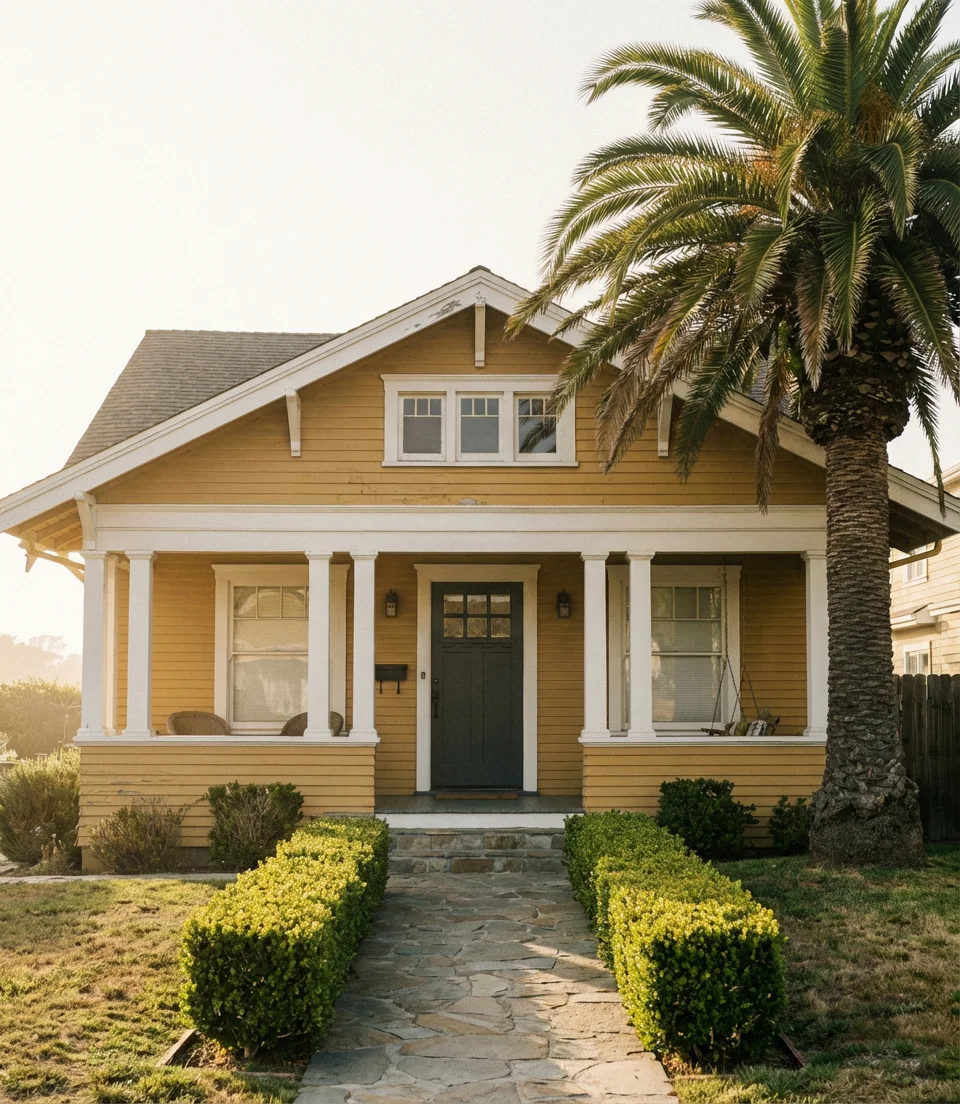
Yellow fades faster than almost any other exterior color, particularly in climates with intense UV exposure. Homeowners who love this palette should budget for repainting on a five- to seven-year cycle and always choose a 100% acrylic formula with UV-protective additives. Applying a quality primer is non-negotiable—without it, yellow has a tendency to look chalky and uneven within two or three years. With proper prep and a premium paint, though, a yellow beach house exterior can hold its color and character remarkably well.
16. Beach House Exterior Layout and Curb Appeal
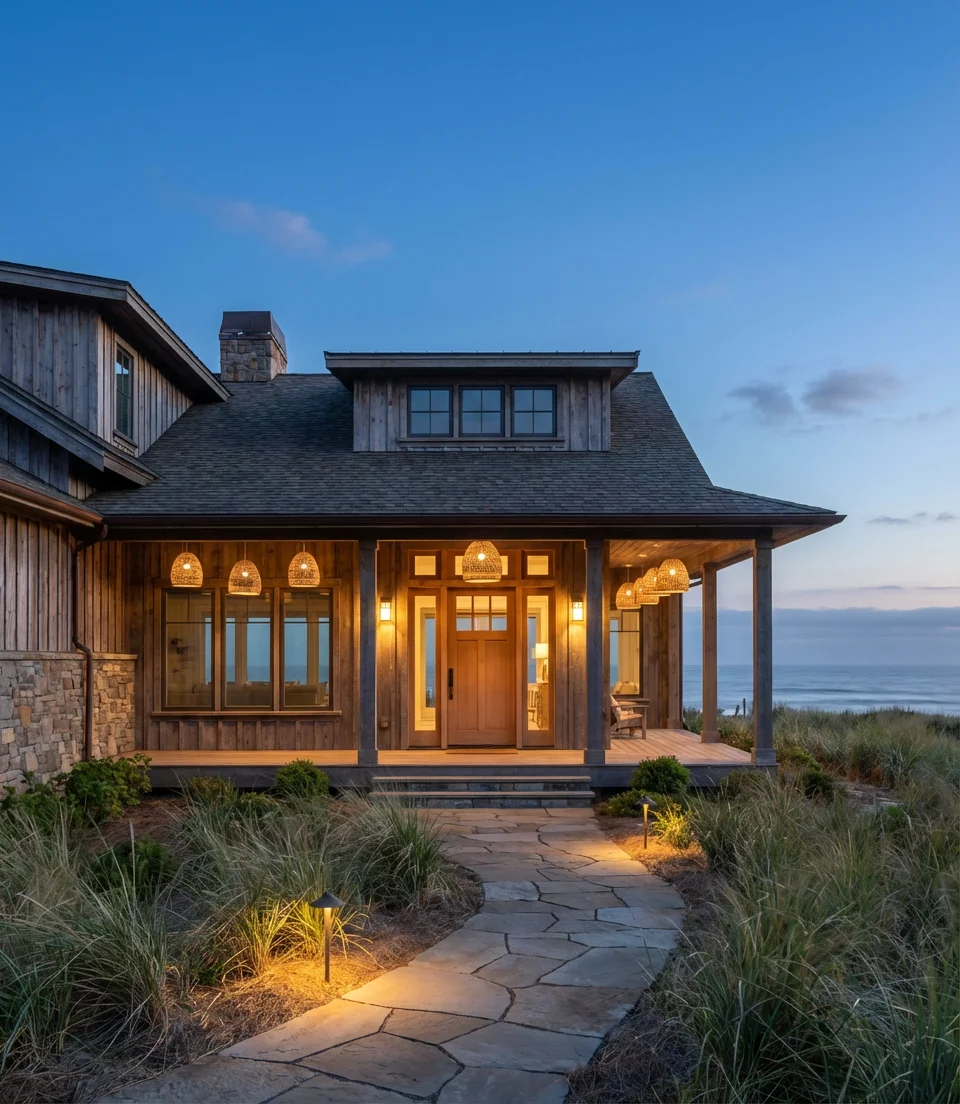
The exterior layout of a beach house—how the facade is organized, where the entry sits, how the porch or deck relates to the street—matters as much as the color and materials. A well-composed facade creates a hierarchy that guides the eye naturally from the approach to the front door, builds visual interest through layered planes and varied materials, and feels intentional from every angle. Architectural composition and design thinking distinguish a truly exceptional beach house from a merely well-painted one.
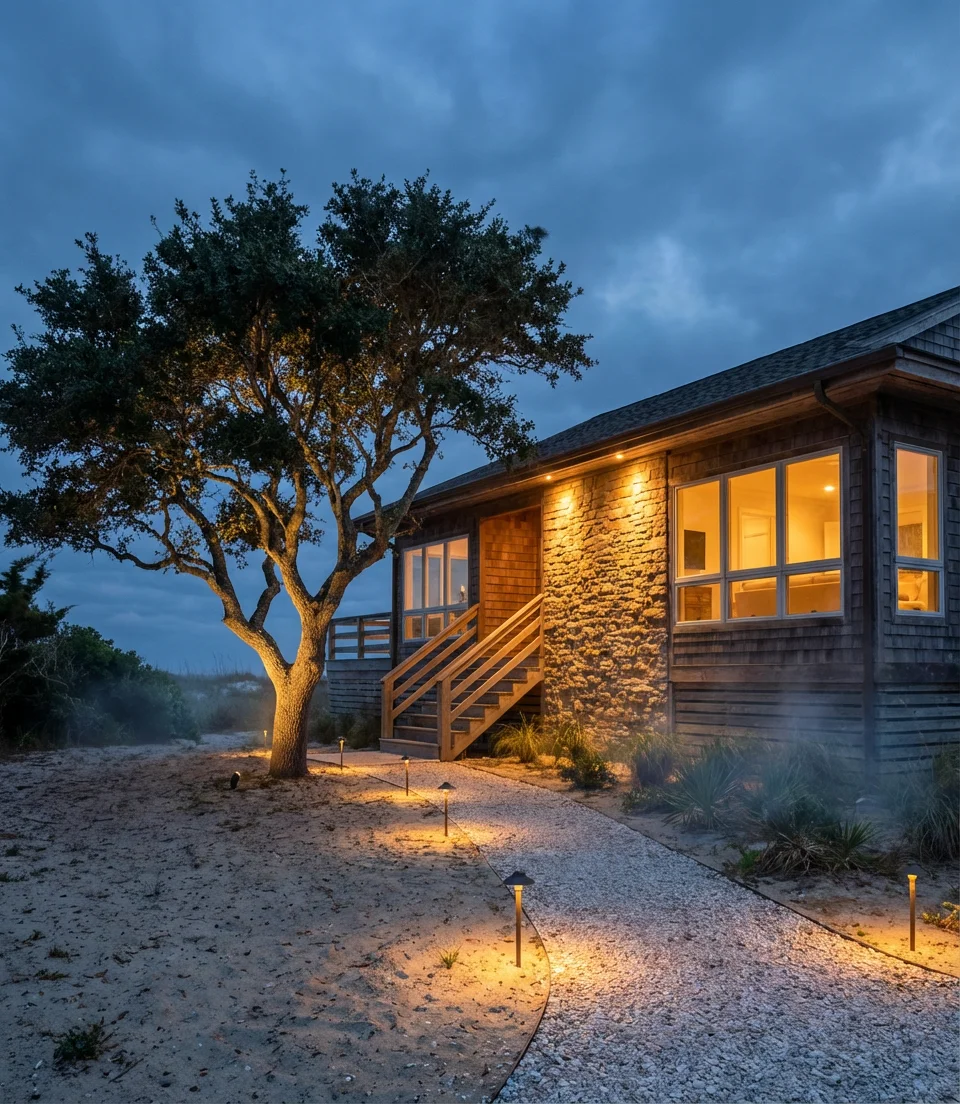
Real homeowners making over their beach house exteriors consistently underestimate the power of lighting in the layout equation. Wall sconces flanking the entry, path lights tracing the walkway, and uplighting aimed at a signature tree or architectural feature transform the nighttime curb appeal completely. A beach house that reads as flat and forgettable during the day can look like a magazine cover after dark with strategically placed landscape and architectural lighting—and LED systems mean the ongoing cost is minimal once installed.
17. Dream Beach House Exterior in Bloxburg Style
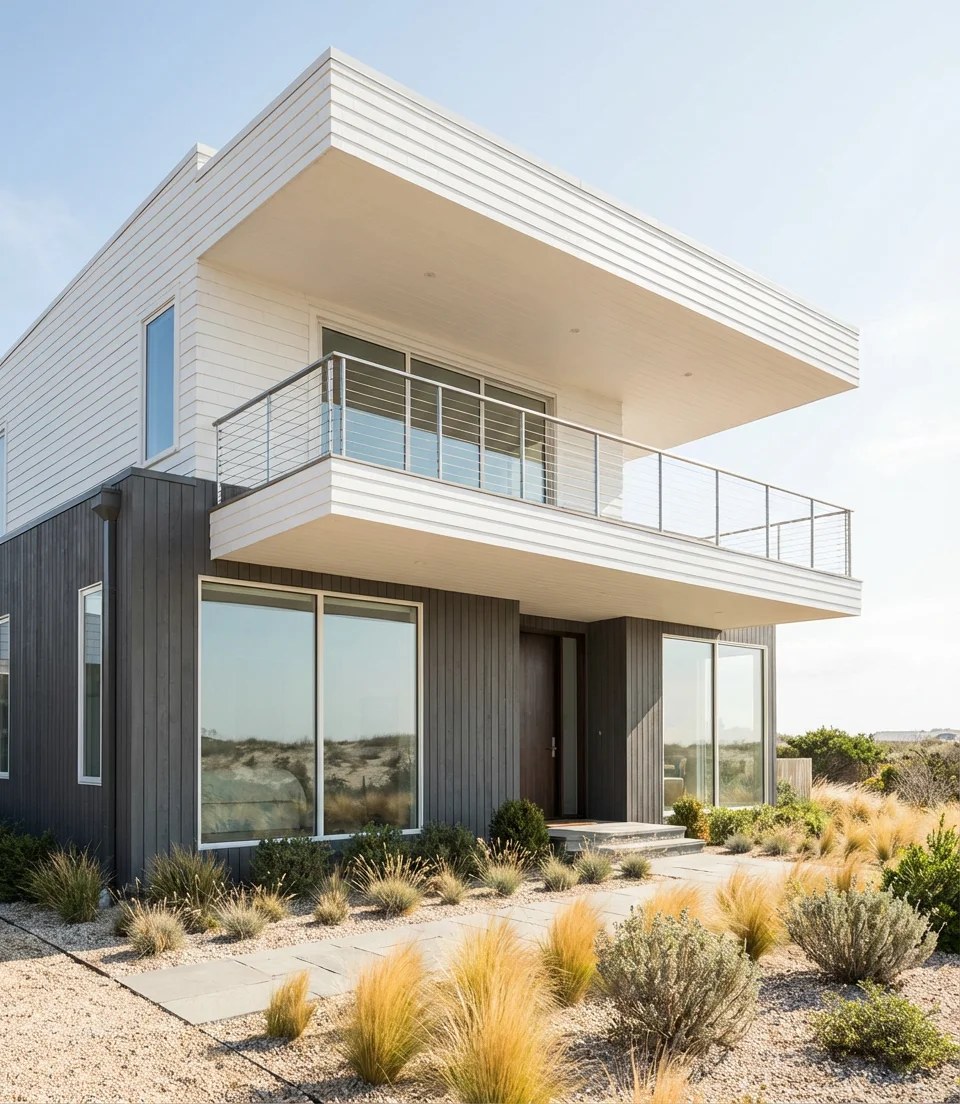
The influence of Bloxburg—the beloved Roblox building game—on real-world home design aesthetics might surprise you, but it’s genuinely shaping how younger Americans visualize their dream homes. The Bloxburg beach house layout typically features a clean asymmetrical facade, a second-story balcony, large windows, and a carefully balanced combination of dark and light exterior materials—design instincts that actually translate beautifully into real-world architecture. The gamified vocabulary of Bloxburg has become a genuine design language for a generation of future homeowners.
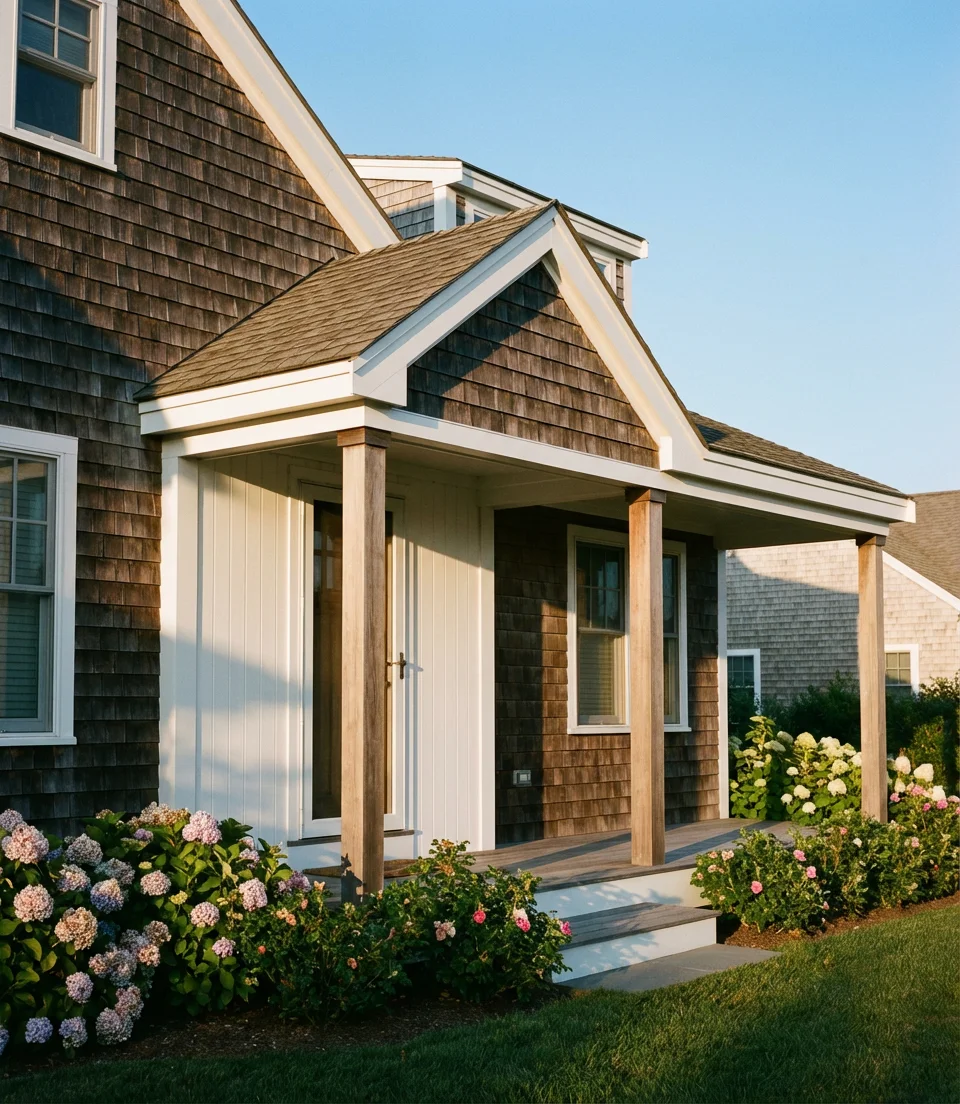
What’s fascinating is watching these same visual instincts—the preference for clean massing, contrasting material panels, and sculptural balcony forms—showing up in actual new construction requests from millennial and Gen Z clients at architecture firms. A Bloxburg-inspired beach house layout, translated into real materials, often lands somewhere between contemporary and Scandinavian coastal—which is to say, it looks genuinely great. The digital design sensibility has produced some surprisingly sophisticated aesthetic instincts.
18. Modern White Beach House with Black Trim
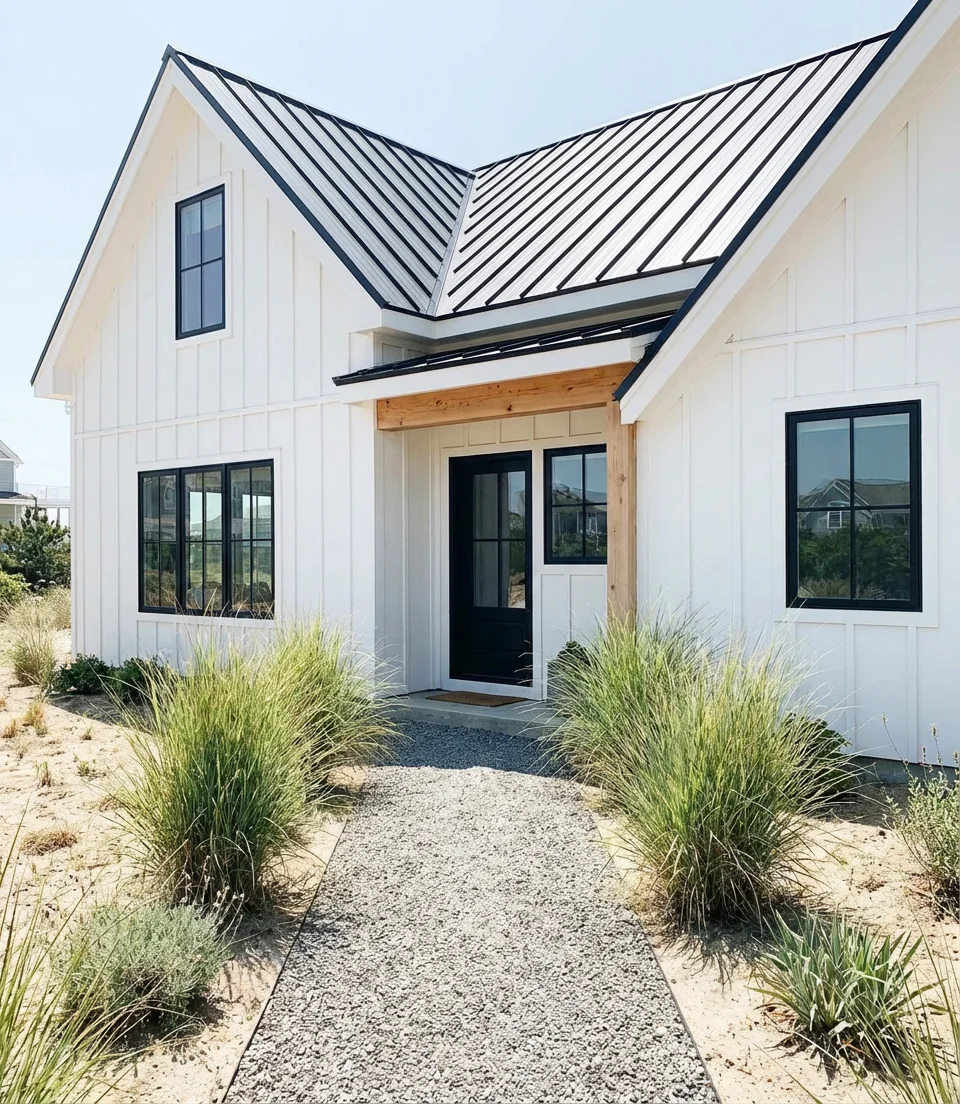
The combination of white and black in a modern beach house exterior is one of those design moves that has been trending for several years—and unlike most trends, this one shows no signs of fading because it’s fundamentally rooted in good design principles. White siding, whether painted shingle, board-and-batten, or smooth fiber cement, reads as light and open. Black trim—on windows, doors, fascia boards, and railings—gives the facade incredible graphic definition and a crispness that photographs beautifully from every angle.
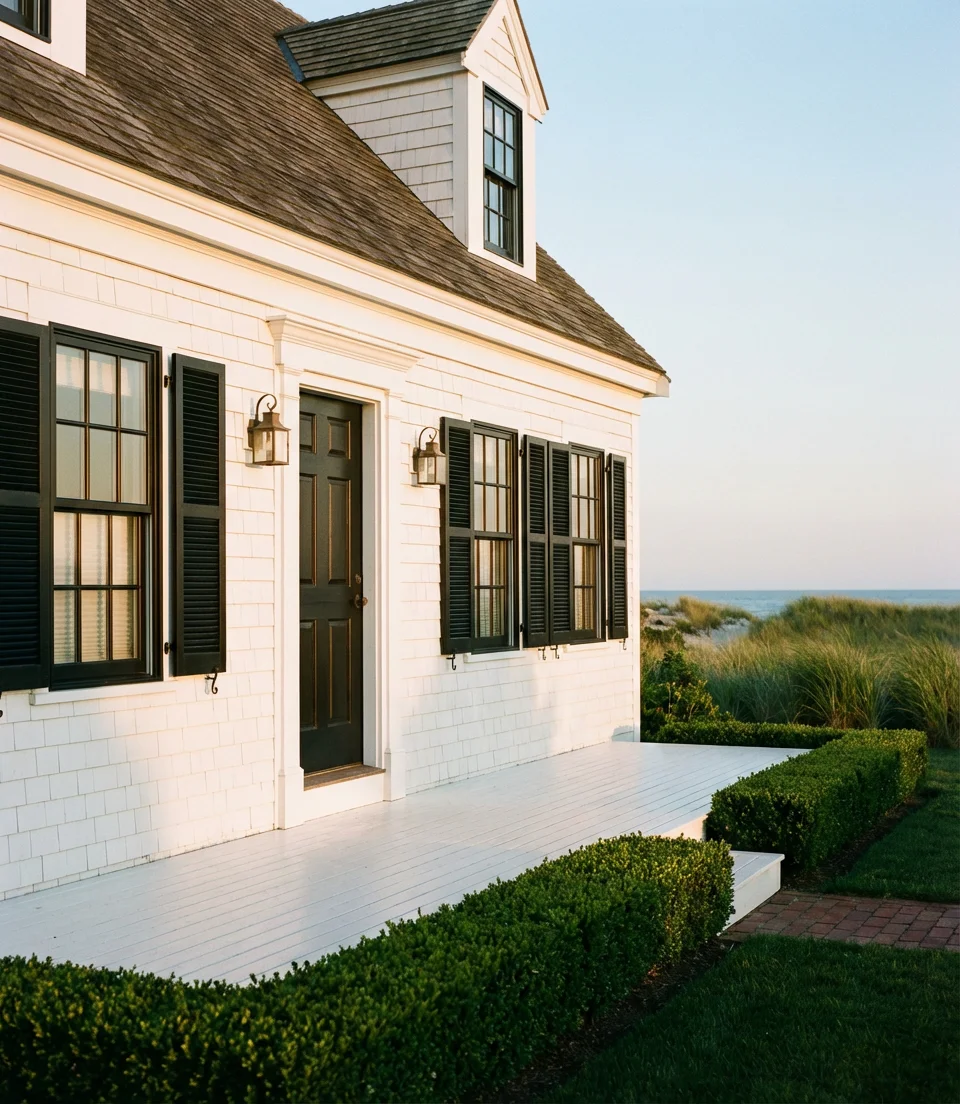
This palette is an excellent choice for the American lifestyle context because it works across nearly every regional climate and architectural scale—from a modest Cape Cod cottage on the Atlantic shore to a sprawling modern farmhouse-style beach home on the Texas Gulf Coast. It’s also one of the most forgiving combinations in variable lighting: the contrast remains readable whether you’re dealing with overcast New England skies or the blinding midday sun of South Florida. This palette is a timeless option that remains effective year after year.
19. Coastal Colors Inspired by the Sea and Sand
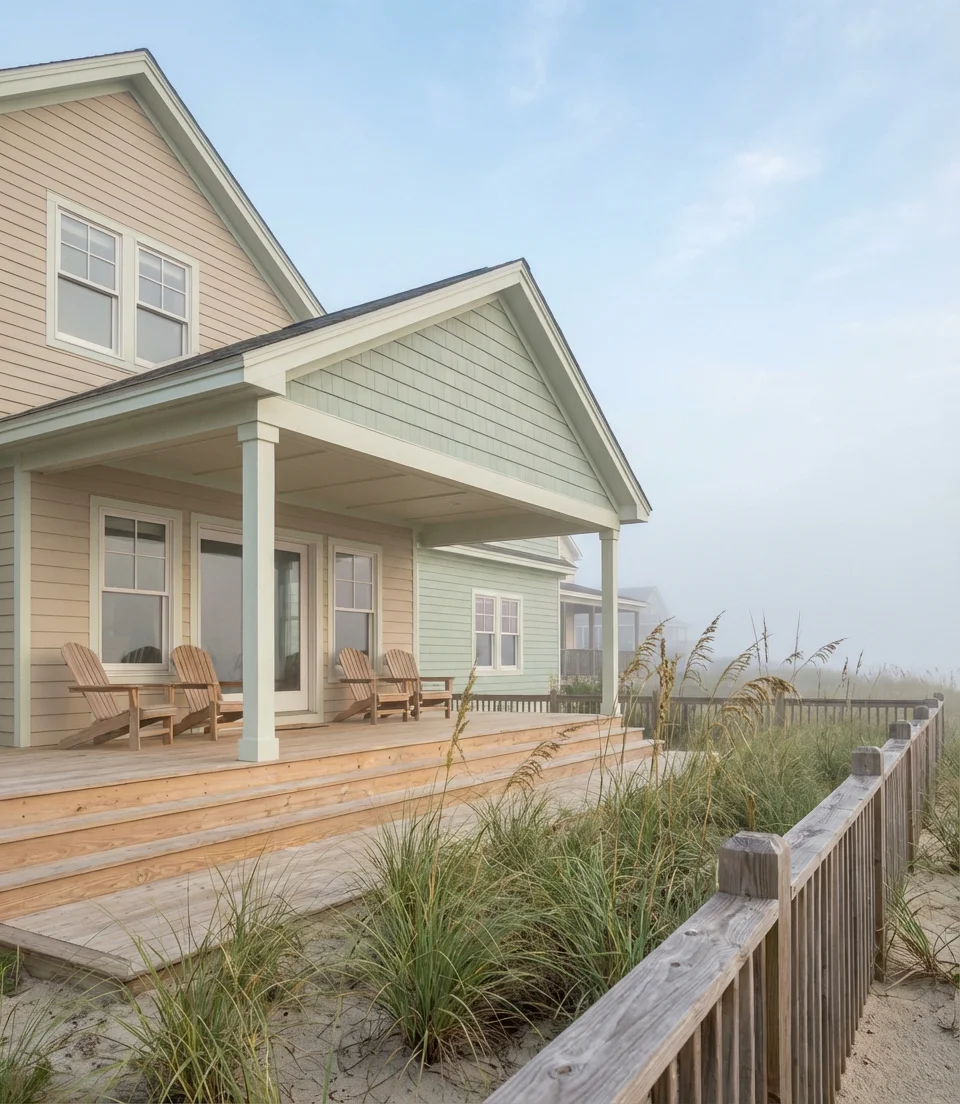
The most enduring coastal colors for beach house exteriors aren’t found on a paint chip deck—they’re found on the beach itself. Warm sand beige, weathered driftwood gray, pale seafoam, and the soft, hazy blue-green of shallow water at noon: these are the tones that feel most naturally at home on a coastal property because they’re literally drawn from the landscape. In 2026, the smartest designers are pulling their exterior color stories directly from photographs of the specific beach their client lives on—a hyper-local approach that produces strikingly cohesive results.
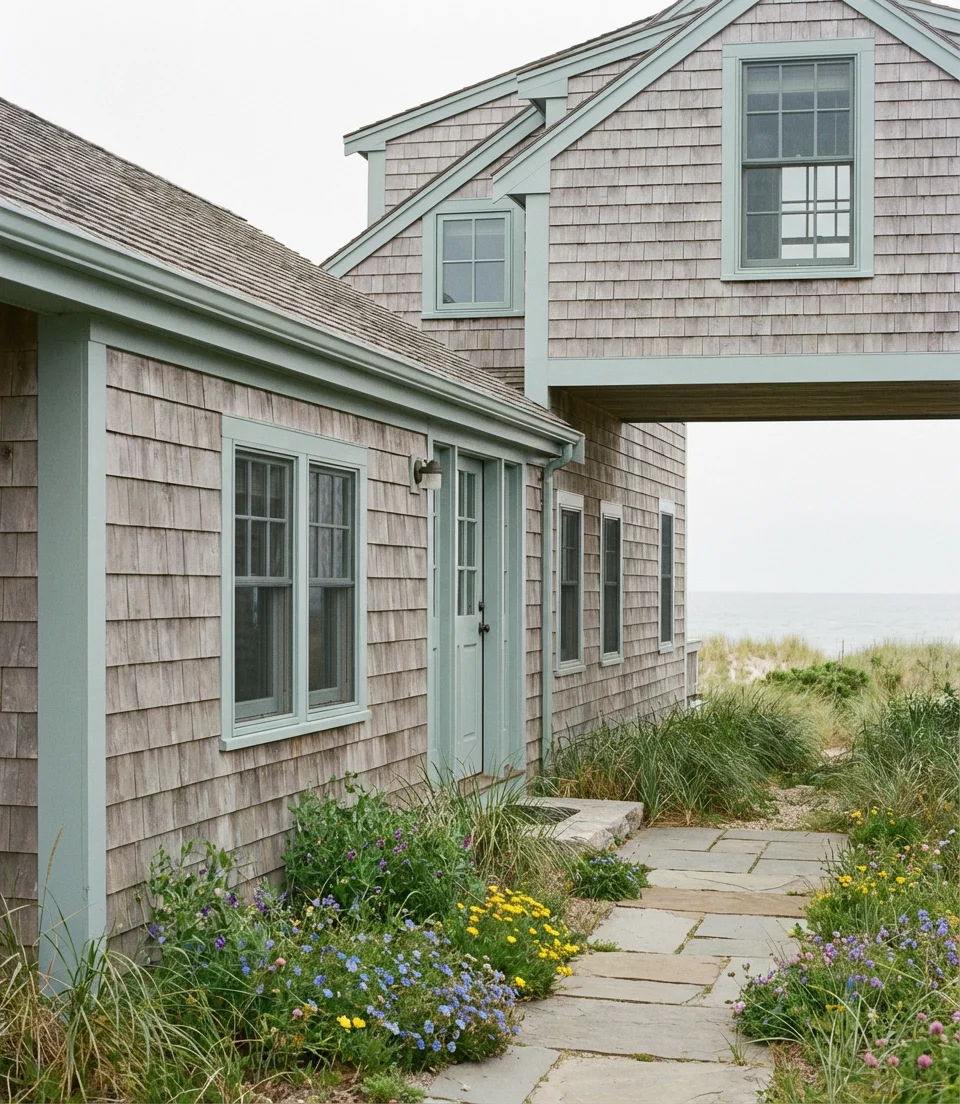
A color consultant who works with coastal developers in the Carolinas recommends photographing the view from your front door at different times of day and then building your exterior palette by pulling five to six dominant tones from those photos using a digital color tool. The results are invariably more sophisticated and contextually appropriate than choosing colors from a catalog. Your home ends up in quiet conversation with its surroundings—which is, ultimately, the highest compliment a beach house exterior can receive.
20. Bloxburg Layout Meets Real-World Beach Cottage
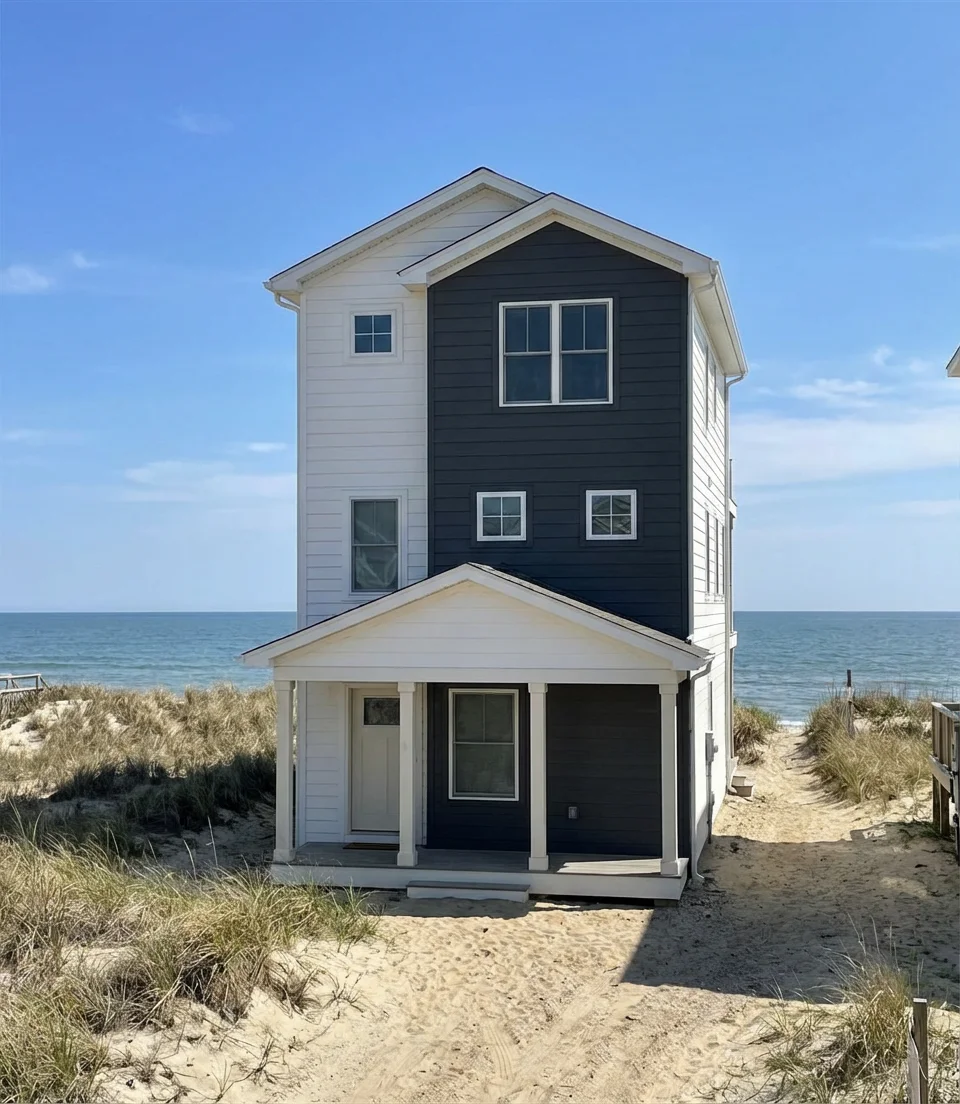
Taking the Bloxburg layout concept into a real-world beach cottage context produces something genuinely compelling: a home that’s compact and efficient in footprint but richly composed in elevation. The signature moves—a prominent gabled entry element, contrasting siding panels, a covered front porch with simple square columns, and a second-story window that punctuates the roofline—add up to a facade with far more visual weight and character than the square footage suggests. It’s adorable, confident, and thoroughly Pinterest-worthy.
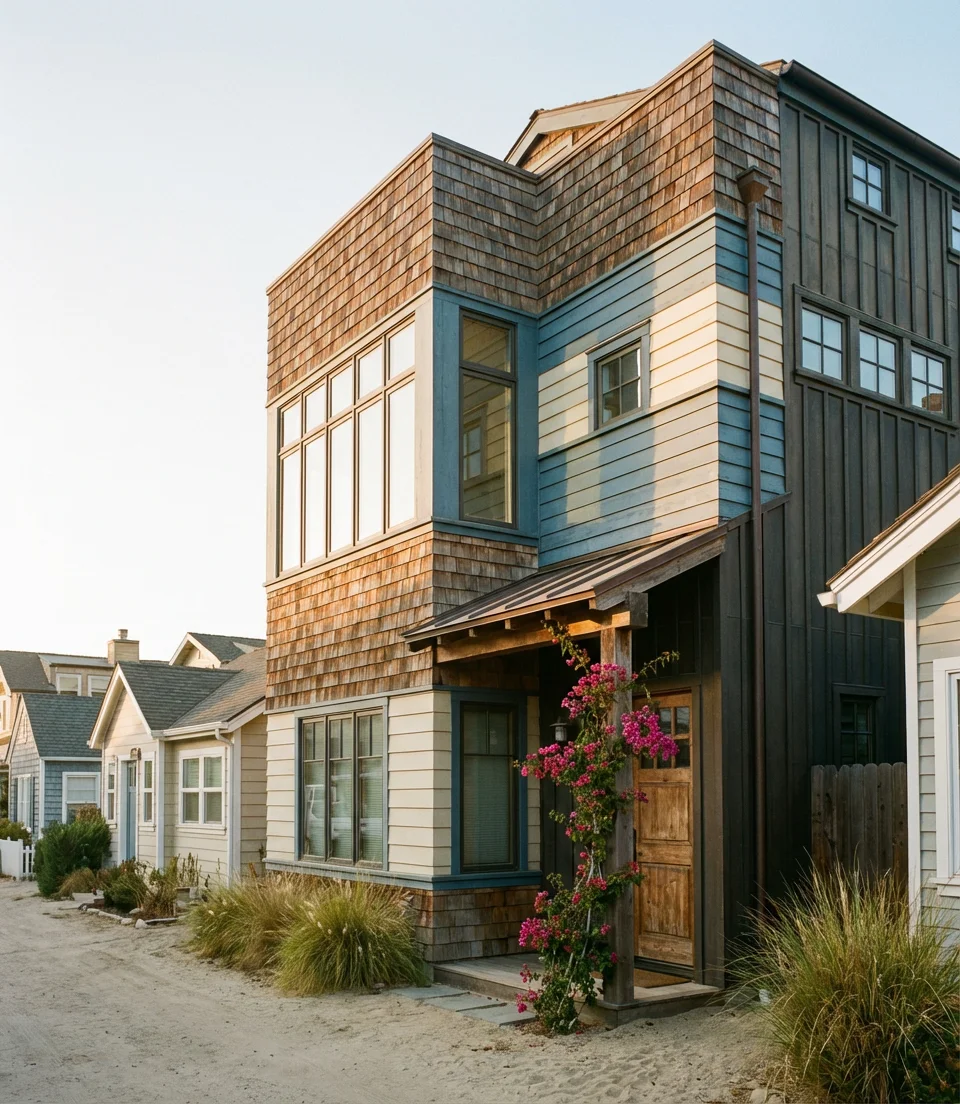
This translated design sensibility is particularly well-suited to beach communities with small lot widths, where homes are narrow but can be taller. A three-story skinny house with a Bloxburg-inspired facade—clean, layered, and carefully detailed—can deliver an enormous amount of architectural presence on a 25-foot-wide oceanfront lot. Builders in popular vacation markets like the Outer Banks and Cape Cod are already incorporating these visual instincts into spec homes aimed at younger buyers, with strong sales results to show for it.
21. Scandinavian-Inspired Coastal Exterior Ideas
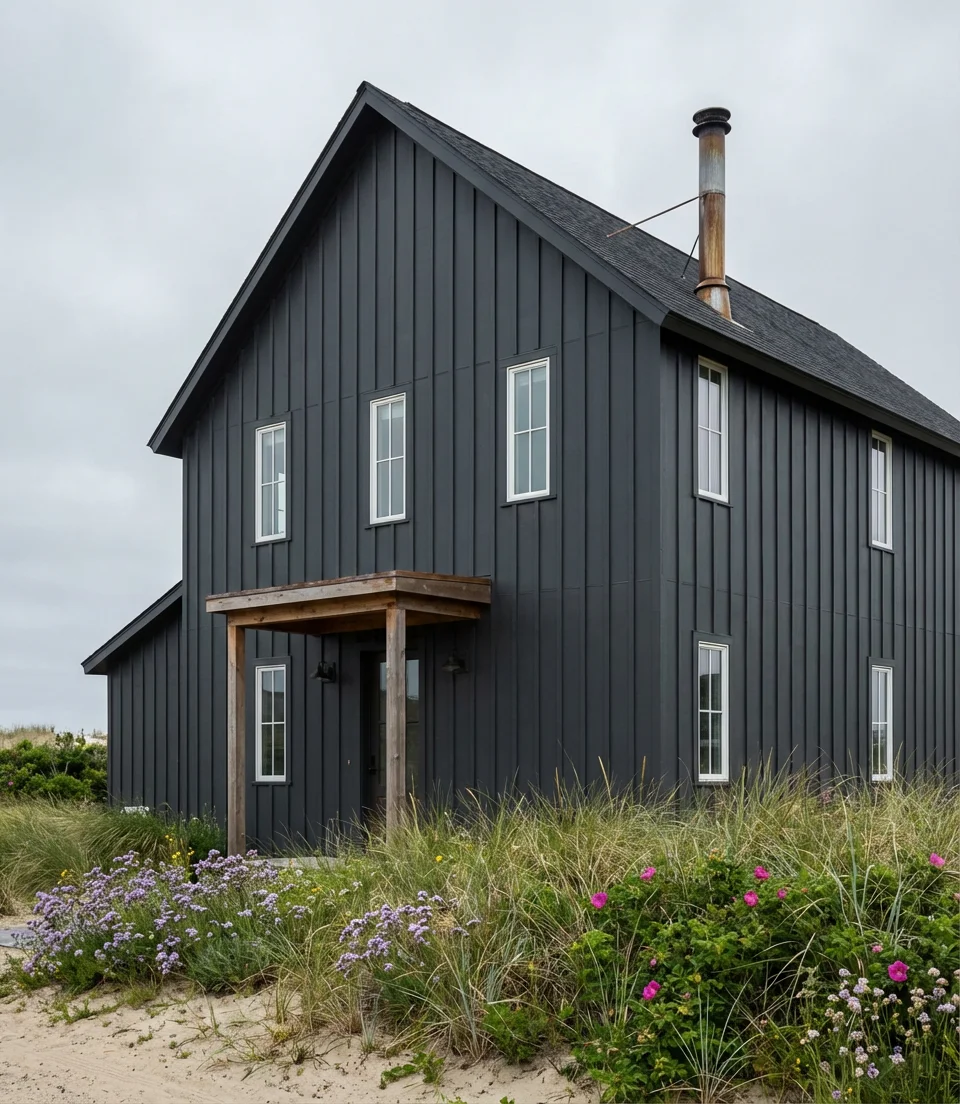
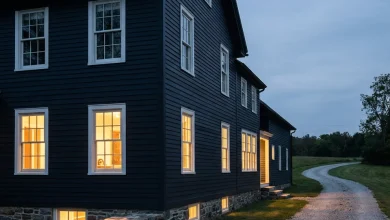
The Scandinavian coastal aesthetic—minimalist, material-honest, and quietly beautiful—has become one of the most influential ideas in American beach house design for 2026. Deep charcoal or inky black board-and-batten siding, slim-profile windows with simple white frames, a steeply pitched roof, and a single dramatically placed architectural detail—a raw steel chimney or a cedar-wrapped entry canopy—create a facade that’s simultaneously stark and deeply warm. This style exemplifies confident restraint.
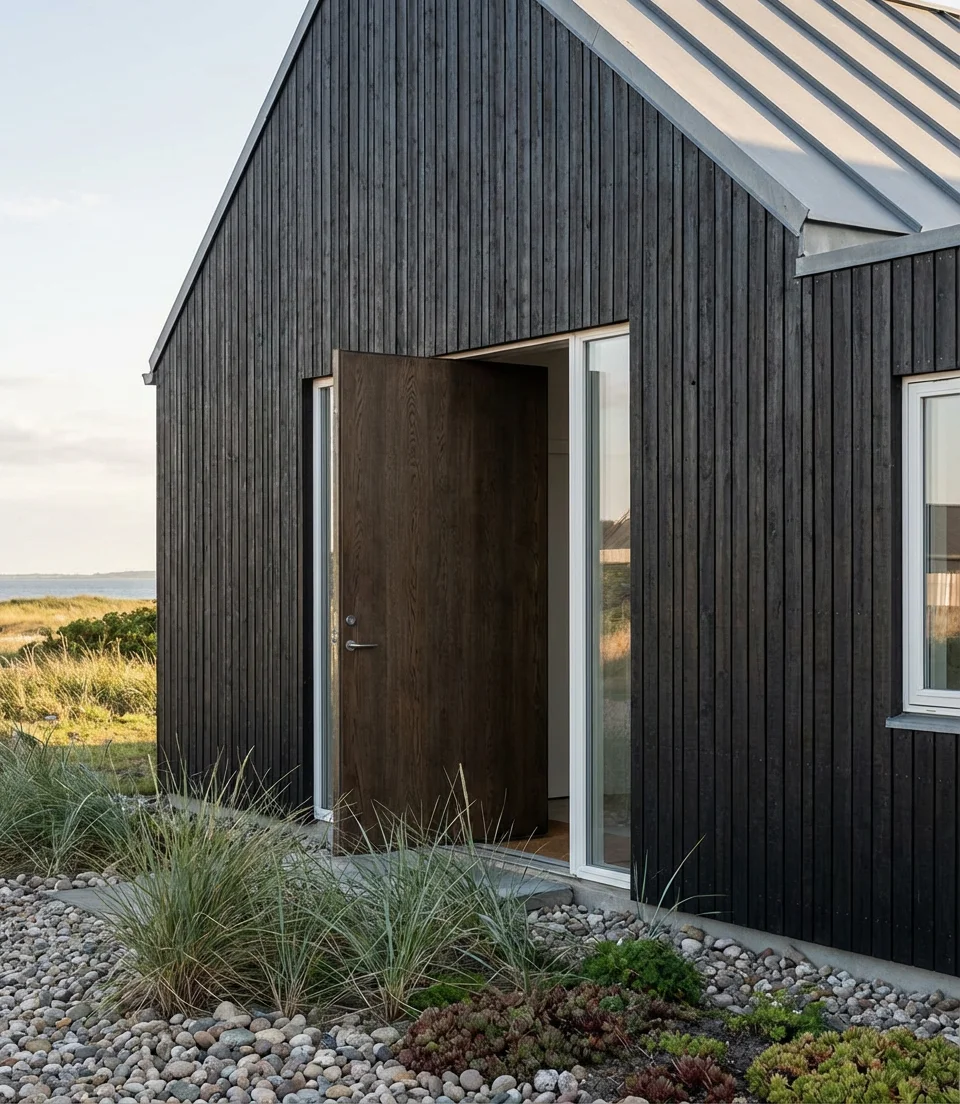
This style has found a devoted following in New England beach communities—particularly on Cape Ann, Nantucket, and the Maine coast—where the gray skies, rocky shores, and weathered vernacular architecture create a natural context for the dark-toned, material-forward Scandinavian vocabulary. Importantly, it also performs exceptionally well in terms of maintenance: dark-stained wood siding hides weathering far more gracefully than light-painted surfaces, and the simple, unfussy detailing means there are fewer places for water to collect and cause long-term damage.
22. Eco-Friendly Contemporary Coastal Exterior
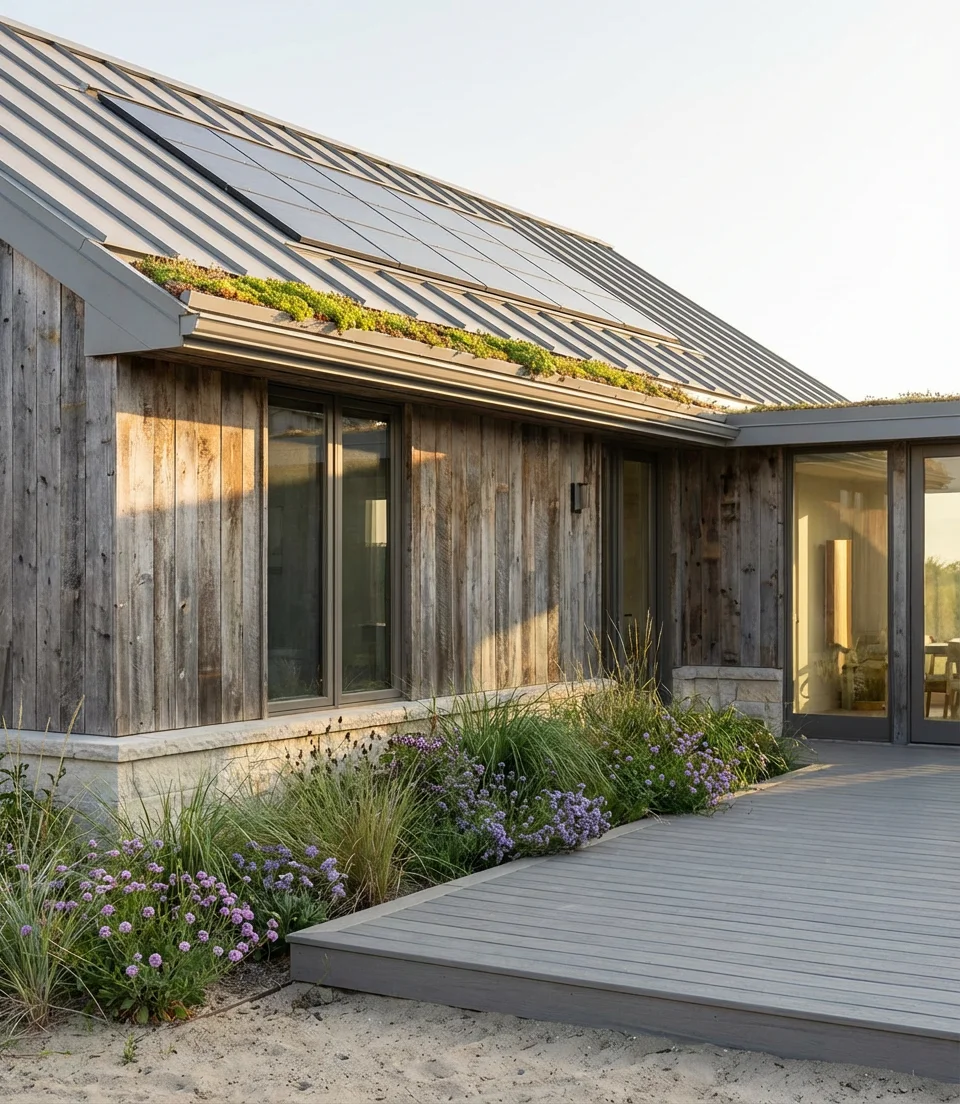
The most forward-looking beach house exteriors of 2026 are thinking beyond aesthetics toward environmental responsibility—and the good news is that sustainable design and beautiful design are no longer in conflict. Contemporary eco-friendly beach houses incorporate reclaimed wood cladding, living green walls, solar panels integrated flush into metal roofing, and native plantings that require no irrigation after establishment. The colors in this design language are driven by natural materials: the warm silver of aged cedar, the soft green of a sedum roof, and the matte gray of recycled composite decking.
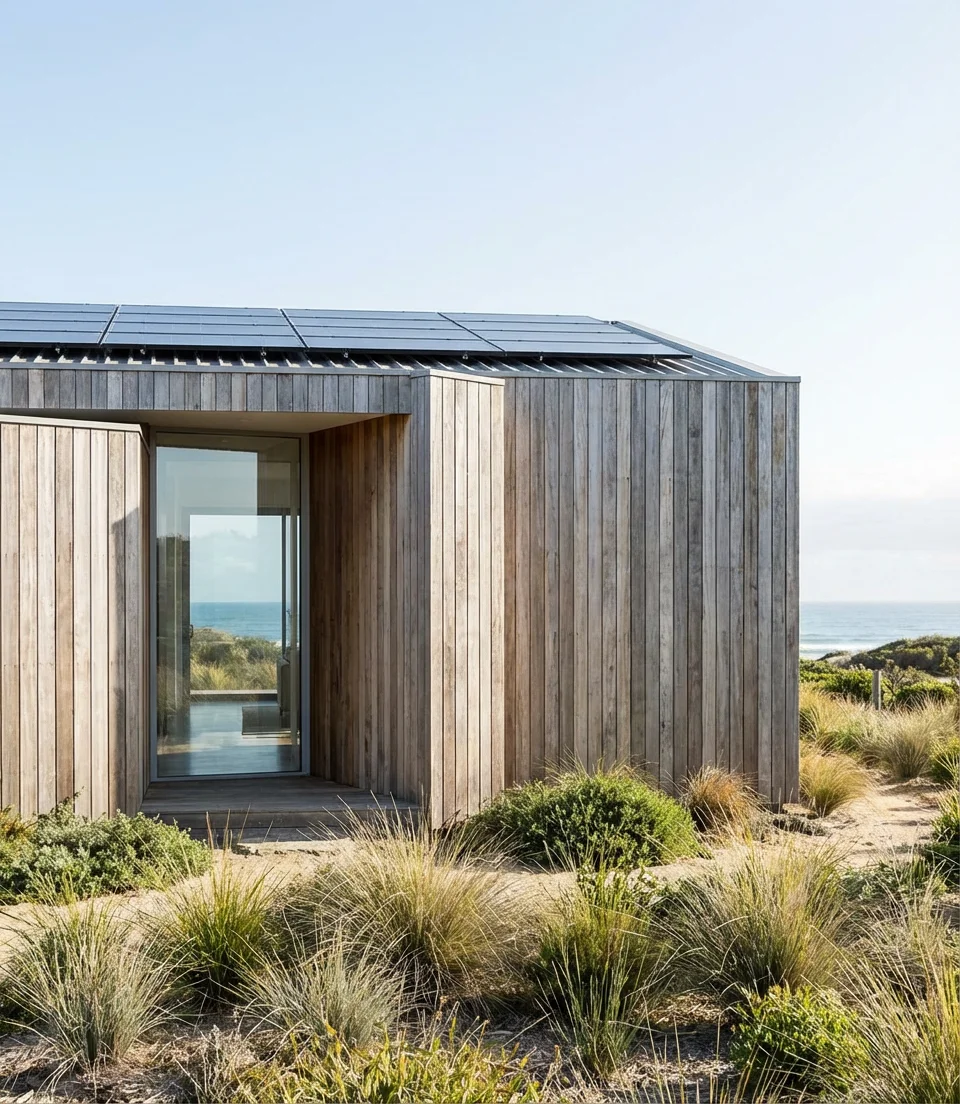
Besides being good for the environment, using sustainable materials for the outside of homes near the coast makes practical sense: reclaimed hardwoods are usually stronger and resist rot better than new wood; recycled composite decking lasts much longer than treated pine in salty air; and using native plants avoids the chemicals that can harm metal parts and stain brick over time. Taking care of the coastline also helps the home last longer, which even practical homeowners can see, as a Doing the right thing by the coastline turns out to be remarkably good for the longevity of the home itself—a convergence that even the most pragmatic homeowner can appreciate.
These beach house exterior ideas prove that coastal design in 2026 is richer, more diverse, and more regionally specific than it’s ever been—there truly is a perfect look for every stretch of American shoreline. Whether you’re drawn to the timeless elegance of crisp white shingles, the earthy drama of a deep green facade, or the playful personality of a blush pink cottage, we’d love to hear which direction you’re leaning. Drop your favorite ideas in the comments below and tell us about the beach house you’re dreaming of—or building right now.