43 Stunning Oak Kitchen Cabinets Ideas for 2026: From Honey to Dark, Natural to Stained

One of the most satisfying comebacks in American home design is the return of oak kitchen cabinets, and it feels remarkably timely. After years of dominating Pinterest boards with stark white kitchens, homeowners are rediscovering the warmth, texture, and soul that only real wood grain can bring. Whether you’re scrolling for renovation ideas at midnight or about to gut a dated kitchen and start fresh, oak is back in a big, beautiful way. In this article, you’ll find distinct directions to take your oak kitchen—from bold stained finishes to soft natural tones, rustic makeovers to sleek modern updates—all curated to help you find the look that feels like home.
1. Honey Oak Cabinets with Warm Earthy Accents
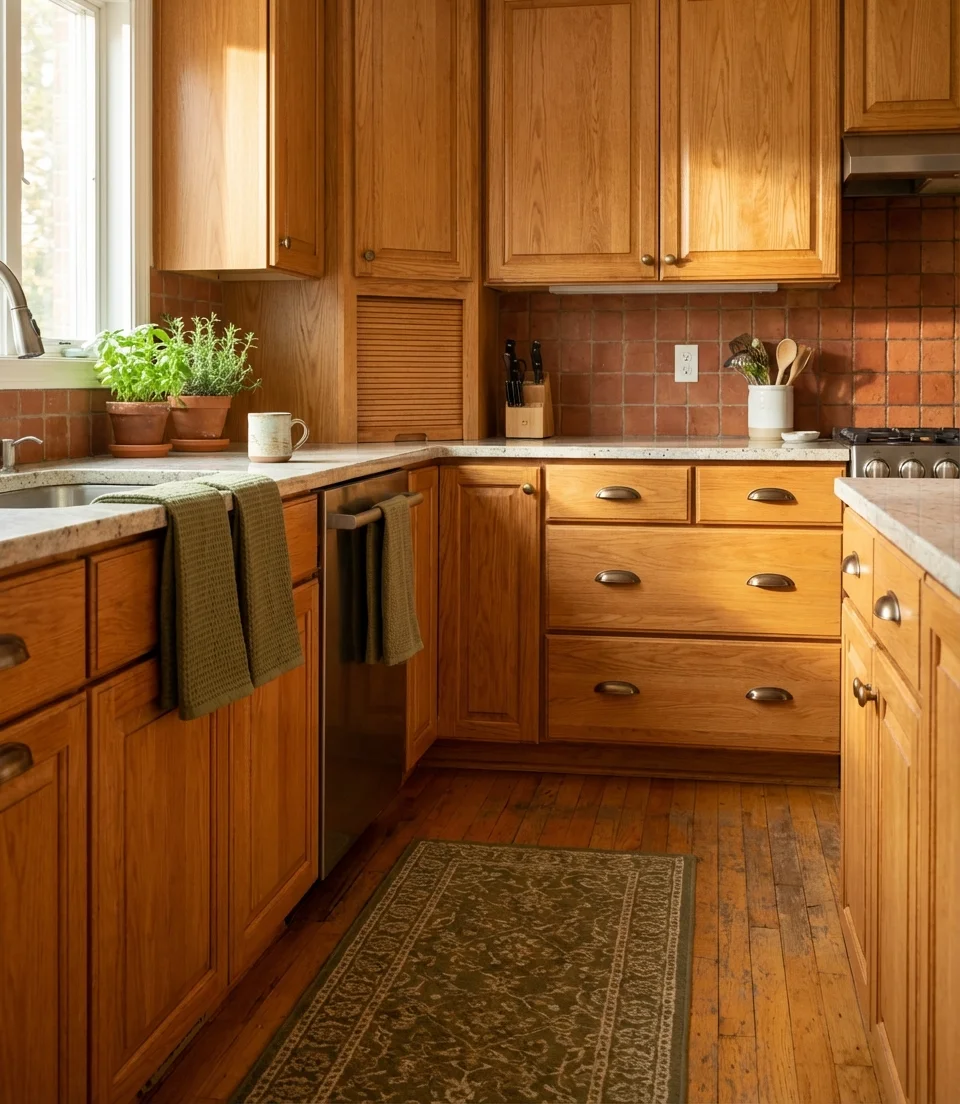
There’s something undeniably inviting about honey oak cabinets paired with earthy, warm accents. This combination leans into the natural warmth of the wood grain, letting the amber tones breathe alongside terracotta tile, olive green textiles, and brushed bronze hardware. It works beautifully in kitchens that want to feel layered and lived-in without looking overdone. The golden undertones in honey oak catch morning light in a way that instantly makes a kitchen feel like the heart of the home—and that’s exactly what today’s American families are searching for.
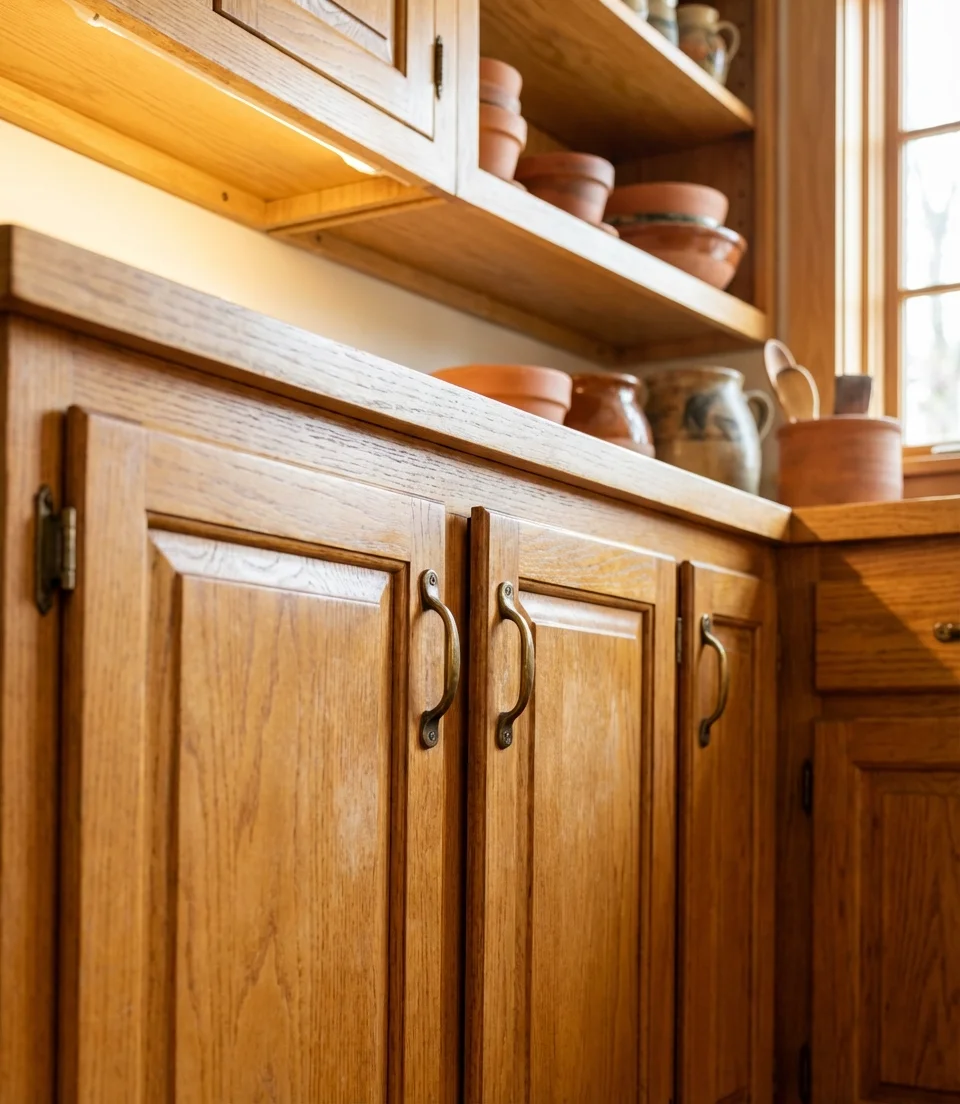
This pairing works best in open-plan spaces where the kitchen flows into a dining or living area—the warmth of honey oak acts as a visual anchor. If you’re worried about the look feeling too heavy, balance it with a lighter countertop in cream quartz or honed limestone. A practical insight worth knowing: honey oak cabinets are widely available at mid-range price points, making this one of the most budget-accessible ways to bring a warm, designer-inspired aesthetic into your kitchen without a full custom build.
2. White Oak Cabinets with a Clean Modern Feel
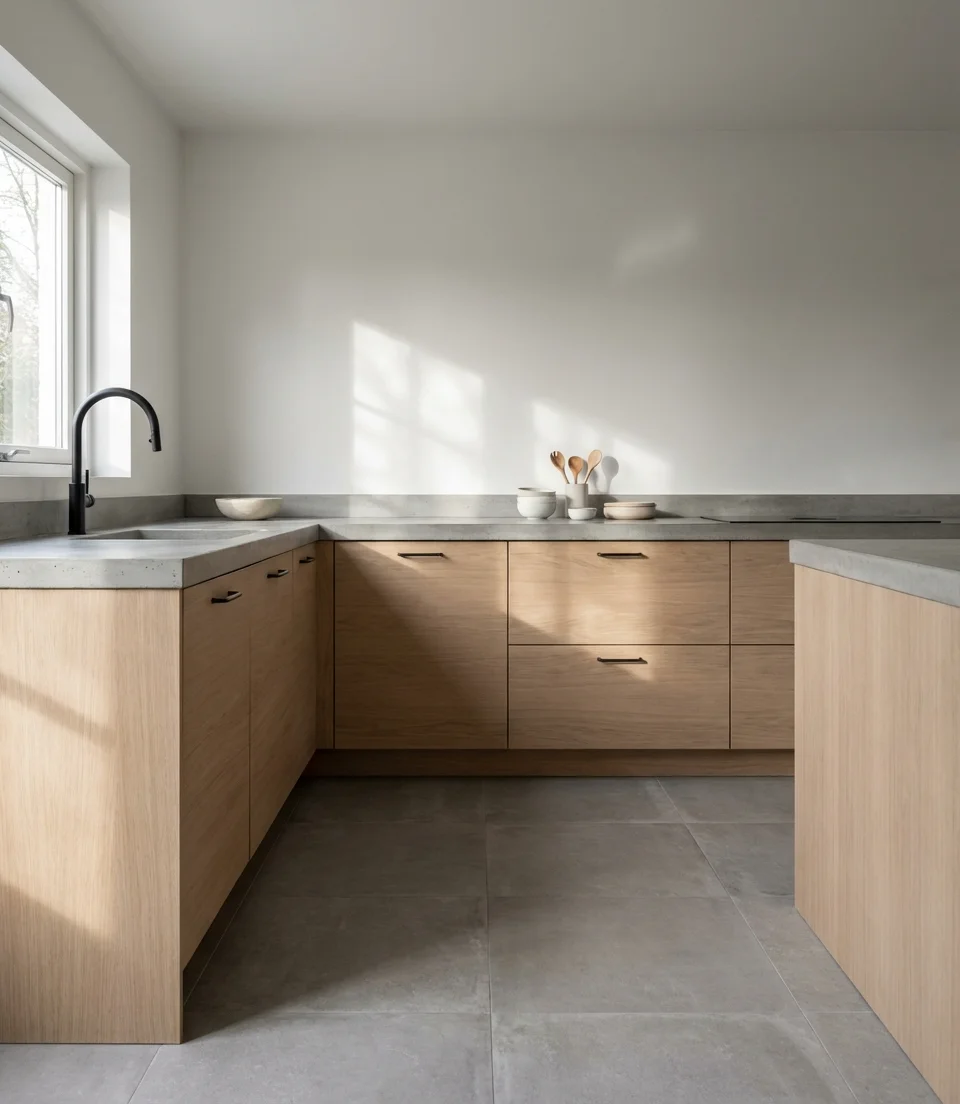
White oak has become the darling of modern kitchen design, and it’s easy to see why. Unlike painted cabinets, white oak offers a quiet sophistication—a pale, cool-toned grain that reads almost Scandinavian in its restraint while still carrying the organic warmth that wood naturally provides. Rift white oak in particular, with its tight, straight grain pattern, has been showing up in high-end kitchen renovations from Brooklyn lofts to California farmhouses. It pairs effortlessly with matte black fixtures, concrete countertops, and minimal hardware.
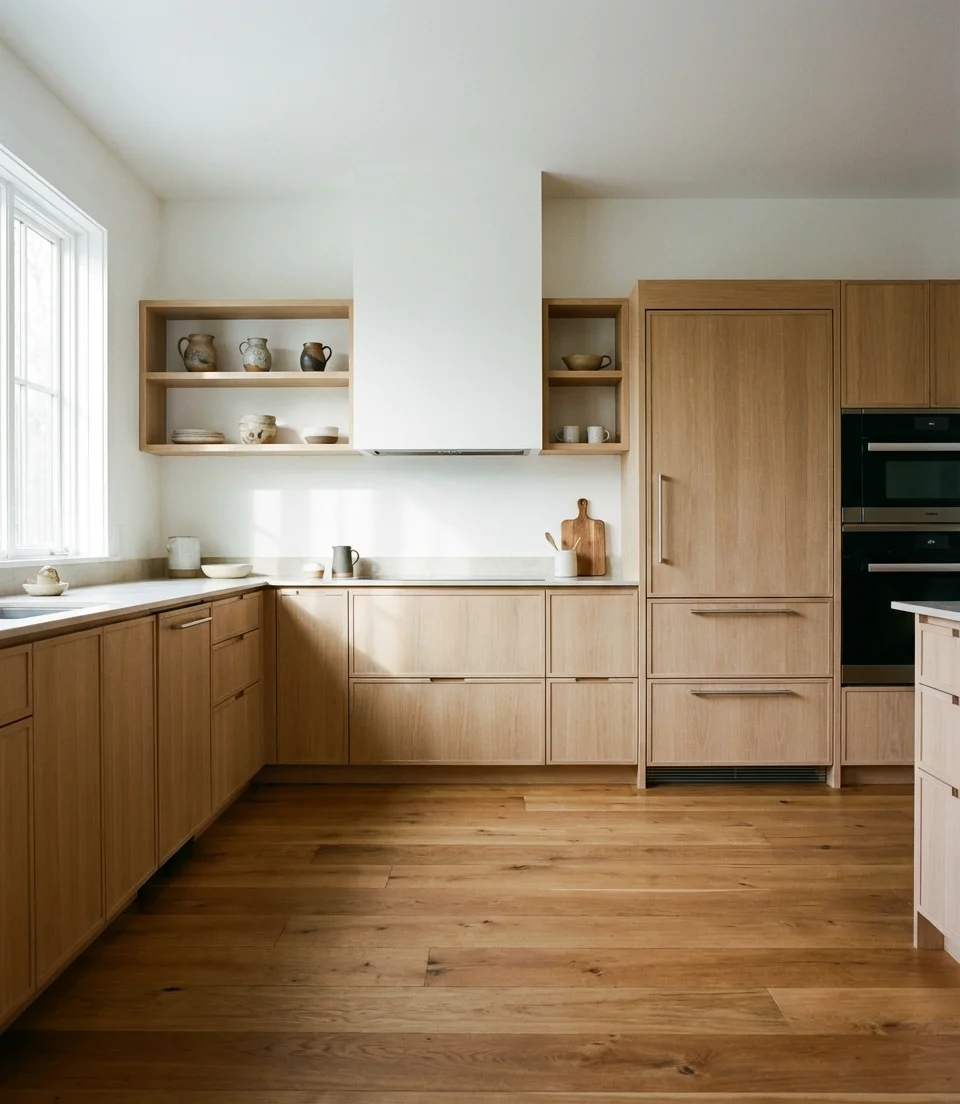
Where this look works best is in kitchens that already have strong architectural bones—high ceilings, large windows, or clean sightlines. White oak’s subtlety enhances spaces that don’t require wood to dominate. Real homeowners often discover that white oak is slightly more prone to showing grease and fingerprints than darker finishes. Therefore, pairing it with a matte sealer, rather than a high-gloss one, can significantly maintain its fresh appearance between cleanings.
3. Dark Oak Cabinets for a Dramatic Statement Kitchen
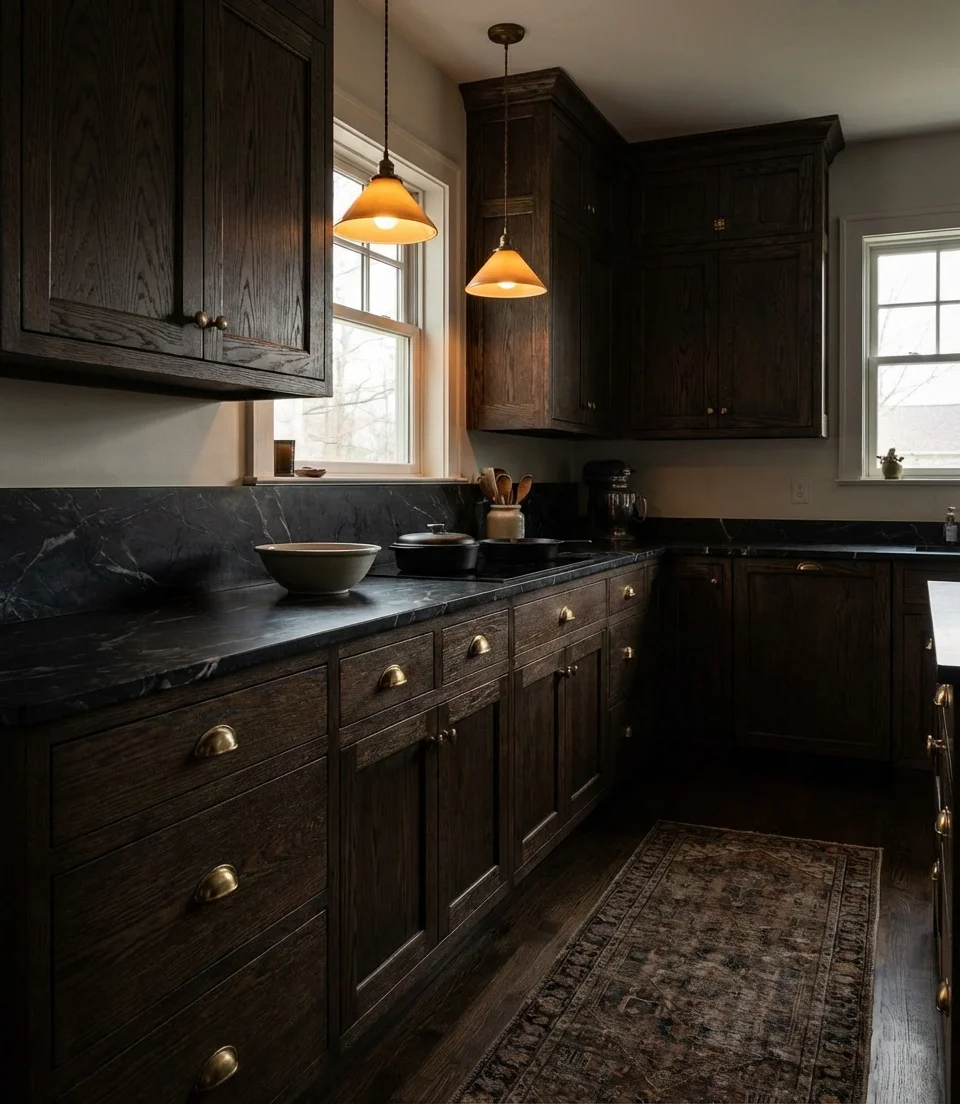
If you’ve been dreaming of a kitchen that feels moody, rich, and deeply sophisticated, dark oak cabinets might be exactly where that dream lives. A deeply stained oak—think espresso, ebony, or dark walnut tones—creates instant drama without losing the organic texture that makes wood so appealing in the first place. Brown undertones in dark oak pair beautifully with unlacquered brass, dark stone countertops, and deep-toned tile. The result is a kitchen that feels less like a utilitarian workspace and more like a room you actually want to linger in.
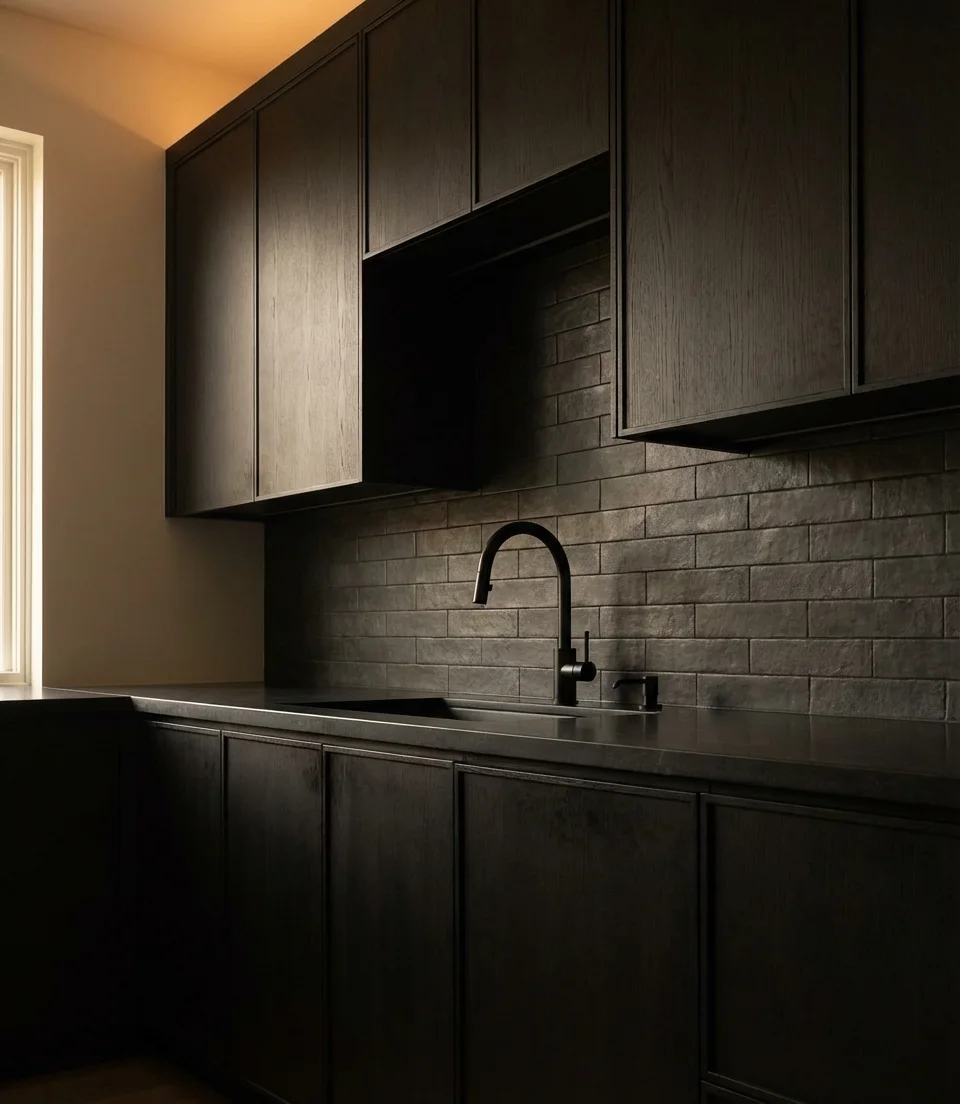
Dark oak kitchens tend to feel most at home in spaces with good artificial lighting, since they naturally absorb more light than their pale counterparts. An expert-style note worth keeping in mind: layering your lighting—task lighting under cabinets, ambient pendant lights above the island, and accent lighting inside open shelving—makes a dark oak kitchen sing rather than feel cave-like. This is the one scenario where skimping on a lighting plan can genuinely undermine an otherwise beautiful renovation.
4. Natural Oak Cabinets That Let the Wood Speak
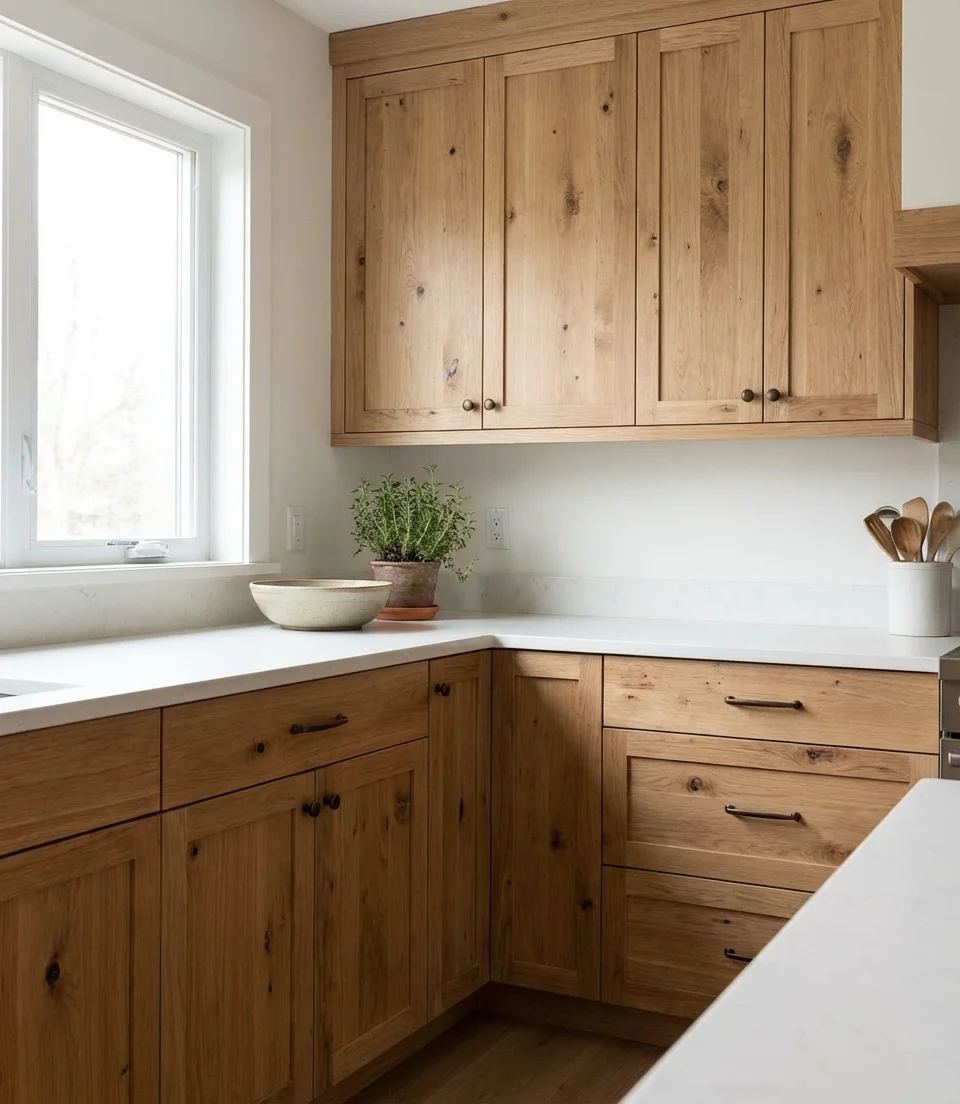
Natural oak cabinets—finished with nothing more than a clear coat or light oil—are having a genuine moment right now, and the appeal is almost visceral. The tree’s knots and grain variation are all you get; pushing the wood is easy. This natural white approach works especially well when you want a kitchen that feels grounded, authentic, and effortlessly calm. It’s the aesthetic equivalent of a deep breath—and right now, that’s exactly what many American homeowners are craving.
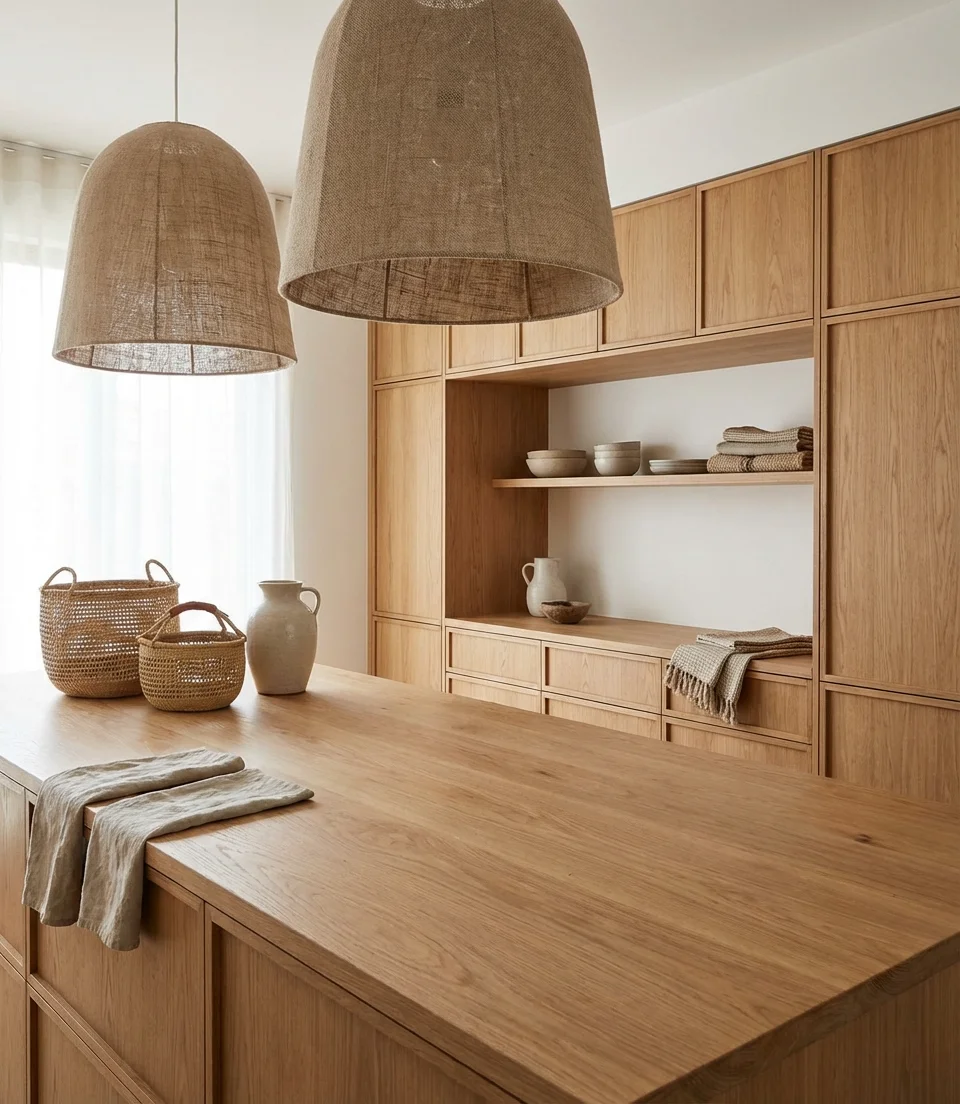
Think about your regional context here: in the American Southwest and Pacific Northwest, where indoor-outdoor living is a priority, natural oak connects the kitchen visually to the landscape outside. It works beautifully with stone, rattan, and unbleached linen. The one common mistake people make is pairing natural oak with cool-toned grays—it tends to make the wood look greenish or muddy. Stick to warm whites, creams, and soft greiges for countertops and walls, and the wood will reward you handsomely.
5. Golden Oak Kitchen Makeover on a Budget
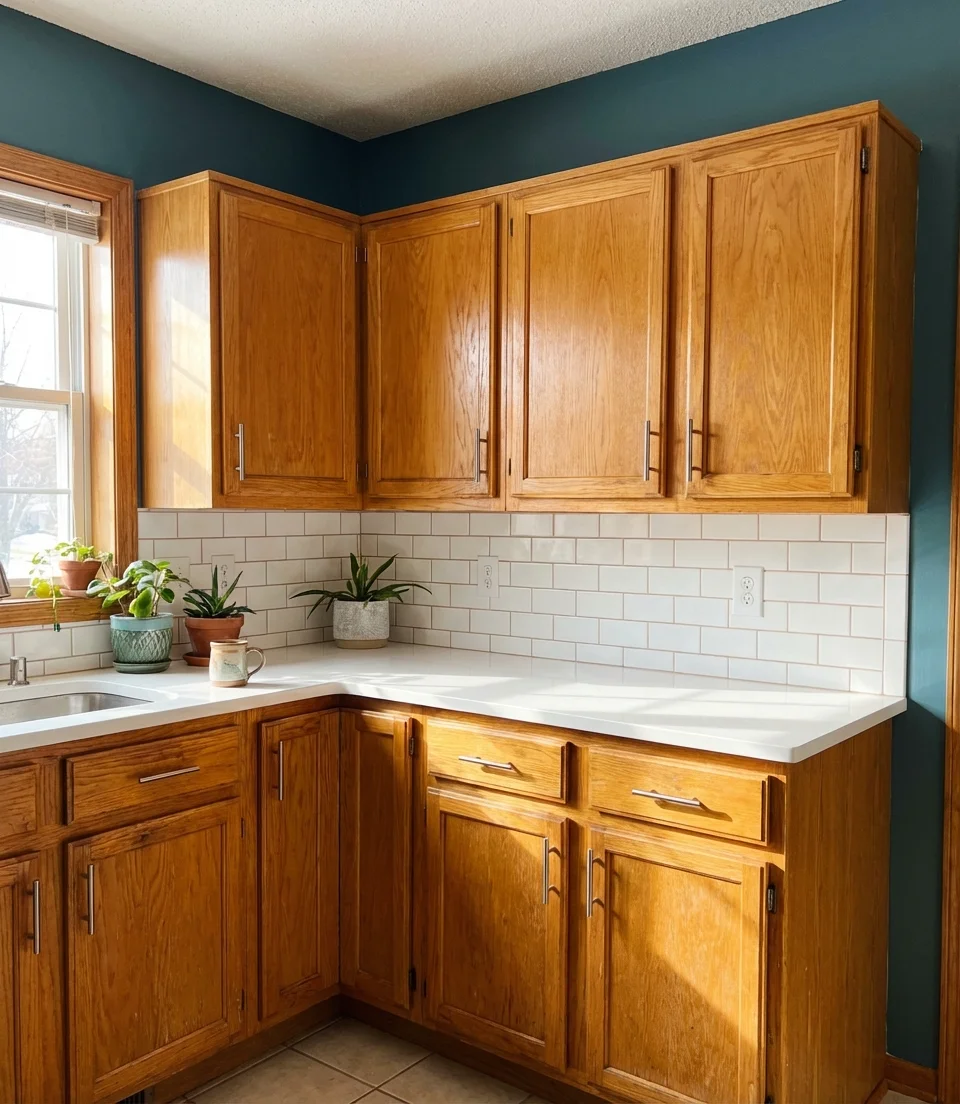
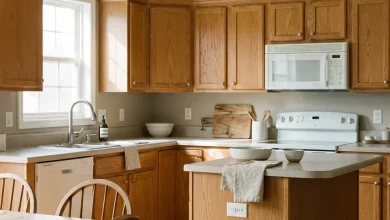
Not everyone can start from scratch, and that’s where the makeover approach to golden oak cabinets really shines. If you bought a home built in the 1990s or early 2000s, there’s a solid chance you inherited classic golden oak cabinetry—and rather than replacing it, more homeowners are learning how to work with it. Updated hardware, a fresh coat of paint on the walls, and new countertops can completely transform how those orange-leaning oak cabinets feel in the space.
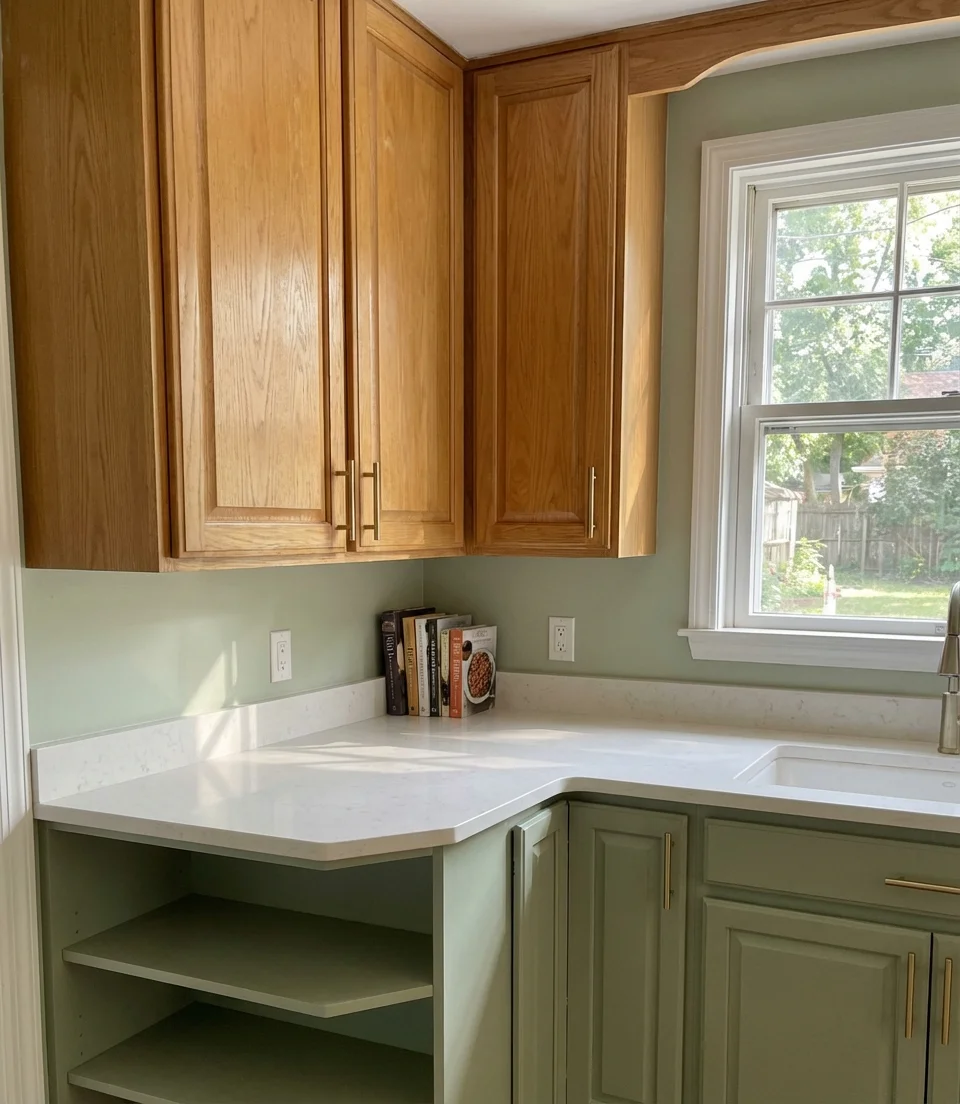
The budget angle here is real: replacing kitchen cabinets can cost anywhere from $5,000 to $25,000 or more depending on the size of your kitchen. Updating golden oak cabinets with new hardware alone—a project that can run as little as $200–$500—changes the entire personality of the room. Add a statement wall color, and you’re looking at a transformation that costs under $1,000 total. That’s the kind of math that makes this project the most-pinned kitchen refresh approach on Pinterest for three years running.
6. Quarter Sawn White Oak: The Designer’s Secret Weapon
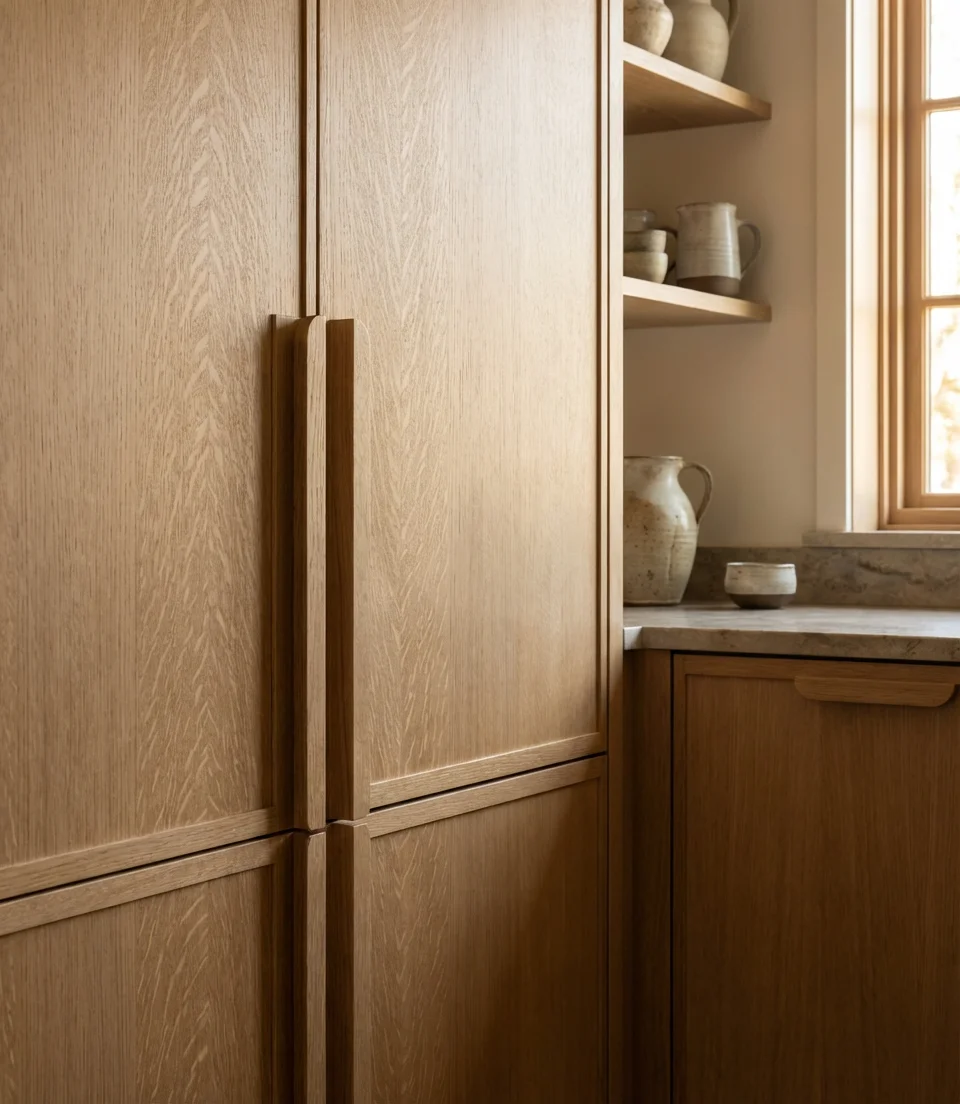
If you’ve ever admired a kitchen and couldn’t quite figure out why the wood looked so different—more geometric, more architectural—there’s a good chance you were looking at quarter-sawn white oak. The milling technique exposes the medullary rays in the wood, creating those distinctive fleck patterns that look almost like brushstrokes across the cabinet doors. It’s more expensive than plain-sawn oak, but the visual payoff is extraordinary. Quarter-sawn cabinets bring a level of craftsmanship and visual interest that flat-panel painted cabinets simply can’t replicate.
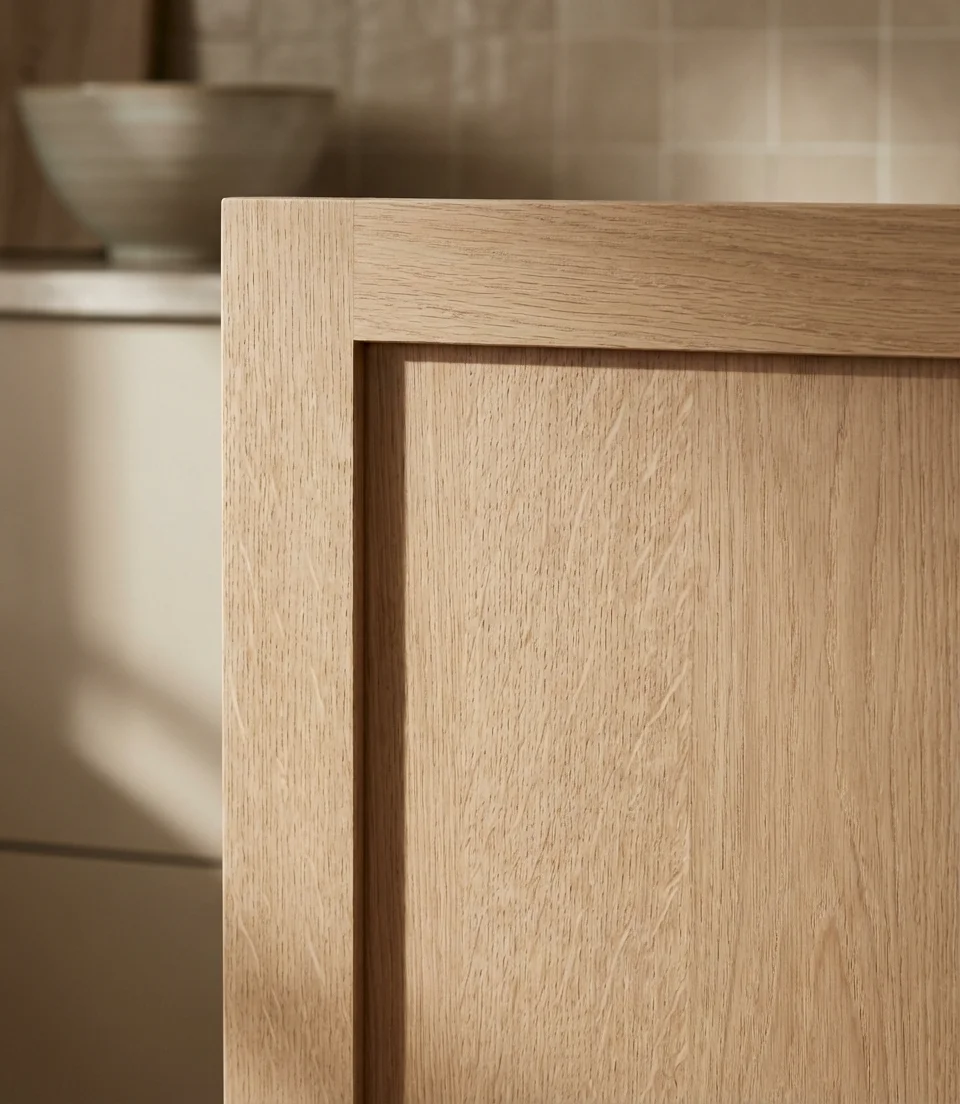
Imagine walking into a kitchen where the cabinets stop you mid-step because the wood itself is so striking—that’s the quiet power of quarter-sawn oak. Interior designers frequently recommend quarter-sawn oak to clients seeking a unique, custom-feeling space without the need for intricate millwork or complex color schemes. Transitional and Arts & Crafts-inspired kitchens, where the design emphasizes craftsmanship, benefit greatly from its use.
7. Stained Oak Cabinets in Deep Earthy Tones
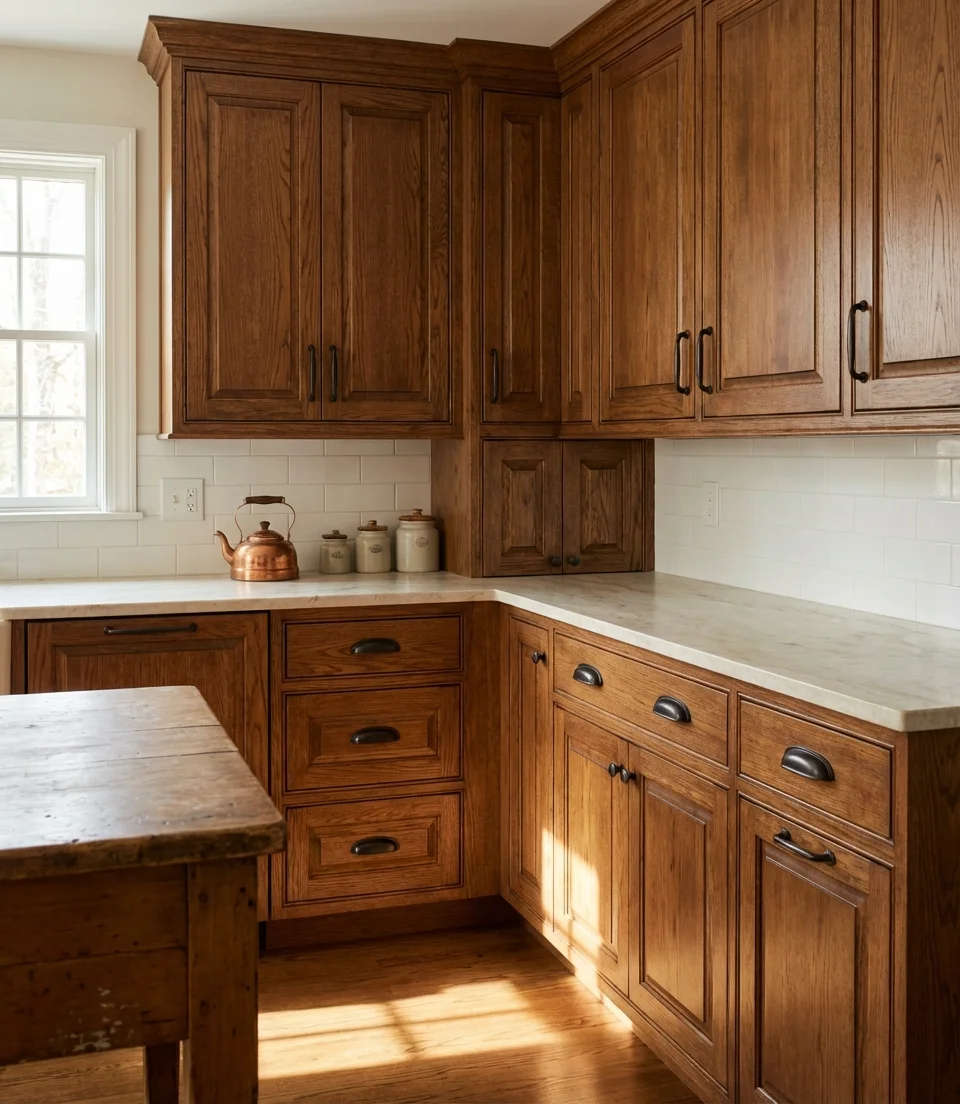
Stained oak cabinets offer something that painted furniture never can: the grain still shows through. Whether you go with a warm pecan, a rich amber, or a deep tobacco stain, you’re still preserving the living texture of the wood while nudging its personality in a more deliberate direction. Medium stain tones are particularly versatile—dark enough to feel intentional, light enough to keep the kitchen feeling airy. They strike a harmonious balance that complements both craftsman bungalows and new construction.
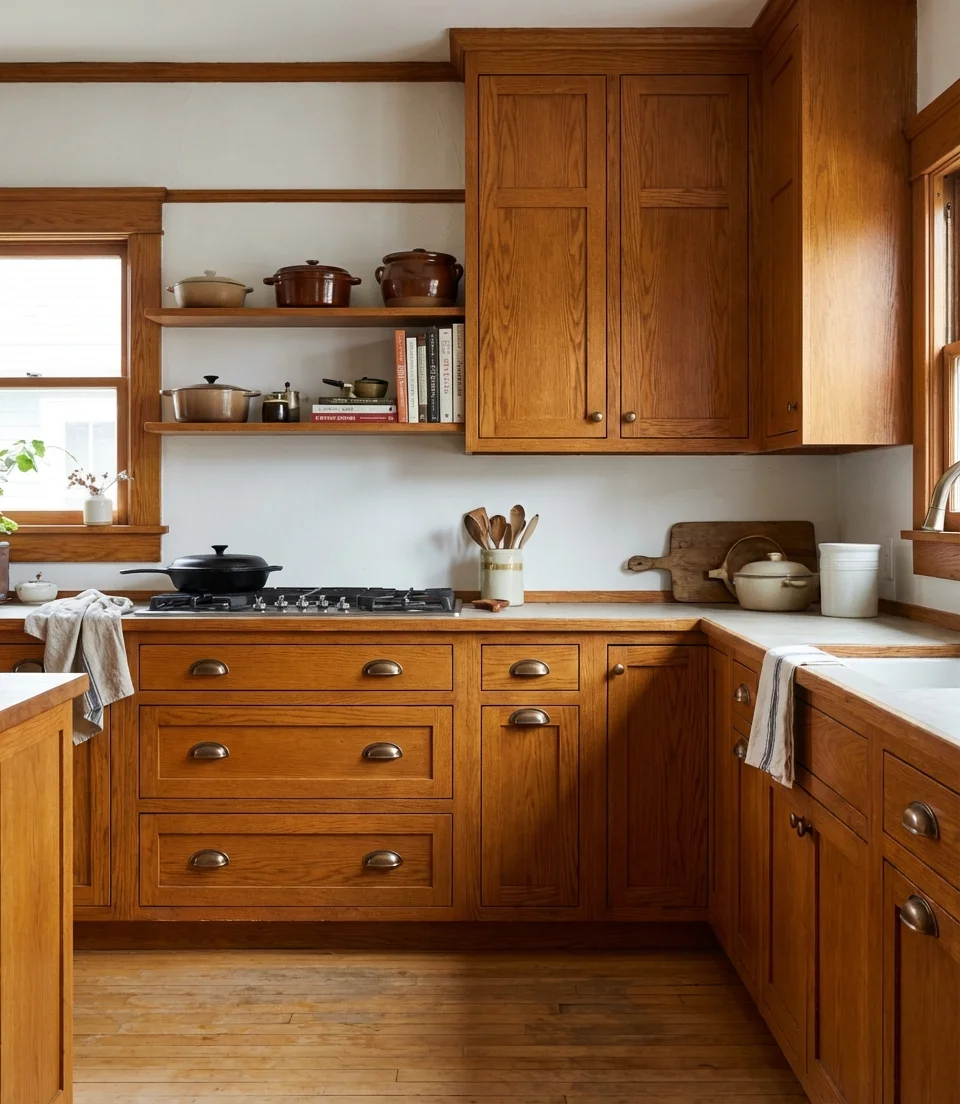
A micro-anecdote that illustrates the concept well: one homeowner in Nashville shared that she’d been quoted $18,000 for new cabinets and instead hired a local refinishing company to restain her existing oak in a medium pecan tone. The total cost was $2,200. The result photographed so beautifully that the before-and-after post went quietly viral in a Facebook group for home renovations. Sometimes a wonderful stain is genuinely all you need.
8. Rustic White Oak with Open Shelving
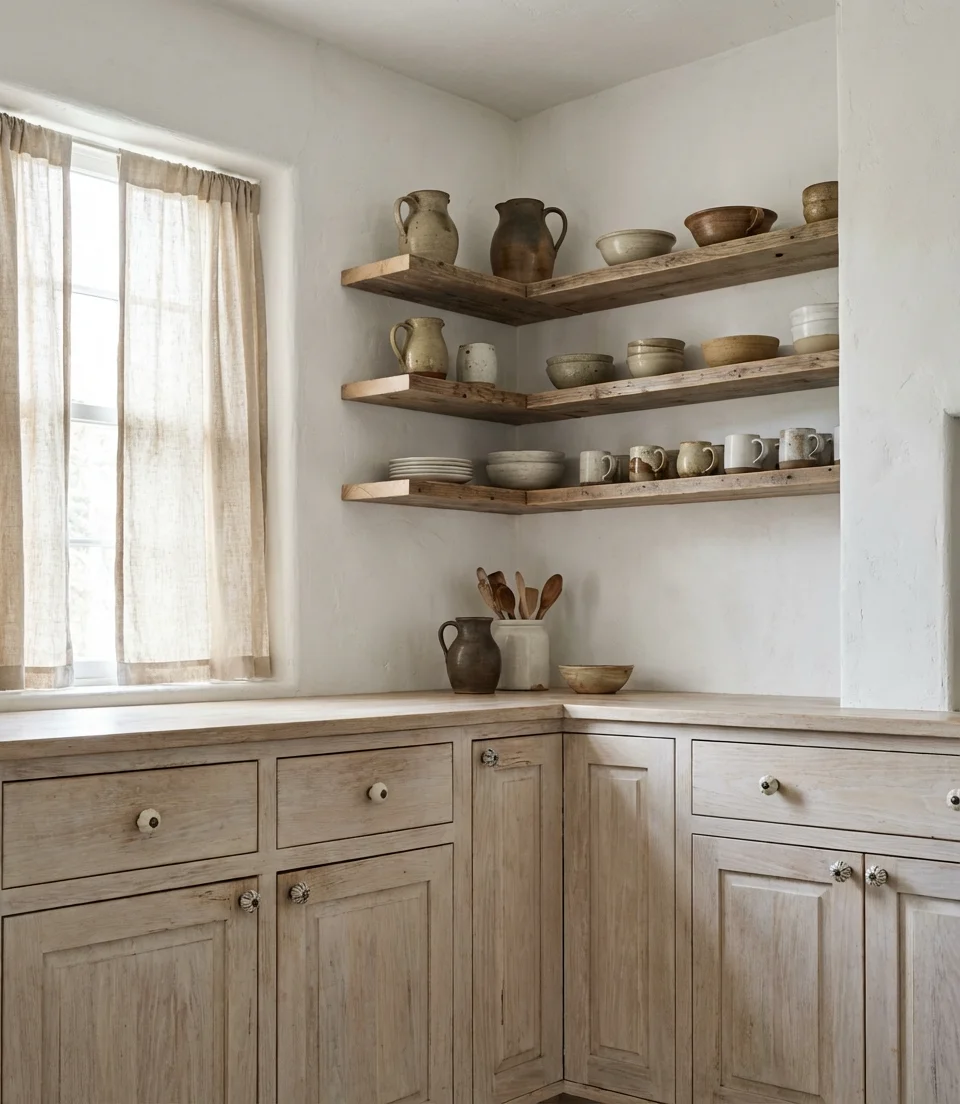
The pairing of rustic white oak cabinetry with open wood shelving above is one of those design decisions that looks effortless but requires a little thought to pull off well. The key is embracing imperfection: knots, color variation, and visible grain are features, not flaws. Pale rustic oak with open shelving works particularly well in cottage-style kitchens, farmhouse spaces, and beach homes where the whole aesthetic is built around a sense of relaxed, well-worn comfort.
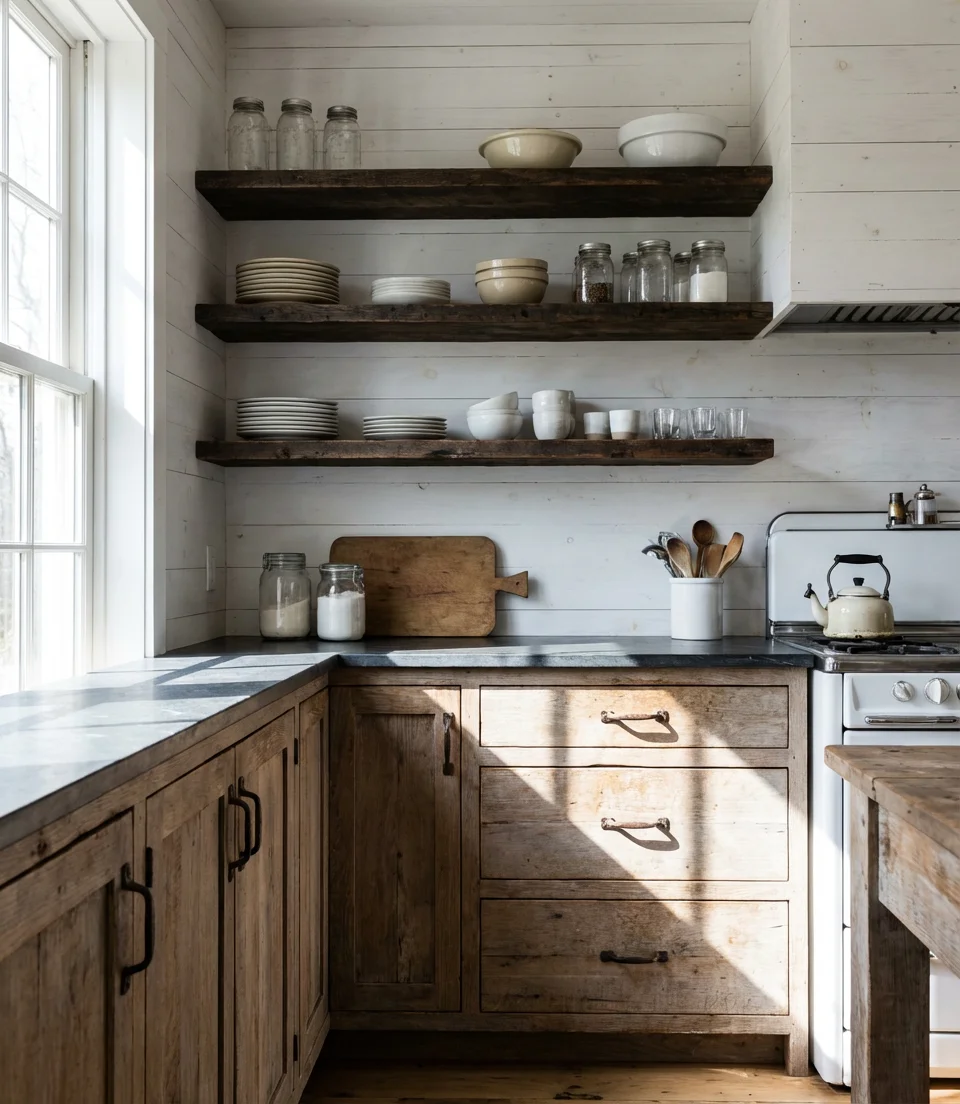
Open shelving works best when you’re the kind of cook who keeps things tidy—or at least tidy-looking. A beneficial approach is to use the open shelves for your most attractive everyday items: stone bowls, wooden cutting boards, and simple white ceramics. Reserve the closed cabinets below for everything else. This way, you get the visual warmth of exposed wood and displayed objects without the anxiety of a cluttered kitchen that’s permanently on display.
9. Black and White Kitchen with Oak Wood Accents
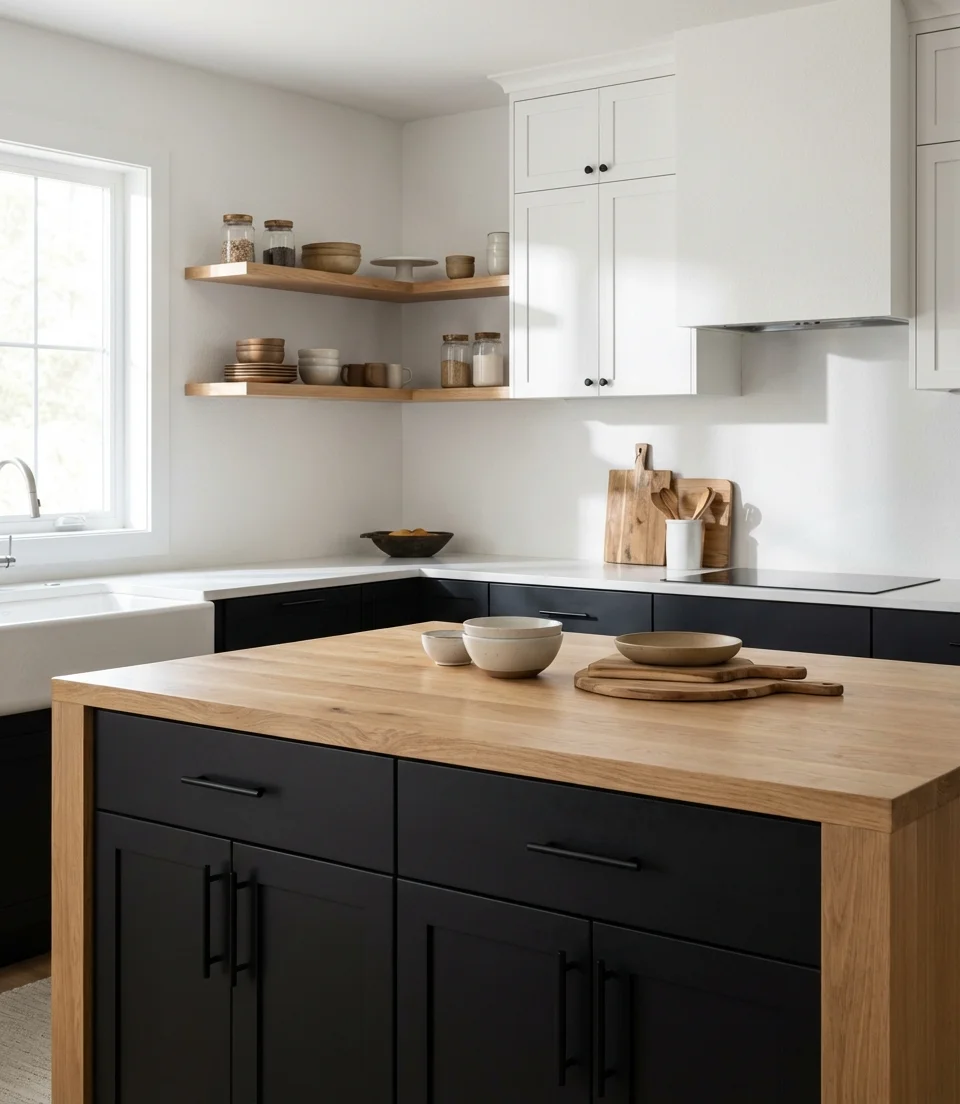
The black and white kitchen has been a design staple for decades, but introducing oak wood accents changes the entire emotional register of the space. Pure black-and-white kitchens can feel cold or overly graphic—a wood element, whether it’s an oak island, open shelving, or a few cabinet panels, brings a humanizing warmth that softens the contrast. Blonde oak works beautifully in this context, its light, neutral tone acting as a quiet bridge between the two extremes.
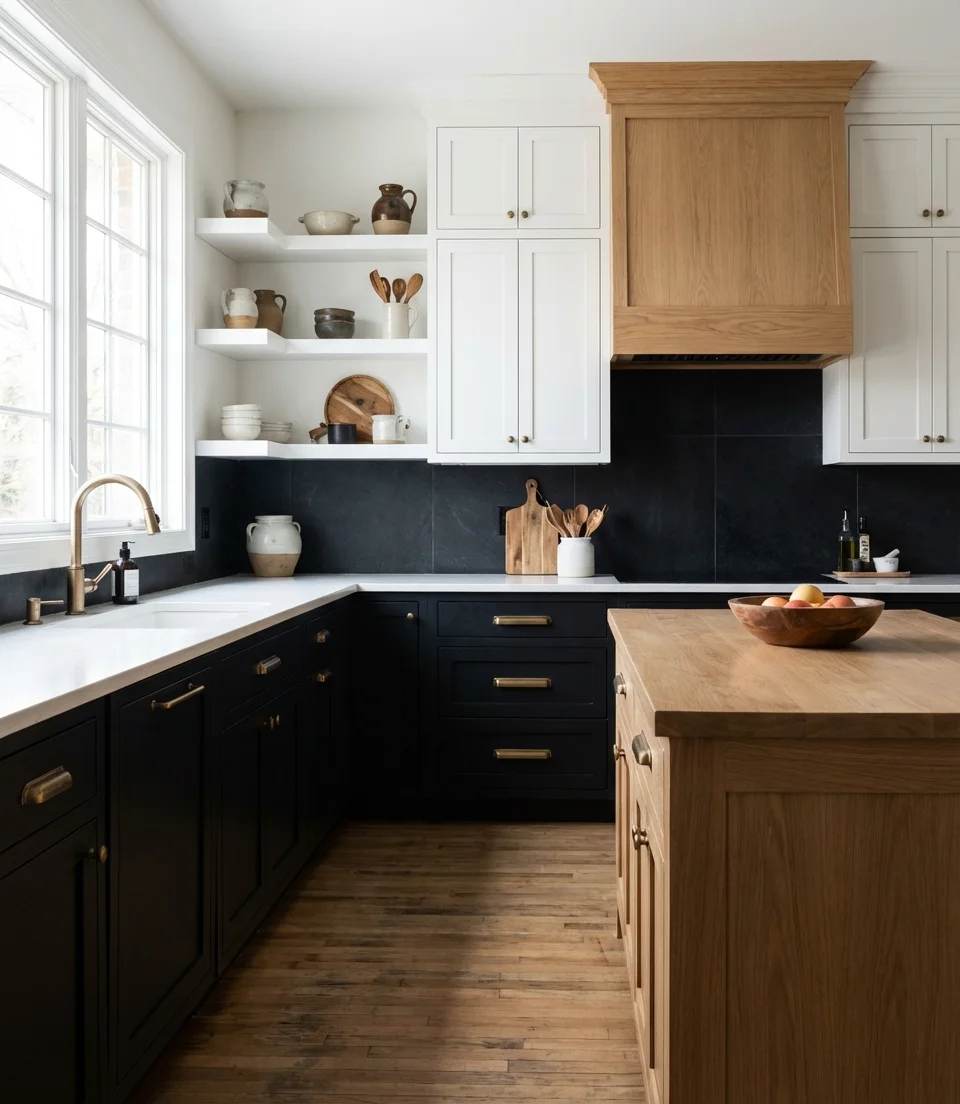
The above design is a look that photographs extraordinarily well, which is partly why it keeps circulating on Pinterest. In real life, it’s also remarkably livable—the wood element keeps the kitchen from feeling like it belongs in a hotel lobby rather than a family home. Where this style works best is in larger kitchens with an island, where you have enough visual real estate to introduce the oak as a deliberate counterpoint rather than a token gesture.
10. Wall Color Ideas That Transform Oak Cabinets
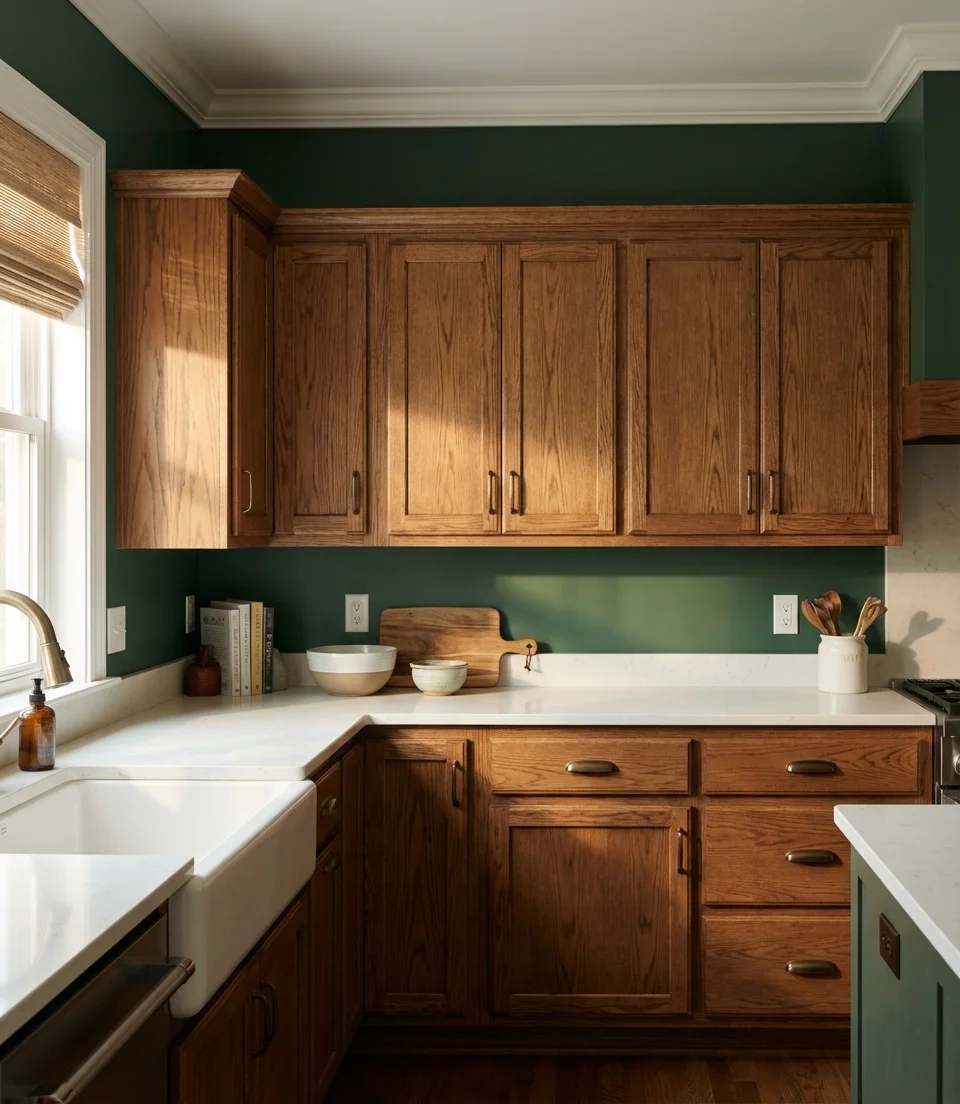
Perhaps the single highest-impact, lowest-cost way to change how your oak kitchen feels is to rethink the wall color. The wrong wall color can make oak feel dated overnight; the right one makes it feel considered and intentional. Warm deep greens—think forest, sage, and olive—are perennially flattering to oak’s warm undertones. Soft terracotta, dusty plum, and warm off-white work equally well. What to avoid: anything with a cool blue or gray undertone, which tends to pull the orange out of oak and make it look harsh.
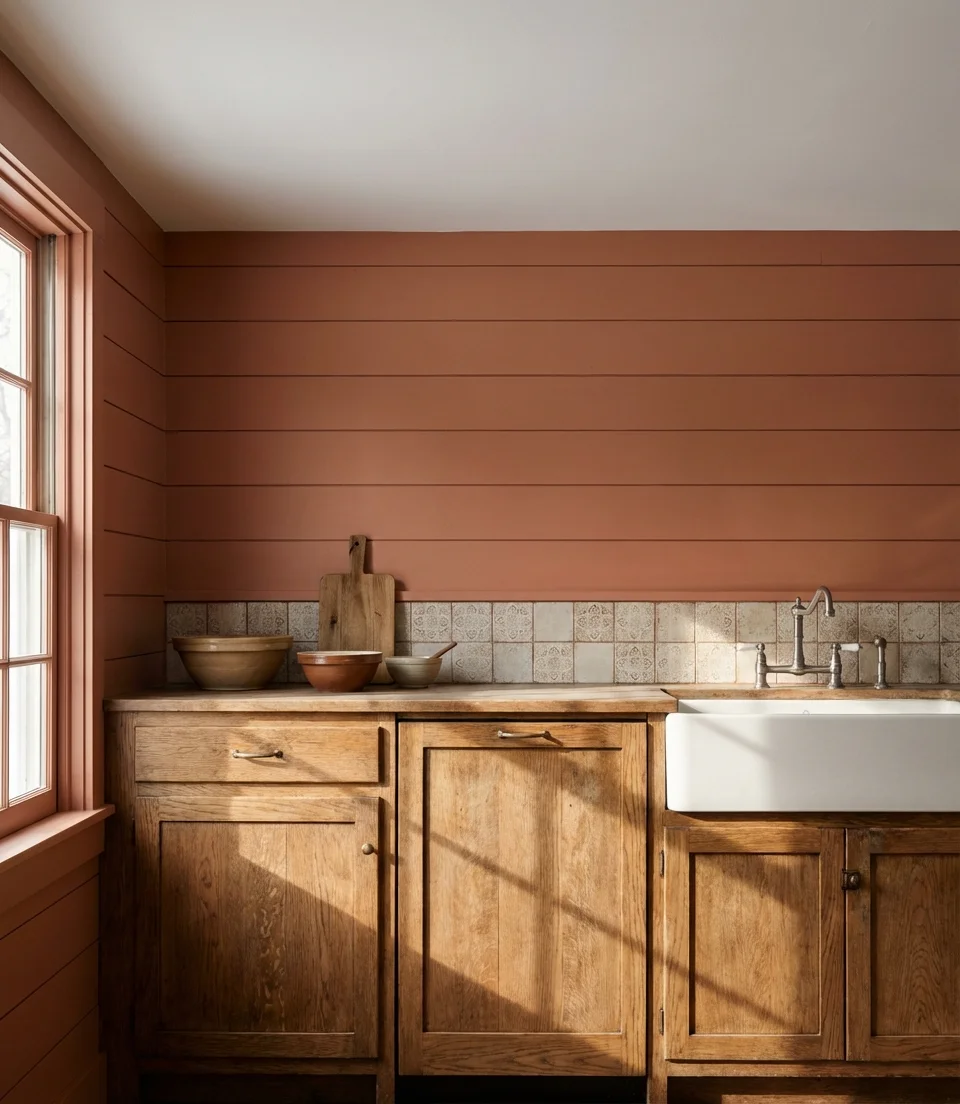
Real homeowner behavior confirms this time and again: a $50 gallon of paint is the most-used tool in the oak cabinet refresh toolkit. Online communities dedicated to home design are full of astonishing transformations where simply changing the wall color from a builder-beige to a warm earthy green made a 1990s golden oak kitchen look completely current. If you’re hesitant, start with a peel-and-stick sample from any major paint brand—test three or four options in your actual kitchen light before committing.
11. Red Oak Cabinets Reimagined for Today’s Kitchens
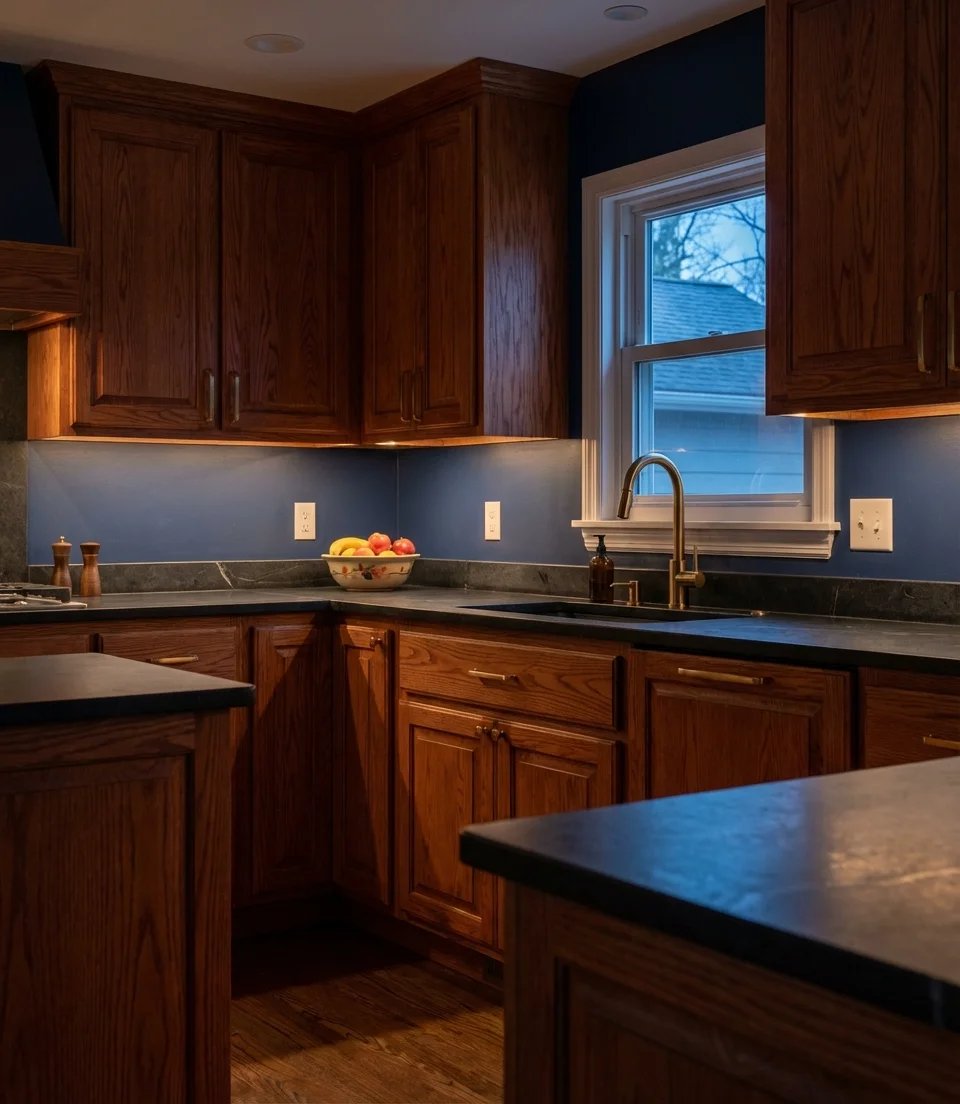
Red oak gets a bad reputation it doesn’t entirely deserve. Yes, it has a pronounced grain pattern and a warmer, pinkish undertone compared to white oak—but in the right context, those qualities are assets rather than liabilities. The trick is leaning into the redness rather than fighting it. Deep jewel-toned walls in burgundy, forest green, or navy create a rich, layered kitchen that feels bold and eclectic rather than dated. Orange-leaning oak reads completely differently when you stop trying to neutralize it and instead let the color conversation become intentional.
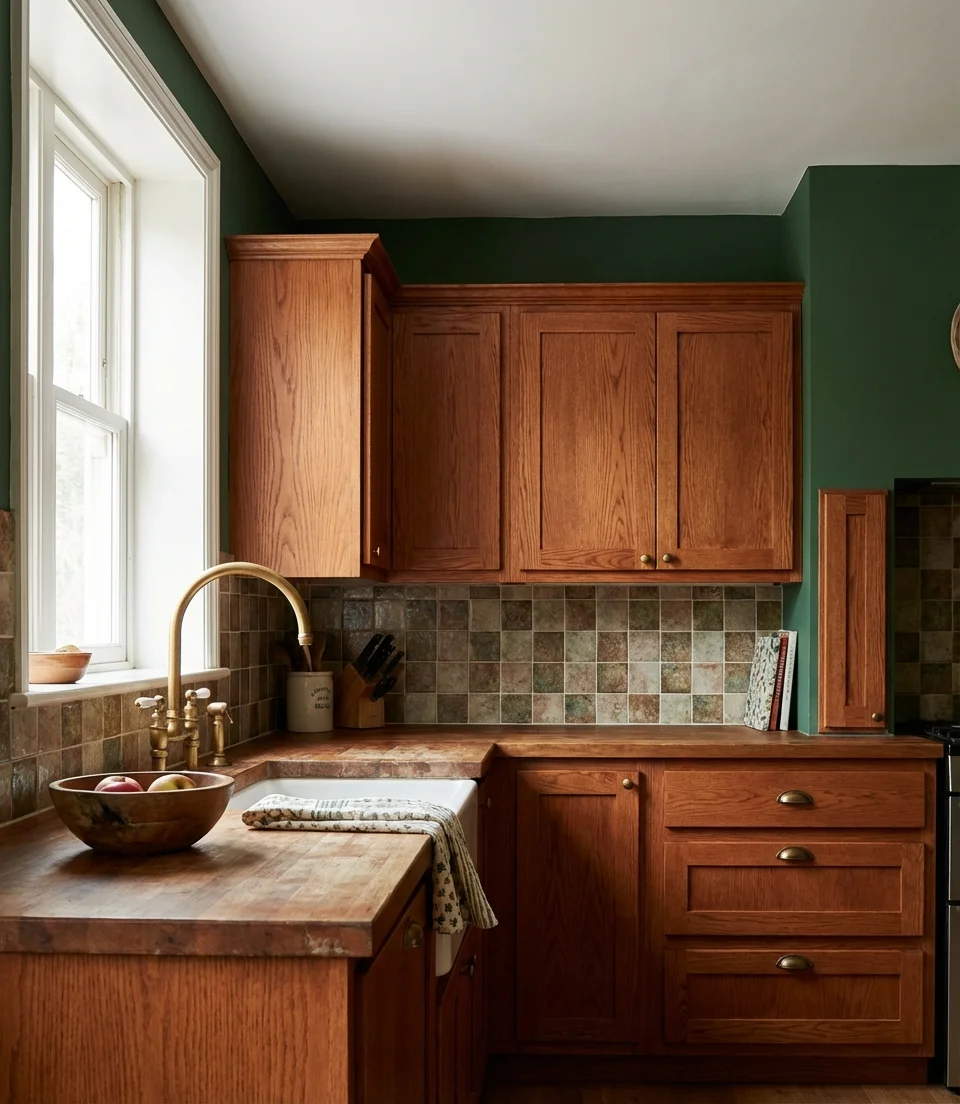
An expert-style note: kitchen designers who specialize in older homes often advise clients with red oak cabinets to treat them like a warm-toned natural stone—you wouldn’t try to cancel the color of travertine; you’d build a palette that honors it. The same logic applies here. When you treat red oak as a design starting point instead of a problem to solve, the whole project becomes much more enjoyable.
12. Updating 90s Oak Cabinets Without Replacing Them
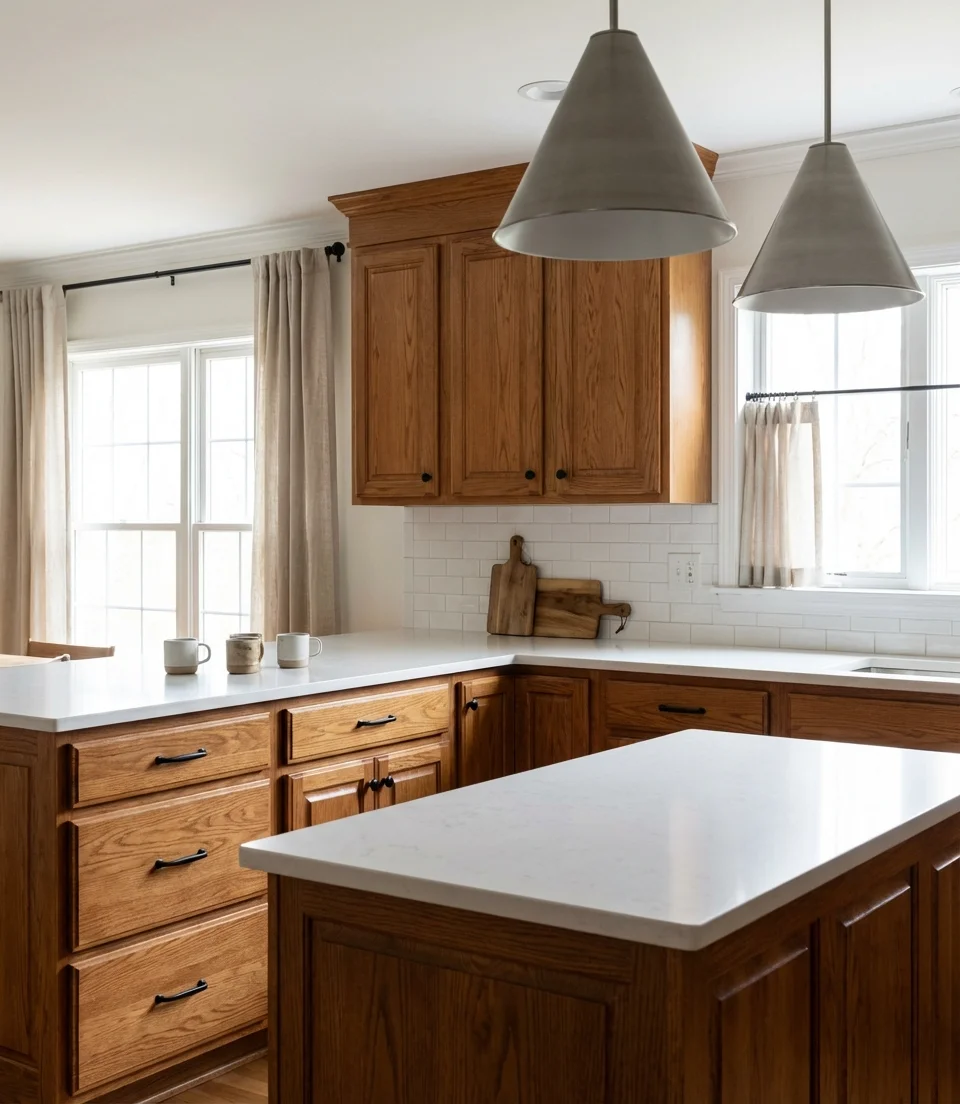
The 90s oak kitchen is possibly the most common starting point for American homeowners doing a first renovation—and the most misunderstood. Those honey-to-orange-toned cabinets with routed raised-panel doors and simple brass knobs feel dated in a very specific way, but the bones are usually excellent: solid wood, well-built, and still completely functional. The goal with a smart update isn’t to disguise the oak but to modernize everything around it—hardware, backsplash, countertops, and lighting—so the wood reads as a warm, retro-adjacent choice rather than an oversight.
The most common mistake people make when refreshing 90s oak is over-updating: they change so many elements that the wood ends up looking confused rather than reimagined. Pick two or three key changes—usually hardware, countertop, and wall color—and do those really well. Trying to do everything at once, especially on a limited budget, tends to result in a kitchen that looks patchy and unfinished. The key to success here is to exercise restraint.
13. Cherry Oak Cabinets with Timeless Elegance
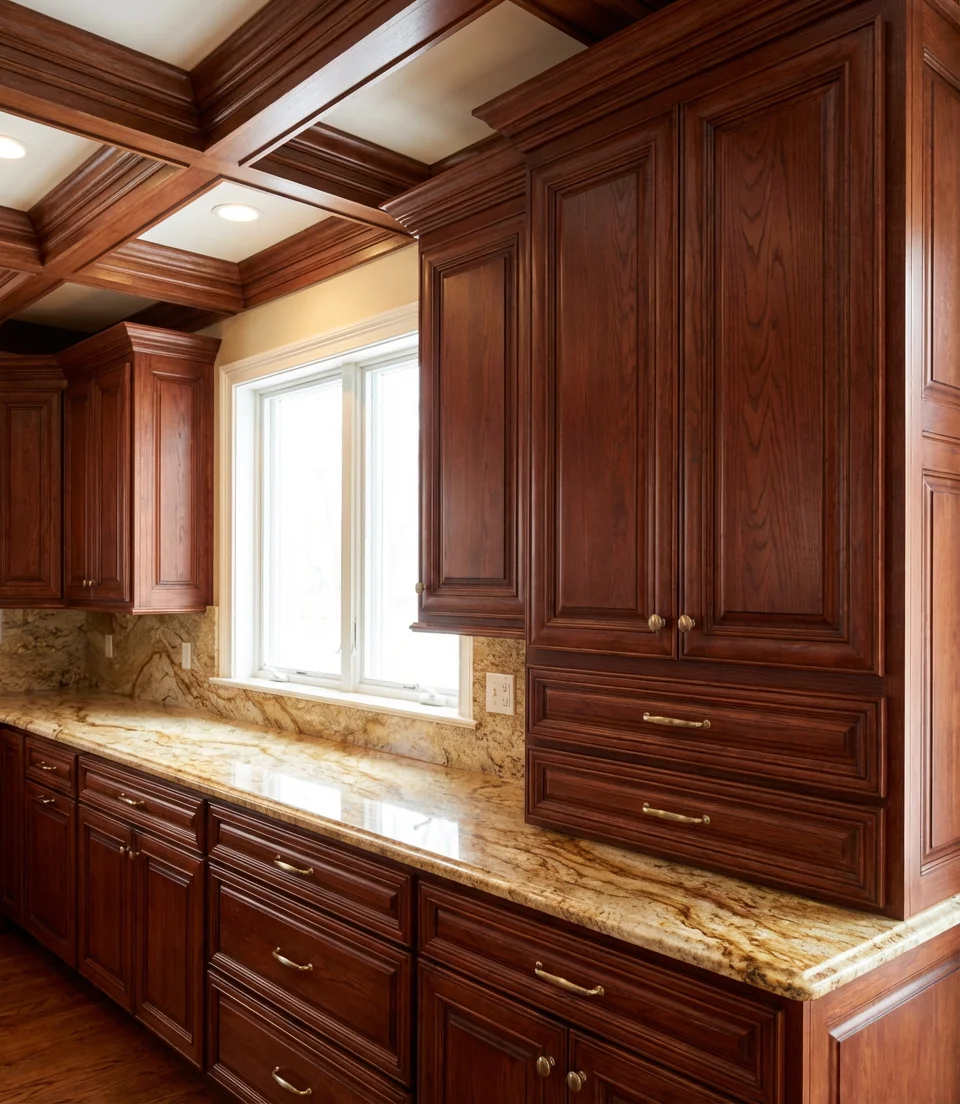
While cherry is technically its own wood species, cherry-stained oak cabinets have long been a staple of American kitchen design—and they’re experiencing a quiet renaissance as homeowners reconnect with the idea of a kitchen that feels genuinely elegant rather than trendy. The deep reddish-brown of a well-executed cherry finish on oak has a warmth and depth that’s almost impossible to replicate with paint. The medium cherry stain achieves an ideal balance, providing a luxurious feel while remaining subtle enough for daily use.
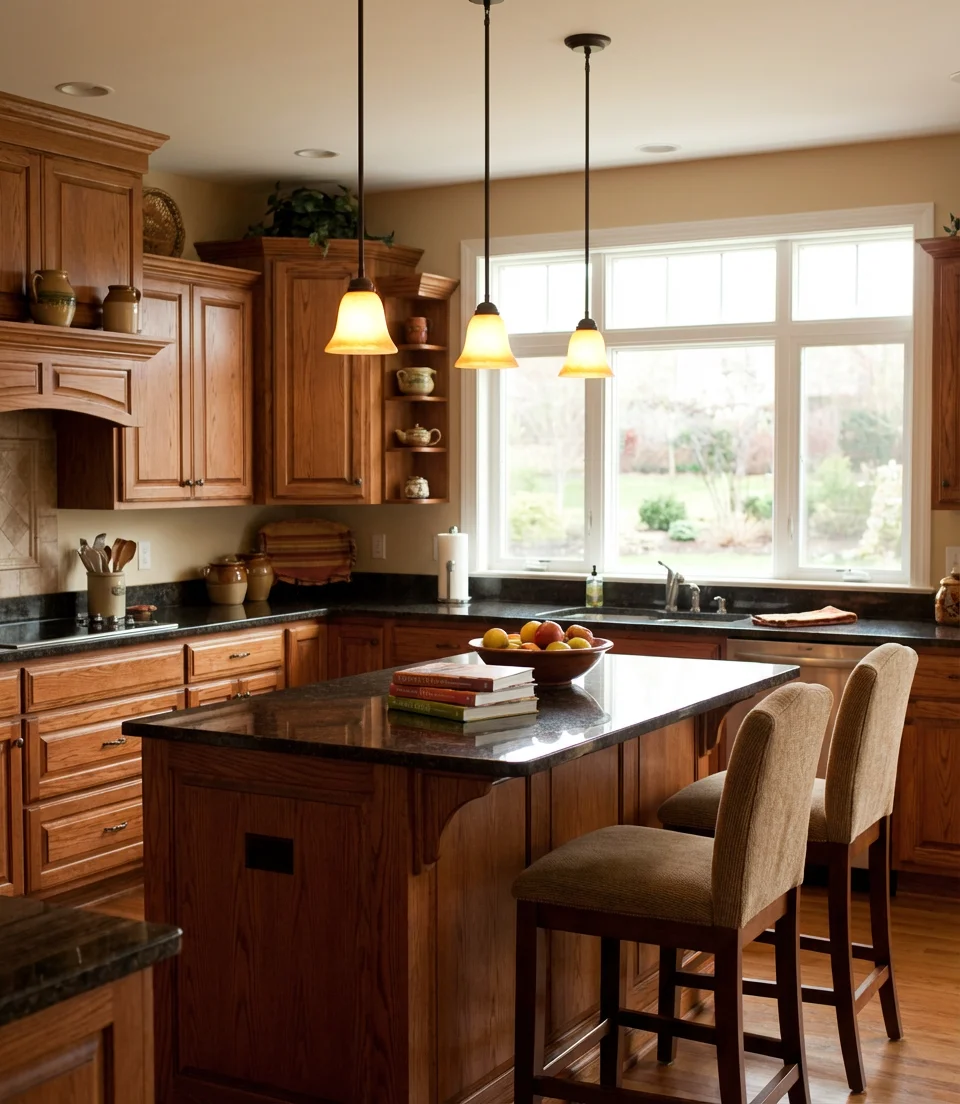
The American South and Midwest, home to traditional kitchen designs with heirloom-quality materials, embrace cherry-stained oak. It’s the kind of kitchen that works beautifully in larger homes with formal dining rooms and a classic, architecturally detailed aesthetic. These kitchens are built for Sunday dinners, holiday gatherings, and the kind of cooking that takes all day and feeds two dozen people—a very specific and very American way of living well.
14. Medium Oak Cabinets in a Contemporary Layout
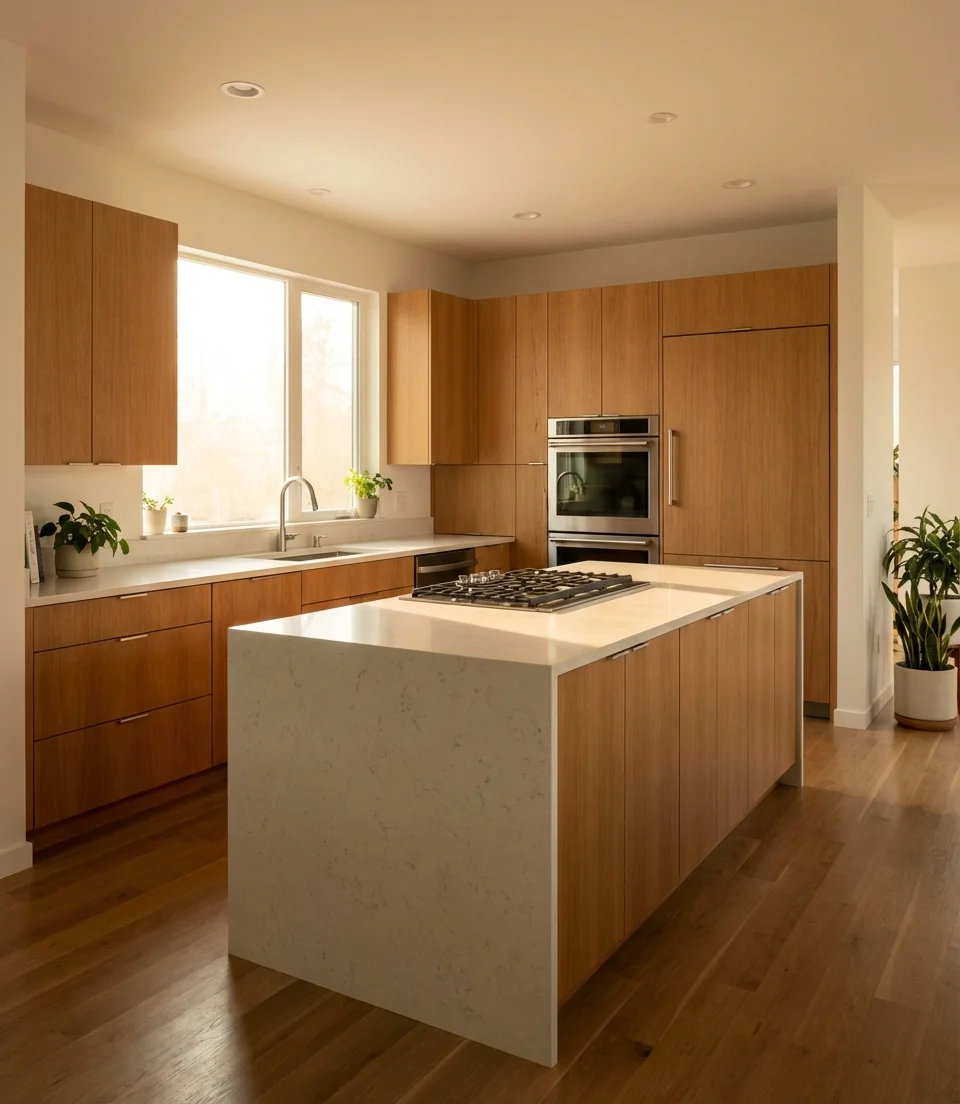
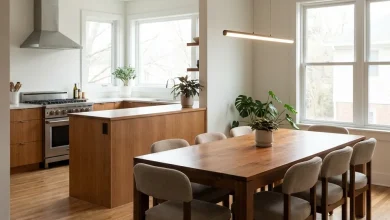
Medium oak cabinets occupy one of the most intriguing positions in contemporary kitchen design—they’re warm enough to feel inviting but neutral enough to work across a wide range of styles. In a contemporary layout with clean lines, integrated appliances, and minimal hardware, medium oak reads almost like a natural material feature wall rather than a traditional cabinet choice. The natural warmth of the grain gives the space texture and humanity that sleek, high-gloss finishes simply cannot provide.
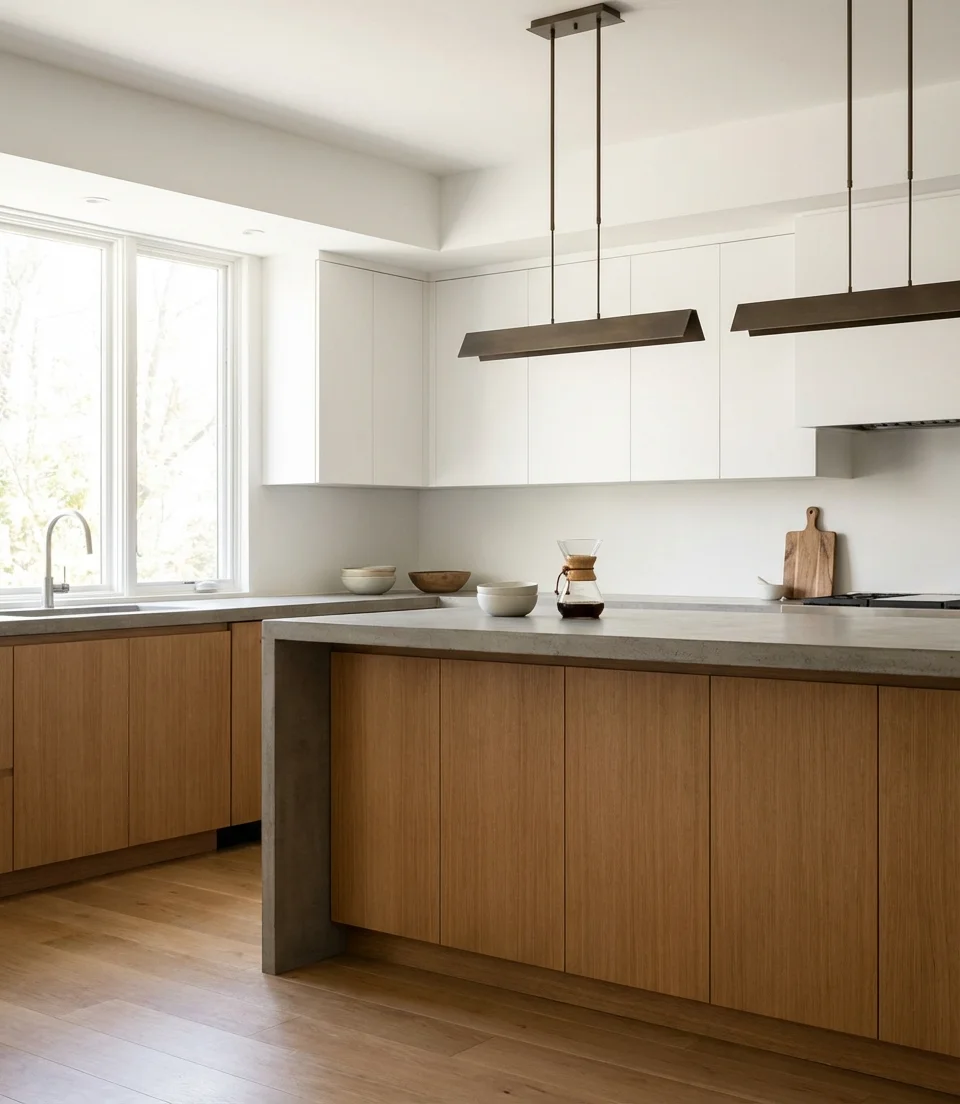
One thing that surprises people about medium oak in a contemporary setting is how much it changes character depending on the light. In morning light it can look almost golden; in the evening under warm artificial light it deepens into something more amber and intimate. That daily variation is part of the appeal—living wood is dynamic in a way that a painted finish simply isn’t. For anyone hesitant about committing to a wood kitchen, medium oak in a contemporary layout is the gentlest possible entry point.
15. Blonde Oak Cabinets for a Light-Filled Kitchen
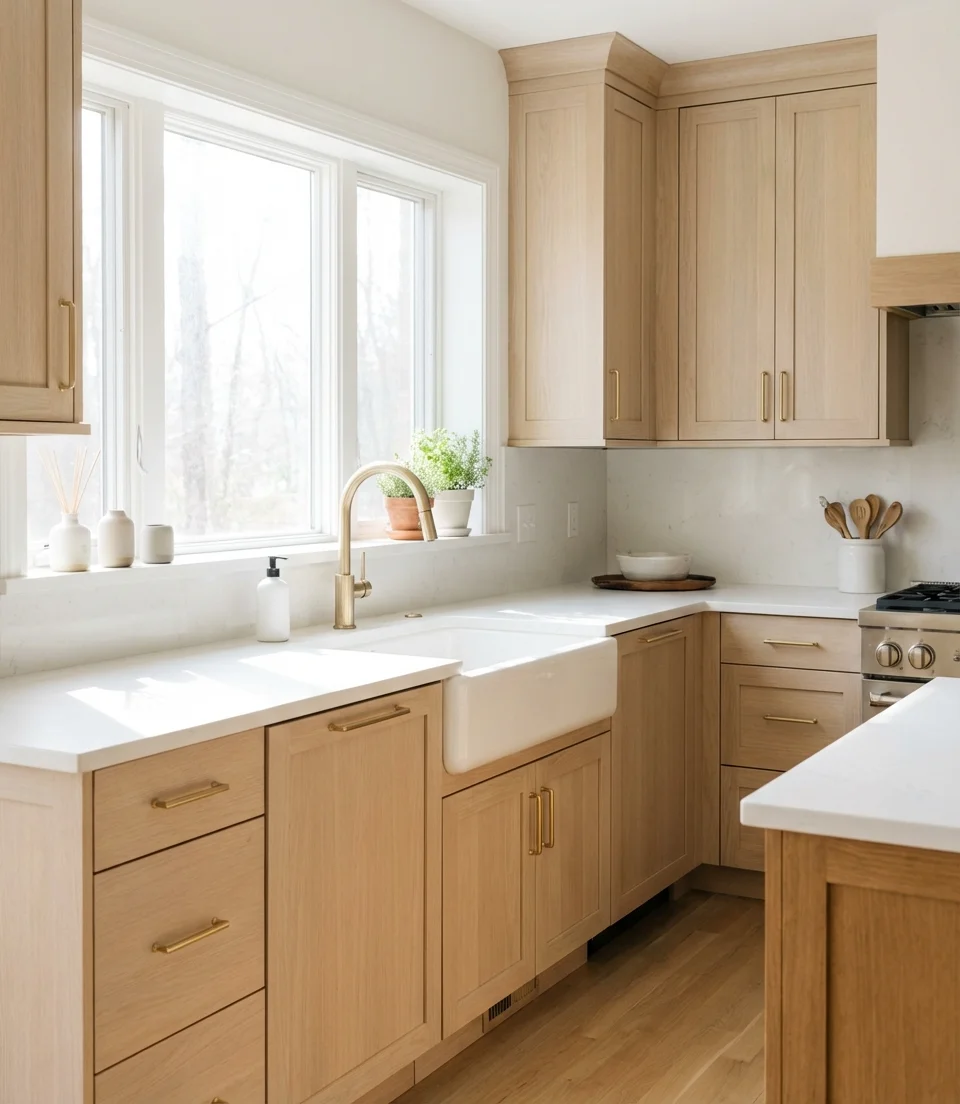
Blonde oak cabinets are the interior design equivalent of a room that always looks full of sunlight, even on a cloudy day. Their pale, almost champagne-toned finish is light without being stark and warm without being heavy—a genuinely rare combination in kitchen design. Pair them with equally light countertops in white quartz or pale marble, white or cream walls, and brass or gold hardware, and you end up with a kitchen that looks simultaneously expensive and effortless. Yellow-tinted natural light plays off blonde oak in a way that makes every morning feel slightly optimistic.
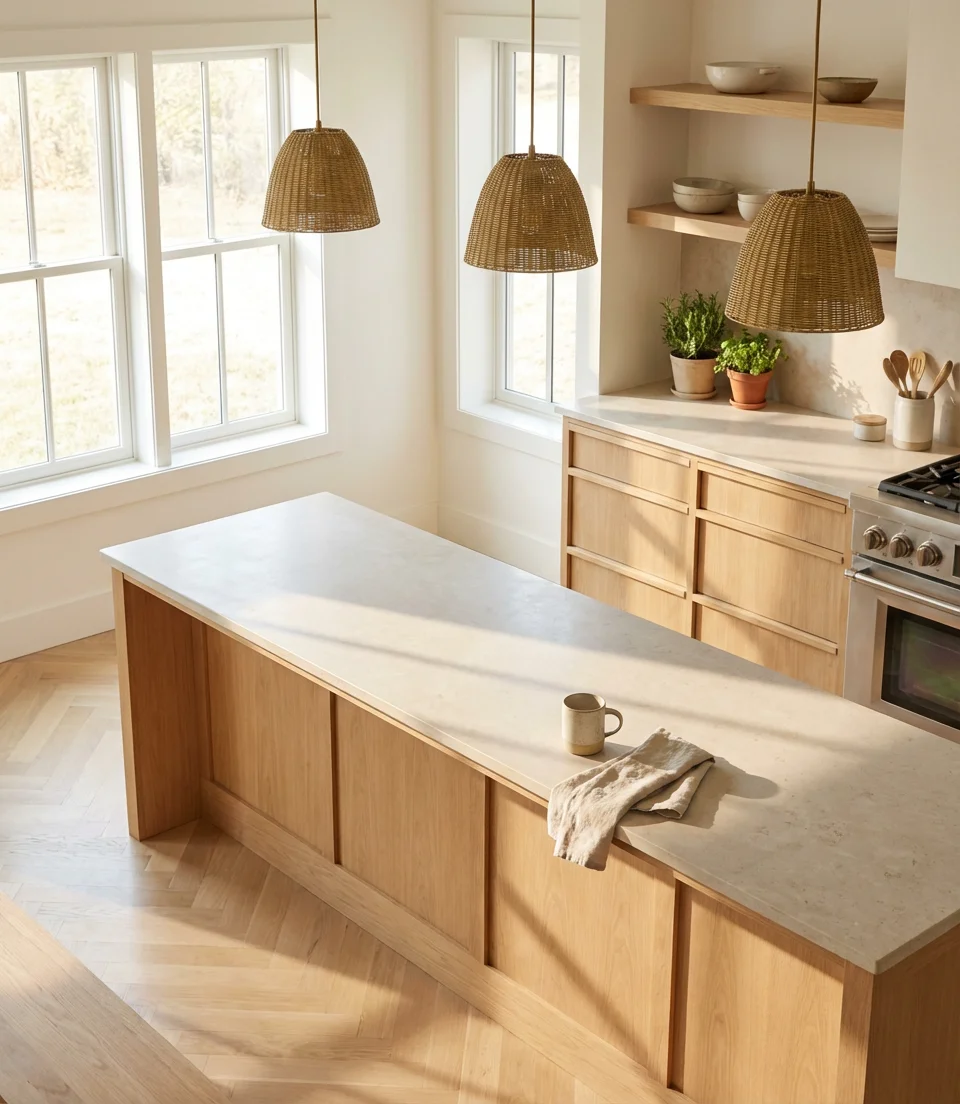
Blonde oak kitchens work best in spaces where natural light is already a strength—apartments and homes with east- or south-facing windows, open floor plans, or generous skylights. In a north-facing kitchen with limited windows, blonde oak can start to look a little flat. Warm-toned pendant lights and under-cabinet lighting can be a lovely way to make up for those situations. The investment in excellent lighting here is worth every penny.
16. Orange Oak Cabinets Styled with Intention
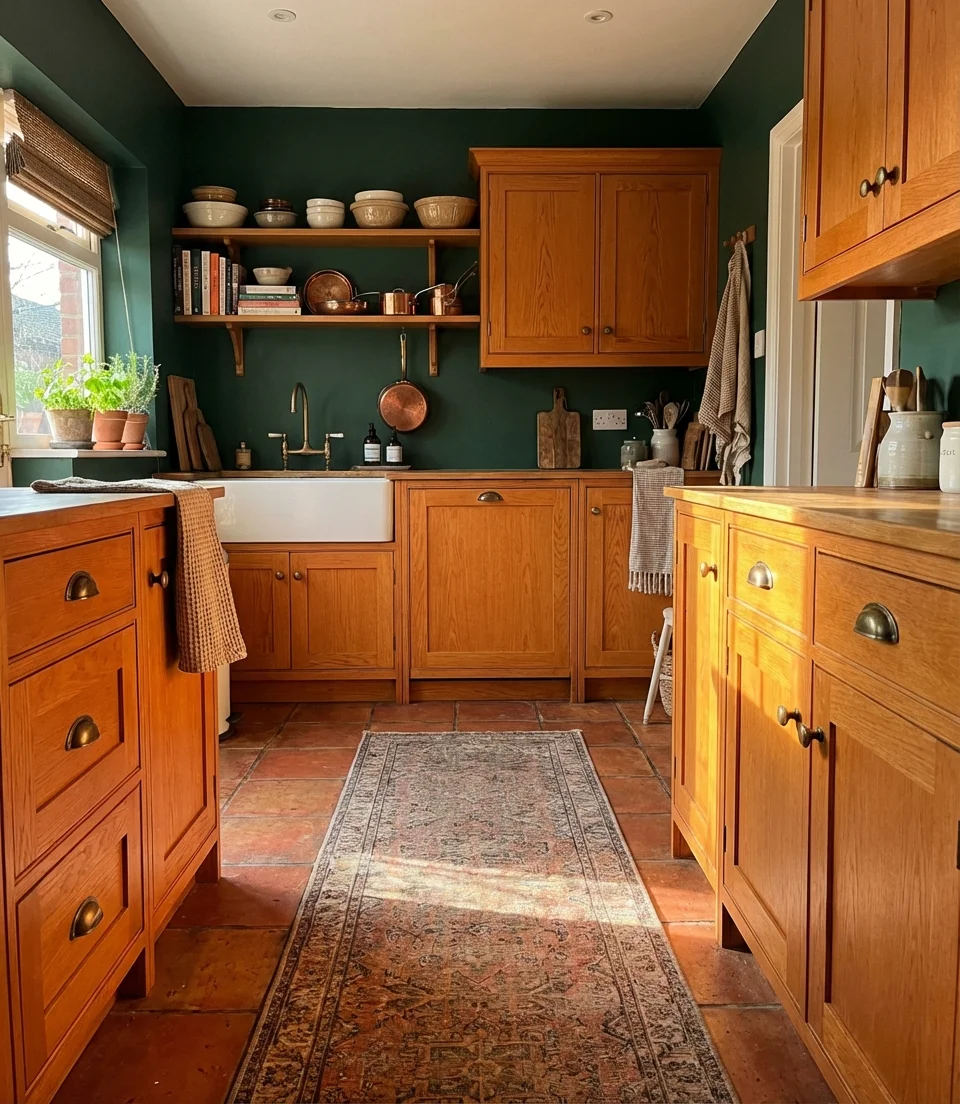
The orange tones in certain oak species—particularly flat-sawn red oak—are the element most homeowners try to run from. But styled with confidence and intention, those warm copper-orange hues can become the most charming and memorable thing about a kitchen. The key is treating orange oak the way a stylist would treat a bold statement piece: build the rest of the room around it rather than against it. Deep forest green, warm navy, and rich ochre are all wall color choices that celebrate rather than fight the wood’s natural warmth.
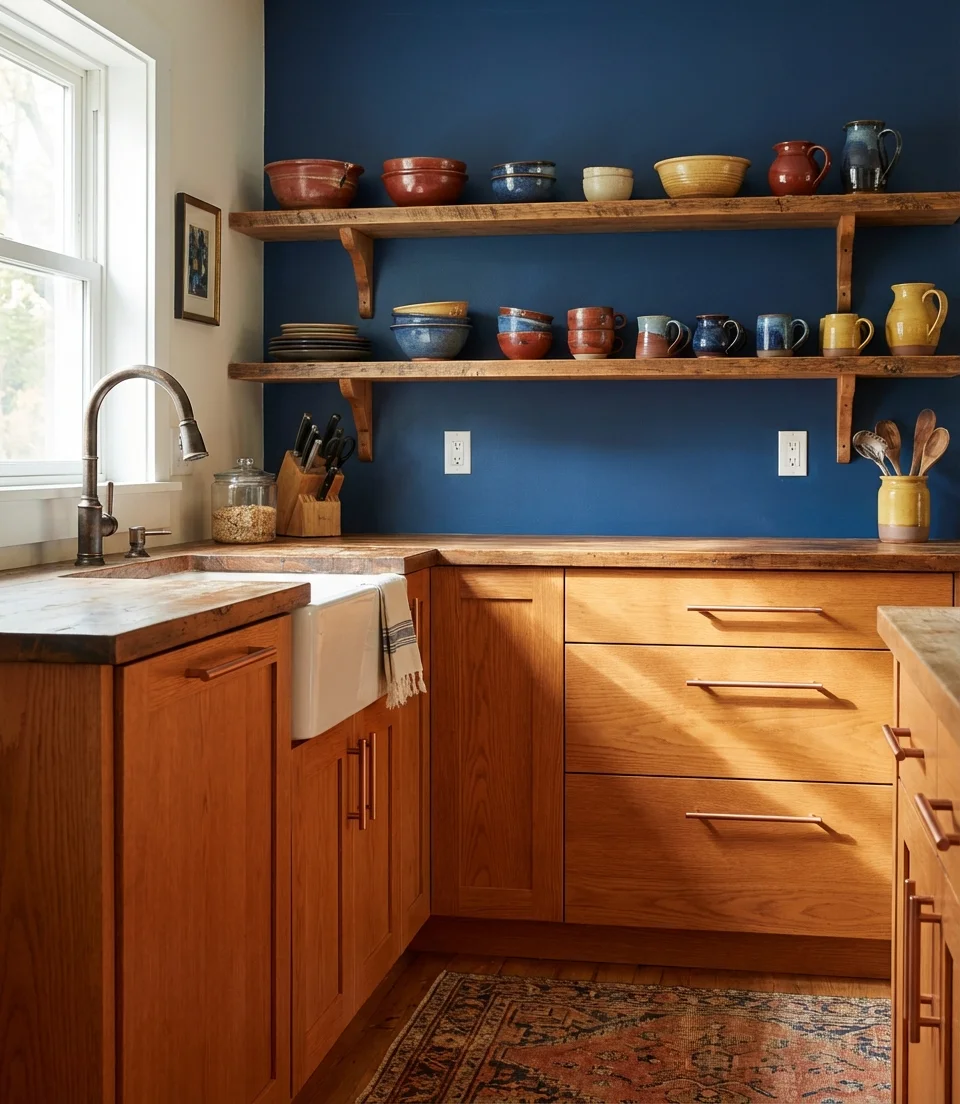
Here’s a piece of real homeowner wisdom from the American renovation community: the orange oak kitchens that look worst online are the ones where someone tried to neutralize the wood with cool-toned everything—gray counters, cool white walls, and chrome fixtures. The ones that go quietly viral for their surprising beauty are those where the owner doubled down on warmth and made the orange a feature. Commit to the palette, and the result is genuinely striking.
17. Pale Oak Cabinets in a Small Kitchen
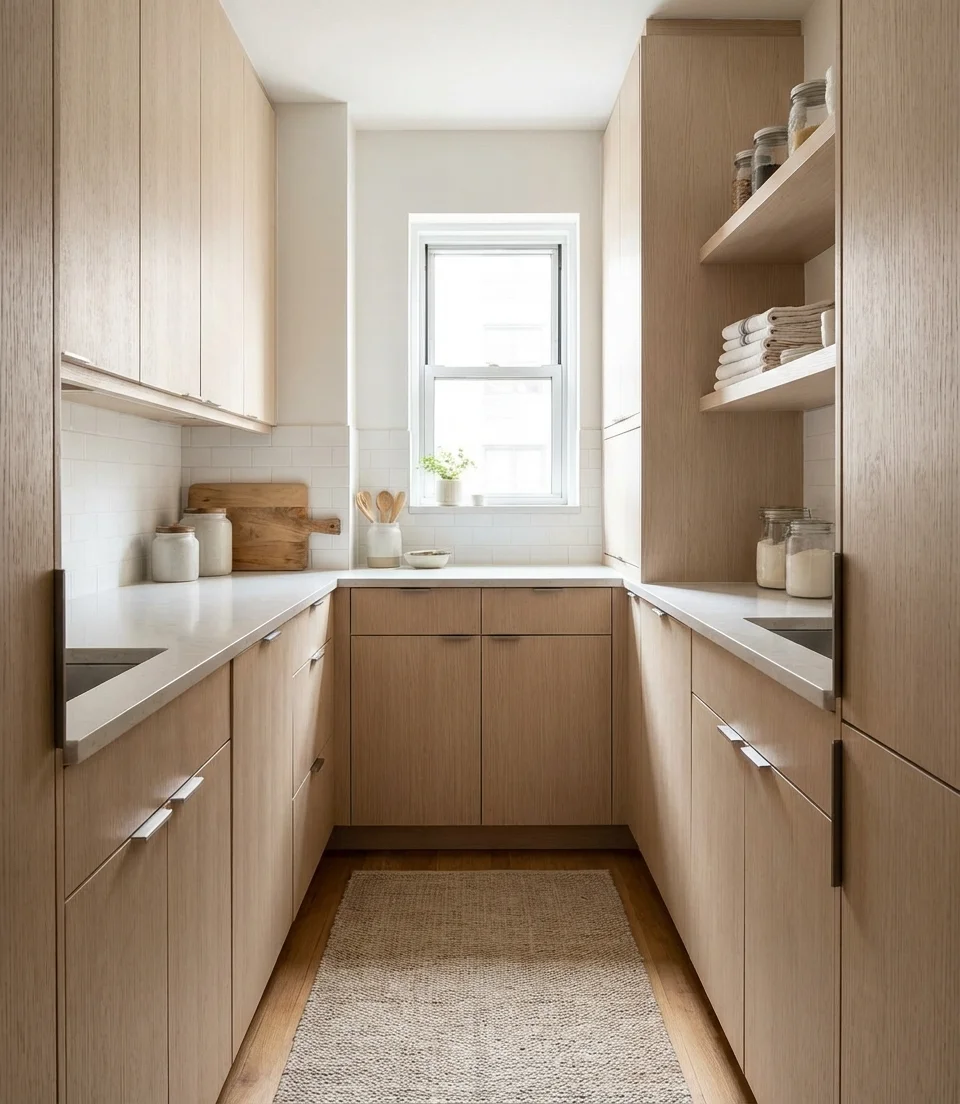
Pale oak cabinets are an ideal choice for a small kitchen. Their light, cool-warm tones reflect available light rather than absorbing it, making tight spaces feel more open and breathable. Unlike stark white cabinets, pale oak adds just enough visual warmth and texture to keep a small kitchen from feeling cold or sterile. Rift white oak in a flat-panel style is particularly effective here—the tight, vertical grain creates a visual rhythm that draws the eye upward and makes low ceilings feel slightly less oppressive.
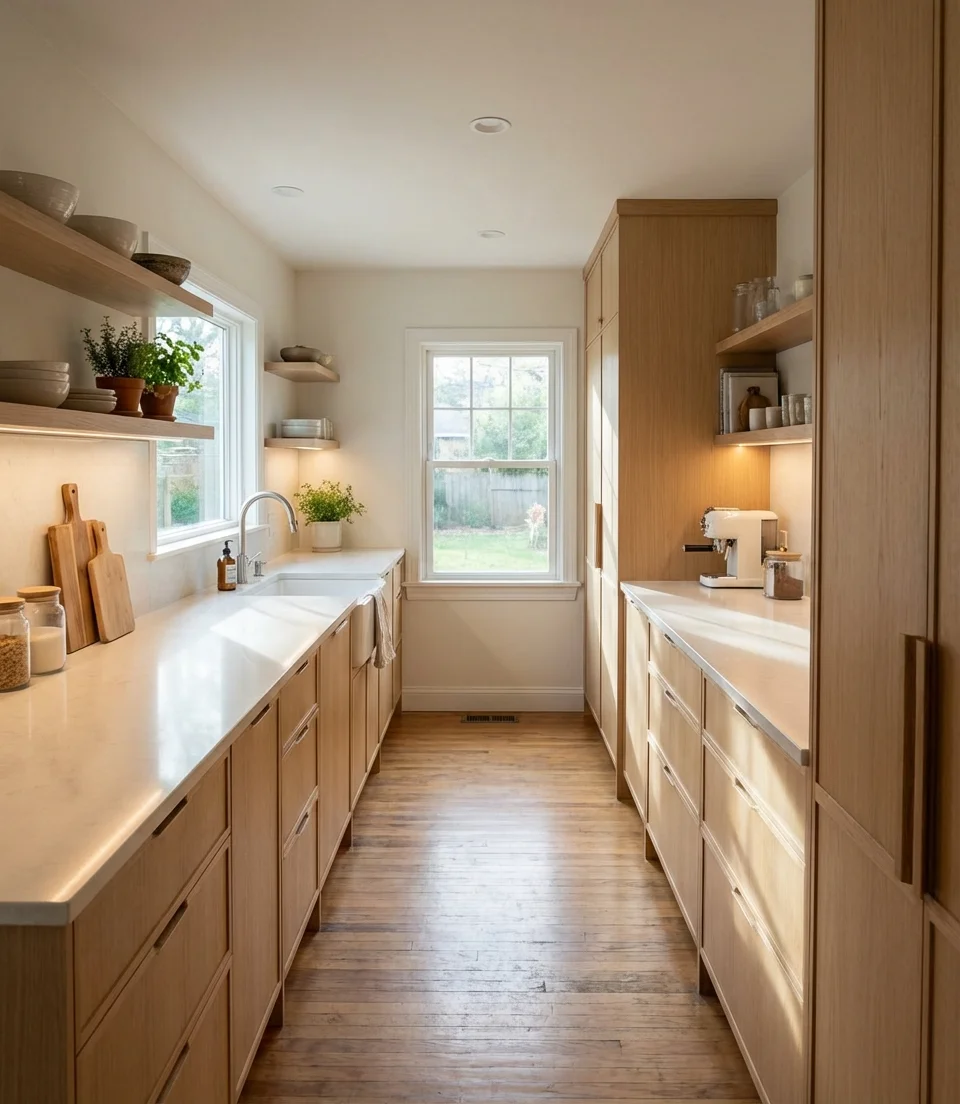
Small kitchens benefit enormously from taking the upper cabinets all the way to the ceiling—and pale oak makes that move feel airy rather than overwhelming. Open shelving in matching pale oak above one section of lower cabinets also helps by breaking the visual monotony of a run of closed doors. These are the kinds of spatial solutions that make a 90-square-foot kitchen feel like a thoughtfully designed space rather than an afterthought.
18. Brown Oak Cabinets with Stone and Metal Details
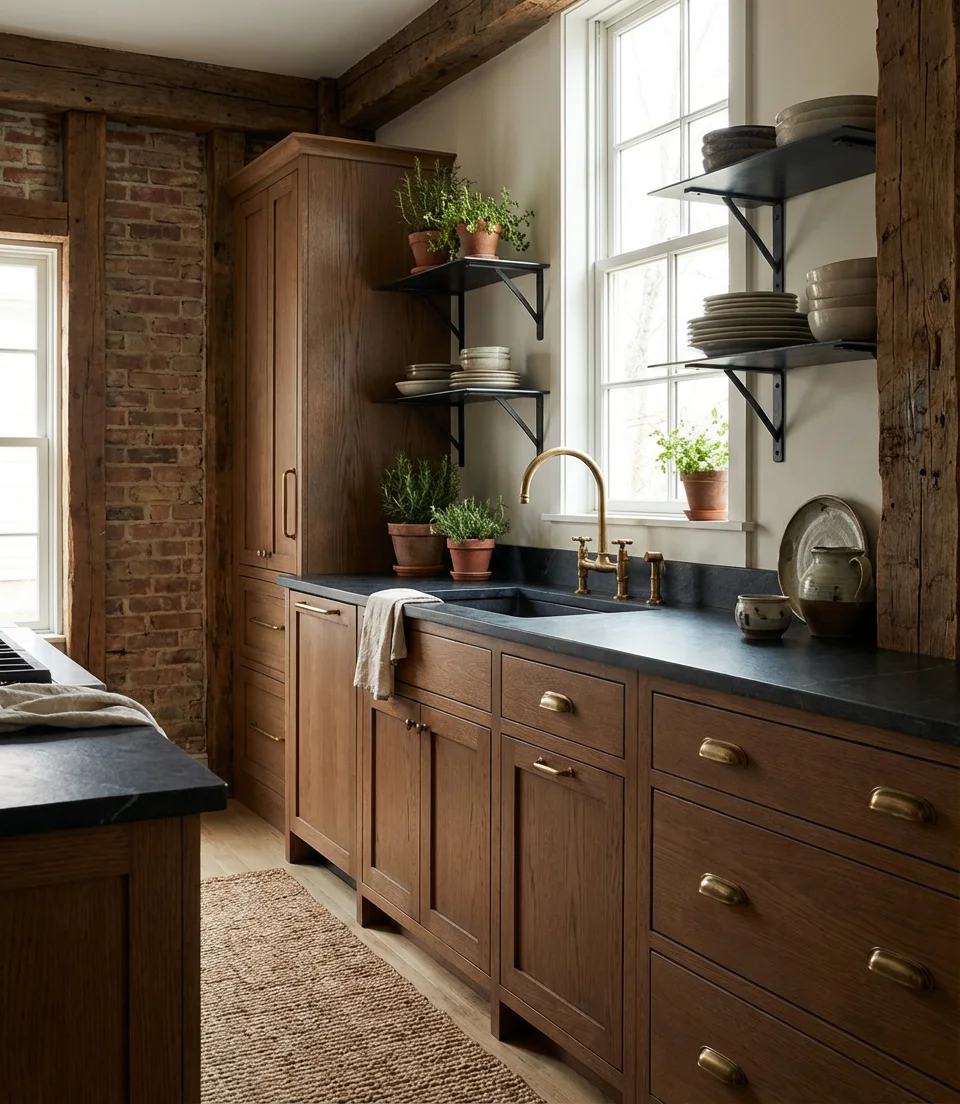
Warm brown oak cabinets—think a rich pecan or warm walnut stain—have a grounded, natural quality that pairs extraordinarily well with raw and refined stone and metal details. A honed slate countertop, an unlacquered brass faucet, and blackened steel cabinet legs together create a kitchen that feels collected and artisanal rather than catalog-perfect. Natural brown oak sits at the intersection of organic and sophisticated, which is a very compelling place to be in contemporary kitchen design.
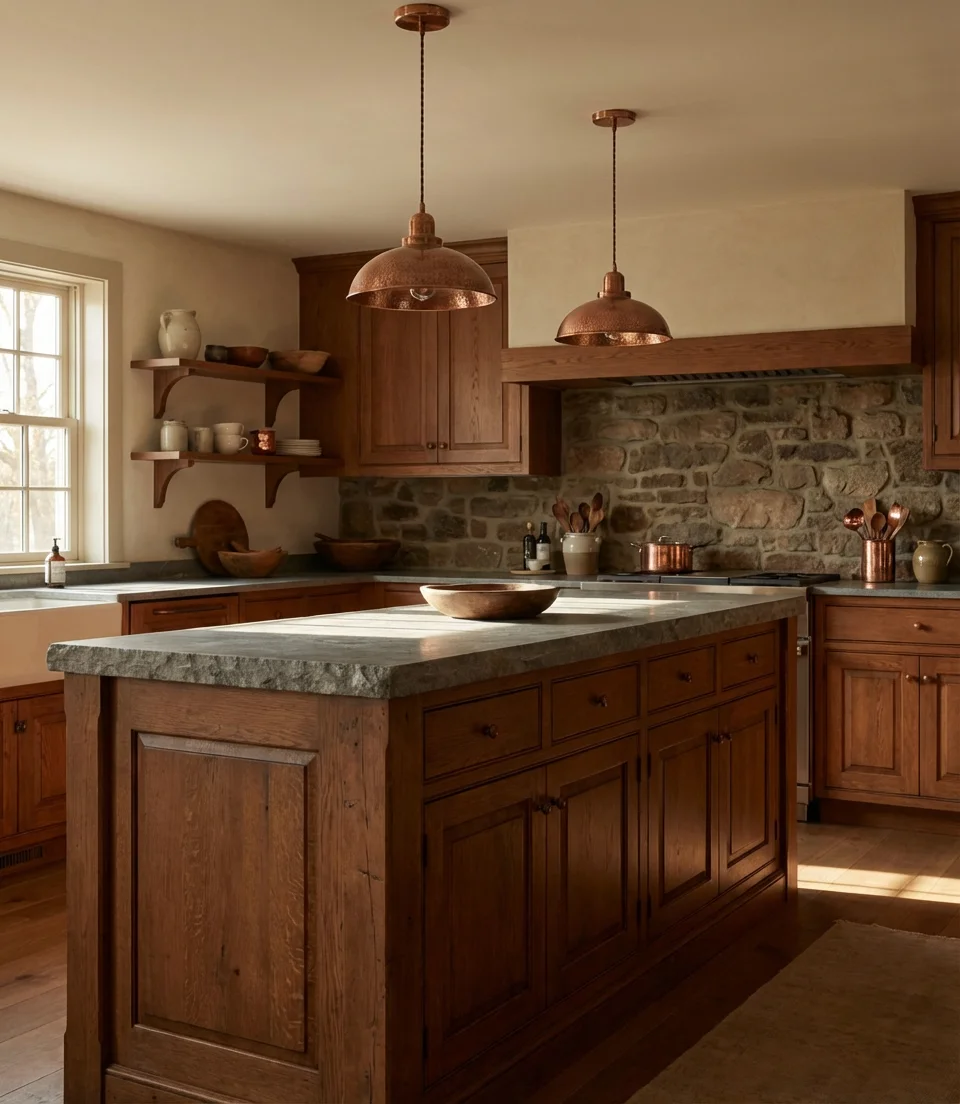
Brown oak kitchens with mixed materials tend to age remarkably well because the combination of natural materials develops a patina over time that actually improves the look. Unlacquered brass deepens; stone develops a soft polish from use; and the oak itself, if well-maintained, picks up a gentle warmth with age. It’s the kind of kitchen that looks better after five years of living in it—a quality that’s rarer than it should be in modern home design.
19. Rift White Oak Island as the Kitchen’s Focal Point
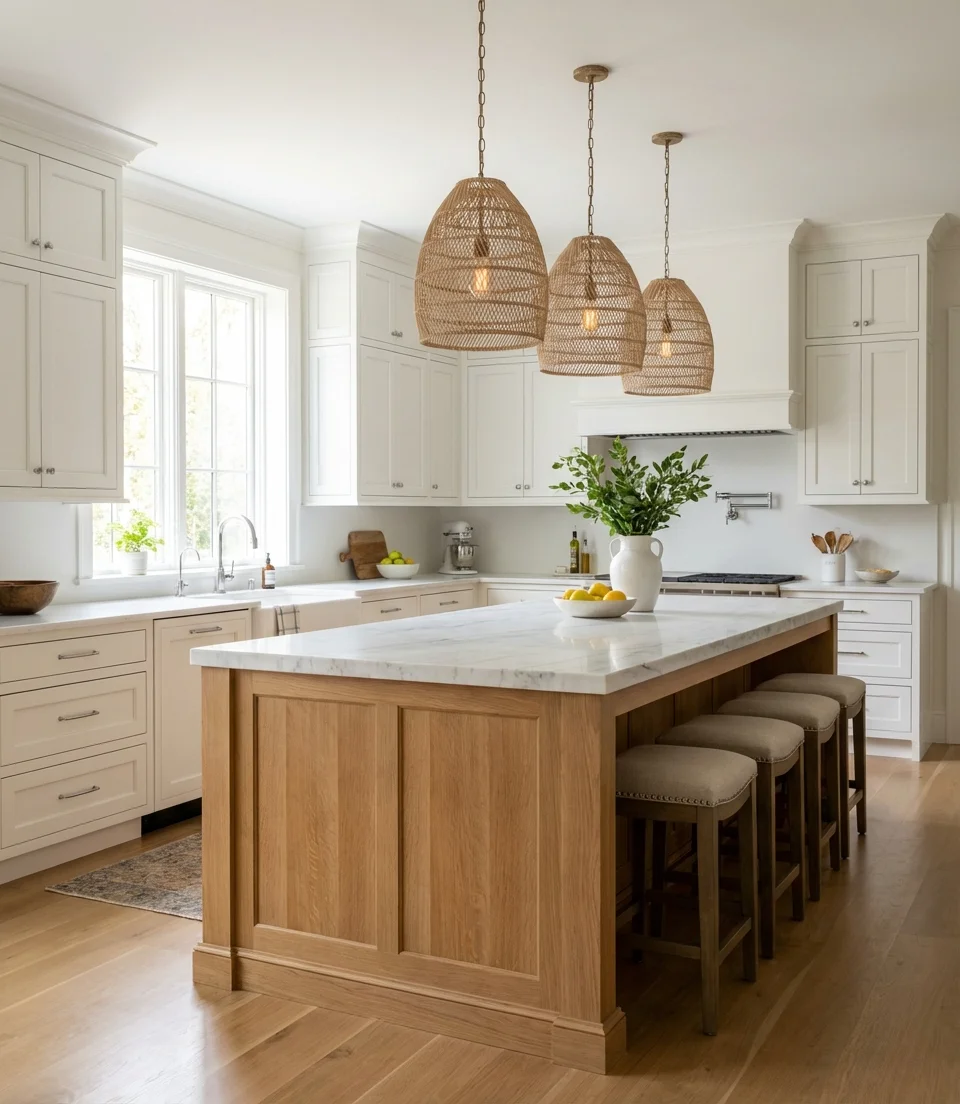
One of the most sophisticated moves in contemporary kitchen design is pairing white-painted perimeter cabinets with a rifted white oak island. The contrast between the clean, painted cabinetry and the organic grain of the wood island instantly establishes a focal point, causing the rest of the kitchen to align around it. It’s a design strategy that feels custom and considered without requiring a full wood kitchen, making it accessible across a wide range of budgets and styles.
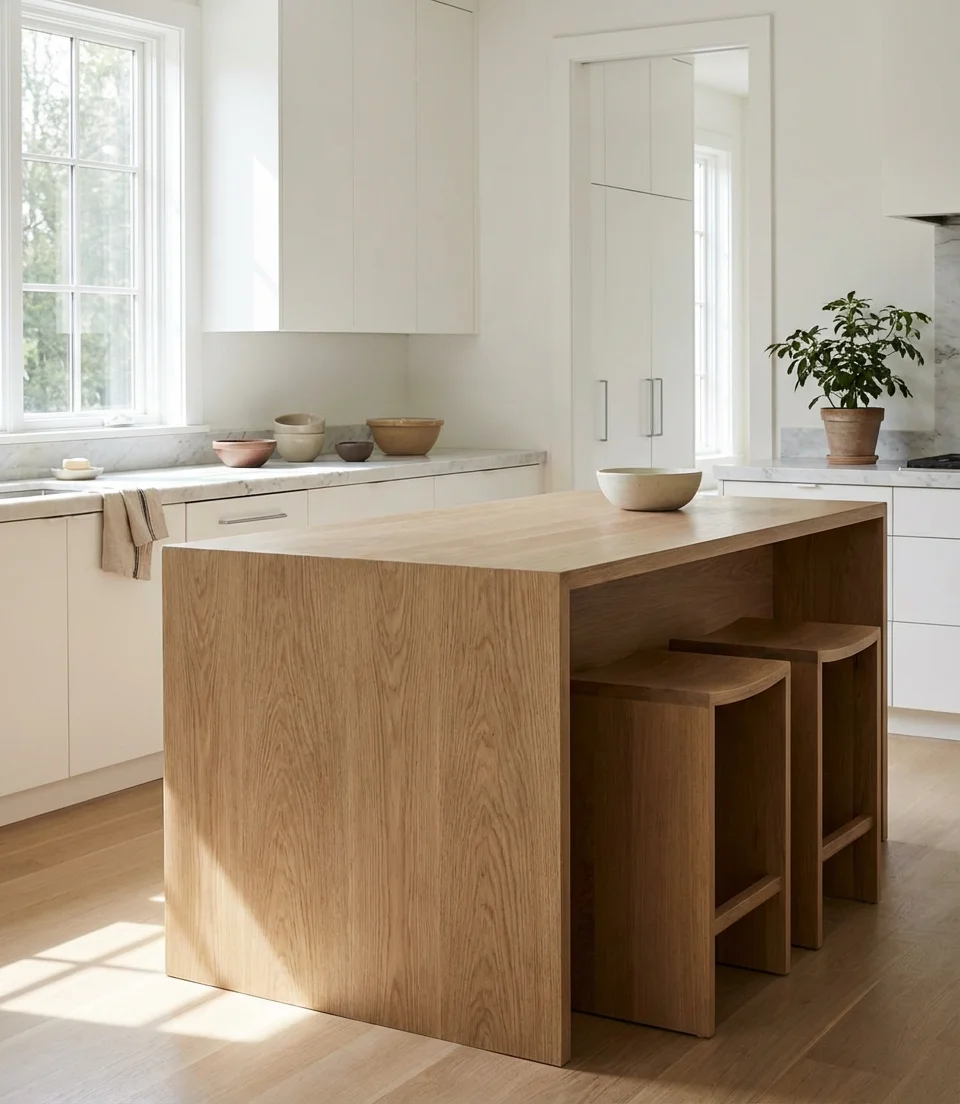
This look works across a wide spectrum of American home styles—from new construction in suburban Texas to renovated Victorians in San Francisco. The white perimeter keeps the space feeling clean and light, while the oak island grounds the room and adds the warmth that an all-white kitchen can sometimes lack. If you can only afford to do one wood element in your kitchen, a rift white oak island is arguably the highest-impact choice per dollar spent.
20. Black and Oak Two-Tone Kitchen
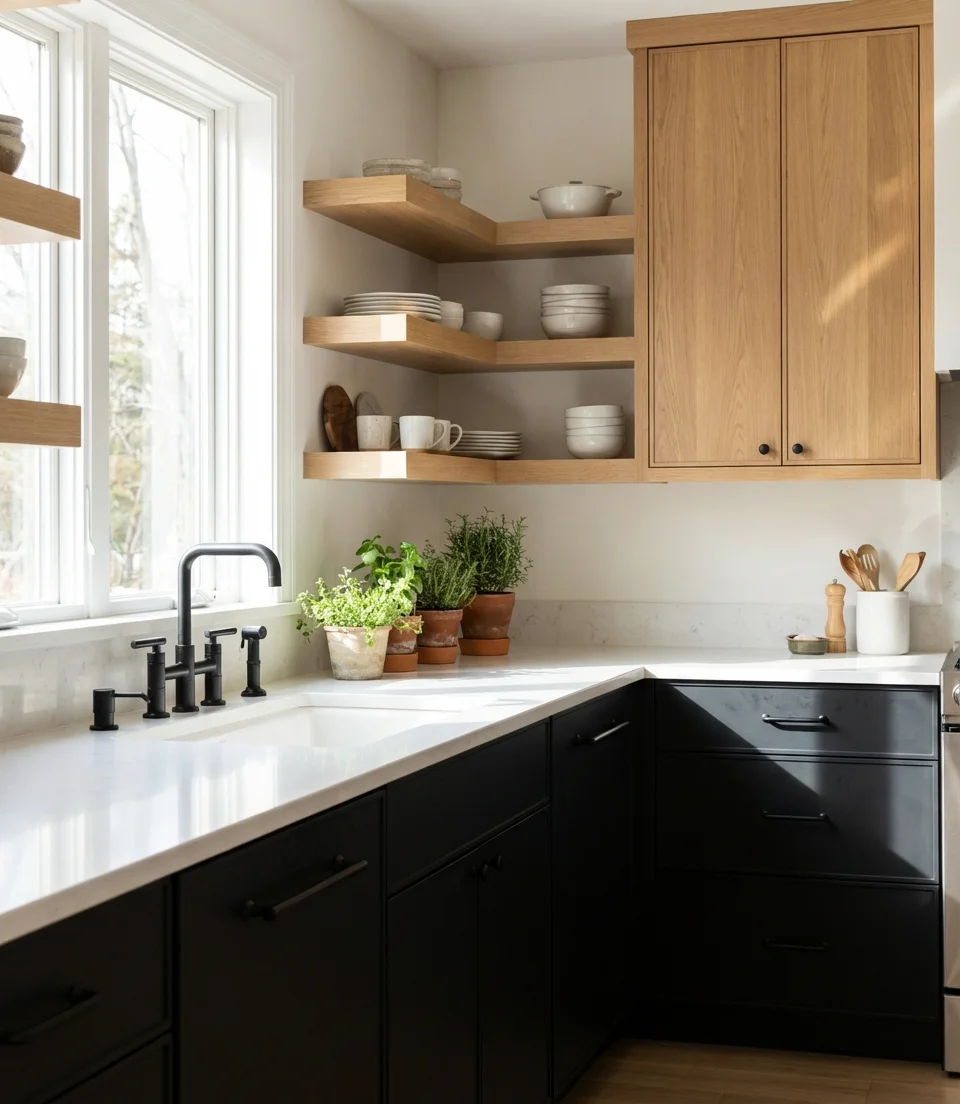
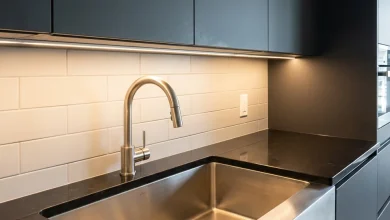
The pairing of matte black and oak in a two-tone kitchen configuration has moved well beyond trend territory into something that feels genuinely enduring. Black lower cabinets with oak uppers—or the reverse—create a visual split that is both bold and warm. The graphic quality of the dark black is softened by the natural grain of the wood in a way that feels sophisticated rather than stark. Matte black sits beautifully against the lighter, warmer tones of natural or blonde oak, and the combination photographs like a dream.
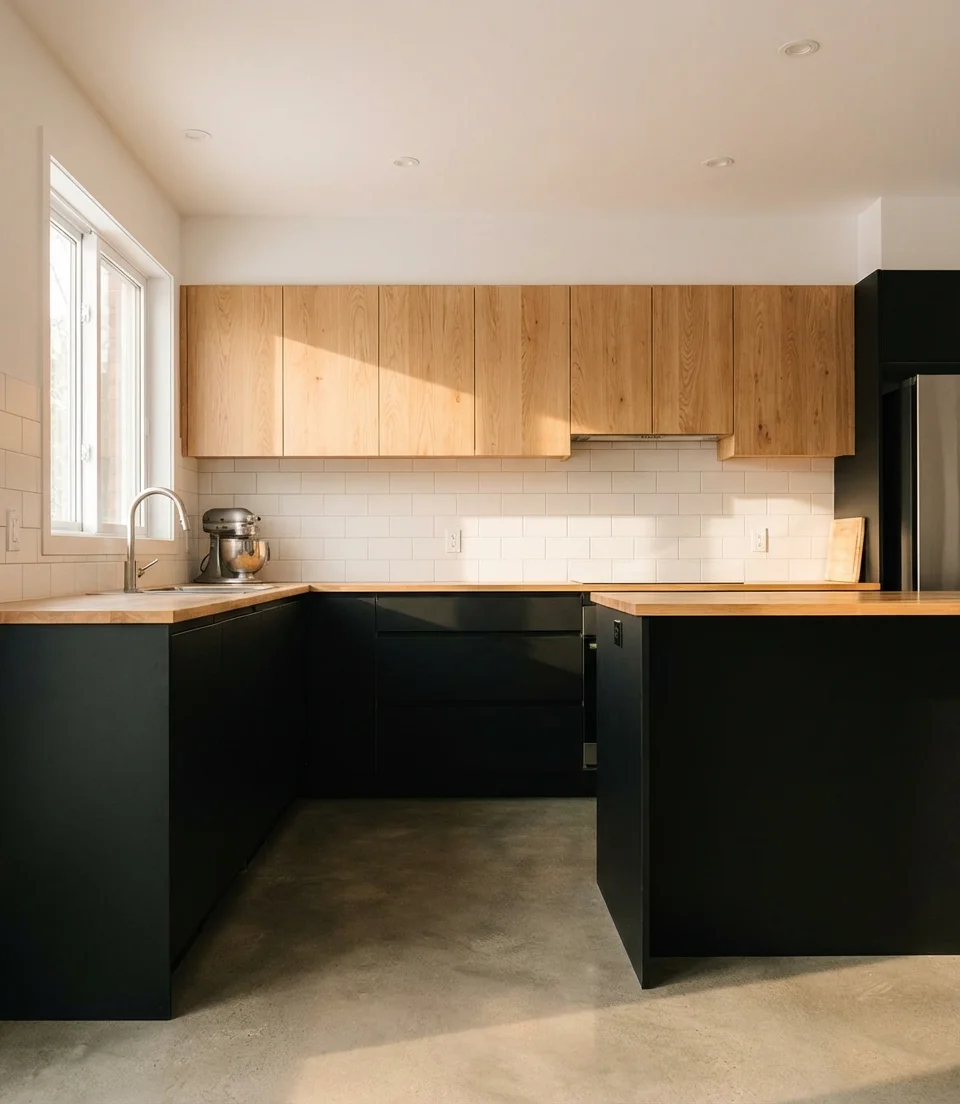
A practical insight for anyone considering this combination: the horizontal line where the black meets the oak matters enormously. It should land at a visually comfortable point—typically at counter height or at the ceiling line, not somewhere in between that feels arbitrary. If you’re working with an existing kitchen layout, mapping out where that split will land before committing to paint is a step you’ll genuinely thank yourself for later.
21. Yellow Oak Tones with a Modern Farmhouse Twist
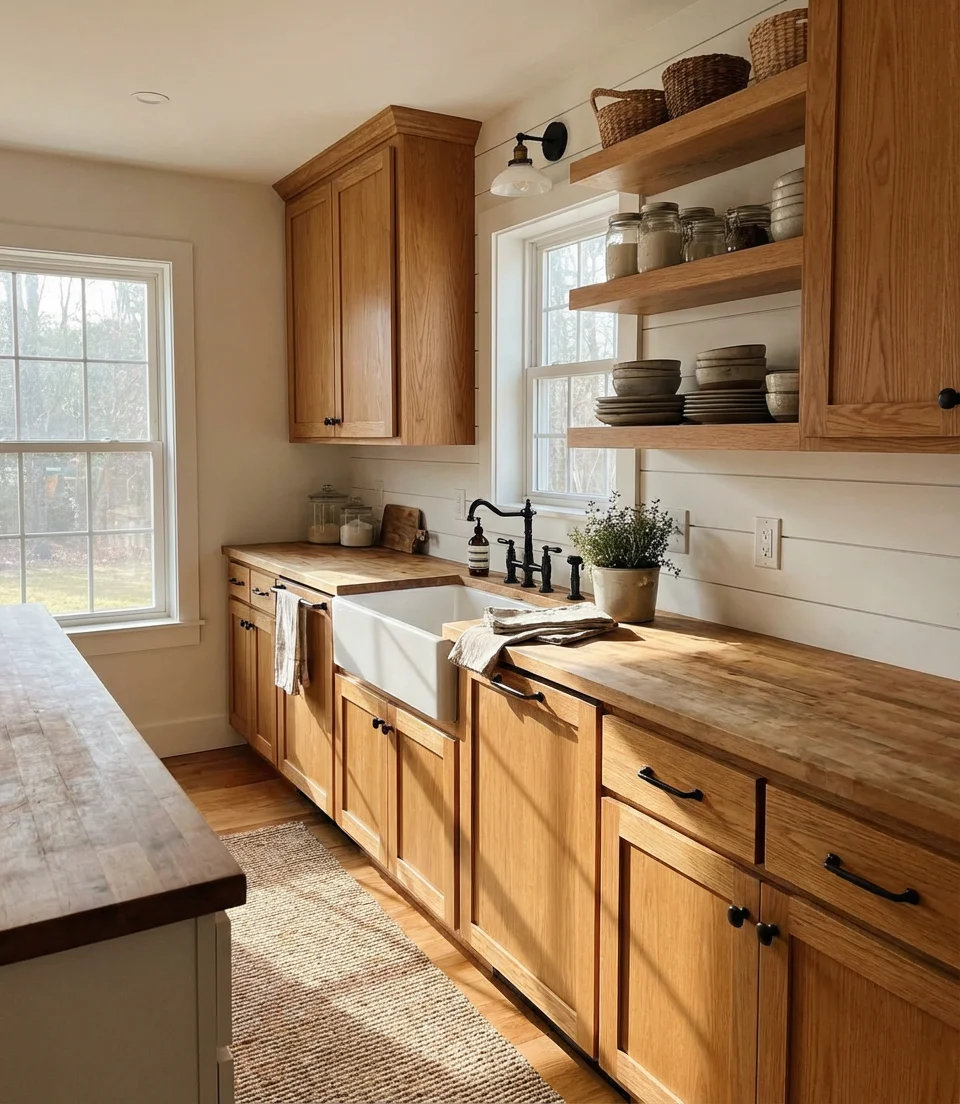
Some oak species, particularly when finished with a warm-tinted oil or a yellow-amber stain, take on a yellow-tinged warmth that is simultaneously retro and completely fresh in a modern farmhouse context. When paired with shiplap, apron-front sinks, open shelving in the same wood, and simple unlacquered brass or black iron hardware, golden yellow-toned oak seamlessly blends into a kitchen that honors American farmhouse tradition while remaining contemporary.
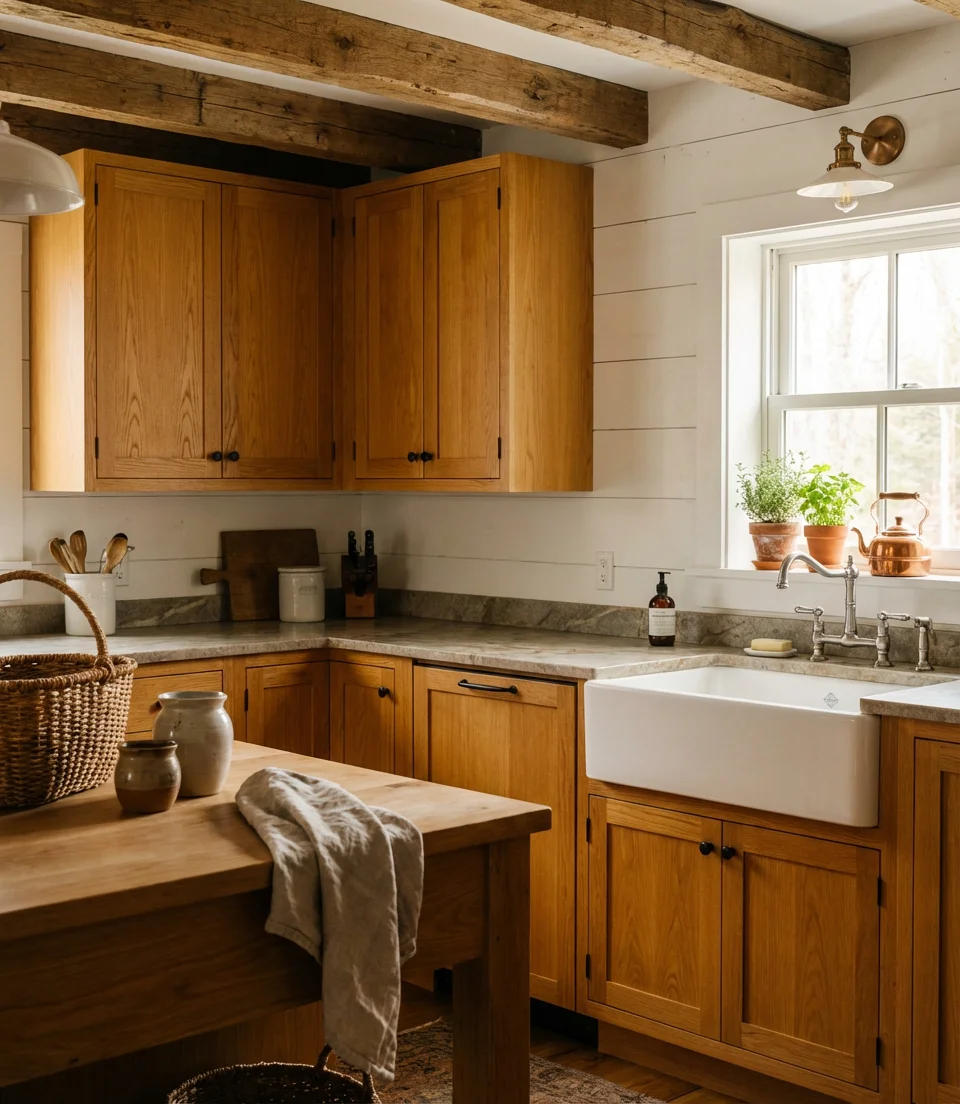
The modern farmhouse kitchen has been a dominant aesthetic in American home design for nearly a decade, but the version that’s feeling freshest right now is one that leans on real materials—actual wood, real stone, handmade ceramics—rather than the mass-produced version of the look. Yellow-toned oak, especially in shaker or plank-style cabinet doors, is one of the materials that brings genuine authenticity back to a style that had started to feel a little too polished.
22. Full Oak Kitchen: Floor-to-Ceiling Wood Warmth
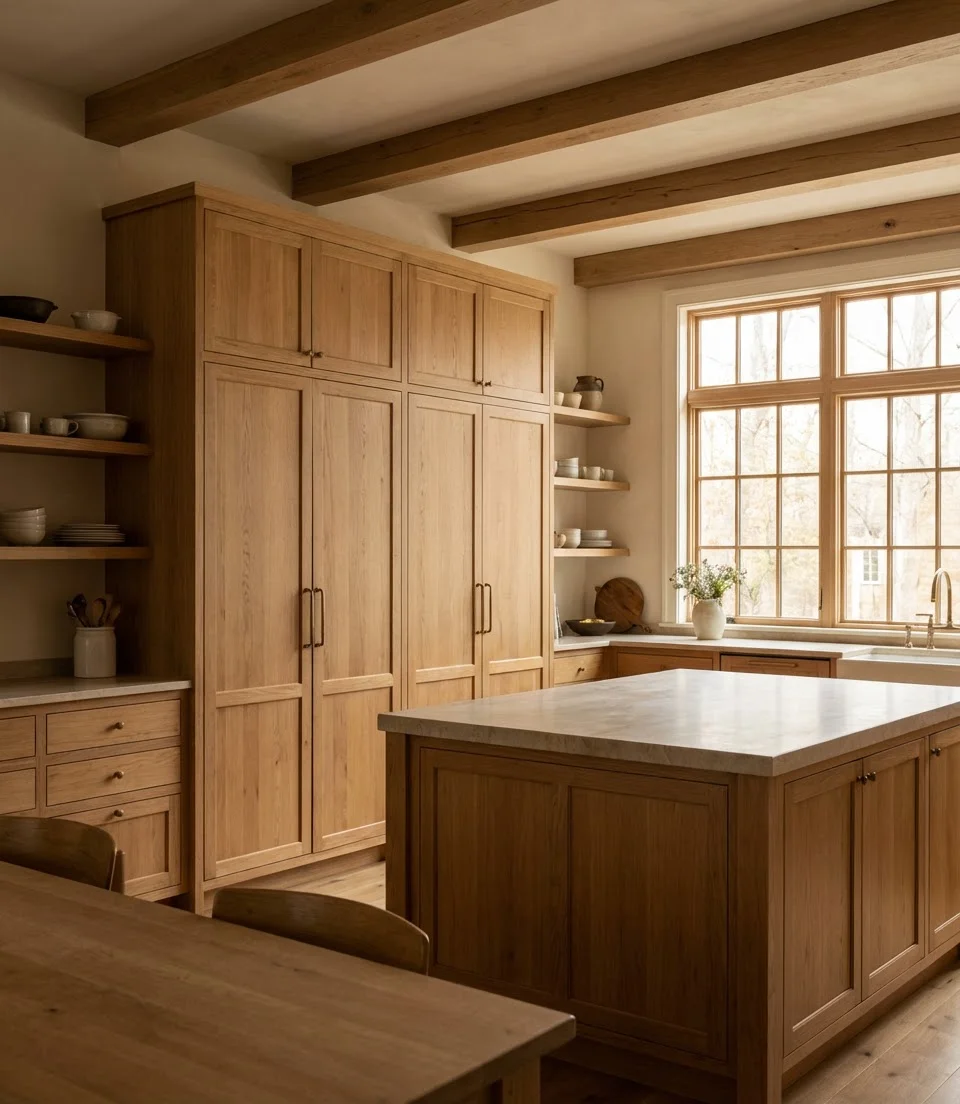
For the homeowner who truly loves wood, there is no more immersive option than a full oak kitchen: cabinets, island, open shelving, and ceiling beams—all in the same natural or lightly stained oak. This is the kind of kitchen that wraps around you; it feels like being inside the most beautiful piece of furniture you’ve ever owned. It’s a commitment, no question—but when it’s done well, a full oak kitchen is one of the most striking and personal design statements you can make in a home.
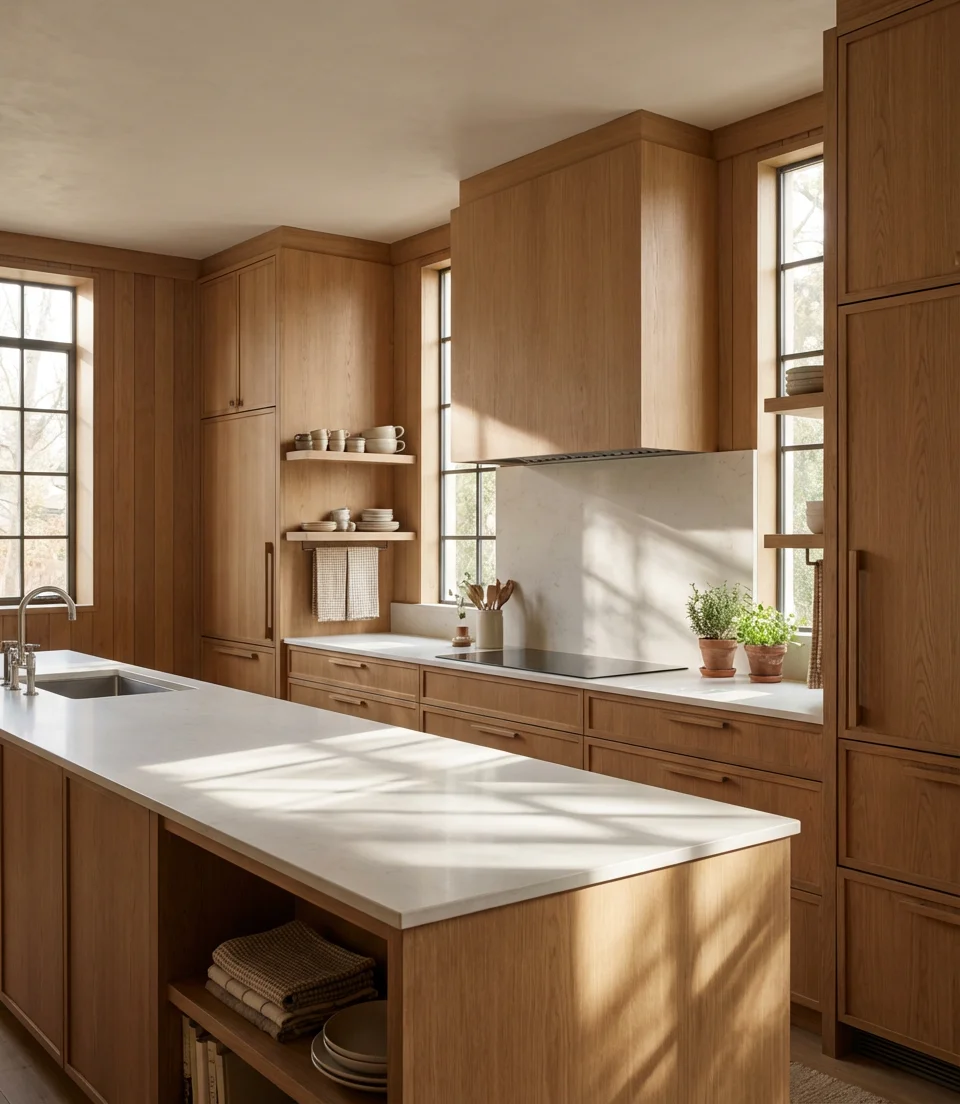
Breaking up the wood with stone countertops in a lighter color prevents the room from feeling heavy. Including a large window or skylight is essential, as natural light transforms a full wood kitchen from overwhelming to transcendent. And if you’re building this region from scratch, specifying consistent grain direction across all cabinet fronts gives the whole room a coherence that elevates it from rustic to genuinely refined.
Oak kitchens are one of those design choices that reward you differently over time—they look beautiful on day one and somehow feel even more right five years in. Whether you’re drawn to the pale restraint of white oak, the drama of a dark stain, or the warm familiarity of a classic golden finish, there’s a version of this wood that belongs in your kitchen. Please share your preferred design direction in the comments section below, share a before-and-after photo if you’ve already made the change, or pose a question if you’re still unsure where to begin. These conversations are genuinely half the fun.