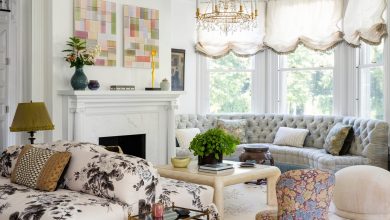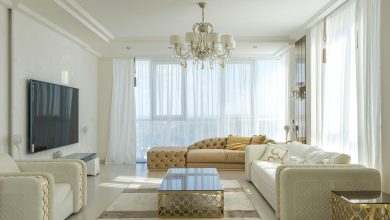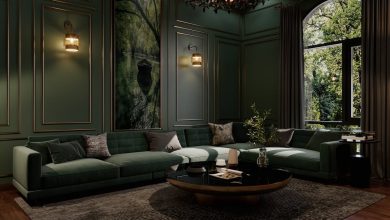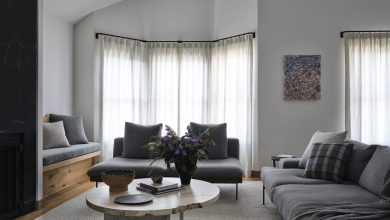

Living room shelves have quietly emerged as one of the most popular topics on Pinterest, and it’s understandable why. Whether you’re refreshing a rental apartment in Denver, finally tackling the bare wall above your couch in a suburban ranch home, or planning a full living room overhaul, shelving is where personality really gets to live. In 2026, the conversation has moved well beyond basic floating planks and generic IKEA builds—it’s about thoughtful styling, architectural detail, and making every inch of wall space feel considered. This guide walks you through fresh, achievable ideas that will give you real direction no matter your budget, your style, or how much square footage you’re working with.
1. Built-In Shelves Around the Fireplace
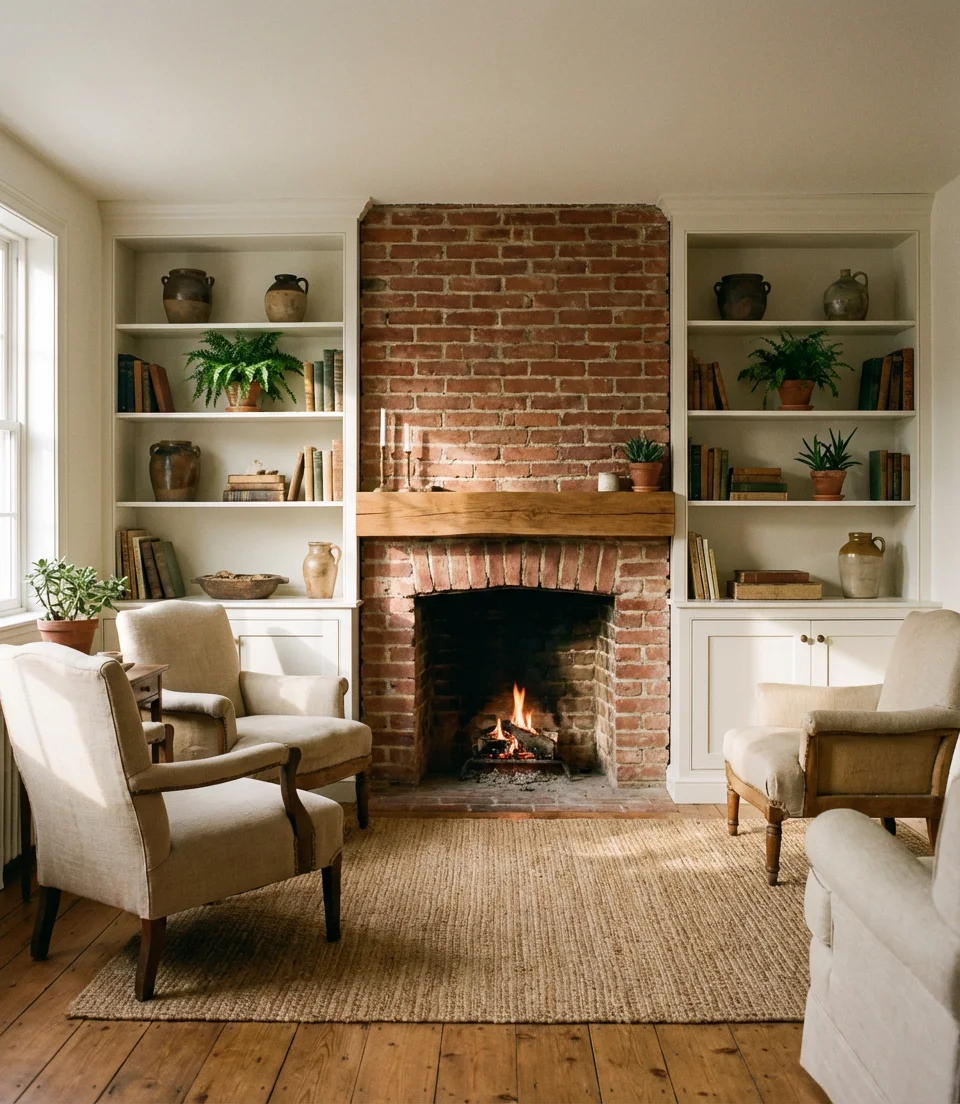
There is a reason built-in shelving flanking a fireplace consistently tops every Pinterest living room board. This architectural move transforms a plain chimney breast into a true statement wall that feels both grand and deeply personal. Even a modest living room feels intentional and complete due to the symmetry of the shelves on either side. It’s the kind of detail that turns a house into a home, and it works in everything from craftsman bungalows to modern new builds.
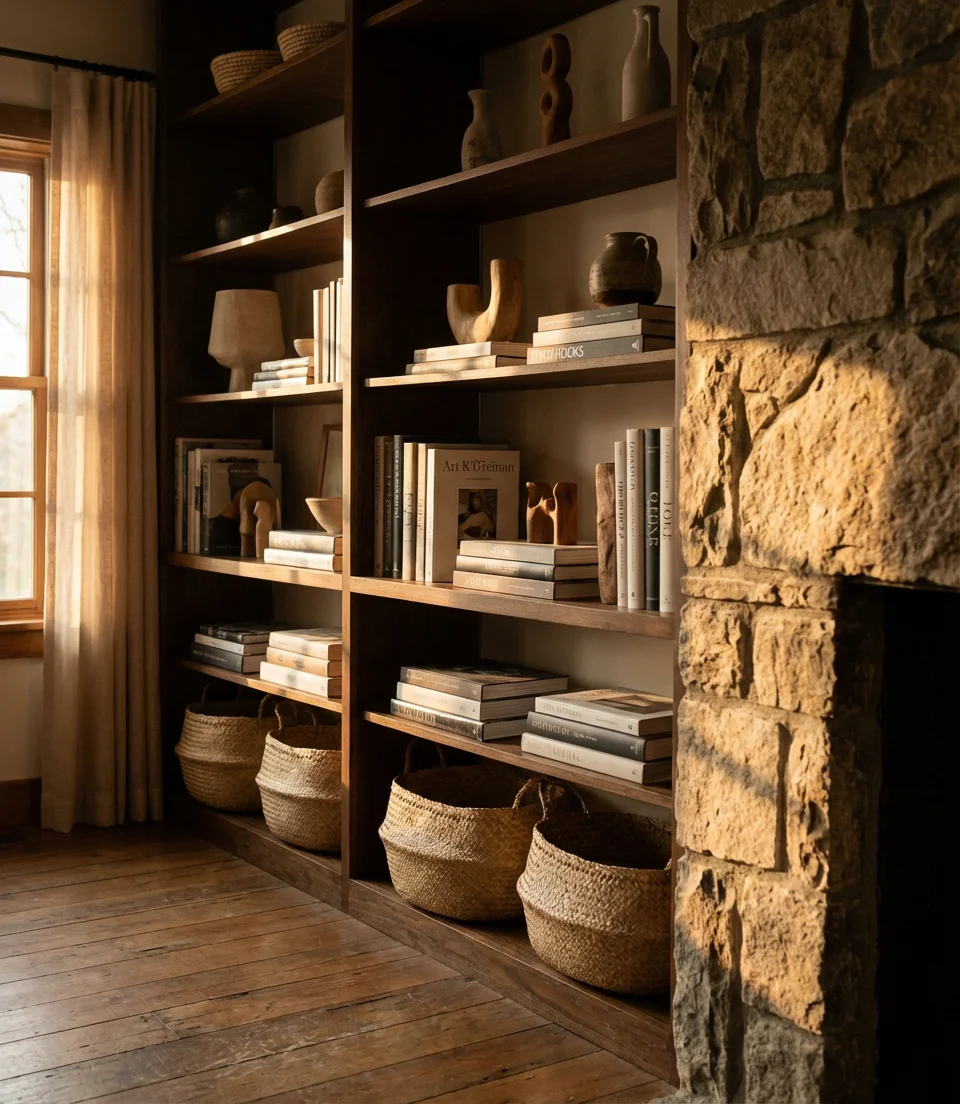
Built-ins around a fireplace work best in rooms where the chimney breast already reads as the natural focal point. If you’re renting or working with a limited budget, freestanding bookcases positioned flush against the chimney wall and painted the same color as the surrounding plaster can convincingly mimic the custom built-in look. The most common mistake here is overcrowding every shelf the moment it’s installed—resist that urge. Leave breathing room between objects so the display feels edited and intentional rather than overwhelming.
2. Floating Shelves Behind the Sofa
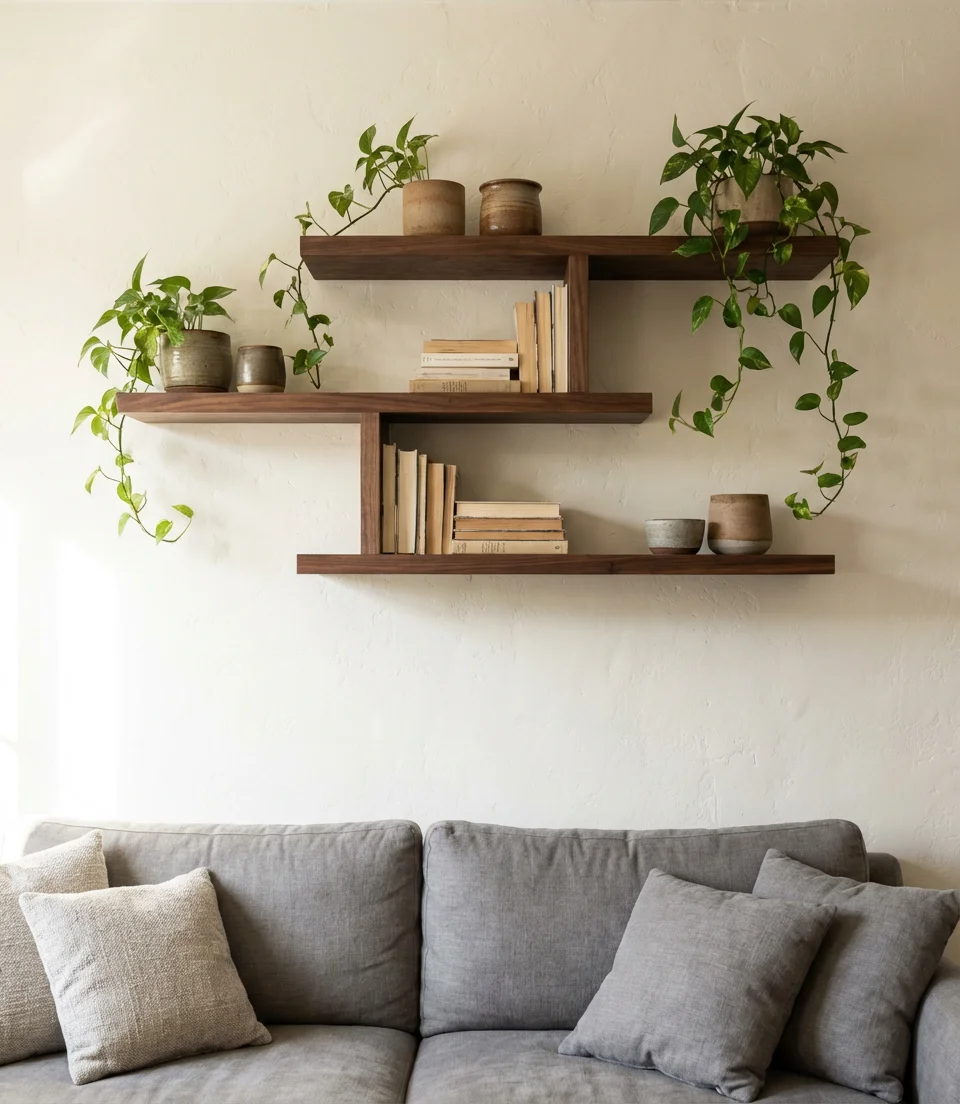
The wall directly behind couch placement is prime real estate that most living rooms leave completely untouched. A row of floating shelves installed at sofa-back height adds visual interest without blocking natural light or making the room feel smaller. It’s one of those solutions that works equally well in open-plan lofts and compact city apartments. Layer in books, a trailing pothos, and a few ceramic pieces, and the result looks effortlessly curated rather than decorated.
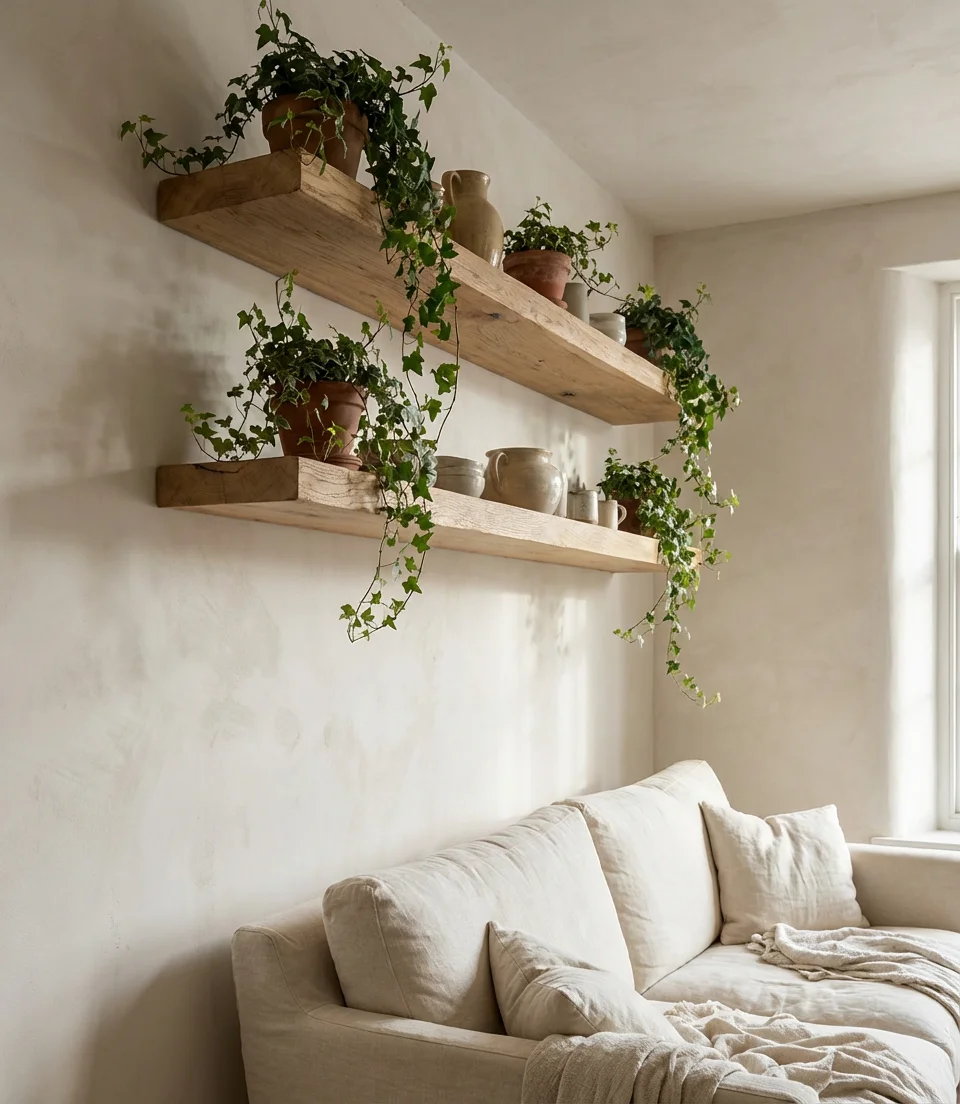
From a practical standpoint, floating shelves behind a sofa should be installed at roughly six to eight inches above seated eye level—low enough to feel visually connected to the furniture below, but high enough that no one risks hitting their head. A trio of staggered shelves in warm walnut or whitewashed oak is a perennial American favorite because it pairs well with both neutral and colorful upholstery. Always anchor into studs, not just drywall anchors, especially if you plan to display books or heavier decorative objects.
3. Mid-Century Modern Shelving Unit
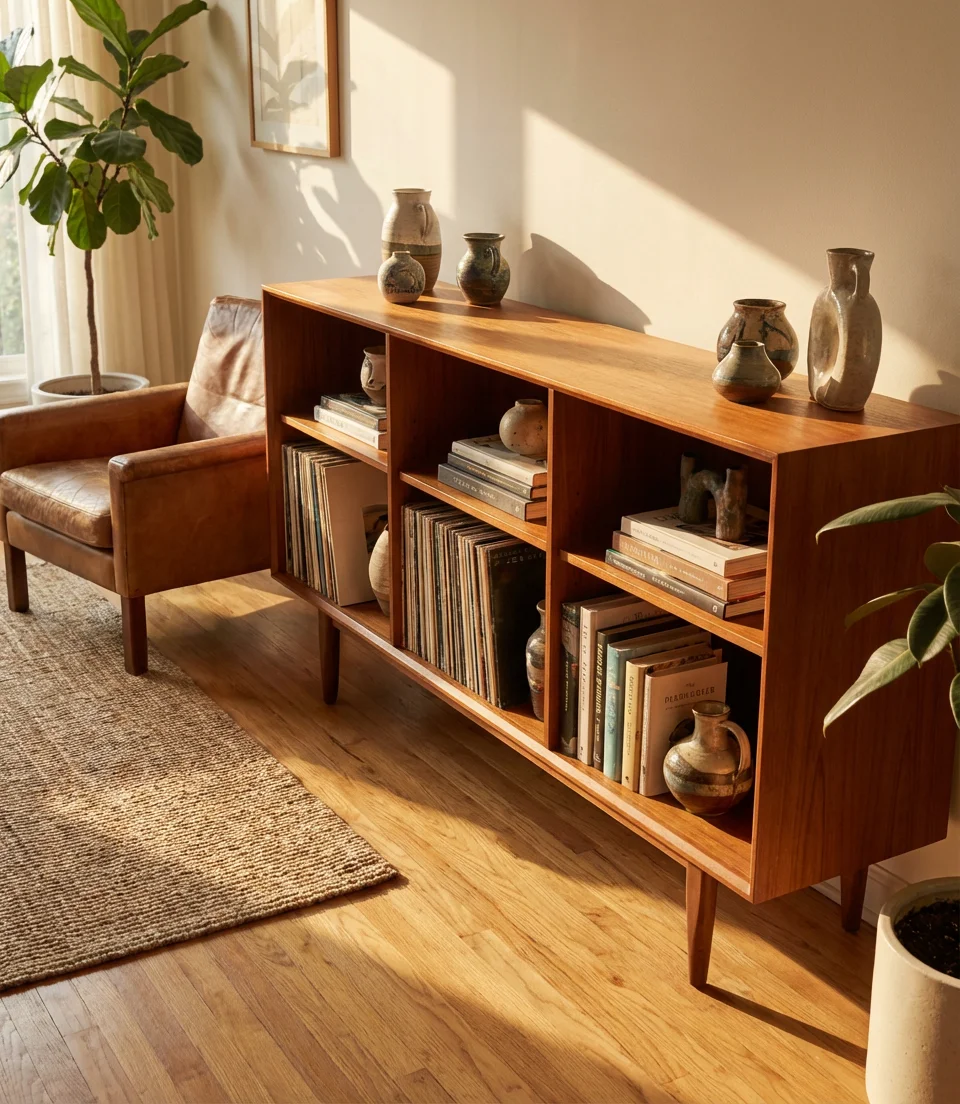
The mid-century modern aesthetic continues to dominate living room design in 2026, and a well-chosen shelving unit is often the piece that ties it all together. Think tapered hairpin or splayed legs, open compartments, and a warm teak or walnut finish that brings genuine warmth to the room. This style complements both standalone statement pieces and broader low-profile furniture plans that incorporate organic textiles and soft, natural tones. It’s timeless without ever feeling stiff or museum-like.
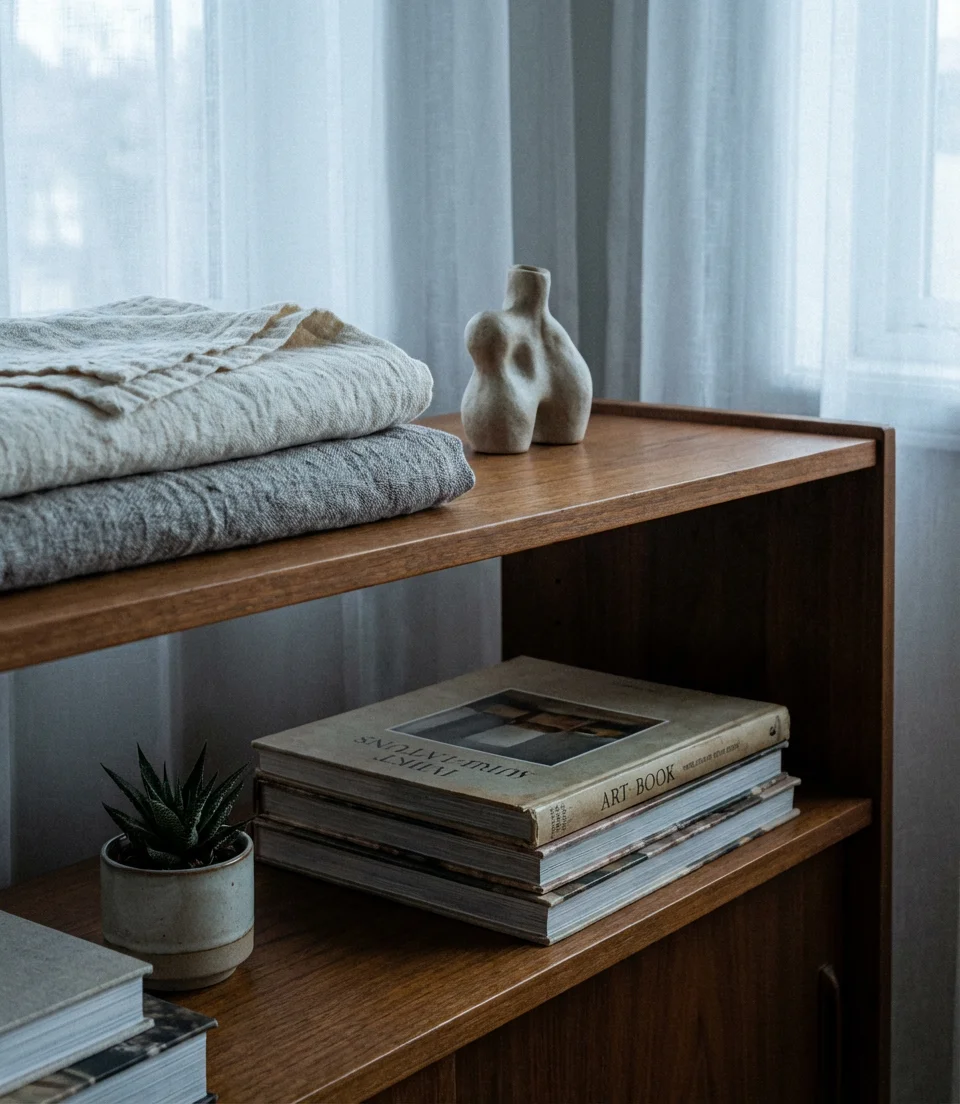
Consider a mid-century shelving unit as a useful sculpture. The best versions combine closed lower cabinets for storage with open upper shelving for display—giving you the practicality of a sideboard with the visual openness of a bookcase. A piece measuring between 60 and 72 inches wide is ideal for the average American living room, which ranges from 800 to 1,200 square feet. Brands like Article, Crate & Barrel, and West Elm offer solid reproductions in the $400 to $900 range that deliver real MCM character without the vintage price tag.
4. Organic Modern Shelf Styling
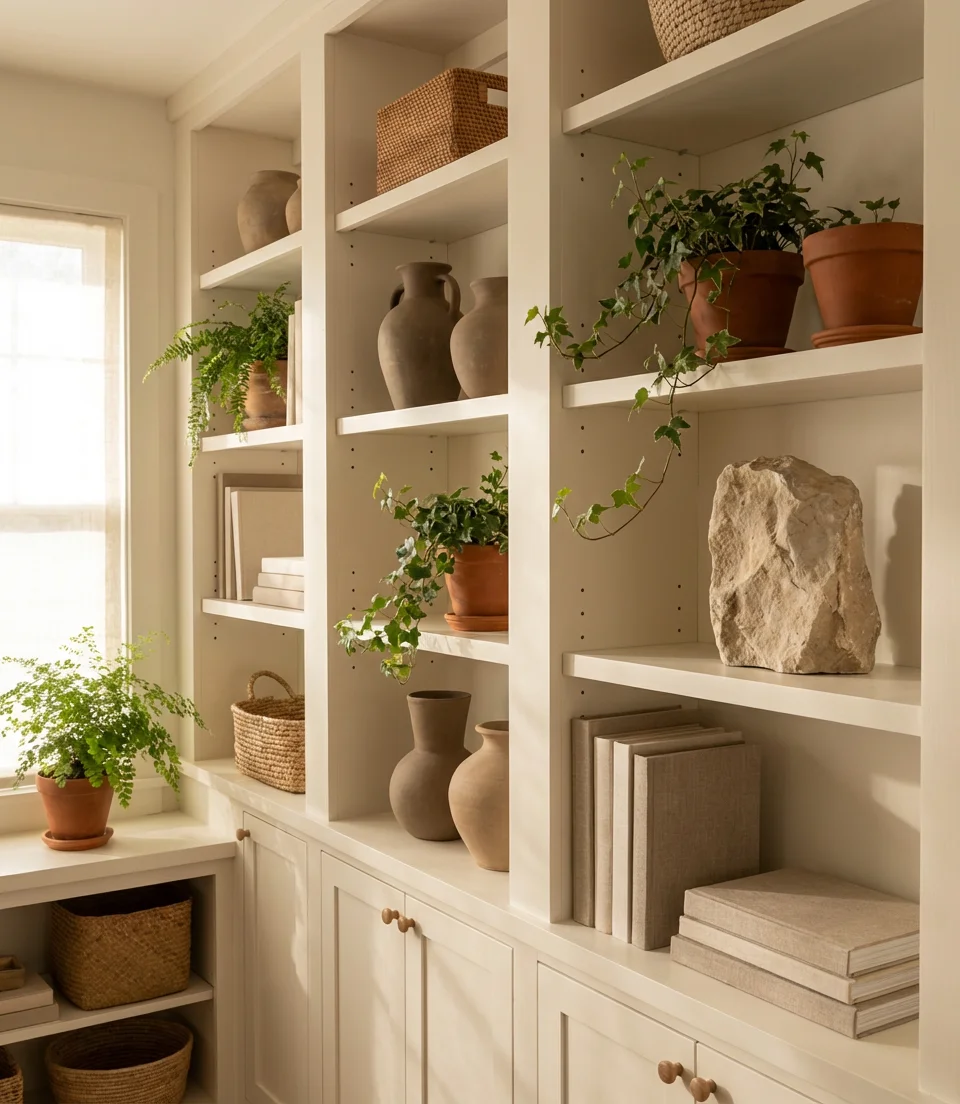
Organic modern is the aesthetic that dominates mood boards for living rooms right now, and shelves are where it finds its most natural expression. Warm whites, raw linen textures, sculptural vessels in matte clay, and trailing plants in earthy terracotta pots are the building blocks of this look. The goal with decor ideas in this style is controlled softness: nothing too rigid, nothing too precious. A shelf styled this way should feel like it evolved organically over time rather than being assembled in a single Saturday afternoon shopping run.
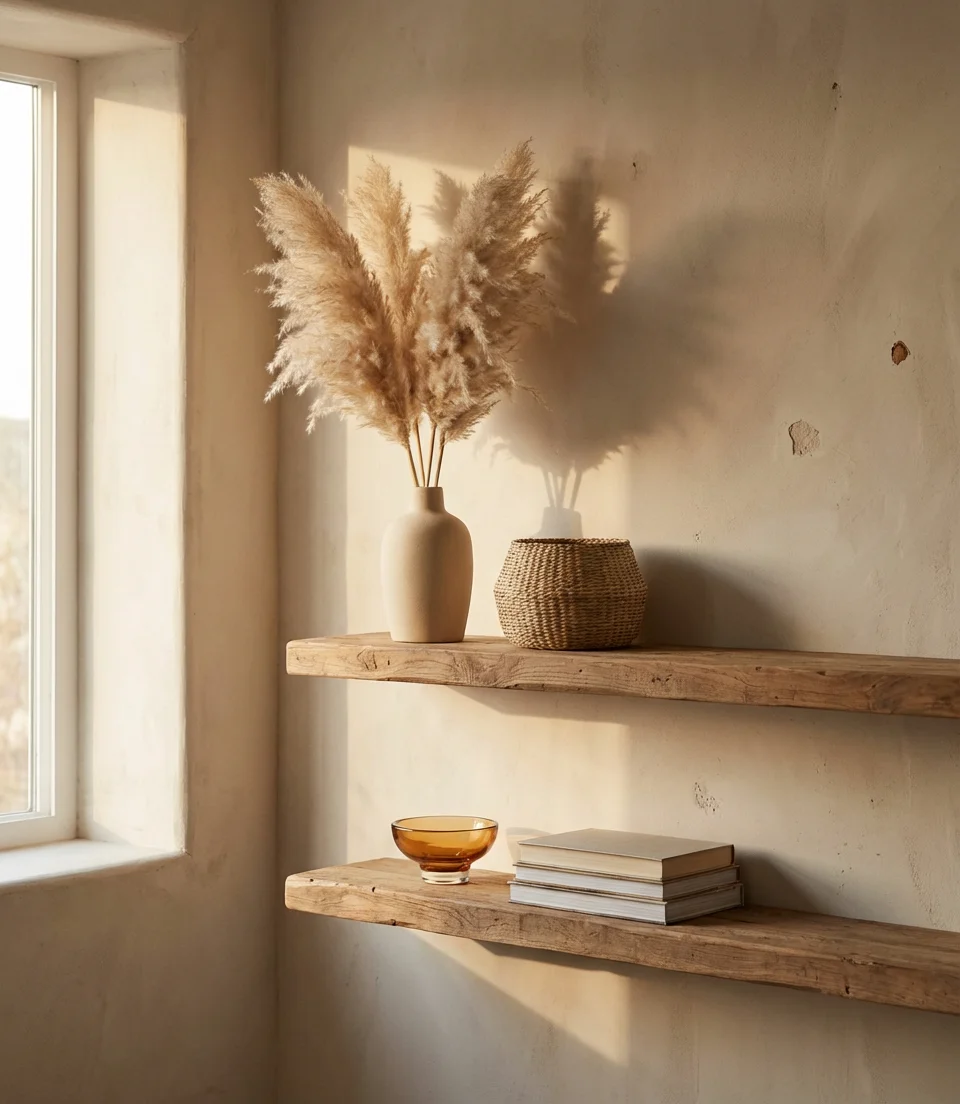
One interior stylist tip that rings especially true for organic modern shelving: always arrange objects in odd numbers. Three items, five items—this asymmetry creates movement and feels more naturally human than artificially arranged. A tall sculptural vase, a small stack of art books, and a single trailing plant are a timeless trio. Real homeowners who’ve adopted this approach also love how easy it becomes to refresh the display seasonally—swap in dried pampas for fall or eucalyptus for the holidays without overhauling the whole setup.
5. Christmas Decor on Living Room Shelves
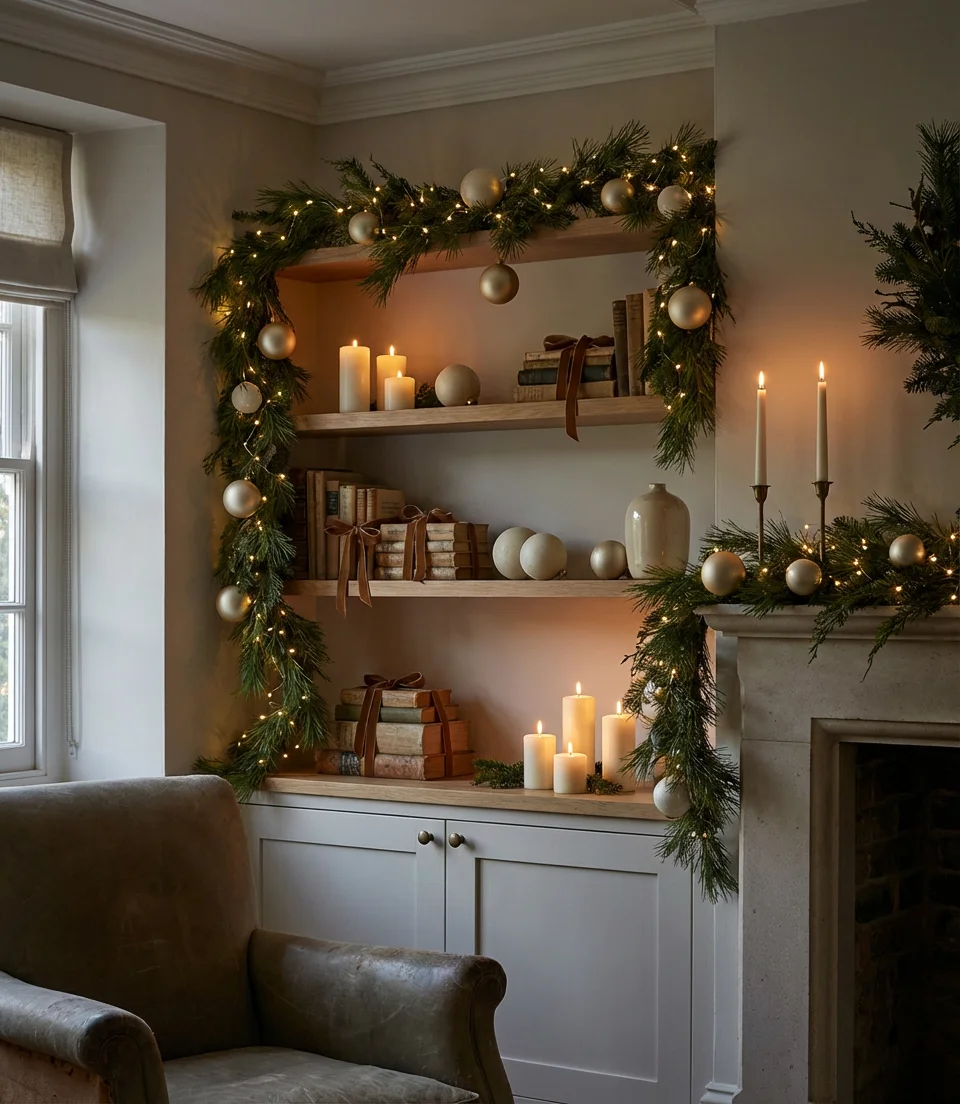
Your living room shelves are one of the most underutilized canvases for Christmas decor, and leaning into them can completely transform the feel of your space during the holiday season. Rather than focusing all your energy on the mantel, styling your shelves with layered greenery, warm-toned ornaments, candle clusters, and ribbon-tied books creates a festive atmosphere that wraps the entire room. Pairing your shelf display with coordinated decor around tv elements ties the full wall together into one cohesive seasonal moment.
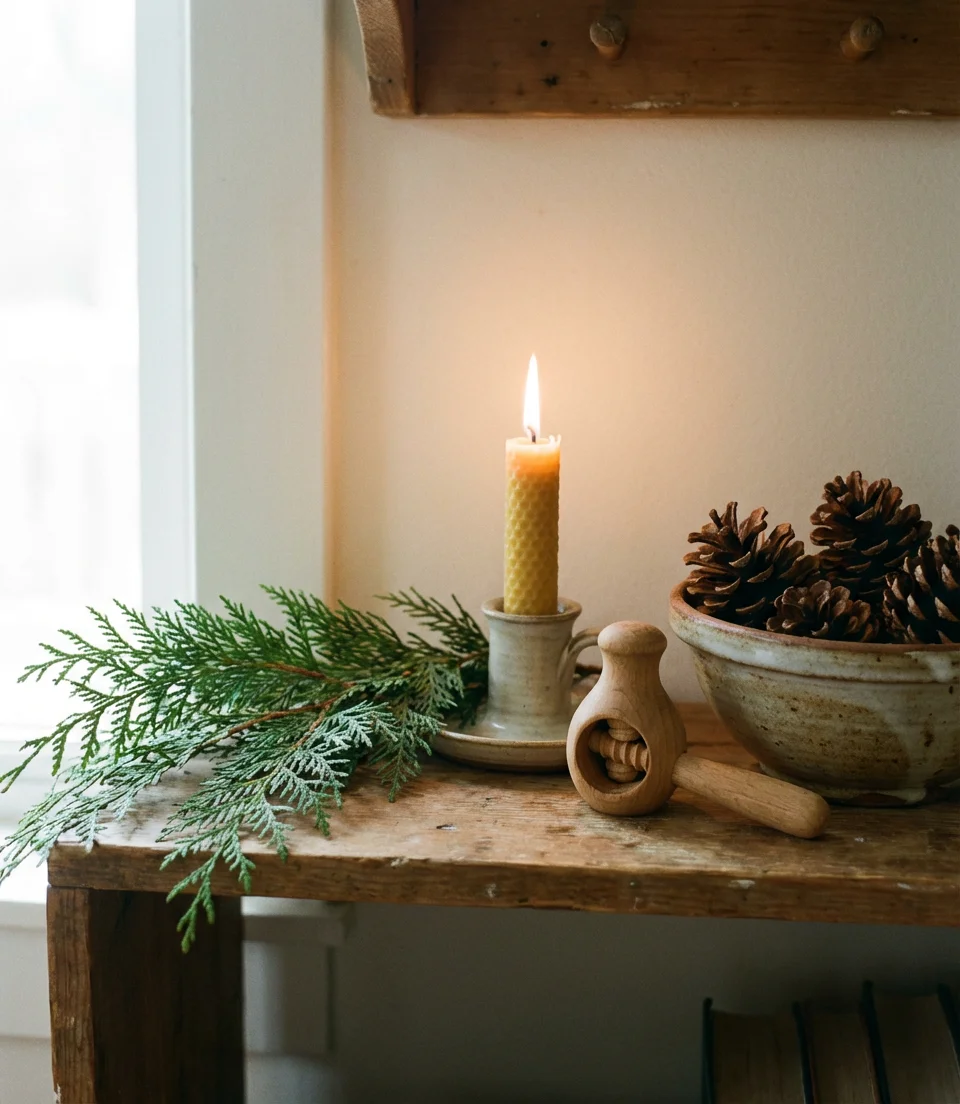
The real trick to great holiday shelf styling is layering seasonal pieces over your existing year-round objects rather than stripping everything bare and starting from scratch. A vintage-style nutcracker placed beside your everyday ceramic bowl, a cedar sprig tucked behind a framed photo, a string of warm fairy lights threaded along the back of a shelf—it’s that blend of personal and seasonal that makes the result feel genuinely warm and lived-in. Going full Christmas replacement tends to make shelves look like a store display rather than a family home.
6. Shelves Flanking the TV Wall
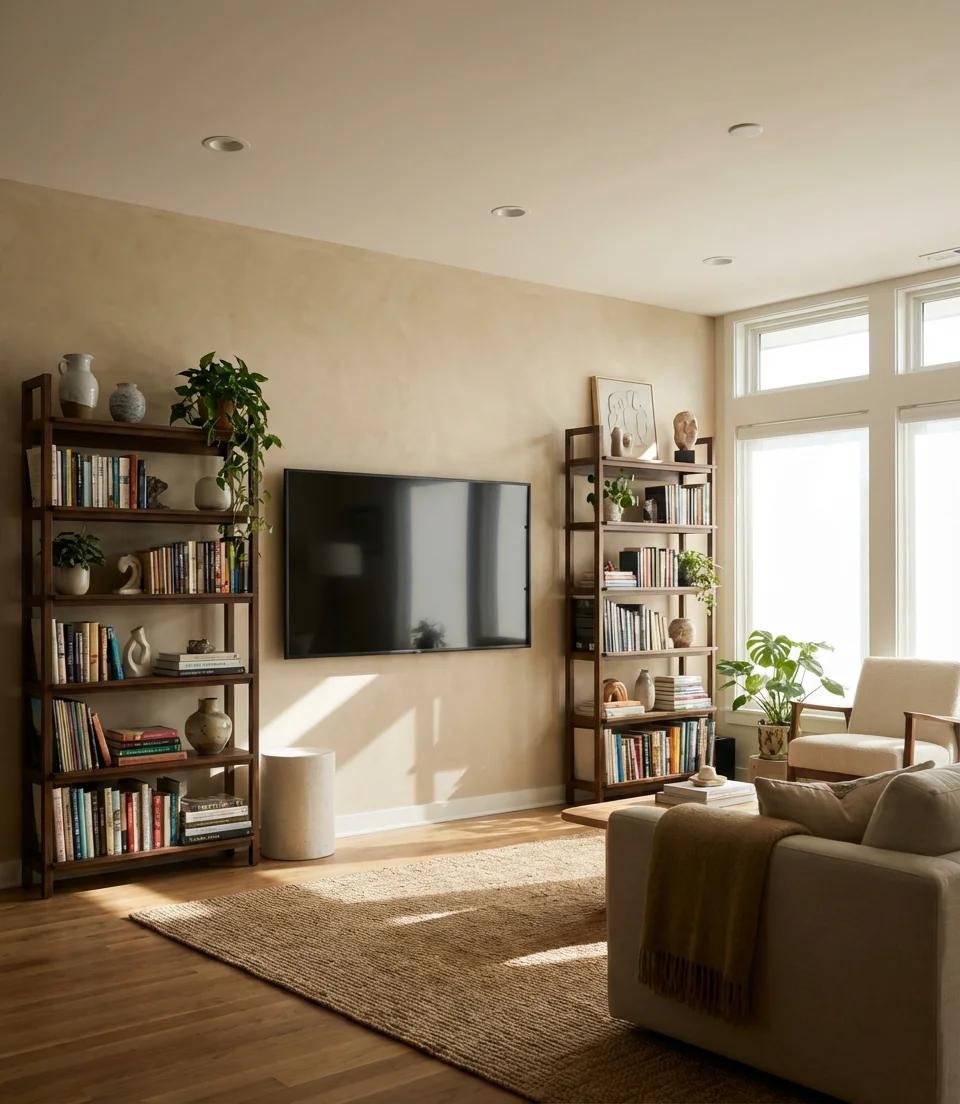
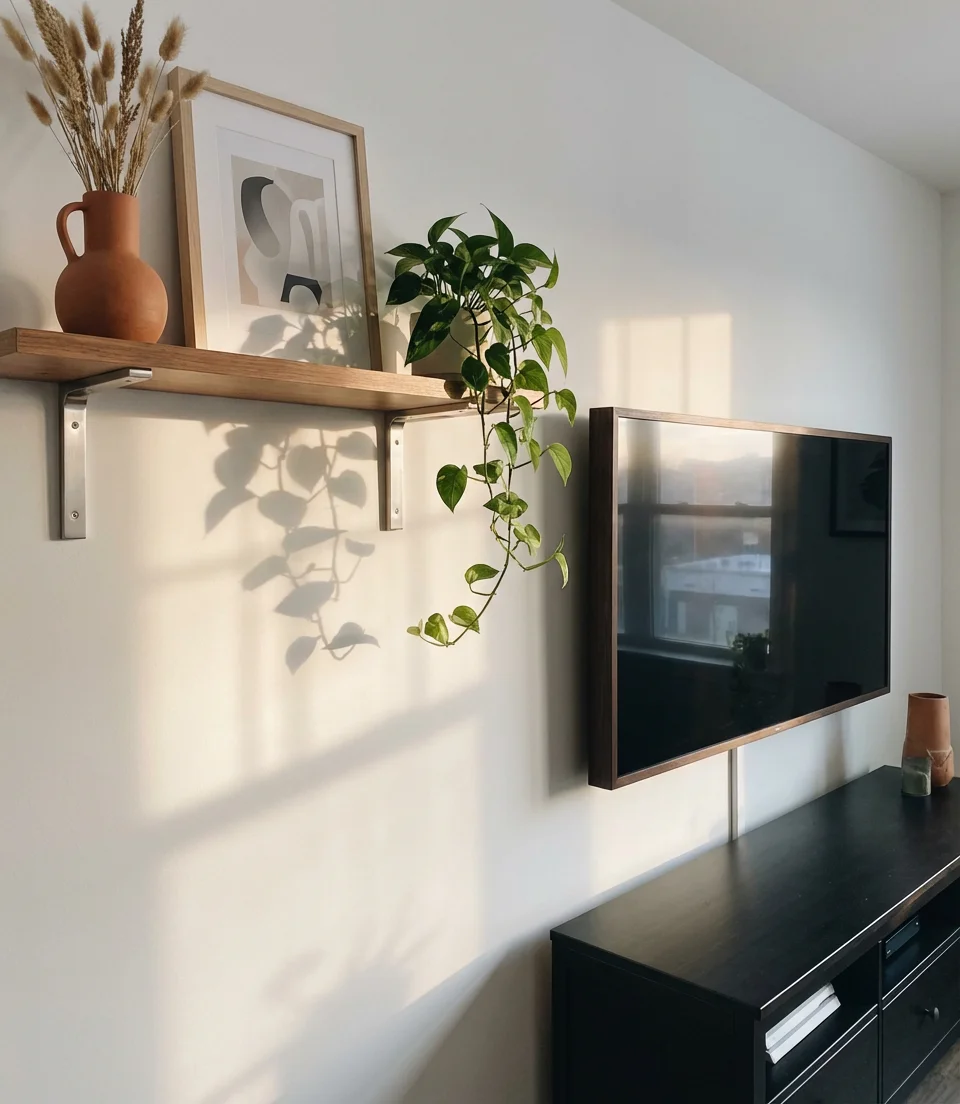
Designing shelves around tv placement is one of the smartest and most visually satisfying moves you can make in a living room. When a television floats alone on a blank wall, it tends to dominate the space in an awkward, utilitarian way. Flanking it with shelving, whether built-in or freestanding, integrates the screen into the room’s overall wall decor composition. The shelves become a gallery of your interests, and suddenly the whole wall feels purposeful rather than like an afterthought.
This layout works best in living rooms where the TV wall spans at least 10 to 12 feet, leaving 18 to 24 inches on each side for shelving columns. If your wall is narrower, even a single shelf column on just one side can meaningfully improve the balance. Keep cable management front of mind from the start: closed lower cabinet units handle cord clutter beautifully, while open upper shelves should be reserved for purely decorative objects and books. This approach is especially popular in American suburban homes where the television is genuinely central to daily family life.
7. DIY Floating Shelves on a Budget
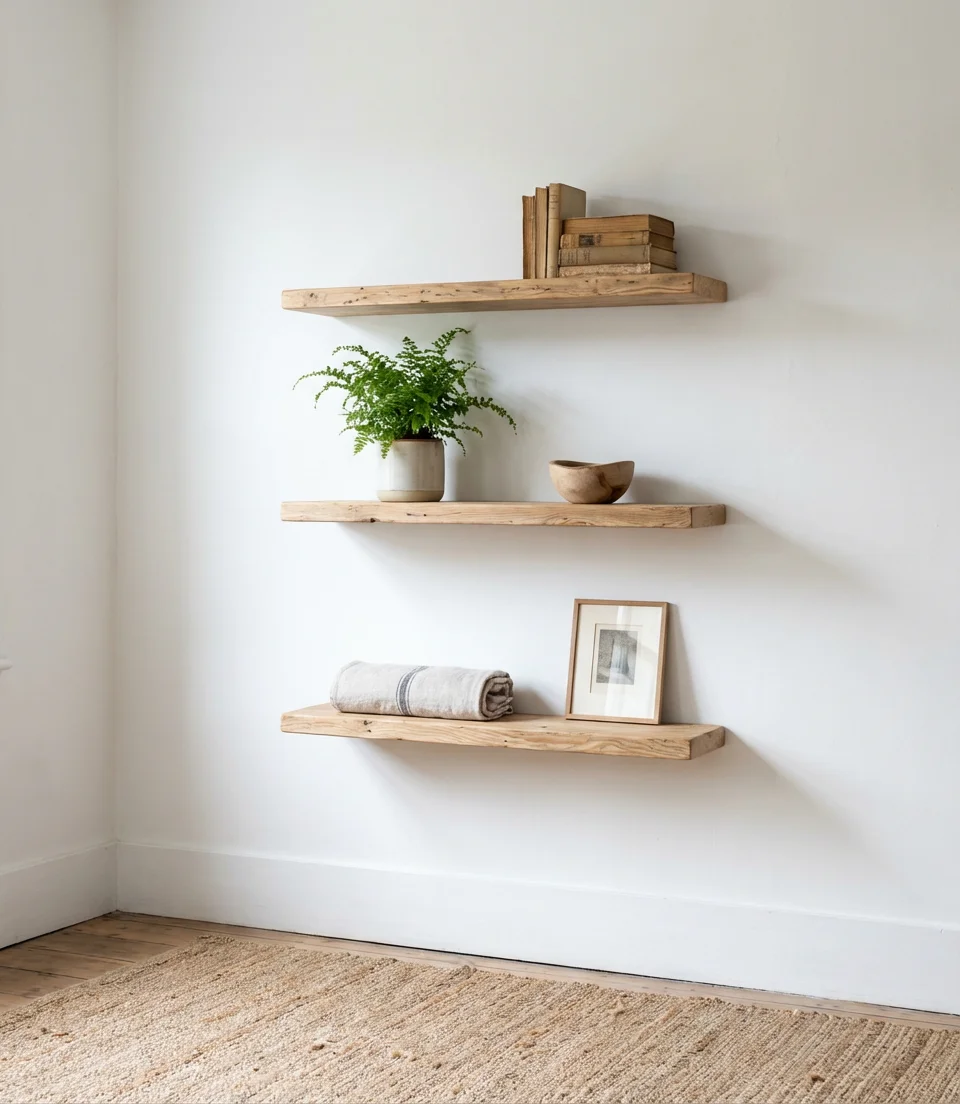
The diy floating shelf movement has matured significantly, and in 2026 the results homeowners are achieving look genuinely custom. Builders across the US are combining simple lumber from Home Depot with hidden bracket hardware and a coat of limewash or mineral paint that gives the wood a gallery-worthy, high-end finish. This approach to floating shelving is as much about the styling as the construction, and the appeal is obvious: for under $80 per shelf, you can achieve a look that rivals expensive custom millwork.
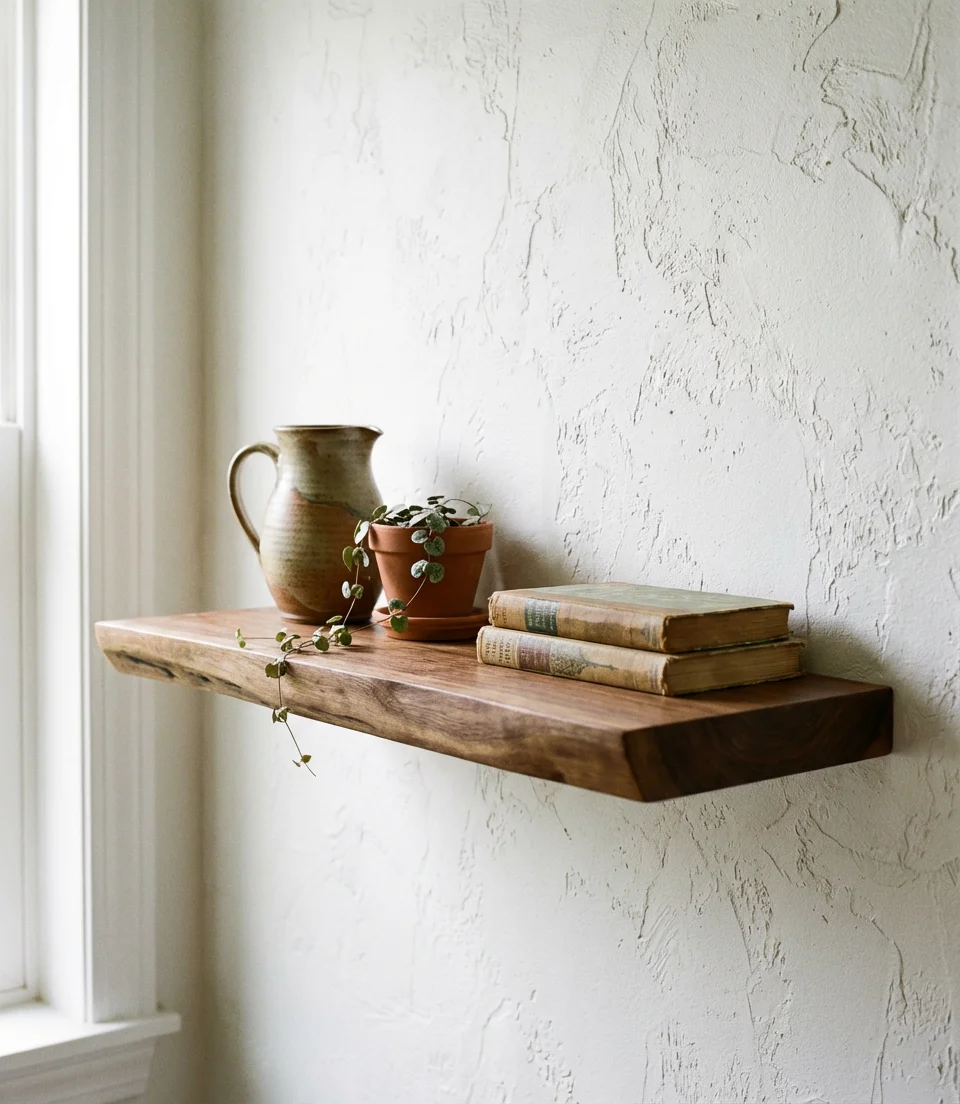
A practical insight worth knowing before you cut a single board: the most common DIY floating shelf mistake is using brackets that are too short relative to the shelf depth. For a 10-inch-deep shelf, your brackets should extend at least 8 inches into the wall. Pine is the most budget-friendly lumber choice, but poplar takes paint more smoothly if you want a clean, polished finish. Many makers in online woodworking communities also recommend the floating rod bracket system for a completely seamless look where no hardware is visible from the front.
8. Fireplace Mantel Shelf Styling Ideas
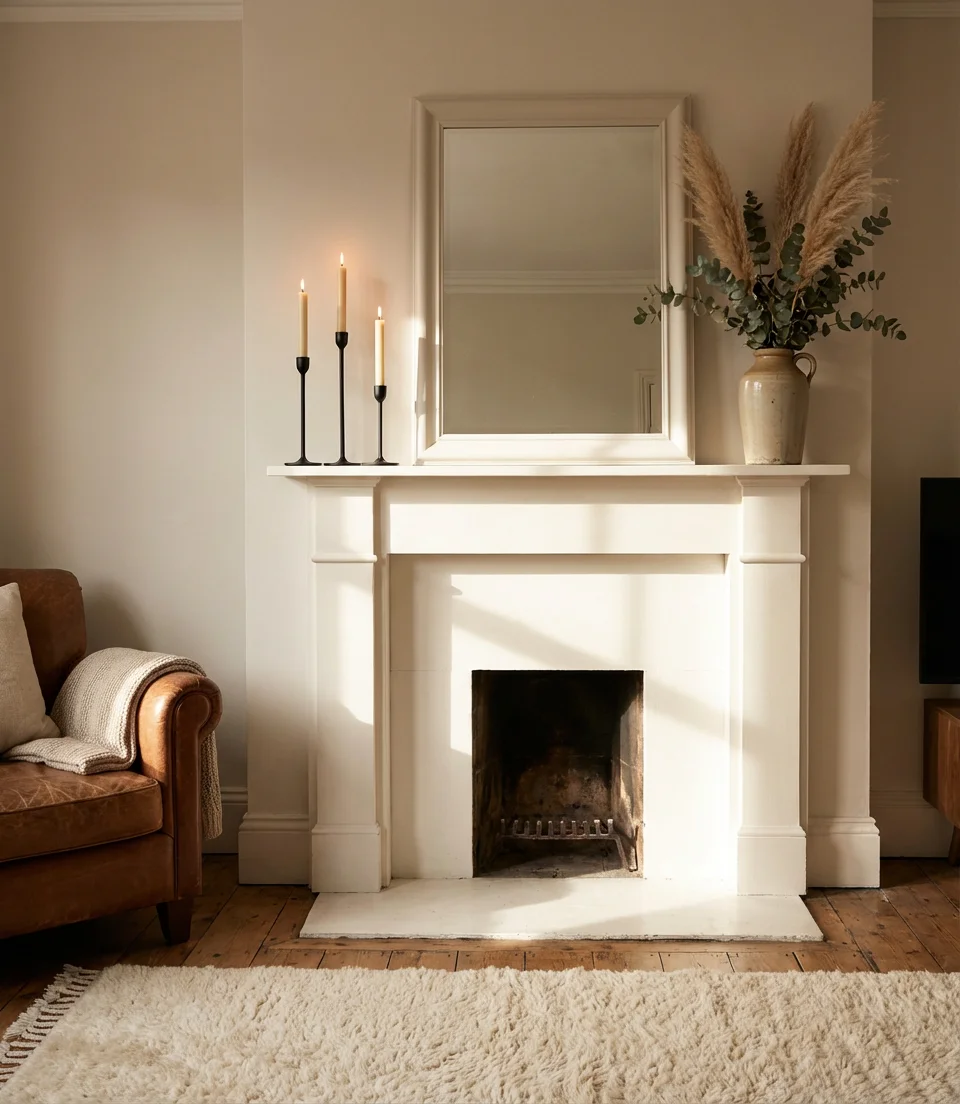
The shelf above a fireplace is one of the most emotionally significant surfaces in any home—it’s where families put what matters most. Great ideas for fireplace mantel styling move well beyond the predictable symmetrical candlestick pairing. Instead of a single large leaning mirror, consider a grouping of ceramic objects in varying heights and matte earth tones, or one bold piece of sculptural art that anchors the entire display. The couch across the room should feel like it’s in visual dialogue with the mantel, not competing with it.
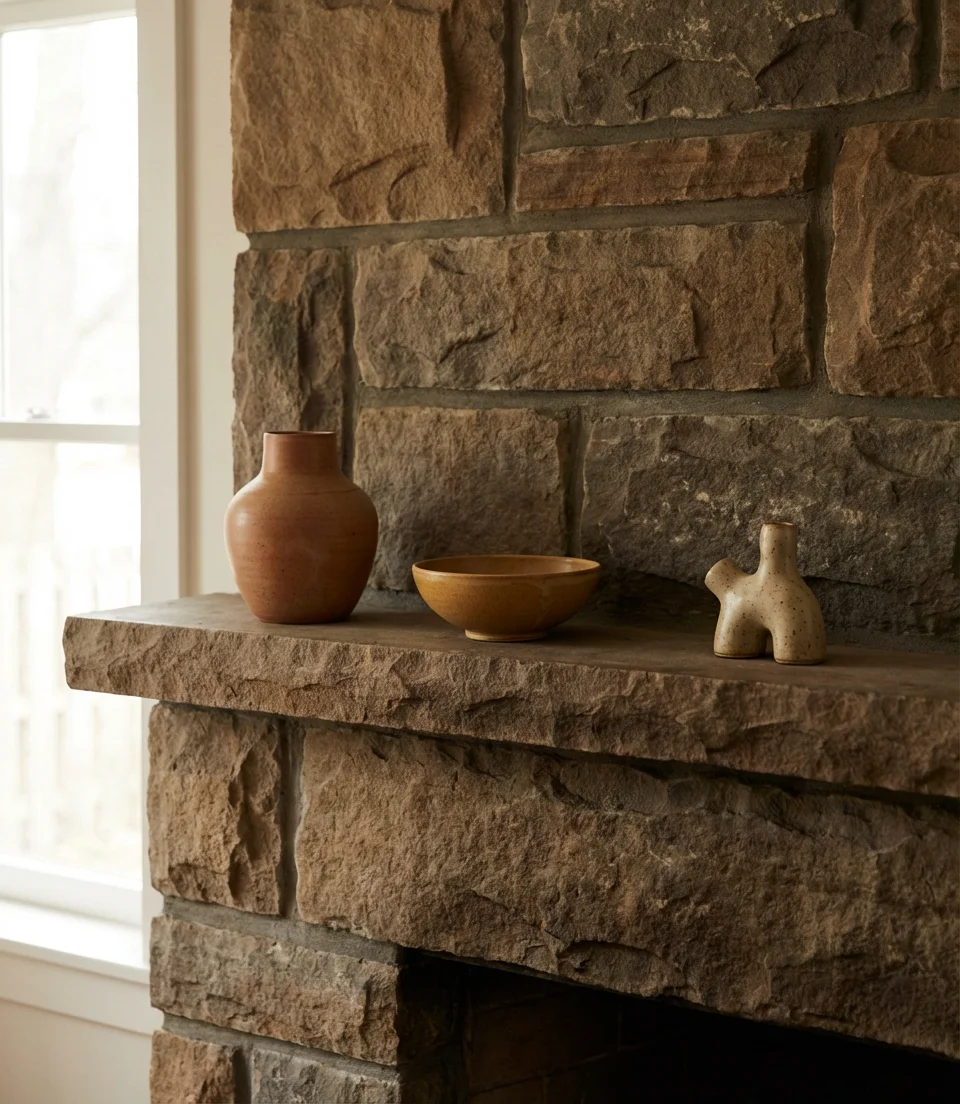
A homeowner in Nashville described her mantel styling breakthrough as the moment she removed two-thirds of what she had put up. “I kept adding things, thinking more would look more styled,” she said. “But the moment I removed most of it, the remaining pieces finally gained visibility.” ” That story is universal. Choose three to five objects with intentional height variation and a consistent color palette, and let the negative space between them do the real work. Restraint is almost always the right call on a mantel.
9. How to Style Shelves Around a TV and Fireplace
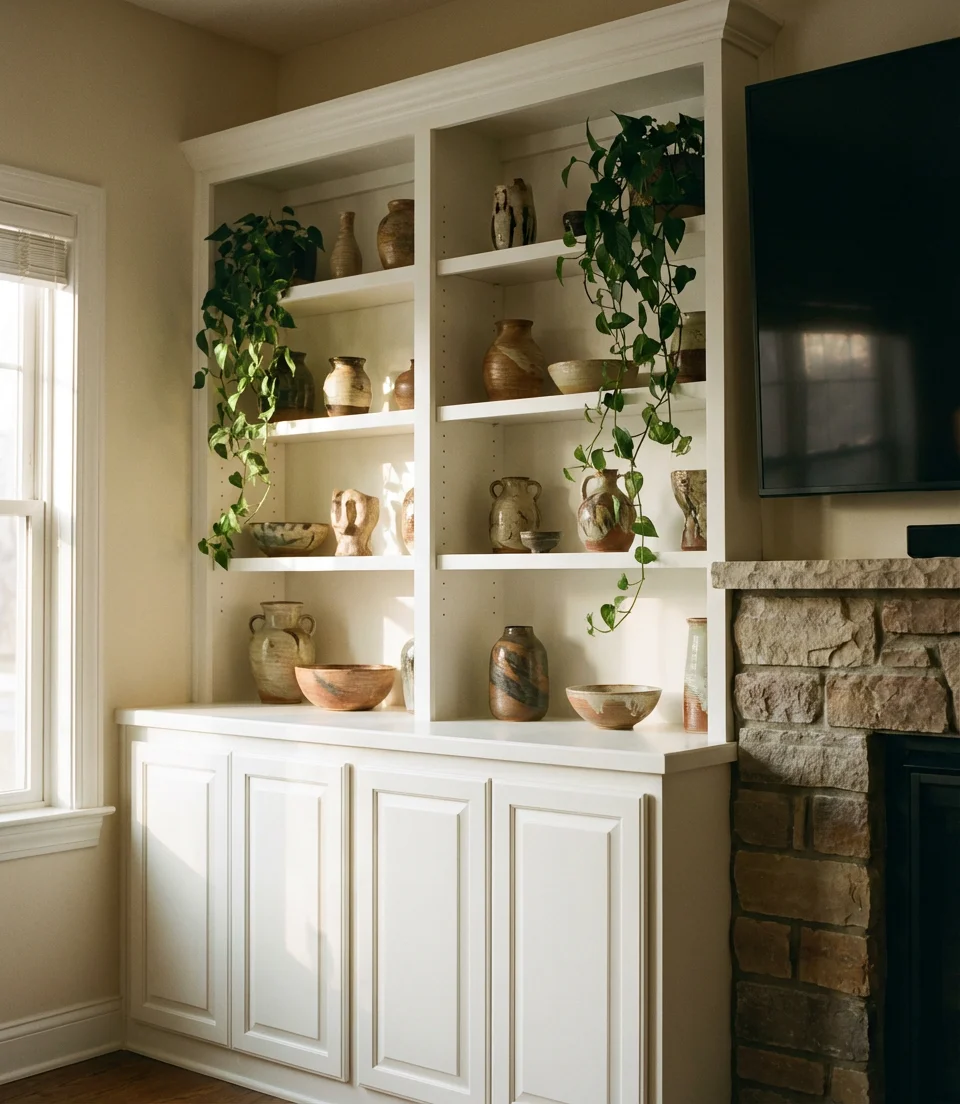 When a fireplace and television share the same wall, designing shelving that honors both is the ultimate living room challenge. The best ideas around tv fireplace configurations treat the two elements not as competing focal points but as anchors within one continuous architectural composition. Shelving that runs the full width of the wall, dipping around the firebox and framing the screen, unifies everything into a single cohesive feature. Such an arrangement is when a living room stops looking assembled and starts looking genuinely designed.
From a budget standpoint, custom millwork for a combined TV and fireplace built-in typically runs between $3,000 and $8,000 depending on region and complexity. That’s a real investment, but it adds genuine resale value—particularly in the Southeast and Mid-Atlantic markets, where buyers actively search for that kind of architectural detail. If the budget isn’t there yet, IKEA’s BILLY or HEMNES cabinet systems can replicate the look convincingly for under $600 with a weekend of effort, some trim work, and a coat of paint that matches the walls.
10. Shelf Decor Ideas for the Wall Behind the Couch
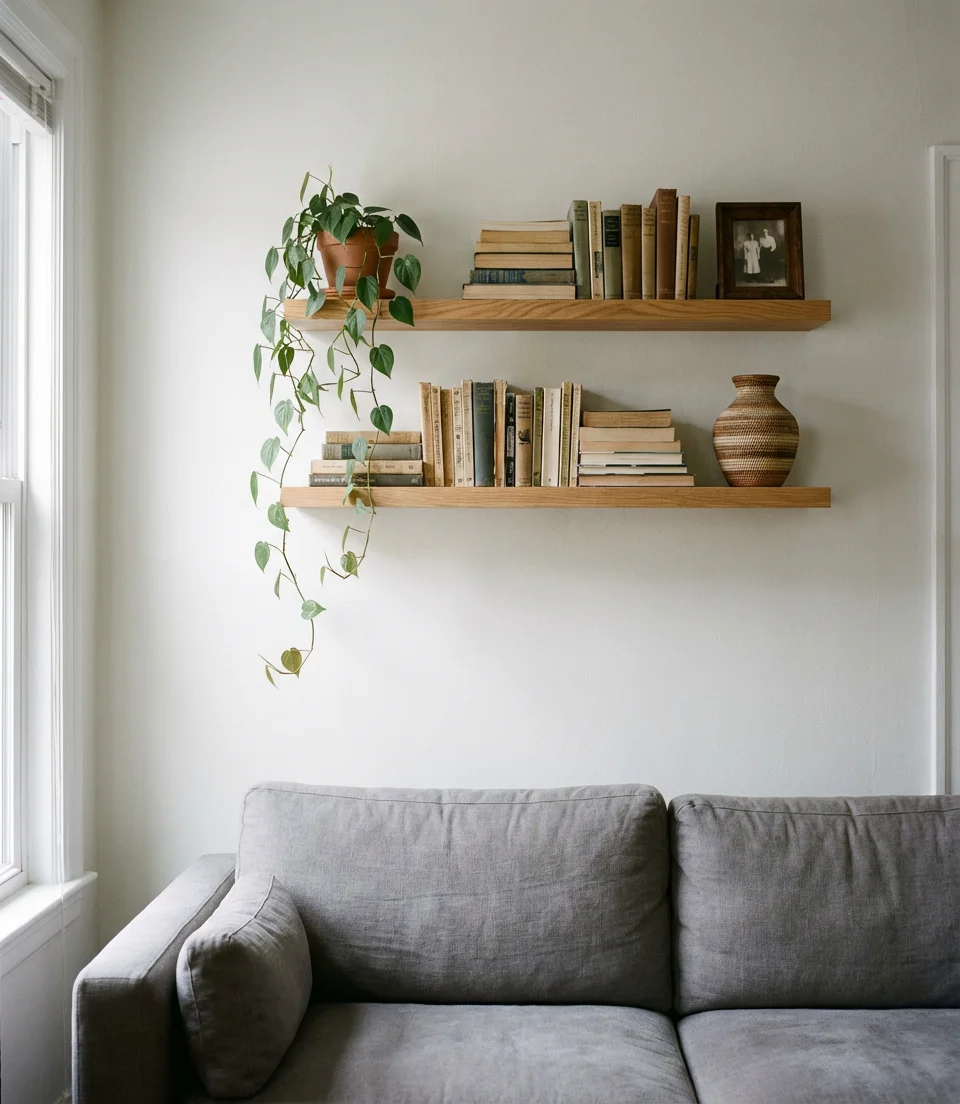
The wall directly behind your sofa is often the first surface guests register when they walk into your living room, which makes shelf styling here particularly impactful. Decor for this wall works best when it extends and reflects the personality of the room: art books that hint at your interests, plants that soften the furniture’s harder angles, and objects with genuine meaning. Think of those shelves as a backdrop that quietly tells the story of who actually lives here, not who a staging company wanted to project.
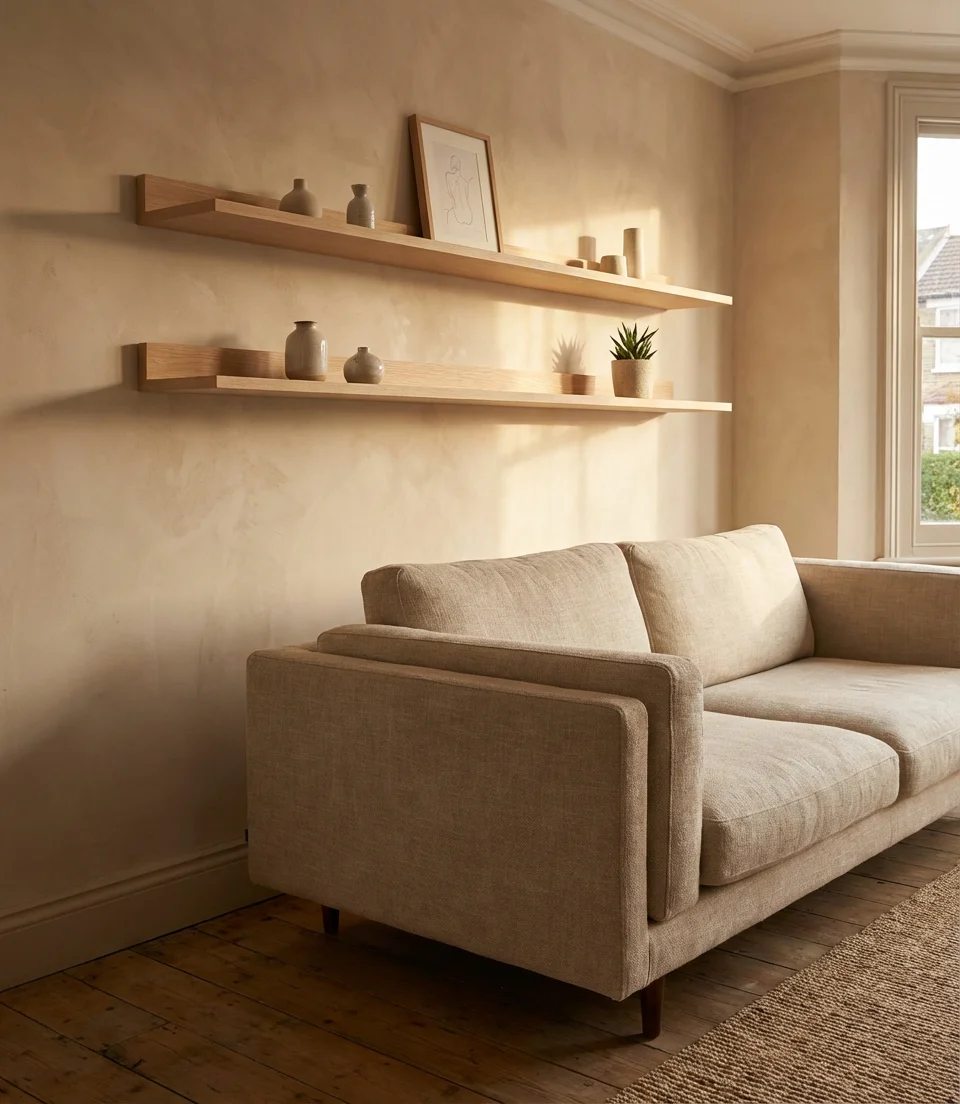
This placement works best in living rooms where the sofa sits at least 12 to 18 inches from the wall, leaving enough clearance to access the shelves comfortably. If your sofa is pushed all the way back, stick with shallow floating shelves in the 4 to 6 inch depth range—they’ll add visual interest without creating an awkward physical obstacle. In open-plan American homes where the living area flows directly into the dining or kitchen zone, this wall becomes a natural room divider that adds function without closing off the layout.
11. How to Decorate Shelves Like a Pro
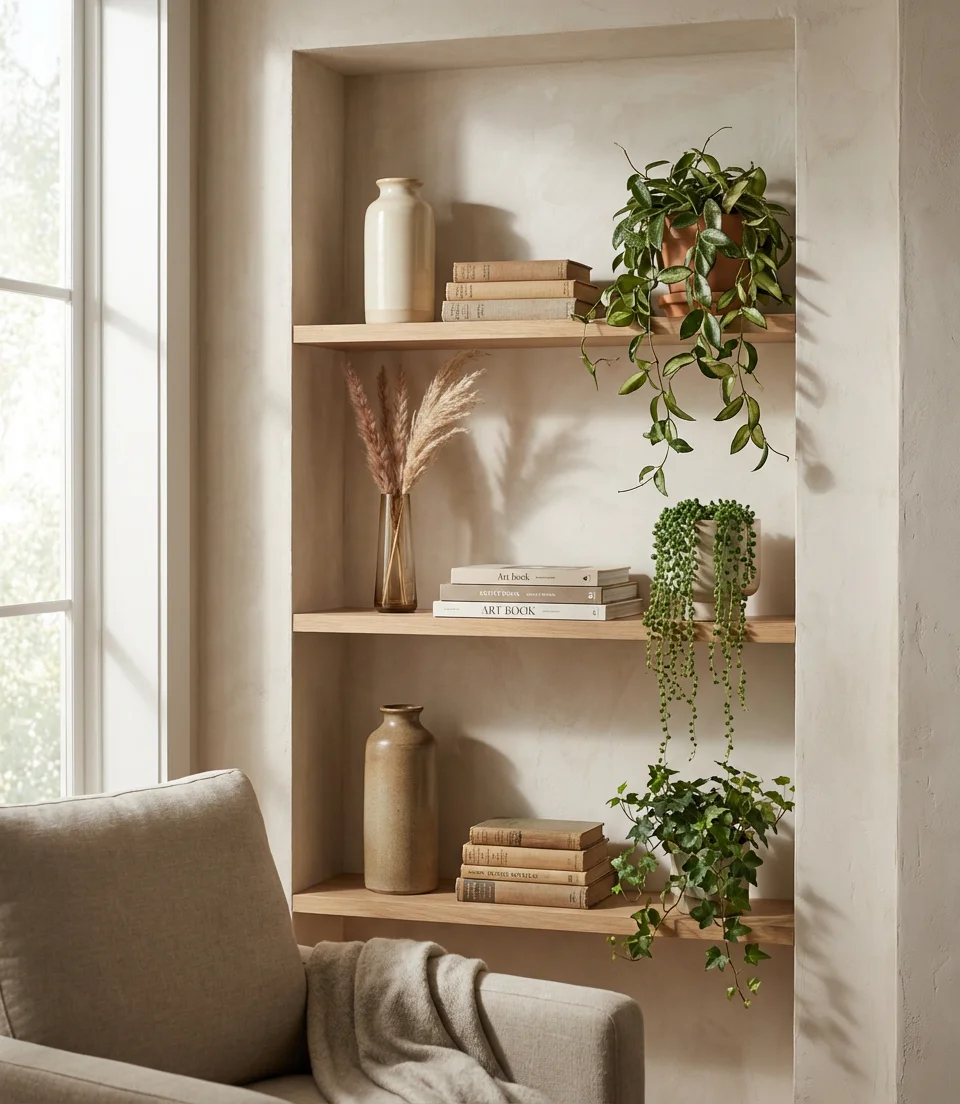
Learning how to decorate shelves well is one of those genuinely transformative skills that makes an entire home feel more intentional. The difference between a Pinterest-worthy shelf and a chaotic jumble comes down to a few core principles: vary heights dramatically, group objects in threes, and always include at least one natural element—a plant, a stone, a piece of driftwood, or woven rattan. When you approach it with the right framework, the process of knowing how to style shelves stops feeling overwhelming and starts feeling intuitive.
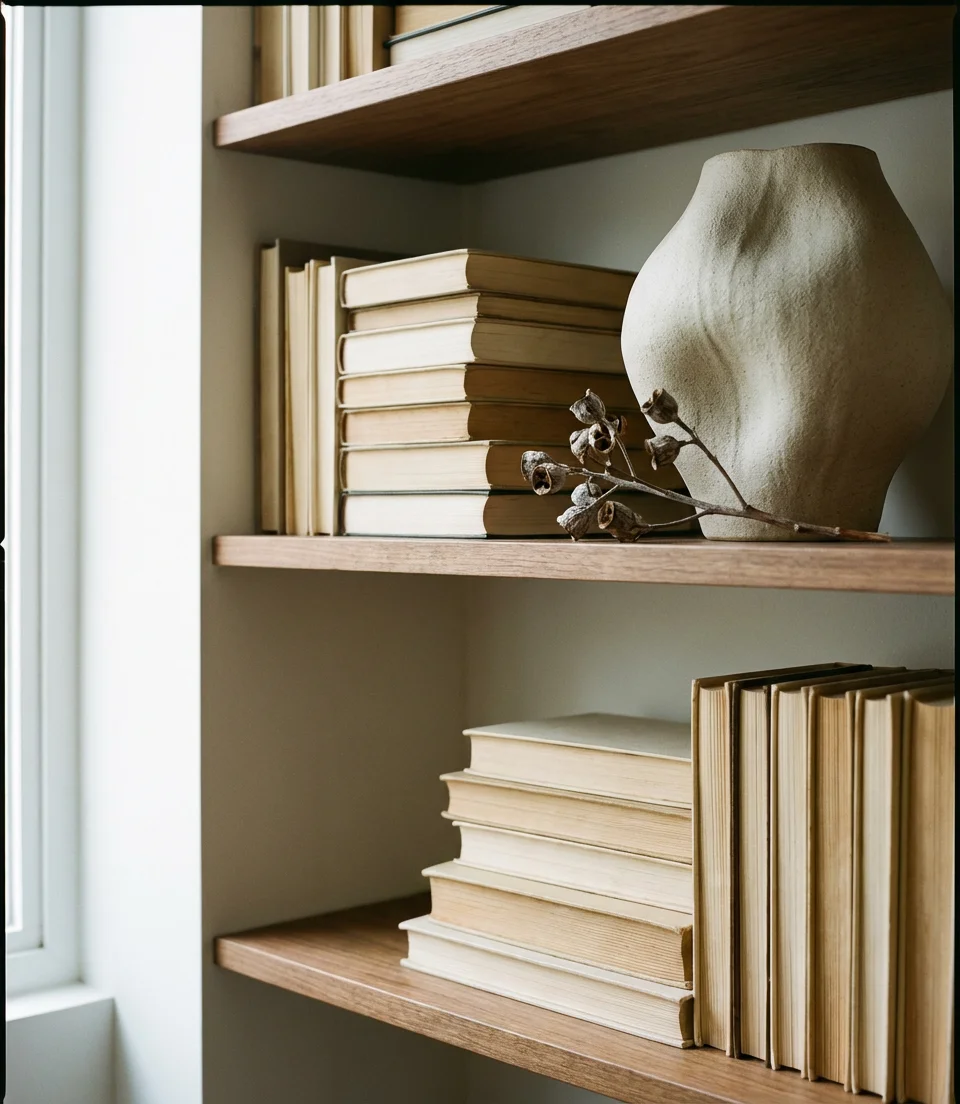
Professionals consistently adhere to the styling rule: each shelf display necessitates the presence of tall, small, and slightly overhanging objects. This creates vertical rhythm and makes the eye travel dynamically rather than scanning flatly from left to right. Beyond that, limit your color palette to two or three consistent tones across the entire shelf run—too many colors create visual noise even when individual objects are genuinely beautiful. Books displayed with spines turned inward, showing their pages, add a beautiful neutral backdrop that gives the whole arrangement a quiet, gallery-like quality.
12. Built-In Shelves for a Custom Living Room Look
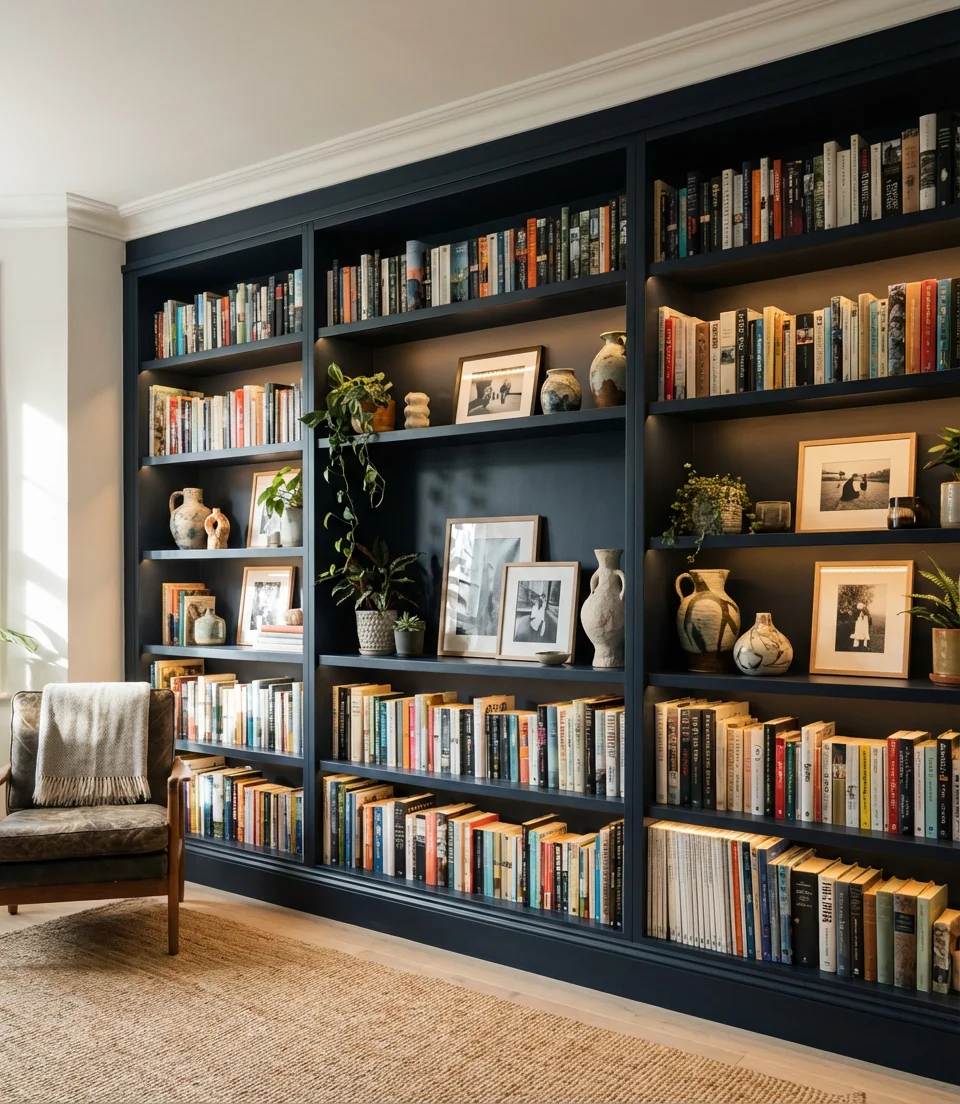
Nothing signals a thoughtfully designed home more convincingly than true built-in shelving. Unlike freestanding furniture, built-ins read as part of the architecture itself—they transform ordinary walls into functional, structural features that feel like they’ve always been there. For living rooms with high ceilings, floor-to-ceiling built-ins create a dramatic library effect that photographs beautifully and genuinely adds to a home’s perceived value. The key is in the detailing: beadboard backs, which are panels made of narrow, vertical boards; interior lighting; and a paint finish that matches the trim all make the difference between looking custom and looking assembled.
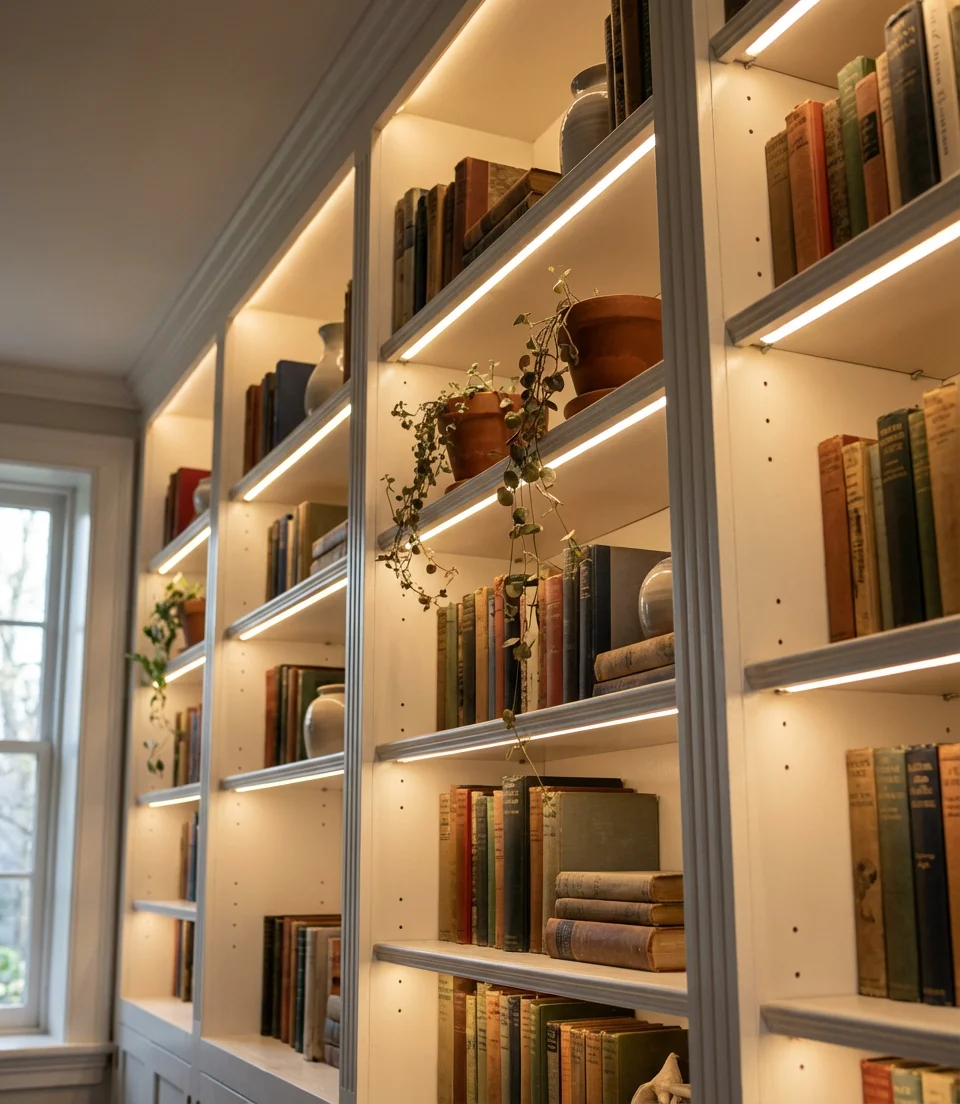
In terms of American lifestyle context, built-in shelving resonates especially strongly in the Northeast and Pacific Northwest, where homes tend to be older and buyers actively seek architectural character. A well-executed set of built-ins can add anywhere from $5,000 to $15,000 in perceived home value, according to several real estate professionals. For homeowners planning to sell within five years, it’s one of the few decorating investments with a measurable return—especially in markets where buyers are comparing homes that otherwise feel interchangeable.
13. Living Room Shelves for Small Spaces
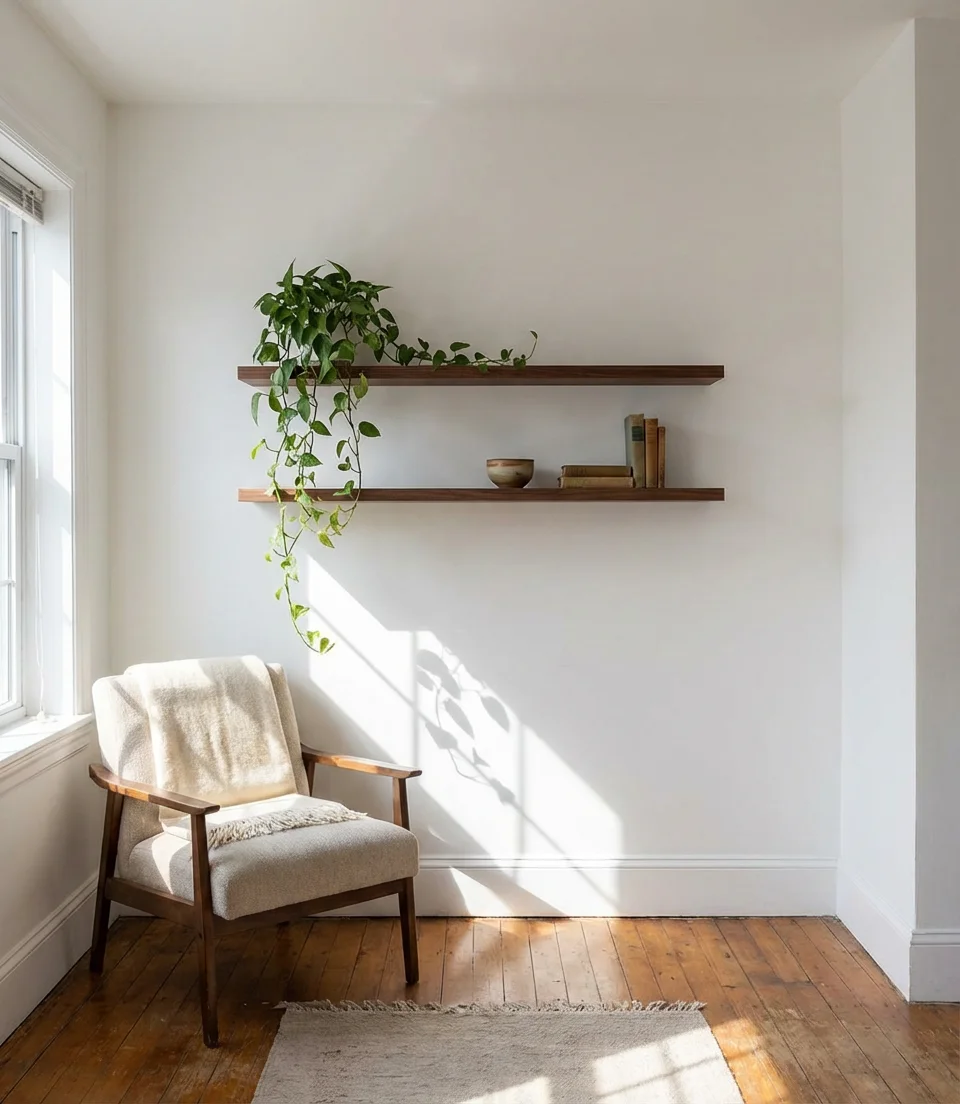
Small living rooms present real shelving challenges but also genuine opportunities—and the most successful solutions share one quality: they go vertical. Tall, narrow floating shelves or slim ladder-style units use wall height rather than floor space, keeping the footprint tiny while dramatically increasing storage and display capacity. This approach is one of those on-the-wall strategies that small-space dwellers in cities like New York, San Francisco, and Chicago have been perfecting for years, and the results can look just as polished as anything in a larger home.
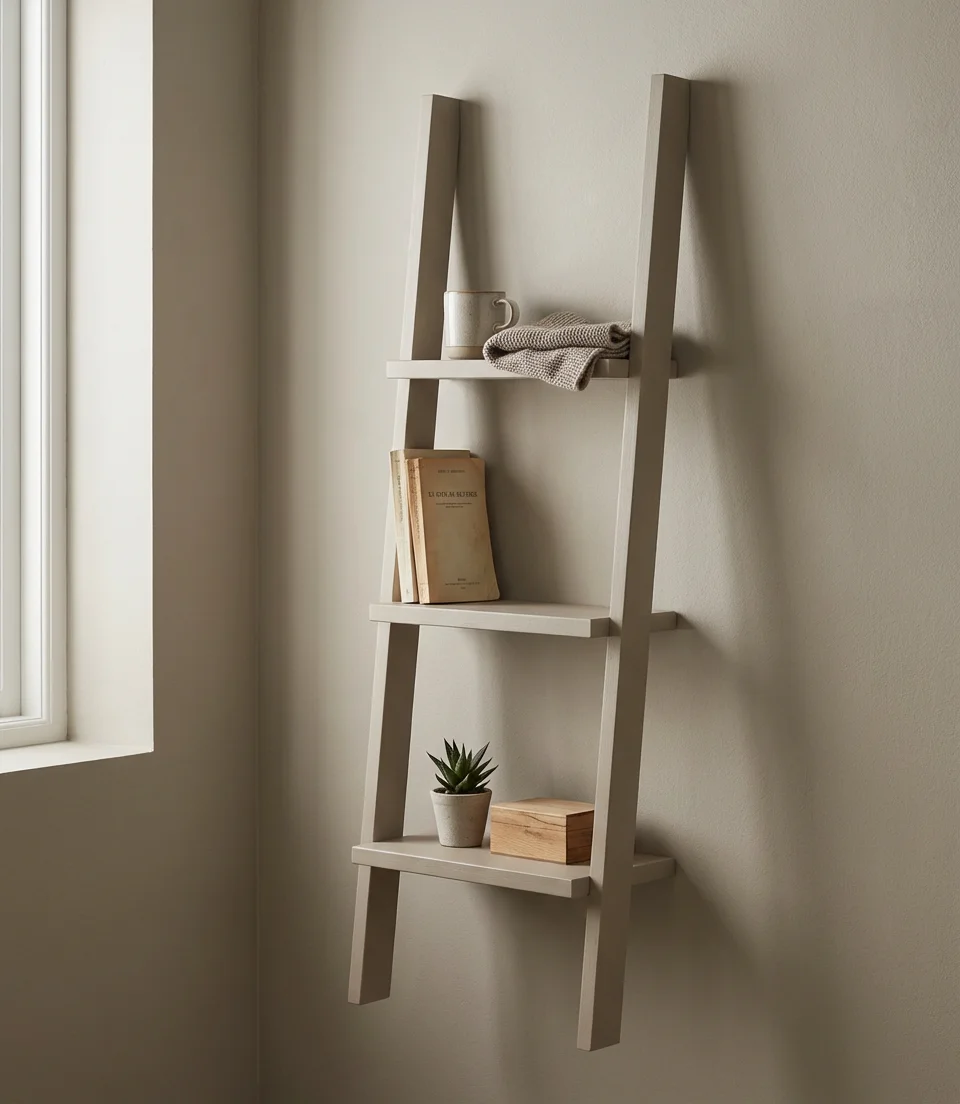
Where this style works best: rooms under 300 square feet that need shelving to serve triple duty as storage, display, and visual interest without eating into the already limited floor plan. Choose shelves in a finish that closely matches your wall color—when the shelf blends into the wall, it recedes visually and makes the room feel larger rather than more cluttered. Mirrored backs on enclosed shelf units can double the perceived depth of a small space in a way that feels genuinely clever rather than like a cheap trick.
14. Shelving Unit as a Room Divider
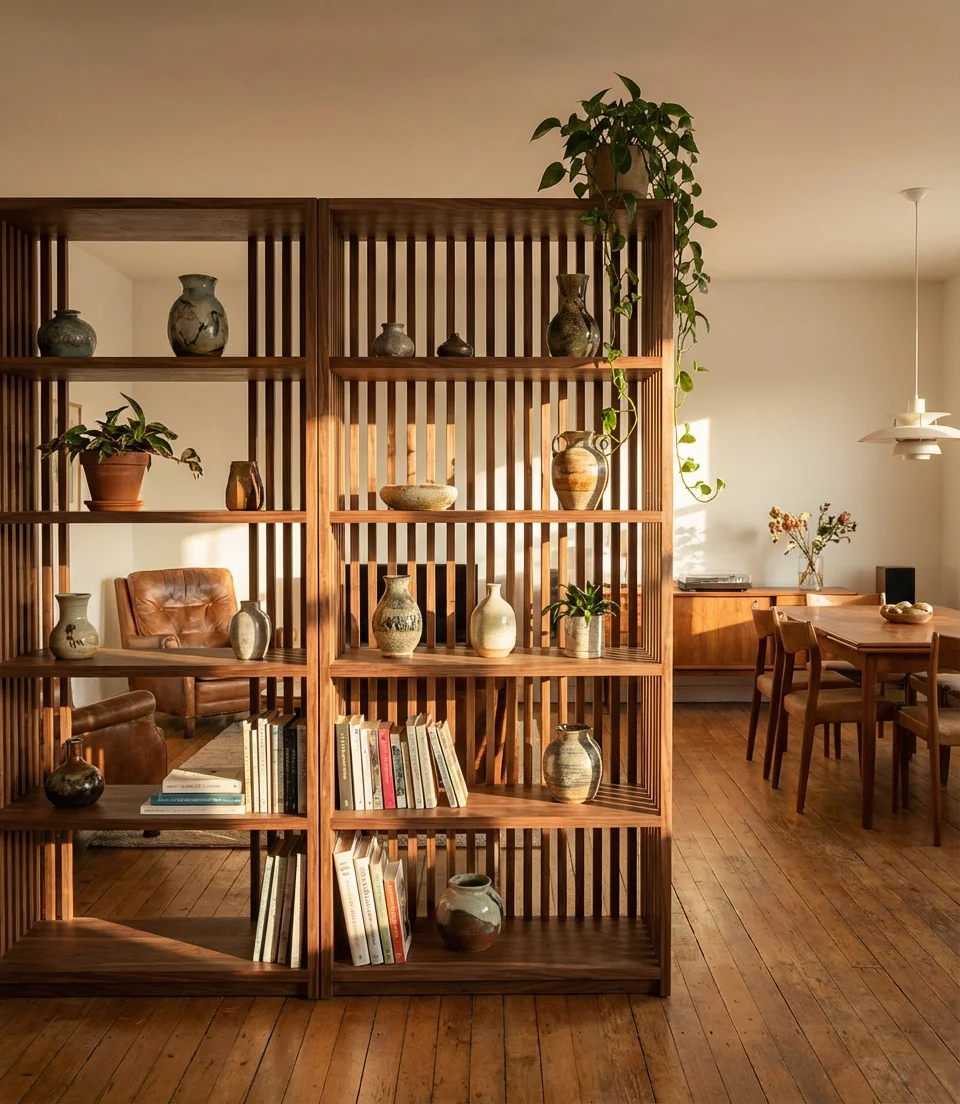
An open-back shelving unit used as a room divider is one of those ideas that looks like it belongs in an Architectural Digest spread but is completely achievable in an average American home. It separates a living room from a dining area or home office without completely closing off the space, maintaining airflow, sightlines, and natural light while creating a meaningful sense of zones. The shelves facing each room can be styled differently—books and plants on the living room side, practical storage on the office side—making the piece genuinely work harder than any wall could.
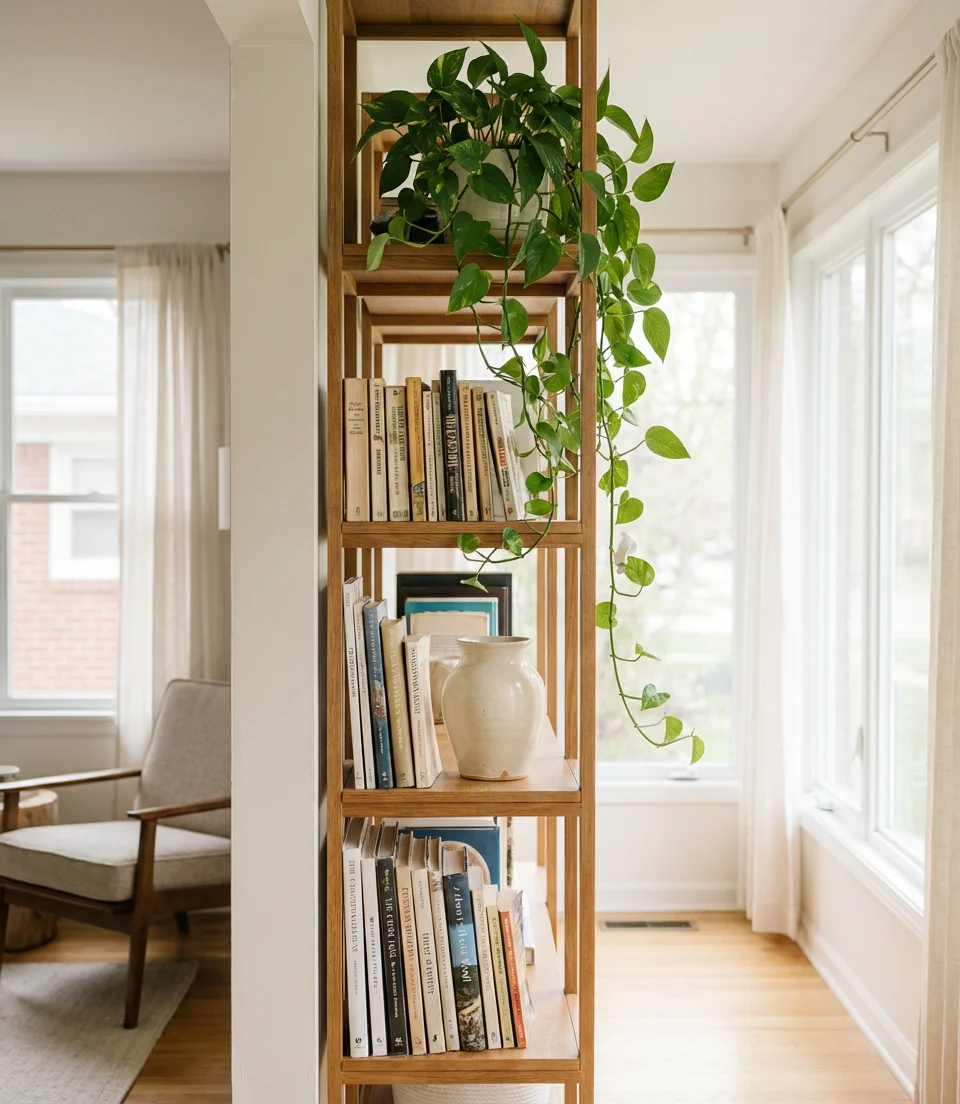
The most important practical consideration with a divider shelving unit is stability: a freestanding bookcase that isn’t anchored to the ceiling or wall becomes a real tipping hazard, especially in households with children or in earthquake-prone regions like California and the Pacific Northwest. The best approach is a low-profile unit under five feet tall that doesn’t require ceiling mounting or a taller unit with a secure wall anchor on one side. This keeps the look clean and the room safe without compromising the open, airy effect you’re after.
15. Tv Unit with Integrated Shelf Display
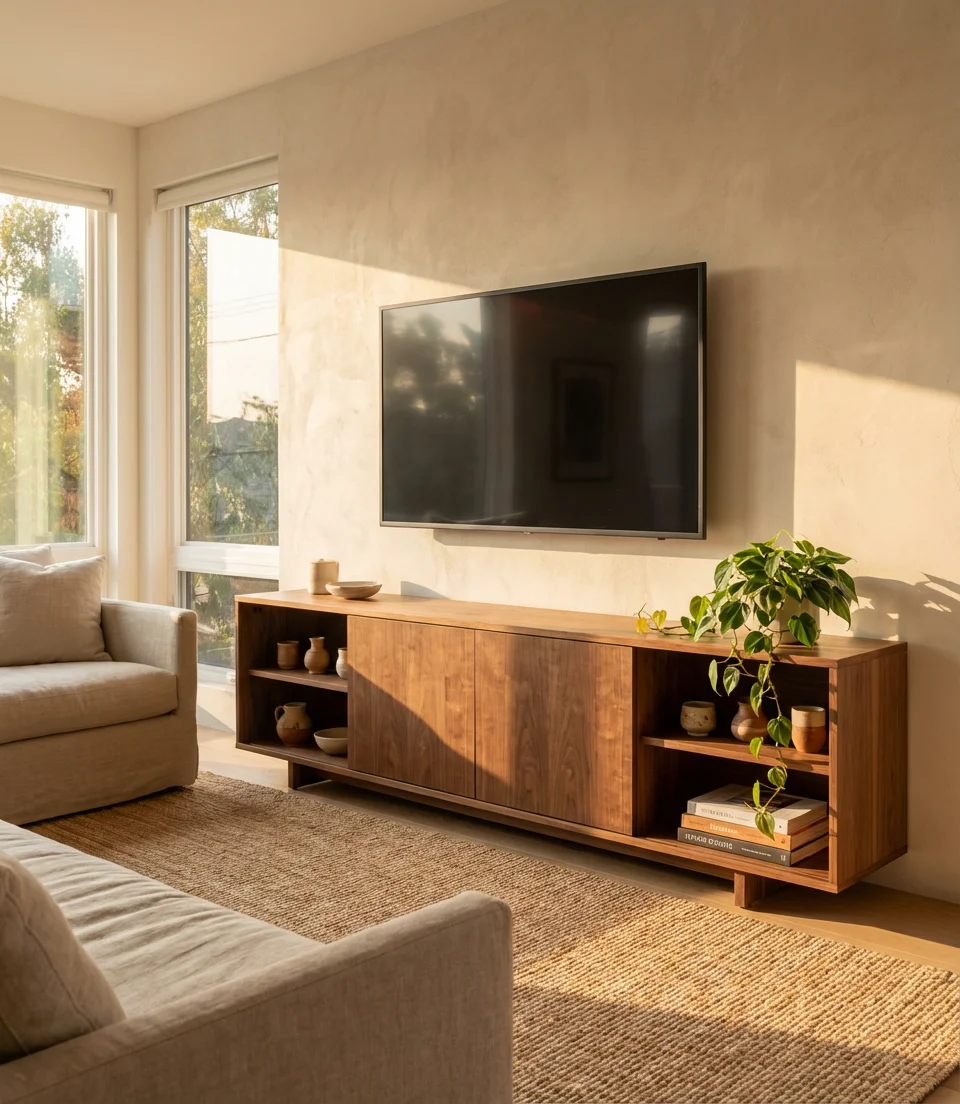
A media console or tv unit with integrated open shelving has become the workhorse piece of the modern American living room. It consolidates everything—the screen, the gaming consoles, the streaming devices, and the record player—into one considered piece of furniture that also carves out display space for the objects that make a home feel personal. When chosen well, these units eliminate the visual clutter that comes from separate components scattered across a wall and replace it with something that looks purposeful and put-together.
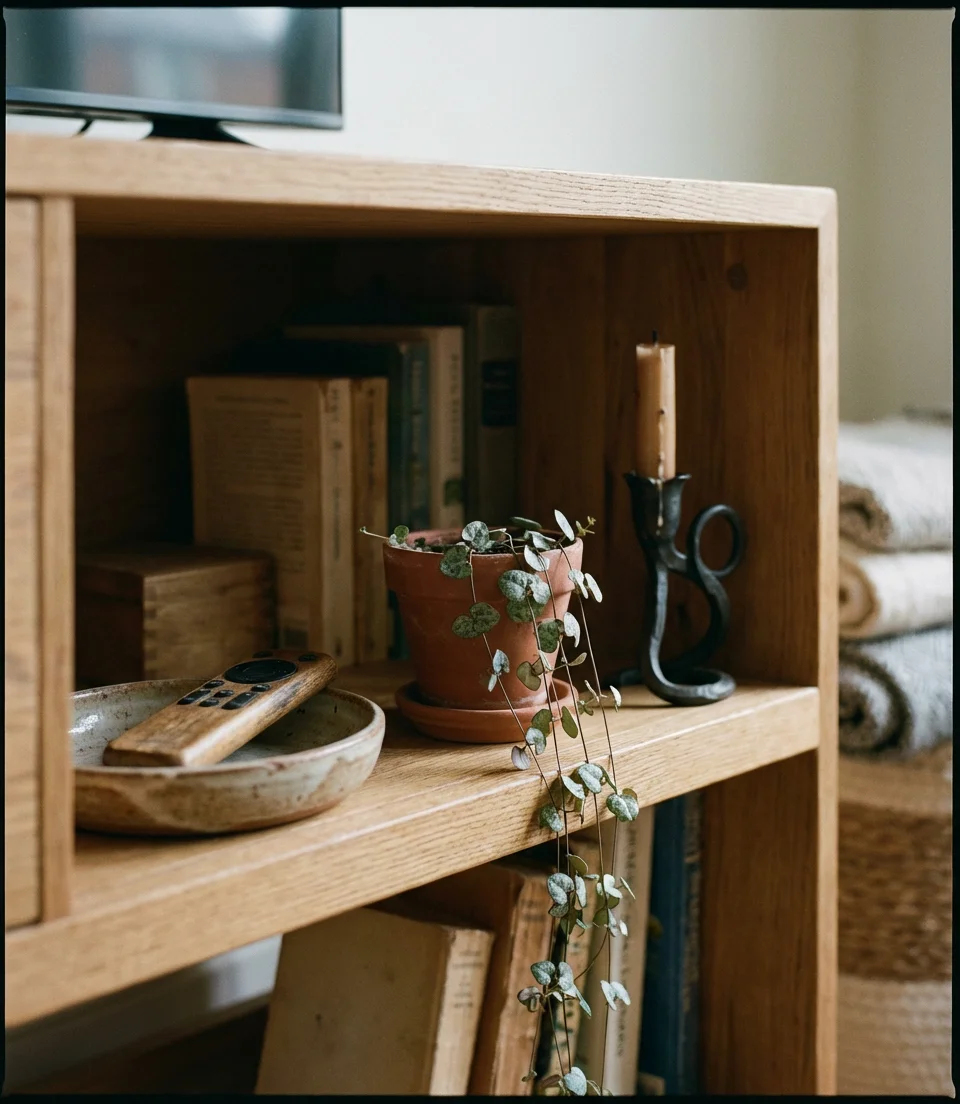
Real homeowners who invest in a quality TV unit with integrated shelving consistently mention the same benefit: they stop seeing the television as an eyesore and start seeing the whole wall as a designed space. The shelves beside or above the screen become an opportunity rather than an obligation. Styling those open compartments with a mix of functional items (remote control basket, cable organizer in a ceramic dish) and purely decorative ones (small sculptural objects, framed photos, trailing plants) is what elevates a media unit from a furniture store display to a genuinely personal living space.
16. Wall-to-Wall Shelves for a Library Feel
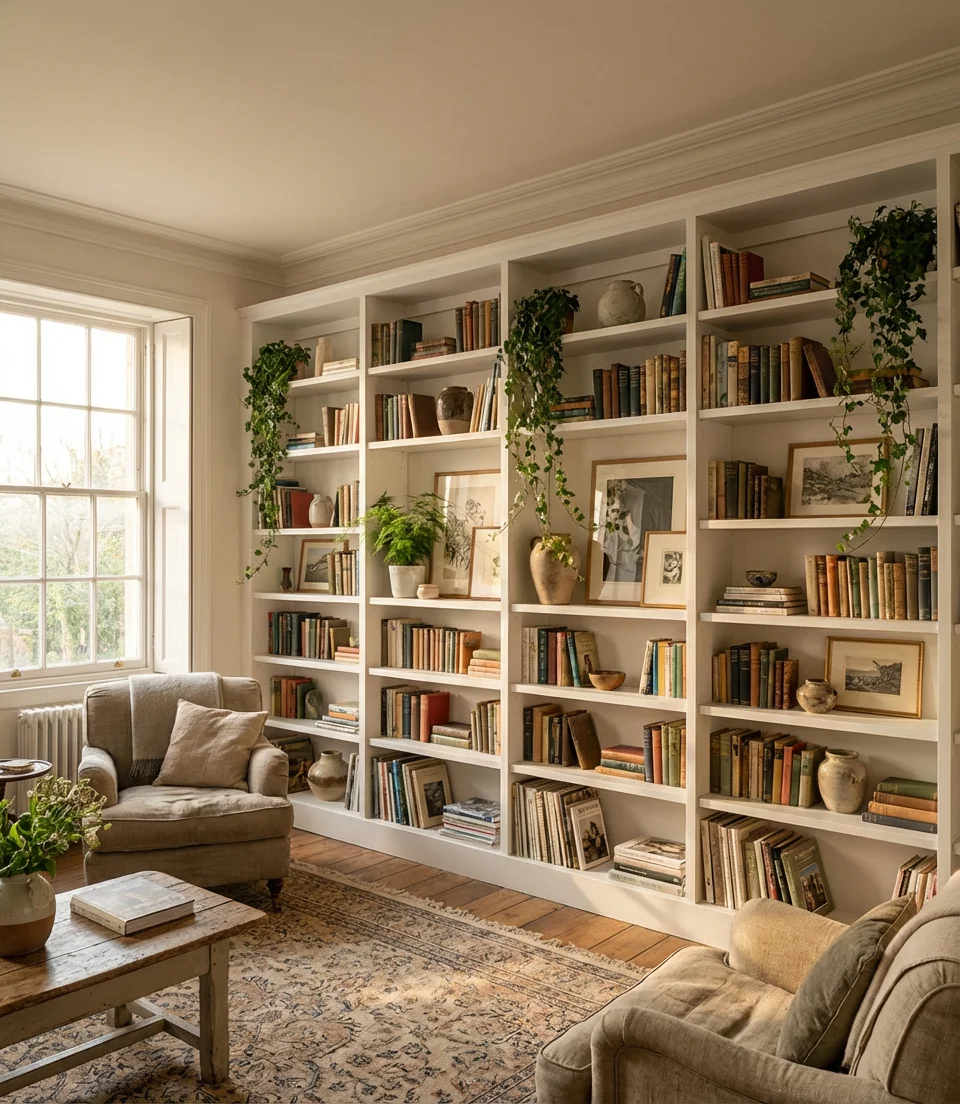
Floor-to-ceiling, wall-to-wall shelving gives a living room the kind of depth and character that no amount of art or furniture alone can replicate. The wall approach—treating an entire wall as one continuous shelving system—is having a massive moment in 2026, partly driven by the cozy library aesthetic that has dominated social media for the past few years. When done in a warm, painted finish like deep navy, forest green, or classic white, this look feels both dramatic and genuinely inviting at the same time.
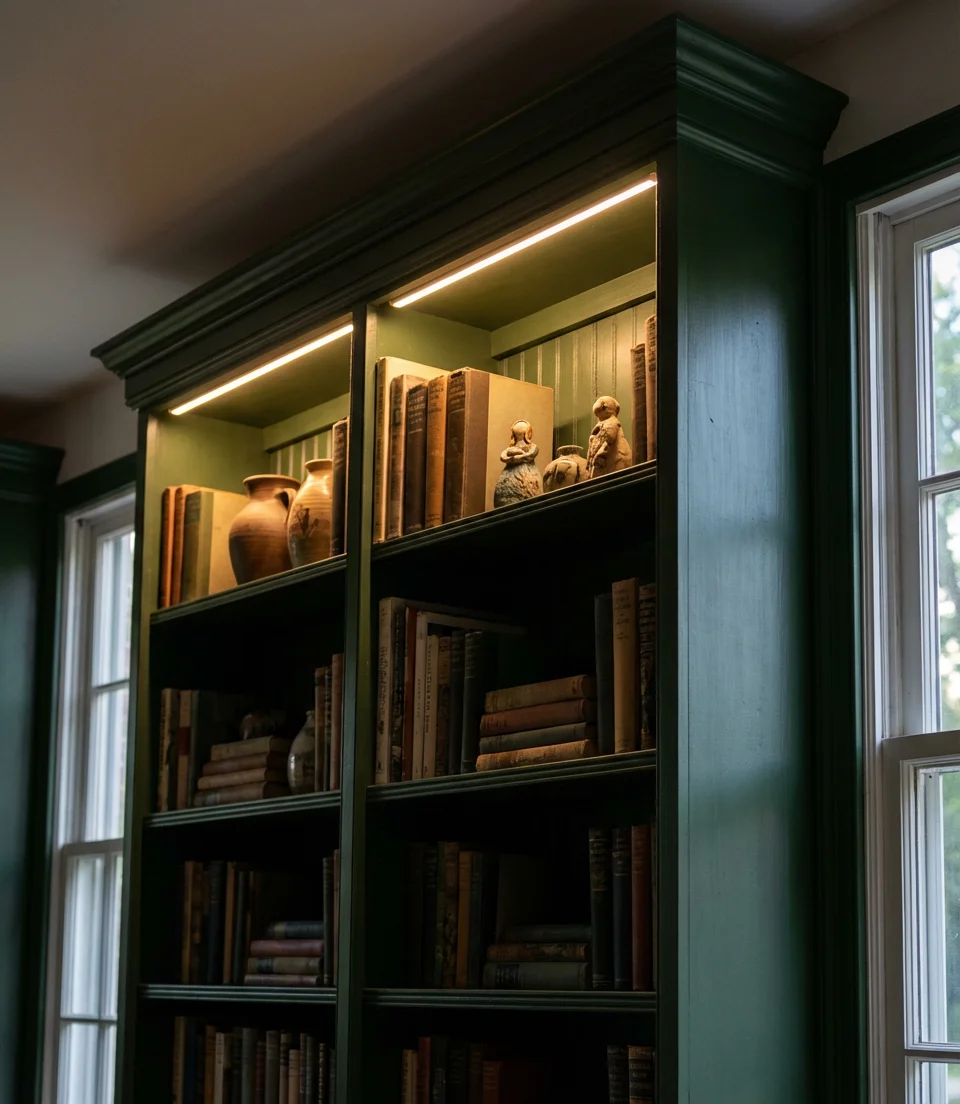
Expert commentary from interior designers consistently highlights one pitfall with this look: the lighting. A wall of shelves that isn’t lit becomes a dark, visually heavy mass that drags down the whole room. Recessed LED strip lighting along the underside of each shelf costs relatively little but transforms the entire effect—books and objects glow warmly, and the room gains the ambient richness of a boutique hotel library. Budget roughly $15 to $30 per shelf for lighting strips, and factor in a smart plug for easy dimming control.
17. Shelf Decor Around the Fireplace for Every Season
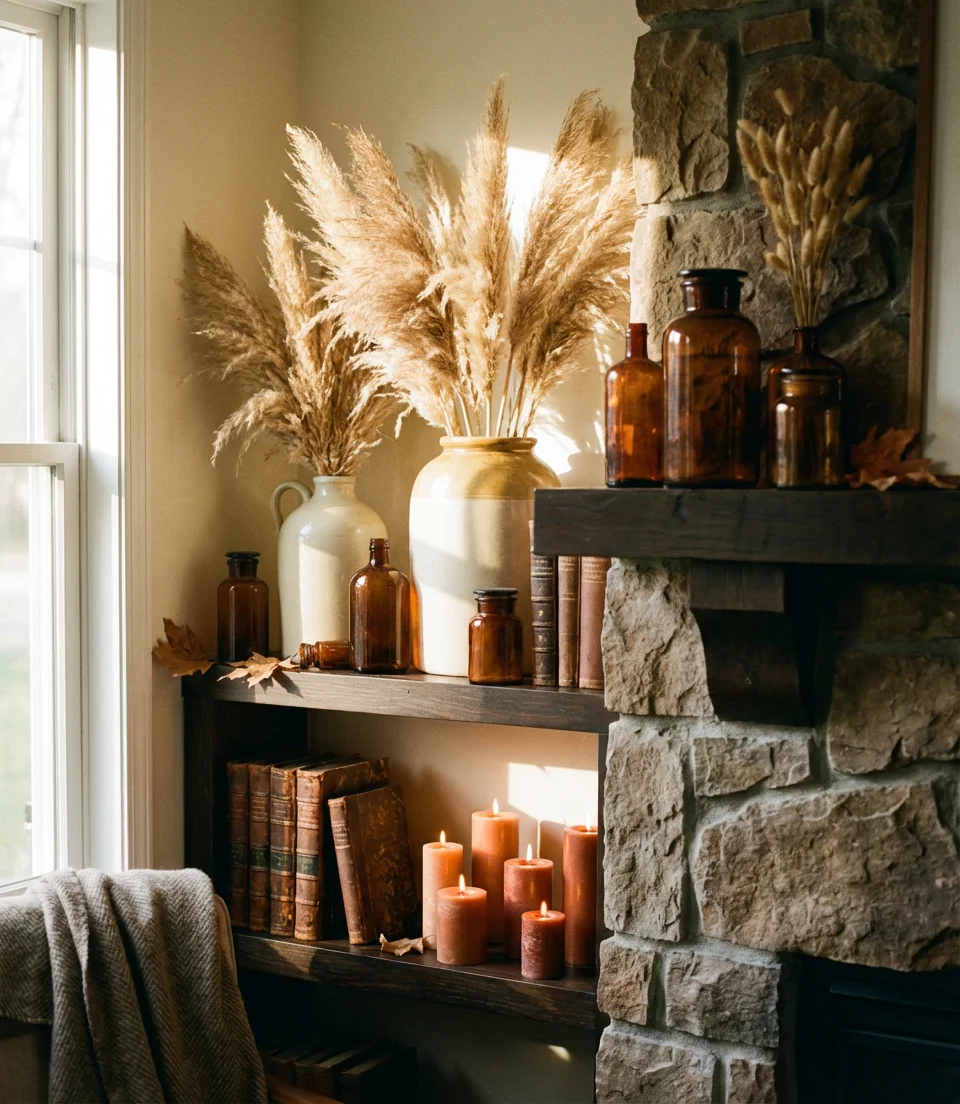
The shelves surrounding your fireplace don’t have to stay static year-round—in fact, treating them as a seasonal canvas is one of the most satisfying approaches to living room decor. In fall, layer in dried botanicals, amber glass vessels, and worn leather-bound books. In spring, bring in fresh greenery and pale linen textures. The fireplace wall already carries so much warmth architecturally that even small seasonal shifts in the surrounding shelves feel meaningful and complete rather than token or forced.
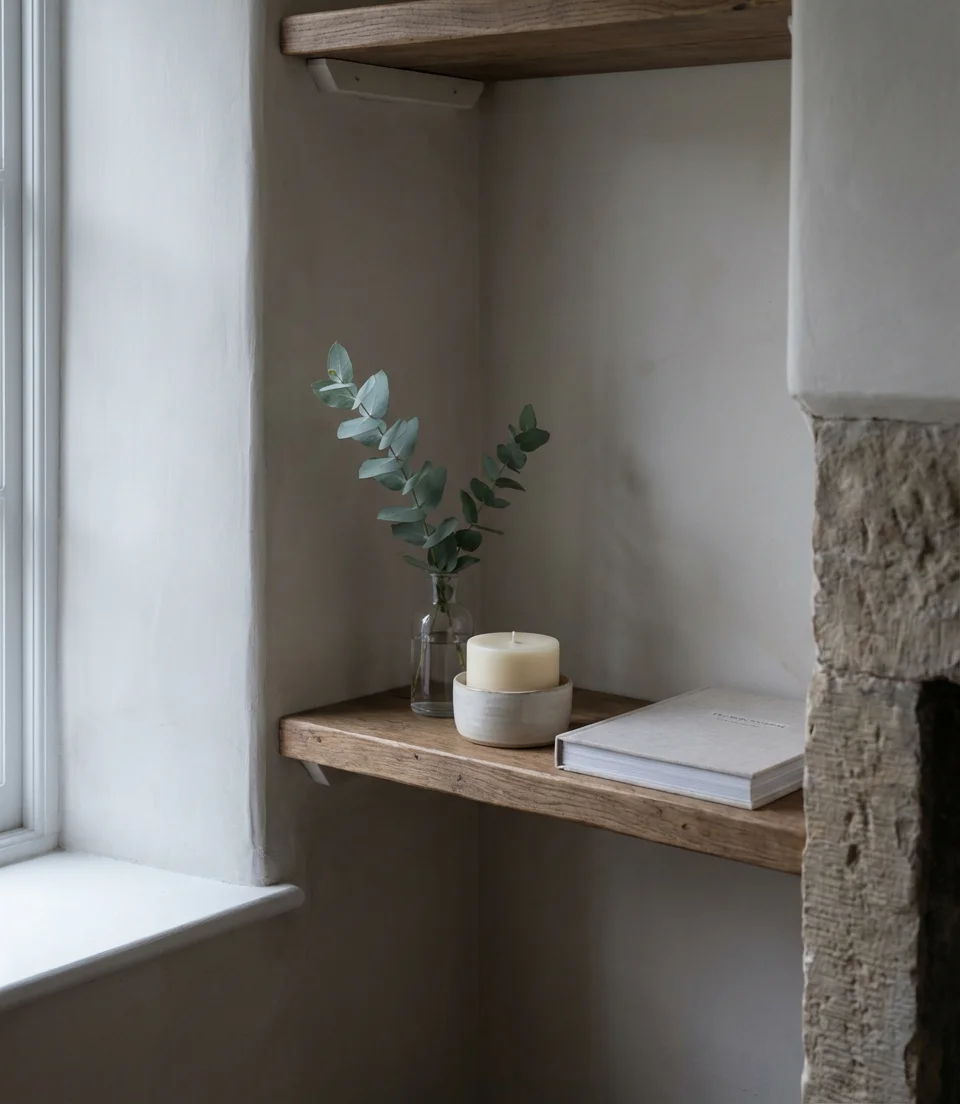
The key to making seasonal shelf updates feel effortless rather than laborious is keeping a core “anchor” arrangement in place year-round—perhaps a large ceramic vessel, a stack of meaningful books, and a sculptural object—and only swapping the accent pieces around those anchors. This reduces the time and decision fatigue involved in seasonal refreshes while keeping the display feeling fresh. Store off-season accent pieces in a labeled bin so the next transition takes minutes rather than an afternoon of rummaging through closets.
18. Minimalist Floating Shelf Arrangement
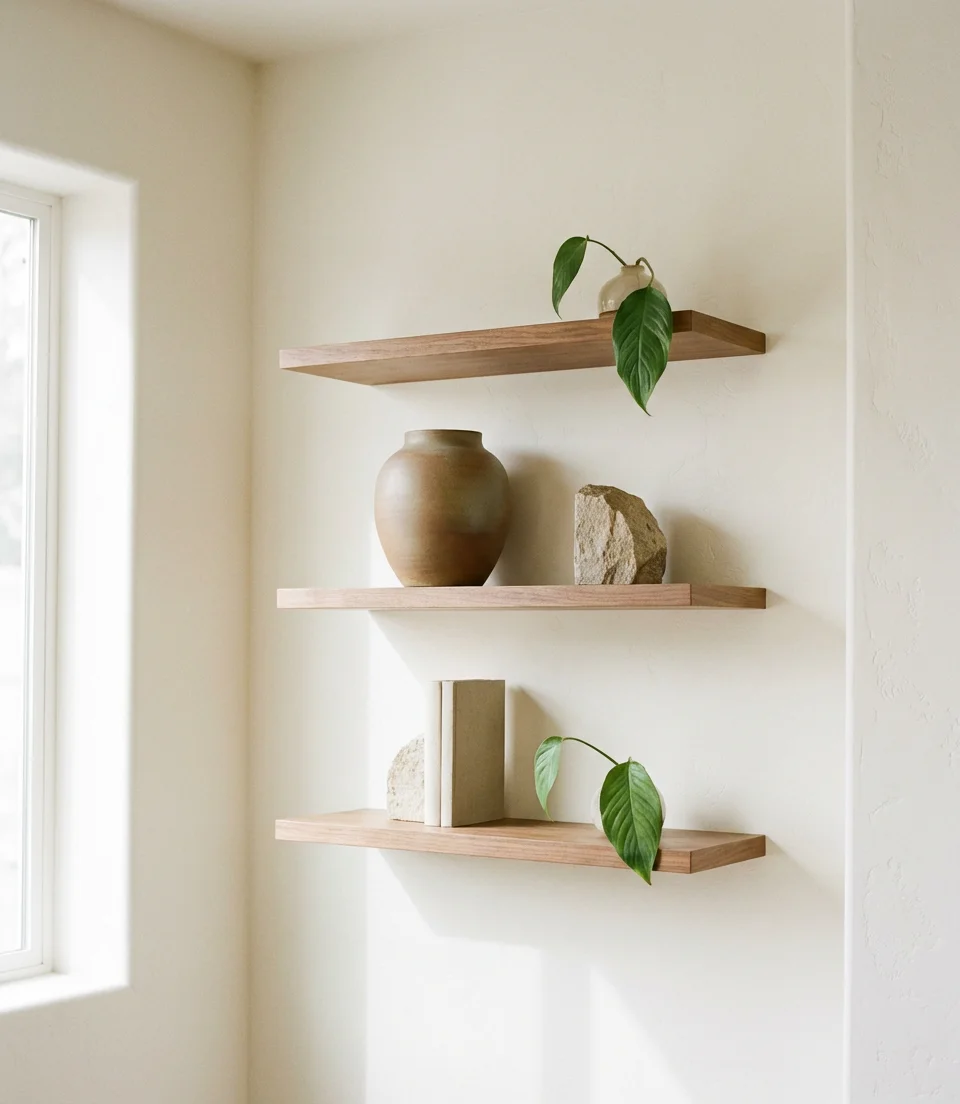
Not every living room needs a wall packed with objects and greenery—sometimes the most striking shelf arrangement is the most restrained one. Minimalist floating shelves styled with just two or three carefully chosen pieces per shelf can feel more luxurious than a fully loaded display, precisely because the negative space has room to register. This approach pairs naturally with clean-lined contemporary interiors, Japanese-influenced wabi-sabi aesthetics, and the kind of organic modern spaces that favor quality over quantity in every single decision.
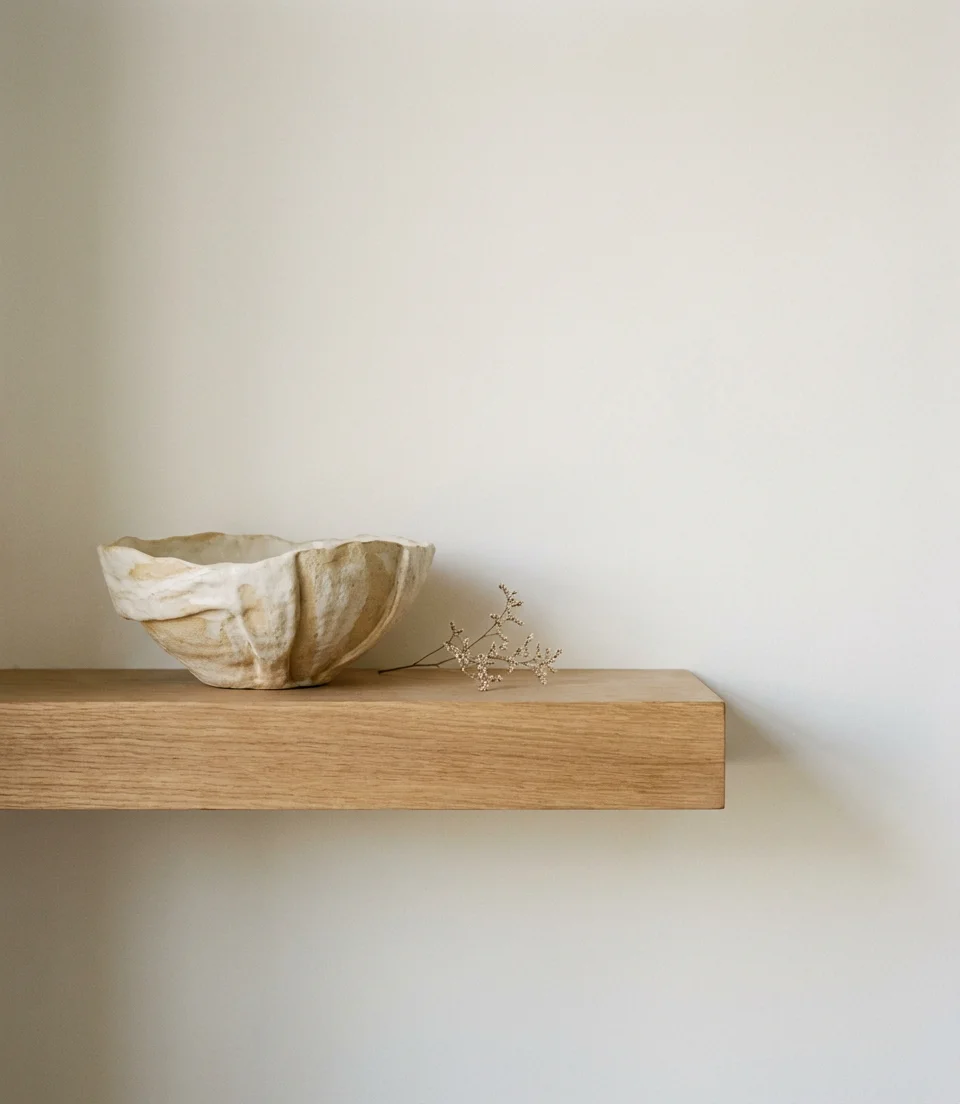
The common mistake in minimalist shelf styling is selecting objects that are too small for the shelf scale—tiny pieces get lost in all that intentional negative space, and the result looks sparse rather than edited. Match object scale to shelf depth: on a 10-inch deep shelf, your primary object should be at least 8 to 10 inches tall. Stone bookends, a single wide-mouthed ceramic bowl, or one oversized sculptural candleholder all hit the right visual weight. Consider the placement of each object as if it were in an art gallery, allowing it the space and consideration it deserves.
19. Warm Wood Shelves in a Neutral Living Room
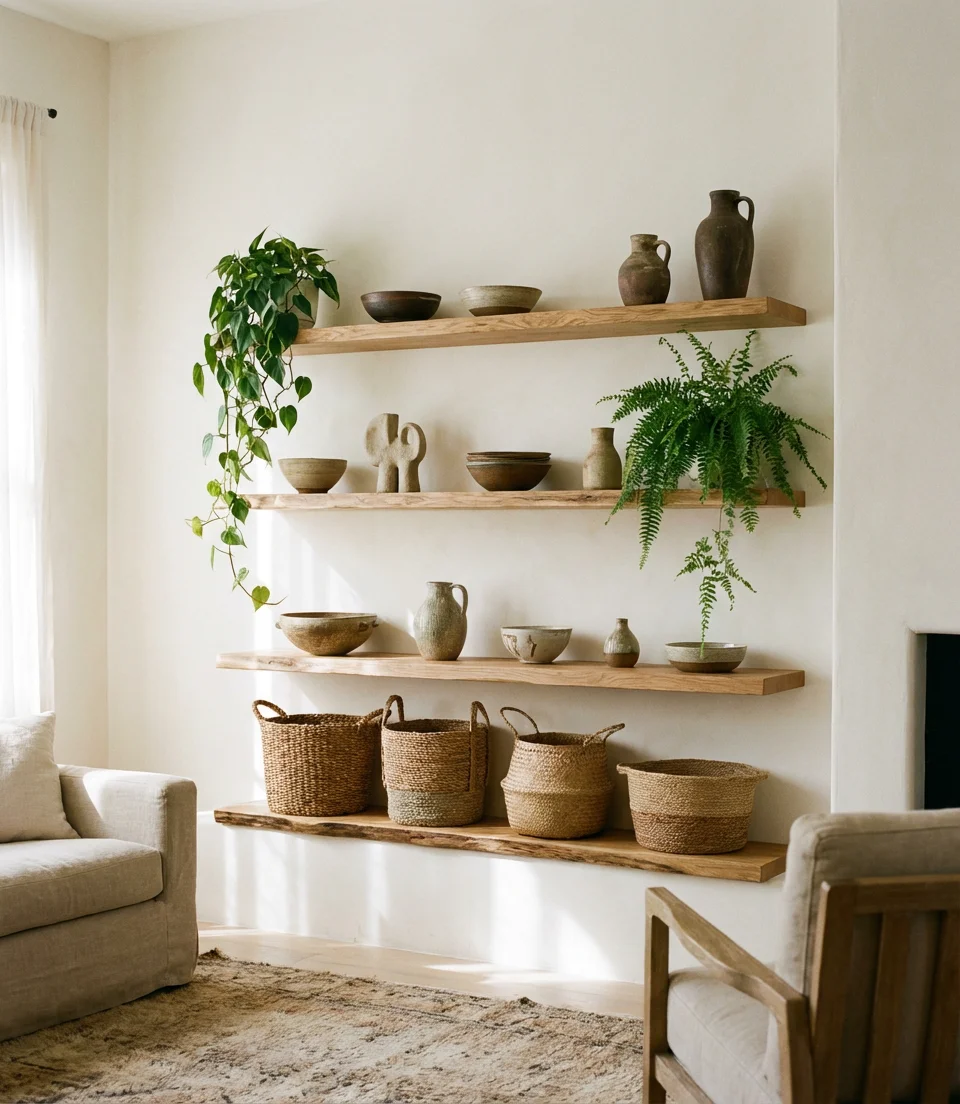
In a living room built around a neutral palette of creams, warm whites, and soft greiges, a set of warm wood shelves introduces exactly the organic texture and visual contrast the space needs without disrupting the calm. This is one of the most widely searched decor ideas on Pinterest right now, and the execution is less complicated than it might seem. Whether you go with live-edge oak, smooth walnut, or honey-toned ash, the wood grain itself does most of the decorative work—the shelves become the decor before you’ve placed a single object on them.
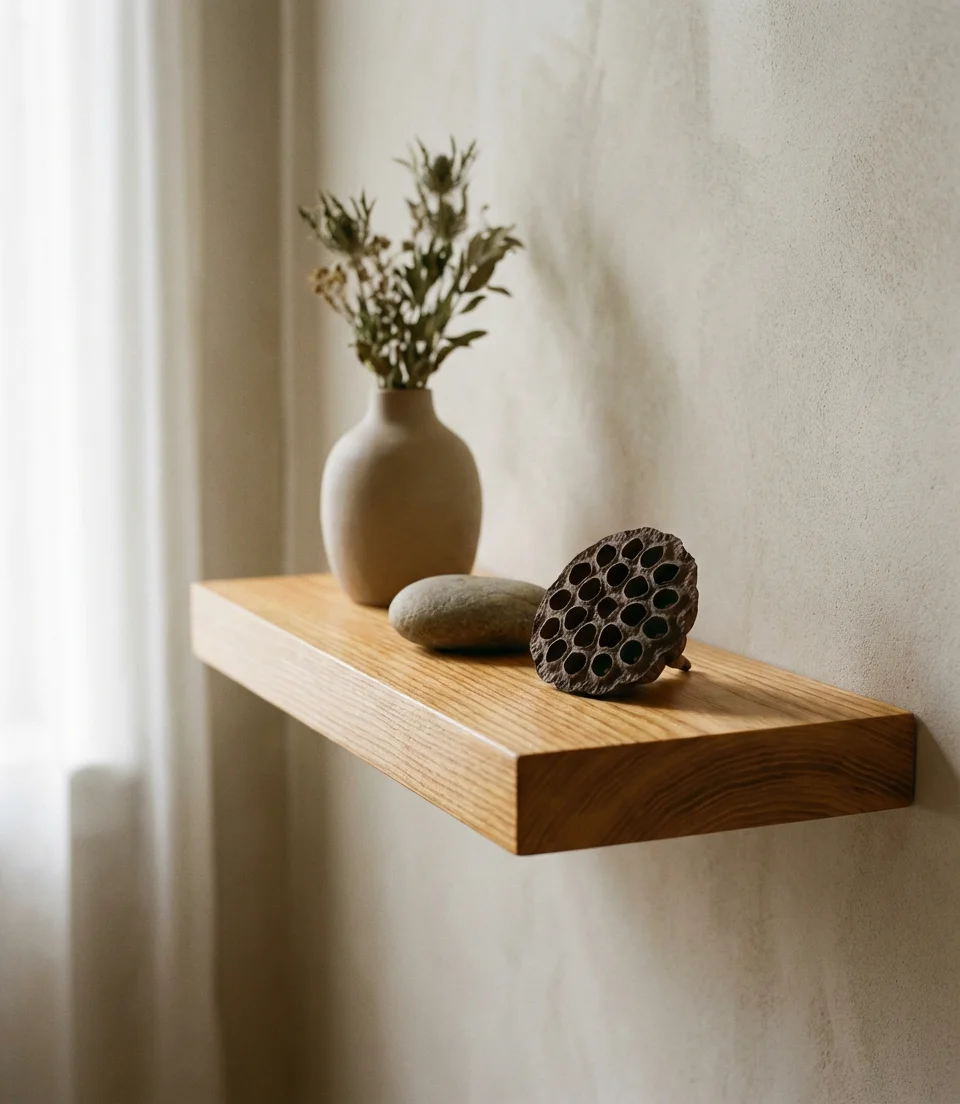
From a regional lifestyle standpoint, this warm-wood-on-neutral combination resonates particularly strongly in the mountain West—think Colorado, Utah, and Montana—where interiors draw heavily from the natural landscape and the desire for spaces that feel grounded and calm. It’s also a smart choice for homeowners who want a timeless look that won’t feel dated in a few years. Natural wood is one of the few materials that only improves in character as it ages, developing a patina that makes the shelves look more considered and intentional over time.
20. Colorful Shelf Styling for a Bold Living Room
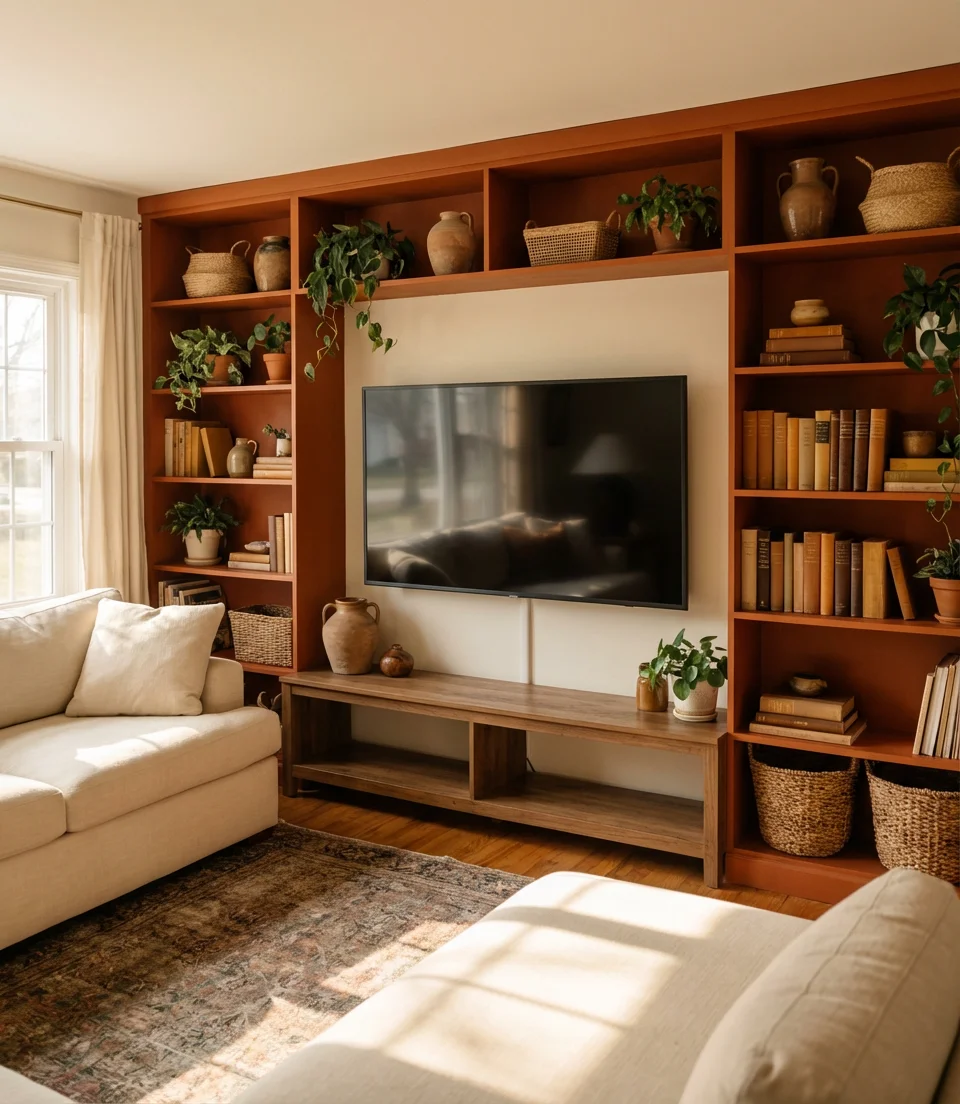
For living rooms that embrace color rather than retreat from it, shelf styling becomes one of the most joyful parts of the whole design process. Bold painted shelves—in deep terracotta, dusty sage, cobalt, or rich mustard—instantly transform a wall from background to focal point. Decor around tv areas benefits especially from this approach: colorful shelving flanking a screen draws the eye to the whole wall composition rather than letting the television dominate the room’s visual energy. The result is a living space that feels genuinely expressive and fully inhabited.
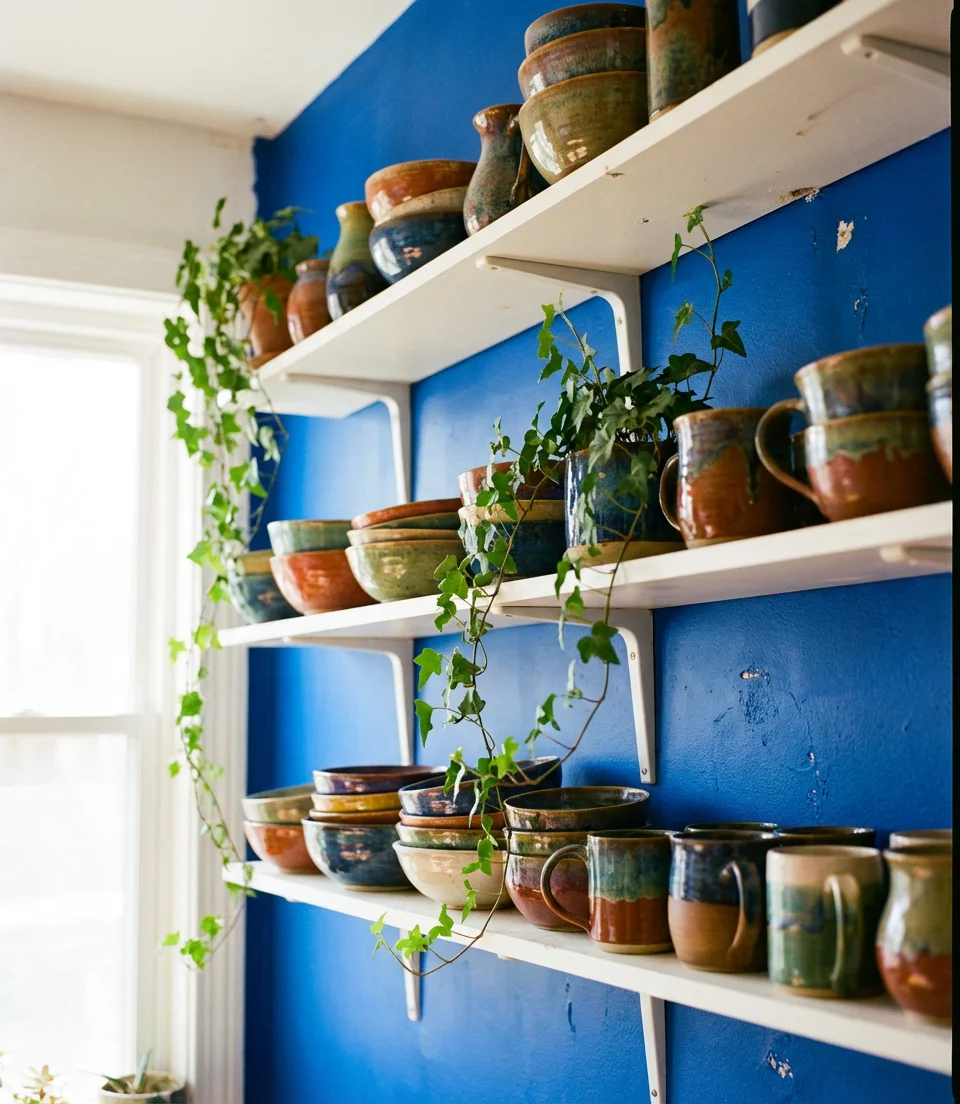
The practical insight renters and first-time homeowners need here: you don’t have to paint the shelves themselves to get a colorful effect. Painting the wall behind floating shelves in a bold accent color—while keeping the shelves themselves in white or natural wood—creates the same visual drama with far less commitment. If you’re renting and can’t paint at all, removable wallpaper or fabric panels behind shelves can bring in the same color story with zero permanent impact on the walls. Peel-and-stick options from brands like Tempaper and Chasing Paper have genuinely improved in quality and are well worth the investment.
21. Open Shelves Styled with Books and Art
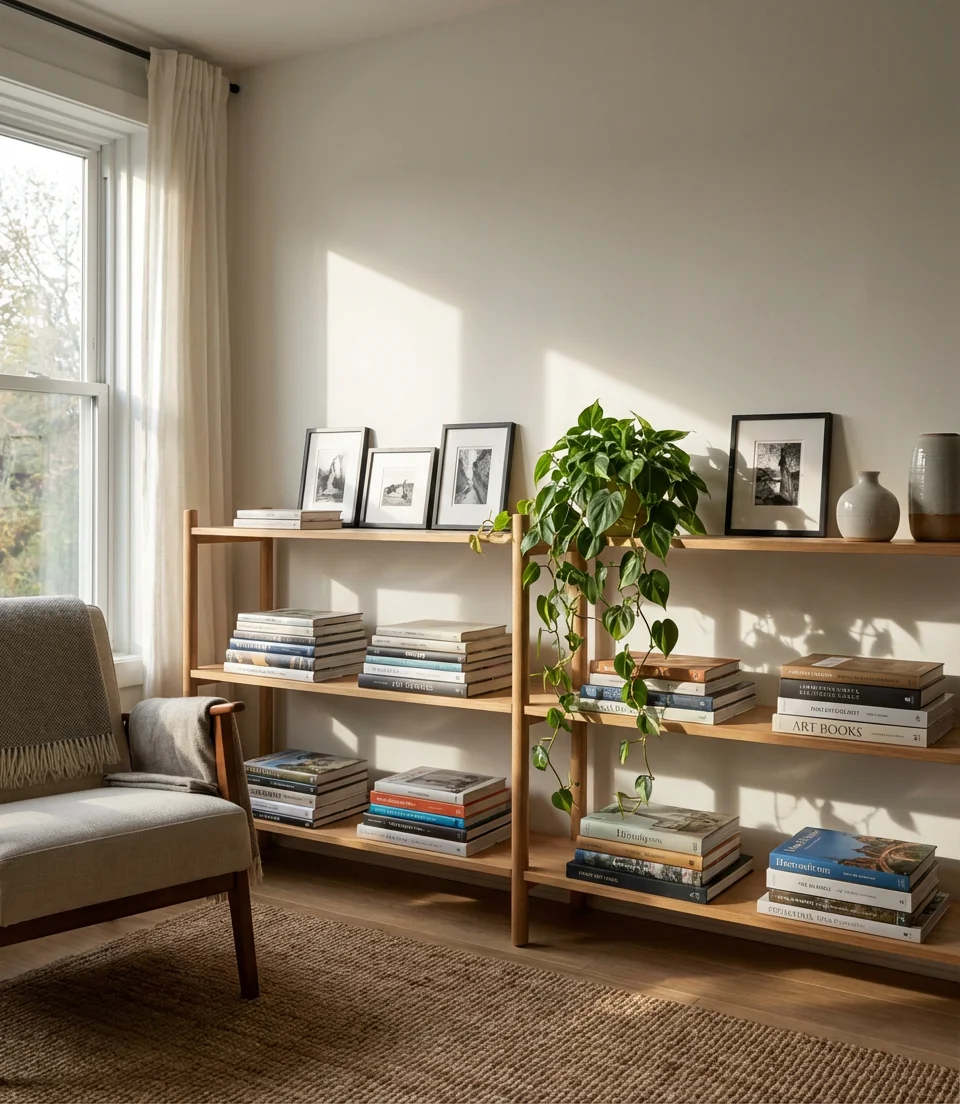
Books and art together on open shelves are a pairing with almost infinite creative possibility, and it’s one of the most genuinely personal ways to decorate a living room wall. Stack books horizontally to create platforms for small objects, then lean framed prints or small original paintings against the back of the shelf rather than hanging them. This relaxed, layered approach to wall decor makes the display feel like it grew naturally from the life lived in the room rather than being installed from a showroom floor sample.
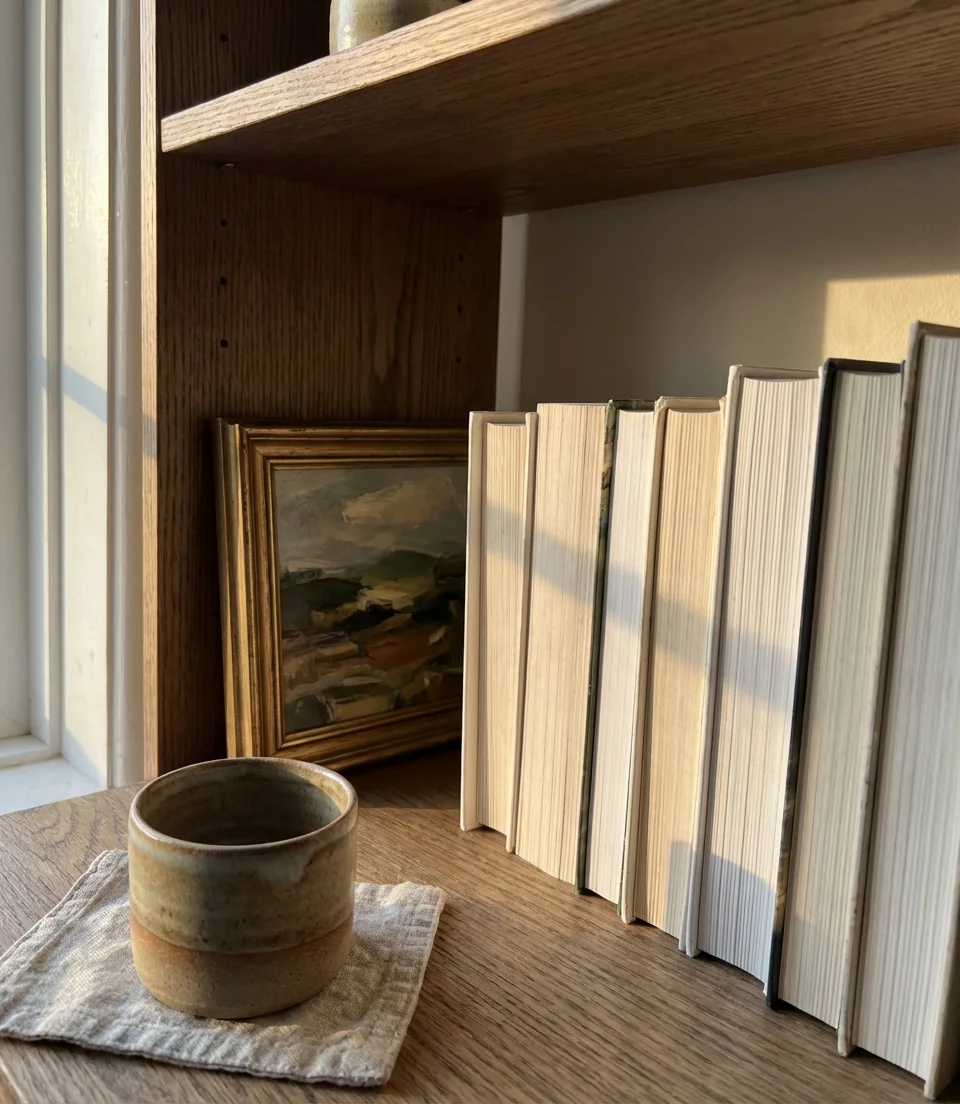
American homeowners who genuinely love books often struggle with how to display them without the shelves looking like a library overflow rather than a curated collection. The answer is ruthless editing: pull out the volumes with the most beautiful spines or the most personal meaning, and store the rest elsewhere. A shelf of 12 well-chosen books displayed with care will always look better than 40 books crammed in tightly. Grouping books by spine color rather than author or subject sounds counterintuitive, but it’s one of the fastest ways to bring visual order to a book-heavy shelf arrangement.
22. Fireplace Ideas with Shelves and a Sofa Setup
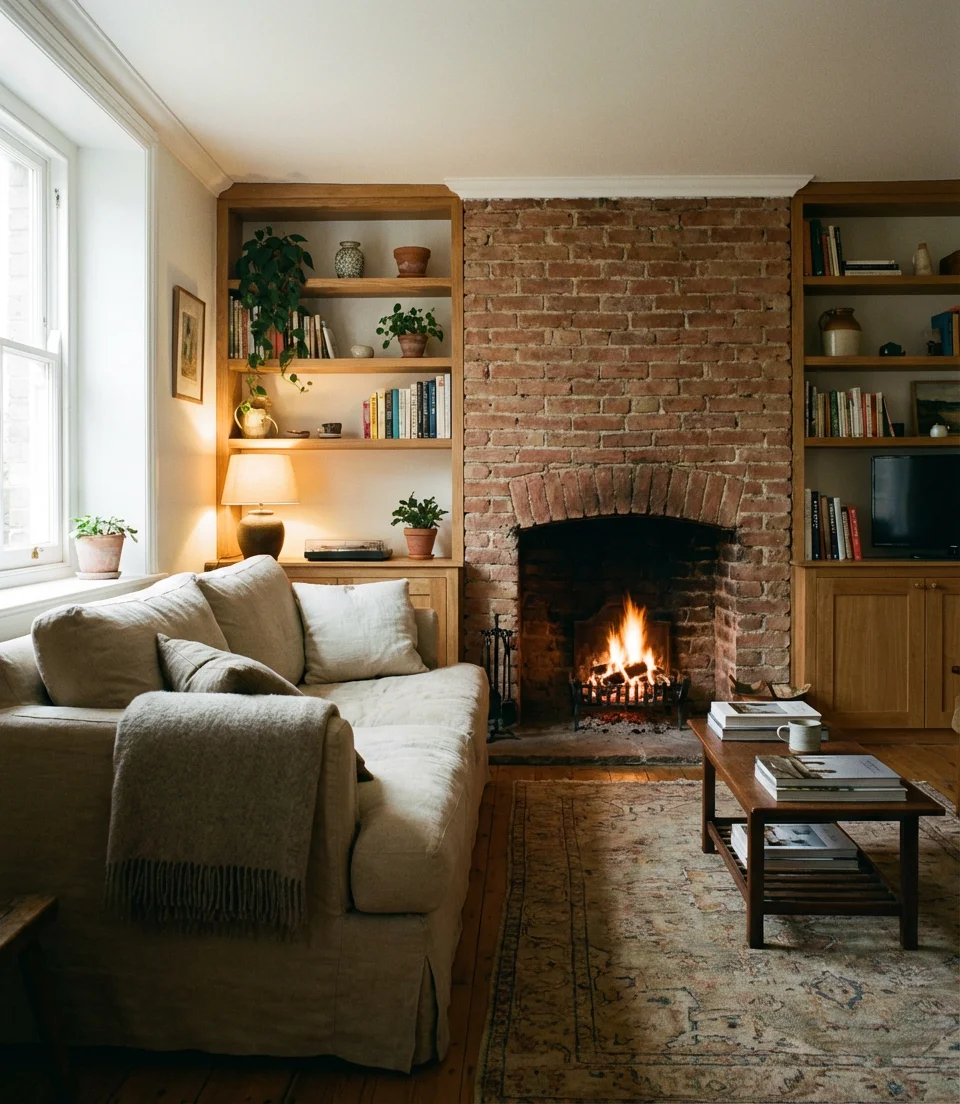
Combining a fireplace, strategically positioned sofa, and strategically positioned shelves into a cohesive living room composition is the pinnacle of cozy, intentional interior design. The fireplace ideas that resonate most on Pinterest in 2026 aren’t about grand architectural statements alone—they’re about the relationship between the fireplace wall and the seating that faces it. When shelves frame the firebox and the sofa is angled just right, the room naturally orients around warmth and conversation in a way that feels both timeless and deeply human.
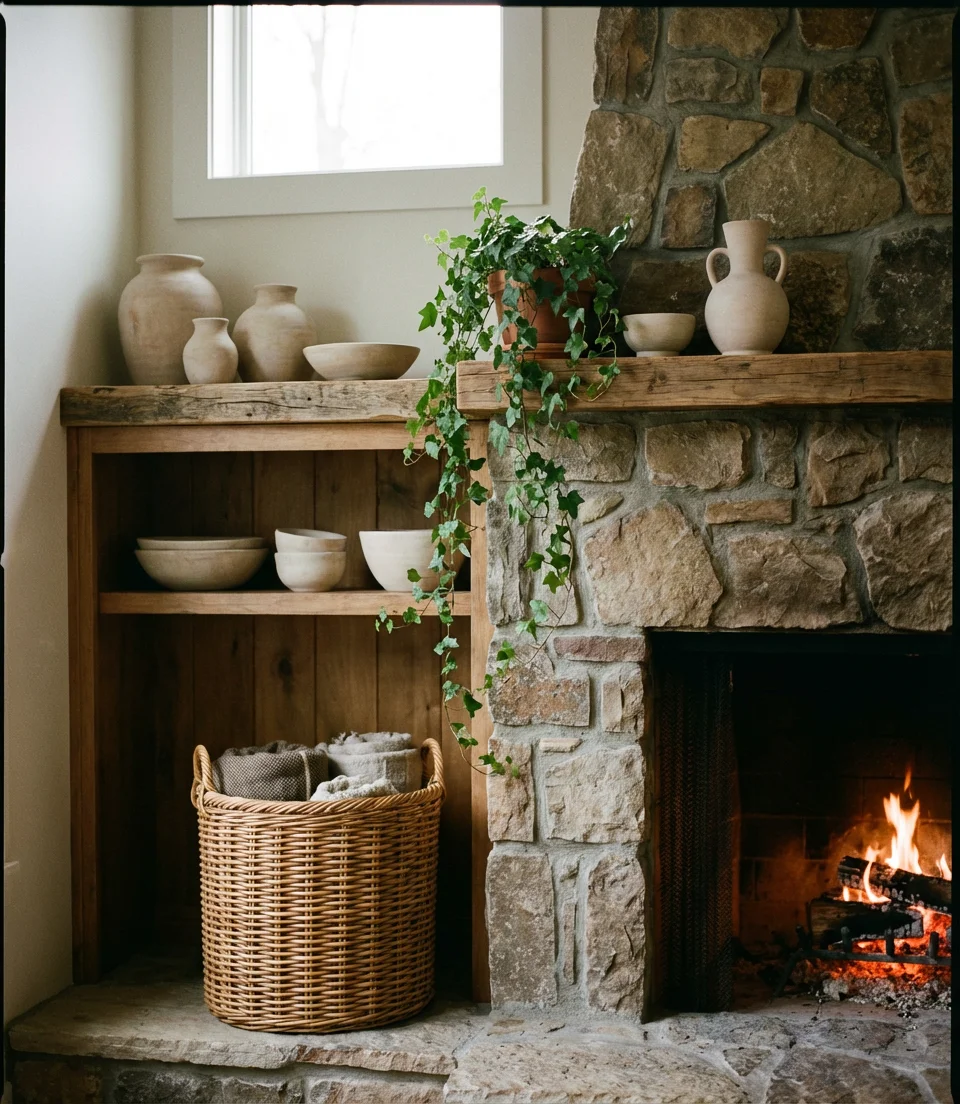
The ideal sofa-to-fireplace distance for both visual balance and actual warmth is between 6 and 10 feet—close enough to feel the ambiance of the fire, far enough that the shelves on either side are fully visible without craning your neck. If your living room is deeper than that, an area rug anchoring the sofa in the fireplace’s orbit helps draw the seating zone closer visually without physically moving anything. The outcome is the kind of layered, considered setup that makes a living room feel like the most magnetic room in the house—the place everyone naturally gravitates toward the moment they walk through the door.
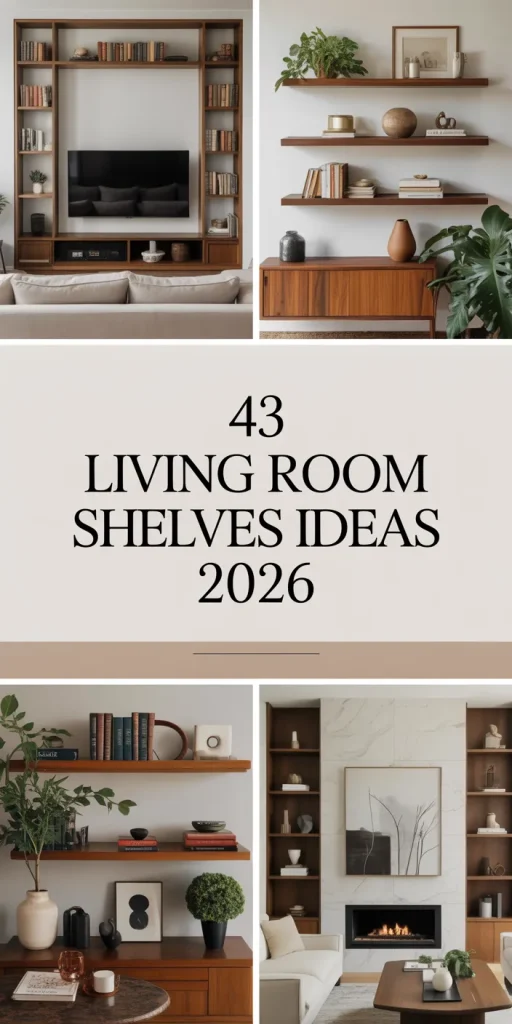
These shelf ideas for the living room are just a starting point—your own home, your own collection of objects, and your own sense of what feels right will always be the best guide. Which of these ideas sparked something for you? Drop your thoughts in the comments below, share which direction you’re leaning for your space, and feel free to ask questions—this community loves talking through the real-life details of making these ideas work in actual homes.