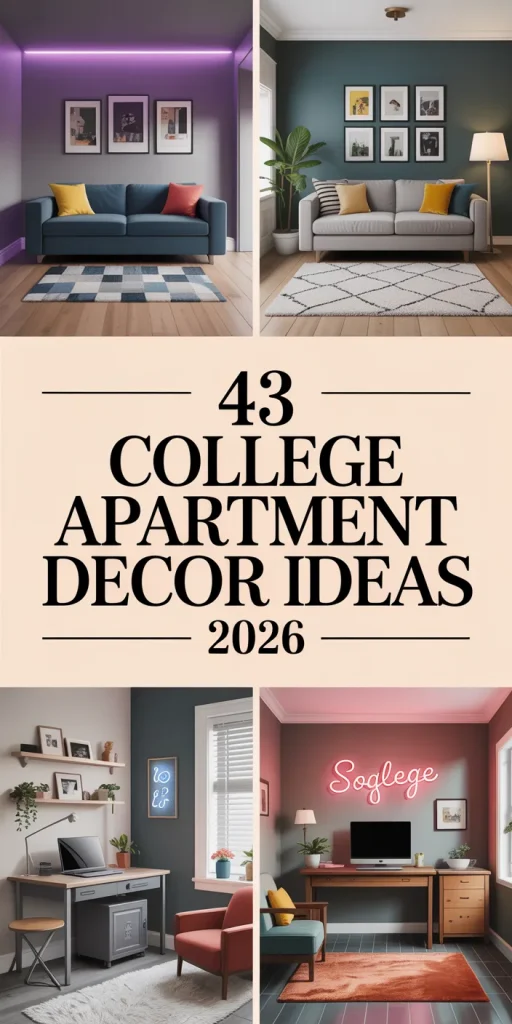
43 Fresh College Apartment Decor Ideas for 2026: Budget-Friendly & Stylish

College apartment decor in 2026 is all about making the most of limited square footage while expressing personal style on a realistic student budget. Whether you’re moving into your first off-campus place or refreshing a cramped dorm alternative, the challenge remains the same: how do you create a space that feels like home without breaking the bank? Americans are flocking to Pinterest for visual inspiration that blends affordability with aesthetic appeal, searching for clever DIY solutions and cozy arrangements that work in small spaces. This guide brings together practical ideas that address everything from transforming tiny bedrooms into restful retreats to styling shared living rooms with personality and warmth.
1. Tapestry Feature Wall for Instant Personality
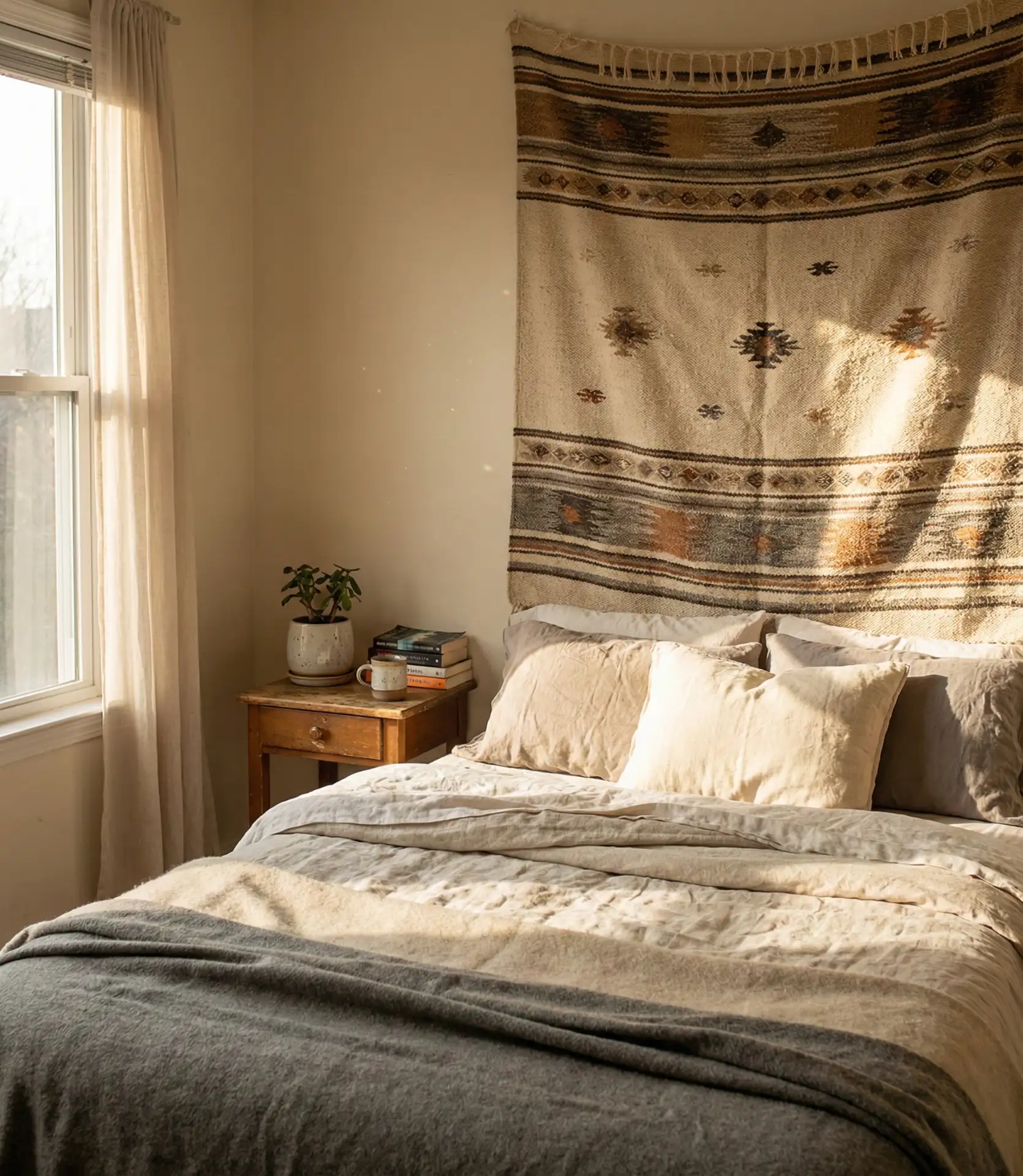
A large tapestry transforms a blank rental wall into a statement piece without damaging surfaces or requiring landlord approval. This approach works beautifully in bedroom spaces where you want to add color and texture above your bed or in a living room to define a conversation area. The fabric softens acoustics in boxy apartments while hiding imperfections in older buildings. Choose patterns that reflect your personality—botanical prints, geometric designs, or vintage-inspired motifs all create different moods.
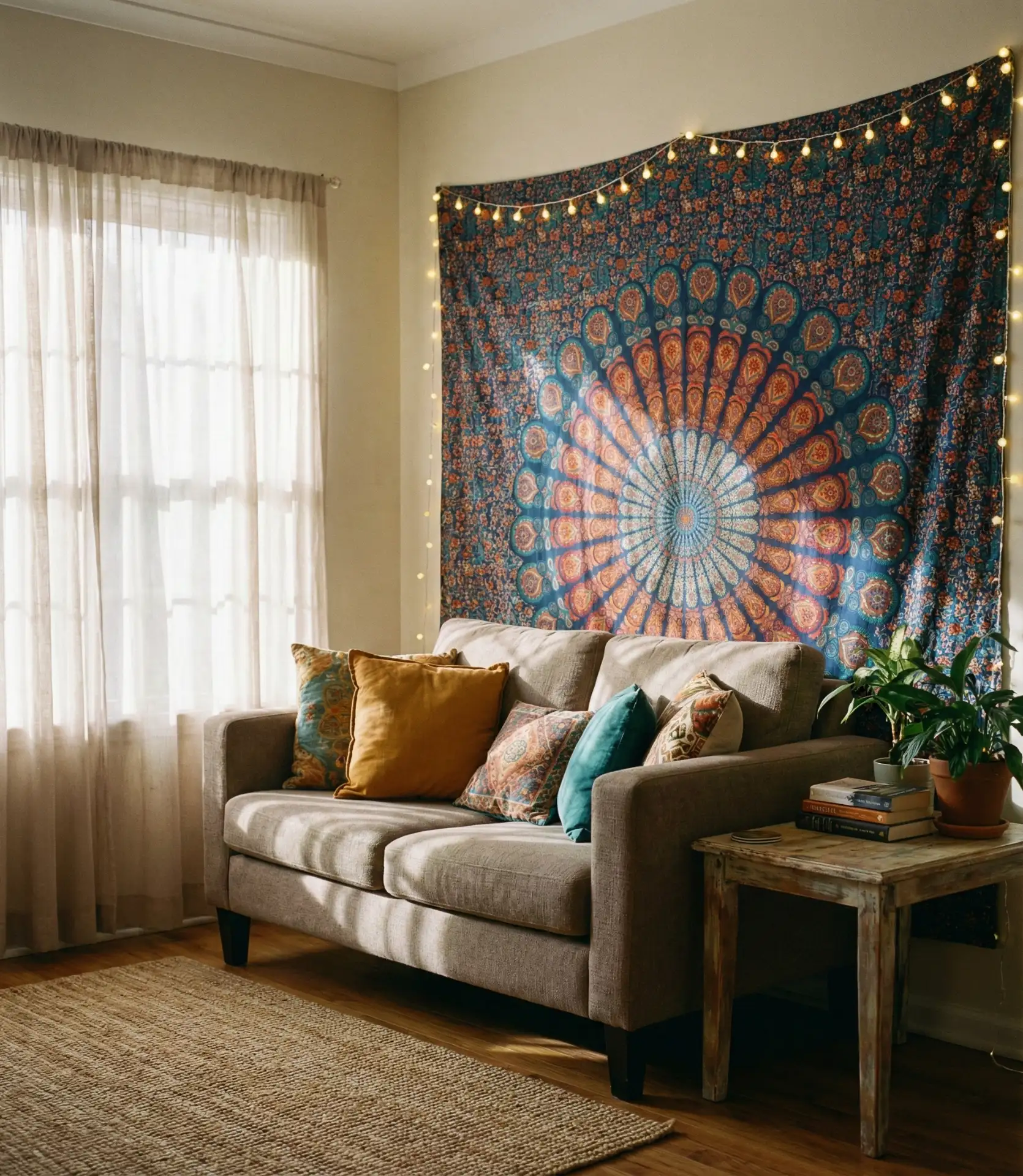
Tapestries offer one of the best returns on investment for college decorating—most quality pieces range from twenty to fifty dollars and instantly elevate a space that might otherwise feel institutional. They’re also completely portable, rolling up easily when you move to your next apartment. The key is choosing a size that makes an impact; go larger than you think you need to avoid the “postcard on a wall” effect that makes spaces feel even smaller.
2. Floating Corner Desk Setup
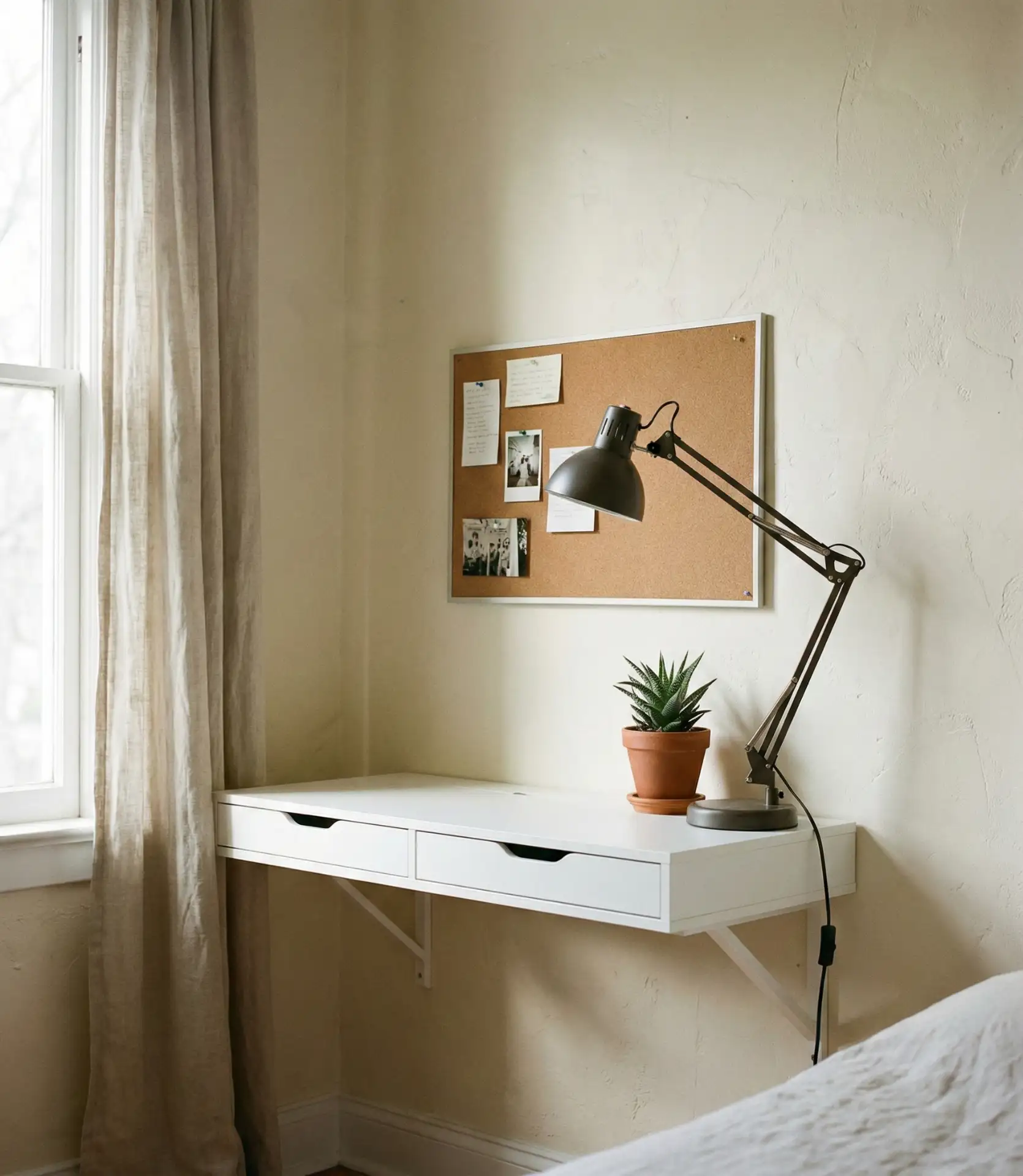
Corner spaces often go unused in a budget bedroom’s small spaces, but a floating desk maximizes every inch while keeping the floor clear for better flow. Mount a simple wooden shelf or butcher block at desk height in an underutilized corner, add a comfortable chair, and you’ve created a dedicated study zone that doesn’t overwhelm the room. This setup works especially well in studio apartments where you need to separate sleeping and working areas visually without physical dividers.
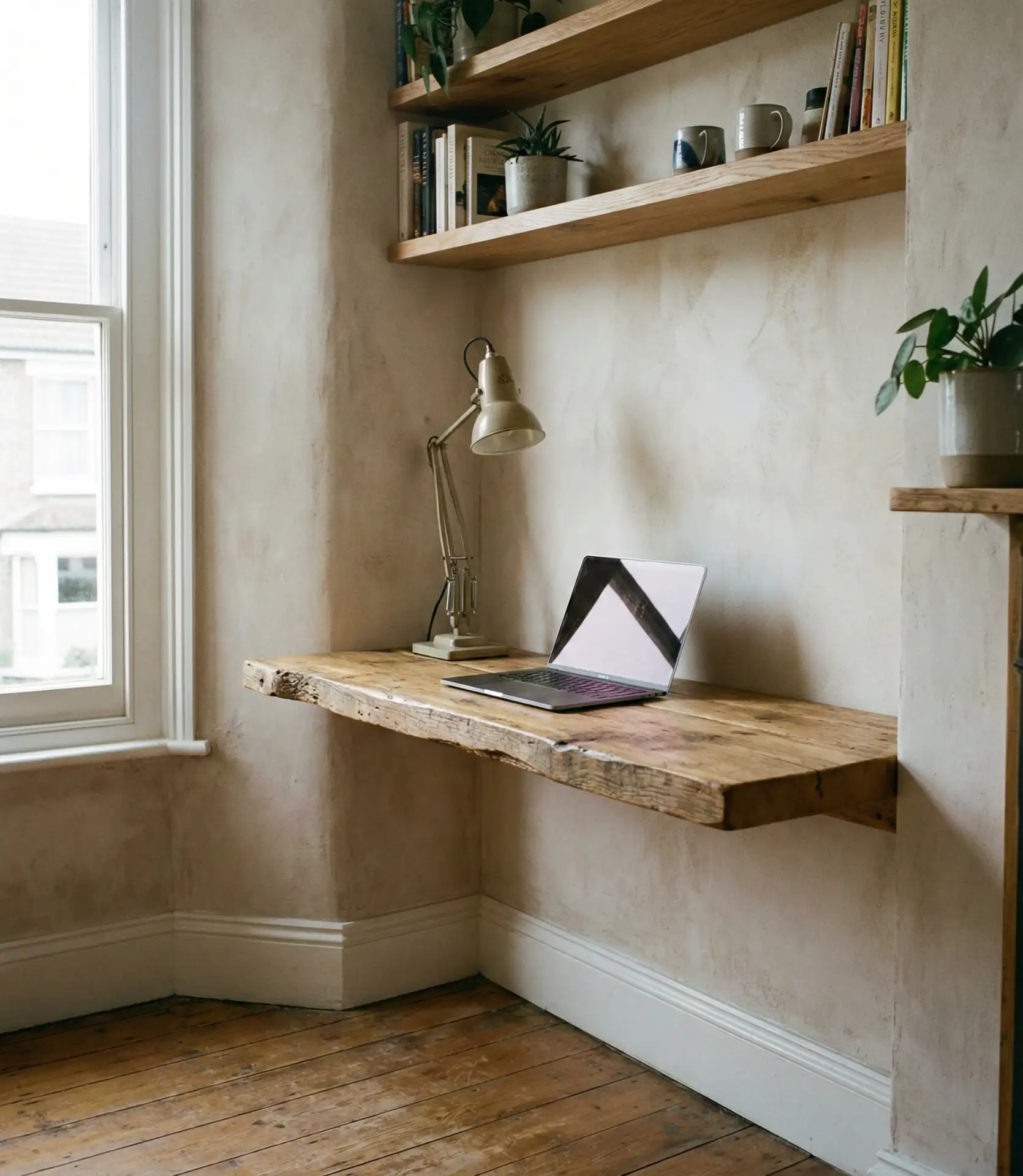
Students who’ve tried various desk arrangements consistently report that corner setups feel less intrusive than traditional desks placed against main walls. The angled position creates a psychological boundary between relaxation and productivity zones, which becomes increasingly important during exam weeks when your bedroom doubles as a study hall. Installation takes about an hour with basic tools and a stud finder.
3. Layered Lighting with String and Clip Lamps
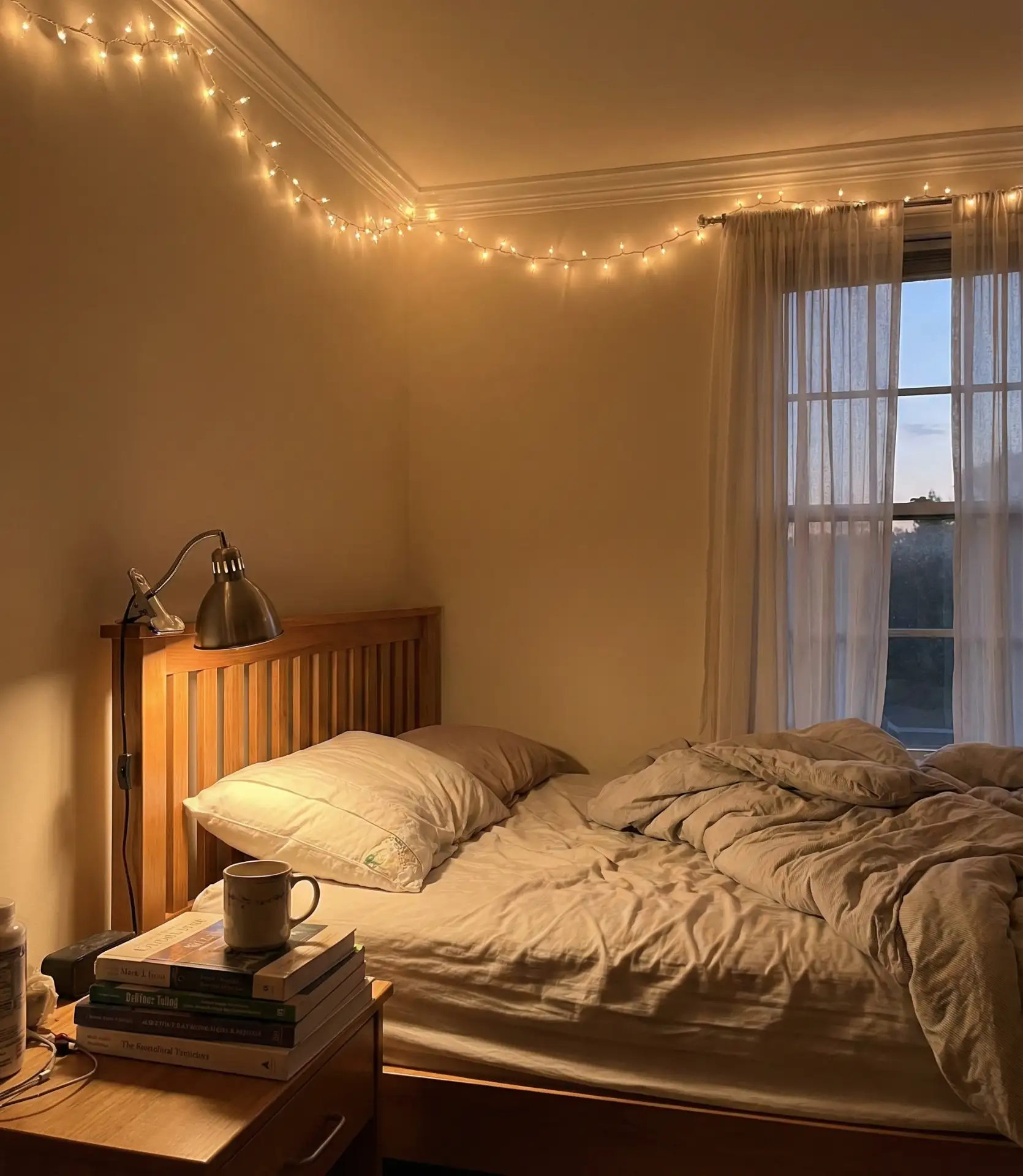
Overhead lighting in rental apartments tends to be harsh and unflattering, but combining string lights with clip-on reading lamps creates adjustable ambiance for different activities. Drape warm-toned string lights along upper walls or around windows for a soft background glow, then position clip lamps on shelves or headboards for focused task lighting. This layered approach transforms sterile spaces into cozy bedroom retreats while giving you control over brightness throughout the day.
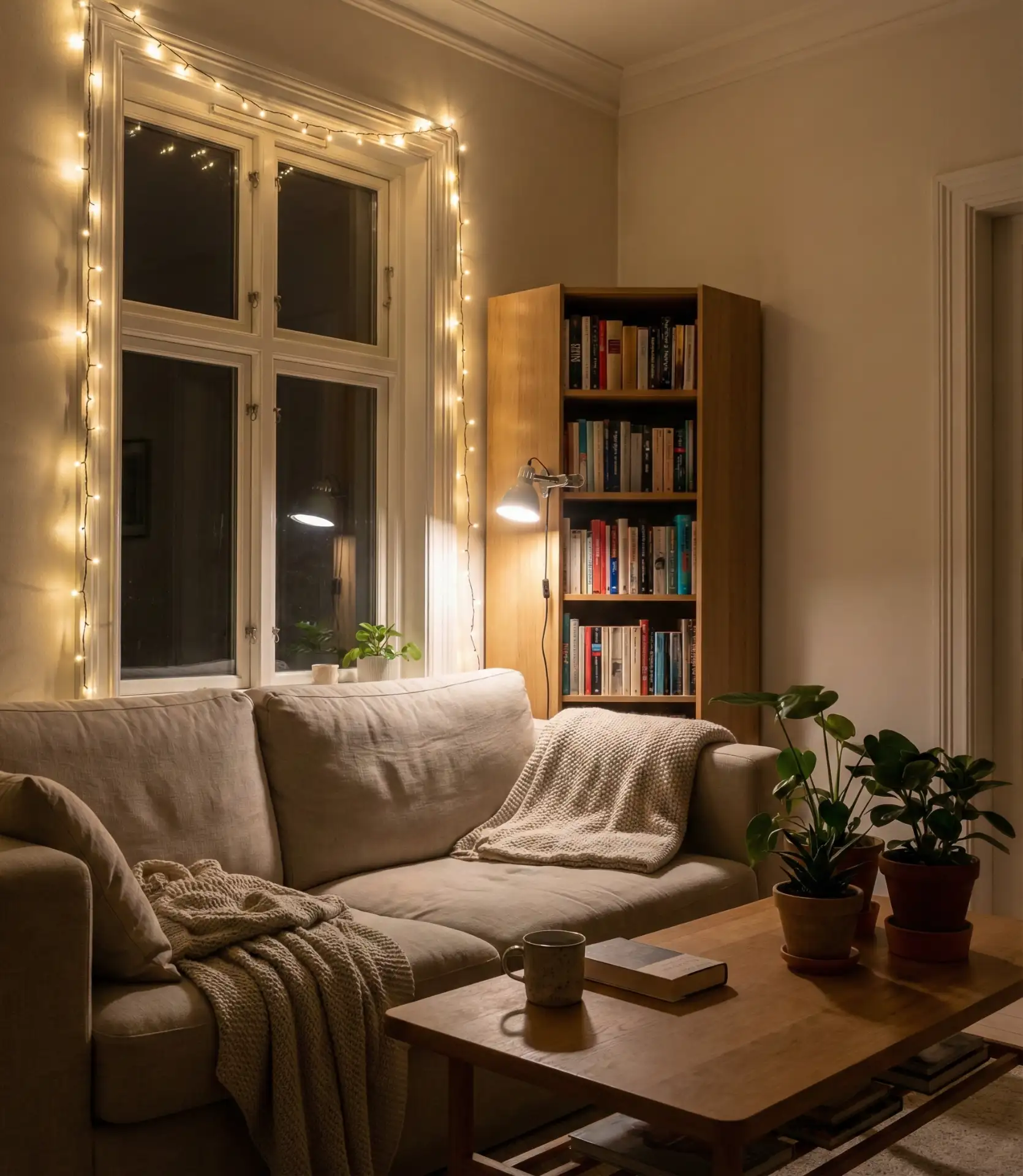
Where it works best: apartments with limited outlets benefit from LED string lights that can run off a single power source, while clip lamps solve the problem of floor space constraints. Position your brightest light source at your desk, medium-bright lights near seating areas, and dimmest strings in sleeping zones. This technique creates natural transitions between different functional areas even in a one-room studio.
4. Peel-and-Stick Backsplash for Kitchen Personality
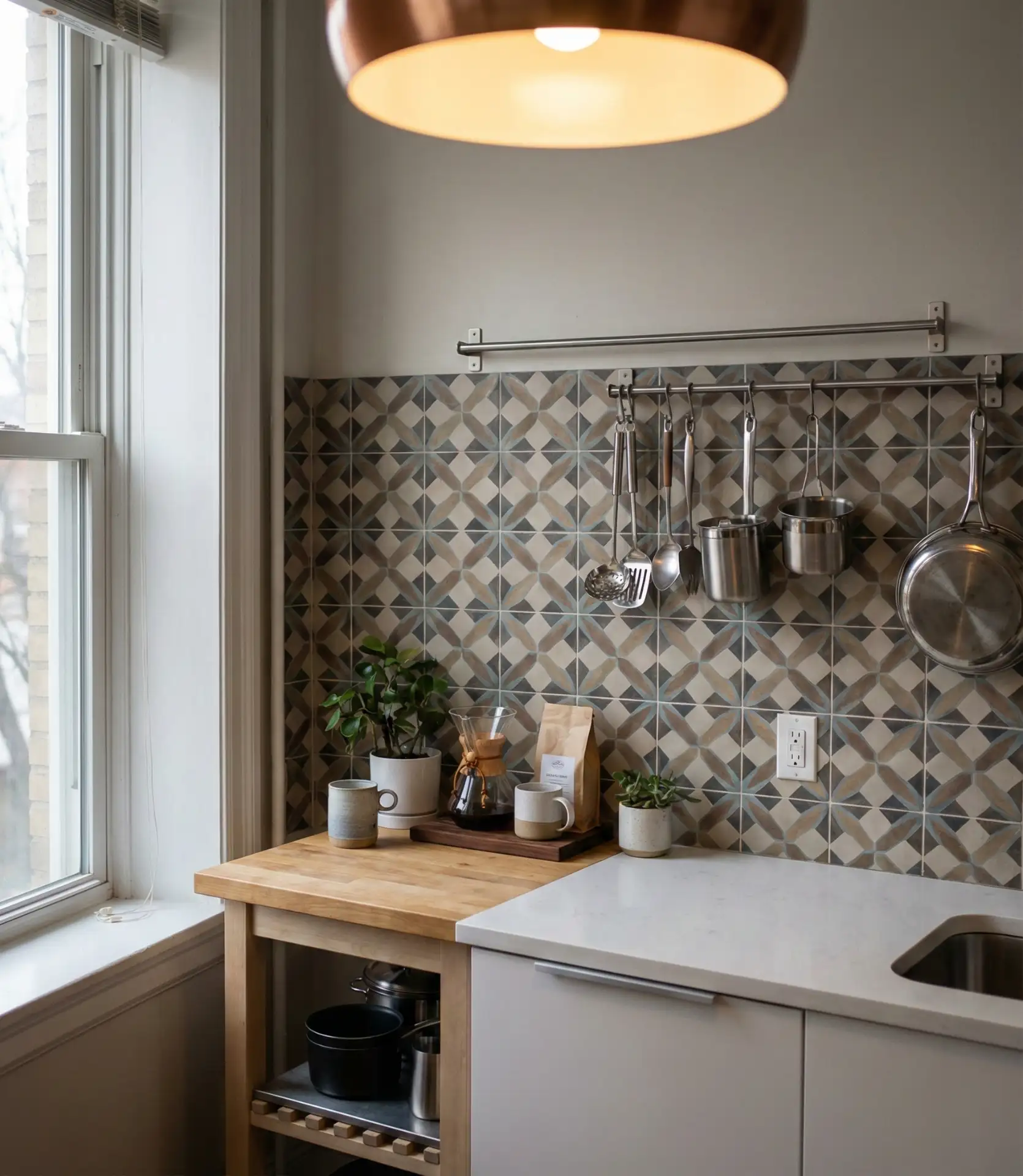
Rental kitchen spaces often feature dated tile or bare walls that make cooking feel like a chore rather than a creative activity. Removable peel-and-stick backsplash tiles install in under an hour and completely transform the visual appeal of your cooking zone without risking your security deposit. Choose subway tiles for a classic look, moroccan patterns for bohemian vibes, or marble-effect designs for unexpected elegance in a budget space.
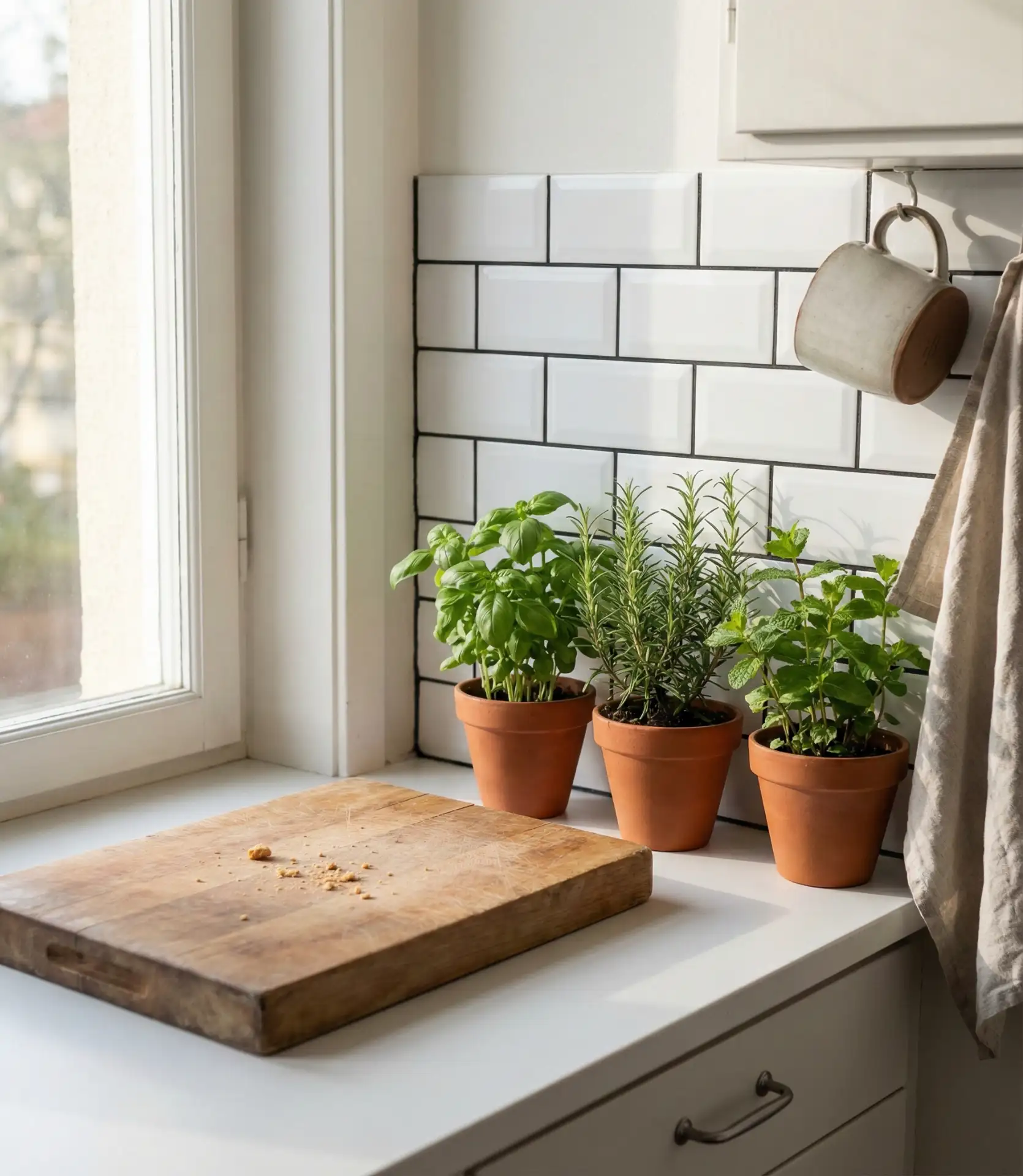
Most peel-and-stick tiles cost between one and three dollars per square foot, making a typical apartment backsplash project feasible for under fifty dollars total. The installation requires no special skills—just clean the surface, measure carefully, and press firmly. When you move out, they peel away cleanly without leaving residue, which makes them ideal for temporary living situations that still deserve thoughtful design attention.
5. Vertical Garden Wall with Command Hooks
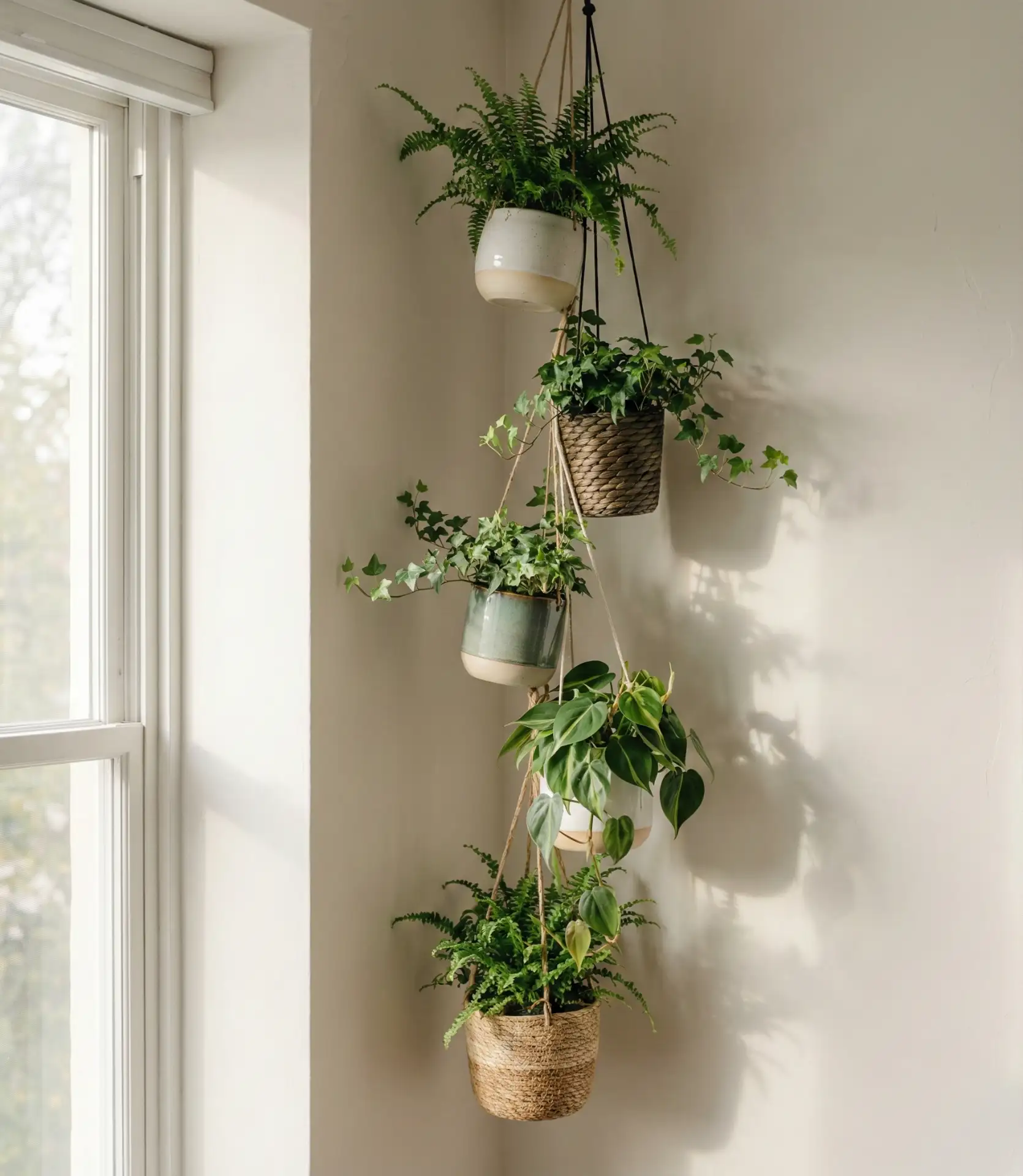
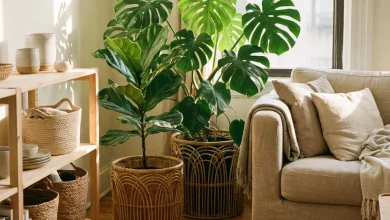
Bringing greenery into a college apartment improves air quality and mental well-being, but floor space for plants often doesn’t exist in cramped quarters. Create a vertical garden using Command hooks and macramé plant hangers or simple S-hooks with hanging planters. This DIY solution works beautifully near windows where plants receive adequate light, and you can adjust the arrangement as your collection grows or as you learn which species thrive in your specific lighting conditions.
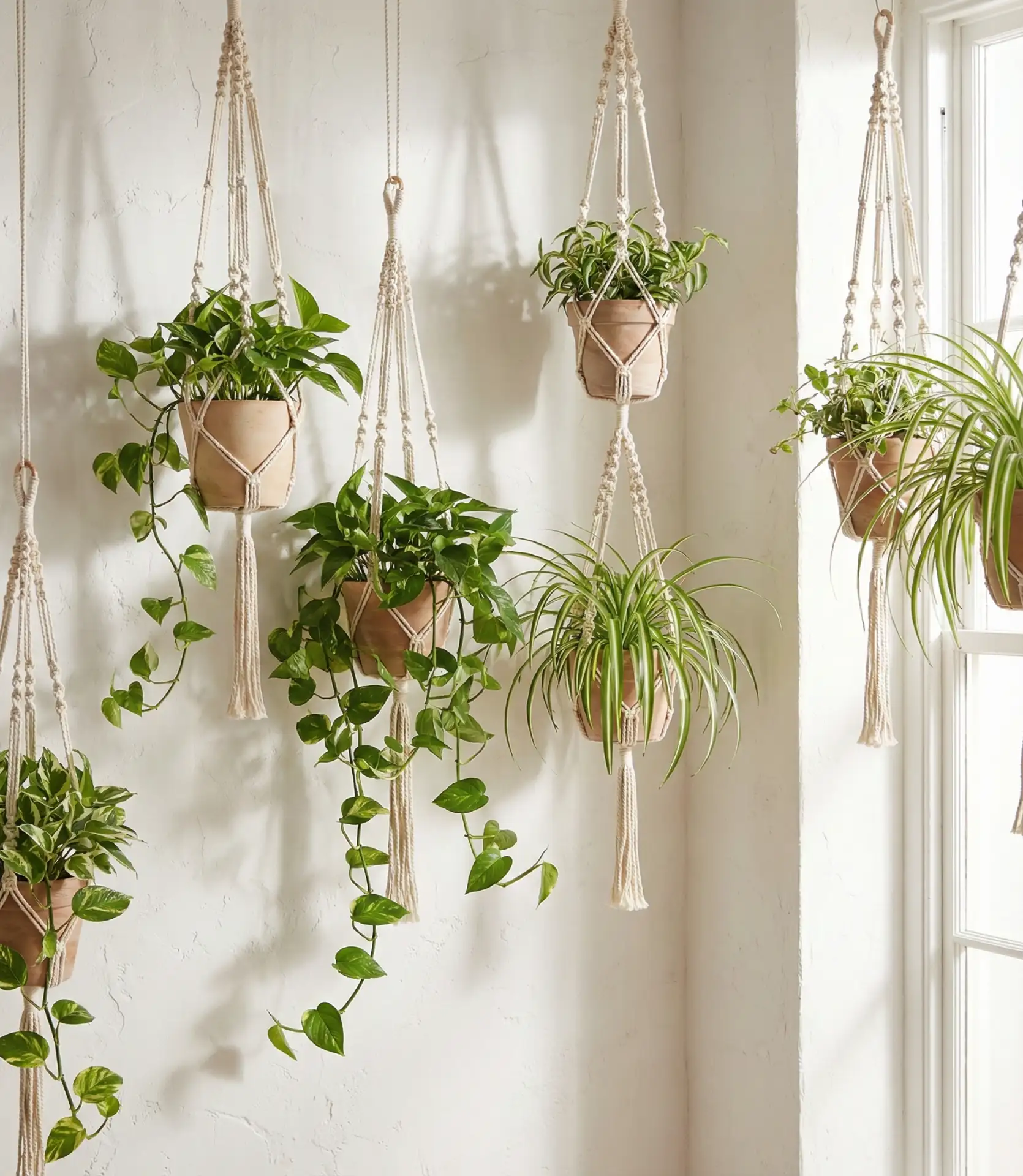
A roommate once mentioned how her vertical garden became an unexpected conversation starter during video calls—the living wall behind her made her tiny apartment feel intentional and curated. The psychological impact of tending plants shouldn’t be underestimated during stressful semesters. Start with forgiving varieties like pothos, snake plants, or philodendrons that tolerate occasional neglect during finals week.
6. Thrifted Furniture with Fresh Hardware
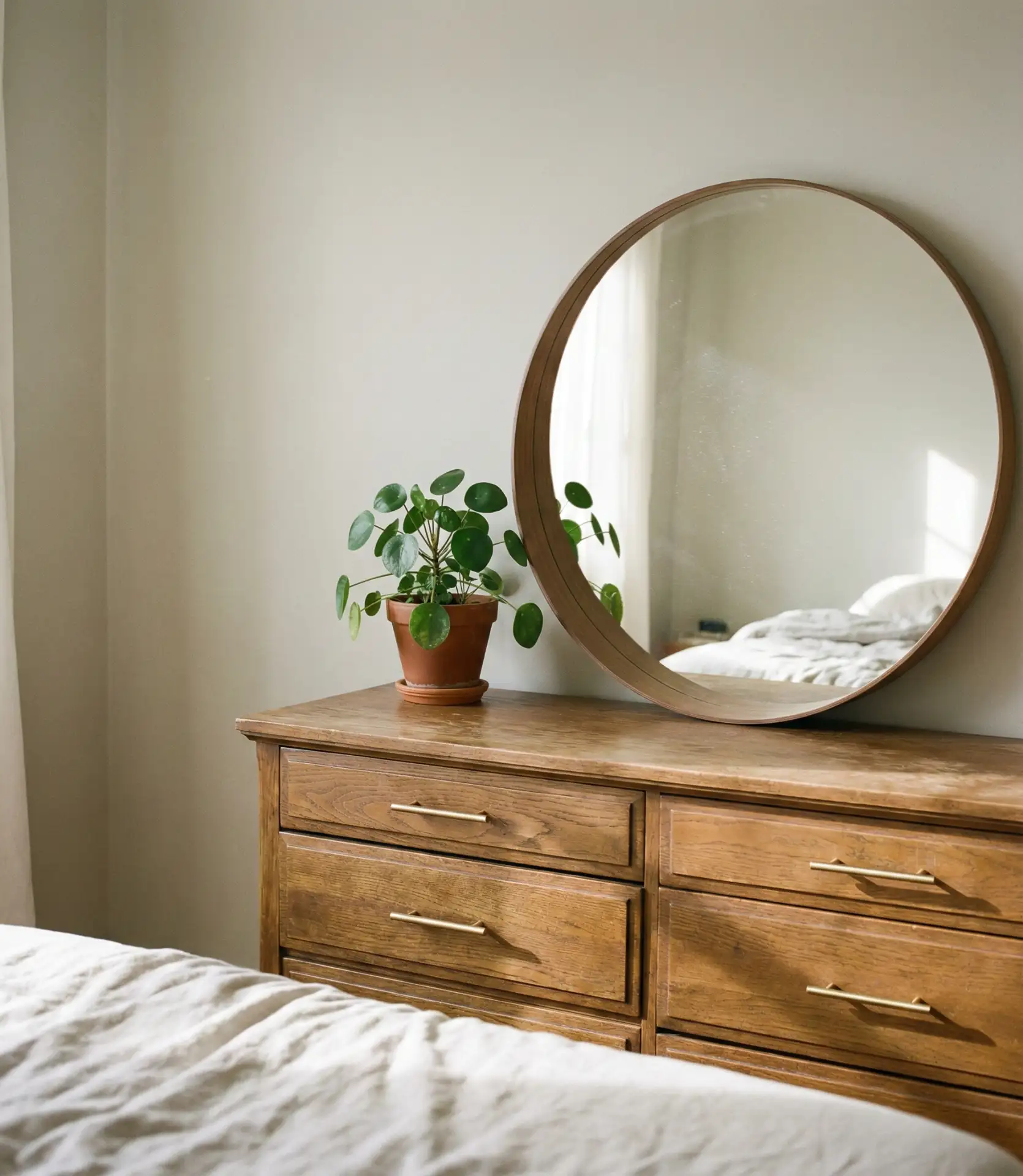
Secondhand dressers, nightstands, and bookshelves cost a fraction of new furniture but often look dated until you swap out the hardware. Spend fifteen dollars on modern drawer pulls or cabinet knobs in brass, matte black, or brushed nickel, and suddenly that twenty-dollar thrift store find looks custom and intentional. This approach embodies the best ideas for budget decorating—investing minimal money in strategic upgrades that completely transform the perceived value of existing pieces.
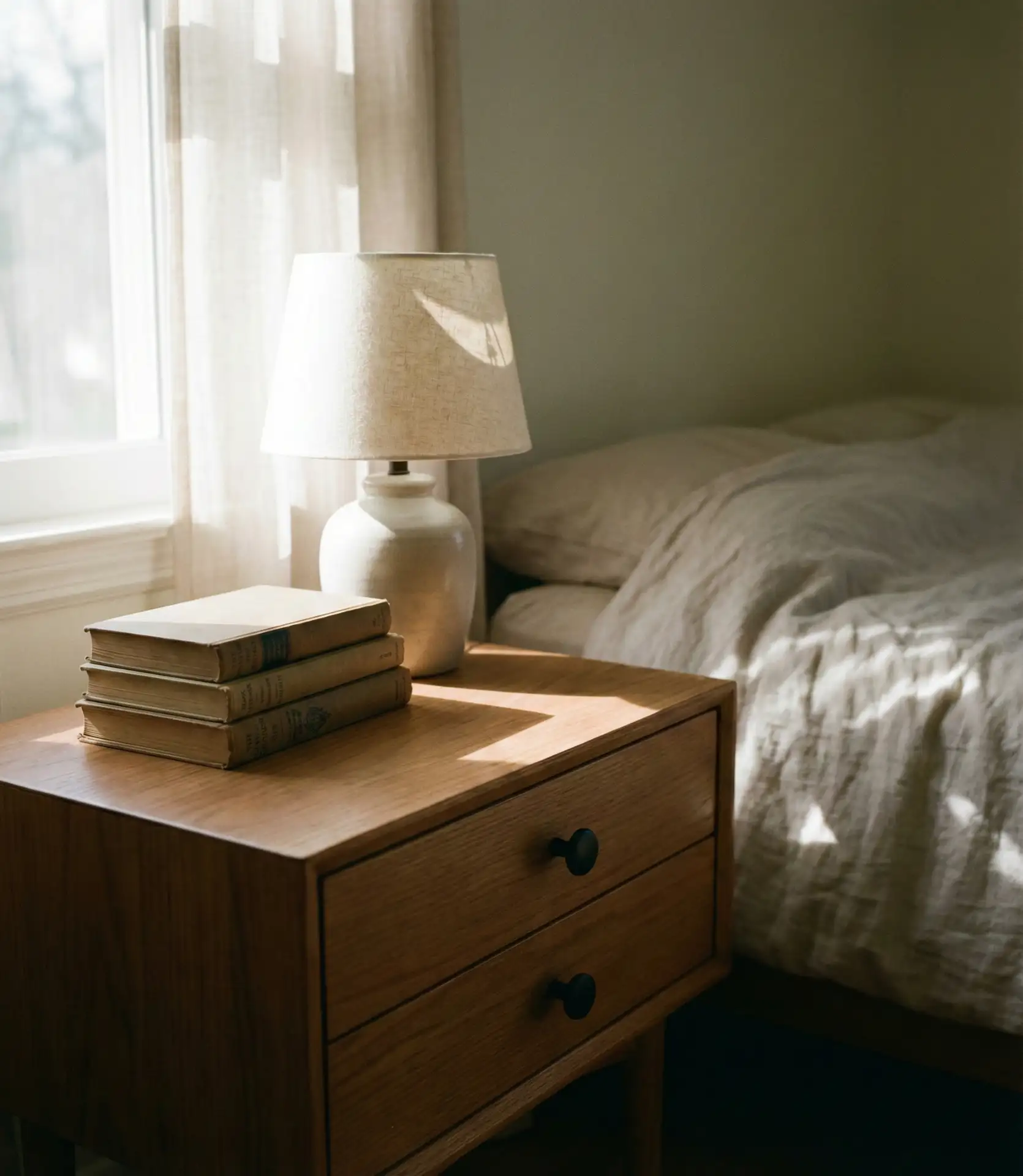
Common mistakes include choosing hardware that’s too large or ornate for the piece, which can look comical rather than elevated. Measure your existing holes before shopping, and opt for styles that complement your overall aesthetic rather than making individual pieces compete for attention. Most hardware swaps require only a screwdriver and five minutes per drawer or door—an incredibly high impact-to-effort ratio.
7. Modular Storage Cubes for Flexible Organization
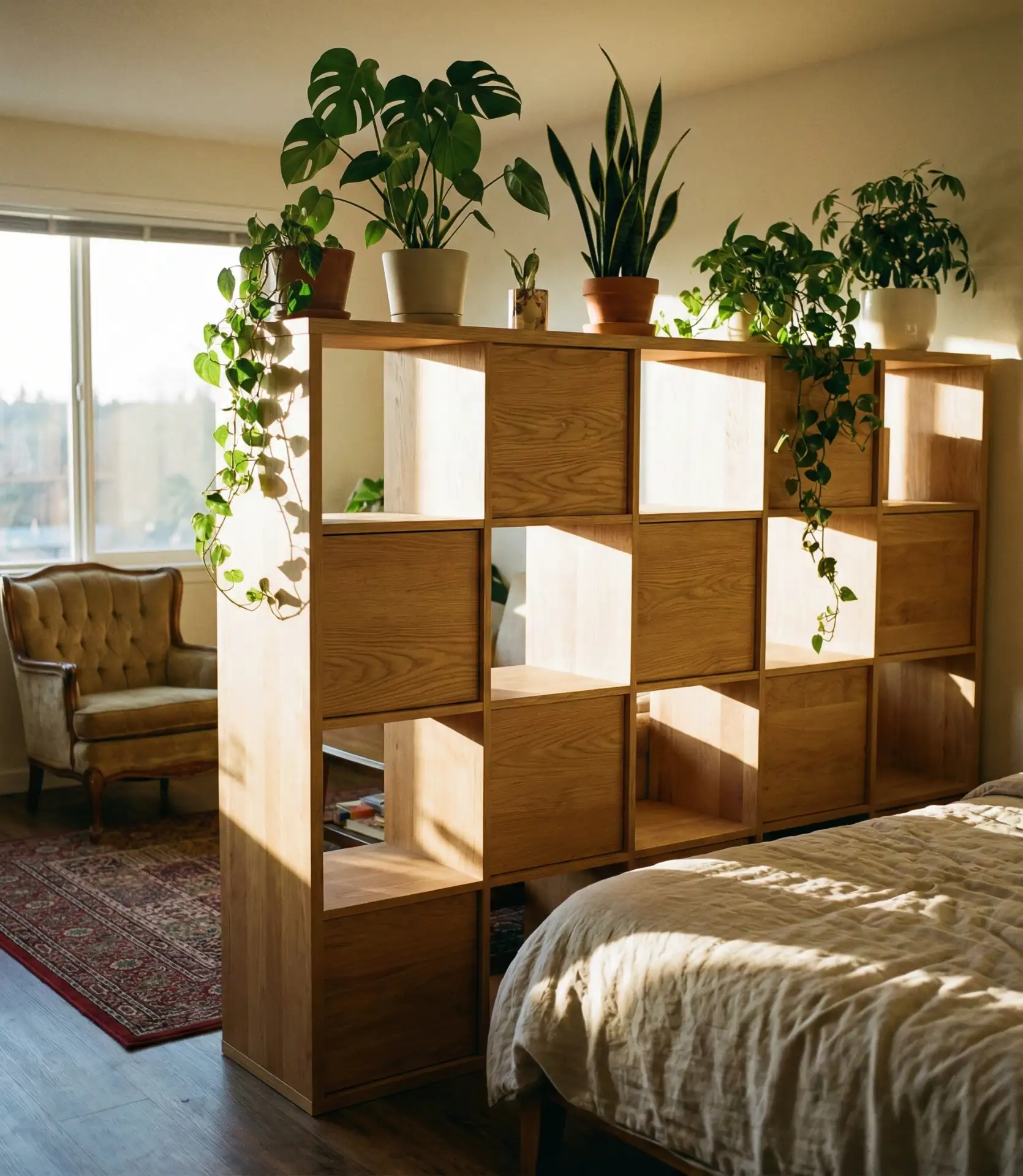
Stackable storage cubes adapt to changing needs throughout the semester, functioning as bookshelves, room dividers, or TV stands depending on configuration. Arrange them horizontally along walls in a living room in a cozy modern style, or stack them vertically to create visual interest and maximize vertical space. The modular nature means you can easily reconfigure the setup when you move or when your storage needs shift, making them significantly more versatile than traditional furniture.
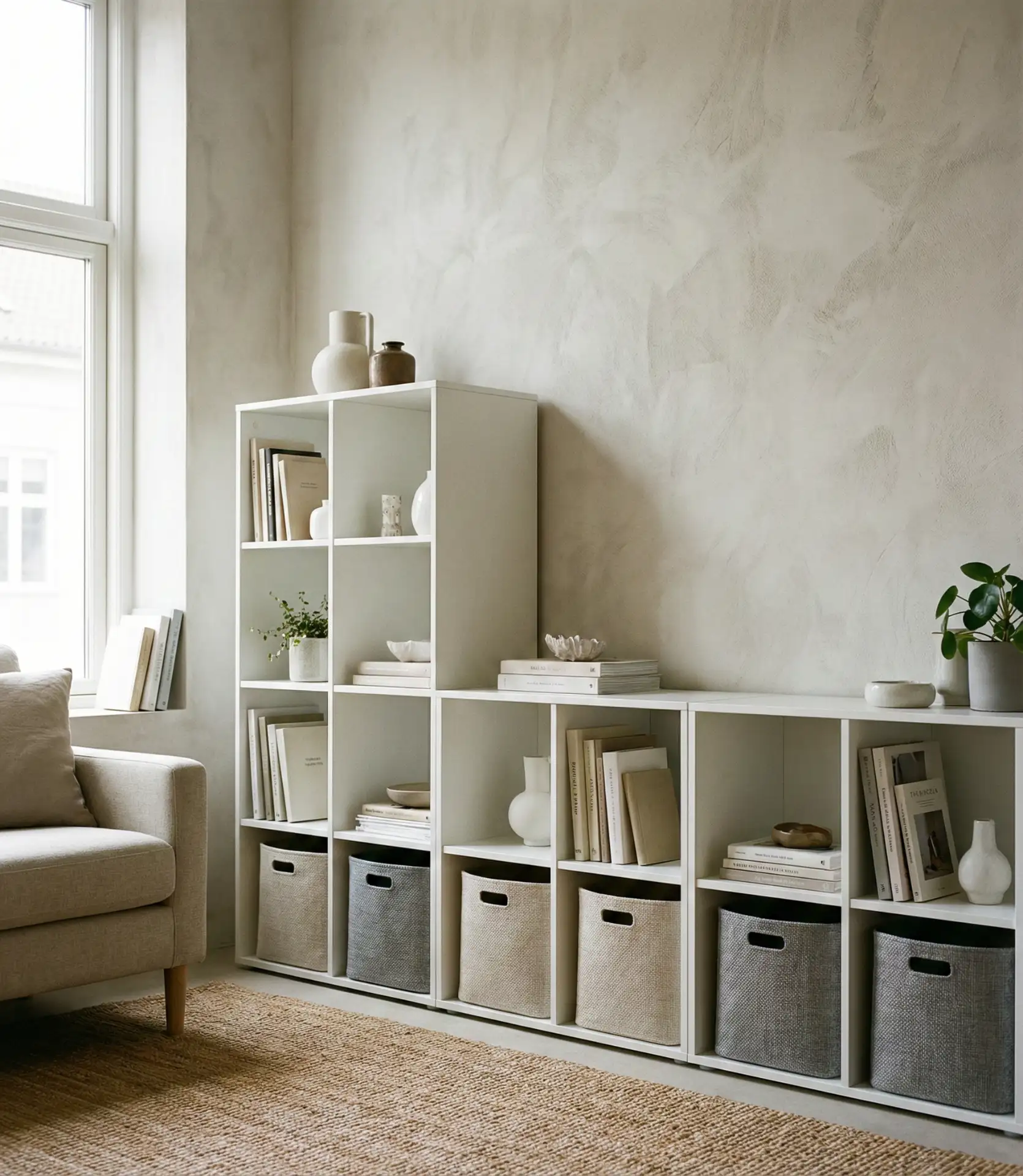
In the American Midwest and Northeast, where many students occupy older buildings with limited closet space, these cubes become essential for seasonal clothing rotation. Use fabric bins in alternating cubes to hide clutter while keeping other cubes open for display items. The key is maintaining a balance—too many closed bins make the space feel heavy, while too many open cubes can look chaotic if you’re not naturally organized.
8. Gallery Wall of Personal Photos and Prints
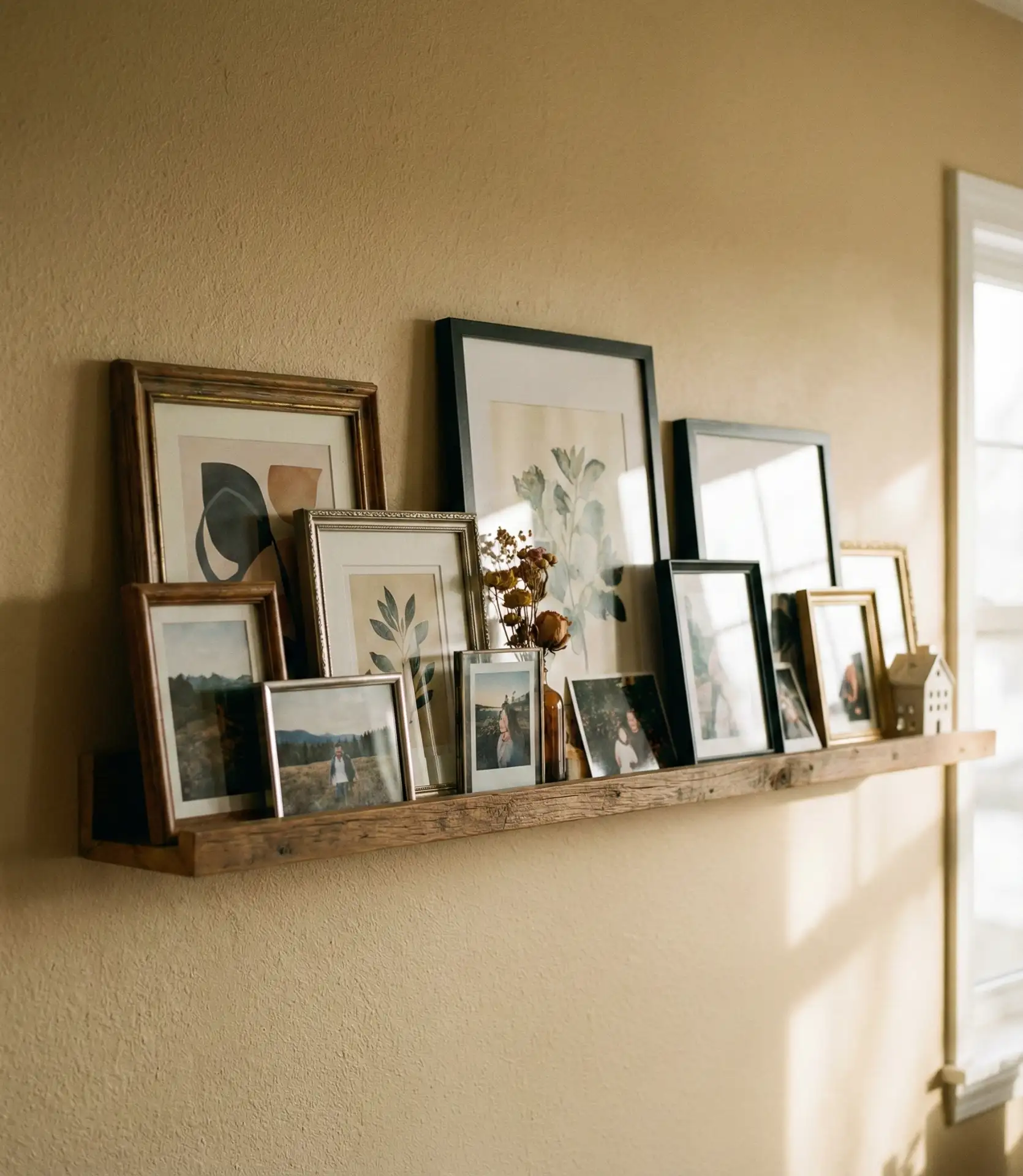
Creating a gallery wall with a mix of personal photos, art prints, and postcards brings warmth to generic apartment walls while expressing your individual story. Use picture ledges instead of individual nails to create a changeable display that doesn’t leave multiple holes in walls—this matters significantly when you’re hoping to recover your security deposit. The aesthetic impact of a well-curated gallery wall rivals expensive artwork, especially when you incorporate various frame sizes and mix color with black-and-white images.
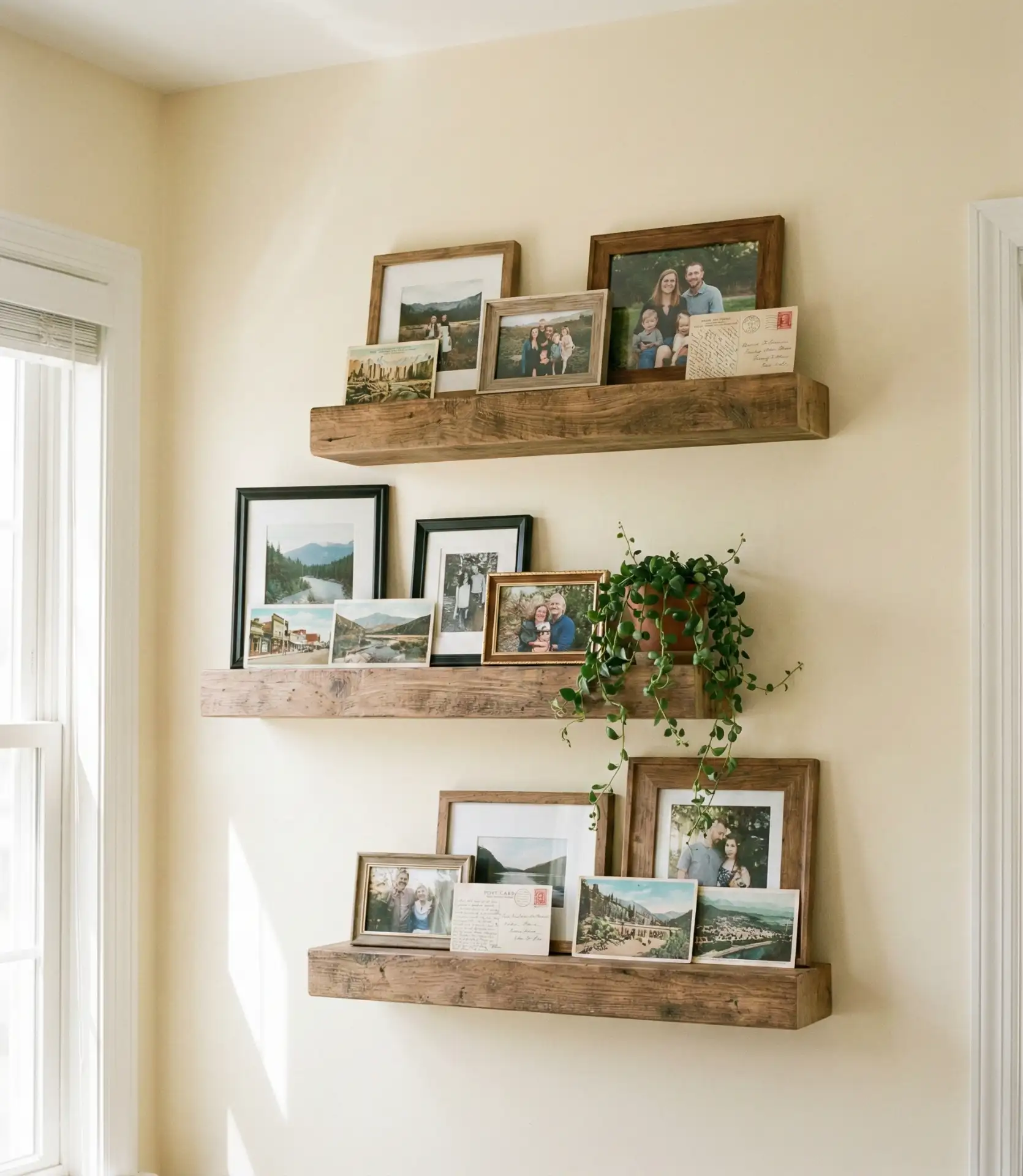
The beauty of picture ledges is their forgiving nature—you can swap out images seasonally or as your interests evolve without commitment. Many students create themed ledges that change throughout the year, displaying summer adventure photos in August and then switching to cozy autumn scenes in October. Print services now offer affordable large-format printing, so even phone photos can look professional when properly sized and framed.
9. Shower Curtain as Room Divider
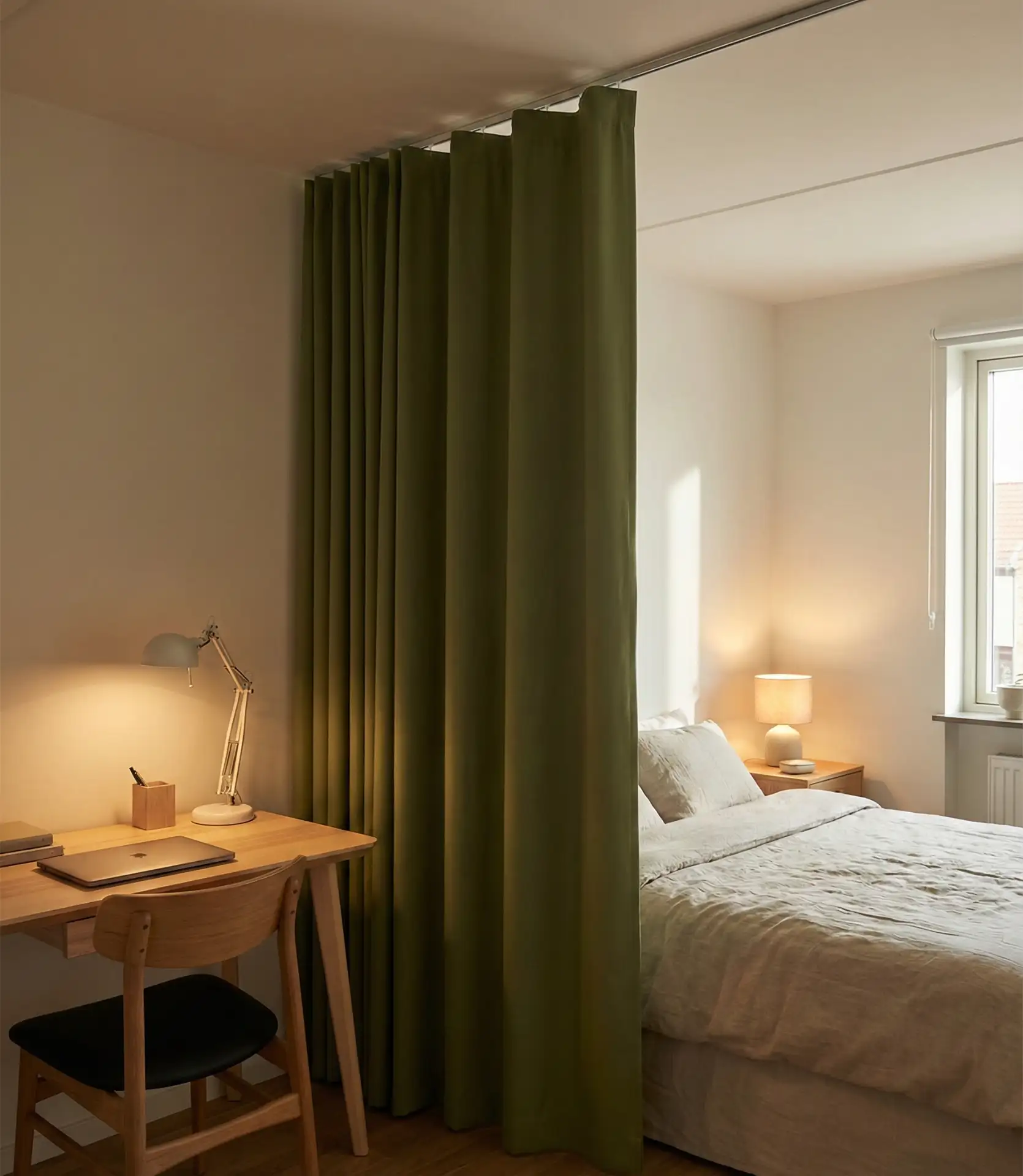
Studio apartments and shared bedrooms benefit enormously from creative privacy solutions that don’t require permanent construction. Mount a tension rod between walls or from ceiling hooks and hang a decorative shower curtain to separate sleeping areas from living spaces. This fun approach costs under thirty dollars and instantly creates psychological boundaries that make small spaces feel more livable, especially when you need to maintain different schedules than roommates.
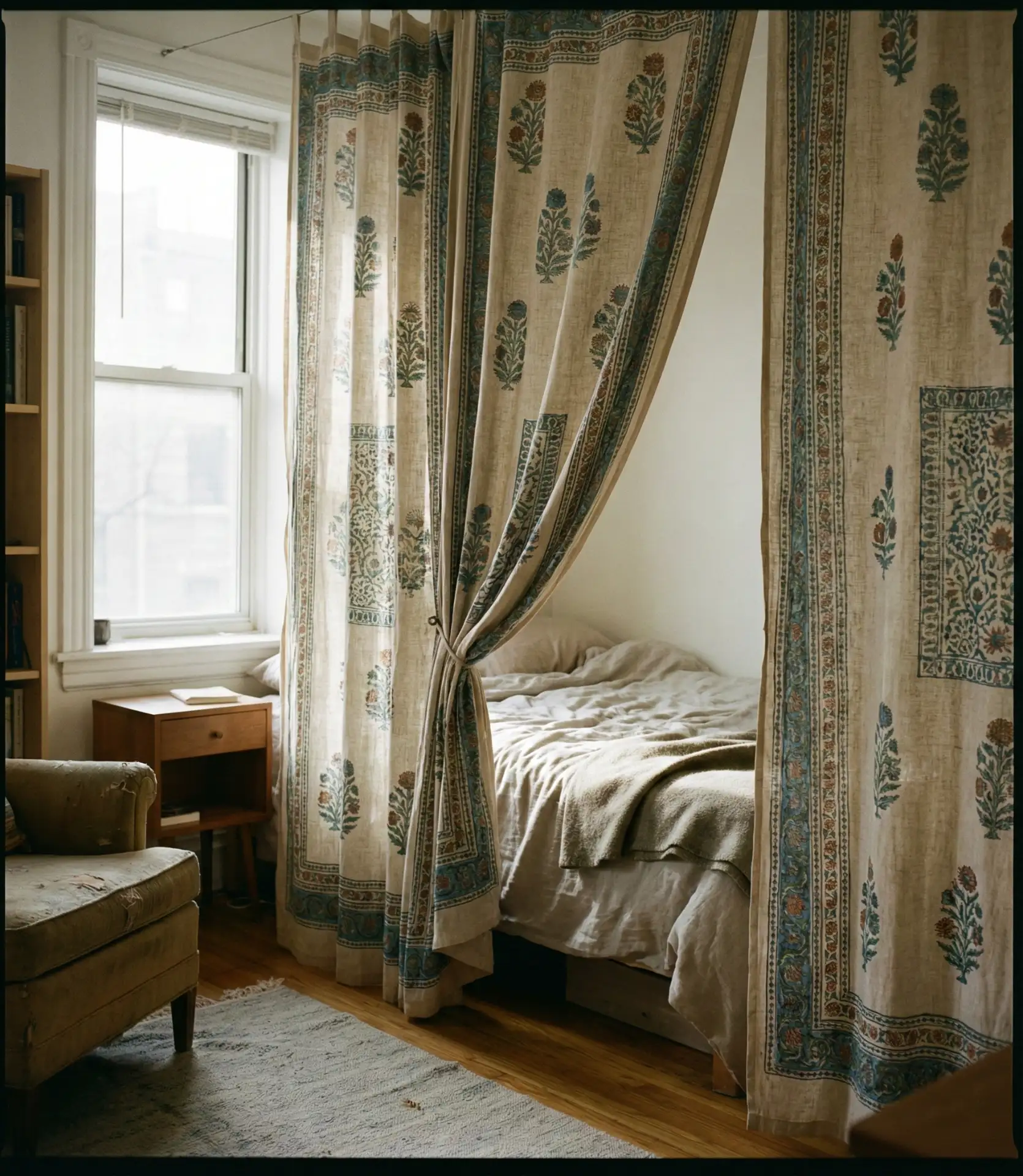
Expert designers often recommend choosing curtains with visual interest—subtle patterns or textured fabrics—rather than solid colors, which can feel institutional. The curtain becomes a design element that adds personality rather than simply hiding things. When selecting, consider that lightweight fabrics provide privacy without blocking airflow, essential in older buildings with limited ventilation where heavy dividers can make spaces feel stuffy.
10. Under-Bed Storage with Rolling Bins
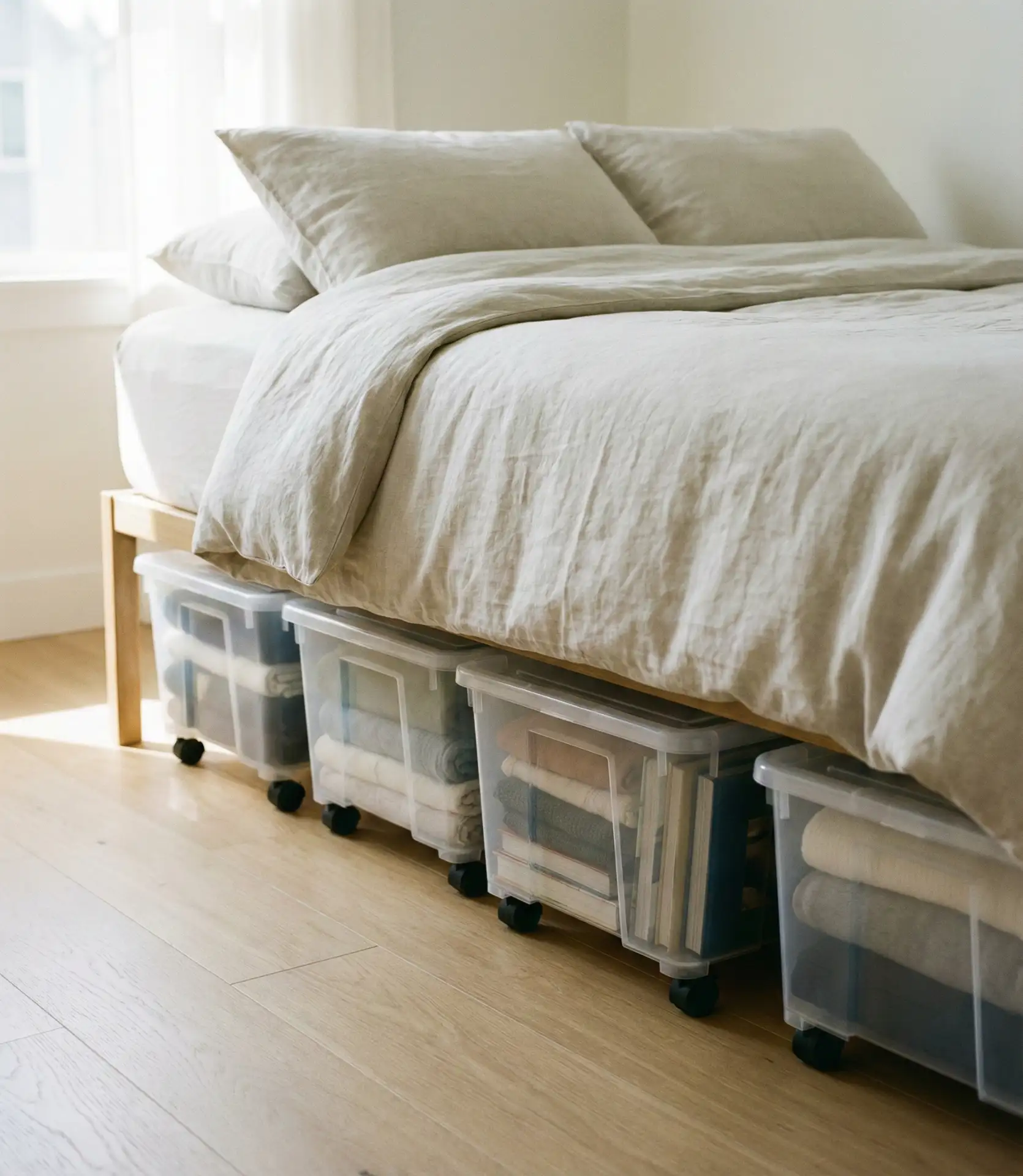
The space beneath your bed represents valuable real estate in a budget bedroom’s small space, yet many students leave it empty or stuff it haphazardly with random items. Invest in low-profile rolling storage bins that slide easily in and out, keeping seasonal clothing, extra bedding, or rarely used items organized and accessible. Bed risers can add a few crucial inches of clearance if your current bed frame sits too low, transforming unusable space into a functional storage zone.
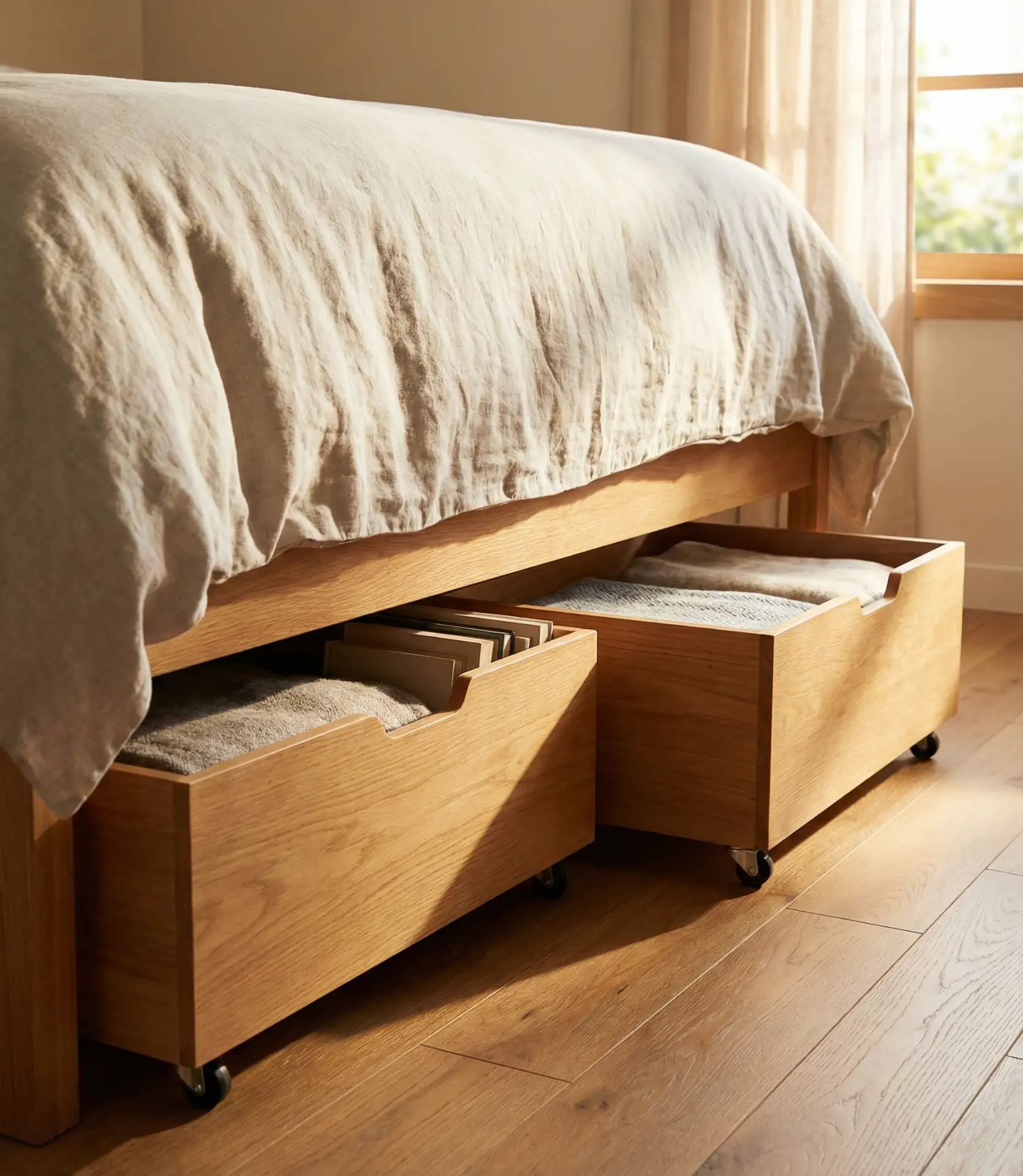
Real homeowner behavior shows that storage solutions only work if they’re actually convenient to use—bins that require moving furniture or awkward reaching get ignored. Rolling bins solve this problem beautifully, especially for items you need to access seasonally. Please label the ends clearly to easily identify the contents of each bin without needing to pull them out. Consider that lighter-colored or transparent bins prevent the under-bed area from looking like a dark cave.
11. Accent Wall with Removable Wallpaper
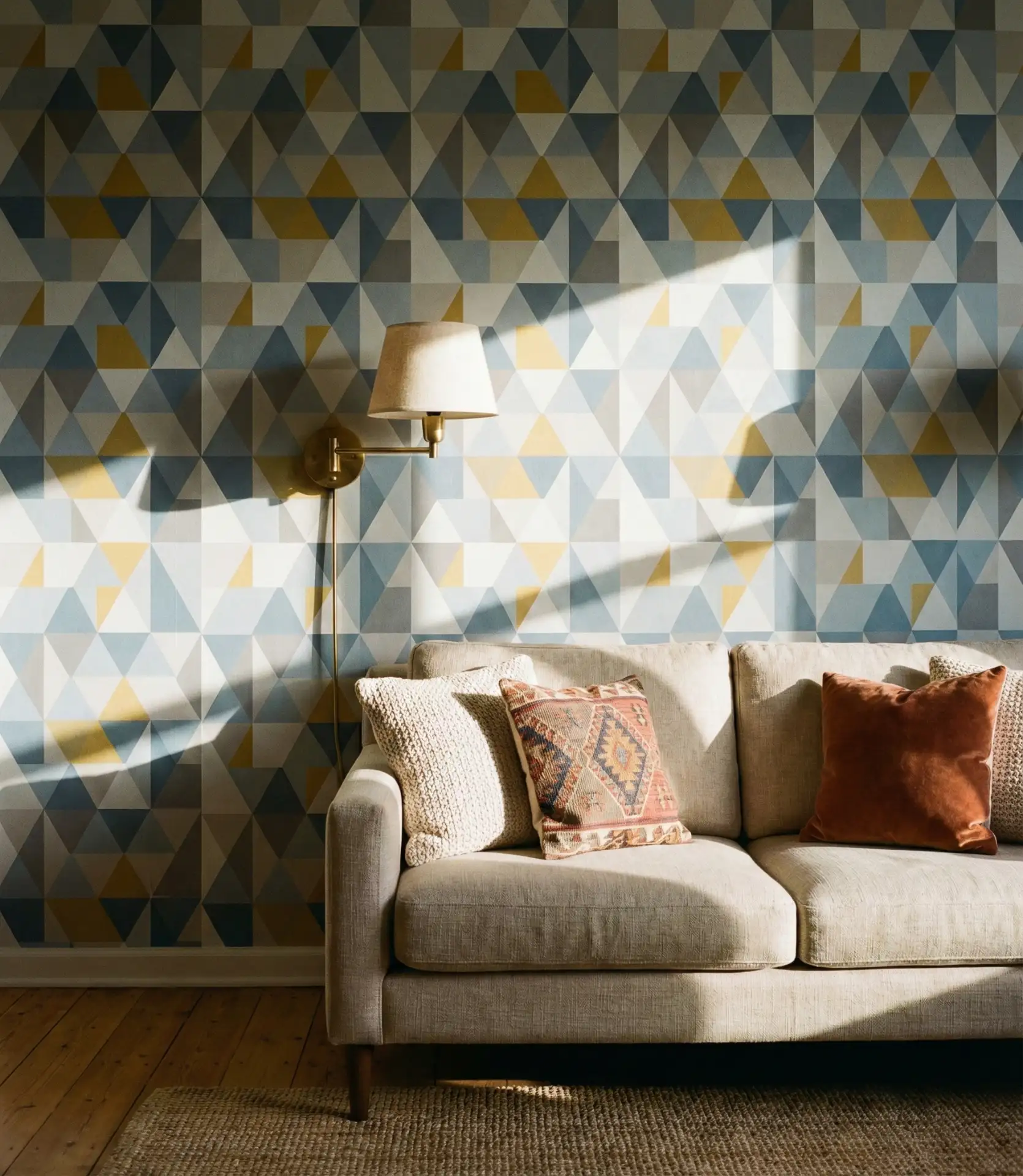
Removable wallpaper technology has advanced dramatically, offering college renters the ability to create stunning accent walls without permanent commitment or damage. Choose one wall as your focal point—typically the wall behind your bed or sofa—and cover it with a pattern that expresses your personality. From minimalist geometric designs to bold botanical prints, the inspiration available online reflects every possible taste and style preference, transforming generic apartments into personalized spaces.
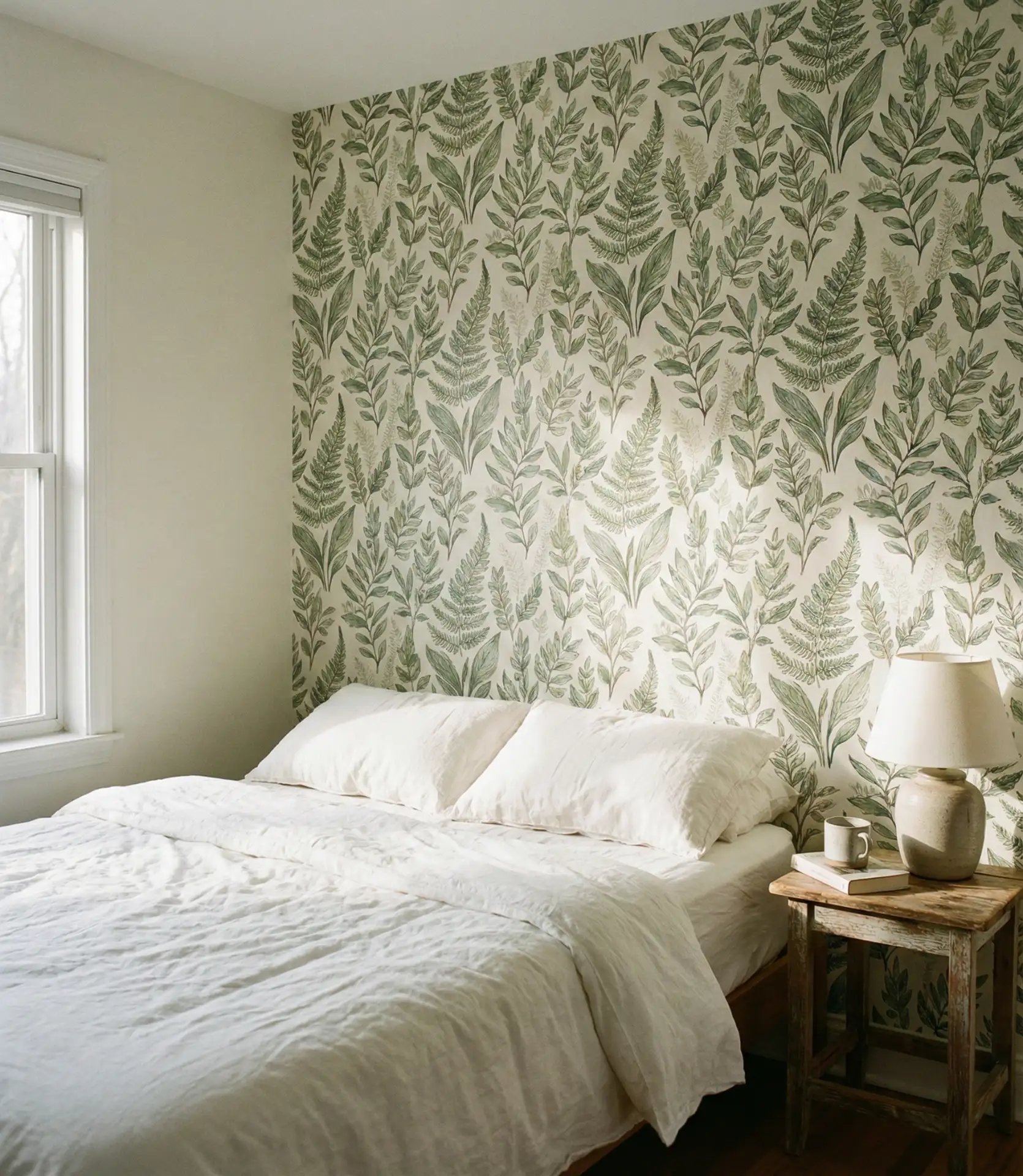
Budget-conscious students should know that a single accent wall typically requires one to two rolls of wallpaper, costing between fifty and one hundred fifty dollars depending on the pattern complexity and brand. This represents a significant investment for college budgets, but the visual impact rivals a complete room repaint. Application takes about two hours and requires only a smoothing tool and a steady hand—watch a tutorial video beforehand to avoid air bubbles and misalignment.
12. Cozy Reading Nook with Floor Cushions
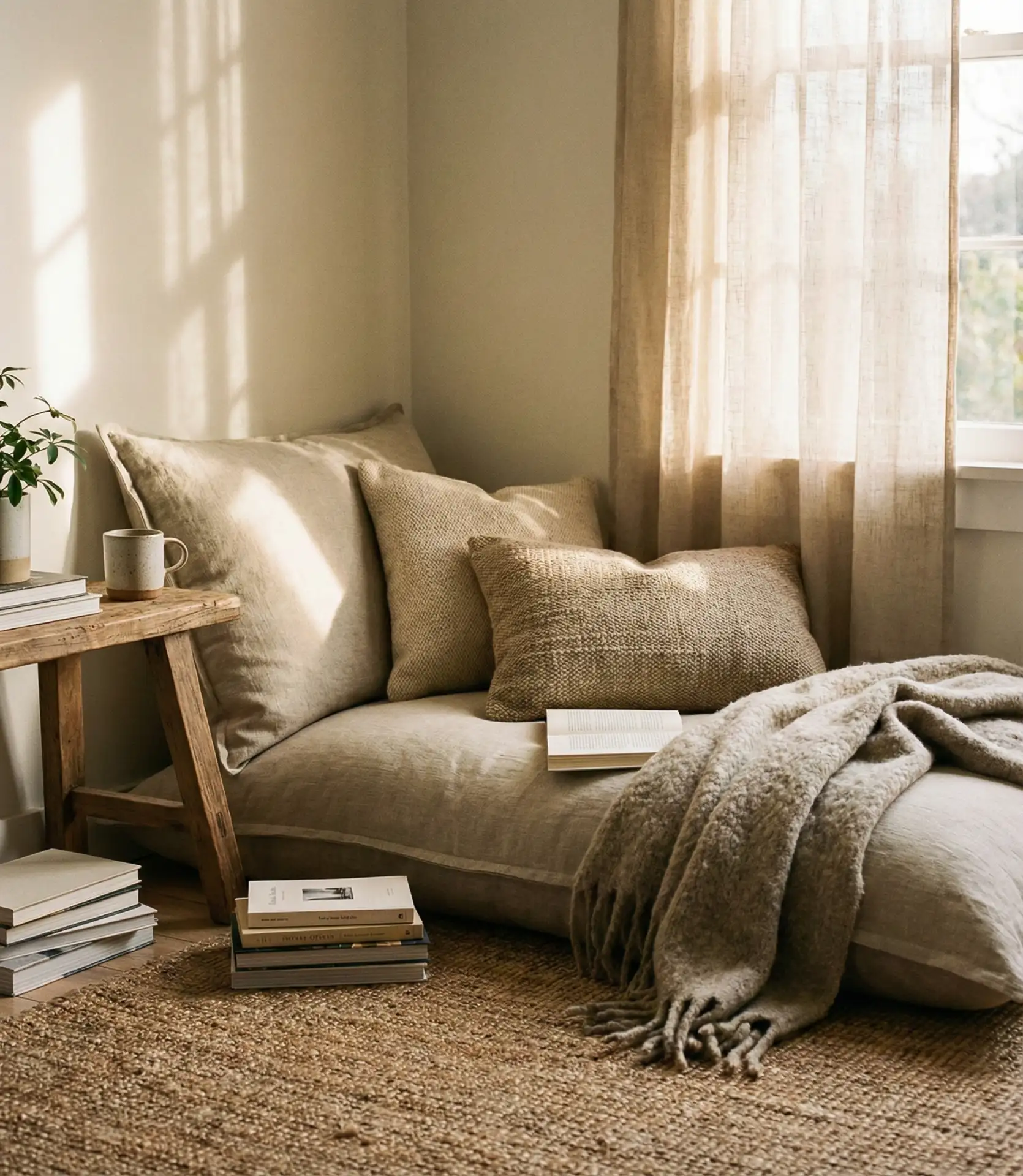
Carving out a dedicated reading space transforms any corner into a retreat for studying or decompressing between classes. Layer large floor cushions or poufs near a window, add a small side table for drinks and books, and position a reading lamp nearby to create living room cozy vibes without traditional furniture. This setup works particularly well in apartments where full-size seating doesn’t fit, offering comfortable lounging that adapts to different activities from reading to casual conversations with friends.
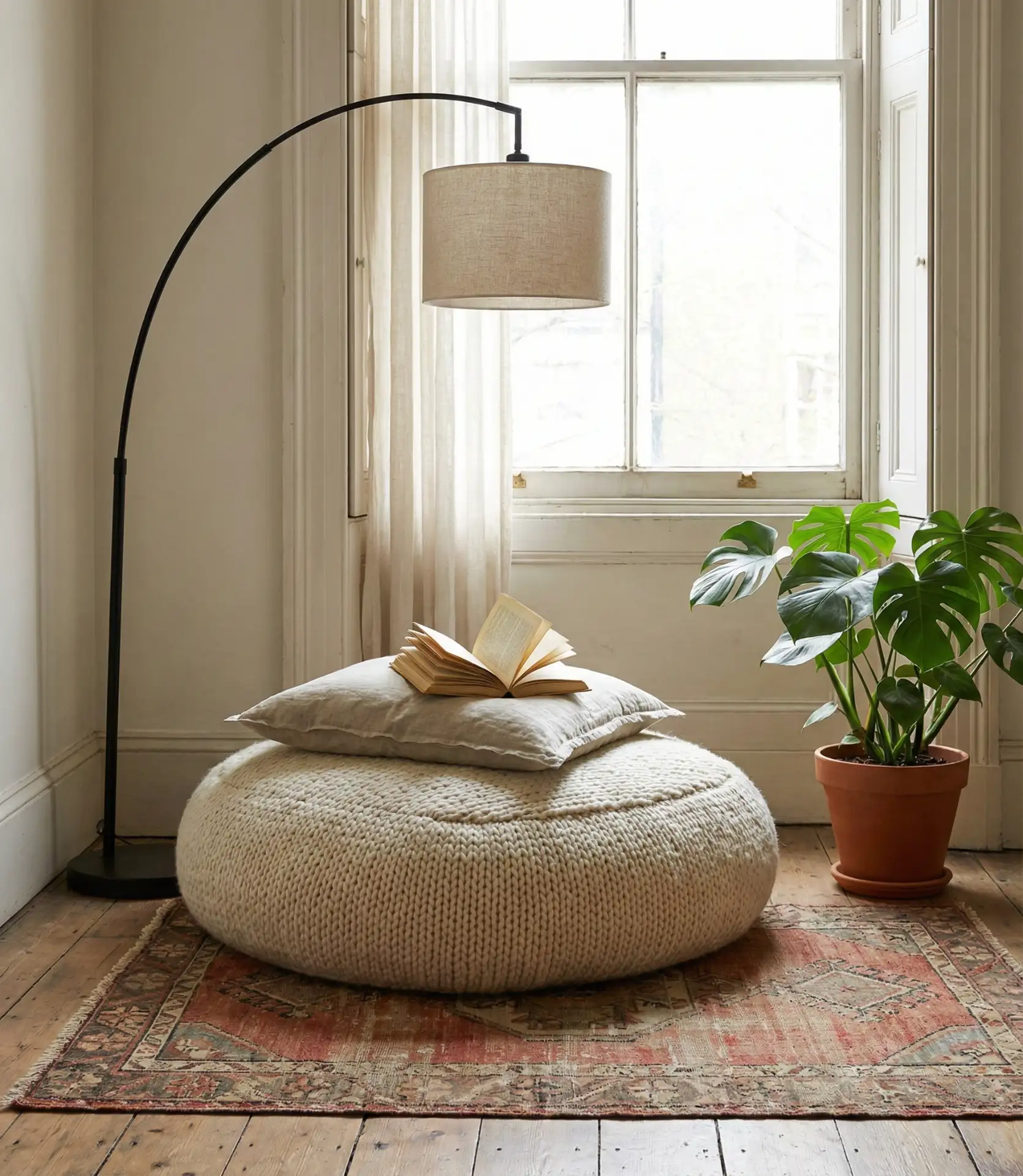
Where it works best: bay windows, corners with ample natural light, or areas near radiators that remain warm during cold months. Southern California students might prefer lighter cushions and breathable fabrics, while those in northern climates often gravitate toward plush, insulating materials. The flexibility of floor seating means you can easily move cushions aside when you need the space for other purposes, unlike permanent furniture that anchors a room’s layout.
13. Magnetic Spice Rack on Refrigerator
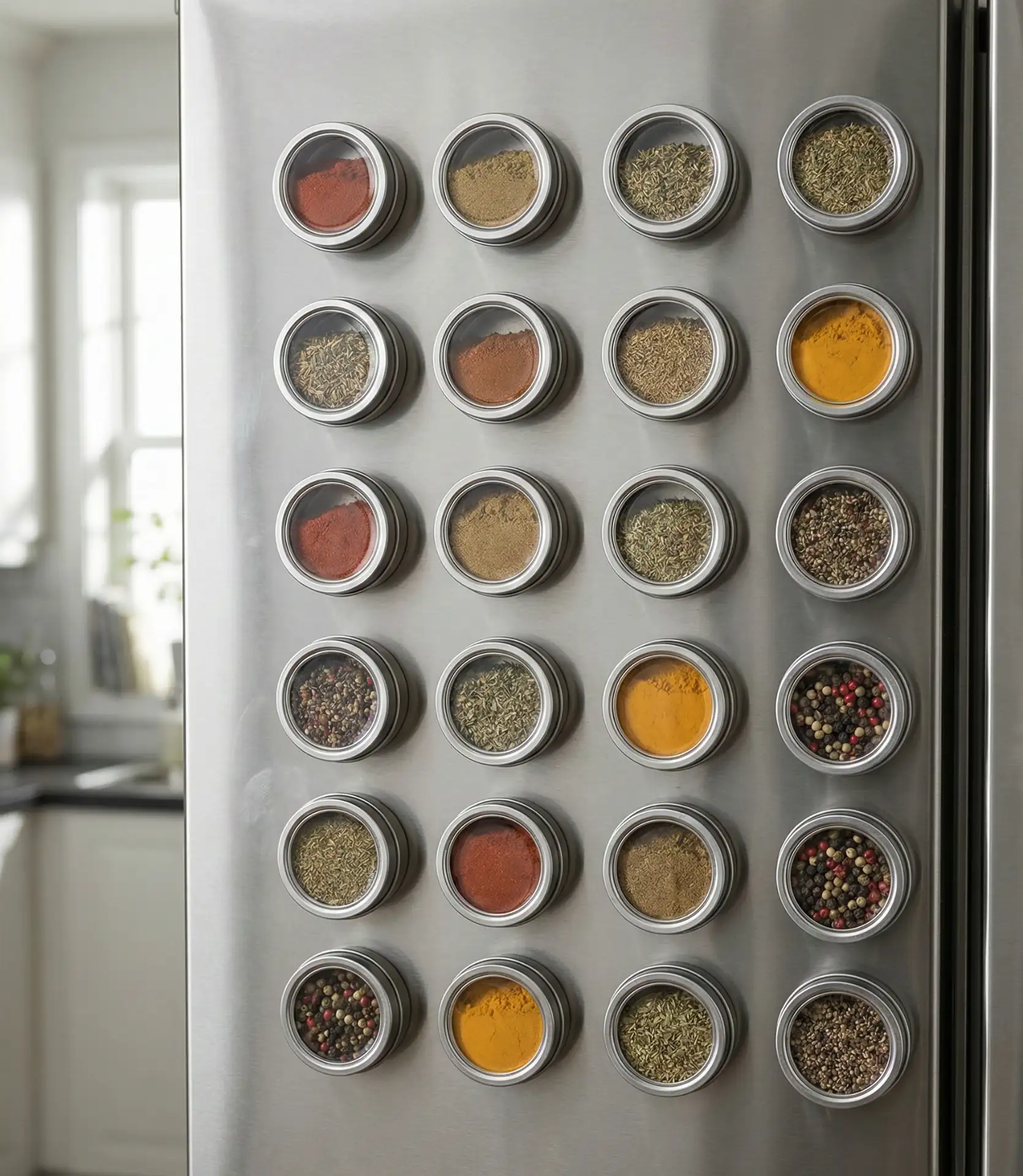
Tiny college kitchen counters disappear quickly under appliances and dish racks, leaving no room for the spices that make cooking enjoyable. Magnetic spice jars attach directly to your refrigerator door or side panel, keeping seasonings visible and accessible while freeing up precious counter and cabinet space. This organization hack solves a practical problem and adds visual interest to an otherwise boring appliance, making your cooking area feel more thoughtfully designed.
Practical insight: buy spices in bulk from grocery store spice sections rather than expensive prepackaged jars, then transfer them into magnetic containers. This approach cuts costs significantly while giving you control over quantities. Label jars clearly on top so you can identify spices at a glance without pulling each one off to check. Most magnetic jar sets include twelve to twenty containers, providing enough storage for a well-stocked kitchen without overwhelming limited space.
14. Foldable Dining Solution for Small Spaces
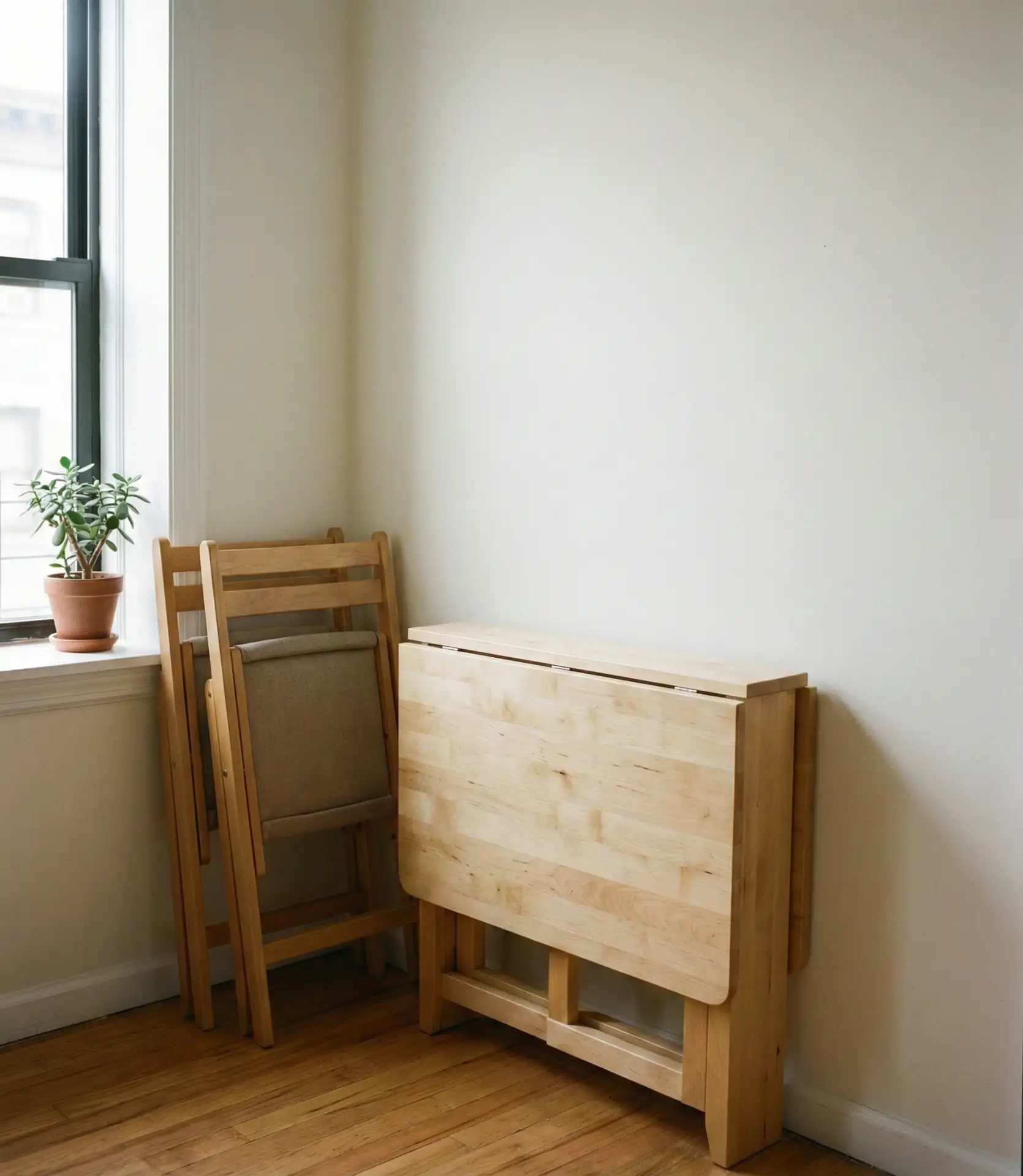
Traditional dining tables consume floor space constantly, even though most college students eat meals at their desks or on the couch. Wall-mounted drop-leaf tables or folding bistro sets provide dining surfaces when needed and disappear completely when not in use, making them ideal living room solutions for studios or one-bedrooms. The ability to fold away your dining area after meals dramatically increases usable floor space for yoga, exercise, or simply moving around comfortably.
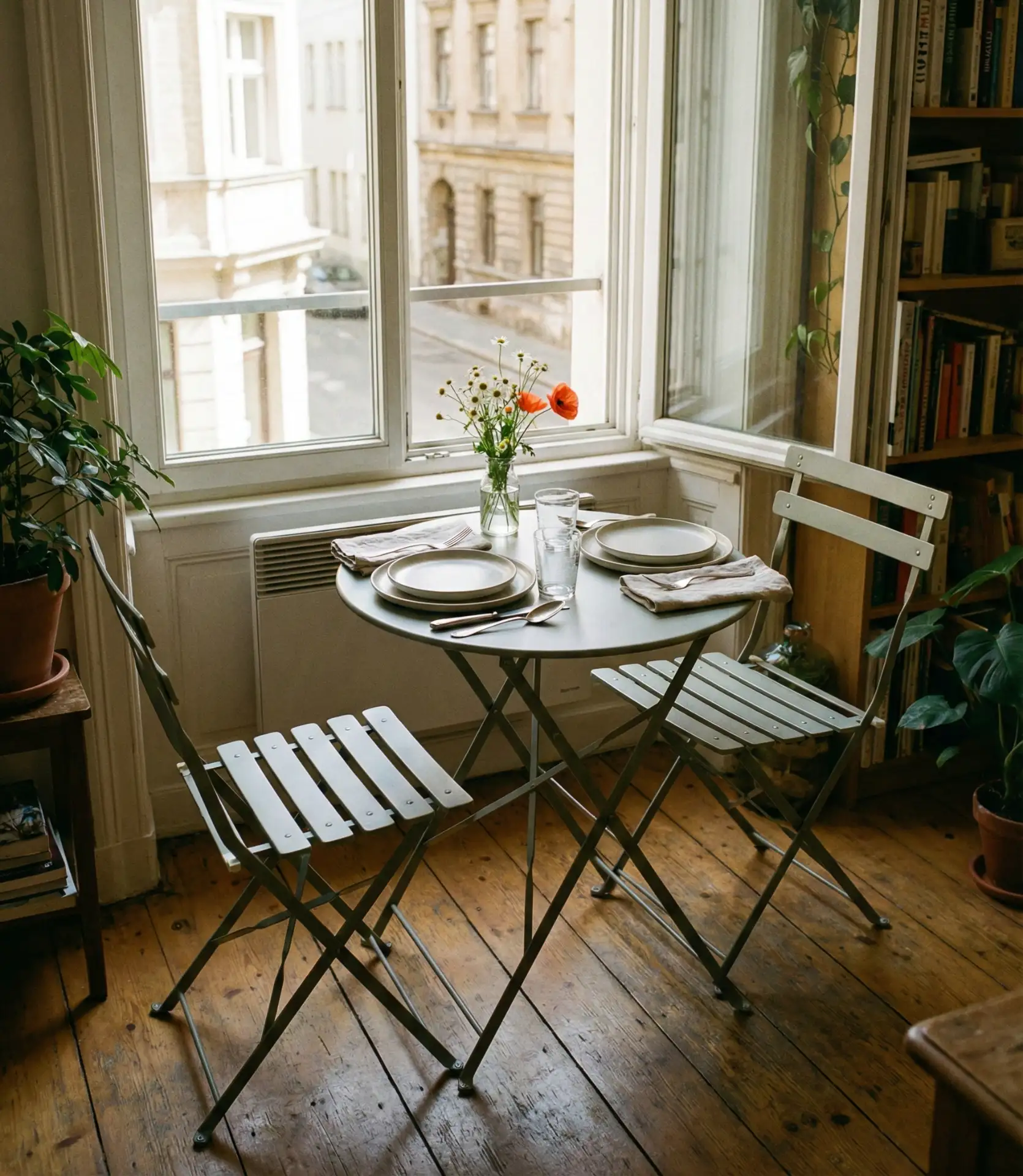
Students in urban areas like New York, Boston, and San Francisco—where apartment sizes trend smaller—particularly appreciate furniture that serves multiple purposes or disappears when unused. A wall-mounted table can function as a dining surface during meals, a prep area during cooking, and a folded-away non-entity the rest of the time. Installation requires finding studs and mounting securely, but the space-saving benefits pay dividends daily in cramped quarters.
15. Color-Coordinated Open Shelving Display
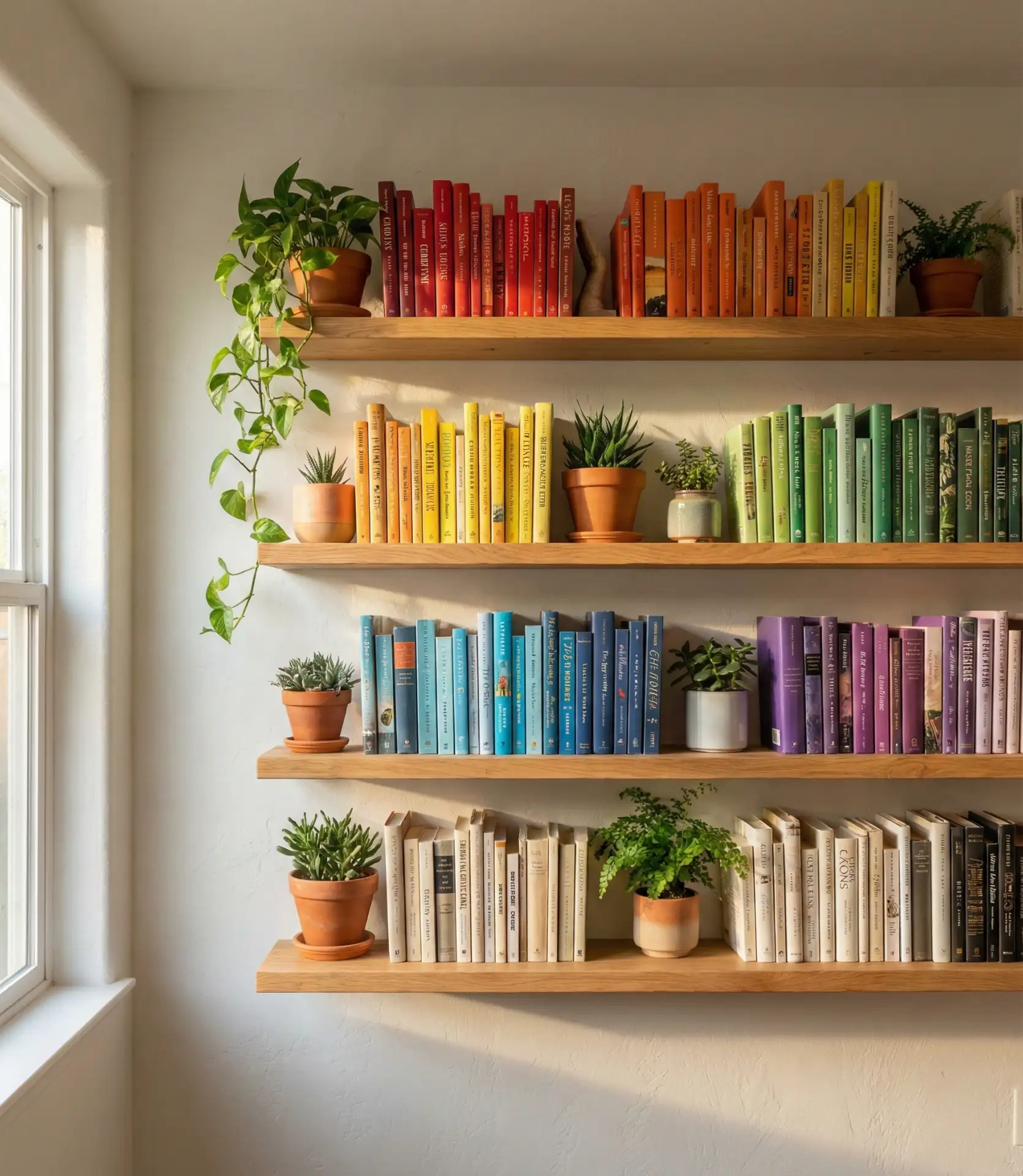
Open shelving can look either beautifully curated or chaotically cluttered depending entirely on how you arrange items. Group books, kitchenware, or decorative objects by color to create visual cohesion that feels intentional rather than haphazard. This aesthetic approach works wonderfully on a budget because you’re simply reorganizing what you already own, yet the impact rivals expensive organizational systems or new purchases.
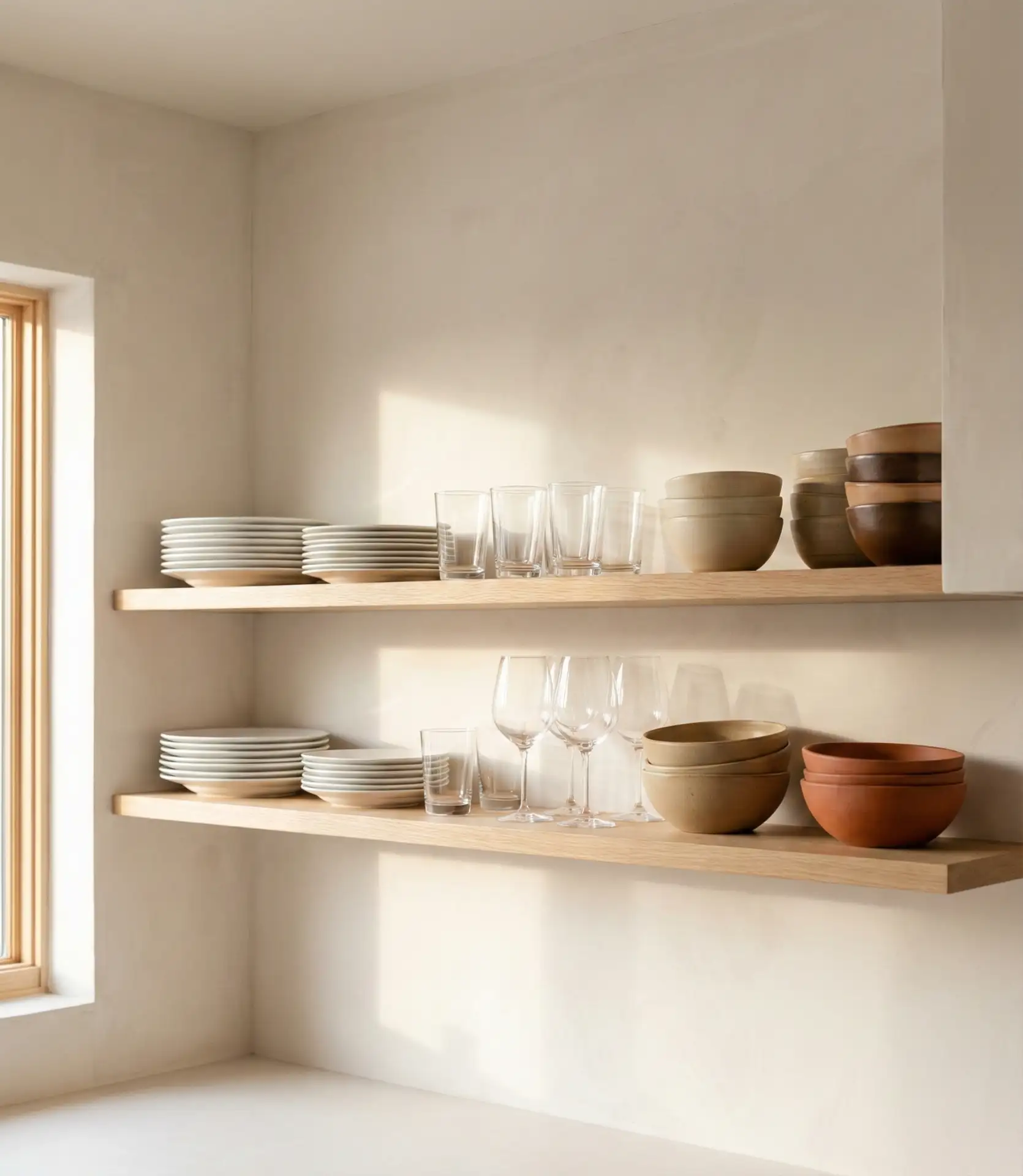
Common mistakes include organizing by color so rigidly that the display looks sterile rather than lived-in. The key is balancing color coordination with varied heights and textures—mix vertical books with horizontal stacks, intersperse decorative objects among functional items, and leave some breathing room rather than filling every inch. This creates rhythm and prevents the “overly curated” look that can feel intimidating rather than welcoming in personal spaces.
16. Tension Rod Storage for Bathroom Essentials
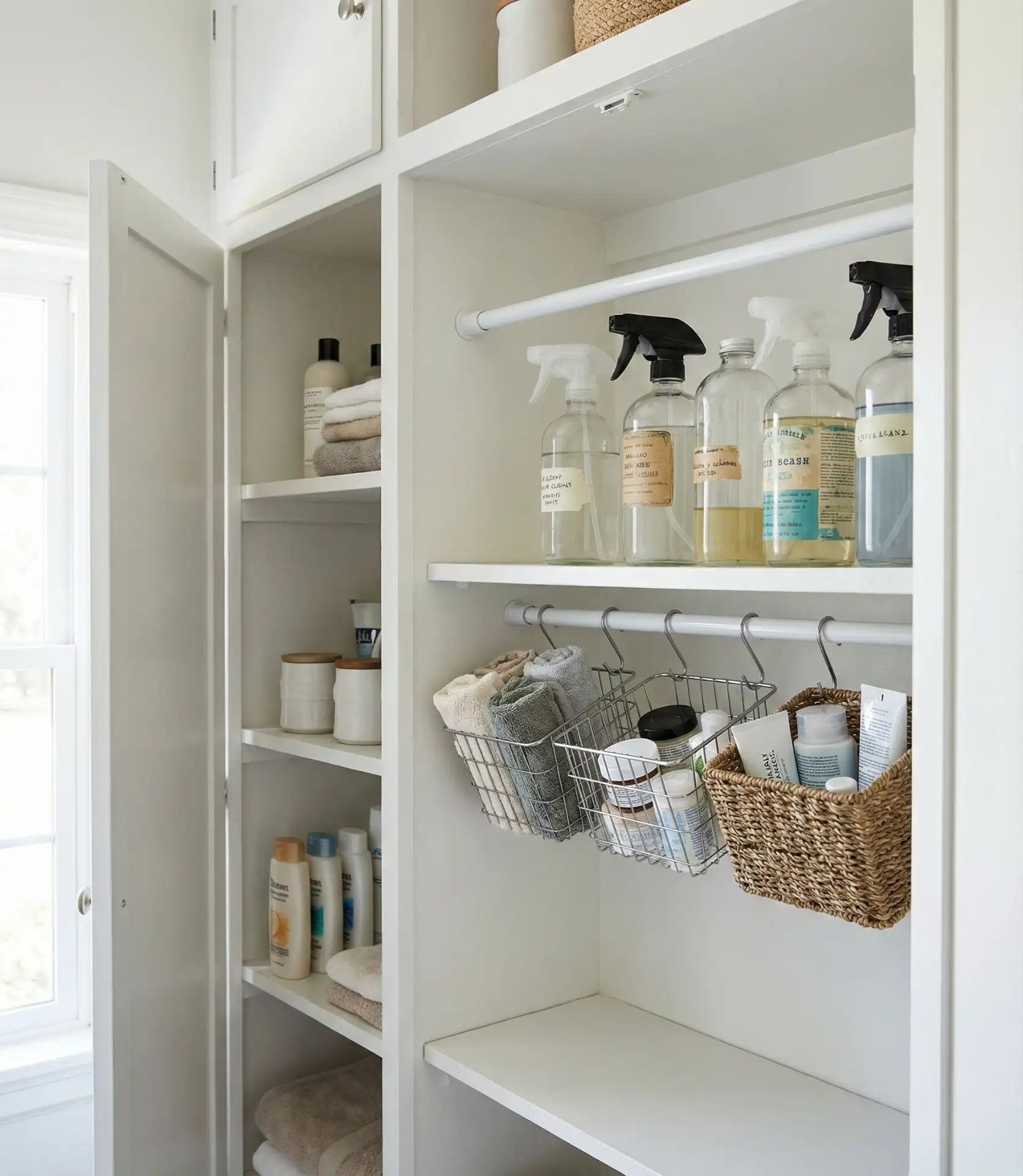
College bathroom cabinets rarely provide adequate storage for toiletries, hair tools, and cleaning supplies that accumulate quickly. Install tension rods at various heights inside cabinet doors or under sinks to hang spray bottles, hold hair styling tools, or create makeshift shelving with small baskets. This clever DIY approach maximizes vertical space that typically goes unused, keeping everything organized and accessible without permanent hardware that might violate lease agreements.
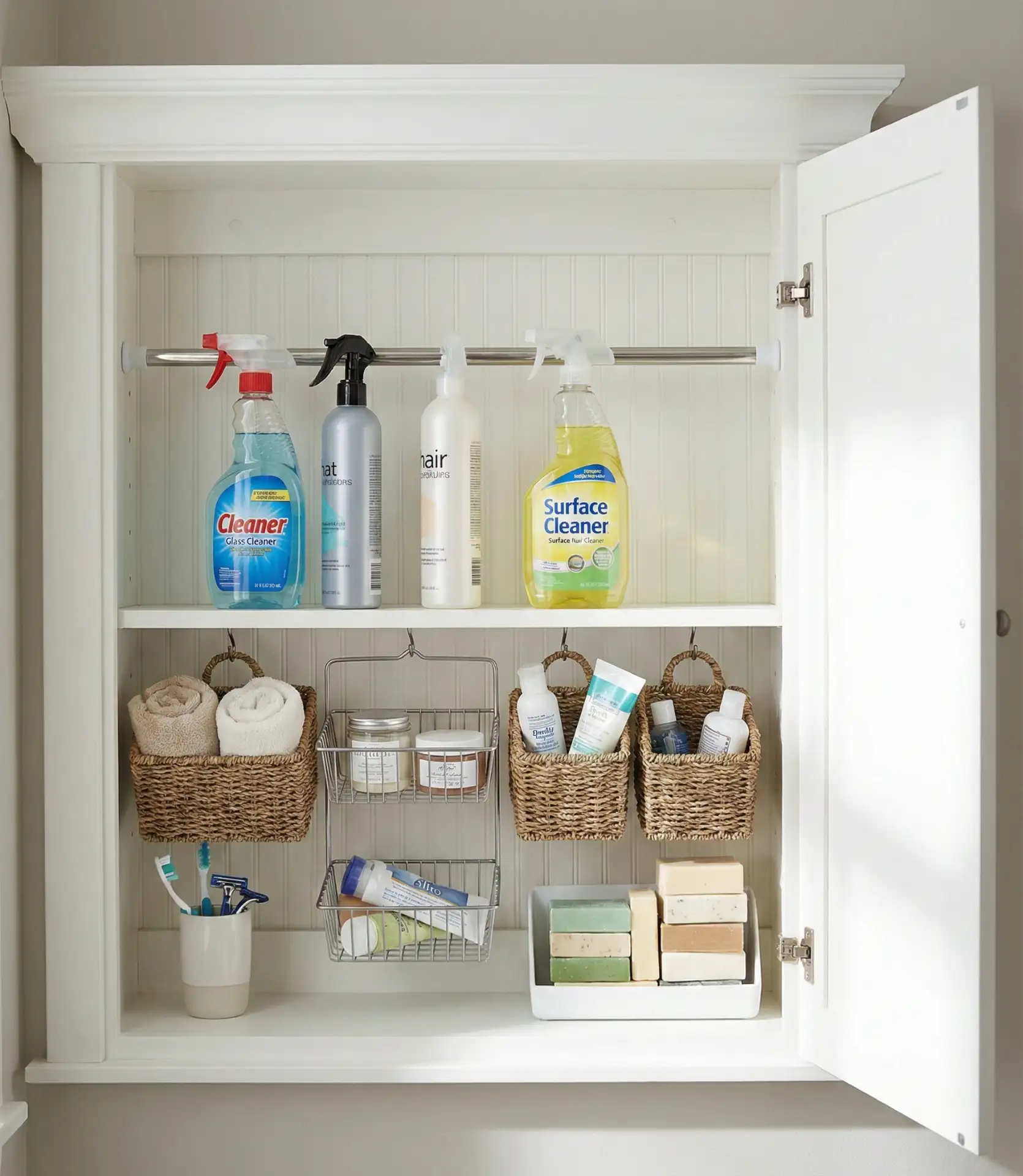
A friend mentioned discovering this hack after moving into her third apartment and finally finding a solution that worked better than stacking items precariously under the sink. Tension rods cost just a few dollars each and require zero installation skill—just twist to extend until they fit snugly between cabinet walls. The result feels custom-built for your specific storage needs while remaining completely reversible when you move out.
17. Multi-Purpose Ottoman with Hidden Storage
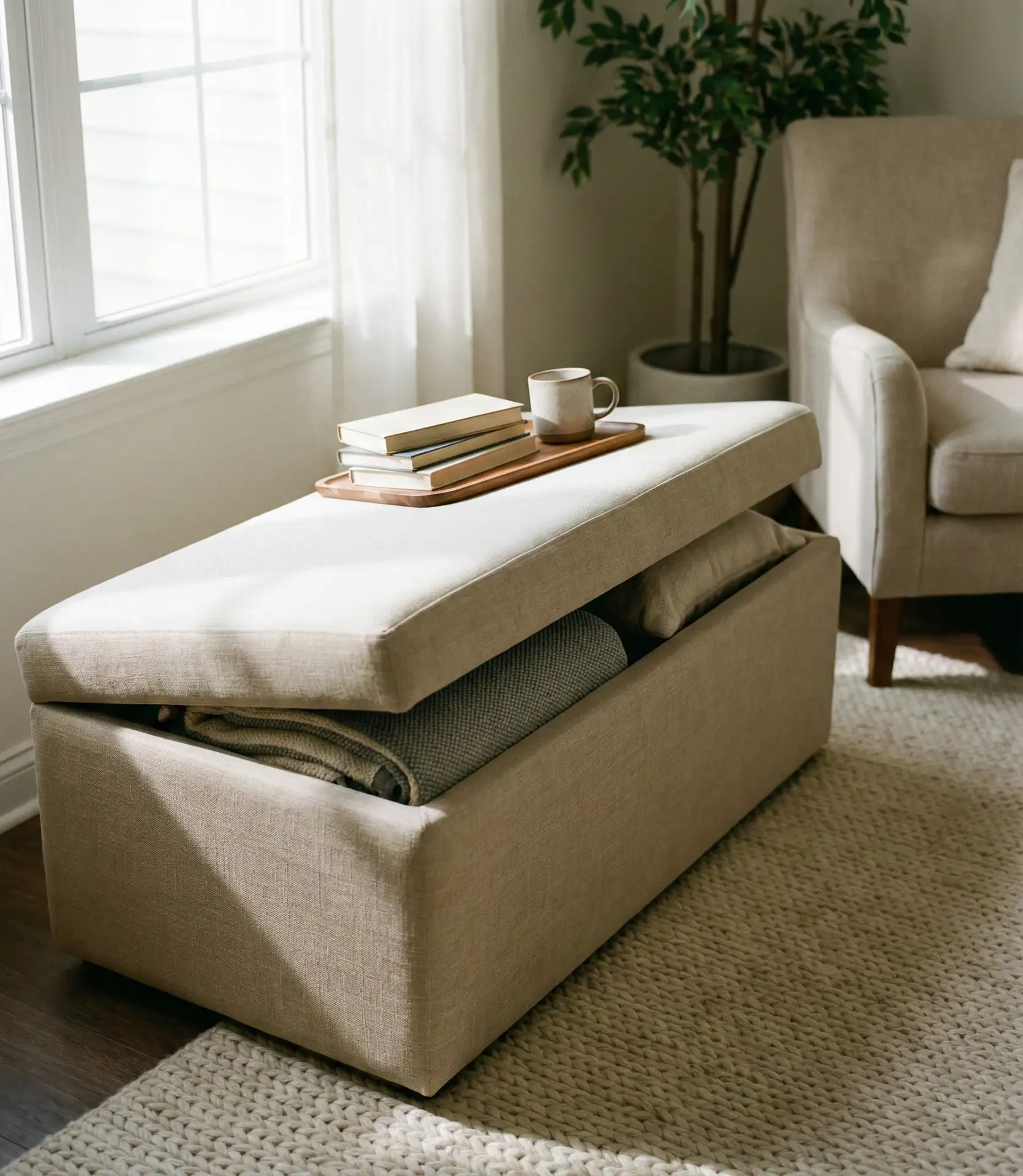
Furniture that serves multiple functions proves essential in tight quarters, and storage ottomans deliver remarkable versatility. Use them as extra seating during gatherings, as footrests while watching TV, as coffee tables with a tray on top, and as hidden storage for blankets, board games, or off-season clothing. This single piece effectively replaces three or four separate furniture items, making it one of the smartest small-space living room investments available to college students.
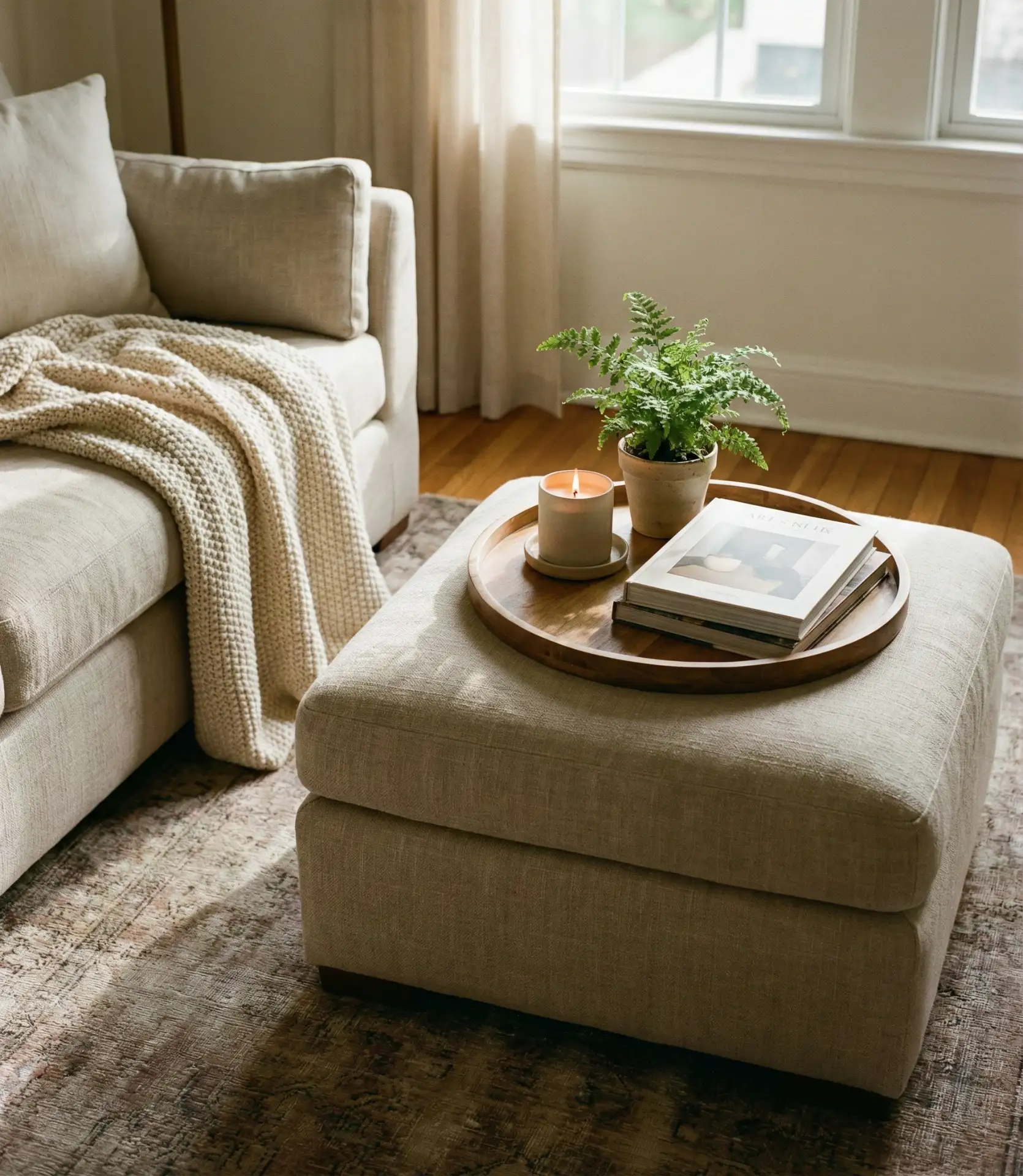
Budget-conscious shoppers can find quality storage ottomans ranging from fifty to one hundred fifty dollars depending on size and upholstery. The investment makes sense when you calculate that you’re purchasing seating, storage, and a table surface in one piece. Choose neutral colors that coordinate with changing decor schemes, or opt for bold patterns if you want the ottoman to serve as a statement piece that anchors your living room design.
18. Wire Grid Wall for Versatile Display
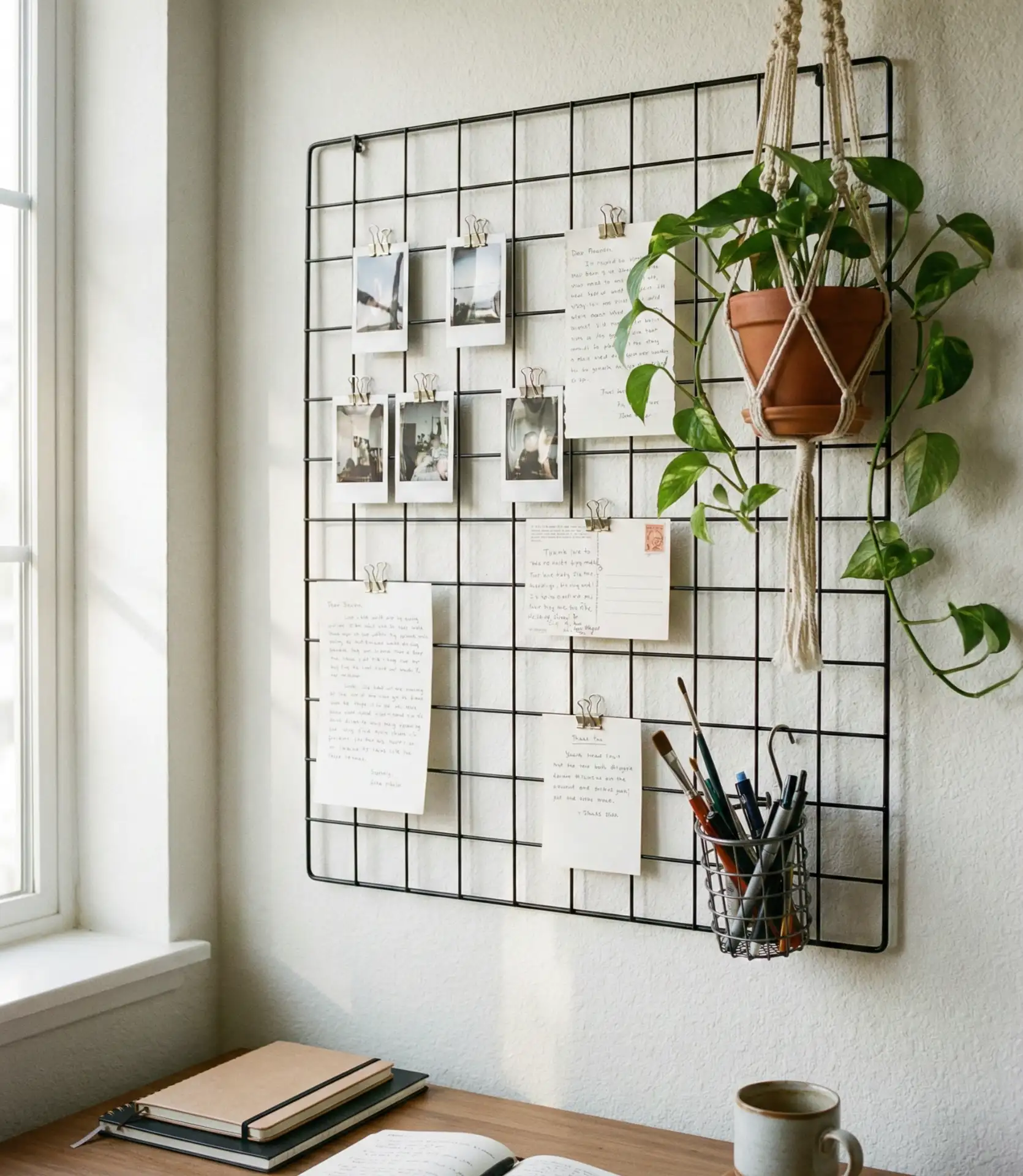
Wire grid panels made of metal offer modern, minimalist organization that transforms vertical space into functional display areas without drilling multiple holes in rental walls. Mount these grids above desks, in entryways, or beside beds to hold everything from photos and plants to school supplies and jewelry. The inspo potential is enormous—you can clip, hang, and attach items using simple S-hooks or clips, creating arrangements that evolve as your needs and aesthetic preferences shift throughout the semester.
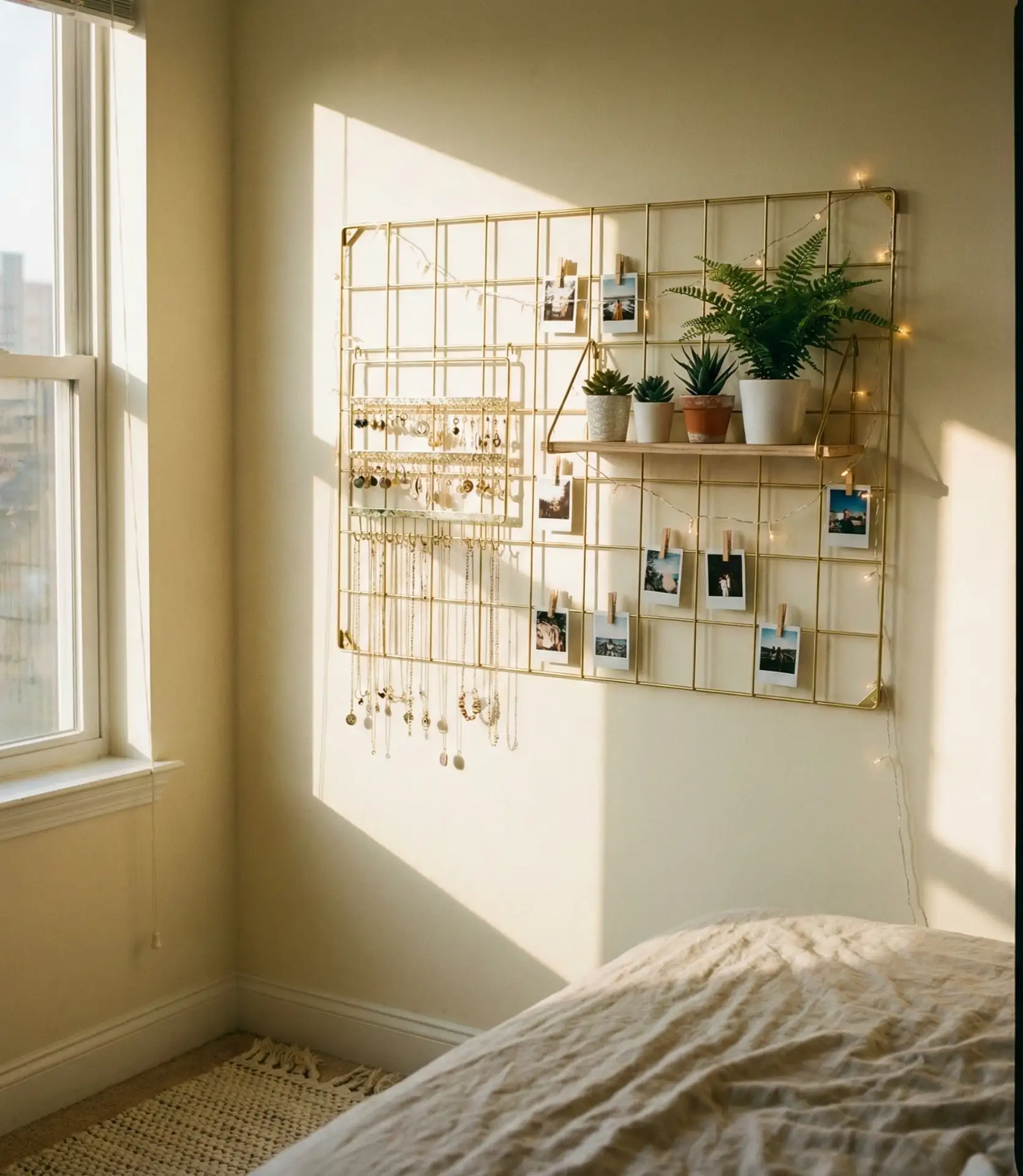
Where it works best: above study areas for organizing supplies and motivation boards, in entryways for keys and daily essentials, or beside beds for phone chargers and nighttime necessities. The open design keeps items visible and accessible while maintaining an airy feel that doesn’t overwhelm small spaces. Wire grids typically range from fifteen to forty dollars depending on size and finish, with options in matte black, white, copper, or gold to complement different decor styles.
19. Textured Throw Pillows for Instant Coziness
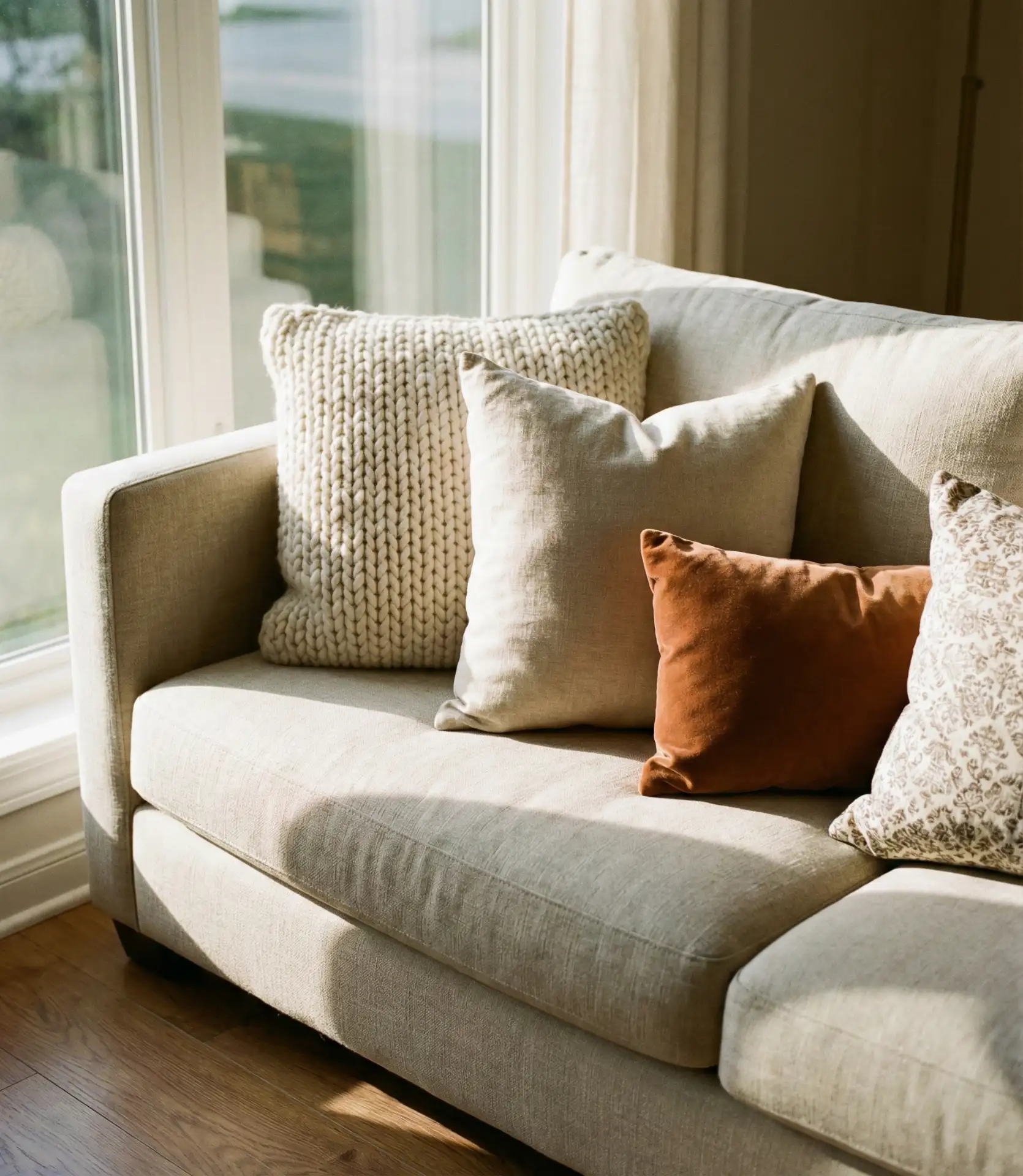
Basic furniture from big-box stores gains personality and comfort when layered with throw pillows in varied textures and sizes. Mix smooth cotton with chunky knits, add velvet or faux fur accents, and combine different sizes from large square euros to smaller lumbar pillows. This approach creates living rooms with cozy, modern aesthetics that invite people to actually sit and relax rather than perch awkwardly on stiff, utilitarian seating.
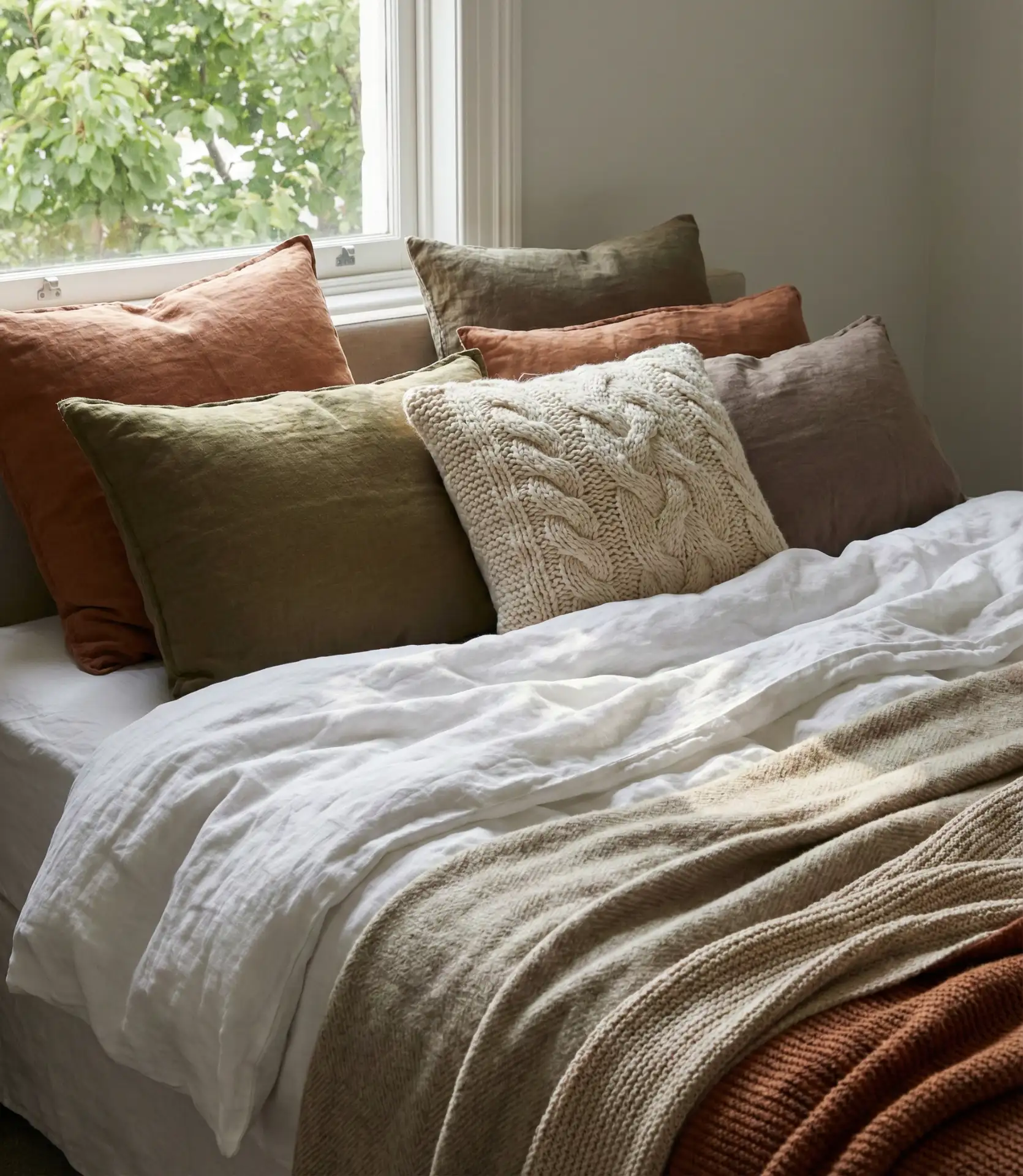
Real homeowner behavior reveals that students often start with one or two pillows and gradually add more as they find pieces that speak to them at thrift stores, discount retailers, or during seasonal sales. This organic approach prevents the matchy-matchy look that can feel generic. Aim for an odd number of pillows—three or five typically looks more intentional than even numbers—and don’t be afraid to mix patterns as long as they share a color palette.
20. Blue Accent Decor for Calming Atmosphere
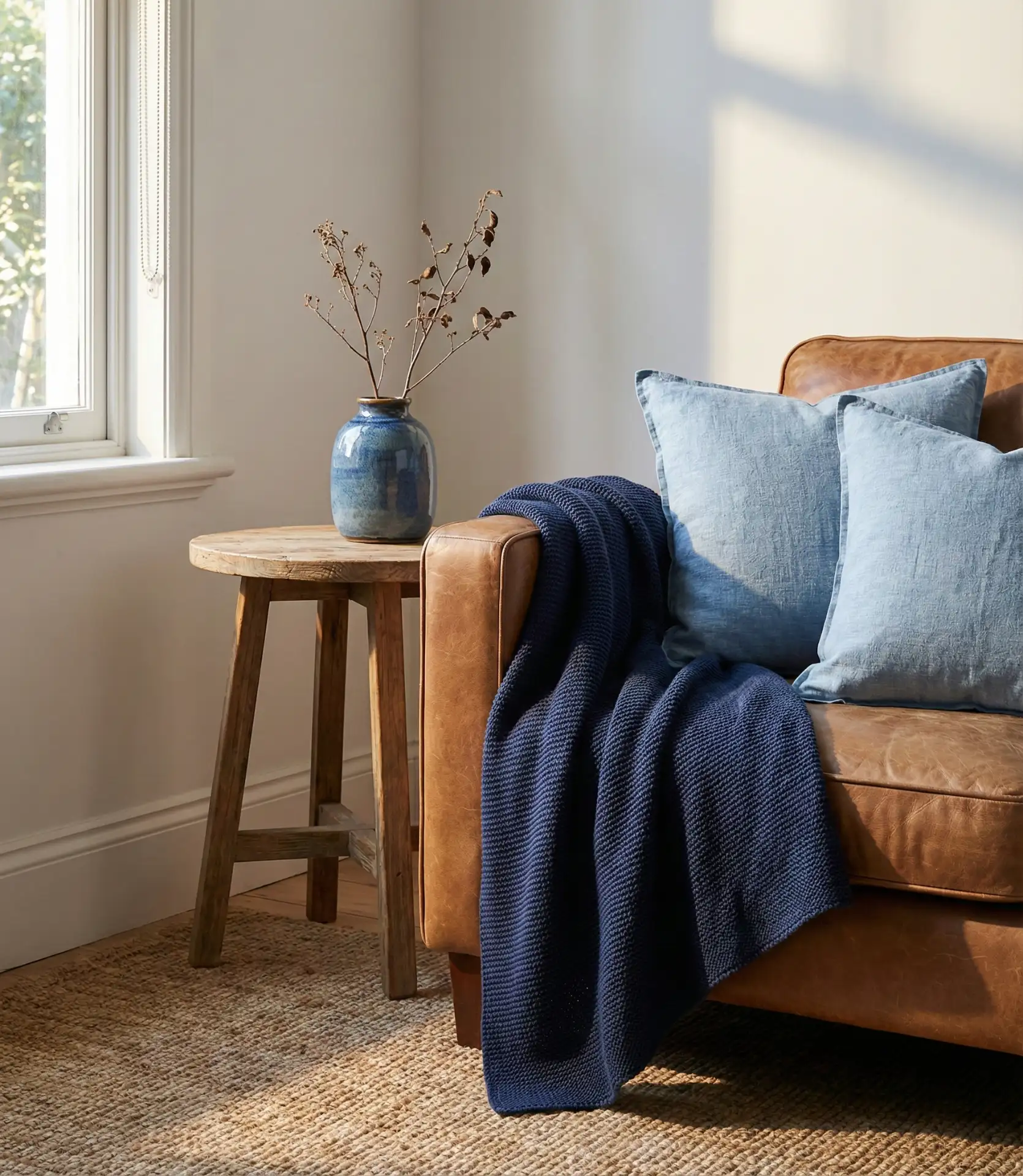
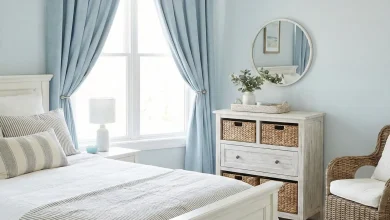
Incorporating blue tones throughout your apartment creates a naturally calming environment that counteracts the stress of academic life. Add navy throw blankets, powder blue curtains, or teal decorative objects to introduce this soothing color without committing to permanent changes. The psychological effect of blue has been well-documented—it lowers heart rate and promotes relaxation, making it particularly valuable in spaces where you’re trying to wind down after long study sessions or busy days.
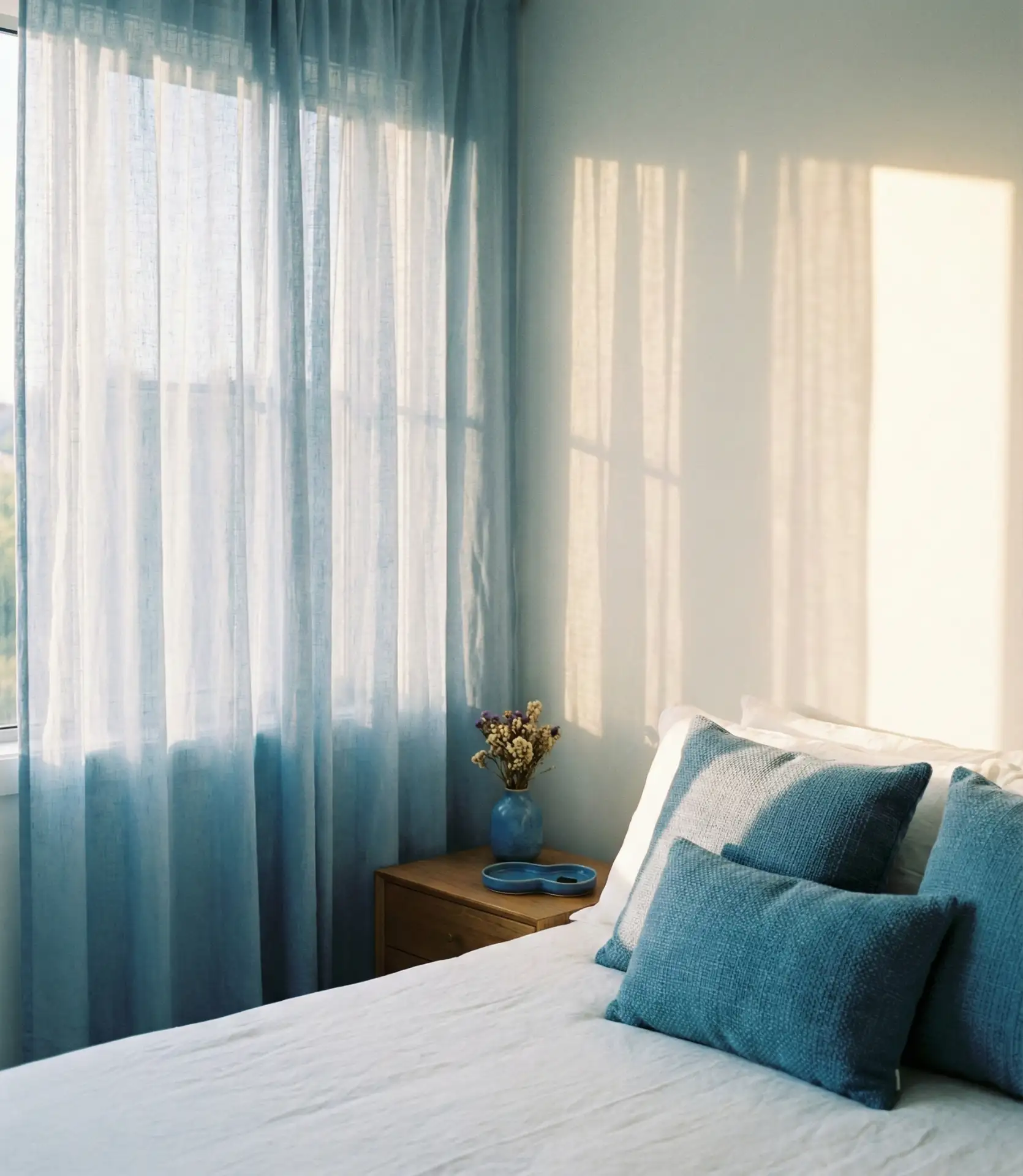
Where it works best: bedrooms benefit enormously from blue accents that promote better sleep, while living areas gain sophistication from deeper navy tones. Coastal regions from California to the Carolinas particularly embrace blue themes that echo nearby ocean and sky, but the color works equally well in landlocked apartments as a reminder of tranquil water scenes. Start with small accents and increase gradually to determine your comfort level with color saturation.
21. Christmas Seasonal Touches

Transforming your college apartment for Christmas doesn’t require elaborate decorations or significant investment—small seasonal touches create a festive atmosphere without overwhelming limited space. String lights take on holiday meaning when draped around windows or mirrors, while a small tabletop tree with simple ornaments brings seasonal cheer to desks or side tables. Adding pine-scented candles, plaid throw blankets, or a bowl of pinecones costs little but makes your space feel celebratory during winter break.
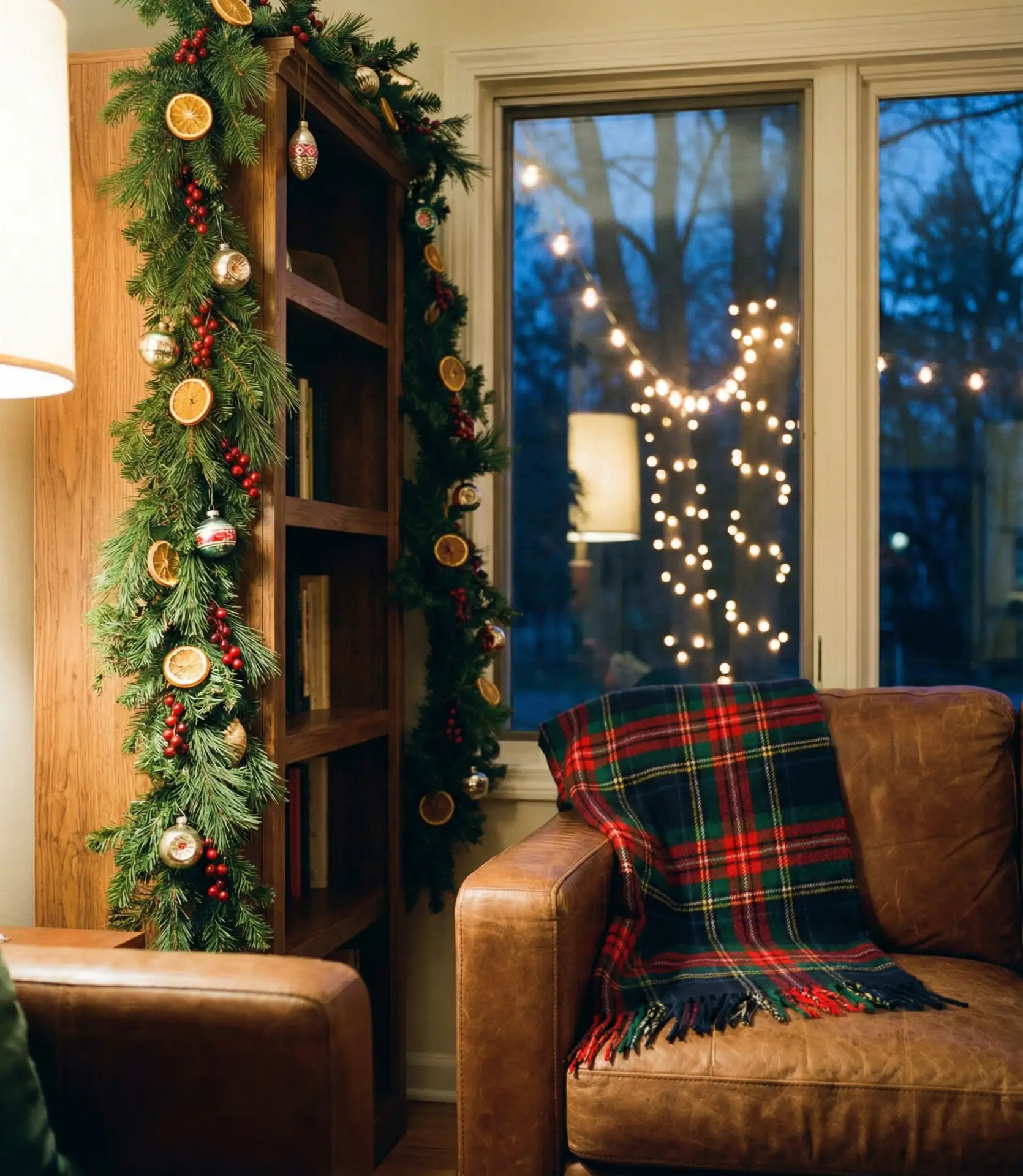
Practical insight: focus on decorations that engage multiple senses rather than just visual elements. The scent of evergreen or cinnamon, the texture of soft flannel blankets, and the warm glow of candles or lights create a more immersive holiday experience than elaborate visual decorations alone. After the season, these items pack away in a single small box, unlike the sprawling decoration collections that prove impractical for mobile college lifestyles and limited storage.
22. Living Room Black Couch Styling
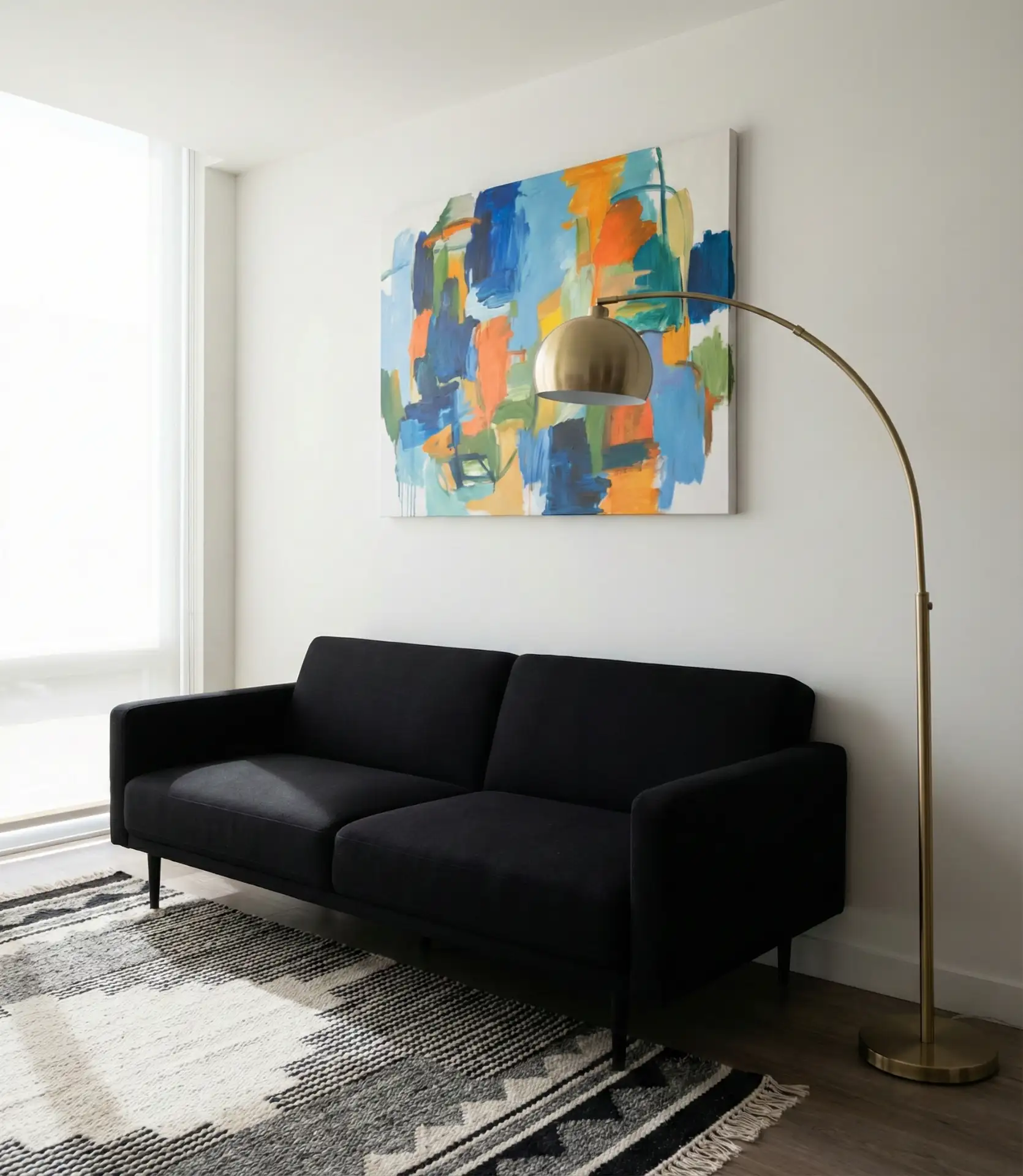
A living room black couch provides a sophisticated neutral foundation that works with virtually any decor direction you choose. The key to preventing dark furniture from making small apartments feel cave-like is balancing it with lighter elements—cream throw blankets, white or light gray pillows, and pale wood or metallic accents create contrast that keeps the space feeling open. The durability of black upholstery also proves practical for college life, hiding the inevitable spills and wear better than lighter colors.
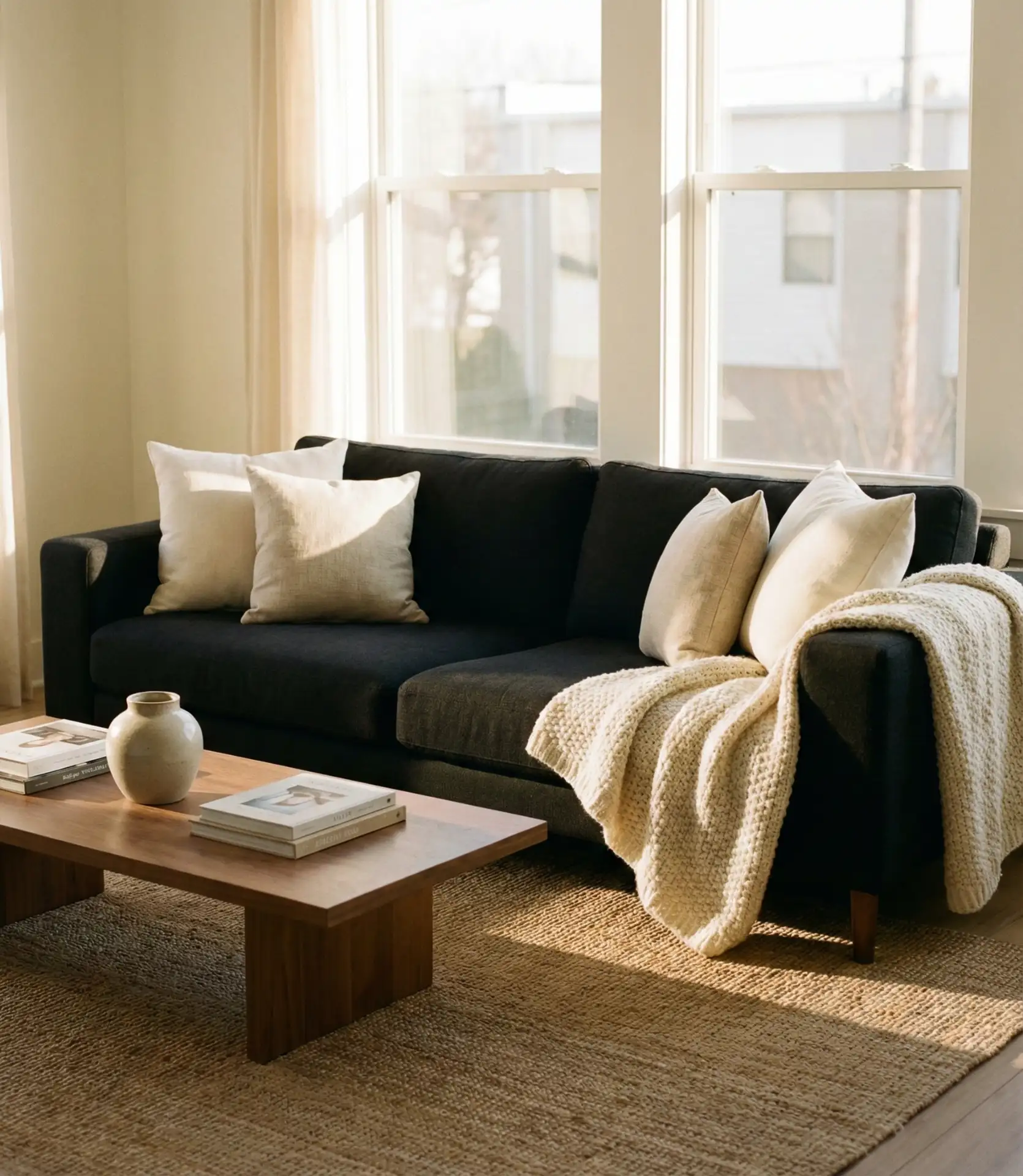
Common mistakes include surrounding black furniture with too many dark elements, which creates a dreary atmosphere rather than a sophisticated one. Instead, use the dark couch as your one major dark element and build brightness around it with light walls, reflective surfaces, and plenty of natural light. Add living plants to inject life and color, and position the couch to maximize natural light exposure from windows rather than hiding it in darker corners.
Ultimately, the key to decorating a college apartment in 2026 is to make intentional choices that reflect your personality and respect the temporary nature of rental living. These ideas demonstrate that limited budgets and small spaces don’t prevent you from creating a home that feels uniquely yours—they simply encourage creativity and strategic thinking about what matters most. Share your own college apartment transformations in the comments below, and let us know which ideas you’re planning to try first.