
Farmhouse bedrooms have always evoked a sense of deep relaxation. In 2026, that feeling is more relevant than ever—Americans are turning to Pinterest in droves, looking for spaces that balance warmth and intention, layered texture, and quiet simplicity. Whether you live in a converted barn in rural Tennessee or a 900-square-foot apartment in Chicago, the farmhouse aesthetic offers something real: rooms that actually feel lived in. In this article, you’ll find fresh ideas pulling from the best of cozy modern sensibility, vintage charm, and earthy sophistication—everything you need to reimagine your bedroom this year.
1. Cozy Modern Farmhouse Bedroom With Warm Neutral s
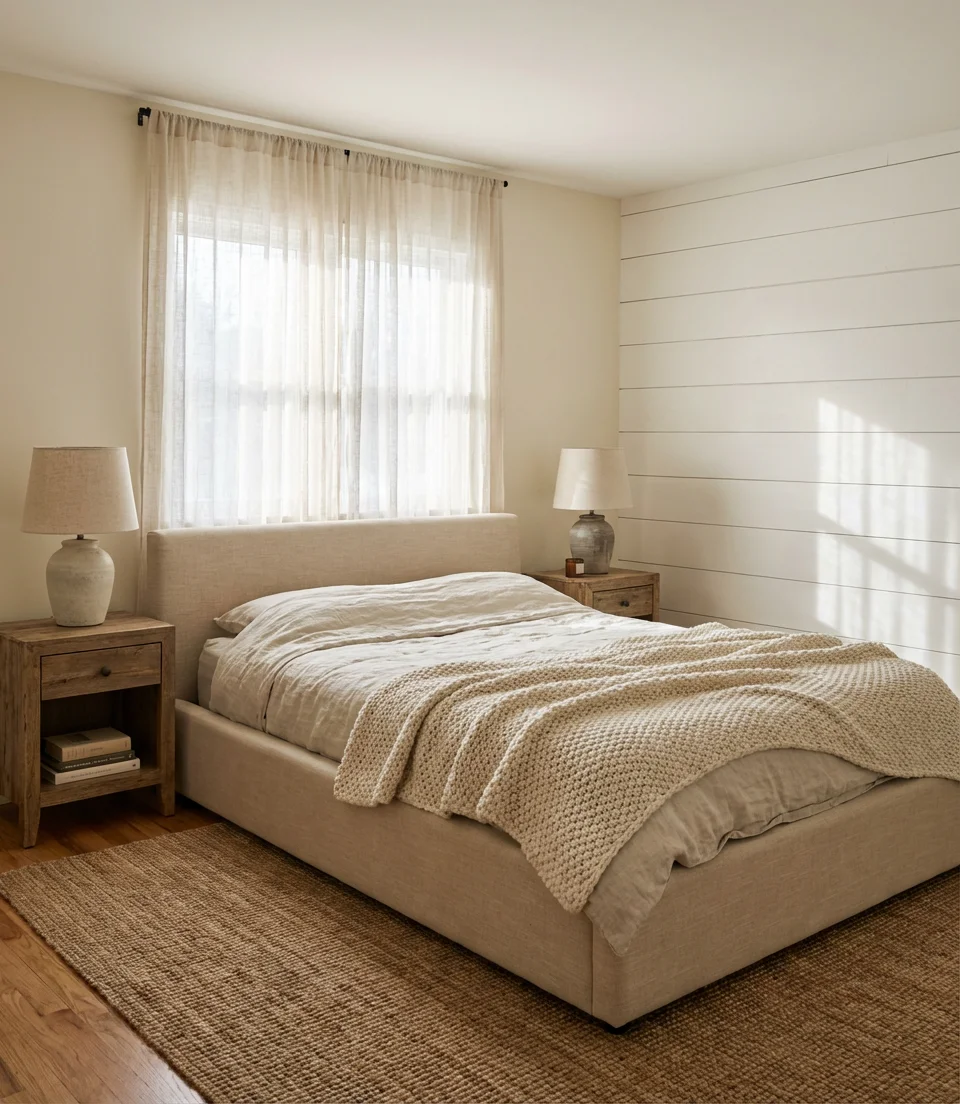
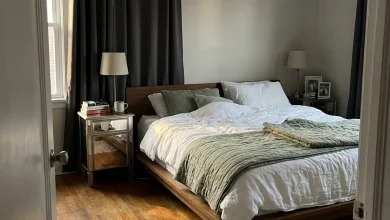
The cozy modern farmhouse bedroom is the style story of this decade. Clean architectural lines, such as shiplap accent walls, low-profile platform beds, and streamlined nightstands, are layered with a softness that creates a genuinely inviting room. Warm taupes, oat creams, and earthy tones effectively ground everything in a palette that is both fresh and timeless. This palette is a look that works whether you’re starting from scratch or simply refreshing what you already have with new textiles and lighting.
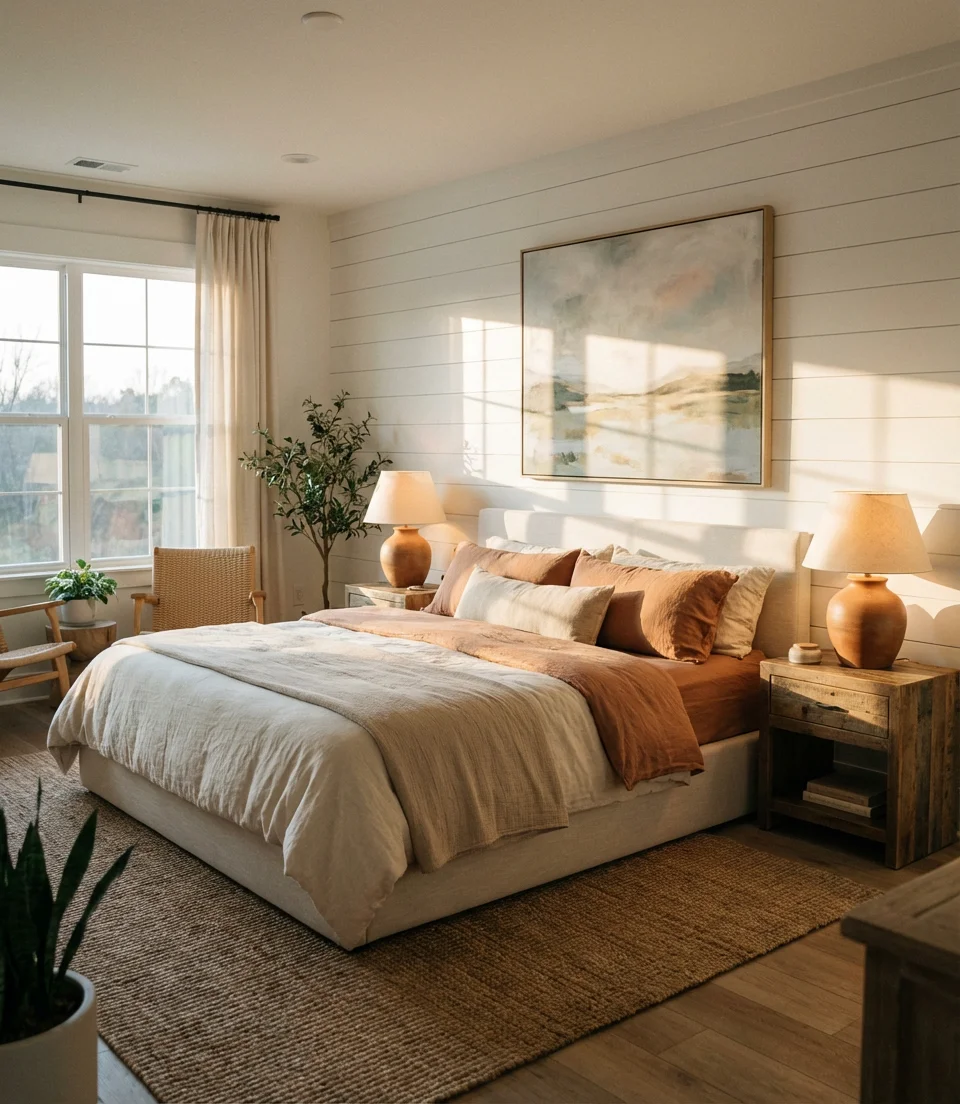
If you’ve been scrolling Pinterest wondering why your bedroom never quite feels as settled as the ones you save, the answer is usually layering. Start with a linen duvet in a warm oat shade, add a chunky knit throw folded at the foot of the bed, and finish with a pair of matching ceramic lamps on wood nightstands. The trick is repetition of texture—nothing should look too precious or too perfect. Real homeowners who’ve nailed this look say the game-changer was swapping overhead lighting for warm-toned table lamps. The difference is immediate.
2. Rustic Master Suite With Exposed Beam Ceiling
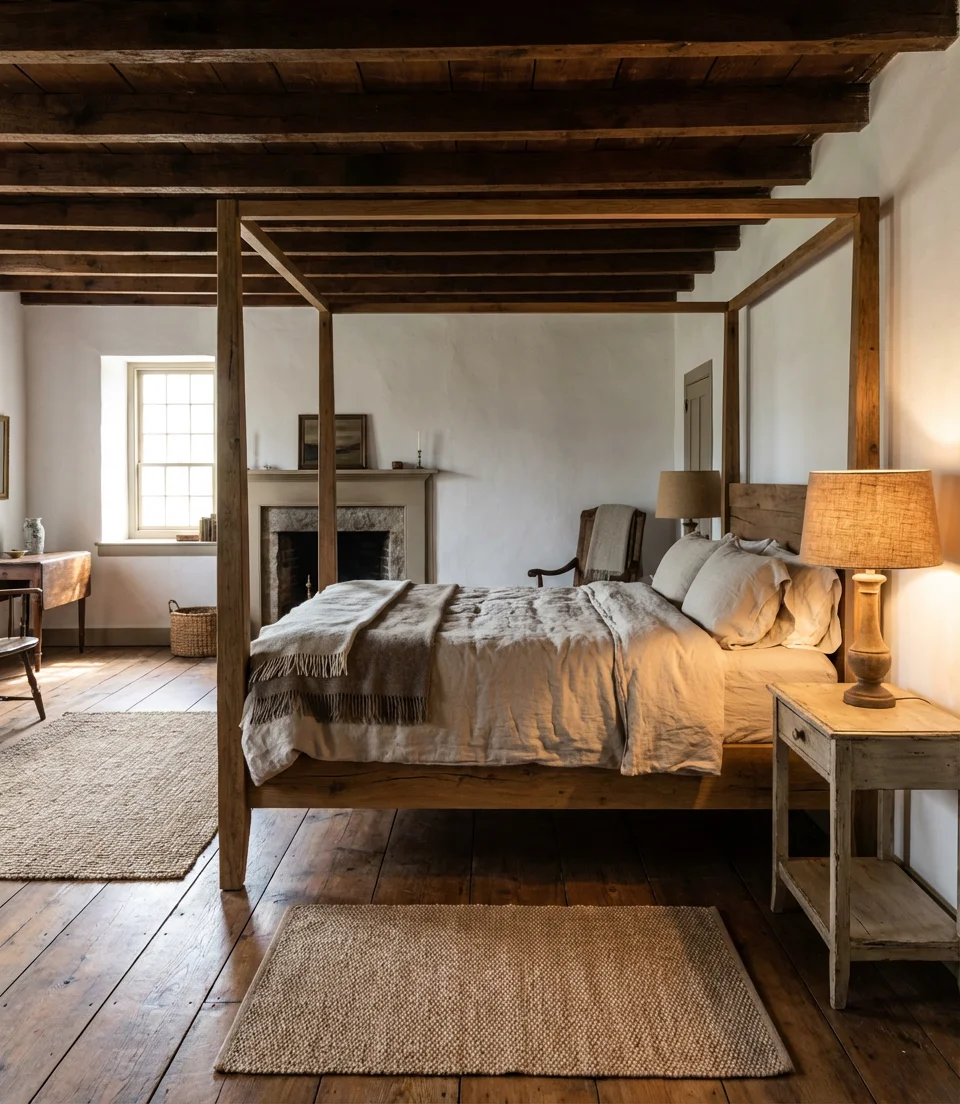
There’s a reason the exposed beam ceiling has become almost synonymous with the dream master suite. Raw wood overhead instantly adds architecture to a room that might otherwise feel flat—it draws the eye upward, creates visual warmth, and signals a certain handcrafted intentionality that no wallpaper can replicate. Paired with a rustic four-poster bed in reclaimed oak or a simple iron frame, this contemporary look leans into the beauty of imperfection. It works especially well in homes with higher ceilings, older construction, or any space where you want to honor the bones of the house.
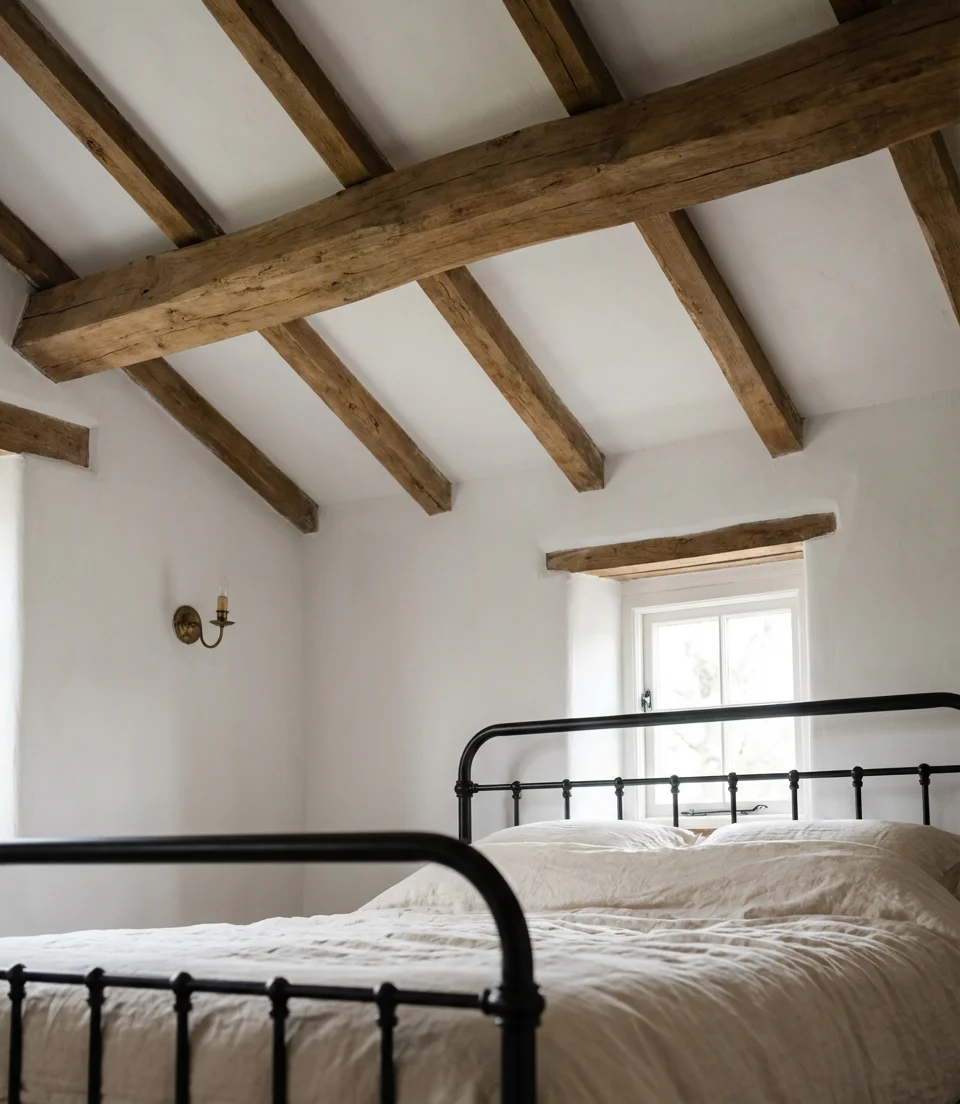
This aesthetic performs best in homes built before 1980, where original structural beams can be exposed and refinished rather than faked. If your ceiling is flat drywall, faux wood beam kits from brands like Volterra Architectural Products run between $150 and $400 per beam—a manageable investment for a dramatic visual payoff. Interior designers often recommend keeping the rest of the room quiet when beams are present: white plaster walls, simple bedding, and minimal clutter let the architecture breathe. Consider it the equivalent of allowing a magnificent piece of art to stand alone in the room, free from any competition.
3. Sage Green Farmhouse Bedroom for a Calming Retreat
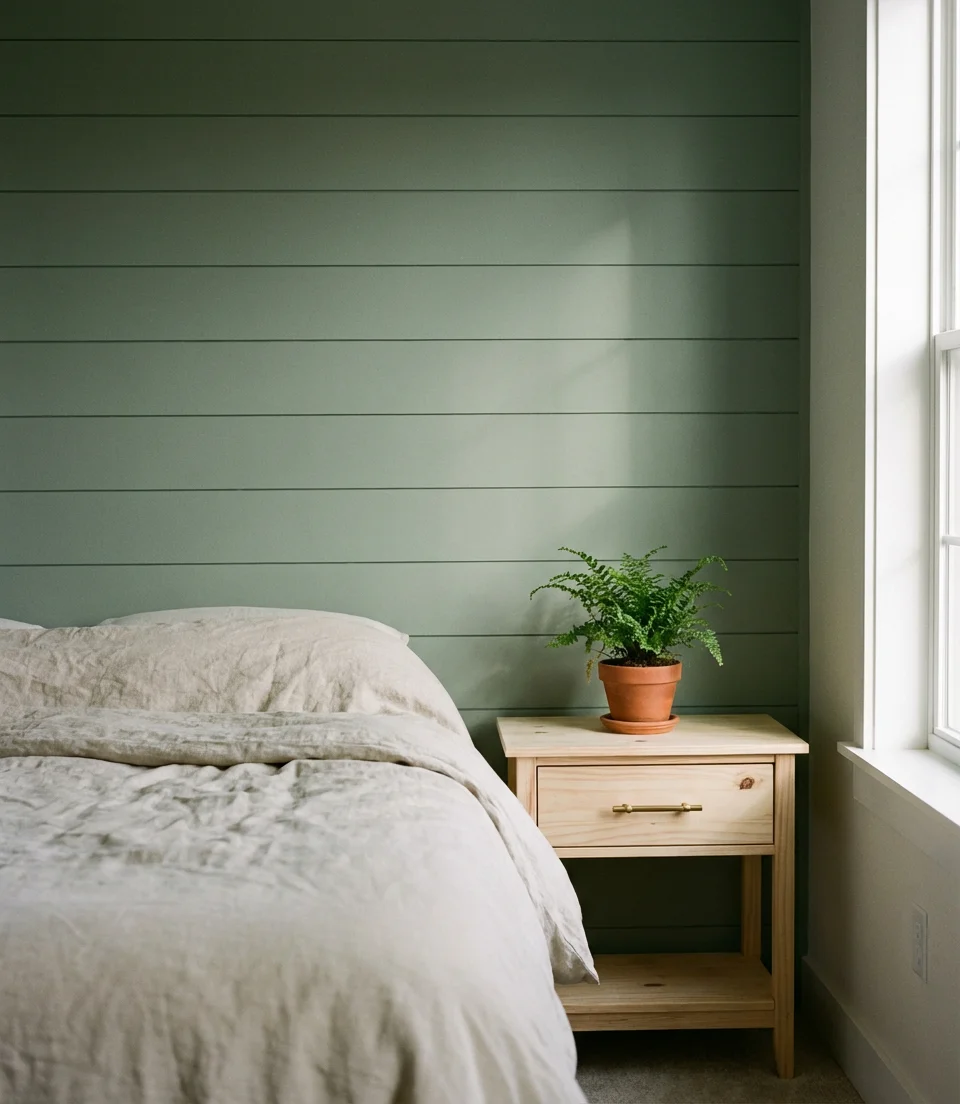
Sage green has quietly taken over as the most-saved bedroom color on Pinterest, and it’s not hard to understand why. It reads as both nature-forward and sophisticated—calming without being clinical, earthy without veering into anything too heavy. In a farmhouse bedroom, it works beautifully on shiplap walls, wainscoting, or even just a single painted accent wall behind the bed. Pair it with natural linen, unfinished wood furniture, and soft brass hardware for a palette that feels genuinely green and grounded in the best possible way.
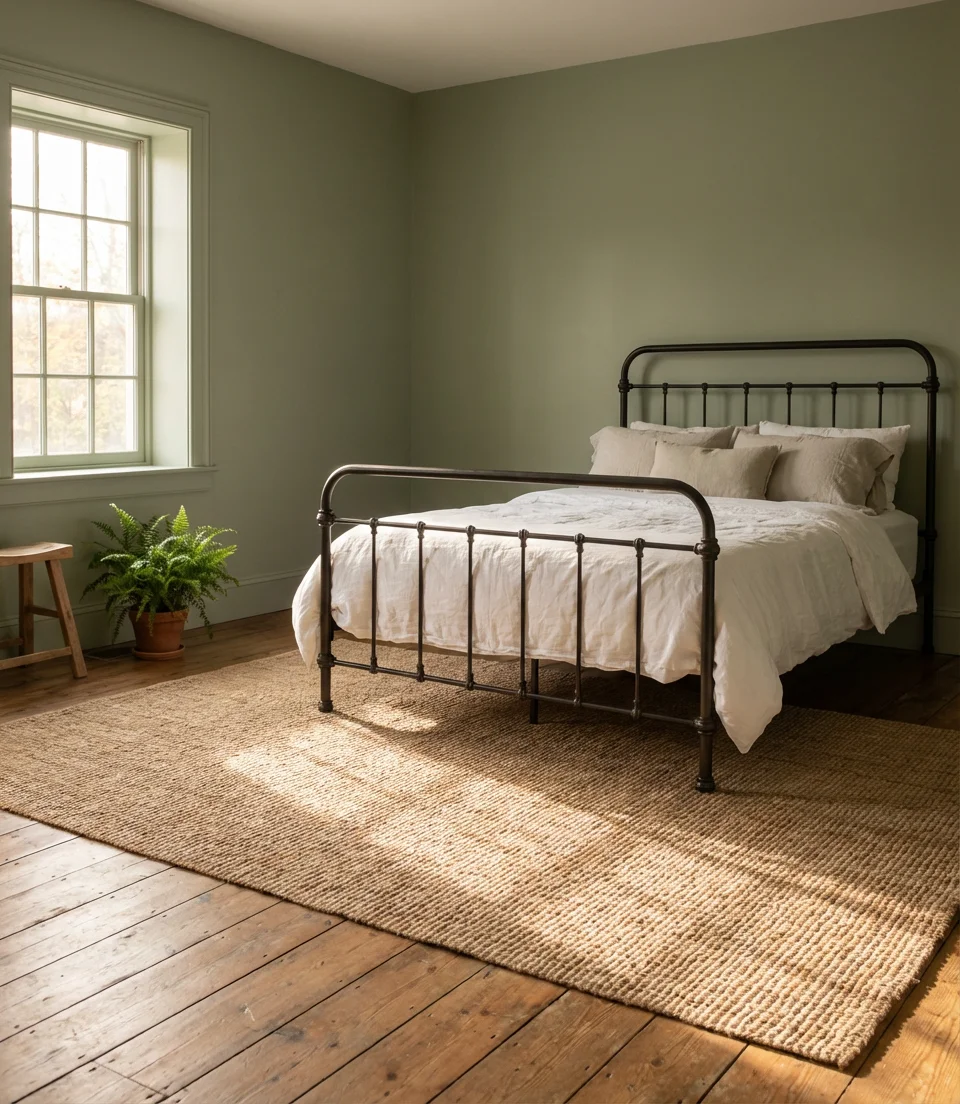
Interior designers who specialize in color psychology point to muted greens like sage as one of the few hues that reliably lowers cortisol levels—making it an unusually smart choice for a room dedicated to rest. Benjamin Moore’s “Rosemary Sprig” and Sherwin-Williams’s “Privilege Green” are two favorites that read true sage in natural light without going gray. One common mistake homeowners make is painting only the accent wall—for sage to feel immersive and genuinely restorative, consider painting all four walls and letting the ceiling stay soft white. That full-wrap commitment is what creates the cocoon effect.
4. Vintage Farmhouse Bedroom With Antique Finds
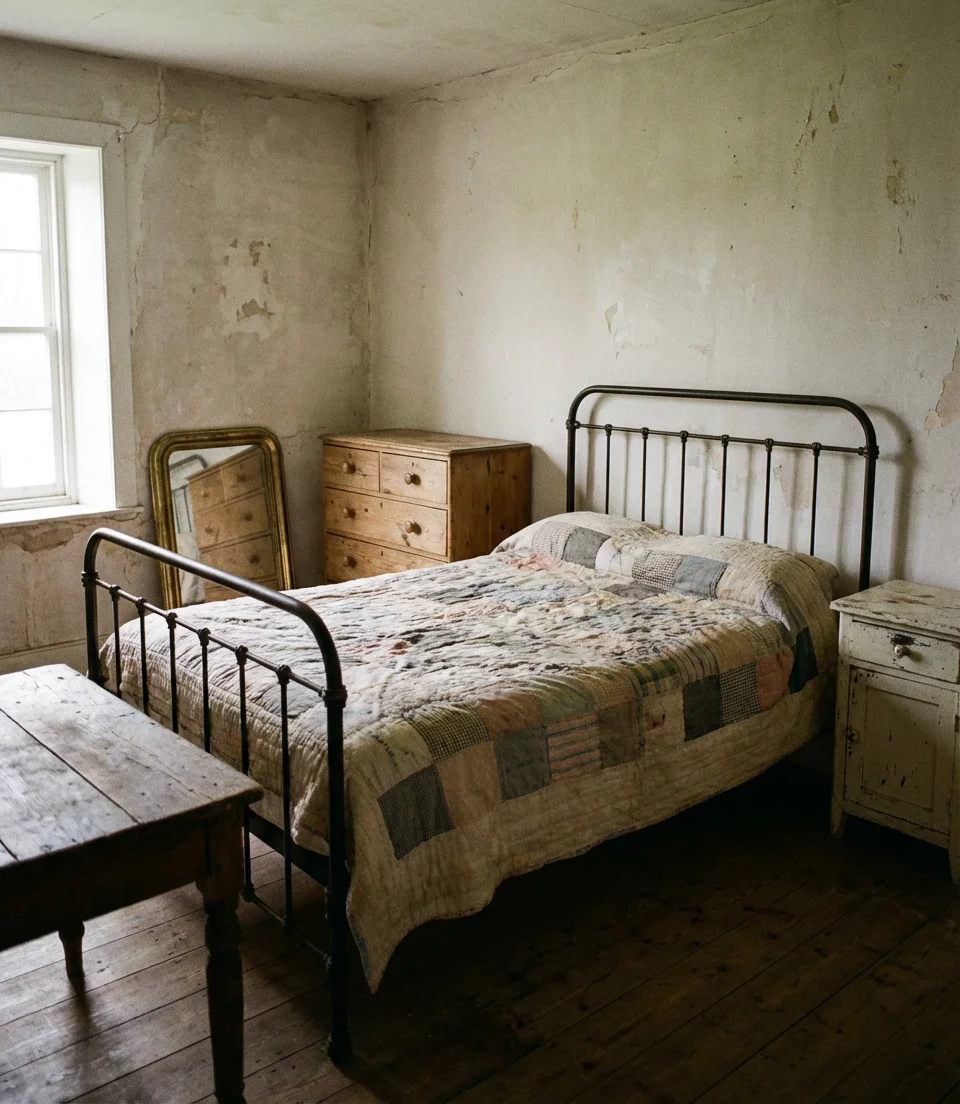
A vintage farmhouse bedroom isn’t about recreating the past—it’s about borrowing its best details. Think: a worn leather armchair pulled into a reading corner, a brass-framed mirror propped against the wall, a quilt folded over the footboard that might have actually belonged to someone’s grandmother. These rooms have soul precisely because they weren’t assembled from a single catalog page. The country spirit lives here—in mismatched nightstands that somehow feel intentional, in the grain of a pine dresser that’s clearly been through a few decades of life.
One of the best things about building a vintage farmhouse bedroom is that it rewards patience and thrifting over big-ticket purchases. Etsy, Facebook Marketplace, and local estate sales offer a wealth of aged hardware, worn wood furniture, and handmade textile details that perfectly complement this look. A practical tip: anchor the room with one larger antique piece—a bed frame, dresser, or armoire—and let everything else orbit around it. That focal point prevents the room from feeling like a chaotic collection and gives the whole space a sense of considered curation.
5. White Cottage Farmhouse Bedroom With Soft Textures
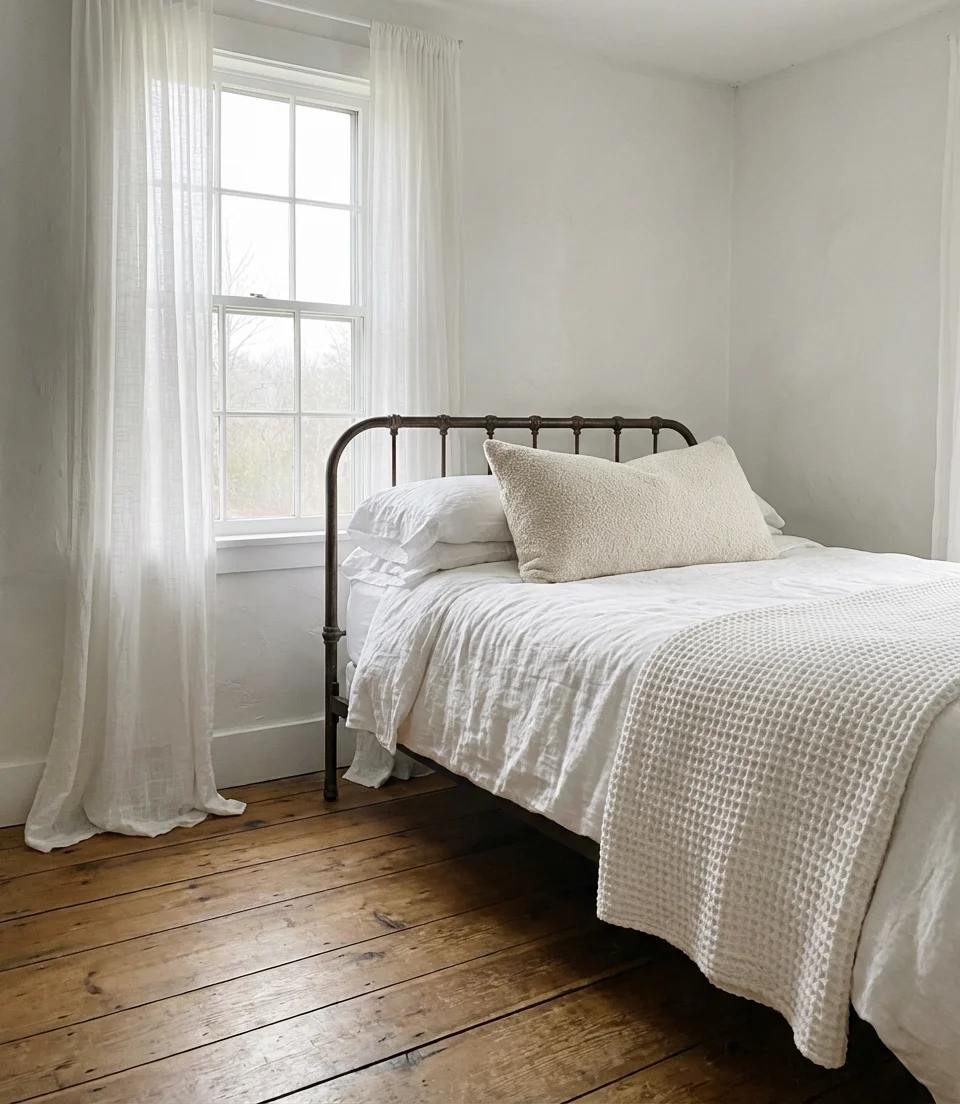
The all-white farmhouse bedroom done right is one of the most serene spaces you can create—and one of the most forgiving to execute. The key is texture. Without it, white rooms go cold and institutional fast. With it—cotton gauze curtains that pool slightly on the floor, a boucle pillow, and a waffle-weave throw—the space feels like a cottage from somewhere you’d want to spend a long weekend. This approach suits small bedrooms particularly well because white reflects light and visually expands the room without relying on square footage.
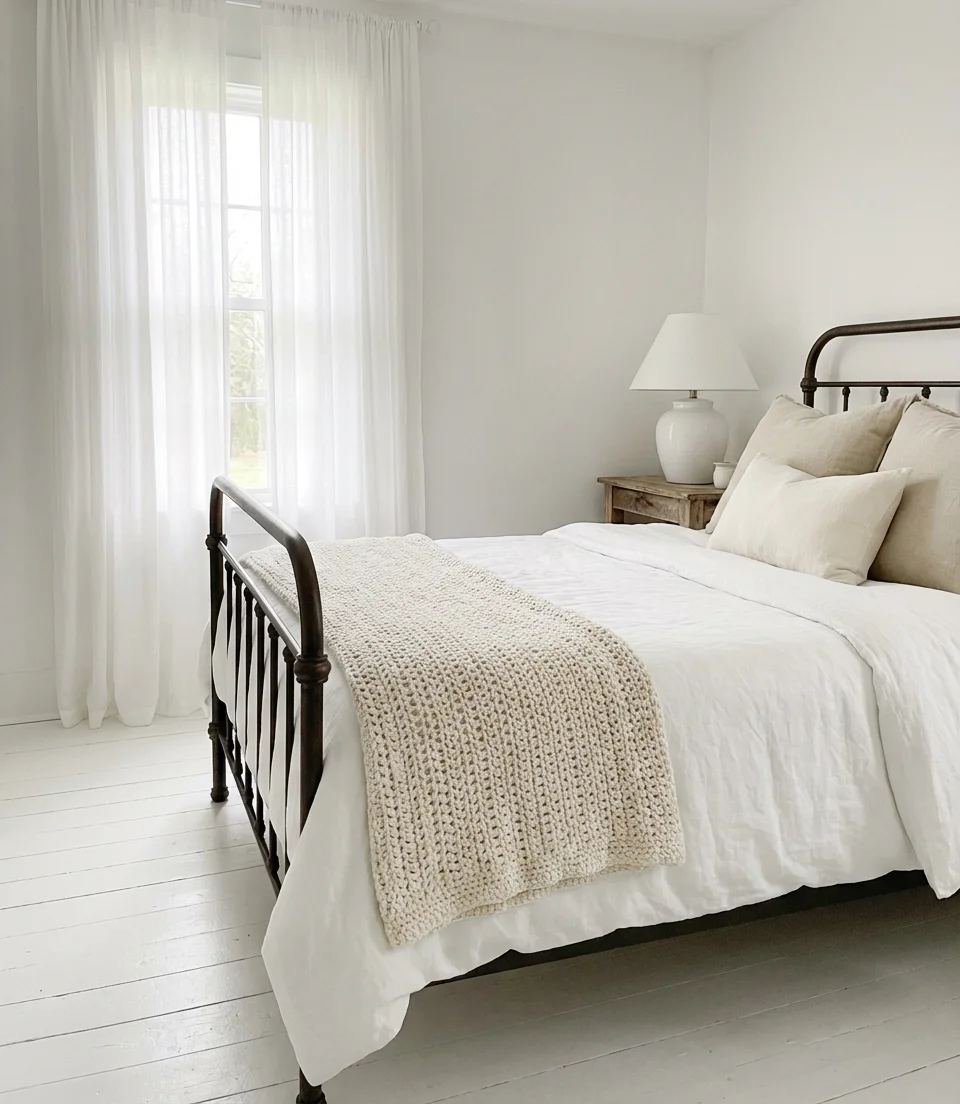
Think of a newlywed couple in coastal Maine who repainted their 200-year-old farmhouse bedroom entirely in Benjamin Moore “Chantilly Lace” and layered in linen bedding, a crocheted throw, and white-painted plank floors. What they created felt like something from a design magazine—but the whole refresh cost under $800. That’s the magic of the white farmhouse bedroom: the investment is in fabric and finish, not in architecture. Start with the walls, swap your curtains for something light and floaty, and let the rest of the room build naturally around that quiet foundation.
6. Boho Farmhouse Bedroom With Layered Textiles
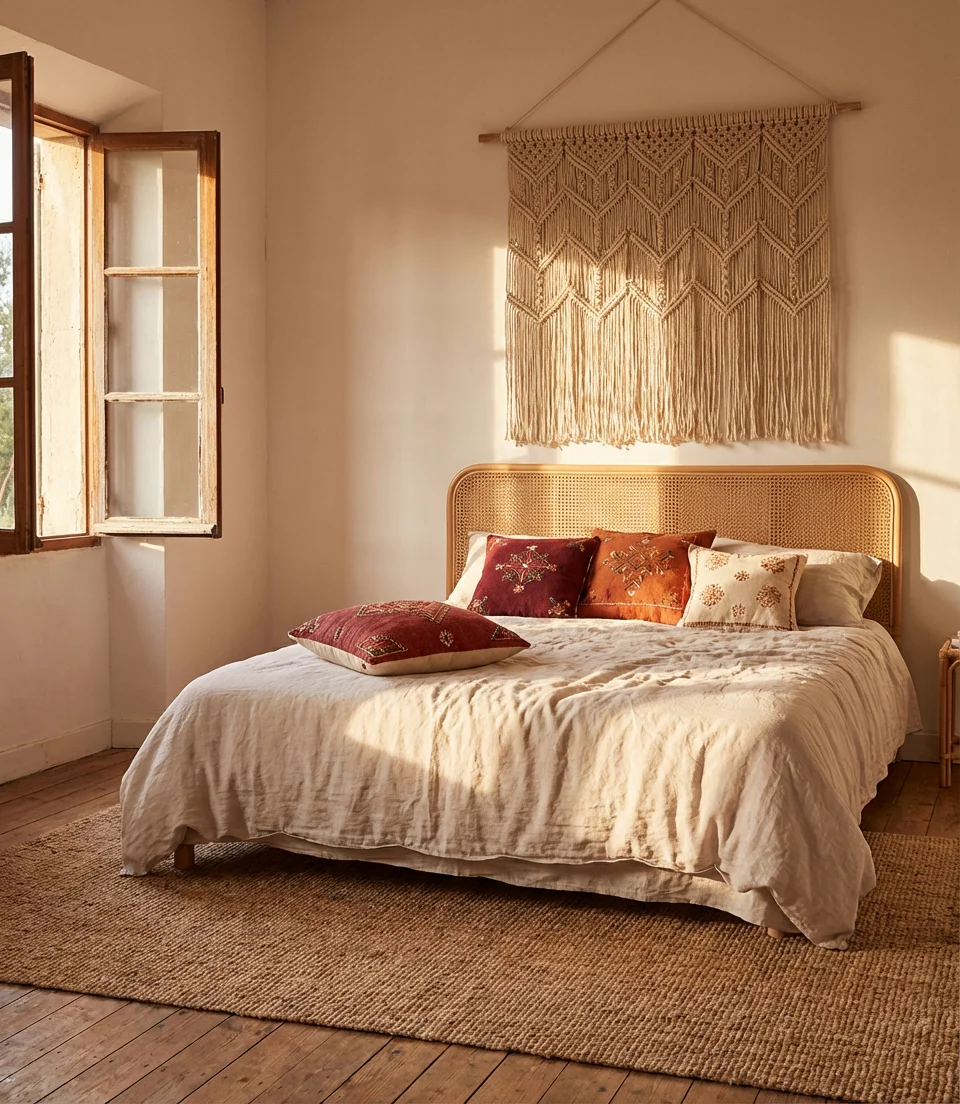
The boho farmhouse bedroom is where free-spirited layering meets rural rootedness—and the combination is wildly compelling. Picture a macramé wall hanging above a low rattan headboard, Moroccan-inspired throw pillows tumbled across a linen duvet, and a jute rug that anchors everything to the floor with earthy warmth. The bohemian element introduces pattern and global texture, while the farmhouse bones—plank floors, shiplap, natural wood—keep things from floating off into pure maximalism. It’s as much an edit as an accumulation.
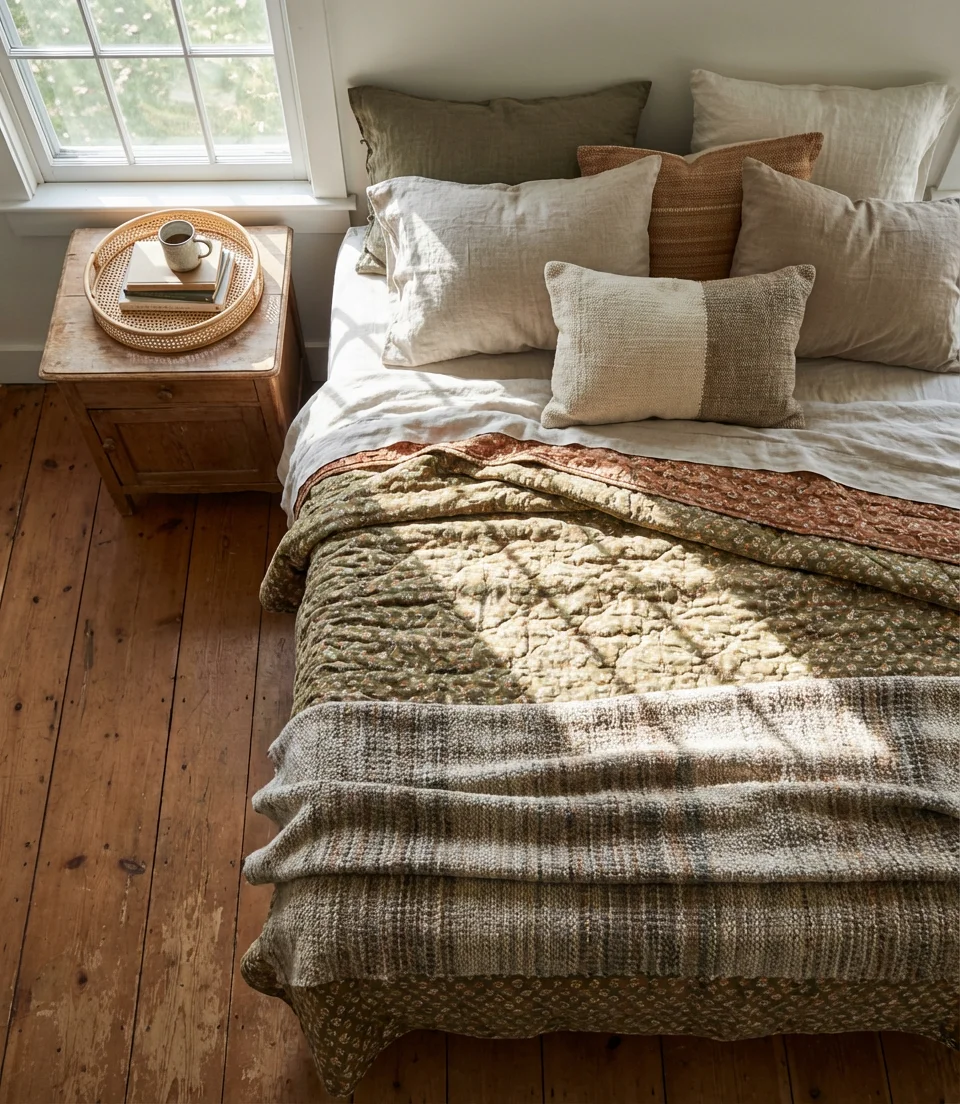
This look performs best in bedrooms that have at least one architectural feature—an interesting window, wood ceiling, or original plank floor—that grounds all the textile layering. Without that anchor, boho farmhouse can tip into feeling cluttered. The practical guidance here: build your textile palette around three tones maximum. In the most successful versions of this room, you’ll find warm terracotta, faded cream, and deep olive working together. Let the pattern appear in the pillows and rug, and keep the duvet and walls more restrained. That contrast is what makes the whole composition feel intentional.
7. Dark Moody Farmhouse Bedroom With Deep Wall Color
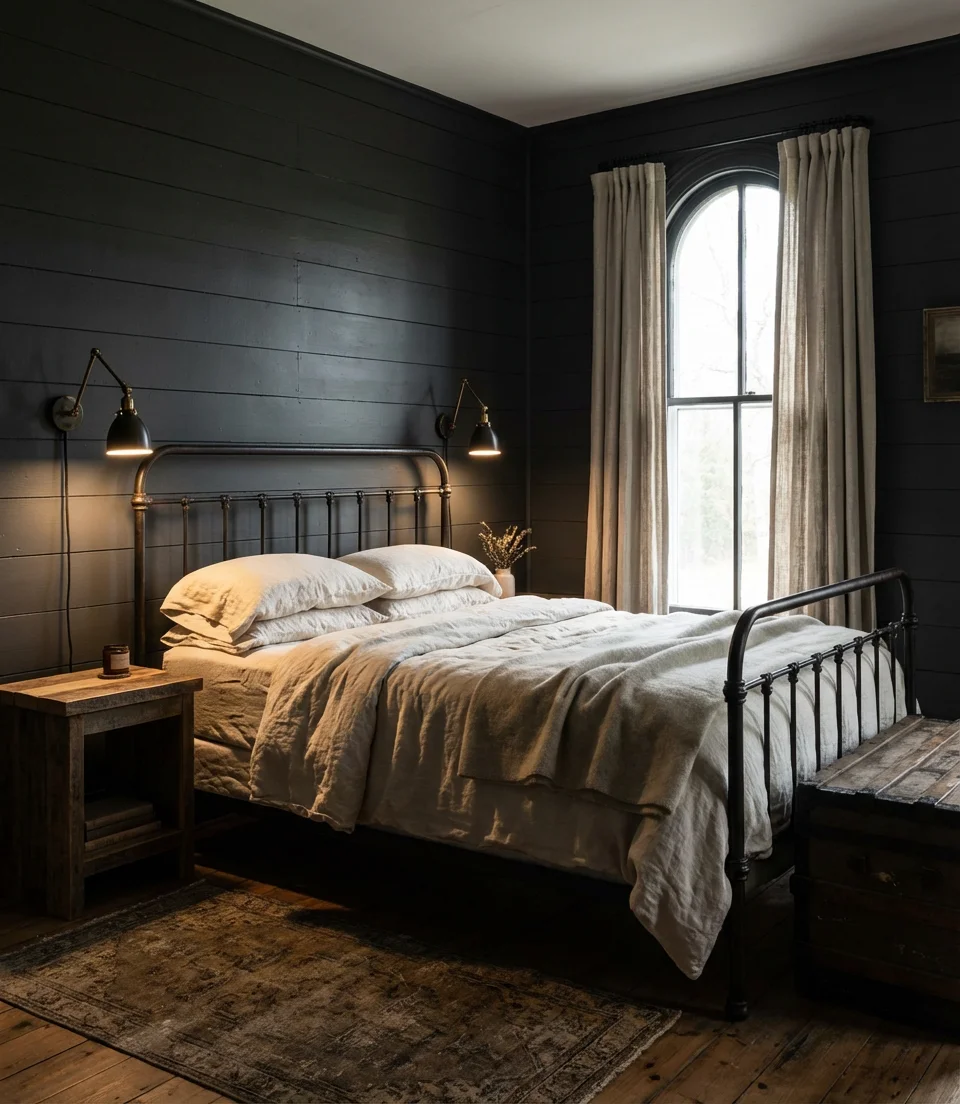
Not every farmhouse bedroom has to be bright and airy—and the dark, moody version is having a serious moment right now. Deep charcoal, inky navy, or rich forest green walls paired with wood paneling, aged brass sconces, and luxurious bedding create a room that feels like a private retreat. This is the farmhouse bedroom that doubles as a sanctuary—dramatic without being overwrought, intimate without feeling small. It works especially well in rooms with south-facing light, where you can afford to absorb some of that natural brightness with a dark paint choice.
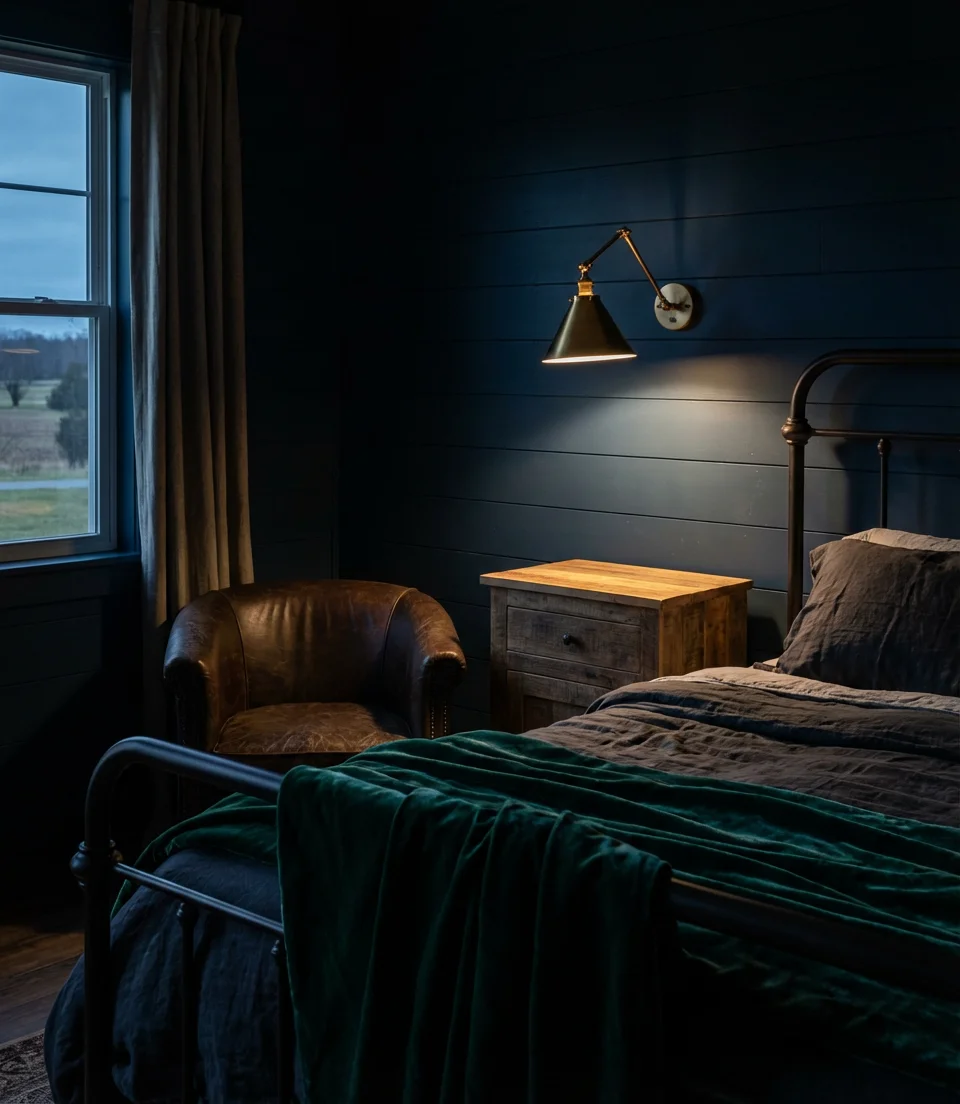
Where this look works best is in master bedrooms where the primary goal is rest and enclosure rather than brightness and openness. North-facing rooms that tend to feel cold can be transformed by a deep wall color—paradoxically, dark paint can make a cold room feel warmer by creating a sense of coziness rather than starkness. Design professionals often recommend pairing deep walls with at least one warm metal finish—unlacquered brass, aged bronze, or antique gold—to prevent the room from reading as merely dim. A pair of brass reading sconces flanking the bed is usually the right call.
8. Joanna Gaines-Inspired Farmhouse Bedroom
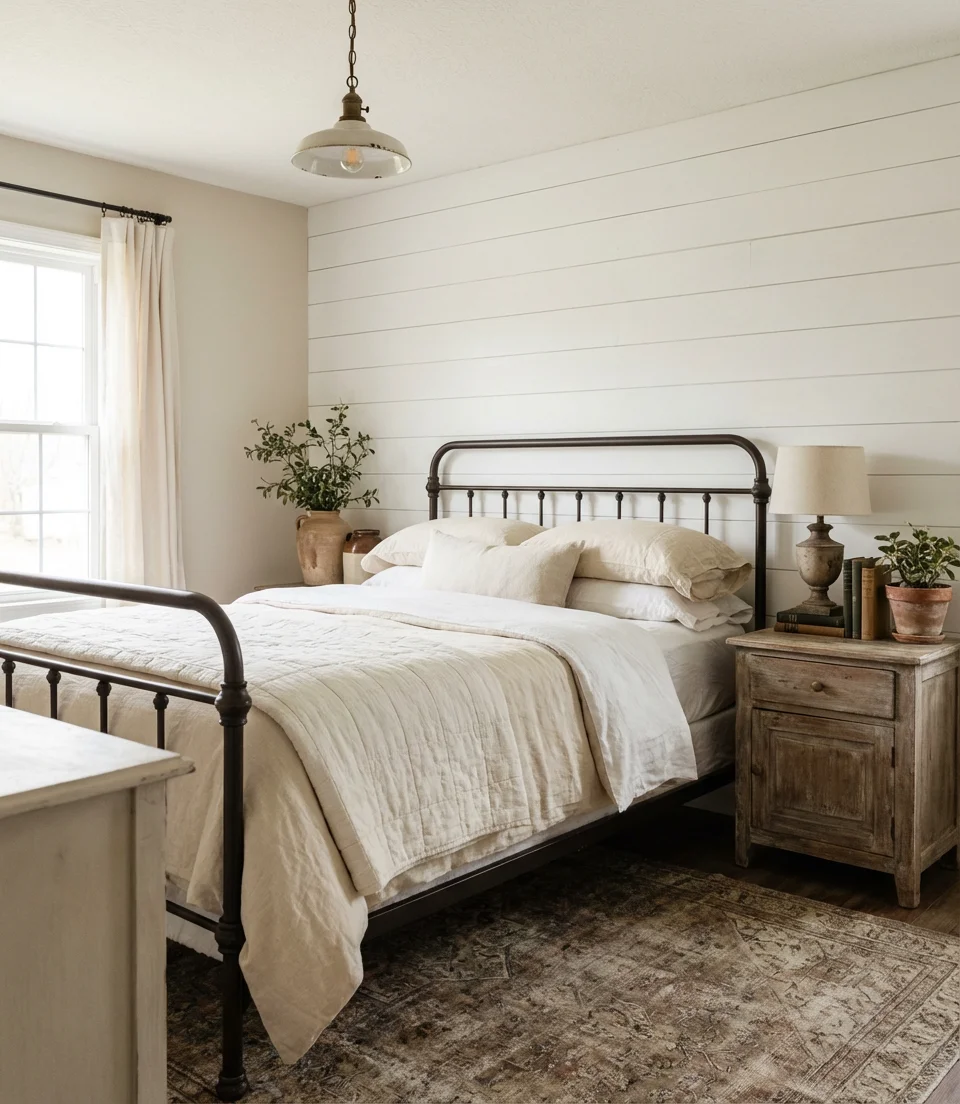
If there’s one designer who has permanently shaped the way Americans think about farmhouse interiors, it’s Joanna Gaines. Her signature aesthetic—shiplap walls, neutral layered bedding, vintage-industrial light fixtures, and warm wood tones—has become the visual shorthand for a certain kind of aspirational American home. In a bedroom, that translates to a low-key palette of cream, white, and warm gray, anchored by a rustic wood or iron bed frame and finished with details that feel found rather than purchased: a weathered mirror, a vintage crate used as a nightstand, and a simple cotton quilt.
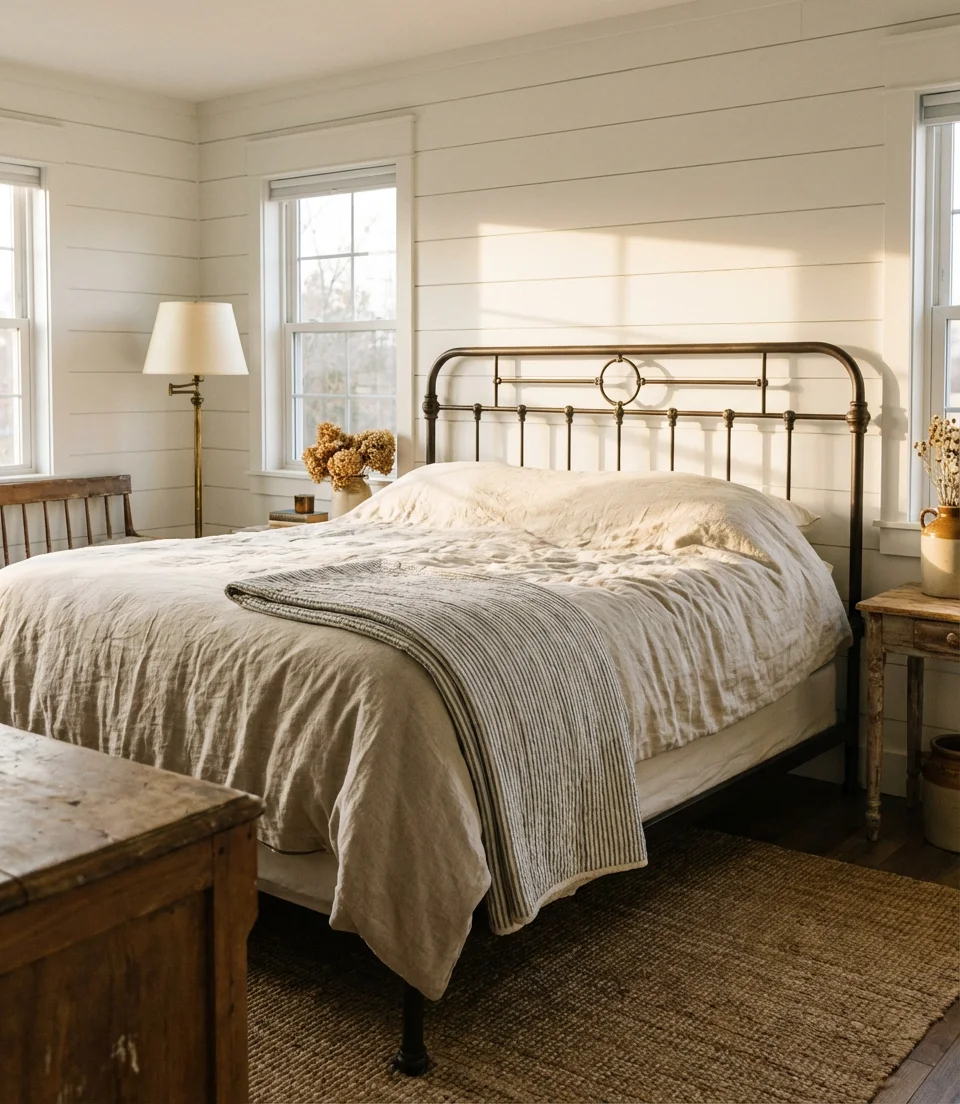
The Magnolia design philosophy is accessible precisely because it prioritizes intention over expense. Most of the signature elements—shiplap paneling, board and batten, open wood shelving—are DIY-friendly projects that cost a few hundred dollars in materials rather than thousands. Real homeowners who have replicated this look consistently say the same thing: the shiplap made the room. Whether you install real tongue-and-groove pine boards or use paint to simulate the effect, that horizontal paneling instantly gives a bedroom the farmhouse character it might otherwise lack entirely. It’s the single highest-impact move in the Joanna Gaines playbook.
9. Blue Farmhouse Bedroom With French Country Details
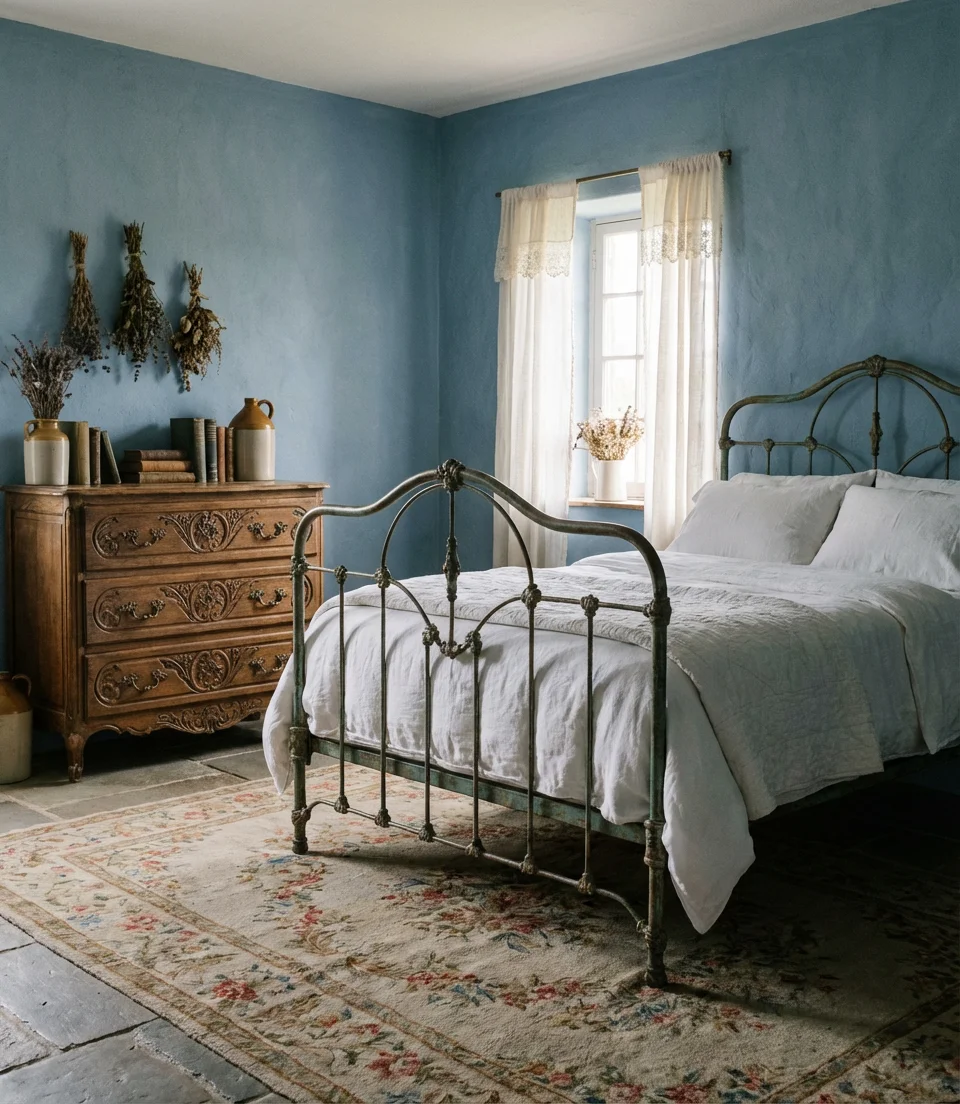
A blue farmhouse bedroom channels something that feels simultaneously French and deeply American—that intersection of Provençal softness and rural simplicity. Dusty blue walls, white linen bedding, an ornate iron bed frame, and a worn floral rug create a room that whispers rather than shouts. This color palette works across seasons: in winter it feels like a warm, enclosed world; in summer it reads as fresh and breezy. The French country details—carved furniture legs, toile accents, and gilded mirrors—add elegance without formality.
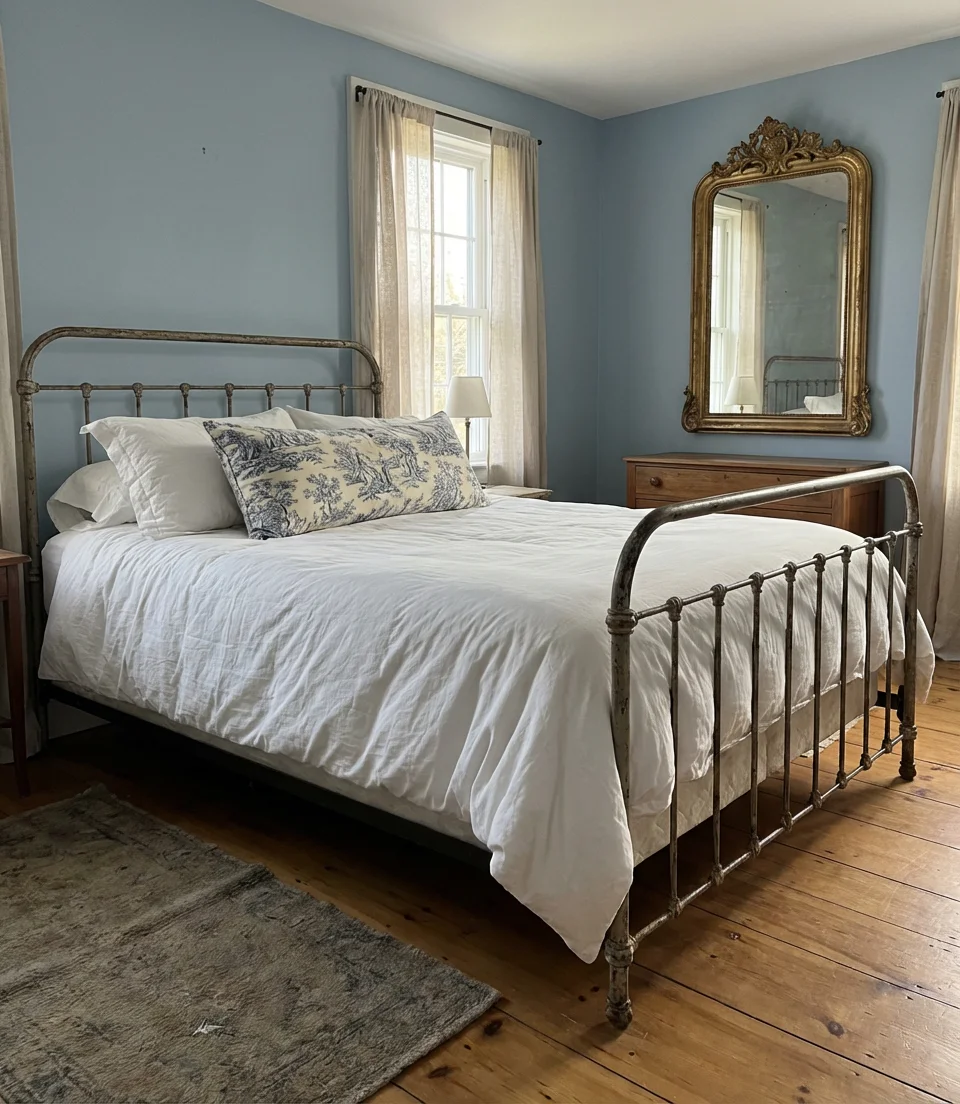
This combination is particularly well-suited to bedrooms in older homes in the American South and Northeast, where architectural details like crown molding, arched windows, and wide-plank floors already carry a certain European sensibility. The blue farmhouse bedroom is also one of the more budget-conscious directions in this style universe—dusty blue paint, white cotton bedding, and a secondhand iron bed frame can all be sourced affordably. The color alone does most of the design work. Farrow & Ball’s “Dix Blue” and Behr’s “Dusty Miller” are two approachable options that perform beautifully on bedroom walls.
10. Industrial Farmhouse Bedroom With Metal Accents
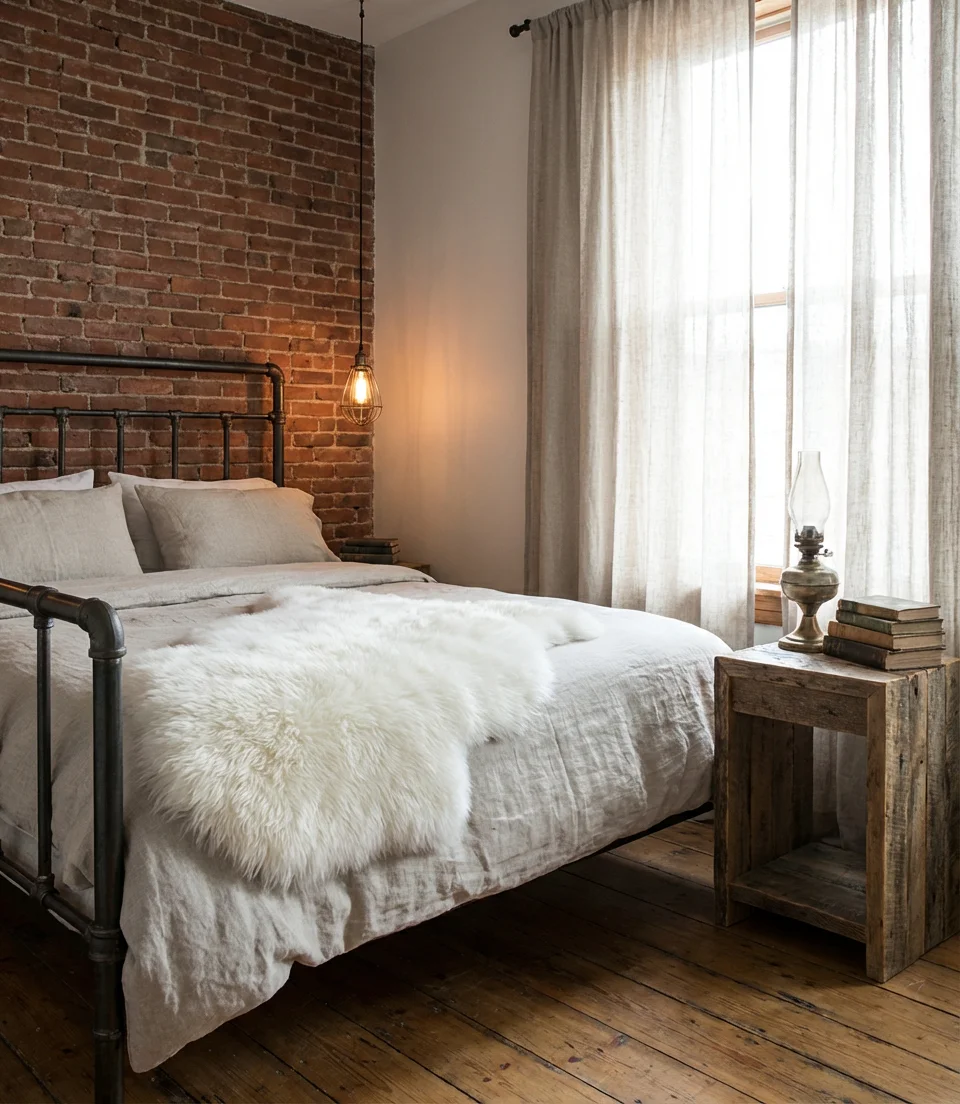
The industrial farmhouse bedroom is a study in productive tension—the roughness of exposed brick, raw metal, and concrete-effect surfaces held in balance by the warmth of wood, soft bedding, and ambient lighting. It’s less about polish and more about the honest beauty of materials doing exactly what they’re supposed to do. An iron pipe bed, an Edison-bulb pendant light, and factory-style window casements bring the industrial edge. Reclaimed wood nightstands, linen curtains, and a sheepskin throw soften the whole composition without undermining its grit.
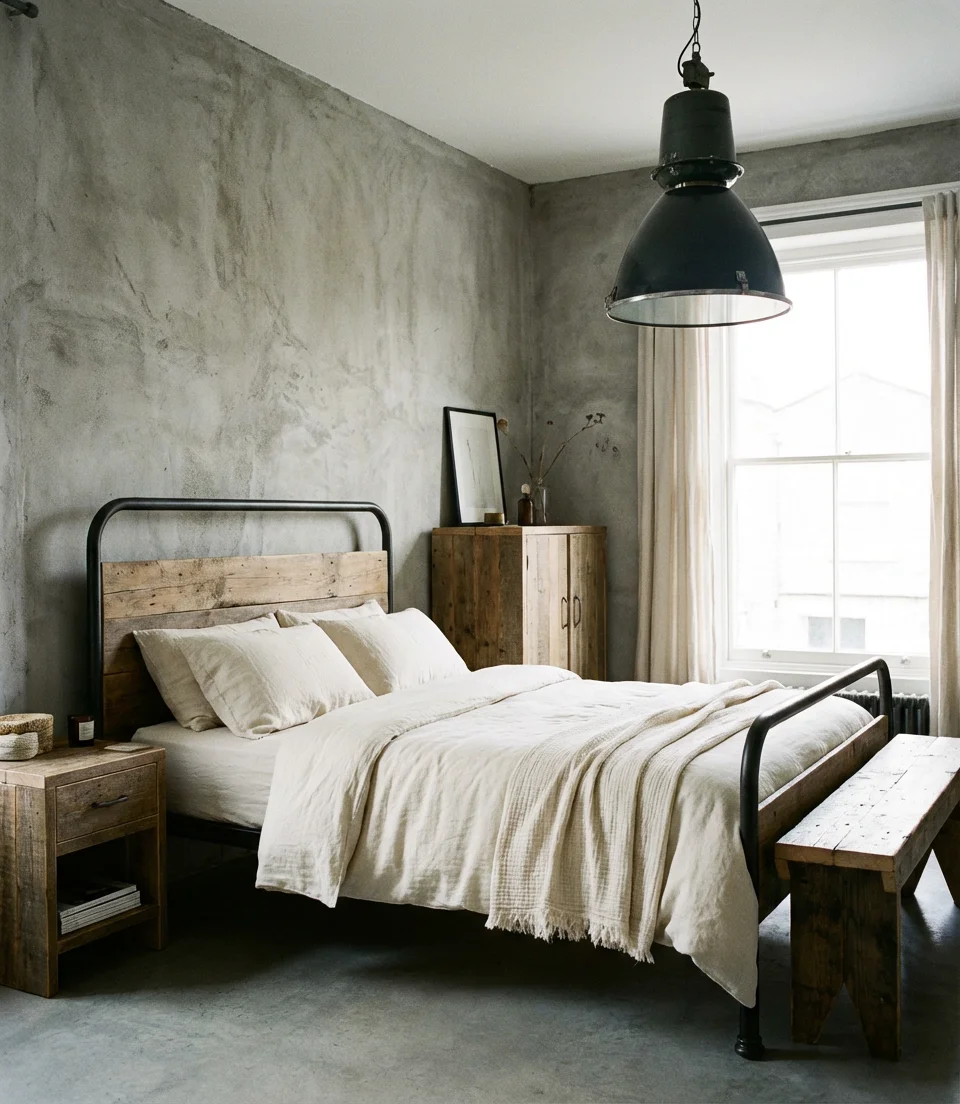
This style is especially popular among homeowners in converted lofts, warehouse apartments, and urban properties where the architecture itself is industrial in origin. Rather than fighting the space’s bones with soft, cottage-style decor, it is almost always smarter to lean into the raw materials and add warmth through textiles. A common mistake is over-industrializing—when every surface is metal and concrete, the room stops feeling like a bedroom and starts feeling like a set. The rule of thumb: for every tough, raw element, introduce one soft, natural counterpart. That back-and-forth is where the real character lives.
11. Coastal Farmhouse Bedroom With Natural Fiber Accents
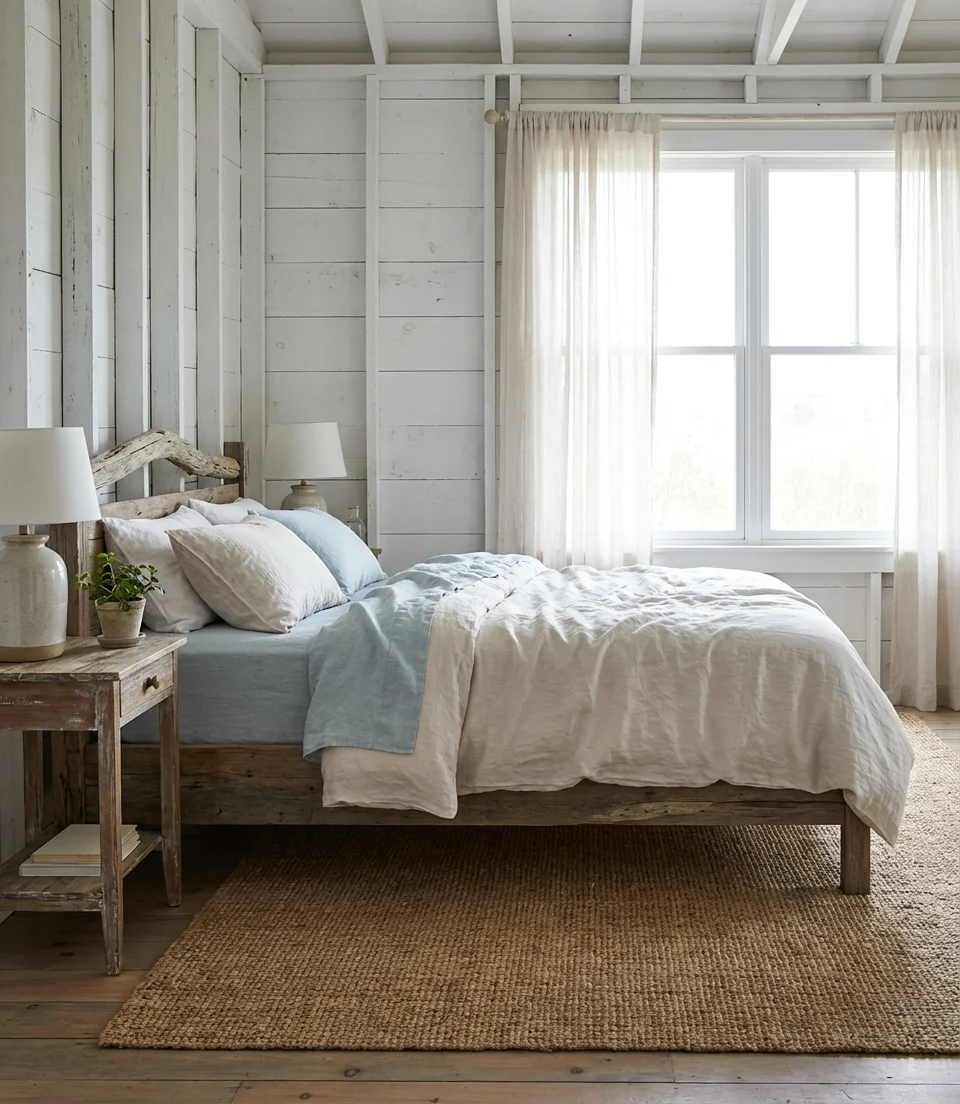
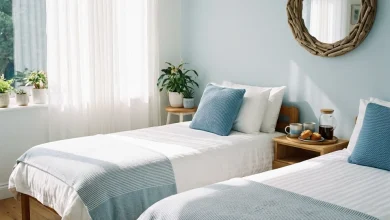
The coastal farmhouse bedroom is the answer for anyone who wants the ease of beachy living without the kitsch of nautical decor. Sea-washed whites, driftwood finishes, woven jute and seagrass rugs, and linen bedding in soft blues and sandy whites create a room that feels like a long summer weekend. There’s nothing precious about it—just the satisfying combination of natural materials, open light, and a palette that seems to breathe on its own. This look layers beautifully with farmhouse staples like board-and-batten walls and plank ceilings.
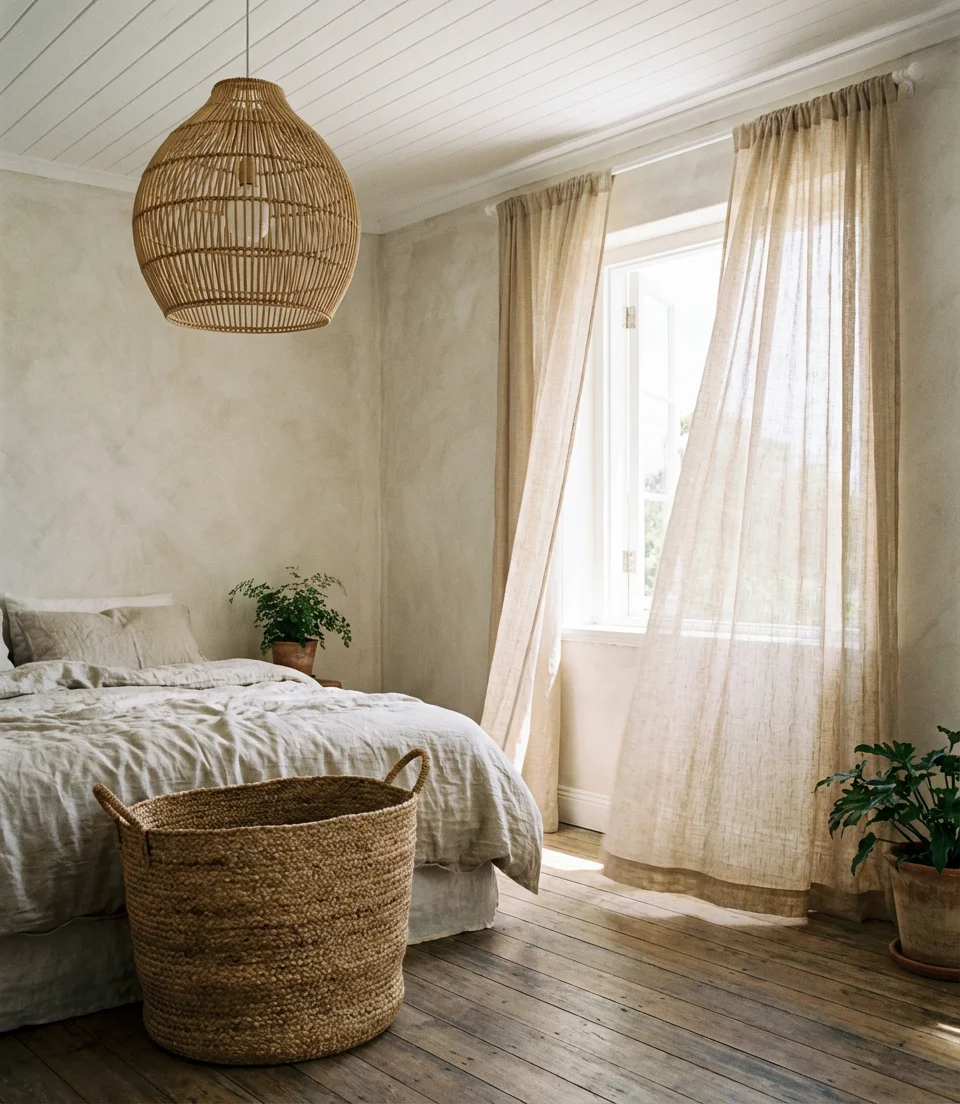
This style is an obvious fit for homes in the Carolinas, Gulf Coast, and Pacific Northwest—anywhere the landscape itself echoes the palette. But it translates remarkably well inland too, where it brings a sense of light and ease that can feel genuinely therapeutic. The natural fibers are key to making it work away from the coast: seagrass baskets, a jute rug, and rattan light fixtures—these textural details carry the coastal spirit without relying on obvious ocean motifs. Consider omitting the anchors and rope borders, and instead rely on the materials and light to achieve the desired effect.
12. Olive Green Farmhouse Bedroom With Wood Furniture
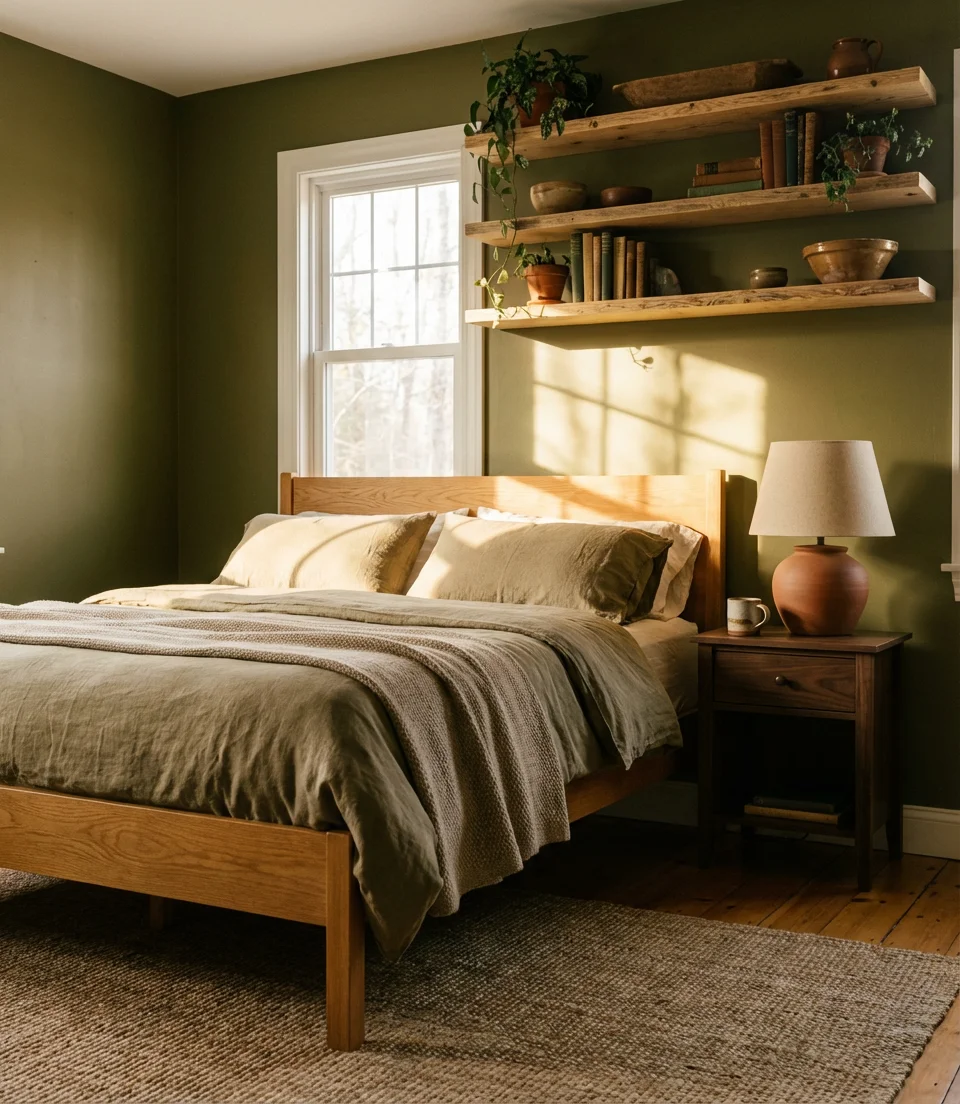
Olive green is the deeper, richer sibling of sage—and in a farmhouse bedroom, it carries a quiet authority that lighter greens can’t quite match. On shiplap walls or a single painted accent, olive reads as earthy and sophisticated at once, somewhere between a military field jacket and a forest clearing. Pair it with warm honey-toned wood furniture—a simple oak bed frame, a walnut dresser, raw pine shelving—and the room immediately feels grounded and intentional. Earthy accents in terracotta and rust complement the palette beautifully without competing.
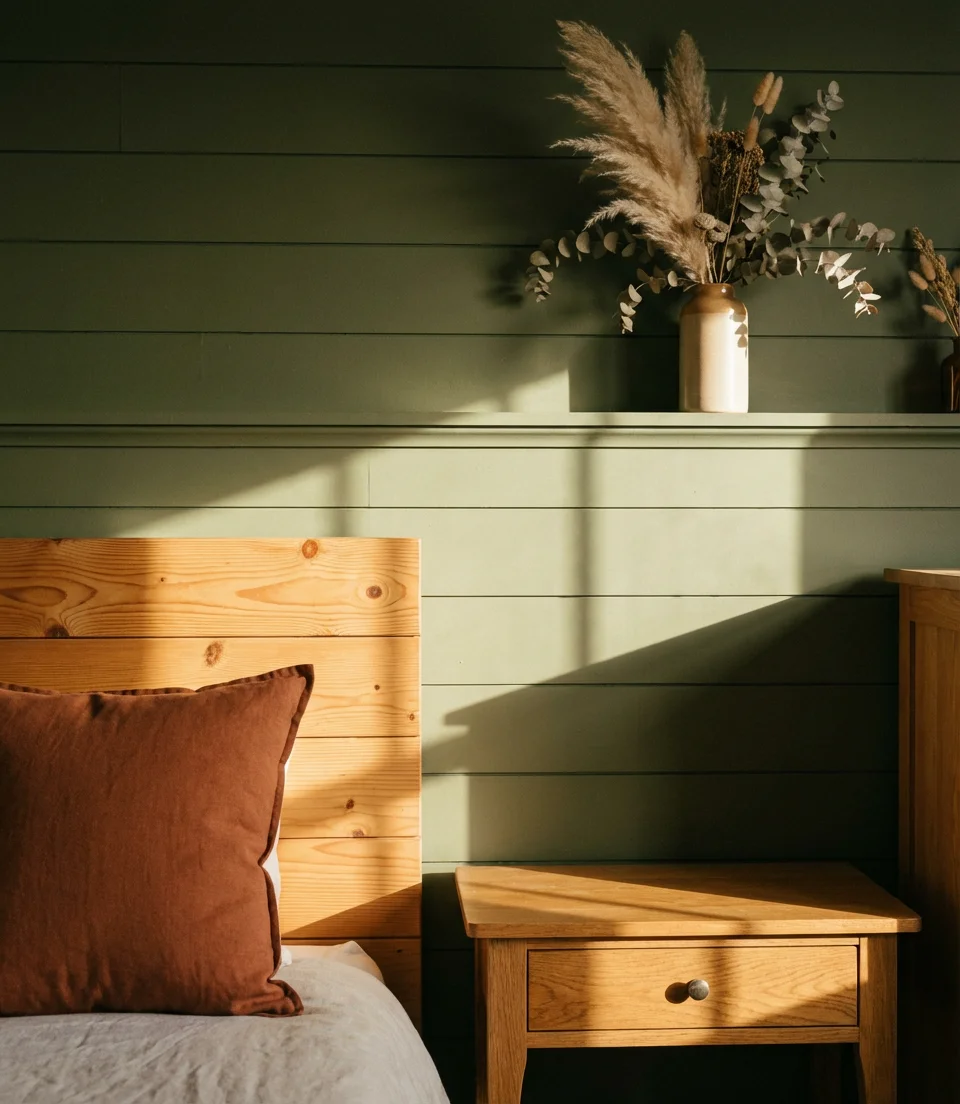
One of the most effective moves in an olive green bedroom is layering multiple wood tones rather than trying to match everything perfectly. A honey oak bed frame, a darker walnut nightstand, and pine shelving in the same room create a depth and lived-in quality that matched furniture sets never achieve. Real homeowners who’ve gone all-in on olive often describe it as the one paint decision they’ve never second-guessed—it shifts beautifully from morning light to lamplight, reading warm and complex throughout the day. Sherwin-Williams “Oakmoss” and Benjamin Moore “Herb Garden” are reliable starting points.
13. Farmhouse Bedroom for Small Rooms With Smart Storage
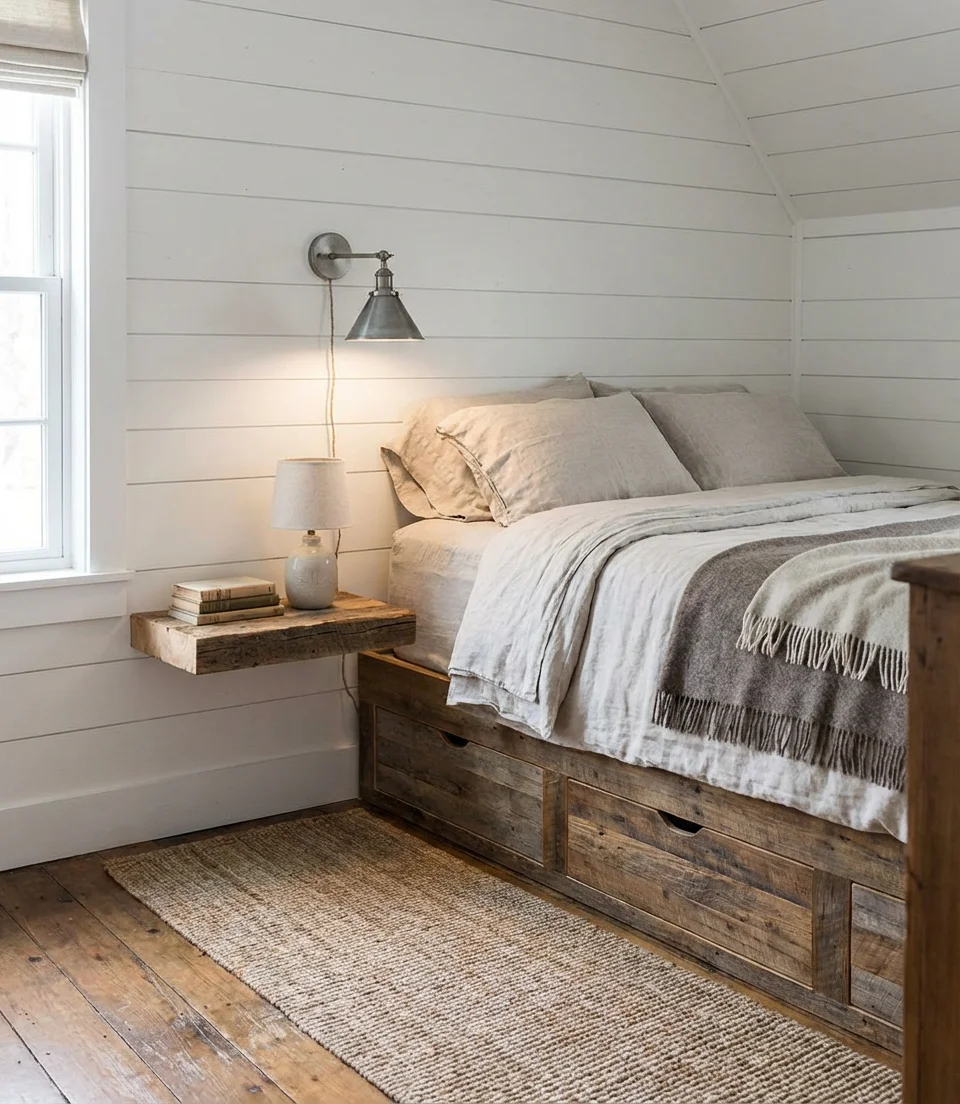
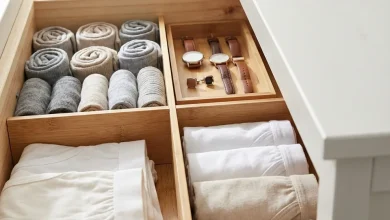
Designing a farmhouse bedroom for small rooms requires a slightly different vocabulary—one where every piece earns its place and the overall effect still feels relaxed rather than cramped. Built-in shiplap shelving, under-bed storage drawers, and corner-mounted sconces instead of table lamps are all strategies that save floor space while maintaining the farmhouse aesthetic. A cute but purposeful approach to decor—one plant, one framed print, one throw blanket—keeps the room from feeling cluttered without stripping it of personality.
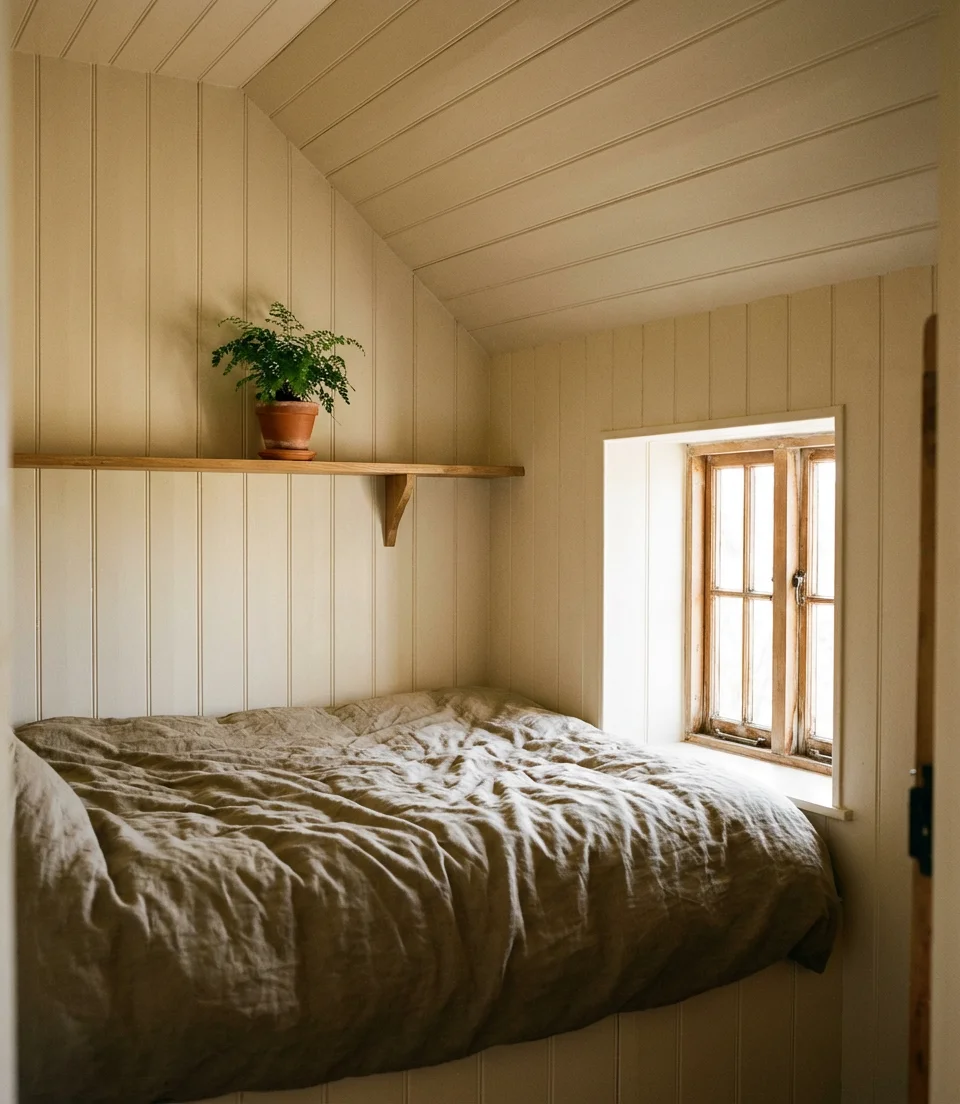
The farmhouse aesthetic is actually quite forgiving in small spaces because it relies on texture and warmth rather than scale and grandeur. A 10×10 bedroom can feel fully realized with the right moves: a platform bed with integrated storage drawers, a floating wood shelf as a nightstand, and a single piece of shiplap paneling, which is a type of wooden board often used in rustic decor, behind the bed. Painting the ceiling the same color as the walls—rather than defaulting to white—is an interior designer trick that makes small rooms feel more enclosed and intentional. In a farmhouse context, that wrapped feeling reads as cozy rather than compressed.
14. Black and White Farmhouse Bedroom With Graphic Contrast
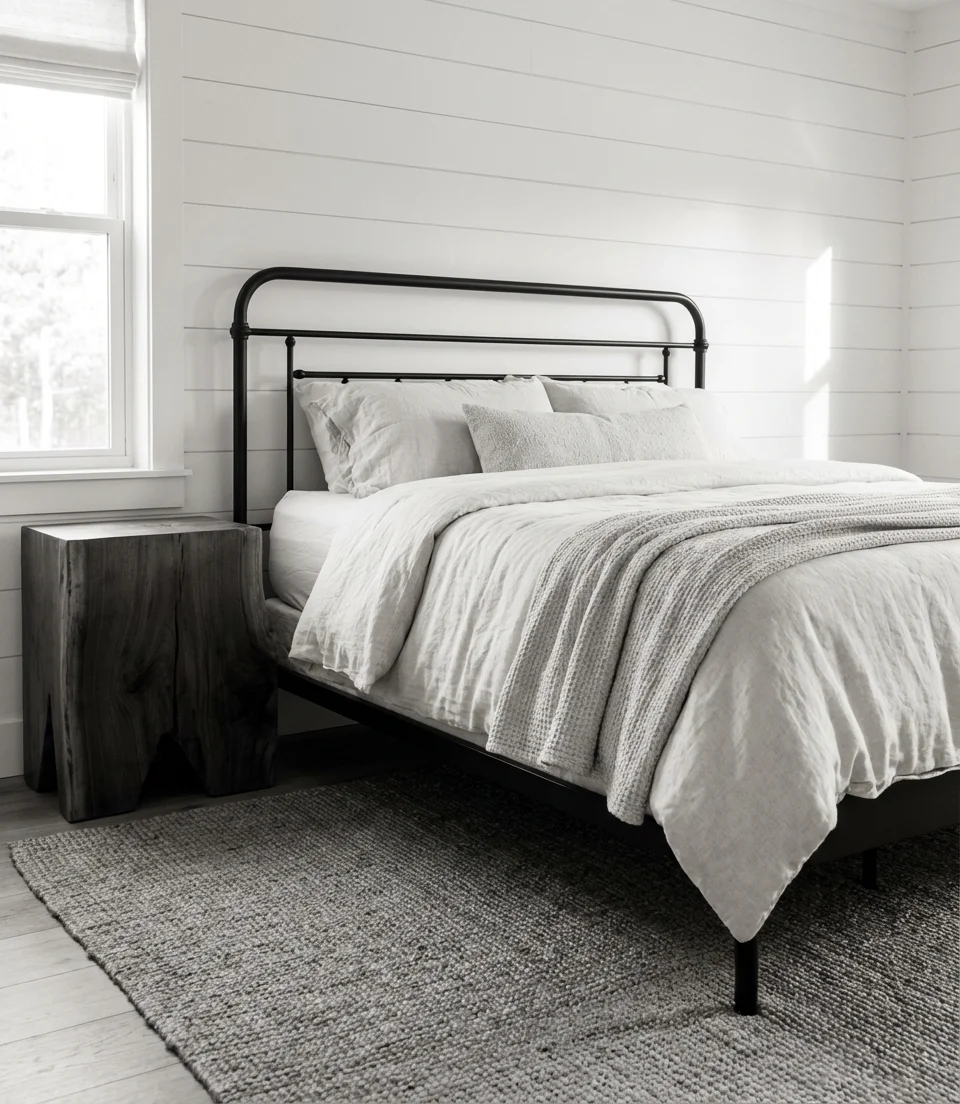
A black and white farmhouse bedroom exemplifies restraint without ever feeling minimal. The graphic contrast between crisp white shiplap and matte black iron or hardware creates a visual energy that color palettes often can’t achieve. Black iron bed frames, black-framed windows, or a deep charcoal accent wall against bright white paneling—each version of this pairing has its own character. It skews toward the modern end of the farmhouse spectrum, with clean lines and intentional contrast doing the design work that warmth and texture handle in cozier interpretations.
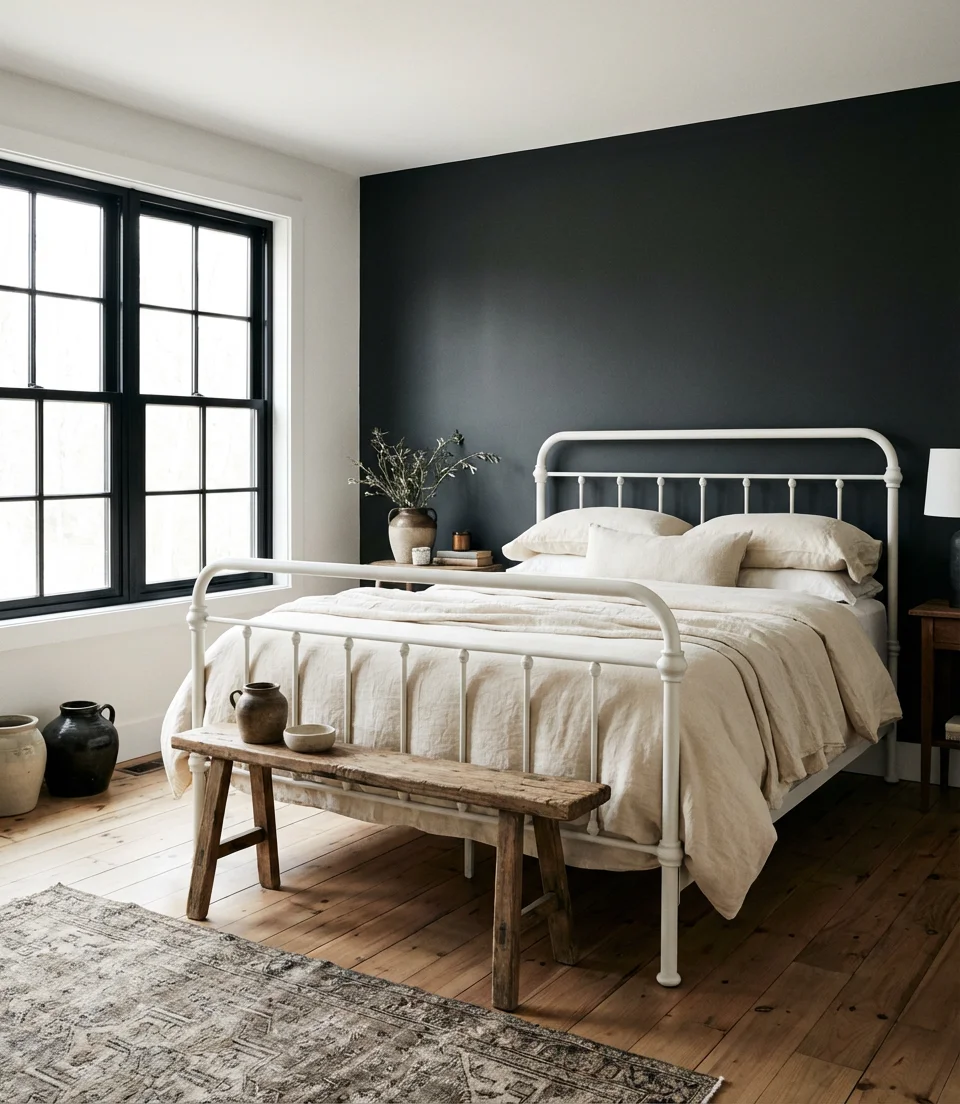
This look is particularly well-suited to younger homeowners and renters who want a bedroom that photographs well and maintains a certain editorial edge without requiring constant upkeep. The key is introducing warmth through organic materials—raw linen, a jute rug, a live-edge wood nightstand—so the room doesn’t feel stark or overly styled. One approach that consistently works: keep all hard surfaces (frames, hardware, fixtures) in matte black, all soft surfaces (bedding, curtains, rugs) in cream or natural white, and let one natural wood element pull the whole composition toward livability.
15. European Farmhouse Bedroom With Plaster Walls and Linen
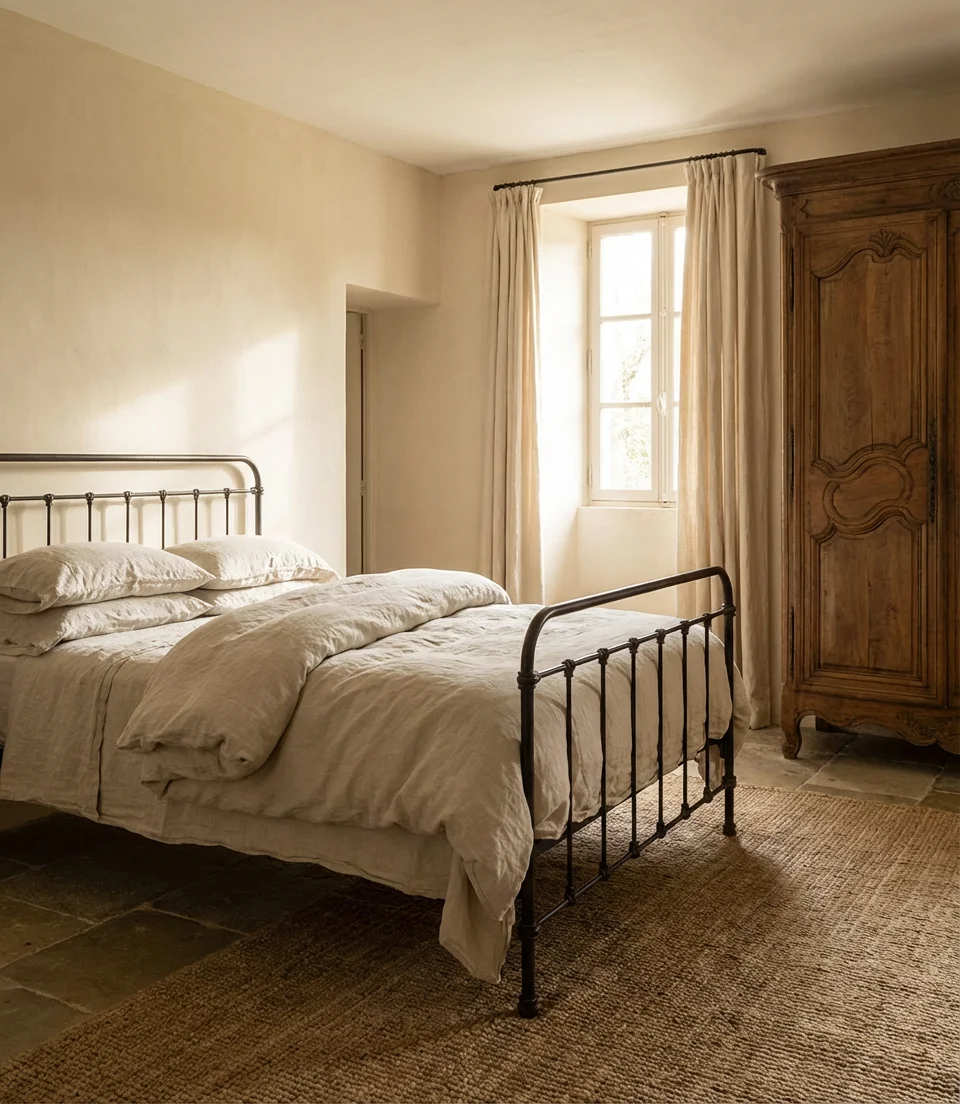
The European farmhouse bedroom is quieter and more austere than its American counterpart—and that restraint is precisely what makes it compelling. Think of a centuries-old farmhouse in Tuscany or rural Sweden: plaster walls with visible imperfections, linen bedding in undyed or muted tones, an iron or carved wood headboard, and stone or terracotta tile floors softened by a wool rug. There’s no shiplap here—instead, wall texture comes from the plaster itself, applied in layers that catch light differently at different hours of the day.
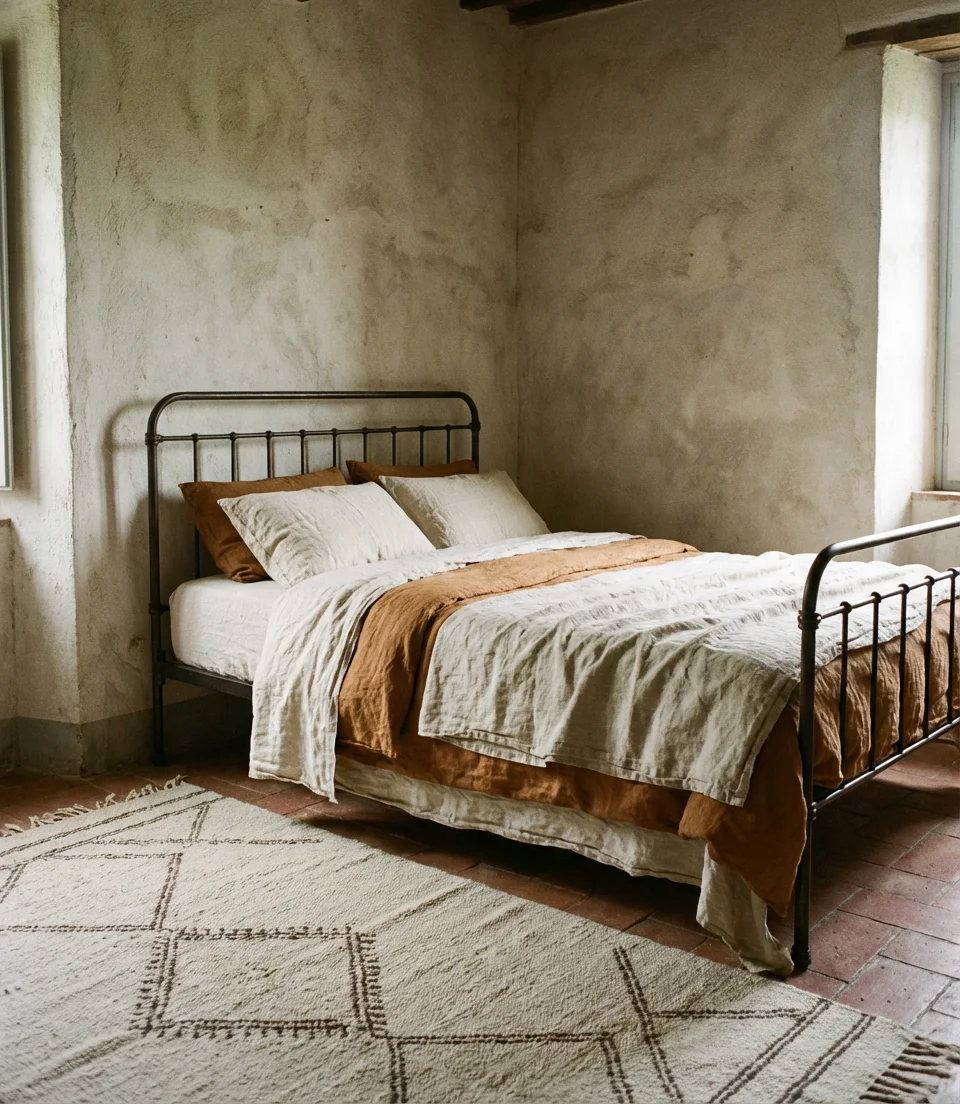
American homeowners who love this look often describe it as feeling deeply grounded—like the room itself has a history, even if the house was built in 2005. The most authentic way to achieve it is through American Clay or Portola Paints’ plaster-effect walls, which add the textural depth of traditional lime plaster without the cost or mess of the original craft. Pair with unwashed linen from Cultiver or Parachute, a simple iron bed frame, and a single piece of aged European furniture—a carved armoire or a painted chest—and the room quietly transforms into something that feels genuinely old world.
16. Western Farmhouse Bedroom With Leather and Fringe
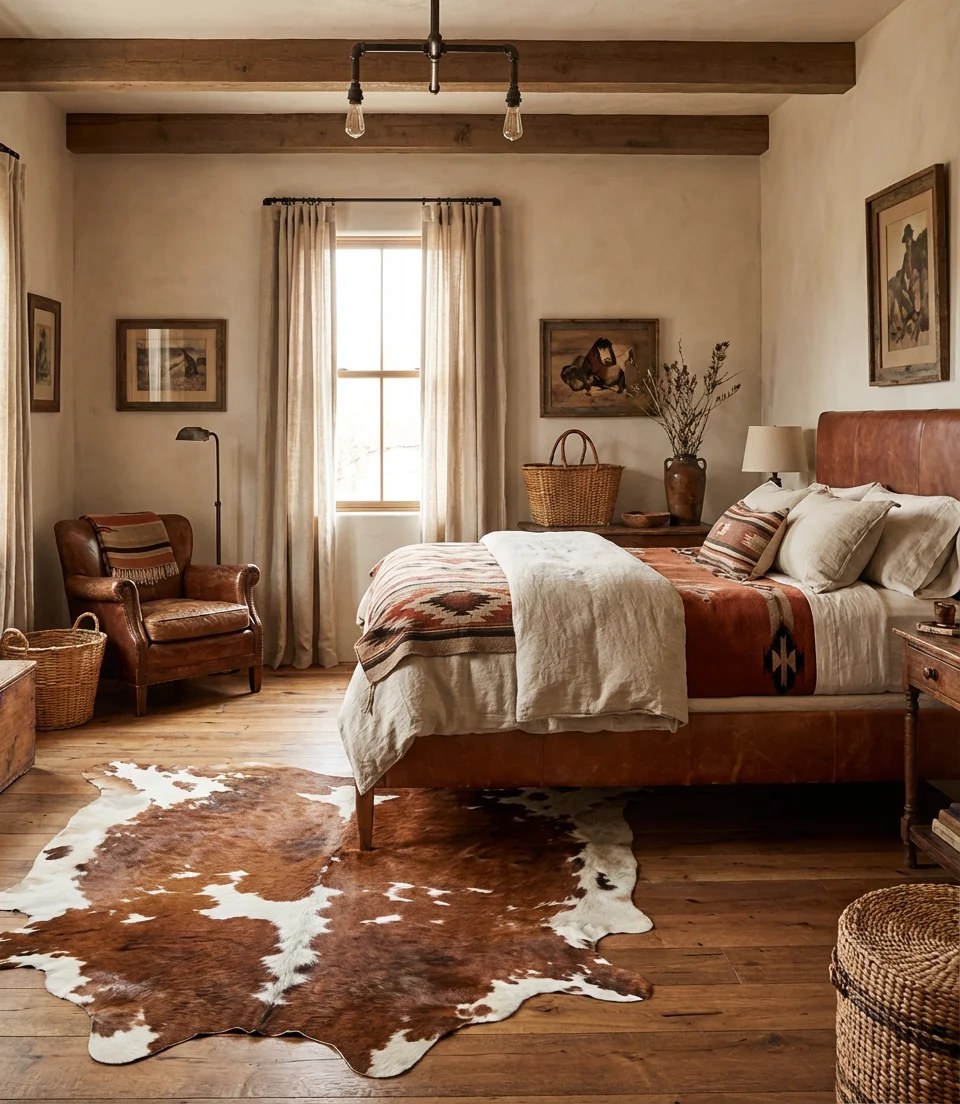
The western farmhouse bedroom is one of the most character-rich directions in this entire style family—and it’s having a genuine revival right now, particularly in the American Southwest and mountain West. Cowhide rugs, leather headboards, Navajo-inspired textiles, and warm sienna tones pull together a room that feels like a bunkhouse in the best possible sense: rugged, layered, and completely alive with personality. This isn’t a costume—at its best, it’s an honest expression of place and material culture that rewards every detail.
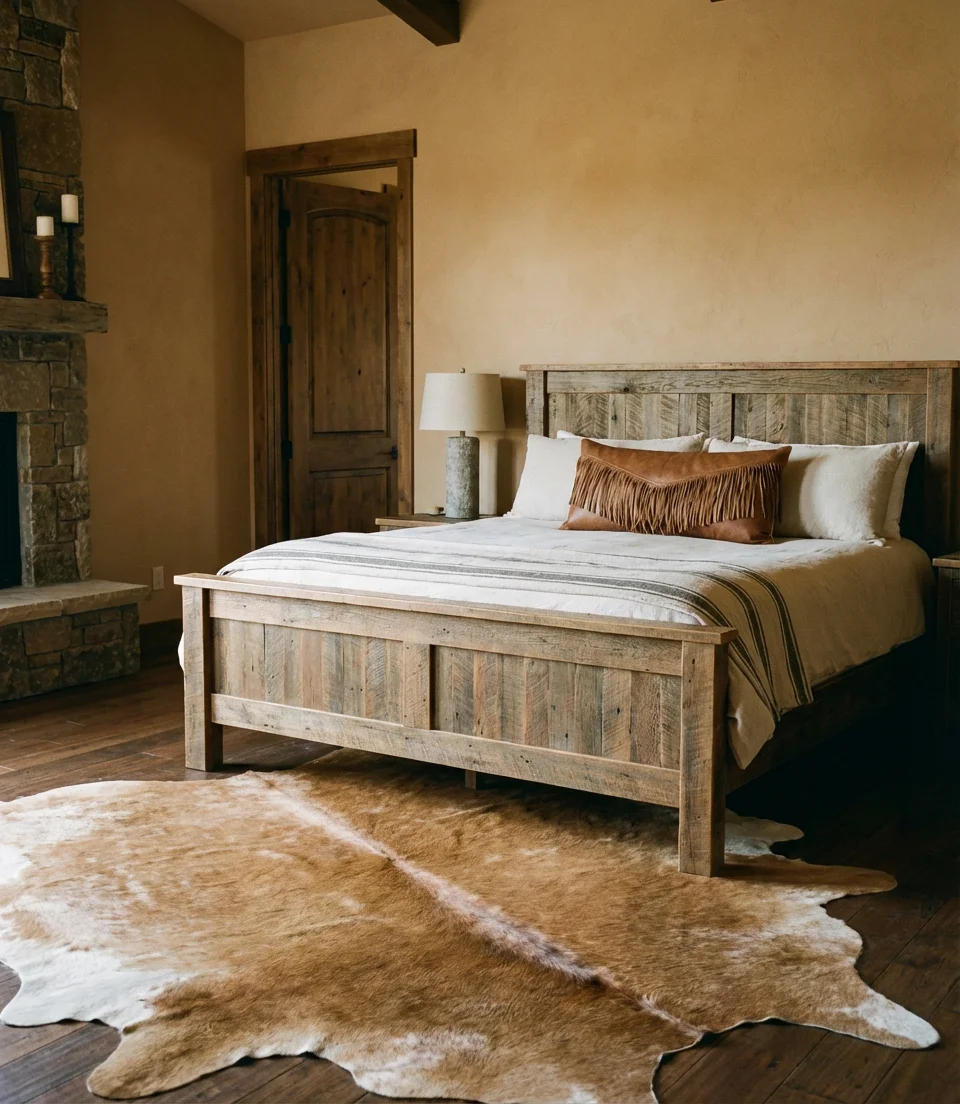
This aesthetic is most authentic and most compelling in homes in Texas, Colorado, New Mexico, Montana, and similar regions where the design language is rooted in real regional culture rather than trend-chasing. But it translates well anywhere that a homeowner has a genuine connection to western material culture—ranching heritage, time spent in that landscape, or simply an appreciation for the craft traditions that produced these objects. The cowhide rug is the single most transformative piece: a natural cowhide on wood floors anchors the entire western farmhouse look immediately and requires almost no other styling to feel complete.
17. Country Farmhouse Kids Bedroom With Playful Charm
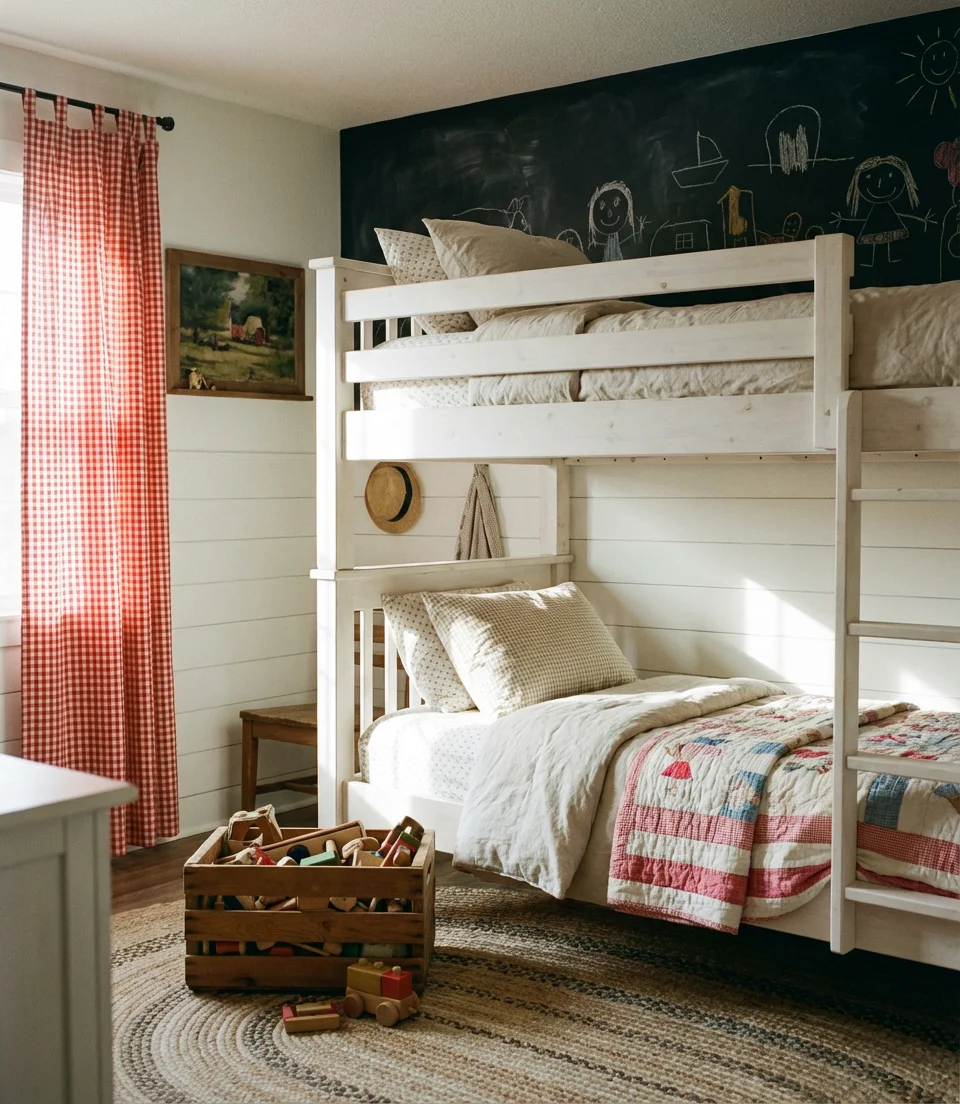
A farmhouse bedroom designed for kids gets to do something adult rooms rarely permit: play. Country farmhouse charm—gingham curtains, barn-red accents, wooden toy storage, and a small chalkboard wall—translates into a kid’s room that feels genuinely magical without relying on licensed characters or plastic furniture. The appeal here is longevity: a well-designed farmhouse kids’ room can grow with a child from toddler years through early adolescence with minimal refreshes. It’s the anti-themed bedroom—full of personality but never locked into one particular pop culture moment.
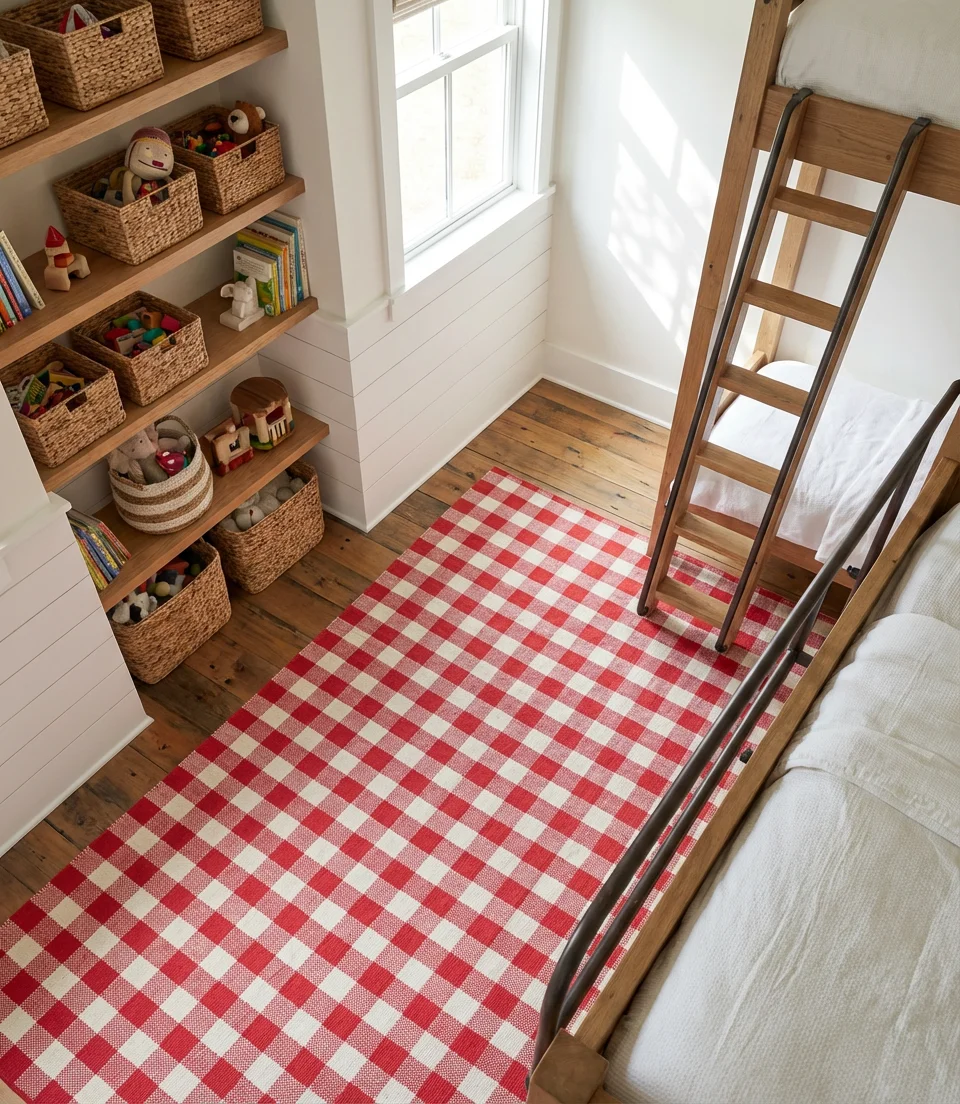
The most practical approach to a farmhouse kids’ room is to invest in durable, solid-wood furniture that will survive the actual use it receives and to let the personality come through in textiles and paint—which can be swapped cheaply as the child grows. A simple white-painted bunk bed with an iron ladder, shiplap wainscoting in the lower third of the wall, and a gingham rug set the scene. From there, baskets, wooden crates, and open shelving handle storage in a way that’s both organized and age-appropriate. Kids consistently rate the chalkboard wall as their favorite feature.
18. Farmhouse Bedroom for Small Spaces With Vertical Design
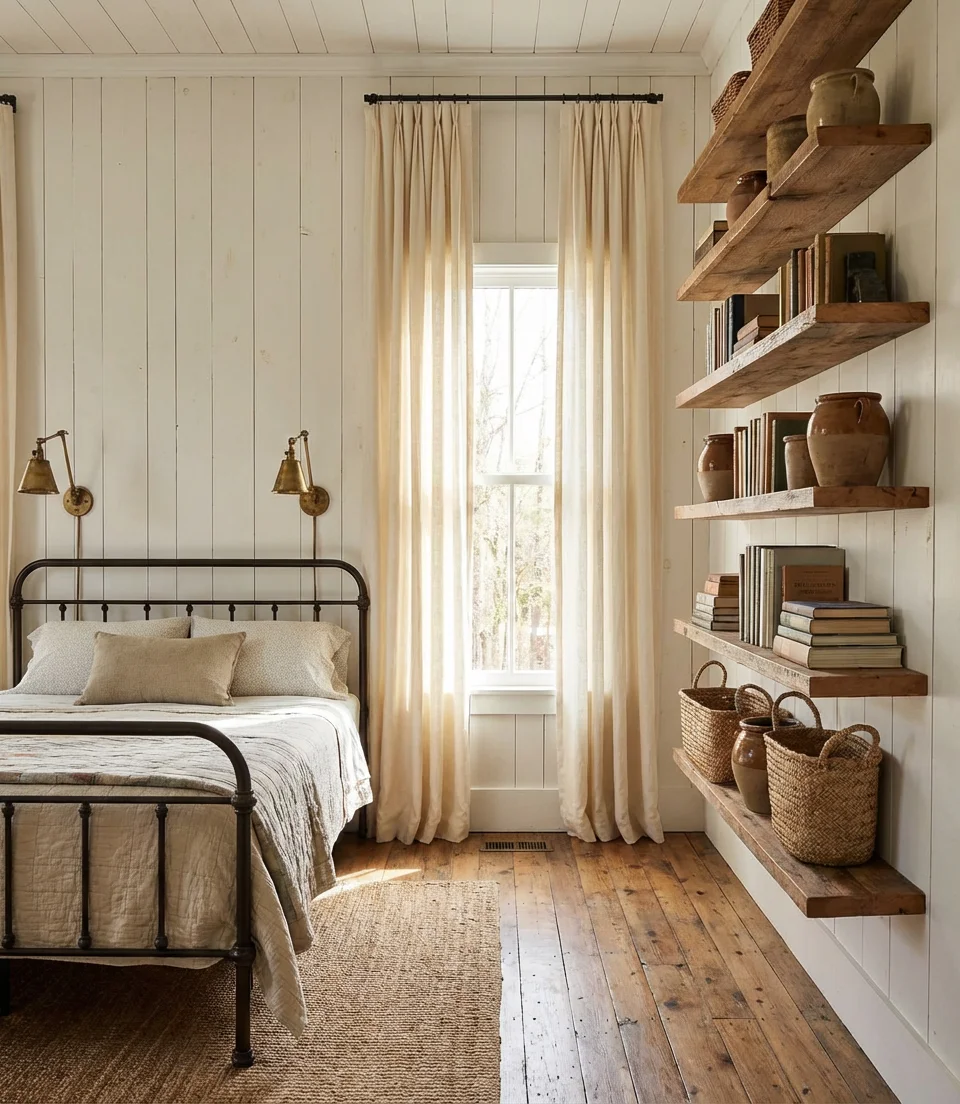
When you’re working with small spaces, the entire design logic shifts from horizontal arrangement to vertical strategy. In a farmhouse bedroom context, that means tall shiplap paneling that draws the eye upward, wall-mounted sconces that free up the nightstand surface, floating shelves stacked toward the ceiling, and curtains hung close to the crown molding to maximize perceived height. This isn’t about making a small room feel large—it’s about making it feel purposeful and considered, which ultimately feels better than square footage anyway.
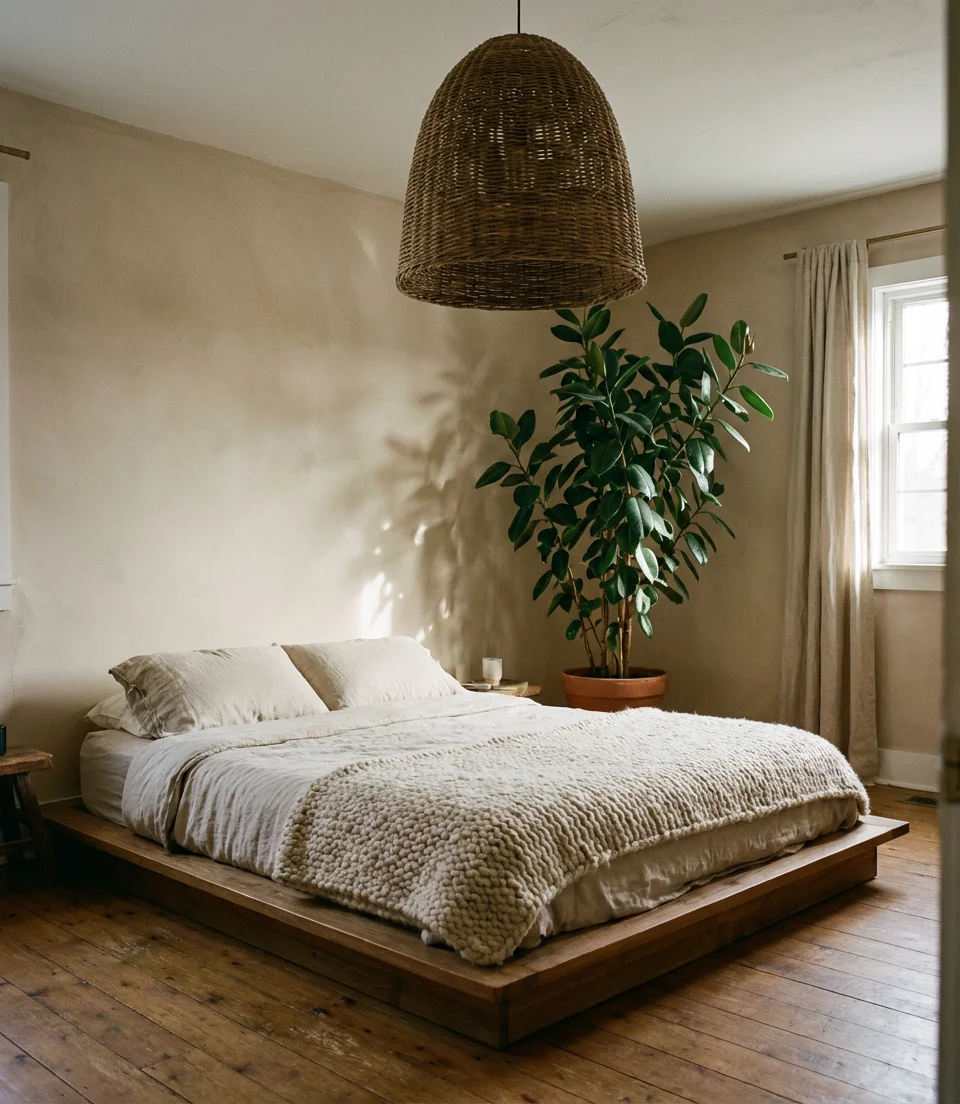
Vertical design thinking is where a lot of small-space bedroom projects go wrong—homeowners default to horizontal arrangements out of habit and end up with a room that feels crowded at eye level and wasted above it. In a farmhouse small room, the ceiling is your friend: expose it if it has interesting beams, paint it the same warm color as the walls if it doesn’t, or hang a statement pendant light that takes the eye upward. Even in a genuinely tiny bedroom—8×10 or smaller—the vertical farmhouse strategy creates a space that photographs beautifully and actually functions well for everyday living.
19. Cute Farmhouse Bedroom With Floral Accents
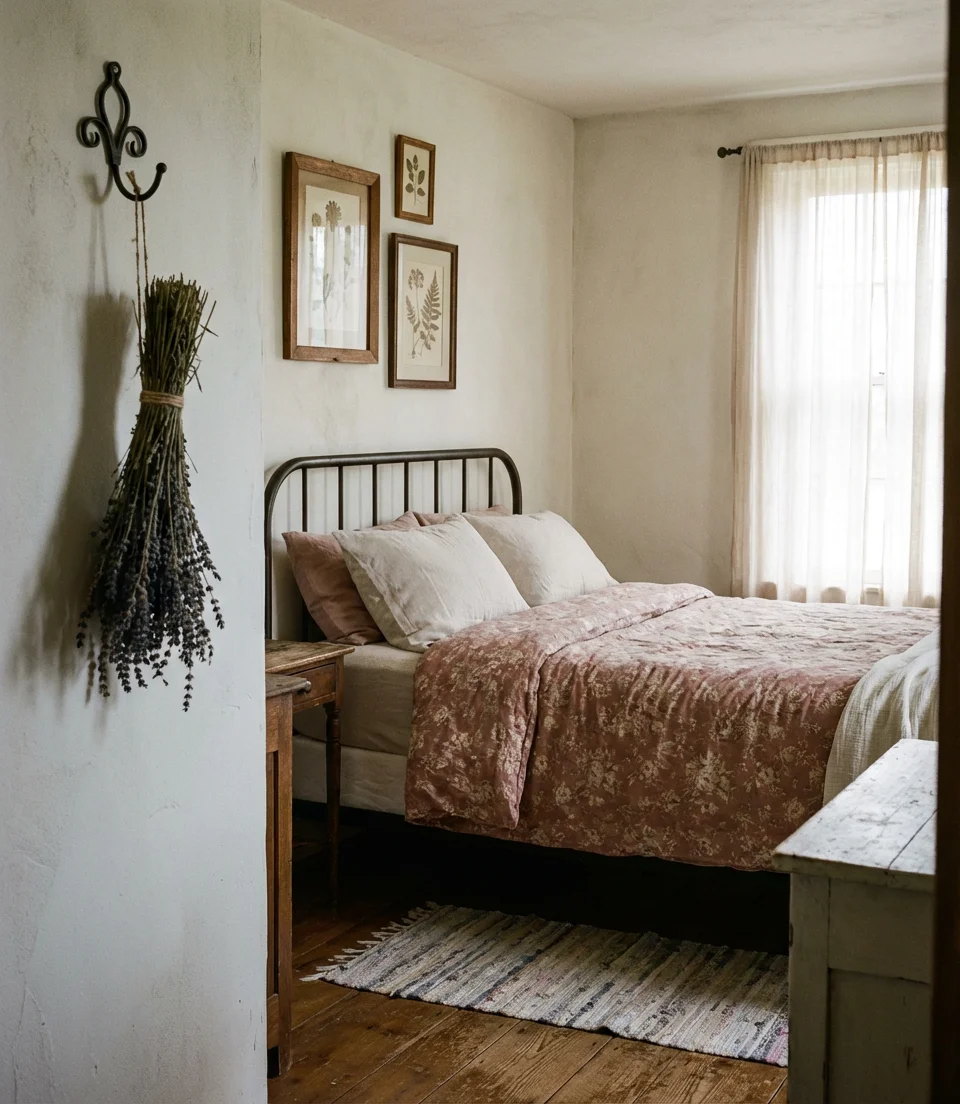
There’s a version of the farmhouse bedroom that leans fully into its cute potential—and it’s entirely worth embracing. Dried floral wreaths above the bed, pressed flower arrangements in mismatched frames, a floral linen duvet in muted rose and cream, and a vintage botanical print above the dresser create a room that feels genuinely sweet without crossing into saccharine. This style works especially well in guest rooms or primary bedrooms where the homeowner wants warmth and a slightly romantic, feminine energy that still feels grounded in natural materials.
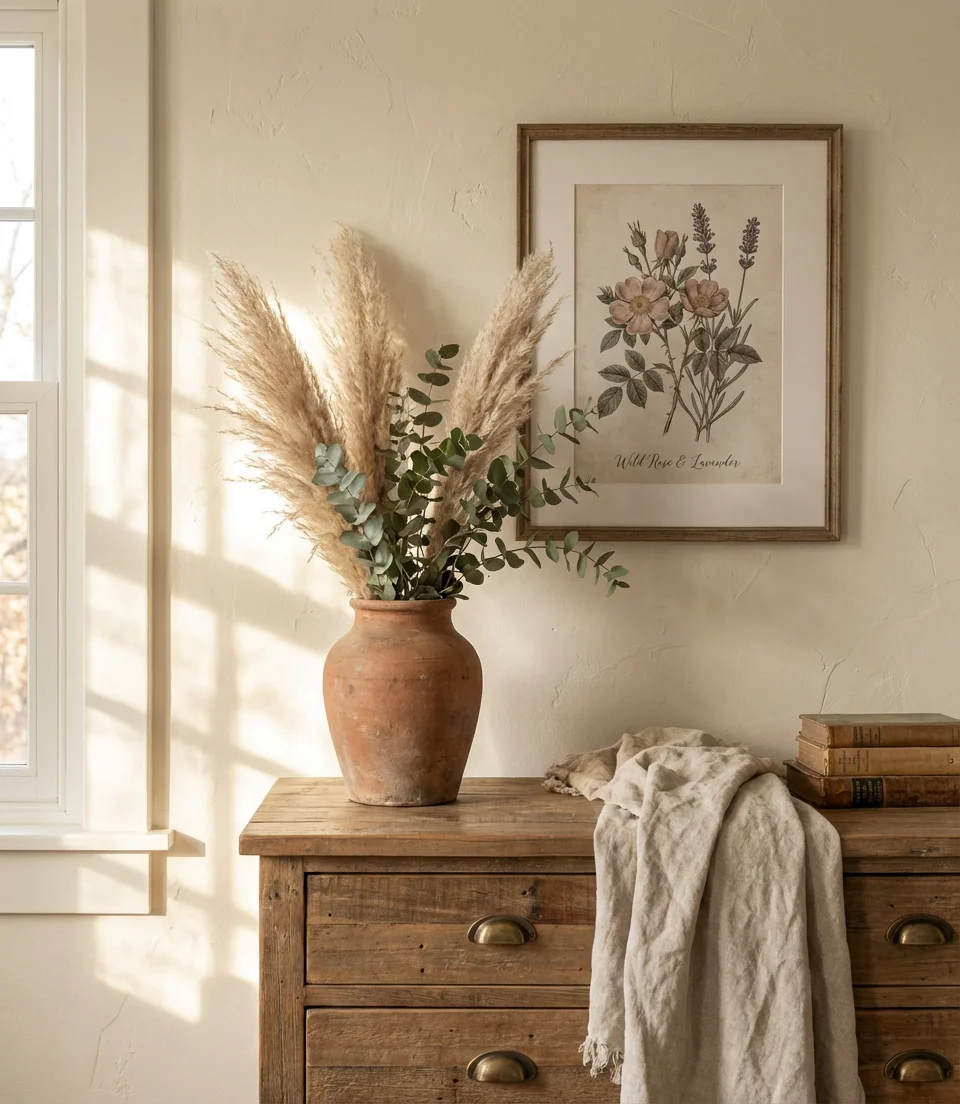
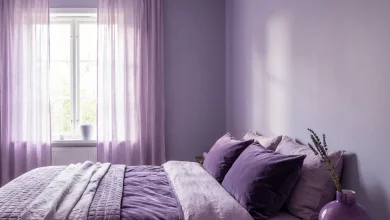
The botanical details in a floral farmhouse bedroom work best when they reference real, specific plants rather than generic “pretty flowers.” Lavender, eucalyptus, wild grasses, and dried pampas grass all carry farmhouse credibility because they feel grown rather than bought. A dried lavender bundle tied with twine and hung on a hook reads entirely differently from a plastic floral arrangement—one says farmhouse, the other says craft store. This distinction sounds small but makes a significant difference in the overall feeling of the room. Sourcing dried botanicals from local farms or specialty flower markets also adds a layer of authenticity that’s genuinely irreplaceable.
20. Bloxburg-Inspired Farmhouse Bedroom With Clean Lines
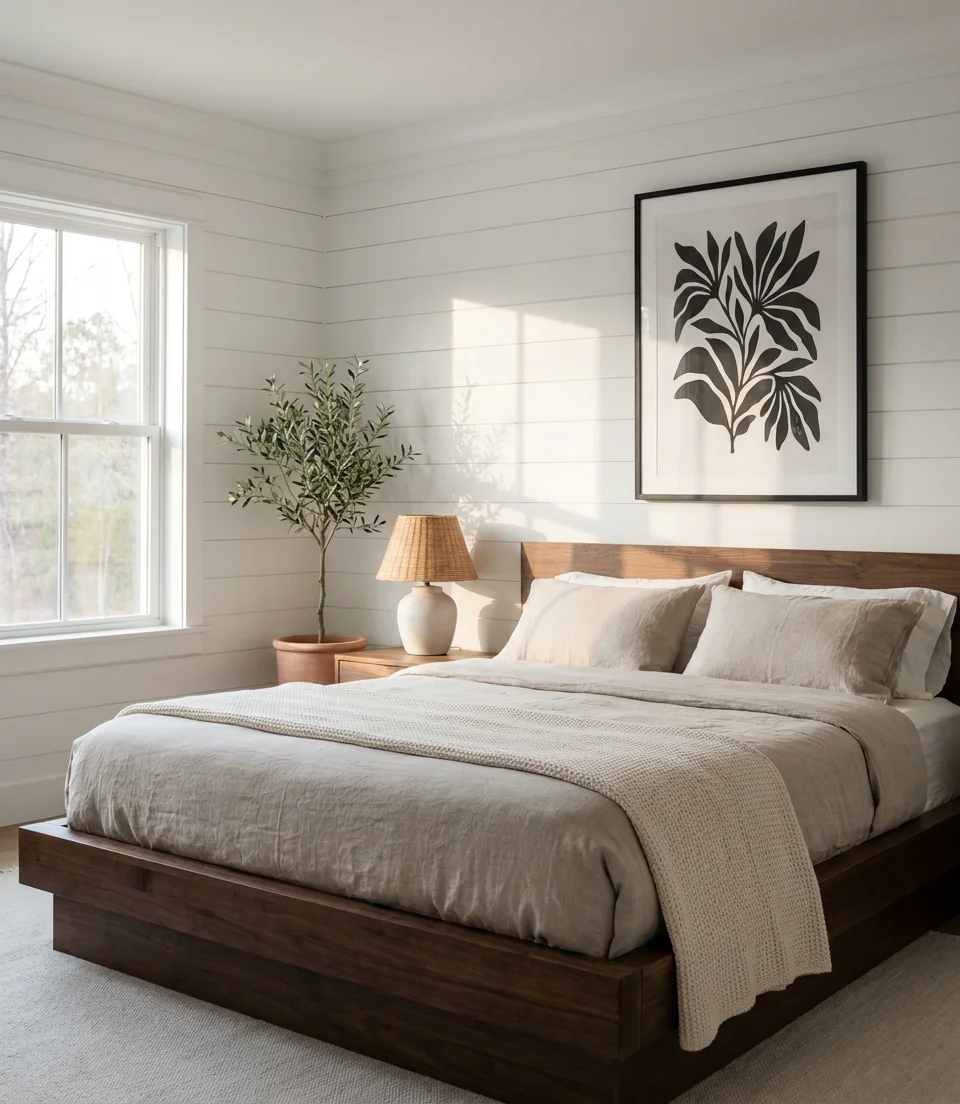
For a generation that spent their childhood building dream homes in Bloxburg, the transition to real-world farmhouse design is not as difficult as one might assume. The visual language of Bloxburg farmhouse rooms—clean architectural geometry, shiplap walls in white or soft gray, simple furniture with strong silhouettes, and a curated rather than cluttered approach to decor—maps almost perfectly onto achievable real-world design. This style is farmhouse distilled to its most essential and graphic elements, with a distinctly modern sensibility that appeals strongly to younger first-time homeowners.
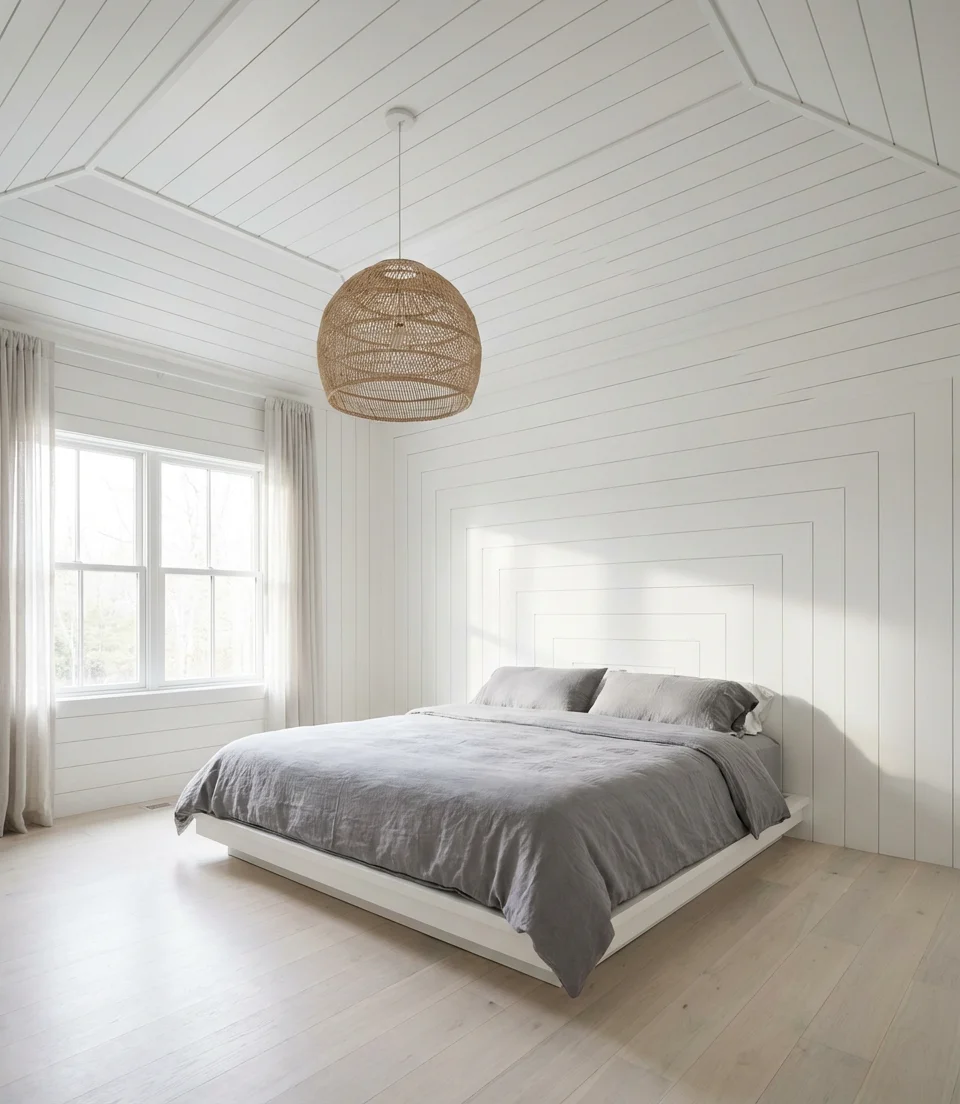
The Bloxburg aesthetic has genuinely influenced a generation of young interior design enthusiasts who are now designing their first real apartments and homes—and the influence shows in the increased demand for clean-lined farmhouse furniture, simple paneling, and curated minimalism over the maximalist accumulation of previous farmhouse trends. IKEA’s HEMNES line and Wayfair’s private-label farmhouse collections offer accessible starting points for recreating this look affordably. The key principle: every element earns its visual weight. One simple piece of art, one plant, one well-chosen lamp—the edit is part of the design.
21. Earthy Farmhouse Bedroom With Terracotta and Clay Tones
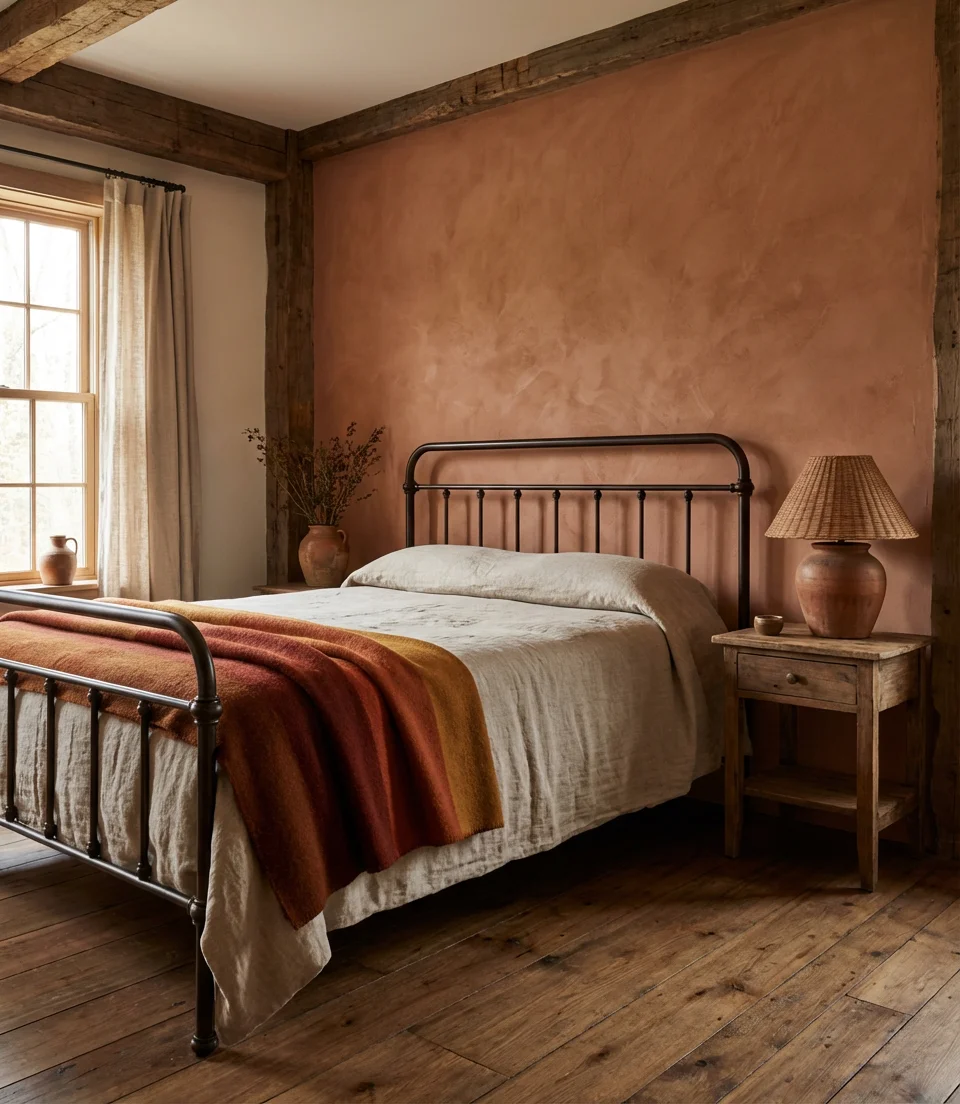
The earthy farmhouse bedroom draws from the literal palette of the soil—terracotta, raw clay, warm rust, and adobe. These colors carry a depth and warmth that cooler palettes simply can’t replicate, and in a bedroom context they create an enveloping, slightly ancient feeling that’s profoundly restful. A terracotta-plastered accent wall, a clay-pot lamp on a wood nightstand, woolen blankets in rust and ochre, and a simple iron bed frame come together in a room that feels like it’s been lived in for decades. This is a farmhouse as elemental material culture.
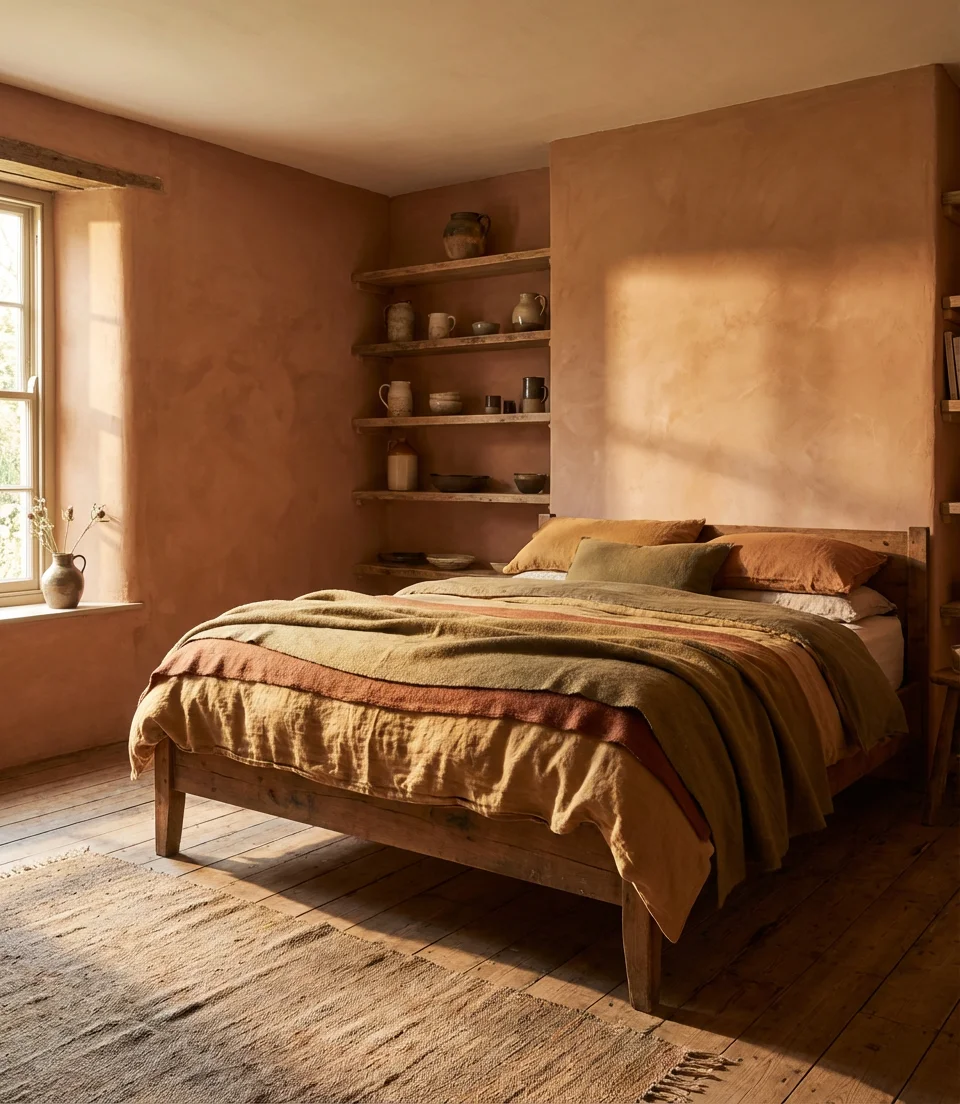
Earthy terracotta tones are experiencing one of their most sustained moments of popularity in American interior design—driven in part by a broader cultural movement toward organic materials, slower living, and visual warmth after years of gray-dominated minimalism. This bedroom style is a natural fit for homes in the American Southwest, but it travels beautifully to any region when executed with confidence. The most common mistake is treating terracotta as an accent rather than an anchor. When it’s used generously—on walls, in textiles, in ceramic objects—the room coheres into something genuinely special rather than just a nod to a trend.
22. Moody Farmhouse Bedroom With Candlelit Atmosphere
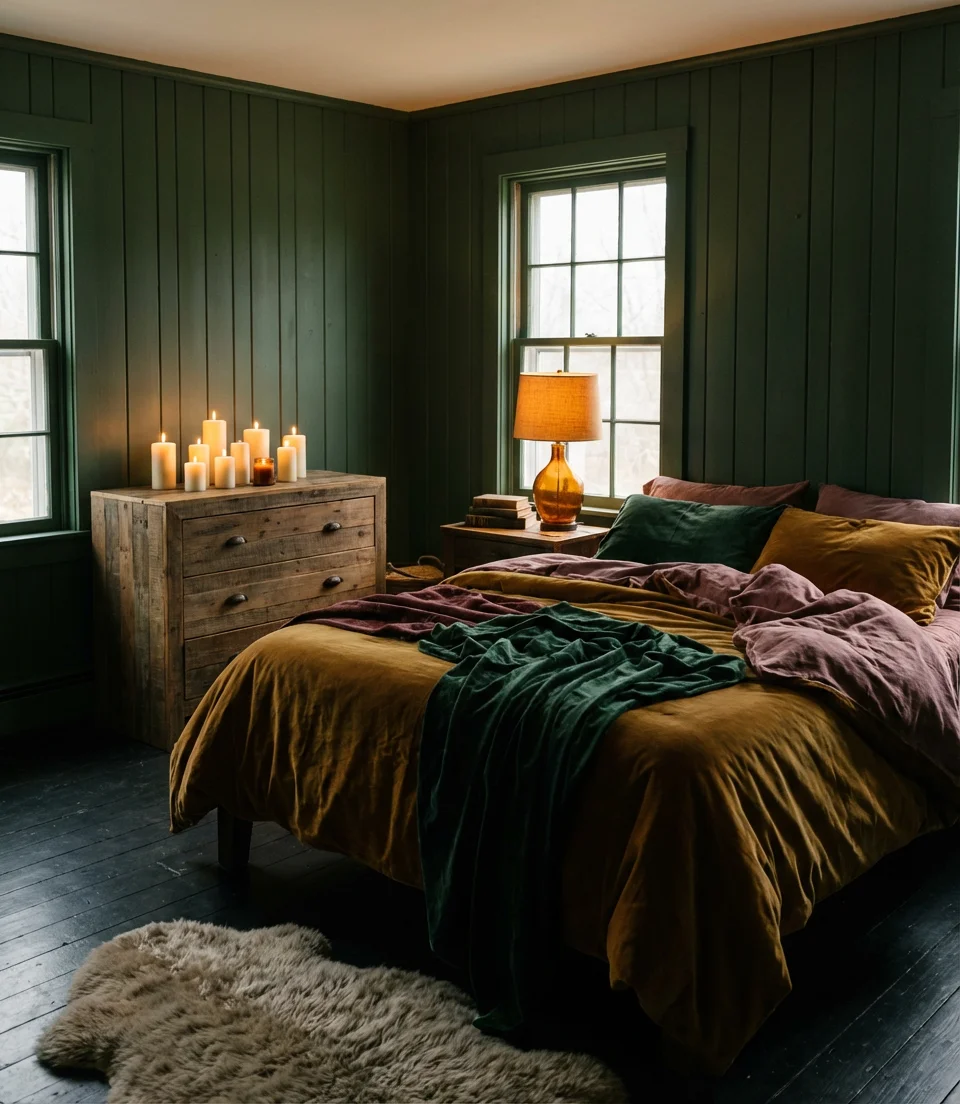
The final stop on this farmhouse tour is perhaps the most atmospheric—the moody farmhouse bedroom where every design decision tilts toward enclosure, warmth, and sensory richness. Deep walls in ink blue or forest green, wood paneling that absorbs rather than reflects light, candleholders grouped on a reclaimed wood dresser, and velvet or flannel bedding in muted jewel tones create a room that feels like a place you’d never want to leave. This is a farmhouse as an evening ritual—a space designed not for looking at but for being inside of, especially as the seasons turn colder.
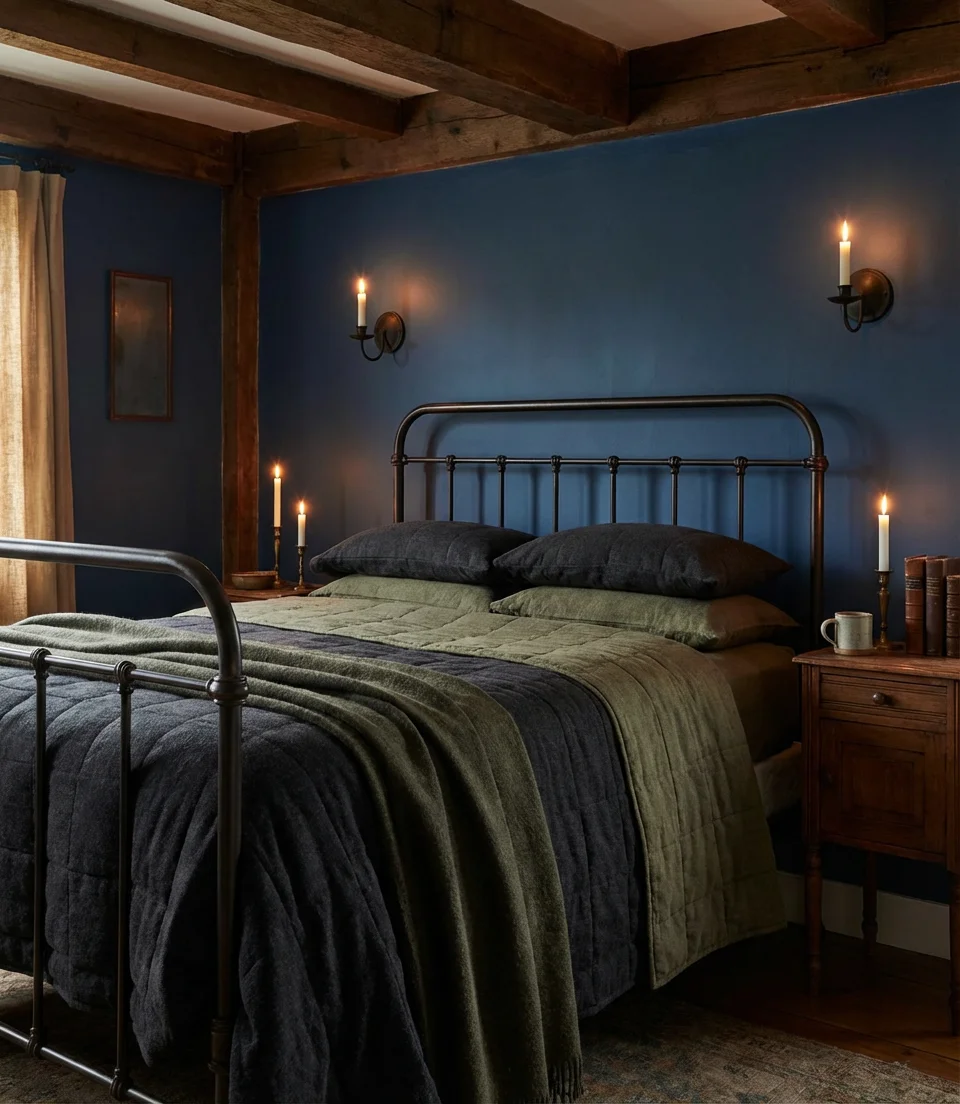
Lighting is the most critical and most underestimated element in a moody farmhouse bedroom. Overhead fixtures are almost always the wrong choice—they flatten the atmosphere that carefully chosen wall colors and textiles are working to create. Instead: plug-in iron sconces flanking the bed, a dimmable Edison-bulb lamp on the dresser, and a collection of pillar candles for evening hours. Warm-toned smart bulbs set to their lowest brightness setting do remarkable work here. The room should feel like it exists slightly outside of regular time—that quality of stillness is what makes this the farmhouse bedroom people remember longest.
Whether you’re drawn to the calm of sage green plaster walls, the drama of a dark moody palette, or the sweet simplicity of white cotton and dried botanicals, there has never been a better moment to commit to the farmhouse bedroom of your imagination. These ideas are a starting point, not a checklist—take what resonates, leave what doesn’t, and trust your own instincts about what makes a room feel like yours. We’d love to know which idea you’re most excited to try: drop your thoughts in the comments below, share what you’re working with, and let’s talk about the rooms we’re all trying to build.