42 Outdoor Living Rooms 2026: Stunning Ideas from Covered Patios to Luxury Poolside Retreats

Americans looking to expand their living quarters beyond their homes in 2026 want outdoor living rooms more than anything else. Inspirational outdoor rooms are functional, beautiful, and easy to plan. From covered patios to luxury poolside lounges and all rooms in between, outdoor living rooms are perfect sanctuaries to entertain and enjoy year-round.
1. A covered patio can serve as a living room when it includes a fireplace.
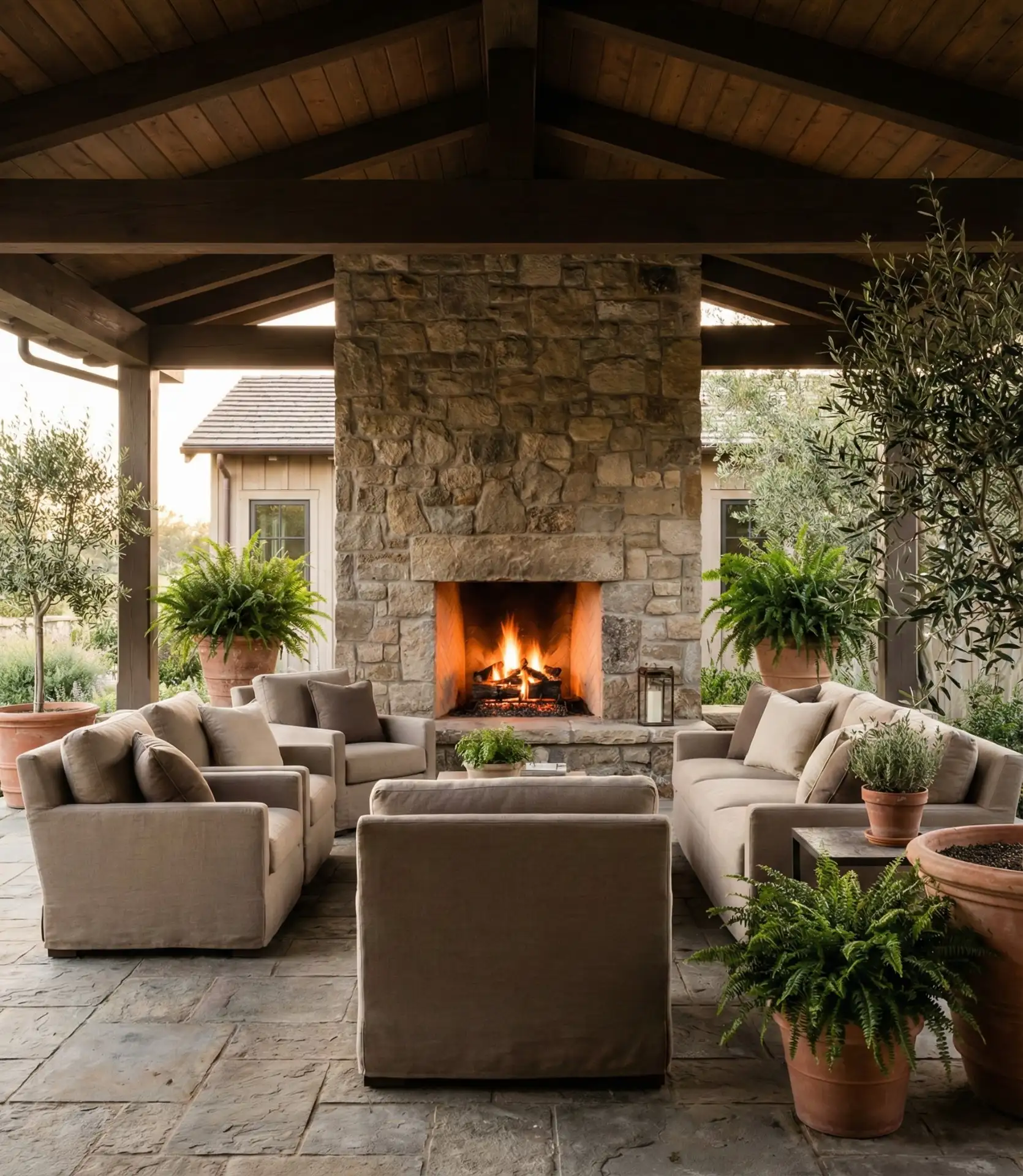
A covered patio transforms into a true living space when anchored by a stunning fireplace. This setup works beautifully in regions with mild winters, allowing you to enjoy your outdoor space nearly year-round. The overhead protection shields your furniture from rain, while the fireplace provides warmth and ambiance during cooler evenings. Choose weather-resistant seating arranged around the hearth to create an intimate gathering spot that rivals any indoor living room. 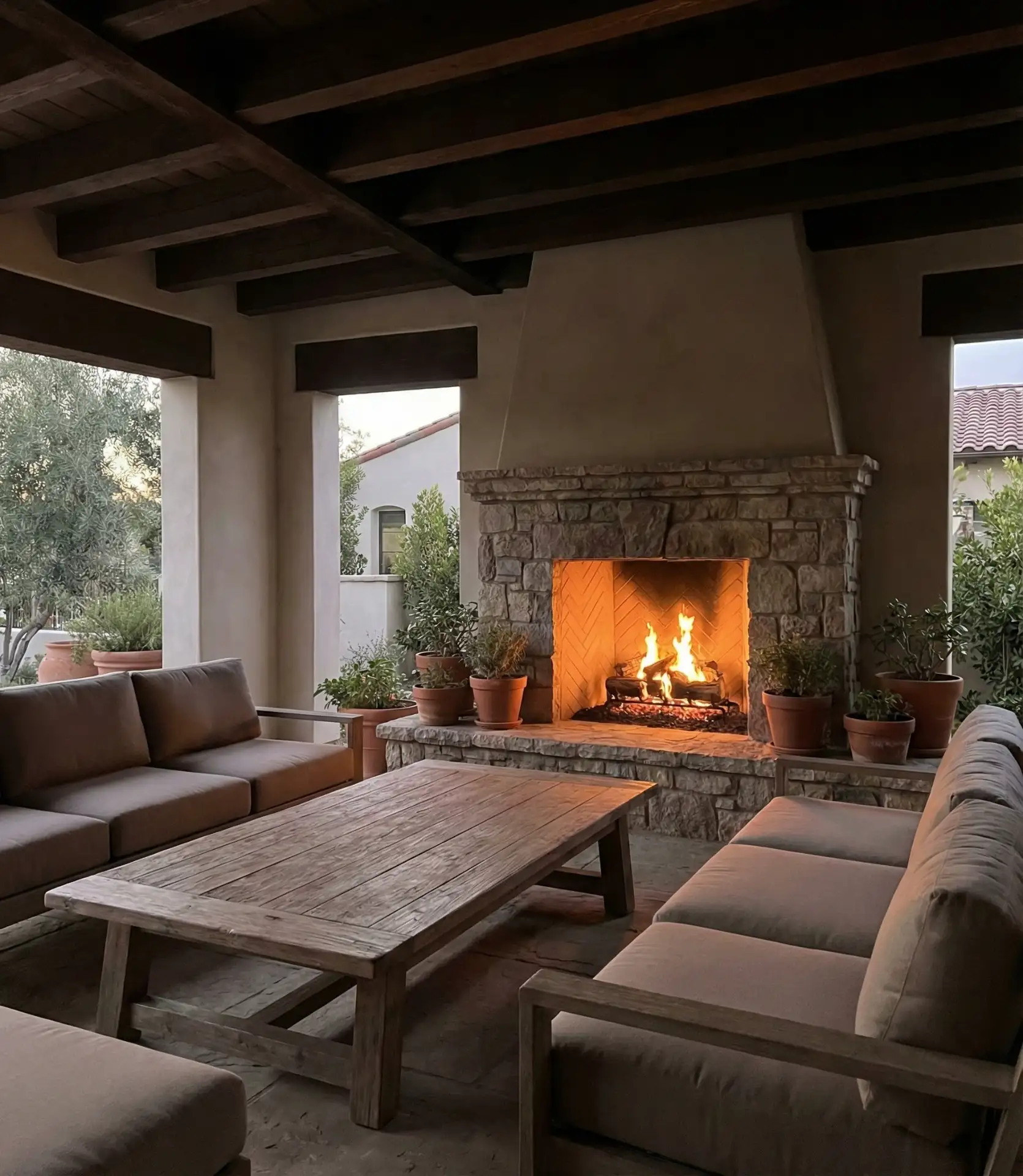
In the Pacific Northwest and Northeast, homeowners often install gas fireplaces for convenience, while Southwestern homes lean toward traditional wood-burning designs that complement adobe and stucco architecture. The key is positioning furniture at least eight feet from the fire for safety while maintaining that cozy conversation circle. Many designers recommend investing in a quality outdoor rug to define the seating area and add an extra layer of comfort underfoot.
2. Modern Indoor-Outdoor Flow Design
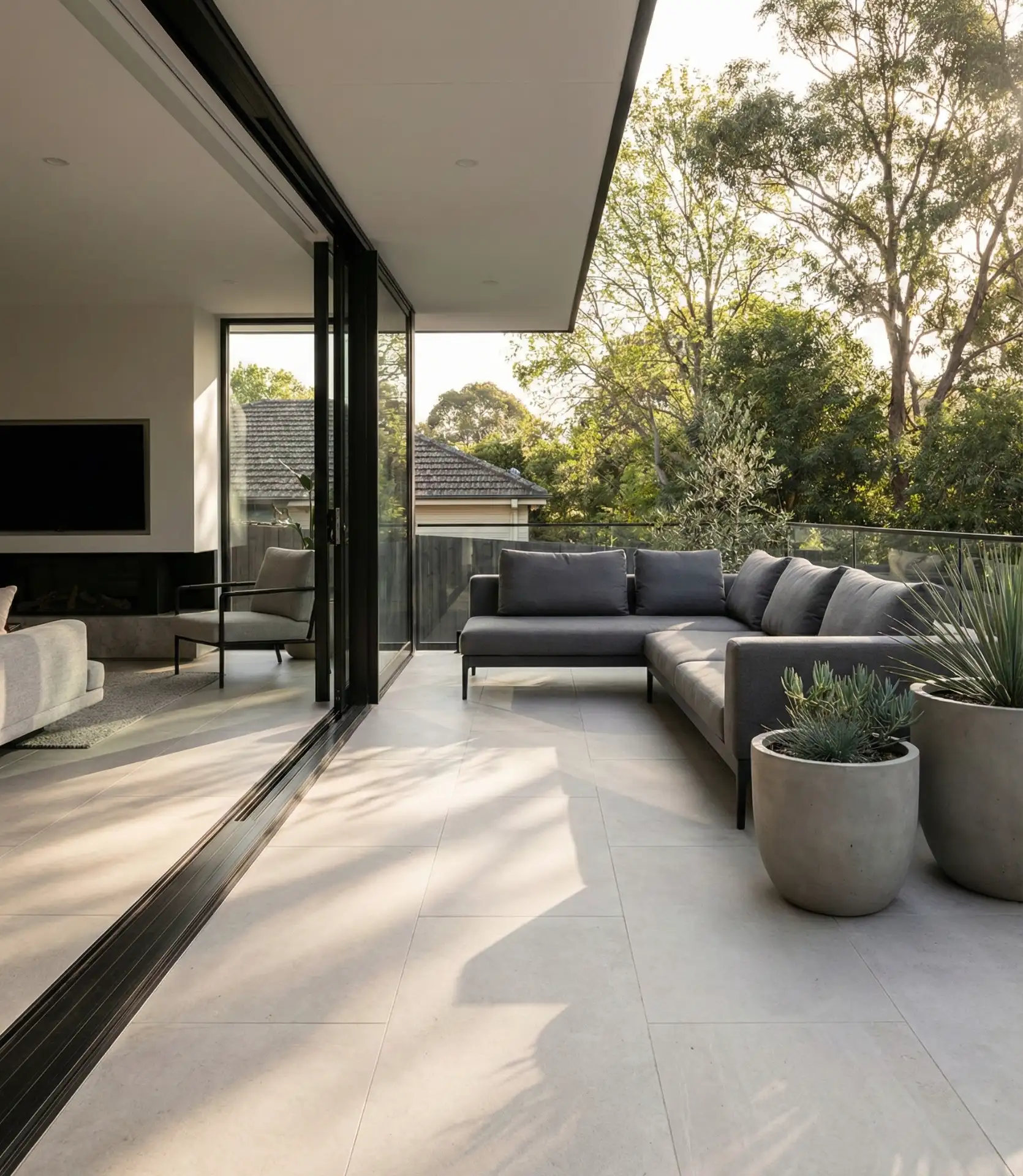
With floor-to-ceiling glass doors opening to the patio and seamless transitions in design materials, the modern indoor style also easily flows to the outdoor space. This design philosophy results in visual continuity between the interior and exterior spaces and creates a feeling of spaciousness in both areas. A refined transition in flooring materials, such as concrete or porcelain tiles that flow from indoors to outdoors, is also essential. The space achieves a wonderful balance of modern sophistication with muted, minimalist-style furnishings, both indoors and outdoors. 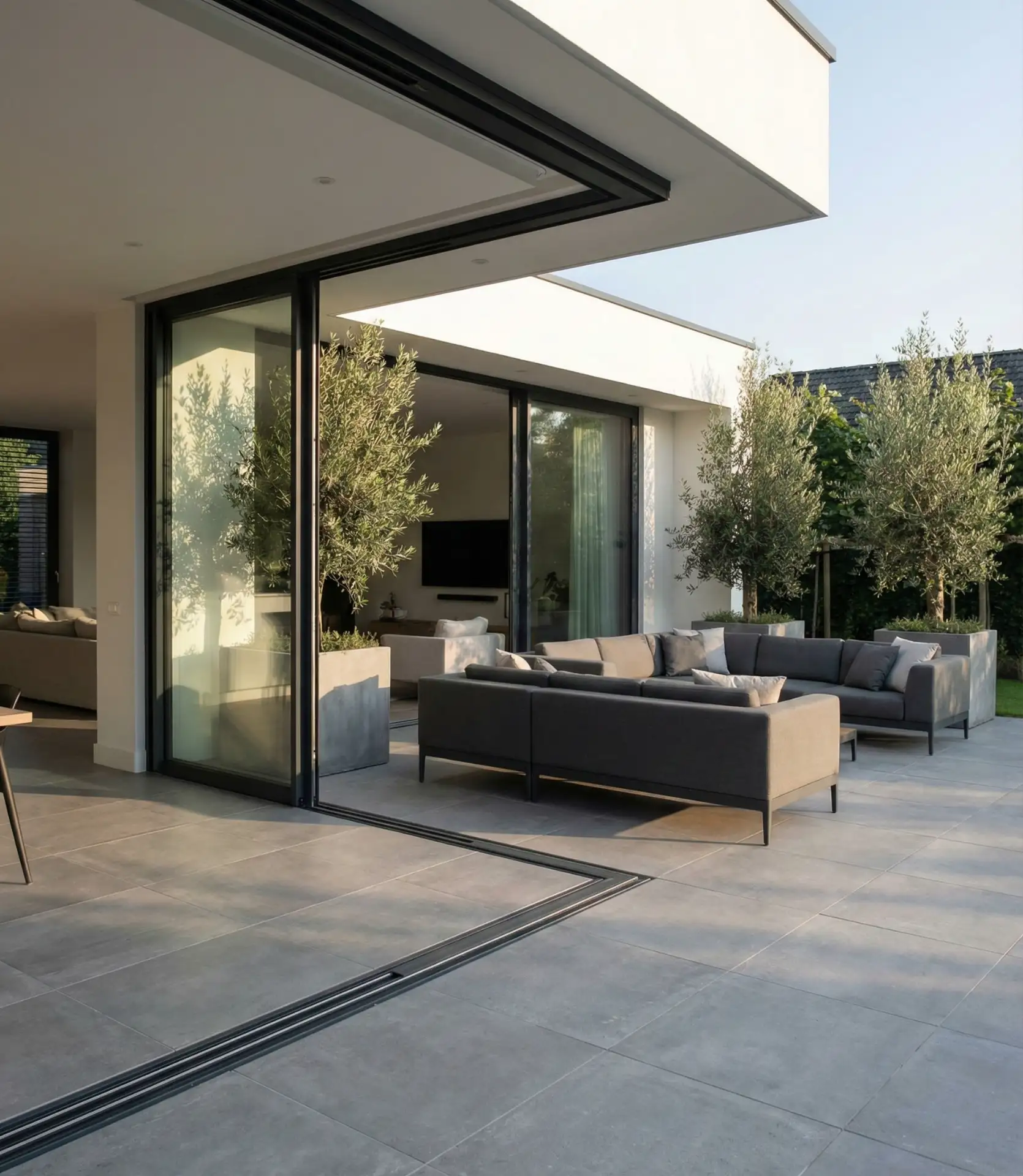
Such an approach is best suited for temperate regions like Texas, Florida, or Southern California, where indoor and outdoor spaces can both be used for a greater part of the year. A common mistake is selecting interior and patio color palettes that clash. Instead, choose complementary tones that build a color harmony. For example, if the interior space has warm grays and natural wood tones, those materials should be the same in the outdoor furniture and patio decking to achieve greater color harmony.
3. Sunken Conversation Pit Lounge
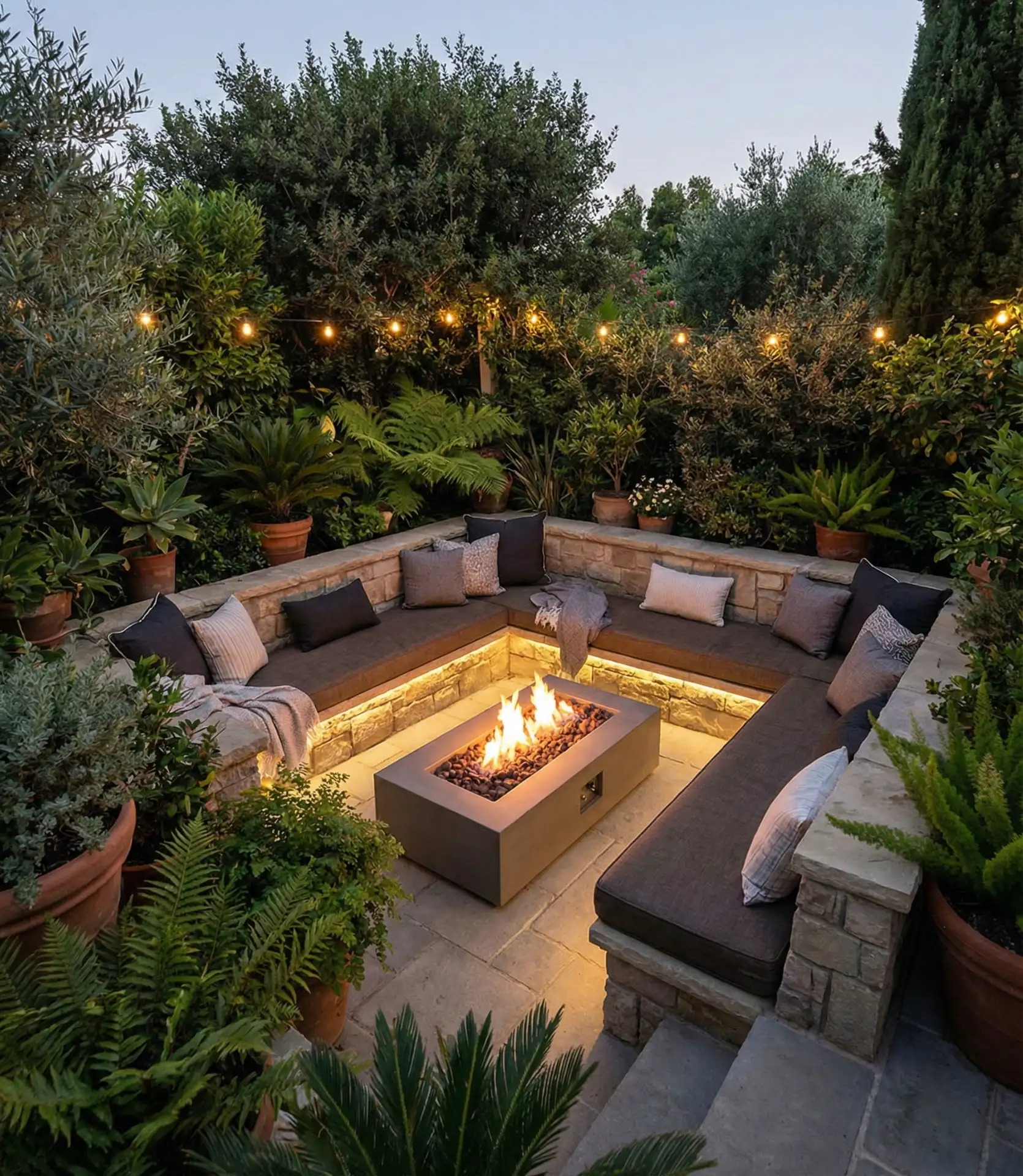
A contemporary approach brings the retro charm of sunken living rooms back to outdoor spaces. Built into the ground or deck, these sunken seating areas create a cozy and protected region that feels distinct from the rest of the backyard. Their recessed type naturally blocks the wind and provides a general sense of privacy to the guests. Cushioned, built-in benches around the outer edge maximize seating while looking sleek and modern. 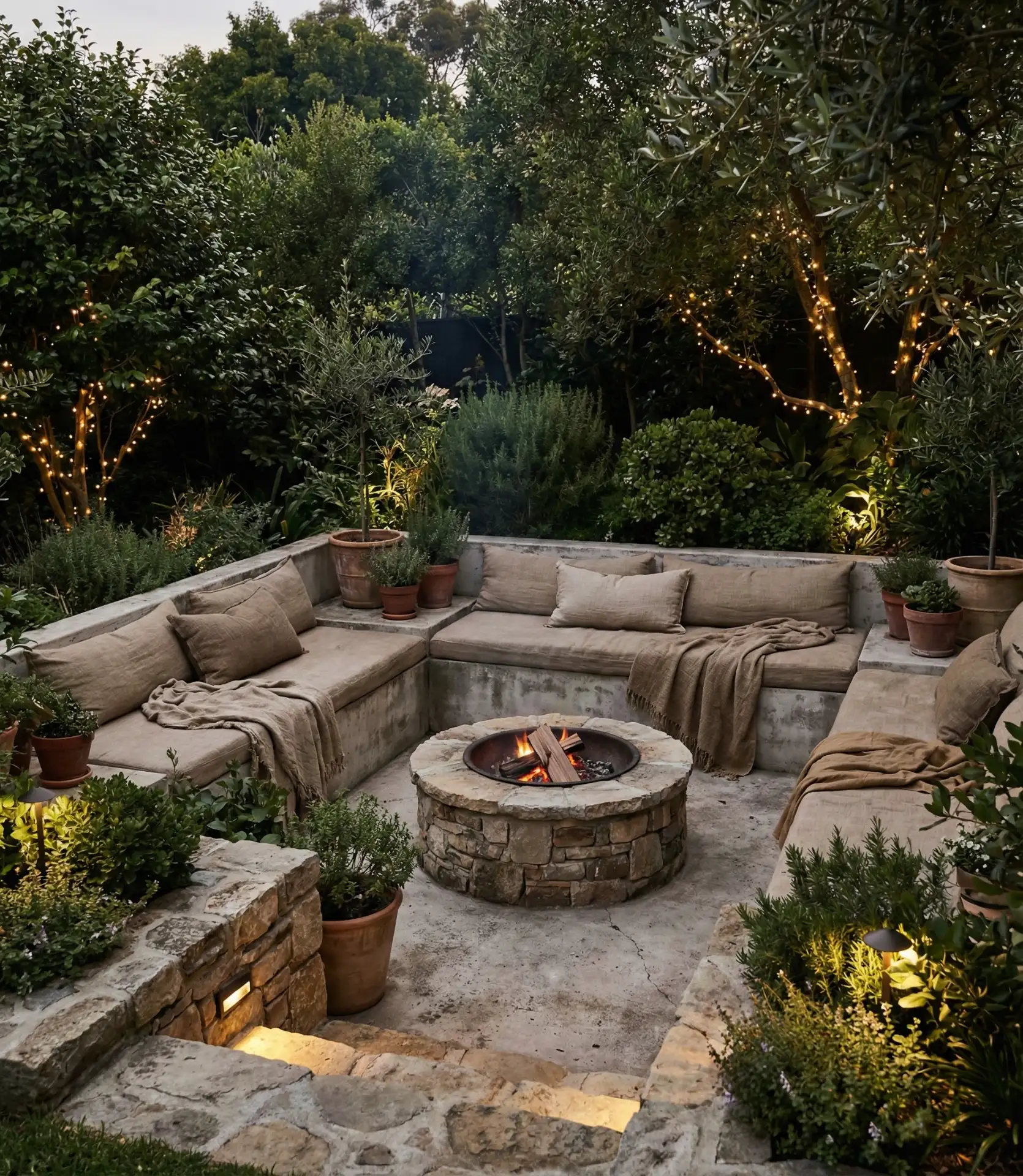
Overall, the costs of installation are from $8,000 to $25,000 depending on size and materials. However, this type of investment provides a unique outdoor piece. Integrated drainage is a must. Work with a landscape architect to incorporate drainage systems into the design early.
4. An enclosed three-season room
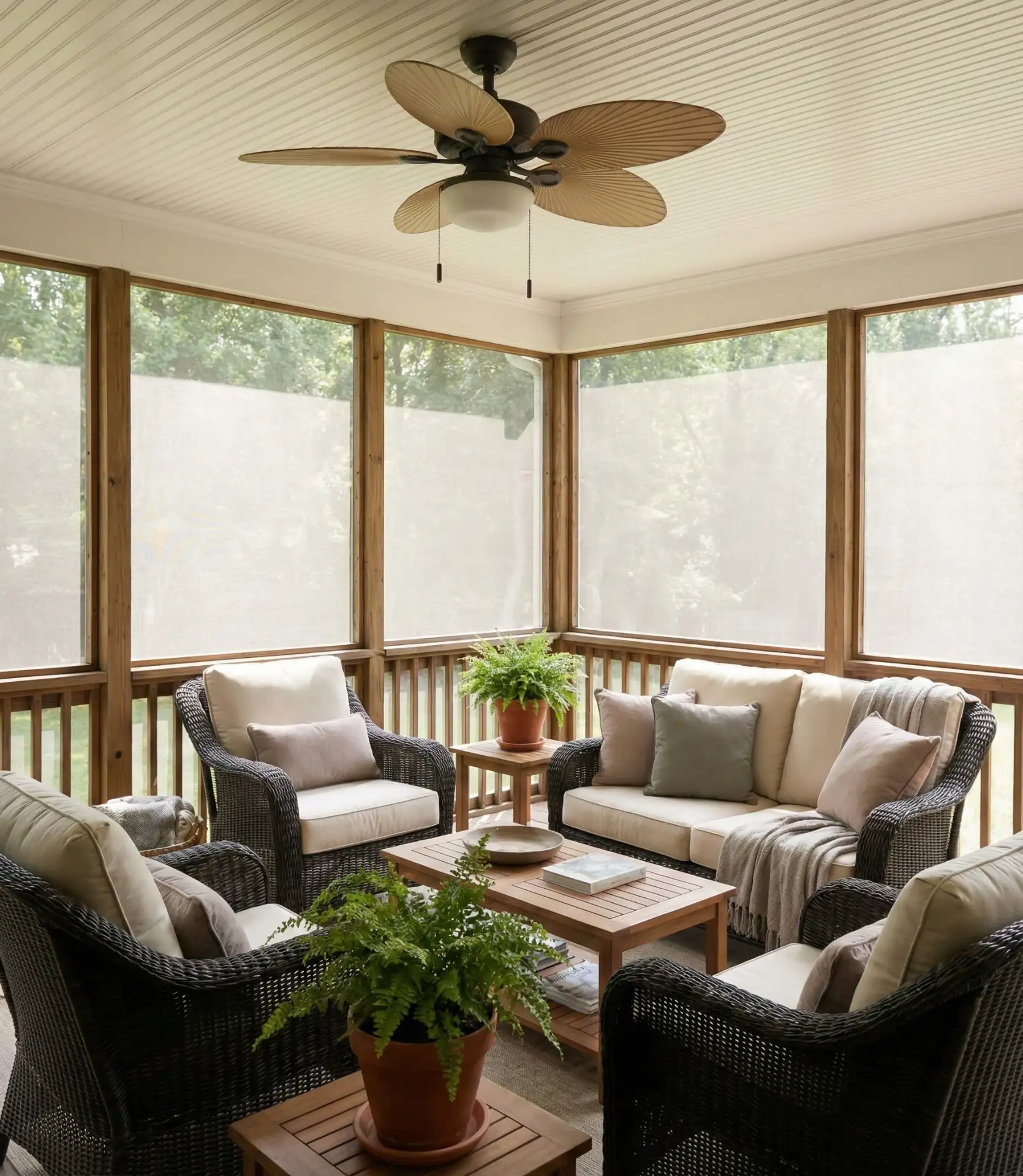
An enclosed outdoor living room provides both insect and weather protection and preserves the outdoor ambiance. Large screened panels or removable glass windows allow you to adjust ventilation based on the season, extending your outdoor enjoyment from spring through fall. This style particularly appeals to homeowners in the Midwest and South, where mosquitoes and humidity can make traditional patio living challenging during summer months. 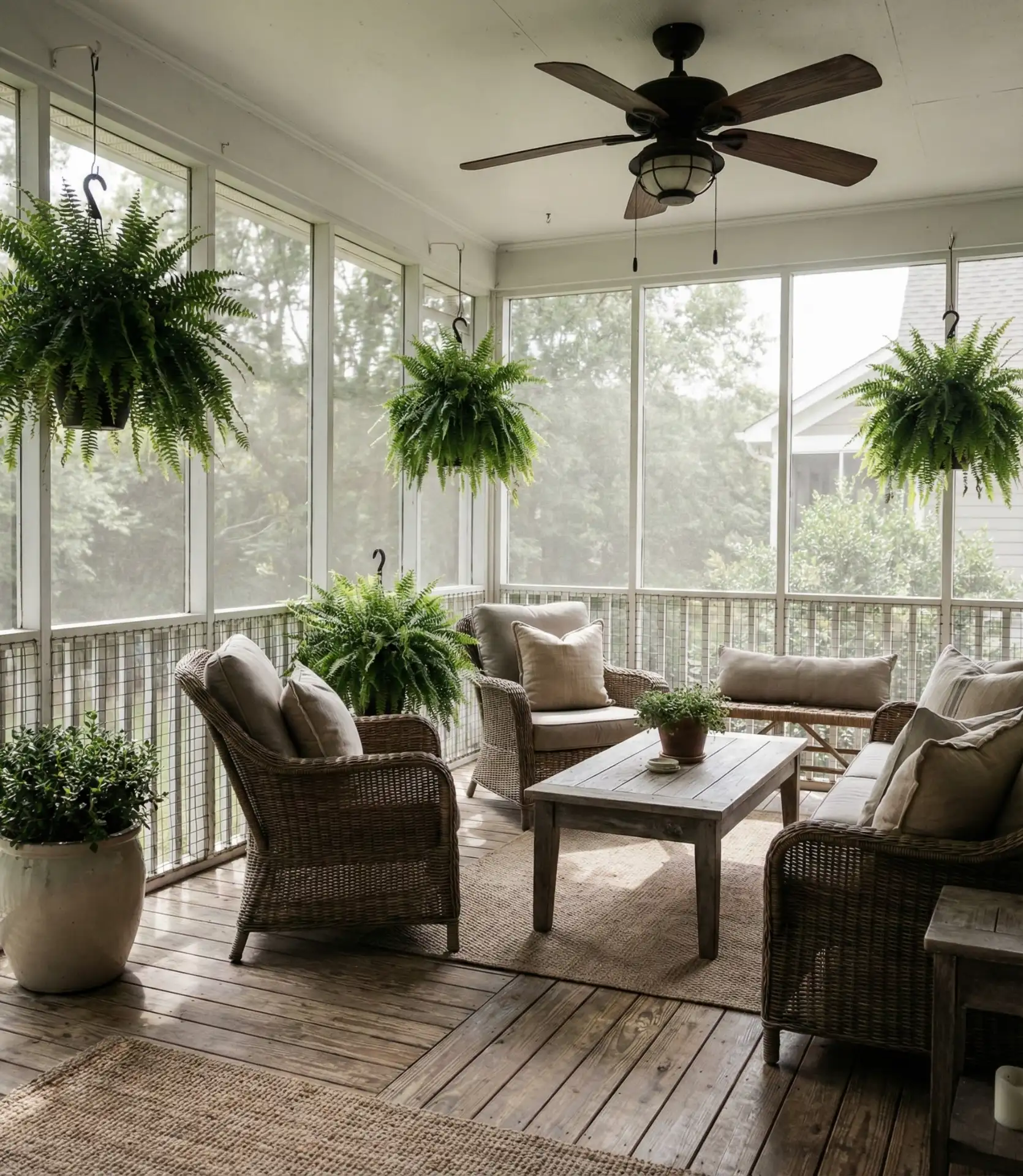
My neighbor converted their unused deck into an enclosed room last spring, and it’s become the most-used space in their home. They installed retractable screens that disappear when not needed, maintaining flexibility throughout the year. The addition increased their home’s value by approximately twelve percent while adding nearly 200 square feet of usable living space.
5. Outdoor Living Room with a TV Entertainment Center
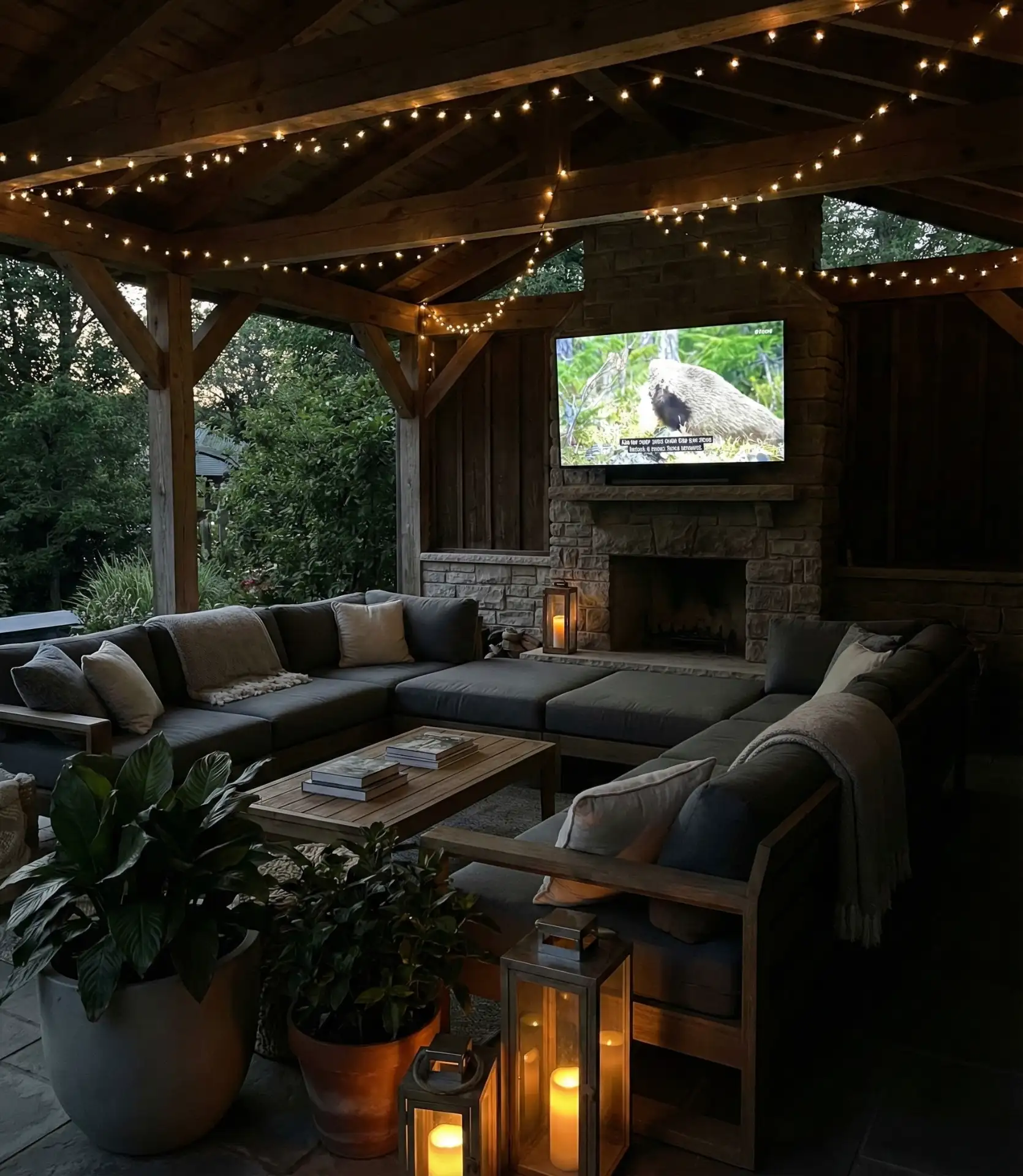
Installing a TV outdoors transforms your space into the ultimate entertaining zone for game days, movie nights, and family gatherings. Weather-resistant televisions designed for outdoor use can withstand temperature fluctuations and humidity, though they work best under covered areas. Mount the screen opposite your primary seating arrangement, ensuring no direct sunlight creates glare during peak viewing hours. Built-in cabinetry can house sound systems and streaming devices while protecting electronics from the elements. 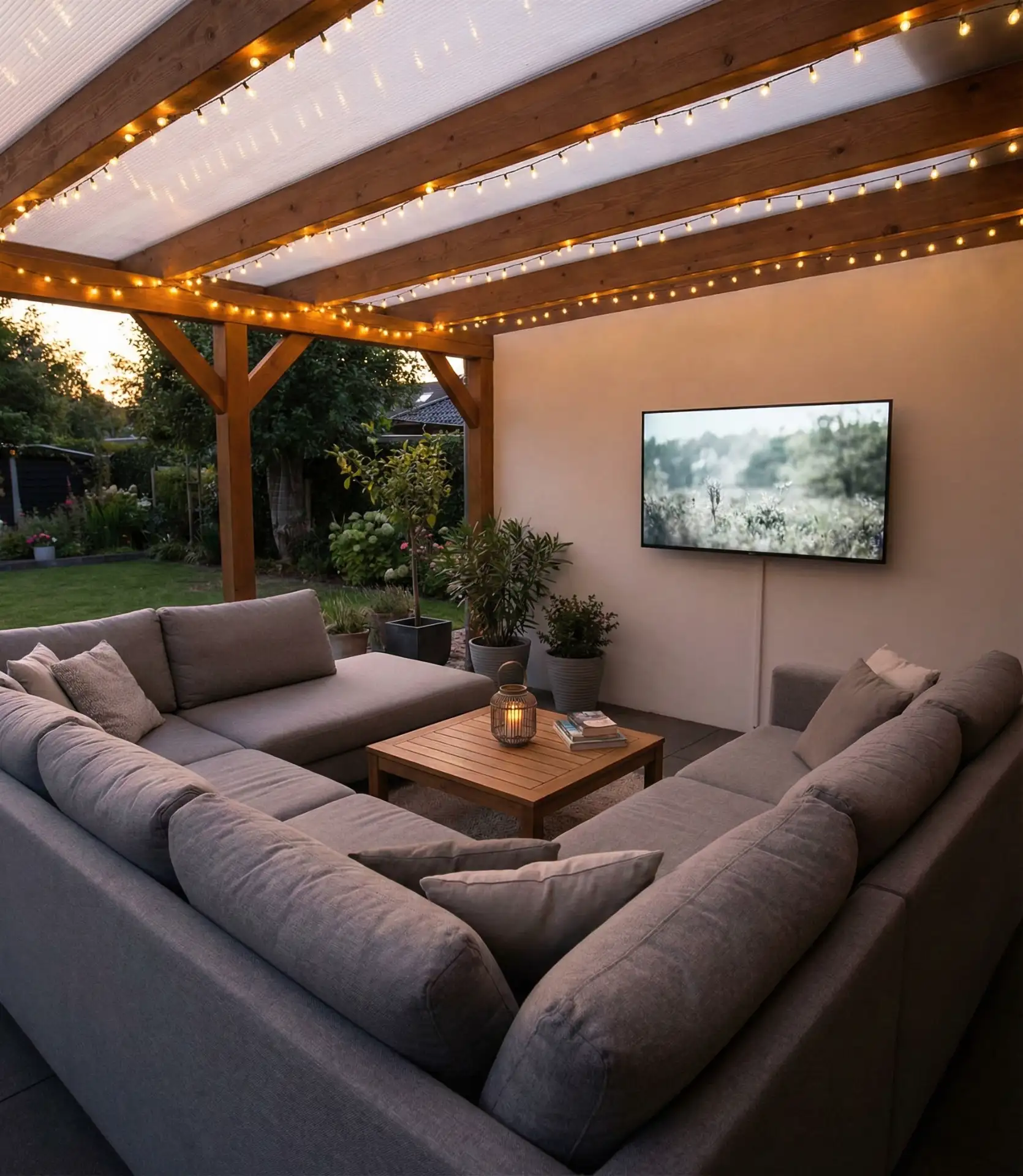
In regions with intense summer heat like Arizona or Nevada, experts recommend recessed mounting in shaded alcoves to prevent overheating. Most homeowners spend between $1,500 and $4,000 on outdoor-rated televisions in the 55- to 75-inch range. Please remember to include adequate weatherproof outlets and consider a surge protector—afternoon thunderstorms in Florida and the Gulf Coast can wreak havoc on unprotected electronics.
6. Poolside Luxury Lounge
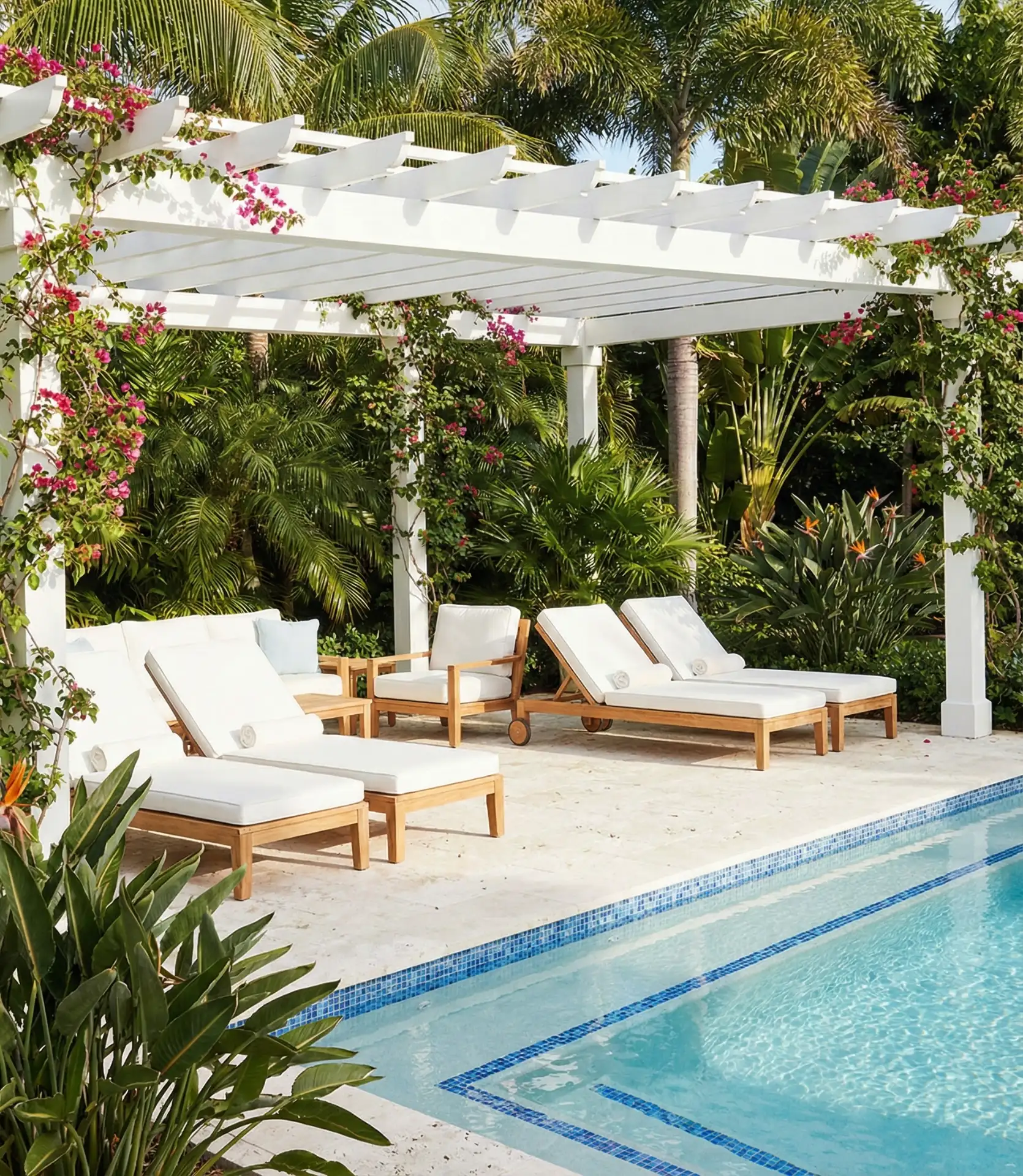
A luxury outdoor living room beside your pool elevates backyard entertaining to resort-level sophistication. Position plush, water-resistant furniture on travertine or natural stone pavers that stay cool underfoot even in direct sun. Incorporate cabana-style curtains or pergola coverage to provide shade during midday heat, creating comfortable lounging zones throughout the day. High-end materials like teak furniture, stainless steel accents, and premium outdoor fabrics ensure your investment withstands chlorine exposure and constant moisture. 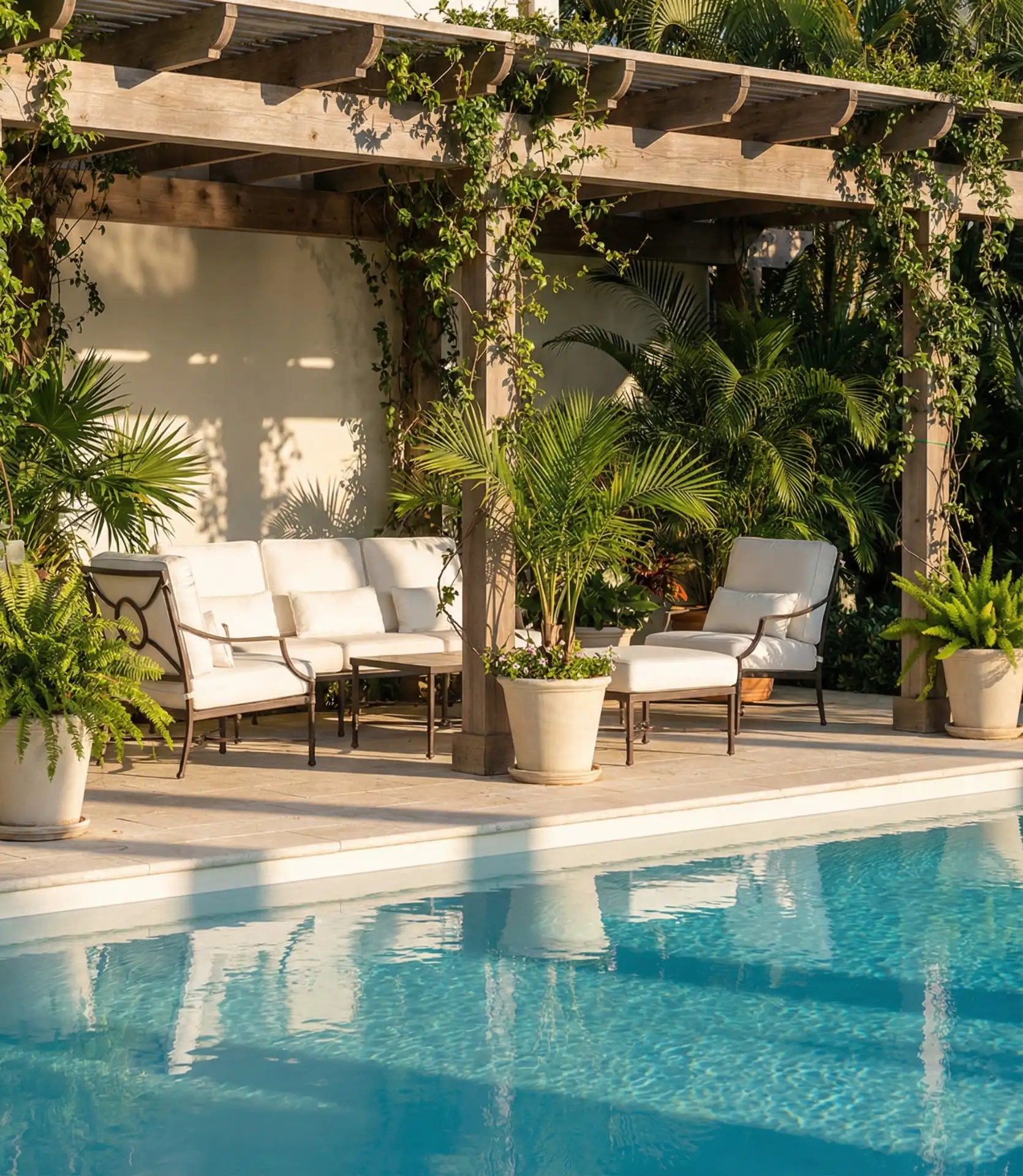
Real homeowners often underestimate how quickly pool chemicals can degrade standard outdoor fabrics. Solution-dyed acrylic fabrics resist fading and chlorine damage far better than cheaper alternatives, though they cost roughly forty percent more upfront. The longevity makes them worth the investment—you’ll replace cushions every five to seven years instead of annually.
7. Compact Budget-Friendly Patio Setup
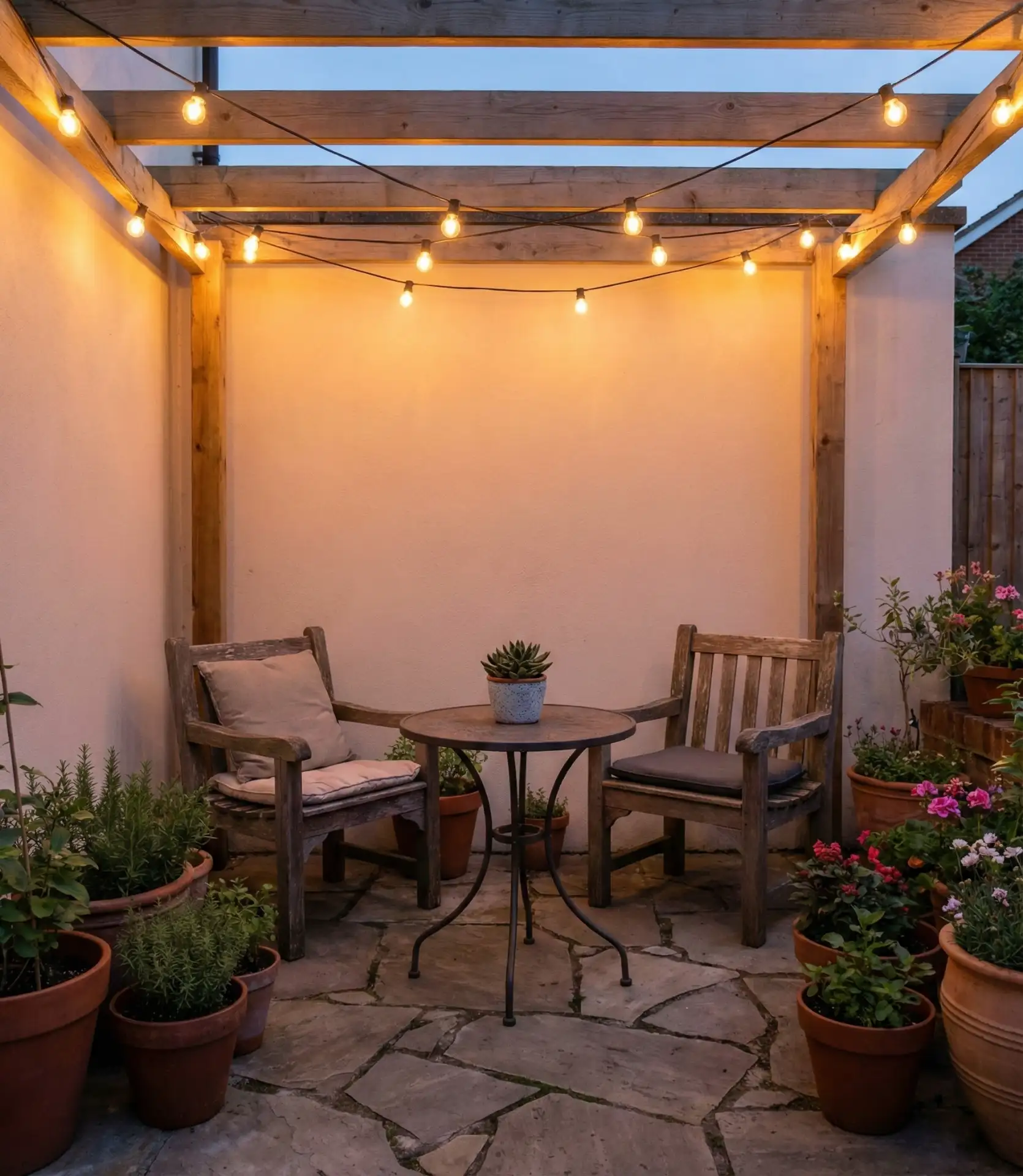
It is possible to create a beautiful outdoor living area while sticking strictly to a budget. To get started, build an inexpensive base for the pavement. Concrete is the simplest and overall cheapest option. To build the furniture, consider a good-quality outdoor couch as an anchor and mix folding chairs like the ones from a patio set or a secondhand couch to repurpose. String lights and DIY planters for centerpieces and decoration. Outdoor rugs are another excellent option to definitively build the individual patio area. 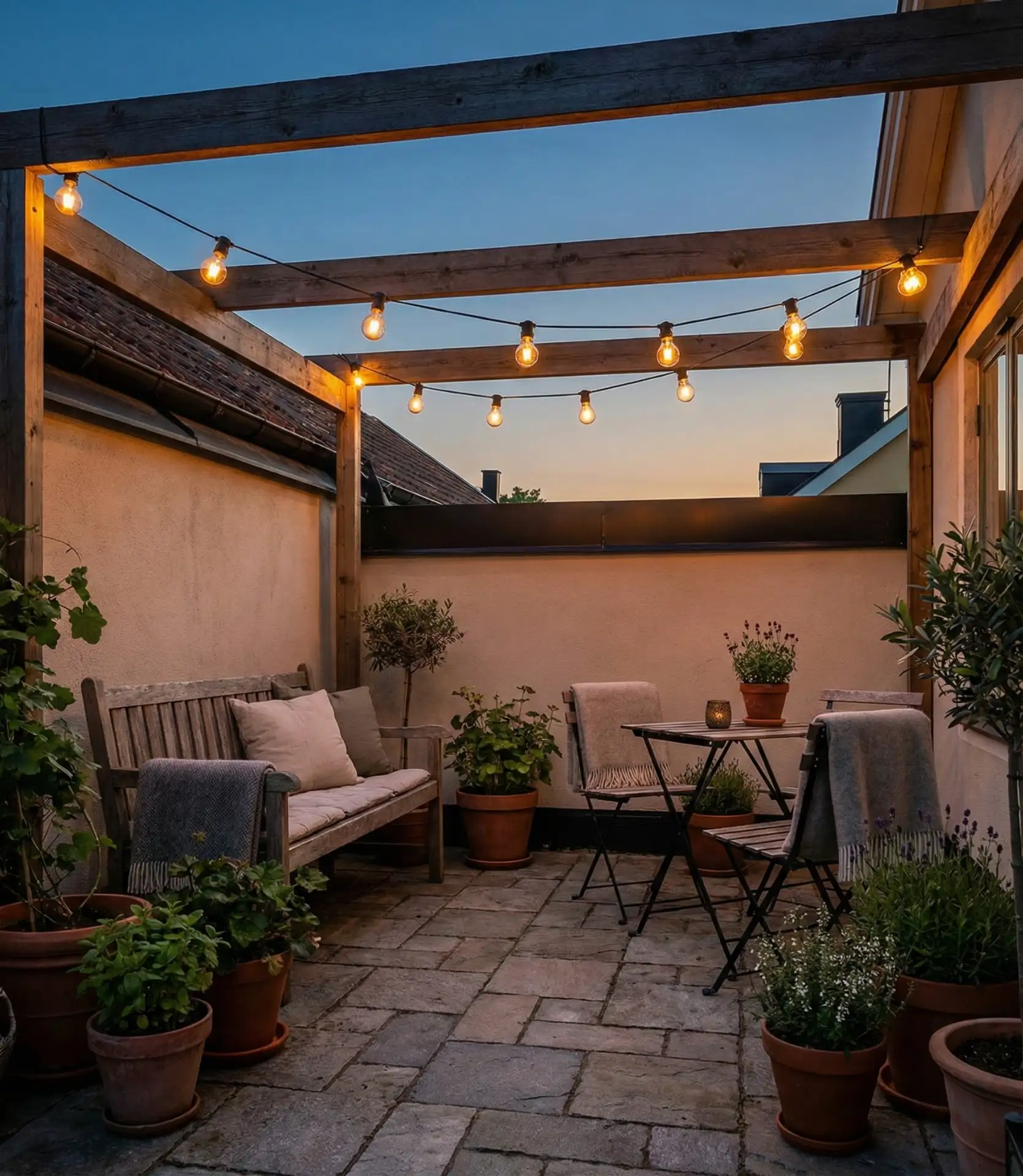
Budget-conscious homeowners can create a complete outdoor living setup for $800 to $2,000 by shopping end-of-season sales and utilizing second-hand marketplaces. The key is prioritizing comfort and weatherproofing over trendy aesthetics—a well-maintained simple space always trumps a neglected expensive one. Start small and add pieces gradually as your budget allows, building toward your ideal outdoor room over time.
8. Outdoor Kitchen and Dining Combo
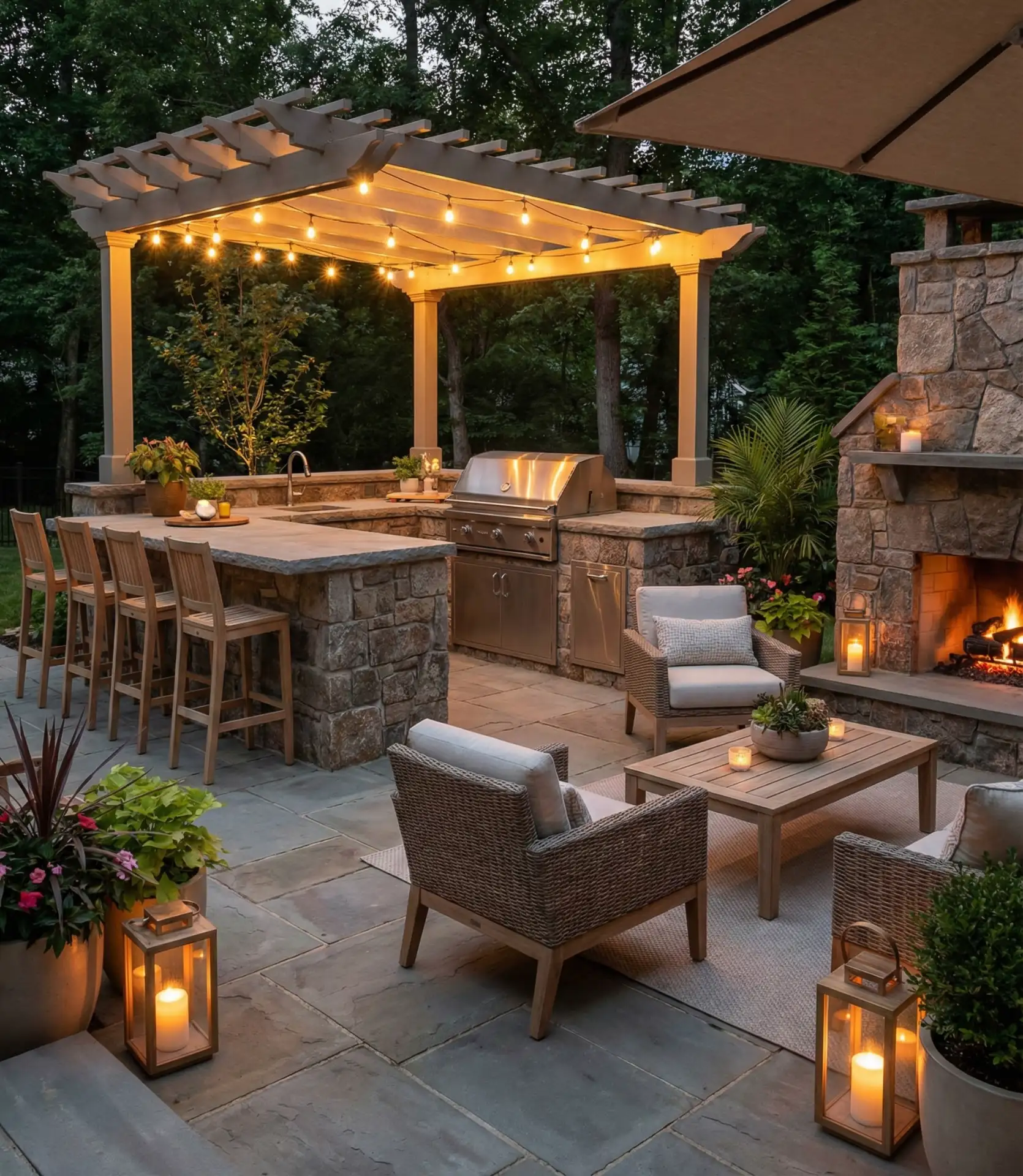
An outdoor living room with kitchen capabilities transforms your backyard into a complete entertainment hub where cooking and socializing happen simultaneously. Built-in grills, refrigerators, and prep counters create a functional cooking zone, while nearby lounge seating allows guests to interact with the chef. This layout works particularly well for households that love hosting, eliminating the isolated feeling of cooking indoors while everyone else enjoys the outdoor space. Durable countertop materials like granite or concrete withstand weather exposure and heavy use. 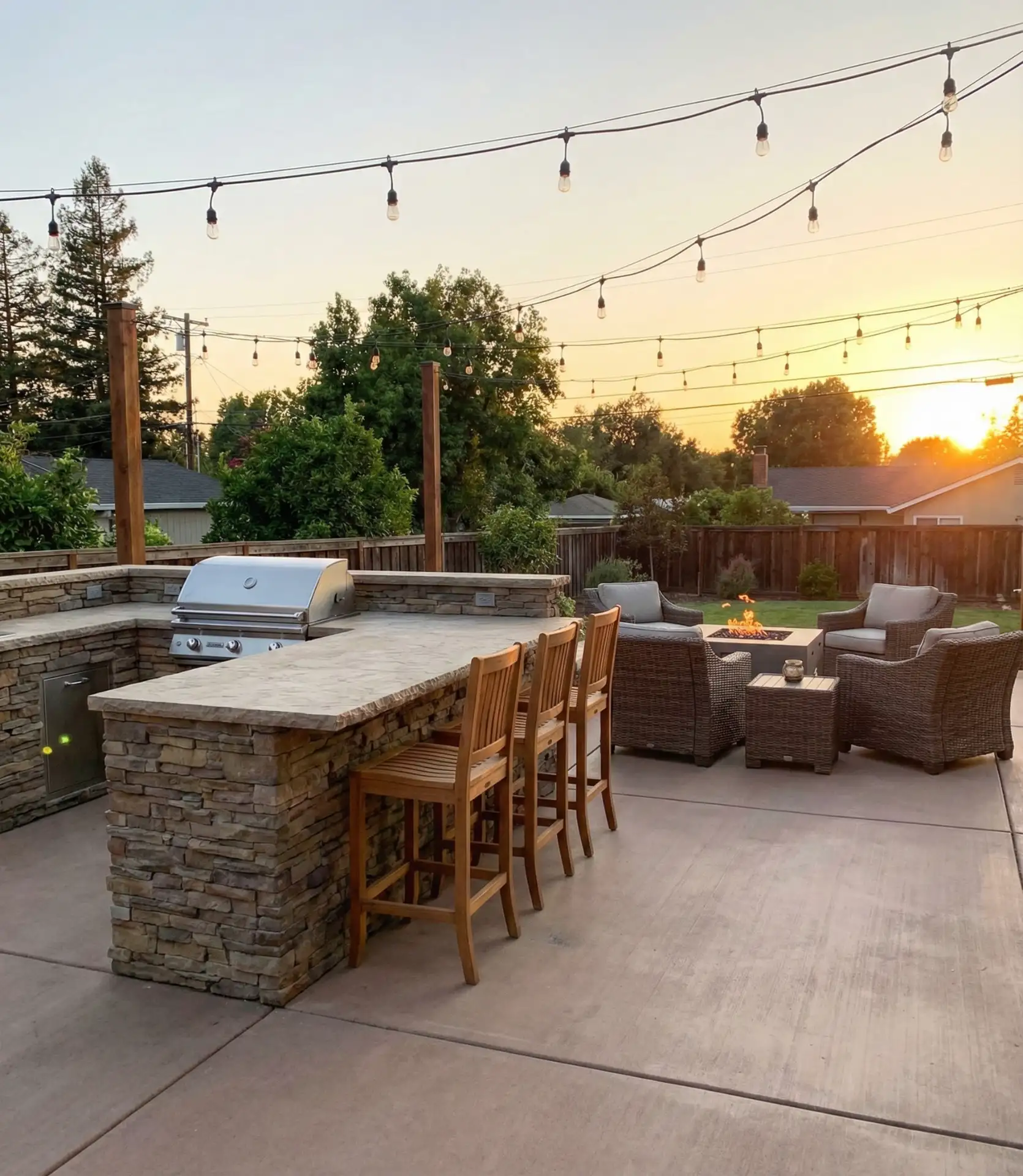
Texas and California homeowners use their outdoor kitchens an average of eight months per year, making them highly functional investments. Expert designers recommend positioning the cooking area upwind from main seating to prevent smoke interference and installing task lighting over prep surfaces for evening cooking. Natural gas connections typically cost $500 to $1,200 more than propane setups but eliminate the hassle of tank refills.
9. Semi-Covered Pergola Retreat
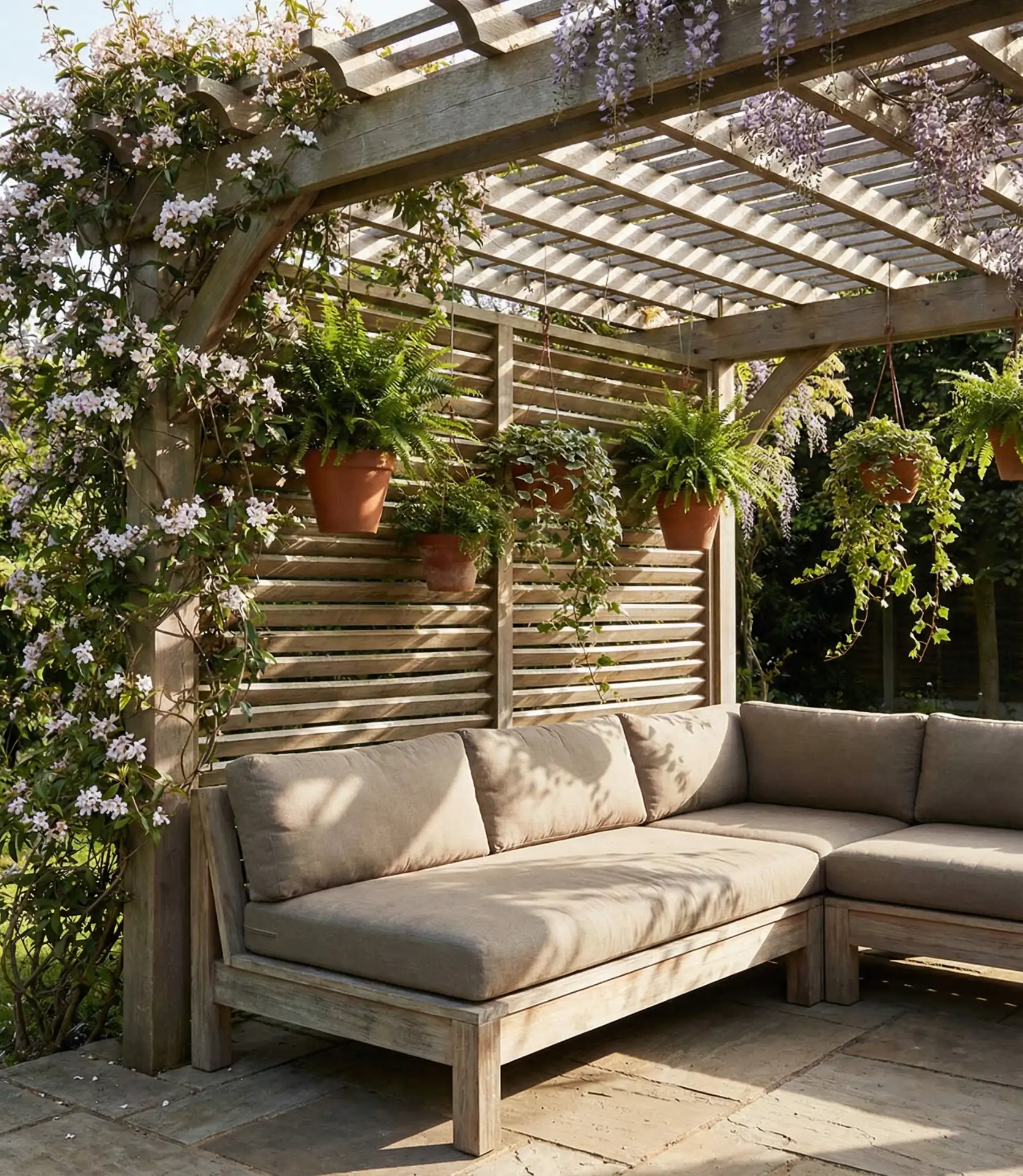
A semi-covered space with a pergola offers the perfect balance between sun exposure and shade, creating a dynamic outdoor environment throughout the day. The slatted roof allows dappled sunlight to filter through while still providing substantial coverage, and you can enhance protection by adding retractable canopy fabric or climbing vines. This design works beautifully for homeowners who want an outdoor room that feels open and airy rather than fully enclosed. Pair the structure with comfortable furniture that can handle occasional rain exposure. 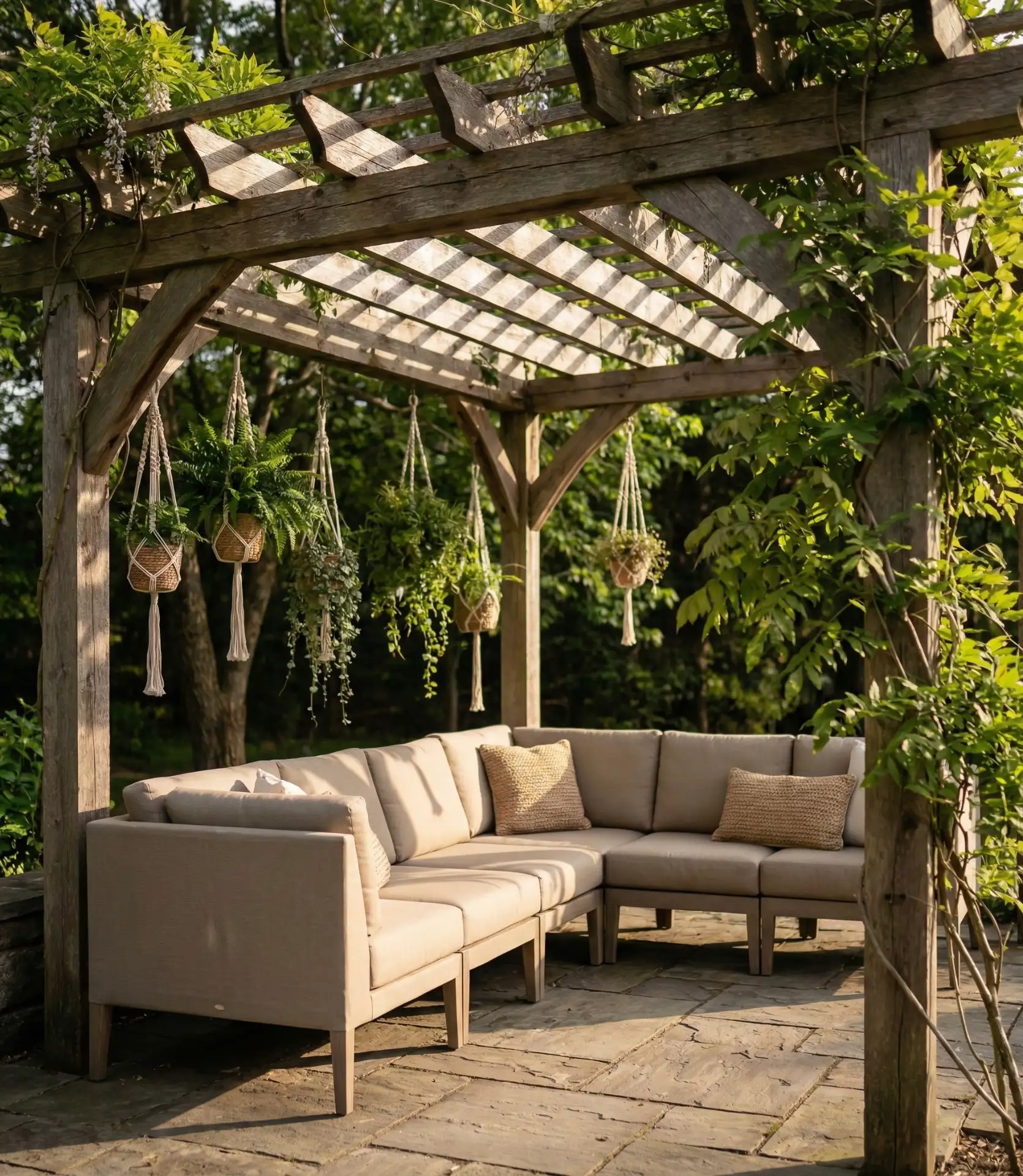
Where it works best: Mediterranean climates, particularly coastal California, where the aim is to manage the sun rather than rain. For locations that are wetter, think about putting in clear polycarbonate panels fitted between the slats, or choose adjustable louvered roofs that close during rain. The ability to have it your way allows for custom coverage during good and bad weather while keeping that open-air feeling.
10. BBQ and Bar Entertaining Zone
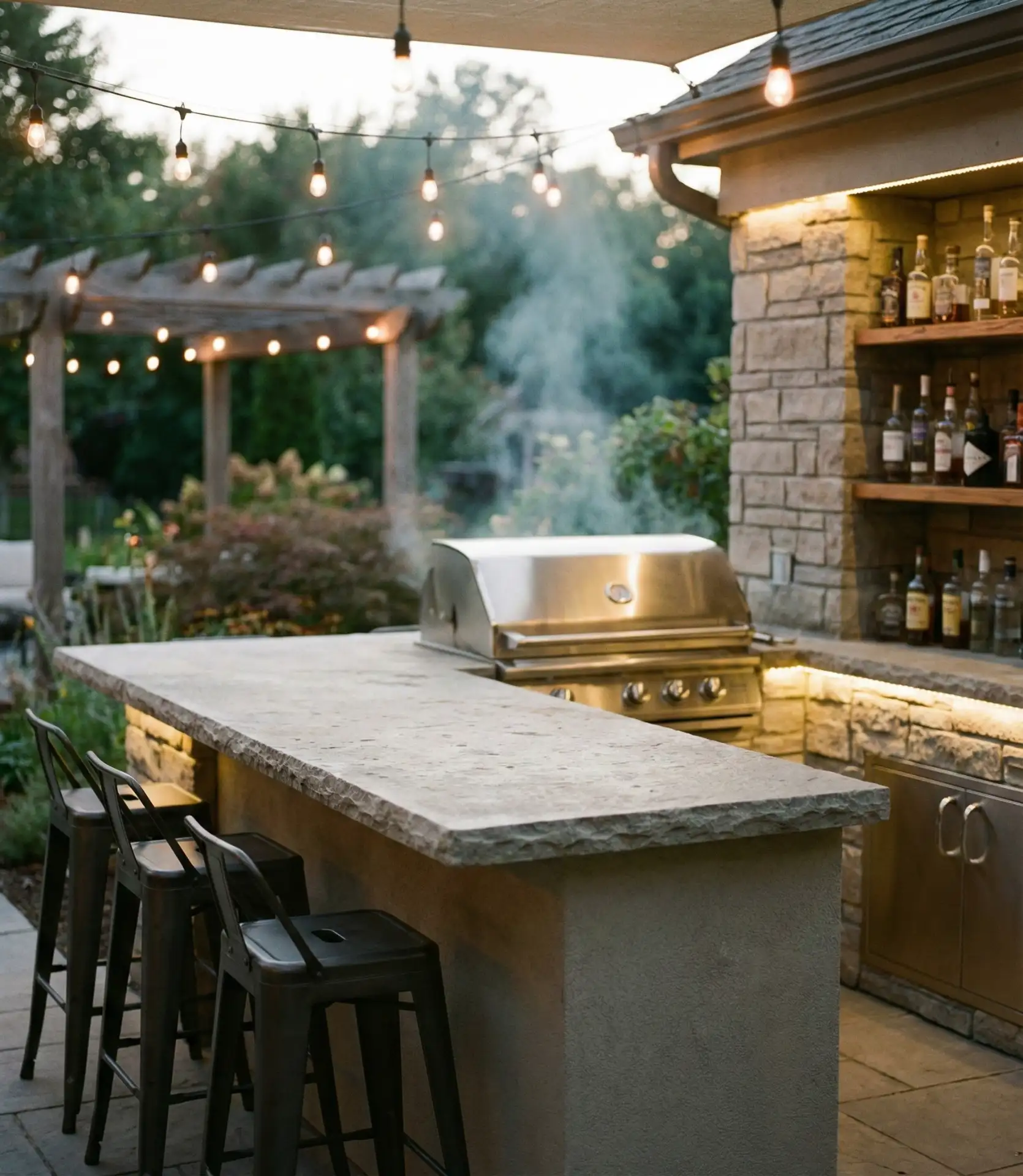
The outdoor space works best with a barbecue and bar unit, as this allows for easy, casual hangouts and cookouts on the weekends. It is best to design the space with bar-height seating around the cooking unit, encouraging guests to participate as they enjoy drinks and watch food prep. Add nearby storage for quick access to grilling packets, outdoor drinkware, and utensils. Comfortable lounge seating is best so that they have a relaxing place to sit while being part of the action. 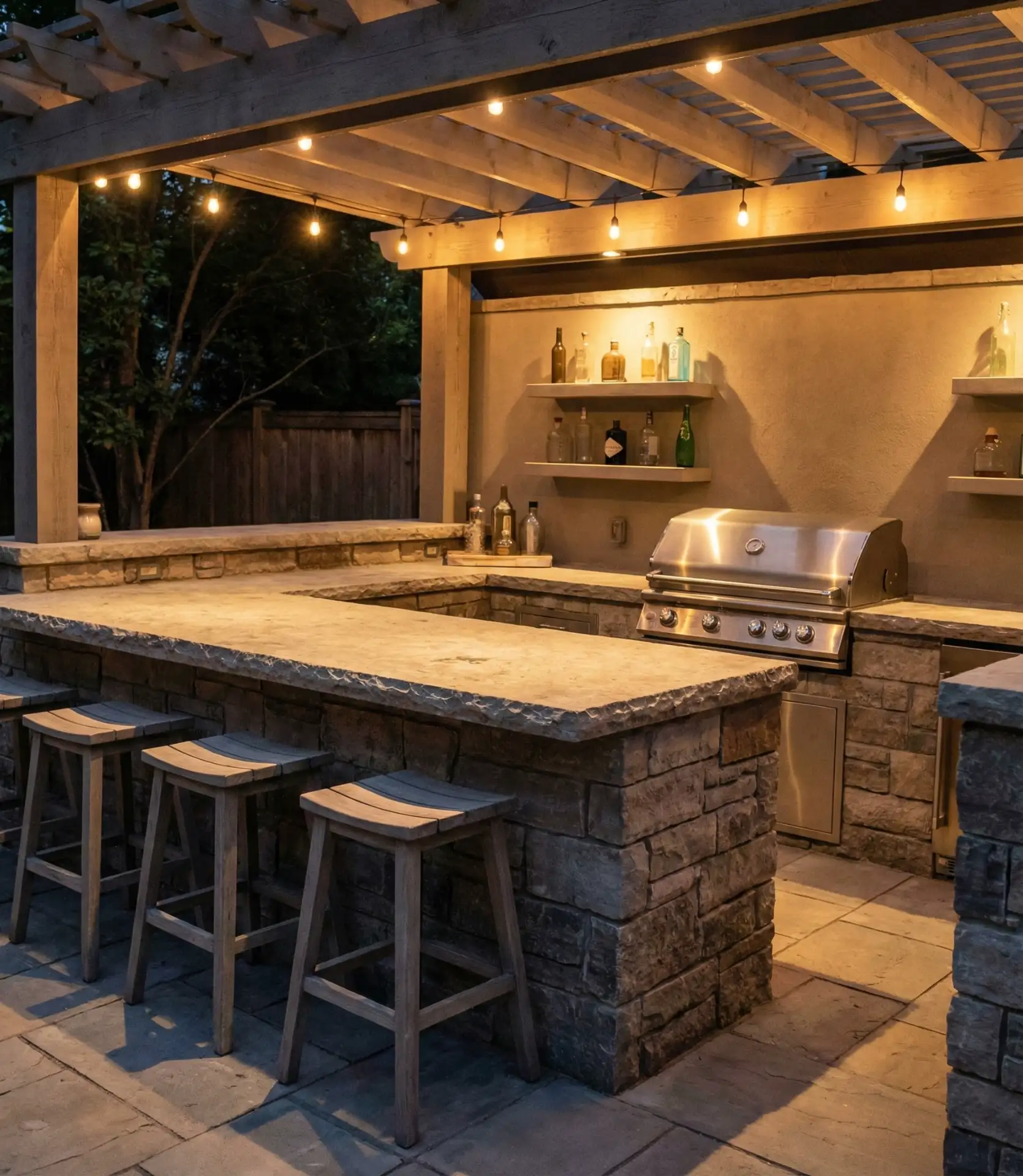
Americans devote about seventy-three hours every year to outdoor barbecuing, so this setup is well-designed for enthusiastic entertainers. The most highly rated designs include a small sink for washing hands and food prep, but this addition does require professional plumbing. Many homeowners have the problem of placing their grill too close to the house and having lots of smoke and grease splatter—be sure to have at least 10 feet of distance for safety and maintenance.
11. Modern Minimalist Outdoor Lounge
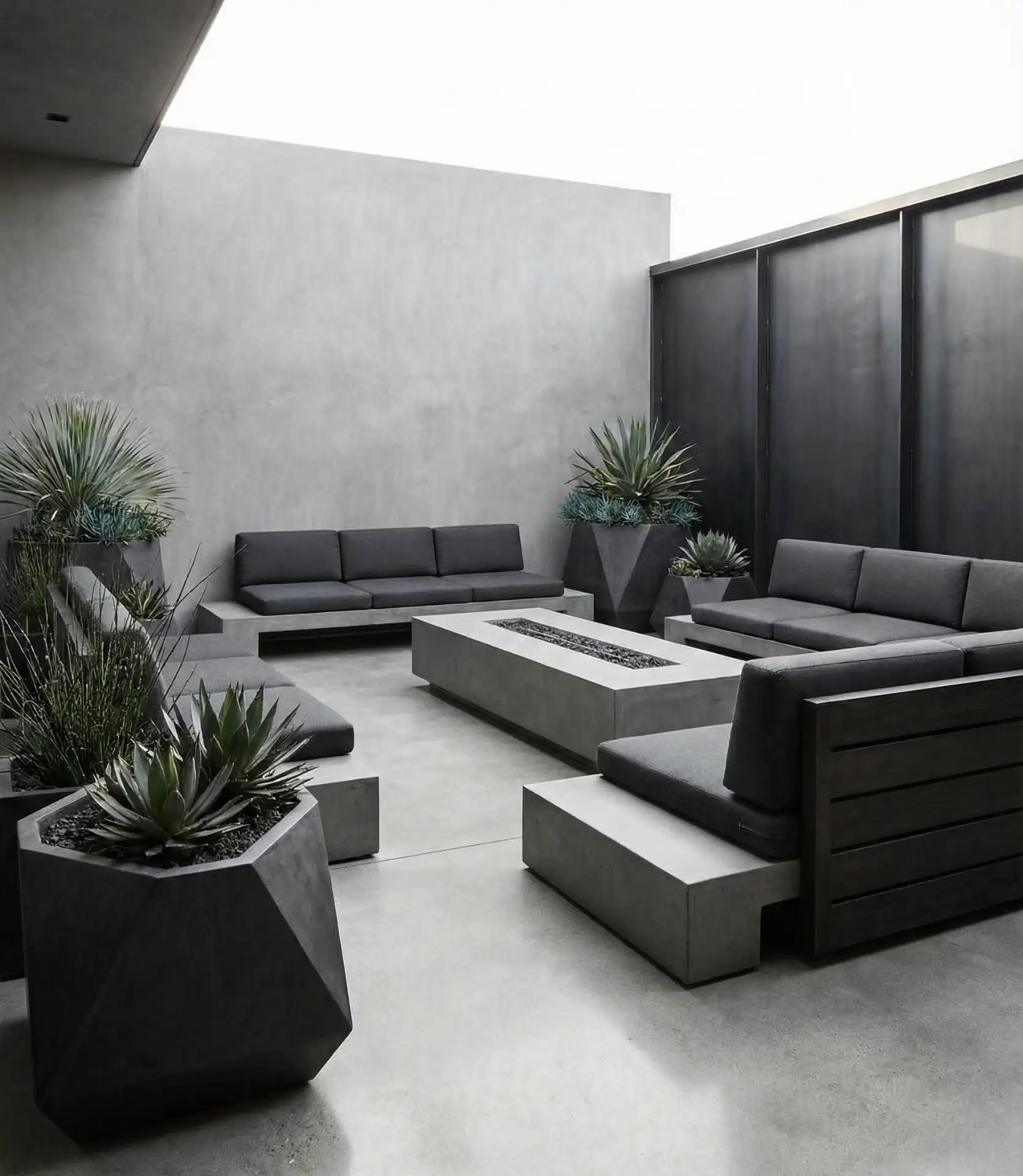
Modern outdoor living spaces incorporate smooth lines, neutral tones, and intentional simplicity. Choose furniture with geometric designs and materials like weather-resistant wicker or powder-coated aluminum in gray, white, or black palettes. Minimize the use of decorative accessories, allowing the natural surroundings and architecture to provide visual interest. Built-in planters with structured greenery like ornamental grasses or boxwoods require very little maintenance and reinforce the continental look. 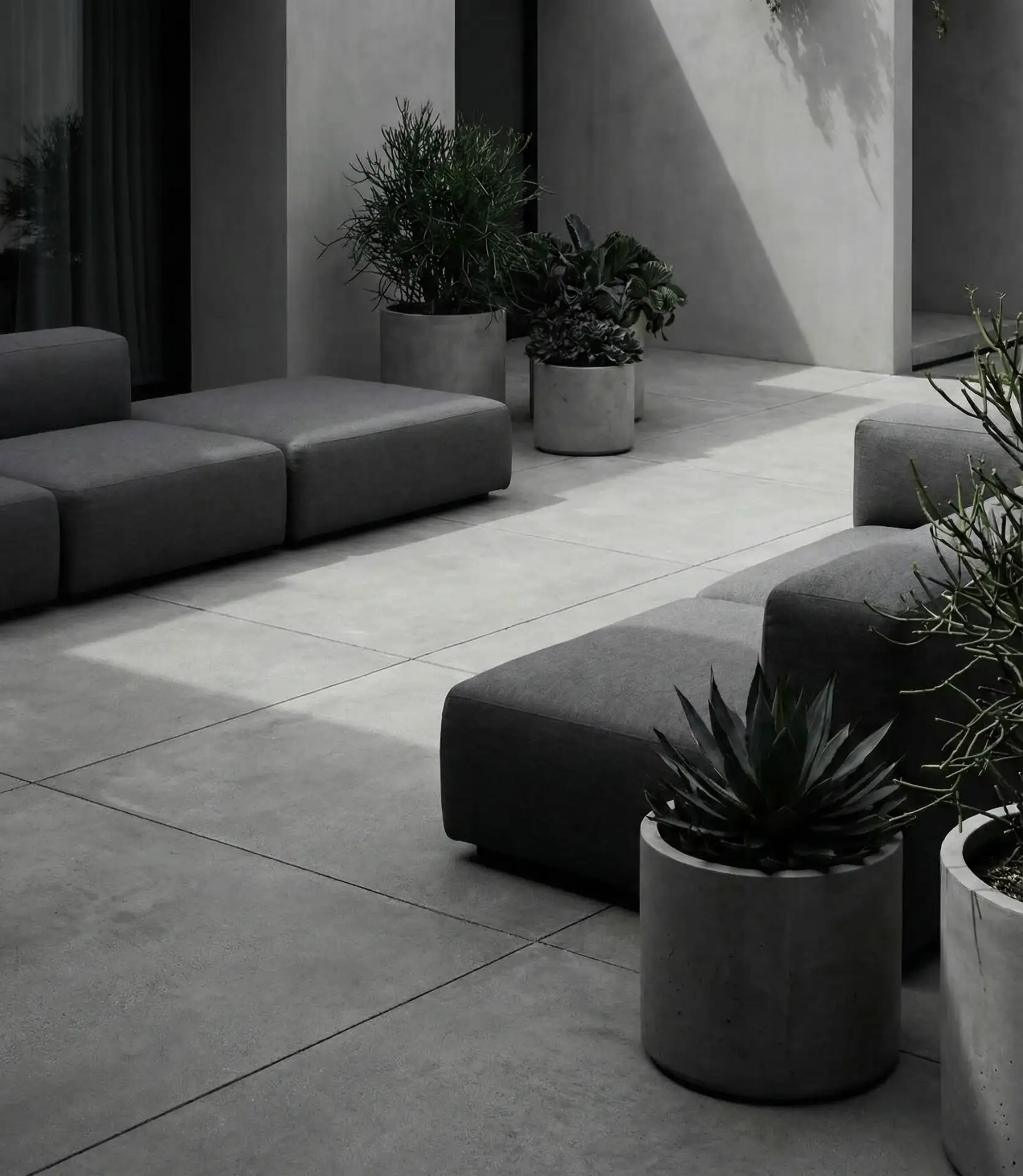
This style works best in modern homes or urban environments in cases where the outdoor space acts as an extension of the modern interior. Additionally, a practical insight regarding this design is that minimalism does not equate to discomfort. To make sure it’s cozy, invest in high-quality, deep cushions.
The streamlined design makes this approach especially useful for maximizing perceived space on smaller balconies, as this design makes space appear larger.
12. Multi-Level Deck Living Area
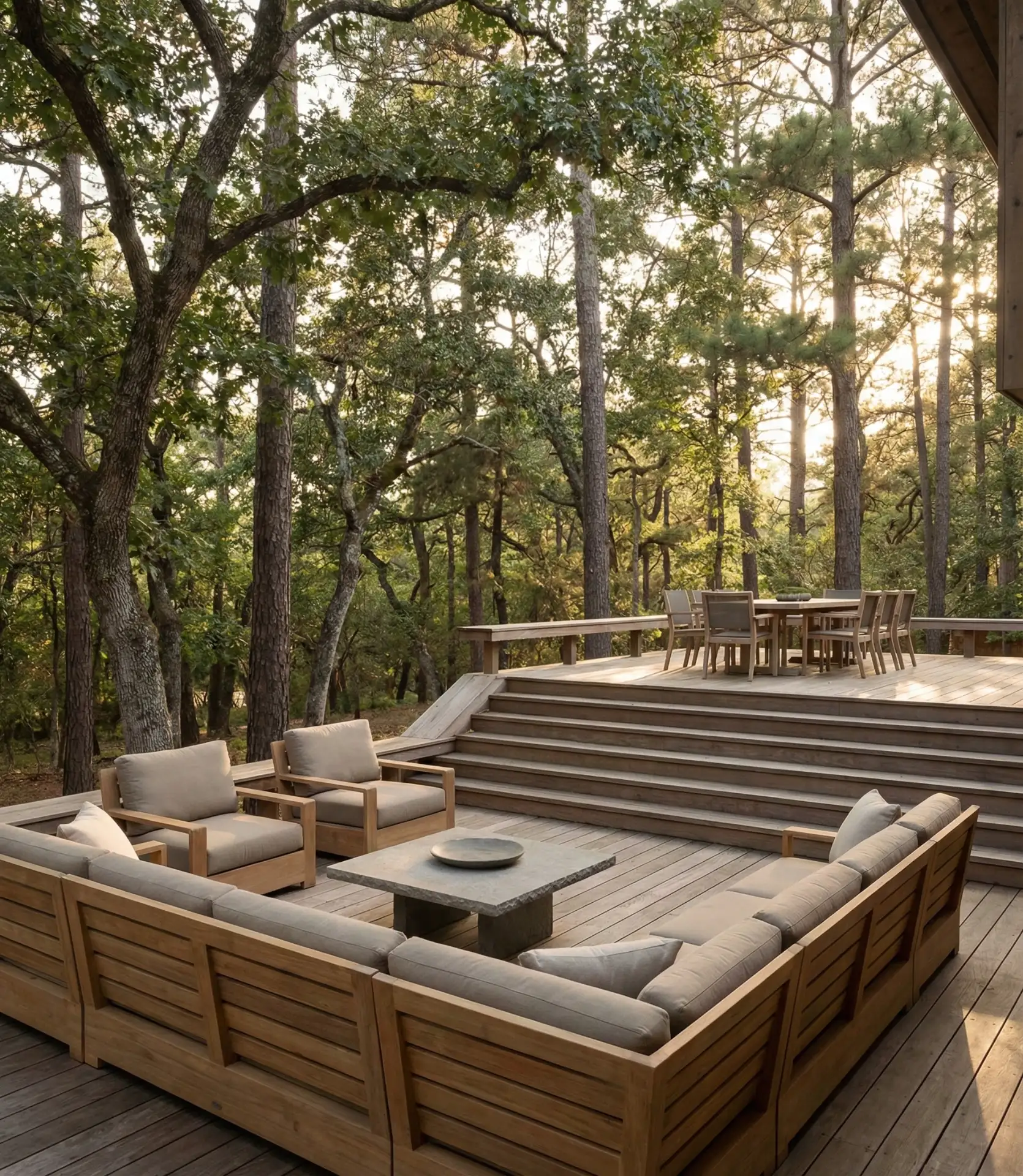
A multi-level deck creates zones for different activities, allowing one outdoor space to function as several outdoor rooms. The upper level can be for dining, and a few steps down can be a lounging area with deep seating. This vertical separation works great on sloped properties where the terrain suggests different levels. Each level can have its own character but can harmonize with the rest through the same materials and color palettes. 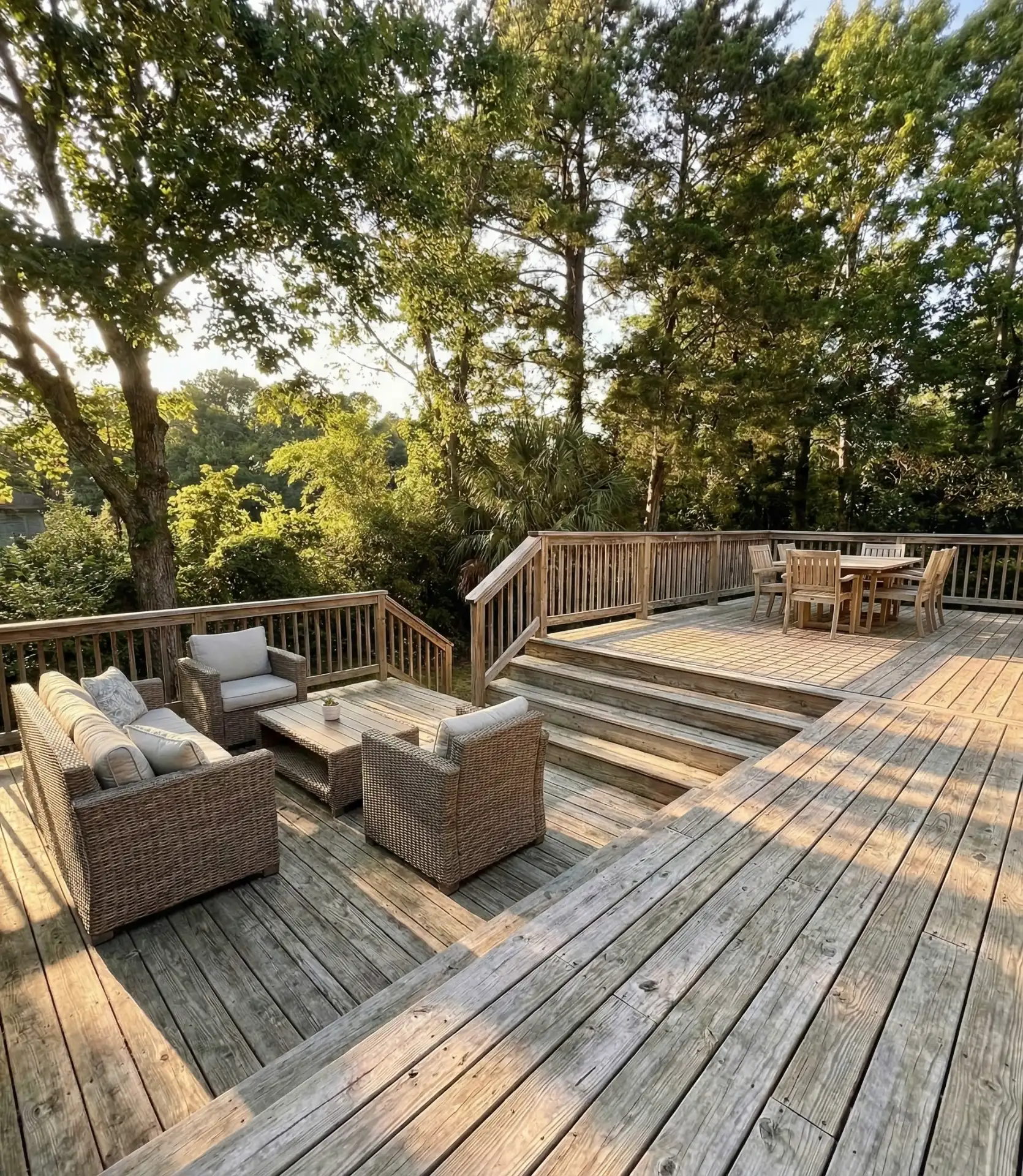
People in hilly areas like the Pacific Northwest, Tennessee, or Colorado benefit most from this design, as it incorporates rather than opposes challenging geography. Expect to spend fifteen to twenty-five percent more than a single-level deck budget for the construction, as costs will be higher; however, the design is worth the cost for the added functionality and aesthetic. While the added varying heights look great for design, building codes require certain heights for the railings and supports, which makes the layout a complex design; therefore, it will require professional installation for safety.
13. Photoshoot-Worthy Bohemian Oasis
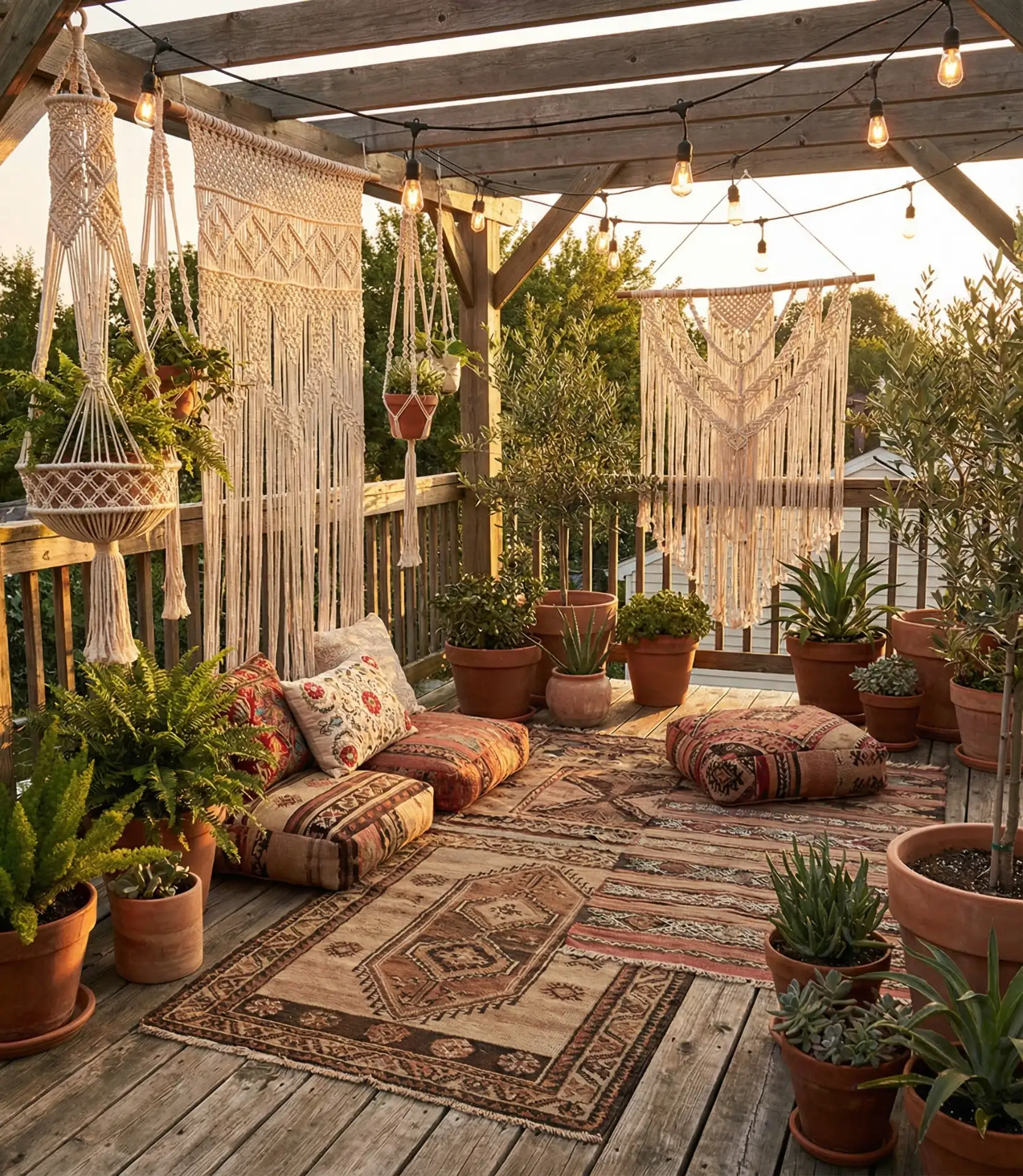
Create a photoshoot-ready outdoor space that’s inherently Instagram-worthy with layered textiles, macramé accents, and eclectic furniture ideas. Mix rattan chairs with floor poufs, add Moroccan-inspired lanterns, and layer outdoor rugs in complementary patterns. Abundant greenery in varied pot styles—ceramic, woven baskets, and painted terracotta—brings life and texture. The goal is curated casualness, where every corner offers a picture-perfect vignette without feeling overly staged or precious. 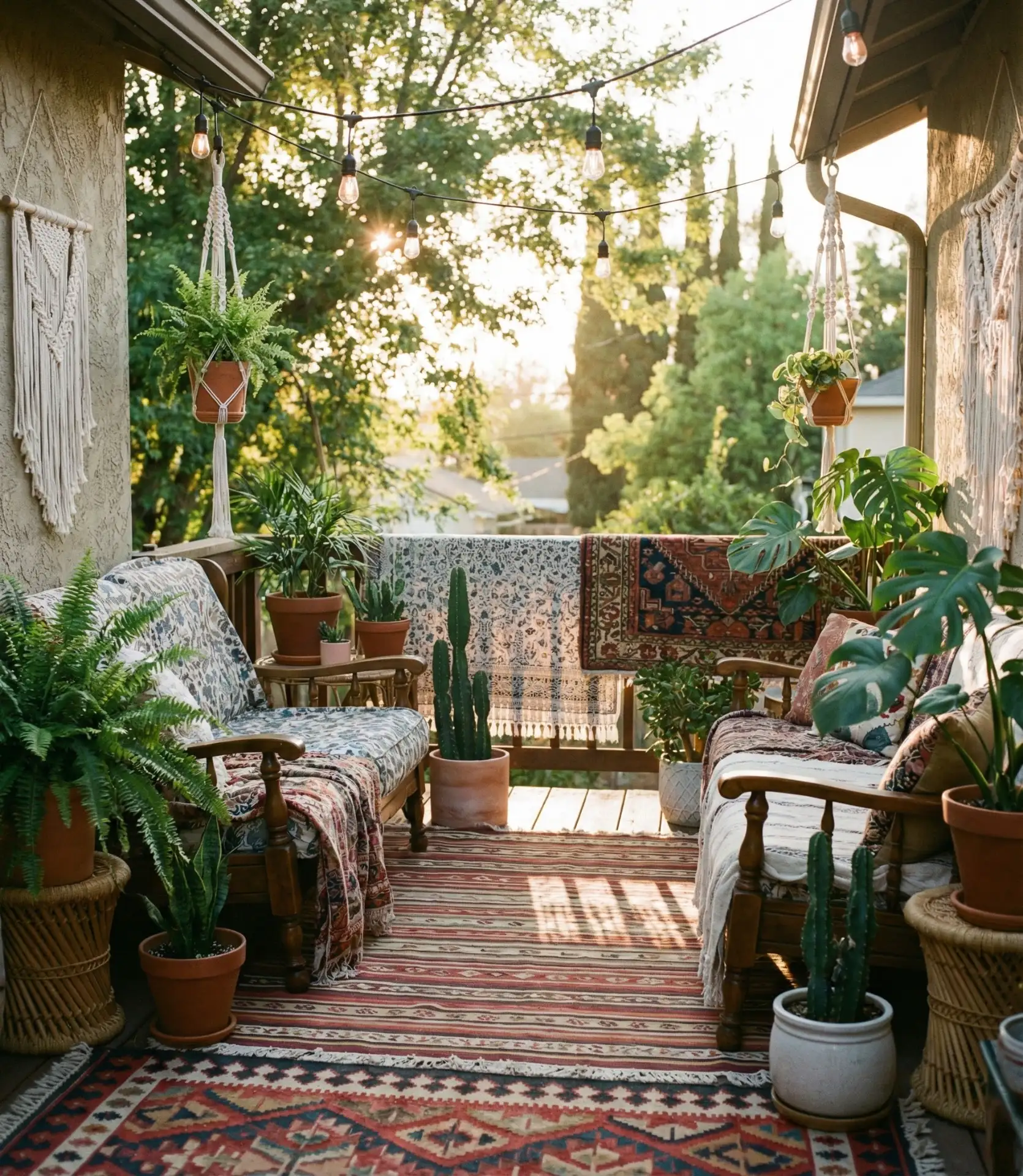
This aesthetic dominates Pinterest boards and home décor blogs because it photographs beautifully while remaining approachable and comfortable. Expert stylists recommend choosing a cohesive color story—like warm terracottas and creams or jewel tones with metallics—to prevent the eclectic mix from feeling chaotic. The beauty of this style is its flexibility; you can gradually add pieces from thrift stores, craft markets, and budget retailers while building toward a cohesive look.
14. All-Weather Covered Pavilion
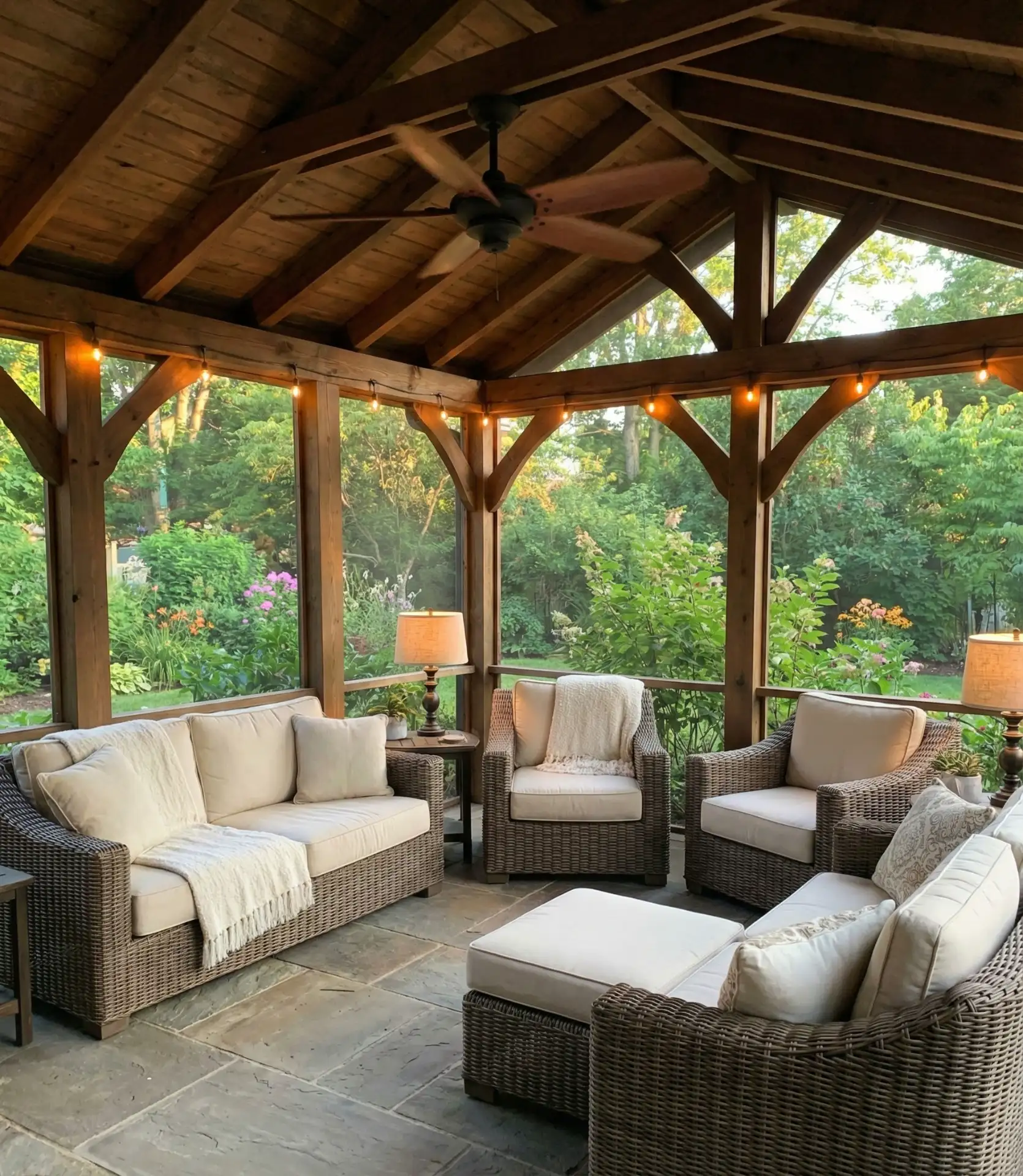
A fully covered pavilion with solid roofing provides true year-round outdoor living regardless of weather conditions. Unlike pergolas, these structures feature weatherproof roofs—metal, shingle, or tile—that fully protect from rain and snow. Integrated ceiling fans and lighting make the space functional after dark and during hot weather. This investment transforms an outdoor area into a reliable extension of your home that can be enjoyed during summer thunderstorms, autumn drizzle, or even mild winter days when you want fresh air without exposure. 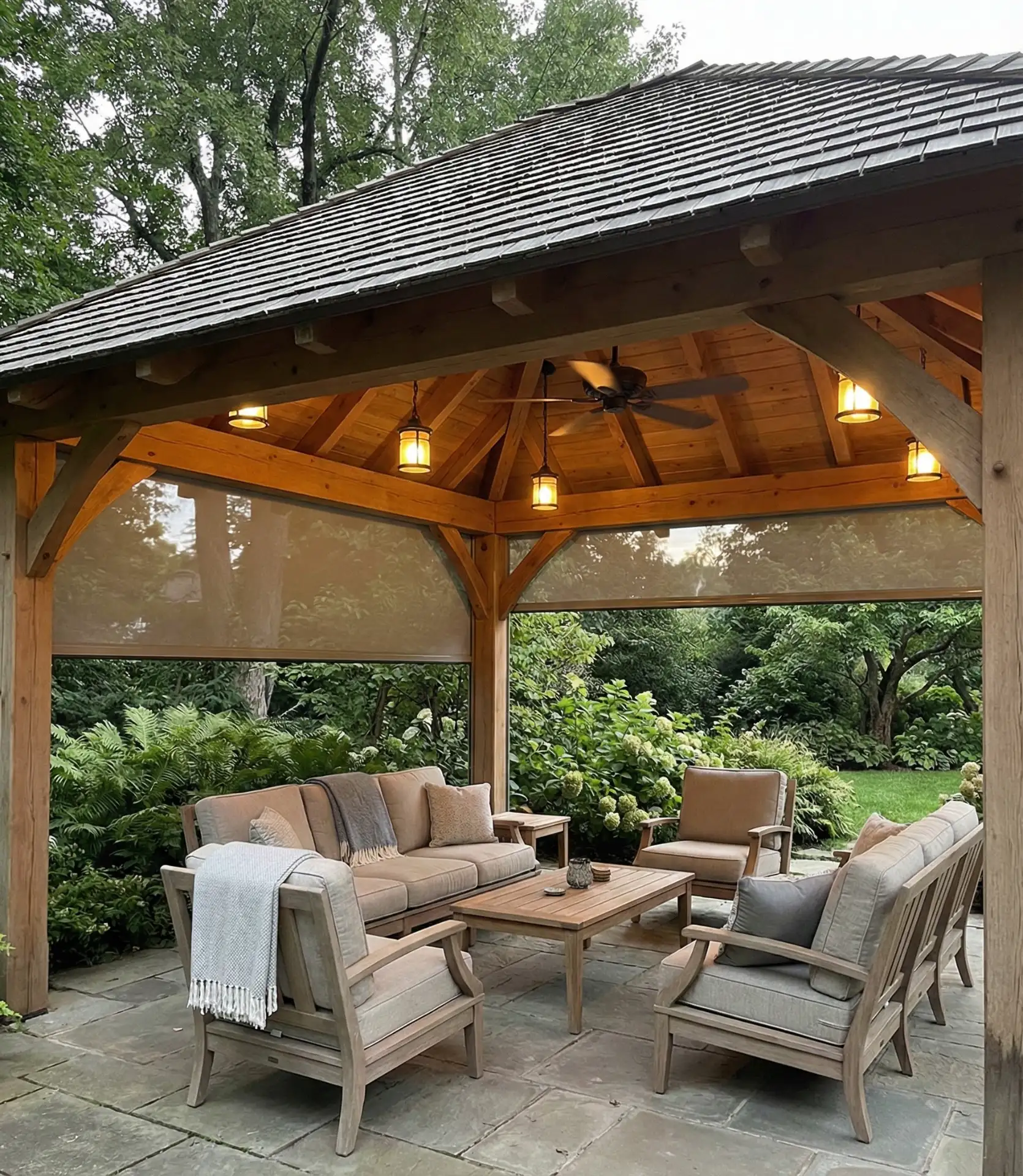
Covered outdoor pavilions in the Southeast get frequent use during summer months when thunderstorms happen almost daily. Completing construction often incurs costs of around $40,000, which many homeowners see a return on when selling the property, and from a marketable standpoint, the ability to reduce air conditioning use is a plus. The most common mistake is constructing a pavilion that is too small, and reserving space to reduce density is valuable.
15. Intimate Courtyard Sitting Room
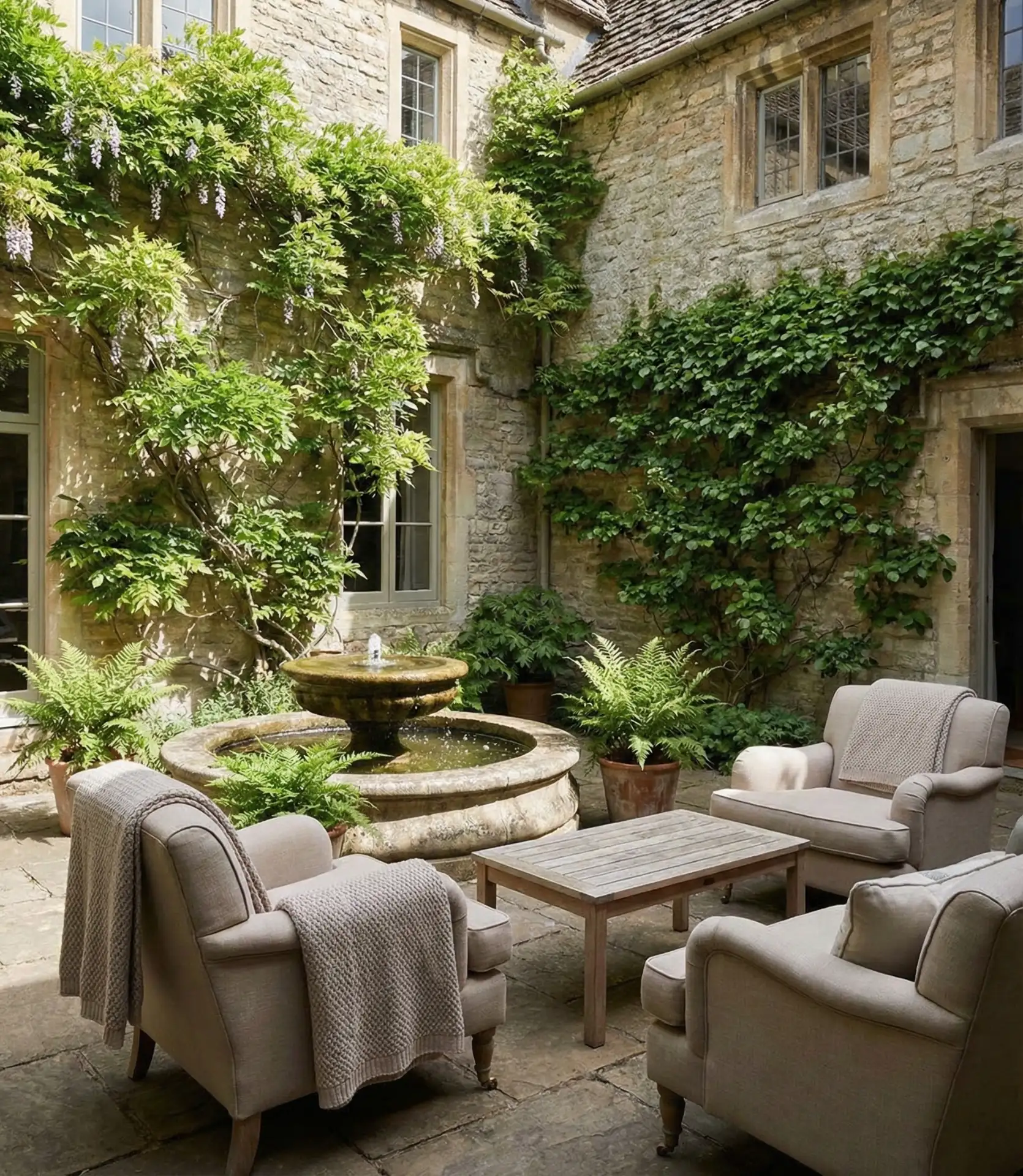
An enclosed courtyard transforms into a private outdoor living room where walls or tall hedges create a secluded retreat from neighboring views. Urban settings or homes on smaller lots with limited privacy particularly benefit from this layout. Central seating arranged around a fountain or fire feature becomes the focal point, while climbing vines or espalier trees soften rigid vertical surfaces. Sheltered from wind and prying eyes, the protected space feels like a true outdoor room.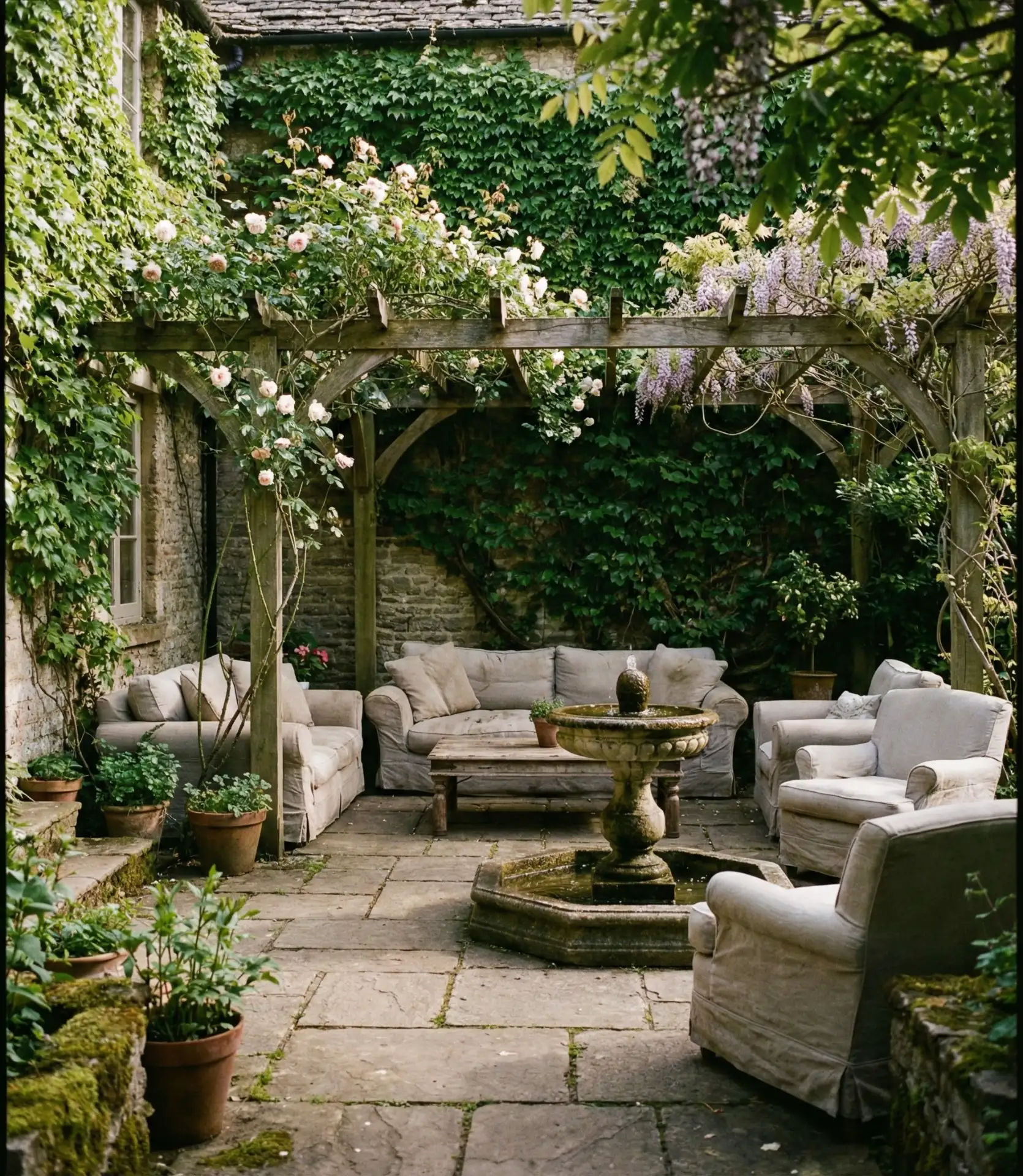
This configuration is especially popular in Mediterranean-style homes across the Southwest and Southern California, where Spanish Colonial architecture naturally incorporates courtyards. It works best for properties that already have U-shaped or L-shaped designs, which create some outdoor space; adding a fence, wall, or plants to close off the fourth side completes the courtyard look without needing big construction changes.
16. Rustic Farmhouse Front Porch
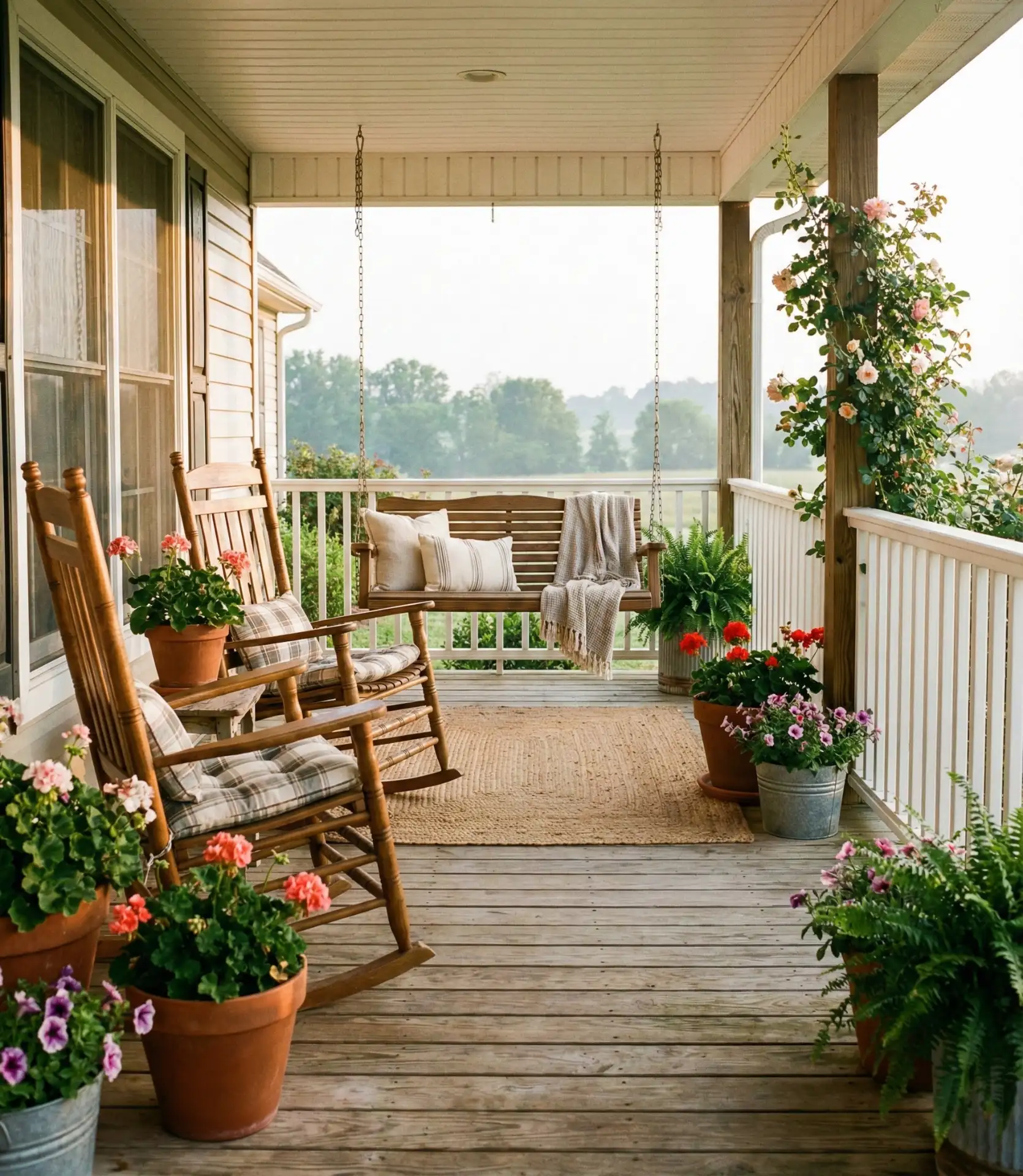
A wraparound or deep front porch serves as a classic American outdoor living room that invites neighborhood connection and relaxed evenings. Rocking chairs, porch swings, and weathered wood finishes create that quintessential farmhouse charm. Add vintage-inspired lighting, potted flowers, and a durable outdoor rug to define the sitting area. This style resonates deeply with traditional values of community and hospitality, offering a semi-public space where you can wave to neighbors while enjoying privacy from your own dedicated seating. 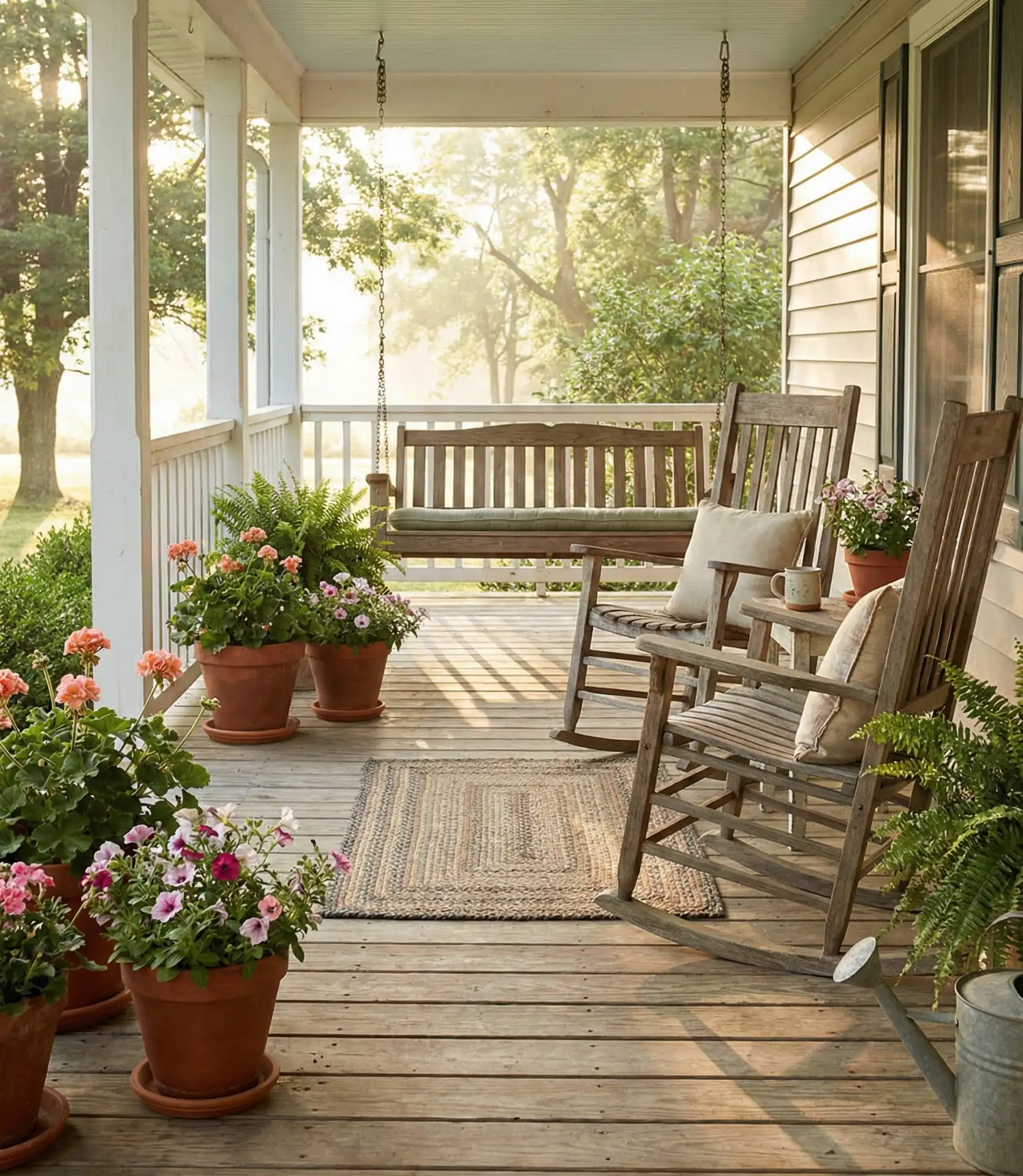
Across the Midwest and rural South, front porches remain central to the American lifestyle, used almost daily during warm months. My aunt’s Tennessee farmhouse has a porch they use every evening from April through October, and it’s become the gathering spot for impromptu neighbor conversations and iced tea on summer afternoons. The tradition creates community connection that backyard spaces simply can’t replicate.
17. Contemporary Glass-Walled Sunroom
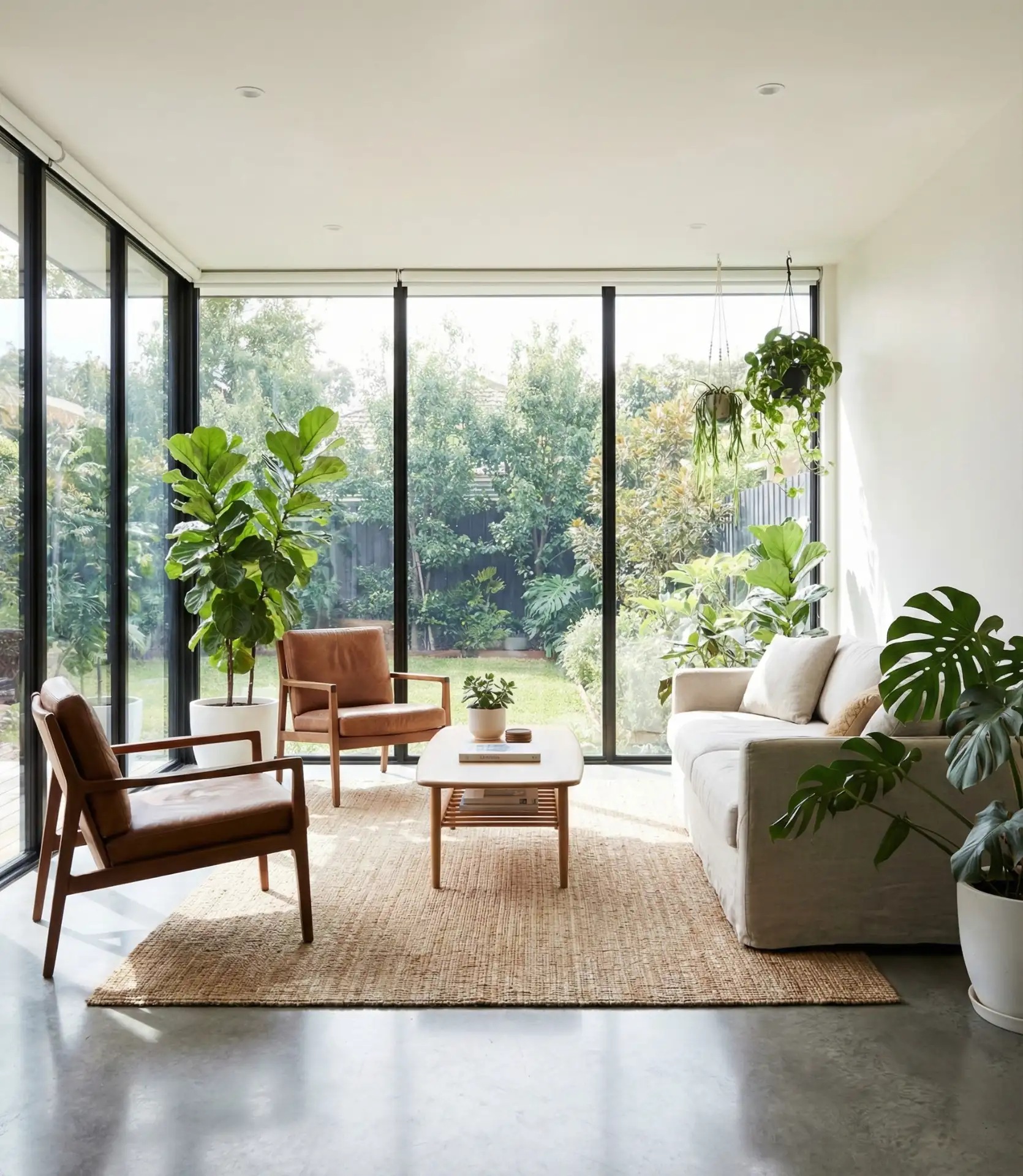
Floor-to-ceiling glass panels create an outdoor living room that offers complete weather protection while maintaining a visual connection to your landscape. This semi-indoor approach works year-round in climates with cold winters, allowing you to enjoy natural surroundings without exposure to harsh temperatures. Automated shading systems manage heat and glare, while climate control options extend usability to every season. The transparent walls flood the space with natural light, creating an airy environment that blurs the boundaries between inside and outside. 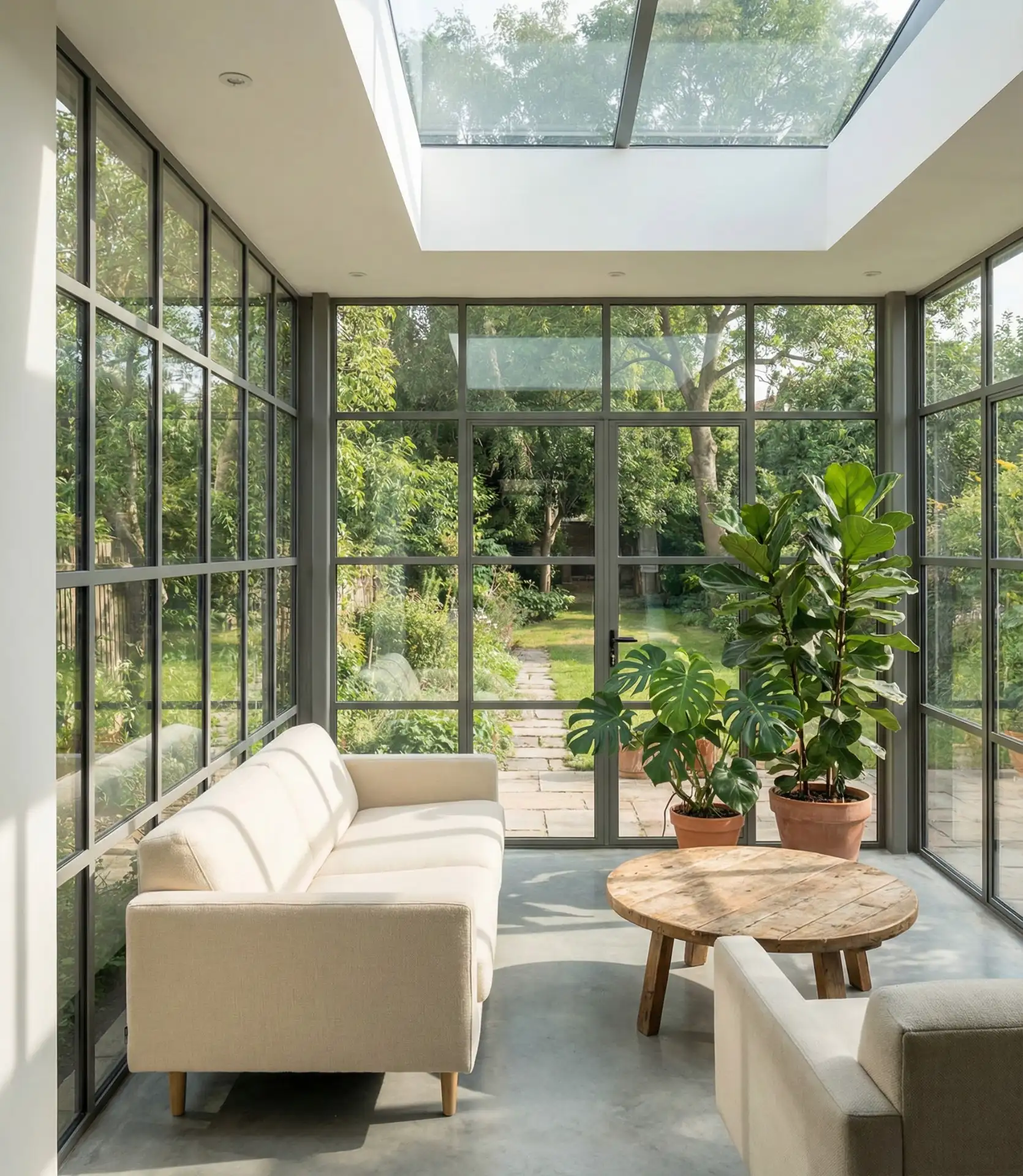
Homeowners in northern states like Minnesota, Wisconsin, and Maine appreciate sunrooms for their ability to provide outdoor atmosphere during times when patios are unusable, and, of course, the outdoor ambiance is enjoyed during the summer. Quality construction with adequate insulation and weather sealing can result in installation costs ranging from $20,000 to $60,000. Negligent insulation can make the space uncomfortable during winter heating, while missing ventilation can lead to summer overheating.
18. Tropical Paradise Retreat
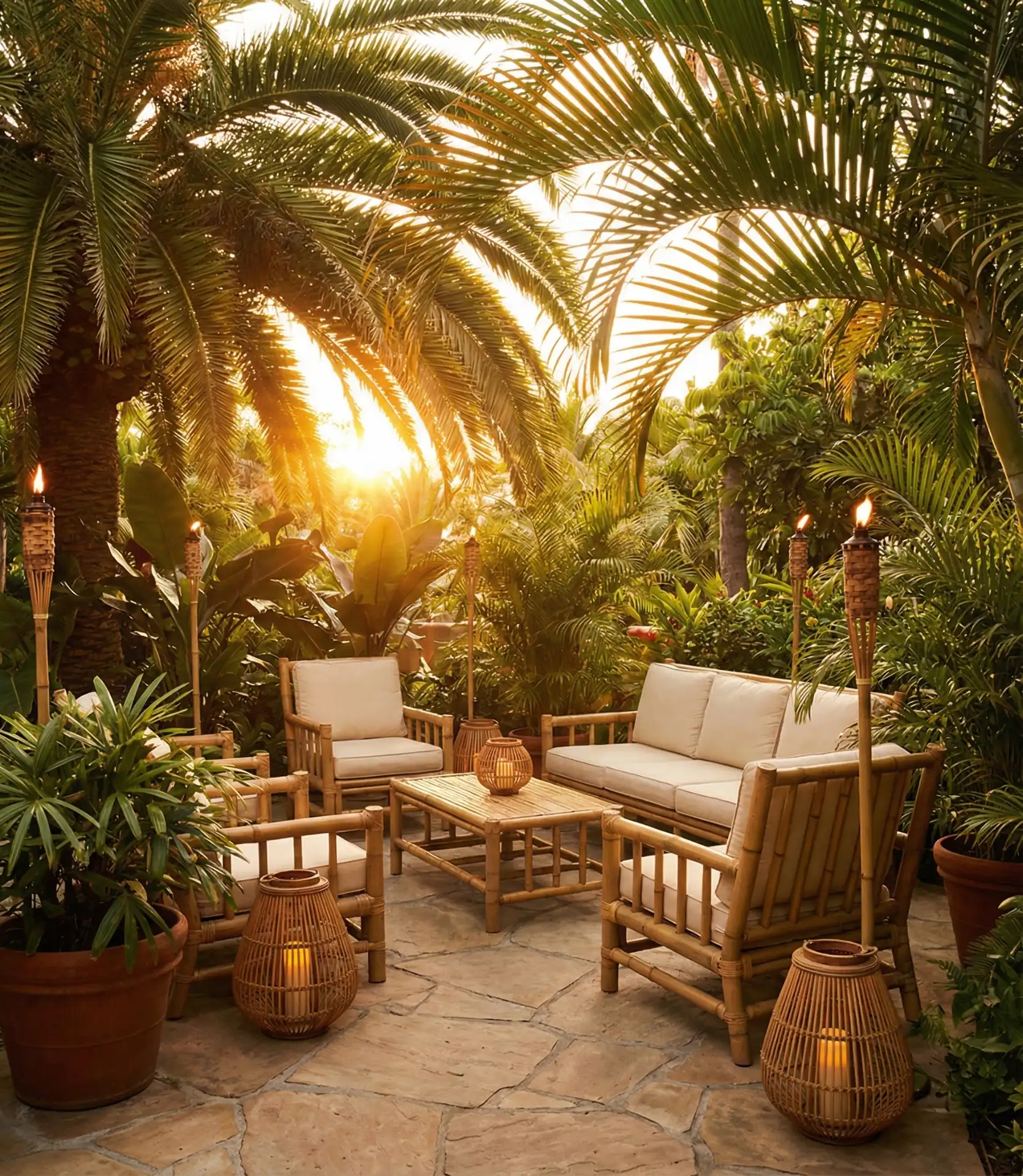
Transform your outdoor living space into a tranquil getaway. Use abundant weather-resistant wicker in a honey tone, bamboo accents, and teak wood to recreate a resort feel and exotic atmosphere. To amplify the sentiment even further, use palms, birds of paradise, and elephant ear plants to introduce large leaves reminiscent of tropical islands. Tiered fountains also recreate a vacation ambiance, reinforcing relaxing sounds and the soothing murmur of flowing water. 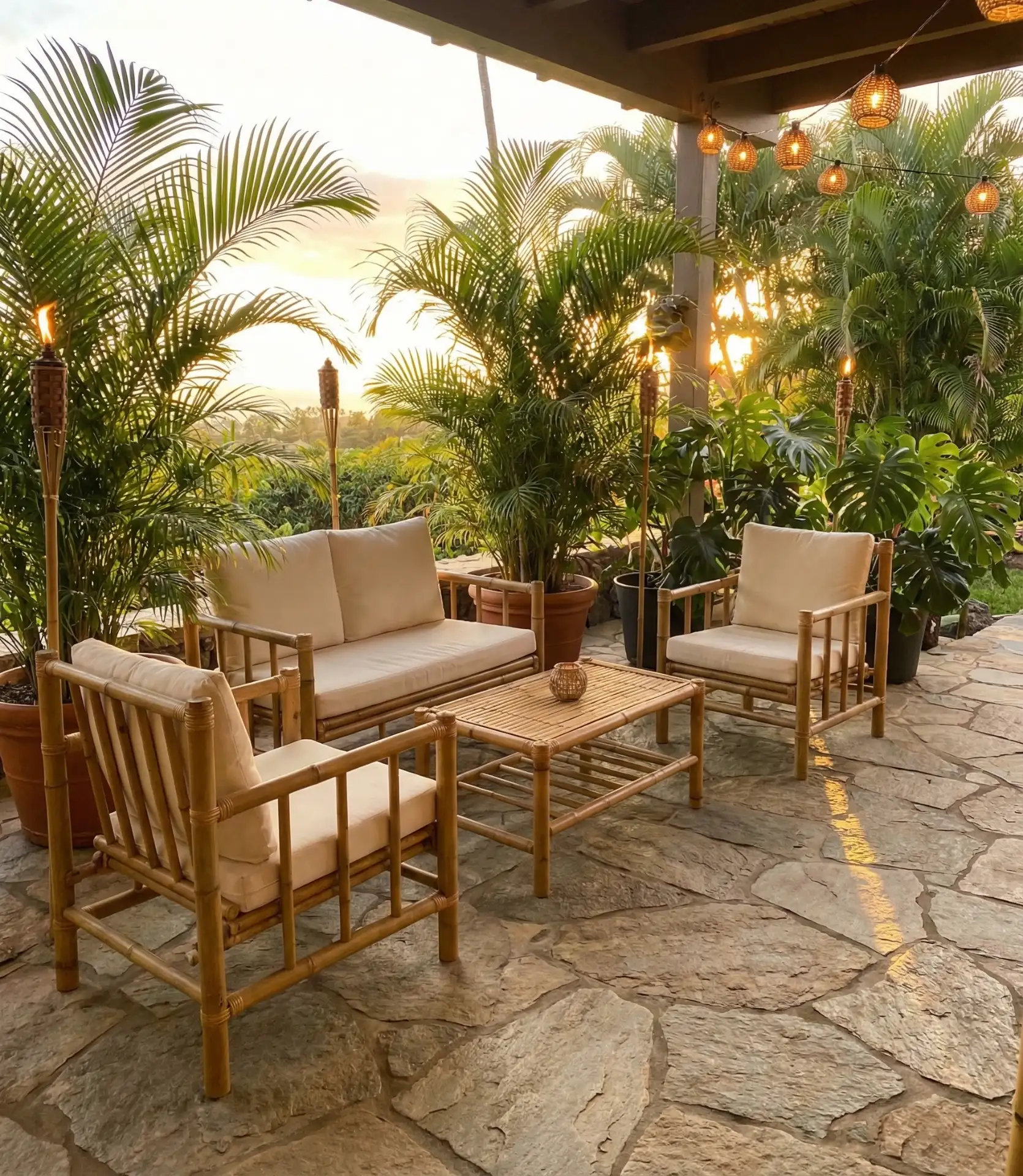
This style thrives in naturally warm, humid climates like Florida, Hawaii, and coastal regions where tropical plants grow easily. However, homeowners in temperate zones can achieve the look by using cold-hardy palms and bringing sensitive plants indoors during winter. Budget around $150 to $400 per mature tropical plant, or start with smaller specimens that will grow over several seasons for a more affordable approach.
19. Industrial Urban Rooftop Deck
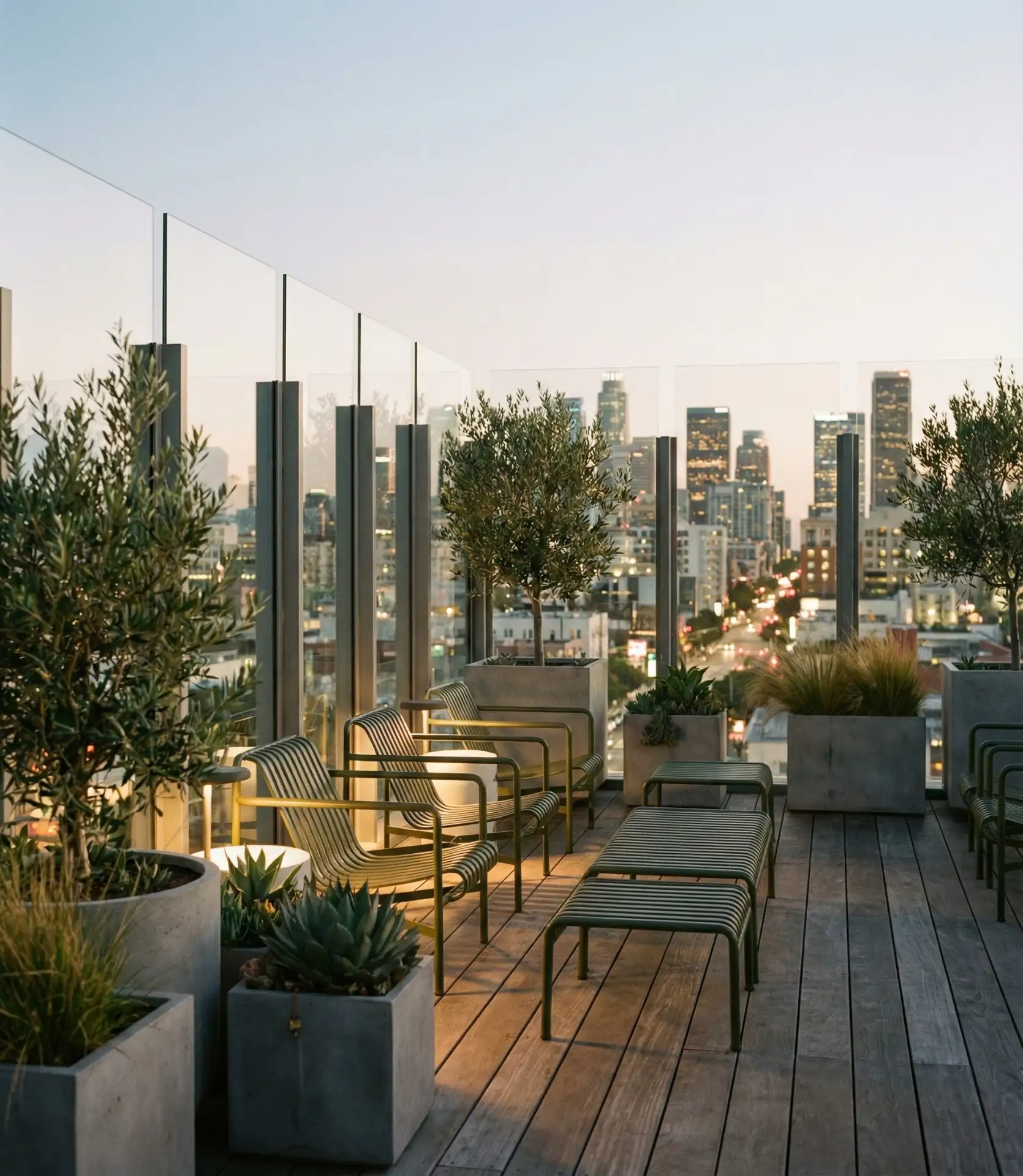
Urban dwellers create stunning outdoor living rooms on rooftop spaces using industrial materials and city-appropriate design ideas. Metal planters, concrete pavers, and powder-coated steel furniture withstand rooftop conditions while delivering contemporary style. Wind barriers—glass panels or horizontal slat fencing—provide essential protection at elevated heights. String lights or integrated LED fixtures create ambiance against city skyline views, transforming the rooftop into an entertaining destination. 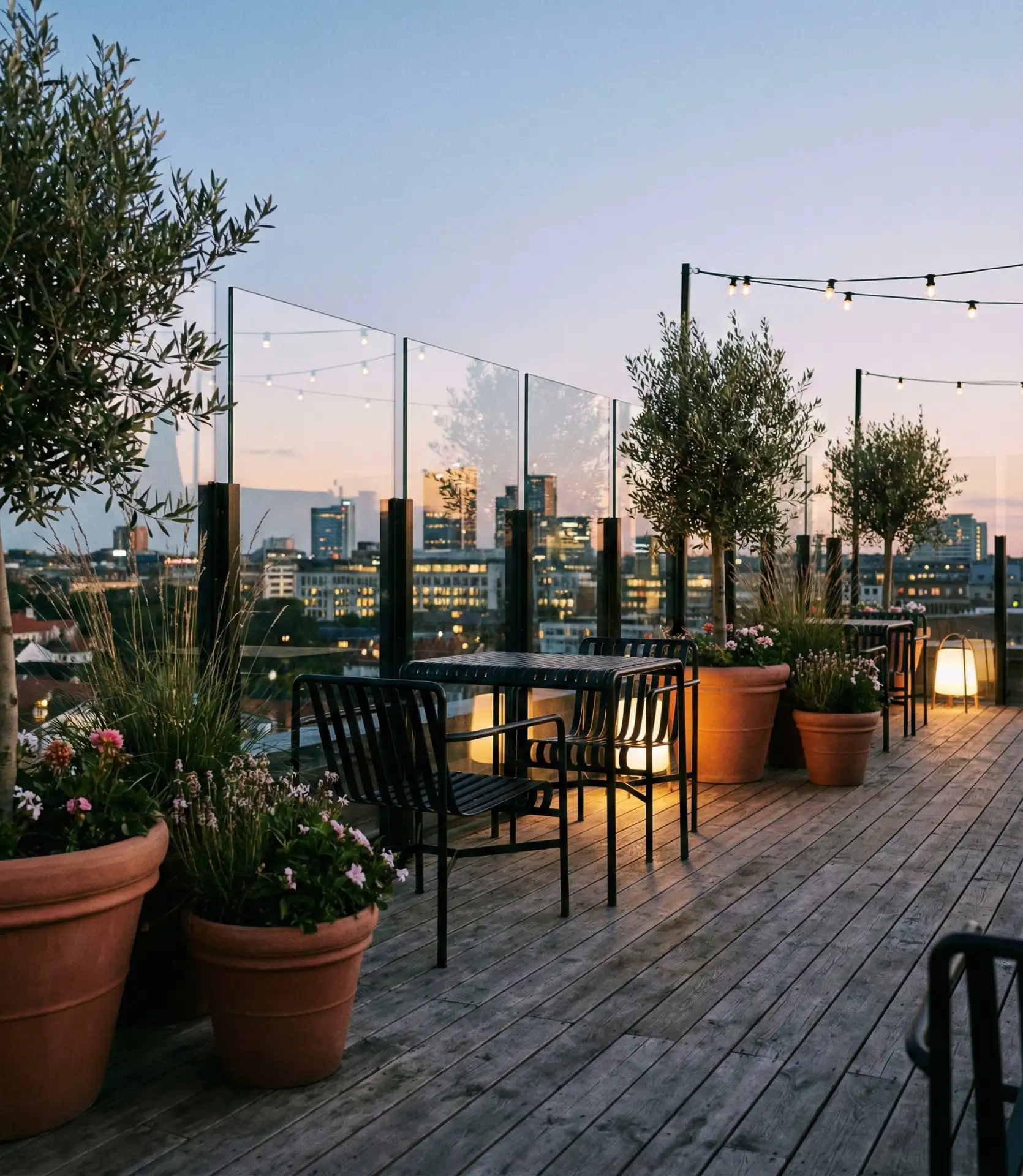
New York, Chicago, and San Francisco residents maximize limited outdoor space through rooftop development, which requires structural assessment for weight capacity. Professional evaluation costs $500 to $1,500 but prevents dangerous overloading—most roofs support 40-100 pounds per square foot, including furniture, people, and planters. Lightweight materials and strategic weight distribution are essential for safety and code compliance.
20. Scandinavian Hygge-Inspired Terrace
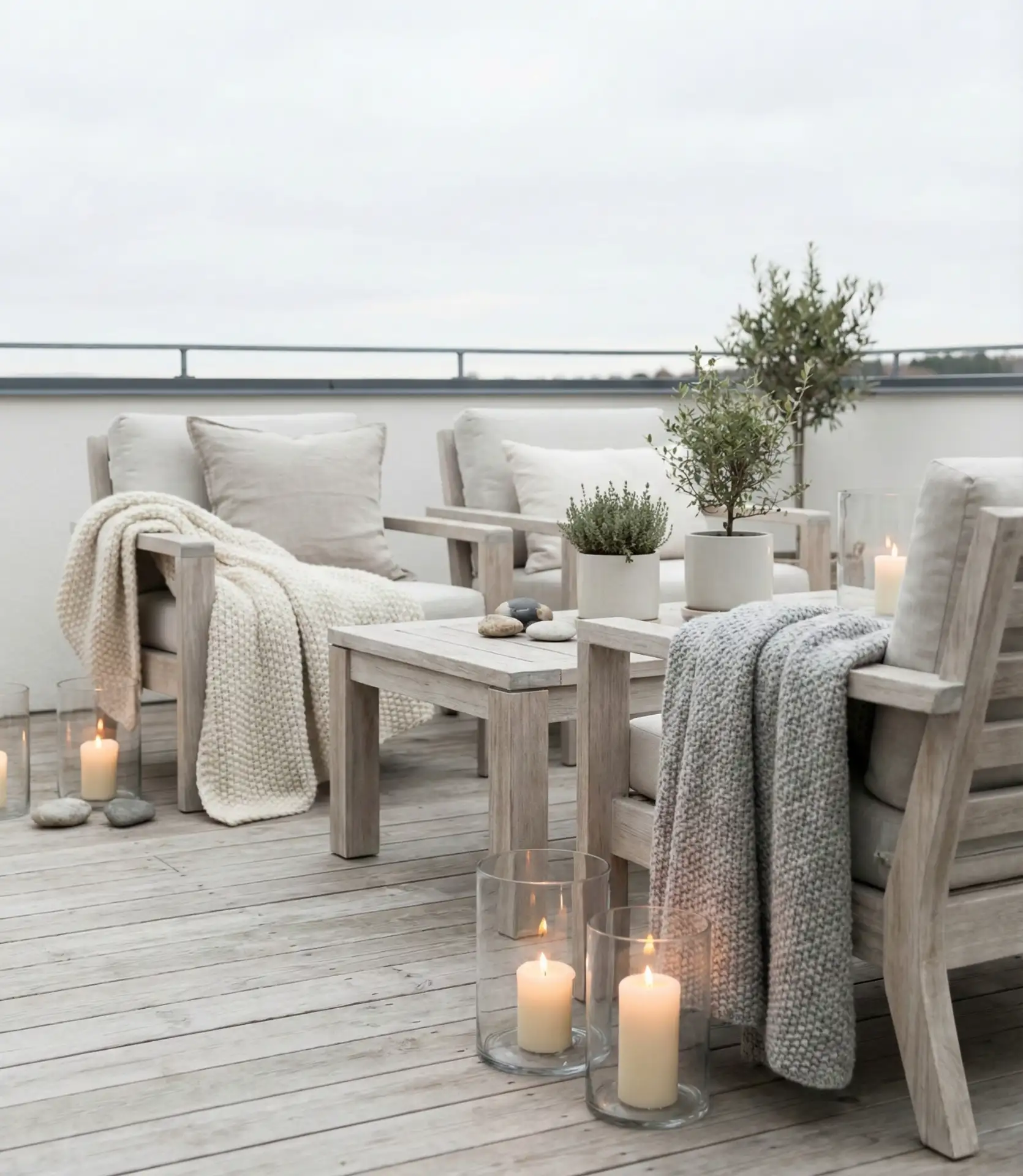
Embrace cozy minimalism with a Scandinavian-influenced outdoor living room centered on comfort and natural materials. Light wood furniture, neutral textiles with subtle textures, and simple candle lanterns create that signature hygge feeling outdoors. Sheepskin throws draped over chairs, chunky knit pillows, and warm lighting foster an intimate atmosphere perfect for quiet evenings. The restrained color palette—whites, grays, soft blues—keeps the space serene and uncluttered. 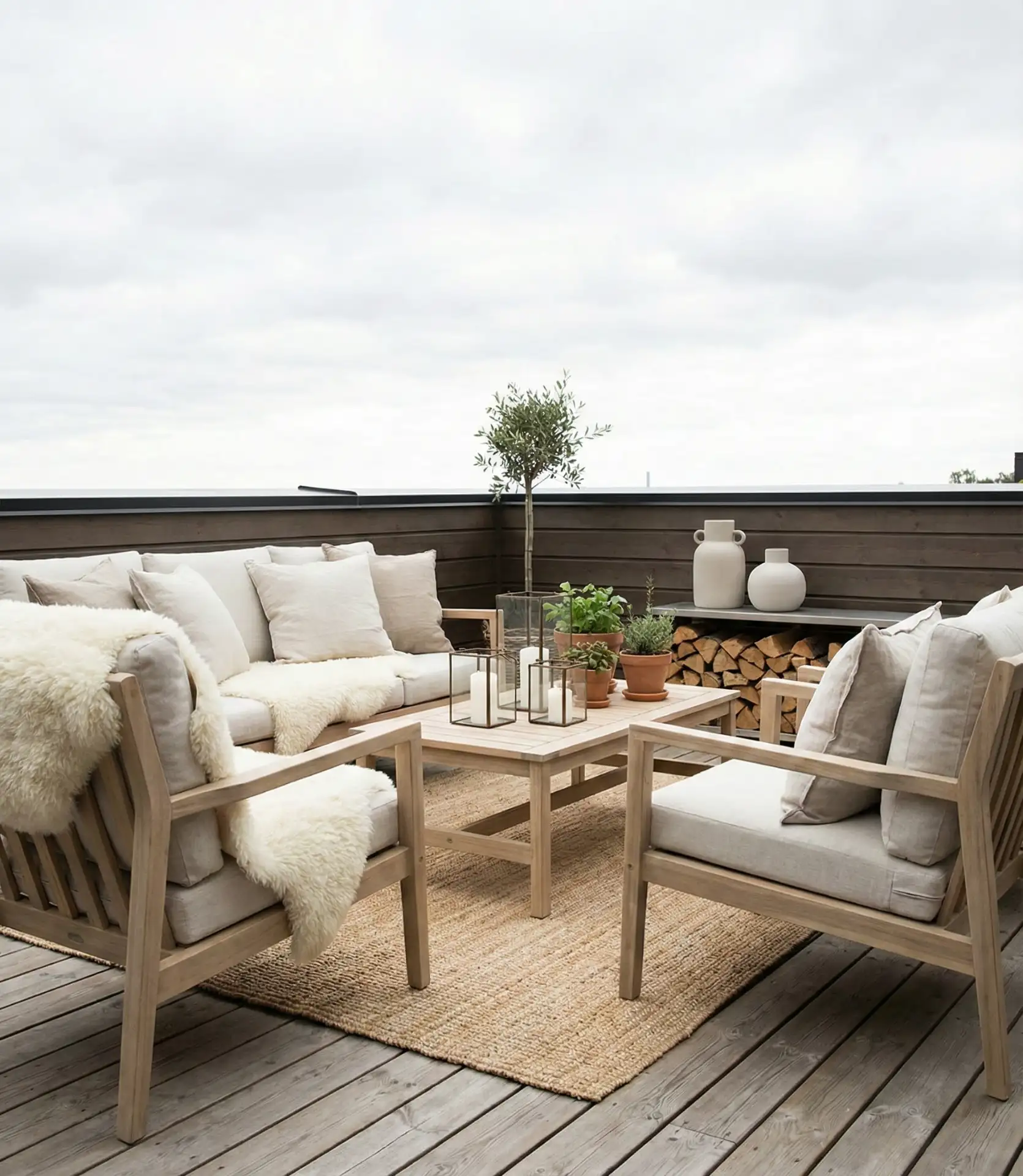
This aesthetic has gained massive popularity on Pinterest among Americans seeking peaceful retreats from busy lives. The style’s emphasis on quality over quantity means investing in fewer, better pieces—solid wood furniture that develops a beautiful patina over time rather than trendy items that need replacement every few years. Expert commentary suggests this approach actually saves money long-term while creating more meaningful, lasting outdoor spaces.
21. Multi-Functional Family Activity Zone
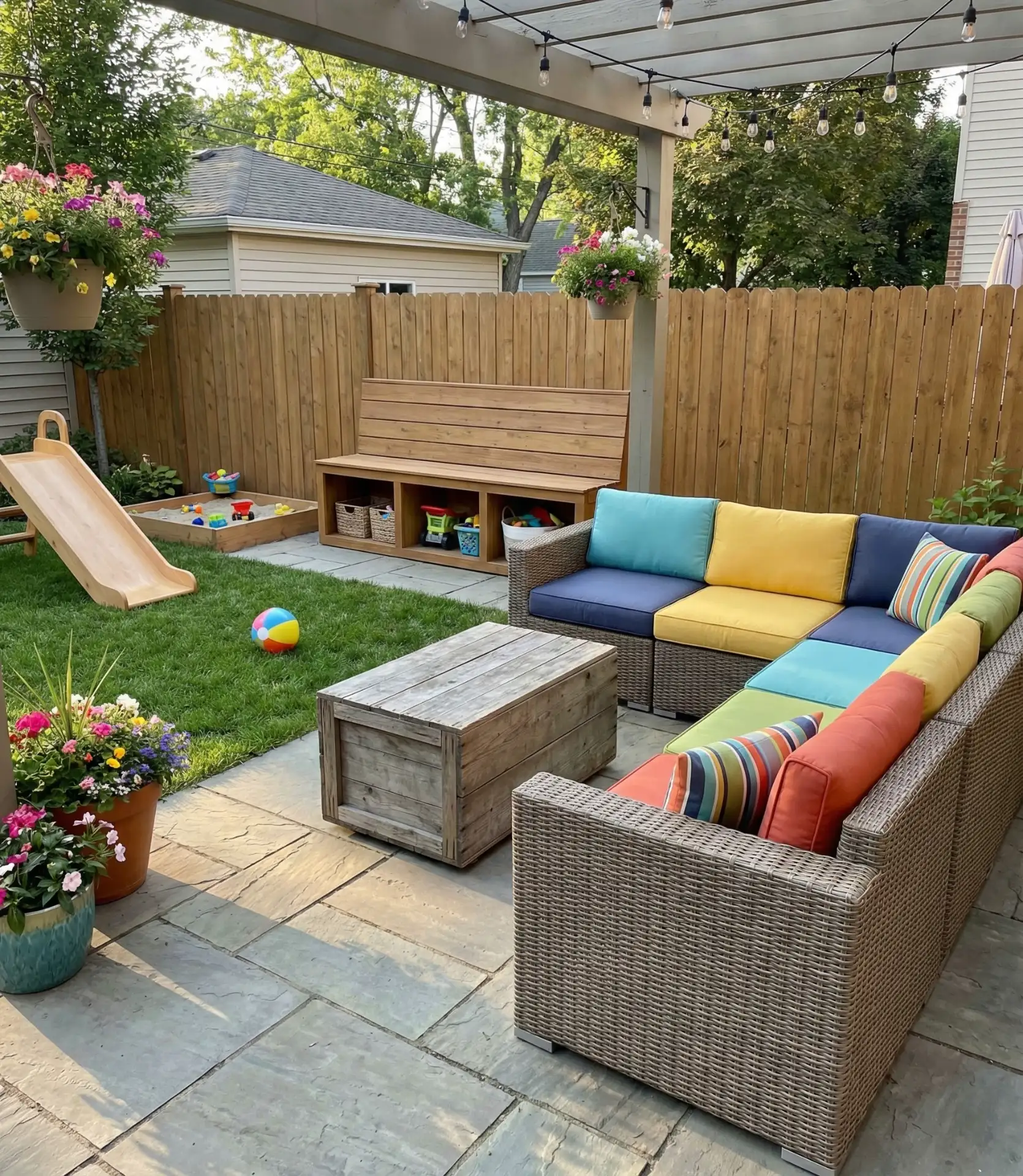
Design an outdoor living room that serves multiple entertaining ideas for families with diverse needs—a seating area for adults, a play space for children, and flexible zones that adapt as the evening progresses. Durable, easy-clean materials stand up to active use, while storage benches hide toys and outdoor games. Include weather-resistant bean bags or floor cushions that kids can rearrange, alongside traditional furniture for adults. This practical approach acknowledges that real family outdoor spaces need versatility above all else. 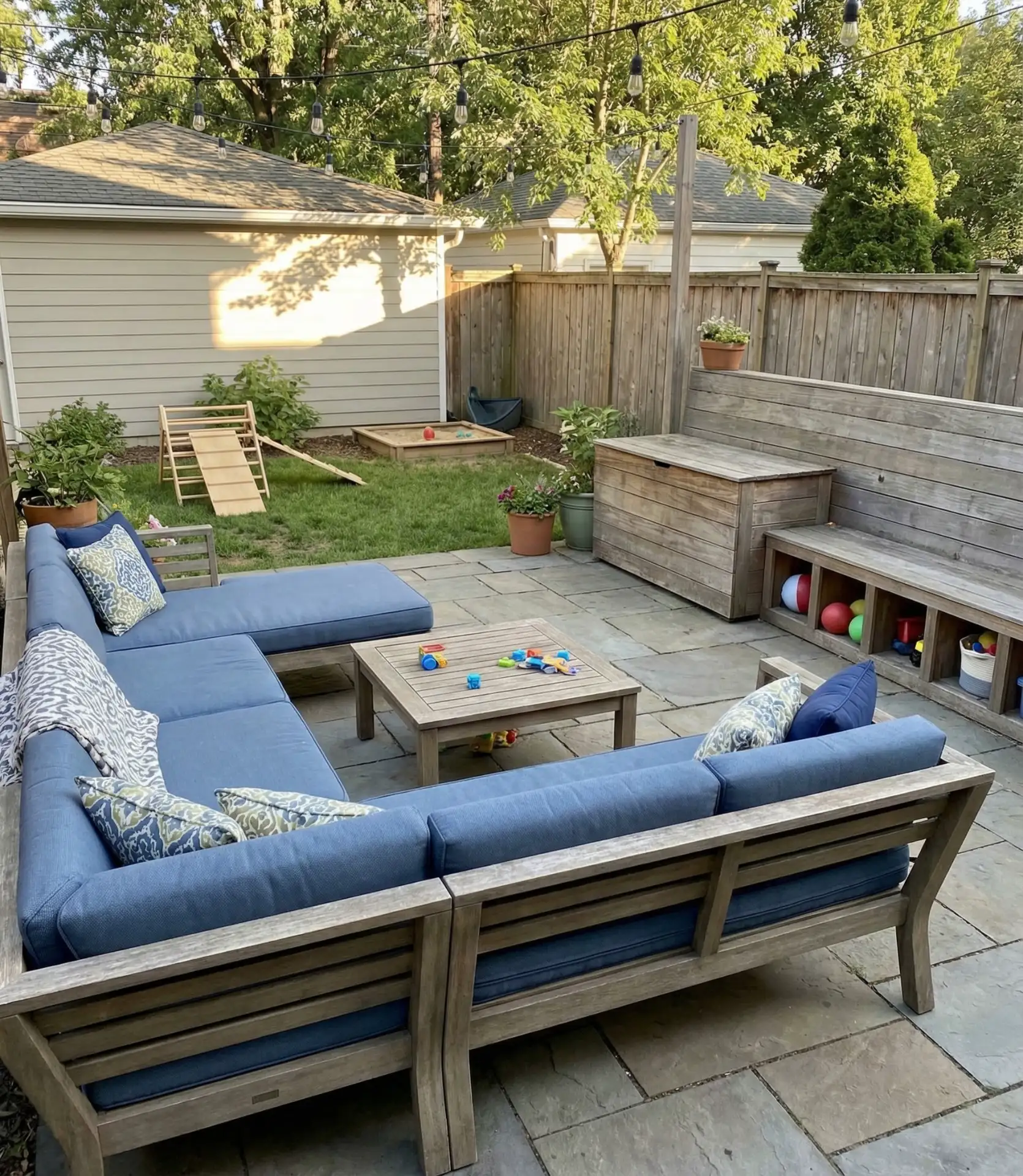
Real homeowner behavior shows that families use outdoor spaces most when they’re low-maintenance and truly functional rather than overly precious or formal. Choosing performance fabrics that resist staining and furniture with washable cushion covers makes cleanup effortless after messy summer barbecues or muddy play sessions. The best family outdoor rooms evolve with children’s ages—what starts as a play zone gradually transitions to a teen hangout space and eventually becomes an adult entertaining area.
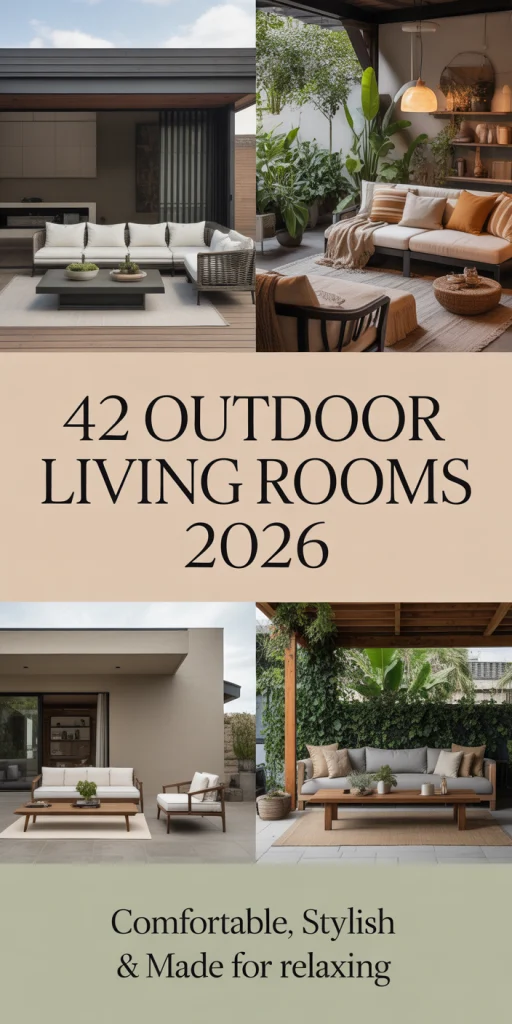
These outdoor living room ideas offer something for every style, budget, and climate. Whether you’re drawn to modern minimalism or cozy farmhouse charm, the key is creating a space that reflects your lifestyle and encourages you to spend more time outdoors. Start with one element that excites you—maybe a fireplace, a piece of statement furniture, or a specific design aesthetic—and build from there. We’d love to hear which idea resonates most with you or see photos of your own outdoor transformations in the comments below.