
Bathrooms have quietly become one of the most searched spaces on Pinterest—and it’s not hard to see why. In 2026, the modern bathroom transcends its functional role to become a personal sanctuary, a design statement, and a daily ritual. Americans are leaning into spaces that feel curated yet livable, whether they’re renovating a tiny apartment bath or reimagining a sprawling master suite. From earthy palettes to retro tile moments, this year’s trends are rich, layered, and deeply personal. Here are ideas to inspire your next bathroom refresh—scroll through, save the ones that speak to you, and let’s get into it.
1. Mid-Century Modern Vanity with Warm Wood Tones
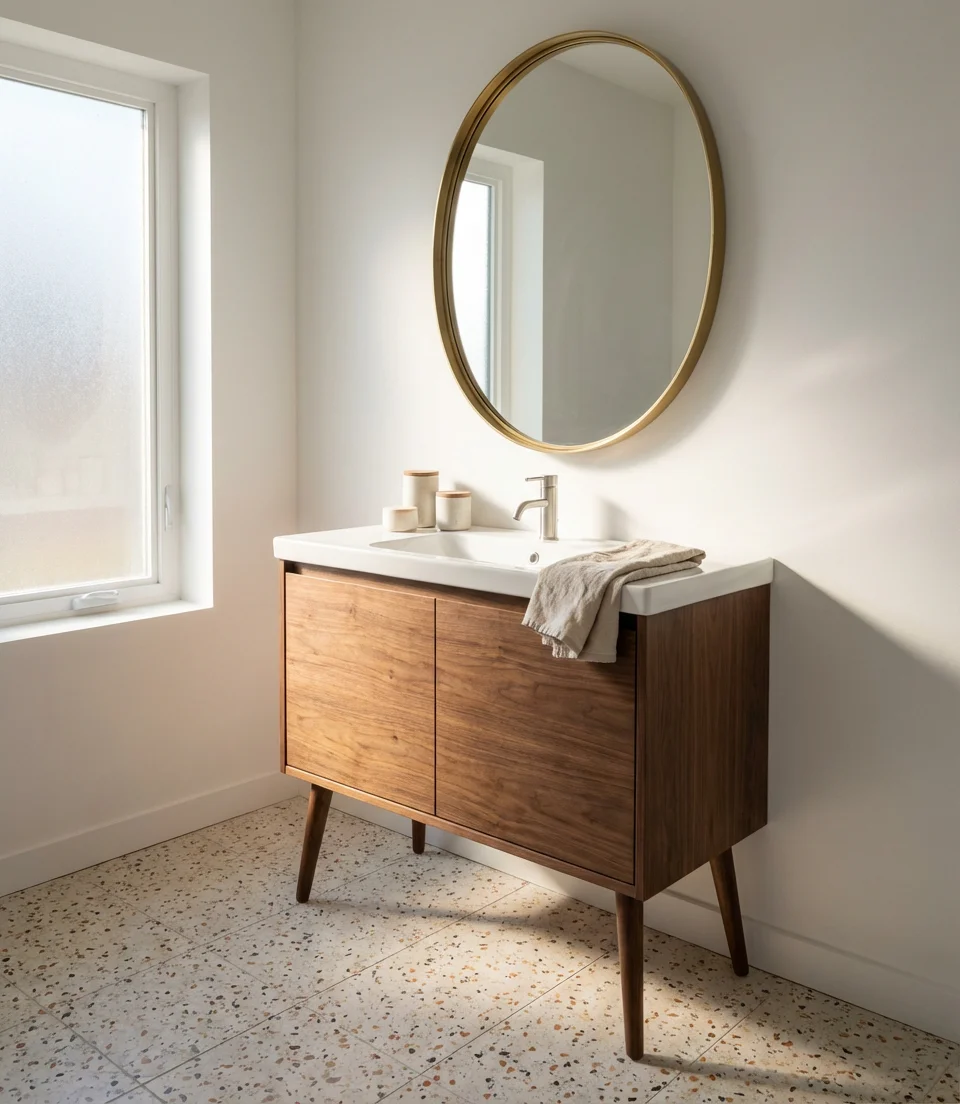
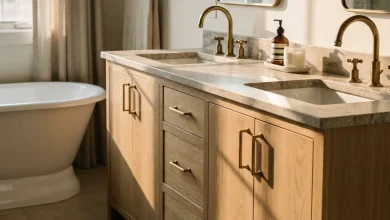
There’s something endlessly satisfying about a bathroom that nods to the past without feeling frozen in it. For 2026, the mid-century vanity trend is making a significant comeback, featuring tapered legs, walnut-toned cabinetry, and oval mirrors with thin brass frames. This look pairs beautifully with matte white walls and a terrazzo or checkered floor tile. It’s the kind of midcentury aesthetic that works as well in a compact guest bath as it does in a full master suite renovation.
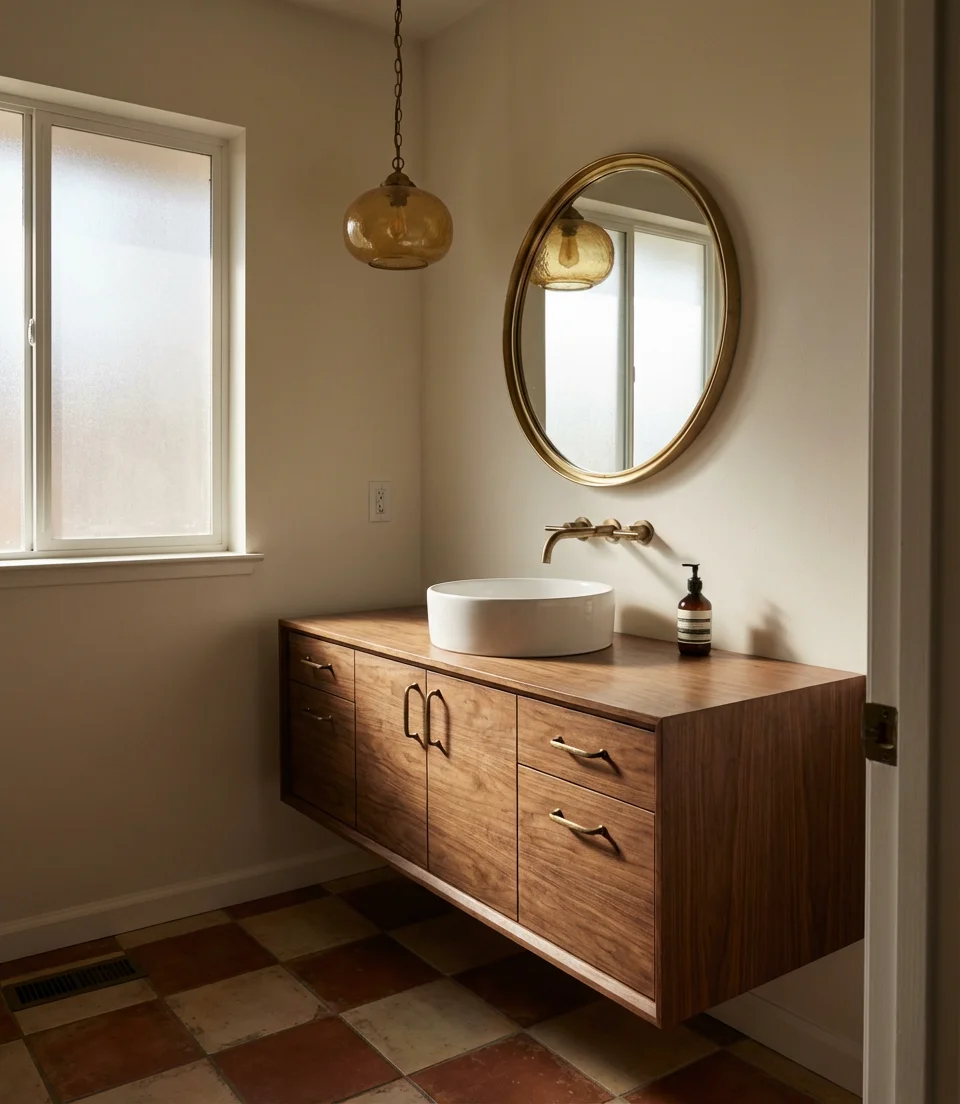
If you’re working with a limited budget, this look is very achievable. Many furniture retailers now offer mid-century-style vanities starting around $400–$700, and swapping out cabinet hardware for unlacquered brass pulls can cost under $50. The key is restraint—let the vanity be the hero and keep everything else neutral. The most common mistake people make when trying to pull off this style is over-accessorizing with too many competing elements, which dilutes the overall effect.
2. Organic Shapes and Curved Architecture
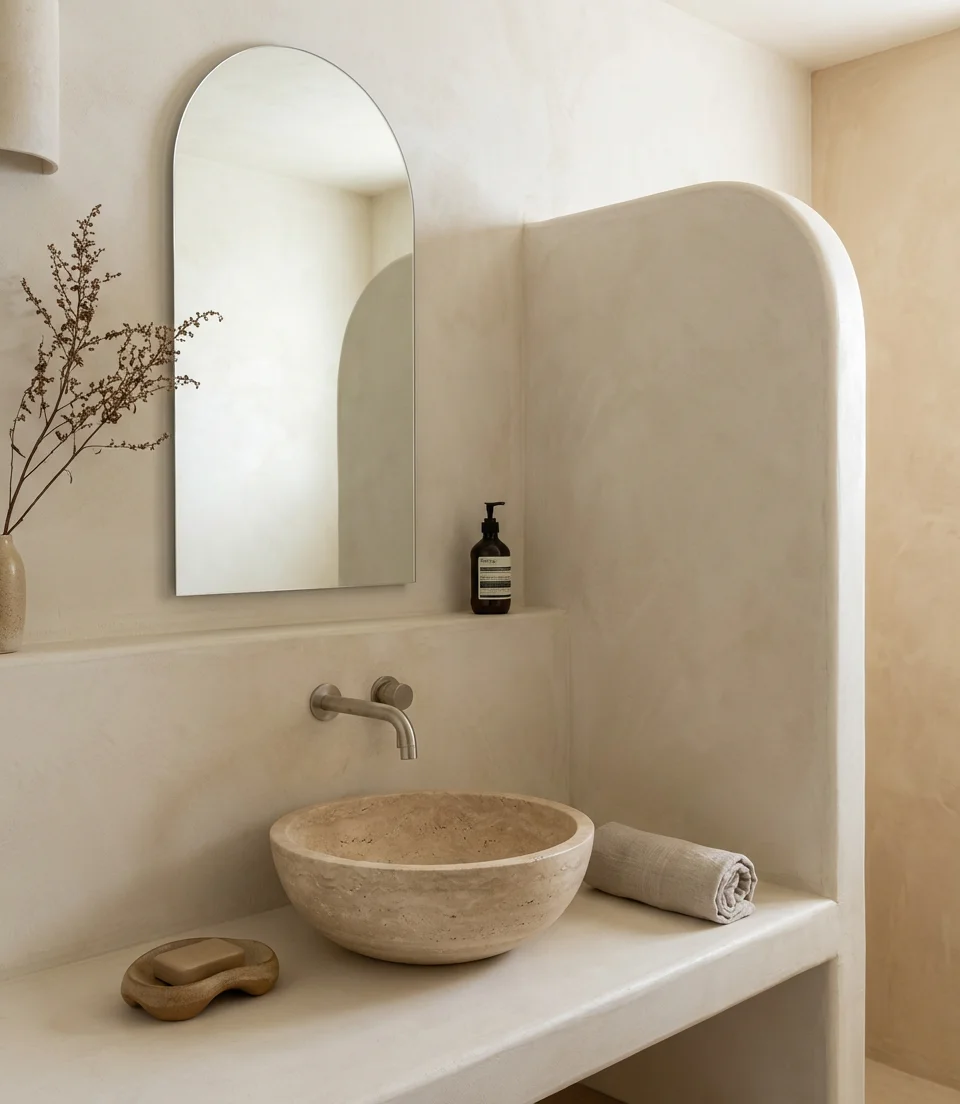
Sharp corners are giving way to something softer in 2026. The organic bathroom trend embraces curved mirrors, arched alcoves, rounded vanity edges, and even scallop-edged tiling that feels more like sculpture than construction. This approach draws from nature—the idea that nothing in the natural world is truly straight—and it translates into bathrooms that feel genuinely calming. Whether you’re renovating a full suite or just swapping a mirror, incorporating curves is one of the easiest ways to add visual warmth and originality to a space.
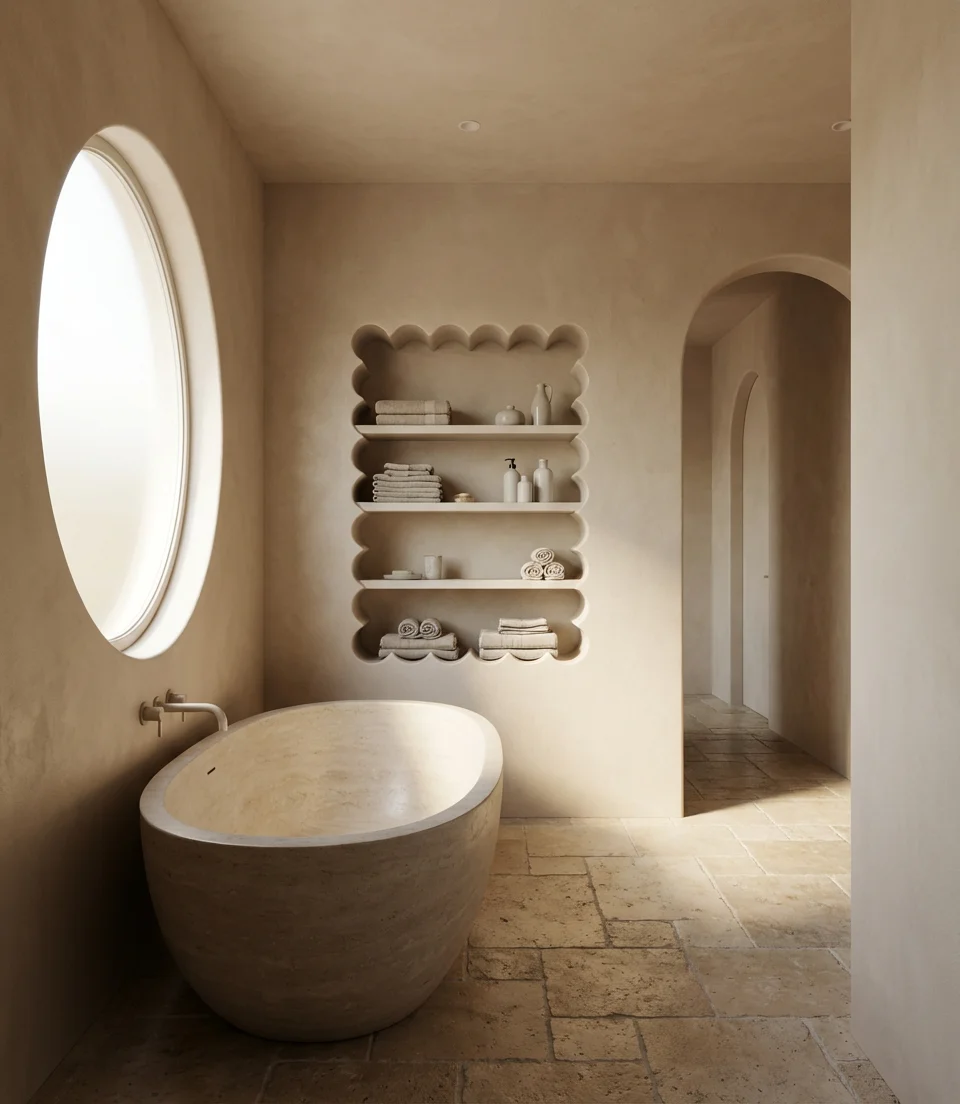
This trend works best in bathrooms where you have some flexibility in the renovation budget and can work with a plasterer or tiler willing to get creative. Curved niches in showers, arched mirrors above double vanities, and rounded shower benches are all high-impact, relatively achievable additions. A designer once described the effect as “the room breathing”—and honestly, once you’ve spent time in a bathroom with curved architecture, the hard-cornered alternative feels noticeably more tense.
3. Earthy Tones and Natural Stone Surfaces
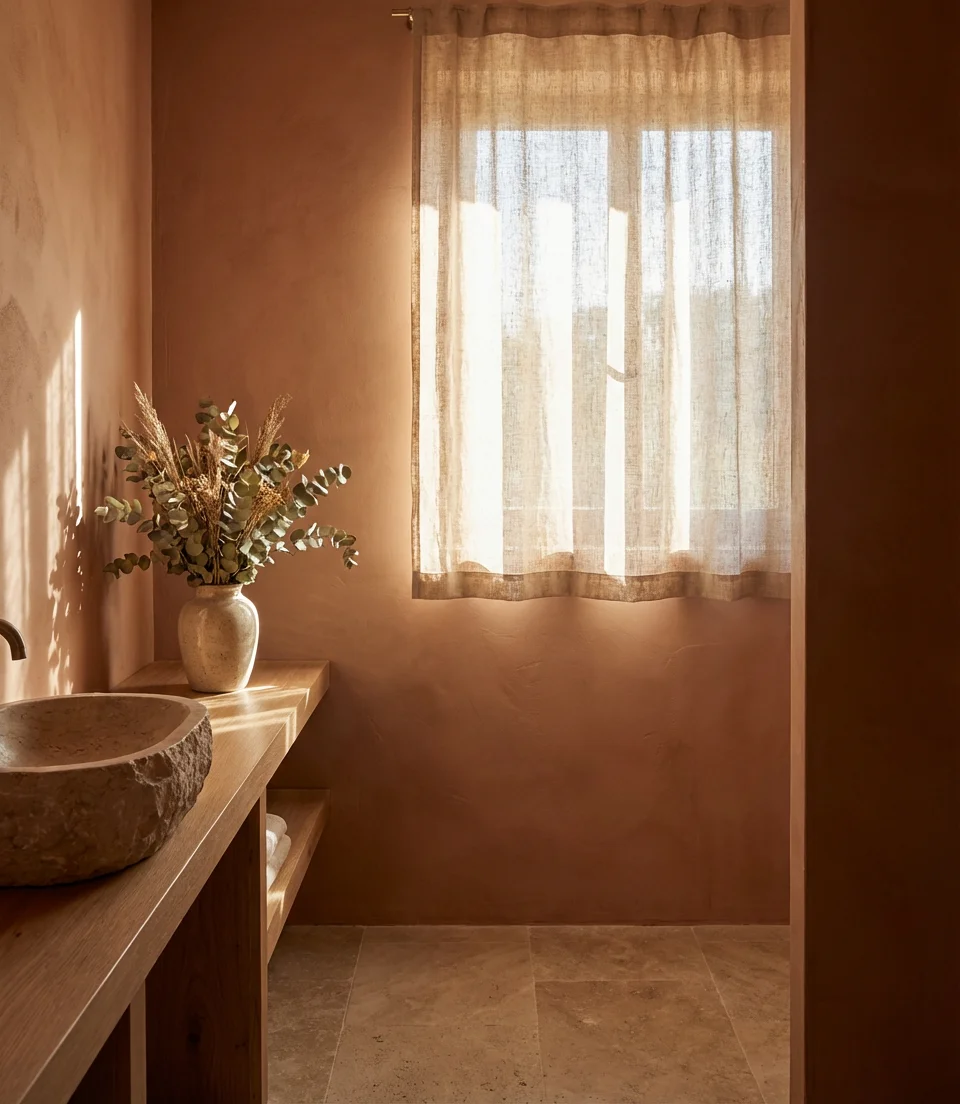
If there’s one palette that defines the bathroom mood of 2026, it’s earthy. Warm terracotta, raw linen, mushroom brown, and dusty clay—these colors make a bathroom feel grounded and human in a way that cool grays simply never could. Pair them with natural materials like travertine, limestone, or honed marble, and the result is a space that feels less like a bathroom and more like a boutique spa tucked into the mountains. This is the color of interior design ideas at their most intuitive.
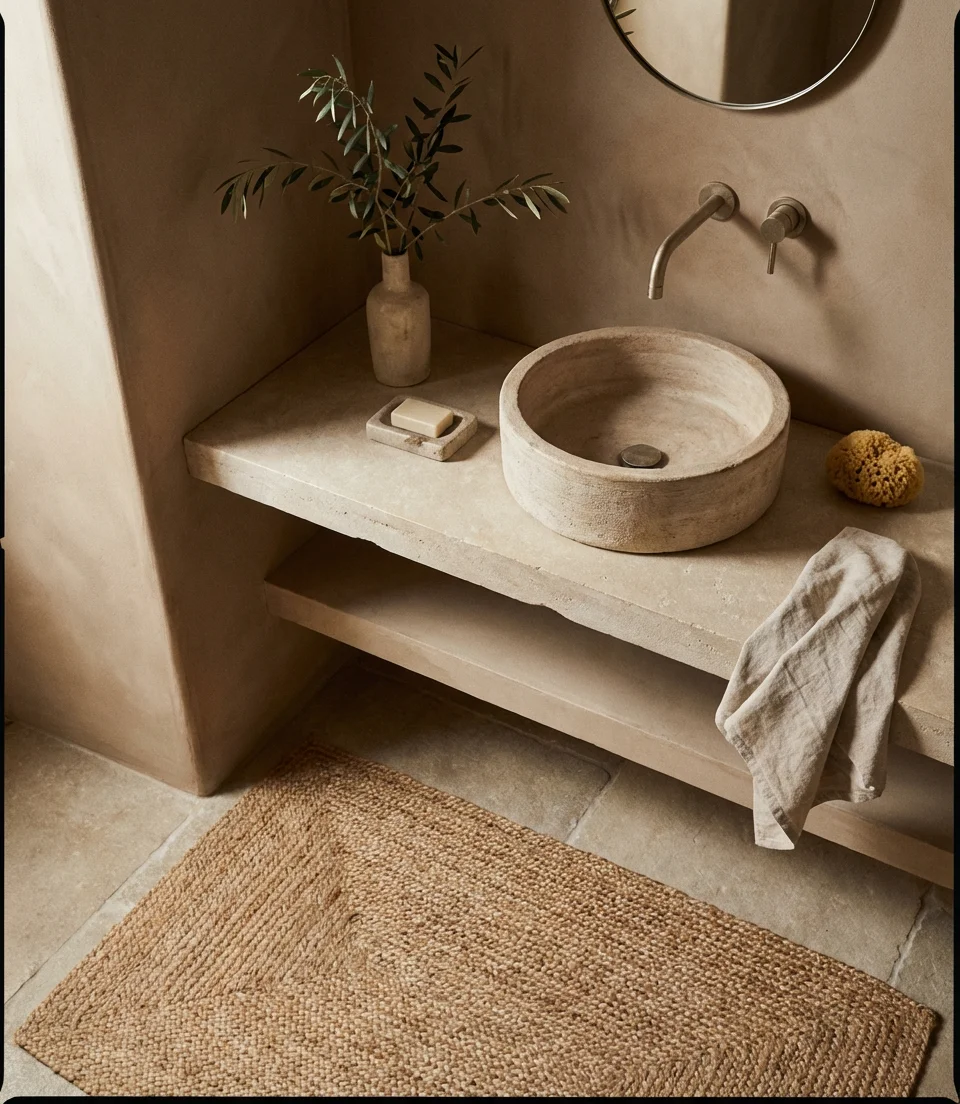
One thing worth noting for American homeowners considering this direction: natural stone requires sealing, and not all stones are equally water-tolerant. Travertine and limestone are beautiful but porous—skip the sealer, and you’ll be dealing with staining faster than you’d expect. Tumbled marble tiles are wonderfully durable when sealed every year or two with a penetrating stone sealer. Don’t let the maintenance question scare you off; it’s genuinely manageable with the right product and a reminder on your phone.
4. Vintage Tile Patterns and Retro Accents
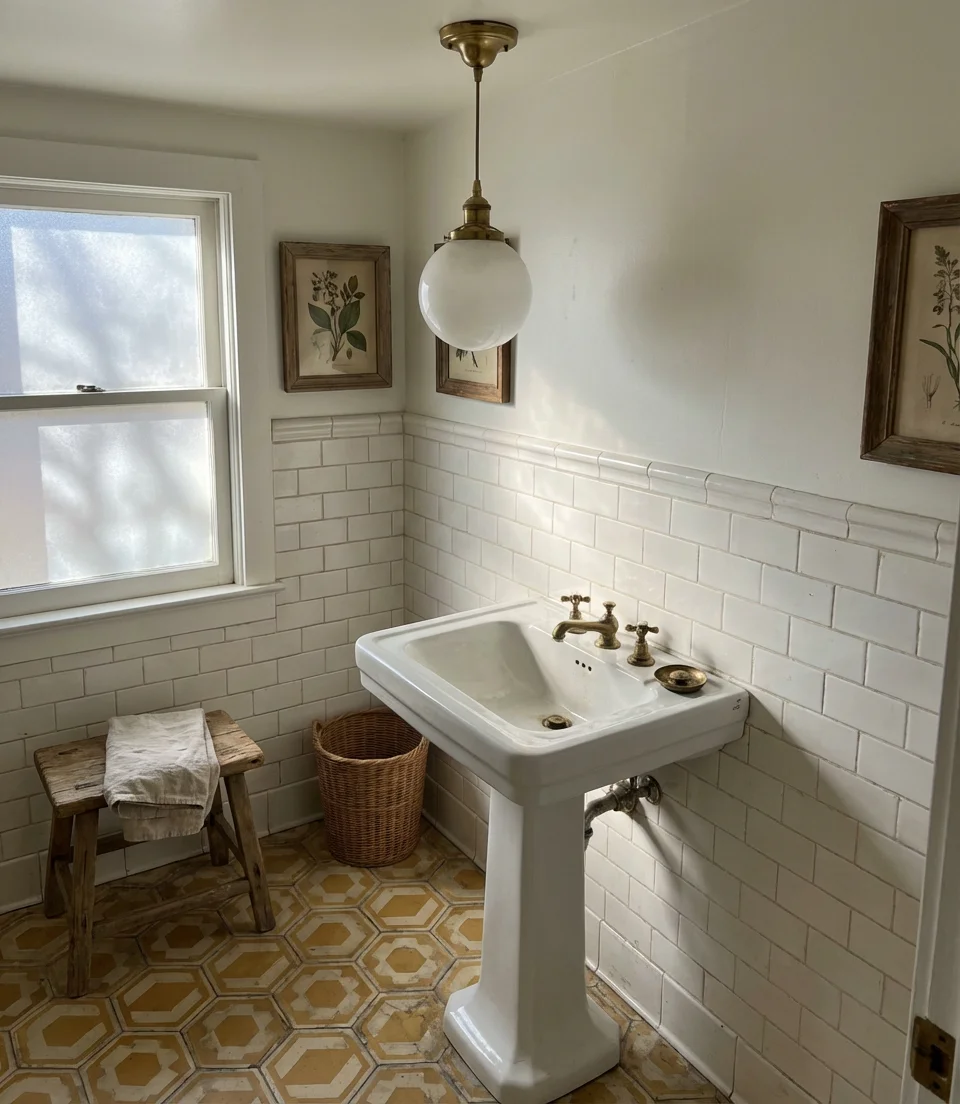
Not everything needs to be brand-new to feel current. Vintage tile work—encaustic cement tiles, hand-painted Talavera, and classic hex patterns in aged color palettes—is having a genuine moment in American bathrooms right now. These tiles tell a story, and they layer beautifully with modern fixtures. A chrome-free faucet, a pedestal sink with vintage proportions, and a retro mid-century light fixture can turn a simple bathroom into something genuinely memorable. The key is using vintage as a perspective, not a costume.
A homeowner in Portland recently shared that she sourced authentic 1950s hex tile from a salvage warehouse for less than $3 per square foot—a fraction of what reproduction tiles cost—and the result looked completely authentic. That’s the beauty of this approach: because vintage materials are genuinely aged, there’s an inherent richness that new tiles work hard to replicate. Consider exploring architectural salvage yards, online marketplaces, and estate sales before finalizing your decision to purchase reproduction tile. You might be surprised by what you find.
5. Black Bathroom with Statement Fixtures
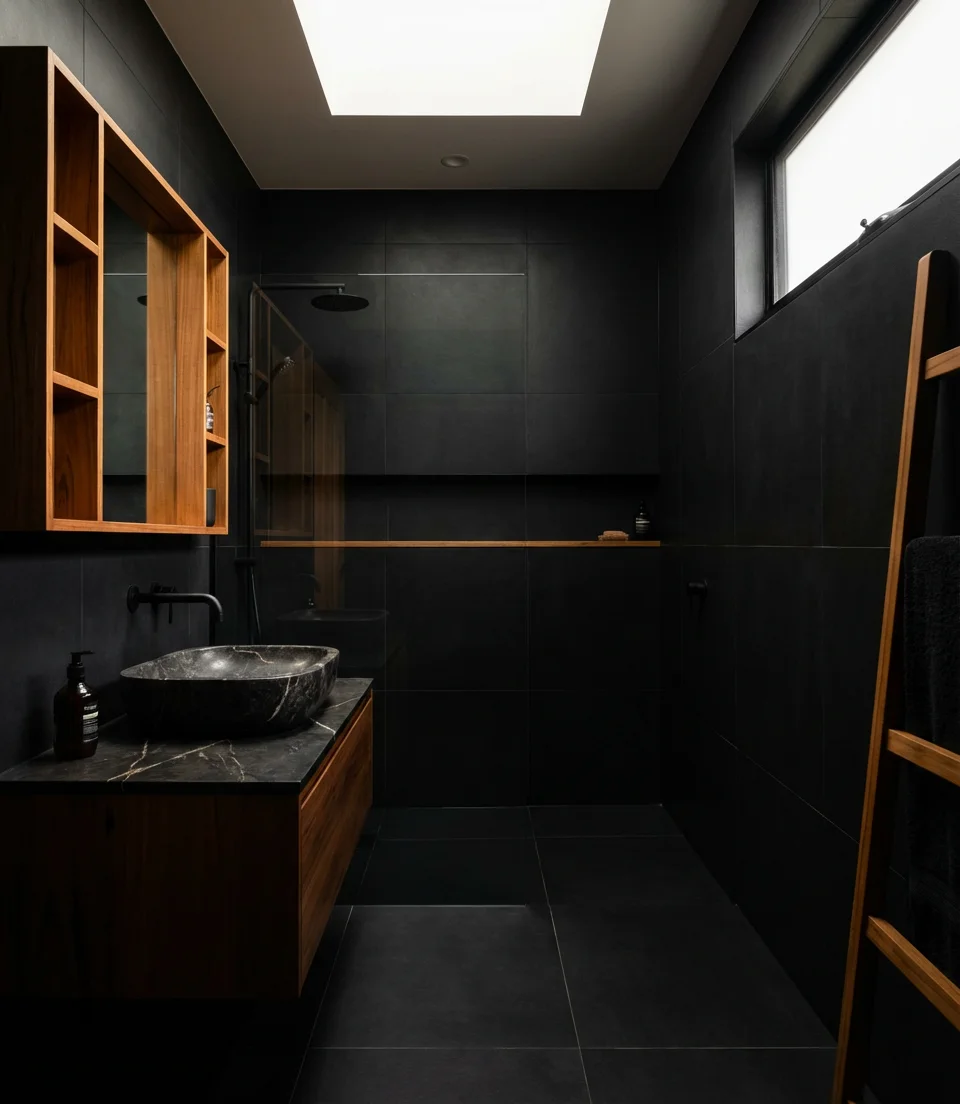
A black bathroom done well is one of the most striking things you can do in a home. Matte black tile, matte black faucets, and a dramatic vessel sink create a space that feels like a luxury hotel—the kind of luxury that doesn’t require square footage, just intention. In 2026, the most compelling versions of this trend balance the darkness with warm materials: a teak stool, a natural linen hand towel, and a rattan accessory holder. The beauty lies in the contrast.
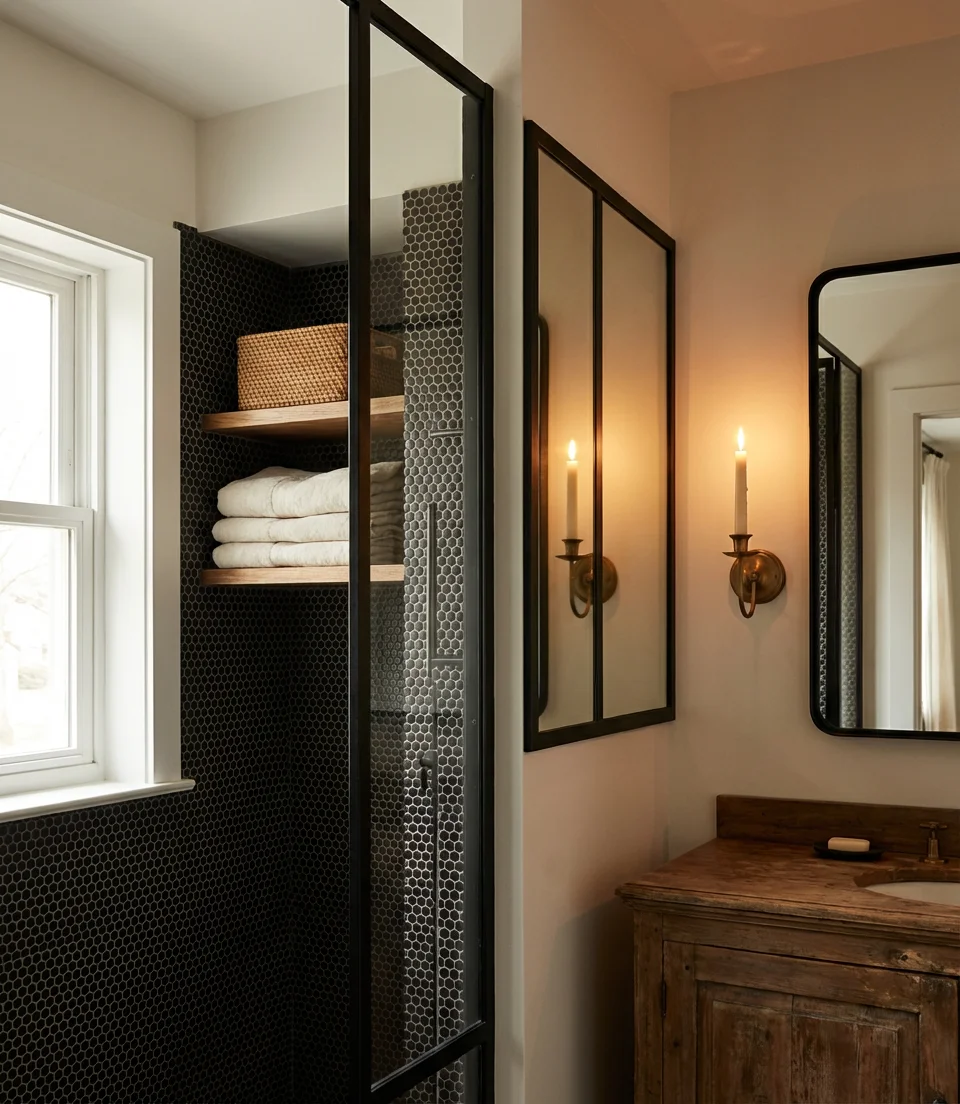
This aesthetic works best in bathrooms with strong artificial lighting—a point many people overlook until they’re already tiling. Black tiles absorb light rather than reflecting it, so you’ll want layered lighting: a dimmer-controlled overhead, sconces flanking the mirror, and potentially a small accent light inside the shower. Interior designers who specialize in dark spaces typically recommend at least three light sources to prevent the room from feeling like a cave. Please ensure the lighting plan is finalized before committing to the tile, as this will naturally enhance the overall effect.
6. Small Bathroom Ideas with Smart Storage
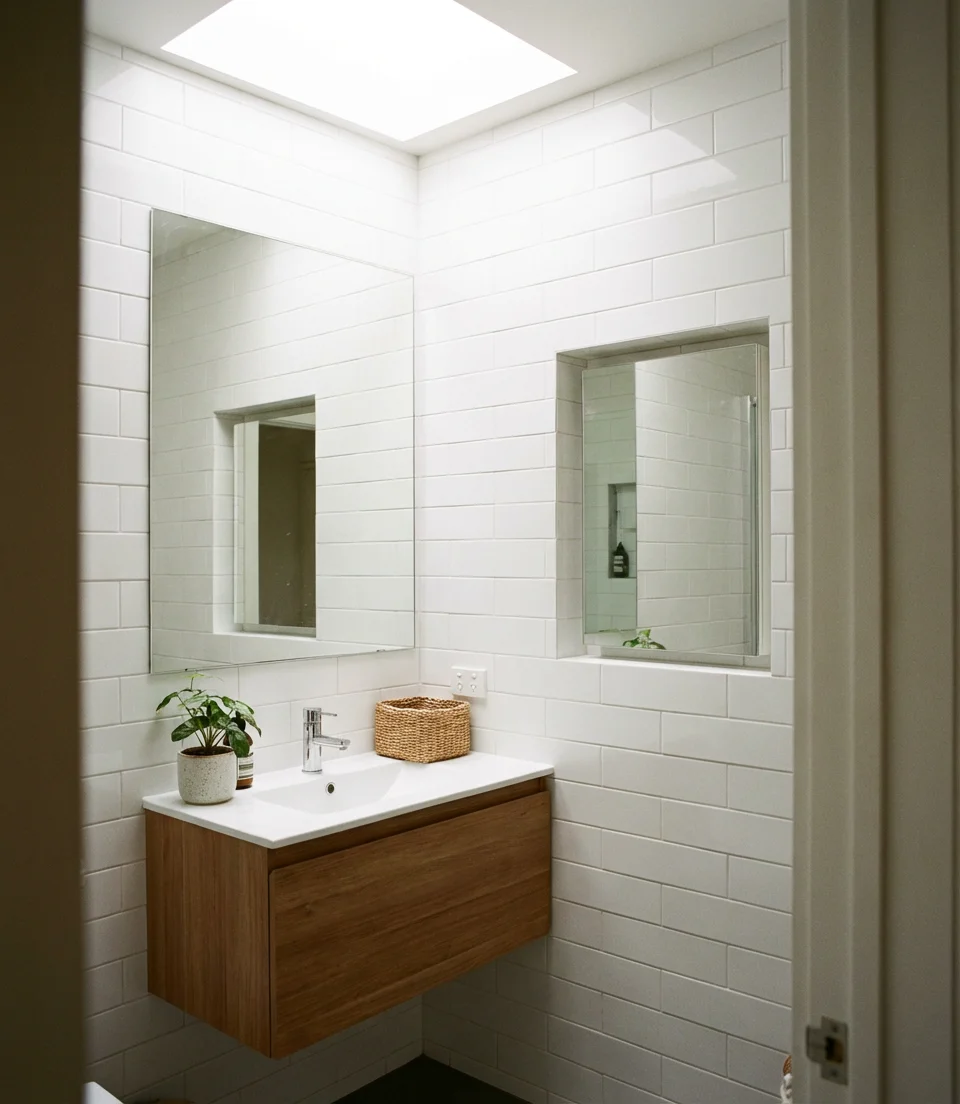
Most American bathrooms—especially in apartments and older homes—hover around 35 to 50 square feet. That doesn’t mean they have to feel cramped. The best small space bathroom transformations in 2026 are all about verticality, illusion, and restraint. Ideas that consistently work: floor-to-ceiling tile to elongate walls, a recessed medicine cabinet instead of a surface-mounted one, a narrow floating vanity that clears floor space visually, and a large-format mirror that doubles the perceived size of the room.
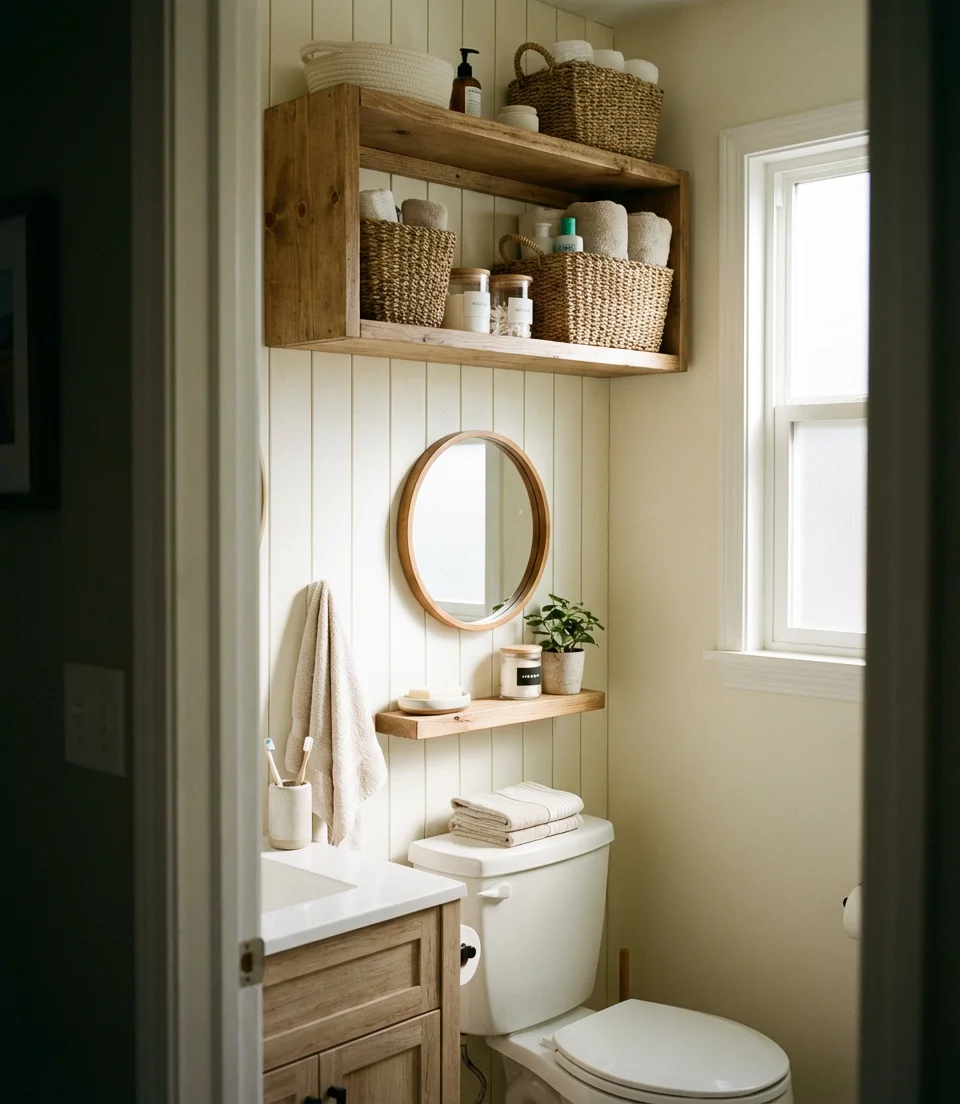
If you’re working with a shared or guest bathroom in an apartment, the floating vanity is genuinely transformative—not just visually but psychologically. When the floor is visible beneath the vanity, the room reads as larger. Combine that with a wall-hung toilet (if a renovation is on the table), and you’ve essentially tricked the eye into perceiving another 20 square feet. Renters who can’t make structural changes can still benefit enormously from a large mirror, lighter grout colors, and editing out any accessories that don’t earn their space.
7. Boho Bathroom with Layered Textures
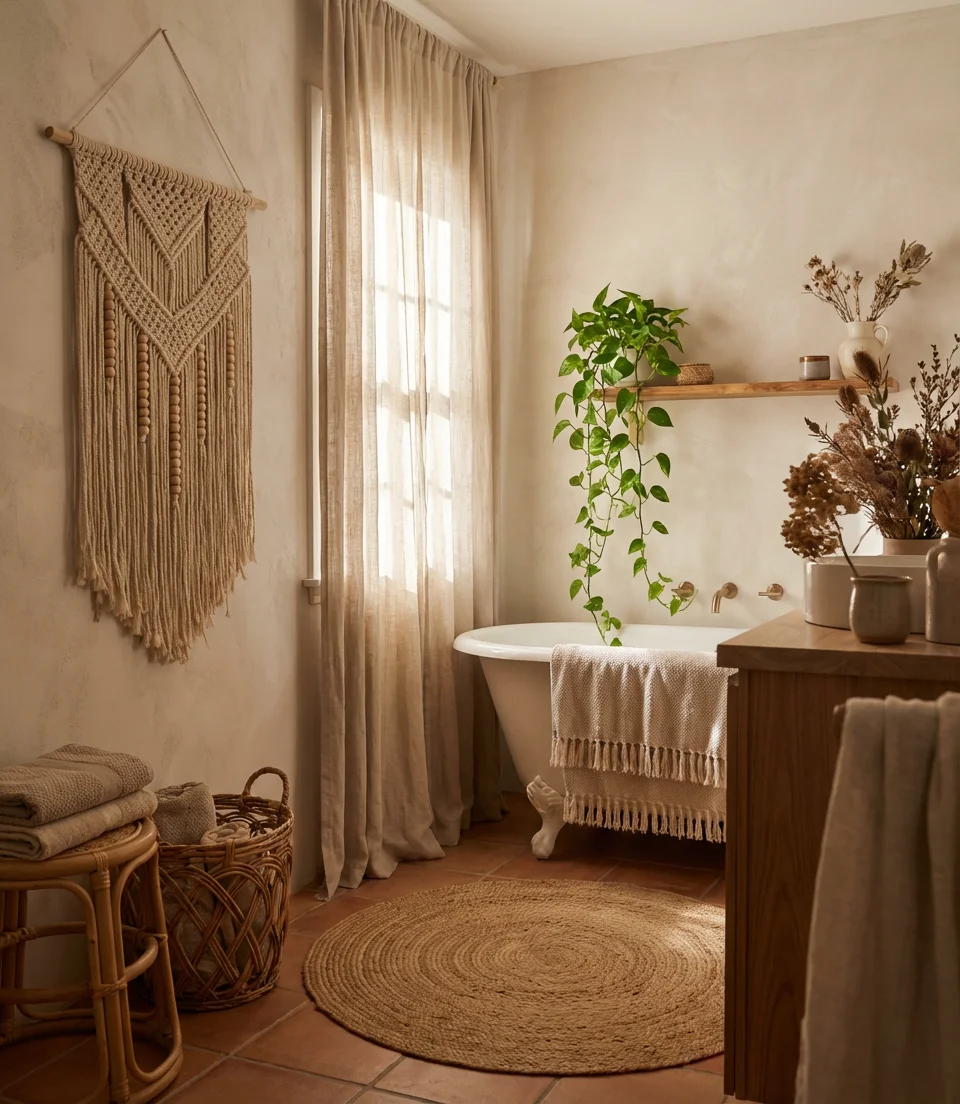
The boho bathroom is not about chaos—it’s about collected warmth. Think woven wall hangings near the window, a macramé shower caddy, a rattan laundry basket, and plants trailing from a shelf above the tub. Layering textures is what makes a boho space feel rich rather than cluttered: a jute bath mat over cement tile, a linen curtain over a roller shade, and a ceramic soap dispenser alongside a wooden tray. Every element should feel like it was found, not purchased in a set.
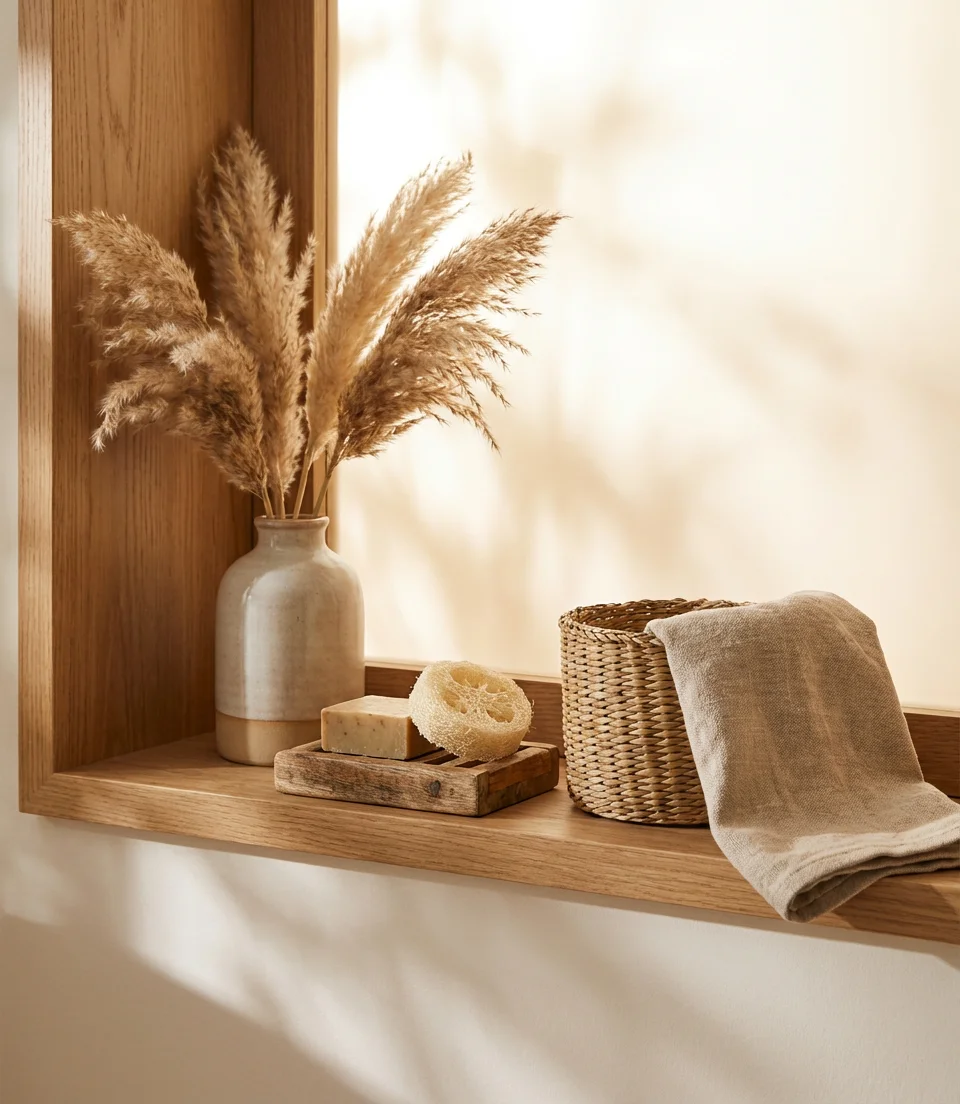
This aesthetic has real traction among younger American homeowners—particularly renters who want personality without making permanent changes. Swapping out a chrome towel bar for a wooden one, hanging a macramé mirror, and adding a few trailing plants costs well under $150 total and can completely change the energy of a bathroom. The authentic versions of this look tend to accumulate over time rather than being installed all at once—give yourself permission to build it gradually, and it’ll feel much more genuine.
8. Rustic Farmhouse Bathroom with Shiplap Walls
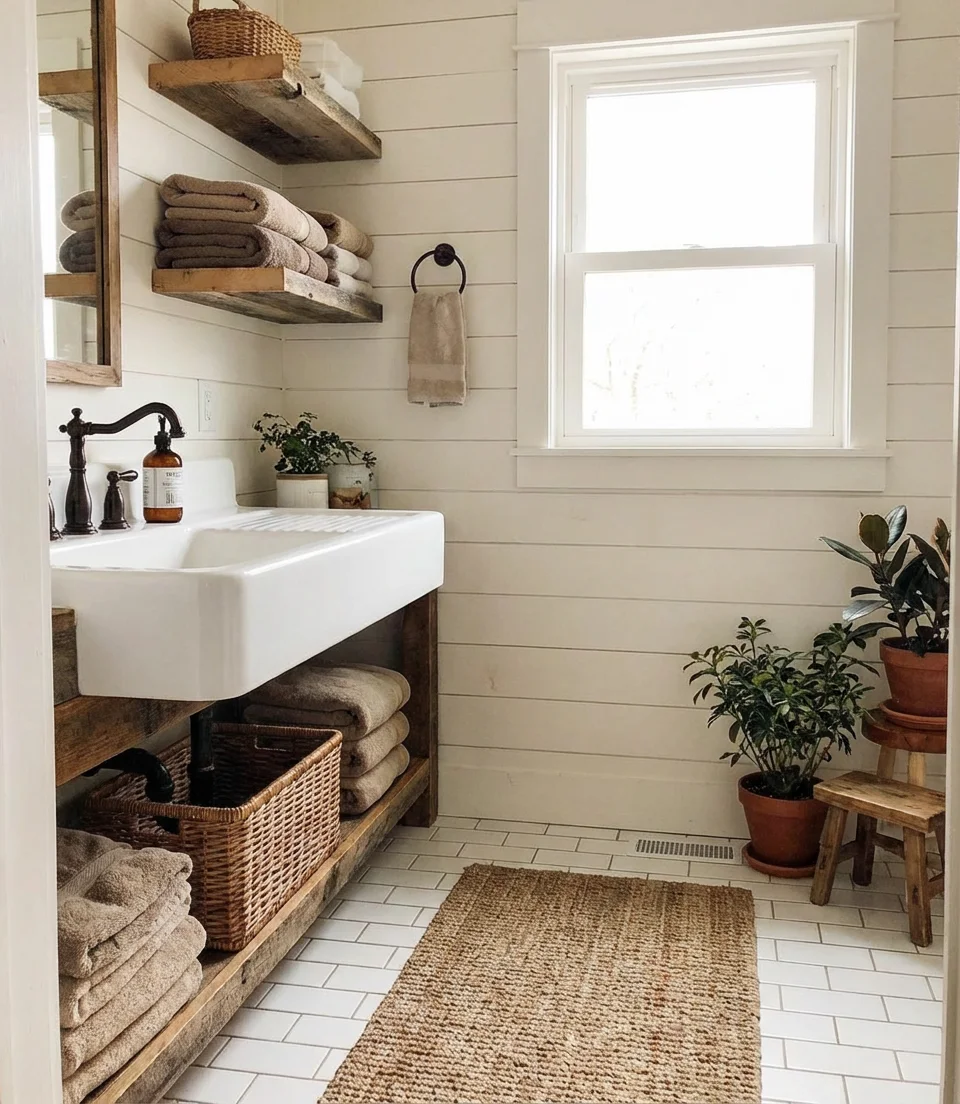
The farmhouse bathroom has evolved. Where earlier versions leaned heavily on barn door hardware and mason jar sconces, the 2026 iteration is warmer, more nuanced, and far less literal. Rustic shiplap walls painted in warm white or cream, an apron-front undermount sink, unlacquered brass or oil-rubbed bronze fixtures, and open wooden shelving—it’s a look that works equally well in a Texas ranch home and a Connecticut colonial. The warmth is unmistakable and deeply American.
Worth noting for homeowners in humid climates: shiplap in bathrooms requires careful installation and proper moisture barriers behind the wall cladding. PVC shiplap is a practical alternative that looks nearly identical to wood but handles humidity far better—it’s commonly used in bathrooms throughout the South and Pacific Northwest for exactly this reason. If you’re in a drier climate like the Southwest, real wood shiplap properly sealed is entirely viable. Just make sure your contractor knows the application before you choose materials.
9. Black and White Classic Bathroom with Bold Pattern
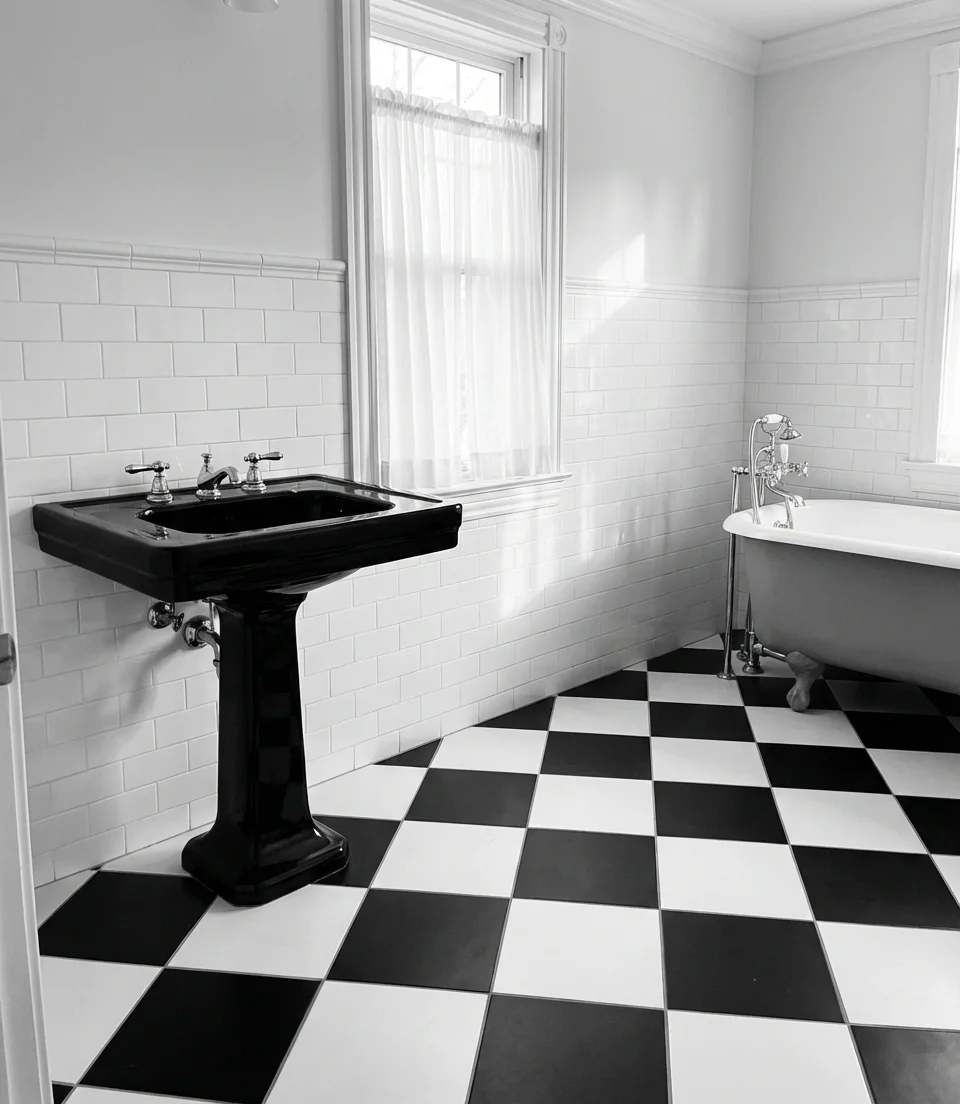
The black and white bathroom is the little black dress of interior design—always in style, always capable of surprise. In 2026, the most recent iterations aren’t compromising on style. Bold graphic floor tile—oversized checkerboard, Moroccan stars, or bold chevron—anchors a room with immediate visual punch, while white walls keep it from feeling overwhelming. The inspiration for this idea is particularly strong in older homes, where architectural features such as crown molding, high ceilings, or original wainscoting already contribute significantly.
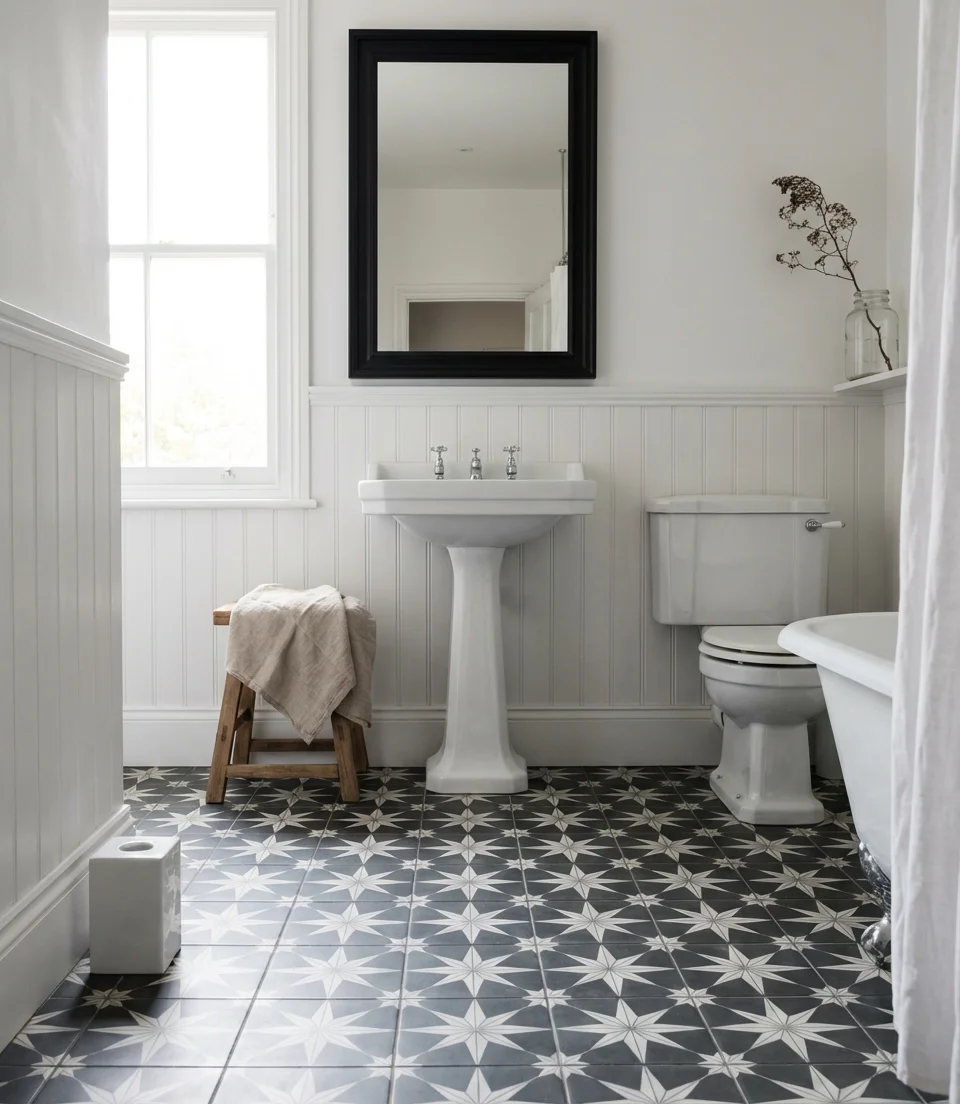
Americans have always had a deep affection for this palette—it shows up in bathrooms from Brooklyn brownstones to California bungalows, and there’s good reason for that. It’s inherently timeless, and it photographs beautifully, which matters increasingly in an era where home aesthetics live on social media as much as in real life. If you’re staging a home to sell, a crisp black-and-white bathroom renovation is one of the highest-ROI moves you can make—buyers respond to it consistently and emotionally.
10. Shower Curtain as a Design Statement
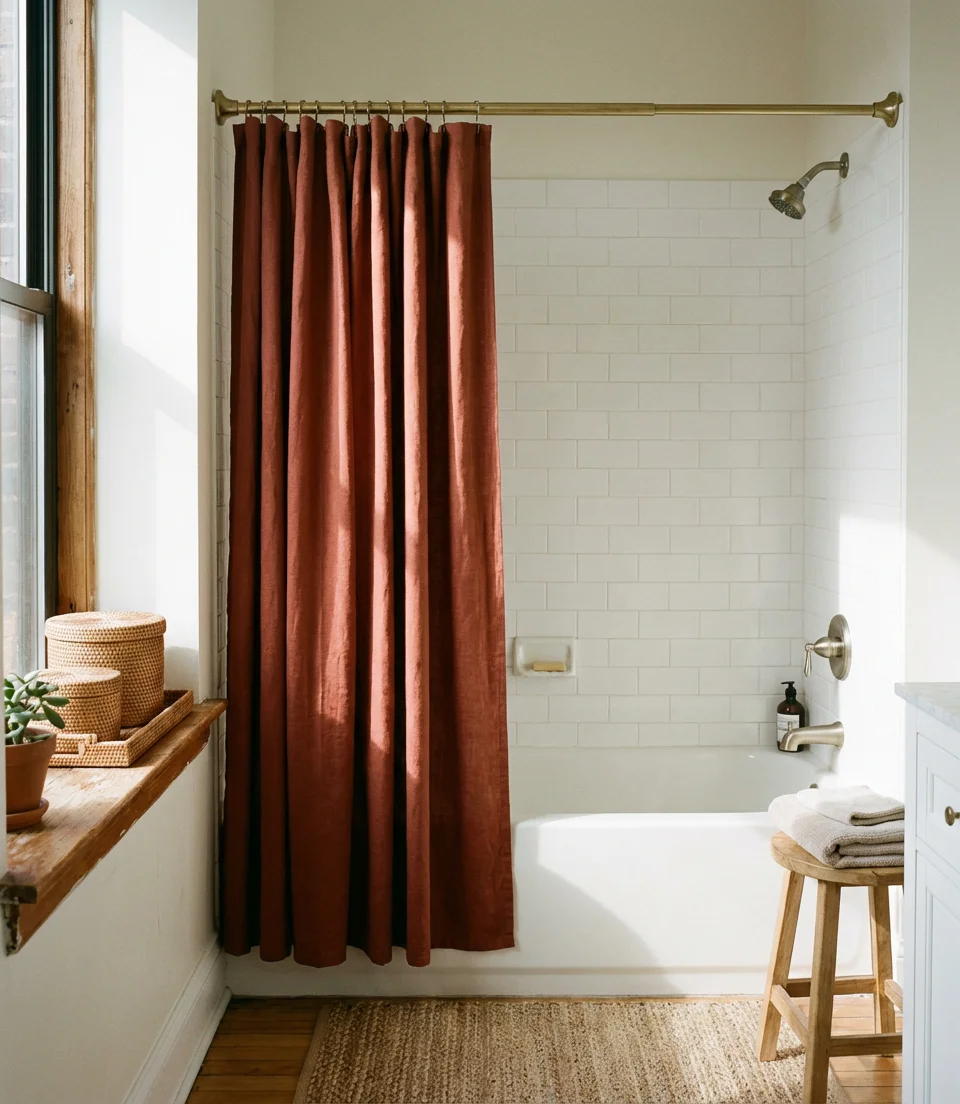
People dramatically underestimate what a shower curtain can do for a bathroom. A bold linen curtain in a deep terracotta, an oversized floral print that reads like wallpaper, or a graphic stripe in navy and cream—any of these can become the visual anchor of an entire room. In apartment living, especially when structural changes aren’t an option, the shower curtain is often the highest-leverage design investment you can make. It covers a significant wall of floor space and sets the tone for everything else.
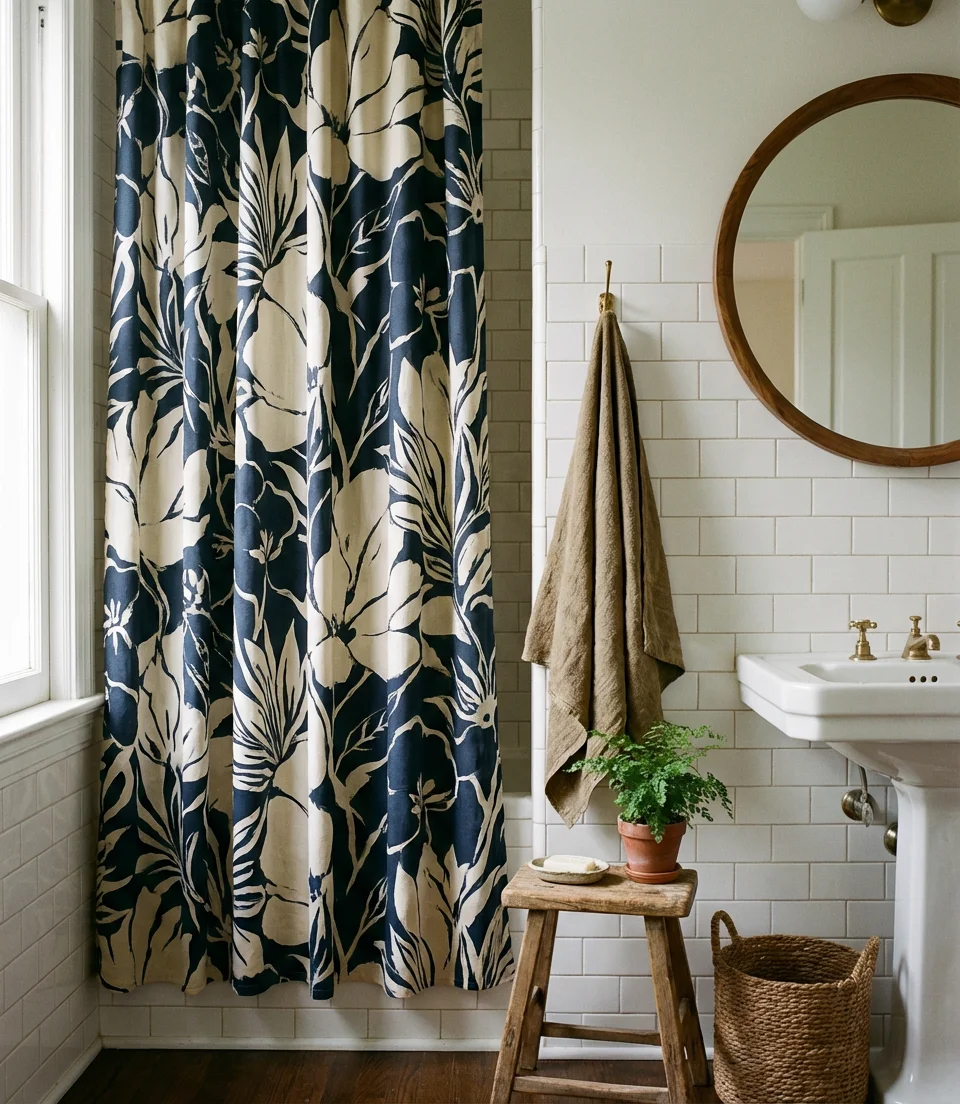
Hang the curtain rod as high as the ceiling allows—this is the single most transformative and inexpensive thing you can do in a bathroom. A rod mounted six inches below the ceiling with an extra-long 84-inch curtain makes a standard 8-foot bathroom ceiling read like 10 feet. Combine that with a statement fabric, and you’ve done more for the space than most people accomplish with a full renovation. What is the total cost of the rod, rings, and curtain? Usually under $100 total.
11. Coastal Bathroom with Natural Light and Sea-Toned Tiles
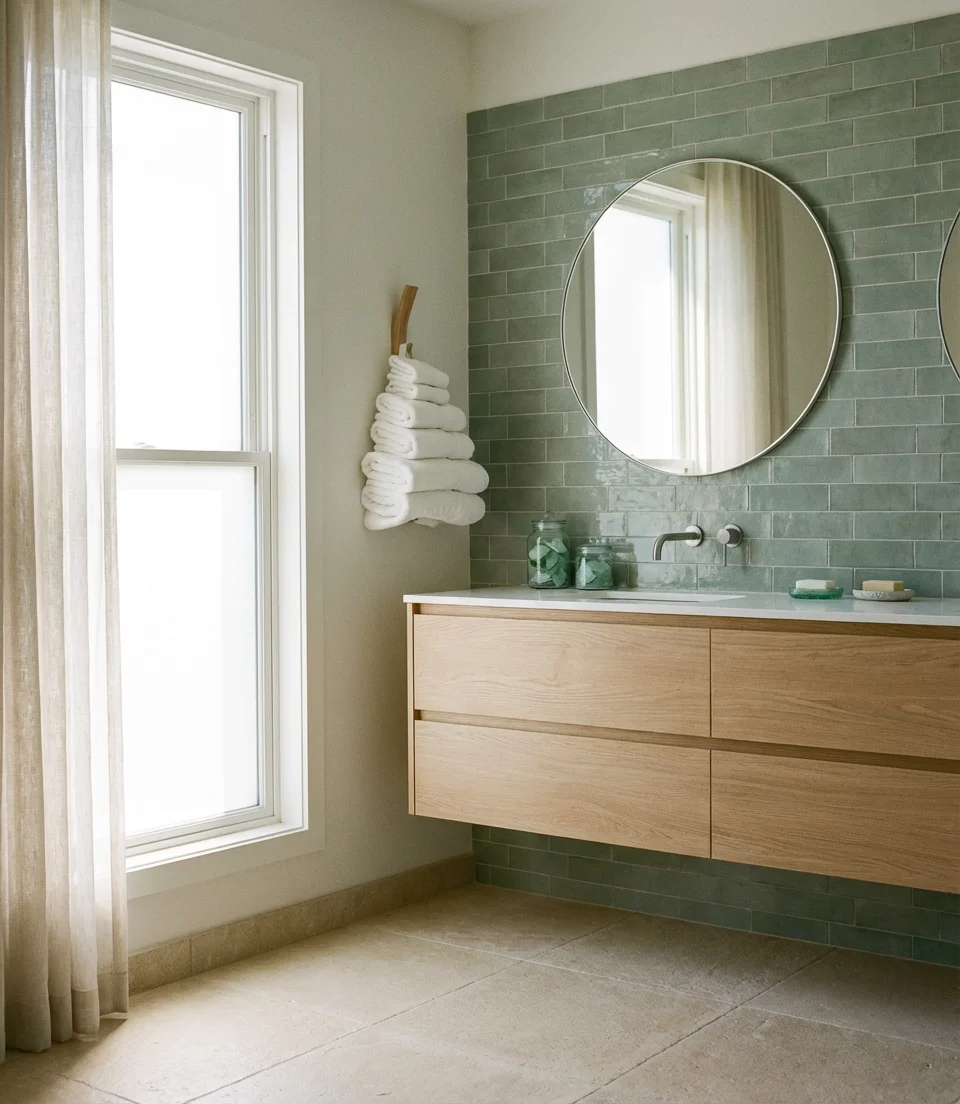
The coastal bathroom in 2026 is a quieter thing than its predecessor. Gone are the anchor motifs and rope mirrors—what’s replaced them is something more elemental: soft sage tile, sea glass green on the walls, white oak floating shelves, and generous natural light. It’s less a theme and more a feeling—the way you feel stepping barefoot into a beach house bathroom on a summer morning. This direction translates beautifully beyond waterfront homes; you can create the same mood in a landlocked city apartment with the right palette and materials.
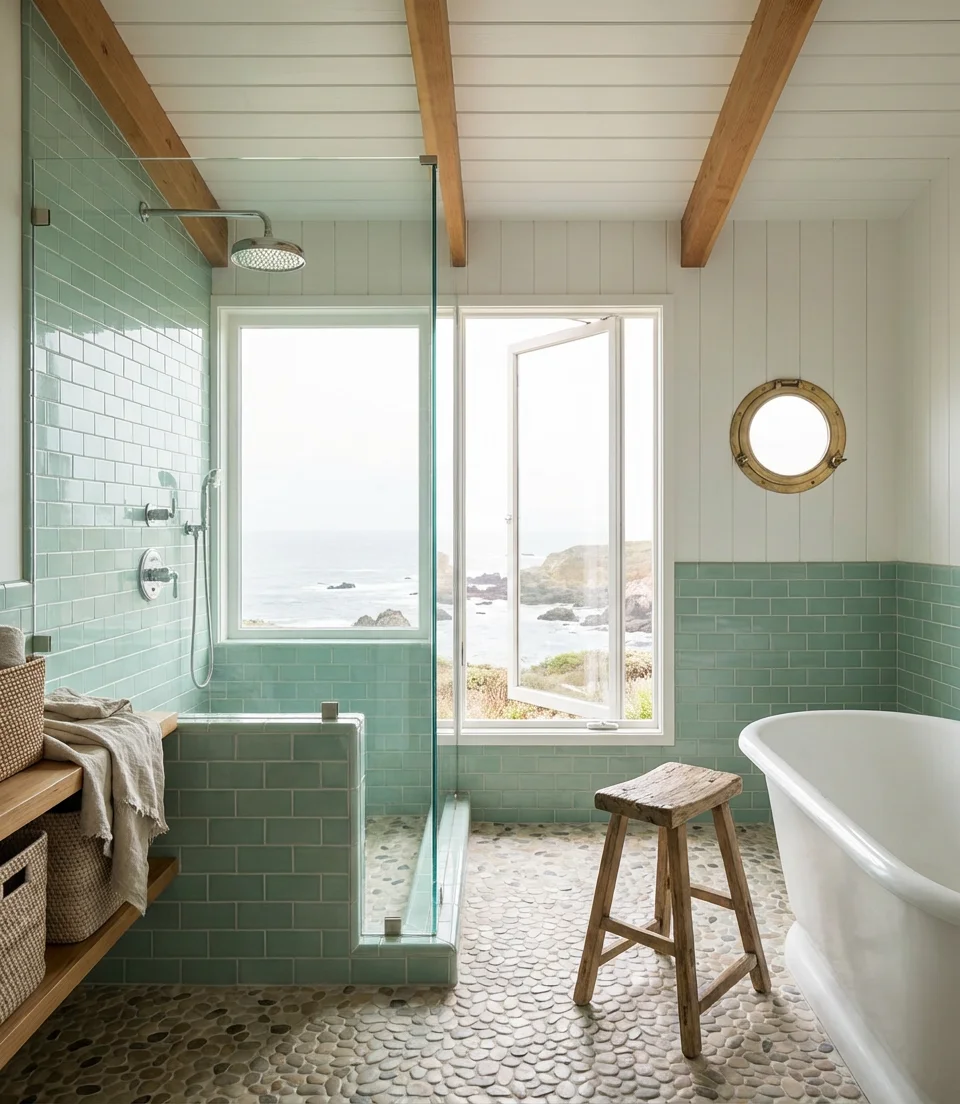
Coastal bathrooms are particularly well-suited to master baths in the bedroom zone of the home—the connection to relaxation and sleep is natural, and the palette tends to support wind-down rituals. Interior designers working in coastal markets like the Carolinas, California, and New England consistently recommend matte or satin-finish tiles over glossy ones for this look; the softer sheen absorbs light in a way that feels more organic and less spa-commercial. It’s a small distinction that makes a surprisingly large difference in person.
12. Luxury Master Bathroom with Freestanding Tub
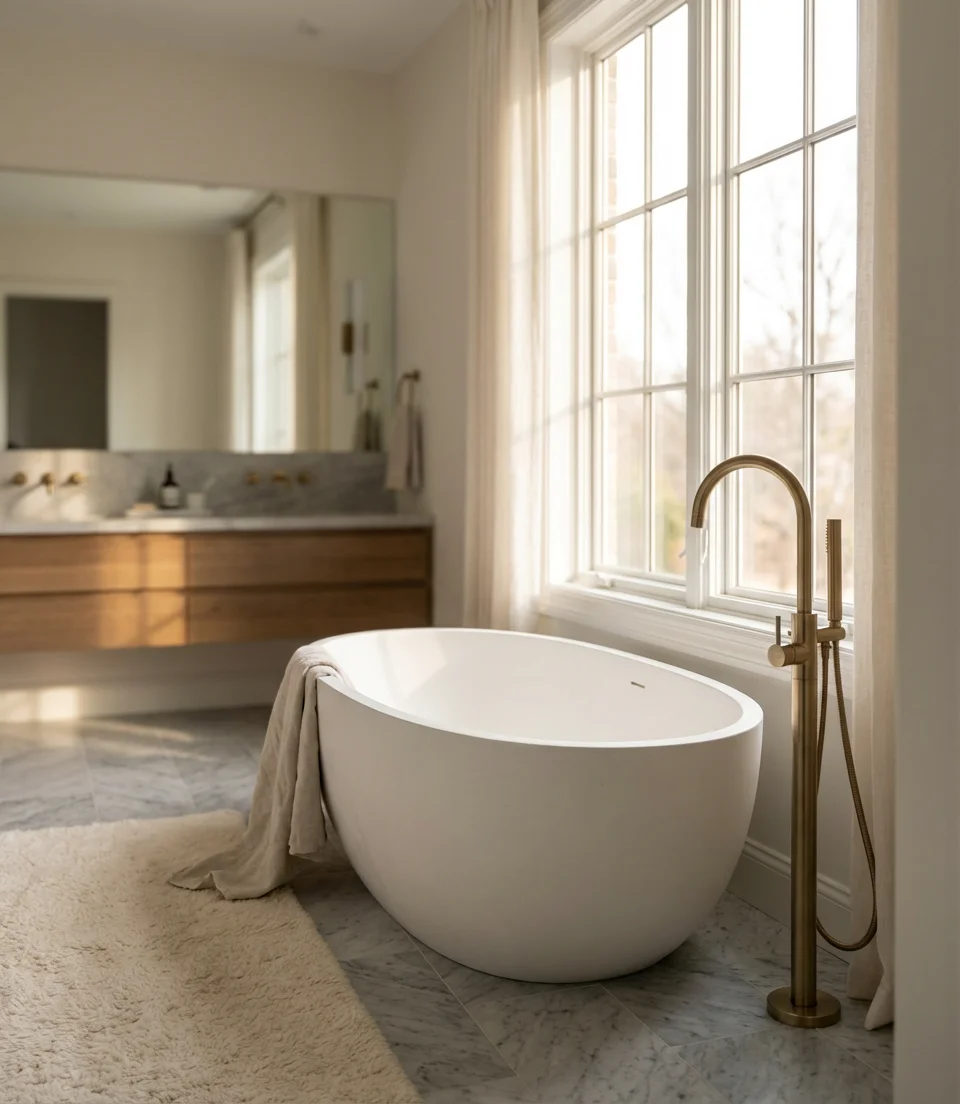
Few things in residential design communicate luxury as immediately as a well-placed freestanding tub. In the context of an idea for an interior design master bath, this fixture becomes the room’s gravitational center—everything else arranges itself around it. The 2026 interpretation favors clean sculptural silhouettes over ornate claw feet: think cast iron tubs in matte white or matte clay, positioned in front of a window or beneath a skylight, with a floor-mounted tub filler in brushed nickel or unlacquered brass.
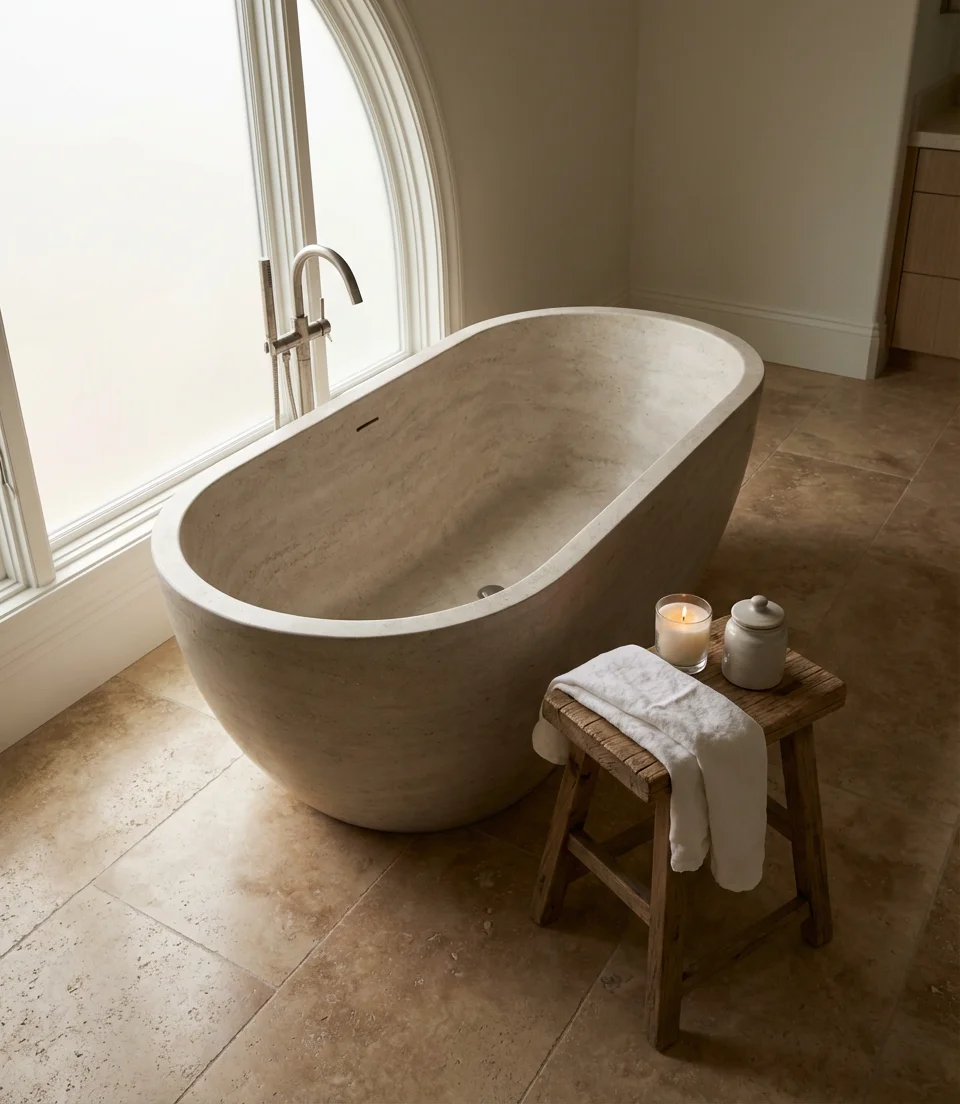
The freestanding tub category spans an enormous price range—from acrylic models around $800 to cast iron pieces that exceed $5,000 before installation. Acrylic tubs are lighter and easier to install, but they flex slightly when you sit in them, which some people find less luxurious than the solid, immovable quality of cast iron or stone composite. For a bathroom renovation intended to be the final version, the higher-end materials are worth the investment both for feel and for resale value in markets where buyers specifically seek primary suite amenities.
13. Simple Clean Bathroom with Minimalist Approach
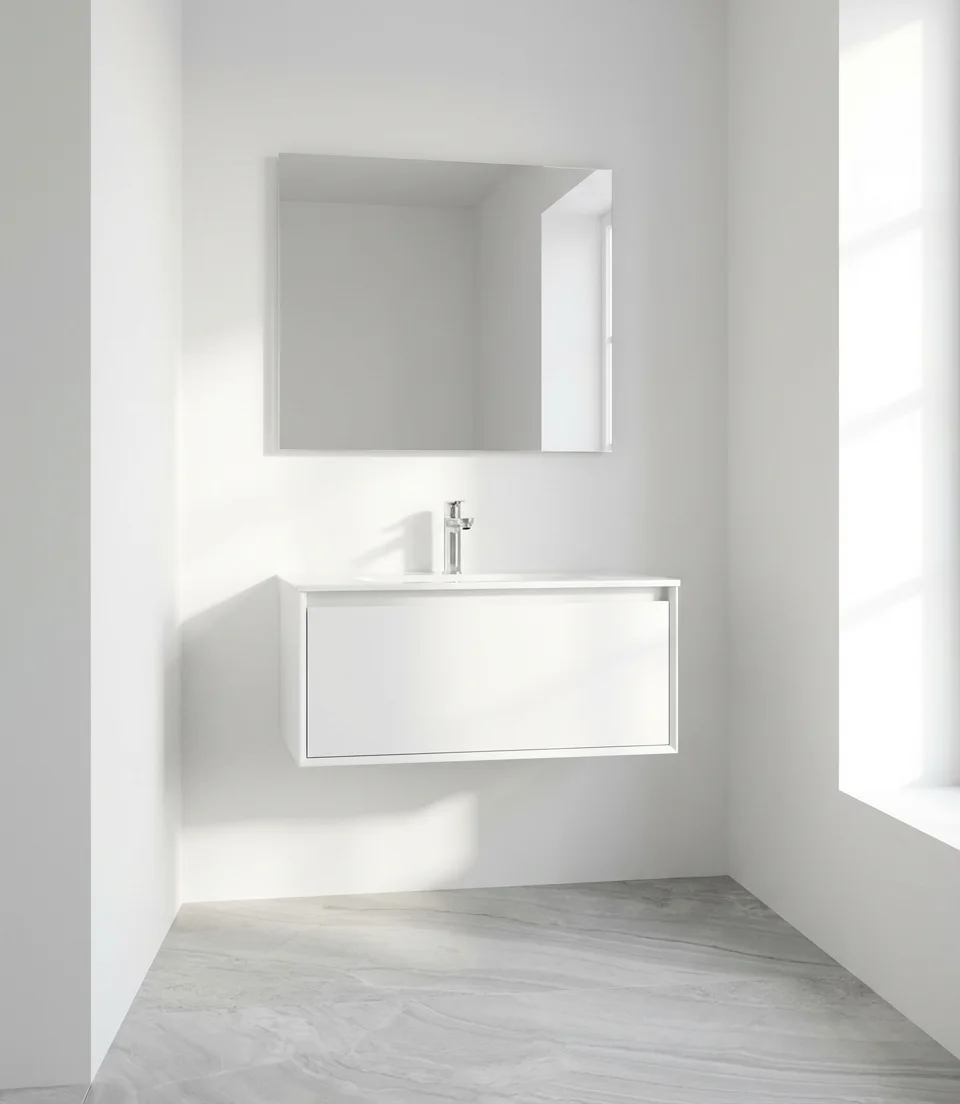
Often, the most courageous design choice is recognizing when to stop. The simple bathroom—deliberately undecorated, focused on quality over quantity, built around function—is increasingly appealing to Americans who are fatigued by visual noise in the rest of their lives. The bathroom features white walls, a single beautiful material for the floor, a single well-proportioned mirror, and fixtures chosen for their quiet dignity. This kind of inspirational space asks very little of you visually and gives back a tremendous amount in terms of mental clarity and ease.
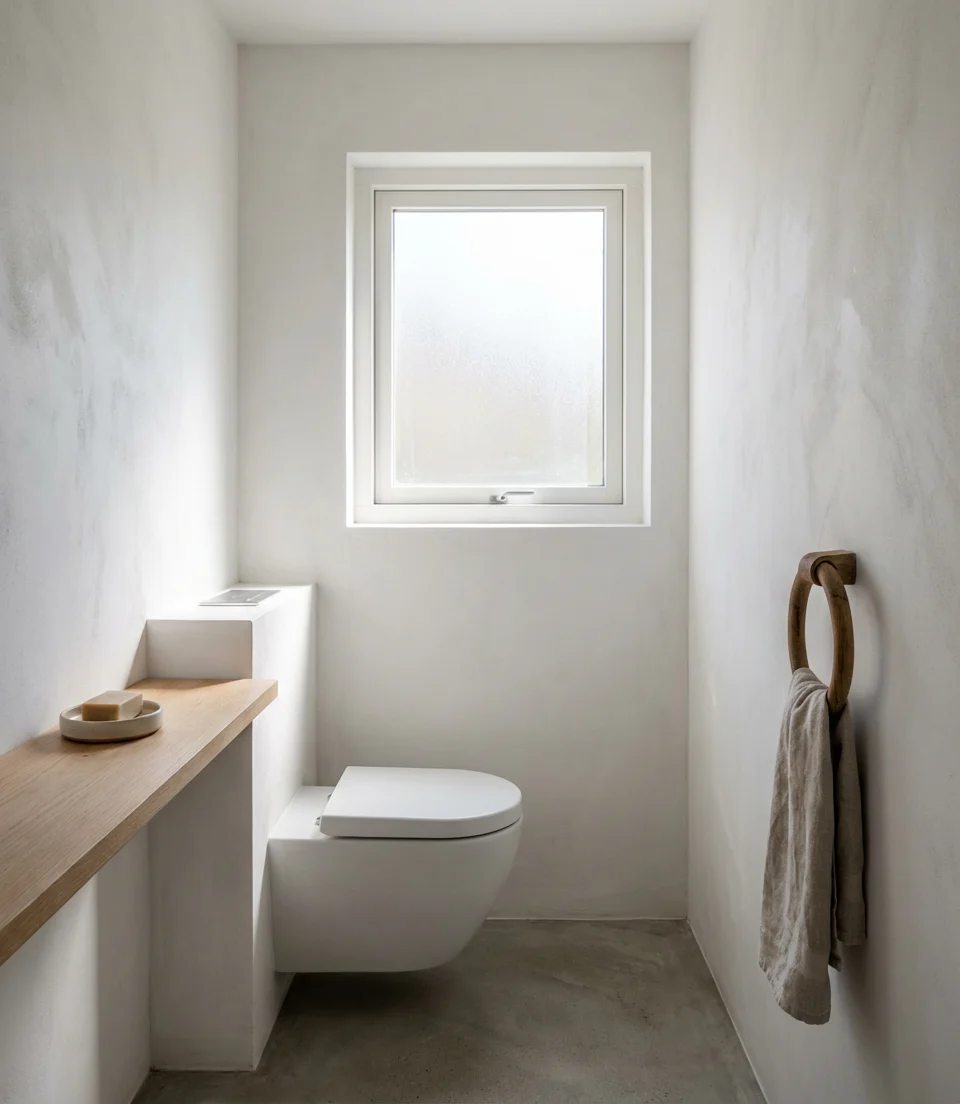
There’s a real behavioral pattern here: homeowners who pursue hyper-minimal bathrooms tend to be the ones who’ve lived through a renovation before. They’ve experimented with trends, accumulated accessories, and eventually realized the cleaner the space, the more peaceful the morning routine. If you’re considering this direction, the single most important investment is quality hardware and fixtures—because in a minimal bathroom, everything is visible, and nothing can hide. Spend the money on the faucet, the mirror, and the tile. Leave everything else out.
14. Retro Mid-Century Bathroom with Pastel Accents
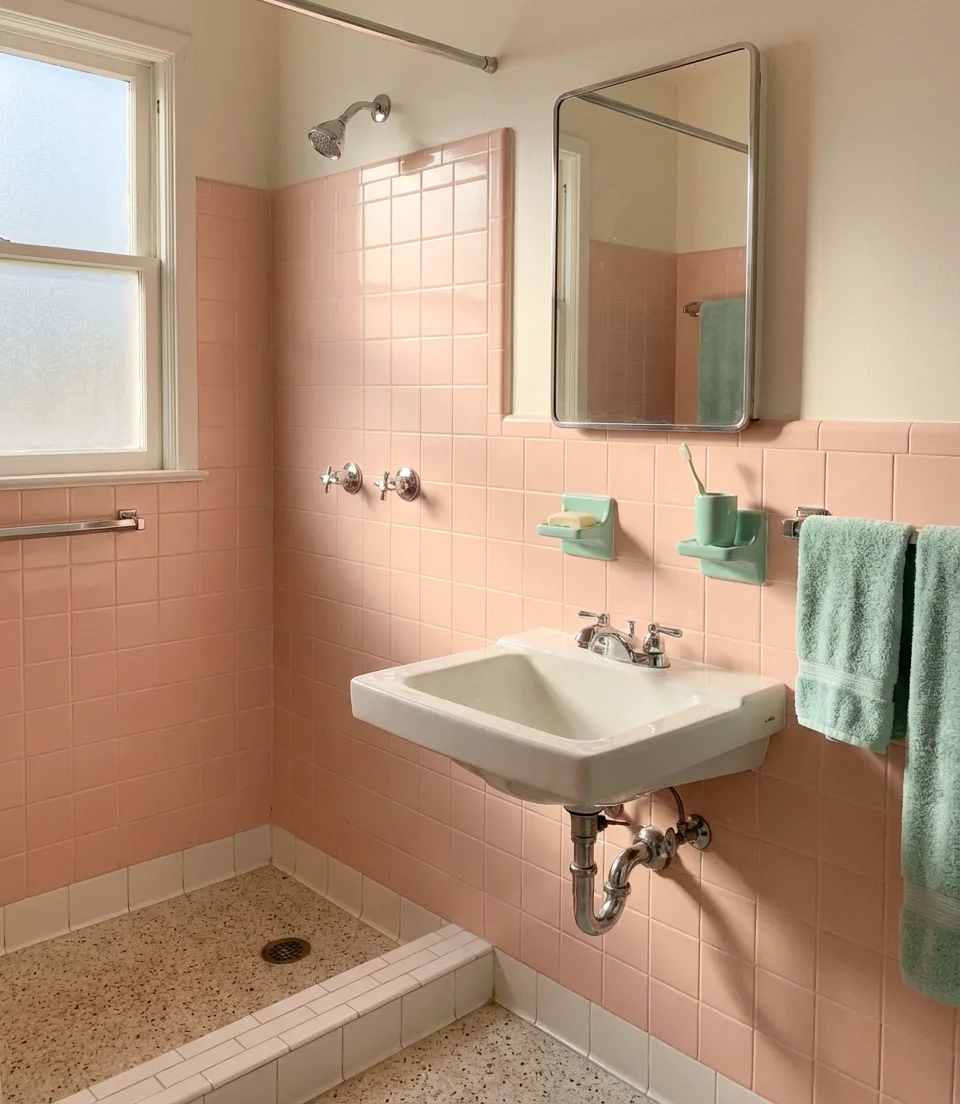
Pink bathrooms are back, and they’re not apologizing for it. The retro mid-century aesthetic—soft mint, warm peach, and dusty rose paired with chrome fixtures and graphic tile—was the design language of postwar American domesticity, and its current revival feels less like nostalgia and more like a genuine reclamation of something joyful. Vintage pink and blue tile combinations from the 1950s and 60s are now actively being preserved by homeowners who previously would have ripped them out, and new builds are commissioning similar palettes with delight.
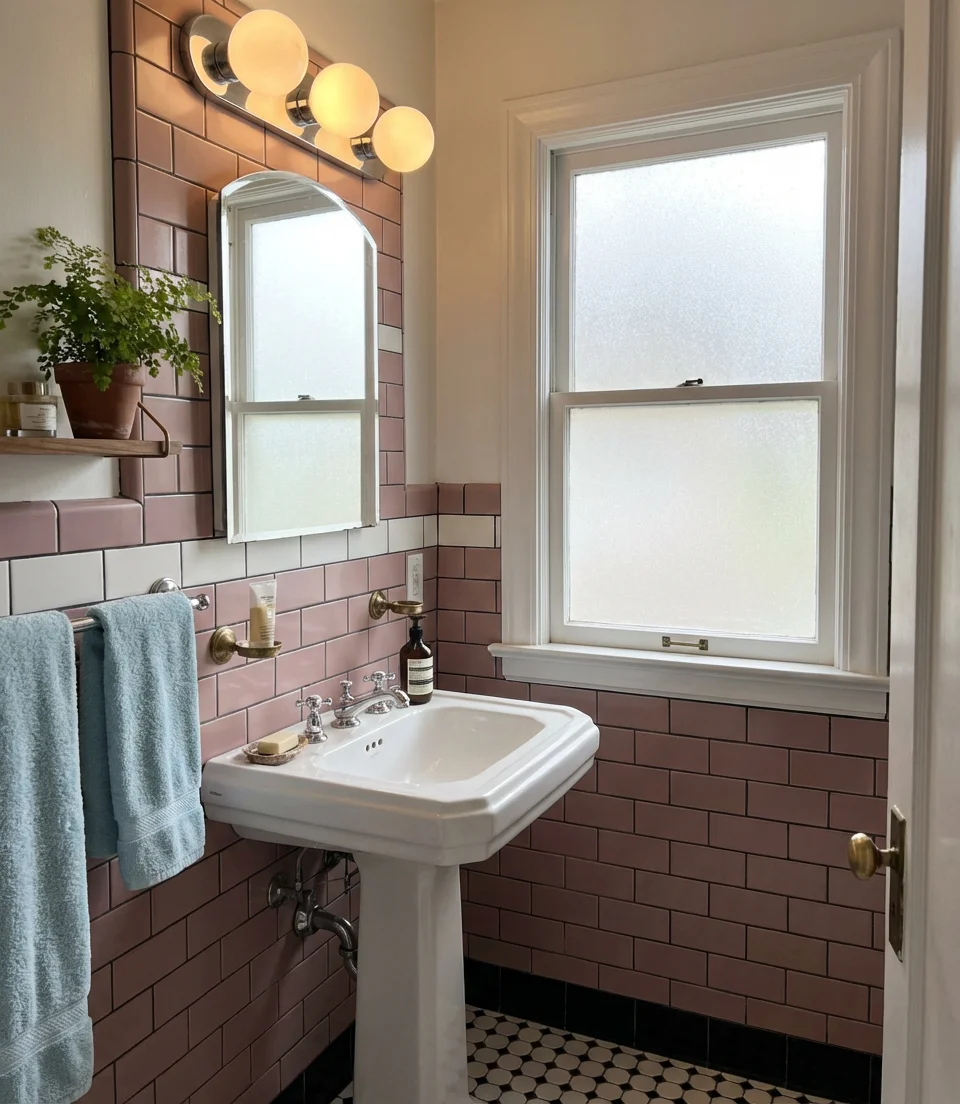
The preservation movement around original mid-century tile has grown significantly—there are now dedicated online communities (and even a book, “The Pink Bathroom,” of sorts) devoted to saving authentic pink bathrooms from unnecessary renovation. If you’re lucky enough to have original period tile in excellent condition, a professional tile restoration rather than a replacement can save thousands of dollars and add genuine character that no reproduction can match. If you’re starting a new project, the market for pastel tiles has never been more robust or affordable.
15. Color Drenching with Bold Interior Hues
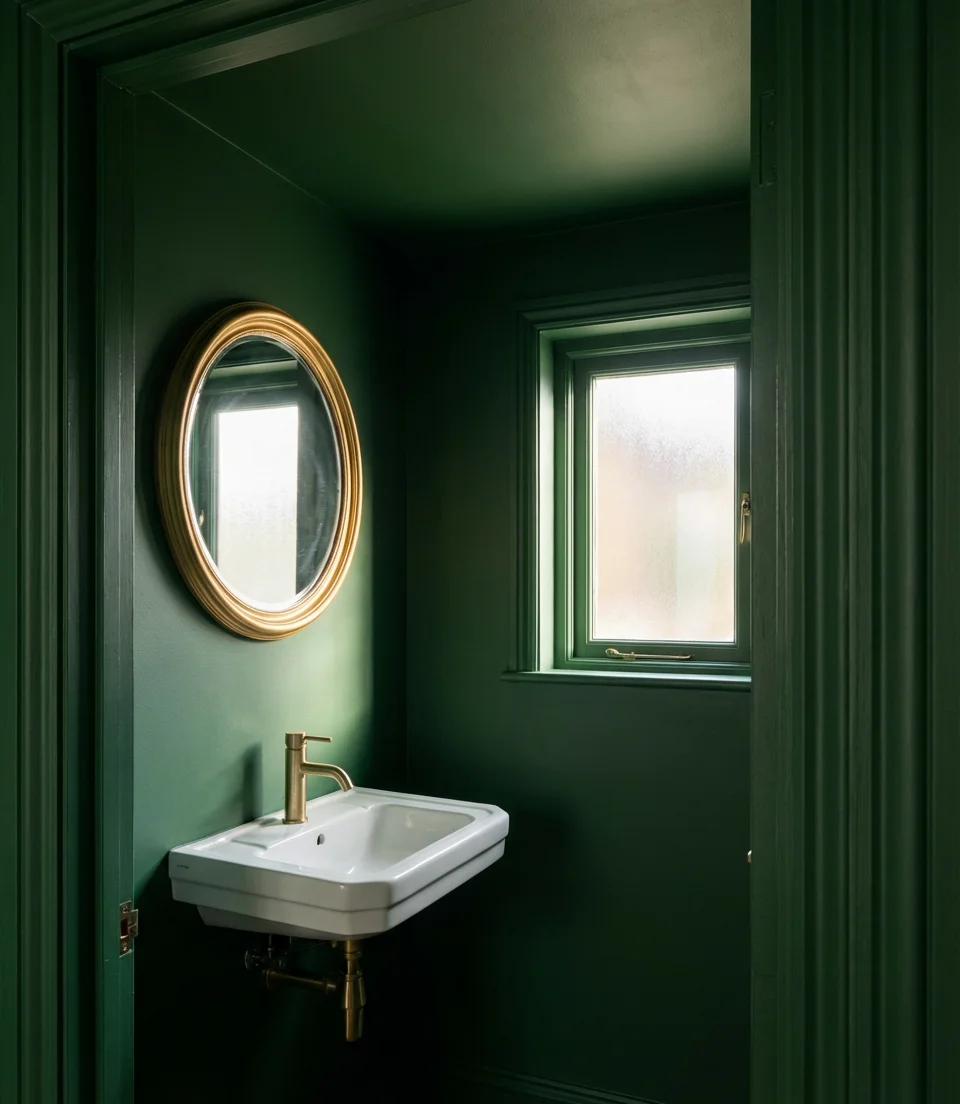
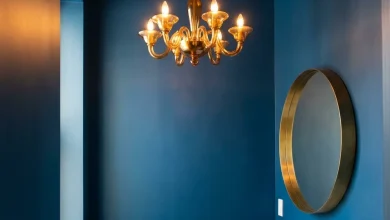
Color drenching—painting walls, ceiling, trim, and sometimes even the floor in the same saturated hue—is one of the most transformative and affordable things you can do to a small bathroom. Deep forest green, inky navy, and warm brick red: when applied uniformly, these ideas color interior design choices and create a sense of immersive depth that makes a tiny room feel intentional rather than cramped. This technique is particularly effective in powder rooms, where the small scale becomes an asset rather than a limitation—the whole room becomes a jewel box.
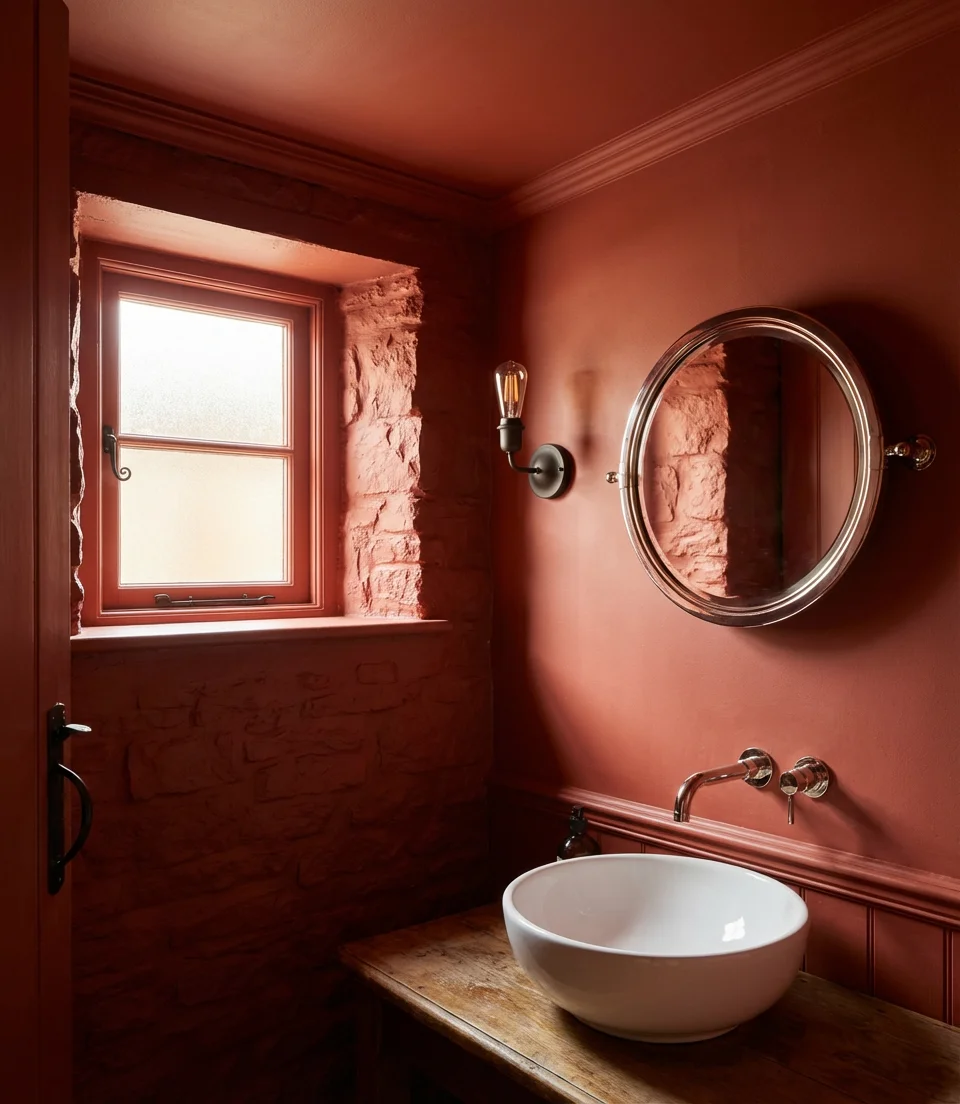
In the American South and Northeast especially, color-drenched powder rooms have become a kind of status symbol among design-forward homeowners—a signal that the person who lives there isn’t afraid to take risks. The good news is that this is a completely reversible investment. A quart of premium paint, one weekend, and excellent masking tape are all it takes. If the result doesn’t work, you can repaint. But most people who try color drenching immediately wonder why they waited so long.
16. Apartment Bathroom Makeover with Renter-Friendly Updates
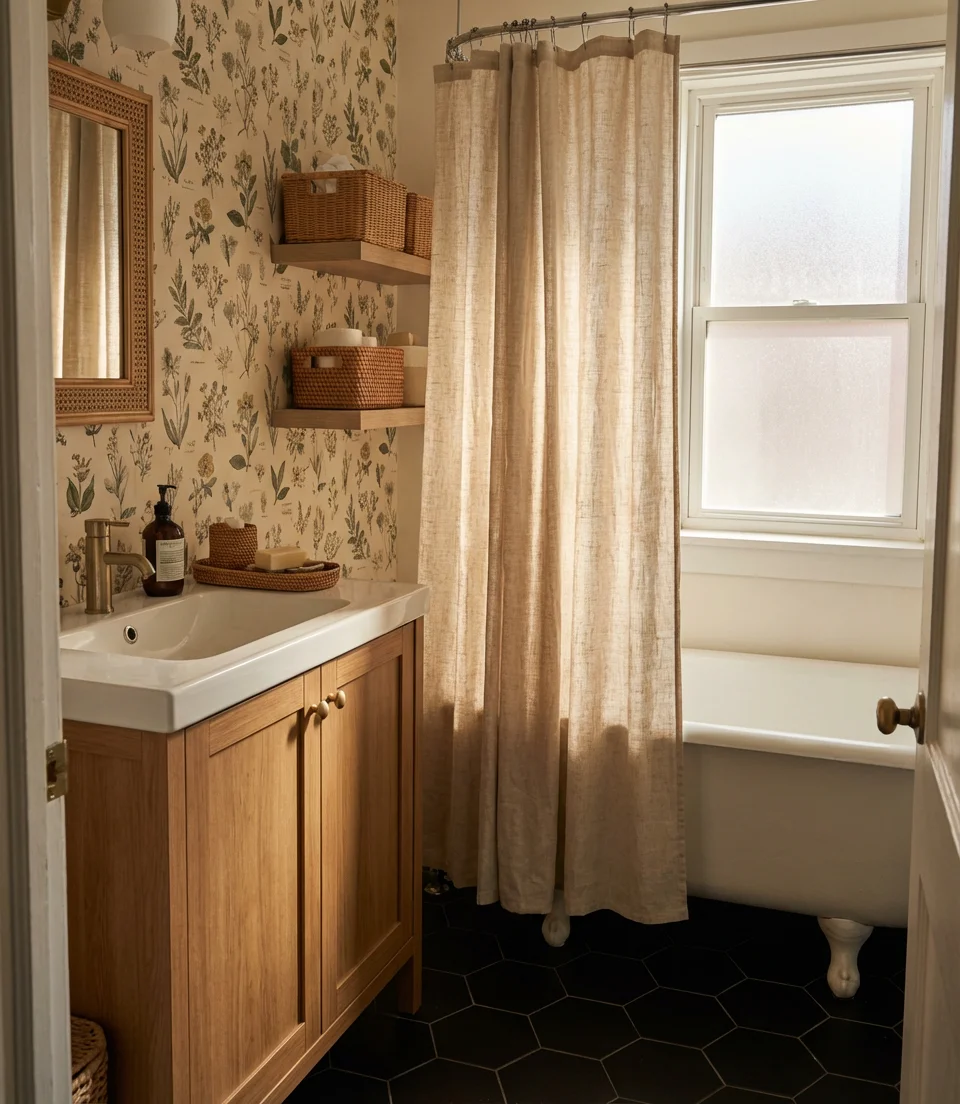
Living in a rental doesn’t mean you have to live with a beige builder bathroom forever. The best apartment bathroom updates in 2026 are temporary by design: removable wallpaper on a single accent wall, peel-and-stick floor tiles over existing vinyl, a tension rod with a linen curtain instead of a plastic shower liner, and swapped-out cabinet hardware (keep the originals in a labeled bag for move-out day). These ideas require no landlord permission and zero permanent alterations—just creativity and a free Saturday.
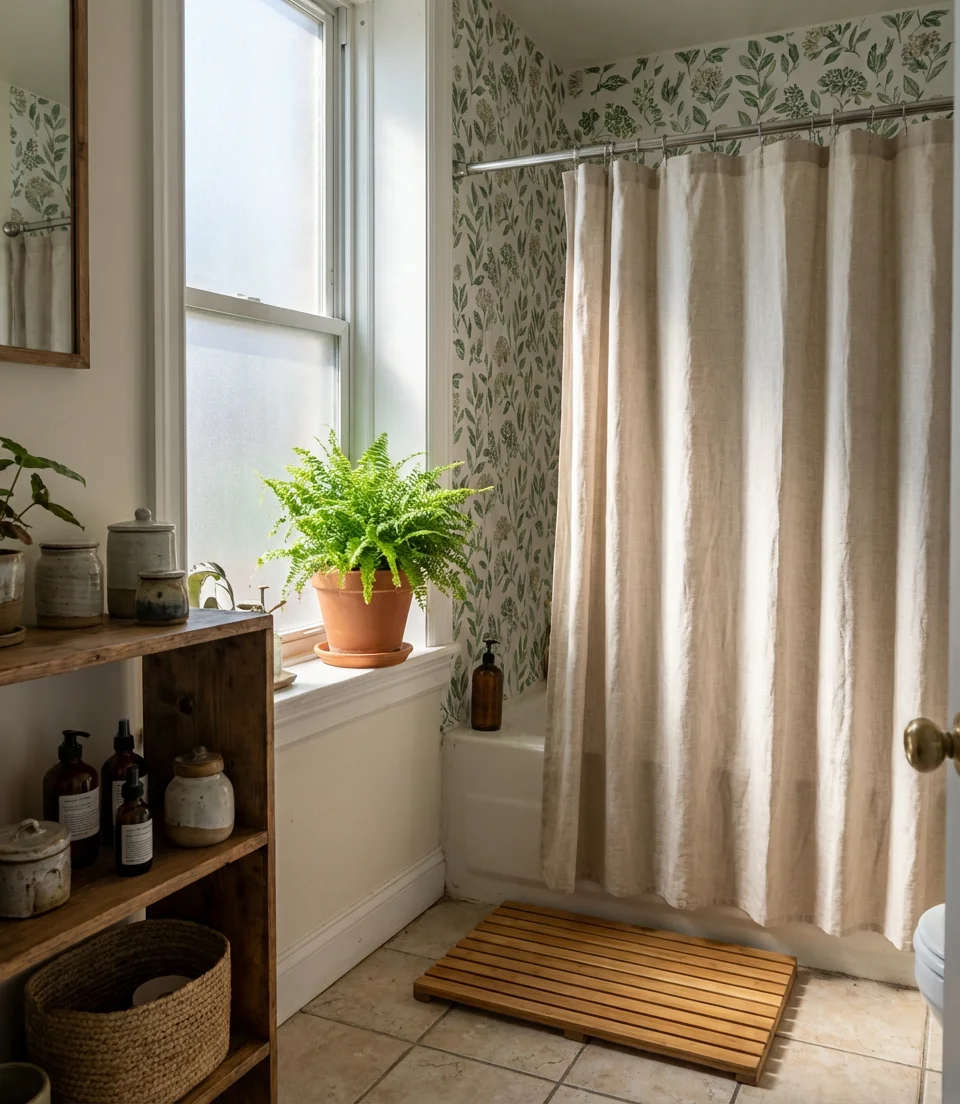
A renter in Chicago documented her bathroom transformation on Pinterest with a grand total of $212 spent, and her before-and-after post went viral. The three changes that made the biggest impact were the removable peel-and-stick floor tile ($60), a framed mirror leaned against the wall above the existing one ($45), and a statement shower curtain in deep amber linen ($55). The rest involved rearranging what she already owned. Her story is worth remembering: design impact is mostly about editing and intention, not about budget.
17. Earthy Organic Bathroom with Handmade Ceramics
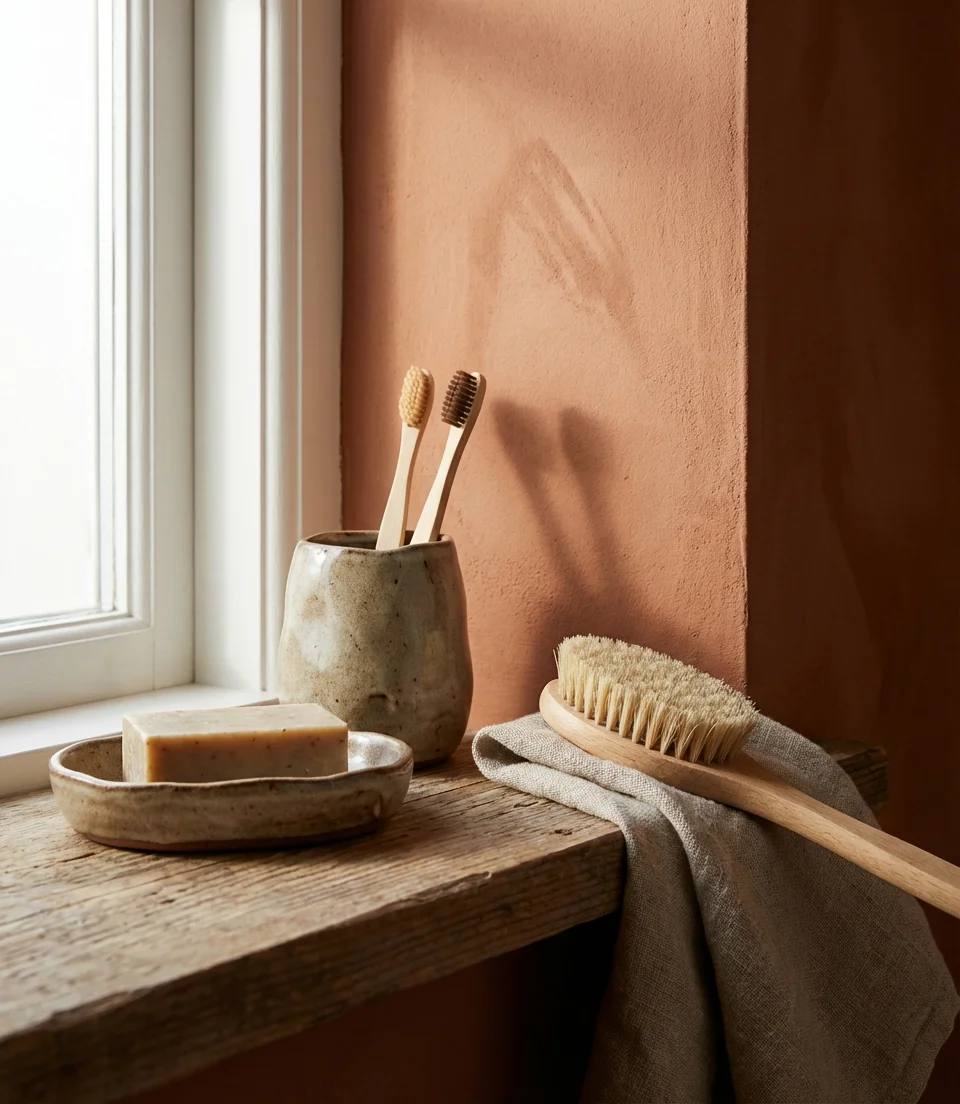
The handmade object is having a significant cultural moment, and nowhere is that more beautifully expressed than in the bathroom. Organic ceramics—a hand-thrown soap dish, an irregular toothbrush holder, a textured basin sink—bring a human quality to what is otherwise a highly engineered space. When paired with a rough linen hand towel, a wooden bath brush, and a clay-toned wall, these objects create a sensory environment that feels significantly different from the impersonal precision of standard bathroom fittings. This is earthy design at its most personal.
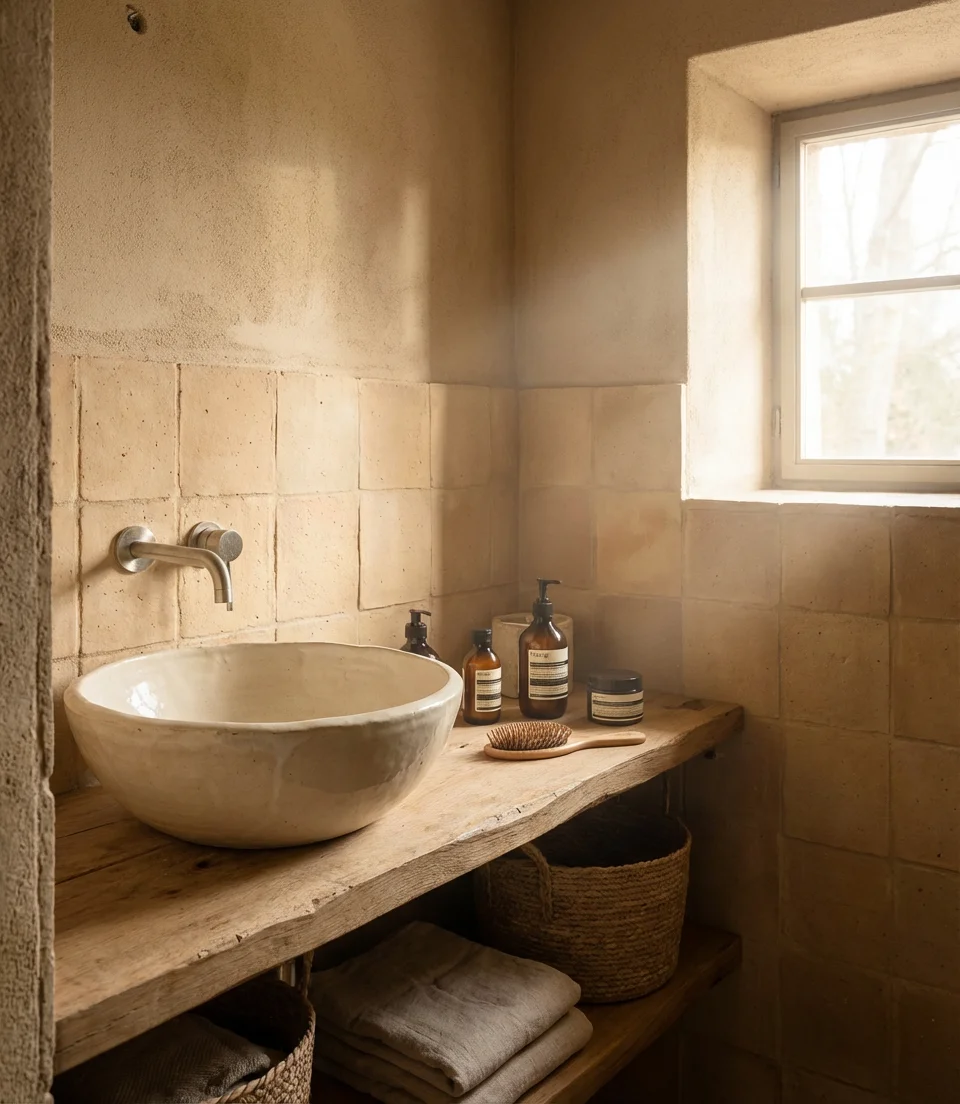
Platforms like Etsy and local pottery markets have made handmade ceramic bathroom accessories genuinely accessible—a hand-thrown soap dish can cost as little as $20, and a ceramic basin sink from an independent maker might run $150 to $400, which is comparable to designer mass-market options. The difference is character: the slight irregularities in a handmade piece are exactly what the eye gravitates toward in a bathroom full of otherwise perfect surfaces. One distinctive object can shift the feeling of an entire room.
18. Toilet Area Design with Style and Function
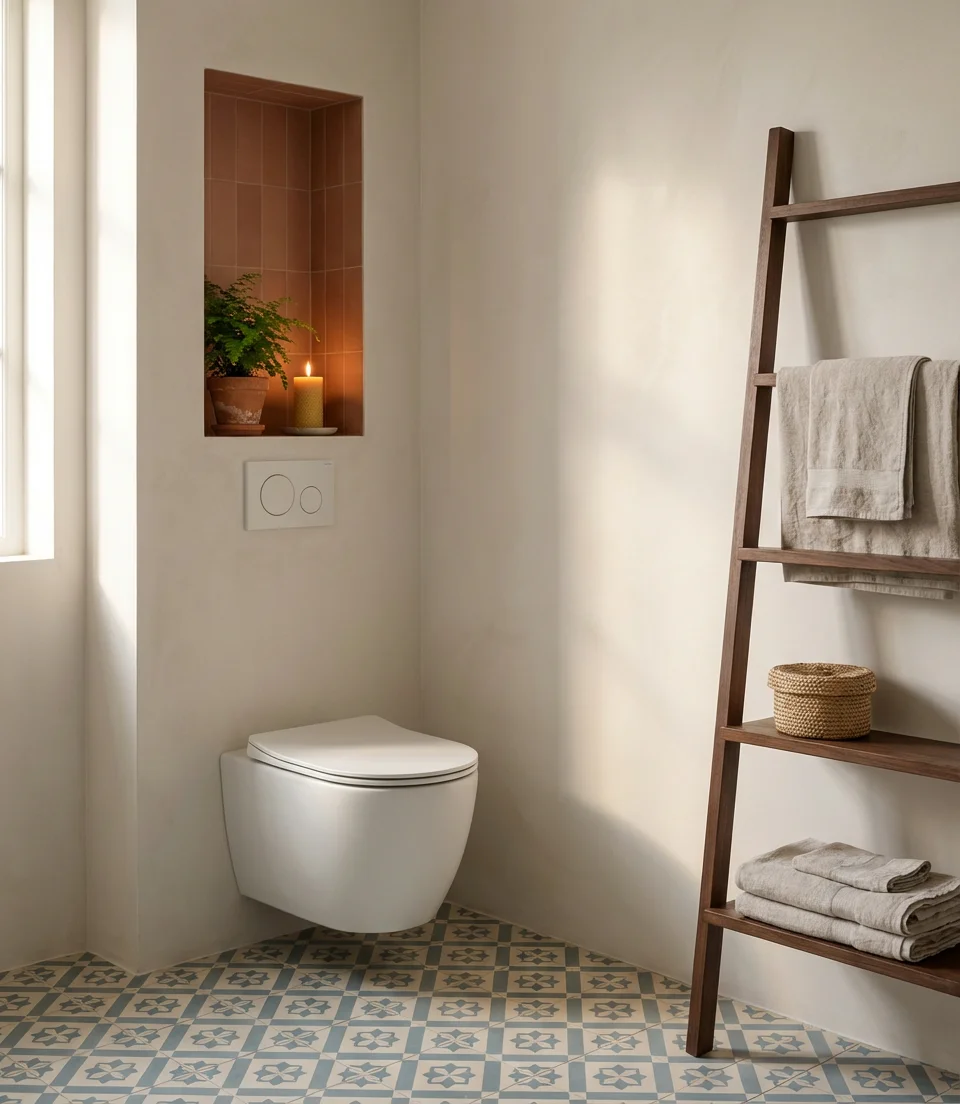
The toilet zone is the most neglected corner of bathroom design—and also one of the easiest to transform. Ideas for inspiration for toilets abound in 2026: a floating wall-hung toilet in matte white, flanked by a built-in niche with recessed shelving; a wallpapered half wall behind the tank in a bold pattern; and a wooden ladder shelf beside the toilet for magazine storage and spare rolls. These are genuinely functional improvements with a really simple design payoff that most people never think to attempt because the toilet itself feels like an ending rather than a beginning.
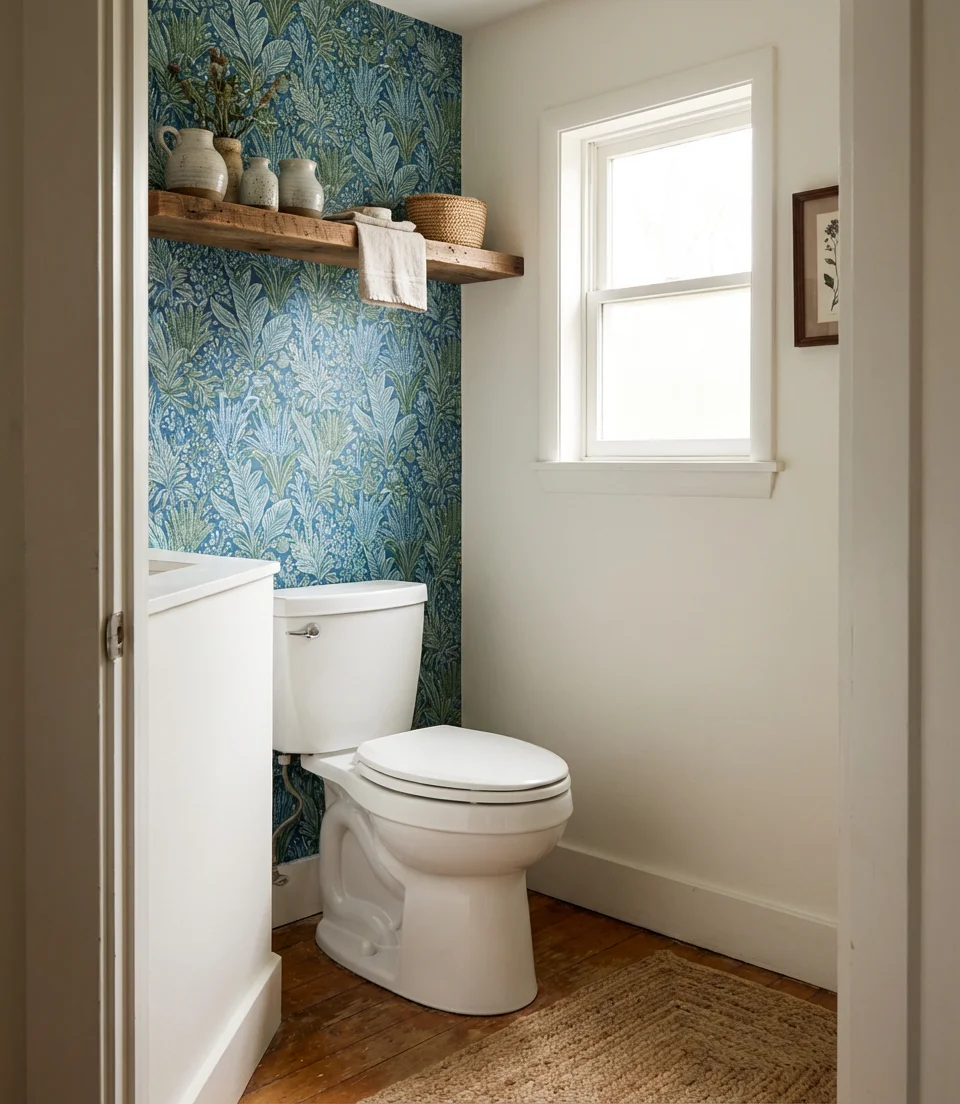
One expert insight that surprises most clients: the toilet seat itself is one of the highest-ROI upgrades in a bathroom renovation. Swapping a standard plastic seat for a bidet seat (which now starts under $300 for solid mid-range options like TOTO or BioBidet) immediately modernizes the fixture and adds genuine functionality. American homeowners who’ve made the switch report it changes the way they think about the entire bathroom—the toilet goes from the room’s awkward necessity to something that actually earns its place.
19. Dark and Moody Bathroom with Dramatic Lighting
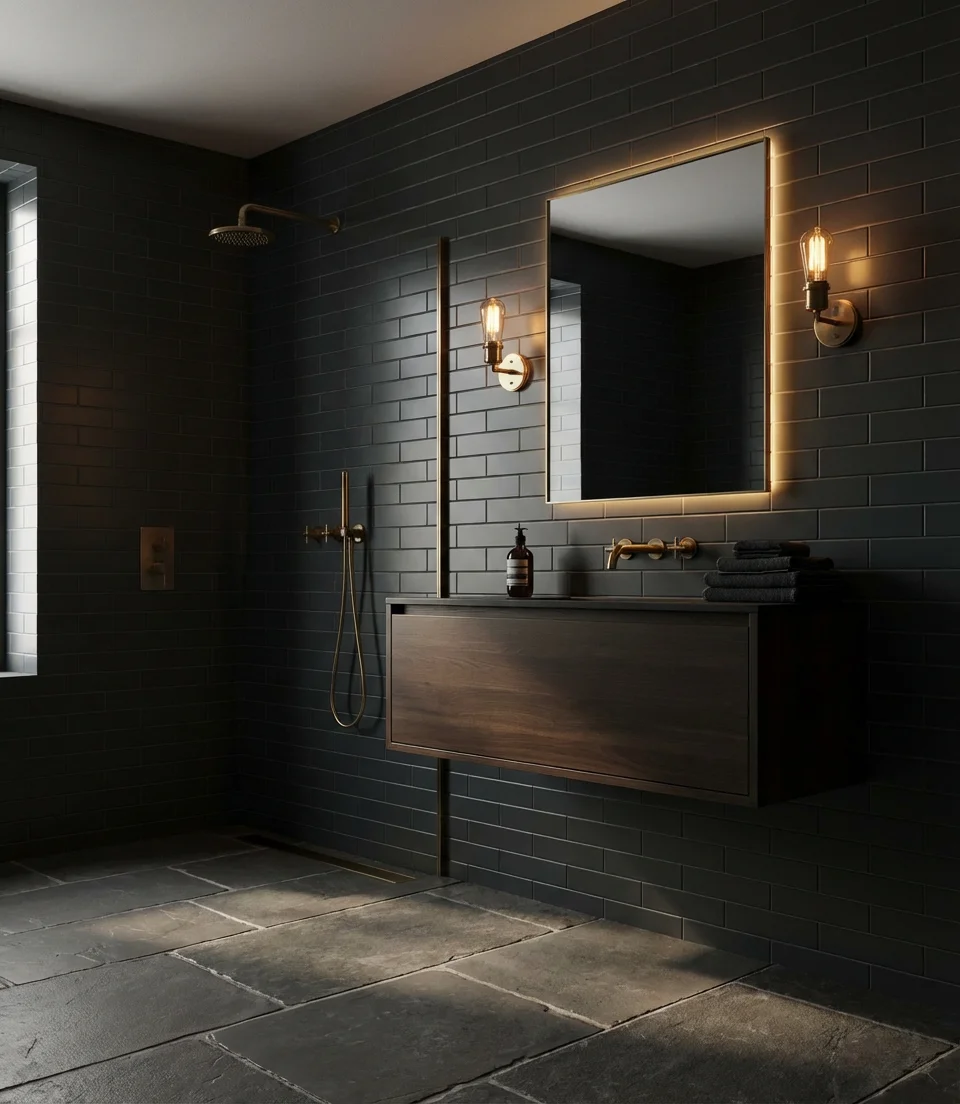
Some bathrooms aren’t meant to be bright. The dark and moody bathroom is a design commitment—charcoal walls, forest green tile, deep navy cabinetry—but the payoff is a space that feels like a private sanctuary removed from the world. Paired with warm Edison-bulb sconces, a backlit mirror, and brass or copper hardware, this kind of space is extraordinarily photogenic and even more immersive in person. Luxury hotels have been doing such rooms for years, and residential design has caught up in a meaningful way for this current cycle of modern bathroom decoration.
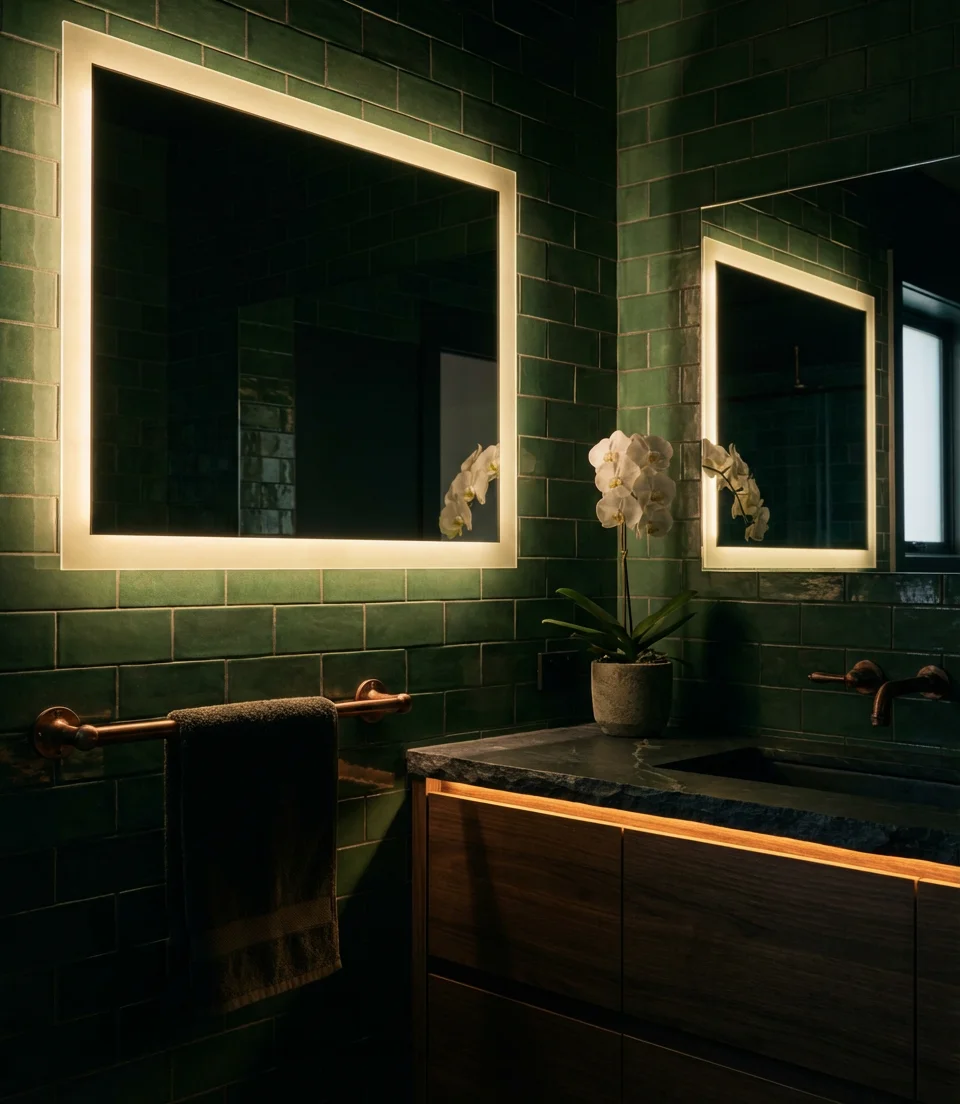
The most common mistake in dark bathrooms is under-investing in the lighting plan. This is a room where you genuinely need multiple sources: general overhead (dimmer essential), task lighting at the mirror, and accent lighting that adds warmth along the lower zones. A backlit mirror on its own is not enough. Layered lighting in a dark bathroom can easily be achieved for $300–$600 in fixtures, and the difference between a well-lit dark bathroom and a poorly lit one is the difference between a boutique hotel and a basement. It would be advisable to plan the lighting before proceeding with the
20. Spa-Inspired Bathroom with Natural Materials
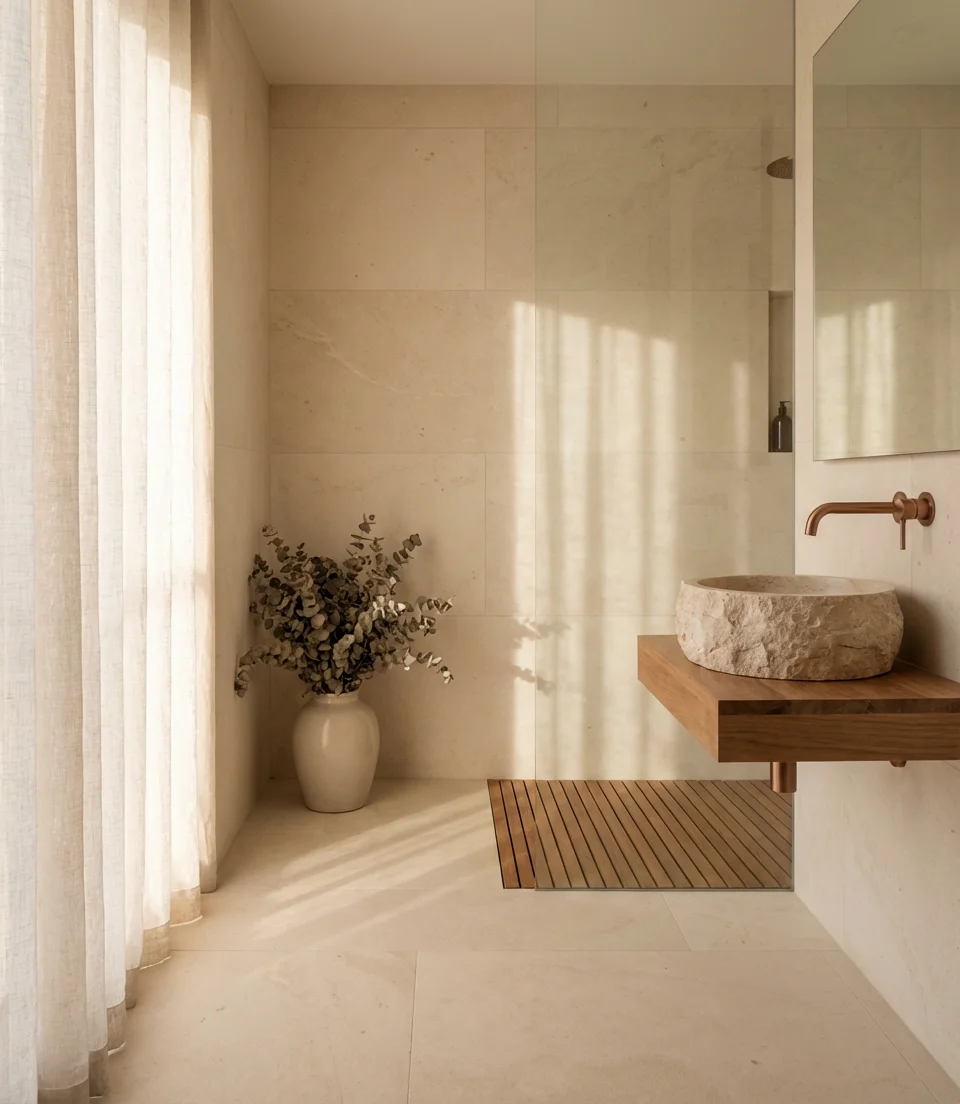
The word “spa” gets used loosely in bathroom design, but the real thing is identifiable the moment you walk in: it smells like nothing synthetic, the surfaces feel warm and tactile, the light is calm rather than harsh, and there is a sense of ritual embedded in the layout. Achieving this at home in 2026 is more feasible than ever. Organic materials—teak slats for the shower floor, a linen panel over the window, and a stone basin filled from a wall-mounted spout—create the sensory conditions of a genuine retreat. This is the best approach to designing a master bath.
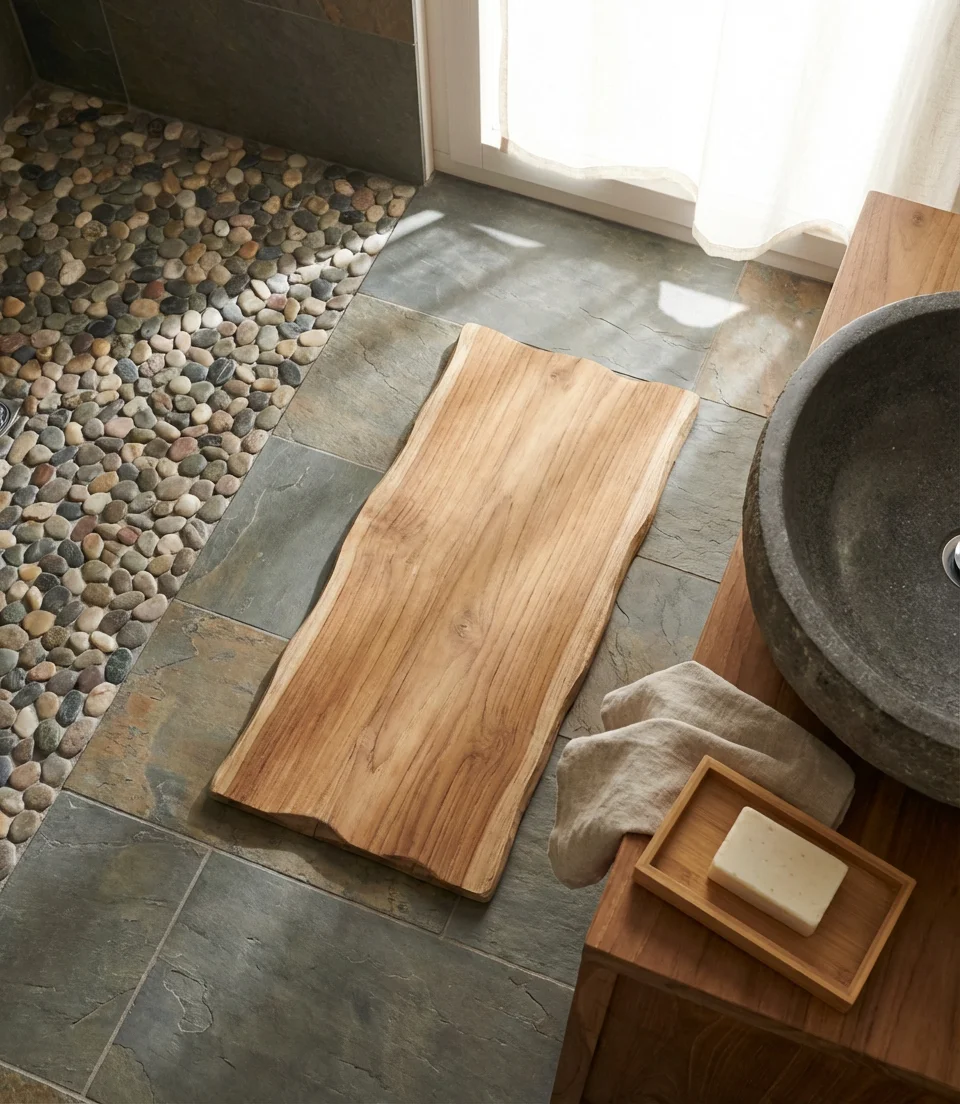
Teak in wet areas requires a little knowledge—it’s naturally water-resistant due to its high oil content, but it should still be treated annually with teak oil to maintain its color and prevent drying. Without it, teak will silver gracefully (which some people prefer), but it can also become more susceptible to surface mold in consistently damp environments. The good news: maintenance takes about 20 minutes a year, and the result—that warm, honey-toned shower floor—is worth every minute. Many designers cite it as the single material that most reliably transforms a bathroom from ordinary to extraordinary.
21. Wallpaper Accent Wall in Bathroom
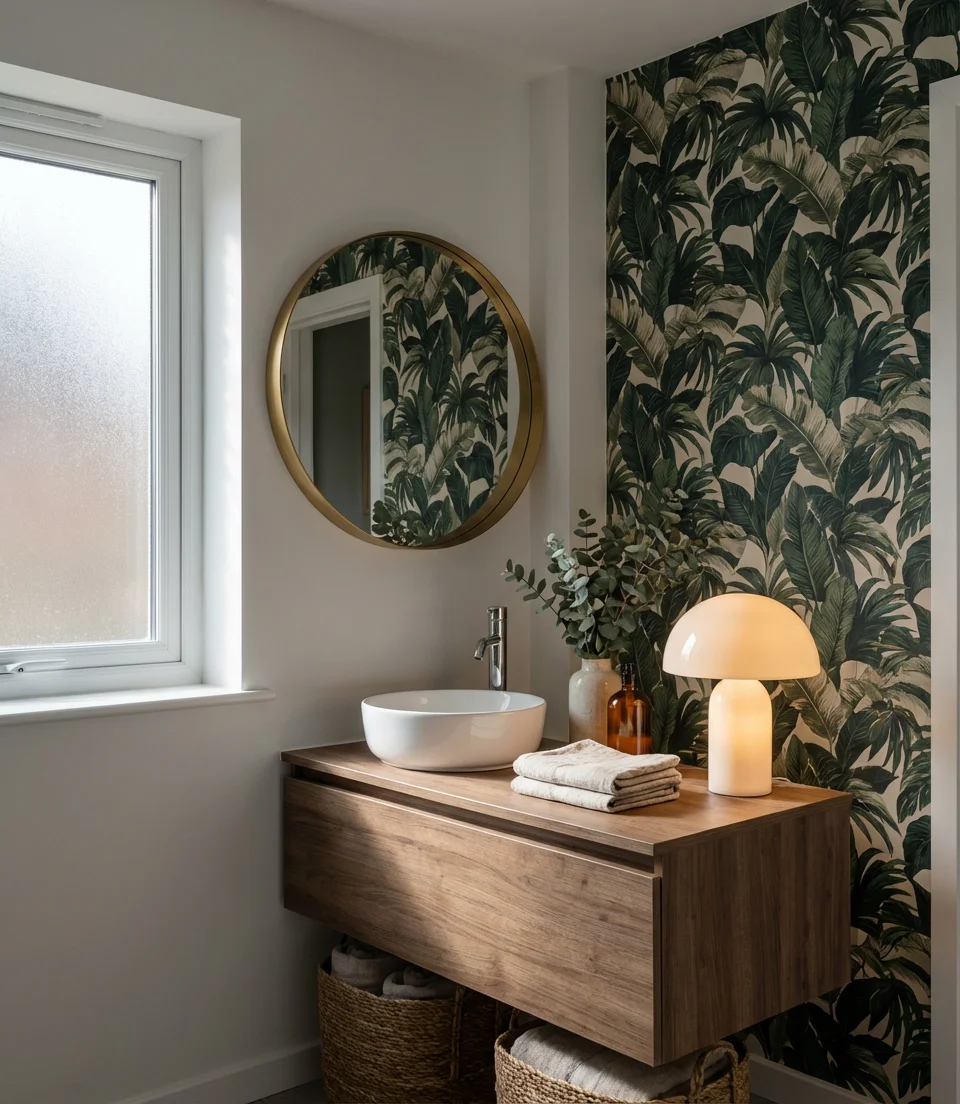
Wallpaper in bathrooms was once considered inadvisable. Now it’s one of the most recommended design moves for the space—provided you choose the right product and install it correctly. Vinyl-coated or solid vinyl wallpaper handles bathroom humidity beautifully, and the visual impact of a bold botanical, a moody geometric, or a hand-painted floral in a space as small as a bathroom is enormous. Ideas for inspiration in this direction are everywhere on Pinterest right now, and the range of available patterns has never been richer. Even rustic and artisanal paper textures are now available in moisture-resistant formats.
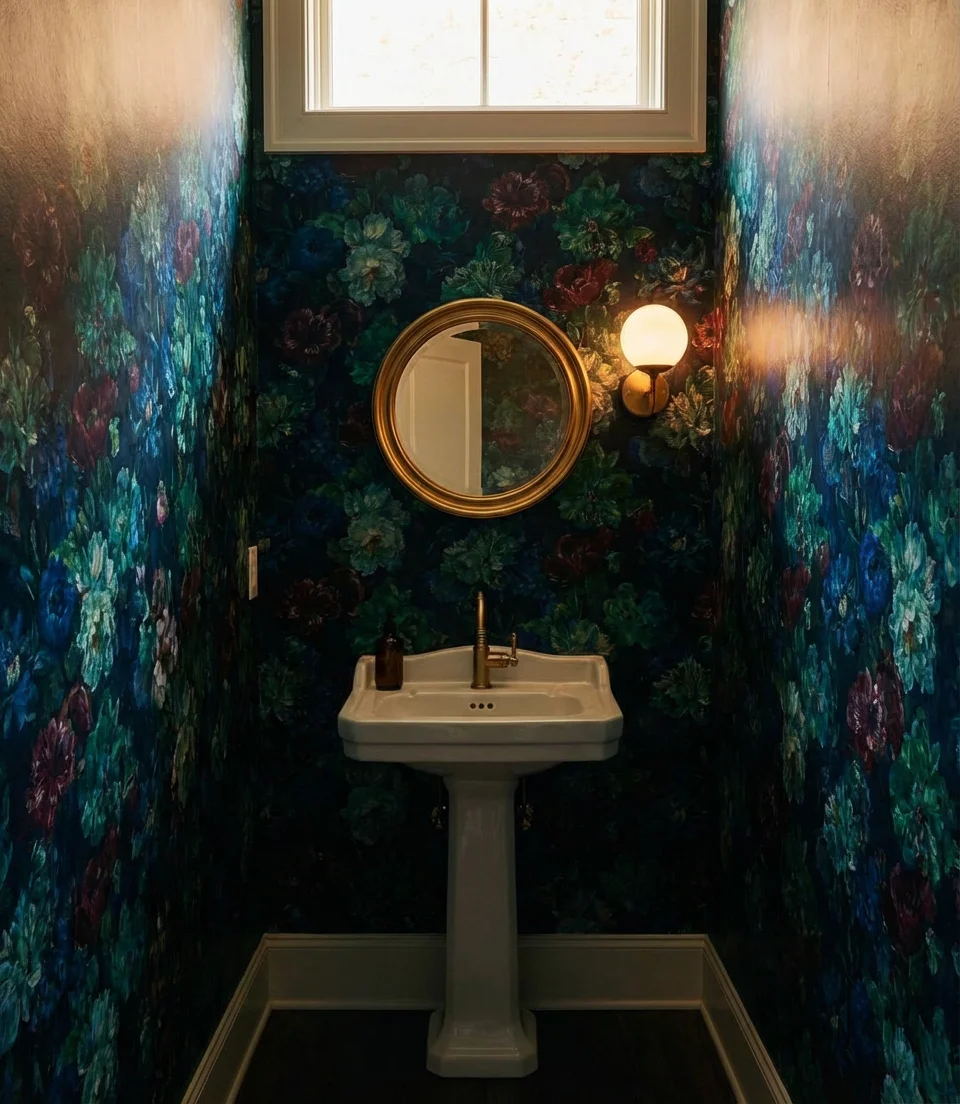
For anyone considering bathroom wallpaper for the first time: the secret to longevity is the installation, not just the material. Make sure the wall is primed with a moisture-barrier primer before hanging, and seal all seams with a clear waterproof sealant after installation. These two steps add maybe $30 to the project and extend the life of the wallpaper dramatically. It is advisable to inquire whether the sealing step is included before committing to a contractor, as many installers may overlook it; if it is not included, you may want to consider completing it yourself. It takes 15 minutes and protects a $400+ investment.
22. Open Concept Walk-In Shower with Rain Head
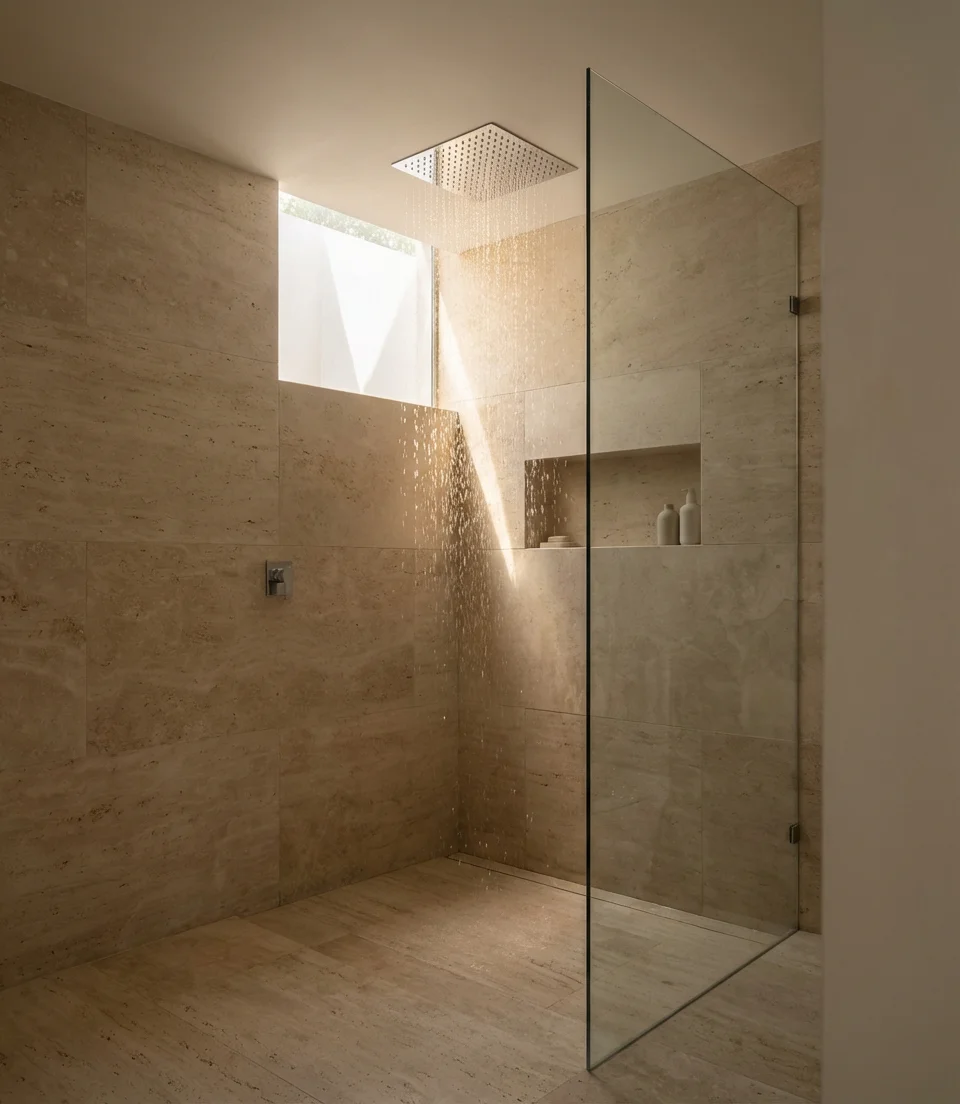
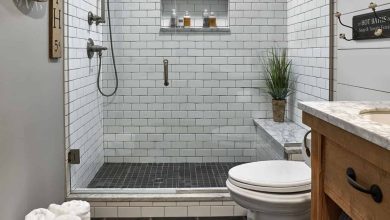
The curbless, doorless walk-in shower is the defining bathroom trend of this decade—and the rain head fixture is its most beloved feature. A large-format ceiling-mounted rain head (12 inches or larger) turns a daily shower into something genuinely restorative. In the context of a modern bathroom decoration overhaul for 2026, this configuration also works brilliantly for small spaces: without a door or curb, the visual footprint of the shower dissolves into the rest of the bathroom floor, making the entire room feel continuous and significantly larger than it is.
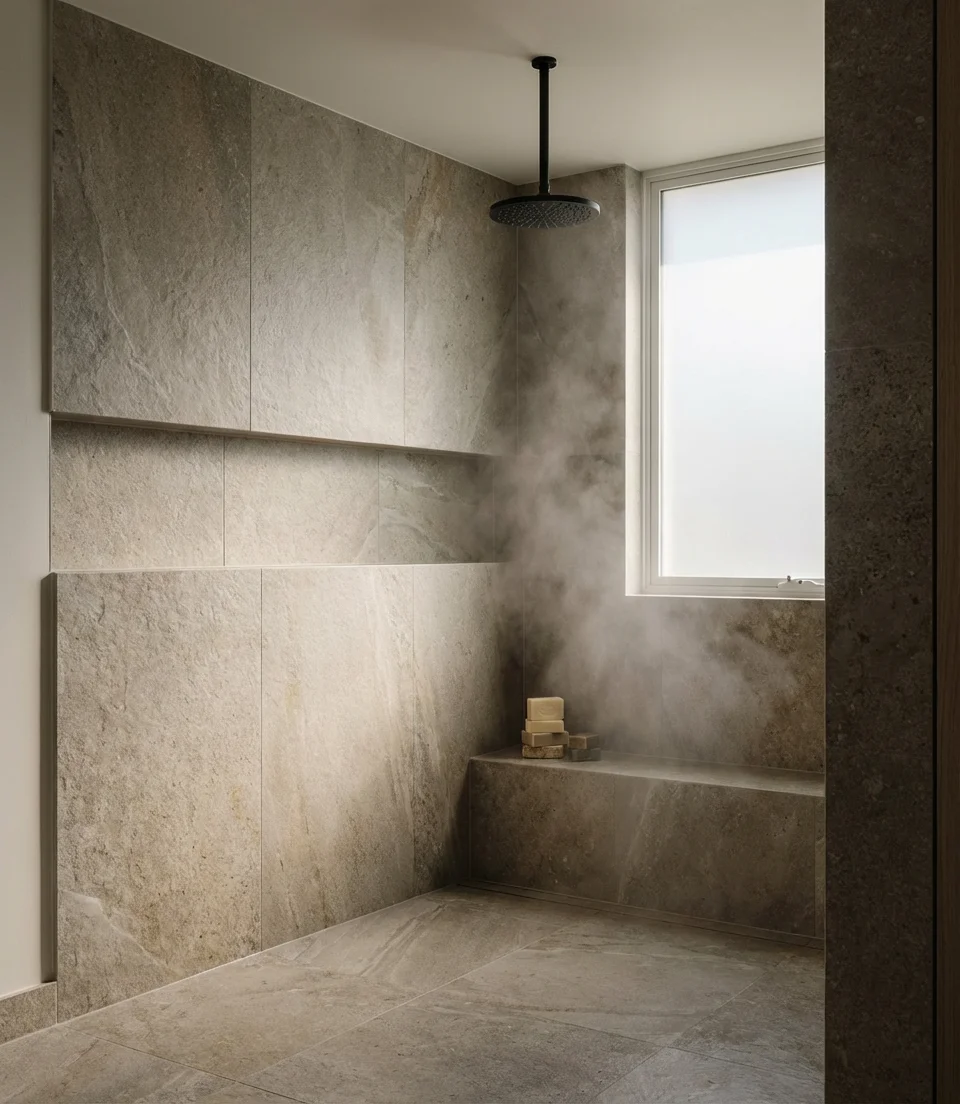
The curbless shower does require careful planning around drainage—a properly installed linear drain with adequate slope to the floor is non-negotiable. This is not a DIY project; it requires a licensed plumber and a tile installer experienced in wet-area floor gradients. When done correctly, it is both functionally flawless and visually stunning, and it ages well with the home. Americans who’ve invested in curbless showers consistently report it as one of the renovations they’re happiest with five years later—both for daily use and for resale appeal when the time comes.
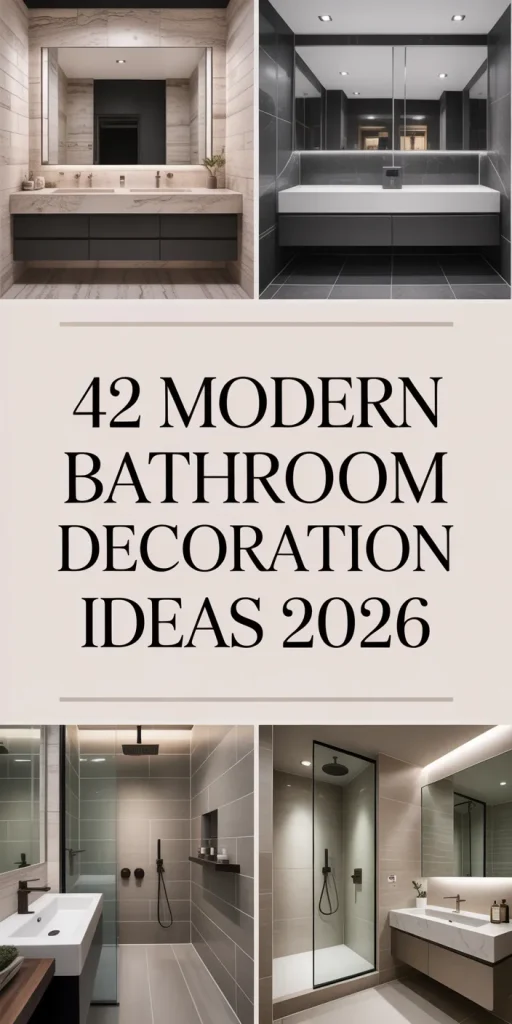
Whether you’re dreaming of a full gut renovation or just looking for one or two weekend-worthy changes, the bathroom ideas of 2026 offer something for every vision, budget, and square footage. From the drama of a fully black room to the quiet honesty of a minimal white space, the common thread is intention—designing a room that genuinely serves how you want to feel every single day. Which of these ideas speaks most to you? Drop a comment below and tell us what you’re planning for your bathroom this year—we’d love to see what you create.