
Accent walls in living rooms have never been more popular—and in 2026, they’ve evolved far beyond a single coat of bold paint. American homeowners are searching Pinterest for ways to add personality, depth, and visual interest to their spaces without committing to a full room makeover. Whether you’re working around a TV, fireplace, or simply want to anchor your seating area, an accent wall offers instant impact. This year’s trends blend timeless materials like wood and limewash with daring color choices and unexpected textures. Below, you’ll find fresh ideas that balance style, function, and real-life livability.
1. Deep Green Wall Behind a Modern Sectional
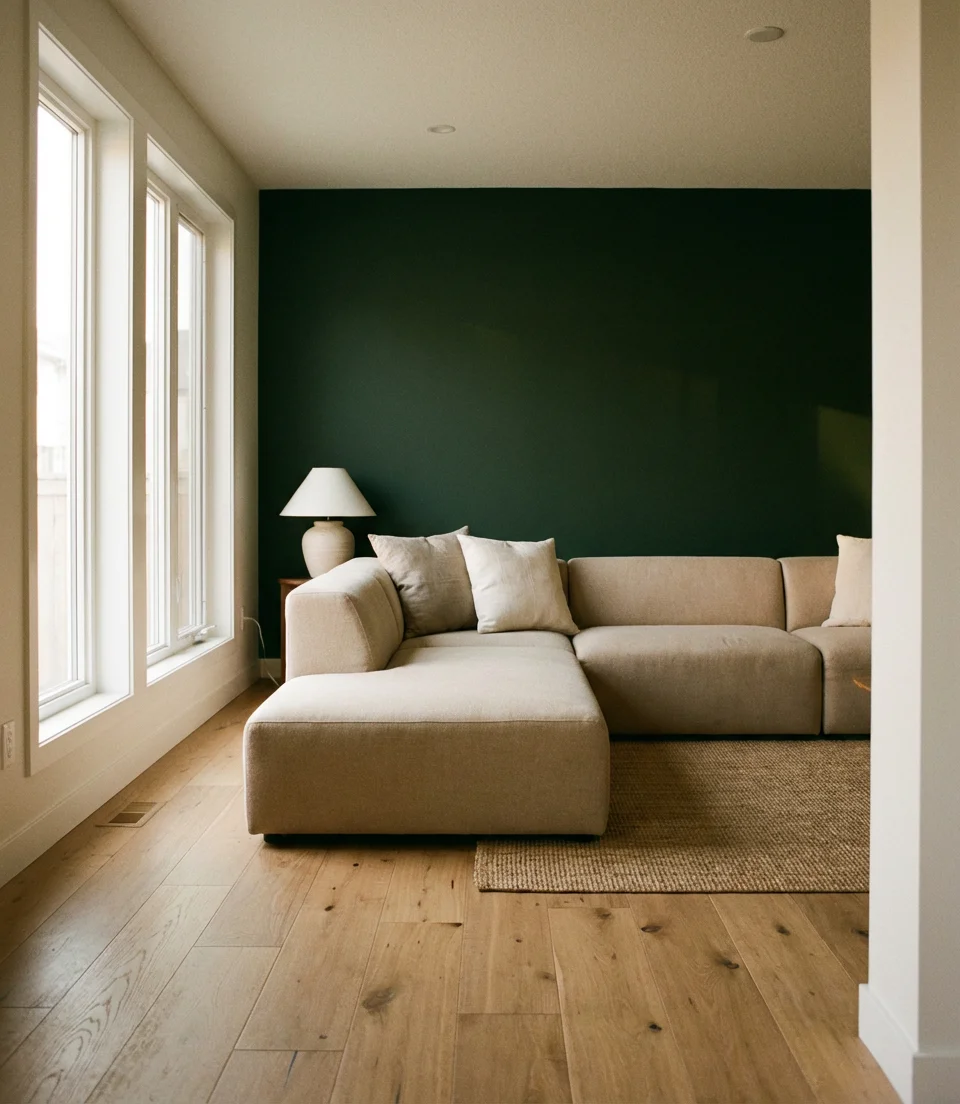
A dark green accent wall creates a grounding backdrop for neutral furniture, especially when paired with a low-profile couch in beige or gray. This approach works beautifully in open-concept homes where you want to define the living zone without installing partitions. The richness of the green adds warmth and sophistication, making it a go-to choice for modern living room layouts that still feel inviting.
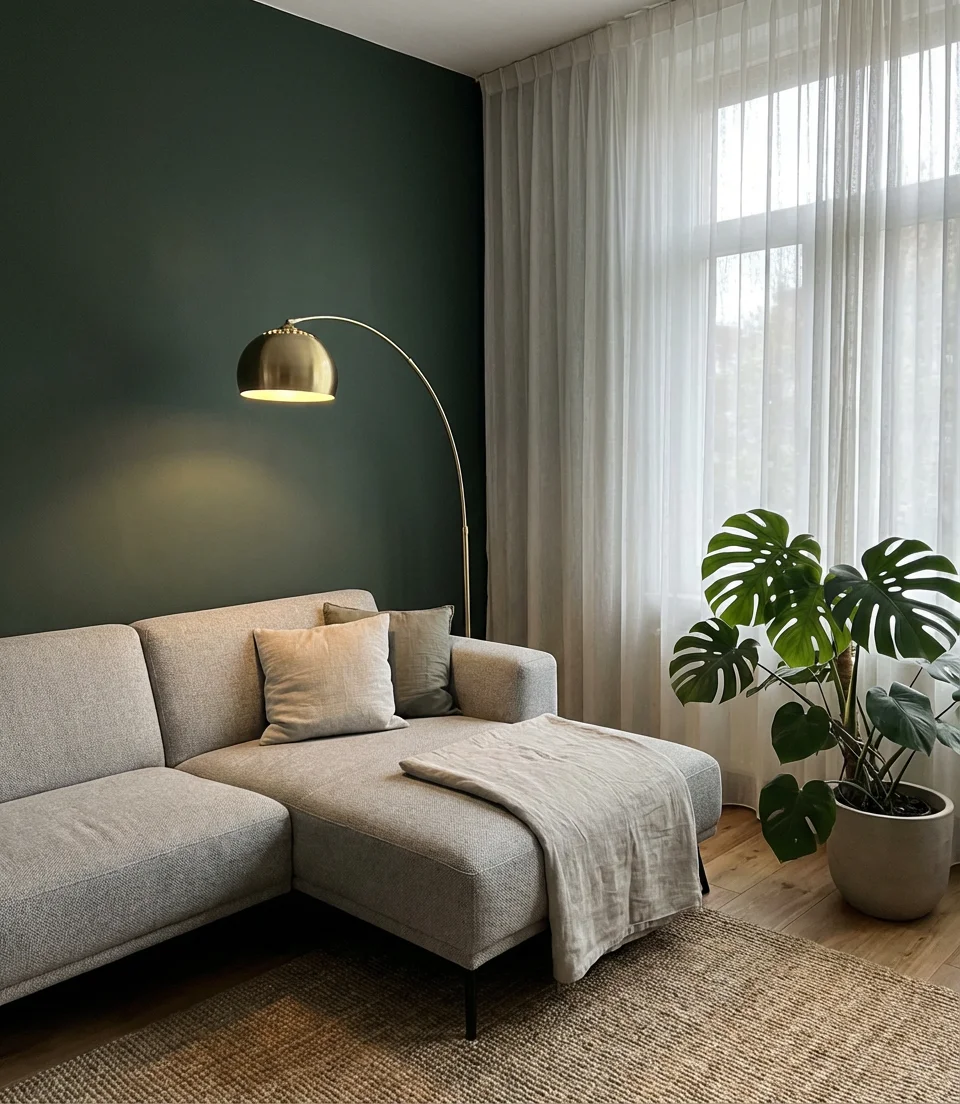
One common mistake is choosing a green that’s too bright or too muted for your lighting conditions. Test samples at different times of day—morning light can make deep greens look almost black, while evening lamps bring out their warmth. If your room gets limited natural light, consider a mid-tone green instead of going ultra-dark. This small adjustment keeps the space from feeling cave-like.
2. Vertical Wood Paneling with Integrated TV Mount
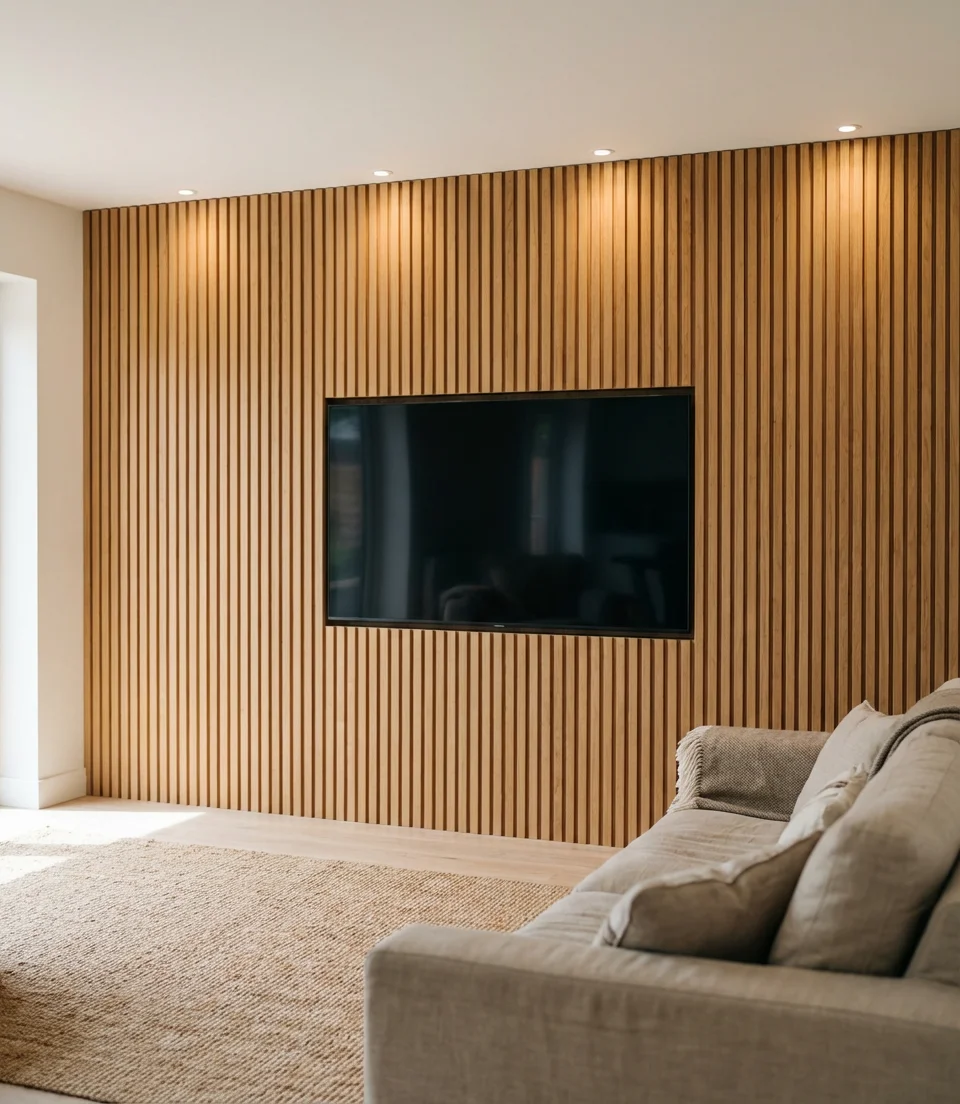
Vertical wood paneling adds texture and height, and when you integrate a TV mount directly into the design, the screen feels intentional rather than tacked on. This solution is especially popular in living room ideas with TV setups where cords and clutter are a concern. The paneling can run floor-to-ceiling or stop at picture-rail height, depending on your ceiling proportions and the look you want.
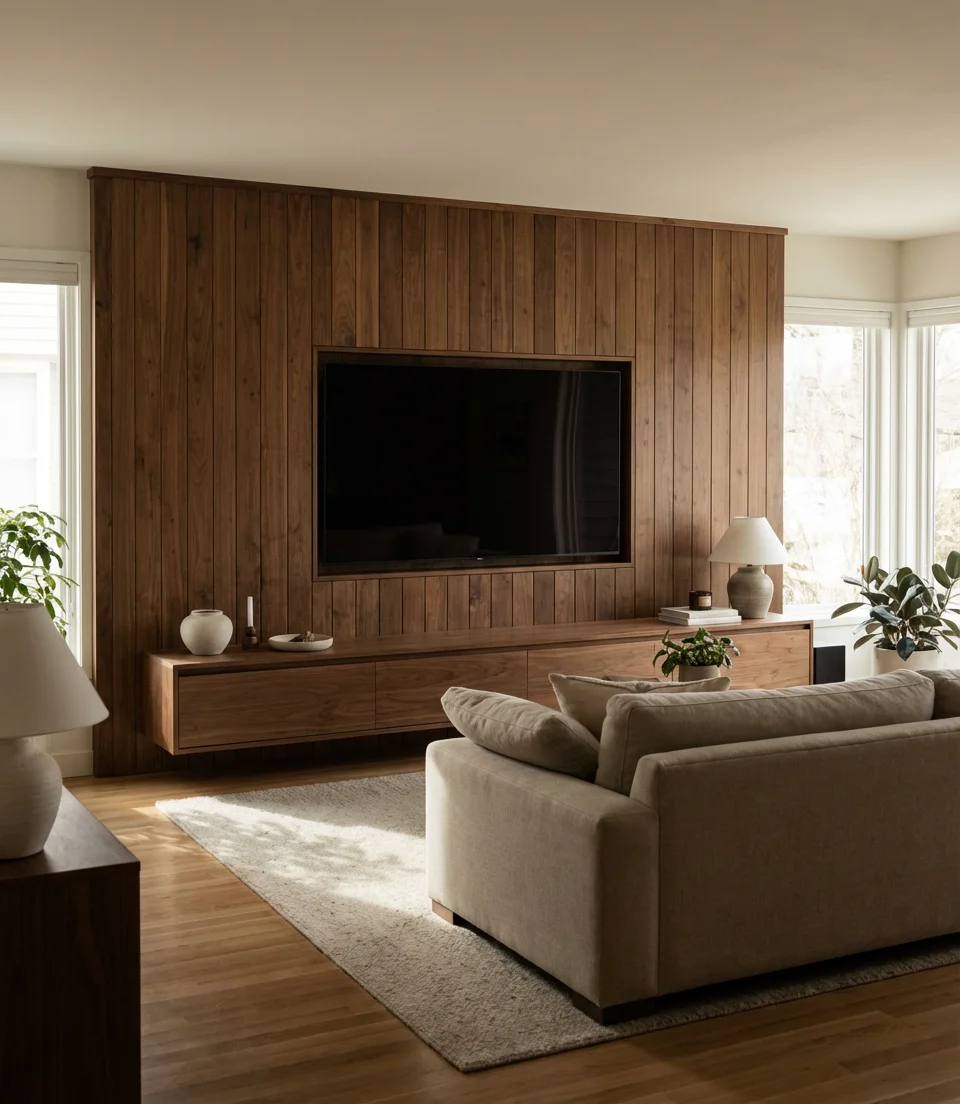
In the Pacific Northwest and upper Midwest, homeowners often choose reclaimed barn wood for this treatment, adding character while keeping the vibe casual. The grain and patina of reclaimed lumber bring instant age and authenticity, which balances out newer furniture and electronics. If you’re in a humid climate, make sure the wood is properly sealed to prevent warping over time.
3. Black Matte Wall Framing a Gas Fireplace
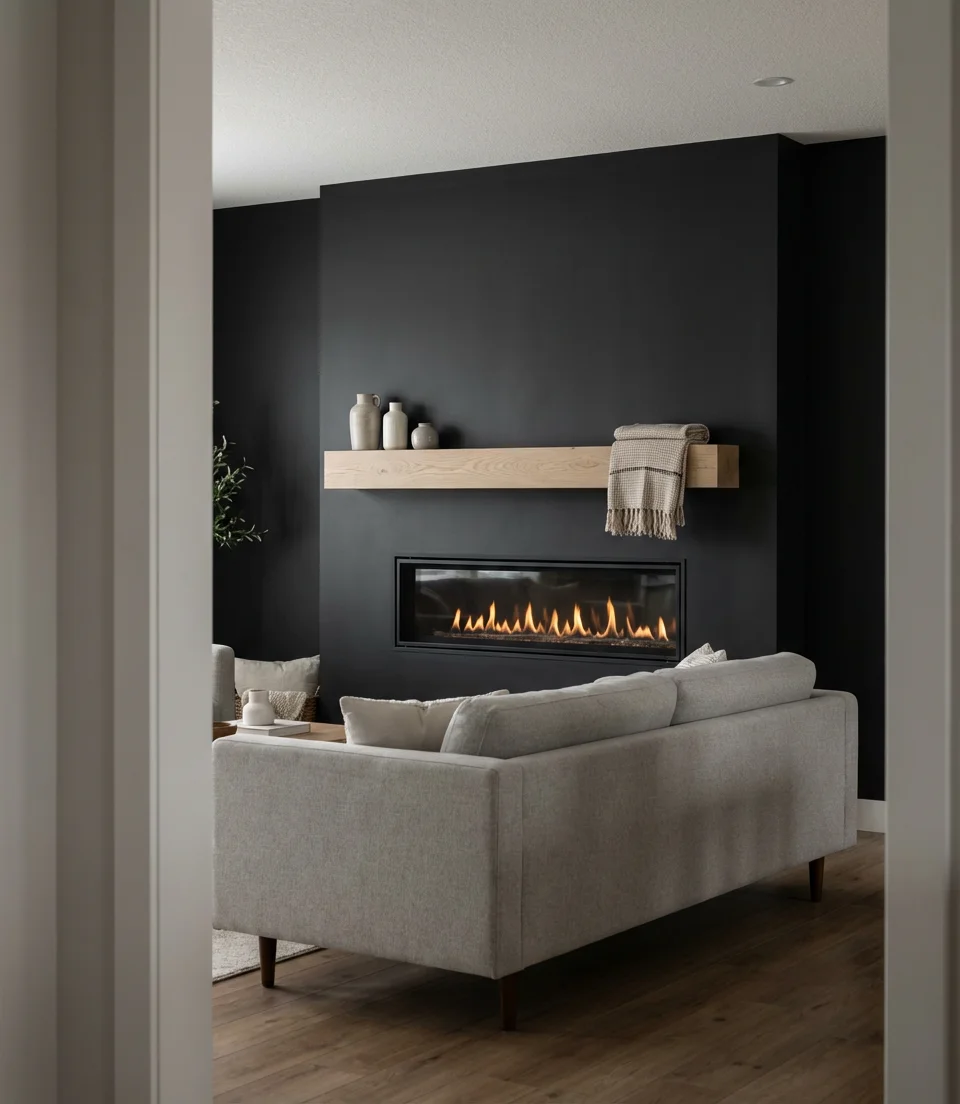
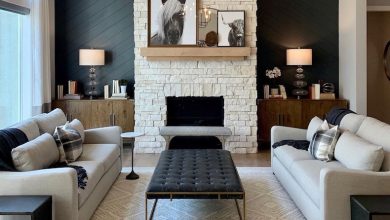
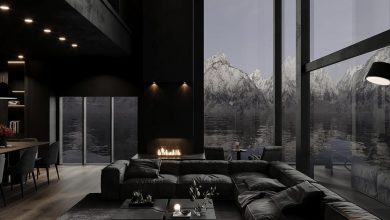
A black accent wall behind a fireplace creates drama without overwhelming the room, especially when the rest of the space stays light and airy. This high-contrast approach is a favorite in modern living room designs where the fireplace is the focal point. The matte finish keeps the black from feeling too slick or industrial, lending a softer, more livable quality to the space.
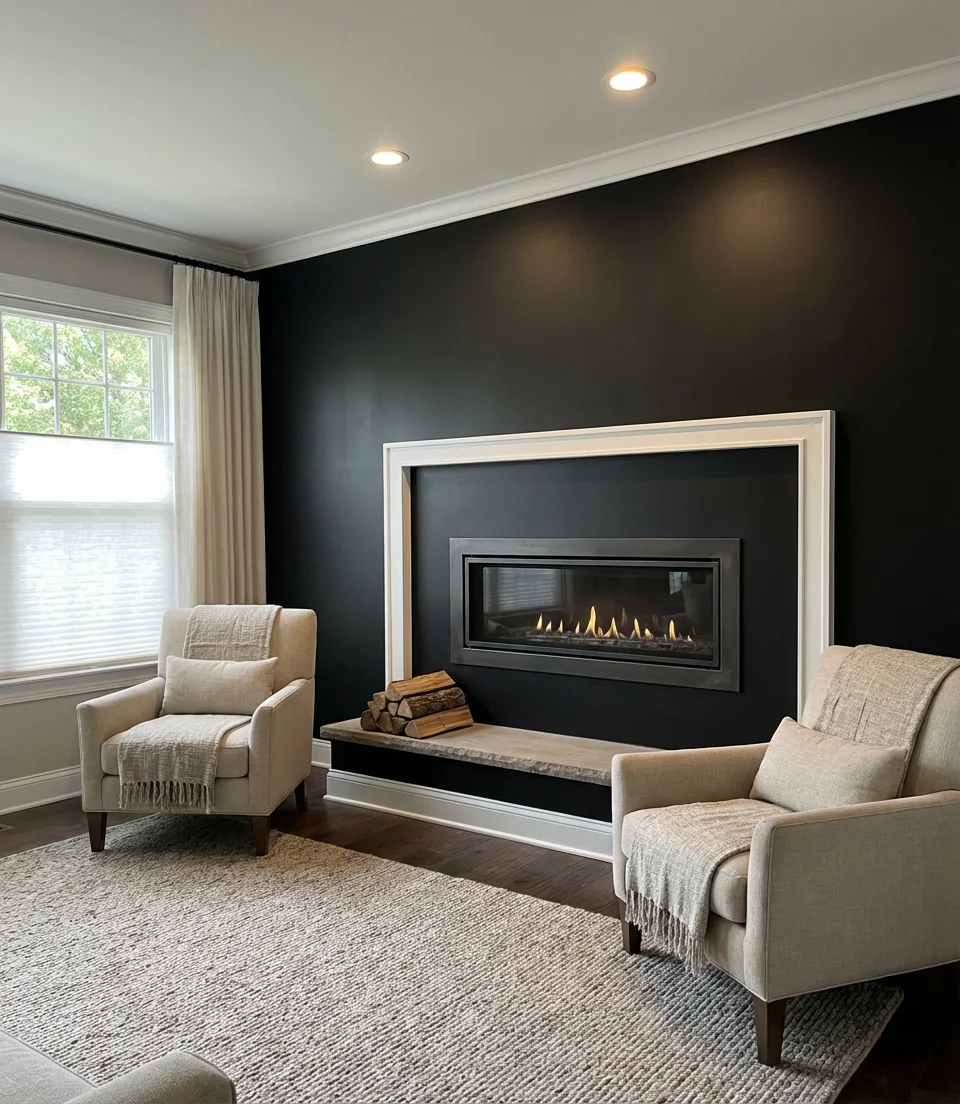
This type of painting works best in rooms with high ceilings or abundant natural light—black can shrink a space if proportions are tight. If you’re working with a smaller room, consider painting just the chimney breast black and leaving adjacent walls white or cream. That way, you get the impact without sacrificing openness. It’s a simple adjustment that makes a big difference in how the room feels day-to-day.
4. Horizontal Shiplap Painted in Soft White
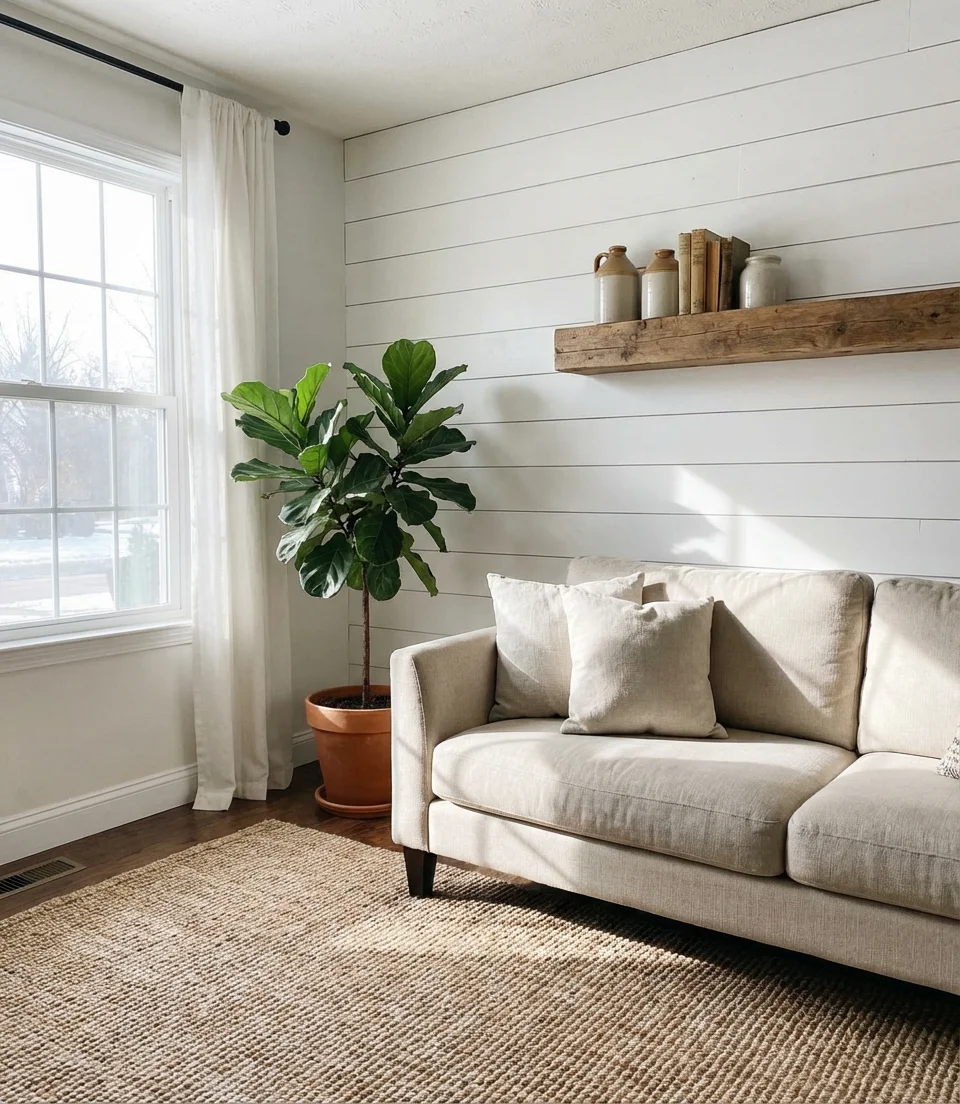
Horizontal shiplap brings a relaxed, coastal vibe that translates beautifully in farmhouse living room settings. Painted in a soft white or warm cream, it adds texture without competing with furniture or art. The shadow lines between boards create subtle depth, which is especially effective in rooms with flat drywall elsewhere. This treatment pairs well with natural wood tones and linen upholstery.
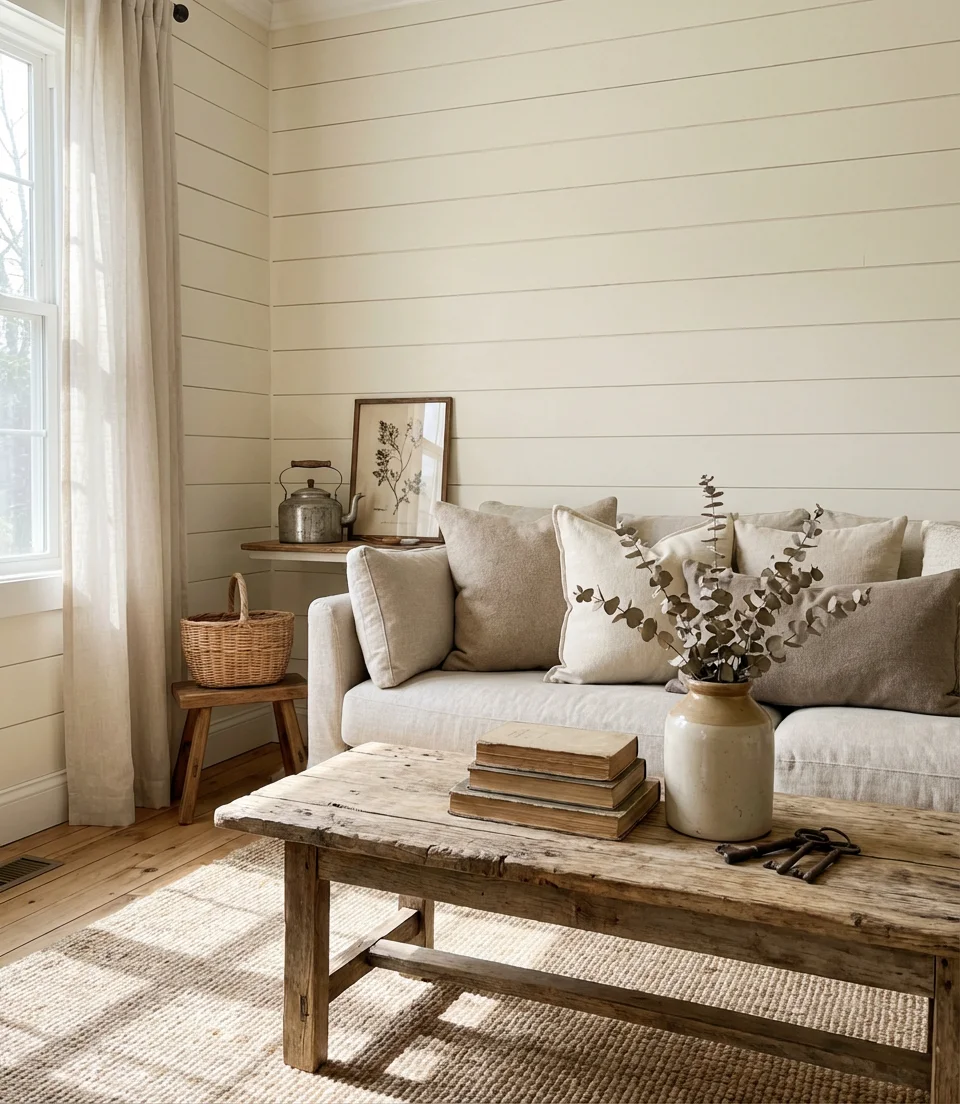
A designer I know in Charleston always tells clients to go one shade warmer than they think—pure white shiplap can read too stark in homes with warm wood floors or antique furniture. A white with a hint of beige or gray feels more cohesive and forgiving. It’s a small tweak that prevents the wall from looking like a Pinterest board rather than a lived-in room.
5. Navy Blue Wall Anchoring a Mid-Century Sofa
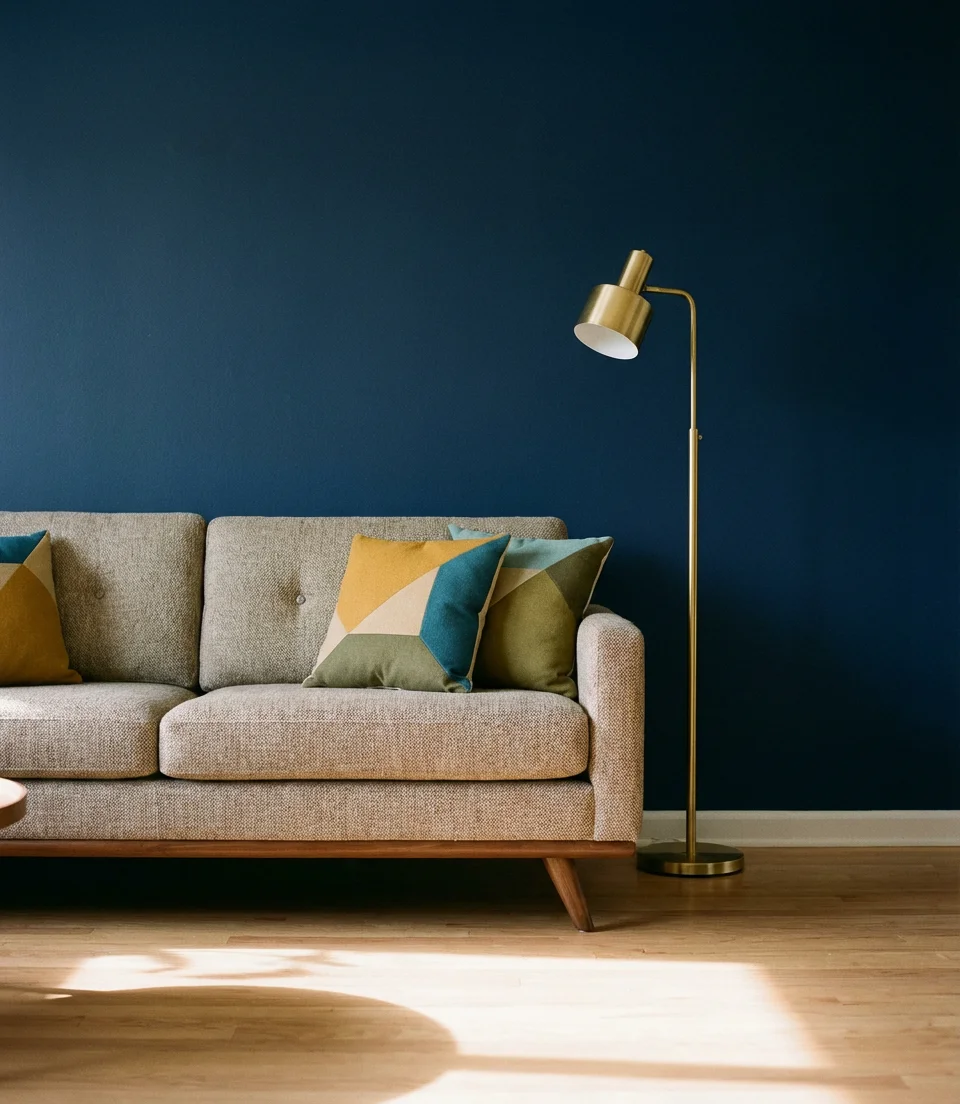
A dark blue accent wall provides a rich backdrop for mid-century modern furniture, especially pieces with tapered legs and clean lines. The color choice feels both classic and current, working equally well in lofts and traditional homes. Navy is versatile enough to pair with brass, walnut, and even lighter woods, making it a safe bet for spaces where you plan to switch out accessories seasonally.
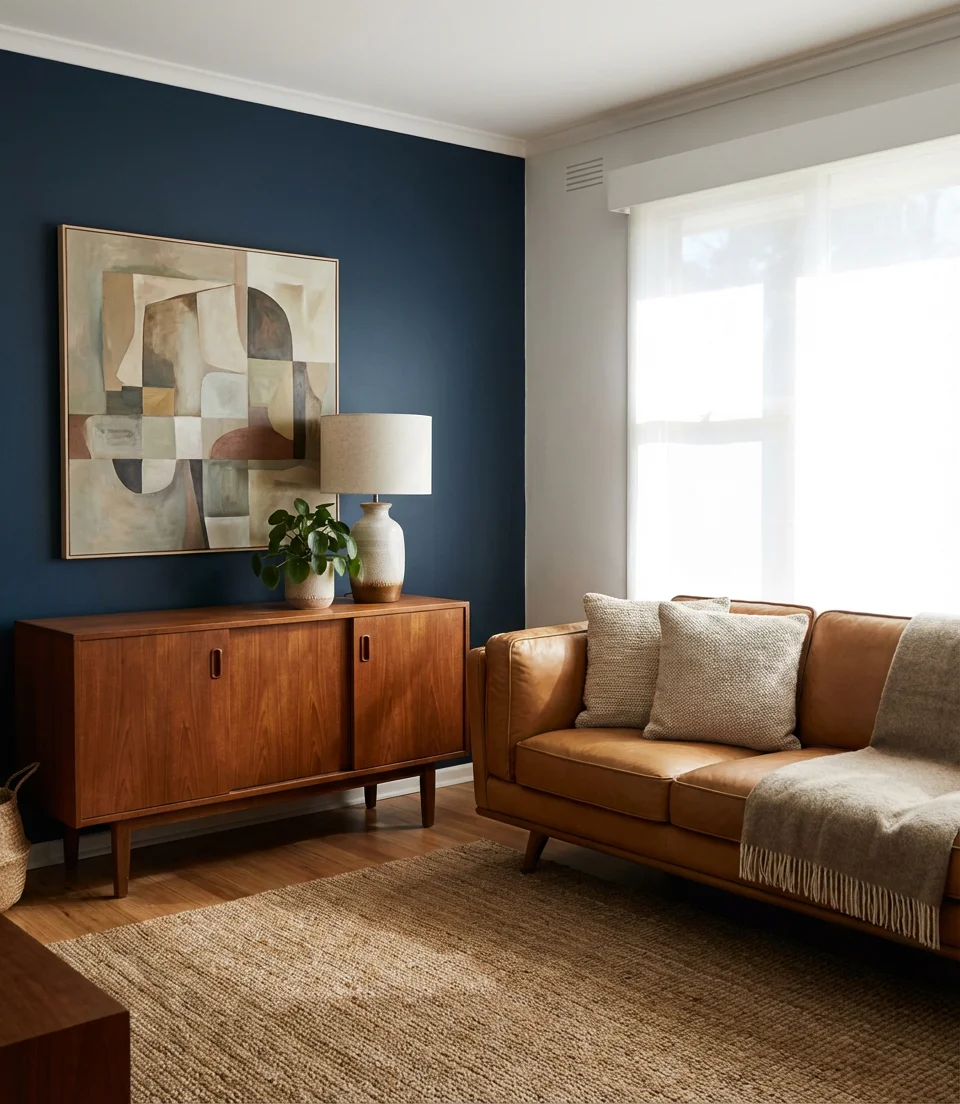
Navy tends to look different depending on your region’s light quality—what reads as rich blue in Southern California might feel almost black in a Boston brownstone. Always test a swatch on your wall and live with it for a few days before committing. If the color skews too dark, opt for a shade that’s one step lighter on the paint chip. This prevents buyer’s remorse and ensures the room feels intentional.
6. Limewash Finish in Warm Terracotta
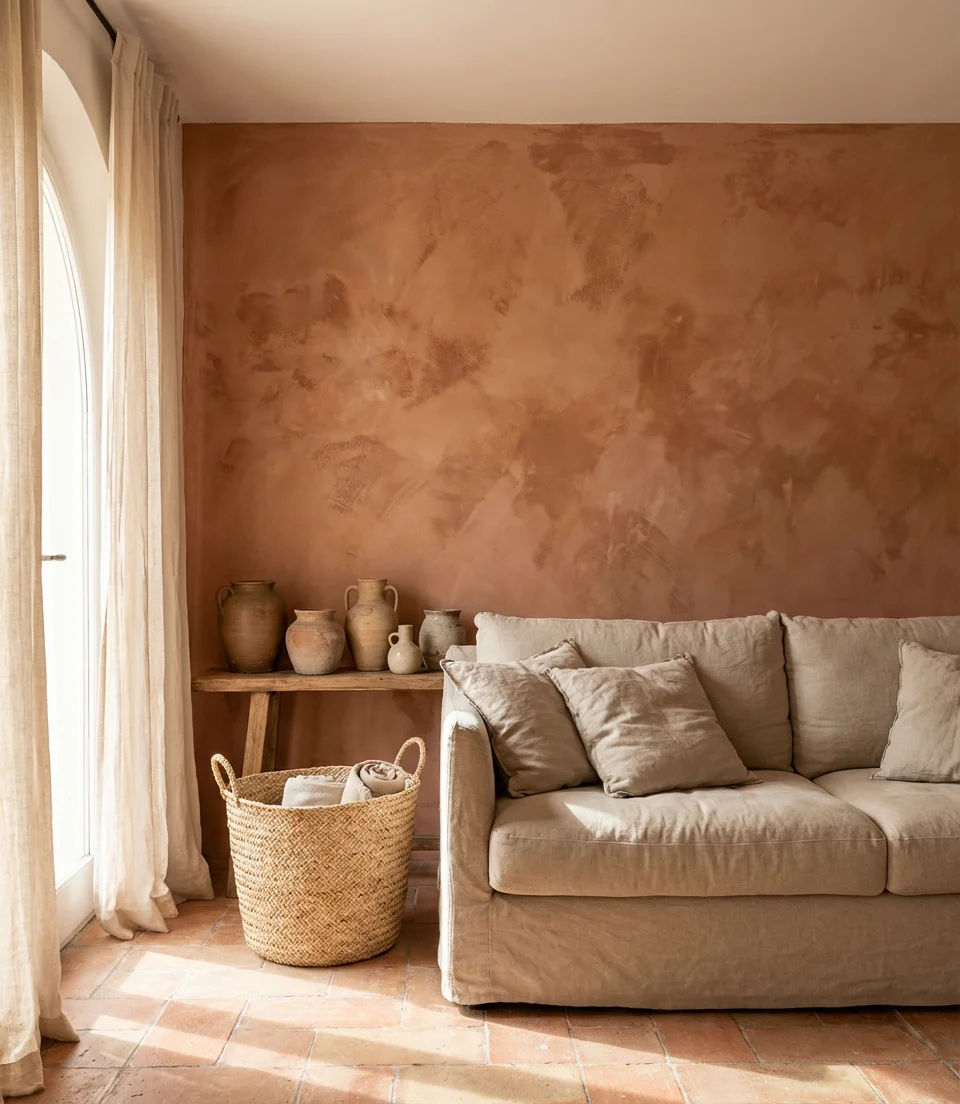
Limewash has surged in popularity for its soft, mottled texture and organic feel. Applied in a warm terracotta or clay tone, it brings an earthy, Mediterranean vibe to living room designs. The finish ages beautifully and can be layered over existing paint or fresh plaster. It’s especially effective in homes with high ceilings or arched doorways, where the texture catches light throughout the day.
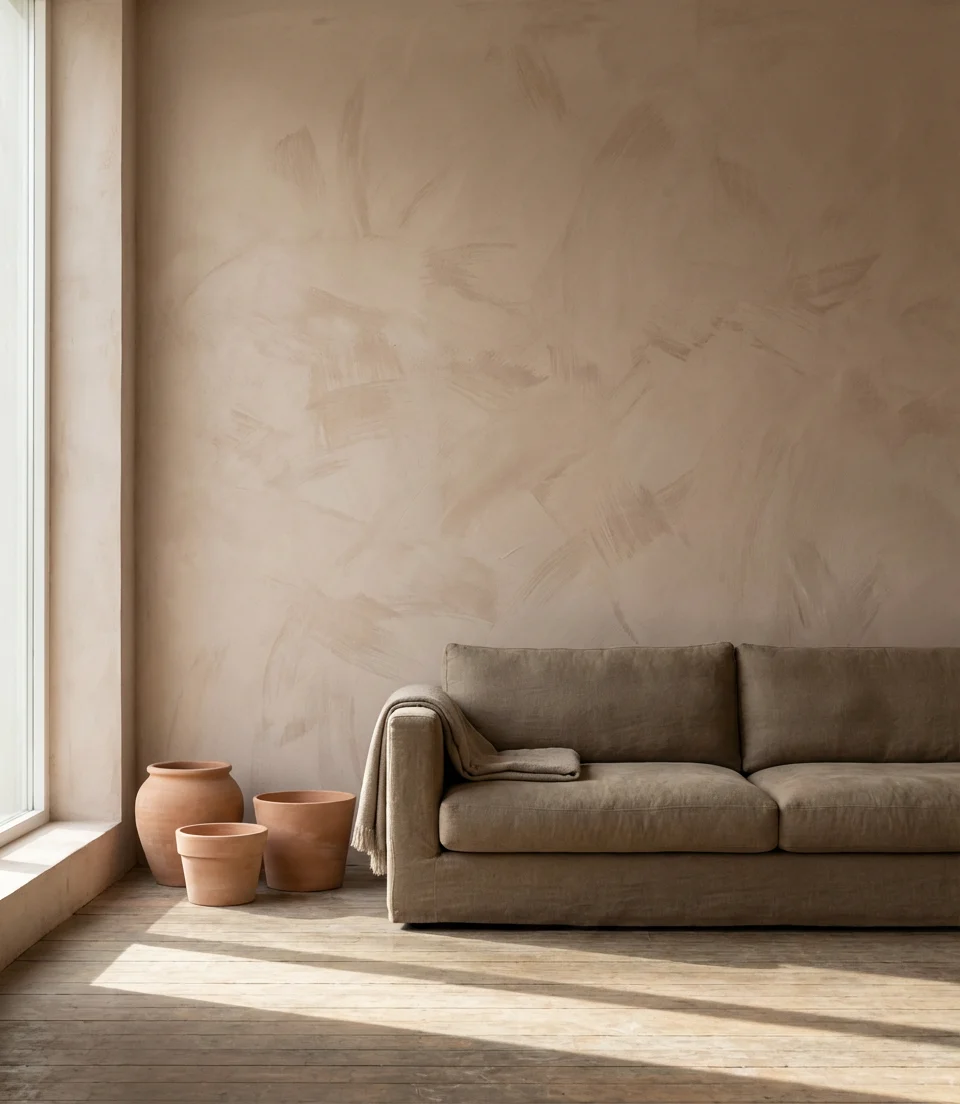
Expect to pay between $150 and $400 for a DIY limewash kit that covers a standard accent wall, depending on the brand and finish quality. Professional applications can run higher, but the result is often more consistent and forgiving if your walls have imperfections. If the budget is tight, start with a sample pot and test your technique on a closet wall before tackling the main space.
7. Gallery Wall on a Charcoal Gray Backdrop
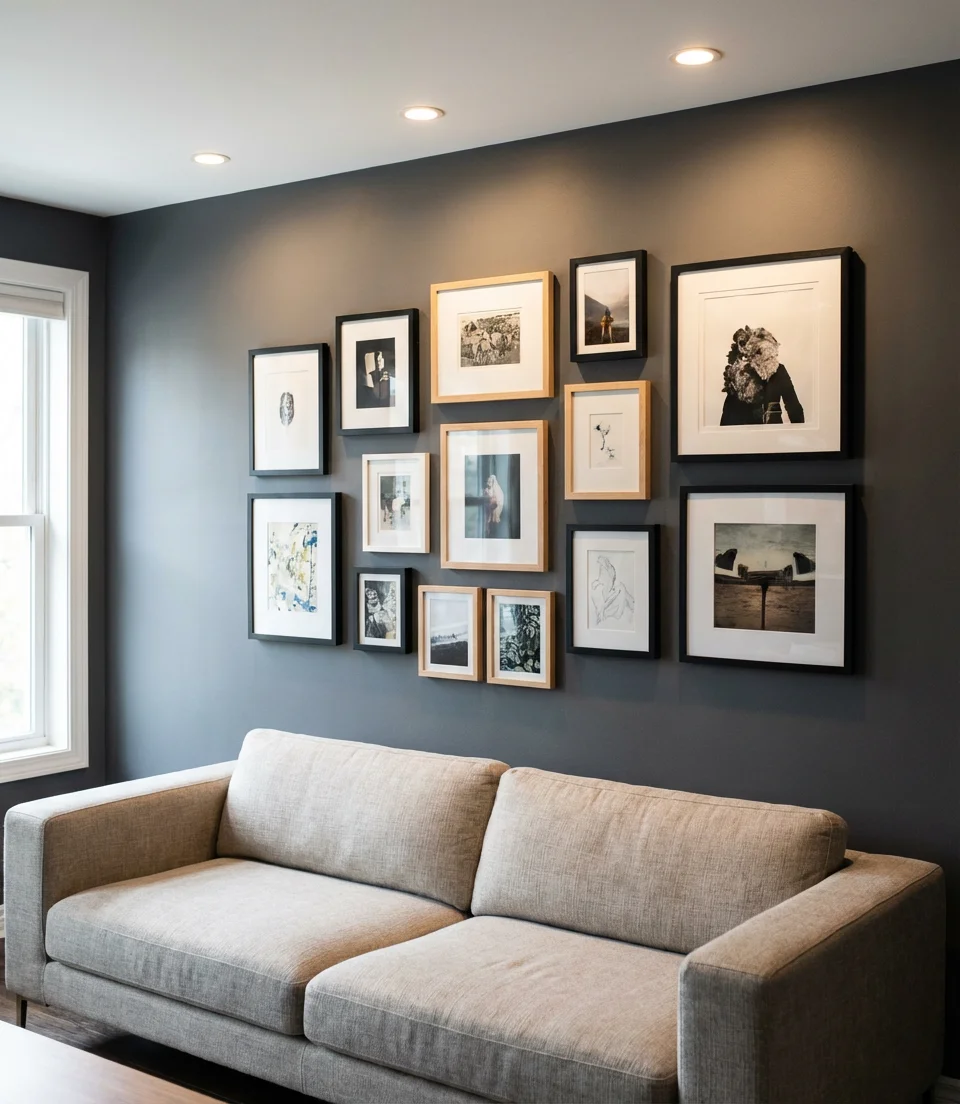
A dark accent wall in charcoal gray serves as the perfect canvas for a curated gallery of framed art and photography. The deep tone makes white mats and frames pop, creating a museum-like effect that’s still approachable. This approach is ideal for decor-focused living rooms where the wall itself becomes a conversation starter. It also hides minor wall imperfections better than lighter colors.
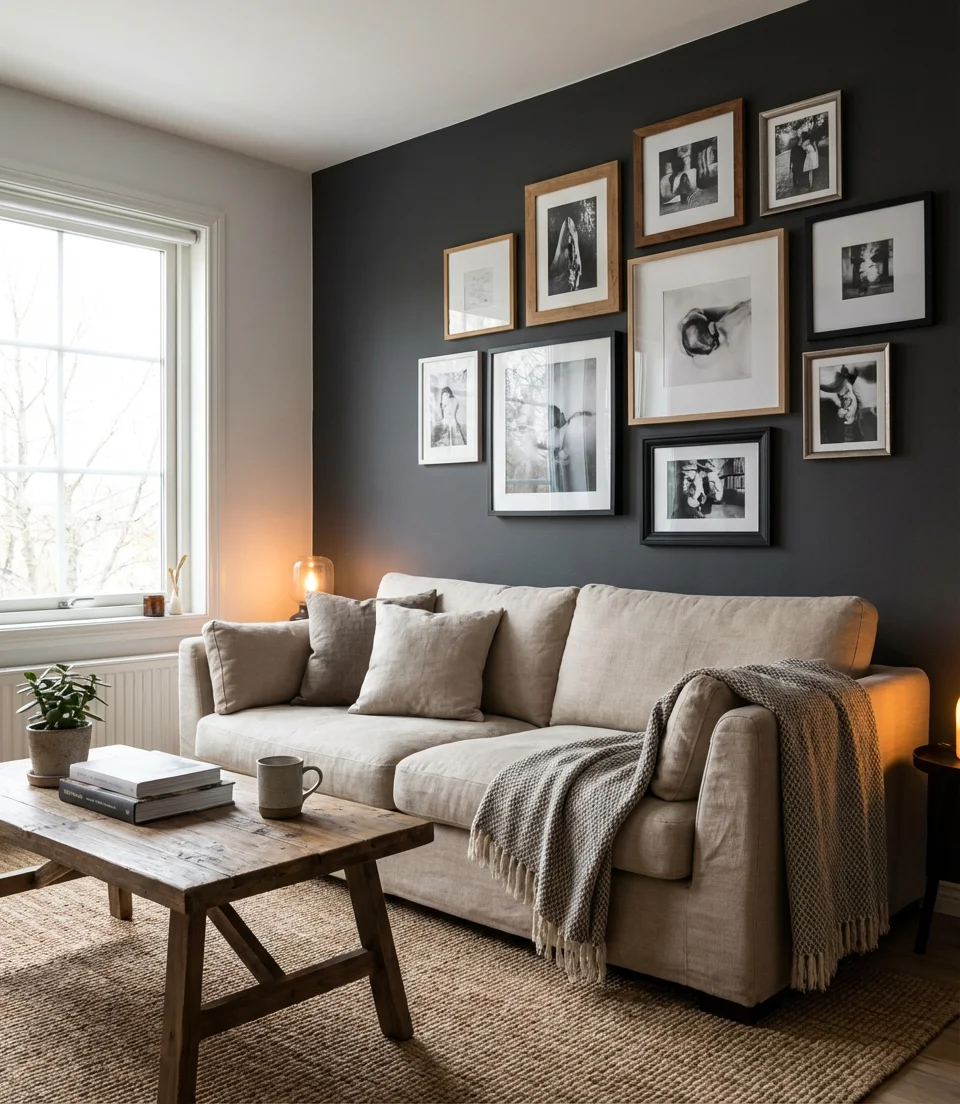
Many homeowners worry that dark walls will make a room feel smaller, but the opposite is often true when the space is well-lit. Layered lighting—overhead, table lamps, and picture lights—prevents the gray from feeling heavy. If you’re in a basement or north-facing room, add more artificial light sources than you think you need. The extra investment in lighting transforms the whole vibe.
8. Stacked Stone Behind a Linear Electric Fireplace
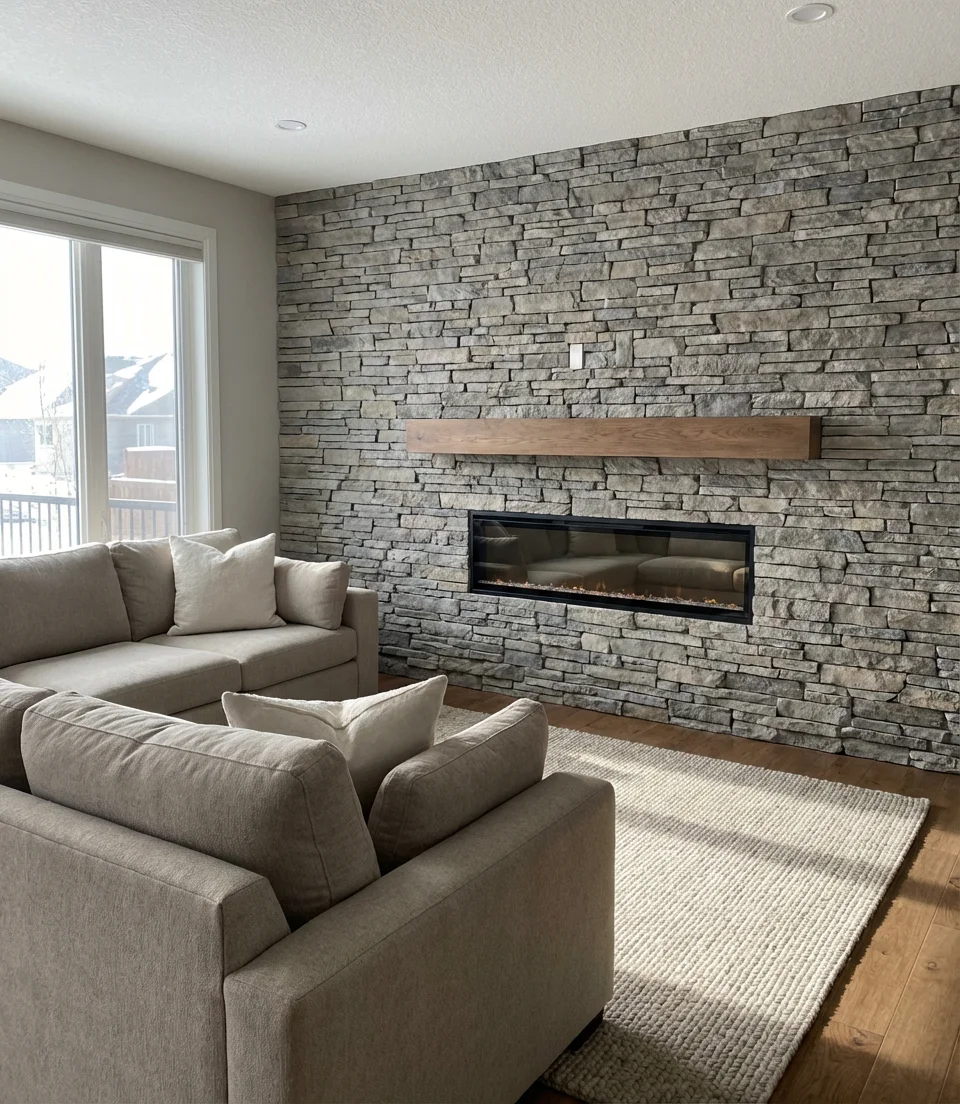
Stacked stone adds natural texture and dimension, and when paired with a modern electric fireplace, it bridges rustic and contemporary styles. This treatment is especially popular in open-plan homes where the living room accent wall with fireplace serves as a visual anchor. The stone can run floor-to-ceiling or stop at mantel height, depending on your ceiling proportions and the level of drama you’re after.
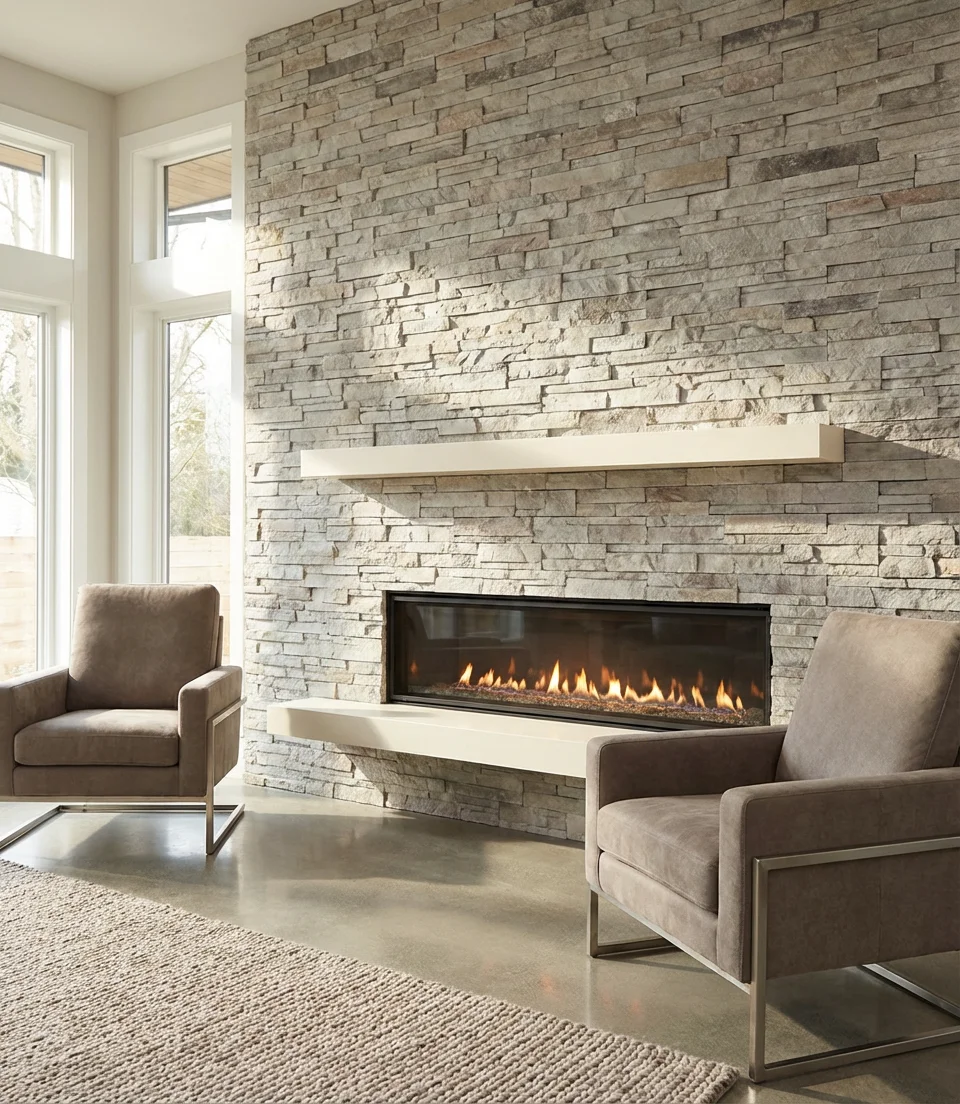
In the Mountain West and parts of the Midwest, ledger stone is a favorite because it nods to local materials without feeling overly rustic. The key is choosing a stone with subtle color variation—too much contrast can look busy, especially if the wall is large. Stick to a palette of two or three tones for a cohesive, sophisticated result that won’t tire over time.
9. Sage Green with Floating Shelves and Plants
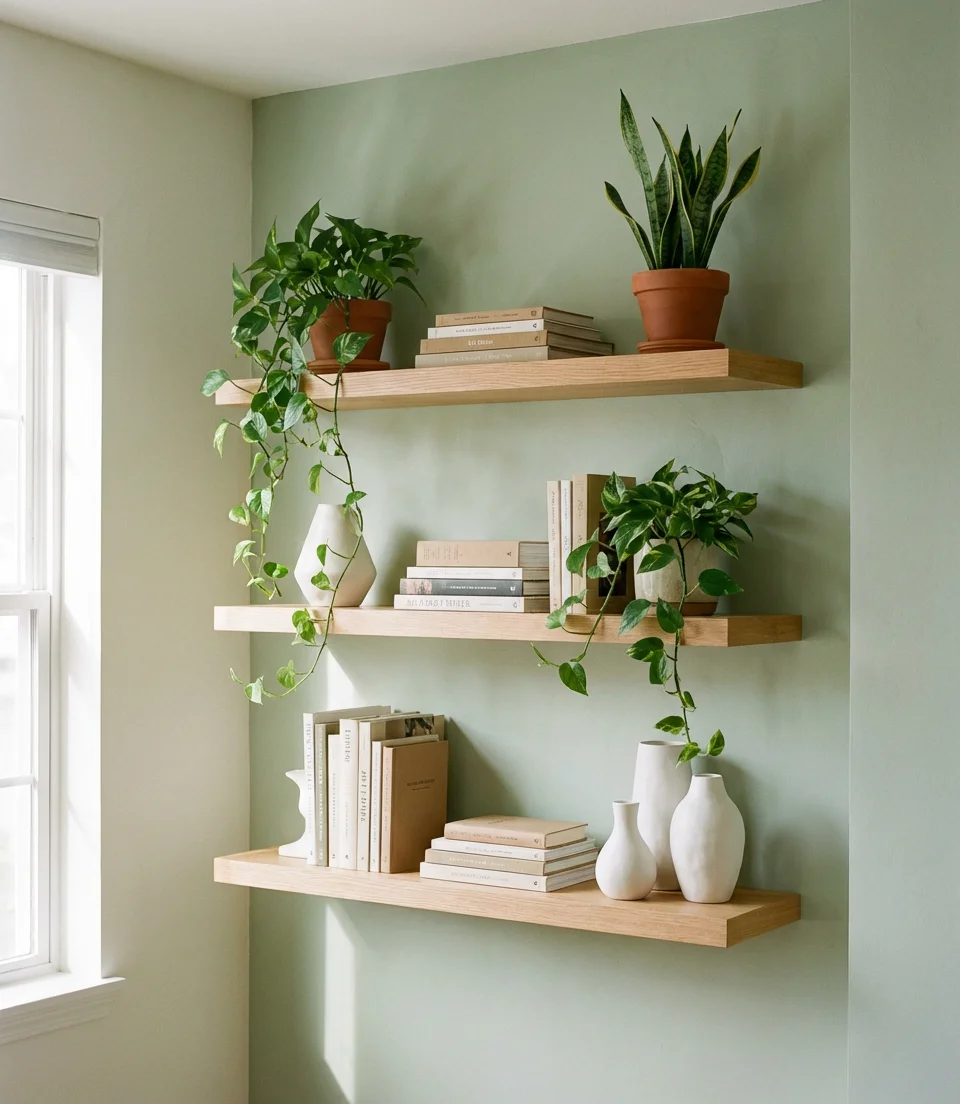
Soft sage green accent walls create a calming, nature-inspired backdrop that pairs beautifully with floating shelves and trailing plants. This approach is a hit in living room decor that emphasizes biophilic design. The muted green works with brass hardware, white ceramics, and natural wood finishes, making it easy to style and maintain. It’s also forgiving if you’re not ready to commit to a darker, more saturated hue.
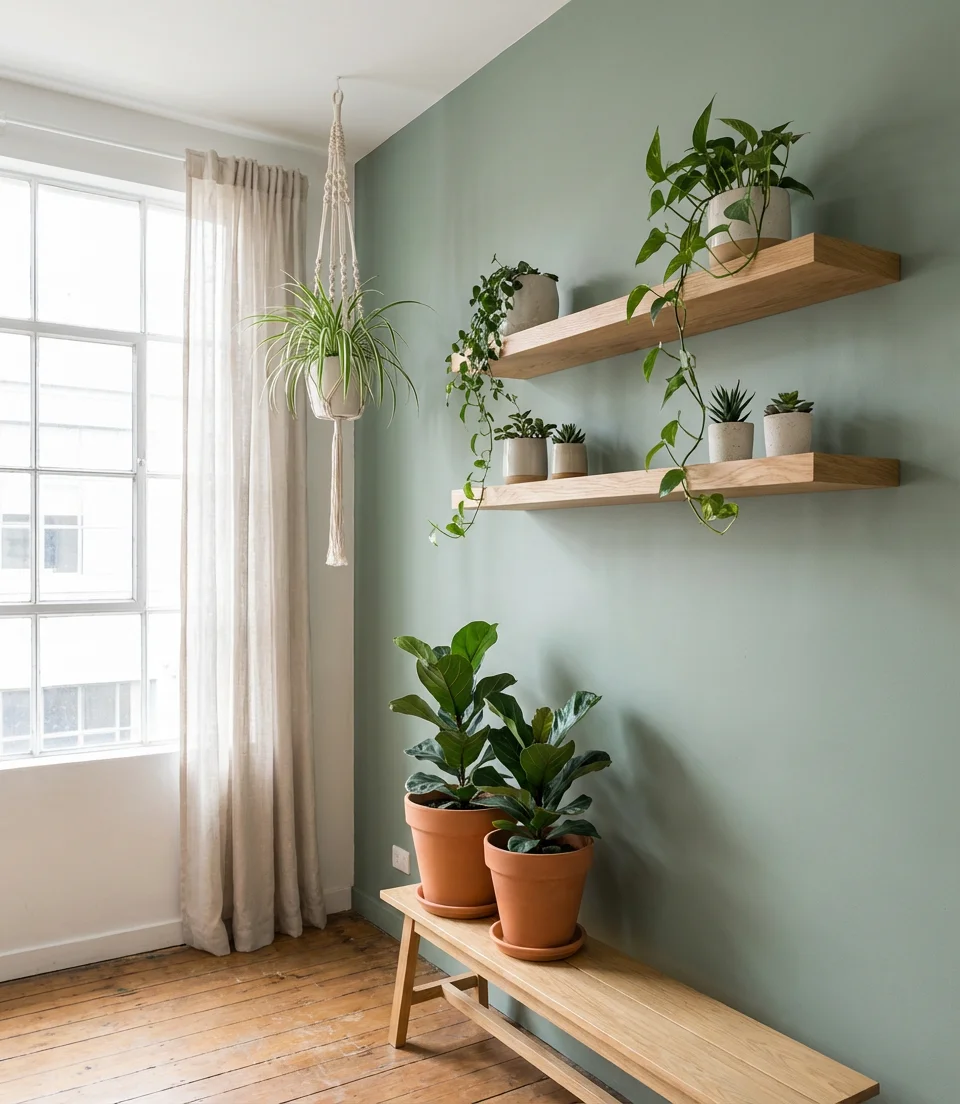
A friend in Portland painted her living room wall this exact shade, and she noticed her stress levels dropped just from being in the space. She credits the color with making her small apartment feel more open and connected to the outdoors, even though she’s on the third floor. It’s a simple change, but the psychological impact is real—especially in urban settings where green space is limited.
10. Reclaimed Barn Wood Planks in Natural Finish
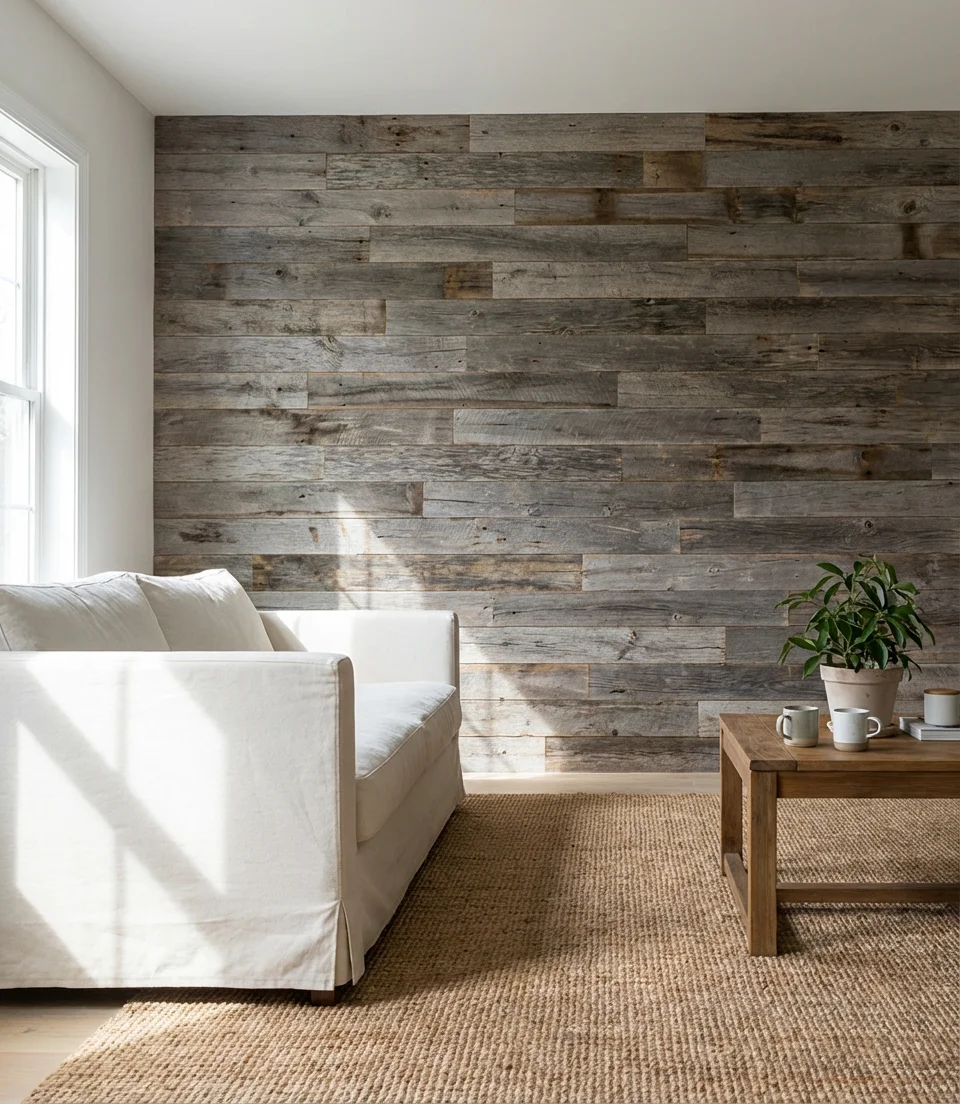
Reclaimed barn wood paneling brings instant character and a sense of history to any living room. The natural finish—complete with weathering, nail holes, and color variation—adds warmth and texture that new lumber simply can’t replicate. This treatment works especially well in farmhouse and transitional interiors, where you want a mix of old and new. It also pairs beautifully with modern furniture, creating a high-low balance that feels intentional.
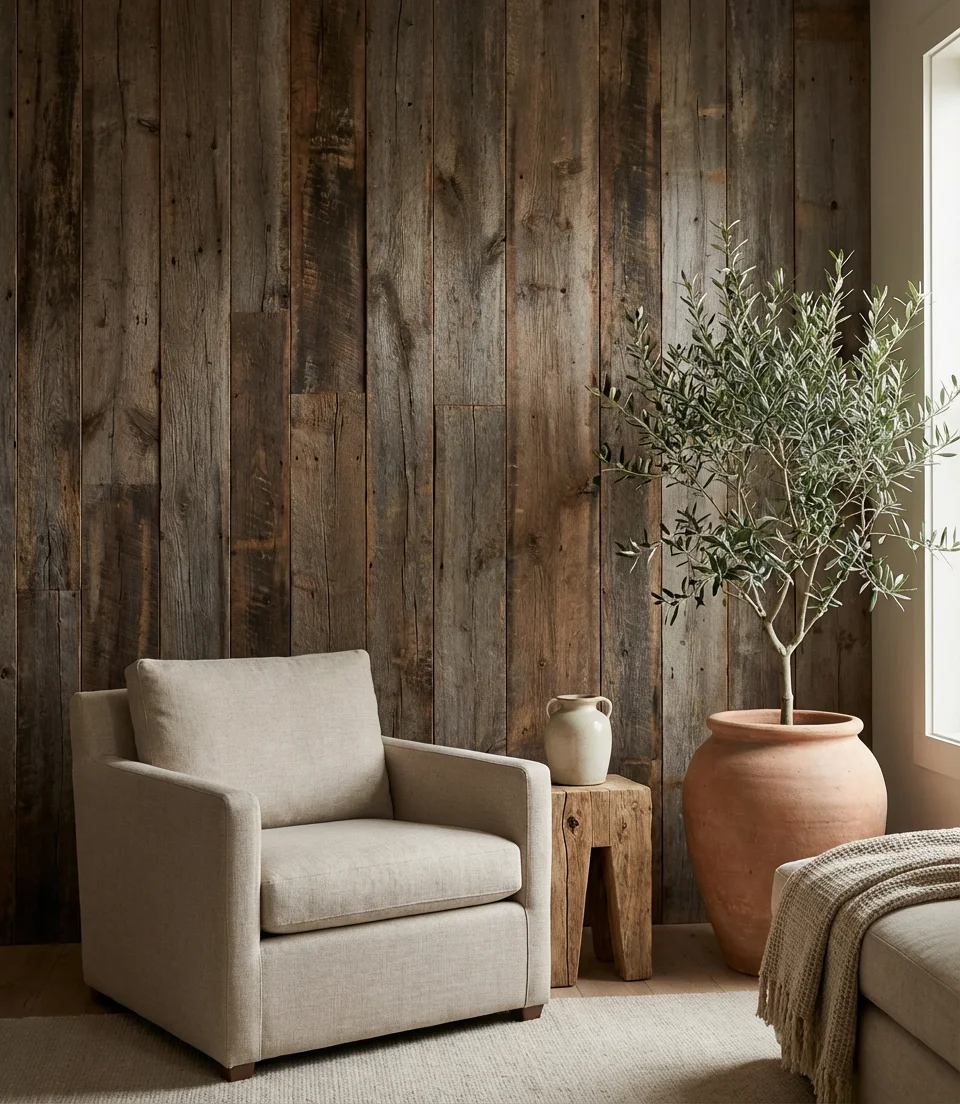
Reclaimed wood costs more upfront—typically $8 to $15 per square foot installed—but it’s a one-time investment that adds resale value. If budget is a concern, consider covering just half the wall or creating a horizontal band at eye level. You still get the texture and story without the full expense, and the partial treatment can actually feel more curated than floor-to-ceiling coverage.
11. Bold Red Accent Wall in a Neutral Room
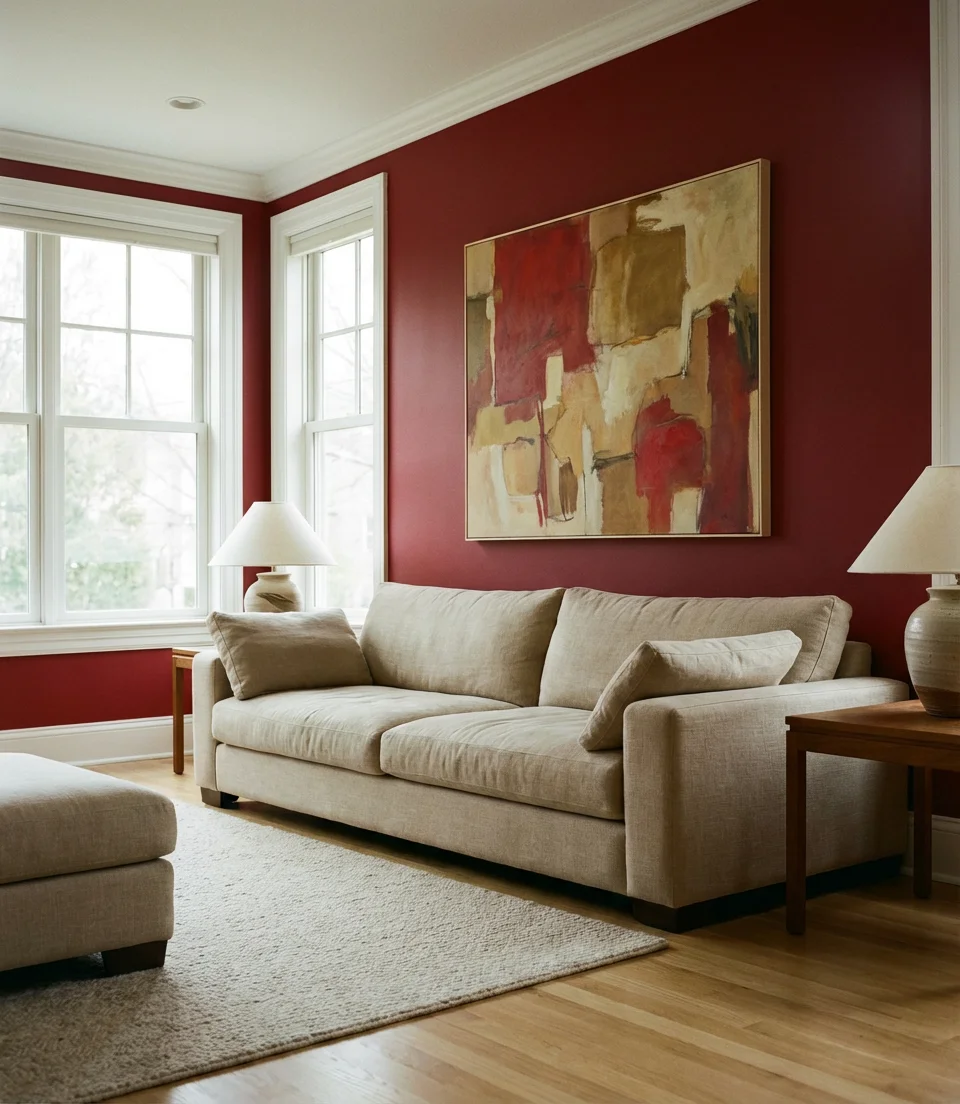
A bold red accent wall makes a confident statement in an otherwise neutral space, adding energy and warmth without overwhelming the senses. This approach is especially effective in living room color ideas where you want a single focal point. The key is to balance the intensity with soft grays, creams, or whites elsewhere, and to use red in small doses throughout the room—pillows, art, or a rug—to tie the look together.
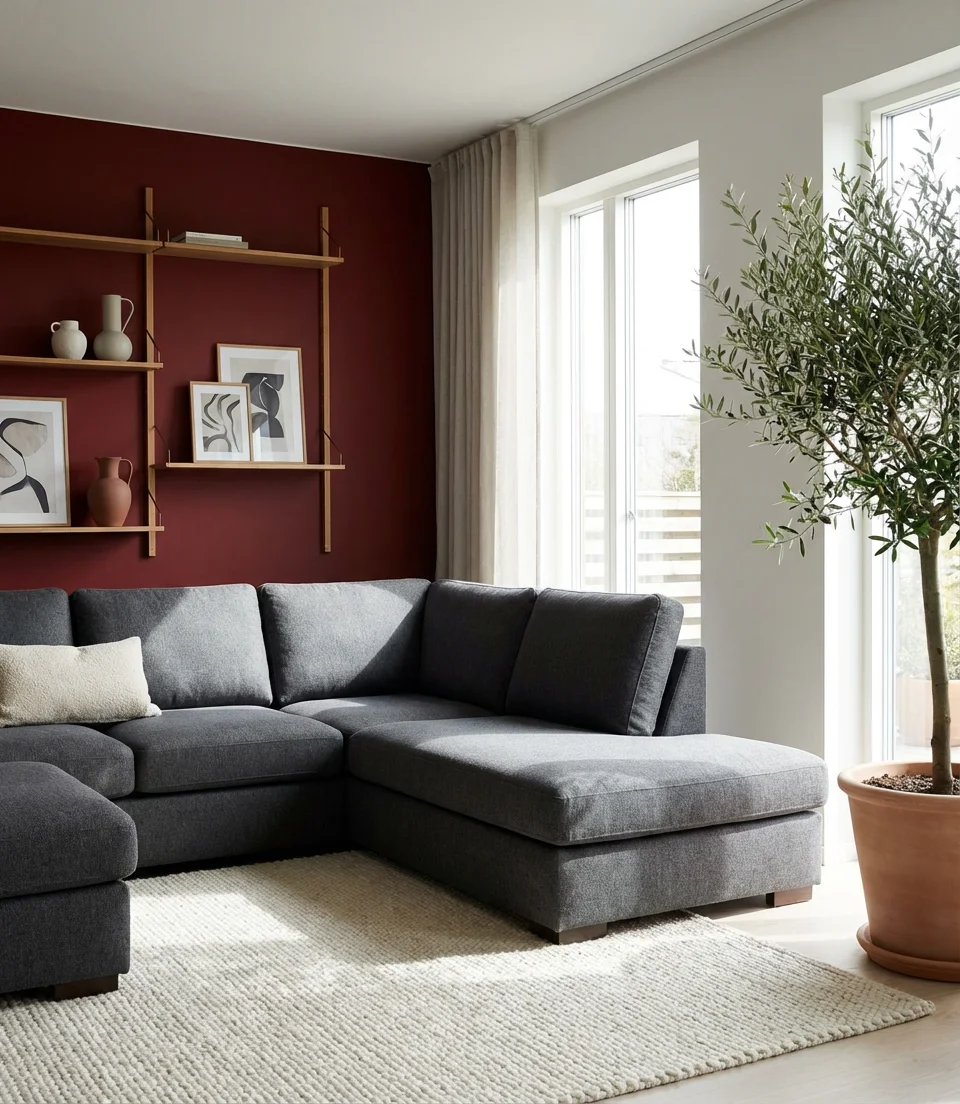
Red is tricky in north-facing rooms, where it can look flat or too orange. If your space lacks natural light, test deeper, blue-based reds like burgundy or oxblood, which hold their richness even in low light. Conversely, if you have tons of southern exposure, you can go brighter and more saturated. Light quality matters more with red than almost any other color, so don’t skip the sample stage.
12. Textured Plaster in Warm Beige
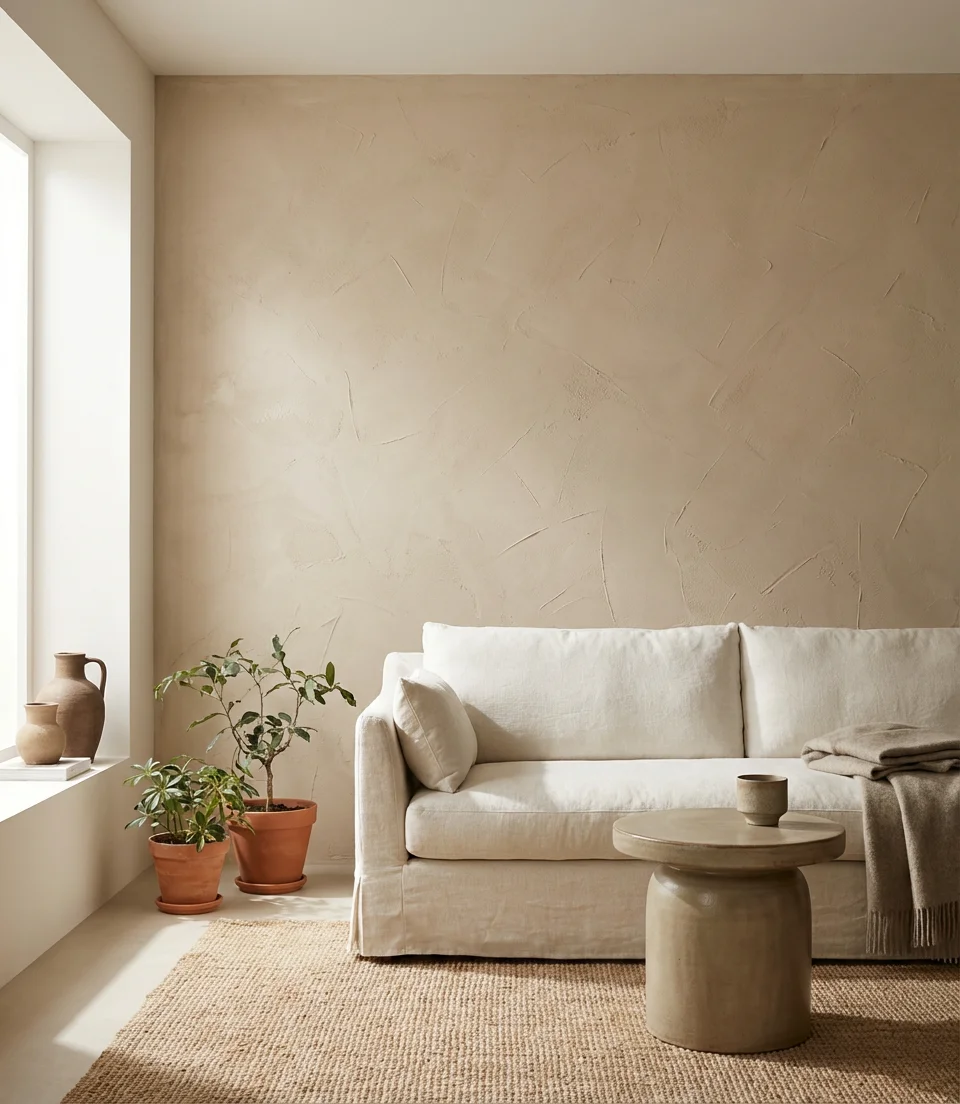
Textured plaster in a warm beige or sand tone adds tactile interest and a handcrafted feel to modern living room spaces. The irregular surface catches light throughout the day, creating subtle shadow play that flat paint can’t achieve. This finish works beautifully in minimalist interiors, where the wall itself becomes art. It’s also a smart choice if you want to hide minor wall imperfections or drywall seams.
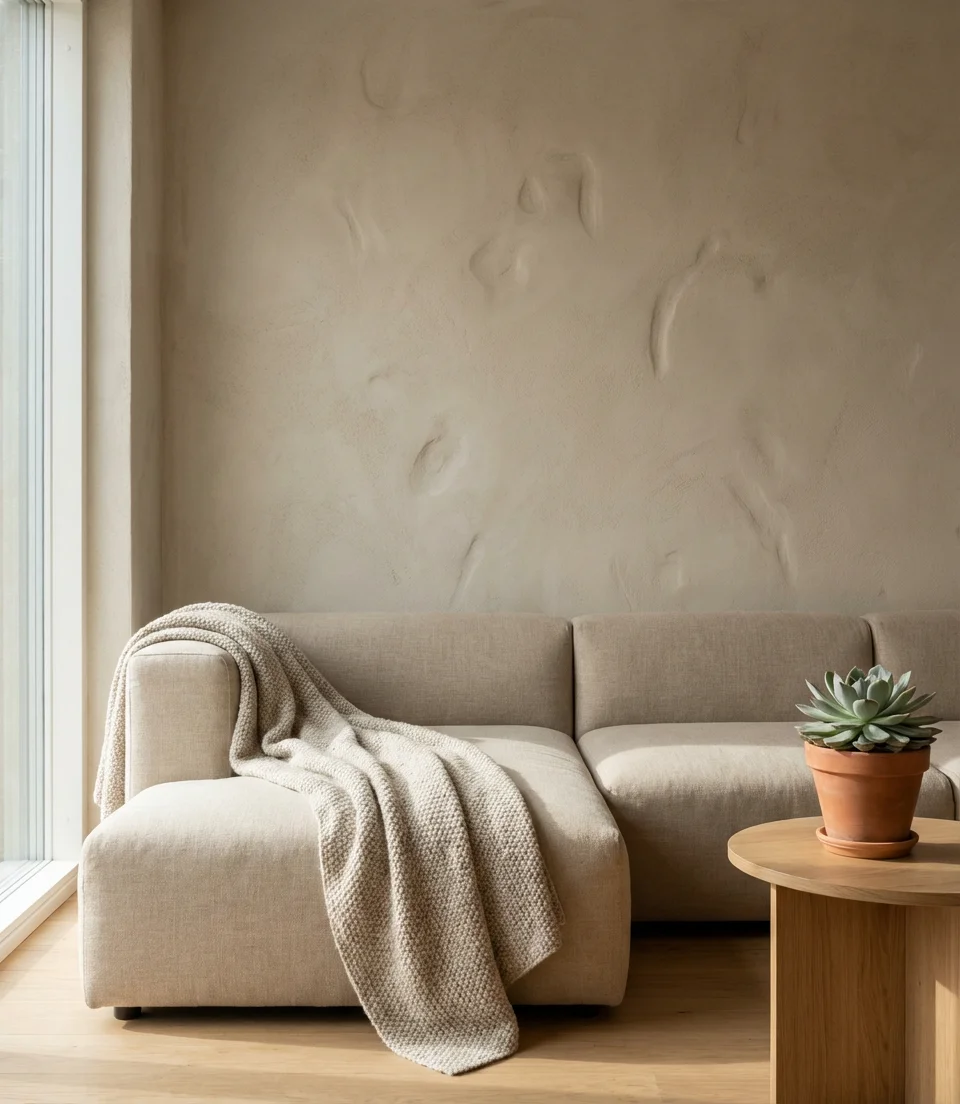
This finish is increasingly popular in Texas and Arizona, where it echoes traditional stucco exteriors while feeling fresh indoors. The warmth of the beige prevents the space from feeling stark, while the texture adds just enough visual interest to make it stand out. If you’re DIY-inclined, you can achieve a similar look with joint compound and a trowel, though professional application tends to be more consistent.
13. Floor-to-Ceiling Bookshelves on a Painted Wall
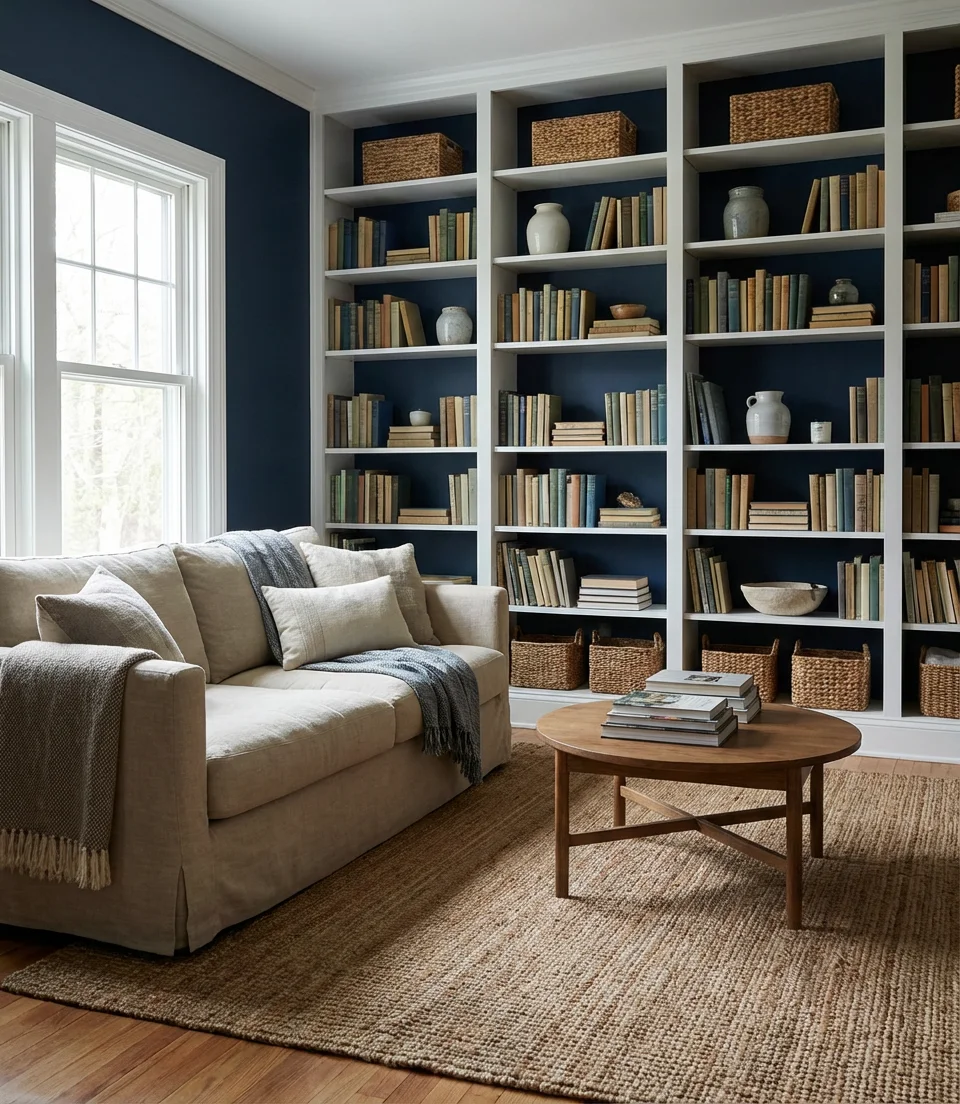
Built-in or freestanding bookshelves that span floor to ceiling create a library-like atmosphere and make use of vertical space. Painting the wall behind them in a contrasting color—such as deep charcoal, navy, or even a soft blush—adds depth and makes the shelves pop. This setup is ideal for large living room spaces where you need to fill wall real estate without adding clutter. It also doubles as a display area for books, ceramics, and personal mementos.
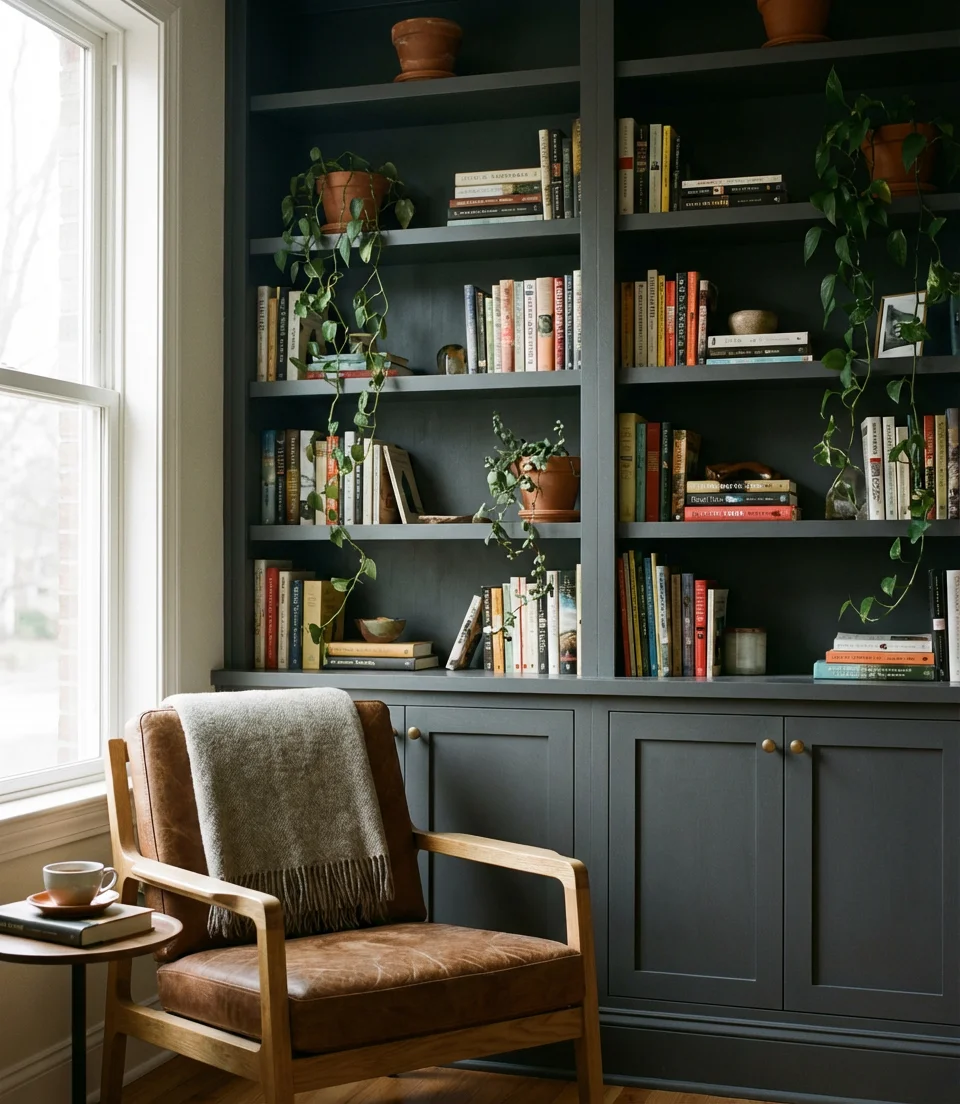
Real homeowners often underestimate how much storage they need. A floor-to-ceiling setup holds roughly three times as many books as standard five-shelf units, and it keeps the floor clear for furniture and movement. If you’re handy, IKEA Billy bookcases can be stacked and secured to the wall for a fraction of the cost of custom cabinetry. Just add crown molding at the top for a built-in look.
14. Wallpaper with Oversized Botanical Print
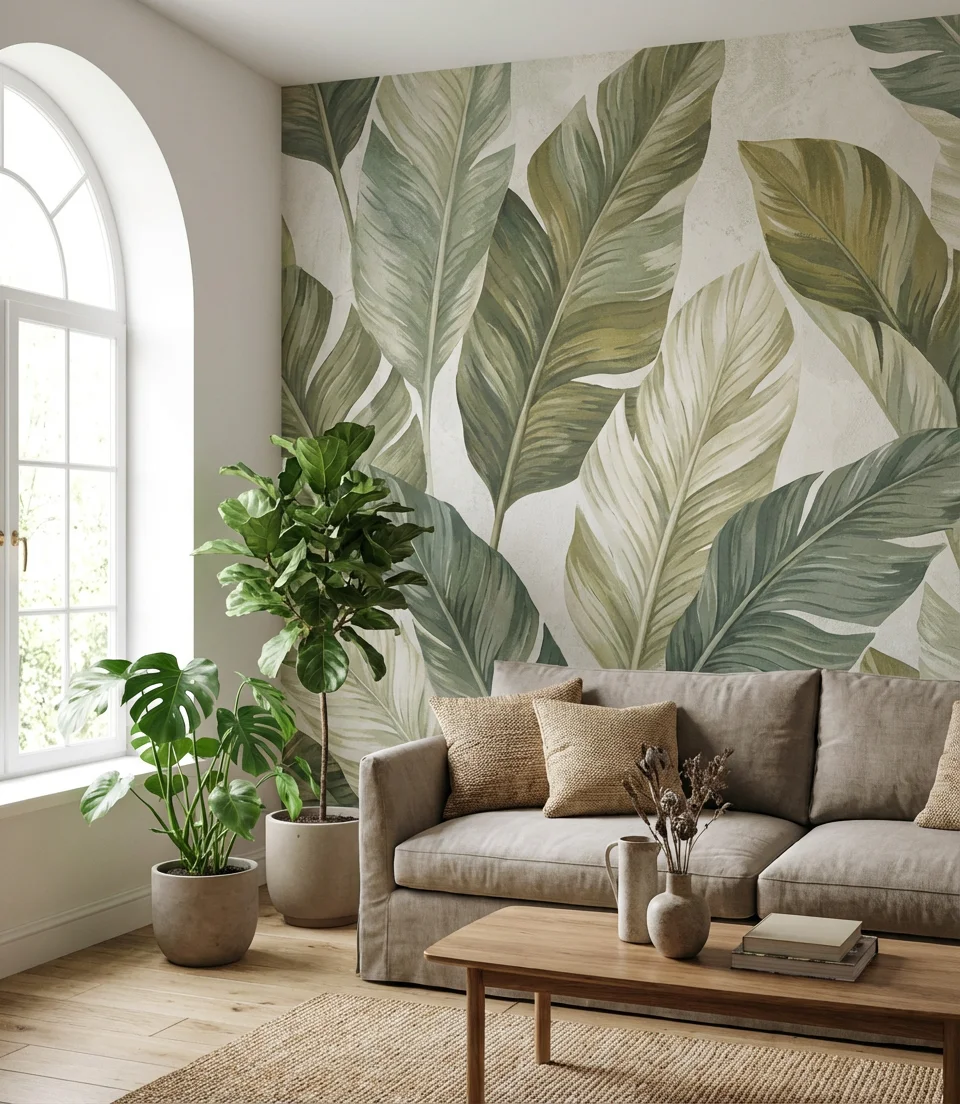
Oversized botanical wallpaper brings a sense of drama and whimsy to living room designs, especially when applied to a single accent wall. The large-scale pattern creates visual impact without requiring additional artwork or decor. This approach works best in rooms with neutral furniture and minimal accessories, allowing the wallpaper to be the star. It’s also a great way to introduce color and pattern without long-term commitment—peel-and-stick options make it easy to change later.
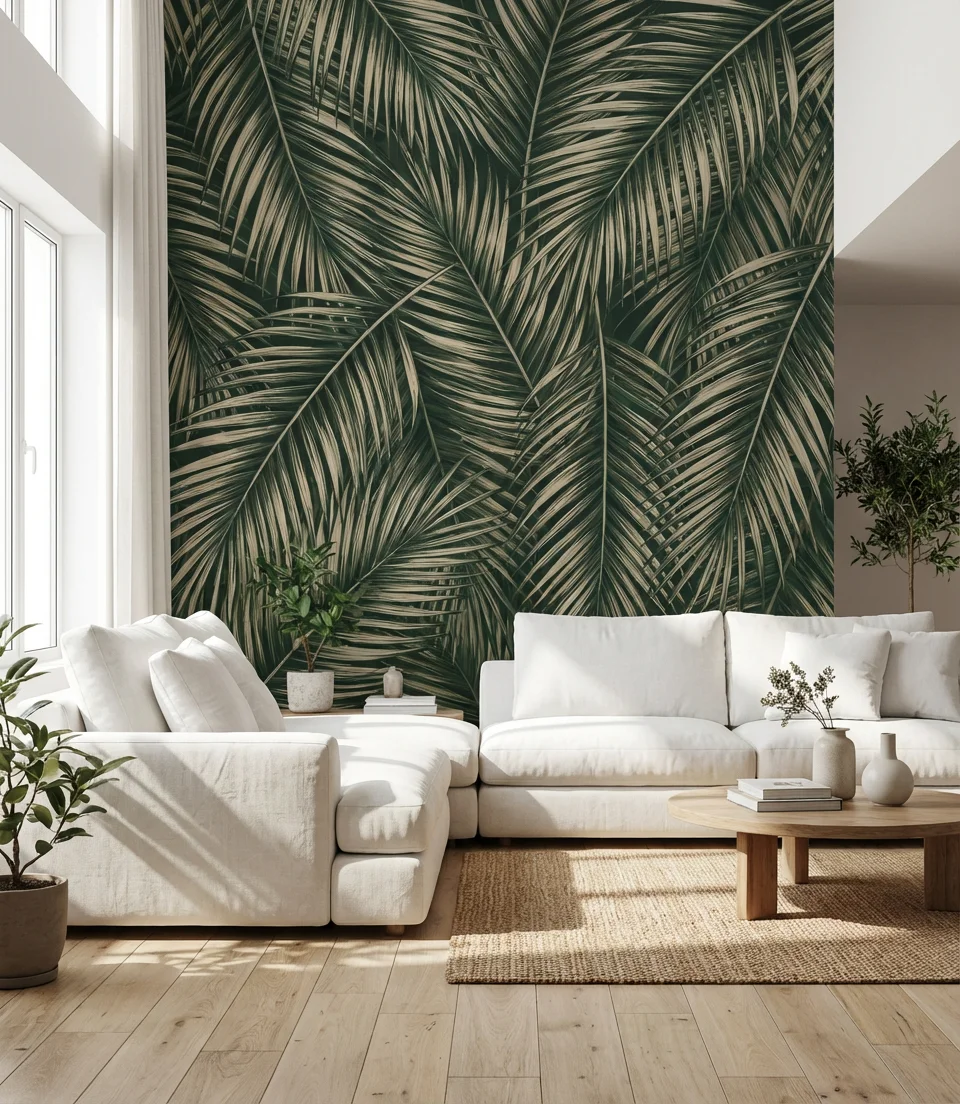
Where this technique works best: in well-lit rooms with high ceilings, where the pattern has space to breathe. Low ceilings or small rooms can feel overwhelmed by large-scale prints. If you love the look but have a compact space, consider using the wallpaper on a half-wall or within a single alcove. That way, you get the impact without the claustrophobia.
15. Cement Board Panels in Industrial Gray
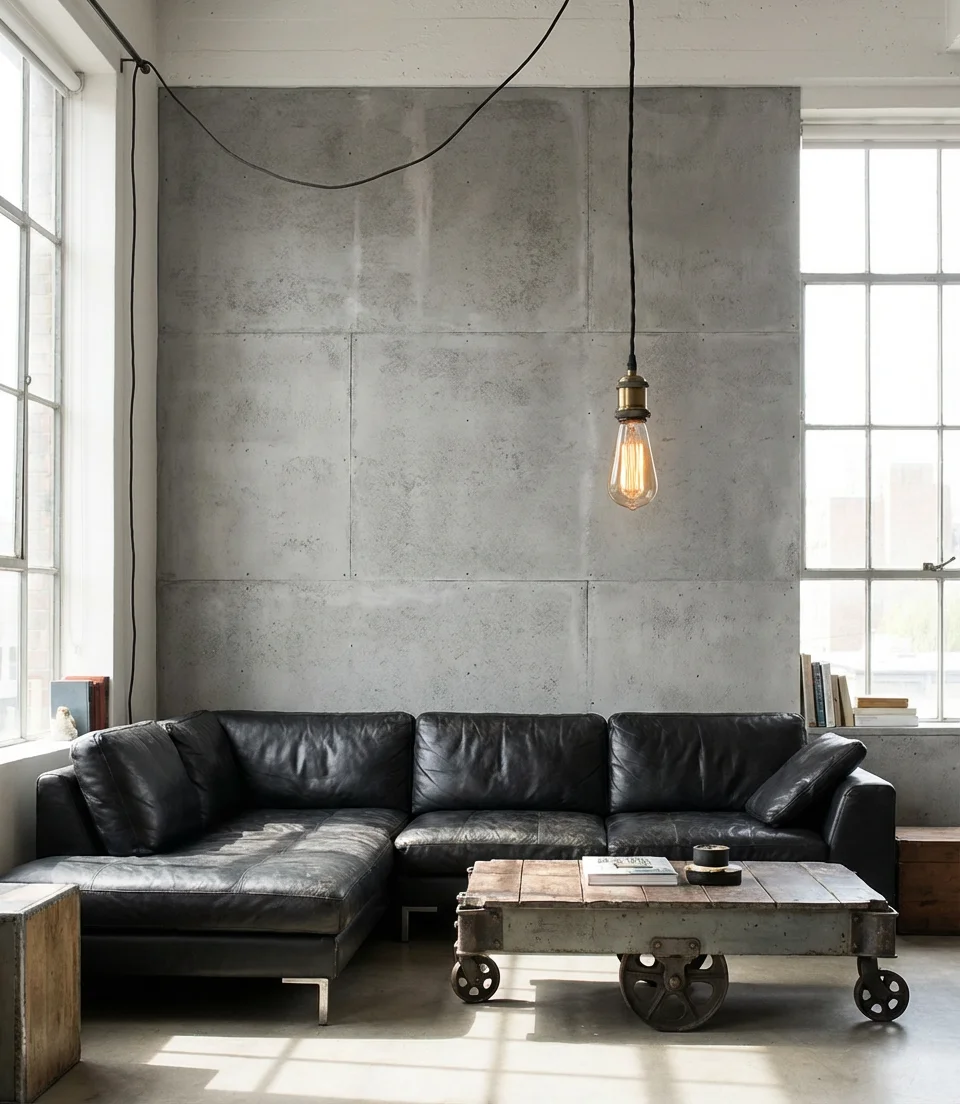
Cement board or concrete-look panels deliver an industrial edge that pairs beautifully with metal accents and reclaimed wood. This treatment is popular in loft conversions and urban apartments where the modern living room aesthetic leans minimalist and raw. The panels are lightweight, simple to install, and provide a durable surface that’s resistant to moisture and wear. They’re also a budget-friendly alternative to poured concrete.
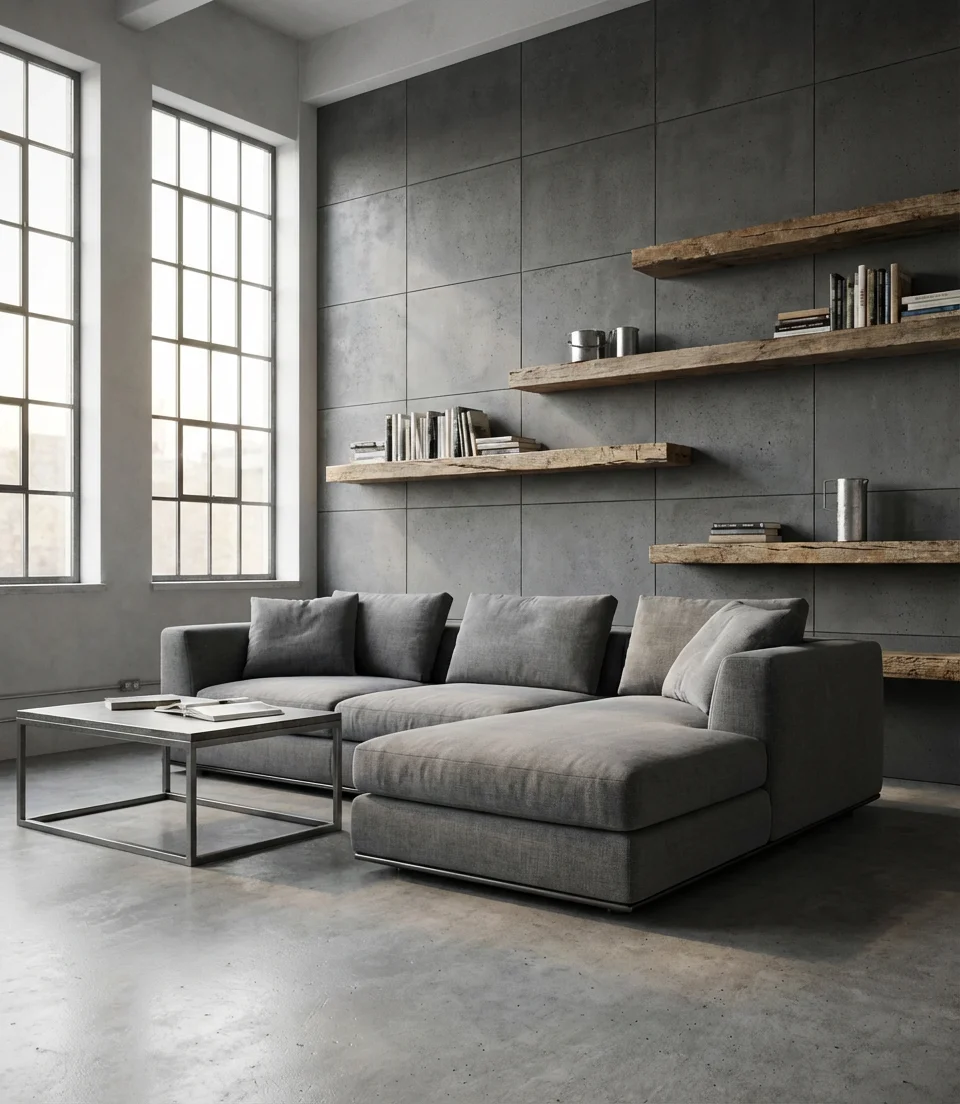
This look is especially common in cities like Chicago and Detroit, where industrial heritage is part of the architectural identity. Homeowners use it to honor that history while keeping the space functional and modern. If you’re going for this vibe, warm it up with textiles—wool rugs, linen curtains, and soft throws—to prevent the room from feeling too cold or sterile.
16. Soft Blush Pink Behind White Built-Ins
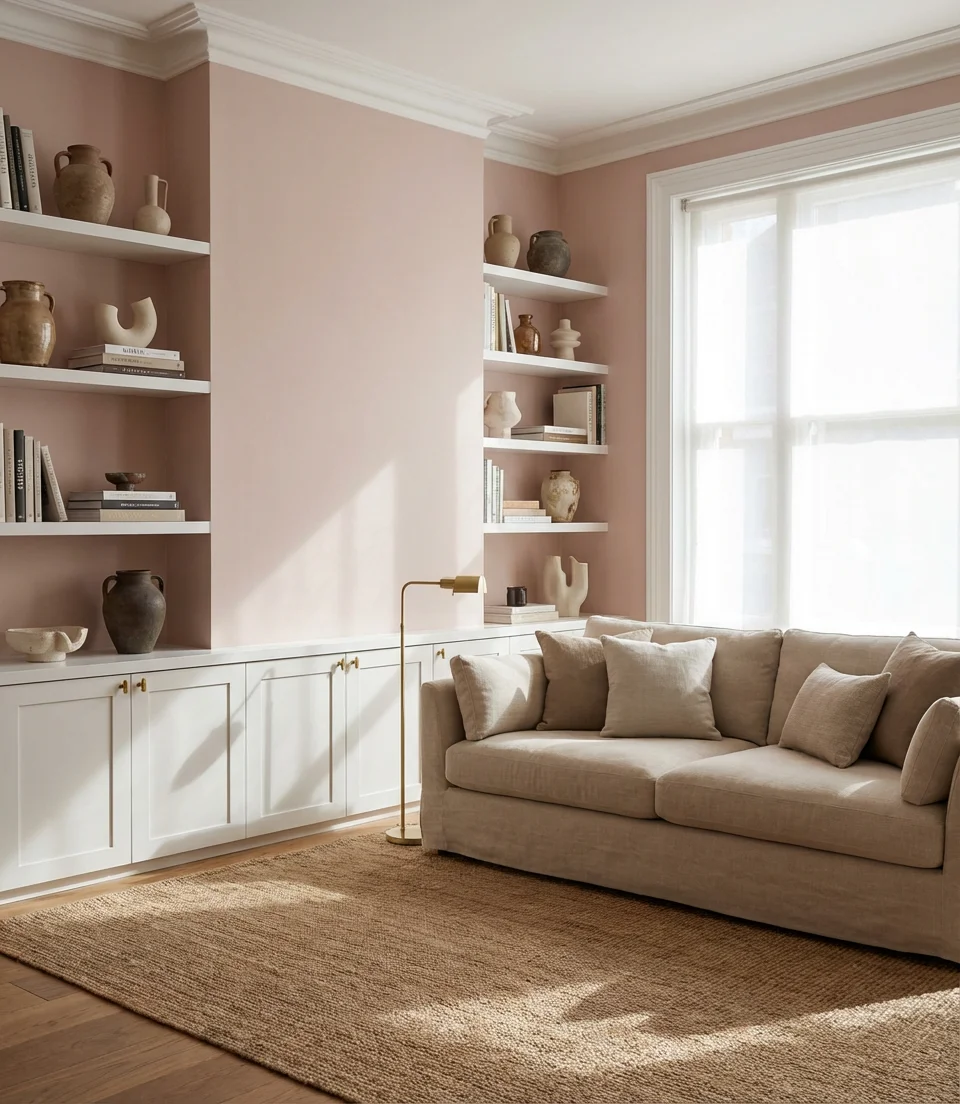
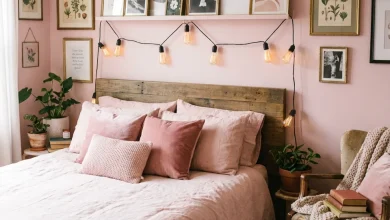
A soft blush or dusty rose accent wall adds warmth and sophistication without reading overly feminine, especially when paired with white built-in cabinetry or shelving. This color choice is gaining traction in house painting ideas for interior colors, particularly among homeowners who want something fresh but not too bold. The pink provides a gentle contrast to the white trim and millwork, creating a layered, curated look that feels custom.
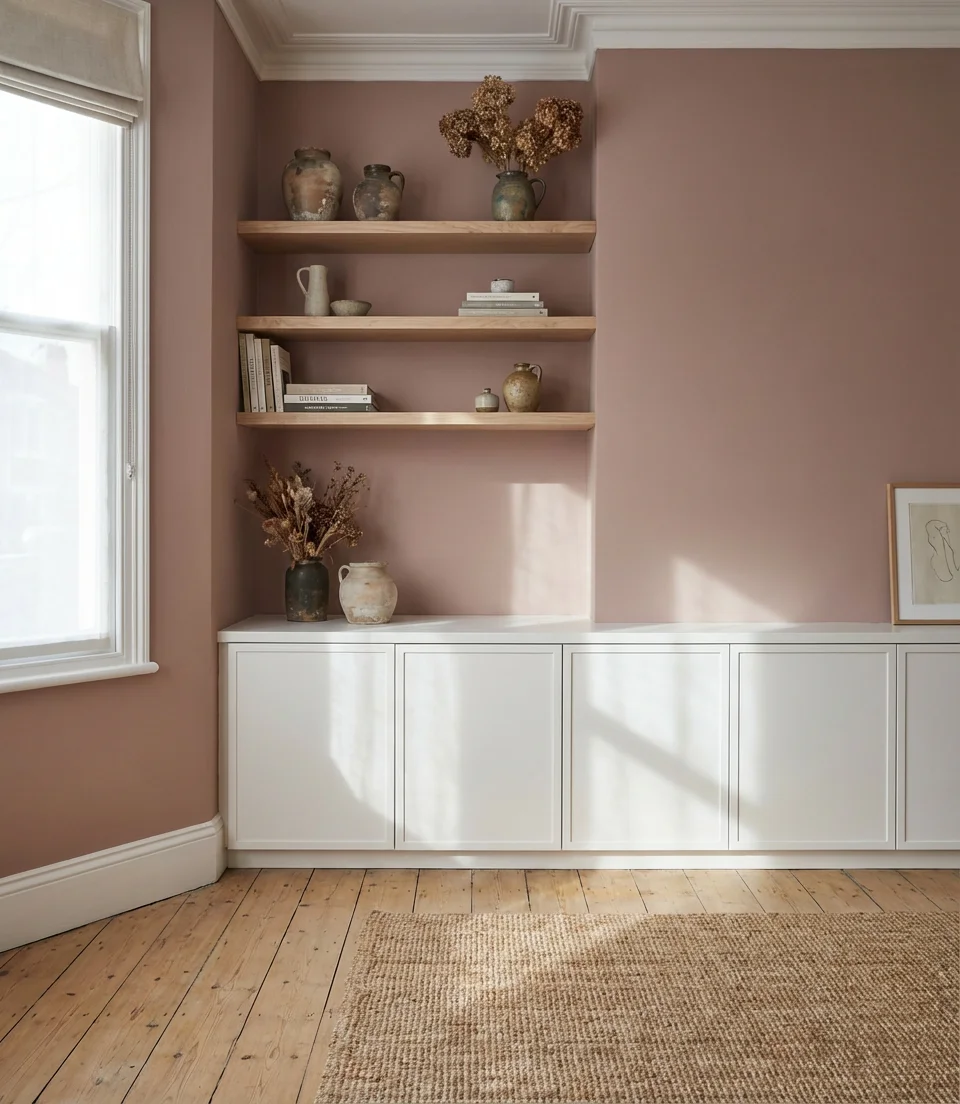
One expert tip: blush looks best in rooms with warm lighting. If you use cool-toned LED bulbs, the pink can shift toward lavender or gray, which defeats the warmth you’re after. Swap in warm white bulbs (2700K–3000K) to keep the color looking true, especially in the evenings. It’s a small detail, but it makes the difference between a space that feels inviting and one that feels off.
17. Walnut Slat Wall Behind a Mounted TV and Fireplace
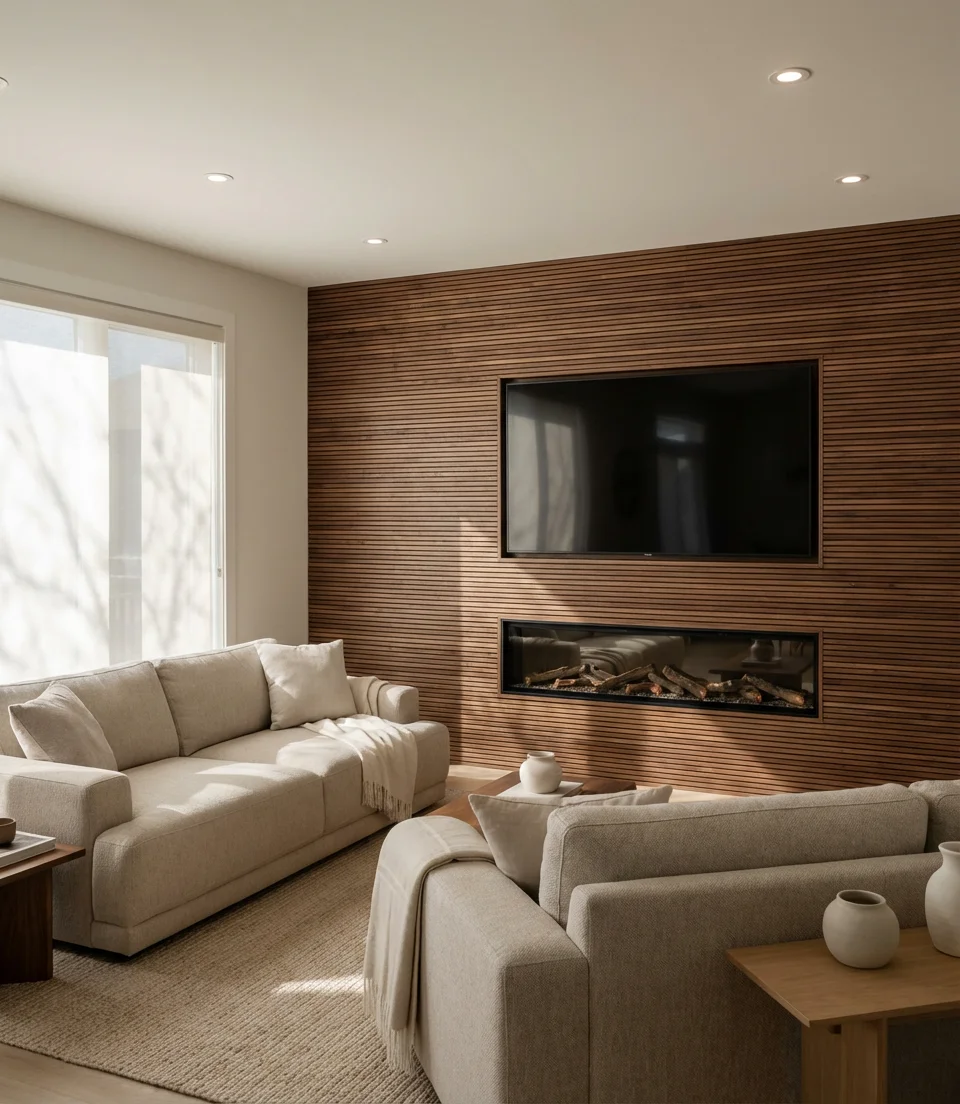
Walnut slat walls offer a sleek, contemporary solution for living room accent walls with a TV and fireplace. The horizontal slats create rhythm and texture, and the rich brown tones of walnut add warmth to the space. This design works especially well in open-concept homes where the living room flows into the kitchen or dining area. The slats can hide wiring and provide a seamless backdrop for both the screen and the hearth.
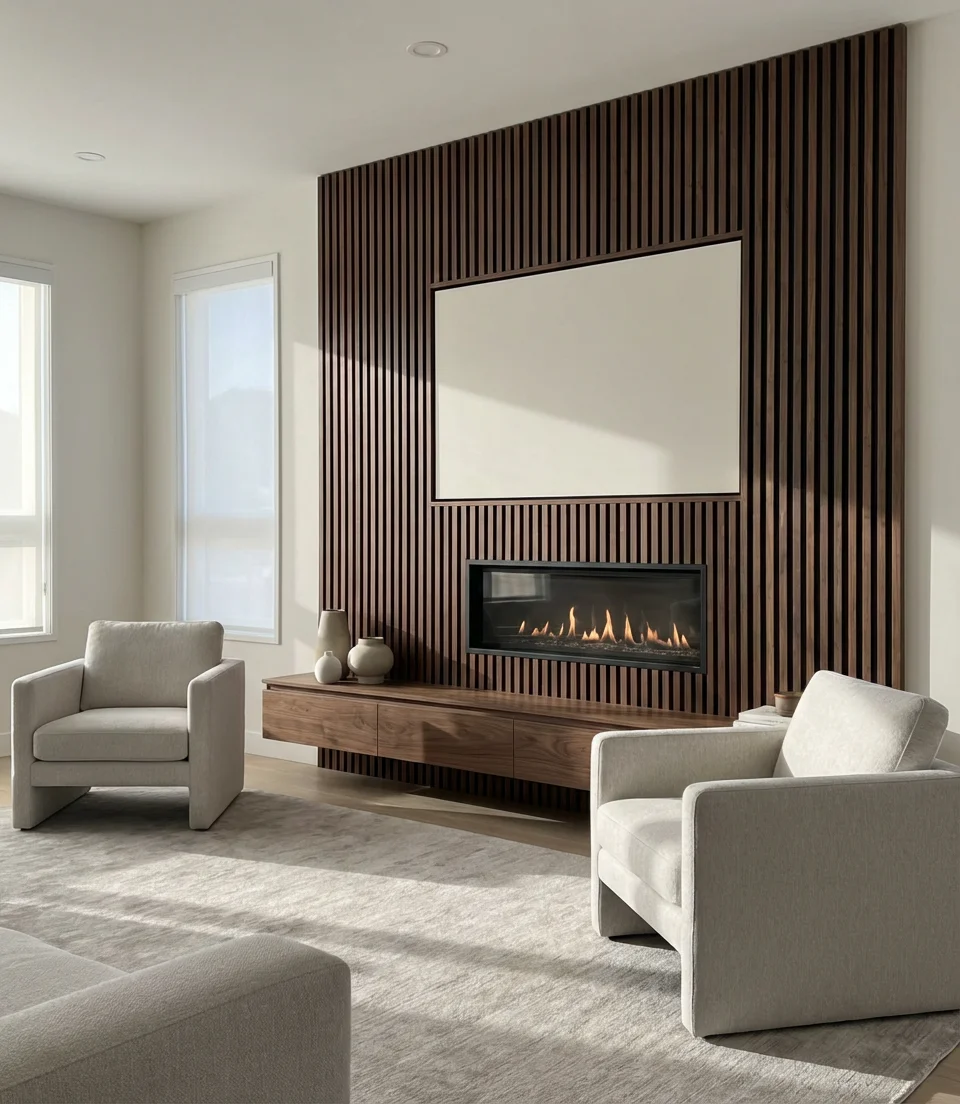
In Southern California and Florida, where indoor-outdoor living is popular, walnut slat walls are often extended onto covered patios or lanais, creating a continuous visual thread. The wood holds up well in climate-controlled spaces, but if you’re in a high-humidity area, make sure it’s properly sealed to prevent warping. A little preventive care goes a long way in preserving the look over time.
18. Painted Brick in Matte White
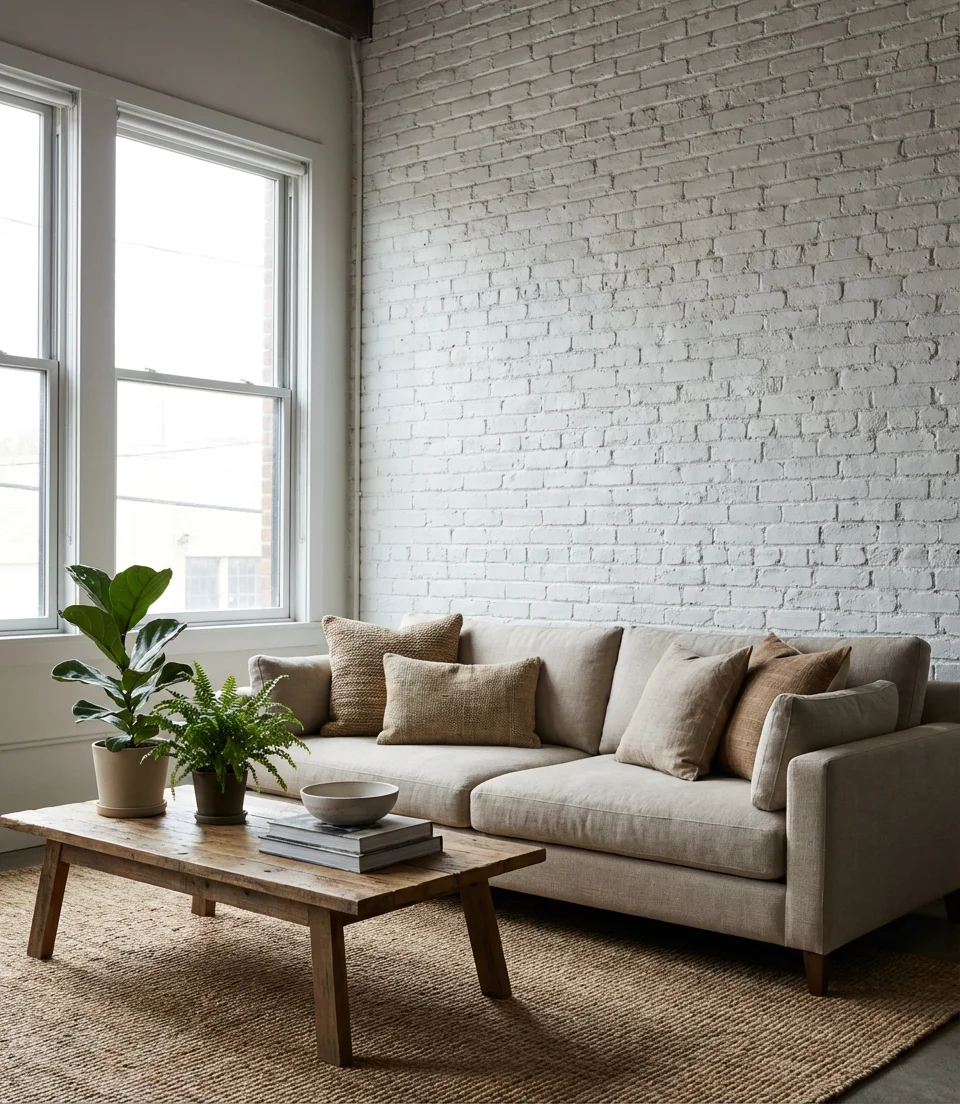
Exposed brick painted in matte white retains the texture and character of the original material while brightening the room. This approach is especially popular in older homes and loft conversions where brick is a structural or historical feature. The white paint softens the industrial feel, making the space more livable and versatile for different decor styles. It also provides a neutral backdrop for colorful furniture or bold art.
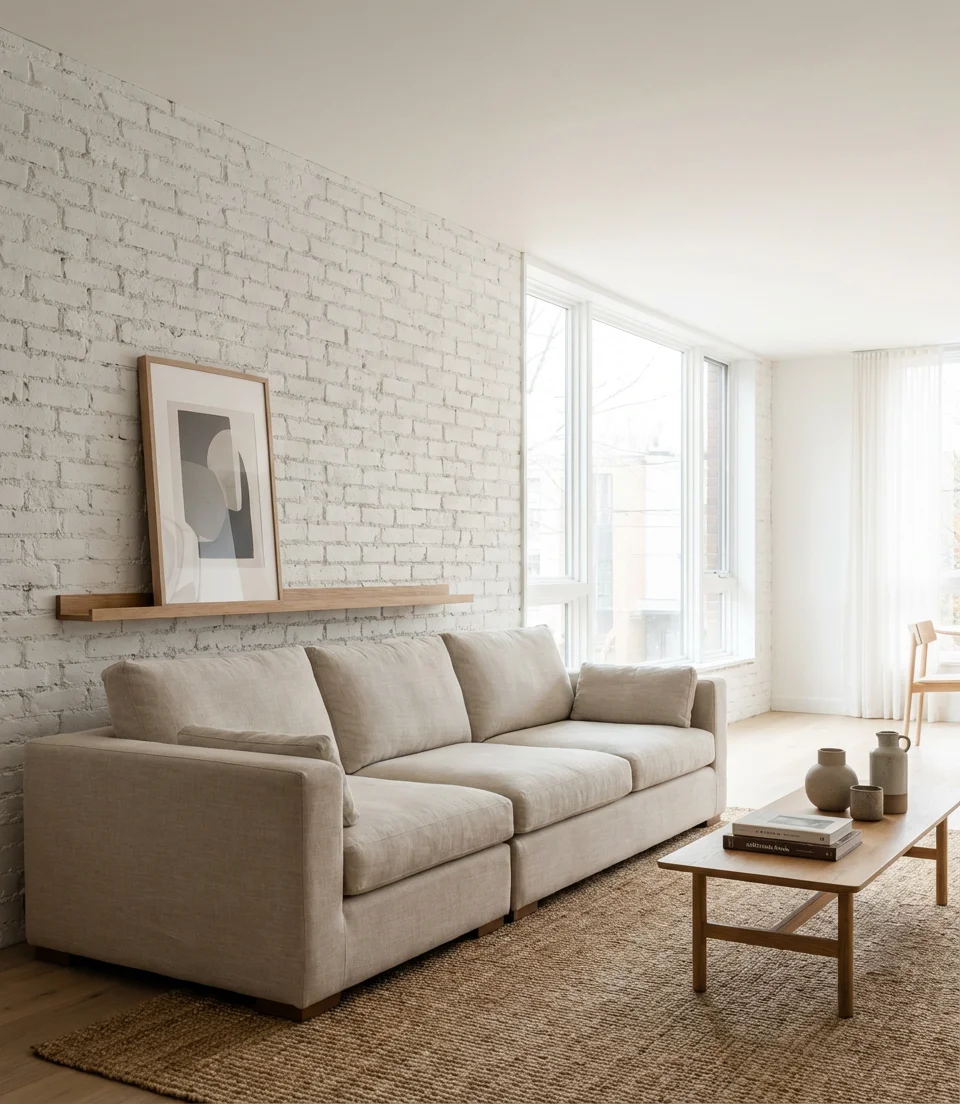
A common mistake is using glossy or semi-gloss paint on brick, which can look too slick and highlight every imperfection. Stick with a matte or eggshell finish for a more natural, organic appearance. If you’re painting brick for the first time, clean it thoroughly and use a masonry primer before applying your topcoat. This ensures the paint adheres properly and lasts for years without chipping or peeling.
19. Charcoal Chalkboard Paint for a Family-Friendly Space
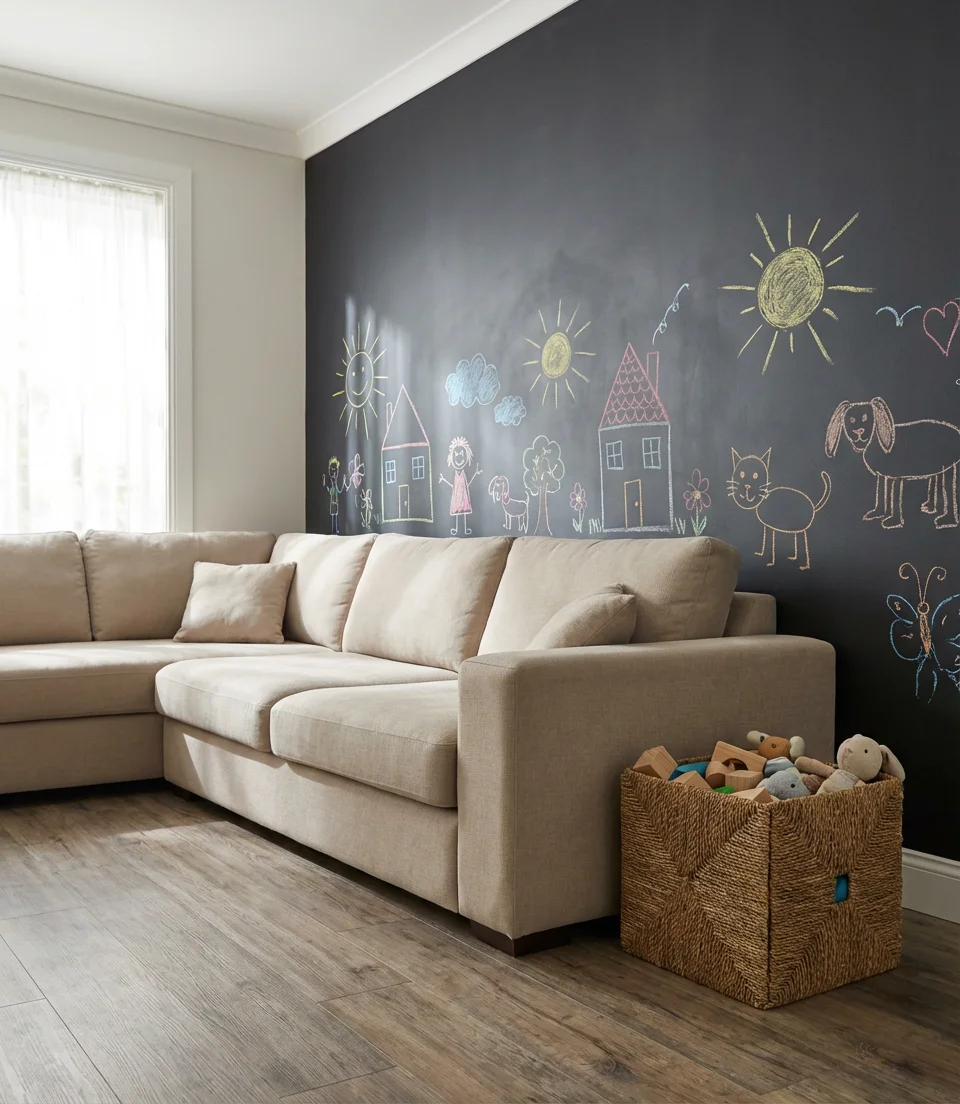
Chalkboard paint in a charcoal or matte black finish turns an accent wall into an interactive surface, perfect for families with kids or anyone who likes to sketch, plan, or leave messages. This works especially well in casual living room spaces where function and fun overlap. The surface can be easily wiped clean and reused, making it a practical choice for homes that prioritize flexibility over formality.
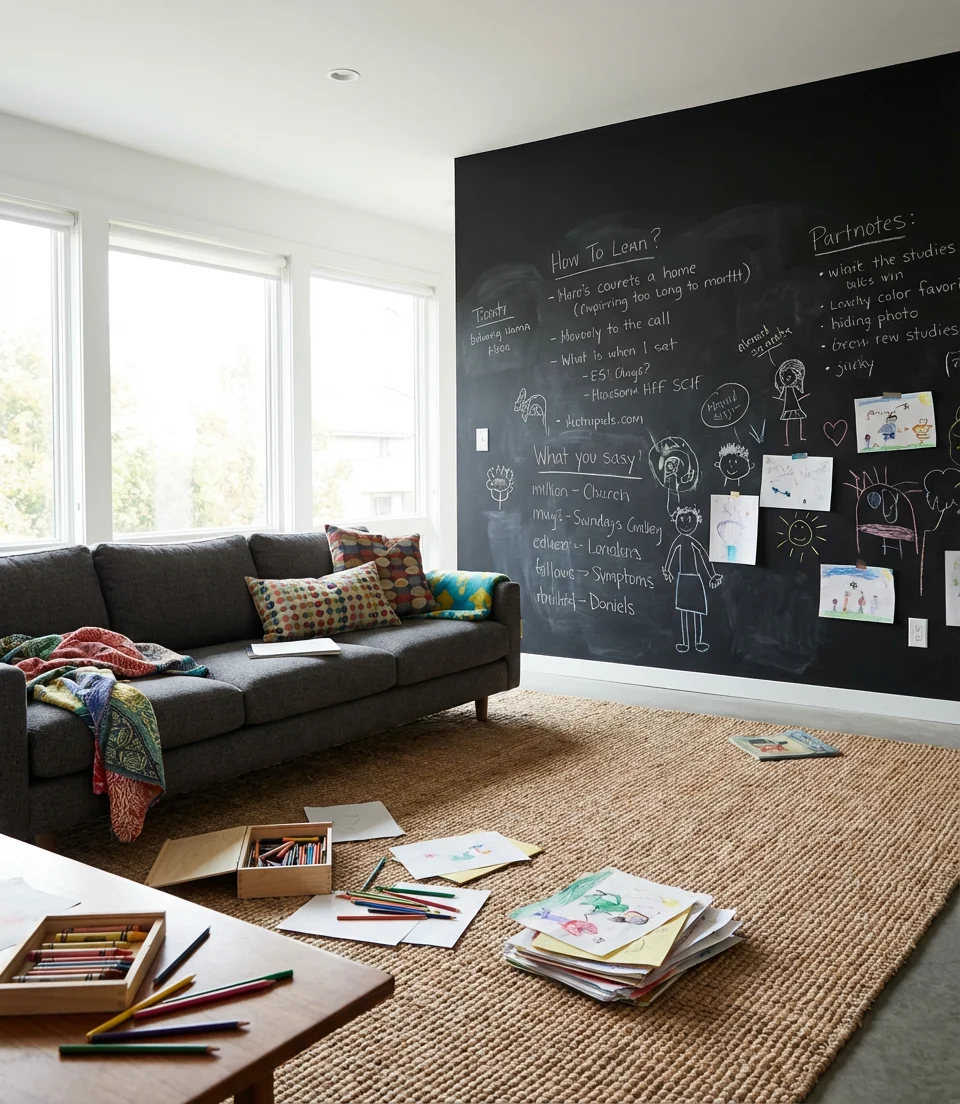
Chalkboard walls are especially popular in the Midwest and New England, where families tend to have designated playrooms or flex spaces. The paint is inexpensive and easy to apply, making it a low-risk experiment. If you decide later you don’t like it, you can paint over it with regular wall paint after light sanding. It’s one of the most reversible accent wall options out there.
20. Vertical Garden Wall with Live Plants
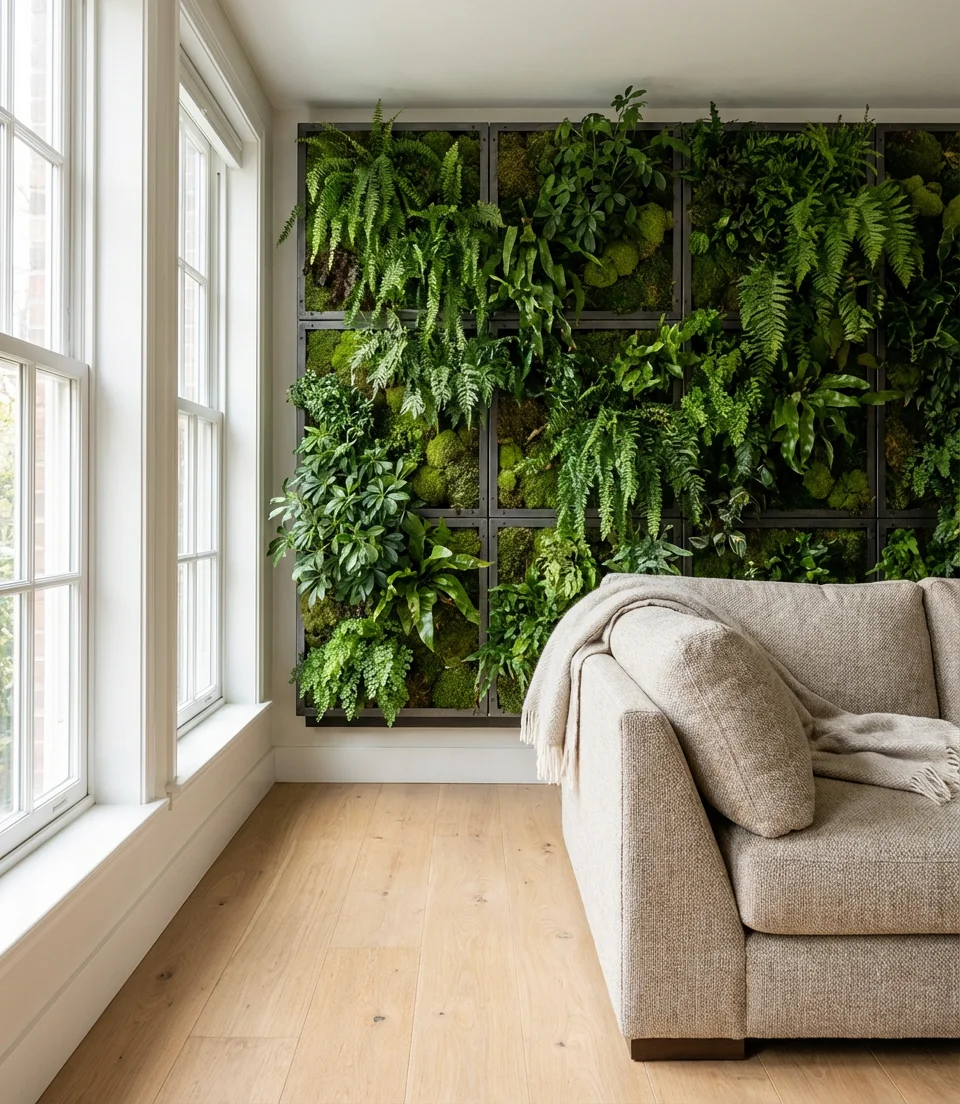
A vertical garden wall brings living greenery indoors, creating a dramatic focal point that also improves air quality. This is ideal for decor ideas that emphasize wellness and sustainability in the living room. Systems range from modular panels with built-in irrigation to DIY setups using wall-mounted planters. The effect is lush, organic, and constantly evolving as the plants grow and change with the seasons.
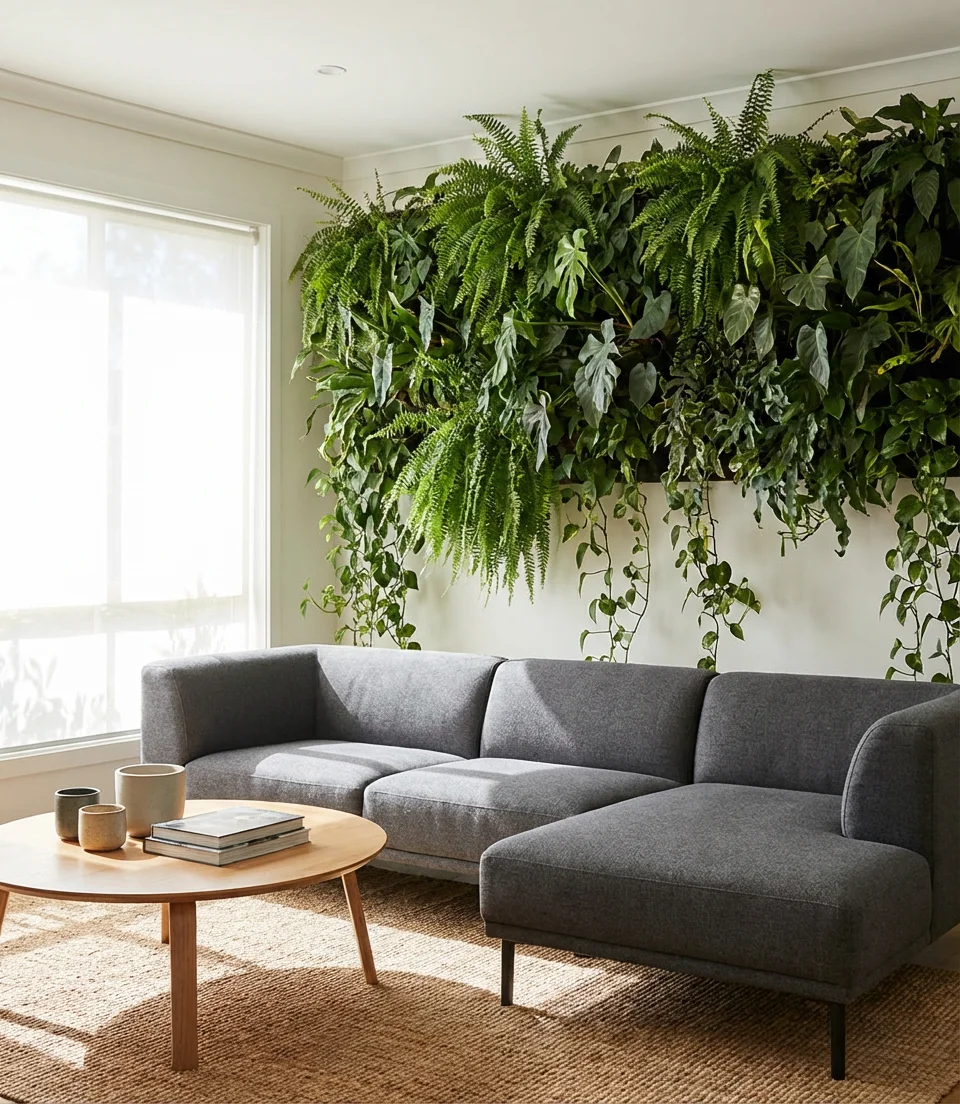
Expect to spend $500 to $2,000 for a professionally installed vertical garden system, depending on size and complexity. Maintenance is key—you’ll need to water, prune, and monitor light levels to keep plants thriving. If that sounds like too much work, consider a faux vertical garden using high-quality artificial plants. The visual impact is similar, but the upkeep is minimal. It’s a smart compromise for busy households.
21. Midnight Blue with Gold Leaf Accents
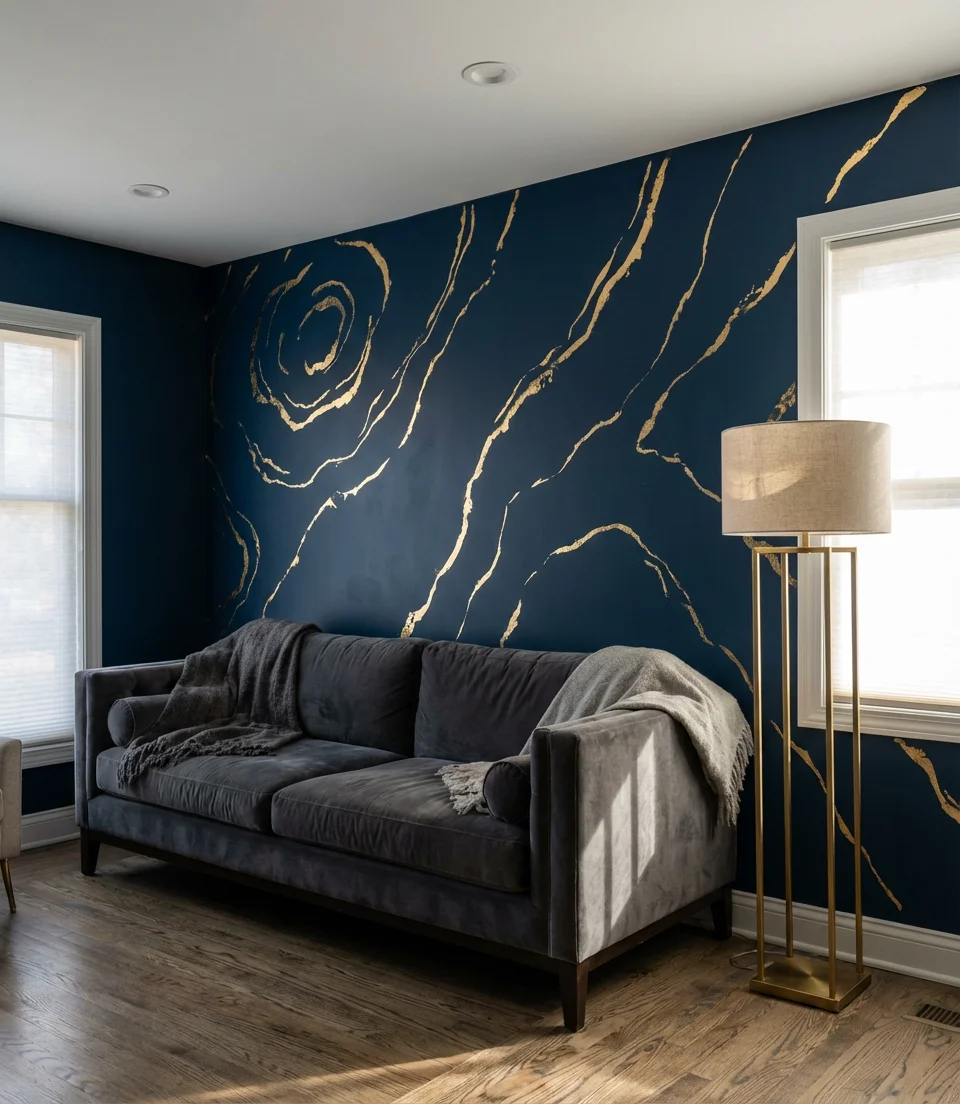
Midnight blue accent walls with subtle gold leaf detailing bring a touch of glamour and sophistication to modern living room spaces. The deep blue provides a rich, moody backdrop, while the gold adds shimmer and movement when light hits the surface. This technique works best in rooms with ample artificial lighting, where the metallic accents can truly shine. It’s a high-impact choice that feels both luxurious and contemporary.
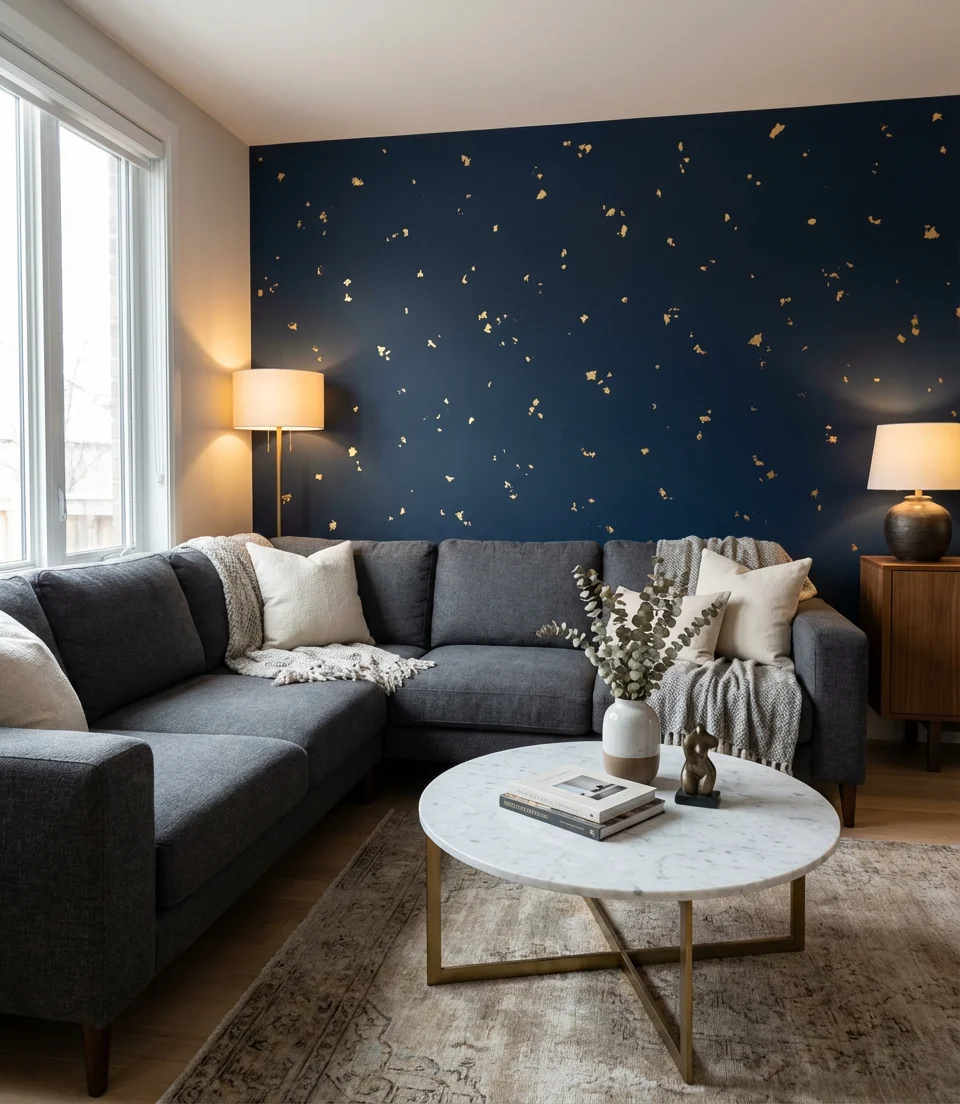
This look is increasingly common in New York and Los Angeles, where homeowners want a bit of drama without committing to full-on maximalism. The gold leaf can be applied in random patches, geometric shapes, or even as a subtle ombre gradient. If you’re DIY-ing it, consider purchasing composition leaf instead of real gold, as it’s significantly less expensive and maintains a nearly identical appearance once sealed. Just take your time with the application, as it’s more forgiving if you work slowly and layer carefully.
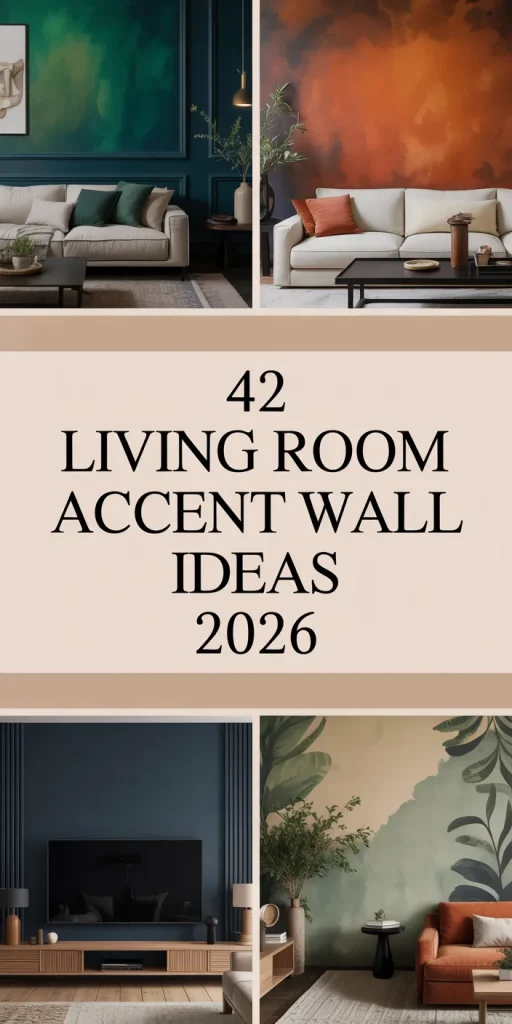
Whether you’re drawn to the warmth of reclaimed wood, the drama of deep color, or the texture of natural materials, the right accent wall can transform your living room into a space that feels both personal and on-trend. These ideas offer a starting point, but the best results come from tailoring the approach to your light, layout, and lifestyle. What accent wall are you considering for your home? Share your thoughts and questions in the comments below—we’d love to hear what’s inspiring you this year.