
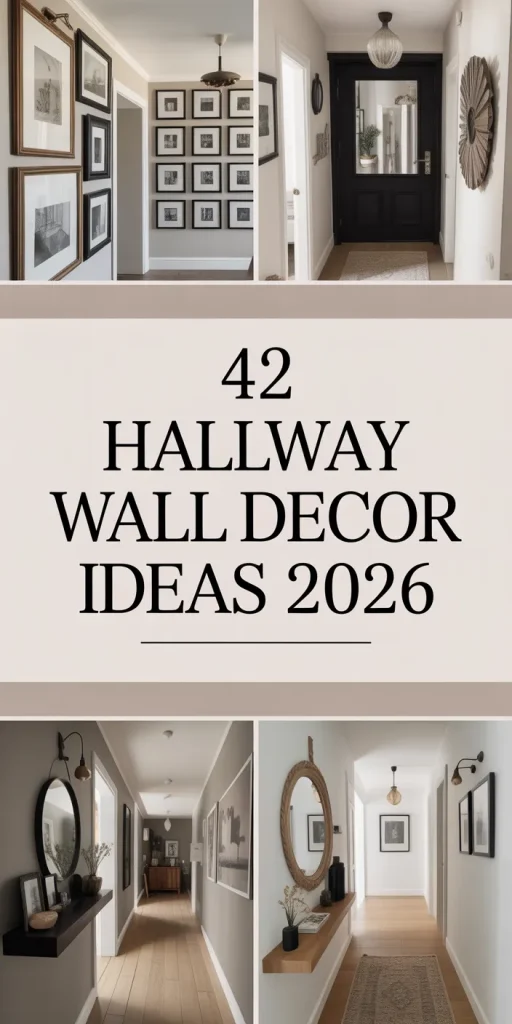
Your hallway is the first thing guests see—and lately, it’s become the most pinned room in the house. Whether you’re dealing with a narrow entry that feels like a closet with ambition or a long, echoing corridor that goes on forever, wall decor is the fastest, most affordable way to make it sing. American homeowners are increasingly treating hallways not as afterthoughts but as intentional spaces worth designing, and Pinterest searches for hallway inspiration have been climbing steadily heading into the year. In this guide, you’ll find fresh, practical, and genuinely beautiful ideas for hallway wall decor in 2026 — whether you’re renting, renovating, or somewhere in between.
1. Arch-Framed Gallery Wall
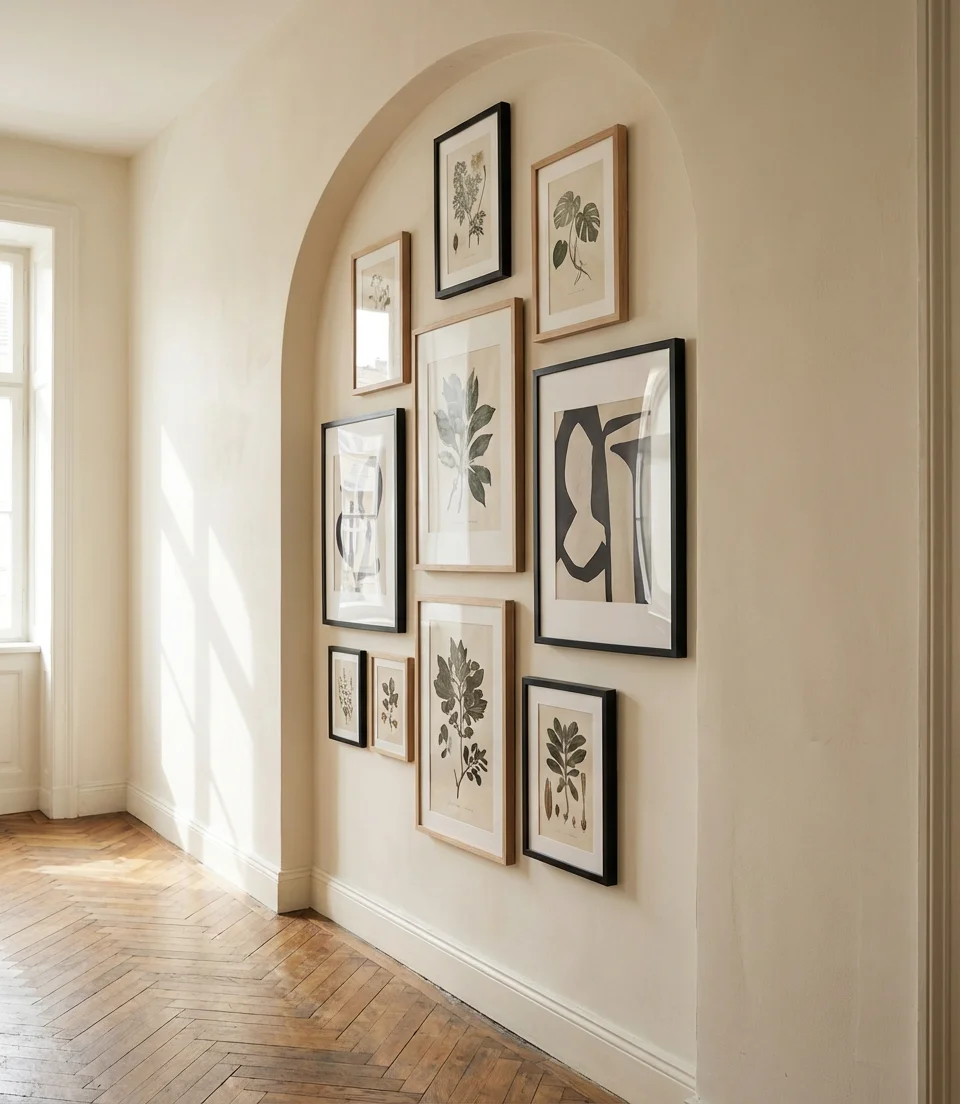
An arch-framed gallery wall brings architectural romance into the most overlooked space in the home. This trend works beautifully in an entry or a long corridor—the arch motif gives the arrangement a focal point even before visitors notice the individual frames. Think warm plaster tones, mixed-media prints, and a slightly asymmetrical cluster of frames in complementary sizes. It reads sophisticated without feeling stiff, and it photographs beautifully—which is exactly why it keeps circulating on Pinterest boards from Portland to Nashville.
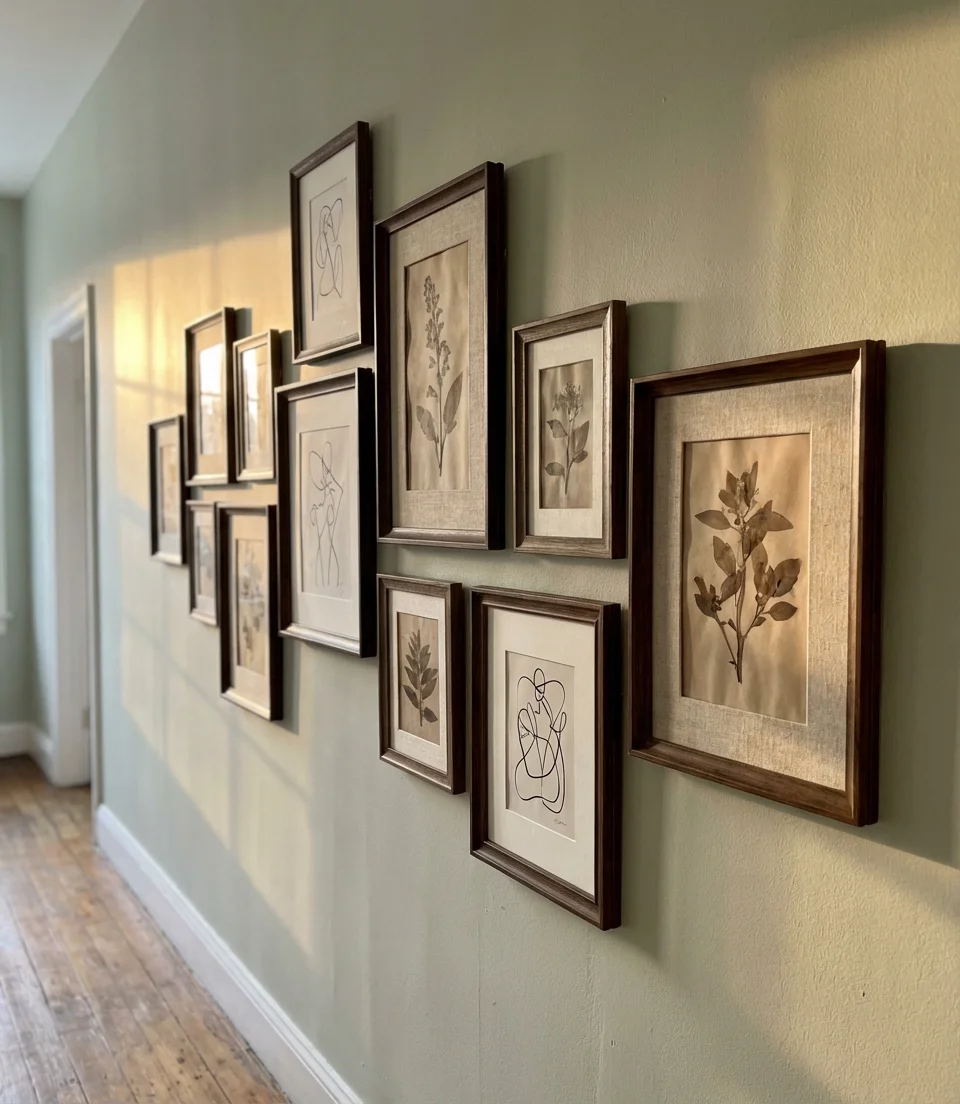
The best approach here is to sketch the arch shape lightly on the wall with a pencil before hammering a single nail. That invisible outline becomes your guide for spacing and balance. Designers who work on entryway projects frequently note that homeowners underestimate how much visual cohesion matters—mix too many styles, and the wall starts to feel chaotic rather than curated. Stick to one or two art movements—say, vintage botanical plus contemporary line drawing—and you’ll land exactly where you want to be.
2. Shiplap Accent Panel in a Short Hallway
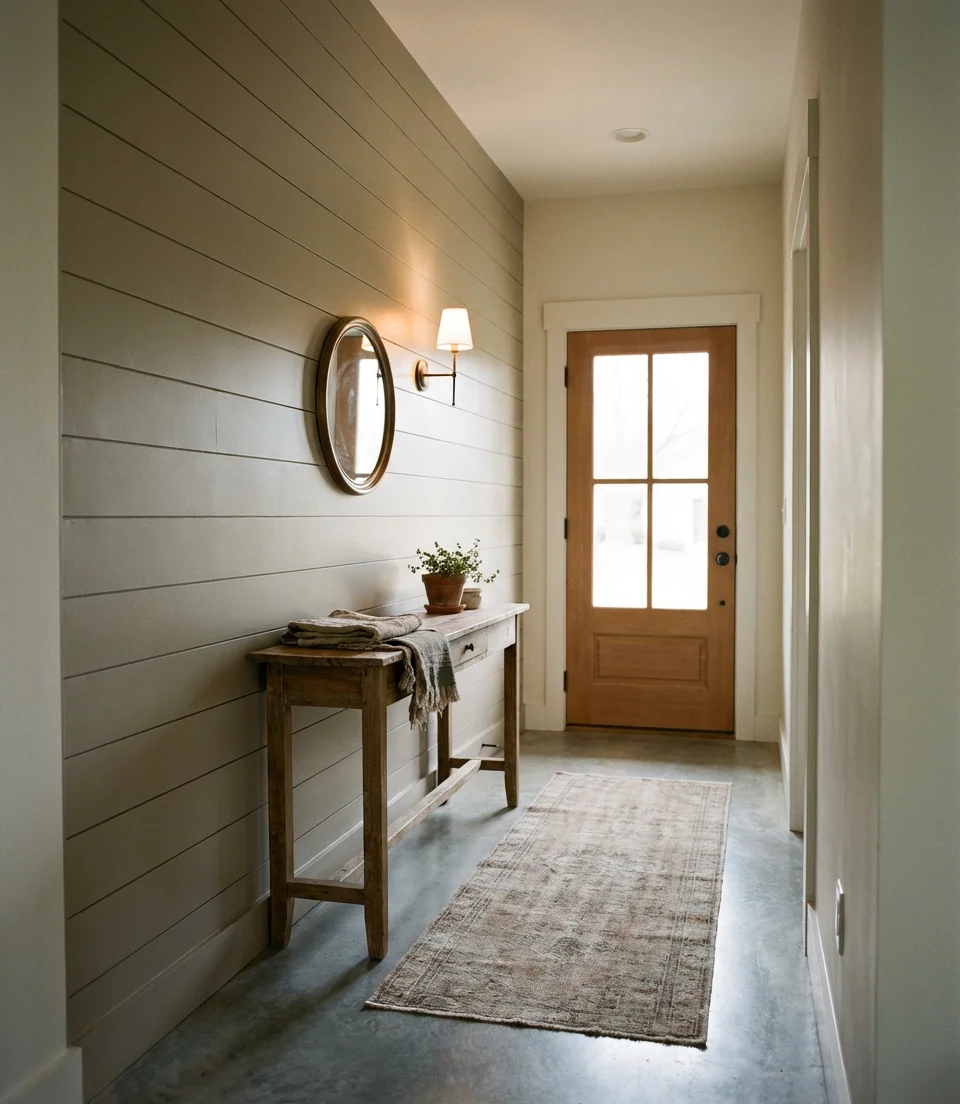
Not every hallway has the luxury of length. In a short corridor—the kind that connects a mudroom to the kitchen or links two bedrooms—shiplap paneling adds texture and warmth without closing the space in further. Paint it the same tone as the adjacent walls, and it reads as architectural rather than decorative, which is a subtle distinction that makes the whole hallway feel intentional. White-on-white shiplap is classic, but right now designers are loving warm greige and even dusty sage for a moodier effect that still feels bright.
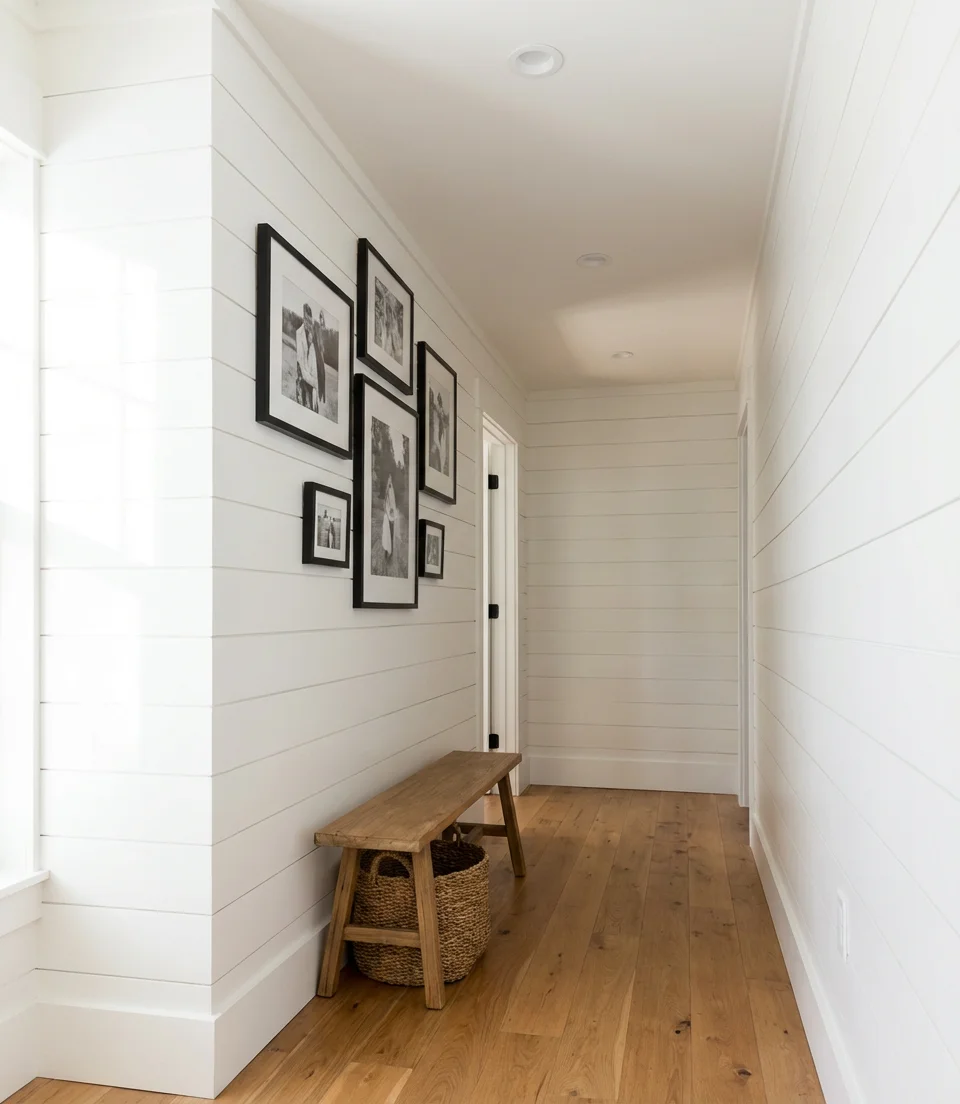
One of the most common mistakes with shiplap in compact spaces is leaving it raw and undecorated—the texture alone doesn’t do enough. Layer in a small sconce, a slim console, or even a single oversized mirror to give the panel something to frame. Budget-wise, peel-and-stick shiplap panels from major home improvement retailers run roughly $1.50–$2.50 per square foot, making this one of the most cost-effective accent wall options available to American homeowners today.
3. Vintage Mirror Cluster for a Narrow Hallway
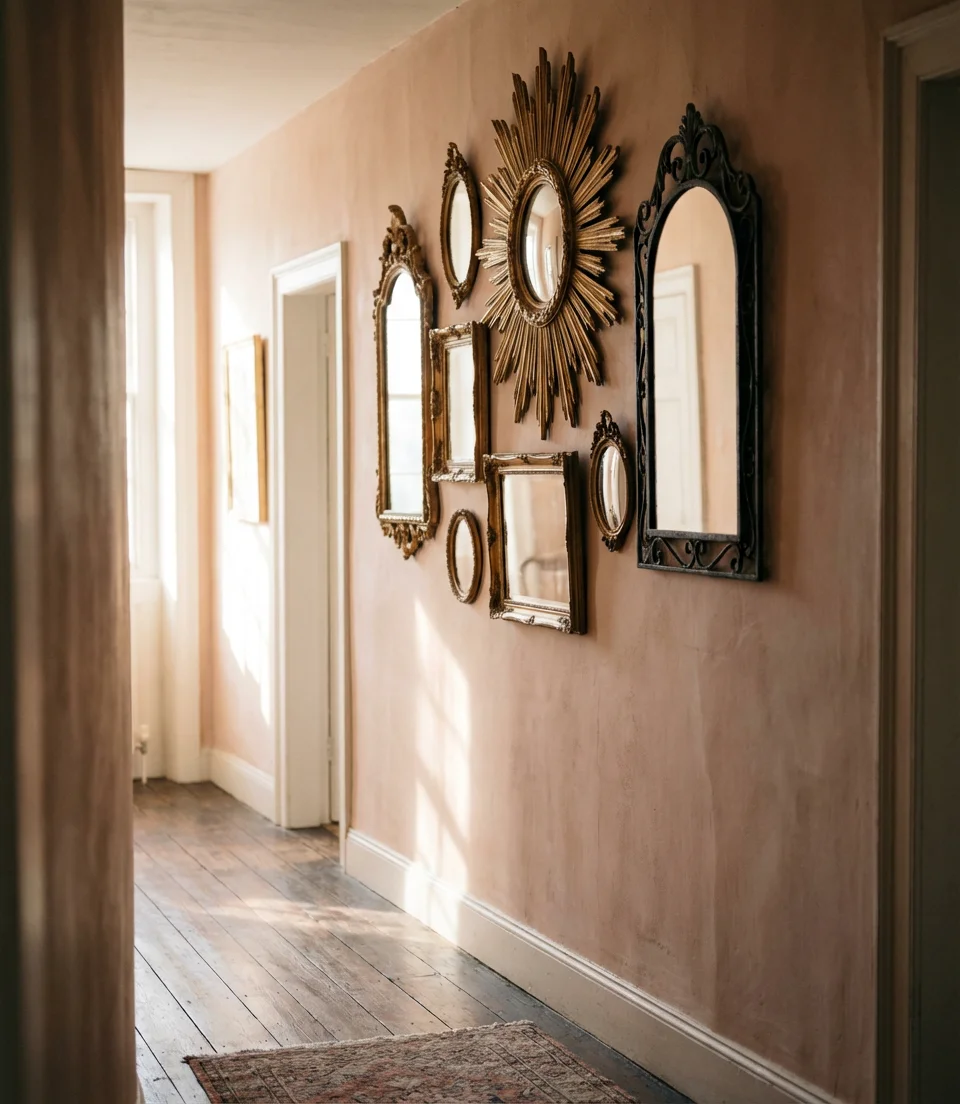
When a hallway barely has room to turn sideways, mirrors become your best architectural tool. A cluster of vintage mirrors—different shapes, different frames, loosely grouped at eye level—does two things at once: it reflects light back into the corridor and creates the visual impression of depth. This trick has been beloved by designers for decades, but the 2026 version feels fresher: think sunburst, arched, and porthole shapes layered together rather than the matchy-matchy sets of the early 2010s. Thrift stores and estate sales offer a wealth of options for creating this look.
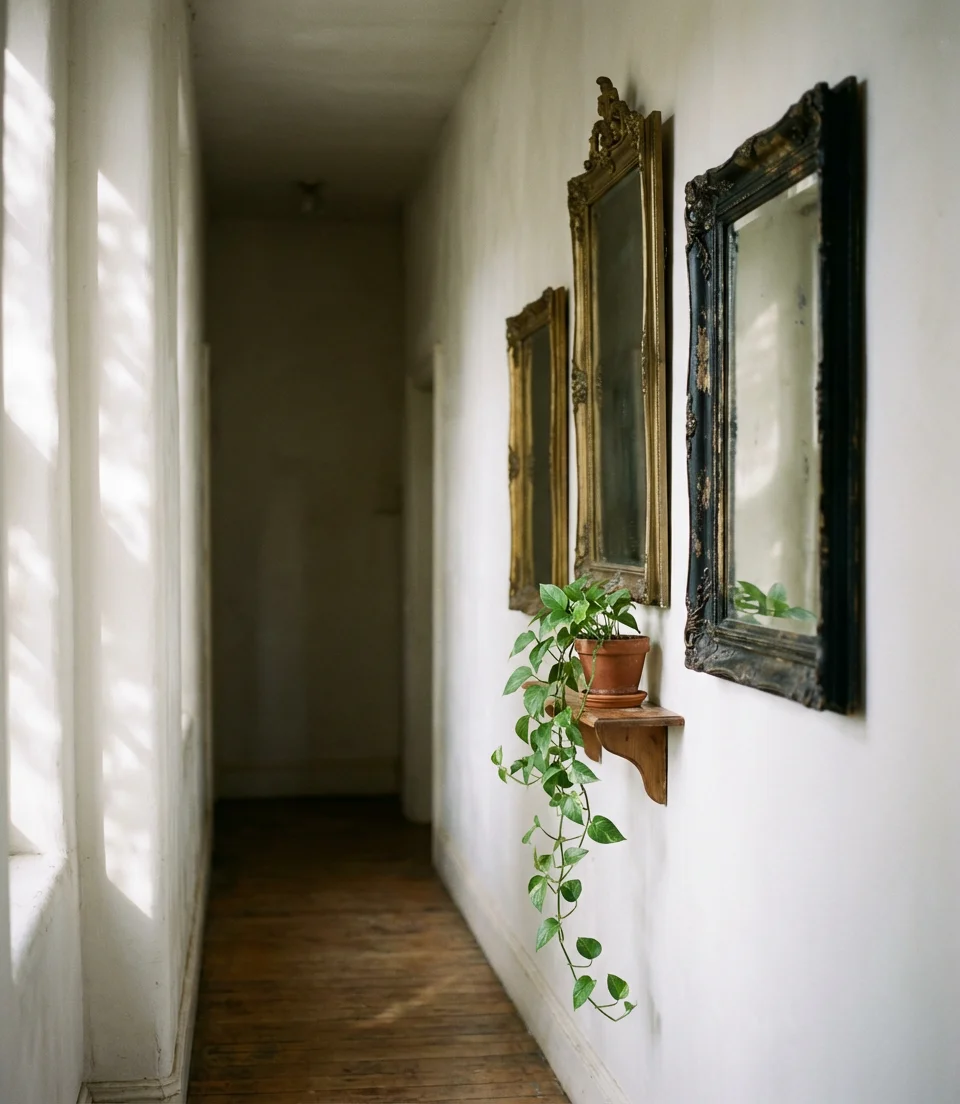
A real homeowner in Austin swapped a single Ikea mirror for a collected cluster of eight thrifted finds she assembled over three months—spending less than $90 total—and the hallway transformed entirely. The key is to keep the frames within a tonal family: all warm metals, or all dark iron, or all white-painted wood. Mix too many finishes, and the eye doesn’t know where to rest. Short, narrow spaces especially benefit from this approach because every inch of wall real estate is doing double duty.
4. Wainscoting with a Painted Color Block Above
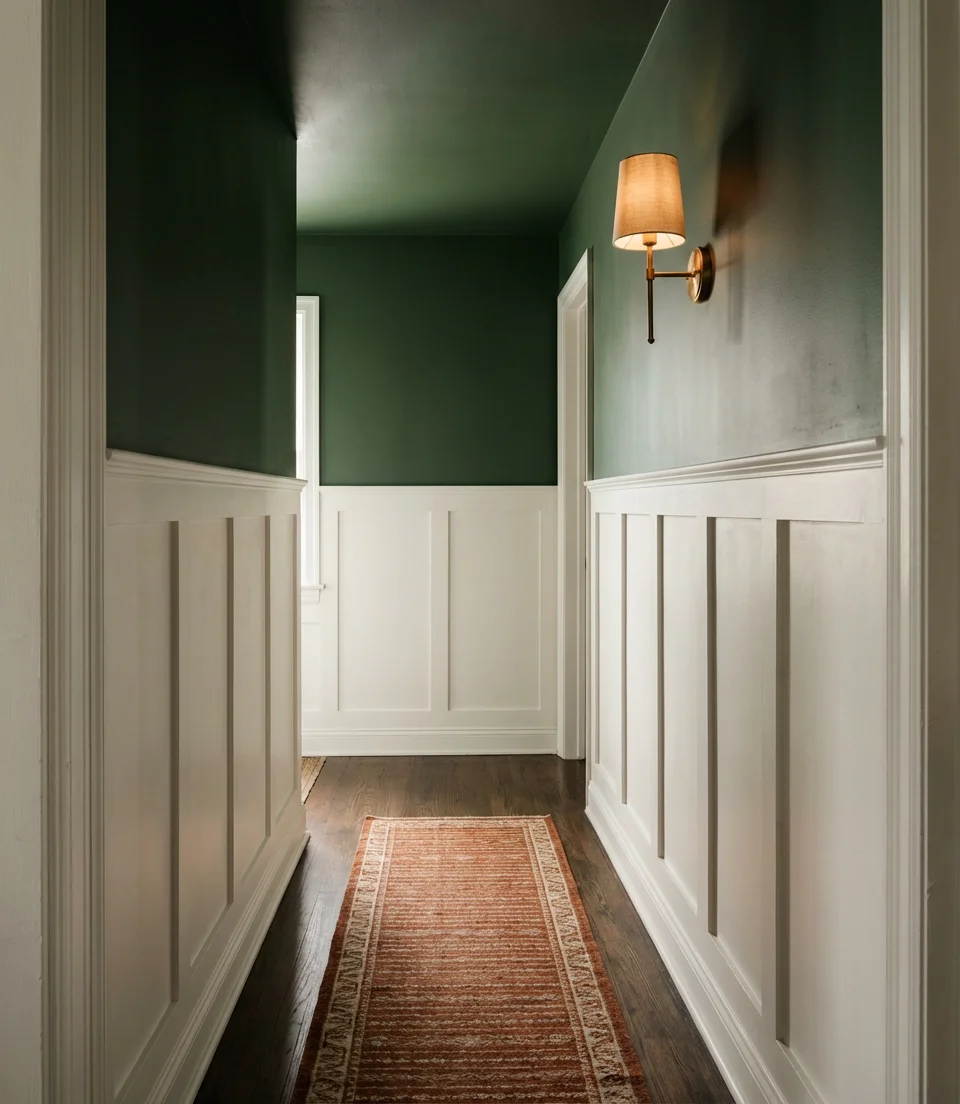
Classic wainscoting gets a modern update when the wall above is painted a saturated, confident color rather than the expected white. In a long entry corridor, this two-tone treatment does something clever—it visually lowers the ceiling height, making a tall, narrow space feel more proportional and intimate. Trending combinations this year include crisp white paneling with deep forest green above or soft dove gray paneling with warm terracotta. The contrast is graphic without being jarring, and it photographs exceptionally well for Pinterest saves.
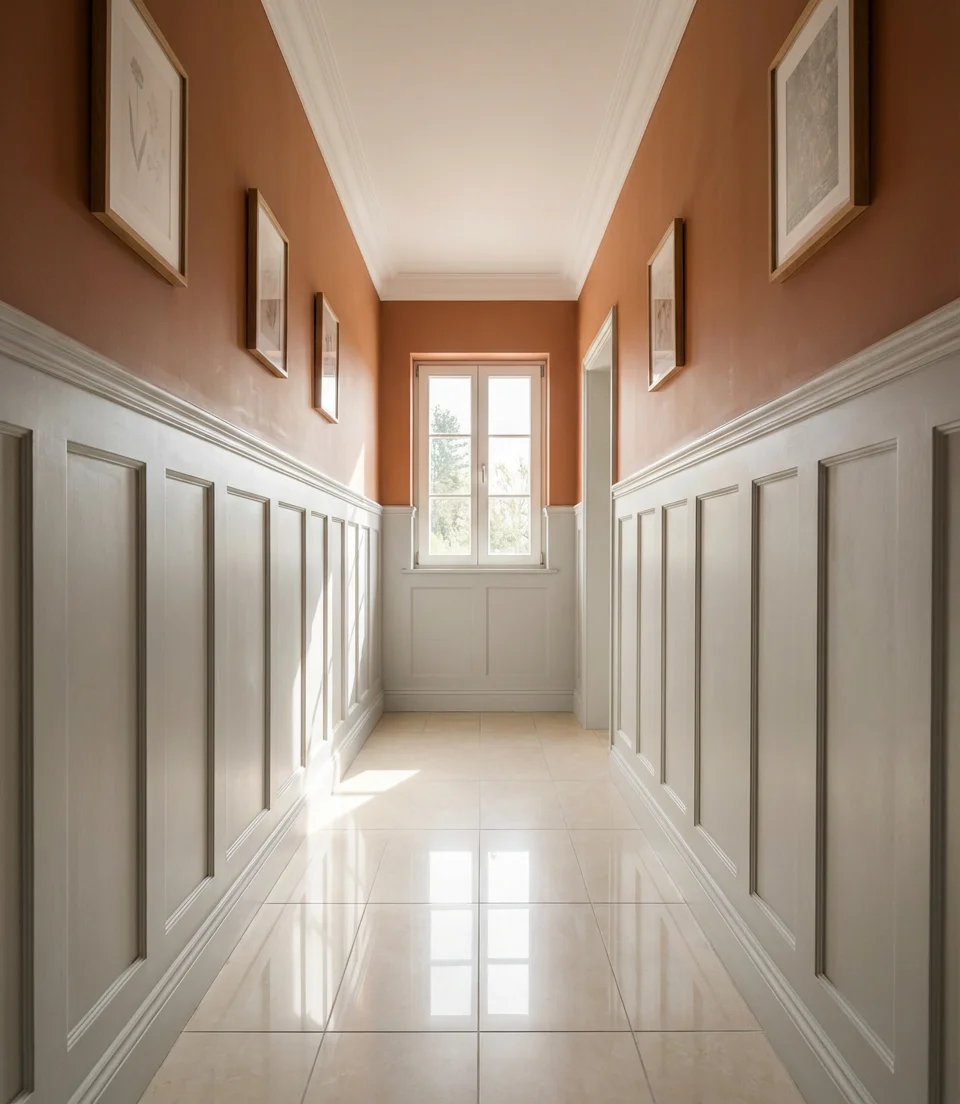
The combination works best in homes where the hallway is viewed as a transition—a moment between rooms rather than a destination. Think of the color block as punctuation: it slows the eye down as you move from one space to the next. Designers who specialize in tall spaces often recommend painting the ceiling the same color as the upper wall to create a cocooning effect. It sounds bold, but it consistently surprises homeowners with how cozy and resolved it feels in person.
5. DIY Rope and Driftwood Art
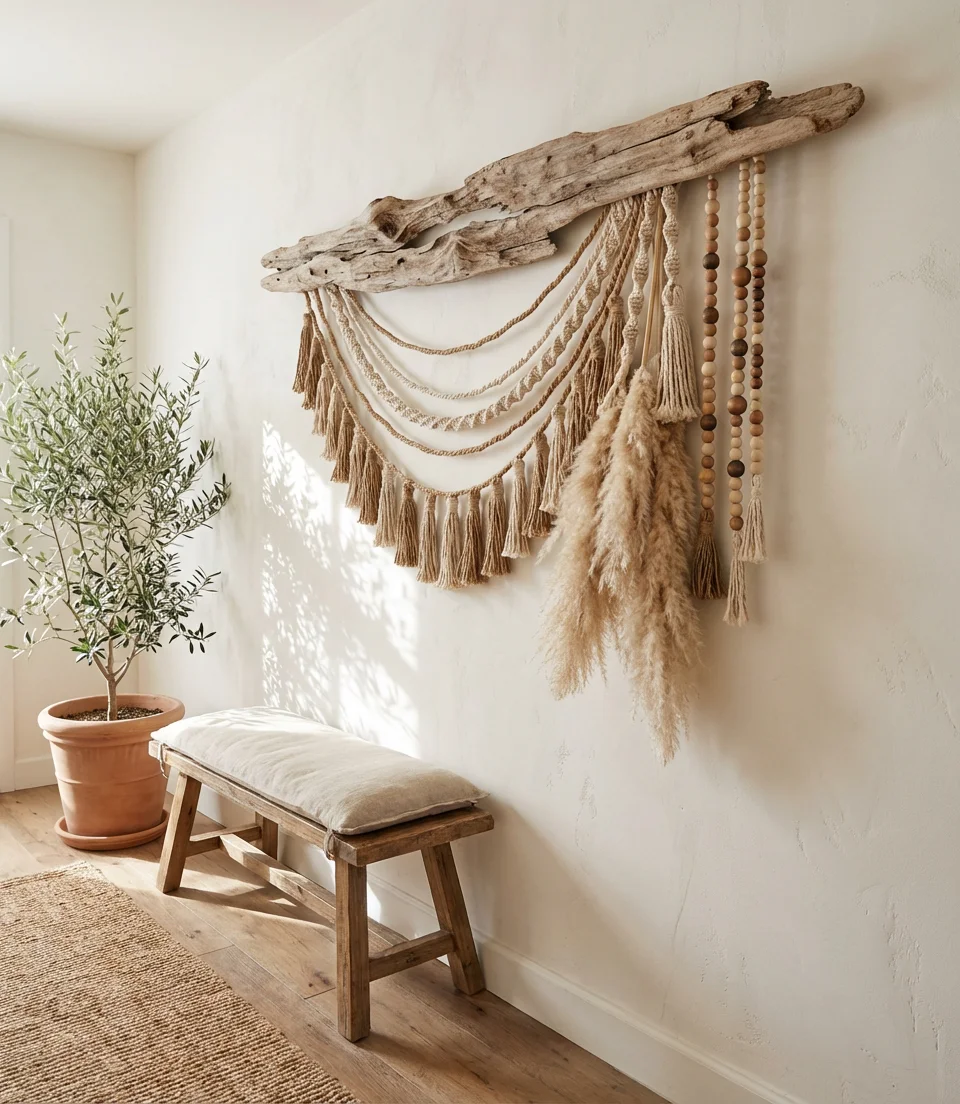
DIY rope and driftwood installations are gaining popularity as a truly unique wall treatment, especially in the entryway, where they provide a welcome touch of organic texture. The basic concept: hang a weathered driftwood branch horizontally and let a mix of knotted rope, dried grasses, and dangling beads fall below it in layers. The result reads somewhere between coastal and bohemian, and it works in apartments just as well as full homes because it requires no permanent wall damage.
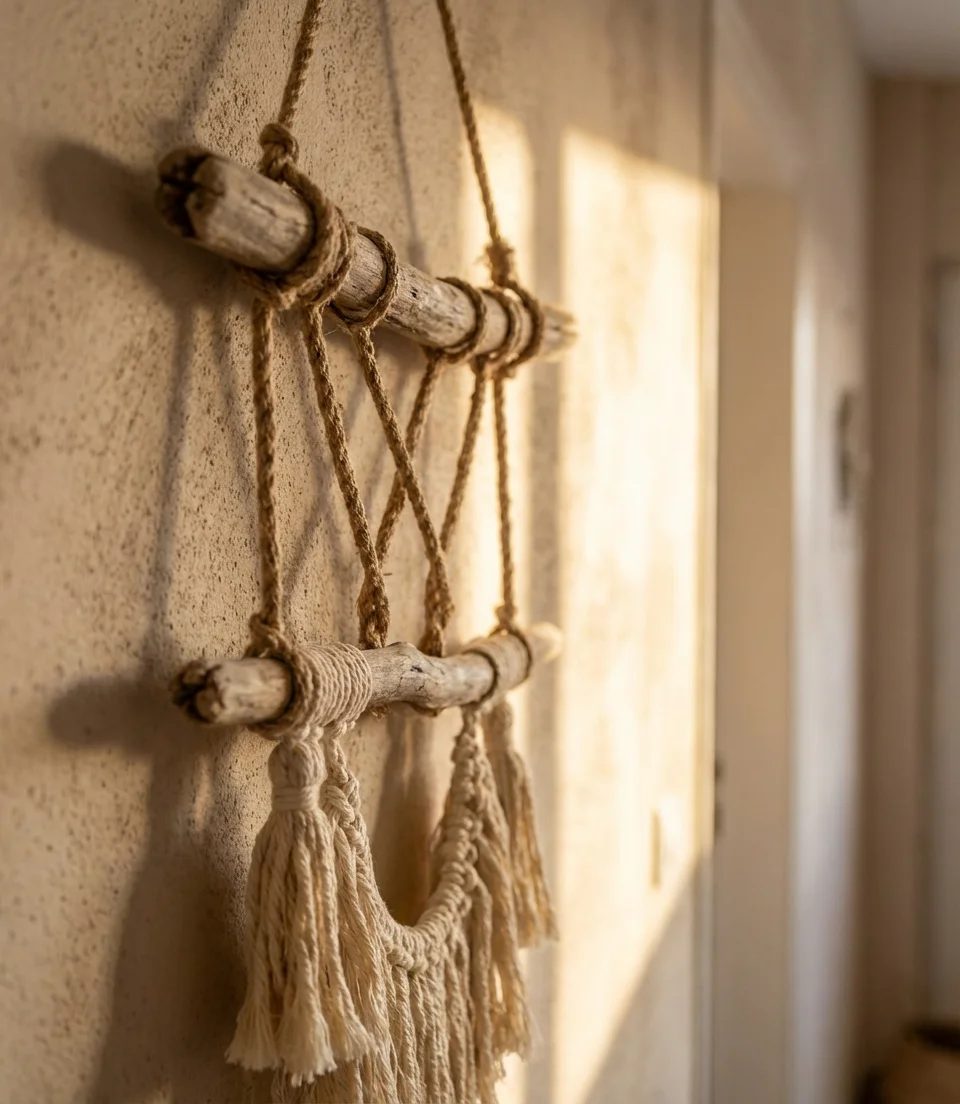
The entire project can come together for under $30 if you source driftwood from a beach walk or a craft store and buy rope in bulk from a local hardware shop. The bigger investment is time—plan for two to three evenings of knotting and arranging. One thing people get wrong: they hang the piece too high. In most standard hallways, the top of the installation should sit at about 68–72 inches from the floor, which keeps it at natural eye level and prevents that floating-in-space look that undermines the whole effect.
6. Upstairs Landing Gallery in Stairwell
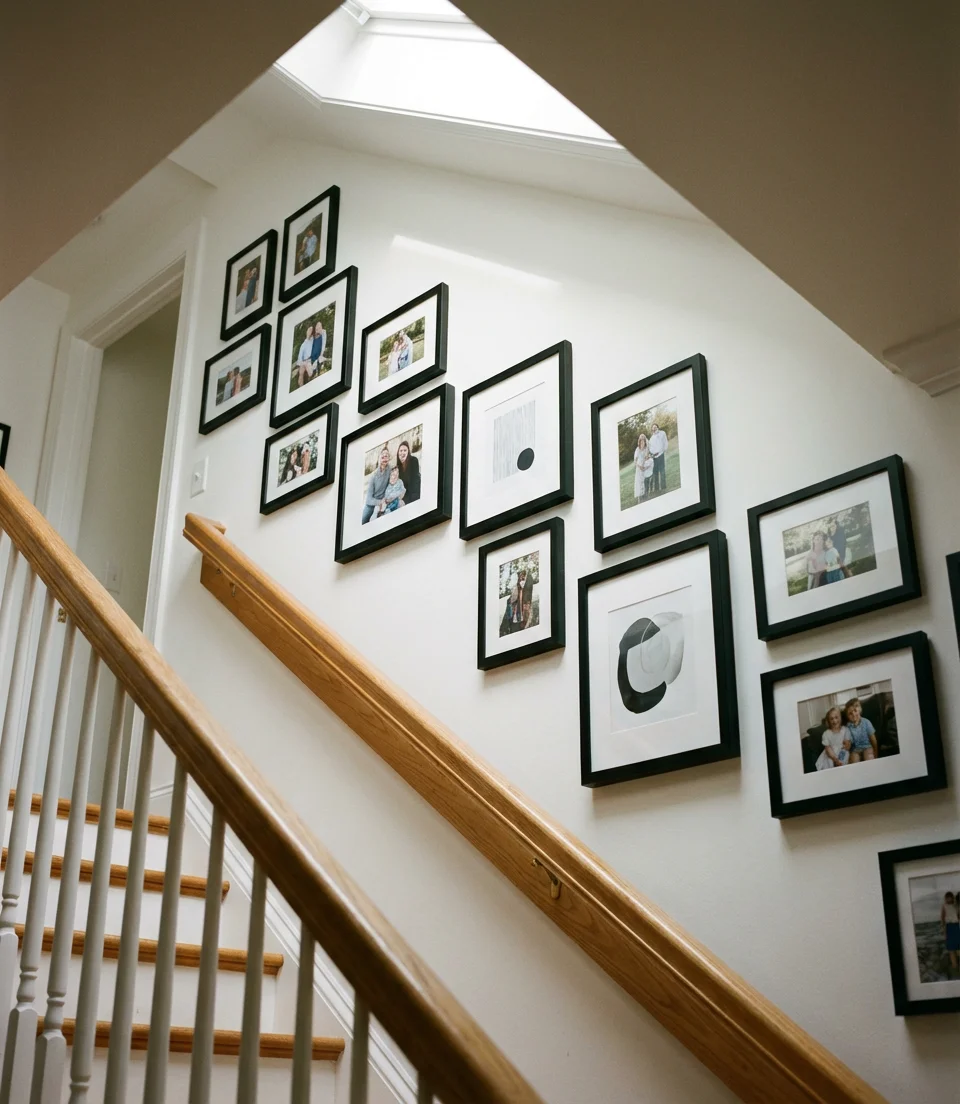
The wall that runs alongside a staircase is one of the most dramatically proportioned surfaces in any home—tall, angled, and impossible to ignore. In upstairs landings and stairwells, a climbing gallery wall that follows the angle of the stairs has become the defining aesthetic statement of 2026 interiors. The trick is in the diagonal hang: each frame steps up one or two inches for every stair tread, maintaining a consistent spacing that feels designed rather than accidental. Black frames on white walls remain the perennial favorite for this treatment.
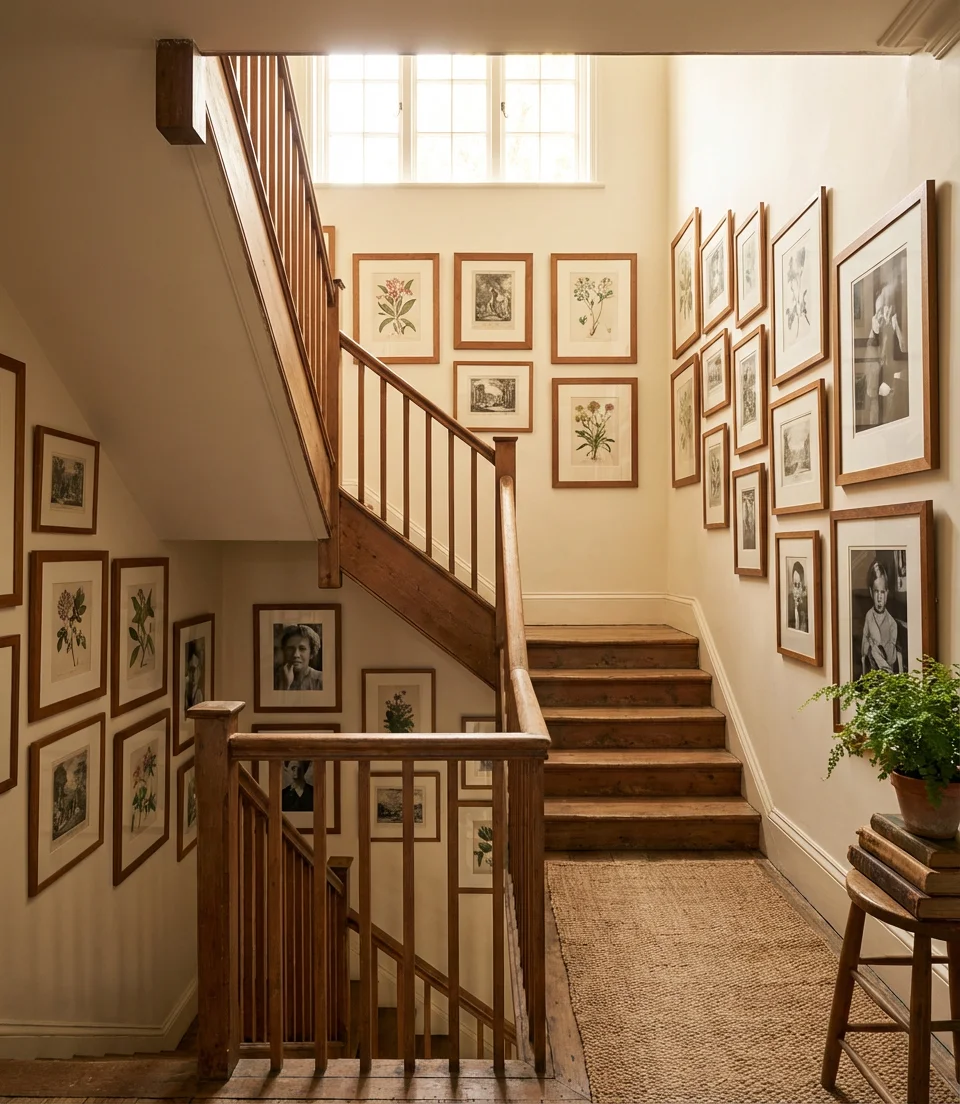
When it comes to stairs gallery walls, the most common mistake is inconsistent spacing—varying the gap between frames as they ascend the wall. Use a laser level and spend an extra hour measuring before you commit to any nails. The payoff for precision here is enormous. Homes in the Northeast and Pacific Northwest tend to have taller stairwells with more vertical drama to work with, making this treatment feel especially natural in those architectural contexts.
7. Limewash Paint with Floating Shelves
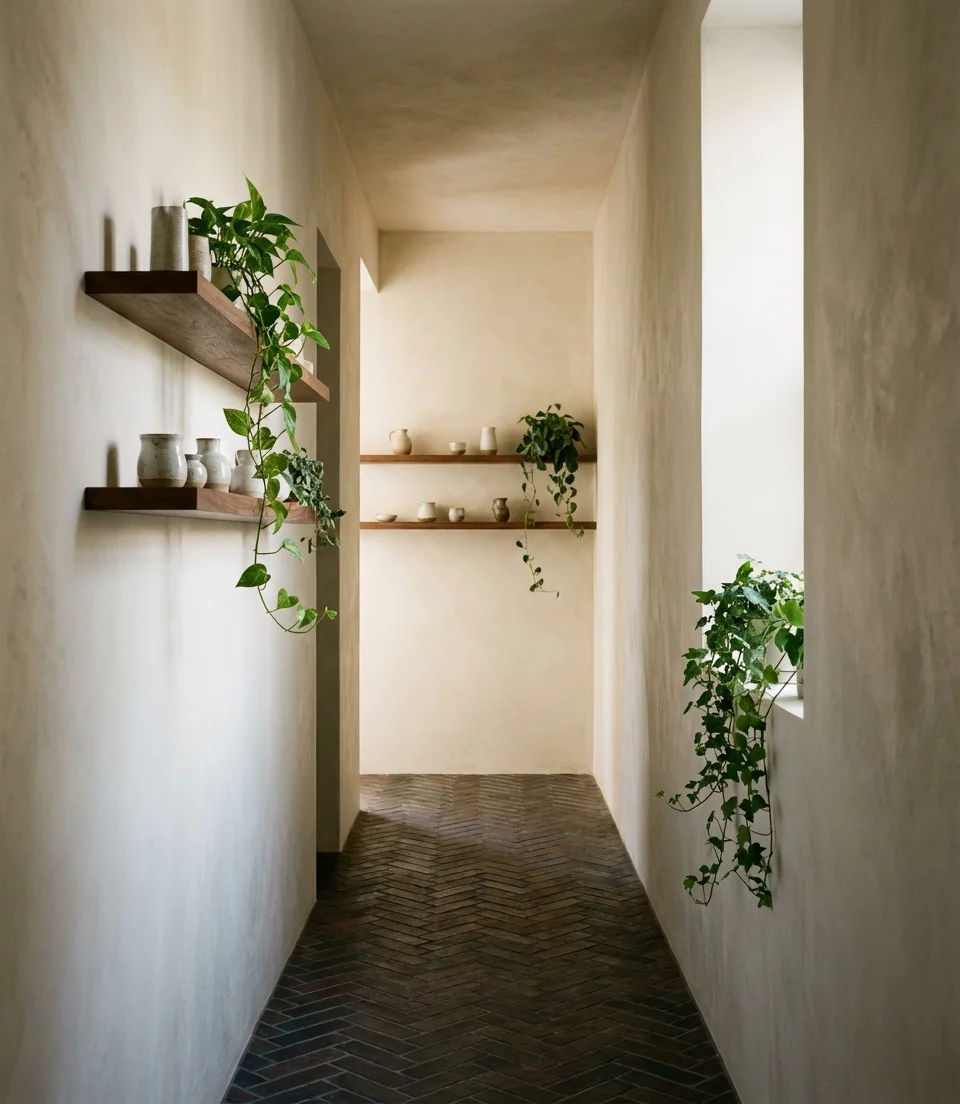
Limewash, currently a popular texture in American interiors, effortlessly transforms into hallway walls. The technique creates a softly mottled, layered surface that reads as aged plaster from a Tuscan villa but can be achieved with a roller in an afternoon. Pair it with floating shelves in natural oak or walnut, and you get a wall treatment that is simultaneously decorative and functional. In a long, narrow hallway, the shelves break up the tunnel effect, while the limewash adds warmth to what can otherwise feel like a utilitarian corridor.
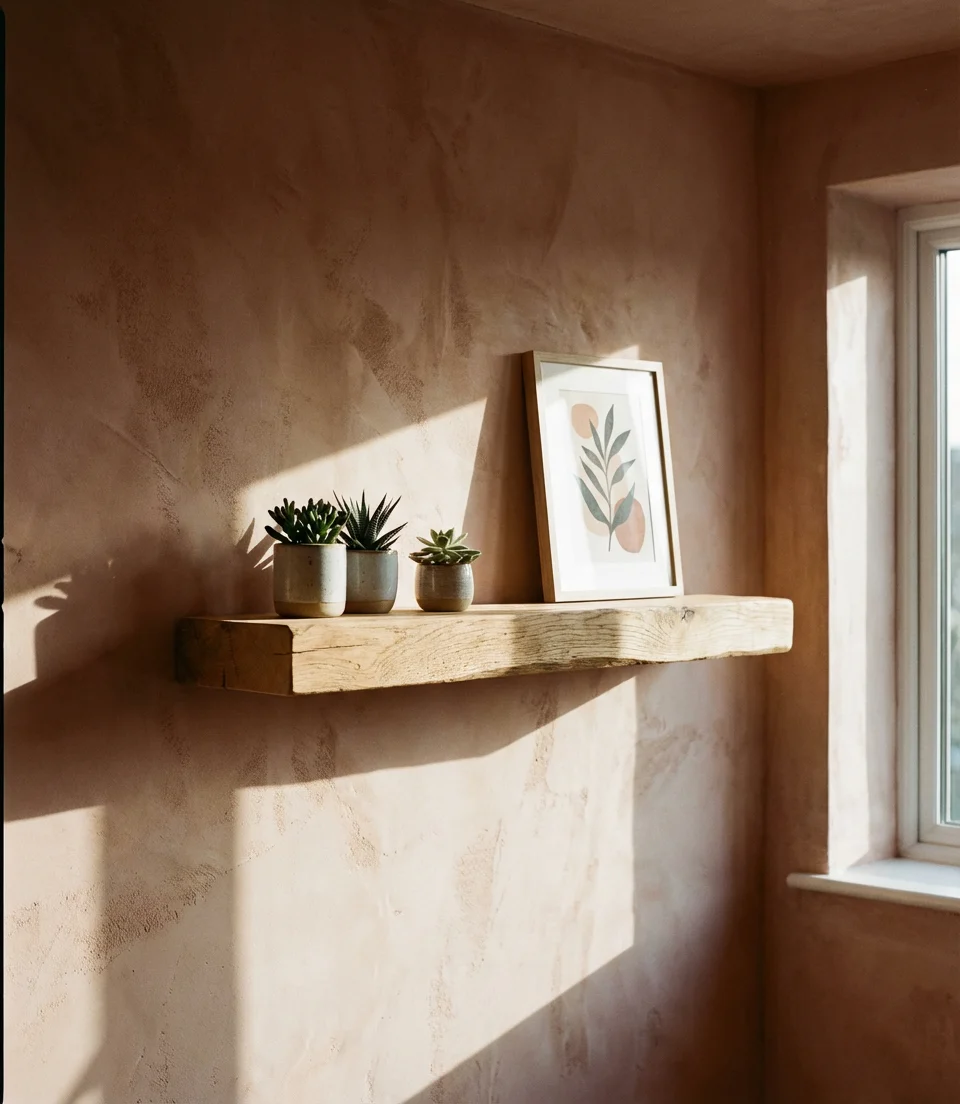
Limewash paint from premium American brands like Portola Paints runs about $90–$120 per gallon and covers around 350 square feet, making it a reasonable investment for a high-impact result. A designer who frequently specifies it for narrow corridors notes that the key is application technique: using a natural bristle brush in a circular motion and working wet-into-wet. Don’t rush it. Letting sections dry before you connect them creates hard lines that undercut the organic beauty of the finish entirely.
8. Oversized Botanical Print as a Statement Piece
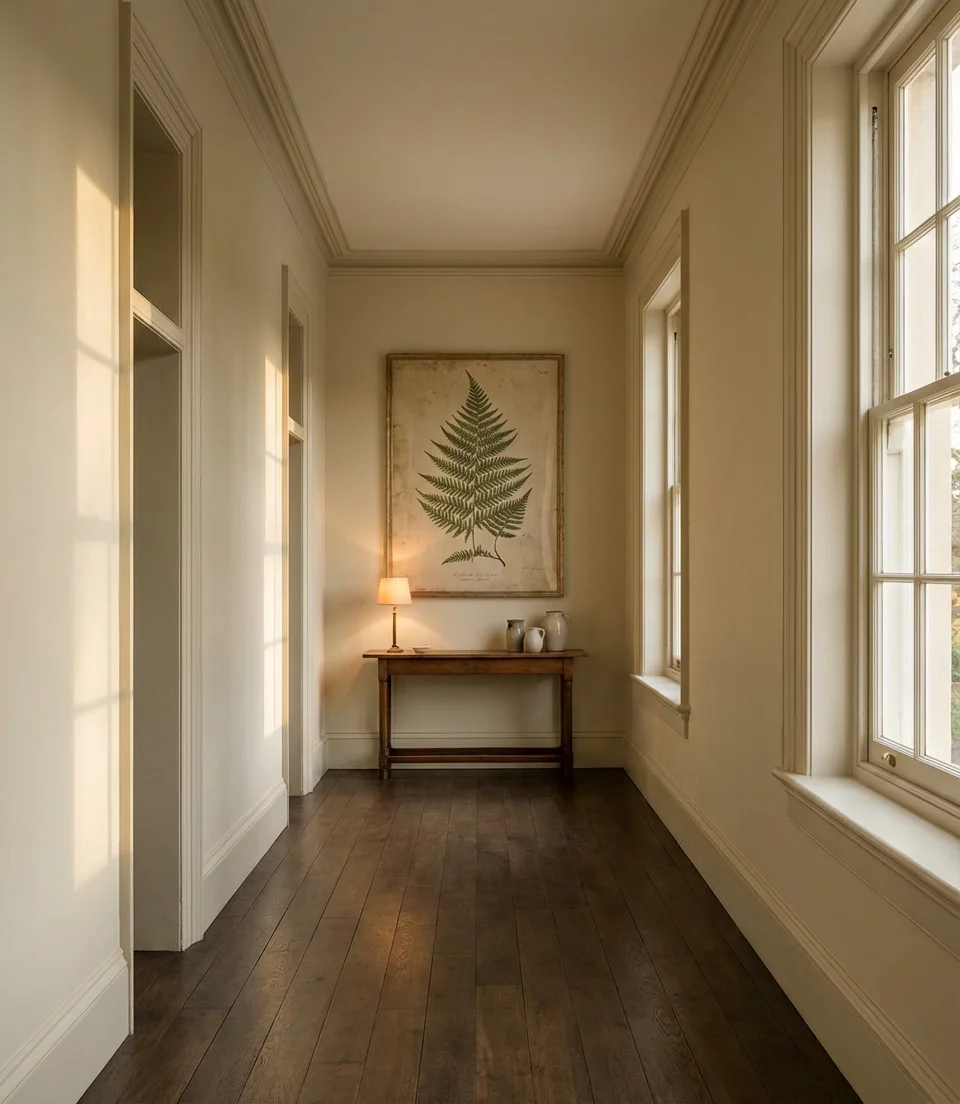
Sometimes one large, confident image does more than a gallery of twenty. An oversized botanical print—think a 30×40 or even larger framed illustration of tropical leaves, dried florals, or architectural plants—commands a hallway wall in the most satisfying way. This approach suits large entry halls and end walls where the space needs a clear terminus. The scale captivates visitors, and the inclusion of botanical subjects blends seamlessly with a variety of design styles, including traditional American Colonial, clean Scandinavian minimalism, and warm maximalism.
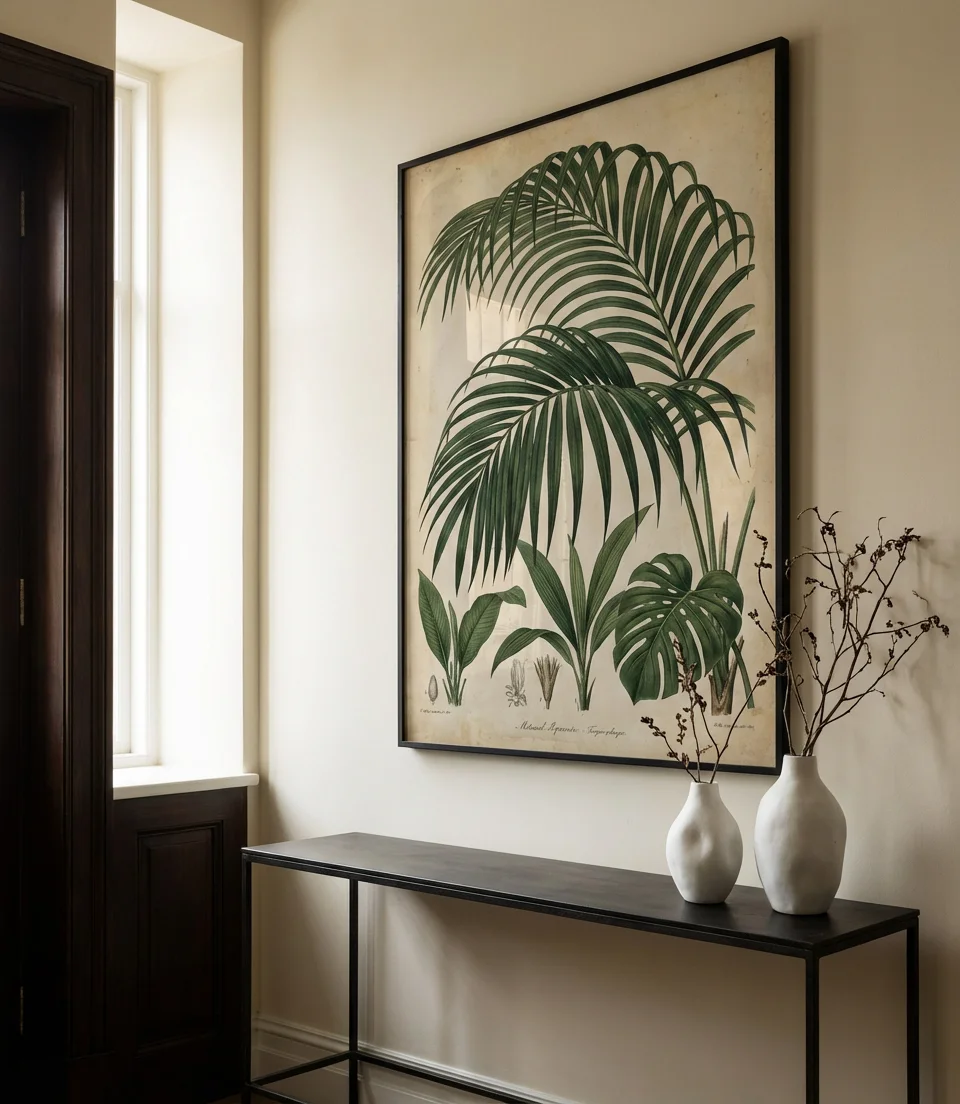
Here’s the practical reality: a framed print at this size from a boutique art print shop can run $200–$400 with framing. But Society6, Minted, and even Ikea’s poster range offer options in the $40–$90 range that look genuinely stunning when properly framed. The frame itself matters enormously—a cheap print in a beautiful frame almost always outperforms an expensive print in a flimsy frame. Go simple and heavy on the frame material and let the image do the speaking.
9. Chalkboard Wall for a School or Family Hallway
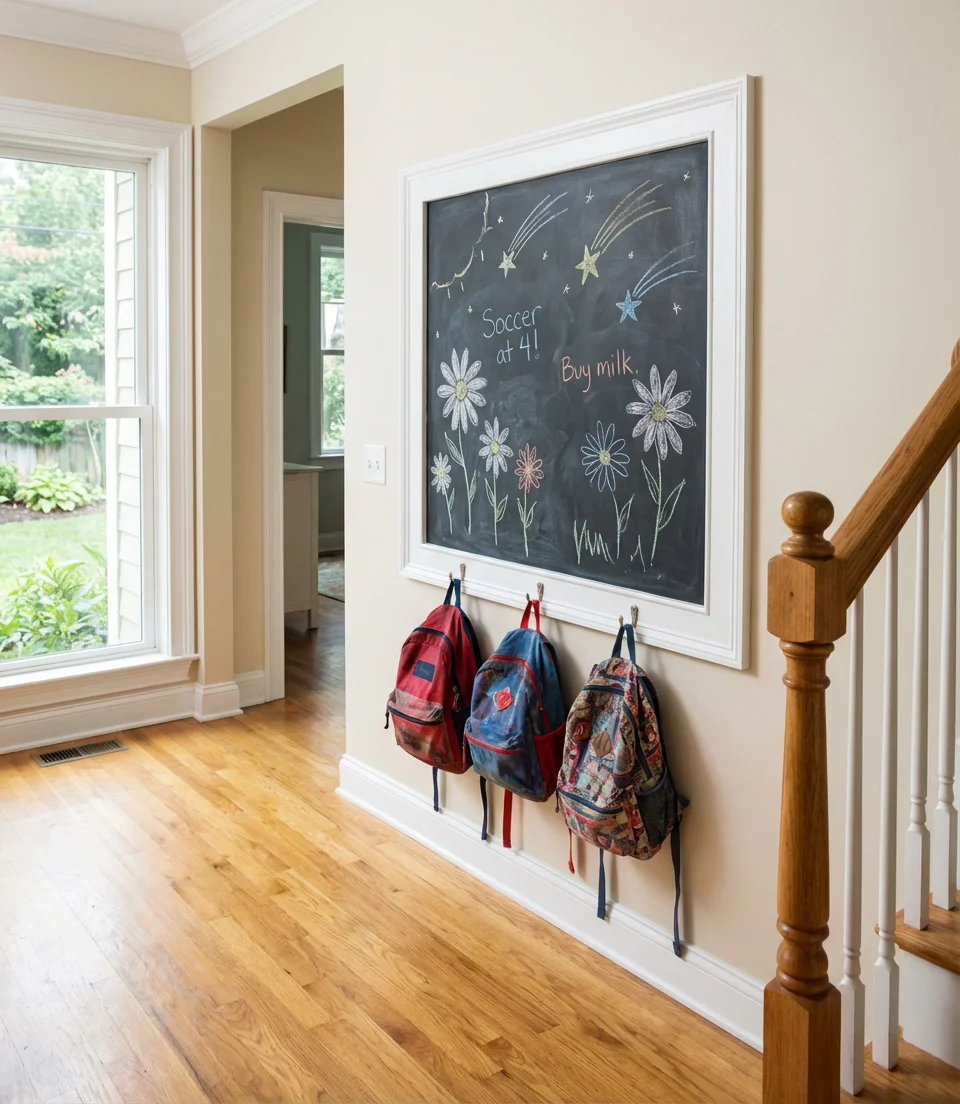
In homes with children, a chalkboard wall in the hallway earns its place every single day. This idea endures because it seamlessly blends decor and function, transforming the hallway into a dynamic canvas in a school or family setting. Paint one wall (or even just a panel) with chalkboard paint, frame it with simple wood molding, and you instantly have a space for grocery lists, birthday countdowns, artistic expression, and the inevitable alphabet rehearsal. The frame is critical: without it, the chalkboard reads as unfinished rather than intentional.
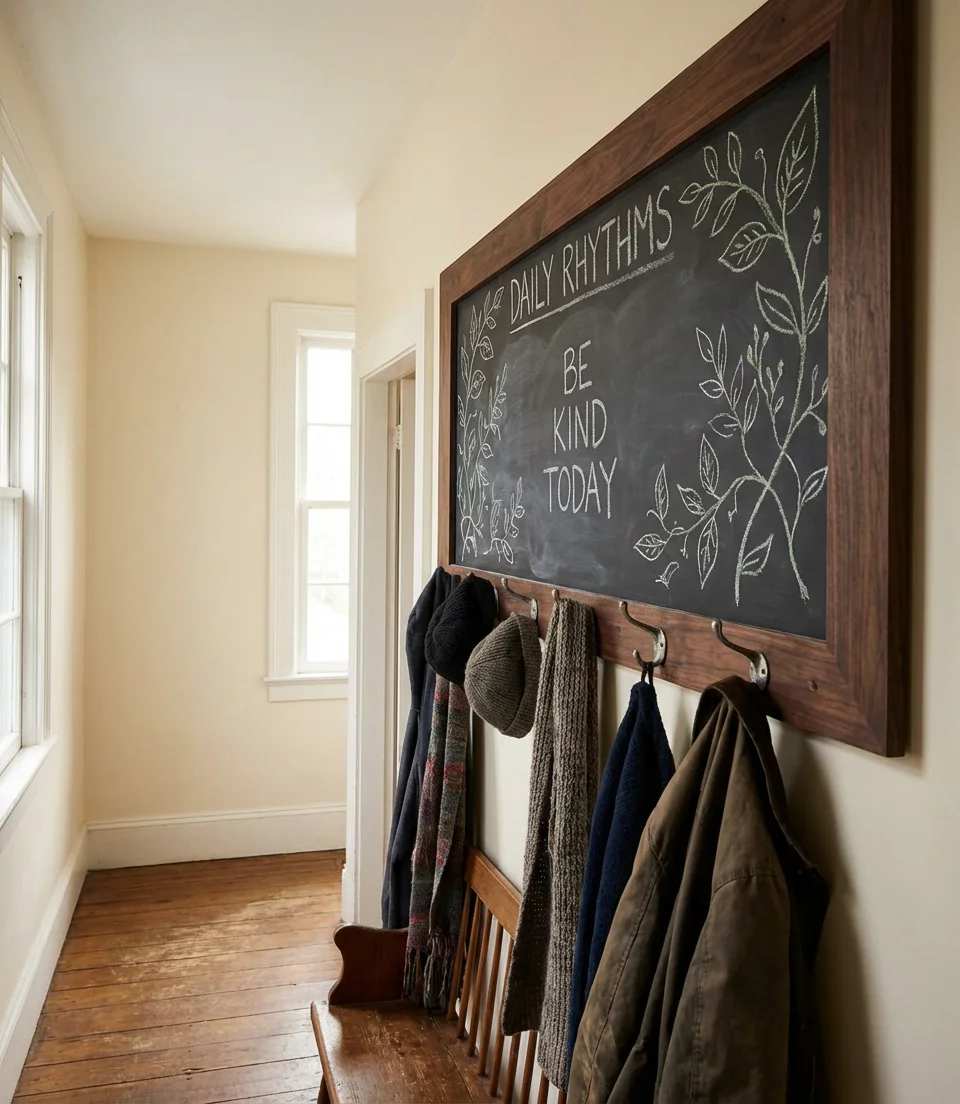
American families in suburban homes with multiple kids often report that the chalkboard wall becomes the most interacted-with surface in the entire house—more than the TV wall, more than the kitchen backsplash. The magic is in the accessibility: it’s at child height, it’s forgiving, and it resets with a damp cloth. Renter-friendly alternatives using removable chalkboard contact paper are widely available and work on smooth walls without any permanent commitment.
10. Vertical Shiplap in a Tiny Hallway
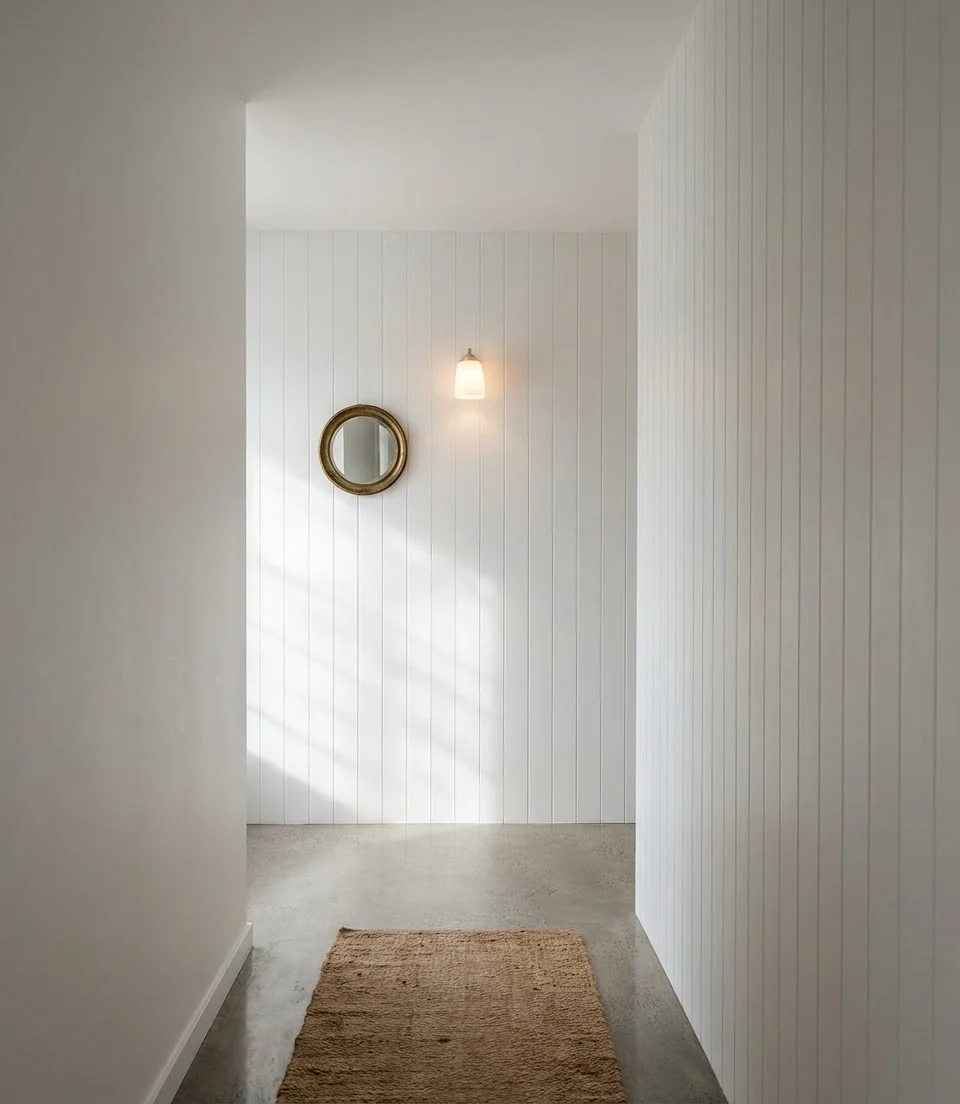
Running shiplap vertically instead of horizontally is a design move that immediately makes a tiny hallway feel taller and more considered. The vertical lines draw the eye upward, creating the optical illusion of height in spaces where the ceiling feels oppressively low. This technique works particularly well in older American homes where hallways were treated as purely functional afterthoughts—the narrow, dimly lit kind that connects a 1960s kitchen to a cluttered garage. Painted in a crisp white or a warm, creamy off-white, vertical shiplap transforms that corridor into something worth showing off.
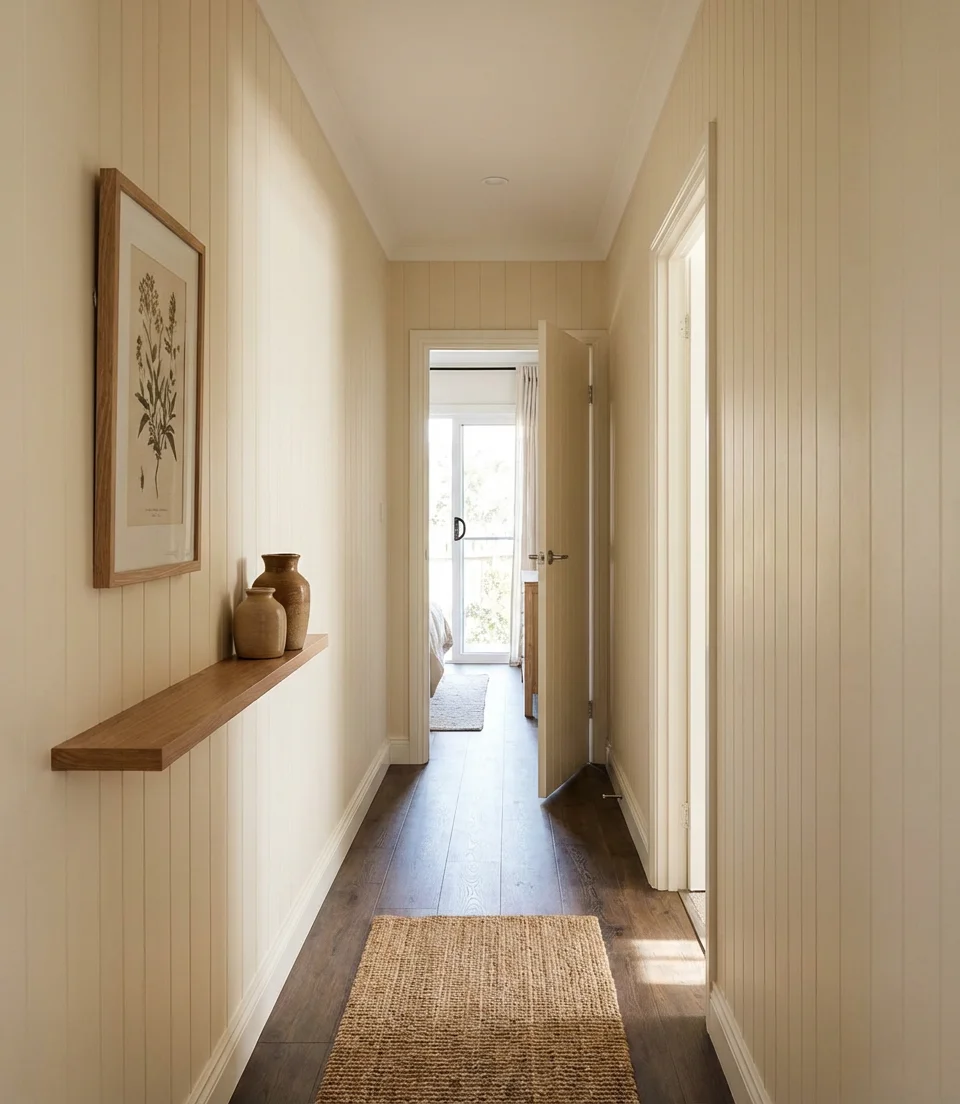
Where it works best: small pass-through hallways in ranch homes, bungalows, and mid-century houses where every visual trick for vertical height is welcome. The vertical orientation also pairs beautifully with a single statement light fixture—even a small flush mount in a bold material like matte black or aged brass becomes more visible and intentional against the clean vertical lines of the boards behind it.
11. Textured Wallpaper in an Apartment Hallway
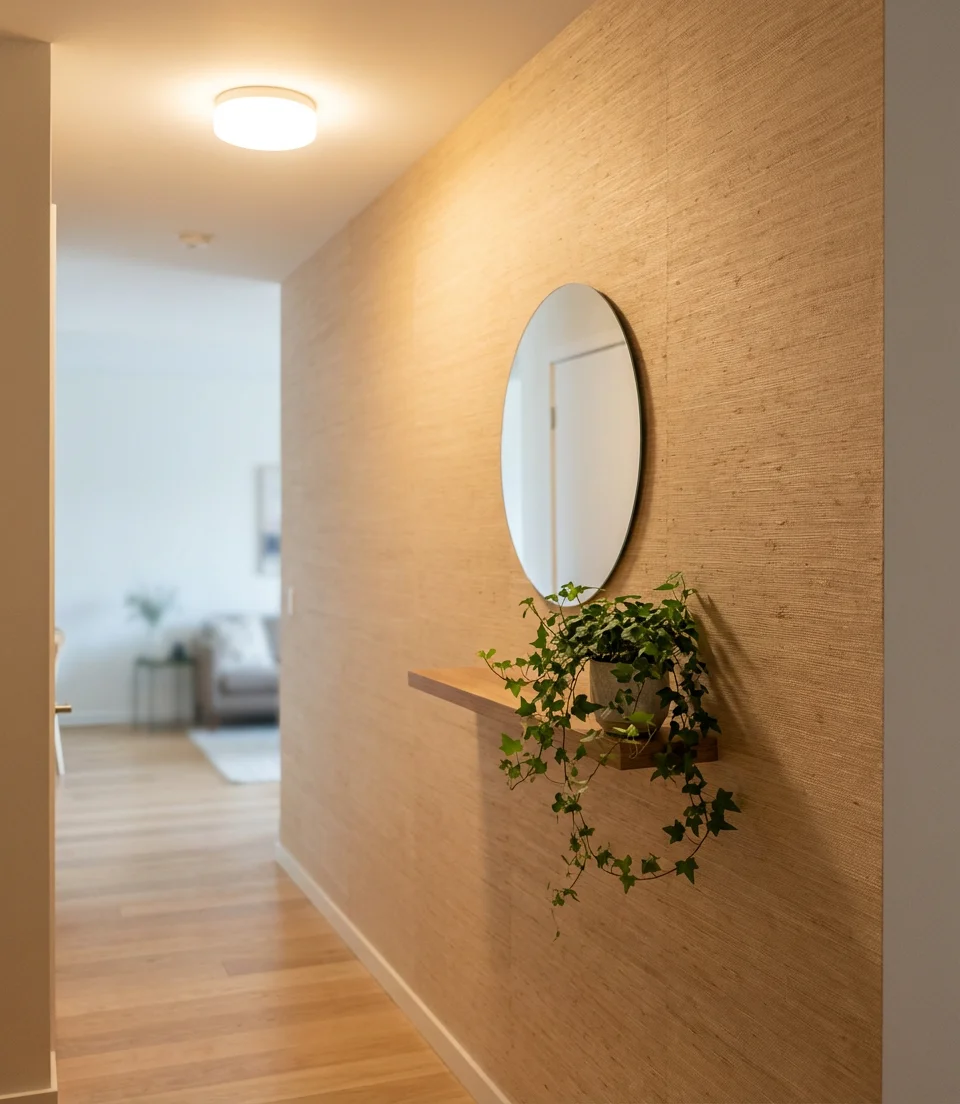
Peel-and-stick textured wallpaper has genuinely become a design tool for renters who are navigating the eternal tension between personalization and security deposits, rather than a compromise. A grasscloth-look or linen-texture peel-and-stick wallpaper on a single accent wall transforms the entire feel of an apartment hallway—often a featureless beige tunnel. The tactile quality reads as expensive and intentional, and in natural light it shows a depth that flat paint simply cannot replicate. Current favorites include warm sand linen, dusty sage grasscloth, and moody charcoal weave patterns.
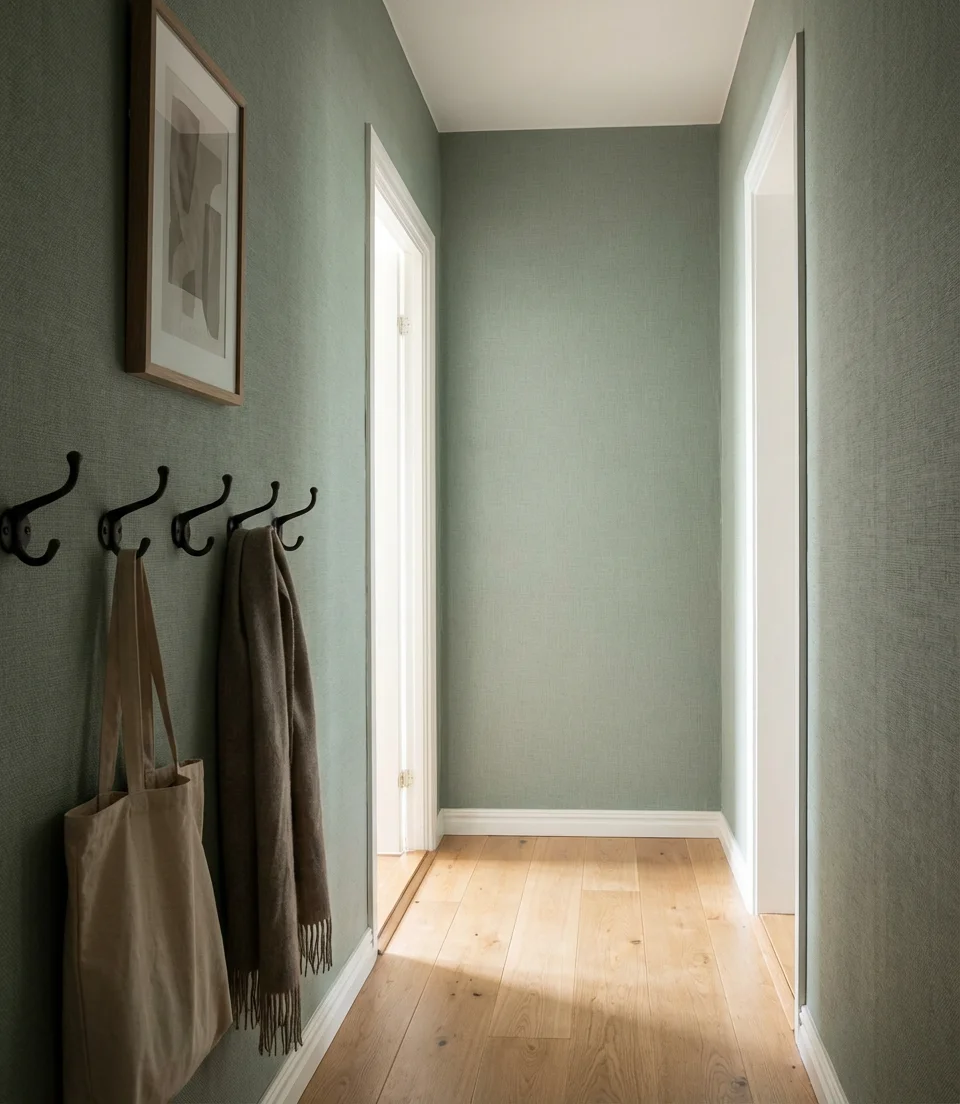
Peel-and-stick wallpaper from brands like Chasing Paper, Tempaper, and Walls Need Love ranges from $2 to $6 per square foot, making a typical hallway accent wall a $60–$150 project. The single most important preparation step is cleaning the wall surface thoroughly and allowing it to fully dry before application—any residual moisture or grime causes the edges to lift within weeks. When done correctly, it creates a unique look and remains in place for years, even after apartment-grade repaints.
12. Modern Narrow Hallway with Floating Ledge Shelves
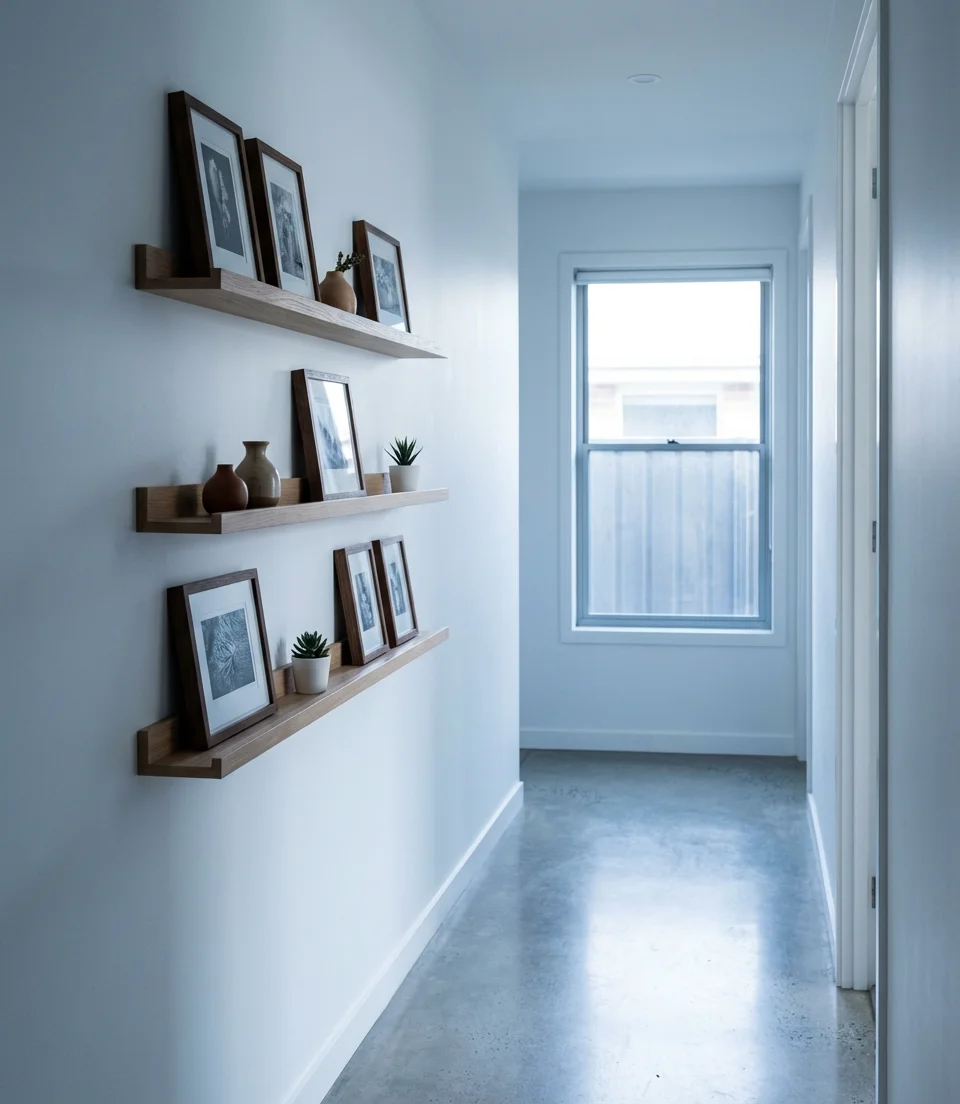
Narrow ledge shelves, which protrude only two or three inches from the wall, provide an ideal solution for a narrow modern hallway that prioritizes depth while maximizing display potential. Mount them at eye level in a stacked arrangement, and you have a rotating gallery that can hold framed art, small plants, candles, and books simultaneously. The beauty of ledge shelves is their flexibility: rearranging the display takes seconds, which means the hallway can feel fresh with every season without a single hole being added to the wall.
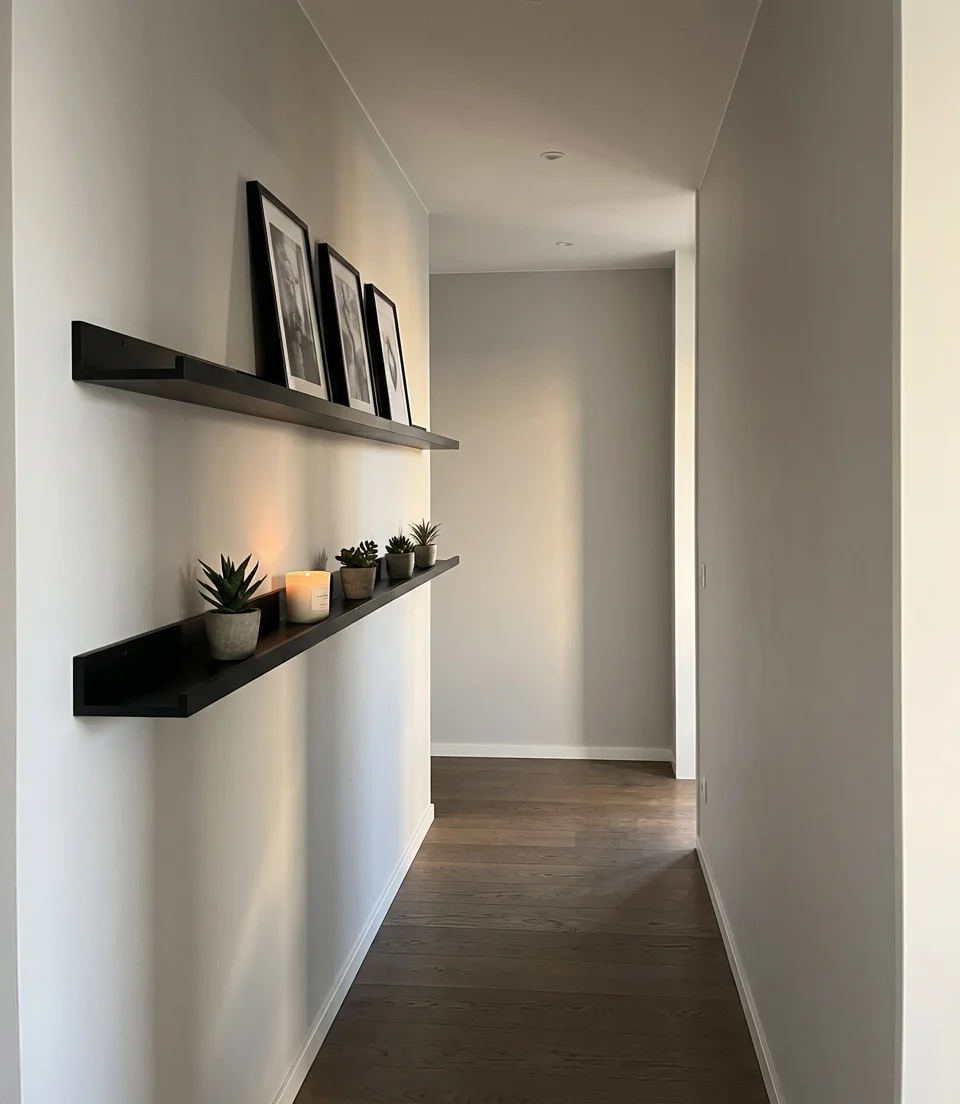
An interior designer who specializes in ideas for narrow spaces often tells her clients to treat the ledge shelf system like a Pinterest board made physical—curate it, swap things in and out, and let it evolve. The mistake is leaving it static for years until it stops registering visually. The average Ikea Mosslanda picture ledge runs about $12–$14, making a three-shelf installation a $40 project with maximum impact per dollar spent.
13. Board and Batten with Moody Paint
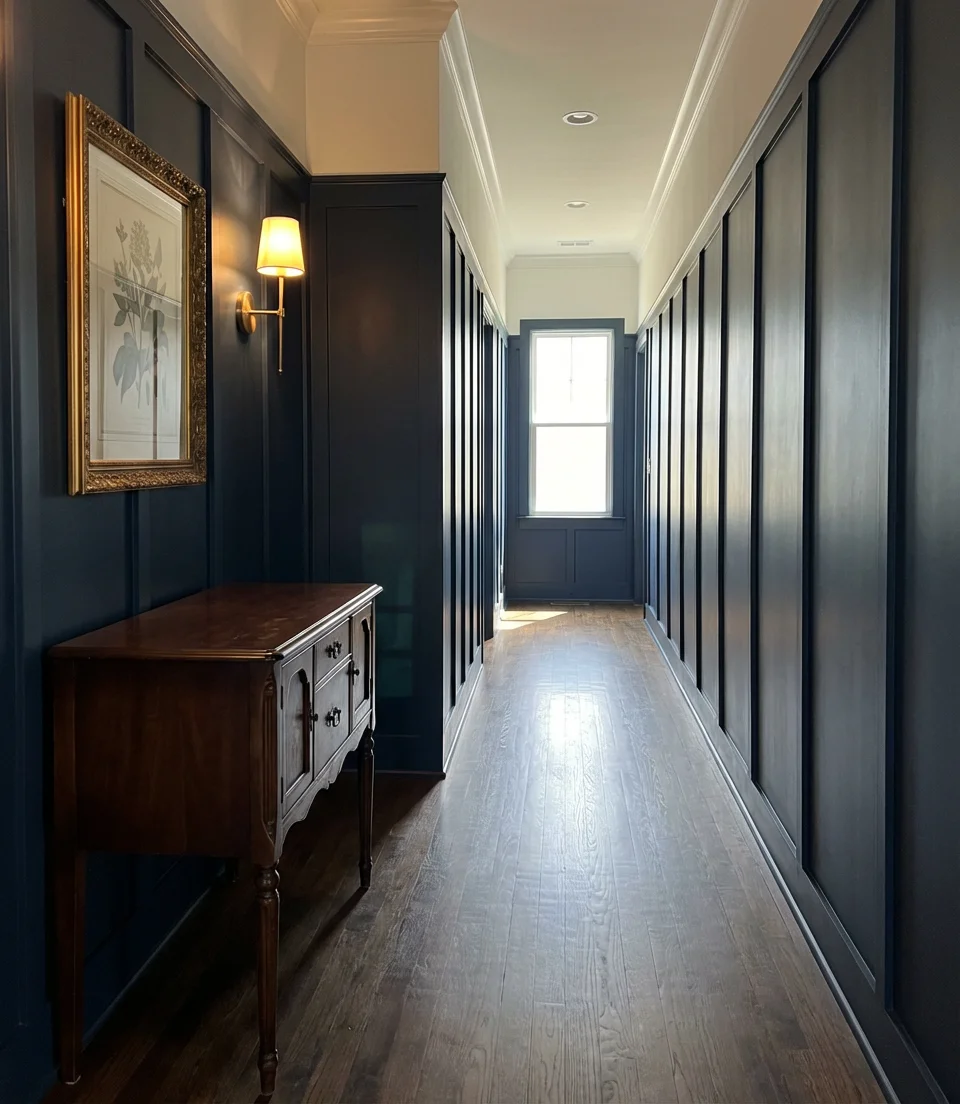
Board and batten paneling painted in a deep, moody color is the hallway equivalent of a power suit—it signals intention, confidence, and a clear perspective. In a long entry hallway with decent ceiling height, dark navy, charcoal, or deep plum board and batten creates drama that flat paint alone could never achieve. The dimensional quality of the vertical battens catches light and shadow in a way that makes the corridor feel sculpted rather than painted. It’s a look that photographs almost too well, which explains its persistent presence on Pinterest boards across the country.
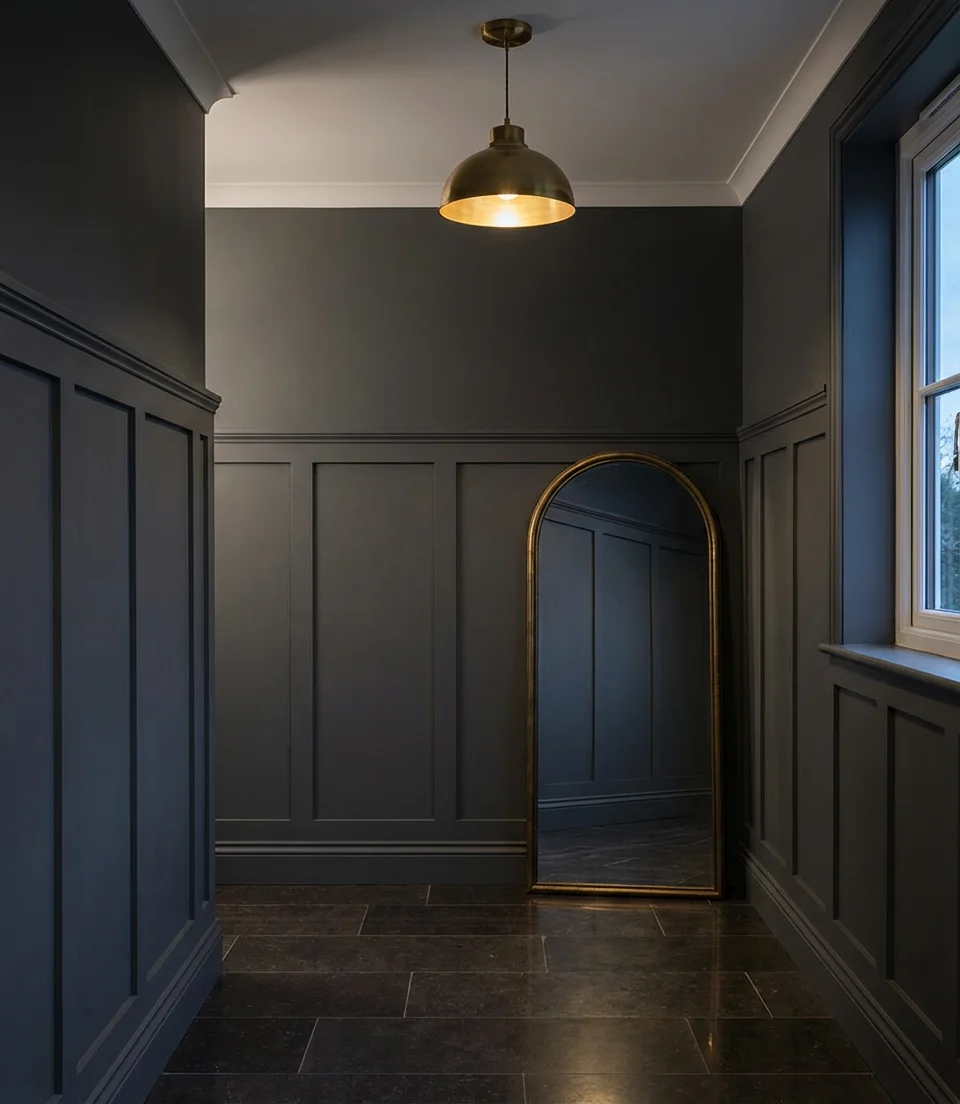
Here’s something most DIY guides don’t warn you about: dark, moody paint colors look completely different under artificial lighting versus natural daylight. Before committing to a full hallway treatment, paint a 12×12 inch swatch and observe it at every hour of the day and with all your fixtures turned on at night. What looked like a sophisticated deep teal in the paint store can read as near-black in a windowless corridor. Test it thoroughly, and you’ll make a decision you can live with for years.
14. Long Hallway with Framed Map Collection
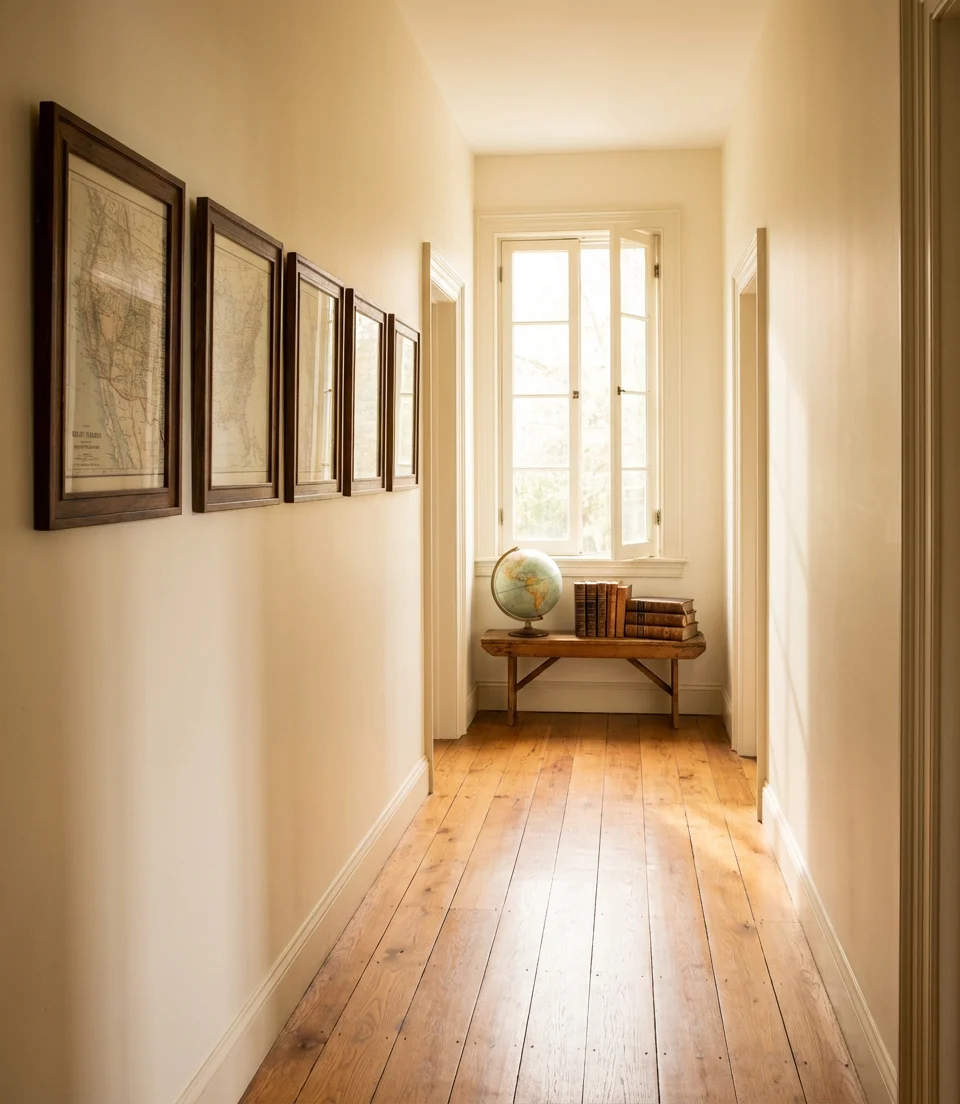
A curated collection of framed vintage or contemporary maps turns a long hallway into a story—specifically, the story of the people who live there. Maps of places where family grew up, cities visited on meaningful trips, and national parks checked off a bucket list. When framed consistently and hung in a clean horizontal line, a map collection tells the narrative of a life without a single word. This idea is especially beloved by American homeowners in their 30s and 40s who have started accumulating meaningful geography through travel and relocation.
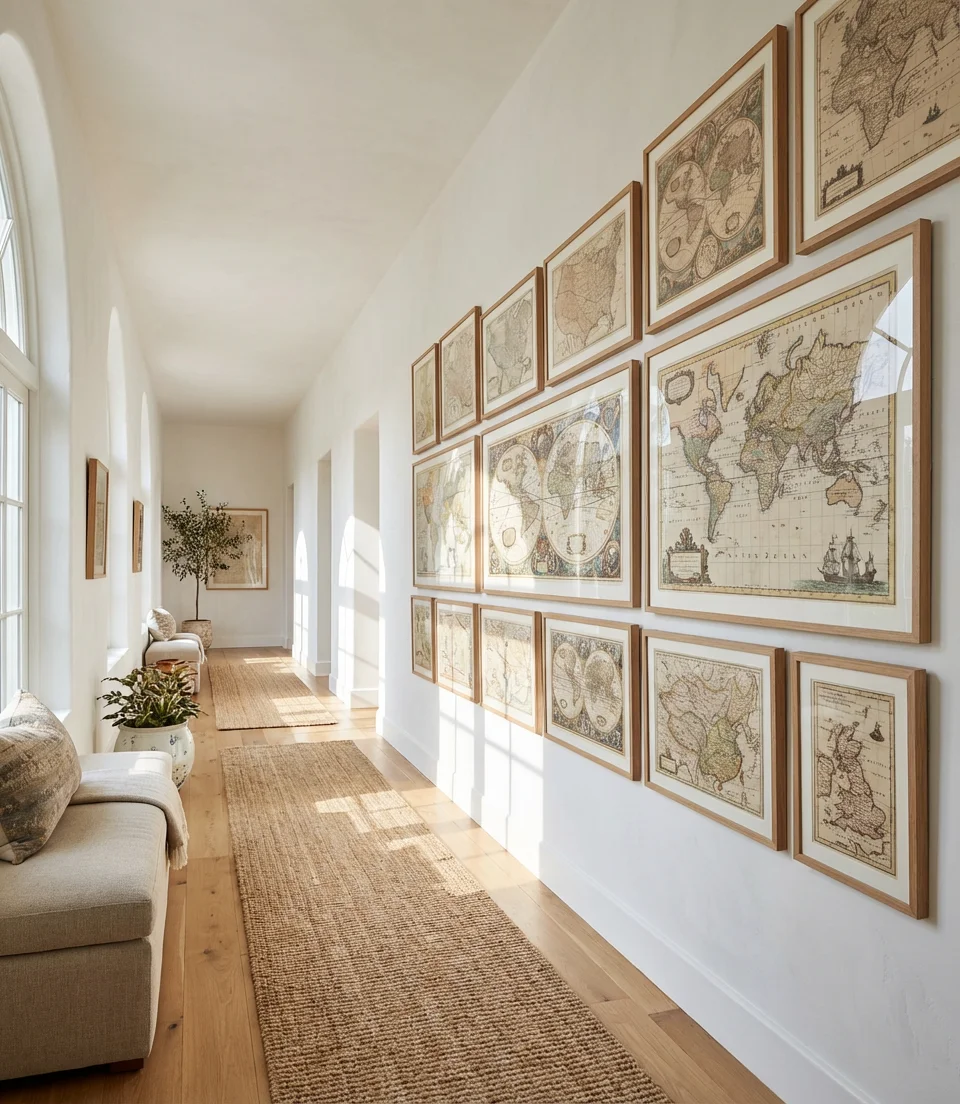
National Geographic vintage map posters and David Rumsey map collection prints are both excellent, affordable sources for this project. Matching the frames—all the same wood tone or all thin black—is the unifying factor that makes the collection feel designed rather than assembled. In the Pacific Northwest and Mountain West, where outdoor culture runs deep, topographic maps of favorite hiking areas make for a deeply personal and conversation-starting version of this idea’s narrow, long hallway concept.
15. Entryway Wall with Hooks, Bench, and Art
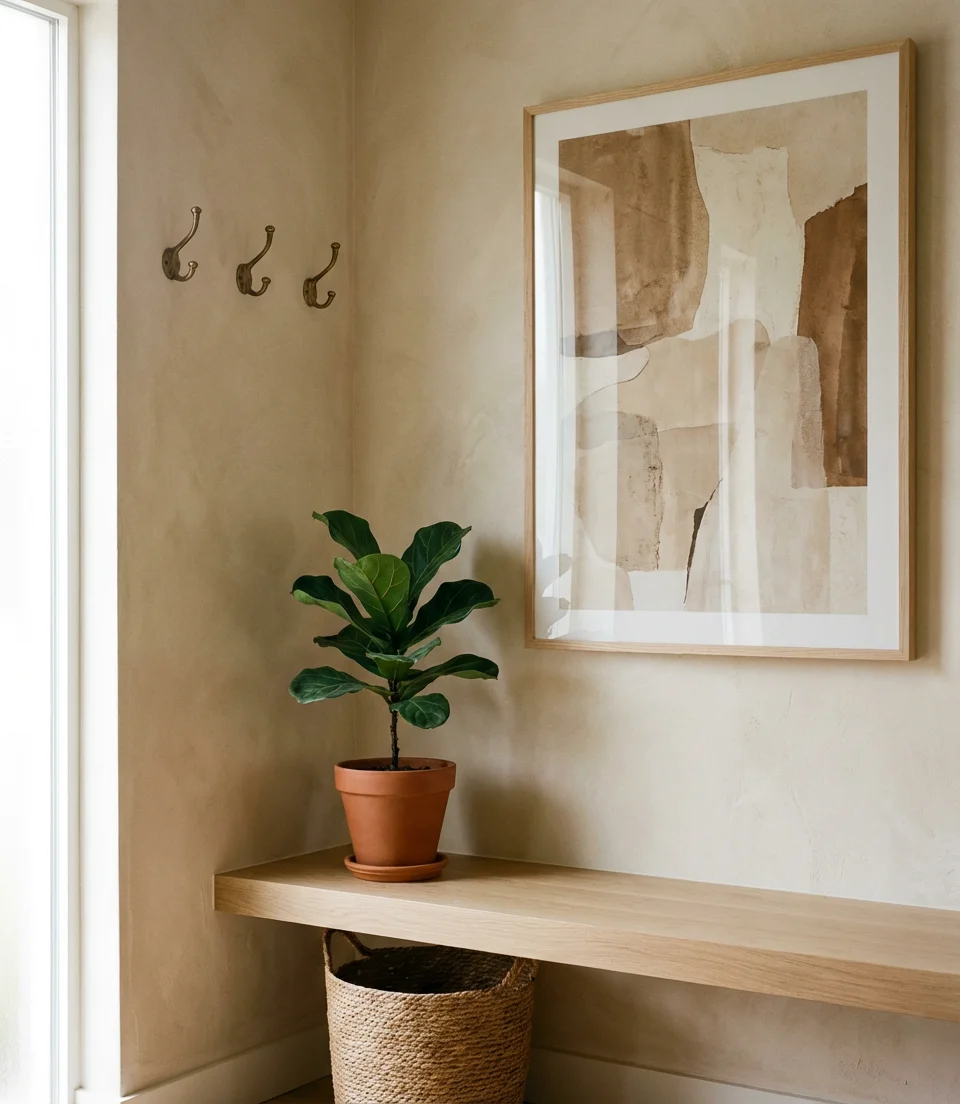
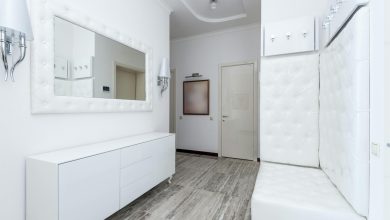
The hardworking entrance wall—the one you face when you first walk in—can carry both beauty and function simultaneously when designed with intention. A trio arrangement of hooks at varying heights, a slim bench beneath, and a framed piece of art above create a composition that is as satisfying to look at as it is useful to live with. The visual layering—art at the top, hooks in the middle, and a bench at the bottom—gives the eye a natural place to travel and makes even a tiny entry feel like it was designed rather than assembled from a home goods catalogue run.
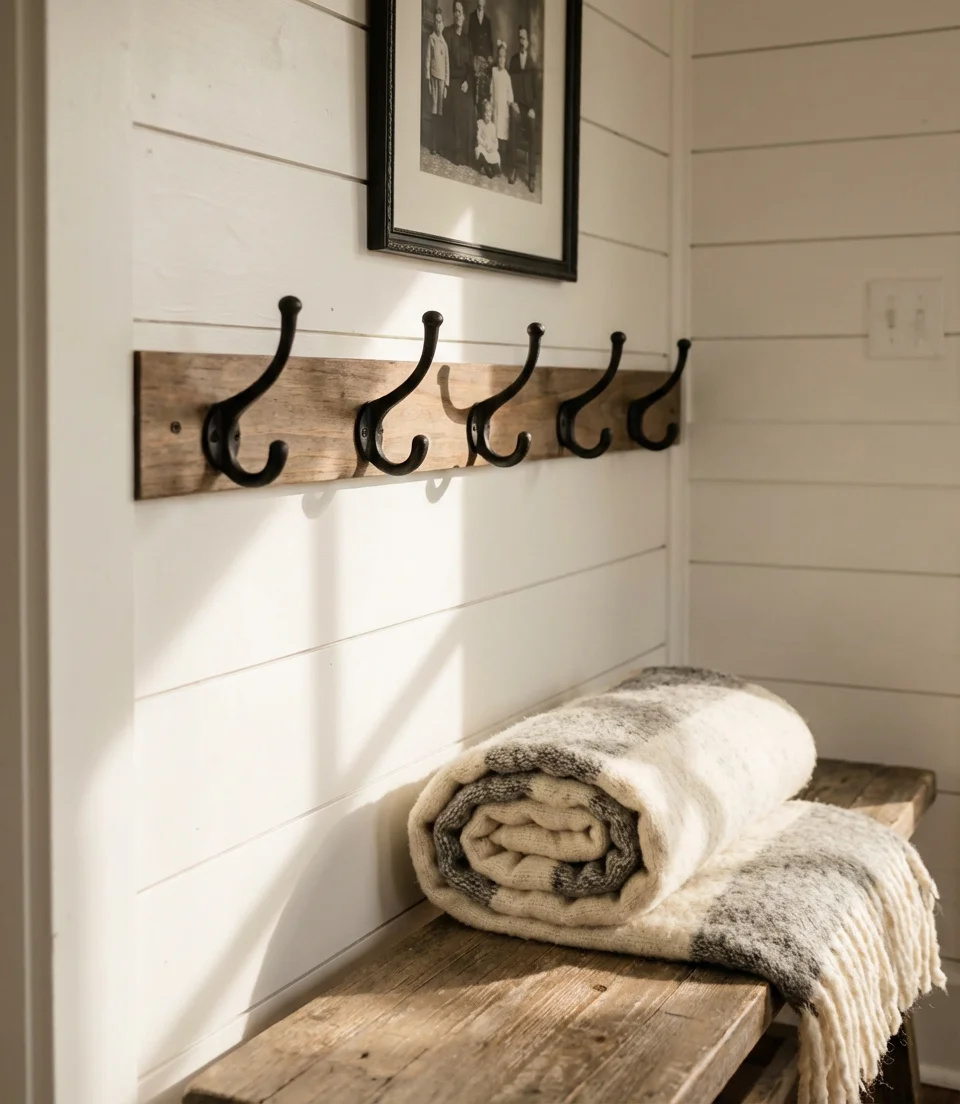
Interior designers who focus on functional family homes often point out that the entryway wall system succeeds or fails based on hook height. Hooks installed at 60–66 inches work for adults; anything lower accommodates kids or acts as a secondary tier for bags. The mistake most homeowners make is installing hooks too high—reaching up awkwardly every time you come home creates friction, and eventually the hooks stop being used at all. Design for how people actually behave, not how you imagine they will.
16. Macramé Wall Hanging in a Modern Boho Hallway
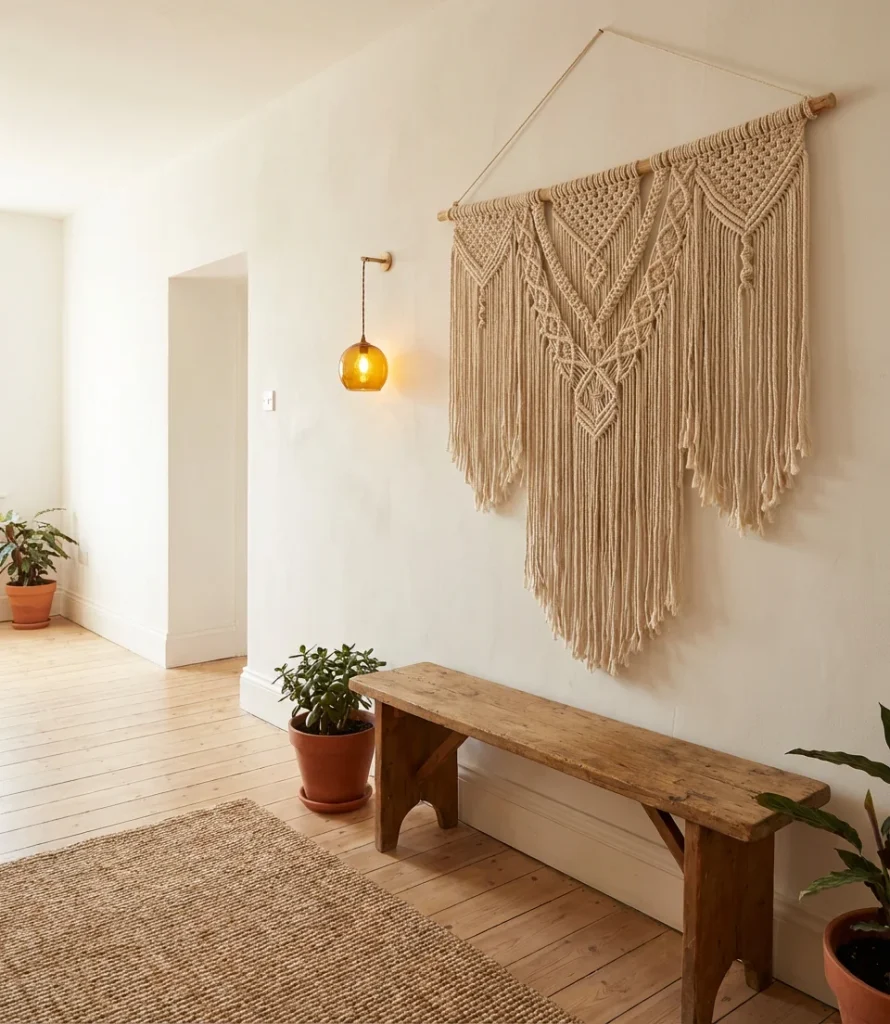
Macramé has fully shed its 1970s-craft-fair reputation and settled into a permanent role in contemporary interiors. In a modern boho hallway, a large-scale macramé hanging—especially one in natural cotton rope with fringe detailing and geometric knot patterns—serves as textile art that brings warmth and tactile richness to a plain wall. This type of art is particularly effective in apartment hallways and entrance corridors where the budget for renovation is limited but the desire for personality is high. The organic curves of macramé soften hard architectural lines beautifully.
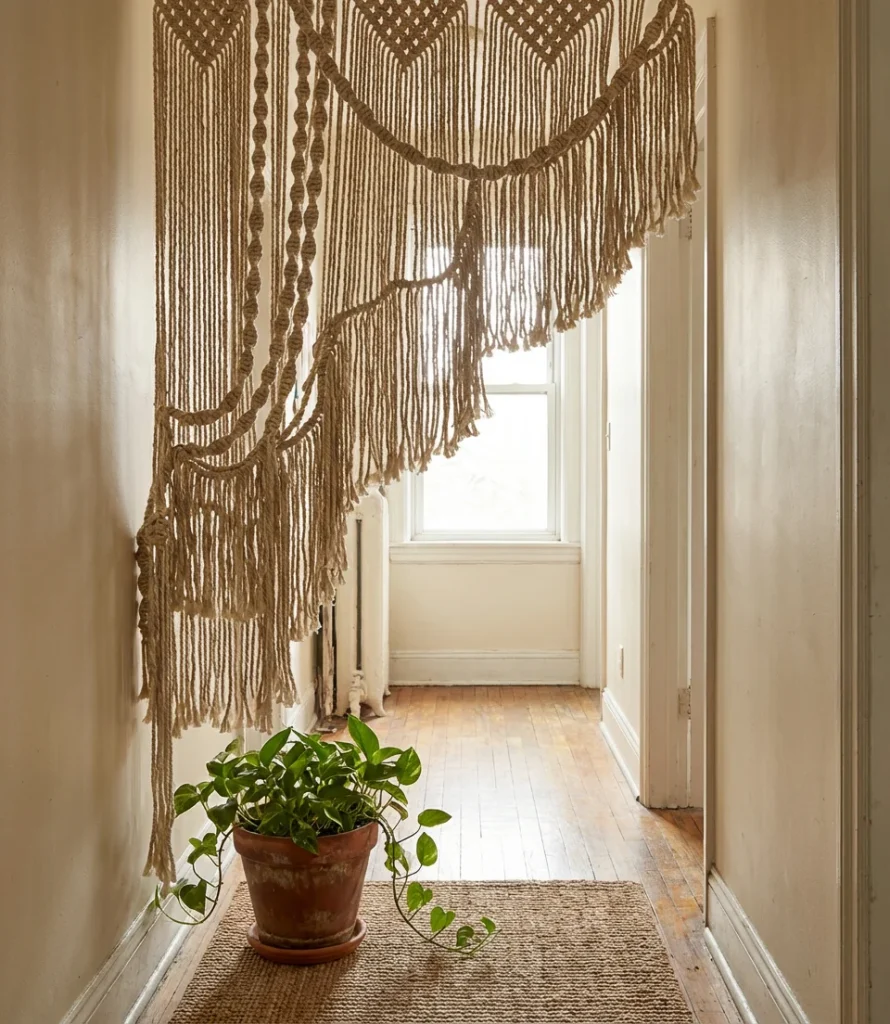
Handmade macramé pieces from independent makers on Etsy typically run $80–$250 depending on size and complexity—well within reach for most households, and the pieces are genuinely unique. Mass-produced versions at places like World Market and Anthropologie land in the $40–$80 range and hold up remarkably well. For renters especially, the zero-wall-damage installation—typically just one sturdy command hook or a small decorative rod—makes this one of the most practical ideas on this entire list.
17. Tall Hallway with Dramatic Floor-to-Ceiling Art
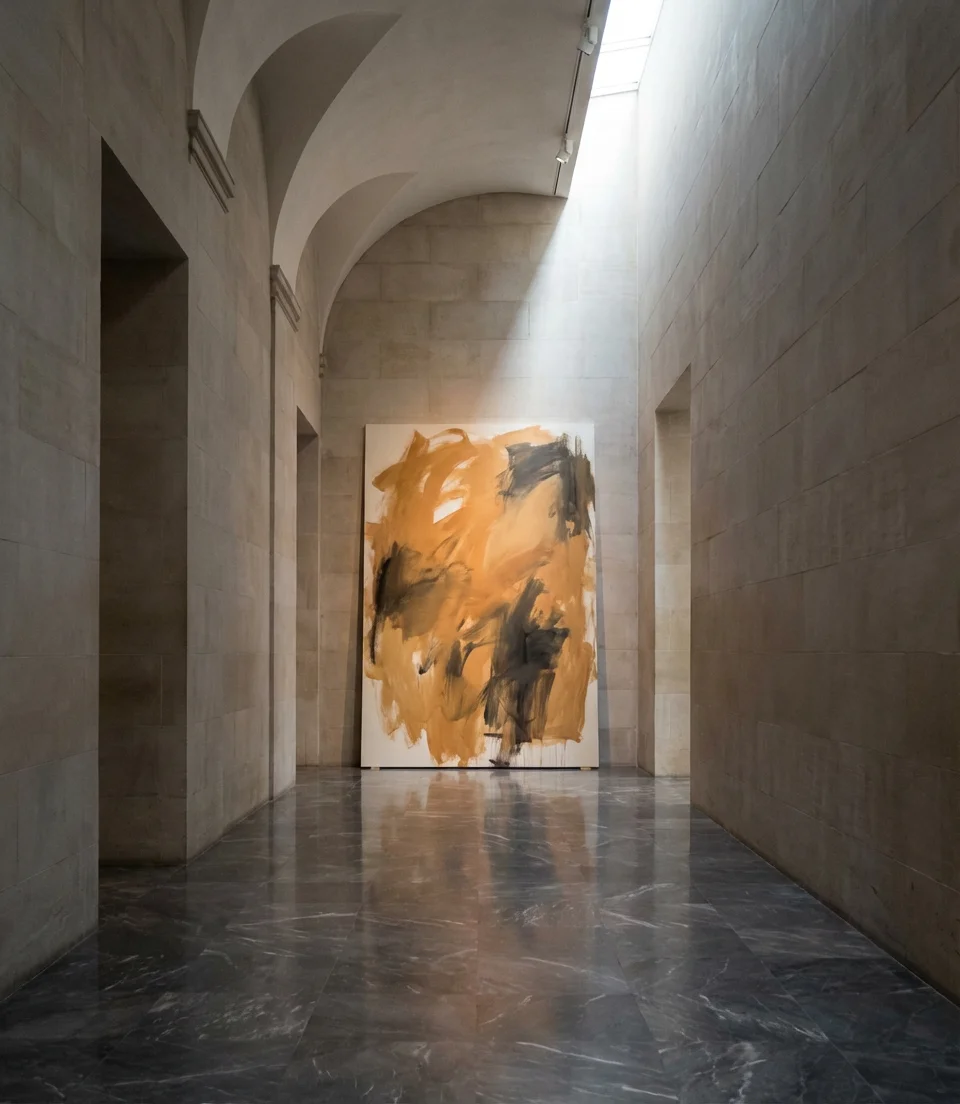
When a hallway is blessed with tall ceilings—the soaring kind that older Victorian homes, loft conversions, and new construction luxury builds tend to offer—undersized art becomes an actual design problem. A single floor-to-ceiling canvas or a very large-format print in a bold slim frame fills that vertical real estate with authority. Abstract artwork works particularly well here because it doesn’t require a “readable” subject, and its forms can echo the proportion of the space organically. The statement the artwork makes is immediate, confident, and unlike almost anything else on the market for hallway decor.
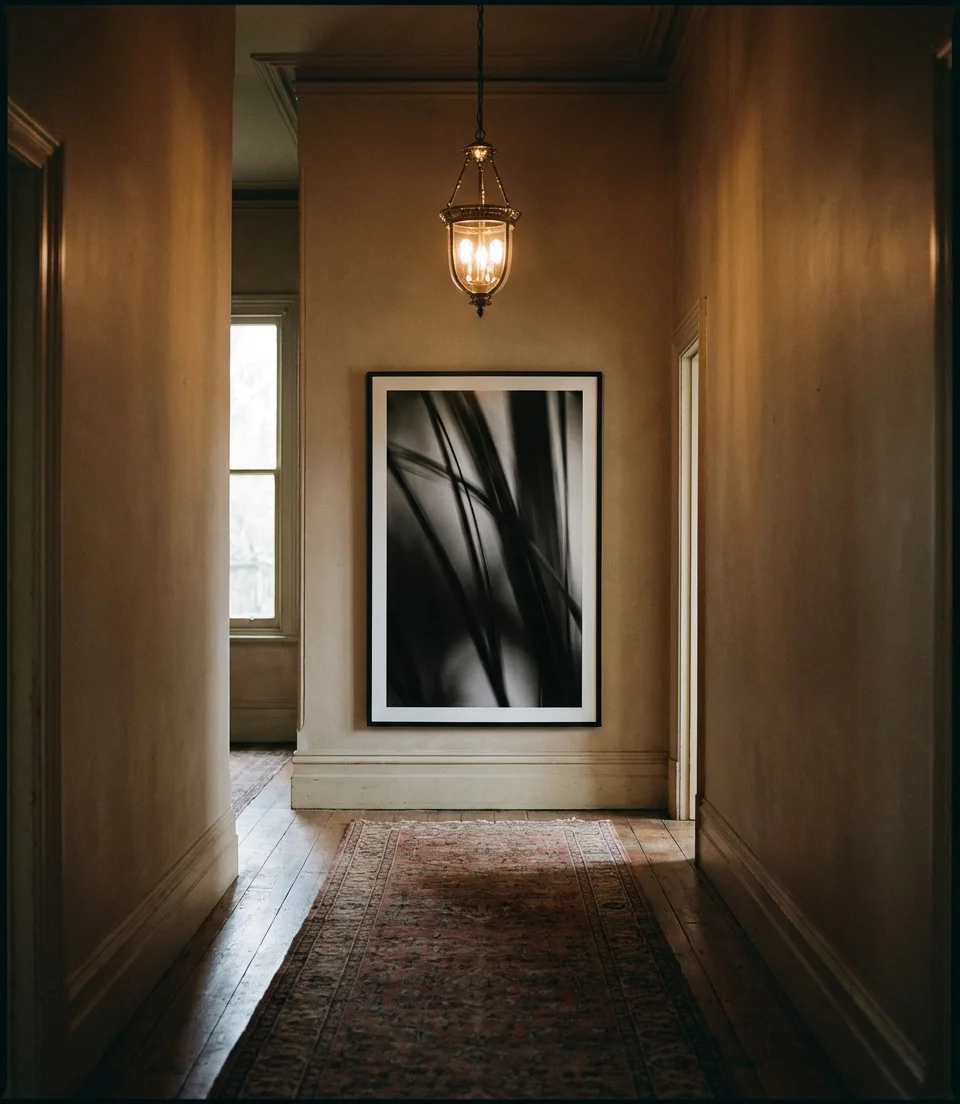
An artist friend once told me that hanging a massive piece of art in an otherwise quiet space is the residential equivalent of a held breath—everything else stops. She was right. The practical side of this requires understanding your wall construction before attempting to hang something large and heavy: always anchor into studs for pieces over 15 pounds, and consider French cleats for anything truly large. Gallery lighting—even a single picture light mounted above—elevates the installation from wall decoration to actual art installation.
18. Black and White Photography in a Short Narrow Entry
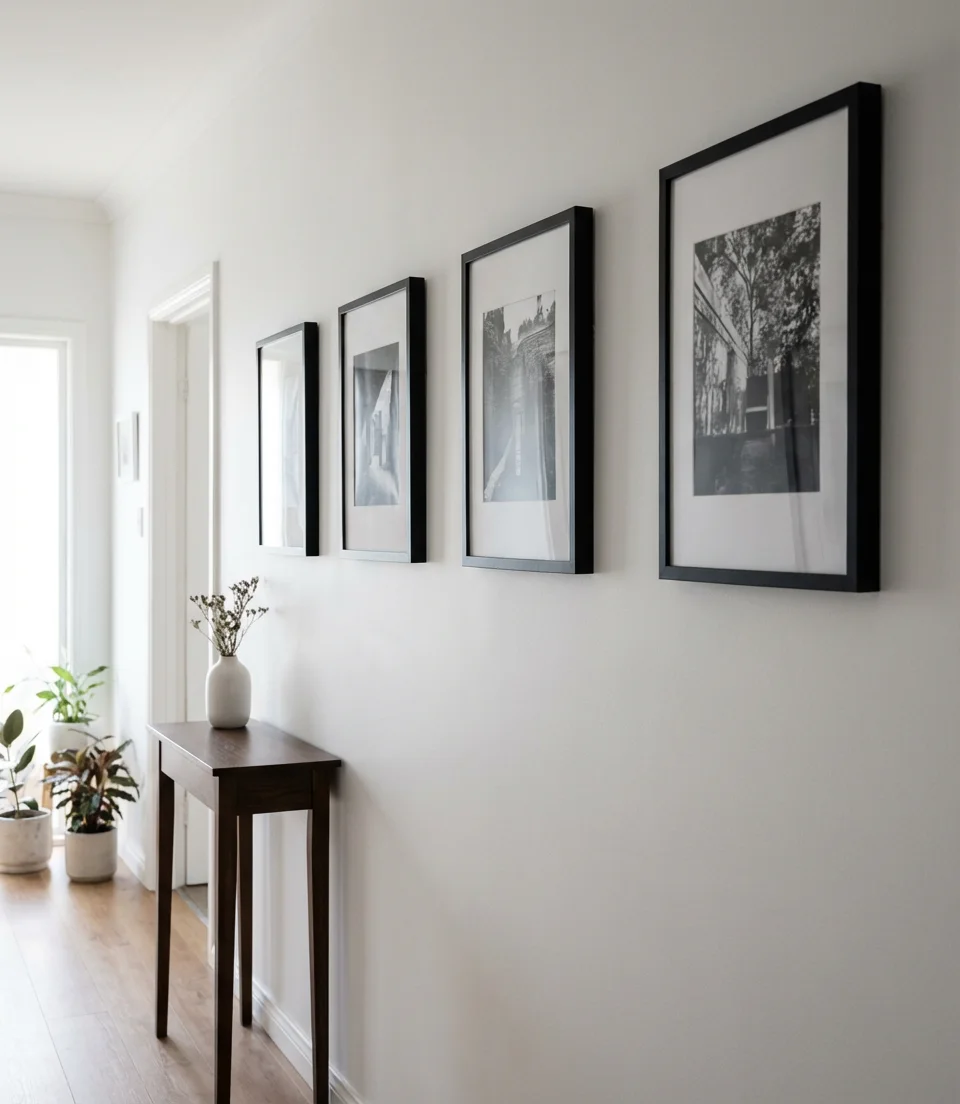
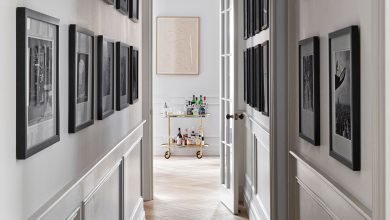
Black and white photography brings a sense of timelessness and quiet sophistication to any space—but in a short, narrow hallway, it does something particularly elegant. Because the monochrome palette removes color from the equation entirely, the space feels more cohesive and intentional even if everything else in the corridor is still in progress. Three to five black and white prints in matching thin black frames, hung at consistent spacing, is one of the cleanest and most universally adaptable hallway treatments available at any budget level. Prints can be personal photographs or purchased fine art—both work beautifully.
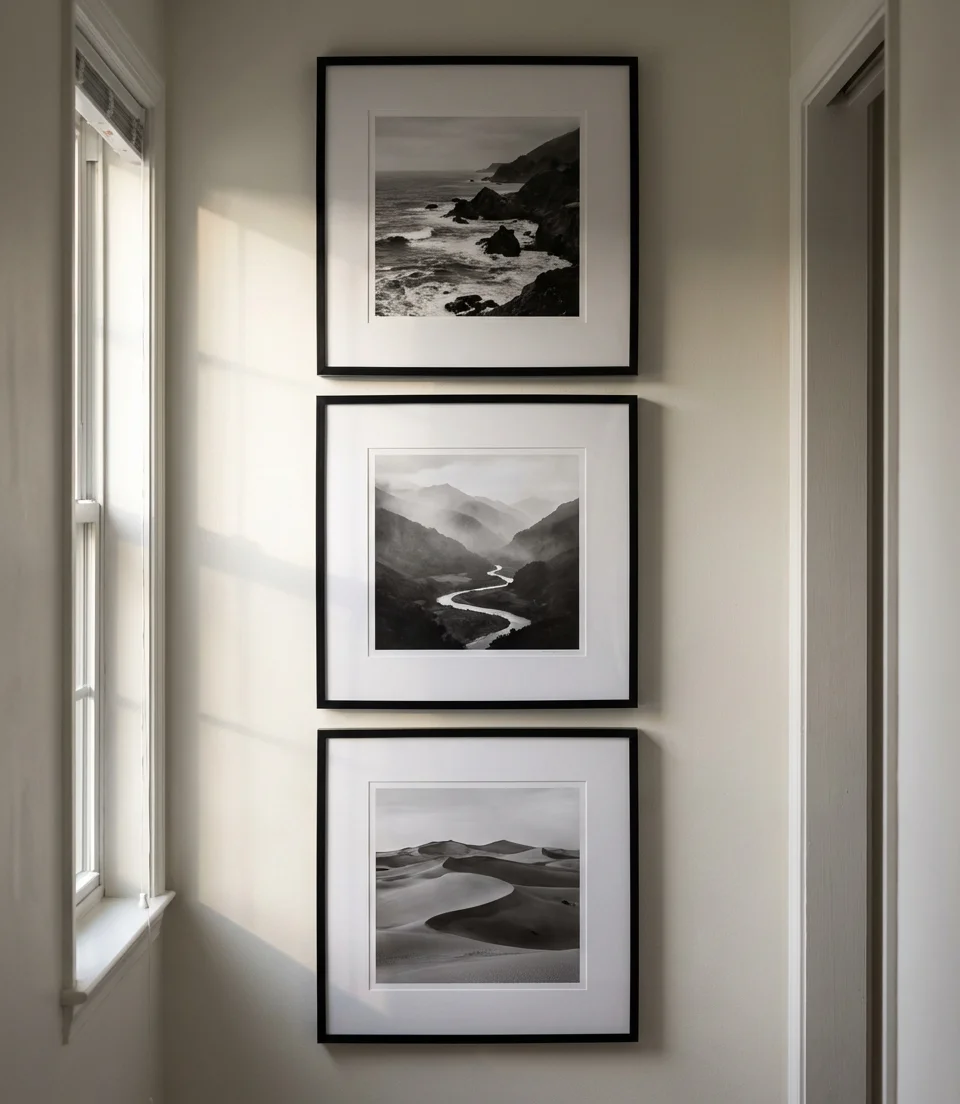
Getting prints made from personal digital photos at a local print shop or an online service like Mpix or Artifact Uprising costs roughly $15–$40 per piece depending on size. Converting a recent phone photo to black and white and having it printed at 16×20 with a wide white mat in a standard frame is a deeply personal, completely affordable, and strikingly beautiful way to decorate the corridor you pass through every morning. It is one of those narrow-solution ideas that carries far more emotional weight than its cost would suggest.
19. Wicker and Rattan Woven Plate Wall
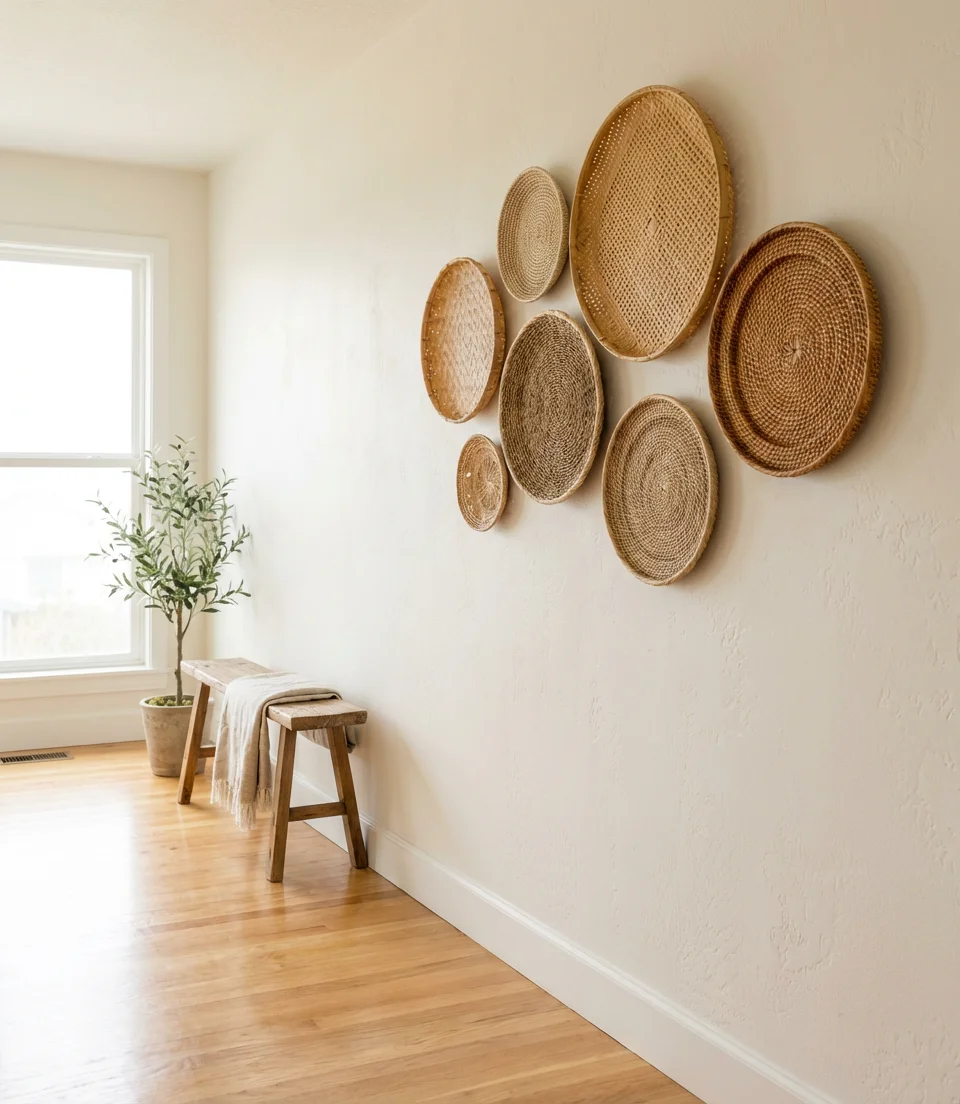
For several years, woven rattan and wicker wall plates have gained popularity as a decor category, reaching genuine mainstream status in 2026. A cluster of woven plates—different sizes, similar tones, mixed weave patterns—arranged on an entry wall creates textural interest that reads as both handcrafted and globally inspired. The warm honey and natural tan tones of rattan complement nearly every wall color, making the material an unusually versatile choice. It works especially well in coastal homes, California casual spaces, and warm-climate American interiors where indoor-outdoor living is part of daily life.
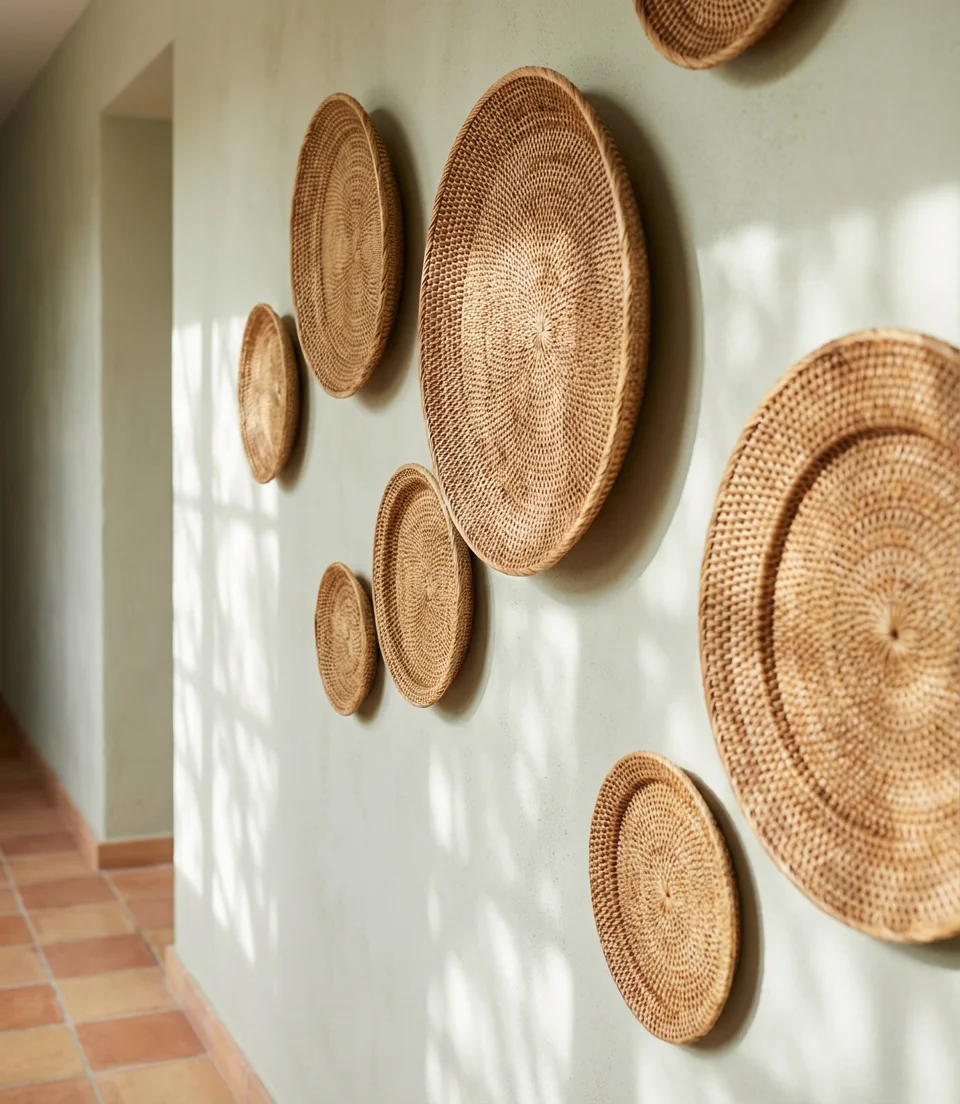
Individual rattan wall plates range from $8 to $45 each depending on size and source—Target, World Market, and independent Etsy sellers all carry excellent options. A full arrangement of seven to nine pieces typically costs $80–$150 total, and the installation requires only small nails or adhesive strips. The key to making the arrangement feel designed rather than random: maintain a consistent gap of three to four inches between each plate and keep the overall shape of the cluster roughly circular or slightly horizontal-oval. Symmetry isn’t required—visual balance is.
20. Painted Mural Accent Wall in a Narrow Entry
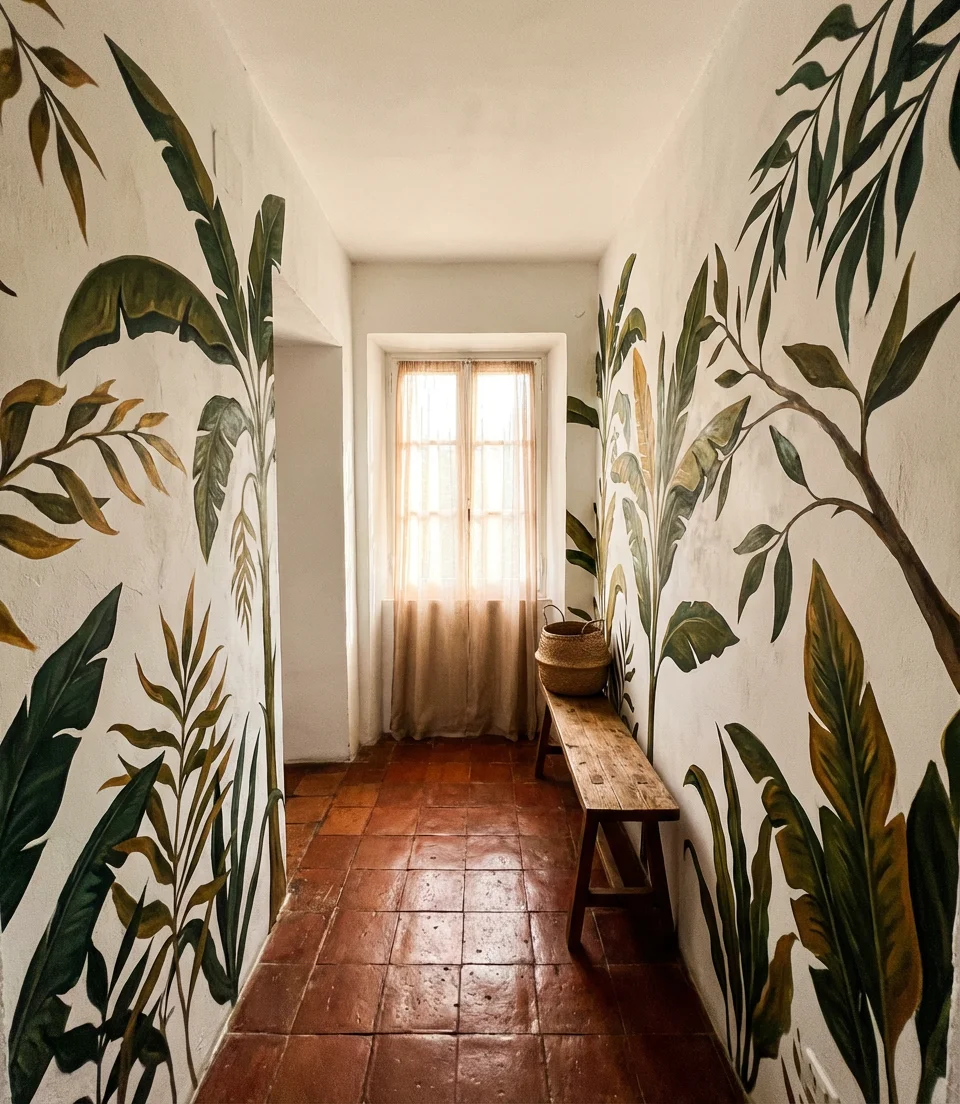
A painted mural in a narrow hallway or entry is the most maximalist option on this list—and also, arguably, the most memorable. Murals have migrated from boutique hotels and restaurants into American residential interiors with remarkable speed over the past few years, and the hallway is actually the ideal location for a first foray into this territory. The contained scale means even a non-artist can tackle a simple botanical or abstract mural with confidence. Alternatively, peel-and-stick mural wallpapers from companies like Photowall and Murals Wallpaper bring the look without any painting skill required.
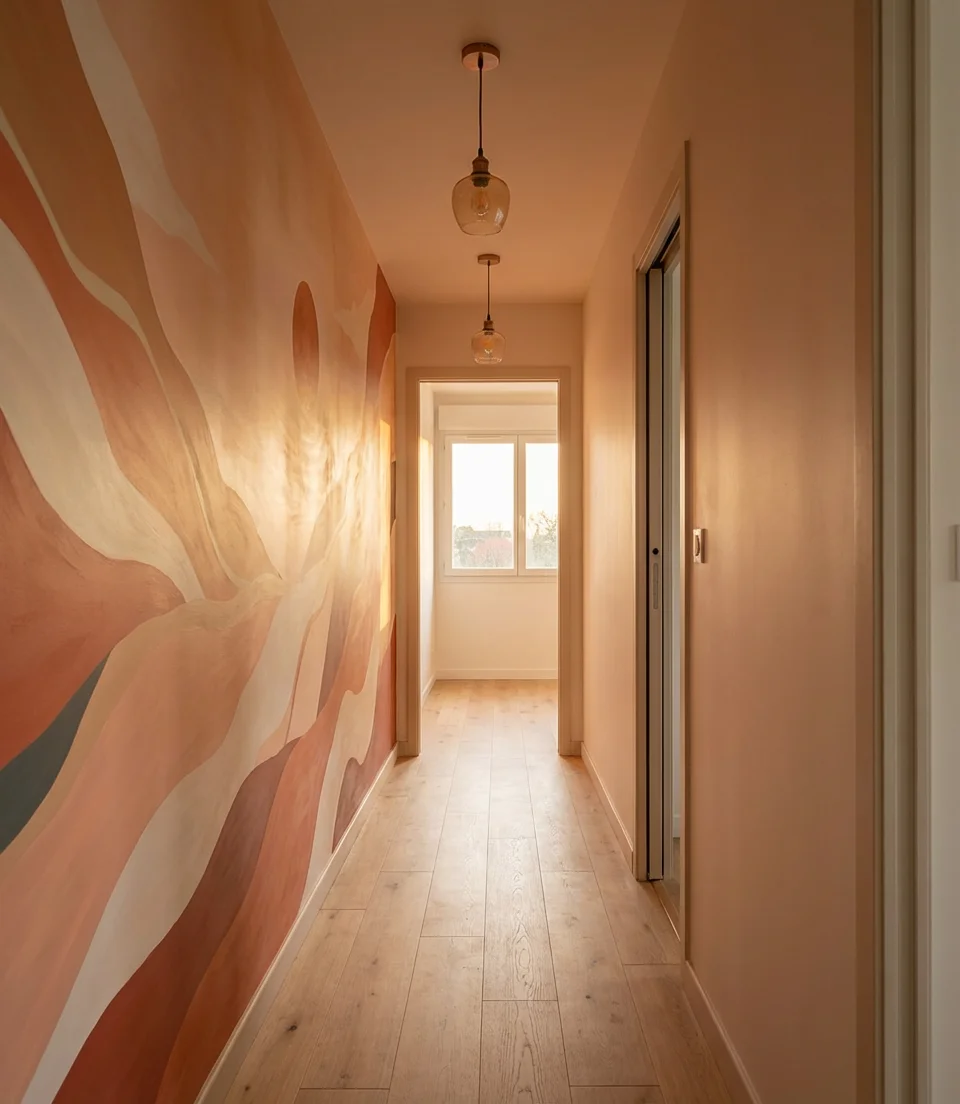
Hiring a local muralist for a hallway project typically runs $300–$800 for a full wall depending on the artist and complexity—considerably more affordable than commissioning work for a living room or exterior facade. Check Instagram and local art school graduate exhibitions for talented muralists who are building their residential portfolios and may offer more accessible pricing. This idea’s narrow, modern approach consistently becomes the most talked-about feature in any home it appears in—guests stop, stare, and immediately ask who did it.
21. Understated Elegance: Linen-Toned Walls with One Statement Mirror
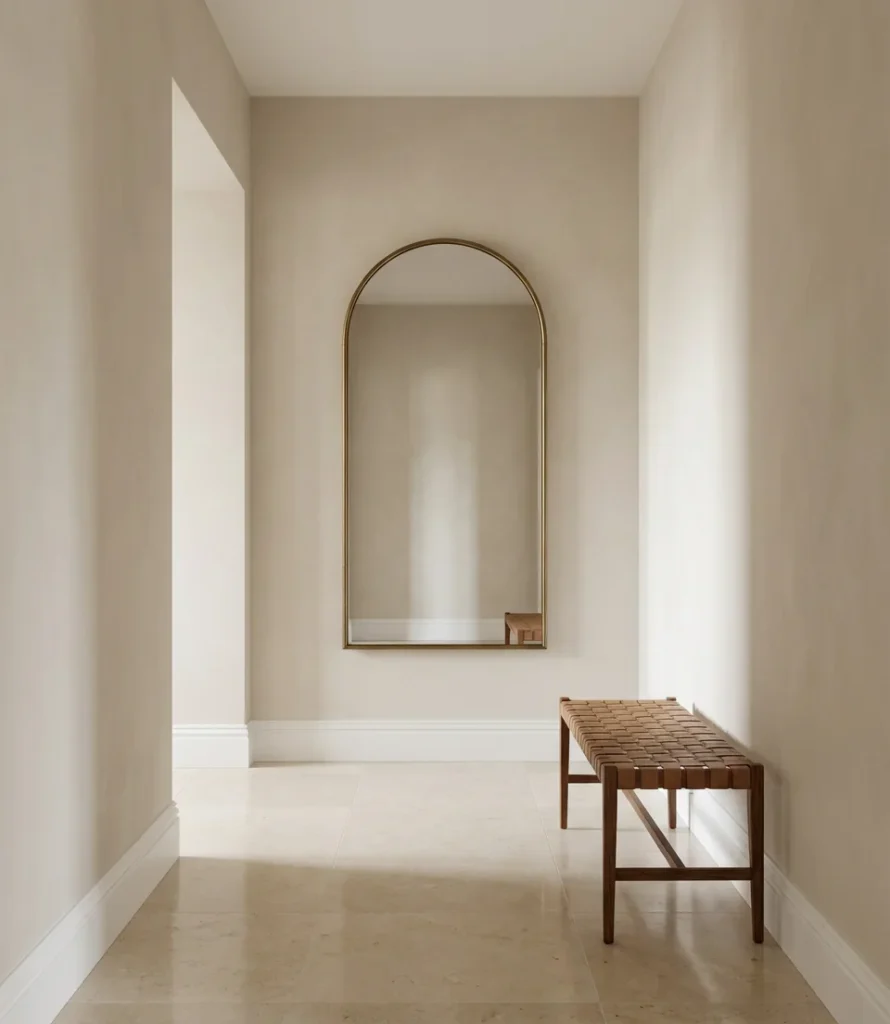
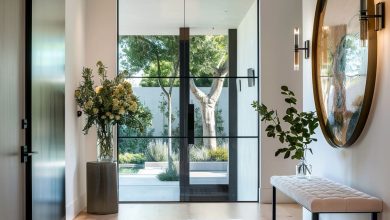
Sometimes the most sophisticated design decision is restraint. A hallway painted in a quiet linen or warm off-white—think Benjamin Moore’s White Dove or Farrow & Ball’s Elephant’s Breath—with a single oversized mirror as the only wall element creates a sense of refined calm that no busy gallery wall can replicate. This approach works in nearly every space: long, narrow corridors, grand formal entries, small apartment vestibules, and upstairs landings alike. The mirror becomes a functional and aesthetic centerpiece—reflecting light, expanding perceived space, and grounding the wall with confident simplicity.
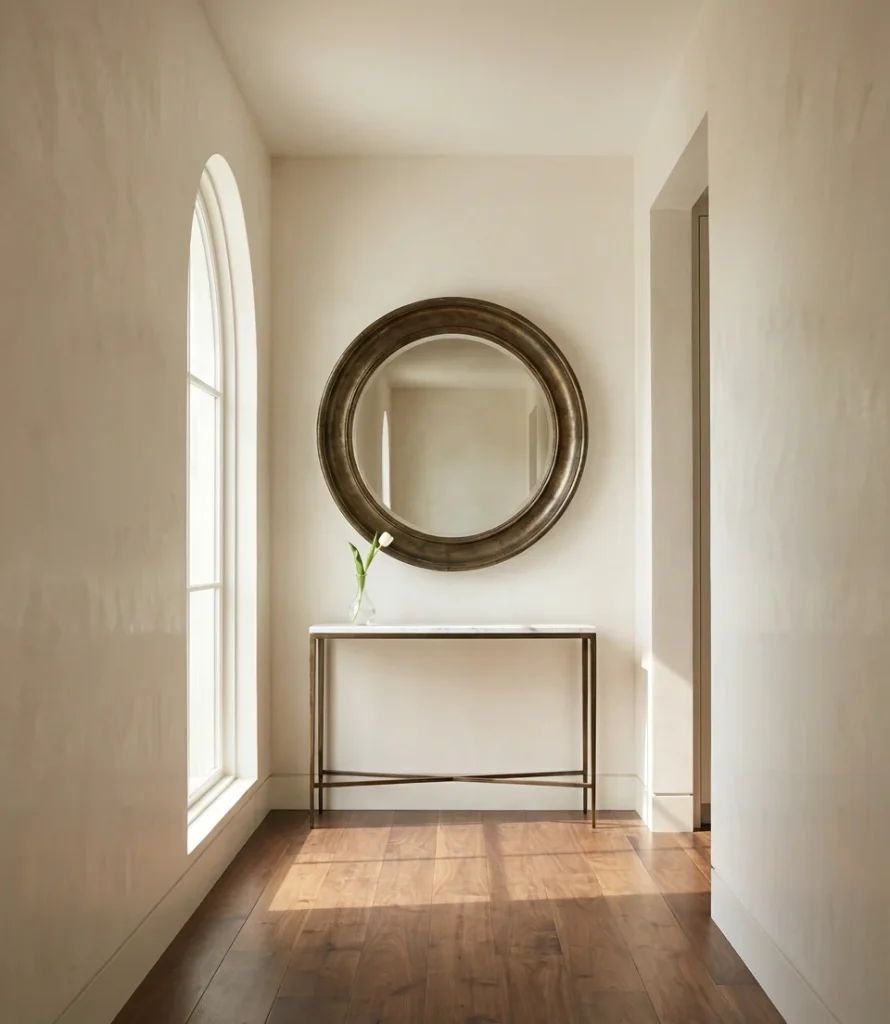
The pictures that perform best on Pinterest for this aesthetic category tend to show the reflection in the mirror as an additional layer of visual storytelling—a glimpse of natural light from a window opposite, the edge of a beautiful room beyond, or a branch of greenery just out of frame. Consider what your mirror will reflect when you choose its placement. That reflected view is part of the composition, and getting it right elevates the entire hallway from clean to genuinely beautiful.
Every hallway is different—in scale, in light, and in the life it connects—and that’s exactly what makes decorating one so personal. Whether you’re drawn to the drama of a floor-to-ceiling mural or the calm confidence of a single beautiful mirror, the right choice is the one that makes you pause, even for just a second, every time you walk past it. We would appreciate hearing which ideas resonate with you—please share your favorite look in the comments below, or let us know what projects you are currently working on. Your hallway might be the most inspired room in the house yet.