
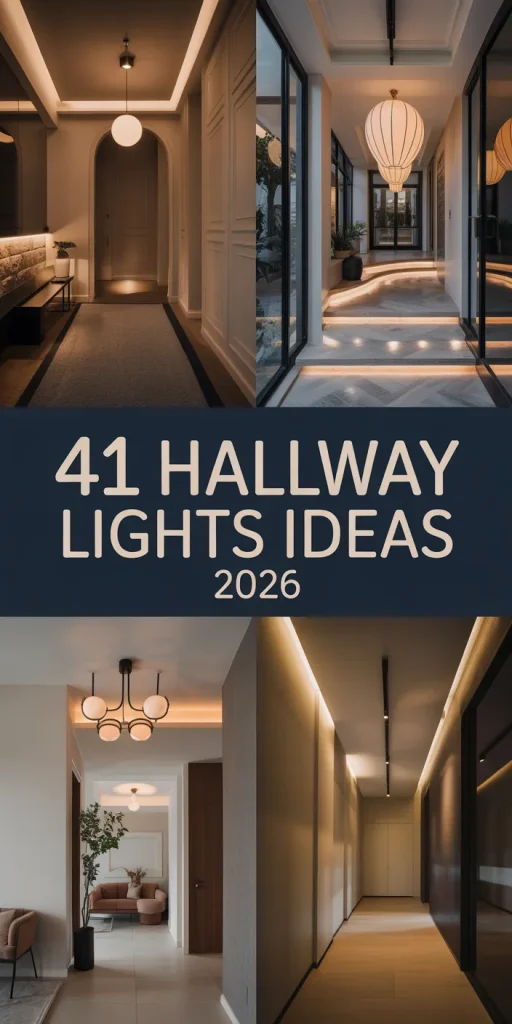
Hallway lighting has quietly become one of the most-searched interior topics on Pinterest—and it’s simple to understand why. A well-lit entryway or corridor sets the entire mood of a home before anyone even reaches the living room. Whether you’re dealing with a narrow passage, low ceilings, or a grand Victorian staircase, the right fixture transforms the ordinary into something genuinely beautiful. In this guide, you’ll find fresh, practical ideas for hallway lights in 2026, from flush mounts to wall sconces, mid-century modern pendants to warm LED strips—all inspired by real homes, real budgets, and real American living.
1. Flush Mount Fixtures for Low Ceilings
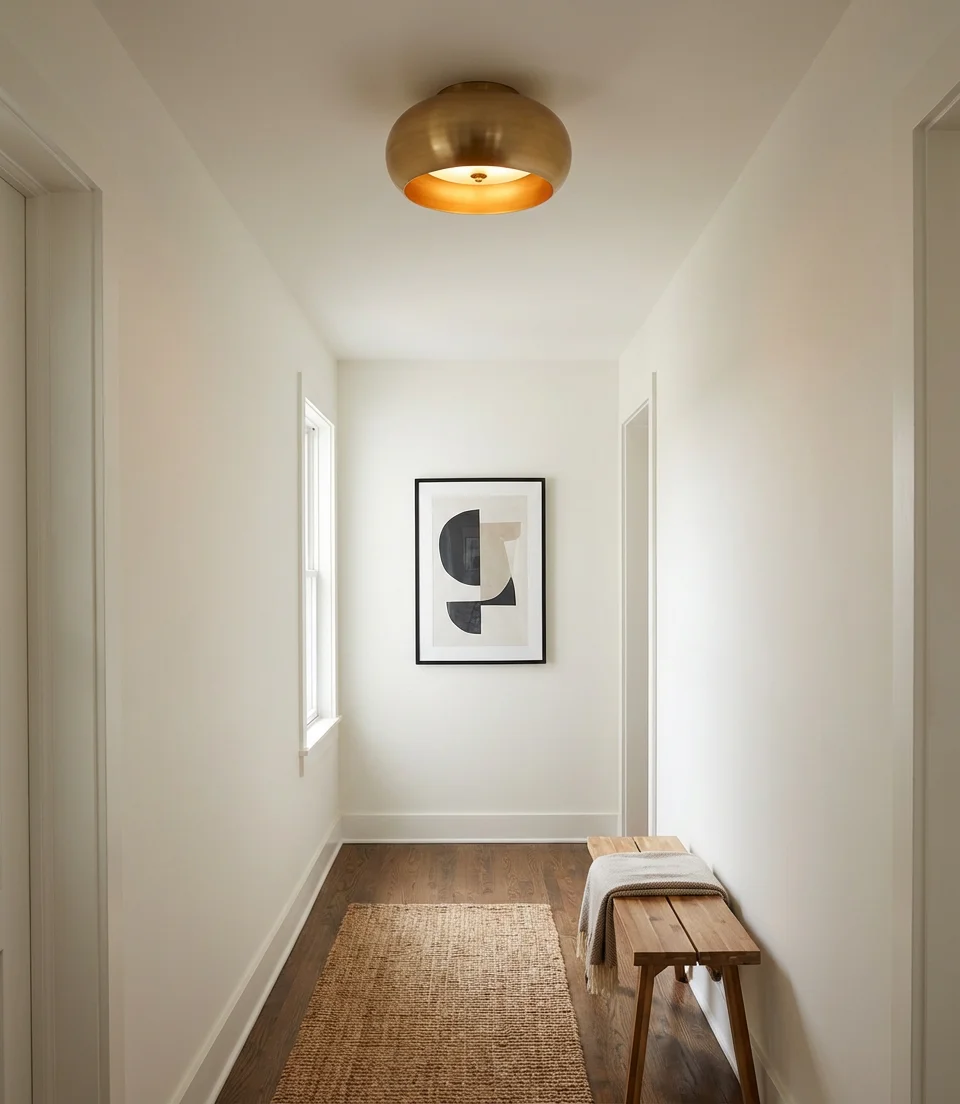
If your hallway ceiling is eight feet or less, a chandelier is not a viable option. This is where flush mount fixtures excel. These ceiling-hugging lights have evolved far beyond the basic builder-grade dome. Today’s versions arrive in brushed brass, matte black, and frosted glass that casts a warm, diffused glow without eating into headroom. They’re the go-to solution for fixtures in low-ceiling situations in older ranch homes, apartments, and bungalows across the country.
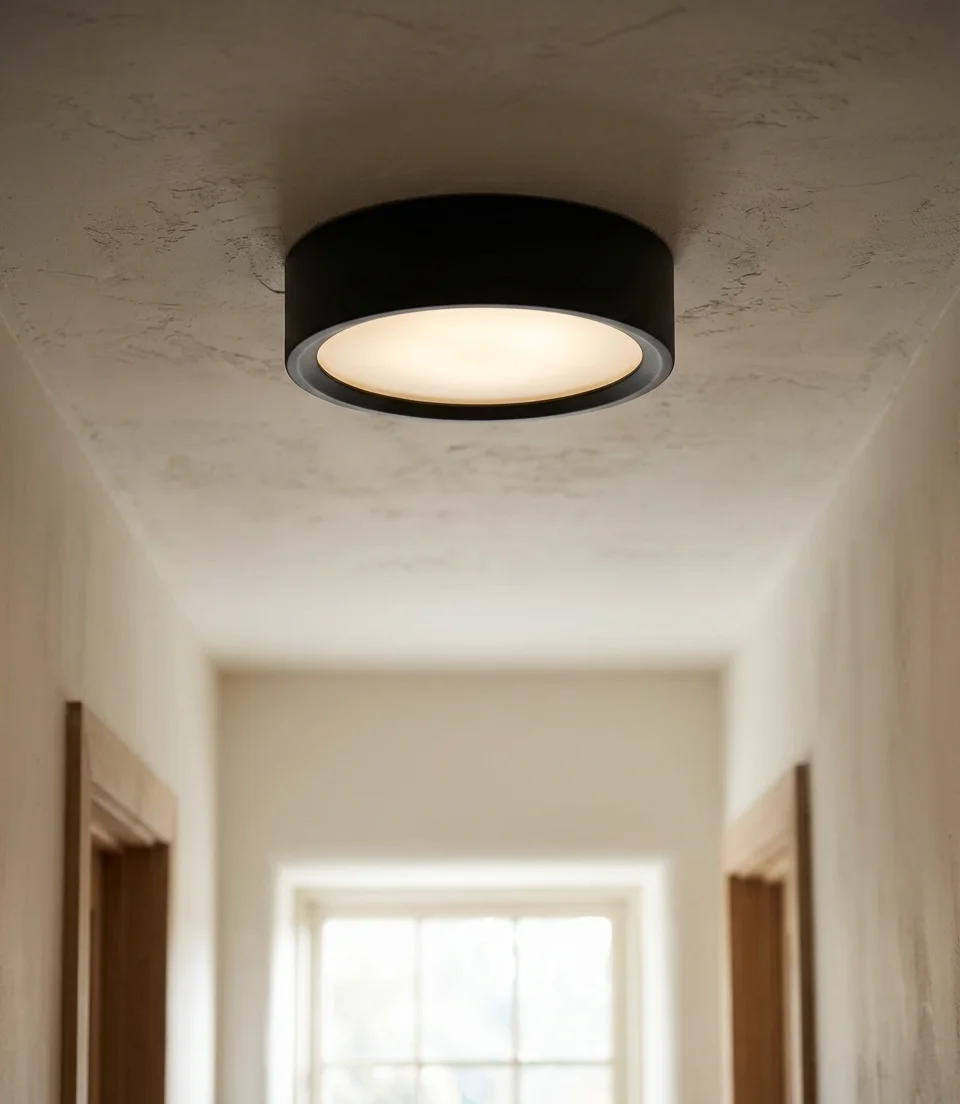
If you’re shopping on a budget, you’d be surprised how far $60–$120 can take you in the flush mount category. Big-box retailers like Home Depot and Wayfair carry dozens of styles that look far more expensive than they are. The trick most designers share is to choose a fixture with a diameter at least one-third the width of your hallway. When it is too small, it reads like an afterthought; when it is sized correctly, it anchors the whole space.
2. Wall Sconces for Narrow Hallways
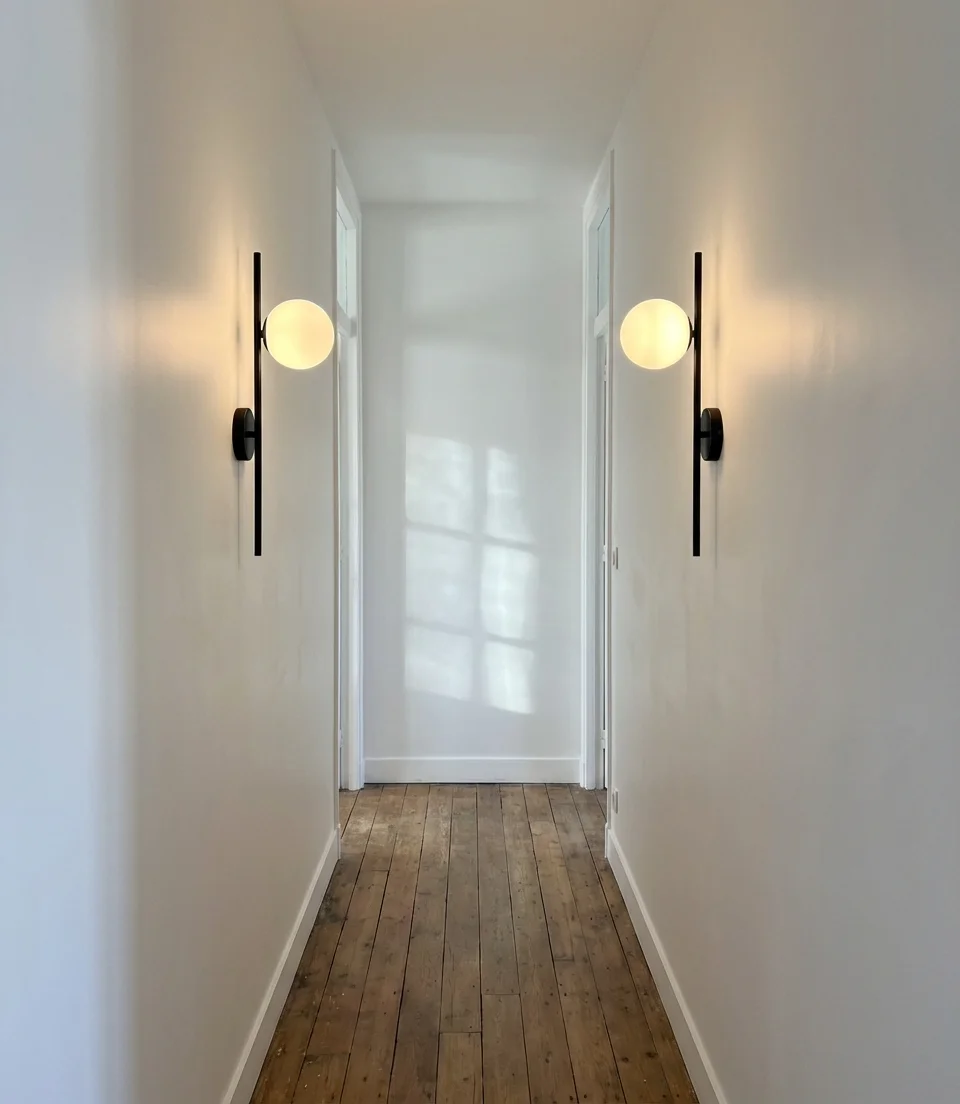
A narrow hallway—think less than four feet wide—practically begs for wall-mounted lighting. Overhead fixtures in tight corridors can create a tunnel effect, making the space feel oppressive. Wall lights solve this problem elegantly: they push illumination horizontally, elongate the perceived width, and free up the ceiling plane entirely. Paired in a series down a long passage, they create a rhythm that feels almost hotel-like in its polish.
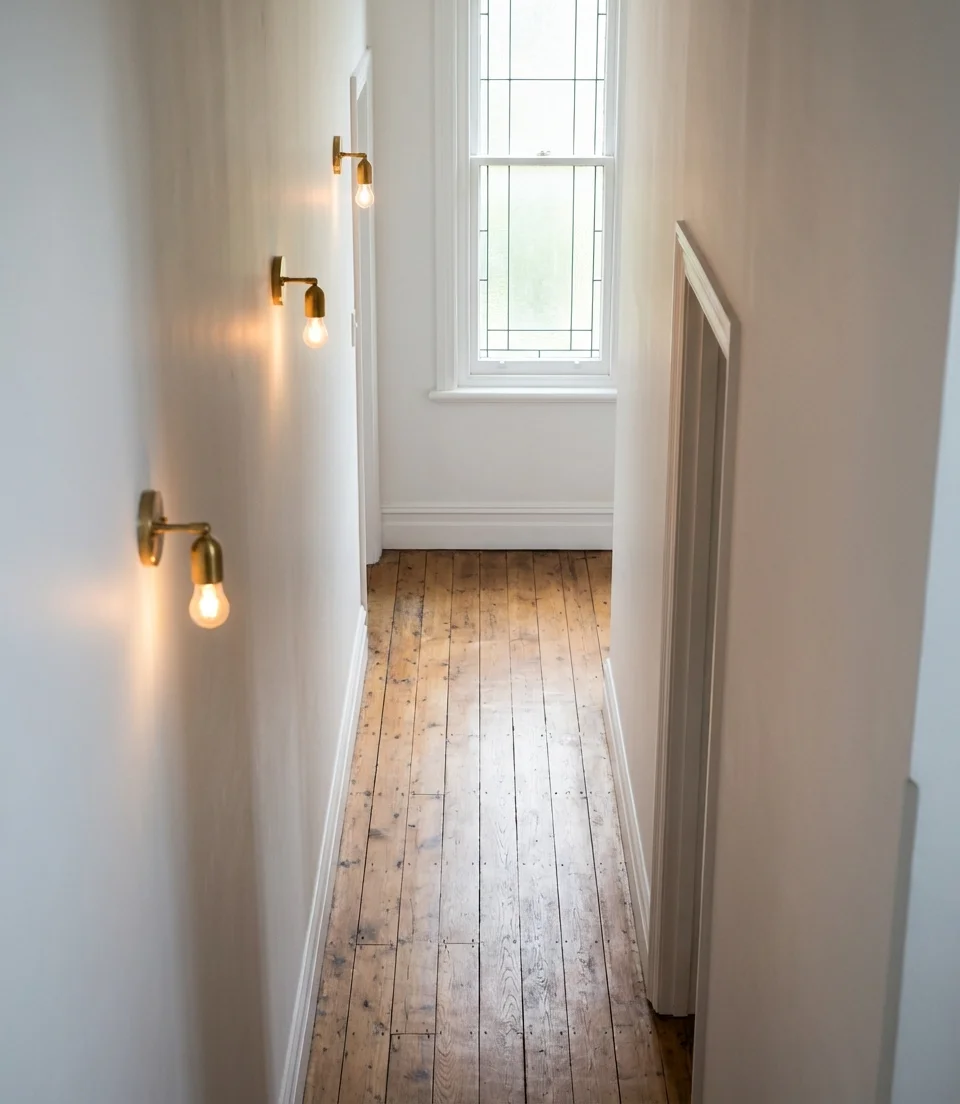
One mistake homeowners often make is placing sconces too high. The ideal height for sconces is typically 60-66 inches from the floor to the center of the fixture, which is eye level for most adults. Mount them higher, and the light skips over faces; lower, and the glare becomes uncomfortable. For a narrow corridor, choose sconces that project no more than five inches from the wall so foot traffic never feels cramped.
3. LED Strip Lighting Along the Ceiling Edge
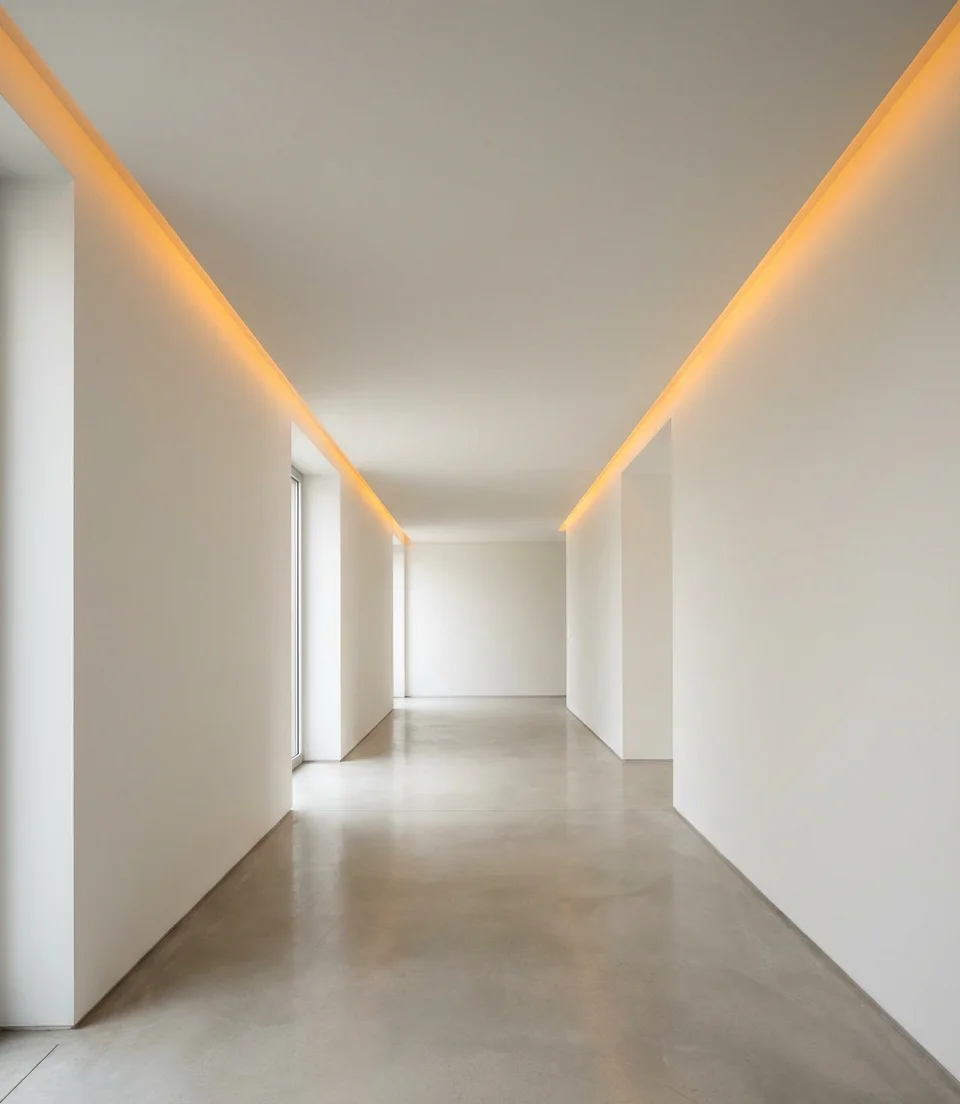
Indirect LED lighting tucked into a ceiling cove or along a crown molding ledge has become a defining look of contemporary hallway design. The result is a soft, halo-like glow that feels architectural rather than decorative—like the light is built into the structure itself. Warm white LEDs (light-emitting diodes) with a color temperature of around 2700K keep the ambiance cozy, while tunable options let you shift from warm to cool depending on the time of day.
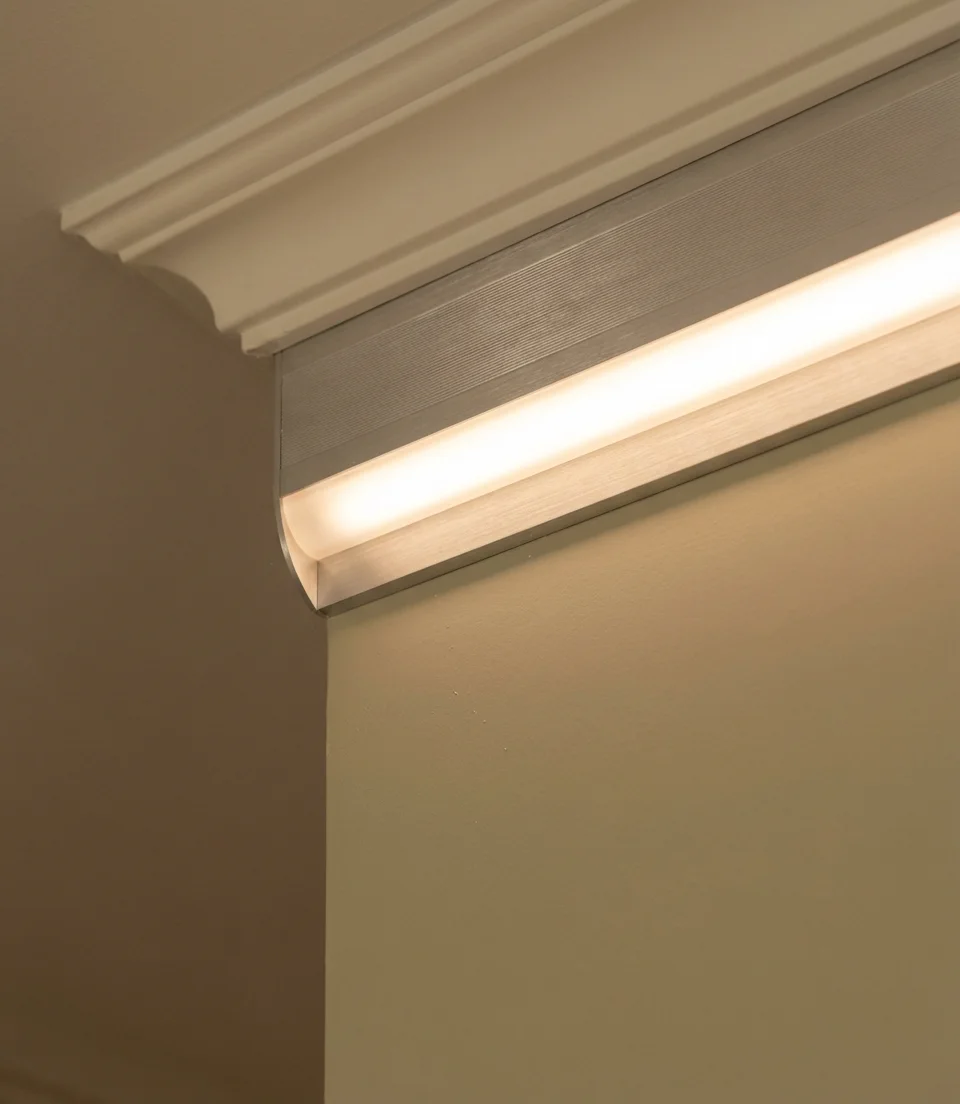
A real homeowner in Austin, Texas, described installing LED cove lighting in her 1970s ranch hallway as “the single best $200 I spent on the whole renovation.” She used a simple aluminum channel from Amazon to diffuse the strip and hide the hardware. The transformation from flat overhead light to layered glow made her once-gloomy corridor feel like a boutique hotel passage—without a single structural change.
4. Mid-Century Modern Pendants in the Entry
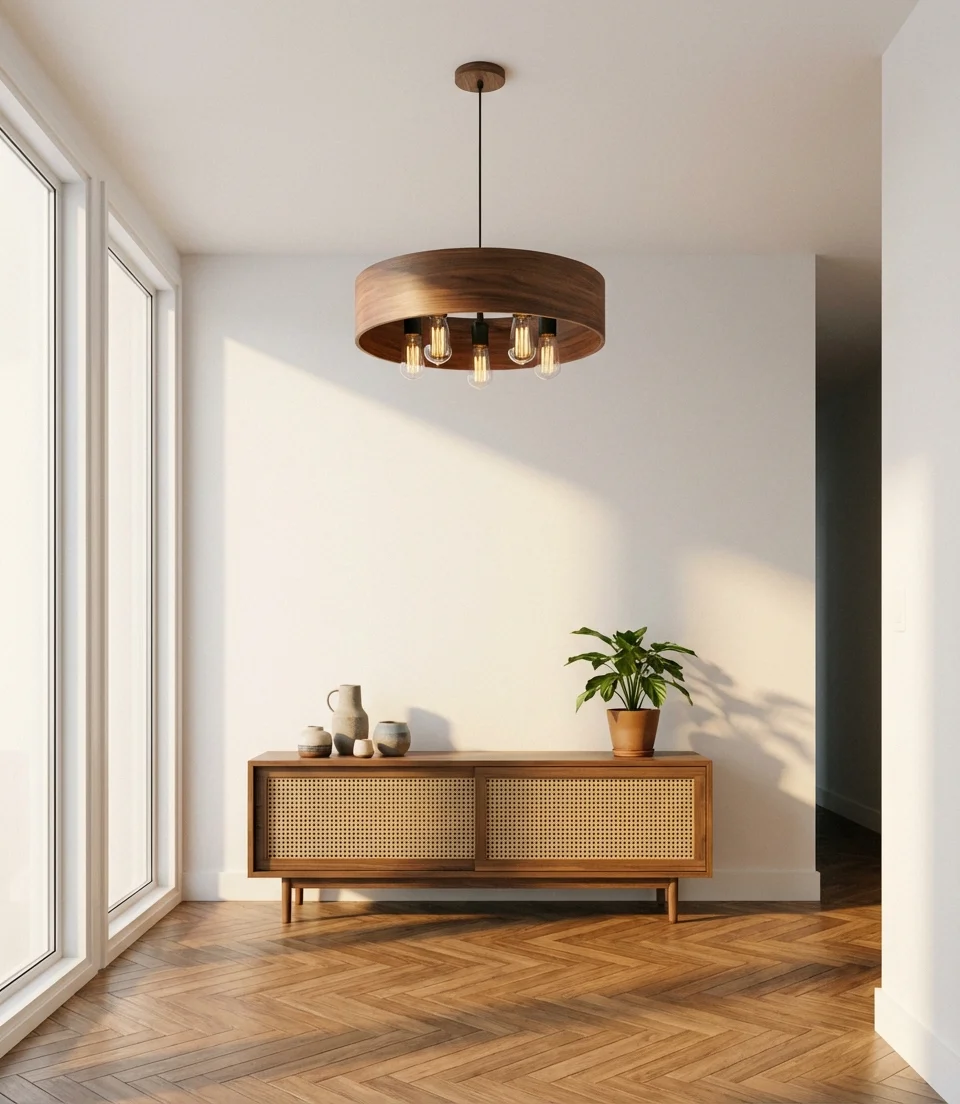
There’s a reason mid-century modern lighting continues to dominate Pinterest boards year after year: the clean lines, warm materials, and honest geometry feel timeless rather than trendy. An MCM pendant—think walnut wood accents, exposed Edison bulbs, or a sculptural brass arm—transforms a plain entry into a conversation starter. These fixtures work especially well in homes built between 1950 and 1975, where the architecture already speaks the same visual language.
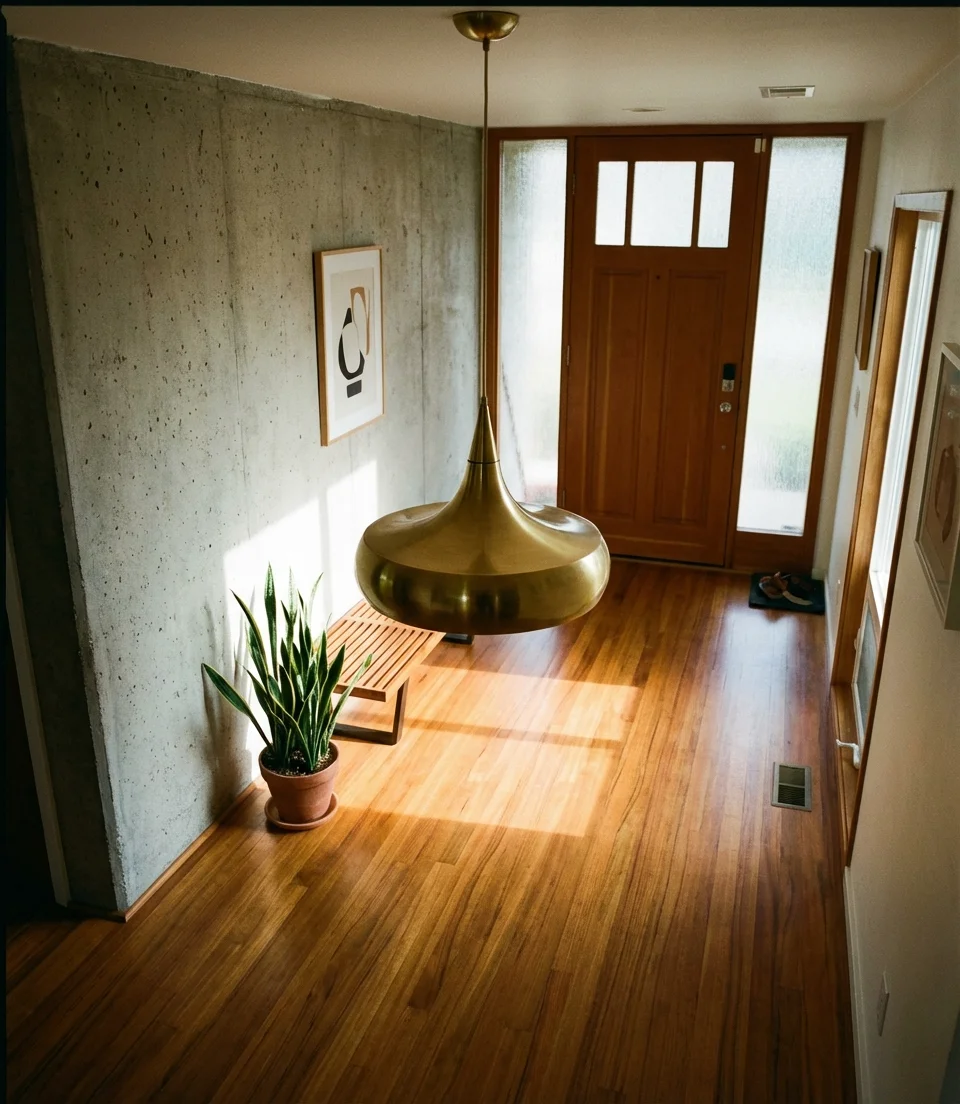
Interior designers often note that the entry pendant is the first fixture guests notice—and the one that sets expectations for the rest of the home. Choosing a mid-century piece here pays disproportionate visual dividends. Look for pendants with dimmer compatibility: the ability to lower the light on a quiet evening versus brighten it for a dinner party is the kind of flexibility that makes daily living genuinely more pleasant.
5. Victorian-Style Lanterns for a Classic Entrance
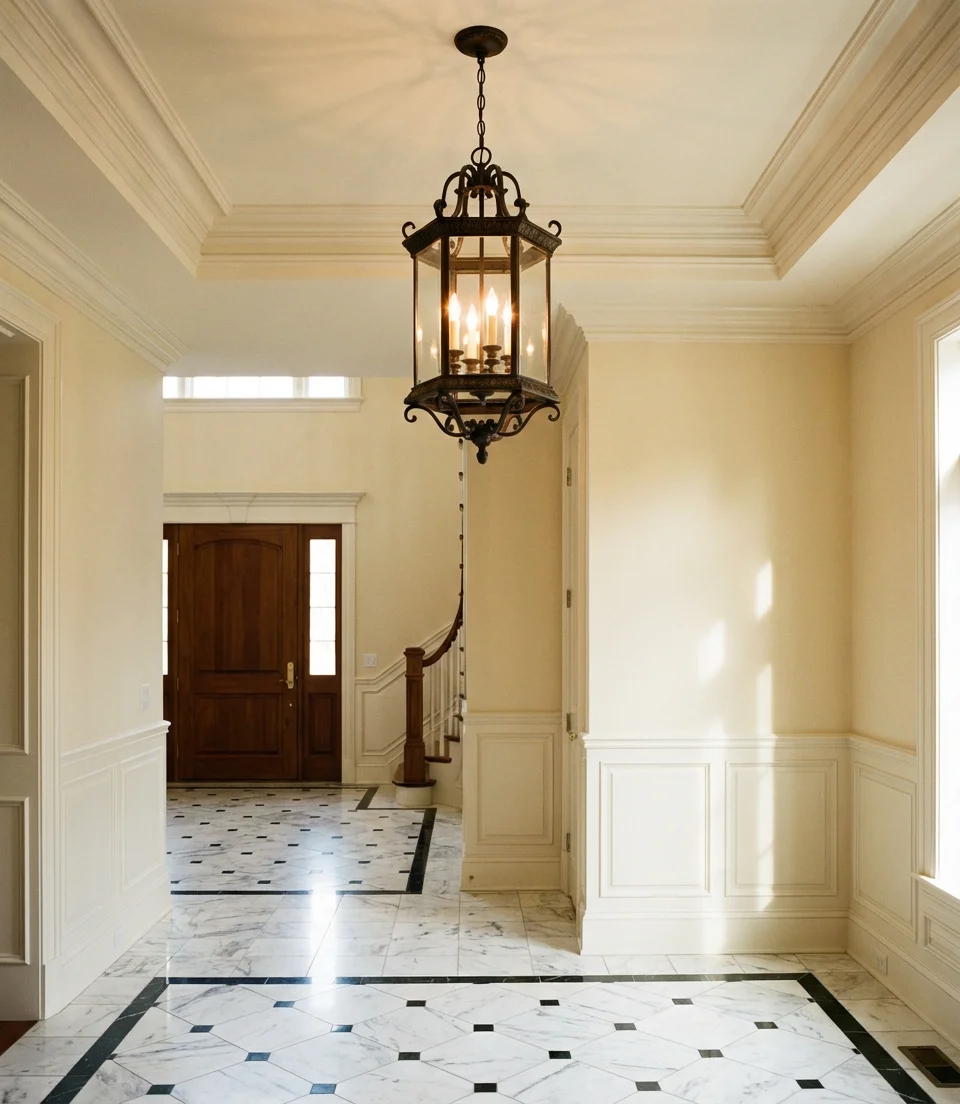
For homes with older bones—crown molding, wainscoting, ornate woodwork—a Victorian lantern fixture feels less like a design choice and more like a restoration. These cage-style or glass-paneled fixtures, often finished in oil-rubbed bronze or antique brass, reference a pre-electric era while performing perfectly with modern LED bulbs. They add a sense of history and gravitas to an entrance that more minimal styles simply can’t replicate.
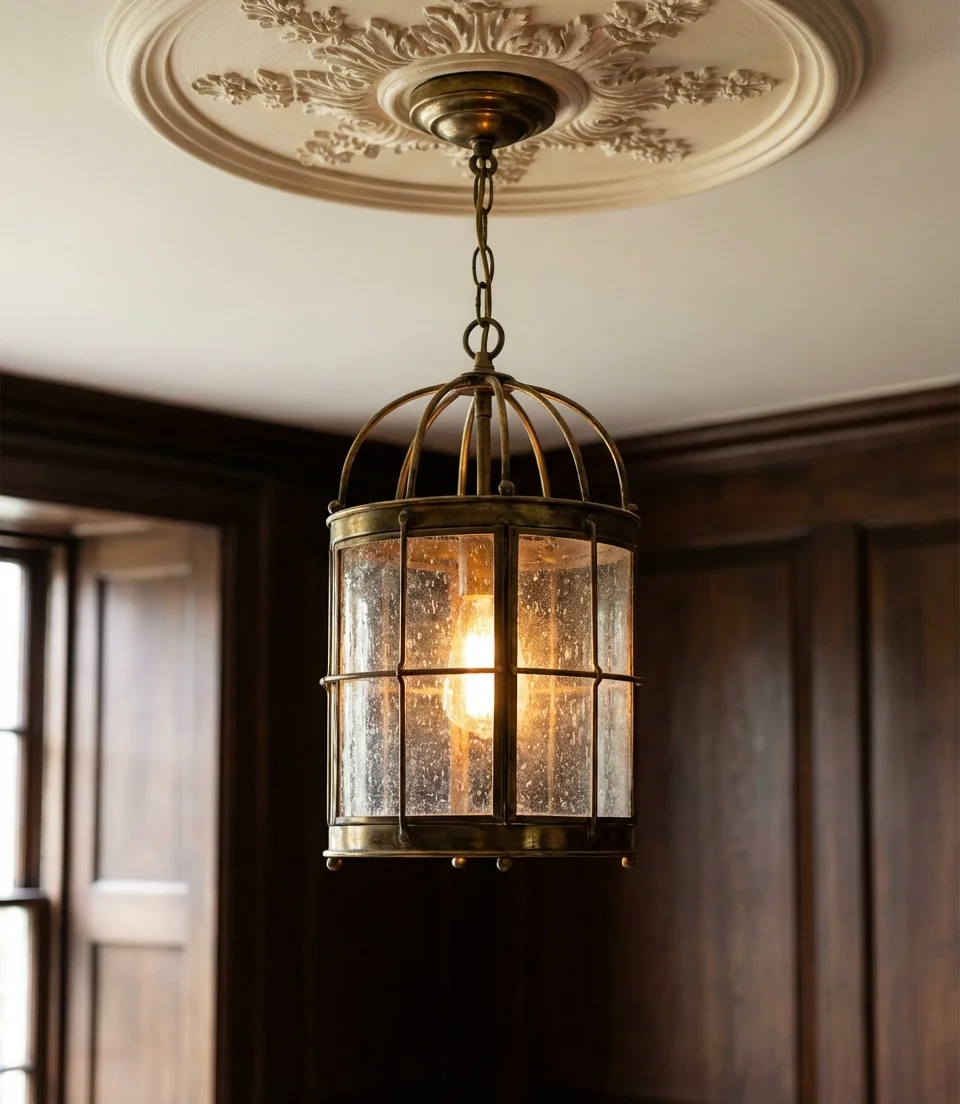
Where this style works best: foyers and entry hallways in Colonial, Craftsman, Tudor, or Queen Anne homes. The architectural language already exists—the light just has to speak it. Avoid over-scaling; a lantern that’s too large reads as theatrical rather than elegant. As a general guideline, measure the width and length of the room in feet and then convert it to inches to determine the ideal fixture diameter.
6. Modern Farmhouse Sconces for the Upstairs Hall
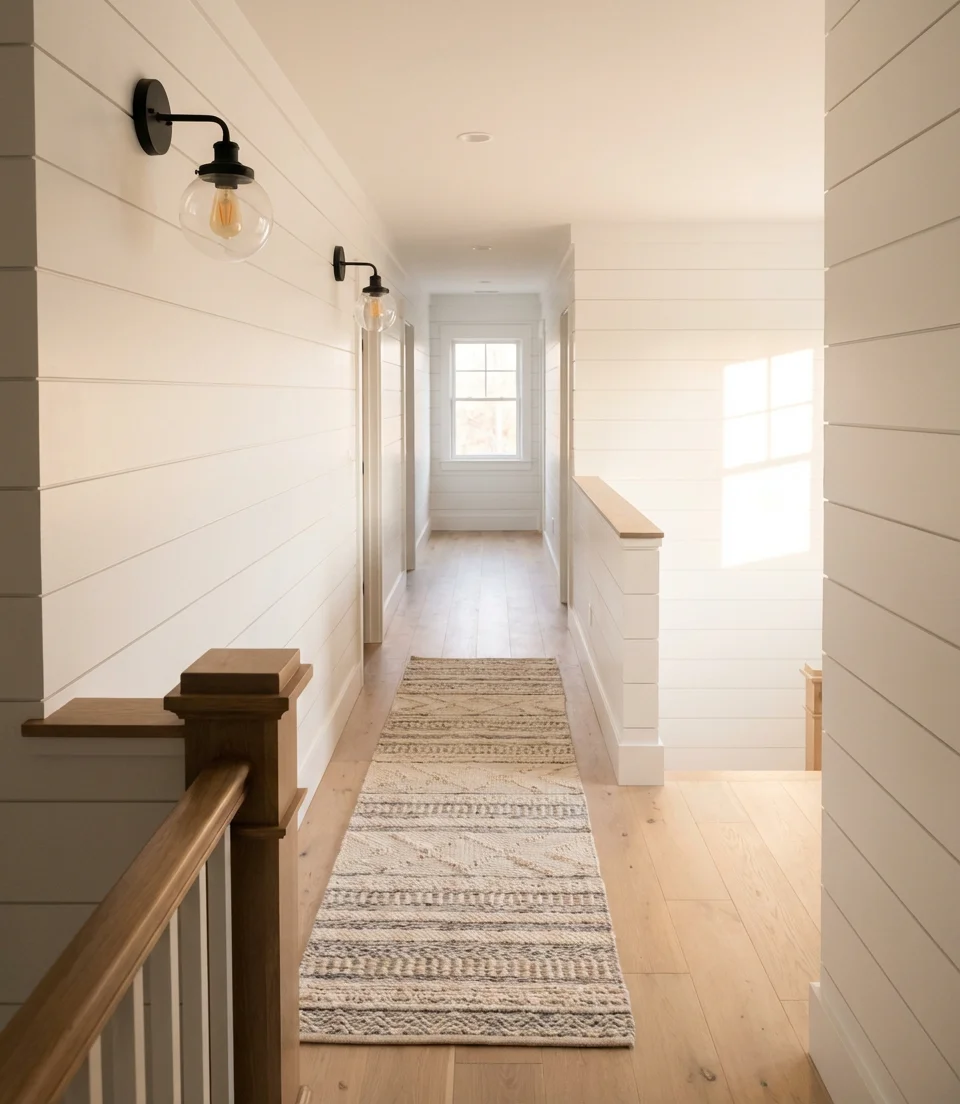
The modern farmhouse aesthetic has a particular genius for the upstairs hallway: it bridges rustic warmth with clean, contemporary lines in a way that feels livable rather than styled. Shiplap walls, whitewashed wood floors, and matte black fixtures create a cohesive corridor that feels pulled from a Joanna Gaines renovation—but is entirely achievable without a TV crew. Barn-style wall sconces with clear glass globes are the signature piece of this look.
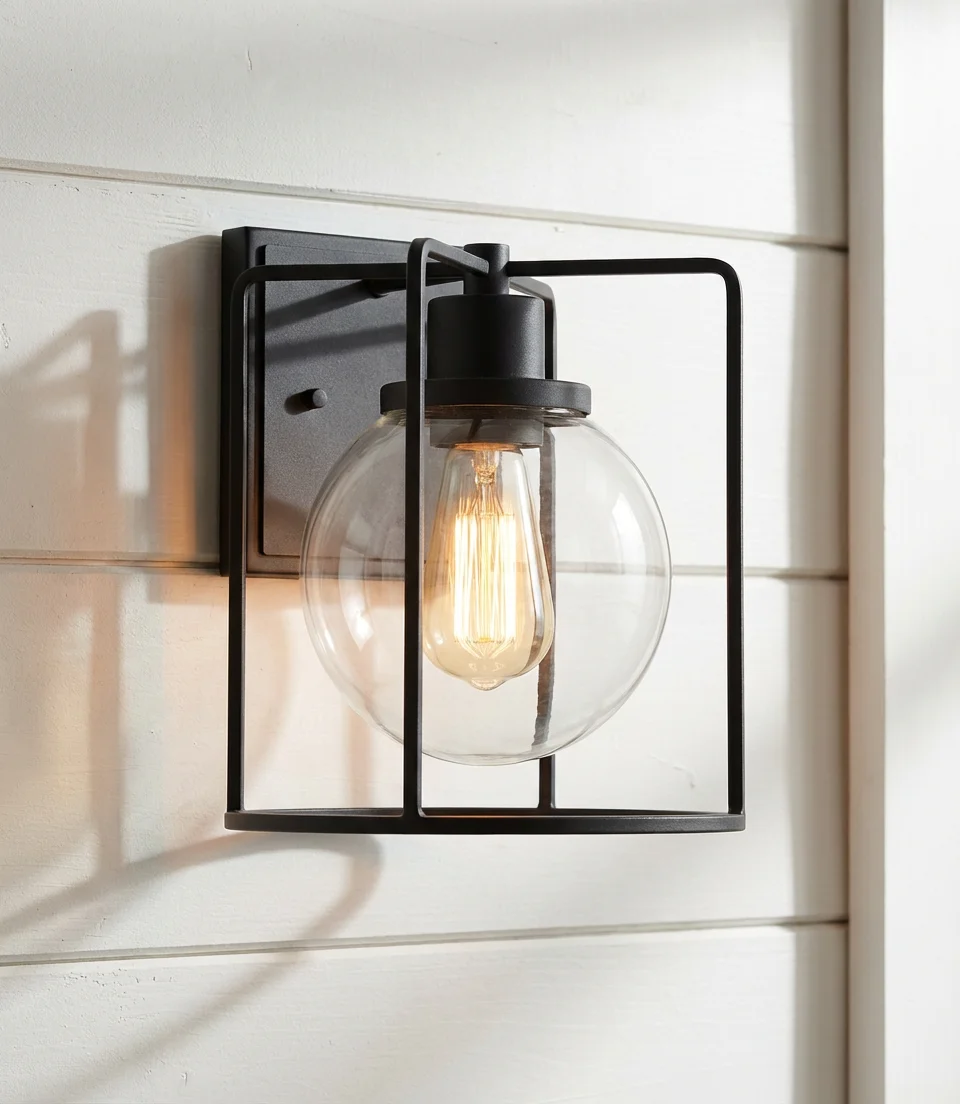
Expert tip from a Tennessee interior designer: “The upstairs hall is the last thing you see before bed and the first thing you see in the morning. Lighting it like an afterthought is a missed opportunity.” She recommends wiring upstairs sconces on a dimmer with a motion-activated night mode—bright for evening traffic, dim for a 2 a.m. bathroom run. It’s a small upgrade that dramatically improves daily life.
7. Japandi Minimalism with Paper Lantern Pendants
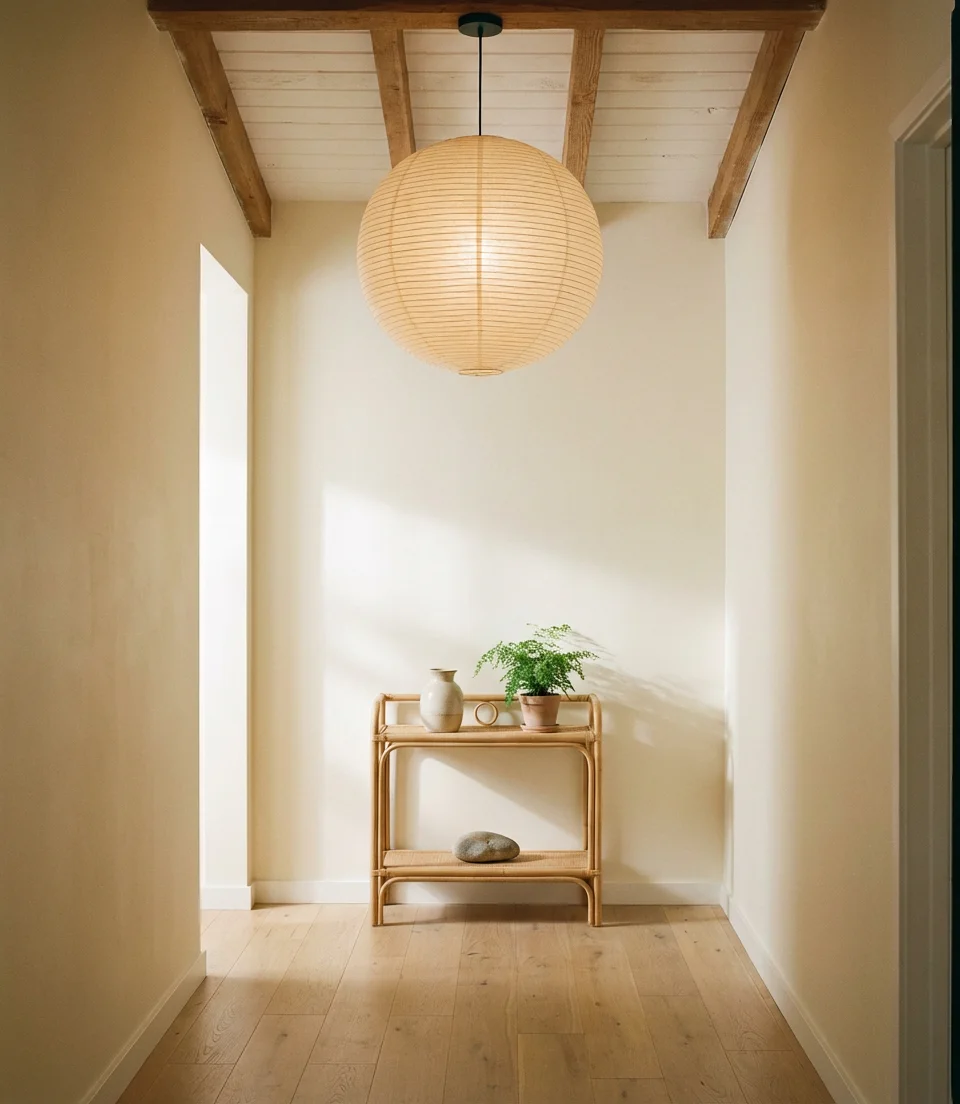
Japandi—the hybrid of Japanese and Scandinavian design philosophies—has found a natural home in the American hallway. The approach favors restraint, natural materials, and light that feels meditative rather than functional. Paper lantern pendants, washi shades, or simple rattan globes suspended from a minimal cord create exactly the kind of quiet inspiration this aesthetic demands. The palette is typically warm whites, stone, and natural timber.
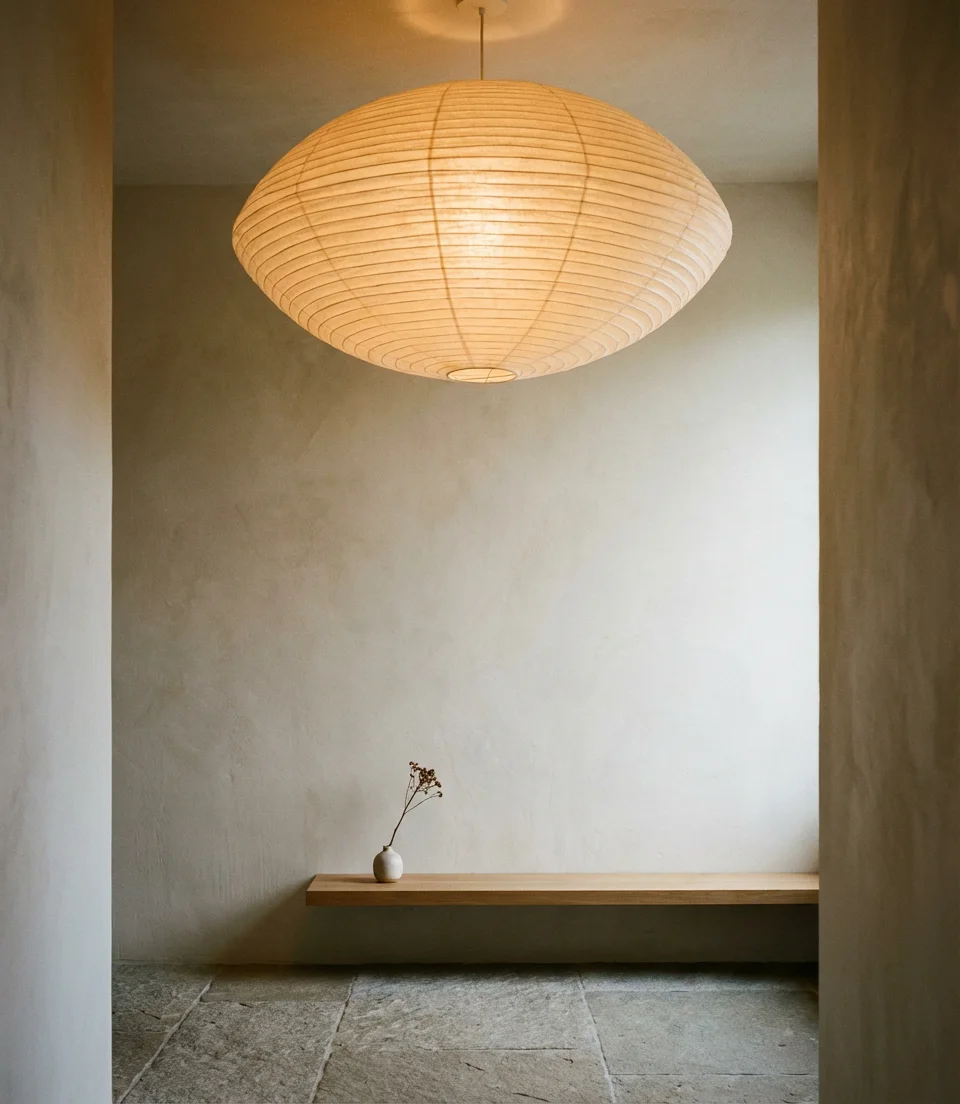
This approach to hallway lighting suits open-plan homes where the corridor flows into living and dining spaces. The tonal continuity matters: if your main spaces use warm, diffused light, pulling that same quality into the hallway makes the whole home feel intentionally considered. Keep surfaces uncluttered, let the pendant do the visual work, and resist the urge to add more. In Japandi, the absence of excess is the design statement.
8. Hotel-Inspired Lighting for a Long Hallway
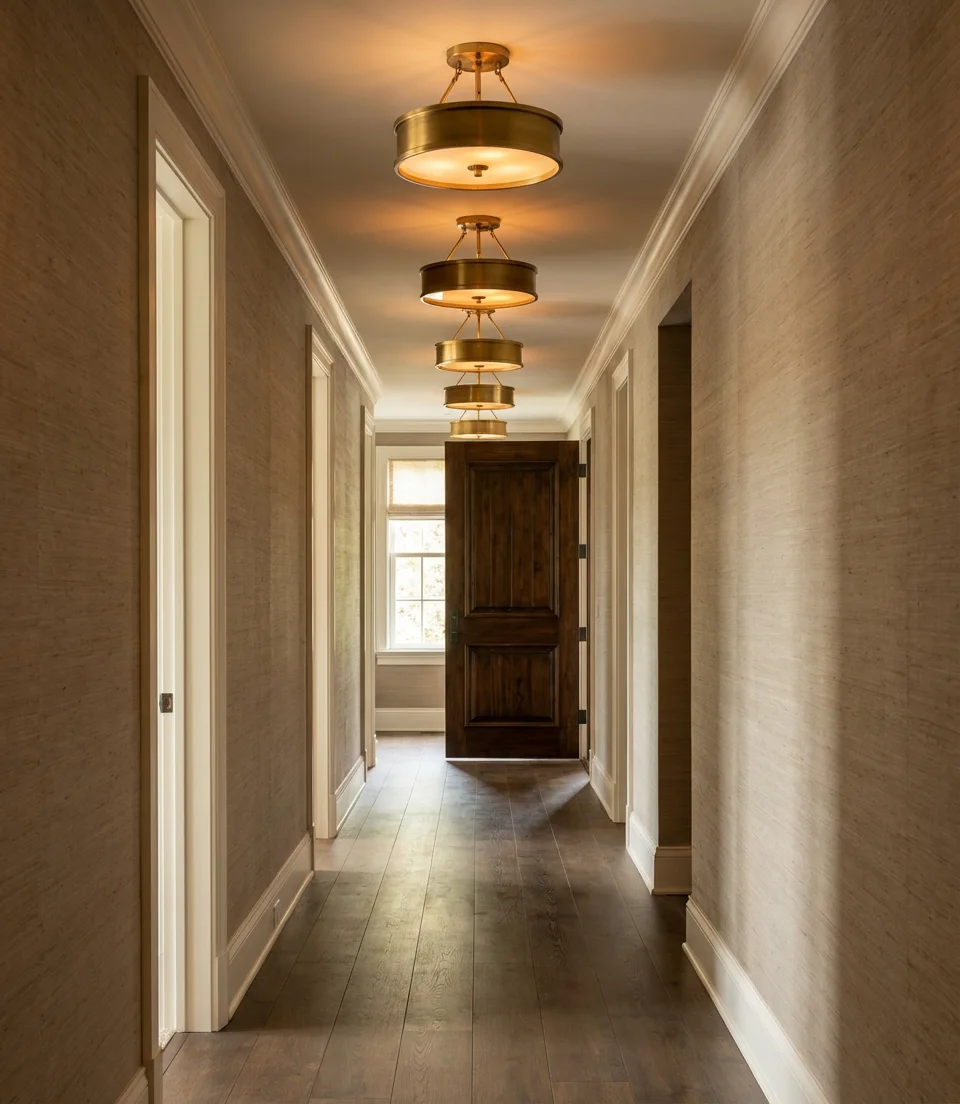
The hotel corridor aesthetic—repeated fixtures at measured intervals, warm ambient glow, careful attention to wall-wash—translates surprisingly well to residential long hallways. Boutique hotels master this technique by combining ceiling recessed lighting with wall-mounted accent fixtures, which creates depth and eliminates harsh shadows. At home, you can approximate this look with a series of semi-flush pendants or recessed cans supplemented by low-voltage wall uplights.
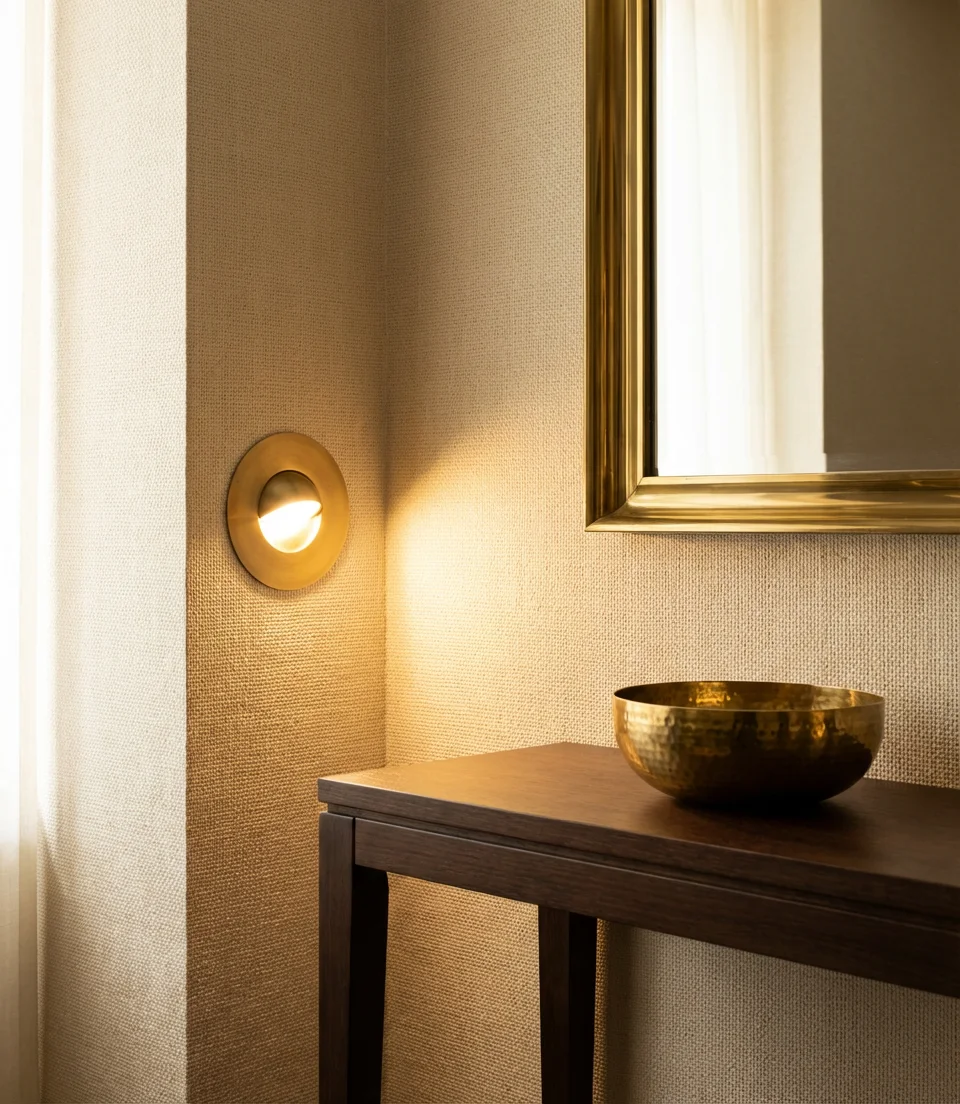
The secret to the hotel look isn’t expensive fixtures—it’s consistent spacing and warm color temperature. Fixtures placed every six to eight feet down a corridor create a visual rhythm that guides movement and makes even a plain hallway feel considered. Pair 2700K–3000K bulbs throughout (never mix color temperatures), and you’ll replicate that unmistakable sense of “arriving somewhere” that great hotel corridors deliver.
9. Christmas Hallway Lighting That Works Year-Round
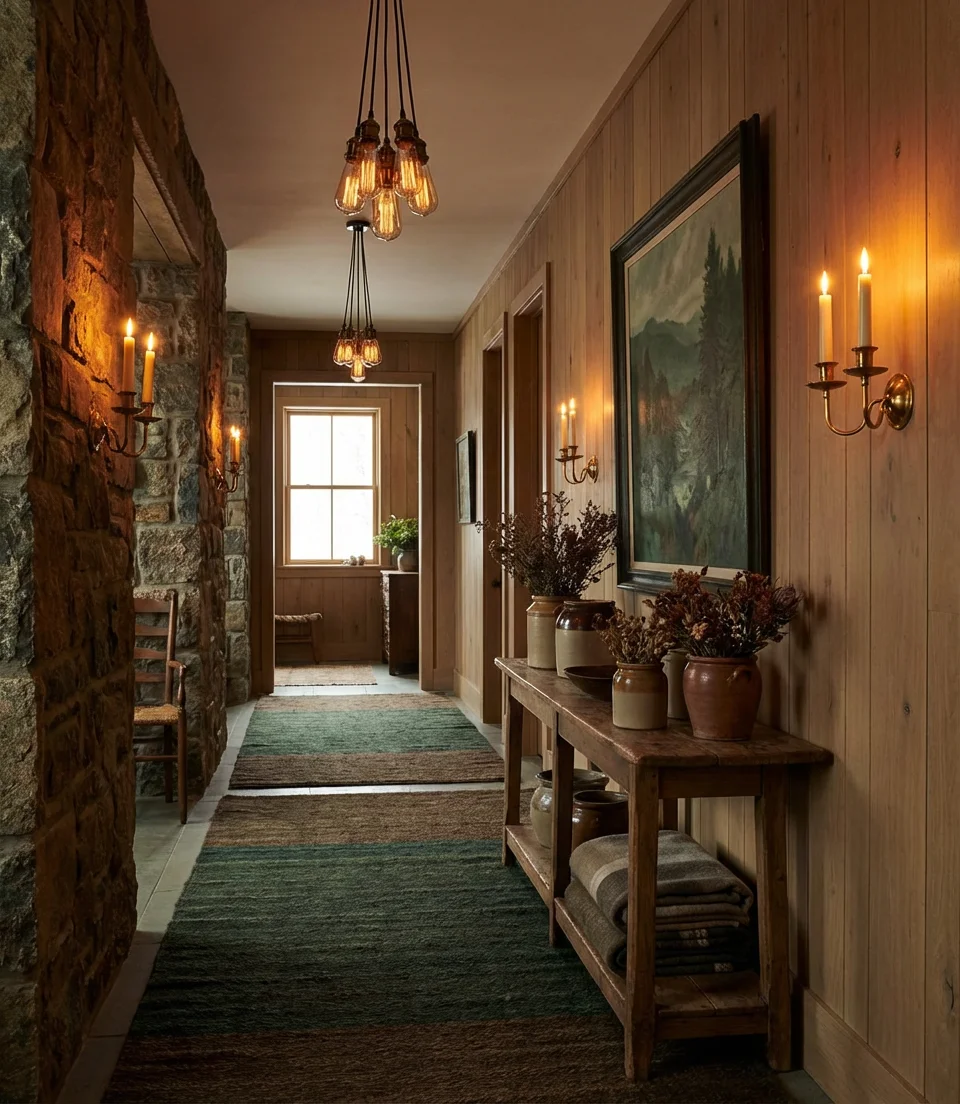
The magic of Christmas hallway lighting—warm twinkle lights, candle-like flicker, rich amber glow—doesn’t have to be seasonal. The principles that make holiday corridors so appealing (layered warmth, soft sparkle, inviting atmosphere) are simply attractive lighting designs applied with festive enthusiasm. In 2026, more homeowners are leaning into these concepts permanently by choosing fixtures that deliver that same cozy luminosity all year: Edison filament bulbs, amber glass pendants, and candlestick-style sconces.
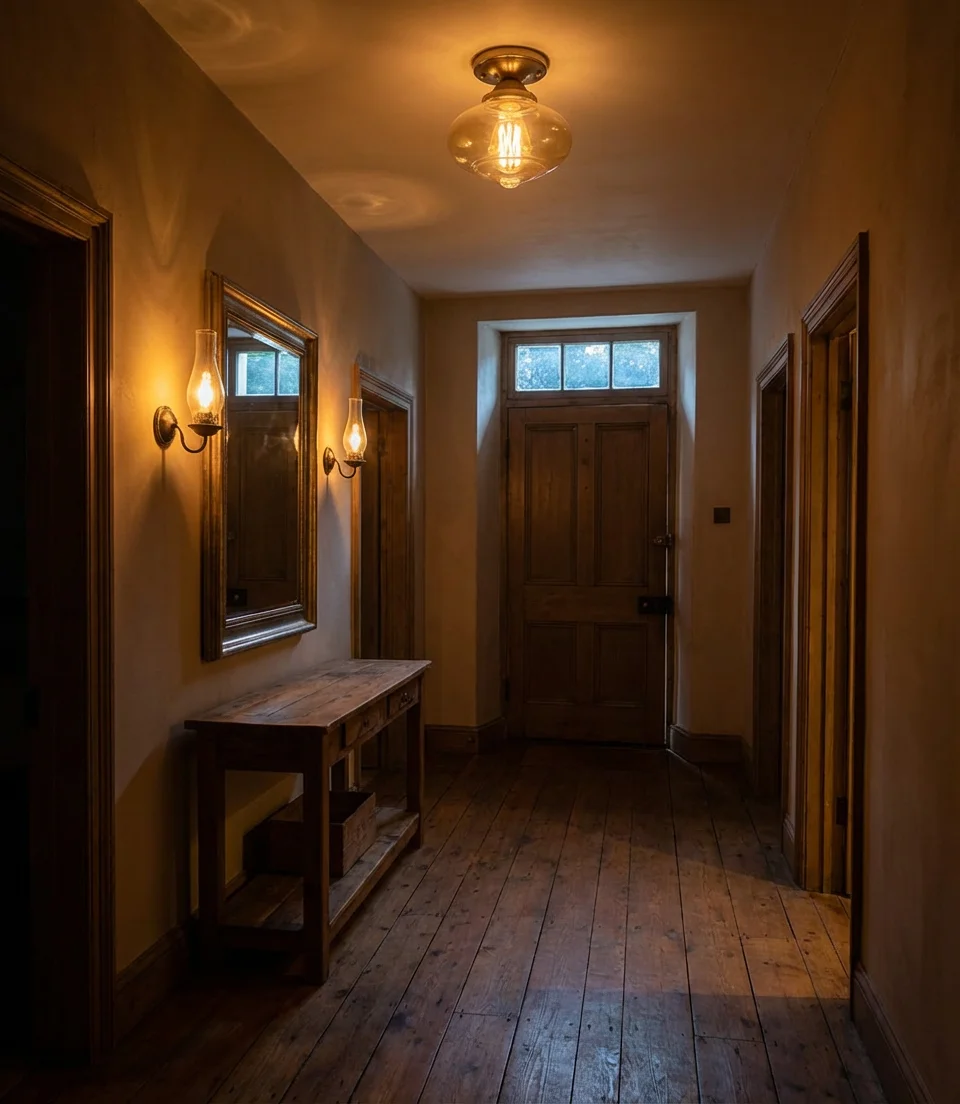
American families in the Midwest and South often note that their hallways feel most welcoming between Thanksgiving and New Year’s—and then disappointingly flat the rest of the year. The fix is architectural: install dimmer switches, swap standard bulbs for warm-filament LEDs (which emit a color temperature of 1800K–2200K, resembling the warm glow of traditional incandescent bulbs), and add one piece of reflective art or a mirror to bounce the light. Suddenly, December’s warmth becomes a twelve-month reality.
10. Recessed Lighting Ideas for Clean Ceiling Lines
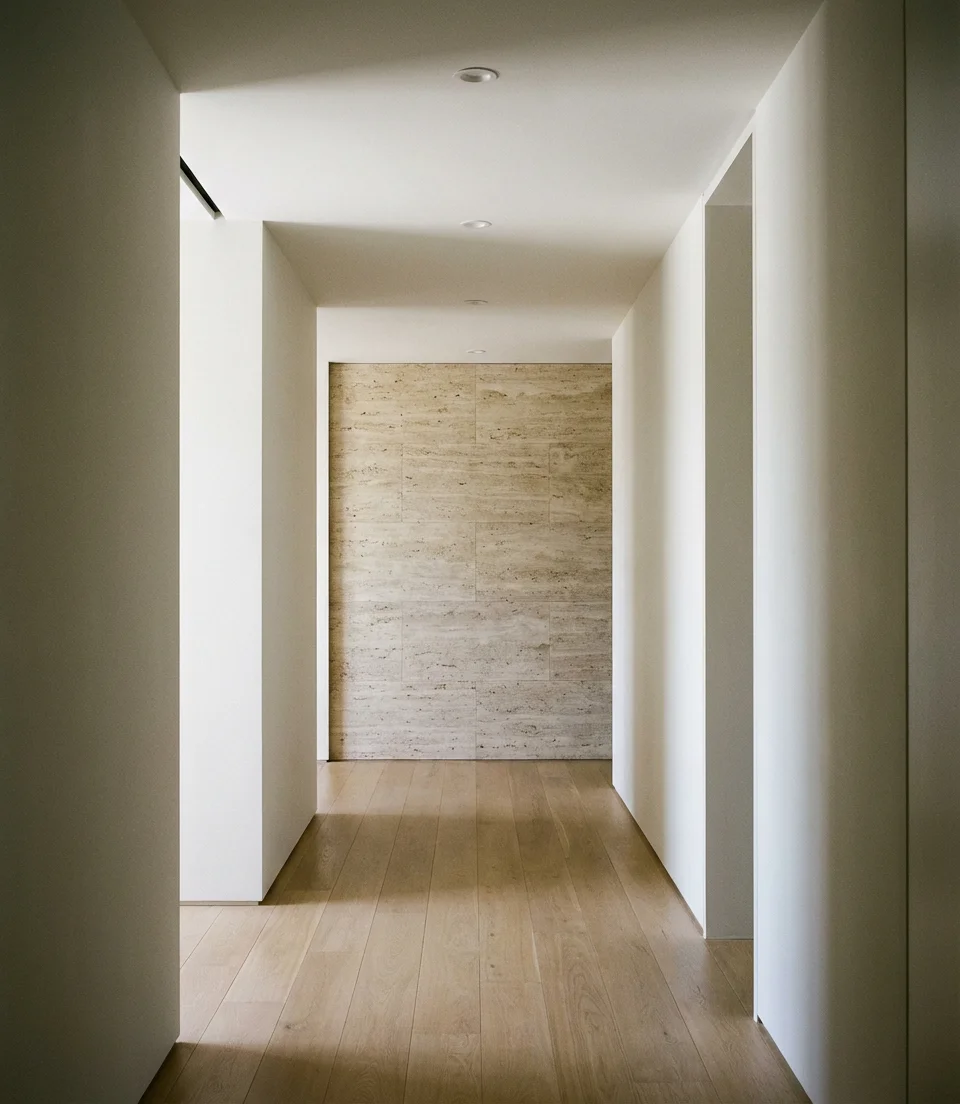
For homeowners who prefer a completely uninterrupted ceiling plane, recessed lighting delivers the cleanest possible ceiling solution. Modern recessed fixtures—particularly slim-profile LED wafers—sit almost flush with the drywall, creating light that appears to emerge from the architecture itself. This approach suits contemporary, transitional, and minimalist hallways where any visible hardware would break the visual calm.
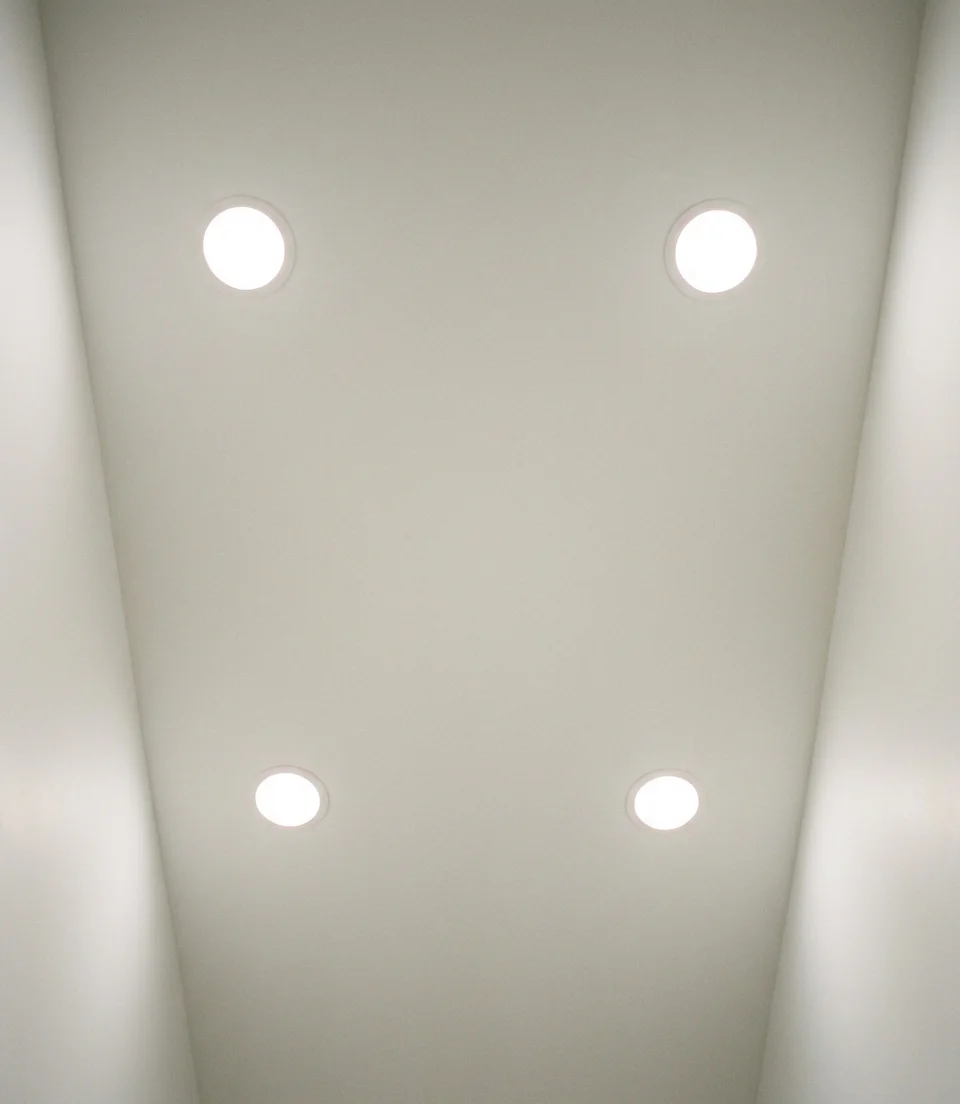
The most common mistake with recessed hallway lighting is placing fixtures too far apart or using too few. A single can light in the middle of a ten-foot corridor creates a spotlight effect with dark edges—the opposite of welcoming. The industry standard is to space recessed lights at half the ceiling height (so every four feet for an eight-foot ceiling) and aim them slightly toward the walls to create an even, room-filling wash rather than a series of pools.
11. Fixtures Wall Lighting with Artwork Integration
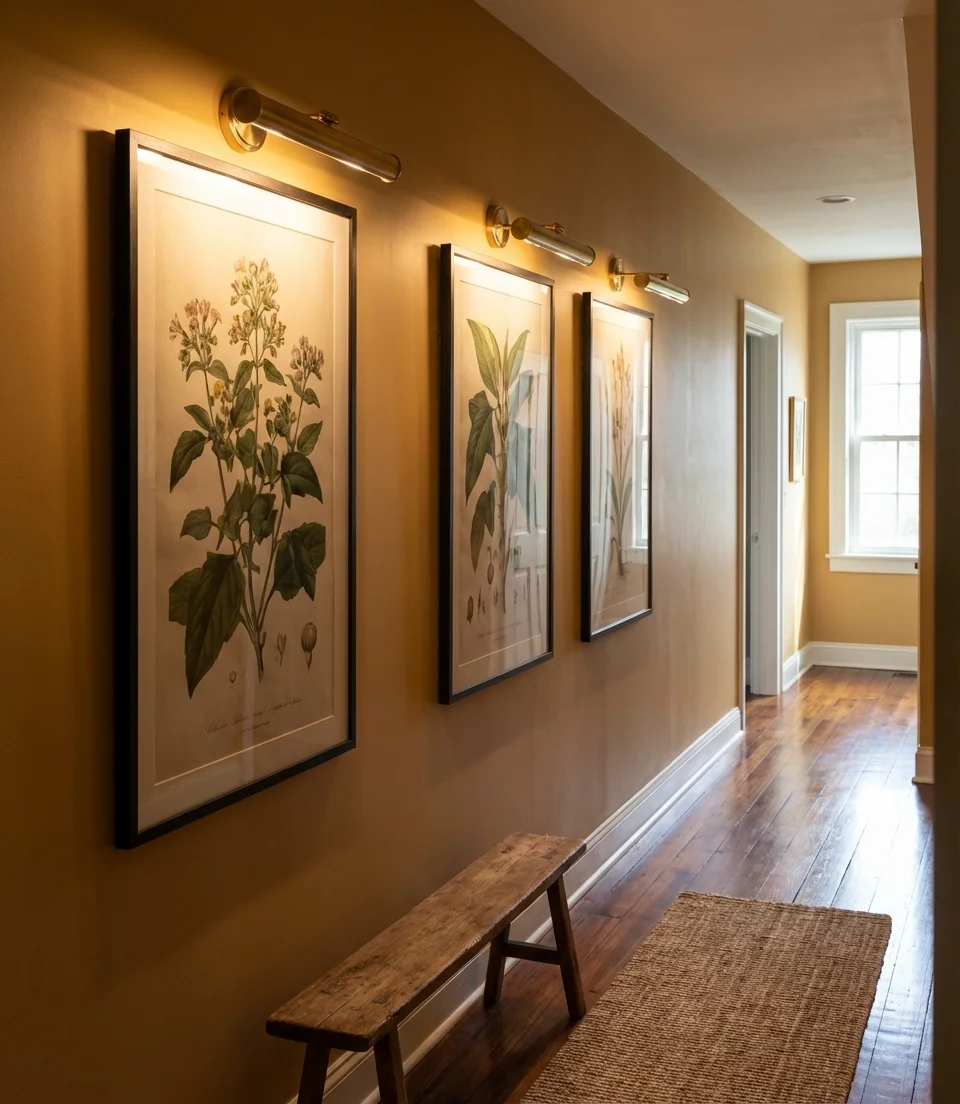
One of the most refined approaches to fixture wall design involves treating your hallway like a gallery. Picture lights—small, directional fixtures mounted above framed artwork—serve double duty: they illuminate the art and contribute warm, ambient light to the corridor. This technique, borrowed from museum and gallery designs, makes even a modest hallway feel curated and intentional. It works especially well in longer passages where multiple pieces can be displayed in sequence.
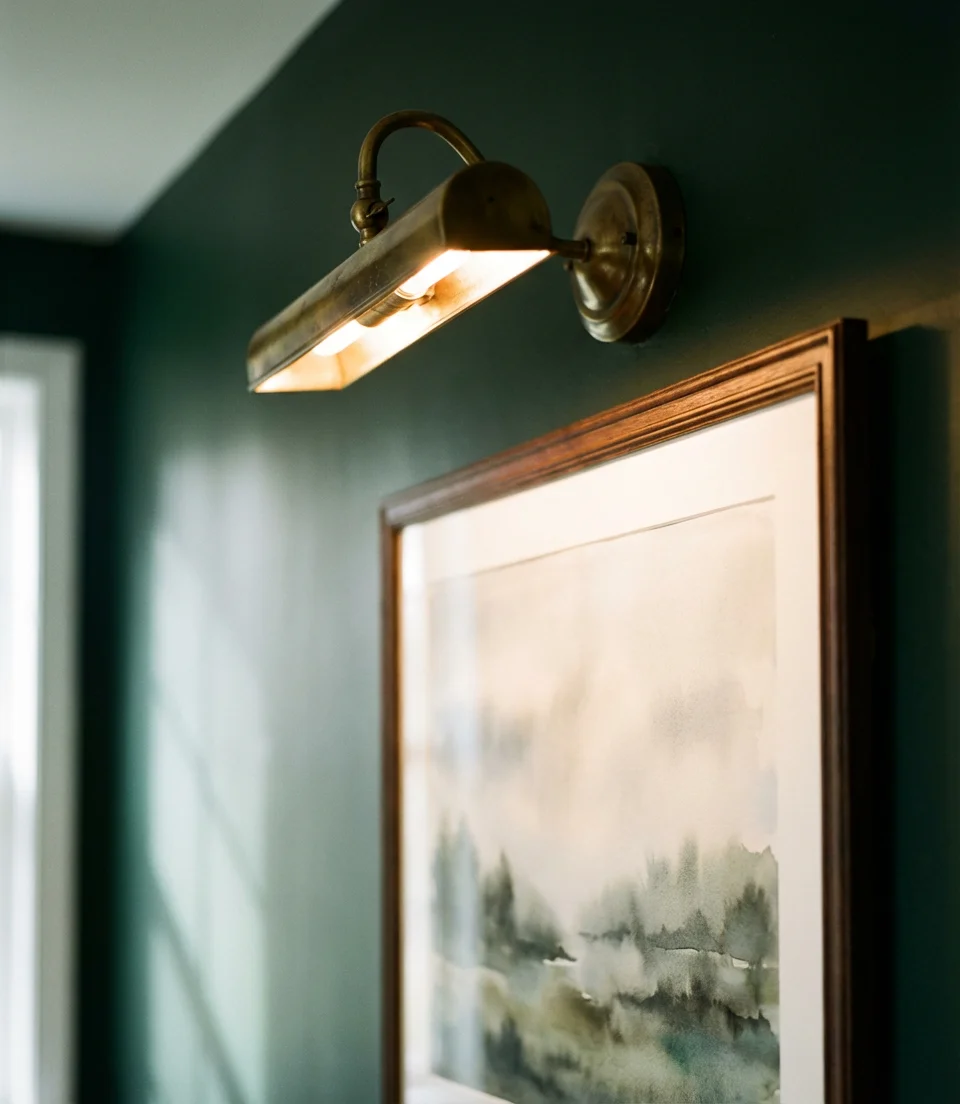
Budget doesn’t have to be a barrier here. Plug-in picture lights from brands like Newhouse Lighting or Artcraft start around $30–$50 and require no electrician. For a more finished look, hardwired versions with a slim profile and brass or nickel finish are available for under $150 on most home décor sites. The key is choosing a color temperature that flatters art—3000K to 3500K renders colors accurately without the yellow cast of warmer bulbs.
12. Entry Hallway Lighting with a Statement Chandelier
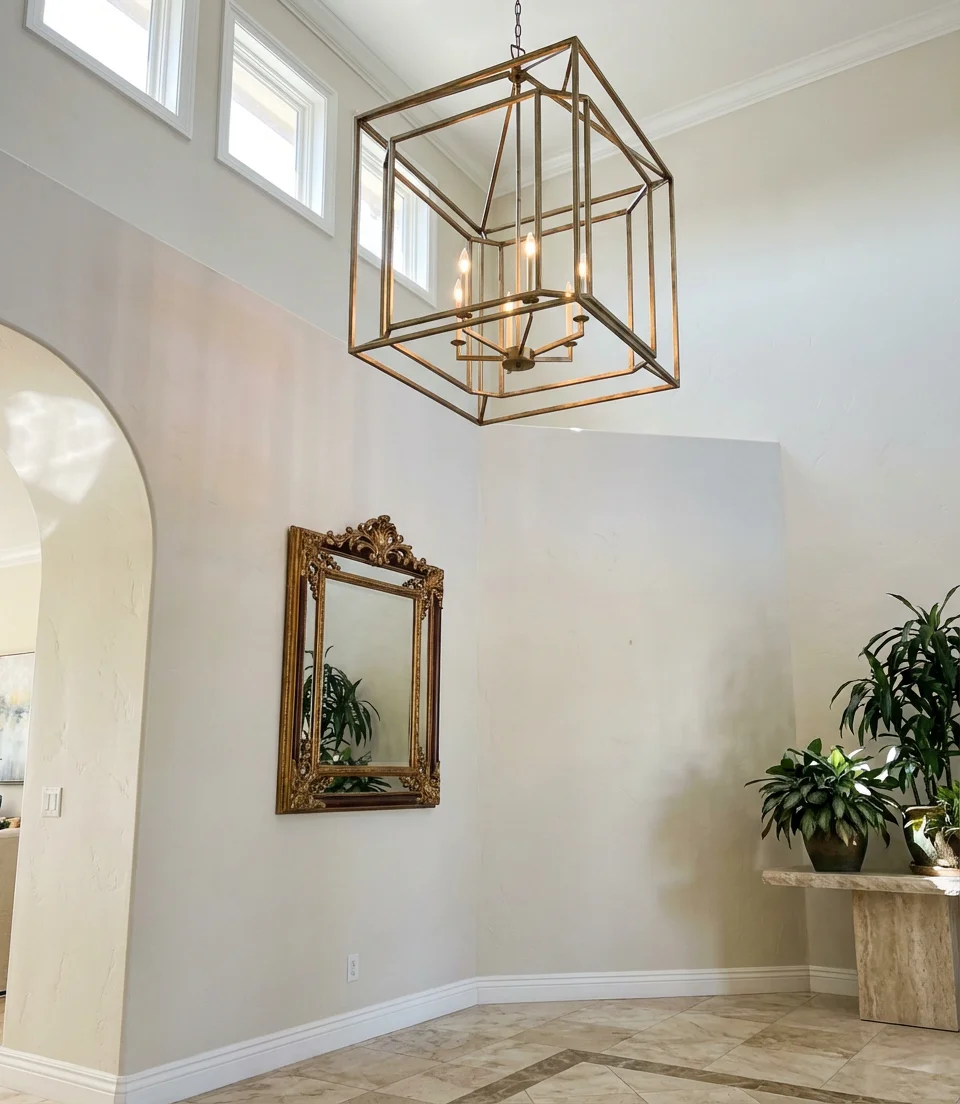
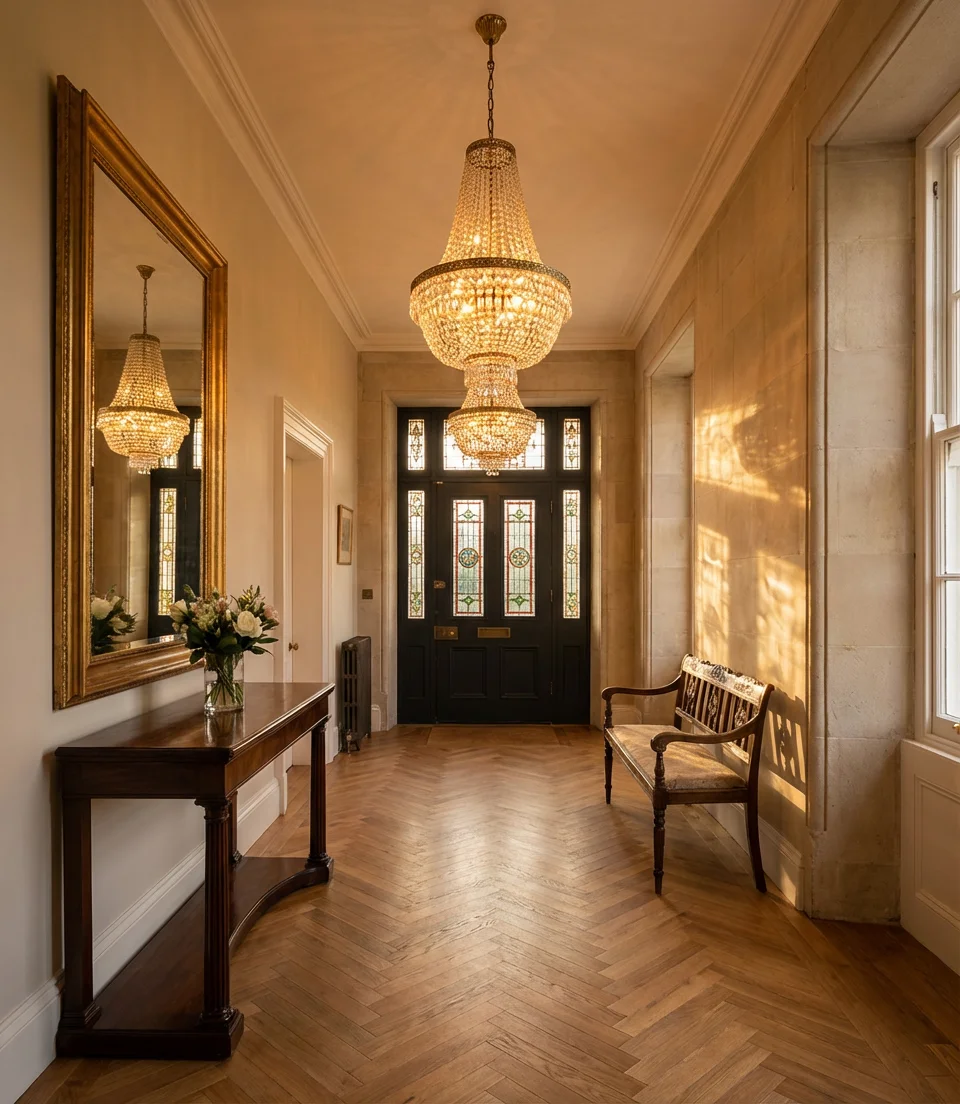
When ceiling height allows—nine feet or more—a chandelier in the entry hallway is one of the highest-impact design moves available. It signals arrival, sets the home’s aesthetic tone, and creates a visual anchor that draws guests forward into the space. In 2026, the most pinned chandelier styles for entries lean dramatic but not heavy: open-frame geometric designs, cascading crystal rods, and organic branch-like forms in black or aged brass.
A Chicago homeowner renovating a 1920s foyer shared that replacing her original globe pendant with an open-cage brass chandelier “changed how I feel walking into my home every single day.” That emotional response—the sense of arrival, of being welcomed—is exactly what great entry lighting accomplishes. If a chandelier feels financially out of reach, consider a semi-flush drum fixture in an intriguing material; the silhouette alone does much of the work.
13. Traditional Hallway Lighting with Timeless Appeal
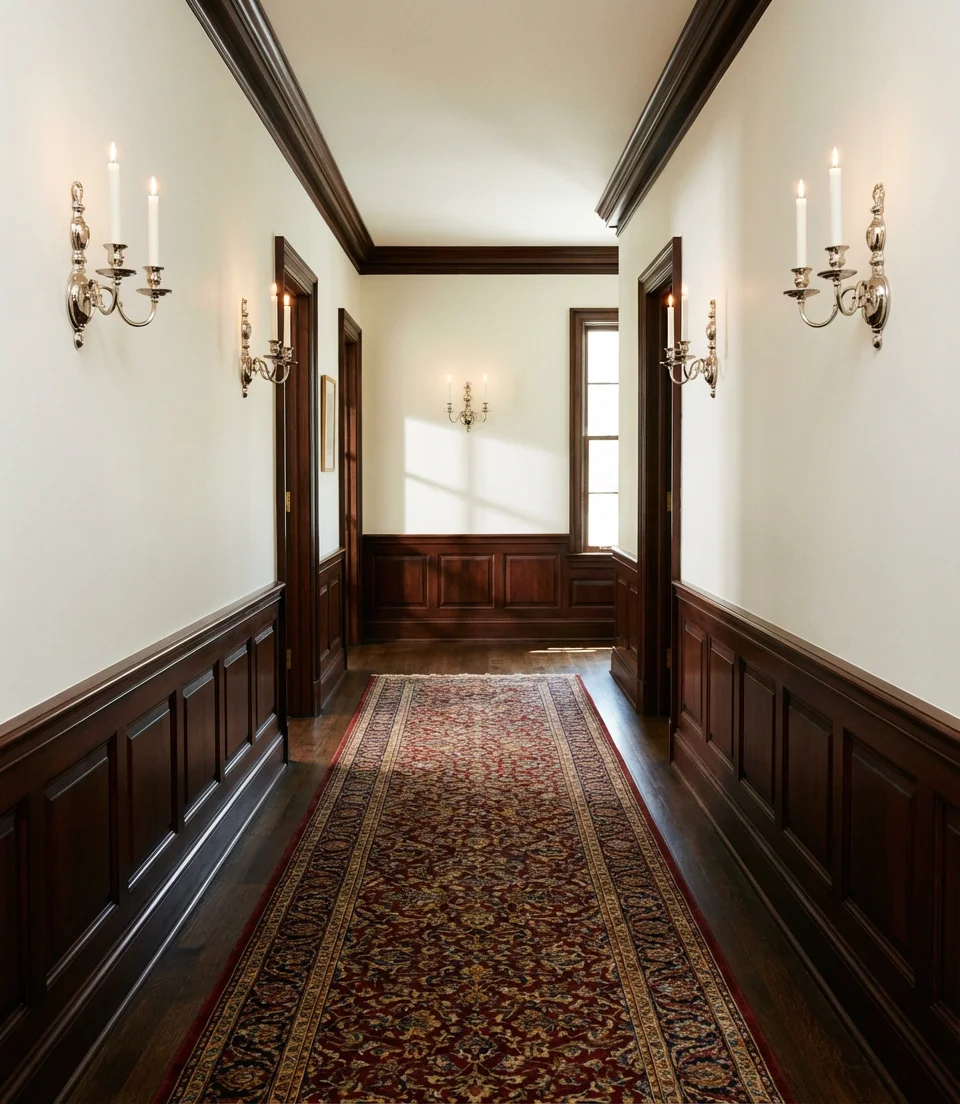
Traditional hallway lighting, such as polished nickel candelabra sconces, torchiere-style fixtures, and crystal-accented pendants, has remained a popular choice, and the year 2026 is demonstrating its continued popularity. These fixtures reference centuries of interior craft and pair beautifully with the formal foyers, paneled walls, and parquet floors found in American Colonial and Georgian homes. They’re not nostalgic; they’re timeless—which is a meaningfully different thing.
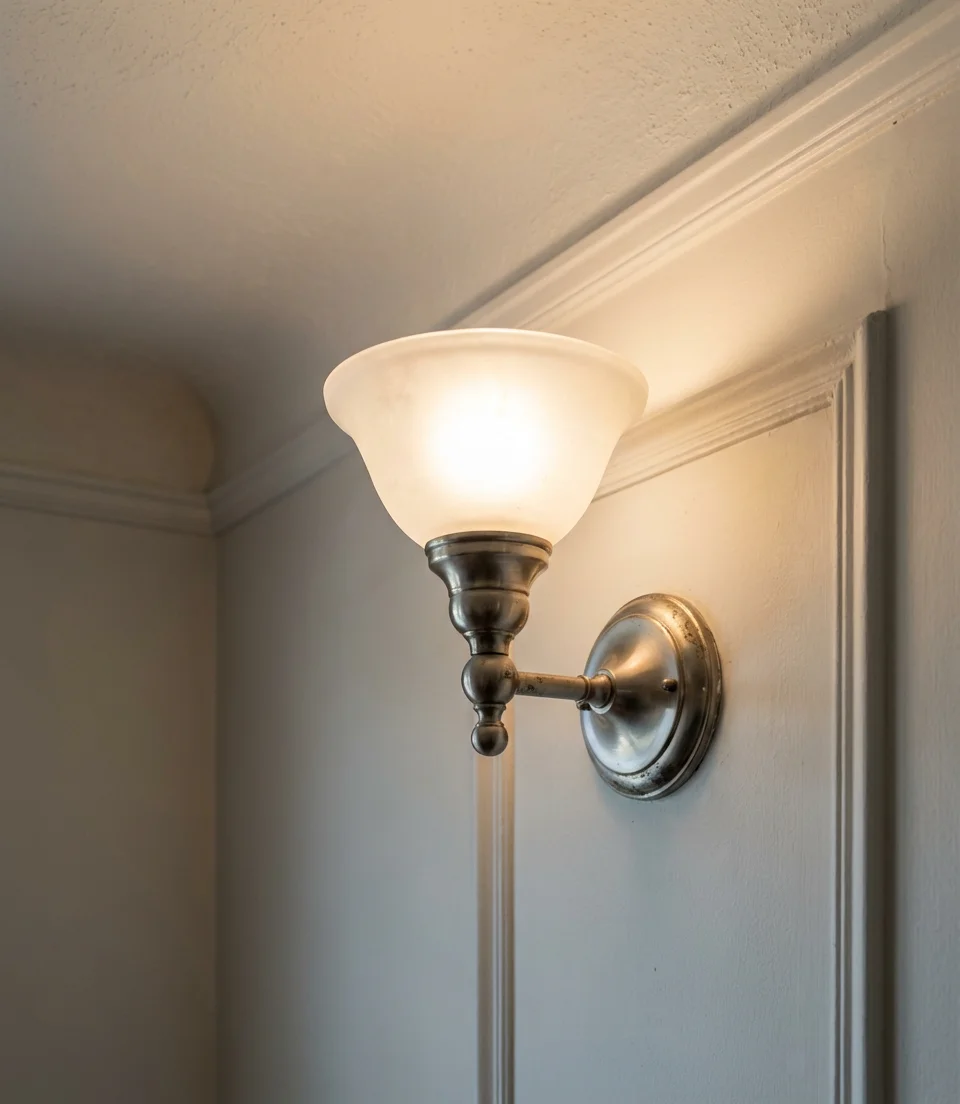
Where traditional lighting often goes wrong is in scale: oversized fixtures in a modest hallway read as pretentious, while undersized ones look like afterthoughts. Spend time measuring your specific corridor before purchasing—sketch the wall elevation, note the ceiling height, and place a cardboard template of the proposed fixture on the wall before committing. It’s an old designer trick that prevents the most common and costly hallway lighting mistake.
14. Flush Ceiling Lights for Modern Farmhouse Style
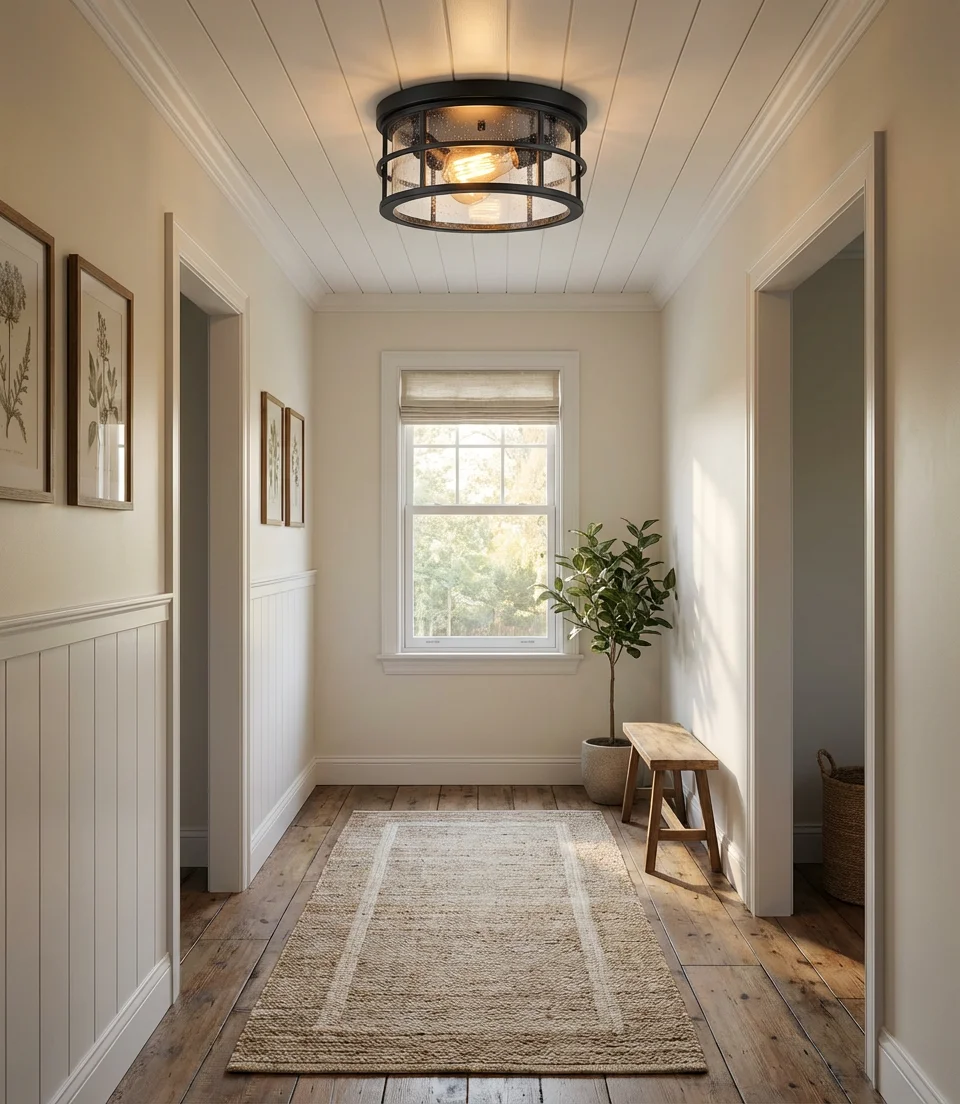
The flush ceiling fixture has experienced a subtle transformation. What was once a purely utilitarian category now includes beautifully crafted pieces with shiplap-inspired wooden trim, wire cage detailing, and seeded glass shades that look anything but builder-grade. This type of fixture is ideal for a modern farmhouse hallway because it is both casual enough for a family corridor and refined enough to feel like a deliberate choice.
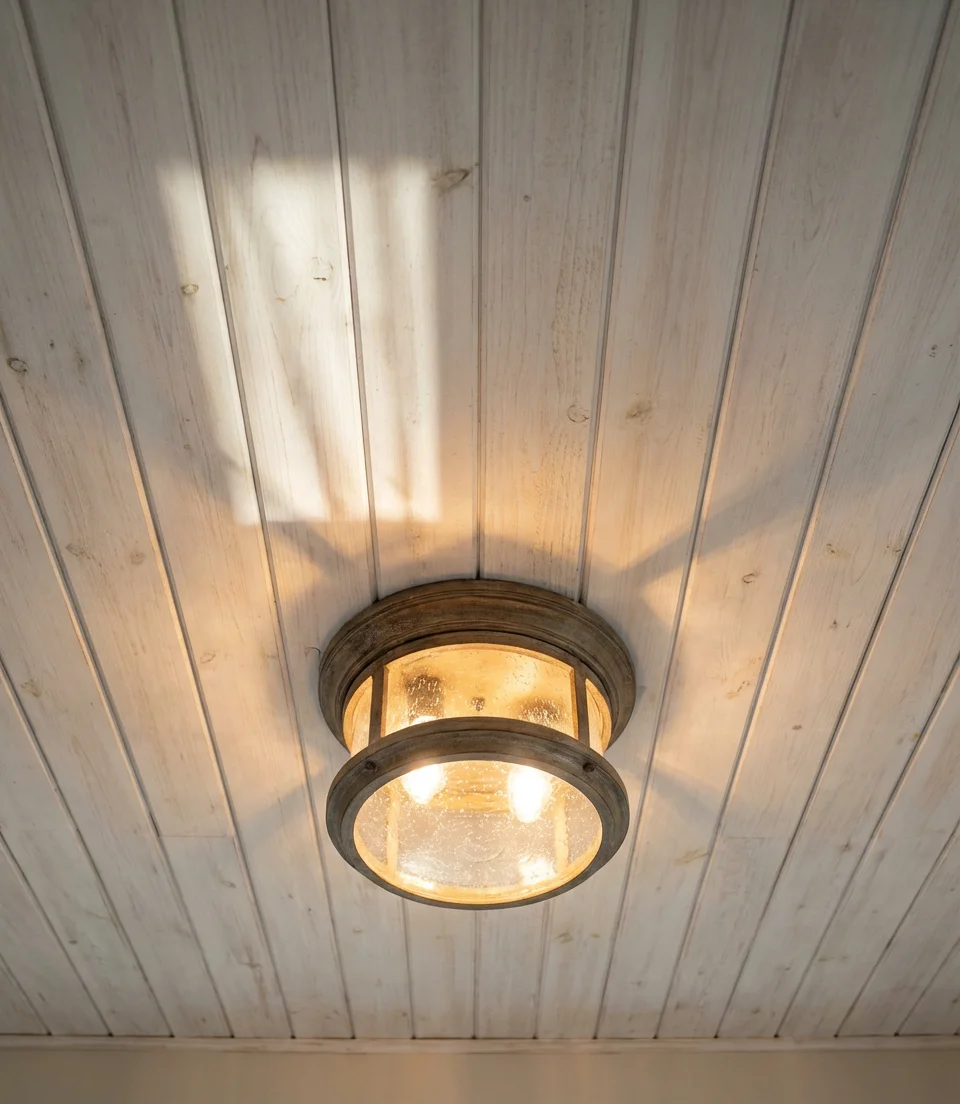
Real homeowner behavior reveals something intriguing: families with young children consistently choose flush farmhouse fixtures over pendants in high-traffic hallways—and for good reason. There’s nothing to bump into, no dangling cord to grab, and the durable construction handles the kind of accidental contact that family life inevitably brings. Function and style, for once, point in exactly the same direction.
15. Ideas for Wall Lights in a Dark Corridor
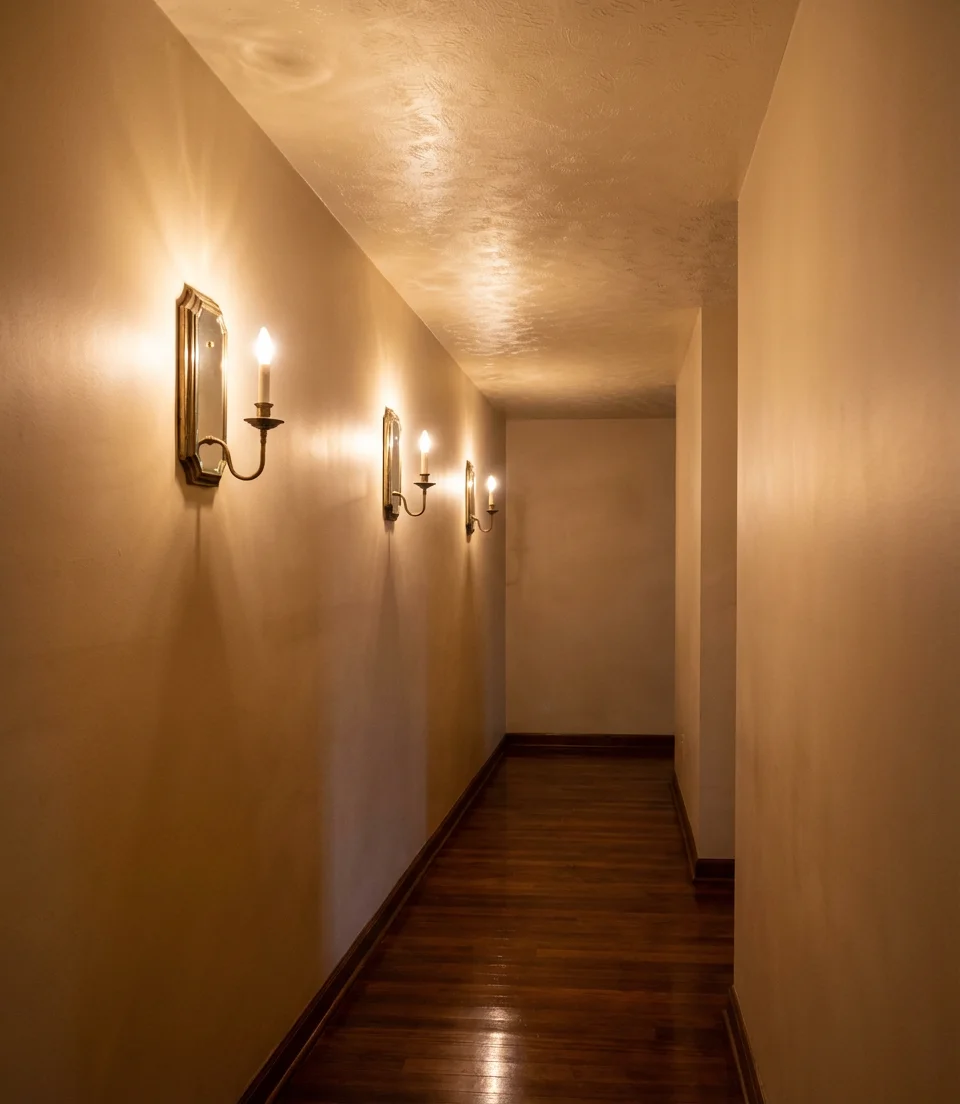
Some hallways simply don’t get natural light—interior corridors with no windows, basement passages, or north-facing entries that stay dim no matter the season. For these spaces, ideas for wall lights become the primary design strategy rather than a supplement. The goal is to create enough warm, layered illumination that the corridor doesn’t feel like a transition zone but a destination of its own. Upward-casting sconces with mirrored backplates are particularly effective here.
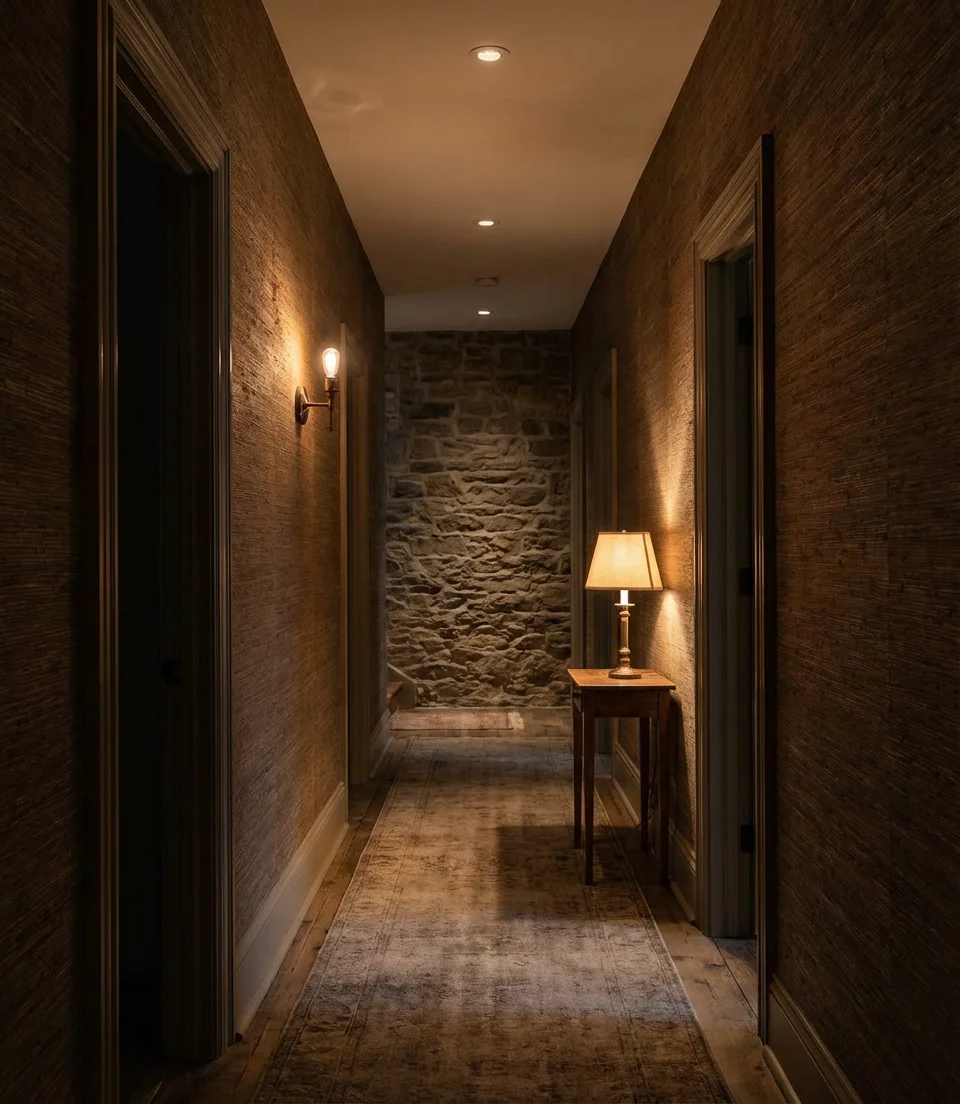
The most effective approach for windowless corridors combines three layers: ambient (ceiling fixture or recessed cans), accent (wall sconces or picture lights), and task (a small console lamp if space allows). This three-layer strategy, standard in living room design, is rarely applied to hallways—which is exactly why hallways so often feel dim and uninviting. Bring the same intentionality to your corridor that you’d give any other room, and the results are transformative.
16. Fixtures Ideas with Mixed Metals and Materials
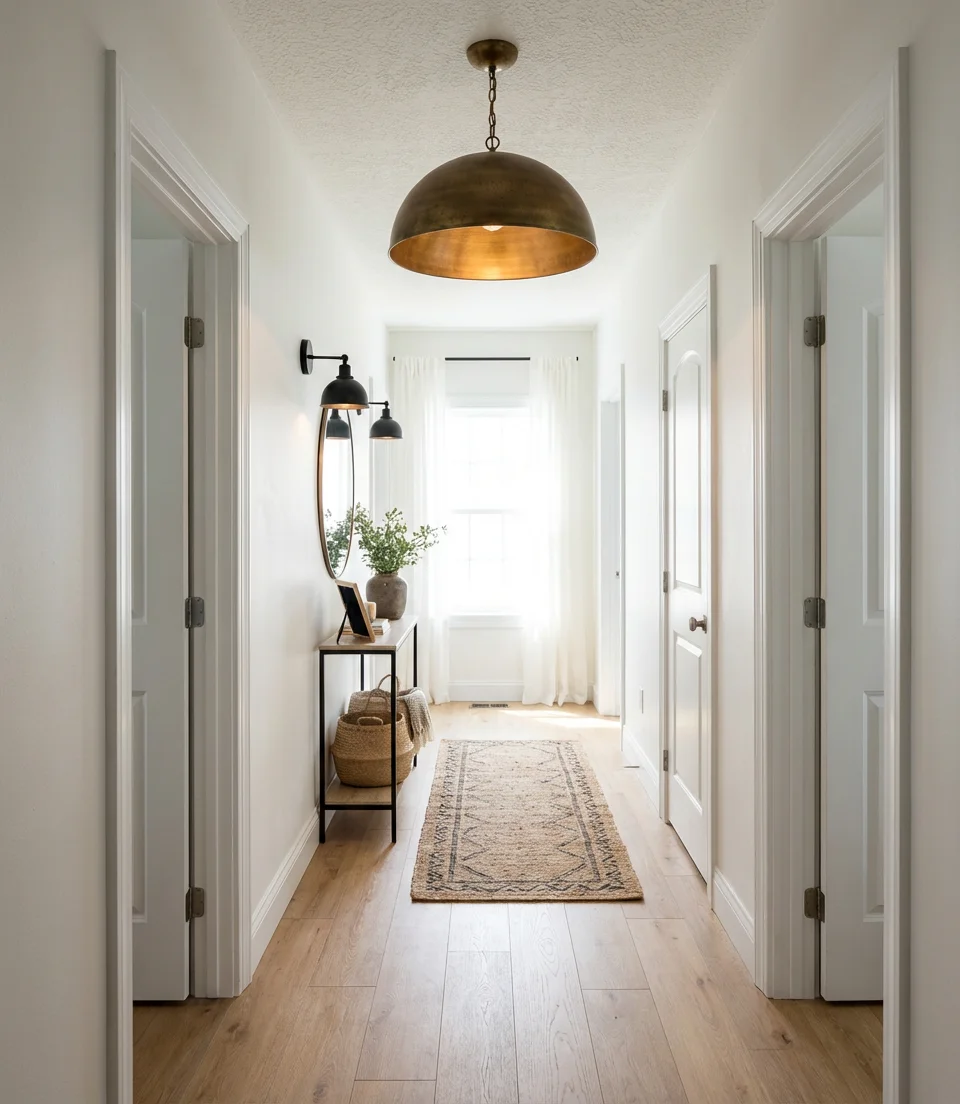
One of the freshest fixture ideas circulating on Pinterest in 2026 is the deliberate mixing of metal finishes in a single hallway. Brass pendants alongside matte black sconces, or nickel flush mounts paired with bronze picture lights—these combinations feel collected rather than coordinated, personal rather than showroom-perfect. The key word is “deliberate”: mixing works when the metals relate through a common undertone (all warm or all cool) rather than clashing arbitrarily.
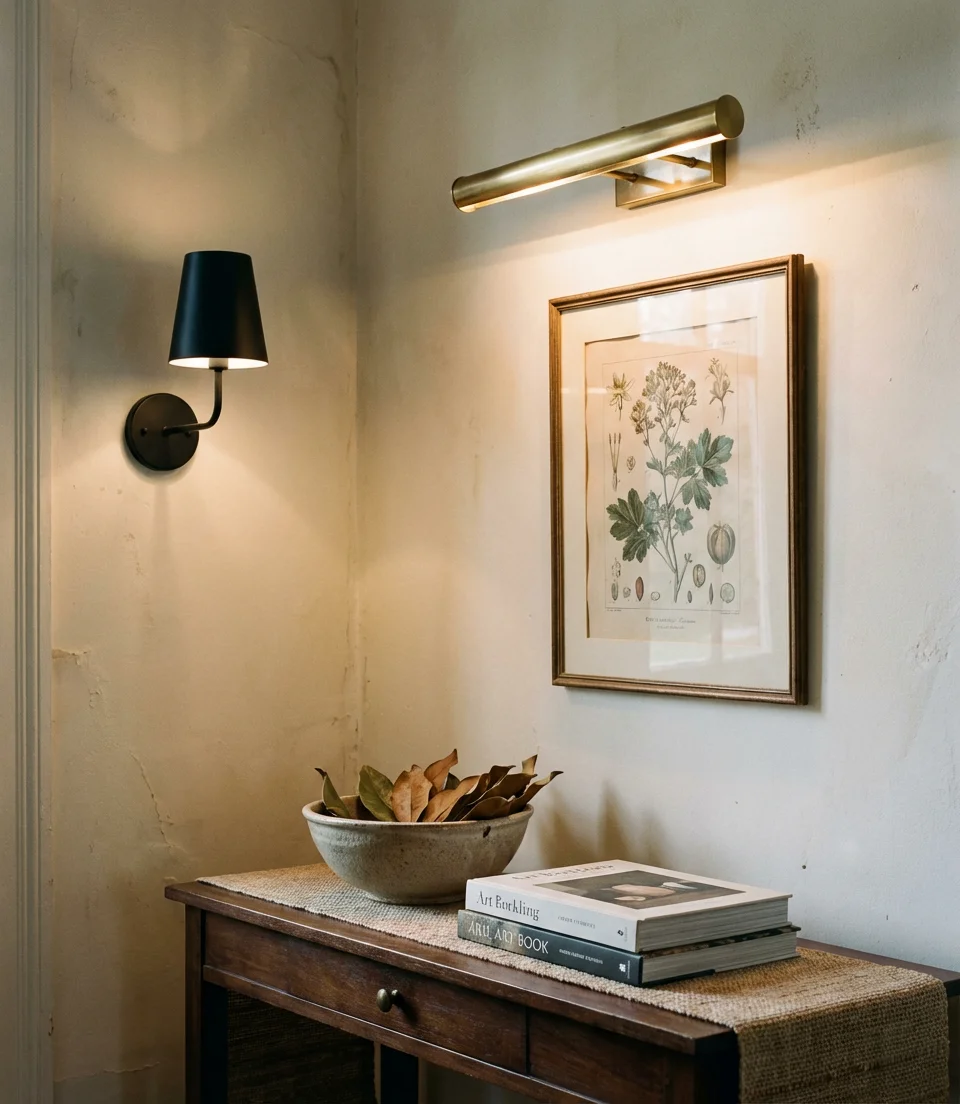
An interior designer based in Portland explains it this way: “Matching every metal in a room used to be the rule. Now it reads as rigid. The homes that feel most alive mix their metals intentionally—maybe two warm metals and one cool accent, always in an odd number.” This principle applies directly to hallway lighting: three fixture types, two warm finishes, and one cool. It’s a formula that creates depth and interest without tipping into chaos.
17. Inspiration from Boutique Hotel Entry Lighting
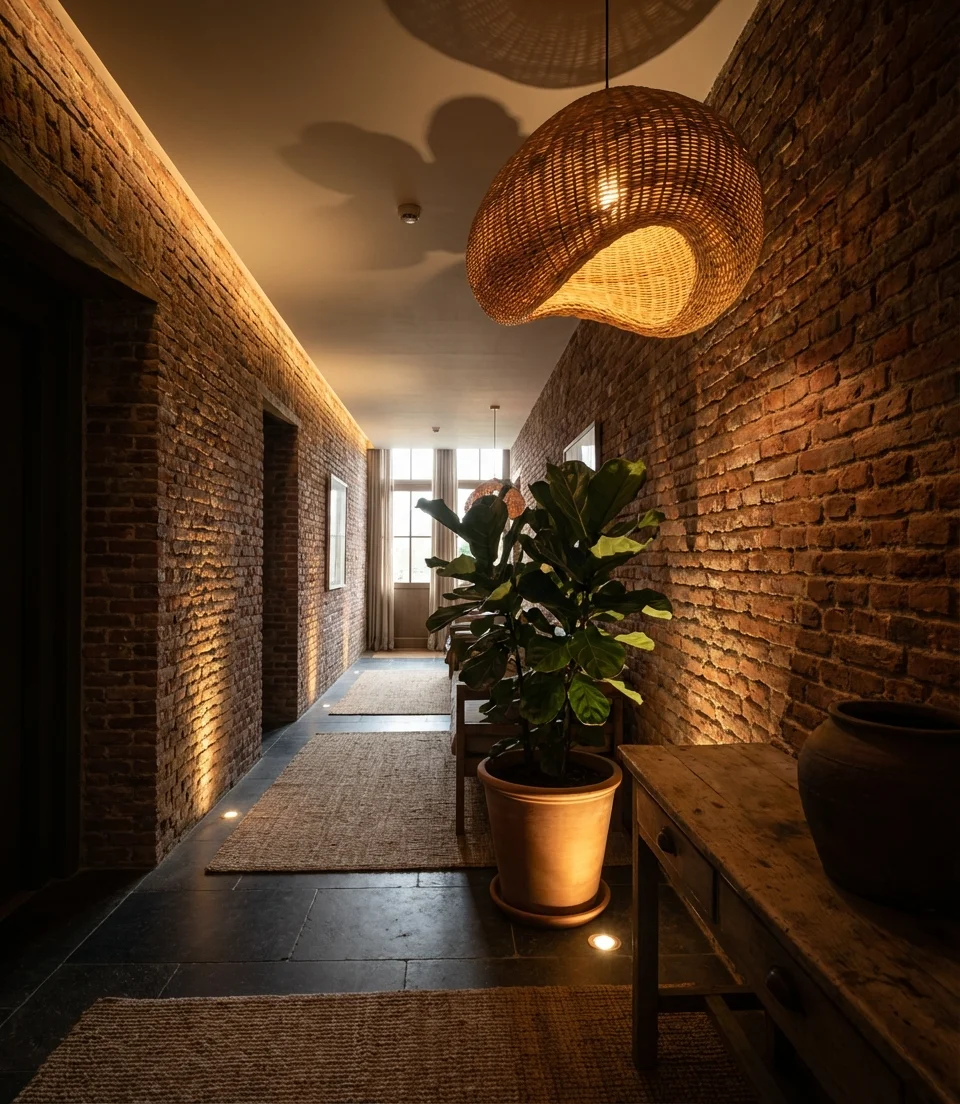
Boutique hotels have long been the incubator for residential lighting inspiration. Their entries—typically narrow, high-traffic, first-impression spaces similar to a home foyer—are lit with extraordinary care. The techniques most worth borrowing are grazing light along textured walls (to emphasize material), uplighting behind plants or architectural elements, and a hero pendant that reads as art rather than utility. These are not expensive concepts—they’re attentive ones.
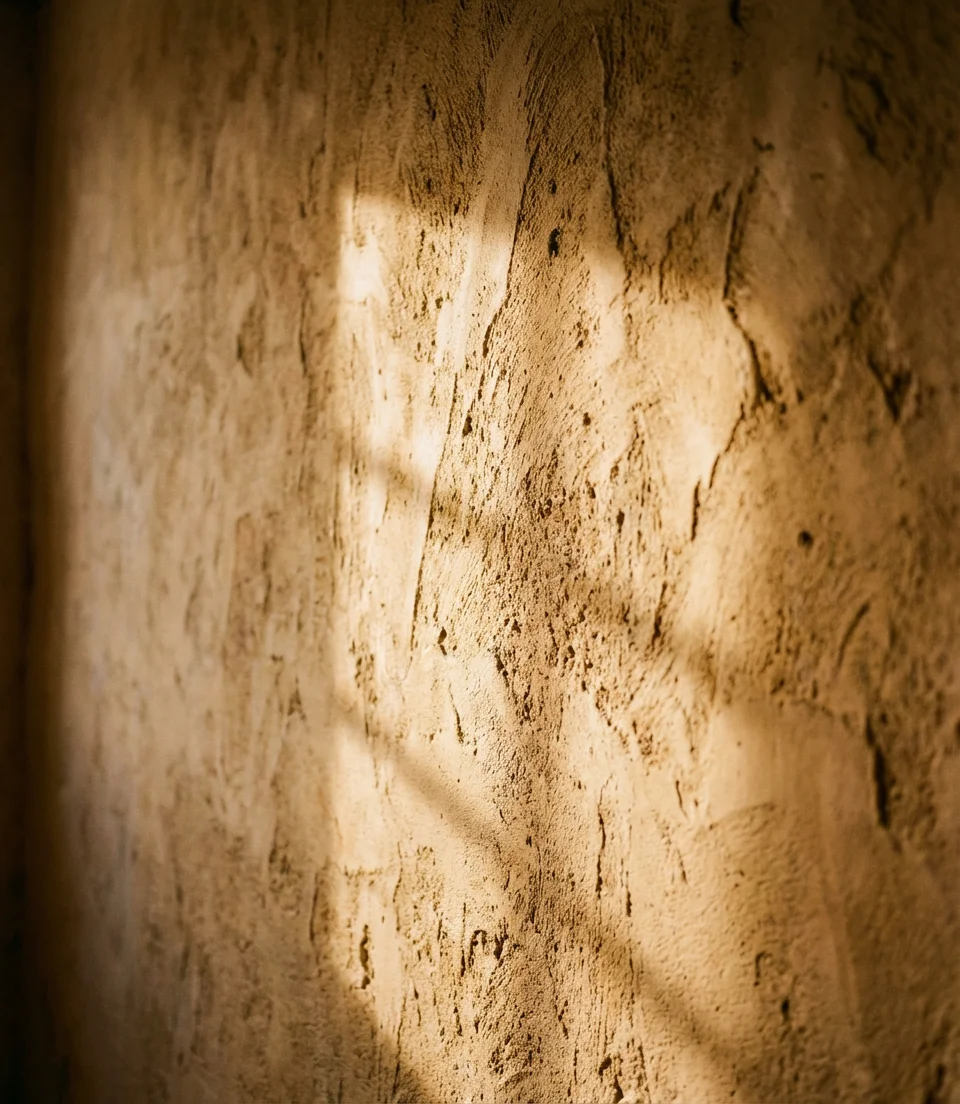
The grazing light technique deserves special attention for American hallways: a wall washer aimed at a brick, plaster, or shiplap wall at a steep angle creates dramatic shadow and texture that transforms a flat surface into a feature. This works best with walls that already have inherent texture—smooth drywall gains less from the technique. If your hallway is all smooth walls, consider a grasscloth or textured wallcovering on one side before investing in dramatic lighting.
18. MCM Hallway Design with Geometric Fixtures
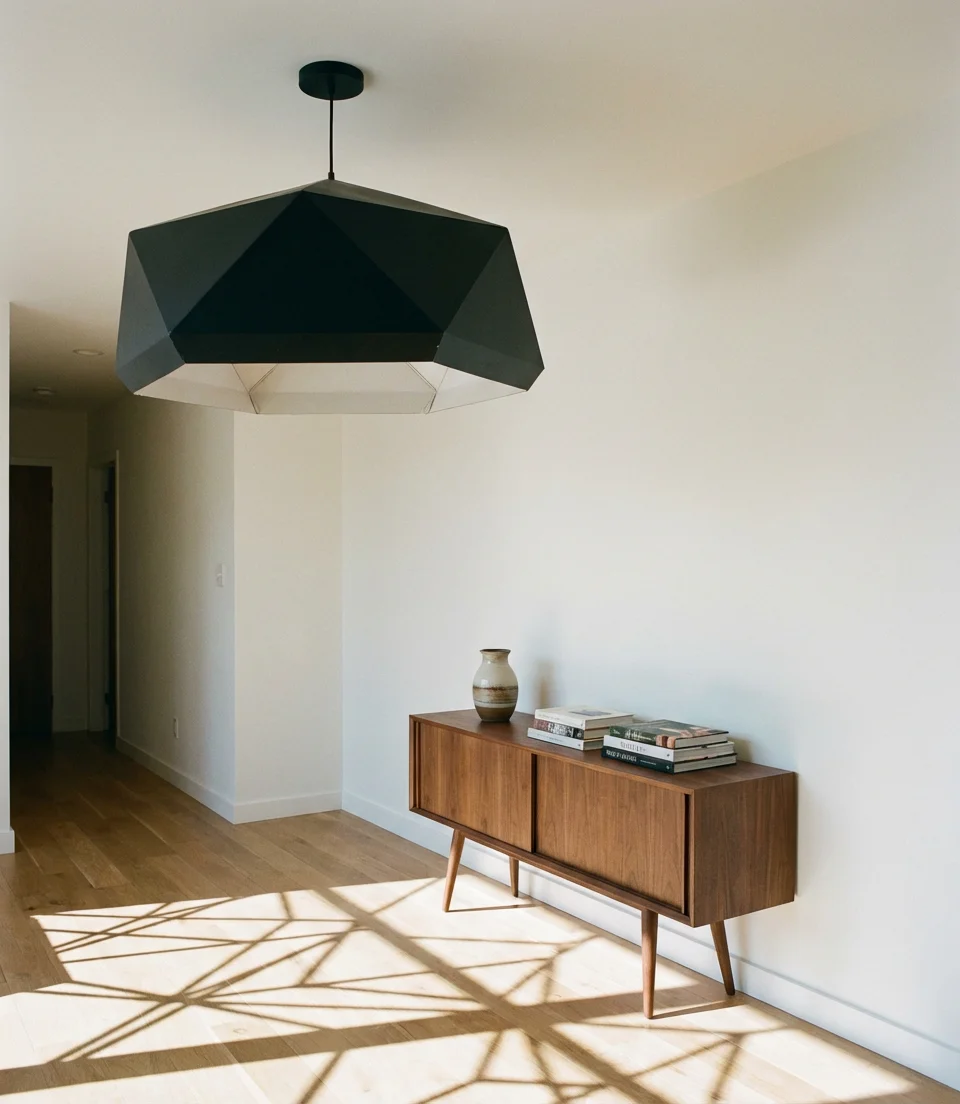
Geometric lighting fixtures—hexagonal pendants, octagonal flush mounts, and angular sconces with triangular shades—are the visual language of MCM hallway design. They bring structure and intentionality to a space that often gets treated as purely functional. In a mid-century home, geometric fixtures feel like a continuation of the architecture; in a more eclectic space, they serve as a graphic counterpoint that adds visual interest without overwhelming.
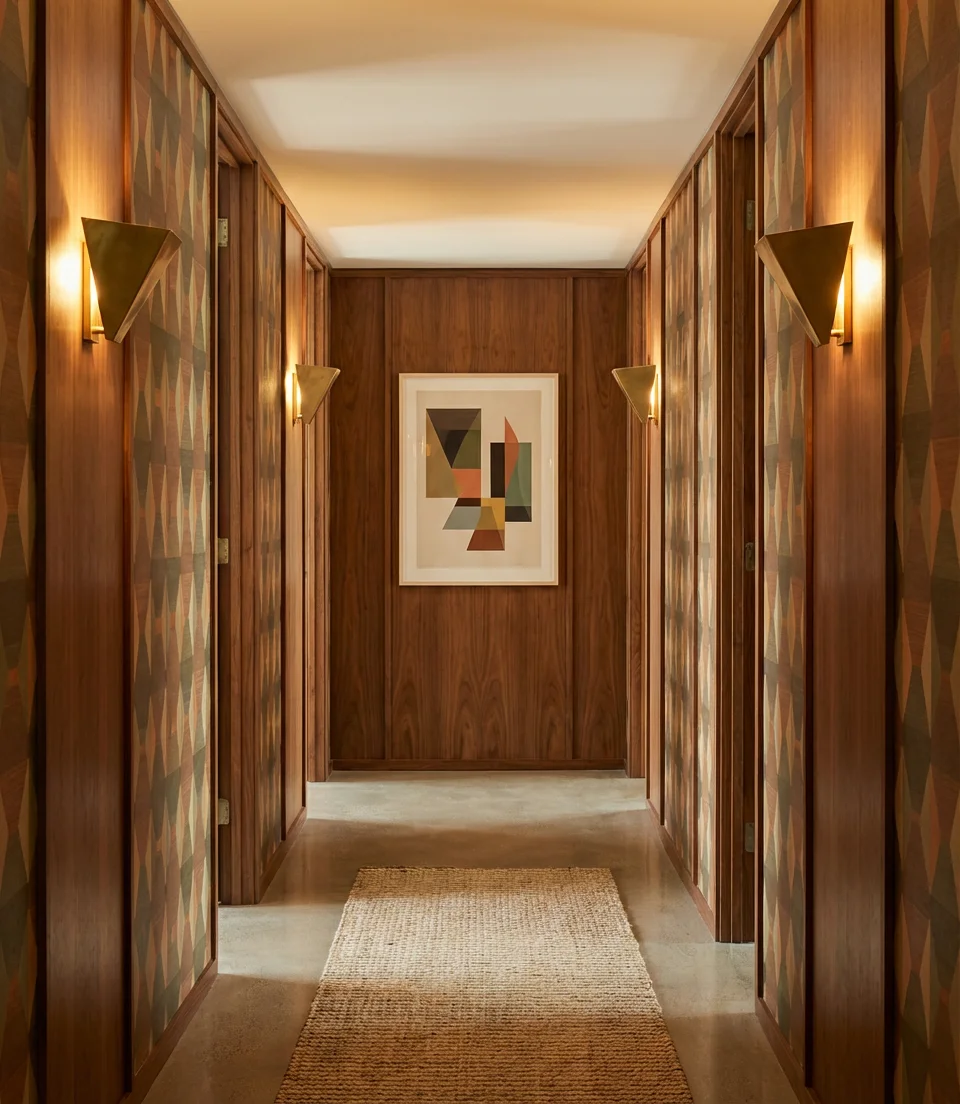
The hallway is actually one of the best rooms in the house for a bold geometric fixture precisely because it’s a passing space—you experience it briefly and move on. That means you can afford to be more daring here than in a room where you’ll sit under a fixture for hours. A strongly geometric pendant that might feel aggressive in a dining room reads as confident and intriguing in a ten-foot corridor. Use that to your advantage.
19. LED Flush Mount for the Contemporary Hallway
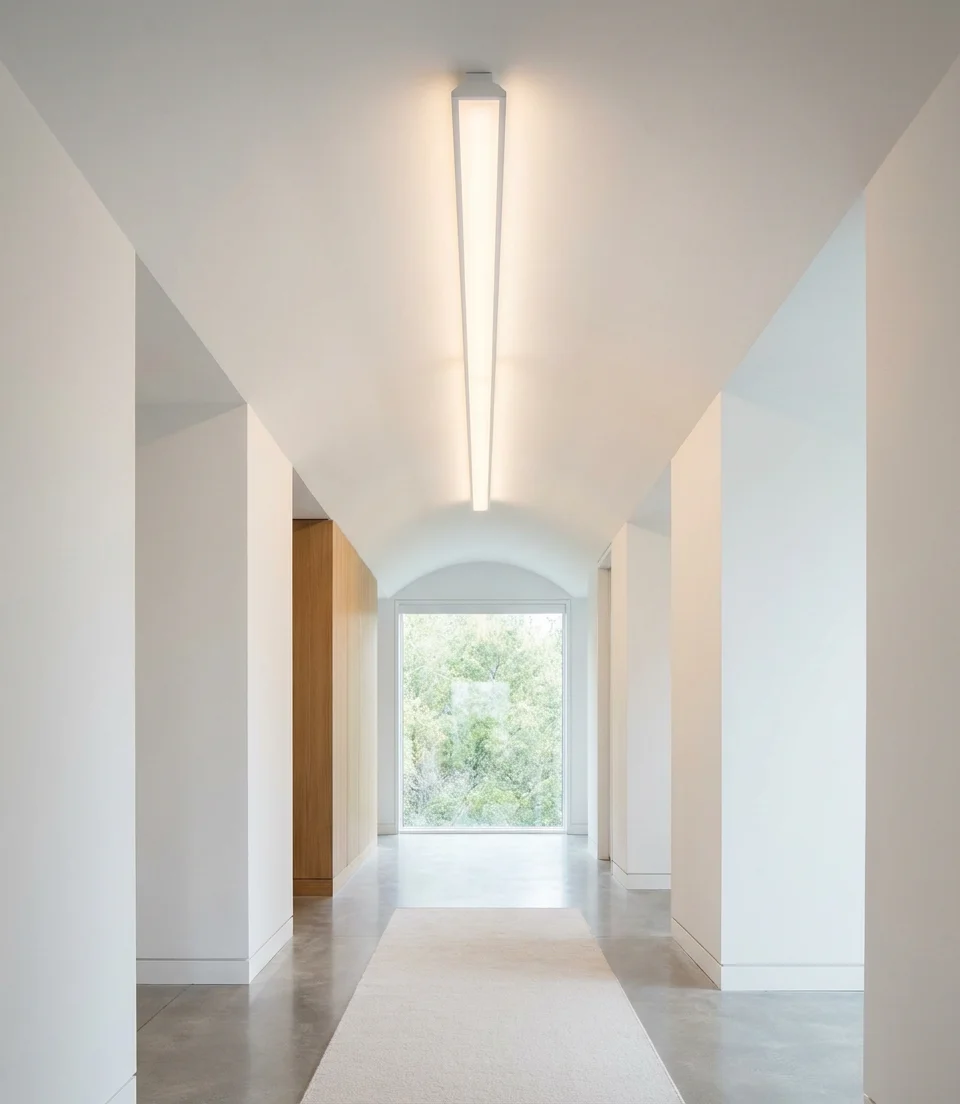
The intersection of LED technology and flush mount design has produced some of the most practical and beautiful hallway fixtures available in 2026. Integrated LED flush mounts—where the light source is built directly into the fixture housing—offer advantages that traditional socket-based fixtures can’t match: ultra-thin profiles, even illumination without hot spots, and lifespans of 50,000 hours or more. For a busy family hallway, that last point alone justifies the upgrade.
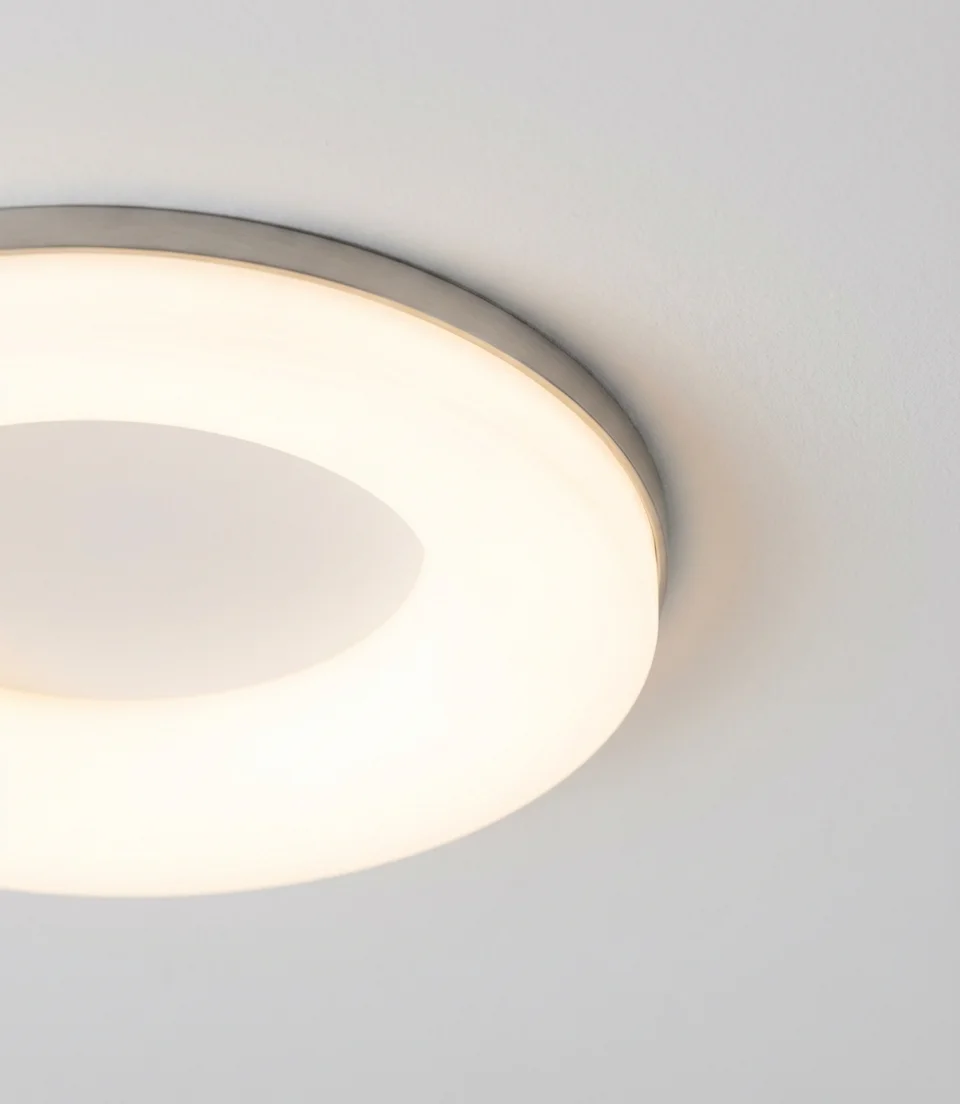
Color tunability represents a significant advancement in integrated LED hallway lighting. Fixtures that allow you to shift between 2700K (warm, evening-suitable) and 5000K (bright, task-suitable) via an app or wall switch bring genuine flexibility to a space that serves multiple purposes throughout the day. Early-morning coat-grabbing benefits from brighter, cooler light; late-evening passage benefits from something warm and quiet. One fixture, two very different moods—that’s the practical promise of tunable LED technology.
20. Upstairs Hallway Lighting with Linear Pendants
Linear pendants—long, horizontal fixtures that span a significant portion of a hallway’s length—are emerging as a sophisticated solution for upstairs corridors with adequate ceiling height. Rather than a series of individual fixtures, a single linear piece creates a continuous line of light that emphasizes the length of the space and gives it a genuinely architectural quality. In brass, black, or nickel, these pieces are as much sculpture as lighting.
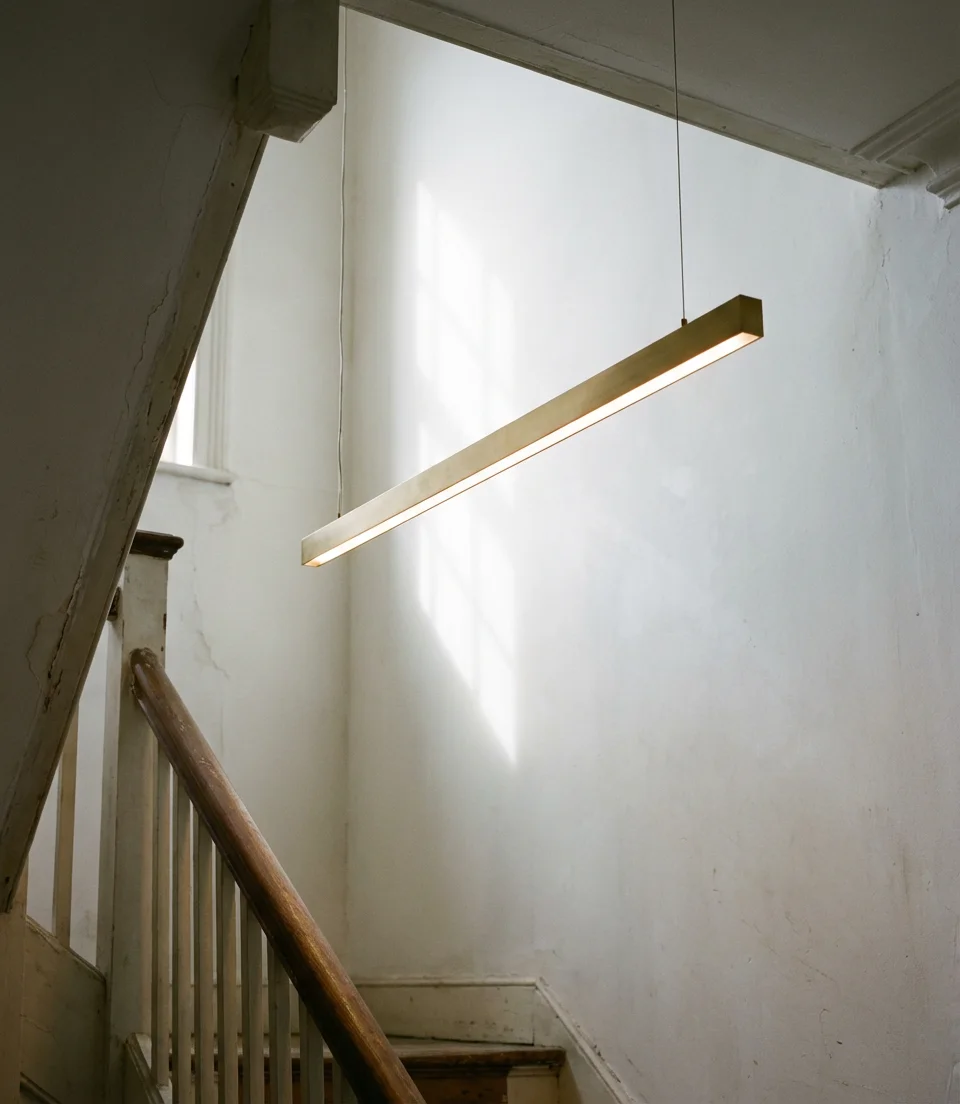
One practical consideration that many homeowners overlook before installing a linear pendant in an upstairs hall is the clearance above the staircase. Building codes in most U.S. jurisdictions require a minimum of 6’8″ of clear headroom above any step—which affects how low your pendant can hang at the staircase end of the corridor. Have an electrician assess your specific situation before falling in love with a fixture that physically won’t work in your space.
21. Layered Lighting Design for the Complete Hallway
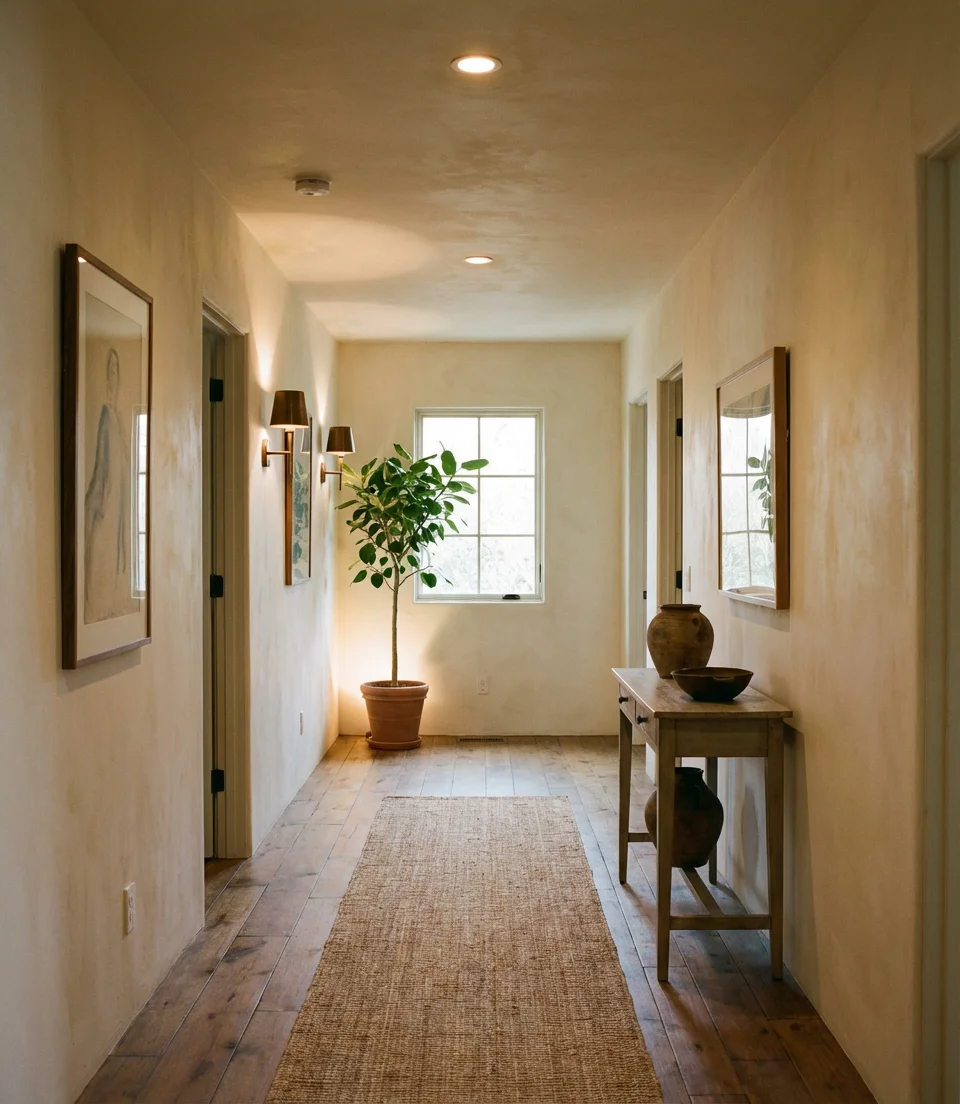
The most beautiful hallways in 2026 share a single quality: they don’t rely on one fixture to do all the work. Fixture ideas that layer ambient, accent, and decorative lighting create corridors with real depth and warmth—the kind of design that makes guests pause before they even reach the living room. This method means combining a ceiling source (flush mount, pendant, or recessed cans) with at least one wall-level element (sconces, picture lights) and occasionally a floor-level glow (uplighting a plant, backlighting a console).
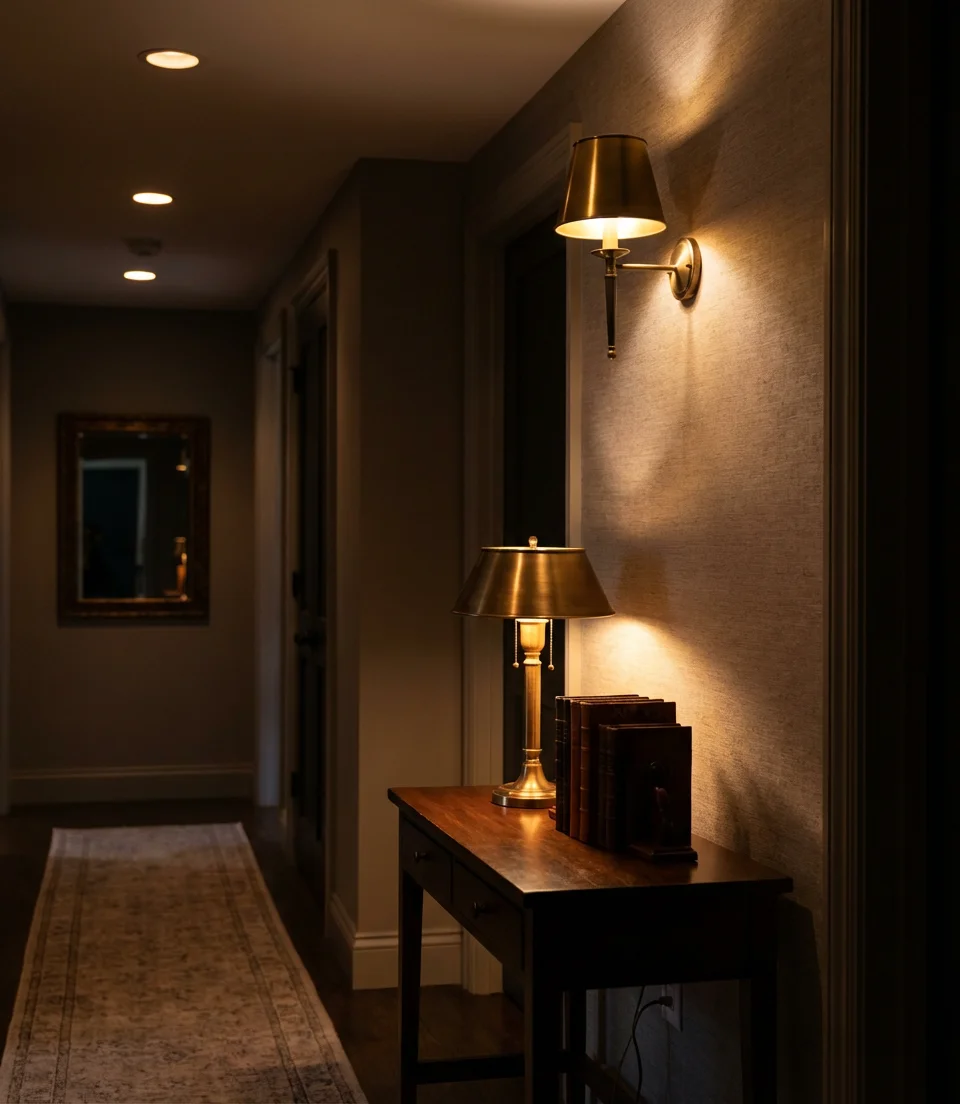
Layered lighting does require a slightly larger upfront investment—multiple fixtures, multiple switch legs, possibly a few dimmer installs—but the return is a hallway that adapts to every mood and moment. The hallway can be bright and functional during school morning chaos, warm and welcoming during dinner parties, and soft and calm during late nights. That range of possibilities—all from the same corridor—is the ultimate goal of thoughtful hallway lighting design. Start with one layer and build from there—your hallway will thank you for it.
Whether you’re drawn to the clean lines of Japandi minimalism, which combines Japanese and Scandinavian design elements, the character of Victorian lanterns, or the modern practicality of integrated LED flush mounts, there’s never been a better time to rethink your hallway lighting. We’d love to hear which ideas sparked something for you—drop a comment below and tell us what you’re planning for your corridor in 2026. Did something on this list surprise you? Share it with a friend who’s in the middle of a renovation and could use the inspiration.