38 Kitchen Trends 2026: Latest Design Ideas, Colors and Modern Styles for Your Dream Kitchen

American homeowners are already planning their kitchen renovations for the year ahead, and Pinterest boards are overflowing with inspiration for 2026 kitchen trends. Whether you’re drawn to 2026 modern minimalism or warmer, lived-in spaces, this year brings a refreshing mix of practicality and personality. From 2026 colors that feel both bold and timeless to layouts that work harder for real families, these ideas reflect how we actually cook, gather, and live. Here are trends shaping kitchens in 2026—and why they’re resonating with homeowners across the country.
1. Warm Terracotta and Clay Tones
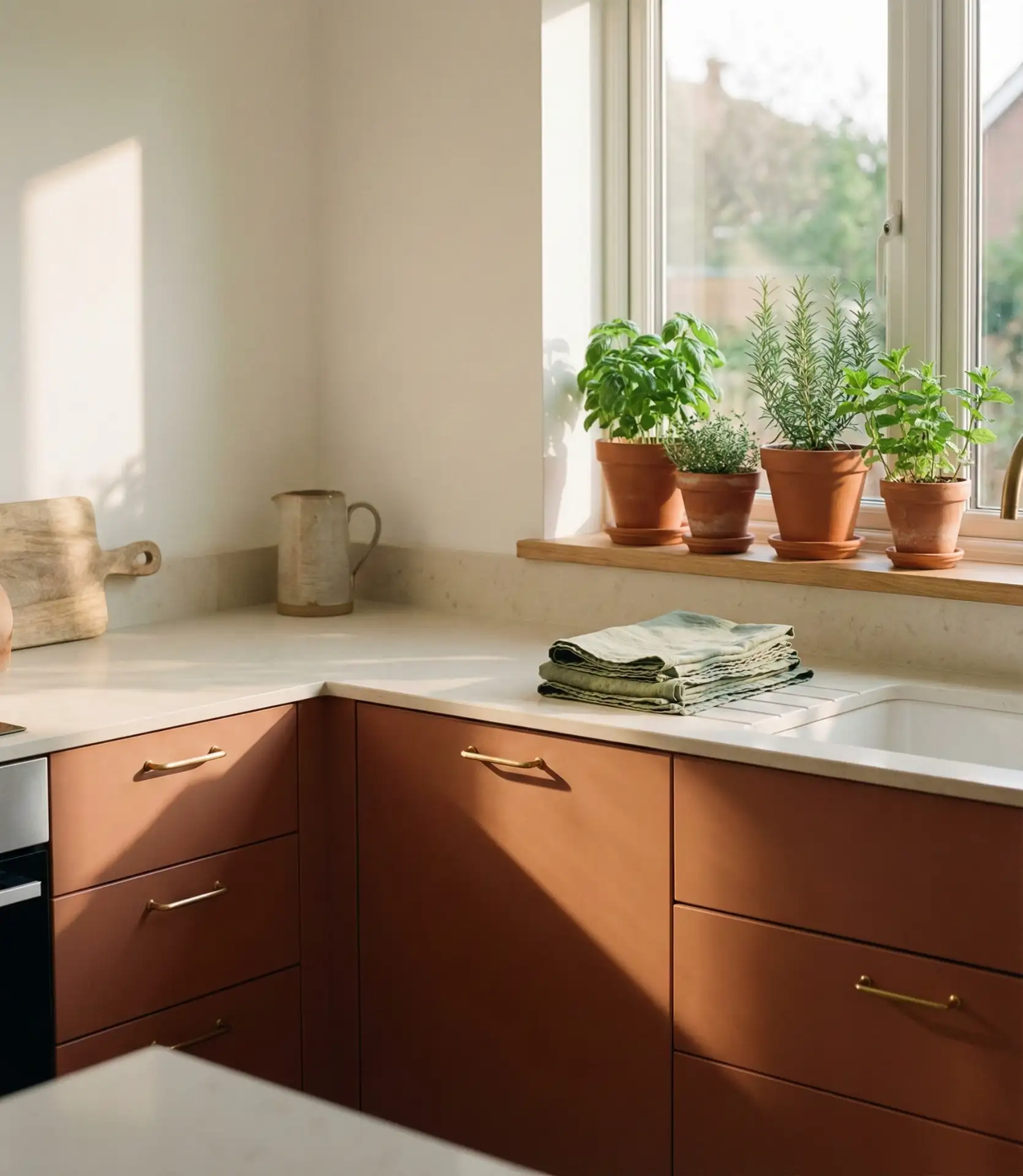
This year, interior design will be all about the terracotta cabinets and clay-colored backsplashes that will be replacing the popular whites of the years before. This design is earthy, warm, and balanced with the natural wooden features, brass hardware, and open shelves. For an organically grounded design, interior design in the UK and American homes will feature the popular layered cream countertops and sage green accents.
This design is perfect for open-concept homes where the kitchen opens up to the living spaces. The warmth of the design works to help define the cooking and eating area without closing the space off.
With terracotta, a common blunder is to mix it with other warmer color tones. To counterbalance terracotta, utilize cooler gray-veined marbles or warm, soft whites to let the terracotta color take the spotlight. The objective is allowing terracotta to shine on its own, rather than incorporating it with many other colors.
2. Integrated Appliance Panels

Homeowners are concealing refrigerators, dishwashers, and even ranges behind cabinet-matched panels for a streamlined, uninterrupted look that defines the 2026 modern kitchen design. It’s not just an aesthetic decision; integrated appliances help create visual calm in smaller kitchens where every surface counts. The latest panel systems are easier to install than ever, with manufacturers offering custom-match options that work with existing cabinetry, making this design upgrade more accessible than it was even two years ago.
This trend is popular among families in suburban Chicago homes and urban Seattle condos alike, who want their kitchens to resemble custom furniture rather than an appliance showroom. The streamlined look is worth the investment, which ranges between $1,200 and $4,000, especially at the time of selling.
3. Statement Range Hoods as Focal Points
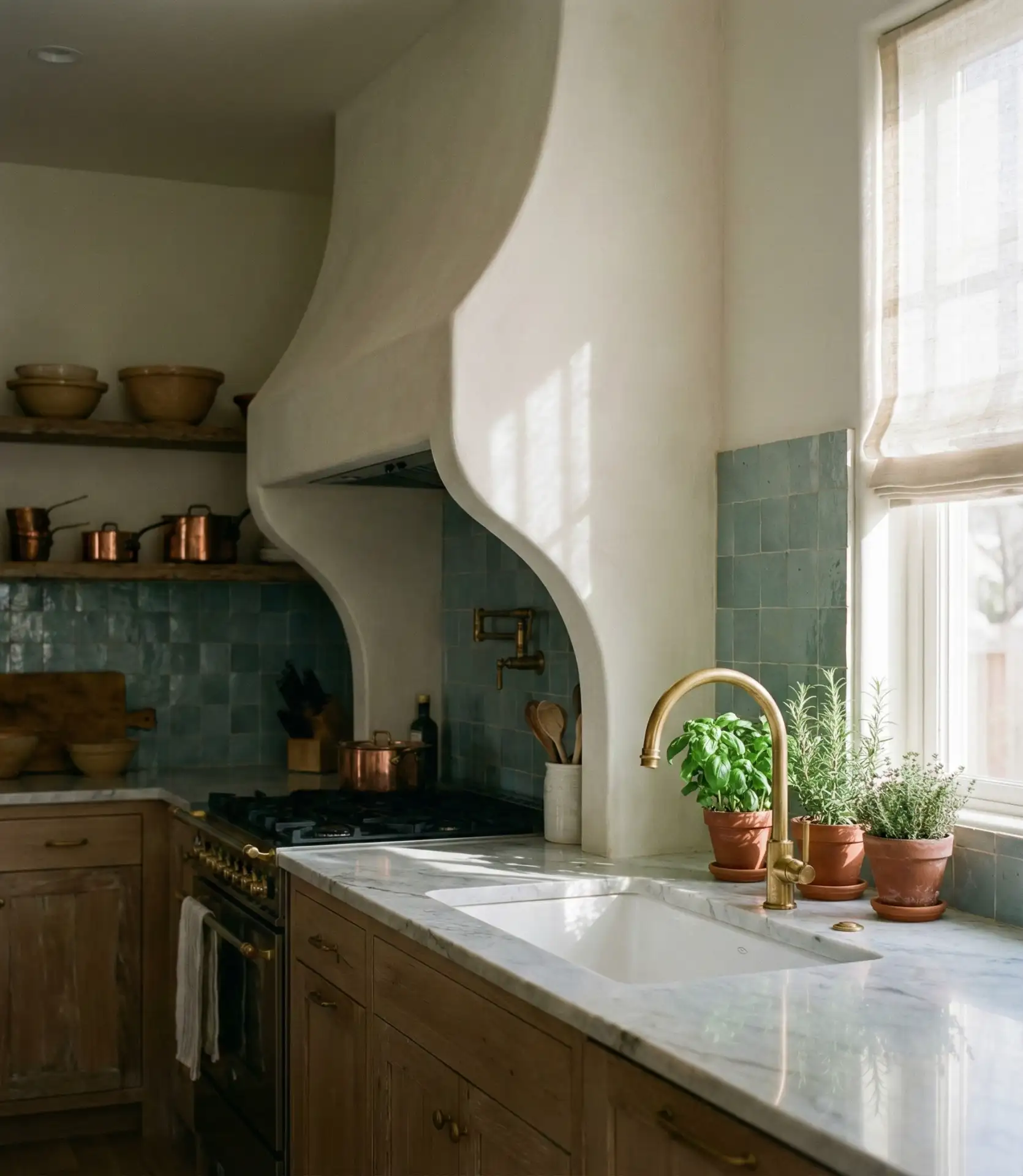
Rather than hide the range hood, 2026 kitchens are celebrating it with sculptural designs in plaster, hammered copper, or zellige tile that command presence. These are not the bulky stainless steel boxes of the past decades but rather look like they belong in a European villa, artisan-crafted with curves. Transitional 2026 spaces where a bold hood bridges traditional materials and contemporary lines are excellent places for a memorable centerpiece over the cooktop. 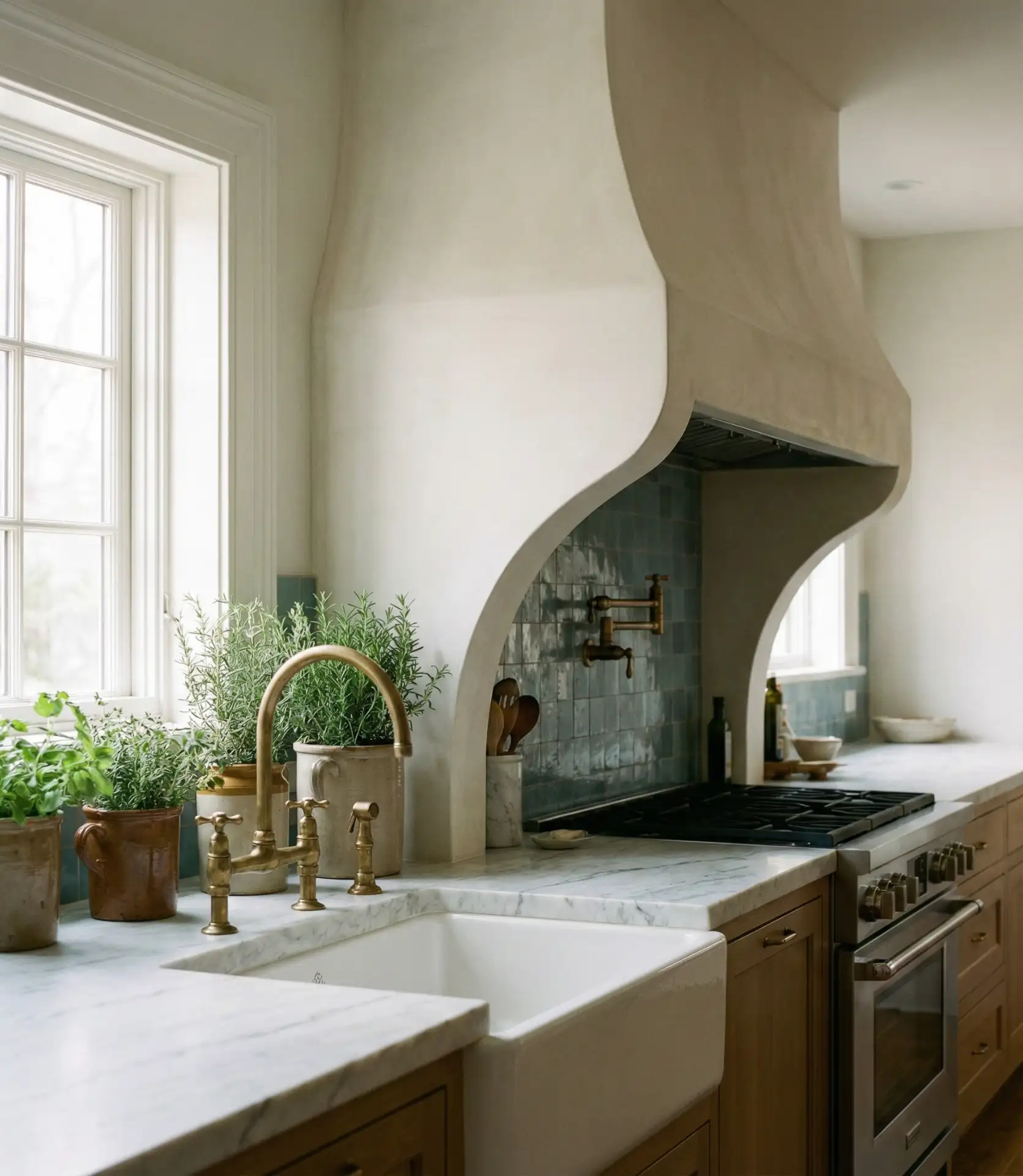
In Charleston, a designer I spoke with mentioned that her clients now budget as much for the hood as they do for the range itself, seeing it as a functional sculpture. The design works best in homes where the ceiling is 9 feet or above, as the hood is given room to breathe and become a real architectural element instead of being squeezed between cabinets.
4. Large-Format Slab Backsplashes

Grout lines are disappearing as homeowners opt for floor-to-ceiling stone or porcelain slabs that create an unbroken surface behind the range and sink. These 2026 colors range from creamy Calacatta marble looks to dramatic black granite, but what they share is a sense of luxury and easier maintenance—no grout to clean means less work. The future of kitchen backsplashes is decidedly low-fuss, and this trend delivers on both beauty and practicality in equal measure. 
My neighbor just installed a single slab of quartzite in her kitchen renovation, and the difference is striking—it reads as one cohesive surface rather than a patchwork of tiles. The catch is that installation requires precision and often costs between $80 and $200 per square foot, including labor, but homeowners see it as a long-term investment that won’t date quickly.
5. Multi-Tone Cabinetry
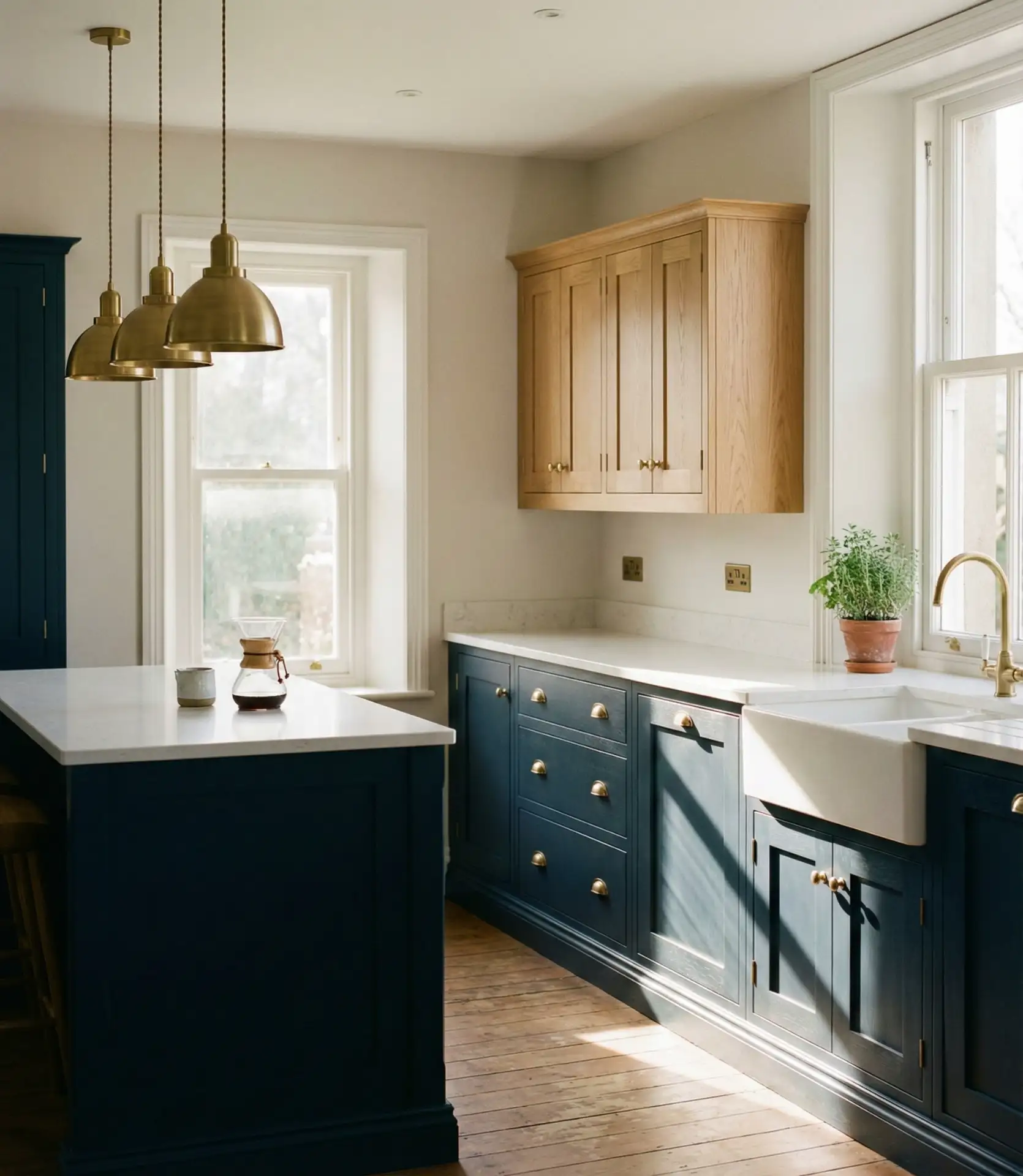
The all-white kitchen is evolving into something more layered: navy lowers with natural oak uppers, sage green perimeter cabinets with a walnut island, or charcoal bases paired with white floating shelves. This 2026 interior design approach adds dimension without overwhelming smaller spaces, and it allows homeowners to introduce personality in measured doses. Farmhouse 2026 iterations might pair cream Shaker-style uppers with forest green lowers, while modern versions lean toward charcoal and light oak combinations. 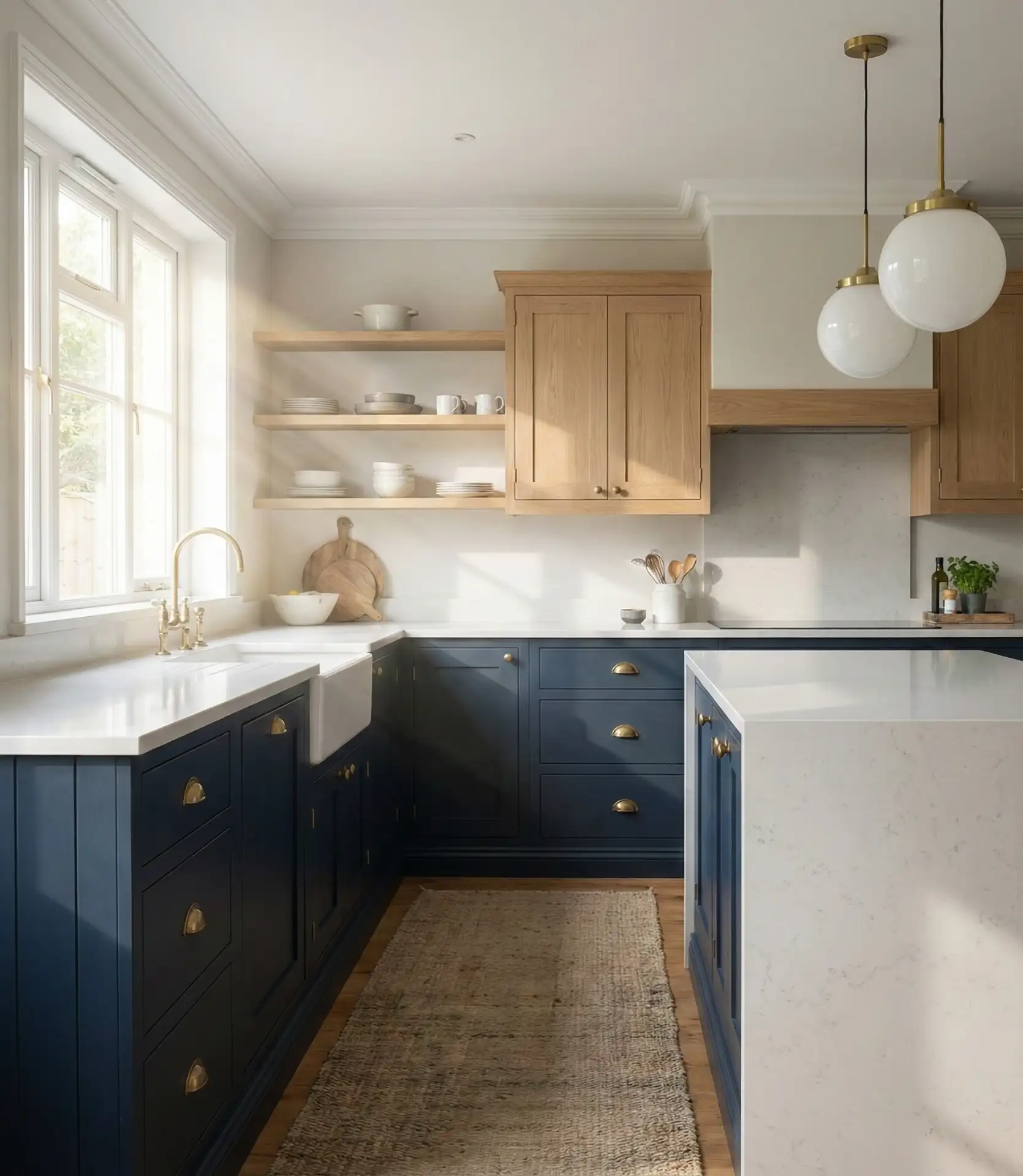
The trick is choosing tones that share an undertone—warm with warm, cool with cool—so the contrast feels intentional rather than disjointed. Real homeowners are using this strategy to refresh tired kitchens without replacing everything: painting lowers in a bold shade while keeping existing wood uppers gives you 70% of the impact for 30% of the cost.
6. Dedicated Coffee and Beverage Stations
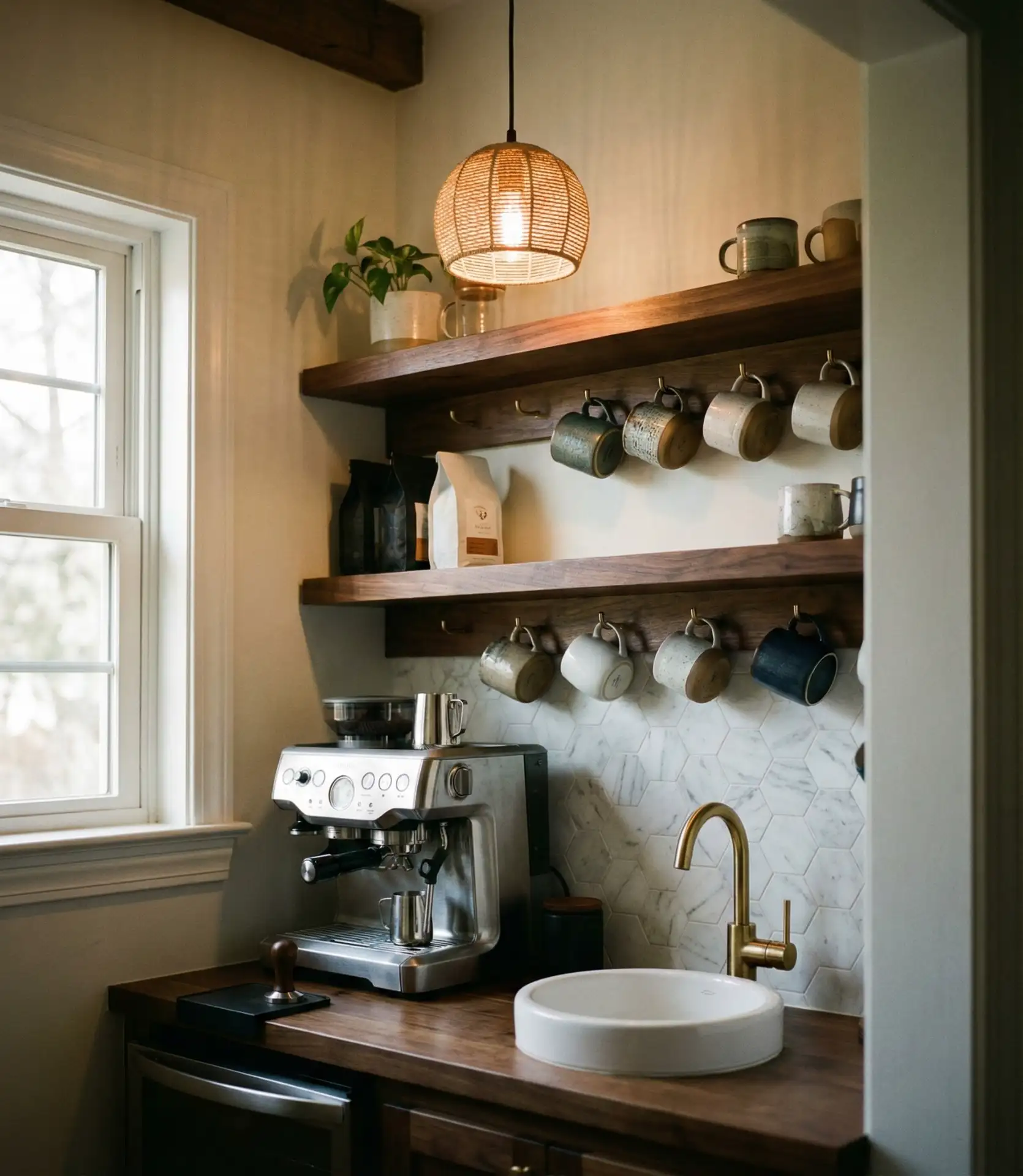
Built-in coffee bars with their own plumbing, mini-fridges, and storage are becoming standard features in 2026 kitchen renovations, especially for families where morning routines can feel chaotic. These stations tuck into corners, unused pantry space, or butler’s pantry alcoves, keeping the main kitchen clear while everyone makes their own drinks. The newest designs include pull-out drawers for mugs, built-in outlets at counter height, and open shelving for syrups and tea collections that double as displays. 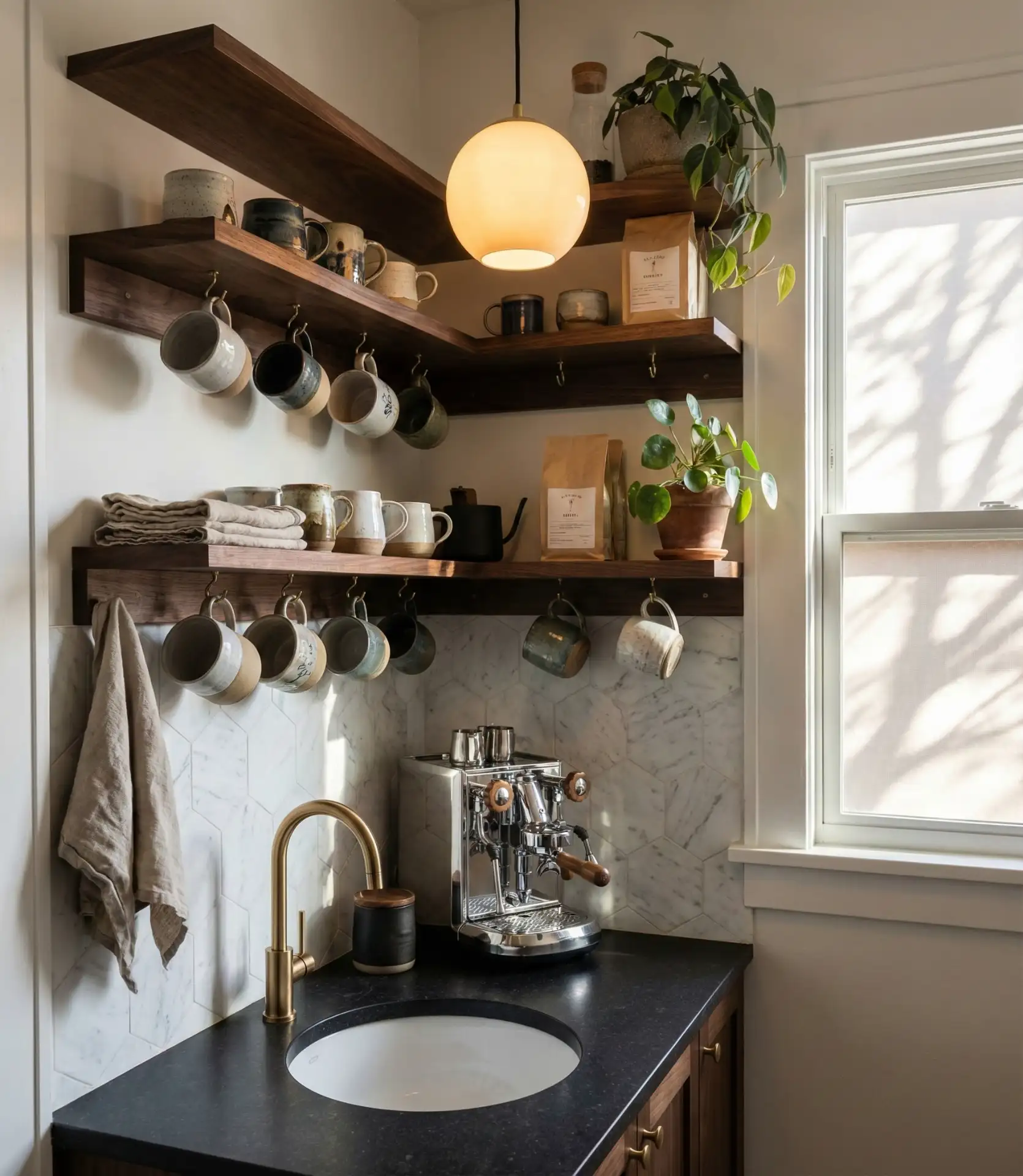
This configuration works best in homes where at least two people need coffee at the same time—parents getting ready while teens grab breakfast, or couples with different wake-up schedules. The setup prevents bottlenecks at the main sink and keeps appliances off the primary counters, which is why it’s showing up in homes from Portland to Austin wherever open floor plans mean the kitchen is always on display.
7. Textured and Ribbed Cabinet Fronts
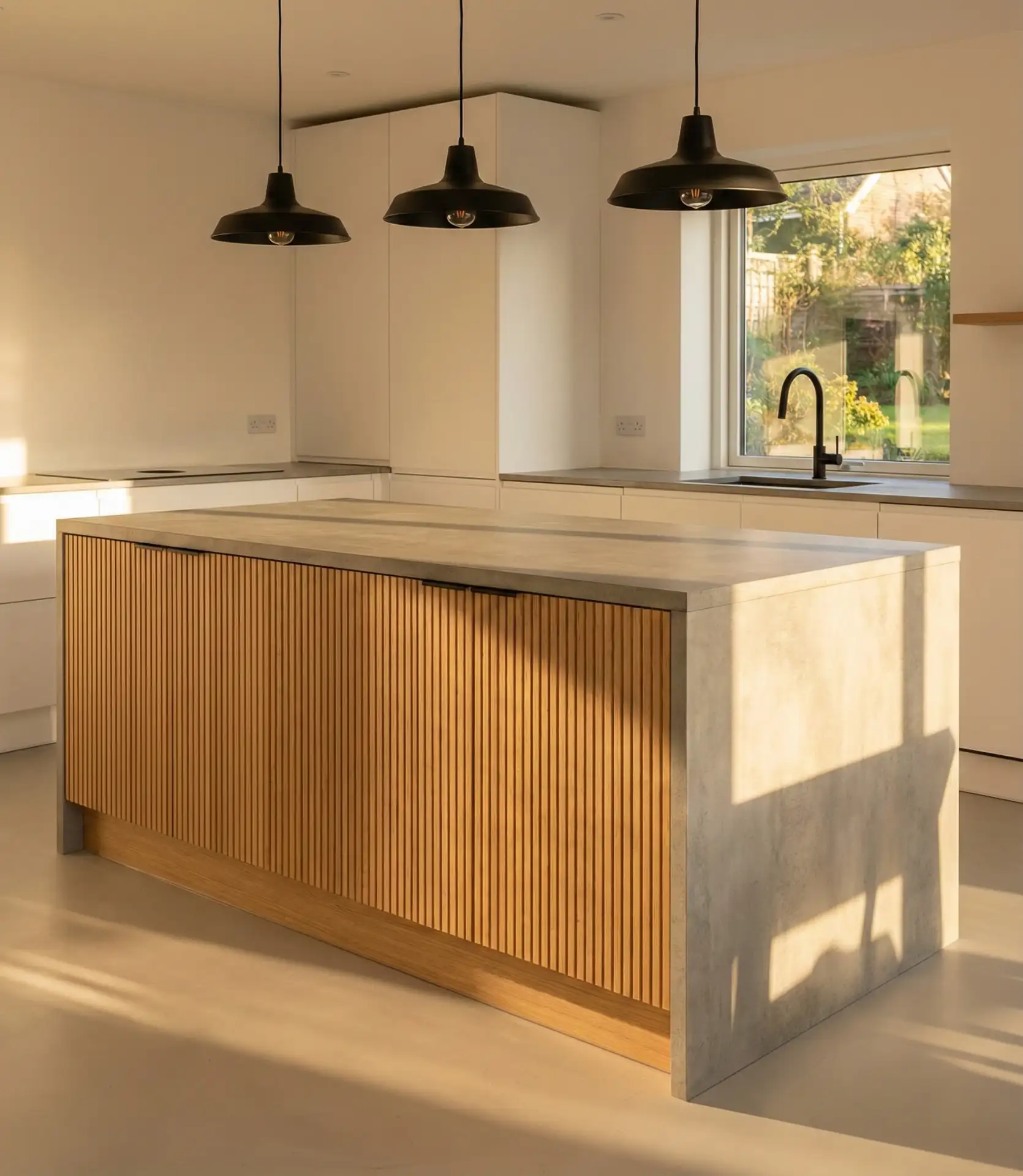
Flat-front cabinets are giving way to vertical fluting, horizontal grooves, and three-dimensional paneling that catches light and adds tactile interest to 2026 UK and American kitchens alike. These details work particularly well on islands or a single run of cabinets, creating a focal point without requiring a full kitchen overhaul. The texture softens contemporary spaces and adds subtle patterns that 2026 white or neutral kitchens often need to avoid feeling sterile or one-dimensional. 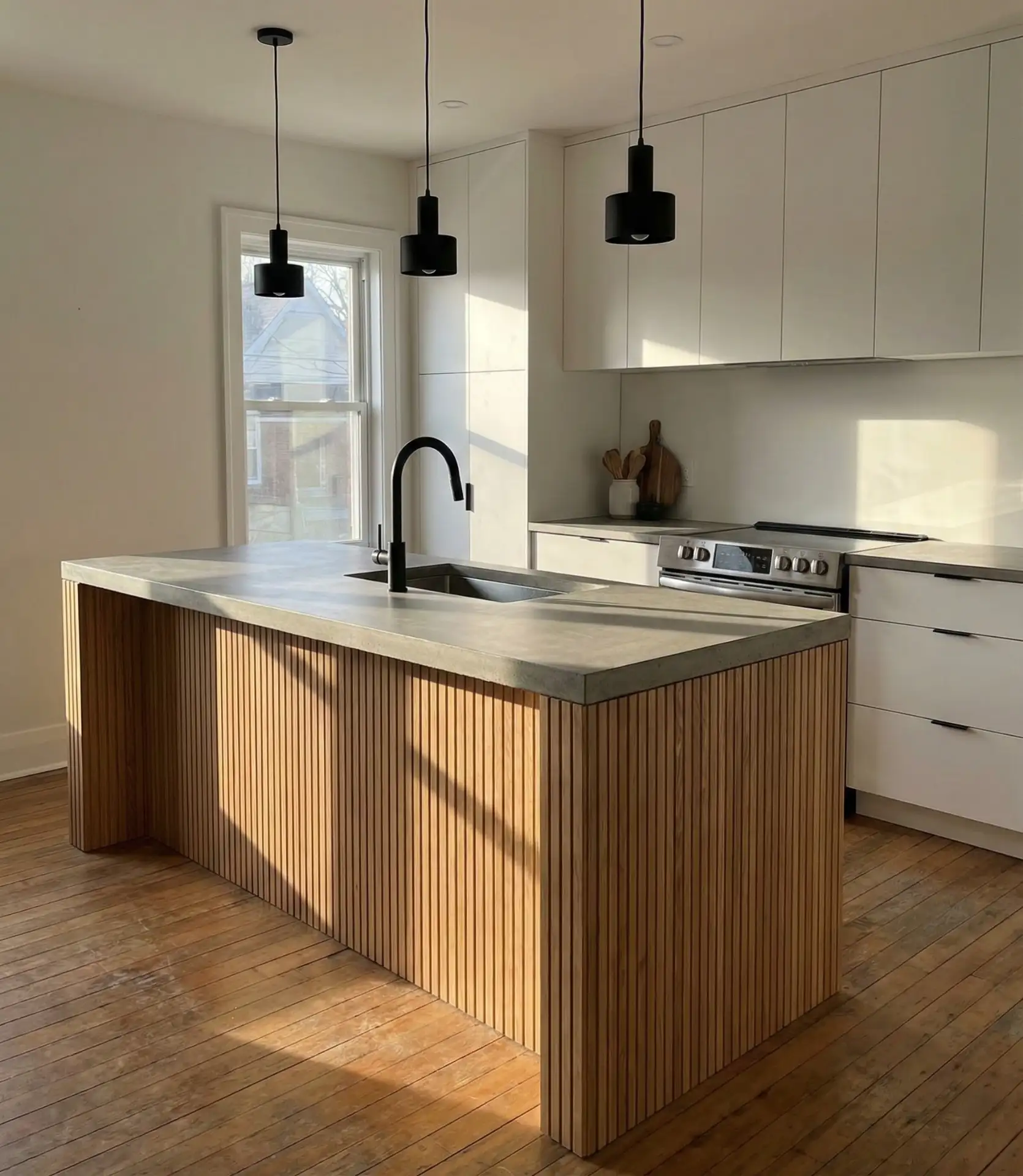
A kitchen designer based in Minneapolis told me that ribbed fronts are now her most requested feature for island designs—they photograph beautifully and provide just enough visual interest without overwhelming smaller kitchens. The cost premium over flat fronts runs about 15-25%, but the dimensional quality makes spaces feel more custom and considered, which is why they’re appearing in both budget-conscious renovations and high-end builds.

8. Oversized Kitchen Islands with Seating
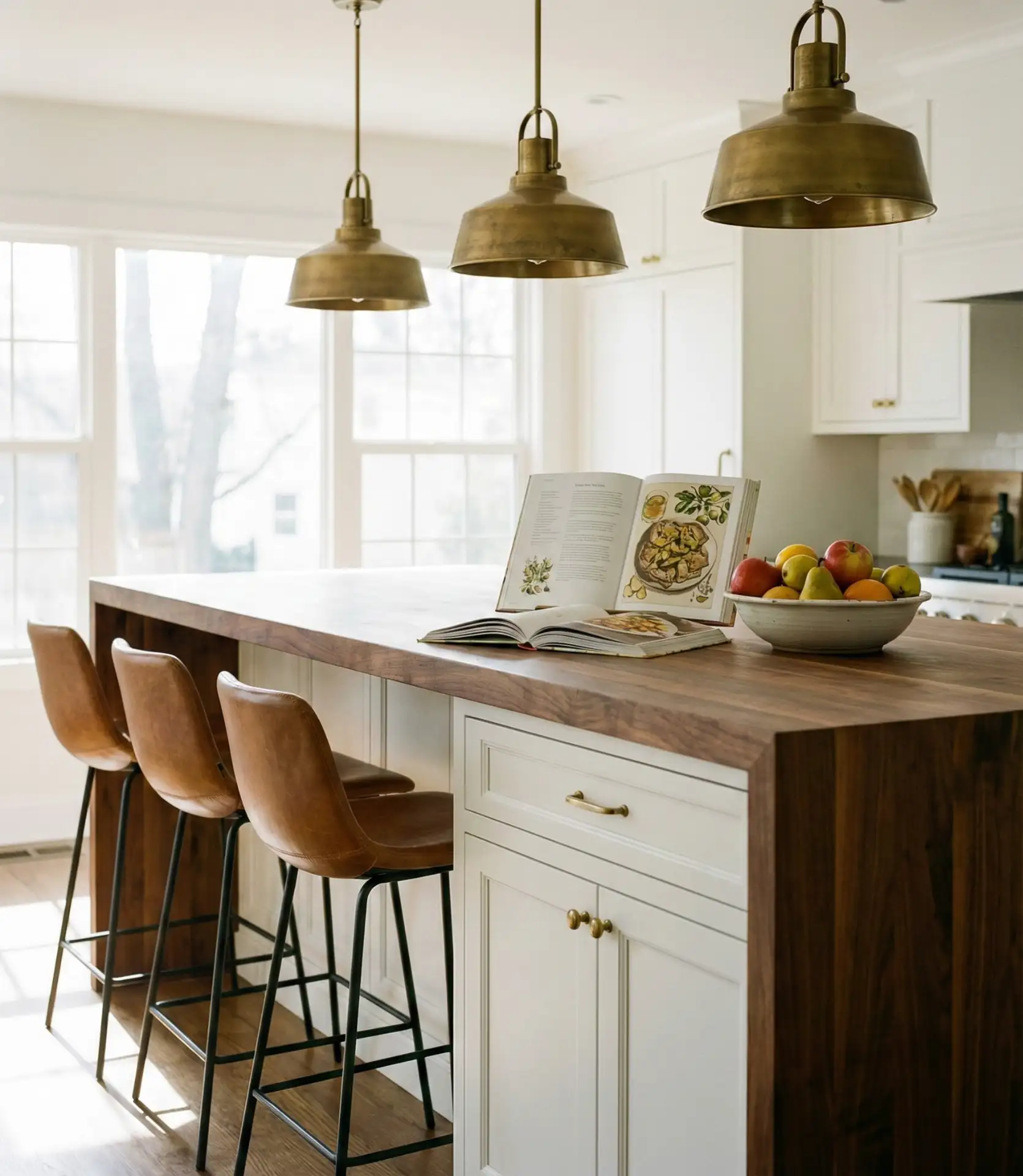
The 2026 galley kitchen is being reimagined with islands that do the work of a dining table, homework station, and prep surface all at once. These aren’t just breakfast bars—they’re 4-by-8-foot or larger surfaces with comfortable seating for four to six people, designed for lingering rather than perching. Top requests include waterfall edges, contrasting countertop materials from the perimeter, and built-in outlets for laptops and phone charging, reflecting how kitchens function as true multi-use spaces in American homes. 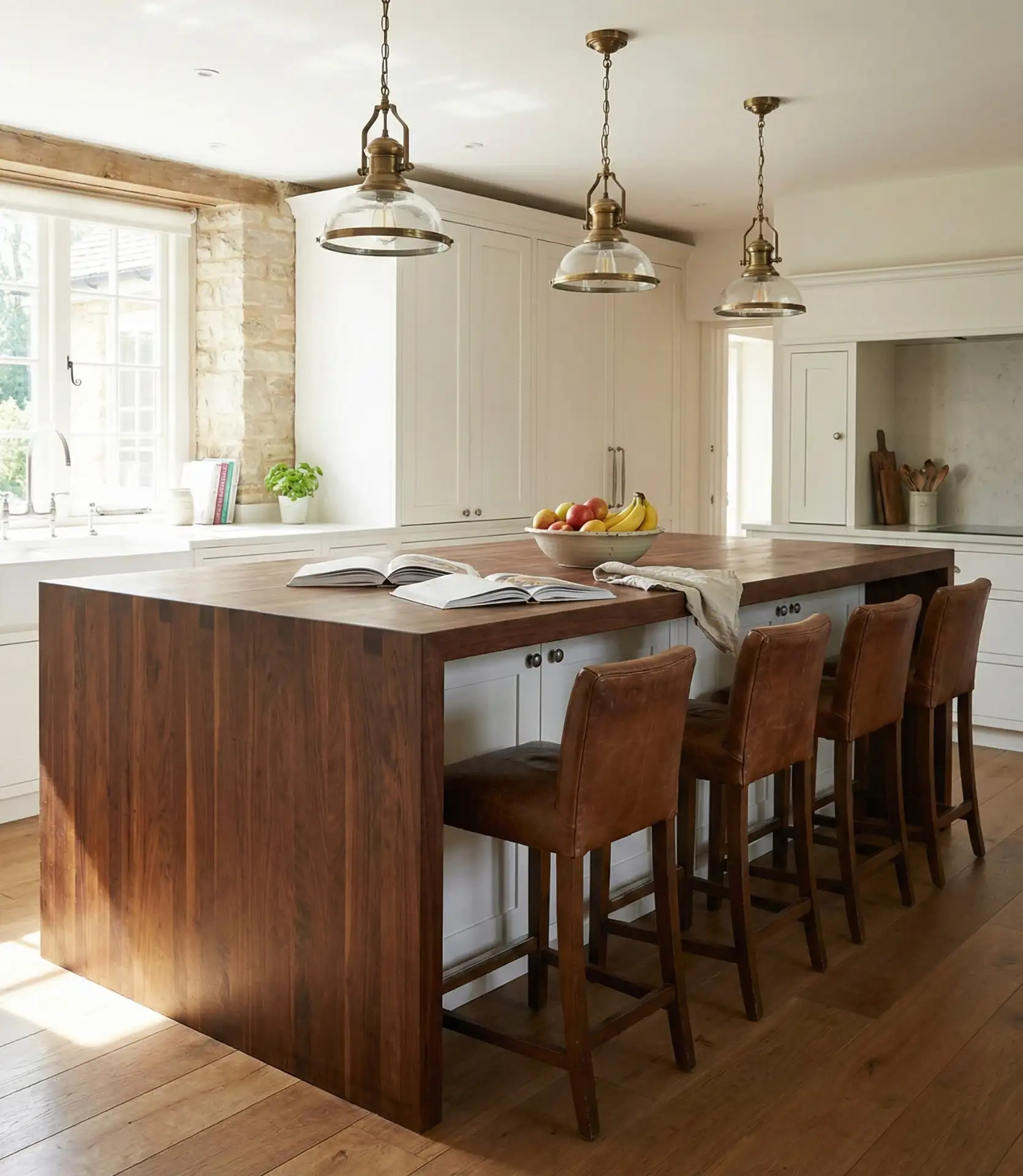
Where this trend shines: suburban homes with school-age kids who need a central gathering spot, or urban lofts where the island replaces a separate dining table entirely. One common mistake is scaling the island too large for the room—you need at least 42 inches of clearance on all working sides, or you’ll create a traffic jam instead of a gathering place.
9. Warm Metals and Mixed Finishes
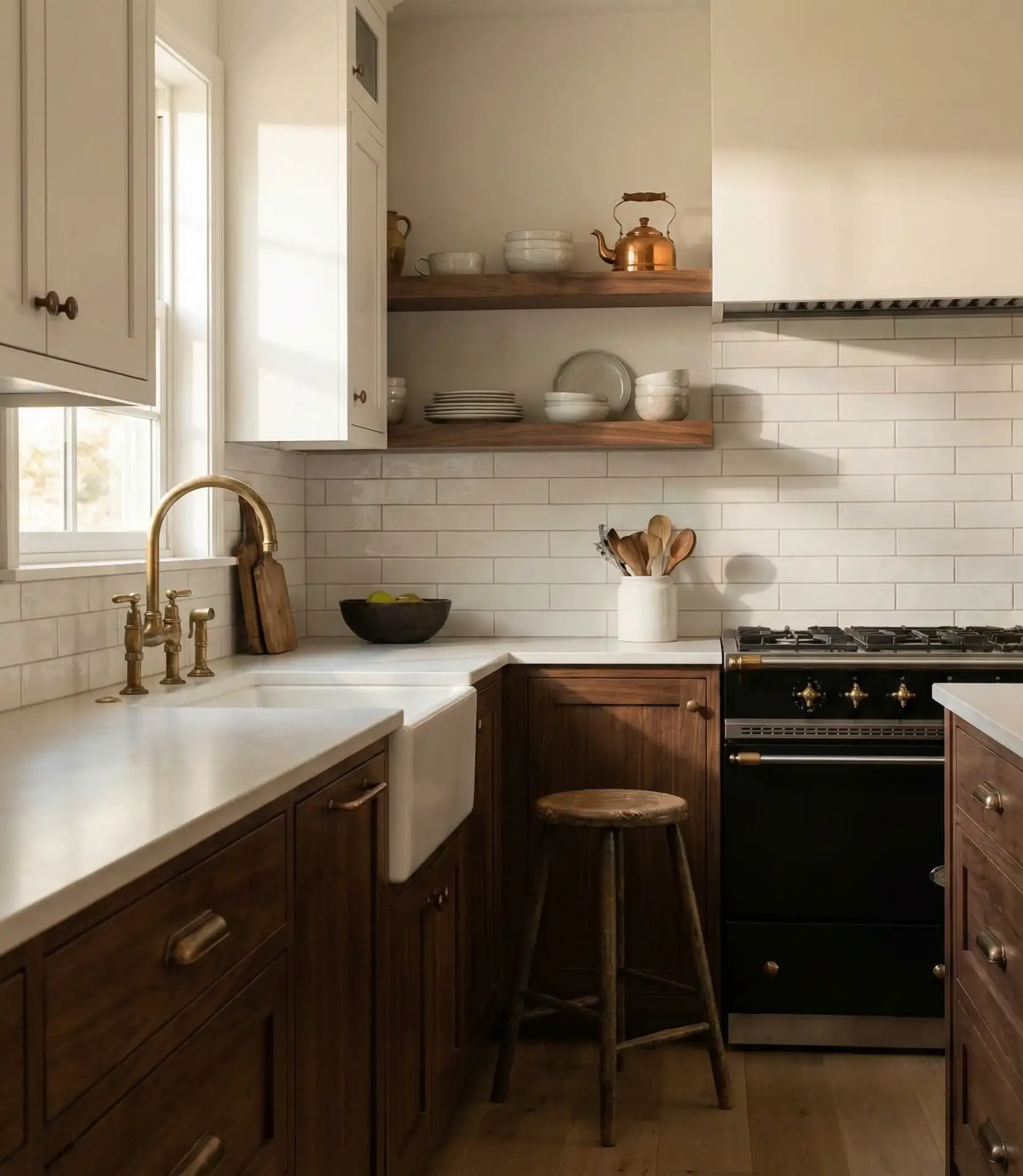
Brass, bronze, and antique gold are replacing the cool chrome and stainless that dominated 2025 kitchens, bringing warmth and a collected-over-time feeling to spaces that might otherwise feel too new. Mixing finishes—brass faucets with black cabinet pulls or bronze pendant lights with stainless appliances—is not only acceptable but encouraged in 2026 interior design in India and Western markets alike. The key is maintaining a temperature family: all warm or all cool, rather than bouncing between both. 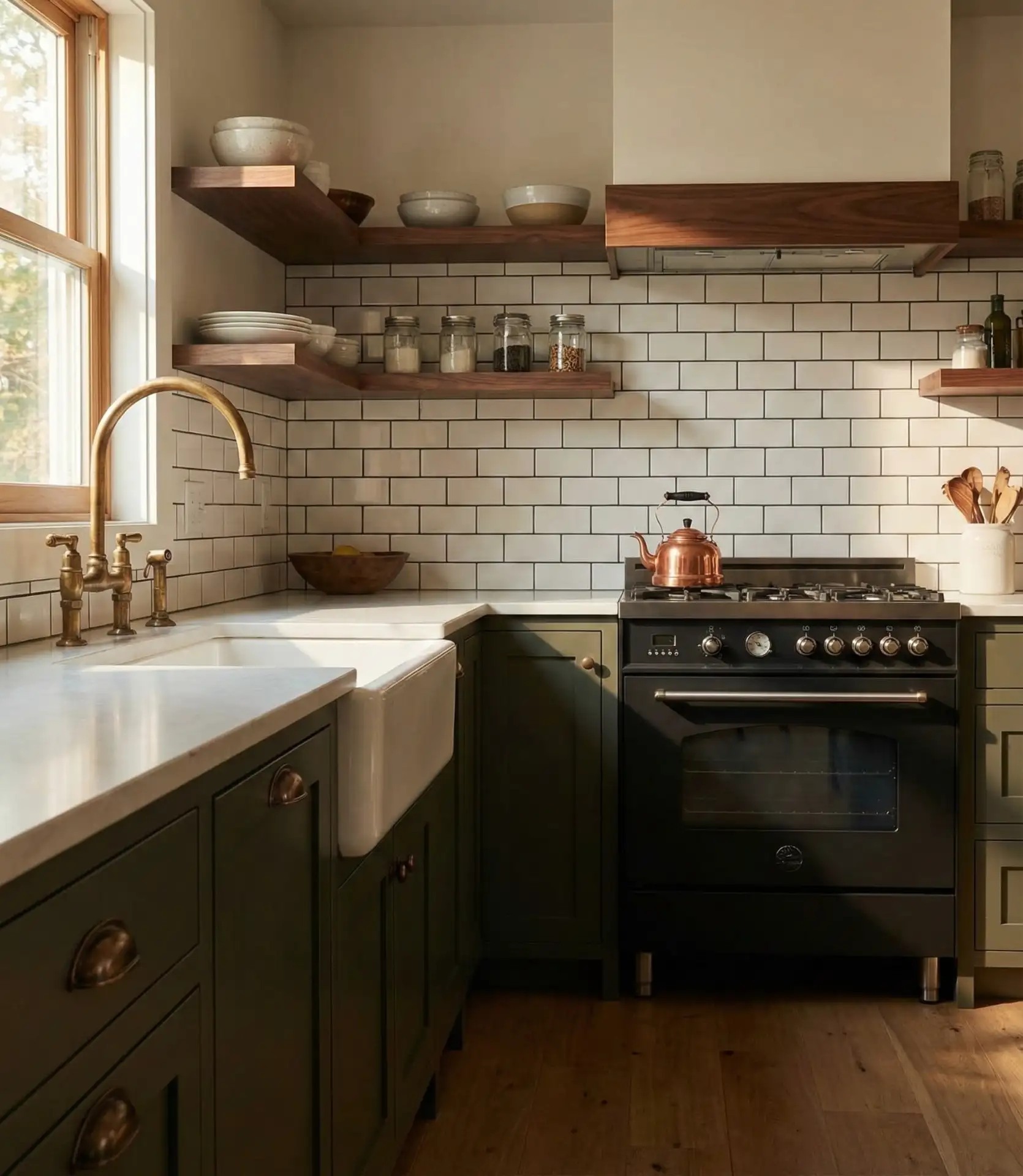
This trend reflects a broader shift toward personalization—homeowners want kitchens that look like they’ve evolved over years rather than being installed all at once from a catalog. The practical side: warm metals tend to show water spots less obviously than chrome, which is why busy families with hard water are embracing them for both form and function.
10. Open Lower Shelving Instead of Cabinets
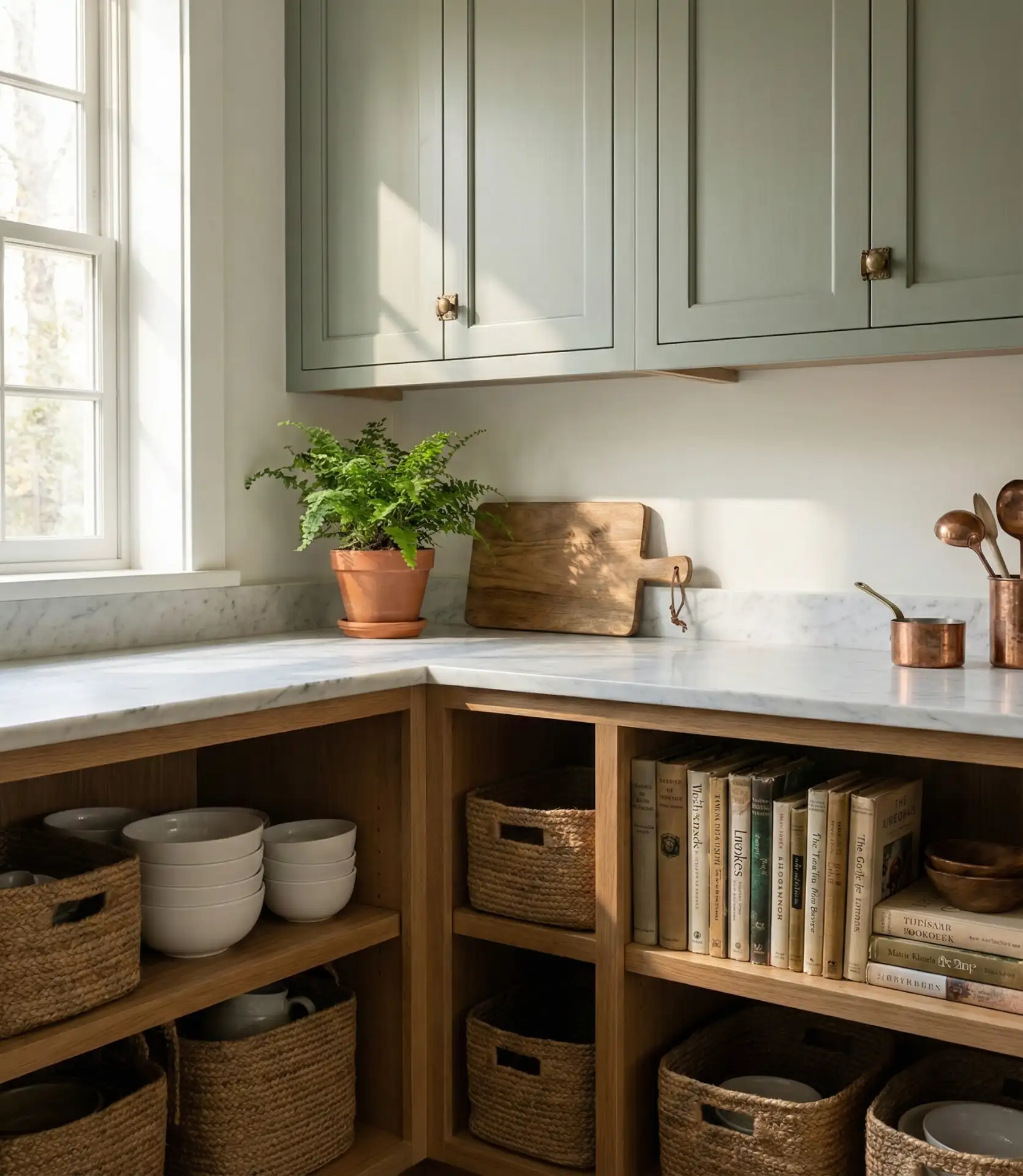
Some homeowners are replacing a section of lower cabinets with open shelves to display beautiful serving bowls, cookbooks, or woven baskets—a move that makes 2026 coastal and farmhouse kitchens feel more curated and less cookie-cutter. This isn’t about ditching all storage but rather creating one or two open moments that break up the visual weight of solid cabinetry. The 2026 Australia design scene has embraced the idea for years, and it’s finally gaining traction in American kitchens where homeowners want flexibility and personality.
The biggest mistake homeowners make is using the space as junk storage—if it’s visible, it needs to be intentional. Consider incorporating matching containers, linen-lined baskets, or showcasing your most beautiful dishes for everyone to see. This approach works beautifully in kitchens where you want to avoid a heavy, closed-in feeling, but it requires more discipline to keep looking good day-to-day, which is why it suits homeowners who genuinely enjoy styling and editing their spaces.
11. Concealed Pantries with Flush Doors
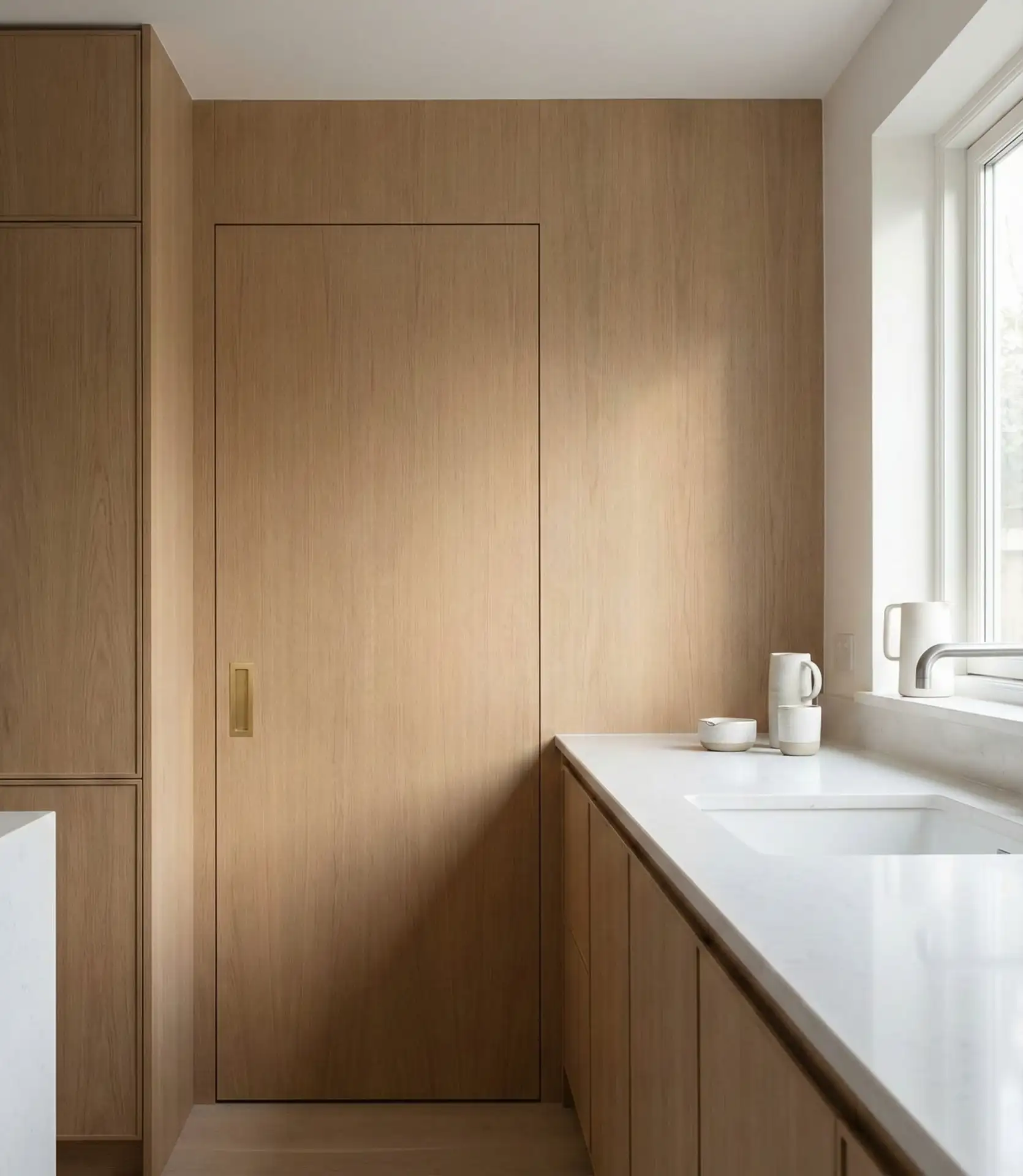
Walk-in pantries are being hidden behind cabinet-matched doors that sit flush with the kitchen walls, creating a seamless look that defines modern design in 2026. These aren’t your grandmother’s pantry closets—they’re carefully organized spaces with custom shelving, pull-out drawers, and sometimes even secondary prep areas that keep clutter completely out of sight. The latest hardware includes push-to-open mechanisms that eliminate visible handles, making the pantry door virtually disappear into the cabinetry when closed.
This trend particularly appeals to homeowners in open-plan homes where the kitchen is always visible from living areas—having bulk groceries and small appliances tucked away means the space always looks magazine-ready. Installation costs run between $3,500 and $8,000 depending on size and finish quality, but for families who value a clean aesthetic over display, it’s the upgrade that delivers the most visual impact per square foot.
12. Zellige and Handmade Tile Accents

In 2026 interior design, for a change from the perfectly symmetrical subway tile, there is the use of Moroccan zellige tiles and other artisanal ceramics, which are bringing in texture and slight shifts in color. These artisanal, handmade tiles create movement on the kitchen walls with their organic, light-catching irregularities in glaze and form. Varying in zellige from soft seafoam and dusty terracotta to deep forest green, these tiles are current and timeless, as they are being designed for backsplashes, accent walls, and even full islands.
One tile installer in Portland mentioned to me that she is booked out for six months because homeowners really appreciate that there are no two installations that look alike. The ideal setting is kitchens with neutral cabinetry, as it allows the tile to be the main focus, or spaces that want artisan detailing without the bold paint color overlay. This perspective is particularly relevant to those owners who prefer handcrafted goods to the precision of a factory.
13. Black or Dark-Stained Wood Floors
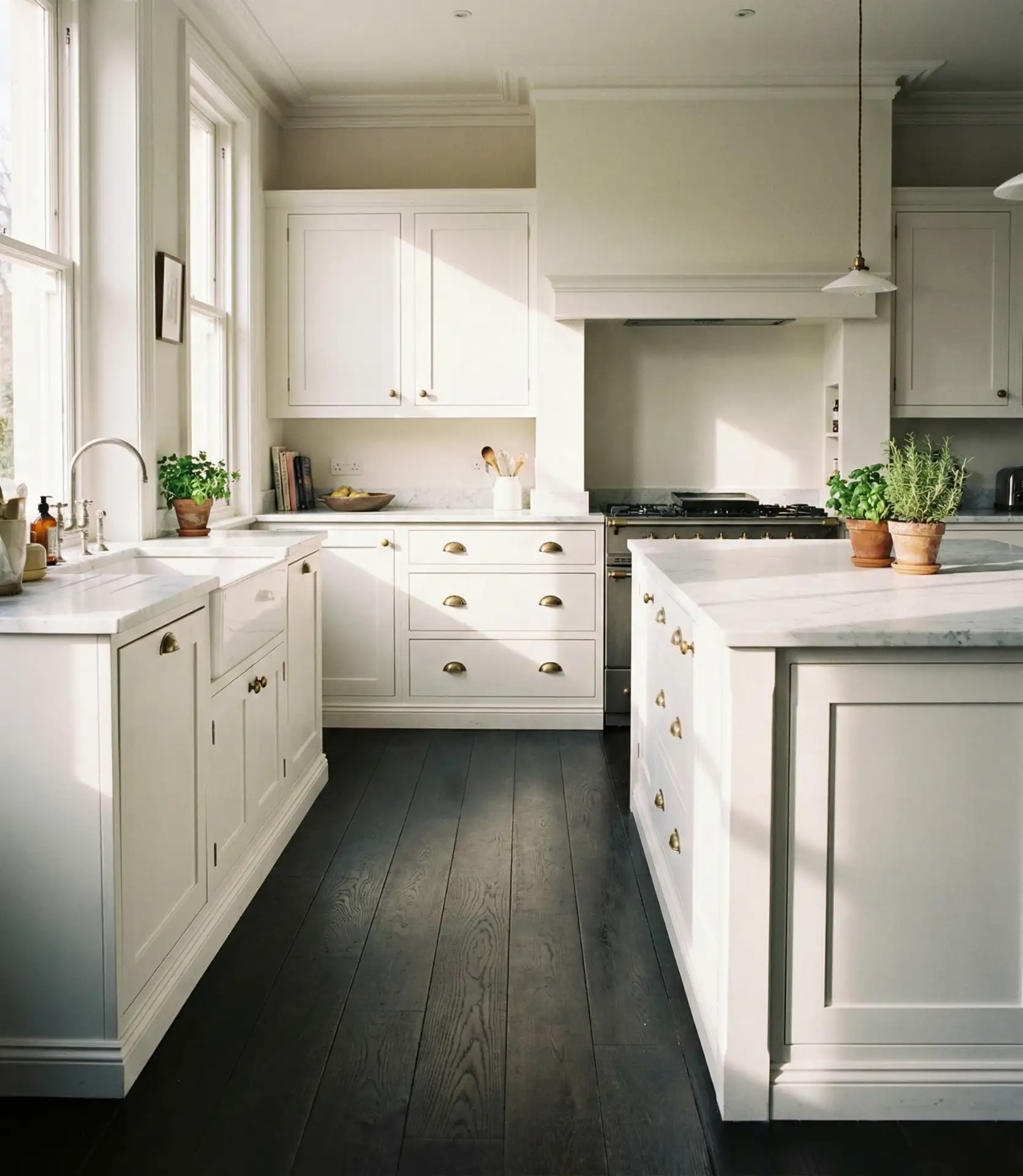
After several years of warm oak and light gray floor tones, 2026 kitchens will be anchored and dramatically sophisticated with deep charcoal, espresso, and true black stained wood. The contrast of dark cabinet floors and light cabinetry creates movement in an otherwise sterile, cream kitchen. This feature is especially helpful for current 2026 transitional designs, as the dark floor balances the traditional wood warmth with contemporary boldness and is surprisingly forgiving with crumbs and dust compared to the lighter tones. 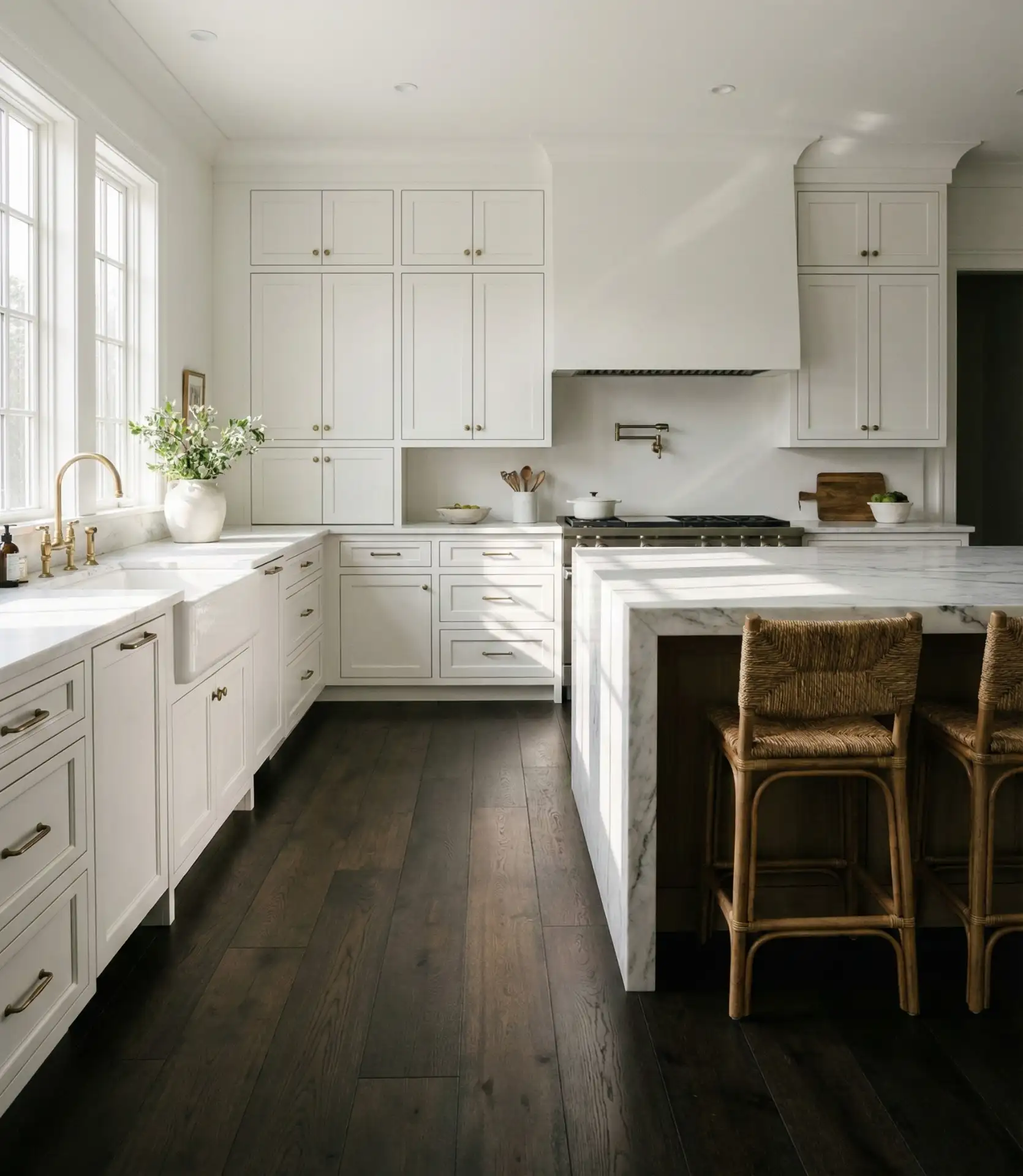
My sister refinished her kitchen floors in a dark walnut stain last spring, and the transformation was immediate—suddenly her basic white cabinets looked intentional and high-end. The practical reality: dark floors show scratches more readily than medium tones, but they hide everyday dirt better, making them ideal for busy households. Most homeowners find the trade-off worthwhile for the visual weight and luxury these floors bring.
14. Floating Shelves with Integrated Lighting
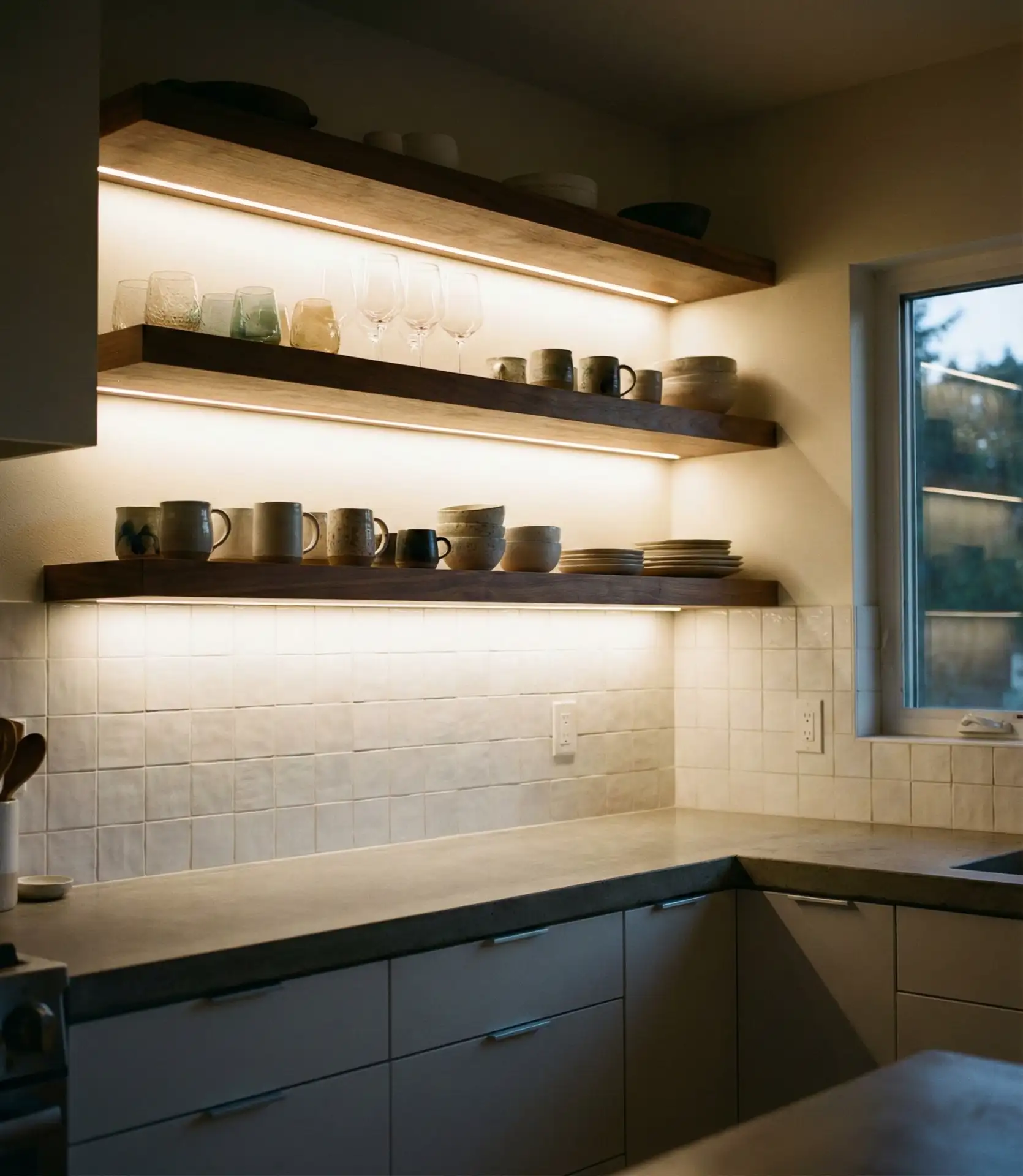
Open shelving is evolving beyond simple brackets—the newest designs incorporate LED strips underneath or within the shelves themselves, creating a soft glow that highlights glassware and serves as ambient evening lighting. This approach solves one of open shelving’s biggest criticisms: that items look shadowy and uninviting. 2026 interior design in the UK has embraced LED lighting for years in smaller kitchens, and American homeowners are finally catching on to how functional and atmospheric this lighting can be. 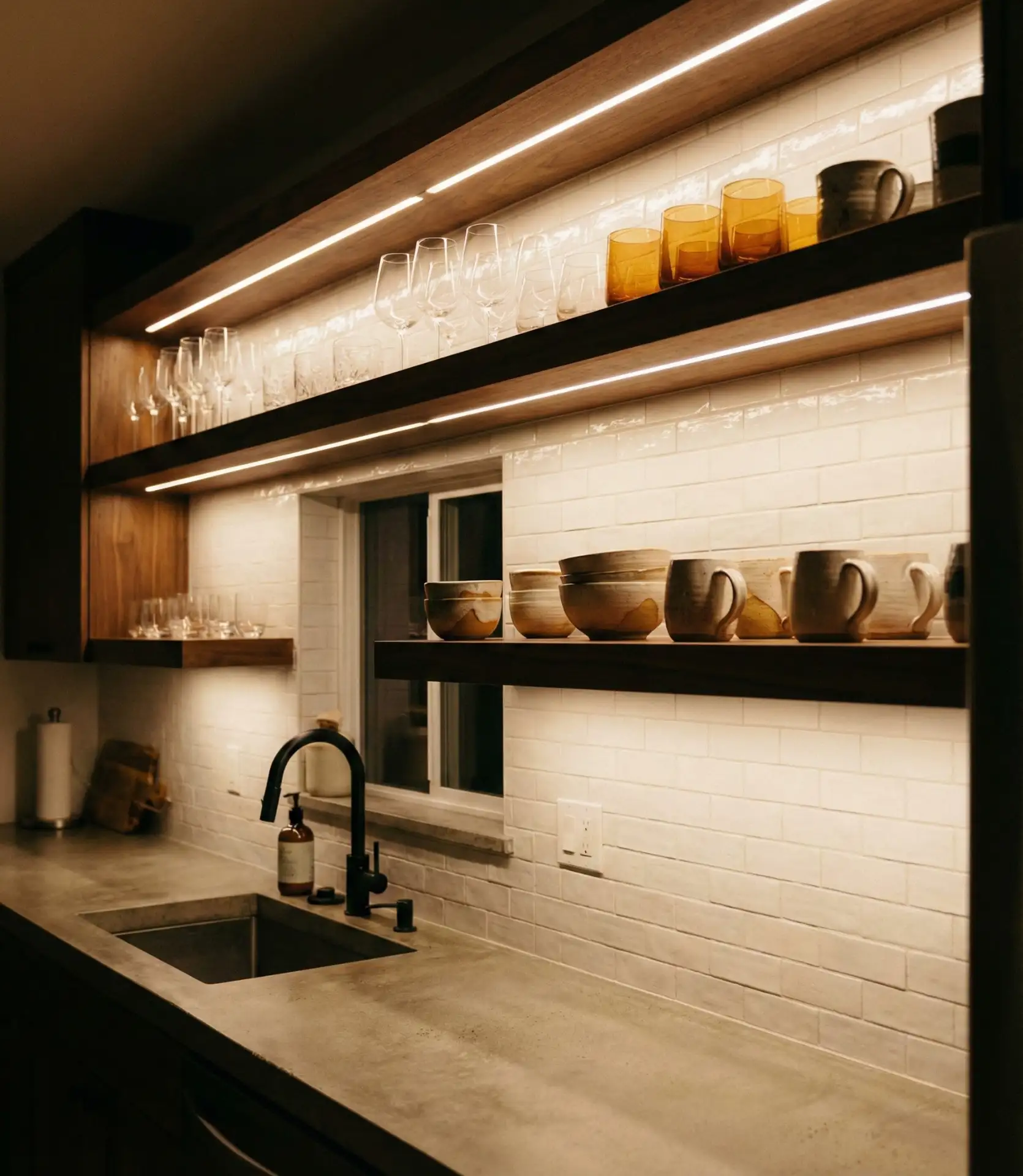
This style works especially well in kitchens where upper cabinets would block views or make the space feel closed in—think galley kitchens or those with windows you want to keep visible. The electrical work adds complexity and cost (expect $400-$800 per shelf run), but homeowners love the flexibility of dimming the lights for dinner parties or keeping them bright during food prep.
15. Concrete- and Cement-Look Surfaces
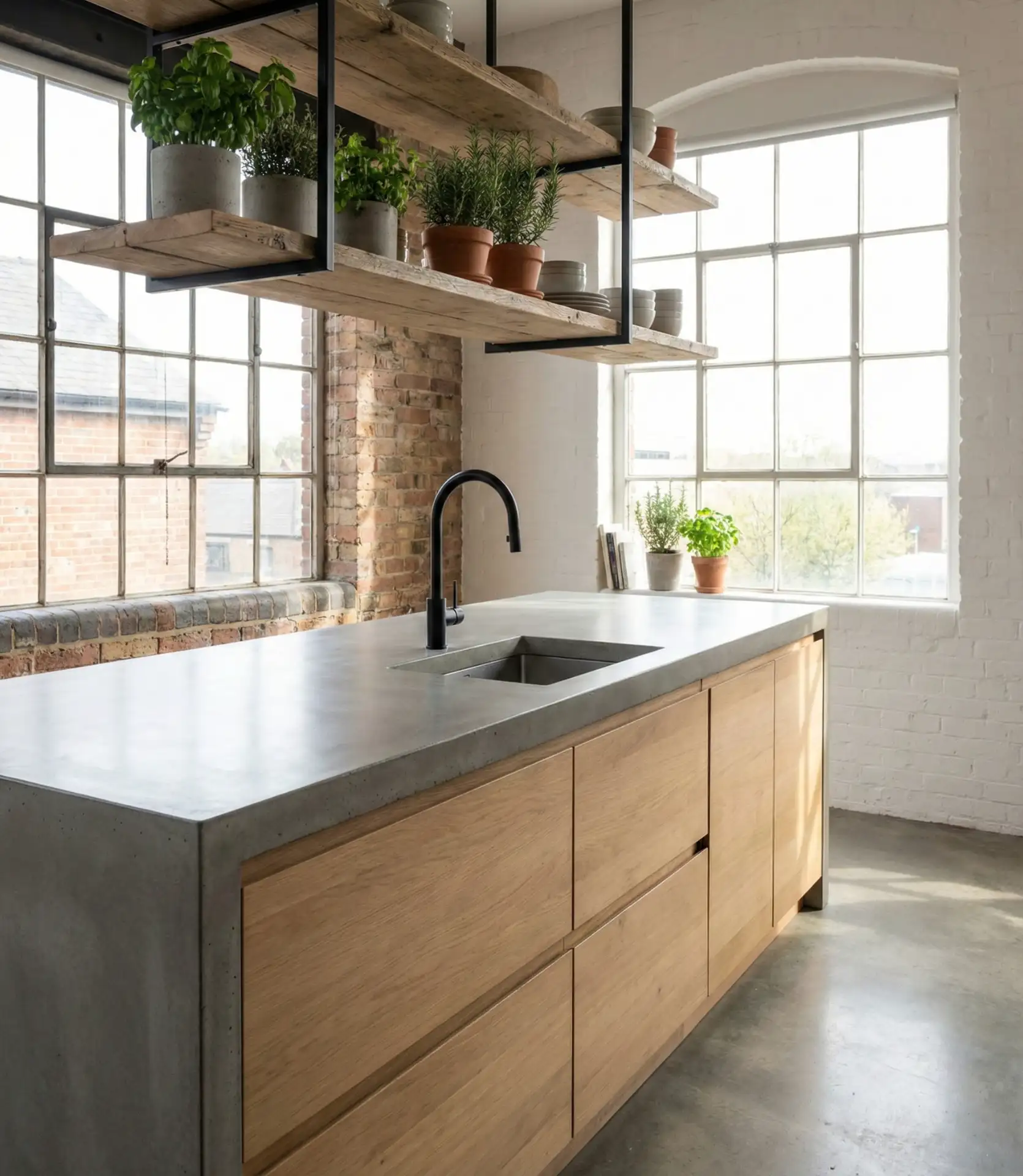
Industrial-inspired concrete countertops and cement-look porcelain are appearing in 2026 Australian and American kitchens as homeowners seek alternatives to ubiquitous quartz and marble. These surfaces bring raw, organic texture that pairs surprisingly well with warm wood cabinetry and brass fixtures, creating contrast that feels urban and sophisticated. Future iterations include lighter gray tones and polished finishes that are more approachable than the heavy, industrial looks of the past. 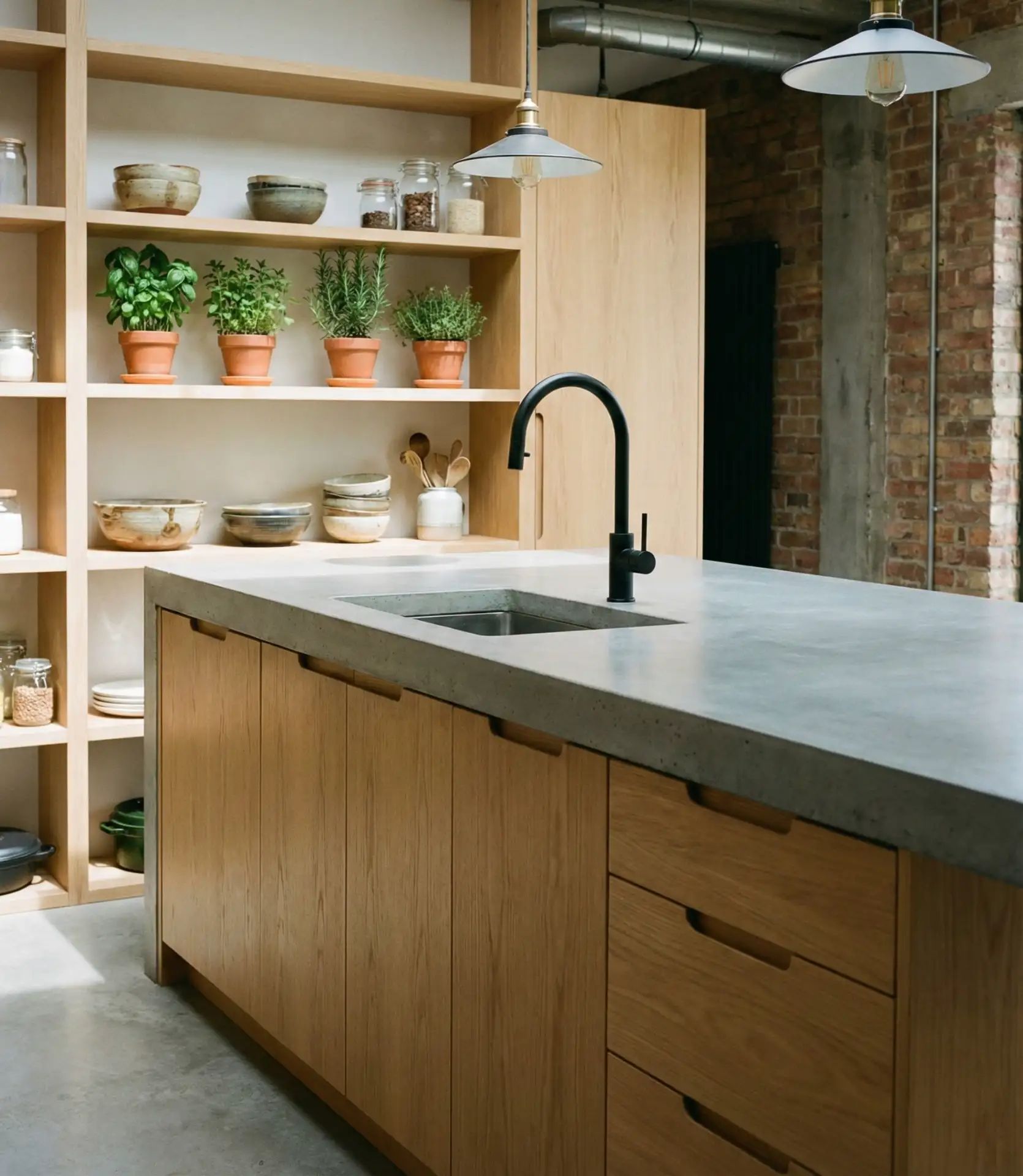
A common misconception is that concrete requires constant maintenance—modern sealants have largely solved the staining issues that plagued earlier versions. Real homeowners appreciate the matte finish that doesn’t show fingerprints like polished stone and the ability to customize edge details and thickness. Budget-wise, porcelain concrete-look tiles offer the aesthetic at $45-$75 per square foot versus $100-$200 for actual concrete, making this trend accessible across price points.
16. Oversized Farmhouse Sinks in New Materials

The classic white porcelain farmhouse sink is being reimagined in materials like black fireclay, brushed bronze, and even terrazzo composite, bringing fresh energy to farmhouses in 2026 and transitional kitchens alike. These deep, generous sinks remain practical for washing large pots and baking sheets, but top manufacturers are now offering colored glazes and unexpected finishes that let the sink make a statement rather than simply fading into the background. 
Expert designers note that the deep basin is particularly valuable in households that hand-wash dishes or frequently cook from scratch—it’s less about aesthetics and more about genuine functionality. A 33-inch sink costs between $800 and $2,400 depending on the material, with installation adding another $300–$500 for the specialized apron-front cutout. Where it doesn’t work: in kitchens under 120 square feet where the large sink takes up too much precious counter space.
17. Two-Tone or Contrasting Island Colors
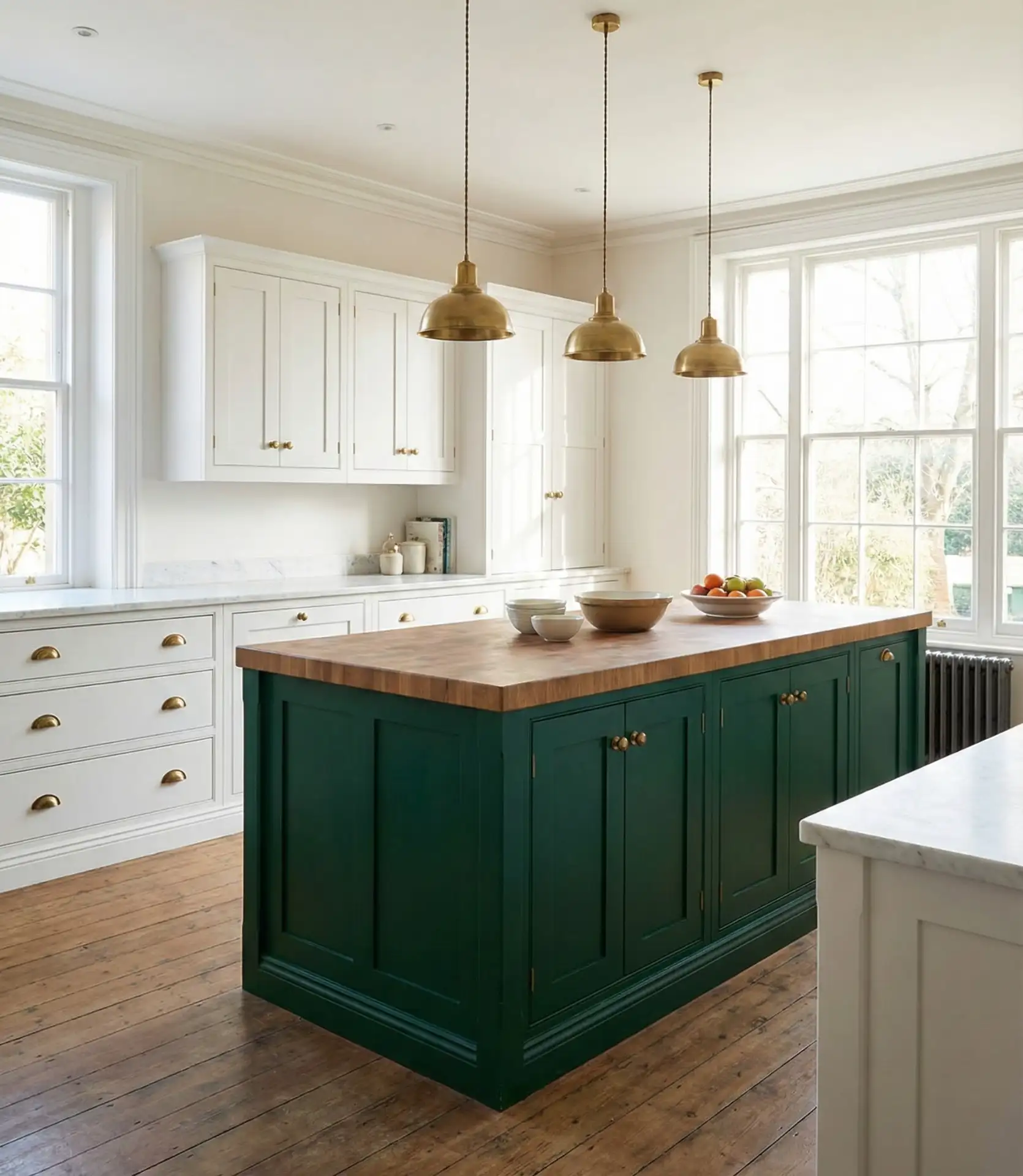
Kitchen islands are becoming bold focal points painted in colors that dramatically contrast the perimeter cabinets—think charcoal islands against 2026 white walls, or forest green surrounded by natural oak. This 2026 interior design strategy lets homeowners experiment with color in a contained way, and if tastes change in five years, repainting one island is far simpler than redoing an entire kitchen. The island becomes furniture rather than built-in cabinetry, which appeals to people who want personality without permanent commitment. 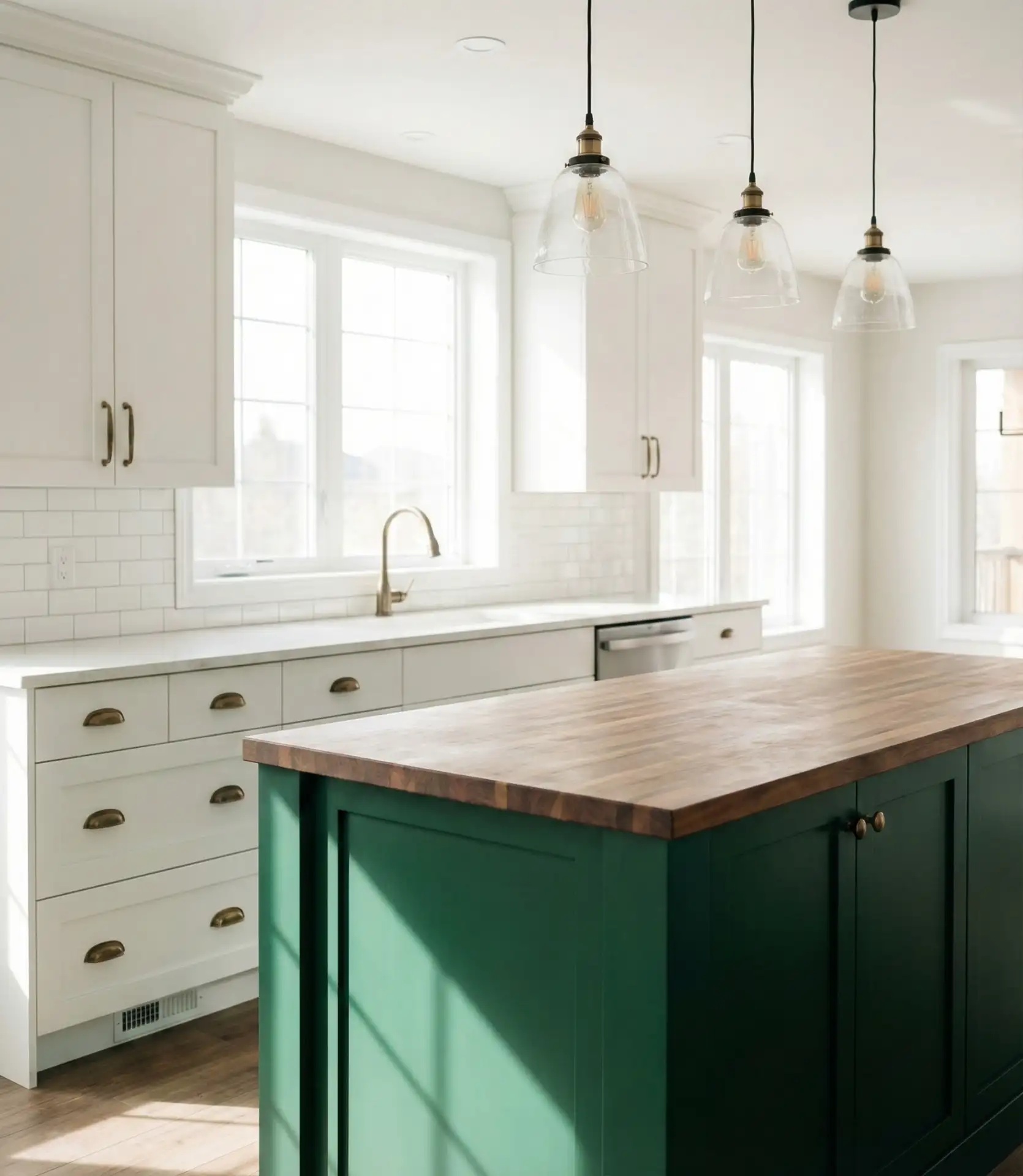
Open-concept homes, where the island visually blocks the kitchen zone, definitely benefit more from this design strategy. The color used on the island makes for an attractive visual separator. One Nashville homeowner, for example, changes her island color every three years to keep her kitchen feeling new. $200 for paint and a weekend’s effort makes it a small investment. She is currently a deep navy color, with her previous island a sage green.
18. Hidden Charging Stations and Outlets

The 2026 modern kitchen built-in charging drawers and pop-up outlets lighten wire clutter and hide devices from view. These systems fit inside cabinet bases or under overhanging countertops, providing discreet charging for devices without ruining the sleek finish of the kitchen.
The latest iteration of these products incorporates wireless charging pads installed directly into countertops and the bottoms of drawers.
This is a direct result of the fact that most kitchens have now become homework stations, home offices, and communication hubs, as the kitchen island is the landing station for all devices. Families with teenagers especially appreciate charging zones, as they prevent arguments over outlet access. Installation costs are $150-$400 per charging station, but the alternative is a tangle of cords sitting on your beautiful new countertops, which, of course, defeats the purpose of a high-end renovation.
19. Vertical Storage and Pull-Out Organizers
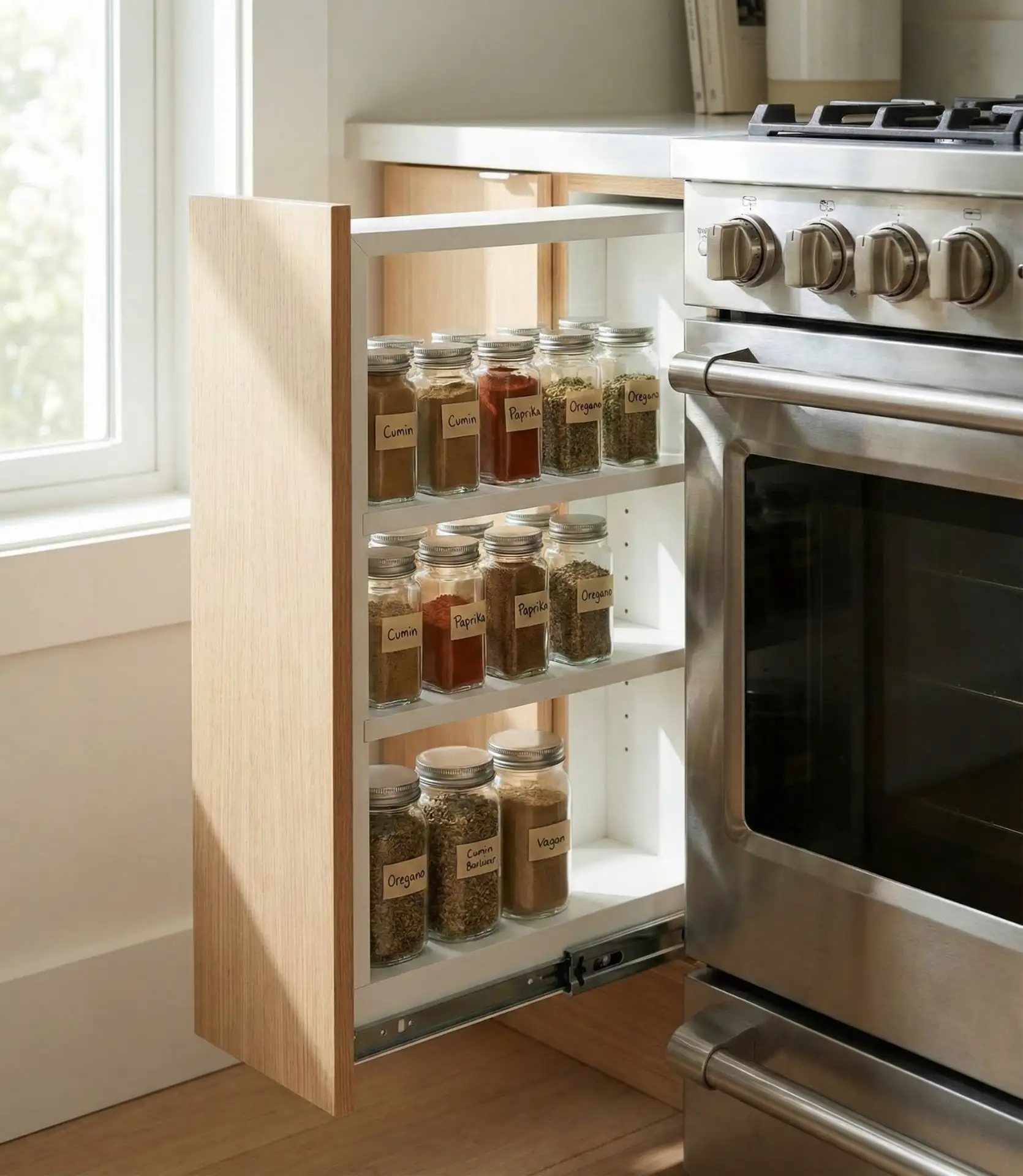
Narrow pull-out cabinets for spices, oils, and baking sheets are replacing the wasted space beside refrigerators and ranges in galley and compact kitchens in 2026. These vertical solutions maximize every inch of available width, turning 6-inch gaps into functional storage that keeps often-used items easily retrievable without sacrificing valuable counter real estate. The trend started in 2025, but this year it is standard practice in kitchen design and no longer a luxury upgrade. 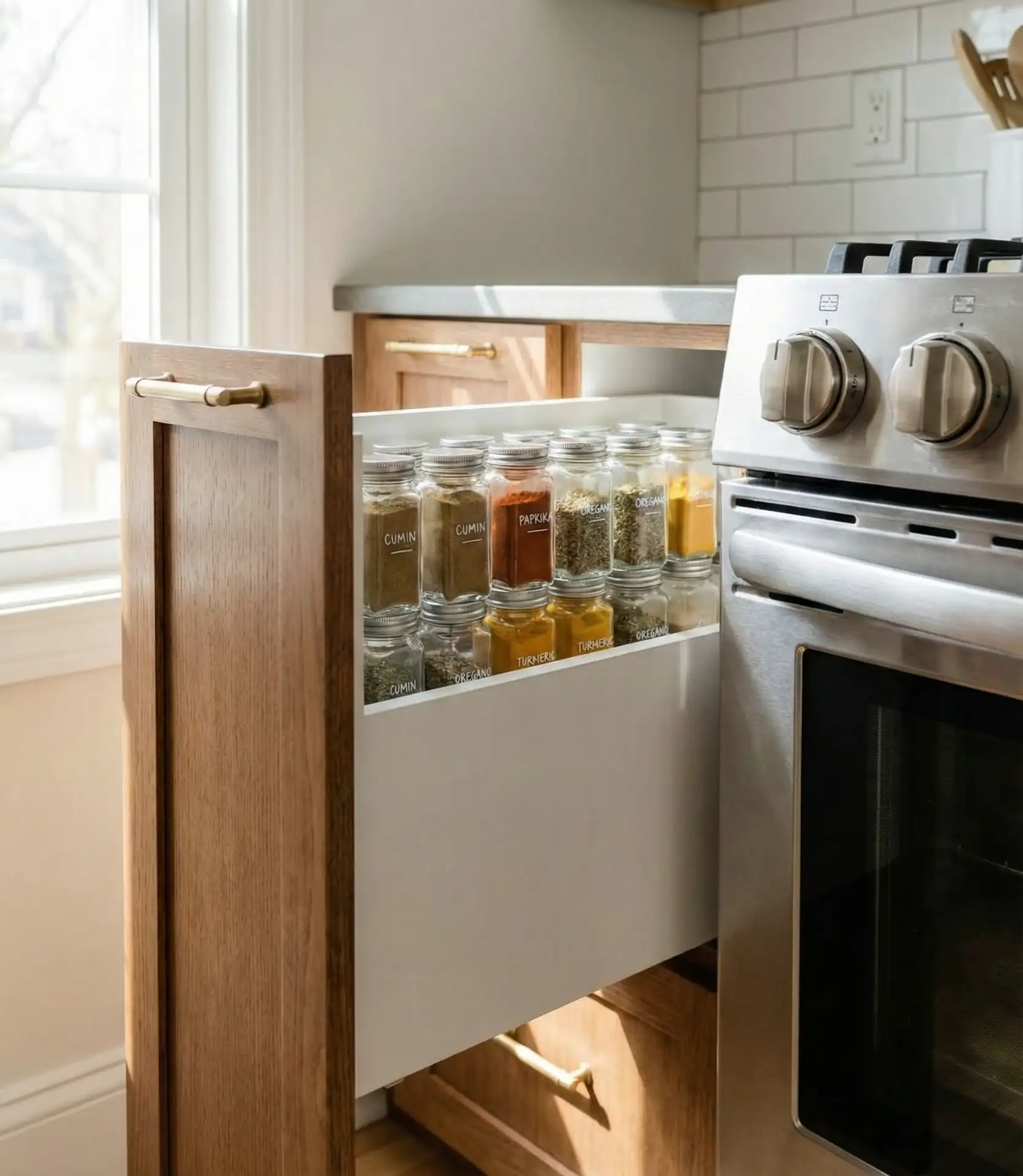
A kitchen designer in Denver explained that she now includes these in every plan—they cost about $200-$600 per unit but eliminate the junk drawer chaos that plagues most kitchens. Common mistakes include installing them in spots where doors or drawers will collide, so proper planning during the design phase is essential. These units not only enhance the beauty of any kitchen, but they also significantly transform smaller urban spaces where every inch is crucial.
20. Natural Stone with Bold Veining
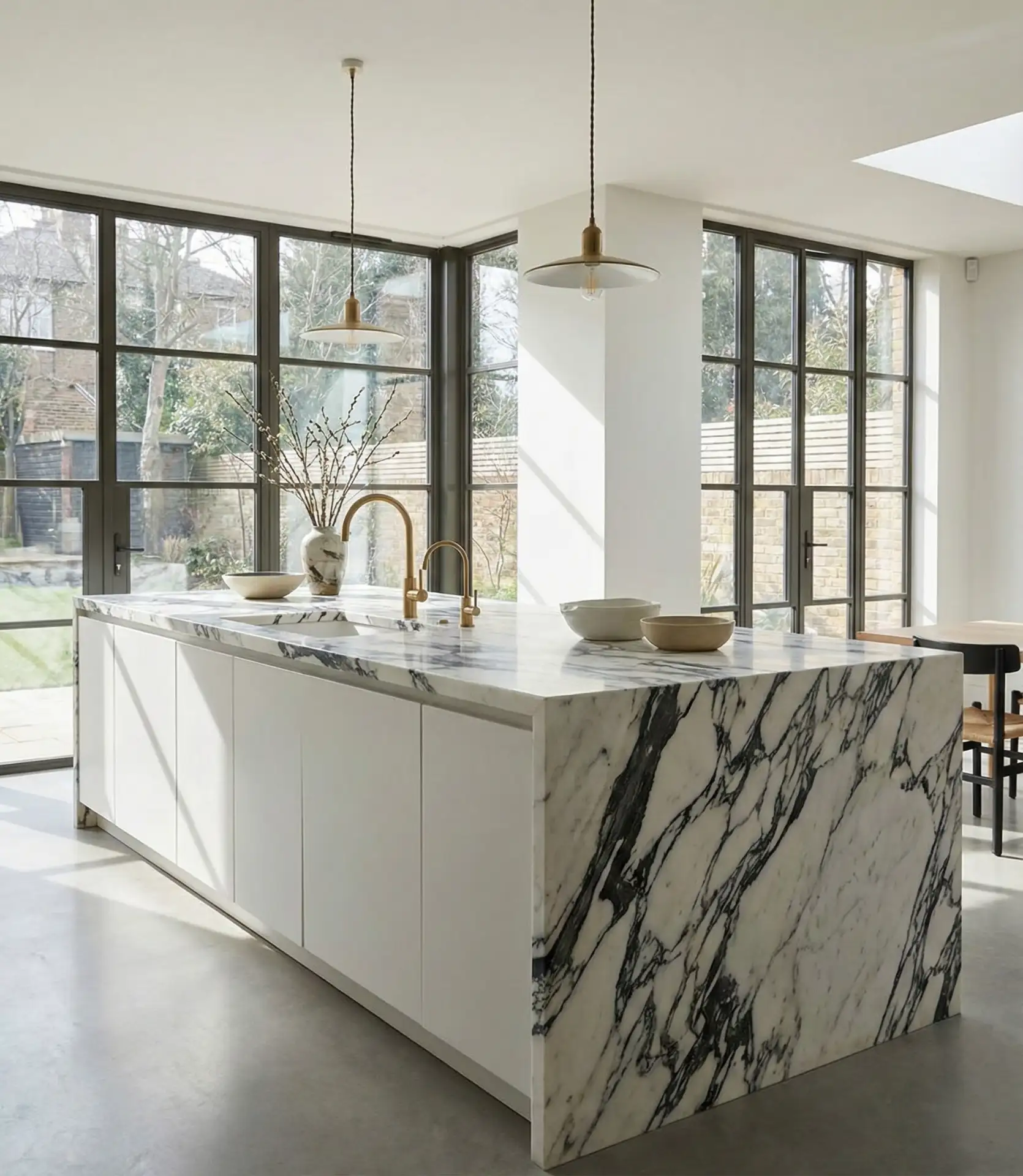
Subtle, uniform stone is being replaced by dramatic marble and quartzite slabs with heavy, organic veining that creates art-like focal points in 2026 coastal and contemporary kitchens. These aren’t the delicate gray-and-white calacatta patterns—think bold black veins on white backgrounds or warm rust-toned striations through cream stone. Colors range from classic monochrome to unexpected combinations like green-veined marble or blue-gray quartzite that bring natural drama without paint or tile. 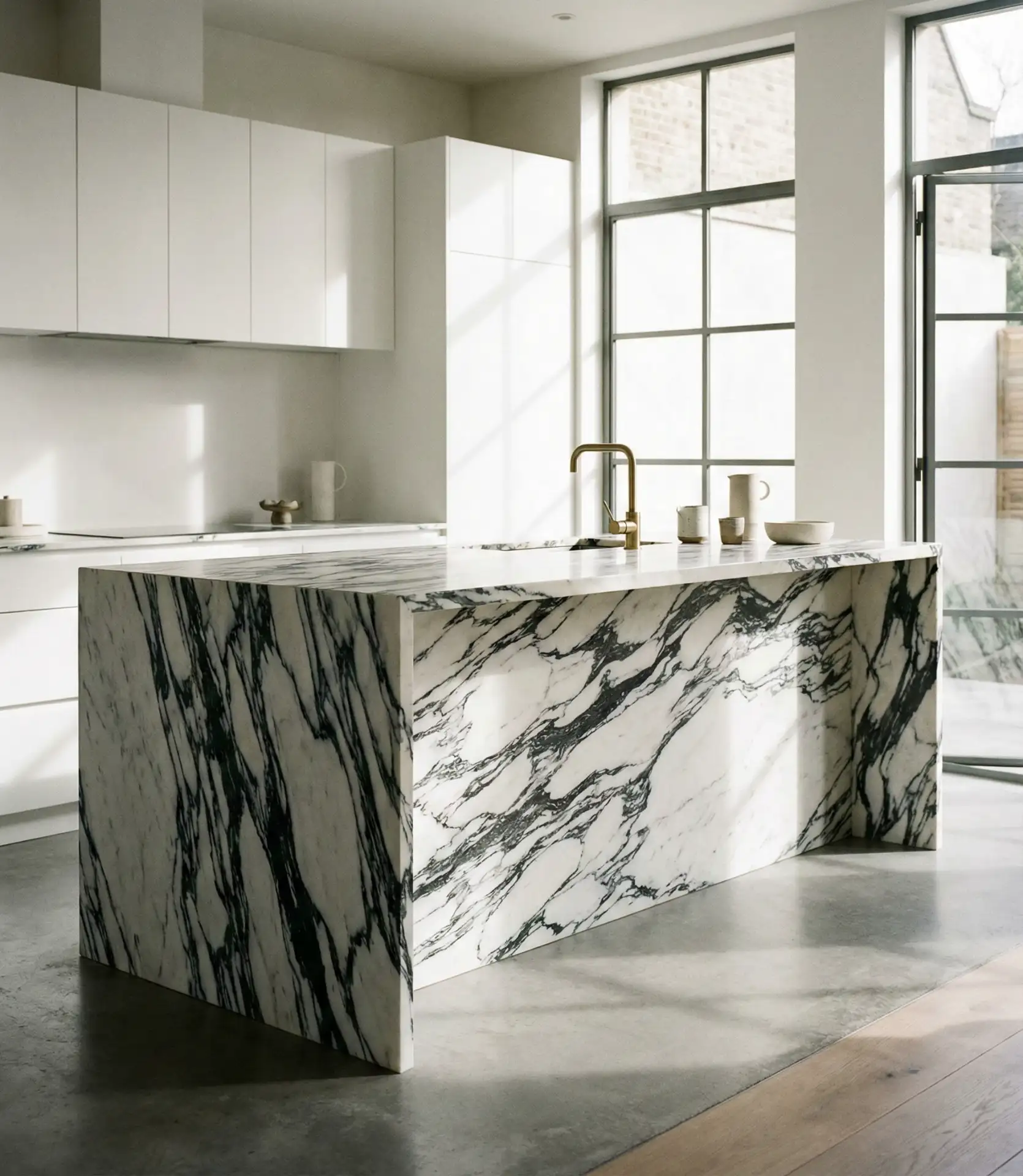
What homeowners need to understand: heavily veined stone requires acceptance of nature’s unpredictability—you can’t control exactly where the veining falls, which is part of its appeal but can feel risky to control-oriented personalities. It works best when the stone is the only major pattern in the room; pair it with simple cabinetry and minimal backsplash so the countertop can truly command attention. Budget $90-$250 per square foot for materials and installation, with the most dramatic slabs at the higher end.
21. Arched Cabinet Openings and Doorways

Soft, curved archways are appearing in kitchen cabinetry and pass-throughs, replacing the hard-edged rectangular openings that have dominated for decades. This 2026 interior design detail brings Mediterranean and European influences to American homes, creating visual softness that balances the harder lines of appliances and countertops. Transitional 2026 kitchens particularly benefit from this approach—the curves add character to what might otherwise feel generic, and they work beautifully whether you’re framing open shelving, creating a pass-through to the dining room, or designing a butler’s pantry entrance. 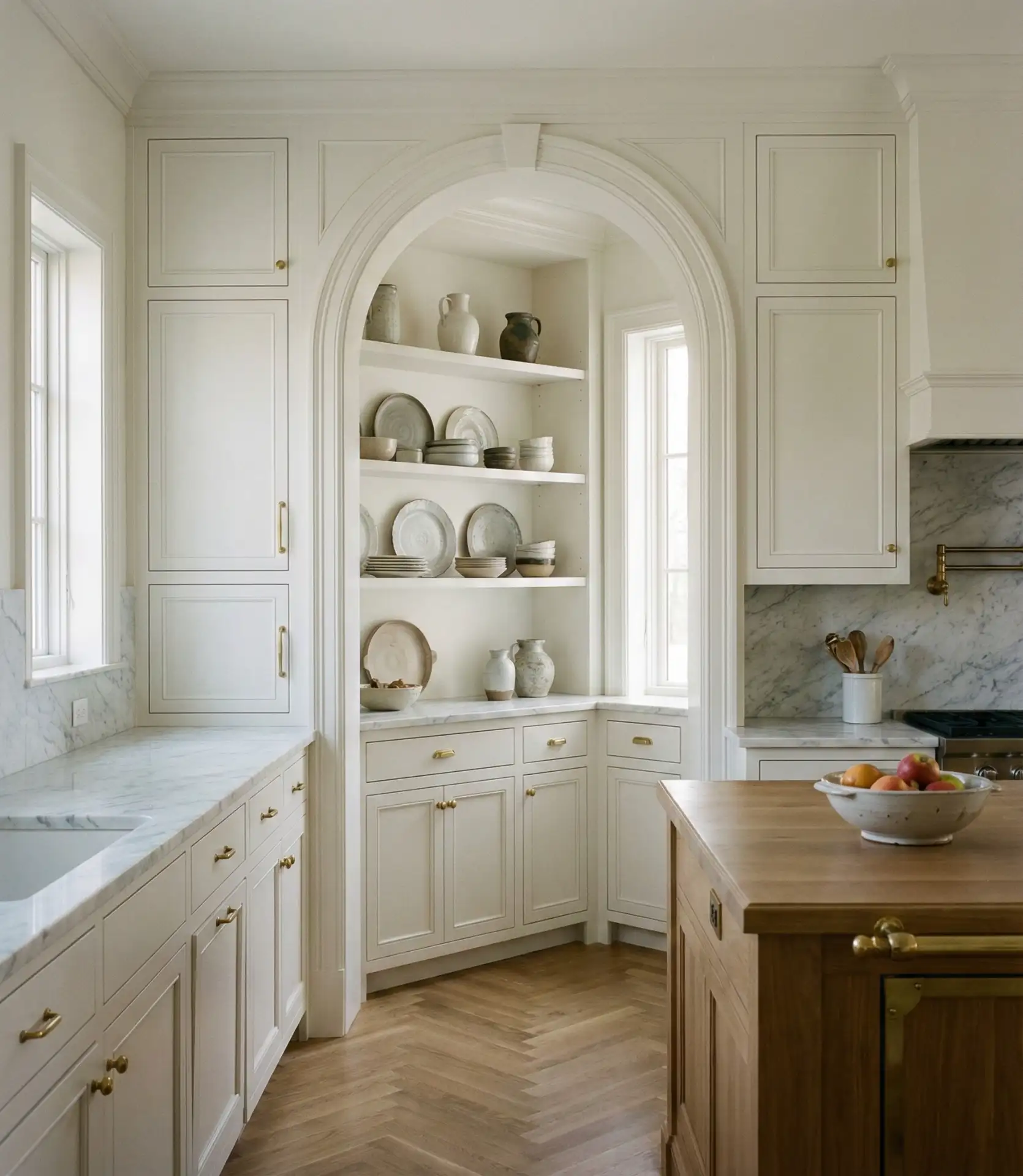
A contractor I know in Savannah mentioned that custom arch cuts add about $500-$1,200 per opening depending on complexity, but clients consistently say it’s the detail that makes their kitchen feel special rather than builder-grade. Where this doesn’t work: ultra-modern spaces where curves conflict with the strict geometry or 2026 galley kitchens so narrow that archways visually shrink the space. In the right setting, though, arches create those “magazine moment” details that elevate an entire room.
22. Matte Black Appliances and Fixtures
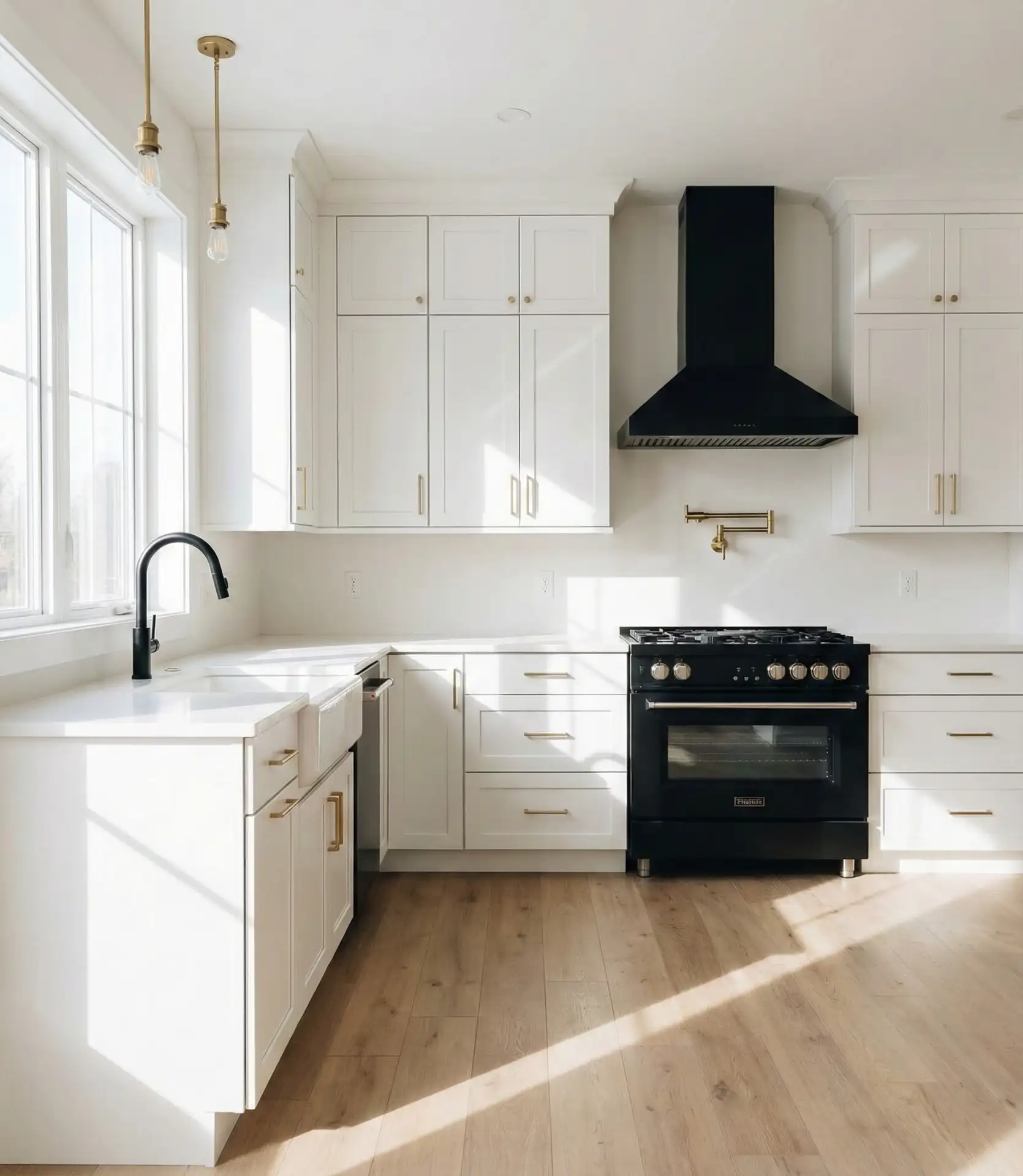
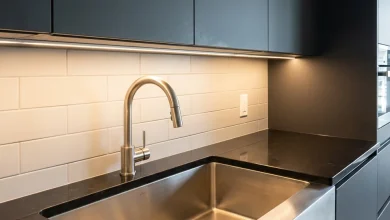
Stainless steel’s reign is ending as matte black appliances, faucets, and hardware dominate 2026 kitchen renovations with their sophisticated, fingerprint-resistant finish. These aren’t the glossy black appliances of the 1980s—today’s matte surfaces have a velvety texture that grounds white or light-toned kitchens with dramatic contrast. Top manufacturers now offer complete suites in matte black, from refrigerators and ranges to microwaves and dishwashers, making it easy to create a cohesive look without mixing brands or finishes. 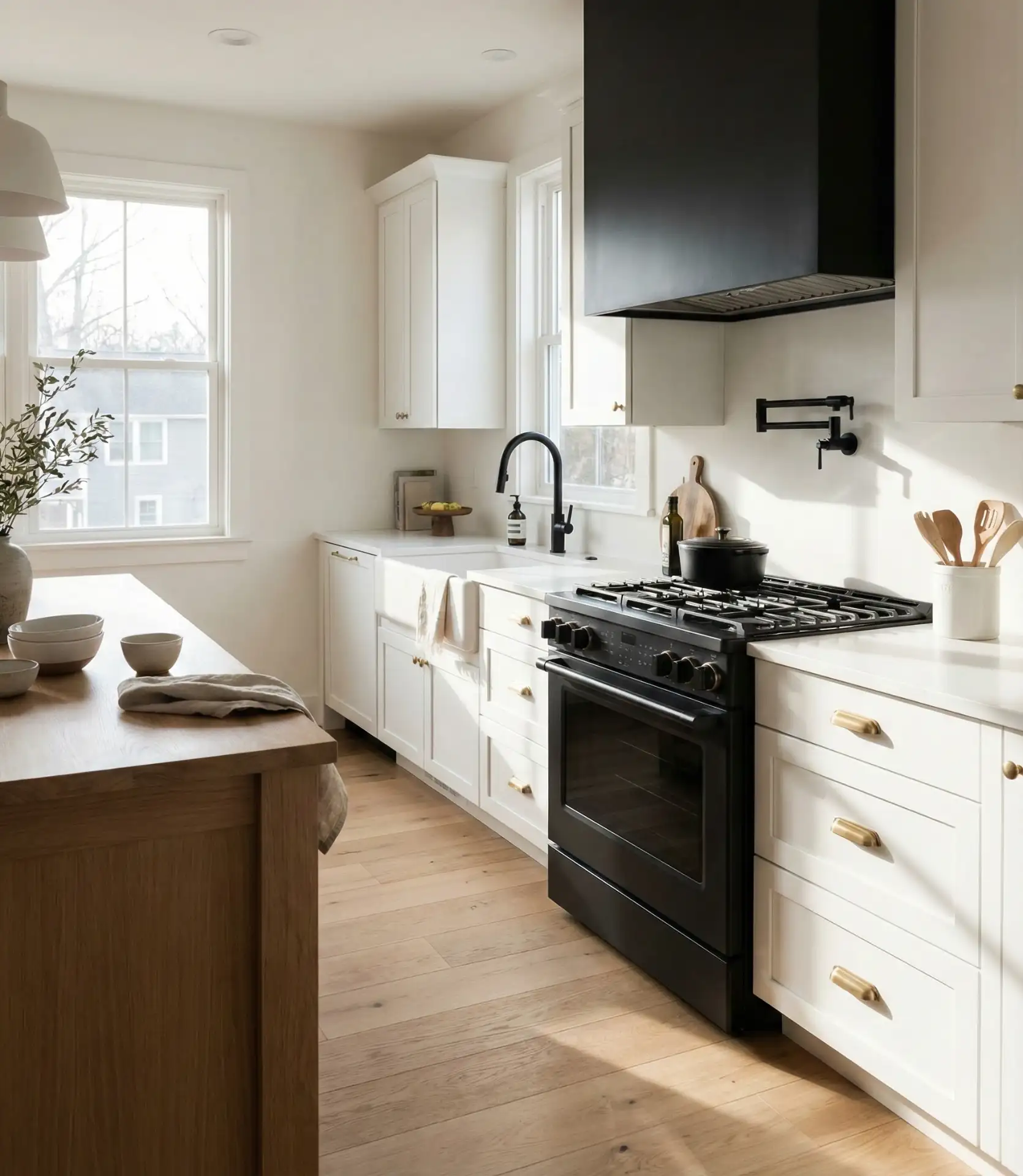
The practical advantage is huge: matte black hides smudges and water spots that make stainless steel a constant cleaning job, which is why families with young children are switching en masse. Real homeowner behavior shows that people who choose matte black appliances report spending 30–40% less time wiping down surfaces. One thing to avoid: pairing matte black with too many other dark elements—you need lighter cabinetry or counters to prevent the space from feeling cave-like, especially in kitchens without abundant natural light.
From the warmth of terracotta tones to the practicality of hidden charging stations, 2026 kitchen trends reflect a meaningful shift toward spaces that honor both beauty and real life. These aren’t fleeting fads—they’re thoughtful responses to how American families actually cook, gather, and live in their kitchens every day. Whether you’re drawn to the drama of bold veining in natural stone, the softness of arched openings, or the clean lines of integrated appliances, there’s room to make choices that feel authentic to your home and lifestyle. The best kitchen is one that works for you, not just one that photographs well. Which of these trends resonates most with your vision? Share your thoughts, questions, or your kitchen journey in the comments below—we’d love to hear what you’re planning.